Start reading on any device today!
(Ebook) Vagabond, Vol. 29 (29) by Inoue, Takehiko ISBN 9781421531489, 1421531488
https://ebooknice.com/product/vagabond-vol-29-29-37511002
ebooknice.com
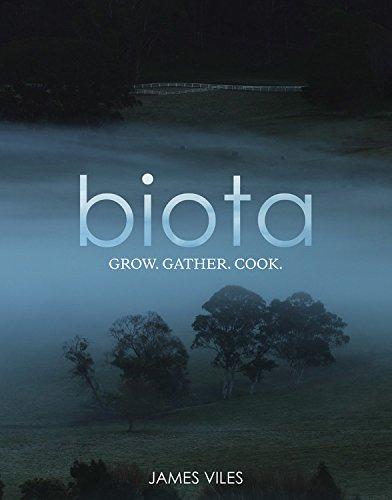
(Ebook) Biota Grow 2C gather 2C cook by Loucas, Jason; Viles, James ISBN 9781459699816, 9781743365571, 9781925268492, 1459699815, 1743365578, 1925268497
https://ebooknice.com/product/biota-grow-2c-gather-2c-cook-6661374
ebooknice.com
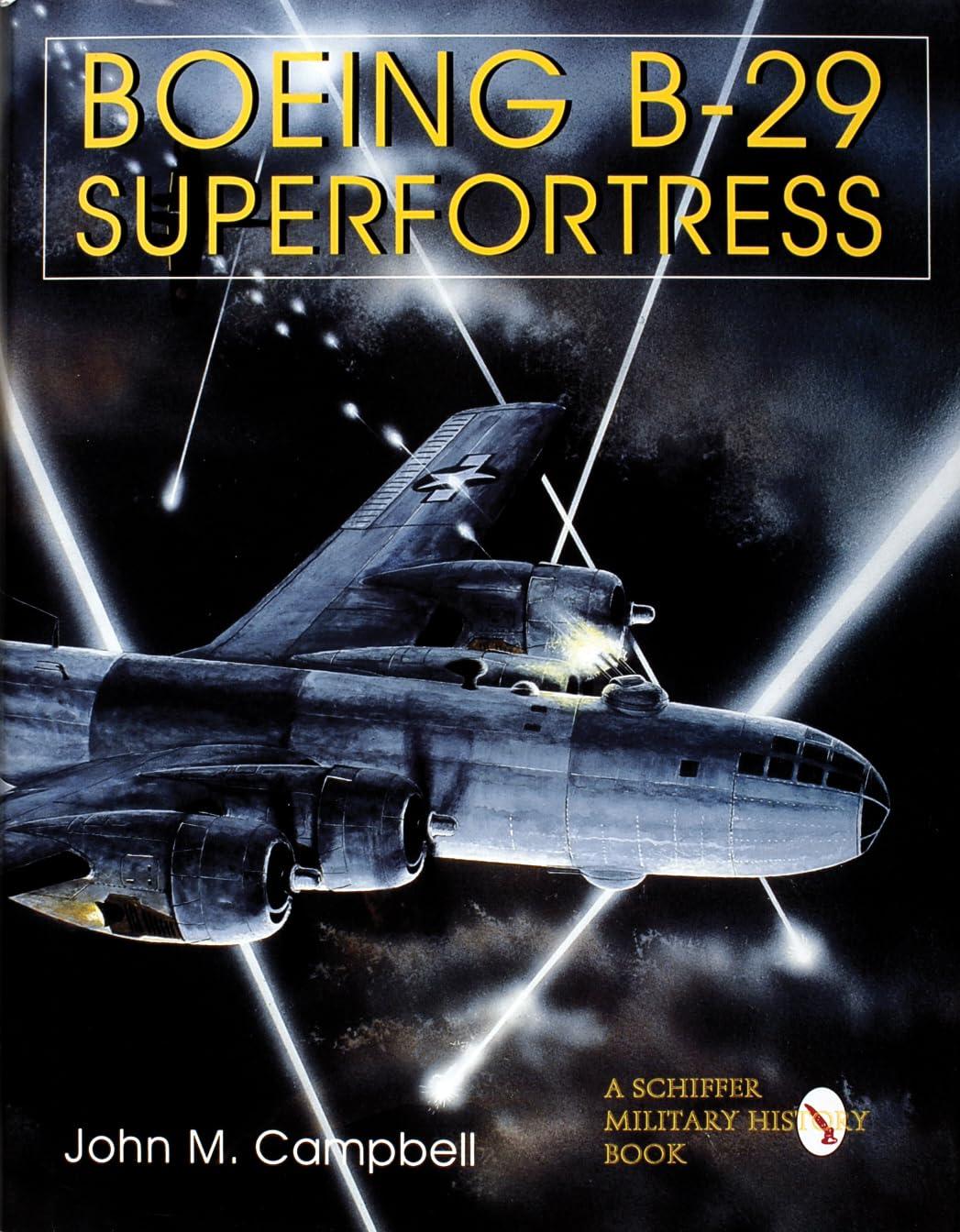
(Ebook) Boeing B-29 Superfortress ISBN 9780764302725, 0764302728
https://ebooknice.com/product/boeing-b-29-superfortress-1573658
ebooknice.com
(Ebook) International Review of Research in Mental Retardation 29 by Laraine Masters Glidden ISBN 9780080495712, 9780123662293, 0080495710, 012366229X
https://ebooknice.com/product/international-review-of-research-in-mentalretardation-29-1899532
ebooknice.com
Tobias Haller, Claudia Zingerli (eds.) Towards Shared Research
Culture
and Social Practice
Tobias Haller (Prof. Dr.), born 1965, is a professor at the Institute of Social Anthropology at the University of Bern, Switzerland, with a focus on economic, ecological, and political anthropology.
Claudia Zingerli (PhD), born 1973, is a scientific collaborator at the Swiss National Science Foundation and freelancer in diverse activities dealing with knowledge brokerage and the co-creation of knowledge in science-policy interfaces.
Tobias Haller, Claudia Zingerli (eds.)
Towards Shared Research Participatory and Integrative Approaches in Researching African
Environments This book was possible because of the perseverance of the authors and the financial support from the Swiss Academy of Humanities and Social Sciences, the Swiss Academy of Sciences, the Swiss Academic Society for Environmental Research and Ecology (saguf) and the Swiss Society for African Studies (SSAS).
Bibliographic information published by the Deutsche Nationalbibliothek
The Deutsche Nationalbibliothek lists this publication in the Deutsche Nationalbibliografie; detailed bibliographic data are available in the Internet at http://dnb.d-nb.de
This work is licensed under the Creative Commons Attribution 4.0 (BY) license, which means that the text may be be remixed, transformed and built upon and be copied and redistributed in any medium or format even commercially, provided credit is given to the author. For details go to http://creativecommons.org/licenses/by/4.0/
Creative Commons license terms for re-use do not apply to any content (such as graphs, figures, photos, excerpts, etc.) not original to the Open Access publication and further permission may be required from the rights holder. The obligation to research and clear permission lies solely with the party re-using the material.
First published in 2020 by transcript Verlag, Bielefeld
© Tobias Haller, Claudia Zingerli (eds.)
Cover layout: Maria Arndt, Bielefeld
Cover illustration: Women engaging in shared research regarding the development and testing of cook stoves at the Great African Cook-Off in Malawi, one of the examples in the book on how participatory research is carried out successfully (see paper by Jewitt et al., © picture: Charlotte Ray and Maria Beard).
Printed by Majuskel Medienproduktion GmbH, Wetzlar
Print-ISBN 978-3-8376-5150-8
PDF-ISBN 978-3-8394-5150-2
https://doi.org/10.14361/9783839451502
Foreword 9
TowardscollaborativeandintegrativeresearchinAfrican environments
Anintroduction
TobiasHallerandClaudiaZingerli ......................................................................11
1.1.Africanenvironmentsinfocus...................................................................11
1.2.Spiralling(mis)interpretations..................................................................12
1.3.Fragmentedknowledge..........................................................................14
1.4.LongitudinalknowledgeguidanceforresearchingAfricanenvironmentstoday..16
1.5.Towardssharedresearch........................................................................18
1.6.Overviewofcontributions........................................................................19
1.7.References...........................................................................................21
Soilclassifications
Betweenmaterialfactsandsocio-ecologicalnarratives
BricePrudat,LenaBloemertz,OlivierGraefe,NikolausKuhn..................................25
2.1.Introduction..........................................................................................25
2.1.1.Ohangwenaregionandvillages........................................................26
2.1.2.Collectinglocalsoilknowledge........................................................27
2.1.3.Scientificsoildescription..............................................................28
2.1.4.TheOshikwanyamasoilunits..........................................................29
2.1.5.Localsoiltypescomparedtointernationalclassifications...................30
2.1.6.Advantagesofcombininglocalandscientificknowledges...................32
2.2.Issuesregardingtheparticipatoryapproachinnaturalsciences....................33
2.2.1.Translationsoftheconceptof“soil”................................................33
2.2.2.Intergrades................................................................................34
2.2.3.Localexperts.............................................................................35
2.2.4.Accuracyofdescriptions...............................................................35
2.3.Participatoryresearchinnaturalsciences:reflectionsandchallenges............39
2.3.1.Expectationsandmanagingdata...................................................39
2.3.2.Dealingwithcomplexity.................................................................40
2.4.Conclusionandperspectives....................................................................41
2.5.References..........................................................................................43
Actionresearchandreversethinkingforanti-desertification methods
Applyinglocalrevegetationtechniquesbasedontheecological knowledgeoflocalfarmersintheSahelofWestAfrica
ShuichiOyama ..............................................................................................47
3.1.Introduction..........................................................................................47
3.2.DesertificationintheSahelregion............................................................48
3.3.Approachandresearcharea...................................................................50
3.4.Agricultureinlong-termdryseasonandshortrainyseason...........................52
3.4.1.Temperature,rainfallandwind........................................................52
3.4.2.Agriculture.................................................................................54
3.4.3.Soilpropertiesandlanddegradation...............................................55
3.5.Localcountermeasuresagainstlanddegradation........................................59
3.5.1.“Wasteismanureforourfarmland”..................................................61
3.5.2.Firsttrialofurbanwaste-inducedlandrestoration............................63
3.5.3.Emergingpastureland..................................................................66
3.6.Eighteffectsofurbanwasteuseforlandrestoration...................................68
3.6.1.Safetyissueswithurbanwaste.......................................................72
3.6.2.Collectingwastefromthecityadministrationtoresolvethefinancial deficitproblem............................................................................73
3.6.3.Invitinglivestockintothefencedpastureland....................................77
3.7.Conflictpreventionandlivestock-inducedlandrestoration............................79
3.8.Conclusion:urbanwaste,newinstitutionandcombatingdesertification.........83
3.9.References..........................................................................................86
EnergyandtheenvironmentinSub-SaharanAfrica Householdperceptionsofimprovedcookstoves
SarahJewitt,PeterAtagher,MikeClifford,CharlotteRayandTemiladeSesan ...........91
4.1Introduction..........................................................................................91
4.1.1.Theevolutionofimprovedcookstoveinitiatives..................................91
4.1.2.Recentinitiativespromotingcleanfuelsandcookstoves.....................92
4.1.3.Neglectofend-userpreferences.....................................................94
4.1.4.LimitationsoffuelandICSmonitoring..............................................95
4.1.5.Researchproblemandcontribution.................................................96
4.2.Methodologicalapproaches......................................................................96
4.2.1.Bake/cook-offevents...................................................................98
4.2.2.Field-basedresearchinBenueState................................................99
4.2.3.Field-basedmethodologies............................................................101
4.3.End-userprioritiesforcookingsystems:resultsfromthebake/cook-off events..............................................................................................103
4.4.Community-levelperspectivesoncookingsystemsandfuelchoicesinBenue.108
4.4.1.ClassandgenderasinfluencesonICSandfueluse..........................108
4.4.2.Accesstofirewood......................................................................109
4.4.3.Smoke-relatedconcernsversushouseholdbudgetconstraints.............110
4.4.4.Socio-culturalfactorsinfluencingstoveandfuelstacking...................111
4.4.5.Userpreferencesforrapidcooking................................................114
4.4.6.Seasonalshiftsinstoveandfueluse...............................................114
4.5.Incorporatingend-userpreferencesintostoveinterventionsandSDG7monitoringframeworks................................................................................115
4.6.References..........................................................................................119
Fishingforfoodandfoodforfish Negotiatinglong-term,sustainablefoodandwaterresourcesina transdisciplinaryresearchprojectinBurkinaFaso GabrieleSlezak,JanSendzimir,RaymondOuedraogo,PaulMeulenbroek,Moumini Savadogo,ColetteKabore,AdamaOueda,PatriceToe,HenriZerboandAndreas Melcher .....................................................................................................125
5.1Researchcontext.................................................................................125
5.1.1.Theestablishmentofatransdisciplinaryresearchproject...................126
5.1.2.Integratingpracticesofparticipatoryresearch.................................127
5.1.3.Projectresults...........................................................................130
5.1.4Issueswiththeparticipatoryapproach...........................................132
5.1.5.Fieldwork-practiceandtraining...................................................133
5.1.6.Involvementofpolicymakers-keyquestionsofmanagement.............139
5.1.7.Synthesisofresearchresults.........................................................141
5.1.8.SUSFISH’sparticipatoryapproach:lessonslearnedandproblems.........147
5.2.Keymomentsofparticipatoryresearch....................................................150
5.2.1Scenariodevelopmentworkshops-keytounderstanding...................150
inandoutofalocalcontext.Formoreinclusivelearning,mutualrespect andtrustarekey.
•Transdisciplinaryresearchneedscarefulplanningofparticipationandan opennesstowardsemergingparticipationwhiletheresearchprogresses.
Allinall,itwasrichlearningexperiencewithconferenceparticipantswho daredtotalkabouttheirstruggleswithlanguageandinterpretationandscienceascontribution,whichisoftennotpossibleindisciplinaryconferences. Participantsfacilitatedabetterunderstandingofcomplexsocio-politicaland environmentalsystems.Theconferenceparticipantsenjoyedthecontributionsanddiscussionstotheextentthattheideaoffurtherelaboratingonsome ofthetopicsemerged.Intheformofaneditedvolume,whichprovidesample roomforeachcontributiontogointodetail,theauthorspresenttheircontributionsinexplicitandnuancedways.
Finally,thevolumeisputtogetherasacollectionoffourarticlesdealing withsimilarchallenges,opportunitiesandactualities.Theauthorsweregivenalotofroomforexplorationduringthewritingprocess,fromwhichfour heterogeneouspapersemerged.Intheintroductoryandconcludingarticles, theeditorshighlightandprovideadiscursiveframeworkinwhichthearticlescanbepositioned.Theydiscusskeyissuesforanaudienceinterested inreflectionsandtwistsinrelationtoparticipatoryandintegrativeresearch inintercultural,interdisciplinaryandtransdisciplinaryinterfacesinselected Africanenvironmentalcontexts.
TheeditorsareverygratefultotheSwissAcademyofHumanitiesand SocialSciencesforfinancialsupportforboththeconferenceandthepublicationofthisbook,particularlytheOpenAccesspublicationgrant.Wealso highlyacknowledgethefinancialcontributionsoftheSwissAcademyofSciences,theSwissAcademicSocietyforEnvironmentalResearchandEcology (SAGUF),andtheSwissSocietyforAfricanStudies(SSAS).Weareindebted toSamuelWeissman,whosupportedtheprocessincriticalstages.
Bern,January2020
TobiasHallerandClaudiaZingerli
1.Towardscollaborativeandintegrative researchinAfricanenvironments Anintroduction TobiasHallerandClaudiaZingerli
1.1.Africanenvironmentsinfocus ThelegacyofthecolonialgazeatAfricanenvironmentshasbeenanissuein criticalstudiesinthehumanitiesandsomenaturalsciencesformorethan30 yearsnow.Fuelledbytheemergingpoliticalecologyapproach(seeRobbins 2004),researchandpublicationshaveradicallychallengedthewaythepostcolonialworldviewsAfricanenvironments.Oneofthisview’scornerstones wastheaward-winningpublication MisreadingtheAfricanlandscape (Fairhead andLeach1996),inwhichitbecameevidentthatforestpatchesintheGuineanSavannahwerenotpristineremainsofalargeforestcoverdestroyed bylocalpeople.Onthecontrary,theauthorsshowedthatforestpatcheswere plantedandthuscreatedbylocalpeopleformultiplepurposes.Thisnewparadigmthatso-callednaturalenvironmentsarenotpurelynaturalbutcultural landscapedecosystemshasbeenanimportantnarrativeinecologicalanthropology,withitsrootsinthe1980sand1990s(seeRoyEllen’s1982milestone bookonsubsistenceproductionorNetting’s Smallholders,householders in1993). However,thisparadigmshiftremainedboundinthesub-disciplineanddid notextendintootherdisciplinesoreveninterdisciplinaryarenas.
FairheadandLeach’s1996bookwasvitalforaparadigmaticanddiscursive shift.Itmarkedawiderrecognitionintheinterdisciplinaryandtransdisciplinaryworlds,becauseitcombinedsoundsocialanthropologicalqualitativeresearchwithhistoricalarchiveresearch,andmorequantitativedatastemming fromairphotography,includingdigitalsatelliteimagesfromgeographicand remotesensing.Thismixedmethodsapproachestablishedthebasisfordata,contributingtoawiderrecognitionoftheparadigmshiftandchallenging
torepressivecolonialandpost-colonialpoliciesandthelabellingofpeopleas forestorsavannahpeople.ItispartofwhatJamesScott(1998)called“seeing likeastate”,bywhichhemeantnumbering,standardizingandlabellingthe environmentanditspeopleforpolicyactionandcontrol.Thisprocesscreated, andstillcreates,ruleswhicharenotonlynotadaptedtolocalcontexts,but thatalsoledtopoliticalsubordinationand,asaconsequence,tomoredegradation,creatingwhatiscalleda“positivefeedbackloop”insystemtheory.The reinforcingofwronglylabelledpristinenatureinperilledtorepressivepolicieswhich,asareactionfromlocalstakeholders,leadstodestructivecounterreactionsaspropertyrightsaretakenoutofthehandsoflocalpeople.When localpeoplelosetheircommonpropertyrightstolandandland-relatedresourcesasaformofcolonialandpost-colonialcommonsgrabbing,theylose theirsenseofownershipandbelonging.ThereactionisliketheonedescribedbyHardin(1968),yetnotasatragedyofthecommonsbutasatragedy ofthegrabbedcommons,leadingtostatecontroland,asstatesarenotefficientatcontrolling,tothetragedyofopenaccess.CasesinAfricasuchasin Guinea,Tanzania,Cameroon,ZimbabweandZambiashowthatlocalpeople ratherdestroyforestsandwildlifeundertheseconditionsofgrabbingbefore otherstaketheresources,andwithoutwildlifepresent,forexample,conservationistswillleavethelandtothepeopleasthereisnolongeranyreasonfor protection(seeMurphree2001,Haller2010,2016).
Suchcounter-reactionsunfortunatelycanthenagainbetakenbyconservationistsasproofthatAfricansonlyseecharcoalandgamemeatforthepot behindforestsandwildlife,reinforcingaprocessoffortressortop-downsocalledparticipatoryapproachestoconservation(seeGalvinandHaller2008, Halleretal.2016).Thus,theAfricanenvironmentandthepeoplelivingin andfromitdeserveadequateresearchandanalysisthatistranslatedinto adequatepolicies.Thisisthenapoliticalprocesstobeaddressed.Weneed notbenaïveandthinkthattheparadigmshiftwillchangeall,asthisview producedgainsandobligationssincecolonialtimeswhichcouldnotandstill cannottodaybechallengedquickly.Wewouldhavetofocusonauthoritativepowerandconsiderablefinancialimplications,andinternationalizedand interdependentspheresofenvironmentalpolicyandeconomics.
1.3.Fragmentedknowledge Regardingtheparadigmshift,itneedstobehighlightedthatthemainproblemwiththeideologyofpurenatureistheseparationofnatureandculture (seeDescola2013).ThisseparationhasbeenamainfeatureofCartesianthinkingandlogicalreasoningsincethetimeofenlightenment.Wedonotargue herethatinsightsinthathistoricperiodarenecessarilywrong,butthatthey ledtothehegemonicviewthatmodernityproducesscientificallyobjective knowledge,whileallolderandotherformsofknowledgeandviewsareseen tobebackwardandtiedtoadarkage.Previousorothersocietiesarelabelled “traditional”,whileotherwaysoflookingatwhatwecalltheenvironmentare overlookedandtheirheritageremainslargelyunaddressed,withouthistory andknowledge.
Thisviewalsobegsahistoricalandenvironmentalrealitycheck.Wherever onestudiesthestateofacommonpoolofresources-irrespectiveofhowbad thefiguresandnumbersmightbe-onemustacknowledgethatthebiggest lossoflandscapesandbiodiversityoccurred after andnotbeforetheageofenlightenmentandtheagesofcolonialexpansion.Thisbasicallymeansthatthe biodiversitywhichislostnowwastherebeforecolonializationwiththepresenceoflocalpeoples-andtheworkofFairheadandLeach(1996)andothers suggeststhatthisbiodiversityexistedbecauseoflocalpeople’smanagement ofresources.
Aroundtheglobe,culturallandscapeecosystemshavebeendevelopedover centuriesbasedontheviews,regulations(institutions)anduses(practices) oflocalpeoples.Theterm“institution”referstoformalandinformaldosand don’ts,ortotherulesofthegame(seeNorth1990),aswellaspropertyrules, regulationsofuse,normsandpractice-inducedvalues(seeEnsminger1992, Haller2010).Theseinstitutionsarealsofullofcondensedknowledgeandserveasanorientationforcollectiveactiontomaintainculturallandscapesbased onthewisdomthatinteractionswiththeenvironment(theculturallandscape ecosystemcontext)needcoordinatedactionwithotherhumansandother groupsofhumans(thepoliticalenvironment)aswellaswiththeworldof spiritsandsoulsofthematerialandimmaterialandancestors(thespiritualenvironment)(Haller2007,2010).Nottakingthisknowledgeintoaccount duringcolonialandpost-colonialtimes,however,didnotonlyreducesocioculturalaspects;italsohadanegativeimpactontheenvironmentonseveral levels.Itreducedknowledgeonhowtodealwiththecreatedlandscapesand howtomaintainandmanagethem(seeBornemannetal.2017).Areduced
TowardscollaborativeandintegrativeresearchinAfricanenvironments17
lists)(forasummary,seeHaller2007,seealsoHaller2010,2013,2016,Haller etal.2013).
Thereisalotofaccumulatedpracticalknowledgehandeddownovergenerationsandadaptedtolocalchangingconditionsinthesesocieties,which basicallyworkontheprincipleoflongitudinalknowledgeofdynamicsand expectedvariabilityintheculturallandscapeecosystems.Thebasiccommon strategyisnottodriveforthebestbutformaximizationoftheminimalneededyields,catches,gamehuntedetc.Suchamini-maxstrategy(seeHaller2007)canonlyworkbydiversifyingusesandaccumulatinggenerationalknowledgeonenvironmentaldynamicsinculturallandscapeecosystems. Complementarily,localpeopleshavedevelopedworldviewswhichhelptoexplainuncertaintyandoftenprovideritualpracticestobring(fromanemic perspective)anunbalancedhuman-spiritualworldrelationshipbackintobalance.Theseelements-knowledge,resourcemanagementandpracticeson theoneside,aswellasworldviews-areinterconnectedonthelevelofwhat Berkes(1999)callssocialinstitutions.
Wherethisworks,theresultsofadaptingtochangessuchaseconomic andclimaticchangesproducebettersolutionsonseverallevels.Firstly,local actorshaveamorelongitudinalknowledgeoftheirenvironments,andinteractingonasharedlevelwithscientistscanonlybebeneficialforbothsides ifscienceshowsmoreopenness.Secondly,adaptedrulesbasedonoldersolutionsandknowledgereducetransactioncostsinatremendousway,asfeelingasenseofownershipoftheknowledgeproductionandcraftingprocessescreatesamonglocalpeoplethefeelingthatthenewinstitutionsaretheirs andderivefromtheirknowledge.Thisembodimentofasenseofownership oftheinstitution-buildingprocess,whichhasbeenlabelled“constitutionality”(asacounter-positiontoFoucault’s“governmentality”andArunAgrawal’s “environmentality”)asacollectiveconsciouswayofcreatinginstitutions(see Halleretal.2016,2018)showsverypositiveeffectsinanewmoresustainable wayforresourcemanagement.AsnewliteratureonAfricashows(Chabwela andHaller2010,Fayeetal.2018,Halleretal.2013,HallerandMerten2008, 2018),supportedforotherplacesintheworld(seethe2018specialissueof HumanEcology,volume46,issue1),aprocessofsharedresearchisneededto developlocallyrootedandsustainableinstitutions.
Therefore,sharedresearchisacentralsteptosuchinstitutioncrafting, andaprocesswherewestillneedtolearnmore.Inthehistoryofanthropology,wefindsuchapproachesinwhatwascalledactionanthropology(since 1950,butdiscontinued;seetheworkofSolTaxinFoley1999)andappliedan-
thropology(from1980onwards;seeBennett1996,Rylko-Baueretal.2006). ResearchingAfricanenvironmentalcontextswithexplicitlyinclusivelenses regardingco-researchingandco-learningcanfuelthislearningprocess.
1.5.Towardssharedresearch Whenorganizingtheconference“TowardsSharedResearch:Participatory andIntegrativeApproachesinResearchingAfricanEnvironments:Opportunities,Challenges,ActualitiesinNaturalandSocialSciences”in2015,we hopedtoprofitfromrarecasesofin-depthinsightsintotheresearchprocess andthediversityofknowledgeandperspectivesaboutAfricanenvironments. Theconferenceparticipantsopenlydebatedandchallengedtheirshared researchexperiences,whereinliesalearningpotentialwithparadigmatic dimensions.Allthepapersincludedinthisbookstemfromadeepreflection onandacuriosityinlocalcontexts,buttheyalsoshowthechallengesand turningpointsininterdisciplinaryresearchandlocalpeople-researcherinteractions.Researchersinthiseditedvolumehavedifferentsocialandnatural sciencesandengineeringbackgrounds,inwhichaninterestinthepractice ofthe“other”andchallengeswerecentraltoreachingmorecollaborationand mutuallearning.ThelearninginresearchingAfricanenvironmentshappens onatleasttwolevels:1)amongdisciplinesofdifferentsciencedomains; and2)betweenresearchersandtheresearched.Co-experimentingatthese twolevelsissomethingwhichweseeinallthepapers.Itallowsreflection onpolitical-historicalandpower-specificcontextsandenablesabetter understandingofotherpositionsandviews(seeZingerli2010).Thatagain facilitatesthenotionofco-learningasabasisforsharedresearch.Coming backtothecontributionsbyFairheadandLeach(1996),sharedresearchmight continuetotriggerparadigmaticshifts,indicatingthatnumerousvariables anddifferentviewsareofvalueandshapethewayweperceivewhatis importantabouttheenvironmentanddevelopmentinAfricanenvironments today.
Forourinterpretationofsharedresearchbasedonthecontributions unitedinthisbook,weusedaframeworkaccordingtowhichthepresentationscanbepositioned.Itincludesthefollowingfourelements:
•Learningasmultidimensionalandmultilevelprocessesinextendedtime andscale.
TowardscollaborativeandintegrativeresearchinAfricanenvironments21
cessesaimedatintroducingneworalternativetechnologies.Itishelpfulin understandingthelevelofadoptionofatechnologyandthepowerofco-creationofknowledge.
Co-creationofknowledgeisakeyfocusofSlezaketal.’scontribution.It providesathickaccountofsharedresearchactivitiesinthefisheriesinBurkinaFaso.ItalsoshowsthatmerelytryingtobeinterdisciplinaryandtransdisciplinaryinaEuropean-Africanresearchcollaborationdoesnotsuffice, ashegemoniesfrommale-dominatednaturalscienceandhegemonicpostcolonialbiasesprevail.Thecaseshowsthatsuchproblemscanremainunrecognizedandthatconflictsareperhapsneededtodrawattentiontothese issues.Thepaperalsoaddressesotherviews,whichappearinthediscussion ofdifferencesregardinggender,cultureandmultiplelanguagesinvolved.The papershowsthattherichestexperiencesandlearningsstemfromjointworkshopsandstorytellingapproaches,alongwithlong-terminteractionsinthe field.However,theserequiretimeandintensiveinteractionsdiverseparticipatingactorsininternational,interdisciplinaryandtransdisciplinaryproject collaborations.
1.7.References
Bennett,J.W.(1996).Appliedandactionanthropology:Ideologicalandconceptualaspects.CurrentAnthropology,37(1),23–53.
Berkes,F.(1999).Sacredecology.Traditionalecologicalknowledge,andresourcemanagement.Philadelphia:TaylorandFrancis.
Berkes,F.andFolke,C.(eds.).(2000).Linkingsocialandecologicalsystems. Cambridge,UK:CambridgeUniversityPress.
Bornemann,B.,Bernasconi,A.,Ejderyan,O.,Schmid,F.,Wäger,P.,Zingerli, C.(2017).Researchonnaturalresources:Thequestforintegrationrevisited.GAIA,26(1),16-21.
Brockington,D.,Duffy,R.andIgoe,J.(2008).Natureunbound:Thepast, presentandfutureofprotectedareas.London:Earthscan.
Chabwela,H.andHaller,T.(2010).Governanceissues,potentialsandfailures ofparticipatorycollectiveactionintheKafueFlats,Zambia.International JournaloftheCommons,4(2),621–642.
Descola,P.(2013). Beyondnatureandculture.Chicago:UniversityofChicago Press.
Ellen,R.(1982).Environment,subsistenceandsystem.Theecologyofsmallscalesocialformations.Cambridge,UK:CambridgeUniversityPress.
Ensminger,J.(1992).Makingamarket.Theinstitutionaltransformationofan Africansociety.CambridgeUK:CambridgeUniversityPress.
Fairhead,J.andLeach,M.(1996).MisreadingtheAfricanlandscape:Society andecologyinaforest-savannamosaic.Cambridge,UK:CambridgeUniversityPress.
Faye,P.,Haller,T.andRibot,J.(2018).Shapingrulesandpracticeformore justice.LocalconventionsandlocalresistanceinEasternSenegal.Human Ecology,46(1),15–25.
Foley,D.E.(1999).TheFoxproject:Areappraisal.CurrentAnthropology,40(2), 171–192.
Galvin,M.andHallerT.(eds).(2008).People,ProtectedAreasandGlobal Change.ParticipatoryConservationinLatinAmerica,Africa,Asiaand Europe.PerspectivesoftheSwissNationalCentreofCompetenceinResearch(NCCR)North-South3.Bern:GeographicaBernensia.
Haller,T.(2007).Isthereacultureofsustainability?Whatsocialandcultural anthropologyhastooffer15yearsafterRio.In:Burger,P.andKaufmannHayoz,R.(eds.).15JahrenachRio–DerNachhaltigkeitsdiskursinden Geistes-undSozialwissenschaften:Perspektiven–Leistungen–Defizite (pp.329–356).Bern:SchweizerischeAkademiederGeistesundSozialwissenschaften.
Haller,T.(ed.).(2010).Disputingthefloodplains:Institutionalchangeand thepoliticsofresourcemanagementinAfricanwetlands.AfricanSocial StudiesSeries22.Leiden:Brill.
Haller,T.(2013).Thecontestedfloodplain:InstitutionalchangeofthecommonsintheKafueFlats,Zambia.Lanham:Lexington.
Haller,T.(2016).Managingthecommonswithfloods:Theroleofinstitutions andpowerrelationsforwatergovernanceandfoodresilienceinAfrican floodplains.In:Ostegard,T.(ed.).Waterandfood:Africainaglobalcontext(pp.369–397).London:TheNordicAfricanInstitute.
Haller,T.(2019).Towardsanewinstitutionalpoliticalecology:howtomarry externaleffects,institutionalchangeandtheroleofpowerandideology incommonsstudies.In:Haller,T.,Breu,T.,deMoor,T.,Rohr,C.,Znoj, H.(eds.).TheCommonsinaGlocalWorld:GlobalConnectionsandLocal Responses(pp.90-120).London:Routledge.
TowardscollaborativeandintegrativeresearchinAfricanenvironments23
Haller,T.(2019).Thedifferentmeaningsoflandintheageofneoliberalism: Theoreticalreflectionsoncommonsandresiliencegrabbingfromasocial anthropologicalperspective.Land,8(7),104.
Haller,T.,Acciaioli,G.andRist,S.(2016).Constitutionality:Conditionsfor craftinglocalownershipofinstitution–Buildingprocesses.Societyand NaturalResources,29(1),68–87.
Haller,T.,Belsky,J.M.andRist,S.(2018).Theconstitutionalityapproach:Conditions,opportunities,andchallengesforbottom-upinstitutionbuilding. HumanEcology,46(1),1–2.
Haller,T.,Fokou,G.,Mbeyale,G.andMeroka,P.(2013).Howfitturnsinto misfitandback:Institutionaltransformationsofpastoralcommonsin Africanfloodplains.EcologyandSociety,18(1),34.
Haller,T.andMerten,S.(2008).“WeareZambians–don’ttellushowtofish!” Institutionalchange,powerrelationsandconflictsintheKafueFlatsfisheriesinZambia.HumanEcology,36(5),699–715.
Haller,T.andMerten,S.(2018).Craftingourownrules:Constitutionalityasa bottom-upapproachforthedevelopmentofby-lawsinZambia.Human Ecology,46(1),3–13.
Haller,T.andGalvin,M.(2011).Challengesforparticipatoryconservationin timesofglobalchange:Lessonsfromacomparativeanalysisandnewdevelopments.In:Wiesmann,U.andHurni,H.(eds.).ResearchforSustainableDevelopment:Foundations,Experiences,andPerspectives(pp. 467–503).PerspectivesoftheSwissNationalCentreofCompetenceinResearch(NCCR)North-South6.Bern:GeographicaBernensia. Hardin,G.(1968).Thetragedyofthecommons. Science, 162(3859),1243–1248.
Homewood,K.(2008).EcologyofAfricanpastoralistsocieties.Oxford:James Currey.
Humboldt,A.(1852).Personalnarrativesoftravelstotheequinoctialregions ofAmerica.London:HenryG.Bohn.
Humboldt,A.(1853).TheisthmusofDarien.LetterfromBaronAlexander vonHumboldttoLionelGisborne,Esq.,M.A.,C.E.Translatedfromthe FrenchoriginalbyTheNewYorkTimes,NY.
Ingold,T.(2000).ThePerceptionoftheEnvironment.Essaysonlivelihood, dwellingandskill.London,NewYork:Routledge. Lubrich,O.(ed.).(2009).ÜberdieUrvölkervonAmerikaunddieDenkmähler,welchevonihnenübriggebliebensind:anthropologischeundethnographischeSchriften.Fundstücke27.Hannover:Wehrhahn.
McCabe,T.(1990).Turkanapastoralism.Acaseagainstthetragedyofthecommons.HumanEcology,18(1),81–103.
Netting,R.(1993).Smallholders,householders:Farmfamiliesandtheecology ofintensive,sustainableagriculture.Stanford,CA:StanfordUniversity Press.
Neumann,R.P.(1998).Imposingwilderness.Strugglesoverlivelihoodand naturepreservationinAfrica.Berkley,CA:UniversityofCaliforniaPress.
North,D.(1990).Institutions,institutionalchangeandeconomicperformance.Cambridge,UK:CambridgeUniversityPress.
Richards,P.(1985).Indigenousagriculturalrevolution.EcologyandfoodproductioninAfrica.London:Hutchinson.
Robbins,P.(2004).PoliticalEcology:ACriticalIntroduction.Blackwell, Malden.
Rylko-Bauer,B.,Singer,M.andVanWilligen,J.(2006).Reclaimingapplied anthropology:Itspast,present,andfuture.AmericanAnthropologist, 108(1),178–190.
Sahlins,M.(1972).Theoriginalaffluentsociety,inStoneAgeeconomics. Chicago,IL:Aldine.
Scott,J.C.(1998). Seeinglikeastate:Howcertainschemestoimprovethe humanconditionhavefailed.NewHaven:YaleUniversityPress. Winterhalder,B.andSmith,E.A.(1985).Hunter-gathererforagingstrategies. Ethnographicandarchaeologicalanalysis.Chicago:UniversityofChicago Press.
Wulf,A.(2016).AlexandervonHumboldtunddieErfindungderNatur.Munich:RandomHouseGmbH.
Zingerli,C.(2010).Asociologyofinternationalresearchpartnershipsforsustainabledevelopment.EuropeanJournalofDevelopmentResearch,22(2), 217-233.
2.Soilclassifications Betweenmaterialfactsandsocio-ecological narratives BricePrudat,LenaBloemertz,OlivierGraefe,NikolausKuhn
2.1.Introduction Localenvironmentalknowledgeandenhancedcommunityparticipationin researchandimplementationhavebeenusedforabetterunderstandingof thelackofnewtechnologyimplementationinlocalcommunities-forexample,forwatermanagementoragriculture.Thebenefitsoflocalknowledgecan betappedbyincludingfarmersandtheirunderstandingsoflocalneedsin economicdevelopment.Localsoilknowledgeis“theknowledgeofsoilproperties(…)possessedbypeoplelivinginaparticularenvironmentforsome periodoftime”(Winklerprins1999:151).Thisknowledgeintegratesvarious environmental(e.g.soil,climate)andsocialcriteria(e.g.techniquesorlabourforceavailability)thatinfluencesoilproductivity.Localsoiltypologies arethewaysoilsarenamedandgrouped,andtheyaimtodescribethelocal environmentinordertosupportpeopletofulfillocalnecessities,suchasfor steadyfoodproductionunderhighrainfallvariability(Barrera-Bassolsetal. 2006).Integratinglocalsoiltypologiesandtechnicalknowledge-forexample,providedbyinternationalsoilclassifications-asmuchaspossiblewithout losingtheessenceofoneortheotheraimstomakelocalenvironmentalknowledgeaccessibletooutsiders.Theintegrationoflocalandtechnicalknowledge intendsfinallytoimproveagriculturalmanagementpractices(Winklerprins 1999).Thecomparisonandcombinationofthesetypologiesrequirebuilding animportantbodyofknowledgethatincludesfarmers’andscientificsoil knowledge.However,thetranslation,simplificationandcodificationofthis newmixedknowledgeisoftenfoundtobethecauseofthefailuretouselocal knowledgefordevelopment(Briggs2013,Pottieretal.2003).Althoughthese
processesarenecessarytotransferexplicitinformationtoawideraudience (externalization),moresharingandaparticipatoryresearchagendaarehelpful.
Theissuesraisedinusingthismixedknowledgearethatlocalsoilknowledgeisfragmentaryanddynamic,andthereforedifficulttotranslateinto orcombinewithmorecentralized,internationalandstaticknowledgesystems(Agrawal1995,Rathwelletal.2015,Sillitoe,2010).Localsoiltypesare notstrictlydefinedandaredescribedonacomparativebasis(Sillitoe1998), andcanthereforevaryfromonevillagetoanother(Barrera-BassolsandZinck 2003)dependingonthesocio-culturalcontext(Sillitoe1998)andthelocalenvironmentalconditions(NiemeijerandMazzucato2003).Thisflexibilityand dynamismposefundamentalchallengestoscientificendeavoursfocusingon the(more)strict,systematicandcontext-independentclassificationofobjects (Ellenetal.2000,Hobart2002,Pottieretal.2003).
Inthisarticle,wewillspelloutwhatitmeanstodoenvironmentalresearchintheinterplayoflocal,implicitsoilknowledgeandinternational,explicitsoilclassification.WewillcontextualizetheOshikwanyamasoiltypology fromnorth-centralNamibiaanditsrelationtointernationalclassification, anddiscusstheadvantagesoflocalknowledgeforsoilqualityassessment. Thereafterwewillreflectonissuesregardingthecollection,translationand selectionoflocalsoilknowledge.Asapartofthis,wewillreflectontheexperienceofparticipatoryapproachesfromtheperspectiveofthefirstauthor, trainedasanaturalscientist.
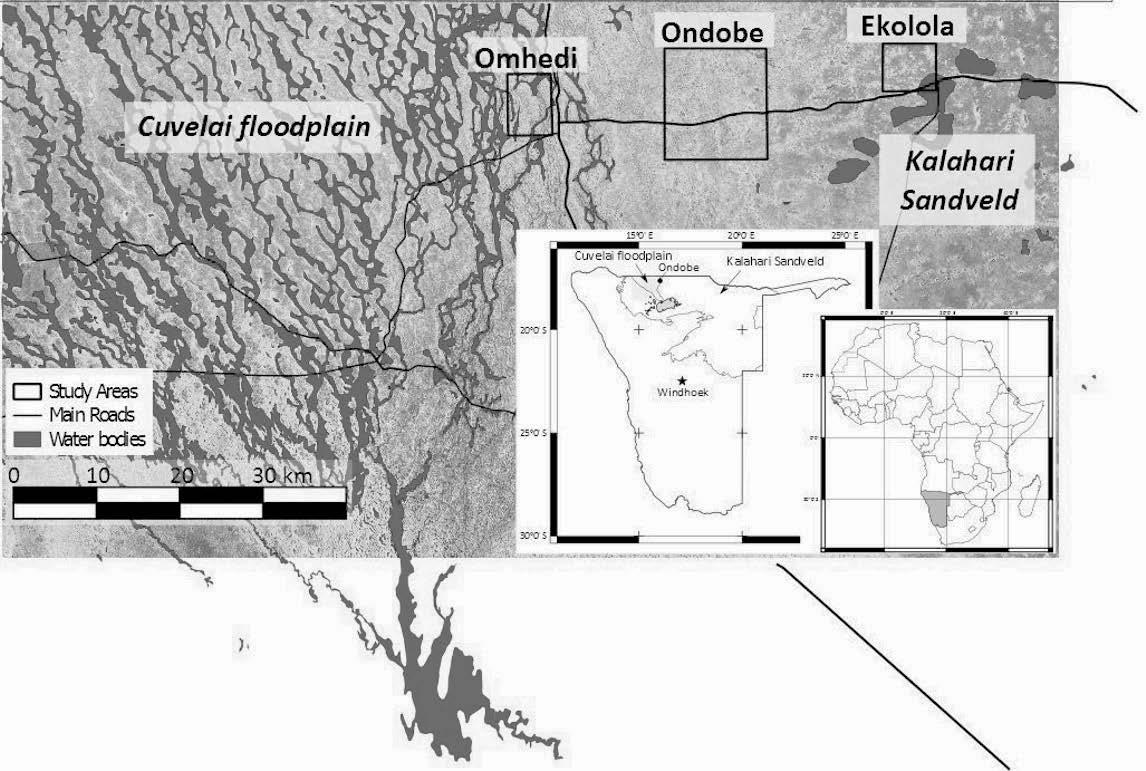
2.1.1.Ohangwenaregionandvillages Ohangwenaregioninnorth-centralNamibiaischaracterizedbytheendorheicCuvelaidrainagebasininthewesternmostpartandtheKalahari Sandveldinthecentralandeasternpart(Figure1).Theclimateissemi-arid andsubtropical,withlargeinter-andintra-annualvariability(Mendelsohn etal.2000).Oshikwanyama-speakingcommunitiesimmigratedintotoday’s Ohangwenaregionduringthelatenineteenthcenturyandmovedeastwards duringthefirstdecadesofthetwentiethcentury(Kreike2004).TheCuvelai drainagebasinhastoalargeextentbeenconvertedintocropfieldsforsmallscale(1-4ha)non-commercialagricultureofrain-fedpearlmillet(Pennisetum glaucum;Mendelsohnetal.2000).
Forourstudy,weselectedthreevillageareasinthewesternOhangwenaregion,basedondialecthomogeneity(Oshikwanyama)andenvironmental
Figure1:OverviewofAfrica,Namibiaandnorth-centralNamibia
MapsofAfrica,Namibiaandasatelliteimage(maps.google.com,retrievedinJuly2016) ofnorth-centralNamibiawiththeCuvelaifloodplain(west),theKalahariSandveld (east)andlocationofthethreestudyareas(squares).Waterchannels(iishana)and temporarypondsareinblue,vegetationandbaresoilappearingreenandinorange respectively. heterogeneity,includingvegetationandsoils(Figure1).Thesevillages(Omhedi,OndobeandEkolola)areonawest-eastgradient,representingedaphic andvegetationdifferenceswithdecreasinginfluenceoftheCuvelaiRivereastwards.Omhedi,thewesternmostarea,issituatedintheCuvelaidrainagebasinwithactiveephemeralwaterstreams(iishana).Ondobeislocatedbetween thedrainagebasin(mostlyinactive iishana)andtheKalahariSandveldthat lieseastofOndobe.EkololaischaracterizedbytheKalahariSandveldandis largelycoveredbydeeploosesanddeposits,forestsandextendedtemporary pans(Mendelsohnetal.2000).
2.1.2.Collectinglocalsoilknowledge Thedatacollectionforourstudywascarriedoutduringvariousextendedfield staysbetweenFebruary2013andJune2014.Weusedsemi-structuredinter-
viewstoconstructalocalsoiltypologyandtounderstandlocalfarmers’1 soil qualityperception.Mostinterviewswereconductedinthefarmhomestead, promotingabstractdiscussionaboutsoiltypesanddefinitions.Thisapproach waschosenbecauseithelpedtheresearcherstocreatealocalsoiltypology thatcanbeextrapolatedtoaregionalscale.However,someinterviewswere alsoconductedduringtransectwalksthroughthefieldorinfrontofsoilpits, bothleadingtodiscussionsconcerningmicro-levelsoiltransitionsrelevant formanagementpractices,assuggestedbyOudwaterandMartin(2003).
Intotal,weconducted87interviewson46farms,mainlyinOndobe(50 interviews/21farms).FromMarchtoJune2014,wecollectedadditionalinterviewsfromOmhedi(19interviews/15farms)andEkolola(18interviews/10 farms).Inmostcases,theheadofthehousehold(mostlymenabovetheageof 60)wasinterviewed,asthefamilymemberswithinthehouseholdssuggested this.Mostly,theinterviewlanguagewasOshikwanyamaandtranslationinto EnglishwasprovidedbyatranslatorfromOngwediva(Oshanaregion)withoutabackgroundinsoilscience.Thisyoungwomanwasthetranslatorfor theentiredurationofthedatacollectionperiod.Thecontinuouscollaborationenabledtheresearchteamtobuildacommonknowledgeandlanguage. Thequalityoftheinformationcollectedimprovedduringtheperiodofstudy, giventhatboththeresearchers’knowledgeconcerninglocalsoilsandtheinterpreter’sskillsconsiderablyincreased(similarobservationwasdoneby,for example,OudwaterandMartin2003).
Alltheinterviewswereaudio-recordedandtheEnglishoraltranslation wastranscribed.Themostrelevantpartsoftheinterviewsweretranscribed inOshikwanyamaandtranslatedintoEnglish.WeusedMAXQDA11(VERBI GmbH,2014)toorganizeandclassifytheinterviews.
2.1.3.Scientificsoildescription Wescientificallydescribed28soilprofilesincultivatedfieldsinOndobe(21), Omhedi(3)andEkolola(4).Theseprofileswereclassifiedbythefarmersas omutunda (14), ehenge (4), omufitu (4), elondo (3)and ehenene (3).Weselected more omutunda fortheanalysisgiventhehighagriculturalvalueofthislocal soiltypeanditsprevalenceinthecultivatedarea.
1Allinformantsinvolvedinthisstudyarecalledfarmers,despitethefactthatcropcultivationisnotnecessarilytheirmaineconomicactivity.
Weclassifiedthedescribedsoilsusingtwoscientificsoilclassifications: theWorldReferenceBaseforSoilResources2014(WRB;IUSSWorkingGroup WRB2014)andtheFertilityCapabilitySoilClassification(FCC;Sanchezet al.2003).Bothrequiretheanalysisofvariouschemicalandphysicalpropertiesandexcludepropertiesthatreflectshort-termchanges.TheWRBaims atidentifyingpedologicalstructuresandusespropertiesthataremostlythe outcomeoflong-termsoilevolution(asidefromanthropogenicsoilmodifications).Ontheotherhand,theFCCaimsathighlightinglimitingfactorsfor cropproduction,specificallyfortropicalsoils,anddealswithproperties“that areeitherdynamicattimescalesofyearsordecadeswithmanagement,as wellasinherentonesthatdonotchangeinlessthanacentury”(Sanchezet al.2003:157).
Bothclassificationspresentahierarchicalclassificationstructure.The WRB’sReferenceSoilGroupsare“differentiatedmainlyaccordingtoprimary pedogeneticprocess[es]”(IUSSWorkingGroupWRB2014:5)andtheFCC’s substratereflectsthesoiltype(texture).
2.1.4.TheOshikwanyamasoilunits Thebodyofmixedlocal-technicalknowledgesummarizedinTable1istheresultofpreviousstudies(Hillyeretal.2006,NewshamandThomas2011,RigourdandSappe1999,VerlindenandDayot2005)andtheinterviewsconducted duringthecurrentstudy.Intervieweesdescribedthelocalsoilunitsmostly basedonsoilconsistency(hardorsoft)andcolourshade(darkorlight),as wellasthesensitivitytowaterloggingconditions.2 Thesepropertiesarerelatedtosoilsuitabilityforcultivation-forinstance,workabilityandfertility. Soilhydrologyhasastronginfluenceonagriculturalsuitabilityandtherefore onlocalsoiltypologyand,giventherainfallirregularity,bothwaterlogging andsoildroughtoccurfrequentlyduringtherainyseason.Thefivesoilunits describedinTable1canbeusedascornerstonesforsoilqualityevaluationas theyrepresentimportantsoilprocessesandcharacteristicsforcropcultivation(waterloggingrisks,texture).
2Waterloggingconditionsindicatesoilsaturationwithwaterandstronglyinhibitroots’ respiration.
Soilhydrologyhasagreatinfluenceonsoilproductivity,mostlyinrelationtorainfallvariability.Indeed,bothwaterloggingandsoildroughtconditions,evenforshortperiodsoftime(afewweeks)duringthegrowingseason, stronglyreduceyields.Theoccurrenceoftheseshorteventsisnottakeninto considerationineithertheWRBortheFCC.
Basedonourfindings,wearguethatthetranslationoflocalsoiltypesinto internationalclassificationsisnotrelevanttoevaluatesoilqualityinnorthcentralNamibia.Indeed,thetwoselectedinternationalclassificationsusesoil textureandsoilhydraulicconductivity;bothtreatpropertiesdifferentlythan farmerswould,yetthesepropertiesarehighlyrelevantinthelocalcontext andstronglyinfluencesoilproductivity.Despiteaseemingmisfit,thelocal knowledgeandtheinternationalsoilclassificationcomplementeachother. However,theyaremorelikelytobeofinteresttoresearchersandexpertsthan tothefarmersthemselves.
2.1.6.Advantagesofcombininglocalandscientificknowledges
Includingfarmers’knowledgeandtryingoutasharedresearcharrangement helpedustohighlightimportantlimitingfactorsforagriculturalproduction inthelocalcontext(e.g.soilwateravailabilityduringtheearlygrowingstage)andsoilcharacteristicsthataredifficulttodetectduringconventionalsoil surveys(waterloggingconditions,micro-scalesoilheterogeneity).Forthese reasons,wesupporttheuseoflocalassessmentasanentrypointtounderstandandassesssoilqualityattheregionallevel.Wesuggestthatstepping backfromnumericalandquantitativedata-withoutexcludingthem-can improvesoilfertilityassessmentsonlocalscales.Incomparisonwithnaturalsciencesurveys,localsoilknowledgepresentsmanyadvantages.Firstly,it assessesqualitybasedonneeds;secondly,itrequiresnolaboratoryanalysis; thirdly,itincludesthemostrelevantcharacteristicslocally-forexample,soil watercharacteristicsandhumidityvariability;andfourthly,ithelpstoreduce thenumberofvariablesthatmustbeassessedforalocallyrelevantsoilqualityevaluation(inourcase,forpearlmilletcultivation)inaspecificclimate. Modernmethodscan,however,adequatelycomplementthelocalsoilknowledgebyprovidingstandardization(NiemeijerandMazzucato2003)andtools forextra-regionalcommunication.Therefore,thetwosoilknowledgesystems shouldbeusedinacomplementaryway.
2.2.Issuesregardingtheparticipatoryapproachinnatural sciences Byincreasingourunderstandingoflocalsoilknowledgewefacedimportant difficulties.Wesupposedthatsimilarissuescameupinotherstudiesthataimedtounderstandlocalsoilknowledgeandthereforereflectedonourexperiencesagainsttheliterature.Wetendedtoconcludethatdespitetheusefulness oflocalsoiltypologyforsoilqualityassessments,theuseoflocalknowledge haslimitationsinthecommunication,whichwillbeexplainedbelowusing directquotesfromourinterviews.
2.2.1.Translationsoftheconceptof“soil”
Forsoilscientists,soilsareverticalsuccessionsofhorizons,whichisarestrictedconceptthatisnotrecognizedinmanycultures(Barrera-Bassolset al.2009).TheOshikwanyamaword edu [translationoftheword“soil”]integratesbroadconceptsrelatedtospace,fromlandscapetosand.Therangeof meaningsof edu ledtomisunderstandingsandconfusionsaboutthespatial scaleduringmanyinterviews.Inparticular, omutunda and omufitu wereused topointtogenerallandscapesaswellastospecificsoiltypes:
“Alloverhere,peoplearein omufitu area.Theothersideofthevillageisin omutunda.Mostlyyoufind ehenge in omutunda area(LM,80,Oipapakane).4 Butat omufitu iswhereyoufind ehenge (AA,70,Oipapakane).
Alltheparcel,likeMartha,Kelly,Kalola,here,wearein omutunda area,but therearedifferentsoiltypes,likesmall omahenene,or ehenge.Butinthis omutunda area,youcannotfind efululu”5 (LS,65,Ondobe).
Thesequotesshowthatthereisaneedtocontextualizelocalknowledgeandto acknowledgevariationwithinspecificsoiltypesrelevantforlocalusers.For example,largeareaslikevillagesarereferredtoas omutunda (Ondobevillage)or omufitu (Ekololavillage),therebyconsideringandunderstandingthese unitsaslandscapesfeatures.Withinthiscontext, omufitu wasdescribedasan “areathatisnotcleared[oftrees]evenalittle”(KS,65,Ohengobe).However, shortlyafter,whenthefocusshiftedtosoils,thesameinformantsaid:“IfI
4Tokeeptheinformantsanonymous,weusedacodethatindicates:1)atwo-letter name;2)thefarmers’age;and3)thestudyareaofthefarm. 5 Efululu mostlyreferstoatypeoffineloosesand.
“Omufitu,theyaredifferent.Ithinkthatanareaiscalled omufitu ifthearea isnotclearedfromtrees”(KS,60,Ohengobe).
“Youcanfind omufitu thatwillgiveyougoodfood[…],butsomeofyour neighbourswith omufitu mightnotgetanythingfromit”(NW,70,Etomba).
In omufitu,soilsdidnotmattermuchinarelativelyrecentpast,astheyweremostlykeptforfirewoodandgrazing.Therefore,soilcharacteristicsare notimportantandsoilshavedifferentqualities.However, omufitu istodayincreasinglyclearedandcultivated,andthenumberofdistinguished omufitu soiltypesmaythereforegrowwiththerisingcultivationrate(forasimilar exampleineasternBurkinaFaso,seeNiemeijerandMazzucato2003).
2.2.4.2. Omutunda andtherelativityofsoilqualityinrelationtothe
surroundingenvironment Incontrastto omufitu,soilcharacteristicsarewelldefinedfor omutunda in theliteratureandduringtheinterviews,becausethesesoilshavebeenlargely turnedintofields.Thisaccuracydoesnotmeanthatall omutunda aresimilar, buttheyshareasetofcharacteristics.Almostallinformantsdescribedthem ashardanddarksoils.
Thequalityofasoilinafieldisoftencomparedwiththeothersoilsin one’sownfields,however,andsoilsaredefinedcomparatively,asobservedby Birmingham(2003).Furthermore,ithasbeenobservedinvariousstudiesthat soilqualityascriptionsoflocalsoiltypesmayvarydependingonvariousparameterssuchasindividualperceptions(Barrera-Bassolsetal.2006),intended uses(e.g.agriculturalversushousing;GrayandMorant2003,Niemeijerand Mazzucato2003)orspecificenvironmentalconditionsinthesurroundings (GrayandMorant2003).
Omutunda wasdefinedasthebestsoilforpearlmilletbymostinformants.
“Therearedifferenttypesof omutunda.AtTateS., omutunda isnotgoodbecausethereisstone;itwillonlybegoodsoilwhenyouaddcowdung”(LN, 65,Omhedi).
Omutunda is“whereyoufeed”(CK,65,Ohandiba),andfarmerstendtodescribethemostproductivepartoftheirlandas omutunda.The omutunda describedinorclosetotheCuvelaidrainagesystem(OmhediandOndobe)is fineranddarkerthanthe omutunda foundintheKalahariwoodlandbiome (Ekolola).Wecanshowthisdifferenceusingtechnicalparameters(pH,fine particlescontent,colourshade;Figure3).Thisresultindicatesthatthepro-