Dominic Lowell Architecture Portfolio
This portfolio documents my creative response to three undergraduate studio projects. Careful consideration was taken to address the unique aspects of each design. These projects are influenced by the studio prompt, site location, and constructive criticism that led to intentional design choices throughout. Personal ideas, ideas from partners, studio requirements, and feedback from professors and peers were synthesized to create these projects.
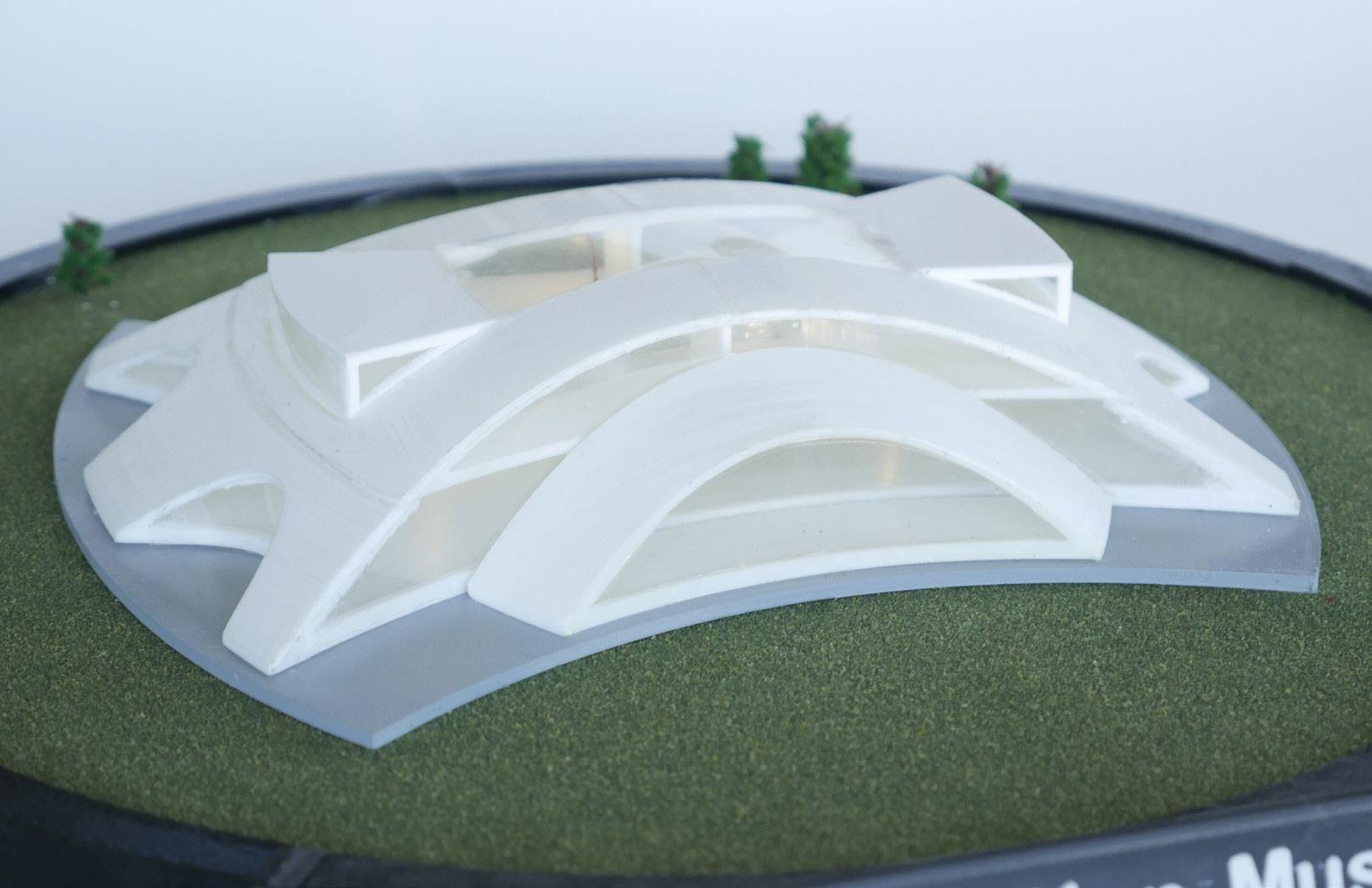
Beginning each chapter is an image of the final physical model. The time and effort taken on each final model represents an equal amount spent perfecting the design through countless sketches, iterations, and digital CAD models to balance the influences mentioned above. The physical models are also intended to convey the practicality of the projects, to take them beyond the conceptual and abstract world of the studio class and into three-dimensional space.
Each project showcases my ability to adapt and respond to diverse design challenges, focusing on creating spaces that are both practical and aesthetically striking. As an aspiring designer, I strive to execute design decisions where form follows function. Throughout my academic journey, I have developed a deep appreciation for the design process and being intentional to produce exceptional designs.
Jaycee Park Community Center
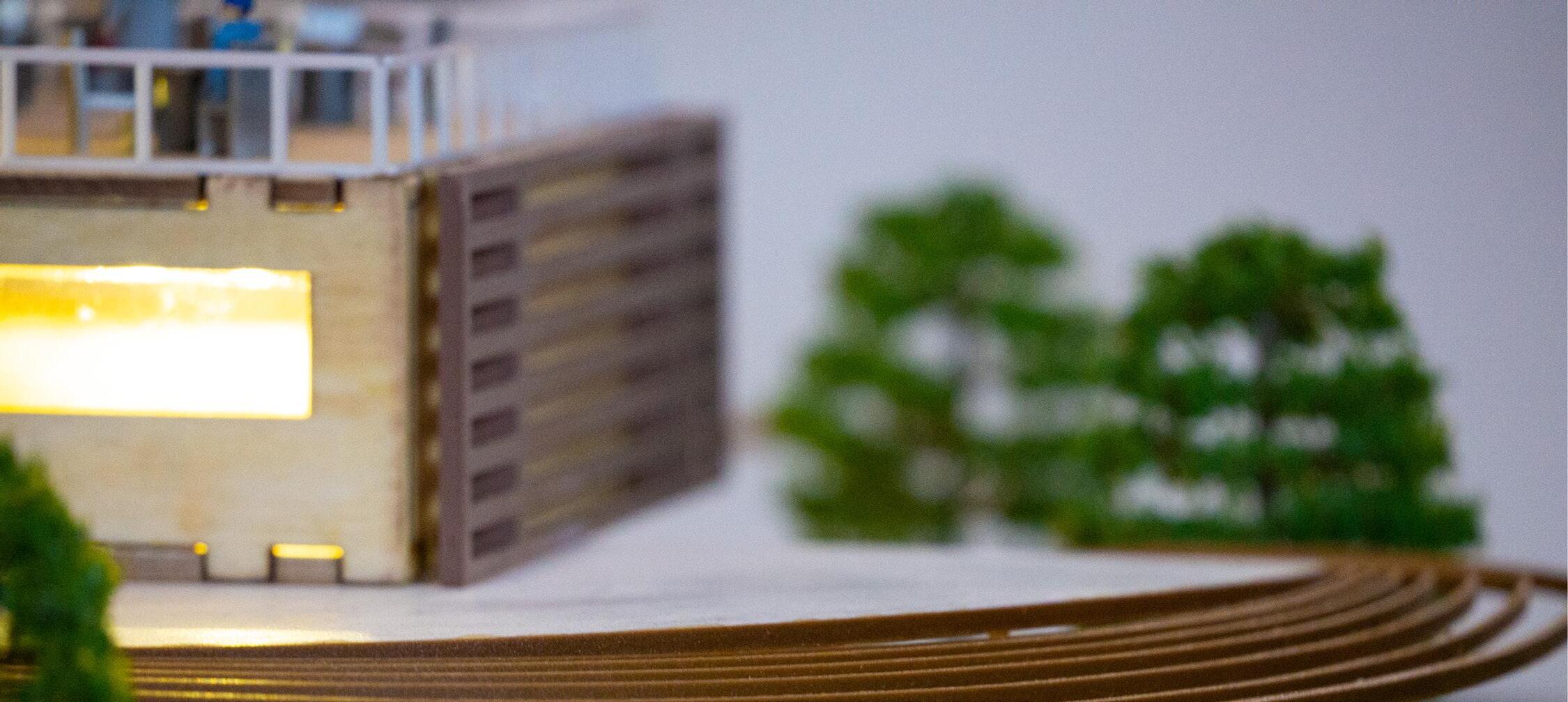
Pages 1-8
The BioIntegration Museum

Pages 9-16
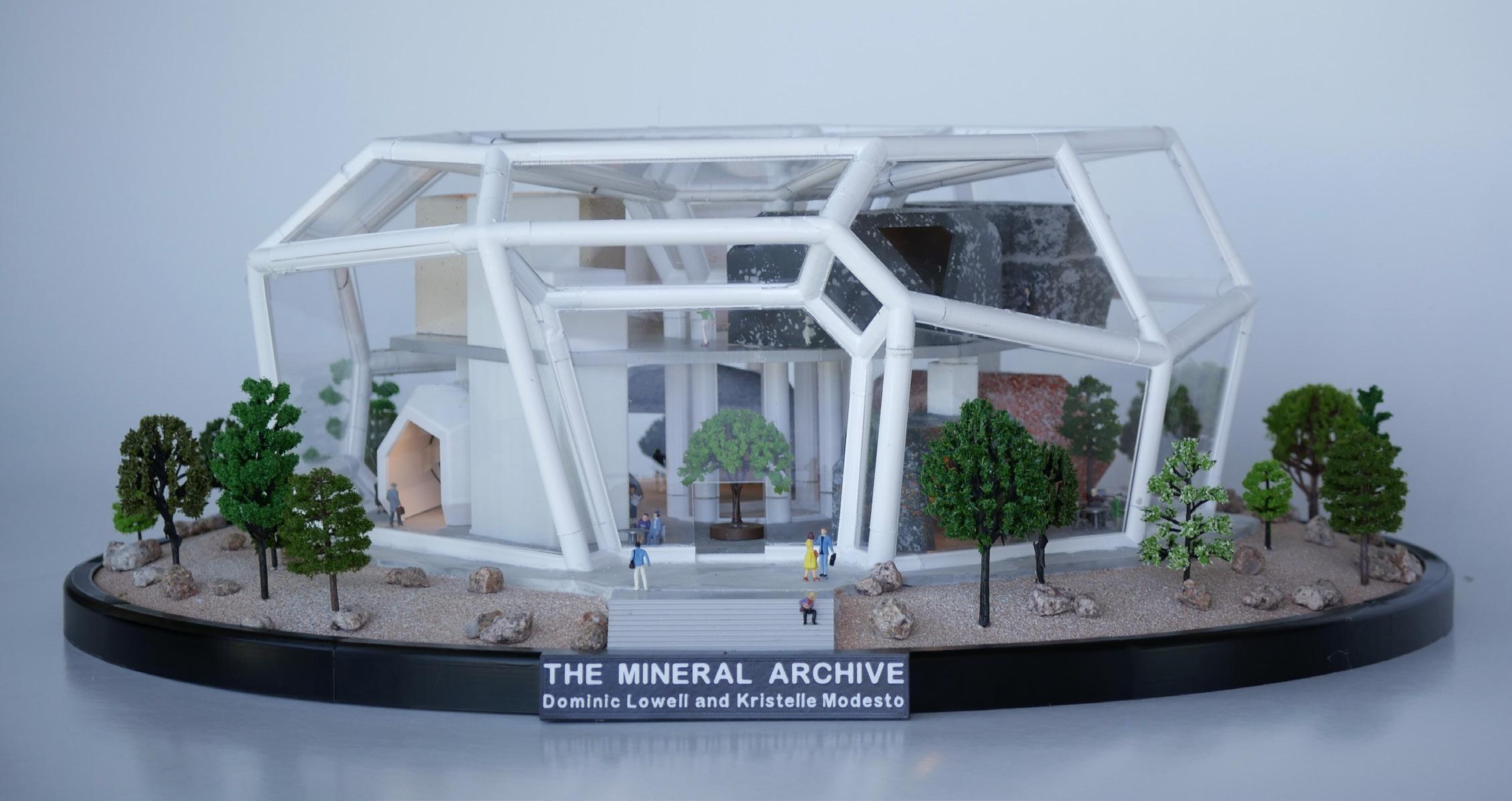
The Mineral Archive
Pages 17-24
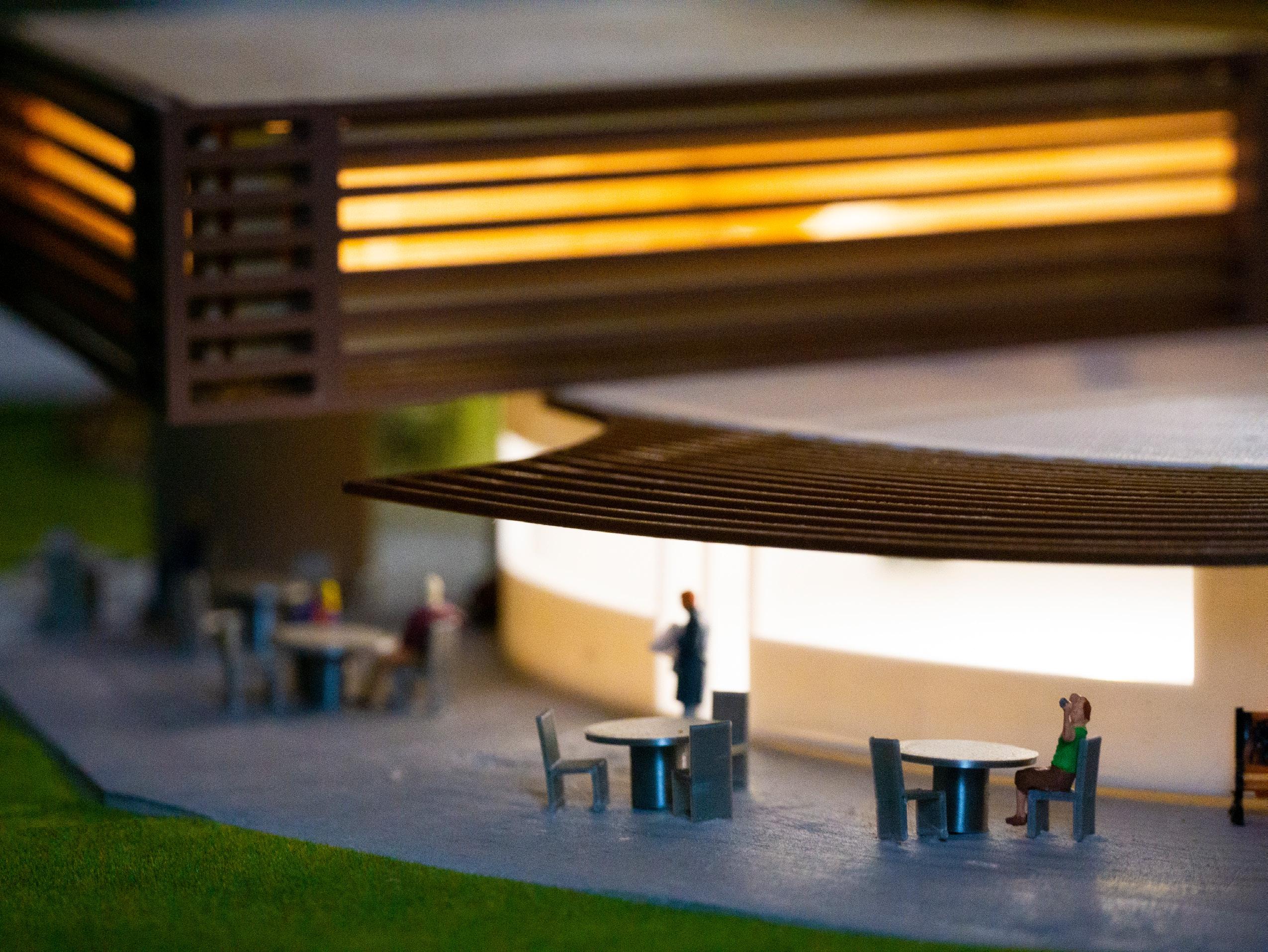
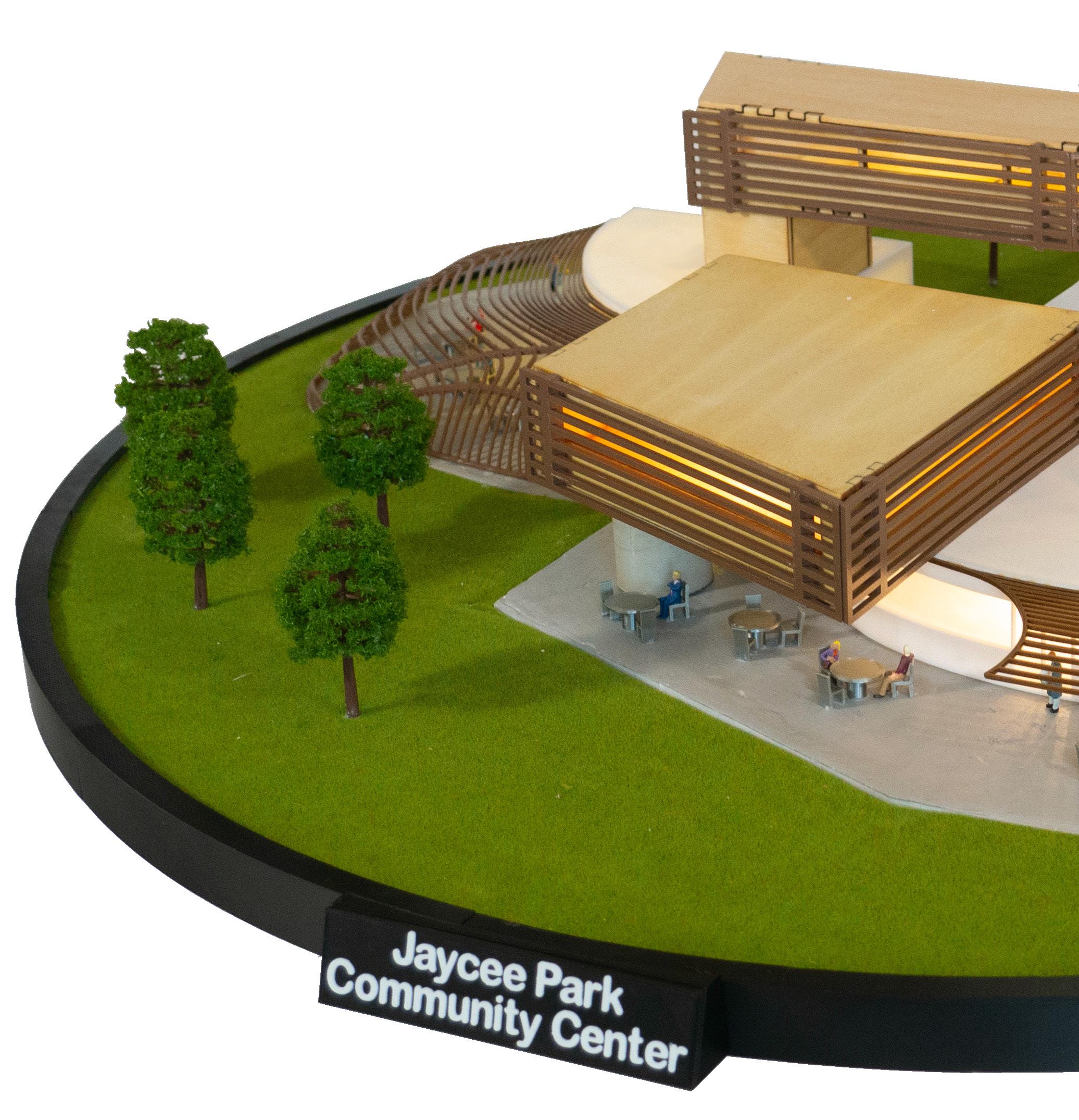
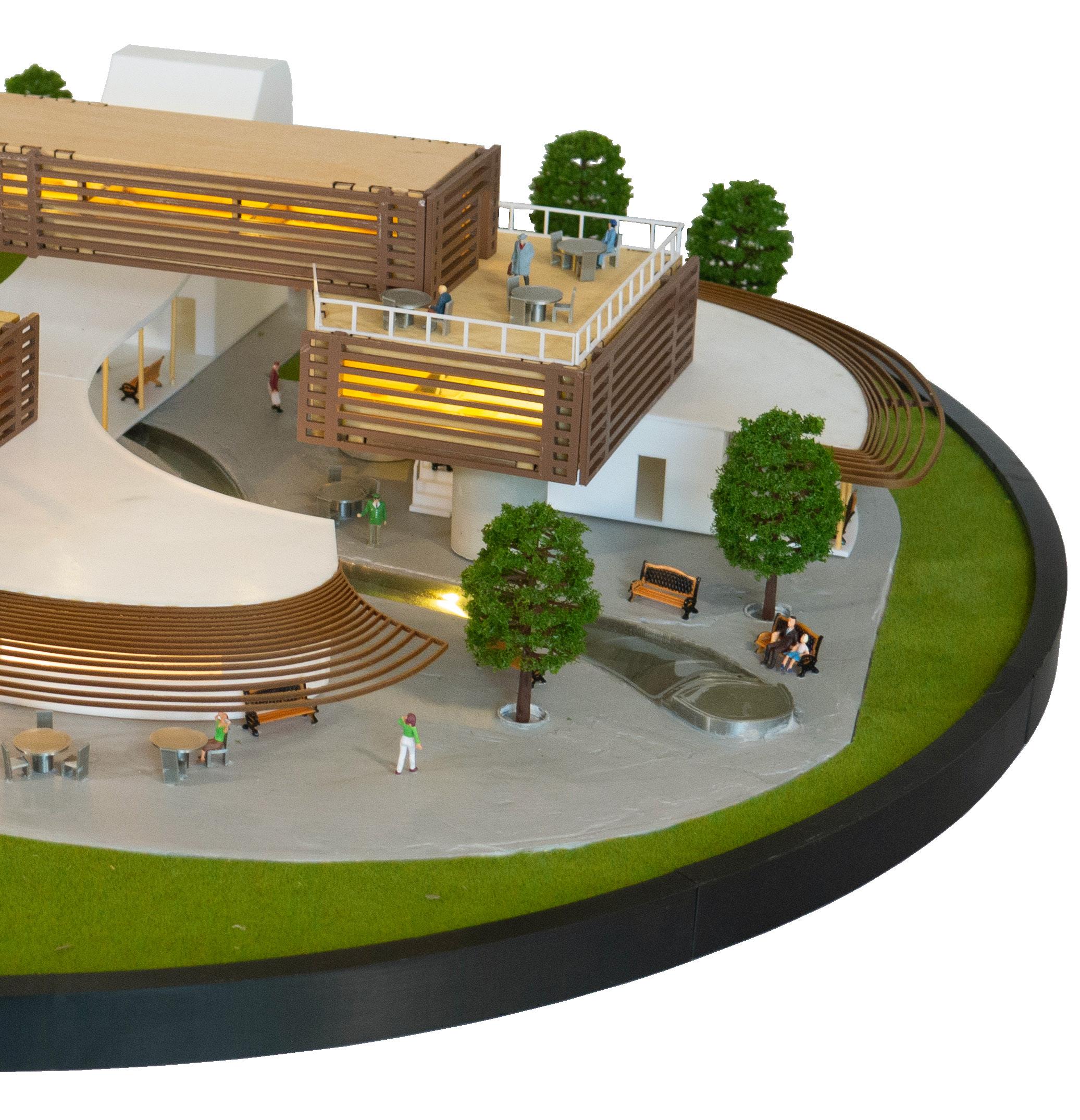
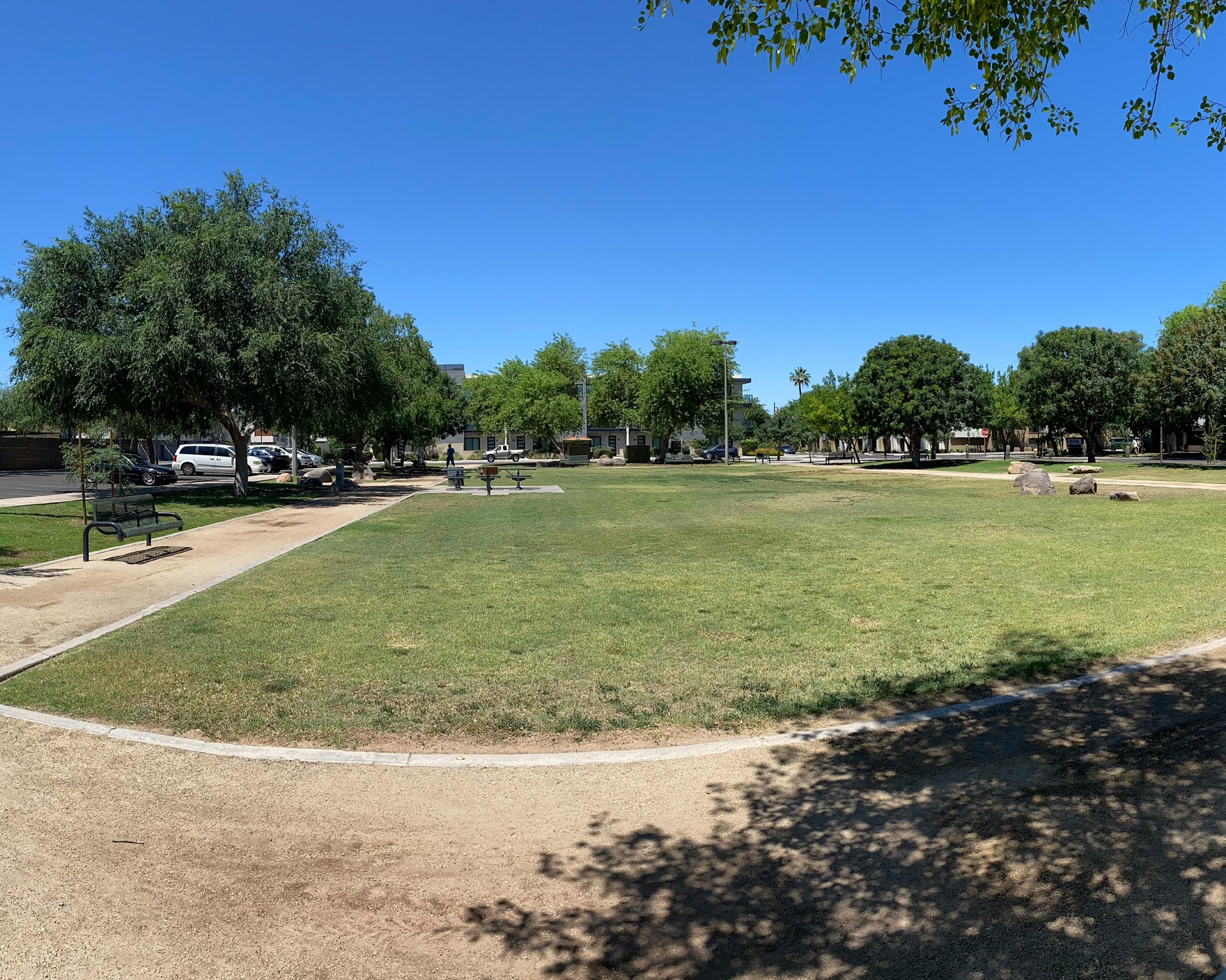
Sited in Tempe, Arizona, the Jaycee Park Community Center is designed to the community voiced issues of heat, homelessness, and lack of seating. This project is a collaborative design by Dominic Lowell and Jack Carleson.
Final Physical Model


Exploded Axon
Level 3: Employees
- office space
- 1500 square feet
- facility and maintenance personell
Level 2: Organizations
- classroom
- event hall
- 1000 square feet
- reservation required
Level 1: Community
- gym, clinic, kitchen
- 2500 square feet
- serves the general community
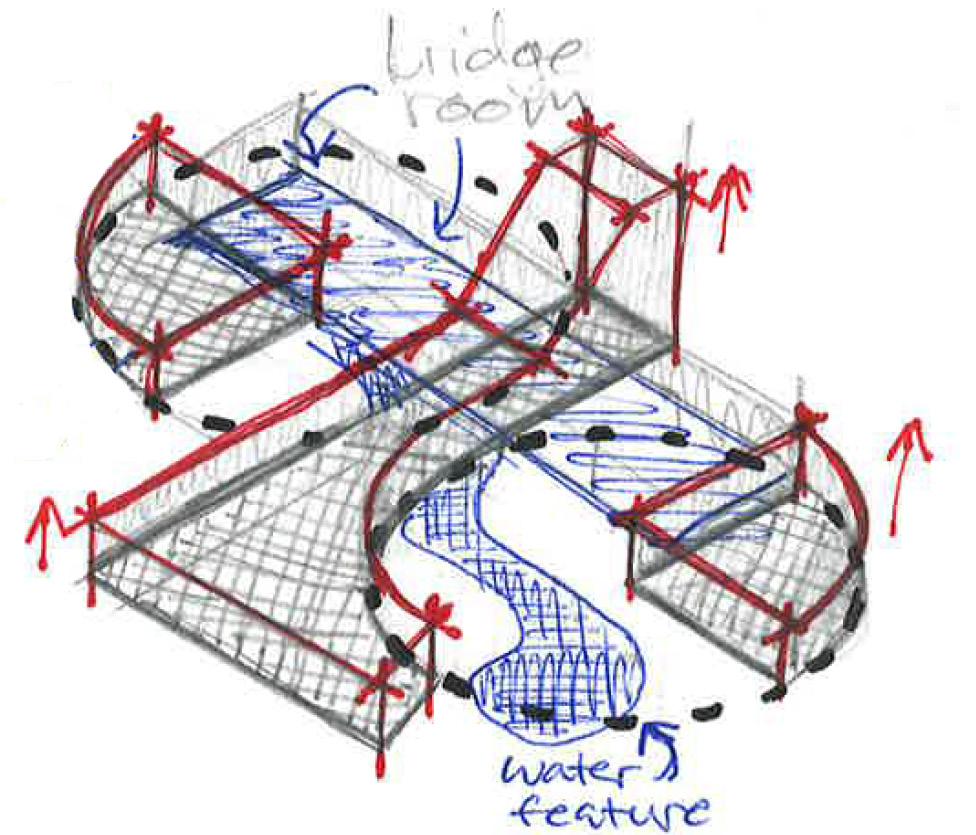
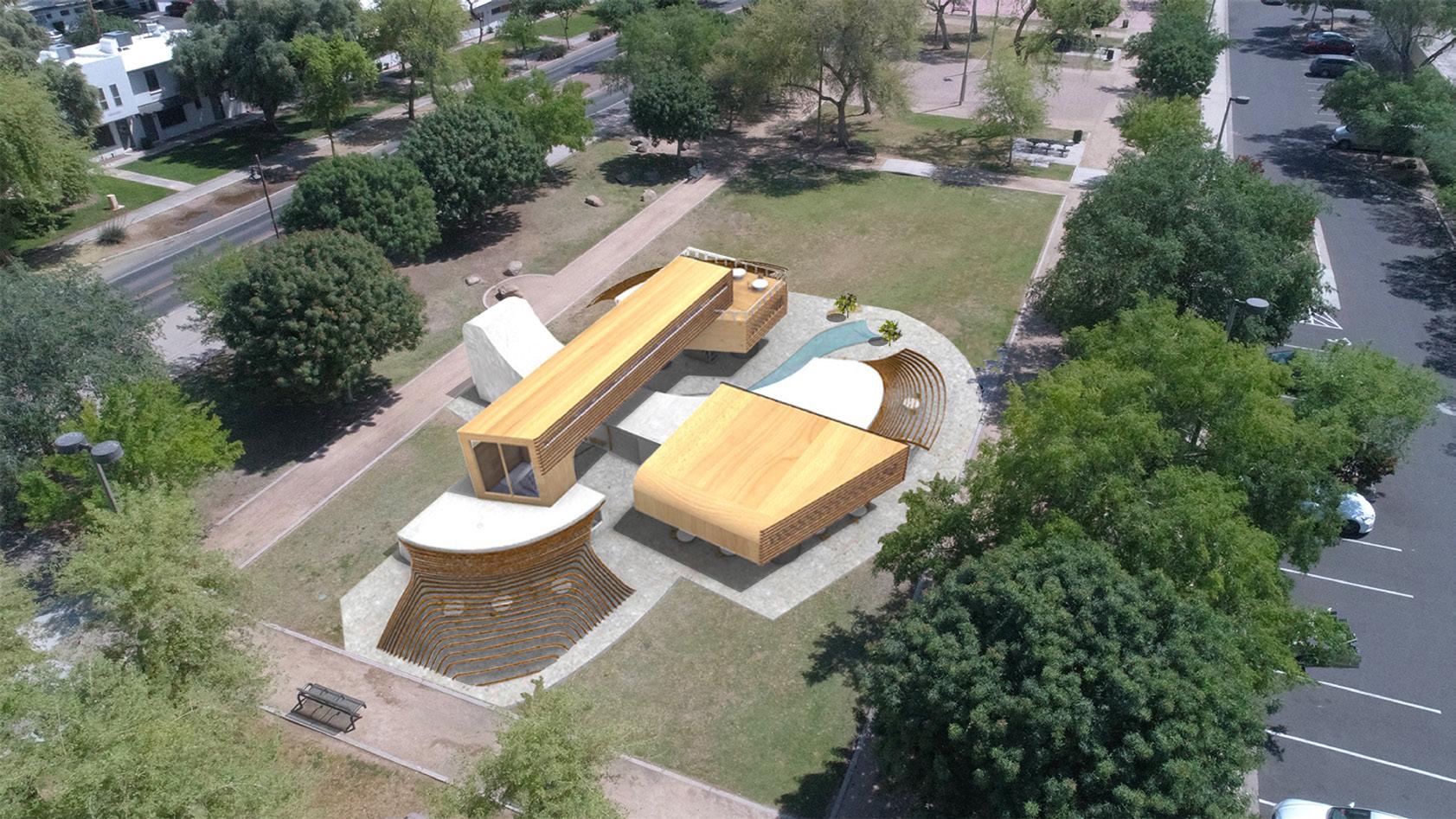
The west side of the park was selected for the site for its shade, existing circulation, and miniamal disruption to existing site conditions, like sports fields or playgrounds.
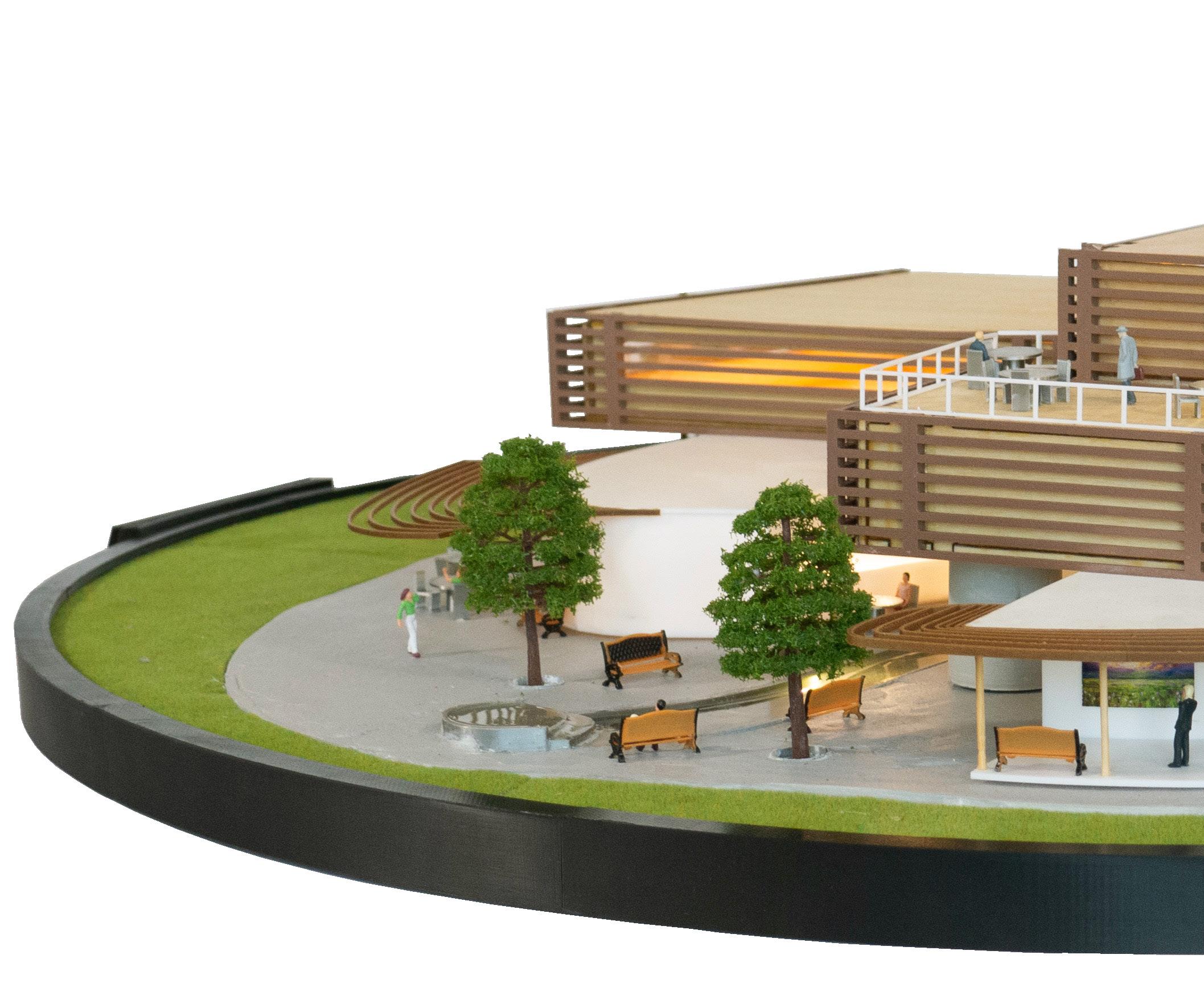
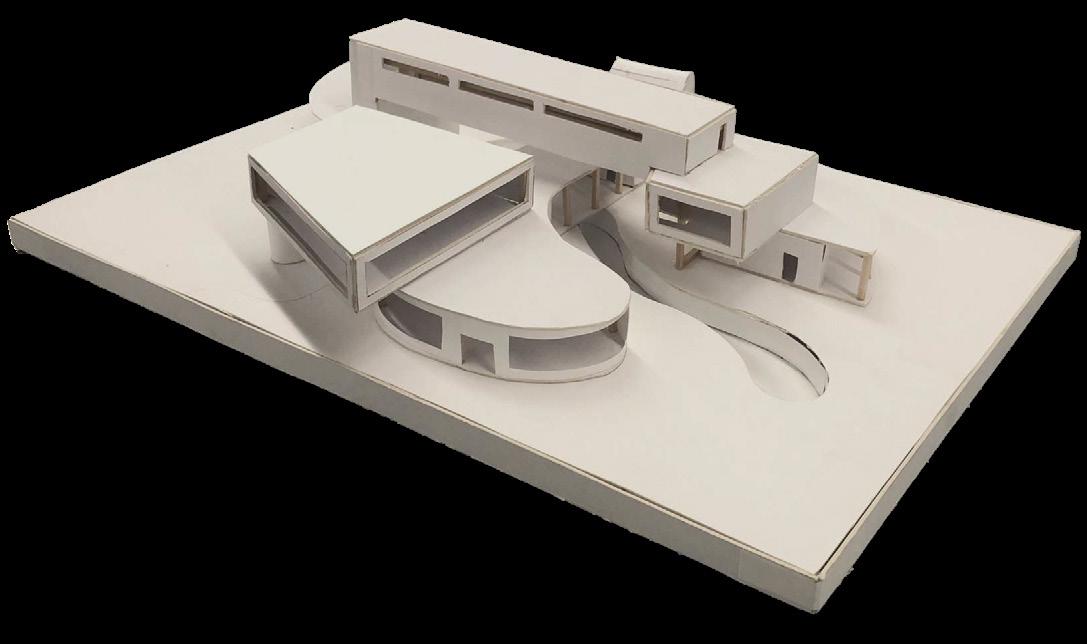
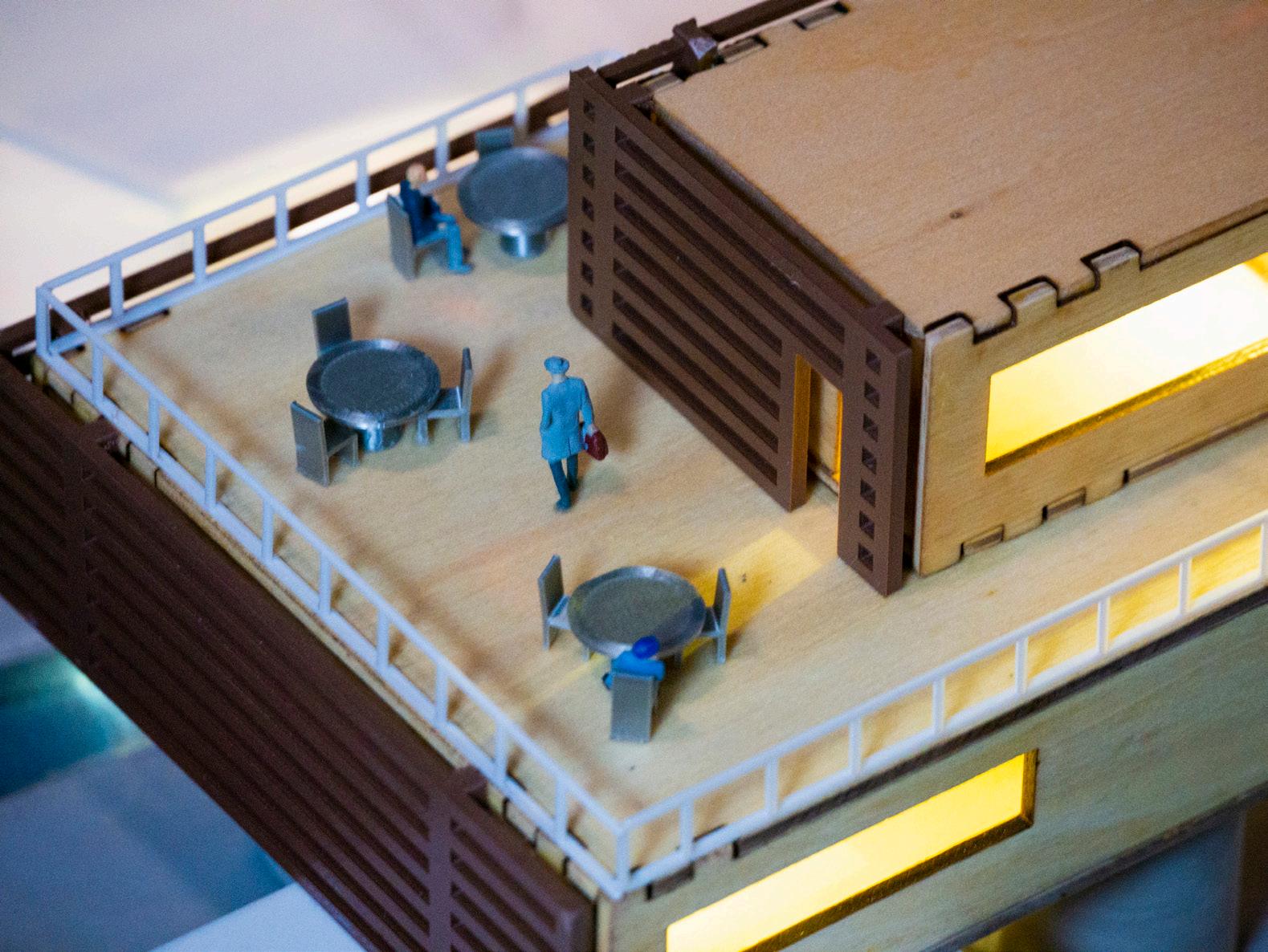
A preliminary, 1/16 inch scale model was made to investigate massing, circulation, and form. The final model makes extensive use of 3D printing, CNC milling, and laser cutting. The interior lights are powered via wires running through conduits in the concrete foundation that connect each room.
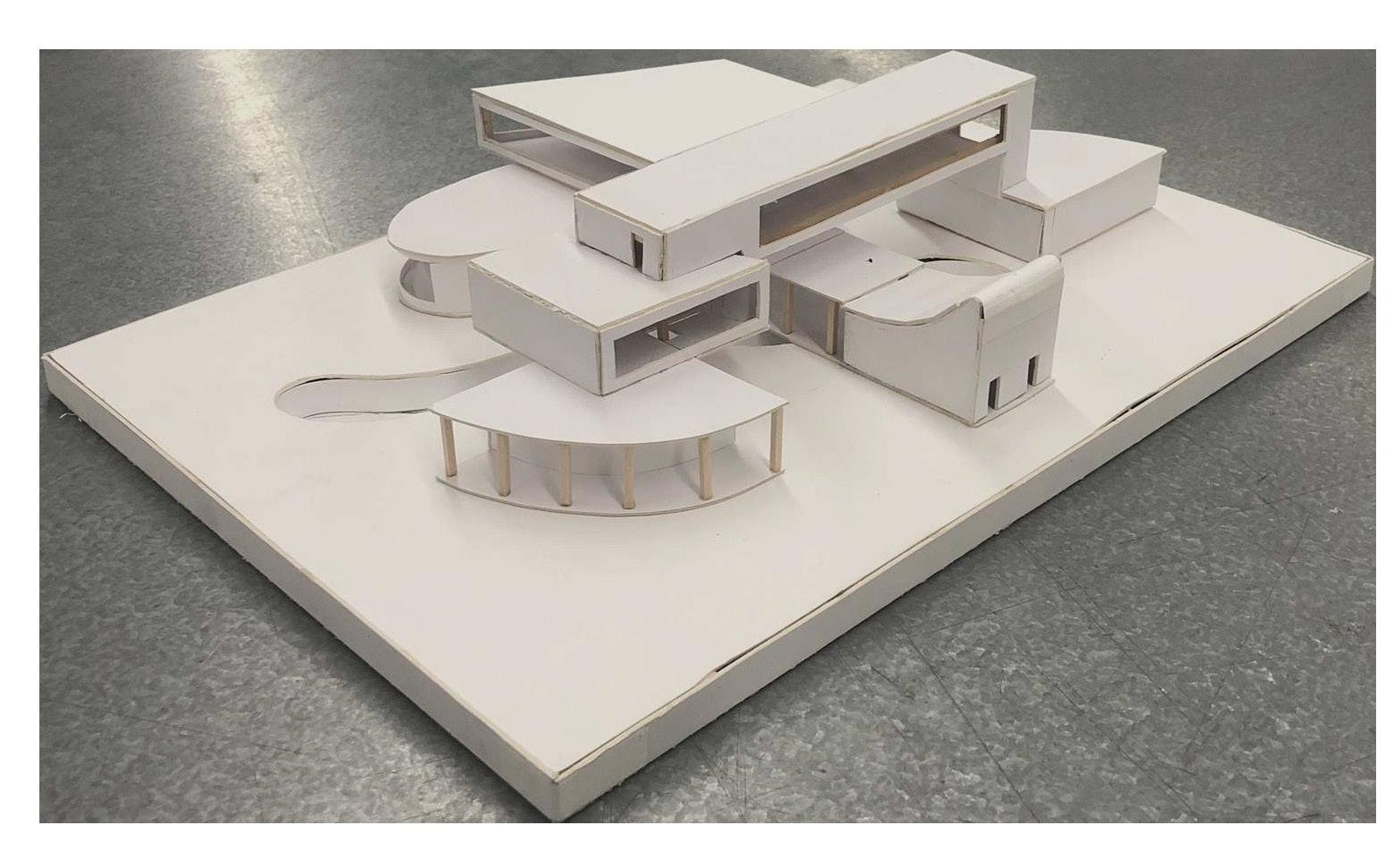
Preliminary 1/16th Scale Model
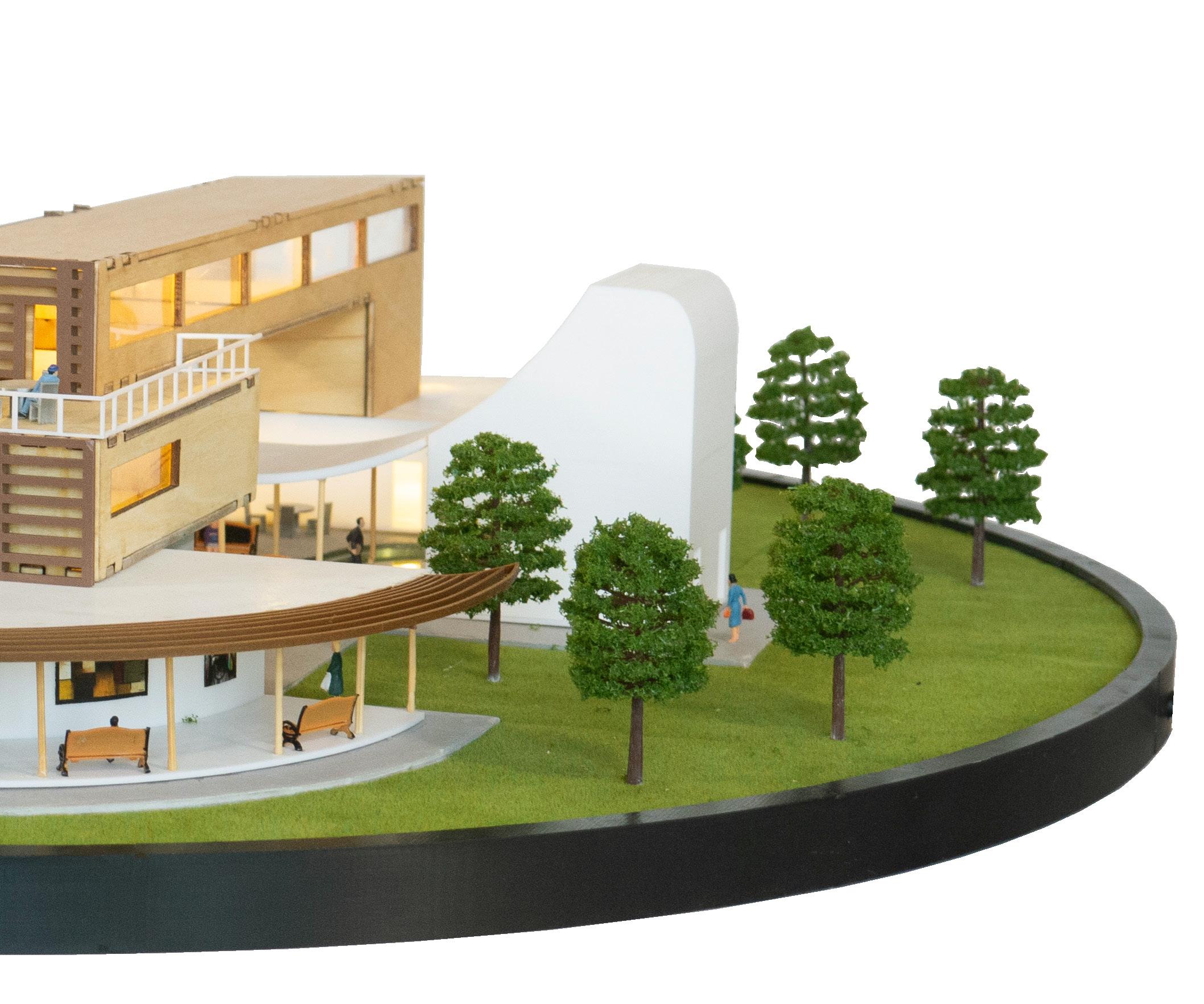
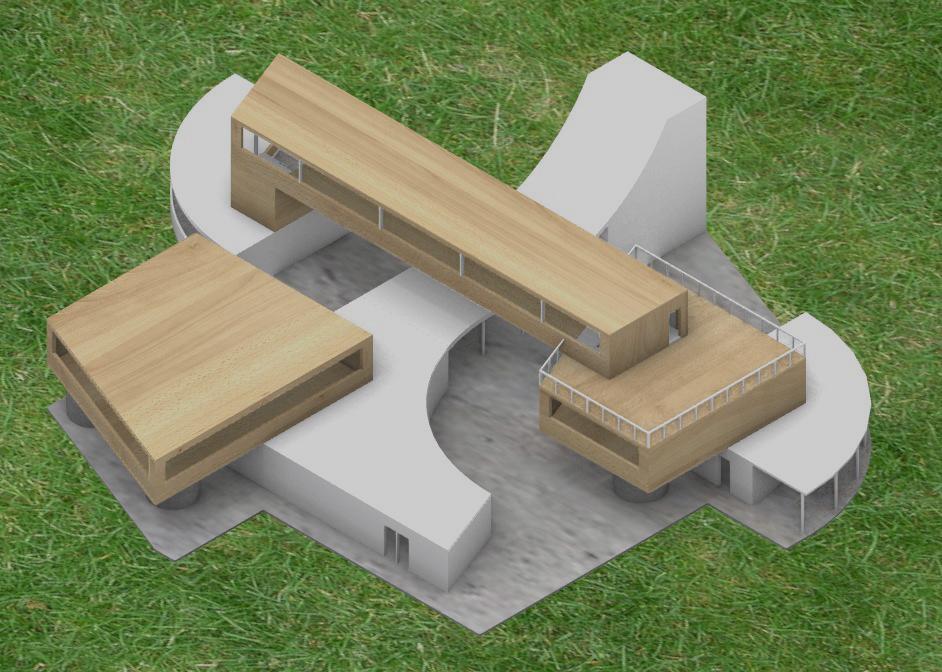
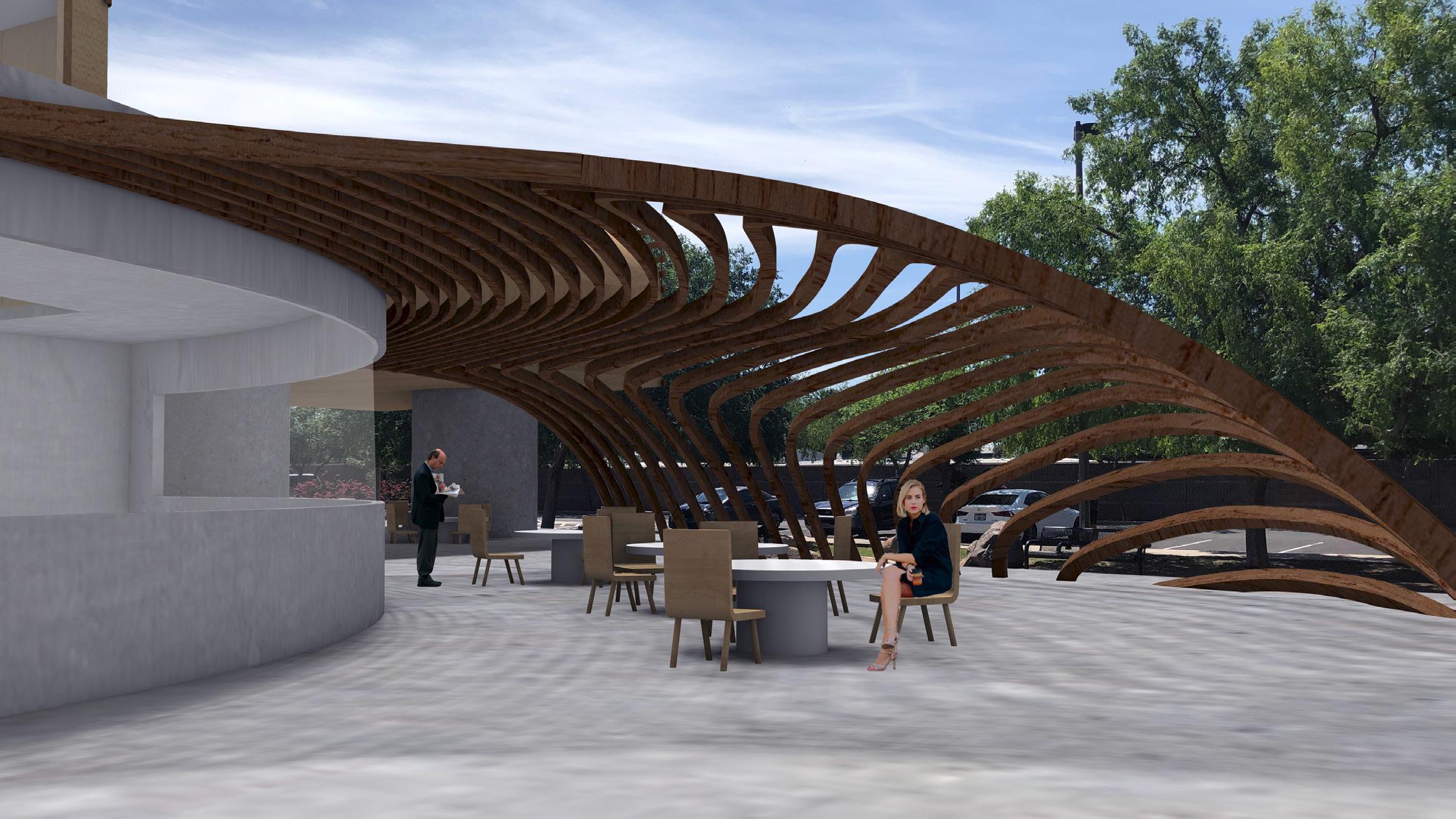
The final model and renders convey how the project answers the issues voiced by the community. Plenty of outdoor seating exists under cantileverd rooms and around the peaceful river fountain.
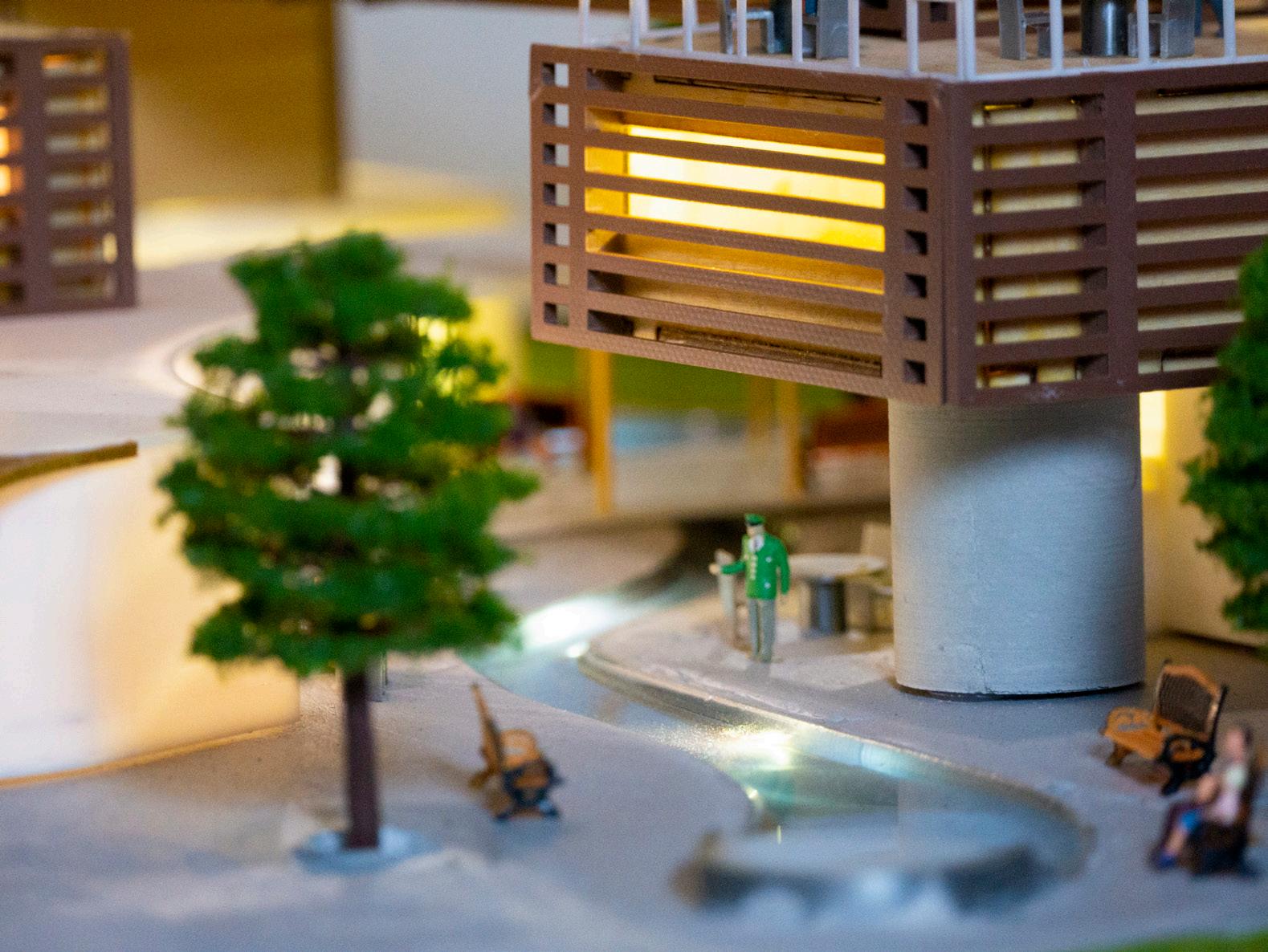
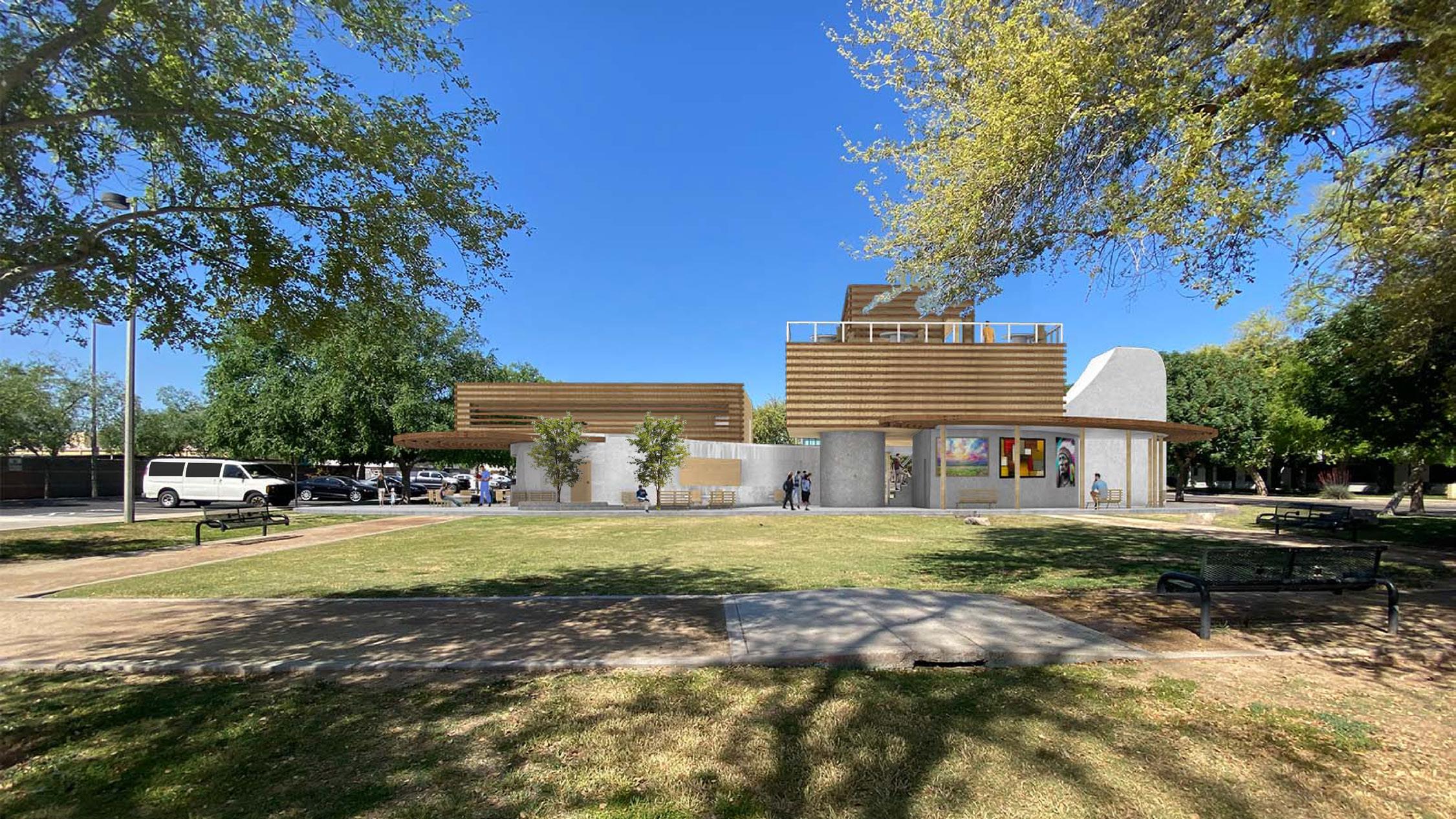
To mitigate heat and direct sunlight from coming through the windows, shade structures facades were integrated onto the south and east side of the building, where the sun is the strongest.
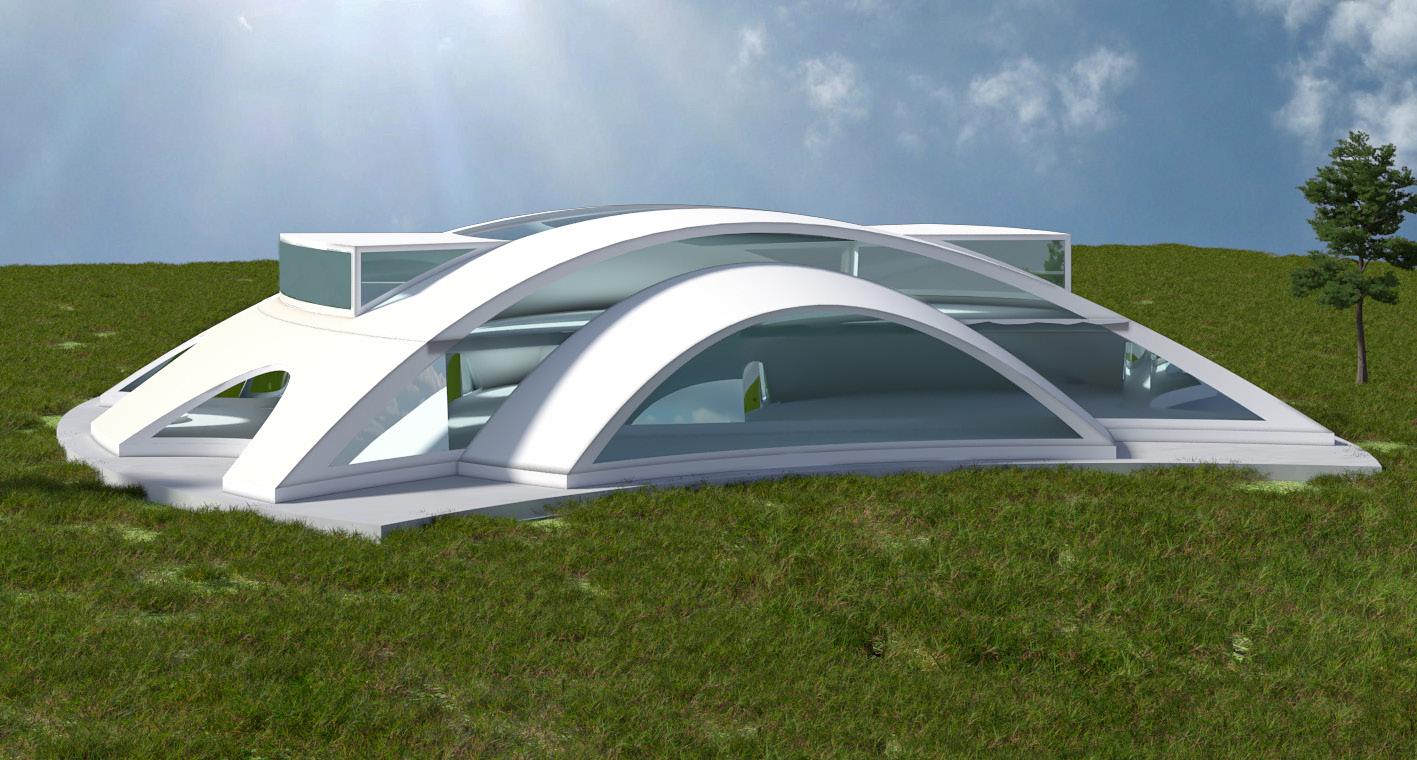
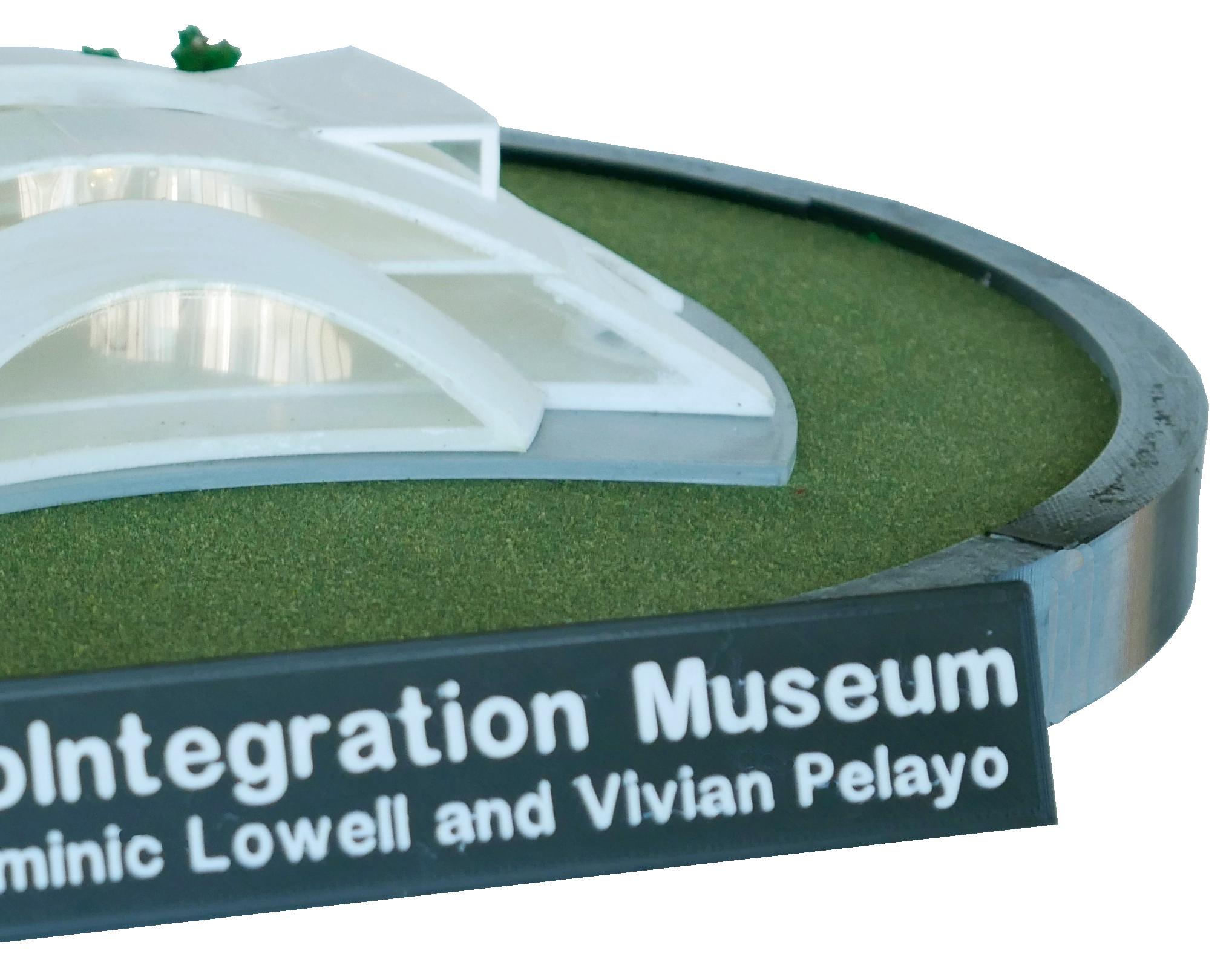
Sited in Phoenix, Arizona, the BioIntegration Museum is a collaborative design by Dominic Lowell and Vivian Pelayo designed to study of the combination and representation of curved form.
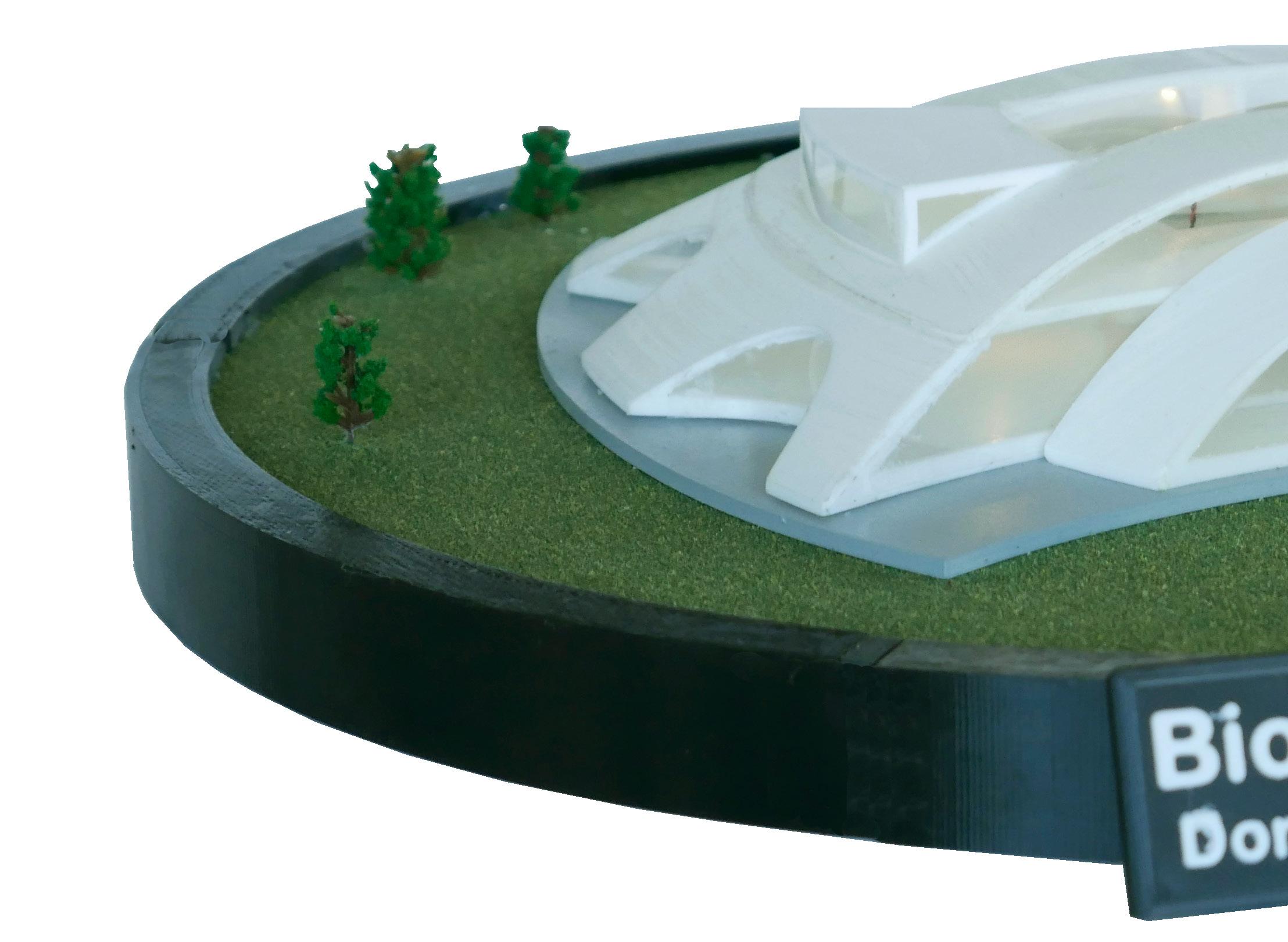
This studio focused on the translation of two rounded objects into an exterior architectural form. The two objects chosen were a pinecone and an earbud. A theme was derived from each object to corroborate the design decisions.
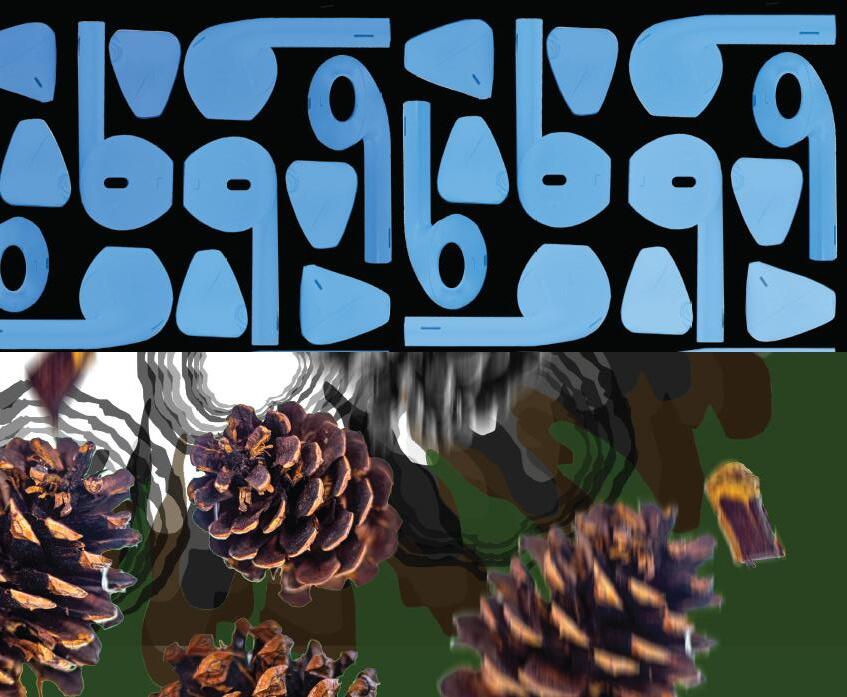
Integration was selected as the earbud’s research theme, as it’s ergonomic surfaces are designed to integrate sound with the human body.
Biomimicry emerged as the pinecone’s research theme as it’s natural parametric geometry can be emulated in the form of a building.
The site resides in a thriving riparian zone, directly south of the Salt River dry riverbed. It receives an average annual rainfall of 7.2 inches and approximately 300 days of sun. The site also features 5 miles of paved and dirt trails and is home to over 200 bird and wildlife species.

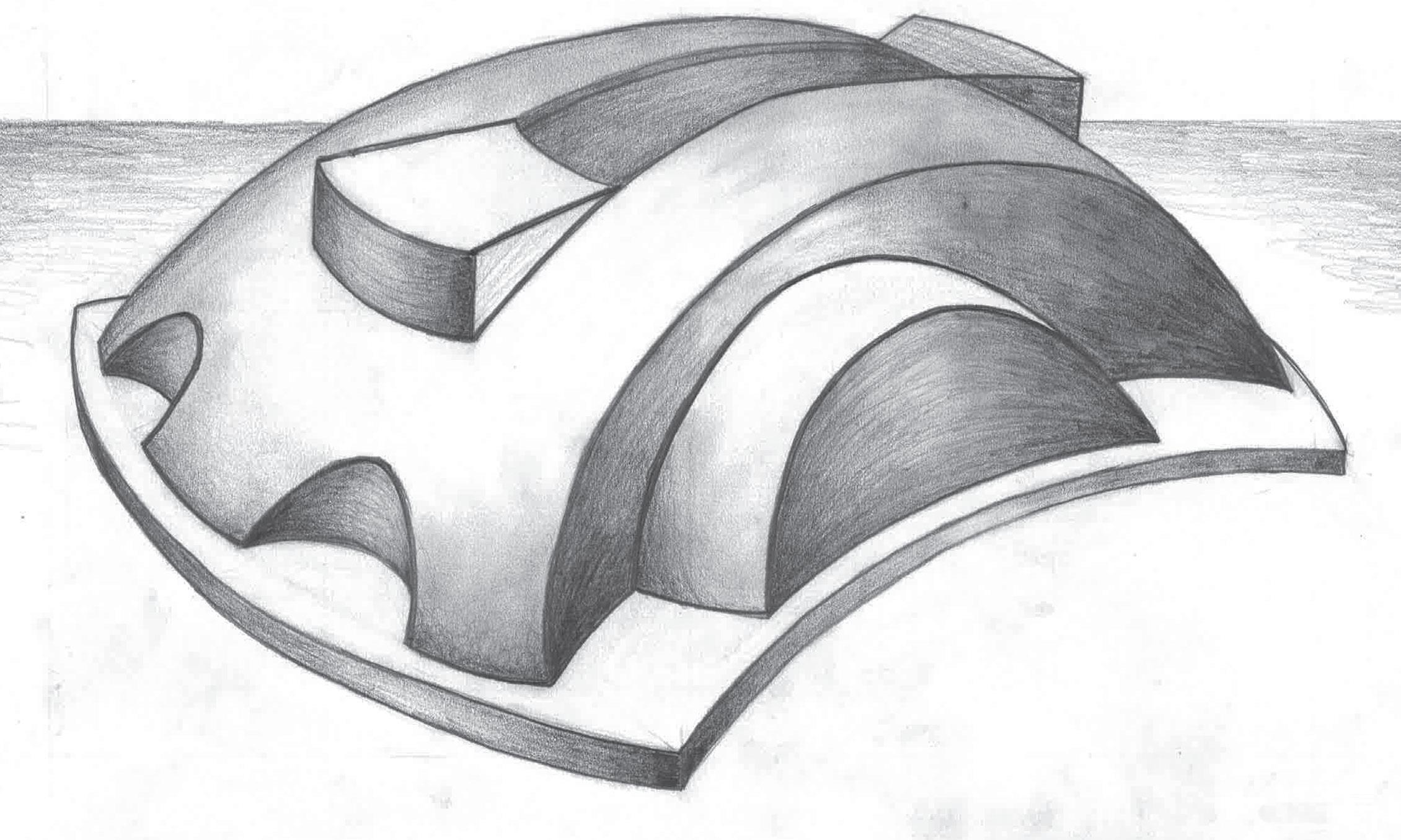
Taking inspiration from the geometry of both objects, the curved, stepped façade represents a pinecone’s scales and the smooth, arching profile draws from the earbud’s ergonomic surface.
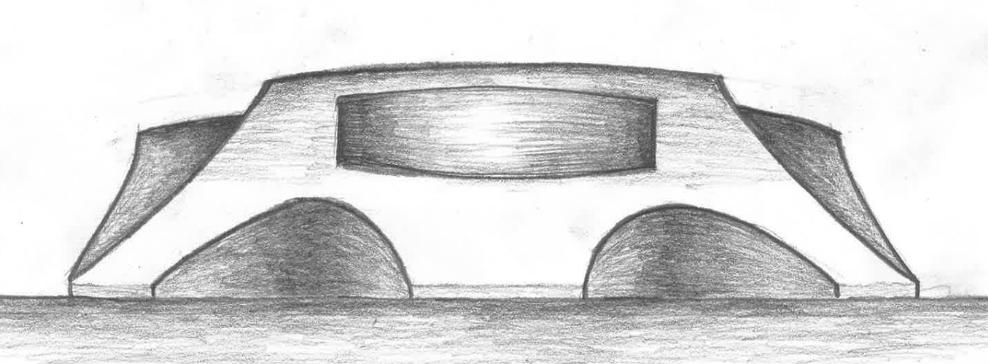
Design Sketches
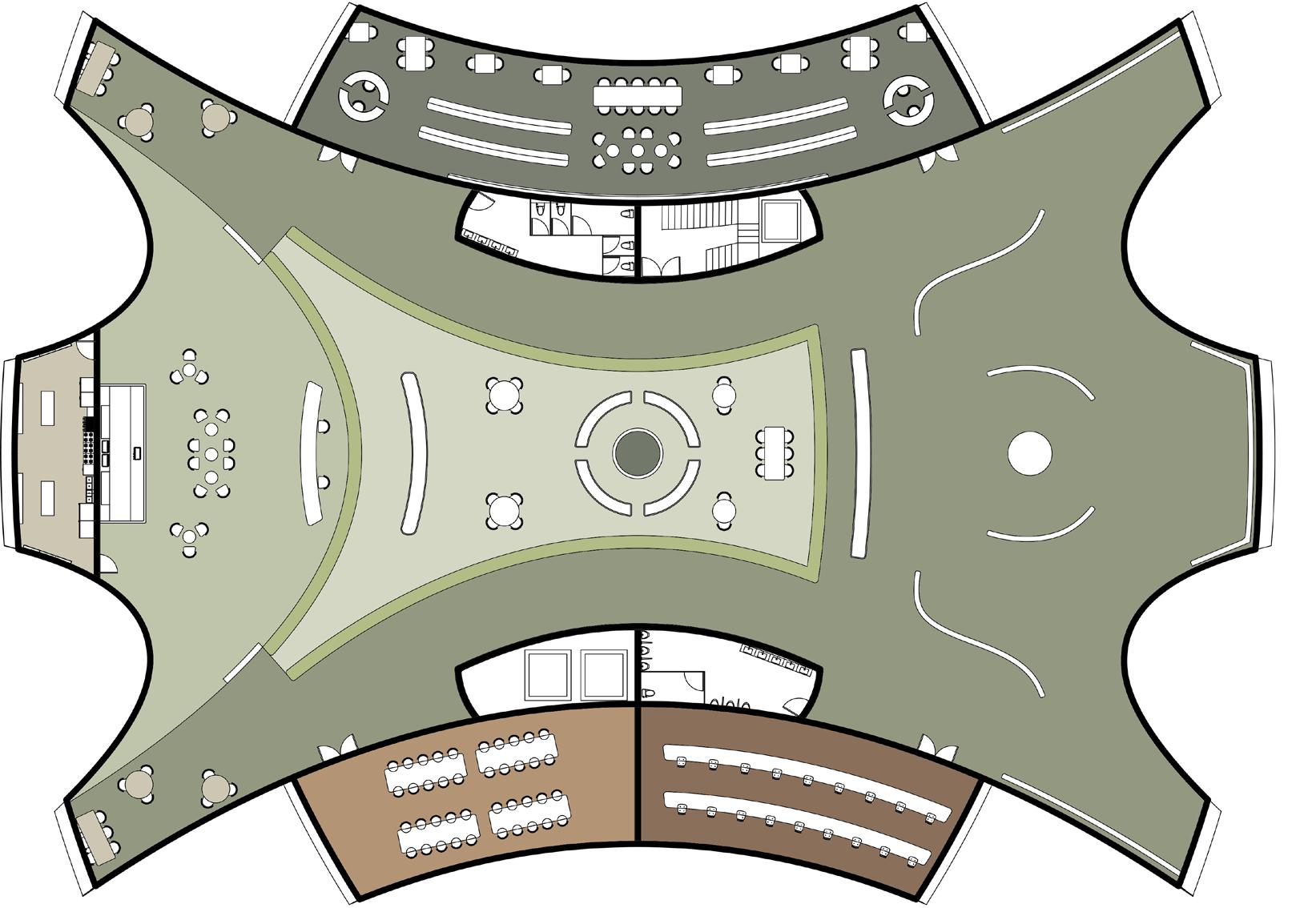
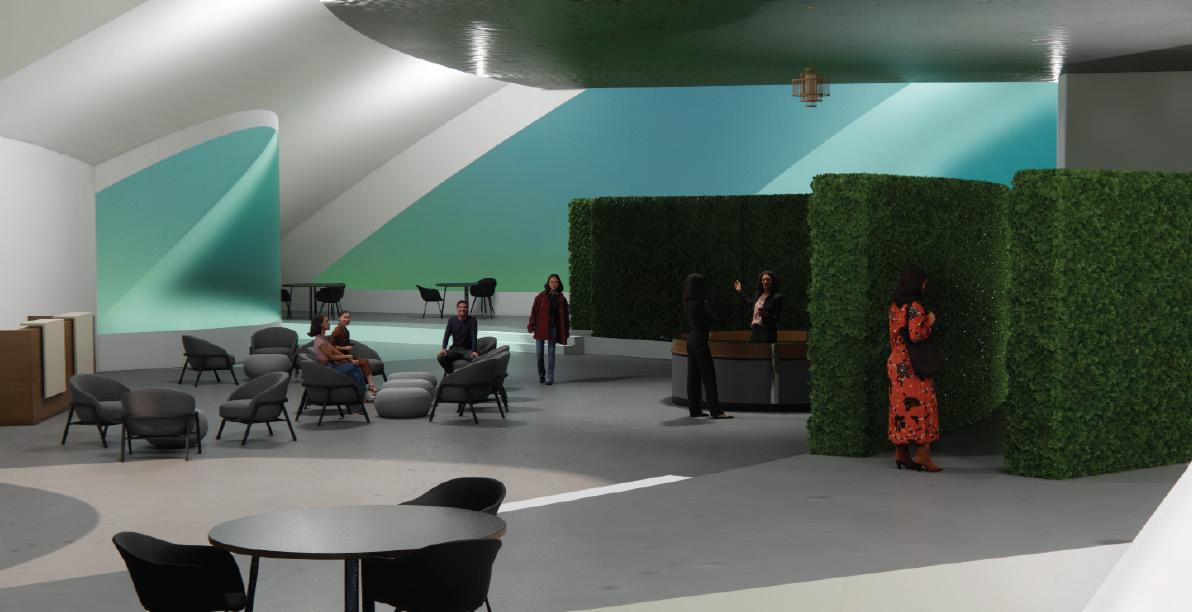
The first floor of the BioIntegration Museum features exhibit galleries, a classroom, research lab, central atrium/ greenhouse, café, and library. Plant walls surround the central atrium to provide a secluded space for contemplation or relfection.
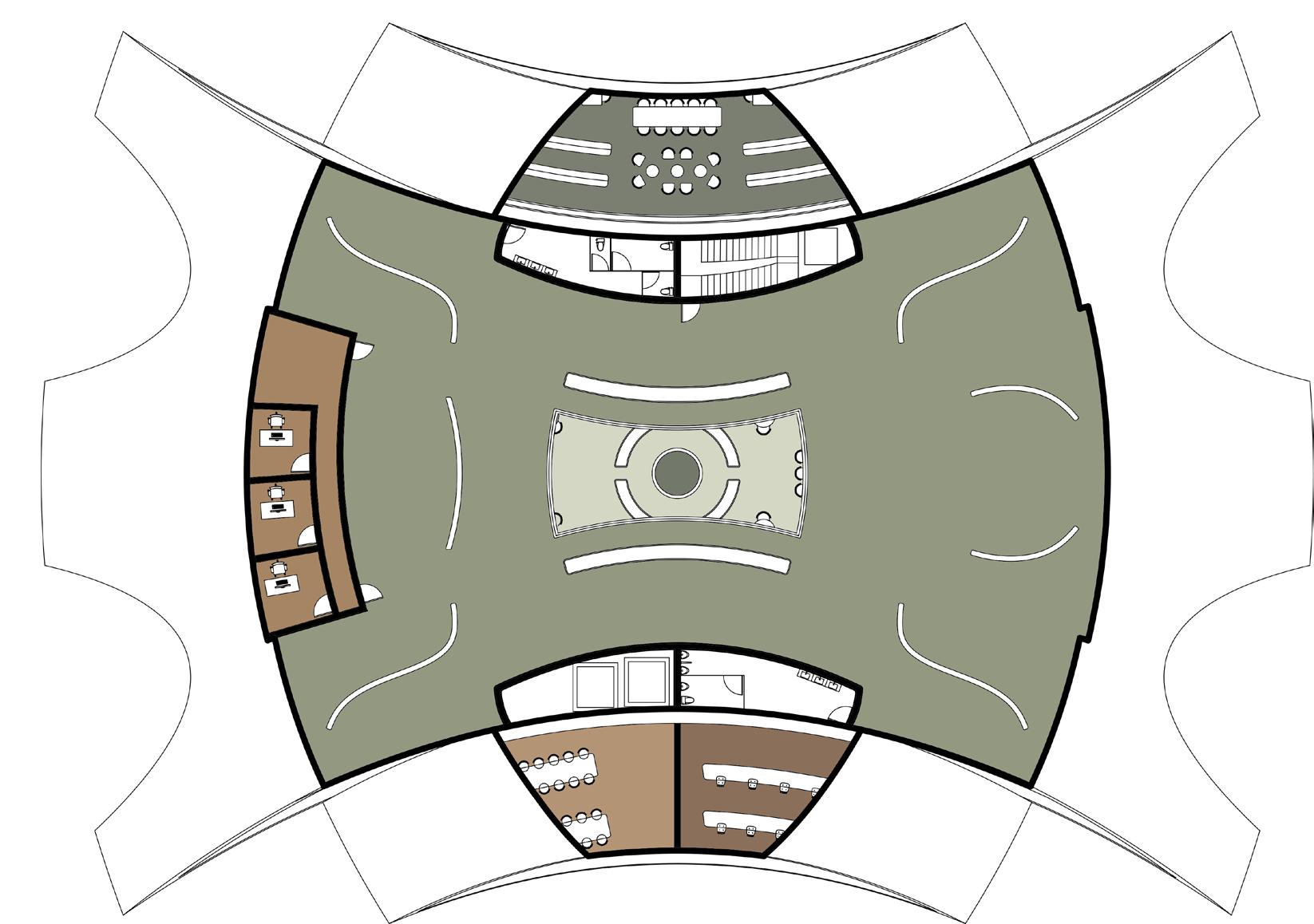
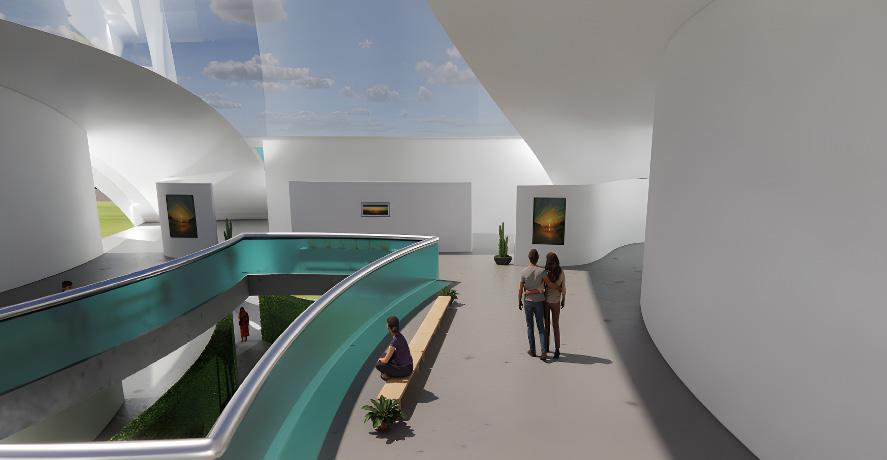
The second floor features office and exhibition gallery space. Seven curved interior walls offer places to hang paintings or have displays, but also serve to guide patrons about the floor. Section A
Section A
The final exterior form successfully represents the essence of the two curved objects through careful examination of their surfaces. Adhering to themes of biomimicry and integration, this form was refined into a habitable building.
The section detail investigates how the building is physically constructed. Footings are placed beneath structural interior walls and where the arched walls meet the ground to transfer the load from above.
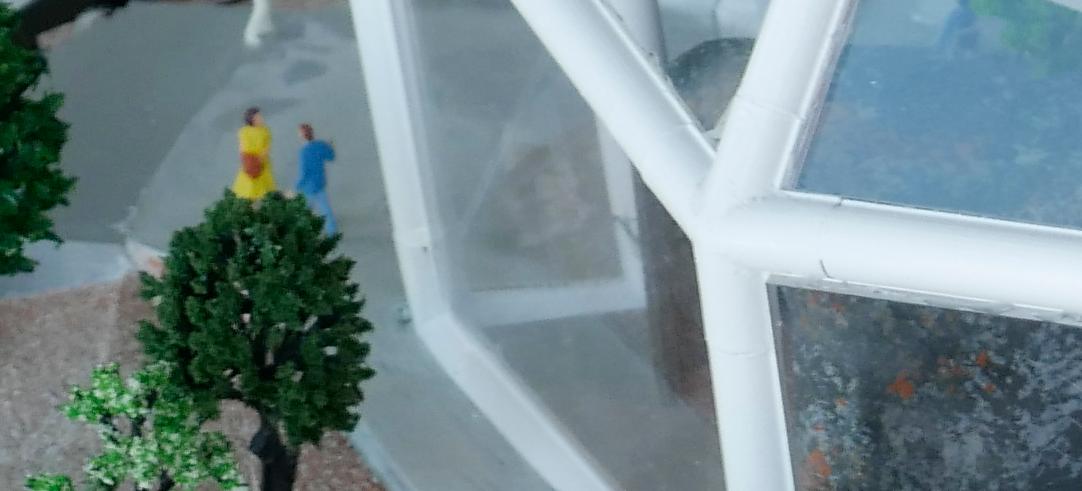
Tasked with designing an archival space for an object other than books, this project intends to educate visitors on the history, types, and uses of the most common minerals in Sedona.
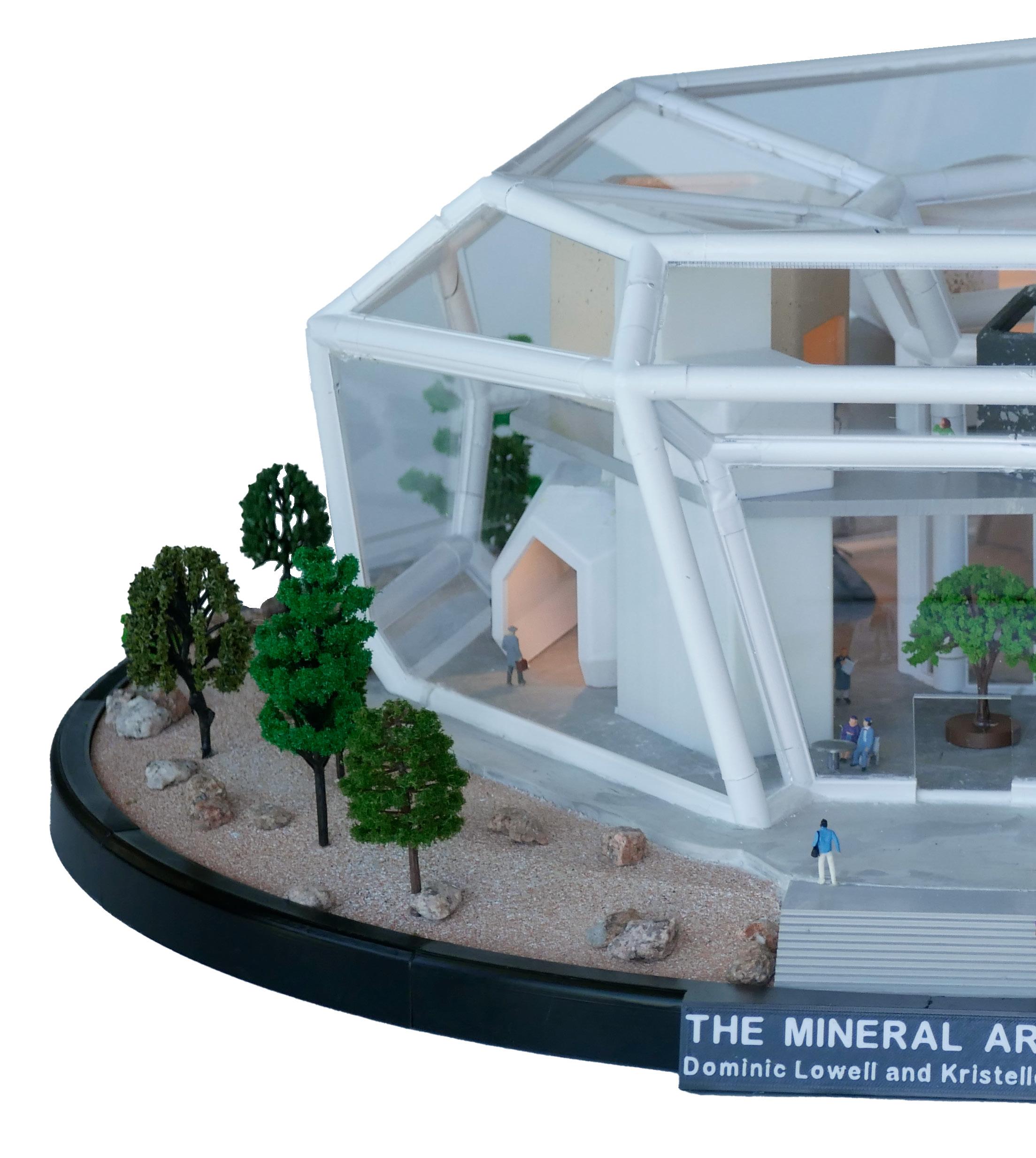
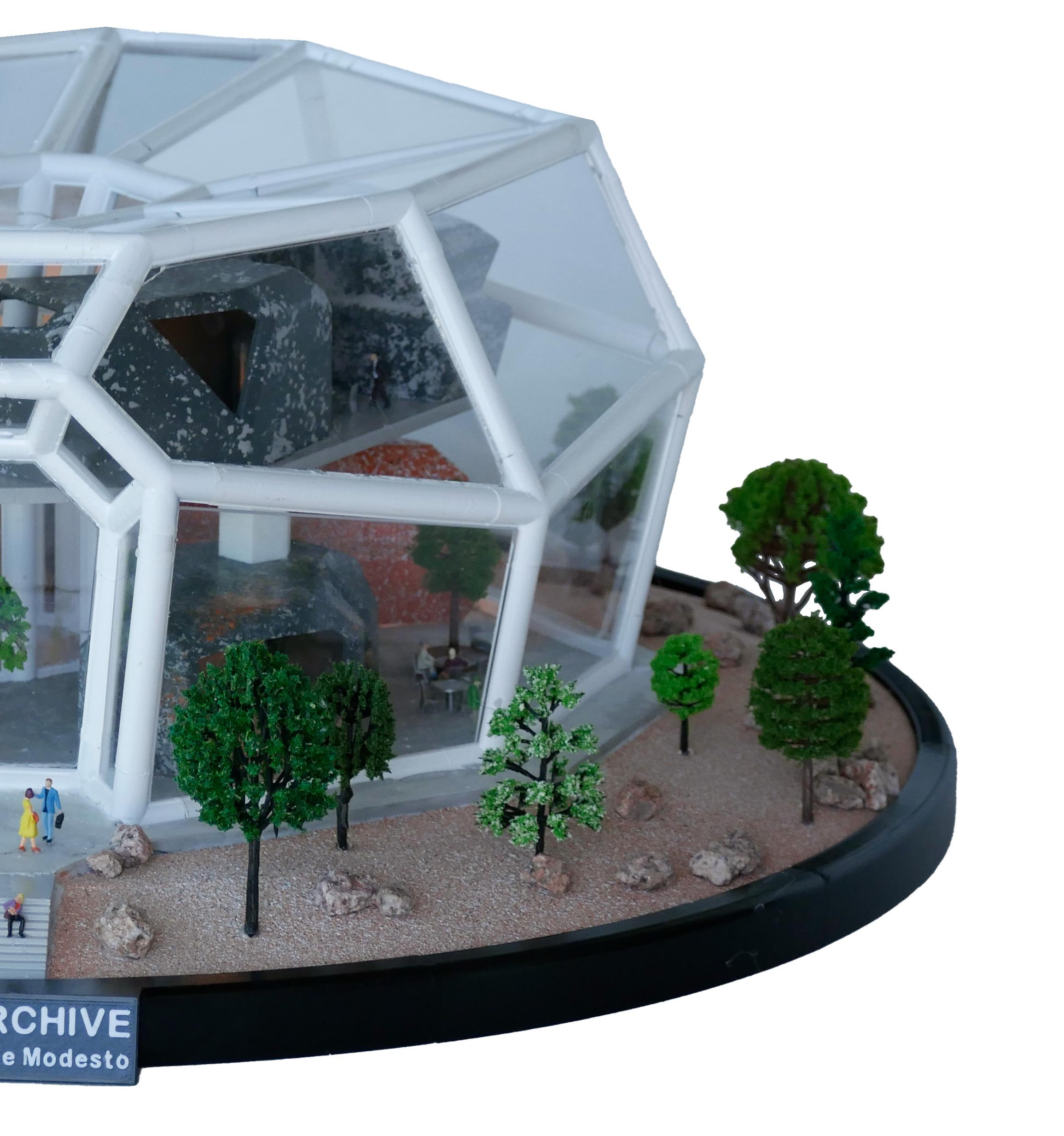
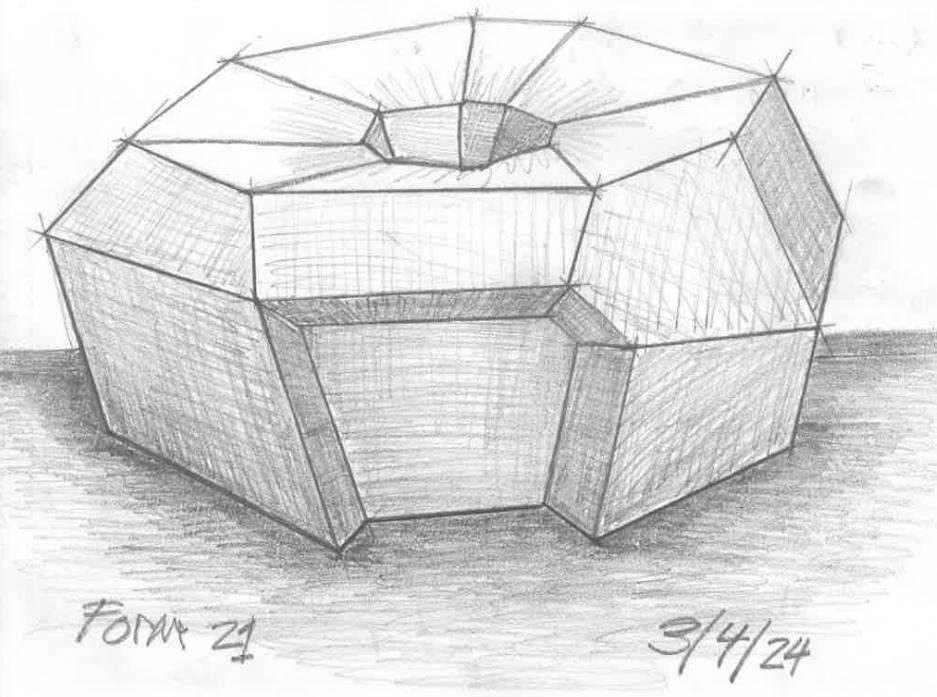
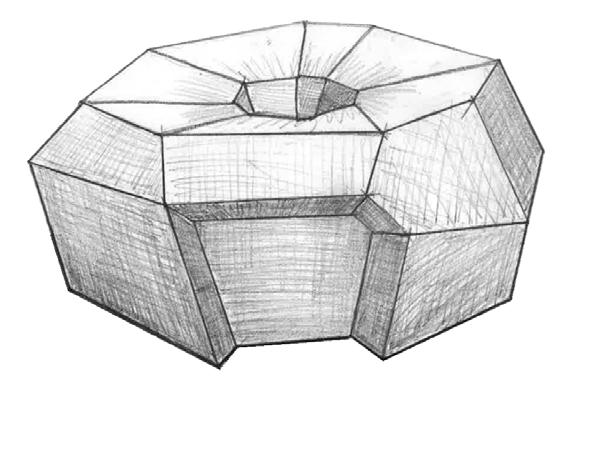
A faceted design was chosen for its cohesive look and resemblence to minerals, to harken back to the archival theme. Large windows were prioritized in the design process to take advantage of the spectacular views natural environment.
Section Perspective
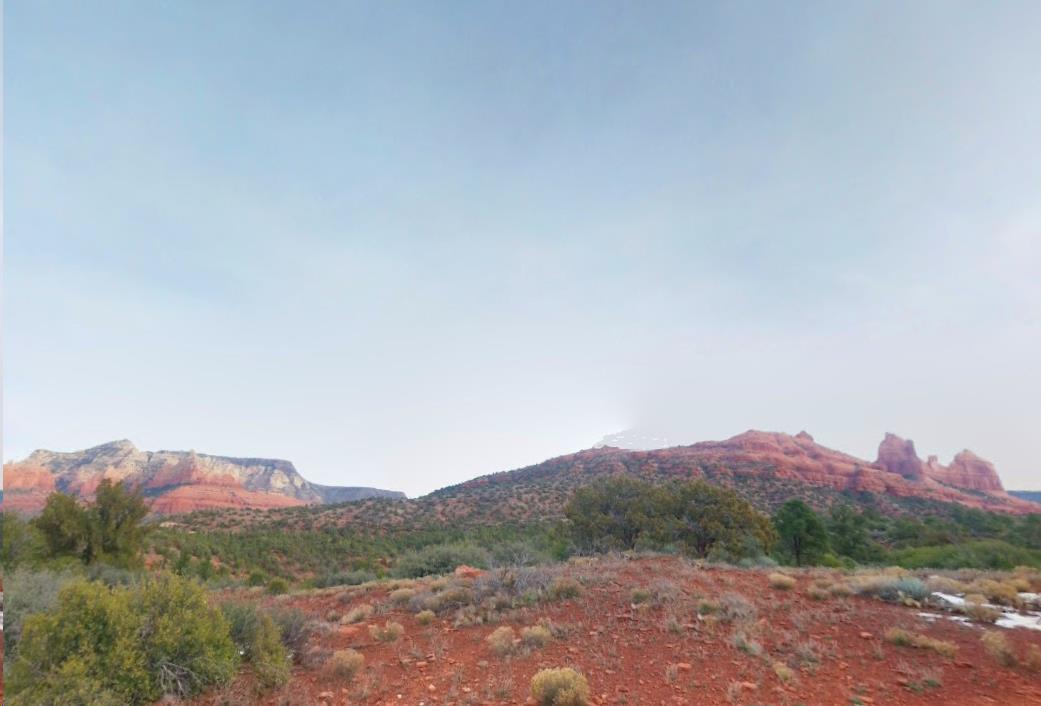
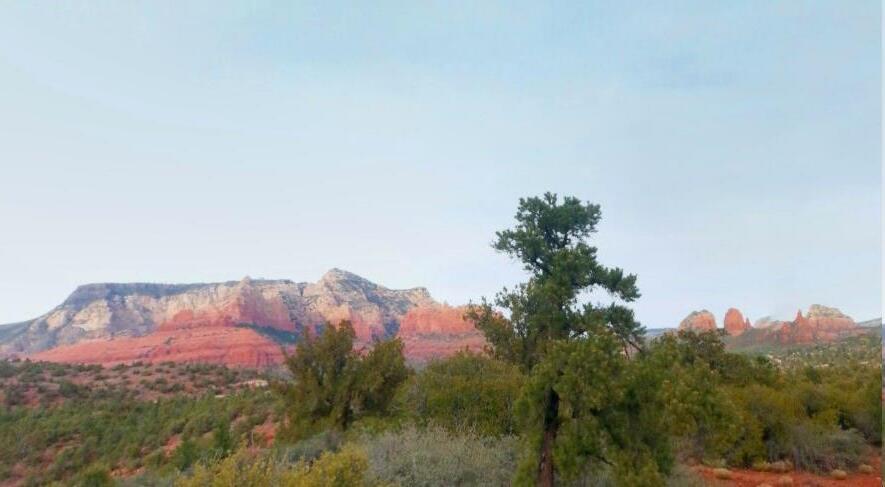
Located on a shallow, forested hillside off the Route 89 highway, this site was chosen for its lack of existing buildings and for the views of the picturesque rock formations.

The interior space consists of one large room split between two floors. An enclosed central atrium allows natural light into the first floor and provides structural support. Ample seating areas provide guests with spectacular views afforded by the site and large windows.
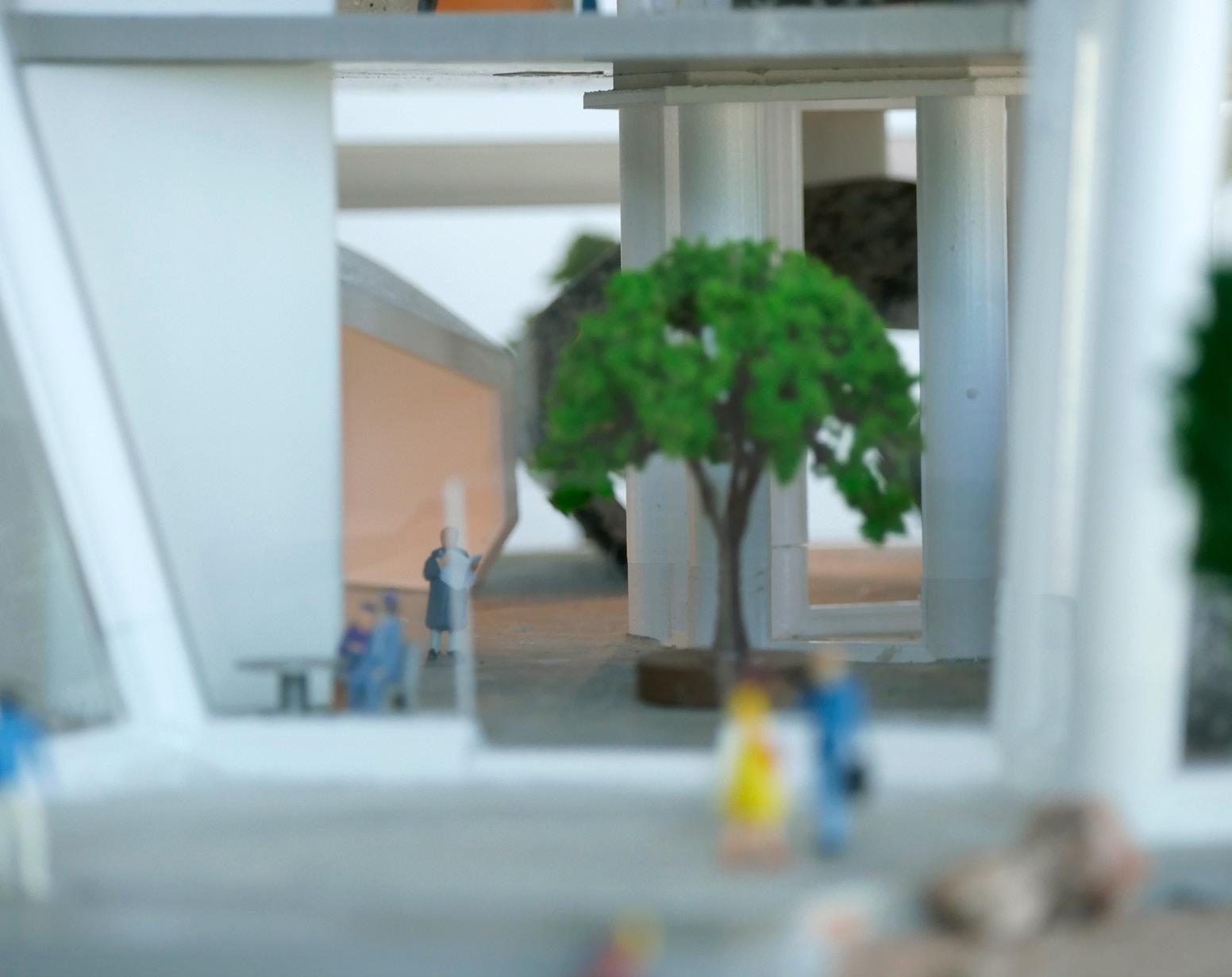
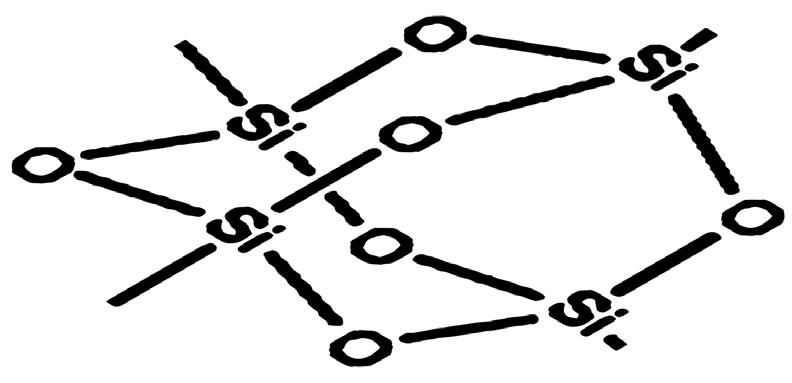
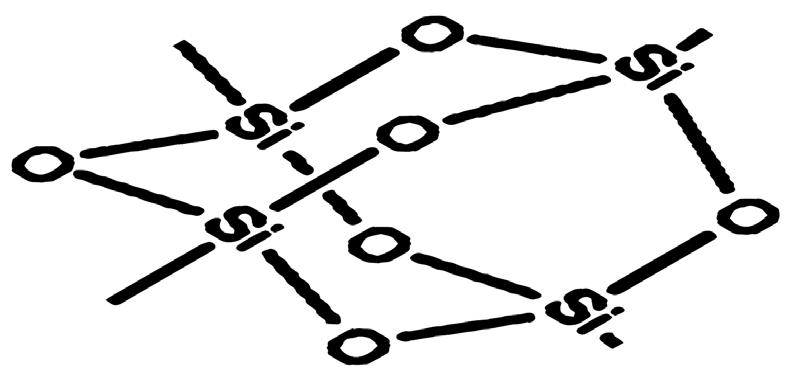
The floor plan of the archival room is inspired by the molecular structure of each mineral.
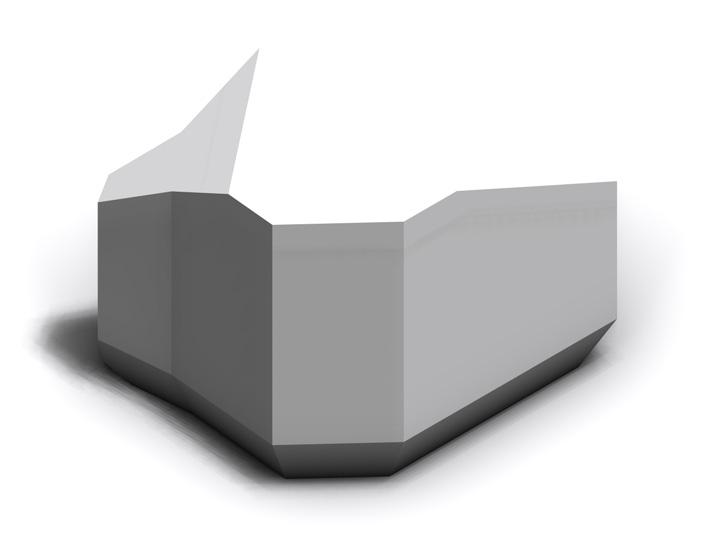
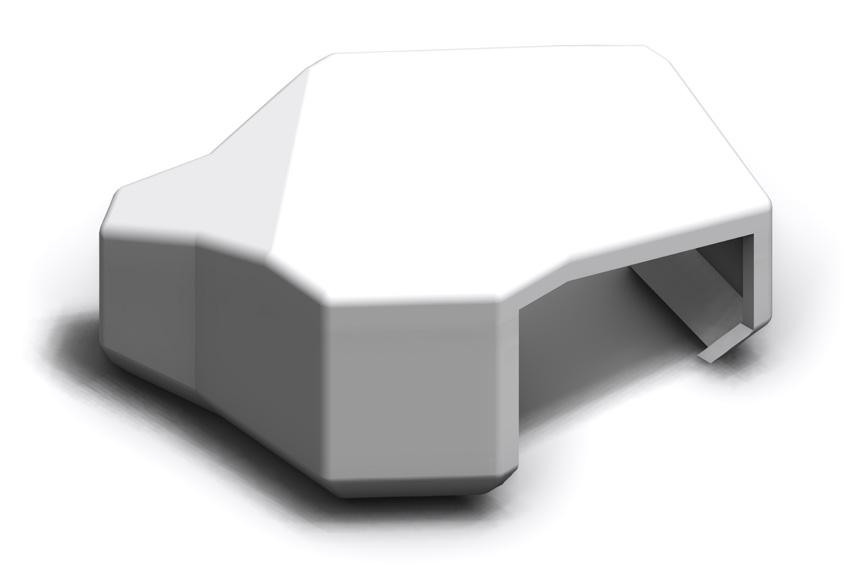
The final model emulates how the building would be constructued in real life. The model structure is built with a wooden dowel frame, encased in a 3D-printed façade. The wooden base has an area carved out for the structural footings, lighting conduits, concrete foundation.
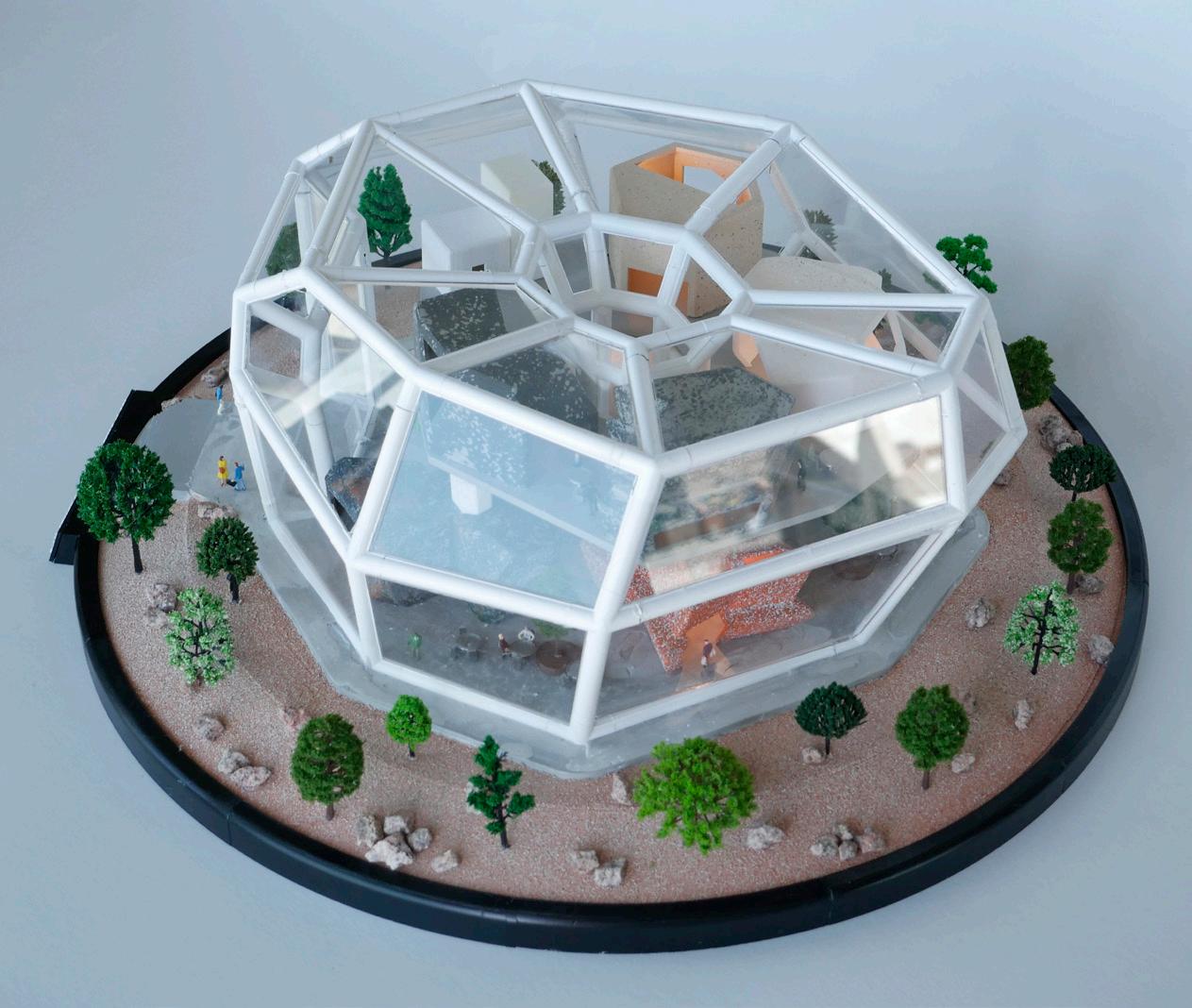
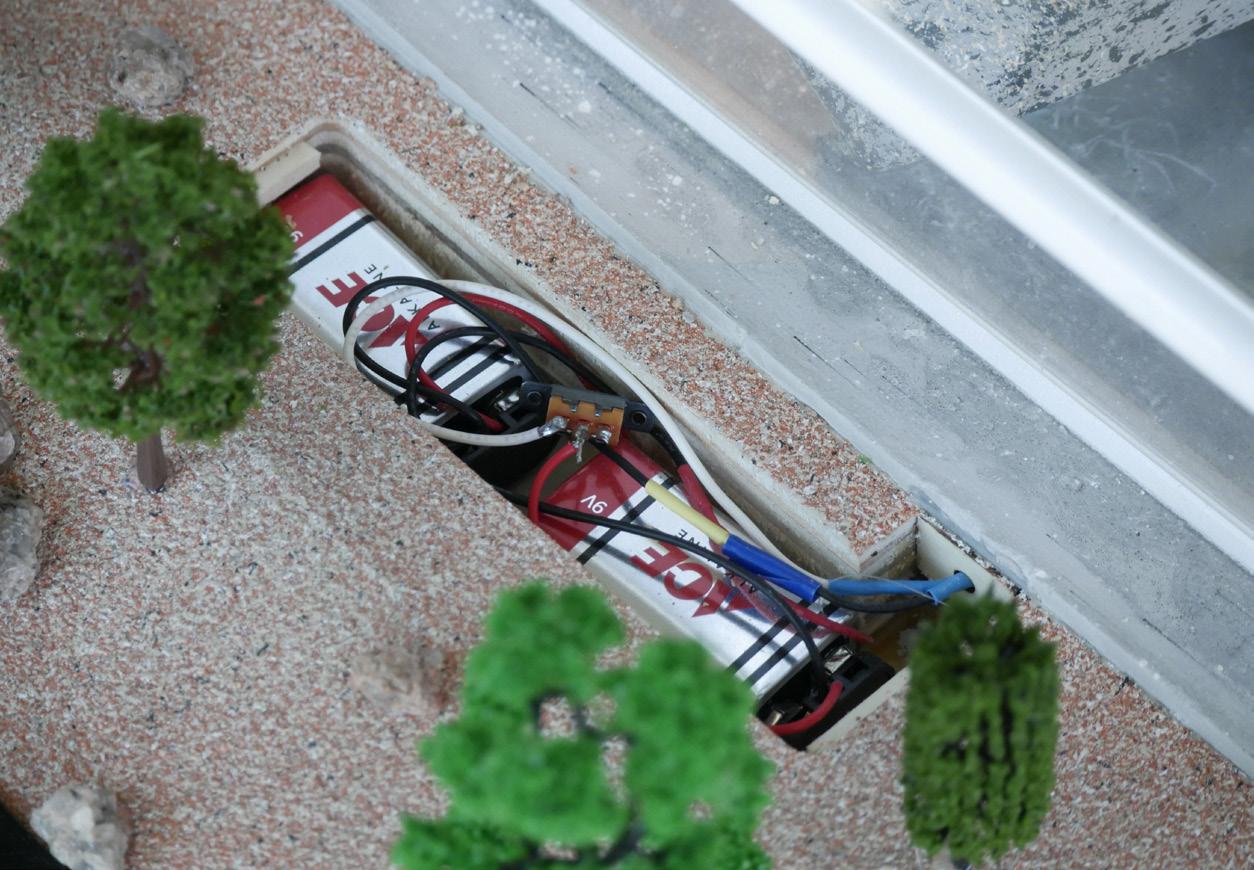
Each interior room features lighting, powered via wires in the concrete foundation.
Battery Compartment for Lights
Windows
Framing
Concrete
Structural Footings
The structure utilizes a tube steel space frame for structural support. A tube steel space frame is a system of interlocking, hollow steel tubes and connecting nodes that provide rigid, mechanical support in any direction to unique structures.