DOMINIC KINDELIN
DESIGN
ILLINOIS STATE UNIVERSITY Accredited by the Council for Interior Design (CIDA)
A
PORTFOLIO
TABLE OF CONTENTS
PROJECT 1
ABBEY JEWELERS
a flagship jewelry store pages 5-11
PROJECT 2
PELOTAS APARTMENT
a private apartment in Brazil pages 13-17
PROJECT 3
TINY HOUSE
a tiny home, in sketches pages 19-20
PROJECT 4
SENIOR CO-HOUSING
a home for aging in place pages 21-23
PROJECT 5
MILNER LIBRARY
a new inclusive reference desk pages 25-30
DESIGN PHILOSOPHY
My approach to design is to use historical precedent to help influence the future of design. Through adaptable reuse and smart planning, I strive to design spaces which honor the past while integrating new design ideas. Smart design does not mean complicated design; by working with, and not against existing spaces, communities can be built with less waste and inspire more meaningful connection for users.
ABBEY JEWELERS
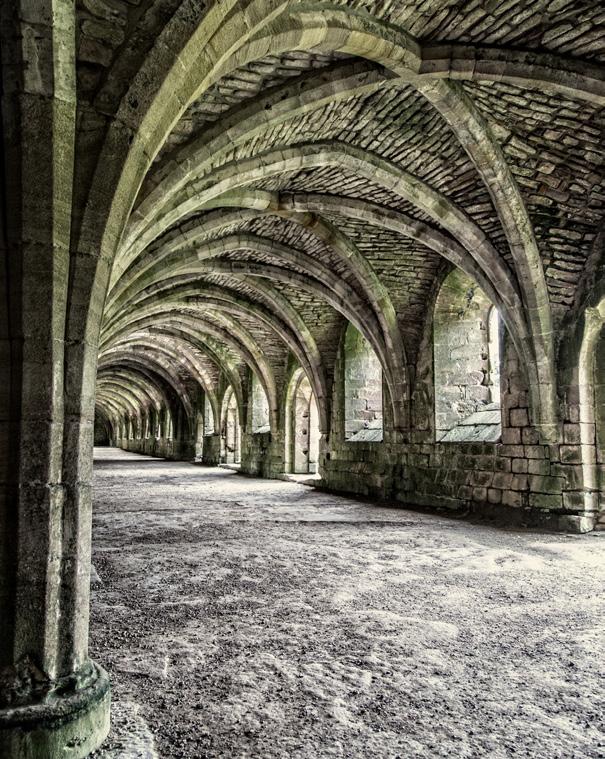



Project Overview: Client looking to expand into a new flagship store in Georgetown, DC on famed M street.
Additional requirements require a rebrand of store name and logo, appealing to target upscale market.
3350 sq. ft
Skills/Software: Revit, InDesign, Enscape, Photoshop
Project duration: 9 weeks

CONCEPT BOARD







5
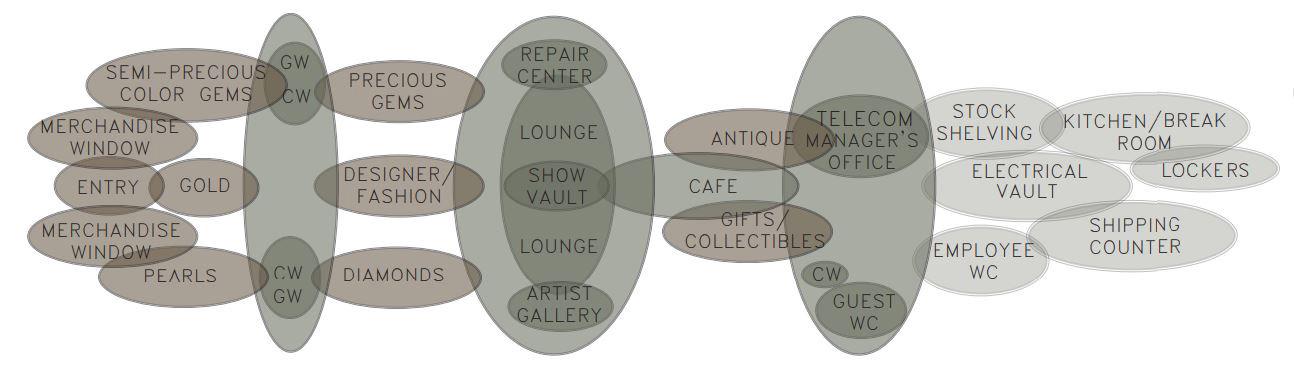
BUBBLE DIAGRAM
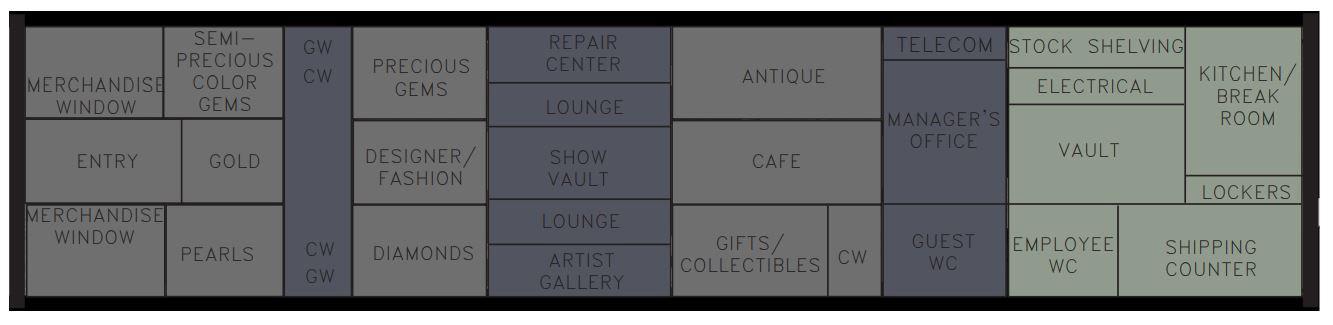
BLOCK DIAGRAM
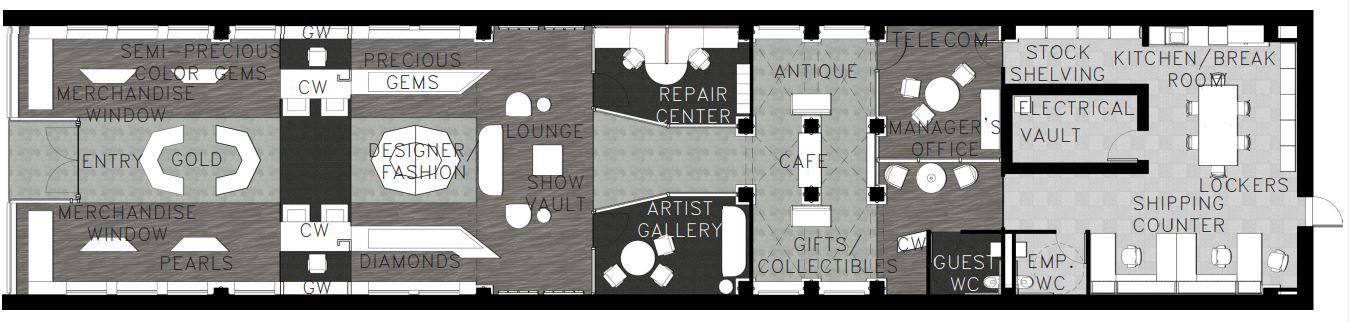
REFINED DIAGRAM
Distinct zones alternating between traditional and modern design elements were repeated in succession from the entry through to the employee area in the rear of the building. Custom casework and furniture was arranged symmetrically along each exterior wall.
6
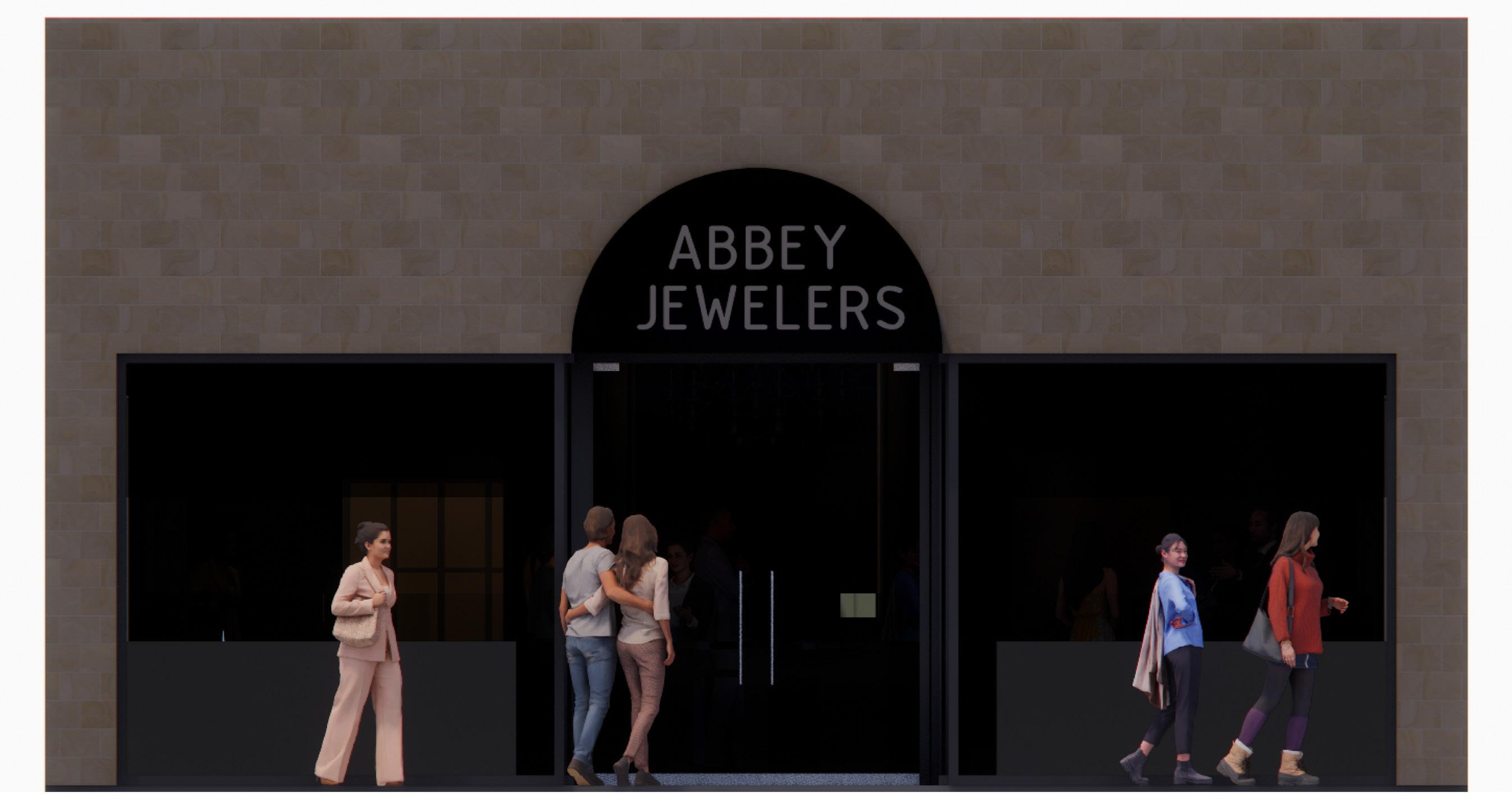
STOREFRONT ELEVATION:
The facade of the building entry was kept simple and modern with a sandstone brick exterior and darkened glass windows for privacy and an exclusive shopping experience
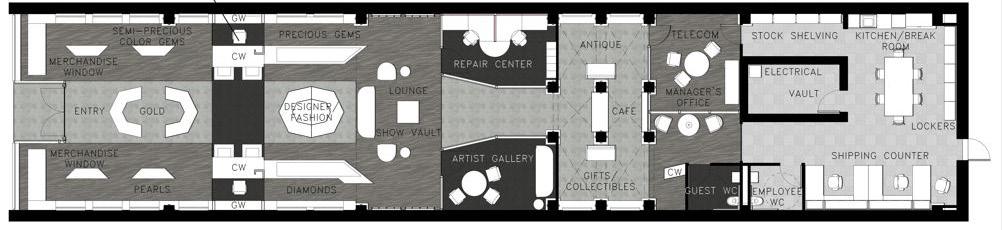
FURNITURE FLOORPLAN:
The entry door is recessed into the building creating a space for the door swings without affecting pedestrian flow on the street. The floorplan was arranged symmetrically along each wall with display islands and a show vault in the center of the space. Halfway through the space, an in-house repair center is mirrored by an Artist Gallery. This gallery was developed and informed by market research of trends in the high-end jeweler space. Research has shown customers want a unique shopping experience while still being exclusive to their shopping price-point expectations. This Artist Gallery developed for Abbey Jewelers sets up space for customers to interact with jewelery artists and vendors on a rotating basis, creating exposure to visiting artists while engaging customers with refreshed purchase options.
7
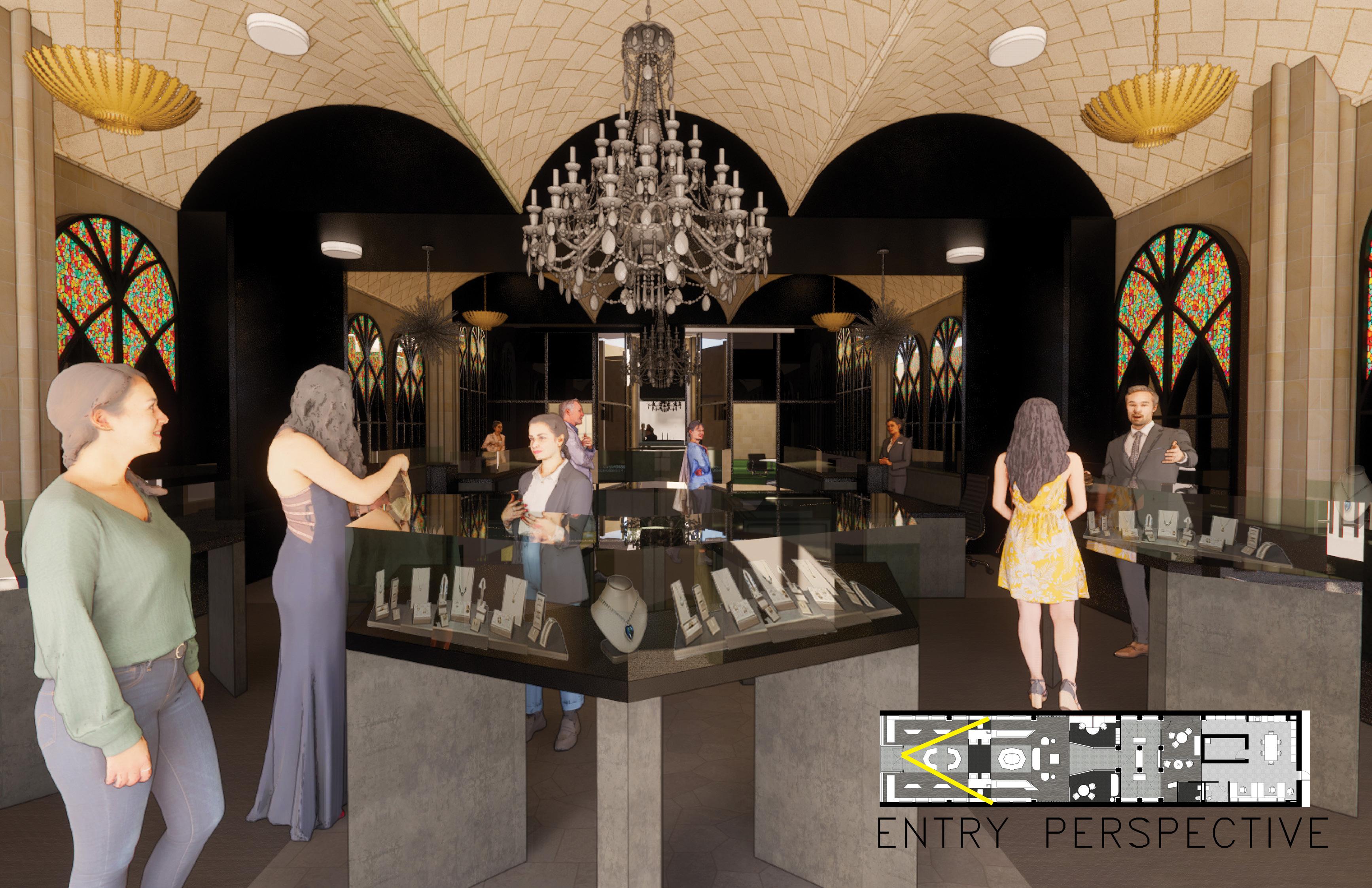
ENTRYWAY:
Greeting shoppers when they arrive is a grand foyer with classical barrel vaulted ceilings and decedent lighting and chandeliers. Display cases are starkly modern with cement legs and black stainless steel surfaces. Symmetrical back-lit stained glass mirrored windows repeat at intervals on either wall contributing to the brand’s Abbey namesake.
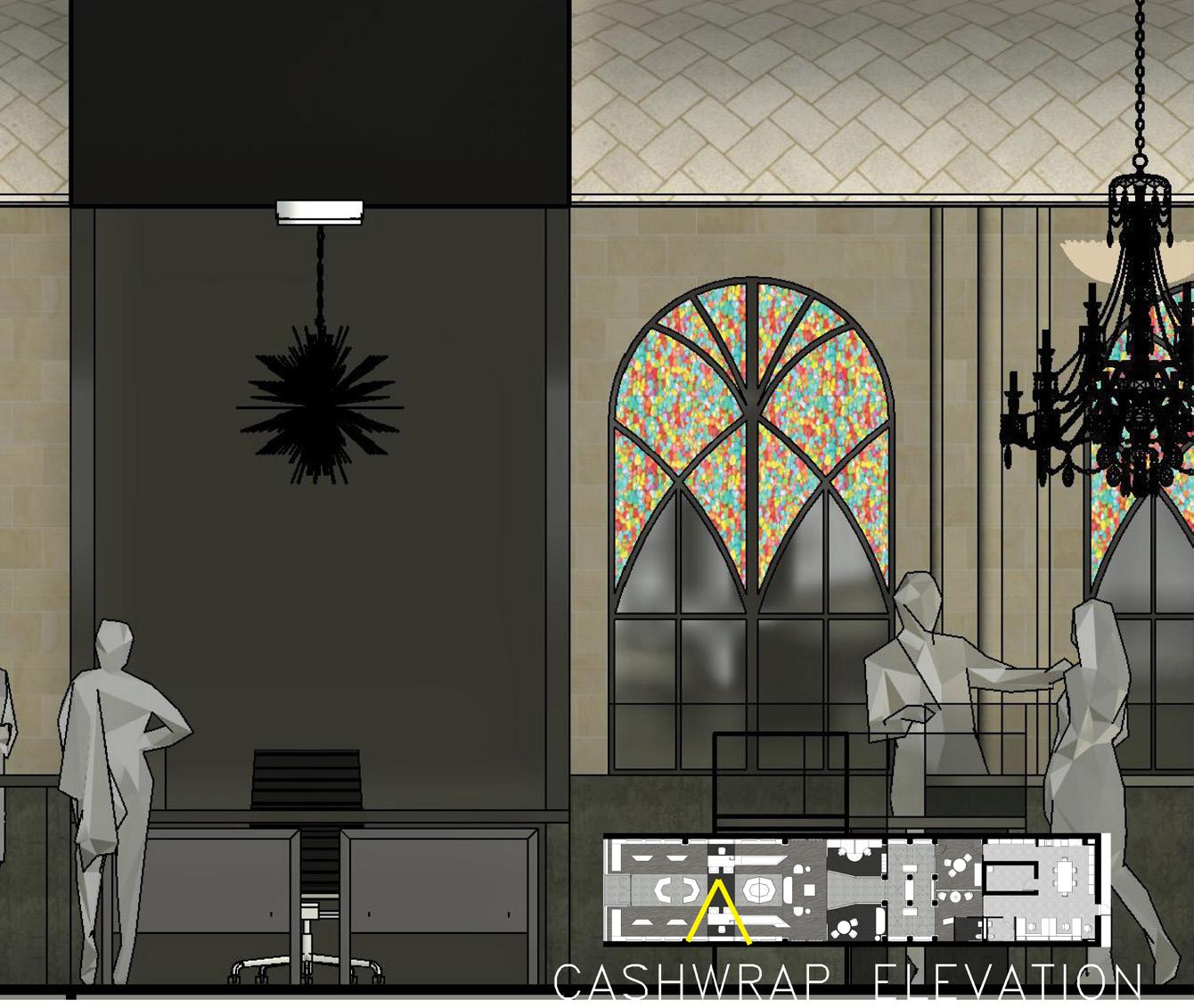
CASHWRAP ELEVATION:
The duel cashwrap stations are located between two sales areas. The design is a stark contrast to the classical architecture surrounding as a black stainless steel band wraps around and envelops the stations.
8
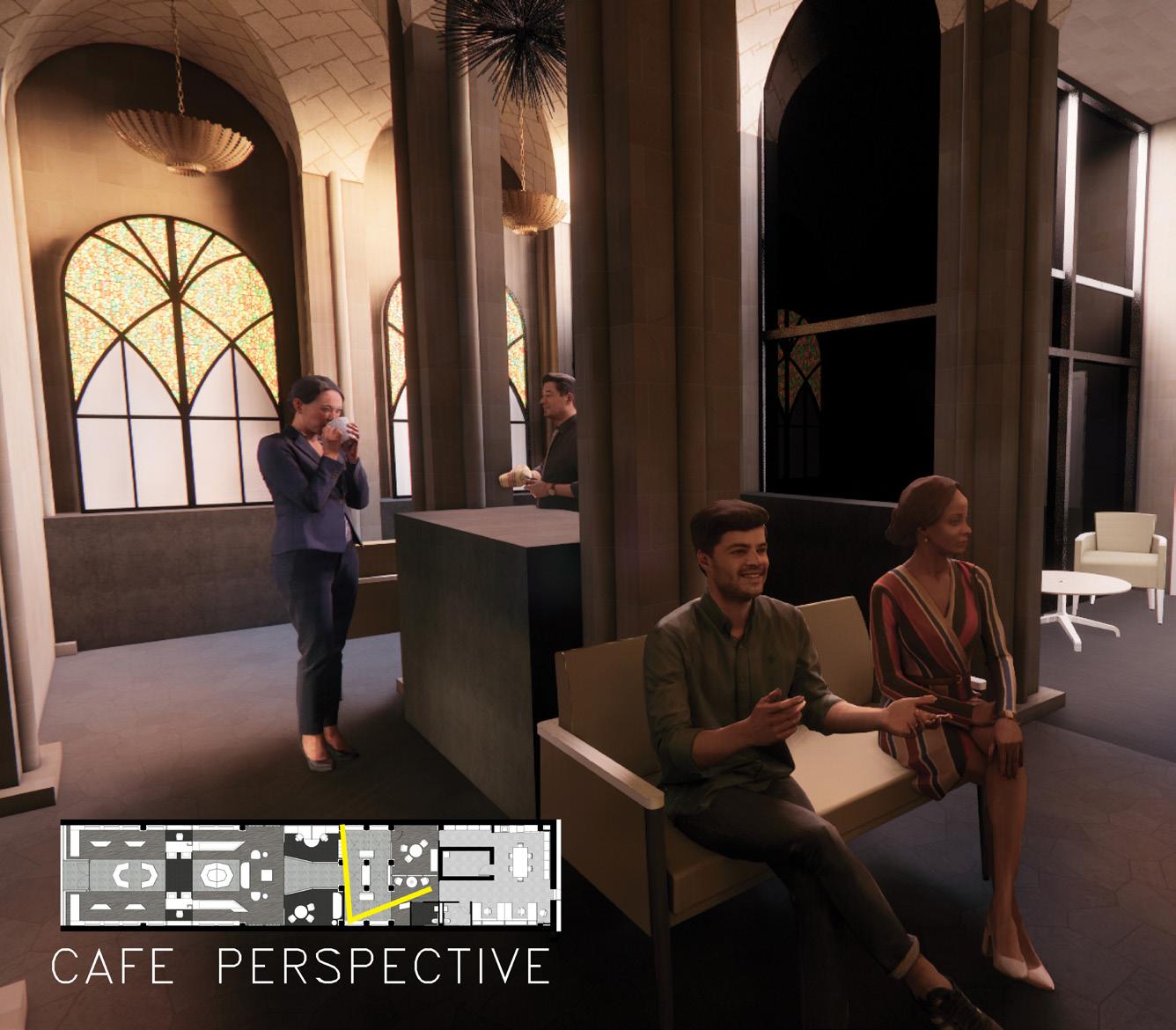
CAFE:
A mixed use cafe is located at the rear of the retail space. The serving counter is placed in the center of the space for optimal circulation. The architecture is distinctly classical with supporting Gothic columns, arches, and intersecting barrel ceilings.
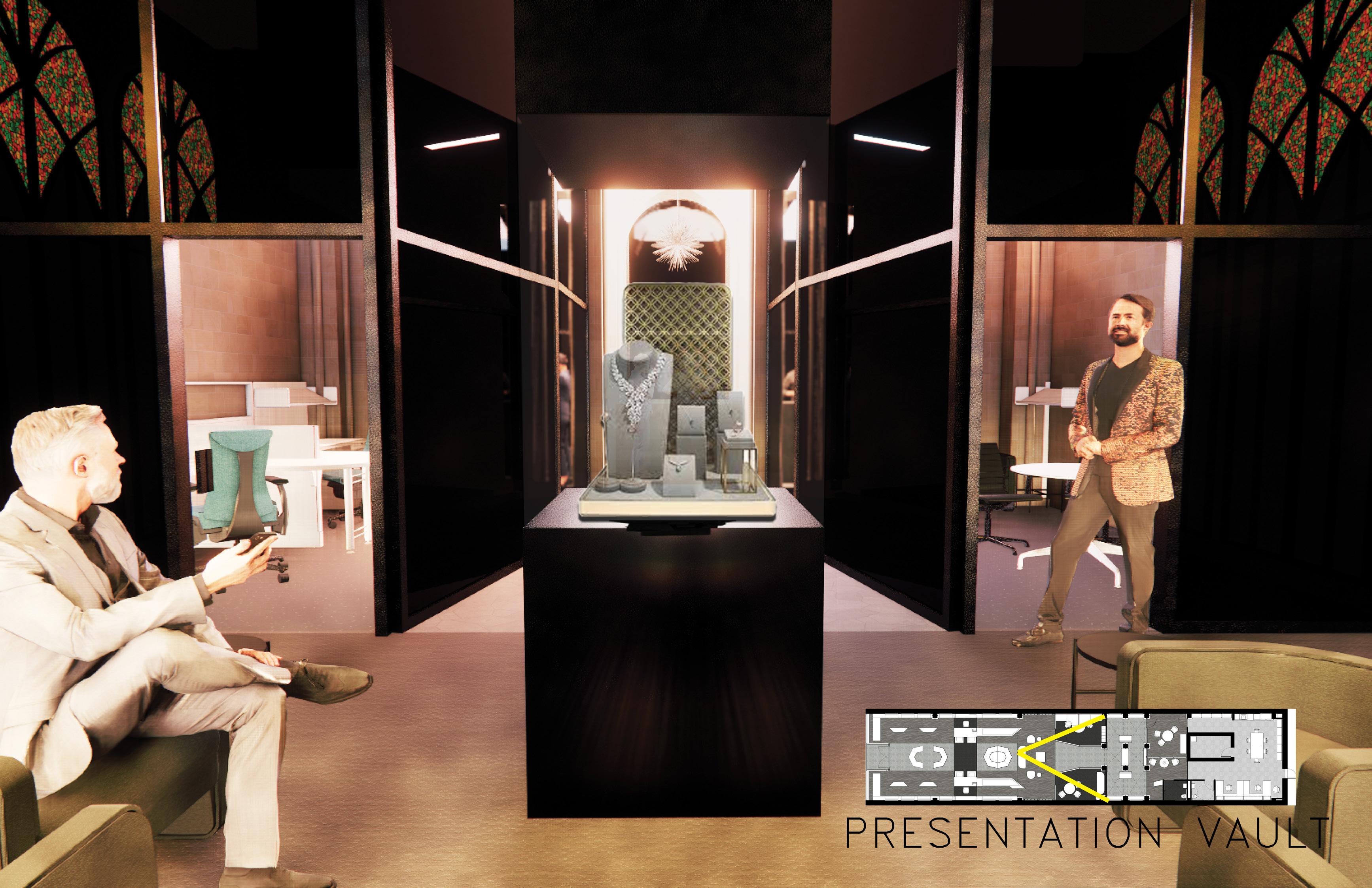
PRESENTATION VAULT:
Midway to the rear of the store is the presentation vault. This vault was imagined as a way to present a shopper with their purchase upon delivery of the item or to display show stopping pieces to entice shoppers. Items being repaired at the in-house design center could also utilize the presentation vault for client delivery upon rework of their piece.
9
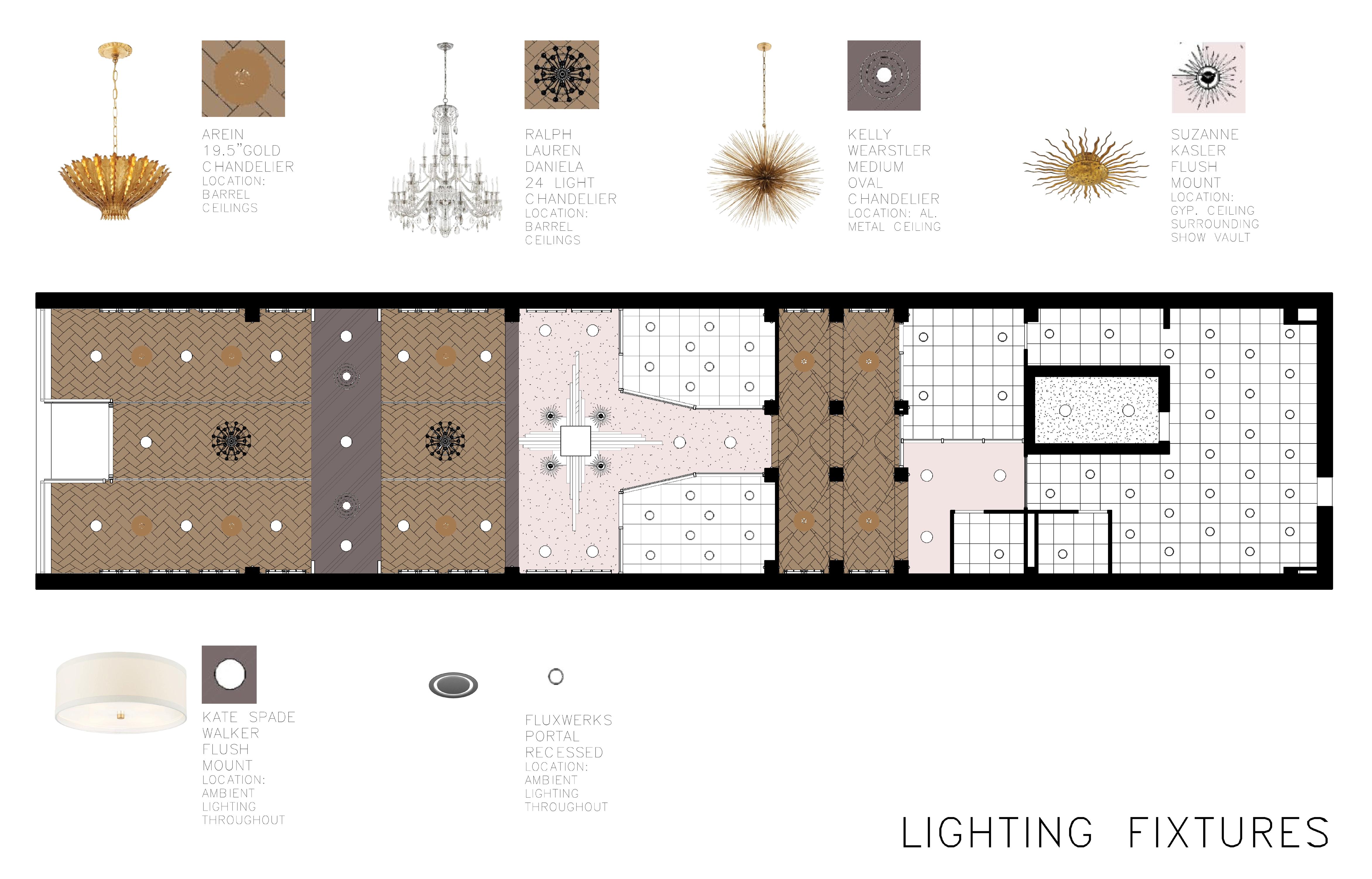
LIGHTING PLAN: 10
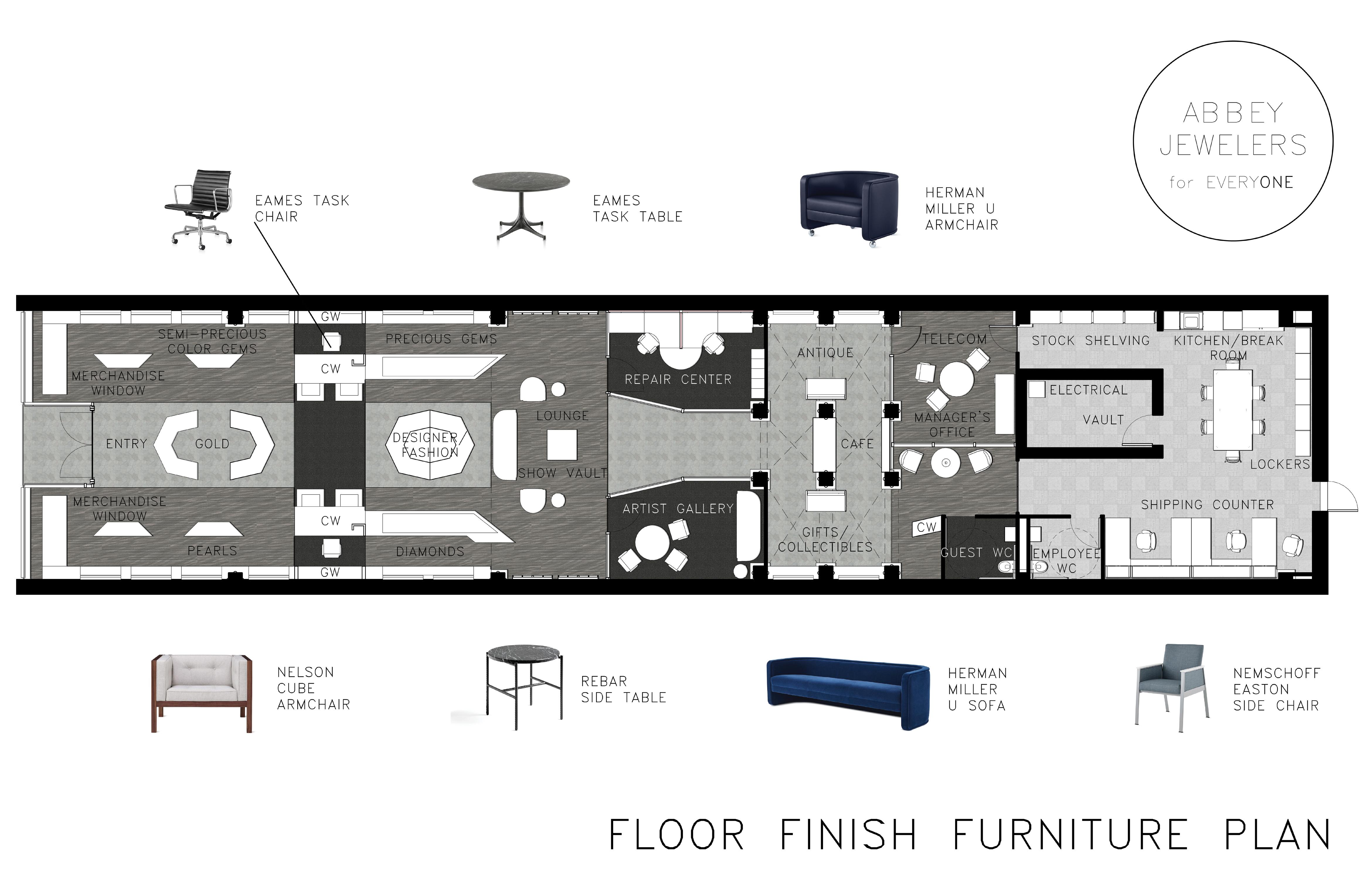
FURNITURE
11
PLAN:
12
PELOTAS APARTMENT
Project Overview: Client looking to rework an existing apartment in Pelotas, Brazil. 350 sq. m.
Skills/Software: SketchUp, InDesign, Enscape Project duration: 8 weeks
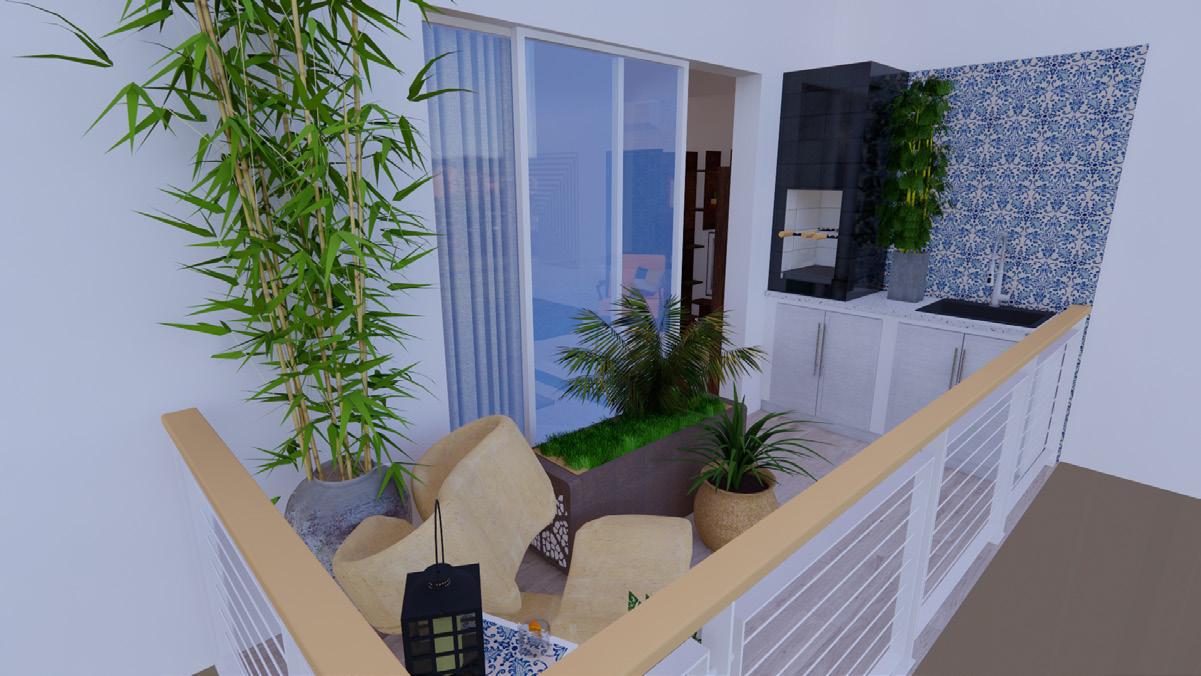
BALCONY:
The balcony includes a sitting area and a custom mini-kitchen which houses a churrascaria and sink for prepping Brazilian barbecue.
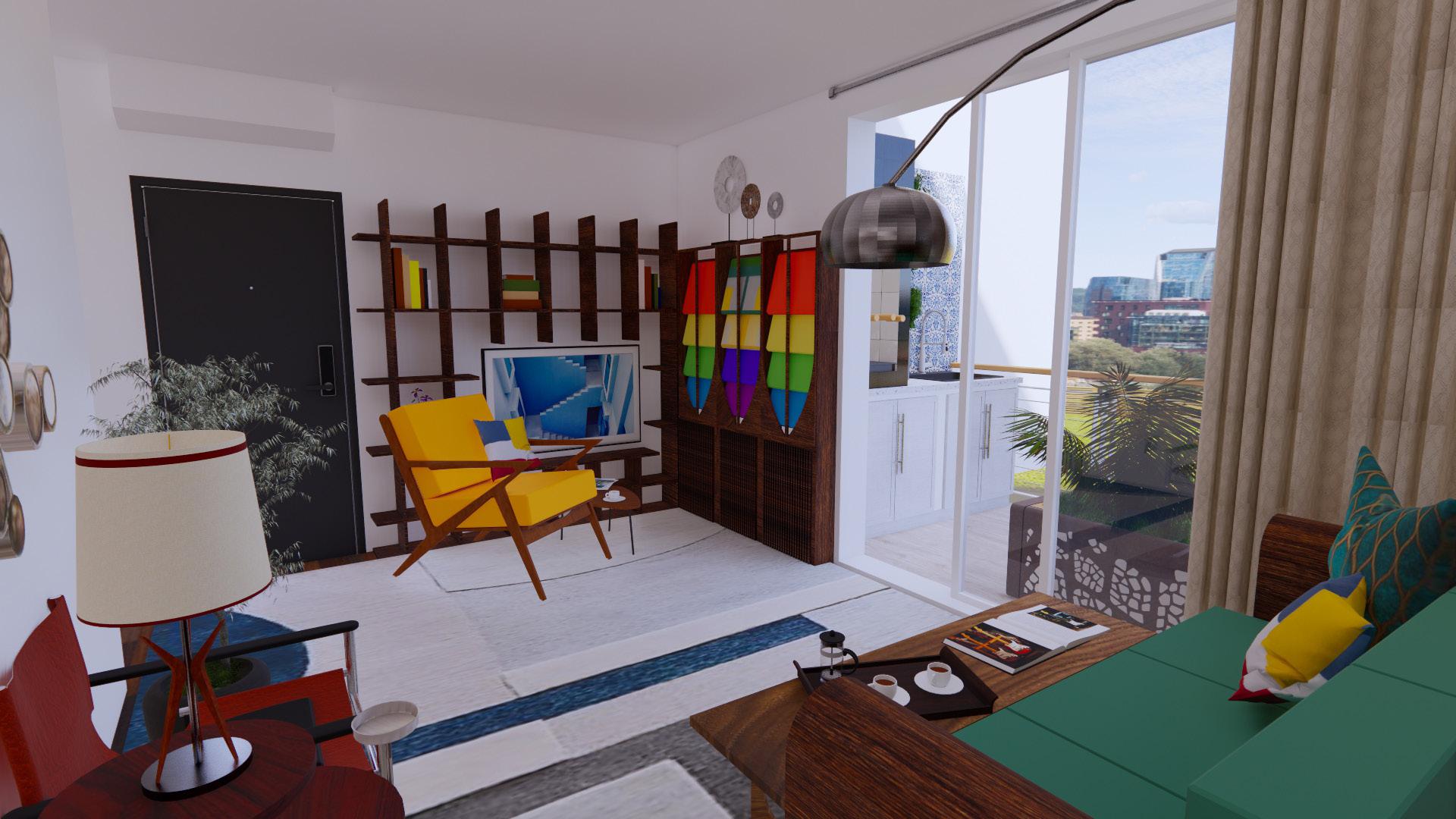
ENTRY AND LIVING ROOM:
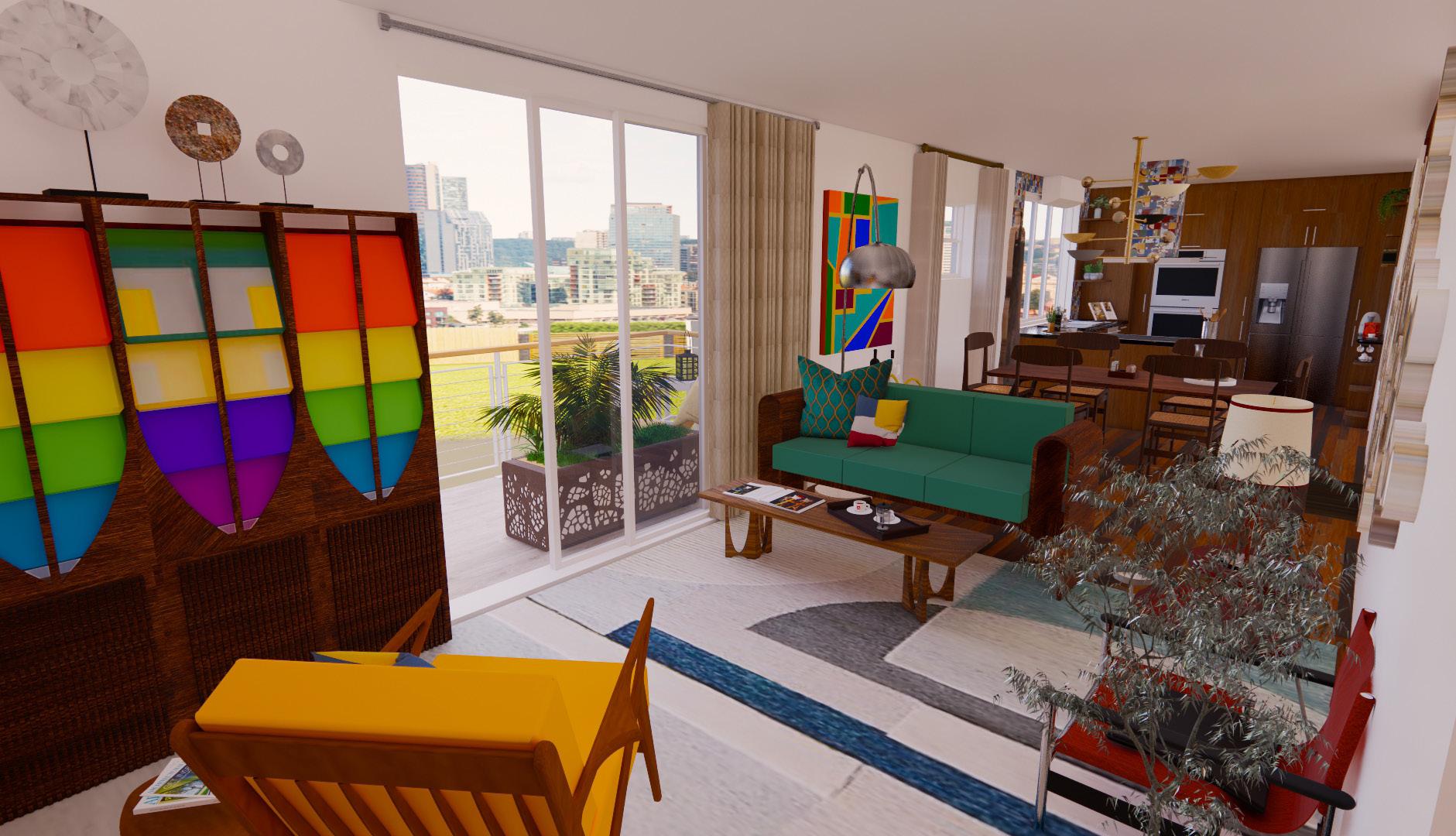
The living room is styled after Brazilian Mid-Century Modern design. Glass doors lead outside to a large entertaining balcony.
13
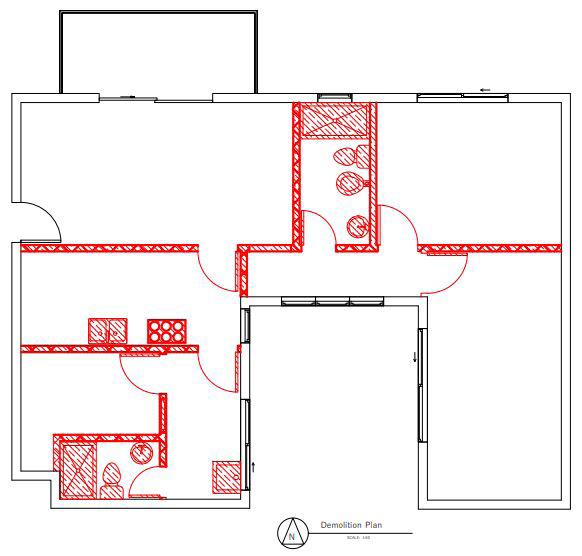
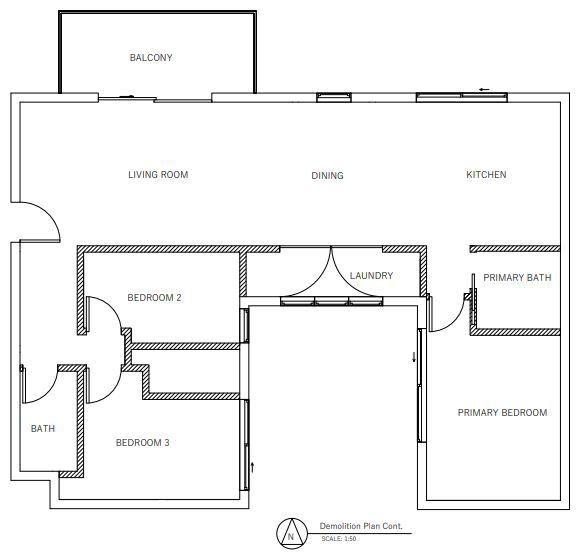
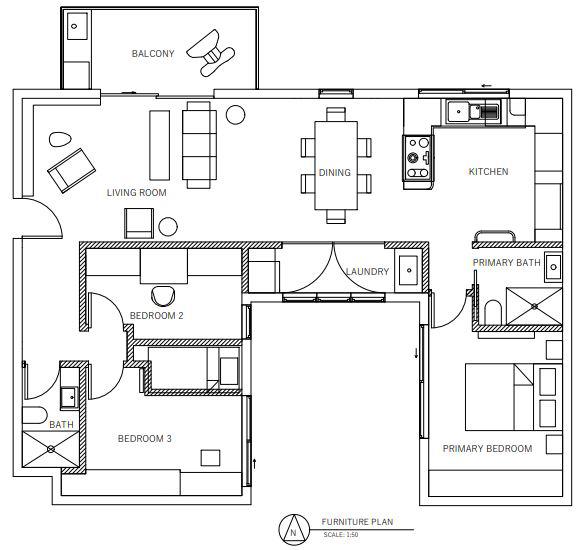
SPACE PLANNING:
The three floorplans above show the transformation of the space. Figure 1 shows the existing floorplan of the apartment. The entire space was cleared of existing internal walls and fixtures for a complete reworking of the flow and space planing of the apartment (Figure 2). Figure 3 shows the completed furniture plan for the space. This includes separate bedrooms for each child and gives the parents a primary suite in their own wing of the apartment Entertaining space is optimized with a large open plan living and dining areas.
Figure 1
Figure 2
Figure 3
14
Demolition Plan Demolition Plan (new build) Furniture Plan
BEDROOM DESIGN:
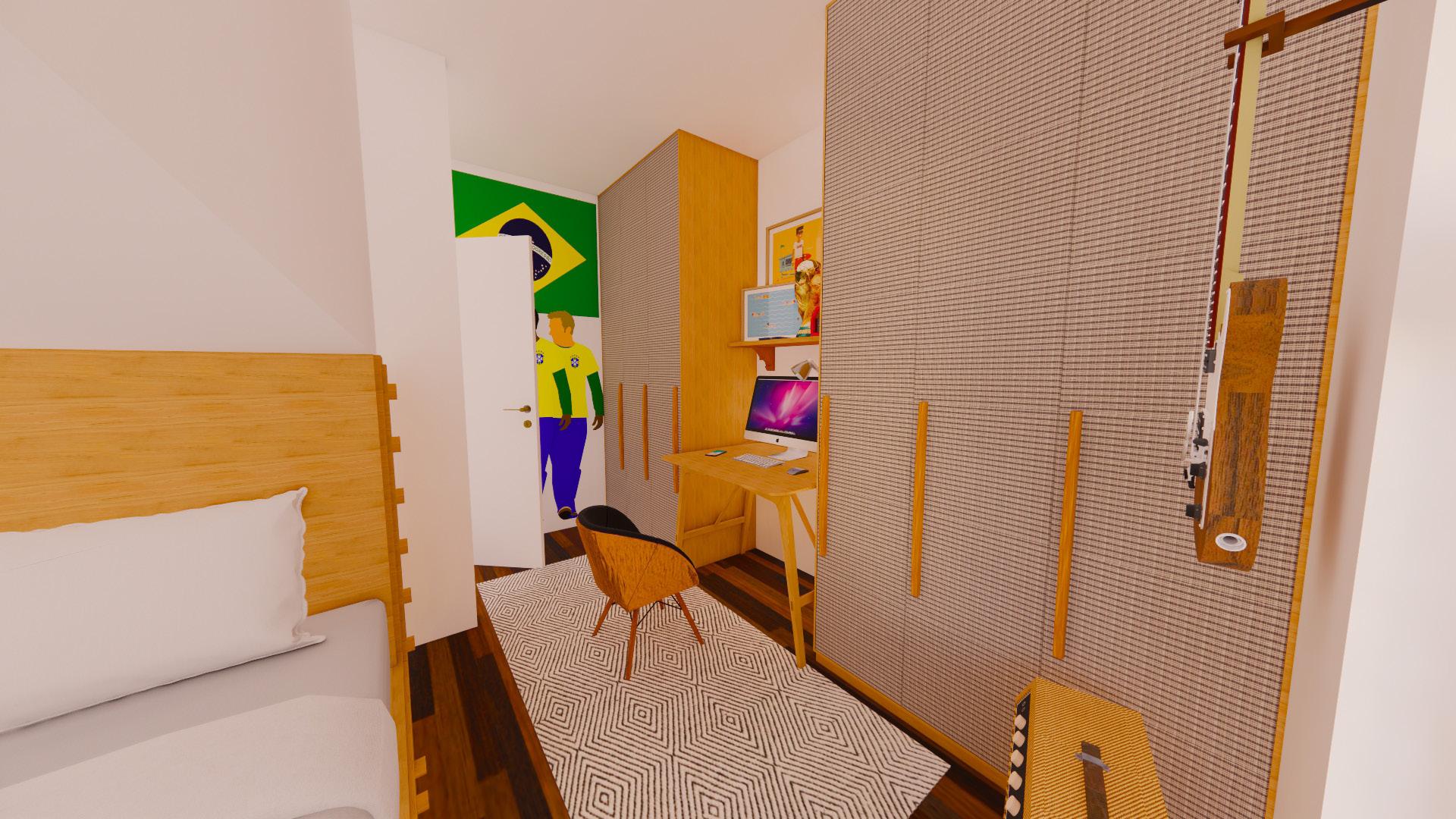
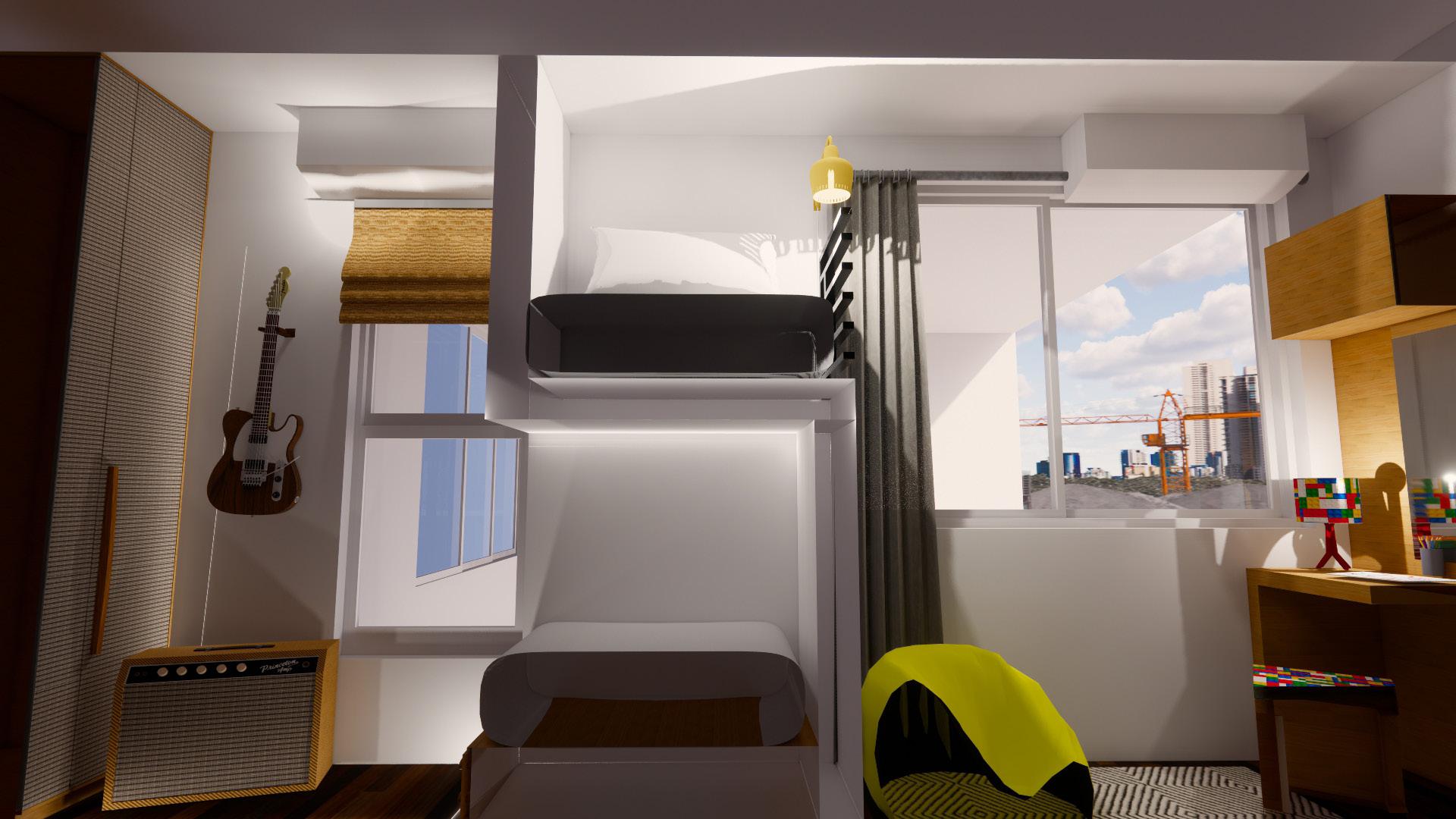
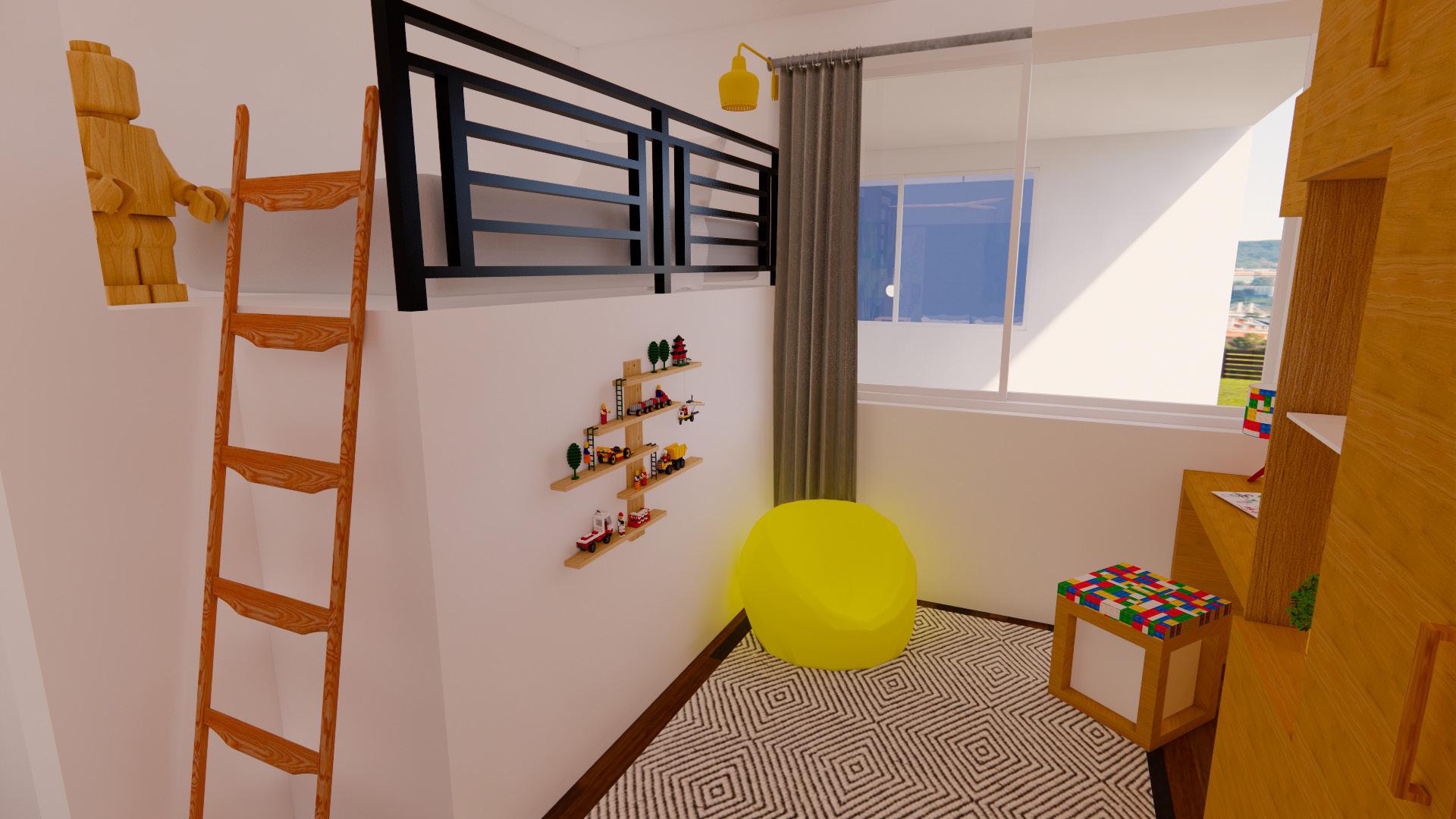
Special attention was paid to the two bedrooms for the children. Mateus, the older child plays the guitar and spends time on his computer playing videogames. Julia, the younger child enjoys crafting, playing with LEGO, and having friends over. With the limited space in the apartment, a unique bed-bunking system was designed so as to keep each bedroom separate while also using the vertical advantages of such a system.
Mateus’ space, (Figure 1) provides ample storage and great acoustical control with bespoke built ins, covered in fabric and inspired by Mateus’ Fender speaker system.
Figure 2 shows a cut through elevation of the bed-bunking system. Each bedroom is completely separate from the other.
Julia’s bedroom, (Figure 3) houses the upper bunk, accessible by ladder. Space for crafting and socializing with friends is prioritized in this larger of the two bedrooms.
Figure 3
Figure 2
15
Figure 1
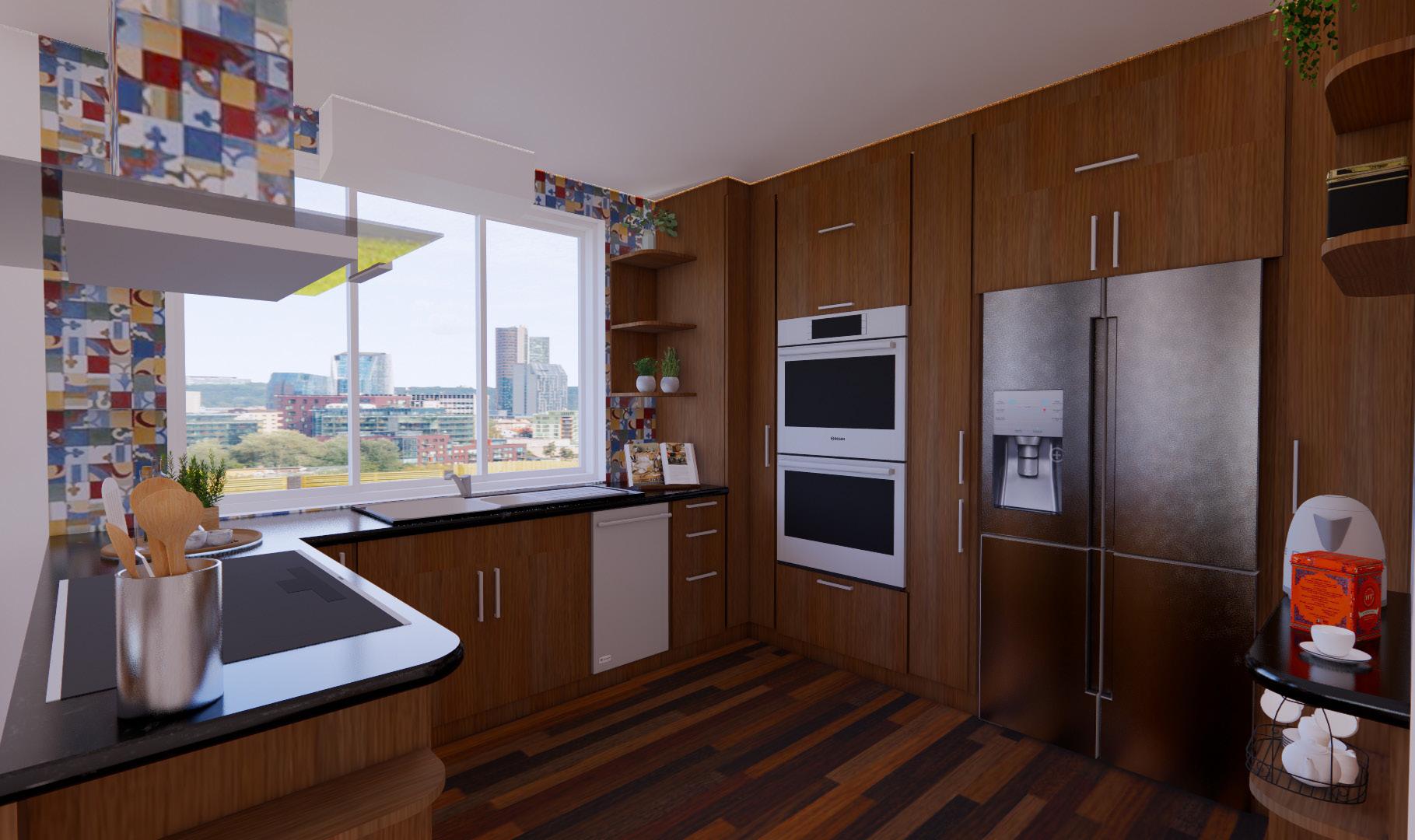
KITCHEN:
A large, U-shaped kitchen is ideal for entertaining and airflow into the living are of the apartment.
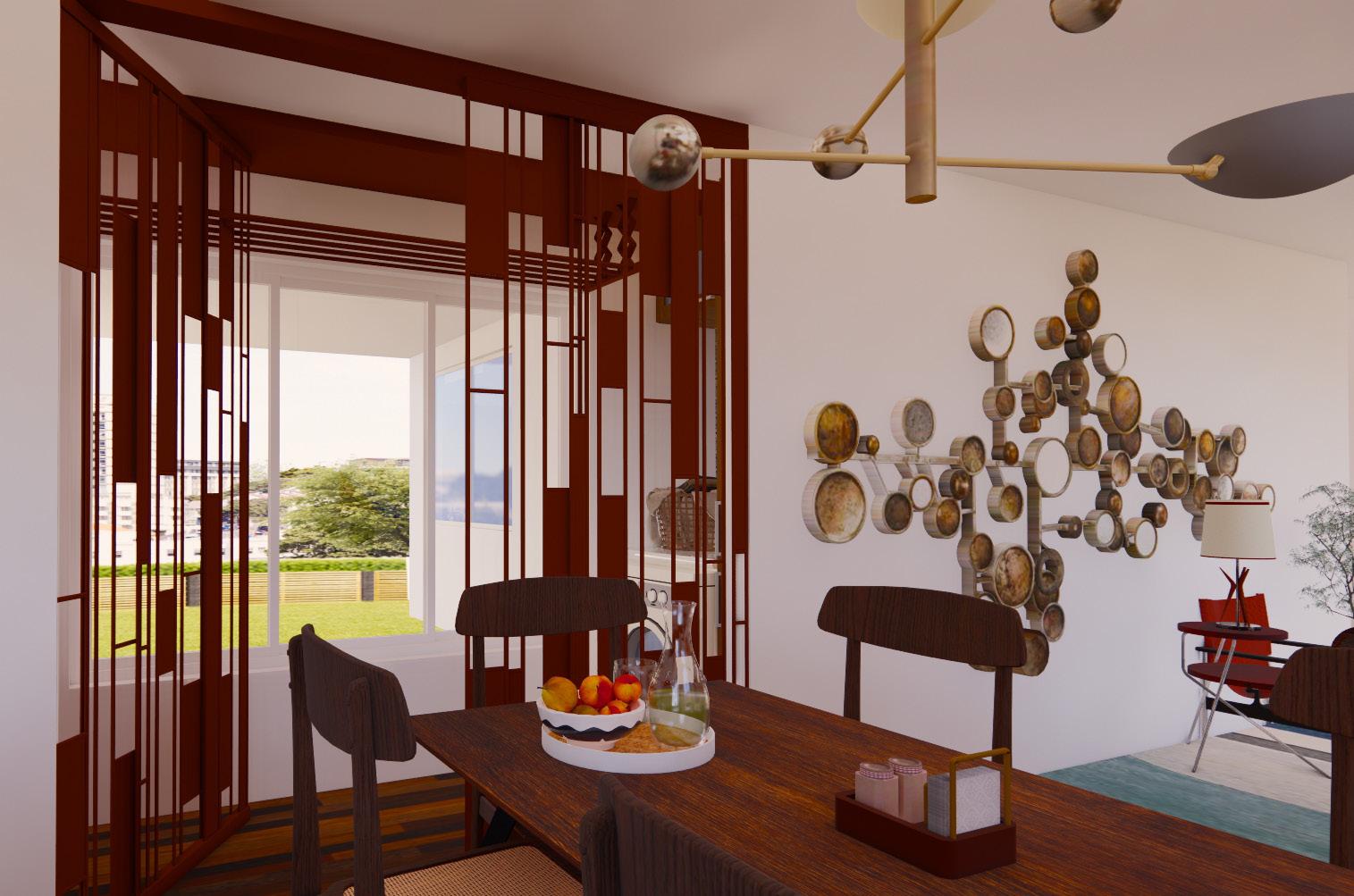
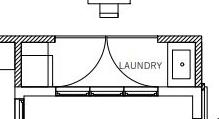
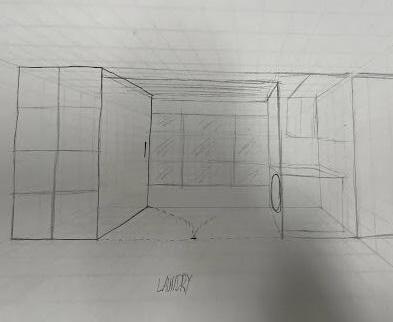
The laundry room is placed off the dining area behind two swinging panels to close off the space when entertaining. A ceiling mounted drying rack tucks away when not in use and is placed near a large window bank for optimal ventilation
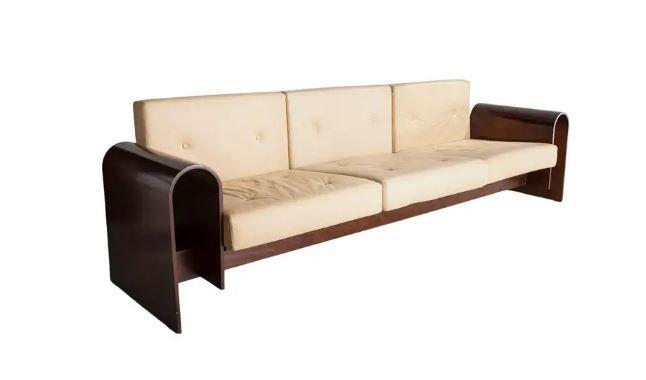
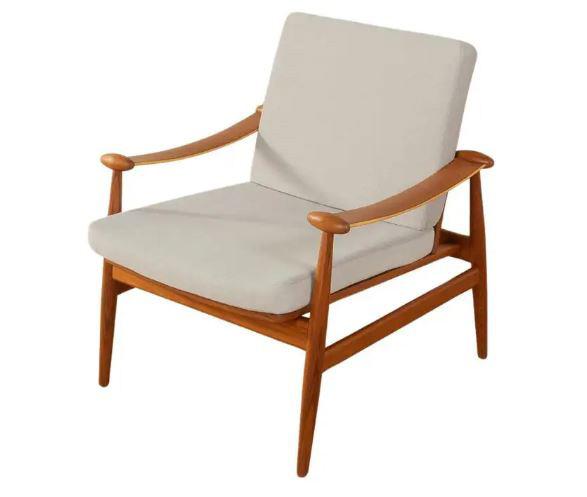
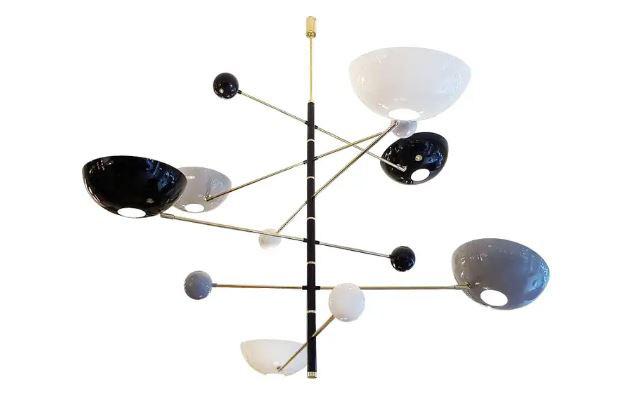
FURNITURE SELECTIONS:
Furniture for the space was influenced by Oscar Niemeyer and his contributions to designing the capital city of Brazil, Brasilia. Niemeyer, Finn Juhl, and Stilnovo all were designers who inspired the design aesthetic of the apartment.
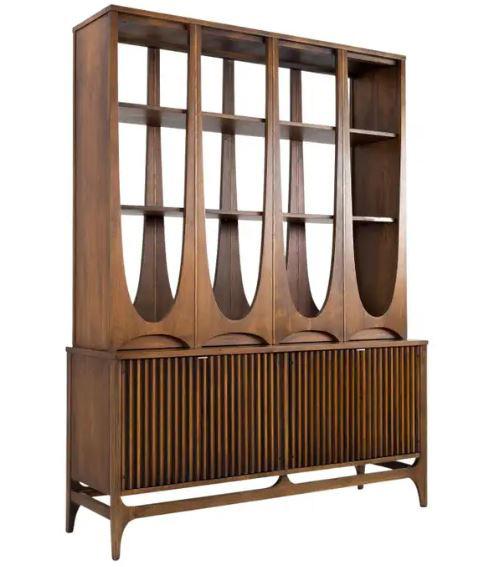
SEWING CABINET:
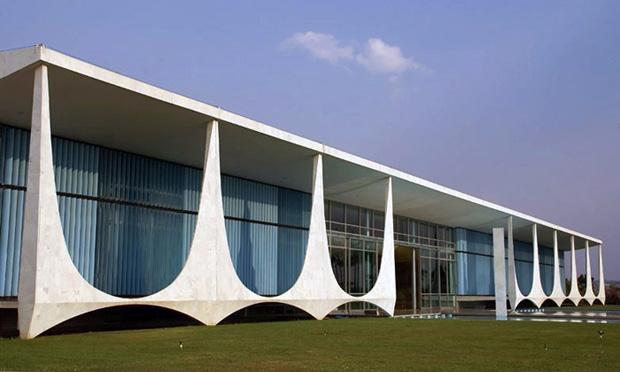
The client requested a cabinet for sewing equipment and textiles. A custom storage solution was modeled after an Oscar Niemeyer Broyhill chest. This design is distinctly Brazilian and inspired by the Palácio da Alvorada, Brasilia, Brazil.
LAUNDRY ROOM:
16
17
The living room is styled after Brazilian Mid-century Modern design. LIVING ROOM:
18
TINY HOUSE
Project Overview: Exercise in designing a contemporary Tiny House unit for a urban professional. 150 Sq. Ft.
Skills/Software: Sketching, Research of home type, user profile development
Project duration: 4 weeks
SPACE PLANNING:
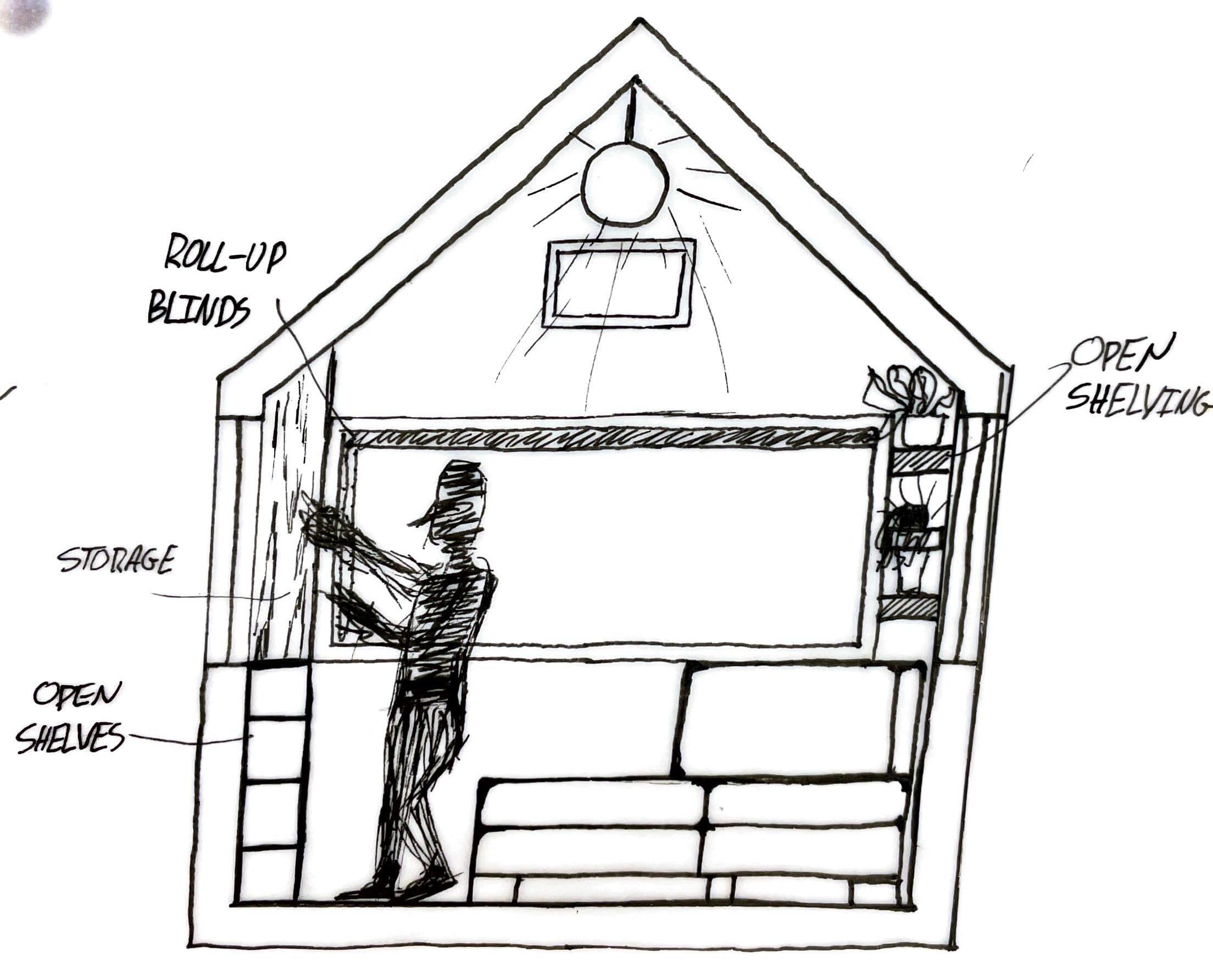
The entire project was developed by hand and drawn to scale. The space includes a kitchen, bathroom with shower, a living area with couch, a lofted queen bed, and a work desking system which can be folded up and away when not in use. The space also includes storage throughout and space for the client’s bike.
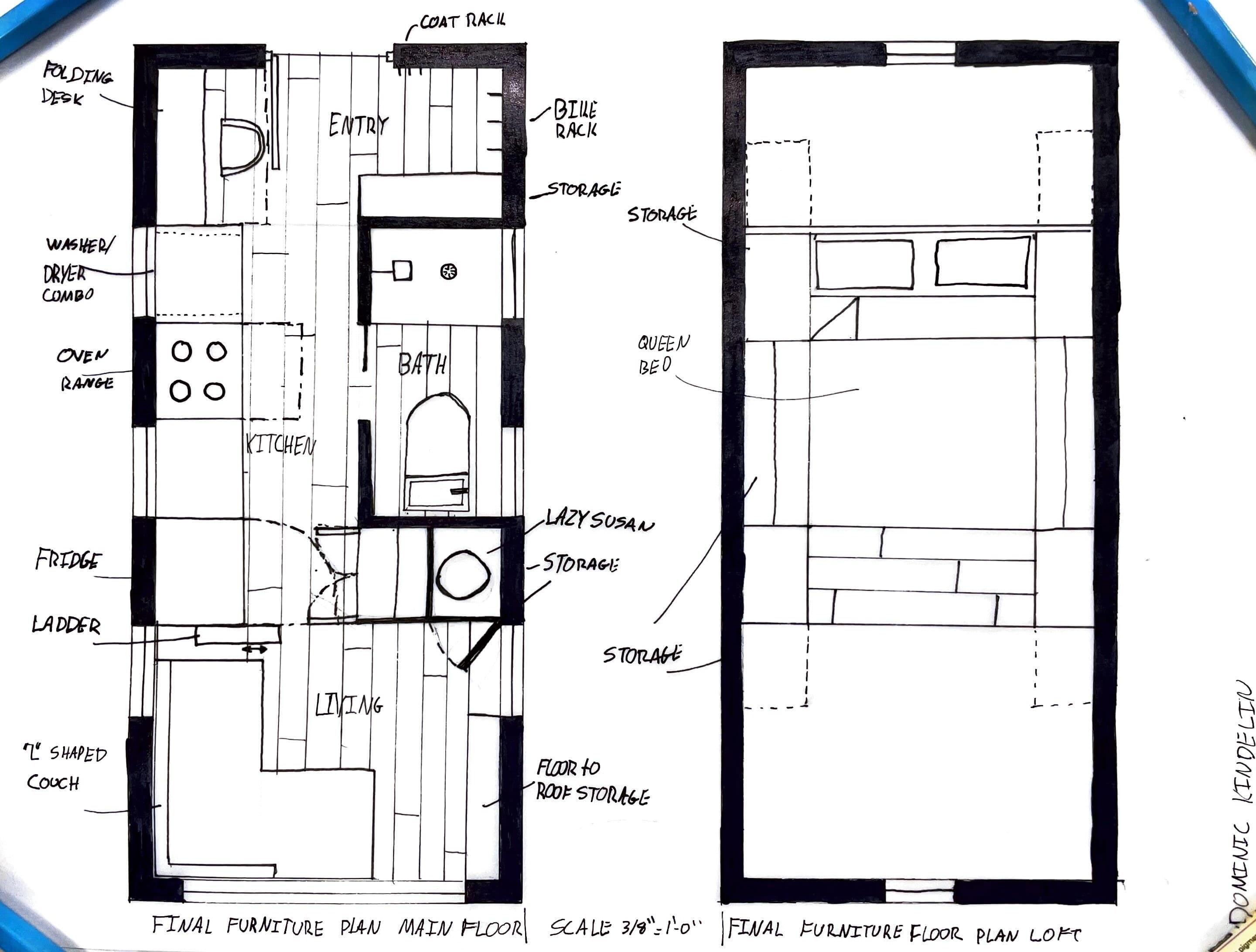
FURNITURE FLOOR PLAN:
All design elements needed to fit within the predefined building shell. The inclusion of a loft bed helped with effective space planing.
19
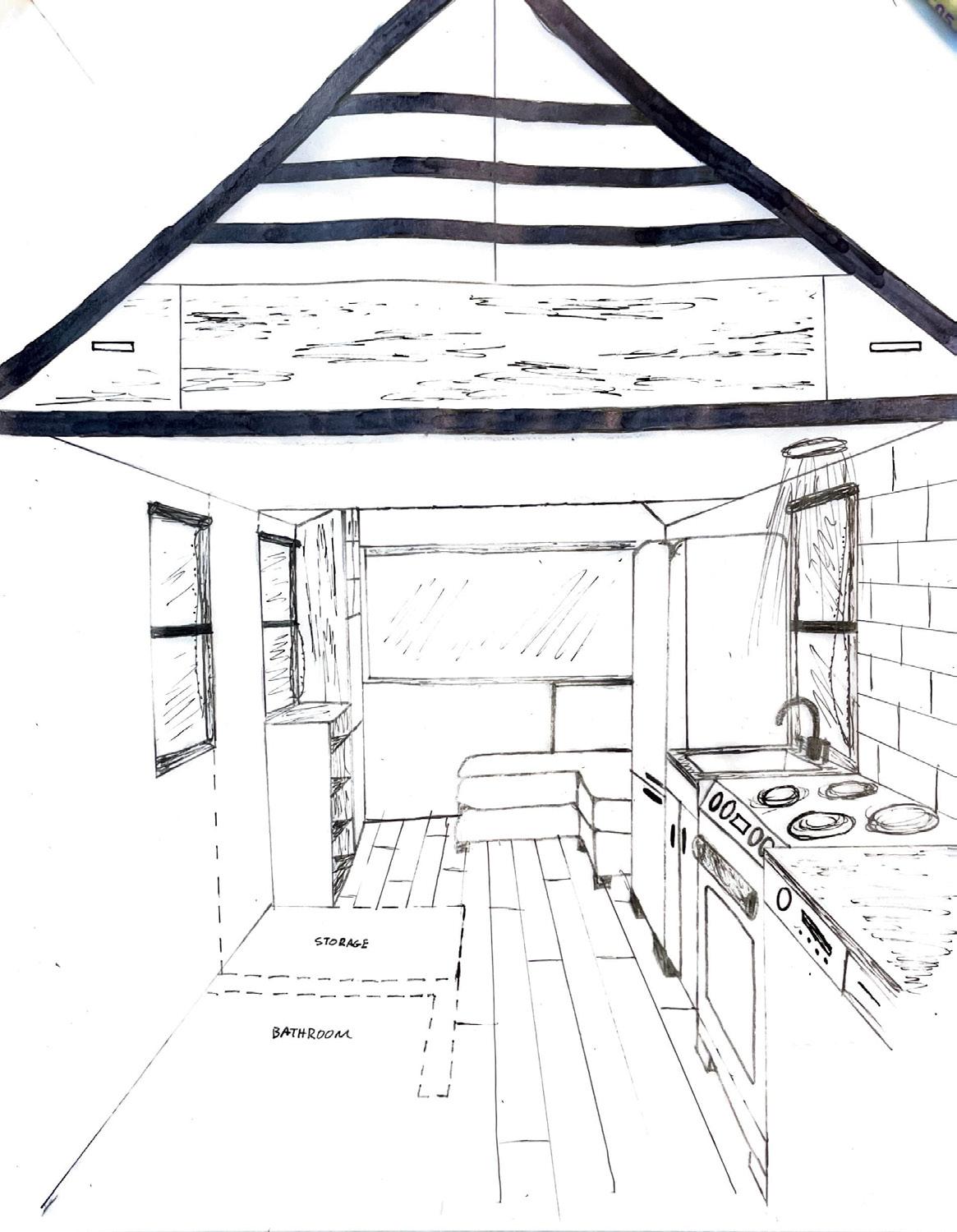
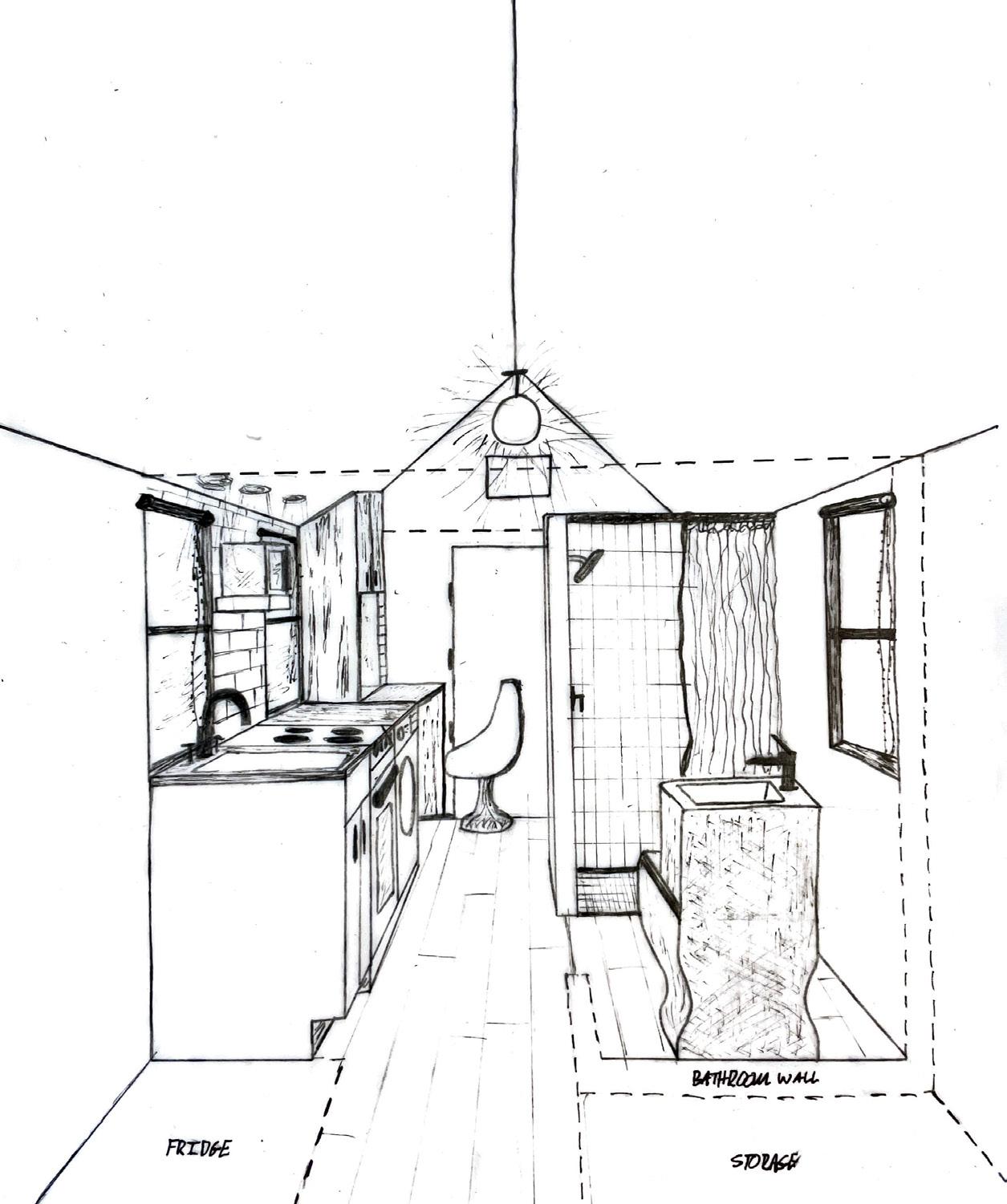
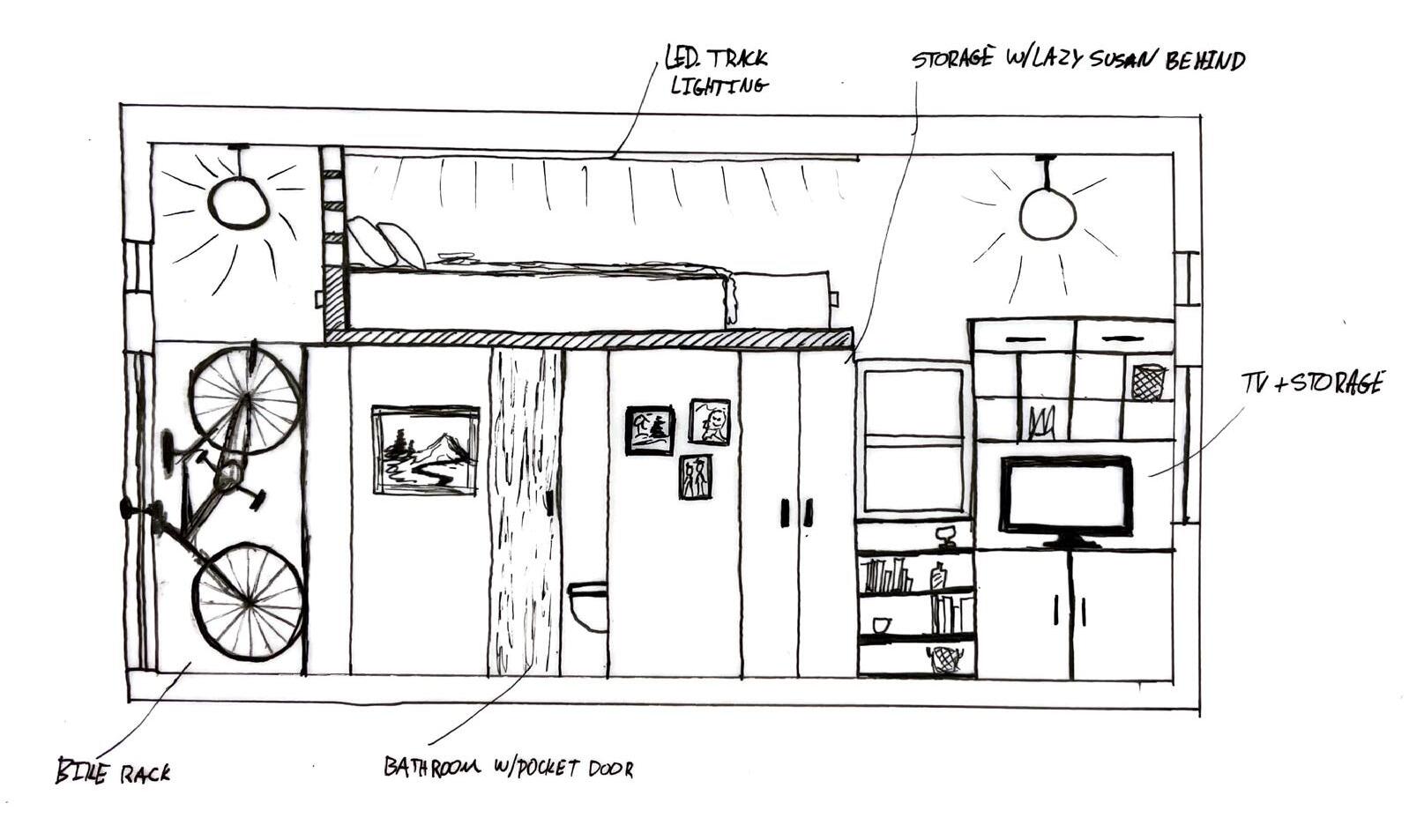
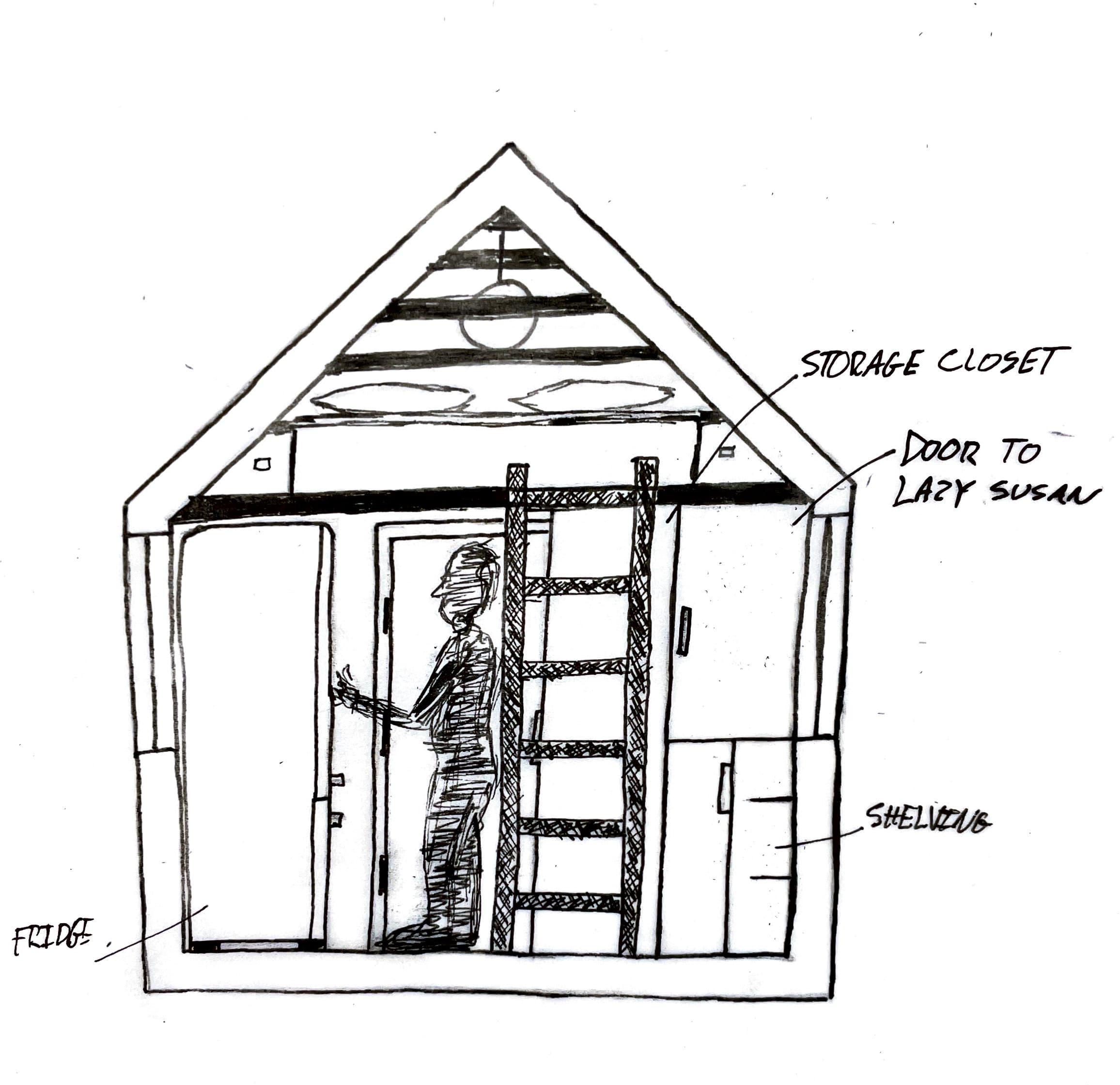
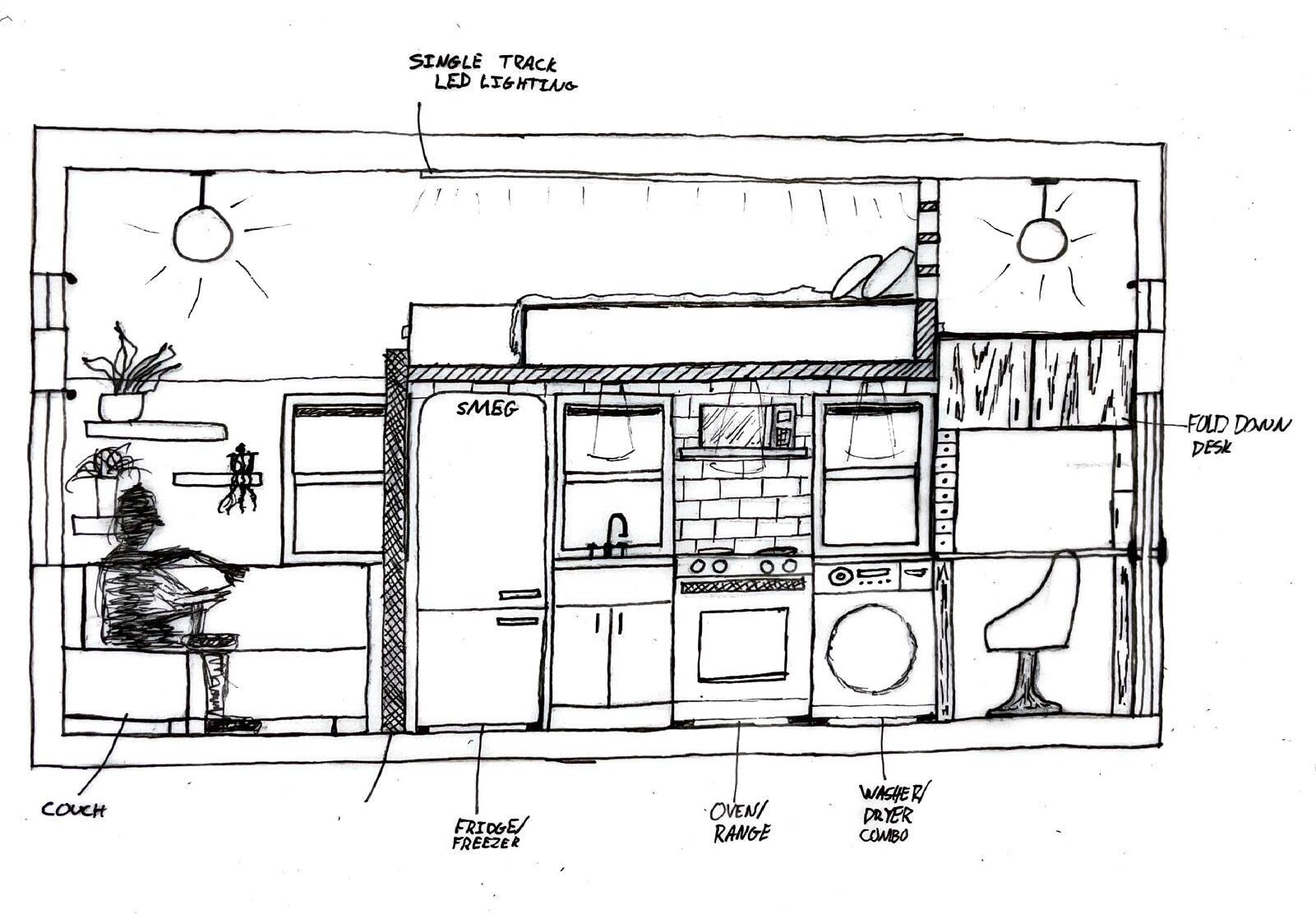
 Kitchen Elevation
View from door
View from living area
Bathroom Elevation
Living Room Elevation
Kitchen Elevation
View from door
View from living area
Bathroom Elevation
Living Room Elevation
20
Loft Elevation
SENIOR COHOUSING
Project Overview: Development of a fully ADA compliant apartment for two clients in a senior co-housing community in Bloomington, IL. 800 sq. ft.
Skills/Software: SketchUp, InDesign, Enscape Project duration: 6 weeks
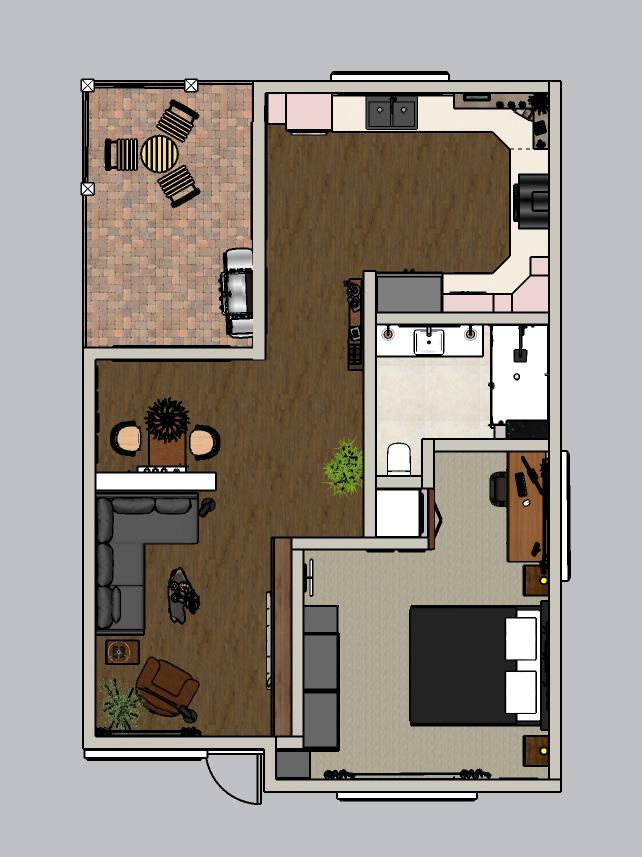
FLOORPLAN:
This one bed, one bath unit has an open plan layout and space for entertaining visitors.
21
SPACE PLANNING: Floor
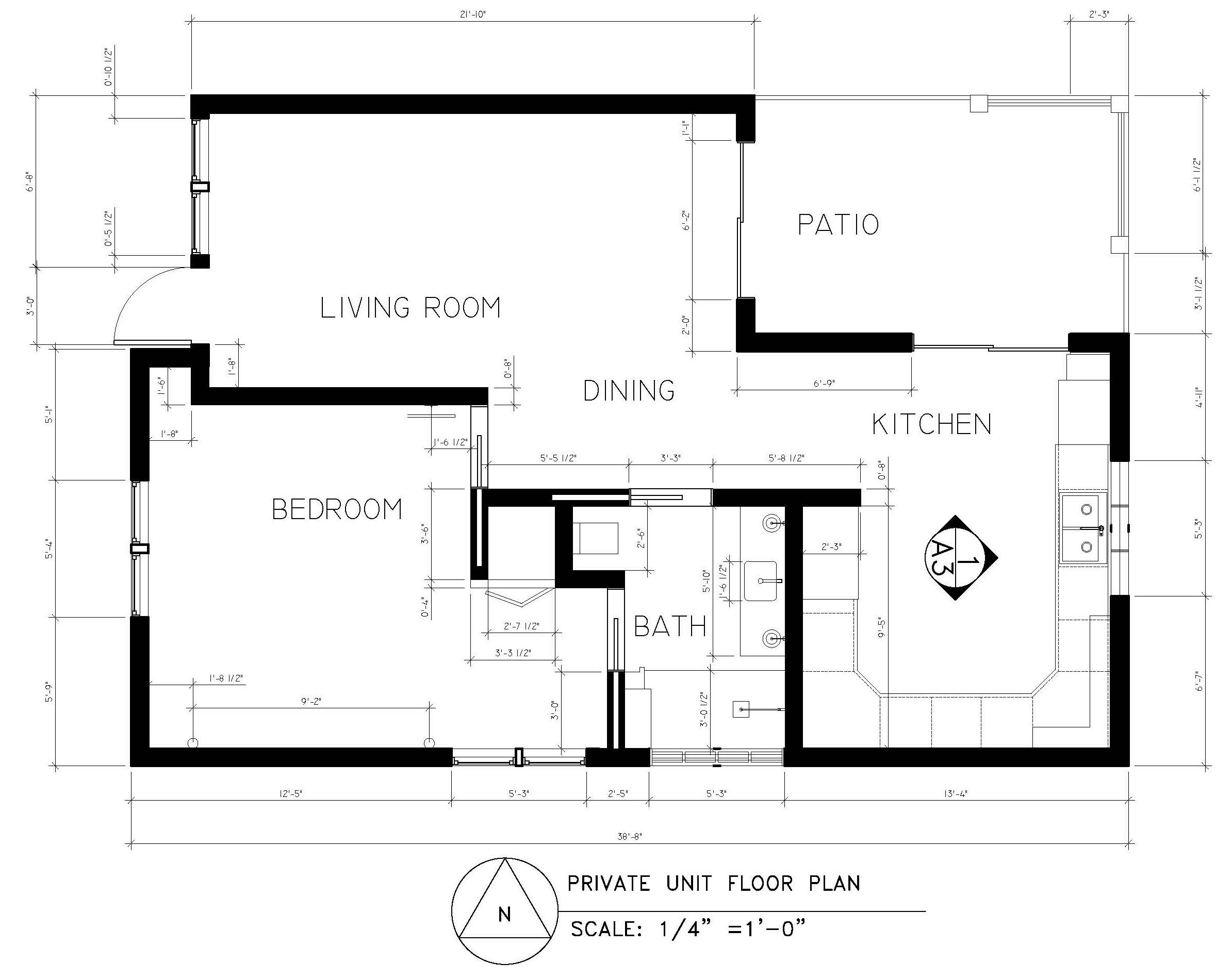
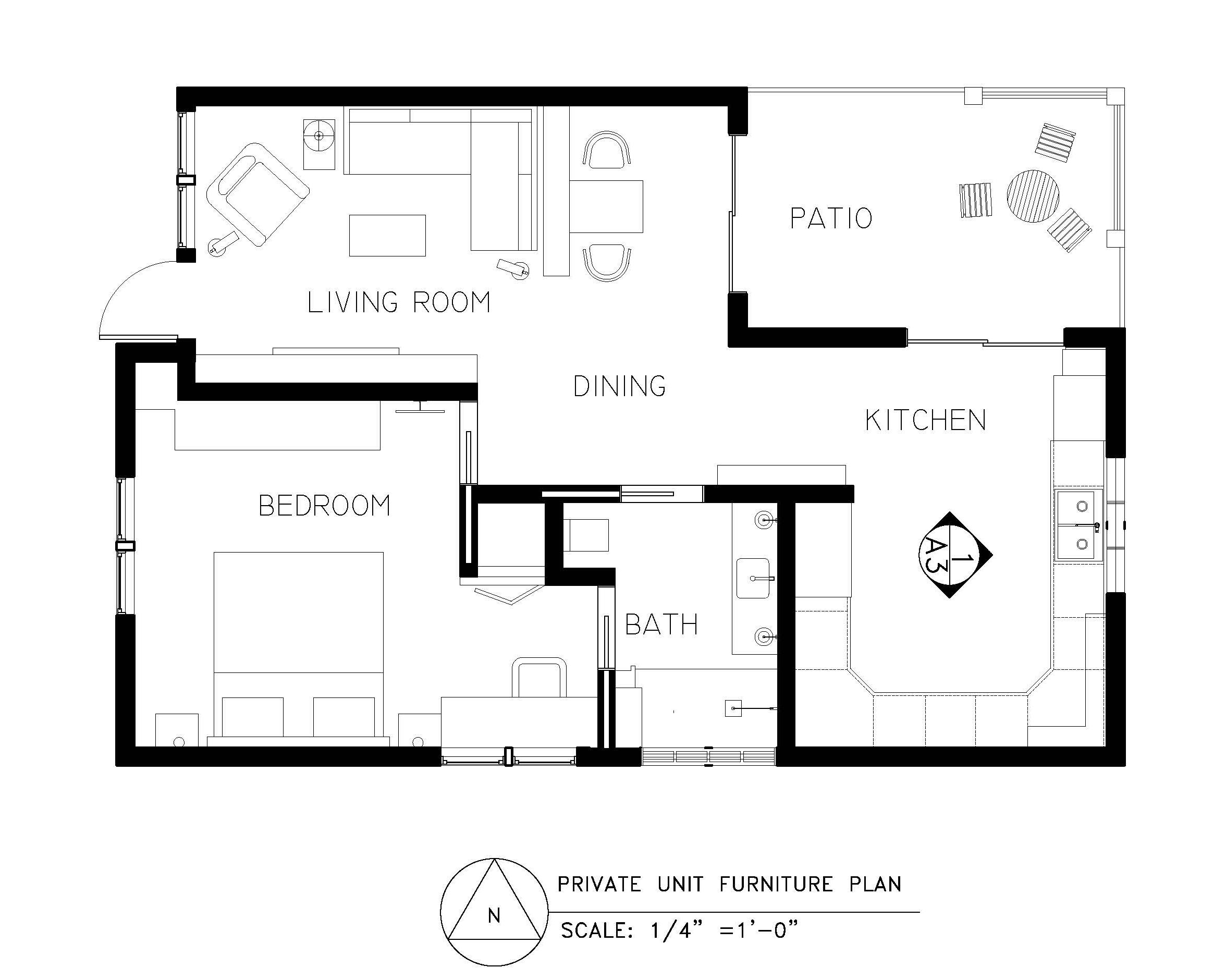
This private unit for two seniors was designed for ADA compliance and for optimal aging in place.
Figure 1 shows the floorplan of the home and the spacing considerations for circulation and freedom of movement for the client. Figure 2 shows the plan for circulation with the addition of furnishings. The clients specified they needed a large space for baking and cooking so the kitchen was designed for optimal movement. Figure 3 shows the eastern elevation (A3) of the kitchen with dimensioning of cabinetry.
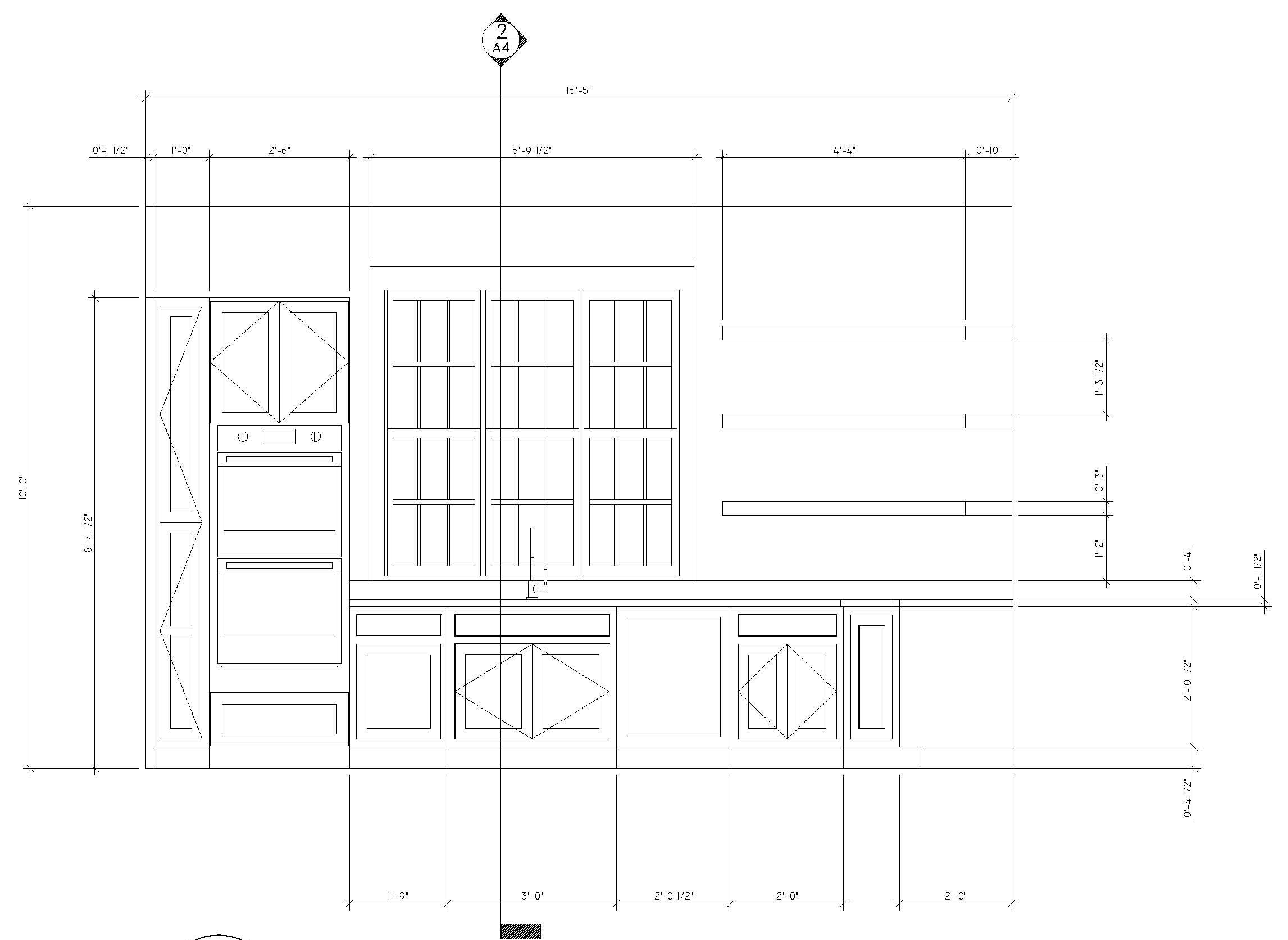 Figure 1
Figure 2
Figure 3
Plan
Furniture Plan
Figure 1
Figure 2
Figure 3
Plan
Furniture Plan
22
Kitchen Elevation
LIVING & DINING:
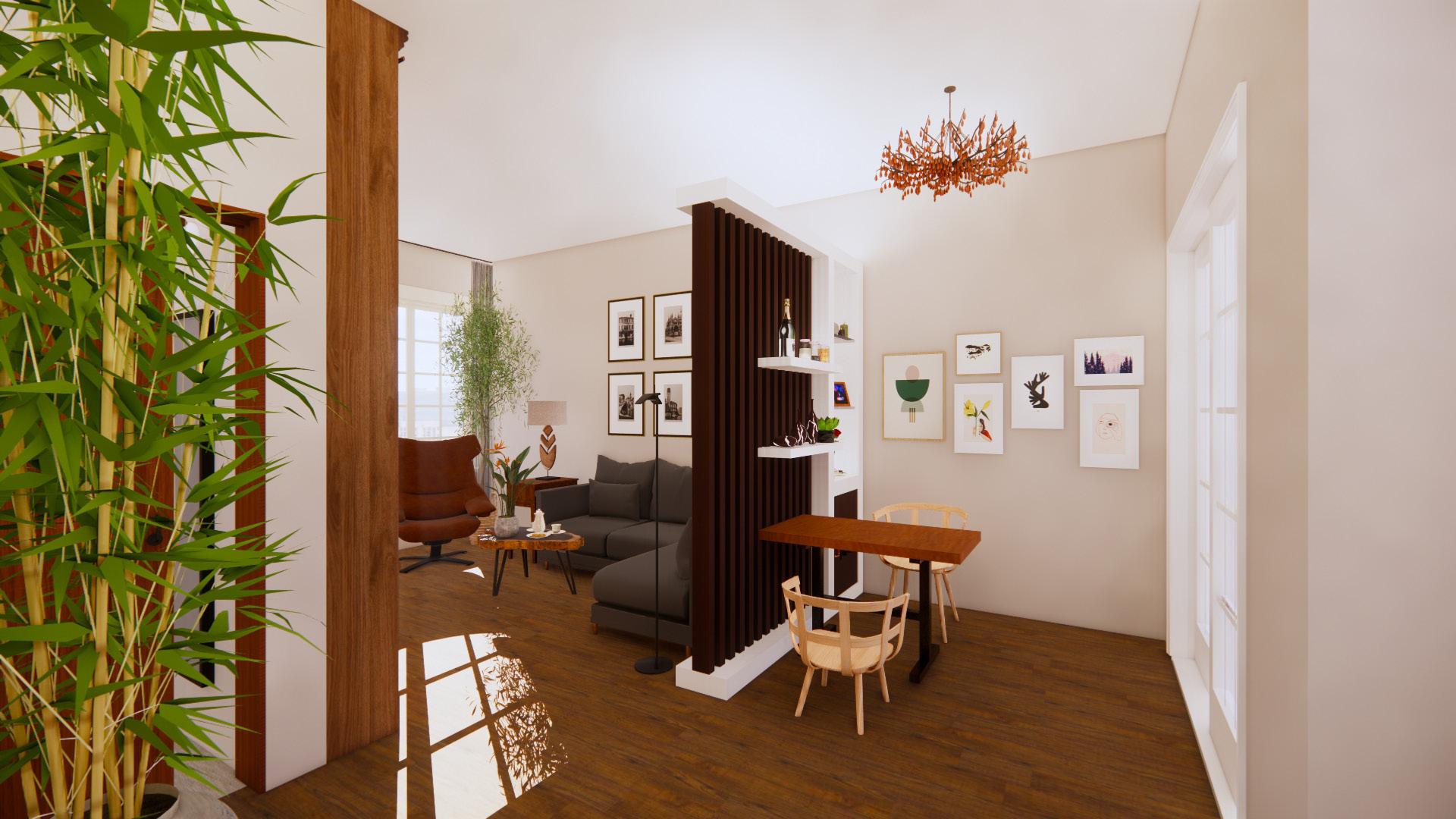
The living and dining areas are blended into one space in this small space. Natural light was listed as a priority for the clients so the two spaces were separated by a partition with vertical slats so light and air can pass freely through the home. Furnishings are all ADA compliant to allow for a wheelchair user to enjoy the space when entertaining.
KITCHEN:
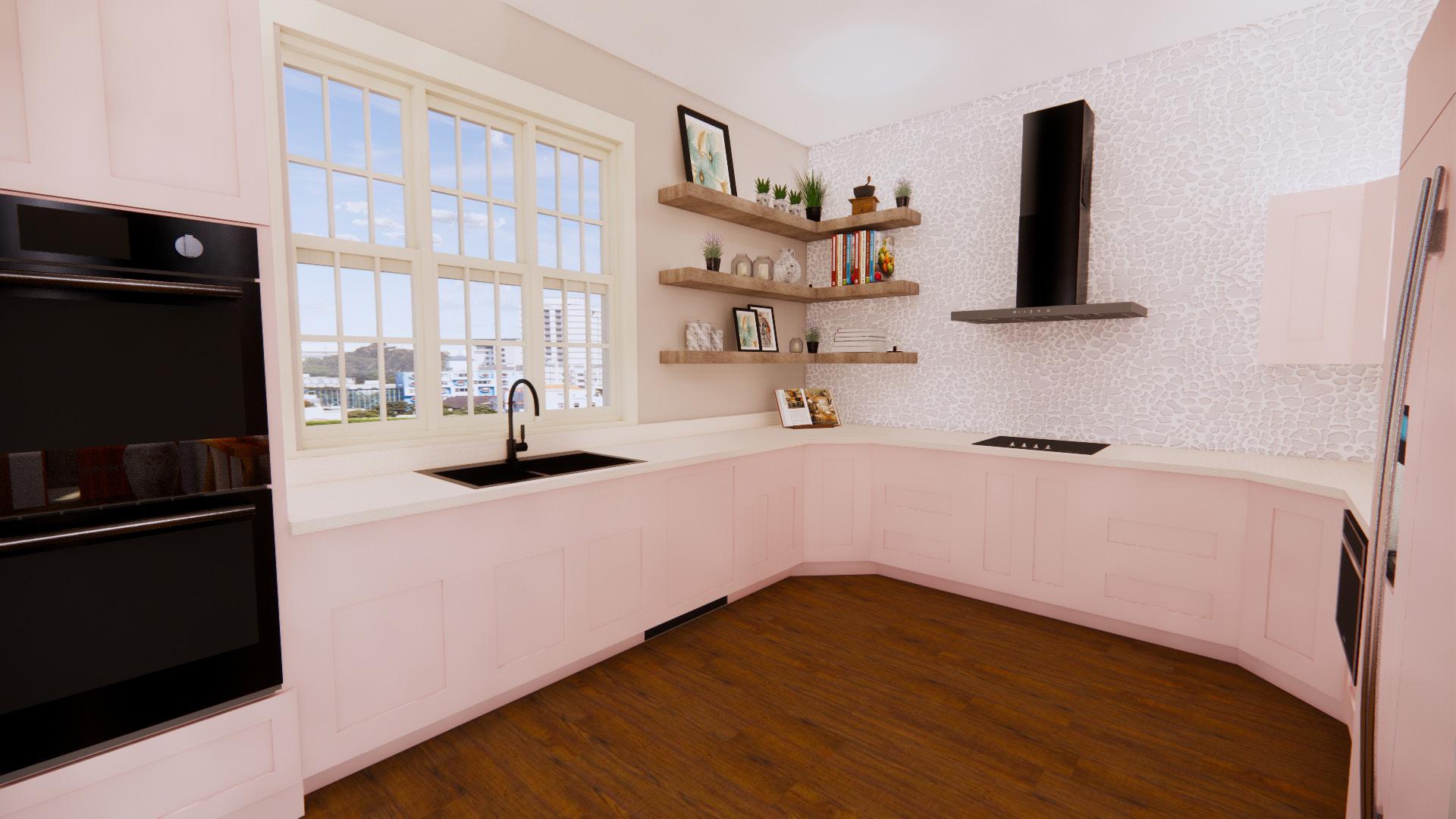
The kitchen was listed as a priority for both clients. They like to cook and bake as well as entertain. They also specified large windows to allow natural light and pink cabinets. The resulting design meets their specifications with a large u-shaped space which allows for several people to use the kitchen at one time.
23
24
MILNER LIBRARY
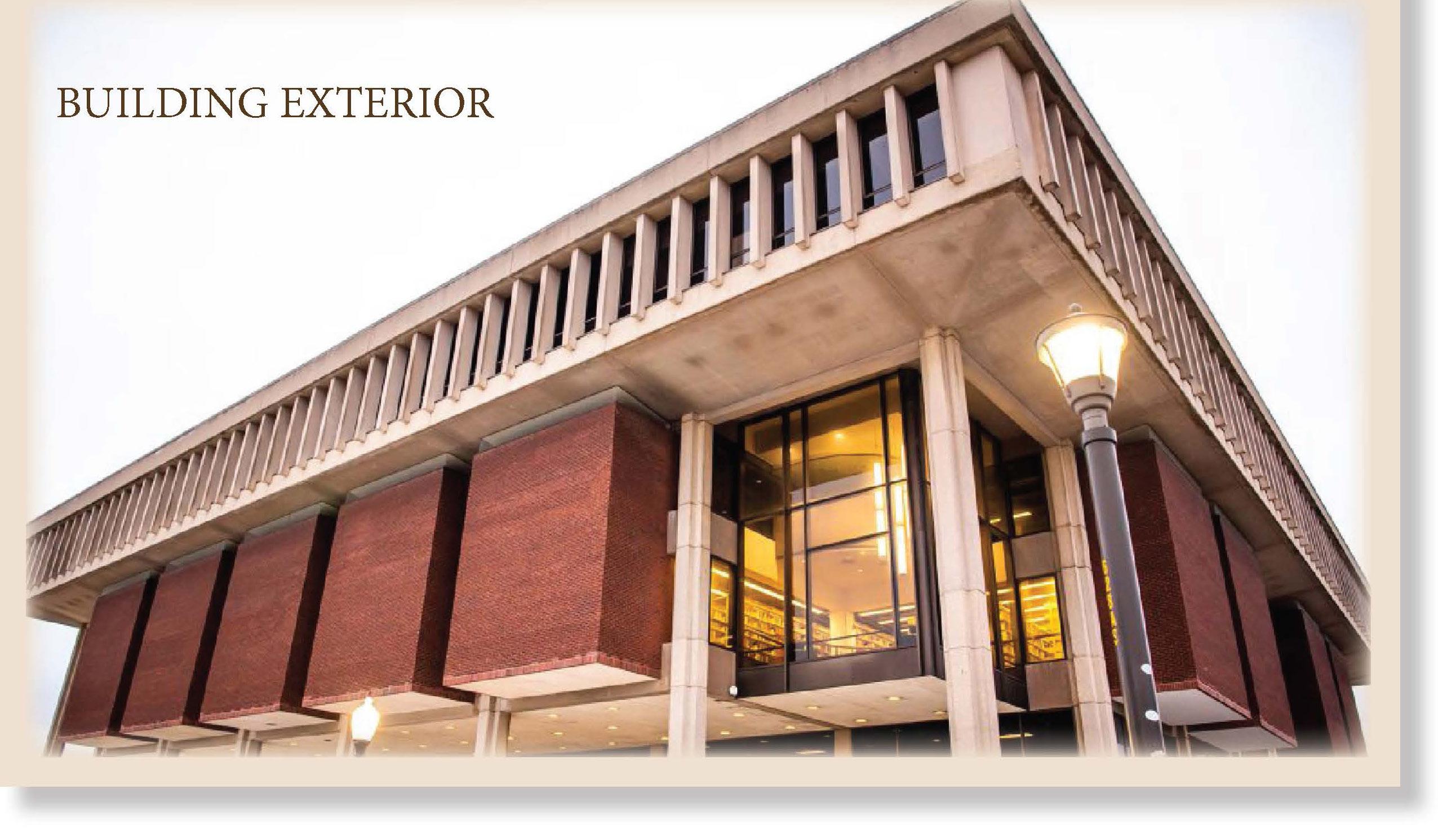
Project Overview: The Milner Library at Illinois State University was looking to renovate their reference desk to promote more interaction between students and librarians.
13,500 sq. ft
Skills/Software: Revit, InDesign, Enscape, Photoshop Project duration: 16 weeks
CONCEPT BOARD

25
FLOOR FINISH PLAN:
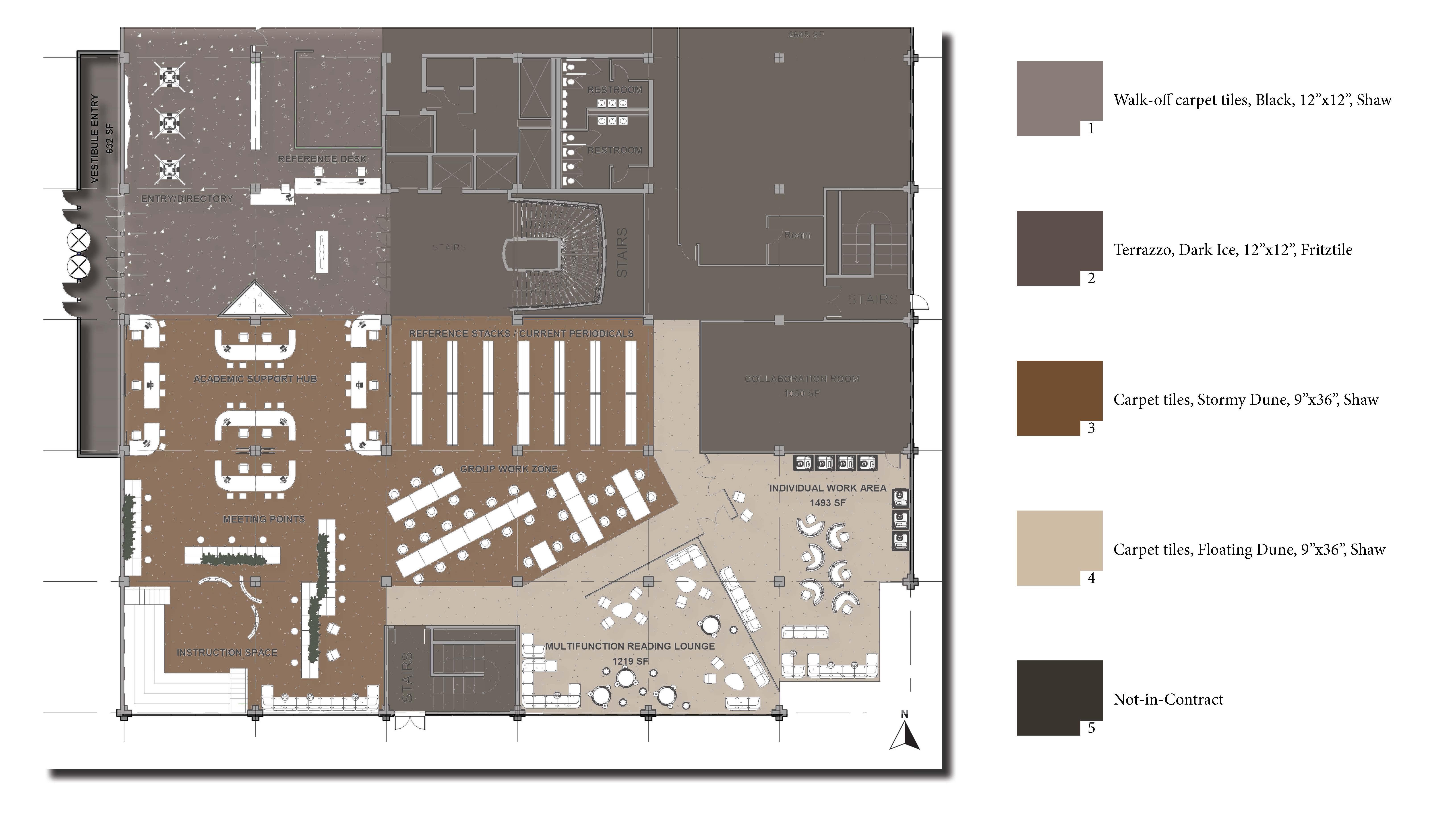
Finishes for this space were rotated between terrazzo and carpet tiles. The entryway includes a walk-off area for inclement weather and terrazzo for quick cleaning. The alternating carpet tiles used in the rest of the space help define different acoustic goals of the space; darker tiles in the more social and busy areas and a lighter carpet tiles in the quieter and less social areas near the rear of the space.
26
ENTRY AND REFERENCE DESK AREA:
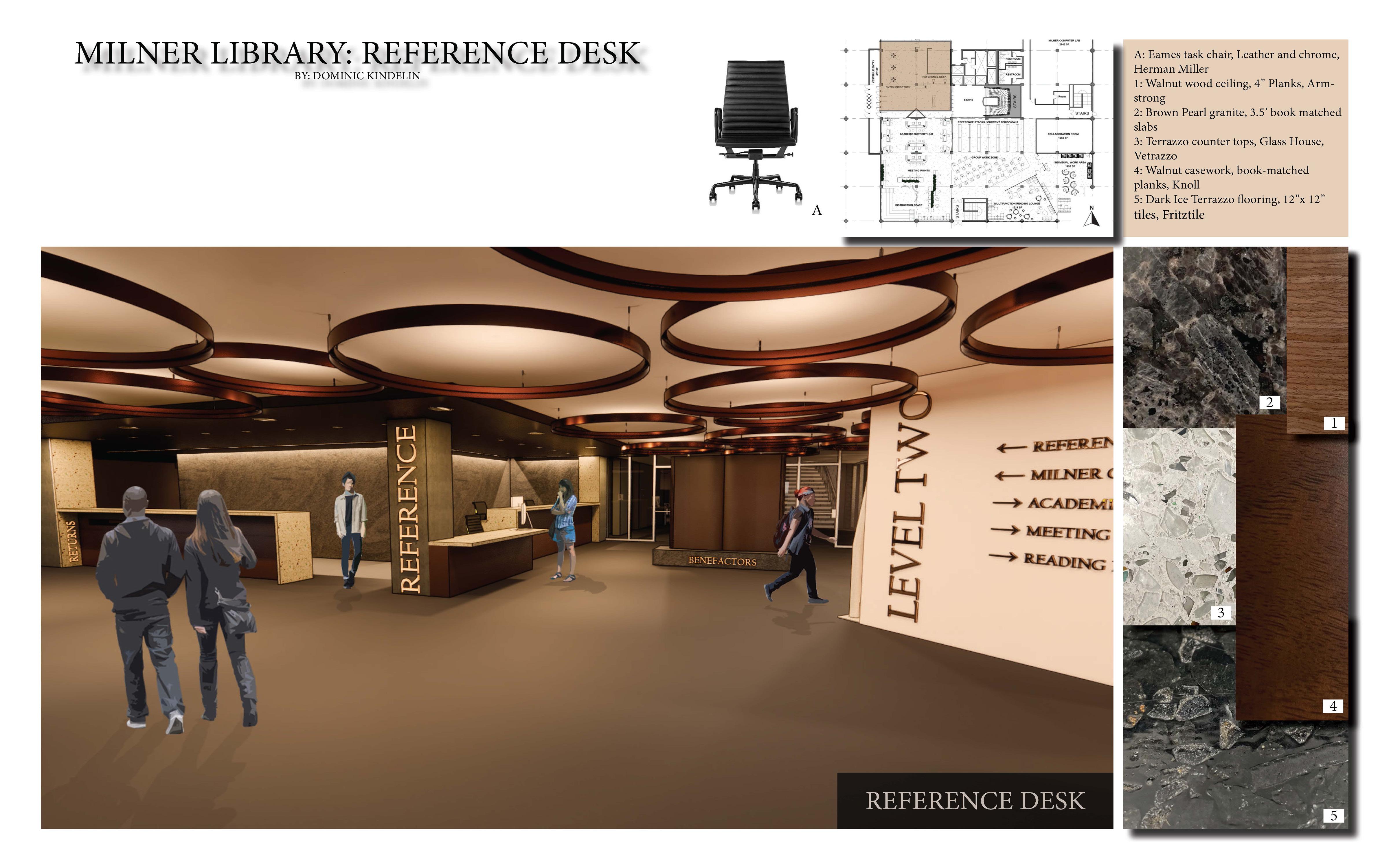
The entryway is a multi-use area which includes the reference desk, an interactive campus map, and donor sculpture. A update to the signage for the library was also included to help students and visitors navigate the building.
27
READING ROOM:
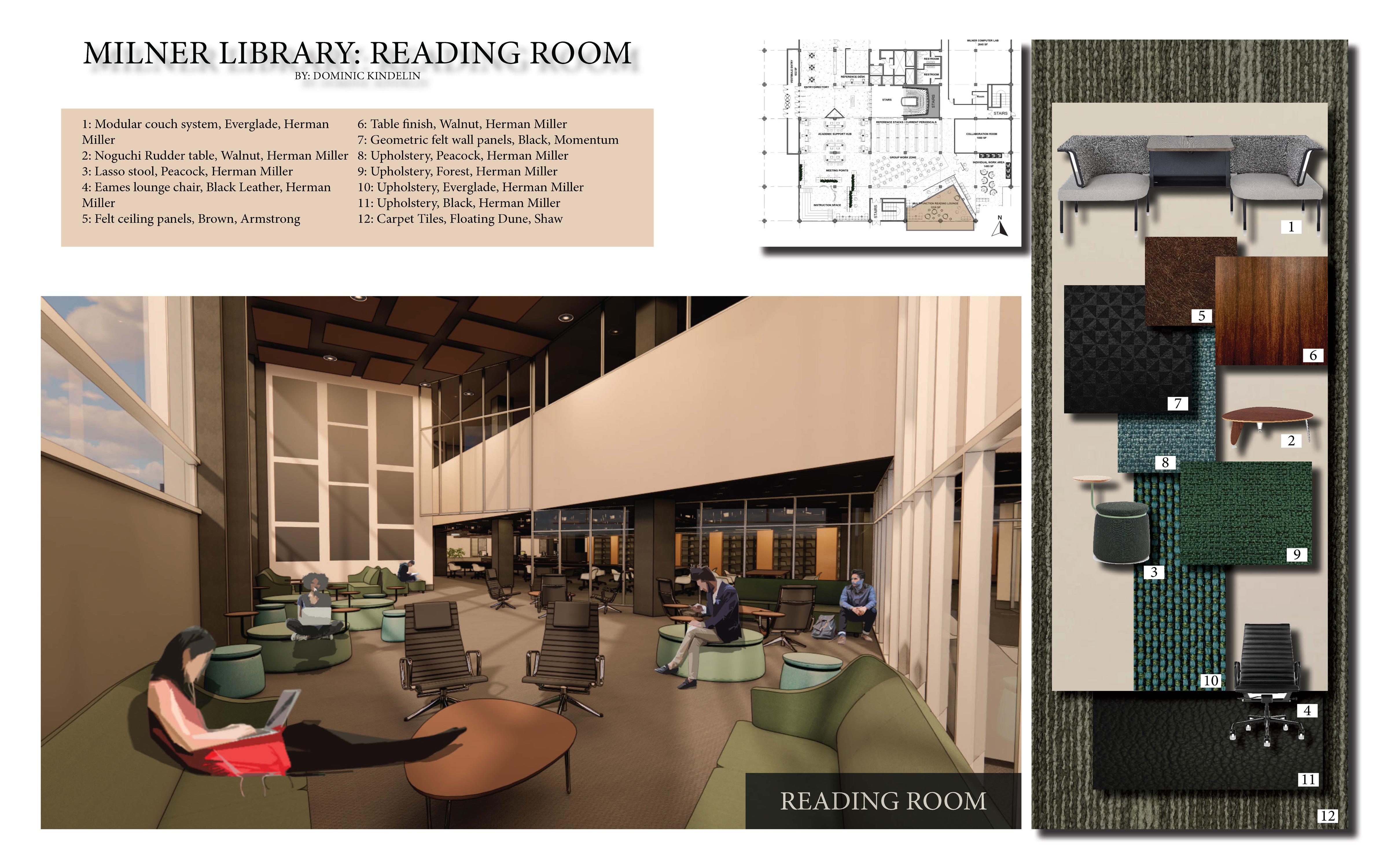
This reading room was designed for students to have a space in the library to relax and take a break from studying. It is differentiated by changes in flooring and a partial glass wall which help with noise pollution from other, more social areas of the library.
28
ACADEMIC SUPPORT HUB:
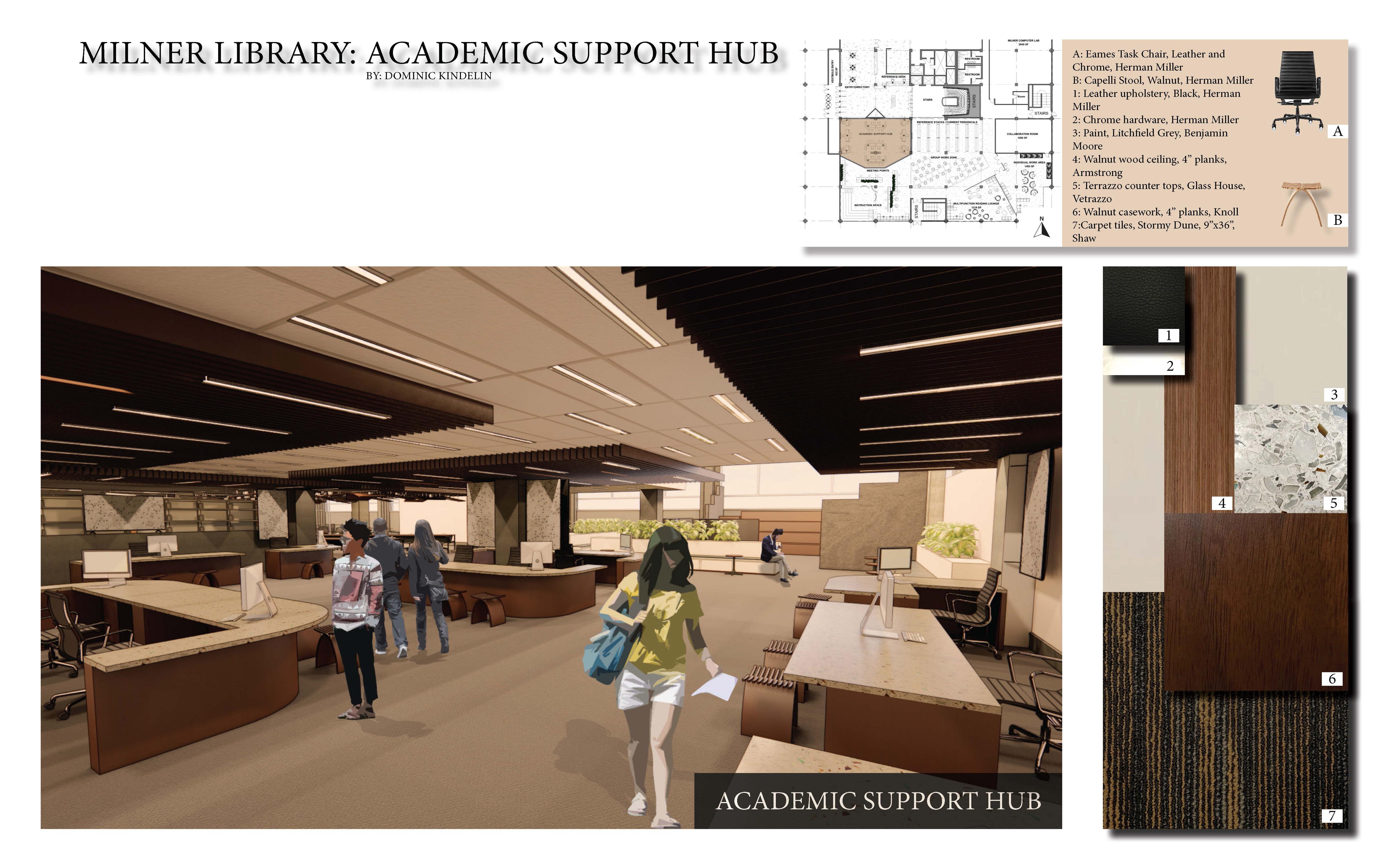
This area of the library includes space for campus resources and organizations to conduct walkup services. This will allow for more interaction between staff and students to help promote a more welcoming and inclusive experience.
29
MEETING POINTS AND INSTRUCTION SPACE:
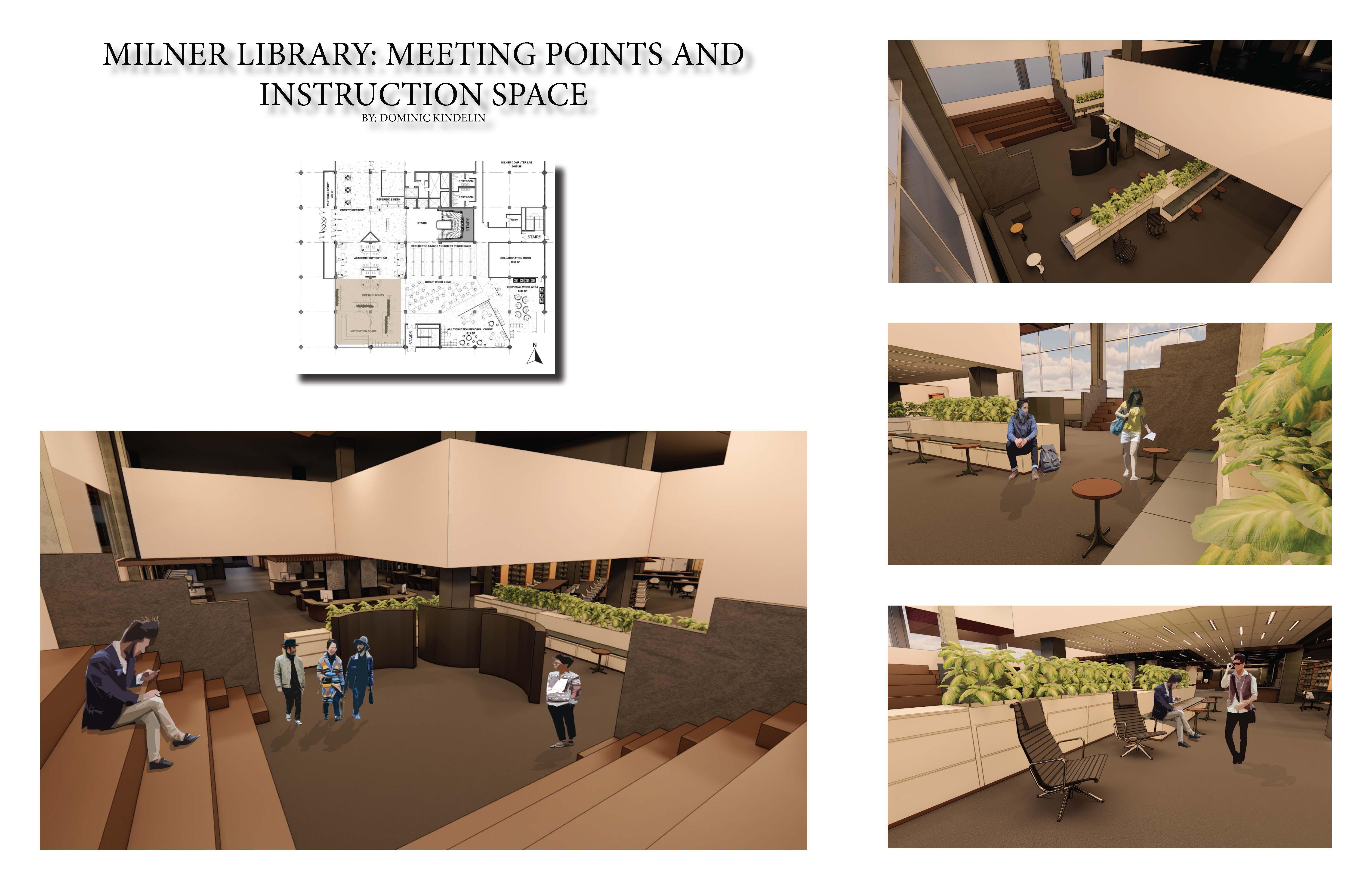
These meeting benches were designed to serve as an area for students to meet as a group before moving off to other areas of the library. The instruction risers in the double height space were designed as an area where campus tours or other ad hoc presentations could be conducted as needed.
30
31
THANK YOU