YACHTING TIMES
THE POWER OF SURPRISE
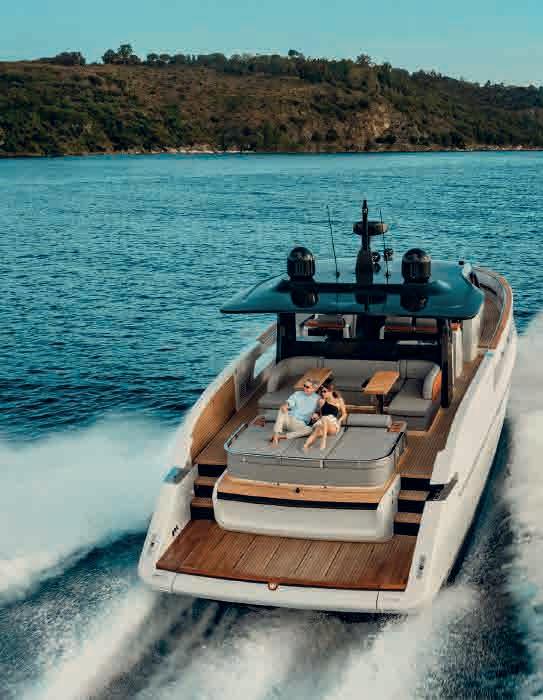
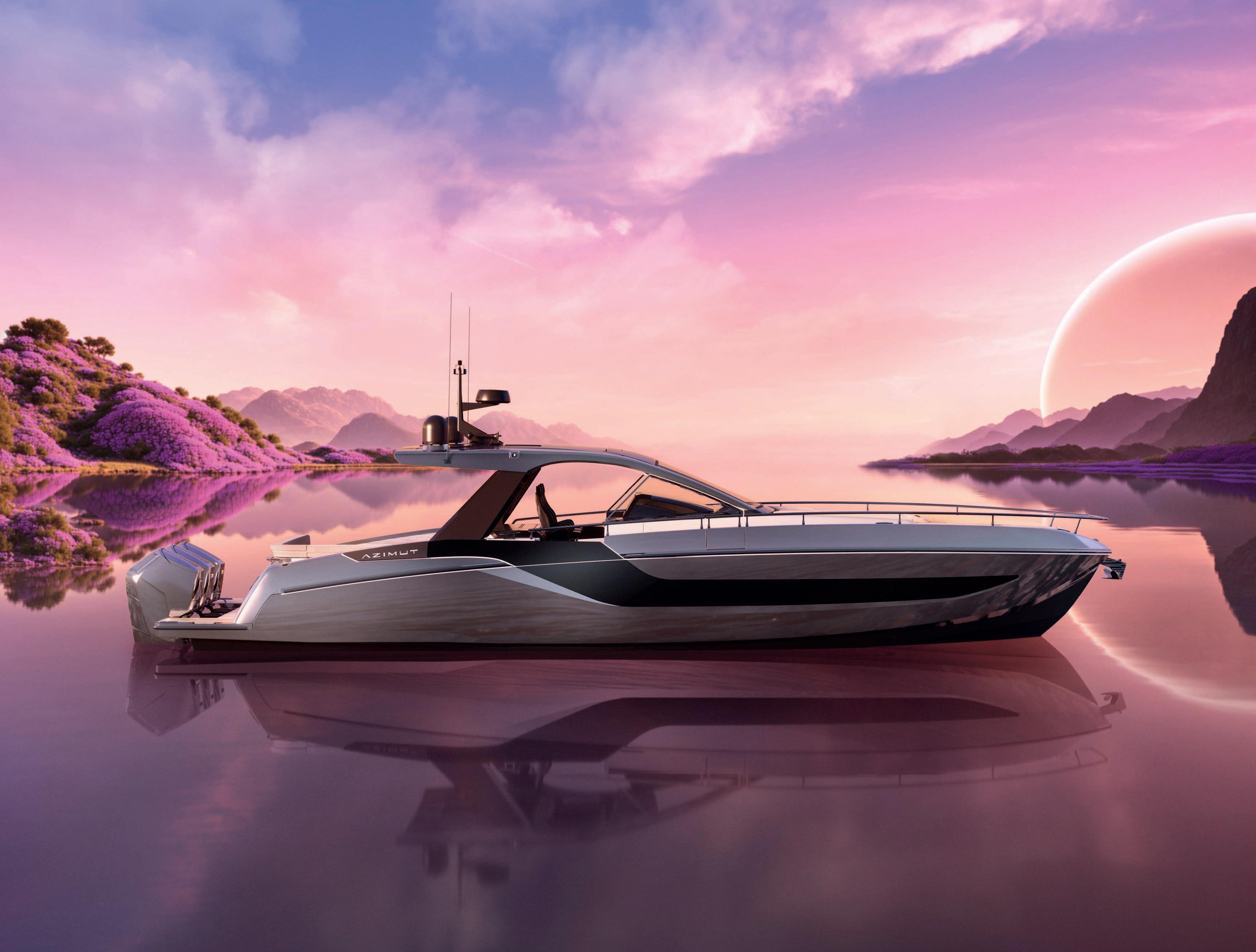
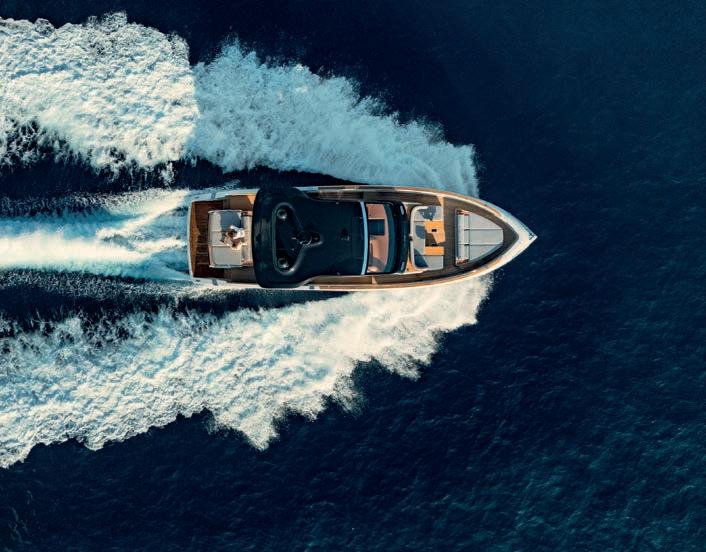
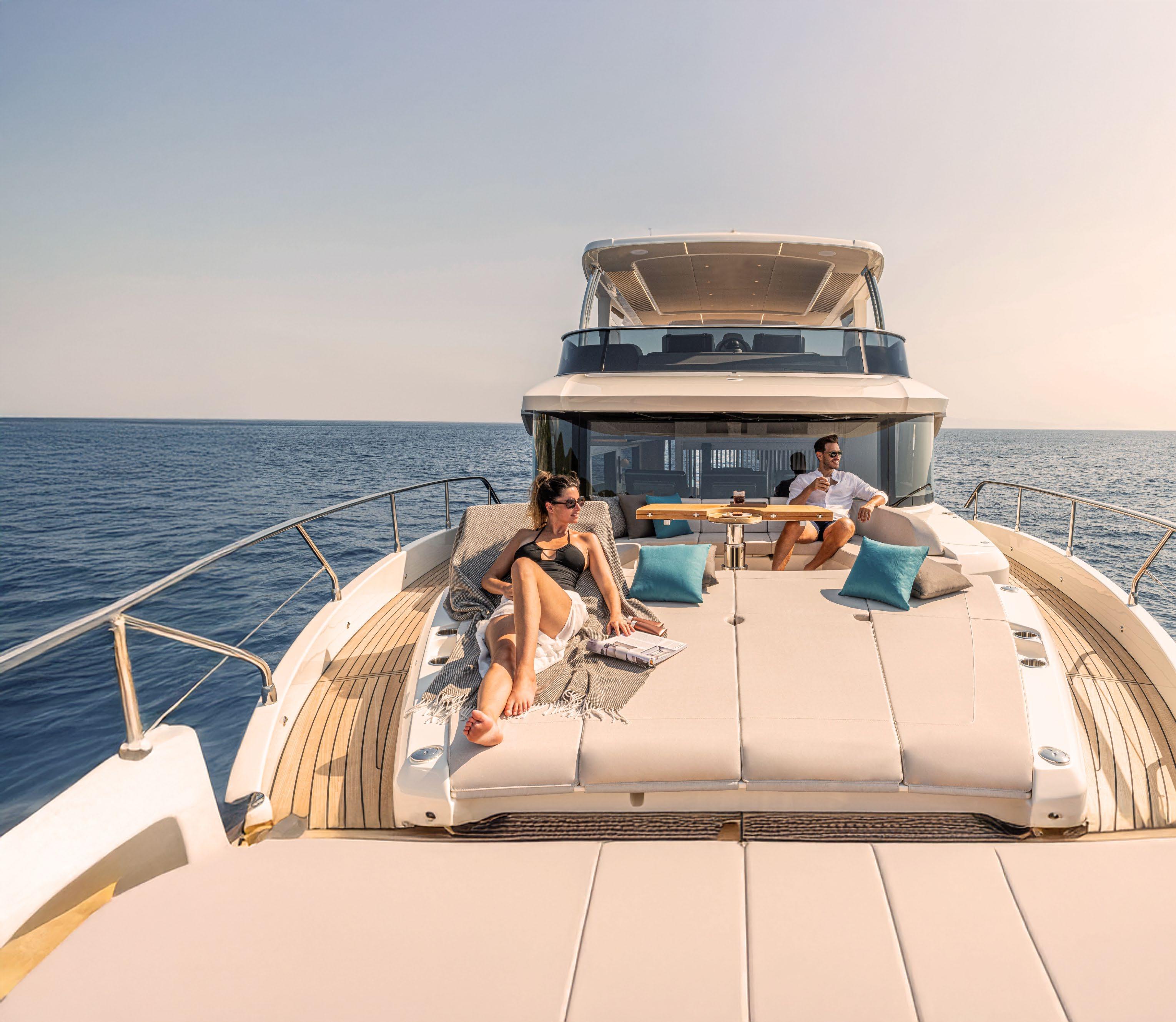
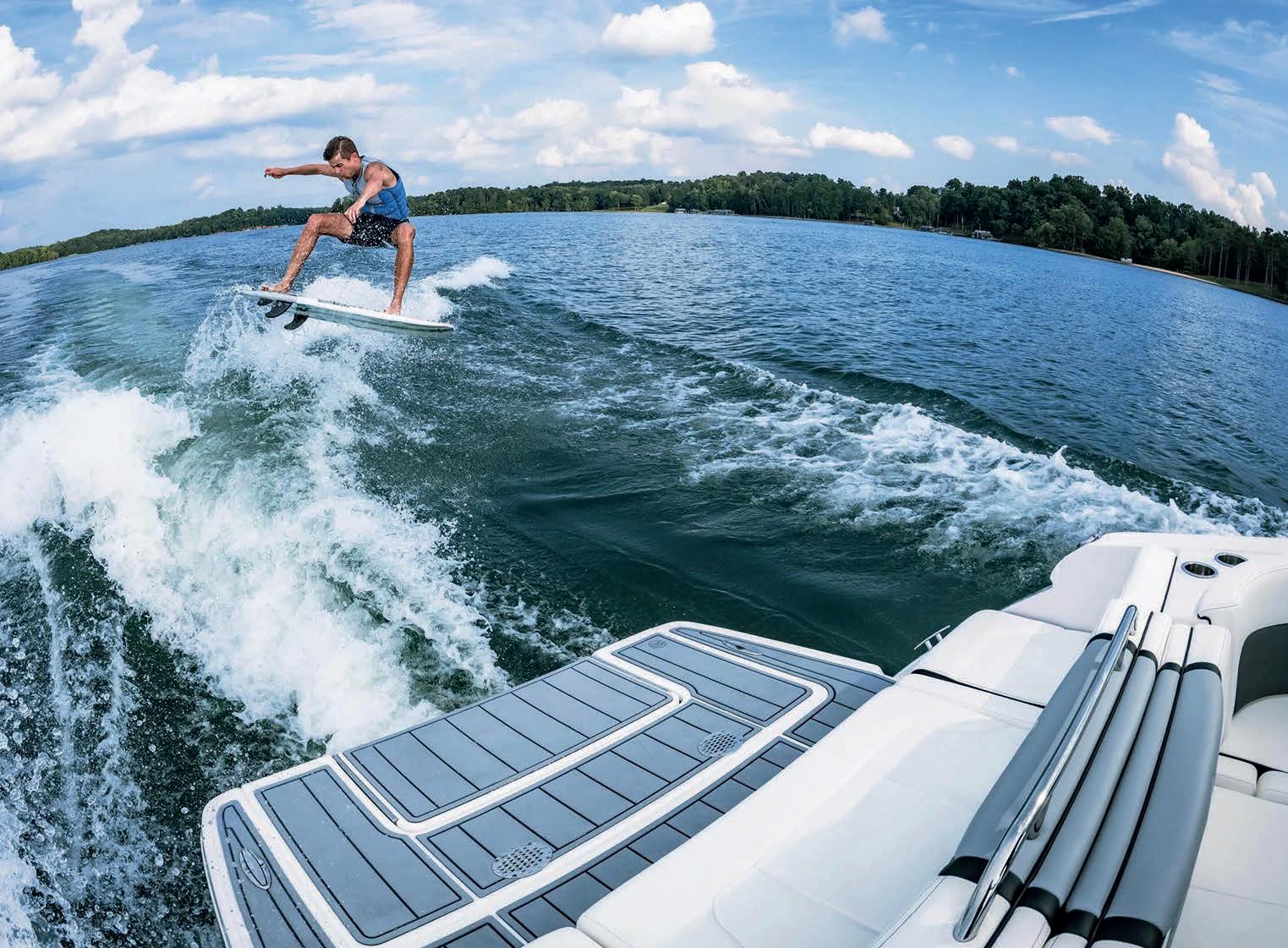
Designed for adrenaline enthusiasts with an appetite for deluxe living, the Azimut Verve Series embodies a new boating sensation. By defying the traditional take on American-style outboard yachts and Italian cabin cruisers, this uninhibited sports weekender unexpectedly unites performance with luxurious ambiences for a thrilling but elevated nautical experience.
AZIMUT. DARE TO AMAZE.
Exquisite. Where Beach Meets Bay.
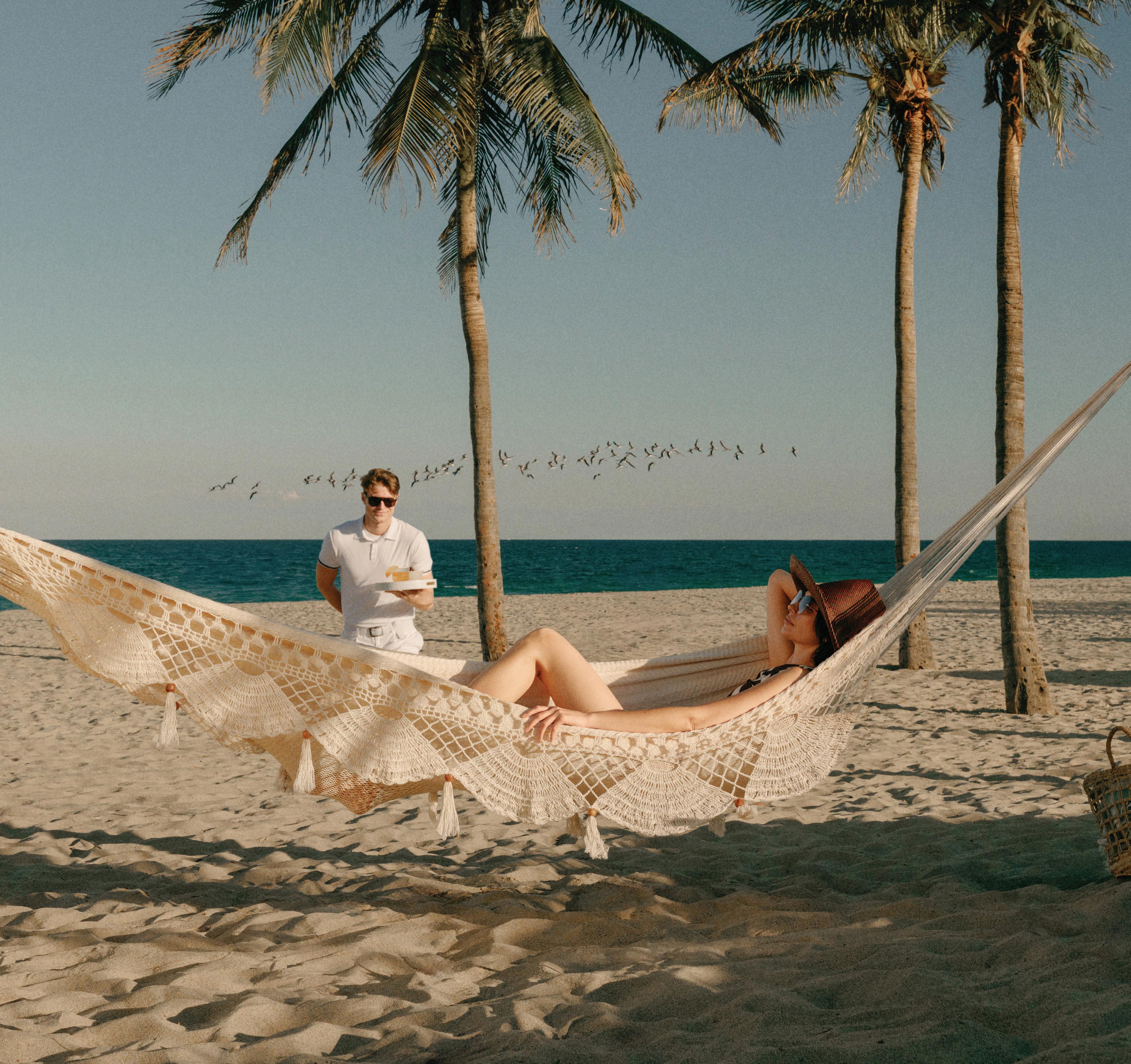
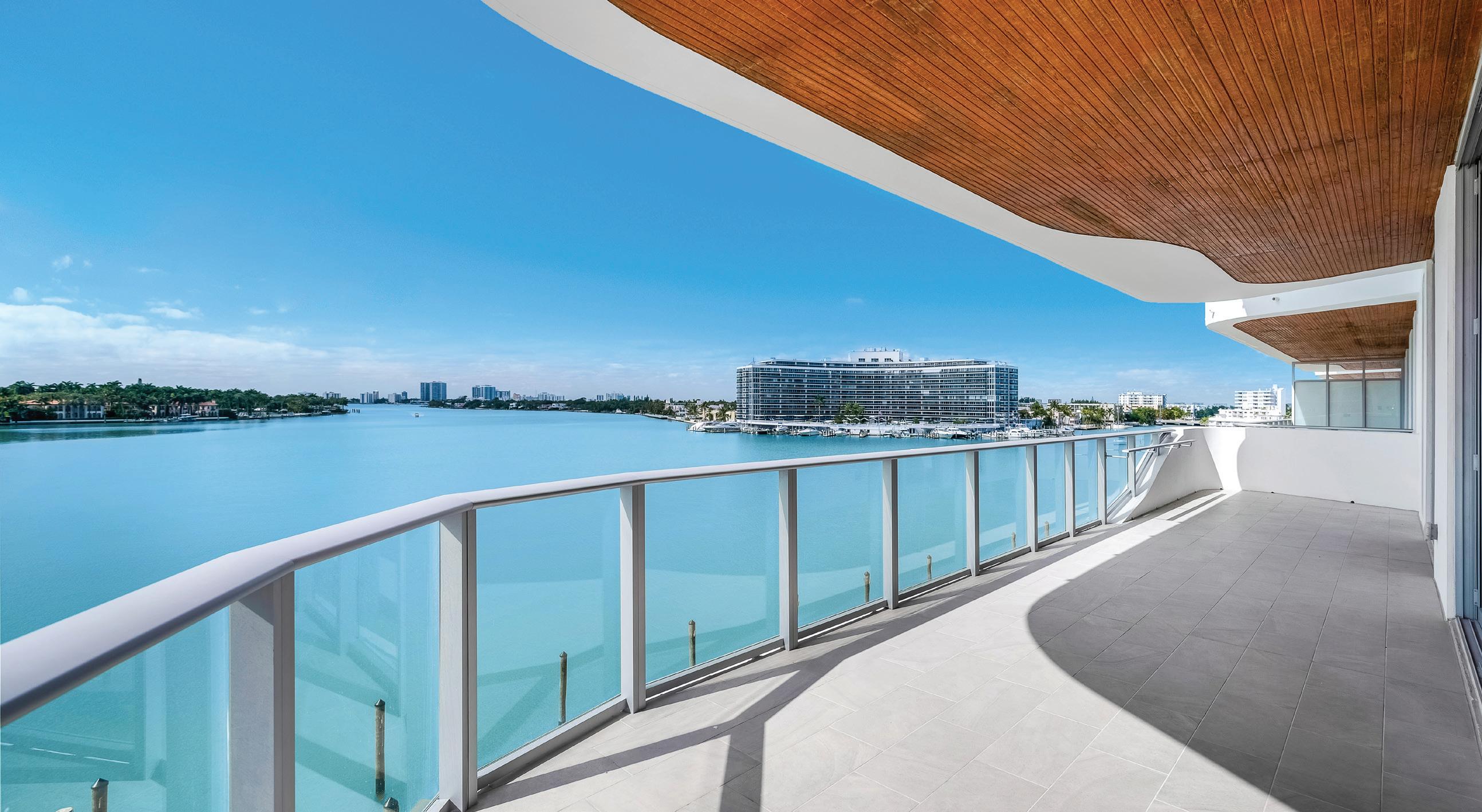
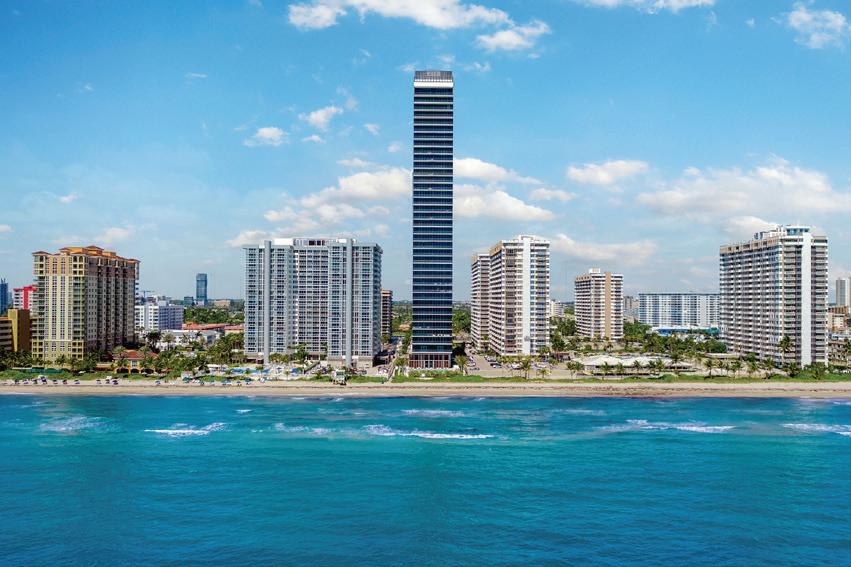
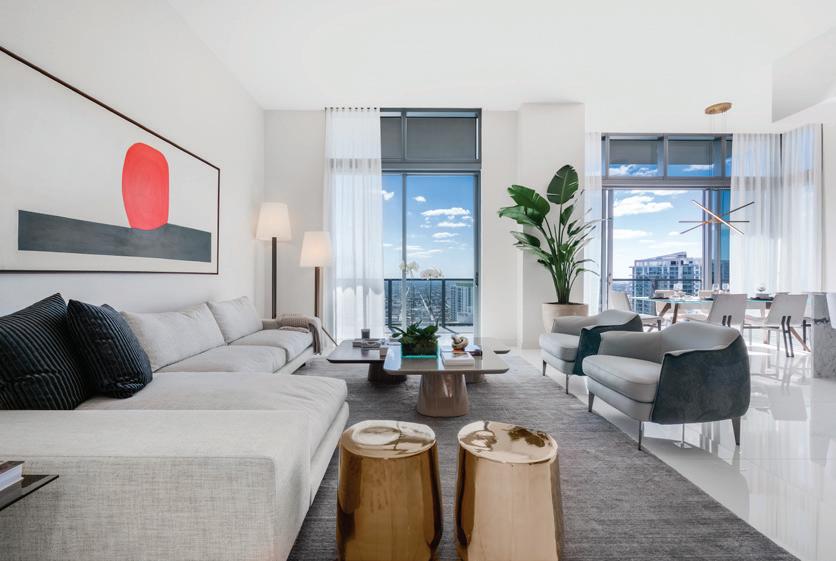
The St. Regis Resort & Residences Bahia Mar, Fort Lauderdale defi nes the standard and creates a legacy like no other.
Welcome to a private waterfront retreat set be een ocean and bay, shaped by natural beau , inspired by intention, and elevated by the world-renowned service of St. Regis.
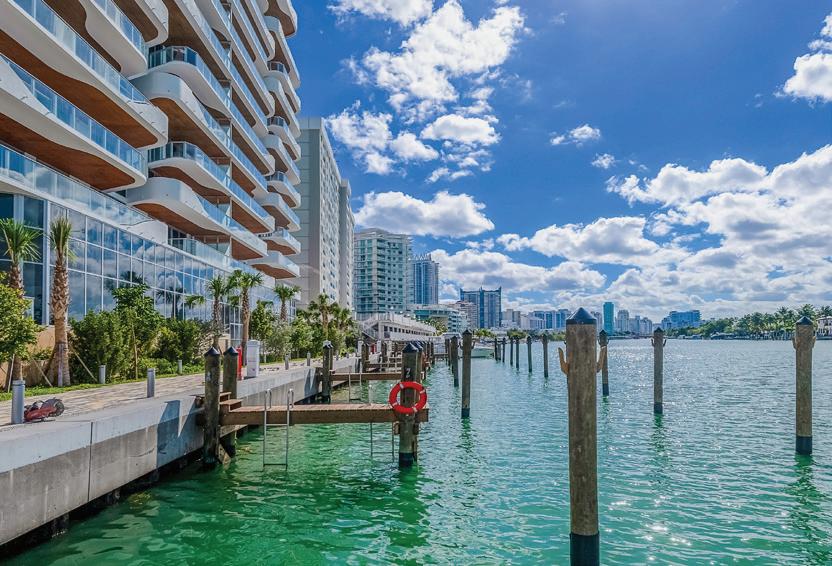
Surrounded by water in every direction, life here unfolds with grace. A pristine beach, deepwater marina slips, an exclusive, full-service St. Regis Beach Club, elevated culinary experiences, and restorative spa indulgences blend relaxed sophistication with the comfort of home.
The Resort Collection: One- to three-bedrooms
The Residences: Three- to four-bedrooms
SRRBahiaMar.com ◆ 954 323 5086 Future
ORAL REPRESENTATIONS CANNOT BE RELIED UPON AS CORRECTLY STATING REPRESENTATIONS OF THE DEVELOPER. FOR CORRECT REPRESENTATIONS, MAKE REFERENCE TO THIS BROCHURE AND TO THE DOCUMENTS REQUIRED BY SECTION 718.503, FLORIDA STATUTES, TO BE FURNISHED BY A DEVELOPER TO A BUYER OR LESSEE.
New York Residents: THE COMPLETE OFFERING TERMS ARE FOUND IN A CPS-12 APPLICATION AVAILABLE FROM THE OFFEROR. FILE NO CP25-0034 for Tower 1 and FILE NO. CP25-0058 for Tower 3. The offeror is the Developer named below. The St. Regis Residences Bahia Mar, Fort Lauderdale, referred to for ease of reference as The St. Regis Residences, is a community of three towers: including Tower 1 of condominium residences developed by PRH/TRR BM Tower 1, LLC; Tower 2 of condominium residences developed by PRH/TRR BM Tower 2, LLC; and Resort Tower 3 which includes a condominium within a portion of a building or within a multiple parcel building developed by PRH/TRR BM Condo, LLC. For ease of reference PRH/TRR BM Tower 1, LLC, PRH/TRR BM Tower 2, LLC, and PRH/TRR BM Condo, LLC are each a “Developer” and collectively the “Developers.” The St. Regis Residences are not owned, developed, or sold by Marriott International, Inc. or its affiliates (“Marriott”). The Developers use the St. Regis marks under a license from licensor, Marriott, which has not confirmed the accuracy of any of the statements or representations made about the projects by the Developers. The Developer uses the trade names, marks, and logos of licensor, The Related Group®, which licensor




































































DEPARTMENTS | DEPARTAMENTOS
12. From the editor | De la editora
14. News & Events | Noticias y Eventos
ENVIRONMENTAL ISSUES & MARINE
LIFE | MEDIOAMBIENTE Y VIDA MARINA
18. Can we build a better reef? | ¿Podemos construir un arrecife mejor?
BOAT REVIEWS | TESTEO DE EMBARCACIONES
22. INVICTUS TT550
CRUISING & TRAVEL | CRUCEROS Y VIAJES
30. Exploring wild Tasmania | Explorando la salvaje Tasmania
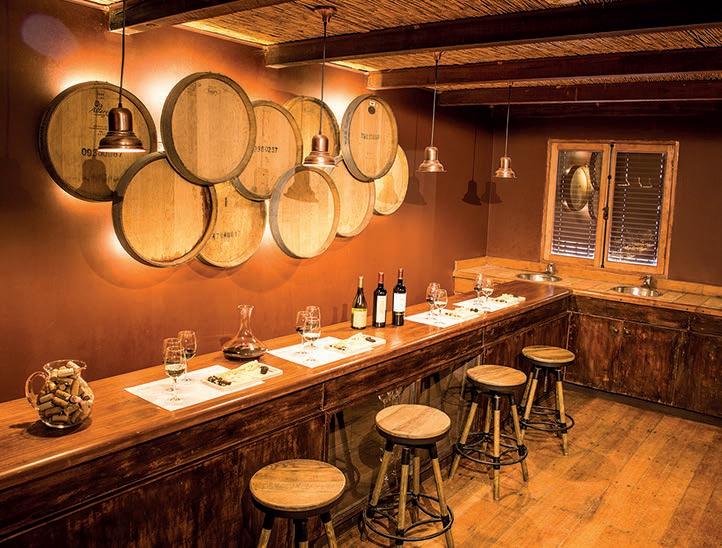
40. Discover Chile’s Wine Country I Descubra la región vinícola de Chile
FASHION & YACHTING LIFESTYLE | MODA Y ESTILO DE VIDA NÁUTICO
40. Health aboard | Salud a bordo
50. Featured recipe | Receta destacada
54. Fashion picks for Spring | Moda de primavera

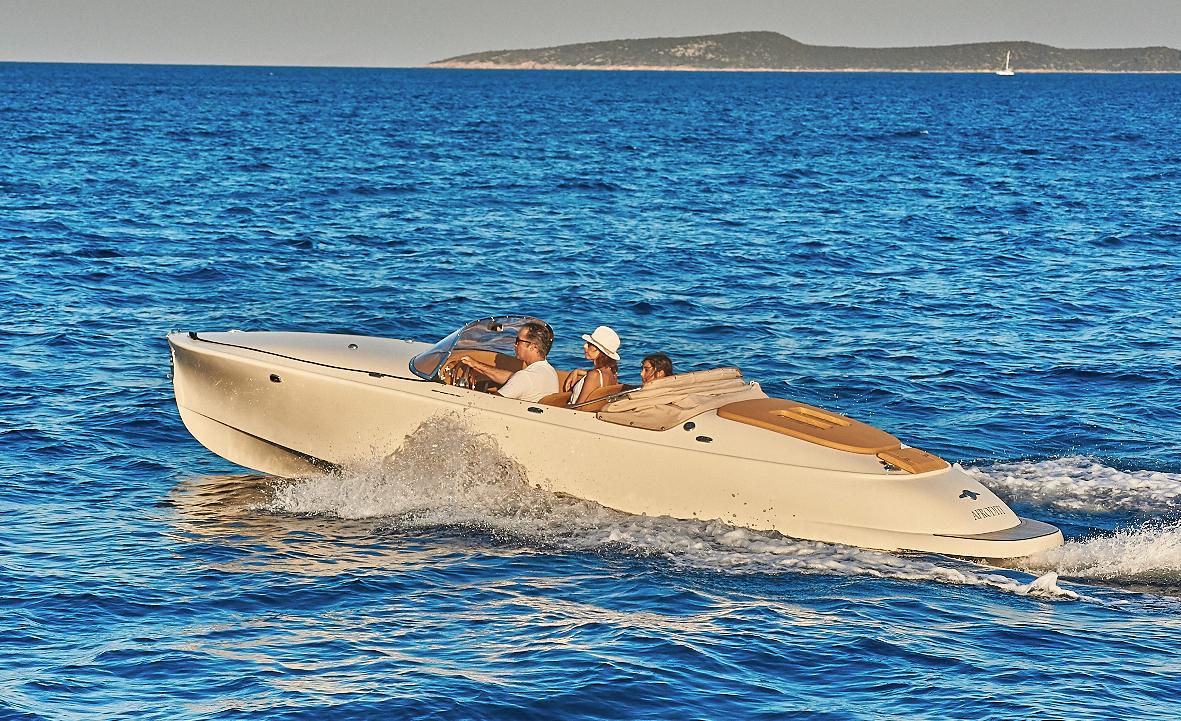
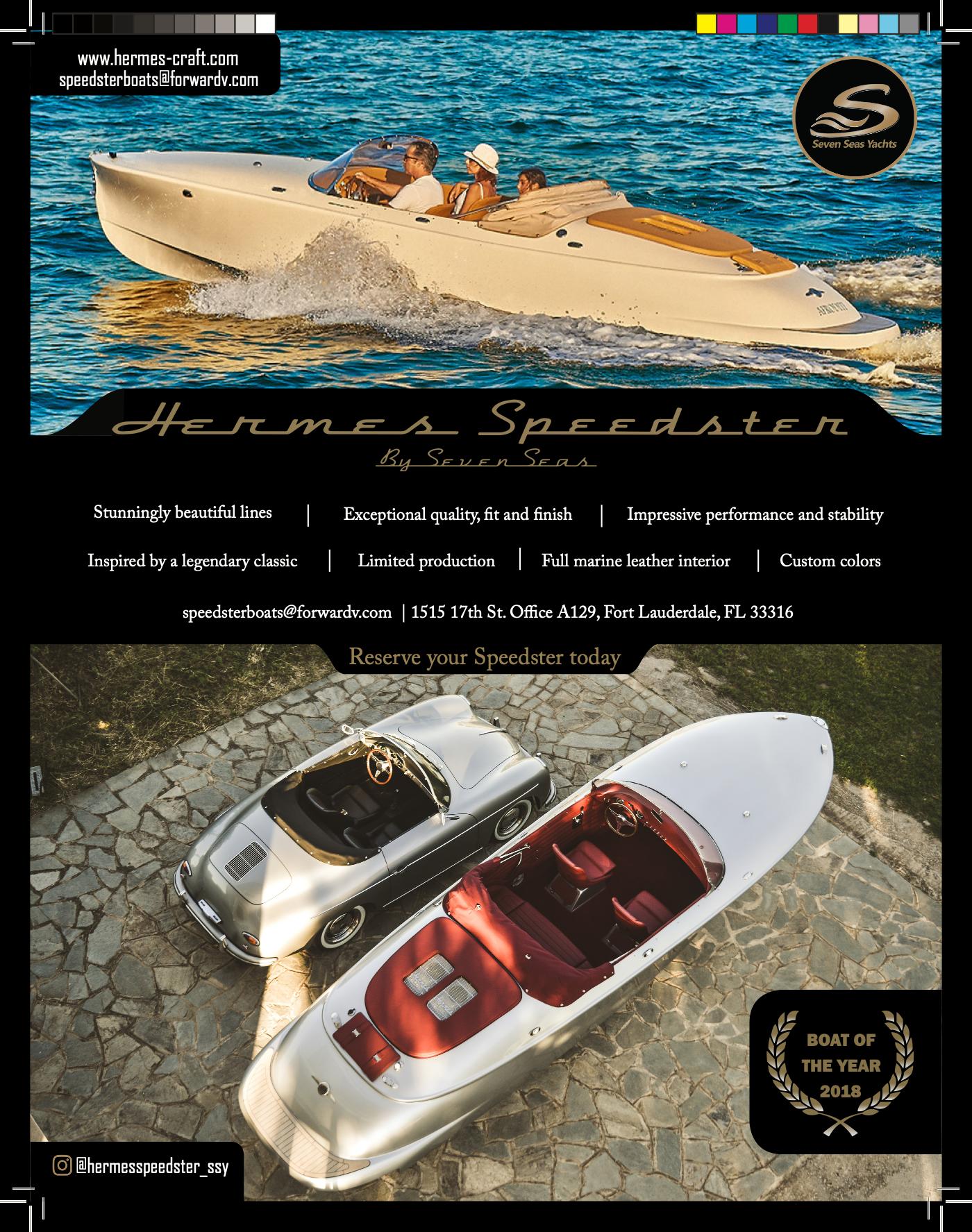
Stunningly beautiful lines | Exceptional quality, fit and finish | Impressive performance and stability
Inspired by a legendary classic | Limited production | Full marine leather interior | Custom colors
Seven Seas Yachts
Hopeyou all started a great 2026. This marks Yachting Times Magazine’s 16th anniversary, so cheers to us all here at YTM!
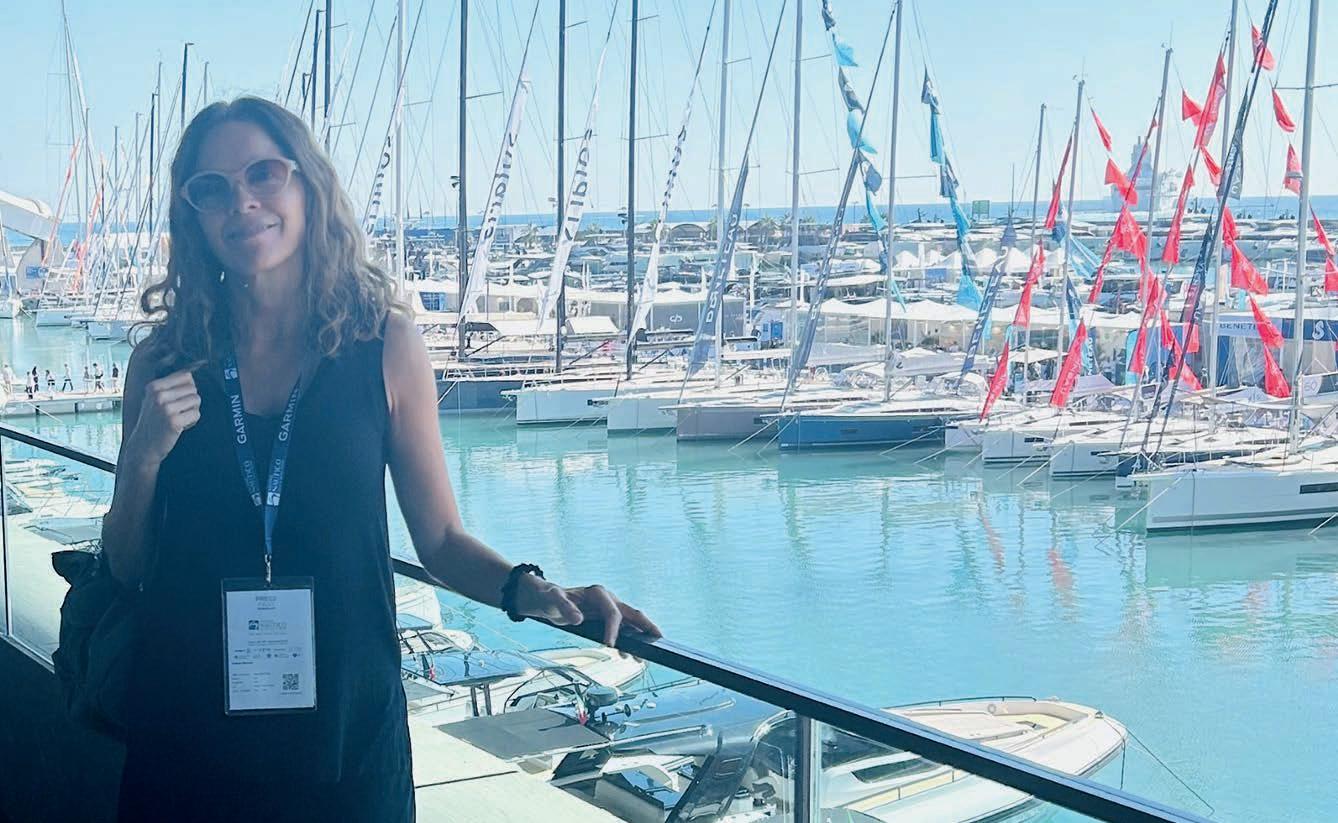
Last September, I was invited by the Italian Trade Agency and the Italian Marine Industry Association to attend the 65th edition of the Genoa International Boat Show, one of the world’s premier boat shows. Some 125,000 visitors enjoy this great event every year with over one thousand boats on display. It’s always a pleasure to experience first-hand the exceptional quality of the yachts, accessories and services Made in Italy paired with Italian superb designs, elegance, and the warm comfort they’re known for.
Located close to the stunning Ligurian Riviera, the event provides a great opportunity to visit one of the loveliest coastal stretches in Italy. If you’re considering a Fall visit to a western Mediterranean boat show this year, I highly recommend attending the Salone Nautico Internazionale di Genova in early October. For more info visit salonenautico.com
On Page 22, we feature the spectacular yacht INVICTUS TT550 which made a striking debut at the 2025 Cannes Yachting Festival. The yacht also established itself as a highlight of the Genoa Boat Show, capturing my attention as well as everyone else’s. Hope you enjoy it.
Fair winds to you all!
Espero que todos hayan comenzado un excelente 2026. Este año celebramos el 16º aniversario de la revista Yachting Times, ¡así que brindemos por todo el equipo de YTM!. El pasado mes de septiembre, fui invitada por la Agencia Italiana de Comercio y la Asociación Italiana de la Industria Náutica a asistir a la 65ª edición del Salón Náutico Internacional de Génova, una de las ferias náuticas más importantes del mundo. Unos 125.000 visitantes disfrutan cada año de este magnífico evento, que exhibe más de mil embarcaciones. Siempre es un placer experimentar de cerca la calidad excepcional de los barcos, accesorios y servicios Made in Italy, combinados con su magnífico diseño italiano, su elegancia, y el cálido confort que los caracterizan.
Situado cerca de la encantadora Riviera de Liguria, este magnífico evento ofrece una excelente oportunidad para recorrer uno de los tramos costeros más lindos de Italia. Si está pensando en visitar un salón náutico en el Mediterráneo occidental este otoño, les recomiendo que asistan al Salone Nautico Internazionale di Genova a principios de octubre. Para más información, visiten salonenautico.com
En la página 22, presentamos el espectacular yate INVICTUS TT550, que hizo un impresionante debut en el Festival Náutico de Cannes de 2025. Un barco que también se consolidó como uno de los atractivos principales del Salón Náutico de Génova, y captó mi atención al igual que la de todos los demás asistentes. Espero que lo disfruten. ¡Buenos vientos para todos!
YACHTING TIMES
Editor & Publisher
Dolores Barciela
Executive Editor Laura Failoni
Managing Editor Maria Iriondo
Editor at Large Nancy Bloom
Intern Agustín Mrongowius Barciela
Art & Design
Pablo De Palma
Contributors
Benjamin-Émile Le Hay, The Nature Conservancy, Across South America, Liesbet Pryke.
Associate Publisher Lisa Besalel
Phone +1-786-237-7830
info@yachtingtimesmagazine.com www.yachtingtimesmagazine.com P.O. Box 491196, Key Biscayne, FL 33149 - USA
PRINTED IN CANADA
50 – SPRING 2026 | PRIMAVERA 2026
For Subscriptions, please visit www.yachtingtimesmagazine.com
YACHTING TIMES MAGAZINE (ISSN 2153-0831; ISSN 2153-084X) is published two times a year by YACHTING TIMES MAGAZINE LLC., P.O. Box 491196, Key Biscayne, FL 33149, Phone +1-786237-7830 Copyright 2026 by YACHTING TIMES MAGAZINE. All rights reserved. YACHTING TIMES MAGAZINE is fully protected by copyright law and nothing that appears in it may be reproduced, wholly OR in part, without written permission. Great care has been taken throughout the magazine to be accurate, but we cannot accept any responsibility for any errors or omissions which might occur. We cannot be responsible, either, for the claims of manufacturers in any of the items, nor for products here advertised. Both editorial and submitted manuscripts and photos will be handled with care but no liability is assumed for them. Signed articles don´t necessarily reflect the publisher´s opinion or view. Their consigned statements are, thus, exclusively up to the author.
YACHTING TIMES MAGAZINE se publica dos veces al año por YACHTING TIMES MAGAZINE LLC., P.O. Box 491196, Key Biscayne, FL 33149, Tel/Fax: +1-786-237-7830 Copyright 2026 por YACHTING TIMES MAGAZINE. Todos los derechos reservados. Prohibida la reproduccion total o parcial de los articulos, fotos y anuncios aparecidos en YACHTING TIMES MAGAZINE sin el consentimiento por escrito del editor. Se ha intentado ser preciso a lo largo de toda la revista, pero no podemos responsabilizarnos por errores u omisiones que puedan ocurrir. Tampoco asumimos responsabilidad alguna por los servicios o productos anunciados en nuestras páginas. Tanto las notas y fotos editoriales como las enviadas serán tratadas con cuidado, pero no nos responsabilizamos por pérdida o daño de las mismas. Las notas firmadas no necesariamente reflejan la opinión o el parecer del editor de la revista. Las afirmaciones en ellas consignadas, por lo tanto, corren por exclusiva cuenta del autor.
YTM Publisher Dolores Barciela at the 65th edition of the Genoa International Boat Show.
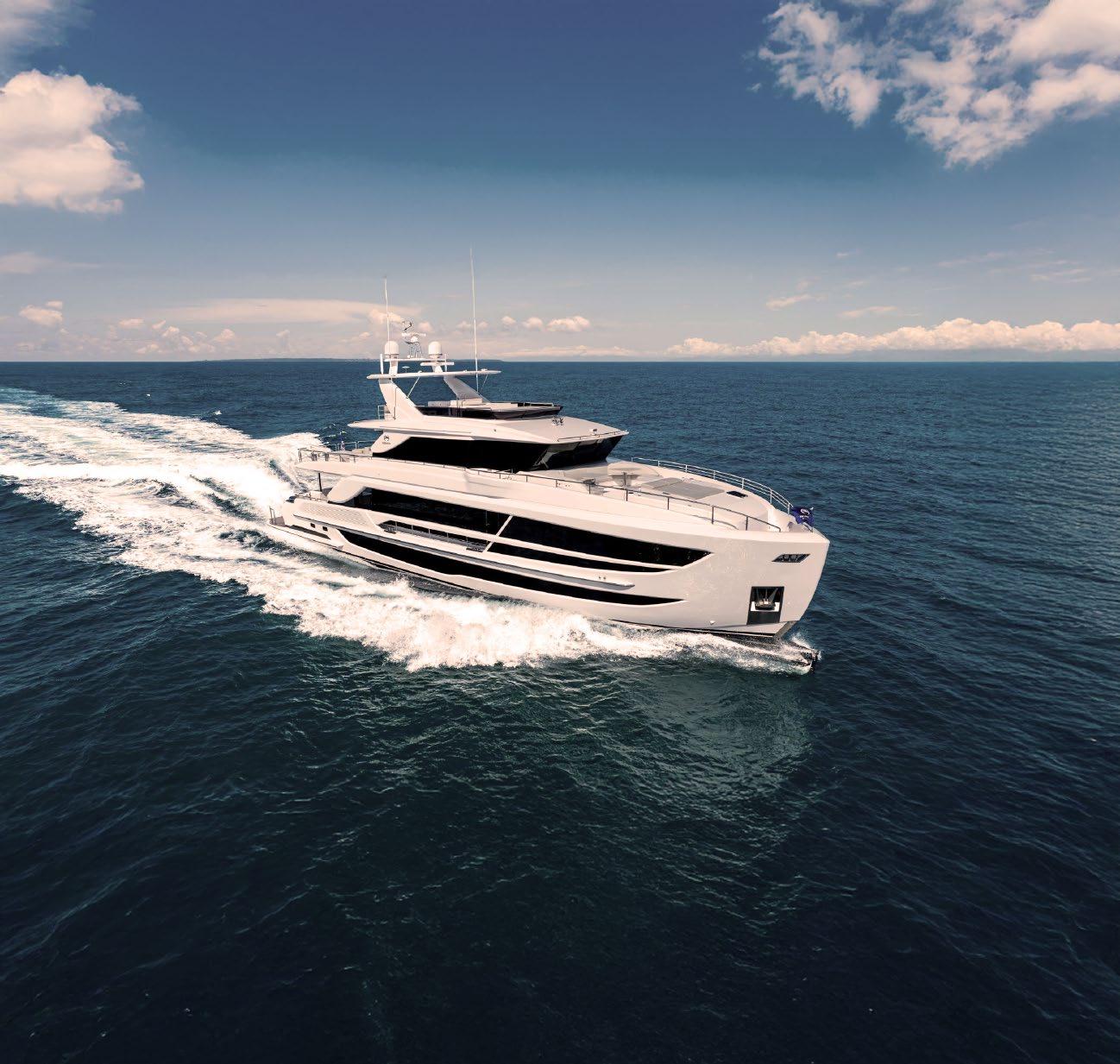



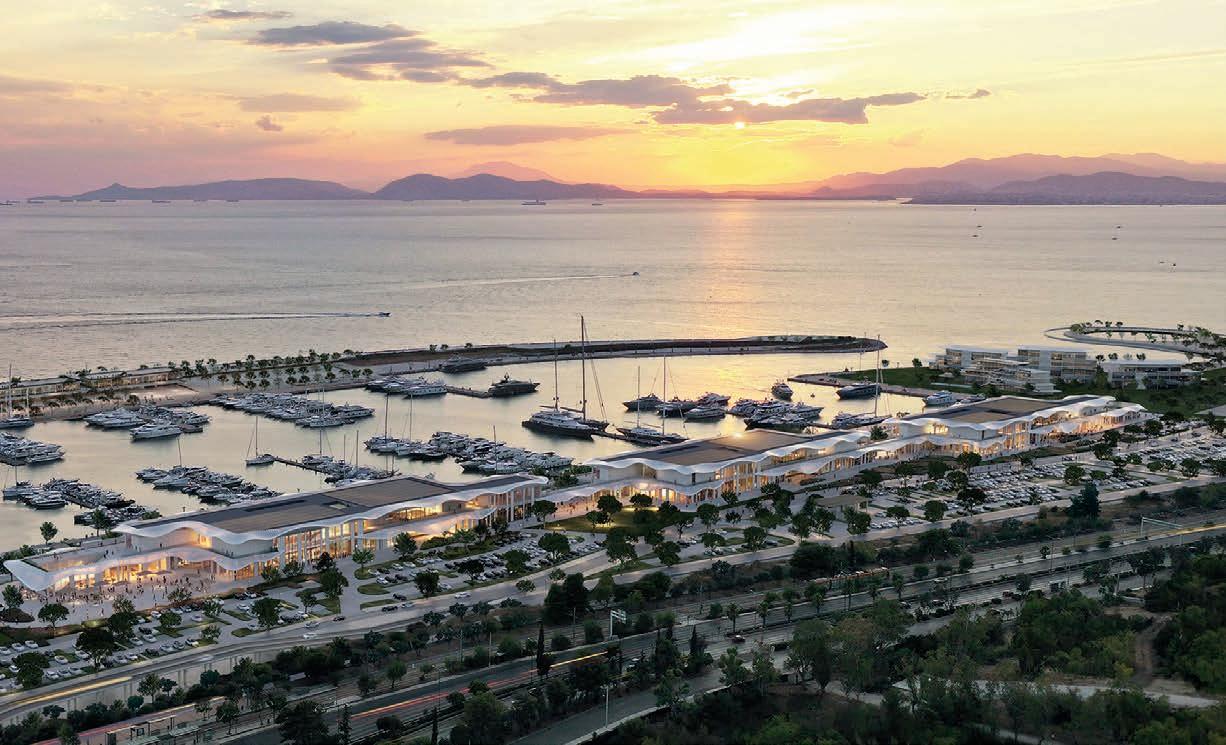
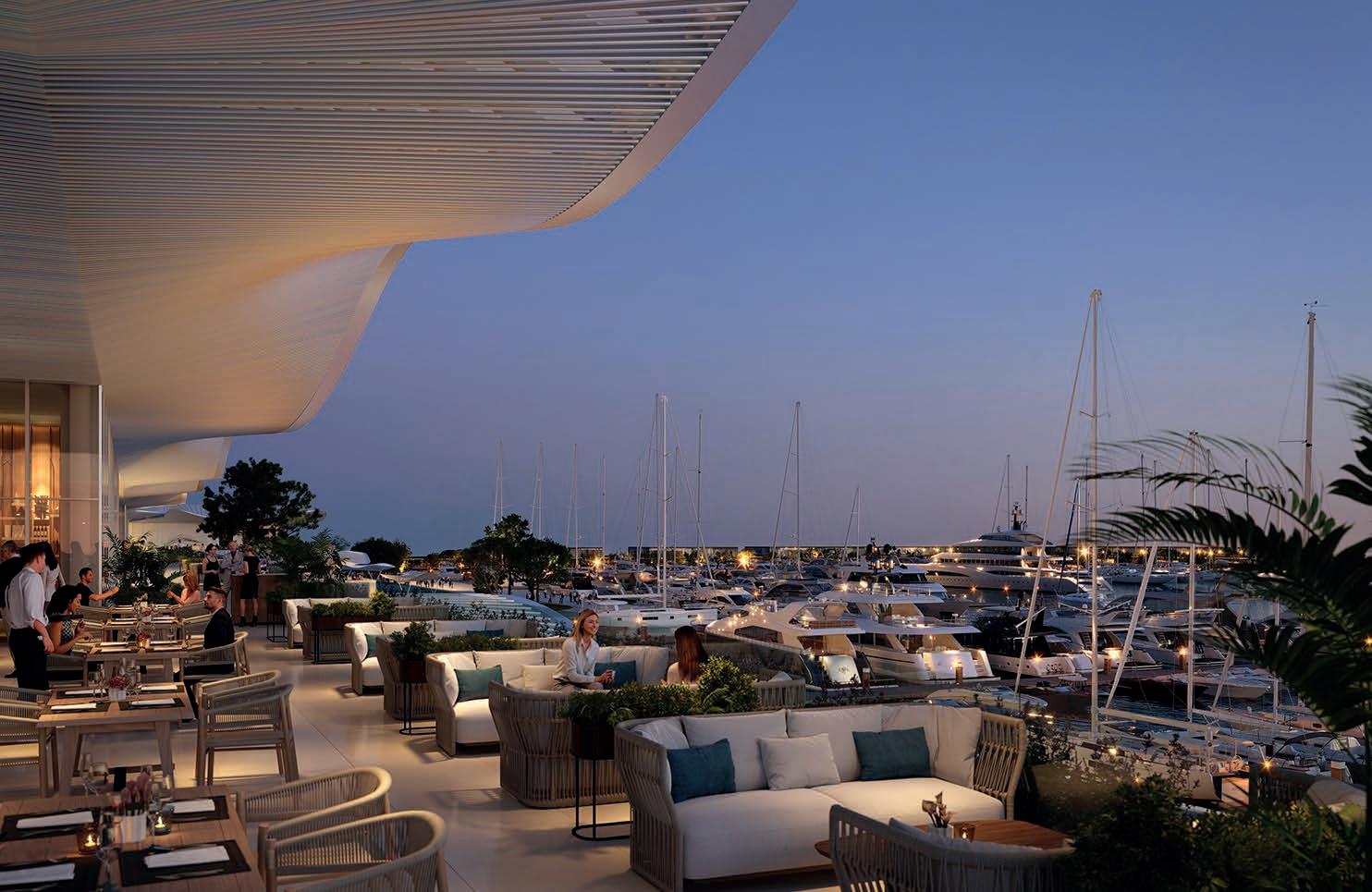
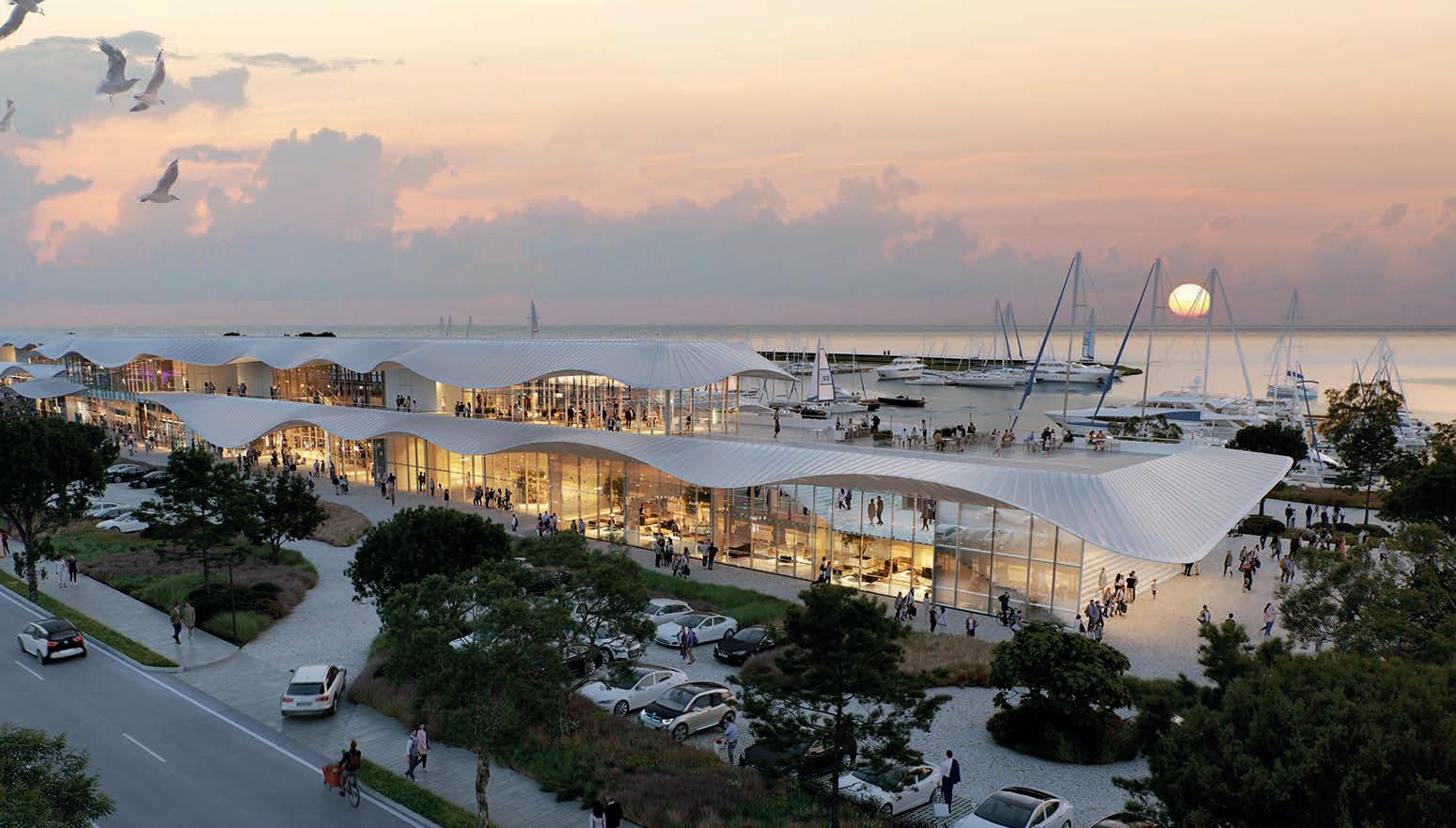
Athens is preparing to take its place among Europe’s premier superyacht destinations with the Ellinikon Marina District, the centerpiece of the city’s largest coastal regeneration. Designed to serve as a modern, full-service hub, the marina is already shaping up to be a strategic port for vessels across the Mediterranean.
The Ellinikon Marina (Agios Kosmas) will offer 400+ berths for yachts up to 262ft, a .62 mi free-access beach, and direct connections to Athens and the surrounding Riviera. Full operation is expected by 2028–29.
LAMDA’s three-marina portfolio includes Flisvos Marina (existing), Ellinikon Marina (under construction), and the Mega Yacht Marina in Corfu (under development), creating an integrated Eastern Mediterranean route for owners and captains.
Volvo

Penta brings advanced joystick features to wider boating market
Volvo Penta is expanding its award-winning Electronic Vessel Control (EVC) features with the launch of enhanced joystick technology for V8 single gasoline engines. Now, a broader range of watersports and recreational vessels can offer the seamless simplicity of Joystick Driving, Joystick Docking and Joystick Surfing. These advanced joystick options can now enable more precise control — from navigating tight marinas to carving the perfect waves — for even more boaters across a range of on-water activities.
Book Reviews
Book written in Spanish | Libro escrito en español

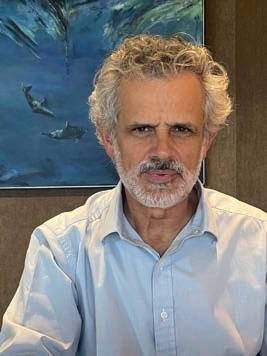
Cuentos de Amar y Mar
Ricardo Mihura
Editorial El Pulpo Negro Buenos Aires, Agosto 2025
Disponible en Amazon ($23.17) y Kindle ($9.99)
Cuentos de barcos, de amor, y también de obsesión y algo de locura. Los oscuros personajes de estos relatos son perfectamente actuales y comunes. No pretenden ocultarnos sus debilidades y carencias. Y ha de ser por eso que el lector no tarda en empatizar, y muy rápidamente embarcarse con los protagonistas para compartir y comprender el drama sentimental que nos propone el autor. Un drama que invariablemente termina resolviéndose a bordo de una embarcación, y según las reglas que imponen el agua y el viento.
Son ficciones de hombres y mujeres que navegan en el mar y en el Río de la Plata, el enorme “Mar Dulce” que baña las costas de Buenos Aires, Montevideo y Punta del Este. Los barcos y los escenarios funcionan eficazmente en estos cuentos como metáforas cargadas de sensaciones, de luces y de matices, sobre las cuales se construyen relaciones de amor, y también de pérdida, de soledad, de abandono y frustración.
Son ocho cuentos y dos poemas para disfrutar de los encantos, de los misterios y contradicciones de aquella fuerza oculta —tan bien conocida por los navegantes— que una y otra vez nos lleva a soñar y a navegar desafíos y privaciones materiales y sentimentales que son incomprensibles desde tierra firme.
Can we build a better reef?
¿Podemos
construir un arrecife mejor? Extracto de nature.org/newreefs.
Text by | Texto por KATE FRAZER
OffNew York’s coast, The Nature Conservancy and its partners are helping reimagine ocean infrastructure as habitat for fish and wildlife.
On a calm morning, just off Long Island, the Atlantic Beach Artificial Reef lies hidden beneath the waves, telling a story of transformation. One of New York State’s 16 artificial reefs, it’s part of a network where underwater structures, both natural and humanmade, have become bustling neighborhoods of ocean life as well as hotspots for fishing, boating and diving.
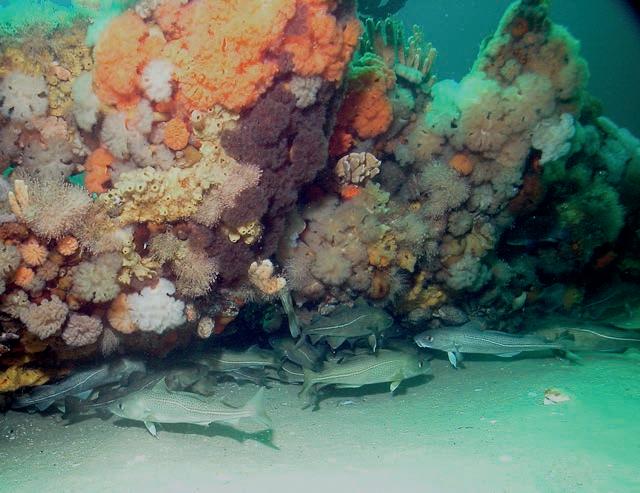
Before it was built, the underwater landscape was a flat stretch of sand and mud, with few places for marine life to thrive. Now, it features strategically placed concrete slabs, steel decking, retired vessels and rock piles—including material from NYC subway tunneling—that offer crevices and ledges mimicking natural habitat in high demand. These materials are a magnet for black sea bass, lobsters, flounder, porgies, tautog—and the anglers who chase them. These “new reefs” are also a living laboratory for understanding how these structures sustain marine life.
Innovative Research Looks at Life Under the Surface
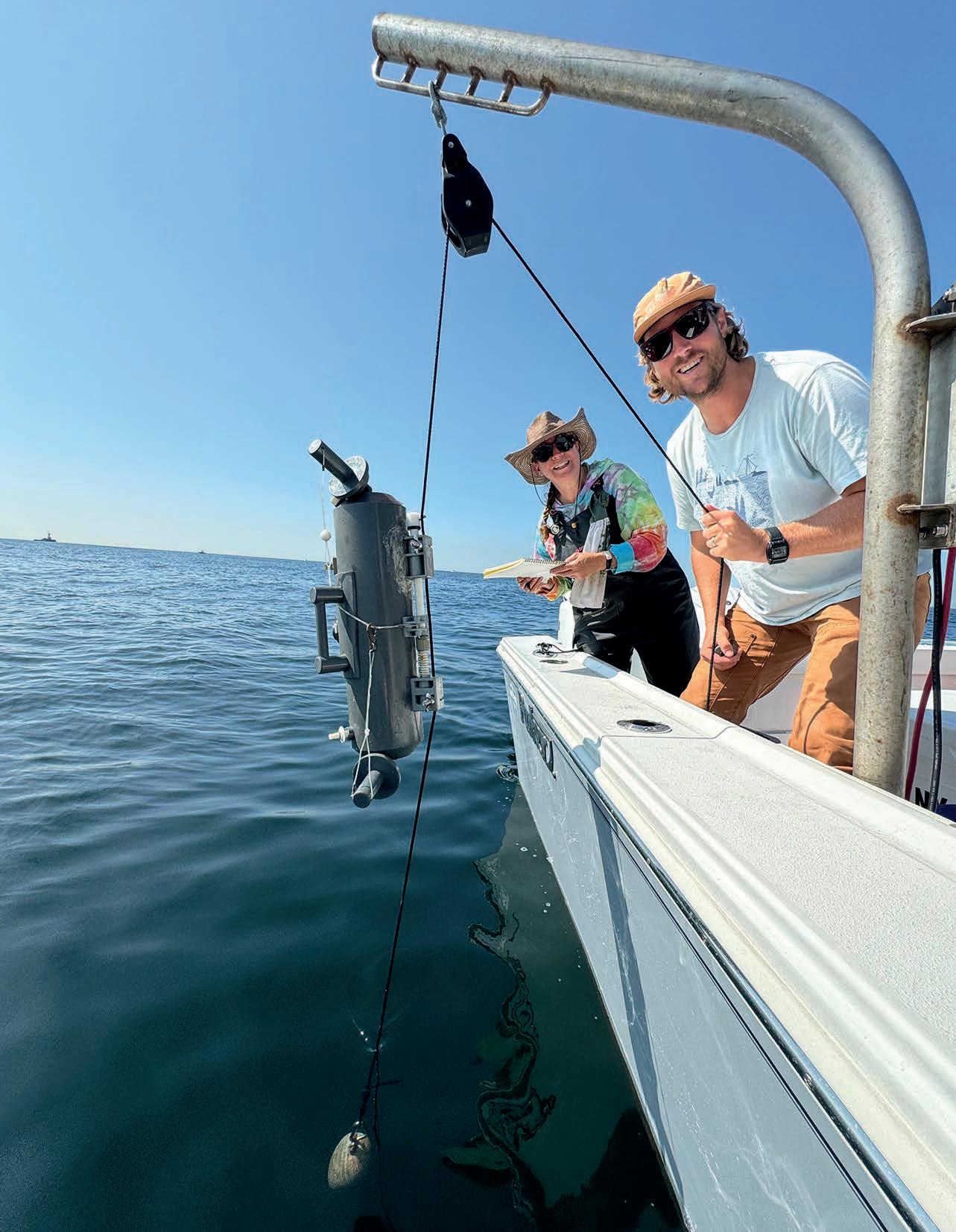
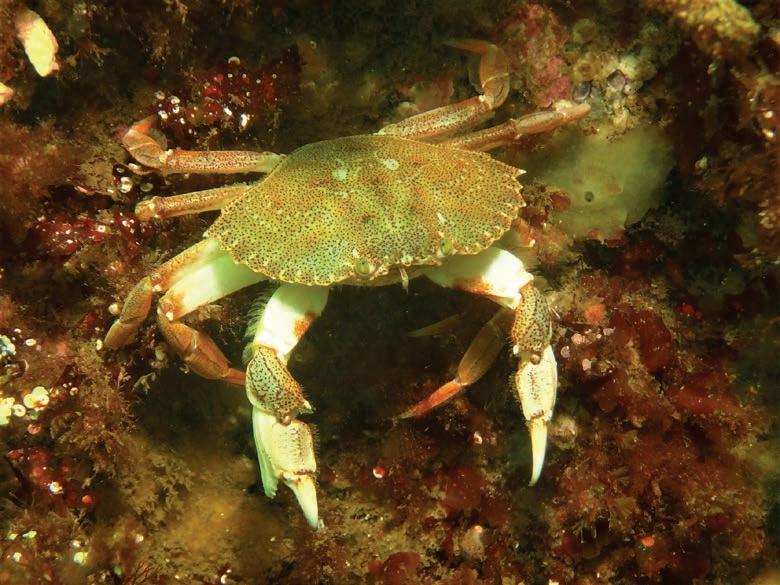
From the deck of their research vessel, a team of scientists from The Nature Conservancy and Stony Brook University drop underwater cameras to capture footage of crabs, summer flounder and even a great white shark weaving through the shadows of the artificial reef. They collect water samples for environmental DNA analysis. Traps capture fish to be measured, tagged and released. Some fish are fitted with acoustic telemetry tags, allowing scientists to track their movements across the reef. The data reveals surprising patterns: some fish spend time at the same rock pile for the whole season, suggesting a strong preference for their chosen habitat. “Fish and lobsters don’t care if their home was built by a glacier or a human,” says Carl LoBue, The Nature Conservancy’s New York ocean program director. “They care about size, location and access to what they need. They’re not so different from us.”
Designing Artificial Reefs to Support Ocean Life
In 2021, The Nature Conservancy launched research with Inspire Environmental, a marine consultancy, asking a simple question: Can we design underwater structures that mimic natural reef environments and better support marine life? Their report laid the groundwork for testing materials and shapes that might improve habitat for key species.
Frentea la costa de Nueva York, The Nature Conservancy y sus socios están ayudando a reimaginar la infraestructura oceánica como hábitat para peces y vida silvestre.
En una mañana tranquila, cerca de Long Island, el arrecife artificial de Atlantic Beach permanece oculto bajo las olas, contando una historia de transformación. Uno de los 16 arrecifes artificiales del estado de Nueva York, forma parte de una red donde las estructuras submarinas, tanto naturales como artificiales, se han convertido en bulliciosos ecosistemas marinos, así como en puntos de interés para la pesca, la navegación y el buceo.
Antes de su construcción, el paisaje submarino era una extensión plana de arena y lodo, con pocos lugares para que prosperara la vida marina. Ahora, cuenta con losas de hormigón, estructuras de acero, embarcaciones retiradas y montones de rocas estratégicamente ubicadas, incluyendo material de construcción del metro de Nueva York, que ofrecen grietas y salientes que imitan el hábitat natural, algo muy demandado por la fauna marina. Son materiales que atraen a la lubina negra, las langostas, el lenguado, los sargos y el tautog, y a los pescadores que los buscan.
Estos “nuevos arrecifes” son también un laboratorio viviente para comprender cómo sustentan la vida marina. Desde la cubierta de su buque de investigación, un equipo de científicos de The Nature Conservancy y la Universidad de Stony Brook hacen uso de cámaras submarinas para grabar imágenes de cangrejos, lenguados y hasta un gran tiburón blanco que se mueven entre las sombras del arrecife artificial. Recolectan muestras de agua para análisis de ADN ambiental. Trampas especiales capturan peces que luego son medidos, marcados y liberados. Algunos peces son equipados con etiquetas de telemetría acústica, lo que permite a los científicos rastrear sus movimientos a través del arrecife. Los datos revelan patrones sorprendentes: algunos peces pasan toda la temporada en el mismo montón de rocas, lo que sugiere una fuerte preferencia por su hábitat elegido.
“A los peces y las langostas no les importa si su hogar fue construido por un glaciar o por un ser humano”, dice Carl LoBue, director del programa oceánico de The Nature Conservancy en Nueva York. “Les importa el tamaño, la ubicación y el acceso a lo que necesitan. No son tan diferentes de nosotros”.
Diseñando arrecifes artificiales para apoyar la vida marina
En 2021, The Nature Conservancy inició una investigación con Inspire Environmental, una consultora marina, planteando una
Innovative Research Using different monitoring methods, like remote underwater cameras, scientists hope to detect small differences in how marine animals use various materials and designs to make their homes. ©
Carl LoBue copia
Life Finds a Way Atlantic cod shelter beneath a shipwreck encrusted with sponges and corals—proof that marine life turns even sunken vessels into thriving habitat. © NOAA
Today, a new study at the Atlantic Beach Reef—led by The Nature Conservancy and Stony Brook University, with support from the New York State Energy Research and Development Authority (NYSERDA) —is testing additional ways to measure whether naturefriendly designs actually work.
The Impact of Reef Design
Scientists are learning that shipwrecks, bridge pilings and even offshore wind turbine foundations can all offer shelter and feeding grounds, turning infrastructure into essential habitat. Applying ecological design to underwater infrastructure could be a game changer, not just for habitat, but for supporting vibrant fisheries and local economies.
In the North Sea, for example, Nature Conservancy Scientist Boze Hancock is testing innovative ways to incorporate the nearly wiped out European flat oyster into the design of offshore wind infrastructure. And in small island nations throughout the Caribbean and Indo-Pacific, strategically placed underwater habitats are showing promise for easing diving pressure on natural coral reefs, creating new opportunities for sustainable tourism.
“Healthy oceans and all the things people want and need from the ocean can coexist,” says LoBue. “It just takes a little bit of work. And science can show how to do it.”
To learn more, visit nature.org/newreefs.
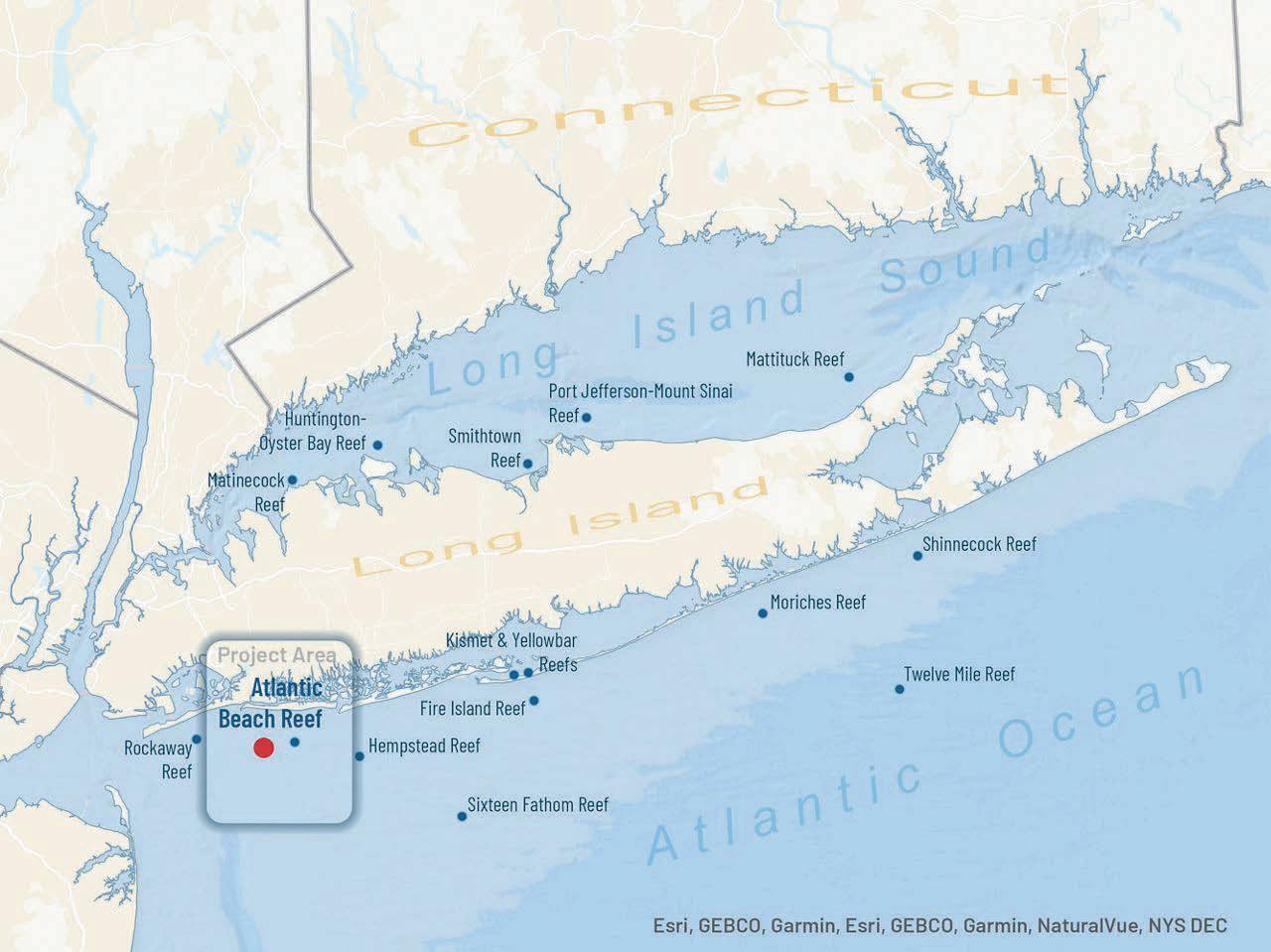
New York’s Underwater Network This map shows artificial reef sites off Long Island, including Atlantic Beach, Rockaway, and Fire Island—part of a network supporting marine life. Source- NYSDEC.© TNC
pregunta sencilla: ¿Podemos diseñar estructuras submarinas que imiten los entornos de los arrecifes naturales y que contribuyan a la conservación de la vida marina? Su informe sentó las bases para poner a prueba materiales y formas que podrían mejorar el hábitat de especies clave.
Actualmente, un nuevo estudio en el arrecife de Atlantic Beach, dirigido por The Nature Conservancy y la Universidad de Stony Brook, con el apoyo de la Autoridad de Investigación y Desarrollo Energético del Estado de Nueva York (NYSERDA), está evaluando métodos adicionales para determinar si los diseños respetuosos con la naturaleza son realmente efectivos.
El impacto del diseño de arrecifes
Los científicos están descubriendo que los naufragios, los pilotes de puentes e incluso las bases de las turbinas eólicas marinas pueden ofrecer refugio y zonas de alimentación, convirtiendo la infraestructura en un hábitat esencial. Aplicar el diseño ecológico a la infraestructura submarina podría ser un factor determinante, no solo para el hábitat, sino también para el desarrollo de pesquerías prósperas y economías locales sólidas.
En el Mar del Norte, por ejemplo, el científico de The Nature Conservancy, Boze Hancock, está probando formas innovadoras de incorporar la ostra plana europea, que casi ha desaparecido, en el diseño de la infraestructura eólica marina. Y en las pequeñas naciones insulares del Caribe y el Indo-Pacífico, los hábitats submarinos estratégicamente ubicados se muestran prometedores para aliviar la presión del buceo sobre los arrecifes de coral naturales, creando nuevas oportunidades para el turismo sostenible.
“Los océanos saludables y todo lo que las personas desean y necesitan del océano pueden coexistir”, afirma LoBue. “Solo se necesita un poco de esfuerzo. Y la ciencia puede mostrar cómo lograrlo”. Para obtener más información, visite nature.org/newreefs.
Cancer irroratus by Phillip LoCocicero
Invictus TT550
Photos courtesy of | Fotos cortesía de INVICTUS YACHT
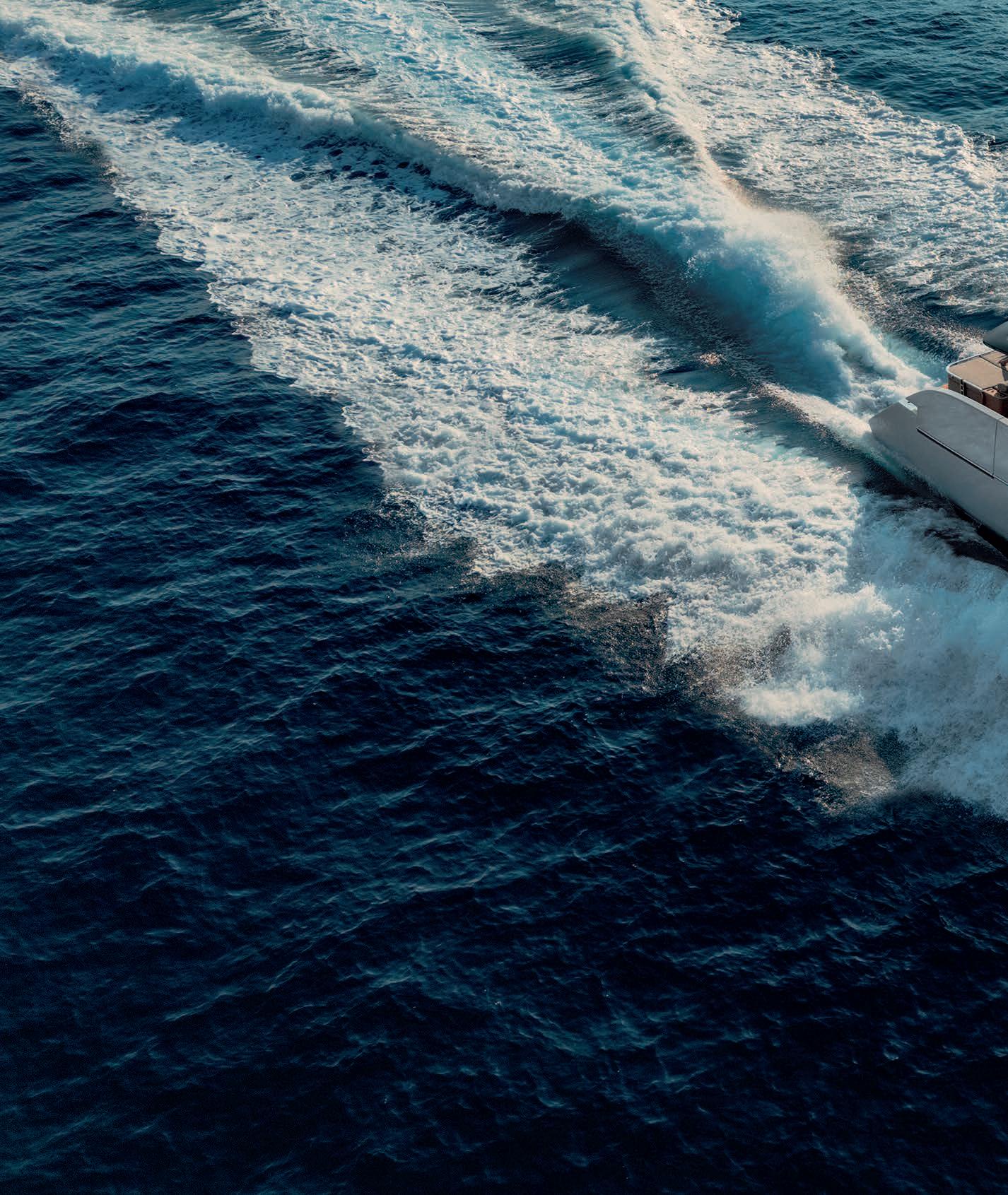
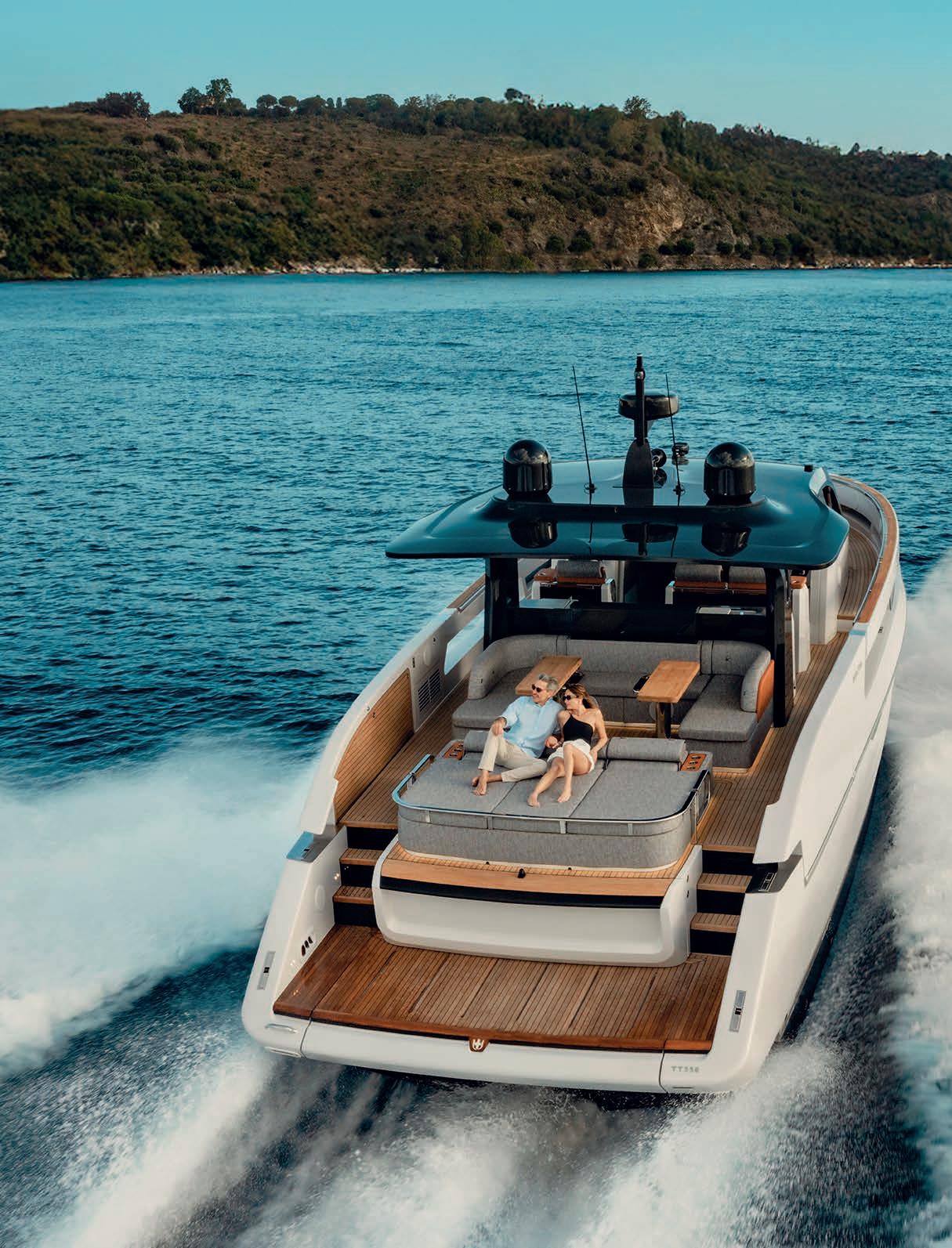
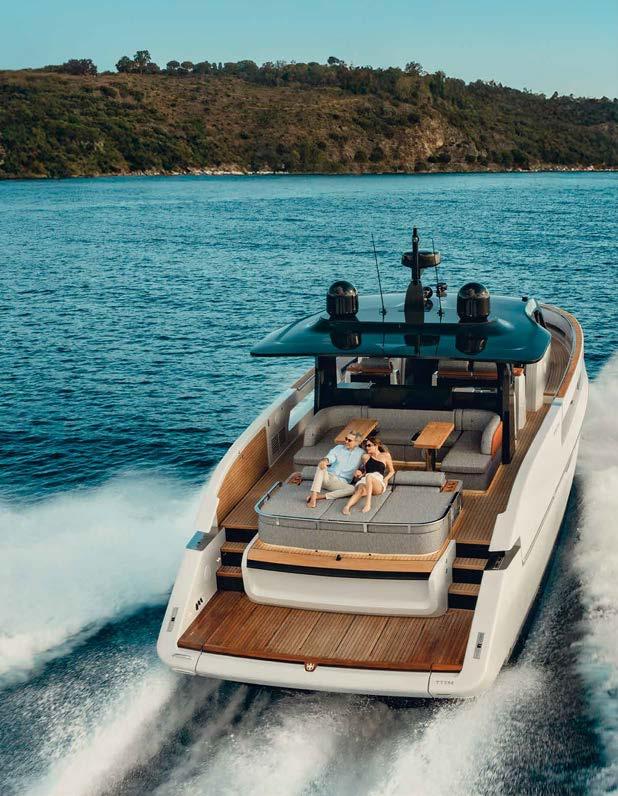
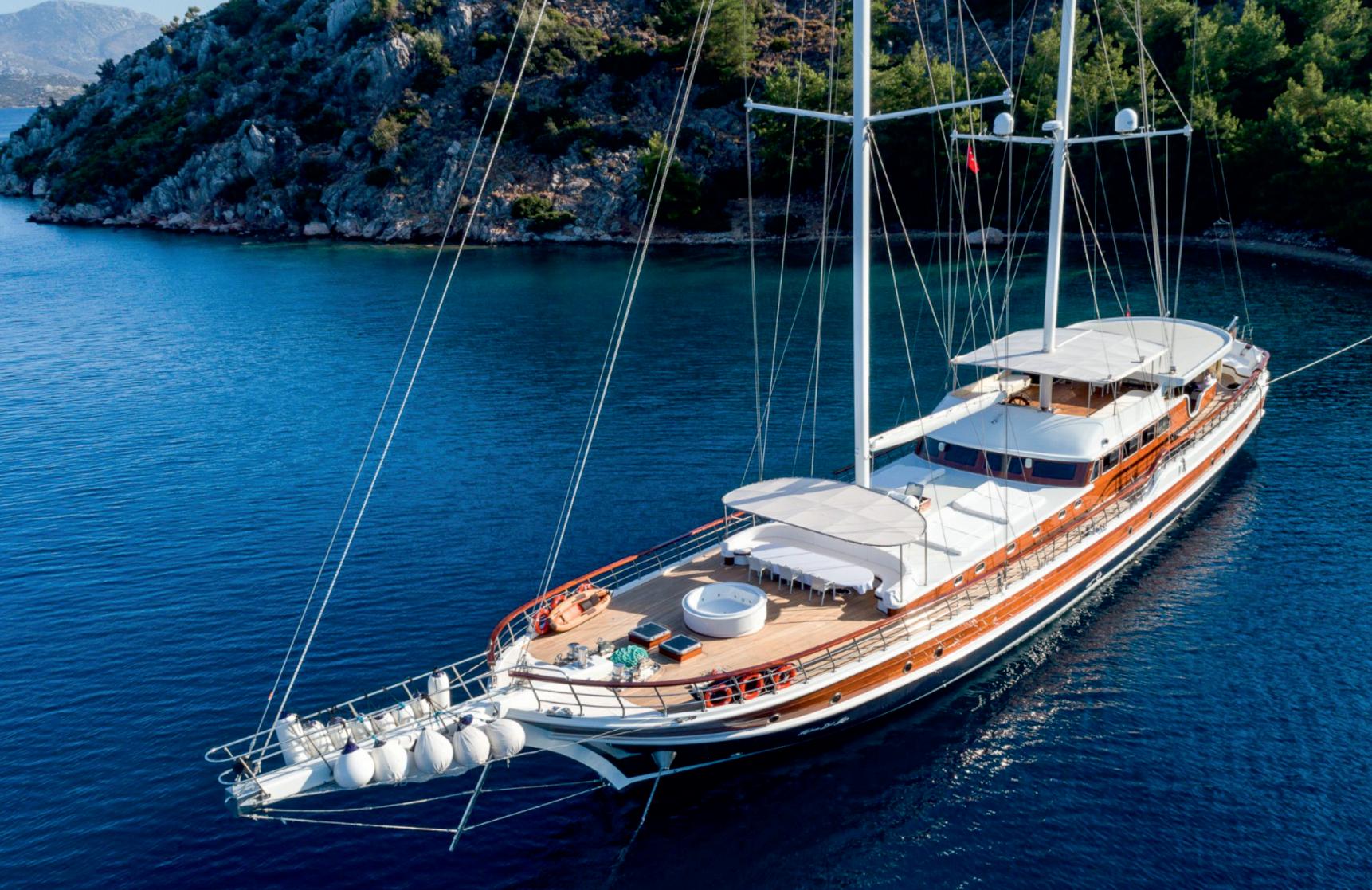
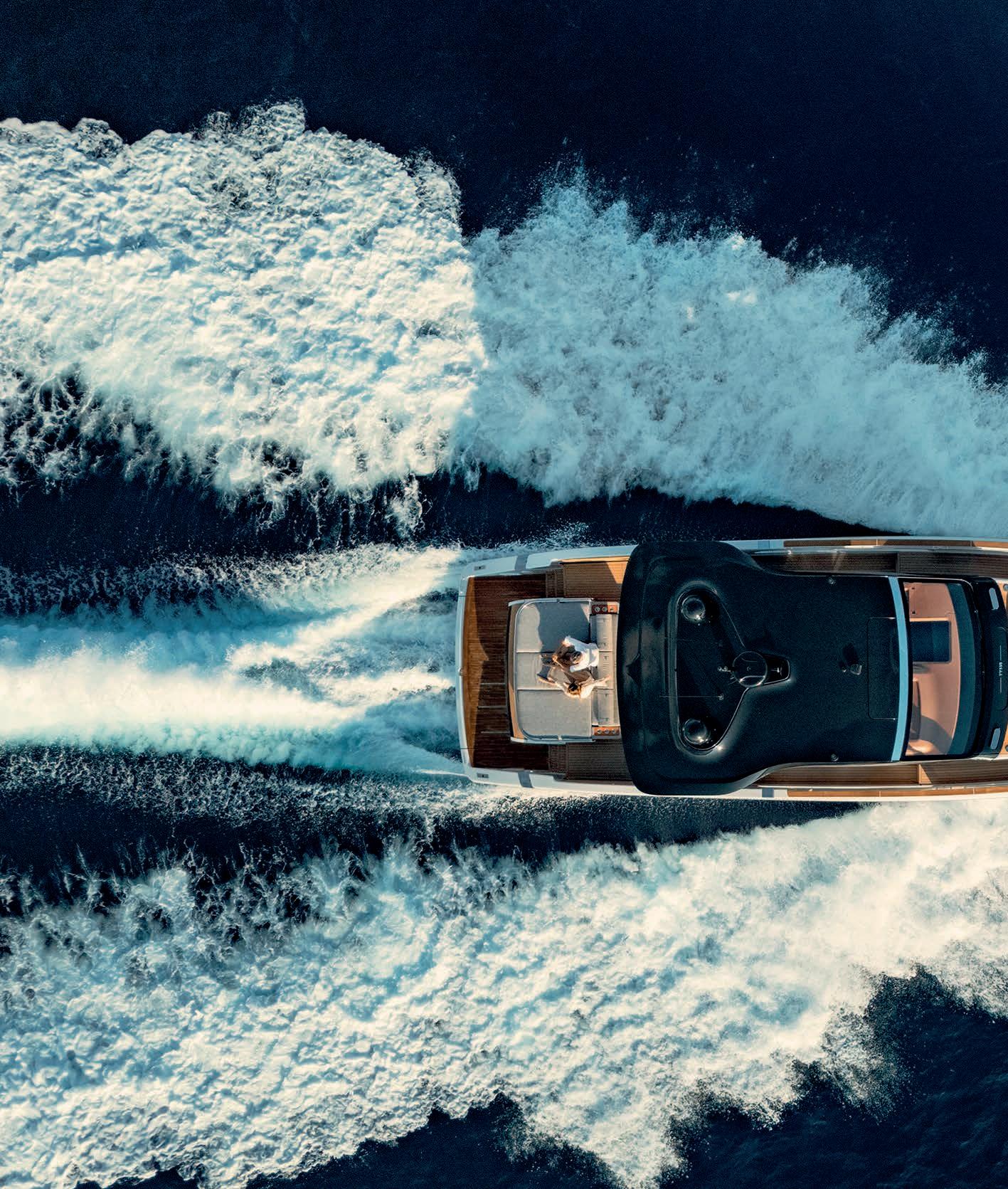
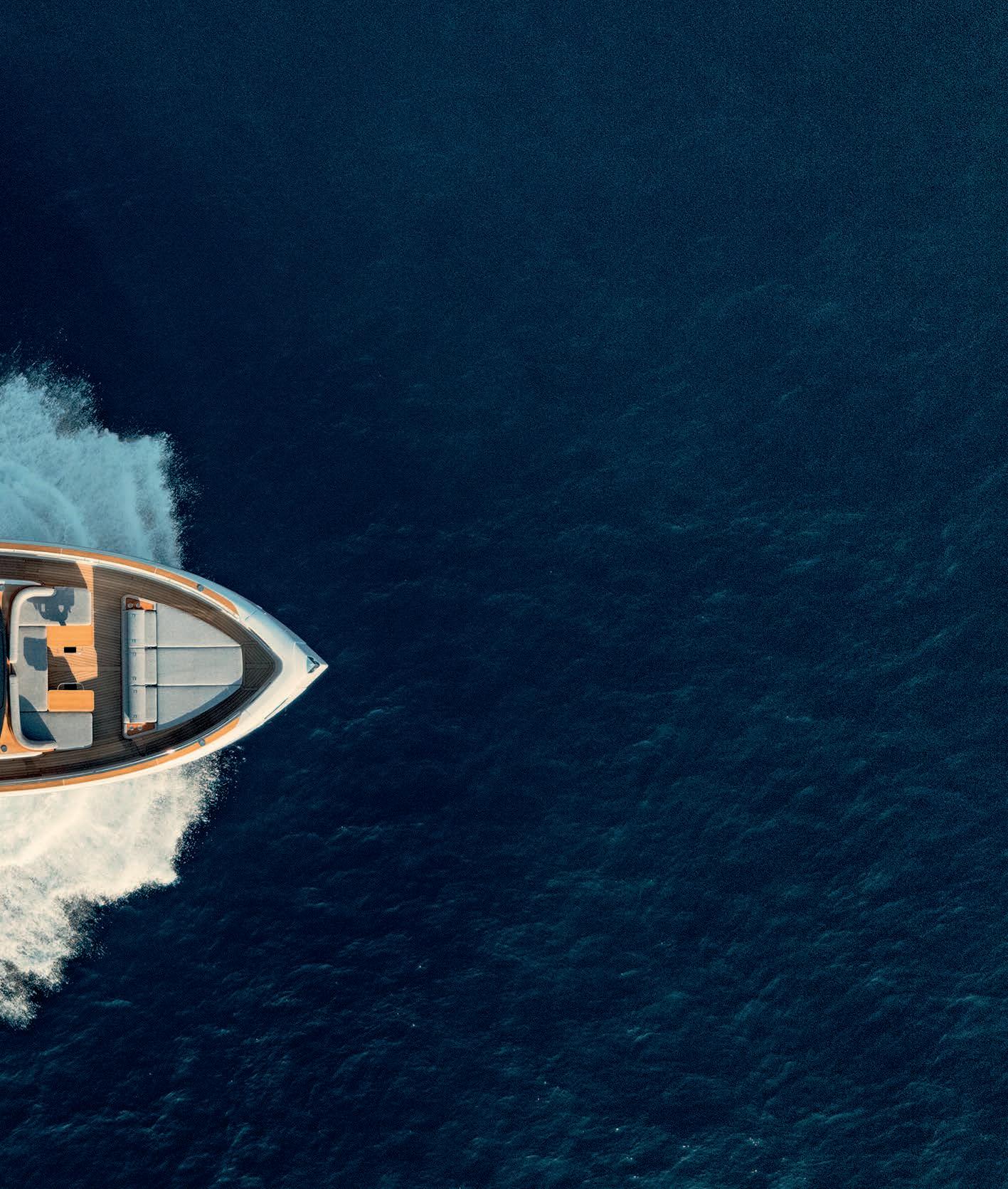
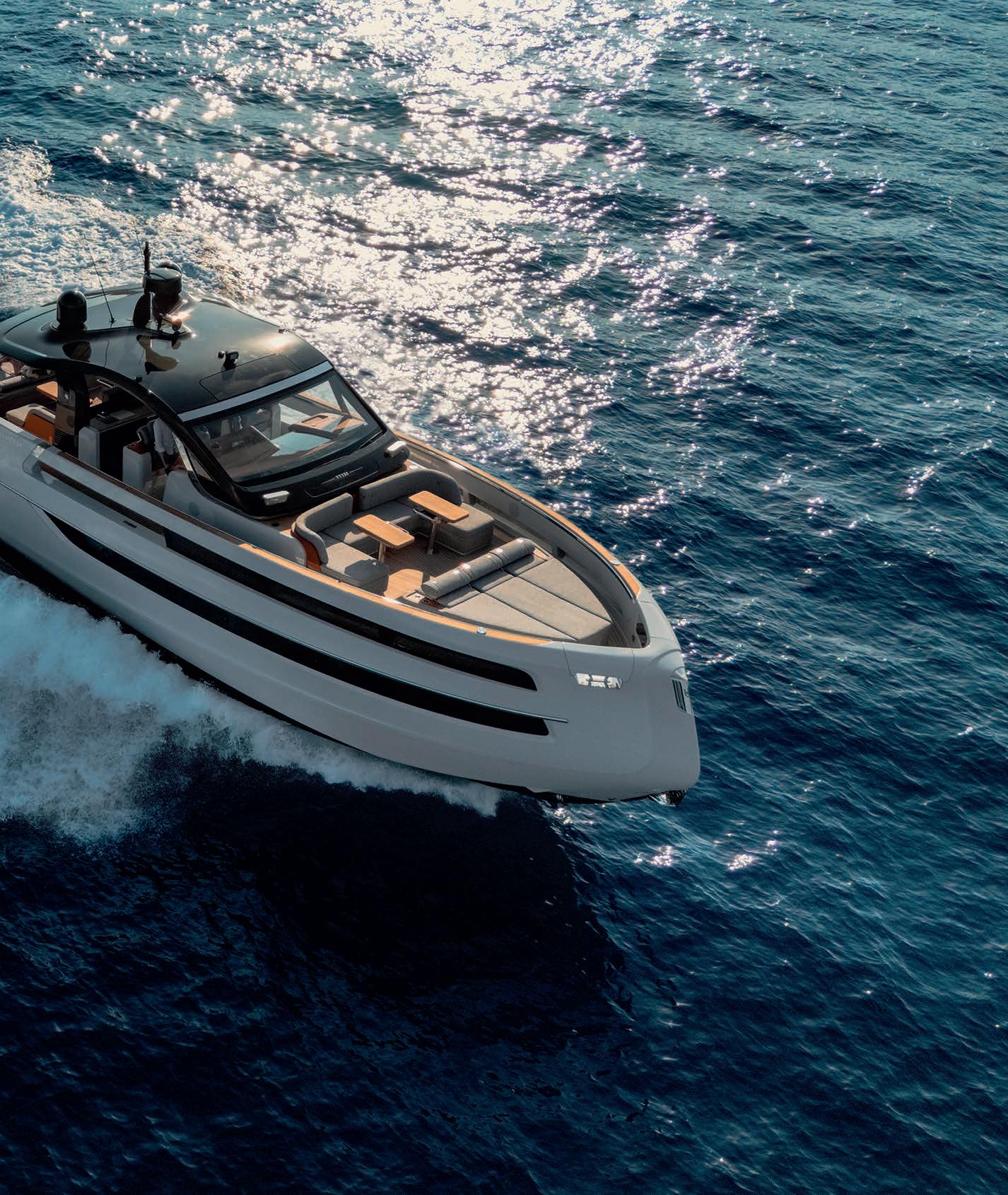
Theall-new Invictus TT550, flagship of Cantieri Aschenez, made a striking debut at the 2025 Cannes Yachting Festival, quickly establishing itself as a highlight of the Genoa International Boat Show. Measuring 16.87 meters in length and 5.04 meters at the beam, the TT550 represents the natural evolution of the acclaimed TT series, featuring reshaped, extended outdoor areas designed to deliver an even more exclusive and immersive experience at sea.
“The enthusiastic response we received in Cannes and then in Genoa, from both our dealer network and the public, confirms that we are on the right track,” said Rosario Alcaro, General Manager of Invictus Yacht. “The TT550 is truly one-of-a-kind in terms of design, innovation and performance. Our goal is to keep evolving, to ensure our yachts are never static projects, but always forwardlooking, always seeking solutions that enhance both product quality and onboard lifestyle.”
Technology and research are at the heart of the TT550, incorporating innovations also found across the broader Invictus range. Structural fiberglass tanks are fully integrated into the hull, en-
Elnuevo Invictus TT550, yate insignia de Cantieri Aschenez, hizo un impresionante debut en el Festival Náutico de Cannes de 2025, consolidándose rápidamente como uno de los protagonistas del Salón Náutico Internacional de Génova. Con 16,87 metros de eslora y 5 metros de manga, el TT550 representa la evolución natural de la aclamada serie TT, con espacios exteriores rediseñados y ampliados para ofrecer una experiencia aún más exclusiva e inmersiva en el mar.
“La entusiasta acogida que recibimos en Cannes y posteriormente en Génova, tanto por parte de nuestra red de distribuidores como del público, confirma que vamos por el buen camino”, declaró Rosario Alcaro, directora general de Invictus Yacht. “El TT550 es verdaderamente único en términos de diseño, innovación y rendimiento. Nuestro objetivo es seguir evolucionando, para garantizar que nuestros yates no sean proyectos estáticos, sino que siempre miren hacia el futuro, buscando constantemente soluciones que mejoren tanto la calidad del producto como la experiencia a bordo”.
La tecnología y la investigación son la esencia del TT550, que incorpora innovaciones también presentes en toda la gama Invictus.
hancing rigidity, overall reliability and optimal weight distribution, which in turn improves balance, handling and overall seakeeping. The hull is constructed using PET, a recyclable thermoplastic resin, significantly reducing overall weight and improving both fuel efficiency and performance.
More than just a luxury tender, the TT550 is a true lifestyle yacht, designed for owners who seek a genuine, immersive connection with the sea. Folding side terraces, the iconic Invictus semi-reverse bow and a generous aft sunpad define a layout built around freedom, open-air living and sociability.
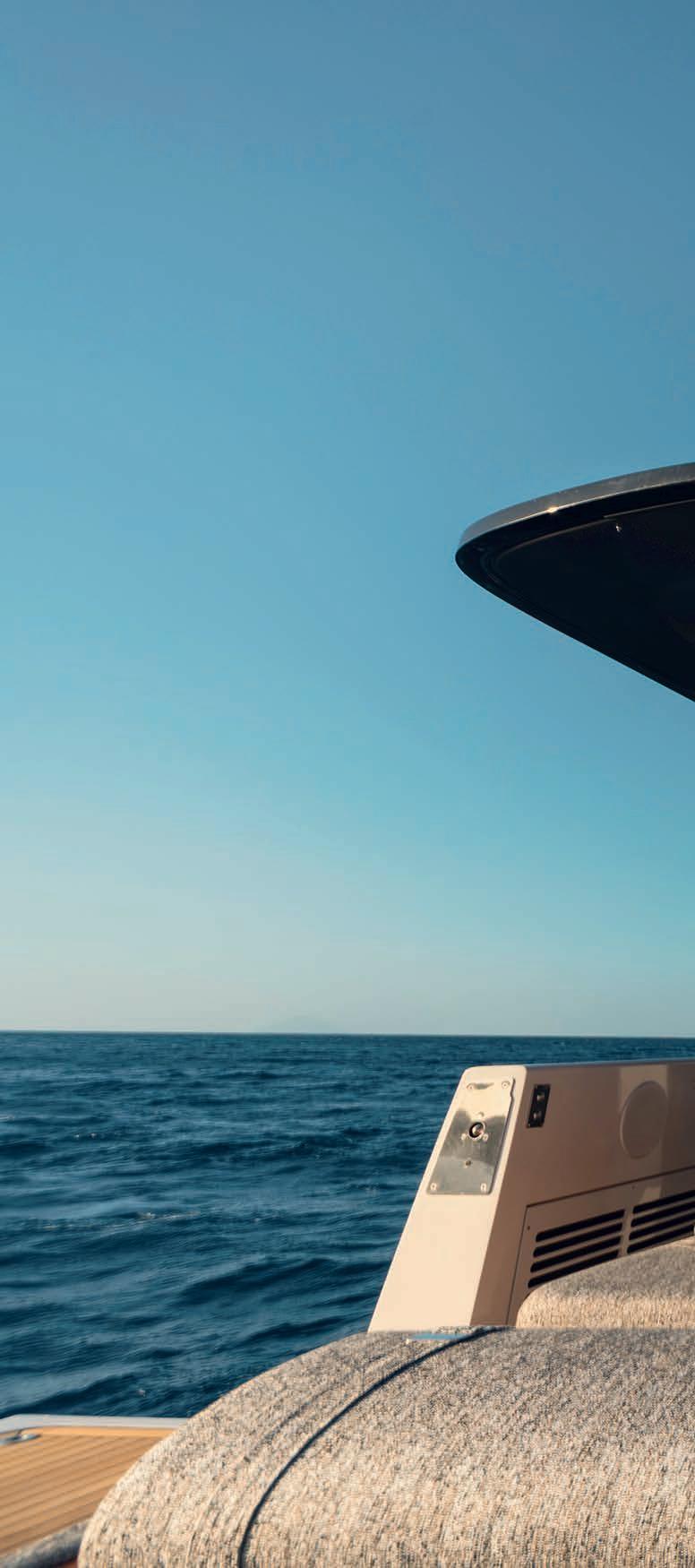
A submersible swim platform leads to a welcoming open-air living space, ideal for relaxation and socializing. This open-plan area is designed to enhance every moment of the day and navigation, featuring a foldable backrest on the aft sofa that seamlessly extends the sunbathing area. A cleverly integrated garage offers convenient storage access without encroaching on relaxation areas. Overhead, a carbon fiber hardtop provides protection for the dinette and galley, stretching all the way to the helm. Deep side bulwarks ensure safe movement along the deck, leading to a spacious forward lounge area, shaded by a carbon fiber canopy and enhanced by warm, diffused ambient lighting that creates an inviting atmosphere even while underway.
Los tanques estructurales de fibra de vidrio están completamente integrados en el casco, lo que mejora la rigidez, la fiabilidad general y la distribución óptima del peso. Esto a su vez mejora el equilibrio, la maniobrabilidad y la navegabilidad. El casco está construido con PET, una resina termoplástica reciclable, que reduce significativamente el peso total y mejora tanto la eficiencia del combustible como el rendimiento.
Más que una simple embarcación auxiliar de lujo, el TT550 es un auténtico yate para disfrutar del estilo de vida náutico, diseñado para propietarios que buscan una conexión genuina e inmersiva con el mar. Las terrazas laterales abatibles, la icónica proa semivertical de Invictus y un amplio solárium en popa definen una distribución pensada para la libertad, la vida al aire libre y la convivencia. Una plataforma de baño sumergible conduce a un acogedor espacio de estar al aire libre, ideal para relajarse y socializar. Esta zona de planta abierta está diseñada para realzar cada momento del día y de la navegación, con un respaldo plegable en el sofá de popa que amplía la zona para tomar el sol. Un garaje ingeniosamente integrado ofrece un cómodo acceso al almacenamiento sin invadir las zonas de relax. En la parte superior, un techo rígido de fibra de carbono protege el comedor y la cocina, extendiéndose hasta el puesto de mando. Los altos pasamanos laterales garantizan un desplazamiento seguro por la cubierta, que conduce a una espaciosa zona de estar en proa, protegida por un toldo de fibra de carbono e
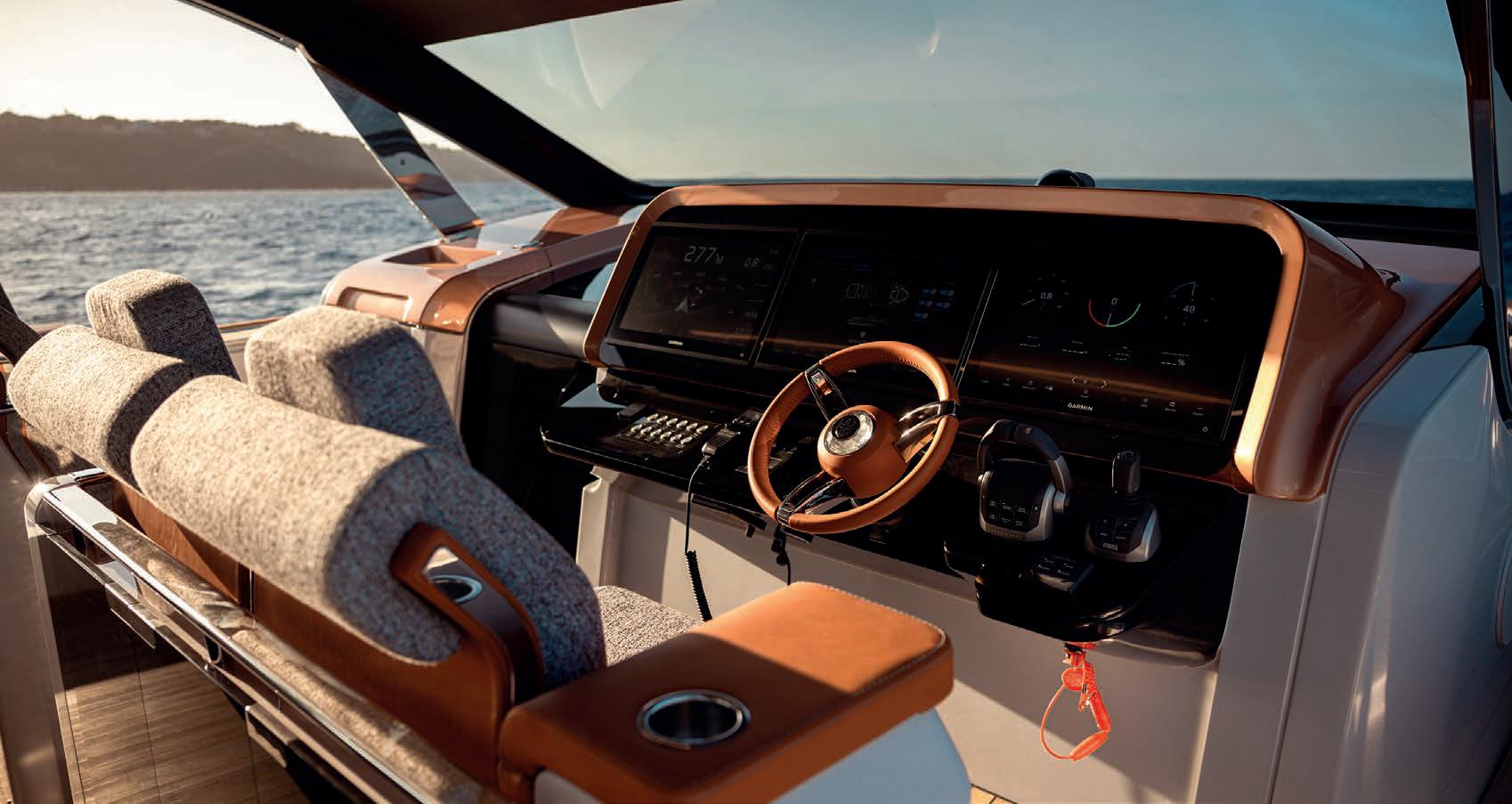
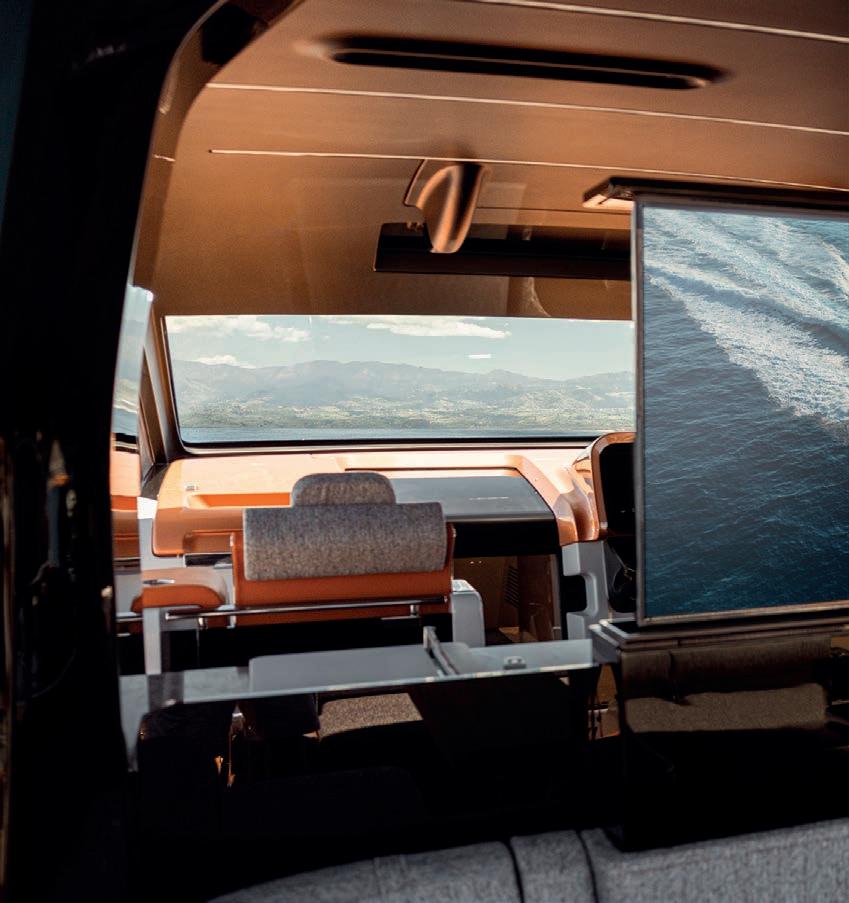
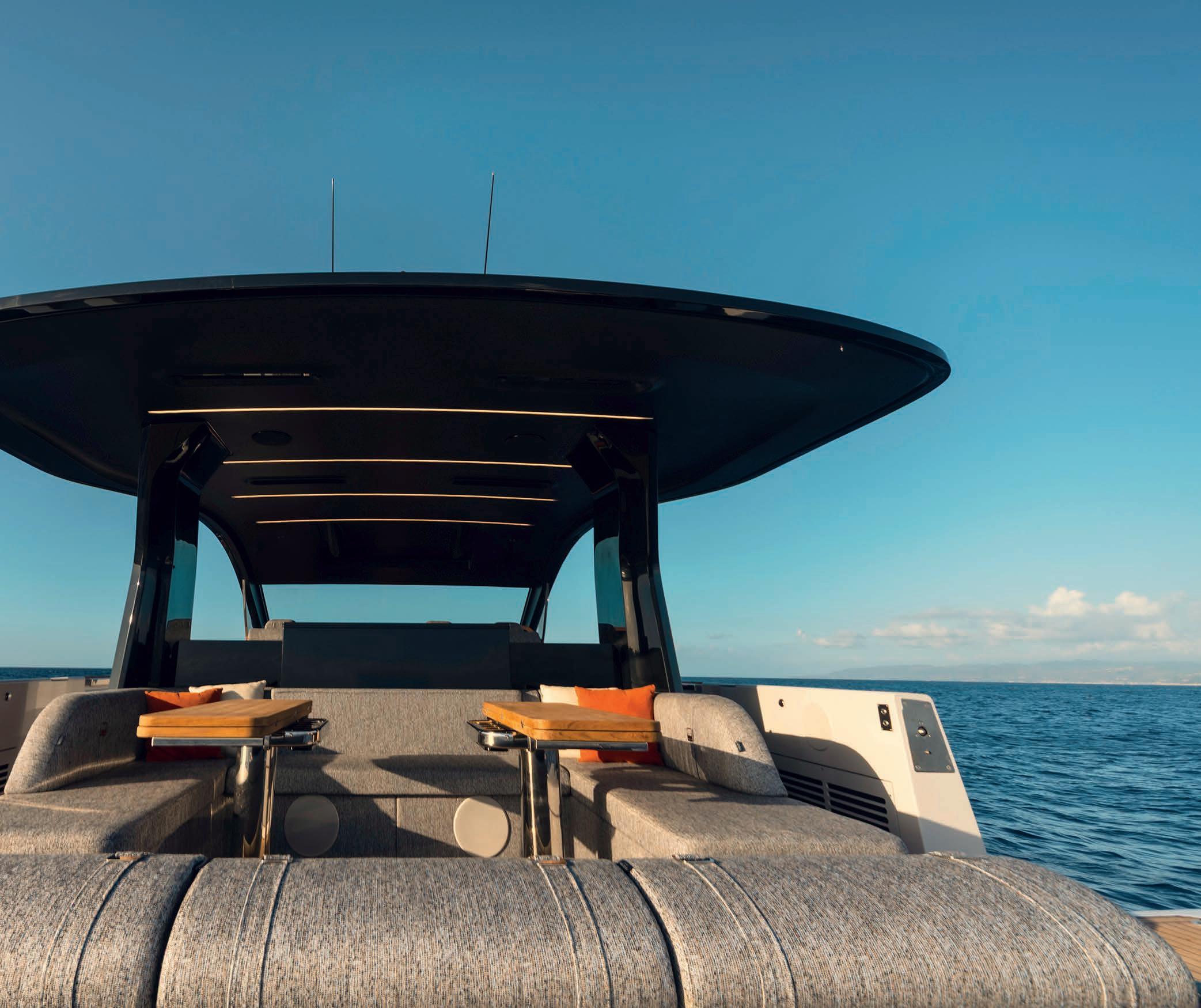
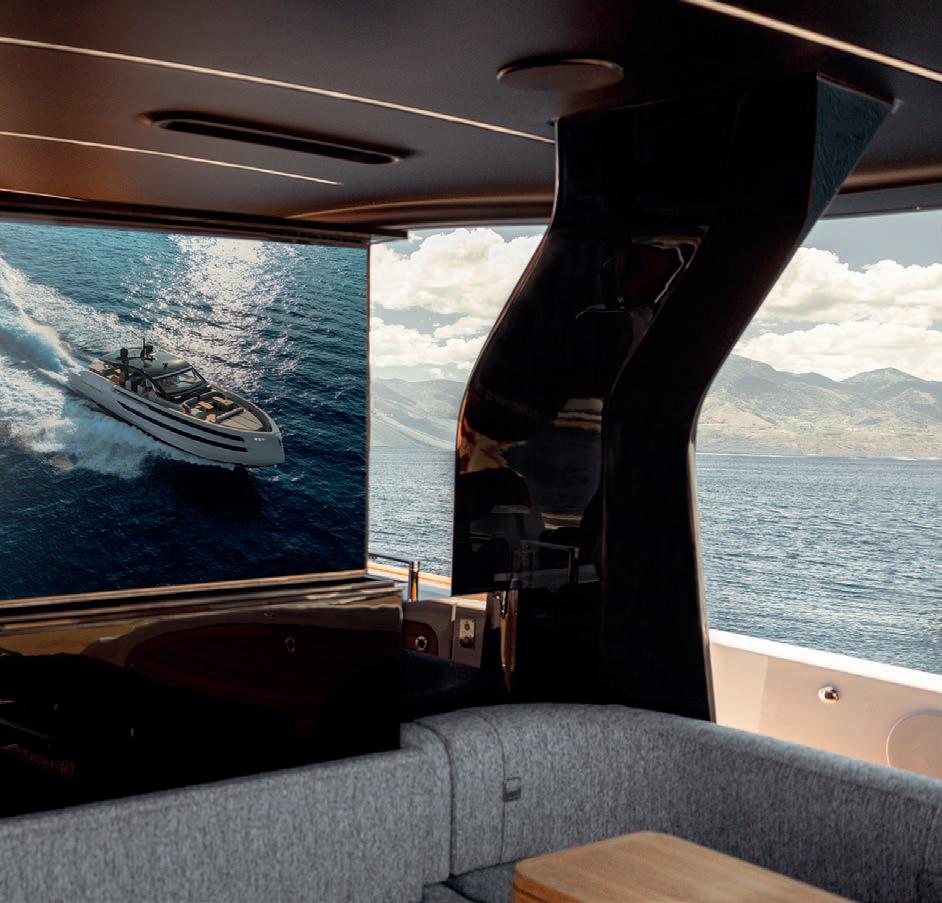
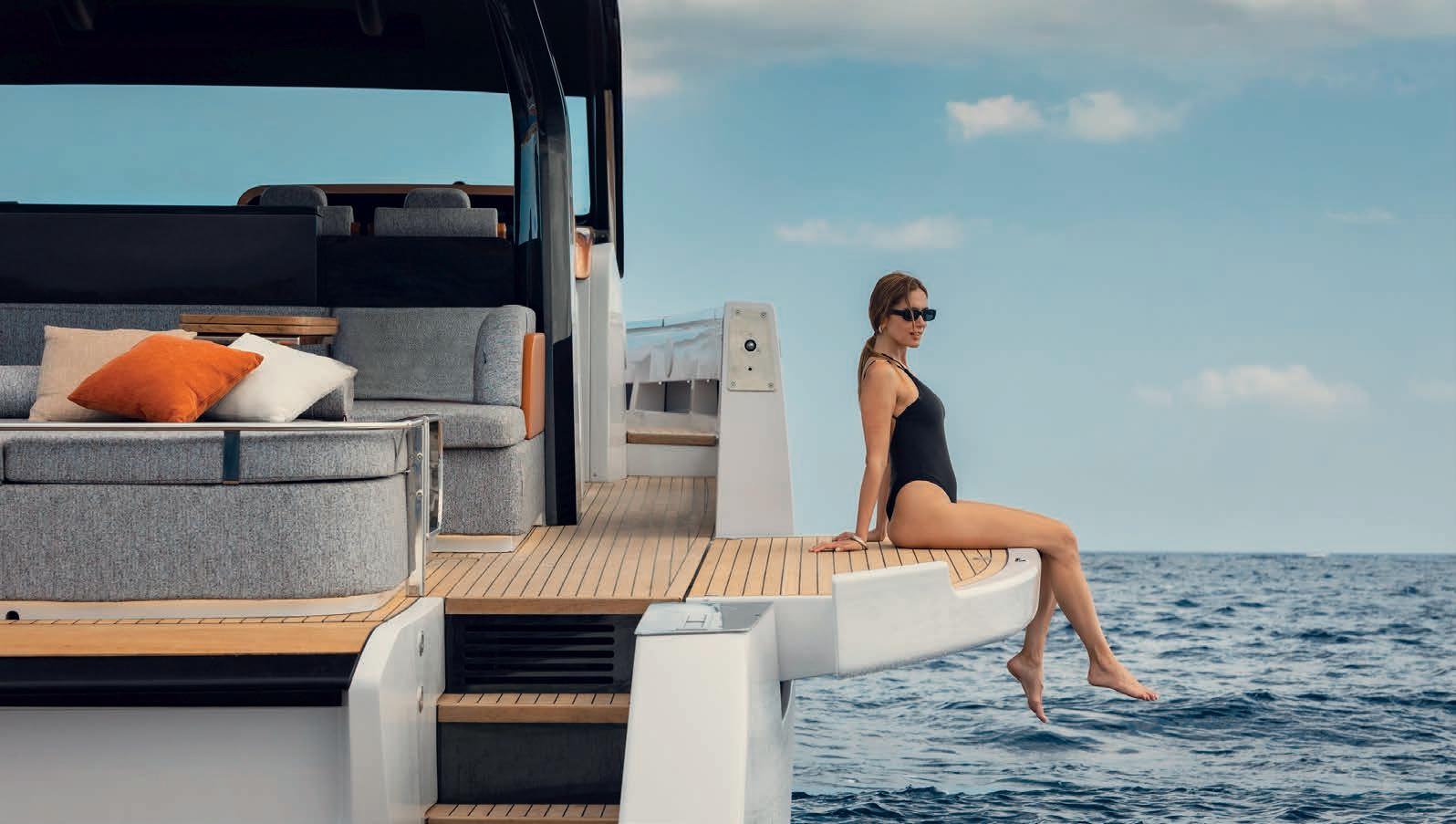
Customization is a hallmark of the TT550 experience. The broad exterior color palette is enhanced by two new tones, Stone White and Deep Groove, each of which can be paired with upholstery available in three exclusive shades: Cloudy, Sandy and Woody. A standout innovation is the use of new upholstery textiles: replacing traditional marine sky fabric is a refined, water-resistant material developed through cross-industry research, combining durability with sophisticated aesthetics. Through the Atelier Invictus, owners can tailor every aspect of their yacht, from modular interior layouts and refined finishes to exclusive accessories, creating a truly bespoke vessel that reflects their personal style.
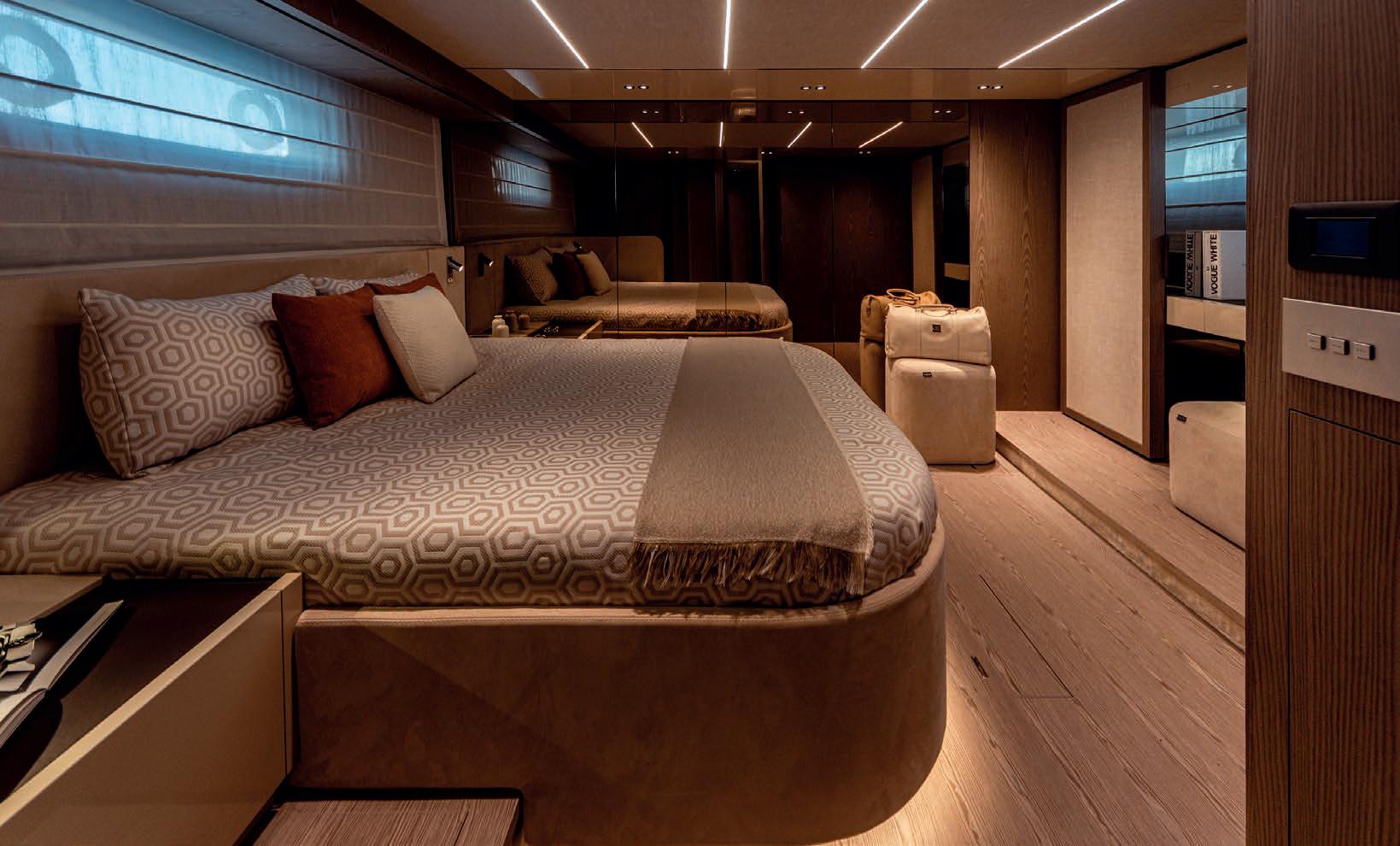
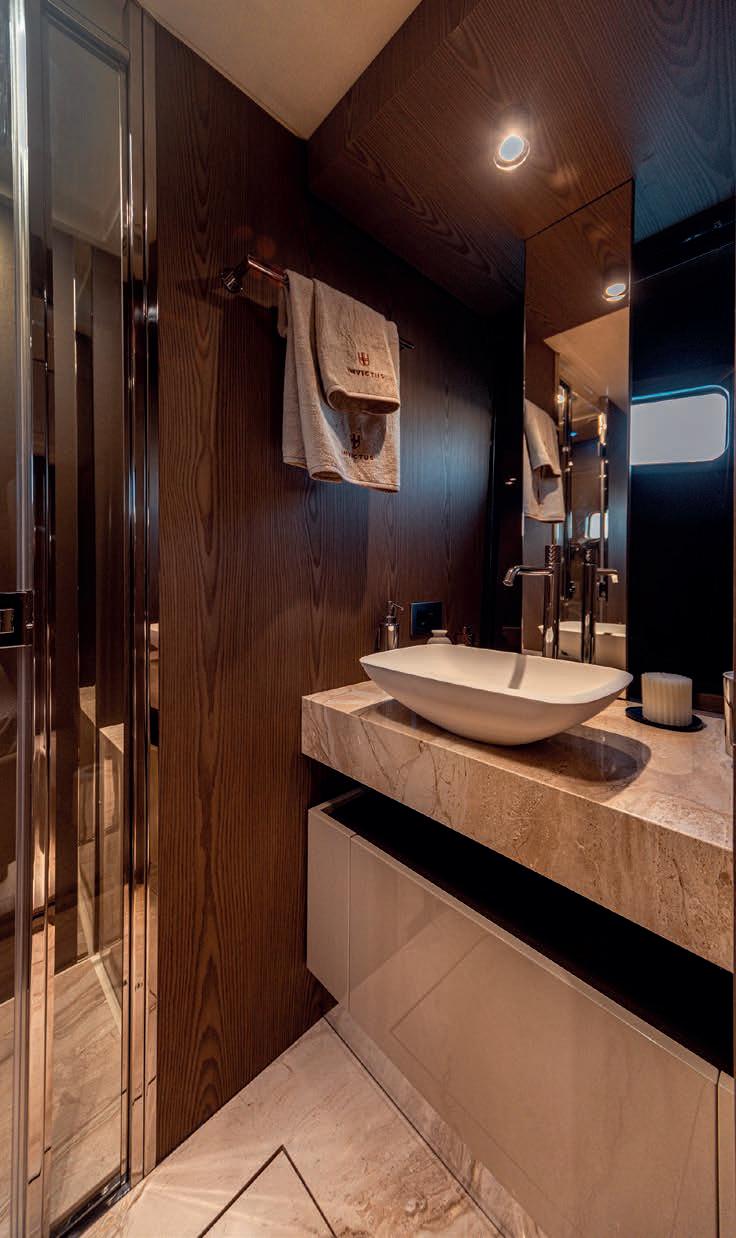
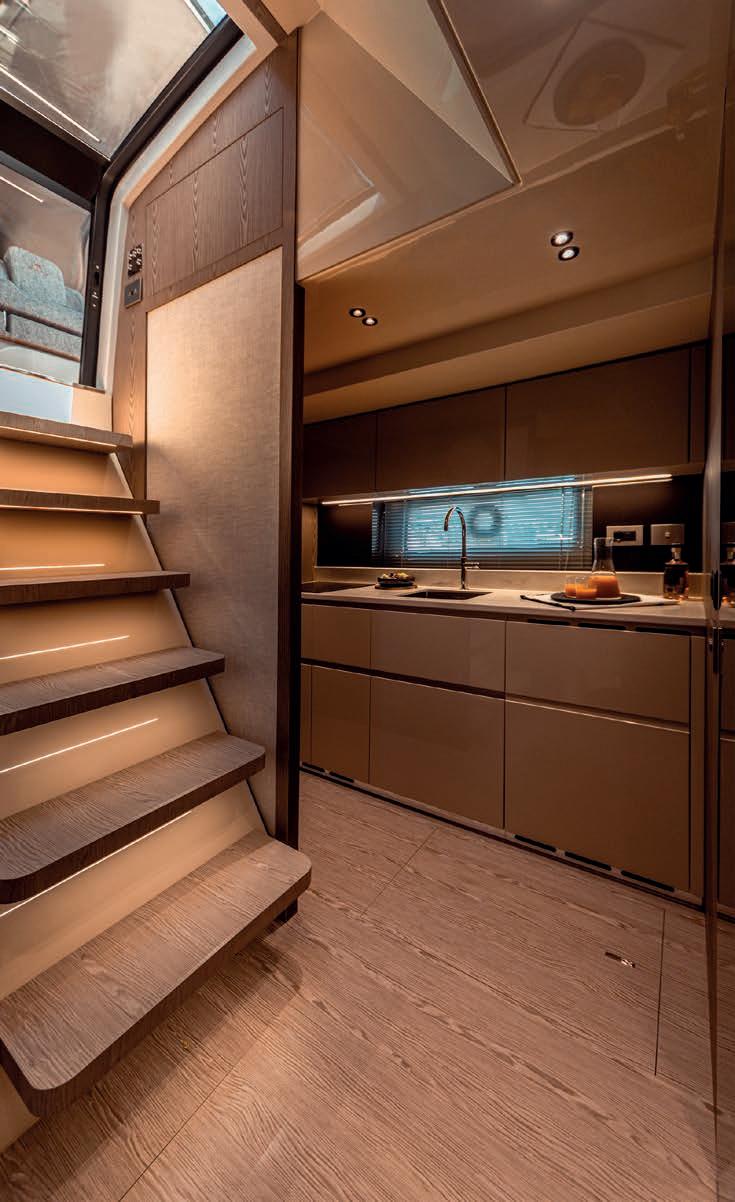
Below deck, the interior design by Christian Grande features a flexible layout with two cabins (Master and VIP), which can be positioned either forward or amidships, along with two bathrooms. Owners can also choose to add a third cabin or a central galley, depending on their cruising needs. An optional crew cabin is also available for extended voyages.
Propulsion is provided by twin Volvo Penta IPS950 units, delivering an ideal blend of sporty performance and long-distance comfort, a perfect embodiment of the TT550’s Mediterranean spirit.
iluminada por una cálida luz ambiental difusa que crea una atmósfera acogedora incluso en navegación.
La personalización es una característica distintiva de la experiencia TT550. La amplia paleta de colores exteriores se enriquece con dos nuevos tonos, Stone White y Deep Groove, que se pueden combinar con tapicerías disponibles en tres tonos exclusivos: Cloudy, Sandy y Woody. Una innovación destacada es el uso de nuevos tejidos para la tapicería: el tradicional tejido náutico se sustituye por un material refinado y resistente al agua, desarrollado a través de la investigación intersectorial, que combina durabilidad con una estética sofisticada. A través del Atelier Invictus, los propietarios pueden personalizar cada aspecto de su yate, desde la distribución interior modular y los acabados refinados hasta los accesorios exclusivos, creando una embarcación verdaderamente a medida que refleja su estilo personal.
Bajo cubierta, el diseño interior de Christian Grande presenta una distribución flexible con dos camarotes (principal y VIP), que pueden ubicarse en la proa o en el centro del barco, junto con dos baños. Los propietarios también pueden optar por añadir un tercer camarote o una cocina central, según sus necesidades de navegación. También está disponible un camarote para la tripulación como opción para viajes largos.
La propulsión corre a cargo de dos motores Volvo Penta IPS950, que ofrecen una combinación ideal de rendimiento deportivo y comodidad para largas distancias, la encarnación perfecta del espíritu mediterráneo del TT550.




Text & Photos by | Texto y Fotos por ELODIE CAMPRASSE
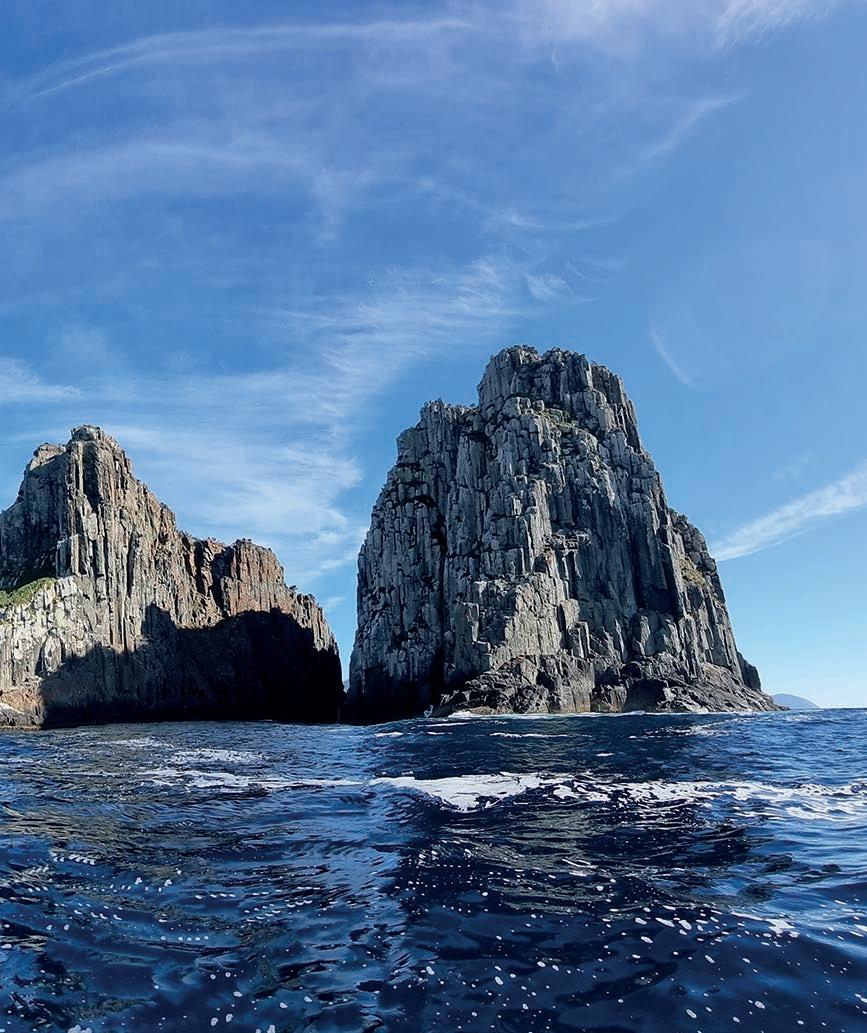
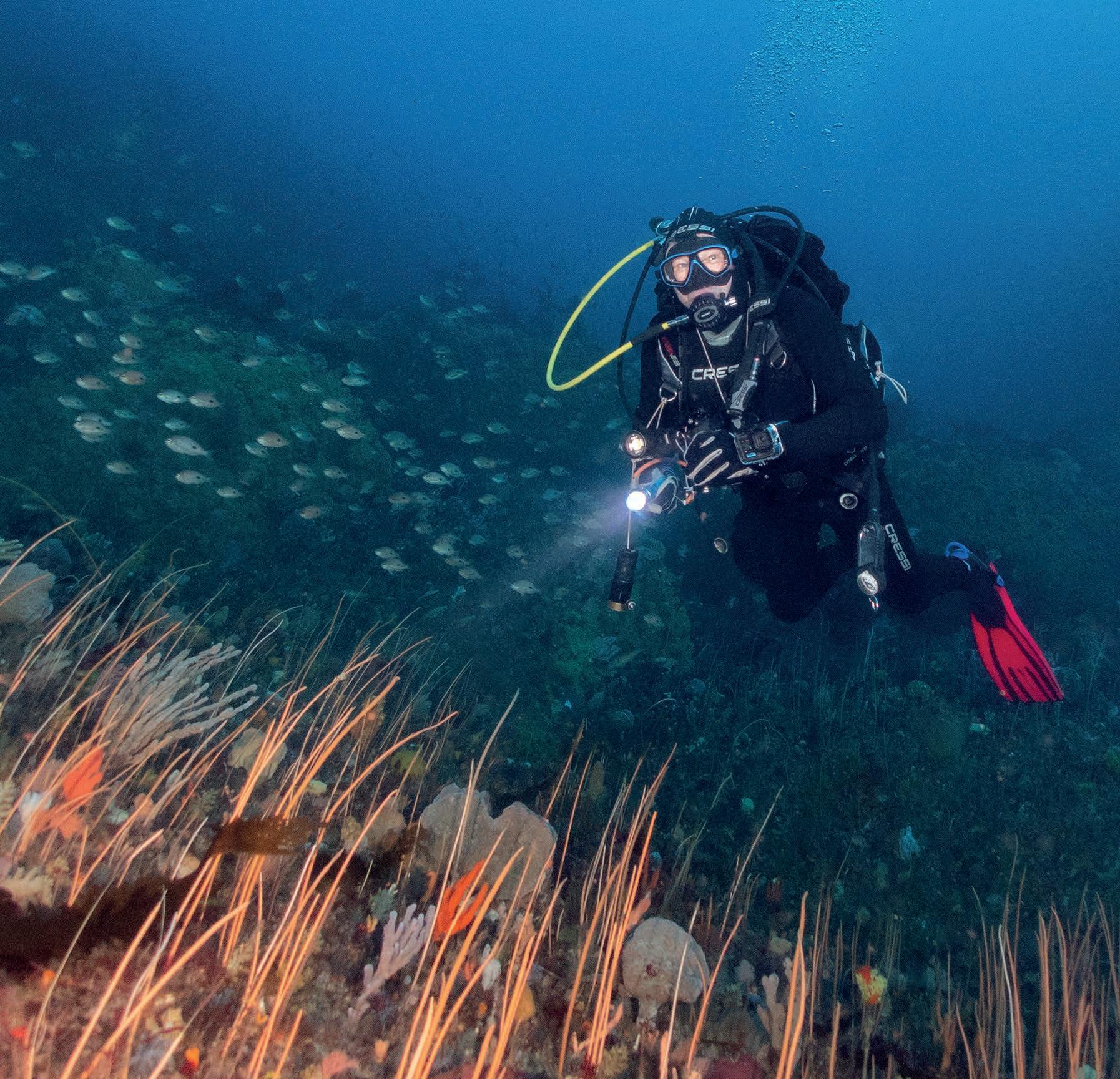
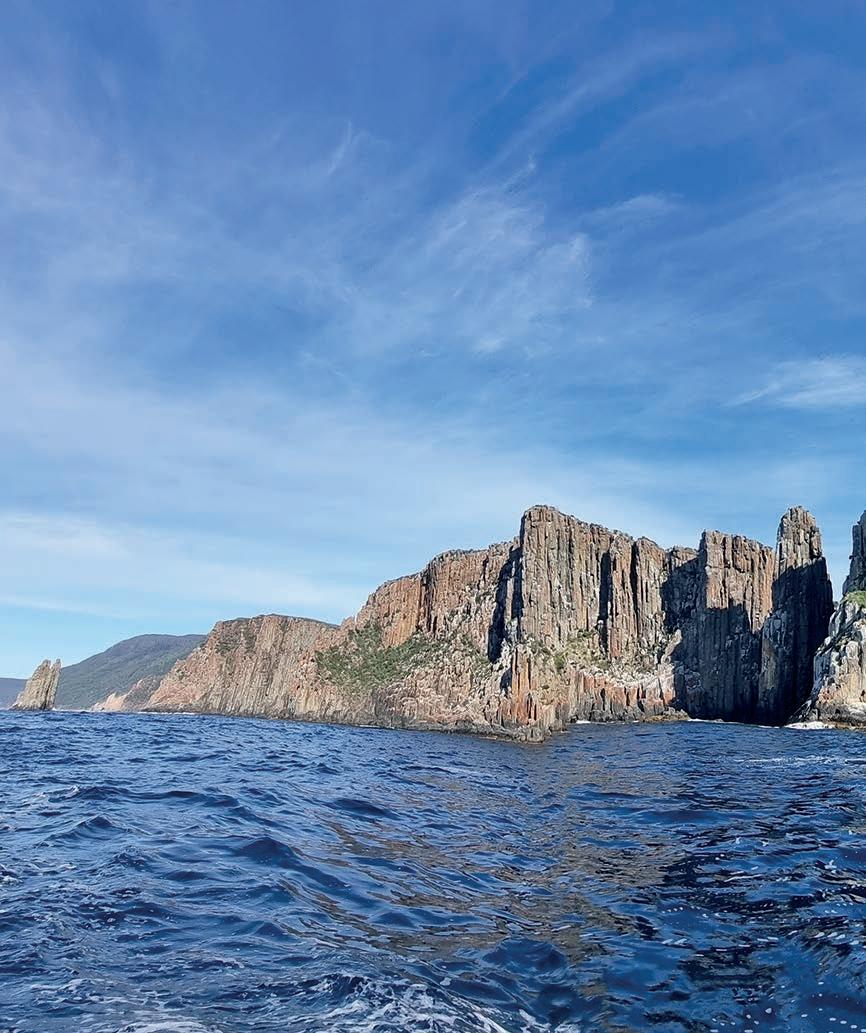
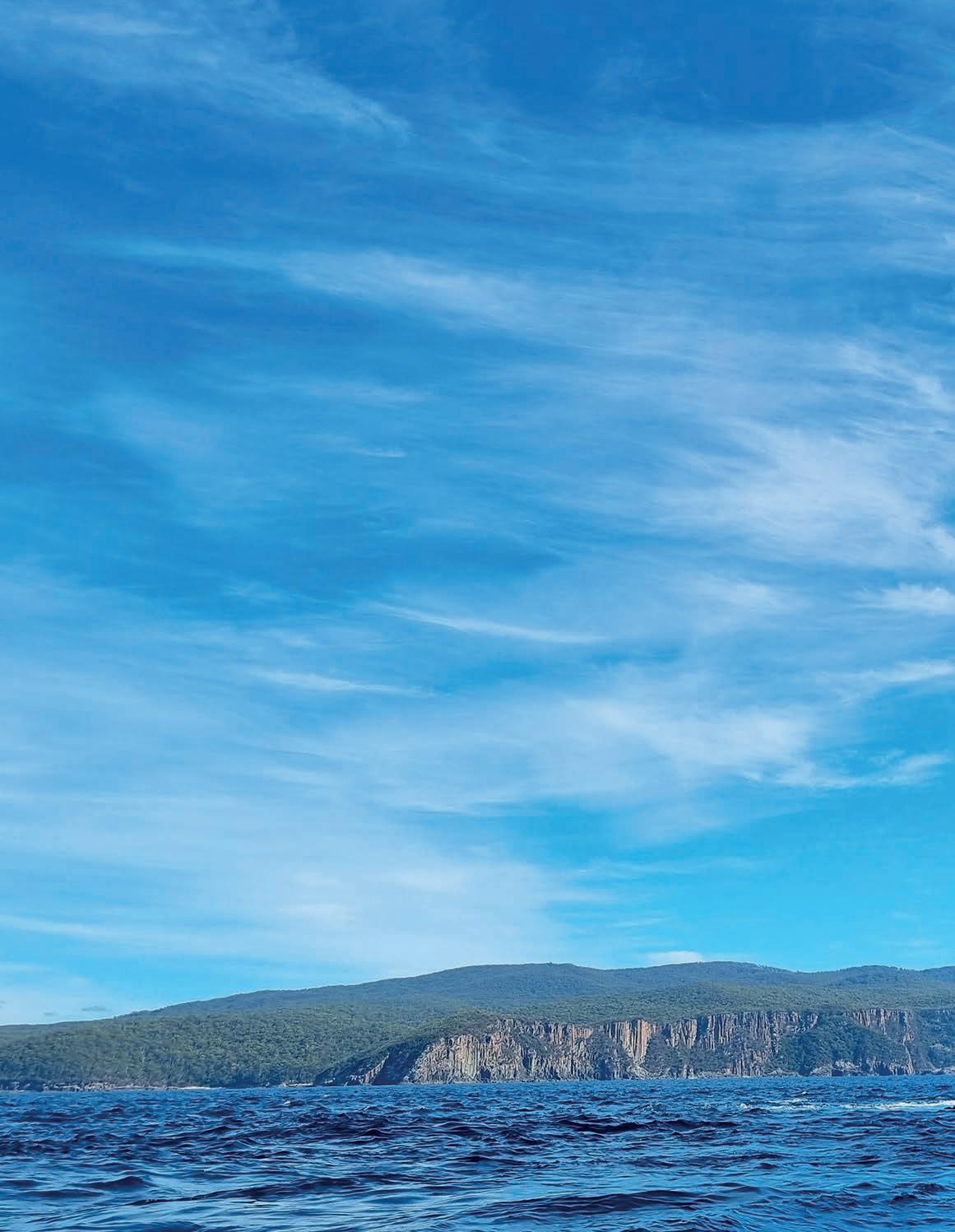
Some coastlines feel wild; the Tasman Peninsula feels truly untamed — an edge-of-the-world frontier where cliffs plunge straight into the Southern Ocean. For ocean enthusiasts, it offers a rare mix of sheer dolerite cliffs, abundant marine life, and underwater landscapes that look almost otherworldly. This is a coastline shaped by wind, swell, and ancient volcanic forces, and in March 2025 I was finally able to explore the hidden world beneath its surface — a longanticipated bucket-list destination that revealed exactly why Tasmania is becoming one of the world’s standout cold-water adventure locations.
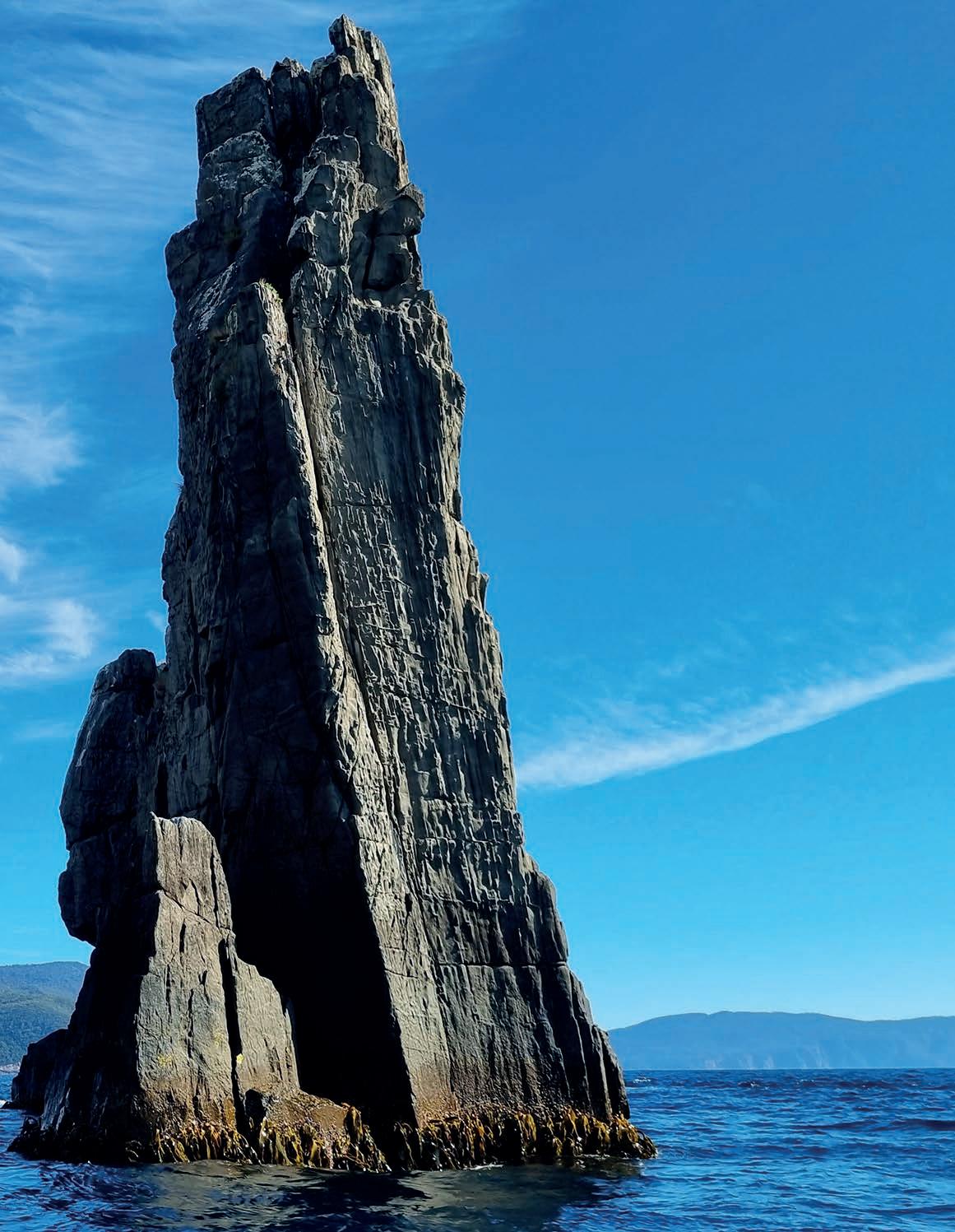
Tasmania may be only the size of West Virginia, but its coastline feels far larger thanks to its dramatic mix of headlands, sea stacks, deep bays, and steep underwater ridges. The Tasman Peninsula captures this rugged character perfectly. For boaters and divers, it offers a landscape where sheltered coves sit just around the corner from fully exposed Southern Ocean energy. The dive sites alone hint at the terrain. Places like the Trident,
Algunas
costas transmiten una sensación de naturaleza salvaje; la península de Tasmania se siente verdaderamente indómita: una frontera en el fin del mundo donde los acantilados se precipitan directamente a las aguas del Antártico. Para los amantes del océano, ofrece una combinación excepcional de imponentes acantilados de dolerita, abundante vida marina y paisajes submarinos que parecen de otro mundo. Esta costa ha sido moldeada por el viento, las olas y antiguas fuerzas volcánicas, y en marzo de 2025 finalmente pude explorar el mundo oculto bajo su superficie: un destino sumamente anhelado que me reveló por qué Tasmania se está convirtiendo en uno de los lugares de aventura en aguas frías más destacados del mundo. Puede que tenga el tamaño del estado de West Virginia, pero su costa parece mucho más extensa gracias a su impresionante combinación de promontorios, islotes rocosos, bahías profundas y escarpadas crestas submarinas. La península de Tasmania captura a la perfección este carácter agreste. Para los navegantes y buceadores, ofrece un paisaje donde las calas protegidas
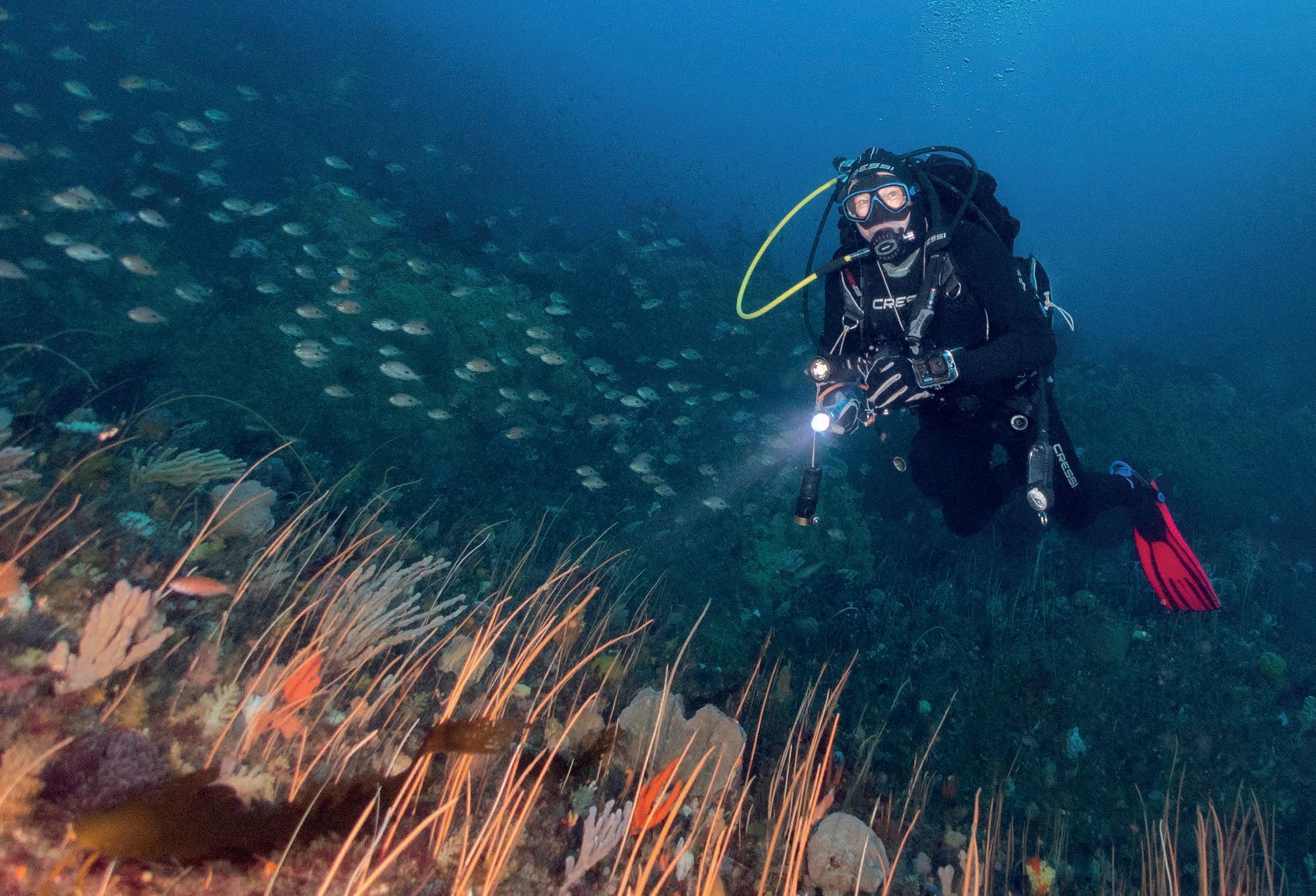
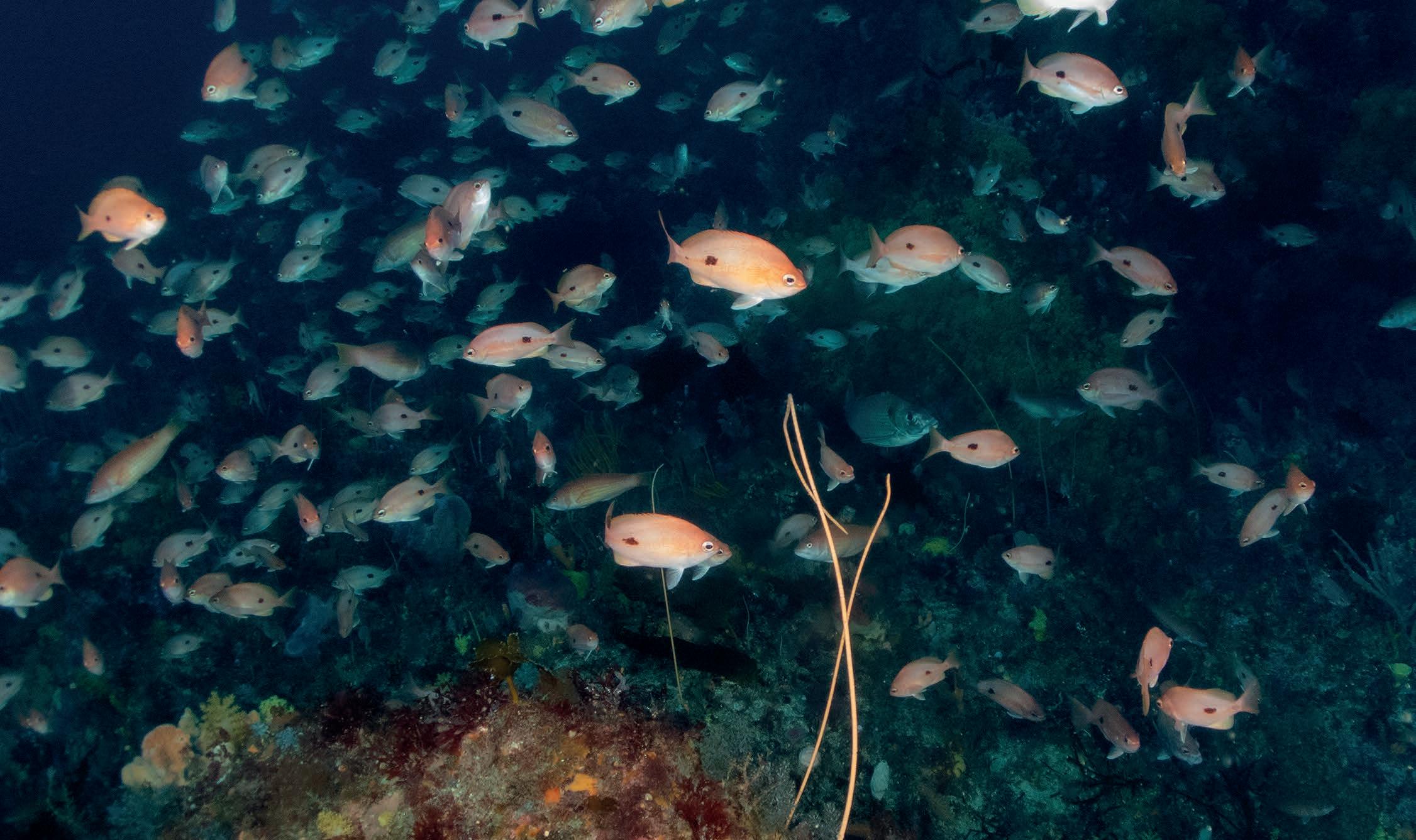
the Monument, the Cathedral, the Hippolytes, the Needle, and a newly explored region known as the Fields practically beg to be visited. Most lie deep — often well beyond 100 feet — and are typically reached by inflatable dive boats launched from Pirates Bay near Eaglehawk Neck or from Port Arthur, farther south.
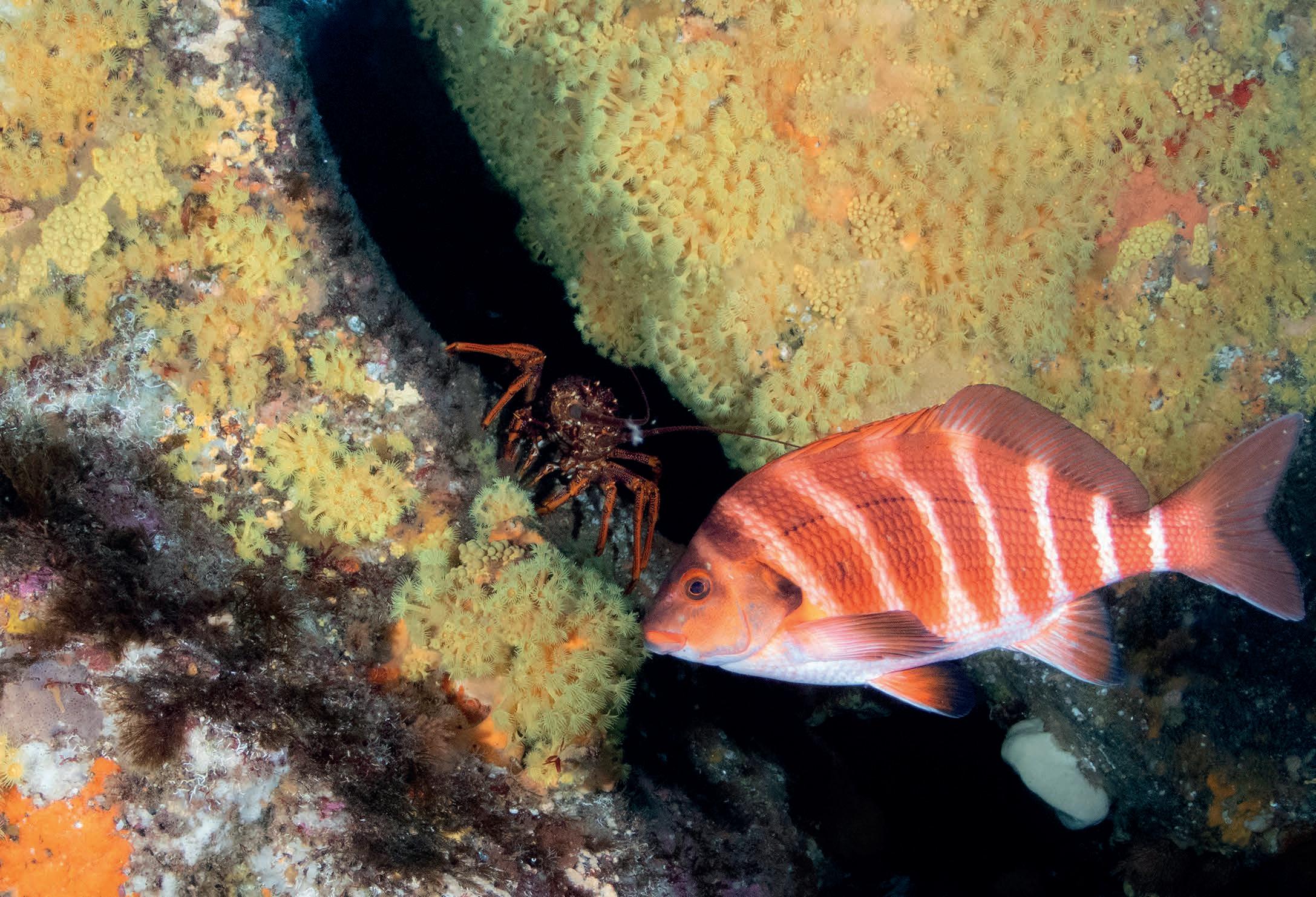
The marine life here feels distinctly Tasmanian. We encountered elegant schools of trumpeters, one of the region’s signature species, along with tarakihi, banded morwongs, marblefish, swell sharks, and several species of brilliantly colored sea perch. For those willing to slow down and scan the reef, the finer details emerged: delicate basket stars perched on long whips, bright yellow zoanthids clustered like underwater sunbursts, and Maori octopuses patrolling the reef, ready to strike at passing prey.
Despite its latitude, Tasmania’s marine palette is surprisingly vibrant. Soft corals, sponges, and anemones painted the deep walls in shades of red, pink, gold, and orange.
se encuentran a la vuelta de la esquina de la fuerza del océano Antártico en todo su esplendor.
Los propios puntos de buceo dan una idea del terreno. Lugares como el Tridente, el Monumento, la Catedral, los Hipólitos, la Aguja y una región recientemente explorada conocida como los Campos, invitan a ser visitados. La mayoría se encuentran a gran profundidad, a menudo a más de treinta metros, y normalmente se accede a ellos en lanchas neumáticas que parten de Pirates Bay, cerca de Eaglehawk Neck, o de Port Arthur, más al sur. La vida marina aquí es típicamente tasmana. Nos encontramos con elegantes bancos de trompeteros, una de las especies emblemáticas de la región, junto con tarakihi, morwongs rayados, peces mármol, tiburones inflados y varias especies de percas marinas de colores brillantes. Para quienes se tomaron su tiempo para observar el arrecife con detenimiento, surgieron los detalles más sutiles: delicadas estrellas cesta posadas sobre largos tallos, zoántidos de color amarillo brillante agrupados como explosiones de sol submarinas y pulpos maoríes patrullando el
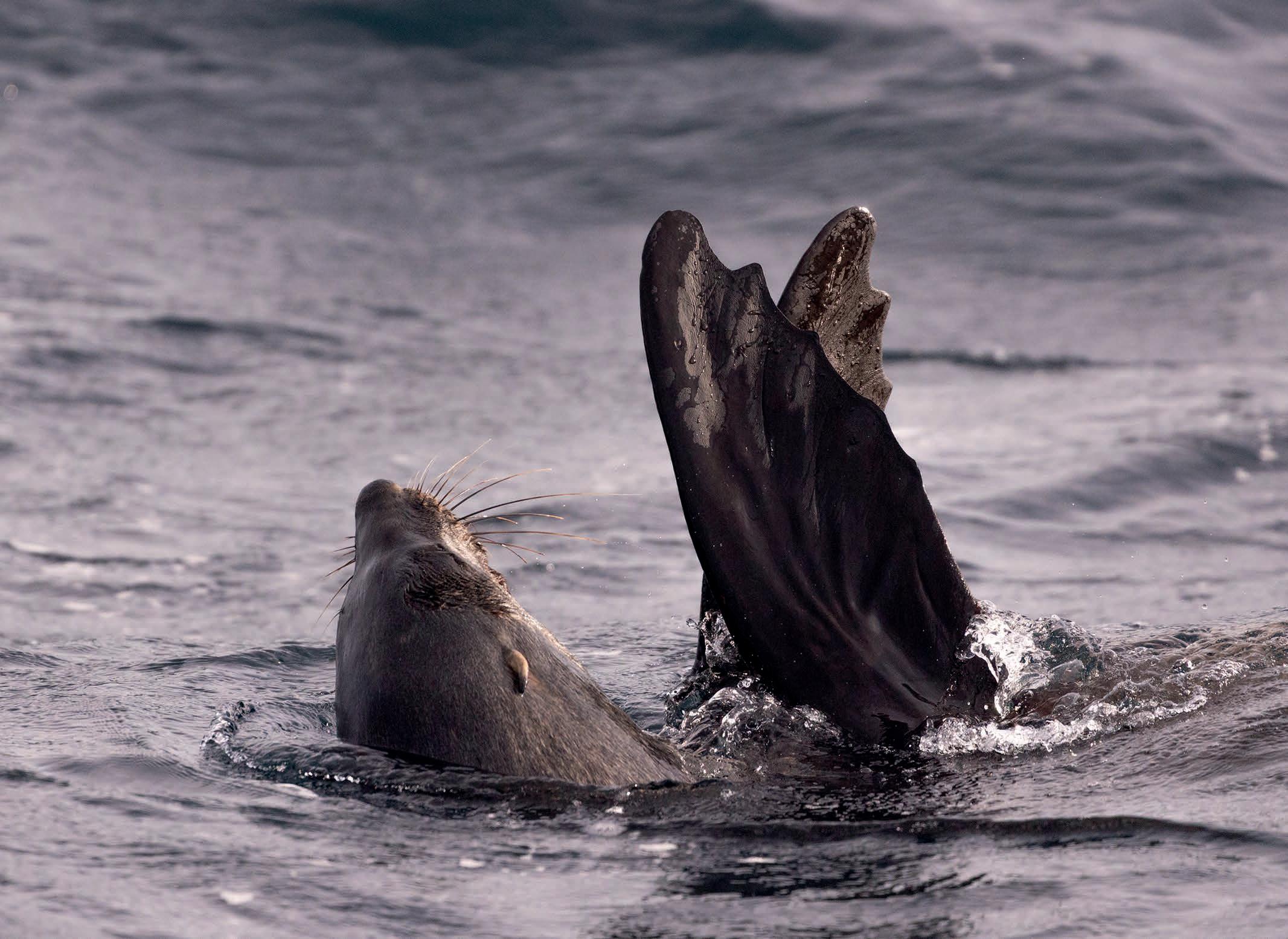
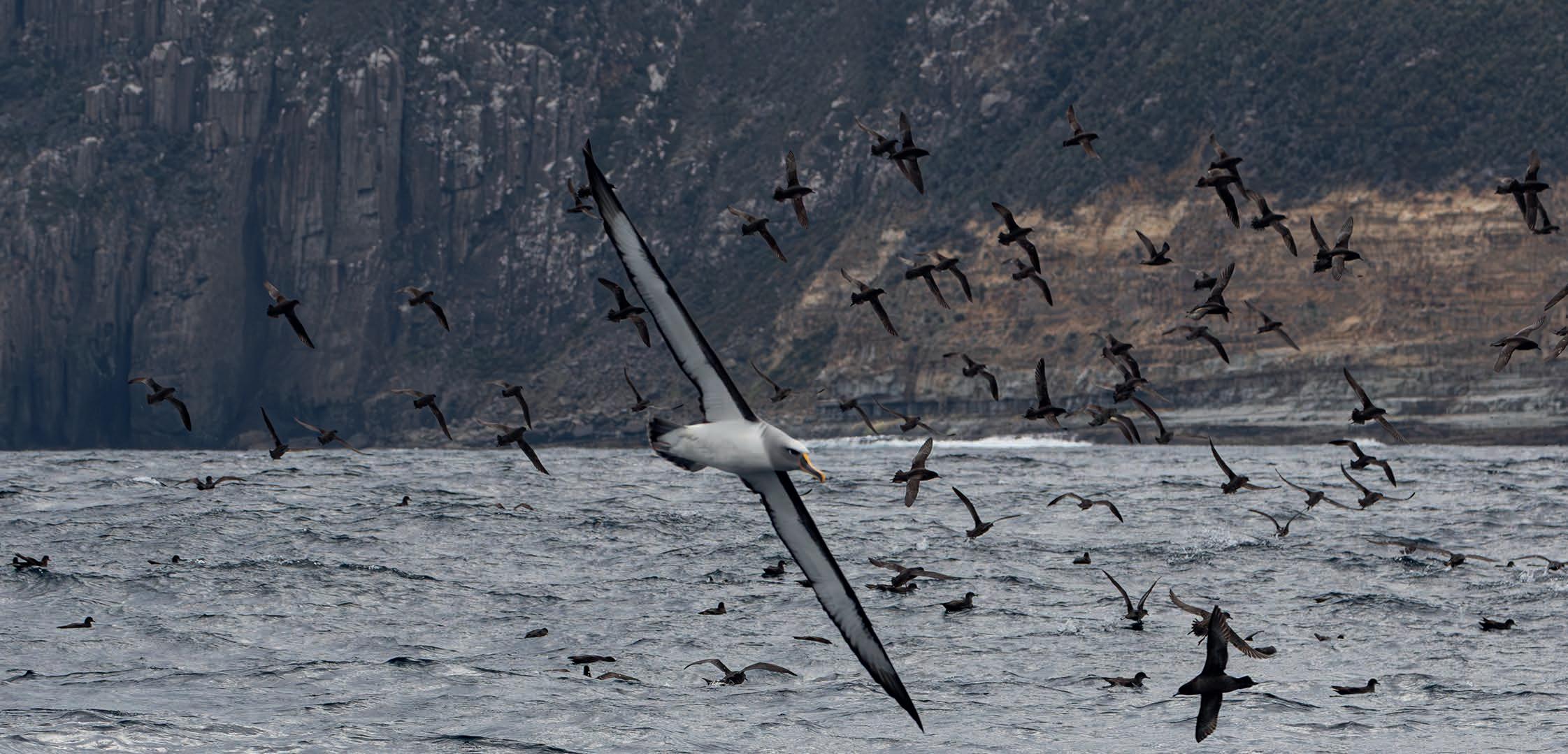
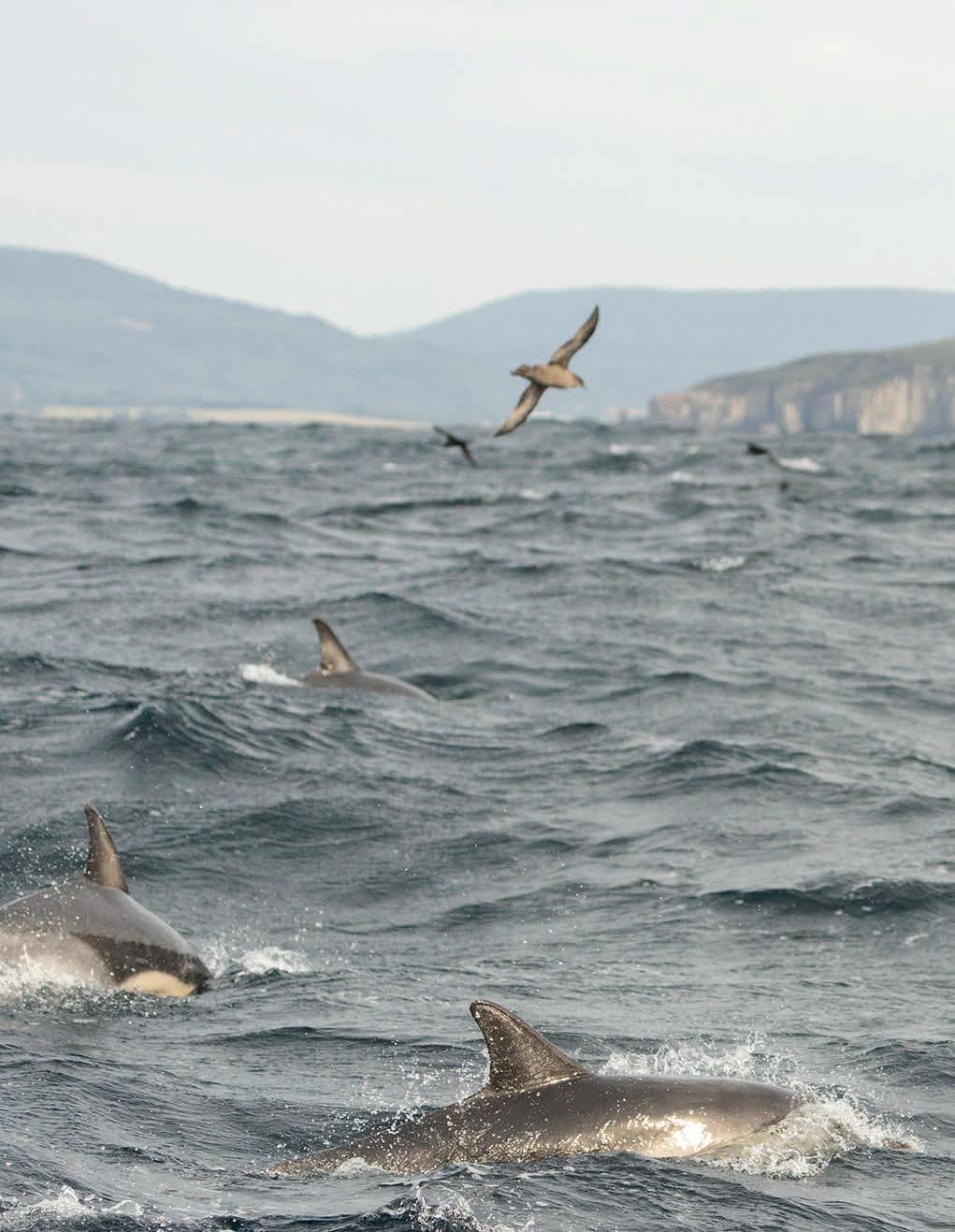
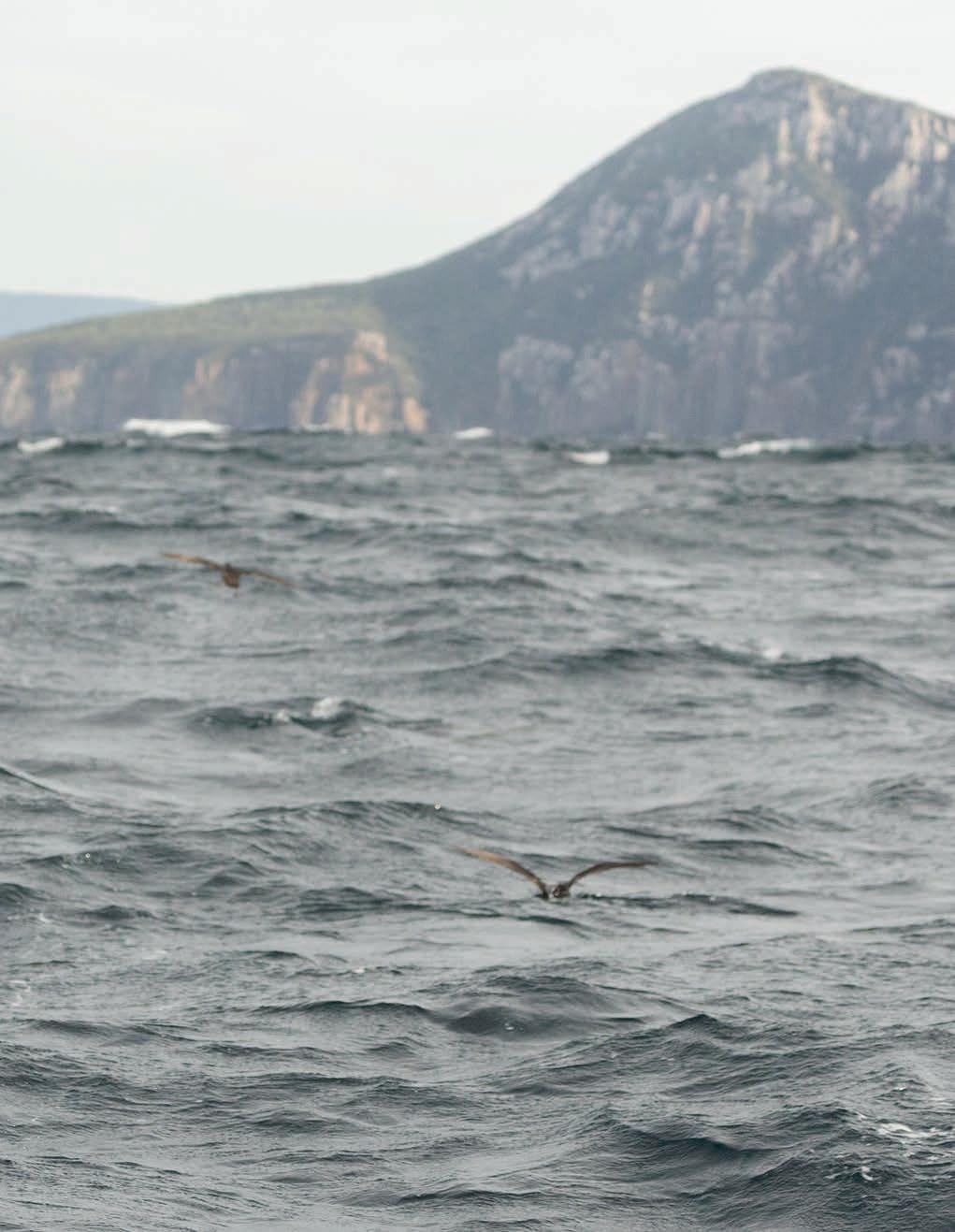
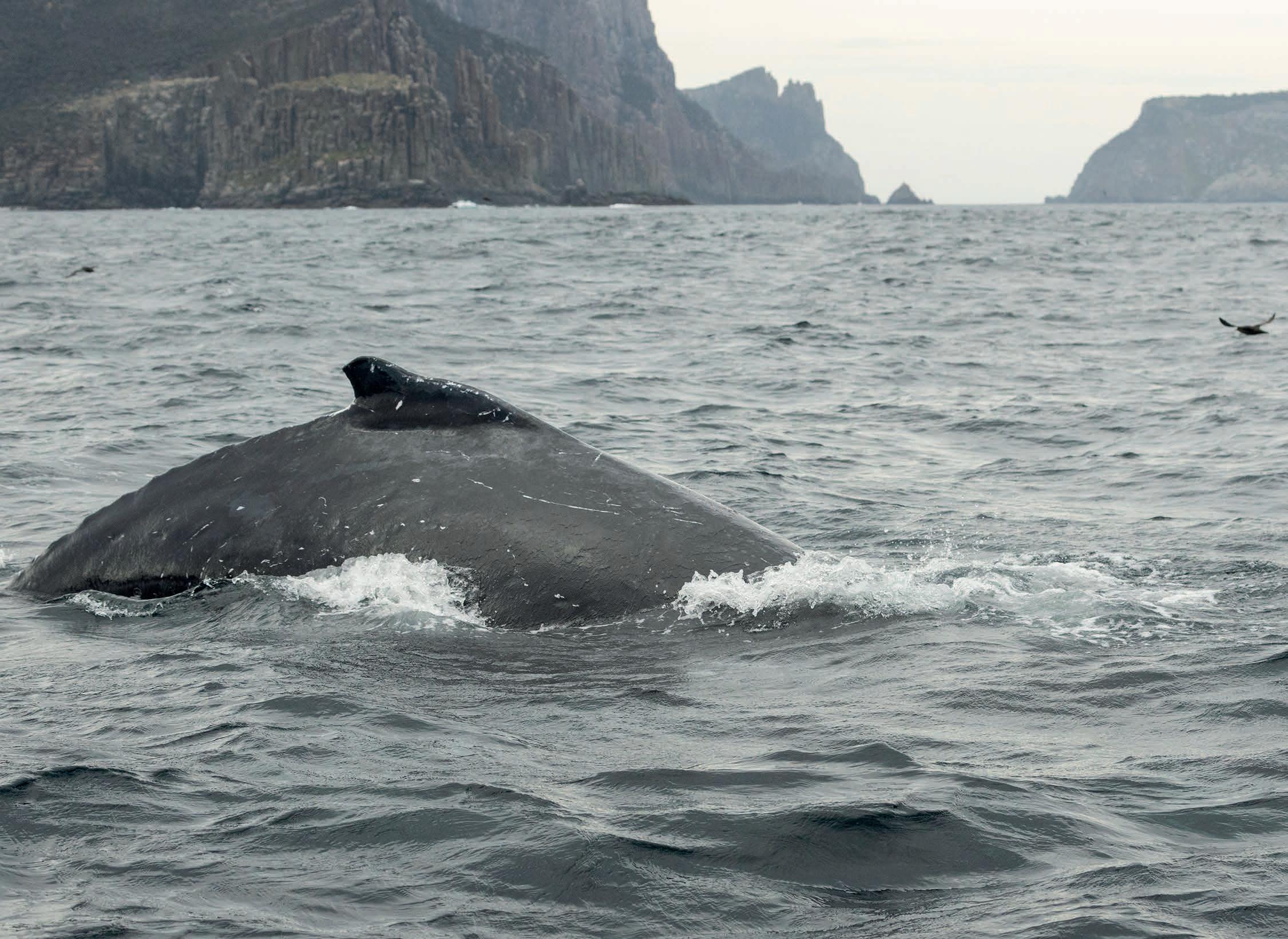
The wildlife above the surface was just as compelling. Shearwaters and albatross traced effortless arcs overhead — birds usually rarely seen by boaters elsewhere unless far offshore. Sea eagles patrolled the coastal cliffs. Pods of common dolphins raced alongside our bow wake, and more than once we idled the engines to watch fur seals feeding frenetically around baitballs.
Twice during the week, humpback whales surfaced nearby, their rhythmic exhalations echoing across the water and reinforcing the Southern Ocean’s immense, wild presence.
After days of dramatic deep-water dives, I ended the trip with a very different kind of adventure: searching for the endangered spotted handfish in the shallow waters of the Derwent River, which winds through Hobart. This unusual species — found only in a few sheltered Tasmanian estuaries — “walks” across the bottom using fins shaped like tiny hands.
The water was cool and murky, the breeze brisk, and visibility low, but patience paid off. One small handfish appeared on the silty bottom, turning a simple shoreline search into one of the week’s most memorable moments.
Remote yet accessible, rugged yet full of life, the Tasman Peninsula offers boaters and divers a glimpse of one of the planet’s most pristine marine environments. Whether you’re cruising beneath towering cliffs, drifting beneath wheeling seabirds, watching whales on the horizon, or descending into forests of kelp and coral, Tasmania delivers the kind of adventure that stays with you long after you hae left its shores.
For anyone seeking a truly wild, world-class ocean journey, this edge-of-the-world coastline deserves a place near the top of the list.
arrecife, listos para atacar a sus presas.
A pesar de su latitud, la paleta de colores marinos de Tasmania es sorprendentemente vibrante. Corales blandos, esponjas y anémonas pintaban las profundas paredes con tonos rojos, rosas, dorados y naranjas.
La fauna silvestre en la superficie era igual de fascinante. Pardelas y albatros trazaban arcos sin esfuerzo sobre nuestras cabezas, aves que rara vez se ven desde embarcaciones en otros lugares, a menos que se esté muy lejos de la costa. Águilas marinas patrullaban los acantilados costeros. Grupos de delfines comunes nadaban junto a la estela de nuestra proa, y en más de una ocasión detuvimos los motores para observar a las focas peleteras alimentándose frenéticamente alrededor de bancos de peces. Dos veces durante la semana, ballenas jorobadas emergieron cerca, sus exhalaciones rítmicas resonando en el agua y reforzando la inmensa y salvaje presencia del Océano Austral. Después de días de impresionantes inmersiones en aguas profundas, terminé el viaje con una aventura muy diferente: la búsqueda del pez mano moteado, en peligro de extinción, en las aguas poco profundas del río Derwent, que serpentea a través de Hobart. Esta especie inusual, que solo se encuentra en algunos estuarios protegidos de Tasmania, “camina” por el fondo marino utilizando aletas con forma de pequeñas manos. El agua estaba fresca y turbia, la brisa era fuerte y la visibilidad escasa, pero la paciencia dio sus frutos. Un pequeño pez mano apareció en el fondo fangoso, convirtiendo una simple búsqueda en la orilla en uno de los momentos más memorables de la semana. Remota pero accesible, agreste pero rebosante de vida, la península de Tasmania ofrece a navegantes y buceadores uno de los entornos marinos más prístinos del planeta. Ya sea navegando bajo imponentes acantilados, a la deriva bajo el vuelo de las aves marinas, observando ballenas en el horizonte o descendiendo a sus bosques de algas y corales, Tasmania ofrece el tipo de aventura que perdura en la memoria mucho después de abandonar sus costas.
Para cualquiera que busque una aventura oceánica verdaderamente salvaje y de primer nivel, esta costa en el fin del mundo, sin duda, merece la pena.
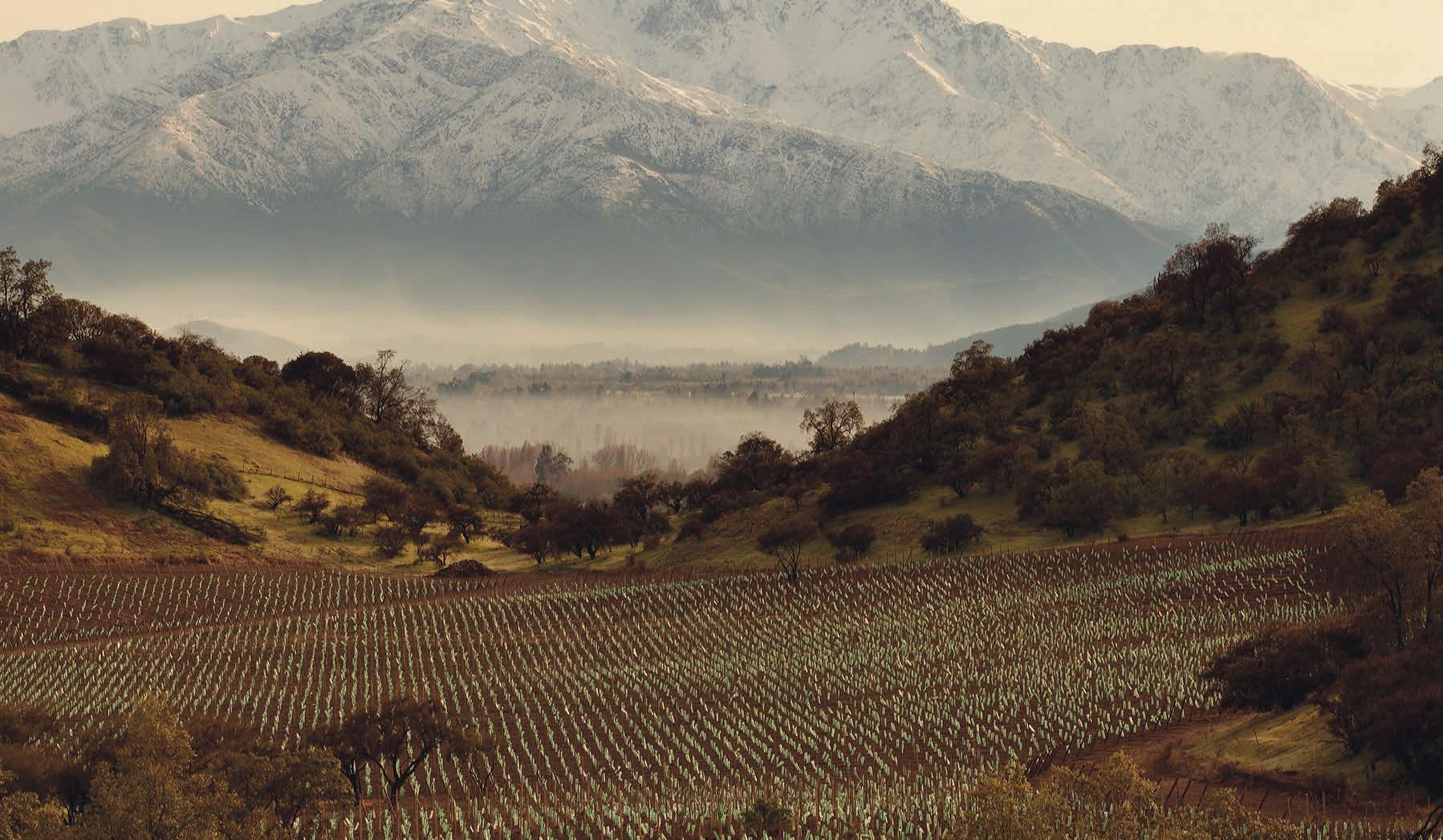
Discover Chile’s Wine Country Descubra la región vinícola de Chile
By CLARA & MARIA BARCIELA | ACROSS SOUTH AMERICA
Photos courtesy of | Fotos cortesía de VIÑA SANTA RITA | HOTEL CASA REAL
Ifthere’s one thing we’ve learned from traveling through Chile’s Wine Country, is that wine is never just wine. It’s history, people, landscapes — and stories waiting to be told.
The first time we wandered through the sun-drenched vineyards of Colchagua Valley, we had no clue just how much Chile’s wine country would steal our hearts. Sure, the wine was incredible (wow, the wine!), but it was more than that. It was the people who welcomed us like family, the stories tucked into every bottle, and the feeling that each valley had its own soul. Those moments stayed with us— and now, we want to share them with you.
In this article, we’ll take you along on our journey through Chile’s wine country. You’ll find out the best times to visit, which valleys deserve a spot on your list, and the grapes and wines you really can’t miss. We’ll show you the boutique wineries that completely charmed us, and the vineyard lodges that turn a simple trip into a memory you’ll never forget. Think of this as your insider’s guide—part travel tips, part love letter— to one of the most magical wine regions in the world.
Sialgo hemos aprendido viajando por la región vinícola de Chile, es que el vino nunca es solo vino. Es historia, gente, paisajes y un sinfín de historias por descubrir.
La primera vez que recorrimos los viñedos bañados por el sol del Valle de Colchagua, no teníamos ni idea de cuánto nos cautivaría la región vinícola chilena. Claro, el vino era increíble (¡qué vino!), pero era mucho más que eso. Era la gente que nos recibió como si fuéramos de la familia, las historias que se escondían en cada botella y la sensación de que cada valle tenía su propia alma. Esos momentos se quedaron grabados en nuestra memoria, y ahora queremos compartirlos.
En este artículo, le llevaremos de viaje con nosotros por la región vinícola de Chile. Descubrirá las mejores épocas para visitarla, qué valles merecen estar en su lista y las uvas y vinos que no se puede perder. Le mostraremos las bodegas boutique que nos enamoraron por completo y los alojamientos entre viñedos que convierten un simple viaje en una experiencia inolvidable. Considere esto como su

When is the best time to visit Chile’s wine country?
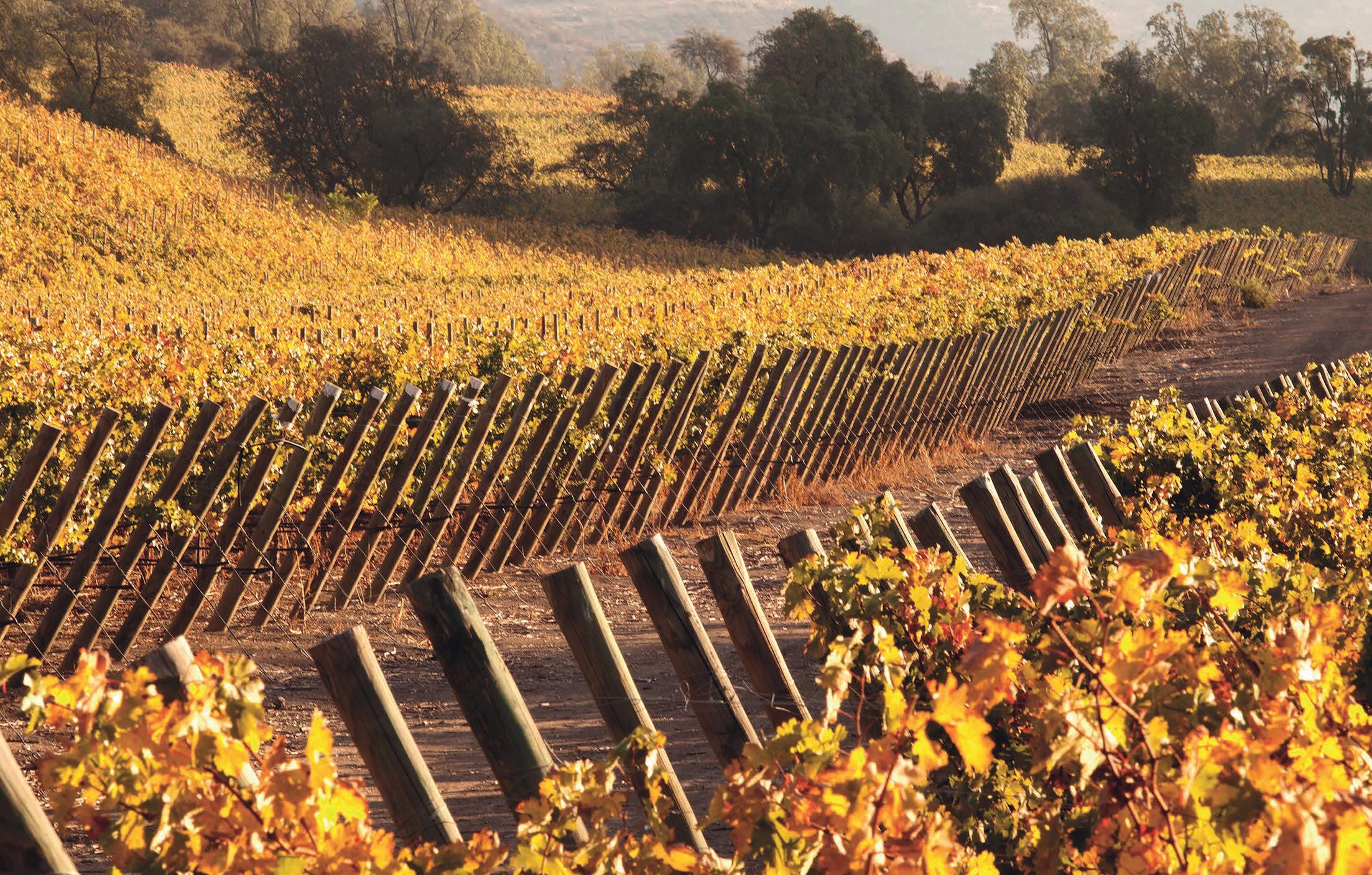
If you want to see the vineyards alive, harvest season (February to April) is absolutely magical. Picture golden light over ripening grapes, teams of workers gently clipping vines, and the scent of fermenting fruit in the air. That’s the moment when wine is born—and you feel it.
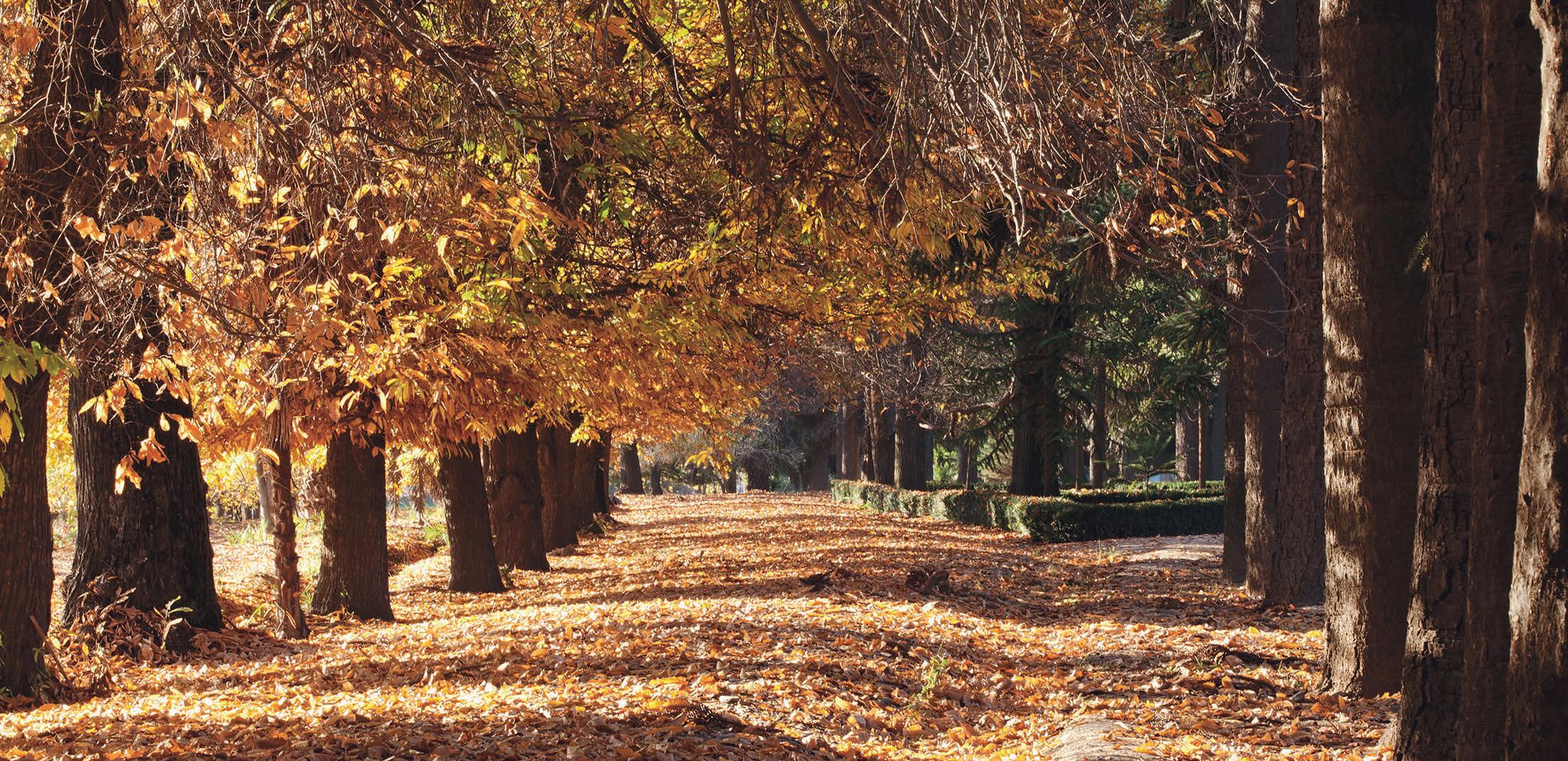
But honestly? Fall in Chile (March to May) is our favorite. Cooler weather, fewer crowds, and the vines turn into a sea of red and gold. It’s like autumn in Tuscany… but with Carménère.
What are the must-visit wine regions in Chile?
Chile has so many wine valleys, and each has its own flavor, personality, and rhythm. Here’s where we went and what we loved: Colchagua Valley is where our journey began. Think bold reds — Carménère, Syrah, Cabernet Sauvignon. We toured iconic wineries like Montes, Clos Apalta, and Viu Manent, but also stumbled on small, family-run places where the owner himself pours your glass. One morning we biked through the vines, sipped wine in a 150-year-old cellar, and finished the day soaking in a hot tub under the stars. Colchagua is romance, heritage, and red wine—in every sense. Casablanca Valley was a revelation. Just a short drive from San-
guía privilegiada: una mezcla de consejos de viaje y una carta de amor a una de las regiones vinícolas más mágicas del mundo.
¿Cuál es la mejor época para visitar la región vinícola de Chile? Si quiere ver los viñedos en su máximo esplendor, la temporada de cosecha (de febrero a abril) es absolutamente mágica. Imagine la luz dorada sobre las uvas que maduran, equipos de trabajadores podando suavemente las vides y el aroma a fruta fermentada en el aire. Ese es el momento en que nace el vino, y se siente en el ambiente. Pero, sinceramente, el otoño en Chile (de marzo a mayo) es nuestra época favorita. Clima más fresco, menos gente y los viñedos se transforman en un mar de rojo y dorado. Es como el otoño en la Toscana... pero con Carménère.
¿Cuáles son las regiones vinícolas imperdibles de Chile?
Chile tiene muchísimos valles vinícolas, y cada uno tiene su propio sabor, personalidad y ritmo. A continuación le contamos dónde fuimos y qué nos encantó:
El Valle de Colchagua fue donde comenzó nuestro viaje. Piense en vinos tintos intensos: Carménère, Syrah, Cabernet Sauvignon. Recorrimos bodegas emblemáticas como Montes, Clos Apalta y Viu Ma-
tiago, the foggy mornings roll in from the Pacific, creating Sauvignon Blancs and Chardonnays that are crisp, fresh, and perfect for hot days. Clara couldn’t stop talking about a Pinot Noir we tried at Bodegas RE — “like strawberries had a love affair with the ocean,” she said after a few too many glasses.
Maipo Valley is the classic. If you want to understand the roots of Chilean wine, start here. It’s close to Santiago, so it’s ideal for a quick visit. The Cabernets are iconic—structured, deep, full of character. Maipo feels like meeting a wise old storyteller… who just happens to make excellent wine.
What grapes and wines should you try?
Here’s our shortlist—take it from two women who “tasted our way” across the country:
• Carménère is Chile’s flagship grape. Originally from France, it found its true home here. Smooth, herbal, spicy—like Cabernet’s artistic cousin.
• Cabernet Sauvignon, especially from Maipo and Colchagua, is bold, classic, unforgettable.
Syrah is deep, rich, and full of black fruit and spice.
• Sauvignon Blanc is fresh and zippy, with hints of green apple and citrus—perfect from Casablanca.
• País, a rustic, lesser-known red, is earthy and light, often used in natural wines we adored.
Each glass told us a different story about the land, the people, and the climate. And believe us, we listened.
The best boutique wineries to visit
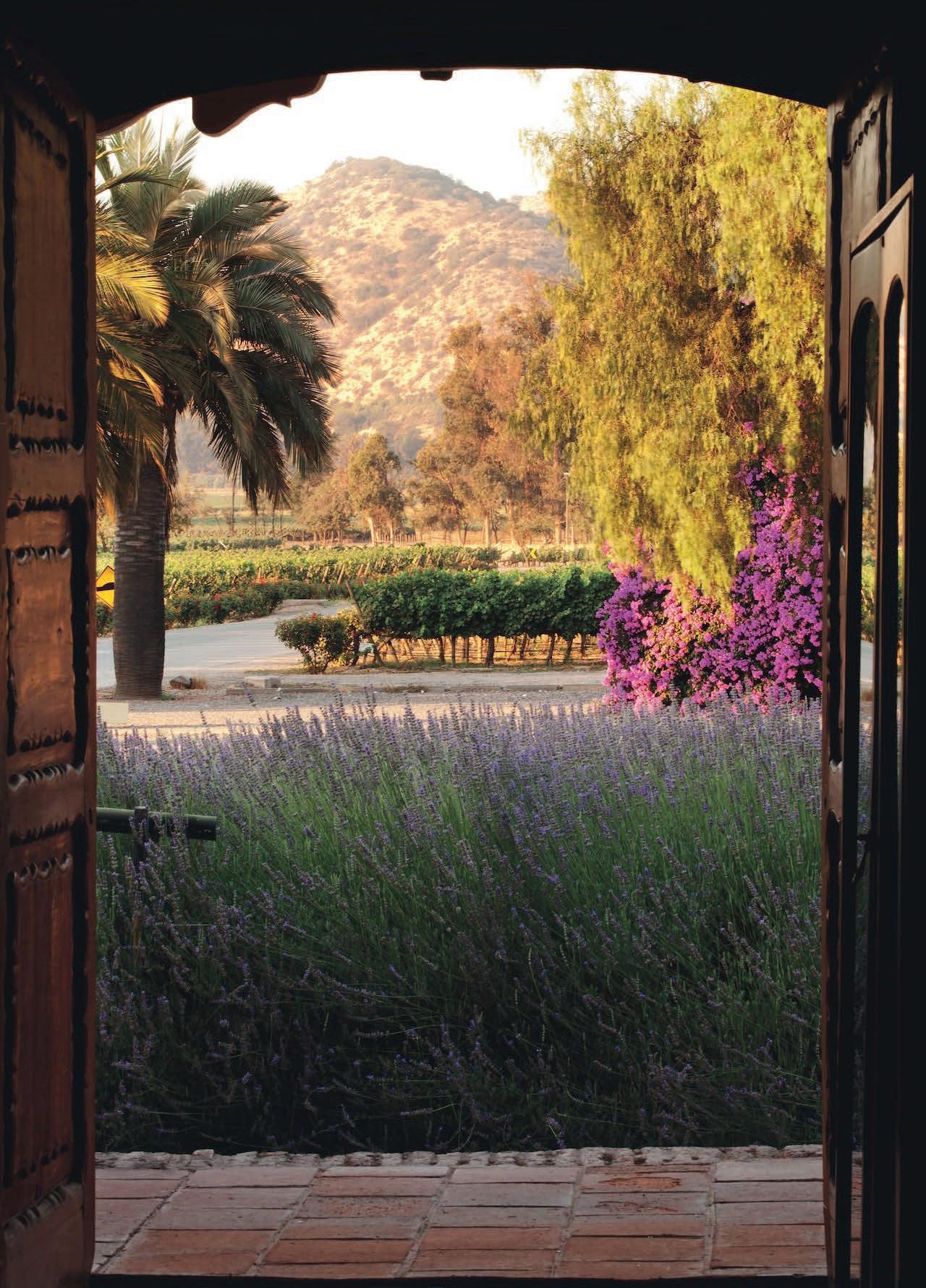
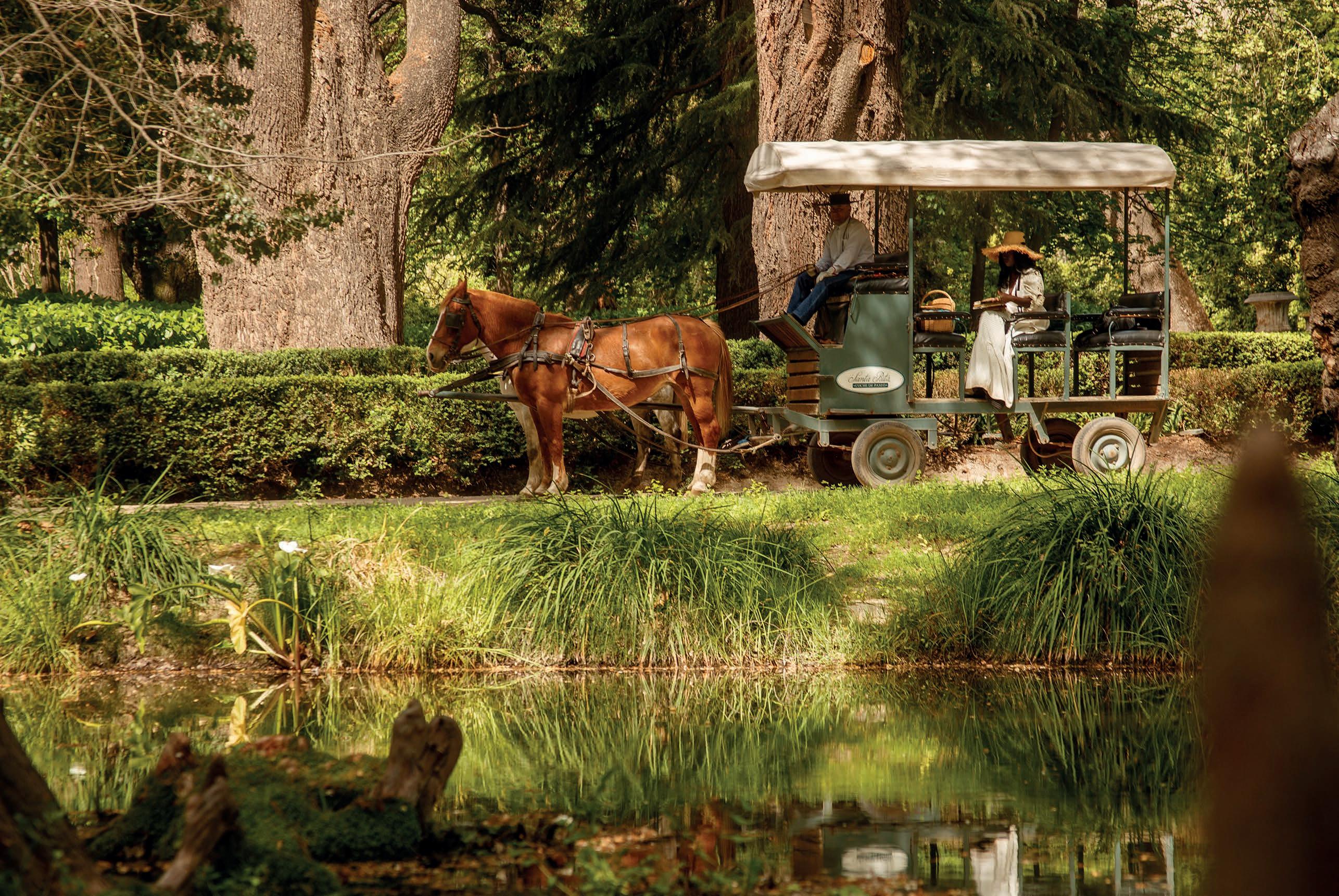
When we first arrived at Santa Rita Winery in Chile’s Maipo Valley, the air was warm and sweet with the smell of sun-ripened grapes. We still remember the sound of leaves rustling in the breeze, and the way the Andes stood like quiet guardians over endless rows of vines. It’s easy to see why their Cabernet Sauvignon has put this region on the world map.
nent, pero también descubrimos pequeños negocios familiares donde el propio dueño le sirve el vino. Una mañana paseamos en bicicleta entre los viñedos, degustamos vino en una bodega de 150 años y terminamos el día relajándonos en un jacuzzi bajo las estrellas. Colchagua es romance, tradición y vino tinto, en todos los sentidos. El Valle de Casablanca fue una revelación. A poca distancia de Santiago, las mañanas neblinosas provenientes del Pacífico dan lugar a vinos Sauvignon Blanc y Chardonnay crujientes, frescos e ideales para los días calurosos. Clara no paraba de hablar de un Pinot Noir que probamos en Bodegas RE: “como si las fresas hubieran tenido un romance con el océano”, dijo después de unas cuantas copas. El Valle del Maipo es el clásico. Si quiere comprender las raíces del vino chileno, empiece por aquí. Está cerca de Santiago, por lo que es ideal para una visita rápida. Los Cabernet son icónicos: estructurados, profundos y con mucho carácter. El Maipo es como conocer a un sabio anciano que cuenta historias... y que además elabora un vino excelente.
¿Qué uvas y vinos debería probar?
Aquí tiene nuestra selección: la recomendación de dos mujeres que recorrieron el país “a base de catas”:
• La Carménère es la uva emblemática de Chile. Originaria de Francia, encontró su verdadero hogar aquí. Suave, herbal, especiada, como la prima artística del Cabernet.
• El Cabernet Sauvignon, especialmente el de Maipo y Colchagua, es intenso, clásico e inolvidable.
• El Syrah es profundo, rico en frutos negros y especias.
• El Sauvignon Blanc es fresco y vibrante, con toques de manzana verde y cítricos, perfecto el de Casablanca.
• El País, un tinto rústico y menos conocido, es terroso y ligero, a menudo utilizado en los vinos naturales que tanto nos gustaron.
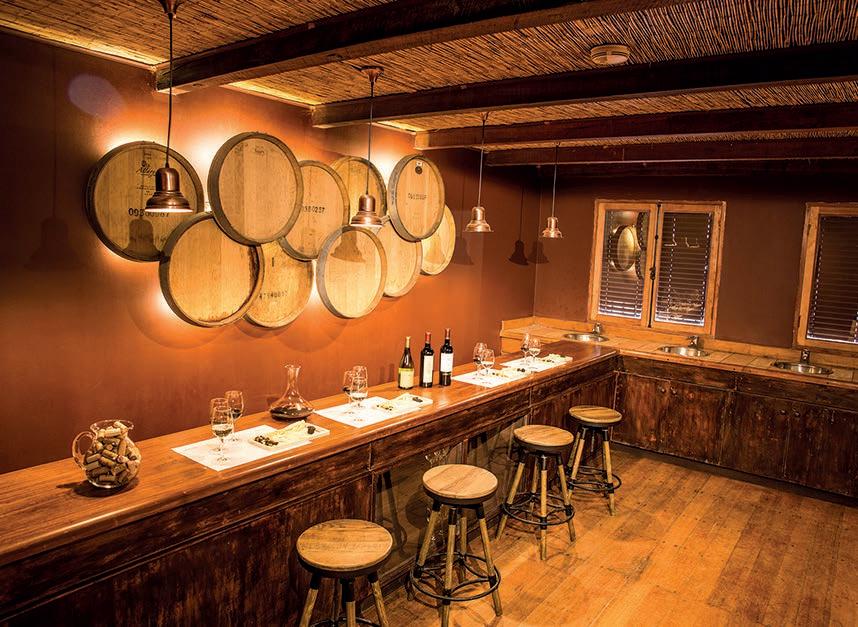
There’s something about visiting Chile’s boutique wineries that feels different from the grand, polished estates. They may not always be the biggest or the most famous, but they are the ones that stay with you. These are the places where you feel the heartbeat of the land in every glass, where the winemaker’s story is poured alongside the wine, and where tradition and creativity live side by side. They’re intimate, soulful, and unforgettable—and a few of them became the highlights of our journey.
At Clos Apalta, in Colchagua, we discovered what winemaking as art truly means. The underground cellar carved into the hillside felt like entering a sacred space, and every pour was layered with elegance.
In Casablanca, Bodegas RE showed us creativity like no other. They play with ancestral methods and daring blends, reinventing tradition.
The best wine lodges to stay in Chile wine country
Waking up in the middle of a vineyard is something you don’t forget. The golden morning light, the mist hanging over the rows of vines, the soft sounds of a winery waking up to a new day—pure magic!
Cada copa nos contó una historia diferente sobre la tierra, la gente y el clima. Y créannos, escuchamos atentamente.
Las mejores bodegas boutique para visitar Cuando llegamos a la bodega Santa Rita en el Valle del Maipo, en Chile, el aire era cálido y dulce, impregnado del aroma de las uvas maduradas al sol. Todavía recordamos el susurro de las hojas con la brisa y la majestuosidad de los Andes, que se alzaban como guardianes silenciosos sobre las interminables hileras de viñedos. Es fácil entender por qué su Cabernet Sauvignon ha puesto a esta región en el mapa mundial.
Hay algo en visitar las bodegas boutique de Chile que las diferencia de las grandes y sofisticadas fincas. Quizás no siempre sean las más grandes ni las más famosas, pero son las que dejan una huella imborrable. Son lugares donde se siente el alma de la tierra en cada copa, donde la historia del enólogo se entrelaza con el vino, y donde la tradición y la creatividad conviven en armonía. Son íntimas, auténticas e inolvidables, y algunas de ellas se convirtieron en los momentos culminantes de nuestro viaje.
En Clos Apalta, en Colchagua, descubrimos lo que significa real-
mente la elaboración del vino como arte. La bodega subterránea excavada en la ladera de la colina nos hizo sentir como si entráramos en un lugar sagrado, y cada sorbo estaba impregnado de elegancia. En Casablanca, Bodegas RE nos mostró una creatividad sin igual. Experimentan con métodos ancestrales y mezclas audaces, reinventando la tradición.
Los mejores alojamientos en las regiones vinícolas de Chile
Despertarse en medio de un viñedo es una experiencia inolvidable. La luz dorada de la mañana, la niebla que se posa sobre las hileras de vides, los suaves sonidos de una bodega que despierta a un nuevo día: es pura magia.
Algunas de nuestras estancias favoritas incluyeron:
Some of our favorite stays included:
• Clos Apalta Residence — exclusive and deeply connected to the land.
• Viña Vik — a bold architectural statement surrounded by hills and vines.
• La Casona at Matetic — peaceful, warm, and wrapped in nature.
Each place offered something unique, whether it was a wine-paired dinner under the stars, a cozy fireplace and local cheeses, or just that incredible stillness you only find among the vines.
South America’s wine regions aren’t just about wine. They’re about connection—to the land, the people, and the stories behind every bottle.
In Chile, we found a culture where tradition and innovation blend beautifully. Where winemakers greet you like old friends, and where every sip carries generations of passion.
You could combine Chile’s wine country with Argentina’s. The two regions are connected by the Andes and make for a stunning multicountry wine journey.
If you’re looking for an adventure that combines sensory pleasure with soulful storytelling, wine country in South America might just be the journey you’re craving.
• Clos Apalta Residence: exclusivo y profundamente conectado con la tierra.
• Viña Vik: una audaz obra arquitectónica rodeada de colinas y viñedos.
• La Casona en Matetic: tranquilo, acogedor y en plena naturaleza. Cada lugar ofrecía algo único, ya fuera una cena maridada con vinos bajo las estrellas, una acogedora chimenea con quesos artesanales de la zona o simplemente esa increíble tranquilidad que solo se encuentra entre los viñedos.
Las regiones vinícolas de Sudamérica no se tratan solo de vino. Se trata de conexión: con la tierra, con la gente y con las historias que hay detrás de cada botella.
En Chile, encontramos una cultura donde la tradición y la innovación se fusionan a la perfección. Donde los viticultores te reciben como viejos amigos y donde cada sorbo transmite generaciones de pasión. Podría combinar la región vinícola de Chile con la de Argentina. Ambas regiones están conectadas por la cordillera de los Andes y conforman un impresionante viaje enológico por varios países.
Si busca una aventura que combine el placer sensorial con historias conmovedoras, la región vinícola de Sudamérica podría ser el viaje que tanto anhela.
Nervous System Wellness for Modern Living Bienestar del sistema nervioso para la vida moderna
Text
by
| Texto por LIESBET PRYKE, CHt.
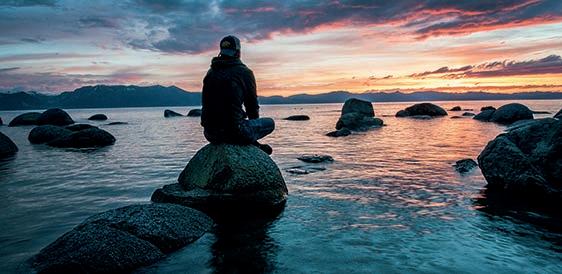
Consideringmy audience, I’m assuming that most of you reading this article have some affinity with the ocean. For as long as I can remember, I’ve craved being near or in the sea—ideally somewhere warm—but as someone who grew up in the UK, I can also get great joy and energy from a blustery, cold coastline. So what is it that brings us joy from the water? A few things stand out to me: the colours, the sounds, the smell, and even the negative ions in the air.
Generally, in our everyday environments, our nervous systems are constantly scanning for threats. This is a natural biological function hardwired within us. Depending on where you live and your personal history, your nervous system might be overactive much of the time. For those of us living in urban environments, we don’t have much control over the sensory input around us.
Our nervous system has two primary branches that influence how we move through the world: the sympathetic and the parasympathetic. The sympathetic branch activates us into fight, flight, or freeze—giving us energy for action. When it is activated, heart rate is increased and blood flow is directed to the limbs and away from the core of the body so that we can respond to a perceived threat. The parasympathetic branch is our “rest and digest” mode, allowing the body to recover, digest, heal, and feel safe. So as you can imagine if we are permanently in the sympathetic state we are permanently “switched on” and may have trouble with things like digestion or sleeping.
Potential nervous system triggers can be as simple as someone starting their car with a loud muffler, receiving a stressful text message when you’re deep in concentration, family drama, work demands, unnatural lighting—even low blood sugar can flip us into sympathetic activation.
But when we are on or near the ocean, the cues are usually coherent and soothing. The colour blue, for example, is associated with calm and peace of mind; greens are connected with balance, healing, and harmony. The repetitive sound of waves tends to entrain our brain activity into slower alpha and theta frequencies—more meditative states that help shift us into the parasympathetic nervous system.
Considerando
a mi audiencia, supongo que la mayoría de quienes leen este artículo sienten cierta afinidad con el océano. Desde que tengo memoria, he anhelado estar cerca o dentro del mar —idealmente en un lugar cálido—, pero como crecí en el Reino Unido, también disfruto mucho de la energía que me transmite una costa ventosa y fría. Entonces, ¿qué es lo que nos produce bienestar al estar cerca del agua?
Varias cosas me llaman la atención: los colores, los sonidos, el olor e incluso los iones negativos en el aire.
Generalmente, en nuestro entorno cotidiano, nuestro sistema nervioso está constantemente alerta ante posibles amenazas. Esta es una función biológica natural que llevamos intrínseca. Según tu historia personal y donde vivas, tu sistema nervioso podría estar hiperactivo gran parte del tiempo. Quienes vivimos en entornos urbanos no tenemos mucho control sobre los estímulos sensoriales que nos rodean.
Nuestro sistema nervioso tiene dos ramas principales que influyen en cómo nos movemos por el mundo: la simpática y la parasimpática.
La rama simpática nos activa en los estados de lucha o huída, proporcionándonos energía para la acción. Cuando se activa, aumenta la frecuencia cardíaca y el flujo sanguíneo se dirige hacia las extremidades, alejándose del centro del cuerpo, para que podamos responder a una amenaza percibida.
La rama parasimpática es nuestro modo de “descanso y digestión”, que permite al cuerpo recuperarse, digerir, sanar y sentirse seguro. Así que, como puede imaginar, si permanecemos de forma permanente en el estado simpático, estamos constantemente “encendidos” y podemos tener problemas con cosas como la digestión o el sueño.
Los posibles desencadenantes para el sistema nervioso pueden ser tan simples como que alguien encienda su coche con un tubo de escape ruidoso, recibir un mensaje de texto estresante cuando estamos muy concentrados, problemas familiares, exigencias laborales o la iluminación artificial. Incluso un nivel bajo de azúcar en sangre puede activar nuestra respuesta de estrés.
Pero cuando estamos en el océano o cerca de él, las sensaciones suelen ser coherentes y relajantes. El color azul, por ejemplo, se asocia con la calma y la paz mental; los verdes se relacionan con el equilibrio, la sanación y
And don’t just take my word for it: there is now research showing that time spent in “blue spaces” lowers stress states and increases serotonin levels.
If you aren’t one of the fortunate ones who can get to the ocean as often as you would like, consider other ways of bringing coherence into your field. This could be as simple as:
• listening to a soundtrack of waves
• using segmented (paced) breathing
• taking a Biofield Tuning session
The principle of wave entrainment is also the basis of Biofield Tuning. Instead of ocean sound and wave rhythm, tuning forks introduce pure tones and vibration into the biofield and body. Biofield Tuning offers targeted coherence into specific pockets of stored tension or trauma, giving the nervous system an opportunity to unwind, discharge, and reset patterns. Clients often drop into slower brainwave states and become relaxed, spacious, and present. The ocean regulates us in ways most of us never question. When that’s not accessible, Biofield Tuning offers another form of coherence—quiet, precise, and deeply restorative. Here’s hoping that we can all cultivate environments—internal and external—that feel as coherent as the open water.
la armonía. El sonido repetitivo de las olas tiende a sincronizar nuestra actividad cerebral con frecuencias alfa y theta más lentas, estados más meditativos que nos ayudan a activar el sistema nervioso parasimpático.
Y no se fíen solo de mi palabra: existen investigaciones científicas que demuestran que pasar tiempo en entornos acuáticos reduce el estrés y aumenta los niveles de serotonina.
Si no tienen la suerte de acercarse al océano con la frecuencia que desearían, consideren otras maneras de aportar coherencia a su entorno. Podría ser tan sencillo como:
• escuchar una grabación de sonidos de olas
• practicar la respiración rítmica
• realizar una sesión de Sintonización del Campo Bioenergético
El principio de arrastre de ondas es también la base de la Sintonización del Campo Biológico. En lugar del sonido y el ritmo de las olas del océano, los diapasones transmiten tonos puros y producen vibraciones en el campo biológico y el cuerpo. La Sintonización del Campo Biológico ofrece coherencia específica en áreas concretas de tensión o trauma acumulados, brindando al sistema nervioso la oportunidad de relajarse, liberar tensiones y restablecer patrones. Los clientes suelen entrar en estados de ondas cerebrales más lentas y se sienten relajados, con una sensación de amplitud y plenitud.
El océano nos regula de maneras que la mayoría de nosotros nunca cuestionamos. Cuando esto no es posible, la Sintonización del Campo Biológico ofrece otra forma de coherencia: silenciosa, precisa y profundamente reparadora. Esperamos que todos podamos cultivar entornos, tanto internos como externos, que se sientan tan armoniosos como el mar abierto.

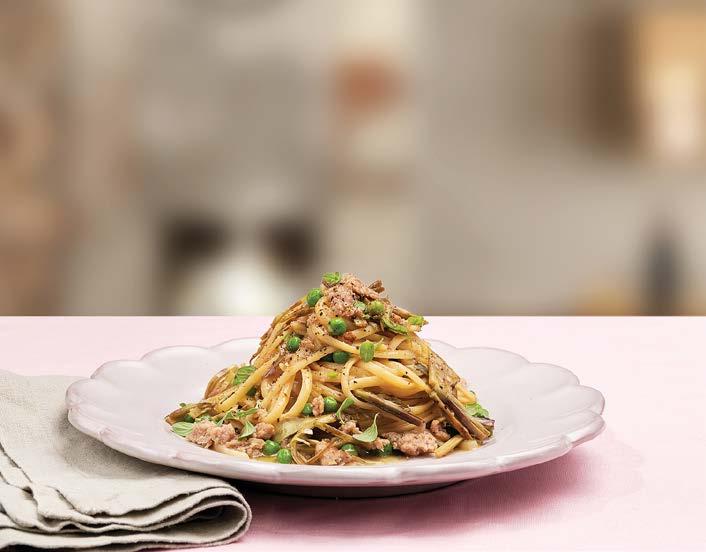
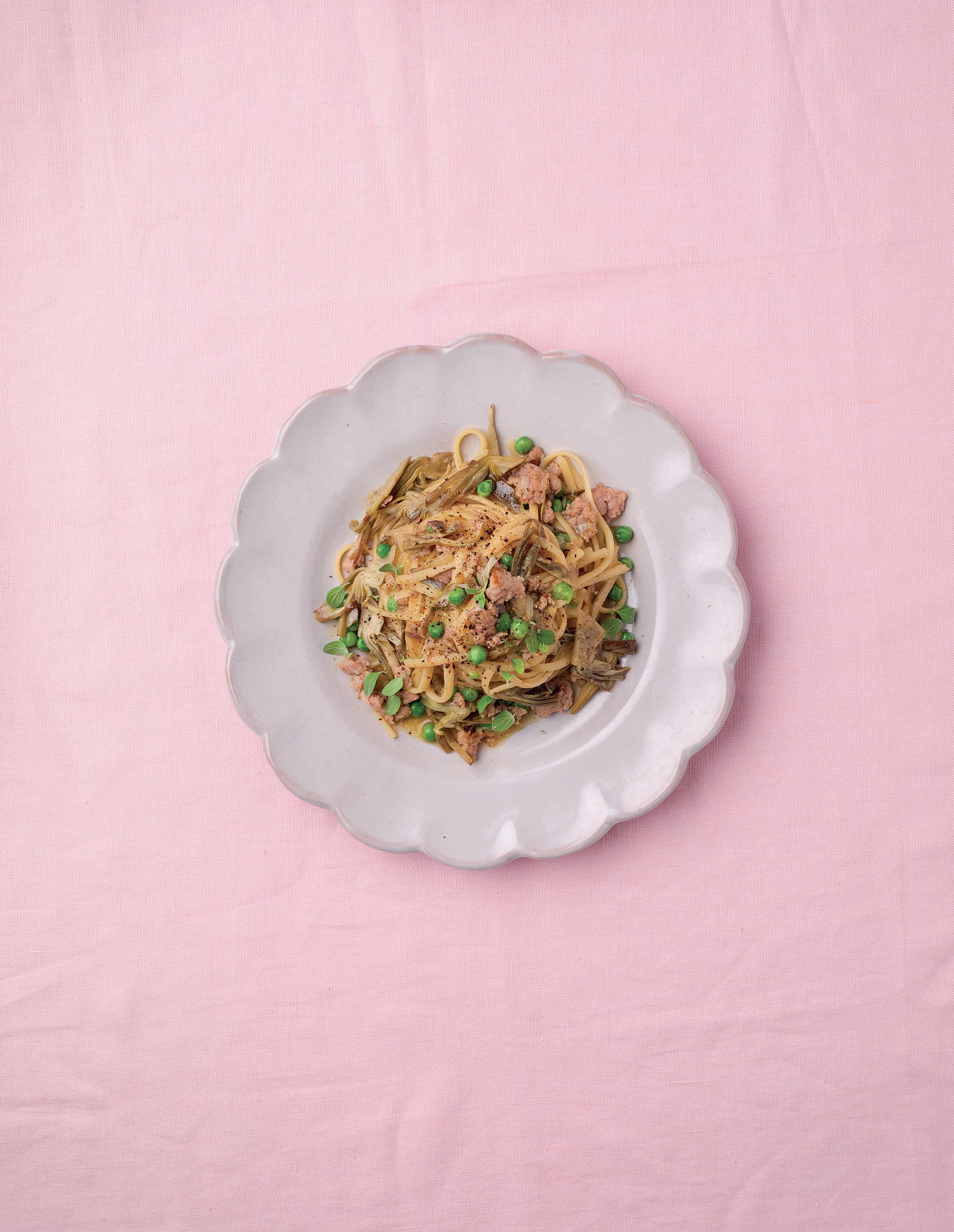
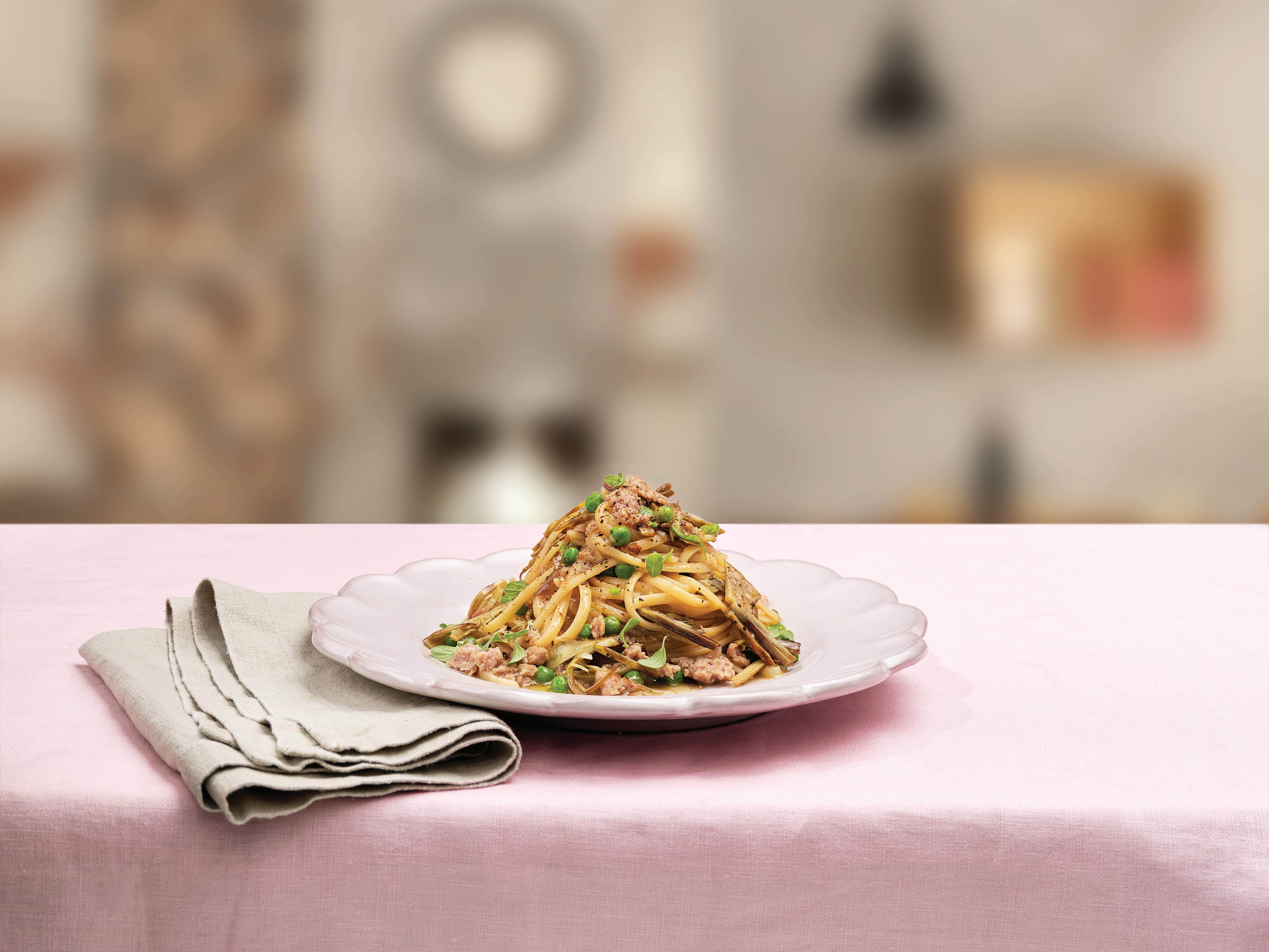
Linguine with Artichokes, Peas, and Sausage Linguini con alcachofas, guisantes y salchicha
Serves 2
Ingredients
2–3 fresh artichokes
1 small lemon
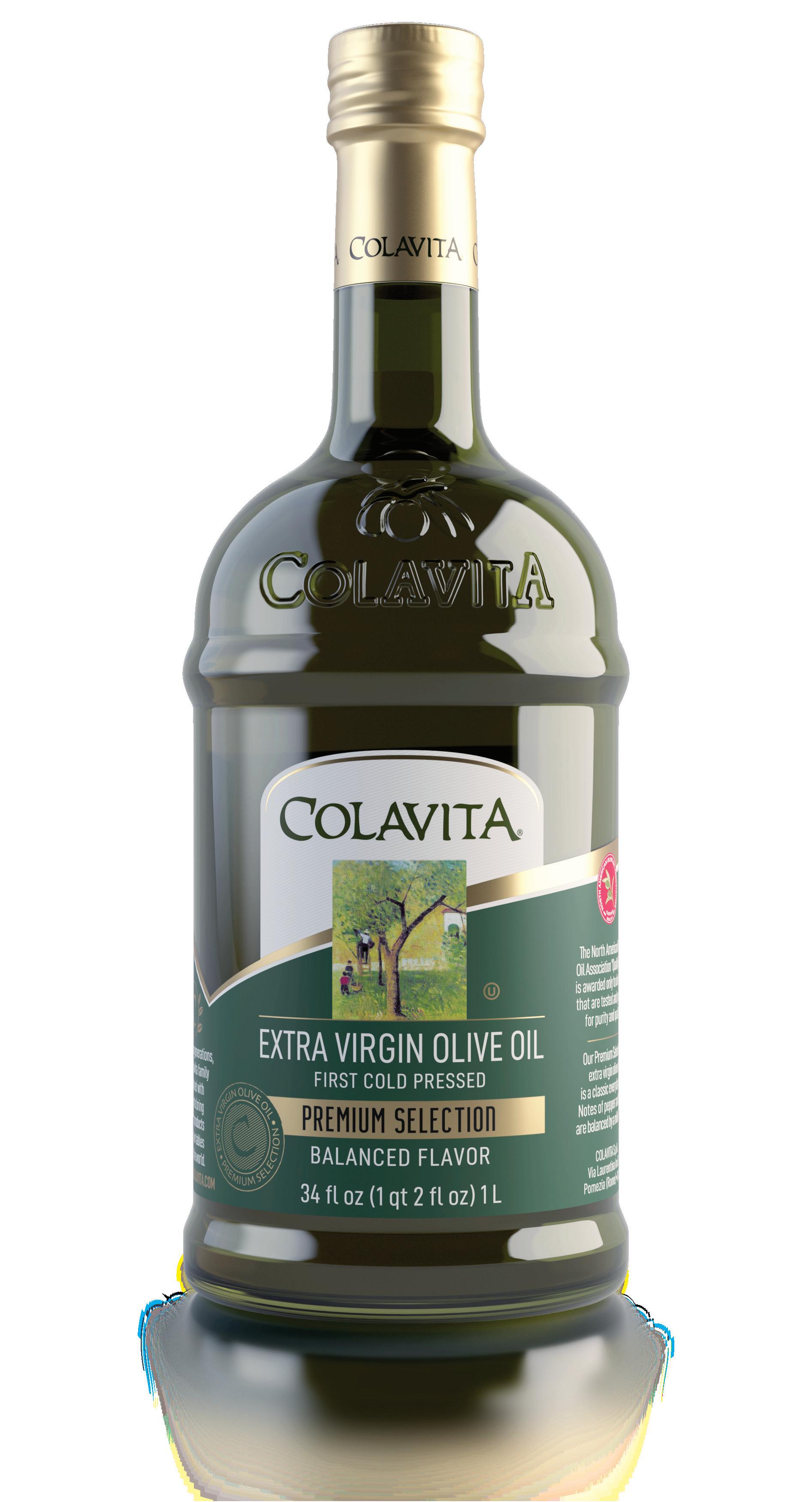
2 tablespoons Colavita extra virgin olive oil
1 small onion, thinly sliced
1–2 Italian sausages (sweet or mild), casings removed about ¾ cup peas (fresh or frozen)
7 oz Colavita Linguine
about 1 cup finely grated Grana Padano or Parmigiano Reggiano, divided
Salt and freshly ground black pepper
Instructions
Clean the artichokes by removing the tough outer leaves and trimming away any fibrous parts. Cut them into thin slices and place them in a bowl of water with the lemon cut in half and squeezed in, to prevent browning.
Heat the olive oil in a large skillet over medium heat. Add the sliced onion and sauté until soft and fragrant. Drain the artichokes and add them to the pan along with the sausage, breaking it up with a spoon.
Cook for about 3–4 minutes, stirring occasionally, until the sausage begins to brown. Add the peas and about a scant ½ cup warm water. Let everything simmer until the peas are tender and the vegetables are soft. Meanwhile, bring a large pot of salted water to a boil and cook the linguine until al dente. Reserve some pasta water, then drain.
Add the linguine directly to the skillet. Toss everything together, adding a splash of reserved pasta water and some of the grated cheese to create a light, creamy coating. Serve immediately, topped with the remaining cheese and a couple of generous twists of freshly ground black pepper.
Para 2 personas
Ingredientes
2-3 alcachofas frescas
1 limón pequeño
2 cucharadas de aceite de oliva virgen extra Colavita
1 cebolla pequeña, cortada en rodajas finas
1-2 salchichas italianas (dulces o suaves), sin la piel
¾ taza de guisantes (frescos o congelados)
200 g de linguine Colavita
Aproximadamente 1 taza de queso Grana Padano o Parmigiano Reggiano rallado finamente, dividido
Sal y pimienta negra recién molida
Instrucciones
Limpie las alcachofas retirando las hojas exteriores duras y recortando las partes fibrosas. Córtelas en rodajas finas y colócalas en un bol con agua y medio limón exprimido para evitar que se oxiden.
Caliente el aceite de oliva en una sartén grande a fuego medio. Añada la cebolla cortada en rodajas y sofría hasta que esté blanda y aromática. Escurra las alcachofas y añádalas a la sartén junto con la salchicha, desmenuzándola con una cuchara.
Cocine durante 3-4 minutos, removiendo de vez en cuando, hasta que la salchicha empiece a dorarse. Añada los guisantes y aproximadamente media taza de agua tibia. Deje que hierva a fuego lento hasta que los guisantes estén tiernos y las verduras blandas.
Mientras tanto, ponga a hervir una olla grande con agua salada y cueza el linguini hasta que quede al dente. Reserve un poco del agua de la cocción y luego escúrralo.
Añada el linguini directamente a la sartén. Mezcle todo bien, añadiendo un chorrito del agua de la cocción reservada y un poco del queso rallado para crear una salsa ligera y cremosa. Sirva inmediatamente, decorado con el queso restante y un par de pizcas generosas de pimienta negra recién molida.
Inspirational selections to take your style to the next level I Selecciones inspiradoras para llevar tu estilo a otro nivel
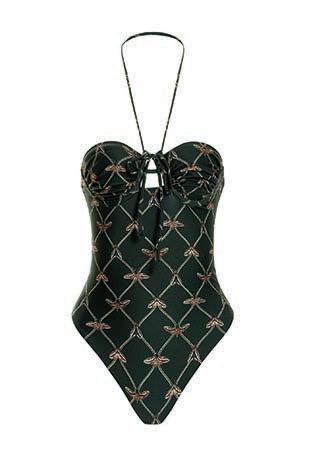
By BENJAMIN-ÉMILE LE HAY | Contributing Fashion Editor
Por BENJAMIN-ÉMILE LE HAY | Editor de Moda Traducido por María Iriondo

HARRY WINSTON DIAMOND BRACELET TIMEPIECE, PRICE UPON REQUEST, HARRYWINSTON.COM.
HELEN JON BATHING SUIT, PRICE VARIES, $198, HELENJON.COM.
Accessorize your autumnal style this season with individuality and excitement. Countless men’s and women’s collections that walked in Paris, Milan and New York featured unique and exciting accessories. Trends included cowboy and Western culture, fur and gold accents, in addition to chocolate, noir, icy blues and gray tones. Nothing new per se, but revamped classics that feel fresh despite being de rigeur once again. From wallets, footwear and bags to even eyewear; we depend on accessories to be safe, comfortable and functional everyday. For such essential, high-use items, quality and practicality are paramount.
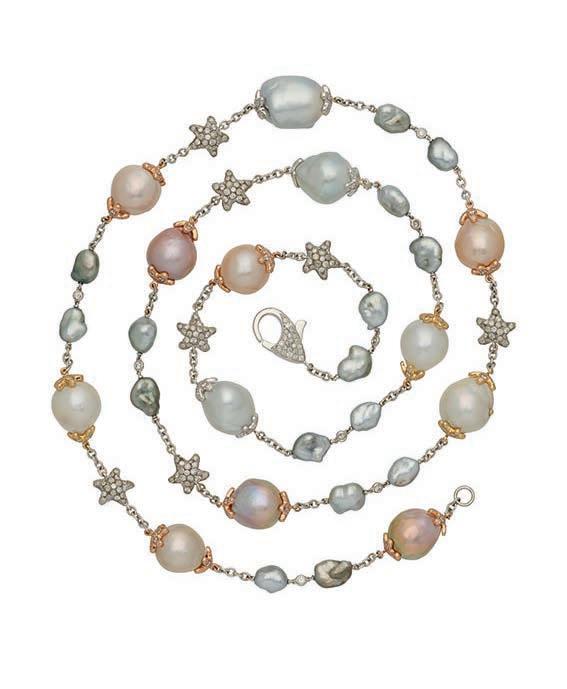
MARGOT MCKINNEY’S STARFISH PEARL AND DIAMOND NECKLACE WITH 18 KARAT WHITE, YELLOW AND ROSE GOLD LONG CHAIN, PRICE UPON REQUEST, MARGOTMCKINNEY.COM.
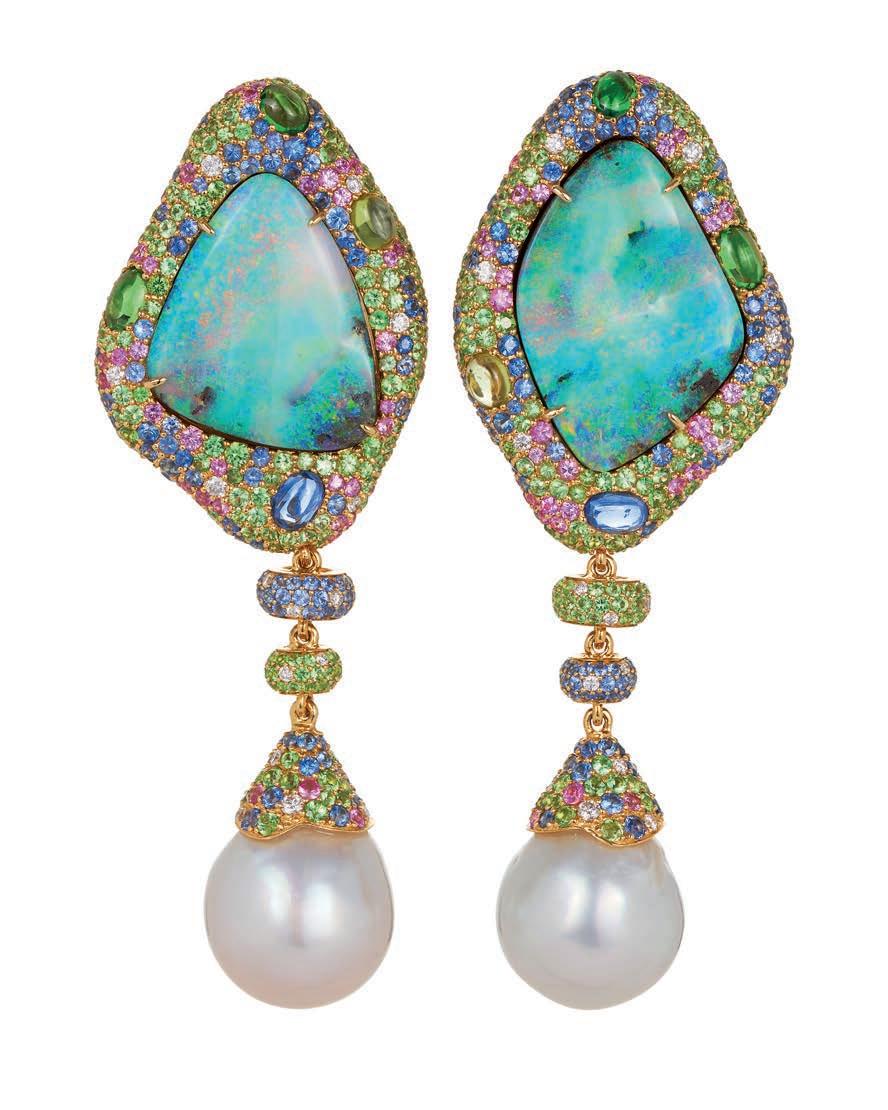
MARGOT MCKINNEY’S BLUE TOPAZ TASSEL PENDANT ENHANCED WITH A MYRIAD OF GEMSTONES IN 18 KARAT WHITE GOLD PRICE UPON REQUEST, MARGOTMCKINNEY.COM.
Complementa tu estilo otoñal esta temporada con individualidad y entusiasmo. Innumerables colecciones para hombre y mujer que desfilaron en París, Milán y Nueva York presentaron accesorios únicos. Estas tendencias incluyeron la cultura vaquera del Oeste, detalles en piel y dorado, además de tonos en color chocolate, negro, azul helado y gris. Nada nuevo, sino más bien unos clásicos renovados que se sienten frescos a pesar de estar de moda una vez más. Desde carteras, calzado y bolsos hasta incluso gafas; dependemos de los accesorios para que sean seguros, cómodos y funcionales a diario. Para artículos esenciales y de uso frecuente, la calidad y la practicidad son primordiales.
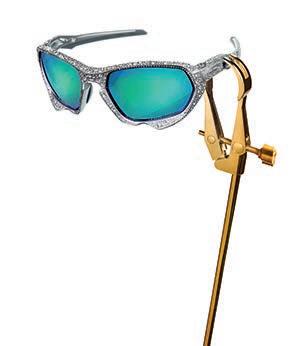
X SWAROVSKI PLAZMA X SILVER
SUNGLASSES, PRICE UPON REQUEST, SWAROVSKI.COM.
OAKLEY
CUSTOM

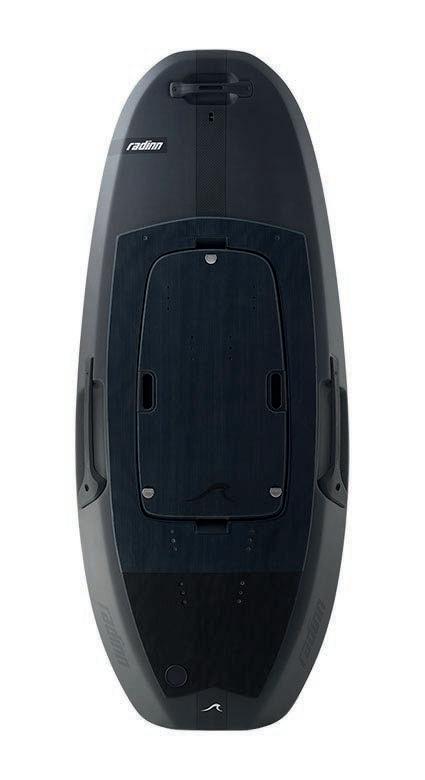
RADINN VINTAGE G3 JETPACK, PRICE AND AVAILABILITY VARIES, EBAY.COM.
Invest in pieces you love that guarantee longevity. “If you love something, wear it all the time,” legendary British fashion designer, Dame Vivienne Westwood, once said. Whether you fancy the simple and demure like VEJA’s chicly subtle Salar sneakers or you are hunting for a more whimsical and extravagant gift (say David Webb and Seaman Schepps timeless fine jewelry pieces), our choice accessories and adornments are endlessly exciting, albeit pricey. Hey–money may not buy you happiness, but at least you now know where to shop for the good stuff. Invierta en piezas que le encanten y que garanticen su durabilidad. “Si amas algo, úsalo siempre”, dijo una vez la legendaria diseñadora de moda británica, Vivienne Westwood. Ya sea que prefiera algo sencillo y recatado como las elegantes zapatillas de VEJA o que busque un regalo más caprichoso y extravagante como las atemporales piezas de joyería fina de David Webb y Seaman Schepps, nuestra selección de accesorios y adornos es infinitamente emocionante, aunque cara. Puede que el dinero no le dé la felicidad, pero al menos ahora sabe dónde comprar lo mejor.
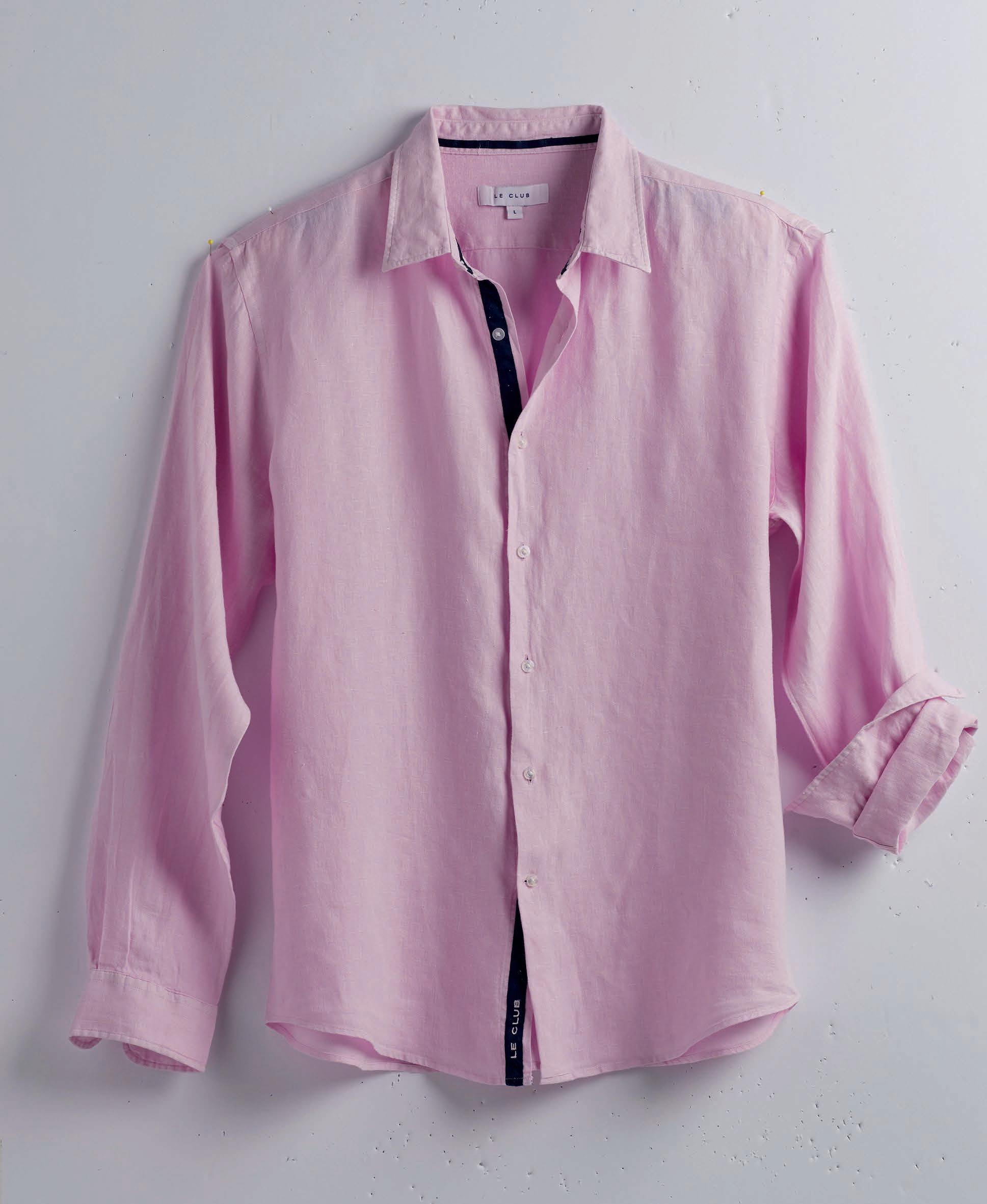
LE CLUB OXFORD SHIRT, $90, LECLUBORIGINAL.COM.
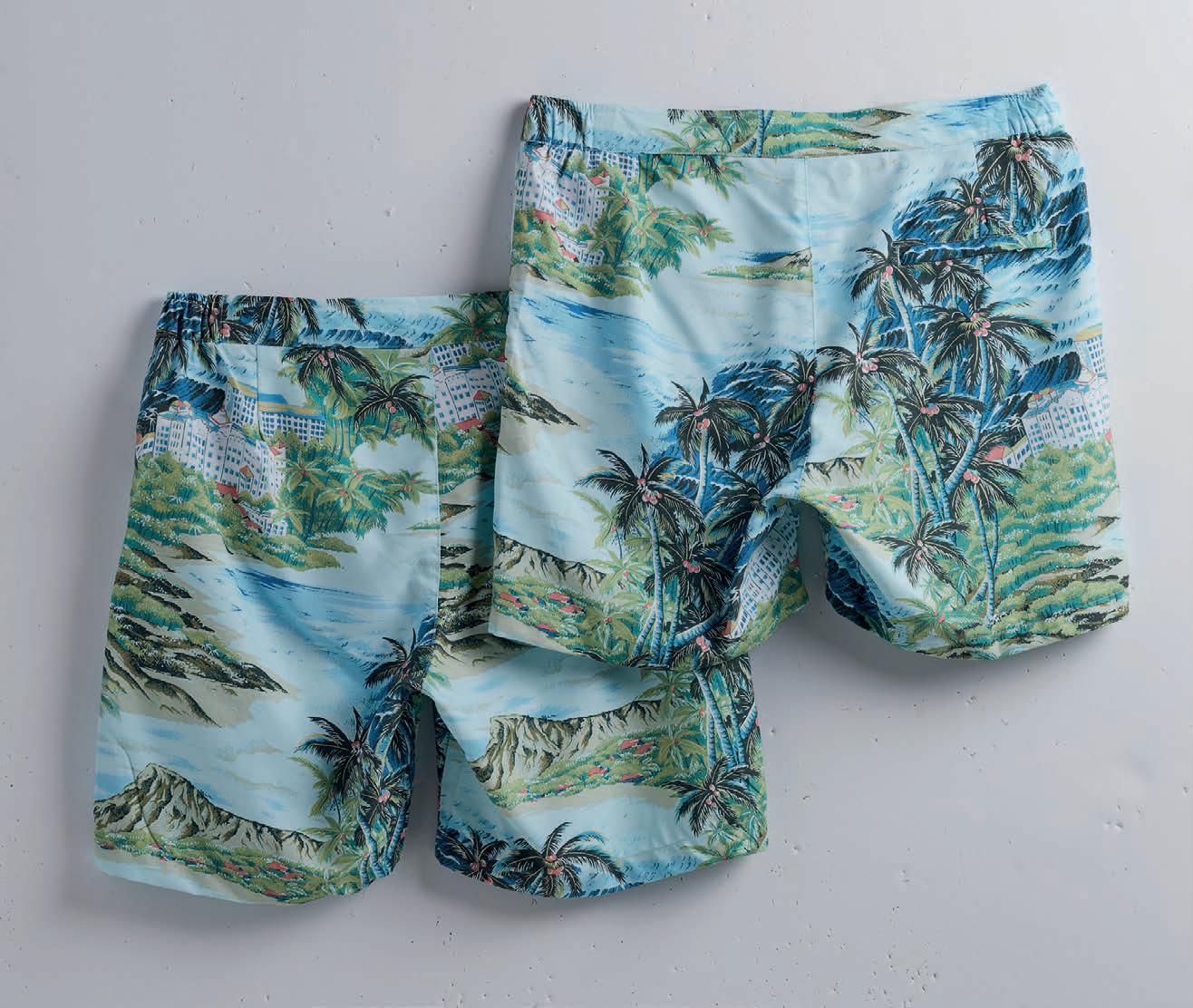
LE CLUB MEN’S AND BOY’S MATCHING SWIM TRUNKS, $63-85, LECLUBORIGINAL.COM.

UPSTATE VODKA, $34, DRINKSAUVAGE.COM.
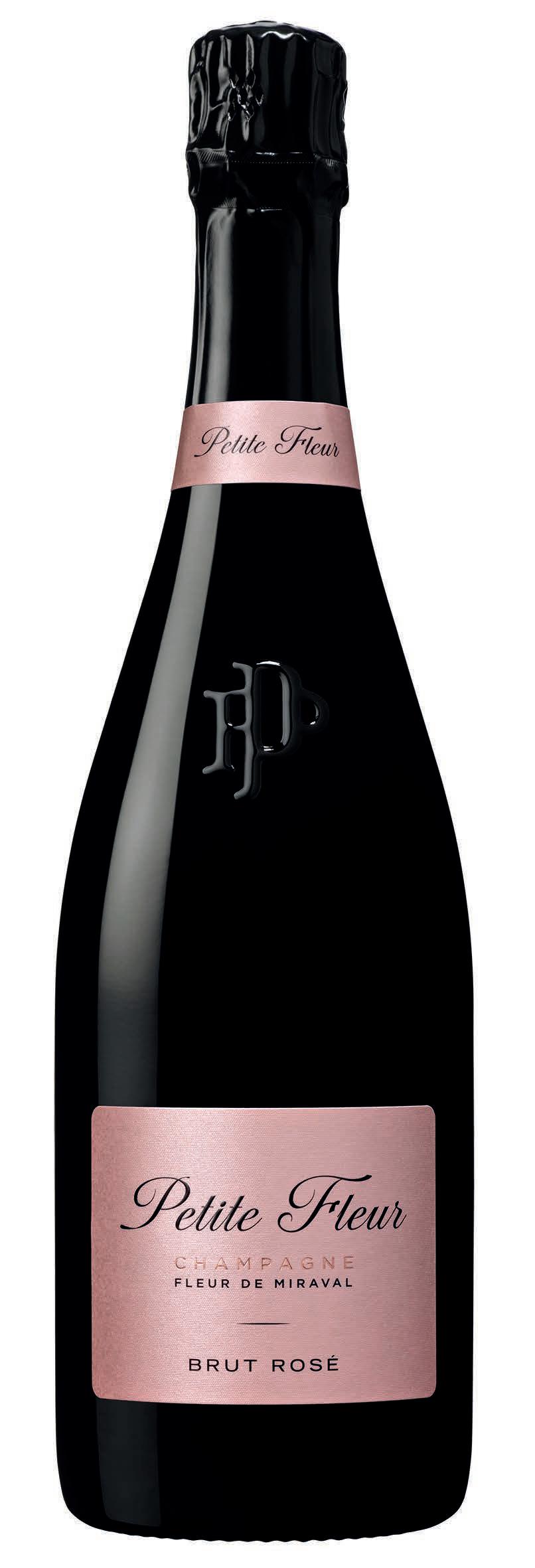
FLEUR DE MIRAVAL PETIT FLEUR ROSÉ CHAMPAGNE, $100, FLEURDEMIRAVAL.COM.
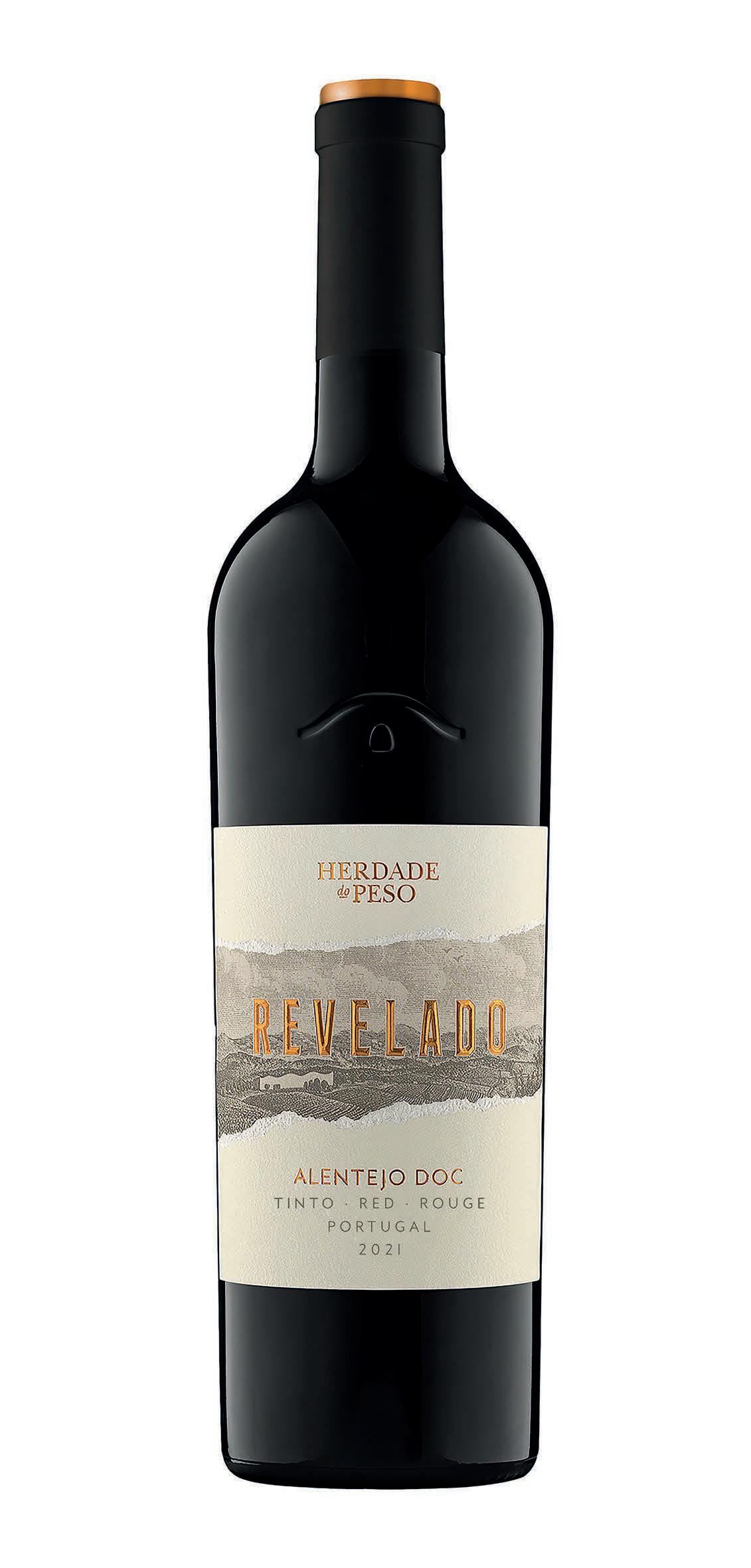
HERDADE DO PESO REVELADO 2021, $30, HERDADEDOPESO.COM
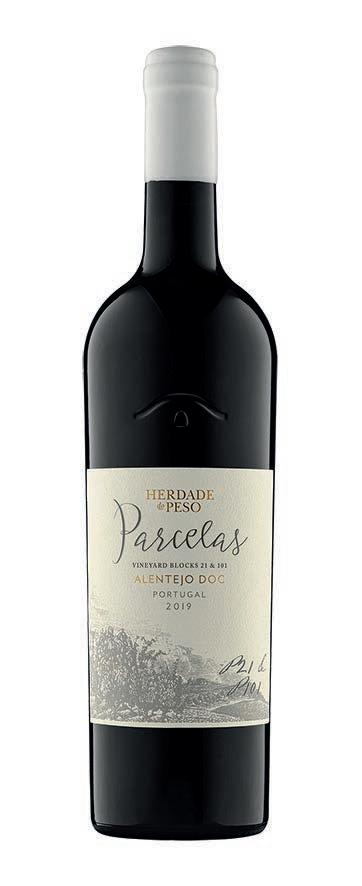
HERDADE DO PESO PARCELAS 2019, $90, HERDADEDOPESO.COM
A variety of wine and spirit brands have launched an interesting assortment of vintages, expressions and special edition bottles. These exceptional and approachable selections are all perfect for your impending holiday dinner party or winter gathering that calls for the right bottle to bring to satiate your chic coterie. So, to save you the headache of a long quest (or, worse yet, a horrid choice), we discovered and determined our 10 favorite bottles that are prime to open up, drink and enjoy–right now. Because, life’s too short to waste time with your whisky and wine.
Varias marcas de vinos y licores han lanzado una interesante selección de versiones vintage, expresiones y botellas de edición especial. Estas selecciones excepcionales son todas perfectas para su inminente cena navideña o reunión invernal que requiera la botella perfecta para saciar a su círculo más elegante. Así que, para ahorrarse el dolor de cabeza de una larga búsqueda (o, peor aún, una elección horrible), hemos descubierto y determinado nuestras 10 botellas favoritas, listas para abrir, beber y disfrutar, ¡ahora mismo! Porque la vida es demasiado corta para perder el tiempo con un simple whisky o vino.





REACH & RISE SIGNATURE
2000 OCEAN MONACO YACHT CLUB & RESIDENCES