Welcome to the Feb. 15th, 2023 issue of
Radio World

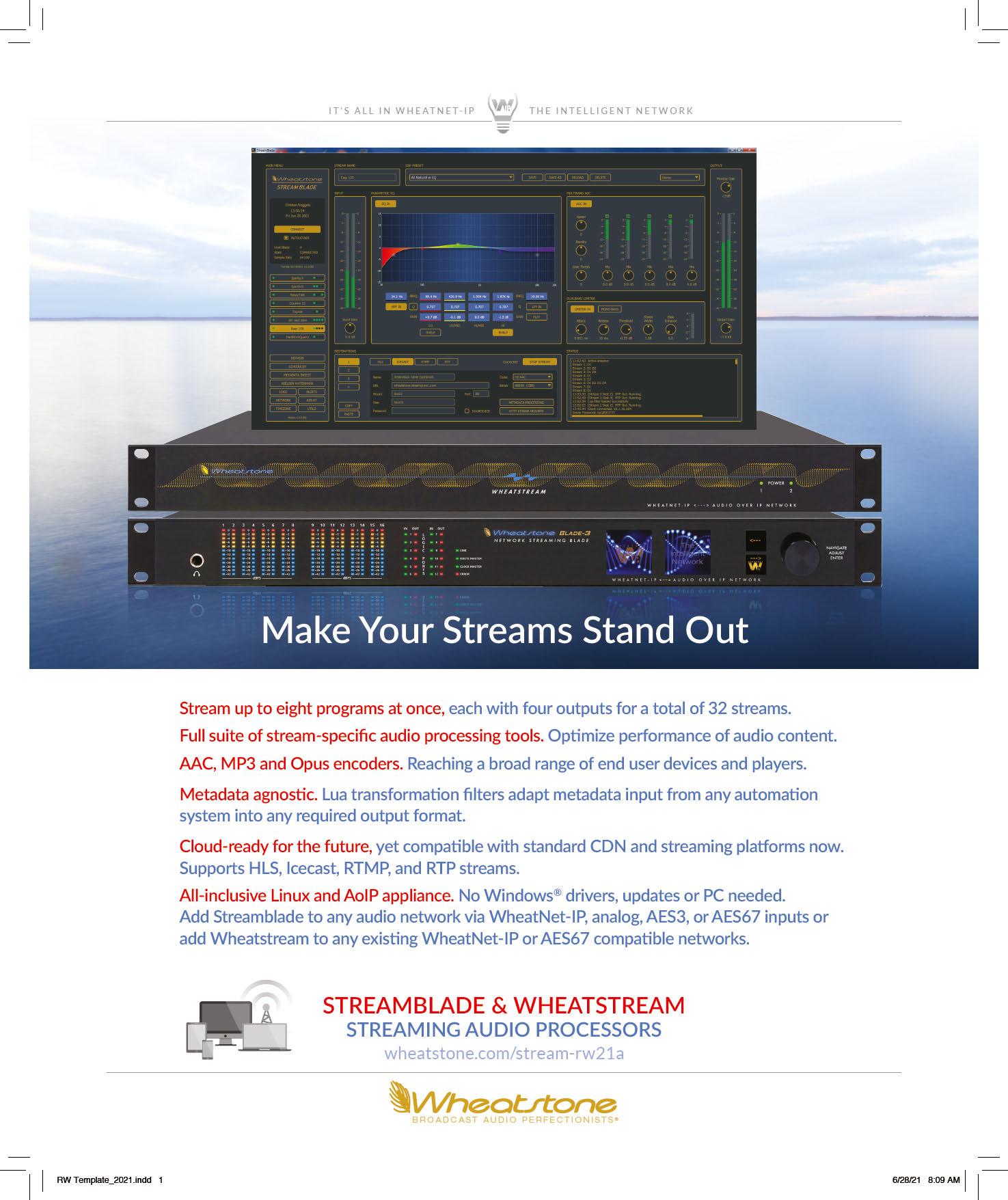
Stream up to eight programs at once, each with four outputs for a total of 32 streams. Full suite of stream-specific audio processing tools. Optimize performance of audio content.
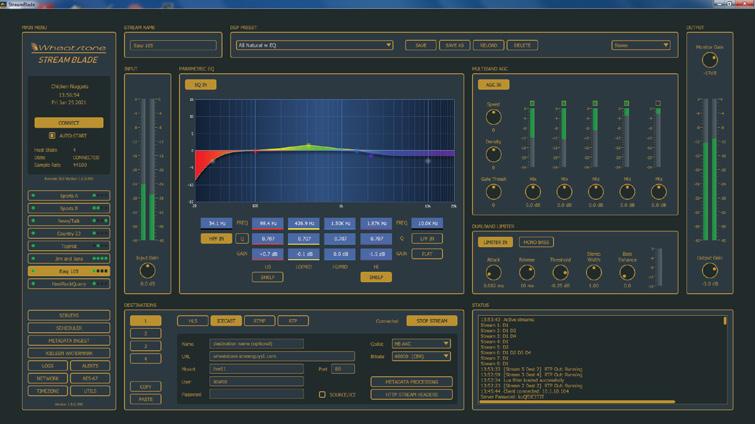
AAC, MP3 and Opus encoders. Reaching a broad range of end user devices and players.

Metadata agnostic. Lua transformation filters adapt metadata input from any automation system into any required output format.
Cloud-ready for the future, yet compatible with standard CDN and streaming platforms now. Supports HLS, Icecast, RTMP, and RTP streams.
All-inclusive Linux and AoIP appliance. No Windows® drivers, updates or PC needed. Add Streamblade to any audio network via WheatNet-IP, analog, AES3, or AES67 inputs or add Wheatstream to any existing WheatNet-IP or AES67 compatible networks.




wheatstone.com/stream-rw21a


www.radioworld.com
FOLLOW US
www.twitter.com/radioworld_news
www.facebook.com/RadioWorldMagazine
CONTENT
Managing Director, Content & Editor in Chief Paul J. McLane, paul.mclane@futurenet.com, 845-414-6105
Content Producer & SmartBrief Editor Elle Kehres, elle.kehres@futurenet.com
Technical Advisors Thomas R. McGinley, Doug Irwin
Technical Editor, RW Engineering Extra W.C. “Cris” Alexander
Contributors: Susan Ashworth, David Bialik, John Bisset, Edwin Bukont, James Careless, Ken Deutsch, Mark Durenberger, Charles Fitch, Donna Halper, Alan Jurison, Paul Kaminski, John Kean, Larry Langford, Mark Lapidus, Michael LeClair, Frank McCoy, Jim Peck, Mark Persons, Stephen M. Poole, James O’Neal, John Schneider, Dan Slentz, Dennis Sloatman, Randy Stine, Tom Vernon, Jennifer Waits, Steve Walker, Chris Wygal
Production Manager Nicole Schilling
Group Art Director Nicole Cobban
Senior Design Director Lisa McIntosh
Senior Art Editor Will Shum
ADVERTISING SALES
Senior Business Director & Publisher, Radio World John Casey, john.casey@futurenet.com, 845-678-3839
Publisher, Radio World International
Raffaella Calabrese, raffaella.calabrese@futurenet.com, +39-320-891-1938
SUBSCRIBER CUSTOMER SERVICE
To subscribe, change your address, or check on your current account status, go to www.radioworld.com and click on Subscribe, email futureplc@computerfulfillment.com, call 888-266-5828, or write P.O. Box 1051, Lowell, MA 01853. Licensing/Reprints/Permissions
Radio World is available for licensing. Contact the Licensing team to discuss partnership opportunities. Head of Print Licensing Rachel Shaw licensing@futurenet.com
MANAGEMENT
Chief of Staff Sarah Rees
Chief Revenue Officer, B2B Walt Phillips
Vice President, B2B Tech Group Carmel King
Vice President, Sales, B2B Tech Group Adam Goldstein
Head of Production US & UK Mark Constance
Head of Design Rodney Dive
FUTURE US, INC.
Future US LLC, 130 West 42nd Street, 7th Floor, New York, NY 10036
All contents ©Future US, Inc. or published under licence. All rights reserved. No part of this magazine may be used, stored, transmitted or reproduced in any way without the prior written permission of the publisher. Future Publishing Limited (company number 02008885) is registered in England and Wales. Registered office: Quay House, The Ambury, Bath BA1 1UA. All information contained in this publication is for information only and is, as far as we are aware, correct at the time of going to press. Future cannot accept any responsibility for errors or inaccuracies in such information. You are advised to contact manufacturers and retailers directly with regard to the price of products/services referred to in this publication. Apps and websites mentioned in this publication are not under our control. We are not responsible for their contents or any other changes or updates to them. This magazine is fully independent and not affiliated in any way with the companies mentioned herein.
If you submit material to us, you warrant that you own the material and/or have the necessary rights/ permissions to supply the material and you automatically grant Future and its licensees a licence to publish your submission in whole or in part in any/all issues and/or editions of publications, in any format published worldwide and on associated websites, social media channels and associated products. Any material you submit is sent at your own risk and, although every care is taken, neither Future nor its employees, agents, subcontractors or licensees shall be liable for loss or damage. We assume all unsolicited material is for publication unless otherwise stated, and reserve the right to edit, amend, adapt all submissions.
Radio World (ISSN: 0274-8541) is published bi-weekly with additional issues in February, April, June, August, October and December by Future US, Inc., 130 West 42nd Street, 7th Floor, New York, NY 10036. Phone: (978) 667-0352. Periodicals postage rates are paid at New York, NY and additional mailing offices.
POSTMASTER: Send address changes to Radio World, PO Box 1051, Lowell, MA 01853.
An FM station in northern Virginia is broadcasting what is believed to be the first HD5 audio subchannel in regular service.
Paul McLane Editor in ChiefIt’s a development that could have implications for FM HD Radio stations that wish to lease more capacity on their signals.

The station is WWWT(FM), one of three Washington-area FM frequencies that carry the simulcast of WTOP, Hubbard Radio’s big news station.
The signal is at 107.7 MHz in Manassas, Va. An HD5 subchannel using the MP11 transmission mode was flipped on by engineer Dave Kolesar of Hubbard Radio in November, assisted by Mike Raide of Xperi. The new subchannel is being leased by Metro Radio to feed an FM translator on 106.3 MHz.
Kolesar said there is demand in the Washington market for parent signals to feed FM translators that had been associated with AM stations that subsequently closed or were sold.
“Broadcasters are always looking for more bandwidth, for data services or audio channels to lease to other broadcasters,” he said.
“Right now, most FM broadcasters are using the MP1 mode, which offers 96 kilobits of bandwidth, or the MP3 mode, which offers 120 kilobits of bandwidth,” Kolesar said. “The MP11 mode gives us another 24 for a total of 144 kilobits of bandwidth, and that permits us to commission another HD channel.”
The quality, he said, is similar to that of HD3 and HD4 subchannels, which use the same rate. But the audio performance of the FM translator is not constrained by the data rate of the HD5, because FCC rules allow fill-in translators to be fed independently, meaning they don’t need to use off-air capture.
The National Radio Systems Committee met during the CES show and is in the final stages of specifying an NRSC5-E revision of the standard, introducing new IBOC service modes developed by Xperi.
While MP11 has been part of the NRSC standard for some time and is FCC-approved as an extended IBOC service mode, the new modes build on the spectral occupancy of MP11 with
3 From the Editor
5 Telos Alliance looks to the future under Stiefel
FEATURES
10 Workbench: An inexpensive way to feed your EAS box
14 Tech themes for radio and audio delivery
BUYER’S GUIDE
20 Midwest Sports relies on a stable of Comrex codecs
22 WVOK updates capability with Gateway and ViA
24 BYU Broadcasting deploys MaxxKonnect
30 Readers’ Forum
Please recycle. We are committed to only using magazine paper which is derived from responsibly managed, certified forestry and chlorine-free manufacture. The paper in this magazine was sourced and produced from sustainable managed forests, conforming to strict environmental and socioeconomic standards.
Read an NAB PILOT blog post about MP11 at tinyurl.com/ rw-mp11
Also, Nautel presented a paper “Transmitter Considerations for Extended IBOC Service Modes” at the 2019 NAB Show Broadcast Engineering and IT Conference.
Read a summary at tinyurl.com/ rw-nautel
sidebands occupying a full 100 kHz each and adding higherorder modulation techniques. Advocates say this unlocks more data capacity to future new receivers while offering backward compatibility for current receivers.
MP11 is implemented in some HD Radio receivers today, but not all. “The majority of radios now will just tune from HD1 to HD4, and you wouldn’t know that an HD5 is there,” Kolesar said. “So the primary use for this extra bandwidth would be for the parent station of a translator. As more radios come into the market, that will change.”
Metro Radio had been leasing WWWT’s HD2, but Kolesar said Hubbard has been consolidating HD2 and HD3 channels across its three FM signals in the Washington area.
“For marketing purposes, I want to provide as much consistency across our HD subchannels as possible. HD2 and HD3 programming is now uniform across all three signals, leaving HD4/HD5 open for purposes on individual stations in the simulcast such as leases to feed translators.”
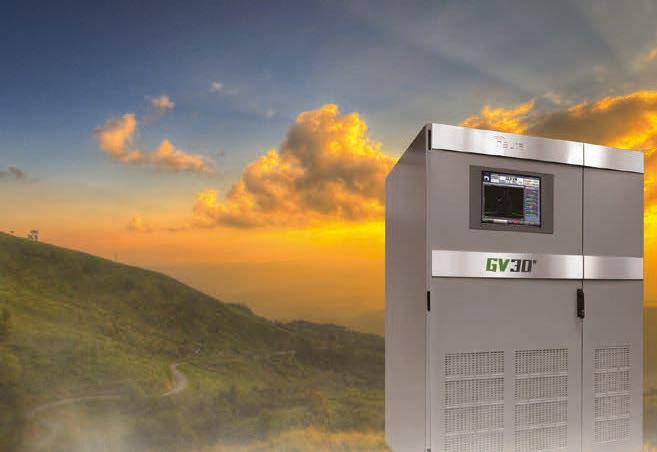
This project uses a Nautel GV Series transmitter with MP11 added via the latest firmware release, including HD PowerBoost. Nautel says this improves the reference Gen4 MP11 implementation, increasing transmitter output power by up to 25%, which thus is ready for a proposed power increase now before the FCC.
A Nautel HD MultiCast+ Importer/Exporter captures and encodes all five audio services and provides up to eight audio inputs for future applications. Nautel said multicast channels can optionally be processed on the HD MultiCast+ using an Omnia for Nautel software audio processor.
Kolesar said he believed iHeartMedia had been working with MP11 as well. I confirmed with Alan Jurison, senior operations engineer at iHeartMedia, that the company uses MP11 mode and the new extended hybrid P4 24-kilobit partition that it creates for a HD4 audio channel. This has been part of field evaluations in continuous operation since July 2019 on WTUE(FM) in Dayton, Ohio.
Jurison expressed support for the Hubbard HD5 initiative and said that MP11 performance and host compatibility on properly designed installations have been well established. “The industry should feel confident using this new digital real estate for an additional HD audio channel, whether it be an HD4 or HD5, or for new yet-to-be-defined data services,” he said.
Meanwhile, back in Washington, Kolesar said, “As you can imagine, Xperi’s going to be rolling around with their test van, making RF recordings and characterizing our signal.” He hopes the results will help others in the industry learn about the possibilities of deploying HD5 and MP11 and consider the potential HD Radio has to offer today and in the future.
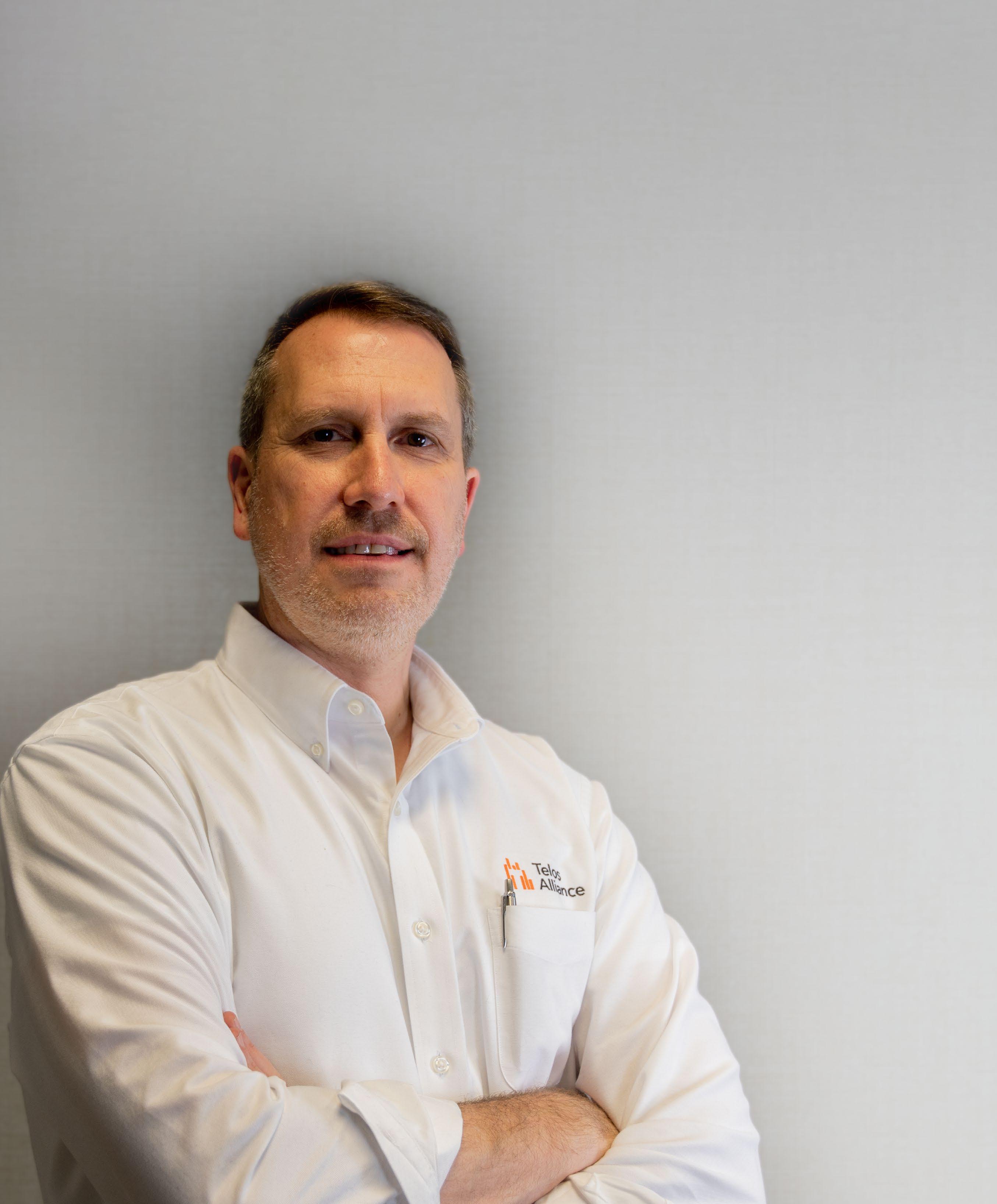
Scott Stiefel was named CEO of Telos Alliance in January, the latest advancement in a career that began in 1994 when he joined the company two years out of college as a hardware and embedded systems engineer. He eventually became operations manager, then left in 2008 to work for ViaSat, but returned six years later as Telos chief operating officer. He has spent the past year as co-CEO with Tom Swidarski before taking the reins on his own.
Swidarski remains on the company board and will serve as an advisor. Frank Foti remains chairman of the board and head of Omnia development.
Stiefel spoke with Radio World about his role and plans for the company.
Scott Stiefel: On my return to Telos in 2014, I was named COO so that Frank could focus more on the big picture. I’ve essentially run the company on a day-to-day basis from that point; and now I’ll be setting direction and be more of a public face, getting out on the road meeting with partners and clients.
In 2018 the company brought in Tom Swidarski from outside of broadcast, while Frank became executive chairman. What was the reason for those changes?
Stiefel: Frank began to look at where his passion was and what he was good at. He wanted to focus on the next generation of Omnia products, meet with customers and bring products he’d been working on to fruition. He wanted to be a visionary for the company rather than play the traditional role of CEO.
I’d been back for four years as COO but had not run an entire company. The idea was to bring in somebody seasoned to tutor and mentor me. This is the role that Tom had been playing
Above Stiefel checks in with Livette Perez, senior electronic assembly technician, who is building a Quasar mixing console module.
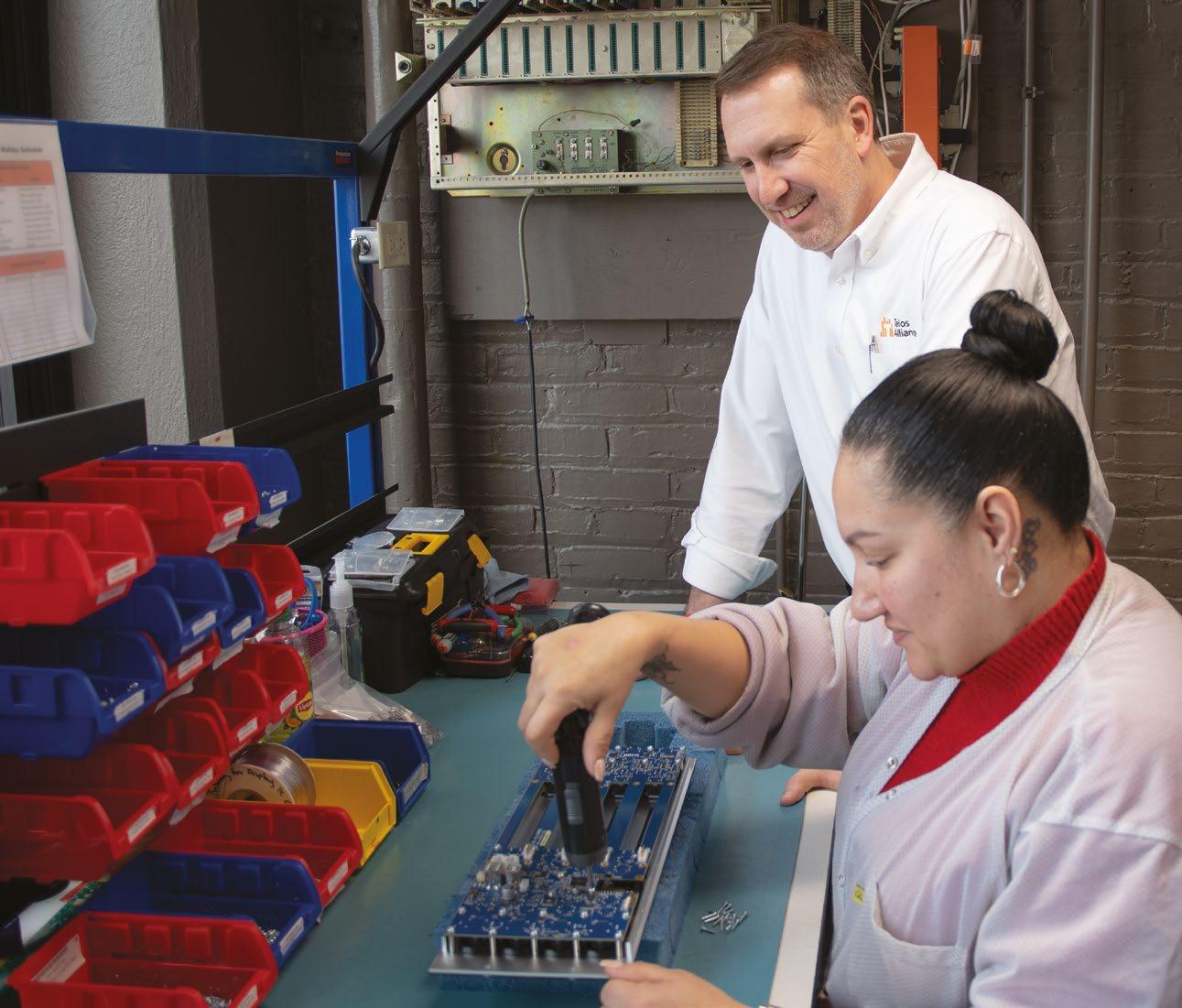
for other companies after he departed Diebold. From my perspective, how often do you get the chance to sit alongside somebody who’s run what was essentially a Fortune 500 company and learn from them on a day-today basis?
My mission is to continue our path in terms of the maturity of the organization, as well as its transition from a primarily hardware-based company into the one we’re becoming that also involves virtualization, enterprise software, networking and taking AoIP into the cloud and private server farms.
Who are the owners, and how many employees are there?
Stiefel: There are roughly half a dozen shareholders. Frank is majority shareholder. Tom is second largest and vice chairman of the board. I’m a shareholder as well.
We have roughly 125 people worldwide. We didn’t have any reduction in force through the pandemic.
What’s the state of your business and how has it evolved?
Stiefel: From a product development standpoint we’re incredibly healthy. We have an enormous pipeline. Derek Pilkington, our EVP of research and development, walks around with a mug that says “More ideas than time.”
In television we now have intercom, loudness control, audio processing, Next Generation Audio and enterprise software for file-based audio workflows. In radio, most people will be familiar with the areas we play in, from mixing and infrastructure to audio processing, telephony, codecs and streaming. We’re well positioned because of that diversification.
On the financial side, we’ve never been in a better position — from the discipline in which we run the company, our weekly strategy sessions and monthly business reviews, to the balance sheet, which is healthier than it’s ever been in the history of the company.
When I came back in 2014, my goal was to break down barriers between the brands. As you know, the company had started with Telos Systems and Steve Church; then Cutting Edge, later Omnia, when Frank joined; then we had the Axia product line, and we added Linear Acoustic, Minnetonka, 25-Seven Systems.
Each of these product lines was extremely well regarded but there wasn’t a lot of sharing of information or resources internally. So one of the first things I did was to reorganize to make it much more centralized.
It’s in the culture where Tom probably has had the biggest impact. He swept away the final territoriality and implemented processes for the executive team to eliminate any friction that remained. We’re really running smoothly in how we come up with product or service ideas and implement them.
We want to be the partner for every broadcaster as they create their ecosystems and infrastructures, to allow them to use best-in-class products — virtual or hardware — and have them work seamlessly at the lowest cost, while producing the highest results for content creation.
How will Telos stay relevant when so much of the industry is turning from hardware to these other solutions?
Stiefel: On the educational front we began to create webinars on a regular basis, our Container University, YouTube videos and other educational aspects to help train the industry so that they can begin that migration to virtualization, containerization and cloud.
Beyond that, our most recent move has been to create a Professional Services group. We’ve expanded our best-inclass customer support to include professional services — we can send people on-site, or log into client systems and help configure their Telos Alliance products. We can
“The entire industry is transitioning from a product and appliance basis to an IT infrastructure basis. That’s a big, big change for a lot of people.
spec out solutions; we can make sure their workflows and ecosystem are ready to receive the virtual or containerized products and that they’re specifying the right servers. And we can ride alongside those customers until they go on air, and be available beyond that point as well.
The pivot to a services organization is going to be critical. The entire industry is transitioning from a product and appliance basis to an IT infrastructure basis. That’s a big, big change for a lot of people.
There are still a fair number of broadcasters who haven’t made the transition to audio over IP; and without it, you’re never going to make the transition to a pure IT infrastructure play. So it will be a two-phase transition for many broadcasters.
For those who have made the transition, it will simpler; they’re already living in an IT and network world. But then what if their servers, the equipment or the applications are not even on premises? How do they manage those? What about cybersecurity? Then there are the concepts of “ground to cloud” and “cloud back to ground” — what equipment is needed, what technology and standards will I have to understand?
Another change is seeing the cost models going from pure cap-ex to a “pay as you go” model. If I only have a call-in talk show during morning drive, why do I need to buy a piece of equipment that’s going to be sitting idle for the other 22 hours of the day? If I can use a cloud services model for putting callers on the air and only pay for two hours a day, it opens all sorts of possibilities.
It’s an incredibly exciting time — the flexibility it offers in terms of operations and workflow, and how people all around the world can contribute to content in real time.
Are these trends the same in television?
Stiefel: The technology is definitely changing in the same way. We’re seeing complete virtual cloud-based production systems launching into the market. You’ve got the AMPP Platform from Grass Valley, Viz Now from Vizrt, and there are a host of others moving in that direction.
It’s more complicated because the bandwidth requirements are much, much higher, the compute requirements are much higher for video than for audio, but it’ll be that same challenge. A number of broadcasters are making the transition globally.
I think the next big audio challenge on the television side is going to be the impact of ATSC 3.0 in the United States, and globally with Next Gen Audio and all of the possibilities it offers.
We’ve got partnerships with companies like Dolby and Fraunhofer. The question mark is how quickly are broadcasters going to adopt? And is immersive audio or some other feature going to be the key selling point? Is there something else within these new standards that’s going to unlock value?
Scott Stiefel’s first assignment at Telos was to design the ISDN card for the Telos Zephyr. He then worked on the hardware and DSP code for the original Omnia.FM and Audioactive Encoder products before becoming a project manager on the Zephyr Xstream.
We need to make sure we’re riding alongside our customers to provide cutting-edge gear for that.
What should we expect from Telos in future?
Stiefel: You’ll see the continued evolution of our virtual and container products. Decades ago we made the decision to move our hardware products from a pure DSP chip type platform to an i86 platform. Since then, most products have made that transition, which has prepared us to migrate that code to a server platform and beyond into a virtual machine and then the cloud. The pace of that transition is increasing every year.
You’ll also see expansion of command and control with products like Pathfinder, the dashboard software for Infinity — increased capability and more interfaces to thirdparty products.
That doesn’t mean we’re abandoning hardware. We’ve got a slew of products coming. But they’ll be constructed so they can evolve in parallel to the container. For people who are still comfortable with hardware but who may want to migrate a particular application to the cloud, they’ll see the same user interfaces, the same workflow.
We have more talent in house than we’ve ever had, people seasoned in the industry who understand workflows and customers, with a really strong bench behind them. I’ve seen Telos evolve from a pure telephony company. Certain technologies — like the DSP in the telephony products and the idea of marrying MP3 with ISDN — really transformed certain areas of radio. Now virtualization, containerization, disaster recovery and those changing cost structures are going to have a much bigger impact on the broadcast industry.
I love that Telos has always seemed to be right at the center of each inflection point. And, you know, our mojo is still very much in force.
“It’s an incredibly exciting time — the flexibility it offers in terms of operations and workflow, and how people all around the world can contribute to content in real time.
 John Bisset
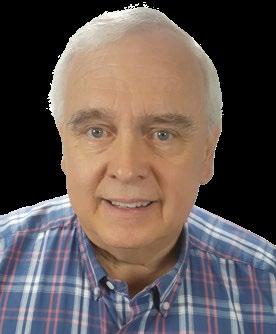
The author has spent over 50 years in broadcasting and is in his 32nd year writing Workbench. He handles western U.S. radio sales for the Telos Alliance and is a past recipient of the SBE’s Educator of the Year Award. Hey, kiddo! Workbench submissions are encouraged, qualify for SBE recertification credit and can be emailed to johnpbisset@ gmail.com
Hank Landsberg, longtime principal of Henry Engineering and Sine Control Technology, knows about the lack of new talent entering the radio engineering field, but shares this photo of an engineer in training. Meet Ivy Koza, 4, who’s watching over a backup Broadcast Electronics AM transmitter.
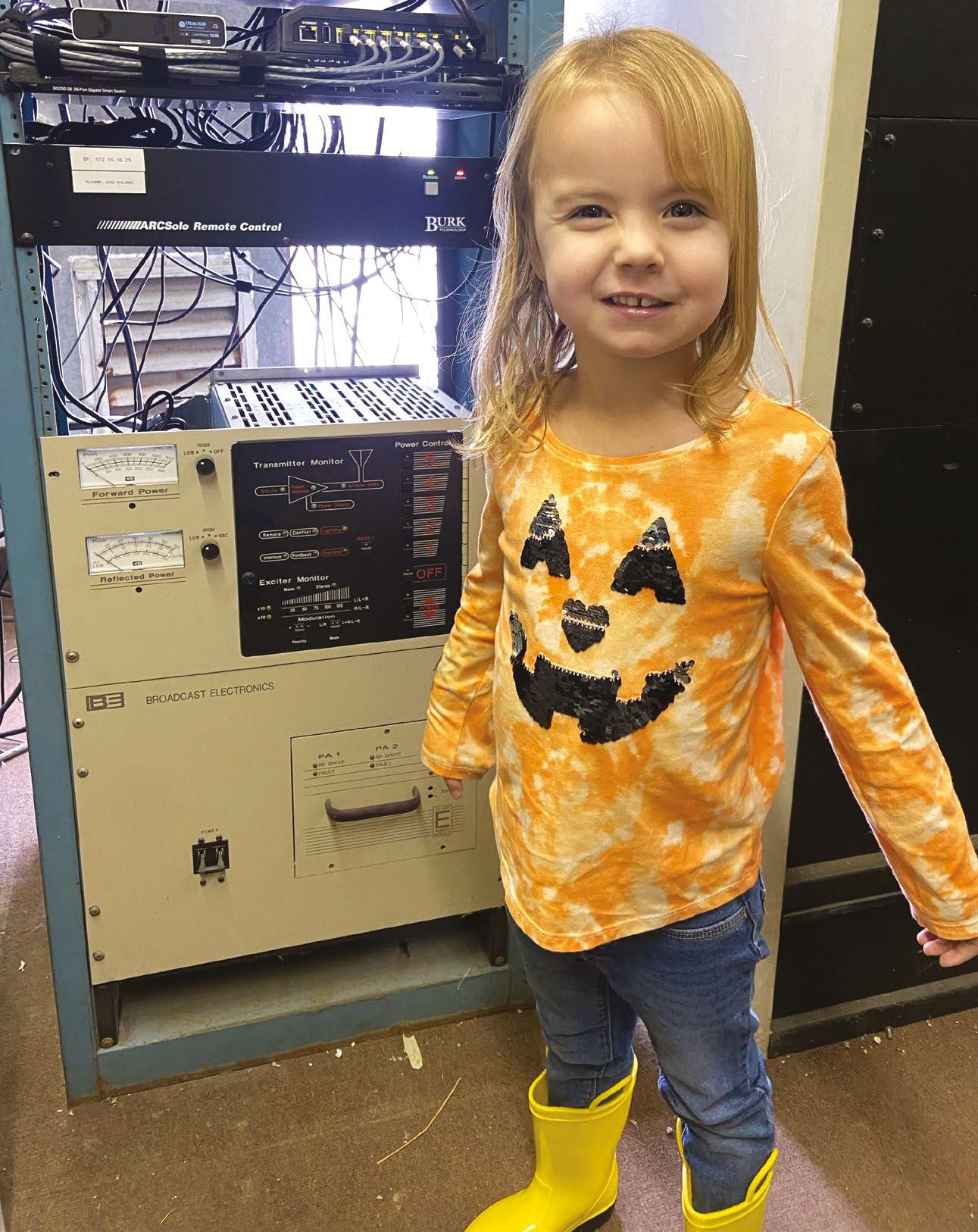
Ivy comes from a distinguished family of broadcast engineers. Her dad is Tim Koza, chief at KJLH(FM) in Los Angeles. Tim’s dad is Tom Koza, recently retired after a 50-year career in L.A. radio engineering. And Ivy’s “Uncle Hank” is Hank Landsberg! Nothing like getting an early start on a satisfying career.
William Harrison is the chief engineer of WETA(FM) in Washington.
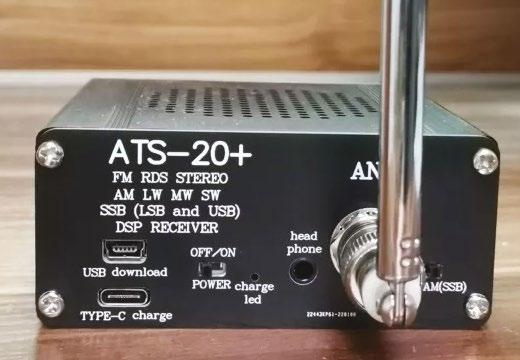
Replying to Larry Wilkins’ request for information on inexpensive EAS receivers, he suggests the ATS-20, an import from China. It’s based on the Arduino platform and uses a Silicon Labs receiver chip, the 4732.
Top right Ivy Koza accompanies her dad to a transmitter site.
You can find the code and schematics online and build one yourself, but they are readily available from sources like Walmart, Amazon, AliExpress and eBay, in a range of prices (we saw $30 to $65). Models include the ATS-20, ATS-20+ and ATS-25. The various models can receive FM, AM/FM or shortwave. They have a built-in battery and seem to do the job. These radios use the SI4735 Arduino library created by a user called PU2CLR; this resource is useful: https://github.com/pu2clr/SI4735
3
– 50 kW AM



Read the Amazon reviews before buying. Users say there was no instruction booklet, meaning you have to figure it out as you go. YouTube has a couple of videos that should be helpful.
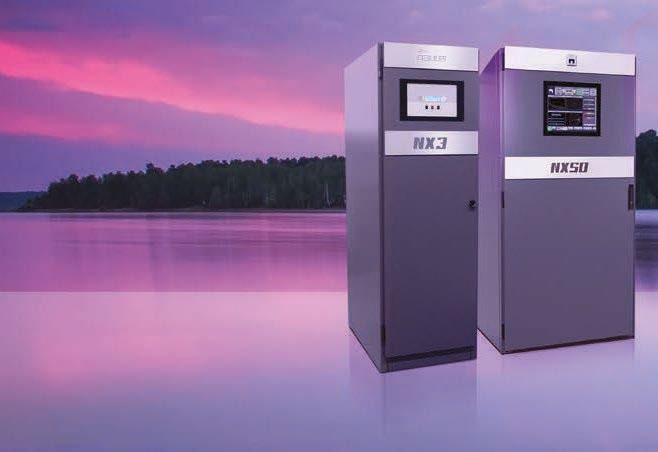 Bottom right The ATS-20 works well as an EAS receiver.
Think you know everything about screws? Take a few minutes to expand your knowledge by visiting Grainger’s “Know How” informational site www.grainger.com/know-how and enter “Types of Screwdrivers and Their Uses” into the search field.
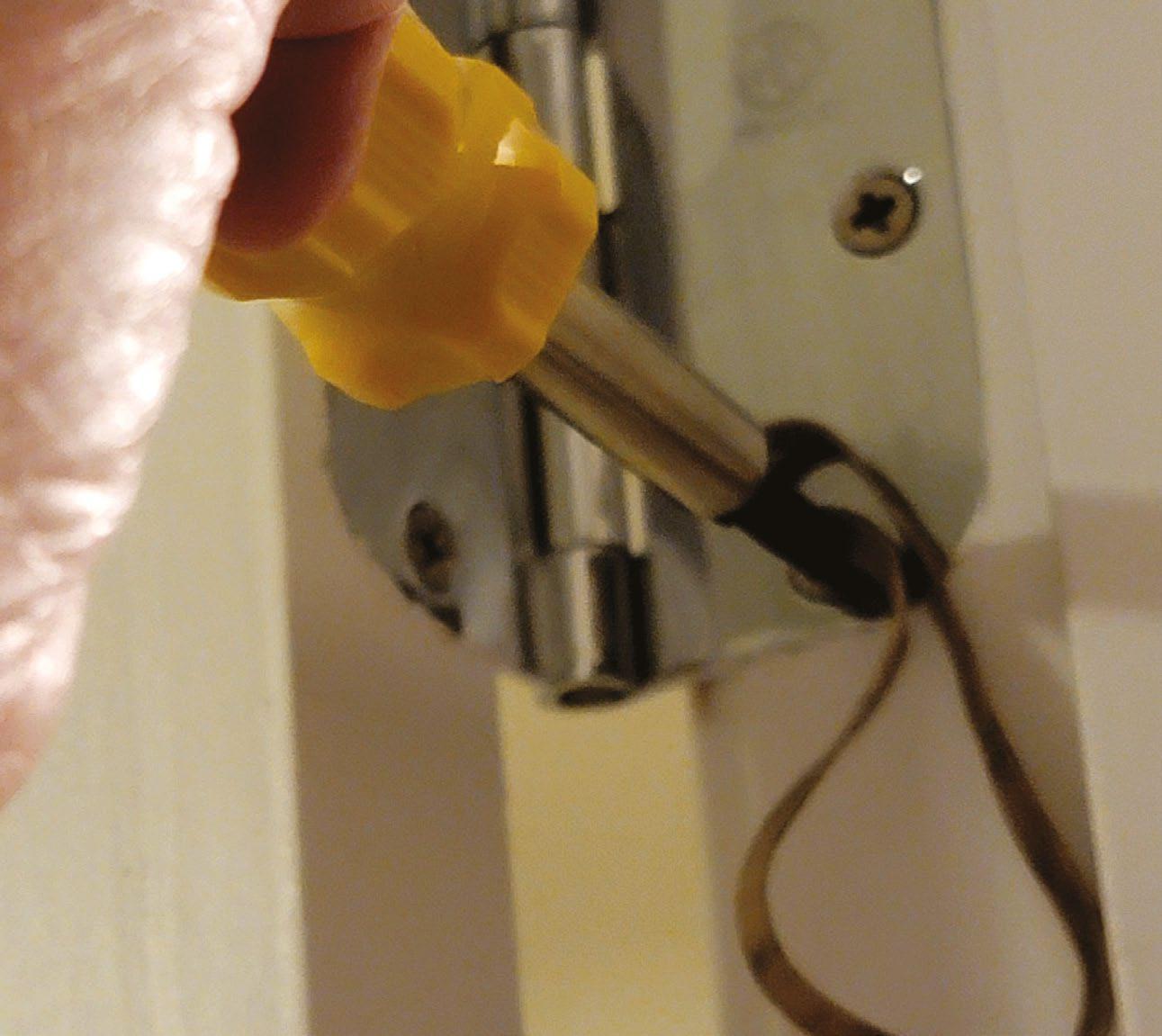
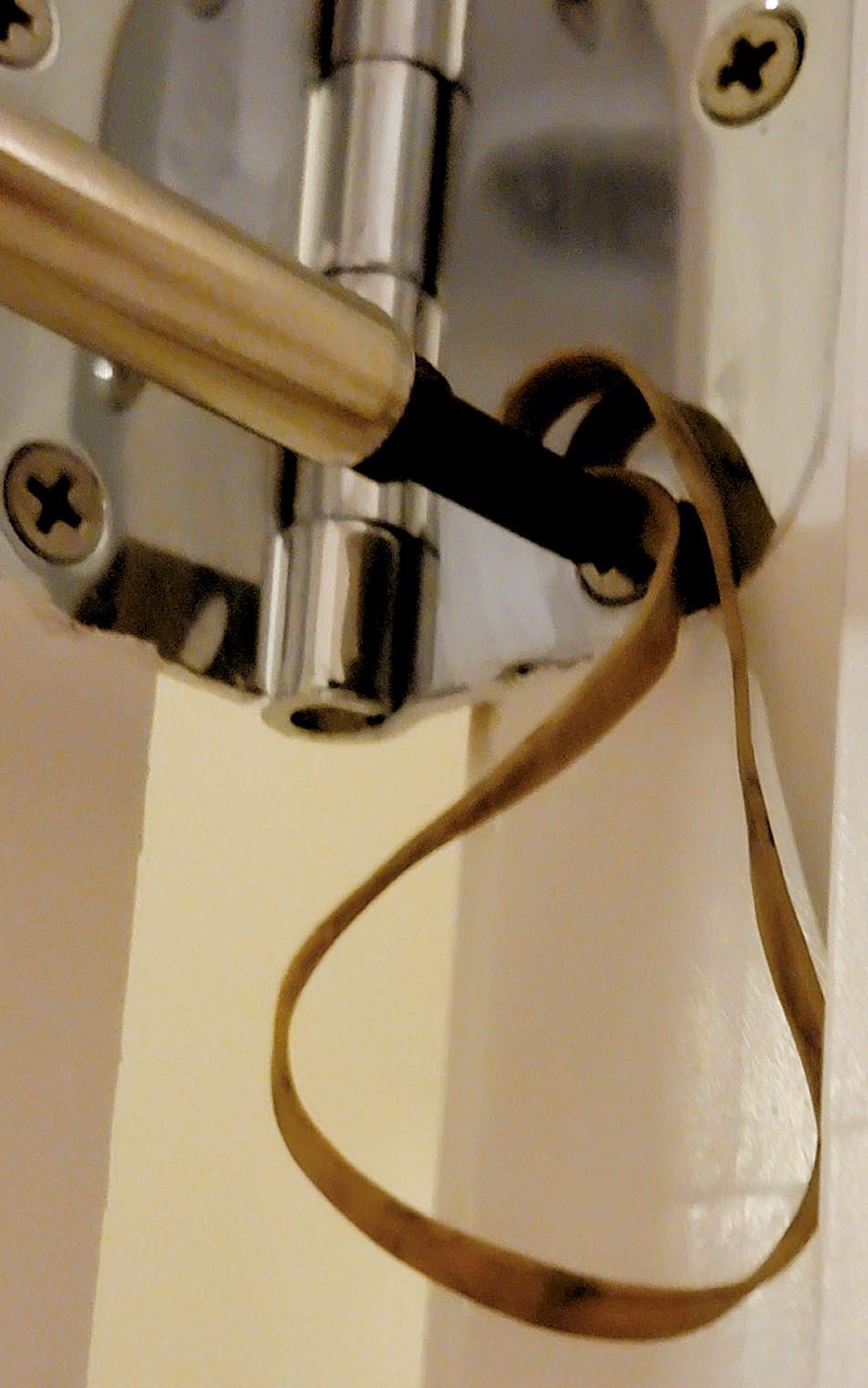
You’ll see that some of the screw tips listed are designed to prevent the head from stripping. If you already have a screw with a stripped head, try the tip shown in the accompanying photos before you invest in a screw extractor. Lay a wide rubber band across the head of the screw before inserting the screwdriver. The rubber works like those rubber jar lid friction pads, grabbing the surfaces of the screw head and the screwdriver. It might just get you out of a jam.
Fred Baumgartner sent along great information on killing ground loops using a “hum bucker.” It’s a heavy, square device, about 6 x 6 x 4 inches, consisting of a short piece of coax wound around a massive chunk of ferrite, with two BNC connectors (or PL-259 if very old).
Electrically, it’s just a short piece of coax. You can break a hum loop or strip RF off anything from near-DC to a couple of GHz, analog or digital. These days, Fred has found it useful for tough problems from composite FM audio to flaky serial digital like SDI video.
Once-common telco “120c repeat coils” are still available for under $100. These wideband transformers have multiple windings for a range of impedance matching. They easily
Above left Place a wide rubber band between the screwdriver and the stripped screw head to help extract the screw.
Above right
A close-up of the rubber band screw extractor.
pass 10 Hz to about 200 kHz, even though they were never intended for that bandwidth.
Fred had an AM station that subscribed to cable; the drop picked up lots of AM and a fair amount of 60 Hz. Fred’s solution was to take two 75/300 Ohm transformers and tie the 300 Ohm connections together through 0.01 uF caps of sufficient voltage (25 V might not make it).
Insert this isolator into the cable line and everything gets happier. You can’t do this with ferrite cores around the coax. Fred uses this technique to keep his 160-meter ham rig out of momma’s TV.
“
Once-common telco ‘120c repeat coils’ are still available for under $100.
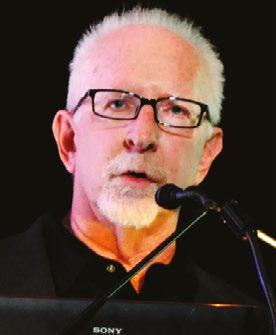
 Writer Randy J. Stine
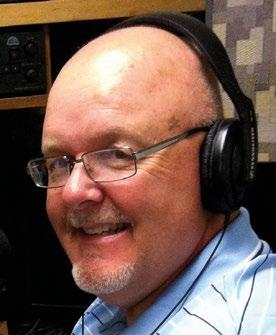
Jacobs Media President Fred Jacobs attended this winter’s CES show and ushered radio industry executives on floor tours that explored technology realms never seen before by people. And that’s not an exaggeration. Radio World spoke to Jacobs about how screenification of the car, AI, synthetic voice and the metaverse are reshaping the radio listening experience.
What are the things radio broadcasters need to be focused on right now in a world of increased audio consumption?
Fred Jacobs: As far as consumer electronics, we see home smart speaker use has slowed a bit, which is bad news for radio broadcasters, since listening to radio is one of the top uses for home smart speakers. Radio has done a good job promoting that, but the place where everything is moving quickly is the connected car and voice assistants.
It’s all about the car isn’t it.
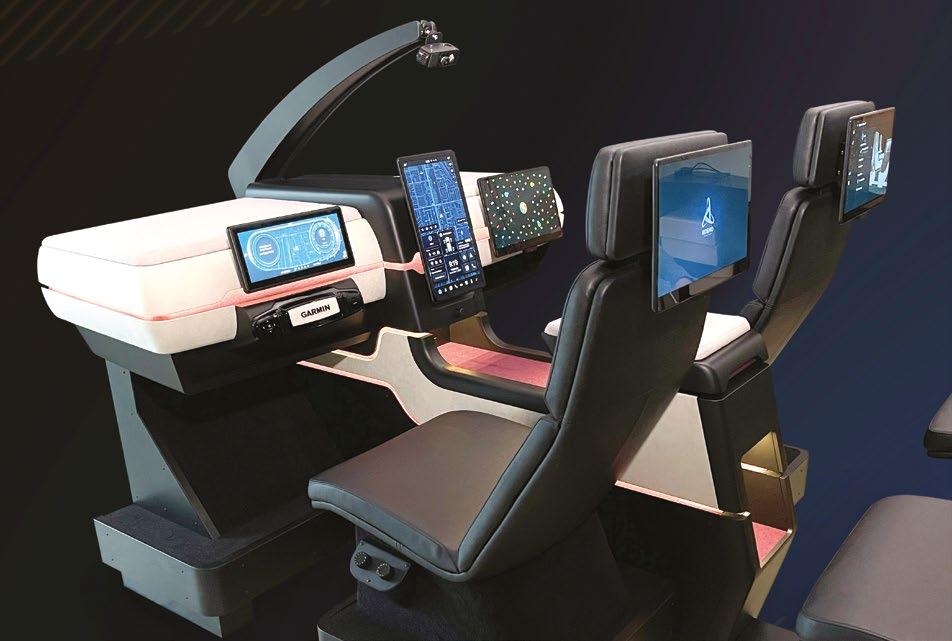
Jacobs: It always has been for radio. It continues to be the number one listening location. The entire West Hall at LVCC during CES was focused on automotive. The screenification of the car is ongoing. Screens are getting bigger and multiplying. The screens are being engineered on artificial intelligence. So the car can learn preferences and habits and customize the experience for the driver. Voice solutions like Alexa Auto are really coming along. Making it a hands-free environment.
Seems like everyone is talking about the metaverse. Are you buying the hype?
Jacobs: It seems to me Web3 and the metaverse is proving very controversial. A lot of people are still skeptical about it. Microsoft is very involved in the space through Touchcast. It was a popular stop on our tours at CES. They had an elaborate display of a car dealership in the metaverse. We got to watch a demo of a car shopping experience, without the goggles mind you, which was very appealing.
The use of AI and virtual reality from the standpoint of avatars and creating virtual personalities is intriguing. You could see how this might apply to broadcasters and having personalities on hand for an event of some sort. How about a virtual Elvis Duran greeting listeners at a station event? That’s really exciting. And that technology is here already. There were a number of applications of it at CES.
What were your other takeaways from CES 2023?
Jacobs: The more you go to these shows, you realize it’s not just about the latest gadgets and toys, but rather themes. When you focus on overall themes you get a better picture of what is happening. Even the bigger exhibits like Samsung, LG, Sony and Panasonic, they were more focused on user experiences.
Some of this is COVID-related. There were lots of innovations that were designed to make people feel more relaxed and less stressed.
That can also be tied to the car, where facial cameras can now read a driver’s face and decide whether they are stressed or not, and the mobility and infotainment system can recommend a playlist of pre-selected songs the driver likes or map a more scenic drive home. Artificial intelligence is now in the bloodstream of so many technologies, to be able to predict behavior or to mimic a style of how someone speaks or acts.
What can radio do to adapt to the user experience in the new in-car world?
Jacobs: Unfortunately, too many radio broadcast companies don’t think that way. They think about content and monetizing it, but too often the consumer is secondary in scope. So the overriding impression you get from CES is that the customer’s user experience has to be first.
You blogged about Xperi having a large presence at CES.
Jacobs: Yes, and they did a great job of showing what radio can look like in the car. Their exhibit has grown, and DTS AutoStage, which was also on display down the hall at the Mercedes booth, really does a good job showing how cool
Radio World’s lead news contributor wrote about the possible displacement of an LPFM station in the Jan. 18 issue. Above Fred Jacobs
radio can look on these screens in the car that get bigger and bigger. Radio has never looked better in the car.
And why shouldn’t radio look good in the car? That makes the metadata stations are pushing out more important than ever. And the importance of having a station app has never been greater. The first thing folks do when they get in a car is pair the phone with the system, whether it be Apple CarPlay or Alexa Auto or Android Automotive. Everything is app-driven now. They are an important conduit to in-vehicle listening. Having a good app, whether it’s your own or an aggregated one, is critical.
What about the fate of AM radio in electric vehicles, did you find out anything new at CES?
Jacobs: I didn’t hear much. It’s funny, when you ask the auto folks at the show about AM radio they politely defer. They only want to point out the features they want to point out.
I’m not up to date on Sen. Ed Markey’s efforts to get a commitment from the auto manufacturers to keep AM radio in the new electric vehicles. Here’s the thing. From a technical standpoint it can be done. There are electric vehicles out there with AM radio and they sound fine. So it’s not a technical issue but more of a willingness issue on behalf of the car makers.
But here is what I know. An electric car isn’t just for driving. When you think about the charging of these vehicles, it’s not going to be a quick five-minute stop for gas. It’s more like a 30-minute rest stop at a charging station. What are you going to do during that time? Work on your laptop maybe, play with your phone, and be looking for entertainment options in the car.
Any “oh wow” moments for the radio executives on your tours?
Jacobs: I think there is a realization of how much screen surface there is in these new vehicles. And why audio alone isn’t enough any longer.
And the realization that radio now shares the car acreage with a lot of content creation services. From satellite radio, streaming music platforms, personal music collections and podcasts. And gaming and videos for passengers. It really puts it in context when you see the content players radio is now competing against. The car is a now a case study of what is a new entertainment venue on wheels.
You blogged about automakers one day moving to a new business model in which radio service in a car could become part of an “a la carte” option menu and require owners to pay a monthly fee to receive. You know you are striking fear into the hearts of radio broadcasters everywhere.
Cash cow?
A new study from BIS Research shows global in-vehicle payments are expected to reach nearly $26 billion by 2031.
Jacobs: Well, it’s real, and Tesla is already doing it. The OEMs have always only made money on the sale of the vehicle. Once the car was sold that was it. Now automakers are rolling out these microtransations with a new line of thinking by being able to add features as a service. And these are facilitated by the ability to do computer updates in the connected car.
Steve Koenig with the Consumer Technology Association started this dustup, and I wrote about it. He stated that it’s the direction we are moving in. The idea is to have car buyers choose options, including radio, and then pay the car company a monthly fee for the service. I think BMW in some countries is charging something like $18 a month for heated seats, for goodness.
And Tesla is already doing it for infotainment features. And if this works you can bet others will follow. On one hand it is part of the customization of the vehicle, but unfortunately if AM and FM radio becomes a part of the options menu it might not be good news. There will be some consumers who do not check off the radio box.
A year ago you worried out loud that U.S. radio broadcasters were sitting out this audio renaissance by not adapting quick enough. Has anything changed your mind since?
Jacobs: Well, good question. I actually think some progress has been made. This isn’t necessarily research-driven but more observational. I think more broadcast companies get it now. Compared to a few years ago they are more proactive and they are participating. And developing longrange digital strategies.
I think small broadcast stations are still making some decisions about how deep they want to go in particular areas, but more are at least having these conversations about developing a strategic plan.
Any final thoughts? We haven’t discussed synthetic voice applications.
Jacobs: Here is where it gets is exciting for radio. This is a great example of AI that is already being applied by iHeart and others looking to utilize their personalities beyond just regular voice-tracking. Voice replication technology has come so far in the last three or four years. It will only get better over time. I would expect the adoption rate to accelerate.
And there are AI writing tools for radio. ChatGPT can spit out commercial copy for you, or a blog or an article for your website. It could save content creators a lot of time by at least initially creating a first draft for a script or a blog that then just needs finalizing by a real person. Seth Resler blogged about it for Jacobs Media on our website jacobsmedia.com. The technology is really quite amazing.
“But here is what I know. An electric car isn’t just for driving.



The Buyer’s Guide section appears in every other issue, focusing on a particular category of equipment and services. It is intended to help buyers know what’s on the market and gain insight into how their peers are using such products.







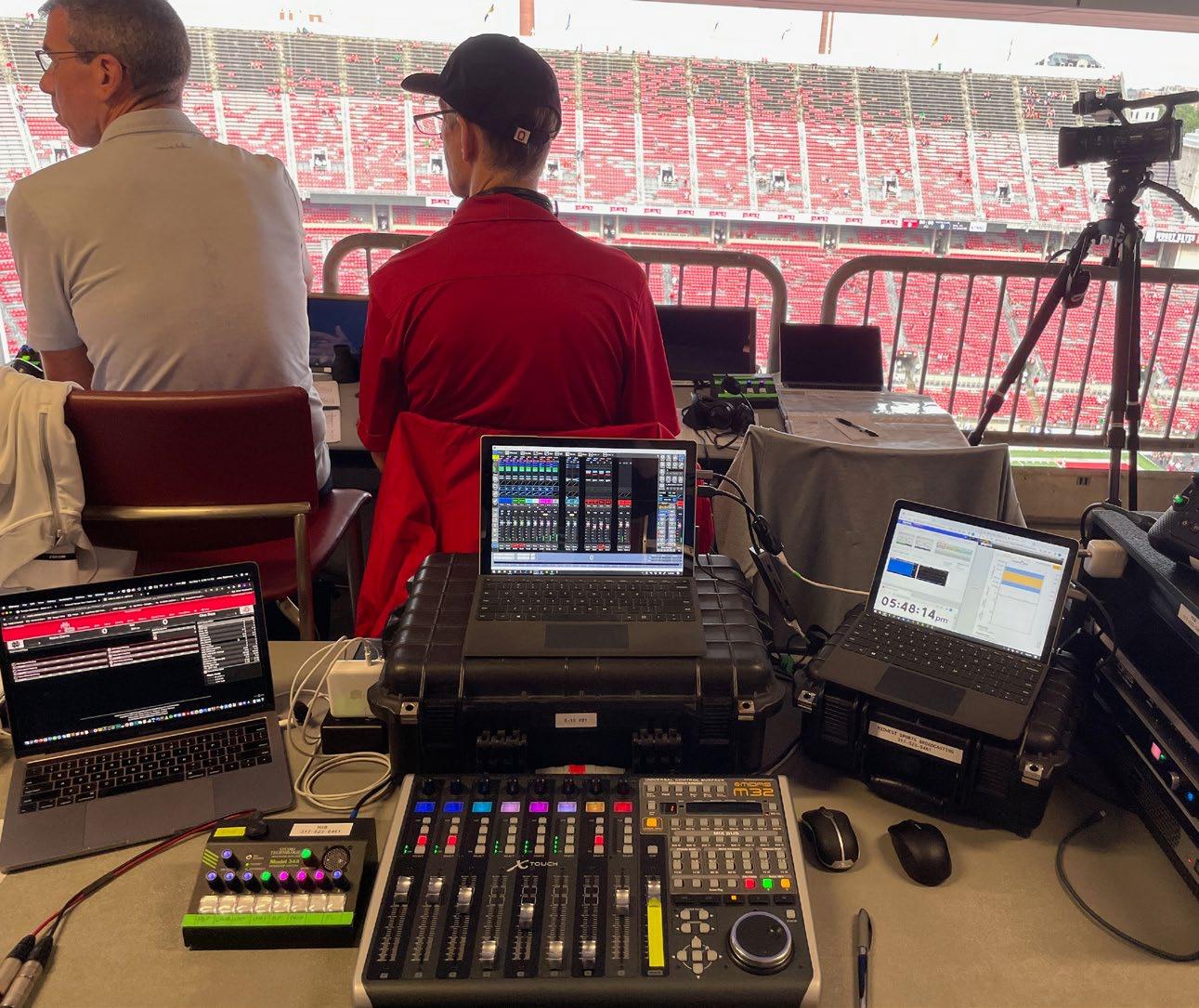
Midwest Sports Broadcasting is a live broadcasting service that provides engineering, technical support and remote coverage for a range of sports, talk, music and entertainment clients. The company handles highprofile broadcasts for SiriusXM, Learfield, Westwood One Sports, ESPN Radio and many more.





Right Midwest Sports Broadcasting’s master control setup for the Westwood One Sports broadcast of Ohio State vs. Notre Dame. Playby-play announcer Ryan Radke and his statistician survey the scene before the action begins.
“I envision us as a premium service for national radio broadcasters who value the highest-quality broadcasts with extended functionality,” said Jake Robinson, founder and technical director of Midwest Sports Broadcasting. “We pride ourselves on providing services that go beyond a lot of the basic remote broadcasts that you see throughout the industry.”
Because Midwest Sports Broadcasting specializes in live events, they have a large stable of IP audio codecs at their disposal. “We have a large quantity of Comrex Access NX [Portable] units, Access NX Racks, BRICLink II codecs, even some older Access 2USB units.”
Increasingly, however, Midwest Sports Broadcasting has included Access MultiRack in their rigs for remote broadcasts. Access MultiRack is an AES67-compatible multichannel IP audio codec, capable of five full-duplex stereo connections simultaneously.
“Most of our systems are Dante-based, and the interoperability between Dante and AES67 has cut down on our need for external converters and bridges for devices,” said Robinson. “When you’re flying with a handful of Pelican cases, the more you can cut down on space, the better. Access MultiRack has enabled us to reduce our logistics costs, and we can provide more connectivity to the networks we work with.”
When it comes to making MultiRack broadcasts work for remotes, Robinson is diligent in preconfiguring the codecs. “We know exactly how many connections we’re making, the needs of the onsite broadcast, all of the intercom paths, and whether or not video is involved,” said Robinson. “We site-check every location, and once it’s time for the remote, all the advance work is done.”
The similarities between Access MultiRack’s user interface and other Comrex IP codecs has made using it in the field easier. “When a new engineer gets in front of a MultiRack, it looks familiar. It’s easy for them to just connect and go.”
He says Midwest uses Comrex codecs because they’re compatible with the broadcast ecosystems its clients use. “For years and years we were able to do ISDN pretty reliably throughout the country and around the world, and with the sunset of that service, IP has become the standard. In my experience, Comrex codecs have been the most reliable.”
Lawo describes the R3LAY VRX Virtual Radio Mixer as a mixing solution for broadcasters on the go, with a touchscreen interface that talent can learn in minutes. “Mixing, processing and even stream routing are all a touch away.”
It says VRX8 is a software solution that runs on off-the-shelf PCs and laptops with no extra hardware. “It’s also middleware that sees any and all PC audio devices via industry-standard audio interface drivers like ASIO, WDM, WASAPI and MME, and lets you instantly start using them to create, whether they’re from software (VoIP clients, remote-codec apps, online social media channels, playout software), hardware (analog and digital sources from the PC sound card) or AES67 audio streams (via the PC NIC).”
VRX8 is also a VST host that can use third-party plugin apps to perform EQ, dynamics processing, de-essing and other functions.
Features include SMPTE 2022-7 Seamless Protection Switching, audio processing for Program and Record busses, external source preview and independent headphone / monitor controls for up to four talent positions. It runs on Windows 10 PCs and can be
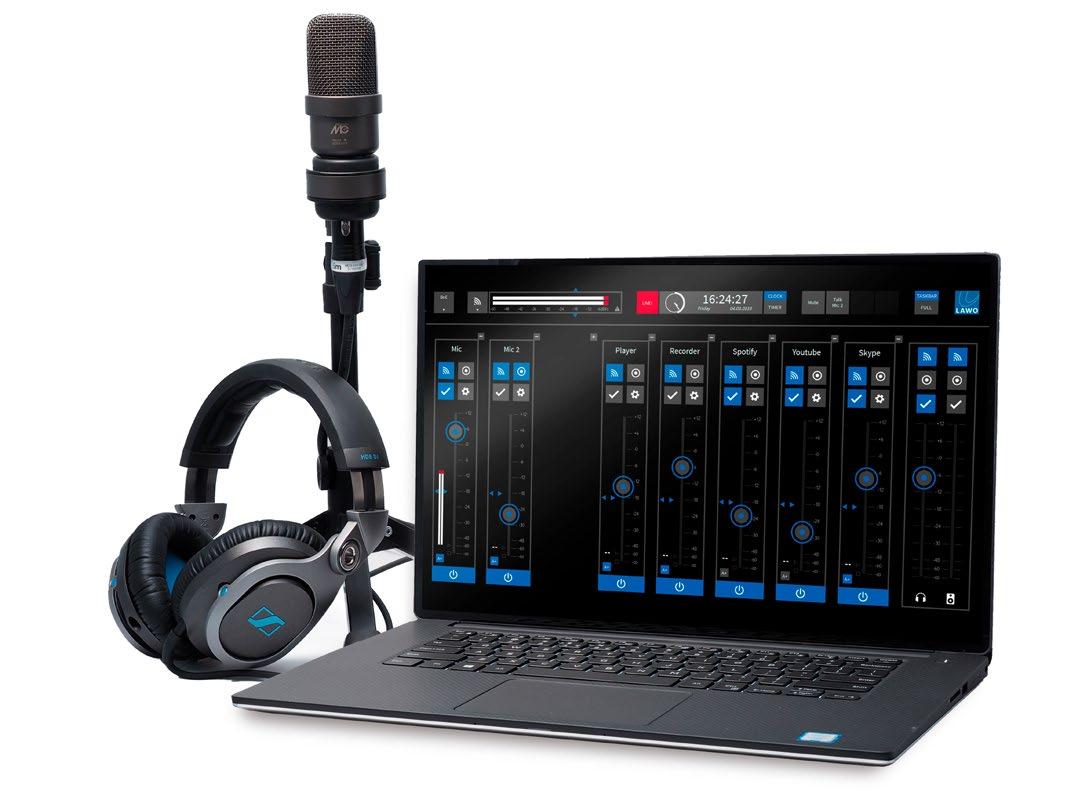
virtualized using VMWare Server 6.5 and VSphere virtual machine environments.
Lawo says the combination of R3LAY VRX8 and your playout software, livestream app and visual radio software essentially creates a studio on a laptop.
Info: https://lawo.com/products/r3lay-vrx/ .
WVOK(AM/FM) in Oxford, Ala., reaches the Anniston-Oxford metropolitan area and into East Birmingham around 70 miles away. Its FM broadcasts a hot adult contemporary format while the AM is oldies.
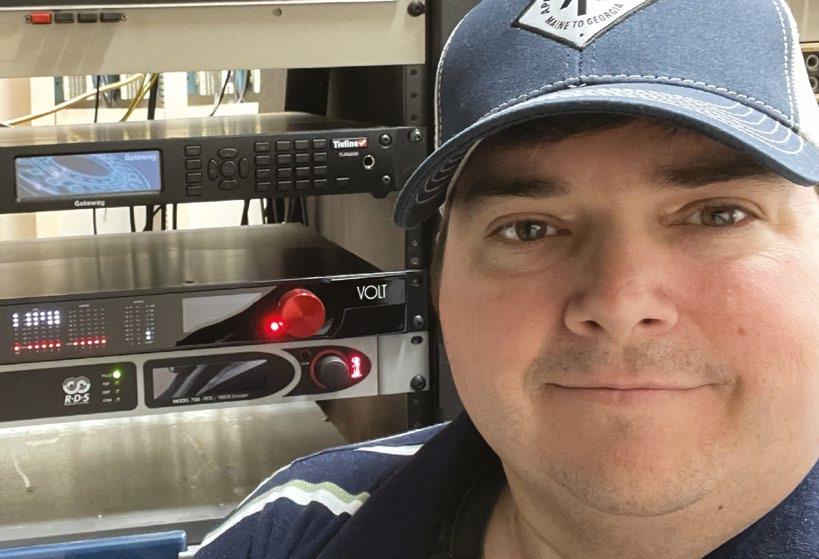
“We have used Tieline Commander G3 codecs for years for remote broadcasts and also use Report-IT, often as a backup,” said Program Director Jock Burgess. “We also use a Tieline Bridge-IT as an STL on our AM link.”
The station does a lot of sports remotes, so when it came time to upgrade its G3 codecs, it chose a Tieline Gateway 8 for the studio, equipped with a WheatNet-IP card to be ready for a planned installation of a Wheatstone console. This will facilitate routing of audio streams across the WheatNet-IP network.
“We also acquired two ViA codecs,” Burgess said. “The ViAs are regularly deployed for play-by-play coverage of Yellow Jackets football games at Oxford High School on our FM station, and a traveling game of the week for high school football games on our AM.”
A typical gameday broadcast commences with a half-hour pre-game followed by the game. For home games with the Oxford Yellow Jackets, they add a one-hour tailgate show. “In addition to football we do remotes from major events like the Oxfordfest and the Noble Street Festival and to promote local businesses.”
He appreciates the flexibility of the ViAs for various remote applications. “It’s simple to use and really is a studio in a box. The unit seems sturdy and
More Info https://tieline. com
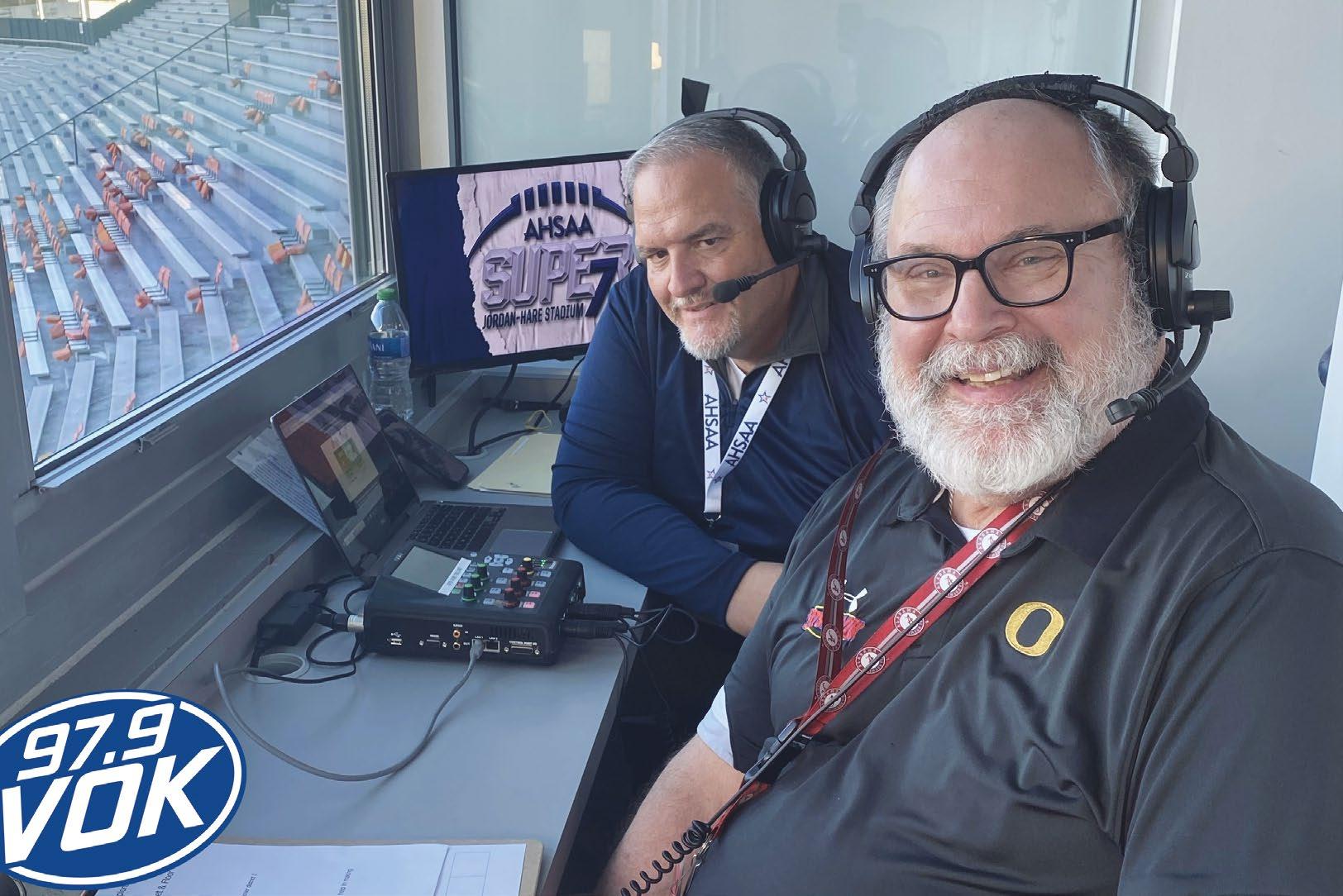
Top Tommy Wood, rear, and Barry Thompson broadcast from Auburn University’s Jordan Hare Stadium for the Alabama High School Athletic Association’s Super 7 State Football Championship. They were covering the Girls Flag Football State Championship game between Oxford High School vs. Auburn High School.
Right Jock Burgess with the rack-mounted Tieline Gateway codec (the upper black box in the rack).
rugged, very reliable. There are lots of options to connect, and really nice features like record and playback.”
The ViA connects up with the Tieline Gateway at the studio. “Installation of the Gateway has allowed us to consolidate our studio setup and replace two codecs with one. Plus we can do two simultaneous remotes if we want and still have additional capacity for Report-IT or other setups we may consider.”
For streaming live remotes, they have an AT&T hotspot that connects to one of the ViA’s LAN ports. At most football games they can access a hardwired LAN connection in the press box and stream over their network back to the Gateway at the studio.
“I usually preconfigure the codec before it goes out. Our commentary teams use headset mics and find the codec is user-friendly and the touchscreen easy to navigate. They just hit the green button and connect. At games we usually have two hosts with an occasional halftime guest. A producer back at the station can run the audio board and communicate back to the remote site as needed.”
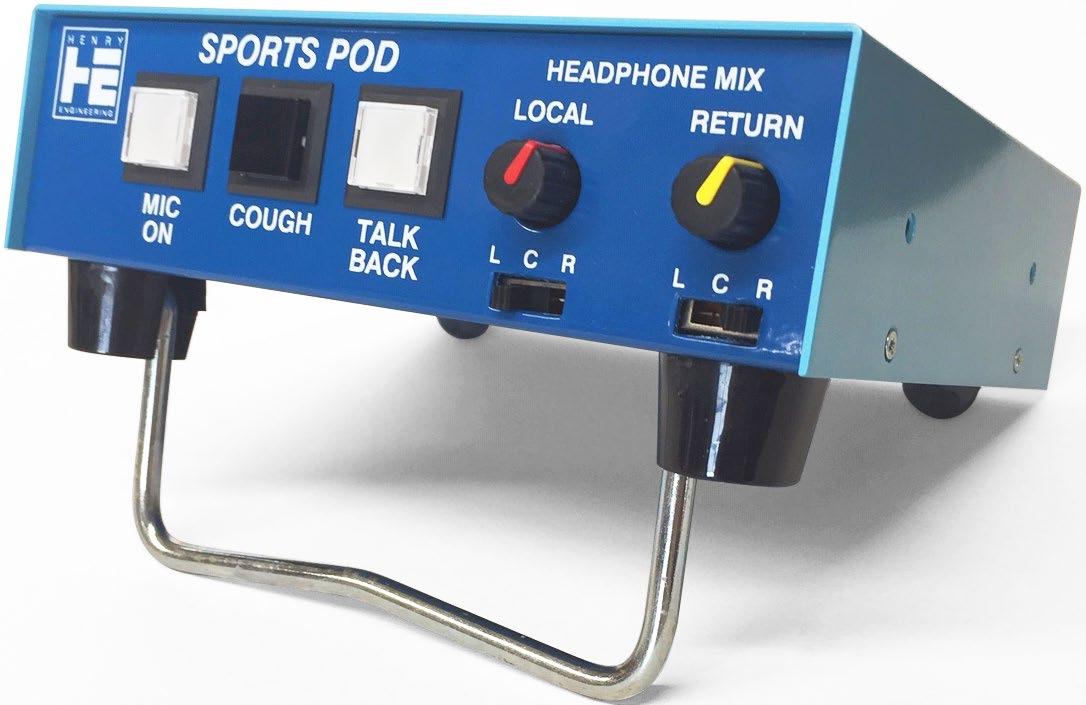
Henry Engineering’s popular Sports Pod and Talent Pod II units are now available with an optional Retractable Desk Stand.
“This new design positions the unit for easy use and viewing, and can retract for storage or transport,” it said in its announcement. “The Desk Stand can be used with any Sports Pod or the new Talent Pod II from 2020 or later.”
The Talent Pod is an announcer’s mic and headphone controller for use by talent at a remote broadcast. It is suitable for use at sporting events and on-location broadcasts.
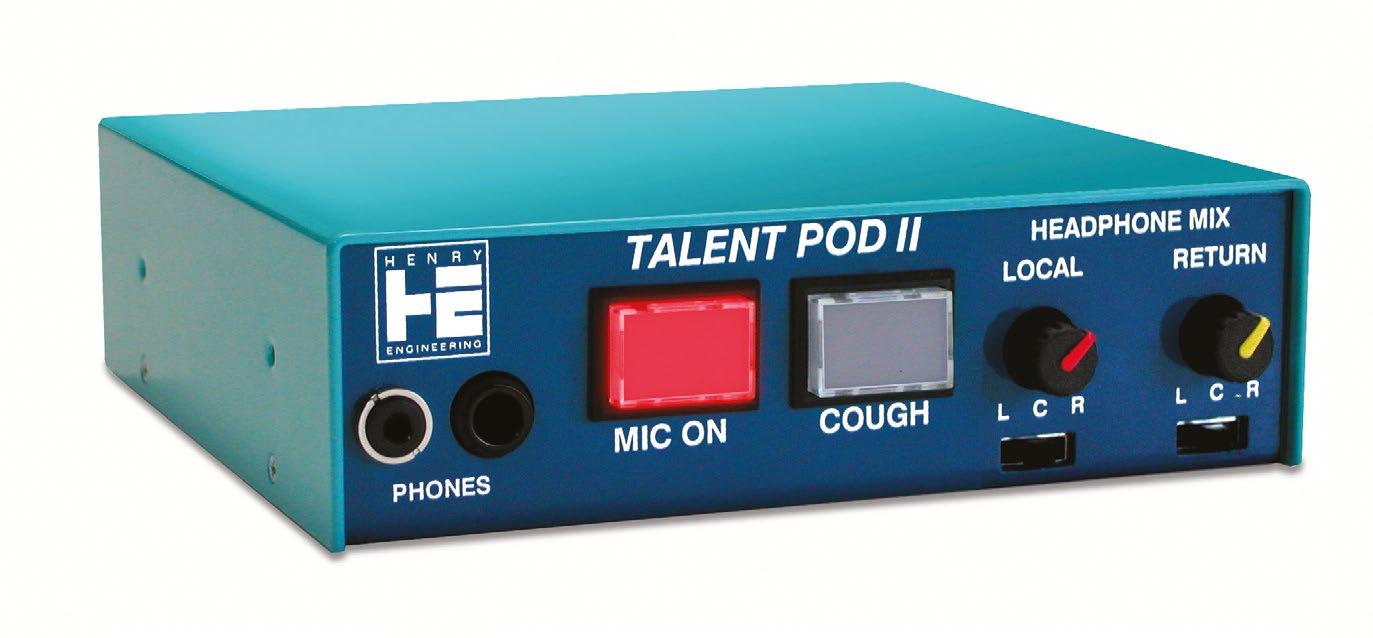
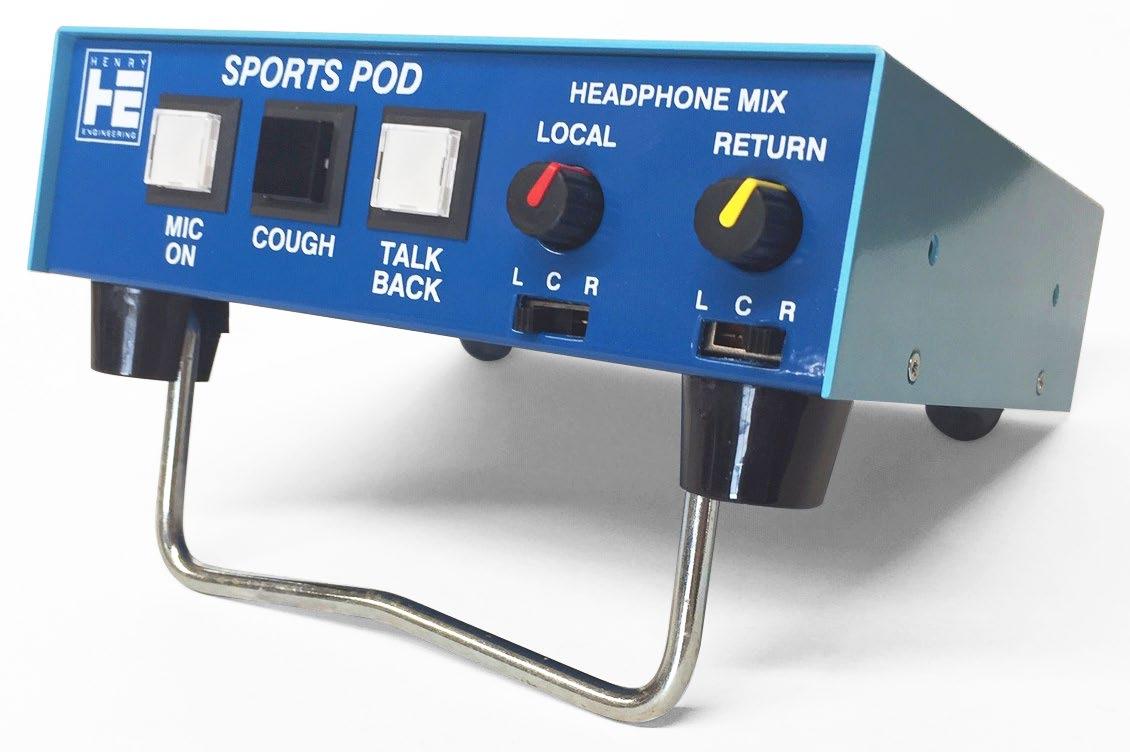
The new Talent Pod II includes two significant improvements to the original version. First, mic audio is now switched on/off using electronic switching. This eliminates any chance of pops or other switching noises, especially when used with condenser microphones; it also improves reliability.
Second, the Talent Pod II’s main microphone output is now at line level. This reduces the chance of hum or noise pickup when there is a long run of cable from the unit’s output to the audio console. The user can set the output to a mic-level output if this is preferred.
Info: www.henryeng.com.
People rely on us to broadcast their Brigham Young University games when they can’t be there in person. So we rely on several vendors to make sure those broadcasts are heard.”
Barry Squires, senior broadcast engineer for BYU Broadcasting, says one such vendor is MaxxKonnect Prioritized Wireless.
“We’ve been trusting their service for some time now. A lot of services will provide signal during initial before-game tests. In the real world, after 65,000+ Cougar fans show up with their smartphones, that bandwidth is chewed up real fast. Broadcasts can drop, or not connect at all.” With MaxxKonnect Wireless, a session is prioritized above that clutter.
“In the times we have secure wired internet, we may use that as primary, but we’ll set up the MaxxKonnect Wireless to be a seamless failover backup,” Squires said.


“Typically, when we’re on the road and when we’re ‘given’ internet access, we’re not always sure of the reliability, especially when it’s Wi-Fi. MaxxKonnect Prioritized Wireless becomes a gamesaver. I understand you could use most popular codecs or even a cellular router/modem to connect with your equipment, such as laptops, but we put the MaxxKonnect Wireless Sim cards right in our Tieline ViA

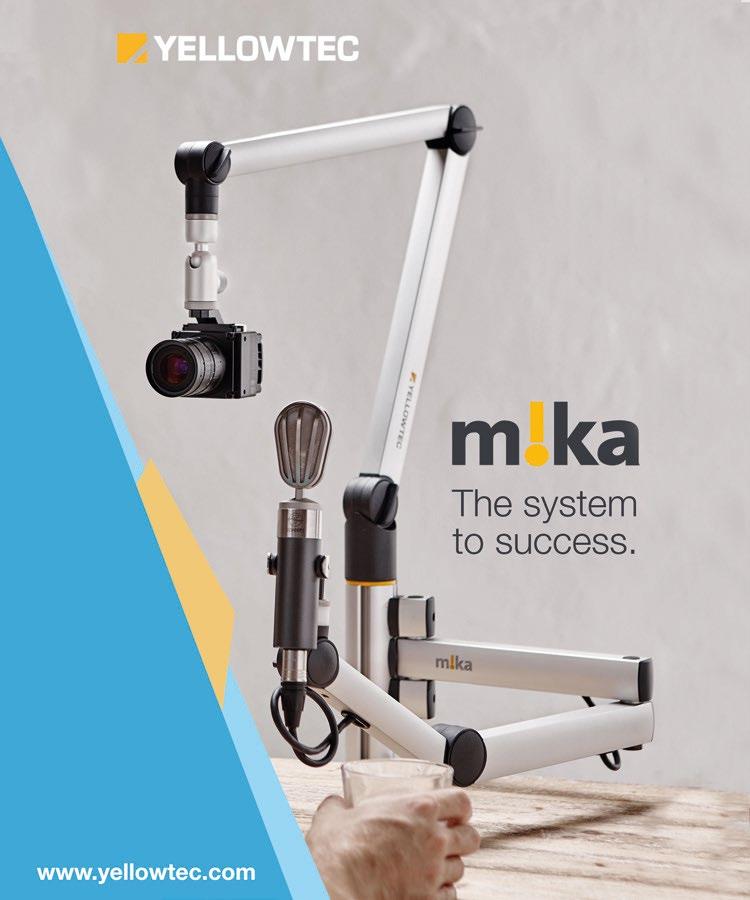
Yellowtec says its iXm Recording Mic offers a great way to capture voice recordings at loud sport events.
More Info
The MaxxKonnect Group https:// maxxkonnect. com/
Right Greg Wrubell, BYU Sports Radio announcer, uses Tieline’s ViA remote codec with MaxxKonnect Prioritized Wireless Service.
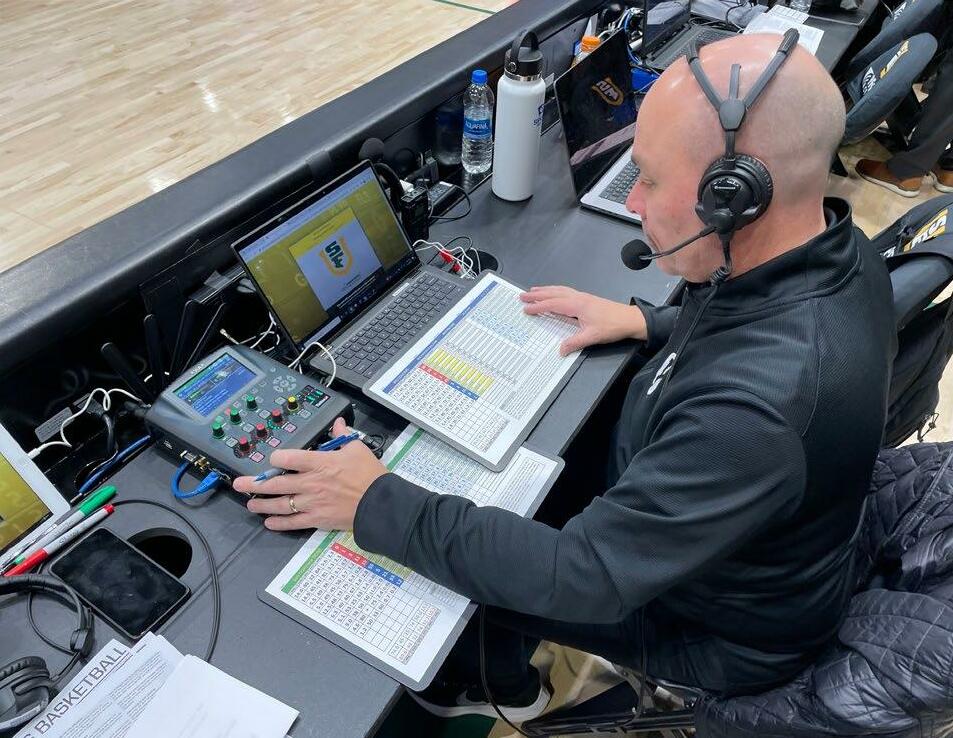
cellular modem. We just initialize the cellular connection on the ViA, which provides solid reliable internet connectivity.”
MaxxKonnect says the service is suitable for sports, field ENG, live reporting — including big events like election night or inaugurations — as well as remote control of equipment such as transmitters. Squires said he would recommend the service for anyone who has experienced reliability issues at events.
“It guarantees professional recordings with highest intelligibility of speech, even though the crowd next to you is going crazy when celebrating the recent goal of the local team,” the company states.
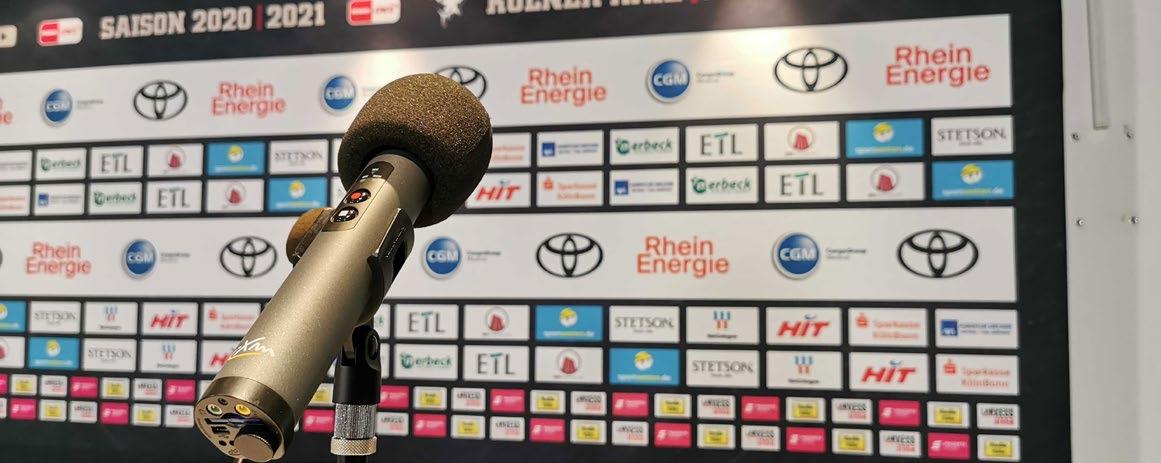

“International broadcast companies as well as less experienced newcomers benefit from the iXm’s integrated leveling solution. Even in extremely noisy environments, LEA is the key. The onboard Level Energy
Arbitration gives your voice recordings perfectly leveled audio in any location, with no post-production needed.”
Various dynamic and condenser heads are available for the iXm. A USB 2.0 port is provided for downloading recordings, recharging the internal battery and configuring the mic with personal preferences. Other features include an SD card slot, integrated headphone output, 3.5 mm jack for recording line levels and a connector for an optional speed charger.
Info: www.yellowtec.com.

Telos says its Infinity IP Intercom merges voice communication and contribution audio on one IT backbone employing standards-based VoIP and AoIP transport.
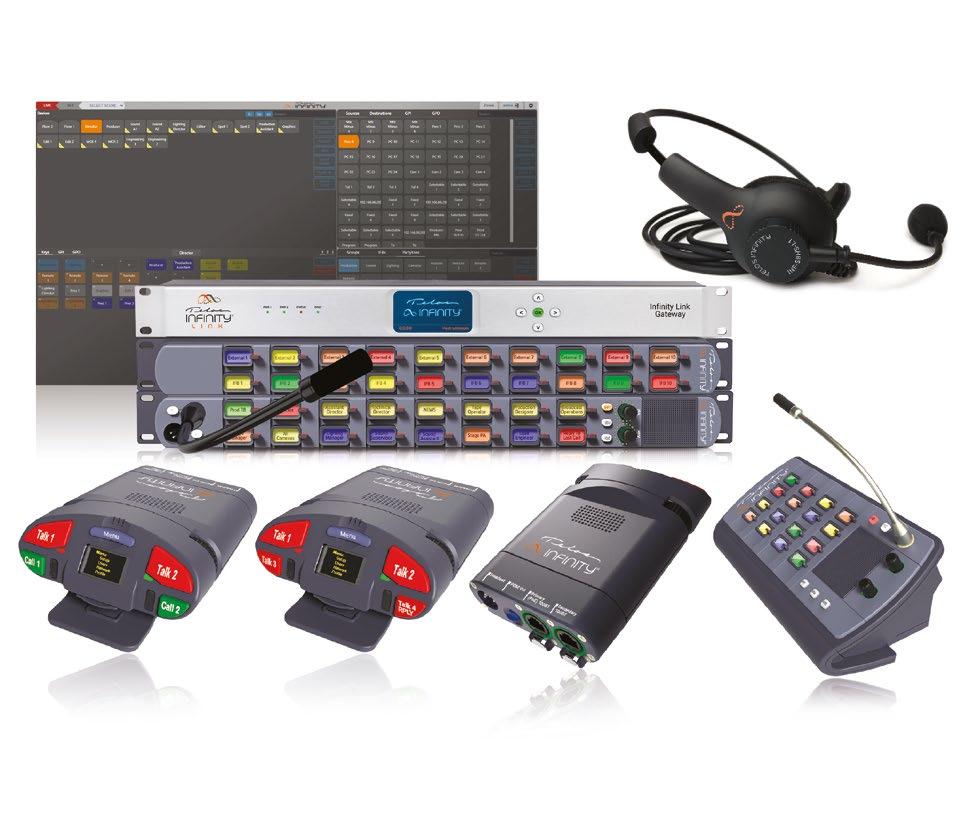
“Because it is matrix-free, you can add plug-and-play networked hardware and software devices to the system as part of a planned or ad-hoc change, without ever worrying that you might exceed the number of available ports on a matrix,” the company says.
It’s available in hardware form, but also for use at home, on-premises, site-to-site or in the cloud using the Telos Infinity VIP, or Virtual Intercom Platform.
“VIP delivers sophisticated comms virtually, making cloud-based media production workflows available on any device: smartphone, laptop, desktop or tablet. Users can even use third-party control devices, like Elgato’s Stream Deck, to control Telos Infinity VIP.” Users of Axia Quasar consoles and Axia Pathfinder Core PRO have remote control of their virtual
or hardware intercom panels integrated in those products.
Telos Infinity IP supports Livewire+ AES67, allowing for interoperability with other Telos Alliance AoIP products and those from other manufacturers that support AES67 or SMPTE ST 2110-30.
Software and firmware version 2.3 are available for download, providing added power and features.
Info: www.telosalliance.com/contact-sales
On-Hertz now offers Voice Booth, a cloud-based solution for journalists and podcasters to record interviews.
Through an online hub, users access their Voice Booth from their browser. “Besides the traditional user/password combination, the platform supports authentication through SSO/SAML (MS Active Directory, Google SSO etc.), easing the users’ and rights management for large organizations,” the company says.
The main user interface is designed to be intuitive for non-technical users, while for power users there are the sound processing capabilities of Artisto, On-Hertz’ audio engine, which includes studio-quality EQs and Dynamics on each channel.
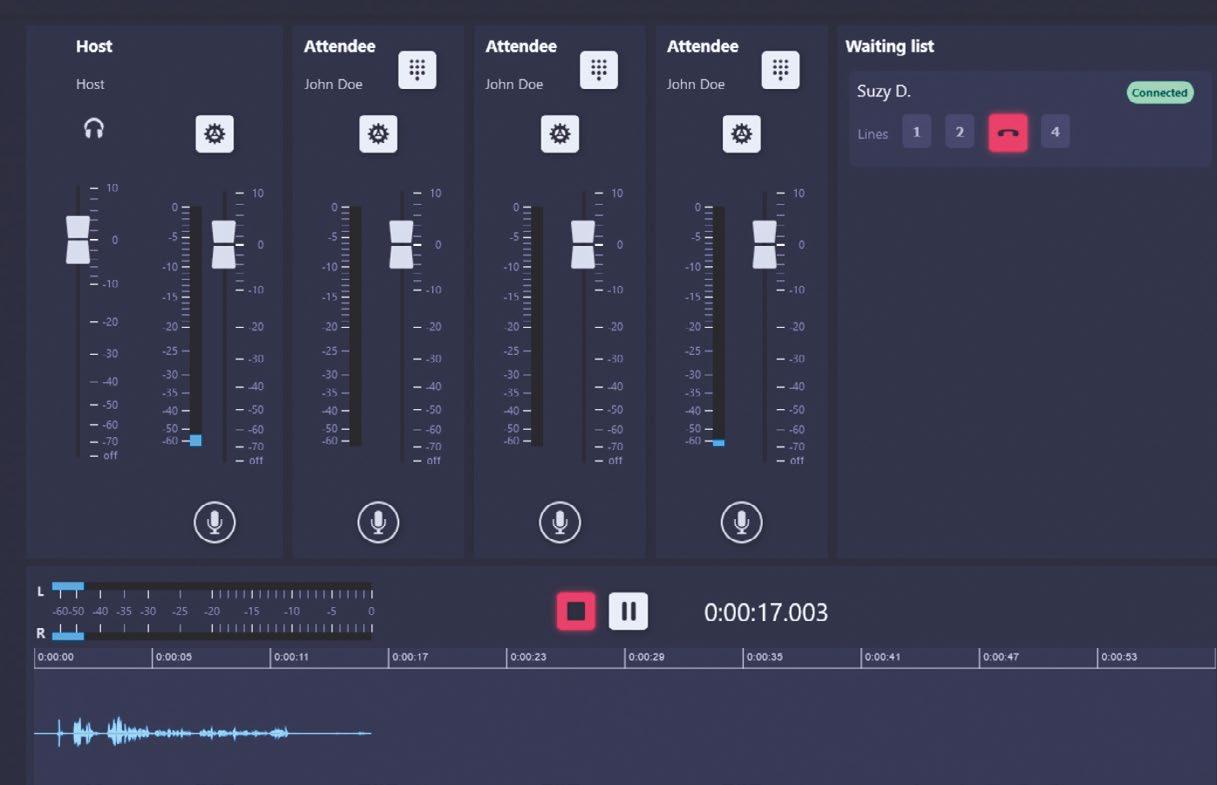
“Besides the host, the Voice Booth allows up to three remote contributors through SIP, for calls to regular phones, or through webRTC for high-quality web-based interviews.” The guest receives an invitation and a personal link to a web page that can be opened on a smartphone or computer.
On-Hertz highlights its ability to integrate into larger workflows. “Thanks to its complementarity with Artisto, complex audio workflows can be created and adjusted in minutes rather than weeks.” The Voice Booth scales in a few clicks and new instances can be started quickly.
Info: www.on-hertz.com/voice-booth
Sports clubs need to deliver live audio commentary and stadium atmosphere reliably. Ferncast now offers the ACS Mini Reporter powered by aixtream software. (ACS stands for Audio Codec Server.)
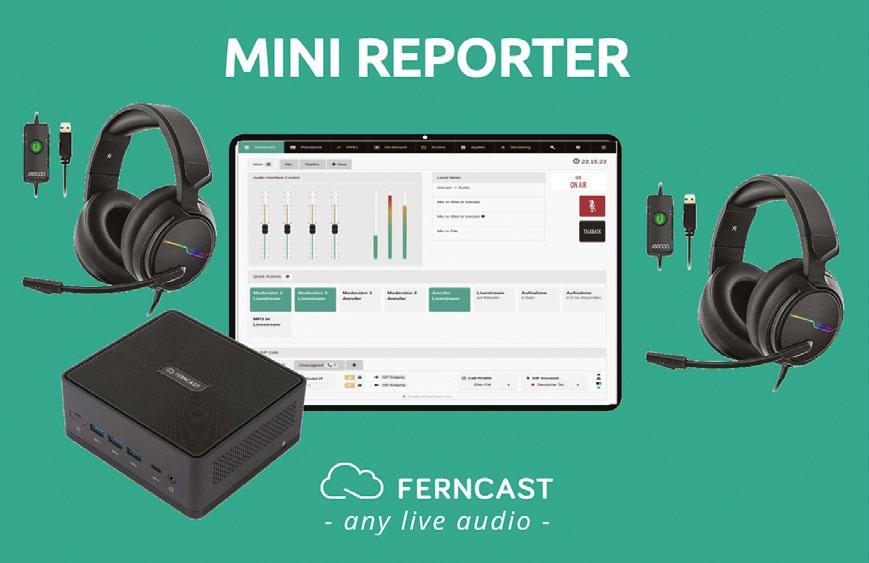
With widespread internet access, more clubs now make commentary available on the internet, often as Icecast streams accessible on their website or other internet platform. This approach may be of particular interest to smaller teams that may not be able to afford large-scale broadcasting.
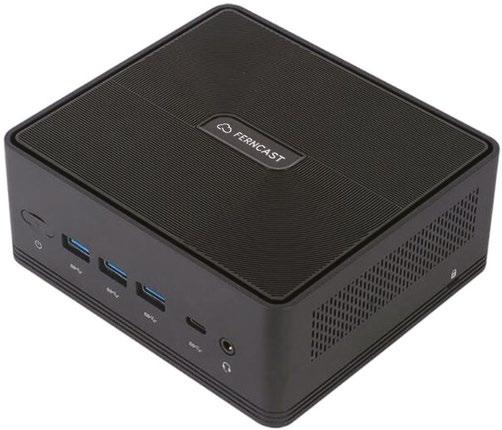
The ACS Mini Reporter is a small, portable audio encoder and streamer with the form factor of a mini PC. Using USB headsets, commentators can record program and listen to feedback with a minimum of hardware. Live commentary and atmosphere are input into the Mini Reporter via the headset microphones, then encoded and streamed to an Icecast server.
Depending on requirements of the club, other workflows can be used. For instance, Ferncast says German football club 1. FSV Mainz 05 requested the functionality to add callers to the conversation. This included adding the caller audio to the Icecast stream.
“For other clubs, managing an audio streaming encoder on-site may not be an option, so instead they use SIP or WebRTC communication to contribute the commentary to a centrally located ACS Mini Reporter, which then relays the audio to the Icecast server,” Ferncast stated.
Info: www.ferncast.com
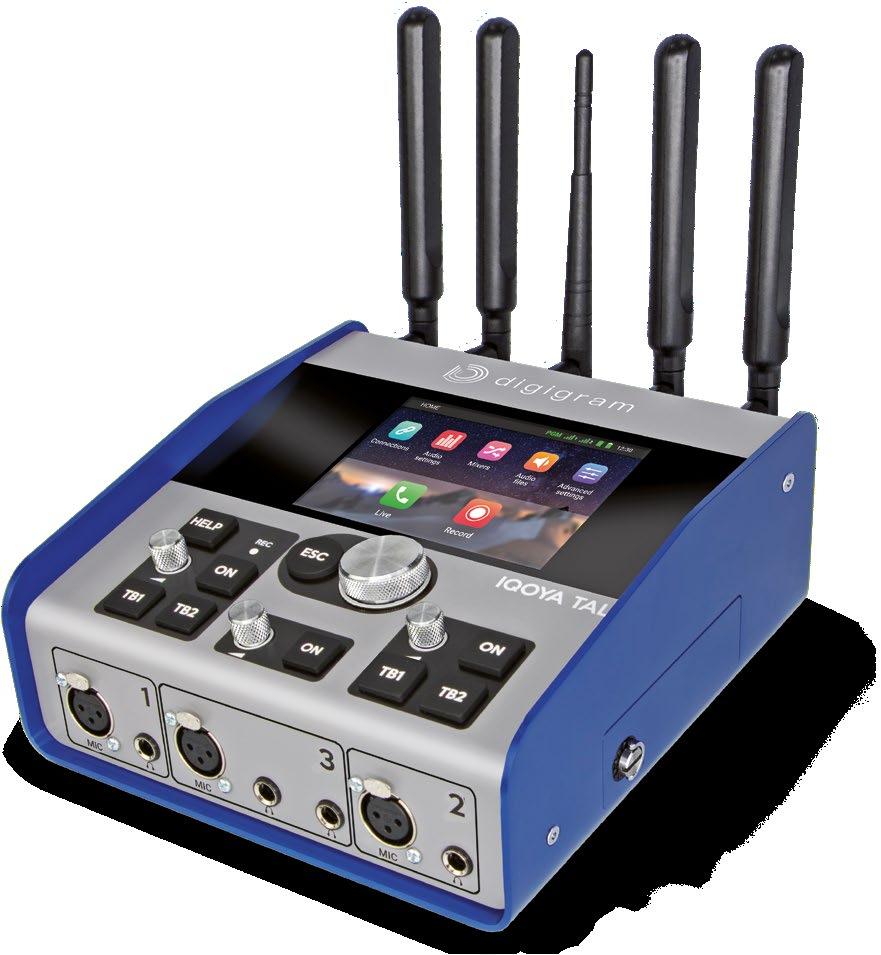
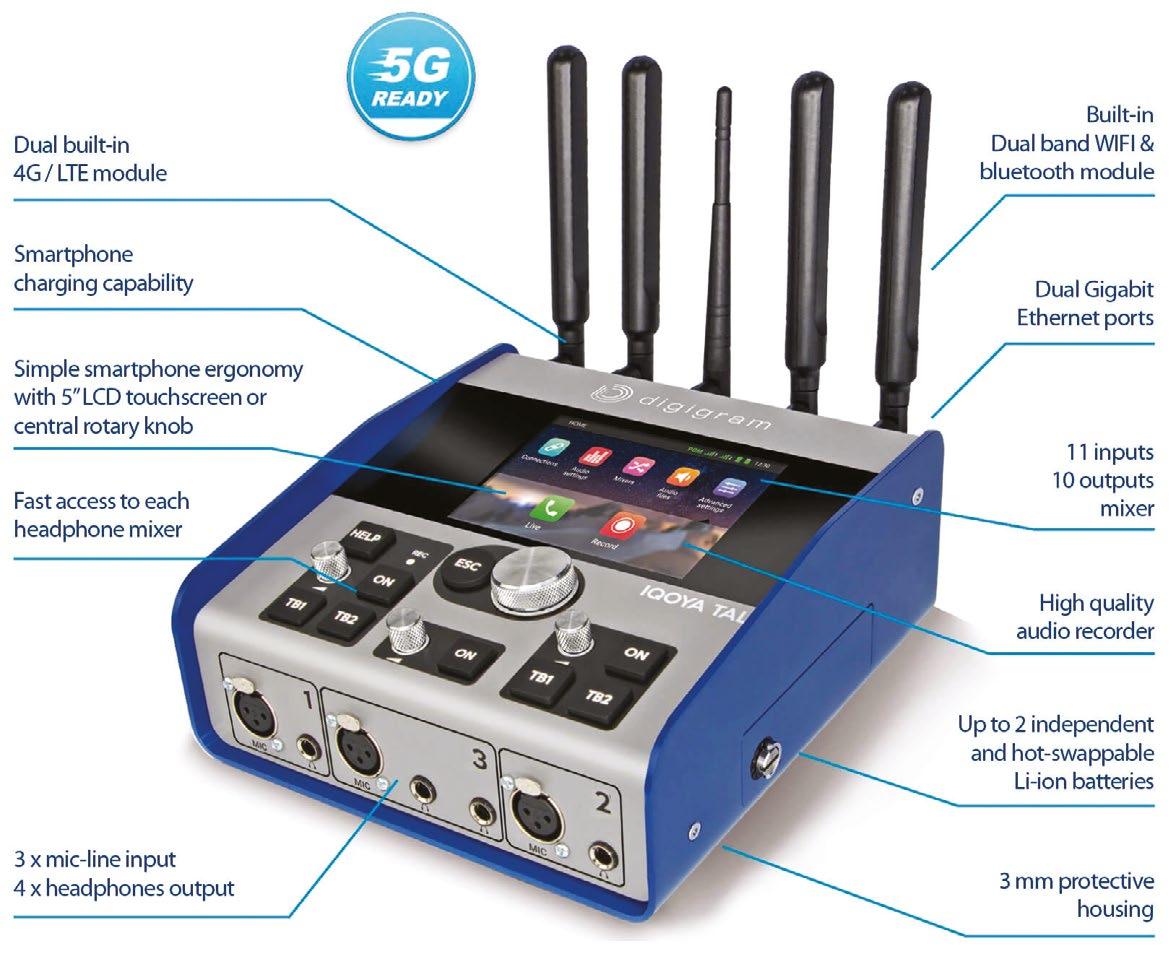
Digigram says its Iqoya Talk portable IP audio codec is a portable production studio, designed to support live remote broadcasting for radio and TV. Applications include sports, street interviews, events and talk shows.
The manufacturer highlights an intuitive user interface — “as simple as a smartphone” — that enables remote reporters to perform key actions in two clicks.
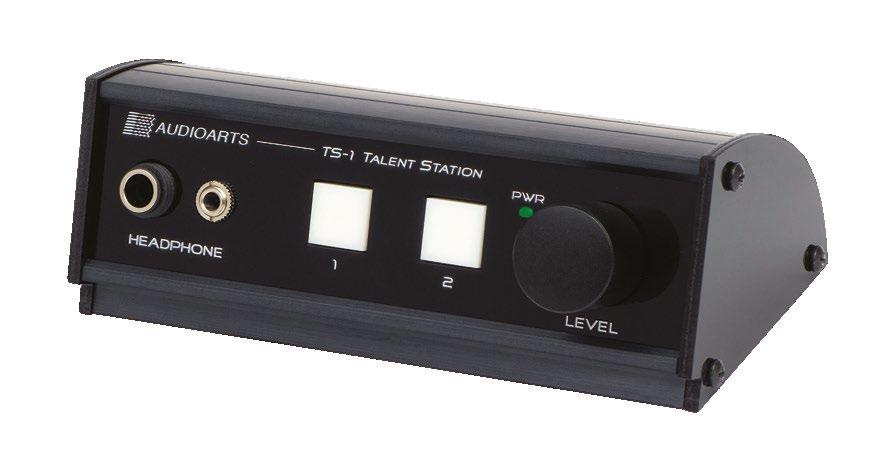
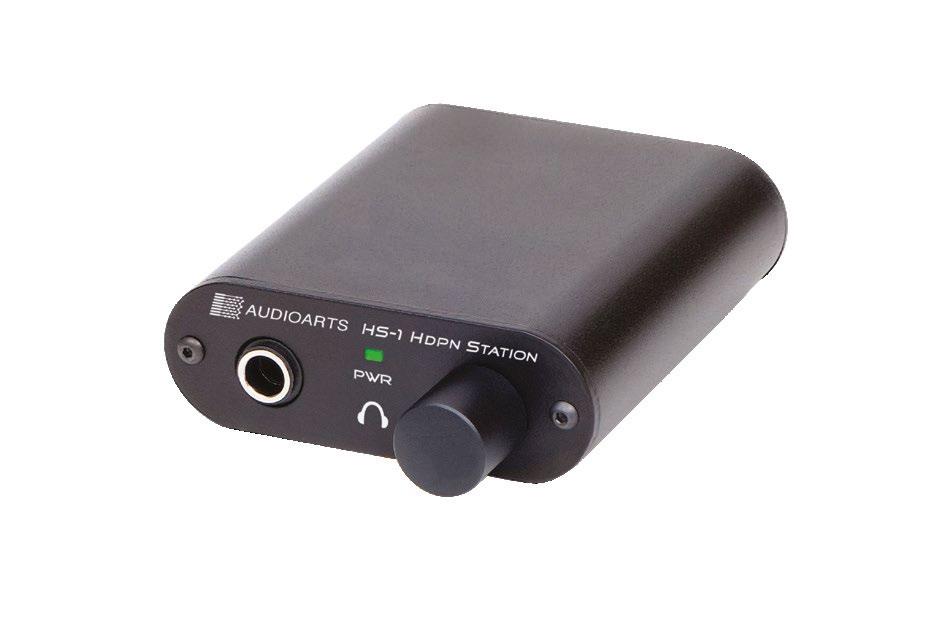
Capable of supporting four journalists or guests, it connects to any third-party codec, and handles connections as varied as WiFi, LAN, 5G and WAN. Features include a high-quality audio recorder, embedded mixer, dual built-in 4G/LTE module, WiFi module, dual Gigabit Ethernet ports, three mic/line inputs, four headphone outputs and two independent SIP connections for talkback and program. It can run on two hot-swappable, independent Li-ion batteries for up to 12 hours.
Digigram products are distributed in the Americas by Synthax.


Info: https://digigram.synthax.com

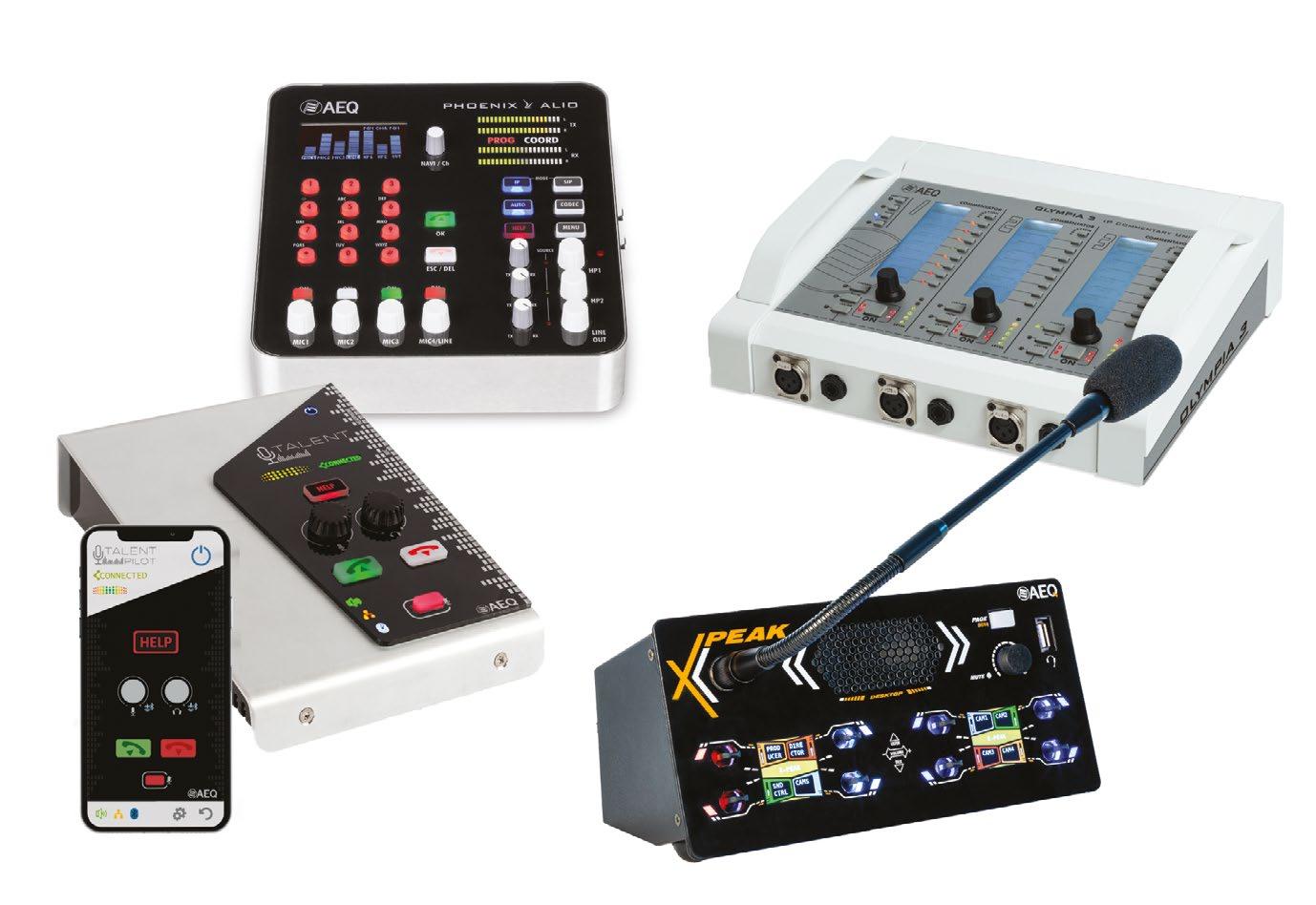
To its line of products suitable for sports coverage, AEQ has added matrix-free intercom systems.
“Xpeak offers all the quality of our intercoms but without the need for a central matrix,” it states. “Thanks to its advanced virtual network system, Xpeak is perfect for remote production and when part of the team is working remotely. Connections and start-ups are simplified to a maximum. Equipment and terminals are automatically located, even without being on the same network, allowing for simple and agile interconnections.”
In codecs, AEQ highlights its ALIO and Talent for remote mixing, processing and communications.
ALIO is a portable codec with dual stereo channels. It can connect to base equipment from most manufacturers via the SIP communication protocol, in accordance with EBU recommendation N/ACIP Tech 3326.
Talent is a desktop stereo audio codec. The front offers mic and headphone level controls, level indicators, call/answer buttons, hang up and HELP, a button to draw the attention of the station operator. Using the Bluetooth connection or an auxiliary input, event
AETA Audio Systems recently launched the Scoop6 compact codec, shown.
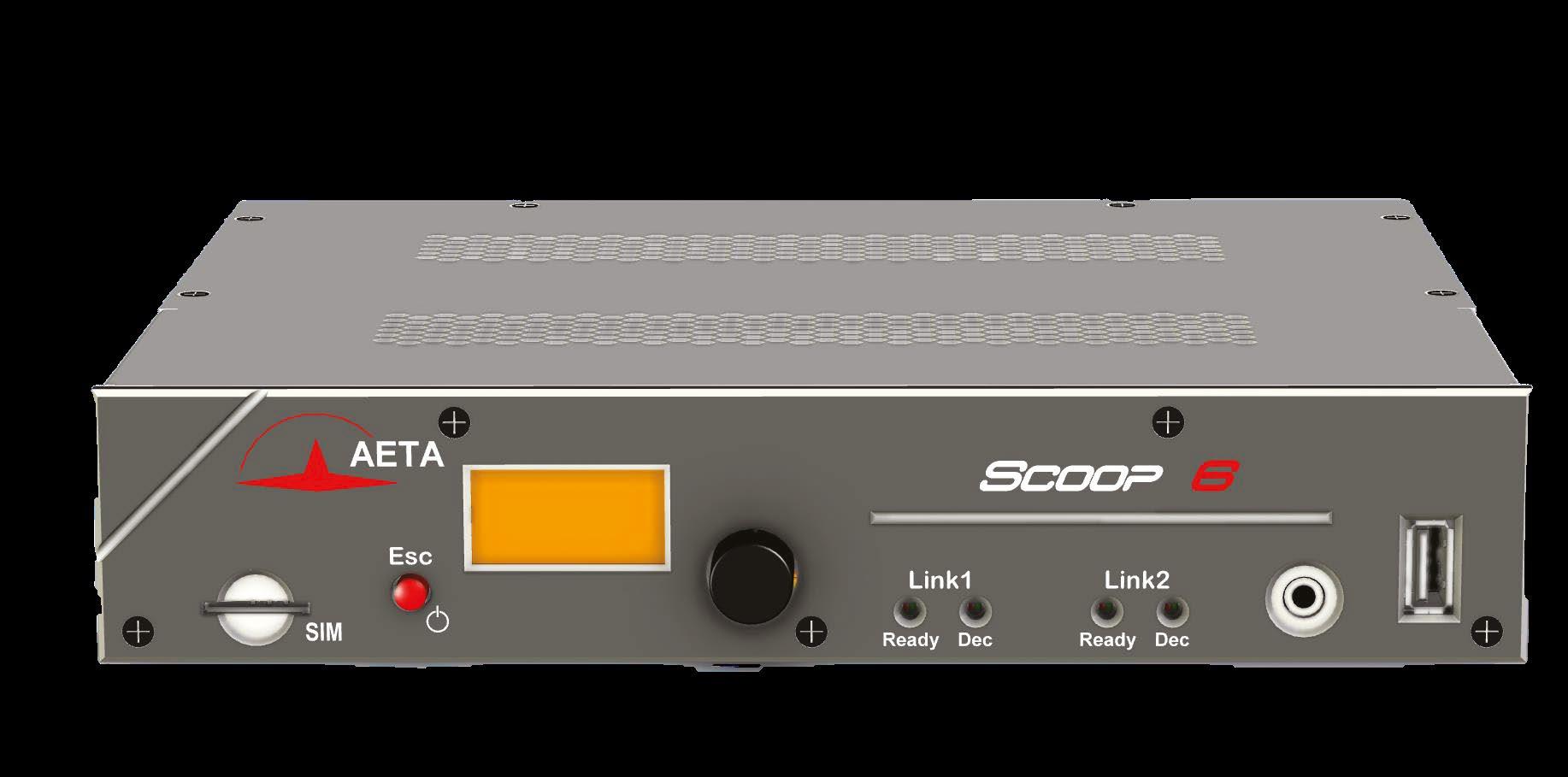
It says this new model follows in the footsteps of the Scoop5s rackmount codec but is more compact and allows users to combine many codecs into one rack space, “even squeezing into crowded MCRs as well as facilitating remote broadcast in OB vans, for example.”
Scoop6 supports multiple network interfaces such as two Ethernet ports as well as 4G and 5G connections. The unit itself is a half-rack width. Features include offers redundant power supply for safety and compatibility with AES67 (Dante or Ravenna) analog or AES3.
The company also unveiled ScoopyFlex, a portable codec that comes with a docking station to let users turn it into a full-fledged
commentary can be sent from the microphone and mixed with the PA sound of the event. With the help of apps, you can use your phone as an external microphone for an interview or binaurally capture ambient sound.
For AoIP-networked commentary at big sporting events, the company offers AEQ Olympia 3.
commentary unit. Features include 5G capability, embedded Bluetooth and Wi-Fi, as well as two mobile network connections. And AETA added 5G capability to its ScoopFone audio codec, with the same look and feel of the ScoopFone4G but now offering the ability to connect to 5G, 4G and 3G networks.
Info: www.aeta-audio.com/en/





In the article “Xperi Cautions Against One-Stop Approach to Receivers” (radioworld.com) the company is quoted as telling the FCC: “As more radio stations convert to digital operations, a minimum product requirement including digital radio capabilities for car and portable AM/FM will ensure continued efficient use of the AM/FM band and the services they provide.”
To which I say no! Stop! We don’t want or need another HDTV-style forced government conversion to radio receiver designs.
In our marvelous American capitalist economy, the all-seeing, all-knowing “invisible hand” of the marketplace should be allowed to determine radio receiver requirements. Consumers avoided purchase of IBOC-capable radios in droves. IBOC is a flop, a la AM stereo decades ago. AM stations converting to digital are numerically miniscule.
When American consumers demand digital AM, manufacturers will respond with gusto with new digital radios. No need for the heavy, dead hand of government to force radio design decisions.
James B. Potter Kimberling City, Mo.Regarding Paul McLane’s editorial “Don’t Sell That License” in the Oct. 26 issue:
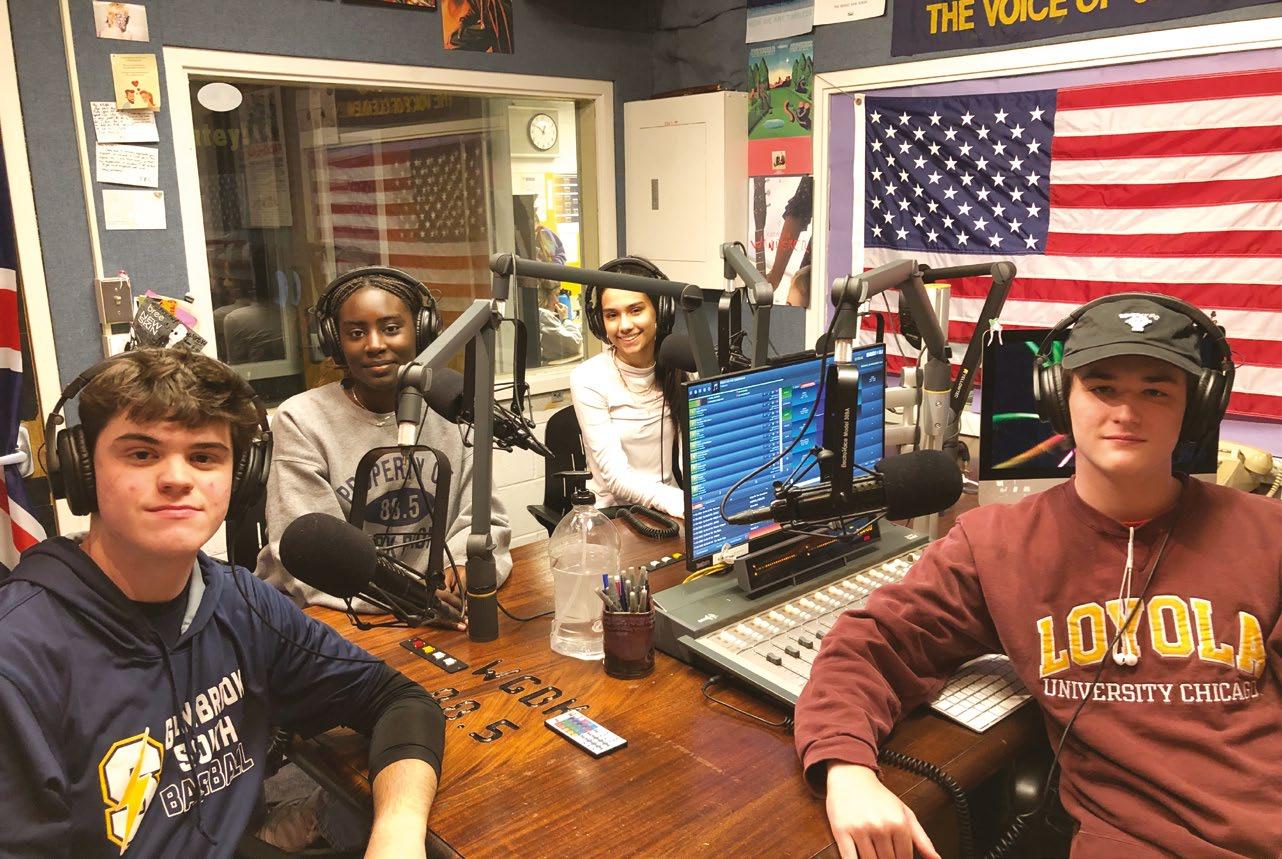
As a high school broadcasting teacher, I am lucky that our district owns and operates the student-run FM station WGBK 88.5 FM. License ownership is incredibly important when teaching young people the value of service to the entire community.
We cannot neglect that radio is the most inclusive electronic medium on the planet. Radios are inexpensive and easy to maintain. Radio service is free. Radio can reach many quickly. Radio does not care what you look like or whether you can read and write. Radio is the most consumed electronic medium on the planet. More people have radios than have cell phones, televisions or computers.
We live in an era when many of our youth in the United States are consumed by their phones, social media, streaming services and “disposable” televisions. It is
Above Senior station managers in the main studio of WGBK(FM) in Glenview, Ill. The radio program at Glenbrook South High School celebrated its 40th year on the air in 2022. From left: Charlie Bickel, Yemisi Olujare, Aziza Sayied and Matthew Poulton.
essential to remind them (and everyone, for that matter) that radio only appears obsolete when bathed in the light of an iPhone.
Educational institutions need to do a better job of integrating radio into their overall curricula if we really want to teach young people about inclusivity, public service and the value of electronic communication.
Daniel Oswald, Ph.D. Fine Arts/Broadcasting Faculty Advisor, WGBK(FM) Glenbrook South High School Glenview, Ill.Re “Why Are Some Automakers Ditching AM Radio” (radioworld.com): I’d much rather have reliable AM radio in my gasoline-powered vehicle than I would an unreliable EV. The radio in my car stays on AM all day. The band should be protected, it’s a wonderful, viable medium.
Turning it down to 3 kHz was a stupid idea. Chinese wallwarts, satellite tracking systems, LED traffic signals — it has taken years to destroy the AM band, it may take a few to bring it back.
Sure, AM is low-fidelity, but it’s dependable. In an emergency, AM goes virtually anywhere, FM doesn’t. Satellite is limited by heavily overcast skies and rain fade. Bring AM radio up to the standards it had. And put on some decent music and programming.
Doug Fields“The Vinyl Grotto Radio
Show”