software, PACSystems RSTi-EP network adapter, communication card, digital input card for alarm signals, and QuickPanel+ HMI. CPL410 combines real-time, deterministic control and an edge-enabled execution environment in one platform. It collects data from the client’s facility and wellheads via various communications protocols, and transfers data via a broadband cellular gateway and Azure MQTT to a cloud-based service. In addition, CPL410 provides geolocation and real-time data tagged with relevant asset information, including datasheets, install and maintenance records, and photos. This enabled a robust data trail that increases the client’s chances for successful credit verification, and avoids costly, onsite visits, manual data recording and error corrections. It also allows CarbonAi’s data management platform to integrate and manage GHG reduction data for quantifying and verifying carbon credits in an auditable format. In case of intermittent communication failures, CPL410 also stores its data, and forwards it when a connection is available. “Automating data transfers from remote sites minimizes potential human errors that can be costly to carbon-credit projects,” says Ben Watts, CEO at Drakken. “It also streamlines the process, and reduces time and costs.”
Pick plates worth spinning At its most basic, IIoT is about forming connections that deliver data and allow beneficial decisions. However, as links, networks and data multiply, some kind of prioritization and triage is necessary, so users can focus on the most valuable tasks, and this likely means reevaluating and updating established connections, processes and infrastructures. “For us, IIoT means more techniques for getting the right information to the right systems and people at the right time. What’s different now is we’re solving more problems in larger chunks over the past 10 years because we got better at getting more sensors and their data into storage,” says Chris Herrera, head of API and interoperability at Seeq (www.seeq. com). “Now, we have all kinds of data lakes that we’ve loaded everything into, but too often, we can’t find what we need. This is typically because IIoT and other networks are often so fragmented that a lot of data loses necessary context, especially as even more sensors, data and systems are brought online.” Herrera reports that similar difficulties are increasing on IIoT’s physical network levels, such as operating without enough bandwidth, so the network can’t ingest all the new data sources coming in. “There are a lot more plates to keep spinning now, and traditional, centralized infrastructures tied to specific network protocols or vendors are having a hard time surviving,” adds Herrera. “The primary problem is more data also means increasing complexity and more required maintenance. Because Seeq is at the decision-intelligence layer, we see these issues as a decision- velocity problem, and not just an infrastructure issue.” www.controlglobal.com
2606CT20-26_cover story.indd 21
Emerson and Drakken
COVER STORY
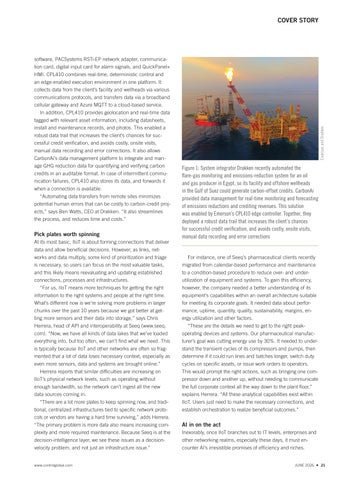
Figure 1: System integrator Drakken recently automated the flare-gas monitoring and emissions-reduction system for an oil and gas producer in Egypt, so its facility and offshore wellheads in the Gulf of Suez could generate carbon-offset credits. CarbonAi provided data management for real-time monitoring and forecasting of emissions reductions and crediting revenues. This solution was enabled by Emerson’s CPL410 edge controller. Together, they deployed a robust data trail that increases the client’s chances for successful credit verification, and avoids costly, onsite visits, manual data recording and error corrections
For instance, one of Seeq’s pharmaceutical clients recently migrated from calendar-based performance and maintenance to a condition-based procedure to reduce over-and under- utilization of equipment and systems. To gain this efficiency, however, the company needed a better understanding of its equipment’s capabilities within an overall architecture suitable for meeting its corporate goals. It needed data about performance, uptime, quantity, quality, sustainability, margins, energy utilization and other factors. “These are the details we need to get to the right peak- operating devices and systems. Our pharmaceutical manufacturer’s goal was cutting energy use by 30%. It needed to understand the transient cycles of its compressors and pumps, then determine if it could run lines and batches longer, switch duty cycles on specific assets, or issue work orders to operators. This would prompt the right actions, such as bringing one compressor down and another up, without needing to communicate the full corporate context all the way down to the plant floor,” explains Herrera. “All these analytical capabilities exist within IIoT. Users just need to make the necessary connections, and establish orchestration to realize beneficial outcomes.”
AI in on the act Inexorably, once IIoT branches out to IT levels, enterprises and other networking realms, especially these days, it must encounter AI’s irresistible promises of efficiency and riches. JUNE 2026 21
5/26/26 12:58 PM