














If the increasingly digitalized Industrial Internet of Things can take any form, then it’s more important than ever to find solutions that fit your needs
THE UNSUNG HERO OF CARBON CAPTURE IS YOUR PID LOOP LYING TO YOU?
FIXING A FLAWED PROCESS MODEL





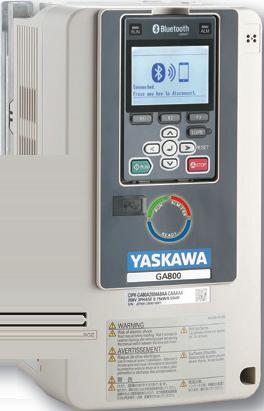
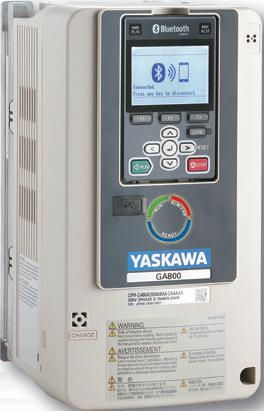
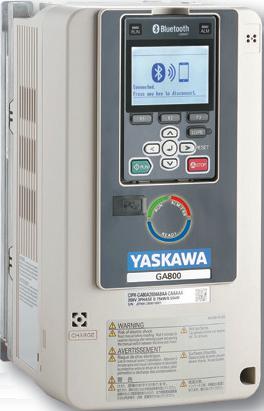
Need your variable speed drive to have an easy and problemfree connection to your favorite Ethernet or Fieldbus network? Yaskawa takes your desire for control and data seriously.
Our GA800 is no exception. It provides data-rich connectivity with all major industrial networks. The Industrial “Internet of Things” is here. Let Yaskawa help satisfy your appetite for it.






Your days are complicated enough. Let us help simplify them. Call Yaskawa today at 1-800-927-5292.






















SCAN HERE to learn more



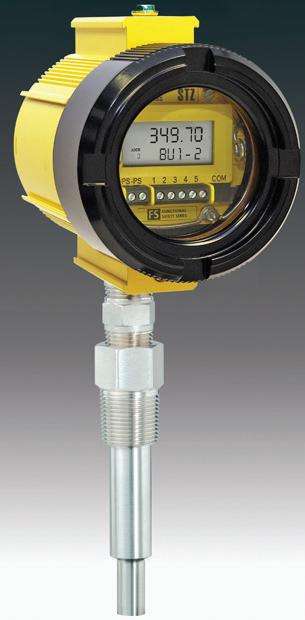
No matter what the dimensions of your production system are: VEGA has the right level and pressure instrumentation to fine-tune your processes. What can you count on? With VEGA, you’ll be talking to real people. People who know what they’re doing and what the best solution for you looks like. People who are there for you. From the first advisory session to 24/7 standby support. Anytime and anywhere. Everything is possible. With VEGA.
Jim Montague

9 EDITOR’S PAGE
AI pilot era crosses a threshold It’s no longer whether to adopt AI, but separating those who can execute from those who can’t
10 OTHER VOICES
Advancing process safety in an automated press brake work cell
Why safeguarding was treated as a core design requirement rather than a compliance checkbox
12 ON THE BUS
Operations and the seven dwarfs
Operators are critical stakeholders in instrumentation & controls (I&C) work
13 WITHOUT WIRES
Continuing evolution of SCADA
SCADA is evolving from slow, limited communication systems to high-speed, seamless global networks
14 INDUSTRY PERSPECTIVE
YNOW2026 orchestrates a system of systems for industrial leaders
Success depends on how well companies can stay “in tune”
16 EXCLUSIVE
Double-duty, wireless gas monitor
Rosemount 928 uses hotswappable sensors and power module to measure combustible and toxic gases
17 IN PROCESS
CSIA community comes together
AspenTech recommits to innovation and service
27 EXCLUSIVE
Wireless asset monitoring gets IIoT ducks in a row
Synchros asset monitoring platform helps digitalize inspection points, reduce manual tasks and improve operational decision-making
28 INDUSTRY PERSPECTIVE
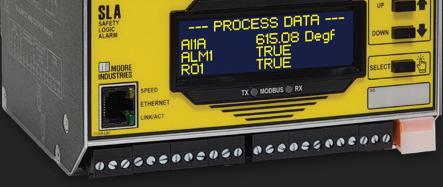
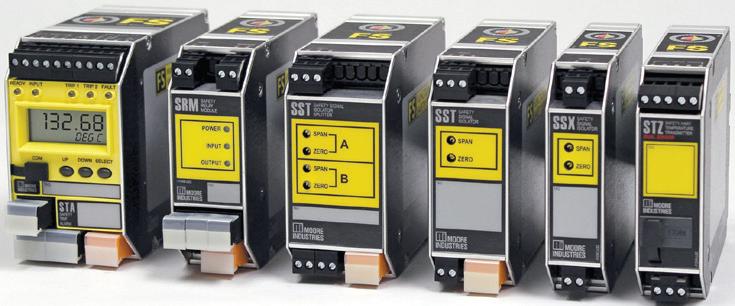
Moore Industries adds EtherNet/IP to bridge HART instrumentation and modern control systems
The HES connects HART field instruments to Ethernetbased control and asset management systems
34 DEVELOP YOUR POTENTIAL
Correcting imperfection in process models
The goal of a process model is usefulness for its purpose, not perfection
36 EXCLUSIVE
Stronger-than-steel magmeter liners
PEX liners for Rosemount magnetic flowmeters provide longer-lasting, PFAS-free protection in chemically aggressive conditions
37 RESOURCES
Lessons in level
Control’s monthly resources guide
38 ROUNDUP
Future-facing HMIs and interfaces
New configurations, connections and protections prepare displays for digitalization
42 CONTROL REPORT
AI underbelly
Most miracles need lots of work behind the scenes






















Endeavor Business Media, LLC
30 Burton Hills Blvd, Ste. 185 Nashville, TN 37215
800-547-7377
EDITORIAL TEAM
Editor in Chief
Len Vermillion lvermillion@endeavorb2b.com
Executive Editor Jim Montague jmontague@endeavorb2b.com
Digital Editor
Madison Ratcliff mratcliff@endeavorb2b.com
Contributing Editor
John Rezabek
Columnists
Béla Lipták
Greg McMillan
Ian Verhappen
DESIGN & PRODUCTION TEAM
Art Director
Meg Fuschetti
Production Manager
Rita Fitzgerald
Ad Services Manager
Jennifer George
PUBLISHING TEAM
Group Editorial Director
Keith Larson
630-625-1129
klarson@endeavorb2b.com
Group Sales Director
Mitch Brian 208-521-5050
mbrian@endeavorb2b.com
Account Manager
Greg Zamin
704-256-5433
gzamin@endeavorb2b.com
Account Manager
Jeff Mylin
847-533-9789 jmylin@endeavorb2b.com
Subscriptions
Local: 847-559-7598
Toll free: 877-382-9187 Control@omeda.com
EXECUTIVE TEAM
CEO Chris Ferrell
COO
Patrick Rains
CDO
Jacquie Niemiec
CALO
Tracy Kane
CMO
Amanda Landsaw
EVP Manufacturing & Engineering Group
Lisa Paonessa
VP of Content Strategy, Manufacturing & Engineering Group
Travis Hessman
Jesse H. Neal Award Winner & Three Time Finalist
Two Time ASBPE Magazine of the Year Finalist
Dozens of ASBPE Excellence in Graphics and Editorial Excellence Awards
Five Time Winner Ozzie Awards for Graphics Excellence
Industry no longer debates whether to adopt AI. It’s separating those who can execute from those who can’t
DON’T ASK ME how old I am, but let’s just say I remember the days when my coworkers and I sat around conference rooms wondering if we should invest time and energy into developing a strategy for “the Internet thing.” I wonder now how we could have ever questioned it. This is where we are when it comes to digital transition in industry. We’re long past the “should we” stage, and well into the “why didn’t we do this sooner” stage. And, artificial intelligence (AI) only accelerates the transition for everyone.
Rockwell Automation released its “2026 State of Smart Manufacturing Report,” which tracks the pulse of global manufacturing. This year, the headline is that digital transition is no longer optional, and AI is what’s making it happen. Its data suggests that industry has left the pilot era of AI transformation behind.
Drawing on 1,560 decision-makers across 17 countries, the report reveals that companies are no longer gathering in those conference rooms—or video chats—to debate the transformation, but are executing it. In fact, 90% of respondents said digital transformation is essential for staying competitive, which Rockwell adds is the first year the industry has labeled it as a business requirement, not a strategic ambition.
As usually happens with game-changing innovations, the divide over AI adoption has moved from early adopters and those waiting for more maturity from the technology before acting to users and organizations that can operationalize it at scale, and those that are stalling under the weight of their own complexity.
Of the respondents to the survey, 59% are already using smart manufacturing technologies at scale, up from a field dominated by pilots just one year ago.
In addition, 34% of operations are AI-augmented right now, and projected to reach 54% by 2030, with AI and machine learning (ML) ranked as the top outcome driver by 48% of respondents. Meanwhile, 46% experienced a cyber-incident in the past year, and operational resilience plays a significant role in sustaining performance and continuity. And 43% of collected operational data is used effectively.
Rockwell calls this the the “execution era” for digital transformation and AI. I tend to agree. We’re in the stage where the winners aren’t the companies with the most advanced technology, but those who have built the systems, architecture and workforce to act on intelligence in real time.
Tomorrow may be a new day, but it’s already here.


LEN VERMILLION Editor-in-Chief lvermillion@endeavorb2b.com
“Tomorrow may be a new day, but it’s already here.”


JODY GILMORE
Jody Gilmore, Engineering Manager, Valin Corp.
BOBBY GEORGE
Bobby George, Account Manager, Valin Corp.
“From a process safety standpoint, stable material handling reduces the likelihood of disruptions that could require operator intervention.”
Why safeguarding was treated as a core design requirement rather than a compliance checkbox
AS MANUFACTURERS CONTINUE to modernize production environments, automation is increasingly evaluated not only for its impact on throughput, but also for its ability to reduce operational risk. This is especially evident in metal fabrication processes, where legacy equipment often requires operators to work near hazardous motion. In these environments, improving process safety is as critical as increasing productivity.
This dynamic was key to a recent project led by system integrator Bright IA (brightiatx. com), which involved developing an automated work cell for a press brake application. To support the initiative, Bright IA partnered with Valin (www.valin.com) to design and implement mechanical infrastructure and safeguarding systems to ensure performance and safety. The result was a system that demonstrates how thoughtful integration of automation and safety engineering can transform a high-risk manual operation into a controlled and efficient process.
The application focused on producing metal fenders for trailers, a process that historically depended on manual loading and unloading of a press brake. Operators were responsible for positioning metal plates into the machine and removing them after forming, a repetitive task that required constant interaction with moving equipment.
This approach presented several wellunderstood safety risks. Operators were routinely exposed to pinch points and crush hazards at the point of operation, while the physical demands of handling metal plates introduced ergonomic strain. Over time, fatigue could increase the likelihood of errors, further elevating risk. At the same time, the manufacturer faced ongoing challenges in recruiting and retaining workers for such physically intensive tasks.
The need to increase production while reducing risk to the workforce, and enabling them to move into supervisory roles, created a strong incentive to automate. However, the success of such an initiative depended on more than simply replacing manual labor with robotics. It required a deliberate effort to eliminate or control hazards through design, ensuring that automation would reduce risk rather than introduce new vulnerabilities.
Bright IA developed a robotic system to automate the loading and unloading of the press brake, effectively removing operators from direct interaction with the machine during normal operation. While conceptually straightforward, implementing this system in practice required overcoming the limitations of legacy equipment.
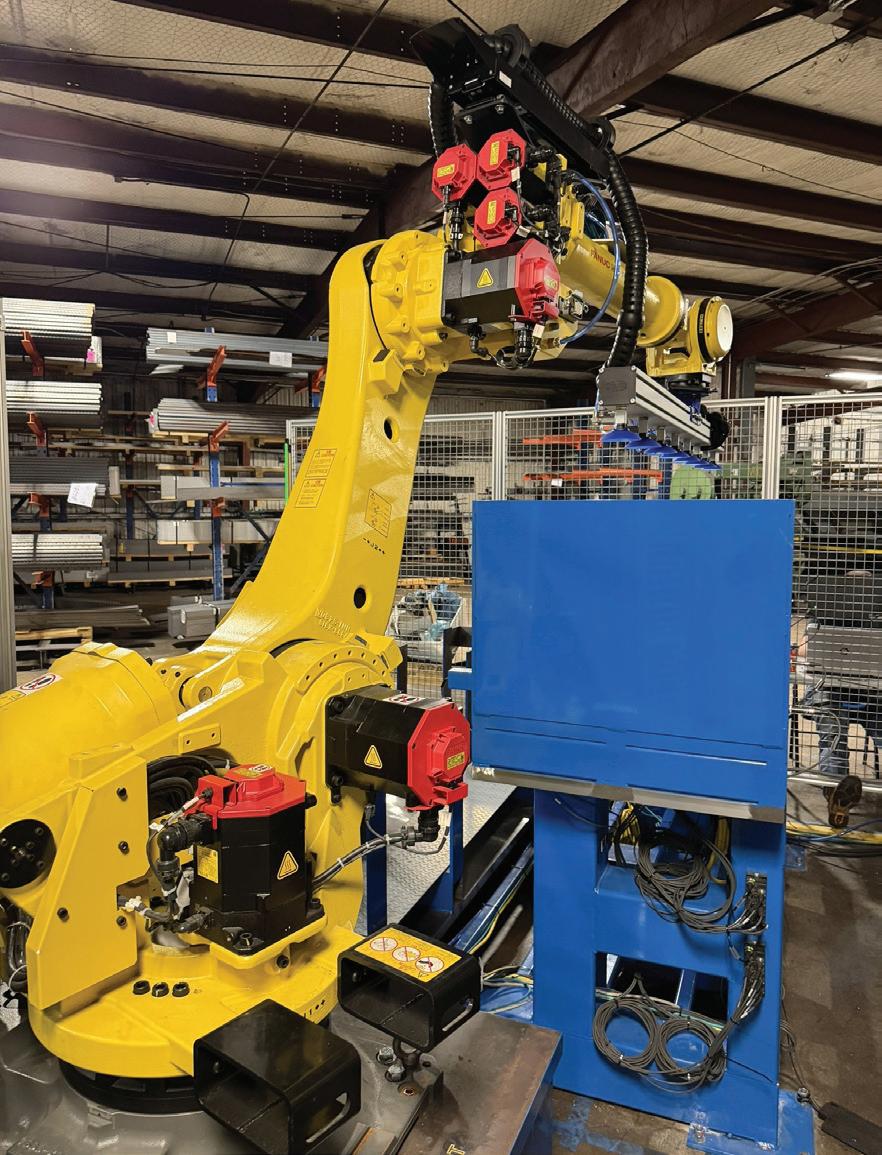
Bright IA’s robotic system installation required overcoming the limitations of legacy equipment
The press brake wasn’t designed for automation, and its surrounding environment reflected years of incremental use, rather than optimized layout. Uneven floors, inconsistent mounting surfaces, and a constrained footprint created challenges that could affect system reliability and safety. Misalignment or instability in such conditions can lead to unpredictable equipment behavior, increasing the risk of jams or unplanned interventions.
To address these challenges, Valin was engaged to design and fabricate the structural framework required to support the automation system. This included the infrastructure for material handling, as well as the physical elements of the safeguarding strategy. The design process involved multiple iterations to ensure the structures could accommodate the constraints of existing equipment, while providing the stability necessary for safe and repeatable operations.
Material handling played a central role in the overall system design. The automated cell relied on a series of timing belt conveyors to move metal plates into and out of the press brake. Ensuring consistent and reliable movement of these parts was essential, not only for productivity but also for maintaining safe operating conditions.
Valin designed custom support frames to integrate the conveyors within the limited available space. They were engineered to provide rigidity and adjustability, allowing precise alignment during installation and commissioning. This proved critical in compensating for inconsistencies in the setting.
From a process safety standpoint, stable material handling reduces the likelihood of disruptions that could require operator intervention. In manual systems, jams or misfeeds often necessitate direct interaction with equipment, reintroducing exposure to hazards. By creating a controlled and predictable conveyance system, the design minimized these scenarios, and supported a more hands- off mode of operation.
A key aspect of the project was developing a comprehensive safeguarding approach that combined physical barriers with control-level protections. Valin designed and supplied perimeter fencing that clearly defined the boundaries of the robotic work cell, preventing unintended access to hazardous areas during operation.
The fencing layout was carefully adapted to the constraints of the facility, ensuring that it provided effective protection without impeding necessary access for maintenance and material flow. Design considerations included placing access doors and eliminating gaps that could compromise the integrity of the barrier system.
To enhance this physical safeguarding, safety door interlock switches were installed at all entry points. These devices
ensured that opening a door would immediately stop system operation, and prevent restart until all access points were secured. This created a layered safety architecture in which hazards were both physically isolated and electronically controlled.
The overall approach aligned with OSHA requirements, and reflected established best practices in machine safeguarding. By integrating these elements into the system from the outset, the project reinforced the principle that safety should be designed into the process, rather than added as an afterthought.
As with many retrofit projects, the transition from design to installation revealed additional challenges. Variability in the press brake and surrounding environment required adjustments to ensure proper fit and alignment. These conditions had the potential to impact system performance and safety if left unaddressed.
Using a modular, aluminum-extrusion framework proved particularly valuable during this phase. The system permitted efficient in-field modifications, enabling the team to adjust component positioning, and reinforce structures as needed. This flexibility reduced the need for extensive rework, while ensuring that the installation met functional and safety requirements.
During commissioning, further refinements were implemented based on observed system behavior. Conveyor alignment was fine-tuned to improve reliability, and sections of the safeguarding system were strengthened to address potential weak points. Personnel provided onsite support throughout this process, working collaboratively with Bright IA to resolve issues and optimize the system.
This iterative approach highlights an important aspect of process safety: it’s not a static outcome, but an ongoing effort that continues through installation and into operation. The ability to identify and address risks in real time is essential to achieving a truly safe system.
Once operational, the automated work cell delivered a significant increase in production throughput, achieving more than double the output of the previous manual process. While this improvement was notable, the impact on safety was equally important.
By removing the need for operators to interact directly with the press brake, the system eliminated routine exposure to some of the most significant hazards in the process. Material handling transitioned to a controlled, mechanized approach, reducing physical strain and minimizing the potential for injury. Operators were able to remain outside the work cell during operation, interacting with the system in a safer and more controlled manner.

JOHN REZABEK
Contributing Editor
JRezabek@ashland.com
“If you’re an engineer who can’t stop thinking about solving a problem when the clock strikes 5 o’clock, you have a faculty that interests me.”
Operators are critical stakeholders in instrumentation and controls (I&C) work
IF YOU’VE PERUSED this column a few times, you may have noticed that, as one of the main clients of instrumentation and controls (I&C) professionals, I consider engaging operators especially crucial. If you find yourself feeling unfriendly toward them, for whatever reason, you may have a long career, but your achievements could be stunted by never consulting one of your key end users.
Maybe you dream of some level of automation, where the man feeds the dog, who bites anyone trying to touch the controls. Good luck. It may work for deterministic and manmade equipment, such as a wind turbine. However, when it comes to reacting hydrocarbons with catalyst, boiling and distilling in often decades-old vessels, there’s that “wild side” that we need worried humans to worry about.
I can’t determine whether anything akin to worry manifests in large language models (LLM). Worry is a feeling about what one doesn’t know, and what inconvenience, hiccup or catastrophe might hatch out of our blind spots. To me, this is a key attribute we desire, which we get exclusively from human operators. Seasoned operators always seek what’s changed, what’s different, and what it means. They steer their plants away from where the waters are murky.
If you seek a fruitful relationship with this unique group of end users, there are some paths I endorse less than others. Here’s what is and isn’t helpful:
J Seeking rapport by being “one of the guys.” Maybe you also enjoy bounding over trails, side-by-side in pursuit of wild pigs, while consuming 12-packs of refreshments. But operators know you’ll never be “one of them.” Instead, they want you to be effective in spheres where they have less input or influence, such as capital funding requests, solving their pet peeves, or enabling ergonomic improvements.
J Dressing like operators. Similarly, you should look like you’re from the office realm. You need to appear to wield the powers they lack, so don’t come in your NASCAR t-shirt, unless you were called out at 3 a.m.
J Behaving like you know everything or know nothing. When an operator asks if something is tied to an interlock that will shut down the reactor, even if you’re certain it won’t, follow up with “but let me look into it.” Meticulous attention to your craft is respected.
J Sharing your slacker tendencies. Maybe you slipped out early to catch your alma mater in the tournament, but keep it to yourself. Like a trucker driving a big rig, operators know when they take their attention off their duties on shift, dire consequences can result.
J Be engaged and seek their input. Balancing your position of relative freedom and power with humility and respect will ensure you get the nuggets of hidden insight that typically only operators know.
Engineers must grasp that we aren’t paid to warm a seat for eight hours a day, and then go home and play. We’re paid to think of clever solutions, or find other people’s clever solutions, justify them in the capital funding budget, and bring them into existence.
Operators, by contrast, man a post. Like sentries on the battlements, they live in a world of uncertainty. We give them immense responsibility to look after millions of dollars of assets, production and everyone’s safety. Feeling more than a bit powerless to change things in their realm is endemic. You’re an asset to them if you can help advance and justify their interests. While they may ridicule our faults, operators like to see staff members as thoughtful, professional and effective. Their worries can reveal clues to increasing plant safety and reliability.
SCADA is evolving from slow, limited communication systems to high-speed, seamless global networks
IN OCTOBER 2023, I wrote about what future SCADA systems should look like and some of their requirements. Not surprisingly, the largest was data management, including multiple types from multiple sources. Last year, I described how SCADA makes connections to get data to the right place and the right time. This time, the conversation is about how the backhaul network connects geographically distributed nodes to a central control room, and distributes their data to run facilities more safely, efficiently and securely.
My first exposure to SCADA was supporting oil and gas production facilities in Alberta, Canada. They relied on private radios and plain old telephone (POT) lines to connect individual wells to their treatment facility and back to the head office. Private radio is still used today, though in some cases it’s a collection of private, 5G networks.
However, not all of Canada has cellular coverage, especially in the arctic. I worked on a project about 10 years ago to provide SCADA to communities in Nunavut, which is along the Arctic Ocean, from 105° west latitude to a central control facility in a community at 68° west. They shared an uplink with the hamlet over the only connection to the rest of the world via a geostationary, Earth- orbit (GEO) satellite. Interestingly, a few years ago, we were asked to integrate another community into this same system. It was in Hudson Bay, below the Arctic Circle and a little further south, but we were no longer talking about GEO. During those few years, low-Earth orbit (LEO) satellites shifted the landscape of satellite connectivity, and now provide coverage with more bandwidth and lower latency than previously possible.
You can imagine the bandwidth and latency challenges we faced with the original GEO solution. Fortunately, these projects only require remote monitoring and reporting, with local controllers responsible for realtime responses, and setpoint changes made
infrequently by local operators. If changes were required when the station was unstaffed, the central control room contacted a local operator to adjust.
A GEO signal must travel 35,000 km up to a high- orbit satellite, and 35,000 km back down, with a bandwidth of 25-100 Mbps. Even at the speed of light, this takes roughly 240 milliseconds one-way, so uploads from these arctic communitie, and downloads to the control facility introduce a minimum delay of nearly half a second. However, LEO signals only need to travel 300- 600 km, so latencies of 20- 50 milliseconds with bandwidths of 500 Mbps are possible.
Our original solution was designed for GEO’s longer latencies and anticipated dropped messages by only transmitting change- of-state information to reduce data amounts sent, and using a protocol that automatically manages lost transmissions with an inherent-buffer capability. We then sent transmissions in a compressed file at the end of each day via alternate means. This relayed all the data to the central repository with an associated algorithm to check for and fill any data gaps.
LEO’s flat performance profile addresses the problems we faced earlier because the local barrens don’t have trees blocking clear views of the sky. This lets each station get the same 200 Mbps capability. LEO satellites change SCADA backhaul options, but integrating 6G also makes data-intense applications possible, such as autonomous transportation or real-time updates to manage traffic flows.
With 6G deployment expected around 2029-30, the distinction between satellite and cellular will likely disappear for the end user. Your devices will simply stay connected to the best available node, whether it’s 100 meters away on a pole or 400 kilometers away in orbit, with minimal latency or bandwidth concerns. This will certainly help make future backhaul options less daunting.

IAN VERHAPPEN Solutions Architect Willowglen Systems Ian.Verhappen@ willowglensystems.com
“Low-Earth orbit (LEO) satellites shifted the landscape of satellite connectivity, and now provide coverage with more bandwidth and lower latency than previously possible.”

NICHOLAS MEYER Director of Marketing Yokogawa
YOKOGAWA’S YNOW2026 is its flagship user conference, built by users for users, where digital transformation, AI and sustainability are translated into measurable operational outcomes across process and hybrid industries. To find out more, Control talked to Nicholas Meyer, Yokogawa’s director of marketing.
Q: What is the central theme of YNOW2026, and how does it reflect the most pressing challenges and opportunities in today’s industrial automation landscape?
A: The central theme of YNOW2026 is “In Tune with Tomorrow – Harmonizing People and Progress.” Like a well-balanced musical performance, it’s not about any one element standing alone, but how each part contributes to a cohesive outcome. AI and automation
add powerful new capabilities, but their true value is realized only when they’re thoughtfully integrated with human expertise.
In today’s environment of increasing complexity, workforce shifts and rapid digital advancement, success depends on how well companies can stay “in tune.” This means ensuring that operators, engineers and business leaders are working seamlessly alongside advanced automation and intelligent systems to improve insight, responsiveness and decision-making.
Hosted in the heart of New Orleans on Sept. 1-3, YNOW2026 will draw inspiration from the city’s rich musical heritage—not just as a backdrop or aesthetic—but as a living example of the dynamic, real-time collaboration required in today’s industrial automation landscape.


YNOW2024 stage presentations (top) and the exhibit hall in Houston
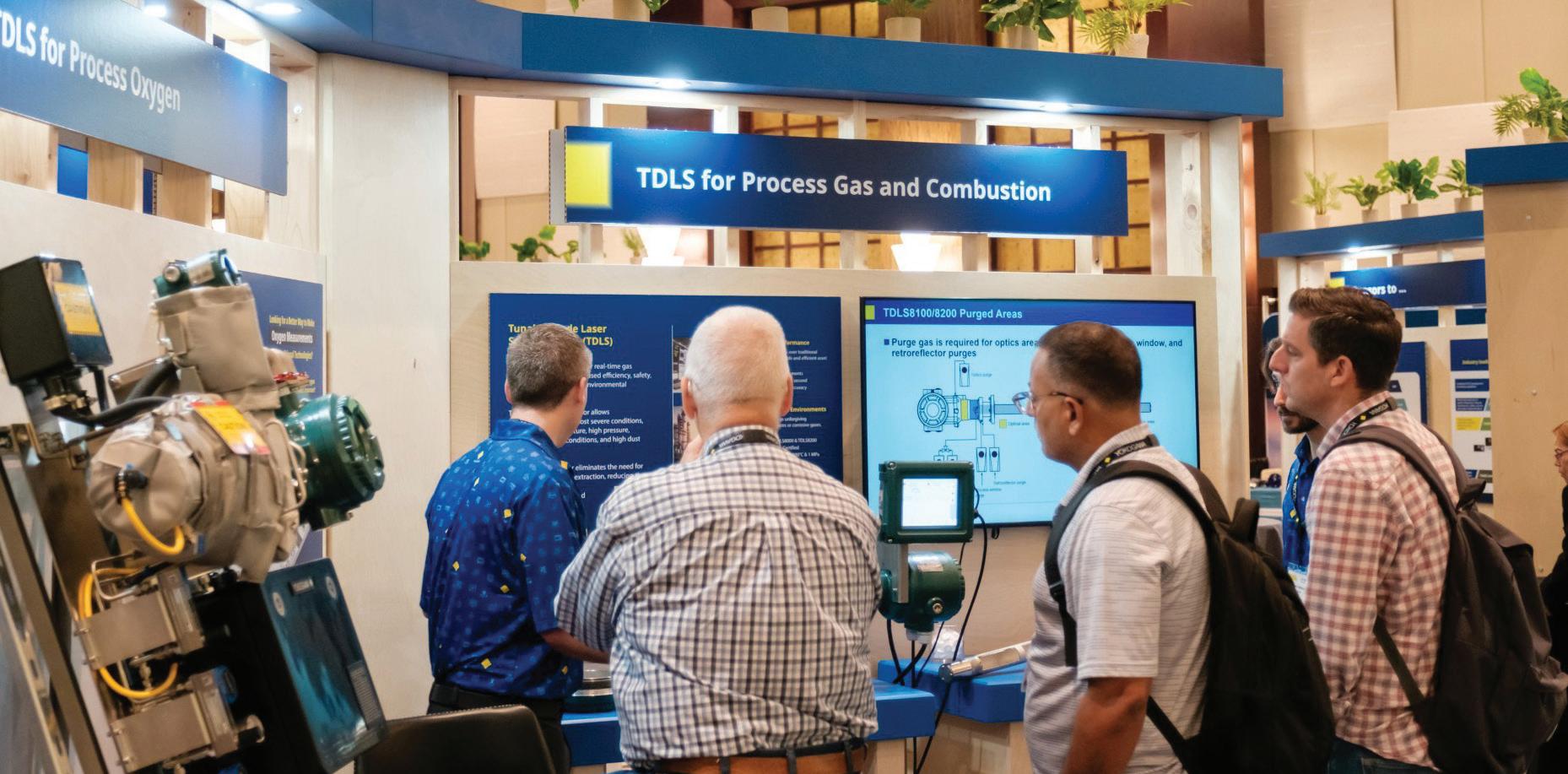
In this context, each role and technology is like an instrument in the band: operators, engineers, planners, assets, control systems, analytics and AI all have distinct parts to play. Yokogawa is positioned as the conductor of this ensemble— helping customers bring together disparate systems, data sources, and teams into a coherent, responsive whole that can adapt and improvise without losing control.
YNOW2026 is the stage for this orchestration—helping organizations better understand how to design, align, and optimize interactions between people and technology. The goal is to create more agile, resilient operations, where innovation enhances human capability and drives stronger overall performance.
Q: How does YNOW2026 differentiate itself from other industry events in terms of content, audience and overall experience?
A: YNOW2026 is not a generic tech conference and expo; it’s a practitioner-led conference built around real plant experiences and measurable outcomes. Instead of product-heavy presentation, the content centers on joint sessions with customers and partners, who openly share what worked, what didn’t, and what they would do differently in their next project.
The audience mix is carefully curated to break down silos. Process and control engineers, reliability specialists, operations leaders, IT/OT architects and executives are in the room together, hearing the same story but from different angles. This creates a unique dynamic: discussions are immediately grounded in operational constraints, and technical deep dives are linked back to business value. The overall experience feels more like a collaborative jam session for your digital and operational roadmap than a series of disconnected presentations.
Q: What can attendees expect to experience in the exhibition hall, and which emerging technologies or solutions will be highlighted?
A: The exhibition hall is designed as a “walk-through workflow,” not a row of isolated booths. Attendees can follow the journey of data from the field device and control system, through advanced analytics and AI, and all the way to enterprise dashboards and strategic decision-support tools. Key areas you can expect to see highlighted include:
J The latest in measurement instrument and analyzer technologies that build the foundation for trusted data;
J Advanced control and optimization solutions that stabilize operations, handle variability, and minimize energy use;
J AI- enabled applications for predictive maintenance, anomaly detection and early event detection, with live examples of how alarms and insights are presented to operators;
J Digital twin and simulation environments used for design, operator training and scenario planning; and
J Connected worker and mobility solutions that bring critical information to the right person in the field, control room or board room.
Rather than simply looking at new technologies, attendees will learn how solutions interact, how projects are implemented, and what “good” looks like when it’s running in a real plant.
Q: Who should attend YNOW2026, and what specific value will different roles—such as engineers, operations leaders and executives—gain from participating?
A: YNOW2026 is for anyone responsible for keeping industrial operations safe, efficient and future -ready. It’s especially valuable for:
J Engineers and technical specialists, who will gain practical, real-world examples they can apply directly to their own systems, with sessions that walk through detailed use cases that can integrate into existing control environments.
J Operations, maintenance and plant leaders will see how other facilities use digital tools to improve uptime, reduce waste, and better support frontline workforces. They’ll also learn about workflows, roles, KPIs, and change management for embedding new capabilities into day-to - day operations.
J Executives and digital transformation leaders will get a clear view of where industry is heading and how to prioritize investments, with a focus on business cases, governance and portfolio approaches that move organizations from isolated pilots to programs that deliver consistent, long-term, strategic value.
Whether you’re just starting to formalize your digital roadmap or looking to scale proven solutions across multiple sites, YNOW2026 is designed to meet you where you are, and help you plan what comes next.
Q: Is there anything else people should know about YNOW2026?
A: YNOW2026 is more than a conference—it’s a chance to get in tune with where the industry is headed, and how you can help shape it. You’ll find opportunities for both technical learning and broader career growth, grounded in real-world examples you can apply right away. It’s also about people: connecting with peers, sharing experiences, and building relationships that last beyond the event. YNOW2026 will blend learning, networking, and time to relax and celebrate, so you’ll leave better prepared—and more in tune—for what comes next.
For more information, please visit the event website https://www.yokogawa.com/ynow2026
Rosemount 928 uses hot-swappable sensors and a power module to measure combustible and toxic gases
JUST AS TALENTED and successful employees gain new responsibilities, devices that demonstrate their value in one application may also be assigned new roles—and acquire added capabilities for accomplishing them.
For instance, Rosemount 928 wireless gas monitor had been doing such a good job measuring toxic gases that its developers reasoned it might do the same for users seeking better ways to measure combustible gases, especially in remote and often unpowered settings. These users typically employed catalytic beads or infrared sensors to detect combustible gases. However, these methods aren’t as simple and effective as the sensors Rosemount 928 uses to measure the thermal conductivity of combustible gases, and consequently determine their amounts and even types.
“This sensor technology is a significant departure because it’s really a new way to measure combustibles,” says Dave Ruhland, global products manager for flame and gas at Emerson. “Rosemount 628’s sensors can now measure combustible and toxic gases in a single platform. However, what’s most important is it doesn’t just quantify how much combustible gas, but also classifies it as one of six types, including hydrogen, hydrogen mixtures, methane and natural gas, and light, medium or heavy hydrocarbons based on their molecular weights.”
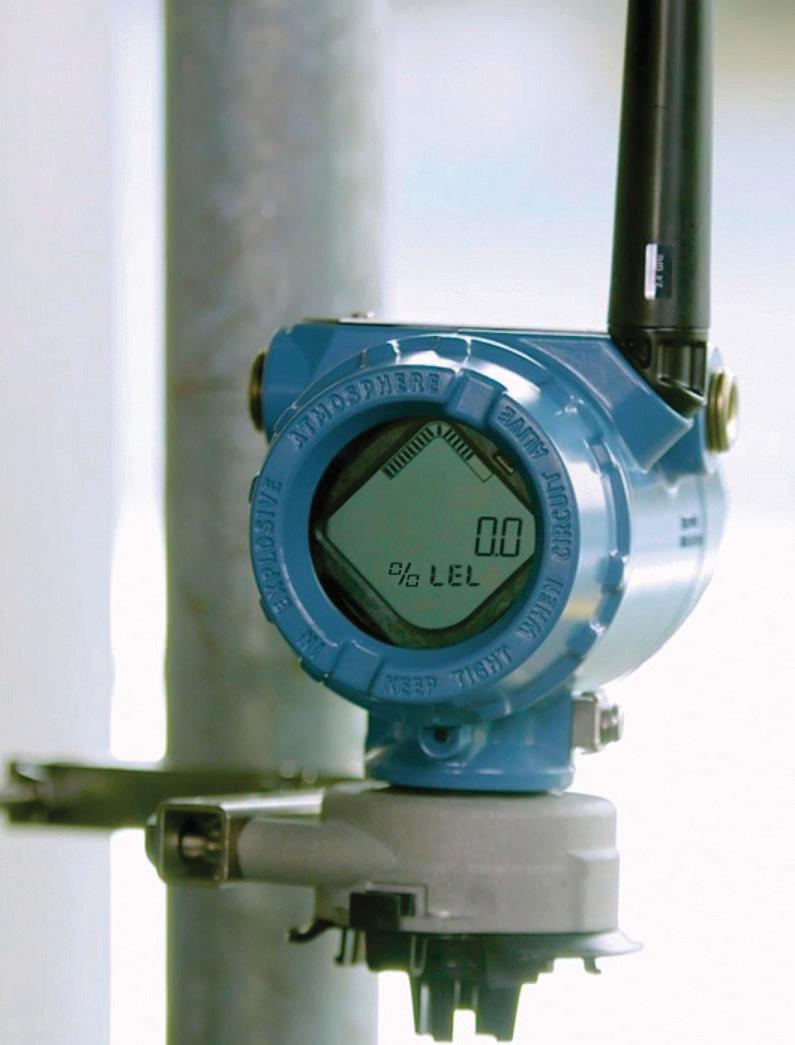
Rosemount 928 is the first integrated, WirelessHART, toxic and combustible gas monitor with Emerson’s hot-swappable sensor modules, which have endof-life diagnostics, and can be installed in the field with one hand and no tools.
It’s designed to operate in ambient temperatures ranging from -40 °F to 140 °F (-40 °C to +60 °C). It also features a large, liquid-crystal display that clearly shows gas concentration and transmitter diagnostics, optional discrete output for activating field alarms, and hazardous location approvals for worldwide use. For example, a fitted filter maintains IP66 ingress protection.
Because ability always needs capable support, Rosemount 928’s sensing innovations are assisted by its wireless capabilities. While traditional transmitters are proven and reliable, they typically require wired infrastructures for power and communications. Rosemount 928 is free of these constraints, so it can dramatically reduce installation and maintenance costs.
Rosemount 928’s second major innovation is that its replaceable, intrinsically safe (IS), lithium-thionyl chloride power module provides more than three years service when used with a Rosemount 628EC toxic gas sensor, and at least 1.5 years when used with a Rosemount 628MP combustible gas sensor. Ruhland adds its sensor was modified to sleep when not in use, which lets it conserve power and extend battery life.
“Knowing the type of gas it’s dealing with means Rosemont 628 combustible gas sensors can automatically correct their calibration curves,” explains RehlandRuhland. “This produces much more accurate, detailed and faster responses, such as overall gas percentage levels in 10 seconds instead of 20 seconds, so the sensor is accurate even if a different gas is detected.”
“Rosemount 628 combustible gas sensors are calibrated for a lifecycles
that’s expected to be more than 10 years,” adds Ruhland. “This is possible because they’ve got solid-state electronics, and auto-zero algorithms in their software.”
Because Rosemount 628 toxic gas sensors are smart, they retain their own calibration information. They must be connected to a Rosemount 928 transmitter to calibrate, but their calibration settings are stored in the sensor itself, and not in the transmitter. This allows a 628 sensor to be uninstalled from a 928 transmitter, and reinstalled in another transmitter without affecting its calibration. The transmitter automatically recognizes the sensor. Built-in end-of-life diagnostics on these H2S and CO sensors alert users when sensor replacement is necessary.
For more information, visit www.emerson.com/en/measurementinstrumentation/products/ rosemount-928-wireless-gas-monitor
IN KEEPING WITH its informal motto of “giving back 10 ideas for every one presented,” the Control System Integrators Association (www.controlsys.org) provided mass quantities of useful content to almost 500 visitors at its 2026 conference on May 4-8 in Baltimore. The event’s 15 educational sessions covered wide range of technical, economic, workforce and other skills that system integrators can take advantage of to run their businesses more effectively.
The event kicked off with CSIA’s recently appointed CEO Adrienne Meyer reporting on its recent activities and several new goals, such as expanding its services, and reaching more system integrator companies. Its priorities for 2026-27 include membership growth, retention and experience, and establishing a dedicated role for recruiting and retaining members. The organization also gained 41 new members since June 2025, while eight members achieved CSIA certification status.
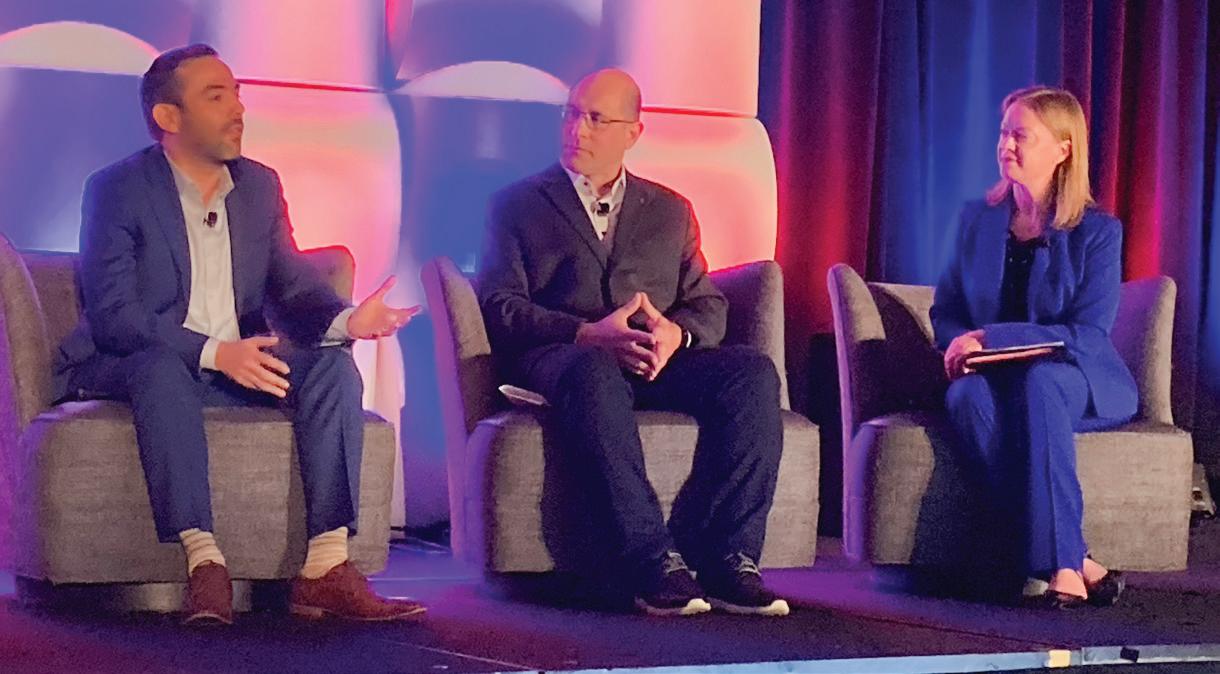
The conference’s opening panel discussion reiterated many of the best practices and community support that CSIA’s members get from being part of the organization. “We get many crucial skills from CSIA, such as financial management best practices,” said Daniel Gomez, CEO of Omnicon (omniconint.com), a fivetime CSIA-certified integrator in Houston. “However, it also helps us develop the long-term vision for running our businesses and scaling them up. In fact, right after we got audited and certified, a large client asked about many of the same capabilities we’d just learned, so we were able to work much better with them.”
In his “Finding value in nonconformance” presentation, Mike Howard, EVP at George T. Hall Co. (georgethall.com), a CSIA member integrator in Anaheim, Calif., reported that it uses nonconformance reporting (NCR) as a
practical tool—not an audit checkbox.
“In our ISO9001 and CSIA-certified quality program, NCRs help us capture what went wrong, understand why it happened, and make sure the fix sticks beyond current project,” said Howard. “We don’t celebrate mistakes, so NCRs document when a product or service fails to meet requirements, and gives a place for the problem to live. Our focus isn’t on paperwork; it’s on learning from real-world issues reducing repeat problems, and achieving better delivery of complex integration projects.”
In his “From system integrator to value creator” presentation, Renato Leal, executive director at GreyLogix (www.greylogix.com.br), a CSIA member integrator in Florianopolis, Brazil, showed how his company designed and built a small, standalone, pilot brewery in nearby Rio Negro to demonstrate its technologies, services and other capabilities. The facility is not only sustainable with intelligent controls, mainly Siemens Simatic, but all of its manufacturing stages are
simulated as digital twins by Comos software, which also created a digital rendering of the entire plant. The brewery has six tanks, and has already produced 4,000 liters of GreyBeer, though it has the capacity to produce 15,000 liters, and its modular design could be scaled up to 100,000 liters. It’s roughly 1,000 tags and Simatic PLC also use Siemens’ Braumat software.
“Small breweries face, a lot of challenges competing with big companies that have more resources and capabilities,” said Leal. “By simulating and running all the stages in our brewery, we estimate it can save 25% on energy costs and capital expenditures.”
As always, the CSIA conference was highlighted by the presentation of its five annual awards. They included:
J Integrator member company of the year was presented to Interstates (www. interstates.com), an eight-time CSIA-certified, national, U.S. Midwest-based integrator with more than 1,700 employees.
J Partner member company of the year was awarded to Wipfli (www.
wipfli.com), an audit, tax and corporate finance advisory firm that’s partnered with many of CSIA’s integrator members.
J Emerging leader of the year award was won by Ryan Crownover, digital plant director at Vertech (www.vertech. com), a CSIA member integrator based in Phoenix.
J Social responsibility award was presented to aeSolutions (aesolutions.com), a consulting, engineering firm and CSIAmember integrator in Greenville, S.C.
J Charlie Bergman “Remember Me” award was presented posthumously to Rick Pierro, cofounder of Superior Controls and chief strategy officer of the life sciences division at E Tech Group (etechgroup.com), who died of cancer on Dec. 12, 2025.
FIFTEEN MONTHS AFTER its acquisition by Emerson, AspenTech’s biannual Optimize 26 event on May 11-14 in Houston had a definite Emersonian flavor. Its keynotes and presentations, panel discussions, technical sessions and exhibits retained AspenTech’s cornerstones of innovation, software development, talented personnel and customer focus, but this time they also paralleled the structure and style of Emerson Exchange events.
This year’s edition of Optimize attracted more than 1,500 attendees, including more than 600 process-industry customers to more than 150 sessions divided into two main divisions— process and power—in nine mostly concurred tracks.
In his opening keynote address, Vincent Servello, president of AspenTech, reported that Emerson is accelerating its investment in AspenTech to achieve a more agile technology approach for faster innovations. more services that can accelerate time to value, and a programmatic approach to deployment and sustainment.
“There are lots of ways to capture and sustain value when you work at AspenTech,” said Servello. “We’re transforming how we innovate for customers by streamlining our R&D efforts from hundreds of small programs to 10 critical technology programs that are well-resource to deliver industry-leading innovations. We’re deploying an agile framework consisting of a disciplined approach to align priorities, accelerate execution, and increase the productivity of our technology initiatives. And, we’re accelerating investment in AI, so it can move users’ operations from data to decisions at enterprise scale.“
Most notably, Servello announced two major releases during Optimize 26:
J AspenTech AVA AI platform (aspentech.ai) helps users accelerate agentic, domain-aware AI adoption. It’s reported to deliver the agility, efficiency and autonomy users need to respond more quickly to changes in operating conditions,
continuously improve performance with trusted-domain context, and act with greater confidence using AI-assisted recommendations embedded in users’ operations. AVA also integrates decades of Emerson‘s expertise and first-principles models into its skills and work flows, while using large language models (LLM).
J AspenTech InMation OT Data Fabric has been enhanced to create a modern, always-on, industrial-data backbone that scales with users as their digital needs evolve, supports analytics and AI capabilities, and develops an operations platform that connects data, context and organization-wide decisions. This is reported to standardize how data is managed and shared, making it easier to connect systems, apply consistent context and governance, and deliver trusted realtime information wherever it’s needed.
These two releases organizationally bookend and enable AspenTech’s traditional modeling and optimization responsibilities of performance engineering, manufacturing, and supply chain, asset, performance management (APM), and subsurface science and engineering. In addition, AspenTech has also hired 150 new staffers beef up its service offerings, R&D and expert program management.
“We’re delivering these innovations so individual users and their teams can work better,“ added Servello. “As part of that effort, we’re also working on combining our Hysys and Aspen Plus engineering suites, so they’ll also be easier to use, and can take advantage of AI capabilities.”
In a subsequent, two-person chat, Dylan Pugh, engineering VP at ExxonMobil, reported it’s using digitalization and AI in its operations in the Permian basin, where it’s benefited from its
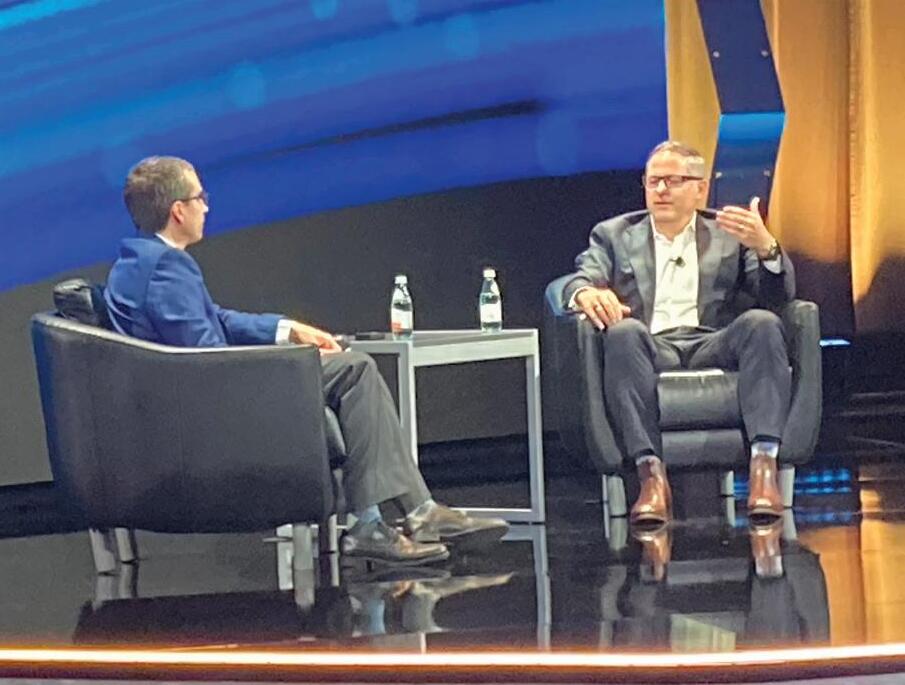
Dylan Pugh, engineering VP at ExxonMobil (right), described to Vincent Servello, president of AspenTech (left), how it’s using digitalization and AI in its operations during the May 11 opening keynote and chat kicking off Optimize 26 in Houston.
longtime partnership with AspenTech, and expects to rely on it further as it pursues net-zero-emissions operations by 2030-35.
“We’re pursuing lower-carbon solutions in our upstream and downstream operations and global projects, and we need to identify the best options for us to deploy,” said Pugh. “We need solutions we can take upstream and downstream, and implement across product information management systems (PIMS) multiple sites. ExxonMobil and AspenTech have been working together for 30 years, so we’ve evolved together, and can leverage each other’s technologies to new challenges like sustainability and apply them at scale.”
Pugh reports that ExxonMobil started its low-carbon business five years ago to reduce emissions in hard-to-abate processes that it and its partners operate. However, it needs help from partners like AspenTech for its sustainability efforts to be safe, reliable, and produce good financial results. For instance, ExxonMobil recently implemented an Aspen DMC3 unified architecture with adaptive AI functions on 20 PLCs that are optimizing production at 100 wells.
“We’ve all worked with oil, gas and chemical processes for many years, but now we need help deploying and running unconventional applications safely, reliably and profitably, and we know AspenTech will be able to help us achieve these ambitious goals with centralized engineering,” explained Pugh. “With digitalization and AI, many things are happening fast, but that doesn’t mean they’ll necessarily deliver value. We have to make sure we understand the risk implications of new technologies, and not lose sight of historical solutions that were reliable and benefited us previously. For example, our OT data must be in good shape if we’re going to try and allow more autonomous operations, and we may also need training for behavioral or organizational changes for increased autonomy to be successful.”
A total of 250 submitted papers were evaluated before Optimize 26 based on their innovations, value delivery and repeatability. And, of the 150 sessions deliver, 12 were picked as finalists for four customer-excellence awards. The winners were:
J Phillips 66 in the modeling and optimization category for detailing cchallenges and value delivery in its presentation, “From advisory to autonomous: capturing value in midstream through an accelerated APC program.”
J Envision for customer excellence in sustainability with its paper, “AspenTech’s asset optimization suite empowers world’s largest off grid green hydrogen ammonia plant.”
J Total Energies in the data strategy category for its presentation “Unlocking industrial data value at scale: total energies selected AspenTech in Inmation as the foundation for real time operational excellence.
J Saudi Aramco in the AI category for its paper “Industrial AI driven, non-linear, modeling improves, refinery, LP accuracy and blending decisions.”
J The Industrial Security Harmonization Group (ISHG) released April 14 its joint industry perspective, “Secure deployment of industrial communication protocols: a riskbased approach” (tinyurl.com/ms5s9uc3), which reports that cyber-secure communications aren’t determined by protocols alone, but by how they’re deployed and managed in real-world environments. ISHG consists of the FieldComm Group (fieldcommgroup.org/ishg), ODVA (odva.org/ishg), OPC Foundation (opcfoundation.org/ishg) and Profibus/Profinet International (profibus.com/ishg).
J ABB (www.abb.com) reported March 21 that it’s formed its first indigenous channel-partner collaboration with LaFlesche (laflesche.com), an indigenous- owned, advanced manufacturing, machining and rapid prototyping firm based in the Kahnawà:ke community in Quebec. The partnership will complement LaFlesche’s core offerings while strengthening ABB’s network of authorized third-party vendors by expanding access to its automation, electrification and digital solutions through an Indigenous distribution partner serving the critical industrial sectors across Canada.
J Siemens (www.siemens.com) reported May 7 that it’s partnering with Xometry (xometry.com), an AI-native marketplace connecting buyers and suppliers of custom manufacturing. The partnership will allow Siemens to embed proprietary manufacturability, pricing, sourcing and lifecycle intelligence directly into a design digital thread natively within Siemens’ Xcelerator platform.
J Bühler (www.buhlergroup.com) reintroduced May 8 two of its most trusted solutions in chocolate mass processing, Finer S Edition 26 five-roll refiner and ELK S Edition 26 singleshaft conche, which are reported to run cleaner, smarter, more efficiently and with greater transparency. The company reports Edition 26 will give users the efficiency to cope with cocoa price volatility and supply shortages.
J Valmet Oyj (www.valmet.com) reported May 19 that it will deliver a new ash crystallization plant to the Mercer Stendal (mercerint.com) bleached-softwood, kraft-pulp mill in Arneburg, Germany. This investment is part of Mercer’s longterm vision to further reduce the mill’s emissions and improve its performance. The ash crystallization plant will contribute to this target by helping to close the mill’s chemicalcirculation process, reducing the need for makeup chemicals, and extending recovery boiler maintenance intervals to 24 months or more.
J Emerson (www.emerson.com) reported May 12 that Oncor Electric Delivery Co. (www.oncor.com) has picked AspenTech Digital Grid Management (DGM) solutions to optimize real-time grid operations and strengthen its digital foundation to safely and reliably deliver energy to a growing number of Texas customers and continue to support the state’s economic growth.

Users must prioritize to select the Industrial Internet of Things solution that will serve them best
by Jim Montague
SOMETIMES CHANGE HAPPENS SO FAST that even descriptions can’t keep up. Right names become wrong names because they’re no longer inclusive enough. They can’t accurately describe what’s happening or should be, but they’re retained because no one’s thought of a suitable replacement yet.
For instance, the Industrial Internet of Things (IIoT) has apparently evolved to the point it’s no longer limited to industry, the Internet or even things. It seems to have become an all-encompassing network that uses mostly Ethernet and servers to span every type of device, microprocessor, user or other entity from the most humble sensor or input to the most sophisticated, cloud-computing application and everything in between. “Networking” might be enough, but it’s too old, and doesn’t have that forward-looking, distracting, sexy lure that all good buzzwords require



Names aside, because of this seemingly endless variety, the most important task is to find the solution or combination of functions that suits each user and their process best based on what they’re trying to accomplish now and in the future.
To develop a well-fitting IIoT solution, Manish Sharma, global business development manager for process and energy transition at Emerson (www.emerson.com), reports that potential users must decide what they want to accomplish, and should definitely do site audits to determine highfidelity data availability, and what data and operations need to be augmented. This includes checking what computing infrastructure they’re presently running, whether it’s industrial PCs (IPC), or hypervised PLCs like Emerson’s PACSystems RX3i CPE 400 or CPL410, which provide real-time control function and edge computing in one box.
For instance, Dubai-based system integrator Drakken (drakken.co) recently worked with an oil and gas producer in Egypt to automate its flare-gas monitoring and emissions-reduction system, so its facility and offshore wellheads in the Gulf of Suez could generate carbon-offset credits (Figure 1). However, this automation system would be necessarily complex partly due to no broadband Internet access in its remote location. To earn carbon credits, the client also had to quantify and verify precise volumes of equivalent greenhouse gas (GHG) emissions reduced by its gas-conservation equipment in accordance with applicable quantification methods. This process required continuous flare-gas conservation data gathered by recording standardized, volumetric flow rates for conserved gas, and storing results in a cloud-computing application.
The oil and gas company picked GHG-reduction services provider CarbonAi (carbonai.ca) to supply its data-management solution, so Drakken’s assignment was transferring data from an energy meter on a gas compressor and flowmeters to a remote, cloud-based data management system. Consequently, Drakken selected CPL410 edge controller, PACEdge
software, PACSystems RSTi-EP network adapter, communication card, digital input card for alarm signals, and QuickPanel+ HMI. CPL410 combines real-time, deterministic control and an edge-enabled execution environment in one platform. It collects data from the client’s facility and wellheads via various communications protocols, and transfers data via a broadband cellular gateway and Azure MQTT to a cloud-based service.
In addition, CPL410 provides geolocation and real-time data tagged with relevant asset information, including datasheets, install and maintenance records, and photos. This enabled a robust data trail that increases the client’s chances for successful credit verification, and avoids costly, onsite visits, manual data recording and error corrections. It also allows CarbonAi’s data management platform to integrate and manage GHG reduction data for quantifying and verifying carbon credits in an auditable format. In case of intermittent communication failures, CPL410 also stores its data, and forwards it when a connection is available.
“Automating data transfers from remote sites minimizes potential human errors that can be costly to carbon-credit projects,” says Ben Watts, CEO at Drakken. “It also streamlines the process, and reduces time and costs.”
At its most basic, IIoT is about forming connections that deliver data and allow beneficial decisions. However, as links, networks and data multiply, some kind of prioritization and triage is necessary, so users can focus on the most valuable tasks, and this likely means reevaluating and updating established connections, processes and infrastructures.
“For us, IIoT means more techniques for getting the right information to the right systems and people at the right time. What’s different now is we’re solving more problems in larger chunks over the past 10 years because we got better at getting more sensors and their data into storage,” says Chris Herrera, head of API and interoperability at Seeq (www.seeq. com). “Now, we have all kinds of data lakes that we’ve loaded everything into, but too often, we can’t find what we need. This is typically because IIoT and other networks are often so fragmented that a lot of data loses necessary context, especially as even more sensors, data and systems are brought online.”
Herrera reports that similar difficulties are increasing on IIoT’s physical network levels, such as operating without enough bandwidth, so the network can’t ingest all the new data sources coming in.
“There are a lot more plates to keep spinning now, and traditional, centralized infrastructures tied to specific network protocols or vendors are having a hard time surviving,” adds Herrera. “The primary problem is more data also means increasing complexity and more required maintenance. Because Seeq is at the decision-intelligence layer, we see these issues as a decisionvelocity problem, and not just an infrastructure issue.”

Figure 1: System integrator Drakken recently automated the flare-gas monitoring and emissions-reduction system for an oil and gas producer in Egypt, so its facility and offshore wellheads in the Gulf of Suez could generate carbon- offset credits. CarbonAi provided data management for real-time monitoring and forecasting of emissions reductions and crediting revenues. This solution was enabled by Emerson’s CPL410 edge controller. Together, they deployed a robust data trail that increases the client’s chances for successful credit verification, and avoids costly, onsite visits, manual data recording and error corrections
For instance, one of Seeq’s pharmaceutical clients recently migrated from calendar-based performance and maintenance to a condition-based procedure to reduce over- and underutilization of equipment and systems. To gain this efficiency, however, the company needed a better understanding of its equipment’s capabilities within an overall architecture suitable for meeting its corporate goals. It needed data about performance, uptime, quantity, quality, sustainability, margins, energy utilization and other factors.
“These are the details we need to get to the right peakoperating devices and systems. Our pharmaceutical manufacturer’s goal was cutting energy use by 30%. It needed to understand the transient cycles of its compressors and pumps, then determine if it could run lines and batches longer, switch duty cycles on specific assets, or issue work orders to operators. This would prompt the right actions, such as bringing one compressor down and another up, without needing to communicate the full corporate context all the way down to the plant floor,” explains Herrera. “All these analytical capabilities exist within IIoT. Users just need to make the necessary connections, and establish orchestration to realize beneficial outcomes.”
Inexorably, once IIoT branches out to IT levels, enterprises and other networking realms, especially these days, it must encounter AI’s irresistible promises of efficiency and riches.
Though they can seem unapproachable at first, IIoT, digitalization, cloud computing and virtualization can join to make many processes more flexible and many jobs easier. Luigi De Bernardini, CEO of Autoware S.r.l. (www.autoware.it), a system integrator in Vicenza, Italy, and a certified member of the Control System Integrators Association (CSIA, www. controlsys.org), recommends that users follow a systematic evaluation approach to deploy IIoT and digitalization:
1. Assess current state and needs. Start by conducting a thorough assessment of current processes and systems. Identify key pain points, inefficiencies and areas that could benefit from improved data collection, real-time monitoring and automation. Understand the specific needs of your organization, whether it’s reducing downtime, improving quality control or enhancing supply chain visibility.
2. Define objectives and goals. Clearly define what you aim to achieve with IIoT and digitalization. These goals could range from enhancing operational efficiency and reducing costs to improving product quality and achieving regulatory compliance. Having well- defined objectives will guide you to select and implement appropriate technologies.
3. Evaluate technological fit. Consider the compatibility of IIoT and digitalization technologies with your existing infrastructure. Evaluate how well these technologies integrate with your current systems and processes. Technologies like MQTT and AMQP, for instance, can simplify integration by providing standardized communication protocols.
4. Pilot and prototype. Implement pilot projects or prototypes to test the feasibility and impact of IIoT and digitalization on specific processes. This allows you to gather data and insights on the effectiveness of these technologies before scaling them across the organization. It also helps identify potential challenges and refine the implementation strategy.
5. Analyze data and feedback. Use the data collected from pilot projects to analyze performance improvements and operational impacts. Gather feedback from stakeholders to understand practical benefits and issues encountered during the pilot phase.
6. Scale and customize. Based on insights gained from the pilots, customize and scale the deployment of IIoT and digitalization technologies across the organization. Ensure that solutions are tailored to address specific needs identified during the assessment, and that they’re scalable to meet future demands.
7. Continuous improvement. Adopt a continuous improvement approach. Regularly monitor the performance of IIoT and digitalization implementations, and be prepared to make adjustments. Keep abreast of technological advances, and be open to integrating new solutions that could further enhance your processes.
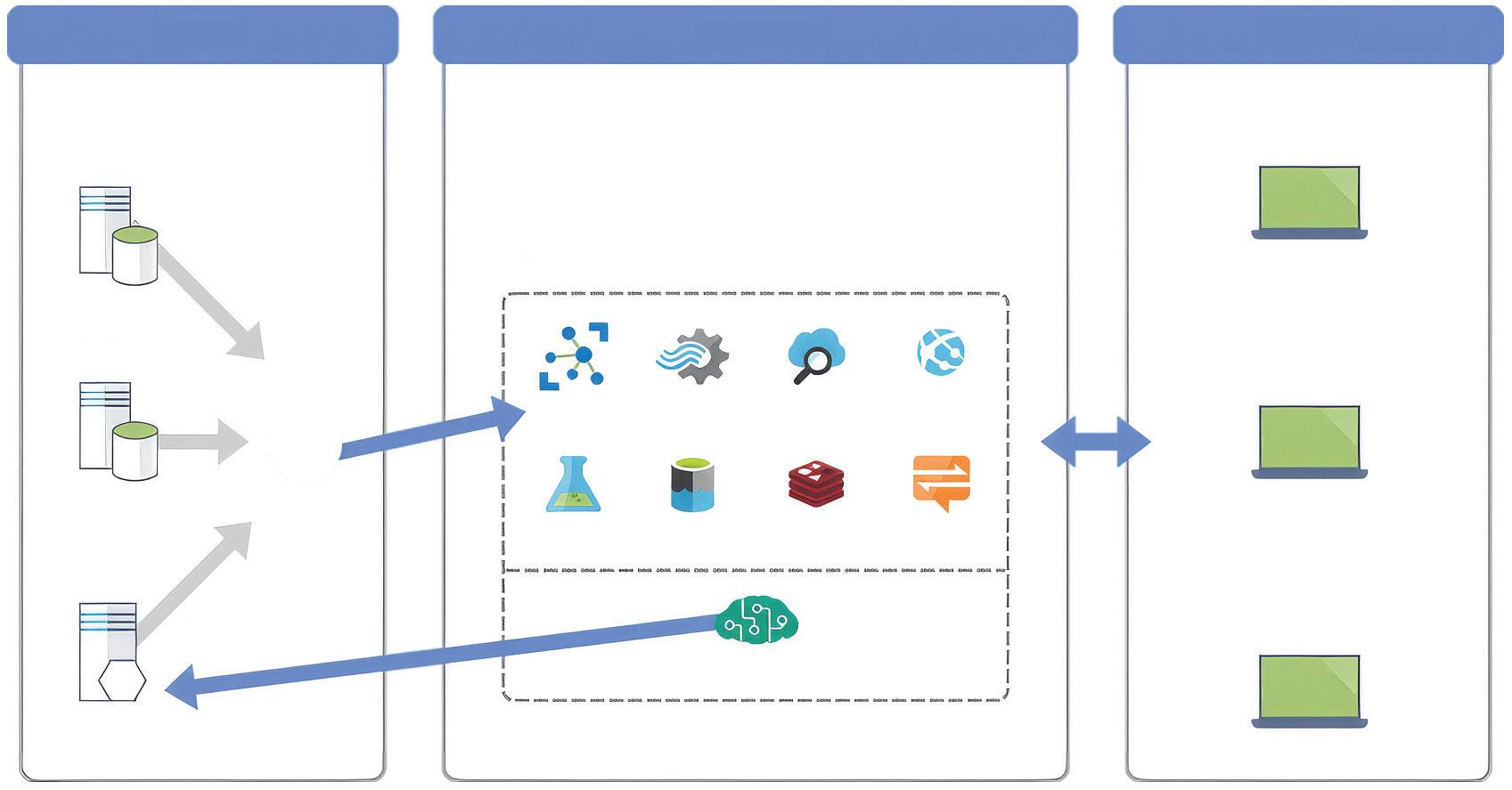
For instance, TwinThread (www.twinthread.com) is a cloudbased, AI platform that reports it can connect to any type of industrial data source, such as historians, Aveva PI System, DCSs and others. It organizes that data into digital-twin hierarchies, and funnels it through AI and ML models that solve common industrial use cases, such as preventing downtime and increasing throughput.
“We built an easy-to-use wizard for these solutions that can connect in minutes, doesn’t require users to write code or be data scientists, and can rapidly identify improvement areas in their data,” says Andrew Waycott, cofounder and president of TwinThread. “Our digital-twin structure lays the groundwork for how our pre-built solutions ingest, organize, and leverage sensor and process data to mirror what’s happening in real time. They also use that data to power predictions based on changing conditions, and recommend how to keep conditions within an ideal range.”
Waycott reports this speculative aspect of the model can predict end-of-line product quality and potential downtime issues. It’s similar to advanced process control (APC), but it’s different because APC typically examines short intervals to adjust loops for short-term operations, so it’s less aware of larger trends. TwinThread can also execute closed-loop optimization. It considers the downstream consequences of process conditions, and uses historical data from past seasons or years to inform more impactful operator interactions on the plant floor.
“Regular data gathering and simulations need lags and inertia to settle out for 15-30 minutes. We’re trying to influence operations at that level, and find and maintain optimal running conditions,” explains Waycott. “TwinThread helps steer whole processes, so they can continuously run optimally, and push recommendations, so users don’t have to guess what’s happening.”
For example, Colgate-Palmolive (www.colgatepalmolive. com) recently updated TwinThread’s software that it implemented previously with an AI-based agent to further improve production of its Hill’s Science Diet pet food (Figure 2). The company originally implemented TwinThread in 2018-19 before the COVID-19 pandemic, and integrated its operators’ domain expertise into its platform, so less experienced personnel could benefit. This was helpful because average staff tenure before COVID-19 was 10 years or more, but after the pandemic, it was significantly less due to retirements.
“We connected to Colgate-Palmolive’s production systems at about six plants worldwide, which use PLCs and other devices to grind and mix raw materials, extrude, dry, coat, cool and package their dog food in about 50 minutes,” explains Waycott. “Previously, the company would take hourly samples, and try to close its feedback loops. However, with the entire production cycle taking only 50 minutes, it wasn’t fast enough to detect a bad batch until it was too late. Plus, it could take two hours to get production back to an optimal level. Now, with
To help its clients apply micronutrients, inoculants and pesticides to seeds, Grazmec (www.grazmec.com.br) in Não- Me-Toque, Rio Grande do Sul, Brazil, builds seedtreating machines, including its GV500i Connect. This machine was redesigned several times recently, and relies on an IIoT concept that simplifies operations and software upgrades, allows remote analysis, increases flexibility, and uses Beckhoff’s (www. beckhoff.com/pc) CX5140 embedded PC with TwinCAT 3 automation software.
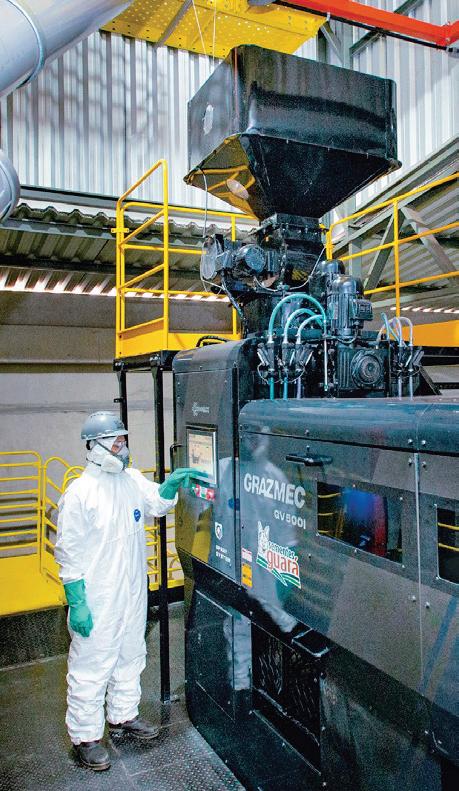
These PC-based controls allow convenient access to GV500i Connect’s parameters via a CP2916 multi-touch, built-in, control panel supported by a TF2000 TwinCAT 3 HMI server. This interface can store far more formulations of liquid and powder components, which enables the machine to produce more usable seed.
As part of Grazmec’s IoT strategy, cost and consumption reports generated by GV500i Connect’s controls also open up new ways of managing and analyzing data. With TwinCAT TF6701 IoT-based communications software, the machine’s data is sent to Grazmec’s server via MQTT publish-subscribe protocol. This input can then be analyzed in conjunction with daily updates on quantities of treated seed and consumed treatment compounds consumed, allowing more informed decisions during processing. The company adds that IoTrelated benefits include enhanced remote control and maintenance capabilities.
Ethernet-APL Rail Field Switch—the Latest FieldConnex ® Innovation
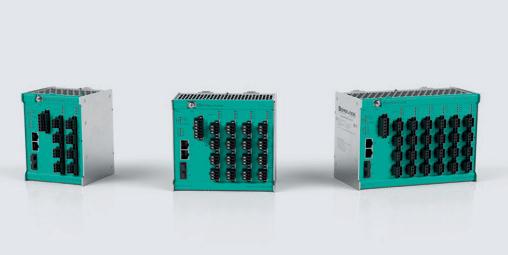
For more information, visit www.pepperl-fuchs.com
The world’s first switch that brings Ethernet into the field of process plants.

2505CT_PepperlFuchs.indd 1
TwinThread checking and predicting quality every 15 minutes, it can advise Colgate-Palmolive on what setpoint changes to make during the process to achieve perfect protein, fat, density and moisture levels.”
Beyond enabling quality improvements while processes are running, closer-to-real-time data gathering and analysis by its cloud-based platform also lets TwinThread’s agent run in cyber-secure, demilitarized (DMZ) areas between operations and cloud layers. This lets it talk to Wonderware historians, SQL servers and PLCs via OPC UA networking. Because this

2405CT_AzbilCorporation.indd 1


User

2: Colgate- Palmolive’s six pet food plants use TwinThread’s platform and AI-based agent to check and predict the quality of its Hill’s Science Diet product every 15 minutes. This allows for closer to real-time process adjustments and increases the plants’ process capability index (CPK ), resulting in yield increases and net savings. CPK measures how well a process stays within specified, upper and lower limits relative to its standard deviation or natural variation.
agent communicates constantly with production sources, it gets the latest information, and relays it to TwinThread’s cloud-based platform, where its AI models generate predictive insights and recommendations. It can make direct changes to control settings, but in many cases, operators decide whether to accept or deny these recommendations. The system may subsequently add an auto-accept function for some recommendations after sufficient testing is completed.
Despite accelerating its analytics and insights, ColgatePalmolive also kept the guardrails on its legacy SCADA and DCS, which serve as the final acceptance before actuating control changes. It retained its process sampling and lab testing for regulatory compliance, integrated existing historian functions and prior data to enable context, and improved recommendations from TwinThread and its AI agent with help from personnel’s past experiences and records. Likewise, Colgate-Palmolive’s pet food plants increased their process capability index (CPK) by using TwinThread’s platform and agent. CPK measures how well a process stays within specified, upper and lower limits relative to its standard deviation or natural variation, which translates to significant yield increases and net savings.
Can plant-floor AI stay secure?
So, IIoT is adopting AI like everyone else, but the difference is integrating it on mission- critical plant floors in the

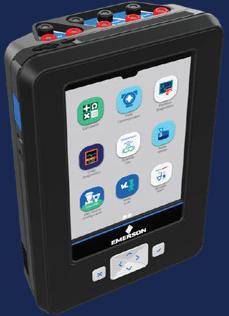
process industries poses different concerns and more potential risks than simply adding it to typical, mainstream, ITbased systems.
“There’s lots of talk about how IIoT in different industries is implementing AI, but process applications and facilities must consider safety. They can’t just give full license and autonomy to AI agents,“ says Sunil Doddi, member of the International Society of Automation’s (ISA.org) technical assembly and program chair of the ISA Philadelphia section. “IIoT networks also impact how plants are designed and operated, so I use ‘industrial data suite’ (IDS) as an umbrella term because it also affects how data is collected, connected and consumed.”
Doddi reports it’s crucial to resolve these issues because designing and deploying suitable IIoT solutions can be hugely beneficial. “IIoT-enabled sensors deployed in heat exchangers and other devices can collect continuous steam-production data, guide users to suitable tools for their process, and transition from scheduled maintenance to IIoT-based predictive maintenance that’s more efficient,” he explains. “IIoT can also get an assist from cloud computing, which can provide improvement efforts like predictive maintenance with an infrastructure they didn’t have before, and give them a better chance of getting approved, established and succeeding.”
Drawing on his industrial experience, Doddi adds that digital transformation teams are increasingly equipping coworkers with mobile HMIs, combined with virtualized simulation and testing environments. In real-world examples from across the process industries, for instance, virtual machines have been hosted using platforms such as VMware’s Workstation Pro, and alarm notifications from distributed control systems (DCS), such as Siemens Simatic PCS 7, have been routed through industrial callout systems such as Cattron’s Aquavax to staff smartphones when process alarms occur. This kind of infrastructure can let operators view and check their processes remotely and, in some cases, make carefully controlled adjustments at a distance. Virtualization and testing also leverage digitalized data presented by historians, such as AspenTech’s InfoPlus.21 (IP.21), and manufacturing integration platforms that display operations information on mobile devices.
“When the DCS sees an alarm, it sends a contact to the callout system, which is integrated with the HMIs and smart phones, so it can text operators and other authorized users,” adds Doddi. “In the future, AI will likely become part of this infrastructure. However, you can’t just add LLMs or other AI functions to process plants. It’s not just that they might send the wrong text. They could potentially damage processes and products, and possibly cause safety issues.”
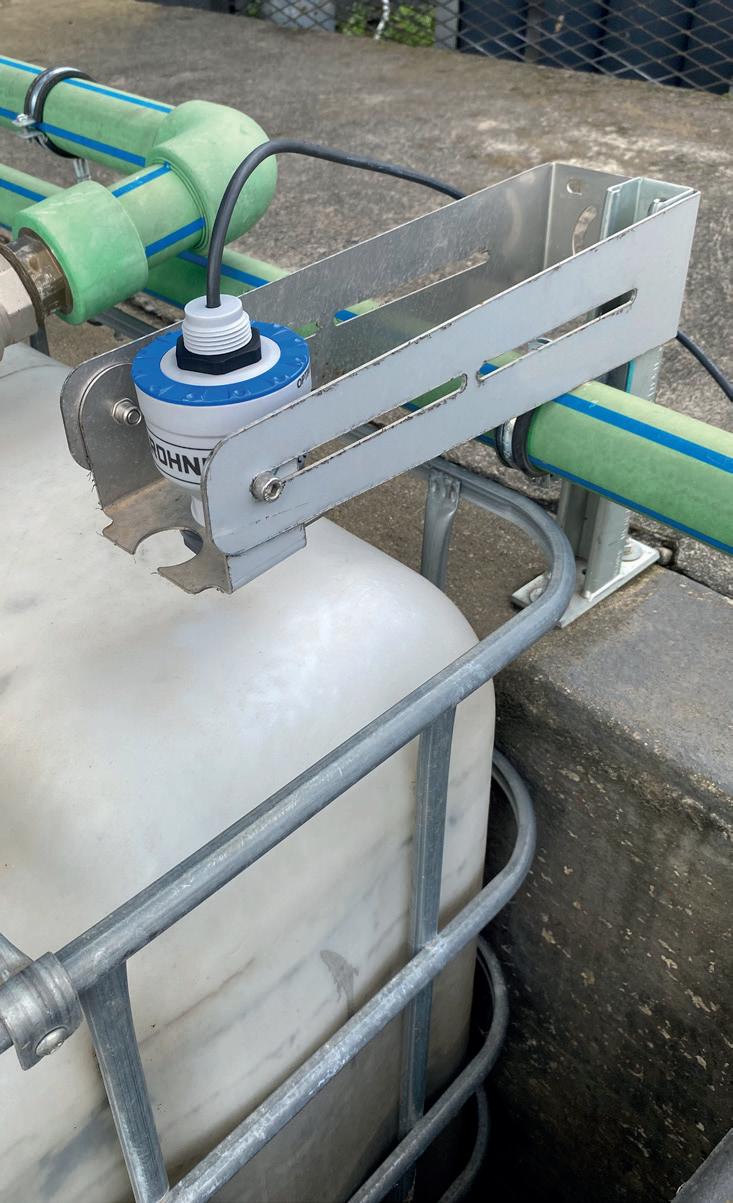
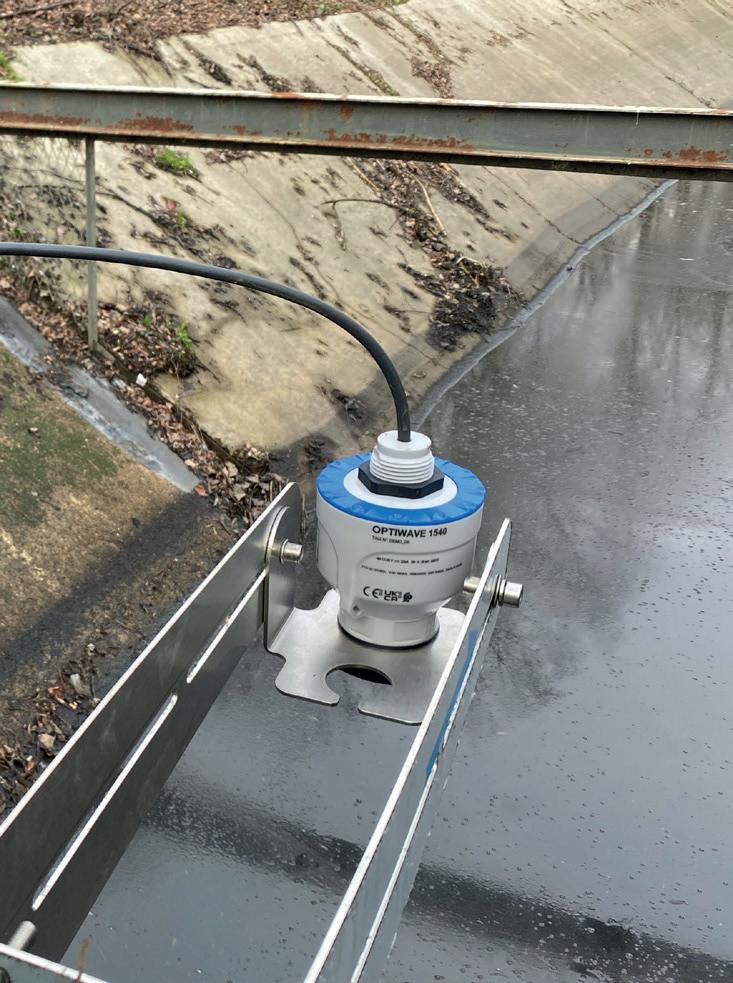
1520 and OPTIWAVE 1540 –Compact radar (FMCW) level transmitters with IP68
• Compact 80 GHz radar with flush-mounted PVDF Lens antenna
• OPTIWAVE 1520 – for (waste)water basins, pumping stations etc.
• OPTIWAVE 1540 – for IBCs, chemical tanks, granular silos etc. and high accuracy requirements (±2 mm / ±0.08 in)
• Commissioning via Bluetooth® and OPTICHECK Level Mobile app











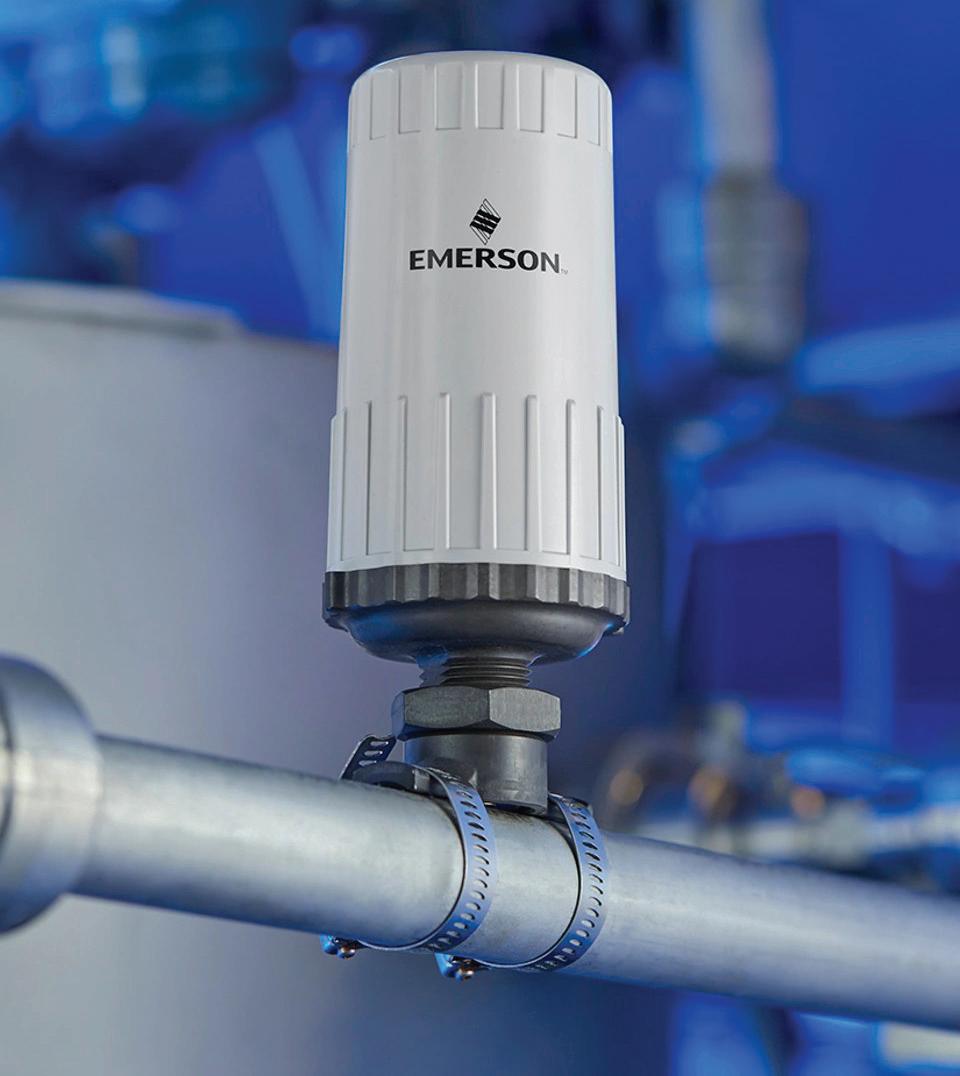
ONE FAMOUS “be careful what you wish for” scenario is wishing for more network connections and data. That’s because wishers can quickly drown in floods of information and tangled links that impede intelligence. To tame this firehose, Emerson has developed and launched its wireless, Industrial Internet of Things (IIoT), asset monitoring platform that helps digitalize inspection points, reduce manual tasks and improve operational decision-making.
Of course, the flipside is the age-old problem of having too little information, but Emerson’s Synchros platform can help there, too. It reports that tracking and maintaining assets still frequently depends on scheduled, manual rounds, especially in hazardous areas, which often creates gaps where developing issues go undetected. The platform applies continuous monitoring, lets operations and maintenance teams digitalize inspections, and extends user visibility with flexible, wireless architectures built on WirelessHART protocol.
Source: Emerson
“As always, users want agile measurement and high-accuracy monitoring for critical control of processes that need to respond in minutes or seconds,” says Ryan Lindsey, senior IIoT platform manager for Synchros at Emerson. “They traditionally used transmitters separately, but now Synchros can create a cohesive network, so groups of wireless process monitors and other devices can join a local IIoT network, which lets users know if their processes or devices have changed.”
Because many operations, maintenance and reliability teams still lack or have only limited access to process data, the platform’s primary value is shortening or eliminating former distances and obstacles between users and actionable information. It’s also rated for hazardous areas without special clauses, and complies with Class I, II and III, Division 1, in North America, and with Zone 0 in Europe and globally.
“Synchros monitors and aids inspections, so users can see what’s happening, maintain processes over time, and schedule services more efficiently,” explains Lindsey. “This IIoT platform has two main parts, including connectivity via Synchros, and sensing by physical components, such as the temperature monitor and wireless repeater we’re launching with it. Because we’re building with WirelessHART and its gateways, network redesigns aren’t needed because the communications are the same no matter what sensor is deployed. Users value having a consistent experience, so we try to give them the same look and feel with these solutions.”
More specifically, this initial release is accompanied by Rosemount Synchros temperature monitor and Synchros wireless repeater, which jointly provide scalable wireless monitoring. The temperature monitor enables new measurement
points, and reduces manual rounds through surface and ambient temperature readings, while the repeater extends network coverage to enable broader deployment without additional infrastructure. This can reveal abnormal conditions across assets, such as pumps, heat exchangers, rotating equipment, steam systems and heat-tracing systems, helping teams investigate issues sooner, and make more informed operations, maintenance and reliability decisions.
“Synchros expands on the use of temperature measurement to gain insights into your equipment and facility,” says Adam Edison, a global product manager for Rosemount temperature products at Emerson. “Prior to Synchros, Emerson’s Rosemount wireless temperature transmitter portfolio was geared towards process temperature measurements. Rosemount Synchros temperature monitor uses an integral thermocouple designed for measuring ambient or surface temperatures. These measurements give users visibility into the health of their assets and operations easily and cost-effectively.”
As the platform evolves, Emerson plans to introduce additional Synchrosenabled devices and connectivity options, enabling users to further expand monitoring programs and digital transformation efforts. These added devices will provide measurement for more process parameters, such as pressure and others. Additional connectivity options, likely via long-range, wide-area network (LoRaWAN) and 5G cellular, will likewise accommodate wider ranges of applications, such as those with assets distributed across larger geographical areas, including water/wastewater systems and power grids.
For more information, visit www.emerson.com/synchros
MOORE INDUSTRIES-INTERNATIONAL INC. will soon announce the addition of EtherNet/ IP to the protocol lineup of its HES HART to Ethernet gateway. The HES already supports Modbus/TCP and HART-IP for connecting HART field instruments to Ethernet-based control and asset management systems. With EtherNet/IP on the horizon, we sat down with Roy Diza, application specialist at Moore Industries, to get answers to five key questions about what this new capability means for plant engineers, system integrators and the millions of installed HART devices waiting to share their data.
Q: The HES has supported Modbus/TCP and HART-IP since its introduction. Why is Moore Industries adding EtherNet/IP as a third Ethernet protocol option?
A: The HES has always been about giving our customers flexibility and maximizing the value of their existing infrastructure. Modbus/ TCP and HART-IP have served a wide range of applications very well, but we consistently hear from end users and system integrators working in manufacturing and discrete process environments that many of their smaller to midsized control platforms are built around EtherNet/IP. Many of those facilities run Rockwell Automation PLCs and other EtherNet/ IP-native controllers throughout multiple parts of their facilities, and until now, getting HART data from HES into those systems required an additional protocol card in their rack or a middleware solution. By adding native EtherNet/IP support, HES can now speak directly to those controllers as a standard EtherNet/IP adapter device. This
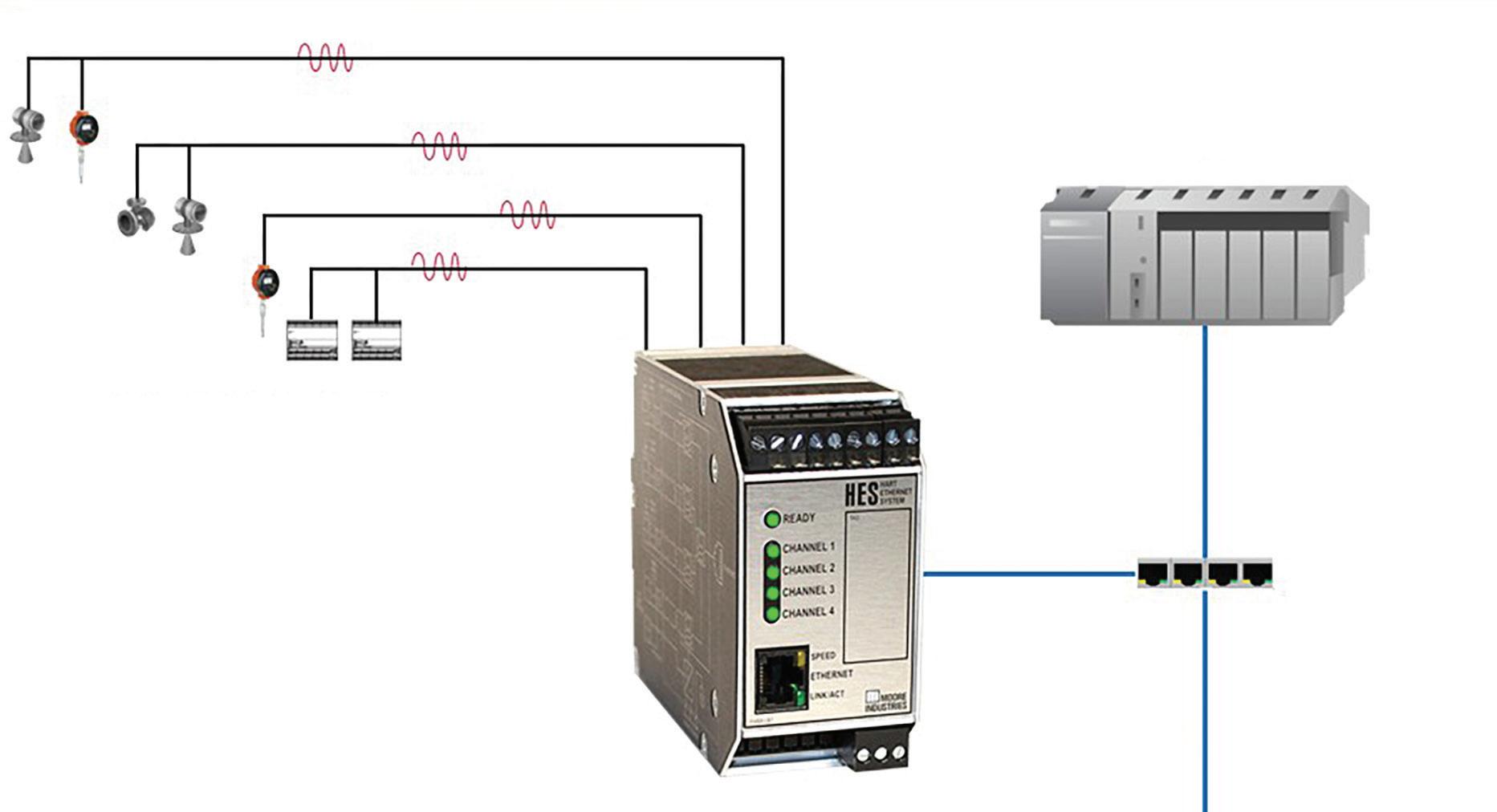
means process engineers can map HART process variables, device diagnostics and status data directly into their PLC’s I/O tree without any intermediate gateway or translation layer. It closes a connectivity gap and opens HES up to a significant segment of the industrial market.
Q: For readers who may be less familiar, can you briefly explain what EtherNet/IP is and how it differs from Modbus/TCP, which HES already supports?
A: EtherNet/IP and Modbus/TCP are both industrial protocols that run over standard Ethernet hardware, but they differ significantly in architecture and how they’re used in practice.
Modbus/TCP is a straightforward request-response protocol. A host initiates a query, and the device responds with register data. It’s simple, widely understood, and has been a staple of industrial communication for decades. The HES currently supports up to four concurrent Modbus/TCP connections, with a configurable and compressible register map that allows users to optimize polling efficiency across all connected HART devices.
EtherNet/IP, on the other hand, is based on the Common Industrial Protocol (CIP) developed by ODVA. It uses a producer- consumer model that supports both implicit messaging, sometimes called I/O messaging, for time- critical, cyclic data exchange, and explicit messaging for configuration and parameter access. EtherNet/IP is deeply integrated into the Rockwell Automation ecosystem, and is the native protocol for their family of PLCs and many other automation platforms. Where Modbus/TCP is polled by the host, EtherNet/IP implicit connections allow HES to publish data at a configured rate that the PLC subscribes to, which can reduce network overhead and improve determinism in control- critical environments.
Q: How will EtherNet/IP access HART data that HES collects? Will users be able to expose the same process variables and diagnostics available through Modbus/TCP?
A: The goal is to make all the rich HART data that HES already collects equally accessible over EtherNet/IP. HES currently gathers dynamic variables—the primary, secondary, tertiary and quaternary variables—as well as device variables and additional status data from each connected HART field device using HART commands 3, 9 and 48. In its four- channel configuration, that can mean data from up to 64 HART devices simultaneously. With EtherNet/IP, that same dataset will be organized into an EtherNet/IP assembly object structure that a PLC can consume via an implicit I/O connection. HES will present itself as an EtherNet/IP adapter, and the controller, whether it’s a Logix-based system or another EtherNet/IP scanner, will also establish a
connection and receive cyclic updates of HART data at a configured rate. Users will be able to bring HART process values and diagnostics directly into their PLC tags, enabling tighter integration with control logic and alarm management systems without needing to write custom Modbus polling routines or map registers manually.
Q: Many plants already have HART instruments wired with 4-20 mA loops and no existing path to get that diagnostic data into a Rockwell PLC. Is EtherNet/IP on the HES a practical retrofit solution for those sites?
A: Absolutely, and that’s one of the most compelling use cases for this addition. HES was designed from the beginning as a retrofit-friendly device. It snaps onto a standard 35-mm DIN rail, operates on 9-30 VDC power, and connects directly to an existing 4-20 mA loop with HART capability without disturbing existing field wiring. HES’ four- channel model supports up to four devices across four separate loops.
There are more than 40 million HART field devices currently installed in plants across every major industry. Many of those installations predate the modern push toward IIoT and predictive analytics, so the HART digital data those instruments have always been capable of providing has often gone uncollected.
With EtherNet/IP on the HES, a plant that’s already invested in a Rockwell control system and an Ethernet infrastructure can use HES as the bridge between those legacy or newly installed HART loops and their modern PLC, and they can do it without replacing instruments, running new signal wiring or adding a separate protocol converter. The diagnostic data that HES collects, including HART command 48 status bytes that indicate device health, can feed directly into the PLC for predictive maintenance workflows. That’s a meaningful upgrade in capability for a relatively modest investment.
Q: Will EtherNet/IP support change anything about how the HES is configured or ordered? Will users be able to easily program it to take advantage of the new protocol?
A: From an ordering standpoint, EtherNet/IP will be offered as an additional protocol option alongside the existing Modbus/ TCP output, which is currently required for all HES configurations. Users who need EtherNet/IP connectivity will be able to specify it when ordering, and it will be available in singlechannel and four- channel HES models.
Users familiar with configuring EtherNet/IP adapters in Studio 5000 or RSLogix will find the configuration process straightforward in defining the connection parameters, selecting the appropriate assembly, and adding HES as a module in their PLC projects.
Process gas chromatography is one of the most consistent tools supporting the safe, compliant and optimal operation of processes using carbon capture, utilization and storage (CCUS)
by Len Vermillion
CARBON CAPTURE INITIATIVES are typically presented with a focus on new and emerging technologies, largescale capital projects and ambitious decarbonization goals. Behind each successful carbon capture, utilization and storage (CCUS) project, however, there exists a much less visible, but equally important, foundation on which those projects depend—precise chemical composition measurement of gas streams.
For the power generation, cement, steel, refining, chemical and hydrogenproduction sectors, CCUS represents a primary method to reduce emissions associated with processes that are traditionally difficult or impossible to decarbonize.
Each of these sectors generates large volumes and continuous flows of CO 2, creating ideal conditions for capturing these gases before they enter the atmosphere. As regulatory standards continue to be implemented at a rapid pace, and companies increase their commitment to addressing climate change, CCUS is rapidly evolving from a forward-looking concept to a necessity for operations.
The drivers behind this trend include economic and strategic factors. Increasingly, governments have developed regulations on emissions, pricing mechanisms for carbon, and incentives to drive development. In the U.S., the federal 45Q tax credit is a major source of funding for each ton of CO 2 captured
and stored. Other global markets also provide similar subsidy structures or trade platforms.
At the same time, many large-scale, industrial processors are aligned with net-zero targets through 2030–50, and require solutions that will let them continue to produce and meet their environmental goals.
While the strategic and regulatory case for CCUS is increasingly well- established, its successful implementation ultimately depends on precise process monitoring and control. However, the performance, reliability and cost- effectiveness of such technology largely depends on accurate descriptions of the gas streams involved. As such, process gas chromatography (GC) continues to be one of the primary tools for ensuring that CCUS systems are operating reliably, meeting all applicable regulatory requirements, and achieving their best performance.
Process GC is an analytical tool used to continuously measure the chemical make-up of a gas stream flowing through industrial equipment. One of the most significant advantages of using GC is the ability to analyze a complex gas mixture, and split it into individual components during a single measurement.
Understanding the chemical composition of a gas is important for several

reasons. It’s important for maintaining product quality, optimizing operating parameters, protecting staff working near the process area, and regulatory compliance.
The analyzer works by sampling a small amount of gas from a pipeline or process stream, and injecting it into a flow of carrier gas. This mixture moves through a column filled with a stationary phase material. Each component interacts with the stationary phase differently, causing it to move through the column at a distinct rate. As each separated component reaches the end of the column, it enters the detector, where it’s identified and quantified. The detector’s signal is processed by a computer to determine the concentration of each component in the sample.
Maxum II utilizes real-time diagnostics to predict component wear, drift or failure before it disrupts operations.
In carbon capture processes, large amounts of flue or process gases enter a capture unit. It’s imperative to accurately separate and quantify the major components in the gas. However, one of the biggest obstacles is that different processing plants generate different gas mixes, while operating under different pressures, temperatures and impurity levels.
For flue gas analysis from a power plant, its analyzer typically tracks CO 2, O 2, N 2, SO x . When analyzing gases during blue hydrogen or syngas production, it would likely follow H 2, CO, CH4, CO 2 to ensure CO 2 removal is effective. In industrial off- gas and chemical looping systems, there could be many additional hydrocarbons and contaminates present requiring measurement and tracking.
Because of these factors, analytical equipment needs to be versatile. However, many plants use online analyzers that detect only one compound or element, so several are needed for more complex streams.
“The strength of GC lies in its ability to measure multiple components in a gas stream simultaneously, unlike individual gas analyzers that are limited to detecting one component at a time,” says Al Kania, business development manager at Valmet (www.valmet.com).
Process GC systems must deliver enough accuracy to support effective CCUS implementation. Reliable, highprecision measurements let operators
accurately determine system composition, providing a dependable foundation for downstream decisions.
With detailed compositional information, operators can effectively evaluate the performance of carbon capture processes, and make informed adjustments to improve absorption and stripping efficiency. Accurately measured process parameters give operators the confidence to make educated decisions regarding the system’s actual chemistry. In addition, using accurate measurements of the feedstock’s chemical composition, operators can make knowledgeable decisions about the effectiveness of the carbon- capture process, and identify opportunities to optimize absorption and stripping processes.
Accurately identifying and quantifying each component present in the gas stream is critical for managing amine degradation during CO 2 absorption. It’s also essential for mitigating corrosion risks by effectively controlling corrosive conditions, and operating compressors and pipelines safely at or below their design limits. These operations ensure that captured CO 2 meets specified purity standards for transportation and storage.
Validated, laboratory- grade compositional data is also necessary to meet many reporting requirements for regulations related to carbon sequestration and qualify for tax incentives. “Process GCs are the established analytical method for meeting these requirements,” notes Kania.
Though advanced analyzers like GCs are sophisticated, small measurement inaccuracies can increase operationing costs, or cause the control system to make unnecessary adjustments to the process. These gradual shifts in accuracy—known as analytical drift—are caused by variables such as temperature, detector deterioration, contaminants and electronic stability issues. Analytical drift may occur even when the analyzer is regularly calibrated.
“If an instrument experiences analytical drift, it may report CO 2 concentrations that are either higher or lower than actual values. This can lead the system to incorrectly adjust absorber or regeneration conditions, resulting in increased
energy consumption or reduced capture efficiency,” says Kania.
Accurate GC readings play an important role in minimizing operational and safety- related risks from hydrogen sulfide (H 2 S) breakthroughs and oxygen (O 2) ingress. By maintaining their accuracy and reliability, GC instruments also provide timely and reliable information on gas mixture changes, so operators can act before situations escalate.
The design and construction of a process GC is also a factor in controlling drift. Industrial- grade products like Valmet’s Maxum II are designed to operate at -20 °C to 100 °C, and should be rated for use in corrosive and potentially
explosive atmospheres where hazardous gases may be present.
Another factor that can affect measurement accuracy are the changes that occur in gas composition when a pilotscale operation transitions to full-scale production. “At the pilot stage, gas composition may appear consistent. Once the process is scaled up, small variations in temperature, reaction efficiency or material flow can cause gas composition to drift over time,” says Kania. If these changes aren’t detected promptly, the plant may continue producing gas that falls outside required purity specifications. This is where the advantages of real-time monitoring far outweigh periodic sampling and analysis in a laboratory.
“Instead of waiting hours for laboratory results, inline analyzers allow operators to observe changes in gas composition as they occur,” adds Kania.
According to Kania, processors producing significant amounts of CO 2 are regularly approached by major energy companies that develop and operate CCSU projects, often in partnership with specialized technology providers.
Most of the plants and mills deploying this absorption method use amine solvents to remove the CO 2 from their gas streams. This process works by passing the flue gas through a large
removing CO 2 is physical absorption, which is also known as solvent absorption. In this method, the gas being purified is likewise exposed to a solvent that will absorb the CO 2
CCUS represents a primary method for reducing emissions associated with processes that were traditionally difficult or impossible to decarbonize.
Carbon- capture systems come in several types, often as modular units that can be retrofitted onto existing plants. They’re typically installed on industrial exhaust streams to remove CO 2 before it’s emitted.
For facilities like steel mills, cement plants, and pulp and paper mills, the most widely used carbon-capture technology is a chemical-absorption system installed on their flue-gas streams. In this approach, exhaust gas is passed through an absorber containing a chemical that binds with the CO2
absorber tower, which has the liquid solvent in it that reacts with CO 2 to form a compound. The amines react specifically with CO 2, while allowing nitrogen, oxygen and other gases to be released from the absorber. The CO 2 -rich liquid is then heated in a regeneration column, releasing the CO 2 as a compressed gas stream. The solvent is then recirculated to the top of the absorber.
Another type of gas purification for
Other carbon capture methods separate CO 2 by using different mechanisms to improve efficiency and purity. Given the diverse process configurations, projects often prioritize the flexibility of one instrument platform.
“With configurable detectors, one analyzer can perform a range of analytical measurements across multiple points in the CCUS value chain. This minimizes the need for separate instruments, and reduces longterm maintenance demands,” explains Kania. He adds that Maxum II can be configured for a range of applications, including flue gas analysis, CO 2 removal in hydrogen and syngas production, industrial off- gas treatment, CO 2 purity verification before transport, and monitoring during reinjection and at wellheads.
So far, CCUS has evolved from an ambitious concept into an engineering solution that can help meet ambitious decarbonization goals. As processers continue to increase CCUS investments, measuring, validating and controlling gas streams will become increasingly important for operational efficiency, as well as regulatory reporting requirements, verifying stored CO 2 and ensuring the integrity of longterm storage.
In environments with extremely high concentrations of CO 2 and trace contaminants, as well as needing uninterrupted operations, process GC is essential for precise, continuous monitoring of complex gas streams.

R. RUSSELL RHINEHART russ@r3eda.com
“Consider process models that have a phenomenological development. Some call them mechanistic, theoretical or digital twins.”
The goal of a process model is usefulness for its purpose, not perfection
PROCESS MODELS ARE useful for process design, operator training, process analytics, troubleshooting, training new engineers and many other applications. For models to be functional, they must have adequate fidelity to the process. There are several solutions based on the issues of model mismatch to the process.
“Adequate fidelity” doesn’t mean perfection. Perfection seems impossible. The model should be sufficiently functional for its purpose.
Process models are created from two general approaches: phenomenological and empirical.
Consider process models that have a phenomenological development. Some call them mechanistic, theoretical or digital twins. The

modeling starts with mechanistic concepts of the process’ behaviors, then translates them to algebraic or calculus or statistical mathematical embodiments. The math procedure is translated to digital code. The term model applies to each of the three stages: concept, math equations and digital code embodiment.
Phenomenological models may be of a first-principles type (simple, elementary) or a rigorous type (attempting toward an elusive perfection). In either case, phenomenological models have coefficients that are supposed to describe the process, such as reactivity, efficiency, fluid flow pressure loss factors, or ambient heat loss coefficients. If the model doesn’t match the operating data, it may be that the presumed values of the coefficients aren’t correct.
Seek to adjust the model coefficients to make the model match the data. There are several approaches to this calibration of models, including heuristic tuning or least-squares optimization for the model to match a batch of data. Alternately,

heuristic or model-based incremental adjustment matches the model to new data as the process evolves in time. These approaches are often successful in correcting process-to-model mismatch.
However, the model may not include all the important phenomena. For instance, blackbody radiant losses may be important but not included, or temperature- dependent fluid properties may be needed to adequately model fidelity to data from the process. Simple choices in the concept-to-math-model steps (such as the ideal gas law, unity activity coefficients, or other simple constitutive relationships) may need to be revisited. In these situations, the model functionality doesn’t match the process, and adjusting model coefficient values doesn’t fix the problem. As a second stage of model correction, search for such phenomena that aren’t, but should be, included in the model, starting with reevaluating the concepts and their translation to the model.
This third topic should be detected and corrected at the translating math to code stage. The digital implementation of the model may have a coding error or a procedure that causes the mismatch to reality. Search for such translation of model to code techniques that might be the source of the mismatch.
Missing or erroneous representations of phenomena and erroneous concept to digital implementations are frequently part of initial model development and validation. They require an understanding of how to identify process model mismatch within process noise and an effective trouble shooting approach to find and fix the problem. To validate or calibrate a model, apply my book, Nonlinear Regression Modeling for Engineering Applications (bit.ly/4ej9Cmr). To help identify model fixes, Kepner and Tregoe’s book, The Rational Manager (bit. ly/4ej9OCb) can be a troubleshooting guide.
Many models or parts of models are empirical. They’re developed by best fitting a generic mathematical function (such as a power series or a neural network) to historical data. But the process may have changed since it generated the data. If so, the empirical model needs to be regenerated from new and relevant data.
Alternately, the data might still be a valid description of the process behavior, but the issue is that the empirical model is being extrapolated beyond its representation of the data. If so, reformulate the functional basis in the model, so the generic function matches what’s theoretically expected, or collect data in the appropriate range for model refitting.
Most of my experience is in chemical processing, developing models for control algorithms. I’ve been very pleased with these approaches, which are also posted in the modeling-simulation section of my website at www.r3eda.com.
PEX liners for Rosemount magnetic flowmeters provide longerlasting, PFAS-free protection in chemically aggressive conditions
EVERYONE TALKS ABOUT external threats and shielding, but as usual, there seem to be few discussions about internal protections. Well, over the years, chemical manufacturers have implemented increasingly durable piping and liners, which can armor-up and restore the insides of pipes in many arduous settings. More recently, cross-linked polyethylene (PEX) has become common in various chemical applications, and now others can benefit as well. Traditionally, a common liner material in industrial applications has been polytetrafluoroethylene (PTFE), which contains per- and polyfluoroalkyl substances (PFAS) or “forever chemicals.”
“Most magnetic flowmeters use similar plastic or rubber liners to protect against abrasive substances and harsh chemicals, but they’re also needed because these liners are made of nonconductive materials. This prevents measurement interference, allowing the electromagnetic coils in a magmeter’s pipe section induce a magnetic field and collect its measurements,” says Laura Chemler, product manager for magnetic and vortex flowmeters at Emerson. “Different liner materials exist to support a variety of process application needs, including durability, chemical compatibility, and recent added concern about PFAs.”
Fortunately, Emerson took these lessons to heart, and is releasing PEX liners for its Rosemount 8750W magnetic flowmeters, Rosemount 8705 flanged magnetic flowmeter and Rosemount MS magnetic flowmeter sensors, which are designed to process conductive fluids from water and wastewater to harsh chemicals to slurries or other abrasive
media. Reported to be the world’s first PEX liners for magmeters, they give users longer-lasting, PFAS-free protection that improves reliability in chemically aggressive conditions, while also simplifying stocking and compliance tasks.
“PFAS can be eliminated from 95% of PTFE applications by using PEX liners,” adds Chemler. “PEX has similar chemical compatibility to PTFE. Plus, PEX is four times more durable than carbon steel, which means users may have to replace their pipes before their magmeter because the pipes are more likely to wear out first.”
Another longstanding problem with the plastics traditionally used in flowmeter liners is they can become distorted and flare while waiting in storage before installation, or if they aren’t installed properly, or if they’re removed temporarily for maintenance and then reinstalled. These issues this can cause fitting and maintenance problems later.
“There’s been constant R&D about liner types and materials over the years because users need a variety of suitable capabilities. However, they also don’t want endless solutions, so there are efforts to consolidate and focus on the most useful options,” explains Chemler. “PEX was identified because it’s more durable than steel and ceramics. It’s a natural fit for magmeter liners because it’s already so widely accepted in plumbing and other applications. However, PEX has usually been deployed in smaller, narrower pipes, so we also had to work on adapting it for larger, wider pipes. PEX liners are presently available for Rosemount magmeters up to 8 inches, and larger sizes are in development.”
Source: Emerson
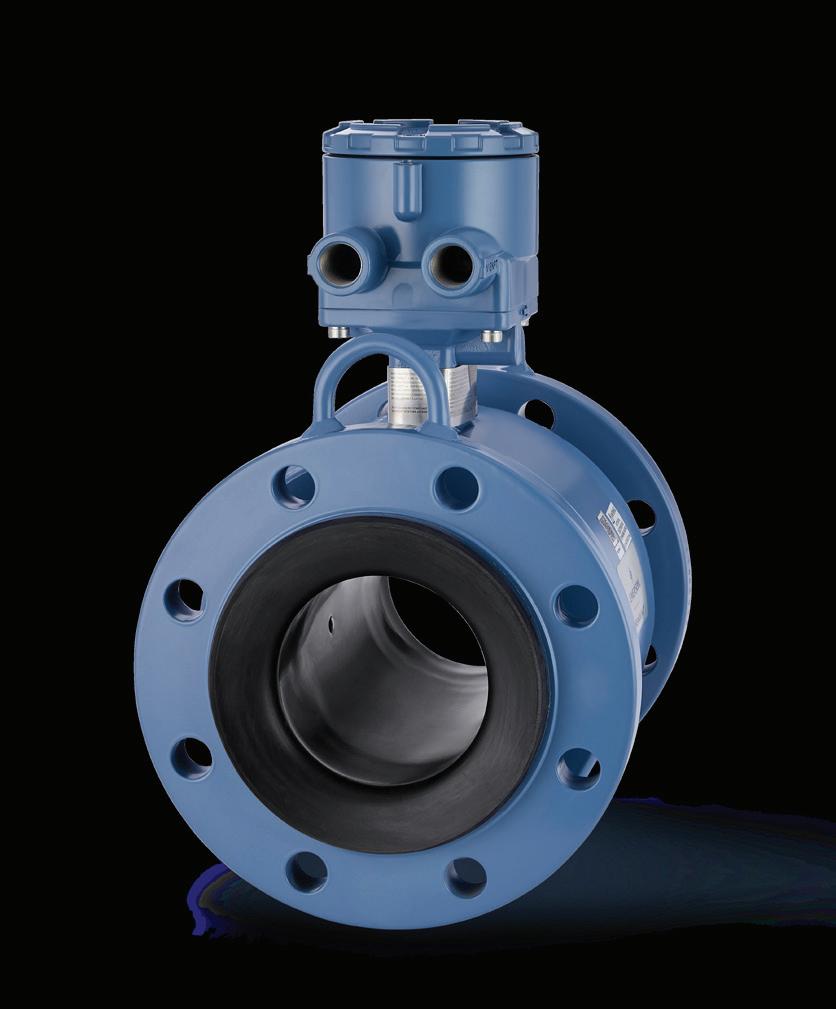
PEX liners for Emerson’s Rosemount 8750W magnetic flowmeter, 8705 flanged magmeter and Rosemount MS magmeter sensors
Because they’re made of just one type of plastic, PEX liners simplify material selection and stocking requirements compared to fluoropolymer-based liners, which typically employ different construction materials depending on each application, and are usually more expensive. In addition, PEX features:
• NSF/ANSI/CAN 61 approval for drinking-water applications;
• Chemical resistance similar to PTFE, but covering a wider range of conductive chemicals. This enables PEX liners to often cover a facility’s entire range of applications, unlike PTFE; and
• Process flow temperature range from 0 °F to 203 °F (-18 °C to 95 °C).
“Magmeters require almost no maintenance, so they can last as long as their liners and electronics hold out. Of course, their lifecycle also depends on the severity of each application,” adds Chemler. “Users want PEX because it’s a familiar, proven material, it has PTFE’s capabilities, it doesn’t contain PFASs, and it’s affordable. This is a win-winwin for users that can meet their needs where they are.”
For more information, visit www.emerson.com/magneticflowmeters
The 284-page Engineer’s guide to level measurement, 2025 edition, begins with an introduction to the different devices used for measuring level it includes basic level measurement concepts, recommendations for liquid and solid applications, installation best practices, calibration, maintenance and troubleshooting procedures, and a library of reference materials. There’s a brief registration form, but it’s free at go.emersonautomation.com/rmt-en-l-resources-level-measurement-guide EMERSON
www.emerson.com
This online article, “Radar level measurement explained,” explores the principles behind radar technology, demonstrate how to measure in tanks, and examines frequency bands and how IIoT-enabled radar devices have become a pivotal innovation in level monitoring. It’s at www.us.endress.com/ en/support-overview/learning-center/radar-level-measurement-explained ENDRESS+HAUSER us.endress.com
This six-minute video, “DP level measurement explained,” is the first part of a two-part series introducing open-vessel level measurement using a differential pressure (DP) transmitter. It covers the two categories of level measurement, differences between direct and indirect continuous level measurement, shows how a DP transmitter measures vessel level. and discusses variables that influence the measurements. It’s at www.youtube.com/watch?v=ylhwPcyieTc and the second part is at www.youtube. com/watch?v=VyHIgqqpGEc REAL PARS
www.realpars.com
This 14-page e-handbook, “Best practices for level measurement,” consists of three articles from Chemical Processing magazine, including “Select the right liquid level sensor” by John Edwards of P&I Design, “Properly measure liquid/ liquid interfaces” by Jonathan Webber of Fluor Canada, and Patrick Richards of Irving Oil, and “Improve reactor vessels measurement” from Krohne Inc. It’s at img.chemicalprocessing.com/ files/base/ebm/chemicalprocessing/ document/2022/08/1660253669807levelmanagementehandbook.pdf
CHEMICAL PROCESSING www.chemicalprocessing.com
This four-minute video, “Comparing ultrasonics and radar level technology, part 1” by Justin Koscak, compares the differences between ultrasonic level technology and non-contacting radar technology, and explains the benefits that non-contacting radar has over ultrasonic level technology. It’s at www. youtube.com/watch?v=YIMT6VzEHKI and the second part is at www.youtube. com/watch?v=5XWOC0JcJCA
LAKESIDE PROCESS CONTROLS www.lakesidecontrols.com
This online article, “Level measurement,” is part of the University of Michigan’s online Visual Encyclopedia of Chemical Engineering Equipment, and details the advantages and disadvantages of direct measurement methods, such as floats, rotary, vibrating dipsticks, capacitance, optical, radio frequency and microwave. It and links to many related topics are at www.encyclopedia.che.engin.umich.edu/levelmeasurement
UNIVERSITY OF MICHIGAN www.umich.edu
This nine-minute video, “Automation basics: level measurement” by former Control editor-in-chief Paul Studebaker, starts by toting up numerous process vessel issues, such as mixing and agitation, tank head space, vapor and dust, coating and buildup, immiscible liquids, and viscous and sludgy substances. It then cover suitable solutions, such as magnetostrictive, signal conditioning and computing, guided wave radar and load cells. It’s at www.youtube.com/ watch?v=vdkmXpiu66Q
CONTROL www.controlglobal.com
This online article, “A dozen ways to measure fluid level,” traces the field’s history from glass gauges and floats to displacers, bubblers and differential pressure transmitters; onward to load cells, magnetic level gauges and capacitance transmitters; and ends up at today’s magnetostrictive, ultrasonic, laser and radar level transmitters. It’s at new.abb.com/products/measurementproducts/level/a-dozen-ways-to-measure-fluid-level
ABB
www.abb.com
This online article, “Level measurement principles,” covers radar and ultrasonic transmitters, level measurement using pressure transmitters and differential pressure transmitters, laser and capacitive, as well as capacitive, vibrating, conductive, rotary and float switches. It also features two videos on capacitance and vibronic measuring principles. It’s at www.automation24.com/level-measurement-principles
AUTOMATION 24 www.automation24.com
New configurations, connections and protections prepare displays for digitalization
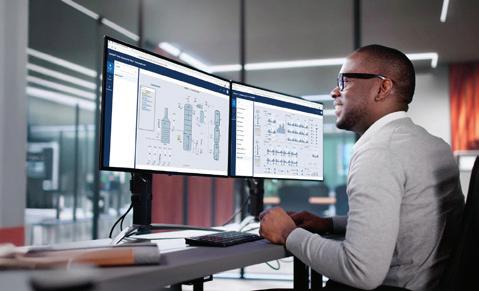
DeltaV Live Enterprise View securely extends real-time control system visualization beyond the control room. This software empowers teams with browser-based, readonly access to live plant displays—as operators see them—without requiring display conversion, added engineering or changes to the control system. To circumvent layered solutions without native integration, DeltaV Live Enterprise View deliver displays via secure, read-only browser access available from any location.
www.emerson.com/en-us/automation/control-andsafety-systems/distributed-control-systems-dcs/deltavdistributed-control-system/edge-environment
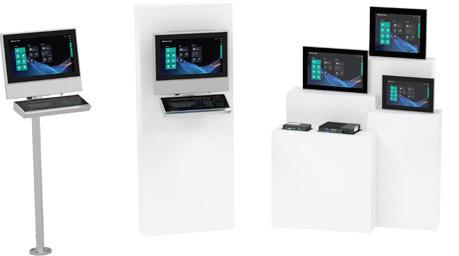
Box PC 3200 series is based on the 7th generation Intel Celeron and i5 (Kaby Lake) embedded processor. It supports highspeed memory (M.2 NVMe 1.3) and extended RAM configurations with up to 16 GB DDR4. These PCs can serve as standalone devices, panel PCs when mounted on a display unit, or as an HMI system with a panel PC installed in an enclosure. They can operate as a Windows PC, or as a Thin Client with RM Shell 6, ThinManager Ready or IGEL OS 12.
PEPPERL+FUCHS
www.pepperl-fuchs.com/en-us/products-gp25581/101865
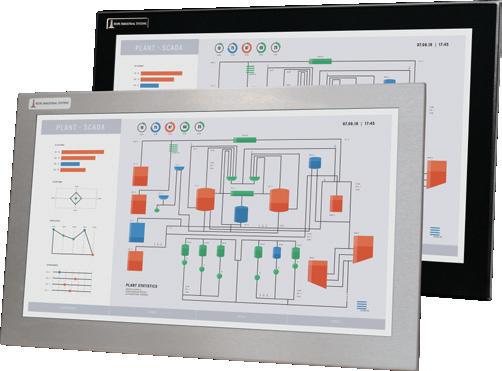
Designed to deliver sharp, 1080p imaging and reliable performance in industrial settings, this 23.8-inch, widescreen, panelmount monitor is offered in glass, resistive touch, and PCAP multi-touch configurations. It’s available with either an edge-to-edge flush front or stainless-steel bezel front, and features DisplayPort and DVI inputs, protection ratings up to NEMA 12/4/4X and IP65/IP66/IP69/IP69K, and a five-year warranty,
HOPE INDUSTRIAL SYSTEMS
www.hopeindustrial.com
Visual Panel 200 series HMIs are built to withstand tough conditions because all models are NEMA 4X rated, IP68 certified, and meet international compliance standards for CE, UL and cUL. They come in 4, 7, and 10 in. screen sizes, as well as a 10 in. daylightreadable version. Each Visual Panel 200 is panel- or VESAmountable, has a fan-less design, no battery and is maintenance free.
WAGO
www.wago.com/us/touchpanel-200

CM5-RHMI headless HMI has all the capabilities of C-more CM5 touch-panel HMIs, but without display-size restrictions. This HDMIenabled device works with televisions, monitors, projectors and most other HDMI display devices of any size to display real-time operational data or messages. Users can also skip the local display entirely, and use CM5-RHMI’s remote-access feature, which supports any web browser-enabled Windows PC, Apple iOS or Android smartphones and tablets with C-more Remote HMI mobile app.
AUTOMATIONDIRECT
https://www.automationdirect.com/headless-hmi
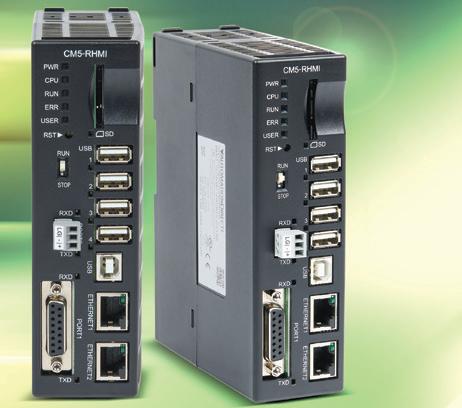
RotAlign Core and RotAlign Elite laser shaft alignment systems are built on single-laser, dual-detector technology, enabling improved ease of use, broader scalability and predictive maintenance. Their softwaredriven capabilities include customizable reporting, direct email alerts, ROI calculator and video replay, which saves time by letting users remove disruptive measurements without retesting. RotAlign Core and Elite’s single-laser technology features faster and easier setup, prevention of pre-alignment guesswork, improved precision and accuracy, simultaneous live move, and one live move functions.
FLUKE CORP.
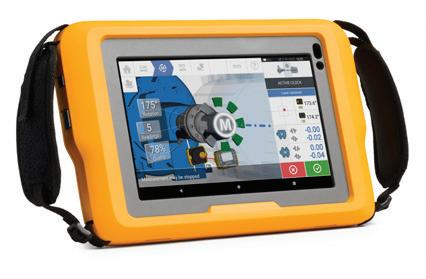
www.fluke.com/en-us/products/condition-monitoring/laser-alignment
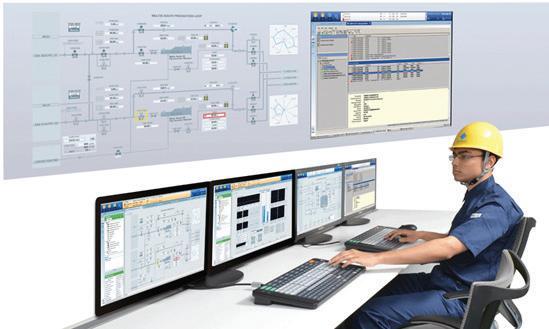
R7 software with Advanced Operation Graphics (AOG) expands HMI capability with broader, secure data visibility, earlier anomaly detection, scenario -based operator guidance, and future-state insights that help users anticipate change. Its AI-assisted decision support reduces workloads and mental stress. AOG includes a design service that elevates performance with cognitively engineered, ergonomically optimized displays built on ISO 9241-210, ISA 101, and decades of operational work-domain analysis expertise.
YOKOGAWA
800-888-6400; www.yokogawa.com/us/solutions/productsand-services/consulting/advanced-operating-graphics
Seamlessly integrating Erqos’ EQSP32 fully open, micro PLC with DashIO’s smartphone user interface (UI) platform lets users configure, control and monitor industrial systems locally via direct connections or remotely via the cloud. DashIO extends and enhances EQSP32’s capabilities by letting users create and deploy dashboards on their smartphones or tablets. Without writing complex code, users can design custom interfaces with buttons, dials, graphs and other interactive UI elements to monitor and control EQSP32based systems.
ERQOS TECHNOLOGIES www.erqos.com
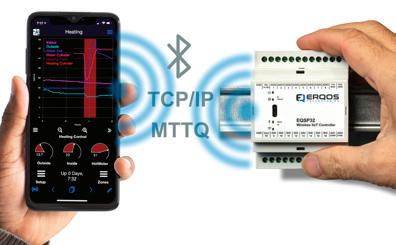
VisuNet FLX series HMIs from Pepperl+Fuchs consist of touchscreen display units paired with configurable computing modules for Zone 2/22 (Div. 2) and non-Ex industrial applications. Display sizes include 21.5 in. (1,920 x 1,080), 19 in. (1,280 x 1,024), and 15.6 in. (1 920 x 1,080), and feature chemically resistant LCD screens. Units offer IP66/Type 4X-rated stainless-steel bezels, passive cooling and vibration resistance per EN60068-2-6. Approved under ATEX, IECEx, and UL standards, VisuNet FLX ensures operational reliability in demanding environments.
GALCO www.galco.com
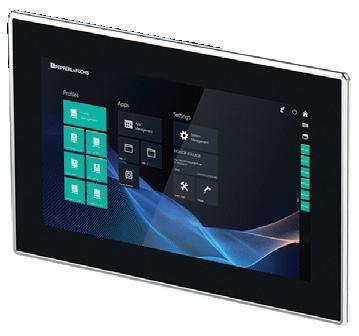
DASHIO www.dashio.io
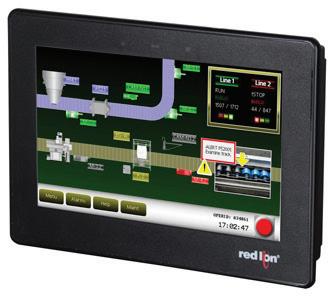
CR1000 automation HMI from Red Lion provides protocol conversion and connectivity choices, along with a 7-inch, TFT LCD color touchscreen, serial, Ethernet and USB connectivity, and 24 V DC power. It combines an ever-expanding list of more than 300 industrial drivers with the Crimson 3.1 development platform, so it can easily scale and adapt as requirements. CR1000’s applications includes factory automation, OEM machines, automotive, food and beverage and water/wastewater.
NEWARK
www.newark.com/red-lion-controls/cr10000700000210/ hmi-panel-7in-800-x-480-pixels/dp/69AC1845
PKD, PKI and PKR series CANbus keypads have many interface options and a compact form designed to resist ambient weather conditions. They feature configurable, multicolor LED backlight; RGB LED status indicators; standard or modular pushbuttons and knobs; three-in-one knob combining a pushbutton, rotary encoder and joystick; IP67/69K ingress protection and 400-hour UVB protection; flexible mountings; silicone-rubber front face and plastic backshell; and connectorized CANbus wires for easy installation in tight spaces.
APEM INC.
877-246-7890; www.apem.com
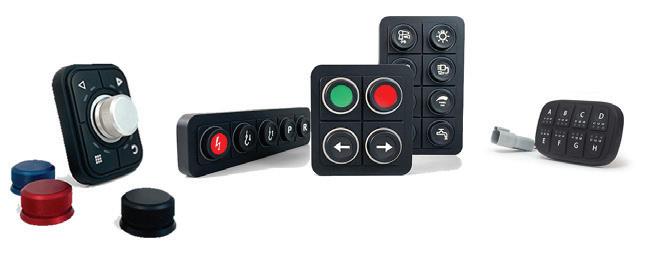
LineLight Fusion Segment module can divide light patterns into several segments, and illuminate machine statuses or other indicators directly on their surfaces. For example, two states can be signaled simultaneously, indicating more specific actions required. In addition, an automatic scaling function is available, allowing process steps or progress to be clearly displayed. LineLight Fusion Segment’s flush-mounted, hygienic, smooth surface blends seamlessly onto machine or equipment housings, and creates a clear, functional appearance.
WERMA SIGNALTECHNIK GMBH www.werma.com
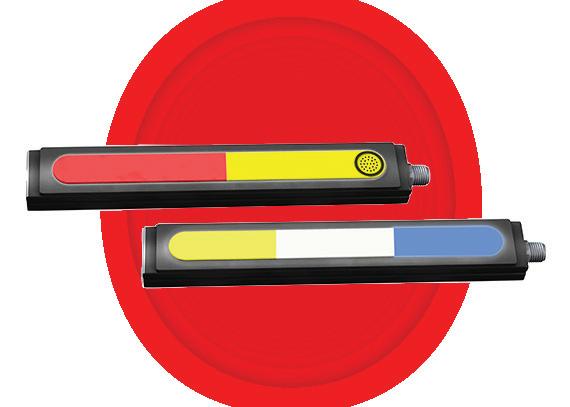

Gregory K. McMillan captures the wisdom of talented leaders in process control, and adds his perspective based on more than 50 years of experience, cartoons by Ted Williams, and (web-only) Top 10 lists. Find more of Greg’s conceptual and principle-based knowledge in his Control Talk blog. Greg welcomes comments and column suggestions at ControlTalk@endeavorb2b.com
Success is less about memorizing formulas and more about understanding process behavior, valves, operators and controller structure
GREG: We’re fortunate to have an independent, advanced process control (APC) consultant, Vivek R. Dabholkar, share his insights on practical techniques to help us get smarter at proactively recognizing the appearance and causes of PID tuning problems. Vivek previously shared his expertise in March 2024’s column, “Achieving plantwide, multivariable control” (controlglobal.com/ Controltalk0324).
Vivek, what should we understand about PID tuning issues?
VIVEK: The Internet is full of software, journal articles, magazine publications and books on PID control, yet the key factors in successful PID tuning are missed by many. Academia, and to a large extent the industry, is all about tuning rules. There’s even a handbook on PID tuning rules with more than 400 pages of rules. There’s a lot of disagreement, and little guidance about the advantages and disadvantages of various rules.
GREG: I addressed these issues in my book, PID Tuning and Control Loop Performance , fourth edition, 2014, that’s free to download. There are chapters on fundamentals, and a united methodology and performance criteria, which I developed with Greg Shinskey. There are also chapters providing equations and test results for the effects of process dynamics, controller dynamics, measurement dynamics, valve and variable frequency drive dynamics, disturbances, nonlinearities and interactions. What do you need from the start?
VIVEK: Strong commitment. Be ready to take your laptop to the control room, and engage with the operators on changes you’re planning to make. Nothing upsets them more than you making changes to PID tuning, setpoints (SP) or mode without telling them. They bear the consequences at odd hours when no one is around. Be sensitive to their concerns.
Make sure you’re trending SP/process variable (PV)/output (OP) and major disturbances affecting PID. Many young engineers are afraid to make sizeable changes to PID tuning, and it becomes a deterrent to progress. If you’re closely observing, you can always undo a change. So, if you’re planning to leave within couple of hours or before the weekend, don’t make changes to tuning (unless you’re authorized to observe, communicate and make necessary changes remotely over the weekend). Building trust with those who run the process often pays dividends in the long run. Most operating companies in our industry have poorly tuned PID controllers, so the first job for an experienced APC engineer is to fix the PID controllers. At one plant I worked at, steam header pressure (SHP) swung by 40 psig, either venting SHP steam to atmosphere or sending refrigerant flows to flare on highsuction pressures—and the plant-manager and CEO were aware of them. To top it off, a well-known consulting firm had implemented dynamic matrix control (DMC) on the olefins unit. After using P on PV algorithm, and retuning SHP control by using much larger controller gain, pressure variation was brought down to less than a psig. Operators were ecstatic after many years of neglect and abuse.
GREG: What about instrument scale range and signal filtering?
VIVEK: If PV instrument scale range was increased or decreased recently, then the gain needs to be adjusted proportionately higher or lower, respectively. If not, the PID will be sluggish (in case of PV range increase) or unstable (in case of decrease of PV range) assuming the PID was properly tuned. If PV signal is noisy, then put a lightest filter on PV that addresses the issue, keeps the PID OP within the valve resolution limit, and is less than 10% of the PID integral time.
GREG: How can we diagnose cause of continuous equal amplitude oscillations?
VIVEK: Check how the PV responds to OP changes when PID loop is in AUTO. Plot them on the same plot. If you see, for a self-regulation process, a triangular pattern in OP and rectangular pattern in PV, then the valve is sticking (poor valve resolution). This pattern emerges due to fact that, even though PID OP is changing, the valve position in the field is not.
For a near-integrating and true-integrating loop, the PV has a triangular pattern, and the OP has a sinusoidal pattern. This can also happen after you tune the PID well due to excessive valve packing by the environmental department to reduce emissions. No amount of tuning will stop these limit cycles if there is integrating action somewhere in the positioner, processes or controller. Increasing the integral time or decreasing the PID gain will increase the limit cycle period. The amplitude is set by the process gain.
GREG: How can you tell if the proportional, integral or derivative action is too aggressive?
VIVEK: Observe how PV turns in relation to OP. If PV has turned already (local maximum/minimum) and OP is still going in the same direction, then the integral time is too short (excessive reset action), increasing integral time up by at least 50% (not by 2-5%). If OP turns ahead of PV, then one explanation is derivative action. Derivative can be used for temperature controllers after filtering the signal, or else it’s counterproductive due to overreaction to noise.
Another explanation is PD on PV algorithm with high controller gain, which is trying to bring PV to its SP as fast as possible without a turn in PV. The turn of PV in relation to OP observation comes from the late Prof. James Riggs of Texas Tech University. If the PV turns towards SP, then there’s no sense in continuing to increase/decrease OP
through integral action. It’s like having a manager penalizing employees, even though their behavior has markedly changed.
On the other side, if integral time is excessive, then PV would wander around on one side of SP. It’s like having an ineffective manager with zero control action. In case of evaluating responses to large or increasing disturbances, you may find OP not turning when PV turns. This is acceptable provided the delay in turning doesn’t cause an excessive increase in peak error or integrated error from unmeasured load disturbances. Also, wandering is fine if the separation between the PV and SP is negligible and within the PV’s resolution limits. The offset from proportional action is inversely proportional to PID gain, which means the offset is negligible for large PID gains needed in highly exothermicreaction temperature control. In case of evaluating responses to large disturbances, you may find OP turning much later when PV turns. This is acceptable if delay in turning isn’t excessive enough to cause excessive ringing.
The late Dr. Charlie Cutler verbally
shared his wisdom with me on one occasion. PID Proportional action always opposes change in PV, regardless of direction towards or away from the SP, and integral action is trying to bring PV to SP. However, for SP changes or unmeasured disturbances, proportional mode is taking proactive action to reach SP, and integral action is ceaselessly trying to bring PV to SP, even if it’s going to cause overshoot. Integral action has no sense of direction and is never satisfied. Good PID tuning strikes a balance between the two, while handling load disturbances. In most industrial settings, control issues are caused by integral time that’s too short. In many composition, level, temperature and pressure control cases, the reset action was too high by a factor of 10-100. In his work, James Beall observed the same problem. This is an issue that needs to be addressed. As a result, first set integral time large to get it out of the way, and tune proportional gain. Once satisfied with disturbance rejection, reduce integral time to bring PV to SP, knowing there’s built-in control lag due to process lag time and deadtime.


JIM MONTAGUE Executive Editor jmontague@endeavorb2b.com
“Why are we so anxious to give up our brains? Because inertia is so addictively appealing.”
Most miracles need lots of work behind the scenes
I’M SORRY AHEAD of time for piling onto all the artificial intelligence (AI) hoopla. I’m sure you’re beyond weary of it by now, but I’m obligated to cover what’s happening on the process control and automation beat, and AI is all over it for the moment, just like everywhere else.
I must also go the AI route because whenever multiple sources unknowingly echo each other—without me prompting them—it usually means I’ve got a handle on something notable and possibly useful. As usual, my only real tools are attention and memory.
In this case, a parade of interview subjects, speakers and presenters featured in this issue’s “IIoT of many colors” cover story (p. 20) and In Process news section (p. 17) described some caveats about AI that may be important. They and others in Control ’s expanded online versions independently reported that AI requires a lot of work.
In the big data and analytics realm, users must typically clean, prepare and standardize vast amounts of raw information, so serverbased, cloud-computing services can deliver their brilliant, value-added, insightful, decision-enabling conclusions. Unfortunately, it appears AI may be even more demanding because several sources report they’re training staff to design and develop prompts and other preprogrammed software devices, which will help large language models (LLM) and other fast-multiplying AI tools. These largely human efforts will allow AI to be successful, or at least look like it is, and prove it’s more than the glorified search engine its critics say it is, and its cheerleaders say it isn’t. I don’t have the whole, wonderful picture yet, but this sounds like the growing armies of people being hired to correct the often-flawed results generated by Chat GPT and other LLMs
Granted, AI probably has this all solved already, and is just waiting to show me how. Even as I write, I can see the little,
pastel-colored Microsoft Copilot button pulsing in the righthand corner of this Word document. James Cameron’s Terminator and all the other evil, pop-culture robots come to mind, but I also recall Ren yelling at Stimpy in their classic “Space Madness” cartoon, “Don’t touch it! It’s the history eraser button! You fool!”
I guess my question is, if AI requires so much data cleaning, prompt design and other preparation beforehand, and needs so much correction afterwards, then how helpful is it, really? Can it truly do more than streamline searches, and organize pleasing, voice-enhanced results? If not, can we cut out the middleman?
I’m sure this is heresy, but why are we so anxious to give up our brains? Because inertia is so addictively appealing.
Everyone, myself included, yearns for the Easy Button, the magic or silver bullet or pill, the black box, Aladdin’s lamp, cryptocurrency or whatever other late-night TV come-on or outrageous snake oil is out there. And, no matter the price, too—in fact, the pricier the better to support our brittle confidence. Anything, anything, so I don’t have to get off my rear end, struggle and flail for a while, possibly widen my perspective, and worst of all, maybe admit I was wrong.
In the great Death of a Salesman play by Arthur Miller, protagonist Willy Loman yearns for the success of a legendary colleague, who could simply show up in a town, and wait for the orders to roll in. Of course, Miller doesn’t mention, and his tragic character overlooks, the decades of cold calls and pounding the pavement it probably took for that veteran salesman to achieve his seemingly miraculous results and status.
AI can probably help, and may even be a savior at some point, but I’m going to keep beating the bushes for now. It’s what my AI overlords will demand soon anyway, right?