FROM ASSISTANT STATE’S ATTORNEY TO ADMINISTRATIVE JUDGE
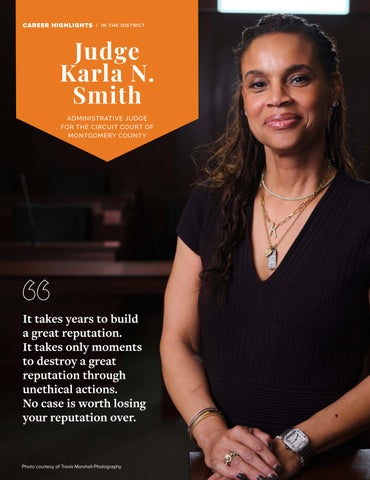
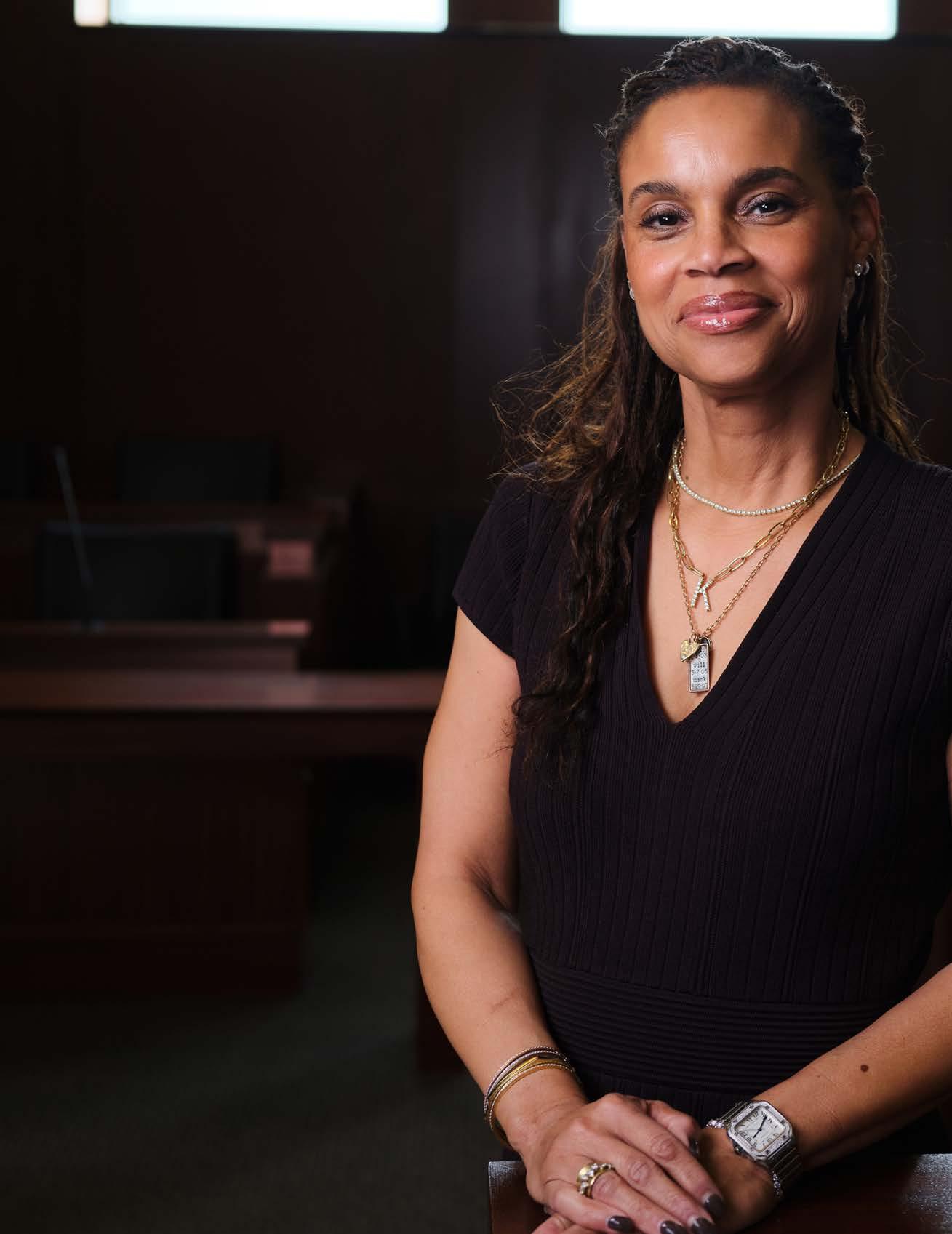
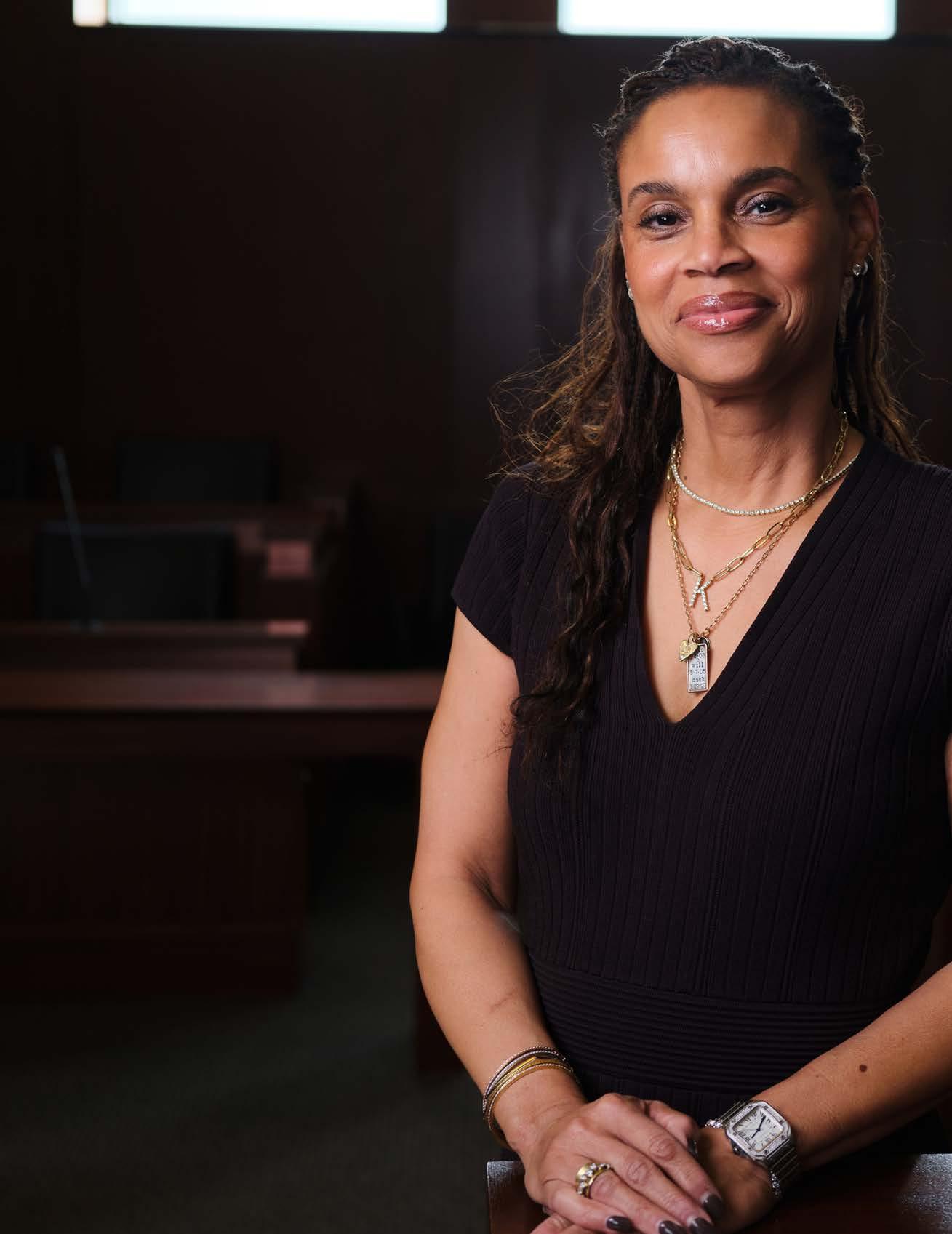
ASSOCIATE JUDGE KARLA N. SMITH has built an impressive legal career spanning 35 years, from her early days as an assistant state’s attorney to her current position on the Circuit Court for Montgomery County, Maryland. After years of dedicated public service as a prosecutor, she transitioned to the bench. Now, Judge Smith is preparing for her latest and most significant career change yet: being named the administrative judge for the Circuit Court for Montgomery County, effective March 2026. In this new leadership role, she is focused on honoring the court’s legacy by developing policies and systems that ensure efficient and equitable access to justice for the county’s diverse community.
What is the best piece of advice you have received from someone in the legal profession?
The best advice I ever received was that the most important thing I have as a lawyer is my reputation. It takes years to build a great reputation. It takes only moments to destroy a great reputation through unethical actions. No case is worth losing your reputation over.
What is your fondest memory of your legal career so far?
My fondest memory of my legal career is being sworn in as a judge in the presence of my family, friends, and the community. It was such an incredible moment for me, having my parents present and knowing that they never had that kind of opportunity, and having my three young sons participate and learn that there are no limits to what they can do in their lives.
How would you describe your career in three words?
Interesting, challenging, fulfilling
What are some accomplishments you’ve achieved during your career?
Instituting changes in policy and programs in the juvenile court with a mind toward reducing juvenile recidivism by reengaging youth in school and connecting them to services while they are on probation to the court.
Additionally, my work with problem-solving courts, specifically the adult drug court, has been rewarding because of the impact it has not only
on participants and their families but also on the community as a whole.
What professional accomplishment are you most proud of?
As a judge, my proudest accomplishment is creating a graduate social worker program in the juvenile court. I think the assignment of graduate social work students to youth with delinquency matters has been impactful, not just for the youth but for their families.
During my tenure as a prosecutor, my proudest accomplishment would be working with Governor O’Malley and Attorney General Anthony Brown (then lieutenant governor) to pass a criminal child neglect statute.
What makes you unique in your profession?
I am a homegrown Montgomery County girl. I have witnessed the county grow and change over the last few decades, from being largely homogeneous to one of the most diverse counties in the country.
What are the best skills you bring to your legal career?
I think I’ve always had the ability to look at the big picture, consider the implications of a decision, be decisive and direct, think outside the box, and multitask.
What do you enjoy most about your career?
No two days are ever the same. It is impossible to predict what is going to happen in the
courtroom, no matter how prepared you are or how many times you have heard the same types of cases. Additionally, I enjoy working with my colleagues, judiciary employees, and community partners to improve judicial processes and access to justice.
Describe your career trajectory. I was hired by Judge Andy Sonner (then the state’s attorney for Montgomery County) as a Sonner Scholar in 1996. Sonner Scholars were full-time assistant state’s attorneys (ASAs) who were paid $12,000 annually, received no benefits, and could not transition into full-time, permanent ASA jobs. I absolutely loved being an ASA, with the exception of the pay, the lack of benefits, and the lack of opportunity for permanency, obviously. After 10 months, then State’s Attorney Jack Johnson offered me a full-time ASA position in the Prince George’s County State’s Attorney’s Office (SAO), which I accepted. During the three years I was there, I moved quickly through the district court, juvenile, felony drugs, and eventually, sex crimes units. In 2000, I received a call from former Attorney General Doug Gansler (then the state’s attorney) asking me to “come home” to Montgomery County, which I was happy to do. I was promoted to the head of the Rockville felony team by AG Gansler and then, in 2005, the Chief of the Family Violence Division by State’s Attorney John McCarthy. I remained in the SAO until I was appointed to the bench.
How did your work as a prosecutor prepare you for the transition to the bench? As a prosecutor, you must be able to think quickly on your feet; issue spot within moments; listen and pay attention to details; be decisive; tell people things they do not necessarily want to hear while being professional and diplomatic; and work effectively with all different types of people. Being a judge requires all those same skills, except your role shifts from advocate to umpire.
Why did you want to become a judge? What are your priorities and challenges as a judge?
I was a public servant for my entire career before joining the bench. Becoming a judge allowed me to continue serving the public in a different manner.
Any suggestions for lawyers practicing in front of you?
I advise all young attorneys to protect their reputations by being prepared, submitting their best work, interacting with members of the bar, the bench, and the public in a professional and polite manner, and being ethical and honest.
You were recently named the Administrative Judge for the Circuit Court for Montgomery County, effective March 2026. What are your primary goals for the court’s administration and the “expeditious disposition of cases” as you step into this new leadership role?
Montgomery County historically has had excellent administrative judges who understood that the judiciary exists, in large part, to serve the community. One of the most important jobs of the administrative judge is to develop policies, procedures, and systems that aid in meeting the judiciary’s mission of ensuring access to justice for everyone, including moving cases through the court expeditiously while meting out sound, equitable dispositions. That requires an understanding of and interest in the community we serve, as well as a willingness, as necessary, to change our approach and focus based on the fluctuating needs of litigants and the community at large.
You have stated that you intend to honor the court’s legacy by ensuring “efficient and equitable access to justice.” What does “equitable access” look like in practice for the residents of Montgomery County today? Equitable access to justice requires recognizing that the court serves an extremely diverse community. Montgomery County is the largest county in the state, with over 1,000,000 residents. It is a majority-minority county, in which a little less than half of the households use a language other than English; about 7% of households are at or below the poverty line, in contrast with more than 30% earning $200,000 or more per year; and a significant number of residents rely solely on public transportation. Hence, in devising processes and systems within the courthouse, we must consider these factors and how they impact people’s access to justice.
How has the MSBA helped you in your legal career?
Having the opportunity to meet and fellowship with lawyers of varying ages and practice areas is invaluable to one’s growth as an attorney.
How do you spend your free time?
I enjoy walking my dogs, practicing yoga, working out, and reading. From February through May, I spend my free time watching my three sons play lacrosse.
What’s an interesting fact about you that no one would guess? I have terrible taste in movies. I will watch anything, including the entire John Wick series and the Madea series, and tell anyone who asks how excellent they are.
It is impossible to predict what is going to happen in the courtroom, no matter how prepared you are or how many times you have heard the same types of cases. “