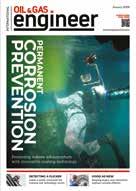
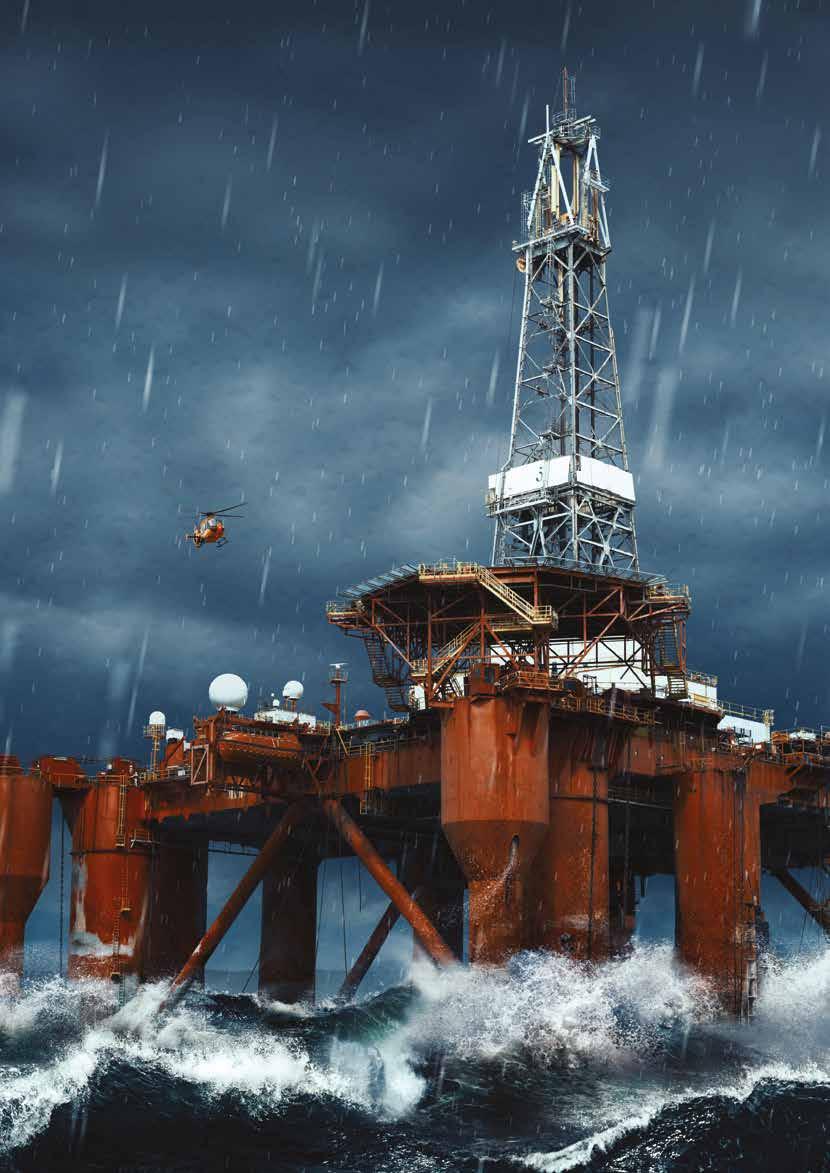
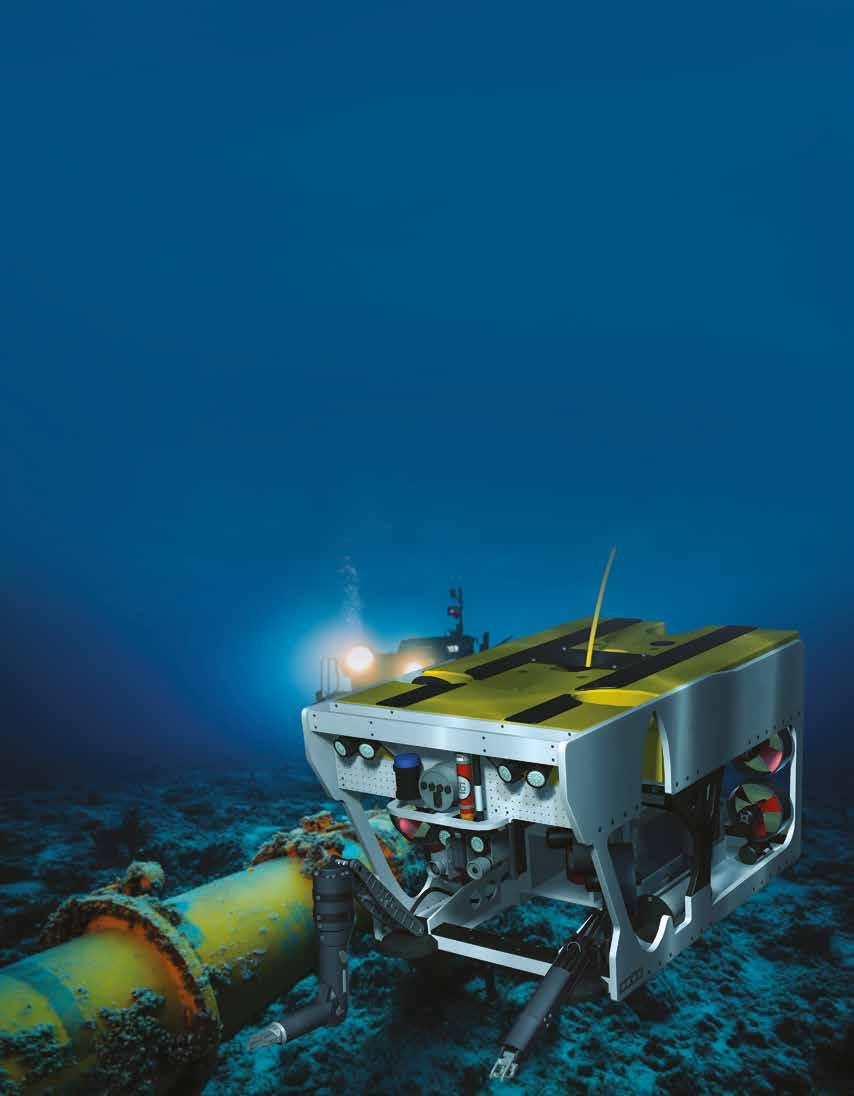
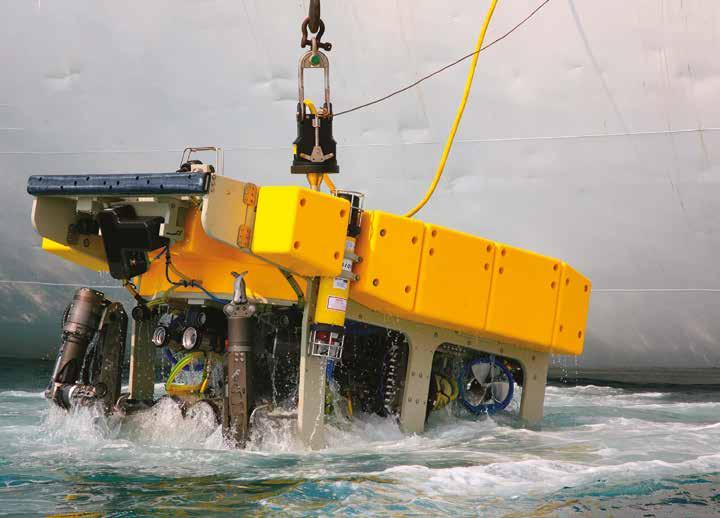
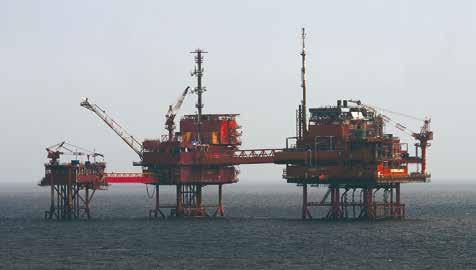
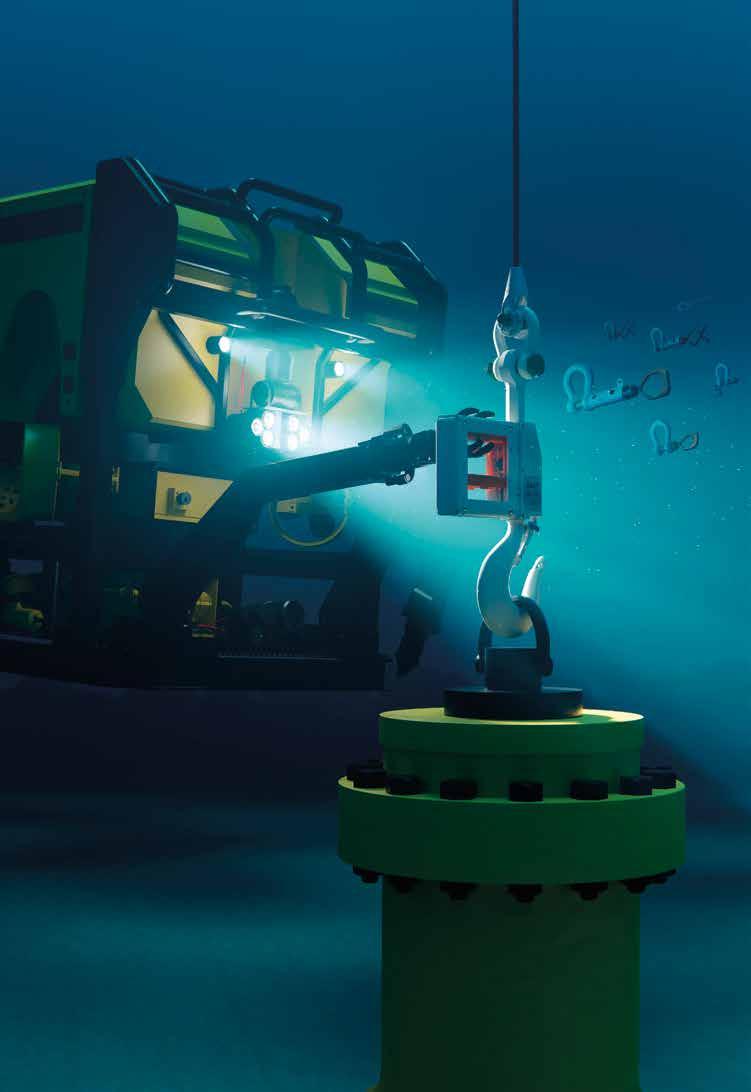
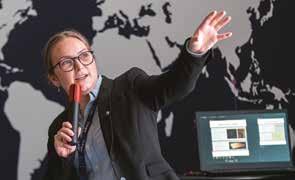
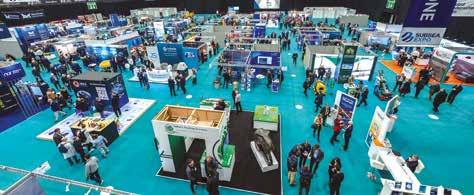
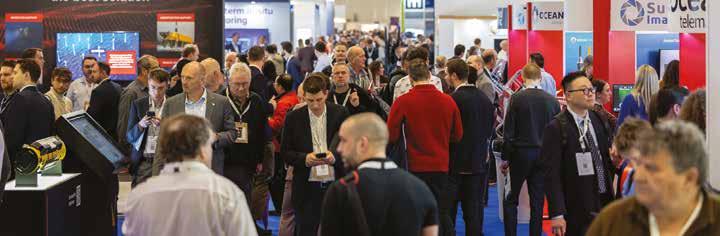
Ahead of Subsea Expo and Oceanology International, this issue starts the new year with a focus on subsea and underwater markets. Beginning with our cover story Permanent corrosion protection (page 6), we hear from Henkel Adhesive Technologies’ Dinko Cudic on how the company’s Stopaq brand is protecting infrastructure with innovative corrosion solutions. We also look at how advanced ocean technologies are enhancing offshore operations (page 49), innovative subsea technologies accelerating the energy transition (page 52), the importance of designing valves with a subsea-first approach (page 54) and the growing role of decommissioning in today’s offshore oil and gas landscape (page 57).
Elsewhere, our reporter goes inside Micropack’s revamped fire training and technology centre (page 30), we hear from WEG UK on its strategy for an evolving energy landscape (page 25), and Daily Thermetric’s Chris Chant shares valuable insights from his career in the process instrument industry in our From the Industry feature (page 36). Smarter well interventions (page 10), advanced filtration technologies (page 12) and flame detector testing (page 42) are also featured.
This issue’s Skills zone section (from page 60) analyses the UK Government’s North Sea Future Plan, while more information on the upcoming Subsea Expo, Oceanology International and AllEnergy exhibitions, can be found in our Show preview section from page 63.
Hayley Everett Editor
How Henkel’s Stopaq brand is protecting infrastructure with innovative corrosion solutions
Engineering Europe’s energy transition
New data sheds light on the expanding pipeline of offshore wind and decommissioning
Smarter well interventions Engineering smarter well interventions through optimised technology
Under pressure
How advanced filtration technology can improve gas plant operation and performance
Good as new Keeping legacy aeroderivative engines on offshore platforms running
From control room to wellhead How mobile HMI technology transforms oil & gas operations
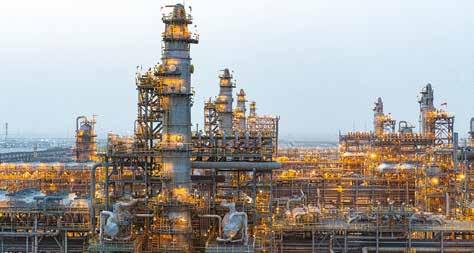
Autonomous control has reached a new milestone at Aramco’s Fadhili gas plant
Driving reliability and responsibility
Why environmentally acceptable lubricants count in marine and subsea operations
Old and new WEG’s strategy for an evolving energy landscape 28 Overcoming obsolescence
An innovative solution for replacing a faulty legacy valve on a MOL application
36 From the industry: Chris Chant
Daily Thermetric’s Chris Chant shares valuable insights from his career in the process instrument industry
HEALTH & SAFETY 39 Advanced actuators
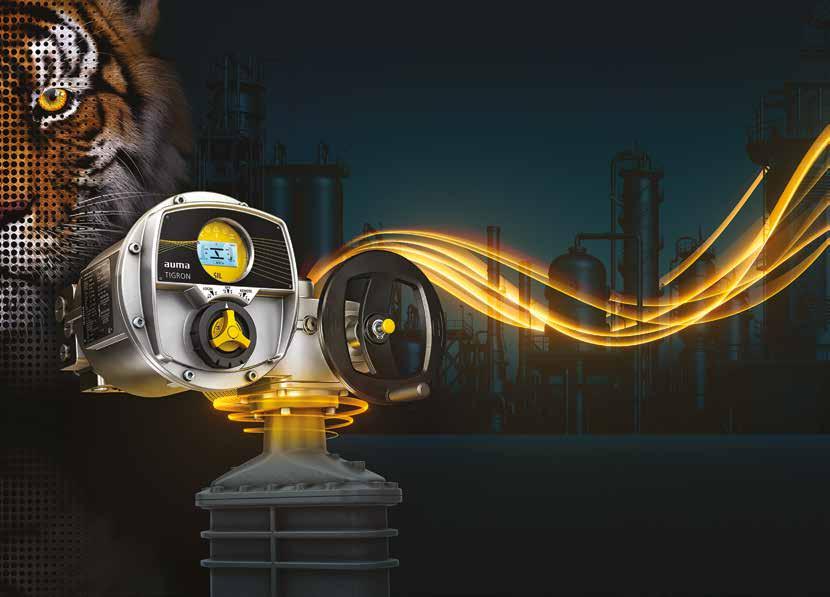
Introducing a new highperformance, explosion-proof electric actuator series 41
Stronger safety culture
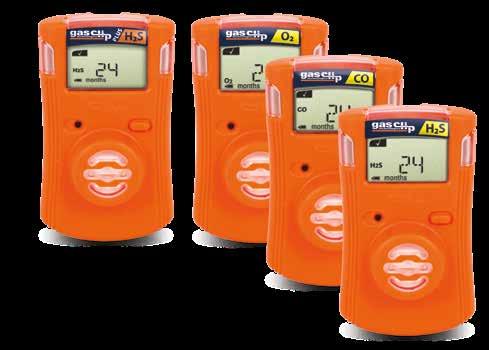
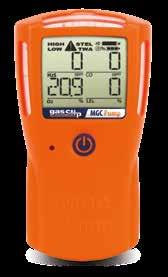
Advancing gas detection reliability in oil and gas operations
42 Surpassing safety standards
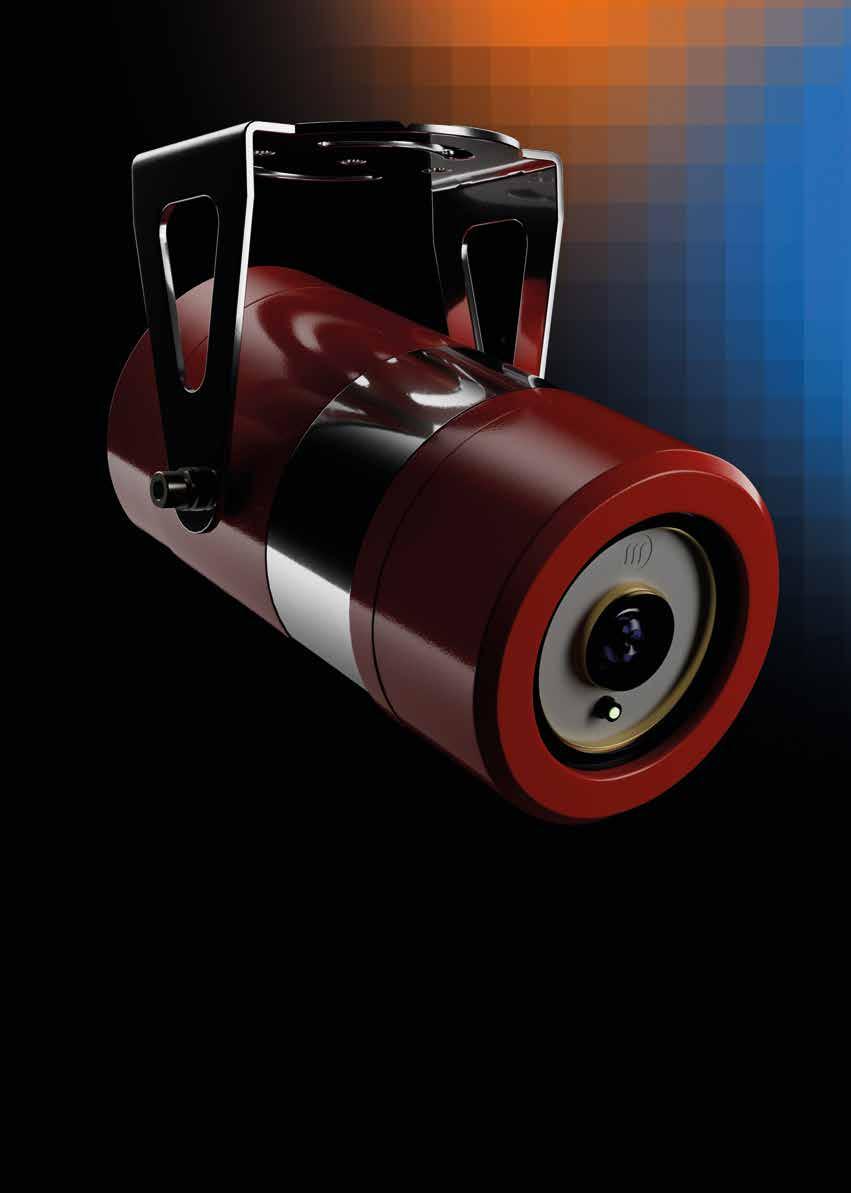
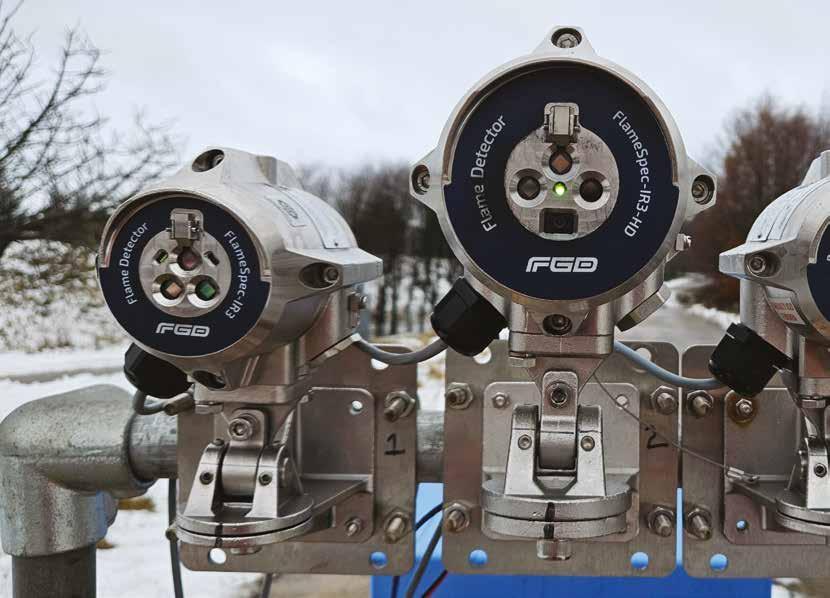
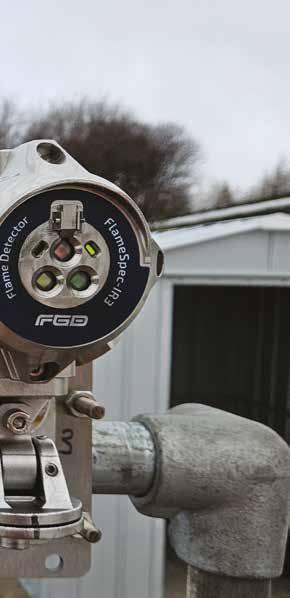
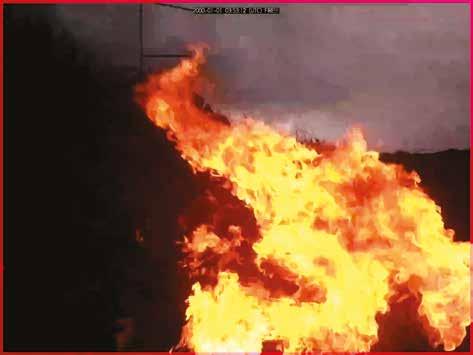
The advantages of testing optical flame detectors beyond international standards
54
Designing for the deep
The importance of designing valves with a subsea-first approach
57 Decommissioning in the deep
The growing role of decommissioning in today’s offshore oil and gas landscape SKILLS ZONE
60
Structural shift
What does the UK Government’s North Sea Future Plan mean for the future of the region's oil and gas workforce?
61 Shoulders of giants
Improving the safety of offshore helicopter transport
SHOW PREVIEW
Detecting a flicker
Saskia Henn visits Micropack’s revamped fire training and technology centre
Lift off
Has the launch of a retrievable electric gas lift system heralded a new era for gas lift technology?
PUBLISHER
Jerry Ramsdale
EDITOR
Hayley Everett heverett@setform.com
DESIGN – Dan Bennett, Jill Harris
HEAD OF PRODUCTION
Luke Wikner production@setform.com
HEAD OF SALES & PARTNERSHIPS
David Pattison
ACCOUNT DIRECTORS
John Abey | Peter King
SENIOR ACCOUNT MANAGERS
John Davis | Darren Ringer | Roy Glasspool
ACCOUNT MANAGERS
Paul Maher | Iain Fletcher | Marina Grant
e advertising@setform.com
CONTACT US...
t +44 (0) 207 253 2545
e mail@setform.com
46
Engineering efficiency
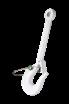
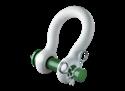
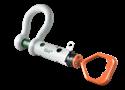
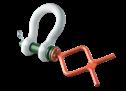
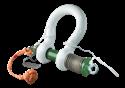
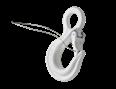
We take a look inside Green Pin’s evolving range of ROV hooks and shackles
49 Smarter surveys
How advanced ocean technologies are enhancing offshore operations
52 Deep-sea surveillance
Accelerating the energy transition with innovative subsea technologies
63
Showcasing underwater innovation
Subsea Expo returns to Aberdeen 4-5 February
Powering a net zero future
All-Energy takes place 13-14 May in Glasgow
Under the sea Oceanology International returns to ExCeL London from 10–12 March
Setform’s international magazine for engineers is published twice annually and distributed to senior engineers throughout the world. Other titles in the company portfolio focus on Process, Design, Transport, Mining, Energy and Power.
Protecting subsea infrastructure with innovative coating technology
HAMPRO® HIGH-PRESSURE PROCESS TECHNOLOGY
The high-pressure pumps of the HAMPRO® series are used in the Oil and Gas Industries to pump a very wide range of fluids, meet the stringent requirements of the relevant safety and reliability regulations and are characterized by a robust design and careful use of resources.
Our experienced team of experts will be happy to help configure the perfect solution for your individual application.
RECIPROCATING PUMPS TO API 674
- Glycol pumps - Leak test pumps
- Methanol pumps
- Produced water injection pumps
- Sea water injection pumps
Pressure: 50 – 4000 bar
Flow rate: 0,1 – 256 m³/h
Hammelmann GmbH
Carl-Zeiss-Straße 6-8
(0) 25 22 / 76 - 0 pp@hammelmann.de
D-59302 Oelde www.hammelmann-process.com
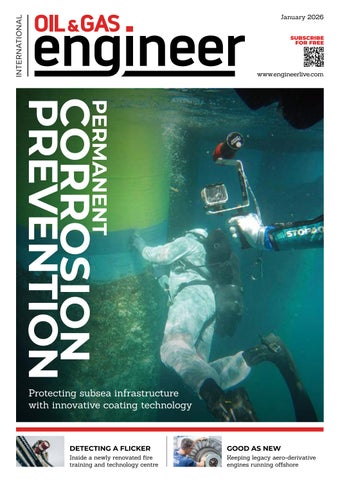
PERMANENT CORROSION PREVENTION
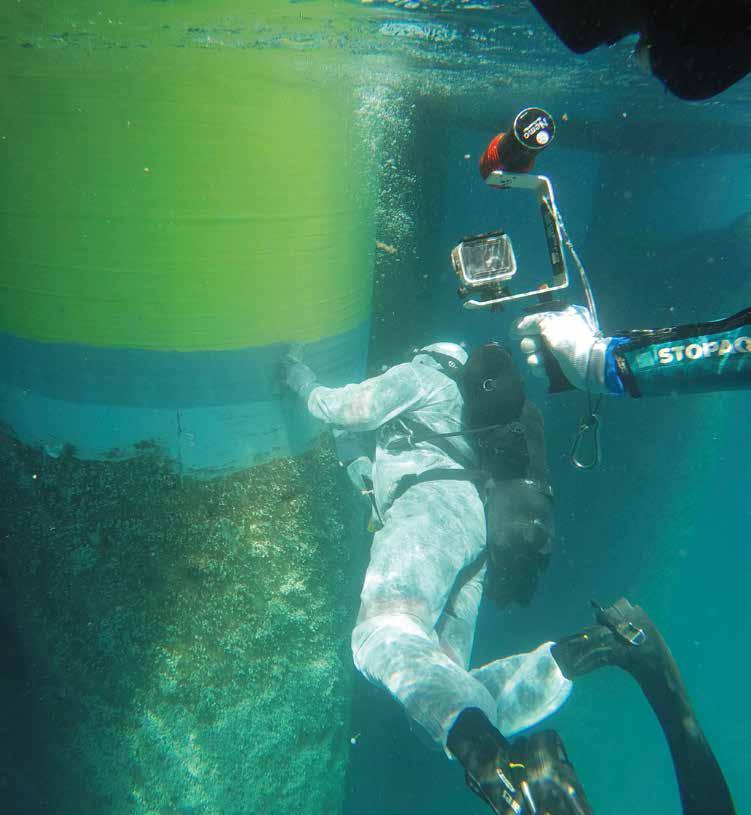
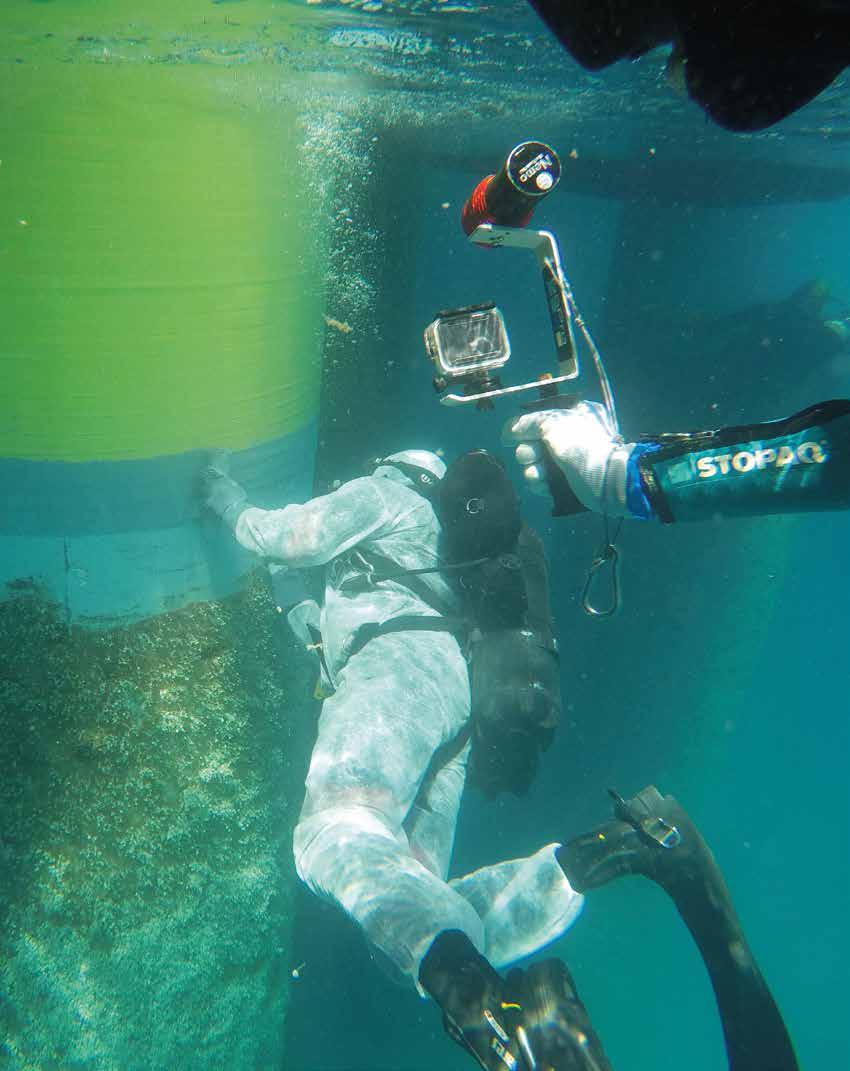
Dinko Cudic, markets and applications development director at Henkel Adhesive Technologies, shares how the company’s Stopaq brand is protecting infrastructure with innovative corrosion solutions
Stopaq boasts a proven track record of more than 25 years
WHAT ARE THE MAIN CHALLENGES THAT SUBSEA ASSETS FACE IN TERMS OF CORROSION, MECHANICAL DAMAGE, AND LONGTERM COATING PERFORMANCE?
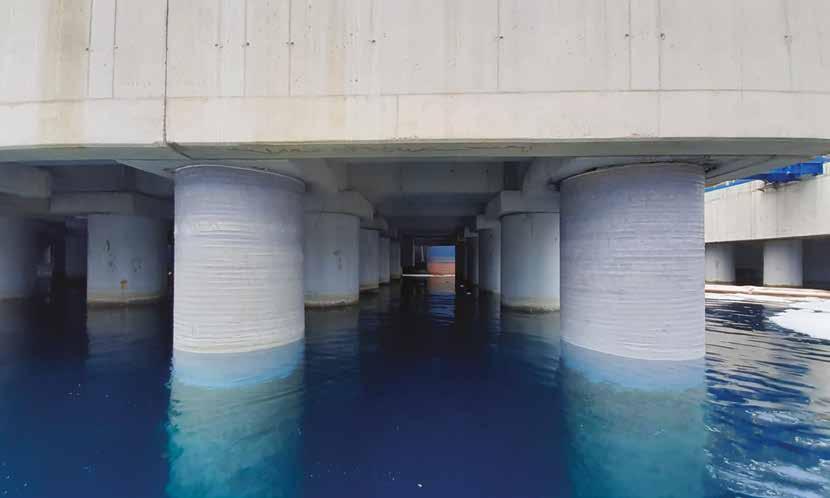
The subsea environment is inherently hostile. Constant exposure to saltwater, oxygen and environmental aggressors create the perfect environment for corrosion. This is compounded by damage from currents, marine life, floating debris, vessels and tidal impacts in addition to constantly changing temperatures.
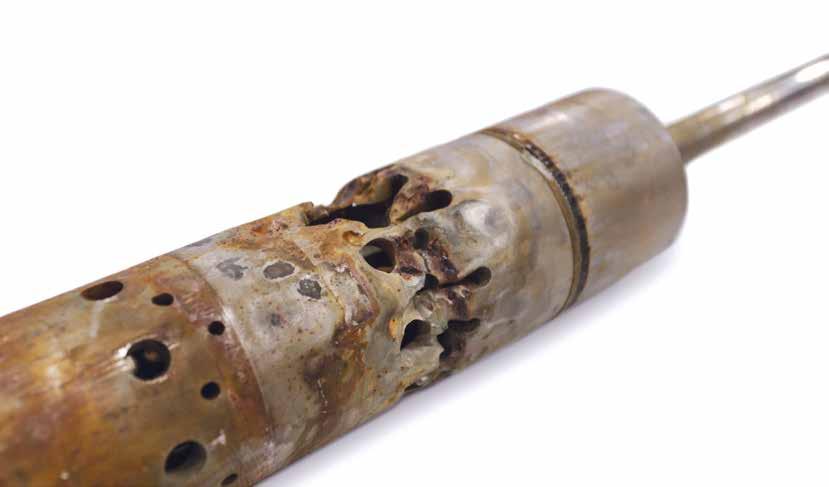
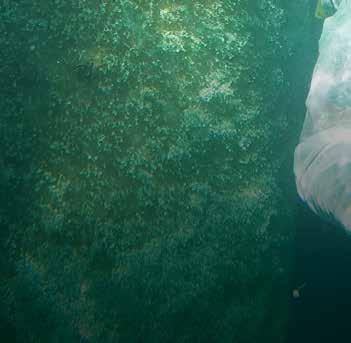
Surface preparation can be difficult, expensive and variable in what can be achieved. You might be contending with marine growth, aged assets deteriorating or coatings that have failed. Typical approaches involve abrasive blasting which is challenging and resource intensive to achieve with constant tidal movement and underwater. Not to mention, abrasives and old coatings ending up in the ocean. If the coating is rigid there is risk
to mechanical stress from bending, vibrations, trawlers, anchors or vessel impact – one small crack and the risk for corrosion to creep and spread is high. Cathodic protection systems are often deployed to reduce corrosion but they rely on both consistent electrical signal and coating integrity. There can be risks to interference from local vessels/
equipment interrupting that signal, under protection or over protection, challenges in deepwater or even from coating failures themselves.
Additional challenges come from complex geometries to be protected, inspection and repair is notoriously difficult to perform, not to mention the cost, aging assets in situ, restrictive windows for operation due to tides,
Visco-elastics require only minimal surface preparation
weather and traffic in the area. Overall, it’s a tough situation to manage.
HOW DOES VISCOELASTIC TECHNOLOGY DIFFER FROM ALTERNATIVE SUBSEA COATINGS?
Visco-elastics offer significant advantages over alternative coating systems. They remain in a viscous state throughout their lifetime, maintaining fluidity even at low temperatures. This unique property allows them to provide immediate and constant surface adhesion, creating a self-adhering effect, to both steel and factory applied coatings, form an instant barrier against oxygen and water, adapt to thermal expansions, contractions, and asset movements and penetrate surface pores effectively, ensuring lasting encapsulation from the environment.
SURFACE PREPARATION IS OFTEN A CRITICAL BARRIER IN OFFSHORE WORK. HOW CAN VISCO-ELASTIC TECHNOLOGY MITIGATE THIS ISSUE?
When we get to the application stage, we mitigate many of the issues typically seen as the process is so simple.
Visco-elastics require only minimal surface preparation, simply removing loose existing corrosion or coatings, oil, or grease from the substratesignificantly fewer steps to achieve
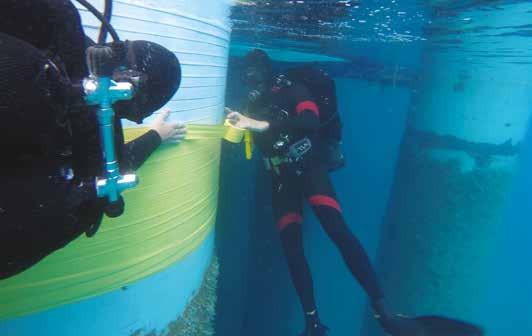
the required surface cleanliness. It is then applied by hand and hand tools, sometimes with robots, but we leave that for another time, without the need for harmful or labourintensive coatings. And we wrap it up with no curing times or shutdown requirements: application can be done without interrupting operations or delaying service start in the case of applications on new construction. Simplicity allows for easy mobilisation and demobilisation, even within hours. We are looking at reduced labour costs, as the application process doesn’t require highly skilled workers with intense training, complex equipment, and intense inspection before, during, and after the application process. This also leads to a streamlined application process which reduces the application to commission time, and we avoid costly shutdowns since equipment remains operational.
CARRYING OUT WORK OFFSHORE CAN BE UNPREDICTABLE. WHAT PRACTICAL LESSONS HAVE YOU LEARNED FROM DEPLOYING YOUR TECHNOLOGY IN THE REAL WORLD, ESPECIALLY AROUND INSTALLATION SAFETY AND EFFICIENCY?
The real world of subsea is tough and rarely predictable. Stopaq has proven time and time again to be the ideal solution because we can avoid the
issues that unpredictability brings.
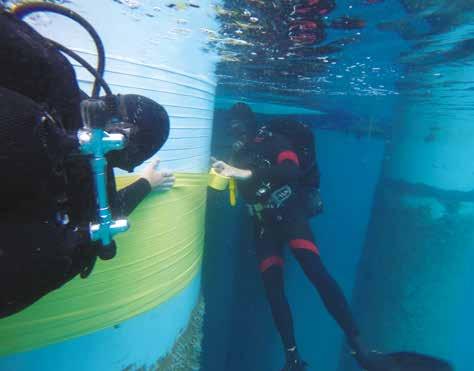
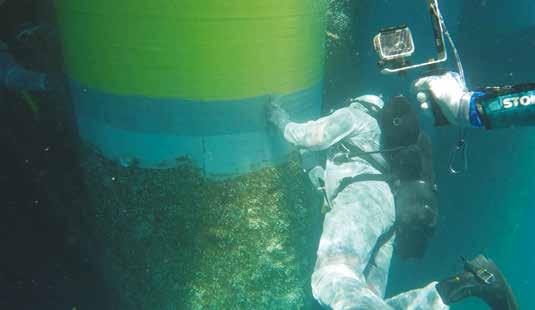
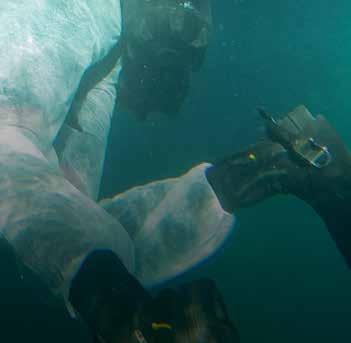
We don’t need that perfect surface to wrap, so whether it’s by hand or robots it can be done with speed and without curing delays, just apply and its ready for service. Application on wet substrates is also not an issue. Imagine the “magic” of a coating that can be applied submerged, not entrapping water, but absorbing water to maintain full adhesion to the substrate. We have minimal waste and no hazardous chemicals meaning safety for both applicator and the surrounding environment.
We know it is insulative enough to protect from any current discharges from vessels in the area and it doesn’t require ongoing maintenance. The product has a proven track record of more than 25 years – operators can avoid repetitive maintenance that puts personnel at risk or even avoid the risk of structural failure.
LOOKING AHEAD,
HOW
DO
YOU
SEE VISCOELASTIC COATINGS EVOLVING FOR SUBSEA PIPELINES AND THEIR ASSOCIATED CRITICAL INFRASTRUCTURE?
We can’t avoid the harsh reality that our infrastructure is aging, and some of those assets are already operating beyond their original design life.
Rigid coating failures are why a more fluid and flexible solution is needed, one that can be applied with minimal manpower and in challenging conditions. The future of robotic application (which we are already doing with Stopaq) will increase efficiency even further and mitigate even more of the challenges we see today.
With the pressure to use safer and cleaner materials offshore we expect visco-elastic solutions to play an even larger role in subsea protection. The future of critical infrastructure is not just about maintenance, it’s about planning and strategic investment in technologies that keep essential assets running safely and efficiently for decades to come. We are ready to be part of the solution.
ENGINEERING EUROPE’S ENERGY TRANSITION
New data sheds light on the expanding pipeline of offshore wind and decommissioning
Europe’s offshore energy landscape is undergoing a simultaneous acceleration and transition. As one of the world’s most mature regions for offshore wind development – and home to a vast legacy of nuclear, oil, and gas infrastructure now reaching end of life – Europe is navigating the complexities of building tomorrow’s low-carbon capacity while dismantling the assets of the past. New data from the Energy Industries Council (EIC) and Decom Mission highlights how these dynamics are converging into one of the most technically intensive and strategically significant periods the European energy supply chain has faced in decades.
STRONG FOUNDATIONS
Offshore wind has long been Europe’s flagship success in renewable power. No other region matches Europe’s depth of expertise, breadth of policies, and scale of installed capacity. Yet maturity brings exposure: in the last five years the region has absorbed the majority of global pressures impacting the sector, from supply chain constraints to interest rate spikes. Commissioning activity reflects these fluctuations. After a slowdown that saw only five new farms enter production in 2022 – albeit delivering an impressive 3.7GW thanks to Hornsea Two – activity rebounded in 2023 with nine new projects totalling 3.3GW. The past 12 months have seen
EXPLORATION, DRILLING, FIELD SERVICES
another six farms commissioned, adding 2.7GW. Beneath those shortterm cycles, however, lies a formidable long-term project pipeline: more than 411GW across 386 projects, representing 41% of the world’s future offshore wind capacity outside China.
Growth remains anchored by the stalwarts of the sector. The UK leads projected capacity additions through 2035, followed by Germany, the Netherlands, Sweden, and Poland. Meanwhile, floating offshore wind, which is set to become commercial at scale by the early 2030s, now represents roughly 37% of planned European capacity. The UK again leads, but southern Europe and the Mediterranean are expected to dominate floating deployment in the longer term.
Despite this, macroeconomic headwinds, delays in permitting, rising costs, grid readiness concerns, and politicised disinformation have forced developers to shelve or rephase projects. Some have withdrawn from specific markets entirely. OEMs have also been compelled to retrench, adjusting portfolios and pricing to restore financial stability. This has created uncertainty across the supply chain, from component manufacturers to marine contractors.
Still, 2025 has been a turning point. European governments have initiated broad reforms, refining auction mechanisms, introducing long-term industrial strategies, and adjusting regulatory frameworks. Mature markets
are now charting modified, more resilient development models, while emerging markets are using these lessons to avoid early structural pitfalls.
Nonetheless, bottlenecks remain. Europe’s vertically integrated supply chain – home to Siemens Gamesa, Vestas, Nordex, and GE Vernova –still faces shortages in component manufacturing capacity, installation vessels, and port infrastructure. Competition from Chinese OEMs is intensifying, prompting new financing measures aimed at reinforcing domestic manufacturing and logistics hubs.
DECOMISSIONING RAMP UP
Alongside these renewable ambitions, Europe is confronting a vast and long-running decommissioning burden. The UK & Europe Late Life & Decommissioning Report, released by EIC and Decom Mission, places the value of the region’s nuclear decommissioning pipeline above $120 billion, with $89 billion already awarded. More than 130 reactors across Europe are now in active or planned dismantling programmes, led by major sites at Sellafield, Magnox, and Dounreay in the UK, followed by extensive activity in Germany and France. Oil and gas decommissioning is similarly robust. Across continental Europe, upcoming work totals $16.5 billion, with plug and abandonment (P&A) operations accounting for nearly half of expenditure. The
UK North Sea alone anticipates roughly £27 billion ($34 billion) of decommissioning spend through 2032, much of which hinges on availability of rigs, vessels, and skilled crews.
Beyond these subsectors, dismantling of coal and refinery assets is accelerating, particularly in Austria, Denmark, Poland, and the Czech Republic. Large-scale refinery closures across Western Europe are creating engineering challenges that involve complex demolition sequencing, contamination management, and waste treatment.
The early phases of onshore and offshore wind decommissioning are now emerging as well, predominantly in Germany, Denmark, and the UK. This marks the beginning of an operational overlap in which the same vessels, ports, and specialist personnel required to build renewable capacity are also in demand to retire first-generation assets, tightening the supply chain further.
EIC CEO Stuart Broadley notes that “end-of-life planning is now a strategic exercise.” With dismantling activities increasingly competing with energy transition construction for resources, securing port access, vessel slots, and experienced crews early has become essential to keeping both cost and schedule under control.
Sam Long, CEO of Decom Mission, emphasises that decommissioning itself is a growth market. Efficient and environmentally responsible asset retirement relies on disciplined project management and access to heavylift vessels, specialised cranes, and a highly skilled workforce – capabilities that are in high demand across the entire energy system.
DUAL-PIPELINE DECADE AHEAD
Europe now faces twin imperatives: accelerate offshore wind deployment to meet decarbonisation goals, and safely dismantle ageing infrastructure across nuclear, oil, gas, and conventional power. Both markets are vast, technically demanding, and increasingly interdependent. For the engineering community, this convergence represents not only a challenge, but one of the most significant multi-decade opportunities in the global energy transition.
The UK & Europe Late Life & Decommissioning Report was released in October
SMARTER WELL INTERVENTIONS
Engineering smarter well interventions through optimised technology
Hunting has announced the launch of Opti-TEK, a new suite of optimised intervention technologies designed to improve the efficiency, safety and sustainability of well intervention operations. Targeted at slickline and wireline applications, Opti-TEK focuses on extending well life, reducing non-productive time (NPT) and enabling better operational decision-making through improved tool design and data availability. The technology suite was first showcased at ADIPEC and ICoTA Europe, reflecting its relevance to both global and mature basin operations.
DELVING INTO THE TECH
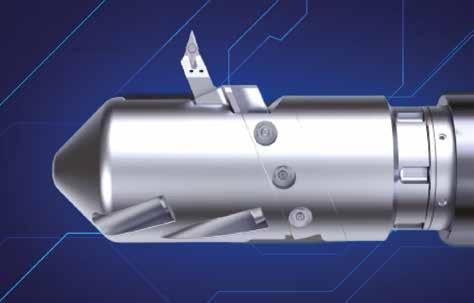
At the core of Opti-TEK is Hunting’s TEK-HUB innovation platform, which provides a structured framework for accelerating technology development. By combining in-house engineering capability with selected technology partnerships, TEK-HUB enables rapid progression from concept to fieldready tools. Opti-TEK represents one of the first major product families to emerge from this approach, addressing long-standing operational pain points in intervention and plug and abandonment (P&A) activities. One of the most technically significant developments in the portfolio is the Opti-TEK Slickline Tubing Cutter. Unlike conventional explosive or mechanically aggressive cutting systems, this tool delivers non-explosive, battery-powered cutting with CNC-level precision. The autonomous design enables verified severance without the safety, regulatory and logistical burdens associated with explosives. This makes the cutter particularly suited to P&A operations, live well environments and environmentally sensitive locations, where risk reduction and operational assurance are critical engineering drivers.
Complementing this mechanical capability is the Opti-TEK Data Stem, a plug-and-play slickline tool designed to address the cost and
complexity barriers traditionally associated with downhole data acquisition. The system captures pressure, temperature, accelerometer and casing collar locator (CCL) data within a compact form factor, delivering actionable downhole intelligence at a significantly lower cost than conventional memory or real-time telemetry systems. For intervention engineers, this enables improved situational awareness during slickline operations, supporting more informed decisionmaking without the overhead of complex deployment systems.
Another key component of the suite is the Opti-TEK Monitoring System for Greaseless Cable PackOffs. As greaseless systems become more widely adopted to reduce environmental impact and simplify surface operations, maintaining seal integrity and system reliability is increasingly important. The monitoring system provides real-time operational data and supports predictive maintenance strategies, allowing operators to identify performance degradation before it results in downtime or well control issues.
The Opti-TEK Valves complete the initial product line, introducing a new approach to wireline valve design. These valves are engineered
to be ultra-lightweight and compact while delivering high cutting force from relatively low pressure inputs. From an engineering perspective, this translates into easier handling, improved serviceability and reduced surface equipment requirements, particularly beneficial in offshore and space-constrained environments.
A SMART SHIFT
Collectively, the Opti-TEK suite reflects a broader shift in well intervention engineering towards smarter, more integrated systems that balance mechanical performance with data-driven insight and operational safety. As Allan Gill, product line director for well intervention at Hunting, explained: “Opti-TEK represents Hunting’s commitment to delivering smarter, safer and more cost-effective interventions. By aligning cutting-edge innovation with real-world operational demands, we are enabling our customers to optimise every intervention and maximise the value of their asset.”
For professional engineers tasked with improving intervention efficiency while meeting increasingly stringent safety and environmental requirements, Opti-TEK offers a cohesive set of tools designed around modern operational realities.
The Opti-TEK Slickline Tubing Cutter
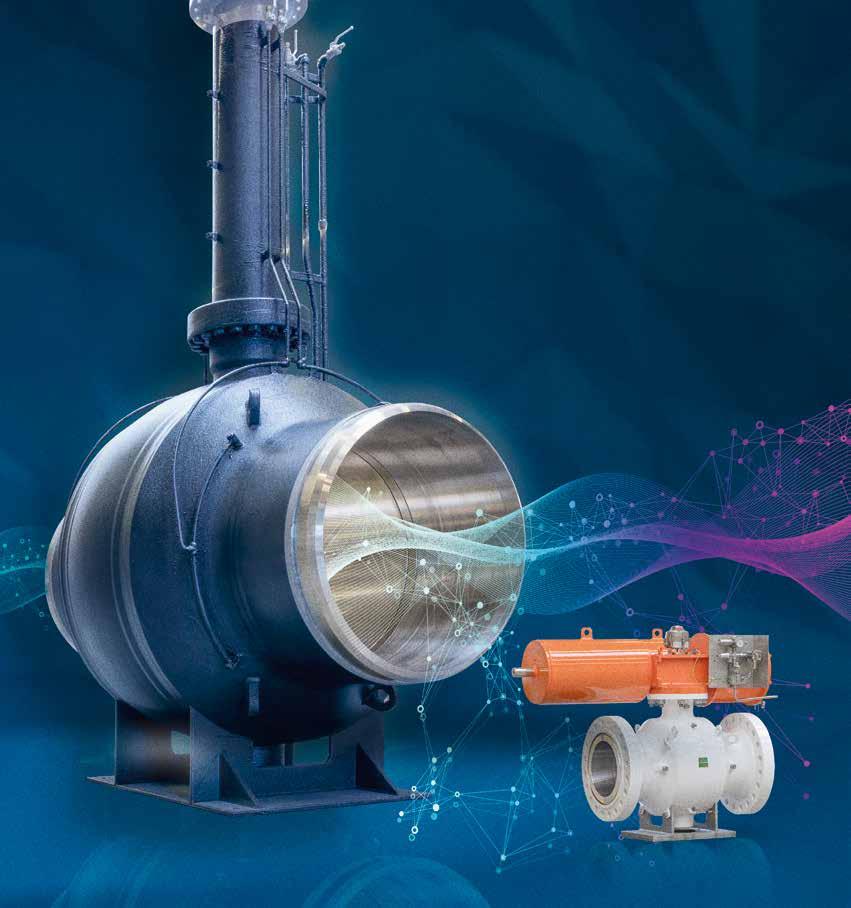
Ball valves from Böhmer have been providing safe shut-off in plants, pipelines & machinery for more than 65 years.
We have always met the challenges of the most diverse applications with the right valve solution. Also in the future Böhmer ball valves keep their product promise: Highest quality & absolute reliability.
www.boehmer.de
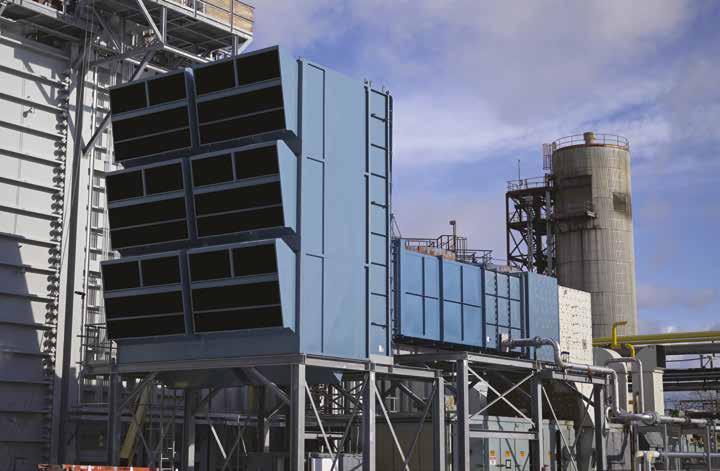
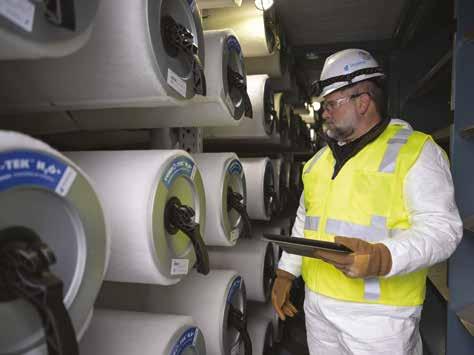
Donaldson assists its oil and gas customers with upgrades, including installing new air inlet systems
UNDER PRESSURE
How advanced filtration technology coupled with decades of gas turbine expertise can support the competitive drive to improve gas plant operation and performance
Donaldson is a large company with a simple focus. We are advancing filtration for a cleaner world,” begins David Green, who has spent the past 13 years working among the firm’s range of filtration solutions that are designed to help improve the performance of gas turbines. “This focus goes beyond the filters themselves: it holistically aims to improve the performance of the filtration system and the equipment on which the filters operate. In gas turbines this means we not only filter the intake air (the combustion air coming into the systems) or the fuels and oils that come into the system; we
also have water removal and varnish removal capabilities,” Green details.
As well as air intake filter systems that clean and condition the combustion air, other offerings include filtration systems for the plant’s compressed air and hydraulic systems. Here, Green notes: “We design and manufacture these systems at our own facilities around the world to deliver the high-quality, cost-saving technology that the competitive oil & gas market demands.”
The air filtration expert explains that Donaldson’s engineering and project teams have “decades of experience driving design advances with the focus on improving the
turbine performance and the operator experience”. This depth of knowledge comes in particularly useful when the teams are working the older equipment that can be found at plenty of oil and gas installations today. “Many of our customers have ageing equipment that they are looking to get more from, whether that means improved reliability or increasing the power,” says Green. “In some cases, that means they are overhauling their engines and need new air inlet systems to match their new airflow demands, and in others, that means adding an evaporative cooler or chilling systems to get more air through an existing gas turbine
David Green from Donaldson
EXPLORATION, DRILLING, FIELD SERVICES
set up. We have partnered with oil and gas facilities to make both upgrades possible.”
Green reports that the customers facing the challenges associated with ageing infrastructure rely on having an experienced partner on-hand throughout the entire upgrade process: “For us, that means being there every step of the way from initial scoping and budgeting through to on-site installation and commissioning support.” He adds: “As part of that early budgeting process, we have also supported gas turbine users with tools to help understand the return on investment (ROI) on their upgrades. Taking the example of installing an evaporative cooler, this means providing them with an accurate understanding of the benefits they can expect in terms of cooling and therefore turbine performance improvement.”
TESTING TIMES
The company’s collaborative and transparent ethos extends to tackling ongoing technical issues, as Green explains: “When we put people on site, we want to be a partner in understanding and solving the problems users are encountering. One way we do that is to bring filters back to our testing labs to better understand the challenge that a site is uniquely facing.”
As well as benefiting its customers, Green reveals that this lab work is also incredibly valuable for Donaldson: “Analysing any contaminants found in filters allows us to do two things at once. First, for that particular site, we can better understand what is challenging their system and then offer the best technology for that specific contaminant. Secondly, these lab tests are a crucial part of our own product development process. We are a technology-led filtration company, and these lab tests contribute to a great set of real-world data for our continuous technology development.” With regard to specific products that are reaping the benefits of this ongoing development work, Green highlights two innovations that are proving especially popular among Donaldson customers: “The first is our quick lock yoke retention system, which creates a proper filtration seal, and accelerates filter change outs. The second product is our TurboTek line of filter products, which provide exceptional filtration performance to protect the user’s engine and allow it to perform better for longer.”
TURBO BOOST
Green explains that the watertight TurboTek H20+ filters have been installed throughout the world in challenging environments that have traditionally degraded compressor
REAL-WORLD RESULTS
Donaldson’s holistic approach is aptly illustrated by its Abu Dhabi site, which features an outdoor rig for testing its filters in the real (and rather dusty) world. “We are highly vertically integrated –we produce most components on site to provide high quality and efficient lead times for our customers in this region,” explains Green.
Commenting on the role of this site within Donaldson’s overall business, Green notes: “Our facility in Abu Dhabi has been focused on the oil & gas sector for more than a decade, and it now serves as the global centre of excellence for large turbines within our business unit. Because of this experience, the entire team has a wealth of knowledge on the demands of this market and the critical role our equipment plays in gas turbine performance. We know that the components and systems we provide benefit the reliability and efficiency of the gas turbine system, and so our projects and products in Abu Dhabi have been continuously improved to meet those goals.”
efficiency costing gas turbine owners by decreasing their power output.
A recent project showcases the important role they can play in such applications, as Green details: “An Australian LNG plant switched to E12 TurboTek filters and subsequently saw extraordinary results. Thanks to the filters, the customer experienced no moisture bypass, which led to a much-reduced loss in compressor efficiency. This meant the turbine kept running in its clean condition, which maximised power and removed the need to water wash.” He also reports an impressive knock-on effect: “Besides those operational benefits, using our media extended the life of the filter on site from 18 to 48 months.”
Inspection of Turbo Tek H20+ filters
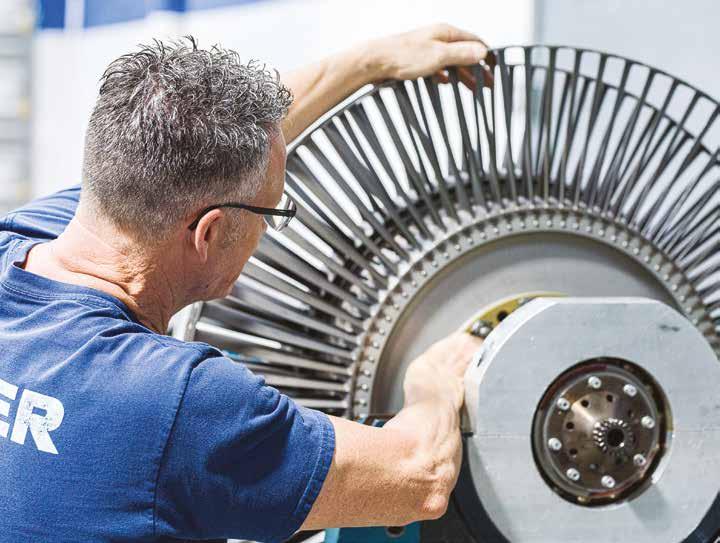
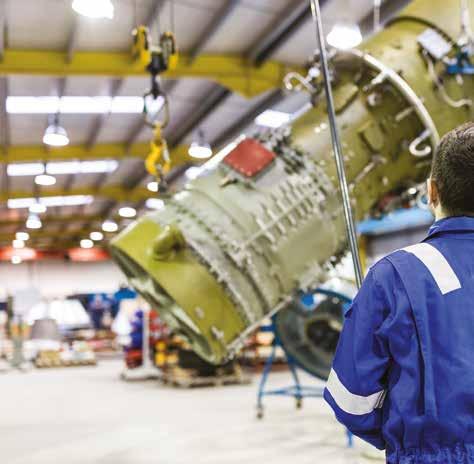
Following assessment, Sulzer conducts a bulk and detailed strip to assess the thousands of individual components within the turbine
GOOD AS NEW
Nicola Brittain catches up with an expert from global manufacturer and maintenance company Sulzer on its work to keep legacy aero-derivative engines on offshore platforms running
Offshore oil and gas platforms pose an interesting conundrum; they need immense amounts of power while having no direct access to a power source. Electricity is required for the platform itself as well as for pump and capacity of the operations.
The requirements for power are so high that many platforms, run by the likes of BP, Shell, Exxon Mobil and Chevron, use legacy aero-derivative gas turbines. These are engines that were original designed for aeroplanes by companies such as Rolls-Royce. These turbines are bolted into the
floor of a platform and turned into a generator for electricity and/or used as a compressor to push gas and oil down pipelines and onto the mainland.
Many of these platforms were built in the 1970s, using engines that were designed in the 1950s. The engines are therefore aging and have begun causing problems for the operators. James Davies, head of gas turbine services at Sulzer, explains how the company is currently working with several North Sea oil and gas operators to help repair and maintain these engines: “Over the last ten years or so these turbines have begun failing or
suffering from life fatigue,” he says. “At almost 50 years old some are being decommissioned, others are being maintained by companies like ours.”
He adds: “Although there is always redundancy, with several turbines on the one platform, occasionally all will go down leading to a total emergency situation. Non-essential staff need to be airlifted to safety and the operator will inevitably suffer considerable financial losses. Our business ensures this doesn’t happen. We meet the operator’s requirements in real time, helping them to prevent such a situation. We guarantee reliability and
this means making a turbine work when you need it to work.”
IN THE BUSINESS OF REPAIR
Sulzer’s business involves looking at these aged assets. The turbines are typically housed ‘deep in the bowels of the platform’ and covered in pipe work and infrastructure. The engine is surrounded by pipes that feed the control systems and all the wires that manage and monitor the engine. “You would have to cut a house-sized hole in the platform to replace it,” James says. “This means taking out an old gas turbine and replacing it with a newer, cleaner burning version isn’t an option. You’re pretty much stuck with that power-generating unit for the life of the platform.” This means that Sulzer is in the business of repair.
The company begins its assessment of any particular turbine by using a borescope – a tube with a camera and a light – with which the engineering team can view all the critical components while the turbine is still on the platform and provide a rough assessment regarding which parts
are worn or damaged. Following this, the team will remove the engine itself (minus the surrounding infrastructure) and take it to the Sulzer factory for a bulk and detailed strip to assess the thousands of individual components.
Sulzer then reports back to the customer on the state of the parts, whether they are repairable or replaceable, and the likely cost.
The company repairs blades and vanes and replaces seals and gaskets and anything else that requires attention, then rebuilds and function tests the turbine to make sure it’s operating as it should before sending it back offshore. Many of these turbines – such as the one based on the wellknown ‘Avon’ engine built by Rolls Royce – are no longer being made. Production of that particular engine stopped in 2014. “When this happens the supply chain and associated parts begin to dry up,” James explains.
This means a big part of Sulzer’s job is to source and maintain a critical inventory of the many thousands of parts that make up these original engines, and these are gleaned from all over the world. Once found, the
team perform a laboratory analysis on each part to ensure there is still life left in it. “We assess these pieces, then repair, coat, and refurbish them ready for reuse. We’re doing that on a constant basis,” James says.
Such aero-derivative engines are also used on gas pipelines.
The national gas infrastructure is powered by them with an engine and a pumping station located along every 50-60 miles of gas pipes. In addition, engines are used for ‘black start’ operations in nuclear power stations - there is currently an old Concorde derivative engine in several operational stations for example.
If power generated by nuclear energy disappears, caused by a cut or a trip or something similar, the engine starts up immediately (a black start emergency generation station) helping to keep operations safe.
EFFICIENCY AND THE CIRCULAR ECONOMY
In addition, retrofit upgrades of the sort conducted by Sulzer can cut emissions significantly, since the old gas turbines can be modified and better maintained to produce fewer emissions. James elaborates: “If the parts that inject fuel are clogged, cracked or uneven, you’ll get an uneven burn, this means unburnt fuel is released and just vaporises in the atmosphere. Good maintenance of the turbine and the systems surrounding it will help to reduce fuel usage and increase efficiency.
The parts that go into these turbines often hail from various corners of the globe, potentially increasing an operator’s global carbon footprint if made from scratch. For example, a central shaft is made from alloys that would begin life in Australia as an iron ore, then shipped to Switzerland to be melted in a foundry (using huge amounts of electricity); the shaft would then be machined somewhere else. By the time it is installed into the turbine, the piece has travelled around the world a couple of times. “Using old parts is just far more energy efficient,” James concludes.
Sulzer conducts retrofit upgrades of legacy aero-derivative gas turbines
FROM CONTROL ROOM TO WELLHEAD
How mobile HMI technology transforms oil & gas operations
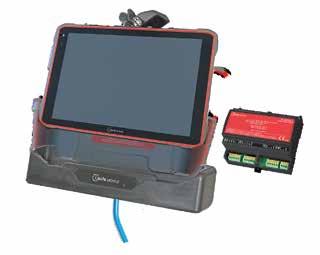
Offshore platforms and refinery complexes have historically operated under a fundamental constraint: process visibility and control remain centralised in control rooms, whilst critical work occurs across distributed field locations. Field workers execute tasks based on instructions relayed through radios and paper documentation, creating communication latencies that impact both operational efficiency and safety margins. Mobile Operator Panel technology from i.safe Mobile fundamentally restructures this operational model by extending full HMI capabilities directly into Zone 1/21 and Zone 2/22 hazardous environments through intrinsically safe, explosion-certified hardware.
TECHNICAL ARCHITECTURE
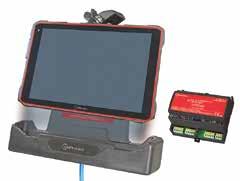
The solution combines intrinsically safe tablets, either the Androidbased IS940.1 or Windows-based IS945.1, with the IS-CS1A.1
Connectivity System. Interface modules integrate within Ex-rated enclosures whilst docking stations provide continuous power delivery and data connectivity. Ex-approved barriers maintain Ethernet, USB and power connections with complete ATEX and IECEx certification. Integration occurs through standard RDP or VNC protocols, connecting seamlessly to existing SCADA and DCS infrastructures without requiring system modifications.
OPERATIONAL VALUE BEYOND INCREMENTAL GAINS
Consider pigging on offshore facilities, where process operators, mechanical teams, contractors and safety personnel traditionally coordinate through control room intermediaries. Each status verification or valve position check requires radio communication, creating decision delays. Mobile panels eliminate this bottleneck by providing direct access to live process schematics at the point of work. Mechanical crews verify
depressurisation status before opening vessels. Contractors confirm utility specifications without verbal relay chains. Process operators monitor boundary conditions in real-time, whilst permit holders validate safe work boundaries through actual equipment states.
This capability proves essential during simultaneous operations (SIMOPS) and permit handover procedures. Real-time visibility into isolation status and boundary conditions enables coordinated execution across multiple crews. During shift transitions, incoming teams access complete operational context through docked tablets, eliminating paper-based handover delays.
The ROI calculation extends beyond time savings. On offshore platforms, mobile access to diagnostics and
equipment history enables technicians to execute maintenance decisions on-site. Response times decrease measurably when operators assess alarm conditions at equipment locations rather than interpreting remote data. Safety improvements manifest through reduced human error – coordination occurs via shared visibility of plant conditions.
RELIABILITY ARCHITECTURE
The docking station approach deliberately avoids exclusive wireless dependency. Industrial environments present formidable RF challenges: metal structures create shadow zones, whilst process equipment generates electromagnetic interference. Fixed docking installations guarantee connectivity, whilst devices operate independently between docking events, displaying cached graphics and trends. This hybrid architecture ensures reliable access regardless of wireless network performance, maintaining operational continuity during communication infrastructure disruptions.
BEYOND TRADITIONAL CONTROL PARADIGMS
The Mobile Operator Panel technology represents an evolution in how hazardous area operations integrate automation intelligence with field reality. Control rooms retain strategic coordination roles, yet routine decisions and immediate responses migrate to the point of operational need. For organisations operating offshore platforms or refinery complexes, this shift delivers measurable improvements in response times, maintenance efficiency and safety performance - positioning mobile HMI technology as a structural transformation in how industrial operations function within explosionhazardous environments.
The Mobile Operator Panel
Mobile panels provide direct access to live process schematics at the point of work
POLYMERIC PROTECTION
Chloe
Hirst explains how polymeric shimming and chocking systems are protecting assets against corrosion
Pourable shimming and chocking systems are used worldwide in marine, offshore, and many other industrial environments. They provide reliable alignment, reduced vibration, and long-term corrosion protection.
AVOIDING ASSET FAILURES
Within heavy-duty industries, precision alignment is essential for ensuring safe and efficient operation. Shimming provides fine adjustments to correct uneven interfaces and achieve precise alignment, while chocking fills larger gaps and creates a continuous, load-bearing contact surface capable of supporting engines, propulsion systems, compressors, generators, gearboxes, and other critical assets. When executed correctly, these processes help prevent costly failures caused by mechanical stress, misalignment, and vibration.
DRAWBACKS OF CONVENTIONAL SOLUTIONS
Conventional solutions such as steel plates, metal wedges, or cementitious grouts have their limitations. Metallic bearing shims and load bearing shims are vulnerable to corrosion and
distortion, while cement-based products can shrink, crack or degrade under repeated thermal or dynamic loads. Over time, these weaknesses can lead to compromised structural integrity, vibration issues, or accelerated wear.
BENEFITS OF POLYMERIC TECHNOLOGY
Polymeric alternatives have proven to be highly effective in overcoming these challenges. Designed for resilience in demanding industrial environments, they offer excellent dimensional stability, high compressive strength, and long-term protection against corrosion.
SHIMMING SYSTEM FOR DEMANDING CONDITIONS
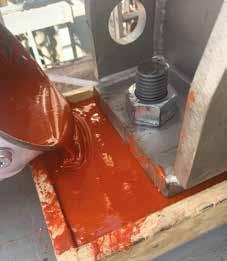
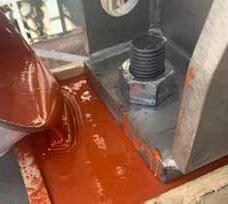
The shimming material, Belzona 7111, is widely used across the marine and industrial sectors. This 100% solids, two-component system is formulated for high-load, precision chocking applications. Its self-levelling, pourable properties allow it to flow easily into complex geometries, ensuring uniform contact between equipment and its foundation.
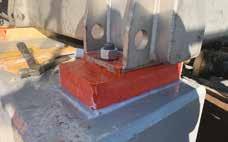
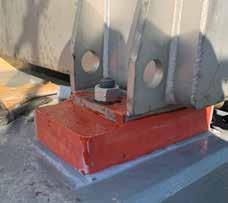
Once cured, Belzona 7111 forms a solid, monolithic block that resists deformation under static and dynamic loads alike. Because it is non-metallic and corrosion-resistant, it avoids the long-term deterioration seen with metal-based shims and wedges. This stability helps maintain proper alignment, reduce vibration
and protect mounting hardware throughout the life of the equipment. Belzona 7111 is approved by the American Bureau of Shipping (ABS), Bureau Veritas (BV), Det Norske Veritas (DNV) and Lloyd’s Register (LR).
DEEP-POUR CAPABILITIES
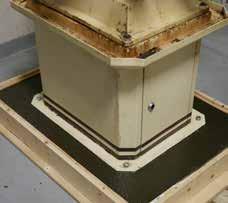
For installations that require largevolume pours or deep fills, Belzona 7211 can be used to create strong, voidfree chocks in demanding applications. This system is frequently used when traditional load bearing shims or high impact load bearing shims cannot provide the continuous support required for heavy-duty equipment. With its self-levelling characteristics and excellent performance in uneven or irregular foundations, Belzona 7211 ensures consistent load distribution - reducing the risk of mechanical fatigue, vibration-related failures, and alignment drift.
LONG-TERM CORROSION PROTECTION
A key advantage of polymeric shimming and chocking solutions lies in their ability to prevent corrosion at the equipment interface. Metalbased bearing shims and cementitious grouts can trap moisture, leading to crevice corrosion or cracking. Polymeric materials eliminate these vulnerabilities. They are nonporous and remain dimensionally stable in aggressive environments, including marine atmospheres, offshore platforms, and high-moisture industrial settings.
By maintaining stable geometry and resisting corrosion, polymeric systems, such as Belzona 7111 and Belzona 7211, help to extend equipment life, reduce maintenance frequency, and prevent costly unplanned downtime.
Fully cured shimming system provides long-term corrosion protection. Image via Rezitech
Shimming system, Belzona 7111, flows easily into the application area. Image via Rezitech
AI AGENCY
In a development that marks a significant step toward industrial autonomy in the energy sector, Aramco and Yokogawa Electric Corporation have commissioned multiple autonomous control AI agents at the Fadhili Gas Plant in Saudi Arabia. The deployment targets the acid gas removal (AGR) unit - one of the most dynamic and energy-intensive sections of a gas-processing facility - and demonstrates how reinforcementlearning-based control can enhance efficiency, stability, and sustainability in large-scale operations.
At the core of the installation is Yokogawa’s Factorial Kernel Dynamic Policy Programming (FKDPP) algorithm, a reinforcementlearning (RL) method co-developed with the Nara Institute of Science and Technology. FKDPP enables AI agents to derive optimal control strategies without predefined models, allowing them to handle multivariable interactions, nonlinear behaviour, and fluctuating process conditions. Unlike classical model-predictive control or PID strategies, FKDPP agents can adapt to scenarios not explicitly included during training, giving them the robustness required for missioncritical energy applications.
SAFETY-CENTERED IMPLEMENTATION
Given the AGR unit’s sensitivity and the need to maintain strict safety margins, Yokogawa implemented the solution in three structured phases. The project began with the development of a high-fidelity plant simulator to train the AI agents and evaluate their responses to a wide range of process disturbances. This virtual environment allowed engineers to validate the agents’ stability, boundary-handling behaviour, and ability to meet operational constraints without exposing the live plant to risk. Once the agents demonstrated reliable performance in simulation, Yokogawa proceeded with a stepwise rollout across various subsections of
Autonomous control has reached a new milestone at Aramco’s Fadhili gas plant
the AGR unit. Ultimately, the agents were integrated with the existing Centum VP distributed control system, ensuring that the underlying safety and interlock functions of the plant remained fully intact.
MEASURABLE EFFICIENCY GAINS
Preliminary results from the Fadhili Gas Plant show compelling performance improvements. The AI-driven optimisation has reduced amine and steam consumption by 10–15%, while overall power usage has dropped by roughly 5%. Operators report improved process stability under varying ambient conditions, along with a substantial reduction in manual interventions. These gains are especially notable in AGR systems, where feed composition variability and thermal effects often challenge conventional control strategies.
Beyond cost savings, reductions in steam and power usage directly support Aramco’s broader decarbonisation initiatives by lowering the facility’s energy footprint. Less amine degradation and improved thermal stability also contribute to lower maintenance demands and enhanced long-term reliability.
A PATH TO INDUSTRIAL AUTONOMY
For Aramco, the deployment is part of a wider effort to expand industrial
The Fadhili gas plant
AI across its asset base.
“Aramco has embarked on an ambitious plan to unlock value by deploying a wide range of industrial AI applications across our operations,” says senior vice president of Aramco Engineering Services, Khalid Y. Al Qahtani. “The collaboration with Yokogawa is one of many initiatives that focus on improving efficiency, enhancing sustainability, and generating more value for our shareholders. It reflects how the company is harnessing advanced technology, including AI, to elevate its performance and reinforce its position as a technology leader in the energy sector. We look forward to building on this important milestone, as we explore further adoption of cuttingedge solutions that will contribute to a new era of industrial innovation.”
Yokogawa’s leadership echoed these sentiments, highlighting the project as a flagship example of its Industrial Automation to Industrial Autonomy (IA2IA) vision.
With the Fadhili project, autonomous control has reached a new level of maturity in the energy sector. For engineers and decision-makers, the deployment offers a blueprint for how AI-driven control – when supported by simulation, rigorous validation, and integration with established DCS frameworks - can unlock measurable performance improvements in complex process environments.
DRIVING RELIABILITY AND RESPONSIBILITY
Why environmentally acceptable lubricants count in marine and subsea operations
As the offshore landscape evolves, operators are feeling mounting pressure to demonstrate both technical excellence and environmental responsibility. In the marine and subsea sectors, where equipment runs under punishing loads and in highly sensitive ecosystems, the demand for lubricants that deliver uncompromising reliability while minimising environmental impact has never been greater.
Among the solutions gaining strong momentum is the Shell Panolin range of environmentally acceptable lubricants (EALs). Developed with four decades of expertise in synthetic biodegradable fluids, these lubricants lower environmental impact, meet tightening regulatory expectations, and extend equipment life in some of the world’s harshest working environments.
The Shell Panolin range is a compelling example of how highperformance lubricants can meet the demands of modern marine and subsea applications without compromising environmental integrity. As more organisations integrate sustainability into their operational frameworks, the move toward advanced EALs is poised to accelerate.
BUILDING RELIABILITY INTO EVERY COMPONENT
Marine and subsea operators are accustomed to balancing operational efficiency with risk mitigation. The consequences of lubricant leakage, whether from thrusters, hydraulics or deck machinery, can be extremely costly. Even small leaks lead to unplanned maintenance, reputational damage and potential regulatory scrutiny.
Shell Panolin EALs are formulated to be readily biodegradable, non-bioaccumulative and low-ecotoxicity
Shell Panolin grease cartridge
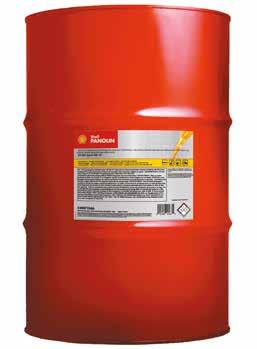
Shell Panolin oil drum
Shell Panolin EALs address these challenges head-on, through synthetic ester technology engineered for long-term stability. One of the most significant benefits reported by operators is extended product life compared to conventional mineraloil-based lubricants and even many competing EAL formulations. In real terms, this means fewer changeouts, reduced exposure to equipment downtime and better long-term component protection. For subsea systems where access is inherently complex and costly, that reliability delivers a clear operational and economic advantage.
A SUSTAINABLE EDGE
While the oil and gas sector continues its essential role in global energy security, its licence to operate increasingly depends on improved environmental performance. Nowhere is this more pronounced than offshore, where unintentional discharges, even of small volumes, can have visible and immediate consequences.
Shell Panolin EALs are formulated to be readily biodegradable, nonbioaccumulative and low-ecotoxicity, meeting demanding global standards such as OSPAR compliance, US EPA’s Vessel General Permit (VGP) and the Vessel Incidental Discharge Act (VIDA). These properties significantly reduce the ecological impact of any accidental release.
Longer intervals between lubricant changes reduce waste oil generation, minimise transportrelated emissions, and lowers the overall carbon footprint of maintenance operations
Yet sustainability is not achieved through biodegradability alone. The extended service life of Shell Panolin products plays an equally important environmental role. Longer intervals between lubricant changes reduce waste oil generation, minimise transport-related emissions, and lowers the overall carbon footprint of maintenance operations. In this way, the range supports both environmental protection and the industry’s wider decarbonisation efforts.
STAYING AHEAD OF THE REGULATORY CURVE
Across Europe and globally, environmental regulations for marine and offshore operations are steadily tightening. Operators face increasing scrutiny around lubricant selection, discharge management, and environmental risk assessments.
As stricter standards are enforced, many organisations are choosing to transition to EALs not merely for compliance, but as part of a broader sustainability and ESG strategy. The Shell Panolin range is well positioned to support this shift, offering proven performance aligned with international environmental benchmarks. For operators seeking
to future-proof their lubricant strategy and avoid the disruption of last-minute regulatory adjustments, adopting high-quality EALs early is becoming a best-practice approach.
EXPERT GUIDANCE
A successful transition to EALs requires more than simply choosing a compliant fluid. It demands correct specification, compatibility, and a clear understanding of application demands. This is where knowledgeable supply partners play a critical role.
In the UK, Certas Lubricant Solutions serves as the distributor for the Shell Panolin range. Working closely with Shell Panolin’s technical specialists, Certas provides operators with expert guidance throughout product selection and conversion. Whether supporting marine engineers, asset managers or OEMs, its team helps ensure each application is matched with the most effective lubricant solution to balance performance, sustainability and cost-efficiency. This collaboration is particularly valuable in the subsea sector, where equipment design, material compatibility and maintenance constraints make lubrication decisions technically complex. By combining application knowledge with industryleading fluid technology, Certas and Shell Panolin help customers optimise reliability while advancing environmental stewardship.
A PROACTIVE STEP FOR OFFSHORE OPERATIONS
The offshore industry is undergoing a quiet but decisive shift. Operators are no longer viewing environmentally acceptable lubricants as a regulatory checkbox but as a strategic asset, one that strengthens reliability, reduces risk and supports operational excellence in an increasingly scrutinised environment.
If you’re visiting Subsea Expo in Aberdeen on 4-5 February 2026, the Certas and Shell Panolin teams will be on stand to discuss any lubricant requirements and provide guidance on selecting the right solutions for your operations.
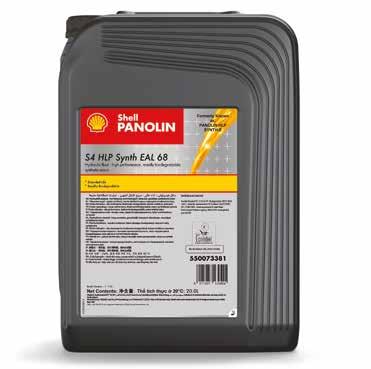
Shell Panolin S4 HLP Synth EAL 68
OLD AND NEW
We sit down with Gustavo Da Silva, managing director for WEG UK, to discuss the company’s strategy for an evolving energy landscape
As global industry navigates the parallel demands of decarbonisation, electrification and operational resilience, few manufacturers illustrate the value of long-term strategic consistency as clearly as WEG. Speaking about the company’s direction, Gustavo Da Silva, managing director for WEG UK, outlines how vertical integration, energy-efficient technologies and digitalisation underpin WEG’s ability to support both traditional and lowcarbon markets.
A VERTICALLY INTEGRATED MANUFACTURING MODEL
WEG’s global headquarters in Brazil remains central to its identity and competitive advantage. The site is widely regarded as the largest electric machinery factory in the world on a single site, producing everything from raw material processing to finished systems.
“When customers visit our headquarters, they see raw material
arriving at one end and finished products leaving at the other,” says Da Silva. “Everything is done in-house. That level of vertical integration is quite rare today.”
This model dates back to the company’s founding in the 1960s, when its three foundersrepresenting mechanical, electrical and financial disciplines - chose to locate far from Brazil’s major industrial centres. As a result, WEG developed the capability to design,
manufacture and test almost every component internally, rather than relying on external suppliers.
That approach proved particularly resilient during recent global supply chain disruptions. “During Covid, when many supply chains were severely impacted, we had much greater control,” Da Silva explains. “Because so much was internal, we were able not only to maintain production, but actually grow.”
FOUR STRATEGIC PILLARS
While WEG’s product portfolio has expanded significantly over the past two decades, Da Silva identified four core strategic pillars guiding current development: operational efficiency, renewable energy, electric mobility and high-efficiency products.
“These four areas are all connected,” he says. “Regardless of what the final energy mix looks like, customers still need efficient, reliable systems –whether in oil and gas, renewables, or emerging electrified applications.”
This dual-market approach reflects the reality that traditional energy
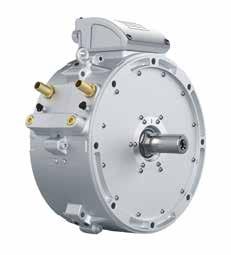
The W80 AXgen axial flux motor
sectors will continue to operate alongside low-carbon technologies for decades. Major oil and gas operators are still commissioning new offshore platforms, even as they invest heavily in decarbonisation and electrification.
“The market for traditional energy is still there,” Da Silva notes. “At the same time, growth rates in renewables and electrification are much higher, even if they’re starting from a smaller base. We need to support both.”
MEASURABLE DECARBONISATION COMMITMENTS
Beyond supplying energy-efficient equipment, WEG has committed to reducing its own operational emissions. The company has published a roadmap targeting a 52% reduction in greenhouse gas emissions by 2030, compared with its baseline, and netzero operations by 2050. “We decided a few years ago that it wasn’t enough just to sell efficient products,” says Da Silva. “We also had to look at what we do internally.”
Progress has been rapid. “We’re already at around a 32% reduction, five years ahead of schedule,” he adds. These targets apply not only to manufacturing sites but also to commercial operations, including WEG UK.
Supply chain engagement is also part of the strategy. While WEG’s vertical integration simplifies emissions visibility, raw material suppliers are expected to align with similar sustainability standards. “We actively engage with suppliers and set expectations,” Da Silva says. “This is all publicly available – it’s about transparency and accountability.”
ELECTRIFICATION AND SYSTEM INTEGRATION
One of WEG’s key strengths lies in system-level integration. By combining motors, variable speed drives, digital monitoring and control, the company supports customers seeking to electrify traditionally mechanical or thermal processes. “We’re seeing projects where steam turbines are being replaced with electric drives,” Da Silva explains. “By electrifying these systems, customers can significantly reduce CO2 emissions and improve efficiency.”
Recent product launches reflect this focus. The W80 axial flux motor, for
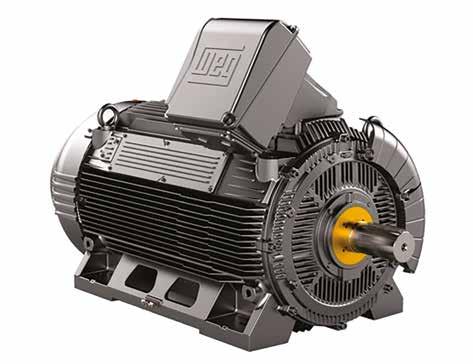
The W23 Sync+ permanent magnet motor
example, delivers high power density in a compact form factor. “You get much more power in a much smaller package,” says Da Silva. “That means less material, lower losses and lower overall carbon impact.”
Permanent magnet motor technologies, such as the W23 Sync+, push efficiency beyond current IE5 regulatory levels. “We’re already working towards what could be IE6 or IE7,” he notes. “There’s no regulation yet, but we’re anticipating where the market is going.”
DIGITALISATION AND AI-DRIVEN MAINTENANCE
Digitalisation is increasingly central to equipment performance and lifecycle management. WEG has invested heavily in monitoring platforms that provide real-time visibility of asset health, feeding data into analytics engines and AI-based algorithms. “These systems give operators a complete overview of their equipment,” Da Silva says. “Predictive maintenance becomes possible, rather than reactive maintenance.”
Artificial intelligence is positioned as a decision-support tool rather than a replacement for engineering judgement. “AI helps summarise data, identify patterns and support engineers,” he explains. “It doesn’t replace them, it informs them.”
WEG is also using AI internally, including for workforce training. Virtual and simulated environments allow operators to practise assembly and maintenance tasks before working on physical equipment. “That improves efficiency, reduces errors and lowers
training costs,” Da Silva adds.
DURABILITY IN HARSH ENVIRONMENTS
In offshore and marine environments, mechanical efficiency alone is not enough. Corrosion protection and surface engineering often determine asset lifespan. Through its coatings and varnishes division, WEG Tintas, the company supplies protective systems designed for aggressive offshore conditions. “In some environments, the coating is as important as the internal components,” Da Silva says. “Without proper protection, equipment can degrade in months.”
WEG recently expanded this capability through the acquisition of a US-based specialist coatings company, strengthening its offering for offshore wind and oil and gas applications.
CULTURE AS A DIFFERENTIATOR
Underlying WEG’s technology roadmap is a strong emphasis on organisational culture. “One of our key pillars is people,” Da Silva says. “Motivated employees who feel part of the business are more innovative.”
Participative management structures, introduced as early as the 1960s, remain in place across production and commercial units. Employees contribute directly to decision-making through formal committees, reinforcing long-term engagement.
“Sustainability isn’t just about carbon,” Da Silva concludes. “It’s about building a business that can innovate, adapt and grow over decades. That’s how we’ve done it for more than 60 years, and how we plan to continue.”
Where Decisions Happen: Mobile HMI for Ex-Zones
Safe continuous operation in potentially explosive atmospheres (ATEX/IECEx)
Complete HMI functionality at the point of work — not just in control rooms
Flexible wired and wireless network integration with resilient edge operation
Reliable integration of Android™ Tablet IS940.x and Windows® Tablet IS945.x via certified docking
isafe-mobile.com
High quality surface coatings
Improve part wear life and performance
Reduce maintenance costs
Standard and tailored specialty coatings
Range of coating services:
Dry film lubricants
Corrosion, chemical & environment resistance
Impingement coatings
Conformal coatings
OVERCOMING OBSOLESCENCE
Faced with a familiar challenge of obsolete design, a critical deadline and no room for long lead times, here’s how KOSO Kent Introl’s engineers came up with an innovative solution to replace a faulty legacy valve supplied 30 years ago on a Main Oil Line application
For more than 50 years, KOSO Kent Introl has operated at the forefront of British valve engineering, supporting the global energy sector from its manufacturing base in Brighouse, West Yorkshire. Founded in 1967, the company has built its reputation on engineering excellence, reliability, and an ability to deliver bespoke control and choke valve solutions that perform in some of the harshest operating conditions on earth.
That same commitment to innovation and service was demonstrated when the company was called upon to help solve a critical issue for a long-standing energy client.
THE CHALLENGE: A LEGACY VALVE IN NEED OF ATTENTION
This particular case study concerns a valve originally supplied back in 1995. The unit had been performing on a Main Oil Line (MOL) application for decades before operators began to report erratic performance. Early investigation pointed towards internal wear and flow instability, prompting the client to reach out to the original manufacturer for support.
The engineering team immediately set to work. The valve was returned to KOSO Kent Introl’s UK facility for a full strip-down and inspection. It was during this process that the root cause
was identified. The internal trim of the now obsolete Turbotrol type had reached the end of its serviceable life.
REPLACING THE IRREPLACEABLE
In normal circumstances, the next step would be straightforward: Manufacture and install a new trim. The challenge lay in the fact that the Turbotrol design was long out of production. Standard parts were no longer available, and lead times for a traditionally manufactured alternative would have been far too lengthy for such a critical MOL application. Rather than treat obsolescence as a barrier, the applications team saw it as an opportunity to innovate. Drawing on extensive valve performance data and experience, they specified a new labyrinth trim designed to deliver equivalent, if not enhanced, flow characteristics compared to the original design. Labyrinth trims are renowned for their precise flow control and ability to manage high-pressure drops, but they are typically produced through disc stack manufacturing. This involves the precision stacking and bonding
of multiple plates to create complex flow paths. While effective, it can also result in significant lead times due to the intricate machining and assembly required. For this project, time was a luxury the operator did not have.
INNOVATING WITH AM
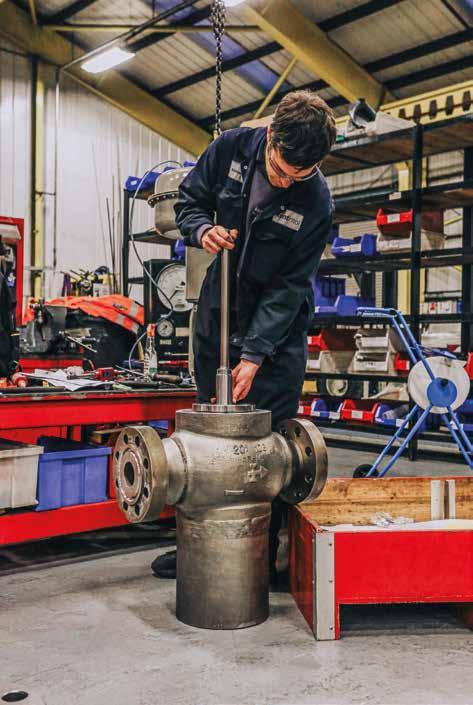
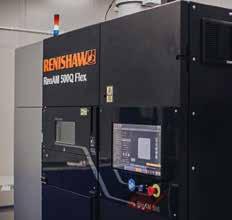
With the MOL’s performance at stake, the team turned to its inhouse additive manufacturing (AM) capabilities. Using Laser Powder Bed Fusion (LPBF) technology, the additive engineers were able to design, build and produce the replacement labyrinth trim entirely in-house, from initial CAD modelling and simulation to final machining and heat treatment. The entire process, from concept to completion, took just two weeks. That turnaround included the precision build of the trim, subsequent machining operations and postprocessing stages such as heat treatment and surface finishing, all under one roof. This rapid response not only restored the valve to full operational performance but
The valve’s damaged internals from flow erosion
also demonstrated how additive manufacturing can transform the maintenance and lifecycle management of legacy assets.
THE PROOF IS IN THE PERFORMANCE
Once completed, the newly manufactured trim was installed during the valve’s rebuild, which was carried out by the service team. The valve then underwent a full flow test to verify the Cv calculations provided by the applications engineers.
The operator’s representative attended the test, witnessing firsthand the precision and performance of the rebuilt valve. The successful test confirmed that the new labyrinth trim met the required performance criteria, validating both the design and the AM process that produced it.
IN-HOUSE INNOVATION
The entire manufacture, rebuild and test cycle, from initial investigation to final installation, was completed within the UK using the company’s in-house engineering resources. It was a compelling demonstration of how a well-established manufacturer can combine decades of experience with cutting-edge technology to solve modern challenges. By integrating AM into its operations, the business can now provide faster, more flexible solutions for clients dealing with obsolete components, long lead times, or critical service interruptions. The success of this project has already inspired wider interest, with the operator now citing it as a benchmark example of additive innovation within their UK platform, the first of its kind to be deployed.
BUILDING AN AGILE FUTURE
For KOSO Kent Introl, projects like this reaffirm a commitment to supporting customers throughout the entire lifecycle of their assets. Whether it is restoring a 30-year-old valve to full functionality or developing new designs for emerging energy technologies, the principle remains the same: Engineer to solution that best serves the application, and deliver it with precision, reliability and speed. This blend of heritage and innovation continues to define the
company’s approach. As the energy sector evolves towards cleaner and more efficient operations, KOSO Kent Introl stands ready to support that journey, combining traditional engineering craftsmanship with the latest manufacturing technologies to keep vital processes flowing safely and effectively, onshore, offshore, and subsea.
The Renishaw LPBF 3D printer
The new valve on assembly
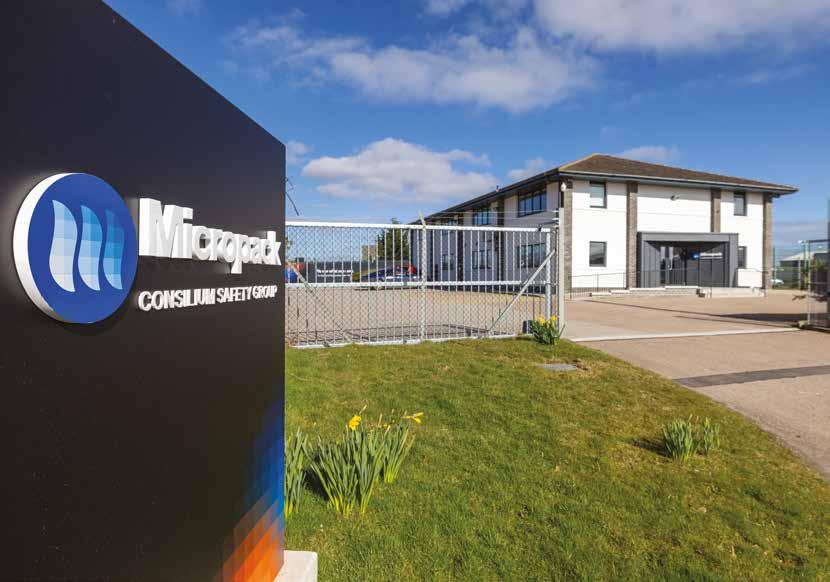
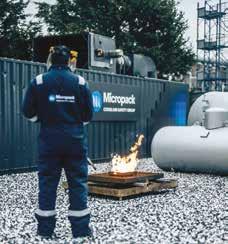
Micropack’s Fire Training and Technology Centre, set in Portlethen, Aberdeen
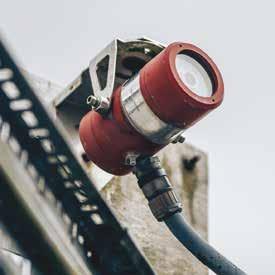
A Miropack FDS301 intelligent Visual Flame Detector in action
DETECTING A FLICKER
Saskia Henn visits one Scottish hazard detection company rapidly expanding its impact in the oil and gas sector
Flame detection is vital to preventing fatalities and maximising production in the oil and gas industry. Hazard detection specialist Micropack has recently renovated its Fire Training and Technology Centre in Aberdeen, positioning itself as a leader in fire safety just in time for the company’s 30th anniversary.
AN INTRODUCTION TO MICROPACK
The company was founded in 1996 and focused on intelligent optical flame detection from the beginning, building on fire and gas-mapping work that began in the late 1980s. In the same year as the company’s conception, Micropack launched the world’s first visual flame detector with its Machine Vision and Intelligence
Micropack’s Technology Centre is the hub of the Scottish companies success
system (MAVIS). Since then, the company has honed its flame detection and fire and gas mapping by harnessing the power of AI long before it became mainstream. As a result, Micropack has developed a variety of flame detectors and a mapping service called Hazmap 3D.
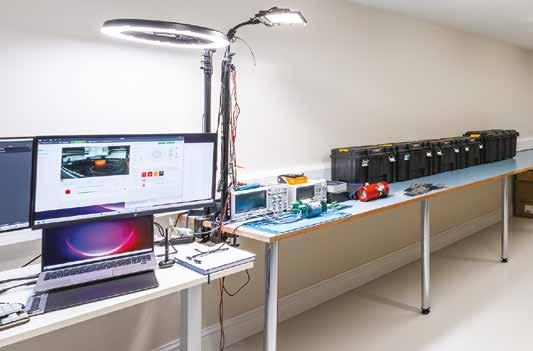
Micropack’s Fire Training and Technology Centre is nestled in the Aberdonian countryside, surrounded by sheep and foliage rather than an industrial estate. The purpose-built facility is located at the Grampian Fire Brigade’s Fire Training Centre in Portlethen. It is the only facility in the Grampian area permitted to burn fires. Home to all Micropack flame detection research and development, the facility offers several distinct spaces where detectors are tested in preparation for market.
Micropack CFO Derek Mitchell’s history is steeped in the oil and gas industry, with his father working on oil supply boats and Mitchell beginning his career as a graduate trainee in the sector. During his career, Mitchell has developed a keen understanding of the oil and gas industry’s needs and strengths.
“The industry is not in its ascendancy at the moment but there’s lots more oil probably going out toward the Atlantic Ocean,” says Mitchell. “I feel there must be more oil out that way toward America, but I know it’s going to be difficult to get hold of it.”
While the world may not offer the reserves it used to, Micropack’s sales are undeniably increasing under the stewardship of managing director Graham Duncan, with the last few years being some of the most successful yet and the company’s products selling around the world.
“Health and safety is certainly far more paramount than it ever was before. Our sales are, to a certain extent, underpinned by the rise of the safety culture, but equally our sales also owe something to the fact that we want to maximise production,” says Mitchell.
Maximising production involves knowing what fire hazards are possible, where and when. “We’ve got cameras inside our detectors, and they can detect the flame. They can detect what kind of flame it is in the way that it flickers,” says Mitchell. “That can then be used against an algorithm to say,
Safety is always in the mind of any Micropack employee
‘that’s a hydrogen flame’ or ‘that’s a hydrocarbon flame’ or ‘that’s sunlight being reflected off of some water’.”
False alarms, for example, are a common and debilitating occurrence in oil and gas operations that can lead to facility-wide shutdowns and the loss of hundreds of thousands of pounds. Unwanted shutdowns and false alarms can be the result of reflected flare radiation, hot CO2 exhaust emissions, sunlight and radiant heat sources. In an analysis of 985 Norwegian industry fire incidents over 17 years, as many as 29% of the incidents were false alarms.
“We want to eliminate false alarms,” says Mitchell. “If you’ve got a reliable piece of kit that tells you ‘no you’re not on fire, there’s no need to be alarming and shutting down your oil refinery’, that’s allowing production to be maximised.”
To ensure this level of precision, a team of 18 people work in
the refurbished facility, taking measurements and handling the 3D printer. A large portion of the company, including IT, sales and some accounting, is outsourced, leaving the facility free to focus on testing.
“We punch miles above our weight,” says Mitchell. “The main thrust of our workforce is on research and development. We’ve taken some really smart people in who are at the forefront of machine vision learning.”
Micropack is now 30 years in the making
THE FACILITY
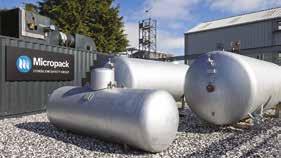
There is evidence of technological testing and training outside as well. A rectangular pond, while aesthetically pleasing, serves a purpose too, offering different angles of reflective sunlight to test flame detection against blinding light. Metal pans are used to create and control realistic hydrocarbon and methanol fire scenarios. This enables the validation of new detection technologies and the training of industry professionals in live-fire conditions that closely replicate real operations. A wooden corridor aids the simulation of fire testing in a range of conditions such as fog and varying lighting contexts. The pans enable the testing of difficult materials in a controlled space.
Micropack CFO Derek Mitchell and MD Graham Duncan are looking to keep the companies growth going way beyond it’s 30th anniversary
“Legally we can burn just about anything,” says Mitchell. Hydrogen flames, for example, are virtually undetectable due to their low radiant heat, yet they spread easily even with small amounts of air. Electric batteries have also been burned in the pans. The facility’s testing corridor also supports the testing of different ranges. A smaller flame can be lit in a smaller pan to simulate a fire further away. This helps Micropack to test for diverse scenarios that mimic the risks that real refineries encounter.
Overall, Micropack’s varied toolset for testing flame detection under different circumstances has shaped a blueprint for even the most challenging flame detection scenarios.
A TRAINING GROUND
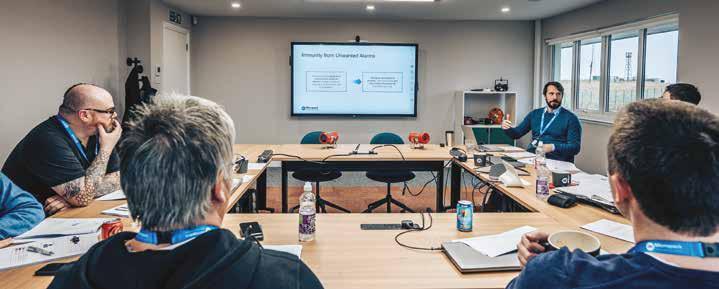
The £1.5m renovation has also enhanced Micropack’s ability to run training courses and host trainee meetings, not just for its own employees but for clients and anyone who wishes to learn more about hazard detection and fire safety.
“We have had a couple companies ask to hire our conference room off us so they can use our facilities,” says Mitchell. “We had visitors before, but they were infrequent. We have way more now. The testing was always happening, but I think now we’ve got a much more impressive facility.”
Micropack also hosts training courses for its Hazmap3D technology, supporting those who wish to become a certified fire and gas professional. Micropack’s Hazmap3D training
Micropack’s facility enables it to create and control realistic hydrogen and methanol fire scenarios
course involves designing a fire protection system, covering hazard appreciation and identification, camera location and identifying potential hazards or limitations. HazMap3D mapping software helps with flame and gas mapping, as well as toxic gas detection, using built-in smart features to develop practical modelling plans for every space.
Acting as an innovation and training hub, the facility offers a space for industry players to safely and realistically explore a hazard safety plan tailored to their needs. The facility is equipped to handle a range of fire safety detection challenges which otherwise would only be encountered in an emergency.
Ben Rafferty Consulting Services Manager at Micropack leads another training course Derek
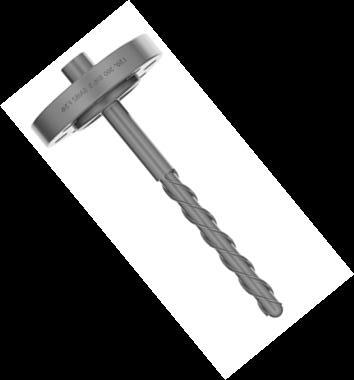
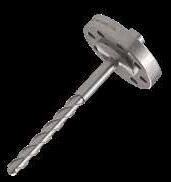
Daily Helix Thermowell (DHTW
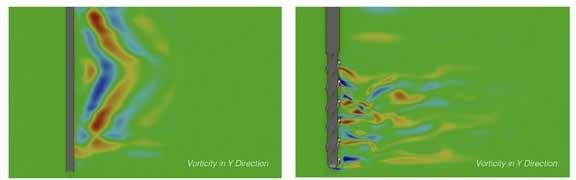
Vortex-Induced Vibration Dampening
The DHTW breaks up flow and reduces transverse forces caused by the wake frequency approaching the natural frequency of the thermowell. These vibrations, which would cause reduced life and failure due to metal fatigue in standard thermowells, no longer pose an issue with VE Technology®.
Standard Cylindrical Thermowell
Daily Helix Thermowell (DHTW
LIFT OFF
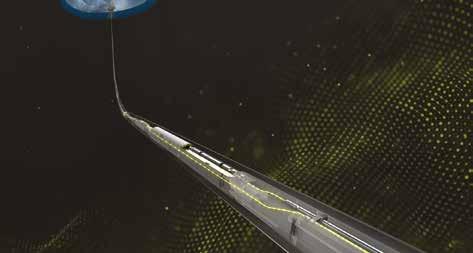
Emerson and Interwell have introduced what they describe as the world’s first retrievable electric gas lift system, marking a major step forward in artificial lift technology. The new Adaptive Gas Lift System (AGLS) is designed to address long-standing limitations of conventional gas lift by combining real-time digital control, deeper and more stable injection capability, and cost-saving wireline retrievability – all while meeting internationally recognised API and AWES performance standards.
CONVENTIONAL ENGINEERING CHALLENGES
Traditional injection pressure operated (IPO) valves remain effective early in a well’s life, when tubing pressures are high and valve response is predictable. However, as reservoir pressure declines, drawdown efficiency drops and gas lift becomes increasingly inefficient. Operators often face overinjection or under-injection of lift gas as conditions evolve.
A major operational challenge is multi-pointing, in which gas unintentionally enters the well at multiple depths due to temperaturedriven valve behaviour or casingpressure manipulation. Manipulating casing pressure and managing temperature-related uncertainties in valve behaviour also frequently causes multi-pointing, leading to inefficiencies and lost production. Historically, these issues require costly interventions to change valve port sizes or adjust injection depth, interrupting production and increasing operational risk.
REAL-TIME CONTROL WITHOUT INTERVENTION
The AGLS replaces passive valve mechanics with electrically actuated, remotely controllable valves powered through Emerson’s Roxar Integrated Downhole Network. The system enables continuous, data-driven optimisation of port size, injection rate, injection depth and drawdown while
Has the launch of a retrievable electric gas lift system heralded a new era for gas lift technology?
the well remains online. According to Emerson and Interwell, the AGLS “enables continuous optimisation of oil production without the need for invasive and costly well interventions.”
Crucially, valve closure no longer depends on reducing casing pressure. This design allows deeper and more precise injection, sustaining lift performance over the full lifecycle of the well. By removing the need to manipulate casing pressure, the system helps prevent multi-pointing and provides operators with stable, predictable gas lift performance.
REDUCING DOWNTIME
One of the AGLS’ defining engineering features is its wireline-retrievable valve assembly. The unique retrievable design of AGLS allows for the complete replacement of entire valve assemblies using standard wireline techniques, without the need for costly workover operations. This capability eliminates the long downtime and heavy equipment mobilisation typical of traditional gas lift system upgrades and provides operators with greater operational flexibility.
The system leverages Interwell’s field-proven side pocket mandrels and barrier-rated gas lift valves, integrating mechanical robustness with Emerson’s digital automation expertise. The complete system is qualified to API 19G1 (V1), API 19G2 (V0), and AWES 3362-36 standards.
EFFICIENCY, SAFETY AND EMISSIONS REDUCTION
By reducing the number of interventions – which inherently involve energy consumption, logistics and emissions – the AGLS directly supports operators’ sustainability objectives. Improved drawdown and gas lift efficiency also reduce CO2 per barrel produced, contributing to more responsible oil production.
Jan Inge Ellingsen, vice president and general manager for Roxar products at Emerson, highlights the system’s dual engineering and sustainability value: “This innovative technology will help unlock the full potential of assets in the field while eliminating the need for extensive interventions, improving safety, and supporting the transition toward netzero energy production.”
Interwell CEO Thormod Langballe underscores the strategic need for such a system: “The oil and gas industry has long required a more dynamic and resilient approach to electric gas lift… we have developed a robust, realtime controllable gas lift solution that tackles these challenges head-on.”
For production and completions engineers, the AGLS represents a significant advancement capable of delivering remote configurability, deeper injection capability, and wireline retrievability in a single integrated package.
The world-first retrievable electric gas lift system
INTRODUCING OUR NEW RANGE OF SUBSEA CONTROL VALVES
The Series 1275 Subsea Control Valves are a new and fully qualified range, designed, engineered and tested at our Brighouse facility in the UK.
Key features include:
- Specialist trim technology to suit all applications
- Repeatable and dependable operation
- Enhance wear resistance
- Backlash removal
- Highly accurate
- Power efficient
MANUFACTURING SUBSEA VALVES SINCE 1984
KOSO Kent Introl has over 35 years’ experience in the subsea industry manufacturing a range of Control and Choke Valves for the world’s largest energy companies.
Chris Chant, director of sales and technology (temperature measurement) at
FROM THE INDUSTRY: CHRIS CHANT
Daily Thermetric’s director of sales and technology Chris Chant shares valuable insights from his career in the process instrument industry and discusses recent advances in high-temperature measurement technology
My role is a blend of technical leadership and global commercial strategy, serving as the Director of Sales & Technology (Temperature Measurement) for the Eastern Hemisphere.
On the technology side, my focus is on maintaining Daily Thermetrics’ technical excellence in the field. I collaborate closely with our dedicated engineering team to ensure our product development is predictive, not just reactive. A critical component is representing Daily Thermetrics on technical committees, including
API and ASTM. This ensures our products not only comply with the highest standards but that we actively contribute to the future direction of these standards for improved safety and performance.
The second part of my role is to provide direct, advanced technical support to our sales force, equipping them with the deepest, most current product and application expertise. I act as the key technical liaison for high-stakes projects. By thoroughly understanding complex, client-led technical requirements and specific application challenges, I translate those
needs directly into effective, bespoke temperature measurement solutions. My goal is to ensure our technology delivers tangible operational and safety improvements in every major installation across the region.
WHAT FIRST DREW YOU TO THE PROCESS INSTRUMENT INDUSTRY?
What initially drew me to the process instrument industry was a blend of personal heritage and very timely strategic advice. My journey began in 1984 in the South Wales Valleys, where I still live. At that time, the landscape was defined by a rich, yet rapidly changing, industrial ecosystem – mining, coke works, refineries, chemical plants, steel mills, and power stations. Crucially, this density of heavy industry fostered a strong network of local instrumentation manufacturers. My father worked as an electrical and instrumentation manager at a combined coal mine and coke facility. In 1984, that entire industrial structure was on the brink of profound change and widespread closures. He recognised that while the user base was contracting, the manufacturers who supplied the core technology would offer a more resilient and forward-looking career path. He specifically advised me to look toward the companies that designed and built the essential measurement tools, rather than the plants that installed them. That advice shaped my entire career, steering me toward the instrumentation manufacturing sector.
Daily Helix Thermowell
The CatTracker in situ
WHAT CHANGES HAVE YOU SEEN IN SENSOR TECHNOLOGY OVER THE YEARS?
The fundamental sensing principles of technologies like thermocouples (TCs) and Resistance Temperature Detectors (RTDs) have remained largely unchanged. The major transformations I have witnessed and actively contributed to centre around three key areas: application engineering, material science, and digital and wireless instrumentation interface.
The primary change in the physical sensor has been in how it is applied to solve complex industrial problems, The development of highly engineered designs for specific, challenging environments, an example would be multi-point sensors, custom designs with numerous sensing elements within a single sheath (e.g. for reactor temperature radial profiling).
WHAT TECHNOLOGIES IS DAILY THERMETRICS BEST KNOWN FOR, AND WHAT ADVANTAGES DO THEY PROVIDE?
Daily Thermetrics is best known for high-performance, custom temperature instrumentation, particularly our CatTracker Catalyst Temperature profiling technology. These specialised solutions provide the oil and gas industry with the ability to precisely map temperatures within catalytic reactors and highpressure vessels. This enables tighter process control, optimises catalyst usage for improved yield and profitability, and enhances unit safety by providing early detection of dangerous hot spots and channelling.
HOW IMPORTANT IS TRACEABILITY AND QUALITY CONTROL TO YOUR OPERATIONS?
Traceability and quality control are paramount to Daily Thermetrics’
operations, this starts with our ISO 9001:2015 certification covering the design, manufacture and installation of temperature instrumentation for the refining and petrochemical industry. Carrying this commitment to traceability and QC/QA would be testing performing on our Thermowell products this includes 100% nondestructive testing (NDT) such as ultrasonic inspection on thermowell welds and X-ray inspections on sensor point construction and terminations. Critically, every thermowell is serialised for true, full-cycle traceability, tracking raw materials, manufacturing, and testing records. This dedication is essential for the high-safety, critical-process applications in oil and gas.
WHAT PROJECT HAVE YOU BEEN MOST PROUD OF WORKING ON?
The project I am most proud of is developing our high-temperature measurement technology, particularly the ImpermaWell design. This advancement significantly improved plant safety and measurement reliability in demanding applications, such as claus reaction furnaces and gasification units. By engineering a solution for these hostile environments, we enabled clients to achieve safer, more consistent process control without the need for complex nitrogen purging.
WHAT ARE THE BIGGEST CHALLENGES FACING THE INDUSTRY?
The biggest challenges are navigating the energy transition and its profound impact. This involves two main pressures, supporting clients as they decarbonise their processes with the addition of technologies such as carbon capture, hydrogen integration, and simultaneously pivoting our core technology to meet the additional extreme demands of developing
technology process such as SAF production.
WHAT LESSONS HAVE YOU LEARNED DURING YOUR TIME IN THE INDUSTRY?
Three core lessons learned would be: fundamental principles always win, while technology evolves rapidly with items such as smart transmitters and wireless protocols, the basic physics of temperature measurement remain the cornerstone. Second, the value of traceability is non-negotiable, in critical process control, you cannot afford failure. Third, solutions are engineered, not sold, the most successful outcomes come from truly listening to the client’s operational challenges and translating that into a bespoke, engineered solution, often pushing the limits of existing technology.
WHAT CHANGES DO YOU PREDICT FOR TEMPERATURE MEASUREMENT AND SENSOR TECHNOLOGIES OVER THE NEXT DECADE?
In essence, the future of temperature measurement is about making the sensor invisible - in terms of wiring and maintenance, while making its data indispensable for complex process optimisation and digitalisation. Next-generation wireless interfacing, the cost and complexity of wiring will become unsustainable, driving the industry toward robust, long-range wireless protocols (like LoRaWAN or private 5G) This will finally make measurement accessible in every hard-to-reach, non-critical point in a plant, drastically improving operational visibility.
Acuator specialist Auma has presented the SIL version of Tigron, its new high-performance, explosion-proof actuator for safetyrelated applications up to SIL 3. According to the company, Tigron SIL actuators combine maximum safety with outstanding configuration flexibility, adapting to a wide variety of requirements.
HOW IT WORKS
Up to four different safety functions can be configured within the same actuator, and can be parametrised in any priority. Additional parameters
ADVANCED ACTUATORS
Introducing a new high-performance, explosion-proof electric actuator series
such as type of seating in the end position, tripping torque, and overload protection for the safety functions can also be customised to meet specific customer needs. Thanks to a timer function, Tigron SIL can slow down shortly before reaching the valve end position, effectively preventing pressure surges in the pipeline.
CERTIFICATION AT THE CORE
The SIL version of Auma’s Tigron thus provides solutions even for highly complex requirements in safetyrelated systems. Tigron SIL is certified for the safety functions Safe ESD Open and Safe ESD Close (both with and without timer function), Safe Stop, and Safe End Position Feedback Open and Close. The safety functions are controlled and monitored by safetyrelated firmware. The safety-relevant part of the Tigron SIL was developed and evaluated in accordance with IEC 61508:2010 (SIL) and ISO 13849 (PL) and is certified by TÜV Nord. SIL 3 can be achieved with a redundant system setup.
SAFETY AS STANDARD
In addition to the comprehensive safety-related features, Tigron SIL users benefit from all the core advantages of Auma’s successful Tigron series. Offering outstanding IIC explosion protection, Tigron is ideally suited for hydrogen applications. The compact and powerful all-rounder is reliable, durable, and withstands the toughest operating conditions. Tigron is available with a broad range of modern interfaces, including Profinet, offering easy and flexible integration into all common control systems. In addition, seamless data exchange with Coralink, Auma’s digital ecosystem, simplifies predictive maintenance.
Auma’s Tigron SIL actuators combine maximum safety for safetyrelated applications up to SIL 3 with outstanding configuration flexibility, providing solutions even for highly complex safety requirements.
For more information visit: www.auma.com
Tigron SIL users benefit from all the core advantages of Auma’s successful Tigron series
Tigron combines safety with flexibility
STRONGER SAFETY CULTURE
Advancing gas detection reliability in oil and gas operations
In oil and gas operations, gas detection is one of the most fundamental layers of protection for workers in the field. While technology in the industry continues to advance, many of the day-to-day challenges surrounding personal gas monitoring remain the same: ensuring detectors are powered, functional, rugged enough for harsh conditions, and easy for teams to maintain. As a result, safety professionals increasingly look toward equipment designs that reduce operational burden while maintaining consistent protection. One area where meaningful progress has emerged is lowmaintenance gas detectors that require little to no charging.
Traditional rechargeable instruments can be dependable, but they bring unavoidable logistical requirements –charging stations, cable management, equipment rotation, and the risk of a detector being left unpowered when it’s needed most. In contrast, long-life, no-charging gas detectors alleviate much of this friction. These instruments are designed to operate continuously for years without requiring access to external power. For remote sites, long shifts, or crews constantly on the move, removing the power dependency eliminates a common point of failure and simplifies the daily routine for workers responsible for wearing them.
RUGGED DESIGNS
Ruggedness is another major consideration. Oil and gas environments subject equipment to temperature swings, humidity, impact, vibration, and airborne contaminants. Detectors built with durable housings, sealed electronics, protective sensor placement, and shock-resistant construction help ensure that performance is not compromised by the physical realities of fieldwork. A device that can survive rough handling and environmental stressors reduces downtime, minimises
replacement costs, and provides confidence that readings remain stable and accurate throughout the instrument’s service life.
OPTIMISING DETECTOR LIFE
Single-gas detectors for H2S, CO, and O2 continue to play an important role, especially in operations where risk profiles are specific or where workers rotate through multiple sites. For H2S-heavy regions, the availability of a single-gas detector with a hibernate function, such as the Single Gas Clip Plus, offers additional lifecycle optimisation. When work is intermittent – seasonal, projectbased, or subject to shut-in periods – the ability to place the detector into hibernation preserves the remaining life on the unit. This approach reduces waste and ensures that the detector’s operational span aligns more closely with actual usage patterns.
STEAMLINING BUMP TESTING AND CALIBRATION
Maintenance efficiency is equally important. Daily bump testing and periodic calibrations are essential for reliable monitoring, but the process can become time-consuming without the right tools. Portable docking
systems address this challenge by enabling quick bump tests and/or calibrations for multiple units at once. Because the station is mobile, it can be brought directly to the work location instead of requiring workers to visit a dedicated area. This flexibility improves compliance, supports structured maintenance programs, and helps safety teams manage fleets more effectively.
SUPPORTING A STRONGER SAFETY CULTURE
Together, these advancements –extended life spans, reduced charging requirements, rugged construction, and streamlined maintenance – support a more resilient safety culture. They allow safety managers to focus less on device logistics and more on worker protection strategies, training, and operational readiness. As the industry continues to prioritise reliability and efficiency, equipment that minimises complexity while maintaining consistent performance will remain a valuable asset across many sectors of oil and gas operations.
The MGC IR Pump from Gas Clip Technologies
The FlameSpec detectors under test
SURPASSING SAFETY STANDARDS
Eliot Sizeland discusses the advantages of testing optical flame detectors beyond international standards
Fire protection is one of the crucial safety aspects of many hazardous industries, including oil and gas. A spill of flammable liquid or flammable gas leak, if ignited, may quickly spread with undesirable consequences for personnel, plant, and reputation. To help mitigate this risk fast, reliable fire detection is required.
Flame detector models vary significantly in the way they work. The electromagnetic wavelengths measured, the optics and sensors used, the signal and data processing, and the decision algorithms, may be very different from one model to another. These differences result in functional differences between models. Different flame detector models, utilising different detection technologies or even the same detection technologies with different
designs, may react very differently to the same fire and environmental conditions. This is why a thorough functional assessment of a flame detector model is crucial before it is being used in hazardous industries.
The following paper details one such assessment according to test procedures designed by a global energy and petrochemical company and conducted by an independent laboratory in the UK.
IDENTIFYING THE CHALLENGE
Optical flame detectors use a variety of technologies, based on measurement of the optical radiation emitted from flames in the ultraviolet (UV), visible and infrared (IR) parts of the electromagnetic spectrum. Since in industrial environments radiation in these parts of the
spectrum may be abundant, one of the challenges in the design and production of a reliable flame detector is to correctly identify whether the measured radiation originates from an unwanted flame or from a harmless source. Another challenge is the reliable operation of the detectors in harsh weather conditions, and when contaminated by raindrops, sea water or any other material relevant to the specific industry. The detectors should also be able to function reliably in condensed industrial environments, where the line of sight to the fire may be somewhat obscured by equipment, piping, etc.
The main objective of these tests was to evaluate the detectors in a few key areas, these were: Flame sensitivity, rejection of false positives, environmental considerations and real-world scenarios.
DETECTORS UNDER TEST
The FlameSpec flame detector family is an explosion proof range of optical flame detectors offering global approvals for use in hazardous areas, fire detection performance and SIL. The units can be interfaced with conventional fire panels or safety PLC’s using a range of industrial outputs. All units are delivered with HART, heated optics and adjustable sensitivity. The units log alarm events and capture sensor data for post event analysis, the units are also available with different camera options, the choice being matched to expected fire type. The specific variants under test here were:
• Device 01 FlameSpec IR3: This device monitors IR radiation in three wavelength bands, allowing it to identify the spectral signature of hot carbon dioxide (CO2) in flames
• Device 02 FlameSpec IR3-HD: This device utilised the same detection method as the IR3 and has an integral colour video camera with internal recording of fire events
The units can be interfaced with conventional fire panels or safety PLC’s using a range of industrial outputs
Detecting the larger fire 2.5m
• Device 03 FlameSpec IR3 CO2L: This unit uses a modified algorithm of the first two devices so that it would not alarm to intense sources of exhausted hot CO2 such as from helicopter engines, tanker loading trucks or other intense sources of exhausted hot CO2
TEST PROCEDURE FOR FLAME SENSITIVITY
The starting point for detector assessment was to assess the product’s performance against manufacturer statements. Today, FM 3260 and EN-54 part 10 are international standards for the performance of optical flame detectors. These documents define a standard fire test as a 12in x 12in (0.3m x 0.3m) n-heptane pan fire. FM, further define the Field of View (FOV), horizontal or vertical, as being the angle where the detection distance is at least 50% of the on-axis detection distance. Historically gasoline had been used as the primary test fuel, and whilst this can provide equivalent response data, there are variations
between gasoline types, so n-heptane was chosen as a pure compound that can be sourced globally.
REJECTION OF FALSE POSITIVES
Historically, common sources of false alarm were presented to a detector without a fire being present, the detector was then moved nearer to the source until the detector responded. In later years, these tests were supplemented by determining if the detector response was desensitised by the presence of false alarm stimuli. Typical forms of unwanted alarm source included sunlight and hot blackbody radiators.
ENVIRONMENTAL CONSIDERATIONS
The detectors under test can be deployed almost anywhere in the world, it is important therefore to understand what affects different temperatures, hot, cold, or thermal shock have on the devices. Hot and cold climates are easy to visualise, the thermal shock test may relate to hot climates, but units located
near the equator are subject to frequent heavy rainfall over short periods of time, whilst operating at reasonably high temperatures, particularly due to internal heating from electronic components. In addition to temperature effects, an assessment was needed to determine what impacts different forms of optical contamination had on detector response.
REAL-WORLD SCENARIOS
While flame detectors are regularly tested in open areas to international standards, e.g. as part of FM 3260 or EN54-10 certifications, these fires are relatively small compared to the fires more associated with major hazards.
The real-world scenarios tests therefore have two objectives, firstly to determine fire detection performance to a larger fire, and secondly to ensure the detector is still capable of responding to a flame that may be close to saturating the detectors input signals. The obscuration plates used were designed to block the flame signal by 25%, 50%, 75% and lastly 90%.
Starting at the maximum obtainable distance without obscuration grid the detectors were exposed to an established larger fire. The grids were then added in order of increasing blockage until the detector no longer responded, at this point the detectors were moved 10m nearer to the fire and the grid that had failed tested again. This process was repeated until the detection response to the 90% obscuration filter was less than 10 seconds.
THE TEST RESULTS
Regarding flame sensitivity, the stated detection range to a standard fire as being 30m (98ft) using medium sensitivity; within three seconds, this is as approved by FM.
Three conditions were tested for susceptibility to sunlight, these were: unmodulated sunlight, randomly modulated sunlight and regularly modulated sunlight. For all tests no false alarms were registered. In terms of detection performance in sunlight, all detectors alarmed to the fire, without the detection distance being compromised in the presence of sunlight whether it was modulated or not. Additionally, no alarms were
recorded for susceptibility to black body radiation, and all detectors alarmed to the fire in its presence without detection distance being compromised.
When testing real-world scenarios, an optical contamination test was conducted to determine if the dirty optics window fault (BIT test) is sufficiently sensitive to alarm before the detector was unable to respond to a fire. The fire under investigation, was the standard established n-heptane fire, at an on-axis distance of 30m. The contaminants were applied to the detector window up to five times, with the materials tested including glycol, engine oil and soot. All detectors responded in a reasonable amount of time to the contaminants under investigation.
Larger fire tests were carried out to verify detector sensitivity performance for a major hazard fire (larger than the specification “standard fire”), including impact of congestion partially obscuring the fire, and to ensure the detector can detect
fires that may be close to saturating the input signals of the sensors. Starting with sensitivity performance, the maximum distance available to the detectors was 130m. The detectors responded at 40m within approximately two seconds when using the 90% obscuration filter.
In summary, this paper has detailed a test programme designed by a global energy and petrochemical company and conducted by an independent laboratory in the UK. Three triple IR detectors were evaluated in the areas of flame sensitivity, rejection of false positives, ability to work in environmental conditions, and lastly taking into real world scenarios of major hazards.
is vice president of business development at Fire & Gas Detection Technologies.
www.fg-detection.com
Detecting the larger fire at 130m
Table below: Results of the larger fire tests
Dr Eliot Sizeland
• FlameSpecTM Flame Detection
• No repeat of false alarms
• Data, Data, Data
• Black Box Video Recording
• Increase uptime, increase safety
ENGINEERING EFFICIENCY
We take a look inside Green Pin’s evolving range of ROV hooks and shackles
Green Pin’s subsea lifting hardware is engineered for both release and retrieve operations
As subsea lifting projects grow in scale and complexity, offshore operators increasingly depend on components engineered specifically for the constraints of remote, low-visibility, high-load underwater environments. Green Pin, part of the Royal Van Beest Group, has steadily expanded its portfolio of remotely operable shackles and hooks to meet these demands. Today, the company offers one of the broadest ROV-ready portfolios in the sector, combining purpose-built mechanical innovations with lessons from a decade of subsea field testing.
A DECADE OF DEVELOPMENT
Much of the company’s recent momentum traces back to the development of the Green Pin ROV Pro Shank Hook, a project that began in 2013 when product manager Emiel Van Norel first explored the concept of an ROV-friendly hook with multifunction capability. Manufacturing constraints stalled those early prototypes, but a turning point came
in 2018 when Royal Van Beest acquired Irizar Forge. This expanded the company’s production capabilities – particularly for larger forged components – opening the door for a new generation of subsea hardware.
The engineering objective behind the ROV Pro Shank Hook was simple: build a hook that could reliably retrieve, release, and lock loads using either an ROV manipulator or deck crew. The challenge lay in making the mechanism intuitive, repeatable, and tolerant of misalignment and currentinduced instability. Subsea operators made a key request early in the process: a latch that locks in a neutral position to prevent accidental load loss. Turning that requirement into a robust, manufacturable mechanism took years of iteration.
“A breakthrough came at four in the morning,” Van Norel recalls. “I realised there was one motion sequence we had not tested.” Working with one of the product engineers, the pair refined the idea into the 3-in-1 functional addon - now the signature feature of the ROV Pro Shank Hook. The mechanism
enables an ROV to open the latch for release, unlock it when engaging the hook, and finally lock it automatically once the load is secured.
DESIGN VALIDATION IN REAL CONDITIONS
Rather than limit testing to laboratory environments, the development team subjected the hook prototypes to the North Sea. These trials quickly exposed design sensitivities, including early latchmechanism tolerances and misfitting polyoxymethylene wheels. Every iteration produced incremental improvements to material selection, coatings, and manufacturability. Only the most critical components were made from stainless steel to balance durability with cost-efficiency. A smooth, white corrosion-resistant coating was selected for the forged body to maximise subsea visibility. Rinse-through openings prevent salt accumulation and the entire mechanism is replaceable, enabling operators to return hooks to service even after component-level failures.
By the time the final prototype was complete, only one minor digital adjustment was required before production. Early market feedback has been unequivocally positive. “Engineers instantly understand how it works; almost no explanation needed,” notes Van Norel. Area sales manager Arnoud Stasse adds that the hook has become a major attraction at trade shows for operators targeting improved ROV handling performance.
A COMPREHENSIVE ROV-OPTIMISED RANGE
The Pro Shank Hook is now part of a larger suite of Green Pin subsea lifting components engineered for both release and retrieve operations. This includes a diversified line of ROV shackles, each designed to accommodate different subsea manipulation methods, load orientations, and operational safety requirements.
GUIDED PIN ROV SHACKLES
The Green Pin Guided Pin ROV Shackle provides a mechanical solution for ensuring pin alignment; a frequent challenge in poor visibility. A guiding tube ensures 100% straight positioning of the pin relative to the shackle eyes, improving accuracy for both ROVs and deck operators. The addition of a lifting eye on the tube aids overall balance, while the locking system prevents pin loosening during operation. Available with fishtail or D-handles, the shackle is rated for both inline and side loading.
TAPERED PIN ROV SHACKLES
Designed for ease of assembly, the Tapered Pin ROV Shackle facilitates fast, intuitive engagement by an ROV arm. The tapered design aids underwater alignment, while a groove on the pin allows attachment to the shackle body with wires to prevent loss. Like other models, it is available with both D- and fishtail handles.
LOCKING CLAMP ROV SHACKLES
Another flagship design is the Green Pin Locking Clamp ROV Shackle, also available in a wide-body Sling Shackle variant. The locking clamp prevents
unintentional load release, yet remains simple for an ROV pilot to operate. The design earned a LEEA Award for its safety performance and is suitable for both inline and side loads. The wider sling-body version reduces rope bending fatigue and enables larger lifting configurations.
SPRING PIN AND SPRING RELEASE SHACKLES
For operations prioritising quick release, Green Pin offers two springbased options. The Spring Pin ROV Shackle incorporates dual spring pins for redundant security, while the Spring Release ROV Shackle uses a single-pull mechanism with optional double safety for heavyduty applications. Larger sizes require a dedicated compression tool for assembly.
ROV HOOKS FOR SUBSEA LIFTING
Beyond the Pro Shank Hook, the company also offers the Green Pin ROV Shank Hook and the Green Pin ROV Eye Hook. Both can be operated via an ROV arm using a wire connected to the latch. The shank hook’s hexagonal profile enhances ROV grip, and an extended hook tip increases ease of guiding and engaging slings. All hooks are coated white or white-and-orange for high visibility and engineered with smooth surfaces to reduce rope wear during load cycles.
DRIVEN BY FIELD REQUIREMENTS
Green Pin’s subsea range exemplifies a design philosophy grounded in realworld conditions: enhanced visibility, low-tolerance mechanisms, redundant safety systems, and mechanical forms optimised for manipulator arms in high-current environments. Across hooks and shackles, the range offers working load limits from 6.5t to 300t and operational temperatures from –60°C to 200°C, covering the majority of subsea lifting scenarios.
As Van Norel says, “The ROV line is evolving. We are always improvingfor the market and for ourselves.” With continued customer feedback and field-driven engineering, Green Pin aims to remain at the fore of subsea lifting hardware for years to come.
MAINTENANCE FREE
Protect your immersed and submerged assets for a lifetime with our everlasting and cost effective solution.
SMARTER SURVEYS
Philip Gibbs explains how advanced ocean technologies are enhancing offshore operations
The offshore oil and gas industry is built on precision, reliability, and the ability to operate safely in some of the world’s harshest environments. Whether a company is installing subsea infrastructure, monitoring environmental conditions, or ensuring divers and autonomous vehicles can navigate accurately below the surface, success depends on advanced technologies that deliver trustworthy data and dependable performance. Over the last 35 years marine technology distributor, Swale Technologies, has built a broad
portfolio of principals. Pro-Oceanus, EvoLogics, Soundnine, Teledyne Webb Research, RTSYS, and RJE International are a few examples that continue to raise the bar by offering equipment that supports offshore operations from initial exploration, through long-term production and ultimately to decommissioning.
Swale provides a diverse range of hydrographic survey instruments, essential for mapping seabeds, planning pipeline routes, and assessing construction sites. Offshore operators rely on precise bathymetric data to avoid hazards and select safe, cost-
effective installation paths. Swale’s range of equipment such as advanced sonar systems, autonomous vehicles and oceanographic sensors, help companies conduct surveys quickly and accurately, reducing vessel time and lowering project risk. In an industry where delays cost millions, the ability to collect reliable data the first time is a major advantage.
Teledyne Slocum glider
Evologics acoustic modems & positioning
Evologics USBL Buoy
EMISSIONS SENSING
Environmental monitoring is equally important offshore, especially as regulations tighten and sustainability becomes a global priority. This is where Pro-Oceanus plays a critical role. Known for its rugged dissolved gas sensors, the company enables operators detect pipeline leaks in real time when combined with enabling autonomous vehicles. During drilling, production, or well-integrity assessments, these sensors provide vital insights into subsea emissions and water quality. Early detection of gas anomalies allows companies to respond quickly, preventing environmental harm and improving overall safety. Pro-Oceanus technology essentially acts as an early-warning system for offshore ecosystems and assets.
COMMUNICATION IS KEY
Communication below the surface presents its own set of challenges, especially when working with ROVs, AUVs, or remote sensors. EvoLogics solves this through high-performance diver tracking acoustic modems and underwater positioning systems (USBL). These tools maintain stable communication links in deep water and over long distances, enabling real-time control, monitoring, and data transfer. For subsea construction, inspection, and pipeline maintenance, clear underwater communication is essential. EvoLogics’ systems help crews guide vehicles more accurately, reduce mission time, and operate safely even in low-visibility conditions.
In certain circumstances where acoustic telemetry isn’t possible, Soundnine’s inductive modem technology takes advantage of the rugged physical connection of steel ropes to maintain connection, both subsea and sea to surface, and ensure receipt of vital data.
EFFICIENT INSPECTION
Teledyne Webb Research offers a range of sophisticated deepwater autonomous vehicles that can be combined with Side Scan Sonar, Multibeam sonar, Sub-bottom Profilers or Magnetometers and/or other sensors to provide initial baseline data, site surveys and continuous monitoring of operations.
RTSYS brings impressive innovation through its acoustic systems and underwater drones (AUVs), which are widely used for inspections, environmental surveys, and marine mammal monitoring. AUVs offer an efficient alternative to diver-based inspections, reaching deeper waters and covering larger areas without risking human safety. Their small size and relatively low cost allow “force multiplying” through the operation of swarms of vehicles to cover a wider area. RTSYS technology also supports passive acoustic monitoring, helping operators comply with environmental regulations by detecting the presence of protected species during noisy activities like pile driving or seismic work. The recent addition of AI to aid real-time species identification has greatly enhanced the equipment’s capabilities – essential when
regulations demand shutdown of activity whilst North Atlantic right whales are present, for example. This combination of environmental responsibility and operational efficiency is increasingly important in modern offshore projects.
Finally, RJE International stands out for its portfolio of diver navigation equipment, transponders, and underwater beacons. In offshore oil and gas, divers still play an important role in inspections, repairs, and specialised tasks that cannot be automated. RJE systems help divers stay oriented, communicate effectively with surface teams, and locate equipment or structures more easily. Their acoustic beacons also support asset tracking and recovery, ensuring that valuable tools or sensors deployed offshore can be found quickly even in murky conditions.
THE IMPORTANCE OF ADVANCED TECHNOLOGIES
When integrated into offshore programmes, the technologies from Swale’s stable of manufacturers form a powerful ecosystem. Survey tools improve project planning; sensors ensure safe, environmentally compliant operations while communication systems keep subsea missions running smoothly. And all can be integrated into platforms to deliver constant metocean intelligence whilst ensuring safety for both the operators and the environment. Together, they enable offshore operators to reduce risk, cut costs, streamline workflows, and meet stricter environmental standards.
As offshore oil and gas operations continue to evolve, the demand for accurate data, smarter autonomy, and reliable subsea communication will only grow. By embracing advanced ocean technologies, companies can modernise their operations, protect the environment, and ensure safer working conditions for every crew member above and below the surface.
DEEP-SEA SURVEILLANCE
Sören Johannsen demonstrates how innovative subsea technologies can accelerate the energy transition while supporting strategic operations across the globe
As global demand for deepsea energy, surveillance and infrastructure expands, the subsea technology market is undergoing a transformation. Subsea power systems are evolving rapidly to support increasing autonomous platforms, operate at greater depths and reduce emissions, all while remaining compact, efficient and fail-safe.
Based in Kiel, Germany, SubCtech has positioned itself as a global leader in advanced underwater energy solutions. The company specialises in subsea power and batteries, custom engineering and rigorous prototype validation for a wide range of subsea applications. With
a growing team and expanding global reach, the company delivers smart, fieldtested systems that reduce CAPEX, OPEX, and CO2 emissions.
AUVS, OFFSHORE ASSETS AND OCEAN MONITORING
SubCtech’s Ocean Power product line includes lithium-ion battery systems and energy storage solutions for a wide range of applications, including: Offshore oil and gas, carbon capture and storage (CCS), environmental monitoring, and Autonomous and Remotely Operated Vehicles (AUVs, ROVs, USVs).
SubCtech has positioned itself as a global leader in advanced underwater energy solutions
At the core of this portfolio is the PowerPacks line, which offers robust, long-lifespan battery systems (up to 25 years) that power everything from portable sensors to large-scale underwater platforms. Engineered for operation in harsh subsea environments, the PowerPacks come in a variety of pressure-tolerant housings including:
• Titanium: for ultra-deep missions up to 6,000m
• Super-Duplex Stainless Steel: rugged and corrosion-resistant up to 6,000m
• Marine-grade Aluminum: optimised for shallower operations up to 1,000m
PROVEN POWER
SubCtech’s battery systems undergo extensive qualification testing, including resistance to shock, vibration, thermal variation and electromagnetic interference. All systems are built to meet or exceed: UN T38.3 (transport safety), API17F / API17Q (subsea equipment reliability),
The Subsea Energy Storage System (ESS)
and MIL-STD, DNV 2.7-3 (portable offshore units).
The Li-ion-based PowerPacks offer automatic protection against overvoltage, undervoltage, overcurrent, overheating, overcharging, short circuits and smart algorithm for complex ESS systems. An intelligent Battery Management System (SmartBMS) constantly monitors and optimises performance from individual cells to full module arrangements. These systems also support remote diagnostics, enhancing reliability while minimising downtime.
The PowerPacks can deliver high peak currents, operate in sub-zero temperatures, and support longterm deployments with minimal maintenance.
SCALABLE STORAGE
A major milestone for SubCtech is the development of its modular, scalable Subsea Energy Storage System (ESS) - the first of its kind to be certified under API17F and reach TRL 6 (Technology Readiness Level 6), and thus validated under real-world offshore deployment conditions. The ESS includes:
• Two 1MWh Battery Storage Skids (BSS)
• Integrated Power Skid (AC/DC converter)
• Auto-configuration via SmartBMS and BCM (Battery Control Module based on NetDI technology)
• Redundant architecture for continuous operation
• Modular expansion for up to 6MWh capacity
Built for a 25-year lifespan, the ESS currently allows 2,000m deep deployments, with possible upgrades allowing 3,000m or 6,000m depths. The system has already been successfully implemented in the oil and gas sector followed by an immediate reorder confirming its value and dependability.
FLEXIBLE APPLICATIONS
SubCtech’s vehicle batteries and subsea systems support a wide range of defence and industrial use cases:
• XXL-AUVs for surveillance, mine detection, and deep-sea intelligence (up to 12 modules at 100kWh each, totalling >1MWh at up to 1000V, in serial or parallel configurations)
• AUVs with 416mm, 310mm or 260mm diameter battery modules for underwater inspection or monitoring
• Docking-enabled AUVs and ROVs, autonomously charging at seabed stations without the need for surface recovery
The ESS also provides buffering for
renewable energy sources like wave, wind, and solar power and powers subsea compression, injection, and monitoring equipment; key to the offshore energy transition.
ENGINEERING FOR EFFICIENCY AND SUSTAINABILITY
By minimising the need for vesselbased operations, SubCtech’s systems dramatically reduce both operational costs and emissions. The ESS can replace long umbilical connections, reduce cable infrastructure (especially long tiebacks or CCS) and extend autonomous deployment durations, all while maintaining high safety and reliability standards.
ESS currently allows 2,000m deep deployments
The redundancy concept ensures uninterrupted supply to critical subsea loads. The use of smart telemetry systems enables wireless underwater communication of up to 6,000m via Acoustic Telemetry Modems (ATM). With 80 employees and tripling production expansion in 2025, SubCtech continues to scale responsibly. The company’s UNcertified battery systems are airfreight-compatible and shipped globally, supported by a professional international sales network.
Sören Johannsen is COO at SubCTech.
The ESS is the first of its kind to be certified under API17F
DESIGNING FOR THE DEEP
Jonathan Balmforth shares the importance of designing valves with a subsea-first approach
At JB Valves, ‘subsea-first’ isn’t a slogan. It’s the starting point, the design boundary, and the standard by which we measure every product we create. While others adapt topside valves for subsea duties, we take the opposite approach. We engineer valves from the ground up for the deep – and only then consider whether they could also serve on the surface.
This philosophy comes from decades of hard-earned experience and echoes a line from our earlier work: a subsea valve is “a pressure vessel with a moving component”, a component exposed to relentless pressure, corrosion and physical forces for years without the need for intervention.
DELIVERING COMPLIANCE AND CONFIDENCE
A topside valve performs superbly in its natural environment, but it relies on maintenance, predictable corrosion exposure and manual gland adjustment. Our previous articles in International Oil and Gas Engineer emphasise that topside packings require re-torque, a practical step above water, but impossible once deployed subsea.
When placed underwater –especially if it becomes electronically isolated within a cathodically protected system – a topside valve can deteriorate rapidly. In some cases, it may breach the pressure boundary in six months or less. Subsea-first engineering avoids this risk entirely. It ensures that every JB Valve product is built not just to survive the ocean, but to thrive in it.
TURNING HARSH ENVIRONMENTS INTO PREDICTABLE OUTCOMES
Designing subsea-first means engineering for every load case, not just internal pressure. Our valves are created to withstand a wide range of
Subsea and topside environments are fundamentally different
Subsea-first engineering avoids risk of deterioration
environments, such as: hydrostatic pressure from all directions; galvanic and cathodic interactions; physical shocks and seabed contact; and marine growth and ROV torque loads.
Our earlier articles highlight exactly this; subsea and topside environments are fundamentally different, and our designs embrace that difference instead of compensating for it.
A PHILOSOPHY BACKED BY QUALIFICATIONS
Our subsea-first philosophy is backed by a full qualification to API 6A and API 17D, including endurance cycling, hyperbaric trial, overpressure tests, and seal-removal backseat verification. Achieving TRL7 confirm
Designing subsea-first means engineering for every load case
what our customers experience in the field: consistent, repeatable reliability over time.
Our multi-stage, pressure-energised seals, meanwhile, energise under pressure, build redundancy and eliminate the failure modes inherent to topside gland packings. Our needle and ball valve platforms are just the beginning. This subsea-first philosophy underpins an expanding ecosystem of isolation, control and instrumentation technologies.
Jonathan Balmforth is managing director at JB Valves. www.jbv.co.uk
Simplifying subsea
Collaborative subsea engineering.
Breakthrough and practical innovation from topside to subsea.
At Envirex, we develop solutions that simplify complex subsea operations. Our work spans hydraulics, electronics, control so ware and system integration, and much of it involves creating compact pumping units, control modules, actuation systems and communication technologies that fit into existing operational setups and withstand demanding conditions at depth.
We keep collaboration simple. Together with the client’s engineers, we define operational requirements early. Interfaces, constraints and procedures are clarified upfront, and the design evolves through continuous technical dialogue, and not long handovers. This reduces uncertainty and ensures the system reflects real field conditions from day one. Deliveries such as MODFOXTM demonstrate how this approach produces real, measurable results.
Innovation for us grows out of practical needs. When a task requires unnecessary hardware or extra steps, we look for a cleaner method.
That mindset runs through everything we build. Modular building blocks that integrate quickly with proven technology that provides predictability in the field. And let us not forget our simplified hydraulic architecture and systems that remain straightforward to operate and maintain o shore.
For teams that value direct communication, practical engineering and a collaborative process from concept to testing, this is how Envirex works.
Envirex. Simplifying subsea. Together.
It all starts with Hello.
Leon Ravndal Senior Sales Enigneer
M: +47 951 76 009 E: lra@envirex.no
Li-Ion PowerPack™ - Underwater power solutions
EnergyStorage
VehicleBatteries
StringBatteries
DECOMMISSIONING IN THE DEEP
C-Kore Systems’ Cynthia Pikaar discusses the growing role of decommissioning in today’s offshore oil and gas landscape WHY DOES DECOMMISSIONING REPRESENT A KEY MARKET FOR C-KORE?
As the number of subsea assets approach their design life of 25-35 years, more and more operators are having to decommission their subsea structures. The need for reliable monitoring of these wells during the different phases of decommissioning is critical. Most countries also have regulations that must be met to monitor the condition of the wells.
C-Kore’s Sensor Monitor test tool can read the pressure and temperature sensors located in the subsea well head, even without the Subsea Control Module (SCM) being present. This SCM is the equipment that normally communicates with the
pressure/temperature sensors and may have already been removed as part of the decommissioning process.
C-Kore sees the decom market as a growing market that fits well into our mission – to simplify subsea testing.
WHAT ARE THE BIGGEST CHALLENGES FACING OPERATORS DURING SUBSEA DECOMMISSIONING?
First, unknown integrity and missing data links. Once subsea control modules and data links are removed, operators still need sensor readings (e.g. wellhead pressure/temperature) to verify barriers and ensure environmental safety, but traditional topside-led routes (via SCMs) may be unavailable or impractical. Second,
diver and site safety. Safe pressure limits around wellheads must be proven to protect divers and avoid hydrocarbon release before work on a well can begin. Obtaining this data quickly and accurately is critical to risk reduction. Third, schedule and vessel time pressure. Conventional manual testing introduces delays, human error, and logistics complexity, driving up offshore costs.
HOW DO C-KORE’S SUBSEA TESTING TOOLS DIFFER FROM TRADITIONAL DOWNLINE-BASED TESTING METHODS?
Traditional downline testing requires long cables from the surface, which are slow to deploy, prone to signal
C-Kore’s range of subsea testing technologies
degradation, and dependent on topside equipment. The downlines take up valuable deck-space on the vessel and require fastening to the deck. The integrity of the data obtained is also dependent on the condition of the downline – a faulty downline will give faulty test values.
C-Kore’s patented subsea tools are self-contained and automated. They plug in directly to the equipment at the seabed, and are automated, providing accurate, time-stamped data logs. Their compact design makes them easy to deploy by ROV or diver. They can even be brought to the test site by helicopter, no need to bring the vessel to the quay side. C Kore’s Sensor Monitor reads the pressure and temperature sensors directly at the subsea Xmas tree without needing workover tooling or downlines. They can also be left in position for extended periods of time, datalogging the required values so a timeline of data can be achieved.
HOW DOES C-KORE TECHNOLOGY CONTRIBUTE TO DIVER SAFETY DURING DECOMMISSIONING OPERATIONS?
C-Kore’s Sensor Monitor was originally designed to make diver operations safer around North Sea wellheads by verifying pressures are within safe limits before any intervention. By plugging in subsea and automating readings, teams can quickly confirm barrier integrity. This reduces the risk of hydrocarbon release and ensures divers are working in safe conditions.
WHAT KIND OF TIME AND COST SAVINGS CAN BE ACHIEVED USING
C-KORE’S TOOLS?
By eliminating the need for conventional downline testing, operators can save several days of vessel time per campaign. As the tools are automated and designed to be so simple to use, specialised offshore personnel are not required to accompany the units. Faster mobilisation, fewer offshore personnel dedicated to testing, and immediate results all contribute to significant cost reductions, often amounting to hundreds of thousands of dollars per project.
SUBSEA
ENVIRONMENTS ARE HARSH. HOW HAVE YOU ENGINEERED YOUR TEST UNITS TO WITHSTAND LONG DEPLOYMENTS?
Our tools are engineered to withstand the toughest subsea conditions. They are pressure-rated for full subsea depths, equipped with long-life batteries for extended deployments, and designed with robust connectors compatible with industry standards. They also automatically log data with clear, time-stamped records, making it easy for operators to check compliance and make decisions.
CAN YOU ELABORATE ON ANY INTERESTING DECOMMISSIONING PROJECTS
WHERE C-KORE’S TECHNOLOGY HAS BEEN SUCCESSFULLY DEPLOYED?
C-Kore is a global company, having won several awards such as the King’s Award for Enterprise in International Trade in 2024. Our technology has been deployed on decommissioning campaigns across the North Sea, offshore Australia and now Brazil. In this Australian project, C-Kore Sensor Monitor units were used to interrogate wellhead pressure and temperature sensors on the subsea oilfield. With their automated test routines, the units quickly and repeatedly tested and data-logged the information, enabling the operator to complete the offshore campaign swiftly and safely. The subsea engineer on the Australian campaign noted, “It was straightforward to plug directly into the trees to read sensors
with the C-Kore units and negated the requirement to operate valves. C-Kore’s Sensor Monitor gave us the ability to quickly and safely measure the pressure at a location that would not have been easily possible with other methods.”
Building on this success, C-Kore is now mobilising on its first decommissioning project in Brazil with an independent operator. In this campaign, our Sensor Monitor units will be used to spot-check pressure and temperature sensors on temporarily abandoned wells, a regulatory requirement every three years. Following successful completion of this mobilisation, we expect further mobilisations with the other operators in the region.
GIVEN THE INCREASING PUSH TOWARDS CARBON-CAPTURE AND REPURPOSING OF OFFSHORE INFRASTRUCTURE, HOW DO YOU SEE C-KORE’S ROLE EVOLVING IN FUTURE DECOMMISSIONING PROJECTS?
As the industry moves toward carbon capture, utilisation, and storage (CCUS), subsea infrastructure will increasingly be repurposed for CO2 transport and injection. Reliable integrity data will be essential to prove subsea equipment is fit for new service. C-Kore’s tools can provide the rapid verification needed to support changing strategies.
The Sensor Monitor installed on a Xmas tree
The C-Kore Sensor Monitor reading pressure sensor
STRUCTURAL SHIFT
What does the UK Government’s North Sea Future Plan mean for the future of the regions oil and gas workforce?
The UK government’s newly published North Sea Future Plan sets out a structural shift in the nation’s approach to offshore energy, but at its core is a workforce strategy designed to stabilise jobs today while preparing engineers and technicians for the next generation of clean-energy industries. For a sector that has shed more than 70,000 jobs between 2016 and 2023, the plan represents the most detailed intervention to date aimed at protecting skills, creating continuity of employment, and ensuring that existing expertise remains embedded in Britain’s industrial future.
Energy secretary Ed Miliband underscores this focus on workers, stating, “The North Sea’s workers and communities have helped power our country and our world for decades. This is our plan to ensure they continue to do so for many decades to come.”
This shift arrives as the basin enters a period of natural decline - oil and gas production has fallen 75% since 1999 - resulting in uneven demand for engineers, geoscientists, operations specialists, and technicians whose skills remain critical to national energy security. The government’s response is a coordinated programme to manage this transition without losing the talent base that underpins both legacy and emerging energy systems.
BUILDING A NEW WORKFORCE INFRASTRUCTURE
A key element of the workforce package is the newly announced North Sea Jobs Service, described as “a world-leading national employment programme” offering end-to-end career support for oil and gas workers. Drawing on models used to support armed forces leavers, the service will provide personalised pathways into roles across clean energy, defence, advanced manufacturing, construction and other Industrial Strategy priority sectors.
The government says the service
will support “every step of a worker’s career journey,” from identifying transferable roles to training and job placement. It builds on two recent initiatives: the expansion of the Energy Skills Passport, which standardises and recognises qualifications across multiple energy subsectors; and up to £20 million in joint UK–Scottish Government funding for tailored retraining programmes, following high uptake in the Aberdeen skills pilot.
Stuart Payne, chief executive of the North Sea Transition Authority (NSTA), emphasises the plan’s significance for workforce stability: “This plan provides clarity and direction for the energy industry […] delivering the next chapter for the North Sea and all who rely on it.”
ALIGNING SKILLS WITH FUTURE ENERGY SYSTEMS
Government analysis shows that around 70% of current oil and gas workers already work in occupations considered priorities for clean power, hydrogen, carbon capture and storage (CCS), defence and advanced manufacturing. The Future Plan aims to leverage this capability. The forthcoming Clean Energy Jobs Plan anticipates that Scotland alone could see up to 60,000
clean-energy jobs by 2030, while the UK-wide Industrial Strategy aims to support 1.1 million new well-paid roles over the next decade.
A Fair Work Charter will also be introduced for offshore wind to ensure that public funding is tied to strong employment standards - an issue of growing concern as clean-energy buildout accelerates across the North Sea.
ENGINEERING A MANAGED TRANSITION
While the plan confirms the end of new oil and gas exploration licences, it introduces Transitional Energy Certificates to allow limited production tied to existing fields. This is intended, in part, to maintain continuity of employment during the transition. Alongside regulatory updates to the NSTA’s objectives, the plan provides a structured environment for workers, employers and supply chains to plan long-term.
As Miliband puts it, “This is a worldleading plan… which will ensure that the North Sea is an energy powerhouse throughout the twenty first century.”
But for engineers, technicians and offshore workers, its most immediate impact is the promise of a coherent, skills-led pathway from the fossil-fuel past into a diversified energy future.
The North Sea Future Plan focuses on workforce retention and retraining
SHOWCASING UNDERWATER INNOVATION
Subsea Expo returns to Aberdeen in 2026 as one of the world’s leading events dedicated to the subsea and wider underwater industries, bringing together technology developers, operators, engineers and policymakers to address the sector’s most pressing technical and strategic challenges. Held at P&J Live, the twoday event combines a high-quality exhibition, a vibrant multi-stream conference and a prestigious industry awards dinner, attracting around 5,000 delegates from across the global subsea community.
At the heart of Subsea Expo is a comprehensive conference programme designed to lead debate on key underwater topics and innovations. Running multiple parallel sessions and free to attend, the conference provides a platform for knowledge sharing, professional development and informed discussion on issues shaping the future of the industry. Topics span digitalisation, clean energy integration, late-life asset management and the industry’s pathway to net zero, alongside
technical deep dives into emerging tools and methodologies.
Innovation will once again be a central theme in 2026, reflected in a broad agenda covering underwater robotics, subsea power systems, seabed preparation, advanced manufacturing and engineering, and diving systems and operations. Forward-looking sessions such as Subsea 2035 and Data and Digitalisation will explore how automation, data analytics and new operating models are transforming subsea project delivery, while
dedicated discussions on the circular economy will examine how sustainability principles are being embedded into subsea operations.
Complementing the conference is a quality-focused exhibition featuring around 100 exhibitors from across the subsea and underwater supply chain. The show floor offers delegates direct access to cutting-edge technologies, products and services, providing an opportunity to see practical innovations alongside the technical discussions taking place in the conference theatres.
POWERING A NET ZERO FUTURE
All-Energy returns to Glasgow as the UK’s largest renewable and low-carbon energy exhibition and conference, reaffirming its position as a vital meeting point for the global energy transition community. Since its launch in 2001, All-Energy has focused on connecting technology providers, policymakers, developers, investors and end users to accelerate progress towards a secure, integrated net zero energy system.
The most recent edition demonstrated the scale and momentum of the event, welcoming 13,033 attendees – an 11% year-onyear increase – and hosting more than 300 exhibitors alongside an ambitious conference programme featuring around 600 speakers.
All-Energy’s appeal lies in its breadth and technical depth. Across two days, the combined conference
programmes deliver expert insights into renewable power generation, low-carbon heat, energy efficiency, sustainable transport and energy storage. With decarbonisation and energy security now inseparable challenges, sessions focus on practical engineering solutions, evolving technologies, policy frameworks and commercial pathways needed to deliver resilient net zero systems. Attendees can expect contributions from leading organisations including ScottishPower, SSE, bp, Shell, ABB and Siemens Gamesa, alongside specialists from offshore and onshore wind, solar, hydrogen, marine renewables and emerging energy vectors.
The choice of Scotland as host is central to the event’s
All-Energy takes place 13-14 May 2026
identity. The Scottish Government’s legally binding commitment to reach net zero by 2045 – five years ahead of the wider UK – combined with Glasgow’s role as host of COP26 and the Glasgow Climate Pact, positions the city as a recognised hub for renewable energy innovation and climate action.
UNDER THE SEA
Oceanology International 2026 (Oi26) returns to ExCeL London from 10–12 March, bringing together thousands of ocean professionals for three days of technology, insight and collaboration at the world’s leading event for ocean science, engineering and technology. With more than 57 years of heritage, Oi continues to evolve in step with the technical, environmental and operational challenges shaping the future ocean economy
A major highlight for 2026 is the launch of the new COAST exhibition focus and dedicated conference track, reflecting the growing importance of coastal and shallow-water environments. This new emphasis will showcase technologies and approaches addressing coastal protection, erosion control, sediment transport, shoreline stabilisation and climate adaptation
Oi26 takes place 10-12 March 2026
– critical areas as coastlines face increasing pressure from storms, flooding and rising sea levels.
Across the 20,000m exhibition floor and the live in-water dockside at Royal Victoria Dock, more than 450 exhibitors from every continent will unveil cutting-edge solutions spanning uncrewed systems, hydrography, geophysics, marine robotics, ocean observation, data analytics and AI. Major industry players such as Fugro, Teledyne Marine, Saab Seaeye and Kongsberg Discovery will be joined by over 100 first-time exhibitors, alongside SMEs, start-ups and innovation clusters.
The Oi26 conference programme will deliver high-level technical insight across multiple theatres, with sessions covering uncrewed vehicles, offshore energy, marine data and analytics, underwater communications, navigation
and positioning, and ocean exploration. Keynote speakers include Costas Kadis, European Commissioner for Oceans and Fisheries, and OECD ocean economy lead Claire Jolly, alongside senior experts from BP, CEFAS and the UK Environment Agency.
Complementing the exhibition and conference is a strong focus on networking, skills development and technology adoption, with live demonstrations, workshops and brokered business meetings supporting collaboration across industry, academia and government.
For engineers, scientists and decision-makers working across offshore energy, marine science, defence, renewables and coastal management, Oceanology International 2026 is the definitive global meeting point to explore the technologies shaping tomorrow’s oceans.
Index to advertisers
Celebrating 25 years of driving progress across the renewable and low carbon energy sector. Join the UK’s leading energy community to meet, network and share insights with professionals shaping a sustainable future.
GAIN unparalleled access to key industry decision-makers
REACH thousands of professionals seeking innovative energy solutions
BOOST your brand’s visibility across the entire energy value chain
SHOWCASE the impact of your latest technologies and projects
Boehmer
Böhmer has focused on one product - the ball valve. The portfolio is nevertheless more than impressive: The application-optimised valves in the nominal sizes from DN 3 (1/8”) to DN 1400 (56”) are available in around 100,000 different designs.
T +49 2324 / 7001-925
E oertgen@boehmer.de W www.boehmer.de
Clariant Oil Services
Clariant Oil Services is a leading supplier of specialty oilfield production chemicals and services to the global oil and gas industry, delivering sustainable solutions for flow assurance, asset integrity, separation and well service applications.
T +1 (346) 786-8312
E oilservices@clariant.com
W www.clariant.com/oilservices
HEICO Group
Experts in bolt fastening technology with our HEICO-LOCK® Wedge Locking Washer providing superior anti-vibration bolt security and the HEICO-TEC® Tension Nut making large bolt tensioning simpler, faster and more economical. With over 100 years of fastening experience in providing unique solutions to your bolted joint demands.
T +44 (0)1268 745421
E sales@heico-fasteners.co.uk
W www.heico-group.com
HILLIARD
Hilliard offers a diversified product line for industrial applications in a wide variety of industries. Hilliard products are designed, manufactured and sold according to our customers' applications.
T +1 607 733 7121
E rdoud@hilliardcorp.com
W www.hilliardcorp.com
Rotork
A market-leading global provider of mission-critical flow control and instrumentation solutions for oil and gas, water and wastewater, power, chemical, process and industrial applications.
T +44 (0) 1225 733200
E information@rotork.com
W www.rotork.com
Seal
For Life Industries
Seal For Life, part of the Henkel Adhesive Technologies Group, offers the most diversified protection, maintenance and repair solutions in the market. With fourteen distinct brands offering a broad range of products servicing multiple industries across the globe.
T +31 599 696 170
E info@sealforlife.com W www.sealforlife.com
Gas Clip Technologies
Gas Clip Technologies provides a comprehensive range of gas detection solutions engineered to protect personnel in the most demanding environments worldwide, including oil and gas, chemical processing, manufacturing, and other high-risk sectors.
E sales@gascliptech.com W www.gascliptech.com
Plastic Coatings Ltd
The leading coating specialist, offering the widest range of coating materials and processes including Thermoset & Thermoplastic Polymers, Fluoropolymers, Electrophoretic or E-Coat Paint, PVC, Paints, Primers and more.