


















STANDARDIZATION IS NOT THE ENEMY OF HOSPITALITY





FACILITY DESIGN: ONE SIZE DOESN’T ALWAYS FIT ALL






STANDARDIZATION IS NOT THE ENEMY OF HOSPITALITY
FACILITY DESIGN: ONE SIZE DOESN’T ALWAYS FIT ALL

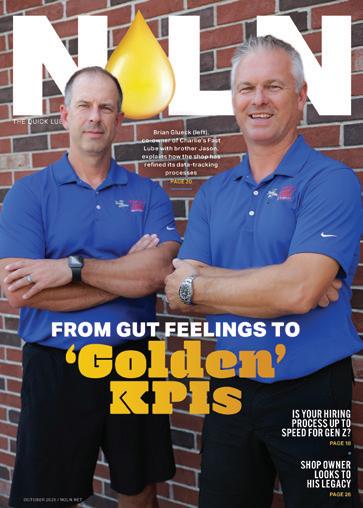
Quick lube operators explain how they decide on their top goals for a new year and develop plans to achieve them
18



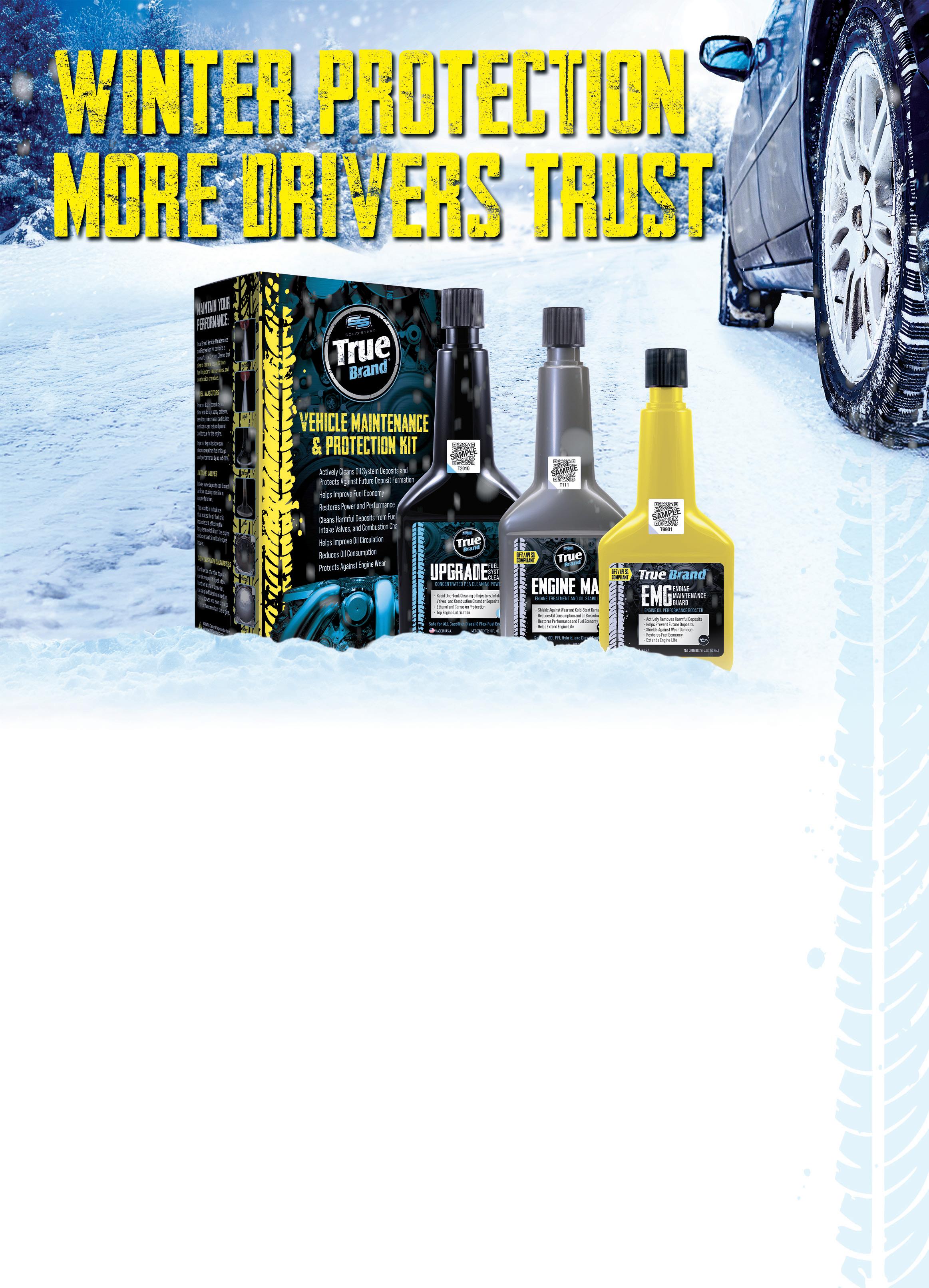
More shops trust True Brand ® EMG Clean and Protect Kit to deliver complete cold-weather maintenance and protection. When applied regularly, the True Brand EMG Professional kit will help extend engine and component life.
• Actively Removes Harmful Oil System Deposits
• Prevents Future Deposit Formation
• Advanced Friction-Reducing Technology
• Protects Against Cold-Start Damage
• Increases Compression
• Helps Prevent Oil Breakdown
• Reduces Oil Consumption
• Concentrated PEA Formula
• Cleans Harmful Fuel System Deposits
• Helps Restore Power and Performance
• Restores Fuel Economy
• Safely Removes Water
• Protects Against Ethanol Problems
• Helps Extend Engine Life
“If you want something new, you have to stop doing something old.” - Peter F. Drucker


EDITORIAL DIRECTOR Chris Jones
EDITOR Tom Valentino
ASSISTANT EDITOR Kacey Frederick
SPECIAL PROJECTS EDITOR Emily Kline
CONTRIBUTING WRITERS
Adam Tatum, Scott Hempy, Carol Badaracco Padgett, Peter Suciu, Enid Burns
Adam Tatum, DIRECTOR OF OPERATIONS, VIRGINIA GROUP
Scott Hempy, CEO, OILSTOP DRIVE-THRU OIL CHANGE AND HAPPY’S DRIVE-THRU CAR WASH
Aleisha Hendricks, OWNER/OPERATOR, GREASE MONKEY QUICK LUBE AND MONKEY SHINE CAR WASH
Shawn Gilfillan, OWNER, AUTOMOTIVE MAGIC AND MAGIC LUBE & RUBBER
PUBLISHER Greg Smith gsmith@endeavorb2b.com
ACCOUNT EXECUTIVES
kshaw@endeavorb2b.com
Diane Johnston djohnston@endeavorb2b.com
Marianne Dyal mdyal@endeavorb2b.com
Chad Hjellming chjellming@endeavorb2b.com
Cortni Jones cjones@endeavorb2b.com
lmend@endeavorb2b.com
Sean Thornton sthornton@endeavorb2b.com
ART DIRECTOR Erin Brown
PRODUCTION MANAGER Mariah Straub
AD SERVICES MANAGER Jen George
Chris Ferrell
Sharing the Vision
18
Quick lube operators explain how they decide on their top goals for a new year and develop plans to achieve them BY
24
A three-time winner of Jiffy Lube’s President’s Performance Excellence Award, Marine Corps veteran Eric Hartlen has become a store manager that turns locations into nationwide top performers BY
KACEY FREDERICK
NOLN (USPS PERMIT 23608), (ISSN 1071-1260 PRINT) IS PUBLISHED 10 TIMES
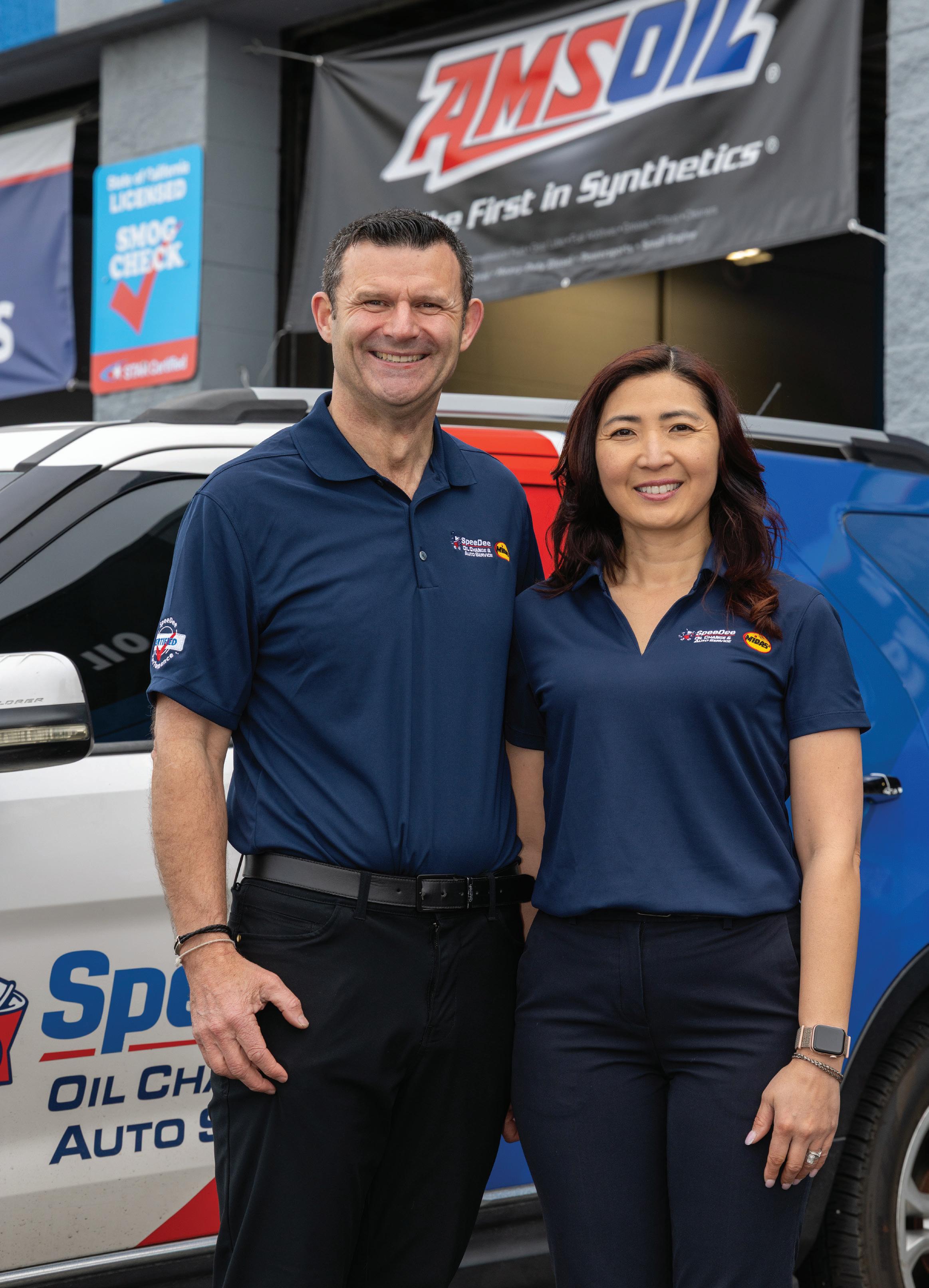
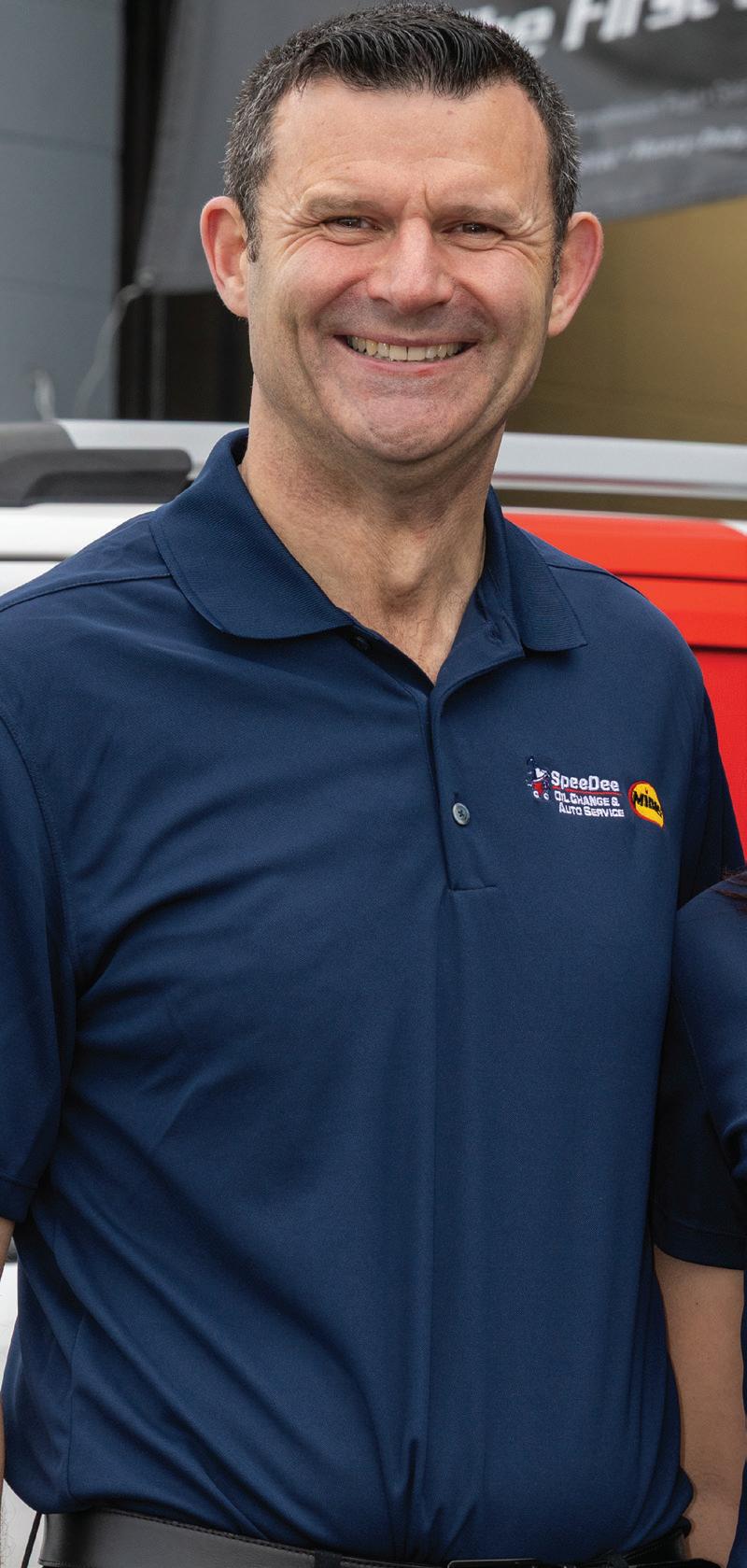
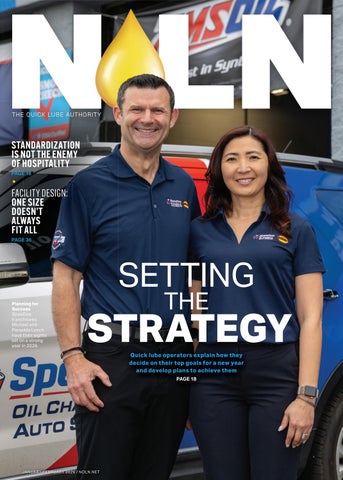
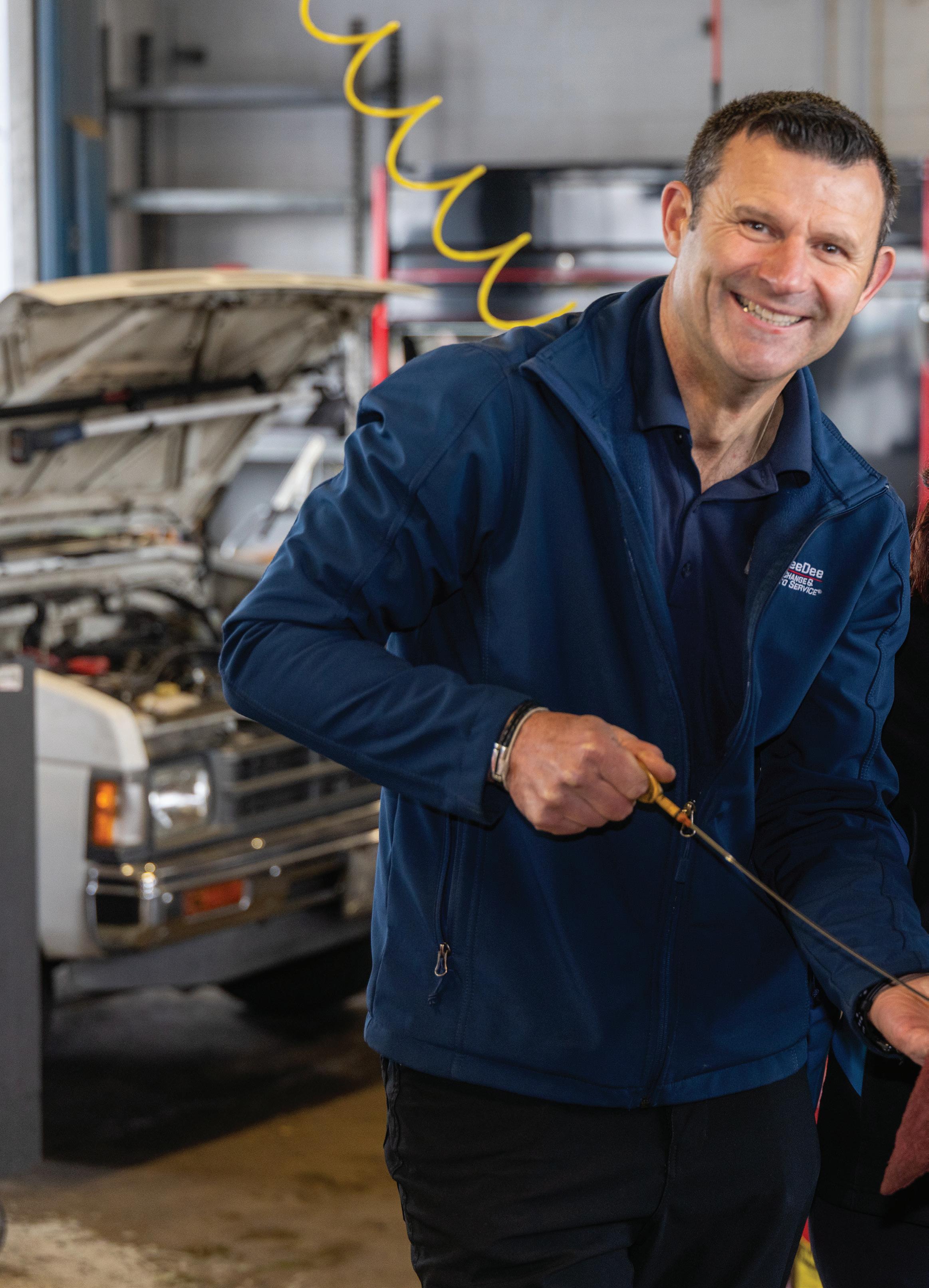
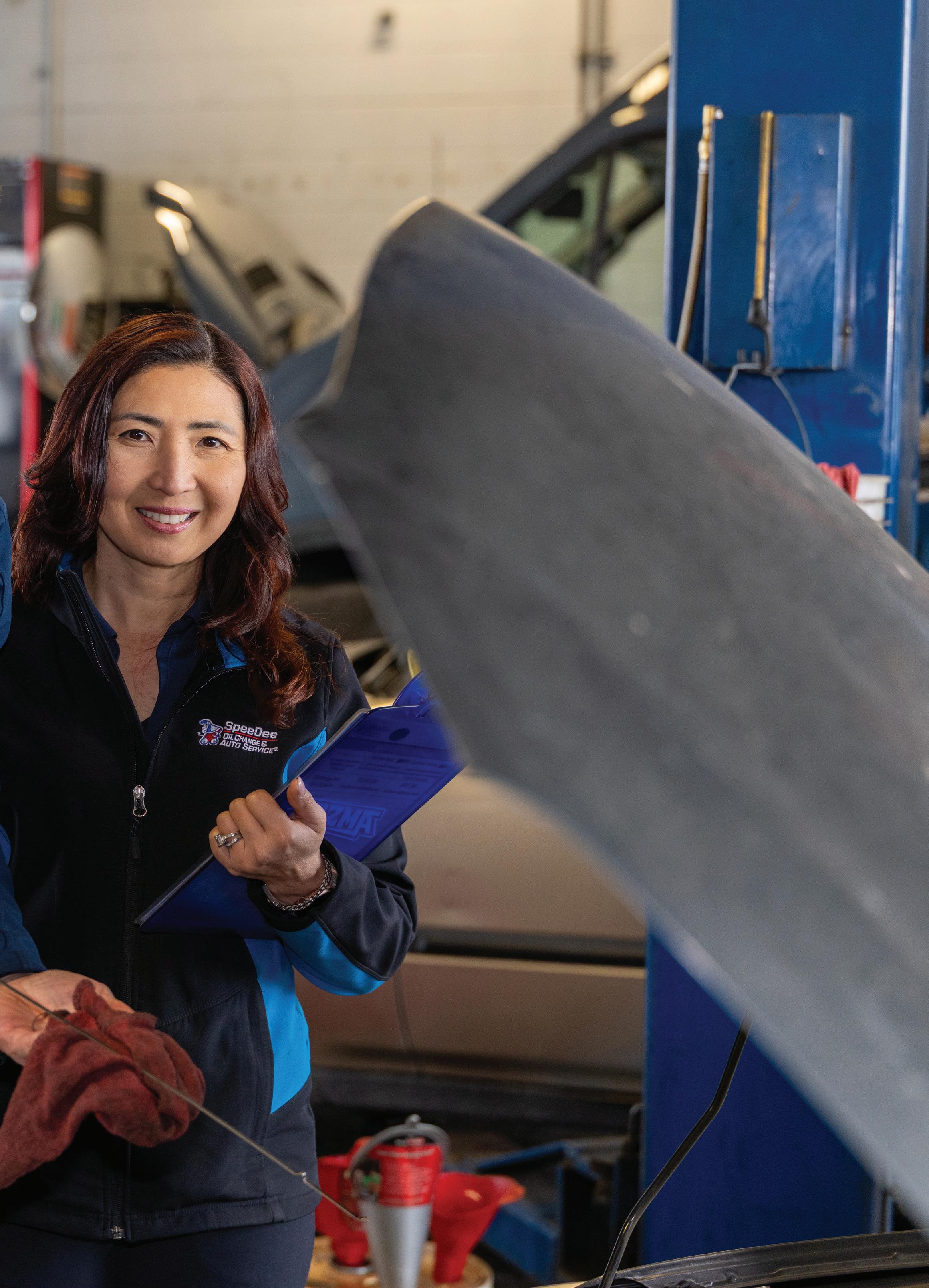
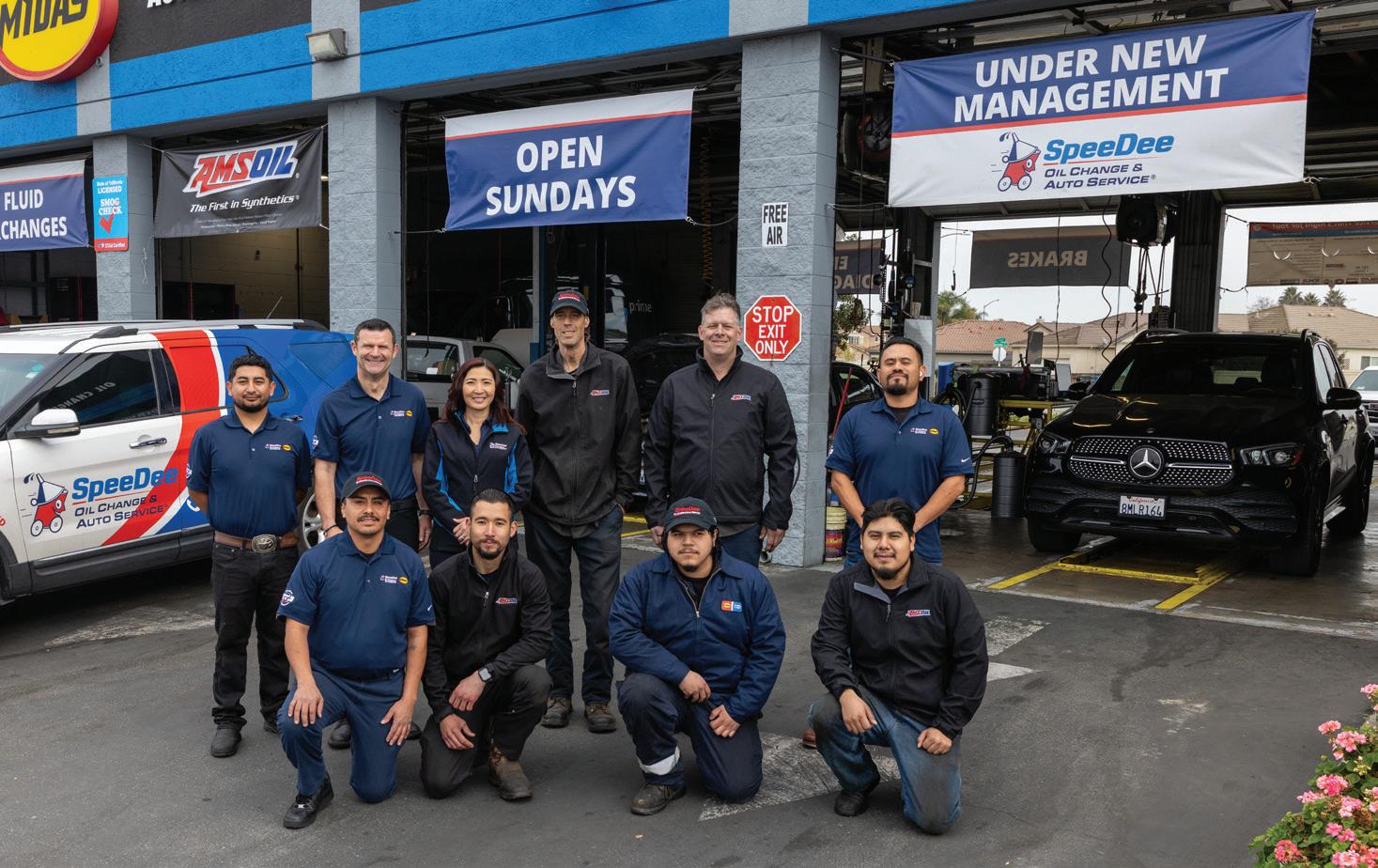
Michael Lynch (left), who operates a SpeeDee Oil Change franchise along with his wife, Panadda, has built a strategy to grow in 2026.
6 ONLINE
New columnist, talking license plate readers
8 NUMBERS
That’s the ticket
11 INDUSTRY INSIGHT
Right to Repair legislation: Support grows, battle continues
12 AROUND THE INDUSTRY
Real estate investment firm acquires 15-location Take 5 Oil Change portfolio
14 SHOP LOOK
Expresso Lube in Gillette, Wyoming SERVICE
36 PIT STOP
One size doesn’t always fit all
38 CUSTOMER SERVICE
5 questions operators should ask to prepare for tax season
40 CASE STUDY
Outside hires bring potential new insights
16 MAINTAINING THE MISSION
Standardization is not the enemy of hospitality BY SCOTT HEMPY
42 FROM THE SHOP
Take a S.M.A.R.T.
Approach to Setting Goals BY ADAM TATUM












National Oil and Lube News is pleased to welcome Jeff Tremper as its newest online-exclusive columnist. In his first piece for NOLN.net, Tremper explains that while customer retention has always mattered for automotive service shops, guests now expect to be reminded to return, driven in large part by automation and better use of service data.


Head online to check out NOLN’s library of podcast interviews. Hear from quick lube leaders about new strategies, service stories, and innovative operations that push the industry forward.
Listen and subscribe at: noln.net/podcasts or subscribe to the NOLN Podcast on your favorite listening app.



DRN’s Noel Peña explains how the company’s license plate recognition technology helps operators develop more precisely targeted marketing campaigns toward potential new customers.

Have you subscribed to the newsletter? NOLN will send the latest industry news, strategies and profiles straight to your inbox. Sign up at noln.net/subscribe.






BY TOM VALENTINO
How much are customers spending on a typical visit to their local quick lube shop? The answer, it turns out, can vary by quite a bit based on region.
Participants in the 2025 NOLN Operator Survey were asked about the cost of the average ticket in their shops. Nationally, more than half reported that their customers spend an average of more than $100 per visit. Broken down by region, however, the data tells a different story. Notably, about three-quarters of operators in the West region of the U.S. reported an average ticket of more than $100.



BY BLAKE HARRELSON, DIRECTOR OF MYANALYST

Across multiunit automotive service, the best operators are not winning through luck. They win by installing systems like myAnalyst that create clear targets, realtime visibility, and accountability at every store.
The fundamentals are the same: grow revenue, control expenses, and keep teams aligned. The di erence is consistent execution, day by day.
Top operators know growth is not just setting goals. Showing progress towards targets and incentives to the right people at the right times keeps motivation high and eliminates the quess work.
“Performance based incentives keep our teams hungry and focused,” said Bob Siedmeyer of Allied Automotive Group (70+ shops). “Over the last 18 months, we made targets and payouts fully visible to our service advisors. Since then, we’ve seen record gains in ancillary ticket average and overall net sales, even while guest counts have been tough.”
The transparency provided by the myAnalyst platform helped drive revenue through execution, not just car count.
Top operators put key performance indicators in front of managers. Instead of waiting on reporting, managers could see performance against budget, last year, or goals in real time, staying focused on execution.
“Getting the numbers to our teams has been huge,” said Greg Moore, a 17 shop Ji y Lube operator. “Managers can see exactly where they stand on the KPIs that matter. It keeps everyone aligned and pushing toward the same goal instead of reacting later.”
Realtime visibility through myAnalyst turned metrics into daily coaching tools rather than post-mortem reports.
Promotions worked when managed tightly. Strong operators audited coupon usage as closely as sales performance, spotting misuse early and eliminating margin leakage.
“Coupons and discounts are very important in this business,” said Paul Eidbo from Piedmont Group (27 shops). “They need to be tracked closely and analyzed in near real time. We assign every promo code to a category, and every category aligns with marketing channels and spend, which let’s us quickly identify what works and what doesn’t. The goal is to constantly focus on marketing e ectiveness on ROI.”
Labor remained one of the largest controllable expenses across
operators. Top operators managed labor in real time, not in the rearview.
“We saw real savings by tightening up labor visibility,” said Cruz Martinez of Najjar Lube Group (30 shops). “By adjusting our pay period and monitoring committed hours midcycle, we could make corrections before payroll closed instead of discovering issues afterward.”
myAnalyst turned labor from a reactive expense into a controllable lever.
As operators grew, spreadsheets stopped scaling with them. The strongest teams standardized how performance data was measured and delivered so growth did not overwhelm the fi eld.
“When we grew from 17 shops to nearly 40, spreadsheets weren’t sustainable,” said Dave Hershey of Meineke of Indiana. “We needed consistent reporting that scaled with us and delivered insights to the right people.”
Standardized reporting let leadership act, not compile data.
“Our o ce spent hours pulling files and building reports,” said Randy Hentschke from Atlantic Coast Enterprise Ji y Lube (65 shops). “Now with myAnalyst reporting is automated, KPIs are real time, and our team can focus on actions instead of spreadsheets”
The operators who closed 2025 strong did not change their goals. They changed how clearly their teams could see them, track progress, and act every day.
By standardizing visibility, aligning incentives, controlling expenses early, and simplifying reporting, they made performance repeatable across every location.
The operators highlighted above did not just talk about these strategies. They implemented them with myAnalyst. By connecting your existing data, we help multiunit teams operationalize proven best practices with realtime KPI scorecards, goal pacing, Live Stats, Automated Bonus visibility, promo audits, labor alerts, and deep drilldowns. If you are ready to run 2026 like the industry’s best, reach out today and we will map your rollout.
myAnalyst helps quick lube and mechanic operators turn daily activity into clear, actionable performance visibility. We partner with 1,100+ shops nationwide to provide realtime KPI tracking, drilldowns, and reporting that drives accountability at every location. myanalystpro.com | 843-808-9716 | bharrelson@sitetechsystems.com

NOLN is delivered free to qualified quick lube and fast-service professionals—USPS periodicals rules require us to update subscriber records regularly. If you haven’t renewed recently, please take a moment to confirm your information. It keeps your issues coming without interruption.


Confirm your info and keep receiving










The Automotive Aftermarket Products Expo and the Preventive Automotive Maintenance Association have announced that the International Fast Lube Expo will be coming to AAPEX.
The quick lube section of the show will be branded “iFlex @ AAPEX.” iFlex exhibitors have historically been part of The Car Wash Show, which caters to independent and franchise car wash owners.
“iFLEX is entering a new era, and we’re shifting gears for 2026,” PAMA President Jason Lyon said in a statement to NOLN. “We’ll be sharing more details soon, but our focus remains the same: delivering the kind of education, solutions, and networking opportunities operators rely on—now with a new direction designed for where our industry is headed.”
Shop Marketing Pros, a specialized marketing agency for auto repair shops, says a hacker recently breached a Google Ads agency manager account after 230 of its auto repair shop ad accounts were compromised. The hacker reportedly “removed legitimate administrators and retained control while allowing victims only view-only access,” according to Brian Walker, founder and CEO of Shop Marketing Pros.
Shop Marketing Pros officials say they notified Google within hours of the incident by phone and through a support ticket. They say Google acknowledged it was reviewing the issue and later suspended the account, but claim the hacker continued to operate.
Secure Properties, a real estate investment firm that specializes in net lease assets, has acquired a 15-property Take 5 Oil Change portfolio from Driven Brands through a direct, long-term sale-leaseback agreement. The stores are located in the South and Midwest. Each property is backed by a new long-term NNN lease—an agreement in which the tenant pays base rent, plus property taxes, building insurance, and maintenance.
The American Petroleum Institute recently provided an update on the development of the next car engine oil category—ILSAC GF-8. Progress toward GF-8 continues, with stakeholders reaffirming a target launch of the third quarter of 2028, contingent on successful completion of key engine test developments. ILSAC has accepted many proposed technical updates following recent Auto Oil Advisory Panel discussions.
Although many of the task force’s recommendations were accepted by ILSAC, further refinement and validation remain necessary before final implementation.
Stonepeak, a New York-based alternative investment firm that specializes in infrastructure and real assets, has reached an agreement to acquire Castrol from BP in a
transaction valuing the business at an enterprise value of about $10.1 billion. BP will retain a 35% minority interest in Castrol. Canada Pension Plan Investment Board will invest up to $1.05 billion in support of the transaction, which will result in an indirect stake in Castrol.
Sayle Oil Company has purchased several Car Care Clinic/Jet Lube stores in Central Mississippi. According to a press release, Car Care Clinic/Jet Lube started with one location, founded by the late Bob Tewes, and has since grown to 14 locations.
Sayle Oil purchased the business from the previous owner Brian Romine, who has worked there for over 40 years. With these 14 new additions and the two new Dipstix locations opening soon, Sayle Oil will own and operate 30 locations across central and north Mississippi.
ASAP Oils, a Mid-Atlantic–based lubricants distributor, announced a strategic partnership with Costa Oil – 10 Minute Oil Change in a recent press release.
As part of the partnership, ASAP Oils will serve as a supply partner for filters and specialty oil products across Costa Oil’s network.
The agreement includes the supply of oil filters and specialty oil products tailored to Costa Oil’s service requirements, with an emphasis on consistency, availability, and scalability as the brand continues to expand.
As the REPAIR Act gains momentum in Congress, the Auto Care Association seeks backing in its effort to make automotive repair data accessible to independent shops
BY KACEY FREDERICK
continue to face growing restrictions on what data they can access when working on vehicles. As more businesses feel the burden growing with increasingly digitized cars, groups like the Auto Care Association have been fighting to make automotive repair data accessible by law to independent repairers.
Lisa Foshee, senior vice president of government affairs and general counsel for the Auto Care Association, breaks down the progress being made for Right to Repair.
The REPAIR Act—a federal bill that would enable independent repairers to have access to the data they need—has continued to gain momentum, with 44 bipartisan sponsors in the House and eight sponsors in the Senate. Prior to 2025, the REPAIR Act had been introduced only in the House. Its introduction in the Senate last year has brought even more opportunities for the legislation to advance.
“That was a huge landmark for the industry, to have it introduced in both chambers, and to continue to see the bipartisan support for it in both chambers,” Foshee says. “Those are the two things that we’re really proud of. Proud of the legislation that, as I said, just makes sense to both sides of the aisle.”
This year brings with it an opportunity for the REPAIR Act to move forward via the safety title of the Surface Transportation Reauthorization Act. Congress will need to pass this bill to continue authorizing funding for highways and infrastructure, and ACA sees the REPAIR Act as something that would fit well with all the bill entails.
“We’re looking at all opportunities to proceed in that manner and are working closely with the Energy and Commerce Committee on the House side in particular to try to move the bill forward,” adds Foshee.
Most recently, this January, Auto Care Association President and CEO Bill Hanvey provided testimony to the U.S. House Committee on Energy and Commerce’s Subcommittee on
Commerce, Manufacturing, and Trade that discussed legislation to support both small businesses and consumers in the auto repair sector.
As shared in a Jan. 14 press release, ACA recognized Chairman Bilirakis, R-Fla.-12, Ranking Member Jan Schakowsky, D-Ill.-9, and members of the subcommittee for considering bipartisan solutions to the increasing complexity of vehicles, and how it impacts consumer costs and safety.
“Today’s vehicles are computers on wheels,” Hanvey said. “When vehicle owners and independent repairers are locked out of that data, repairs are delayed, costs increase, and safety can be compromised.”
Key points were hit in the testimony, such as how a growing number of independent shops are unable to perform basic repairs, like battery replacements or windshield wiper changes, which are becoming locked behind dealer-only codes. This forces drivers back onto the road and into franchised dealerships, where repair costs are, on average, 36% higher, and wait times significantly longer.
Hanvey also highlighted how independent auto shops are critical for local communities. Independent shops perform more than 70% of outof-warranty repairs nationwide, in addition to playing a huge role in local economies, workforce development, and vehicle uptime for working families and commercial fleets.
In his testimony, Hanvey pushed for the REPAIR Act to be included in the safety title of the upcoming Surface Transportation Reauthorization Act.
“The REPAIR Act is pro-consumer, pro-safety, and pro-competition,” Hanvey said. “It simply ensures that vehicle owners can access the repair and maintenance data necessary to keep their vehicles safe and on the road—just as they always have.”
The REPAIR Act has encountered opposition, though. In February 2025, the Automotive Service Association, the Society of Collision Repair Specialists, and the Alliance for Automotive Innovation proposed their own legislation surrounding vehicle data access: the Safety as First Emphasis, or SAFE, Repair Act.
In a letter to Congress, the groups outlined their proposal, which was meant to build upon a 2014 national agreement that independent repairers may have access to the same data made available to dealers.
Some features of the bill included an extension of the same recall and safety protections for OEM parts to customers using non-OEM parts; requiring disclosure of prior alterations or repairs on a used vehicle; and support for periodic safety inspection and post-collision inspection programs.
“While ... existing frameworks have created a thriving and competitive repair marketplace, we understand the desire for a federal legislative solution that addresses evolving consumer expectations and technological advancements,” wrote the coalition in its letter. “That’s why our three organizations have come together to propose a new path forward—one that builds on existing protections while introducing additional measures to prioritize consumer safety and choice.”
While the concept has not become an actual bill, it’s been received as a challenge to the REPAIR Act by Right to Repair advocates.
“They have not had any member of Congress agree to introduce that concept as a piece of legislation,” Foshee says. “And I think that that is really telling, because—in my view— it shows the strength of the REPAIR Act. It shows the strength of the coalition of folks we have supporting the REPAIR Act, and it shows
the common-sense approach that Dr. Dunn has taken in drafting the REPAIR Act, because the automakers can’t get anyone to introduce their SAFE Repair Act.”
Maine, Massachusetts:
Right to Repair on a State Level
As the fight continues at a federal level for Right to Repair, states like Maine have been working hard to enact their own legislation, and facing their own set of obstacles. Just this past January, Maine Gov. Janet Mills vetoed a bill that would have limited Right to Repair legislation in the state.
Since Right to Repair was passed by 84% of Maine voters in 2023, it’s faced challenges—one of which being a bill that would have allowed automotive manufacturers to dictate how shops can access telemetric data. That was how Gov. Mills described the proposed bill, arguing that it would have been harmful for independent repair shops in the state, according to a report from CBS 13 News in Portland, Maine. It was the one bill she vetoed recently among the total 61 she addressed.
“The Auto Care Association applauds Governor Janet Mills for her thoughtful action today to uphold the will of Maine voters and protect the principles of automotive right to repair,” Foshee said. “Governor Mills’ action respects the expressed will of Maine voters and the vital role of independent repairers in the state’s economy.”
Massachusetts was also challenged by automakers in court last year over its own Right to Repair legislation, but was met with a court decision upholding the law.
This prompted the automakers to appeal the decision with the First Circuit Court of Appeals. Since that time, there have been briefings by both the alliance representing the automakers,
the Attorney General’s Office of Massachusetts, and then Auto Care Association, which filed an amicus brief in support of Right to Repair. A final brief was also filed by the alliance representing automakers on Nov. 24.
Now, oral arguments are expected to be scheduled in the first to second quarter of 2026, with a decision to follow soon after on whether the law remains in place.
ACA is confident the law will prevail, but legal proceedings have made enforcement more difficult. Foshee hopes that will start to change around summer of 2026.
“While the law is in effect, there has definitely been a chilling effect on enforcement because of these pending lawsuits,” Foshee explains.
There’s much in store for 2026 when it comes to advancing Right to Repair, both on a state and federal level.
For those looking to support the independent auto repair industry on a legislative level, ACA is always looking for more people to get involved with advocacy efforts—especially with roughly six months left to get the bill through Congress. Starting this year, ACA will need all hands on deck to help write letters to their representatives, advocating for the REPAIR Act.
“The industry will start to see an urgent ask for letter generation. We have a QR code that folks fill out, and it sends letters to their congressional representatives, both on the House side and the Senate side. And those letters are powerful, and they matter,” Foshee says. “In terms of advocacy, that is where we need everybody. … We need everybody to participate in that process of reaching out consistently to their elected officials and say, ‘We need you to get this done’.”
SHOP NAME: EXPRESSO LUBE
LOCATION: GILLETTE, WYOMING
OWNER: JOSH PETERSON
STAFF SIZE: 18, INCLUDING CAFÉ
AVERAGE DAILY CAR COUNT: 45
BY TOM VALENTINO
JOSH PETERSON
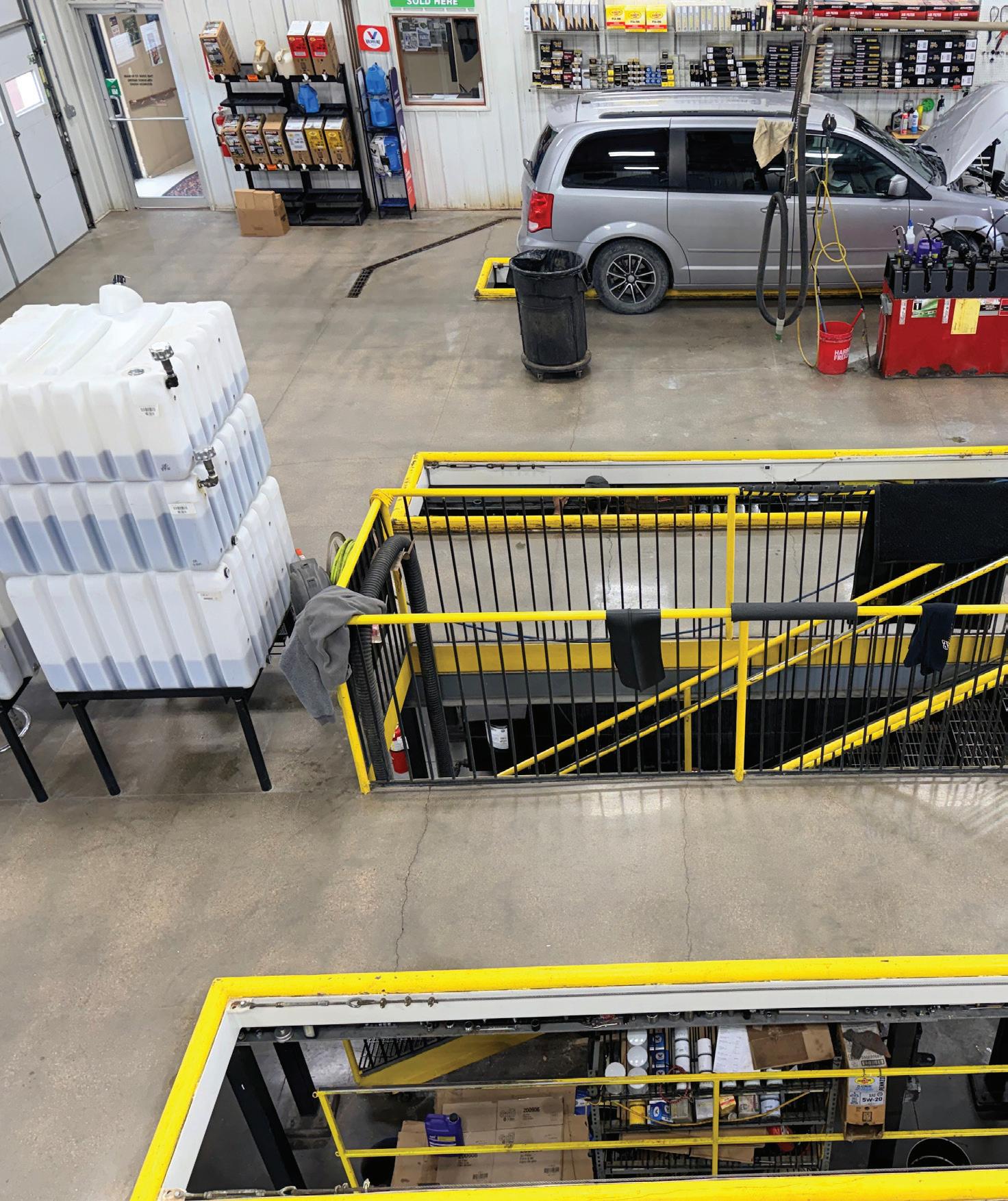
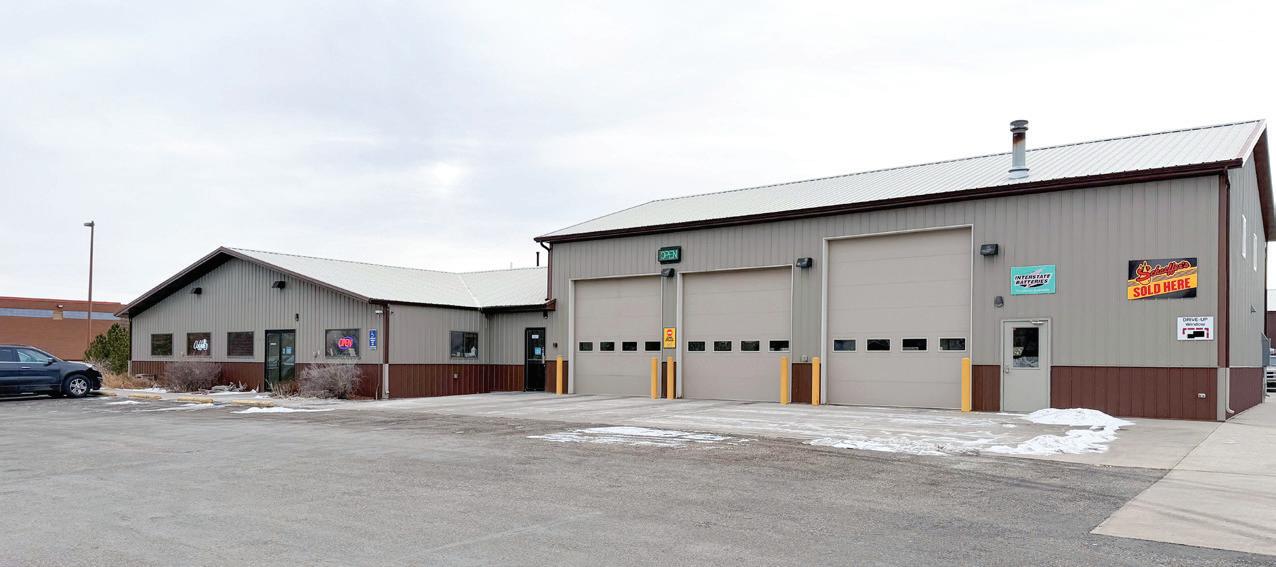
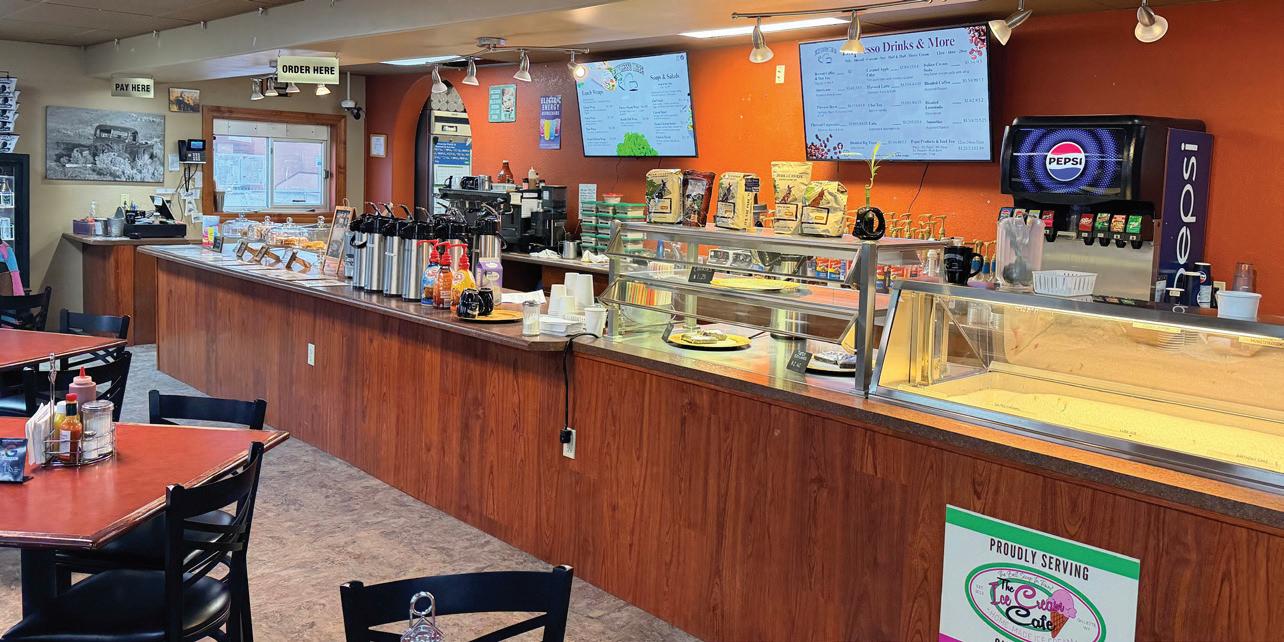
TAKE YOUR CAR FOR AN OIL CHANGE. Grab a quick breakfast. In most places, that’s a two-stop itinerary. Venture to Gillette, Wyoming, however, and Expresso Lube will be ready to service your vehicle and serve you a meal in one visit.
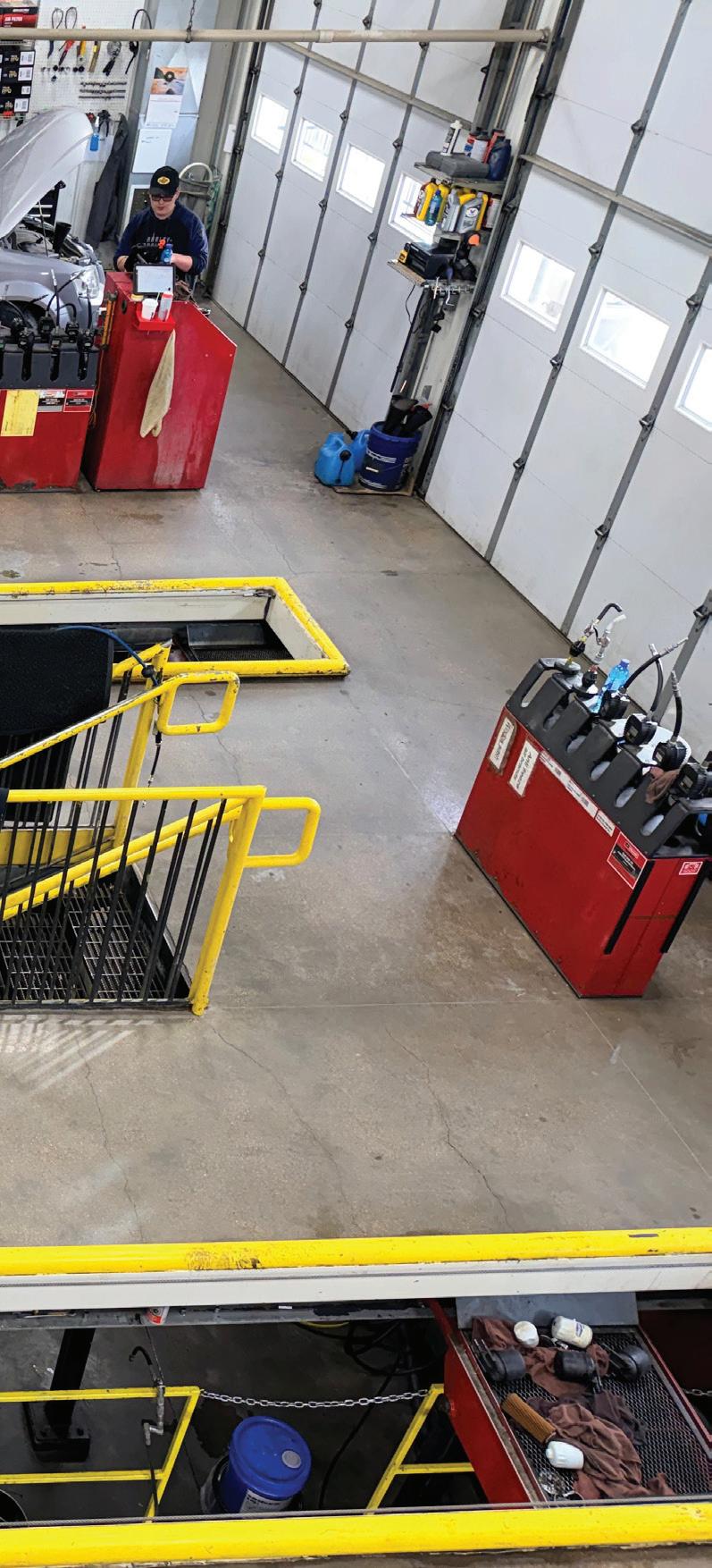
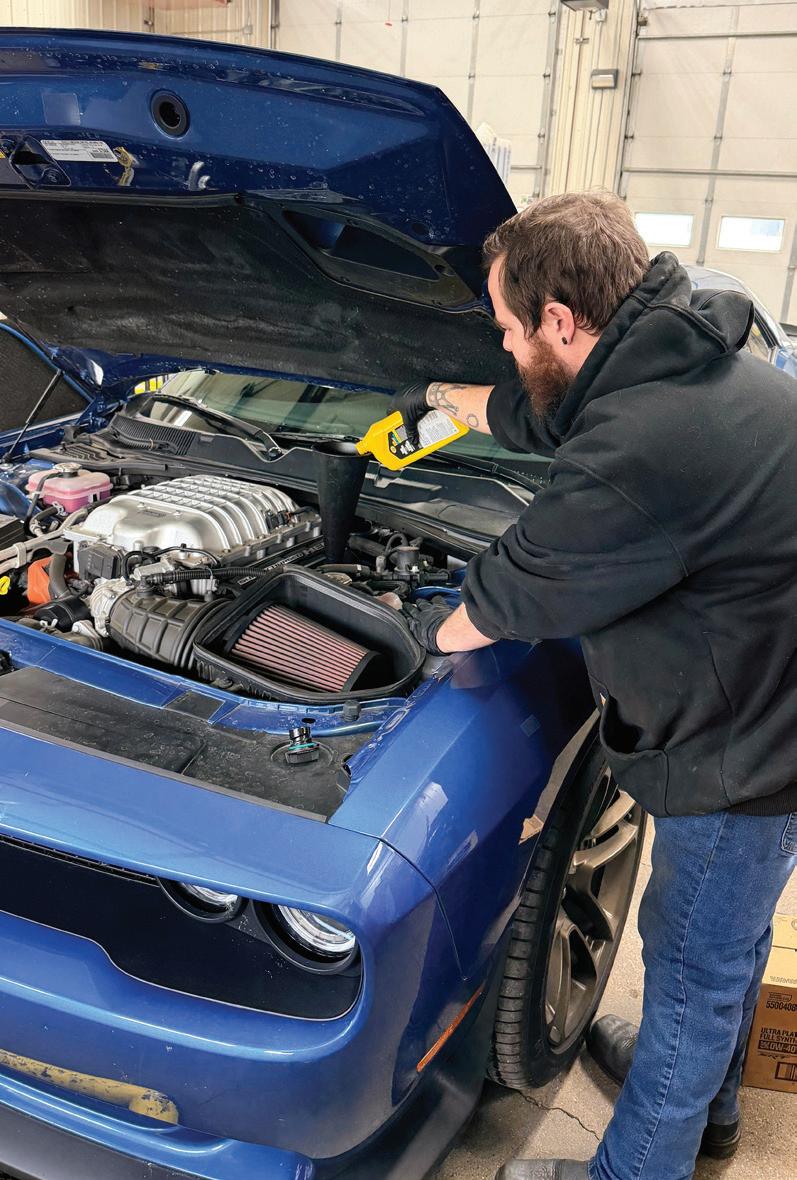
Part café, part fast oil change shop, Expresso Lube serves drivers and diners alike Monday through Saturday. In addition to oil changes, the automotive service center side of the facility performs fluid checks, filter and battery replacements, transmission flushes, and other services.
The café side, meanwhile, serves up coffee, pastries, and full breakfast and lunch meals, ranging “from clas-
sic favorites to innovative new dishes that will tantalize your taste buds,” per the shop’s website. Different flavored coffee specials are posted weekly on the Expresso Lube Facebook page.
Owner Josh Peterson purchased Expresso Lube in July 2023 with virtually no experience in the automotive service industry. Prior to his acquisition, Peterson worked in weld -
ing and the extent of his involvement in the automotive sector was performing some work on haul trucks.
“Our economy has ups and downs,” Peterson says. “It’s boom or bust with the oil field and coal mines around town. … I wanted something a little more steady.”
Peterson found the new career path he was looking for with Expresso Lube’s quick lube/café concept. His
new venture, however, didn’t play out exactly as he anticipated upon arrival.
“At first, we had some struggles, and I was wondering what I had gotten myself into,” Peterson says.
Those challenges included employees not showing up for work and oil going missing from the shop. Both of those issues led to a lot of staff turnover early in his tenure.
“We got it all straightened out and got the right crew,” he says. “We’re running pretty smooth now.”
Peterson estimates that about 60% to 70% of customers who bring in their vehicles for service end up venturing over to the café side of the business. Guests also have the option of sitting in the automotive side’s more traditional waiting room while their vehicle gets worked on.
Having a built-in coffee shop, though, has been a difference maker in attracting customers, Peterson
says. The shop averages about 45 vehicles per day across its three service bays, all of which are capable of handling RVs.
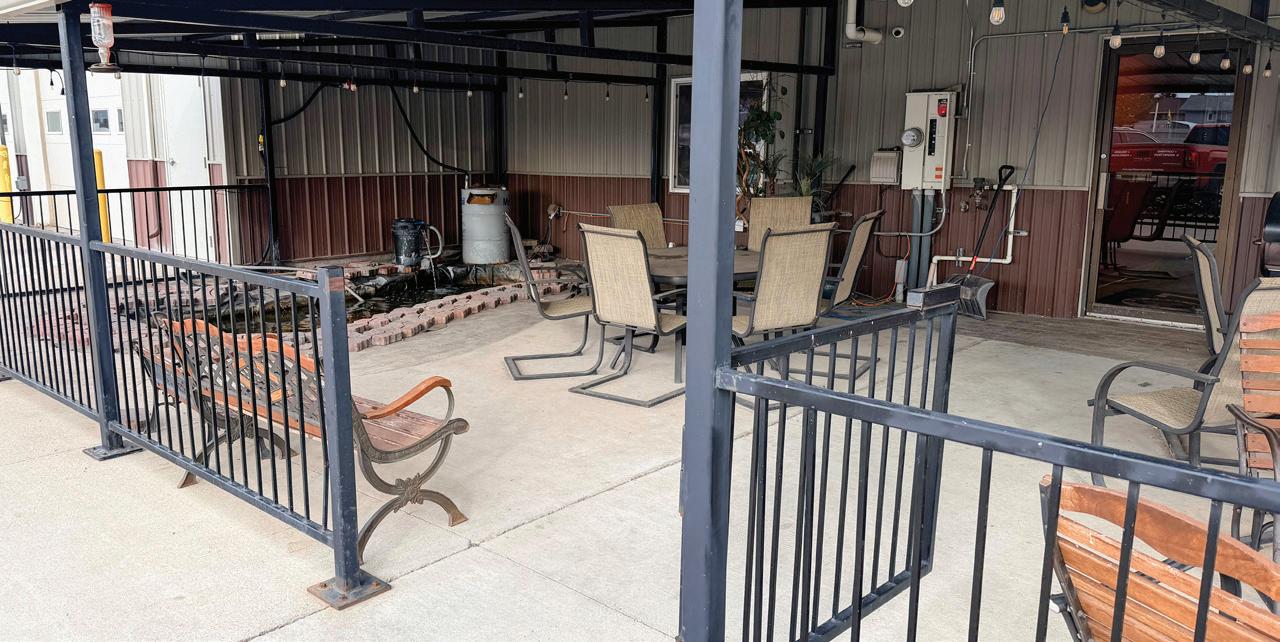
“With the coffee shop side, I feel we get more of the cars in town because they could come in and grab a bite to eat and grab a coffee while they wait for their oil change,” Peterson says “It’s kind of a quiet little café. We get a lot of people coming in for meetings and such.”
With a strong staff in place and operations humming along, Peterson says thoughts of adding a second Expresso Lube location are on the menu.
“My goal is to make it a franchise,” he says. “We are looking around the state of Wyoming on where to put another one.”
In the meantime, business continues to percolate on both sides of the shop in Gillette.
Standardization can be seen as cold, corporate, or the opposite of genuine hospitality, but the truth is exactly the opposite



Scott Hempy leads the team at Oilstop Drive-Thru Oil Change and Happy’s Drive-Thru Car Wash. Oilstop and Happy’s are rapidly growing their footprint of oil change and express car wash locations across the West Coast, combining convenience with an outstanding emphasis on guest experience. Prior to Oilstop & Happy’s, Scott was the founder and CEO at Filld, a SaaS-based software solution for last-mile oil and gas delivery companies. He was recognized as a member of the Forbes 30 Under 30 class of 2016 for starting Filld.
.COM
IN TODAY’S CUSTOMIZED WORLD, “standardization” often gets a bad rap. Every customer wants to be able to customize their own coffee order at Starbucks. Standardization can be seen as cold, corporate, or the opposite of genuine hospitality. But the truth is exactly the opposite. The best hospitality brands in the world don’t deliver remarkable experiences by hoping their people feel kind and energetic every day. They deliver them by building systems that make excellence inevitable, even on a bad day.
Brands like Ritz-Carlton, Chick-fil-A, and In-N-Out Burger, which are famous for hospitality, don’t rely on personality alone. They rely on process. They standardize what matters most so their teams are free to focus on serving people well. Even Starbucks is currently in the news regarding a shift to return to more structure and standards to improve speed and quality.
Horst Schulze, the co-founder of Ritz-Carlton, has said that “excellence is not an act, it is a habit, built deliberately into the organization.” Ritz-Carlton didn’t become legendary because it hired only naturally gracious and kind people. It became synonymous with hospitality because it designed systems that define what excellence looks like, trained relentlessly to those standards, and empowered employees within clear guardrails to act on behalf of the guest.
Will Guidara writes in his bestselling book Unreasonable Hospitality about how he took the same approach at the Michelin restaurant Eleven Madison Park. Guidara emphasizes that hospitality doesn’t scale through heroics but instead, it scales through intention. In other words, if you want consistent, world-class hospitality, you don’t leave it up to chance. You build repeatable behaviors into your operation so the right thing happens automatically.
This approach can make a huge impact in the drive-through oil change and auto service business.
We work in a fast-paced, physically demanding environment. Team members are hot (or cold), tired, short-staffed, and under time-sensitive pressure. Expecting hospitality to shine purely through good intentions is unrealistic. Systems are what carry hospitality when energy is low.
Start simple. Standardize your greetings and guest acknowledgment. The best quick lube operators don’t “hope” guests feel welcome. They define exactly what happens in the first moment: eye contact, a smile, a clear welcome, and a name if possible. When that sequence is standardized, guests feel seen every time, regardless of who’s on shift. I recently pulled up to a nationally known oil change brand and no one greeted me for more than 10 minutes. You can stand out from the national brands by standardizing your greeting.
Next, you can write a few standardized presentations during the service. Clear scripts for explaining wait times, services being performed, and next steps reduce anxiety for guests. Hospitality isn’t just friendliness; it’s clarity. A guest who knows what’s happening feels cared for. That doesn’t happen by accident but because someone designed the process.
Standardization doesn’t make service robotic. Well-designed systems remove friction, reduce decision fatigue, and give team members confidence. When people aren’t guessing what “good” looks like, they can focus on being present with the guest in front of them.
The brands we all admire most understand this truth. Hospitality is not about hiring perfect people. It’s about building processes that help real people deliver excellence, consistently. In quick lube, as in life, standards don’t limit hospitality. They protect it.
BY AMBER KOSSAK, CEO OF SOLID START
Cold weather has a way of exposing weaknesses — not just in vehicles, but in processes, preparation, and leadership. As temperatures drop, shops across the country may experience differences in car count, more urgent repairs, as well as increased pressure on teams and systems. For shop owners and managers, winter is not just another season; it is a stress test for how well your shop is managed and how prepared your team is for seasonal challenges.
The question for shop owners and managers is not whether winter will bring challenges, but whether those challenges are anticipated and how we respond. More often than not, the difference comes down to preventative maintenance — both for vehicles and for the business itself.
Cold weather does not typically create new problems; it reveals existing ones. Batteries that are marginal fail. Belts and hoses that are aging crack. Fluids that are overdue for service become thick and ineffective. Worn tires become safety risks.
For shop owners, this means winter highlights whether inspection processes are consistent, whether advisors are communicating effectively, and whether technicians are given the time and tools to do thorough evaluations. A rushed or inconsistent inspection process in the fall often shows up as system or component failure in the winter.
Prepared shops are busy... and profitable. Unprepared shops are overwhelmed and risk losing both customers and reputation.
Battery-related failures remain one of the most common winter issues. Cold temperatures reduce available cranking power while engines demand more energy to start. From an operational standpoint, batteries represent both an opportunity and a risk.
When batteries are not tested consistently, or recommendations are poorly communicated, shops see emergency tows, frustrated customers, and preventable comebacks. On the other hand, a thorough battery-testing process, paired with clear, honest communication, builds trust and reduces stress for both customers and staff. Shop owners who set and reinforce these processes empower their teams to deliver consistent, high-quality service every time.
Consistency is key. When every vehicle is tested the same way, recommendations feel less like sales and more like responsible service.
Oil condition, coolant health, belts, and hoses rarely excite customers, yet they play a major role in winter reliability. Cold starts are harder on engines, thickened fluids reduce lubrication, and brittle rubber components are far more likely to fail.
For shop leadership, the challenge is ensuring these items are not
overlooked during busy periods. This requires strong inspection checklists, proper technician training, and advisors who can confidently explain why preventative service matters — especially when the vehicle is “running fine.” Skipping these conversations may save time today, but it often costs credibility tomorrow.
Customers often delay preventative maintenance due to cost concerns or a lack of understanding. Advisors may hesitate to push recommendations during tough economic times. Technicians may feel pressure to move quickly rather than thoroughly. This is where leadership matters most.
Preventative maintenance should never be framed as fear-based selling. Instead, it should be positioned as risk management. When teams are trained to educate rather than persuade, customers are more receptive, and advisors feel more confident doing their jobs.
Shops that invest in communication training tend to see higher approval rates with less resistance. This is why we always say, “Our Best Customer is an Educated Buyer!”
Winter preparedness goes beyond vehicle maintenance. Owners and managers must also prepare their teams and operations. This includes reviewing staffing levels, ensuring equipment is functioning properly, managing parts inventory, and setting realistic workflow expectations.
Leadership during high-stress seasons sets the tone. Calm communication, clear priorities, and visible support help teams perform better under pressure.
Preventative maintenance applies to businesses as much as it does to vehicles.
Shops that emphasize preventative maintenance have customers that experience fewer breakdowns, improved safety, and lower long-term repair costs. Teams experience pride in preventing problems rather than constantly reacting to them.
Most importantly, it reinforces your shop’s reputation as a trusted advisor — not just a place that fixes cars when they break.
Cold weather is unavoidable. How a shop responds to it is not. Winter has a way of revealing whether systems, people, and leadership are aligned. By prioritizing preventative maintenance, clear communication, and operational preparedness, shop owners and managers position their businesses for success — not just during winter, but year-round.
Because when the temperature drops, preparation isn’t optional — it’s leadership.









Quick lube operators explain how they decide on their top goals for a new year and develop plans to achieve them
By Tom Valentino

For many quick lube operators—from those who recently arrived in the industry to seasoned veterans—a new year brings renewed energy and visions of growth and business development.
But how do successful operators determine their biggest goals, and how do they build strategies to achieve them?
For a husband and wife who took over a SpeeDee Oil Change & Auto Service franchise in Hollister, California, last spring, strategy development has been based on principles that drove their decades of success in the corporate world. For the CEO of Costa Oil 10 Minute Oil Change, the road map has been drawn with a combination of insights built upon years in the quick lube industry and input from his top lieutenants.
NOLN recently caught up with SpeeDee franchisees Michael and Panadda Lynch and Costa Oil CEO Costa Kapothanasis to learn more about how they are strategizing for 2026 and beyond.
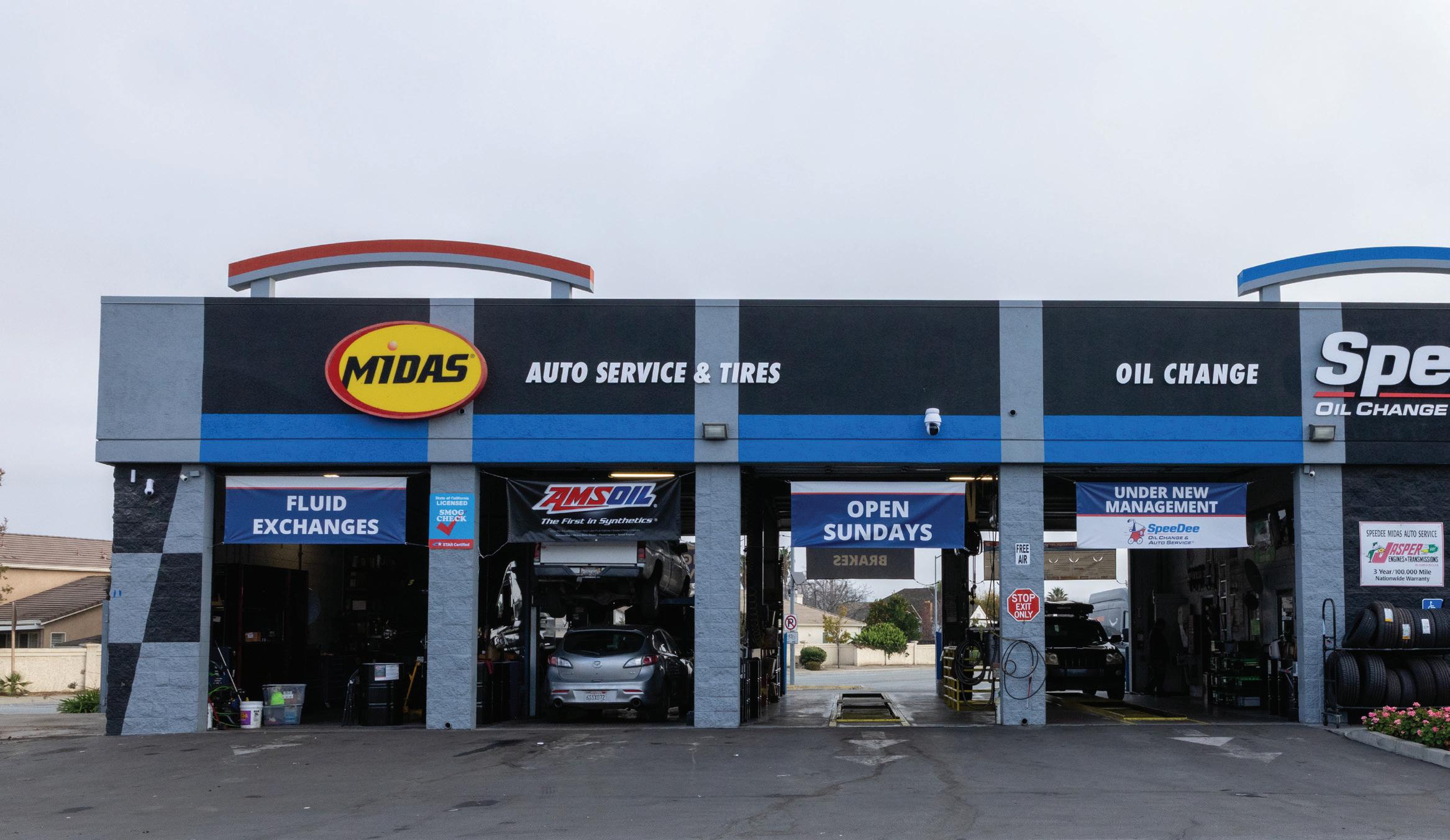
Prior to embarking on his role as a SpeeDee franchisee with his wife, Panadda, Michael Lynch spent more than 30 years in corporate leadership roles, most recently serving as vice president of operations for Fiji Water. His career has spanned from window and door hardware to fresh produce to the development of RFID technology used in sports applications such as running and cycling.
“I have sort of a five- to seven-year cycle where I go in, I’m a change manager and innovator, see opportunities, put them in place, change cultures, get that in place, get it all embedded,” Michael Lynch says. “And then it’s handed over to a new set of fresh eyes as I go and tackle the same sort of opportunities elsewhere.”
Panadda’s career path has been similarly eclectic. Early on, she partnered with friends to open an automotive repair and body shop, while doing some racing on the side. She later transitioned into roles in manufacturing and transportation, as well as hardware, home décor, and the beverage industry. Like Michael, she has relied upon lean and Six
Sigma principles to improve operational efficiencies along the way.
Together, combining Michael’s experience in operations and financial business strategic acumen with Panadda’s automotive experience and skills in logistics and supply chain management, the Lynches have applied their corporate knowledge toward goal setting and strategy building for their SpeeDee franchise.
The Lynches start by identifying the organization’s north star—its main, overarching priority that informs all other decisions. For the SpeeDee franchise, that north star is revenue. The focus of the Lynches’ strategy, in turn, is funneled into five areas: people, customers, community, continuous improvement, and health and safety.
“Those become our driving categories,” Michael Lynch says. “We’re going to have probably one to three— no more than that—major initiatives that are going to come out of there next year.”
As an example, Michael Lynch points to customer satisfaction. When the Lynches took over their SpeeDee franchise, the shop’s online reviews hovered around 2.7 on a 5-point scale.
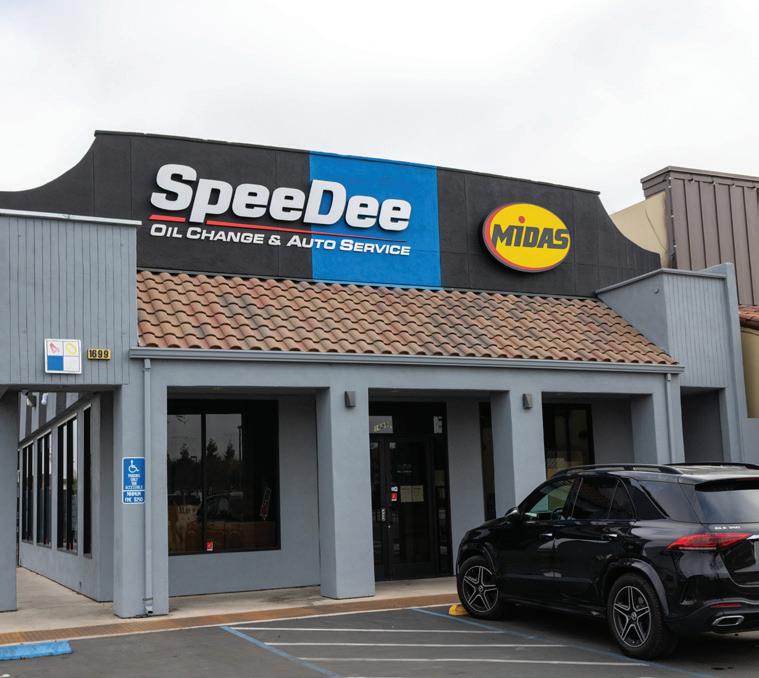
In their first eight months of franchise ownership, the average ranking climbed to 3.8, but Michael says he wants to see it hit 4.5.
“That would be one of our first customer initiatives,” Michael says. “How do we back up the honesty and integrity that we’ve been bringing to the business so that everyone knows about it, not just those people who have benefited from it?”
The road to improving customer reviews starts with improving the customer experience. For the Lynches, that has meant facilitating
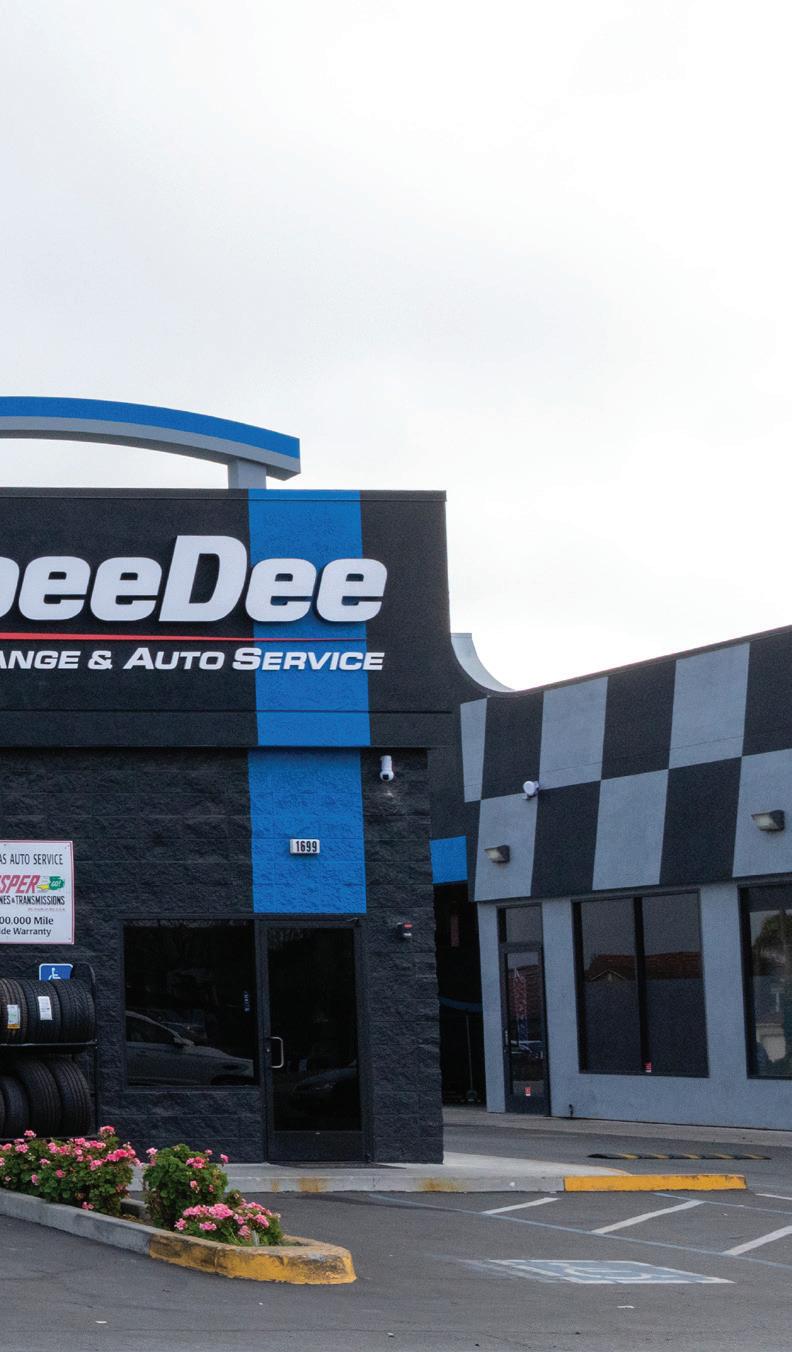
faster service times by hiring 50% more staff—especially employees who are skilled and experienced.
“We want to align with our corporate vision to provide the best customer experience,” says Panadda Lynch. “So, we are looking into different angles to see what we can do to make our customers satisfied and want to come back to us. … We want to rebuild the (shop’s) relationship with our customers because we live in a small town. … We want to build brand awareness so people know about us. We want to build integrity. We want them to know that we are here to support them.”
In 2026, the Lynches are aiming to add another senior mechanic or master technician and also invest in training for current staff to improve their flexibility.
“We need to have anyone available to do anything at any time,” Michael says. “That’s the ultimate goal. If I need to do brakes, I don’t have to wait for someone else to do a brake job. I’ve got four people I can choose from. … If I need to do an oil change, anyone can do the oil change, and that way, when the work comes in, I’ve got someone I can give it to.”
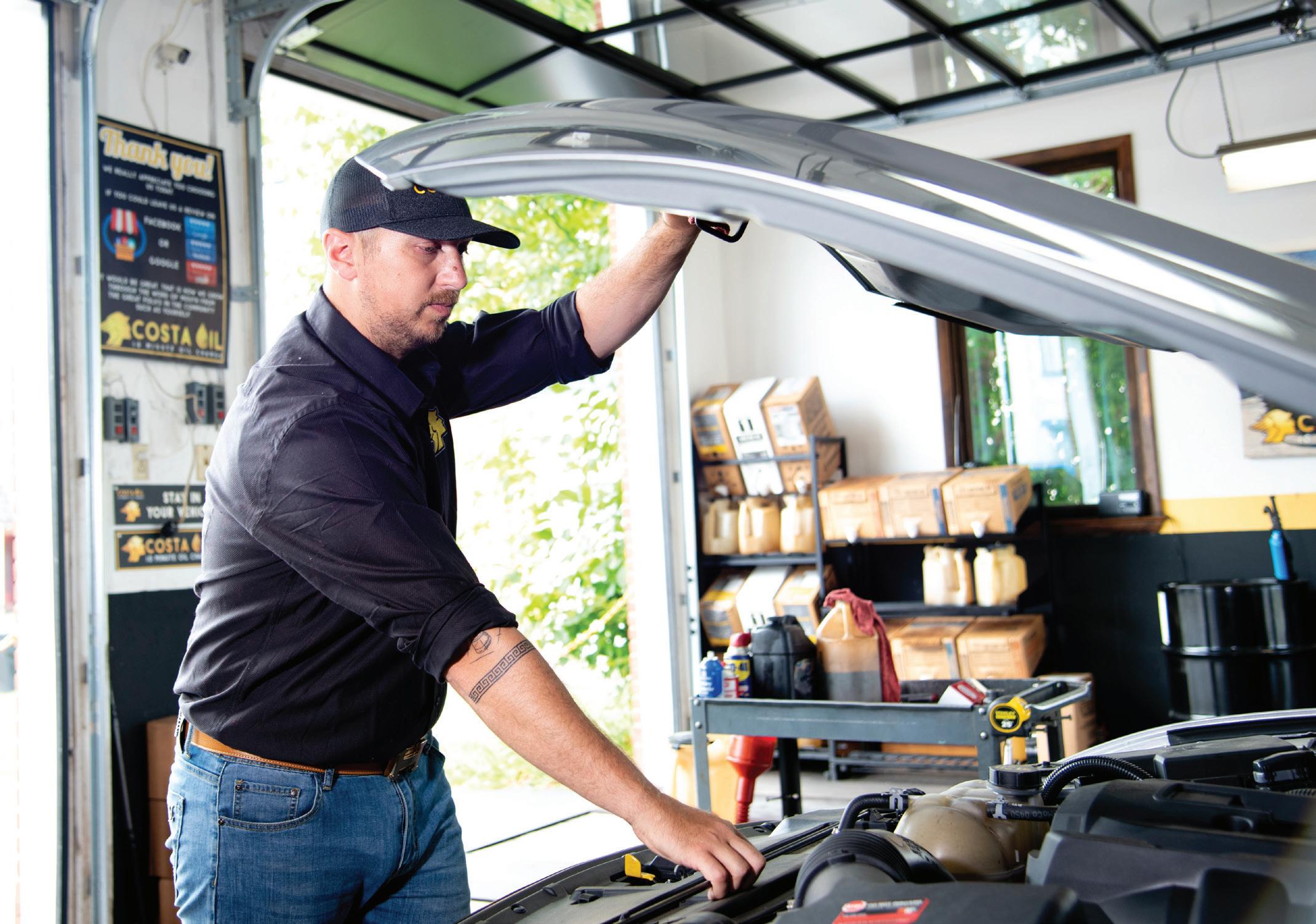
Looking back, Costa Kapothanasis, CEO of Costa Oil 10 Minute Oil Change, describes 2025 as “a stabilizing year.” After a period of aggressive growth that saw Costa Oil reach 70 locations, the company’s priority for 2025 was “grounding the business and getting our core values and our core mission back integrated into every single store, including the corporate stores,” Kapothanasis says. That has been accomplished by the company’s leaders making more store visits and getting back to giving more attention to early franchise locations that had become self-sufficient and required less oversight over time.
“We have stores that are maturing, and sometimes what franchise systems will do is once someone is out of that ramp-up period, your tendency is to say, ‘OK, they’re out of their ramp-up period. They’ve now ordered from their vendors for over a year. They have dealt with customers. … We don’t have to give them as much attention.’
“And I think what we wanted to be very cognizant of is making sure they don’t feel left behind even though they’ve been open for three or four years. And so, 2025 was a lot about touching those folks again, seeing their stores, and making sure that we’re all on the same page in regard to the model that we’re trying to run.”
With the ship now steadied, Kapothanasis is ready for Costa Oil to embark on another period of strategic growth. With costs for new construction rising, Kapothanasis sees an opportunity to acquire existing shops from owners who are ready to exit the industry.
“As the quick lube industry turns essentially 45 years old, a lot of these folks have made a lot of money back when the intervals were shorter in those 2,000-mile (oil change) interval days,” he says. “A lot of them have kids that are out of college, and they’ve accomplished all the things that they want to accomplish.
“And so, we’re hoping that a lot of
these facilities start to become available and the consolidation that has happened in our space already has essentially made the playing field what it’s going to be. If you haven’t been acquired by Take 5, Jiffy Lube, or Valvoline at this point, basically, the playing field is set. So, everybody that’s out there right now, we can go out and acquire an eight-unit store or a three-unit store and probably not have as much competition for (them).”
Independent shop acquisitions are also appealing for Costa Oil because many prime targets come with healthy car counts, community support, and an established infrastructure that plays well with the Costa Oil business model, Kapothanasis says.
For even the most ambitious quick lube owners, trying to tackle multiple large-scale business goals can be a challenge. Once goals are identified, it becomes imperative to

prioritize them and determine the order in which they’ll be addressed.
“We intuitively know now because we’ve been in the corporate game for so long what’s going to make the biggest difference,” Michael Lynch says. “And so, for us, it’s how do we get there as quickly possible?”
At SpeeDee, it starts with fostering the aforementioned flexibility among team members, as well as creating a professional, trustworthy environment for customers—keeping the shop clean and organized, and making sure staff members who interact with guests don’t come across as pushy or overly aggressive with sales pitches.
For Kapothanasis, setting priorities and building out a strategic vision begins with making sure


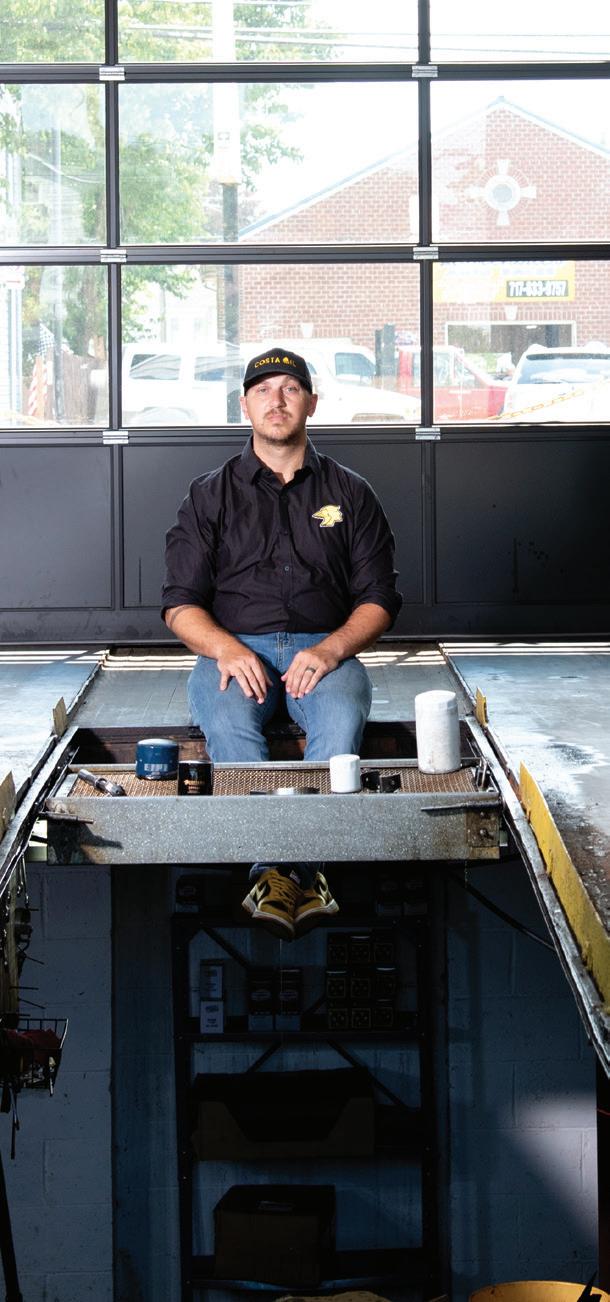
After a year of stabilization across his organization, CEO Costa Kapothanasis says Costa Oil is primed for an active 2026.


his leadership team is aligned and believes in the company’s mission.
Kapothanasis will present potential acquisitions to the team to determine whether the deal makes sense for the company. He also aims to ensure his team is well positioned to support the needs of corporate-owned and franchise locations alike.
Recently, Kapothanasis hosted a meeting with his leadership team to lay out a game plan for 2026. As the meeting adjourned, he says, his team members walked away with their spirits high and their visions aligned.
“At the end of it, there was a lot of excitement about our plans for execution,” he says. “I think as long as everyone’s on board, we’re going to be able to do the things we set out to do.”









































A three-time winner of Jiffy Lube’s President’s Performance Excellence Award, Marine Corps veteran Eric Hartlen has become a store manager that turns locations into nationwide top performers
By Kacey Frederick
In 2025, Eric Hartlen received the 2024 President’s Performance Excellence Award at the national Jiffy Lube convention. The store manager for Atlantic Coastal Enterprises’ Jiffy Lube store in Davie, Florida, he’s the first Jiffy Lube store manager ever to win the award three years in a row—but he didn’t earn it through happenstance.
After his time in the Marine Corps working as a diesel technician, Hartlen took a chance on his local Jiffy Lube, signing up to work as a technician. After seeing how the business operates and the potential for a rewarding career, he challenged himself to grow as a leader in an entirely different environment, and now has shop management down to a science.












Growing up working on a New Hampshire farm, Hartlen was no stranger to tinkering around with machinery, working on equipment like tractors and small engines. By the time he was around 12 years old, he became interested in taking his skills beyond the local farm and to the local racetrack. His father supported him, working on vintage vehicles he owned alongside his son.
“He had old cars—like a Chevy Nova and things like that—that he would work on. So, it just kind of really stemmed from that,” tells Hartlen. “My background, my whole family’s background, is mechanic work, so it’s just what I did.”
With the encouragement of his father, Hartlen built up his skills and raced in his hometown. When it
came time to graduate high school, he went on to the Marine Corps to work as a diesel technician.
Hartlen hit a fork in the road after leaving the Marine Corps in 2011. Now living in Quantico, Virginia, he took time to ponder the next steps in his career. It was by chance that Hartlen decided to get an oil change during this period, leading him to a role with his local Jiffy Lube.
“Honestly, I was just going in to get an oil change, because I was planning on moving back home,” tells Hartlen. “I was going to get an oil change and head out, but I saw a ‘now hiring’ sign, and I decided to apply that day while I was getting the oil change.”
Before he could leave, Hartlen was pulled aside by the vice president of that franchise, who happened to be on site that day. He went ahead and conducted an interview, and hired Hartlen on the spot, launching him into a new journey in his career.
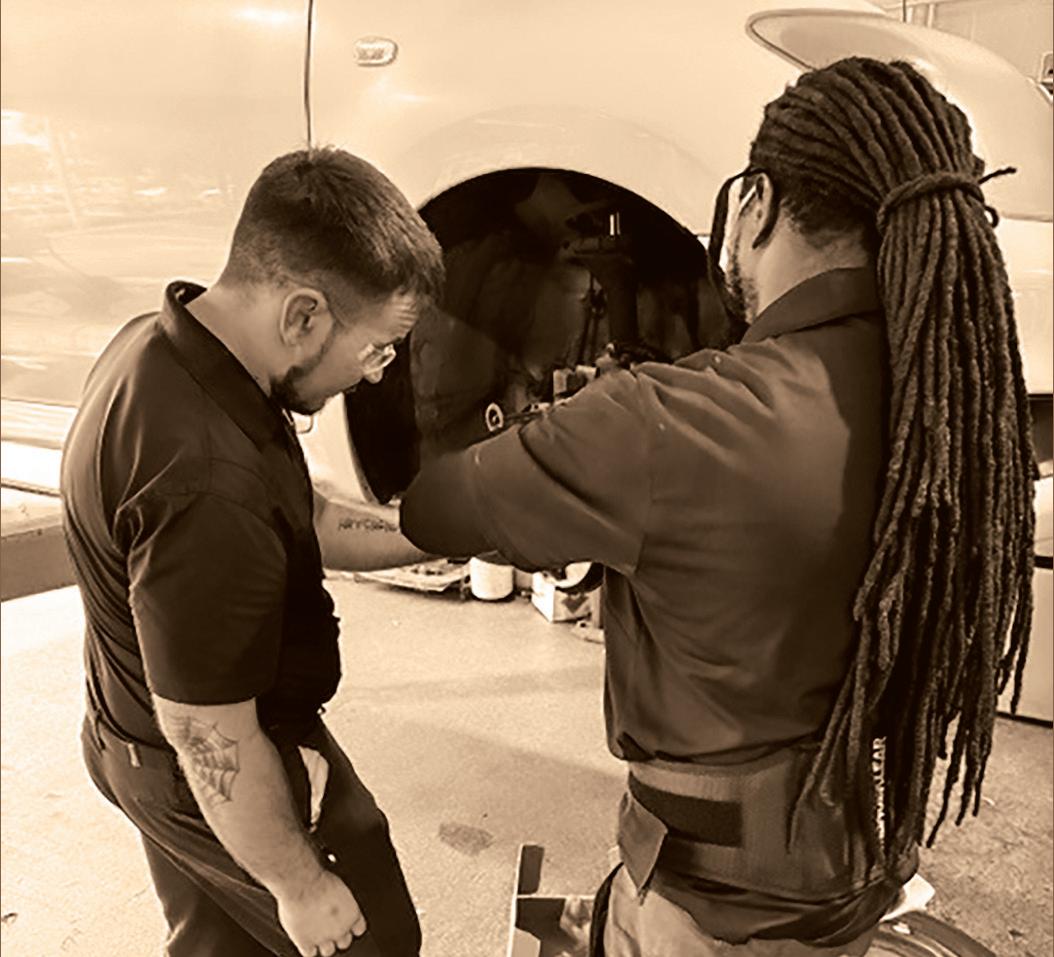


After serving in the Marine Corps, Eric Hartlen has become an award-winning store manager for Jiffy Lube.
didn’t think he would be good with customer service tasks. However, after dipping his feet in the water and watching how the business operated, he became motivated to pursue a management role. He reached out to his manager, who took Hartlen under his wing and rigorously trained Hartlen. The more he learned and progressed, the more Hartlen realized this is what felt right for him.
“I was running the store in Massaponax, Virginia, within six months of being employed, and I never looked back,” says Hartlen.
After becoming a store manager, Hartlen also realized that it was important to take the time to understand each employee’s motivations for the work they do. Taking the time to connect with them, understanding their backgrounds and who they are, has gone a long way in helping Hartlen create a structured environment in all the stores he’s managed.
Hartlen started as a technician, and moved up to a store manager role within six months—but it was only through hard work that he got there. The quick lube is industry is one where many veterans find success, due to the fast-paced, team-oriented environment. But, as with entering any new sector, Hartlen faced new challenges.
Starting as a technician in the lower bay, Hartlen
“That was really a challenge for me. Because I want, I want, I want—but I never understood the needs of the employee,” explains Hartlen. “Once I started to understand that, and I started to realize, ‘well, what does this guy need from me in order to succeed for me?’, my job started becoming a lot easier. A lot less turnover, a lot less friction, daily things like that.”
Going from the military to the quick lube industry has its differences. You never know who you’ll be interacting with on any given day, and you will always need to be ready to know how to react in a calm, polite manner. But the similarities a quick lube offers veterans often outweigh the differences. For Hartlen, he thrived on the challenge of a new industry, while also realizing he already had many of the traits a strong manager needs.
“Working with a team, building a team, I’ve always been pretty good
at that,” tells Hartlen. “It’s second nature, in my opinion. For myself, when I was 16, 17 years old, I was working on a tree farm back home, and I was running a group of guys that were twice my age. So, it’s honestly been what I’ve done my whole life, with sports and different, various jobs. That’s really why I wanted to be a store manager.”
Hartlen’s drive, combined with the humility to reflect and react accordingly, has driven him straight to success in the quick lube field. He’s worked throughout the Jiffy Lube network, serving as a manager for franchisee locations in Utah and Colorado.
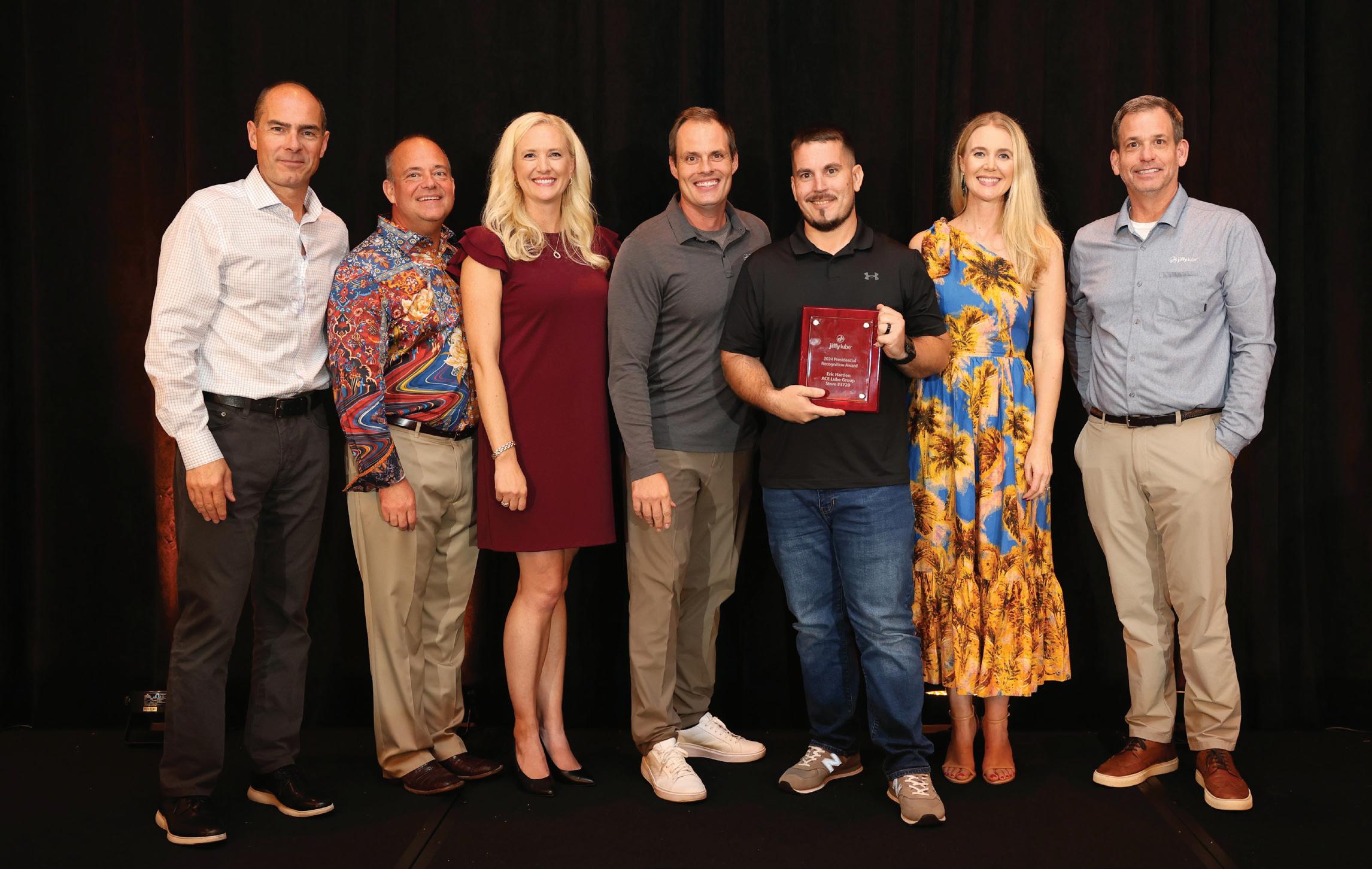
Since joining Atlantic Coast Enterprises in 2017, Hartlen has managed multiple locations and currently serves as a market manager. As store manager of the Davie, Florida, location, his leadership elevated the team to one of the top-performing stores in the Jiffy Lube franchise system, earning him his most recent
President’s Performance Excellence Award last year.
In an industry defined by speed, you’re going to feel beat some days. Hartlen is no stranger to that—but he maintains that growth can only be possible after having hard learning experiences. He doesn’t let any missteps or failures be a reason to call it quits. He uses it to become a better leader.
“There’s been many times where I’ve wanted to throw in a towel and say, ‘I’m done’—but then the next day is a better day,” says Hartlen. “The quick lube industry is highly competitive. It’s tough, but I promise: If you hang in there, you do it the right way, and you come to work with a great, motivating attitude every day, it gets better. But it’s a tough business to be in, so you got to stick with it.”
By Spiro Morogiannis, BG Training Manager and BGU Instructor
As the automotive industry continues to evolve, oil changes remain the foundation of the quick lube business. With new engine oil approvals every few years, how do you stay on top of these changes? Let’s strategize on how to be ready for most vehicles while streamlining engine oil inventory, maximizing profitability, and best serving your customers.
When selecting your “house” engine oils, there are many factors to consider. Outside of oil viscosity and what should be kept as your primary bulk oils, look at the API service categories and ILSAC specifications. Verifying that they’re the latest engine oil specs ensures compatibility with modern vehicles and reverse compatibility with older vehicles. API categories update every few years, and with each update come changes:
API specifications (SP and SQ):
• Engine protection (wear, sludge, deposits)
• Oxidation and corrosion resistance
• Compatibility with emissions system
• Fuel economy
ILSAC specifications (GF-6A/6B and GF-7A/7B):
• Fuel economy improvement
• Emissions system protection
• Turbocharger and timing chain wear protection
• Low-viscosity oil compatibility (e.g., 0W-16 for GF-7B)
You’ll want your shop to have the proper engine oils that meet these strict updated requirements, especially now with last year’s introduction of API SQ (March 2025) for gasoline vehicles.
Modern API-approved engine oils set the minimum required standards. API SP is going tobe the most common standard, but now with AP SQ, be mindful of the brand-new models coming to your shop for service.
Most modern vehicles call for the use of full synthetic engine oil—so keep this in mind when looking at your house oils. Two points to consider: the most compatible (by spec and approval), and the best quality (for the money). The correct engine oil is vital to the longevity of modern engines. OEM engine oils have improved over the years; however, many low-cost aftermarket engine oils do not meet the same level of protection or additive concentration compared with OEM engine oils.
1. Understand your market. Are you servicing European vehicles? Diesel trucks? Stocking the right engine oils makes a difference.
• SAE 5W-30 API SP:
This is the common coverage API spec oil in today’s vehicles. Ask your supplier for a list that also meets OE specs.
• S A E 0 W-20 A P I S P :
This is the most adopted oil viscosity and often compatible with 5W-20 applications. See your provider for published details.
• S A E 10 W-3 0 o r 5 W- 4 0 A P I C K- 4 d i e s e l o i l : These are now the most modern diesel oils on the market. Make sure that they meet the OE specifications or approvals.
• E u r o S A E 0 W - 4 0 / 5 W - 4 0: European vehicles use ACEA or OE-specific approvals. With Euros, choose OE “spec” over viscosity.
• M iscellaneous oils: S AE 0W-20 Euro and Spe cialty SAE 0W-40 non -Euro with Dexos and Chr ysler MS spec: Although less common, some vehicles use these with specific OE specs. It’s best to have them available if needed.
All OEMs have “severe” service intervals, which apply to most everyday driving conditions. Setting a 5,000-mile interval is a great way to protect a customer’s vehicle, especially when using a non-OE oil. Maintaining this 5K interval ensures proper engine longevity and avoids the risks associated with the much longer intervals recommended today by many OEMs.
Extended “normal” service intervals lead to carbon buildup and accelerated piston ring packing, both of which contribute to oil consumption. With these extended oil change intervals, high-quality supplements prevent oil from breaking down prematurely. Premier supplements protect against oxidation, combat acids, and prolong oil life—thus extending engine longevity.
Remember: OEM recommendations are designed to get the vehicle through warranty— that’s it!
Understanding modern engine oils protects your business and your customers’ vehicles while creating opportunities for shop profitability.




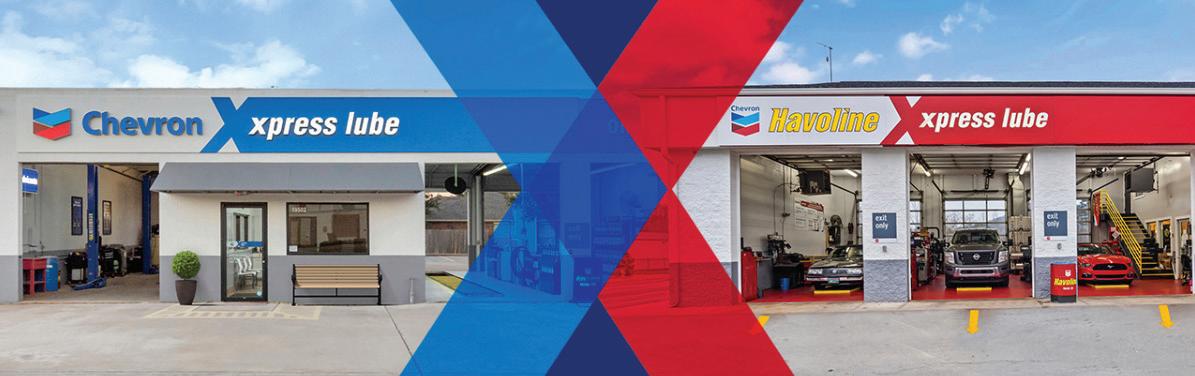
BillBeyerle@chevron.com
Program option: Sales and license agreement
Territory: National
Franchise Fee: None
Royalty percentage required: None
Average start-up cost: $25,000–$50,000 depending on location
Individual qualifications: Current quick lube operator and/or retail business background. Business financial and credit reviews required.
o Advertising: Access to advertising providers through preferred partner program. Consultation with Chevron marketing staff to build strategic annual plans customized to your local market.




have huge impacts on how operators connect with customers, brand their shops, and load up on inventory. They can be efficient ways for new operators to hit the ground running or for seasoned operators to grow a strong network. The 2025 edition of this guide reflects those companies that responded to NOLN’s call for information, including their advantages and support offered to franchises.















Use the color-coded key to take a closer look at the additional support offered by franchises. The sections have been broken up into the following categories: advertising, building considerations, business support, equipment & products, financial considerations, and other. We recommend deciding which of these factors is the most important to you, and then using the checkboxes next to the support listings, marking them as you go.
o Signage: National sign program including project management, sourcing, design, permitting and installation.
o Promotion: National consumer promotions designed to reward loyalty to the site and grow premium product sales.
o Building Design: Prototype drawings, design, and business consulting.
o Site Selection: Demographic assessment specific to your market area.
o Business Support: Product line, sales process, and marketing consultation.
o Training: Comprehensive training focused on lubrication fundamentals, customer service, vehicle education and market insights. Training customized based on audience.
o Equipment: Access to equipment providers through preferred partner program.


o Customer Warranty: All Havoline, Techron, and Delo products are backed by Chevron’s limited product warranty.
o Financial Assistance: Cash advance provided to cover the cost of facility re-imaging (signage, paint, equipment, site improvements). Advertising










On the following pages, use these categories to determine who offers support that is most beneficial to you.
Considerations Business Support Key of Support O ered

Equipment & Products
Financial Considerations
Other






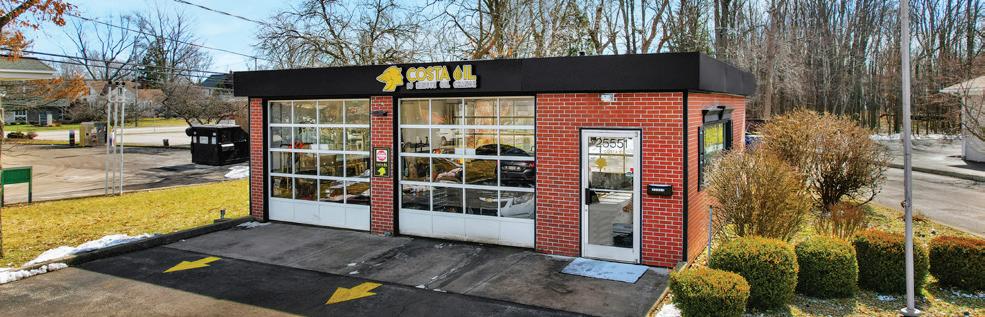
Brandon Cornelius | 717.698.3260
brandon@costaoils.com
hq@costaoils.com | franchise.costaoils.com
SPECS
Program Option: Franchise
Territory: U.S. states approved: CA, IL, IN, MI, MN, ND, NY, VA, WI.
International Franchises: No
Cash Investment: $60,000
Total Investment: Single- $131,750 to $212,900 Multi- $174,250 to $321,900
Minimum Net Worth: $250,000
Franchise Fee: $54,900
Royalty: 6.5%
Ad: 2.5% Local Spend
Item 19: Yes
Visa Candidates: Yes
Home-Based: No
Master Franchise Opportunities: No
Veteran Discount: Yes
SUPPORT OFFERED
o Advertising: The Lube Shop manual serves as a resource for information on special promotions, direct mail options, collateral materials and media advertising. In-house social media management and customer reputation management solutions available.
o Signage: Comprehensive image program to support the sale of high-quality lubricant products. Independent operators have access to the OILU.ORG image database that is implemented at all the branded Costa Oil locations across the U.S. Custom sign package, featuring lighted street signs, exterior building signs and framed interior point-of-sale signs, available.
o Training: In-HQ training for classroom training, plus training in facility. Proprietary website oilu.org offers online training, covering: hiring and training, customer service, effective service procedures and tips for add-on selling. Custom workshops and on-site consultations are also available.
o Equipment: A complete equipment list that includes everything for the operation of a quick lube is available upon request. Preferred pricing with pre-negotiated pre-vetted vendors.
o Financial Assistance: We recommend working with your local lending institution.
o Customer Experience: Costa Oil – 10 Minute Oil Change delivers a simple, fast, stay-in-your-car experience built for volume and trust. No upsell games, no waiting rooms—just a clean, consistent 10-minute service.
o We’re the only true oil-change-only franchise model on the market, which means customers know exactly what we do and why we’re faster: we specialize, we execute, and we get them back on the road.

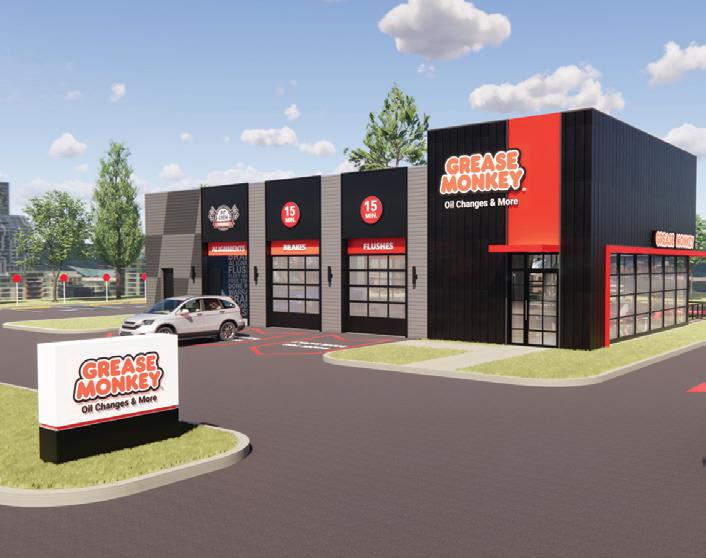

Kelly Tope, VP, Franchise Development 651.303.6003
ktope@fullspeedautomotive.com | oilchangefranchises.com
SPECS
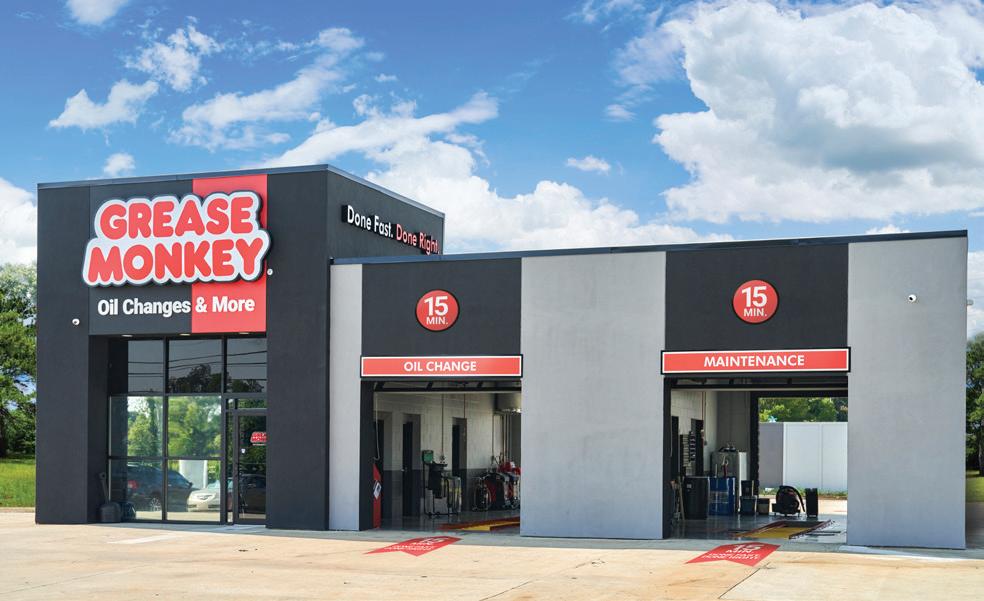
Program Option: Franchise
Territory: National
Franchise Fee: $39,900, 15-year agreement; $29,900 for veterans and first responders
Royalty Percentage Required: 6%
Average Start-Up Cost: $291,320 - $1,972,033
Individual qualifications: Minimum of $400,000 in liquid assets; $600,000 minimum net worth; credit score of 680 or higher
o Advertising: 4.5% includes 0.5% that is paid to the National Materials Fund for use in promoting and building the Grease Monkey brand; 4% is the minimum required spend for local advertising to support your growth in your market.
o Site Selection: Grease Monkey utilizes its network and market knowledge to identify potential sites that align with your business goals. This includes assessing traffic patterns, demographics, and competitive landscape.
o Building Design and Construction: Flexible construction and design plans allow for layout modifications and designs based on specific site conditions, zoning requirements, and local market demands.
o Financing: Grease Monkey does not provide financing; however, we have preferred relationships with several banks that offer both SBA and conventional financing available for franchisees with good credit.
o Marketing: Dedicated marketing team that manages sophisticated campaigns to drive business to your center.
o Training: Comprehensive training program which includes on-site classroom training at the corporate office for new franchisees; online training platform, available 24/7; ongoing training such as Advanced Managers Training School, webinars, conventions, etc.
o Ongoing Operations Support: Grease Monkey franchisees enjoy the support of dedicated franchise support directors who work with you when you have questions and who are available 24/7.
JIFFY LUBE
Melissa Cantwell | 800.327.9532
jiff y-lube-development@shell.com | Franchise.jiff ylube.com
SPECS
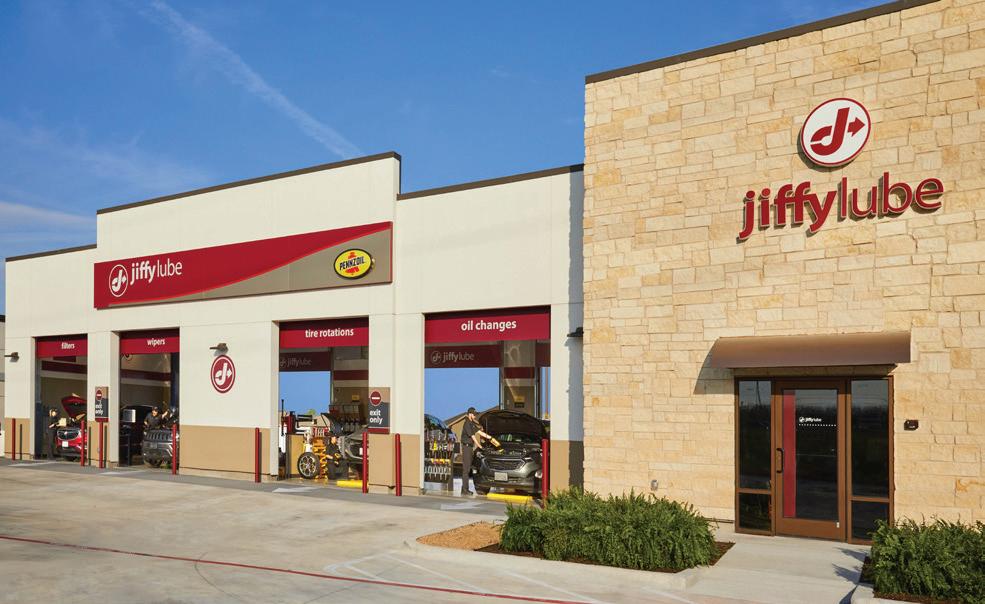
Program Option: Franchise
Territory: U.S.
Franchise Fee: $35,000 for new development, or $17,500 for conversions
Royalty Percentage Required: 4% of sales (reduced to 3% with prompt pay discount)
Average Start-Up Cost: Ranges from $232,000 to $520,000 (excluding real estate)
Individual Qualifications: $250,000 liquid and $500,000 net worth
o Advertising: To connect with consumers and maintain a strong brand presence from coast to coast, Jiff y Lube activates a robust multi-million dollar national advertising campaign. Additionally, franchisees receive strategic counsel from dedicated area marketing managers to help maximize local store marketing.
o Site Selection: Jiff y Lube business development managers have access to numerous resources to assist with the site selection process. Jiff y Lube works with real estate development companies to provide turnkey solutions for its Build To Suit Program.
o Building Design and Construction: The Jiffy Lube construction team is available to assist with recommendations and to provide building designs, equipment options, and consulting for new store development.
o Training: Jiff y Lube offers an award-winning training program, Jiff y Lube University. Jiff y Lube University is accredited by the ASE Training Managers Council (ATMC) and the American Council on Education (ACE).
o Other: Jiff y Lube provides field operations, marketing, and business development support as well as a proprietary point-of-sale system. The strength of the Jiff y Lube is complemented by premium Pennzoil products and Shell.
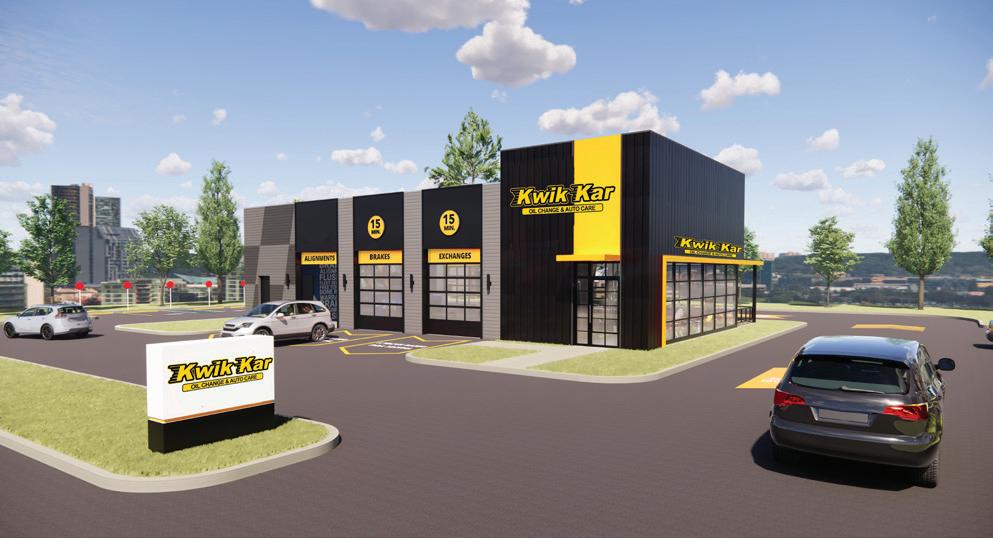
Kelly Tope, VP, Franchise Development 651.303.6003
ktope@fullspeedautomotive.com oilchangefranchises.com
Program option: Franchise
Territory: National
Franchise Fee: $39,900, 15-year agreement; $29,900 for veterans and first responders
Royalty Percentage Required: 6%
Average Start-Up Cost: $291,320 - $917,050
Individual Qualifications: Minimum of $400,000 in liquid assets; $600,000 minimum net worth; credit score of 680 or higher
o Advertising: 4.5% includes 0.5% that is paid to the National Materials Fund for use in promoting and building the Kwik Kar brand; 4% is the minimum required spend for local advertising to support your growth in your market.
o Site Selection: Kwik Kar utilizes its network and market knowledge to identify potential sites that align with your business goals. This includes assessing traffic patterns, demographics, and competitive landscape.
o Building Design and Construction: Flexible construction and design plans allow you to modify layouts and designs based on specific site conditions, zoning requirements, and local market demands.
o Financing: Kwik Kar does not provide financing; however, we have preferred relationships with several banks that offer both SBA and conventional financing available for franchisees with good credit.
o Marketing: Dedicated marketing team that manages sophisticated campaigns to drive business to your center.
o Training: Comprehensive training program which includes on-site classroom training at the corporate office for new franchisees; online training platform, available 24/7; ongoing training such as Advanced Managers Training School, webinars, conventions, etc.
o Ongoing Operations Support: Kwik Kar franchisees enjoy the support of dedicated franchise support directors who work with you when you have questions and who are available 24/7.
1.800.275.6624
mobilinstalledprograms@exxonmobil.com poweredbymobil.com
Program Option: Sales agreement
Territory: U.S. and Canada
Franchise Fee: None
Royalty Percentage Required: None
Individual Qualifications: The Premium Growth program is designed for operators looking to leverage the world’s leading synthetic motor oil brand to grow their business, while maintaining their own independent shop identity and operations.
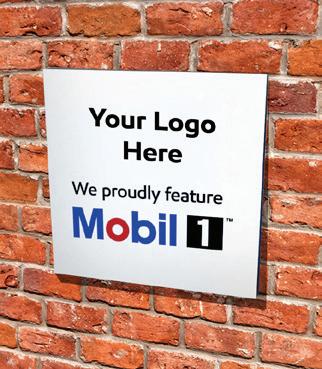
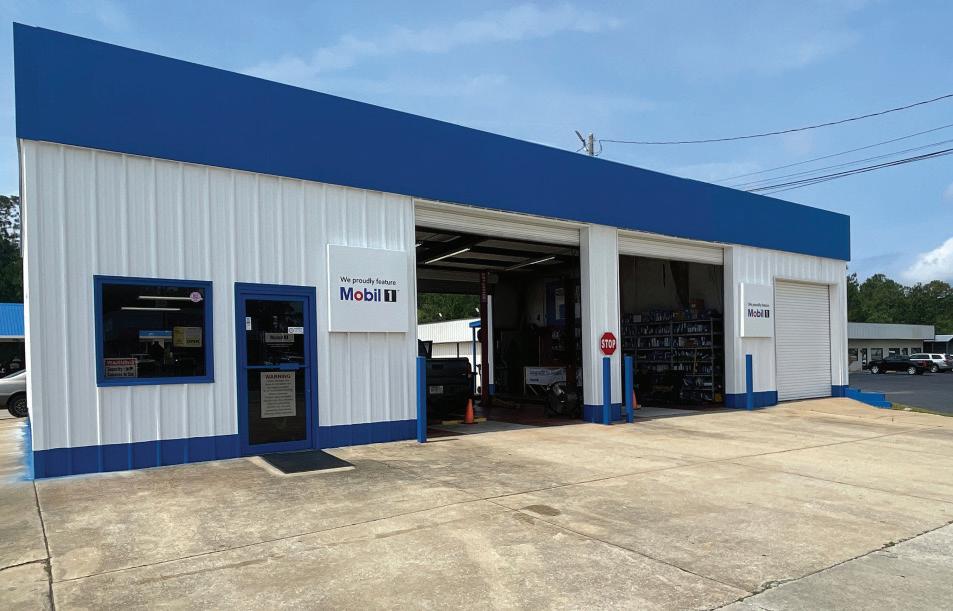
o Signage: Program provides We Proudly Feature Mobil 1™ exterior signage or a robust interior branding kit to complement your shop’s independent brand.
o Promotion: National promotion focused on engaging consumers to trial more profitable products while supporting customer retention.
o Business Support: We offer a range of business accelerators, marketing support, and tools to extract the most value out of our industry-leading brand.
o Training: Online training focused on vehicle education, customer service, market insights, education of Mobilbranded products and sales approach.
o Equipment: Access to equipment providers through ExxonMobil’s preferred partner relationships.
o Customer Warranty: All Mobil branded products have a limited warranty.
1.800.275.6624
mobilinstalledprograms@exxonmobil.com poweredbymobil.com
SPECS
Program Term: 5 years
Territory: U.S. and Canada
Franchise Fee: None
Royalty percentage required: None
Individual Qualifications: The Flagship Branded program is for installers who want to go to market under the leading Mobil 1 brand name without franchising constraints. Required reviews include: location, operator business management background, business financials, and credit; sites must meet annual volume minimums.
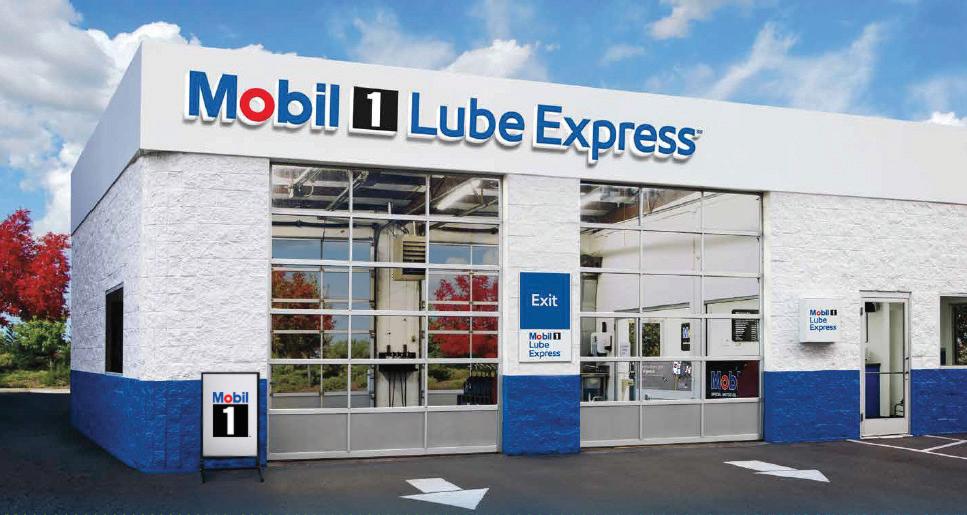
o Signage: Program provides your location an individualized rendering with either “Mobil 1 Lube Express” or “Mobil 1 Car Care” branding, as well as additional branding support for the store interior.
o Promotion: National promotion focused on engaging consumers to trial more profitable products while supporting customer retention.
o Business Support: We offer a range of business accelerators, marketing support, and tools to extract the most value out of our industry-leading brand.
o Training: Online training focused on vehicle education, customer service, market insights, education of Mobilbranded products and sales approach.
o Equipment: Access to equipment providers through ExxonMobil’s preferred partner relationships.
o Customer Warranty: All Mobil branded products have a limited warranty.
Kelly Tope, VP, Franchise Development 651.303.6003
ktope@fullspeedautomotive.com oilchangefranchises.com
SPECS
Program Option: Franchise
Territory: National
Franchise Fee: $39,900, 15-year agreement; $29,900 for veterans and first responders
Royalty Percentage Required: 6%
Average Start-Up Cost: $291,320 - $1,972,033
Individual Qualifications: Minimum of $400,000 in liquid assets; $600,000 minimum net worth; credit score of 680 or higher
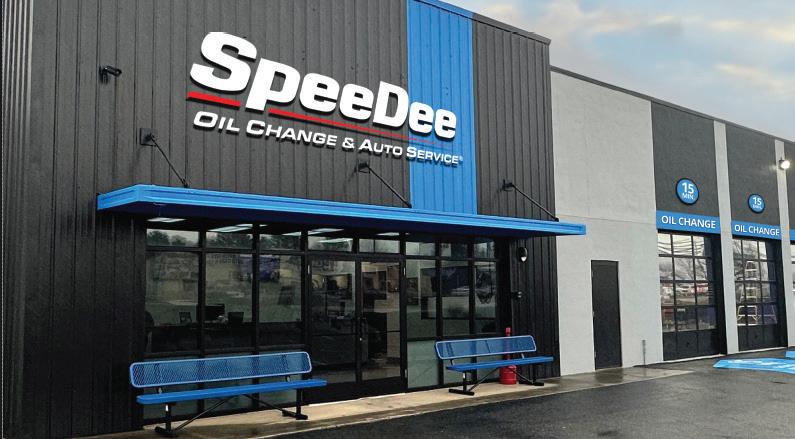
o Advertising: 4.5% includes 0.5% that is paid to the National Materials Fund for use in promoting and building the SpeeDee brand; 4% is the minimum required spend for local advertising to support your growth in your market.
o Site Selection: SpeeDee uses its network and market knowledge to identify potential sites that align with your business goals. This includes assessing traffic patterns, demographics, and competitive landscape.
o Building Design and Construction: Flexible construction and design plans allow for layout modifications and designs based on specific site conditions, zoning requirements, and local market demands.
o Financing: SpeeDee does not provide financing; however, we have preferred relationships with several banks that offer both SBA and conventional financing available for franchisees with good credit.
o Marketing: Dedicated marketing team that manages sophisticated campaigns to drive business to your center.
o Training: Comprehensive training program which includes on-site classroom training at the corporate office for new franchisees; online training platform, available 24/7; ongoing training such as Advanced Managers Training School, webinars, conventions, etc.
o Ongoing Operations Support: SpeeDee franchisees enjoy the support of dedicated franchise support directors who work with you when you have questions and who are available 24/7.
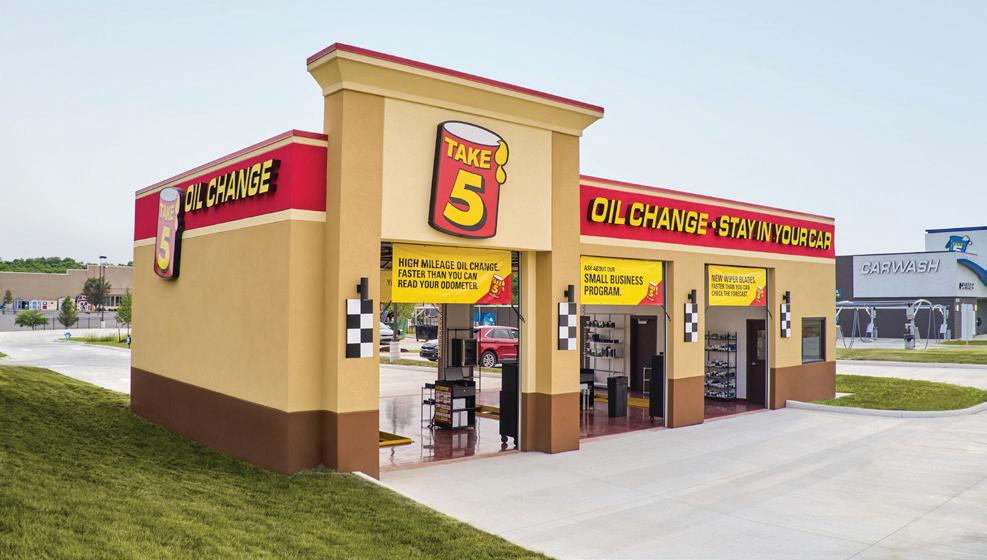
take5franchise.com
SPECS
Program option: Franchise
Territory: North America (U.S. and Canada)
Total Investment: $222,794-$1,616,685
Franchise Fee: $35,000
Royalty: 7%
Ad: 5%
Item 19: Yes
Minimum Net Worth: $500,000
o Advertising: Franchisees work directly with a Take 5 marketing manager to craft local advertising campaigns and adapt to each franchisee’s specific market. The majority of Take 5’s 5% advertising fee goes to local marketing.
o Construction: Take 5 has an in-house construction team to help consult with franchisees on due diligence, design, permitting, and construction.
o Site Selection: Take 5 provides an in-depth market plan by identifying specific trade areas to focus on for new stores. Franchisees work closely with a real estate manager on site selection and throughout the permitting and construction process.
o Training: Take 5 has a multi-week training program in the main training store in Charlotte, NC, for all store management and above-shop management.
o Equipment: Take 5 provides all equipment and opening inventory in a single truck delivery. All inventory is sourced through Take 5.
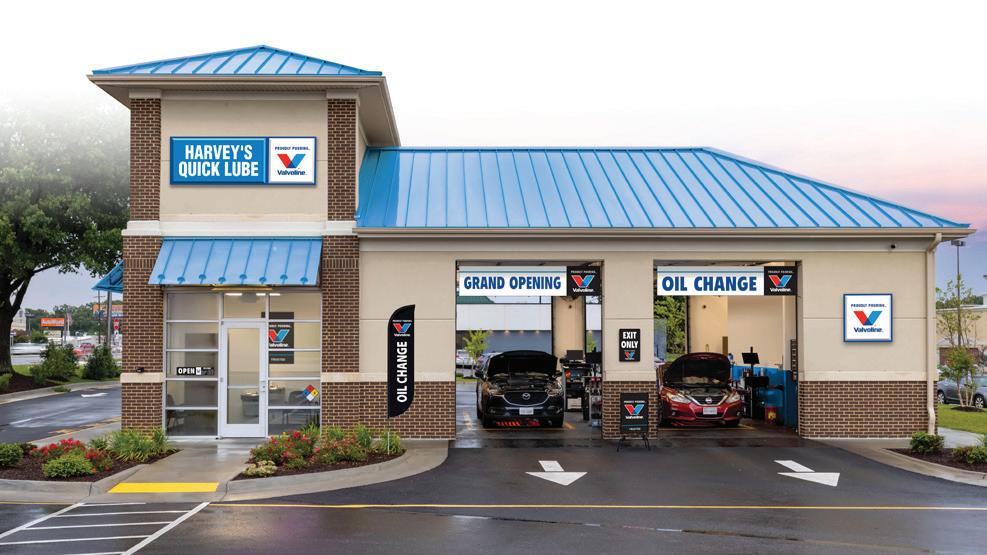
https://partner.valvolineglobal.com/en/quick-lube/
SPECS
Program Option: Proudly PouringTM
Territory: North America (U.S. and Canada)
Franchise Fee: None
Royalty Percentage Required: None
Average Start-Uup Cost: Proudly Pouring Program is an independent quick lube partnership program
Individual Qualifications: Owner/Operator
SUPPORT OFFERED
o Special Programs and Promotions: Valvoline fully-funded programs and promotions to help increase ticket value and drive customer growth.
o Signage: Access to Proudly Pouring trademarked co-branded signage, promotion and marketing materials.
o Training: Our ASE-certified, award-winning training includes online, classroom, virtual, and in-store opportunities.
o Financial Assistance: Available for qualified Quick Lubes
o Product Portfolio: Access to Valvoline’s premium product portfolio including motor oil, chemicals, coolant, wipers, and filters.
o Marketing Support: Access to exclusive industry research, digital assets and preferred rates with industry marketing vendors.
o Equipment: Access to preferred rates with industry equipment providers
o Customer Warranty: Valvoline backs the protection with a Limited Lifetime Guarantee.
o Other:
o Digital Account Service Hub (DASH): Tracks and simplifies ordering and provides product information, solutions and training.
o Support: Valvoline Account Management and Product and Technical Hotline support.
859.357.7303
valvolinequicklubes.com
SPECS
Program option: Sales Agreement
Territory: U.S. and Canada
Franchise fee: $0; Not a franchise agreement
Royalty percentage required: $0%
Average start-up cost: $0
Individual qualifications: Independent owner/operator who aims to retain their independence, benefit from guarenteed growth, and captialize on proven expertise and tools from a trusted partner.
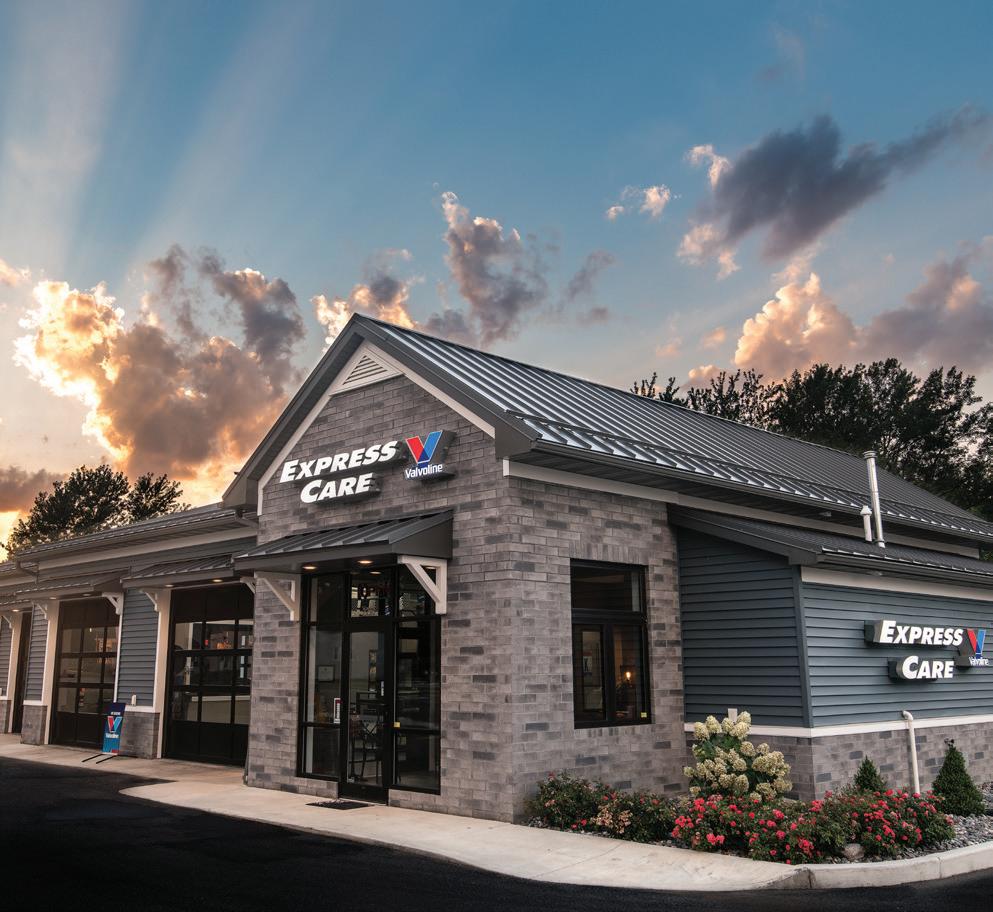
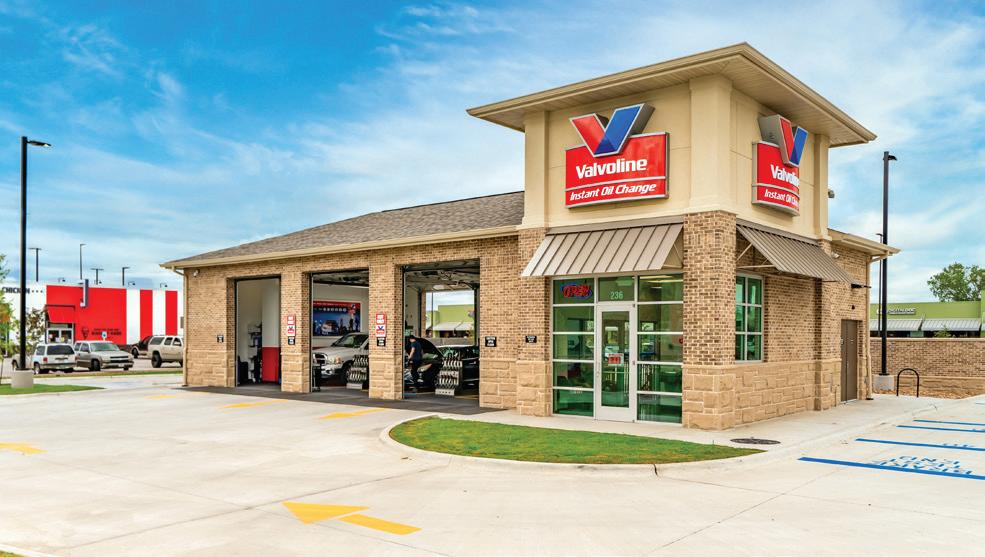
o Training: Valvoline Express Care operators have access to continued education through a dedicated online training program.
o Marketing: Valvoline Express Care incorporates proven marketing strategies with executional support covering customer retention, digital marketing, reputation management, and new customer acquisition.
o Signage: Each location receives permanent and professional exterior signage. Valvoline Express Care supports operators through sign redering, permitting, production, and installation.
o Operations: Each Valvoline Express Care location receives operational and business growth support through a dedicated Express Care Business Advisor.
859.357.7303
viocfranchise.com
SPECS
Program Option: Franchise
Territory: Specific territories available
Franchise Fee: $30,000
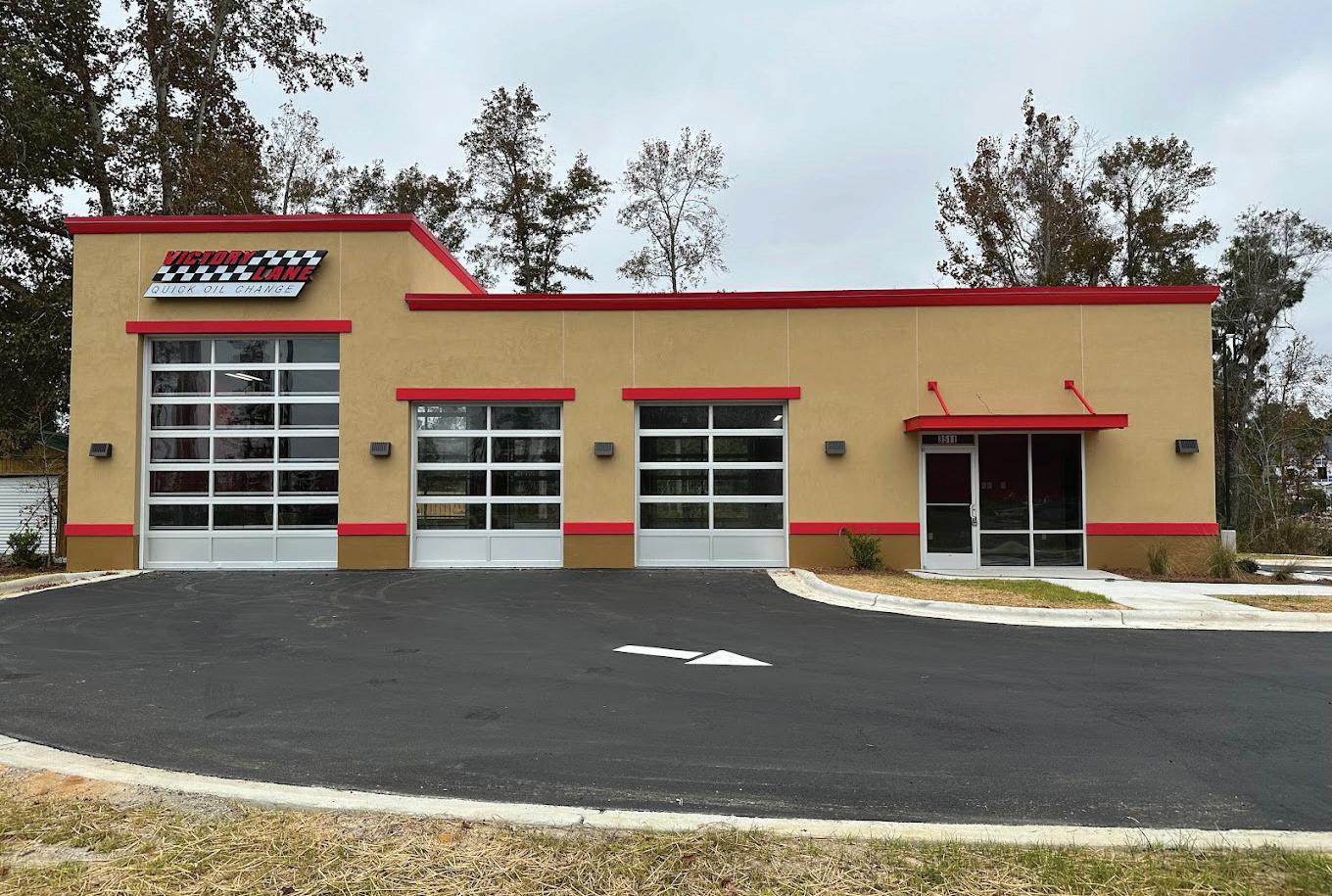
Jim Harrington | 734.667.4304 ext. 104 jharrington@victorylane.net | victorylane.net
SPECS
Program Option: Franchise
Royalty Percentage Required: 4-6% on graduated scale. For new stores, first-year royalities are 2%, second-year is 3%.
Gayle McMillin | 859.357.7303
lgmcmillin@valvoline.com | viocfranchise.com
Average Start-Up Cost: $207,375 to $3,498,550, dependent on whether real estate, building, and equipment are purchased or leased.
SPECS
Program option: Franchise
Individual Qualifications: The ideal franchise candidate is a growth ready, current multi-unit retail operator looking to diversify their portfolio. No prior automotive experience is required. Minimum net worth $1,000,000; minimum liquid assets of $600,000.
Territory: National
Territory: National
Franchise Fee: $49,500 for one unit
Royalty Percentage Required: 6%
Jim Harrington | 734.667.4304 ext. 104 jharrington@victorylane.net |
Average Start-Up Cost: $200,000–$250,000 depending on location
SPECS
Individual Qualifications: Net worth $250,000. Prefer business or management experience. Auto experience is not required.
Program option: Franchise
Territory: National
Franchise Fee: $30,000
Royalty percentage required: 4-6% on a graduated scale
Franchise Fee: $49,500 for one unit
SUPPORT
Royalty percentage required: 6%
Average start-up cost: $178,000–$1,273,500, depending on whether real estate property and equipment are purchased or leased
Training: Our training program equips new franchisees with 70 hours of classroom training at start-up, plus up to 312 hours of on-the-job training. Ongoing support includes both online and in-person training.
Individual qualifications: Net worth $1,000,000; $600,000 liquid; the ideal franchise candidate is a successful businessperson, already a multi-unit operator or independent quick lube operator
Marketing: Franchisees have direct access to proven marketing programs including traditional and digital strategies that drive retention of existing customers and acquisition of new, including commercial fleet business. Support provided, as needed, by our dedicated Franchise Marketing team.
Location Development: We provide assistance with real estate analytics, site selection, forecasting, planning, permitting, construction, and acquisition.
Operations: Access to a field support and training team that has extensive experience in quick lube operations and multi-unit management.
Technology: The backbone of the VIOC experience is our proprietary point-of-sale system equipped with tools to assist with inventory management, pricing, labor, financials, and commerical fleets. This ensures our team delivers a constistent customer experience across all locations nationwide.
Customer Experience: Our model is built for convenience, serving guests a quick, easy, and trusted stay-in-your-car oil change with no appointment needed all in about 15-minutes.
Other: VIOC operates 950+ company-owned locations, providing franchisees access to our years of expertise in site selection, construction, training, marketing, customer service, fleet management, business analytics, technology, and more.
Average start-up cost: $200,000–$250,000 depending on location
Individual qualifications: Net worth $250,000. Prefer business or management experience. Auto experience is not required.
Marketing: VLQOC uses both traditional and digital marketing programs to provide retention of existing customers and acquisition of new customers. Franchisees have access to the same programs used in company franchise locations and we also provide a marketing support team to assist with marketing .
Location Development: VLQOC will provide franchisee assistance with forecasting, site selection, local permitting, construction and acquisition. We also supply building templates for design of new construction and conversions.
Operations: Franchisees have access to a dedicated experienced field support team and office support team.
Training: VLQOC training program has 80 hours of classroom training and over 100 hours in our online university. In addition to onsite grand opening initial training, we also provide continuous support from the VLQOC support staff. Our national partner suppliers also provide onsite and virtual training on the products that they supply to VLQOC franchisees.
Quick lube brands must navigate local requirements and adjust facility plans accordingly when constructing new shops
BY PETER SUCIU
estate, it is often said that the three most important considerations are “location, location, location.” For the automotive service industry, location is crucial to building a solid customer base, ensuring easy access to the shop, and, notably, community acceptance.
All three are critical to any service business. Even as a community will want convenience, there are concerns about increased traffic, noise, parking, market saturation, and cultural considerations. Those are among the many issues Brian Tabb, chief development officer at Valvoline, faces daily as he oversees the brand’s expansion.
With a national footprint of more than 2,300 storefronts, the company operates in or is adjacent to most large municipalities nationwide. But
that doesn’t mean that opening a new location is ever “easy,” even for such an established company.
“It is always a challenge,” says Tabb, who is tasked with expanding the number of Valvoline service center locations to more than 3,500 locations in North America.
“Even before we design a new shop, we meet with local city officials,” Tabb tells National Oil and Lube News. “There are always lots of unknowns.”
Addressing those unknowns is something Tabb has extensive experience with. Prior to joining Valvoline in 2022, he was the vice president of real estate and construction at Wingstop Inc. and previously served for more than a decade at McDonald’s, where he was responsible for corporate and franchise growth in the fast-food chain’s East Division.
Anyone who has traveled across North America will quickly appreciate that cities share many similarities, but each has its own local charms and challenges. The Midwest is known for cold winters and hot summers; the Southeast generally experiences mild winters but must contend with hurricanes; and the Southwest is prone to drought.
“From a structural standpoint, those are the things we must consider,” explains Tabb. “In a hurricane zone, there are different guidelines, such as steel framing instead of wood. We have to consider the geography as well, so that the shop has ample heating and cooling for the guests and employees.”
Commercial buildings in the Southwest favor flat or low-slope roofs because they are cost-effective, provide space for HVAC and other equipment, and improve wind performance. These can also be fitted with energy-efficient “cool roof” coatings and even solar panels.
“Geography of the shop leads to distinctive features,” adds Tabb. “Architectural guidelines also vary from small towns to big cities.”
Zoning is another consideration for shops, and Tabb tells NOLN that Valvoline remains strategic about where it places its shops. Commercial zoning may require specific rules for building design, size, parking ratios, signage, waste management, safety features, operating hours, and noise.
“From a design standpoint, it doesn’t vary too much,” Tabb acknowledges. “We’re pretty low impact and environmentally safe. Many communities require two levels of containment, but we offer four. We err on the side of caution.”
Zoning laws continue to evolve, and different regions have distinct
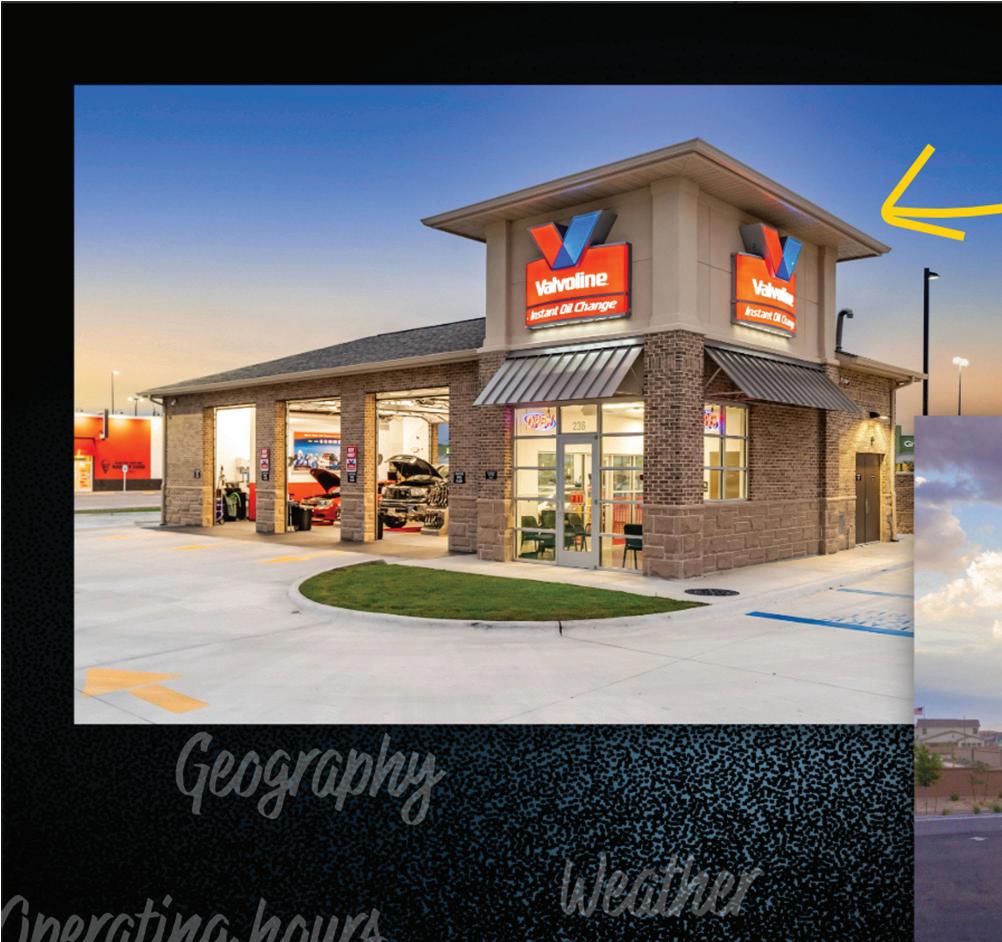
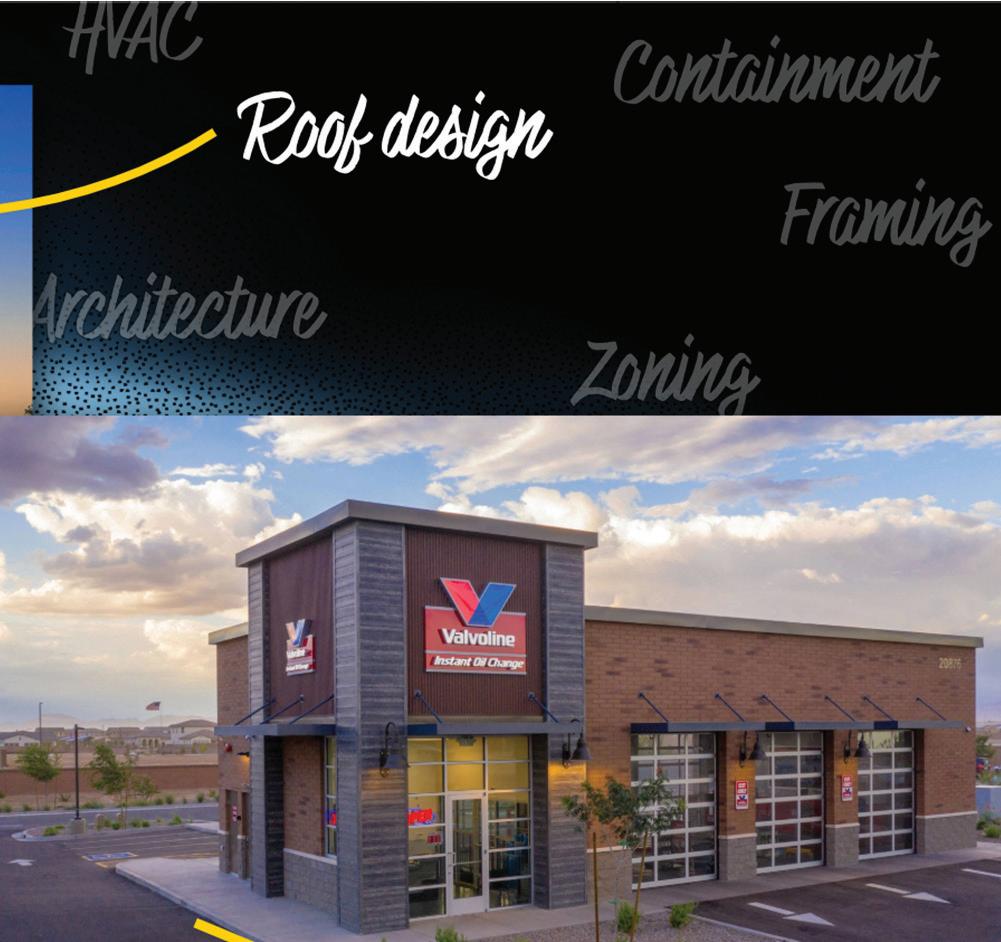

rules that must be considered.
“The hours of operation can vary by region,” says Tabb. “There are also noise issues, which remain a major concern for some communities. We don’t do a lot of repairs that can make noise, but we do try to mitigate any added noise if that is a concern.”
Most of the Valvoline locations have a relatively small footprint of less than an acre, and Tabb says there is generally less traffic than “quick service restaurants” like McDonald’s, Subway, and Starbucks. That can often be a selling point for communities, where residents may be concerned about added traffic, especially in the evening hours.
Having spent time at QSRs, Tabb notes that the quick lube industry typically sees less traffic, a point he is quick to highlight when engaging with community leaders.
“We’re very data-driven,” says Tabb. “We analyze traffic and want to make
sure we’re providing convenience to the customers. That includes making sure we have adequate ingress and egress at our locations. We want to keep the traffic pa erns safe.”
Another factor is blending into the community, which is a top priority at the company. This includes hiring from within the community and then contributing to its tax base.
“We want to fit in with the way the building looks,” says Tabb. “We make sure to talk to local businesses, use local vendors, including during the construction, and then afterwards, when the shop is running. We also do a lot of community outreach, both nationally and locally, to get loyal customers.”
As Valvoline expands its footprint, Tabb wears many hats. Still, it is all pulled together by a hardworking team, including those in the
Environment, Health, and Safety Department, who can alleviate community concerns.
“There remains a misconception with the oil change industry that there are environmental risks,” says Tabb.
These are points that need to be addressed up front—that any leaks are rare and have little impact on the neighbors.
“We make sure it is known we go over and above with containment,” adds Tabb. “We also have the resources in-house if there is a problem.”
All of this is necessary because the new location must be a partner to the community.
“We need to get it right the first time, so that the community will allow us to expand and open a second or, in some cases, a third location,” says Tabb. “We want to continue the pace of growth to reach the 3,500 shops, and to do that, we need to be first class in service.”


deal with hazardous materials, and that requires a license, as well.
Some additional questions it’s wise to throw into the mix are: Do you have a standard certificate of occupancy? And do you need to have disposal licenses?
#2: Did you register for sales tax?
It sounds like a no-brainer, but before a new quick lube business collects sales tax, it must be registered for sales tax—and this is something many new business operators miss.



While a good accountant can help make the tax process bearable, there are tasks for new owners and operators to tackle to ensure a smooth ride each year and throughout every tax season
BY CAROL BADARACCO PADGETT
MOST QUICK LUBE SHOP operators enjoy keeping customers’ vehicles maintained and road-ready. But taxes are usually outside a shop operator’s lane of interest.
While a good accountant can help make the tax process bearable, there are still key things new owners and operators must consider and handle to set themselves up for a smooth ride each year and throughout every tax season.
Here are five key questions new shop operators should ask themselves on the front end to make sure their business taxes are done right on the back end—on time and with less sweat.
#1: Do you have your business license— and other required licenses?
“Before you open your store, (make certain) you have the right licenses to operate your store,” says George Trantas, Durham, North Carolina-based vice president of sales accelerators for Avalara, a company that offers so ware that connects into shops’ point-of-sale systems and helps keep tax requirements in check.
Trantas says his company’s software has a repository of every city, every ZIP code, and every locale in the U.S., along with the knowledge of what licenses operators need to be in the oil and lube industry.
Quick lube businesses must also
So, Trantas advises, “After securing all the proper licenses, make sure you’re registered to collect sales tax—the No. 1 thing a small business sometimes forgets.”
Consider this: Collecting sales tax before registering to do so can actually put a shop operator in collision with the law.
“If a business starts collecting sales tax but they’re not registered for it, in certain states that can be a felony,” Trantas cautions.
#3: How will you keep on top of your state’s tax nuances?
O entimes, so ware can expertly do what quick lube operators would rather not. In many cases, things like tax records, tax rates, tax codes, and sales tax that must be collected every month—even the new shop’s mandatory registration for it—can be handled automatically and kept in compliance with local codes and requirements through the use of so ware.
Software can also help quick lube business owners stay on top of important legislative changes in their states and locales.
Trantas says it’s important for the left hand to know what the right hand is doing when it comes to local laws, but sometimes it’s not readily apparent. As he puts it, “States will create laws on how they want to tax
something, but they don’t always think about the consumer.”
For example, he notes, “Let’s say the tax rate is 9%, but there are additional surcharges in fees, waste disposal fees—especially relevant in lube and tire businesses—and (other) core charges.”
Having a trustworthy accountant who is well versed in the quick lube industry can help prevent headaches at tax time and drive peace of mind for a shop operator all year long.
A good accountant, for example, can help handle all the requirements and nuances that come with taxes—tax records, tax rates, tax codes, etc.—in additional to preparing and filing state and federal income tax returns.
If a quick lube operator isn’t sure of any in their area, resources like Zoominfo.com provide business contact directories that can help pinpoint professional accountants and related services all around the country.
Word-of-mouth from other shop owners is also a wise way to find a good accountant.
Quick lube business partners and vendors can also help operators find a reliable local accounting partner.
As Trantas puts it, “We can make a recommendation of a local partner among thousands of accountants across America.”
you know how to file and remit your taxes each season?
Software can do the filing and remitting for quick lube businesses, which
can be a major pain relief. That takes the labor off quick lube operators, so that tax is collected, filed, and remitted while you work on serving customers, building relationships, and getting their vehicles in and out as quickly as possible.
Trantas adds that Avalara has products for small businesses that take the tax that’s collected daily, pulls it out of a business’s bank, holds it, files it, and then remits it so that owners don’t have to worry about putting the money aside.
***
To recap: There is expert support out there to help make tax time less taxing for quick lubes. And for new shop operators, in particular, once the answers to these five questions are thoughtfully considered, they’re just about ready to roll.


E467 - 2 Technician Tool Board

High h -visibility, organized access for quick lube bays




• Purpose e -built for the underside of quick lube facilities, the E467- 2 puts every essential tool in plain sight and within easy reach h helping techs move faster, cut search time, and keep bays tidy








• Tool l -specific silhouettes and labels speed retrieval and reduce loss

• Magnetic Socket Tray and optional Accessory Utility Shelf keep small parts under control

• Available in a catwalk mount (shown), ceiling mount, and floor standing frame





• Heavy y -duty, shop p- tough construction built for daily use
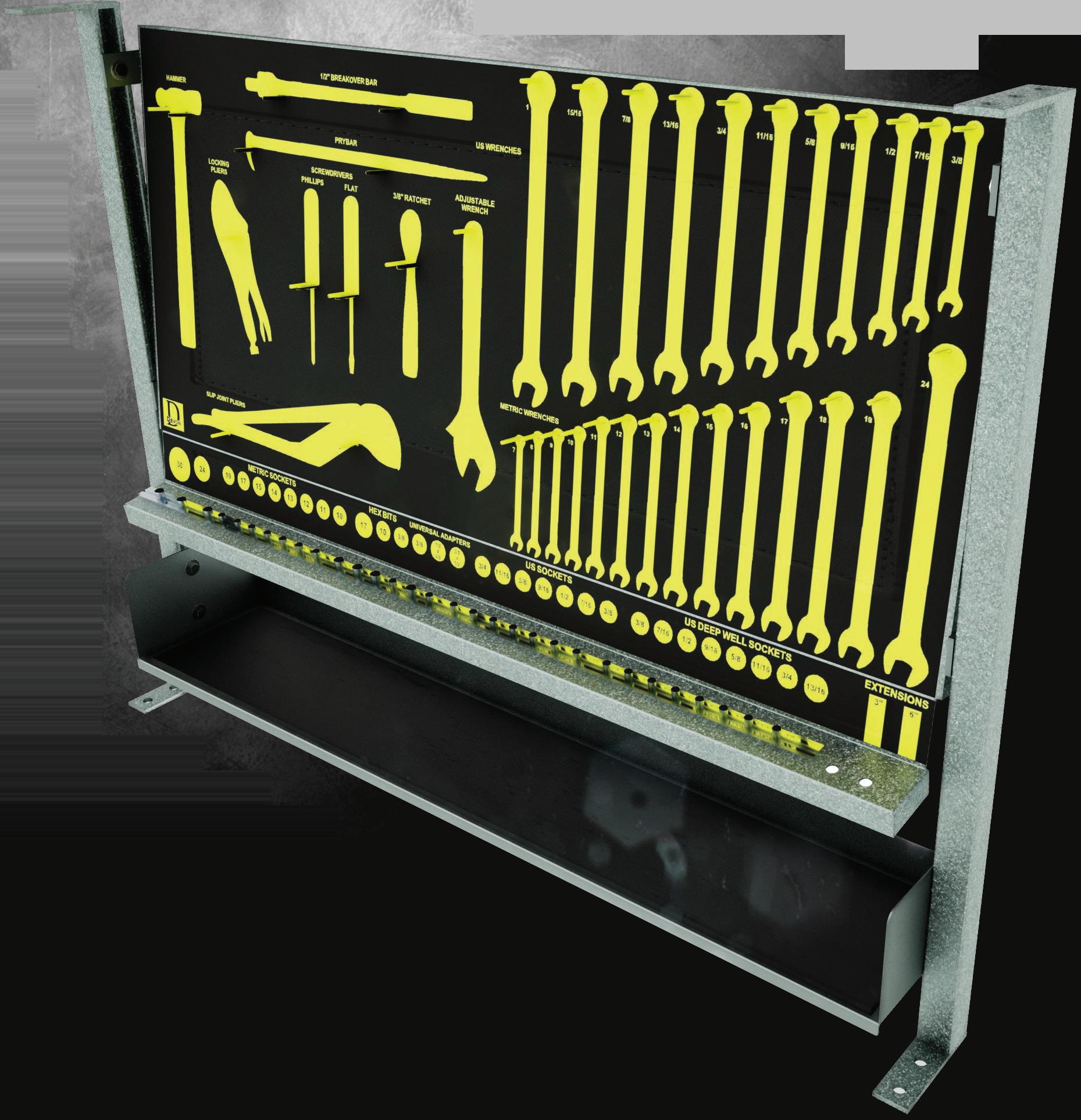

Quick lube operators can get fresh perspectives by hiring candidates whose work experience comes from outside the quick lube industry to key leadership roles
WHEN HIRING WITHIN A sector, too often an owner or hiring manager looks only within the industry and fails to consider candidates from other verticals or even unrelated business sectors. A candidate with experience from another industry, however, can be a benefit.
Hiring is an opportunity to bring in fresh ideas, open operations up to new best practices and procedures, and hire the best candidate rather than limit hiring parameters to someone who did the same job for a competitor who might not offer the
BY ENID BURNS
innovative perspective of someone with experience for the job, but not necessarily in the same field.
There are many arguments for selecting candidates with industry experience. Not only does the job applicant have the skills for the job—such as bookkeeping, sales, marketing, or customer service—but they also know the industry
and how their skills apply to the job responsibilities.
Sometimes, the right candidate may be from another industry. That should not be a roadblock for consideration. There might be a learning curve or adjustment period, but the candidate can bring their skills and learn the industry.

This was the situation when Tanner Canfield was hired as financial administrator
for the corporate office of Costa Oil 10 Minute Oil Change. Costa Oil operates more than 50 locations, including franchise shops. Canfield was hired after graduating from Shippensburg University of Pennsylvania with a degree in finance. Canfield had completed an internship at an insurance firm that spanned more than a year.
“My experience before entering the quick lube industry was quite limited. I had been an intern for an insurance broker, and this was my first job out of college,” Canfield says.
For Canfield, the insurance industry wasn’t a good fit, so he considered other industries to pursue his financial career.
Costa Oil was also not deterred by the fact that Canfield was new to the quick lube space. His skills in finance were enough to get him in the door and secure the job offer.
More than a year into Canfield’s role at Costa Oil, he feels he has grown into the industry.
“I wasn’t really intimidated by the fact of the position being outside of my previous industry, it wasn’t an
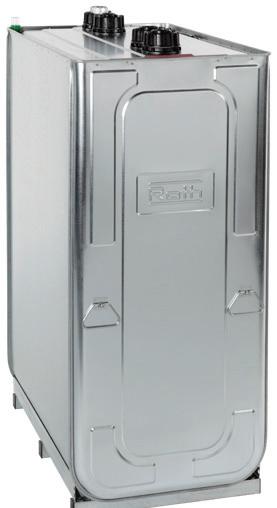
•
•
industry I wanted my career to be in,” Canfield tells NOLN. “And when it comes to finance and accounting, most things stay the same from industry to industry.”
Many skill sets and career paths can cross industries and verticals. Finance is one task that requires little transition. While mechanics and technicians are highly trained in specific functions, hiring managers should consider looking for the best candidate rather than “related” experience in fields such as accounting, sales, marketing, front-of-shop, and even management roles.
Other employees at Costa Oil welcomed the new financial administrator. “I found that the employees inside of the company were very excited to having me join the team, even without my quick lube experience,” Canfield explains. “It was a position that was needed for the company, and these employees knew it would make their lives easier.”
A learning curve can be company-specific, not just industry-specific. Therefore, an adjustment period should be
expected, not dreaded.
“There was definitely a learning curve to this. I’d say it took me about eight months to really get a feel for the quick lube side of things,” Canfield recalls.
Some of the particulars the administrator took time to learn included ordering, dealing with customers, and understanding how stores are supposed to operate. Costa Oil provided education and time for Canfield to build Canfield’s knowledge and experience.
Finding the right candidate may sometimes require going outside of the industry—some out-of-the-box consideration—and it can benefit the business. It is the skills, more than the experience, that can often make a good fit an excellent fit for a candidate.
“I feel my skills that I brought to Costa Oil that were of value were my accuracy, frugal mindset, technological skills, and my self-motivation,” says Canfield. “With these skills, I think that Costa Oil over the last year has made a few huge steps to becoming a great quick lube company.”
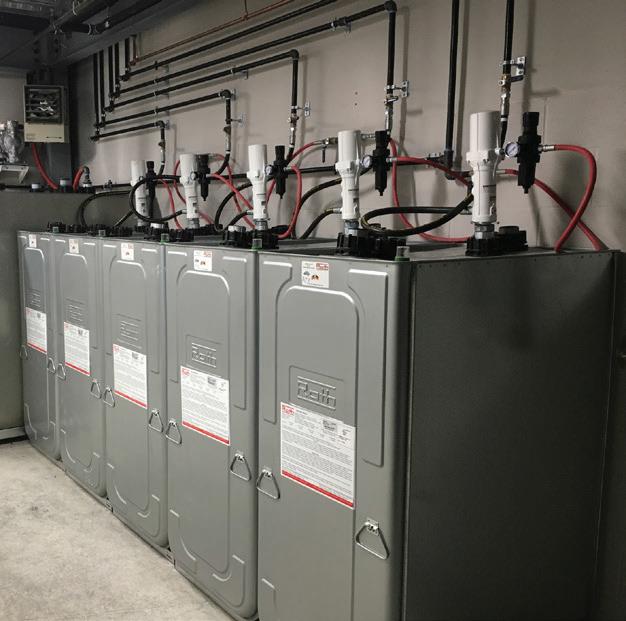
Without a plan that establishes attainable, measurable benchmarks and a clear timeline, your goals are far less likely to be accomplished this year



Adam Tatum is director of operations for the Virginia Group, a Jiffy Lube franchisee with 11 locations.
He has over a decade of experience in the industry with a proven track record of building customer counts and sales, as well as using innovative ways to bring a new look to the automotive field for both the customer and the employee. Performance comes from growing your business through people.
IT HAS COME TO THAT TIME AGAIN. THE start of a new year and a new opportunity to take your business to the next level.
Each year we see people se ing their new year’s resolutions for the coming months. I bet that you have also done some of this yourself. How many did you actually achieve? The reason that so many fail in these goals is that they do not set clear expectations to reach them. The best way to do this is to use the S.M.A.R.T. method when laying them out. This is a basic framework for se ing goals and making them achievable. Let’s break this down.
The S stands for Specific. This means that you need to get deeper into it than “I want to make more sales this year.” You need to use the five W’s and the H to get this right. You have all heard this in school. Who, What, Where, Why, When, and How. So, using this methodology, the better goal to set would be as follows:
I want to increase my net sales in my store by $100,000 in 2026.
I want to make $25,000 in each quarter by increasing my car count by X and my store TA by Y.
This gives you a clear goal to work toward hitting, and you have it broken down into quarters, allowing you to increase or decrease the next quarter based on how you are doing.
The M stands for Measurable. This one is self-explanatory in that you cannot achieve what you cannot measure. In this case, is my goal specific? Yes, I want to hit $100,000 in additional sales in 2026. Is it measurable? Yes, I can track my gains or losses toward this goal daily, weekly, monthly, or quarterly.
The A stands for Attainable. Now this is where you must be realistic and make sure that
what you set can be achieved. If your $100,000 goal is doubling what you currently do, then this is not a goal that can be easily reached. If you are in a million-dollar store location, that is an increase of 10%. So, we will use that as the benchmark for my set goal above. If I want to increase my location by that amount in a year, I need to generate an additional $8,333 a month or $334 per day on an average monthly opening period. I can achieve this by increasing my car count by two or three cars a day, or through a combination of cars and a ticket average increase.
The R stands for Relevant. Is this goal something that will benefit you, others, or your business in general? That’s what you need to ask yourself when you get to this section. Why am I se ing this goal? In our case, we want to increase our sales. By doing this, I can increase my revenue, my ability to hire and put more people on the floor, and operate at a higher profit.
The T stands for Time-Based. You want to set goals that are based on a period to achieve the desired effect. I could say that I want all my team at 100% computer-based training levels, but if I never put a date by which to do this, it would not be measurable. You need to set clear times so that you can mark gains and losses. In our goal, we set a period of one year, with quarterly checks for progress. Our goal is in line with the method.
Now this is how you look at each goal that you want to set. You can set them weekly, monthly, or yearly. The idea is that you can answer each of the five steps and have a clear path. If you hit a letter and you cannot tie it back to the goal, then adjust the goal until you are able to meet all five sections for S.M.A.R.T. By doing so, you will find that you will start hitting a lot more of these and be less like the new year’s resolution person who quits a few months in.




The 2026 NOLN Operator of the Year Award nominations are now open!
FOR DECADES, National Oil and Lube News has recognized elite quick lube shop owners with its annual Operator of the Year Award.
Since 1989, the NOLN Operator of the Year has been presented to operators who excel in all aspects of shop ownership—from business performance to staff leadership to community involvement.
NOLN Operator of the Year Award nominations are evaluated based on the following criteria:
• Demonstrate exceptional business performance
• Personal or professional achievements
• Examples of staff leadership/ mentorship/professional development
• Examples of community involvement
• What makes the shop owner stand out from his/her peers
To qualify for the NOLN Operator of the Year, nominees must own a quick lube facility, either an independent business or franchise location. Single- and multisite operators are eligible.
To submit a nomination or for more information, visit noln.net/awards