Weighing procurement amid uncertainty Page 32 HOW TO SAVE TIME IN 2026 Page 38
Cover Story
12 Trucking by the Numbers
The for-hire sector su ers, while the private sector grows. Here’s our annual look at the facts and figures that drive the trucking industry.
EQUIPMENT
Feature
32 Caught in the middle
Truck fleet owners face critical decisions amid EPA ’27: buy new equipment, extend truck life cycles, or lease to manage uncertainty.
TECHNOLOGY
38 Save time and boost energy
Using technological solutions like weigh station bypass services and reserved parking, fleet leaders can reduce wasted time, fuel, and HOS violations to improve e ciency and profitability.
40 50 years, still fresh
Four Seasons’ private fleet fuels enduring success amid unpredictable conditions.
Image: Eric Van Egeren, generated by Shutterstock/AI
Image: Eric Van Egeren, generated by Shutterstock/AI
Photo: Sunrise Transport
Photo: Prairie Farms
Freight recession, nuclear verdicts, and trucking’s future
What are the most urgent issues keeping fleet executives and drivers up at night?
Check out The Fleet Lead podcasts recorded during American Trucking Associations’ management conference in San Diego this fall. Rebecca Brewster of the American Transportation Research Institute (ATRI) and motor carrier executive Andy Owens of A&M Transport break down ATRI’s annual Top Industry Concerns survey with FleetOwner’s Josh Fisher. For the third year in a row, the prolonged freight recession is the No. 1 issue, but the conversation reveals the real-world operational pain. FleetOwner.com/podcasts
Online Exclusives
Webinars
How top fleets balance costs: Running an efficient fleet isn’t about squeezing every mile from every vehicle. It’s about knowing when and where to put your assets to work. The most successful fleets treat utilization as a strategic lever, not a static metric. This free webinar shares tips on how to balance workloads across vehicles, sites, and life cycle stages while cutting costs, avoiding unplanned downtime, and planning smarter budgets for the year ahead. FleetOwner.com/BalanceCosts
Sign Up
Online
White Papers
Transform into a high-performing fleet: As your fleet expands, disconnected branches and fragmented tools can quickly erode visibility, consistency, and profit. The Multi-Location Playbook shows you how to unify all sites under a single operating model built for scale and control. See how leading fleets are transforming disconnected operations into one high-performing, data-driven network in this free white paper. FleetOwner.com/transform
Delivered to your inbox, FleetOwner newsletters provide regular industry news, event updates, and breaking news alerts. Manage your email subscriptions at FleetOwner.com/subscribe.
Connect with Us
MEMBERS ONLY
Access comprehensive reports, engaging industry topics, and exclusive multimedia content...and best of all...it’s FREE. Register at FleetOwner.com/members.
Market Leader
Commercial Vehicle Group
Dyanna Hurley dhurley@endeavorb2b.com
Editorial Director
Kevin Jones kevin@fleetowner.com @KevinJonesTBB
Editor in Chief
Josh Fisher josh@fleetowner.com
@TrucksAtWork
Senior Editor
Jade Brasher jade@fleetowner.com
Refrigerated Transporter Editor
Jason McDaniel
Editor
Jeremy Wolfe jeremy@fleetowner.com
Digital Editor Jenna Hume jenna@fleetowner.com
Art Director Eric Van Egeren
VP Corporate and Customer Marketing
Angie Gates angie@fleetowner.com
Customer Marketing Manager
Leslie Brown leslie@fleetowner.com
Production Manager
Patricia Brown patti@fleetowner.com
Ad Services Manager
Karen Runion
Contributors
David Heller
Jim Park
Gary Petty, Private Fleets Editor
Kevin Rohlwing
Seth Skydel
Endeavor Business Media, LLC
CEO Chris Ferrell
COO Patrick Rains
CDO Jacquie Niemiec
CALO Tracy Kane
CMO Amanda Landsaw
EVP Transportation Group
Chris Messer
“Competition
Pushes Us Beyond Excellence”
A message to our competition out there.
Competition gives us the greatest opportunity to improve. The quality you demand inspires us, and that’s how Scotseal X-Treme was born:
- Over 5,000 hours of oil retention under stress conditions
- 10× better oil retention than other brands
- Real savings in maintenance costs
Scotseal X-Treme delivers performance you can rely on. Check out our latest test video to see what happens when a wheel seal fails, and how wheel bearing failures can be avoided with our industry leading waveseal technology.
Thank you for pushing us beyond excellence.
Watch the full test in action.
DJ KIMSEY President Vehicle Aftermarket North America
SCOTSEAL X-TREME
Save on maintenance, invest in performance.
Focus turns to survival
How can fleets cut costs and optimize operations?
By Josh Fisher Editor in Chief
@TrucksAtWork
Deep into the longest freight recession ever, the trucking industry is being forced to optimize now or risk being priced out later.
THE 2025 AMERICAN Trucking Associations fall conference was less about growth strategies and more of a high-level meeting for carrier survival.
ATRI President Rebecca Brewster captured the crisis starkly: “Costs continue to go up. Rates are down. Fleets aren’t making money,” she told me on the expo floor in San Diego.
A prolonged freight recession and manufacturers’ push to adopt new technologies to increase efficiency and survive the downturn dominated the event.
ATA Chief Executive Chris Spear underlined the political stakes: “With more than three decades in government relations, I have never witnessed anything close to what we’re navigating right now.”
This uncertainty translates into painful questions. Andy Owens, CEO of A&M Transport, captured the severity: “We’re having to make some pretty hard decisions right now, tough staffing decisions. One thing I do know is you can’t take compensation away from drivers. That’s a death wish. You’ve got to look for other ways to cut corners.”
Finding operational savings without sacrificing safety is nothing new, but in these times, every decision feels magnified.
Cost crisis and elusive recovery
The freight recession continues, with uncertainty—what ATA economist Bob Costello called the “new curse word”—hitting balance sheets hard.
ATRI data showed nonfuel operational costs have soared to $1.78 per mile, translating to negative profit margins for many carriers. Spiraling insurance costs and potential tariffs on imported tractors could result in further price increases. Costs are outpacing revenue, forcing carriers to make deep cuts.
Artificial intelligence as a lifeline
Increasing costs and flat rates have turned technology into a survival tool. Despite low cash flow, fleets must decide where to invest in AI solutions.
Emerging AI tools address the cost-permile crisis. BeyondTrucks showcased a Silicon Valley solution to reduce the $150 billion to $200 billion in annual waste from poor load planning. Penske’s AI-powered Catalyst platform shows how focusing on KPIs— reducing idling, improving maintenance adherence, and utilizing aero packages—can yield immediate results.
Samantha Thompson, Penske’s VP of customer success, explained how AI ties operations and preventive maintenance: “PMs aren’t just about making sure your vehicles are in tip-top shape; it also impacts how well you’re utilizing fuel,” she noted. Failure to maintain PMs leads to unplanned repairs, cutting directly into the bottom line.
OEM efficiency: Diesel still rules
After years focused on battery electric, the ATA returned to trucking’s diesel roots. Companies like Volvo Trucks and Mack Trucks highlighted new tractors offering significant improvements in fuel efficiency and safety.
Even as analysts forecast fewer Class 8 truck sales, OEMs are reminding fleets that new equipment can yield substantial savings. Peter Voorhoeve, president of Volvo Trucks North America, noted that for carriers with 3-4% return on sales, saving “10% on fuel, your profits could go from 3% to 6%.”
While the freight recession persists, it will eventually turn. Jake White, Peterbilt’s director of product marketing, summarized: “The market turns on a dime. The key is to ensure your fleet age is in a good place and to continue replacing trucks on the right cycles. The new trucks are achieving great fuel economy.”
Pragmatic shift in regulation
Although EVs may grow, ATA members focus on pragmatic goals. EPA ’27 regulations still loom, but renewable diesel has gained interest. Carriers in highly regulated regions view renewable diesel as a cost-effective, readily available carbon reduction solution, bypassing the issues plaguing EV adoption. FO
East Dump Trailers: Strength Where It Counts
The more you look at East, the more one thing becomes clear: These trailers are built to take the load — and keep going.
From our one-piece aluminum I-beam chassis with fewer welds to the Genesis® smooth sidewall design, East Dump Trailers and Dump Truck Bodies are built with strength where it counts. Interlocking floor plates, cross members, and sidewalls create a rigid structure with superior twist resistance when raised.
Robotic vertical welds reduce bowing and corrosion. Solid box-extruded cross members deliver unmatched floor support.
Whether you’re running one tractor-trailer or hundreds, you’re choosing a trailer built to stand up to the demands of the job—day after day, load after load.
Look how much we’ve done so far
Women In Trucking Accelerate! showcased women’s passion and resilience
by Jade Brasher
DALLAS— I’ve covered trucking for nearly eight years, but nothing I’ve experienced so far could have prepared me for what I’ve seen as a firstyear attendee at Women In Trucking’s Accelerate! Conference. That’s because most of the seats at trucking industry events are filled with men. I’ve grown accustomed to being the only woman in the room. Now that I’m attending a conference with only a handful of men in attendance, how weird is it that I, a woman working in the trucking industry, feel out of my element?
Men dominate this industry. Big fleet leaders? Men. CEOs of leading technology providers? Men. Directors of sales and marketing? Men. It’s the men who are often given the spotlight, praised, and celebrated in this industry.
While I never want to discount an individual’s achievements—leaders in this industry don’t become such without hard work and skill—I will say that attending this conference has been a breath of fresh air.
Here, women are sharing their secrets, offering tips, saving each other’s numbers, and cheering each other on. Never have I been to a conference where a panelist asked for an audience member’s input, and the audience member walked to the stage as the crowd gave them an encouraging round of applause.
Truly, the atmosphere here is electric. Whether the tendency to show this much love and appreciation for each other is simply in our nature or born out of working in a field where we’re the minority is yet to be known, but it’s a movement that I want to be part of. I believe every company in this industry should strive to be part of the movement, too.
Since the 2024 presidential election, DEI (diversity, equity, and inclusion) has become a curse word in the workplace.
Though some companies have stuck by their efforts to continue hiring women, I did once fear that without a federal mandate to hire a diverse and female workforce, the growth of women in trucking would plateau. Fortunately, after hearing the stories and meeting the faces of the women who ensure our industry runs day after day, that worry is far behind me.
Before attending this show, I’d never seen a group more passionate about trucking. I’d never seen a group more intentional about reaching out a hand and pulling others alongside them. Rest assured, the women in this industry will help other women come into the industry behind them. And now, it’s time we
ask the same from our male allies in the industry.
Men, we need your support. We need you to speak up for us, bring us to conferences that women on your team have not previously been to, and join us here at next year’s Accelerate! Conference and other women-led initiatives within the industry.
Your support will help us continue breaking barriers and making the industry better. After all, studies show that gender-diverse organizations are more successful than those that aren’t. And as the saying goes, when one of us wins, we all win.
So, men, take action. Show up. Speak up. Be a catalyst for change. FO
Women in Trucking Accelerate! Conference 2025
Photo: Jade Brasher | FleetOwner
Photo: kali9 | 2233441216 | Getty Images
GAIN SC ALE GAIN GROUND
When demand goes up, you may need to scale up, and fas t. Whether one or one hundred, Penske Truck Rent al provides your busines s with world - clas s, well - maint ained vehicles ready to rent at a moment ’s notice Jus t sc an the code or c all 84 4 - 554 -1728.
RETHINKING WINTER MAINTENANCE
5 STRATEGIES TO KEEP YOUR OPERATION MOVING
When winter hits, the focus for many fleet operators is simple—keep equipment running and deliveries on time.
The key is to take a proactive, systemsbased approach to winter maintenance. From fuel management to lubrication practices, small operational choices can add up to improved reliability. Here are five strategies to help your fleet perform at its best all season long.
1
TAKE COLD STARTS SERIOUSLY
Every cold start is a high-friction event. When oil thickens at low temperatures, it can take several seconds for it to fully circulate through the engine. During that lag time, metal components operate with minimal lubrication, creating the perfect conditions for accelerated wear. Over time, wear can lead to reduced efficiency, premature equipment failure, and higher maintenance costs.
The fix isn’t just about warming up the truck; it’s about choosing the right lubricant. Synthetic and winter-rated oils, such as Cenex® Maxtron® Enviro-Edge® 5W-40, maintain their flow properties at lower temperatures, allowing for quicker circulation and more immediate protection during startup. By making that switch, fleets can reduce wear, improve fuel economy, and minimize costly downtime associated with coldweather failures.
2
PREVENT FUEL GELLING BEFORE IT STOPS YOU
Few things derail winter operations faster than fuel gelling. While emergency additives can sometimes save the day, the best strategy is being proactive.
Start by reviewing your fueling plan before cold weather hits. Work with your supplier to ensure your tanks are filled with an appropriate winter blend, typically a blend of #1 and #2 diesel fuel with cold flow additives, suited for your region’s climate.
Cenex offers winterized premium diesel fuel products that are engineered to keep your operation moving through the winter months, including Cenex® Wintermaster® which is formulated specifically for extreme weather conditions, or Cenex Roadmaster XL® Seasonally Enhanced for mild weather conditions and transitional seasons.
Proper tank maintenance is also important during the cold winter months to prevent fuel-related issues.
This includes draining any accumulated water, removing contaminants, and regularly replacing filters to ensure optimal fuel quality and system performance. When pairing these practices with selecting the right fuel for your region’s climate, it helps keep your fleet running reliably, even in the harshest conditions.
3
MANAGE THE HIDDEN IMPACT OF IDLING
Winter often forces fleets to idle longer; to keep cabs warm, maintain hydraulic pressure, or prevent cold starts altogether. But extended idling comes with a hidden cost: fuel dilution. This occurs when unburned diesel slips past the piston rings and mixes with engine oil. Over time, it thins the lubricant, reducing its protective qualities, and increasing component wear. According to Jon Woetzel, quality assurance manager at CHS “Hidden problems don’t stay hidden for long. What you don’t see today can cost you tomorrow.”
While some idling is unavoidable, it’s important to track it closely. Use data to identify excessive idling patterns, and when possible, schedule equipment warm-up periods strategically instead of running continuously. Oil analysis can also provide early warnings of fuel dilution before it leads to engine damage, giving maintenance teams a chance to intervene early.
Using both premium diesel fuel and high-quality lubricants helps mitigate the effects of fuel dilution, keeping engines cleaner, reducing wear, and improving reliability through the harshest months.
4
DON’T OVERLOOK SEASONAL FLUID MAINTENANCE
Winter isn’t just hard on engines, it’s hard on every fluid system in your fleet. Condensation, soot buildup, and lower operating temperatures can accelerate fluid degradation.
Hydraulic oils may thicken, transmission fluids can lose flow efficiency, and contaminants can accumulate more quickly than during warmer months. The solution is to treat fluid maintenance as a diagnostic tool, not just a checklist. Regular oil sampling and fluid analysis can reveal early signs of wear, contamination, or dilution, helping you make data-driven decisions about service intervals. Cenex offers a comprehensive fuel and lubricant sampling services as part of our dedication to quality. Our refined fuels sample kits can provide you with critical insights into your diesel fuel, including its cold weather characteristics. LubeScan® used oil analysis offers a quick and costeffective assessment of the health of your lubricants and equipment. These insights form the backbone of a predictive maintenance strategy that reduces surprises and keeps operations efficient. Reach out to your Cenex distributor for more information on sampling services.
5
A SMART INVESTMENT IN WINTER PERFORMANCE
Too often, winter readiness is reactive, but viewing preventive maintenance and product quality can be an investment that returns value over time.
Switching to premium products, for example, can have an impact on maintenance costs and performance. Cenex® winterized premium diesel fuels are designed
HIDDEN
PROBLEMS
DON’T STAY HIDDEN FOR LONG. WHAT YOU DON’T SEE TODAY CAN COST YOU TOMORROW.
— Jon Woetzel quality assurance manager at CHS
to help enhance low temperature operability, reduce filter plugging and provide reliable engine performance with its precisely formulated terminally injected additive package. Pairing that with Cenex® premium lubricants, which provide exceptional wear protection and cold-weather performance, offers a comprehensive defense against the stress of winter.
When equipment operates more efficiently, the savings can all contribute to a stronger bottom line.
WHY IT MATTERS
Winter will always test your fleet, but it doesn’t have to mean downtime. By taking a proactive approach, you can anticipate cold-weather challenges before they happen, use data to guide maintenance decisions, and rely on products engineered to perform in extreme conditions. Keeping your operation moving smoothly no matter what winter throws your way.
TRUCKING BY THE 2025
TThe for-hire sector su ers, while the private sector grows. Here are the industry’s key figures. by Jeremy Wolfe
rucking remains the most critical component of the U.S. economy. Fleets move the majority of the nation’s freight by value (63%). Trucks keep grocery shelves full and construction on schedule. Most of those trucks are operated by eets with ve or more power units, even though those eets represent less than 20% of the net carrier population. The value of truck eets can hardly be overstated.
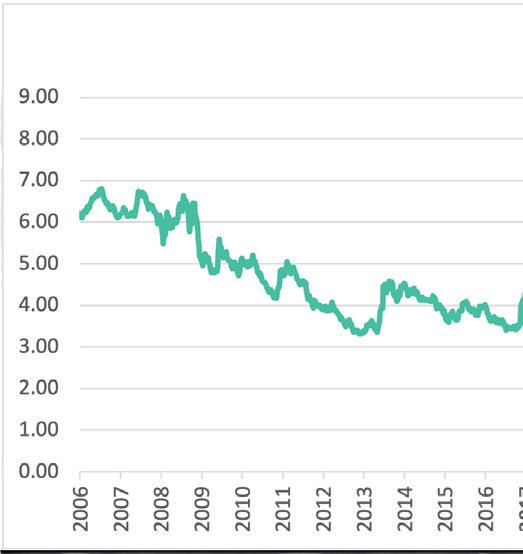
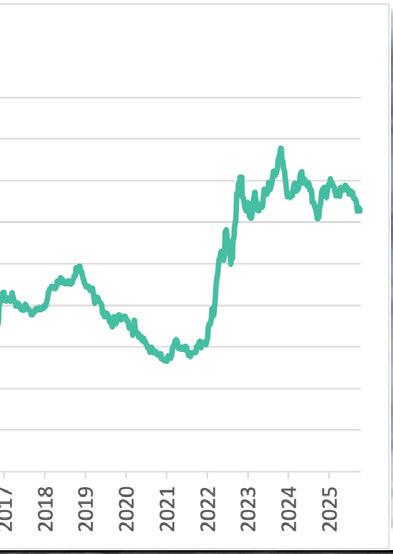
Yet “value” is something eets are sorely wanting in this market’s recession. Freight demand and rates remain depressed, largely due to a stagnant economy and excess trucking capacity. The average dry van spot rate is $2.03 per mile, while the average operating cost for a truck is $2.26 per mile—without accounting for many overhead costs.
The low value of hauls is bringing carriers’ margins into the red. The average for-hire truckload operating margin
fell to -2.3%, according to the American Transportation Research Institute’s (ATRI’s) 2024 survey data. Many forhire companies, especially larger eets, are shrinking their operations.
The problem is further worsened with the addition of tariffs, business decision paralysis, slowing jobs growth, and elevated interest rates. The economy is the top industry concern for the third year in a row in ATRI’s latest industry issues survey.
While for-hire suffers hard times, private eets are growing. Many private eets had to trim their capacity, but private eets overall added roughly 90,000 power units. The National Private Truck Council found that private eets continue to grow the volume of shipments they move. Most (77%) of these carriers did not generate a pro t, according to NPTC, but they allowed greater cost control and operational certainty.
Operating with less concern for pro tability seems to pay off when managing drivers, who tend to be better paid under private eets. Private carriers’ driver turnover (18.4%) is a fraction of for-hire driver turnover, which is almost always over 30% and regularly exceeds 50%.
And amid all this turbulence, the industry still improves. Technologies are nding new ways to combat fraud, improve fuel ef ciency, and save labor. Carriers are improving their safety at every step, for one; although insurance costs continue to rise, the overall number of large truck crashes is still declining— roughly by 3% each year.
FleetOwner gathered the latest trends, challenges, and statistics across several industry organizations. Trucking By the Numbers 2025 defines today’s trucking industry across the next several pages of charts, gures, and datapoints. FO
Image:
Eric Van Egeren, generated by Shutterstock/AI
In 2023, highway transportation moved 240 million tons of freight , worth $933 billion.
Those hauls made up 63% of the nation’s freight trade by value and 28% of the freight trade by weight.
Source: Bureau of Transportation Statistics
49,333 carriers (8.5%) operate 10 or more trucks
Source: American Trucking Associations
1,091,526 carriers are registered as for-hire , with 3,894,128 vehicles.
790,847 carriers are registered as private , with 3,359,382 vehicles.
172,973 carriers are both , with 1,039,043 vehicles.
Source: Federal Motor Carrier Safety Administration
How fleet capacity changed in the last year:
Power units: -56,647 (1.0%)
Trailers: +46,642 (0.9%)
Drivers: +164,485 (3.4%)
Source: ProsperFleet by Valgen, companies
1,523,000 people are employed in U.S. truck transportation
Source: Bureau of Transportation Statistics
OPERATIONAL COSTS
Source:
Source:
Protective Insurance is now Progressive Fleet & Specialty Programs
We’re continuing to offer customized protection and risk-sharing options for large & medium fleets, independent contractors, and more.
Average linehaul spot rates * :
Dry van: $2.03
Reefer: $2.39
Flatbed: $2.48
* average rates per mile, including fuel surcharge, Sept. 2024, to Sept. 2025
Source: DAT iQ
* average weekly change in average spot rates per mile, including fuel surcharge, Sept. 2024, to Sept. 2025
Average weekly revenue per truck: Dry Van: $4,457
Refrigerated: $5,802
Flatbed / Oversize: $4,598
Tanker: $5,521
Other: $5,093
Source: American Transportation Research Institute
TRUCKING
van: $2.41 Reefer: $2.74 Flatbed: $3.06
Source: American Transportation Research Institute
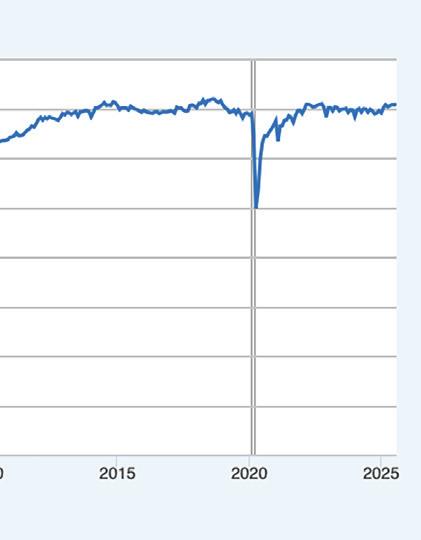
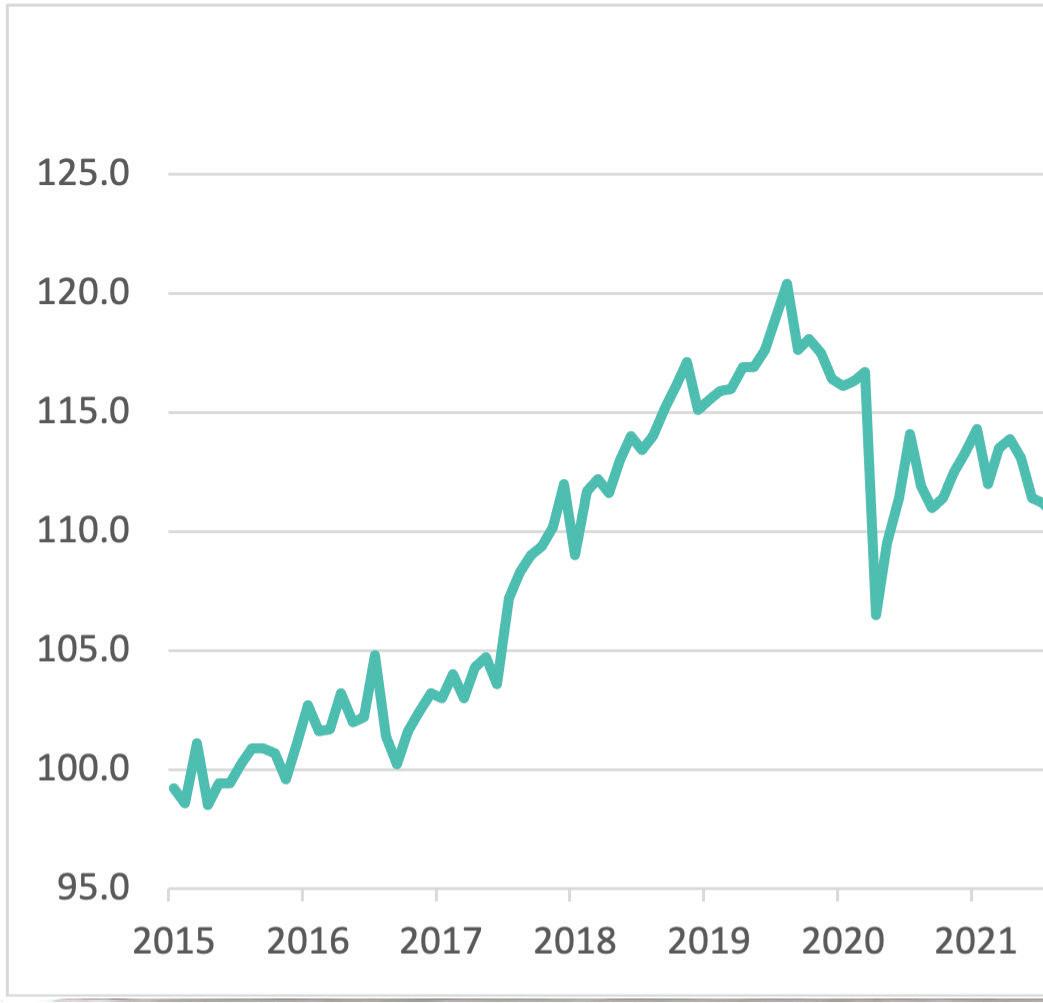
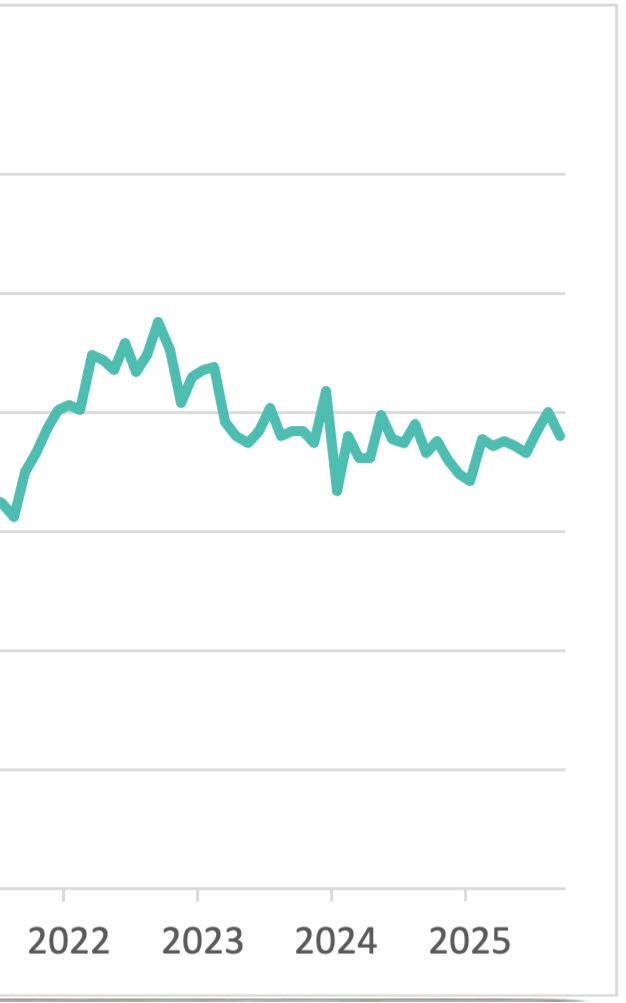
Source: DAT iQ Average annualized driver turnover rates (2024) For-hire truck tonnage index
5.7
Reefer: 9.5
Flatbed: 25.6
* mean load-to-truck ratios, Oct. 14, 2024, to Oct. 19, 2025
Source: DAT Freight & Analytics
Source: Bureau of Transportation Statistics; American Trucking Associations Average linehaul contract rates * :
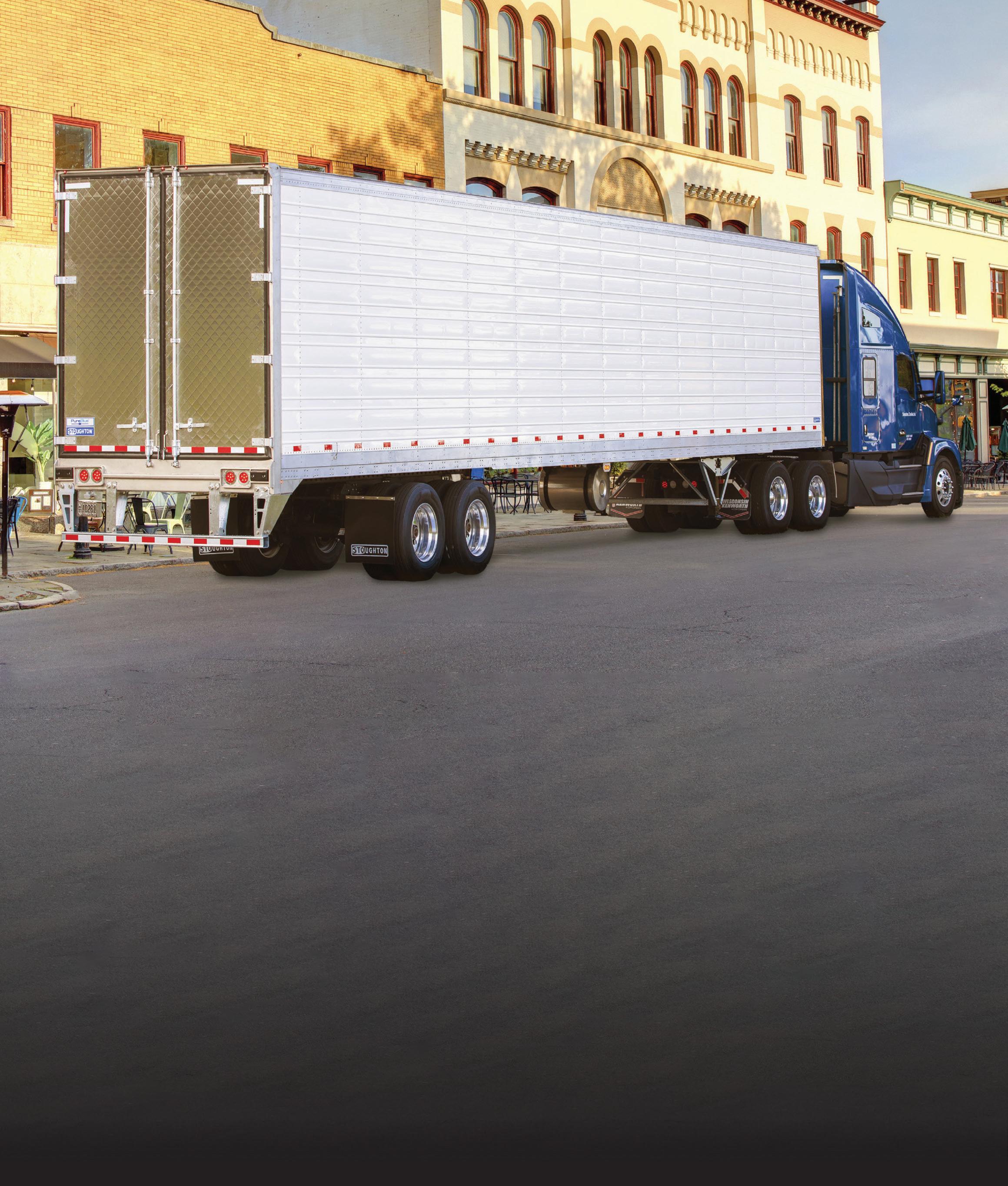
PureBlue has been independently tested and proven to outperform competitor units across key performance metrics. On average, it is 18.2% more thermally efficient, helping keep cargo colder for longer periods while potentially reducing annual fuel costs by up to $910. Its design is 27.7% more airtight on average than all competitor units tested, minimizing temperature fluctuations and extending the life of the refrigeration system. Additionally, PureBlue is built lighter than most competitor models, allowing for greater payload capacity and boosting overall profitability. With these advantages, PureBlue delivers superior protection, efficiency and economic value for your fleet.
Proven independent 3rd party testing by Element Materials Technology*, Huntsville, AL.
Private Fleets by the Numbers
The National Private Truck Council, the national trade association dedicated to representing private motor carrier fleets, annually assesses how its members compare to each other with its Benchmarking Survey Report. The 2025 report compares the metrics of 104 respondents to each other and past annual data.
Top benefits of running a private fleet: Customer service (89%) Cost
77% of private fleets are cost centers, while 22% are profit centers
Source: National Private Truck Council
BUILT FOR UPTIME.
Industry concerns going into 2026 TRUCKING BY THE TOP CONCERNS
Economic concerns continue to dominate the minds of trucking industry stakeholders as the prolonged freight recession drags down optimism heading into 2026. But surging right behind it are legal and regulatory worries that threaten fleet stability, according to the American Transportation Research Institute’s annual ranking of trucking’s most pressing issues. Still squeezed by a historic, three-year freight recession, the economy is the industry’s top concern for the third consecutive year. The complete report can be downloaded at truckingresearch.org.
1. Economy (No. 1 in 2024)
For the third straight year, the economy was the top-ranked issue. ATRI researchers noted the combined impacts of rising operational costs (non-fuel costs at a record-high $1.779 per mile) and the prolonged, three-year freight recession are leading to more carrier bankruptcies.
3. Insurance cost/availability
(No. 4 in 2024)
Up one spot from last year, this issue is now back at No. 3, where it ranked in the inaugural 2005 survey. Insurance premiums continued to rise (up 3% per mile) in 2024.
5. Driver compensation (No. 5 in 2024)
Driver compensation held its No. 5 ranking overall and was the top concern for truck drivers. Driver wages rose by just 2.4% in 2024, half a percentage point less than inflation.
7.
English Language Proficiency for drivers (New to Top 10)
English Language Proficiency was added to the list following a significant number of write-in votes in 2024 and ranks as the third most pressing concern for truck drivers.
9. Driver training standards (New to Top 10)
Concerns about driver training standards garnered enough votes from all respondents to rank No. 9 overall, though it has been on the truck driver list since 2019.
About the survey: More than 4,200 trucking industry stakeholders participated in this year’s survey, including fleet executives, drivers, suppliers, law enforcement, and others who play a role in nationwide transportation operations. Compared to 2024, the surveyed group increased by 14%.
2. Lawsuit abuse reform
(No. 3 in 2024)
Lawsuit abuse reform rose one spot to reach its highest ranking in history. It reflects the ongoing crisis of “nuclear verdicts” and the tactics employed by the plaintiff bar.
4. Truck parking (No. 2 in 2024)
The lack of available truck parking fell two spots overall but remains a critical infrastructure challenge, ranking second among truck drivers’ most crucial issues.
6. Compliance, Safety,
Accountability (CSA) (No. 7 in 2024)
The Federal Motor Carrier Safety Administration’s Safety Measurement System rose one spot this year. Carriers still have concerns about its accuracy, particularly regarding enforcement disparities across different states.
8. Diesel emissions regulations (New to Top 10)
Debuting at No. 8, diesel emissions regulations supplant previous anxieties over zero-emission vehicles, which tumbled all the way to No. 23 this year. The focus is on the heavy-duty NOx rule for model year 2027 trucks, which industry leaders expect will substantially increase the cost of new equipment.
10. Artificial
(New to Top 10)
intelligence
Concerns center on potential job elimination and AI-enabled fraud and theft.
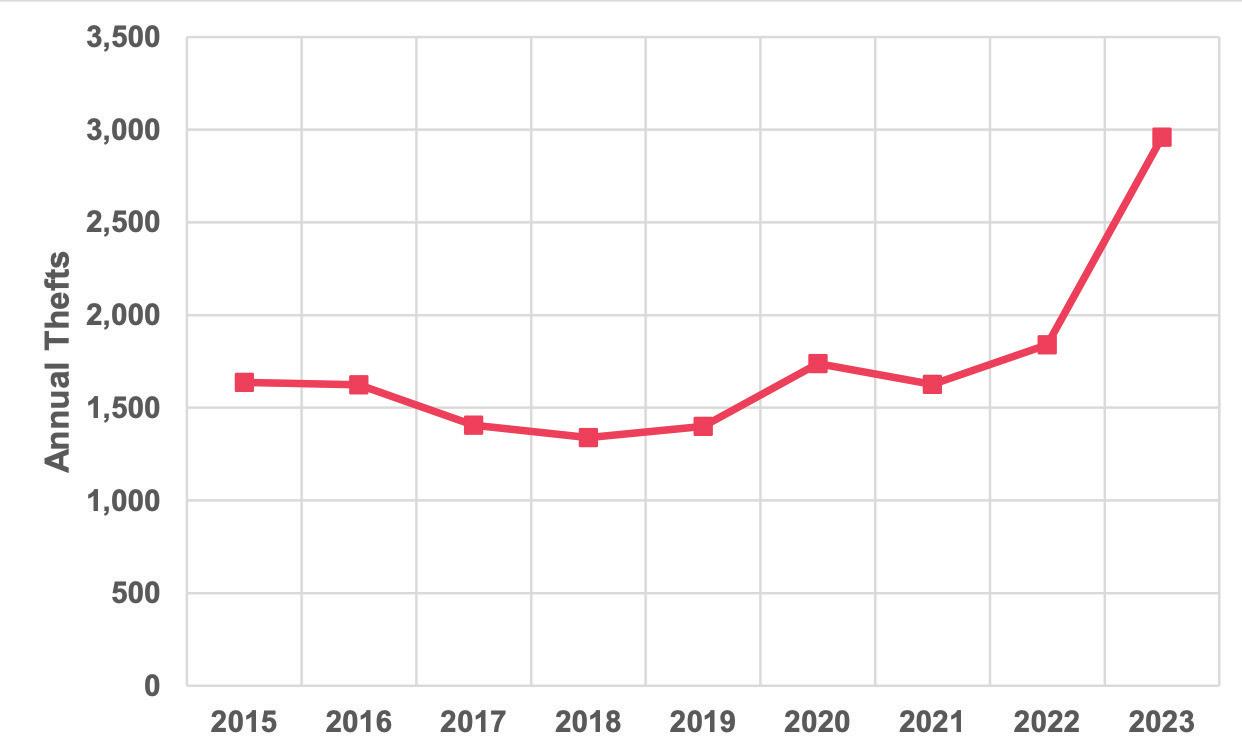
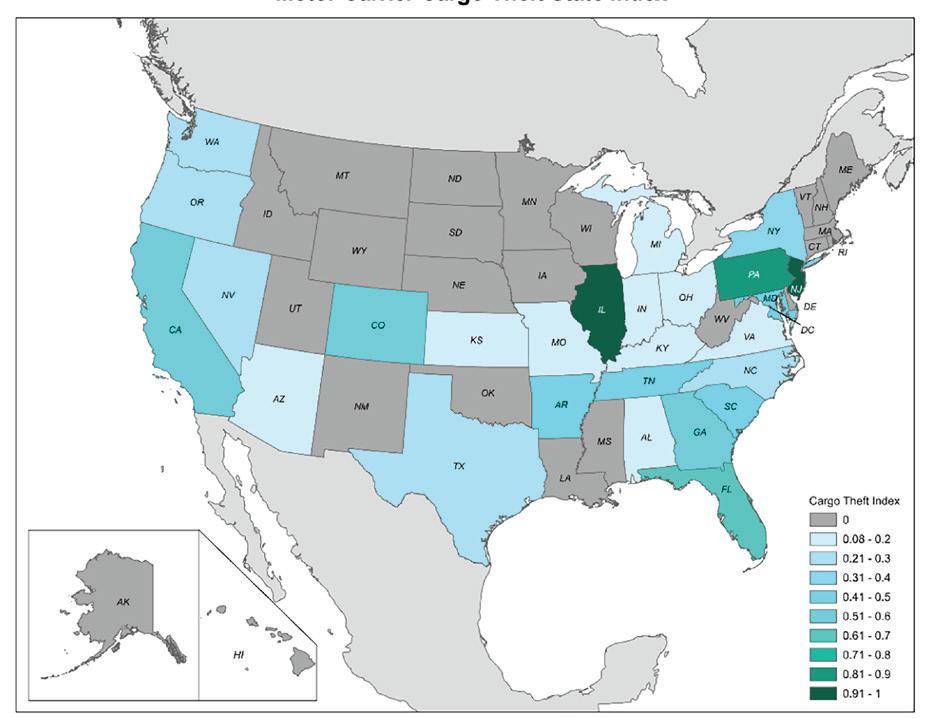
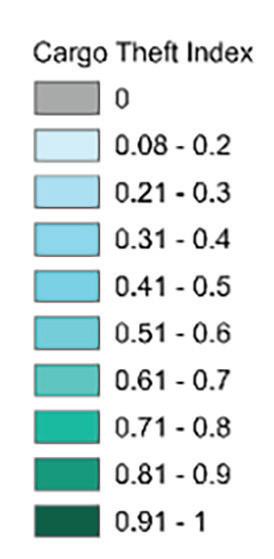
Motor carrier cargo theft state index Average value of cargo stolen
Top theft locations: • Warehouses • Distribution Centers • Parking spaces
Source: CargoNet
what’s in your biofuel?
insights from kelsey erickson and dave slade
Hopefully it hasn’t already happened to you. As more blends of biodiesel and renewable diesel enter the market, and along with them more resellers, buyers may be told fuel is low cloud point only to find gelling when winter rolls around. But buyers don’t have to take a supplier’s word for it. Scan the QR code for the full story.
Source: American Transportation Research Institute
Source: American Transportation Research Institute
Tariffs timeline
Feb. 1: Threatened tariffs on Canada, Mexico, China
The White House promised broad 25% duty on imports from Canada and Mexico and 10% tariff on China.
Feb. 3: North American tariffs delayed
Feb. 4: 10% tariff on Chinese imports
TRUCKING BY THE TARIFFS
April 2: Threatened sweeping global tariffs
Trump announced tariffs on nearly all imports: a baseline 10% duty with country-specific tariffs based on trade deficits as high as 49%, effective April 14.
April 3: 25% on automobiles
A 25% tariff on foreign-made automobiles takes effect, with USMCA exemptions.
April 5: 10% baseline tariff takes effect
April 9: Trump pauses country-specific tariffs
April 10: 145% on Chinese imports
April 29: Executive order prevents some tariff stacking
March 3: Canada, Mexico, China tariffs
The administration implemented 25% tariffs on Mexico and Canada, and raised tariffs on China (20%)
March 12: 25% steel, aluminum tariffs expanded
The White House expanded tariffs on imports of steel and aluminum, raising aluminum duties from 10% to 25% and removing key exemptions
August 1: Canada import tariffs up to 35%
August 1: 50% for semi-finished copper, intensive copper derivatives
August 7: Global tariffs take effect
Sweeping country-specific “reciprocal” tariffs, ranging from 15% to 40%, take effect after multiple delays.
July 7: Global tariffs paused again Country-specific “reciprocal” tariffs again paused until August 1
August 19: Expansion to 50% steel, aluminum tariffs
May 3: 25% on auto parts
June 4: Steel, aluminum tariffs double to 50%
June 23: 50% for additional steel derivative products
May 12: China’s 145% lowered to 30%
May 29: Federal court rules against IEEPA tariffs
The U.S. Department of Commerce suddenly expanded Section 232 tariffs, nearly doubling the value of affected goods, including dry van trailers, reefer trailers, and much more.
August 29: De minimis exemption suspended for almost all imports
August 29: Appeals Court rules against IEEPA
The ruling will not be enforced until the Supreme Court weighs on the matter around November.
September 25: Threatened string of tariffs on goods, trucks
Trump announced a 25% duty on all heavyduty trucks, 50% on household goods, 30% on upholstered furniture, and 100% on certain pharmaceutical products.
October 7: Truck tariffs delayed to November 1
October 14: Lumber tariffs
10% tariff on softwood lumber, 25% tariff on upholstered furniture, 25% tariff on kitchen cabinets. Exemptions for UK, EU, and Japan.
November 1: 25% tariff on Class 3-8 vehicles and parts
A 25% tariff hit imports of medium- and heavy-duty vehicles (and parts). The duty does not stack with other tariffs— nor does it affect USCMA-qualifying imports.
Photo: Matt Brashears | 2627515751 | Shutterstock
Photo: casa.da.photo | 2523349199 | Shutterstock
Photo: lenic | 2601947475 | Shutterstock
Photo: Trong Nguyen | 2439838067 | Shutterstock
Photo: lev radin | 2644275941 | Shutterstock
Detroit, Michigan 99,114,117,577
Ysleta Port of Entry 99,074,502,080
Port Huron, Michigan 85,741,015,031
Buffalo-Niagara Falls, New York 73,039,025,387
Laredo, Texas, remains by far trucking’s greatest trade gateway by value of goods moved. Trucks moved $291 billion in goods through Laredo from August 2024 to July 2025.
Source: Bureau of Transportation Statistics
Laredo, Texas 291,653,473,959
Detroit, Michigan 99,114,117,577
Ysleta Port of Entry 99,074,502,080
Port Huron, Michigan 85,741,015,031
Buffalo-Niagara Falls, New York 73,039,025,387
Computer-related
Computer-related machinery and parts 236,709,838,535
Electrical machinery; equipment and parts 165,010,492,107
Vehicles other than railway 137,054,350,568
Plastics and articles 44,709,841,083
The greatest transborder trucking commodities by value are electrical components .
Source: Bureau of Transportation Statistics
On average, large truck crash totals decreased 3% each year since 2021.
Source: Federal Motor Carrier Safety Administration, 2021 to 2024
There were 168,188 crashes involving large trucks in 2024. Those crashes involved 74,314 injuries and 4,686 fatalities.
Source: Federal Motor Carrier Safety Administration
During weekdays, 70% of truck accidents occur at daytime.
During weekends, 64% of truck accidents occur at nighttime.
Source: National Highway Traffic Safety Administration, 2023
70%
64%
The worst congestion bottlenecks and their average speeds:
• Fort Lee, NJ: I-95 at SR 4 — 26.6 mph
• Chicago, IL: I-294 at I-290/I-88 — 41.8 mph
• Houston, TX: I-45 at I-69/US 59 — 29.9 mph
• Atlanta, GA: I-285 at I-86 North — 35.4 mph
• Nashville, TN: I-24/I-40 at I-440 East — 38.1 mph
Source: American Transportation Research Institute
Source: American Transportation Research Institute
There were 3,012,570 inspections in 2024, uncovering 5,194,784 violations.
Source: Federal Motor Carrier Safety Administration Clearinghouse violations in 2024: 62,363
Source: Federal Motor Carrier Safety Administration
READY FOR EVERY TURN
JOIN
US FOR WILD WEST
WEDNESDAY
Kick up your heels at this lively bash on Wednesday evening at the Gaylord, packed with live music, line dancing, games and good ol’ fashioned fun. No ticket required.
Join us in Grapevine, Texas this January to make sure you’re leading with confidence and staying in control as you face the road ahead. Explore the latest heavy duty aftermarket products, connect with your industry and learn how to improve your operations using data-driven solutions.
JANUARY 19-22 GRAPEVINE, TEXAS See the Signals. Make Your Move. | hdaw.org
by David Heller
Ringing in enforcement changes
Stronger CDL enforcement aims to uphold standards and reduce safety risks
IF YOUR OFFICE PHONE rings, and you are not there to answer it, does it make a noise? While you might wonder if a tree makes a sound when it falls in the woods with no one to hear it, you can be certain that if you miss that office phone call, it will just lead to an email or text message alert on your computer or phone. My phone, email, text, and voicemail have all reached their limits because of recent enforcement actions related to the commercial driver’s license (CDL).
The Safety Fitness Determination standard was recently highlighted as problematic following the revelation that over 640,000 FMCSAregulated motor carriers operate without a safety rating.
It seems that with every new day, actions regarding the CDL are changing the professional driver landscape in our industry. English language proficiency and non-domiciled CDL rules are not really new, but in the
lax environment the enforcement had transitioned into, they indeed fell by the wayside. With that in mind, enter Administrator Derek Barrs, confirmed in early October, who brings leadership and an enforcement background to spearhead a new era of compliance. And enforcement is what is needed.
I have the privilege of representing the very best this industry has to offer in terms of motor carrier companies operating along our nation’s interstates. But there are always motor carriers seeking to undermine the quality reputation our members display on a daily basis. Accidents will happen, but inevitably, the race to zero can only begin with stronger enforcement from those who govern.
That being said, we are beginning to experience the world as it appears. From the very beginning of driver training, the Federal Motor Carrier Safety Administration (FMCSA) has cracked down on entry-level driver training providers. Operating under a rule with a caveat of basic assumed compliance, the agency has declared war on CDL mills that seemingly expedited the training process to increase quantity rather than ensure quality. In swift action, FMCSA has removed hundreds and flagged thousands in an effort to reshape CDL training nationwide, a welcome sight for those who train the right way to create safer drivers.
The enforcement actions regarding old rules are not falling on deaf ears either. Congress is paying attention. By my count, there are about six House bills, and in some cases, companion bills in the Senate, seeking to enforce the agency’s continued oversight of compliance with the English Language Proficiency standards in the regulations. Whether it is checks at weigh stations, testing at CDL schools, or ensuring that those tests are only available in English, these standards
are being put forth to enforce 391.11(b) (2), the rule that requires a professional driver to communicate in English.
It is true that the times have put this to the forefront of our industry, but these are not the only actions we can expect. The Safety Fitness Determination standard has been under the spotlight for some time now. In light of the recent revelation that over 640,000 FMCSA-regulated carriers operate without safety ratings, the agency must begin updating the system. Again, I have the enviable position of representing motor carriers widely regarded as among the best in the business.
It’s not just my opinion but statistically proven by our friends at the American Transportation Research Institute (ATRI). Research from ATRI statistically corroborates that motor carriers that are active in industry associations are safer than both former association members and carriers that have never been association members. In an effort to help FMCSA make its job of motor carrier and driver enforcement a little easier, I suggest it starts with those who are not members of state or national associations as a road map for enforcement.
This may seem like preaching, but there is a reason these companies join associations—to connect with others who share a focus on improving safety operations. So, remember, while my phone continues to ring from carriers inquiring about these new enforcement actions, it is all done to maintain compliance and raise the bar on safety, something each and every reader of this column strives to do every single day. FO
David Heller | Dheller@truckload.org
David Heller, CDS, is senior VP of safety and governmental affairs for the Truckload Carriers Association. He is responsible for interpreting and communicating industry-related legislation to TCA members.
Photo: vitpho | 1448406614 | Getty Images
Caught in the
Truck fl eet owners face critical decisions amid EPA ’27: buy new equipment, extend truck life cycles, or lease to manage uncertainty.
by Jim Park
There’s rarely a “perfect” time to replace trucks, but 2025 may be one of the toughest decision points in decades. The industry sits at a crossroads wedged between woeful economic margins, an uncertain regulatory environment, and a market still reeling from pandemic-era distortions.
According to Brian Antonellis, SVP of fleet operations at Fleet Advantage, the word that best describes the state of the industry today is “uncertain.” After years of disruption from pandemic-era supply chain breakdowns, evolving emissions mandates—and now tariffs—the normal rhythms of fleet renewal have been completely upended.
Much, but not all, of the current anxiety stems from the EPA 2027 emissions standards, which aim to sharply reduce NOx output from heavy-duty engines. While that goal aligns with the industry’s environmental progress, it comes at a significant price.
Some industry insiders have suggested new engine technology and warranty requirements would add $20,000 to $25,000 to the price of a new tractor. There might be an upside to the regulatory uncertainty. Antonellis believes the OEMs will move forward with redesigned emissions systems and improved combustion technology, but he thinks they will delay the required warranty component.
“We are going to see a lighter increase—$10,000 to $15,000— depending on the manufacturer, in calendar year 2027 [MY 2028] to cover the new hardware, but we think there’s going to be a delay on the warranty component,” Antonellis said. “That would bring the increase down to a more manageable level.”
Even if parts of the rule are delayed, the hardware and software costs are all but inevitable. That’s pushing fleets to consider strategic pre-buys in 2025 and 2026 to acquire equipment ahead of 2027 models. But consider might be all they can do.
We have the capacity to produce about 315,000 trucks a year, but we’re only going to produce about 265,000 this year because there’s just not enough demand, Antonellis told FleetOwner
“We thought 12 or 18 months ago you wouldn’t be able to get a truck in Q4 2025,” he said. “The softness in the market and delayed rebound is lasting longer than most typical cycles do.”
Delaying purchases isn’t new. Fleets did the same thing during the pandemic when OEM allocations and supply chain bottlenecks forced them to extend trade cycles. But this time, the hesitation stems not from scarcity but from uncertainty.
While OEMs no longer face the crippling backlogs of 2020–21, the freight market hasn’t recovered enough to justify aggressive purchasing. Spot and contract rates remain soft, inflation is pressuring operating margins, and tariffs have re-entered the conversation like an uninvited guest.
The tariff question
“These Mexico tariffs came out of the blue,” Chuck Noel, director of national accounts for C&W NationaLease, said. “They were implemented within 60 days, then put on hold, then maybe back in 30 days. You can’t place an order for trucks when you don’t know what the price will be next month.”
Even a U.S.-built, majority-sourced truck will have some tariff implications, Antonellis noted.
“For example, if a truck is assembled in Mexico, but 90% of your components come from U.S.-sourced providers, your tariff implication on the 25% cross-border tariff will be 25% of the 10% of the vehicle that wasn’t sourced from the U.S. when it crosses the border,” he pointed out.
It gets muddier when you calculate the exact percentage of non-U.S.-sourced components. If that dips to 65 or 70%, the tariff jumps significantly. It varies by manufacturer, so it’s almost impossible to predict in advance. It could be the difference between $3,000 to $7,000,
EQUIPMENT
which could be enough to sway a fleet buyer to reconsider their OEM of choice.
Why leasing looks safer—for now
In this climate, leasing looks increasingly attractive, particularly for private fleets and small carriers without in-house maintenance expertise.
“Trucks aren’t getting any easier to work on,” Noel noted. “Leasing lets customers focus on their business and lets someone else deal with all that.”
Still, leasing isn’t a one-size-fits-all solution. The long-term cost can exceed ownership once the equipment is paid off, and fleets with strong maintenance programs may prefer to keep control of their assets. But as a risk-management tool in volatile times, Noel believes leasing is hard to beat.
Full-service leasing is a lifeline for small fleets, especially private fleets that lack maintenance infrastructure or technical depth, according to Darry Stuart, president and CEO of DWS
Fleet Management Services. It’s about focus—allowing business owners to stay in their lane.
“Your business isn’t fixing trucks,” Stuart said. “If your product is mattresses or bread, you’re not a trucking company; you’re a shipper with wheels. Let the leasing company deal with it.”
Leasing firms and dealer-based service programs offer predictable uptime, maintenance expertise, and relief from
A reset for fleets: From subsidies to smarter power strategies
The withdrawal of many federal subsidies under the Inflation Reduction Act has reshaped the path toward electrification in the trucking industry. While the initial wave of funding accelerated early adoption of battery-electric vehicles (BEVs), its retreat has created a new environment in which, without the blunt force of federal mandates, fleets can integrate electric technology at a pace that aligns with their business objectives.
At the heart of this transition lies a new focus: power optimization and distribution. Most logistics facilities, such as ports, warehouses, and manufacturing centers, already operate on substantial electrical loads. By coordinating transportation planning with energy management, fleets can better control costs, reduce downtime, and maximize return on investment, according to Al Barner, SVP of strategic fleet solutions at Zeem Solutions.
compliance and warranty hassles. Smaller fleets often value stability over theoretical savings of ownership.
For large carriers with 200 or more trucks, Stuart said leasing doesn’t make as much sense, especially if the fleet has already invested in shops, technicians, and systems. But even the largest fleets are feeling the squeeze.
“There’s not a lot of talent left who can really manage trucks,” Stuart
“I spend a lot of time with well-managed private fleets and carriers. Every one of them is laser-focused on reducing cost per mile, or whatever operating metric they use. But what I encourage them to do now is shift that focus away from cost per mile toward power distribution and energy management.”
The next frontier isn’t simply about replacing diesel with electric; it’s about orchestrating how power flows through the entire supply chain.
“Integrating energy management into fleet strategy transforms electrification from an environmental goal into a competitive advantage, unlocking a new era of efficiency, resilience, and profitability,” Barner told FleetOwner.
warned. “And if you do find someone who can, they’re expensive.”
That talent gap is quietly reshaping strategies. Some fleets are outsourcing partial maintenance or exploring hybrid models, such as buying trucks but pairing them with dealer or OEM maintenance contracts for predictable support.
The traditional leasing giants—Ryder, Penske, and others—may soon face stiffer competition. Stuart predicts that OEM dealers will continue to push into the full-service space.
“I called it years ago,” Stuart said. “The dealers want their piece of the pie.”
By offering “bumper-to-bumper” maintenance contracts tied to truck purchases, dealers can keep customers close and capture recurring service revenue. For fleets, that means new choices—and new contracts to read carefully.
Few temporary solutions
For operators uneasy about both leasing and buying, extending the life of existing equipment is a tempting fallback. Yet that strategy comes with hidden costs. Maintenance expenses rise sharply with age, fuel economy declines, and trade-in values erode. What starts as a cost-saving move can quietly drain capital.
“Your trucks are essentially going to tell you when they need to be replaced, Antonellis said. “We watch the life cycle of the assets. We understand how much a truck costs in year one, and year three or four.”
In year one, when the truck is achieving optimal fuel economy, maintenance is probably running at 2 cents a mile. By year three, it’s up to 7 cents a mile on the maintenance side—and fuel economy is still fairly strong. By the time you get to year four, five, or six, maintenance costs have jumped to somewhere between 12 and 15 cents a mile, and fuel economy is starting to drop.
“On top of that, you’re competing on the fuel economy side against new trucks that have gotten 2% better every year since your truck was built five or six years ago,” Antonellis pointed out.
“Once you pass that 600,000 to 700,000-mile mark, things go sideways,” Stuart cautioned. “Transmission failures, wiring issues, breakdowns— it’s impossible to predict the trucks’ long-term flat costs.”
The road ahead for fleet owners is challenging but navigable. Trucks will age, costs will rise, and regulations will
tighten, but fleets that make data-informed, disciplined decisions rather than emotional ones will thrive.
“The fleets that are successful are the ones that understand the cost curve of maintenance, repair, and fuel economy, and make strategic buying decisions around that,” Antonellis concluded. “It’s about balance and timing, not panic.” FO
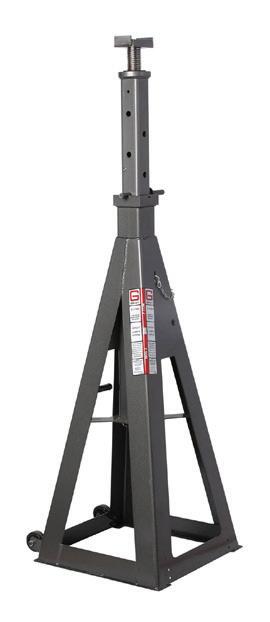
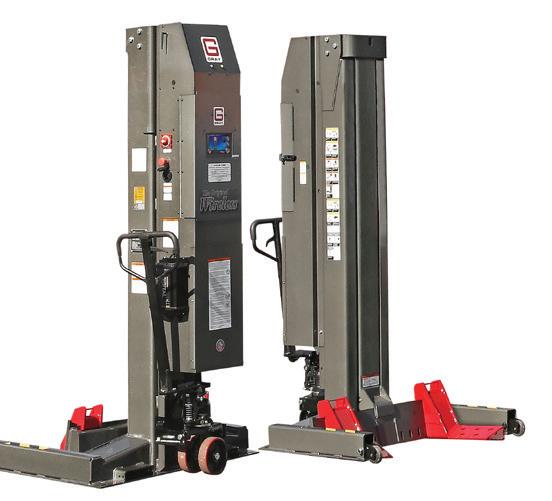
VEHICLE SUPPORT STANDS
¶ Visual inspection relating to damage
¶ Cracked welds
¶ Retention pin holes oblong-shaped
¶ Correct retention pins
¶ Readable decals and placards
¶ Compromised
¶ Visual inspection relating to damage
¶ Excessive wear
¶ Missing components
¶ Leaks
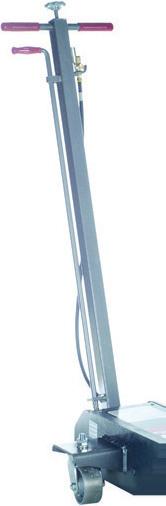
FLUID HANDLERS
¶ Complete functional test
¶ Readable decals and placards
¶ Visual inspection relating to damage
¶ Leaking fluids
¶ Non-OEM conforming, tampered with or missing components
¶ Readable decals and placards
Visual inspection relating to damage
Cracked welds
Excessive wear
Missing components
Complete functional test
Readable decals and placards
Compromised
by Kevin Rohlwing
A band-mounted blunder ahead
Fleets prepare for a TPMS future of old frustrations
INSANITY IS DOING the same thing over and over again and expecting a different result. This saying is attributed to Albert Einstein, and as a big fan of Einstein’s many quotes, this one, in particular, plays a significant role in my life. I often find myself stepping back to reconsider if I should try something again, take a different approach, or scrap the effort altogether. Wasting time is one of my biggest pet peeves because time is my most precious commodity. I don’t have a lot of it, so I hate wasting it.
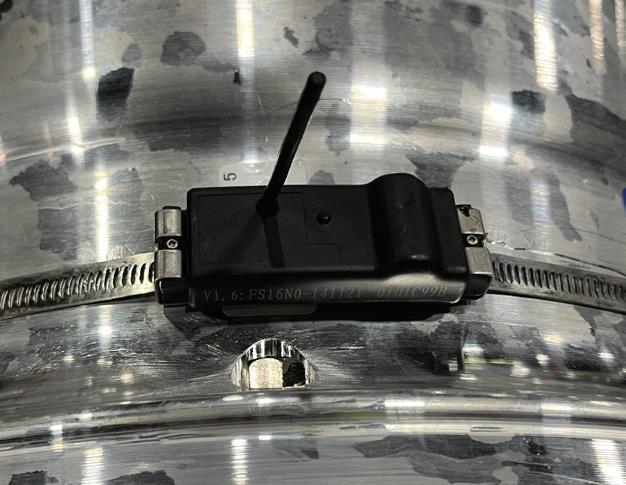
Installing and removing band-mounted sensors is time-consuming, frustrating, and more difficult.
Purchasing replacement bands and incurring additional labor costs are expected regularly.
Now that tire pressure monitoring systems (TPMS) are (finally) starting to gain acceptance, there’s a great opportunity for the trucking industry to learn from the passenger and light truck market. I’ve been intimately involved with the introduction of TPMS on the passenger side since its inception 20 years ago. There
were many lessons learned in the early days. One of the first was the importance of sensor position during demount and mount. If technicians ignored the sensor, it often broke when it was pinned against the rim. There were many costly mistakes because the industry failed to adapt.
Another expensive (and painful) lesson resulted from the decision to use a bandmounted sensor instead of a valve stem sensor. Most OEMs opted for valve stem sensors because they are easy to install, remove, and maintain. Technicians could remove the hex nut or separate the sensor from the rubber valve when necessary. For whatever reason, one OEM decided that a band-mounted sensor was a better option, while the rest of the industry stood by and watched.
A symphony of expletives would often resonate throughout the shop whenever a band-mounted sensor required servicing. The removal and installation process was both time-consuming and frustrating. Sensors were supposed to be positioned opposite the valve stem, but they often shifted after a few thousand miles in service. The cradle had a small clip that held the sensor in place, but when it broke during operation, the sensor would bounce around inside the tire, turning the inner liner into spaghetti. It was a short-lived experiment that has not been repeated in over a decade.
For whatever reason, the trucking industry has determined that bandmounted sensors will not suffer the same fate as those in the past. It appears that the design is more robust, so there should be less likelihood that the sensor will separate from the band. And I’m sure it’s been thoroughly tested to make sure it won’t change position or damage the rim (when properly installed). Without an engineering degree, my opinion is uneducated and based solely on experience.
My past experience tells me that the symphony of expletives is about to be heard once again in truck tire shops across this great nation. The process of installing and removing a valve stem sensor is not much different than that of a regular valve stem. Remove the hex nut, and the assembly pops out. Pop it back in, tighten the hex nut, and it’s ready to go.
Installing and removing bandmounted sensors is time-consuming, frustrating, and much more difficult. And when, not if, the band-mounted sensor starts slipping on the rim, a metal band will probably cause damage. When a non-metal band starts slipping, the friction could release the sensor inside the tire, creating metal spaghetti when the body cables are exposed and damaged.
Soon after the band-mounted TPMS disaster of over a decade ago, sensor manufacturers introduced a valve-stem replacement. Within a few years of introduction, most were out of the market, never to return. The OEMs that stood back and watched the experiment were beyond relieved that they had chosen a TPMS solution that was simple, easy, and almost foolproof.
Fleets with band-mounted TPMS sensors need to be aware that this approach failed over a decade ago, and in my uneducated, non-engineer opinion, it will fail again. The time factor alone frustrates service providers, particularly in mounted tire programs. Purchasing replacement bands and incurring additional labor costs are expected regularly. Get ready for insanity. FO
Kevin Rohlwing | krohlwing@tireindustry.org
Kevin Rohlwing is the chief technical officer for the Tire Industry Association. He has more than 40 years of experience in the tire industry and has created programs to help train more than 220,000 technicians.
Photo: Kevin Rohlwring
Save time and boost efficiency
Using technological solutions like weigh station bypass services and reserved parking, fleet leaders can reduce wasted time, fuel, and HOS violations to improve efficiency and profitability.
by Jade Brasher
Regulations, the economy, the high cost of insurance. These are just a few of the industry’s top challenges, according to the annual critical issues survey from the American Transportation Research Institute (ATRI). While these issues warrant concern, they are largely beyond the control of fleet leaders.
To get through these tough times, American Trucking Association’s President and CEO Chris Spear offered a word of advice: “Stay the course.” The best way to do that is simply focus on the metrics that are within your control— one of those metrics being time.
“Time is money,” as they say, and it’s also something that, once it’s gone, we’ll never get back. Unfortunately, this
precious commodity is often wasted in the trucking industry.
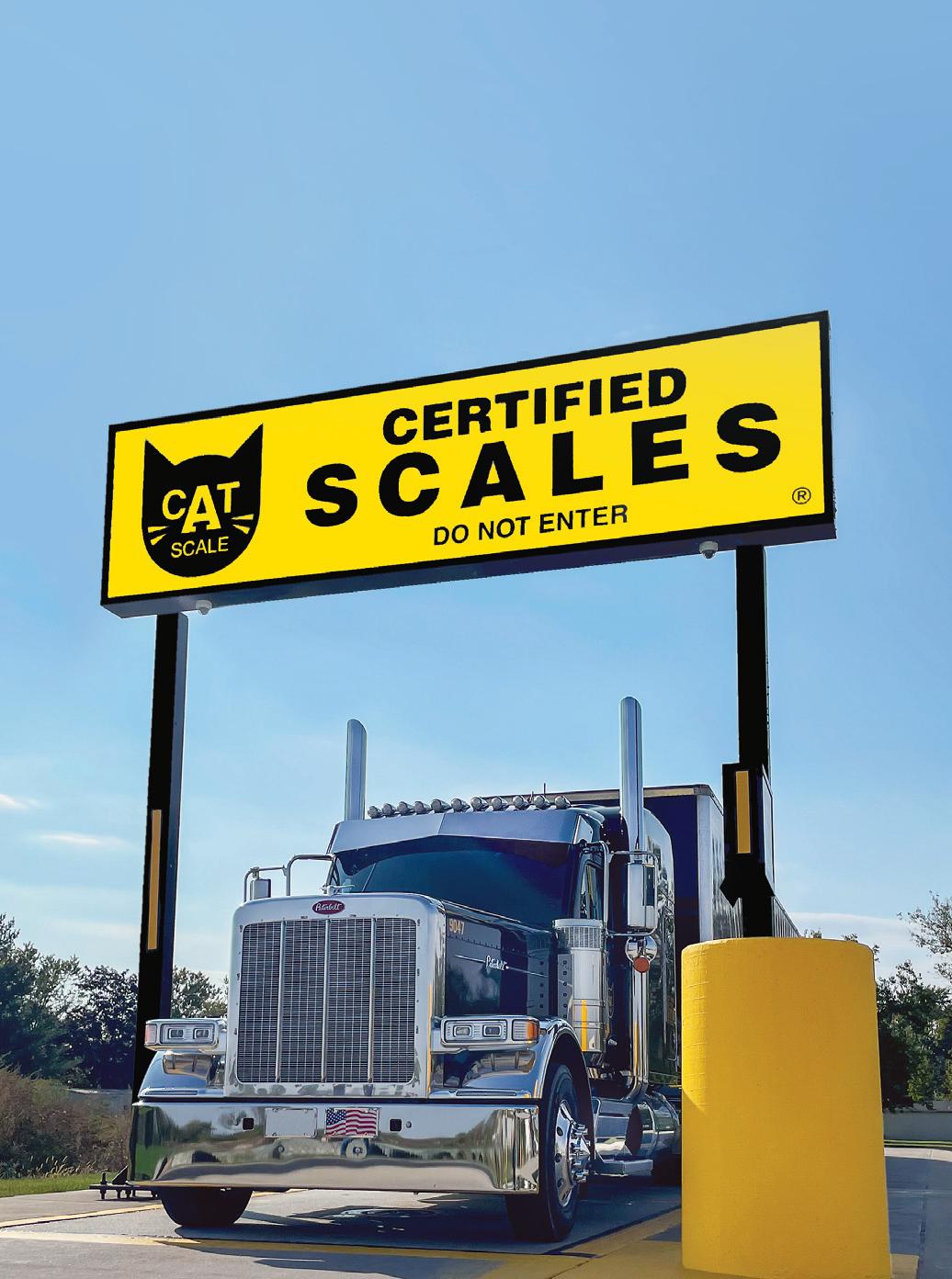
Take weigh stations, for example. These necessary and law-required stops strip precious time from your drivers. A weigh station stop costs drivers an average of three to five minutes, according to weigh station bypass service PrePass. Yet during times of heavy congestion, that wait time can be much longer. Multiply a three- to five-minute stop across every truck in your organization traveling interstate highways over the course of a day, and the hours add up quickly.
Then there’s the persistent lack of truck parking that keeps drivers circling travel center lots night after night. The issue of truck parking has been a top concern among drivers year after year,
reflected in ATRI’s annual survey. This year, drivers ranked parking as their second-highest concern, behind compensation, and it ranked No. 4 overall.
While the industry’s problems appear to grow larger with each passing year, companies that support the industry— and the technology that enables them— are getting smarter. And eliminating wasted time is easier with technology built for that purpose.
Weigh station bypass saves time
The law requires any commercial vehicle weighing more than 10,000 lb. to stop at weigh stations. While the average weigh station visit takes three to five minutes, if a driver is pulled for a Department of Transportation (DOT) inspection, the stop could take longer. Because time is money, every second spent at a weigh station cuts into the bottom line.
As drivers idle in the queue to be weighed, they are wasting fuel—a half gallon, on average, according to PrePass. Further, each second that passes counts as on-duty time and reduces the driver’s eligible hours of service (HOS).
Photo: Jeremy Poland 1836555198 Getty Images
Fleet leaders looking for a solution to combat the time wasted at weigh stations could consider a weigh station bypass service.
Rob Abbott, Fleetworthy VP of customer success, explained how a bypass service like PrePass or Drivewyze by Fleetworthy works: Once trucks equipped with a bypass solution travel over weigh-in-motion scales on main highways and ramps, their DOT number and ELD information, including weight, are broadcast to the upcoming weigh station via the ELD modem, Abbott told FleetOwner.
“It broadcasts to the station, ‘Here’s my DOT number, here’s my registration, here’s my weight that just came off your [scales]. Do I even need to pull in?’ And the answer is usually ‘No,’” Abbott said. “Then on the electronic logging device, the driver gets a big green screen that says, ‘Bypass.’”
Once the driver has received confirmation from the weigh station, they can be on their way without stopping, saving them time, fuel, and their HOS.
“Nobody likes to sit there, pull in, wait in that line only to be told you can keep going,” Abbott said.
In just one quarter, a Fleetworthy customer with 500 trucks accumulated more than 25,000 bypasses, Abbott shared, saving roughly 12,800 gallons of fuel, 3,100 hours of HOS time, and 131 metric tons of CO2. “This equates to a total savings of $284,000,” Abbott said.
If each quarter accumulated similar numbers, a fleet of that size could see potential savings of approximately $1.1 million annually.
Increase parking efficiency
Another way fleet leaders can increase driver efficiency is by joining a parking club or using reserved parking services. These services, such as Truck Parking Club and Prime Parking from Pilot travel stations, provide guaranteed parking spaces for truck drivers.
While drivers or fleet owners must pay for these services, Brent Hutto, chief
Annual carrier cost of rest parking problems
relationship officer at Truck Parking Club, told FleetOwner fleets typically see a major return on investment.
“Think about it in three terms,” Hutto told FleetOwner. “What does [the lack of truck parking] cost [fleets] in driver turnover? What does it cost them in circuity—in other words, how long does the driver have to drive around to find a place? And then what does it cost them in hours of service that the driver is not driving because they are panicked because they can’t let their ELD hours run out, and they park short of their hours?”
Reserved truck parking has become a game-changer for the driving experience, Reed Loustalot, Truck Parking Club chief marketing officer, said, citing a conversation he had with a driver who chose to pay for the service out of his own pocket because of its benefits. It has also saved fleet managers and dispatchers hours of planning because of its easy-to-use platform.
“We’re saving fleet managers hours a day because all they’re doing now is going into our app and booking parking for the driver. It’s all automated,” Evan Shelley, cofounder and CEO of Truck Parking Club, said, referring to the platform’s ability to seamlessly provide billing and reports for every fleet driver within a fleet.
What does this time savings equate to? To get a realistic idea, the team at Truck Parking Club regularly conducts
surveys of its driver and fleet leader members. In one driver survey, the team sought to understand how much time and fuel drivers save by using the club services. The average answer was $13, and Shelley stressed that this baker’s dozen of cash saved is on top of the cost of the parking.
“Let’s say they paid $20 for the parking,” Shelley explained. “They’re saying they got $33 in value from it by not having to drive all around.”
And that’s just from the drivers’ perspective. When looking from a macro view, Hutto said the savings is even more. According to a case study from freight consulting firm Transport Futures, the cost of turnover attributed to a lack of truck parking equates to roughly $10 per load. The cost of circuity—lost labor and wasted fuel—equates to roughly $75 per load. Finally, the wasted time equates to roughly $164 per load. Adding these numbers together, the industry wastes a total of about $125 billion in the quest to find parking annually.
Reserved parking helps keep drivers and freight safe as opposed to being exposed to hazards when parking in an unauthorized zone or when parking on the roadside.
With all the challenges fleet leaders face today, it’s easy to be swept up in the chaos. Yet, as ATA’s Spear advised, staying the course is key to getting through these trying times. And that starts by addressing what we can control. FO Finding
Source: Transport Futures
Special Section
FleetOwner zeroes in on refrigerated fleets and technologies in this special section from Refrigerated Transporter —the trusted resource for temperature-controlled transportation and logistics professionals.
50 years, still fresh
Four Seasons’ private fleet fuels enduring success amid unpredictable conditions.
by Jason McDaniel
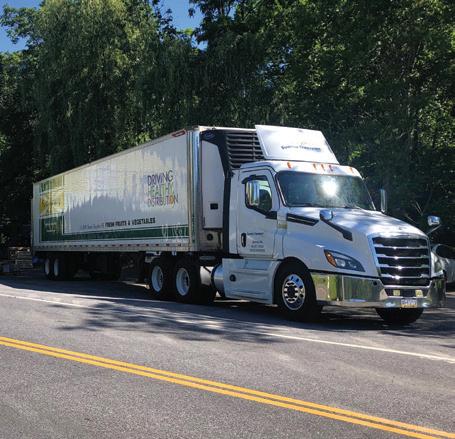
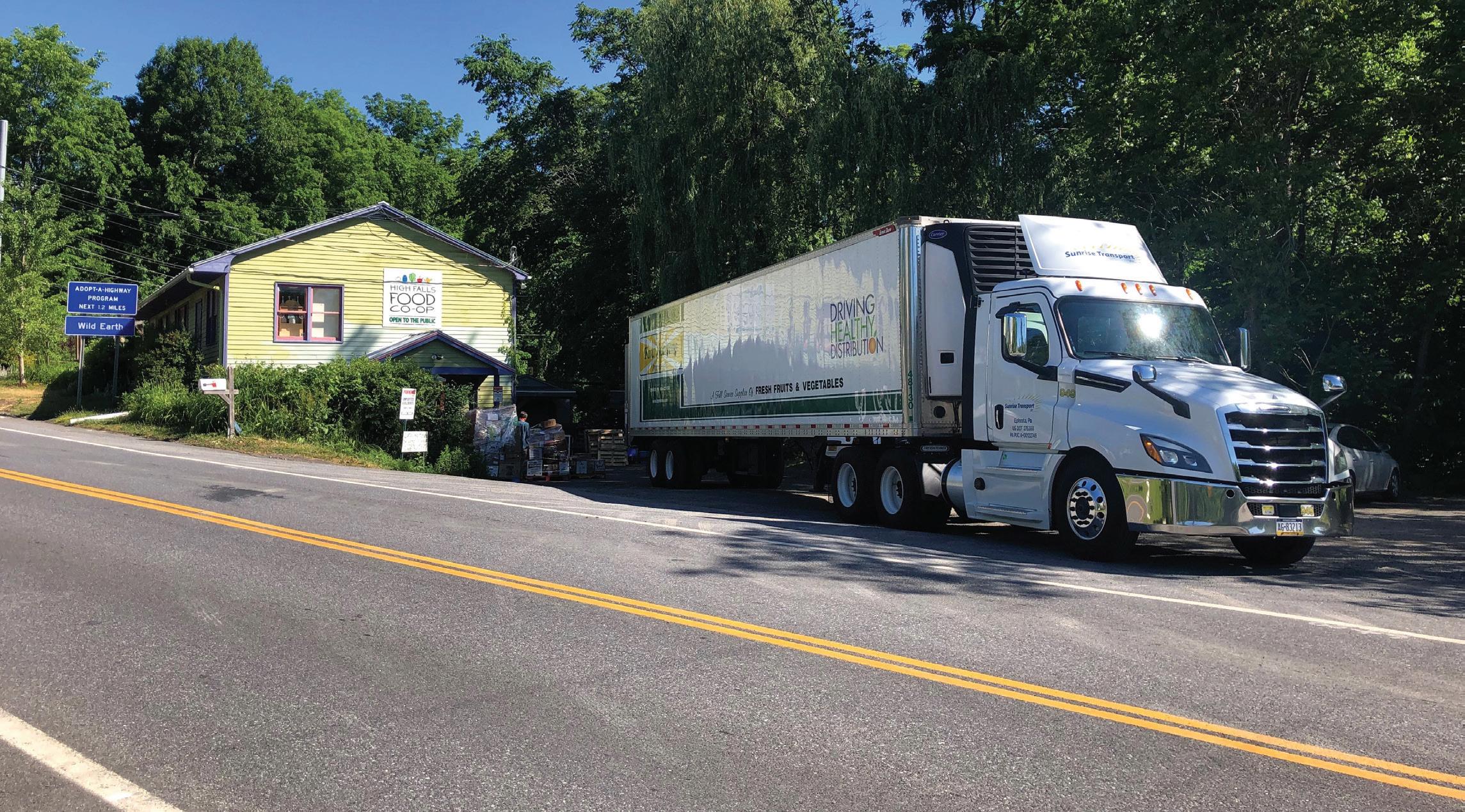
Four Seasons Produce next year will celebrate 50 years of supplying fresh food to communities throughout the Mid-Atlantic and Northeast. Sunrise Transport is an essential ingredient in its success.
The wholesale distributor’s private eet last year traveled 8.5 million miles and safely delivered 17 million cases of organic and conventional fruits and vegetables to independent retailers, food cooperatives, and local markets that value specialized customer-centric
service with a eet of 118 trucks and 115 refrigerated trailers.
“Where we go and how we get there is truly unique—and really does set us apart,” Ryan Miller, Sunrise director of transportation operations, said.
The company’s family-owned focus is an equally powerful differentiator.
David Hollinger founded Four Seasons in 1976 after working for his parents’ business, Hollinger’s Farm Market, with the goal of sharing his passion for cultivating crops and living healthily
with a bigger base. Five decades later, he’s still growing strong. Hollinger now serves as chairman of the Four Seasons family of companies—which collectively employ over 900 people, including 129 professional drivers—and his son, Jason Hollinger, is president and CEO.
“We’re part of the family,” Jason Burkman, Sunrise senior manager of eet services, explained. “The Hollingers trust their leaders to make good business decisions. They don’t micromanage operations. They’re just good
people who foster a great atmosphere for employees.
“The culture of this company can’t be beat.”
Private-fleet difference
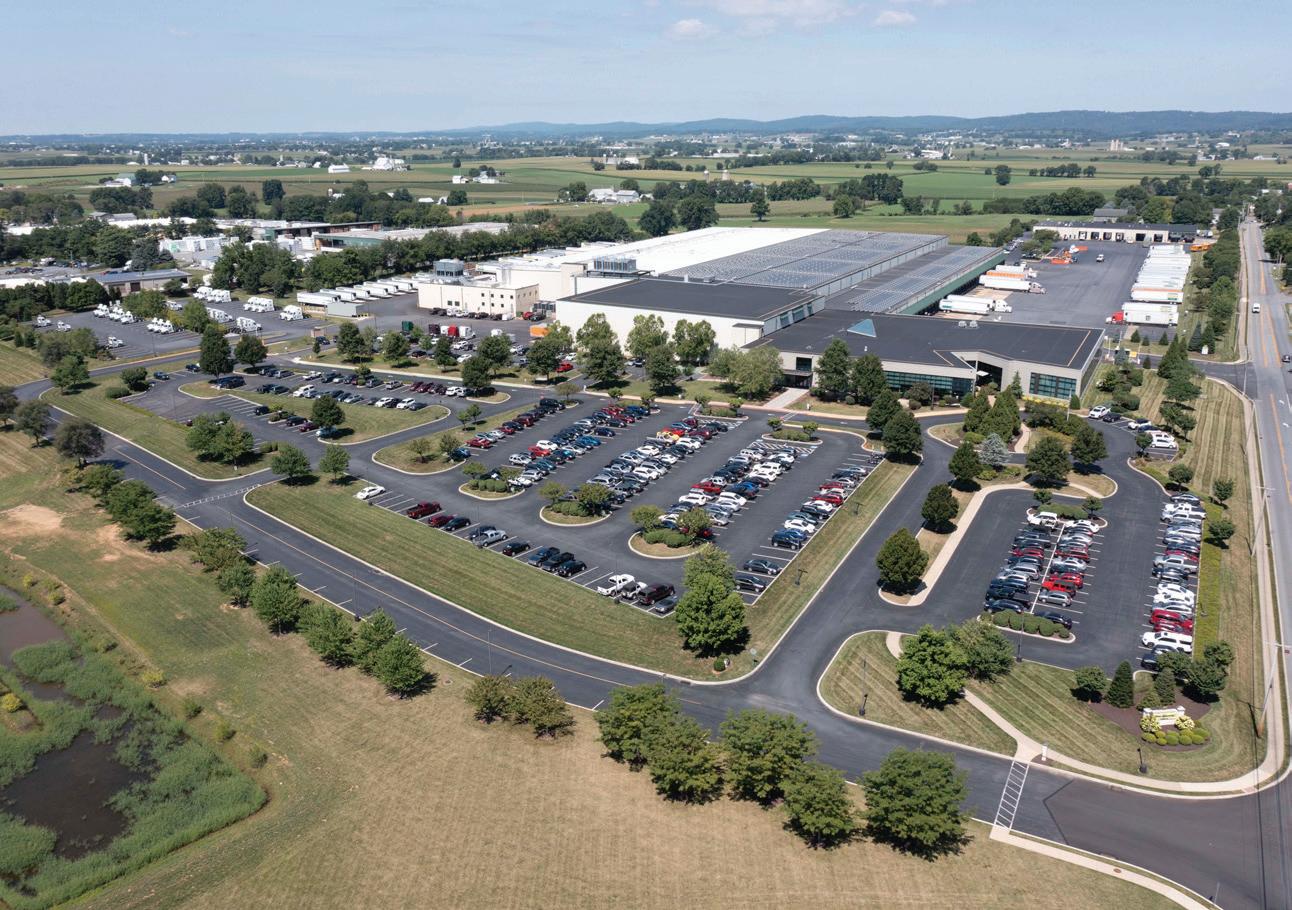
Sunrise is a key part of a resilient group of companies headquartered on 48 acres in Ephrata, Pennsylvania, which includes Four Seasons’ warehousing operation; transportation and storage solutions provider Sunrise Logistics; and Earth Source, the enterprise’s international sourcing division. Together, they’ve thrived amid unpredictable economic and market conditions.
With dedicated transportation and logistics services at its disposal, Four Seasons grew during the pandemic. People still needed to eat, and the wholesaler’s farm-fresh offerings—from traditional produce and prepared foods to all-natural meat and dairy products and bulk nuts—were appealing options during a health scare that forced millions to stay at home. The company also is benefiting from an uptick in grocery-store foot traffic driven by remote work, the rising cost of dining out, and social-media influencers.
“There’s renewed enjoyment for cooking at home and experiencing all these different items in new ways,” Miller said.
Four Seasons is well-positioned to meet soaring farm-to-table demand as well—thanks to its relationships with growers, refrigerated warehouse, and fully integrated fleets. Partnerships include Amish and Mennonite farmers in the U.S. as well as citrus producers in Central and South America. The company’s 314,000-sq.-ft. storage facility features multiple temperature zones, ripening rooms, and quality control, and Sunrise last year executed 117,000 deliveries to clients concentrated within a 150-mile radius of Ephrata and as far away as Tennessee.
Additionally, the mutually beneficial affiliation between Four Seasons and Sunrise Transport—created in 2006 with the group’s other business
units—ensures steady volumes that help insulate the private fleet from freight downturns, ensuring drivers stay busy. And customers profit from working with a direct-delivery partner that understands their singular circumstances, including smaller stores and dockless facilities, and offers value-added advantages such as unscheduled fulfillments and returns, thanks to its ability to handle exceptions economically.
“The level of care we provide is second to none,” Miller summarized. “We understand what is and isn’t working for our customers, talk to them about the commodities, and work with our sales team and merchandisers to see how we can support future growth.”
Expertly trained drivers
Sunrise pays careful attention to its drivers, too, offering them flexible scheduling, customized compensation, and expert oversight from a veteran manager who’s worked in their shoes.
“I understand the different driver situations and their concerns,” shared Ray Gonzalez, senior safety and training manager, who previously drove a refrigerated truck for a larger shipper. “I can
relate to what they’re experiencing and appreciate their perspective—even when I must make tough decisions.”
The company employs 35 regional drivers, 80 local drivers, and 15 parttime and independent-contractor drivers for fleet flexibility. Local Class A, B, and C drivers are paid an hourly wage that accounts for the challenges they face, including irregular workdays; tight, obstacle-filled lots; long walks to facilities without parking; and curbside pallet-jack and hand-cart deliveries. Regional drivers are paid by the mile. They also receive an hourly wage, stop and layover pay, and incentive-based pay for trips into New York City or Long Island, as well as weekend shifts.
“We’re extremely accommodating with our drivers,” Miller maintained. “We work with them as much as possible to honor their personal time while we keep the business running smoothly.”
Driver leads come from referrals, digital marketing campaigns, and local schools, including the CNS Driver Training Center and Lancaster County Career and Technology Center. New-hire training ranges from three to eight weeks, depending on experience, with four
Sunrise Transport is headquartered on a 48-acre property in Ephrata, Pennsylvania, that includes a 314,000-sq.-ft. multi-zone refrigerated warehouse.
Photo: Sunrise Transport
orientation days sprinkled in to avoid information overload. Training includes customer-site instruction and reefer-specific lessons like transport refrigeration unit (TRU) operation, temperature monitoring, Food Safety Modernization Act (FSMA) compliance, and detention-handling procedures. Content comes from the National Safety Council and InfinitI’s library of stock and custom videos.
“I assign trainings monthly so our drivers always keep safety top of mind,” Gonzalez said.
Samsara’s electronic logging devices (ELDs) and forward-facing cameras, together with Freightliner’s Detroit Assurance advanced driver assistance system, further protect drivers and boost safety performance.
Well-kept equipment
Dependability is paramount, so Sunrise runs a diverse fleet of trucks and trailers meticulously maintained by a dedicated fleet services department that handles everything from licensing and credentialing to preventive maintenance and repairs, equipment inspections, cleaning, and refueling. This gives the company better control over operational costs as equipment prices rise.
“Our goal is to manage everything in house,” Burkman said.
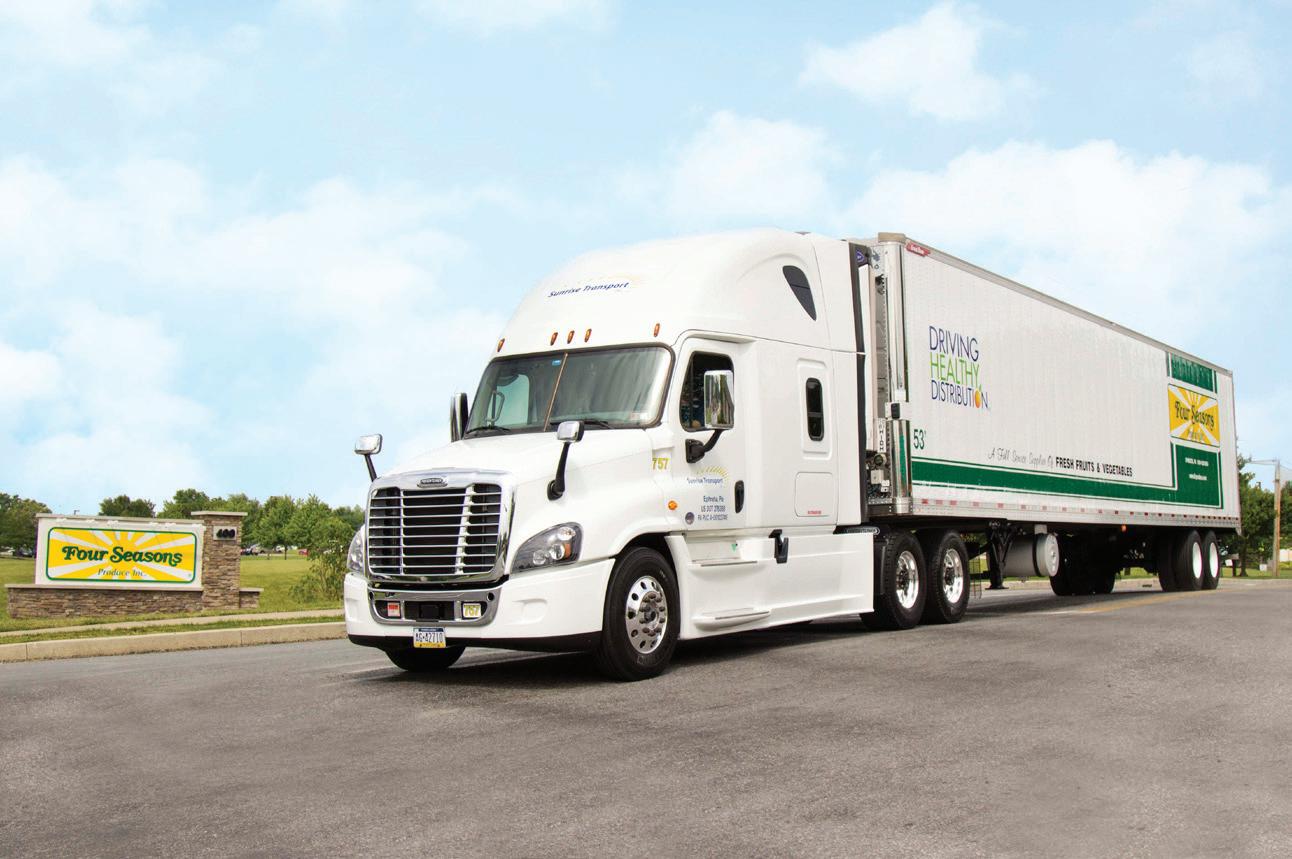
Sunrise’s speed-governed power units are a streamlined mix of Freightliner Cascadia tractors (53 daycabs, 38 sleepers) and 27 M2 business-class straight trucks with reefer bodies and Maxon liftgates sourced from Transteck’s Freightliner dealership in Lancaster. The standard tractor powertrain includes the Detroit DD15 engine and DT12 automated manual transmission for optimzied fuel efficiency.
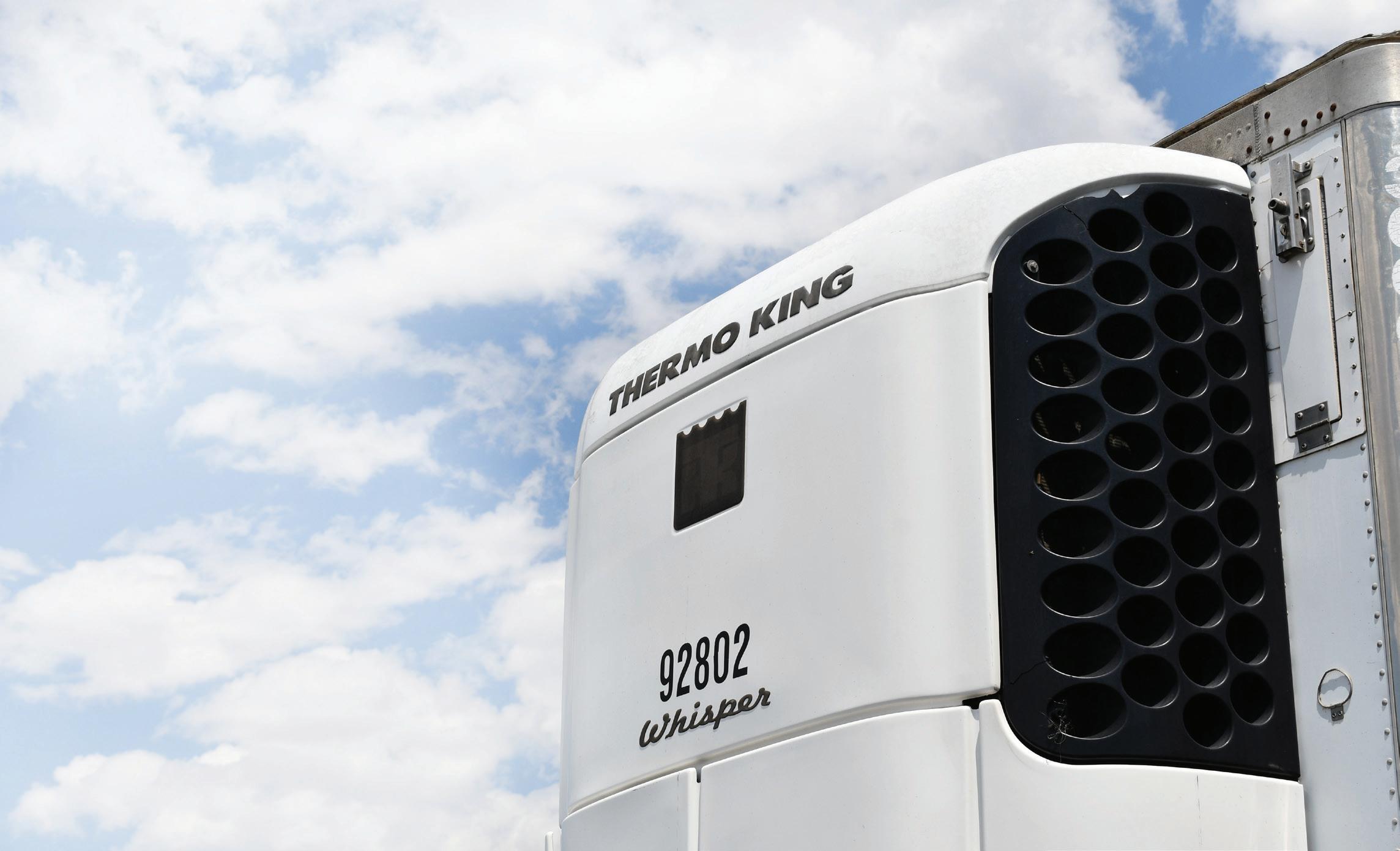
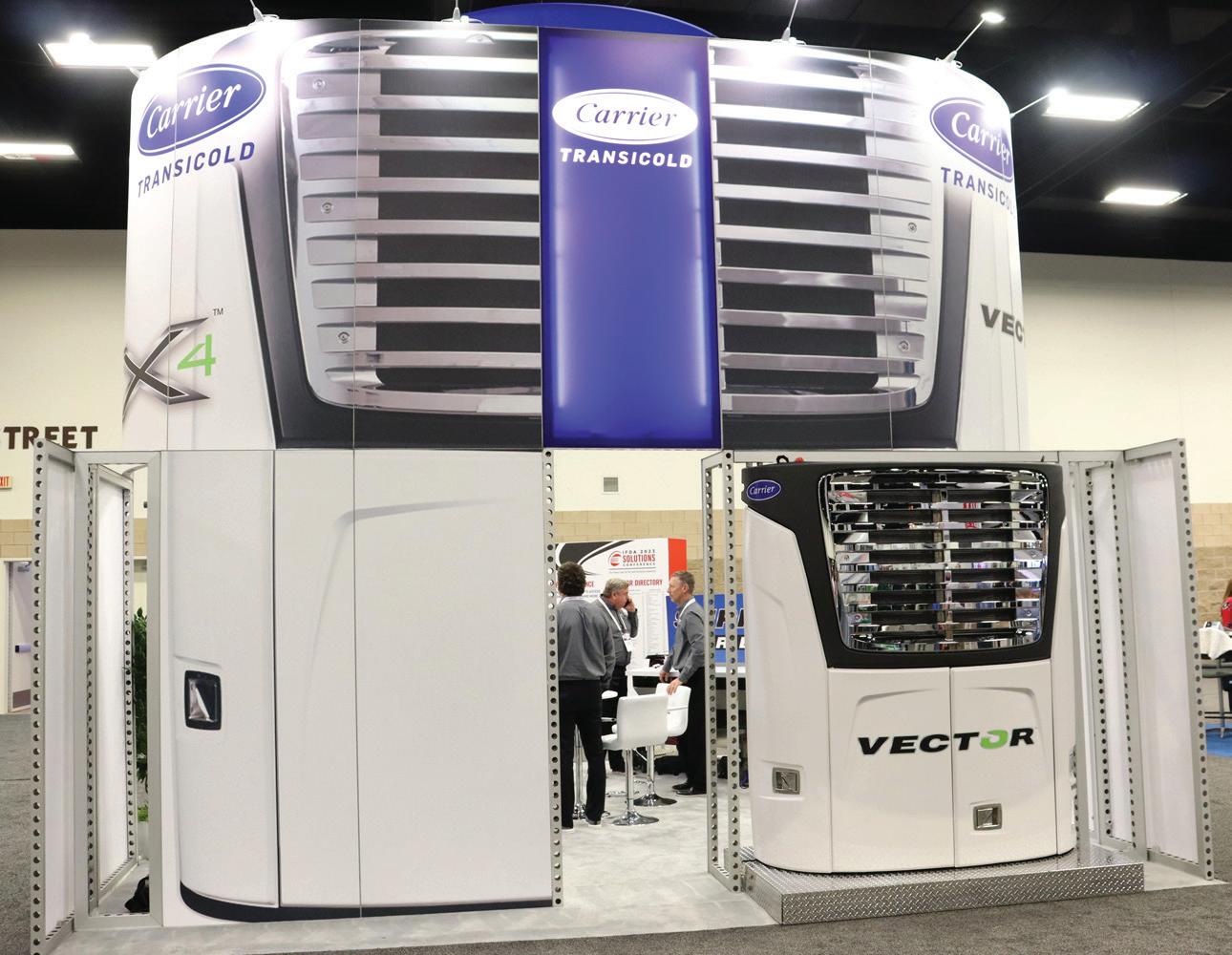
The trailer fleet includes Great Dane and Utility trailers from MH Eby in Blue Ball and Keystone Utility Trailer Sales in Lancaster, respectively. The fleet boasts 80 trailers with liftgates (four 34-footers, 40 42-footers, six 46-footers, 30 48-footers) and 35 without (33 53-footers, two 49-footers). Every trailer is a reefer with Orbcomm tracking, tire pressure monitoring, and a Carrier Transicold or Thermo King single-temp TRU from Penn Power Group in Fleetwood or Motor Truck Thermo King in Carlisle.
“That makes managing the fleet easier and enables a more efficient loading process at the warehouse,” Miller explained. “We can build fuller pallets, so it’s a better solution for customers as well.”
The company’s seven-bay workshop is staffed by 20 diesel technicians and six fueler/washers, who refuel trucks and TRUs from a fuel island that includes two 10,000-gallon tanks for on-road use and one 6,000-gallon tank for off-road. This allows Sunrise to purchase fuel in bulk (the fleet goes through about 20,000 gallons of on-road diesel per week). Only warrantied engine repairs, body work, and tire alignments are outsourced by Sunrise.
“Our equipment is a rolling billboard, so we take pride in everything we do,” Burkman concluded.
Rolling ahead
Sunrise now leverages a local shop’s alignment program to reduce costs. It also performs more parked engine regens to prevent problems with diesel particulate filters and utilizes advanced technology, such as Detroit Connect’s virtual technician, to bolster equipment maintenance as it seeks to support Four Seasons’ growth through enhanced fleet utilization in 2026.
“We have several growth opportunities that we’re going after aggressively,” Miller said. “So, our goal is to increase our regional driver count and maximize the cube efficiency of our trailers.”
Furthermore, Miller and his team are keeping an eye on regulatory and legislative developments while hoping for an upward swing in the overall freight market—preferably sooner rather than later. He is looking for more clarity from the Trump administration on emissions and tariff policies as he plans for the future.
Federal Motor Carrier Safety Administration topics that are high on Gonzalez’s radar include the agency’s oral drug testing initiative, English language proficiency guidelines, and impending launch of a new Compliance, Safety, Accountability (CSA) enforcement program with amended safety measurement system (SMS) methodology. “There’s a lot of industry discontent with what we have now, so it’ll be interesting to see how that rolls out,” Gonzalez said.
Sunrise Transport services Four Seasons customers with a fleet of 118 Freightliner tractors and straight trucks, and 115 Great Dane and Utility refrigerated trailers
Photo: Sunrise Transport
New-school tech, old-school principles
TRU technology is advancing rapidly, but system optimization still requires proper operation and maintenance.
by Jason McDaniel
Transport refrigeration is more sophisticated today than in 1938, when Thermo King patented the first trailer unit. Diesel-powered engines are more efficient, high-voltage electrical architectures are advancing, and system controls are smarter. But maximizing performance still comes down to proper use and care—two old-school principles that haven’t shifted.
That’s why the Truckload Carriers Association broke out two key sessions collectively aimed at optimizing transport refrigeration unit (TRU) operation and maintenance at this year’s Refrigerated Meeting in Colorado Springs: Optimizing Your Reefer Unit and The Future of Reefer Technicians. The optimization session moderated by Amber Edmondson, Trailiner president and CEO, featured Gareth Macklam, Utility Trailer director of sales operations, and Kevin Williams, Carrier Transicold senior development
manager. The reefer technician session moderated by Ralph Moyle CEO Ashley Kordish included Bob Roberts, Thermo King manager of customer solutions, and Lucas Subler, Classic Carriers president and newly elected TCA reefer division chair.
“In any trucking market, but certainly in the current climate, proper operational use of equipment is imperative to control costs and extend the useful life of the equipment,” Edmondson said.
Williams and Macklam, who estimated about 50,000 TRUs operate in the U.S. today, underscored that reefer units are part of a complex temperature-controlled transportation environment; new features and capabilities like preconfigured settings, probes, and sensors help users optimize temperature control and energy consumption; and hybrid refrigeration technology offers longer-term residual value while reducing emissions and operational costs.
“This is a system, and the reefer’s only
as good as the air coming in and going out, so maintaining airflow products, both from a cleanliness and a physical damage perspective, are relatively quick wins that can yield many benefits,” Williams said.
Subler and Roberts, who said the industry currently employs about 10,000 transport refrigeration technicians, discussed recruiting and retaining next-generation employees in an evolving field, the importance of segment-specific training, and giving techs the tools they need to succeed.
“I look at reefer technicians as the best of the best, especially with the technologies we’re using today, and different types of power we need to provide,” Subler maintained.
TRU operation and maintenance
Presets offered by most TRU manufacturers, such as Carrier Transicold, Thermo King, and Cargobull North America, allow fleets to select a range of
Photo: Trevor Cook | 1607775886 |
Stock
temperature and run-time parameters tailored for specific commodities.
“They act like a popcorn button on your microwave,” Williams said. “You push a button, and it automatically configures the unit to the levels you want.”
Fleet managers can push out multiple presets with one click of a back-office key, simplifying operations for drivers and boosting confidence for customers.
New telematics capabilities also enable painless software updates, remote sensor and probe monitoring, and proactive maintenance. Macklam indicated securely connected rear probes reduce claims by tracking temperatures across the full length of a trailer. And fuel sensors reduce refueling time while also allowing fleets to scan for anomalies in equipment performance, Williams added. Both agreed internal trailer cleanliness and equipment condition play critical roles in reefer efficiency. Damaged or improperly installed chutes restrict air circulation, clogged and dirty coils erode system effectiveness, and ducted floors littered with debris prohibit functionality. “Air flow is king,” Williams said. “You can have the best reefer unit available, but if you can’t get air in or out of it, it’s not doing much good. So that means pulling down internal bulkheads, getting in there, and cleaning out those evaporator coils, drain pans, and tubes.”
Additionally, bigger compressors aren’t necessarily better, continuous mode is unnecessary in many circumstances—and even can dehydrate sensitive perishables—and running a reefer with the door ajar always is suboptimal. “If you get into a situation where you must run the unit with the doors open, there are options to set them at low speed,” Williams explained. “And when you finally get that door closed, on recovery, you can do a quick manual defrost.”
Future-proofing reefer units
Refrigerated fleets that are feeling squeezed by low freight volumes and rates, as well as persistent overcapacity,
may be tempted to buy lower-cost reefer units, especially with the Trump administration bent on rolling back emissions regulations. But that would be a mistake, Macklam insisted. “We understand rates are low, equipment is expensive, and the knee-jerk reaction is always to buy the cheapest product,” he said. “The cheapest equipment might be more cost-effective in the short term, but you’re going to run this equipment five to 10 years, so think about the future and the residual value of your investment.”
Roberts called electrification “the slowest-moving car crash” possible, but all three experts agreed that it will deliver multiple benefits to reefer fleets. Electric motors are quieter, more reliable, and better balanced than diesel engines, which vibrate and can overheat, disrupting TRU operability.
And while electrical infrastructure still is lacking, fully electric and hybrid units unlock shore power, which is approximately 50% cheaper than diesel, Macklam said, allowing fleets to save money while simultaneously reducing emissions. Hybrid units also
help users begin the transition to electrification with a diesel backup. “It gives you that stepping stone to what’s coming next,” he added.
Utility prefers the ePTO route because truck manufacturers can more easily scale technology, Macklam said. But the trailer OEM will continue to look at battery systems, as well as trailer construction and insulation, in the ongoing pursuit of the most lightweight, thermally efficient systems.
Today’s reefer units also are more intelligent and efficient, helping fleets diagnose and optimize systems more quickly; however, old-school PMs—like fuel filter replacements—still are critical, and today’s TRU technicians need advanced electrical training to work on modern machines safely. “It’s difficult because previously a guy just had to be a decent tech, or maybe a refrigeration guru, but now he basically needs to be a trained, licensed electrician,” Subler said.
An evolving, essential industry With so much to learn, reaching prospective TRU technicians early and
Today’s transport refrigeration units are more intelligent and efficient, but regular maintenance and expert technician training still are key to operational success.
Photo: Jason McDaniel | Refrigerated Transporter
dispelling misconceptions about the industry are imperative. “Today’s technicians, whether they’re working on tractors, trailers, or reefer units, can’t do anything without using a laptop,” Subler maintained.
Younger millennials and older zoomers may not gravitate toward dirty, labor-intensive jobs. They will, however, consider a technology-filled career that allows them to advance sustainability while participating in an industry that’s essential to food and pharmaceutical supply chains, panelists agreed. Reefer carriers must actively engage in community involvement and regularly update their websites and social media to promote their message to students and teachers in high schools, trade schools, and career-oriented organizations such as the Future Farmers of America.
It’s also important to make the job enjoyable, so provide work-life balance where possible—perhaps with staggered shifts and on-call assignments— and actively monitor job satisfaction with regular “stay” interviews, experts agreed. “This generation is not motivated by overtime,” Roberts said. “What they truly value is their own time.”
Hands-on career training
For reefer technicians, real-world experience is indispensable. That’s why hands-on job training and blended learning are invaluable, and TCA is developing an apprenticeship program it hopes to introduce next year, Kordish said. “It’s not what technicians need to know; it’s what they need to know how to do,” Roberts emphasized.
Thermo King offers technician training for carriers and dealers and partners with the National Coalition of Certification Centers (NC3) to supply industry-specific curriculum to 1,800 technical schools, he continued. “Right now, we’re integrated at the end of an HVAC or diesel program,” he said. “But we want to offer a full course, with multiple semesters devoted exclusively to
transport refrigeration. That’s where we’re hoping to go.”
Other valuable sources of training materials include dealership networks, the Next Generation in Trucking Association, and online vendors like Ancora and Signature, which offers leadership training for master technicians entering management. Roberts also advised fleets
to make those materials mobile friendly and readily available on distribution platforms like Salesforce.
“We give every one of our mechanics their own laptop,” Subler revealed. “You walk over to their workstation, and there’s a pile of tools, a laptop, and a coffee mug. That’s what they utilize every day, so why make them share?”
THIEMAN TAILGATES, INC.
markets a full-line of hydraulic liftgates for light, medium, and heavy-duty trucks and trailers. Toplifters, Stowaways, Railgates, Sideloaders, and Conventional models are all part of the THIEMAN line-up. For many years, THIEMAN has been customizing liftgates to meet specific needs. If a special need arises, give us a call. From 1000 lb. to 6600 lb. lifting capacities, THIEMAN can provide a liftgate for almost every application.
Obtaining a Certified Transportation Professional certificate has many benefits
REGISTRATION IS NOW open for the Private Fleet Management Institute and the Certified Transportation Professional CTP Class of 2026. The institute will be held January 17-21 at the Omni Orlando Resort at ChampionsGate in Orlando. The CTP examination for the Class of 2026 will be conducted in a secure, digital format on February 14. An all-day CTP Exam Prep Workshop will be held at the resort on January 16, immediately preceding the institute.
“ CTP transformed my career, changed the trajectory of my life, and all for the good.”
– Tom Moore, certification pioneer and CTP graduate, Class of 1997
PFMI and CTP programs experienced dynamic growth in the past 10 years. PFMI classes increased from 50 to 60 registrations to an annual average of 110 to 115. Last year, the institute drew 140 attendees, the most on record, representing some 60 companies. Nineteen of the companies sent their “first-time” representatives. Among all attendees, about 80% are from fleets and 20% from allied companies.
CTP classes typically range between 115 and 120 graduates but reached a
record 135 CTPs in the Class of 2025. The total number of active CTPs at the end of 2025 stands at 957—more than double since 2015. About two-thirds of active CTPs are fleet management practitioners, and one-third are allied/ supplier partners.
PFMI provides a rigorous learning environment where attendees engage in a series of general session presentations, roundtable best practices discussion groups, structured networking activities, applied learning exercises, and team-building collaborations through case-study analysis on the final day. PFMI’s education content provides tools and resources for attendees to achieve a competitive edge of continuous improvement as fleet management practitioners and supplier partners.
Every attendee is expected to have fluency in commercial truck transportation, experience in the private fleet industry, and be a contributor. They are expected to have a basic familiarity with the five core disciplines of private fleet management: safety, operations, human resources, finance, and equipment/maintenance. The institute’s five-day program is guided by nearly two dozen seasoned fleet expert faculty members representing a broad cross-section of private fleet companies.
Feedback over time from hundreds of PFMI and CTP graduates attests to the enthusiastic ROI and enduring value of the program. Here are some examples: Mari Roberts , CTP, SVP of service and distribution, supply, and commercialization at Frito-Lay; former chair of the NPTC Board Institute; and vice chair-elect of the NPTC Board of Directors: “The networking power of CTPs is just incredible. I appreciate the collaboration, benchmarking, and camaraderie shared among fellow CTPs for the past 15 years.”
Mike Schwersenska, CTP, VP of transportation at Brakebush Transportation, NPTC Board treasurer, NPTC Institute Board chair, and past chair of the NPTC Board of Directors: “I attended the PFMI with my boss, a family-member owner of my company. Our ROI was extraordinary. Based on what I learned at the institute alone, our company saved around $4 million within a few years. By coming back year after year to NPTC events, we continue to achieve great improvement and savings.”
Tim Eckhardt, CTP, director of safety at Dot Transportation, NPTC Board officer/secretary and former chair, NPTC Safety Committee: “We keep a two- to three-year plan of employees we want to invest in and send through the PFMI and CTP programs. What we get out of NPTC is extraordinary. There is no organization like it. My expectations are exceeded every year.”
Tom Moore, CTP, NPTC EVP, master of ceremonies of PFMI and CTP for more than 20 years: “Ever since earning my CTP in 1997 (I was candidate #15 to earn CTP recognition), I have been reinvesting my time, energy, and insights back into this community, which has meant so much to me.
“Looking back over the past 28 years, the payoffs have been extraordinary. Becoming a CTP transformed my career in so many positive and unexpected ways. I would not have achieved what I have accomplished career-wise, nor would I be in the position I am in today, without having earned my CTP credential.
“It changed the trajectory of my life and all for the good.” FO
Gary Petty | gpetty@nptc.org
Gary Petty has more than 30 years of experience as CEO of national trade associations in the trucking industry. He has been the president and CEO of the National Private Truck Council since 2001.
Photo: NPTC
Fresh-from-the-farm approach
The Prairie Farms fleet is designed to deliver
by Seth Skydel
When Scott Nickell, corporate fleet manager, described Prairie Farms as “the biggest small company you’d ever want to be around,” it required some explaining. What he meant, however, quickly became apparent.
For starters, the “big” part of that statement is immediately apparent. Headquartered in Edwardsville, Illinois, Prairie Farms and its joint ventures and subsidiaries operate 48 manufacturing facilities and over 100 branches in 23 states that produce and distribute a large number of dairy products. On the “small” side of the equation are the more than 500 families, each with an average of 120 cows, who own and operate the 87-year-old farmer-owned cooperative.
The fleet includes 1,600 straight trucks and tractors, 700 light-duty vehicles, and about 2,500 refrigerated trailers. For power units, the company almost exclusively operates International MV Series trucks and LT tractor models.
Hercules supplies most truck bodies at Prairie Farms, and the newest trailers are Utility models. Refrigeration units, including some dual-temp models for hauling refrigerated and frozen products, come mainly from Thermo King, along with some Carrier Transicold systems.
Prairie Farms’ fleet runs long and short routes, with some trucks running 20 to 30 stops per day and others running only 1,000 miles a month. Fleet reliability is paramount, regardless of a vehicle’s use.
“Many of our products, especially fresh milk, have a short shelf life,” Nickell said. “With proven specs and the backing of suppliers, including International and our dealers, we can ensure it gets to stores and other customers on time.”
Prairie Farms purchases new trucks and tractors to replace units that have reached the end of their service life, but the decision is always based on finances.
for family farms
Prairie Farms operates 48 production facilities and over 100 distribution centers across 23 states, manufacturing and delivering a wide range of dairy products.
“We will also swap bodies onto new chassis and rebuild engines,” Nickell said. “With the constantly rising cost of new equipment, that can make sense.
“Sustainability is also an equipment consideration,” he continued. “Our newest Internationals, for example, have the manufacturer’s S13 Integrated Powertrain, and we’re seeing an 11% to 14% mile per gallon increase with those units.
“We’re always open to other opportunities to lower our fleet’s carbon footprint,” Nickell added. “Without the infrastructure in our operating area, it’s currently hard to justify the expense of many alternative fuels. But that will change over time, and we’re especially interested in technologies like hydrogen when solutions such as exchangeable fuel cylinders become available.”
Efficiency and reliability for the Prairie Farms fleets are also the focus of its decentralized maintenance program, which includes some company shops and a network of contract maintenance providers, especially in areas with fewer vehicles.
“We determine best practices, and we’re implementing company-wide maintenance standards,” Nickell said. “We’re also using the Geotab platform, which provides telematics data that can help us get ahead of potential problems.”
The Geotab systems and ELDs provide
Prairie Farms with safety-related data, including information on driver habits that need to be addressed, such as speeding, hard braking, and cornering. Implemented 24 months ago, a comprehensive driver coaching and training program supported by J.J. Keller is used when corrective action is needed.
The program is also central to ongoing driver training for new hires and veteran operators. New drivers are assigned 12 courses in their first two weeks, and all truck, tractor, and yard spotter drivers complete a monthly series of classes that last an average of 25 minutes each.
“Training is essential for safety,” Nickell said. “At the same time, we are always focused on finding new drivers. Even though we can offer static routes and a return home every day, it continues to be a challenge to find younger people who want a career as a driver and people who want to move heavy crates at delivery locations. Our goal is to be able to address that need over the long term.”
“Dedication is at the heart of Prairie Farms,” he continued. “The farm families who make up our cooperative selflessly take on the tremendous task of producing milk 24/7, 365 days a year. Just as important to our ongoing success as our farmer-owners is the fleet they rely on every day.” FO
Photo: Prairie Farms
Article Reprints — For reprints and licensing, please contact reprints@endeavorb2b.com.
Photocopies: Authorization to photocopy articles for internal corporate, personal or instructional use may be obtained from the Copyright Clearance Center (CCC) at 978-750-8400. Obtain further information at copyright.com.
Archives and Microform: This magazine is available for research and retrieval of selected archived articles from leading electronic databases and online search services, including Factiva, LexisNexis and Proquest.
Mailing Lists: Endeavor makes portions of our magazine subscriber lists available to carefully selected companies
that o er products and services directly related to the industries we cover. Subscribers who do not wish to receive such mailings should contact the Endeavor Business Media subscriber services at 800-547-7377, ext. 1500.
Privacy Policy: Your privacy is a priority to us. For a detailed policy statement about privacy and information dissemination practices related to Endeavor Business Media products, please visit our website at www.endeavorbusinessmedia.com.
This index is a service to readers. Every e ort is made to maintain accuracy, but FleetOwner cannot assume responsibility for errors or omissions.
AR, AZ, CA, CO, IA, ID, IL, KS MN, MO, ND, NE, NM, NV, OR, SD, UT, WA, WI, WY
Larry Schlagheck Northeastern Territory 248-444-1320
larry@fleetowner.com
CT, DE, IN, KY, MA, MD, ME, MI, NH, NJ, NY, OH, PA, RI, TN, VA, VT, WV
Richard A. White Business Operations Manager richard@fleetowner.com
Laura Moulton Audience Development Manager lmoulton@endeavorb2b.com
FleetOwner, (USPS Permit 200040, ISSN 1070-194X print, ISSN 2771-5205 online) is published nine times a year in January/February, March, April, May, June, July/ August, September, October, and November/December by Endeavor Business Media, LLC. 201 N Main St 5th Floor, Fort Atkinson, WI 53538. Periodicals postage paid at Fort Atkinson, WI, and additional mailing o ces. POSTMASTER: Send address changes to FleetOwner, P.O. Box 3257, Northbrook, IL 60065-3257.
SUBSCRIPTIONS: Publisher reserves the right to reject non-qualified subscriptions. Subscription prices: U.S. $118 per year; Canada $138 per year; All other countries $175 per year. All subscriptions are payable in U.S. funds. Send subscription inquiries to FleetOwner, PO Box 3257, Northbrook, IL 60065-3257. Customer service can be reached toll-free at 877-382-9187 or at fleetowner@omeda.com for magazine subscription assistance or questions.
Printed in the USA. Copyright 2025 Endeavor Business Media, LLC. All rights reserved. No part of this publication may be reproduced or transmitted in any form or by any means, electronic or mechanical, including photocopies, recordings, or any information storage or retrieval system without permission from the publisher. Endeavor Business Media, LLC does not assume and hereby disclaims any liability to any person or company for any loss or damage caused by errors or omissions in the material herein, regardless of whether such errors result from negligence, accident, or any other cause whatsoever. The views and opinions in the articles herein are not to be taken as o cial expressions of the publishers, unless so stated. The publishers do not warrant either expressly or by implication, the factual accuracy of the articles herein, nor do they so warrant any views or opinions by the authors of said articles.
Today’s transportation and logistics environment demands professionals with state-of-industry expertise. They need insights into the most forward-thinking solutions of the day.
Against this background, there has never been a better time to attend the 2026 Private Fleet Management Institute (PFMI).
PFMI is an intensive 5day program of indepth rigorous learning, featuring courses in Fleet Finance, Operations, Legal, Regulatory and Safety Compliance, Human Resources, Maintenance and Equipment. This is an accelerated educational program designed to meet the demanding needs of today’s private eet professional.
In addi ti on, PFMI provides one of the most effec ti ve ways of refreshing your knowledge base and preparing for the 2026 CTP Examination, set for Saturday, February 14, 2026.
BendPak’s new 16AP and 20AP Series super-duty two-post lifts are the ultimate solution for mixed fleets, handling Class 1 through 5 vehicles with ease—from passenger vehicles to school buses. Offering higher reach, greater stability, and top-tier safety features, they protect your technicians while boosting efficiency. With fewer moving parts, they’re easier to maintain and more costeffective to run. Maximize your shop’s uptime with BendPak’s superior performance and unbeatable value. To learn more, visit bendpak.com or call us at 1-800-253-2363