Congratulations! Your school is part of a growing network of National Demonstration Sites (NDS) nationwide that are recognized for turning research into practice. National Demonstration Sites exemplify evidence-based best practices in design and implementation and promote many benefits for your students. In school environments, your NDS will:
• Encourage healthy behaviors like physical activity and fitness
• Improve social connections through play and inclusive spaces
• Raise awareness around the value of active play
• Build healthy school communities by maximizing student benefits through evidence-based design
Your school was designed to align with 1 of the 5 possible NDS designations:
Play On! intentionally promotes physical activity through active play and encourages the developmental progression of skills through healthy movement by incorporating the six key elements of play: balancing, brachiating, climbing, sliding, spinning, & swinging.
There are four other NDS designations that help turn research into practice. To learn more about these programs, go to playcore.com/nds.


Me2: 7 Principles of Inclusive Playground Design applies a comprehensive design philosophy to innovate an outdoor play environment where both physical and social inclusion can occur to the greatest extent possible.
Outdoor Adult Fitness can serve as critical health solutions by offering new ways to make physical activity more available, accessible, affordable, and enjoyable through the 5 elements of a well-rounded workout: aerobic activation, muscle development, core development, balance, and flexibility.
NatureGrounds deliberately designs nature into community park destinations by integrating the living landscape with manufactured equipment to support play value, increase physical activity, foster social interaction, and improve environmental stability.
Pathways for Play intentionally integrates play into walkable, bikeable, shared use community pathway networks to attract children and families and dramatically increase frequency and duration of use.
Children get almost 50% of their daily recommended physical activity levels at school with recess accounting for 37% of it.1
Play is more than just fun - it’s a vital part of growing. In school environments, play builds social bonds, improves problem-solving skills, manages emotions, and keeps students active.
Central to your school’s Play On! playground are the six key elements of play that promote physical activity and fitness. By including these key elements, your school is helping students be healthier now, and for life.
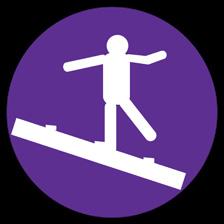



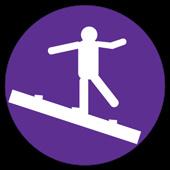
1. Balancing
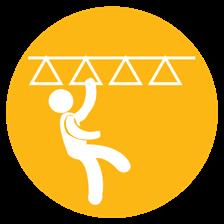
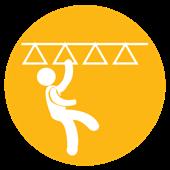
2. Brachiating
Increases understanding of efficient body positioning and control, principles of gravity, equilibrium, base of support, and counterbalancing. Promotes muscular strength and endurance throughout the entire body.
Improves muscular strength and endurance. Promotes hand-eye coordination and rhythmic body movement.
3. Climbing
Enhances spatial awareness and coordination. Fosters whole-body muscular strength, endurance, and flexibility.
4. Sliding
5. Spinning
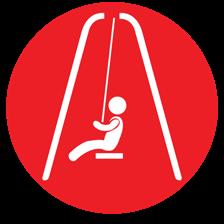
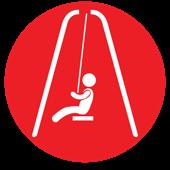
6. Swinging
Enhances core stability, dynamic balance, and leg and hip flexibility. Provides body and spatial awareness experience.
Develops kinesthetic awareness and postural control. Improves understanding of speed, force, and directional qualities of movement.
Promotes aerobic fitness, muscular endurance, and whole-body awareness. Emphasizes the importance of timely energy transfer during movement.
Learn more about the Play On! Curriculum to help you promote usage of your playground through standards-based programming.
Be sure to look in your marketing kit for a physical copy and in the NDS Portal for a digital version.
PLAY VALUE is the richness of the play experience that influences the benefits children derive from playing in a particular environment. Environments with high Play Value offer a variety of options, challenges, and chances to explore and interact individually and alongside peers.
Your school playground has qualified as a National Demonstration Site due to the quantity, variety, social opportunities, and levels of challenge across the six elements of play.
Play environments with a wide distribution of physical play opportunities address individual interests, offer richer play experiences, and foster child development.
VARIETY
Play environments that provide diverse play opportunities within each category offer distinct and varied developmental roles.
Play opportunities intended to provide a greater number of social, side-by-side play experiences that encourage positive interaction between users.
Play Value is associated with a variety of skill levels serving a wide range of children’s abilities along a developmental continuum.
Playground opportunities that offer additional auditory, tactile, and/or olfactory experiences provide multisensory experiences.
22 Total play opportunities
20 Unique types of opportunities
12 Side-by-side opportunities
3 Levels of challenge
3 Sensory Opportunities
Play Value of your School Playground
Your NDS Play Value Assessment reveals a high-quality playground design that offers good quantity, variety, and social experiences to support healthy physical and social activities.




Your NDS playground also provides all three levels of challenge (beginner, intermediate, advanced) which helps users of various ages and abilities experience a developmental progression of activities to support their growth and development.
Example Interpretation of the High-Quality Design Features of your School Playground.

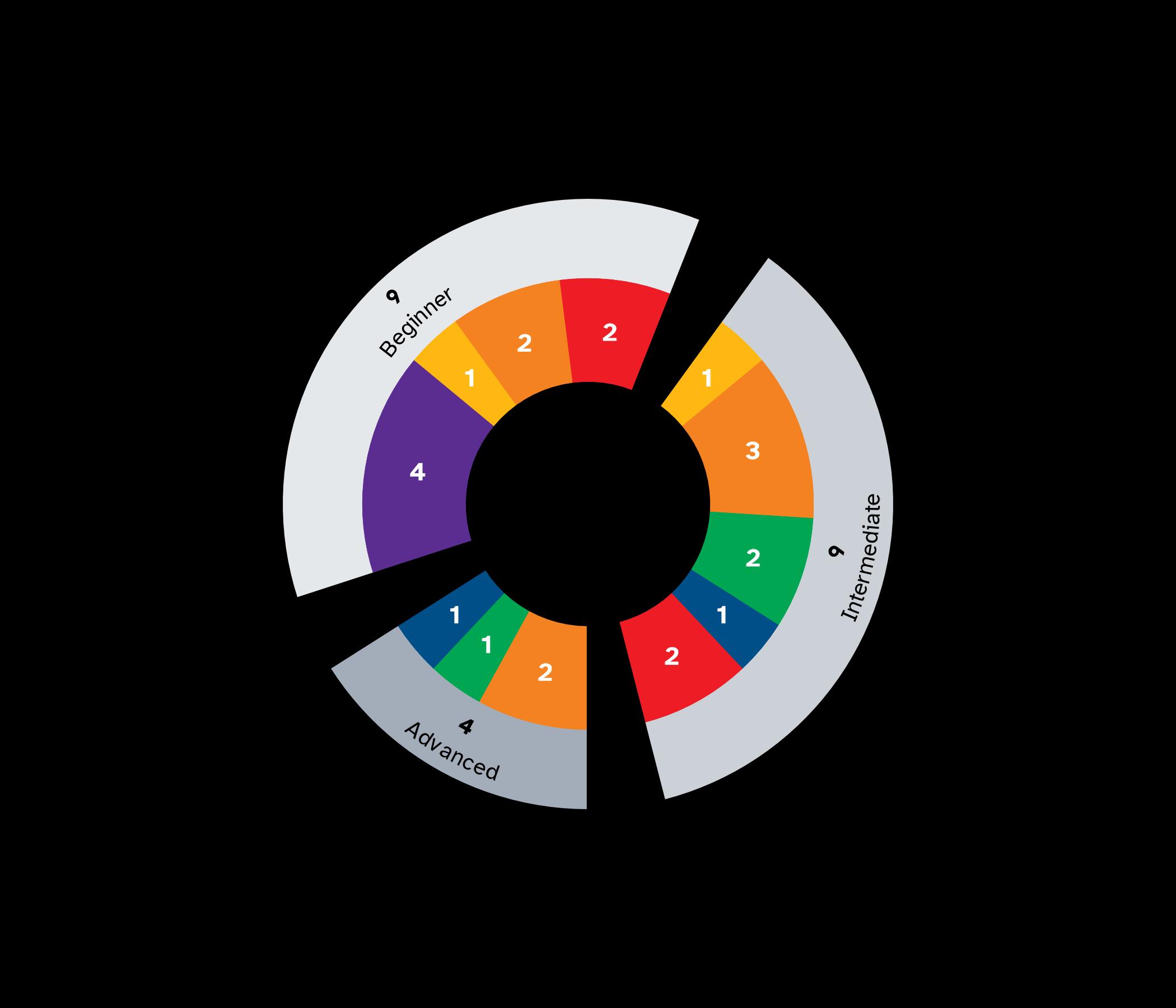
Play Element = Climbing
There are 7 total climbing opportunities. Of the 7,
• There are 7 unique types of climbers
• 1 climber provides social opportunities
• 1 climber provides sensory opportunities
• 2 have a beginner level of challenge, 3 are intermediate, 2 are advanced

Why
Over 60% of parents report that climbing highly impacts children’s self-confidence, dexterity and physical strength, risk negotiation, spatial awareness, and problem solving.2
Your investment in a high-quality playground can be used in a variety of ways to promote your students’ physical activity and fitness. Here are four examples:
1. Recess: Provide daily school recess to support healthy free-play.
2. Physical Education: Use the standards-based Play On! Curriculum to promote fitness.
3. Out of School Time: Plan events, camps, before/after school clubs on the playground to increase physical activity opportunities.
4. Shared Community Use: Open the playground to the community when school is not in session to increase access to play opportunities.
By comparing three scenarios with increasing lengths of time on the NDS school playground per day, you can explore the many short-term physical and mental health benefits that can be achieved by maximizing the minutes of access.
Minutes of NDS Playground Access
Minutes per day of moderate-to-vigorous physical activity (MVPA)

Progress toward the recommended 60 minutes of daily MVPA
Increased Focus: After a 25-minute recess, 5th grade students may spend 34% more of their time on-task.3
Students with >30 minutes per day of recess are twice as likely to meet physical activity guidelines compared to those with 10-15 minutes per day.4
Children who have 45 minutes per day of recess instead of 30 minutes have 69% lower cortisol levels, a marker of chronic stress.5
Providing students with daily access to the NDS school playground also provides long-term health savings. Early opportunities for school-based physical activity and play establish lifelong habits that become anchored in adult life. This lays the groundwork for healthier lifestyles that can translate into significant health cost savings into adulthood.
An evidence-based algorithm is used to estimate the health cost savings from typical behaviors that occur at your school’s playground.
Health Cost Savings refers to avoided cost of illness for 8 chronic diseases such as: heart disease, stroke, depression, and diabetes.
Inputs to Calculate Savings:
Student Enrollment: 556
School Days Per Year: 180
Minutes of NDS playground access
Minutes on the Playground: 20-50 20 30 50
Minutes Per Day Scenarios
Predicted annual health cost savings in today’s dollars for all 556 students.
If your school playground is open to the community outside of school hours, the benefits are even greater!
Your calculations are based on the varying levels of intensity of behaviors that occur on school playgrounds, such as:



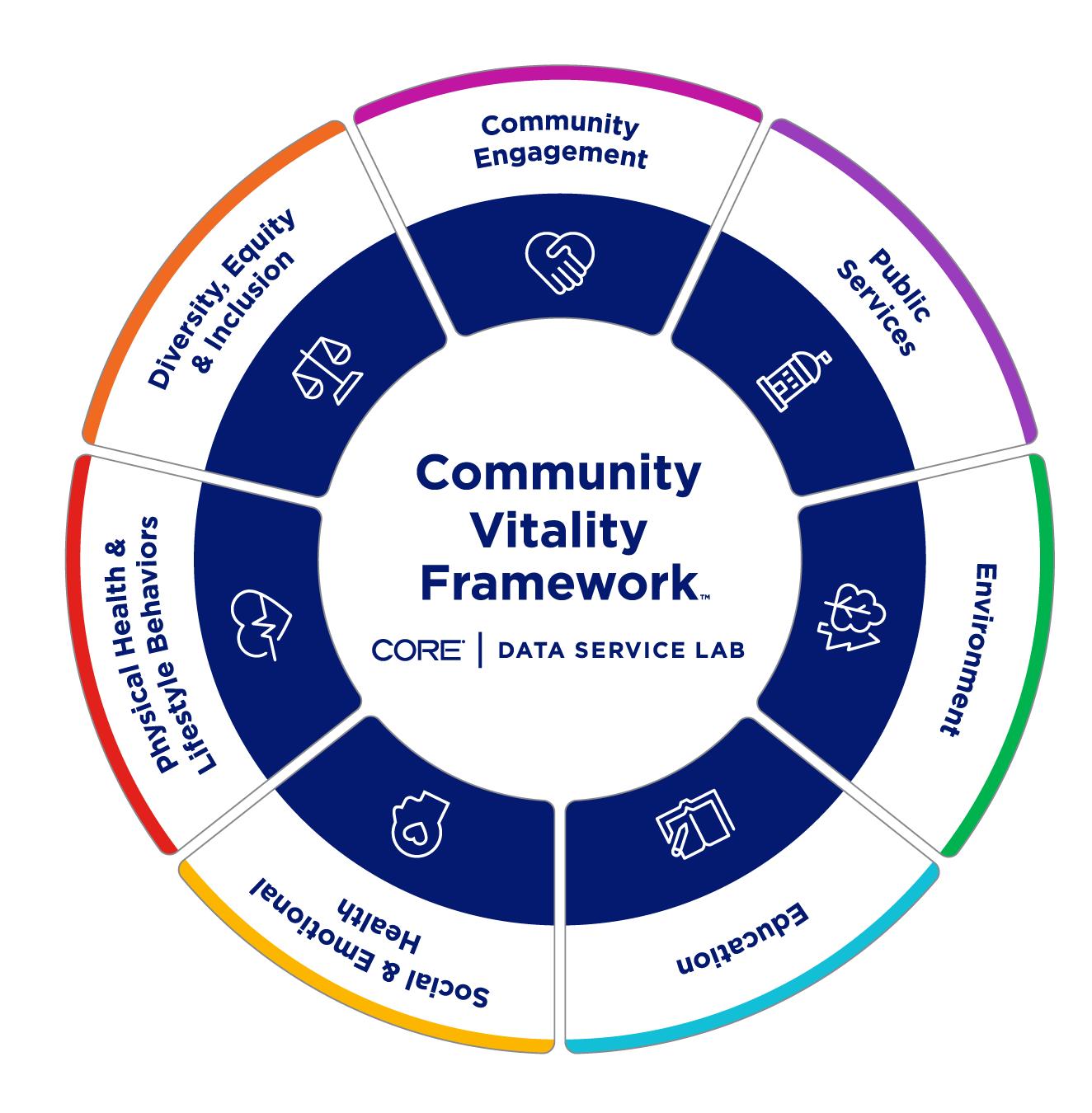
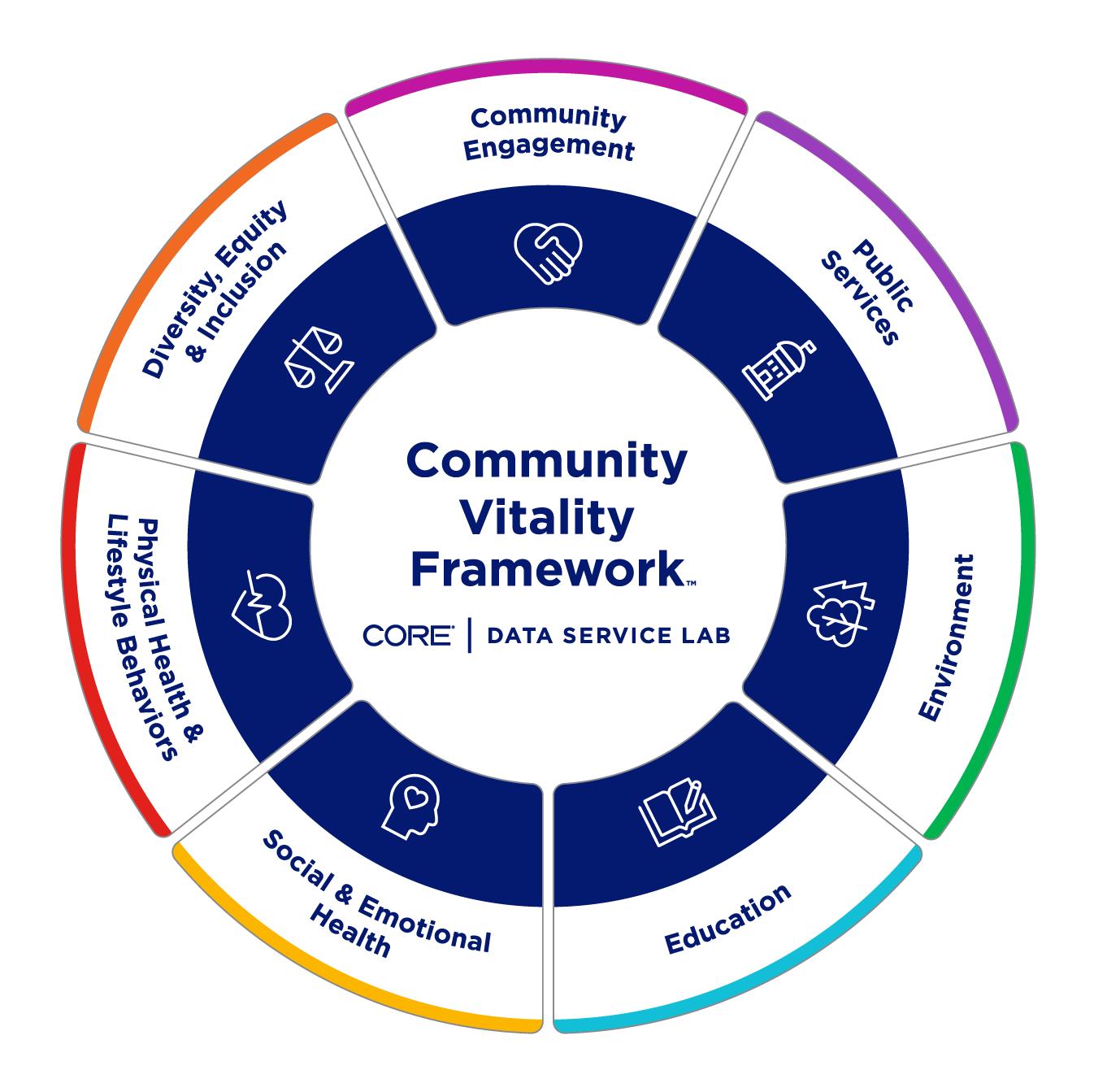
A vital community is one where all people are healthy, connected, and able to thrive in all areas of life. Community Vitality refers to both individual and collective well-being, shaped by the relationships between people, groups, institutions, and services in places like your school community.
The Community Vitality FrameworkTM categorizes this idea into 7 domains. It focuses on people — their identities and connections — while also highlighting the qualities that make communities vibrant and livable. This flexible framework supports tailored data storytelling, enabling stakeholders to engage with communityspecific insights.
Below are 5 metrics that connect to important student population characteristics. These can be linked to research insights - which highlight the value your school NDS can bring to the broader community.
Manage emotions, cope, form, and maintain meaningful relationships, feel a sense of purpose, and life satisfaction
Access to quality public services which are those provided, financed, subsidized, or regulated by government or other public entities Community is compromised of diverse populations, including race, ethnicity, disability, etc. where all individuals have equal access to opportunities Individuals are educated formally and informally and can be lifelong learners by expanding knowledge, skills, and being open to new ideas
Percent of young people neither in school or working.
Census Tract, ACS (2019-2023)
Percent of people under 19 years without health insurance.
Census Tract, ACS (2019-2023)
Estimated percent of people under age 18 with one or more disabilities.
Census Tract, ACS (2019-2023)
Estimated percent of people under age 18 who live in poverty.
Census Tract, ACS (2019-2023) School, NCES (2020-2021)
Number of students who were chronically absent in the 20192020 school year.
Understanding the Community Vitality data surrounding your school can optimize decision-making to benefit the approximately 556 students and 26 teachers at your school.
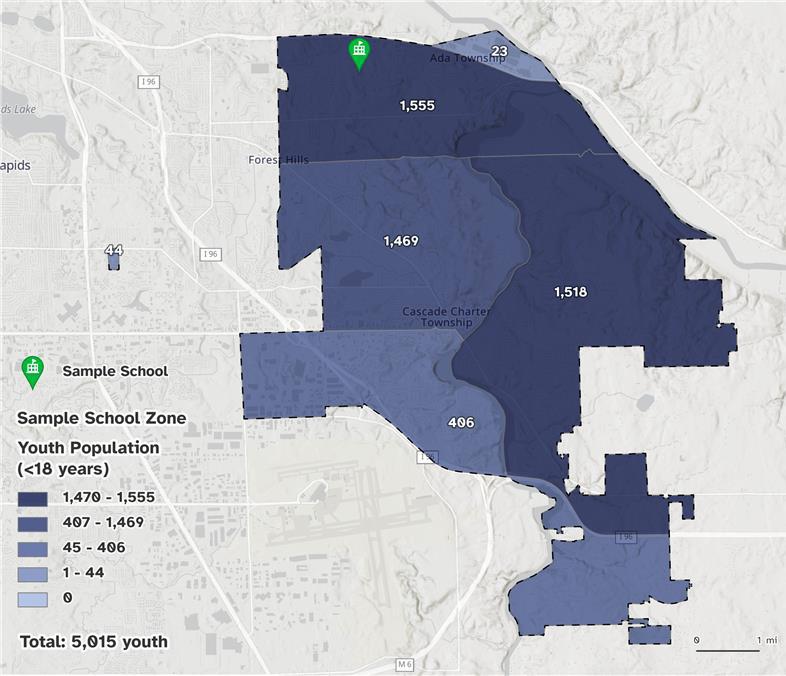

Map shows the number of youth (<18 years) per census tract within your school zone. Your school plays a vital role in students’ development by providing a high-quality outdoor space for physical activity, mental restoration, and meaningful connections.
Each teenager or young adult who is out of work and school costs the community about $37,450 per year due to crime, lost labor, or other societal costs.6
Youth without health insurance are less active than youth with health insurance.7
Only 24% of children with disabilites are meeting the daily recommendation of 60 minutes or more of physical activity, compared to 28% of those without a disability.8
Low income neighborhoods have 34% fewer recreational facilities than high-income neighborhoods.9
Students with the greatest decreases in fitness during middle school are 27% more likely to be chroncially absent compared to students who increase their fitness.10
Research validates that high quality playgrounds and maximum usage of the outdoor spaces have a variety of positive impacts on student well-being and overall community vitality.
Use your School Playground Impact Report to define your users, share the need, and justify investments that promote short and long-term benefits.

Use the map page data to compare metrics and inform school decision-making around play, programming, and playground access.

Use the scenarios of increasing time on the NDS playground to advocate for maximizing access to improve health.

Engage your district leaders, PTO, and students to celebrate joining a nationwide network of evidence-based designed schools.
Use the Community Vitality Framework to tailor your school’s unique story.
Craft a compelling story that is:
• Data-driven to establish trustworthy insights
• Student-centered to generate school pride
• Connected to broader community benefits to engage all stakeholders
ADVOCATE FOR MORE MINUTES OF ACCESS
REDUCE SCREEN TIME
FOSTER RELATIONSHIPS
STRENGTHEN COMMUNITY CONNECTIONS
SERVE AS A COMMUNITY RECREATION RESOURCE
INCREASE 10-MINUTE WALK ACCESS
IMPROVE ACADEMIC PERFORMANCE
STRENGTHEN COMMUNITY CONNECTIONS. 87% of adult school volunteers report improved sense of community.11
SERVE AS A COMMUNITY RECREATION RESOURCE. 62% of U.S. school districts have a formal joint use agreement, such as allowing outdoor recreation spaces to be used as a community park.12
INCREASE 10-MINUTE WALK ACCESS. Opening all public school playgrounds after school hours would put a park within a 10-minute walk of 20 million people who don’t currently have access.13
IMPROVE ACADEMIC PERFORMANCE. Fourth graders are 25% more likely to pass standardized math tests at schools with renovated playgrounds.14
FOSTER RELATIONSHIPS. School playgrounds are where youth establish and strengthen friend and family relationships.15
REDUCE SCREEN TIME. Students in school districts with playgrounds open outside of school hours are 14% less likely to have 10+ hours per week of screen time.16
ADVOCATE FOR MORE MINUTES OF ACCESS. Children below the poverty line have 11 fewer minutes of recess per day.17
1. In simple terms, what is NDS?
The National Demonstration Site (NDS) program is administered by PlayCore and recognizes outdoor spaces for exemplifying best practices in design and implementation resulting in high-quality environments that support community health and wellness. Your site can demonstrate the design criteria of one or more of the 5 NDS designations. Your school is now a member of a growing network in the US and Canada.
2. What benefits are available to me as part of the NDS network?
Your commitment to best-practice design will be recognized on the nationwide NDS map (https://www.playcore.com/nds/ map). You will also have access to an online portal where you can access this report and a variety of resources to help tell your unique school story. Access the NDS Portal at app. coredataservicelab.com
3. My school or school district is interested in installing another National Demonstration Site. How do I start this process?
We would love to have a high-quality play environment at every school. Contact us at support@coredataservicelab.com and we will help you get started.
4. Where can I access state-of-the-art resources on play, recreation, health, and wellbeing?
CORE has a robust publicly-accessible resource library featuring scholarly research on a broad range of topics that relate to building healthy communities through play and recreation. To access, visit playcore.com/programs.
5. I need assistance to get started. Who can I contact for help?
The CORE Data Service Lab Team is eager to assist! Email support@coredataservicelab.com with comments, questions, and any additional information you feel may be helpful to support you.
1. Rooney, L., & McKee, D. (2018). Contribution of Physical Education and Recess Towards the Overall Physical Activity of 8 11 Year Old Children. Journal of Sport and Health Research, 10(2), 303–316.
2. Gull, C., Goldenstein, S. L. & Rosengarten, T. (2019). Benefits and Risks of Tree Climbing on Child Development and Resiliency. International Journal of Early Childhood Environmental Education, 5(2), 10–29.
3. Stapp, A. C., & Karr, J. K. (2018). Effect of Recess on Fifth Grade Students’ Time On-Task in an Elementary Classroom. International Electronic Journal of Elementary Education, 10(4), 449-456
4. Clevenger, K. A., McKee, K. L., McNarry, M. A., Mackintosh, K. A., & Berrigan, D. (2023). Association of Recess Provision with Accelerometer-Measured Physical Activity and Sedentary Time in a Representative Sample of 6-to 11-Year-Old Children in the United States. Pediatric Exercise Science, 36(2), 83-90.
5. Rhea, D. J., Kirby, K., Cheek, D., Zhang, Y., & Webb, G. K. (2025). The Impact of Recess on Chronic Stress Levels in Elementary School Children. Children, 12(7), 865.
6. Millett, C. M., & Kevelson, M. J. C. (2018). Doesn’t Get Better With Age: Predicting Millennials’ Disconnection. ETS Research Report Series, RR-18-42.
7. Fabricant, P. D., McLaren, S. H., Suryavanshi, J. R., Nwachukwu, B. U., & Dodwell, E. R. (2019). Association Between Government Health Insurance Status and Physical Activity in American Youth. Journal of Pediatric Orthopaedics, 39(7), e552-e557.
8. Ross, S. M., Smit, E., Yun, J., Bogart, K., Hatfield, B., & Logan, S. W. (2020). Updated National Estimates of Disparities in Physical Activity and Sports Participation Experienced by Children and Adolescents with Disabilities: NSCH 2016–2017. Journal of Physical Activity and Health, 17(4), 443-455.
9. Jones, S. A., Moore, L. V., Moore, K., Zagorski, M., Brines, S. J., Roux, A. V. D., & Evenson, K. R. (2015). Disparities in Physical Activity Resource Availability in Six US Regions. Preventive Medicine, 78, 17-22.
10. D’Agostino, E., Day, S., Konty, K., Larkin, M., Saha, S., & Wyka, K. (2018). The Association of Health-Related Fitness and Chronic Absenteeism Status in New York City Middle School Youth. Journal of Physical Activity and Health, 15(7), 483-491.
11. Burns, S., Saltis, H., Hendriks, J., Tohotoa, J., & Pollard, C. (2025). Volunteer Experiences of a School-Based Volunteer Program. Health Promotion Journal of Australia, 36(2), e956.
12. Jones, S. E., & Wendel, A. M. (2015). Characteristics of Joint Use Agreements in School Districts in the United States: Findings from the School Health Policies and Practices Study, 2012. Preventing Chronic Disease, 12, E50.
13. The Trust for Public Land. (2020). School’s Out: In a Time of Compounding Crises, America’s Schoolyards Are Packed with Potential. https://www.tpl.org/wp-content/uploads/2020/08/Schools-Out_A-Trust-for-Public-Land-SpecialReport.pdf
14. Lopez, R., Campbell, R., & Jennings, J. (2008). Schoolyard Improvements and Standardized Test Scores: An Ecological Analysis. Gastón Institute Publications. 121. Scores: An Ecological Analysis” (2008). Gastón Institute Publications. 121. https://scholarworks.umb.edu/gaston_pubs/121
15. Toft Amholt, T., Westerskov Dalgas, B., Veitch, J., Ntoumanis, N., Fich Jespersen, J., Schipperijn, J., & Pawlowski, C. (2022). Motivating Playgrounds: Understanding How School Playgrounds Support Autonomy, Competence, and Relatedness of Tweens. International Journal of Qualitative Studies on Health and Well-Being, 17(1), 2096085.
16. Slater, S., Chriqui, J., Chaloupka, F. J., & Johnston, L. (2014). Joint Use Policies: Are They Related to Adolescent Behavior? Preventive Medicine, 69, S37–S43.
17. Roth, J. L., Brooks-Gunn, J., Linver, M. R., & Hofferth, S. L. (2003). What Happens During the School Day? Time Diaries from a National Sample of Elementary School Teachers. Teachers College Record, 105(3), 317-343.
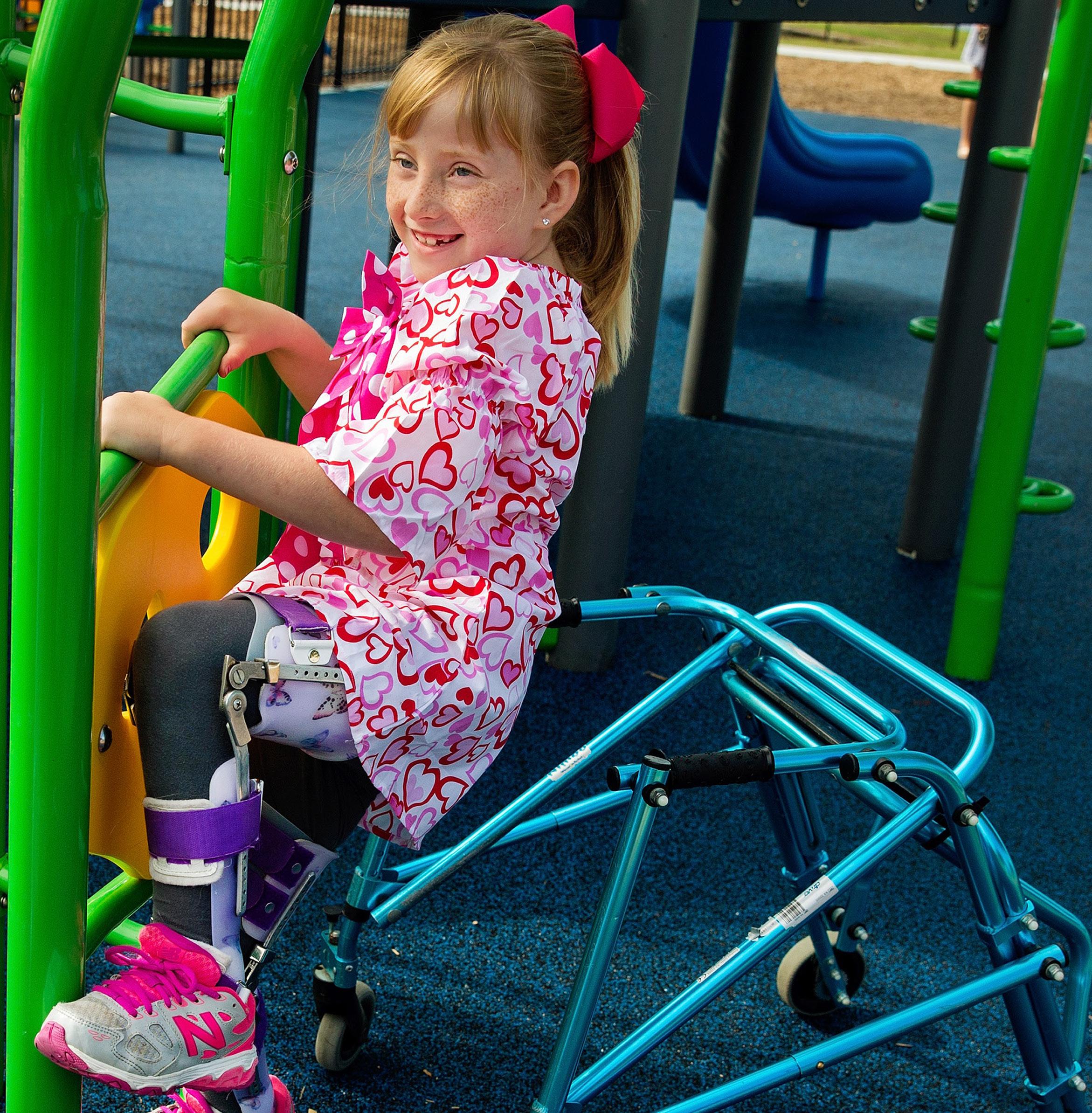

PlayCore established the Center for Outreach, Research, and Education (CORE) to help communities turn research into practice by researching and advocating for the impact of play and recreation on a community’s vitality and why it’s valuable to invest in community health and wellness.
For general information on the National Demonstration Site program, go to www.playcore.com/nds For further assistance, please email support@coredataservicelab.com.