


THURSDAY, SEPTEMBER 4,


Olivier Laurin
With roots back 157 years ago, few traditions date as far back as the iconic Saanich Fair in Greater Victoria.
Starting with 10 farmers who wanted to gather and compare their stock, crops, and crafts, the event took on a life of its own and grew into one of the region’s most beloved annual traditions for kids and adults alike.



Celebrating its 157th edition, the Saanich Fair drew about 45,000 people during its three-day run from Aug. 30 to Sept. 1.


Although the event’s roots lie in the region’s agricultural heritage, Vancouver Island’s largest fair continues to offer a wide array of attractions, from adrenaline-jolting rides to food trucks and live entertainment.

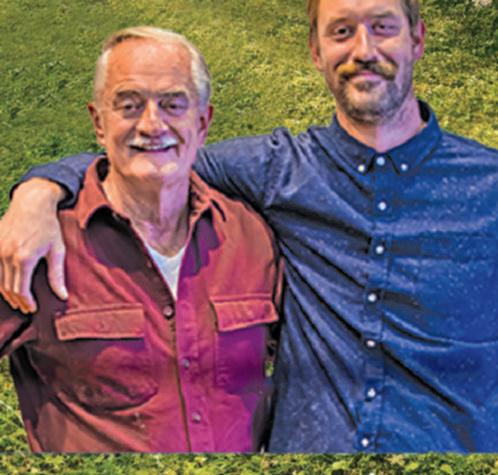

Among this year’s fair goers is Nick Stevaniuk and his two sons, Will and John, longtime attendees, living nearby the fairgrounds.
Having done everything from watching artists strum their guitars to petting monthold calves, the trio makes a point of marking this event on their calendar every year.
“Is it a great day with the kids and we’ve got lots of friends here and that’s a great community event,”said Stevaniuk.
For details on the fair and next year’s edition, visit saanichfair.ca.
– with files from Tim Collins and Tony Trozzo






























































Sam Duerksen
Prominent community member, former town crier, and 17-year Tour de Rock volunteer Robert Alexander has died.
The former town crier, who was a first for the City of Duncan and then served both Victoria and Esquimalt for 25 years, was 97 when he died on Aug. 13. From Duncan to Sidney, he was a familiar face, described as a generous, energetic and thoughtful individual. Alexander volunteered as a greeter for 15 years at the cruise ship terminal, welcoming tourists to town as well, and played a significant role with the Canadian Cancer Society’s Tour de Rock.
Tiffany Parton, executive director of the BC Association of Chiefs of Police, said he was a constant presence for the tour as town crier at closing ceremonies. She described his heart as being in it for the kids, the families and the community.
“What has stood out over the years is that we never really had to ask him for help – he just instinctively knew when and where he was needed, and he would show up with his trademark generosity and energy,” Parton said. She said his legacy continues as his family asks for donations in his honour to be made to Tour de Rock – “a powerful reflection of his passion, his unwavering commitment to this cause,” she said.
Alexander also worked side-by-side with

town crier Kenny Podmore in Sidney, and they would cover for each other on many occasions.
Along with Alexander’s wife Norma, an over 24-year “dear” friendship developed as a result – one that Podmore described as full of fun and laughter.
In Podmore’s note on Alexander’s obituary, he touched on the deep impact he made in his life.
“When I came to Canada over 25 years ago, you kindly gave up your position as town crier of Esquimalt and passed it on to me; for this, I
will always thank you. It was you my friend that opened the door to my amazing (Canadian) life that I now have.”
In his professional life, Alexander played an important and active role in B.C. pharmacy. He was a founding member of the BC Pharmacists Society and the first president of Chapter One (Vancouver Island).
He practiced his profession in Vancouver, Port Alberni and Victoria until he fully retired in 1996. He was also co-chair of continuing education in Victoria for 12 years.
Alexander was the manager of the pharmacy and drug department at Woodward’s when Mayfair opened and for the following 20 years. After retiring from Woodward’s, he went to work at McGill & Orme, managing the long-term care department.
Retiring from there, he managed Brentwood Bay Pharmacy and took shifts at several other pharmacies in Victoria.
He was also a 15-year member of the Canadian Power and Sail Squadron, though he never owned a boat. He was a charter member of the Oak Bay Squadron, becoming their first training officer and later a commander. He enjoyed another two years as assistant training officer before retiring to go RVing with Norma. Alexander is survived by Norma, his wife of 70 years, children Brian (Terry) and Corinne, as well as five grandchildren and two great-grandchildren.
Sam Duerksen
Another development at 9989 and 9991 Fifth Street could bite the dust.
A proposed five-storey, 30-unit residential building on Fifth Street has been sent back to the drawing board following an Aug. 18 council meeting, and the developer said he can’t promise he will continue.
The project, by Leif Gustavson, emphasizes an aging-in-place concept with adaptable units that cater to all stages of life and accessibility needs.
While the building height meets the allowable requirement, Gustavson sought numerous variance requests; notably, to increase the number of storeys from four to five, increase the density from 2 to 2.3 FAR (Floor Area Ratio), reduce parking from 30 to 25 spaces, and reduce front, back and both side yards.
The developer argued that the variances, including the fifth storey, are necessary for financial viability,
highlighting tough economic times in the industry.
“The previously approved development for this site was ultimately not built because it was not financially viable at the time and the property went into foreclosure. The economic climate for construction has only grown more difficult since then. New seismic and adaptability requirements under the 2024 BC Building Code have added significantly to costs,” Gustavson said, noting a ministry study that estimated an additional 21 per cent on the costs of construction.
If he would not get the fifth storey, he said he might abandon the current plans and wait. “I hope I don’t become like the last developer,” he said.
He noted that even with a fifth storey, the proposed building is smaller in height than the previously approved development.
Despite his stance, council members voted 6-1 that the applicant revise the design of the development to address
the maximum permitted number of storeys and required setbacks (the size of the yard), with Coun. Richard Novek opposed.
“I’m concerned that we’re seeing more and more developments coming to us, asking for variances and asking for changes to the OCP simply because of the recent world realities,” Novek said.
Coun. Sara Duncan criticized that there were too many variances but no “goodies” such as extra green space or affordable housing. She also criticized several aspects of the project, noting that the condo market is “sagging very severely” from east flowing west.
One of her biggest criticisms was that the project didn’t consider that the average household size in Sidney is one. “The incentive is to actually get the people who are in a single-family home with those three, four, five bedrooms, into one bedroom … [This project] doesn’t actually fit with what

a downsizer needs, which is fewer bedrooms.”
Other notes from councillors included the necessity of parking, and that official community plan feedback from residents emphasized a
lack of green space.
“It may not align with market reality and real estate, but it does align with the reality of what people in this community wanted,” Coun. Scott Garnett said.











Tony Trozzo
The Sidney Piranhas capped off their summer season with a standout showing at the BC Summer Swimming Association (BCSSA) provincials in Prince George, bringing home a haul of medals and records that underscored the strength of the small but mighty club.
Over three days of competition from Aug. 15 to 17, the Piranhas sent 40 athletes to the meet, the largest contingent from Vancouver Island.
In total, swimmers reached 46 finals, earning 10 gold medals, nine silver and seven bronze, while setting 13 new club records and one provincial record.
The club based out of the Panorama Recreation Centre boasts roughly 140 members.
Rick Say, vice president of the club and a three-time Olympian, said the results reflect years of steady growth and strong leadership on the pool deck.
“We have an awesome coaching staff, and I think that really translates into great performances,” he said.
“The environment throughout the season is so good that by the time kids get to provincials, they’re fully prepared. Their mindsets are really strong, and it shows.”
Among the top performers were sisters Mackenzie and Lexie Braun, who each left a mark on the club’s record books.
Mackenzie, 15, collected gold in the 50 and 100 freestyle, along with relay gold, while adding silver in the 100 butterfly and 200 individual medley.
She broke four club records, including swims in the 100 free and 100 fly, and was part of the
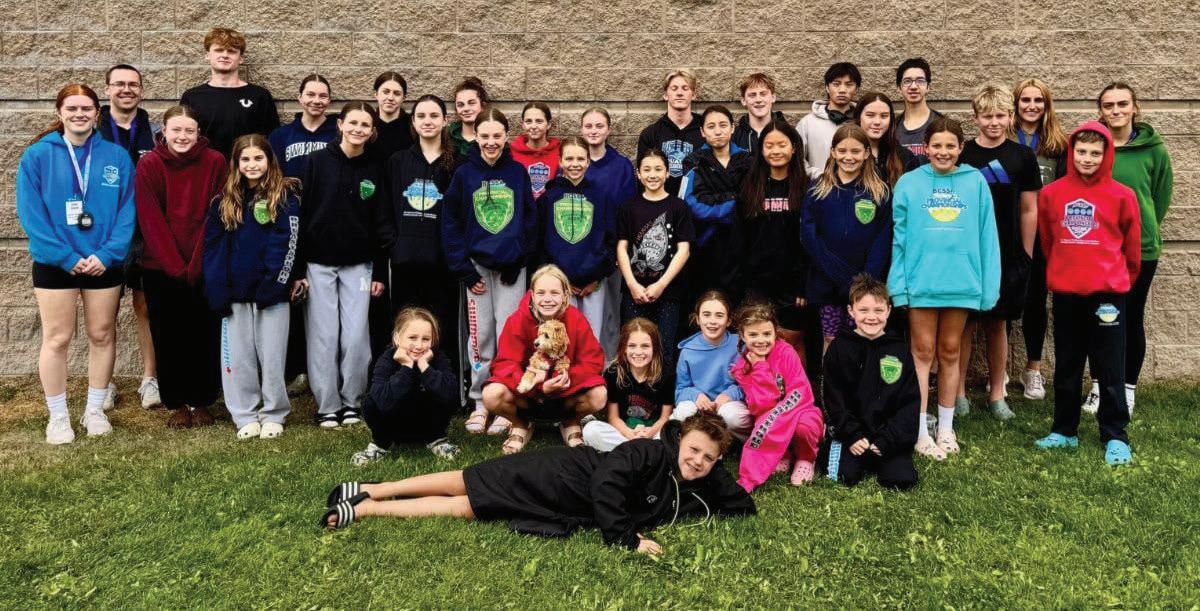
girls open freestyle relay team that set a new provincial record.
Lexie, 13, won silver in both the 100 free and 100 back, and added bronze in three relay events. She also rewrote a long-standing club record in the 50 free that dated back to 1998.
Other swimmers made their mark as well.
Karmyn Say won four medals and erased a
30-year-old club record in the 50 backstroke, while Addison Tait collected two gold and two silver, breaking a record in the 100 fly.
Zoe Paterson added gold in the 200 IM and silver in the 100 fly, while several relay teams also climbed the podium, including a division five girls freestyle relay that broke a 1996 record.
For Say, the results highlight not just talent but the balance the club has built between competition and community.
“We’re a small club, but the kids who are producing are top notch,” he said. “It’s not just about racing, it’s about friendships and mentorship too, and that’s what makes this team special.”


A BC Transit bus in Victoria displays the new Standing Room Only sign, part of a policy taking effect Aug. 18 to reduce pass-ups during busy periods. (Photo courtesy of BC Transit)

Tony Trozzo
Starting Aug. 18, catching the bus in Greater Victoria might look a little different – especially if you’re used to watching a packed one roll right past you.
BC Transit is introducing a new “Standing Room Only” policy in the Victoria Regional Transit System aimed at cutting down on pass-ups, which often happen when buses fill up.
When all seats are taken, buses will display the new message on the outside, stop at each designated stop, and allow more passengers to board until the standing area is full.
Passenger boarding will continue until customers are no longer able to stay behind the red line near the front of the bus.
The timing isn’t random – September is
typically the busiest month for pass-ups, with students heading back to class and commuters returning from summer holidays.
The change should mean fewer people left waiting at the curb, but it also means more crowded rides for those without a seat.
“We ask everyone to remain patient and courteous, and for standing passengers to continue moving towards the back of the bus to accommodate more riders,” said BC Transit in a statement. “BC Transit also appreciates customers who continue to volunteer their seats for seniors and people with mobility challenges.”
The transit authority says it will keep adding extra trips when possible and use route data to make further adjustments to service.
Sam Duerksen
As Central Saanich undertakes a civic redevelopment project to replace aging municipal facilities, including the municipal hall, police and fire stations, it seeks greater community input on its options.
The district is working with Deloitte to conduct a survey that includes both mailed postcards and phone interviews.
Starting the week of Aug. 25, all households in Central Saanich will receive a postcard with a unique access code to participate. Residents are encouraged to use this code to share their views and help shape the future of local infrastructure. Residents who do not receive a postcard by Sept. 2 are asked to email the district at communications@csaanich. ca or call 250-544-4240

“Your feedback is vital to helping council make informed decisions that reflect the priorities of all Central Saanich residents,” the district said.
To see facility concepts, visit LetsTalkCentralSaanich.ca/ CivicRedevelopment.
According to the district, moving services to a new location on Hovey Road or redeveloping the existing 1903 Mt Newton Cross Rd. site
Saanichton Village is needed due to aging infrastructure, safety and accessibility reasons, service expansion and rising costs that will make it more expensive to build in the future.









The ongoing tariff dispute between Canada and the United States shows no sign of ending.
Since early 2025, the United States has imposed, suspended, reinstated and changed tariffs on goods coming from Canada. Canada’s federal government has responded with retaliatory tariffs, legal challenges, relief for the hardest-hit sectors of the economy and talks with the U.S.
More than two-thirds of Canada’s trade is with the United States, and more than three-quarters of Canadian exports go to the U.S. As a result, any changes affecting trade between the two countries will have a noticeable effect in Canada.
Prices of goods and materials are affected by tariffs, making budgeting and investment planning difficult.
Constant changes to the U.S. tariff policy with Canada make it next to impossible for businesses to make appropriate plans.
And despite the numerous talks, nothing resembling a solid agreement has been reached — despite the fact that the American president has prided himself on being an excellent deal-maker.
As the dispute drags on, Canadians’ perception of the United States has been changing.
A Pew Research Center poll found 55 per cent of Canadians surveyed said the U.S. is Canada’s top ally, but 59 per cent said the U.S. is Canada’s greatest threat.
That survey also showed 76 per cent of Canadians surveyed believe the U.S. president is dangerous.
An Ipsos poll released showed 77 per cent of those surveyed think less of the U.S. because of the American president’s threats against Canada.
While there is an ongoing level of frustration as a result of U.S. policy, Canada is still working to negotiate suitable trade agreements, and the nation’s leaders are working to take a calm, measured approach.
However, no matter how the present dispute is resolved, fractures have appeared in the close relationship Canada and the United States once enjoyed.
The PENINSULA NEWS REVIEW s a member of the National Newsmedia Council, which is an independent organization established to deal with acceptable journalistic practices and ethical behaviour. If you have concerns about editorial content, please contact: editor@peninsulanewsreview.com or call 778-746-4010. If you are not satisfied with the response and wish to file a formal complaint, visit the web site at mediacouncil.ca or call toll-free 1-844-877-1163 for additional information.
Copyright and/or property rights subsist in all advertisements and in all other material appearing in this editionofTheNews.Permission to reproduce wholly or in part and in any form whatsoever, particularlybyaphotographicor offset process in a publication, mustbeobtainedinwritingfrom the publisher. Any unauthorized reproduction will be subject to recourse in law.

took this
of the tranquil
at
If you have a photo you’d like to feature in Community Camera, email us a high-resolution .jpg copy to newsroom@peninsulanewsreview.com. Please include your name, contact information and where you took the photo.




If you see news happening, call our newsroom at: 250-480-3278 or email newsroom@ peninsulanewsreview.com
We welcome your opinions and comments. To put readers on equal footing, and to be sure that all opinions are heard, please keep letters to less than 350 words. We reserve the right to edit letters for style, legality, length and taste. We will not publish anonymous letters. Send your letters to: newsroom@ peninsulanewsreview.com. We want to hear

A news item the other day contained one of the most depressing sentences I’ve seen, at least in the last couple of weeks.
It was about the dating app Bumble. The company’s stock was taking a beating because its quarterly report showed the app was losing both users and money at a rapid pace.
But the depressing bit came midway down the article, outlining how Bumble was trying to fix its business model. Part of this solution would come from a new “BFF app” that Bumble plans to launch to help young people find friends.
Organization declared loneliness a “global public health concern.”
In Canada in 2024, 13 per cent of the population said they “often or always” felt lonely, and it was 17 per cent for those aged 15 to 24.

It says so much about our society that we are suffering through a loneliness epidemic, and the solution we’re being sold is an app on our phones.
Back in 2023, the World Health


Surveys in North America have shown a declining number of friendships over time.
The most immediate causes are the pandemic lockdowns and the rise of social media. But the decline in social interaction goes back decades.
The 2000 book Bowling Alone by political scientist Robert Putnam identified a long-term decline in civic participation, starting in the 1960s. Fewer and fewer adults participated in bowling leagues,


church groups, fraternal organizations, or school PTAs.
There are multiple causes for all of this, but the one that greased the rails for the slide into loneliness seems to have been technology.
The irony is that it seems to be a bit of a loop. People have always been lonely, and have embraced technology as a solution. When radios became available in the 1920s, they were popular with people who lived alone because it felt like there were people in their homes.
Telephones and chat rooms and Facebook allowed people to stay in touch with distant friends, and even to make new ones.
But the overall effect of technology has been to reduce the number of opportunities we have to interact with other human beings, especially face-to-face.
Every piece of entertainment and communications technology allows us to choose — do we see it as an opportunity to connect


with someone or a chance for a frictionless experience, avoiding the complications and foibles of other humans altogether?
Too often, we pick the easier choice.
We pull back, we interact less, we avoid the uncomfortable reality of others. We don’t have to speak to the barista, the waiter, the checkout clerk. We don’t have to go to the meeting, the party, to have people over. We can shop online. We can order in. We can click ‘like.’
I’m as guilty of this as anyone. I don’t see my friends as often as I’d like, and as for making new ones… how do you do that, exactly? Those muscles have atrophied since elementary school.
One thing I’m sure of is that technology is not our way out of this problem. We’re going to have to learn when to put it aside, or stay lonely.
Matthew Claxton is a reporter with the Langley Advance Times.


Much of the content in the letter BC Ferries justified in ban on electric vehicles was misleading and erroneous. It was not a laptop that brought down a commercial airliner in 2010, but a large quantity of lithium batteries that ignited alongside combustible materials. It should be noted that during that year, 35 airline crashes occurred for reasons that had nothing to do with batteries.
As for the supposedly massive government rebates electric vehicle owners were allotted, the total amount over the last five years has been $3 billion, while the oil and gas industry has enjoyed over $75 billion in subsidies during this same time period. As humans, we are creating an Anthropocene Epoch where, if we are not mindful, we could become the next victims of a mass extinction.
It is difficult to imagine electrical energy usage becoming a widespread problem as EV ownership increases. There is more and more private residential solar power generation, which not only supplies enough power to fully charge that EV and the energy requirements of that home, but, as is being found, the excess energy can be directed to supplement the local power grid. Charging an EV overnight is equivalent to
operating a few home appliances for a couple of hours.
Hopefully, more informed decision-makers at BC Ferries will re-evaluate the company’s position regarding the transport of inoperable EVs with a more pragmatic regulation by reviewing the available data. A report from AutoinsuranceEX found that EVs exhibited 61 times fewer fires than ICE (internal combustion engine) vehicles.
So, a warning to you EV owners out there, be wary about parking beside an ICE vehicle because they can be dangerous!
T.V. Gogol North Saanich
Today, on my morning walk with our dog, I picked up four extra dog poops (besides my own dog’s) on the lawn in front of our town hall. There is absolutely no excuse for you not to pick up after your dog. The town even provides doggie bags. It is shameful and so inconsiderate and extremely lazy of you. If you own a dog, you know what you are doing when you take them for a walk, pay attention and pick up after them.
Thank you to all the other dog owners who do pick up after their dogs. Let’s keep Sidney looking beautiful for everyone.
Anne Smiley Sidney
Regularly, someone decides the evils of the world could be solved by licensing cyclists. An idea tried many times and dispelled for being costly and not effective. Yes, some cyclists violate the Motor Vehicle Act, but so do automobile drivers.
The capital offence of a cyclist not stopping at a stop sign. Stand at any stop sign and watch how few cars come to a full stop if the driver deems no other car is at the intersection – cyclists don’t count, they can be bullied into yielding.
In part, I agree with the recent letter (E-bike
riders should have to be licensed), a big part of the problem is the lack of enforcement of the MVA by the police, often intentionally not enforcing the provision to protect vulnerable road users. Often it takes hours to roust the police to have them look at and take action when a vehicle is parked in a designated ‘cycling lane’, a violation of the Motor Vehicle Act. Pedestrians walking in a cycling lane with their backs to the traffic, oblivious to their surroundings, despite it being a violation of the MVA, yet I have had a Central Saanich police officer tell me he would not tell people what side of the road to walk on. When I was young in Central Saanich, I found that if I did not want to walk three miles home then I would walk on the right and a police officer pick me up and give me a ride home to tell my parents I was walking on the wrong side of the road – the punishment from them while strict was better than a three-mile walk in the rain. Instead of calling for cyclists to be licensed, it would be better if the police enforced the MVA with all road users.



















https://www.thunderbirdinsurance.com/
https://www.thunderbirdinsurance.com/ https://www.thunderbirdinsurance.com/


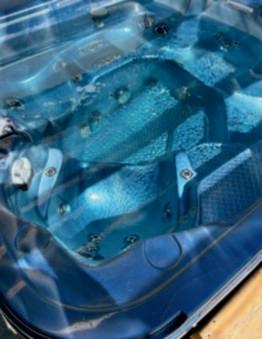
Asweageandbeginto loseourmobilityandsenseof balance,bathingcannotonly becomedifficultbutalsoacause ofadditionalstressandanxiety. Fearoffallingandafearofnot beingabletogetoutofthetub aretwoofthemostcommon occurrenceswithmanyofour seniorstoday.Walk-intubshave becomeextremelypopularin thelastdecadeandestimates showthatpeoplewhogoahead andinstallawalk-intubintheir homestoday,willbeabletolive independentlyforanadditional fiveyears.
Walk-intubsareexactly whatthenameimplies,tubs thathavelargedoorsthatopen, andyousimplywalkinandsit downona17-inch-highseat. Youcloseandlockthedoor andthetubfillsrapidlywhile youaresittingcomfortablyand safelyinside.Allthetapsand controlsareeasilyaccessibleat yourfingertips.Onceyouare doneyourbath,turnthedial andthetubquicklydrainsand yousimplyopenthedoorand walkoutofthetub.Thevarious modelsallhavenumerous grabbarsandnonslipsurfaces
makinggettinginandoutworry free.Walk-intubsaredesigned foranagingpopulationwho desiretoremainindependent formanyyearstocome.
Manufacturershaveoptional tubdesignsaccommodating everyshapeandsizeofperson andbathroom.Thereisatub sizethatwillfitinthespace whereyourexistingtubor showeris.Walk-intubscanbeas basicasasoakertubtoasdeluxe asyourownpersonalspa. Offeringnumerousoptionssuch asheatedback,multi-speed warmairjets,waterjets,ozone, lighttherapy,aromatherapy, andmore.
Thebenefitsofawalk-intub arenumerous.Manypeople cravebeingabletoconfidently haveabathagainandfindrelief byjustsoakinginawarmtub. Ownerssaytheybelievethey sleepbetterafterasoothing bath.Thewarmairorwaterjets giveadeepmassageandhelp tostimulatecirculation,thus carryingadditionalhealing oxygenatedbloodthroughout thebodytothehandsand feet.Thishasshownpositive resultsincreasingmobilityand
Perhaps,one ofthebest decisionsI’ve madeiswhen Idecidedto goaheadandputawalkin tubinmyhouse.Ino longerhaveafearoffalling andthiswillhelpmelivein myhomeformanymore yearstocome.”
JeanS.
helpingtorelievethepainand symptomsofsuchconditions asarthritis,chronicbackpain, fibromyalgia,diabeticand peripheralneuropathy,aswell asvariousotheracuteand chronicconditions.
TheCanadianGovernment websitestatesthat1in4 seniorsfalleveryyear,and 25%ofthesefallsareserious, leavingthevictimspermanently disabledandbedridden.A largepercentageofthesefalls takeplaceinthebathroom. Asidefromallthepainand sufferingitalsoendsupcosting theCanadianmedicalsystem twobilliondollarsannually. Therefore,theBritishColumbia


andFederalGovernments arehelpingmanypeoplewho decidetopurchaseawalk-in tubnow.Thehelpcomesinthe formsofa$4,000taxcredit, aProvincialSalesTaxwaiver andincertainqualifyingcasesa $10,000GovernmentGrant.
Asweall ageandtheyears flyby,manyseniorsarefaced
withtherealitythattaking proactivestepstodayand decidingtoretrofittheirhomes withawalk-intubisoneof thebestinvestmentstheycan maketohelpthemageinplace, comfortablyandindependently inthehometheylove.
30years,Walk-InTubsFraserValleyhasofferedprofessionally installed,CanadianassembledproductsprovidingPeaceofMind,
professionallyinstallsbathandshowerproductsfromaCanadian







Tony Trozzo
Greek n’ Go, a family-run food truck business that has become a staple in Victoria since opening in December 2022, has been hit by a wave of vandalism in recent months, leaving the owners with nearly $32,000 in damages.
The business, run by Eirini Sypsa-Kaya and her husband, Vedat, along with several family members, operates three food trucks across the region.
Eirini said the string of incidents has made them feel like they’re being deliberately targeted, rather than experiencing random misfortune.
“This has not been set to just one location,” Eirini told Victoria News. “It has happened across all of our food trucks. They target specific things that make us unable to work.”
According to the couple, the vandalism has ranged from stolen tablets to damaged locks and destroyed equipment.
In one incident, Eirini said a locked generator was tampered with and rendered unusable, an act that carried an estimated $22,000 repair bill.
On other occasions, she said electricity cords have been removed or cut, resulting in thousands of dollars of spoiled food. One of the most recent cases she described involved a professionally made power cord being sliced through, forcing the family to throw out $5,000 worth of inventory.
“This cord is heavy duty, very expensive, and really difficult to cut,” Eirini explained. “You need special equipment for that.”
She also told Victoria News that a large rock was hurled at one of their trucks.
In total, the business has calculated $31,945 in damages so far.
Greek n’ Go says they have reported each incident to police in Victoria and Central Saanich, and have security camera footage documenting the acts.
In an emailed statement, the Victoria Police Department said they don’t believe that the truck is being specifically targeted.
“We’ve received two reports of incidents involving a food truck in the 1500-block of Cook Street — one in June and another in August. Based on the timing and nature of the reports, there’s no indication that the food truck was specifically targeted,” VicPD said.
Meanwhile, Greek n’ Go says insurance has provided little relief thus far.
Each claim requires a $1,000 deductible, with coverage capped at 80 per cent. According to Eirini, just replacing locks has cost them close to $900 out of pocket.
Eirini said the ordeal has shaken the family, which relies on the business not only to support themselves but also their staff of six to seven employees.
“We have lost our sleep,” she said. “It is really stressful. Imagine someone coming to your



house and trying to take everything daily. But we still have to wake up and go back to work.”
The family said they have always received strong community support, which has been a source of encouragement during the recent hardships.
“We are really happy because since we posted about this, so many people have reached out,” Eirini said. “We had many walk-ins, and people told us they are behind us.”
The family has now launched a GoFundMe campaign with a goal of raising $7,500 to help offset repair costs. They said it was not easy to ask for financial help, but felt the circumstances left them with no choice.
“If we don’t ask for help now, during our most difficult time, then when?” Eirini said.
“This is the only time we really need the community to support us, because we do have evidence and people can see what is going on.”
Despite the setbacks, she said the family has no plans to abandon their trucks or change locations.
“This business gives bread to our table and to our employees,” she said. “We will keep going.”





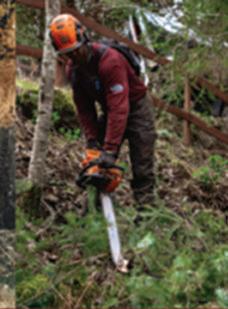
https://www.ospreytreeservice.ca/ Osprey TreeServiceis a team of qualified arboristsandforestry professionalswhohave beenworkinginBCforestsforover35years. Ourcollectiveknowledgeandextensive resourcesmeanthat there isnojobtoobigor toochallengingforustotake on!


It’s last call for bird photos as the Rocky Point Bird Observatory plans for its 2026 fundraising calendar.
The calendar is a significant project that aims to showcase the beauty and diversity of bird species found on Vancouver Island.
Sold to raise funds in support of migration monitoring, education and research goals, this calendar will feature important dates for bird enthusiasts. Monumental moments flagged include World Migratory Bird Day, Victoria Bird Week, and the Christmas Bird Count for Kids.
Most importantly, the non-profit wildlife agency plans to profile local photographers who shoot birds seen on southern Vancouver Island.
“We can’t wait to see each and every photo. As we reside in the birding capital of Canada, we want to celebrate the
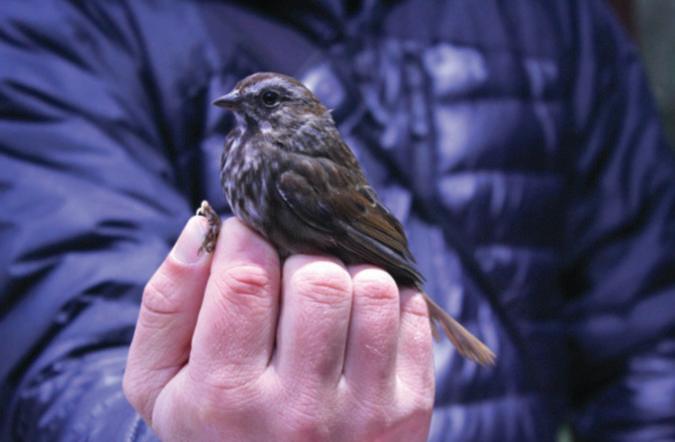
diversity of bird species found here,”the agency said in a callout for images. Photos could be used on the Rocky Point Bird Observatory calendar, website, social media and other forms of communication.
Entrants can submit by
emailing images to development@rpbo.org with “2026 RPBO Calendar entry” in the subject line.
Entries should include the bird’s identification, location where it was spotted and the photographer’s name.










• SAGE: Escape
online or contact 250-721-7797 or lacadmin@uvic.ca to receive a detailed flyer.
Sam Duerksen
BC Ferries intends to offset future fare pressures with savings from the elimination of the provincial carbon tax, it announced Aug. 20. That, however, will not bring immediate fare reductions to customers; savings will instead be passed on gradually and predictably if its proposal to the BC Ferries Commissioner is approved.
“In other words, what you’re paying today will stay consistent – avoiding sudden ups and downs tied to fuel prices – helping keep travel more affordable over the long term,” explained BC Ferries spokesperson Ritinder Matthew.
BC Ferries uses fuel deferral accounts to keep fares stable when fuel prices fluctuate. The commissioner establishes a “set price” for fuel every few years, and if BC Ferries pays more than that set price, they can add a fuel surcharge to fares. If they pay less, they eventually must give passengers a fuel rebate.
There are currently no fuel surcharges in place, Matthew said.
The current Performance Term 6 fuel price, set in September 2023, covers April 1, 2024, to March 31, 2028. The set price was originally created with the assumption that BC Ferries would be paying for fuel plus the carbon tax.
But now that the B.C. government eliminated the carbon tax on fuel in 2025, the deferral account has filled up with credits. By the rules, once the credit balance gets too big, BC Ferries must give riders a rebate on fares.
However, in its application to the commissioner, BC Ferries warned that the rebate would backfire later due to overall operating costs rising between 2029-2032 (PT7).
The company is projecting significant cost increases in the coming years, with CEO Nicolas Jimenez anticipating a 30 per cent fare increase would be needed in 2028 to cover expenses related to fuel, inflation and maintaining an aging fleet.
“A near-term fuel rebate that reflects the elimination of the carbon tax will, all else equal, serve to increase the jump in fares that ferry users will experience in the transition from PT6 to PT7,”BC Ferries said in its application. “BC Ferries submits that these abrupt changes to fares will reduce fare predictability and stability for BC Ferry users.”
Instead, BC Ferries is requesting that the commissioner, who operates independently from both BC Ferries and government, lower the set price for fuel in PT6 so that the benefit is spread evenly across PT6 and PT7.
“If the commissioner approves our proposal, it will allow us to use the carbon tax savings in a way that helps maintain consistent fares for customers,” said Brian Anderson, chief financial officer at BC Ferries, in a press release. “By spreading the savings over a longer period of time, it enables us to keep fares steadier and give people more certainty when planning their travel.”


What is the best way to protect your septic system? What shouldn’t be going down your drains? Malfunctioning systems can be expensive to repair and cause health risks and pollution to local waterways.
This September, join the CRD and the Western Canada Onsite Wastewater Management Association for Septic Awareness week!
Visit wcowma.com/septic-awareness-week-2025 to register for a free zoom webinar:
• Tuesday, September 16, 7pm
• Thursday, September 18, 7pm
Septic Savvy information kits are also available for pick up at most municipal halls in the capital region.
Visit www.crd.ca/septic for information materials, videos and more.















































































Morry Stearns stands beside David Foster and Nelly Furtado. Stearns performs at the upcoming Jazz Vespers show on the Peninsula. (Courtesy morrystearns.com)



Sam Duerksen
Jazz Vespers, a popular, modern jazz-infused twist on traditional Vespers evening prayer service, kicks off its 16th season Sept. 7 with a special guest.
Victoria-based singer, songwriter, pianist Morry Stearns, a longtime member of David Foster’s Canadian band, has performed with the likes of Celine Dion, Nelly Furtado, Bryan Adams and Gordon Lightfoot. He’s also recorded with other well-known musicians such as Christina Aguilera, Burton Cummings and Peabo Bryson, whose Unconditional Love album landed Stearns a Grammy nomination for songwriter.
On Sept. 7, he performs at St. John’s United Church with bassist Joey Smith, who toured with the Glenn Miller Orchestra, and drummer
Bradley Clarke.
The service will be led by St. John’s new minister, Rev. John Crowdis.
Jazz Vespers continues on Oct. 5 with Broke and Blue performing selections from Claude Bolling’s acclaimed Suite for Flute and Jazz Piano Trio
On Nov. 2, pianist David Vest and his trio will bring an entertaining blend of Southern-bred boogie and blues.
On Jan. 4, Jazz Vespers favourite Karel Roessingh will perform jazz standards and originals with his trio.
St. John’s United Church is located at 10990 West Saanich Rd., across from Deep Cove School. Jazz Vespers services begin at 7 p.m. A suggested donation of $20 per person will help compensate the musicians and cover the Vespers program.



Sidney parks are getting green facelifts to wind down summer.
Everyone’s invited as the Greater Victoria Green Team descends on Philip Brethour Park to remove invasive plants such as English ivy, Himalayan blackberry, and English holly on Saturday (Sept. 6) from 9:45 a.m. to 1 p.m.
The work prepares the park for Sidney Tree Day on Sept. 20 in the same park – on Ocean Avenue between Epco Drive and Canora Road – with tree planting and some to take home.
Philip Brethour Park features a playground, a large playing field and a large forested area with bark mulch pathways that connect to local
streets. Parking is available on Ocean Avenue West, and the park can also be accessed via trails from Winmeadow Place, Waxwing Place and Redwing Place.
Billed as an opportunity for people to come together, connect with nature and make a tangible impact on the community, the event is free, family-friendly, and open to everyone, with no prior experience necessary. Tools, gloves, instruction, and light refreshments will be provided. Participants are asked to sign up ahead of time online at bit.ly/gvgt-sep6-2025 or by emailing the organizer at Kaitlin@GreenTeamsCanada.ca






















Notice is given that the Council of the Town of Sidney will hold a Public Hearing in respect of Bylaw No. 2297, being the proposed amendment to Official Community Plan Bylaw No. 2240, and Bylaw No. 2298, being the proposed amendment to Zoning Bylaw No. 2275 for the Town of Sidney The purpose of the amendments to these bylaws is to allow Emergency Shelter as a permitted use in residential lands during extreme cold weather events, and specifically on the subject property shown below.
The Public Hearing will be held on Monday, September 8, 2025 at 6:00 p.m. in the Council Chambers at Town Hall, 2240 Sidney Avenue, Sidney, BC.
The meeting will be live-streamed at sidney.civicweb.net/Portal. A copy of the recording will be made available on the Town’s website for on-demand viewing.
Providing Input:
• Attend the meeting in person and speak to Council
• Attend virtually via Zoom (please register to speak in advance by 12:00 p.m. on the day of the meeting via email admin@sidney.ca or call 250656-1139)
• Submit written comments until 4:00 p.m. on Monday, September 8, 2025, by the following methods:
• Email: admin@sidney.ca
• Mail: 2440 Sidney Avenue, Sidney BC, V8L 1Y7
• Drop box: Main front entrance at Town Hall, 2440 Sidney Avenue
All correspondence submitted will form part of the public record and may be published in a meeting agenda.
Copies of the proposed bylaws and background documentation can be viewed at Sidney Town Hall from 8:30 a.m. to 4:00 p.m., Monday through Friday (excluding statutory holidays) from August 28 to September 8 or at www.sidney.ca/development Further inquiries may be directed to the Development Services Department, at 250-656-1725 or developmentservices@sidney.ca.
Property Details
Legal Address: Lot 1, Section 11 & 12, Range 4 East, North Saanich District, Plan 49271
Civic Address: 9924 Third Street





tor of the group. “No one is excluded due to economic circumstance.”
A children’s singing group has been lending their incredible voices to spread joy and patriotism throughout the Saanich Peninsula.
REACH! Children’s Chorus were recently featured in a music video of O Canada, which was filmed in various locations across the region. They were invited to perform their version of our national anthem live at this year’s Canada Day ceremonies at the Legislature. They have also performed at events such as Human Solidarity Day and a benefit concert for refugees. In Sidney, people packed the Shoal Centre in December to enjoy hearing them lead the Community Christmas Singalong there.
The chorus group is for children ages 7 to 12. The only requirements for these children to join is a deep passion for music and a desire to make a positive difference in their community.
It is an inclusive, non-auditioned group with fees subsidized with support from the Victoria Foundation.
“We’re all about doing positive things in the community and bringing joy to others through music,” says Anne-Marie Brimacombe, direc-

The program is all about doing positive things in the community and bringing joy to its members.
The REACH! Children’s Chorus is one of seven programs offered in the region by West Coast Reach Association, a registered local charity celebrating inclusion and diversity through the performing arts.
One of the programs helps newcomers learn English through singing, while another brings “positive energy and purpose” to those at Victoria soup kitchens. REACH! also has a recreational music program on the Saanich Peninsula,“Joy of Music,” for adults with developmental disabilities.
The REACH! program has helped its artists develop long-lasting friendships while experiencing the thrill of performing in major shows and, most importantly, having some good old fashioned fun in the process.
The chorus holds rehearsals weekly at McTavish Academy of Art in North Saanich, with some spaces available for the upcoming fall term.



Tony Trozzo
Victoria has earned the crown as Canada’s most cycle-friendly city, spinning ahead thanks to an extensive network built for two wheels.
A recent study by Compare The Market ranked cities based on cycling modal share (the percentage of residents who travel by bike), kilometres of dedicated bike paths per 10,000 people, and online interest in cycling and e-scooters.
Victoria topped the list with a score of 60.71 out of 100, edging out Winnipeg and Quebec City.
About 7 per cent of Victoria’s residents regularly bike, adding up to roughly 27,800 cyclists across the Greater Victoria area.
The city’s bike path network stretches 2,085 kilometres – an impressive 52.5 kilometres per 10,000 residents.
That combination of riders and routes helped push Victoria to the top of the cycling rankings. Vancouver was the only other B.C. city to make the top 10, with a score of 52.93.

Popular routes like the Galloping Goose Trail, Lochside Regional Trail, and the E&N Rail Trail help connect riders across the region.
Colleen Sparks, executive director of Capital Bike, says the city’s cycling culture has grown dramatically over the past decade.
“When I first moved to Victoria in 2004, biking from Gordon Head to Downtown felt intimidating. Now, it’s a completely different experience,” Sparks said. She praised the City of Victoria’s work improving in-
frastructure and highlighted the community’s passion for cycling.
Greater Victoria has also been home to major cycling events that boost its reputation.
Langford hosted the 2025 Canadian Mountain Bike Championships and will do so again in 2026.
Saanich welcomed the national cyclo-cross championships in 2022 and 2023, while the Canadian Masters Road Championships took place across Greater Victoria this past weekend.

Meet Your Council Members!
Join us at North Saanich Middle School on Thursday, Sept. 18, from 4:30 - 6:30PM for a friendly and informal meet-and-greet with your North Saanich Council members!
This event is a wonderful opportunity to engage in open dialogue, share your thoughts, and get to know the people representing your community.
Thursday, Sept. 18, 2025
4:30 - 6:30PM
Saanich Peninsula Presbyterian Church 9296 E Saanich Rd
This is the third of four town hall events planned for this year. Don’t miss out on the chance to connect with your Council, discuss community issues, and contribute your voice to shape the future of North Saanich. Come along, we look forward to chatting with you! Refreshments will be provided.



Christine van Reeuwyk
Joyful sounds break the reserved quiet expected in a hospice setting as Rummy happily waltzes into a room.
The patient – a small, frail-looking man tucked into the bed with eyes closed – is surrounded by those who care about him.
“You’re exactly what I needed,”one woman says, reaching down to pat the bernadoodle’s thick coat.
Rummy responds to the human happiness with a gleeful grin, giving in to the pets, and awaiting direction from owner/handler Celine Foucher to perch on the bed and provide comfort to the man.
It’s the moment he’s been anticipating since Foucher put on his blue PATS (Pacific Animal Therapy Society) bandana in the parking lot at Victoria Hospice.
Six-year-old Rummy loves this work, Foucher says. “He’s built for this work” and even thrives on it. The animated excitement he carries from the parking lot shifts to calm when he hits the ward. This once rambunctious puppy is now a prime therapy animal.
“He turned into this very
calm, peaceful dog. All he wants is attention and pets from people – 24/7, he just wants to be around humans if he can,” Foucher said.
The Saanich pair has been doing volunteer pet therapy work since 2023, starting with student visits at the University of Victoria. A nurse by trade, Foucher hasn’t worked in palliative care, but understands the work.
“Rummy was very good with students and brought a lot of joy. I felt like I had the skill set that would be well-fitted here and that I would maybe get more of it as well. Rummy enjoys it either way,” she said.
“I just enjoy being able to bring some peace to people. I know how hard end-of-life can be, and he’s my favourite thing in the world and he brings me happiness. If he can do that for someone, even for five minutes, I think that makes a big difference.”
The animated response of the family isn’t new to Foucher, she figures more than half their work is really with families. Not everyone wants a dog to visit, but those who do are visibly responsive. “They just brighten up and shove everything off the bed.”

mals provide us with that unconditional love.”
What may be less obvious is the therapy the pets provide the staff at Victoria Hospice, from the moment they step off the elevator and perhaps snag a treat from the nurses’ station, to those final few moments after the patient work is done and there’s some free time for staff.
“We get to take five minutes and have a cuddle, have a lick,” Lambohs said with a smile. “As much as we feel blessed and honoured to do this, and be with people at the end of life, it tolls on you emotionally.”
– visiting about 90 sites in primarily Greater Victoria.
The group includes a handful of “legacy teams” who have moved away and continue the volunteer work on other parts of the Island. “They’re just out in the community spreading the love.”
In this case, the entire conversation shifts to the dog, questions of his temperament, comments on his beauty and even that grin on his face. Patients have a similar response, says hospice nurse Kirsten Lambohs, also a fan of Rummy and his PATS peers.
“The value to the patients is probably fairly obvious to people. They’re scared, they’re in pain, they’re away from home, and quite often home for them includes a pet,”Lambohs said. “Most people know that ani-







Twice a week, teams from PATS visit the end-of-life facility on Richmond Road to visit with patients, family and staff.
“The dogs can reach people in a different way than other types of therapy and consolation,” explains Kimberley Nemrava, placements coordinator for PATS. “The joy and unconditional love a dog can bring is really special.”

Someone who did the work with her chocolate Lab until the pup crossed the rainbow bridge, Nemrava is one of eight board members for the society that boasts about 90 therapy teams – one handler, one dog
Any of those teams will tell tales of folks from nonverbal to verbose, and the pleasure response of seeing and visiting with a pet. Nemrava recalls residents in the long-term care site she regularly visited calling out for Sophie the minute she stepped on the unit. They’d remember the dog’s name, not necessarily hers.
“The joy and unconditional love a dog can bring is really special,” the Fairfield resident said. “We have a wonderful group of volunteers with their pets who are out literally every day visiting people in the community in hospitals, care homes, schools, and I just want them to know this is happening in their community.”
Elementary school visits frequently include a high number of neurodivergent kids. On one such visit in Sidney, she recalls a handler asking the small swarm of students to give the dog a little space. Once young-
ster piped up: “Does he have dogtism?” The autistic child explained that sometimes that meant they needed a little extra space. After the handler suggested perhaps that was the case, the youngster sat down with their furry new friend for several minutes – sharing their experience, strategies and tips for living with dogtism.
Not unlike Victoria Hospice, PATS relies on the generosity of the community for funding, and the call for pet therapy exceeds capacity at the small non-profit that has only one part-time staffer. They’re always looking for more potential teams.
“We need to ensure that it’s continued and that as many people as possible are able to take advantage of it,” Lambohs said of the pup therapy program at hospice. “Everybody at some point is going to have a friend, a family member, a partner, a mother, a sister, a daughter, who is going to need palliative care or hospice care, and I think that what is done now will benefit everybody at some point.”
Learn more about both organizations online at https:// www.patspets.ca/ and https:// victoriahospice.org/


Christine van Reeuwyk
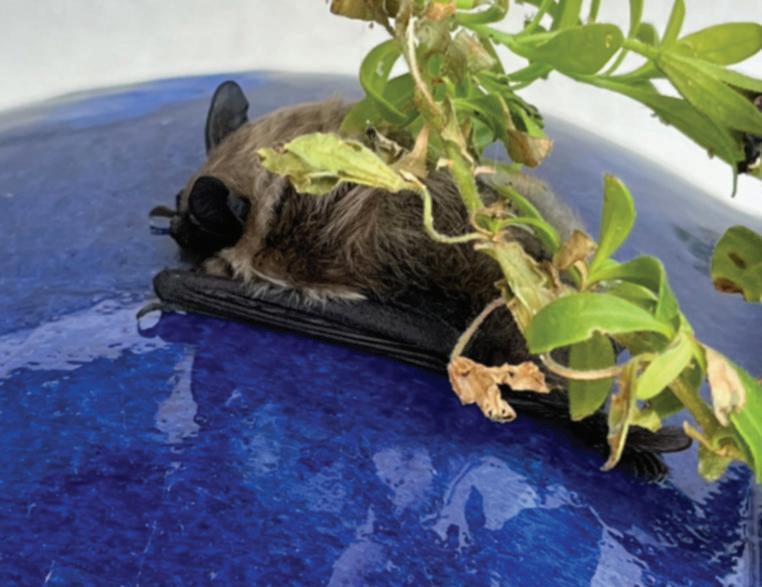
Rookie bats are roosting in unusual places across Greater Victoria, a pretty common sight for the end of summer across the province.
Residents might find a nocturnal friend sleeping the day away up a patio umbrella, or simply stuck to the side of a wall as young ones learn their way in the world, according to experts with the Community Bat Programs of BC.
“That’s pretty normal this time of year, the pups are learning to fly and they’re leaving their roosts,” provincial coordinator Paula Rodriguez de la Vega told the Victoria News. “That’s a healthy, normal behaviour. If they’re flying around during the day, that’s odd; if they’re on the ground, that’s odd.”
With the increased interaction, scuttlebutt across the region amped up the weekend of Aug. 23, with folks hearing more and more about bat bites. One person in Greater Victoria sought care after a bat bite, according to Island Health, whose communicable dis-
ease team is informed through physicians and community reports.
Any direct contact with a bat should be assessed by a physician.
“If you have had contact with a bat, or been bitten or scratched, immediately wash the wound wellforatleast15minutes and seek medical attention from your health-care provider or local communicable disease unit. Immediate washing of the wound is the most effective intervention,”
Island Health said in a written statement to
the Victoria News. Protected under the BC Wildlife Act, any bat found sleeping on a vertical surface should be left for as long as a week while it finds its way. If it’s in a position to cause trouble for children, pets or the animal itself, residents can call the Community Bat Programs of BC for advice on how to safely move it.
August and September are busy times in bat culture. Aside from young ones leaving home, they’re mating, migrating and feasting.
“Right now they’re
foraging a lot and eating as many bugs as they can to fatten up,” de la Vega explained.
“Bats are really important because they eat a lot of insects. We only have insect-eating bats in B.C., and they play a really important role in pest control.”
Our smaller species eat mosquitoes, and the bigger ones target other agricultural pests such as beetles.
“It’s really important to let them hang out for a week or so and let them move on their own instead of disturbing them,” de la Vega said.
Letting them be de-
creases the chance of human contact, which increases their chance of survival. Keeping those numbers up is important as experts anticipate the population will plummet once the deadly disease white-nose syndrome hits. The fungus that causes it, pseudogymnoascus destructans, is already here.
“White-nose syndrome has not arrived in B.C. yet, but we’re bracing for it,” de la Vega said. “So the more people can learn about bats and how to be safe around them and how to coexist around them, the better chance bats will have a chance at resilience.”
Learn more atbccdc. ca/health-info/diseases-conditions/rabies Find other resources and advice online at bcbats.ca

















Liam Razzell
A new device at Victoria General Hospital (VGH) could help shorten wait times, cut costs and quell youngsters’ fears – all thanks to a group of hard-working Camosun College students.
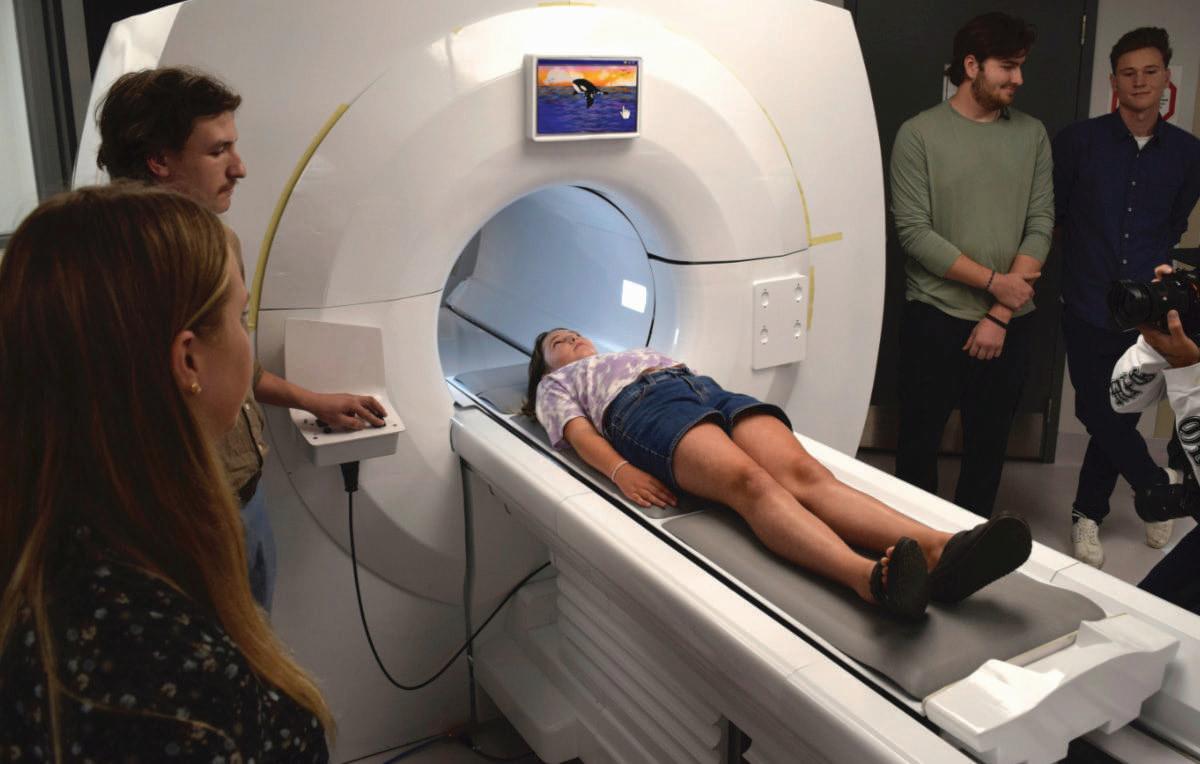
With funding from the Victoria Hospitals Foundation, the soon-tobe engineering grads built a pediatric MRI simulator for their capstone project – a task that ate up a whopping 5,000 hours over the span of just three-and-a-half months.
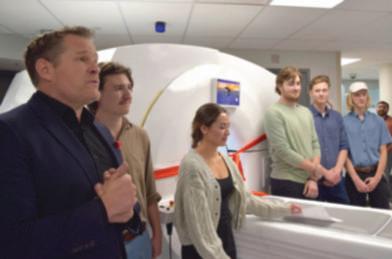
The device, which acts, sounds and looks like a real MRI, was unveiled at VGH on Monday.
“We’re so grateful for this opportunity,”said Camosun student Julianna Kwan. “We were able to use the skills we learned during the program and actually make something with our own hands, which is super special, and it’s going to really impact a lot of people positively.”
Just like training wheels help kids learn how to bike, the simulator will prepare youngsters for real MRI scans, which the hospital’s child life practice lead Becki Steel explained “can be a really overwhelming experience.”
“If kids have an opportunity to practise things and … break things down into steps, it’s really not as scary as it might seem,” she said. “But if
you go directly into a tunnel and it plays loud clunking noises that sound like your refrigerator’s broken, who wouldn’t be scared?”
Because receiving an MRI can be intimidating, the majority of patients under the age of eight are first sedated, according to Joshua Coulson, the hospital’s manager for pediatric
surgical daycare and ambulatory clinics. He added the process requires “a sedation nurse with a sedation respiratory therapist and an intensivist to make sure all of the pieces are in place.”
Though MRI scans at VGH take place 24 hours per day, the hospital only offers scans for kids requiring
sedation three times per week. Right now, the wait list for these sought-after appointments is 68-names long.
“Getting access to the sedation team is a big roadblock because it requires a lot of resources,” said pediatric intensive care doctor Allon Beck. “The sedation team costs money to run and maintain.”
If VGH can ready kids for MRI scans, to the point where they are confident enough to opt not for sedation, they can be squeezed into any of the many MRI time slots throughout the day – thereby cutting wait times and costs.
Beck added that the simulator could also positively inform kids’ long-term perceptions of the health-care system.
“I’ve seen children go into the MRI scanner not realizing just how loud and disorienting it is and come out of it in tears,” he said. “As soon as a child has a bad experience … with a medical procedure like an MRI, then that just heightens their anxiety the next time they have to encounter the health-care system.”
The hospital has already identified 53 children on the MRI wait list to try the simulator, according to Coulson, who hopes the new machine will decrease the rate of sedation for kids’ MRI scans by 50 to 90 per cent.

























Sam Duerksen
When asked what brought Glenn Mahoney to Overdose Prevention Day at the B.C. legislature, he responded in a candid tone which can only come from years of confronting a horrible tragedy.
“Death. Too much preventable death.”
Mahoney’s son, Michael, developed a substance use disorder at 13 when prescribed oxycodone for a medical issue. His journey ended at 21 with him dying alone in his car.
Michael is one of over 17,000 people in B.C. who have died from toxic drug use since the state of public health emergency was first declared in April 2016.
What perplexes Mahoney as much as the fact that 2,000 more people have died since last year’s gathering is the lack of action.
“I always find it shocking that people aren’t outraged at this level of death,” he said.
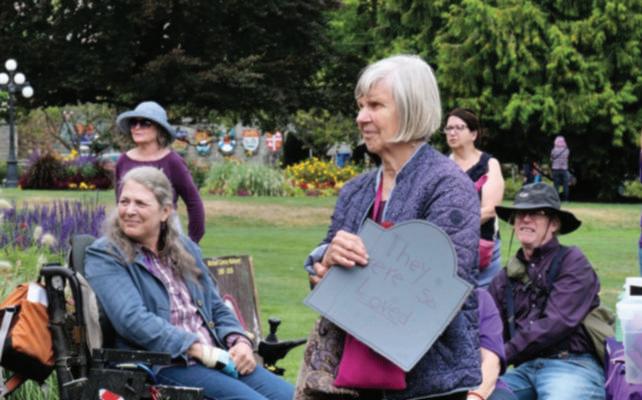
At one point, members in the crowd who had lost a loved one due to the crisis lay on the legislature steps. They covered them, painting a stark picture beneath the Canadian flag.
One sign read “They were so loved.”
Photos of those lost were strung with hearts along the fence – all ages pictured including young teens.
The drug toxicity continues to be the leading cause of death in B.C. for people ages 19 to 59, pointed out Lisa

Lapointe, former B.C. chief coroner, in her speech.
“What could be more important?” she asked, calling for standardized, evidence-based, free treatment. “Why isn’t our government bringing this kind of health care into the health care fold?”
Even though Mahoney and his wife are both graduate-level educated, he said they could not navigate the system to help their son. The best they could do was “very expensive” private treatment programs, all abstinence-based; programs he felt ridiculed people for taking any prescribed psychiatric medications.
“In every step, you’re punished and stigmatized,” he said.
At one point before his death, Michael had been “fairly stable”while he was on pharmaceutical alternatives, also known as safe supply, a word that Mahoney says has now been “polluted” by politics and misinformation.
But when Michael lost the person that was supplying him with the alternatives, he turned to the street supply that killed him.
His case was used by the coroners death review panel in 2020 because of the number of encounters with the health care system that the family dealt with. That included being
denied applications by Island Health and not being accepted as a patient by adult community psychiatrists.
“At every point and every encounter, the system made his condition worse,” Mahoney said. “It’s a failure of public policy.”A call for change
Lapointe and Kelsey Roden, a physician, addiction medicine specialist and co-founder of Doctors for Safer Drug Policy, emphasized that despite progress with overdose prevention sites, decriminalization and safe supply, deaths continue because of prohibition and stigma remain unaddressed.
Based off of information from public health professionals from the provincial health officer down, and BC Coroner Service death review panels, Lapointe said there are “straightforward things” that could be done to prevent deaths.
The first, she said, is to acknowl-
On September 1,
edge it as a health issue.
She also criticized that private residential treatment centres are allowed to charge “tens of thousands of dollars” for unstandardized treatment and advocated for pharmaceutical alternatives.
“[They are] a really, really important way of stabilizing people so they can start to see a future, moving them away from the chaotic drug trade,” she said.
For Glenn and Jan Mahoney, they vowed to keep fighting every year so that no other family endures the same loss, all while remembering their son – a “creative, artistic, funny, caring and polite” young man who used to sing with Victoria Opera.
“If I have to be here every year until I’m 100 … I’m gonna be here to tell the government that this is not good enough. These lives matter,” Jan Mahoney said.

































Christine van Reeuwyk
The waning rays of summer break from school mark final opportunities for fun kid fundraisers such as lemonade stands, but not an end to the giving ways of Greater Victoria’s young people.
The Kids Care program is designed for engaged and enthusiastic youth to raise funds and awareness, whether it’s by painting rocks, performing dances or selling lemonade
About 15 donations a year come through the program, said Shelley Engelhardt, director of development for Island Kids First, Children’s Health Foundation of Vancouver Island. One trio of girls created a dance group called The Pickles, and performs by-donation, then makes an annual donation.
“It’s really so inspiring to see the level of creativity that kids can create themselves. It’s so lovely when they put together a lemonade stand and indicate their proceeds will be coming to a local organization,” Engelhardt said.
People tend to support kids, she added. “I’ve never passed a lemonade stand and not bought a glass. And it’s lovely that kids can experience making a difference in their own community.”
As an organization that supports children, the program launched in 2006 and enables kids

helping other kids. They’ve responded with more than 300 donations over that time – the average gift is just over $100 – tallying up to $33,000 raised.
“It’s such a lovely way for kids to be introduced to philanthropy and to give back to kids in their own community,” Engelhardt said. “It’s a great time for kids to discover the power to
help others … and knowing small efforts can make a big impact is really meaningful.”
The Kids Care program helps young change-makers learn, lead and help others. Young donors also receive a special certificate for any donation beyond $20 and an opportunity to present their collection.
While learning about philanthropy, and the
charity of their choice if they’re not already familiar, they’re creating communication and leadership skills while building on self esteem and confidence.
That thinking goes far to benefit charities beyond the Children’s Health Foundation of Vancouver Island. This summer, for the third consecutive year, Anders Yeo turned lemons into support for Greater Victoria hospitals.
On a warm August day, the 10-year-old boy stood confidently outside his Saanich home, alongside buddy Sully Jackman, selling regular and pink lemonade to those bold enough to brave the 29 C heat.
Anders subsequently handed over every dollar he earned to the Victoria Hospitals Foundation – a non-profit that works with Island Health to enable donations to Royal Jubilee and Victoria General hospitals.
“It’s just good to make a difference in the community, and I think this money will go to a very good cause,” he told the Victoria News.
Find the fundraising toolkit online at islandkidsfirst.com with resources and ideas for a variety of age levels.
“I don’t think there are any efforts that are too small that can make a difference in the lives of Island kids,” Engelhardt said. – with files from Liam Razzell
Rents continue to slide in Greater Victoria, dropping 6% in past year
Dan Ebenal
The numbers are in and those looking for a new place to call home in Greater Victoria seem to be holding a winning hand.
Zumper’s National Rent Index for August lists the average rent for a one-bedroom in Victoria at $2,020 –a 6% drop from the previous month and down 6.5% from August 2024 and 7% from the peak of $2,180 in May 2024.
“After years of rapid growth, the city’s rental market appears to be softening,” said Zumper spokesperson Crystal Chen. “The pullback is being fuelled by new long-term supply from short-term rental conversions, coupled with softer population growth. While rent prices remain high, there’s clear signs that Victoria’s overheated market is beginning to cool.”
Nationally, the report found Canada’s median rent for one-bedrooms
dropped 0.7% last month to $1,821, which is down 4.2% from the previous year. Victoria dropped a spot to the fifth most expensive city in the country, behind Vancouver ($2,500), Burnaby ($2,380), Toronto ($2,220) and Halifax ($2,100). Only Vancouver (7.4%), Toronto (11.9%), Oshawa (6.8%), Barrie (8.8%), Kitchener (9.3%) and Calgary (9.2%) had higher year-over-year declines than Victoria.
The cost of two-bedrooms has witnessed a more modest decline, with Victoria’s median rent of $2,790 in August the same as the previous month and down 3.8% from August 2024. The city is home to the fourth most expensive two-bedrooms in the country, with Vancouver topping the list at $3,490.
Chen, the author of the report, said they’ve witnessed a lot of effort being put into building more housing across Canada.
“According to CMHC, the nation’s
purpose-built rental apartments grew by 4.1% last year, which is the highest increase in over 30 years.”
She said Zumper’s data reflects asking rents from hundreds of thousands of active listings we have on our site in Canada every month.
“We source our listings through a combination of proprietary listings

posted by property owners and brokers through our landlord platform as well as third party listings received from MLS providers,” she said.
The latest report from Rentals.ca ranks the $2,035 cost for a one-bedroom in Victoria as Canada’s 19th most expensive market, seeing a 0.9% drop from last month and a 6.6%
decline from August 2024. North Vancouver tops the list at $2,602, followed by Vancouver at $2,529 and Coquitlam at $2,331. Victoria’s two-bedrooms are priced at $2,708, up 0.2% from last month but down 5.3% from the same time last year.
The summer update from Rentals. ca shows that more than a third of renters spend over 50% of their income on rent. Younger renters (ages 18-24) are particularly affected, with 49% devoting the majority of their income towards rent.
However, the update reports that there are some things renters are willing to fork over a bit extra for. The survey found 57% are willing to pay more for in-unit laundry, 44% will pay a premium for air conditioning, 43% say parking is worth the cost, 34% would sacrifice a few extra bucks for a private outdoor space, and 31% would dig a little deeper for pet-friendly policies.










Seldom, seldomly used!
64. Mum
65. "The Piano" actress Paquin
66. "You don't say!" 67. Rendezvous 68. Girder 69. Hall of famer Roush Down
Map information 2. Infant born early 3. One-named Tejano singer 4. Full of excitement
5. Pulpy fruit 6. Beethoven's birthplace 7. Zip
8. "Fiddler on the Roof" fear
9. Swenson of "Benson"
10. "___ and ye shall find"
11. "Radial" auto part
12. Lt.'s inferior
15. Actress Winger
20. Extreme
21. Big laugh
25. ''The Name of the Rose'' writer Umberto
26. Anger, e.g.
27. Nugent or Williams
29. Desire
30. Parisian friend?
31. Computer network acronym 32. Hollywood's Lee
34. Brazilian hot spot
36. Fanfare
37. "___ the Walrus" (1967 Beatles hit)
38. Road map abbr.
39. Shih ___ (dog)
40. It's tiny and charged
41. Musician Yoko
45. Wandering
46. Namely
47. Coll., e.g.
49. Medical prioritizing
50. Coveted
51. Had to have
53. Middle East snack
55. Equable
56. Slick
57. College team from Salt Lake City
58. Bird along the coast
59. Russian river
60. Apothecary's weight
61. Denver clock setting, abbr.
By Myles Mellor