The data center market is poised to dominate while other sectors face slow and steady growth. Read more on pg. 34
to Managing Your Book of Work pg. 10 Putting NFPA 70B into Practice pg. 18 Best Practices for Using Electrical Testing Equipment Safely pg. 24
the Disruptive Construction Supply Chain pg. 52
Integrated Systems Testing Matters pg. 54
A Single-Source Supplier for Electricians
Stop chasing parts all over town and half the internet. When jobs call for electrical, plumbing, and HVAC parts, place one order and knock out your next job from start to finish with SupplyHouse.
Aside from data centers, don’t expect to see double-digit growth in 2026. But some key markets should produce steady work for electrical professionals, including office retrofits, hospitals, K-12 schools, and universities.
Three critical strategies electrical contractors can use to manage pricing volatility,
The last and most significant commissioning effort before turning the project over to the facility
of NFPA 70B: from recommended practice to enforceable
ECMWEB.COM
With its exclusive online content, ecmweb.com is a valuable source of industry insight for electrical professionals. Here’s a sample of what you can find on our site right now:
EC&M TECH TALK — CHANGES TO THE 2026 NATIONAL ELECTRICAL CODE
Video Randy Barnett explains new Articles, a commonsense grouping of information, and the relocation of existing information.
ecmweb.com/55333225
Editorial
Editor-in-Chief: Ellen Parson, eparson@endeavorb2b.com
WINTER WEATHER HAZARDS: STAYING SAFE ON ELECTRICAL JOB SITES
Safety Winter ice provides multiple hazards. Do you know how to protect yourself?
ecmweb.com/55336610
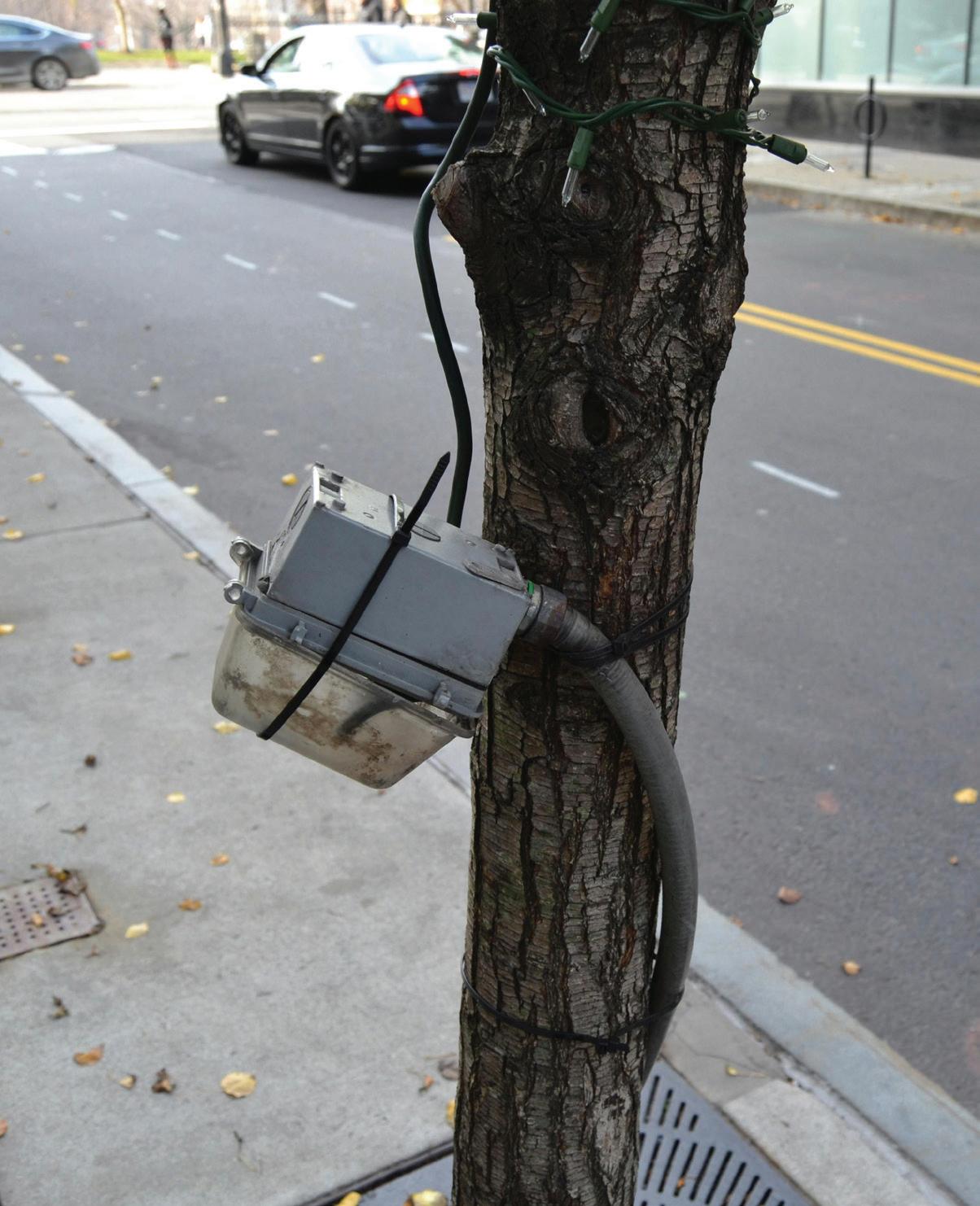
THE BEST OF THE WORST: 2025’S MOST INTERESTING WHAT’S WRONG HERE PHOTOS — PART 1
NEC A look at the most bizarre “what’s wrong here” photos we ran this year.
ecmweb.com/55335994
Production and Circulation
Production Manager: Josh Troutman, jtroutman@endeavorb2b.com
Ad Services Manager: Deanna O’Byrne, dobyrne@endeavorb2b.com
User Marketing Manager: James Marinaccio, jmarinaccio@endeavorb2b.com
Endeavor Business Media, LLC
CEO: Chris Ferrell COO: Patrick Rains CDO: Jacquie Niemiec
CMO: Amanda Landsaw CALO: Tracy Kane EVP Building & Construction Group: Chris Perrino VP of Content Strategy: Mike Eby
Electrical Construction & Maintenance (USPS Permit 499-790, ISSN 1082-295X print, ISSN 2771-6384 online) is published monthly by Endeavor Business Media, LLC. 201 N. Main St 5th Floor, Fort Atkinson, WI 53538. Periodicals postage paid at Fort Atkinson, WI, and additional mailing offices. POSTMASTER: Send address changes to Electrical Construction & Maintenance, PO Box 3257, Northbrook, IL 60065-3257. SUBSCRIPTIONS: Publisher reserves the right to reject non-qualified subscriptions. Subscription prices: U.S. ($68.75 year); Canada/Mexico ($ 112.50); All other countries ($162.50). All subscriptions are payable in U.S. funds. Send subscription inquiries to Electrical Construction & Maintenance, PO Box 3257, Northbrook, IL 60065-3257. Customer service can be reached toll-free at 877-382-9187 or at electricalconstmaint@omeda.com for magazine subscription assistance or questions.
Printed in the USA. Copyright 2025 Endeavor Business Media, LLC. All rights reserved. No part of this publication may be reproduced or transmitted in any form or by any means, electronic or mechanical, including photocopies, recordings, or any information storage or retrieval system without permission from the publisher. Endeavor Business Media, LLC does not assume and hereby disclaims any liability to any person or company for any loss or damage caused by errors or omissions in the material herein, regardless of whether such errors result from negligence, accident, or any other cause whatsoever. The views and opinions in the articles herein are not to be taken as official expressions of the publishers, unless so stated. The publishers do not warrant either expressly or by implication, the factual accuracy of the articles herein, nor do they so warrant any views or opinions by the authors of said articles.
Reprints: Contact reprints@endeavorb2b.com to purchase custom reprints or e-prints of articles appearing in this publication.
Photocopies: Authorization to photocopy articles for internal corporate, personal, or instructional use may be obtained from the Copyright Clearance Center (CCC) at (978) 750-8400. Obtain further information at www.copyright.com.
Archives and Microform: This magazine is available for research and retrieval of selected archived articles from leading electronic databases and online search services, including Factiva, LexisNexis, and ProQuest.
Privacy Policy: Your privacy is a priority to us. For a detailed policy statement about privacy and information dissemination practices related to Endeavor Business Media products, please visit our website at www.endeavorbusinessmedia.com.
Please Note: The designations “National Electrical Code,” “NE Code,” and “NEC”
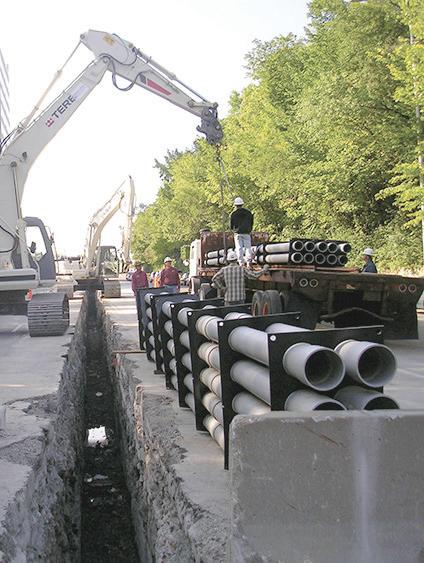
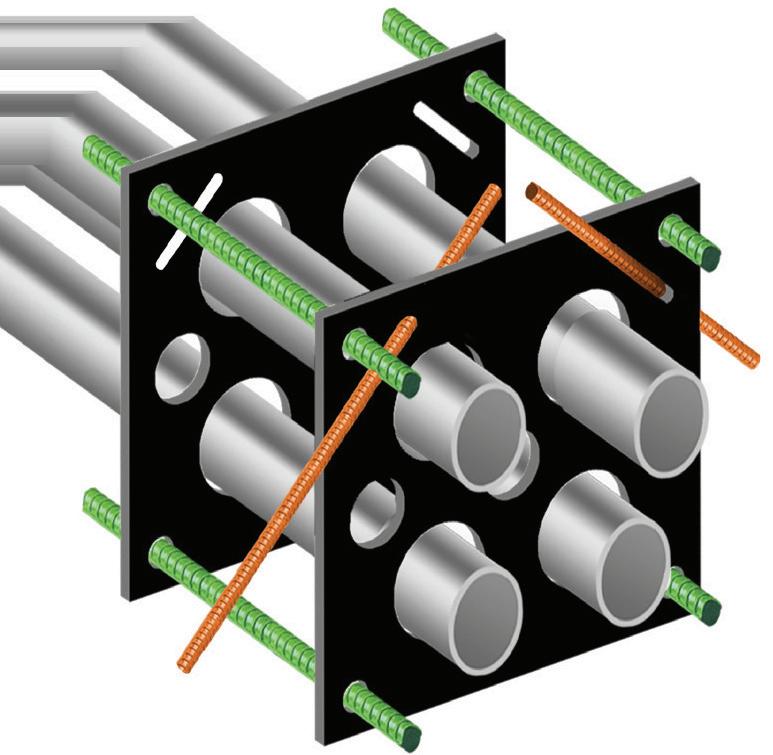
Assemble Conduit Above TrenchNo Workers BelowPrevents Injuries and Deaths. Also Allows Digging a Narrower Trench for Less: Excavation, Concrete, Slurry, Backfill & Shoring.
What the K-Shaped Economy May Mean for Electrical Construction
By Ellen Parson, Editor-in-Chief
Last year at about this same time (as we presented our annual construction forecast), I wrote about the results of ECM’s quick “vibe check” survey conducted immediately after the presidential election in order to explore possible correlations between sentiment toward the election results and anticipated changes in market conditions. What areas of business (if any) might be most affected by the election, and how might those translate to the electrical industry specifically over the course of the coming year? How would increased tariffs on foreign goods entering the United States, for example, affect material prices and supply chain issues in our market? These were just a few of the questions we posed to our audience. Mainly, we were interested in gauging how our readers expected key issues (such as inflation, unemployment, deregulation, tariffs, the ongoing skilled labor shortage, and infrastructure investment) to fare in 2025. Fast forward a year, and I’m not sure we have much clarity. After reading and analyzing all of the predictions from the most credible construction resources, there still seems to be a lot of unknowns in play. As usual, Jim Lucy, head of content for EC&M’s sister publications, Electrical Wholesaling and Electrical Marketing, was up for the daunting task of sifting through an overwhelming amount of data, economic forecasts, and trends reports, highlighting key trends that will most likely affect our industry and identifying which market segments are poised to see the greatest growth. As we head into 2026, I can’t help but come back to a phrase that seems to be dominating the conversation: “K-shaped economy.”
According to a recent press release from Bank of America (BofA), 2025 was dominated by uncertain fiscal policy, the AI surge, China’s overcapacity, record fiscal deficits, and excess liquidity, all of which continue to evolve. “As the world begins to better understand how artificial intelligence impacts economic growth, inflation, and corporate investment, BofA Global Research economists and strategists are bracing for more volatility in 2026. The AI-driven equity boom remains a defining feature of the ‘K-shaped’ economy, adding another layer of risk,” states the release. “Despite these lingering concerns, our team remains bullish on the economy and AI,” said Candace Browning, head of BofA Global Research. “We are optimistic on the two most influential economies, expecting above-consensus GDP growth for the U.S. and China. Furthermore, concerns about an imminent AI bubble are overstated, in our view, and we expect AI investment to continue to grow at a solid pace in 2026.”
In his special report, starting on page 34, Lucy echoes this theme. He writes: “The electrical construction industry is a good example of the K-shaped economy in action. Riding the upper growth arm of the K is the data center market (growing annually at a high double-digit growth rate). Hanging onto the lower leg of the K with little or no growth are many other key construction market segments, such as residential, office, and much of the industrial market (outside of semiconductor plants).”
Bank of America’s latest economic forecast predicts stronger-than-expected GDP growth (2.4% in the United States) in 2026, driven largely by AI investment, fiscal stimulus, and trade policy. Lucy’s forecast mirrors this projection, anticipating growth in the low single digits for the U.S. electrical construction market; however, he emphasizes business conditions will vary widely by local geographic market and individual construction niche. Next year, I will inevitably look back and write about whether the K-shaped economy turned out to be just a buzzword or a reality. If it does gain traction, growth will ultimately be uneven, creating winners and losers depending on sector, location, and specialization of projects. Electrical design firms and electrical contracting companies positioned on the upward arm of the K (most likely those heavily immersed in the booming data center market) will likely prosper in 2026, while those hanging onto the lower leg (those focused on hospitality, private office, retail, residential, or nonresidential projects) might be forced to navigate increasing challenges.
One bright spot popped up just a few days before press time on December 10: The Federal Reserve dropped interest rates by a quarter percentage point, marking the third consecutive cut this year and indicating there may be one more cut in 2026 to support a slowing labor market and counter weak job growth. As we head into 2026, only time will tell which overall economic conditions ultimately take shape and stick. Whatever unfolds, I’m confident the electrical industry will respond as it always has — with adaptability and resilience.
WHERE FACILITY CHALLENGES FIND SOLUTIONS
CENTRAL VALLEY
March 18-19, 2026
Lodi, CA
SOUTHERN CALIFORNIA
April 8-9, 2026
Anaheim, CA
NORTHWEST
April 29-30, 2026
Portland, OR
Recommended Practices for Creating a Book of Work
Learn what goes into creating a book of work, how to capture the work, and methods for keeping it visible.
By Dr. Heather Moore and Hannah Durant (contributing author), MCA, Inc.
Imagine that your best electrician just finished a job, and the customer couldn’t be happier. This customer owns other venues and asks the electrician if his/her company has the capacity to support an ongoing service agreement. Where would he or she store this information?
Alternatively, imagine you just wrapped up a very successful large project, very successfully. You have a few other jobs going, but are now realizing that three of your best field crews don’t have another job to go to. What are your options, and could this have been seen before now?
Here’s another example. Say you’ve just finished a project, barely making the expected margins. When you ask the PM about it, they reply, “We did a few extra change orders for them, given they’re one of our best customers.” Where would the data about these “extra change-orders” be stored?
As the situations above imply, information about your work (both current and planned) is difficult to gather and keep track of. Regardless of where the information comes from, information loss is unavoidable without a way to identify, document, and consolidate. A
book of work (along with a process or tool to consolidate details about your potential, planned, and current projects) can provide a centralized and referenceable place to store that information to make decision making, project management, and budget management more straightforward and comfortable. This article will explain what should go in your book of work, a checklist with some ideas for where, when, and how to capture the work, and ways to keep it visible. Putting these recommendations to use could save you money, gain you future work, and let you avoid having
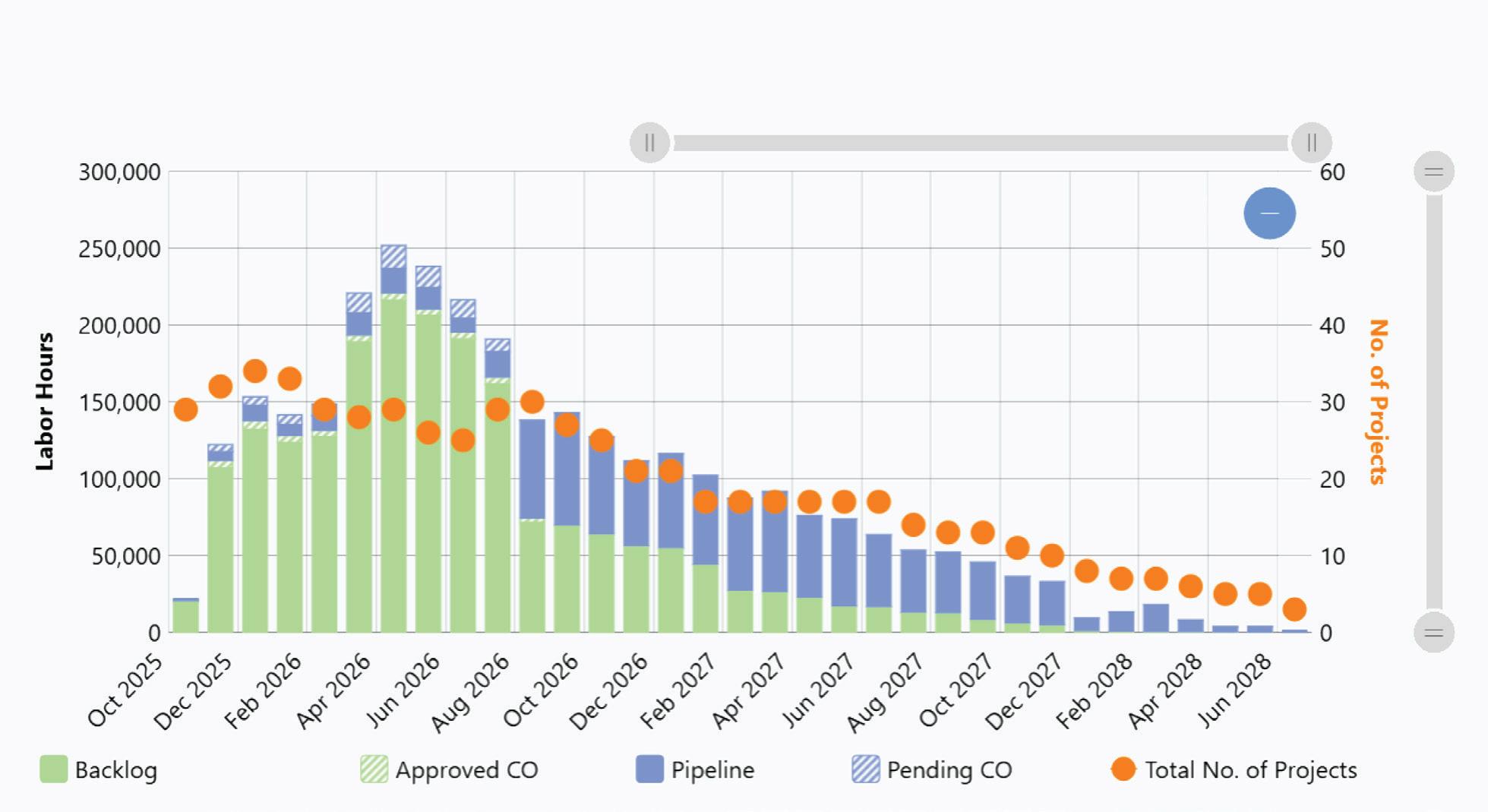
Fig. 1. This report shows a company’s pending and prooved project labor hours over time. Source: DCI Construction ®.
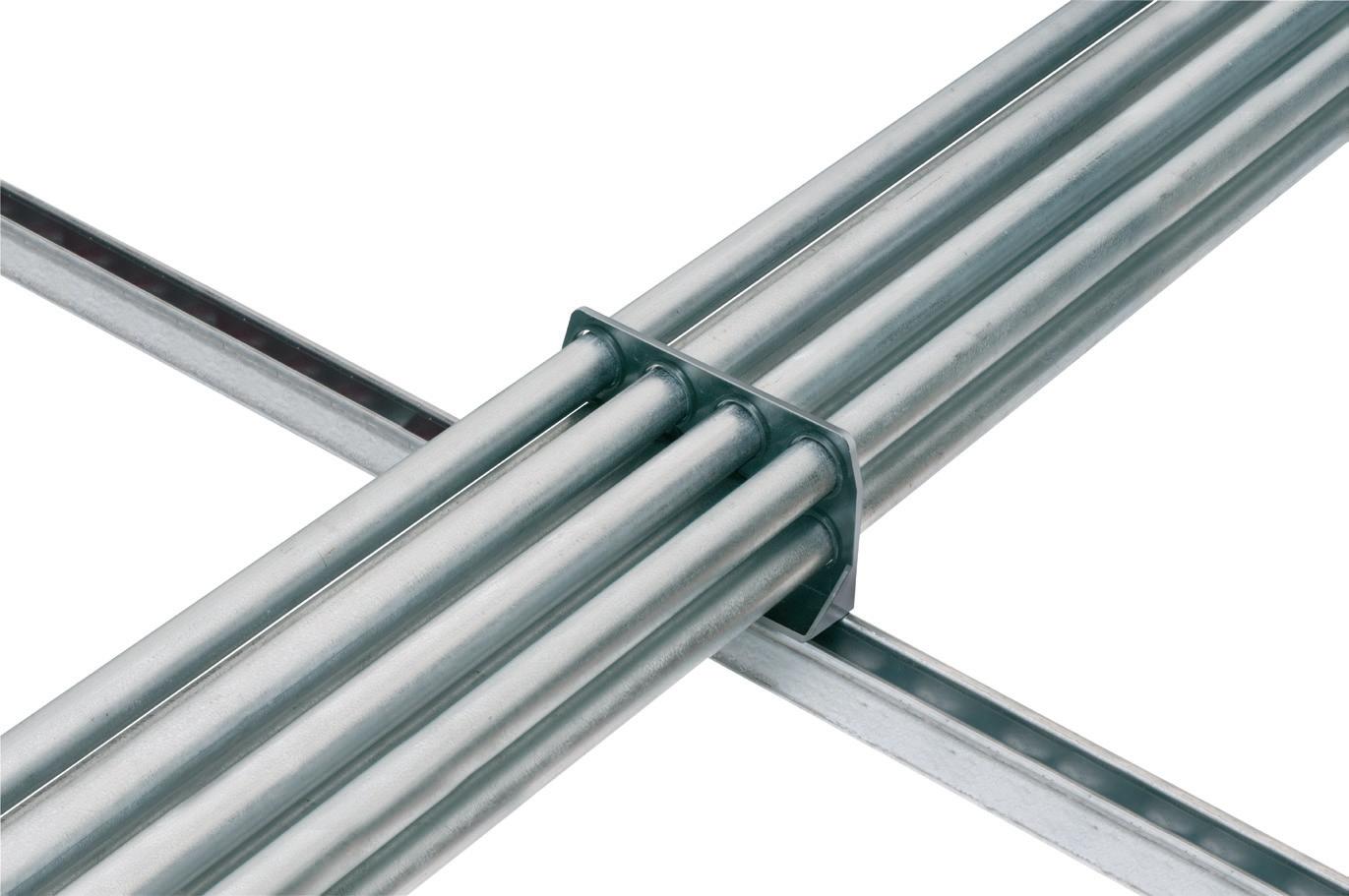
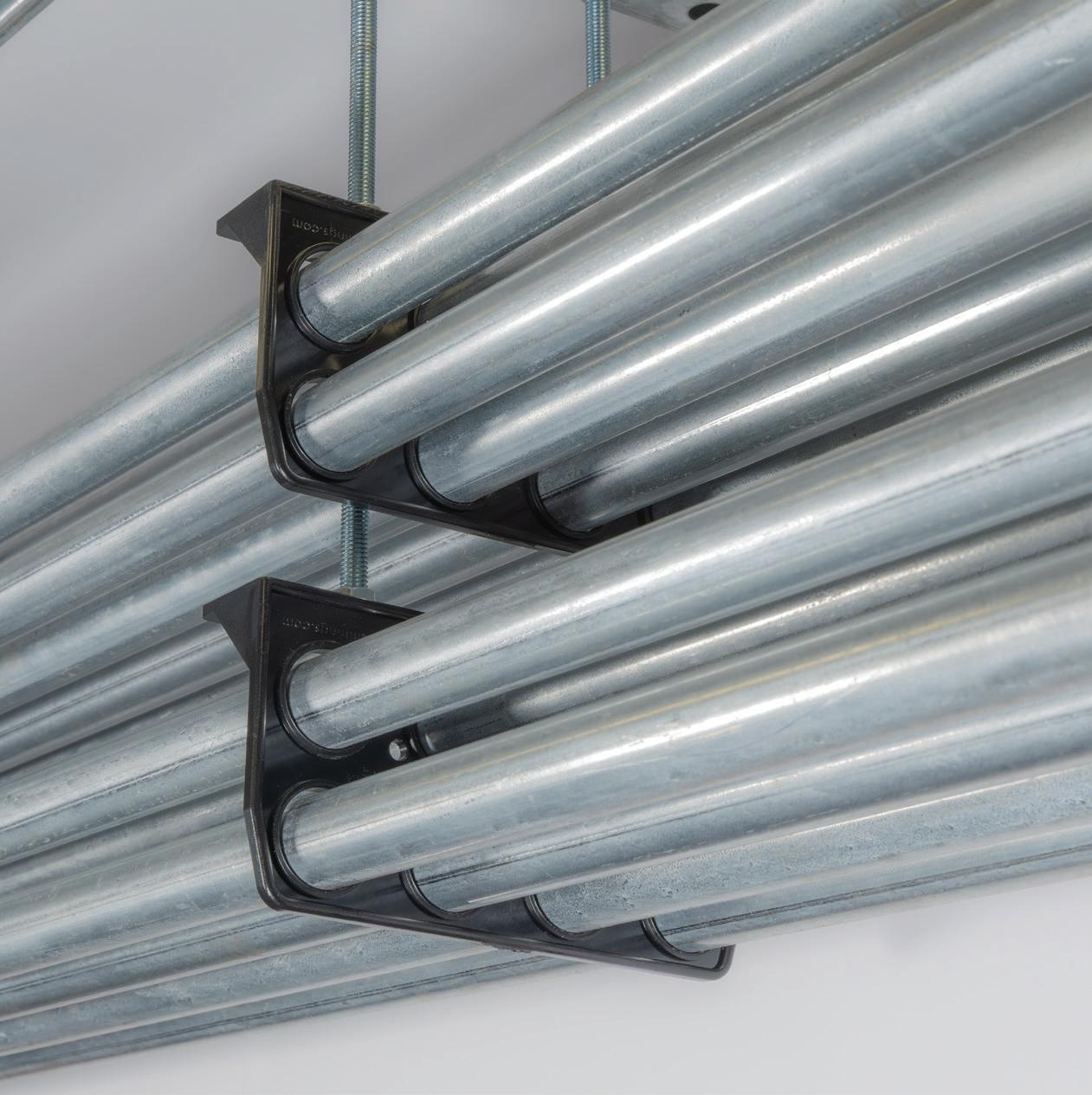
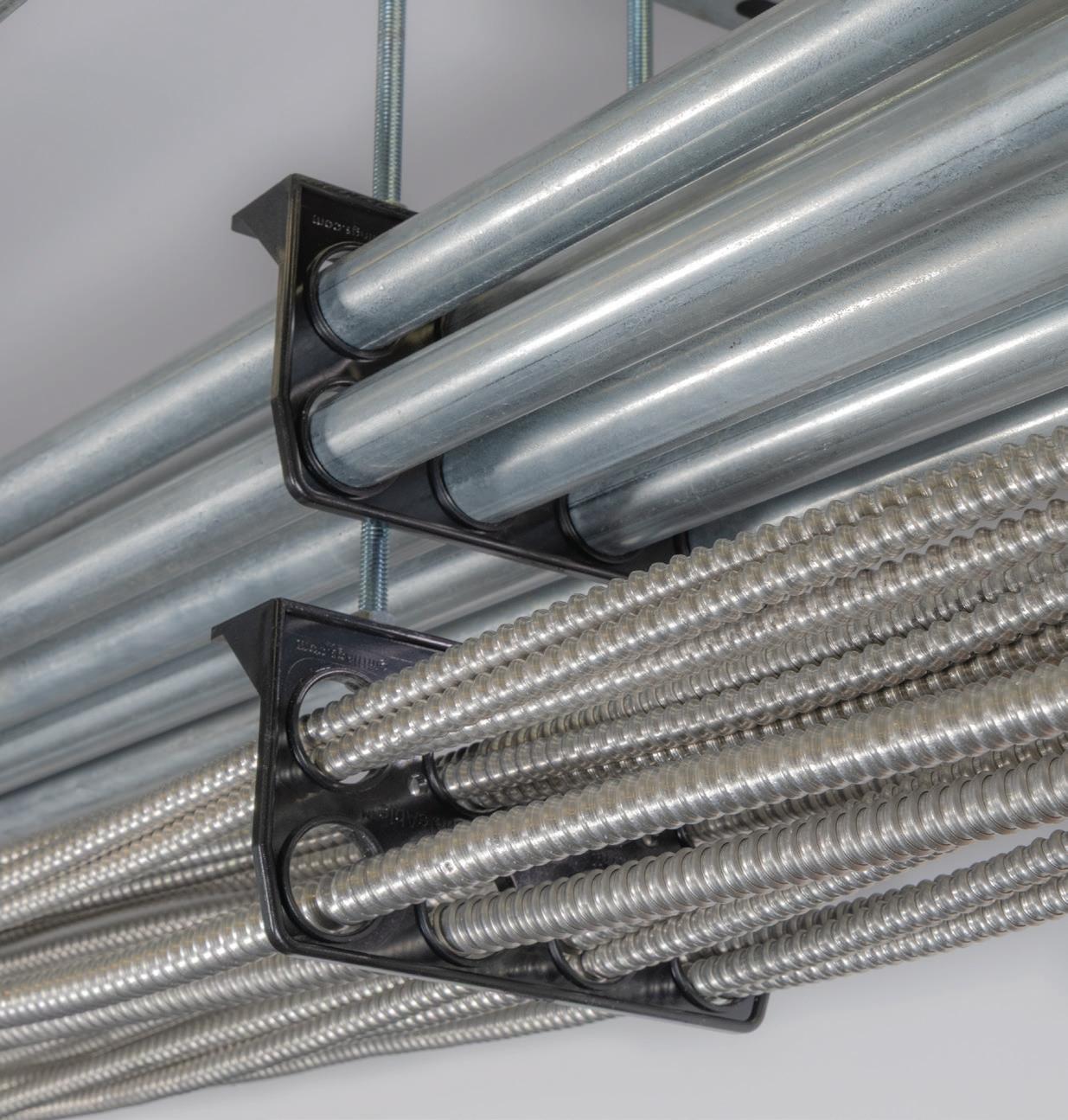
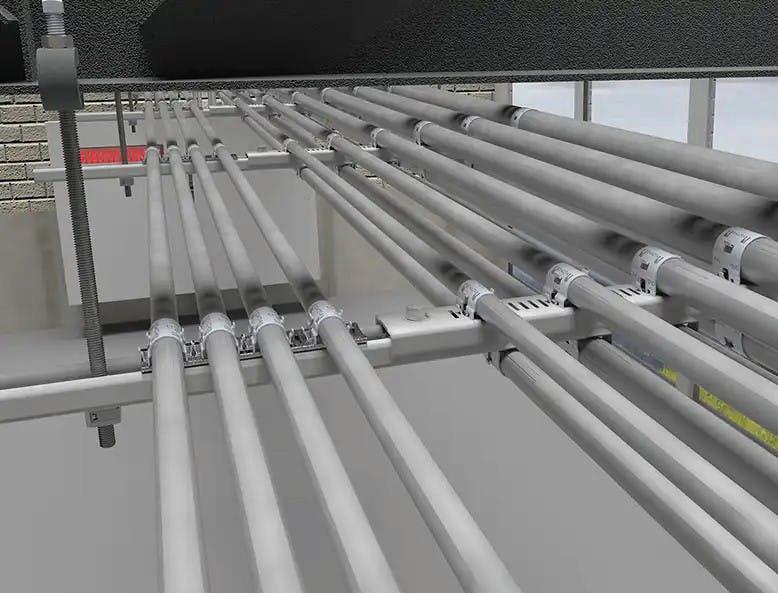
Stacking CableAble Support Brackets on Threaded Rod
• Power, data, communications, control systems
• Plenum applications per NEC 300.22(c)
• Applications with temps from -5°C (23°F) to 90°C (194°F)
• Outdoor use, in wet locations
• Lowering total installed costs
• Minimizing space required for supportand reducing ceiling congestion
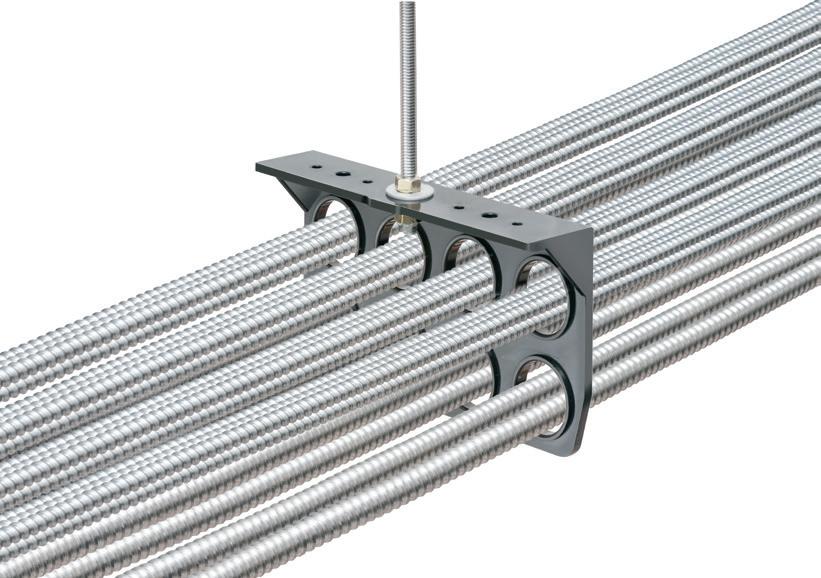
WATCH THE SAVINGS STACK UP with CableAble® Support Brackets... the ONE BRACKET for reliable support of EMT or flexible metal conduit, power MC and NM cables, and low voltage cables, in commercial or residential work, with plenum or non-plenum ceilings.
Four- and eight-hole CableAble mounts horizontally or vertically to studs or unistrut. And horizontally to all thread and beam clamps.
JOB-SITE INTELLIGENCE
AI-Driven Labor Projections
• Based on 30 years of project data on millions of hours of projects
• Boils down to seven labor patterns
Mid Q2-Q3
Early Q1
Late Q4
Early Q2
Multiple peaks
approximately uniform
Fig. 2. These non-linear labor loading curves can help forecast expected job and company labor needs over time.
to wonder and worry about where your electricians will go for their next job.
WHAT IS A BOOK OF WORK?
In general, work requests can come from three categories. The first category includes formal job requests, which can include official bid solicitations, Dodge Reports, and public work requests. This is the most structured of the three categories and what many are most familiar with when asked about work requests.
The next category of work includes change-orders, including officially granted or opportunities for change orders. Clinical research done by MCA, Inc. indicates that a typical construction project will have change orders, which make up 30% of the total project. Without tracking your change orders, your book of work will be missing a large portion of the work you are actually performing or planning to perform.
The final category includes informal job requests, which include potential work mentioned in an offhand conversation with a customer on the job site, during a lunch chat, on
the golf course, or at a ball game. The following checklist outlines information and sources for potential work that foremen/project managers could see or hear without recognizing:
• Potential sources:
• Emails
• Meeting notes
• Social media posts
• In conversation with customer
• Potential information:
• Time frame (start date/end date)
• Customer
• Type of work
• General job size/support needed
• Competition/other bidders
As you work to transform these requests for work into a won job, you will naturally gather more information about the job, starting with the minimal amount and expanding throughout the bid process and work itself. However, as you receive more information — and as more people become involved in making decisions and communication — it becomes increasingly difficult to track and manage. The industry is excellent at tracking information like the estimated quantities, prices, and markups, but
commonly loses the specific details of the project, such as the timing of decisions, the names of people involved, or changes made along the way. Having a centralized location or tool to store this information becomes vital, especially as companies are working to expand and do more work.
DIGITALIZING THE PIPELINE & BACKLOG
To make your book of work perform for you, you need minimal information to get started. Pipeline and backlog, a module supported by DCI Construction®, is a system specifically designed to help store and process information from your work environment. With a click of a button, and simple information like project name and customer, pipeline and backlog not only create a space to store information like the associated project team, job location, or estimated start/ end dates, but also begin consolidating this information for all of your projects over time.
If you track your full book of work in a tool like pipeline and backlog, you are able to easily see your upcoming
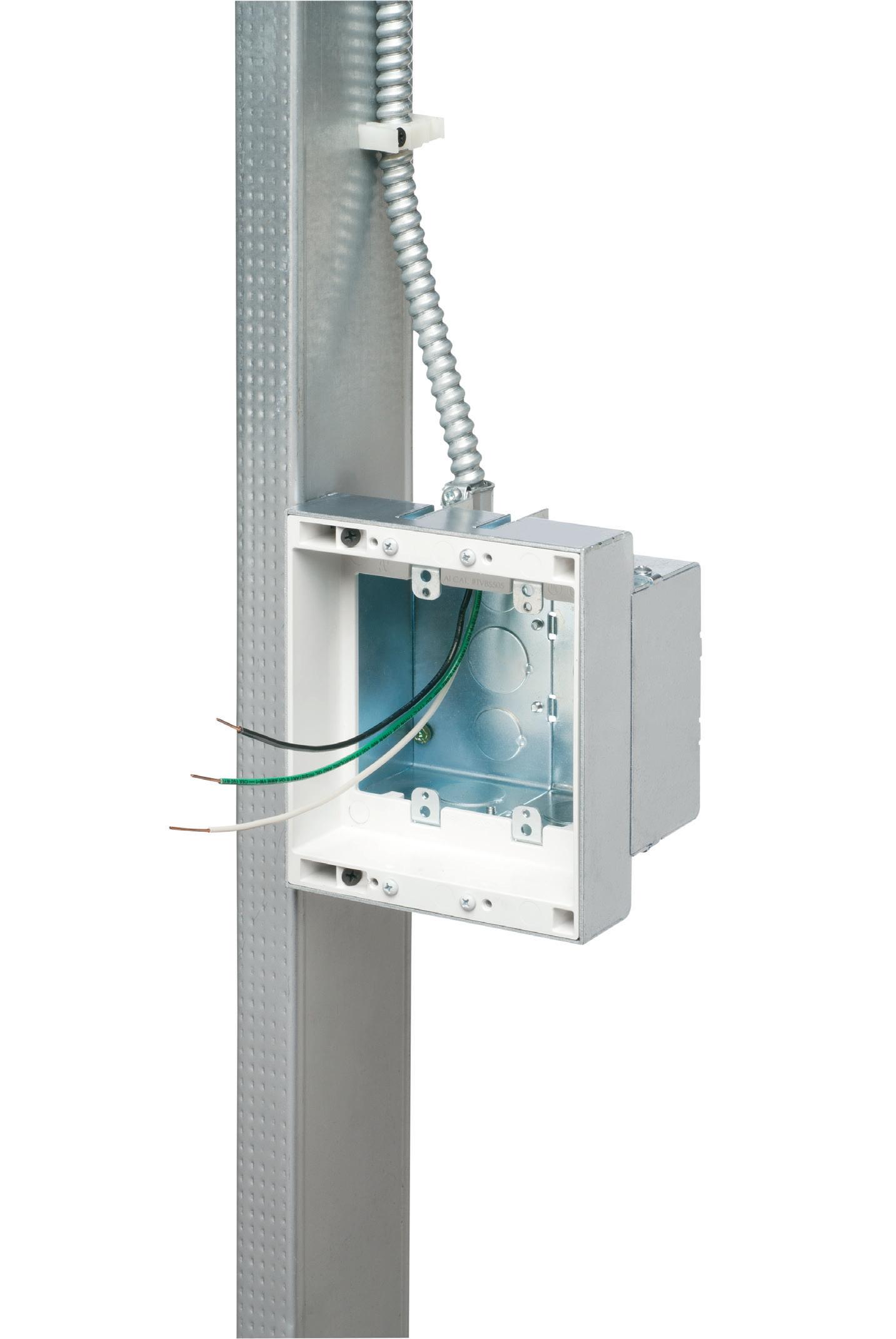
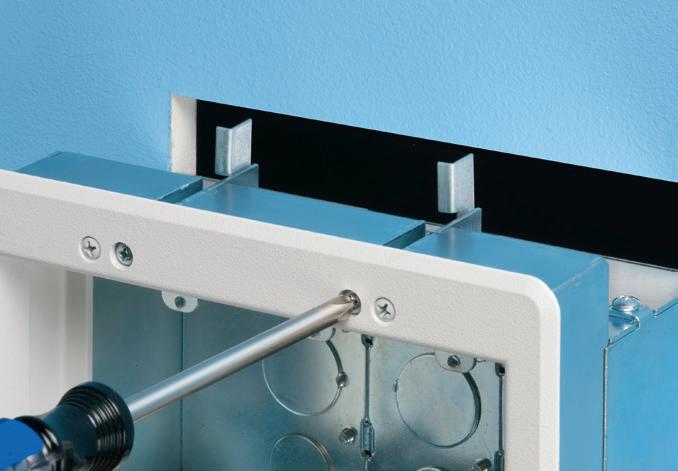
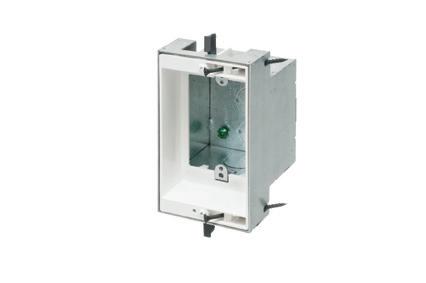
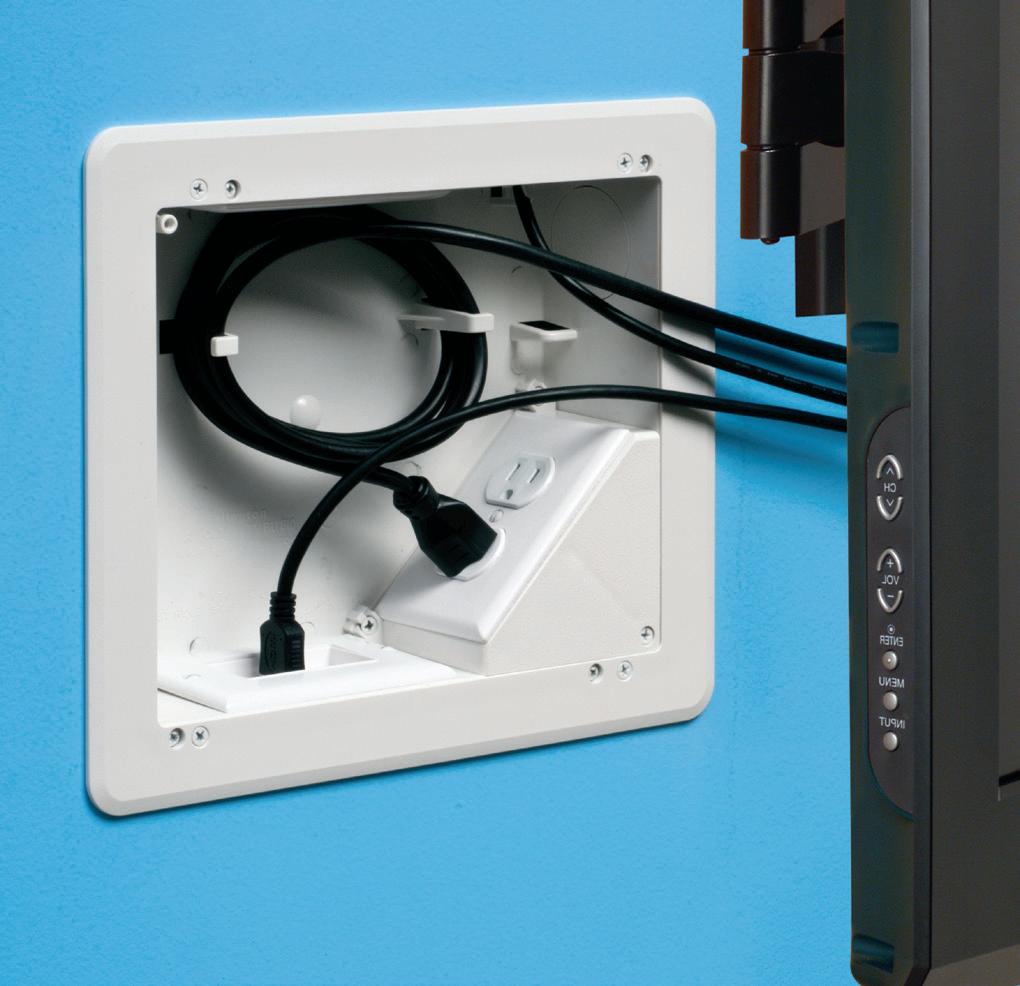
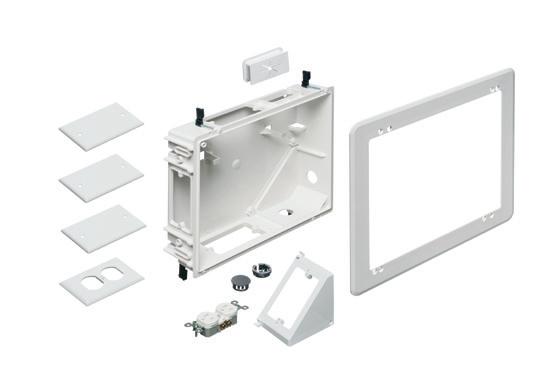
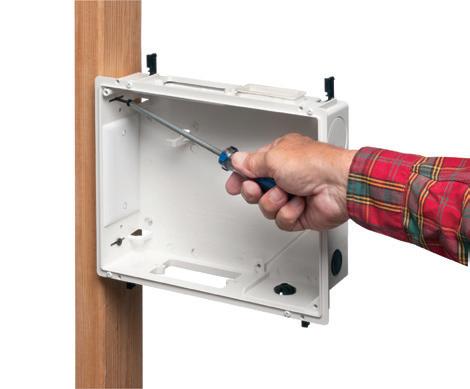
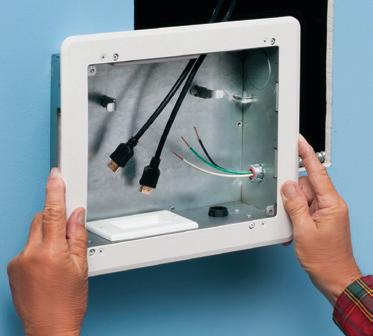
Arlington’s recessed STEEL combination power/low voltage TV BOX® is the best way to mount an LED or Hi-Def TV flush against a wall.
TV BOX provides power and/or low voltage in one or more of the openings. Plugs and connectors stay inside the box, without extending past the wall.
Designed for use in new or retrofit commercial construction where metal raceway is used, we have a STEEL TV BOX for almost any application!
• Steel box; non-metallic paintable white trim plate
• Easy, secure installation
• Optional covers
•
•
•
JOB-SITE INTELLIGENCE
potential work alongside the jobs you’re currently working — from the project management load perspective (who is running these jobs?), the market perspective (what type of work are we doing?), and the customer perspective (who are we doing work for?).
With a few pieces of information each, pipeline and backlog is additionally able to give a quick and in-depth view of an organization’s projects individually, alongside other projects, and for multiple output types. An example of one such output, showing a company’s pending and approved project labor hours over time, is shown in Fig. 1 on page 10.
The more information your team has early on in the project, the better your chance will be in pursuing, pricing, and winning the work that is best for your business, rather than having to “chase” projects to keep people busy. The crux of the issue is capturing
information from the sources mentioned above.
To represent your book of work as accurately as possible, pipeline and backlog compile and condense decades of MCA, Inc.’s research by including several non-linear labor loading curves (Fig. 2 on page 14), to help forecast expected job and company labor needs. When forecasted over time, it becomes easy to see how many people you need working at any given time, and whether you’ll have a surplus or shortage of people to support your confirmed (and potential) jobs occurring at that time.
Another benefit of digitalizing and storing your data, outside of immediate feedback on your current projects and tracking historical information for future questions, is the ability to predict the outcome of future jobs based on historical performance. Utilizing years of research and data, MCA, Inc. has
developed an AI algorithm that can pre dict the likelihood of winning the bid, as well as your projected profitability (or lack thereof).
The human memory can only hold so much information before details are lost. Without a place to store and reference facts about your work — and as both the construction industry and construc tion companies grow and support more work — answering particular questions easily and quickly becomes exponen tially harder. Keeping a detailed book of work, and using tools such as pipeline and backlog, can help answer these ques tions, including how much work you have in the future, what work you’re bid ding, your needed manpower, or what changes occurred over the course of a particular job.
Dr. Heather Moore is VP for customer care and support at MCA, Inc. She can be reached at hmoore@mca.net.
SNAP2IT® CONNECTORS
17SAVE seconds
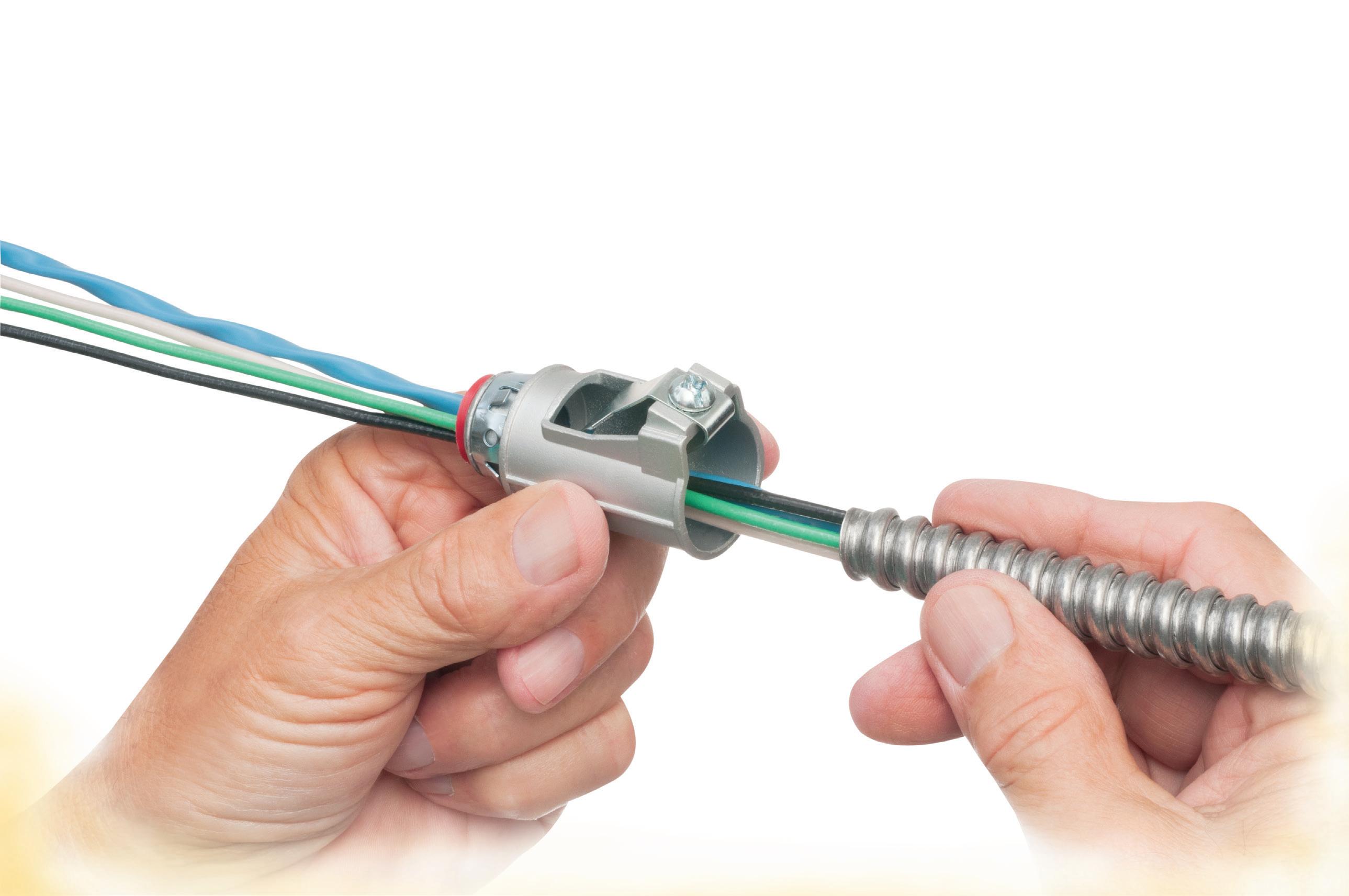
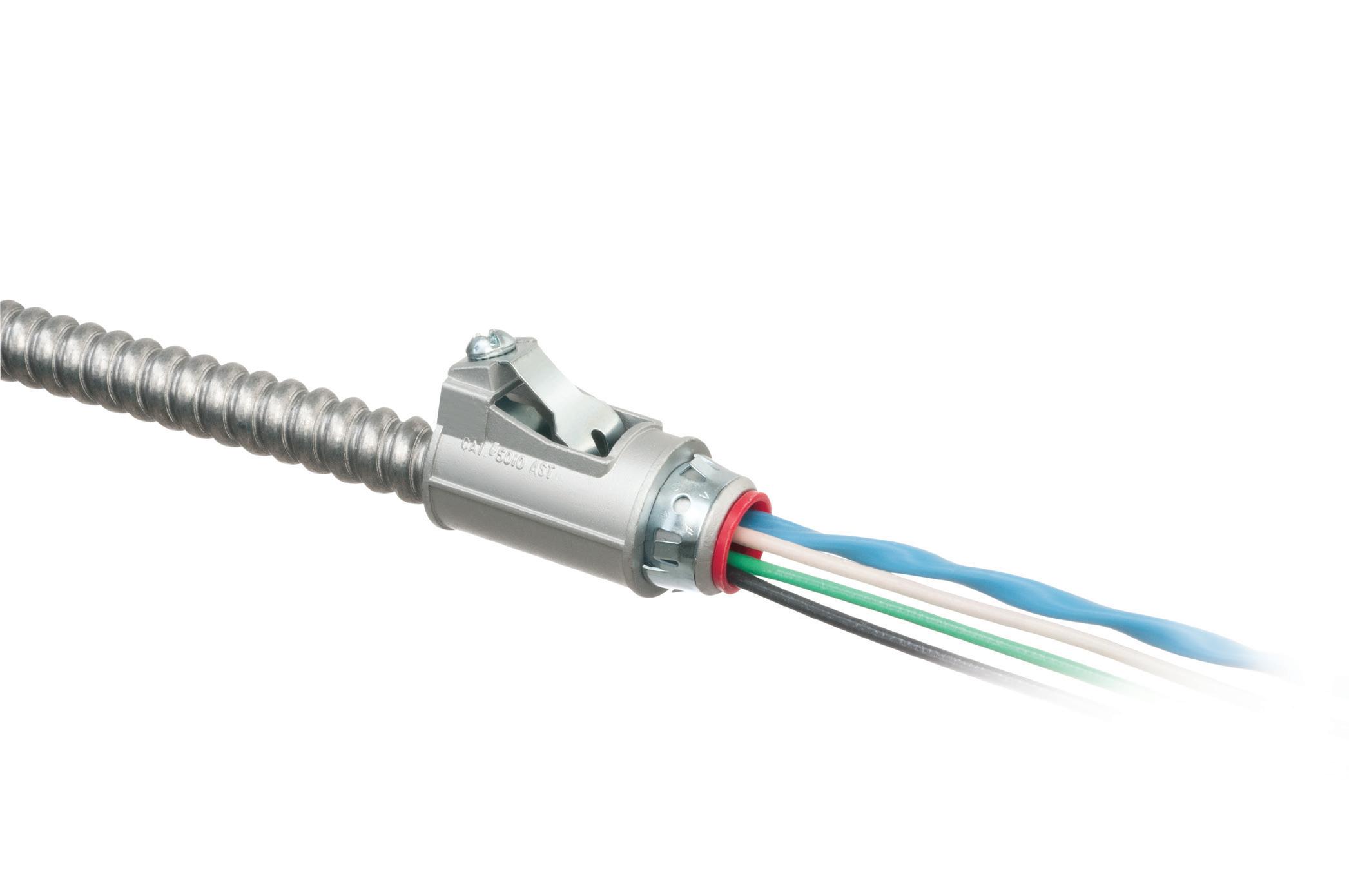
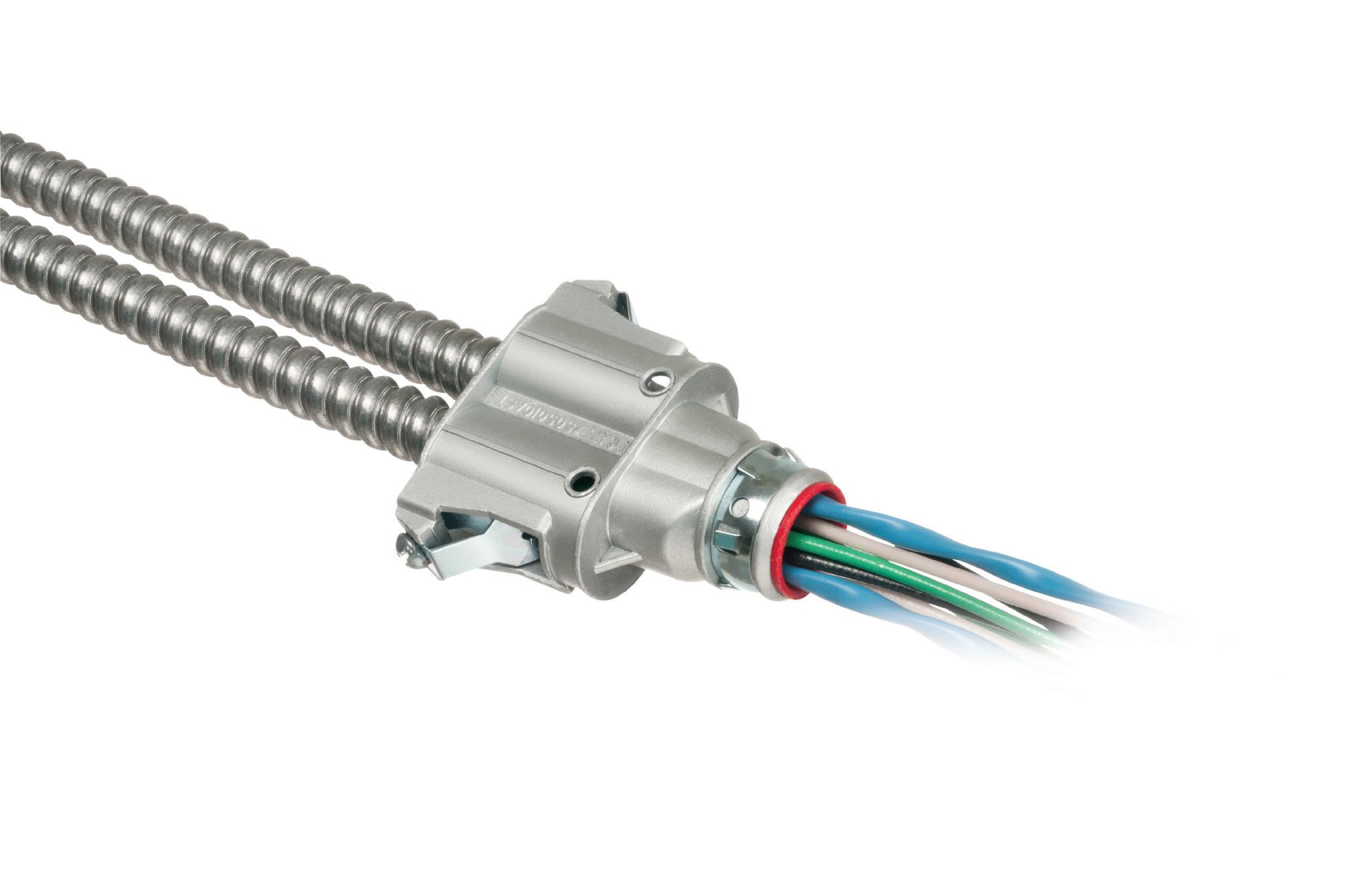
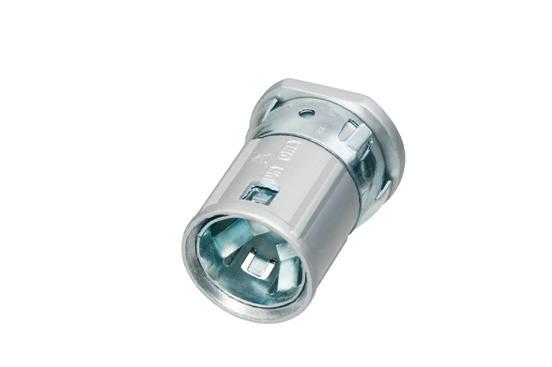
Fully assembled, SNAP2IT® fittings handle the widest variety of MC cable AND THE NEW MC-PCS cables.
Compared to fittings with a locknut and screw, you can’t beat these snap in connectors for time-savings!
LISTED SNAP2IT ® CONNECTORS FOR NEW MC-PCS CABLE ...lighting & low voltage circuits in the same cable
• Fits widest range and variety of MC cable 14/2 to 3/3
AC, MC, HCF, MC continuous corrugated aluminum cable and MCI-A cables (steel and aluminum)...including the new MC-PCS cable that combines power and low voltage in the same MC cable
ANY Snap2It Connectors LISTED for MC cable are also LISTED for MC-PCS cable! These products offer the greatest time-savings.
• Fast, secure snap-on installation
• Easy to remove, reusable connector From cable Loosen screw on top. Remove connector from cable. From box Slip screwdriver under notch in Snap-Tite® Remove connector.
Easy to Snap into Box!
MAINTENANCE FACTS
The Evolution of NFPA 70B: From Recommended Practice to Enforceable Standard
Learn how proactive electrical maintenance can enhance safety, reduce downtime, and ensure NFPA 70B compliance.
By Dean Austin, NFPA
For 50 years, NFPA 70B, Standard for Electrical Equipment Maintenance, was a recommended practice. However, it existed with limited enforceability. While many people still found the document useful and incorporated it into their businesses, it really left the accountability side of electrical equipment maintenance, well, unmaintained. With the 2023 edition of NFPA 70, the document became a standard, which added the aspect of enforceability. The discussion about it has really started to take off — especially around considerations for
putting it into practice and who might enforce it.
WHO ENFORCES IT?
Some think the Occupational Safety and Health Administration (OSHA) will enforce it through CFR 29-1926, Safety and Health Regulations for Construction or CFR29-1910, Occupational Safety and Health Standards under electrical safety. That certainly could become a possibility. As is well known in the United States, OSHA requires an employer to create a work environment that is free from known risks or
hazards. So, OSHA would not directly enforce NFPA 70B but could enforce a requirement not being met because when electrical equipment hasn’t been maintained, it is not as safe as the equipment that has been. So, companies may put NFPA 70B into practice to comply with safety regulations. Others often think that facility managers or business owners will be the enforcers to keep production moving. Often, we get wrapped up in “how” we are going to implement a process when we should ask a bigger question: Why do we need to put NFPA 70B into practice? Figure that question out, and the “how to” will follow.
WHY TO ENFORCE NFPA 70B
While there are likely a lot of unique reasons for each facility’s “why,” it makes sense to incorporate NFPA 70B. I think a common answer for all facilities is that from the moment electrical equipment is first energized, it begins a process of deterioration that could take months or years, depending on several factors.
Each facility should be aware that there is an opportunity to be proactive or reactive in electrical maintenance. The latter often proves to be a much more difficult route, as it often entails an unplanned loss of production and the possibility of extended lead times to obtain the proper parts for repair.
It needs to be understood that electrical equipment requires maintenance to work properly, because when it is not maintained, the equipment will decide
Machinery at a textile factory is a good example of equipment that likely needs more frequent maintenance/cleaning due to fiber build-up that can increase fire risk.
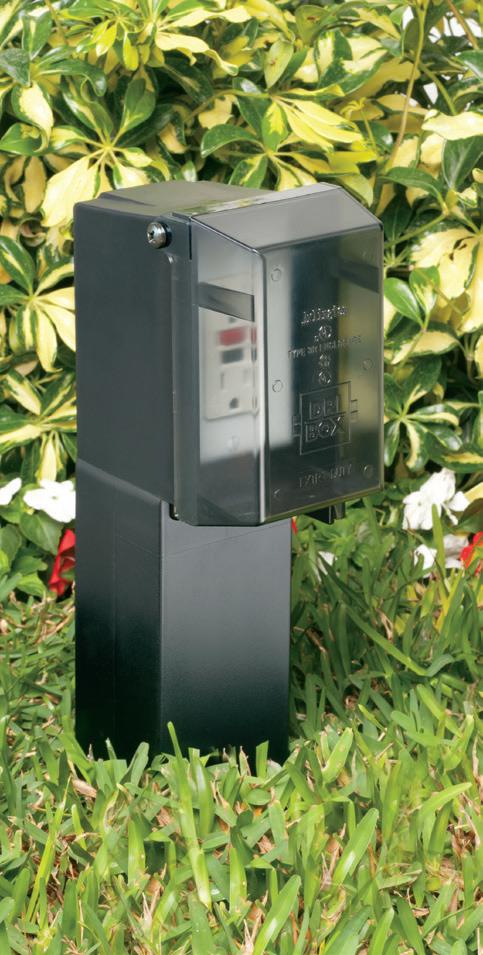
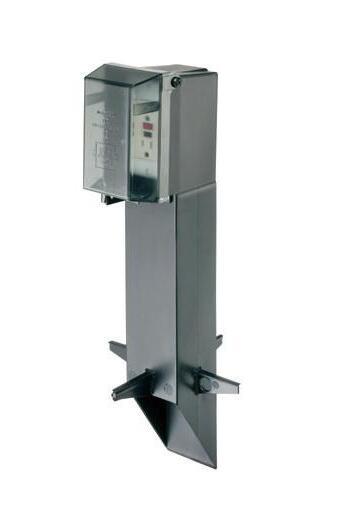
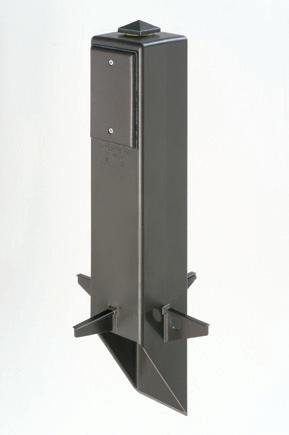
Arlington’s Gard-N-Post® enclosures and supports offer the attractive, safe, and easy way to install a light fixture and/or one or two devices outdoors!
• Non-metallic, heavy-duty UV rated plastic
• Damage resistant
• No chipping... 4 permanent colors
• GARD-N-POST... a variety of styles, 9" to 73" tall
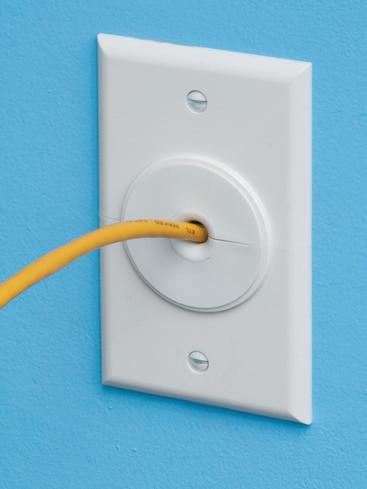
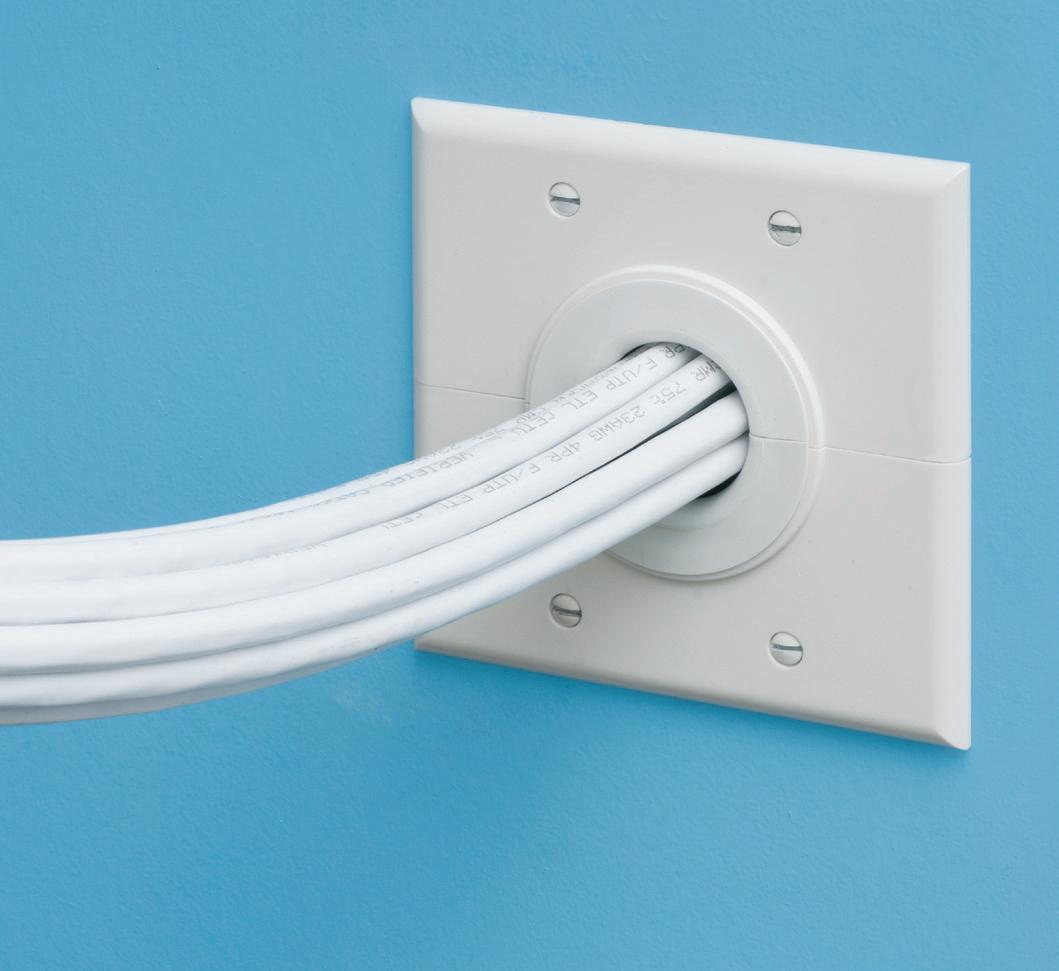
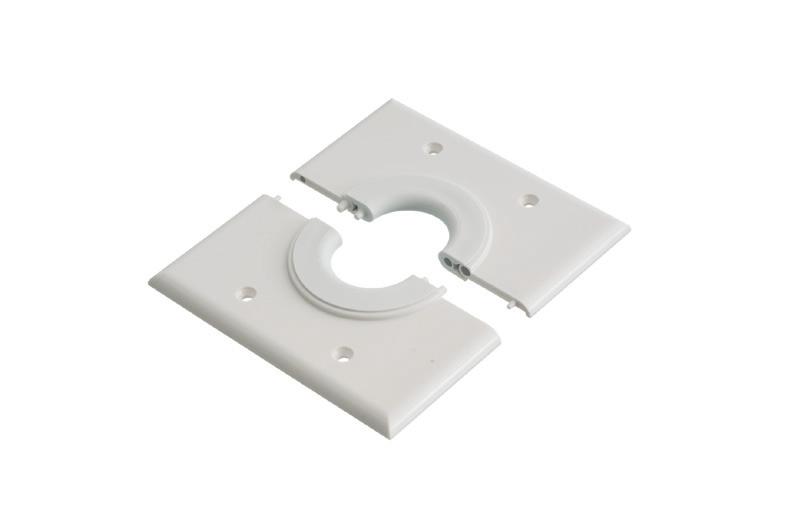
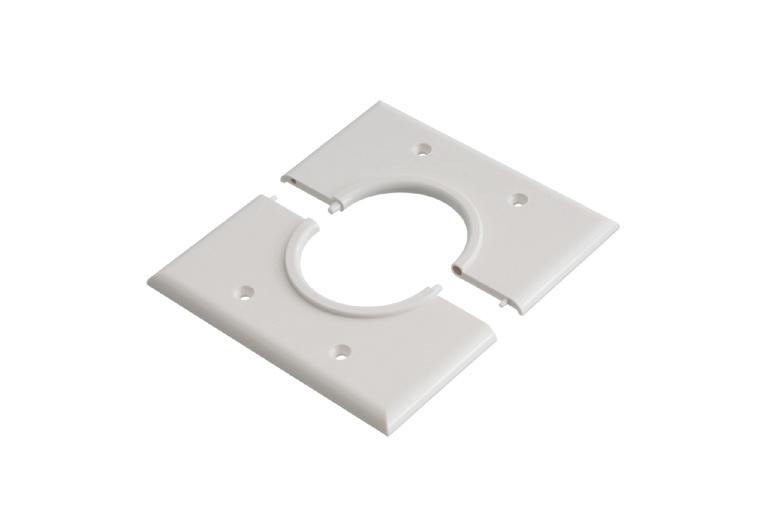
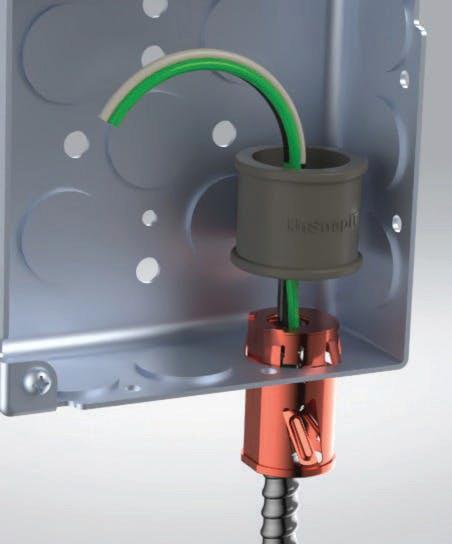
Arlington’s non-metallic Split Wall Plates provide a simple and effective way to accommodate pre-connectorized low voltage cable(s) of varying size and quantity or pre-existing low voltage cables.
Multiple split grommets are provided with our single- and two-gang wall plates for increased versatility in effectively sizing and covering the hole/opening.
Use as shipped, or with one of the supplied bushings to alter the size of the opening.
• Single-gang CESP1 w/ 1-1/2" opening, bushings for .312" • .500" • 1" openings bushings for .750" • 1.250" openings
MAINTENANCE FACTS
when it wants to schedule the maintenance for you. Again, this often occurs at the most inconvenient time for the facility, resulting in a prolonged disruption of production and a significant loss of revenue.
Planned maintenance allows the facility to obtain necessary materials or equipment ahead of time and to schedule a shutdown to occur during a slower, or at least manageable, period of time. This results in shorter downtimes and helps keep production on track and aligned with customer commitment dates.
Also, equipment that is not maintained according to the manufacturer’s installation instructions and NFPA 70B may not be safe. This is why NFPA 70B is one of three key parts to the Electrical Cycle of Safety™ (ECoS™). The ECoS is a holistic approach to electrical safety that considers codes and standards for electrical installations (NFPA 70), electrical maintenance (NFPA 70B), and electrical safety (NFPA 70E). When used collectively, these codes complete the ECoS. Where just one is missing, it could result in preventable incidents that put people, property, and critical processes at risk.
CREATING AN ELECTRICAL MAINTENANCE PROGRAM (EMP)
To help prevent an unintended disruption in production, loss of revenue, or potential safety hazards from arising, facilities should create an electrical maintenance program (EMP). This is a key part of NFPA 70B that helps direct activity appropriate to the safety and operational risks, as well as taking into consideration the manufacturer’s installation instructions. In areas where the manufacturer’s instructions may lack guidance, such as maintenance intervals, NFPA 70B could step in and fill those gaps.
Some key components of an EMP are:
• Equipment inspection — An EMP must include elements that verify electrical equipment, or electrical systems, have been inspected and installed according to applicable codes. This is where NFPA 70, National Electrical Code (NEC), comes in because it covers the installation of electrical equipment, wiring, and inspections of the installations. It is difficult to maintain electrical equipment if it wasn’t properly installed
and inspected initially, which is why the NEC is another key part of the ECoS.
• Condition of maintenance — An EMP shall include elements that consider the current condition of maintenance of the electrical equipment and systems, as well as safety and risks to maintenance and operation personnel. To properly maintain electrical equipment, you must also have an electrical safety program (ESP) that is derived from NFPA 70E, Standard for Electrical Safety in the Workplace. The ESP helps guide how to safely complete tasks when working on maintaining electrical equipment.
• EMP principles — An EMP must be designed to work in conjunction with an applicable ESP. This is where the third key part of the ECoS steps in: NFPA 70E. This standard requires you to create an ESP to help employees manage their risk while working on electrical equipment.
• EMP controls — An EMP must have controls by which it is measured and monitored. This helps to verify that the EMP is working as designed and highlights areas where it can be improved upon.
• Incident investigations — An EMP must include a method to use all associated reports for feedback and ways to further refine and improve the EMP.
• EMP audit — An EMP must be audited at intervals that do not exceed five years to ensure all components of the EMP still comply with the standard.
WHO IS THE EMP COORDINATOR?
The facility’s EMP must have a designated EMP coordinator, who may be the safety or facility manager, or anyone else that the facility deems as qualified, including a 3rd-party affiliate. The EMP coordinator must assign personnel to EMP duties who are qualified for those tasks. A qualified person is defined in NFPA 70B and 70E as “one who has demonstrated skills and knowledge related to the construction and operation of electrical equipment and installations and has received safety training to identify the hazards and reduce the associated risk.”
The qualified person requires training specific to maintenance tasks, testing methods, test equipment, personal
protective equipment (PPE) usage as required, and any hazards associated with maintaining the equipment. The training may not just be classroom training, but on-the-job training as well.
On-the-job training allows the trainee to demonstrate to the qualified person in charge of their training that they possess the skills and knowledge to maintain the equipment in the facility where they will be working. Training should be specific to each building, facility, or piece of equipment — even if everything is owned by a big corporation.
For example, someone working in maintenance at a company that has milling machines would likely not be qualified to work on forge equipment. Also, additional training would be required if job duties changed or new equipment was brought on site. All training records provided for employees assigned to conduct maintenance tasks should be kept, since they may be needed in the event of an incident. For additional information on training and retraining, see NFPA 70B, Sec. 4.3.3.
PRIORITIZING A MAINTENANCE SCHEDULE & KEEPING RECORDS
The EMP coordinator is also in charge of determining the scope of work to be performed and creating a prioritized maintenance plan for the electrical equipment or system. Electrical equipment should be inspected to determine the appropriate scope and frequency of maintenance. Consideration should be given to the environmental, physical, or operating conditions of the specific installation when evaluating a maintenance schedule. A good example of equipment that may require more frequent cleaning and maintenance would be equipment located in a textile facility because the processes in the facility can lead to fiber build-up on equipment, which could increase the risk of a fire.
Maintenance records are important to have on file so that a facility can provide proof of maintenance being done on the equipment. This is important because the ESP for the facility must show a condition maintenance for electrical equipment according to NFPA
Extra-duty one-piece design
Pre-installed strut clip for faster installation on strut
Stainless steel screw
Arlington’s corrosion-resistant QUICKLATCH™ pipe hangers cost the same as a steel pipe hanger with a bolt and nut – but better. They’re faster and easier to install. And SAVE 25 seconds* per installation!
• UV rated for outdoor use
• Listed for environmental air handling spaces
• For thin walls, rigid conduit, PVC conduit or copper
MAINTENANCE FACTS
70E. Part of the ESP is a requirement to have an electrically safe work condition (ESWC) policy.
The conditions in which the ESWC is required are found in Sec. 110.2(B), which addresses when an ESWC is required and when it is not. An exception to the requirement of an ESWC is found in Exception No. 2, which explains that: “Normal operation of electric equipment shall be permitted where a normal operating condition exists.” Two of the items required to have normal operating conditions are:
• The equipment is properly installed (NEC).
• The equipment is properly maintained (NFPA 70B).
As you can see from the two bullet points, we can’t have normal operating conditions without the NEC and NFPA 70B being properly implemented; otherwise, workers would need to establish an ESWC just to turn off a breaker or a switch to perform maintenance on a
piece of equipment. According to Table 130.5(C) in NFPA 70E, the operation of a circuit breaker, switch, or starter that is not in a normal condition has a likelihood of an arc flash incident. This is a big reason why facilities need NFPA 70B.
CONCLUSION
Implementing the principles and controls of NFPA 70B is only one part of the ECoS. A facility focused on a culture of safety has all three parts working holistically together. This is accomplished by having any new or relocated equipment installed and inspected according to the NEC, and any tasks being performed on the electrical equipment would be under the direction of an ESP derived from NFPA 70E.
Remember: Having an effective EMP is likely the equivalent of putting money in the bank by saving you repair time/ lost revenue and increasing worker safety. Electrical equipment that is not being properly maintained is likely to
require the maintenance time for you. Wouldn’t you rather be in control?
NFPA has numerous resources for facility employees who will be working with electrical equipment from train ing to certifications. If one part of the ECoS is missing, it will have a negative impact on the safety of the employees and facilities.
Important Notice: Any opinion expressed in this article is the personal opinion of the author and does not nec essarily represent the official position of NFPA or its Technical Committees. In addition, this piece is neither intended nor should it be relied upon to provide profes sional consultation or services.
Dean Austin is a senior electrical content specialist at the National Fire Protection Association (NFPA). In his current role, he serves as an electrical subject matter expert in the development of products and services that support NFPA documents and stakeholders.
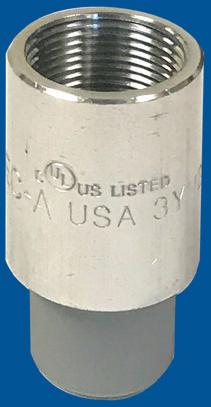
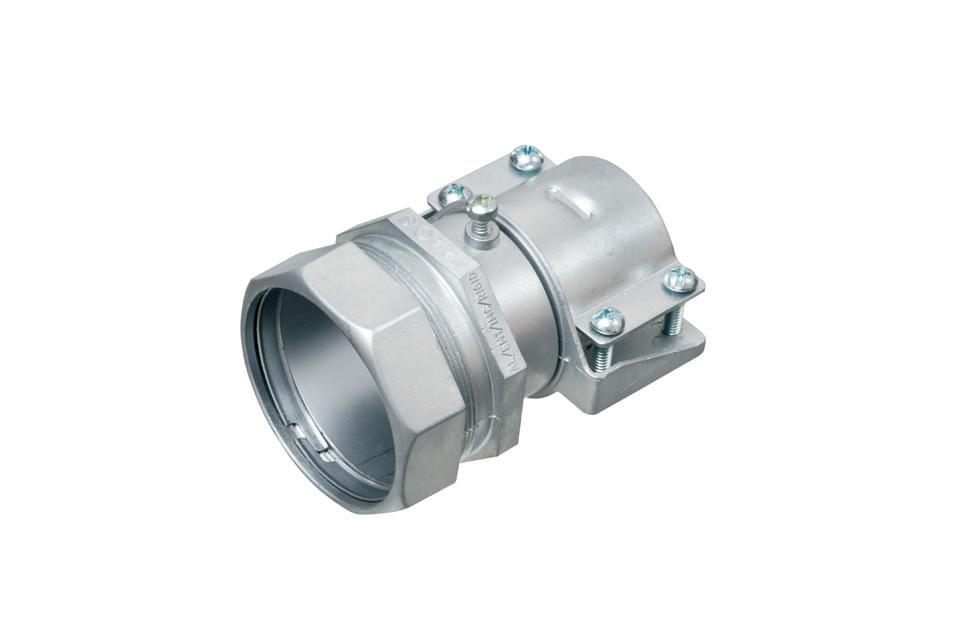
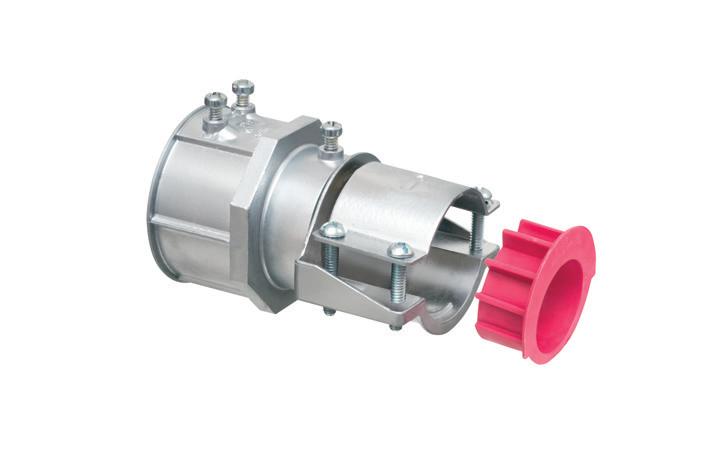
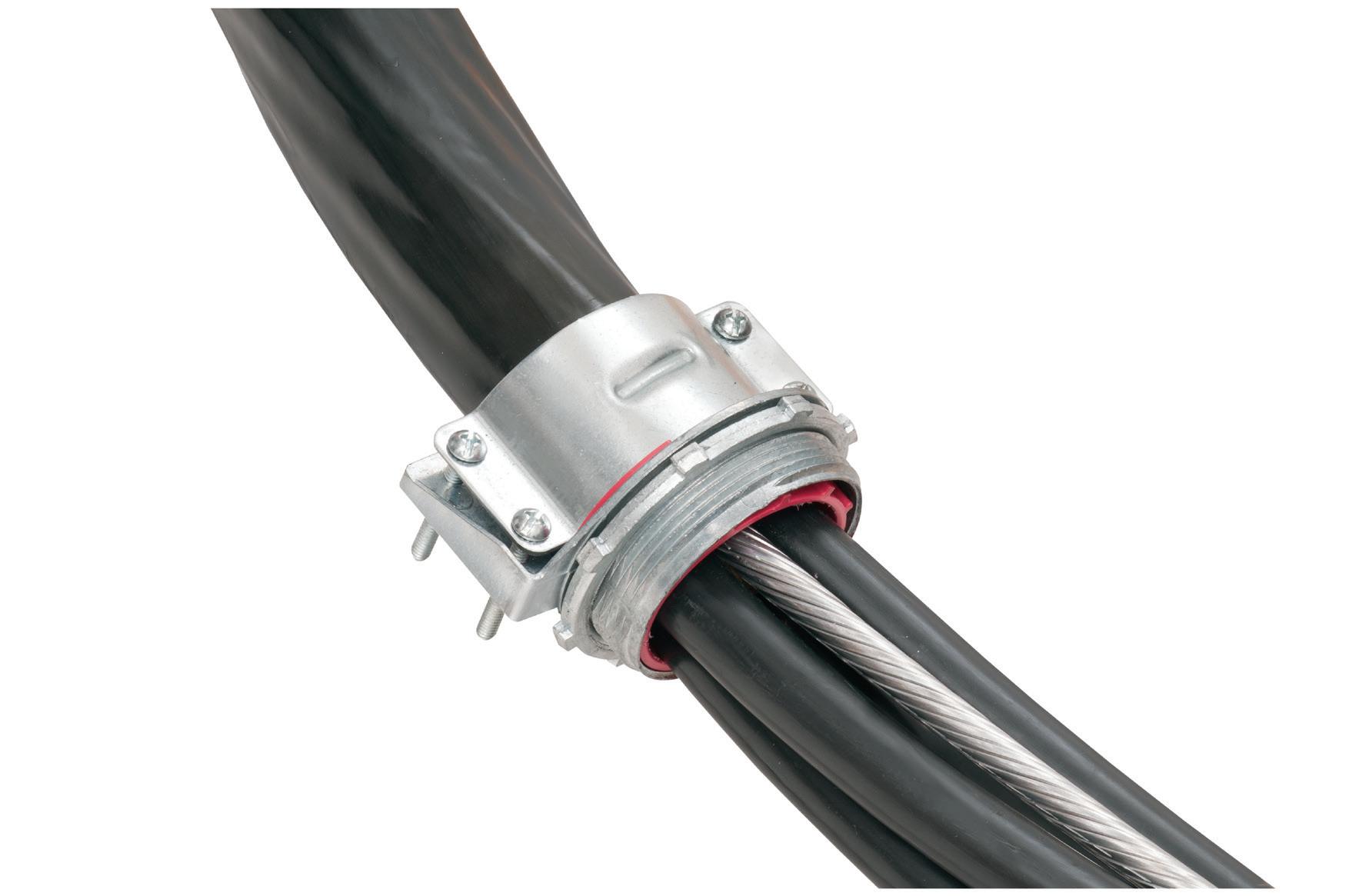
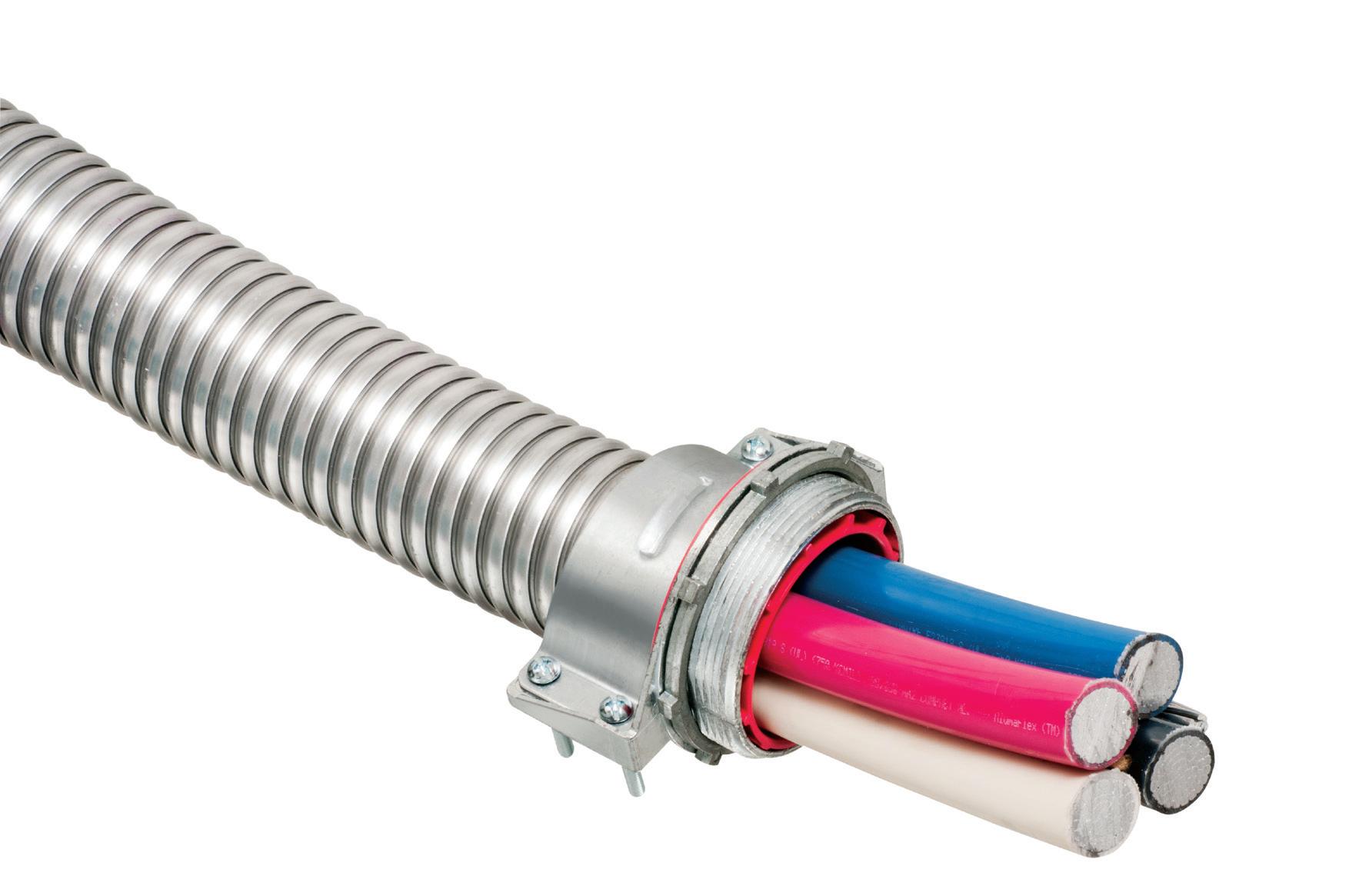
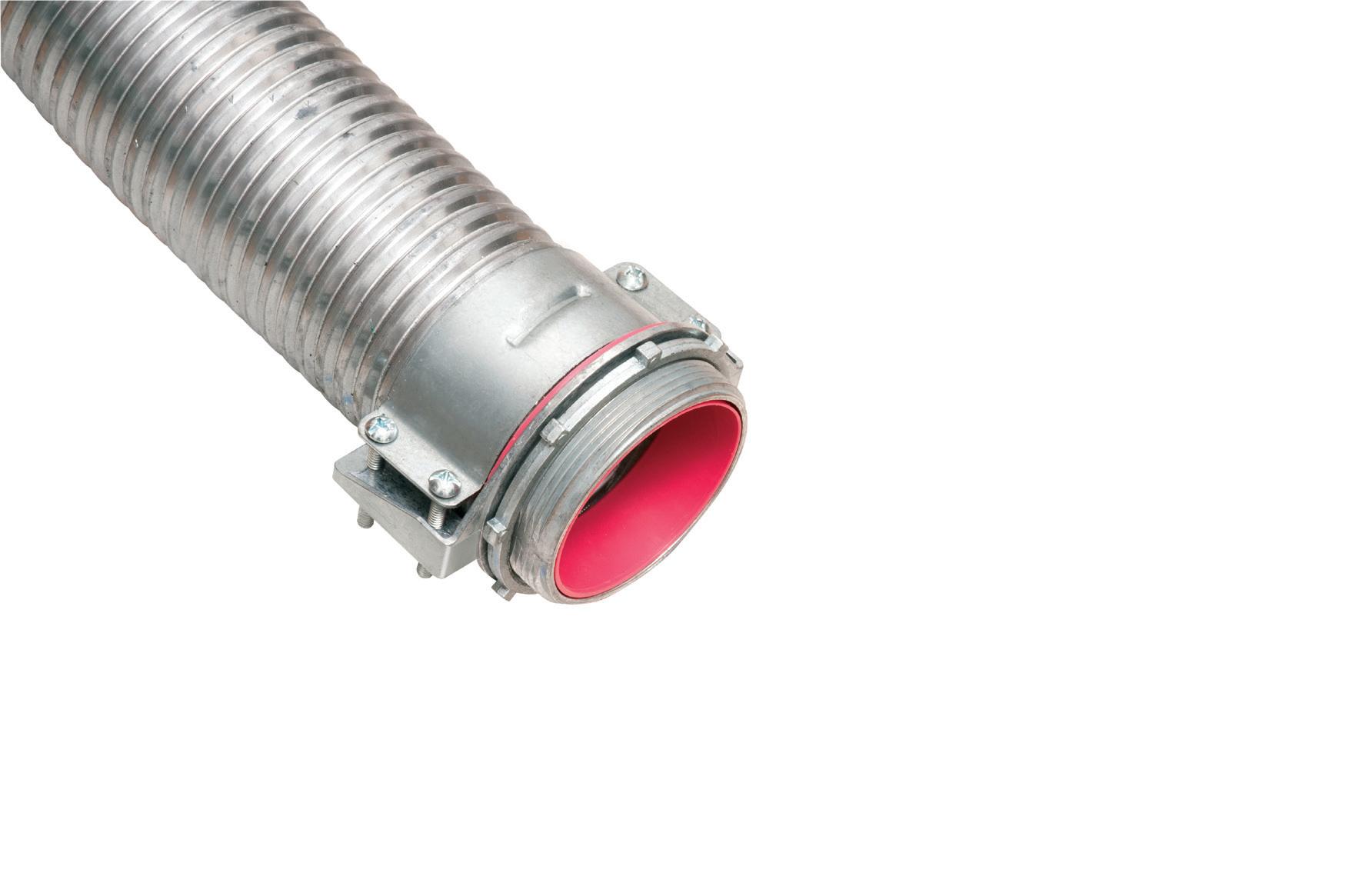
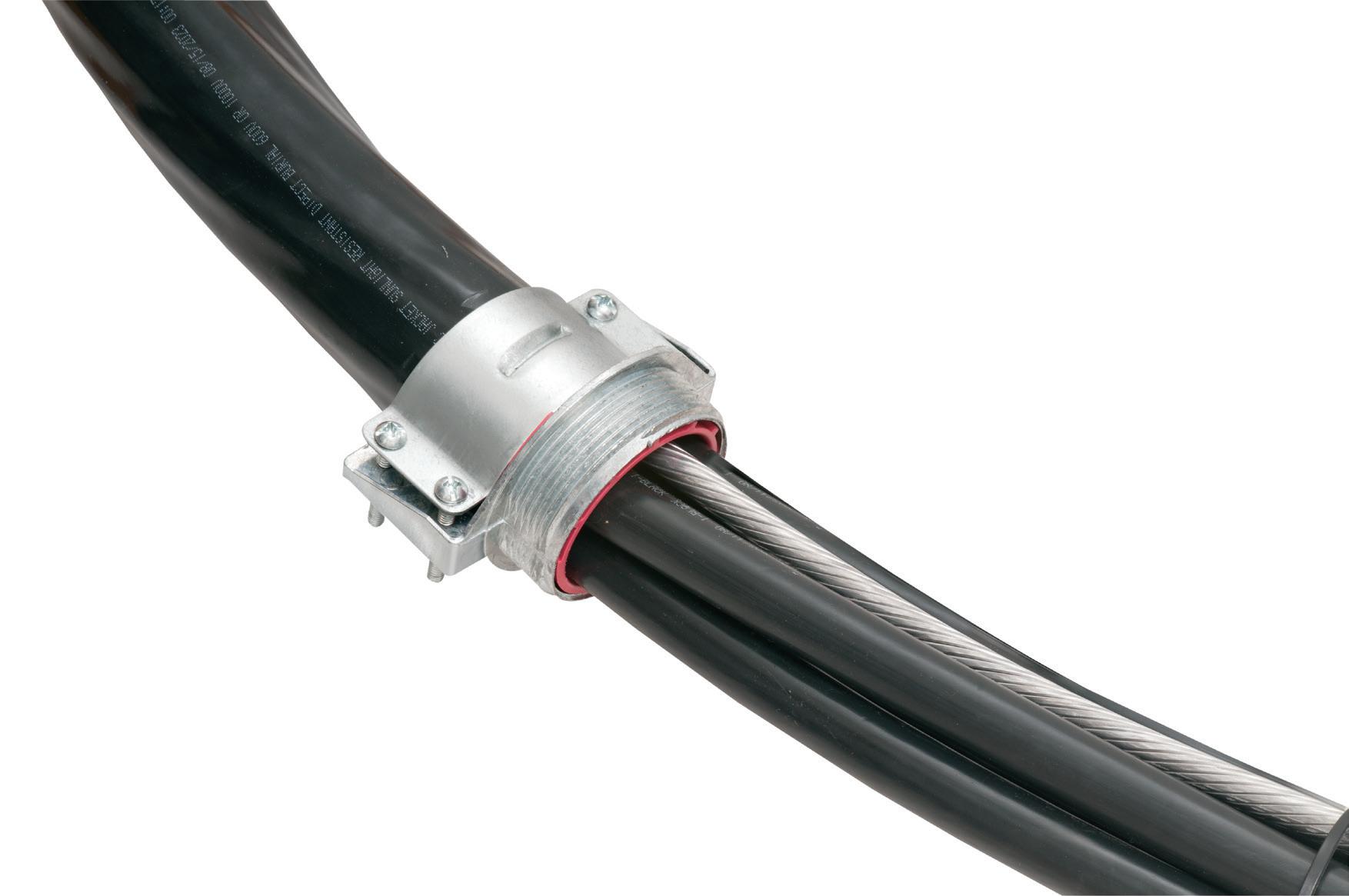
Perfect for data center remote power panel feeds, panels, equipment feeds and EV Chargers in parking garages, Arlington’s Listed CableStop® Transition Fittings deliver the efficient, cost-effective way to transition feeder cables to 1.25", 2.5", 3" and 3.5" EMT, IMC and RMC conduit in protective drops, risers and feeds to panels and equipment. Our new CableStop fittings integrate our patented, versatile and SKU-reducing 8412 series cable fittings, with Arlington conduit fittings, allowing for easy transitions to larger knockout sizes.
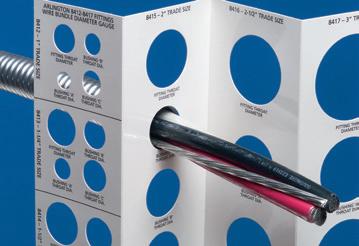
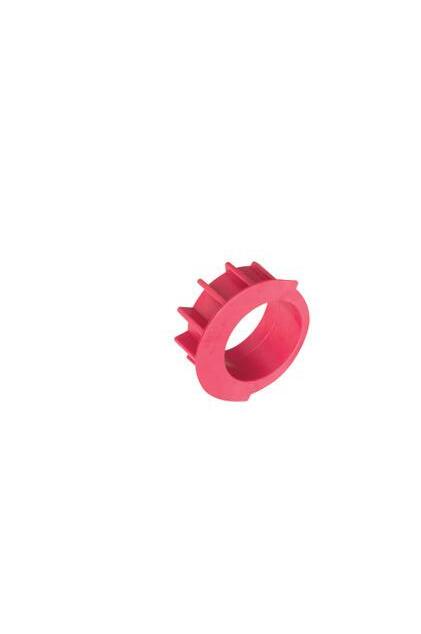
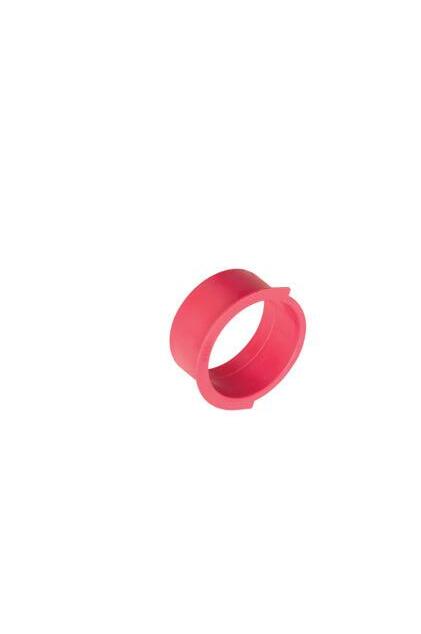
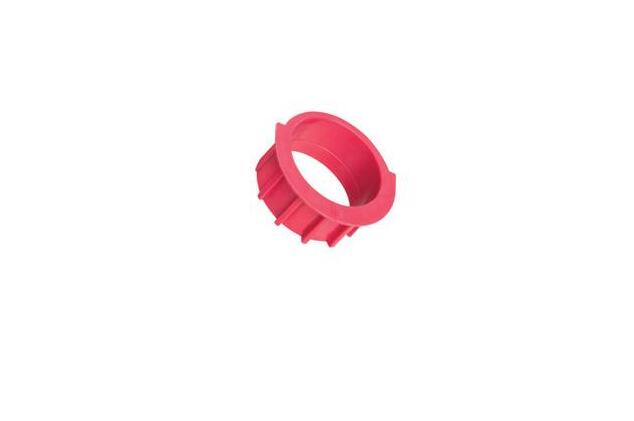
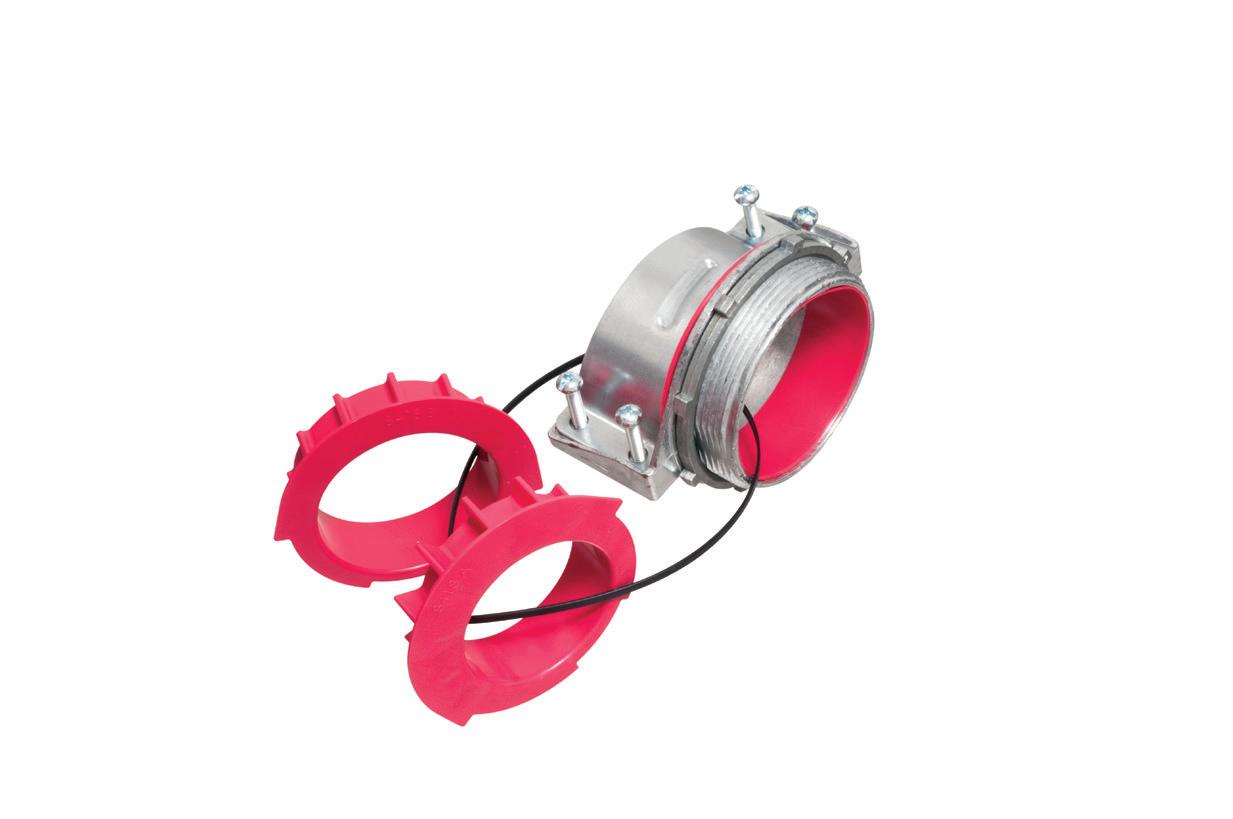
Available with set-screw or compression connections into 1.25", 2.5", 3" and 3.5" conduit, they ship with multiple end stop bushings that vary the size of the opening – along with a free template select the right bushing for the cable.
Safety Best Practices When Using Electrical Testing Equipment
Use the right test equipment the correct way to protect yourself from hazards associated with measuring in the electrical environment.
By Mark Lamendola, Electrical Consultant
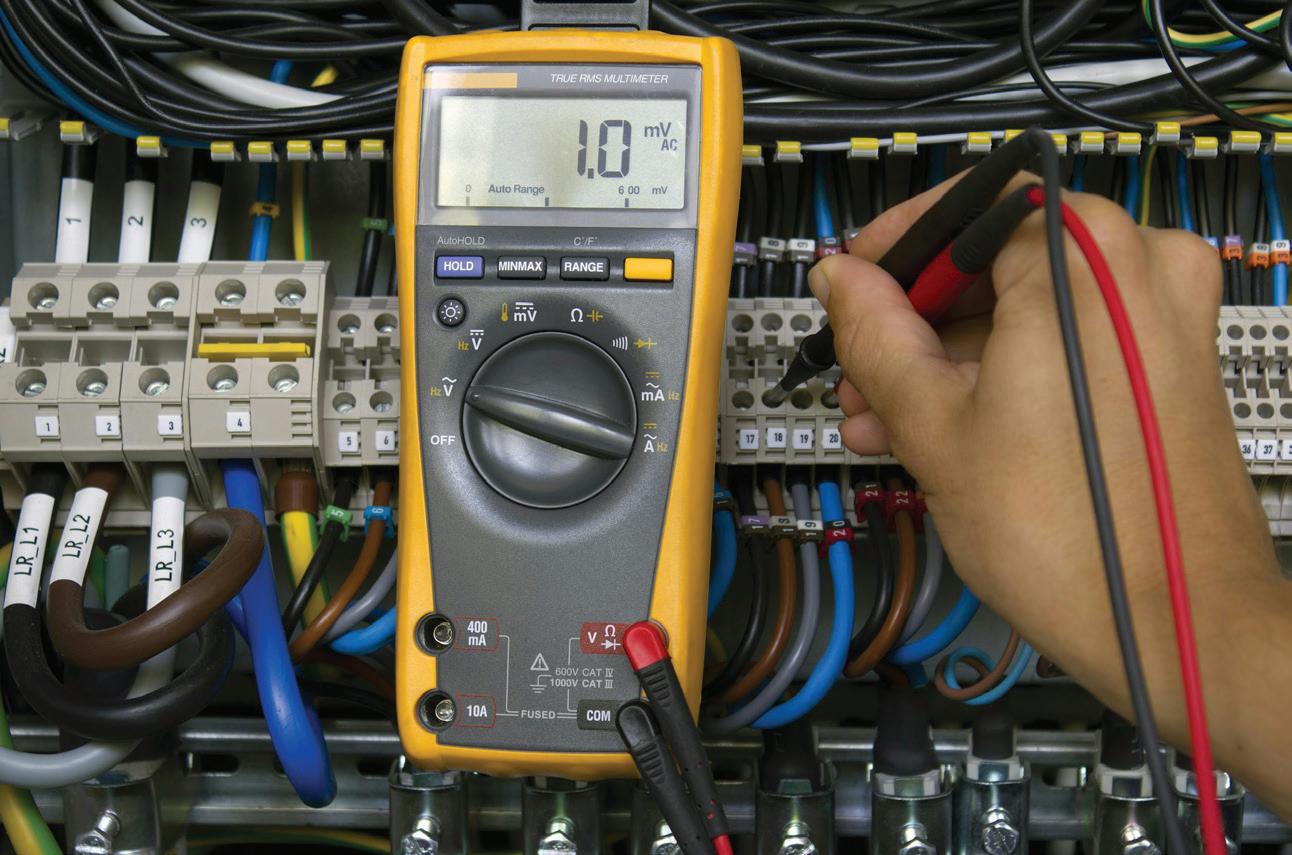
Because electricity is inherently dangerous, there is no way to make test equipment inherently safe. But using test equipment that’s appropriate for the test and the environment while following established test equipment safety practices will close the gap almost completely.
Consider a modern CAT IV digital multimeter (DMM). It has a long list of safety features to protect the user. This example from a generating station in Ohio illustrates how, even though you can’t fix stupid, you can sometimes protect people from it.
WHAT NOT TO DO
An “electrical tech” contractor turned out to be a non-qualified person (NQP). He brought the charred remains of his “defective” DMM to the metrology lab. The metrology tech was immediately suspicious. He asked many questions and demanded to see the work order for which the DMM was being used.
The work order called for some voltage measurements. This was part of the system engineer’s effort to compare actual voltage drop to calculated voltage drop on some of the longer feeders.
This NQP decided to measure the current flowing through a 400A bus. Going through the normal jack provides a high impedance, as there is negligible current flow through the meter. The current jack, however, allows current to flow through the meter, and it has a 2A fuse. The NQP’s method was to connect via the current jack and measure between one phase and ground, which of course does not tell you the current
flow. It turned the meter into a clump of melted metal and plastic. The lucky NQP survived to find a job elsewhere.
DIGITAL MULTIMETER BEST PRACTICES
Here are some tips for using a DMM correctly:
• Know what measurements you need to take, what measurement points are best, and how to set the meter for those measurements.
• Set the meter for the intended measurement before connecting it.
• Don’t take measurements you don’t need to take.
• Never use a DMM to directly take current measurements in a power distribution system. Use a current clamp with a DMM or use a meter designed for that purpose.
• Know the expected voltage range rather than let Autorange find it for you. While Autorange is perfectly safe in itself, there is an operational and safety need for you to know what voltage to expect before you connect the DMM.
• Don’t use cheap imports. The name brands are built to rigorous safety standards, while cheap knockoffs are built to no safety standards
USING A CURRENT CLAMP
Unlike a probe, the clamp does not come into contact with energized terminals. But that doesn’t mean the clamp makes measurement inherently safe. You’re still going to be standing in front of an open enclosure and may be putting your hand close to an energized surface.
You will almost certainly need to lift and (slightly) twist cables to
GROUNDING BRIDGE
MULTIPLE ZINC & BRONZE STYLES MEET NEC GROUND
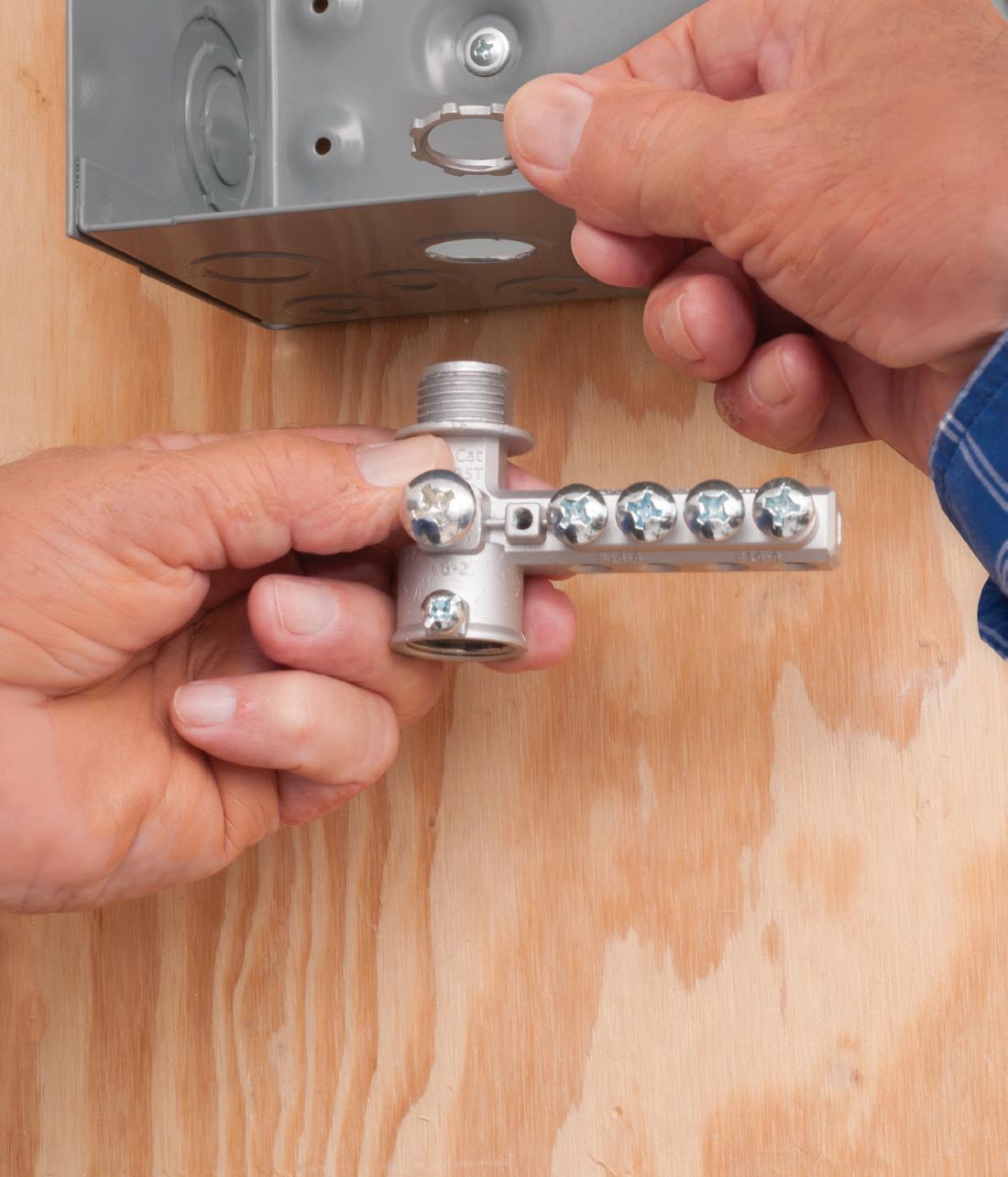
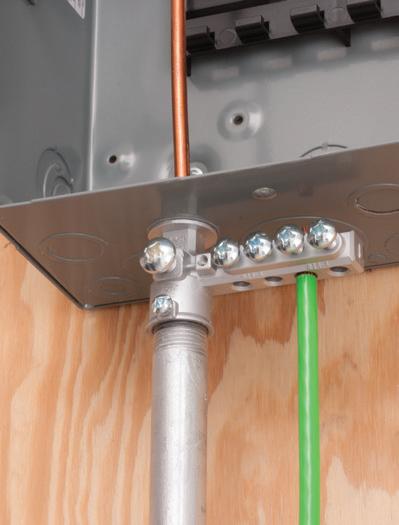
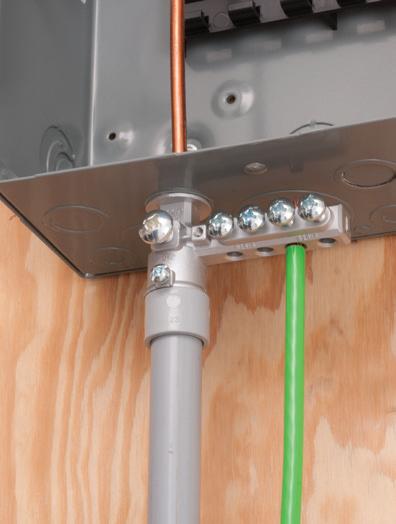
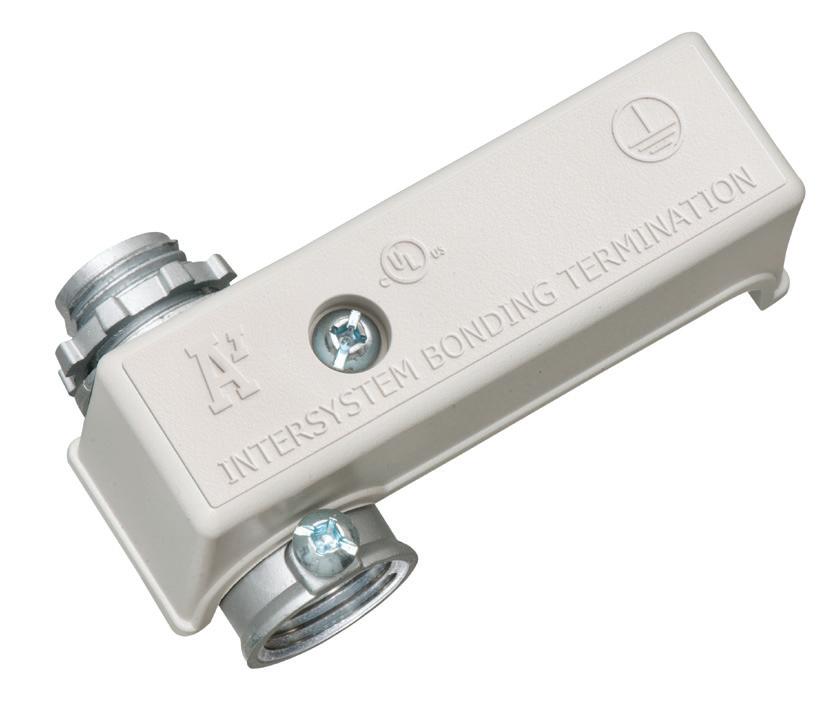
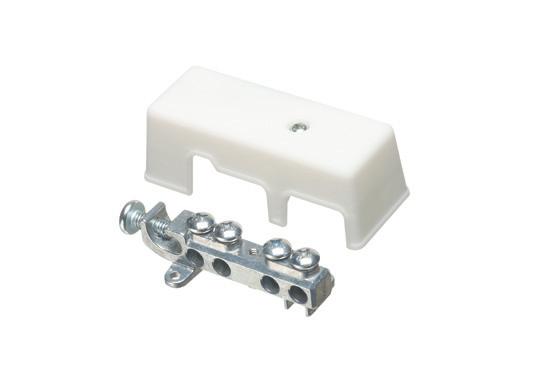
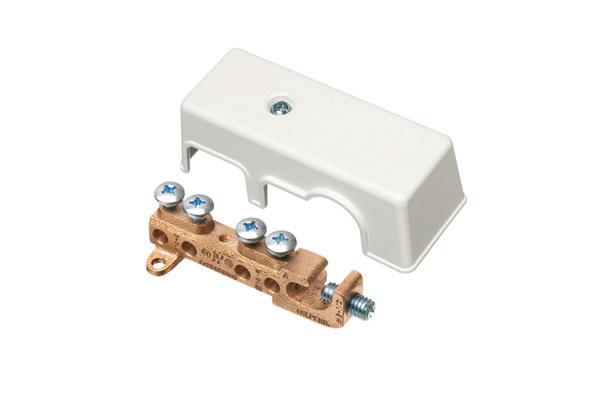
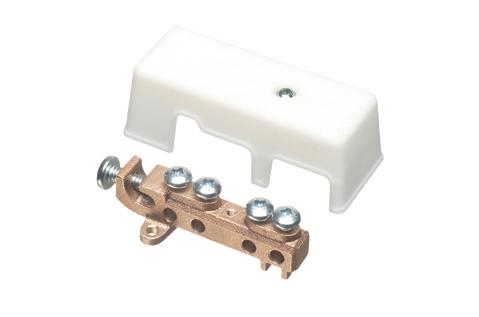
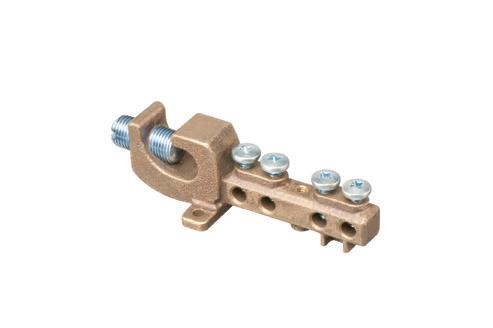
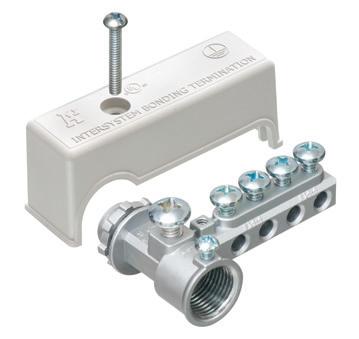
Arlington’s heavy-duty Grounding Bridges provide reliable intersystem bonding between power and communication grounding systems. And handle multiple hookups of communications systems: telephone, CATV and satellite.
Our new GB5T comes with a Combination Threaded and Set-Screw hub for Threaded Rigid – or EMT Conduit.
Arlington’s zinc and bronze grounding bridges...
• Four termination points; more than required by the NEC
get the clamp around the conductor under test. You have to measure the field around one conductor at a time (the three conductors are out of phase, thus the fields will tend to cancel each other). And you need to get the center of each cable as close to the alignment marks as possible. Typically, these alignment marks delineate the center space of the jaw.
Take the same arc blast and shock prevention cautions that you would take if using probes. That includes using and/ or wearing personal protective equipment (PPE), such as rubber blankets, insulated gloves, or even an arc flash suit.
GENERAL SAFETY PRACTICES
The tips for safely using a DMM also apply generally to most test equipment. Arguably the most important safety tip is ensure you are a “qualified person” [NFPA 70E Sec. 110.6(A)]. To be a qualified person, you must have demonstrated the skills and knowledge to use the test equipment with the particular equipment under test and you must have received the safety training to identify the hazards and reduce the associated risk. That’s a paraphrasing of the NFPA 70E Art. 100 definition.
But what if your company just bought a new piece of test equipment of a type that nobody on site has used before? Do you have to take a class on how to use it? Often, it will suffice for an employee seeking to become qualified to study the manual, make up a mock test, and demonstrate the correct use to a supervisor or other designated person who has also read the manual. This would also assume the employee is a “qualified person” on somewhat similar equipment used in the same environment. That can be a big assumption.
One solution is your electrical distributor may have someone who can perform the training, or they can get someone. The manufacturer may have training videos, conduct training webinars, or provide other means of remote training.
For work quality, the safety training is all well and good but often insufficient; there is just way too much to learn about how to use the test equipment and correctly interpret the test results. This problem is why we have courses and certifications for thermographers. “Do
the job right the first time” is also a major safety principle.
Some safety practices that apply to test equipment in general:
• Use the correct test equipment for the measuring job and environment [NFPA 70E Sec. 110.6(C)]. This sometimes has more effect on the work than the safety of the worker, but it is always a safety issue even if the major effect is on the work. For example, you might attempt to measure resistance across a 480V bolted connection using your 9V DMM instead of using a conductance tester for that same job. A supervisor reviewing that work would have to write another work order to do the job all over again, meaning double the exposure to nearby energized circuits.
• Use test equipment that is rated for the environment of use [NFPA 70E Sec. 110.6(B)]. Test equipment designed for laboratory use is typically not also designed with safety features that make it suitable for use with the 480V distribution system in the typical manufacturing plant.
• Physically inspect the test equipment [NFPA 70E Sec. 110.6(D)] before taking it to the field and again before using it. While major brands ruggedize much of their equipment, sometimes things just happen. An electrical test tech came back from lunch to continue cable testing only to notice a crack in his Hi-Pot tester. It wasn’t there when he left. Though he suspected a lift truck hit it, nobody saw anything. His routine practice of inspection before each use may have saved his life.
• Physically inspect test leads from one end to the other. If there is obvious damage, replace them. If you can’t be sure if those are okay, replace them so you are sure about the test leads you actually use.
• Decide on a connection hand. Seasoned pros often put one hand behind their back when connecting probes or clamps, to avoid creating a possible current path across their heart. This practice also prevents creating an ionization trail between two test probes; that trail creates a significant risk of an arc flash.
• Be careful using “ground” as a voltage level reference. That point might not be connected to the equipment
grounding conductor (EGC). If it’s on the load side and connected to a load side ground rod, it might be 90V or more higher than the EGC.
• If testing to verify circuit de-energization, also measure phase-to-phase and phase-to-neutral.
• Avoid setting battery-powered test equipment near heat sources.
• Don’t use the cords of cordconnected test equipment to raise or lower the equipment [NFPA 70E Sec. 110.7 (A)].
• Don’t wrap the cords of cordconnected equipment around the equipment (unless the equipment is provisioned for that with looms or similar devices), don’t step on those cords, don’t kink them, and don’t attempt to repair them if the insulation is damaged. Replaced any damaged cord. The same thing applies to test leads.
MOVING TOWARD TOTAL SAFETY
You will never be totally safe in the presence of electricity. What separates you from injury or death is how you handle the dangers that still confront you despite all other efforts. This is where your assessment of the measurement environment, selection of the correct measuring equipment, careful set-up and use of that equipment, and attention to detail contribute to your doing a good job that day and going home that night.
A final factor is what some call user calibration. That metrology lab tech mentioned earlier was in charge of, among other things, ensuring all test equipment was correctly calibrated. They sent each item out for calibration on a schedule or in response to a potential decalibration event (such as sharp physical shock). Calibration drifts over time as small errors creep in. This error creep also happens to the qualified person using the equipment. If your company doesn’t have a schedule for requalification, then at least take the time to read through the manual annually just so you get recalibrated on the safe and proper use.
Mark Lamendola is an electrical consultant bases in Merriam, Kan. He can be reached at mark@mindconnection.com.
CABLE SUPPORT
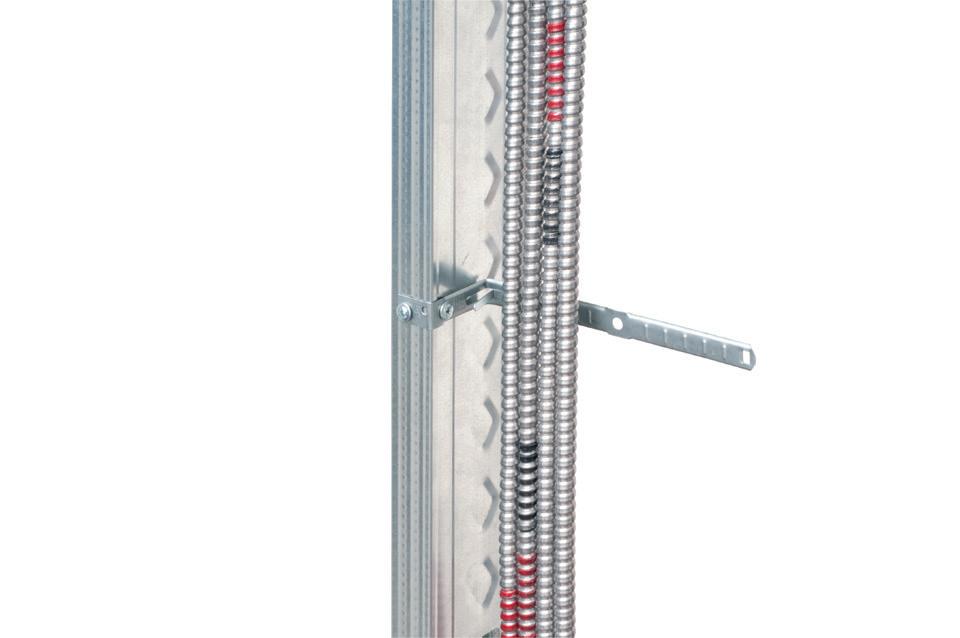
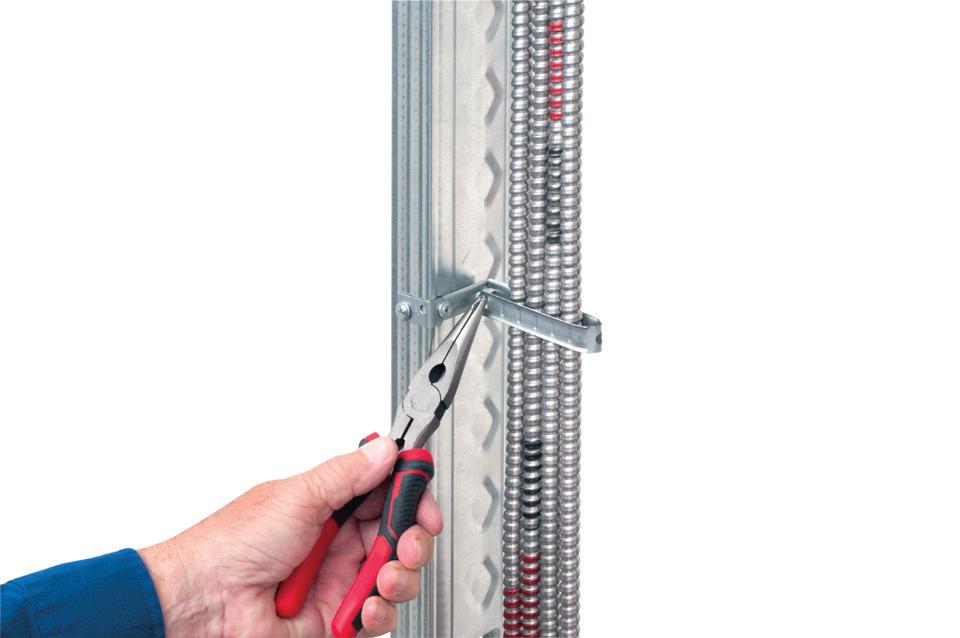
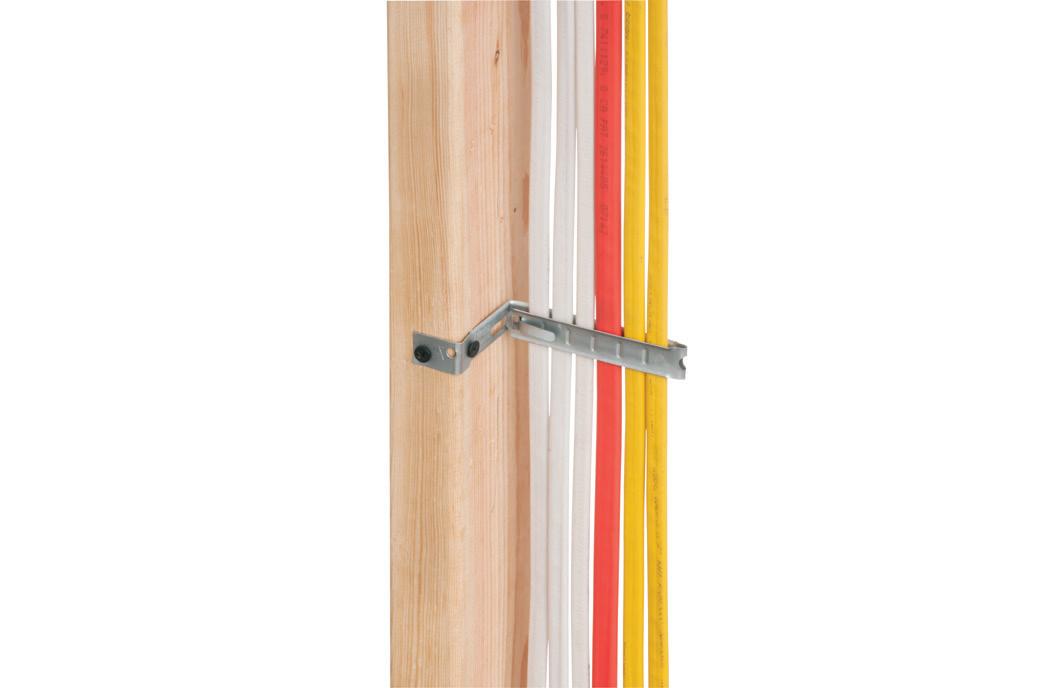
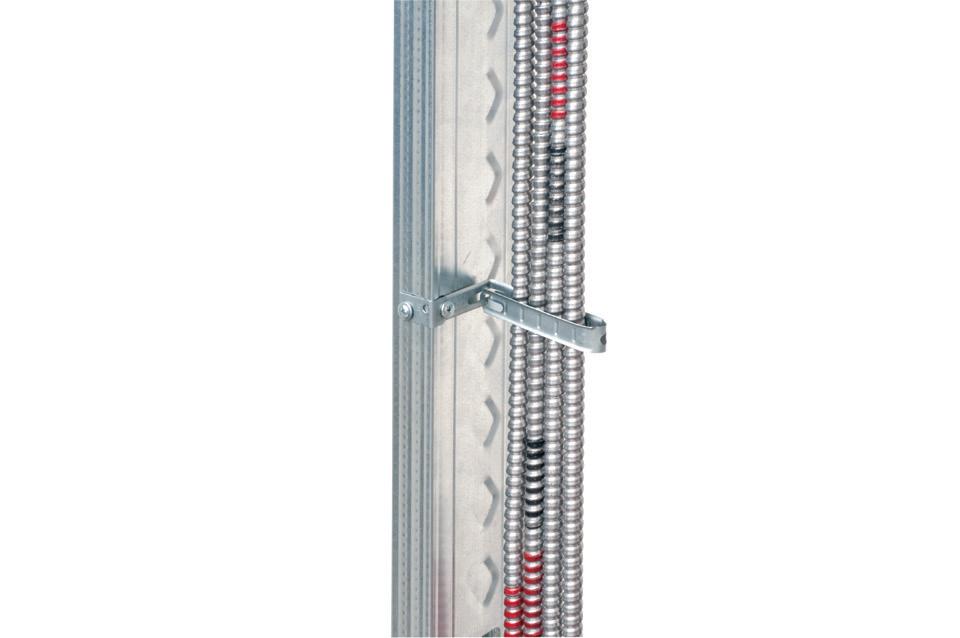
Arlington’s economical CUS6 galvanized steel Cable Support holds cable secure and centered on a metal or wood stud.
It’s perfect for fastening and individual metal clad cables –or six NM cables on a 2x4. to a wood or metal stud, and position the cables. Next bend the strap at the foldline (centerline). Fold the strap over the cables and insert the locking tab in the opening as shown to hold
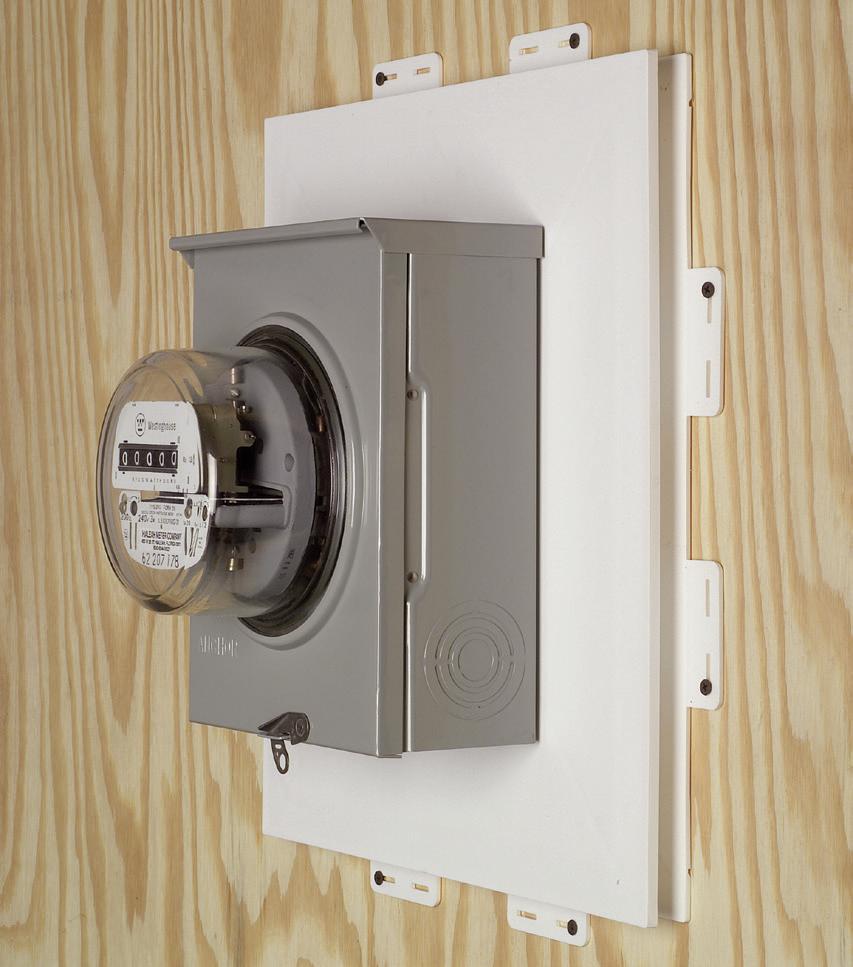
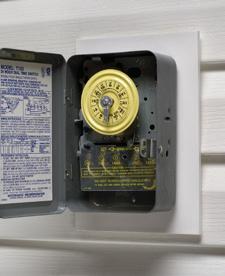
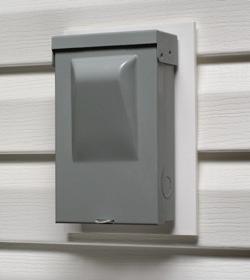
Arlington’s one-piece, non-metallic Mounting Bases provide a smooth, flat mounting surface for most electric meters, including the largest sizes – as well as a variety of other products such as timers, disconnects, inlet boxes and more.
UV rated, paintable plastic for long outdoor life.
Squared-off corners make them gangable so you can create the mounting base needed for the product you’re installing.
Large Volume FURRED WALL BOX
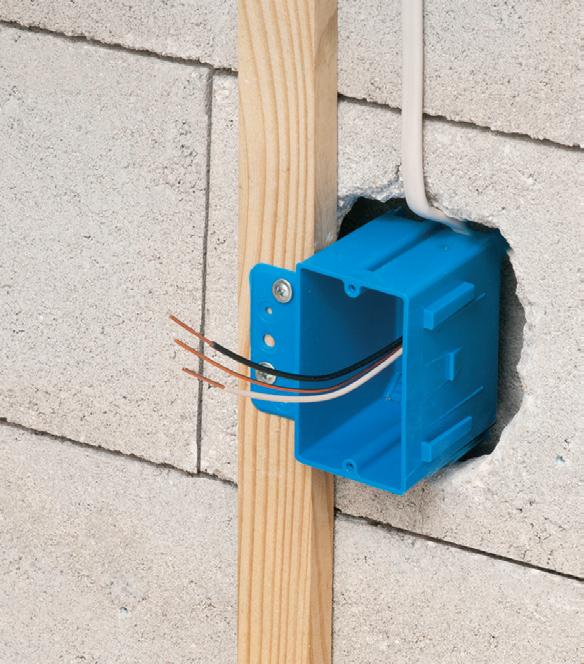
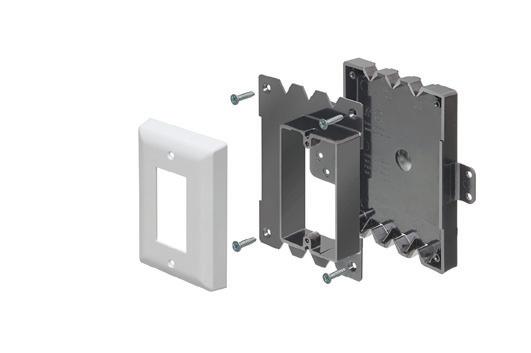
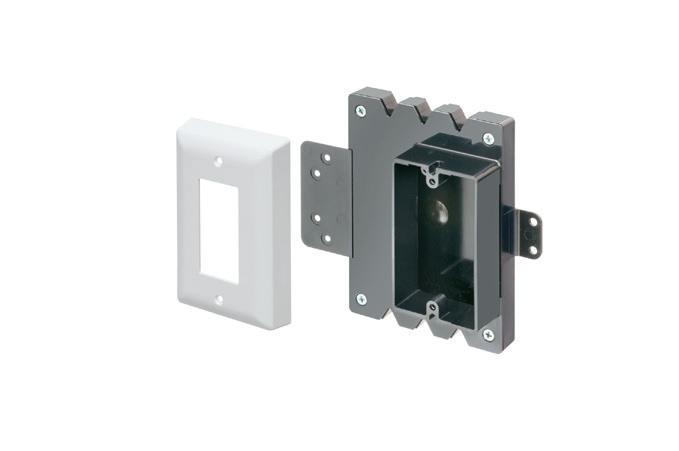
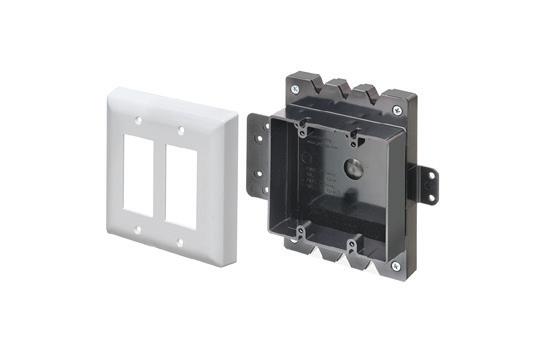
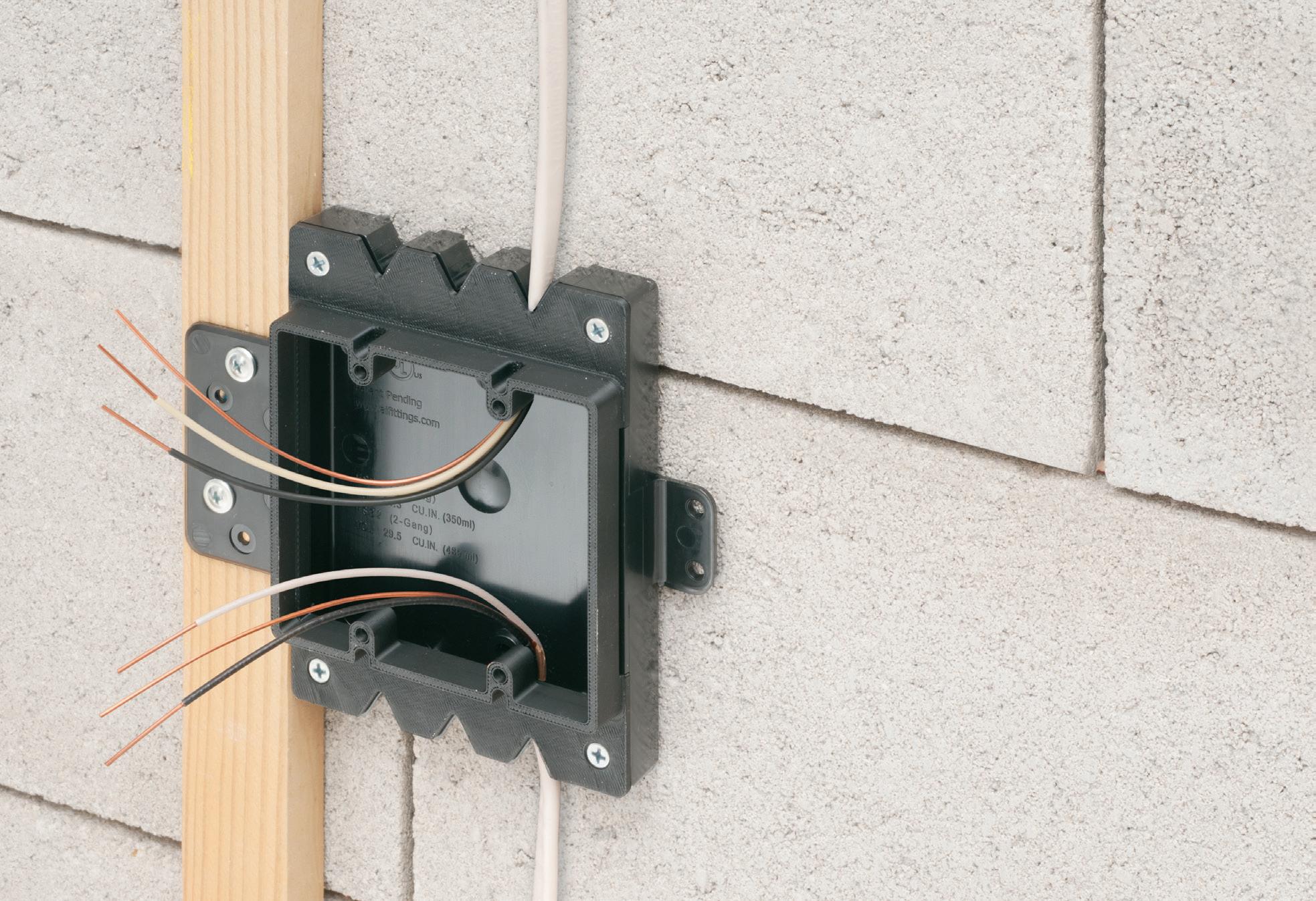
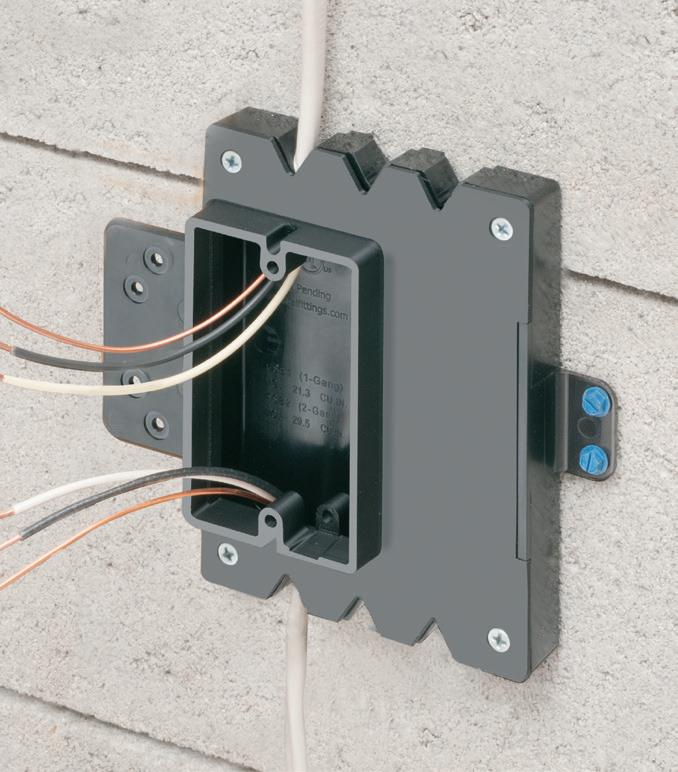
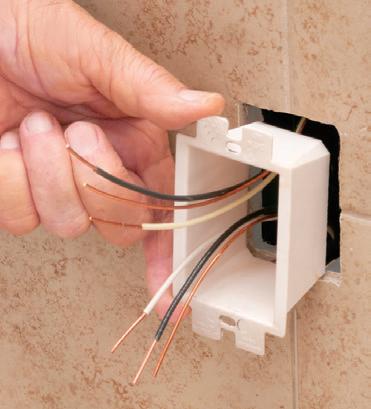
Arlington’s new Furred Wall Box® kit makes challenging outlet box installations fast and easy!
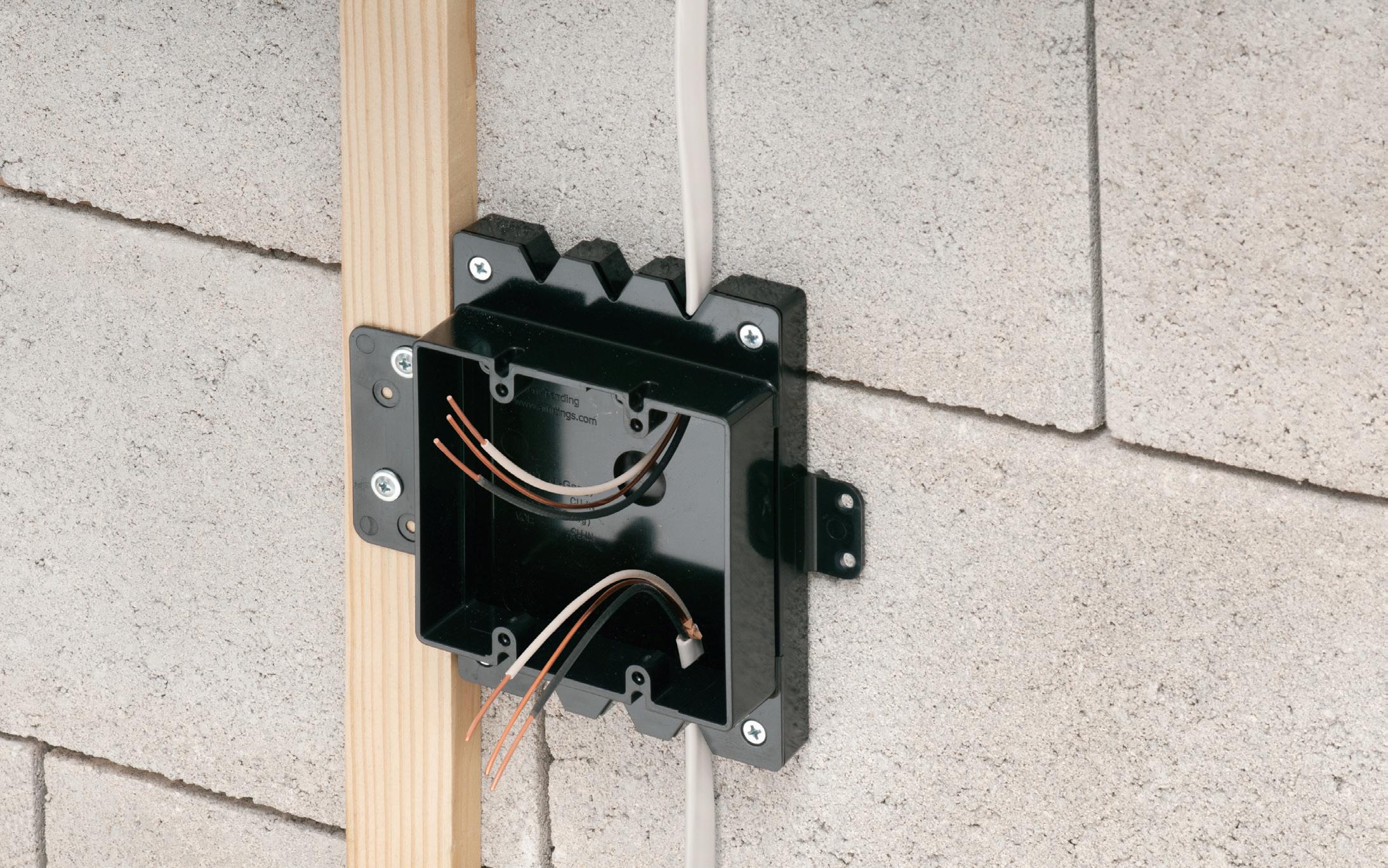
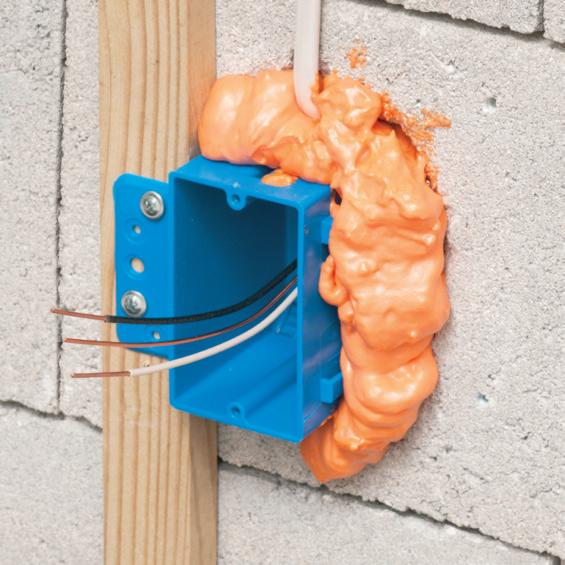
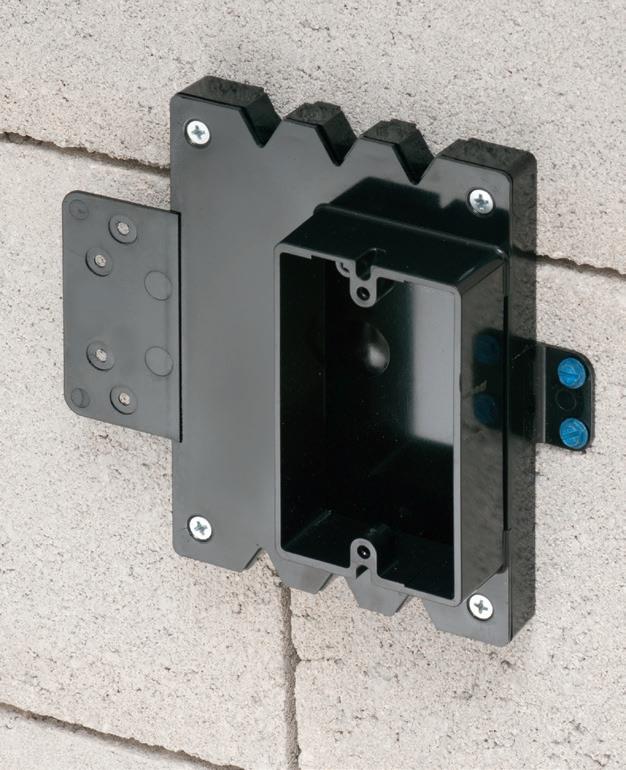
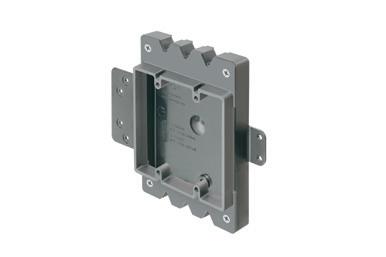
Versatile mounting options Our high strength FSB series outlet box kits are designed for use with existing 1x2 drywall furring strips – but can also be mounted directly to a concrete block wall between furring strips. Place the box or outlet where it’s needed.
Integral cable securement – No pullout! Accommodates GFCI and USB receptacles. Convenient kits simplify ordering of FSB1 and FSB2.
High-strength No breakage in cold weather
Integral Mounting Flanges
FSB2
FSB1 Single gang on Block Wall
Low Profile
NEW FSB12 * FSB22
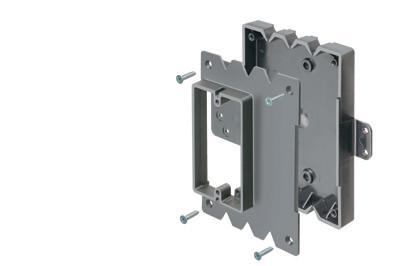
ADD OUR BOX EXTENDERS to BROADEN APPLICATION and USE
Furring strip flange Mounting Bracket
Base
Assemblies for 1/2" Wall Thickness & Standard Depth
Install on 1x2 Furring Strips or Block Wall with 1/2" Drywall
One-gang FSB12
Block wall flange Mounting
Our NEW Low Profile single and two-gang Furred Wall Box® base assemblies have 1/2" raised ring for use with standard wall plates.
They combine with Arlington’s Box Extenders to deliver installation solutions for wall thicknesses from 1/2" to 1-1/2" and varying device depths
• Integral cable securement – No pullout!
• For standard and GFCI devicesUses standard wall plates
• Single gang FSB12 - 17.0 cu. in. Two-gang FSB22 - 20.5 cu. in.
Add our BOX EXTENDERS for these specific conditions...
1 if Total Wall Layer Thickness is GREATER than 1/2" (up to 1-1/2") Add BE1 or BE2
if Using a Deep Depth Device with 1/2" Wall Thickness Add BES1 or BES2
or Dimmer
Bracket
Safe Load Management for Electrified Homes
Recent NEC updates guide load management applications, emphasizing safety, integration of energy resources, and resilient electrification solutions.
By Rebecca Bitter and Tom Domitrovich, EATON
Electrification is one of the most significant trends impacting new and existing homes. As homeowners embrace electric appliances and adopt electric vehicles (EVs), electrical capacity constraints are a major obstacle. Traditionally, overcoming this barrier required costly service or panel upgrades. However, intelligent load management technology now offers a more efficient and cost-effective solution. Load management technology has long been utilized in industrial
settings, helping organizations optimize processes, control costs, and protect electrical systems. Now, this same concept is revolutionizing home energy systems, allowing households to stretch the capabilities of existing energy infrastructure. With recent advancements in smart circuit breakers, homeowners can now add intelligent load management capabilities directly into new and existing load centers to safely meet growing power demands without the cost of replacing their panel.
WHAT IS INTELLIGENT LOAD MANAGEMENT?
At its core, intelligent load management enables more efficient power distribution across a home’s electrical system. For example, this technology can now help ensure that critical functions such as heating, cooling, and refrigeration receive priority during peak demand periods while temporarily reducing power to non-essential devices like EV chargers. The result is a system that works harder to optimize energy consumption without tripping breakers, overloading circuits, or requiring panel upgrades.
Load management can also play a crucial role in integrating distributed energy resources (DERs), such as solar and energy storage, by balancing supply and demand. Although the intermittent nature of renewable generation presents challenges, load management can help to mitigate these challenges by optimizing energy production, storage, and consumption.
Additionally, advancements in smart circuit breaker technology now allow nearly any load center to function as a modular smart panel. These load management techniques provide a flexible solution that offers homeowners, builders, and contractors more options to put existing energy infrastructure to work in new ways:
• Avoiding costly panel upgrades while accommodating increasing electrical loads.
• Enhancing energy flexibility and scalability, reducing installation complexity.
Courtesy of Eaton
Modern smart breakers can help transform new and existing load centers into modular smart panels.
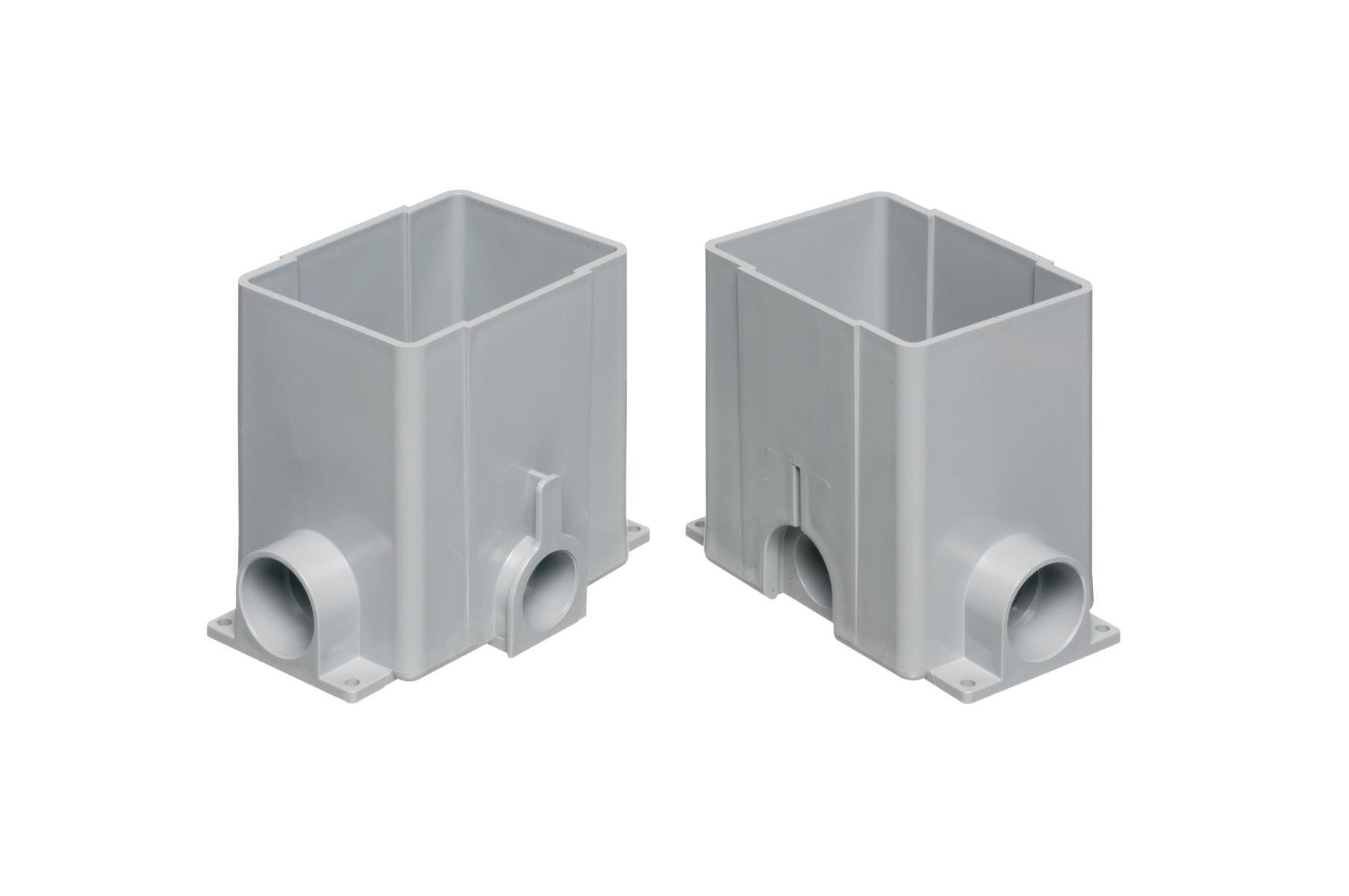
FOR NEW CONCRETE FLOORS
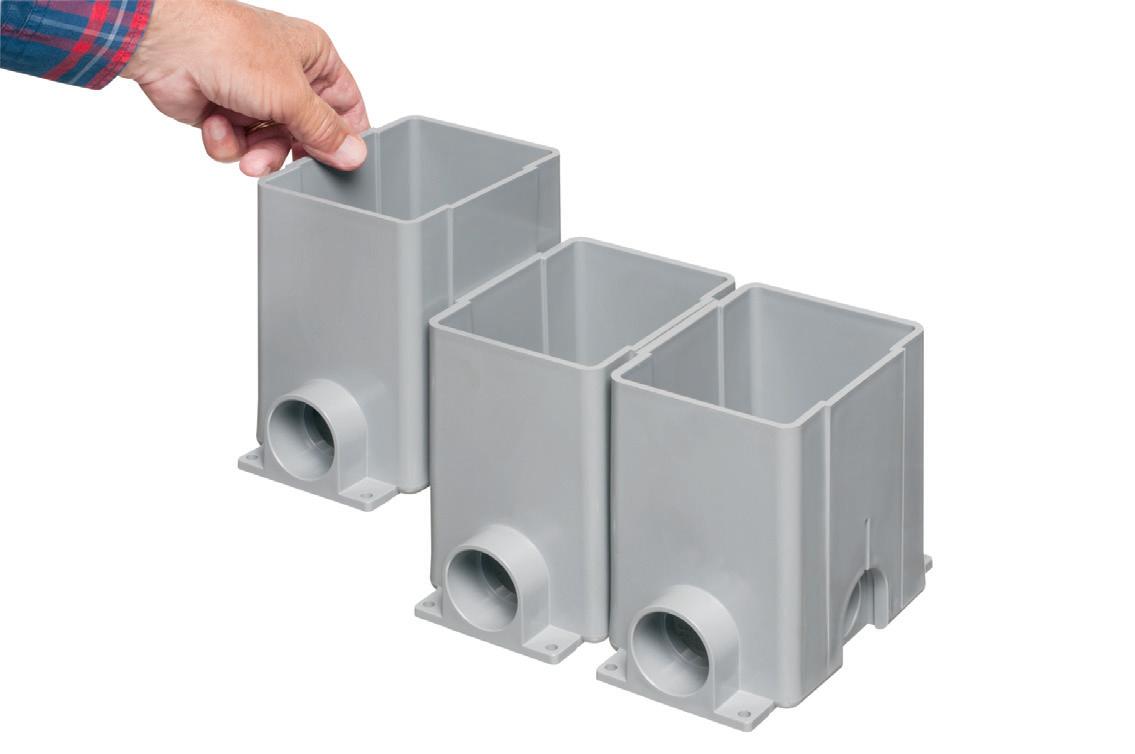
Side connections lock single gang FLBC8500 boxes together
Single gang box
(3) FLBC8500 boxes
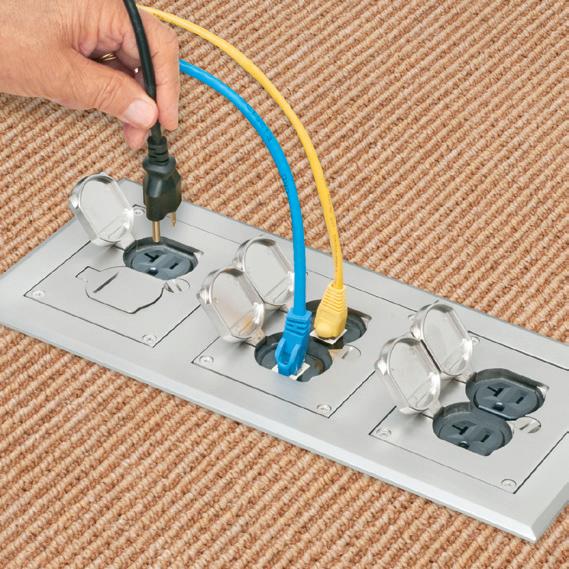
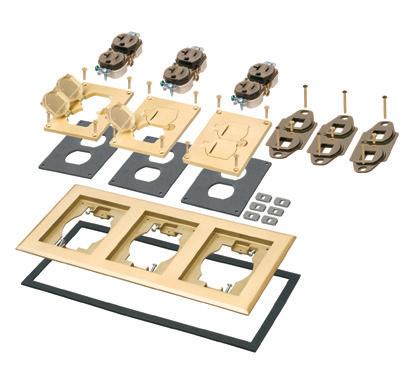
(1) FLBC8530BL Black PLASTIC cover/frame kit
Lock two boxes together for a two-gang box. Add another for three-gang!
Here’s the easy way to add receptacles in a commercial concrete pour. Lock single gangable boxes together to build a two- or three-gang floor box!
Then add the UL LISTED single, two- or three-gang Cover/Frame kit, with devices included.
• PLASTIC in Black, Brown, Gray, Light Almond, Caramel...
• DIECAST ZINC with a Brass or Nickel finish... Furniture feed inserts also available with brass or nickel finish
• PLATED, PLASTIC or POWDER-COATED with Flip Lids
Fast, easy cover installation. Installs with hinge on either side.
FLBC8500
SMART ENERGY
• Supporting the integration of solar energy and energy storage for improved resilience.
• Optimizing energy use, lowering electricity bills, and extending backup power duration during outages.
THE NEC CONTINUES TO SUPPORT SAFE LOAD MANAGEMENT
With the rise in adoption of intelligent load management technology, the 2023 National Electrical Code (NEC) introduced crucial updates to guide the safe and effective application of power control systems (PCSs) and energy management mystems (EMSs).
The addition of a new informational note in Sec. 705.13, Energy Management Systems, was a major milestone, marking the first time the NEC explicitly referenced PCS within the broader context of energy management. Although a standard was not available at the time, the NEC acknowledged that a PCS is a type of EMS that is capable of monitoring multiple power sources and controlling the current on busbars and conductors to prevent overload. This is a safety function and sets the stage for future editions of the Code to address the proper use of these systems.
In our opinion, one of the most critical aspects of this Code evolution is ensuring that the implementation and use of load management technology remains safe. The NEC has started to address this concern by requiring set points that ensure electrical systems stay within safe operational limits, even if communication systems or networks fail.
THE 2026 NEC AND THE FUTURE OF LOAD MANAGEMENT
The 2026 NEC cycle offers more refinement and clarity for load management applications. Some of the updates include:
• The introduction of a new Art. 130, with contents relocated from Art. 750, and the important addition of a new Part II titled Power Control Systems that governs the installation of a PCS.
• Refinements in PCS application for interconnected energy sources like solar and storage in Sec. 705.13. This update changed the section title from
Energy Management Systems to Power Control Systems to properly identify the type of EMS that can be used.
• New guidance for EV charging in Sec. 625.42(A), titled Power Control Systems, specifying when and how a PCS should be used to manage electrical loads safely.
• Addition of Art. 624, which focuses on self-propelled vehicle power transfer systems, and specifies when and how a PCS should be used to manage electrical loads safely.
As with any new technology, the proper application of intelligent load management is critical.
• Further clarification on optional standby systems in Sec. 702.4(A2), ensuring that a PCS integrates effectively into backup power configurations.
• Modification to Sec. 705.28(A), Power Source Output Maximum Current, recognizes that maximum current could be a PCS control setting.
As the industry moves toward broader adoption, it is imperative that electrical professionals, contractors, and inspectors stay informed and actively educate themselves on the latest NEC guidelines for safe application.
THE IMPACT OF LOAD MANAGEMENT ON HOME ENERGY INFRASTRUCTURE AND ELECTRIC UTILITIES
Electric utilities have used intelligent load management for demand-side response programs for years, using components like smart thermostats or advanced meters to remotely control customer loads to maintain grid stability. Now, the ability to integrate load management directly into home electrical systems is creating even more opportunities for demand response programs.
Here are some of the key impacts of electrical load management in the home:
• Improved grid resilience: Distributed load management can help balance local and regional energy demand, reducing the strain on infrastructure.
• Better energy management: Homeowners gain more control over their energy use, making it easier to manage bills and optimize onsite generation.
• A bi-directional ecosystem: A more interactive energy ecosystem could emerge, where homeowners and utilities work together to enhance grid reliability.
SUPPORT A SAFER FUTURE FOR ELECTRIFIED HOMES
As with any new technology, the proper application of intelligent load management is critical. Electrical professionals must understand how to size electrical systems based on load management capabilities, rather than simply relying on full-load calculations.
Key considerations include:
• Using properly calibrated set points to ensure safe and effective energy distribution.
• Understanding the implications of residential load management on electrical panel sizing and system design.
• Ensuring proper integration of multiple energy sources, including solar, battery storage, and EV charging.
• Leveraging energy storage as a buffer to prevent overloading and improve system resilience during outages.
The electrification of everything is at a tipping point for home energy systems. As home energy consumption continues to grow, intelligent load management will become a cornerstone of safe and efficient electrification. As the NEC evolves to reflect these advancements, staying informed and engaged is critical for all electrical professionals. By embracing intelligent load management and proactively adopting the latest NEC updates, we can ensure a safer, more affordable, and resilient energy future for electrified homes.
Rebecca Bitter is Product Line Manager — Home Energy Management at Eaton.
Tom Domitrovich is Director, Codes and Standards at Eaton.
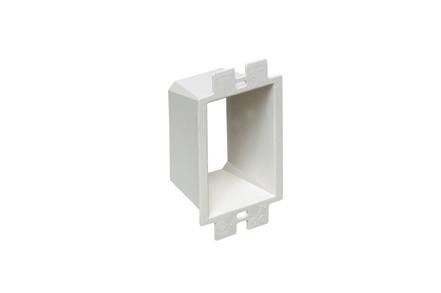
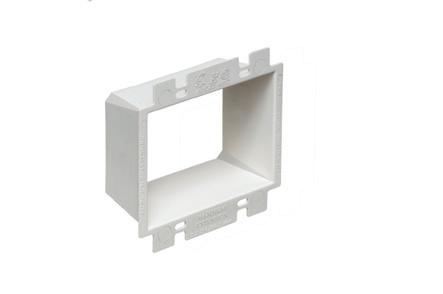
LISTED BOX EXTENDERS
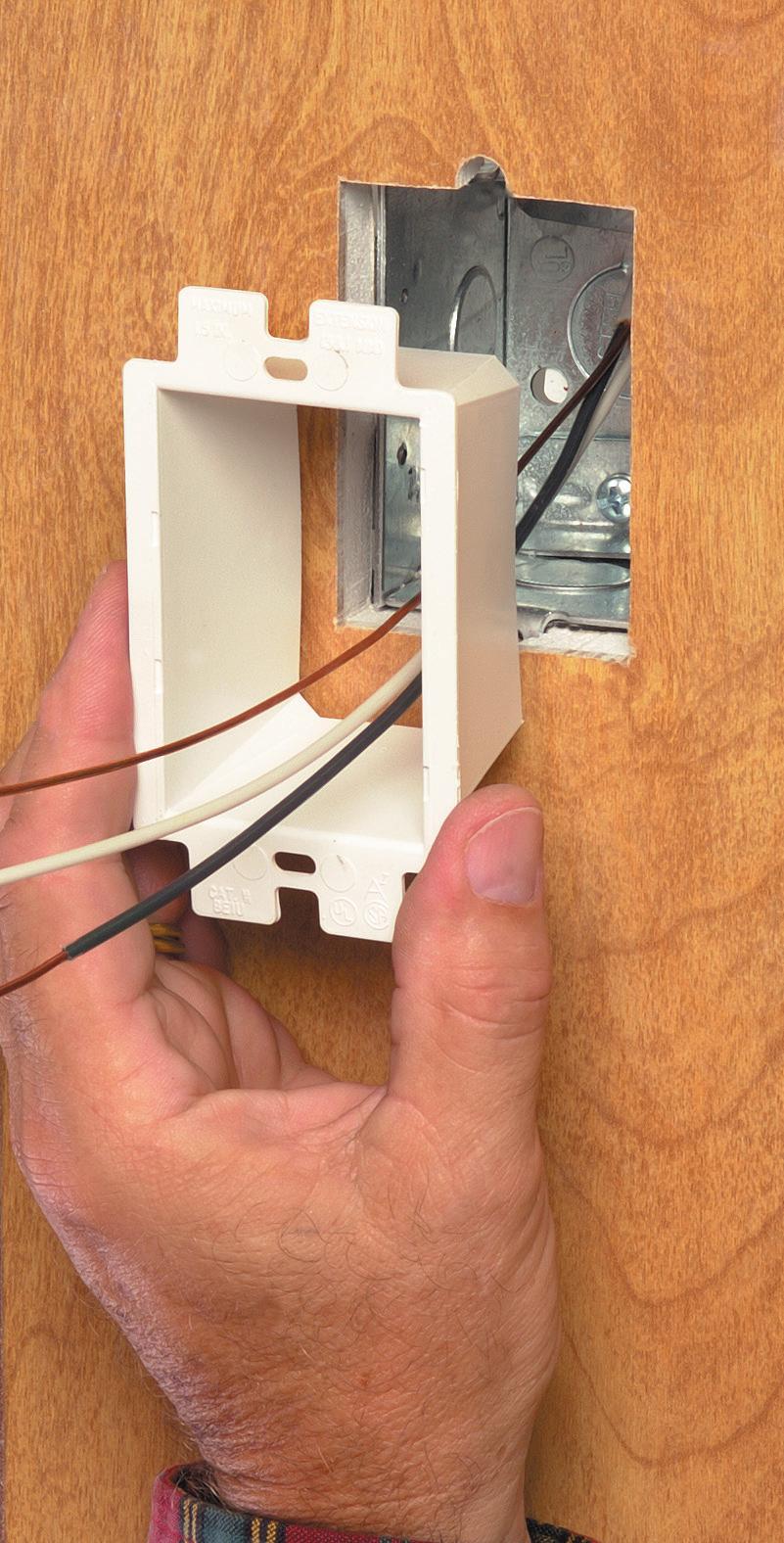
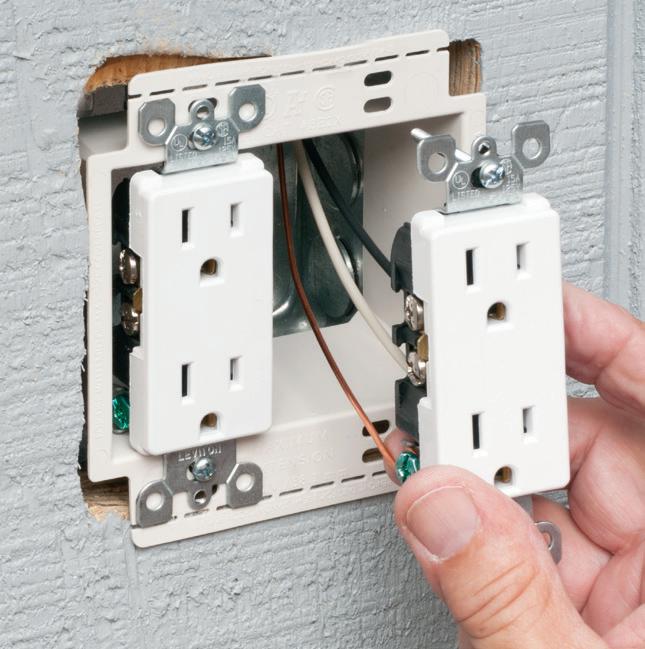
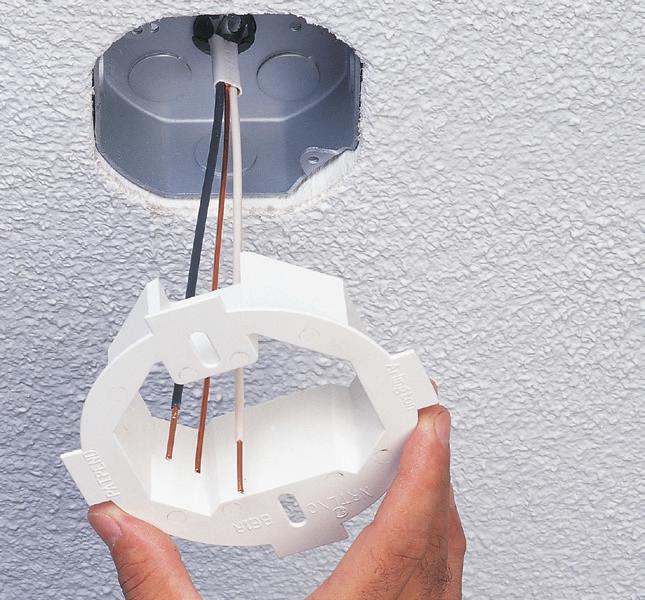
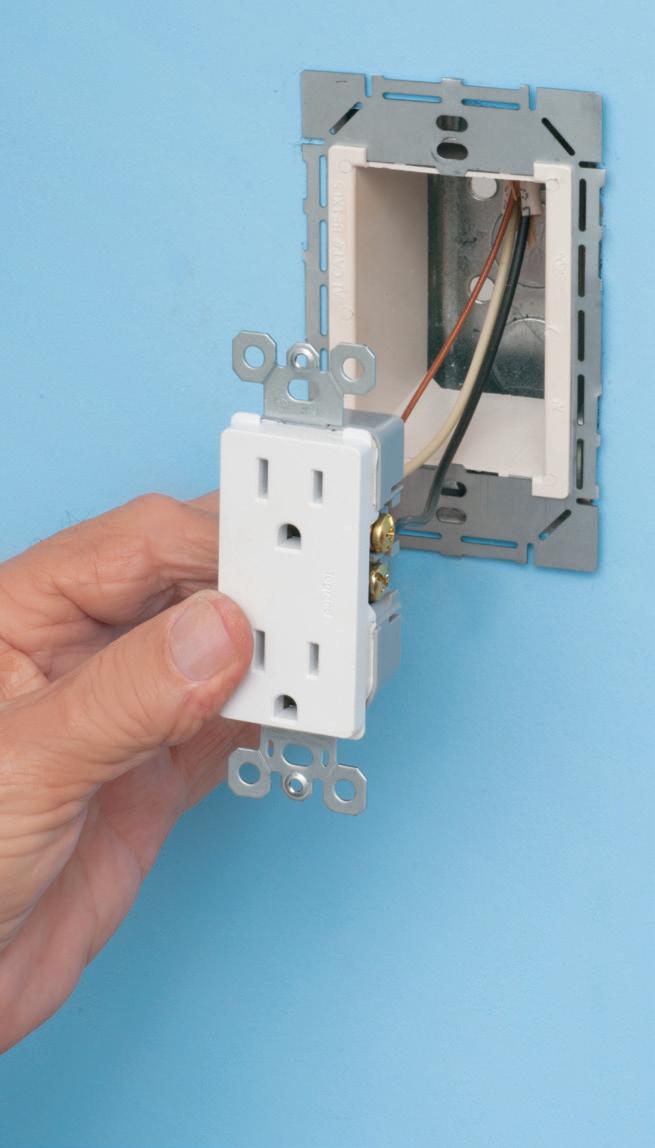
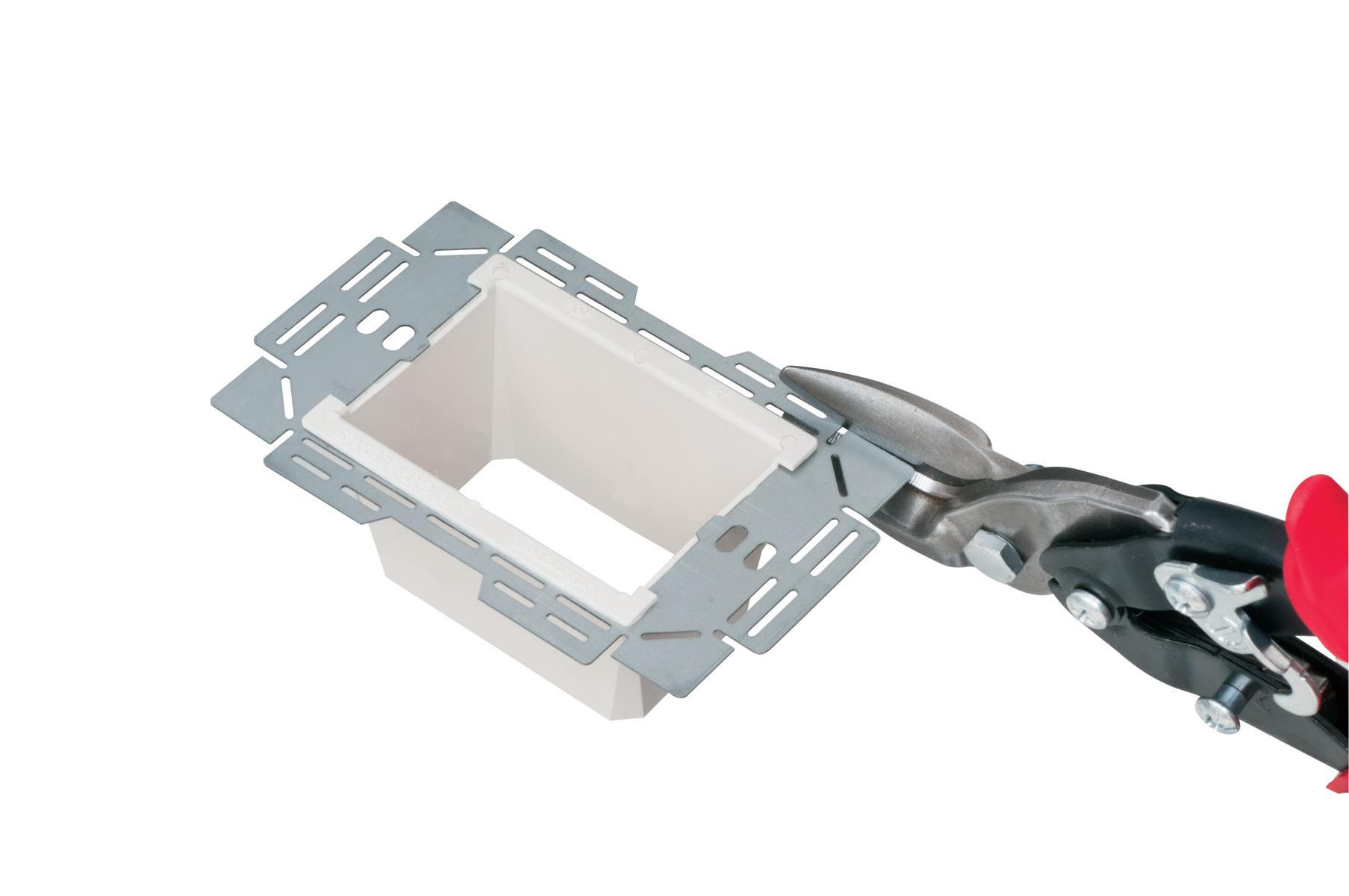
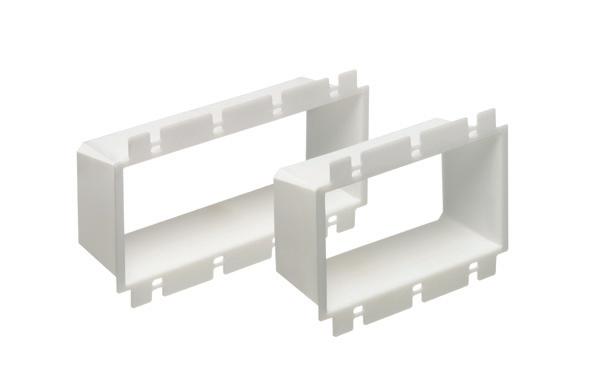
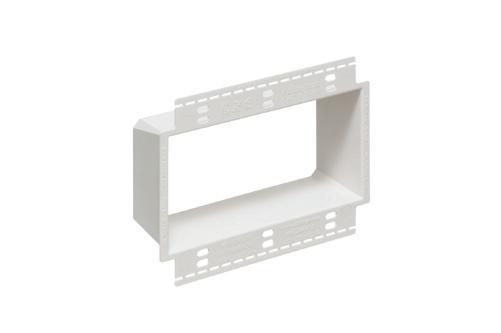
Arlington’s variety of cULus Listed Box Extenders extend set back electrical boxes up to 1-1/2".
Made of heavy-duty, 105°C continuous use 94V0 rated, flame retardant plastic, they level and support wiring devices, while protecting wires against damage and stripping.
Choose the one that’s right for you!
BE1, BE2, BE3, BE4...Single-, two-, three- and four-gang, and BE1R for round or octagonal boxes...
Box Extenders
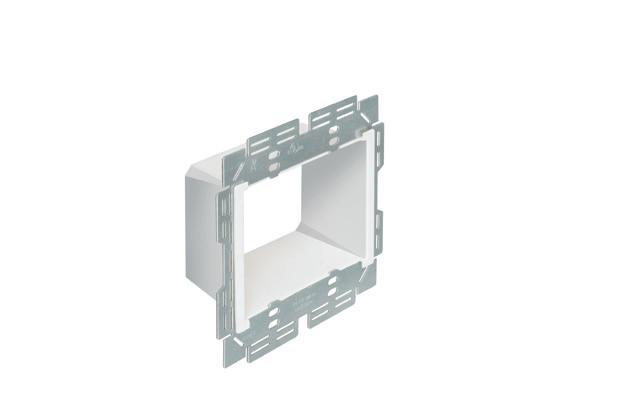
device support in oversized or mis-cut wall openings, available in single-, two-, three- and four-gang, (patented BE1X, BE2X, BE3X, BE4X.)
Our new heavy duty, COMMERCIAL-GRADE steel support plate! As shipped, single and two-gang BE1XLS and BE2XLS work with maxi cover plates, but they’re and standard plates. Convenient. Saves time. Great for poorly cut drywall.
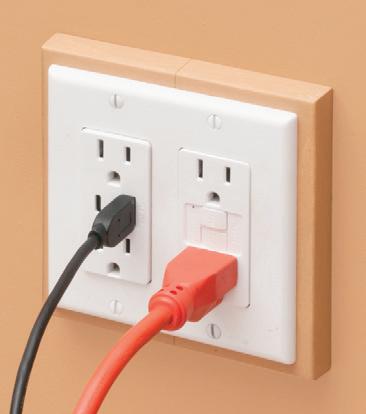
For all standard devices, switches and GFCIs, our box extenders comply with NEC Article 314.20 for set back boxes.
2026 Construction Forecast
Aside from data centers, don’t expect to see double-digit growth in 2026. But some key markets should produce steady work for electrical professionals, including office retrofits, hospitals, K-12 schools, and universities.
By Jim Lucy, Editor-in-Chief, Electrical Wholesaling
Providing a forecast for the 2026 electrical construction market is a bit trickier than usual because it’s hard to predict exactly where six key market drivers — product pricing, tariffs, electrical contractor employment trends (Table 1 on page 36), federal immigration policy, construction spending, and megaprojects — will be trending next year.
Electrical product prices are reasonably tolerable right now. But lingering uncertainties remain over which products will be affected by higher tariff rates; product areas are still seeing doubledigit year-over-year (YOY) increases. According to the latest Electrical Price Index published monthly by Electrical Marketing newsletter at www.electricalmarketing.com, prices for building wire (+10.2%), switchgear (+11.9%), and fuses (+10.5%) are up double digits yearover-year through August 2025 (Table 2 on page 38).
National electrical contractor employment appears to be at historically high levels of more than one million workers, but the most recent data available at press time goes back to July — and those numbers showed some softening. It’s tough to get an up-to-date
snapshot of contractor employment trends because no federal data has been available from the U.S. Census Bureau, which collects employment data as well as data on building permits (Table 3 page 40), housing starts, and construc tion spending.
Economists also believe the Trump Administration’s immigration policy is tightening the flow of foreign-born workers into the construction indus try because they fear job-site ICE raids and deportation. A recent survey by the Associated General Contractors (AGC), Arlington, Va., said the con struction industry has been impacted by stepped-up immigration enforcement. “Twenty-eight percent of respondents report being affected directly or indi rectly by immigration enforcement activities during the past six months,” noted the press release. “Specifically, 5% report a job site or off site was visited by immigration agents. Ten percent say workers left or failed to appear because of actual or rumored immigration actions. And 20% report subcontractors lost workers.”
The impacts of immigration enforcement varied considerably by state, according to AGC survey results. “Contractors in Georgia, Virginia, Alabama,
Nebraska, and South Carolina were more likely to be impacted, ranging from 75% of firms in Georgia to 36% in South Carolina. Conversely, only 8% of firms in Idaho and 9% in Alaska reported being impacted by immigration enforcement activities during the past six months.”
A TALE OF TWO MARKETS
One economic trend is clear in the electrical construction market: If your company is fortunate enough to be working on data centers (or is located in one of the Sunbelt markets that seem to have perpetually sunny business climates),
you are probably feeling pretty darn good about your 2026 business prospects. On the flip side, if acres of data centers aren’t being built in your local market — or if the local economy is bumping along at a slow or no-growth rate because there isn’t much new nonresidential or residential
business in the pipeline — the future might not look quite so bright.
Right now, only the most pessimistic economists are calling for an outright recession in the United States, but many, if not most, will bend your ear about the “K-shaped economy,” where some
50 Fastest-Growing Markets for Electrical Contractor Employment
50
Source: Employment data is a three-month average for June-August 2025 from the U.S. Bureau of Labor Statistics (BLS). BLS data for construction employment and Electrical Wholesaling estimates for local electrical contractor employment based on historical trends. Electrical contractor employment typically accounts for 13% of total construction employment on a national basis. This percentage may vary by local market. Electrical contractor employment estimates for all 50 states and more than 300 MSAs are available as part of a $99 annual subscription to Electrical Marketing newsletter at www.electricalmarketing.com
Table 1. The New York metropolitan area, Southern California, and Atlanta all saw year-over-year electrical contractor employment gains topping 5,000 workers.
SNAP2IT® CONNECTORS
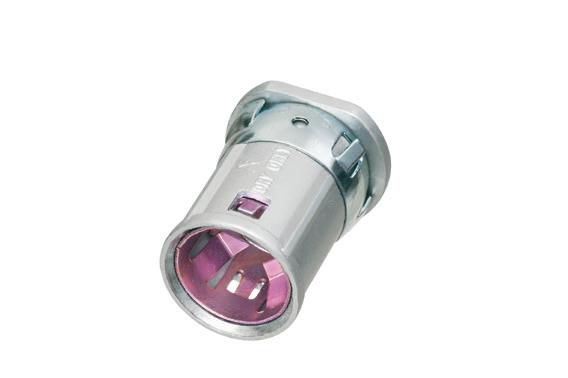
Arlington’s new one-piece RETROFIT SNAP2IT® fittings are easy to use in an OLD WORK installation, and handle the widest variety of cables! They’re ideal for adding additional circuits to a load center. And you get the same labor-savings in a retrofit installation!
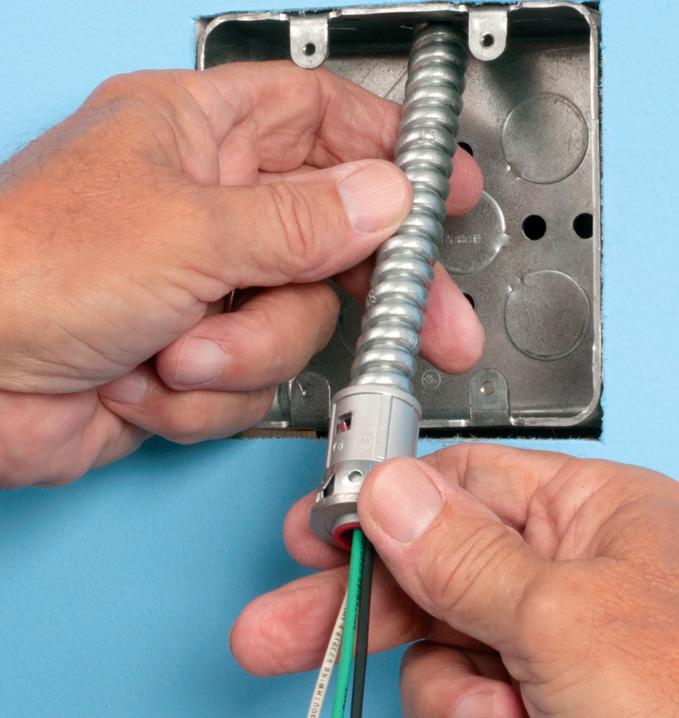
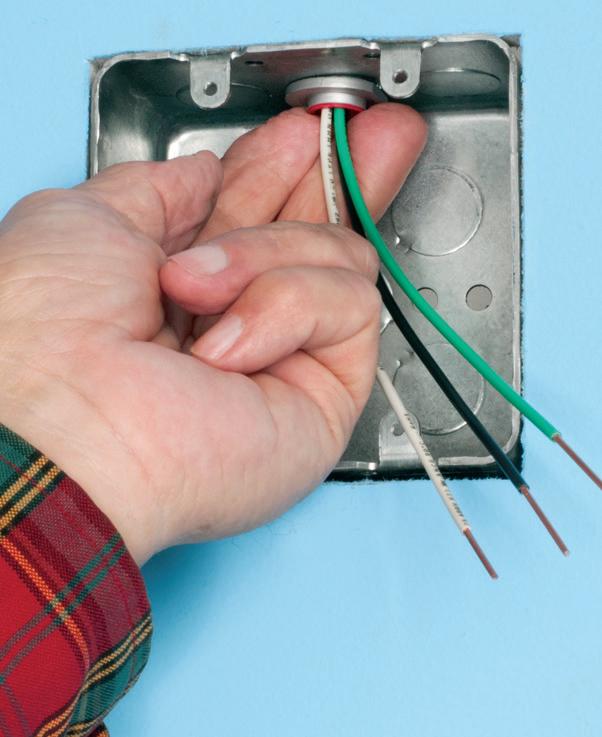
Easy snap-in installation - NO TOOLS. Install connector into the knockout in an existing box, pulling cable/conduit through the knockout. Slip the fitting onto the cable, then snap the assembly into the box. That’s it... a secure installation with no pullout
Widest total cable ranges 14/2 to 10/3
Widest variety of cables AC, MC, HCF, MC continuous corrugated aluminum cable, MCI-A cables (steel and aluminum), AC90,
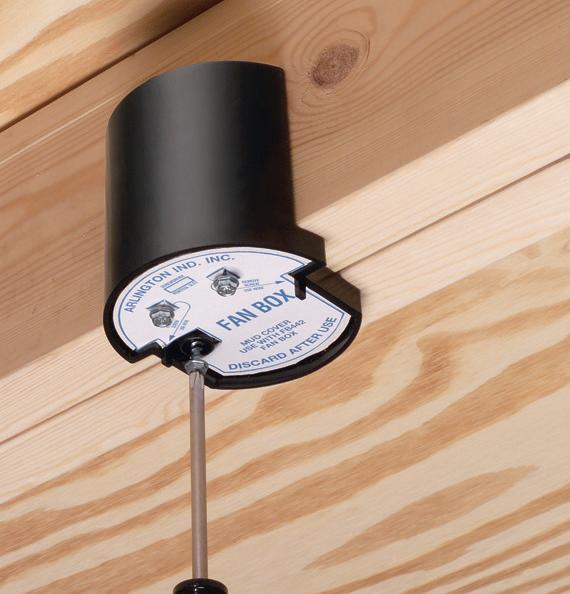
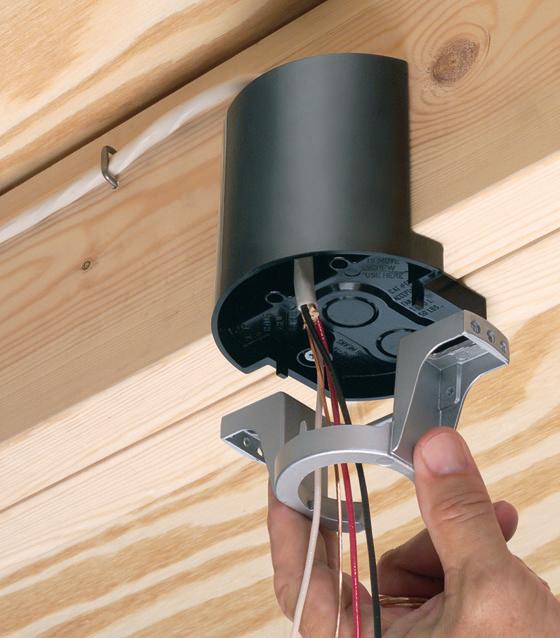
BOX
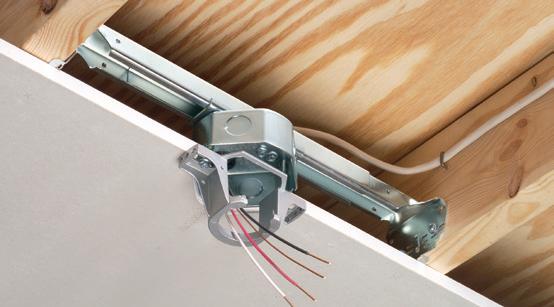
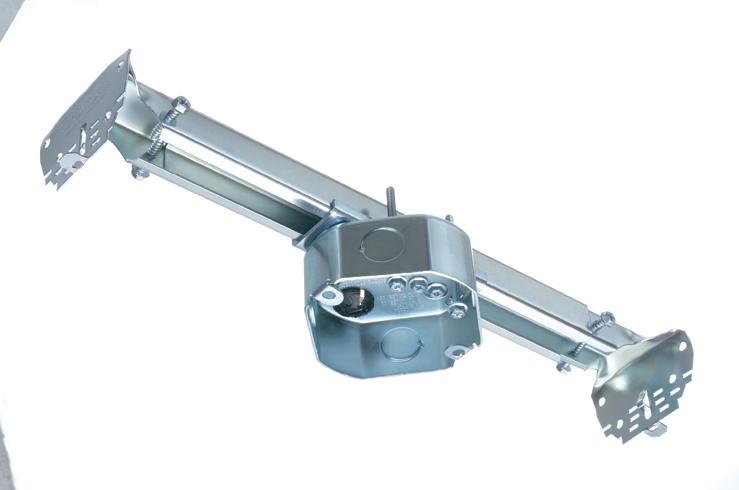
Arlington’s heavy-duty, plated steel fan/ fixture box has an adjustable bracket that mounts securely between joists spaced 16" to 24" o.c.
Flush ceiling installations
FBRS415 is designed for ceilings up to 1-1/4" thick. For 1/2" ceilings, use the pre-bent positioning tab. For other ceiling thicknesses, bend along the appropriate score line. • 15.6 cu. inch
2026 Construction Forecast
Electrical Marketing’s Electrical Price Index
Electrical Marketing’s monthly Electrical Price Index (EPI) is compiled by S&P Global and is available as part of a subscription to Electrical Marketing newsletter (www.electricalmarketing.com) for just $99 per year. To subscribe, visit https://endeavor.dragonforms.com/loading. do?omedasite=PEN6149_JEpaid99&pk=NN0XXX
Table. 2. Electrical product prices are reasonably tolerable right now, although according to the latest Electrical Price Index published monthly by Electrical Marketing newsletter at www.electricalmarketing.com, prices for building wire (+10.2% YOY); switchgear (+11.9%); and fuses (+10.5%) are up double digits through August 2025.
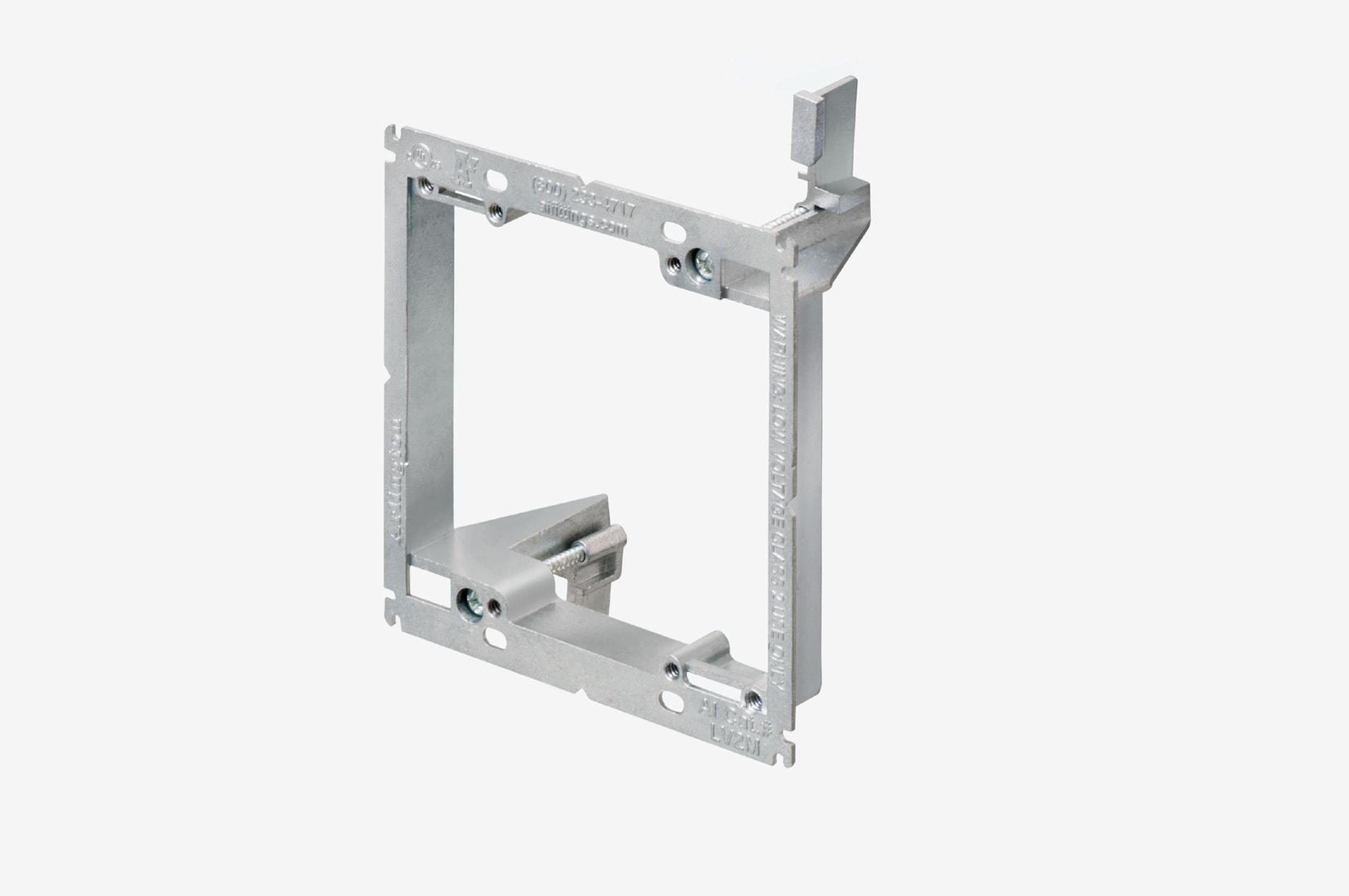
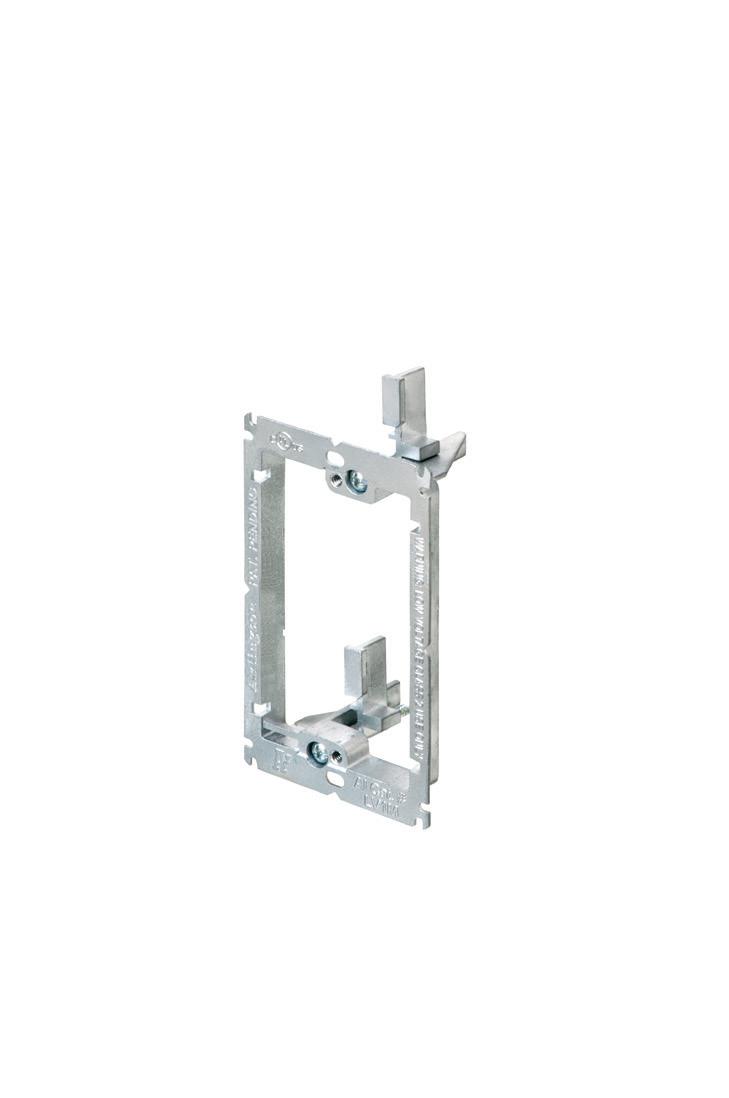
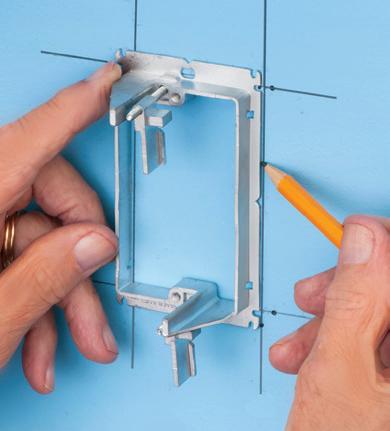
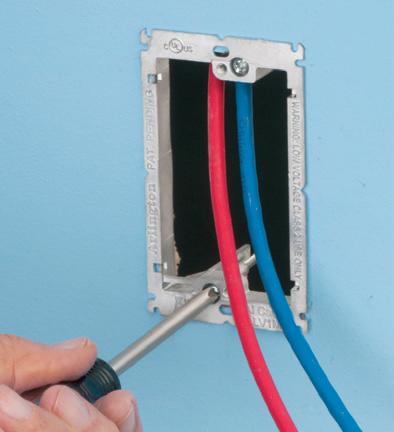
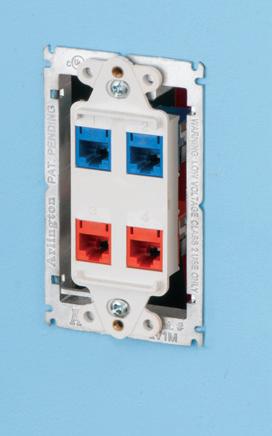
Arlington’s Low Voltage Mounting Brackets are the solution for fast and easy cut-in installation and mounting of Class 2 communications, computer and cable TV wiring and connections.
Introducing METAL low voltage mounting brackets for EXISTING or RETROFIT construction...
LV1M and LV2M COMMERCIAL GRADE
• Extra rigidity and stability where performance and visibility are important or critical
• Threaded holes for easy, fast device installation
• Adjustable bracket for 1/4" to 1" wall board thicknesses
Our LV1S and LV2S PLATED STEEL bracket design, provide excellent stability and secure installation of low voltage devices in 1/4" to 1-1/4" walls - without an electrical box.
2026 Construction Forecast
50 Largest Local
Markets for Single-Family Building Permits (Year-to-Date through July 2025)
Source: U.S. Census Bureau building permit data
Table 3. As has been the case over the past few years, a big percentage of single-family building permits are pulled in a relatively small number of Metropolitan Statistical Areas (MSAs). The Top 50 markets in this table accounted for roughly 34% of the 875,000 single-family U.S. permits in July 2025, and the 10 largest markets accounted for roughly 16%.
2026 Construction Forecast
segments of the overall economy are doing very well while other sectors are struggling to grow.
The electrical construction industry is a good example of the K-shaped economy in action. Riding the upper growth arm of the “K” is the data center market (growing annually at a high double-digit growth rate). Hanging onto the lower leg of the “K” with little or no growth are many other key construction market segments, such as residential and office construction and much of the industrial market (outside of semiconductor plants).
These “bifurcated” market conditions are likely to last through most of 2026, although the federal tax cuts that take effect next year (and any further cuts in interest rates) should juice up capital spending on new construction and renovation projects and make residential mortgages more palatable for many homebuyers, stimulating home construction.
IMPACT OF MEGAPROJECTS
In ConstructConnect’s Construction Economy Outlook Fall Webcast held on November 13, Chief Economist Michael Guckes said the impact of megaprojects of $1 billion or more in total contract value cannot be underestimated — and that these jobs account for much of the
growth in the nonresidential construction market.
Not surprisingly, many of these megaprojects are data centers. In the past, only the largest data centers topped $1 billion in total contract value. However, over the past year or two, the size of these jobs has increased dramatically. For example, the contract value for the proposed La Osa data center project in Eloy, Ariz., tops $30 billion, and 10 other data center projects of over $10 billion in total contract value were either in the proposal or design stage or broke ground from July 2025 through October 2025. Of the 34 megaprojects EC&M’s editors found topping $1 billion in contract value during this time period,13 were data centers (accounting for roughly 60% of their combined contract value), as shown in Table 4 on pages 44 and 46.
DOMINANCE OF DATA CENTERS
Distributor, independent rep, and manufacturer respondents to the quarterly survey published by Electrical Wholesaling and Vertical Research Partners (VRP), Stamford, Conn., an equity research firm, believe data center construction will continue at its rapid pace into the new year. “Data centers remain the primary driver of activity, with hyperscale
demand notably robust and no signs of a slowdown,” said Nick Lipinski a VRP equity analyst and vice president. “Outside of data centers, the industrial and construction demand environment remains relatively subdued.”
Lipinski also said the distributors, manufacturers, and independent manufacturers’ reps who responded to the survey reported a wide range of results “with the extremes ranging from strong double-digits on the upside to significant double-digit declines on the downside.” He also noted: “There was some degree of deceleration in September, mirroring the slowdown suggested in chemical and transportation markets. However, this was not widespread and did not seem overly concerning to respondents in terms of influencing the forward outlook. It appears to have been more of a modest sequential step down after robust activity over the summer. The general view is that trends in Q3 will continue through year end, and 2026 should see incremental improvement.”
Lipinski also said there were clear regional and industry sector divergences in the respondent commentary in Q3, and that survey respondents large enough to participate in the data center end market are seeing a continued robust
Photo 1. While it’s tough to find many super-large office projects in the pipeline, the $2-billion BXP’s 343 Madison Ave 930,000-sq-ft office tower is underway. Being built by Turner Construction, the Midtown Manhattan project will be 46 stories tall and is targeting LEED Platinum certification from the U.S. Green Building Council.
Photo courtesy of Turner Construction
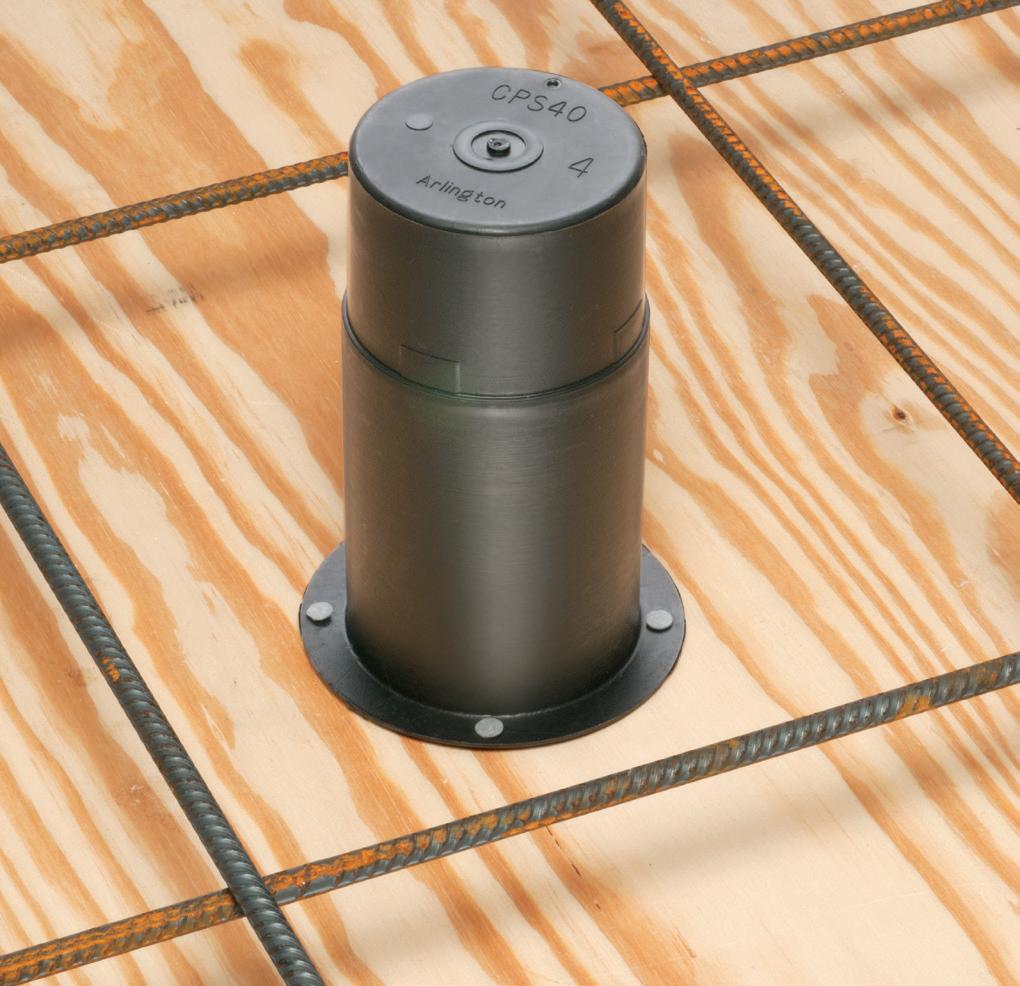
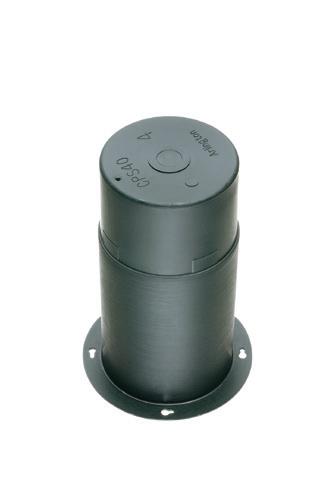
CONCRETE PIPE SLEEVE
Arlington’s Concrete Pipe Sleeves are the economical way to sleeve through concrete pours in tilt-up construction WALLS – and FLOORS allowing cable and conduit to run easily from one floor to the next.
No costly core drilling – No cutting holes in the form. Plus, you can position the hole prior to pouring the concrete.
• Attaches to form with nails or screws
• Stackable up to 23" h for extra deep pours
• Vents keep wet pipe sleeves from sticking together
• Multiple hole sizes: 1-1/2"
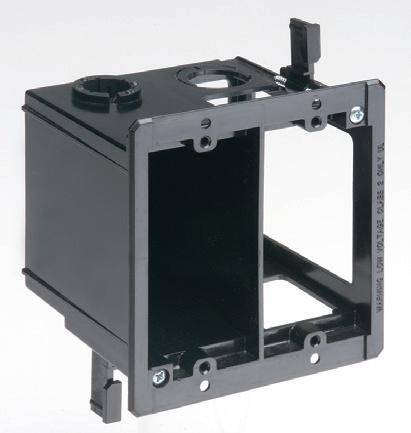
This convenient combo box has power and low voltage openings in the same box for a neat, time-saving installation.
The box adjusts to fit wall thicknesses from 1/4" to 1-1/2". Mounting wing screws hold it securely in place.
• 2-Hour Fire Rating
• Low voltage side has a combo 1/2" and 3/4" KO for raceway
• Includes NM cable connector (power side)
CPS40
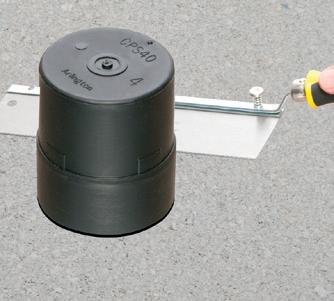
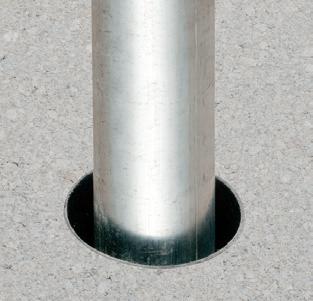
After concrete sets, cut sleeve flush with surface. Insert conduit into sleeve.
Nail sleeve to form.
2026 Construction Forecast
Construction Projects in the News During 3Q 2025
Table 3. Although data centers continue to dominate the construction
projects have broken ground over the past few months.
and
MC CABLE FITTINGS
ONE FITTING FITS MULTIPLE CABLE/CONDUIT TYPES & SIZES
* Aluminum & Steel Flexible Metal Conduits
ONE trade size fits SEVERAL cable types and sizes, plus flexible metal conduit for super convenience and cost-savings! Reduces inventory and material handling too.
Construction Projects in the News During 3Q 2025 (Continued)
2026 Construction Forecast
American Institute of Architects Consensus Construction Forecast
Fig. 1. The panel of 10 construction economists who contributed to the American Institute of Architects’ 2026 Consensus Construction Forecast see 2% growth for the 2026 nonresidential construction market.
demand environment that seemed to accelerate in the quarter.
“The data center market in the United States has grown to the point of parity with office construction in dollar value,” he said. “Further, the electrical intensity in a data center is much higher than for an office building or any other nonresidential application. This is contributing to the bifurcation of results with data center strength more concentrated in larger distributors versus general construction activity, which is more relevant for a broader swath of players.”
He added that outside of data centers, the general industrial and construction landscape is relatively subdued, although there were pockets of strength in the food and beverage sector.
Examples of data centers’ domination of the construction market were easy to find. For instance, in the September 2025 Dodge Momentum Index (DMI), published monthly by Dodge Construction Network, Sarah Martin, Dodge’s associate director of forecasting, said that in September, without data centers, commercial planning would have only increased 0.5% for the month. The DMI is a monthly measure based on the threemonth moving value of nonresidential building projects going into planning, shown to lead construction spending for
nonresidential buildings by a full year to 18 months.
“Planning momentum remained steadfast for data centers, health care, and public buildings throughout September and will correlate to stronger construction spending in early 2027,” said Martin in the press release. “After a prolonged period of uncertainty, owners and developers are advancing projects into planning, but activity is expected to normalize in future months.”
A recently published research report on data centers, “Data Centers Lead the Way,” also pointed to the huge impact data centers are having on the electrical construction industry. Author Kevin Coleman said electrical products and systems account for 40% or more of the total construction spend in data centers. Published by Channel Marketing Group, Raleigh, N.C., and DISC Corp, Houston, the report also said that from March 2024 through the third quarter of 2025, data center investments accounted for more than 70% of the increase in private nonresidential construction spending in the United States.
“The numbers are staggering,” wrote Coleman. “At the current pace, 2025 data center construction starts will hit $46 billion — a 55% YOY growth rate. And this isn’t a temporary spike. McKinsey
estimates that by 2030, data centers will require $6.7 trillion of investment worldwide to keep pace with demand.”
Kermit Baker, the chief economist for the American Institute of Architects (AIA), Washington, D.C., and author of one of the best construction forecasts available (Consensus Construction Forecast), said growth in the level of spending on data centers is unprecedented and expected to continue at an elevated pace. “After increasing by more than 50% in 2024, spending is expected to grow by another 33% in 2025 and by an additional 20% in 2026,” he said in the AIA forecast, which was published in July. “However, even in this sector, there are growing concerns that electrical equipment shortages, power requirements, and community opposition may slow the pace of growth.”
SLOW GROWTH AHEAD FOR NONRESIDENTIAL MARKET
In his July update to AIA’s Consensus Construction Forecast for 2025-2026, Baker says there’s both good and bad news about nonresidential construction spending on buildings. “First, the good news,” he said. “In spite of stubbornly high long-term interest rates, inflation rates stalled above the Federal Reserve Board’s target, falling consumer
Construction Forecast by Leading Construction Economists — Percent Change for 2025 and 2026
Advisers
Piedmont Crescent Capital
Fig. 2. Six of the 10 construction economists who participated in this forecast are expecting declines in industrial construction in 2026. S&P Global Market Intelligence was the most pessimistic with its forecast for a 2.9% decline, while economists from Wells Fargo and Piedmont Crescent Capital were the most bullish with forecasts topping 5%.
NAHB Housing Forecast 2022-2026 (Thousands of Units)
Source: National Association of Home Builders (NAHB)
Fig. 3. The National Association of Home Builders (NAHB), Washington, DC, is starting to see some signs of growth in the single-family residential market and is forecasting single-family starts to increase +0.6% to 950,000.
confidence scores, disappointing levels of home building activity, rising tariff rates for many inputs to construction, and construction labor shortages exacerbated by restrictive immigration policies, the outlook for the remainder of the year and into 2026 is largely unchanged from where it was at in the beginning of the year.”
What’s the bad news? “The outlook for spending entering the year was very pessimistic. The consensus is that overall spending on nonresidential buildings not adjusted for inflation will increase only 1.7% this year and grow very modestly to just 2% next year (Fig. 1 on page 48). The commercial sector outlook is about on par with the broader industry, with a projected 1.5% increase this year rising to 3.9% in 2026. Spending
on the construction of manufacturing facilities — the industry’s bright spot in recent years — is expected to decline 2% this year with an additional decline of 2.6% next year. Institutional facilities are expected to be the strongest sector with projected gains of 6.1% this year and another 3.8% in 2026.”
BLUE-CHIP OFFICE SPACE IN DEMAND, BUT EXPECT ANOTHER TOUGH YEAR FOR OFFICE CONSTRUCTION
Baker also said in AIA’s Consensus Construction Forecasts that remote work has contributed to a historically high national office vacancy rate of near 20%. Although office retrofits in existing facilities have increased, he maintains the spending in this construction segment isn’t high
enough to offset the decline in spending on new offices. In some cities, the conversion of offices or hotels to apartments is providing a welcome boost to office construction, as is the case in New York City..
While office vacancy rates have been at historically high levels in many metropolitan markets, the Chicago-based JLL real estate advisory firm said in its Office Market Dynamics report that vacancy rates were beginning to decline in Q3 2025. According to the report, “After a prolonged runup that had seen overall vacancy rates nearly double nationally since 2019, office vacancy rates have begun to decline for the first time since early 2019 with vacancy falling five basis points to 22.5% at the end of Q3.” The report went on to say: “Markets in the Sunbelt that have been the beneficiaries of corporate relocations in the past decade, most notably Texas, Florida, North Carolina, Nashville, and Atlanta. These markets have experienced positive net absorption year-to-date and only generated marginal occupancy losses in 2024.”
In its Office Q3 2025 Market Beat report, Cushman & Wakefield, Chicago, said while the demand for top-tier Class A office space is recovering, the construction pipeline has been declining precipitously since its 2020 peak. “Deliveries and starts are hitting lows not seen
in the past decade. In Q3 2025, 7.1 million sq ft (msf) of new office space opened, a total that is 30% below the quarterly average since the beginning of 2020. Just 13.4 msf of office space has been delivered year-to-date (YTD), which is a decrease of 50% from a year ago and represents the lowest first three quarters of a year since 2012,” the report said.
The Cushman & Wakefield report projected a national office vacancy rate of 20.7%, with quite a few large market suffering from office vacancy rates of 25% or greater, including Atlanta (25.4%); Austin, Texas (29.4%); Dallas (25.8%); Denver (26%); Los Angeles’ central business district (31%); Minneapolis-St. Paul (28.3%); Manhattan, N.Y.’s Midtown South area (25.6%); Phoenix (27.1%); San Francisco (34%); and Seattle. (29.6%). Some small- and mediumsized markets were seeing much lower vacancy rates for the quarter, according to the report: Charleston, S.C. (7.3%); Colorado Springs, Colo. (9.8%); Fort Myers/Naples, Fla. (4.1%); the Inland Empire region of Southern California (8.8%); and Reno, Nev. (9.5%).
While it’s tough to find many superlarge office projects in the pipeline, the BXP’s $2-billion 343 Madison Ave 930,000-sq-ft office tower in Midtown Manhattan is now underway (Photo 1 on page 42). Being built by Turner Construction, the project will be 46 stories tall and is targeting LEED Platinum certification
from the U.S. Green Building Council. Interestingly, JP Morgan’s new 60-story headquarters building — a project with an estimated total construction cost of $3 billion that opened earlier this year — is about four blocks away. That building is one of the tallest offices built in the country over the past few years.
SLOWDOWN EXPECTED IN INDUSTRIAL SPENDING
Few economists are expecting big growth in the 2026 industrial market. AIA’s Consensus Construction Forecast is calling for a 2.6% decline next year after a 2025 decline of 2%. Six of the 10 construction economists who participate in this forecast are expecting declines in industrial construction in 2026. S&P Global Market Intelligence was the most pessimistic with its forecast for a 15% decline, while economists from Wells Fargo and Piedmont Crescent Capital were the most bullish with forecasts topping 5% (Fig. 2 on page 49)
Over the past year, at least four industrial projects valued at $1 billion or more entered the construction pipeline. The $10-billion Micron Technology White Pine Commerce Center in Clay, N.Y., (recently put on hold) and the $12-billion Formosa Plastics Sunshine Project in Saint James, La., are in the planning stage. The $7-billion Amkor semiconductor plant in Tempe, Ariz., and the $1-billion Johnson & Johnson Biologics
Manufacturing Facility, in Wilson, N.C., are also now underway.
RESIDENTIAL MARKET MAY START TO PICK UP
The National Association of Home Builders (NAHB), Washington, D.C., is starting to see some signs of growth in the single-family residential market and is forecasting single-family starts to increase 0.6% to 950,000 (Fig. 3). However, it sees multi-family starts declining 3.4% to 396,000.
NAHB pointed to other signs of growth in a recent press release, reporting that future sales expectations surpassed the 50-point breakeven mark in the NAHB/Wells Fargo Housing Market Index (HMI) for the first time since last January, and builder confidence in the market for newly built single-family homes was 37 points in October — up five points from September and the highest reading since April.
“The HMI gain in October is a positive signal for 2026 as our forecast is for singlefamily housing starts to gain ground next year,” said NAHB Chief Economist Robert Dietz in a press release. “The 30-year fixed-rate mortgage fell from just above 6.5% at the start of September to 6.3% in early October. Combined with anticipated further easing by the Fed, builders expect a slightly improving sales environment — albeit one in which persistent supply-side cost factors remain a challenge.”
Photo 2. The $3-billion renovation of Newark Airport’s AirTrain was one of the largest construction projects to hit the construction pipeline in September 2025.
In ConstructConnect’s Construction Economy Outlook Fall Webcast on November 13, AIA’s Baker said that, according to a recent survey by the TurboHome ResiClub Housing Sentiment Survey conducted in July, if rates for a 30-year fixed mortgage dropped to 5.5%, 66% of U.S. households would consider that an acceptable rate for the purchase of a home.
OTHER MARKETS TO WATCH
Judging from the number of projects valued at more than $100 million now in the construction pipeline, the mass transit, hospital and school and university construction market segments seem like they should offer solid growth prospects next year.
Mass transit. Over the past decade, billions of dollars in new and retrofit construction has transformed many of the nation’s airports. Two airport projects in the pipeline are the $700-million Memphis International Airport now underway and the $575-million Cincinnati-Northern Kentucky airport in the planning stage in Erlanger, Ky. Another big airport-related job is the $3-billion renovation of Newark Airport’s AirTrain that broke ground in September 2025 (Photo 2 on page 50). Hospitals. AIA’s Consensus Construction Forecast anticipates 4.3% growth in its health segment, even with anticipated growth in 2025. Over the past two years, the largest hospital projects
making news included the $3-billion Cooper University Health Care hospital expansion in Camden, N.J., which entered the planning stage in February 2025 (Photo 3); the $1.5-billion Lyndon B. Johnson Hospital replacement in Houston, which began construction in May 2024; and the $1-billion Intermountain Health St. Vincent Regional Hospital in Billings, Mont., which announced plans in November 2024. EC&M editors found at least 27 hospital projects valued at $200 million or more in the pipeline.
Schools and universities. AIA’s Consensus Construction Forecast anticipates 3.2% growth in its health segment, down from 2025’s 5% growth. While facility construction projects at K-12 schools and universities often aren’t as large as the megaprojects in other areas of the nonresidential construction market, there are numerous projects in this niche valued at more than $100 million now in the planning or construction process. EC&M’s editors found 26 projects of this size in the pipeline over the past two years. The largest were the $842-million University of California at San Francisco academic building, which broke ground in September 2024; the $493-million Revere High School project in Revere, Mass., which entered the planning stage in April 2025; the $465-million dormitory at the University of California campus in Berkeley, Calif. (announced
in November 2024); and the $420 million Phillip A. Levy Engineering Center at the University of Wisconsin in Madison, Wis., now underway.
FINAL THOUGHTS
Although we may see a softer construction market in 2026 still dominated by data centers, there still appears to be a healthy flow of small and midsized projects valued at $100 million to $250 million entering the pipeline. When you consider that electrical work accounts for no less than 10% of the typical construction project, there will still be good money to be made next year for electrical contractors and other electrical professionals in select construction niches.
Retrofit work in existing commercial buildings should provide some solid business opportunities, and the news from the lighting market is that the first generation of LED lighting systems that were installed a decade or more ago are aging and will need to be replaced over the next few years with the latest LED and control technology.
Business conditions in the electrical construction industry typically vary widely by local geographic market and individual construction niche. However, on a national basis, it seems like growth in the low single digits for the U.S. electrical construction market is a pretty safe if unspectacular bet.
Photo 3. While only the biggest hospital projects achieve megaproject status, there’s a ton of hospital construction in the pipeline right now. One of the largest is the $3-billion Cooper University Health Care facility expansion in Camden, N.J.
Navigating the Disruptive Construction Supply Chain
Three critical strategies electrical contractors can use to manage pricing volatility, secure materials, and optimize labor
By Sean Grasby, Wesco Energy Solutions
The construction industry continues to face headwinds, as pricing volatility has become the most recent disruption to ensuring contractors can execute projects on time and on budget.
The fluctuating price of steel, aluminum, and copper, for example, have dramatically impacted project budgets, timelines, and material procurement strategies, causing contractors to get creative. Meanwhile, legacy supply chain issues persist while labor resources are scarce, compounding the pressure contractors are under to work
quickly and efficiently, as the demand for complex capital projects skyrockets. In this landscape, there are several ways to help mitigate risks in a volatile market and ensure project efficiency/success.
1. CONSIDER USING NEW CONTRACT MODELS
Electrical contractors are always working to manage their cash flows and credit lines, but an increased focus on bids relative to start dates and material price fluctuations is more important than ever. Due to the unpredictable nature of
the current market, contractors should avoid firm fixed contracts for long-term projects. For example, it’s impossible to know what pricing models will look like a year from now. So for projects that may not get underway until the fall of 2026, contractors should consider a more flexible contract model that can adapt to price fluctuations.
One way to do this is pegging product prices to commodity prices to provide flexibility in contracts. In this model, material prices are quoted based on current market conditions, but if the price changes by a pre-defined margin, the contract can be adjusted. This allows for adjustments based on actual costs, providing a way to manage price fluctuations and reduce risk for contractors.
“Cost-Plus” contracts should also be considered. This contract type is ideal when a scope of work is not clearly defined, or when estimating project costs at the onset is difficult. This contract style ensures contractors will recoup all of their direct costs and agreed-upon profit margin. These contract models help manage the risks associated with supply chain volatility and ensure project success.
2. DE-RISK THE SUPPLY CHAIN
Price uncertainties and supply chain strains have led to more onshore manufacturing and local sourcing for raw materials. As more products are built within the United States, we expect to see a lot more complex capital projects executed onshore.
Contractors need to plan ahead, taking into consideration much longer-than-normal lead times on certain products and materials, and give themselves a longer runway to place orders and keep projects on track. Transformers and electrical gear/ equipment, for example, have been hit hard, with certain products taking an average of 40 weeks to procure and transformers up to a year or more.
Savvy contactors are also building long-term relationships with partners to help de-risk their supply chain and achieve long-term gains. Instead of approaching sourcing on a perproject basis, contractors are considering the materials they will need for the next several months and collaborating with a sourcing partner to aggregate multiple projects to ensure material availability. This often happens with electrical equipment. The downside for some contractors to this approach could be the issue of materials storage for future jobs, but, in some cases, partners can also store materials for a fee.
Securing production capacity is another creative solution contractors can use to ensure long-term gains. We’re seeing more utilities and data centers signing deals essentially purchasing slots in a manufacturing cycle.
3. OPTIMIZE LABOR RESOURCES TO ENSURE PROJECT SUCCESS
Even with the best laid plans to proactively source materials and have them available when needed on a project, if there aren’t enough skilled workers to get the job done, the success of the project is at risk. And considering the average age of an electrical contractor is 58, there’s a retirement boom coming, compounding the skilled labor shortage. While it’s encouraging that many companies are investing in training programs to
address the skilled labor shortage in the construction industry, the immediate challenge is still there.
Many businesses are turning to their partners to provide labor-saving solutions that either boost overall productivity or help maximize skilled labor. Services such as pre-kitting or pre-fabrication can help optimize time on the job site by having lower-skilled tasks performed off site, allowing skilled workers to focus on what they do best. After all, you don’t want your limited skilled labor spending time unpacking boxes or breaking down materials. Other innovative solutions can help reduce overall labor costs by reducing the number of workers required to do certain tasks, such as pulling cable.
At the end of the day, project execution is an art. Ensuring that the timeline stays on track is contingent on having both the right products and the labor resources needed. There are many forces in play that continue to impact material availability, labor shortages, and more. It cannot be stressed enough — to navigate continued disruption across the supply chain, electrical contractors must get better at planning ahead and avoid getting caught up in the daily incremental changes. We can’t control the tide, but we can control having everything we need on our boats to more efficiently weather this storm of uncertainty.
Sean Grasby is the Senior Vice President and GM, US Construction and Wesco Energy Solutions.
Proving Performance: Why Integrated Systems Testing Matters
The last and most significant commissioning effort before turning the project over to the facility owner
By Jesse Felter, Smith Seckman Reid
Before a facility can officially transition from construction to operation, every critical building system must prove it can perform as designed — not just individually, but together. That’s where integrated systems testing (IST) comes in, serving as the ultimate verification step in the commissioning process to confirm all systems interact seamlessly under real-world conditions.
An IST is a test supporting a demonstration of multiple systems interacting together as would be presented to an owner at turnover. There are various means of
facilitating an IST. At the heart of these more involved tests is a simulation of worst-case scenarios, compelling building systems to respond and interact cooperatively as intended by design and resulting in a complete exercise of the sequence of operation (SOO).
The commissioning provider (CxP) is responsible for directing, observing, and documenting IST per the commissioning specification and the commissioning plan (Cx Plan). The CxP should approach IST in the same manner as he or she approaches functional and performance testing (FPT). Timing is critical, and IST should be scheduled so that the necessary commissioning team (Cx Team) members and other parties who are required or invited to participate in the IST can attend this performance demonstration.
TIMING, SCOPE AND REAL-WORLD SCENARIOS
Though exceptions exist, such as partial IST demonstrations, integrated system testing commonly occurs following a successful construction phase and during the occupancy and operations phase. A partial IST may occur during the initial phase of construction for a partially installed system, which is later intended to be further integrated or simply completed.
A benefit of partial IST could be an early detection of issues and their resolution while minimizing potential impact on the construction schedule. The obligation of the CxP is to the agreed upon scope of work (SOW), and therein lies the expected depth and rigor for the commissioning process as expected by the client.
A critical element to a successful IST is demonstrating a completed system as would be presented to the owner. Any test is only as effective as the preceding installation. Testing an incomplete system would yield incomplete or ineffective results. Subsequently, any changes to installation following a successful test may nullify that test and its results. From this premise, IST is typically the last and most significant commissioning effort.
For IST to be truly comprehensive, the CxP must include in the test scenario operational aspects of every building
system that would interact in a realworld scenario. Consider an example of “pull-the-plug” or “black site” emergency systems testing. This IST simulates a prolonged interruption in the delivery of electric utility power services to a facility and examines the responses of affected systems.
In this test scenario, the CxP might expect responses specific to the building type to include electrical, plumbing, conveyance, and heating, ventilation, and air-conditioning (HVAC) systems at a minimum. Specific actions triggered by the simulated loss of power may include automatic activation of the emergency power system, reduced elevator loads and cab use, a switch from utility to on-site water and sewage service, the shutdown of some HVAC equipment, and the transition of other HVAC equipment to an emergency mode of operation. All of these actions should be completed under previously established protocols and programming. To complete the IST, the CxP and Cx Team must evaluate and confirm correct responses from each building system within the parameters of the agreed-upon SOW.
DEFINING SCOPE
An IST may not be considered as limited to only two systems, but instead inclusive for multiple systems. The CxP may benefit the commissioning process when considering the IST from the perspective of a single system looking out. “Looking out” from a system in this manner would provide the vantage for observing monitored points from various integrated systems to the depth of which would be determined by an SOW. For example, the CxP may be scoped to commission the fire alarm system (FAS) only. During a FAS IST the CxP may stand at the fire alarm control panel and observe alarm conditions initiated.
In such a scenario of scope limited to FAS, that is not to say the CxP is responsible for commissioning every other system that interacts with the fire alarm system. The CxP may verify the single point of contact between the FAS and a kitchen ansul system, such as the appropriate trouble or supervisory signal from the ansul system to the
fire alarm control panel. Again, in this example of an SOW limited to FAS only, the CxP has successfully achieved client goals and executed the SOW without separately commissioning the kitchen’s ansul system. An IST may therefore involve a system that is within the SOW and fully commissioned and integrated with other systems that are not in the SOW nor commissioned.
An IST would not infer additional commissioning services based on integration with other systems. The SOW defines equipment and systems involved in the commissioning process, not design intent. This delineation of scope may appear subtle but is increasingly meaningful as building technologies continue to advance in an age of connectivity. Any meaningful conversations regarding project scope and client goals are best addressed early and documented within the SOW.
Continuing this logic, an IST may include multiple systems that are within the SOW and have been completely commissioned. The “looking out” approach may also be applied in this condition and the commissioning process remains similar. The most significant distinction between an IST of systems in SOW and an IST with partial systems in SOW is the necessary coordination and contractor participation during the IST event itself. Using the example of FAS-only SOW, if an issue were to arise with the kitchen ansul system, the CxP obligation is to document that issue from the perspective of the FAS and in this case would be a signal from a monitored point or a single set of contacts.
Verification of system integration may involve multiple buildings. In a campus setting, new building construction is often phased. The interaction of systems within a building is as significant as those new buildings interacting with one another as a whole. An example would be completing a central energy or utility plant ahead of a patient tower.
Demonstrating the emergency power system upon completion of the plant as a partial test has some value, but would not be considered a complete demonstration of the emergency power system until patient tower automatic transfer switch devices (EPSS) were complete
PQ Newsbeat
If you’re an engineer, commercial or industrial facility manager, or electric utility employee concerned about the quality and reliability of power delivery, this e-newsletter (sent out monthly) is for you.
Topics covered include:
• Power quality
• Voltage sags & swells
• Transients
• Harmonics
• Power factor
• Test & measurement techniques
Subscribe Today
See all of our EC&M e-newsletters at www.ecmweb.com
and integrated. Again, here the CxP can rely on the SOO when determining how to facilitate a complete system demonstration as part of an IST.
TRACKING INTEGRATION ACROSS PHASES
System integration would not be limited to new building construction. Renovations and expansion projects are increasingly more common as opportunities for greenfield construction become fewer. When demonstrating new equipment integrated with an existing system, and, as with any SOW, the CxP must and should clearly define client expectations.
Understanding construction phases, area turnover, and project milestones will enable the CxP to complete an SOW while minimizing impact on occupied spaces and potentially staff or occupants. This consideration for minimizing impact is emphasized in work associated with existing spaces, no more so than with health care. Consideration for patients’ well-being is often imperative for a successful project, and that consideration is taken into account when developing the Cx plan and decidedly any IST effort.
Environmental conditions, such as summer and winter weather, may be considered when defining IST effort. If an IST intends to demonstrate building systems sequence of operations (SOO) by creating practical and “real-world” scenarios, sequences of operation that are affected by seasonal conditions may benefit from opposed season testing. These opposed season tests may not be limited to HVAC equipment and reasonably be extended to include other equipment and systems.
For instance, performing an emergency generator required installation and acceptance load bank test during a winter season may provide artificial cooling, the results of which would not represent operation during possible worst-case and real-world scenarios or summer season conditions. In this example, it may benefit the project to coordinate testing of the EPS during summer conditions, therefore demonstrating the integration of a building system or equipment with a season.
ENVISIONING THE END GOAL
The commissioning process may be applied in various ways to similar equipment and systems. It is this variability and approach to commissioning that individualizes commissioning providers in an increasingly unified industry. The CxP’s ability to understand client goals, while remaining within the parameters of an agreed-upon SOW and incorporating those agreed-upon goals into the commissioning process often leads to better outcomes.
An IST would not be performed until the associated commissioning of equipment and systems is complete, therefore making the IST one of the last commissioning activities for the CxP and the Cx Team. The entire project team may benefit from considering the IST process as the final dress rehearsal for building systems before substantial completion and turnover to the owner.
The IST is unique in that it also signifies the culmination of the commissioning process. Successful ISTs establish that various materials, components, equipment, subsystems, and systems have been assembled into a unified network of systems. A building is more than just the sum of its parts. The interfaces and interactions among building systems introduce capabilities that are not possible with isolated system testing. With the IST process, the CxP can observe and assess operations and controls that reflect the owner’s intended real-world functionality for the facility.
When all systems perform in sync under real-world conditions, the IST provides more than just validation — it delivers assurance that the facility is prepared to operate safely, efficiently, and exactly as designed from day one.
Jesse Felter is an electrical engineer with 20 years of experience and an active member of the ACG Guideline Committee. Jesse is also the electrical Commissioning Discipline Manager and responsible for the supervision and management of the electrical commissioning department, including training, development, and resource planning at Smith Seckman Reid. He can be reached at jfelter@ssr-inc.com.
PRODUCT NEWS
Connector Removal Tool
UNSNAPIT is a quick and easy solution for removing the company’s ½-in. snap-in connectors from an electrical box or enclosure. Simply slide it over the conductors inside the enclosure, push firmly to release the locking tangs, and remove the snap-in connector. The tool works on all Arlington Snap2IT ½-in. connectors and other manufacturers ½-in. snap-in connectors as well.
Arlington Industries
Arc Flash Kit
The Airlite Ascend is a new advancement in arc flash PPE. The suit features stretch panels that are 200% more breathable, 200% more flexible, and release 75% more heat in critical areas than other premium arc flash suits, according to the company. The kit includes a gear bag, jacket and bib overalls made with DRIFIRE and Aramids, OptiShield 3-phase 40 Cal flip-front grey hood, MSA V-Gard hard hat, safety glasses, and silicone ear plugs. Enespro
Conduit Support
Smart-Strut and Smart-Clamp allow workers to install faster, safer, and with fewer parts, according to the company. Smart-Strut is an advanced version of the traditional steel strut channel. It comes pre-cut and pre-finished to reduce jobsite labor, is compatible with standard strut fittings and accessories, and includes upside-down spring nuts for faster overhead fastening. It is a time-saving conduit clamp that snaps into place — no tools or loose hardware needed. It features a quicklock installation feature and offers a strong and secure hold that lasts.
Mag Daddy
Electrical Panel Lockout System
The PS1 - electrical panel lockout device is a durable, economical, and universally compatible lockout solution designed for all electrical panel brands. Crafted from non-conductive materials, the product ensures maximum safety during lockout procedures. A key feature of the PS1 is its tool-free installation, allowing for quick and easy deployment.
Pinnacle Safety Products
Compression Lugs
Color-Keyed compression lugs help ensure precise and easy installations, save time, and enhance reliability, according to the company. The Color-Keyed system solution is an industry-standard method for color-coded compression lugs and crimp dies. Designed to meet the most stringent UL and IEC Class A testing requirements, the lug tongues are customizable to meet contractors’ needs and can be modified in several different configurations.
ABB
GFCI
The 3-pole ground-fault circuit interrupters (GFCIs) enhance electrical safety in commercial facilities. Offering ampacities of up to 100A for powering large equipment loads in commercial workspaces, these UL- and cUL-listed 3-pole interrupters are the first to deliver 5mA sensitivity for helping protect personnel from electrocution hazards in accordance with the latest NEC requirements, according to the company. They are listed to UL 943 for Class A applications (where 5mA imbalance sensitivity is required to protect personnel) and to UL 1053 for equipment protection applications requiring 30mA sensitivity. In addition, these interrupters carry a 65kA fault current rating.
Siemens
NEC Requirements for Marinas and Boatyards
Do you know how to protect people from the hazards of electricity in marinas and boatyards?
By Mike Holt, NEC Consultant
Article 555 covers the installation of wiring and equipment for fixed or floating piers, wharfs, docking facilities, marinas, and boatyards [Sec. 555.1]. The known hazard of electric shock drowning (ESD) require special rules to protect the users of these facilities from the hazards that arise from the use of electricity.
ELECTRICAL DATUM PLANE
The electrical datum plane (see Sidebar on page 60) is a core concept for proper application of Art. 555. Distances for this depend upon whether you are working with:
• A floating pier, in which case it’s a horizontal plane 30 in. above the water level and 12 in. above the level of the deck at the floating pier [Sec. 555.3 (A)].
• Area subject to tidal fluctuations, in which case the line is 2 ft above the highest normal tide level [Sec. 553.3(B)].
• Area not subject to tidal fluctuations, in which case the line is highest normal water level.
SERVICE EQUIPMENT
The service equipment for a floating dock or marina must be on land at least 5 ft horizontally from the floating structure and 1 ft above the datum plane [Sec. 555.4]. Transformers and enclosures must be identified for wet locations [Sec. 555.7(A) and (B)].
SIGN
A permanent safety sign is required. It must give notice of electric shock hazard risks to persons using or swimming near a docking facility, boatyard, or marina. The safety sign must meet all the requirements of Sec. 555.10. For example, it must
be clearly visible from all approaches to a marina or boatyard facility (Fig. 1).
FUEL
Electrical wiring and equipment serving motor fuel dispensing locations must comply with Art. 514 [Sec. 555.11]. Electrical wiring and equipment at marine craft repair facilities containing flammable or combustible liquids or gases must comply with Art. 511 [Sec. 555.12].
EQUIPMENT AND CONNECTIONS
Electrical equipment (excluding wiring methods) and connections (splices and terminations) not intended for operation while submerged must be located at least 12 in. above the deck of a pier or
dock, but not below the electrical datum plane [Sec. 555.30(A)].
Sealed wire connector systems are limited to use with Types USE, RHW, XHHW, RW90 EP, RW90, XLPE, or TWU conductors, size 30 AWG through 2,000-kcmil copper or aluminum per the UL Guide Information Sheet for “Sealed Wire Connector Systems (ZMWQ).”
RECEPTACLES
Mount receptacles at least 12 in. above the surface of a fixed pier but not below the electrical datum plane [Sec. 555.33]. Shore power receptacles must be:
• Part of a listed marina power outlet enclosure listed for wet locations or installed in listed weatherproof enclosures.
• Rated at least 30A.
Fig. 1. Section 555.10 in the NEC requires the installation of a safety sign that warns people of the risk of electrical shock hazards.
• Of the pin and sleeve type if rated 60A or higher.
WIRING METHODS
You can use any Chapter 3 wiring method identified for wet locations containing an insulated equipment grounding conductor (EGC) [Sec. 555.34(A)(1)], as shown in Fig. 2
Sunlight-resistant, extra-hard usage cord and extra-hard usage portable power cables listed for use in the environment within which they are installed, are permitted [Sec. 555.34(A)(2)]:
(1) As permanent wiring on the underside of piers (floating or fixed).
(2) Where flexibility is necessary as on piers composed of floating sections. Install overhead wiring such that it avoids possible contact with masts and other boat parts [Sec. 555.34(B)(1)]. Overhead branch-circuit and feeder wiring in locations of the boatyard other than those described in Sec. 555.34(B)(1) must be at least 18 ft above grade. Multiple feeders and branch circuits are permitted for marina installations per Art. 225 [Sec. 555.34(B)(2)].
Portable power cables permitted by Sec. 555.13(A)(2) must meet the five criteria of Sec. 555.34(B)(3). For example, you must run them on the underside of the pier.
Rigid metal conduit, intermediate metal conduit, reinforced thermosetting resin conduit (RTRC) listed for aboveground use, or rigid polyvinyl chloride (PVC) conduit suitable for the location must be used to protect wiring to a point at least 8 ft above the docks, decks of piers, and landing stages [Sec. 555.34(B)(4)].
GROUND-FAULT PROTECTION (GFPE AND GFCI)
Feeder conductors installed on docking facilities must be provided with GFPEs set to open at trip currents not exceeding 100mA [Sec. 555.35(A)]. Coordination with the feeder GFPE overcurrent protective device is permitted.
Exception: Transformer secondary conductors of a separately derived system that do not exceed 10 ft, and are installed in a raceway, can be installed without ground-fault protection. This exception also applies to the supply terminals of the equipment supplied by the transformer secondary conductors.
Fig. 2. Approved wiring methods for marinas, boatyards, and docking facilities are outlined in Sec. 555.34(A)(1).
Shore power receptacles installed per Sec. 555.33(A) must have individual GFPE protection set to open at trip currents not exceeding 30mA [Sec. 555.35(B)(1)]. GFCI protection
Feeder conductors
installed on docking facilities must be provided with GFPEs set to open at trip currents not exceeding 100mA [Sec. 555.35(A)].
is required for docking facility outlets rated 60A and less, single-phase, and 100A and less, 3-phase for electrical systems not exceeding 150V to ground [Sec. 555.35(B)(2)].
Exception: Circuits not requiring grounding, not exceeding the low-voltage contact limit, and supplied by listed transformers or power supplies complying with Sec. 680.23(A)(2) can be installed without GFCI protection.
Boat hoist outlets on docking facilities must be GFCI protected where the circuit voltage does not exceed 240V [Sec. 555.35(C)].
Where more than three receptacles supply shore power to boats, a leakage current measurement device for marina applications must be used to determine leakage current from each boat that will utilize shore power [Sec. 555.35(D)].
Exception: Where the shore power equipment includes a leakage indicator and leakage alarm, a separate leakage test device is not required.
DISCONNECTING MEANS
Provide a disconnecting means for each shore power receptacle. It must be a circuit breaker or switch that identifies the shore power receptacle it controls. It must be readily accessible and not more than 30 in. from the receptacle it controls [Sec. 555.36], as shown in Fig. 3 on page 60.
Each marina power outlet or enclosure that provides shore power to boats must have a listed emergency shutoff device or disconnect that is marked “Emergency Shutoff” per Sec. 110.22(A) [Sec. 555.36(C)]. This disconnect provides a means to shut off power if a swimmer comes in contact with an energized metal boat, dock, or ladder and anytime it appears that ESD is occurring.
CODE BASICS
The emergency shutoff device or disconnect must be within sight of the marina power outlet, readily accessible, externally operable, and manually resettable. It must de-energize the power supply to all circuits supplied by the marina power outlet(s). You cannot use a circuit breaker handle for this purpose.
EQUIPMENT GROUNDING CONDUCTOR
Metallic items likely to become energized in a marina, boatyard, or docking facility must be connected to an EGC of the wire-type run with the circuit conductors. There’s a list in Sec. 555.37(A).
For all circuits in a marina, boatyard, or docking facility, provide an insulated equipment grounding conductor sized per Sec. 250.122 but at least 12 AWG.
A feeder to a panelboard or distribution equipment must have an insulated equipment grounding conductor [Sec. 555.37(B)] run from the service to the panelboard or distribution equipment. The required insulated equipment grounding conductor [Sec. 555.37(B)] must terminate at a grounding terminal in a panelboard, distribution equipment, or service equipment.
LUMINAIRES
All luminaires and retrofit kits must be listed and identified for use in their intended environment. Luminaires and their supply connections must be secured to limit damage
Key Definitions
These terms are defined in Art. 100.
from watercraft and prevent entanglement of, and interaction with, sea life [Sec. 555.38(A)].
Luminaires installed below the highest high tide level or electrical datum plane and likely to be periodically submersed are limited to the following [Sec. 555.38(B)]:
(1) Identified as submersible.
(2) Operate below the low-voltage contact limit.
(3) Supplied by a swimming pool transformer per Sec. 680.23(A)(2).
PREVENTING MISTAKES
The main strategy of Art. 555 is to keep water and electricity away from each other. Knowing and respecting the datum plane is the key to a Code-compliant installation. Note that all of the requirements in Art. 555 also apply to replacements. The replacement aspect is repeated many times in Art. 555. Following this requirement is essential to performing a Code-compliant repair or upgrade.
These materials are provided by Mike Holt Enterprises in Leesburg, Fla. To view Code training materials offered by this company, visit www.mikeholt.com/code.
Boatyard: A facility used for constructing, repairing, servicing, hauling from the water, storing (on land and in water), and launching boats.
Docking facility: A covered or open, fixed, or floating structure that provides access to the water and to which boats are secured.
Electrical datum plane: A specified vertical distance above the normal highwater level at which electrical equipment can be installed and electrical connections made.
Marina: A facility, generally on the waterfront, which stores and services boats in berths, on moorings, and in dry storage or dry stack storage.
Pier: A structure extending over the water on a fixed or floating structure that provides access to the water.
Power outlet, marina: An enclosed assembly that can include equipment such as receptacles, circuit breakers, watt-hour meters, and panelboards.
Shore power: The electrical equipment required to power a floating vessel, including, but not limited to, the receptacle and cords.
Fig. 3. A shore power receptacle must be connected to a readily available disconnect.
CODE QUIZ OF THE MONTH
Test Your Code IQ
How much do you know about the National Electrical Code?
By Mike Holt, NEC Consultant
All questions and answers are based on the 2023 NEC.
Q1: Where lighting outlets are installed for an interior stairway with risers between floor levels, there shall be a listed wall-mounted control device at each floor level and at each landing level that includes a stairway entry to control the lighting outlets.
a) three or more
b) four or more
c) six or more
d) any number of
Q2: The installation and use of all boxes and conduit bodies used as outlet, device, junction, or pull boxes, depending on their use, and handhole enclosures, are covered within .
a) Art. 110
b) Art. 200
c) Art. 300
d) Art. 314
Q3: Motor branch-circuit short-circuit and ground-fault protection and motor overload protection be combined in a single protective device where the rating of the device provides the required overload protection.
a) shall be permitted to
b) shall not be permitted to
c) shall be
d) shall not
Q4: Ground-fault protection of equipment shall be provided for solidly grounded wye electrical services of more than 150V to ground but not exceeding 1,000V phase-to-phase for each service disconnecting means rated or more.
a) 1,000A
b) 1,500A
c) 2,000A
d) 2,500A
Q5: PV system DC circuit conductors that rely on other than color coding for polarity identification shall be identified by an approved permanent marking means such as
a) labeling
b) sleeving
c) shrink-tubing
d) any of these
Q6: PV system DC circuit conductor marking means for nonsolidly grounded positive conductors shall include imprinted plus signs (+) or the word POSITIVE or POS durably marked on insulation of a color other than
a) green c) gray
b) white d) all of these
See the answers to these Code questions online at ecmweb.com/55335487.
PRACTICALLY SPEAKING
Choose Your Colors Wisely
Complying with Sec. 2105(C)(1) requirements for identification of the ungrounded branch-circuit conductors
By Russ LeBlanc, NEC Consultant
Does either one of the installations below comply with the requirements in Sec. 210.5(C)(1) for identification of the ungrounded branch-circuit conductors if the premises has more than one nominal voltage system?
I get some fascinating responses when I ask this question during my classes and seminars. Many people feel that Photo 1 definitely does not comply, as the black, red, and blue colors are inconsistently mixed and matched together. Many people believe that Photo 2 complies with a typical wiring scheme for 3-way switches wired using MC cable. In fact, Photo 1 may be a Code-compliant installation while Photo 2 may be a violation.
Let me break down Photo 1. Using black, red, and blue insulation to identify the ungrounded conductors of 120/208V, 3-phase systems is a widespread practice. Using numbers to identify which circuit each conductor is connected to is also very common.
In this particular installation, the black, red, and blue insulation is used only to identify the nominal system voltage, but not to indicate which phase each conductor is connected to. The numbers are always used to indicate which phase. In other words, black, red, and blue always indicate 120/208V systems, but phase “A” could be black, red, or blue. However, phase “A” will always be numbers 1, 7, 13, 19, or 25. This combination of black, red, and blue colors plus numbers is used to identify each ungrounded conductor by phase or line and by nominal voltage system. While perhaps less common than other methods, this method could be Code-compliant.
Photo 2 is a little simpler to break down. In this building, brown, orange, and yellow insulation was the only method used to identify the
ungrounded conductors for 277/480V, 3-phase systems. There were no numbers, letters, or other identifiers used. However, brown insulation was specifically reserved for phase “A”, orange for phase “B,” and yellow for phase “C.” To which phase is this 3-way switch connected? Your guess is as good as mine. Perhaps if the brown, orange, and yellow had additional markings such as “Line 1,” or “Phase A,” it could provide
an installation that complies with Sec. 210.5(C)(1). Presently, however, I would say this installation is a failure, as there is no identification for which phase is supplying power here. Using only colored insulation as a means for complying with Sec. 210.5(C)(1) may be a little trickier than it seems. I suppose the same could also be said for Sec. 215.12(C)(1) when it comes to identifying feeder conductors.
Photo 1.
Photo 2.
CODE VIOLATIONS
Illustrated Catastrophes
By Russ LeBlanc, NEC Consultant
All references are based on the 2023 edition of the NEC.
A SUSPENDED CEILING SURPRISE
While there are no rules prohibiting the installation of receptacle outlets above suspended ceilings, there are rules restricting what equipment can be plugged into those receptacles. For permanent installations, such as the TV/display monitor shown in this photo, Sec. 400.12(5) prohibits the power supply cord of the display monitor from being located above the suspended ceiling.
For using portable tools, such as portable drop lights and vacuums (and other portable equipment not part of a permanent installation), temporarily plugging in the power supply while using the portable equipment is not the issue. The problem arises when installers plug in permanently installed equipment. Another example of this violation that I frequently encounter is the placement of condensate pumps for air handlers above the suspended ceiling. The power supply cords for these permanently installed condensate pumps are also prohibited from being located above the suspended ceiling per Sec. 400.12(5). Installing a receptacle outlet below the suspended ceiling and plugging the display monitor into that receptacle would be one way to correct the installation shown.
CRAZY UF CABLE INSTALLATION
These UF cables need some protection. They are located in an area where lawn mowers, weed trimmers, or other lawn care activities could easily damage them. For UF cables emerging from the ground, Sec. 300.5(D)(1) requires protection to be provided by raceways or enclosures extending from the minimum distance below grade with a maximum of 18 in. to at least 8 ft above grade.
Where raceways or enclosures are exposed to physical damage, Sec. 300.5(D)(4) requires RMC, IMC, Schedule 80 PVC conduit, or RTRC-XW conduit to be installed to protect the conductors. However, these cables have zero protection where they emerge from the ground. These cables could be stepped on, tripped over, run over, or otherwise damaged by people passing by or other activities.
The white UF cable appears to be terminated simply with wire connectors and tape. This method is not Code compliant. Terminated conductors are required to be installed in a box or conduit body as specified in Sec. 300.15 or one of the other methods specified in Secs. 300.15(A) through (L). Lastly, the PVC conduit run up the rock wall is not secured and supported in accordance with Sec. 352.30.
ADVERTISER INDEX
Arlington Industries, Inc.
Arlington Industries, Inc.
Arlington Industries, Inc. 17 800-233-4717 www.aifittings.com
Arlington Industries, Inc.
Arlington Industries, Inc.
Arlington Industries, Inc.
Arlington
Arlington
Arlington
Arlington
Arlington
Arlington
www.aifittings.com
Arlington Industries, Inc. 43 800-233-4717 www.aifittings.com
Arlington Industries, Inc. 45 800-233-4717 www.aifittings.com
BaseTek, LLC 53 877-712-2273 www.basetek.com
Champion Fiberglass, Inc. 64, BC championfiberglass.com
Wayne J. Griffin Electric, Inc. 64 800-421-0151 waynejgriffinelectric.com
(Every effort is made to ensure the accuracy of this index. However, the publisher cannot be held responsible for errors or omissions.)
To place a display ad (1/6 page or larger), call the Advertising Sales Representative for your area.
Vice President
Mike Hellmann
Andover, MA • (978) 289-0098
E-mail: mhellmann@endeavorb2b.com
Western U.S. & Western Canada
Ellyn Fishman
Key Account Manager (949) 239-6030
Email: efishman@endeavorb2b.com
Northeast U.S. & Eastern Canada
David Sevin
Account Manager 24 Houghton Street Barrington, RI 02806 (401) 246-1903
E-mail: dsevin@endeavorb2b.com
Midwest, Southeast, and Southwest
Jay Thompson
Account Manager
7450 W. 130th Street, Suite #210 Overland Park, KS 66213 913) 967-7543
E-mail: jthompson@endeavorb2b.com
Marketplace/Inside Sales
Steve Suarez
Media Account Exec
7450 W. 130th Street Suite #210
Overland Park, KS 66213 (816) 588-7372
E-mail: ssuarez@endeavorb2b.com
CODE VIOLATIONS
By Russ LeBlanc, NEC Consultant
How well do you know the Code?
Think you can spot violations the original installer either ignored or couldn’t identify? Here’s your chance to moonlight as an electrical inspector and second-guess someone else’s work from the safety of your living room or office. Can you identify the specific Code violation(s) in this photo? Note: Submitted comments must include specific references from the 2023 NEC.
Hint: Show me some support.
‘TELL
THEM WHAT THEY’VE WON...’
Using the 2023 NEC, correctly identify the Code violation(s) in this month’s photo — in 200 words or less — and you could win a $25 Amazon gift card. E-mail your response, including your name and mailing address, to russ@ russleblanc.net, and Russ will select one winner (excluding manufacturers and prior winners) at random from the correct submissions. Note that submissions without an address will not be eligible to win.
OCTOBER
Our winner this month was Joel McDaniel, owner of Southern States Electric, Plant City, Fla. While meters and meter sockets are not specifically mentioned in Sec. 110.26 or Sec. 110.26(A) as requiring specific dimensions for working space, nor are panelboards, switchboards, switchgear, or any other type of electrical equipment specifically mentioned. However, Sec. 110.26 does state in part that working space, access to, and egress from that working space must be provided and maintained about “all” electrical equipment. This would include meters and meter sockets. Most likely, these meters would be installed and removed while the 120V/240V service was still energized; therefore, the minimum depth, width, and height required by Sec. 110.26(A)(1), (A)(2), and (A)(3) would apply here, requiring a minimum space of 3 ft deep, 30 in. wide, and 61/2 ft high to be kept clear in front of the meter sockets. The railing and stairs make for a dangerous setting when working on those energized meter sockets.
COPPER TO THE CORE
Where efficiency meets safety.
Safe, reliable products from a trusted brand.
As a contractor, Safety and Efficiency are top priorities when choosing the right materials for the job Choosing copper-only conductors for residential wiring applications is a safe and efficient solution. Copper provides the best conductivity, reducing power loss and ensuring consistent and reliable power delivery. Copper-only conductors resist oxidation and maintains secure, long-lasting connections, minimizing the risk of overheating or electrical hazards.
By using copper-only conductors, you’re delivering a high-quality, reliable solution that meets all safety codes and provides your clients with peace of mind. Choose copper-only conductors for a professional, secure, and efficient electrical installation.
NO BURN-THROUGH EASY CONNECTION ELBOWS
FOR MEDIUM
VOLTAGE DATA CENTERS
No burn-through eliminates elbow repairs
Light weight facilitates a smooth, safe, cost-effective installation
Low conduit coefficient of friction makes cable pulling a breeze
Durable and corrosion-resistant for lower total cost of ownership
A 110 °C temperature rating results in less ampacity derating for the cable