
(GLOBAL CAPABILITY CENTERS)


(GLOBAL CAPABILITY CENTERS)
In an era defined by rapid globalization and technological disruption, GCCs have emerged as strategic assets for multinational corporations, driving innovation, efficiency, and growth.
India today houses over 3050 GCC units in India and on an average 2 centers have opened every week last year. This guide serves as an essential resource for navigating the dynamic world of Global Capability Centers (GCCs). It offers actionable insights and practical strategies for establishing a Global Capability Center (GCC) in India. Drawing on CBRE's experience, it equips you with the knowledge and tools to evaluate critical location and real estate decisions. Most of all what could be some guiding principles through your physical space “to build a real employer in India for India”
Leverages India's Unique Strengths: India offers distinct advantages for GCCs. This guide helps organizations understand and capitalize on these strengths, such as its vast talent pool and cost-competitiveness, to achieve their strategic objectives.
Provides Essential Local Knowledge: Navigating the Indian market requires a specific understanding of local nuances, including regulations, talent pools, real estate practices, and cultural factors. This playbook offers crucial insights, bridging the information gap for organizations unfamiliar with the local landscape.
Minimizes Risks and Maximizes Success: By outlining critical parameters, potential risks, and mitigation strategies, the guide empowers businesses to make informed decisions, avoid costly mistakes, and significantly increase their chances of successfully establishing a GCC.
Global Capability Centers (GCCs), also known as Global In-house Centers or Captive Centers, are offshore units established by multinationals to handle key business functions for their parent organizations.

Tap into global expertise and cuttingedge skills to boost capabilities.
Streamline processes and drive innovation for greater efficiency.
Leverage cost advantages while maintaining high-quality standards.
Flexibly scale operations to adapt to market shifts.
Expand presence, enter new markets, and strengthen international ties.

India is a premier destination for GCCs, offering: a vast, skilled talent pool, particularly in STEM; a cost-effective environment; a mature ecosystem; and a thriving innovation hub. India fosters innovation and provides access to a large and skilled talent pool, driving economic growth. It’s worlds 6th largest economy, with a population of over 1.45 Billion of which over 530 Million lives in urban centers. It is the 2nd largest speaking population providing ease of global communication.
Rapidly solidifying its position as a preferred destination for GCC set ups, with 55 % of Global GCCs
India is a significant global talent hub with 31% of the global STEM talent & ranks 103rd in global talent competitiveness index
Ranked 3rd largest by count; 150K+ recognized startups
Extensive government support for GCC’s with Incentives and Policies
India, a global technology hub, has presence of 35,000 technology firms
India ranks 1st in AI talent acquisition rate & 3rd in Stanford AI Vibrancy 2025
India’s Data centers are projected to increase from 1,700 MW (2025) to ~2,200 MW (2026E)
India's geographical location offers advantages for global operations, including time zone alignment and connectivity to other key markets
India offers GCCs a vast, skilled talent pool, particularly in STEM, fueled by a robust education system producing millions of graduates annually. This talent advantage enables GCCs to drive innovation and efficiently handle complex, high-value global operations. It has the 2nd highest peak English-speaking population, with median age of 28 years, that provides a large pool of working population.

5.8 Mn+

68.9%
24.3%
31%
Tech talent pool in India of Global STEM Talent
2.5 Mn+
India's population to be in working age by 2030 Engineering Graduates per annum
world’s working population for next decade is coming from India

10 Mn+
Total Graduates per annum

What is the primary goal of setting up the Captive Center i.e., to a particular market or talent pool?
Is your GCC a Cost, Efficiency or Talent decision ?
What jobs do you wish to outsource
Metrics driving decisions for India?
Identification of relevant partners for setting Up Infrastructure, Talent, Academia, Legal, Tax, Relevant govt. dept. etc.
Has the company entity setup been concluded?
Global Guidelines to be incorporated from workplace perspective
Stakeholder Engagement & Signoffs
What are your key business drivers and Why?
What is the Talent profile you are considering to hire?
Timeframe to Operationalize
What cost reductions or efficiency gains will the GCC enable?
Headcount growth expectations?
Is there a Employee Value Proposition aligned
Environmental, Health & Security Consideration to be kept in mind for building selection
How does the company’s long-term vision align with the GCC?
Which city is suited and has the Talent Pool and Ability to ramp up Hiring?
What’s your vision for your workplace – Hybrid, Return to Office?
Scalability, Flexibility, Phasing & Timing of spaces & headcount
In order drive global cultural & Brand experience for in country employees, are there any guidelines to be incorporated

• Identify purpose and objectives:
• Assess Benefits vs. Costs: Evaluate potential value generation, costs, risks, and scalability.
• Evaluate country/ city
• Talent Availability
• Costs,
• Regulatory Environment
• Political Stability etc.
• Establish Legal Entity and Office
• Identify and secure office location
• IT & infrastructure
• Initiate recruitment Leadership & all roles
• Operational, and specialized roles
• Operating Model: Define roles, responsibilities, and KPIs.
• Set up governance processes and reporting lines.
• BCP/Disaster Recovery Plans:
• Initiate GCC Operations
• Performance Monitoring: Establish KPIs, Performance Benchmarks and Expand Capabilities.
Company Registration & Incorporation:
• Understanding the process and required documentation.
• Foreign companies establishing a GCC in India must register a legal entity in India, dependent upon best suited structure
• Understanding corporate tax structures and reporting requirements. PAN, TAN, GST etc.
• Indian Bank Account
Data Privacy & Security Regulations:
• Adhering to Indian data protection laws
• Complying with relevant environmental standards.
• Intellectual Property (Confidentiality), Insurance

Foreign Direct Investment (FDI) Regulations:
• Adhering to relevant FDI policies.
Engaging Legal Counsel & Compliance Experts: Taxation & Compliance: Environmental Regulations:
• The importance of professional guidance
• Infrastructure, Real estate and leasing
Labor Laws & Employment Regulations:
• Ensuring compliance with Indian labour laws.
• Shops and Establishments Act, Provident Fund (PF) Registration, Employee State Insurance (ESI) Registration, Professional Tax Registration, Gratuity & Leave encashment.
For a GCC in India, foreign firms must register an entity, comply with FDI, tax, and labour laws, safeguard data and IP, obtain insurance, meet environmental rules, and establish infrastructure with professional assistance.
Understanding potential risks at the onset allows to build mitigants and protects business value. Security, Data, Privacy & Compliance adherence are fundamental
Choosing the Right Location
Identifying the ideal location that balances talent, infrastructure, and cost
Talent Attraction and Retention
Attracting and retaining skilled professionals in a competitive environment, providing a conducive work environment through Right Location & Right Office space
Cultural & Communication Differences
Setting up a GCC in a new region across different time zone & culture can lead to communication challenges, adapting to local customs, work practices, & communication styles, and attention to cultural nuances
Detailed Planning
Effective planning is crucial for success, involving identification of the right structure, processes, & systems to support operations
Economic Factors and Cost
Currency fluctuations, rupee volatility against the dollar or euro can impact budgeting for GCCs with global funding, a recurring challenge in India’s economic factor
Managing Teams Remotely
Managing remote teams across different regions presents challenges, requiring strong leadership & efficient tools to coordinate across time zones, expectations, & communication styles

Regulatory Compliance
Adhere to international standards while ensuring compliance with local regulations
Data Security & Intellectual Property Protection
Securing sensitive data and protecting intellectual property, robust data security measures and contractual safeguards are essential
Location as an Attracter
Location drives brand and ultimately employee perception; crucial to success of GCC City & Sub market Selection

Workspace as a Retainer
Crafting Interiors That Reflect The Brand’s Excellence Building Employee Experience
Building as an Enabler
Your O ice drives employee perception & is key to talent, hiring and retention Real Estate Strategy, Deal Models, Building
India offers a compelling landscape for establishing a GCC, with various cities possessing unique advantages. A structured approach to location assessment and decision-making is key to success. Cost Competitiveness would hold true for the city & submarket.
• Talent - ability to hire & scale relevant workforce
• Reliable Infrastructure & connectivity
• Regulatory environment, Ease of doing business, Political stability, Government policies
• Infrastructure – Public, Social & IT
• Safety & Security
• Presence of incubators & service providers
• Established Ecosystem: GCC, Startup, Peers etc
• Real Estate: Availability of quality real estate
• Presence: Peer presence within the market
• Accessibility & Connectivity
• Proximity to residential catchment
• Social Amenities / F&B/ Hospitals etc.
• IT Infrastructure
• Ability to scale from short–mid-long term
• Availability of relevant options from quality developers & Service Providers

Your Location & Office drives employee perception & is key to driving hiring and retention.
Consider the infrastructure, amenities, and community offered by each option. Tech parks often provide integrated facilities and a tech-focused environment.
What should you know & have to lease ?
• In order to lease space, company registration should be complete & bank accounts operational
• What constitutes your cost of occupancy ? Rent + Common Area Maintenance (CAM)/ Service
Charge + Car Park
• Space is provided as Warmshell & handover conditions vary– Space + Power + Power Backup + AHU (High Side) ; varies by building & developer
Type of Asset Campus Style Development, upwards of 2 MSF of built area
Developer/ Real Estate Partner Credible; Institutional/ National/Regional Developers/landlords of repute Amenities
Employee Amenities : Day Care, F&B, Food Court. Gym, Shuttle service, Healthcare, ATM etc.
Quality & Compliance in adherence to all local bye-laws;
Sustainability
Scalability & Flexibility

LEED Gold/ LEED Platinum, WELL Certification, Safety certification, Carbon Credits, Green Power
Scope for Scalability & Flexibility in the campus, Managed & Fles Operator Presence Risks
demand, low vacancies Talent Match to where you hire from; Talent Attractor / Retainer; Location Accessibility Transport & proximity to residential area
Safety & Security High Security & Safe for 12 or 24 hour operations
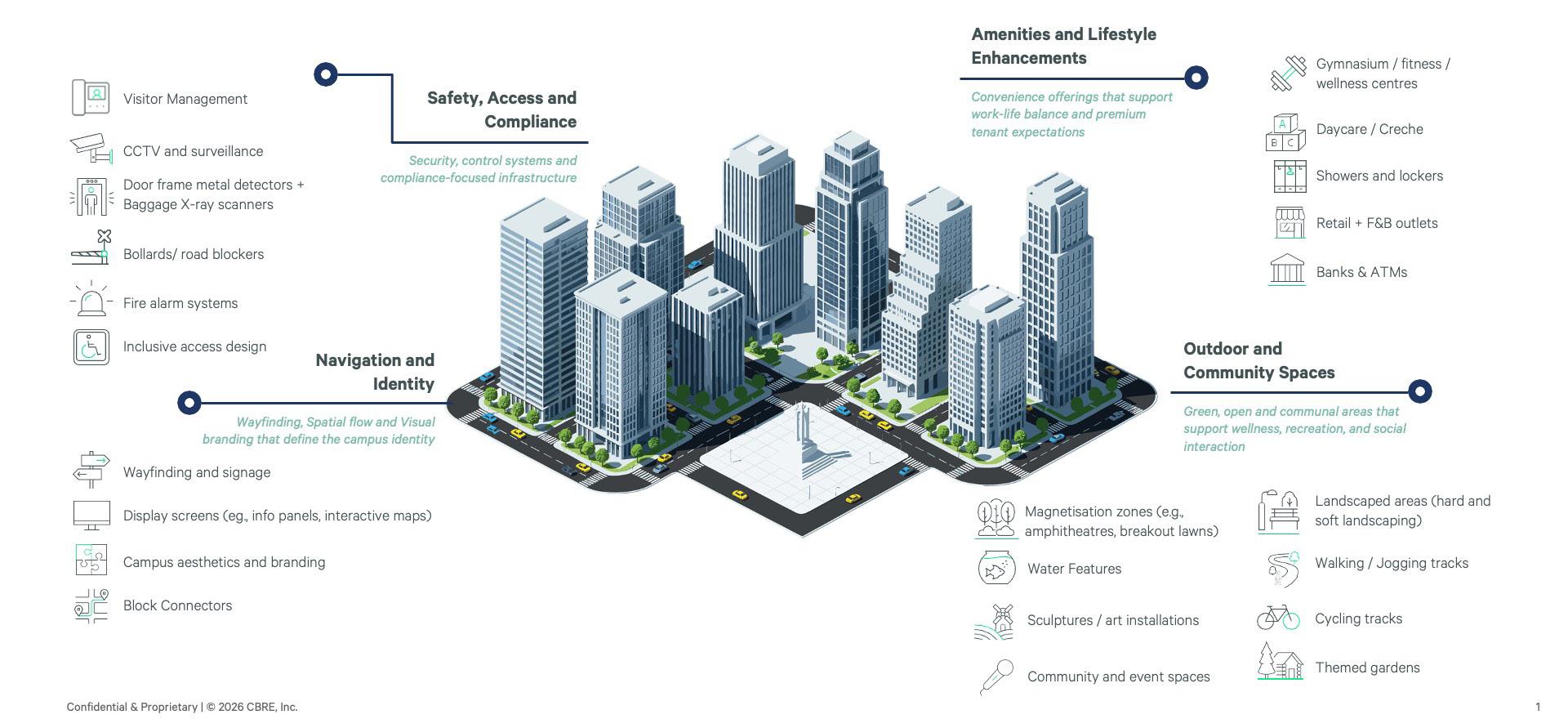
Prioritizes lean operations and speed-to-market. Real estate is centered on agility, utilizing Flex or Managed (0 -50, 50 -100 Headcount).
Focuses on operational depth and culture building. Requirements expand with growth in employee count (100–1000). Space focused on corporate brand and build in scalability for growing talent pool.
This phase demands customized, high-tech campuses (>1500) designed for global leadership, sustainable R&D, and premium employee experiences.

India’s Global Capability Centres (GCCs) are going through a structural shift—from cost-arbitrage back offices to innovation-led, talent-centric enterprise hubs. This evolution is most visible in how workplaces are being designed, used, and measured.
Offices are designed to reflect global brand values, culture, and purpose
Alignment with HQ design language (materials, storytelling, spatial identity)
Use of immersive branding: digital walls, product showcases, innovation labs
Offices designed as destinations – intentionally elevating the moments that matter
Focus on experience and effectiveness over space efficiency as the only metric
Accounting for a multigenerational workforce and their needs
Attention to inclusive design
Greater focus on employee wellbeing
95% of GCCs encourage hybrid working
Offices designed for 60-70% capacity but with an eye on utilization and buzz
Greater consideration for role based flexibility along with the larger agenda for colleague mentorship and growth
Intentional focus on tech enablement
Rising demand for workplace analytics and occupancy planning
Metrics used for
• Workplace effectiveness
• Improve experience
• Optimize space and operations
• Iterative design
India’s Global Capability Centres (GCCs) are going through a structural shift—from cost-arbitrage back offices to innovation-led, talent-centric enterprise hubs. This evolution is most visible in how workplaces are being designed, used, and measured.
Noting that collaboration alone cannot drive innovation- focusing on space design to encourage generative collaboration and community building
• Maker Spaces
• Hackable project rooms
• Acoustic privacy
• Social areas and intentional activation
• Events curation
Office is now a strategic HR tool, not just physical infrastructure.
• Designed to:
• Reinforce company culture
• Enable purpose and belonging
• Improve connections and engagement
• Drive culture
Building greater transparency and flatter organizations by design.
This has shown to allow for easier access to leadership, faster decision making and a culture of innovation and ownership
Fewer corner offices, open door policies on usage of cabins as meeting rooms when not in use and greater transparency in EGD
Growing importance of universal design - from compliance to intentional inclusion, offices now signal inclusion by design.
This spans age, ability, gender, life-stage, sexual orientation, neurodiversity, sensory diversity
In physical space this often is reflected in committing to the RPWD Act of 2026 and harmonised guidelinesaccommodating over 22 abilities
India’s Global Capability Centres (GCCs) are going through a structural shift—from cost-arbitrage back offices to innovation-led, talent-centric enterprise hubs. This evolution is most visible in how workplaces are being designed, used, and measured.
GCCs now drive core business innovation, not just execution. This has resulted in greater investments people, process and technologies in AI/ ML. data science, product engineering.
• Spatial response:
• Innovation labs
• Design thinking spaces
• Agile project zones
ESG and wellness are now baseline expectations.
• Push for carbon neutrality
• Green-certified buildings
• Wellness programs
A shift from efficiency and compliance centricity to responsible, human-centric approach to design
Buildings that self optimise in real time (BMS integration with IoT)
Measured behaviour through real time utilization tracking
Tech infra for seamless experience through the building
Predictive maintenance
Enhanced occupant comfort

• Focus and collaborative areas designed for varied workstyles
• Adaptable Congregation Spaces
• Technology Layered Across; Collab space (formal-Informal), Canteen seats

• Multi- Functional Café Spaces
• On-Site Pre-heating Kitchens
• Gaming Zone
Workplace is evolving to bring in elements of community, wellness and Inclusivity. Culture-Centric Design: Foster a strong sense of belonging and reflect Indian values and traditions in the workspace

• Choice of Seats
• Flexible Work Points

• Fitness spaces – Gym, yoga ETC
• Relaxation and quiet Spaces
• Sleeping Pods
• Spaces for social/religious practices

• Gender, Cultural & linguistic sensitivity
• Gender Neutral Washrooms
• Accessible work points

• Network Operation Centre (NOC), Data centers
• Auditorium/Townhall spaces
• Labs, R&D space, experience zones. Training centers

• Blending traditional values while embracing innovation and attracting the next generation of professionals.

• Posture variration,
• Adjustablity, Brightness,
• Temperature, natural/circadian lighitng
To truly build a space that reflects the GCC as an employer of choice in India, your physical space should embody these guiding principles

CRAFTING INTERIORS THAT REFLECT THE BRAND’S ETHOS
• Interior design of the shortlisted space should be as per global design philosophy.
• Building Local nuances & Cultural Elements
• Designing Layout to suit the kind of operations you run
04 02 01 05 03 06
• Provide flexibility (typically 3 days in office).
• Return to Office percentages in India has seen an increase and varies from city to city (typically ranges between 30% – 70%
Source: CBRE Research, Q2 2025
HOW MUCH TO BUILD
• Seat Density; dependent upon work profile & activity - between 100 -120 sq. ft. per seat and up to 220 SF for some industries
• Seat Density: 70 - 80% of total workforce (basis work profiles); going up to 100%
• Capex High - 6,000/- per sq.ft. Medium - 4,500/- per sq. ft. Low - 3,000/- per sq. ft.
INCLUSIVITY AND ACCESSIBILITY
• Ensure the space is welcoming and accessible to all employees
TECHNOLOGY INTEGRATION
• Should be based on workstyle and type of work being undertaken
• Smart infra, Internet of Things (IOT), AI integration with internal office & building managements systems
• Access and security to internal premises
MANAGING TIMELINES: SPEED TO MARKET
• Office Fitouts: 6-9 months for design, procurement & fitouts
• IT Procurement & Security Systems procurement can have long lead timing
Engaged employees would define GCCs’ brand value and purpose

• Choose a service provider with relevant experience & expertise and provides end to end expertise & select type of model that suits best
• Employee commute options, parking facilities, connectivity to nearest public transport point
• Incase of 24/7 operations, providing transport is required as per regulation
• Built in collaboration with HR & Business, is essential to building employee value proposition
• Food Cafeteria services, Free/ Subsidized food
• Internal amenities recreational, wellness & learning facilities
• Employee Engagement programs, in sync with local culture & festivities
• Health & Safety adherence
• Hygiene protocols
• Air Quality & Circadian Lighting
• Programmes to encourage Physical Wellbeing
• Spaces that encourage activity
• F&B Offerings
GCCs prioritize ESG compliance by integrating LEED/WELL-certified buildings along with biophilic design, zero-waste operations, and sustainably sourced fitouts
• LEED/WELL Certifications
• EV Charging
• Access to Public Transport
• Base Build Upgrades
• Natural Lighting
• RE Partners commitment to ESG & Sustainability
• Suppliers with strong ESG credentials
• Sustainability sourced furniture
• Certifications for interior fitouts (LEED, WELL Certifications)

• Nature in Workspace (Living Walls, Indoor Plants)
• Employee Well Being
• LED Lighting & Smart Sensors
• Smart HVAC Systems
• Energy Efficient Equipment
• Water Efficient Fixtures & Practices
• Indoor Air & Lighting Quality
• Zero Water Discharge
• Monitoring of Carbon Emissions
• Waste recycling & segregation
• IoT sensors and analytics for energy management
• Eco-friendly office supplies
CRITERIA
LOCATION
(SUB-MARKET IN A CITY)
BUILDING / OPTION
WORKPLACE DESIGN & FITOUTS
OPERATIONS / FACILITIES MANAGEMENT
Building a brand recall to hire in a new market
Enables Peer Hiring
Enables High Value Work
Employee Retention
Building & Reinforcing Culture
Providing a safe & Complaint place of work
Footprint Diagnostic Talent & Location Strategy Cost Optimisation
How do we assess our current global footprint to identify optimal locations for a GCC?

Identify GCC opportunities, benchmark against peers and evaluate viability
Which markets offer the best balance of talent, location, and real estate?

Choose the right country, city and micro-market evaluating over 100+ data points

What are the total costs of operation and the potential cost savings we can generate?

Real Estate & Portfolio
How does my real estate strategy act as a differentiator to attract and retain talent?
Get an accurate understanding of total cost of operations and potential savings
Resilient real estate strategies, curated for your business needs, crafting moats for your business
Talent & Location Strategy
Optimise talent & real estate access, cost-efficiency, and market suitability across regions, countries and cities
Sub-Market Identification
Evaluate potential talent pool catchment & distribution of peer companies within a city
Workplace Strategy
Design adaptable spaces fostering collaboration, productivity, and culture
Facility Operations
Manage efficient day-to-day building performance
Occupancy Management
Maximise space usage and reduce expenses while minimising disruption
Sub-Market Identification
Evaluate potential talent pool catchment & distribution of peer companies within a city
Occupancy Management
Maximise space usage and reduce expenses while minimising disruption
Streamline property acquisition, lease negotiation, and ensure best terms and risk mitigations
Secure optimal real estate deal structure for short-mid-long-term
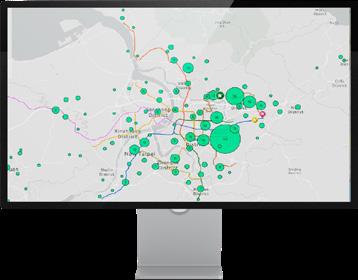
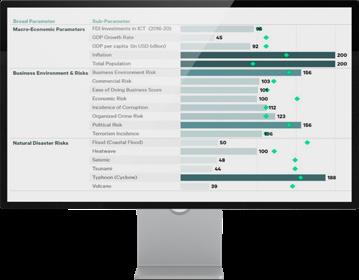
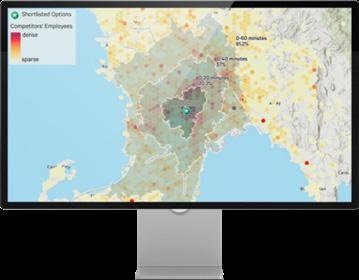
• Evaluate how different locations impact employees’ commute time and experience
• Proprietary simulations for varying commute scenarios in a city
• Understand commute times across options, ESG impact and plan transit routes
• Custom Interactive Scorecards to compare countries & cities globally
• 100+ Factors for Consideration
• Tailored to your business needs, industry, roles and locations
• Evaluate potential talent pool catchment and distribution of competition within a city
• Spatial Modelling bringing together over 10+ different data sets
• Understand talent catchments, competitors, university ecosystems and demographics of a city
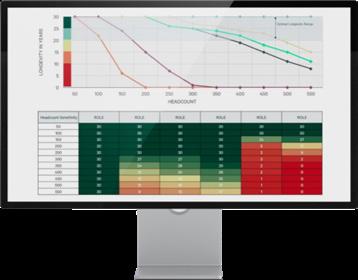
• Pressure test markets for scalability and sensitivity to wages, turnover and competition
• 30-Year Forecasting of Market Longevity based on your unique business goals
• Scenarios evaluating impacts of key variables on your market success

BANKING & FINANCIAL SERVICES & INSURANCE
SUPPLY CHAIN AND ENGINEERING




Scale and coverage
Integrated real estate services firm
World-Class Service Provider People, Data & Analytics
To truly build a space that reflects the GCC as an employer of choice in India, your physical space should embody these guiding principles YEARS OF INDIA PRESENCE CITIES COVERED OFFICES PROFESSIONALS
3,500+ 3,000+
FORTUNE 500 #128 Lipsey brand for 24 consecutive years #1 FORTUNE Most Admired Company
Ethisphere World’s Most Ethical Companies Forbes: Named one of the best large employer in USA in real estate for 15 th consecutive year years in a row years in a row #1 12 4
Partner with us for expert GCC setup in India. We deliver tailored solutions to meet your specific needs. Contact us to explore strategic collaboration and gain critical insights. CBRE © 2026 All Rights Reserved. All information included in this proposal pertaining to CBRE—including but not limited to its operations, employees, technology and clients—are proprietary and confidential, and are supplied with the understanding that they will be held in confidence and not disclosed to third parties without the prior written consent of CBRE. This proposal is intended solely as a preliminary expression of general intentions and is to be used for discussion purposes only. The parties intend that neither shall have any contractual obligations to the other with respect to the matters referred herein unless and until a definitive agreement has been fully executed and delivered by the parties. The parties agree that this letter/proposal is not intended to create any agreement or obligation by either party to negotiate a definitive lease/purchase and sale agreement and imposes no duty whatsoever on either party to continue negotiations, including without limitation any obligation to negotiate in good faith or in any way other than at arm’s length. Prior to delivery of a definitive executed agreement, and without any liability to the other party, either party may (1) propose different terms from those summarized herein, (2) enter into negotiations with other parties and/or (3) unilaterally terminate all negotiations with the other party hereto. CBRE and the CBRE logo are service marks of CBRE, Inc. and/or its affiliated or related companies in the United States and other countries. All other marks displayed on this document are the property of their respective owners.
Disclaimer: CBRE uses reasonable and diligent professional efforts to perform its services in accordance with prevailing local market standards. CBRE’s role is limited to the general coordination and liaison and does not include any legal, architectural, engineering or other technical review. All information CBRE obtains is from sources we believe to be reliable, however we make no warranty nor assume any legal liability or responsibility for the accuracy, correctness, completeness or use of any such information. Customers/Clients are advised to carry out their own investigations/due diligence.