


WordoftheIssue: / ɛkwə nɪməti/ 1:evennessofmindespeciallyunder stress. 2:rightdisposition:balance
EDITOR-IN-CHIEF
EmmaShin‘26
BrookeLai‘26
DESIGN EDITOR
NaelLee‘26
PHOTOGRAPHY EDITOR
HannahKim‘27
NEWS EDITORS
MiaMarce‘26
JamiePark‘27
FEATURE EDITORS
SeunghunLee‘27
AlexisLim‘28
OPINION EDITORS
JayneKim‘27
CatherinePark‘27
LIFE EDITORS
HelenJin‘27
IsaacShim‘27
LayoutandcoverartbyBrookeLai‘26.

Glamorous, picturesque, andchillyoutside,”saidMaxine Leonard ‘26, when asked to describe this year’s winter banquetinthreewords.
On Friday, Feb 6, over 200 high school students walked the red carpet of Crest 72 Glass Hallinelegantdressesandsuits to celebrate “A Night in Hollywood: a Starry Soiree.” Over the course of the evening, students were entertained by a live musical performance, a luxurious buffet filled with delicious food, collective games organized by StuCo, an exciting awards ceremony, and a raffle featuring prizes ranging from the viral Dubai Chewy Cookies toSonyheadphones
byMiaMarce‘26
mosphere and clapping to familiar songs, such as of Stars” from the movie Land and “Yellow” by ay ntrast to previous years, ancing portion of the gwasperceivedaslessof hlight. “We tried to ize the costs for people ing, so we had to talk d the sound director, director, and DJ. We had nk of ways to minimize o students could pay less njoy the experience,” said Secretary Jamie Park ‘27. involved compiling a t with student song tionsandhavingStuCo
Vice President Joshua Ko ‘26 liven up the crowd disguised as “Marshmallow”
“I wish we had more of a DJ aspect, although Joko being ‘Marshmallow’ was definitely unique,” said StuCo President Kaiden Holst ‘26. “I do think that what makes the banquet different from prom is that there is dancing, so I hope there canbethatagain”
On the other hand, the event was made special by an awards ceremony, aligning with the Hollywood theme Based on attendee votes, Duei-ying Wang ‘29 and Caroline Richardson ‘27 won Best Dressed,AlexChang‘26and
With a wide variety of activities offered, everyone found aspects of the banquet to match their tastes Many students particularly enjoyed commemorating the occasion with photos, making use of two automatic photobooths and a photo zone with a professional photographer “I don’t think I’ve ever taken this many group photos,”saidAlissaRho‘26
Moreover, while students were dining and socializing, the Encounter praise band gave their first performance before most of high school under the name of “Daeil Band.” The group of musicians dedicated muchtimetopractice,andwere gratifiedbystudentssavoring

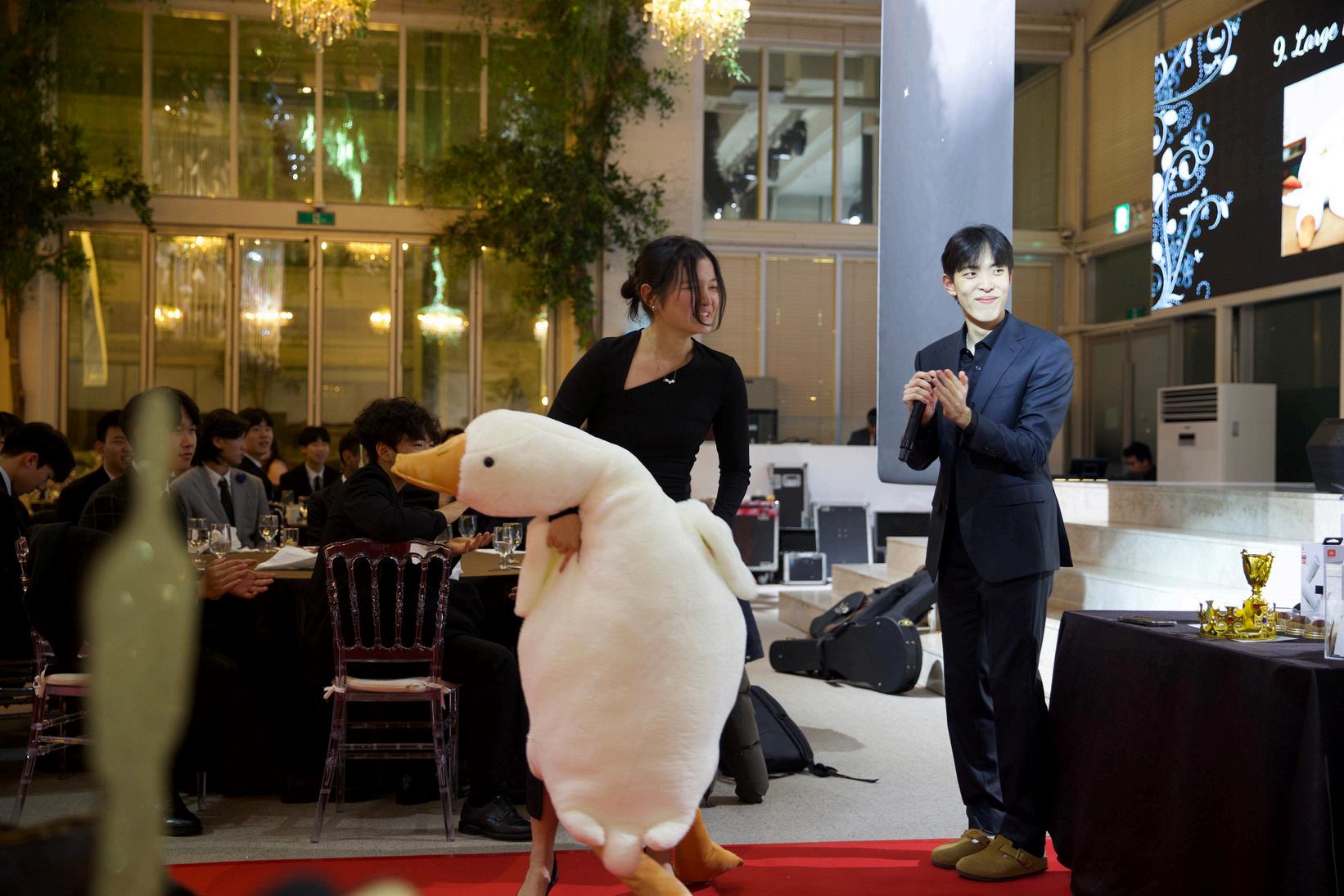
Jeongbeen Park ‘26 won Most Hype, Tommy Kang ‘26 and Hanna Cho ‘26 won Best Smile, and Joshua Ko ‘26 and Kaiden Holst ‘26 won Mr. and Mrs. Yongsan, respectively. Looking back upon the moment when he was presented with his award, Alex Chang ‘26 said he feltlikea“champion”
While students only attended the banquet for around three hours, few are awareoftheextensiveplanning
SiaKim‘26wonaraffleprize.PhotobyYearbookStaff. that occurred months before the day of. Kaiden explained that each grade representative in StuCo had their own assigned role, from planning games and researching raffle prizes to emceeing. She reported that choosing a date was especially challenging due to numerous conflicting events in December, resulting in the postponement of the event to February.
Asforchoosingatheme,
byJamiePark‘27
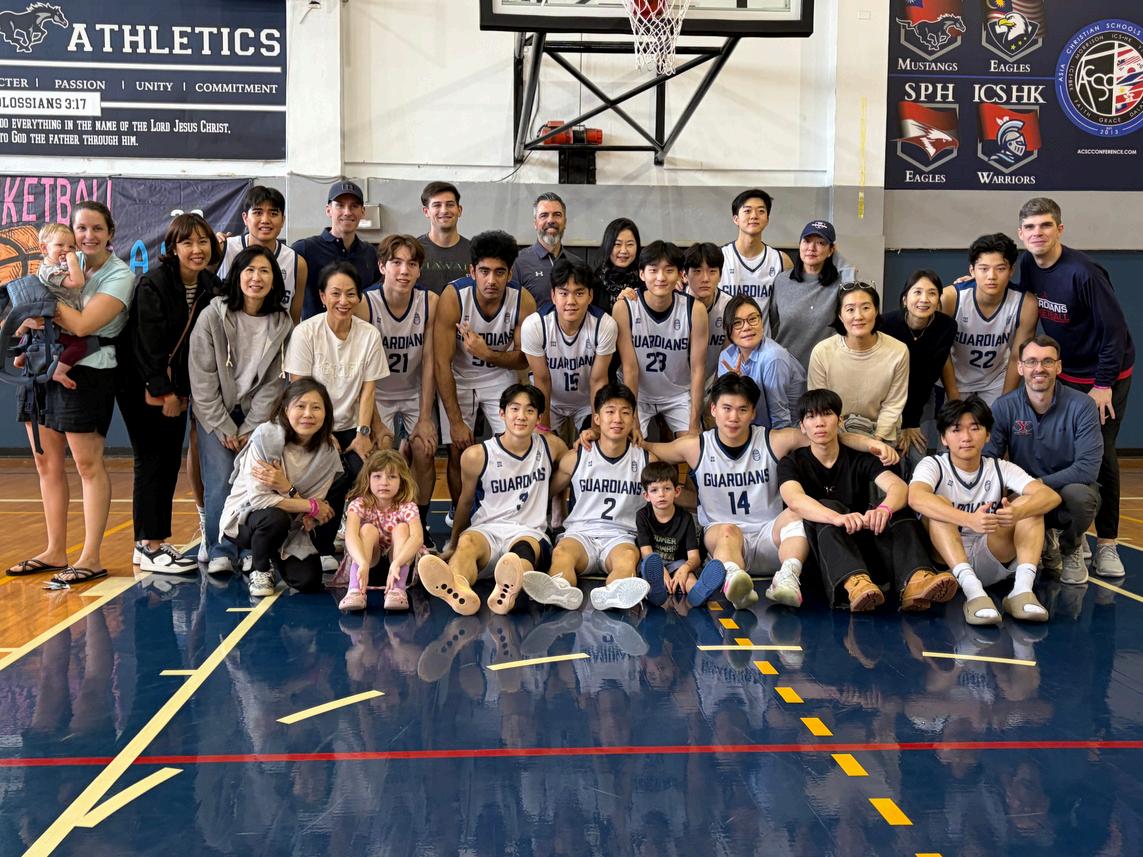
In February, the YISS varsity basketball teams traveled to different international schools to compete in the 2026 Asia Christian School Conference (ACSC) tournament. The girls madethejourneytoFaith
AcademyinManila,Philippines, whiletheboysflewtoMorrison AcademyinTaichung,Taiwan
While on separate journeys, the two guardian teams shared their resilience and competitiveness Thoughboth
StuCo initially acquired student input for color schemes and announced ideas at community time. They finalized “A Night in Hollywood” based on favorable observed reactions. Tables were rearranged to accommodate a red carpet in the center of the venue,andthePTOwasheavily involved in crafting decorations such as red and gold centerpieces BellaPark‘26,afirst-timerat aYISSwinterbanquetwho
teams fell short of the championship game, it was a week that demonstrated how far the YISS program had come overtheyears.
At ACSC in 2024 and 2025, the girls’ varsity team placed seventh and eighth, respectively. However, after finishing the regular KAIAC season in fourth place, they went beyond expectations at this year’s overseas tournament.
From the opening tip, the varsity team came out with intensity Forthefirsttimein
experienced homecoming and prom in the US, said, “I think it was way better than the proms and hocos that I’ve been to, because there’s more to do and everyoneissoinvolved.”
In Kaiden’s words, “The banquet has become this event thatpeoplelookforwardtoand it’s a hallmark high school tradition. I hope it can continue being a fun stress-reliever to help students celebrate high school”
YISS history, the girls finished firstingroupplay,witharecord of two wins and one loss. The girls defeated Morrison Academy40-32andSPH47-31. In their 16-point win against SPH, Player of the Game Elaine An‘27droppedadouble-double of 13 points, 17 rebounds, and three blocks “I think my teammates and coaches pushing us really helped us in that game,” said Elaine, when asked about her performance. “It was an especially memorable game for me becauseitwasmyfirstever
double-double”
Unfortunately,thegirlssaw a slight setback against ICS Bangkok, losing by just three points in a tight game Nevertheless, the two wins were enough to put YISS as the first seed in Group A a school record “The way we prepared strength training and stamina forACSCreallyhelpedusadjust to the Grace environment quickly and play physically,” saidElaine
However, bracket play was yettocome Intheirfirstbracket game, the girls continued their hot streak, beating ICS Hong Kong28-20.PlayeroftheGame
Eva Huang ‘27 dropped 10 points and 11 steals in the game tosealthegirls’firstplayoffwin “Because of my teammates all playing great defense and forcingbadpasses,Iwasableto steal the ball often afterwards,” said Eva, in regards to her highstealperformance.
Despite this, afterwards, the girls went on a shooting slump, falling short against ICS Bangkok50-33.Inthefollowing game, after dominating three quarters against SPH in bracket play, the girls could not stop SPH’s 13-0 run in the fourth quarter Intheend,thegirlslost by three points in a tight game of 36-33, marking the end of theirplayoffrun.
Nevertheless, the girls still persevered after the loss and bounced back against Dalat International School in the final game, defeating them by 36-32 in order to secure fifth place. In the final game of the tournament, Eva dropped 15 points, five rebounds, and five steals to finish the season strong.
In Taiwan, this tournament alsomarkedtheendofthe
season for the boys’ varsity team, and for the nine seniors, the “last dance” of their high school basketball careers. In a revenge game against Grace International School from their loss by two points last year during semifinals, the boys dominated,beatingtheteam57 to 51. Against the defending champions, Faith Academy, the boys, unfortunately, fell short by10points,losing46-56.
The following day, the boys faced off against ICS Bangkok, butfellshortonceagain,ending the group stages with a record of one win and two losses The boys secured the third seed going into the bracket play, set tofacesecondseededDalat.
Unfortunately, the playoff games for boys didn’t fall their way AgainstDalat,theboyslost 56-64 in a close game until the end The boys did bring the energy back up afterwards, getting revenge against ICS Bangkok by beating them 5040. However, this was followed by a 39-53 loss against the runner-upteamSPH.
On day four of the tournament, the varsity boys were set to play Faith, whom they lost to during bracket play. In a dominant second half performance, the boys won 4536,securingfifthplace
After close games and hard fights, the boys playoff run came to an end. “Knowing its the last time playing with the seniors made me leave everythingoutthere,”saidIsaac Shim‘27.“Noregrets.”
No matter the outcome, in the end, senior Andrew Lee ‘26 had lots to say about the YISS basketball community “We won as a team, we lost as a team At the end of the day, we areonefamily,”hesaid.
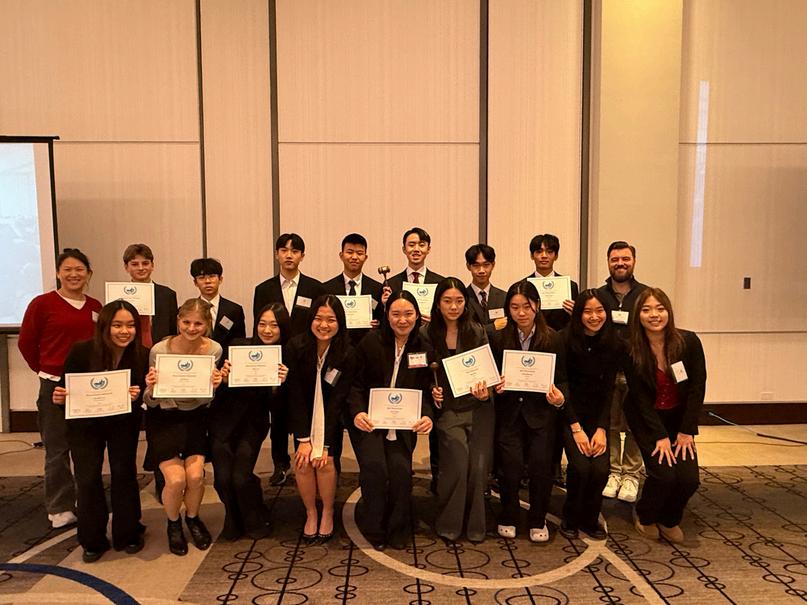
TheYISSMUNteamatVMUN.PhotocourtesyofSeunghunLee‘27.
On Jan 22, 16 delegates from the YISS MUN Club travelled over 5,000 miles to the 26th iteration of Vancouver Model United Nations, the largest high school-run conference in the world.
Every year, the club competes in one international conference during the winter season. In previous years, YISS MUNers have visited Dubai and New York City, showcasing their talent on an international stage. This year, the team joined over 1,400 other delegates at the Hyatt Regency in Downtown Vancouver as the only nonNorthAmericandelegationat theevent.
VMUN is a well-known conference that is praised for itshigh-qualitydiscourseand massive MUN platform. In addition to attracting dozens of schools from Canada and the United States, the conference has consistently been recognized by local politicians and activists Canadian Prime Minister Mark Carney was one of multiple notable leaders to send a welcome letter to the delegates competing at VMUN this year During the opening ceremony of the conference, Dr Samantha Nutt, a global peace activist who had participated in VMUNwhenshewasinhigh
school, delivered the keynote address.
While VMUN has been around for more than two decades, this year was the first time YISS MUN had sent a delegation to compete in the conference. Additionally, the YISS delegation was also the only international school at the conference: all other schools wereeitherfromtheVancouver area or had flown a few hours fromotherpartsoftheUS
After arriving in Vancouver on Jan 22, the YISS delegation made their way to the Hyatt Regency, which was both wheretheywerestayingduring the trip and where they were competing. After checking into the hotel, the sixteen delegates and MUN Sponsors Michael Suhany and Soran Kim took a stroll to Robson Square, where they found lunch and explored Vancouver. “It’s a city, obviously, but it’s also very easygoing,” said Khanh Duong ‘27.“There’snoneofthatkindof like, NYC bustling-ness none ofthathustle.”
While Ms Kim and the girls went shopping around the area and visited stores such as Brandy Melville, the guys and Mr Suhany went to Best Buy and bought nothing. The latter party would eventually agree to walk to the waterfront, where they encountered a beautiful landscape filled with snowcapped mountains and symmetricalspikesfrom
Canada Place As Mr Suhany led his group of YISS students through Harbour Green Park, a few delegates were fortunate to spot a lonely sea otter in the water.
The two parties reconvened at the hotel and ate dinner together at a nearby restaurant After plenty of team bonding over the meal, the delegates returned to the Hyatt Regency andpreparedfortheconference thatawaitedthemthenextday
From Jan. 23-25, the YISS MUN Team competed in three days worth of conferencing and debating During the conference, the YISS delegates participated in fruitful discussions, connected with students from other schools, and composed resolutions to present their solutions Khanh recalled a moment in his committee where he put a fellow delegate “on trial.” “Canadian kids are different too,” said Khanh. “I think it’s pure vibes, like, there’s no one like gunning for awards or anything.Everyonewasjustlike playing along really well, all in good faith.” From debating about the state of European democracy to reliving the Meiji Restoration, the delegates displayed their knowledge and publicspeakingskills
Saeyoon Sim ‘27, who dealt with the US National Debt Crisis in her committee, also found the experience refreshing. “There was just a lot of diversity of thought and then diversity of perspectives in the room,” she said. “I think that forcedeveryonetostopbeingso high pressure and try to be so high performing and then just kindofrelax.”
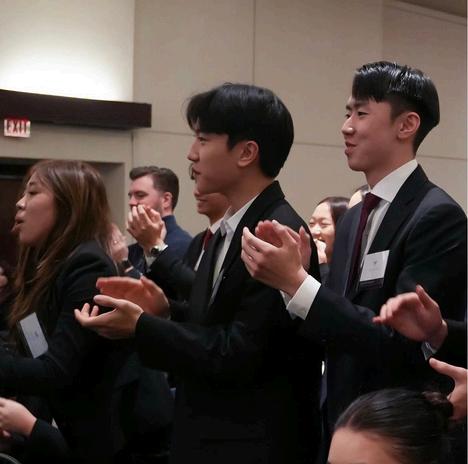
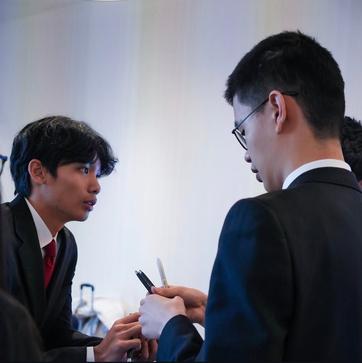
On the second night of the conference, after a long day of sessions and sparring, the delegates also attended the Delegate Social At the Delegate Social,delegatescouldenjoylive DJ music, fierce Nintendo competitions, and classic card games with their peers The YISS MUN Team spent around twenty minutes at the Delegate Social and then collectively decidedtoreturntotheirrooms tohaveateammeetinginstead


ThesophomoresofYISSMUNposingatthewaterfront.PhotobyLilyChoi‘29.
Once the final session was adjourned on the third day of the conference, all delegates, over 1,400 in total, gathered at theconventionhallforthe
closing ceremony. After the VMUN Secretariat delivered a series of thank-you speeches, the awards were presented and 10 of the YISS delegates would be recognized for their hard work and excellent performance
SeunghunLee‘27andElisa
Min ‘29 both received the Best Delegate award Coincidentally, theywerebothrepresentingthe Delegate of Spain in their respective committees. Mia Marce‘26andKateLee‘27were given Outstanding Delegate honors while Olivia Lee ‘27 and LukasMarce‘27wouldtake
home Honorable Mentions. Finally, Khanh Duong ‘27, SaeyoonSim‘27,DillonKim‘28, and Olivia Suh ‘28 would all be recognized with Best Researched honors to conclude the individual awards for the YISSdelegation
byCatherinePark‘27
As one of Korea’s traditional art forms, Talchum stands as our heritage to be preserved and protected. Translated directly into “mask dance,” this traditional Korean art uses vibrantcostumesandlivemusic to act as a form of social satire against the corrupt ruling class. It is a people’s theater where masks decorated with exaggerated features transform song, dance, and storytelling into a communal experience. While it’s been recognized as a UNESCO IntangibleCulturalHeritage,for many, Talchum remains an obscureremnantof history that isturneddowninfavorofmore modernmusic.
As audience members who watch the dance, it’s easy to get lost in the swiftness and decisiveness of their movements. In this way, we forget that there was a journey that these masters of Talchum had to take to reach this level Nor do we consider the present state of Talchum when browsing a museum, seeing these arts instead as a relic of thepast.
Two performers of the Gangnyeong Talchum Preservation Society, for instance, had begun learning their craft at the age of ten. “I grew up around it,” Eun-seul Baek, instructor of the Gangnyeong Talchum officially recognized by the Korean government, said “My mother ran a dance academy, and is a Living National Treasure herself. I naturally learned through the environment” For In-sun Park, Baek’s student and current performer, she had begun learning Gangnyeong Talchum as a hobby Over the years, it had developed into her passionandlaterhercareer
Most Talchum dancers, however according to Ki-jong Yoon, chairman of the Bongsan Talchum Preservation Society delved into it during their college years. There, they learnedandperfectedtheir
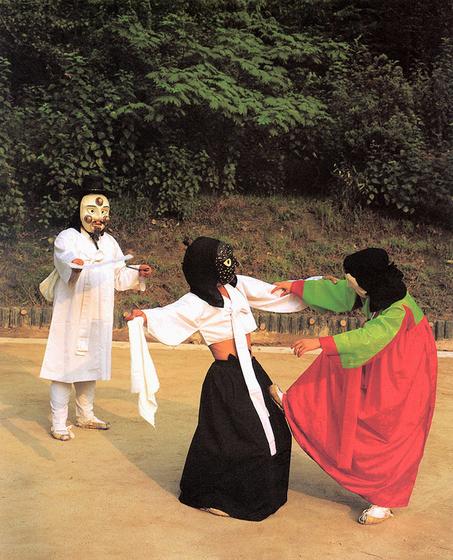
영감,할미,새맥시(아씨역)놀이
Photocourtesyof theKoreanNationalHeritagePortal.
craft, transitioning from student to professional performer “We don’t begin thinking, ‘I must dance Talchum,’” he said. “We encounter it by chance, find it fun, like the people, and before weknowit,we’rehere”
Mastery, of course, was not instantaneous nor effortless Stamina, Yoon said, was the key Inordertoperformforover an hour, the dancers’ physical endurance must be built up “WhenIwasastudent,Iusedto repeat a two-and-a-halfminuteroutineabout100times a day without rest,” he said “Backthen,itfeltlikedying.But now my physical condition is great.”
It was the precursor to the musical Just like its modern counterpart, it requires memorization, dancing, acting, and singing. Yet slowly it had beenforcedintothe
background, quietly fading as louder art forms took the spotlight “Up until the 1970s, most universities had Talchum clubs,” Yoon said. “But during the Chun Doo-hwan regime, Talchum was suppressed because its social criticism was consideredtoostrong.”
Talchumhaslongexistedasa form of anonymous protest, where performers unidentifiable behind their masks were able to critique authorities without fear of repercussion The Chun Doohwan regime, however, viewed the dance’s satirization as a direct threat and ultimately categorized as an “unauthorizedassembly.”
Sincethen,Talchumhasseen a revival, with new adaptations emerging, often blending a modern style with a traditional Talchum. “Recently, Aiki collaboratedwiththeBongsan
Talchum lion character,” Yoon said. “Lee Hyori also featured the lion in one of her performances.” Aiki is a viral choreographer, famous for her viral performances on Street Woman Fighter, while Lee Hyoriisthelegendary“Nation's Fairy”ofK-pop.
While Yoon appeared to view this in a more positive light, Baek voiced concern that change would undermine the tradition’s authenticity “We preserveitexactlybecauseitisa nationally designated heritage If it changes, it loses value,” she said Thoughsheacknowledged the role of such adaptations in increasing the visibility and spread of Talchum, her stance was firm: “Tradition must also be preserved in its original form.”
At the same time, the landscape surrounding Talchumtodaypresentsitsown challenges, as not all those who studied this traditional dance continued that path. For many, other lucrative industries shone brighter. “Many traditional performers cross over into modern music, like pansori singers or groups such as 'Leenalchi,’” Baek said. Pansori is traditional Korean solo musical storytelling, and Leenalchi is a popular alternative-pop band Here, the issue became clear: to spread awareness of and promote Talchum, its potential audience must care But how can we makethem?
“K-pop started because we enjoyed it,” Yoon said. It hadn’t been created with the intention of being globalized. “People listened to it, enjoyed it, and foreigners found the fashion and culture appealing That’s how I think Korean culture shouldspread naturally”
He expressed hope that younger generations would grow to embrace it “I hope young people ask themselves at least once: What is our tradition? Traditional play? Traditionalinstruments?”he
said. “If you’re Korean, shouldn’tyouknowatleastone piece of Korean traditional culture? Shouldn’t you know Talchum?”
“Talchum constantlyreminds meofwhoIam.”
Baek,however,hadadifferent answer “It’s not that people don’t care,” she said, “it’s just that they don’t get exposed to it.” Yet unlike physical artifacts, which are readily available at museums, Talchum must be performed live by people specifically, it requires professionalswhohavedevoted their lives to Talchum, and this was a limited resource For her, it was a case of spreading awareness
The picture painted was not dismal,butneitherdidit
suggest that Talchum had a bright, hopeful future Yet unlike those who had left Talchum for other industries, these performers had remained, persevering through their physical and mentaltolls
Yoondescribeditasakinto the famous Dae-han-minguk rhythm with its drawn-out first syllable that every Korean can clap along to.“Our traditional rhythms don’t feel unfamiliar,” he said. “They’re embedded in us culturally” In the same way that the Dae-han-min-guk rhythm stands as a symbol of our nationality,Talchumactsasa tietoourKoreanheritage.
“That’s what Talchum is,” Yoon said. “Just like how you don’t think about air while breathing, Talchum constantly reminds me of whoIam.Mostsimply,ittells me:IamKorean”

GraphicsbyNaelLee‘26 ImagestakenfromCanva
themselves. They learn for the grade” The transactional view of learning that is cultivated raises questions about the true effectiveness of Korean education. Children are smart whenitmatters,butdoesitonly work under the motivation of fear?
As soon as the school bell rings at 3:10 p.m., students aren’tseengoingtotheirhomes for free time. Rather, they partake in learning Hagwon, which translates to “academy” in Korean, has become a lifestyle It’sacommonalitythat most students participate in, seeing it as the only way to get ahead. Most students have tutors or attend academies that teach them the school curriculum, but years in advance.
With the December 2025 ban of English kindergarten entrance exams by the Korean government, most say that the educationindustryinKoreahas gone too far. But how far is too far when the industry seems to yield results? And in the small community of international students in Korea, how do students balance the two polarizinglivestheylead?
“Korea’s first religion is education,”saidJasonMcGrath,
a high school Bible and philosophy teacher. Although students don’t typically go to external educational institutions for his subjects, he says that he constantly sees the influence of the pressureinducing Korean education system. “They are worked harder, and their brain's flexibility is there. It's conditioned to make those connections, see patterns, and perform,”hesaid
It’s not necessarily that they’re smarter or more intelligent. Rather, they have beenconditionedtolearninthe most optimal manner. Elaine Jeong ‘29 concurs “I think hagwon makes you think in a differentway,”shesaid
But Mr. McGrath also says there are drawbacks to the reward-based, ambitious nature of Korean education. “When it's inconsequential, they turn their brains off,” he said “Theydon'tlearnfor
The stress that students receive from hagwon, on top of the stress they have from school, definitely piles up Even during summer break, when other students may hang out with their friends and enjoy theirfreedom,studentsinKorea spend their days in SAT prep hagwon, which is almost structuredlikeschool.
However, this rigorous environment seems to yield valuable results. The Class of 2024’s average SAT score was 1430,whichwasmorethan400 points higher than the world’s average of 1024. This noticeable difference sets YISS and other Korean international schools apart Outside of Korea, it’s more the norm to go to tutors based on need Only when they are truly struggling in a class do theyseekoutatutor
Elaine thinks differently, saying she doesn’t feel pressured by hagwons because she doesn’t really “go for school-related things” For her, hagwon allows her “to go beyond the basics and explore more, explore deeper.” Subjects suchasmusicproductionor
ceramics may not be readily available at most schools, but can be pursued in depth at specializedhagwons.
However, Elisha Choi ‘29 thinks the harm is greater than the good “I think that just Korean public schools and education systems in Korea are very very toxic,” she said. “Everybodygoestohagwon”
“Ithink hagwonmakes youthinkina differentway.”
YISS’sgradingsystemmayalso be a direct effect of Korea’s difficult education system An A starts from 96%, which is significantlyhigherthanaUSA, which ranges from 90% to 93% andabove
Asaresult,beingexposedtoa new array of students with different cultures and habits, teachers are forced to adapt their teaching habits. “There's a reason I deliberately do not do homework, because I recognize that outside of my subject, the studentsareoverwhelmedand stressed,”saidMr.McGrath.
Kimberly Lynch, an 8thgrade US history teacher, talks aboutherexperienceatarural

American public school prior to teaching at YISS. “The differences [in education] were very extreme because it was very low income,” she said It is evident that more affluent students, especially in Korea, have a higher chance of getting external support in their education.
Mrs. Lynch isn’t entirely against hagwons, but she emphasizes that the purpose matters “I think just putting your students in any hagwon, for all purposes, without any specific purpose, can be painful,”shesaid
“Theyare workedharder, andtheir brain's flexibilityis there.It's conditionedto makethose connections, seepatterns, andperform.”
byLucyYang‘29

Teenagers are usually advised to get at least seven hours of sleep per night, but hardly anyone meets this recommendation on weekdays.Tocompensatefor the sleep loss, students often extend the duration of their sleep on weekends or holidays However, many continue to experience fatigue rather than feel energized and refreshed, suggesting that sleep durationisnottheonlyfactor influencingsleepquality
On weekends, compensating for the lack of weekday-sleep is extremely common among students “I think I didn’t even do it consciously Because I don’t needtogetupearly,Ijustend up sleeping in,” said Jayne Kim‘27.Accordingtoher,this wasn’t just an occasional habit “Sometimes,I’llstayup until3,watchingmyshow,or doingsomethinguseless And then I’ll wake up at one or twointheafternoonthenext
sleep, also plays a critical role in day,” she said. “I feel pretty bad”
Whether an individual feels tired or refreshed after waking up depends on sleep quality. Although sleep duration contributes to the level of overall rest, it’s not its sole determiner Instead, sleep quality is also influenced by another significant factor: stress. According to Healthline, sleepisastateduringwhichthe body undergoes crucial processes, such as the release of growth hormones and the repair and regeneration of damaged cells. These processes contribute to alertness and energy when awake, which are outcomes that are highly associated with high-quality sleep Research by Harvard Health Publishing explains that the sleepcycle,especiallythetiming and duration of rapid eye movement (REM) in determining sleep quality. A commonsleepcyclelastsabout
80-100 minutes, which repeats fourtosixtimespernight.REM sleep takes place at the end of the sleep cycle, often right before you wake up During REM sleep, brain activity, heart rate, blood pressure, and respiration increase, while muscle activity is inhibited. That’s why most dreams occur during this stage, but you don’t havethemeanstoactthemout REMsleepisassociatedwith several important neurocognitive functions. REM sleep assists memory consolidation by synaptic pruning, which is when the brain strengthens essential neural connections while eliminating weaker ones. Moreover, REM sleep contributes to emotional regulation by processing emotional memories, including fear, and supporting the development and maintenance ofthecentralnervoussystem. BecauseREMsleepoccursat the end of the sleeping period, disruptionstosleep,suchas
fragmented sleep and irregular sleepschedules,canalsoreduce REM duration This way, an individual might obtain sufficient total sleep time while not completing the later sleep cycles As a result, REM sleep and sleep quality will be reduced despite adequate sleep duration.
Delayed and inconsistent bedtimesandsleepingtimesare common among students. “I usuallygotobedatmidnightor one. And I wake up at around 6:30 am to 7 am,” said Jayne “On weekdays, I think I usually get six hours of sleep on average. If I’m lucky, I’ll get seven”Asnotedearlier,shealso described a pattern of extended andirregularsleepdurationand timeonweekendsandholidays, further contributing to inconsistentsleeppatterns.
Similar patterns can also be found in younger students. “On weekdays, it depends on how much work I have,” said Ziah Kim ‘29 “Usually, I sleep at 1:20 a.m.” On weekends, she sleeps at around three or four in the morning. These responses indicate notable variations in bedtime during the week, suggesting an irregular sleep schedule
While irregular sleep schedules are extremely common among students, they are not just the result of their personal choices. One major cause of poor sleep quality among students is academic stress “Things like theater rehearsal, piling out my homework, tests, and things like that keep me awake until midnight,” said Jayne For Ziah, herlatebedtimeisalsobecause
of “schoolwork and other activities.” These responses suggest that the academic workload can generate stress, which may delay bedtime and reduce the overall quality of sleep
Medical News Today explains that when an individual is stressed, it triggers the autonomic nervous system (ANS)toreleasehormonessuch as cortisol and adrenaline, increasing the heart rate and circulating blood to vital organs and muscles more efficiently These changes can cause heightened alertness and readiness, known as the fightor-flightresponse
While it is normal to feel stressed, chronic stress can cause the nervous system to maintain a heightened state of arousalforalongperiodoftime
Frequently being at a heightened state with an increased alertness will prevent an individual from feeling tired and cause rapid anxious thoughts at night when one attemptstofallasleep,resulting in fragmented or shortened sleep
This pattern is particularly harmful to sleep quality becausechronicstressinterferes with the body’s sleep cycle by fragmenting or delaying sleep, reducing the chance of completing later sleep cycles that involve REM sleep. Since REM sleep is essential for emotional regulation, which involves stress processing, its reduction may result in impaired ability to cope with stress, creating a cycle of stress, poor sleep quality, and fatigue duringtheday.

byHannaAn‘28
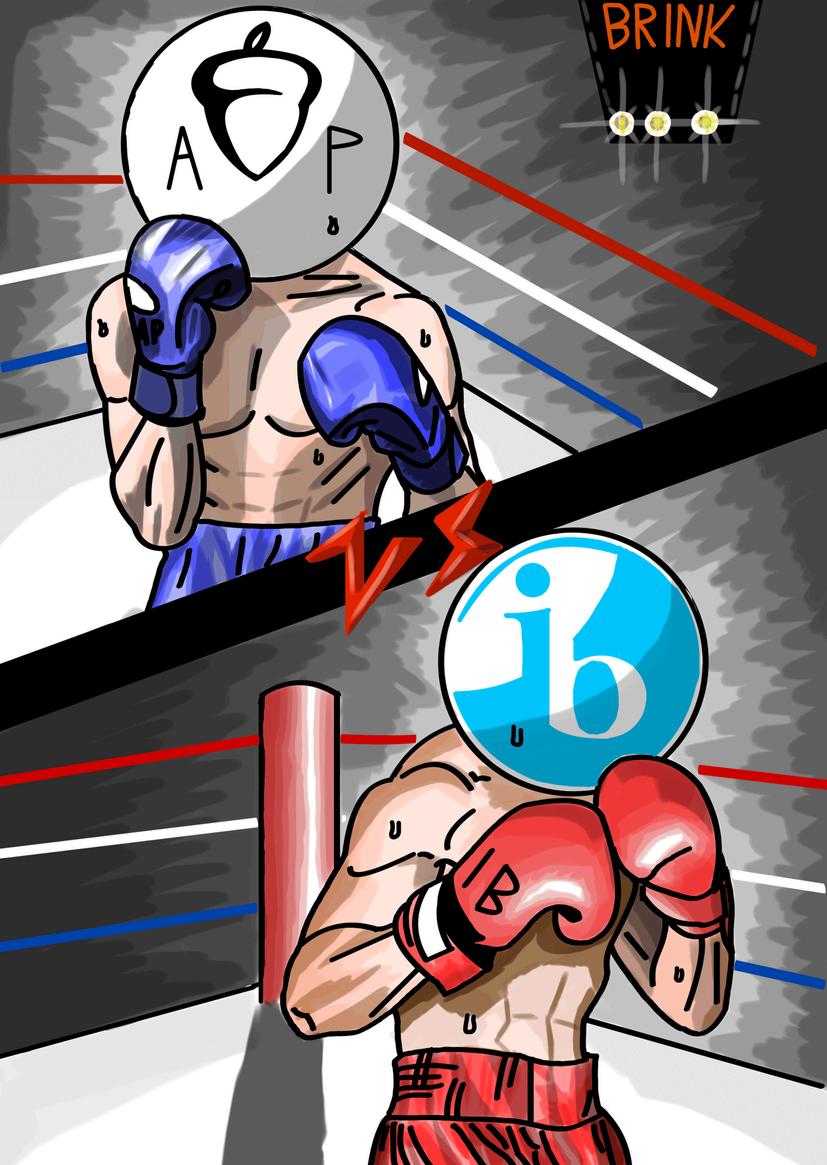
Assomeonewhogrewupin an IB school environment, I used to believe that the InternationalBaccalaureate(IB) programplacedlesspressureon students than the Advanced Placement (AP) system IB always felt holistic, more focused on critical thinking, writing and connections across various subjects rather than relentless memorization. I assumed that the AP system, with its numerous contentheavy classes and the rigorous preparationprocessformultiple AP exams in May, naturally createdmorestress
However, after interviewing Jayne Lee ‘28, who had also experienced an IB education prior to YISS, I realized the difference isn’t as simple as “AP equals pressure, IB equals balance.”
When I reflect on my IB years, the program felt very free and encouraging Assessments were spread out, with Internal Assessment (IAs), an individual research quiz weighing about 20-30% of the final grade. Because grades weren’t defined by a single standardized test, I assumed the system naturally reduced stress. Meanwhile, the conclusionofeachAPclasswith a high-stakes exam in May seemed to create undue pressure.
Jayne quickly challenged that assumption. “People think IBismorechillbecauseit
focuses on thinking, but the workload hits you differently. It doesn’t feel intense at first, but the stress kind of builds and neverleaves”
She described IB as a constant,steadypressurerather than a sharp one. With the Extended Essay, Theory of Knowledge, CAS requirements andmultipleIAsacross
subjects, there was always something due, creating significant stress It was an “ongoingmentalweight,”Jayne said “Even when I was done withmyassignments,IstillfeltI had to do something, and somethingfeltincomplete.”
As I listened, I began remembering my many nights ofcrammingforanIAwhile
finishing my various extracurriculars. I realized that the IB system’s unrelenting assessment style actually created more pressure than I hadinitiallyassumed. ThenJaynecomparedthatto her transition into an AP system “APwasstressful,butin a way I could predict,” she explained “Youworkreally
hard,youtakethetest,andthen it’sover.There’sanendpoint.”
Even though AP content moves fast and demands aggressive memorization, the stress comes in waves rather thanstretchingacrosstheentire year. Sometimes, Jayne felt less overwhelmed in the AP system simply because she got clear breaks.
“APwas stressful,but inawayI could predict.”
What really surprised me waswhenJaynesaid,“IBforced me to keep up with everything all the time. AP lets me focus on what I’m actually strong at” Unlike the strict core curriculum of IB schools, AP systems allow students to have more choice This means that students can tailor their education, which also feels moremanageable.
By the end of our interview, my perspective had completely shifted I entered YISS’s AP system grimly expecting heavier pressure than my previous IB experience, but Jayne’s insights challenged my worldview. IB spreads pressure evenly across the entire year, making stress constant and sometimesinvisible.Incontrast, the AP system condenses pressure into focused periods, which can be intense but temporary.
Iamnottryingtoconveythat one system is better than the other in fact, this was what I had previously believed before this interview However, after hearing Jayne’s experience and reflecting on my own, I came to realize that the two systems, AP and IB, simply distribute stress differently. Understanding the hidden challenges of the IB system, I see that the model doesn’t necessarily reduce pressure; in fact, the program I onceassumedwaslessstressful mayactuallycreatemore
byCatherinePark‘27
Too upbeat Too peppy
Overly dramatic. Sentimental. Such phrases encapsulate what people often think of musicals And certainly, to an extent, this is true. Consider Hairspray, Mamma Mia! and even SIX, a more modern “pop-style” musical These tropes represent the mainstream face of Broadway, and though stereotypical, they are rooted in nostalgia, standing as iconichallmarksoftheater
Yet more dismissively, others decry musicals as escapist entertainment The words used to describe theater are far more scathing: frivolous and unrealistic, emotionally inauthentic Drowning in “sickeningly sweet” sentiment and involving bursts of exaggerated feeling, the stylized nature of musicals leaves critics convinced that theater lacks meaningful depth, either socially or emotionally.
By representing themes of friendship or justice through theatrical spectacles, musicals risk becoming entertaining but shallow vignettes Social issues are stylized, rather than substantive,andinthissense, musicals are seen as incapable of addressing truly significant topics with nuance The emotional intensity of actors is regarded with suspicion feelings, externalized through song, becomeperformative Inthe
face of mimicry and exaggeration, emotional integritycrumbles
Yet this critique ignores that musicals are vehicles for social commentary, built on real human experience Musicals have long engaged with pressing social issues and historical realities, using story, songandspectacletoilluminate societal struggles and spark reflection Hadestown, for instance, adapts the ancient myth of Orpheus and Eurydice to weave a metaphor of capitalism alongside a tale of twoill-fatedlovers Survivaland economic inequality become tangible pressures, no longer abstract concepts, and the audienceisfacedwiththesame crushing social pressures as OrpheusandEurydice
InHamilton,therevolutionary story of America’s founding is reimagined and reframed with a diverse cast and modern musical forms, confronting audiences with questions of race, power and legacy. The political machinations the story is embroiled in are a tightening web that draws viewers in closer, intrigued and entranced and trapped. Rent tackles marginalization, shedding a humanizinglightontheLGBTQ community and AIDS crisis in a time where stigma oppressed its most vulnerable voices Its message: live loudly and boldly. Loveradically Inthefaceofcold callousness, Rent offers the best ofhumanityincompassion Even musicals often perceived aslighthearted,likeAnnie,
reflect historical realities: the Great Depression, orphaned childrenandsocietalneglectare inscribed in its narrative. Its lighthearted nature contrasts with its role as a political allegory, where wit and warbling distill commentary on hope and joy, struggle and injustice.
In the end, musicals are just that: an ode to human experience
And just as experience lies at theheartofeachmusical,atthe core of every musical is emotion. Theater amplifies it, evokes it from its audience, and thrusts them into its depths. The visceral intensity of the emotions expressed onstage allowsviewerstofeelvalidated seen as the musical illuminates a spectrum of their own humanity. Confronted with a character’s raw emotional vulnerability, audiencemembersarefrozenin a cathartic tide of empathy and awe, and are ultimately caught staringinamirror.
“...vehiclesfor socialcommentary, builtonrealhuman experience.”

Before the first scene ends, most people already know Hadestown is a tragedy. The star-crossed fates of Orpheus andEurydiceoffernohopefora fairytaleending,yeteverysong
builds hope, defying death where most would yield. It delivers a message of resilience, and audience members ever mindful of the ending are unable to help but lean forward from their seats, silently cheering Orpheus on. Eurydice’s hunger-borne doubt drawsoutempathy,makingher “betrayal” a poignant reflection of human fear. The haunting lyricsofOrpheus’s“WaitFor
Me”plungetheaudienceinto astateofdesperatelonging.
Wicked, in contrast, traces the journey of a friendship. Carefully, meticulously, the audience watches as a rivalry metamorphoses into a fellowship, like a seed that transforms into a beautiful blossom. Elphaba’s alienation, an isolation she professes to bearwithpride,stirssympathy.
Asthebondbetweenthe
two grows heavier with unspoken history witnessed and preserved by the audience, viewers are emotionally swept into the full weight of their connection, feeling each joy, betrayal and reconciliation as if they were their own. Recurring musicalthemes suchas“For Good” and “Unlimited” come to hold years of separation, conflict and enduring love, culminatinginmomentsof
sharedcatharsis
Ultimately, musicals are borne from human experience, and they endure because of it. They preserve our histories, articulate our struggles, and validate emotions that may otherwise go unspoken. Far from escapist and certainly far fromfrivolous,theaterstandsas a living record of who we are whatwefear,whatweloveand whatwehopetobecome
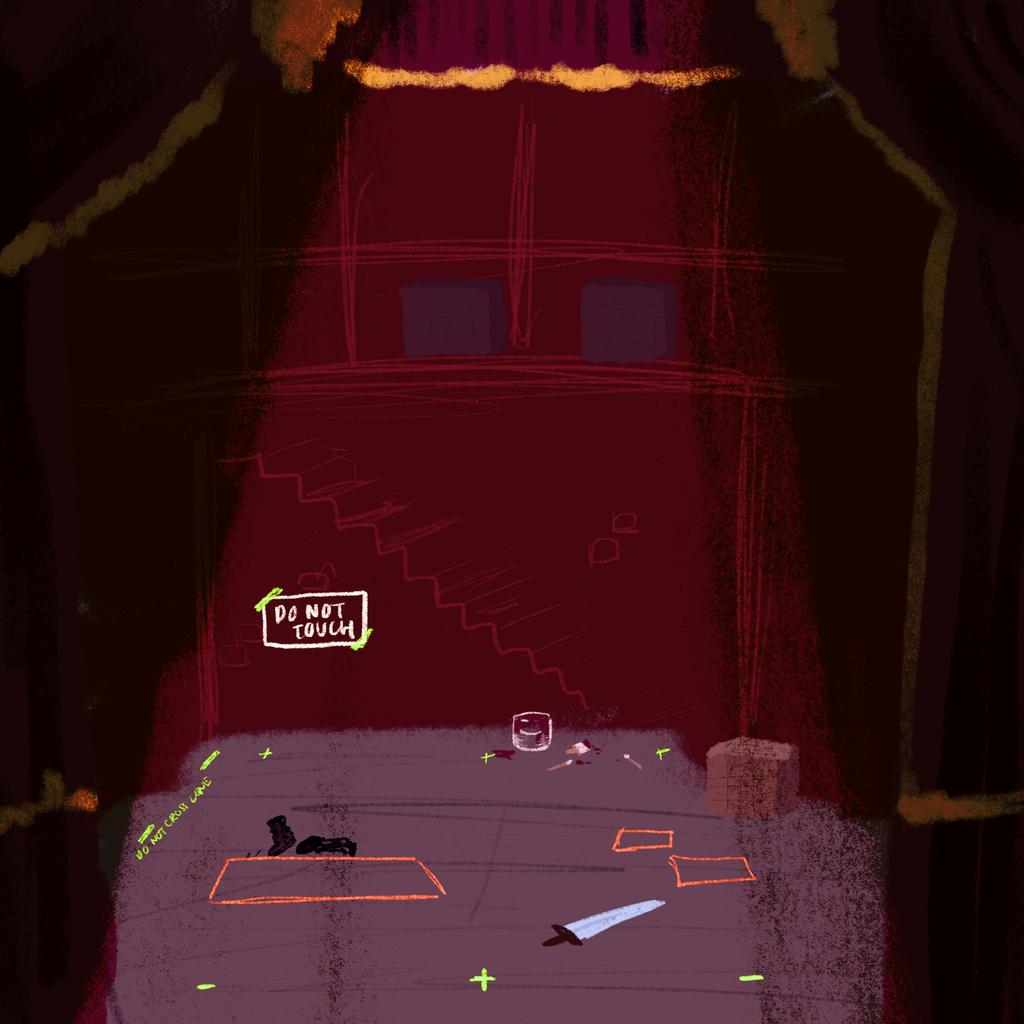
byMinKang‘28
Therapy is often overlooked or misunderstood, with many still viewing it as unnecessary and costly, and asking for professional help can be especially difficult when facing hardship alone But in reality, given due time and care, therapy can have a very real impact on people’s mental health With insight from Dr Lim Ja-seong, a PhD psychologist and director of the Kingdom Children and AdolescentsClinicalCenter,this article will explore how therapy works and what effects it can have.
What kind of psychotherapies are there?
According to the American Psychological Association, the types of psychotherapies can be groupedintofivecategories.
Psychoanalysis and PsychodynamicTherapy:This kind of therapy involves conversations between the patient and therapist that help patients express and process their emotions in order to remedy harmful behaviors or feelingsovertime.
Behavior Therapy: Behavior therapyisbasedontheideathat behaviors are learned and can be changed through learning processes such as conditioning. Itisoneofthemostwidelyused approachestoday.
Cognitive Therapy: Cognitive therapy focuses on how a person’sthoughtsinfluence
their emotions and behaviors, helping patients recognize and change harmful thinking patterns.
Humanistic Therapy: Humanistic therapy focuses on personal growth and selfacceptance. It seeks to help people reach their fullest potential.
Integrative Therapy: With integrative therapy, therapists combine techniques from different treatment methods to create the most effective treatmentfortheirclient.
AtDr Lim'scenter,therapyis also tailored to different age groups Children from ages two and above are mostly treated with play therapy, while adolescents and adults more commonly use cognitive learning or speech therapy When clients are dealing with social issues, both individual andgrouptherapymaybeused with therapists specializing in differenttechniques.
What kind of people attend therapysessions?
Dr. Lim says that people of all ages can come to receive therapy. For children, common issues that lead to seeking therapy include concerns with learning ability, speech development, social skills and school adjustment. Older groups may seek help for a wider range of challenges, including depression, panic disorder, conduct disorder and more
An article by Betterhelp notes how some people overlook their need for mental support because they are concerned about how others may view them if they seek therapy The article suggests onlinetherapyasanalternative. Fortunately, as people are becoming increasingly aware of the benefits of mental health care, experts expect more people–especially in the Gen Z and millennial generations–to attendtherapyinthefuture
How might a general session of a psychological therapy session progress?
Dr. Lim explained that the general progress of therapy heavily depends on the individual and the types of treatment they are receiving The process starts with pretests such as the Sentence Completion Tests (SCT) and Minnesota Multiphasic Personality Inventory (MMPI), which help the therapist to understand the views and thoughtsoftheclientbeforethe actualmeeting.
During the first counseling session, the therapist and the client will address any problem they may be suffering from and set a goal together The types of therapy and specific procedures used would vary depending on thatgoal
How can you know that you’ve maderealprogresswiththerapy?
“Therealprogressoftherapy

differs a lot for each client,” Dr. Lim says However, growth is often reflected in small but meaningful changes, such as feeling more hopeful or more courageous in the face of past challenges As clients develop healthier behaviors and feel more capable in their academics, jobs and relationships,thesechangescan also signal progress made throughtherapy
The article “Is Your Therapy Working? 12 Signs You’re Making Real Progress” by Chrissy Holm also points to becoming more aware, feeling more heard and understood, and making progress in daily goals as indicators of improvement.
When these improvements pile up, therapy can provide a greatbenefitforpeopleinmany aspects of life For example, the University of Minnesota highlights that for college students, therapy provides students with efficient coping strategies, reduced feelings of isolation and greater academic successorsupport.
Therapy is not meant to be intimidating.Instead,therapists aretheretoguideclientstoward better mental well-being, and anyone can be a beneficiary of thisservice.Dr.Limsays,“Ifind meaninginbeingsomeonewho can be there for my clients when they're going through a difficult time, and being able to be the someone who they think ofandfighttogether”
byEstherPark‘27
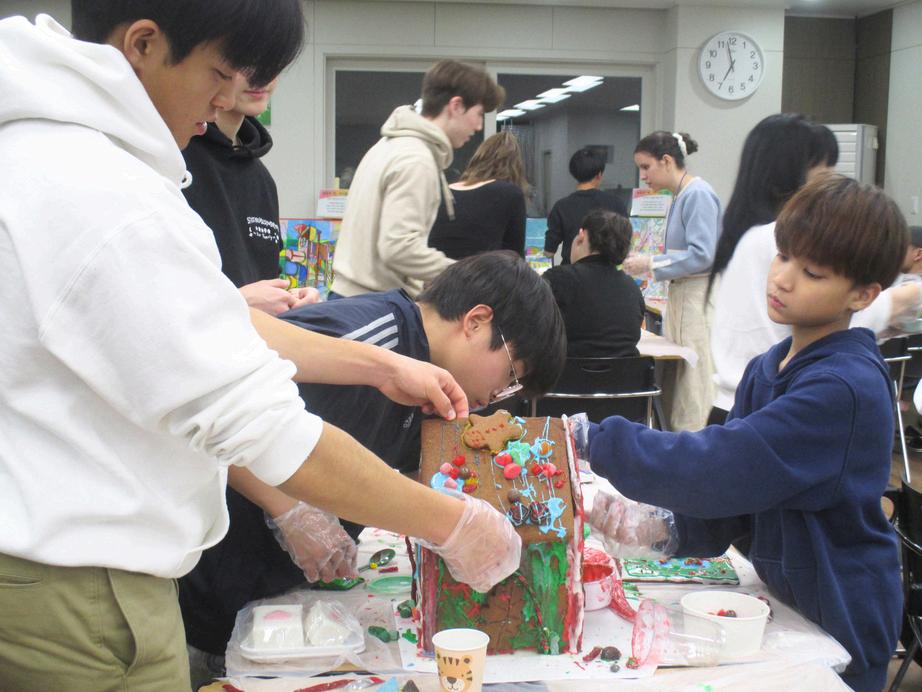
GingerbreadmakingwasanactivityduringChristmasatSangrok Orphanage.PhotocourtesyofEstherPark‘27.
A plastic spoon stood straight in the tub. M&Ms and Twizzlers spilled across cardboard plates Two children leaned in so close that the ends of their clothes brushed the icing. Their hands were sticky with all the frosting At one table, I could hear screams, “Joshua, you broke the wall!” On the other table, I could hear another scream “Sian, you spilled the icing!” A few groups gave up on perfect houses entirely and turned their collapsed wall into “broken islands,” decorating the mess untilitlookedintentional
The room never stopped moving. Candy wrappers crinkled. Chairs scraped. Frostingpensrolledoffthetable and bounced onto the floor Children would reach down without looking and continue decorating.
This is how the tradition usuallybegins.
At Sangrok Orphanage, winter comes, not as a single Christmas event, but as a series ofeventsspreadacrossdifferent weeks The first visit is usually GingerbreadDay,wherethe
our school were involved,” she saidafterward.“Ithoughtitwas just based on our students supportingthekids.Itwasgreat to see The kids were engaged, with big smiles, and they were having fun I was very impressed.”
During Gingerbread Day, student participation varied from table to table Some students were fully engaged from the start, kneeling beside children, building alongside them, and helping put the pieces back together when they fellapart.
Asked what stood out about student interactions, Ms. Su Jin said, “To be honest, some are very engaged,” she said. “Some are just having fun by themselves, making the cookie house That was fun too So it wasfunforkids,butatthesame time, it was a meaningful time foryouguysaswell.Havingfun atthesametime”
At the end of Gingerbread Day, the houses were gathered, crooked and bright, some missing walls, some covered in candy
Unlike Gingerbread Day, Cake and Wishes Day begins withboxes.
children insist on sharing They carry a plate over with both hands and offer a slice to the volunteers first, calling out as they approach: “언니! 쌤! 오빠! 한입 먹어요. ” They ask casually, like it is obvious that you eat together if you are sittingatthesametable
“...theywere takingthetime tocome, supportthem.”
Oncakeday,thechildrenalso write wishes and create drawings. Most of them are simple: trees, stars, Santa, gifts, faces. Some are rushed, some are careful and some are just colored in with Christmas colors. One child drew a Santa versionofAshutoshPunjabi‘26, complete with a red hat, a round beard and an expression recognizable to anyone who knowsAshuatschool
goal is not to build a perfect house, but to keep rebuilding, even when the icing isn’t cooperating Another visit is calmer. Strawberry Christmas cakes arrive in boxes, and each home receives a cake. Students and children cut the cakes into careful slices, then write wishes and fill blank drawing paper withChristmasdrawings.Some weeks include English learning classes as well, which are quieter than holiday-themed days,butjustasfocused.
The schedule changes, but the routines of student volunteersstayconsistent They arrive, set up, sit down and stay long enough for the children to takeovertheirtables.
For YISS counselor Su Jung Jin, attending this winter was a first. She expected a smaller group, mostly student-run Instead,shewalkedintoaroom that was larger than she imagined, with international volunteers from beyond the YISS community and children absorbed in what was happeningatthetables.
Strawberry cakes arrive in clean packaging, with pink frosting intact and strawberries glossy on top. Each cake is sharedbyasingleroom,usually four or five children from different grade levels who live togetherlikeasmallfamily.
Then, almost every time, the same thing happens. Even thoughthecakeis“theirs,”the
Thenthegiftbagscomeout. Unlikethegingerbreadtables, where everything is shared and improvised, the gifts are individualized. Each child receives a Christmas present carefully chosen and carefully wrappedforthem,notageneric one-size-fits-all. Names are checked Bags are handed over carefully. Some kids open them immediately, while others wait until they go back to their rooms.Thevolunteerswatch
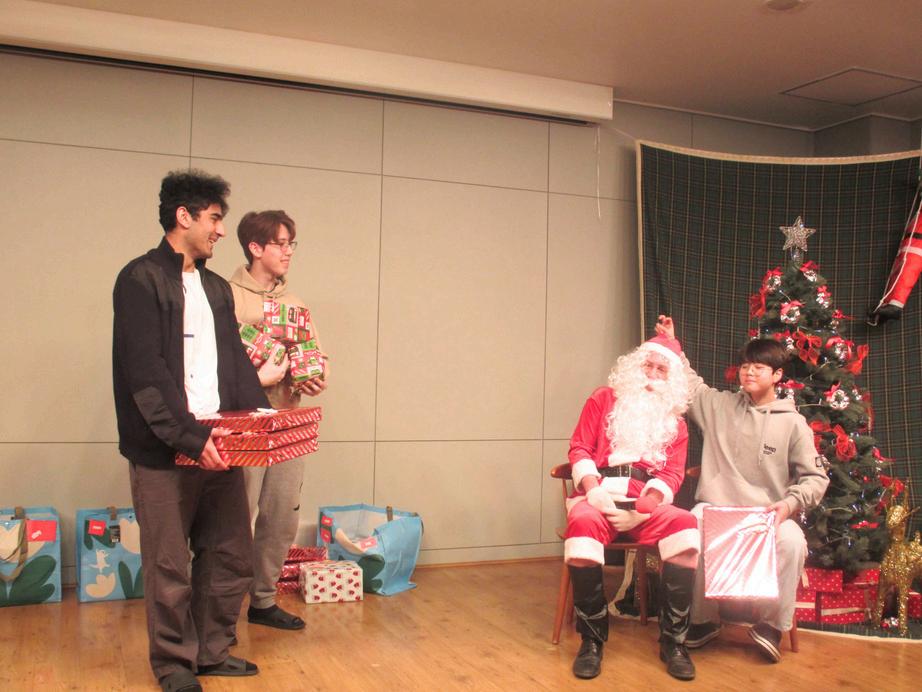
“I was very surprised to see howmanypeopleoutsideof AshutoshPunjabi‘’26andKeadoFrederick‘26handoutgifts PhotocourtesyofEstherPark‘27.
the kids' faces as they open the bag, and they notice the tiny reactions The sudden grins Thequickinhales.
FromMs SuJin’sperspective, thevalueofthevisitsisnotonly inthechildren’senjoyment,but isalsoinwhatstudentslearnby showingup,especiallywhenit’s inconvenient.
“[The] true meaning of service,” she said “What it means to serve our community. Some kids are having trouble when they are thinking about volunteering They don’t know where to go, how to start. Because they don’t know what it means to them. But when I saw the kids up there, even thoughitwasaverybusy
season they were taking the timetocome,supportthem.”
“It’snotjustbecausetheywant to write another line on their resume”,shesaid
“Because a lot of kids are involved in such activities for that purpose only. But it was very nice to see them Sparing their time, busiest time, and servingthecommunity.”
That is where the tradition becomes more than a holiday activity Showing up once is easy. Showing up again is harder Over time, students who were unsure at first stop asking where to stand They sit down.Theylearnnames.Tothe children, we become more than justone-timevolunteers:we
becameapartoftheirlife,apart of their family, their brothers andsisters What began in the summer of 2022hasgrownintoasteady routine. It started in 8th grade for me, and it kept going through busy seasons that wouldhavemadeiteasytoquit Students came once, then kept returning. Some disappear for a month or two during testing, but they too eventually return. Thechildrenstay,andthetables arealwaysthere.
After seeing the program for the first time, Ms. Su Jin described the emotion that stayedwithher.
“I wanted to get involved as well,”shesaid.“Itwasahuge
motivationformeaswell” Whenaskedhowexperiences like this shape students, even if they do not recognize it immediately “Even though they don’t know what it meant at that moment,” she said, “it’s there. Because the actions go with emotions Memories bring backboth.”
Any member of the YISS community is welcome to join the weekly events at Sangrok Orphanage, whether it is for Gingerbread Day, Cake and Wishes Day, or an English learning class. The only requirement: to show up with patience, respect and the willingness to come more than once.

GingerbreadmakingwasanactivityduringChristmasatSangrokOrphanage.PhotocourtesyofEstherPark‘27.
It’s a common sight to see YISS students hanging on by a thread, with a can of Monster gripped in one hand and scrambled notes in the other Startinginsophomoreyear,
byOliviaSuh‘28
students at YISS are given the option to take up to two Advanced Placement (AP) classes, which is extended to three AP classes in their junior andsenioryears.Theseclasses in their junior and senior years These classes are academically rigorous and are designed to challenge students and prepare themforcollege Whiletheseclassesmaynot
be the sole factor influencing students’ sleep schedules and therigorofeachclassmayvary, there seems to be a negative correlation between sleep and APstudents.Let’stakealookat
some common AP classes taken at YISS and how they have affected students’ sleep schedules.
Having gained a preliminary understanding of biology in ninth grade, many students choose to take AP Biology in sophomore year Ryan Park ‘28 says that the class is “more of a curricular system with us learning test-taking skills… [with] FRQs and MCQs being the most major parts of the exam” This differs from the course’s prerequisite class, as students taking AP Biology begin training to answer more challenging types of questions in preparation for the exam in May.
When asked about his sleep schedule, Ryan says that since Dr Sarao “doesn’t give out much homework… the average difference [in sleep schedule] would be between 10-20 minutes based on the increased amount of studying.” While he did spend some time working on the daily case study assignments and studying for summatives, it did not significantly affect his sleep schedule.
AP Biology may be more challenging in terms of content compared to 9th grade biology, but if the studying and workloadarebalancedwell,the student’s sleep schedule shouldn’t be significantly reduced, as the workload isn’t much different from the prerequisitecourse
AP Calculus BC is a course that goes beyond beyond basic calculus. To take this class, students must meet the compulsory requirement of maintaining at least a 94% in Precalculus,acoursedesignated to prepare students for this AP class Because it requires a prerequisite course, the class is mainlycomposedofjuniorsand seniors.EstherPark‘27saidthat “AP Calculus is a hard class because it’s really fast-paced… in your FRQ, you can’t make a mistake, and it’s very hard not to”
WhiletheAPCalculuscourse may be fast-paced and challenging,Esthersaid,“Iget
lots of sleep on just normal days,butwhenit’sbeforeatest, I would stay up until 3am.” She gets an average of four hours of sleep every other day on weeks when she has tests This course is meant to be challenging for students,whichiswhyYISShas the option for students to take AP Calculus AB instead However, students who are ready for a challenge take this course, despite the chances of being burdened with the fastpacedcurriculum.
There are ways to manage the workload: Esther said that by “doing the homework and doing the notes… [the] workload isn’t that bad” If she had to give one piece of advice to future students in AP Calculus BC, Esther says that it would be to “do the homework on time and don’t don’t don’t procrastinate…It’sdoableifyou don’t procrastinate” If students areresponsible,keepingtrackof their assignments and keeping up with the content, they may not lose much sleep over this course.
AP World History is known for challenging students with a prerequisite assignment due beforethestartoftheupcoming school year, but it produces the highest average AP exam score atYISS StudentstakingModern World History freshman year take this place to be exposed to a more independent learning environment involving reading extensive textbooks and analyzing documents and sources.
As a student who took Ancient World History her freshman year, Lauren Park ‘28 said, “Compared to ancient world history, AP World covers more in-depth content and the units are categorized into specific periods of time.” However, she felt a significant difference since ancient world required memorization and basic facts, but “AP World is analyzing historical events based on the content that you learned.”
Due to the heavy workload, Lauren noticed a change in her sleep schedule: “I was running on two hours of sleep in the beginning of the year we also hadformativenote-taking
every other class with the study guide, reflection and discussion posts… people who had sports also had less time to finish.” Whileitwaschallengingatfirst, Lauren said, “You have your ownsystem,soif youstartyour workload early, you don’t have to procrastinate and stay up late”
APUSH is a course offered to juniorsandseniorsinterestedin the period from pre-Columbian society to modern-day events, pushing students to analyze different kinds of sources and understand global themes. The AP test consists of multiplechoice questions (MCQ), shortanswer questions (SAQ), document-based questions (DBQ) and long-essay questions (LEQ), making it crucial for students to develop these skills throughout the course.
Regarding the content, Isaac Shim ‘27 said that it was pretty similar to 8th grade history, but with more complexity and detail in the events While he did not take AP World History, Isaac said, “Something that might help is the SAQ, LEQ and DBQ skills you learned in AP World.” Understanding how to answer a variety of questions is crucial to succeed in APUSH, as the fast-paced test challenges the students’ comprehension andapplicationskills.
For his sleep schedule, Isaac said, “[APUSH] hasn’t really impacted sleep schedule I think I study around two hours pertest,butIonlystudyaround 30 minutes to an hour later.”
ComparedtoAPWorldHistory, the workload is not as challenging, which is why Isaac’s sleep schedule was not significantlyimpacted
APLiterature
AP Literature is a class for seniors to read literature by authors ranging from ShakespearetoHenrikIbsen By reading novels, short stories, plays and poetry, students are expected to enhance their critical thinking and analytical skillsbycloselyreadingthetext. The AP exam consists of MCQ questions for analyzing passages and FRQ essays for analyzingpoems,aprose
excerptandaliterarywork
Jonathan Moon ‘26 said, “You get exposed to a pretty decent amount of post-colonial work, like kind of like classics… definitely the romantic period, whichiskindofnice.”Thisclass is different from typical English classes, such as AP English LanguageandComposition(AP Lang), which focuses on nonfiction text, as the course is for fiction. Regarding the workload and sleep, Jonathan said that “AP Literature doesn’t have too much work I don’t think my sleep schedule is impacted.” Although it requires students to read advanced literature, compared to other AP classes with heavier workloads, AP literatureisnotasrigorous. Jonathan said, “The most important part of AP literature is that you need to have your personal flair to it.” To be successful in this AP course, he recommendsthatyoutrulyfind yourself and be able to express it.
APSeminar
AP Seminar this year is an allsophomore AP class that focuses on research, critical thinkingandcollaboration.This course is more skill-based, rather than content-based, teaching students effective research, writing and presentation skills. Thus, the final exam is not a single assessment, but instead includes a team project and presentation, an individual essay and presentation, and a two-hour end-of-course exam consisting of short-answer questions and an essay question
Leah Cho ‘28 said that she usuallygetsaroundsevenhours of sleep on average, and “if the homework is only watching videos, then it only takes around 30 minutes, but if the homework is on analyzing and reading articles, it usually takes an hour to two” Because this class is not content-based, students don’t dedicate their time to study or memorize content, but rather to build skills and prepare for their project and exam With its heavy workload, the project may require some sleepless nights,butit’smanageablewith time Leahsaidthat“whileAP
Seminar is often known for its heavy workload, it hasn’t significantly affected my sleep compared to other factors, such as sports, tests and projects. However, it has slightly delayed myusualbedtime.”Likemostof theotherAPclasses,APSeminar is a pretty demanding course in terms of projects and presentations, but it’s all about time management and getting used to the workload. Leah had trouble with reading extensive articlesandkeepingupwiththe homework, at first but she learnedtomanagehertimewell tobesuccessful
It’snosurprisethatAPclasses increase the academic rigor in a student’s school life. Then, it boils down to the question: are you willing to allocate the time and effort into the class and makethemostofit?

byJaehyunKim‘28
The inevitable dilemma for student-athletes at YISS is how to balance schoolwork and sports: as tests and homework line up with sportsseasons,studentsmust often choose between pursuing high grades or getting that one extra hour of sleep. This lifestyle can be overwhelming, especially for freshmen, who are still adjusting to the high school curriculum However, many exceptional athletes, whose sports have required time awayfromtheirstudies,have shown that balance is not entirelyunattainable
ForRyanPark‘28,avarsity tennis player, the problem starts not at school, but after practice ends “Especially if we want to sleep by early hours, such as 10 or 11 pm, we only have like four or five hours between when we get home and this time.” With such little time to spare between quality sleep and practice, Ryan says, “trying to go home as soon as possible after practices has helped me extremely in balancing my schedule.”
rack, even after a long day of schoolandtennis. Unlike the tennis team, which does not participate in international conferences and whose recent promotion to the blue division has allowed for matches at schools closer to ours, the soccer team goes on more late-night bus rides to farther schools and even travels abroadforACSC
Dillon Kim ‘28, the starting sophomore goalkeeper for the boy’s soccer team, describes his arduous routine: “After school, I'd go straight to practice. And then after practice, I'd usually go straight home, eat dinner, takeabitofarestbeforegetting started on my homework aroundlike7p.m.”
While he’s learned to stay disciplined once home, what makes things harder, according to Dillon, is the fact that there are constant away games that occupy much more time. He says, “Particularly during regular season when we have away games, it's usually very hard to manage my time properly because we get home verylate.”
Despite this fact, Dillon has managedtomaintaina4.0GPA for one semester of freshman year. When asked how he does this, he said, “I think I was able to time-manage well and it helped me stay on top of my grades” Even during tournament weeks, he stayed proactive: “I'd always let my teachers know beforehand and email them to see if I can do anythingwhileI'maway.”
also for preparing for tests, which helped me get good grades.”
Matt also took advantage of the time it took traveling to his awaygames “Ifthebusridesto certain schools were longer than usual, maybe like an hour to an hour and thirty, I would probably study for those tests on the bus, or I would get homework done on the bus as well,” he said. Even between games,hestayedproductive “If the girls were playing first, then I would work on my schoolwork if I had the time… I just maximize the amount of time.”
Even beyond simple timemanagement strategies, these athletes reveal perspectives and a mental resilience that we can learn from. Matt, for instance, shared an important lesson: “Winning stuff is just a onetimething,andmaintainingitis different. You need to be consistent in your effort You can't have fluctuations.” Ryan maintained this long-term perspective, saying, “Time management isn't an easy skill, and it's one that we have to learn even as we gain jobs, we go to college, we try to do our applications”
Dillon emphasized the importanceofperseveranceand relying on others: “There are a lotofpeoplearoundlikeyou,so you can always ask for help, always be able to relate with otherpeople”
IllustrationbyBrookeLai‘26.
Once home, Ryan deliberately avoids something most students struggle with: procrastination He says, “Procrastinatingisthebiggest issue Time spent on the internet, socializing too much, or watching videos these things are the habits that we need to fix” For him, “showering [quickly] and not procrastinating” has helped himrevitalizeandstayon
MattKim‘28,all-tournament award recipient, keeps a similar routine to his teammate Dillon During his season, he recalls getting home after practice around 7:30 and doing his best to “work on homework eat dinner and go to sleep as soon as possible.” He stated that his biggest challenges were “meetingdeadlinesandjustnot procrastinating becauseIhave less time to do stuff because of myparticipationinschool”
By the end of his freshman year, Matt was able to maintain a 4.0 GPA for both semesters, but he said it required unwavering focus: “I think realizing that I have less time since I'm in season helped me kindofmaybeputinmoreeffort onmyassignmentsand
“All alumni, all current athletes are going through it as well…I would just like to tell [student-athletes] that they’re not alone and I personally struggle with this issue,” Matt said, who reminds us that the pressure experienced by student-athletes is shared by many members of the YISS community. Yet, in times of struggle, Matt “realized that in the end, things are going to be okay and not everything is lost. Your whole life isn't all about grades and economics or athletics”
Undoubtedly, balancing sportsandacademicsisn’teasy But through these three athletes, we can see that it is definitely possible through consistency, communication and the understanding that no athlete is alone in their struggles.
byBrianEun‘27,PresidentofStudentsAgainstDestructiveDecisions