


































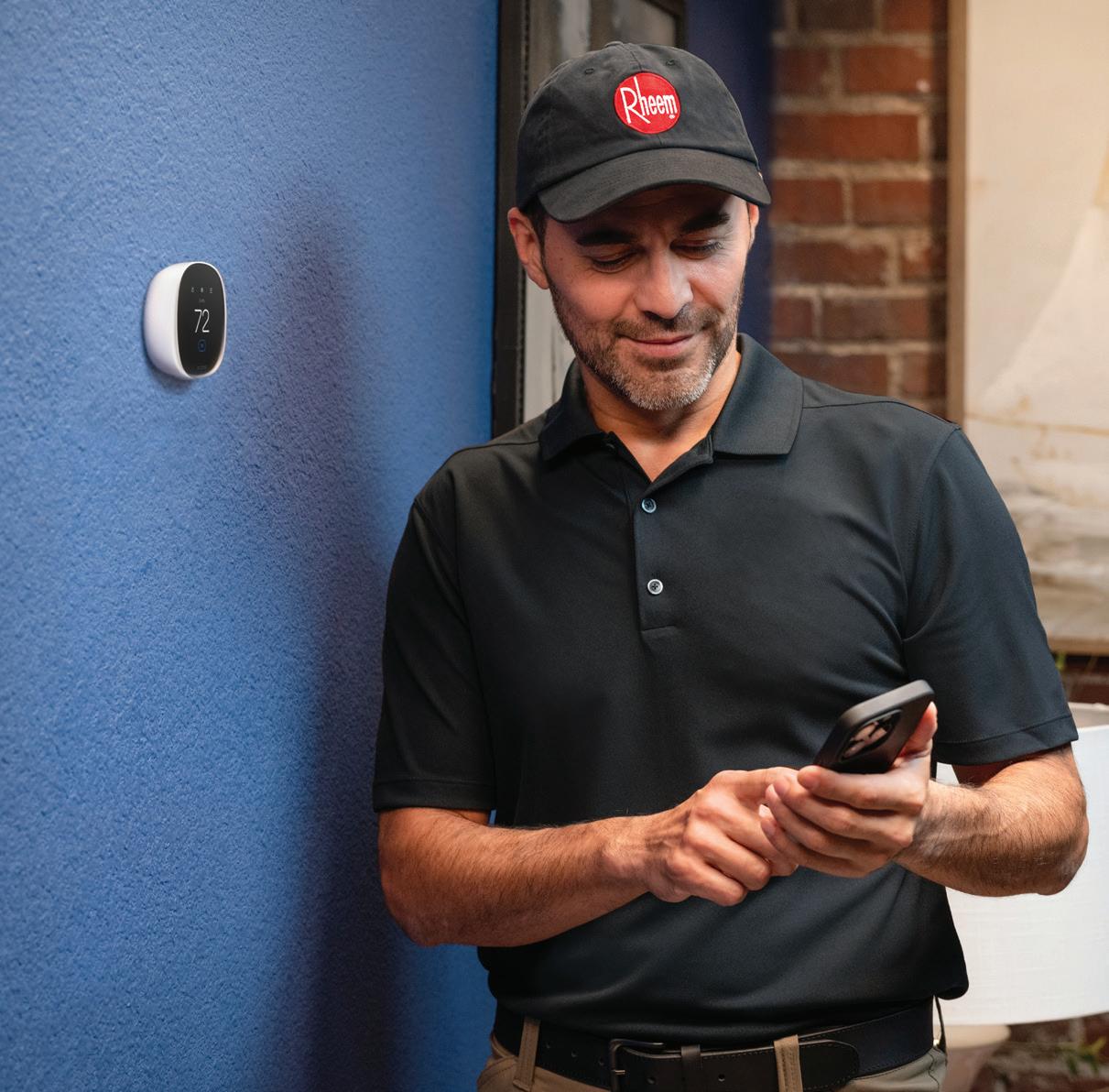
Streamline jobs and save room on your truck with the ecobee Smart Thermostat Lite | Works with EcoNet ® Technology*. It’s compatible with Rheem ® non-communicating residential heating & cooling equipment, eliminating the need to go back to your distributor for additional equipment. Plus, you can cover more homes with the time saved—a win-win. Rheem.com/ecobeelite
























































































































OPTIONS THAT ADAPT TO YOUR APPLICATION
Daikin NEXIO rooftop units deliver scalable performance, innovative engineering, and flexible configurations designed to meet the evolving needs of light commercial buildings. Available in three performance tiers, NEXIO gives engineers, contractors, and building owners the freedom to select the right balance of efficiency, electrification, and control — without compromise.
Designed for new construction and retrofit applications, NEXIO units span 3 to 25 tons across multiple cabinet sizes, helping reduce installation complexity while delivering reliable comfort and long-term value.



HOT GAS REHEAT*1 ELECTRIC HEAT
ECONOMIZER
STAINLESS STEEL HX (Gas/Electric units) POWERED AND NON-POWERED CONVENIENCE OUTLETS
INTEGRATED CONTROLS AND BACNET™ CONNECTIVITY*2
NON-FUSED DISCONNNECT SWITCH LOW AMBIENT KITS
PHASE MONITORS

SMOKE DETECTORS (Return, supply, or both) HINGED PANELS











*1 Hot gas reheat available on NEXIO Plus (High Efficiency) and NEXIO Max (Inverter) models.
*2 Daikin iLINQ controls are available on select models, while NEXIO Max (Inverter) features native BACnet™ integration BACnet™ is a trademark of ASHRAE


“People are not ready yet, but the buildings are,” answered one thought leader at arguably AHR Expo’s most fascinating industry panel.
By Rob McManamy

A longtime engineering researcher, scientist, and inventor details his latest efforts to develop new technology for disinfecting indoor air. By
D. Yogi Goswami
A new public safety facility in Minnesota is benefiting from an impressive array of energy-saving strategies.
By Mark Bradby and John Maust
Indoor air quality experts met this March for an update on bipartisan legislation to promote building occupant health. Will post-pandemic awareness lead to action?
By Jason Hartke

Manufacturers group unveiled two new marketing and education intitiatives at BOILER Expo 2026 in Nashville. By
Shaunica Jayson
8 Ed Notes
How Will You Use AI? If You Have No Plan, It’s Time to Make One By Rob McManamy
Industry Perspectives
Honoring Ron Wilkinson, One-of-a-Kind Engineer By Randi Rognlie
HPAC Engineering (USPS Permit 464-930, ISSN 0039-0895 print, ISSN 1930-8957 online) is published 6x a year (Jan/Feb, Mar/Apr, May/Jun, Jul/Aug, Sep/Oct, Nov/Dec) by Endeavor Business Media, LLC. 201 N Main St 5th Floor, Fort Atkinson, WI 53538. Periodicals postage paid at Fort Atkinson, WI, and additional mailing offices. POSTMASTER: Send address changes to HPAC Engineering, PO Box 3257, Northbrook, IL 60065-3257. SUBSCRIPTIONS: Publisher reserves the right to reject non-qualified subscriptions. Subscription prices: U.S. ($ 111.25); Canada/Mexico ($123.75); All other countries ($148.75). All subscriptions are payable in U.S. funds. Send subscription inquiries to HPAC Engineering, PO Box 3257, Northbrook, IL 60065-3257. Customer service can be reached toll-free at 877-382-9187 or at HPACengineering@omeda.com for magazine subscription assistance or questions.
Printed in the USA. Copyright 2026 Endeavor Business Media, LLC. All rights reserved. No part of this publication may be reproduced or transmitted in any form or by any means, electronic or mechanical, including photocopies, recordings, or any information storage or retrieval system without permission from the publisher. Endeavor Business Media, LLC does not assume and hereby disclaims any liability to any person or company for any loss or damage caused by errors or omissions in the material herein, regardless of whether such errors result from negligence, accident, or any other cause whatsoever. The views and opinions in the articles herein are not to be taken as official expressions of the publishers, unless so stated. The publishers do not warrant either expressly or by implication, the factual accuracy of the articles herein, nor do they so warrant any views or opinions by the authors of said articles. 10 19 26 34

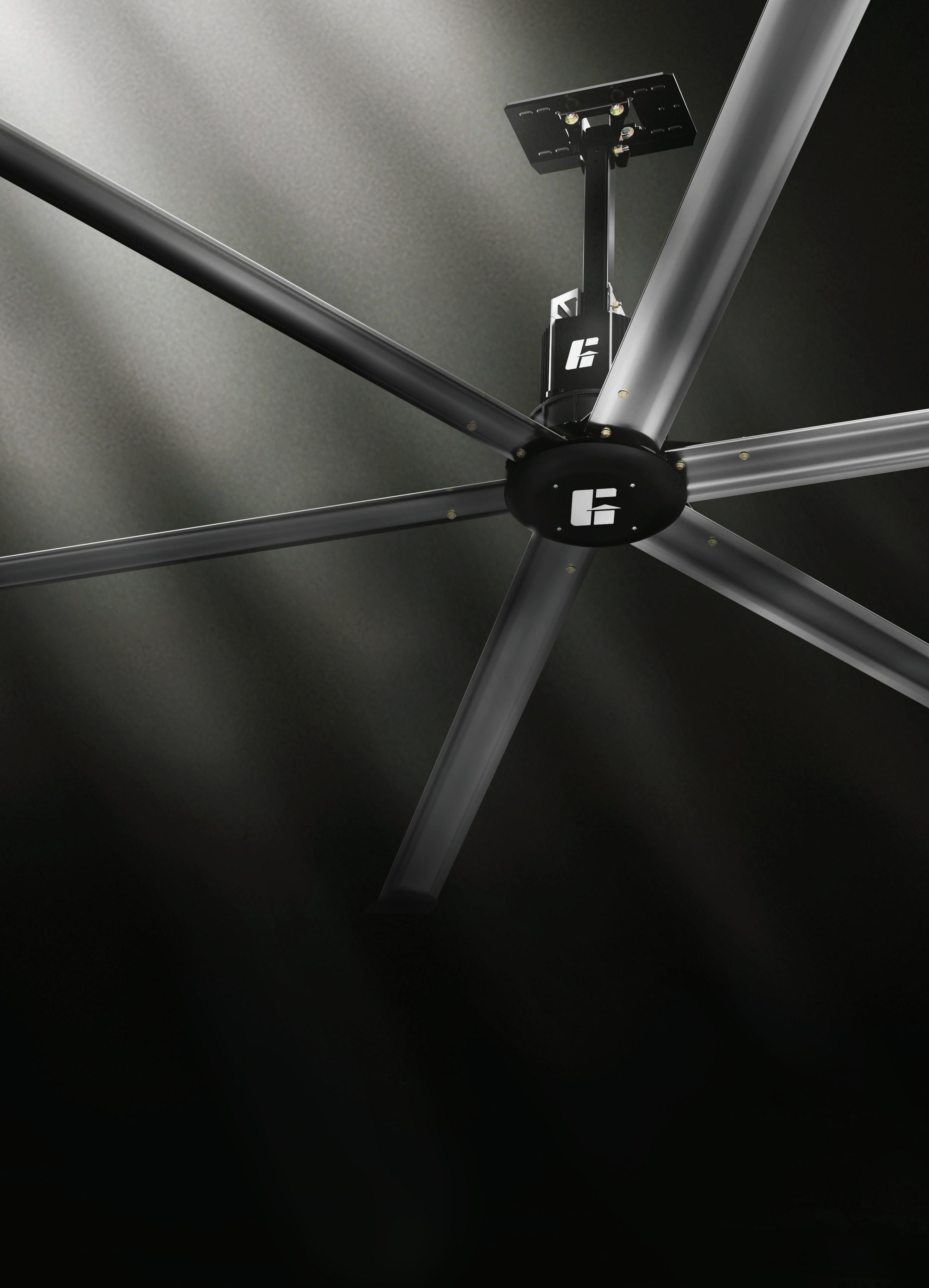
Greenheck’s redesigned model DS overhead HVLS fans set the standard with unmatched airflow, energy efficiency, and reliability—all in a sleek, easy-to-install design.
Air performance up to 281,700 cfm with unmatched Ceiling Fan Energy Index (CFEI) values
Seamlessly integrated variable frequency drive (VFD) supports the industry’s widest array of control options
Industry-leading IP66 ingress protection rating safeguards against dust and water in extreme conditions
The A.I. Revolution is Accelerating, with Tech Pioneer Paul Doherty
Engineering technology is at a watershed moment, our guest tells ‘HPAC On The Air.’ Is your firm ready? www.hpac.com/55361112


in Engineering: Case Studies in HVACR
WEBINAR: April 28, 1 pm ET! Test your “Ethics IQ” in this interactive webinar that explores real-world ethical dilemmas engineers face on HVACR projects—often without realizing it. www.hpac.com/55364113
Looking Back at Ten Years of Clark’s Remarks
From climate change and sea level rise to decarbonization and regulatory upheaval, our sustainability columnist reflects on a stormy decade. www.hpac.com/21270656
Our March Quiz!
BOILER Expo 2026 arrives in Nashville March 31. Before you go, take this short quiz on the history of the U.S. boiler industry for a chance to win $25!
www.hpac.com/55360327

EDITORIAL OFFICE
8001 Lincoln Ave. • Suite 720 Skokie, IL 60077
www.hpac.com
EXECUTIVE TEAM
CEO: CHRIS FERRELL
COO: PATRICK RAINS
CDO: JACQUIE NIEMIEC
CALO: TRACY KANE
CMO: AMANDA LANDSAW
EVP, BUILDING & CONSTRUCTION GROUP: CHRIS PERRINO
EDITORIAL CONTACTS
MIKE EBY
VP of Content Strategy, Building & Construction Group meby@endeavorb2b.com
ROB MCMANAMY
Editor-in-Chief rmcmanamy@endeavorb2b.com
DAVID ECKHART Art Director deckhart@endeavorb2b.com
SALES CONTACTS MIDWEST BILL BOYADJIS 973-829-0648 bboyadjis@endeavorb2b.com
SOUTH & WEST
RANDY JETER 512-263-7280 • Fax: 913-514-6628 rjeter@endeavorb2b.com WEST ELLYN FISHMAN 949-239-6030 efishman@endeavorb2b.com
ACCOUNT MANAGER
STEVE SUAREZ 941-259-0867 ssuarez@endeavorb2b.com
DIRECTOR OF SALES JOE AGRON 941-200-4778 jagron@endeavorb2b.com
LIST RENTAL
SMART REACH sr-assets@endeavorb2b.com effective
PRODUCTION AND CIRCULATION
RITA FITZGERALD
Senior Production Manager rfitzgerald@endeavorb2b.com
MELISSA MENG Ad Services Manager mmeng@endeavorb2b.com
JAMES MARINACCIO
Audience Marketing Manager jmarinaccio@endeavorb2b.com

April 29-30, 2026
Portland, OR
NORTHERN CALIFORNIA
September 2026
Santa Clara, CA
August 19-20, 2026
Reno, NV
NORTH TEXAS
October 14-15, 2026
Irving, TX













ROB MCMANAMY,
Funny. The subject of Artificial Intelligence, aka AI, has become so ubiquitous in the last year that I was sure I had devoted a recent editorial to the topic. But when I reviewed our recent issues, I was amazed to discover that I had not discussed it in this space since my first Editor’s Notes column of 2025, entitled, Has the Brave New World of AI Finally Arrived?
At that time, I casually predicted, “As our industry becomes more open to the concept of AI delivering a tangible return on investment, and not just an expensive novelty, none of us should be surprised to see this tranformative technology join our project teams both sooner and later.”
Just 14 months later, that sentence seems a quaint understatement. In fact, three comments from early 2026 have already jolted me, and reset my expectations.
In our March episode of HPAC On The Air, longtime construction technologist Paul Doherty, a licensed architect, Smart Cities expert, and early contributor to the development of building information modeling (BIM), says this will be ‘a watershed year’ for engineering technology. “The speed and velocity of the AI revolution will change things in a nanosecond,” Doherty predicts. “This will do away with shop drawings, with RFI’s, with change orders, all within this generation.”
In fact, the transformation will be so fast, he adds, that the main hurdle for adoption will ultimately be convincing project developers that the AI-generated building designs are just as solid and even more reliable than the ones traditionally created by humans.
At this year’s AHR Expo in Las Vegas, one technology panelist matter-of-factly said this about facility management: “We are probably 5 to 10 years away from full adoption of AI; it will eventually replace humans in this space.” Added another panelist, “I think it could be just one to three years, myself.” Umm... wow.
Writing in an op-ed in The New York Times in early March, former U.S. Secretary of Commerce and Rhode Island Gov. Gina Raimondo
said flatly, “Artificial intelligence is transforming work faster than our work force is adapting... Leaders across the political spectrum and the private sector tell me this crisis is coming and there’s no obvious solution.”
With that in mind, Raimondo is calling for a “grand bargain” between the public and private sectors to help define the “skills essential to the AI economy” and to help build pathways to those jobs via “training, incentives and safety nets that help workers move quickly into them.”
Are engineers ready for this imminent revolution? “No,” says Doherty. ASHRAE would beg to differ, having increased its own efforts to prepare and educate members.
“The breakout of collaborative AI in MEP design will define 2026,” said former ASHRAE President Kent Peterson, PE, Chief Technology Officer at P2S Inc. Speaking to us in our January-February issue, he added, “This isn’t about replacing engineers. It’s about using available technology to amplify their capabilities.”
Of course, that’s what editors like me are being told about journalism, too. But so far, the assistance of AI has been a plus, I must admit. (Have you noticed the bullet points that lead most of our online articles this year? That’s AI!)
According to ASHRAE’s Multidisciplinary Task Group (MTG) on Generative AI: Current advances in Large Language Models (LLMs) have resulted in generative AI tools and techniques that have transformed processing all forms of digital information to solve every day problems in all domains. Integrating generative AI technology applications in the HVAC industry can offer various benefits, including energy efficiency, predictive maintenance, and improved system optimization.
Those all sound like pluses, too.
But as others have reminded us, AI’s capabilities seem to be growing daily. So, does your firm or facility team have a strategy for leveraging them into opportunities? If not, at this point, I would say there is no time to waste.
EDITORIAL ADVISORY BOARD:
William P. Bahnfleth, PhD, PE The Pennsylvania State University
Glenn Barrett, PE DC Engineering
David W. Bearg, PE Life Energy Associates
Lawrence (Larry) Clark, QCxP, GGP, LEED AP+ Sustainable Performance Solutions LLC
Kenneth M. Elovitz, PE, Esq. Energy Economics Inc.
Charles E. Gulledge III, PE, HBDP, LEED AP, FASHRAE Environmental Air Systems LLC
Elise Kiland, PE, YEA Cambio
Nancy Kohout, PE, LEED AP SmithGroup
Stephanie Taylor, MD, M.Arch, ThinkLite Air
Ginger Scoggins, PE, CEM, CxA, LEED AP, FASHRAE Engineered Designs Inc.
James P. Waltz, PE, CEM, ACFE Energy Resource Associates Inc.
Michael K. West, PhD, PE Advantek Consulting
Ron Wilkinson, PE, LEED AP Wilkinson Commissioning Management
Gerald J. Williams, PE, LEED AP 8760 Engineering LLC


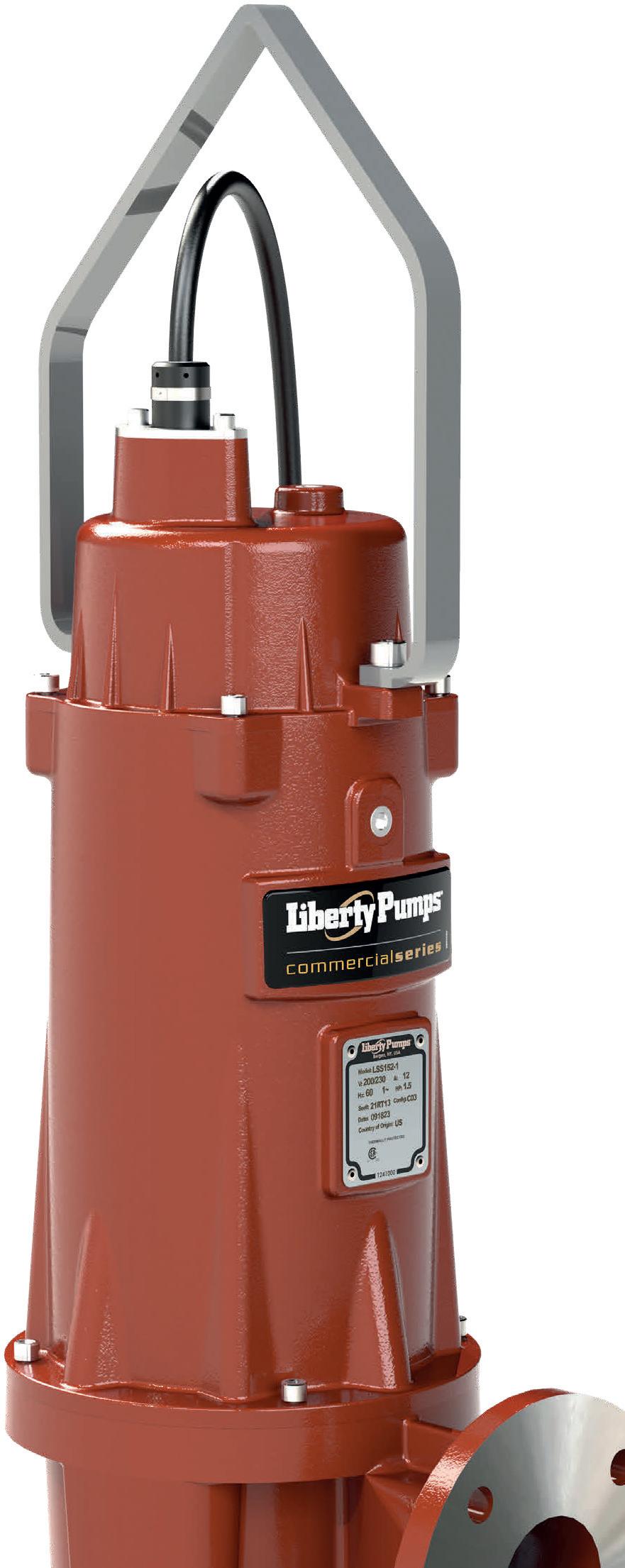

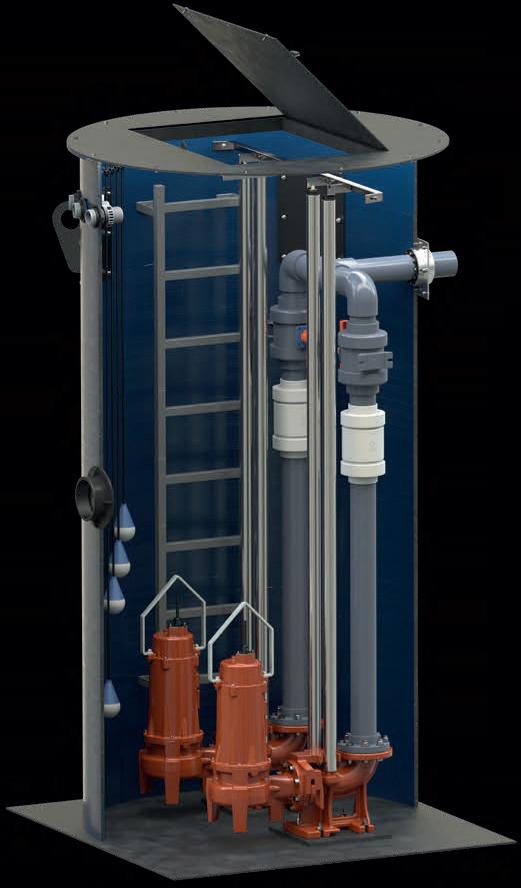
• Available in 2-Vane and Vortex impeller styles
• Available in 1.5, 2, 3 or 5 HP
• Single mechanical silicon carbide shaft seal
• Cast iron construction with epoxy powder coating
• Quick-connect power cords in 35', 50' or 100' lengths




Proudly made in the USA with US & global components

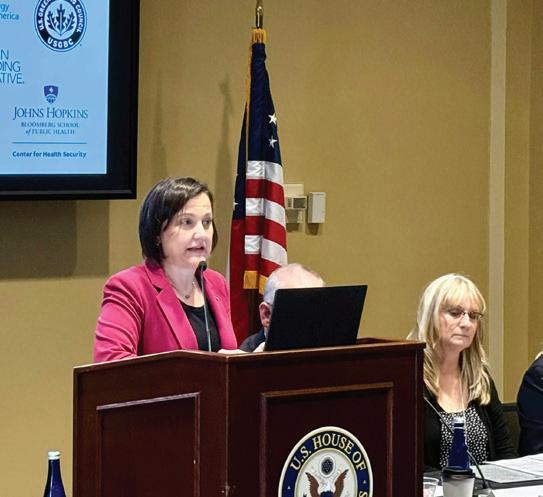
Indoor air quality experts met this March for an update on bipartisan legislation to promote building occupant health. Will post-pandemic awareness lead to action?
By JASON HARTKE, PhD, Executive VP, International WELL Building Institute
You know it’s a healthy buildings crowd when the “we spend 90% of our lives indoors” stat comes up multiple times. While we’re all hearing that statistic more often, it still bears repeating.
What happens inside our buildings has a huge impact on our health, perhaps most notably the air we breathe. Poor indoor air quality (IAQ) is now recognized as one of the world’s leading (yet largely preventable) environmental health risks.
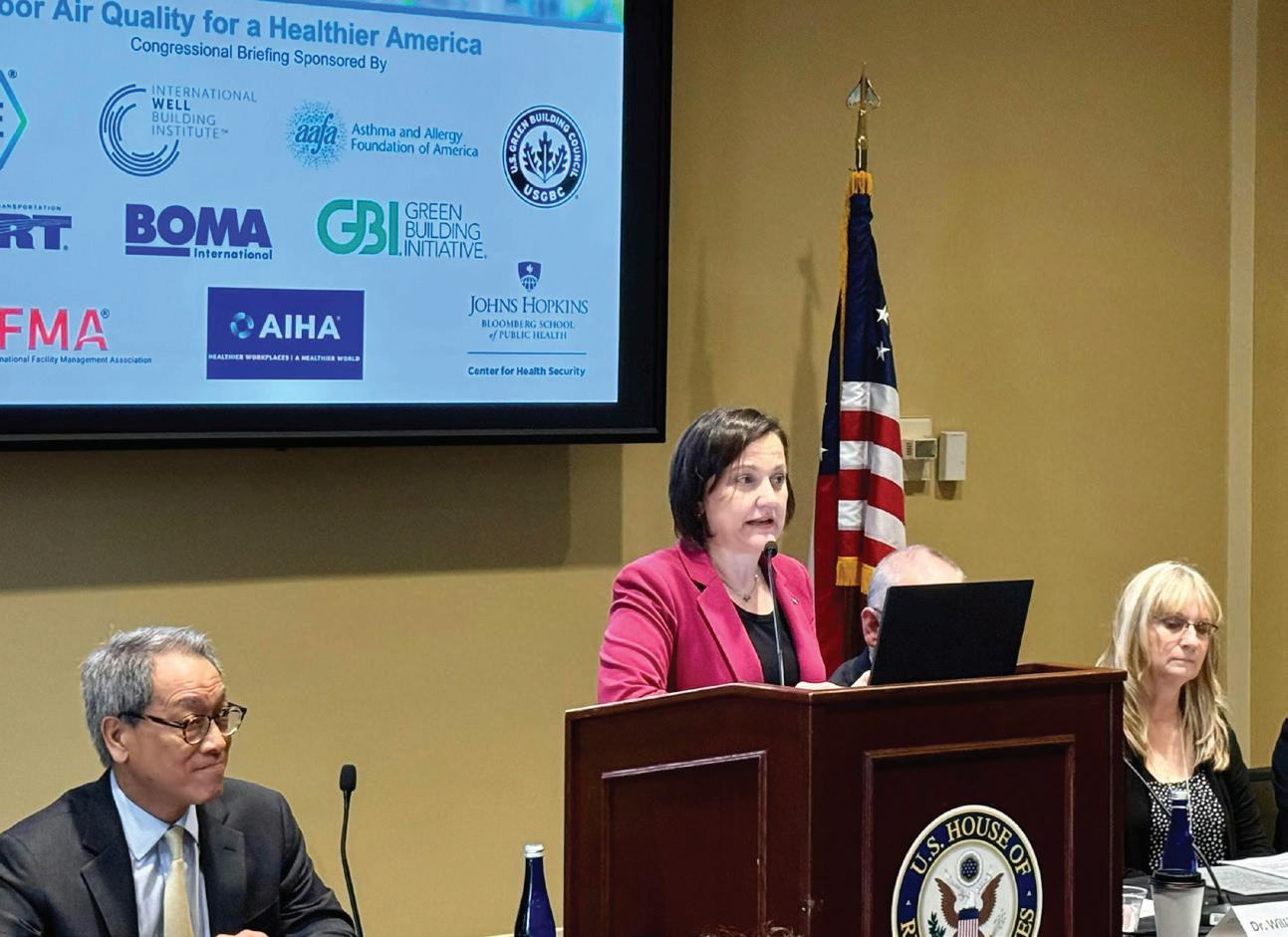
That’s why a March 6th Congressional briefing on Indoor Air Quality for a Healthier America focused on elevating IAQ as a central advocacy priority and a key focus of public policy action. That theme came to life throughout the briefing, a standing-room-only event
where national policymakers and leading experts across public health, building science, facility management and business made the case that healthier indoor environments are essential to healthier people.
Opening the day in the Gold Room of the Rayburn House Office Building on Capitol Hill, Rep. Paul Tonko (D-NY) underscored the growing momentum behind efforts to improve IAQ, noting that despite decades of progress addressing outdoor pollution under the Clean Air Act, IAQ remains largely unregulated and underfunded. He pointed to bipartisan legislation he reintroduced last fall, The Indoor Air Quality and Healthy Schools Act, which would drive federal resources and action to protect Americans from poor indoor environments.
Another lawmaker who spoke at the briefing, Congressman Don Beyer (D-VA), noted his reintroduction of
The Airborne Act, important bipartisan legislation that would create critical incentives for commercial building owners to conduct IAQ assessments, specifically a $1 per square foot tax credit not to exceed the cost of conducting the assessment.
Tonko closed his remarks with a nod to the leaders assembled in the room. “We are a powerful compact of organizations to speak forcefully to this issue.” The briefing itself reflected a diverse group of hosting organizations brought together by ASHRAE, including the International WELL Building Institute (IWBI); American Industrial Hygiene Association (AIHA); Asthma and Allergy Foundation of America (AAFA); Building Owners and Managers Association (BOMA); Green Building Initiative (GBI); Johns Hopkins School of Public Health; International Facility Management Association (IFMA); SMART; and the U.S. Green Building Council (USGBC).
Several clear themes emerged during the briefing. My takeaways:
1. Indoor air quality is a foundational public health issue.
Dr. Whitney Austin Gray, SVP of Research at IWBI, emphasized that improving buildings is ultimately about improving human health. “If we do not invest in our children and secure healthy environments for the future, we are already behind — and healthy air is going to be a critical component of that.”
Gray highlighted research showing that healthier buildings can produce measurable gains in workplace satisfaction, well-being, mental health and performance. “We’ve documented improvements including a 30%
increase in environmental satisfaction, 26% improvements in well-being, and even significant gains in cognitive function when indoor environments are improved.”
She noted that in addition to significant health benefits, investing in healthy buildings pays back in terms of increased productivity, real estate performance, as well as talent retention and recruitment.
Looking ahead, Dr. Gray emphasized that brain health will be an important frontier in the conversation around healthy buildings. “Right now, our lifespan is longer than our brain span. If we want to close the gap, we have to start thinking about everything we put into our brains, including the air we breathe.”
2. Indoor air pollution affects millions of Americans every day.
Kenneth Mendez, President and CEO of AAFA, connected the science to the lived experience of millions.
“One in four Americans has allergies, and 28 million have asthma, including six million children,” he said.
Mendez also explained that people are often told to stay indoors when outdoor air quality is poor, yet we now know that, according to the EPA, indoor environments are three to five times more polluted than outdoor air and lack any protective regulations.
“When you come indoors, we don’t have those same standards. That’s why we need greater attention to indoor air quality,” he said. Improving indoor building environments, particularly in schools and workplaces, could significantly reduce asthma attacks, missed school days, and lost productivity.
3. The science of indoor air pollution is clear; the health risks significant.
Bethany Chirico, Chief Experience Officer at AIHA, detailed the pollutants commonly found in indoor environments and their health impacts.
“Indoor air often contains particulate matter, volatile organic compounds,
carbon monoxide, mold, bacteria and viruses — all of which can affect people’s health and well-being,” she said. And often these pollutants can accumulate in our indoor spaces.
She added that while our indoor air is often worse than outdoor air, “people cannot opt out of breathing it.”
Chirico said exposure to poor IAQ is linked to a variety of health problems, from short-term impacts such as headaches or asthma attacks to long-term risks including respiratory illnesses, heart disease and cancer.
4. Proven solutions already exist
Dr. Bill Bahnfleth, a Fellow and Presidential Member of ASHRAE,

explained that several ASHRAE standards are already available to help improve IAQ, but they need more exposure and support to ensure they are more widely implemented.
“The science is very clear that we need to do something about IAQ, and we have the tools to move forward if we have the will to put them into action,” Bahnfleth said.
ASHRAE has developed baseline standards for ventilation and IAQ, as well as newer guidance for controlling infectious aerosols. However, Bahnfleth noted, adoption remains very uneven across multiple states and jurisdictions.
119th Congress
House sponsors: Representatives Paul Tonko (D-NY) and Brian Fitzpatrick (R-PA)
• People spend 90% percent of their time indoors, and EPA studies have shown that contaminants can be 2-5 times and occasionally 100 times higher than outdoors.
• EPA’s Science Advisory Board has consistently ranked poor IAQ among the top five environmental risks to public health, and over 3 million people globally die prematurely each year from disease caused by poor IAQ
• Exposure to radon is the second leading cause of lung cancer, causing an estimated 21,000 deaths annually in the United States, while exposure to excessive particulate matter has been linked to asthma, COPD, cardiovascular disease, and cancer.
• While outdoor air pollution is far from solved, the United States has made significant progress over the past 50 years in reducing dangerous emissions thanks to the Clean Air Act.
• IAQ efforts have historically been underappreciated and underfunded.
o No similar law to the Clean Air Act exists for indoor contaminants.
o IAQ improvements have primarily been achieved through voluntary adoption of best practices.
o This progress has been slow and uneven due to the tremendous range of building types, conditions, age, and ownership across the country.
• The COVID-19 pandemic highlighted the importance of effective ventilation and filtration systems in buildings and brought renewed attention on the need for homes, schools, and workplaces to be designed and retrofitted to foster health and well-being while being resilient against power outages, wildfires, heatwaves, and other risks.
The Indoor Air Quality and Healthy Schools Act would ensure that EPA has the authority and resources necessary to better protect public health from poor indoor air quality. Specifically, the bill:
❖ Updates, expands, and codifies the work of EPA’s Indoor Environments Division;
❖ Requires EPA to establish and regularly update a list of significant indoor contaminants, and develop health-based, voluntary guidelines to reduce exposure risks to these contaminants;
❖ Directs EPA to develop or recognize one or more voluntary certifications for buildings designed, built, operated, and maintained to prevent or minimize indoor air health risks; and
❖ Establishes a regularly updated national assessment of IAQ in schools and childcare facilities, and supports development of technical assistance, guidelines, and best practices to improve the IAQ conditions of these facilities.
The takeaway: more policy alignment is needed to better translate existing science into more widespread adoption of these minimum baseline standards.
5. Implementation requires action from both building professionals and policymakers.
Laurie Gilmer , a Fellow with IFMA, highlighted the critical role of facility managers in maintaining healthy buildings, saying, “The people who operate buildings are on the front lines of keeping occupants safe, healthy and productive.”
She also acknowledged how IAQ can affect far more than just the physical health of occupants.
“The air we breathe indoors affects cognitive performance, creativity, focus and decision-making,” she said. Gilmer referenced several strategies that leading organizations are deploying to help improve IAQ, such as source control, improved
ventilation, filtration, and better building maintenance.
Also on the implementation front, K-12 schools emerged as one of the most urgent priorities during the briefing. As noted by Anisa Heming , Director of the Center for Green Schools at USGBC, improving school buildings represents both a key sector of focus and a tremendous opportunity to safeguard children’s health, and their ability to learn.
The latest 2025 State of Our Schools report — led by IWBI, the 21st Century School Fund, and the National Council on School Facilities — found that schools face an annual investment shortfall of nearly $90 billion.
This massive funding gap clearly reflects the worsening condition of school facilities, which in turn jeopardizes IAQ and the health and productivity of the more than 50 million U.S. students who attend school every day.
The congressional briefing demonstrated that momentum is building across science, academia, industry and policy. As Dr. Gray noted, progress will require collaboration across disciplines.
“If you do not partner, if you do not operationalize these solutions, then we won’t be successful,” she said. “At IWBI, we partnered with more than 200 global leaders to form the Global Commission on Healthy Indoor Air. We have the science globally. Now it will be a question of who will implement it first to lead investment in the future of children and workforces.”
The briefing also underscored the importance of collaboration. Thanks to ASHRAE (with key leadership from its Director of Government Affairs, Alice Yates), the briefing brought together these leading nine organizations for an impactful discussion on Capitol Hill that elevated IAQ as a central issue linking public health, building performance and national resilience.
Federal energy-efficiency campaign for products and buildings will live on, says White House, but under a new lead agency.
Earlier this March, the U.S. Environmental Protection Agency (EPA) ended nearly a year of uncertainty about the fate of its popular ENERGY STAR® program with a memorandum of agreement (MOA) that transfers its lead administration to the U.S. Dept. of Energy (DOE).
But the debate is far from over.
On March 3rd, EPA and DOE formally signed the MOA, assigning lead responsibilities for the voluntary program which had been authorized by Section 131 of the Energy Policy Act of 2005. Section 131 had amended the Energy Policy and Conservation Act to establish within EPA a “voluntary
program to identify and promote energy-efficient products and buildings in order to reduce energy consumption, improve energy security, and reduce pollution through voluntary labeling of, or other forms of communication about, products and buildings that meet the highest energy conservation standards.”
Now in effect for the next 10 years, the new memorandum states:
“Henceforth, DOE will be the lead Federal agency for the ENERGY STAR® Program, in consultation with other Federal agencies as needed, including EPA and the Small Business Administration. DOE and EPA agree to initiate the orderly transition of primary
management of ENERGY STAR® activities, including partnership agreements, trademark(s), as well as IT systems and databases, from EPA to DOE. These specific activities and timing will be detailed through a transition plan (hereafter referred to as the 2026 ENERGY STAR® Program Transition Plan) agreed to by the Agencies within 90 days ofthe approval ofthis MOA.
The MOA will be the primary applicable agreement on ENERGY STAR® responsibilities upon its effective date and replaces coordination between the Agencies as outlined in the 1996 EPA and DOE Memorandum of Cooperation on Energy Efficient, Environmentally Beneficial Buildings and the 2009
Memorandum of Understanding on Improving the Energy Efficiency of Products and Buildings Between the U.S. Environmental Protection Agency and the U.S. Department of Energy.”
For its part, the U.S. Green Building Council (USGBC) expressed alarm over the unexpected announcement.
Posting on LinkedIn, Ben Evans, USGBC’s federal legislative director commented on March 5, “Just weeks after Congress approved full funding for ENERGY STAR at EPA, the U.S. Department of Energy (DOE) and EPA have released a Memorandum of Agreement to move the program to DOE. This raises many questions about how the program will be funded and staffed, and poses risks of disruption to a program that impacts broad swaths of the economy.”
In a formal statement from USGBC, Evans added, “Given EPA’s statutory responsibility and strong institutional knowledge in managing the program, a change of this magnitude calls for more transparency, oversight and public engagement. ENERGY STAR is an incredibly valuable public asset, and its value relies on continued public trust in the ENERGY STAR brand that can only be maintained with steady investment and leadership. ENERGY STAR partner organizations, the public, and Congress need to know more about how DOE would operate and fund the program moving forward.”
Last spring, new EPA Administrator Lee Zeldin publicly expressed doubt about the future of ENERGY STAR, suggesting that it could be run better by the private sector. USGBC was one of over 1,000 manufacturers, contractors, designers, organizations, and municipalities who pushed back, all signing a letter urging EPA to maintain full funding and staffing levels for the program. Signatories also included:

• American Institute of Architects (AIA)
• A.O. Smith
• ACCO Engineered Systems
• American Council for an EnergyEfficient Economy (ACEEE)
• Association of Energy Engineers
• Baker Engineering
• Building Performance Association
• Caldwell Associates
• CannonDesign
• Clayco
• Cushman & Wakefield
• Ford Motor Co.
• Fujitsu General America
• International WELL Building Institute
• LEO A DALY LLC
• LG Electronics USA Inc.
• National Institute of Building Sciences
• NBBJ
• Portland Cement Association
• Samsung Electronics America
• Trane Technologies
In May, ACEEE Executive Director Steven Nadel explained, “Congress directed the government to run the ENERGY STAR program. Until now, the EPA has implemented that statutory obligation, and it’s been an enormous success. This program saves families and businesses more than $40 billion every year with a budget of less than $40 million. It’s an astonishingly good deal. Major industry associations
have rightly rejected this notion that someone else could simply pick up this program and run it as EPA has, with the decades of trust it has built with manufacturers, builders, and consumers. Congress needs to step up now and ensure that the government keeps running this remarkably effective and popular program.”
This year, in the face of such pressure, Congress did step up and include ENERGY STAR funding in the latest federal budget for FY 2026. But now it is unclear how the funding will change, if at all, with DOE taking the lead.
As of March 15, 2026, the ENERGY STAR website, www.energystar.gov still boasts that “thousands of organizations—including nearly 40% of the Fortune 500®—partner with ENERGY STAR. Together with EPA, they deliver cost-saving, energy efficiency solutions that protect the environment, improve air quality, and protect public health.”
Since 1992, according to the official web page, ENERGY STAR and its partners have helped American families and businesses:
• Save 5 trillion kilowatt-hours of electricity;
• Avoid more than $500 billion in energy costs;
• Achieve 4 billion metric tons of greenhouse gas emissions reductions.
For much more on ENERGY STAR impacts visit www.energystar.gov/ about/impacts

Specifiers know they can count on our ElectriFLEX Series™ for a vast array of commercial solutions. It gives you the flexibility to meet every one of your customer’s installation requirements.
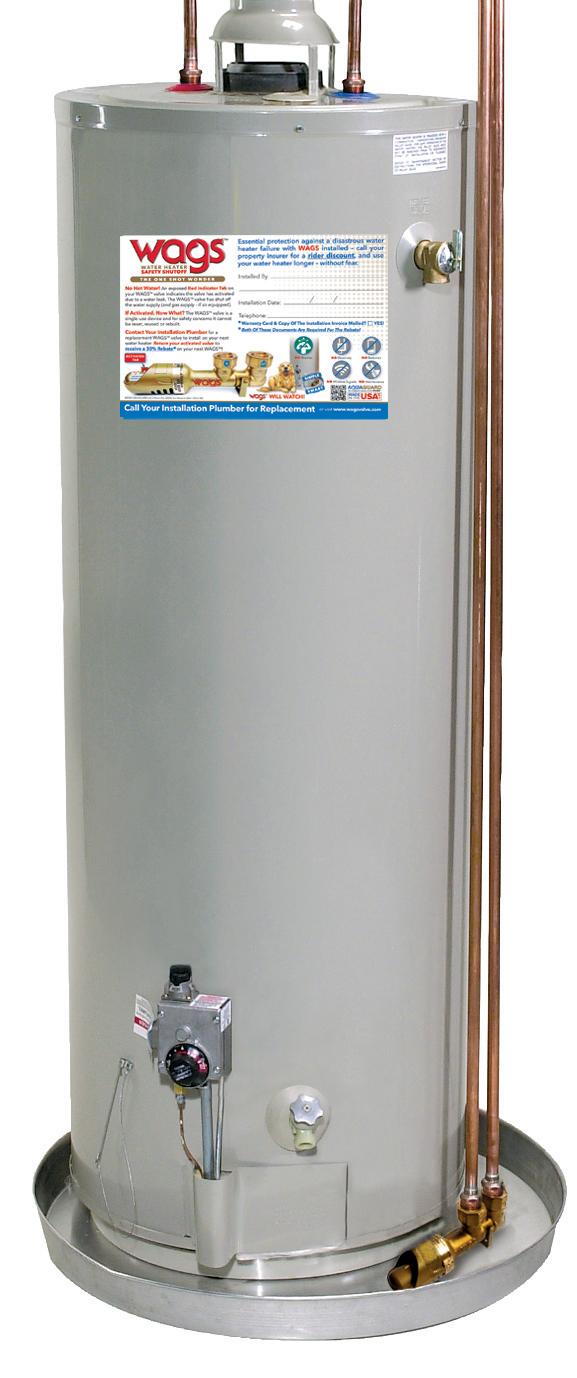
• Features our exclusive Vitraglas® tank lining with Microban® antimicrobial technology
• Converts easily to the right voltage, phase, and kW input to meet your application demands
• Field-convertible at the supply house or in the field by a qualified installer using a conversion kit
• Light, Medium, and Heavy-Duty models available: a single model solves multiple installation requirements


Performance on paper is one thing. Performance in the field is another. Bradford White’s commercial line features the heavy-duty components, precise controls, and proven innovations you need to meet commercial demands with confidence.

Explore Resources For The Pro®
A longtime engineering researcher, scientist, and inventor details his latest efforts to develop new technology for disinfecting indoor air.
By D. YOGI GOSWAMI, PhD, PE, Distinguished Professor, Director, TECO Clean Energy Research Center, University of South Florida
It’s no secret. Air quality has long been declining worldwide due to emissions from power plants, automobiles, industrial activities, etc. In addition, organic compounds emissions from indoor building materials, carpets, paints, and surface finishes also contribute significantly to indoor air pollution globally.
Scientists researching the emergence of viruses due to climate change and the World Health Organization (WHO) continue to warn us about new viruses for which we may not have protection. In addition, COVID-19 and other recent airborne viruses and their mutations have further highlighted the global impact of air quality and the risks associated with airborne transmission.
Among the pollutants of greatest concern in indoor environments are biological contaminants—such as viruses, bacteria, mold, and fungal spores—as well as volatile organic compounds (VOCs) and allergens including dust mite and cockroach droppings. These pollutants not only cause illness, but are also major contributors to allergies and asthma affecting a large portion of the global population.
Historically, air-cleaning technologies have focused primarily on removing particulate matter, with High Efficiency Particulate Air (HEPA) filters considered most effective option. But they cannot filter all viruses and VOCs.
Also, bacteria and mold spores trapped within the filters can proliferate if the filters are not replaced regularly. UV-C technology has gained popularity in large buildings for air disinfection, but its 95% kill rate is not sufficient. The remaining viruses and bacteria multiply quickly, and direct exposure to UV-C can be hazardous and may generate ozone, which is hazardous even at low concentrations.
More recently, air ionization technologies have been introduced into the market. However, according to studies
from the U.S. Environmental Protection Agency and others, ionic technologies also have several hazards associated with them, such as increased Ozone production, more VOCs, and other health problems.
To address the limitations of traditional air filtration technologies, I developed the Photocatalytic Oxidation (PCO) in the early 1990s to help my son, who suffered from asthma and allergies due to pollutants in indoor air.
Today, some major HVAC manufacturers are still marketing the PCO technology. However, over the years, I noticed that the PCO technology had a low quantum efficiency because of electron-hole recombination.
To address this limitation, I developed the next generation Photo Electro-Chemical Oxidation (PECO) technology, which achieves much faster destruction of indoor air pollutants. These methods improve air purification by targeting both biological pollutants—such as bacteria, viruses, and spores—and molecular contaminants like VOCs, while also filtering dust particles.
A Fellow of the National Academy of Inventors and member of the Florida Inventors Hall of Fame, Dr. Goswami holds a PhD in Mechanical Engineering from Auburn University. He joined the engineering faculty at University of South Florida in 2005 and is currently president of the Academy of Science, Engineering and Medicine of Florida (ASEMFL).
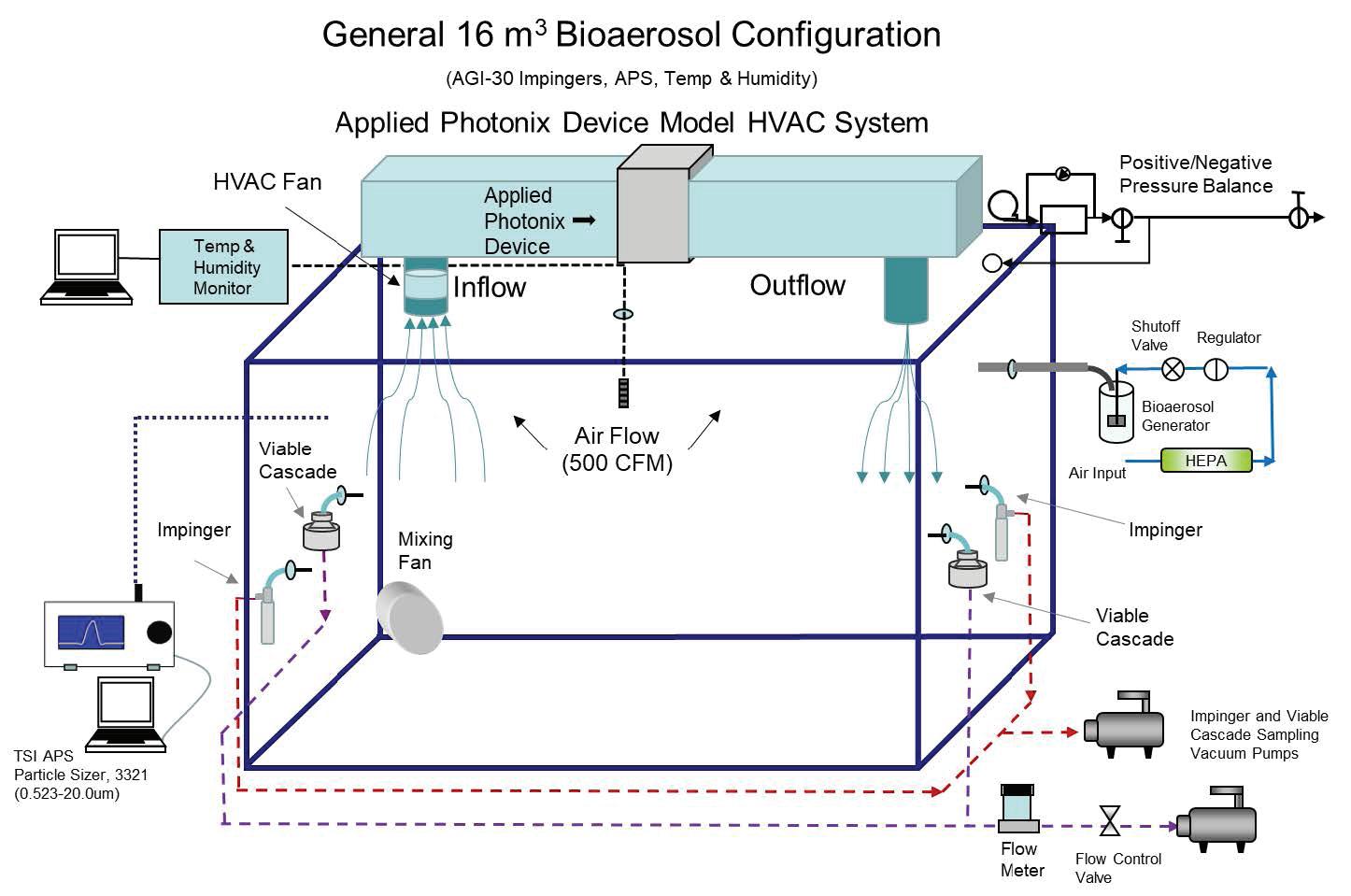
Schematic and flow Diagram of the Bio Aerosol Test Chamber.
PECO was commercialized as Molekule Inc., which introduced portable air purifiers that achieved US FDA 510(K) clearance, and helped millions of health care workers and other at-risk populations during the COVID-19 pandemic.
More recently, a next generation Plasmonic Photonic Technology has been developed for disinfection and detoxification of indoor air.
This advanced approach represents a significant step forward in indoor air purification and offers protection against future pandemics as well as a wide range of indoor pollutants. The technology utilizes the addition of plasmonic nanoparticles in the photocatalyst that interact with UV-A light, producing resonant effects that amplify the absorption of incoming photons and enhance their effectiveness.
As a result, this process achieves higher efficiency than existing photonic purification technologies. Extensive testing has demonstrated the capability of plasmonic photonic systems to effectively neutralize viruses, bacteria, mold, fungal spores, and VOCs.
Tests were conducted at the Aerosol Research and Engineering (ARE) Labs to study the performance of the Plasmonic Photonic technology against aerosolized ssRNA virus, ssDNA
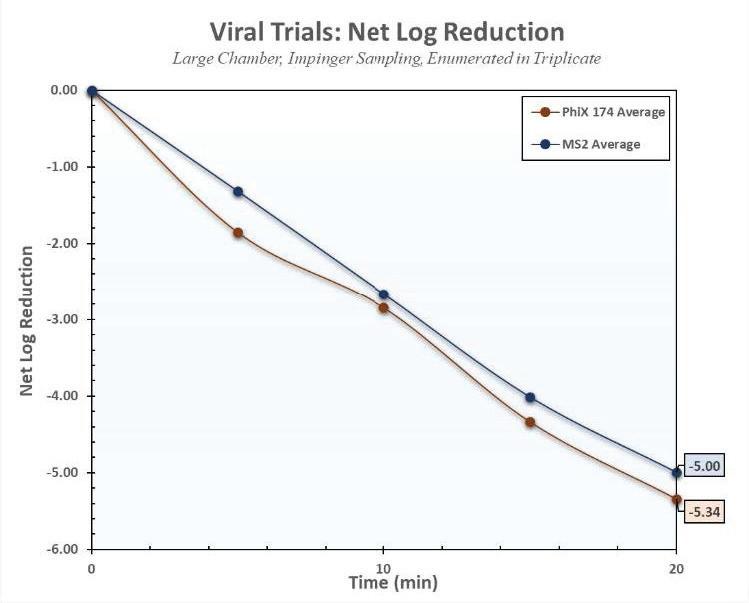
Performance of the Plasmonic Photonic device v. viruses: MS2 (RNA virus) 5 log or 99.999% reduction in 20 min.; PhiX (DNA Virus) 5.34 log or 99.9995% reduction in 20 min.
virus, Gram-negative bacteria, gram-positive bacteria, bacteria endospores, and mold spores, and were submitted to US FDA by Applied Photonix, the company commercializing this technology. Applied Photonix received FDA 510(K) clearance based on these results.
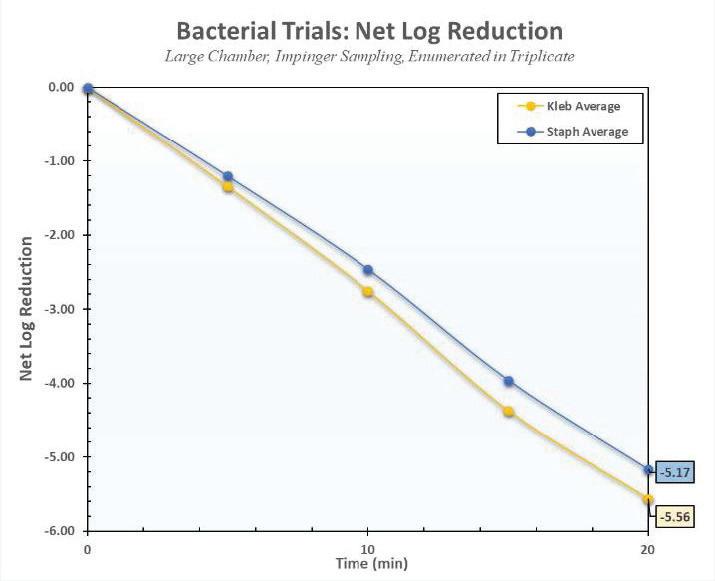
Performance of the Plasmonic Photonic device against Bacteria: S. epidermidis (Gram Positive) 5.17 log or 99.9993% reduction in 20 minutes; PhiX (Gram Negative) 5.34 log or 99.9995% reduction in 20 minutes.
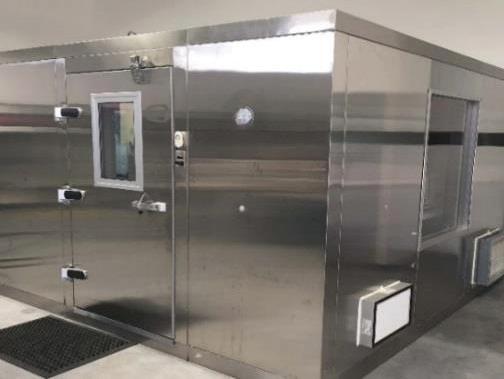
Experiments were conducted in a large, sealed aerosol chamber to simulate a contaminated room. The test chamber’s internal dimensions were 9.1-ft x 9.1-ft x 7-ft, with a displacement volume of 579 cu ft, or 16,000 liters. The images show both the schematic and chamber.
Experiments were conducted in an environmental chamber to demonstrate the improvement of the present technology described herein for the destruction of volatile organic chemicals (VOCs).
Tests were conducted for the destruction of Toluene, an organic compound difficult to oxidize and destroy. Two catalytic formulations were used, including a Control Basic PECO and a Plasmonic Photonic, with all the other conditions being the same. The incident light was UV-A and visible with a wavelength range of 350 –420 nm, the same as sunlight, therefore safe for humans.
Plasmonic Photonic Tech Tests
All tests for the destruction of VOCs were done at the USF Clean Energy Research Center in Tampa FL. Each catalytic formulation was tested at least 20 times. Each time the performance
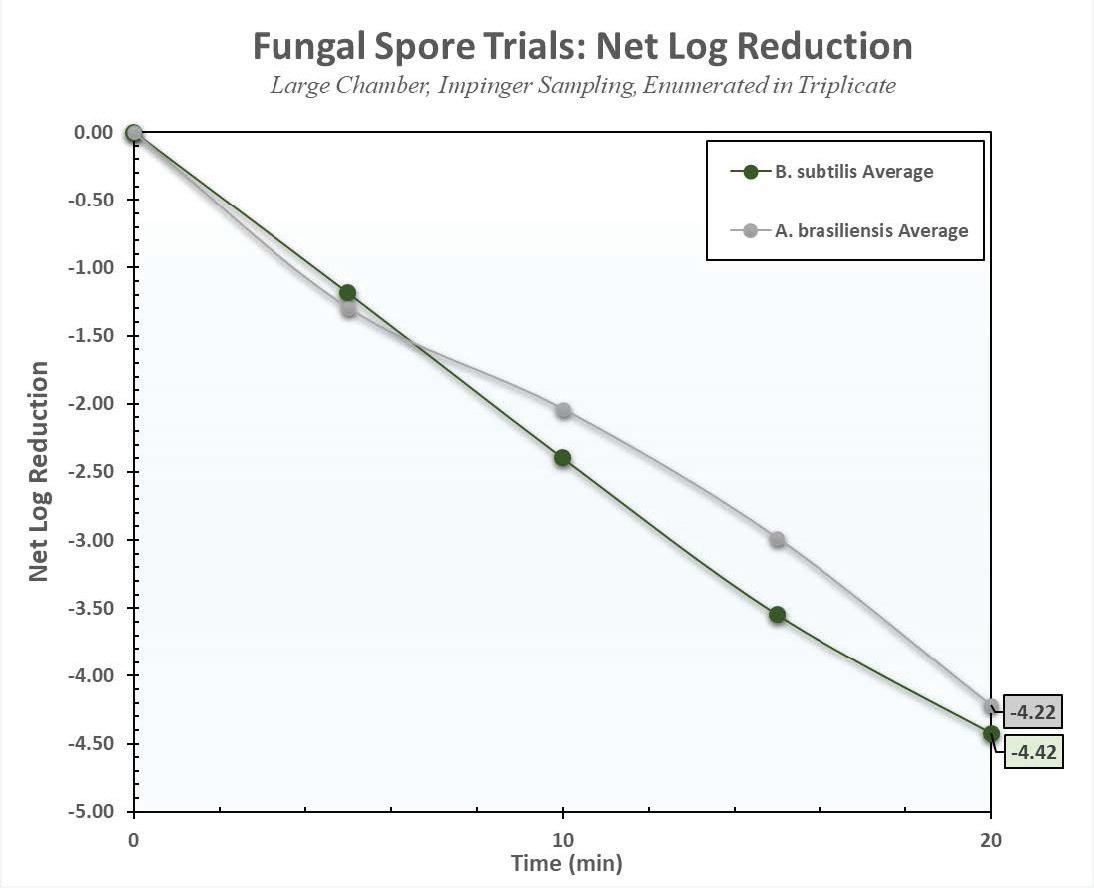
Performance of the Plasmonic Photonic device against mold and fungal spores: Aspergillus brasiliensis (Black Mold) 99.9939% reduction in 20 minutes; Bacillus subtilis(cousin of Anthrax) 99.9961% reduction in 20 minutes.
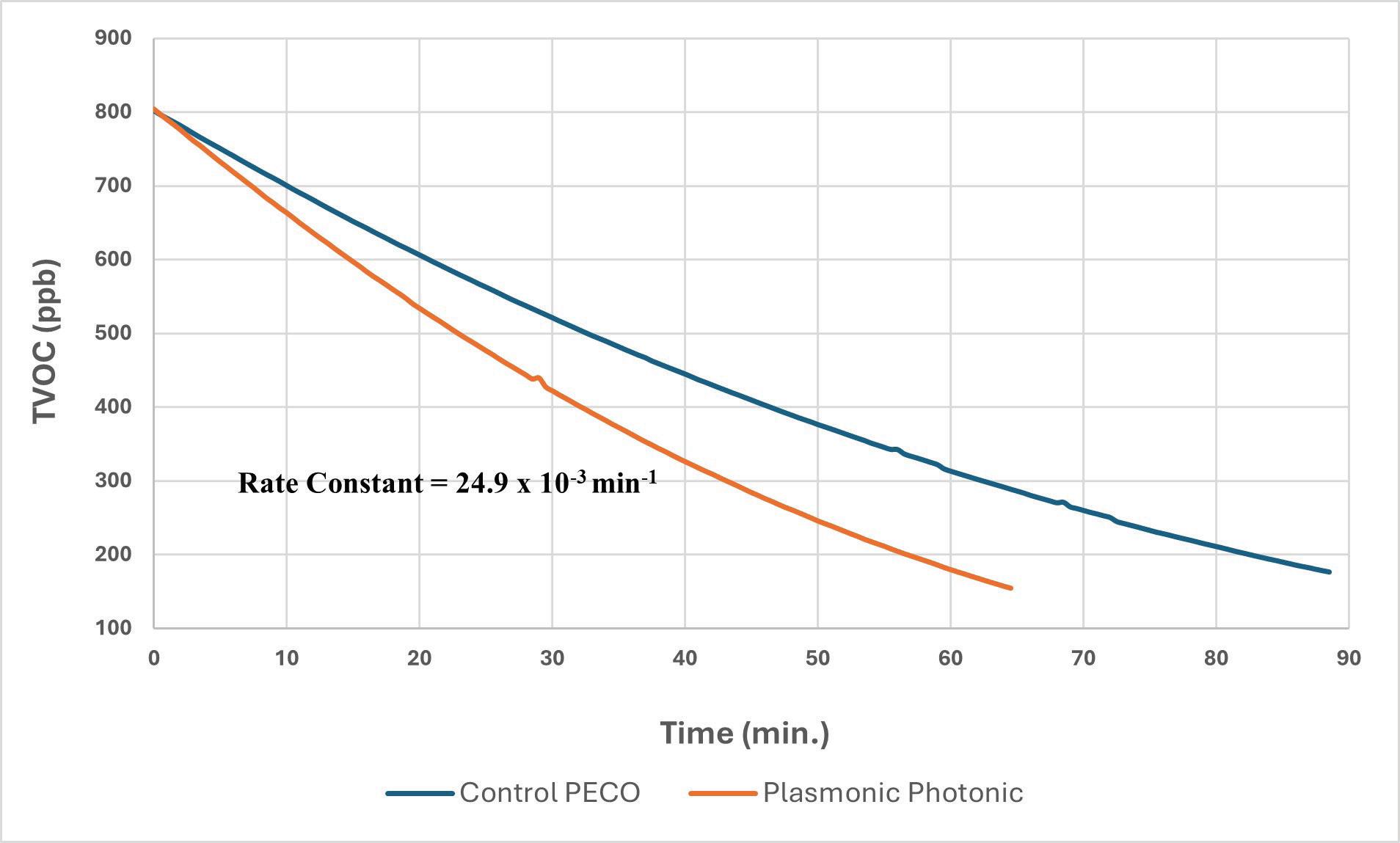
Performance of the new Plasmonic Photonic technology for destruction of VOCs over the control PECO technology.
was consistent. The results of all the experiments are above. These plots are composites of all the trials for these formulations. The error bars have been removed to understand the overall improvement for each formulation. Reaction rate constants were calculated for each and compared.
The calculated reaction rates:
Control Basic PECO = 15.5x10³min-1, Plasmonic Photonic = 24.9x10⁻³min-1. Thus, the improvement of the Plasmonic Photonic over the control is 60.7%.
We have invented an advanced new plasmonic photonic technology for disinfection and purification of indoor air. Applied Photonix LLC has developed products based on this technology that integrate with the central air conditioning systems of buildings. All the products based on the new technology were tested at ARE Labs, which then led to the FDA 510(K) clearances for all of them.
For more information, visit https:// www.aphotonix.com.
A new public safety facility in Minnesota is benefiting from an impressive array of energy-saving strategies.
By MARK BRADBY, PE, and JOHN MAUST, Technical Designer, LEO A DALY
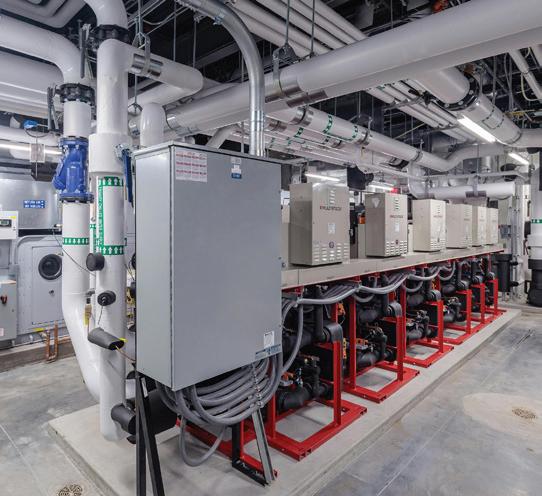
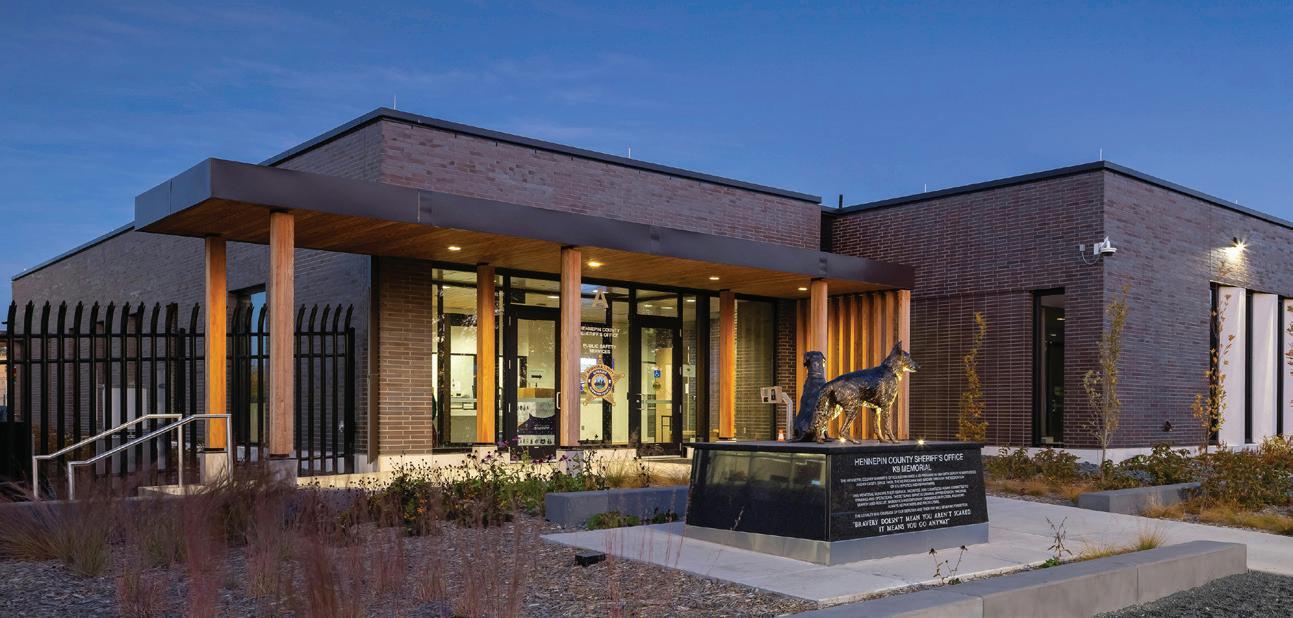
The new Hennepin County Sheriff’s Office Public Safety Services Headquarters in Plymouth, MN, was designed with a clear ambition: create a facility that operates around the clock, serves the community reliably, and is positioned to achieve net zero energy.
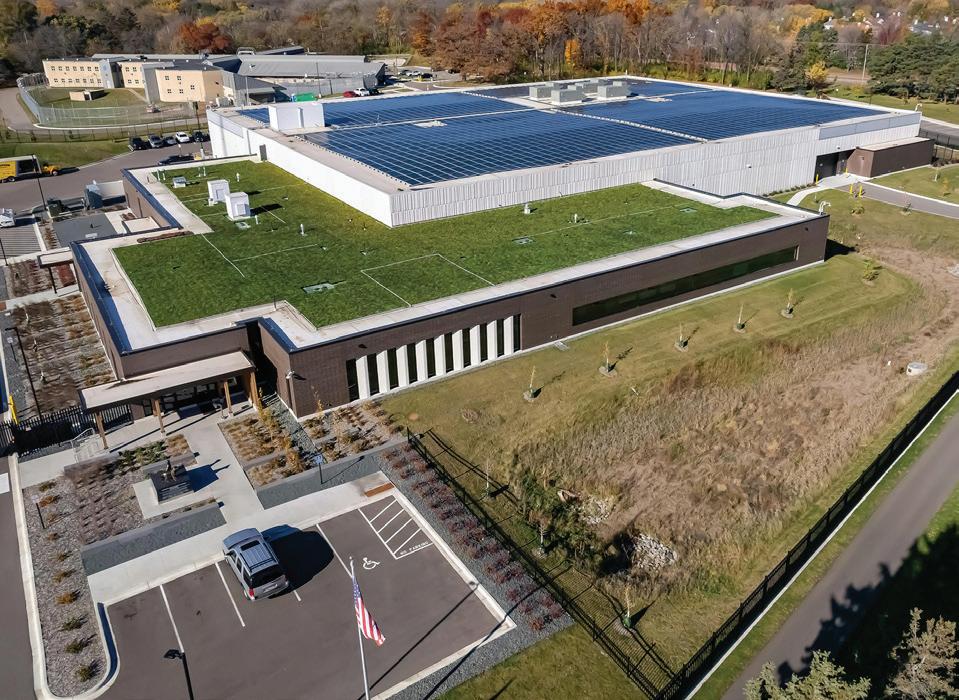
The 100,044-sq-ft building pairs groundwater geothermal wells with six-pipe heat recovery chillers with chilled beams, energy recovery ventilation, rainwater reuse, a green roof, and an approximately 860 kW bi-facial solar array. Together, these strategies are
projected to produce more energy than required for the building’s annual use.
Throughout design, the project reinforced several practical lessons. In a heating-dominant climate, geothermal systems must be sized to meet extreme winter peaks. Rainwater reclamation tanks to harvest water for re-use need generous overflow capacity in areas with abundant rainfall. And when a roof carries multiple systems — in this case, green roof assemblies, major mechanical equipment, and a large photovoltaic array — coordination must begin early and remain constant.
In the end, the facility opened in April 2025 and later earned a Minnesota ASHRAE Technology Award, demonstrating that even complex, 24/7
public safety buildings can be truly ready for net zero.
Designed to be Net Zero Ready Energy considerations included:
• The project was required to meet Minnesota’s B3 (Buildings, Benchmarks & Beyond) energy standard, targeting performance at least 80% better than a code baseline building — this directly shaped the envelope design, electrified heating strategy, and on-site renewable generation.
• Minnesota is a heating-dominant climate, so any building aspiring to net zero must solve for winter first. With a projected energy use intensity (EUI) of –3 kBtu/sf/yr, the facility performs dramatically better than the median EUI for comparable law enforcement public buildings in this climate region (approximately 63 kBtu/sf/yr), underscoring the impact of its electrified and heat recovery–driven design strategy.
At the heart of the system are two deep closed-loop groundwater-based geothermal wells. Rather than installing dozens of closed-loop wells and boreholes, the design uses significantly fewer groundwater heat exchangers as a heat sink and source, providing
Mark Bradby, PE, is a seasoned mechanical engineer with 25 years of experience in the construction industry, specializing in high-performance systems and project management. As mechanical engineering practice lead at LEO A DALY, Mark is dedicated to advancing environmental sustainability and optimizing building performance.
John Maust is a senior technical designer at LEO A DALY with more than a decade of experience focused on mechanical engineering projects and assessments. He has contributed to a range of facility types, including public safety, innovation centers, and higher education, bringing technical expertise and a collaborative approach to every project.
substantial heating and cooling capacity from just two wells. The wells feed modular heat recovery chillers in a six-pipe configuration that simultaneously produces both chilled water and heated water.
This arrangement allows heat to be moved around the building before engaging the groundwater well. In winter, interior spaces with cooling loads transfer excess heat directly onto the heating water loop. During simultaneous heating and cooling, the chillers operate at a coefficient of performance (COP) approaching 6.8. The system is projected to reduce overall energy consumption by 40% compared to a typical HVAC system.
A condensing boiler plant provides redundancy and winter peaking capacity, particularly when snowmelt systems and garage vehicle exhaust systems are active. Under normal operations, however, the building is heated electrically through geothermal energy.
Office areas in the facility are served by a dedicated outdoor air system (DOAS), paired with a four-pipe chilled beam system.
The DOAS delivers 100% outside air to all occupied spaces. A low cross-leakage energy recovery wheel reclaims exhaust energy while maintaining air classification compliance. The unit is sized to handle the full latent load of the office areas and to meet ASHRAE 62.1 ventilation requirements.
Chilled beams address sensible loads. Because chilled beams require approximately 1/3 the airflow of a traditional VAV system, fan energy is reduced and mechanical
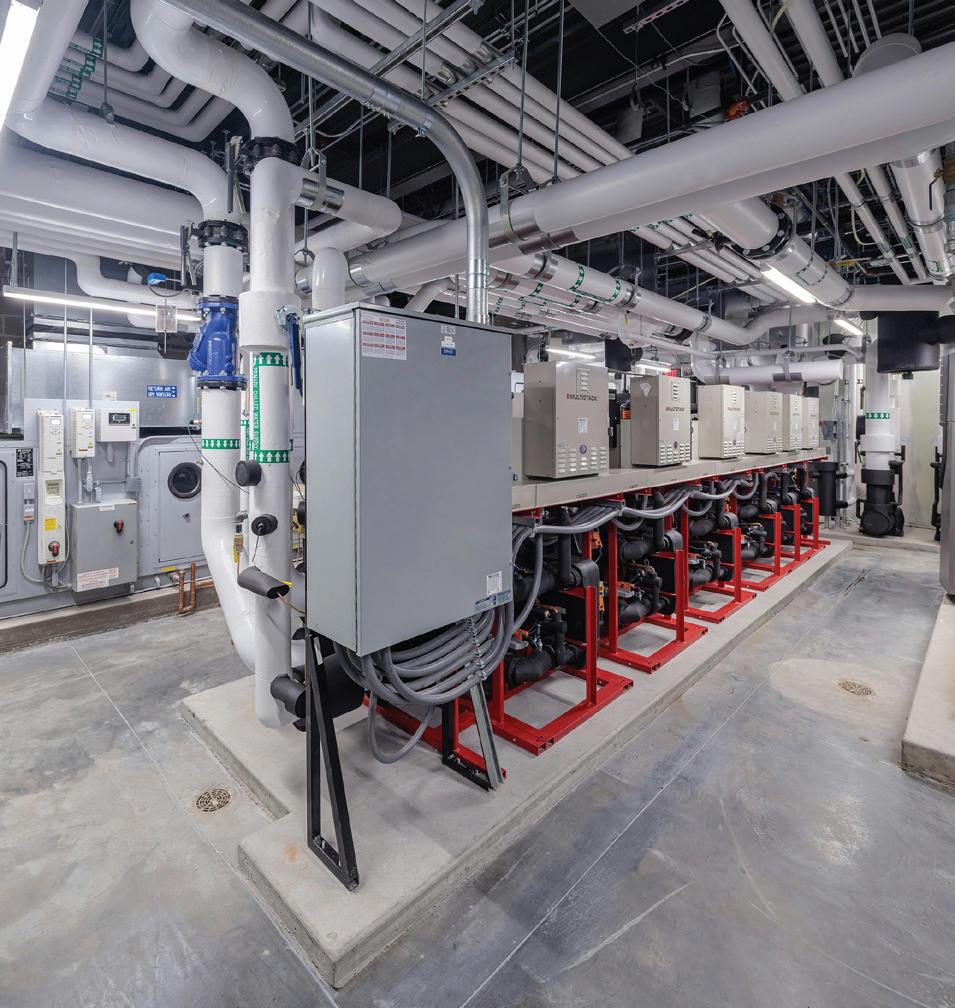

distribution is simplified. With no terminal fans, filters, or motors in occupied zones, long-term maintenance demands are also minimized.
The 72,000-sq-ft indoor garage houses squad vehicles, K-9 kennels, boats, occupiable spaces and various technical equipment. Ventilation requirements are substantial and variable.
Four energy recovery ventilators, controlled by air quality sensors, ramp the airflow up to code-required levels when needed while recovering up to 86% of exhaust energy during winter. Without heat recovery, exhausting that volume of heated air in January or February would significantly undermine net zero goals.
All toilet flushing water is supplied from a rainwater reclamation system. Roof drainage is filtered and stored in a 4,300-gallon tank, then distributed through a dedicated non-potable system.
The system reduces potable water demand and stormwater discharge. In practice, it also highlighted how quickly rainfall can accumulate in Minnesota and the importance of overflow design.
Nearly 20,000 square feet of green roof covers the office portion of the building. The vegetated roof:
• Reduces stormwater runoff;
• Slows peak discharge rates;
• Lowers summer heat gain;
• Protects roofing membranes.
In high-performance buildings, energy load reduction is as critical as renewable energy generation. The green roof contributes to both energy goal achievement and is a source to slow down and capture stormwater compounding strategies for maximum impact.
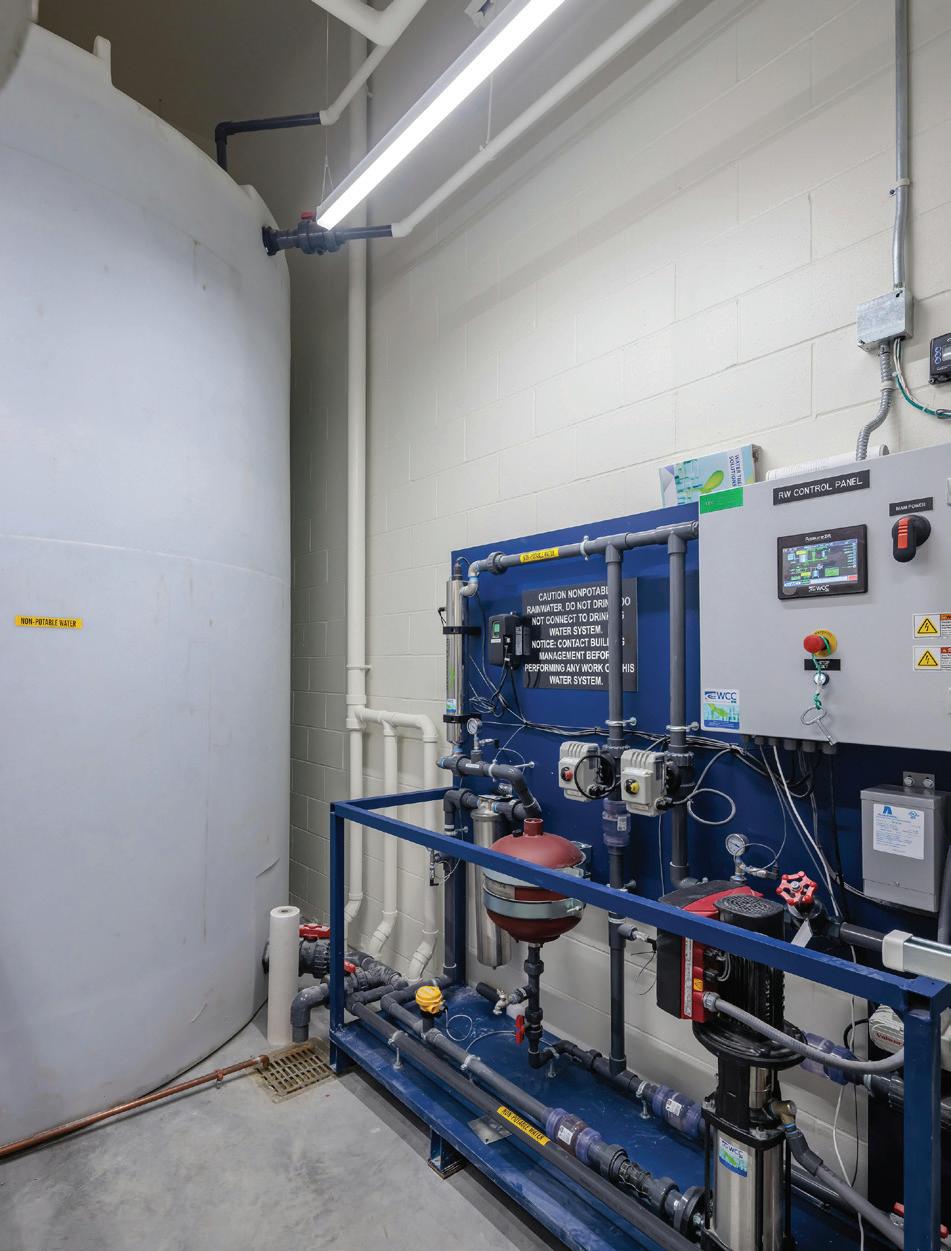
All toilet flushing water is supplied from a rainwater reclamation system. Roof drainage is filtered and stored in a 4,300-gallon tank, then distributed through a dedicated non-potable system.
An approximately 860-kW rooftop solar array, installed primarily over the garage roof, completes the energy strategy. Bifacial panels capture reflected light from below, which reflects off the white roofing material to the underside of the panel, increasing production.
Energy modeling analysis predicts that the solar array will more than offset the building’s annual site energy use, resulting in a negative EUI. As the electric grid continues to decarbonize, operational carbon emissions will decline further.
1. Size Renewable Heating for Winter Peaks
In many commercial projects, cooling drives equipment sizing. Here, heating dominated. Detailed winter load modeling was essential to ensure the geothermal wells could meet peak demands. Snowmelt loads and simultaneous heating conditions required careful analysis. The backup boiler system provides confidence if the six-pipe chiller needs urgent maintenance during heating season and also during extreme conditions, but the primary geothermal capacity had to be robust.
The lesson is simple: in a heating climate, renewable heating systems must be sized with margin.
2. Plan for Abundant Rain
The 4,300-gallon rainwater tank filled quickly during commissioning and overflowed more frequently than expected. The system performed as designed; the rainfall simply exceeded conservative modeling assumptions.
Adequate overflow routing and site drainage coordination are critical. In Minnesota, rainwater reclamation design should assume plenty of rain — not scarcity.
3. Treat the Roof as Shared Infrastructure
Between green roof assemblies, mechanical equipment, service clearances, and a large photovoltaic array, the roof became one of the most coordinated areas of the project.
Panel orientation, maintenance pathways, structural loading, vegetative depth, and equipment access must all be reconciled early. When a building is targeting net zero, the roof is strategic infrastructure, rather than leftover space.
The performance numbers are compelling: high performance heat recovery chillers, aggressive energy recovery, electrified heating, and a solar array projected to exceed annual consumption. These elements contributed to the project’s Minnesota ASHRAE Technology Award recognition in 2025.
But the broader achievement is integration. A 24/7 public safety facility now operates with:
• 100% outside air in office areas;
• Reduced fan energy through chilled beams;
• High-efficiency garage ventilation with heat recovery;
• On-site water reuse;
• Renewable thermal and electrical energy;
• Projected energy use intensity (EUI) of -3 kBtu/sf/yr.
Net zero readiness was not achieved by a single technology. It was a combination of load reduction, energy recovery, electrification, and on-site generation.
This award-winning project stands as proof that with integrated design, innovative engineering, and a commitment to sustainability, even the most demanding 24/7 public safety facilities can achieve net zero energy performance.
“People are not ready yet, but the buildings are,” answered one thought leader at arguably AHR Expo’s most fascinating industry panel.
By ROB McMANAMY, Editor-in-Chief
Elvis is Everywhere” was a silly 1987 song by Mojo Nixon. (Look it up. You’ll laugh.) In Las Vegas, of course, Elvis Presley imagery is still very much around every corner. But at AHR Expo, it was “AI” that was everywhere this year.
While it seemed as if all of the nearly 1,800 exhibitors had at least some mention of artificial intelligence at their booths, the subject was also front and center at an informative, fascinating, and maybe even a little frightening
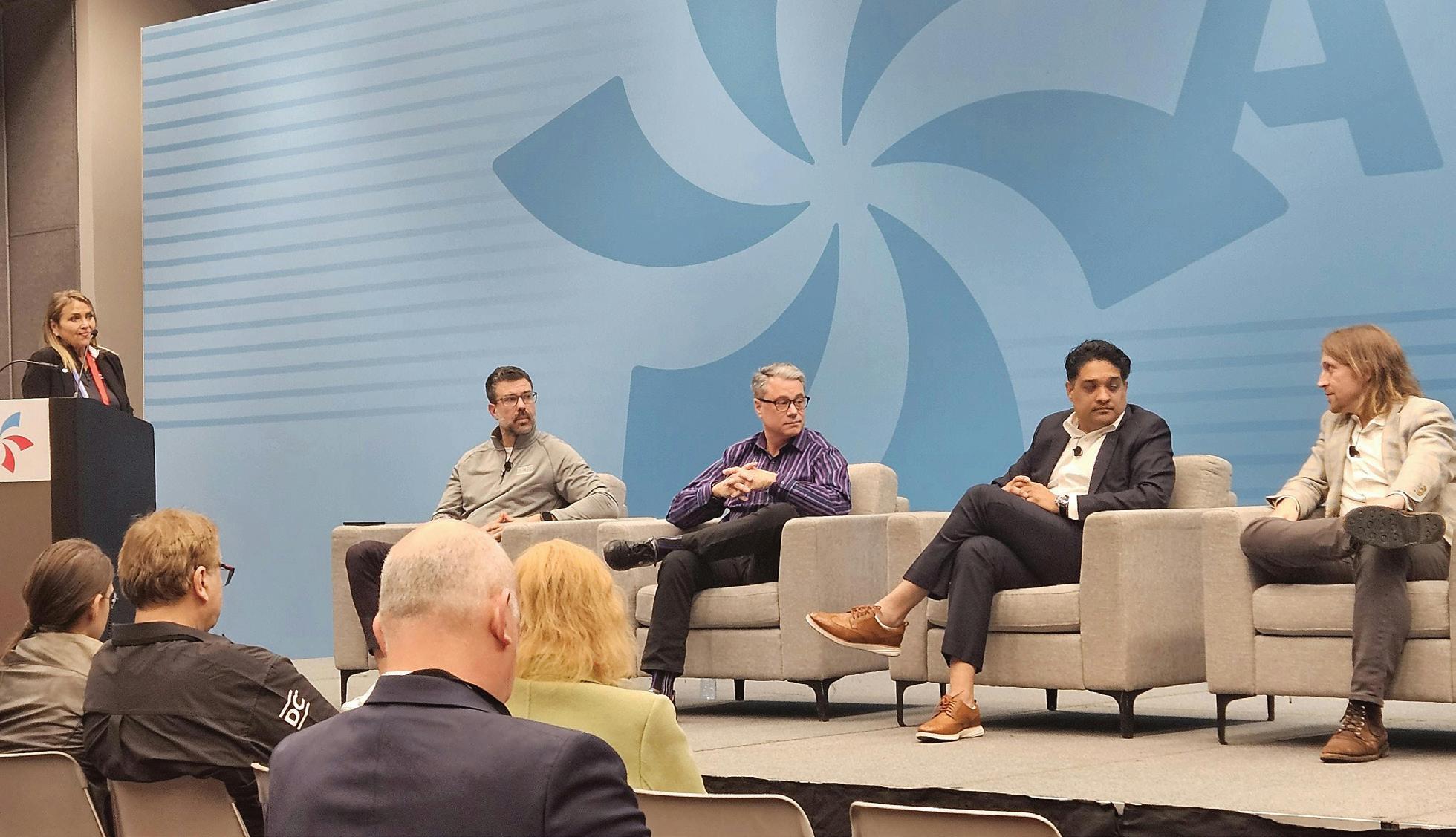
panel discussion, “The Great Disconnect: Are We Ready for Buildings That Think for Themselves?”
“People are not ready yet, but the buildings are,” said Charles Pelletier,
and trusted they often feel to their owners, users, and building engineers.
Exploring “the gap between technological potential and real-world experience,” the high-powered panel
Prompting is a skill we all need to master. That is key. You have to ask the right questions.
—Charles Pelletier, VP of Product Management, Distech Controls
VP of Product Management, Distech Controls. And that is the main paradox that the session discussed: The smarter our systems become, the less understood
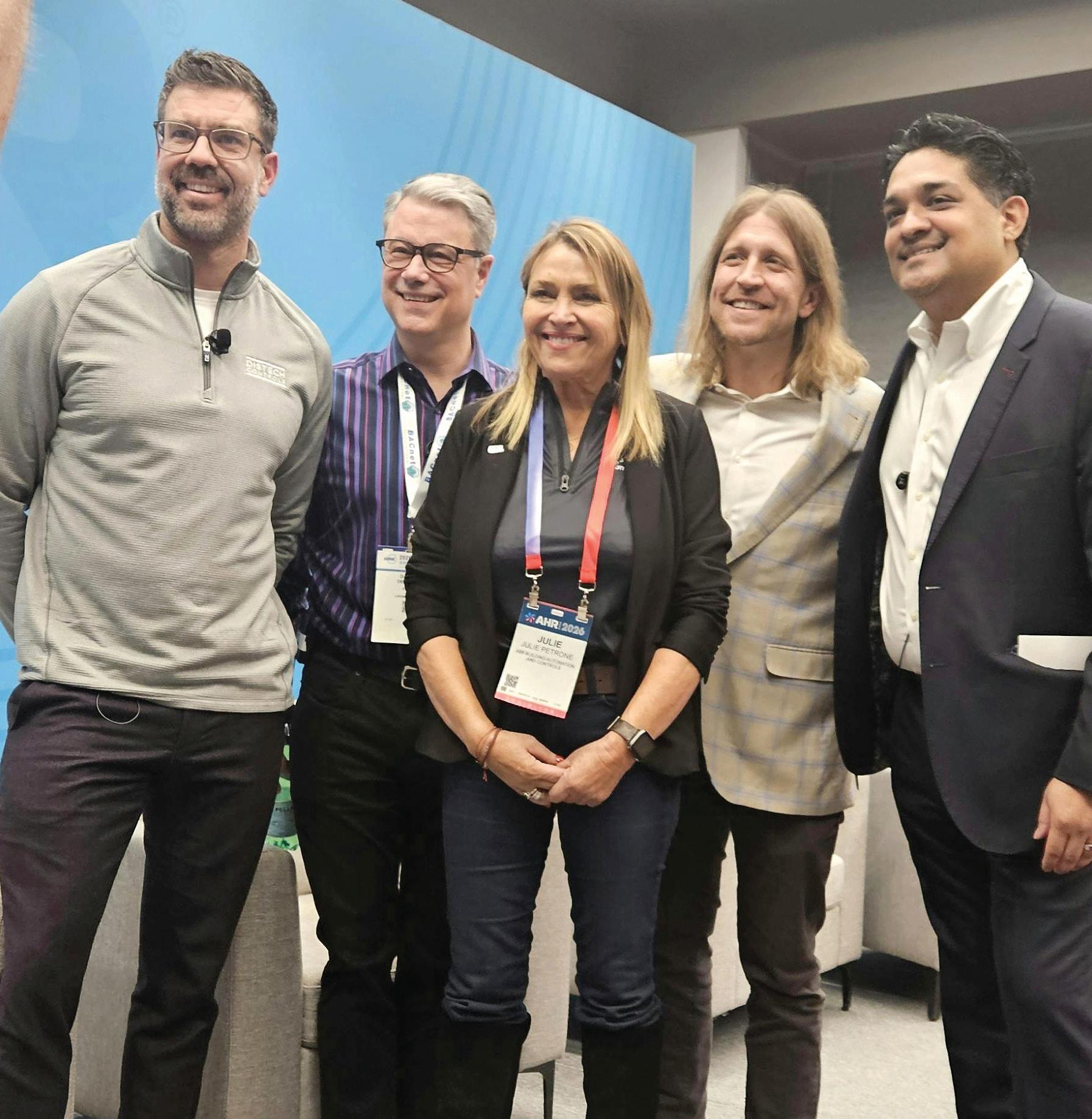
included Pelletier; Darryl DeAngelis of the Association for Smarter Homes and Buildings (ASHB); Saheel Chandrani, co-founder and CEO of
PingCX; Stephen Hollicky, chief product officer at Tridium, Inc.; and moderator Julie Petrone, global marketing director at ABB.
To bridge that gap and overcome that discomfort and even fear, panel-
Building owners still have resistance to AI. So the challenge is to show them the return on investment, the ROI of AI.
—Darryl DeAngelis, the Association for Smarter Homes and Buildings
ists urged attendees to embrace the moment and to just dive into it.
Don’t Rage Against; Challenge the Machines
“There is so much experience within these four walls,” Hollicky said, gesturing to the audience. “Your experience. That is your differential. Remember that. Challenge the models as much as you can, as soon as you can.”
Indeed, that interaction is key. Users cannot be complacent and sit back. They have to interactively make the AI smarter and more useful. And we have to develop the right language and ask the questions we most need answered. And keep asking until the answers fit.
“Prompting is a skill we all need to master,” said Pelletier. “That is key. You have to ask the right questions.”
Petrone prompted the group further, “What about the difference between building owners and designers, and how that affects adoption?”
“Some building owners just do not care about the long-term,” said ASHB’s DeAngelis. “They just want to flip the building and sell it as soon as possible. But designers still want to delight the users. So, that gulf can be wide.”
Petrone responded, “So, what will make that happen in the U.S.?
Will it be the dangling carrot or the big stick?”
DeAngelis chimed in. “We have to demonstrate to the owner the value of the asset. If AI can help the building be healthier, then that building will be easier to flip.”
“We can also frame it in the sense of standards and codes versus policy,” said Chandrani. “Standards are guided by what is achievable. Policy comes in the form of directives. So standards will likely push adoption of AI the fastest… And I am very optimistic that we will take advantage of this because of the quality of the standards being adopted.”
Even so, the U.S. market has still been very slow to adopt building automation systems (BAS) across multiple building types, noted Hollicky.
“But look at Europe,” added Chandrani. “BAS has been a game-changer there. In several countries, buildings Panelists (from left to right): Pelletier, DeAngelis,
Chandrani.
of a certain size must have automation systems.”
Petrone jumped in: “So, are autonomous buildings inevitable?”
DeAngelis responded. “The average age of engineers in NYC is 54 years. So, like it or not, there will come a time in the not-too-distant future when we will have to leverage this tool. But for now, owners still have resistance to AI. So the challenge is to show them the return on investment, the ROI of AI.”
Pelletier added, “We are probably five to 10 years from full adoption... AI will eventually replace humans in this space. But for now, AI can be really useful as an assistant. Facility managers can use AI to help manage and optimize virtually all building systems.”
“I think it could be just one to three years, myself,” countered DeAngelis. Hollicky had a different take. “The percentage of buildings here with BAS systems is still very low. So we still have quite a ways to go.”
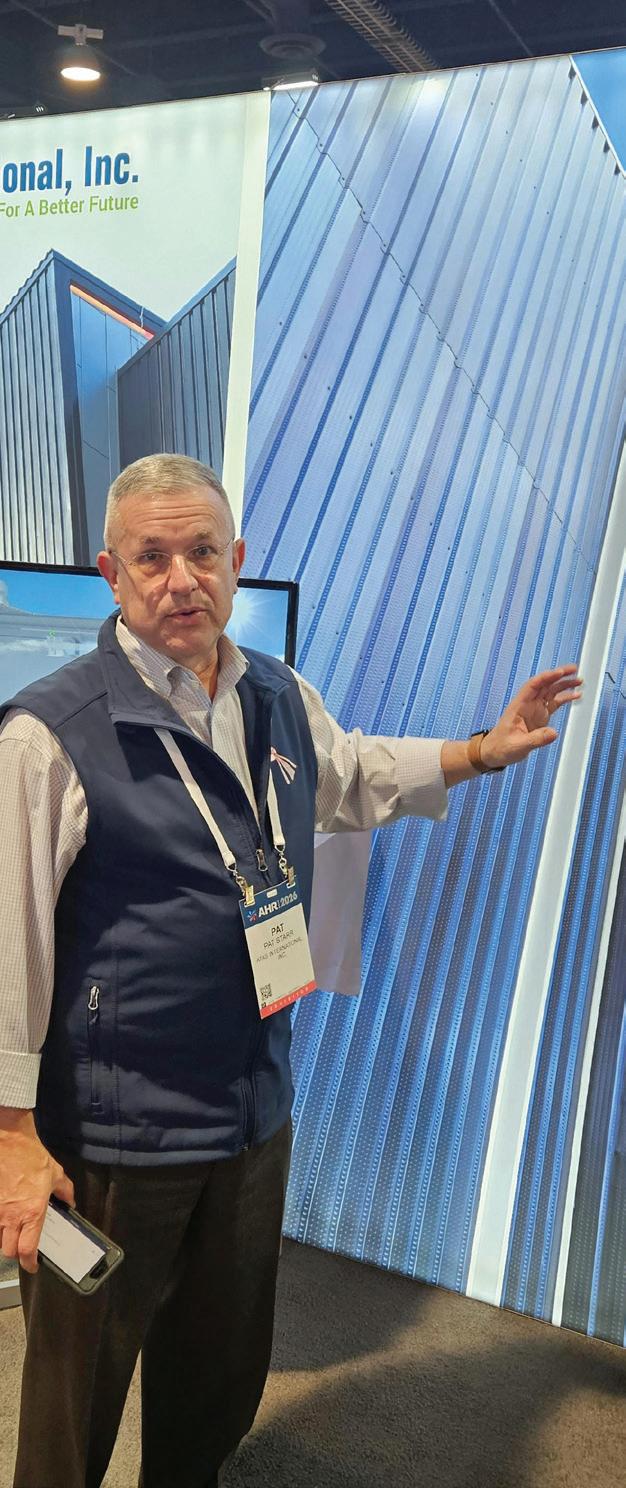
ATAS International, Inc., a solar solutions company based in Allentown, PA, was represented in Las Vegas by product lead Pat Starr. Here, he described how the firm's new blue paneling is even better at collecting solar energy than the traditional black panels.
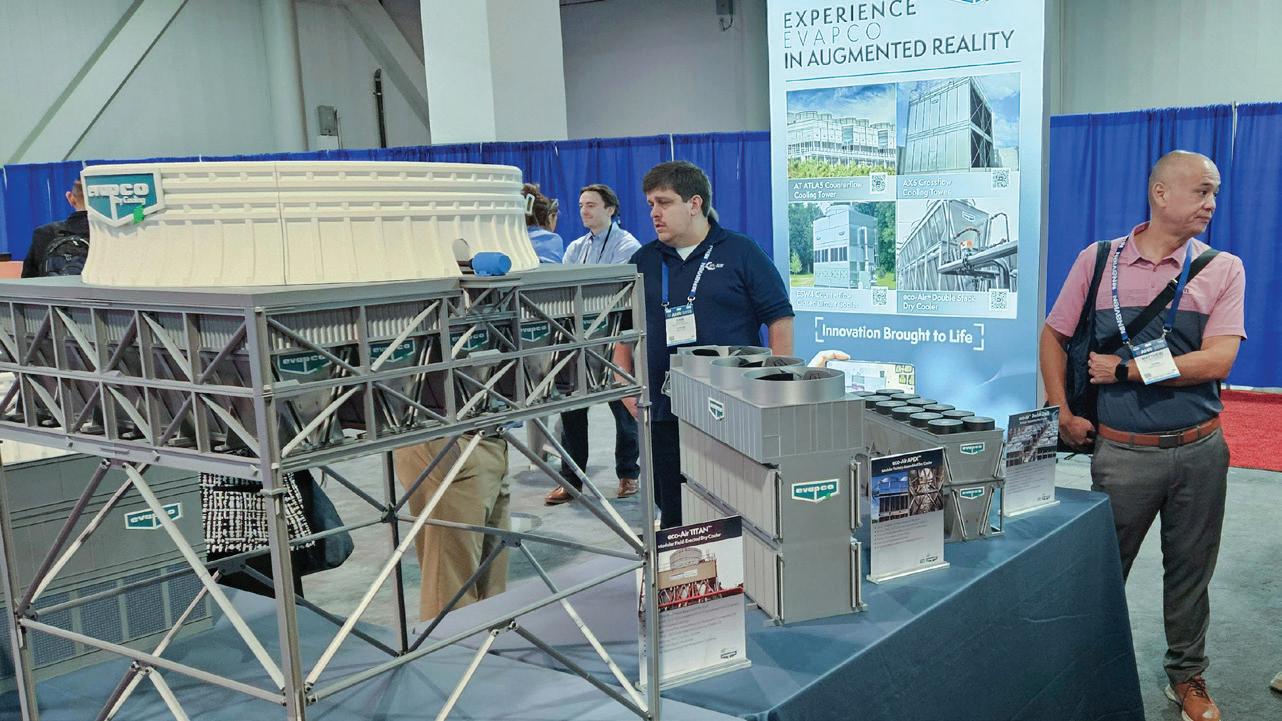
EVAPCO had to 3D-print miniatures of three coolers because they were much too large to bring indoors at actual size, explained business development manager Troy Reineck. In the market, he noted that booming data centers are using so much water that EVAPCO has launched the eco-Air TITAN, a modular, field-erected DRY cooler.
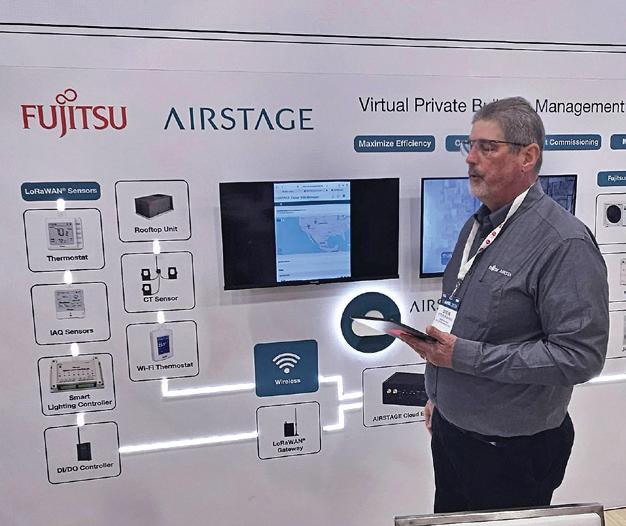
General HVAC Solutions America Inc.'s Steve Iribarne here walked us through the AIRSTAGE Cloud, a multi-site HVAC Building Managament System as a Service. Now part of Rheem, GHSA was formerly known as Fujitsu HVAC General America.
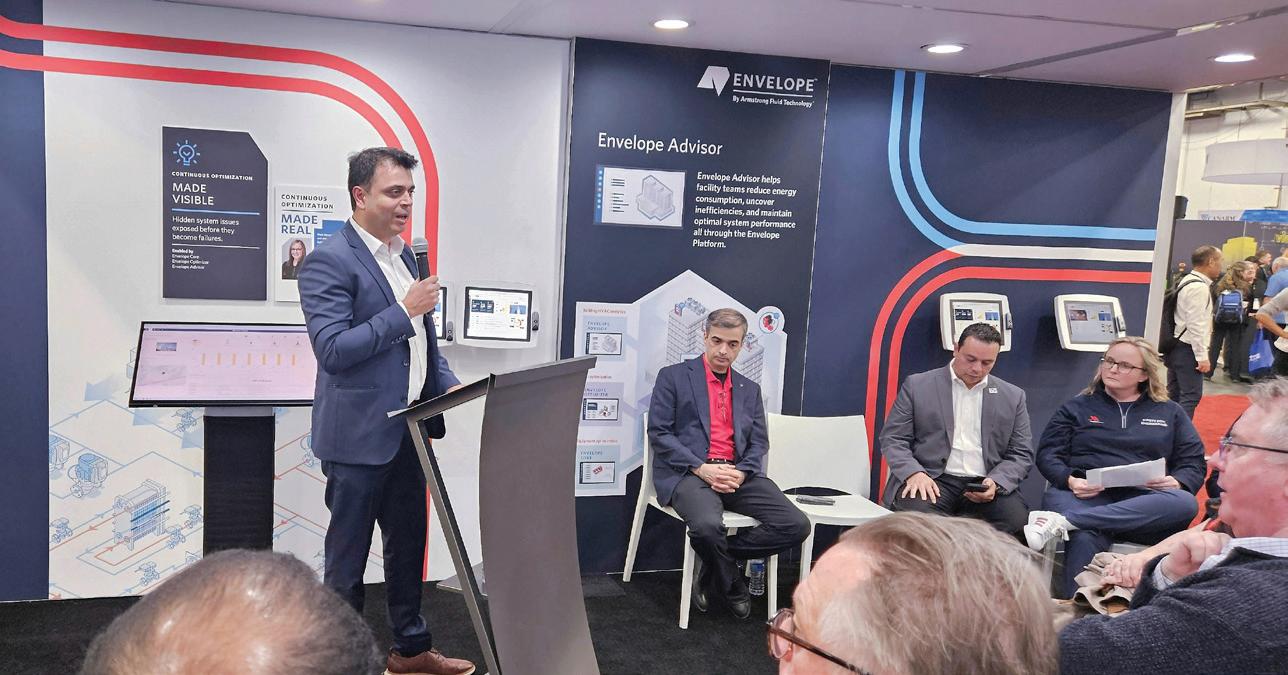
Stressing "continuous optimization", Armstrong Fluid Technology's Chintan Kharche, the firm's new Global Director of Offering Management, detailed the manufacturer's even greater emphasis on 24/7 reliability now for mission-critical facilities like hospitals.
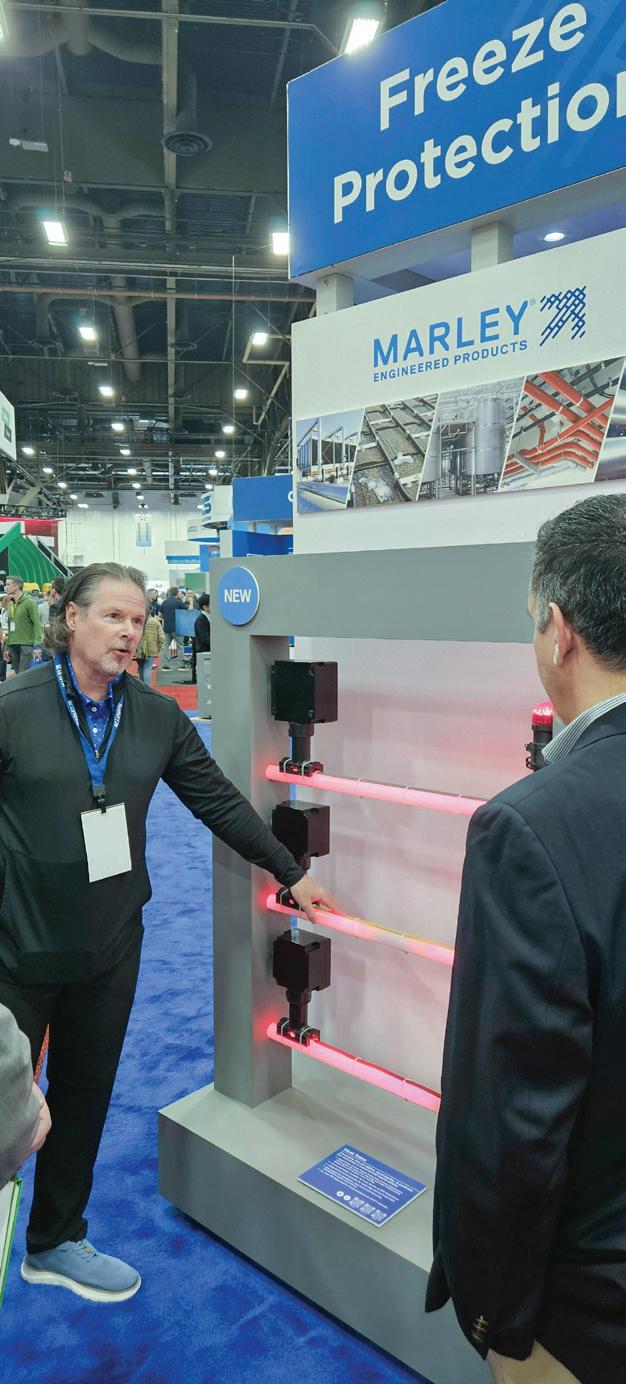
Marley Engineered Products' Mark Crombie described its new 'Heat Trace' line, designed for the most demanding freeze protection, temperature maintenance, roof and gutter de-icing, and other specialty applications in the commercial market.
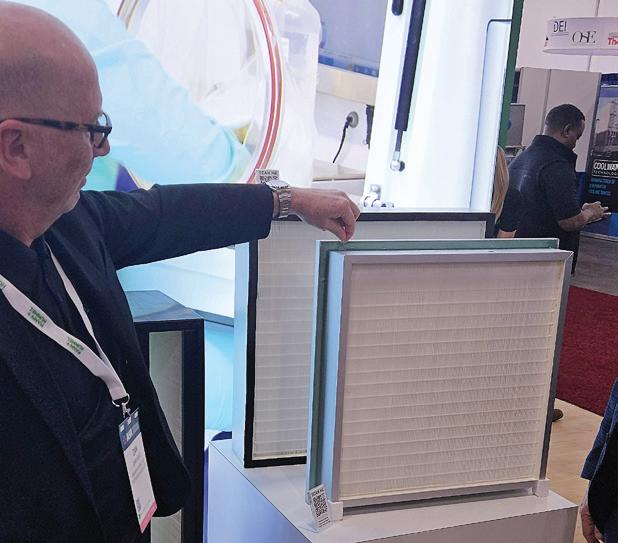
In from MANN + HUMMEL's U.S. headquarters in North Carolina, product guru Dan King demonstrated the firm's "self-leveling, self-sealing gelatin" used to stabilize the firm's new customizable HEPA filters for cleanrooms and other highperformance, precision-focused facilities.
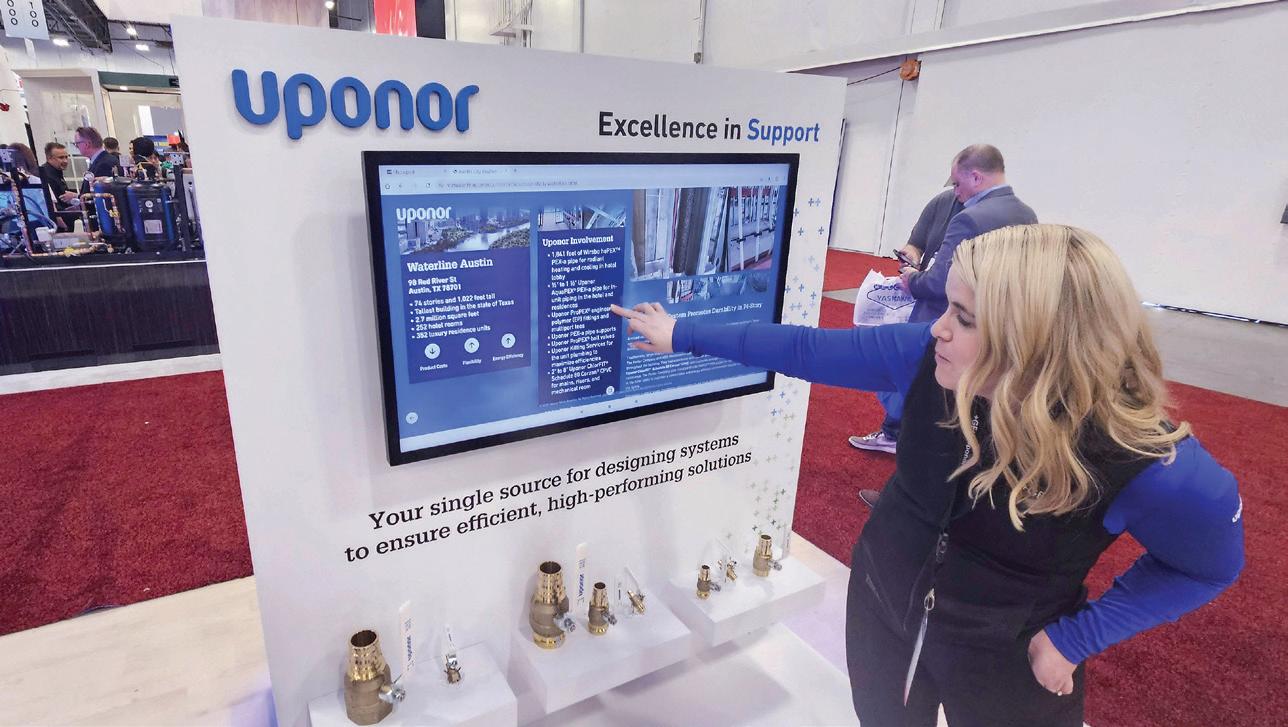
GF+ Uponor's director of global water supply Stephanie Radel spoke with us about the firm's 565 Butterfly Valves, which now use an innovative polymer technology and are engineered to be up to 60% lighter than traditional metal valves.
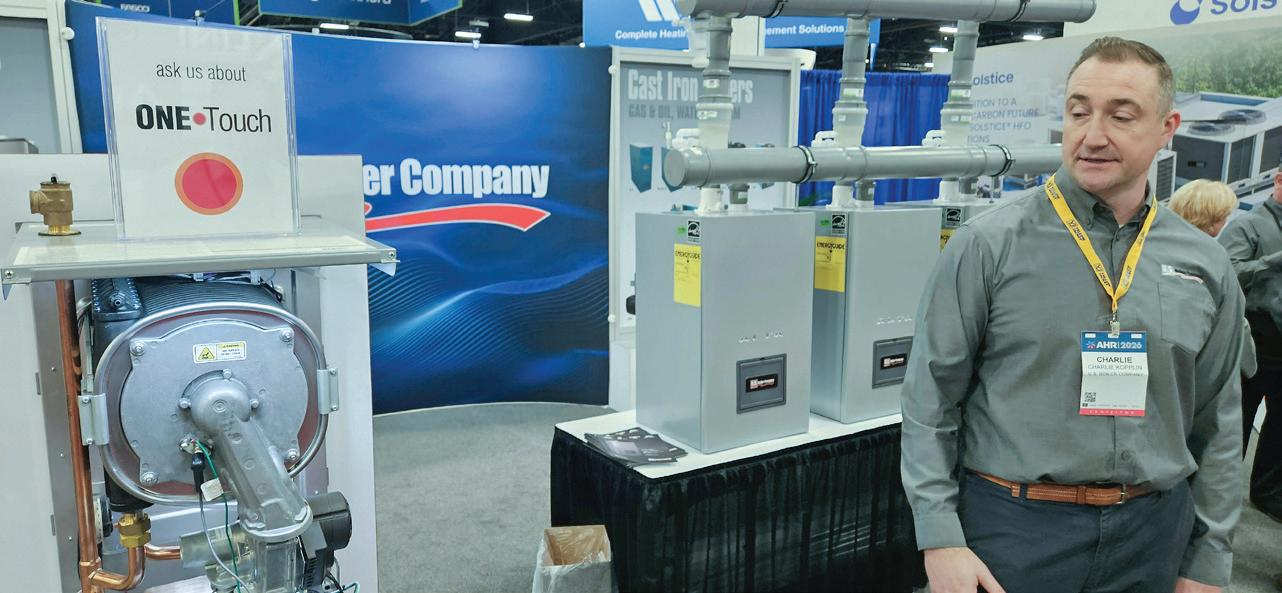
U.S. Boiler’s Charlie Kopplin here presented his firm’s new ALTA OneVent kits, “simple, safe venting performance for (up to) four ALTA heat-only boilers, ensuring stability.”
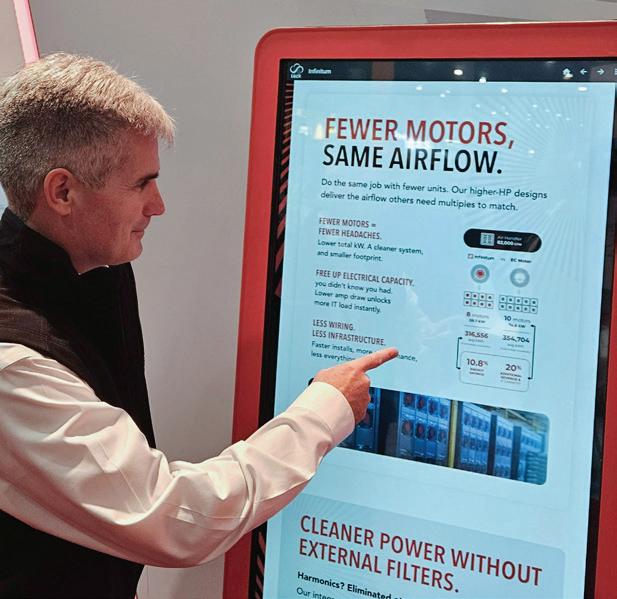
Infinitum's Chris Harrison walked us through the company's "less is more" campaign, noting how the Integrated AFE uses no external filters and eliminates harmonics at the source. Fewer motors, same airflow. Said Harrison, "Where sustainability once was viewed as an expense, now it's seen as something that can save you money."
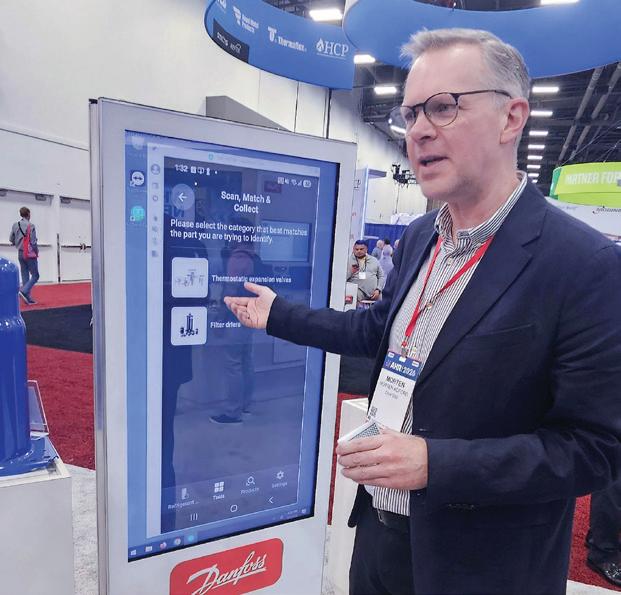
Just in from Denmark, Danfoss's Morten Koford used a deck of cards to demonstrate how the manufacturer's new "Scan, Match & Collect" app can immediately scan a vast database of industry products, including those of competitors, to help users find just the right replacement components.
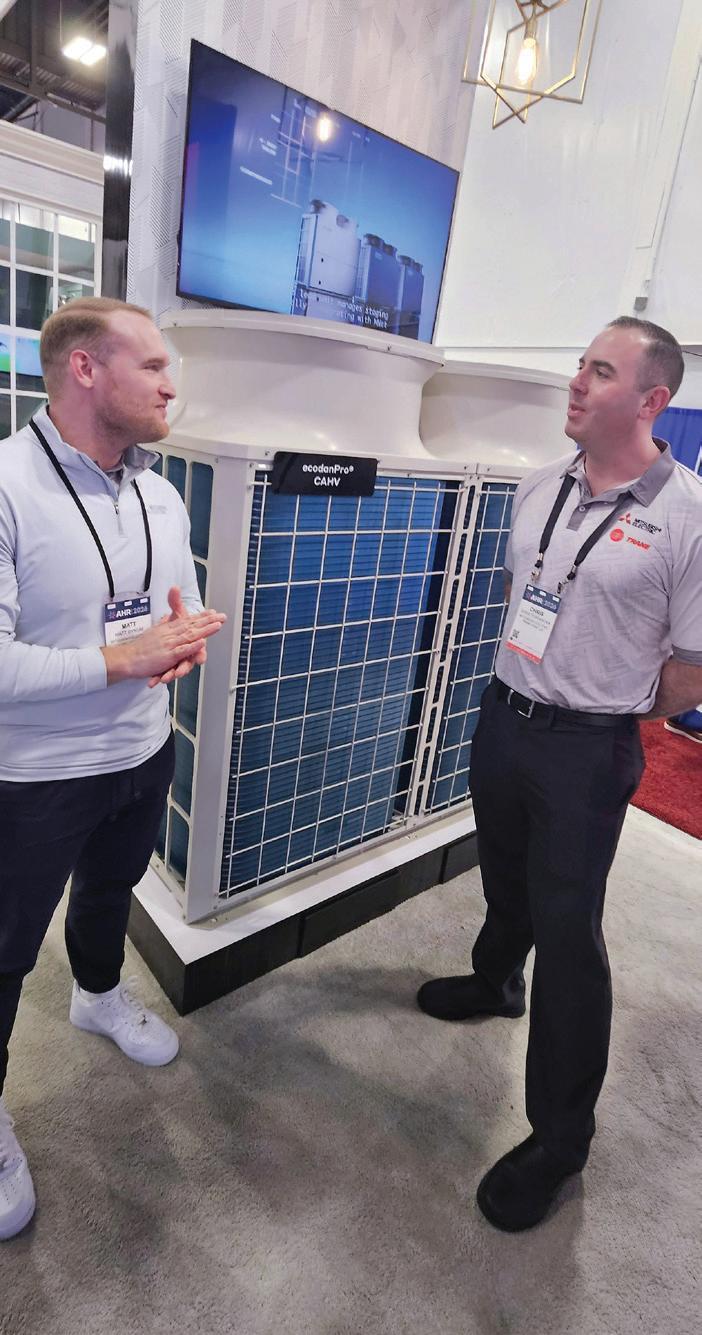
Mitsubishi Electric Trane HVAC US product specialists Matt Bynum and Chris Terranova discussed the new ecodanPro CAHV, a modular air-source heat pump that uses low-GWP refrigerant R454C to deliver space heating and industrial hot water up to 165°F (74°C), suitable for multi-family residences, hospitals, factories, dormitories, hotels, and health centers.
Manufacturers group unveiled two new marketing and education intitiatives at BOILER Expo 2026 in Nashville.

By SHAUNICA JAYSON, Vice President, Membership & Marketing, ABMA
Without a doubt, the boiler industry is a foundational pillar of our global infrastructure. Over the centuries, boilers have evolved from coal-fired giants to the digitally optimized, high-efficiency systems that shape our energy future today.
At the American Boiler Manufacturers Association (ABMA), we believe that understanding this evolution is vital for understanding the industry’s role in current and future energy landscapes.
With that in mind, ABMA is thrilled to honor this legacy while embracing the next generation of energy solutions through two major strategic initiatives:
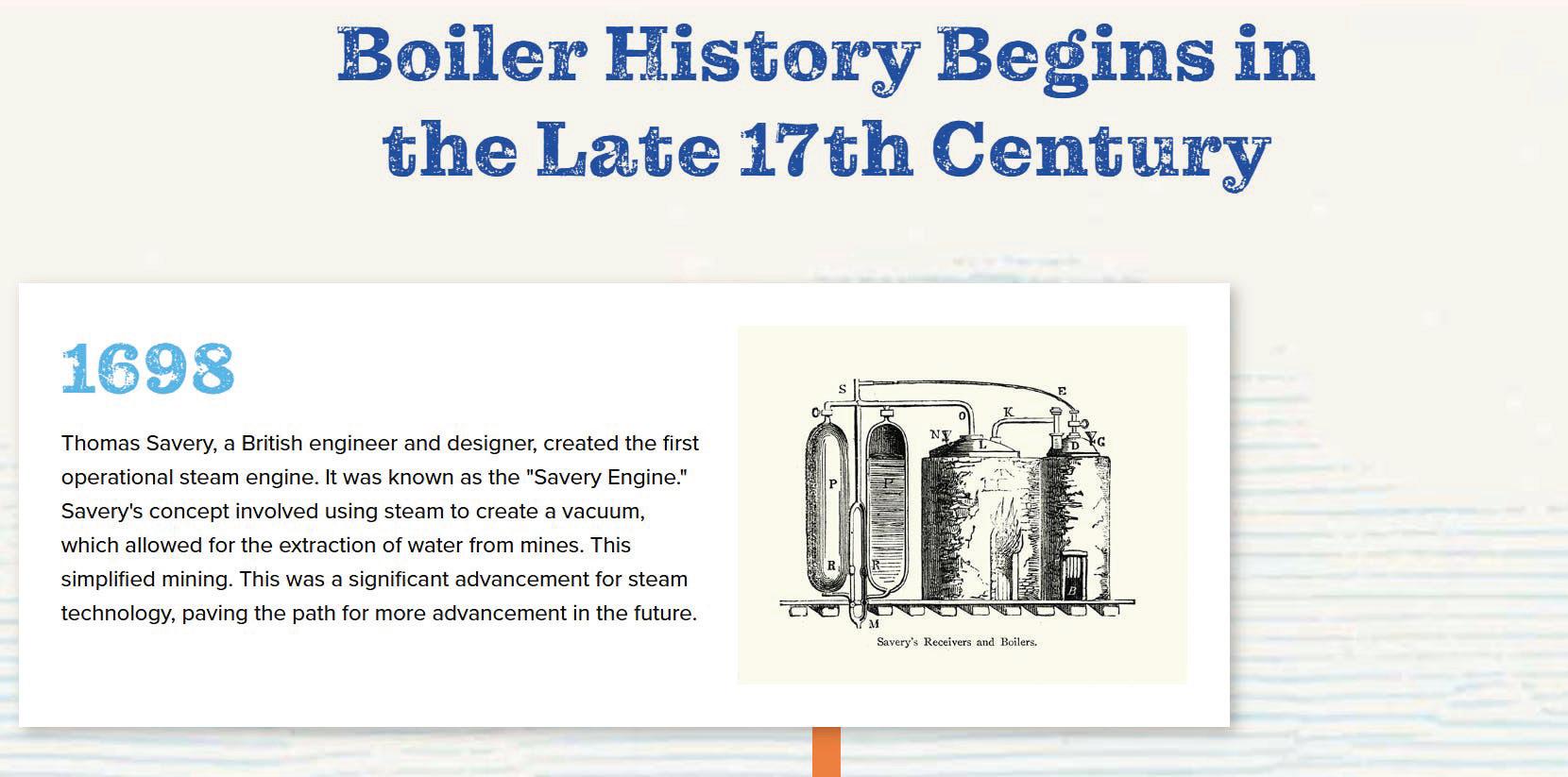
the Boiler Historical Timeline, and the all-new ABMA Resource Center.
Uncovering Our Legacy: The Boiler Historical Timeline
Every step of the boiler industry’s journey has been forged by tradition and fueled with innovation. To celebrate this impact, ABMA has launched a new
digital home for its history at BoilerImpact.com. This interactive timeline provides an expansive look at our heritage, beginning in the late 17th century, and spanning all the way into 2026.
Attendees at the 2026 BOILER Expo in Nashville this spring were the first to experience this display in person
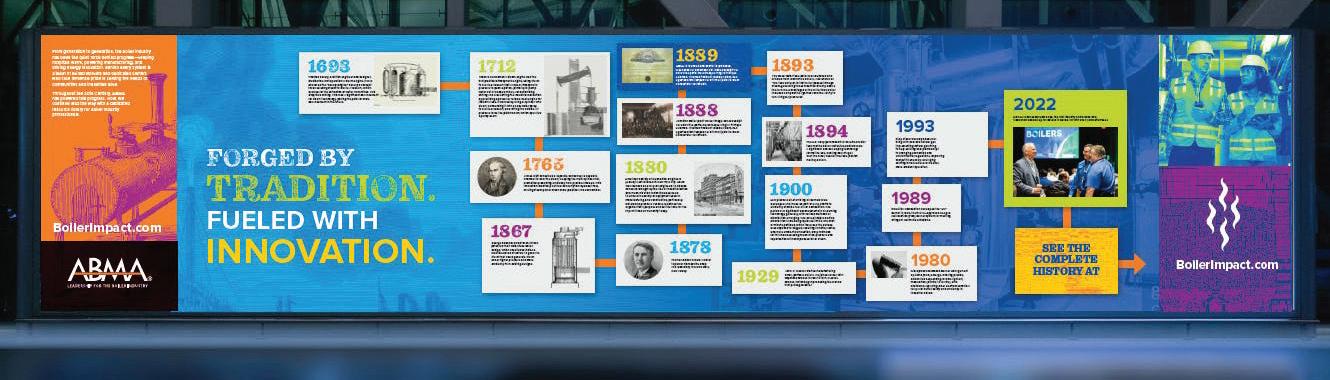
through a massive, 40-ft Boiler Historical exhibit. This immersive display allowed attendees to walk completely around the structure to view the full timeline in a 360-degree format, bringing the evolution of steam and hot water to life.
Visitors to the digital timeline can learn about milestones such as:
• The Late 17th Century Origins: Discover the very first atmospheric engines and early steam power concepts that sparked the Industrial Revolution;
• The High-Pressure Era: Learn how the industry transitioned from simple shells to complex water-tube designs, allowing for higher pressures and greater safety;
• The Digital Revolution: Explore the shift toward the digitally optimized, high-efficiency systems of 2026 that are actively shaping a sustainable energy future.
Regarding the importance of this project, Scott Lynch, ABMA President & CEO, noted:
“The Boiler Historical Timeline is more than just a look back; it is an educational journey. By teaching the industry’s past, we show exactly how far we have come in terms of progress and energy efficiency. It provides the context needed to appreciate the sophisticated technology we utilize today.”
A New Hub for Excellence: The ABMA Resource Center
Alongside our historical initiative, we have debuted the ABMA Resource Center at ABMAresources.com. This digital space is designed to be the definitive, “one-stop shop” for stakeholders,
providing the tools necessary for continuous learning and industry excellence.
As Vice President of Membership & Marketing, I believe this platform marks a fundamental shift in how we support our professionals:
“The ABMA Resource Center is a turning point for ABMA and for all who are in our industry. It will be an amazing resource for people to come to a central place to gain education, materials, and other information to advance the industry. I truly enjoyed overseeing and being involved in both of these projects; they were engaging topics to work on, and it has been incredibly rewarding to see them finally come to life and for boiler history to live on.”
The Resource Center and its integrated store component offer:
• Educational Materials: Access to on-demand videos, specialized training, and technical guidelines;
• Industry Standards : A platform to browse and purchase official
publications, white papers, and technical standards;
• Exclusive Merchandise: A store component featuring ABMA gear and “Forged by Tradition, Fueled with Innovation” branded shirts, hats, and tumblers, all available for purchase.
Shaping the Future Together
By educating the public and our stakeholders on our industry’s significance, we ensure that boilers remain a recognized necessity in the global energy conversation. A well-informed public leads to greater acceptance, support for innovation, and a sustainable future for us all.
While the 2026 BOILER Expo has concluded, the journey is just beginning. We invite you to explore our new Digital Archives and the Official Boiler Industry Timeline online to see how our industry continues to fuel progress.
For more info, visit BoilerImpact. com and ABMAresources.com.

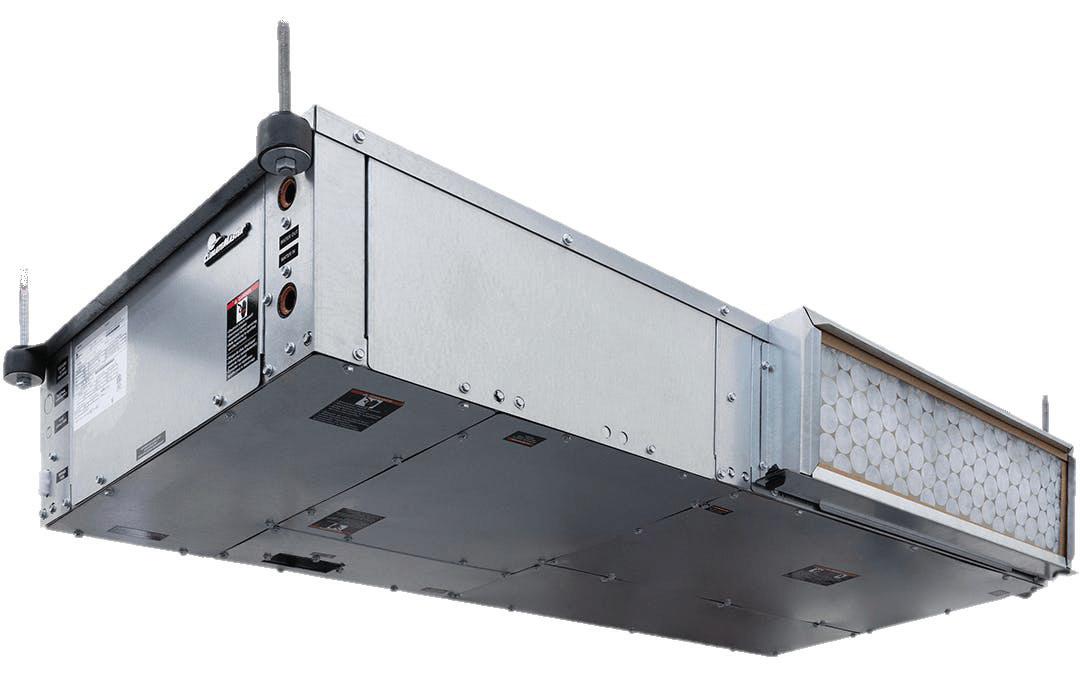
ClimateMaster introduces the Tranquility SL Low-Profile Series, a new generation of water-source heat pumps. With a 9-in. cabinet height, it installs easily in tight ceiling spaces, giving users greater flexibility. Its brazed-plate heat exchanger delivers efficient heat transfer in a compact footprint, while EC blower motors and integrated water control options maximize system efficiency. Units include an UltraQuiet soundattenuation package, double-isolation compressor mounting and an integrated sound-attenuator box. Powered by CXM2 communicating controls, it offers real-time system diagnostics, fault memory and faster commissioning when connected to a wireless service tool.
ClimateMaster
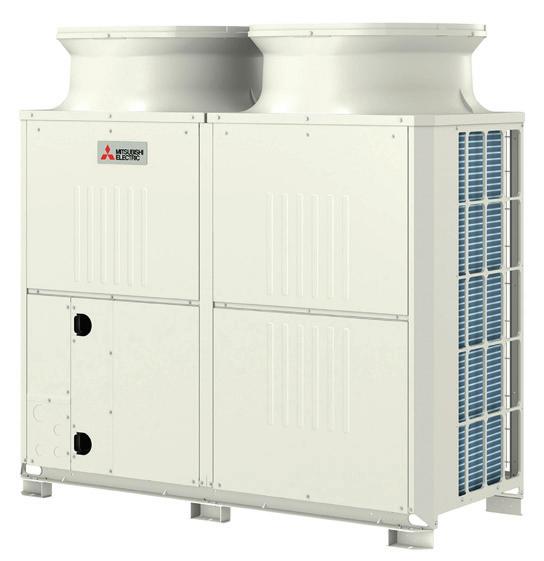
Mitsubishi Electric Trane HVAC US launches its ecodanPro product line, designed for hydronic heating and domestic hot water three-phase applications. The first solution in the product line is the CAHV, a modular air-source heat pump unit designed for efficient space heating and industrial hot water applications. Flexible design allows up to 16 units to be grouped for scalable capacity, while advanced features such as rotation function, wide operating temperature range and low maintenance requirements promote reliable performance. The CAHV has a nominal operating capacity of 136,480 Btu/hr. and can be used as a single unit or part of a multiple-unit system
Mitsubishi Electric Trane HVAC US (METUS)
Wall-Mount Solutions
Bard Mfg. Co. introduces the Bard Flex Series, a new family of true inverter-driven wall-mount solutions designed to deliver precise temperature control and enhanced efficiency across a wide range of applications. The series includes two tailored solutions: Bard Comfort Flex, designed for human-comfort applications; and Bard Data Flex, engineered for equipment-cooling applications. Comfort Flex products are designed for schools, offices and other occupied spaces. The Data Flex Series is engineered specifically for data centers, information technology, telecommunication and equipment cooling applications.
Bard Mfg. Co.
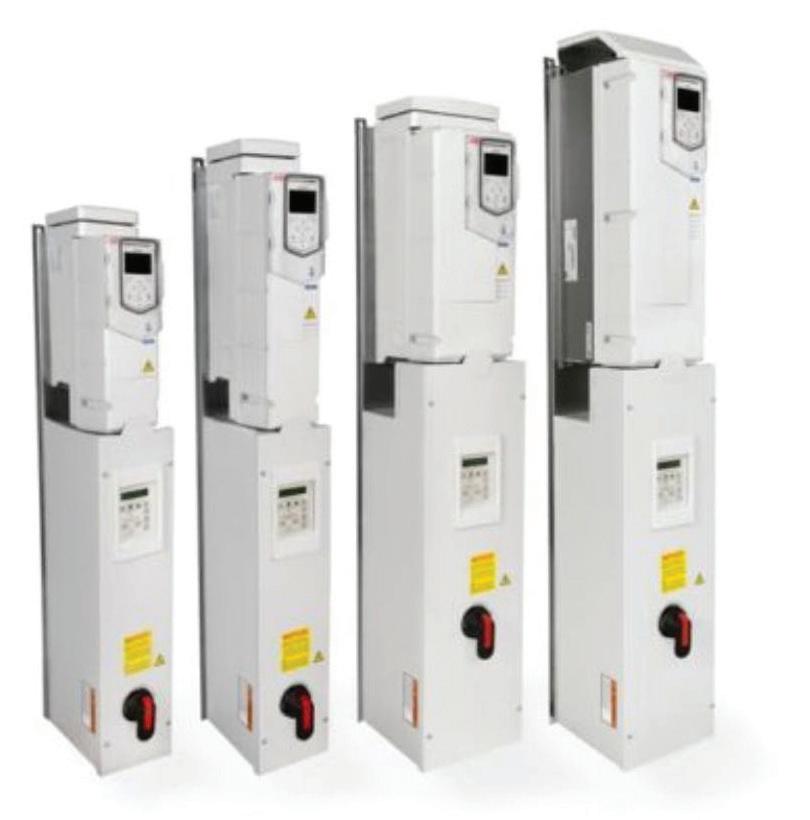

ABB’s ACH580 UL Type 12 and Type 4X vertical bypass drives are designed for use in mechanical rooms, utility spaces and other demanding environments. It combines the ACH580 variable-frequency drive with trusted E-Clipse Bypass technology in a standardized vertical enclosure. The result is a compact and resilient package that ensures continuous operation of critical HVACR systems while protecting against dirt, debris and dripping water. The drives deliver precise motor control, energy efficiency and intuitive operation for a wide range of HVACR equipment, including fans, pumps and compressors. The integrated E-Clipse Bypass ensures uninterrupted system performance by automatically transferring operation during maintenance activities or in the event of a drive fault.
ABB
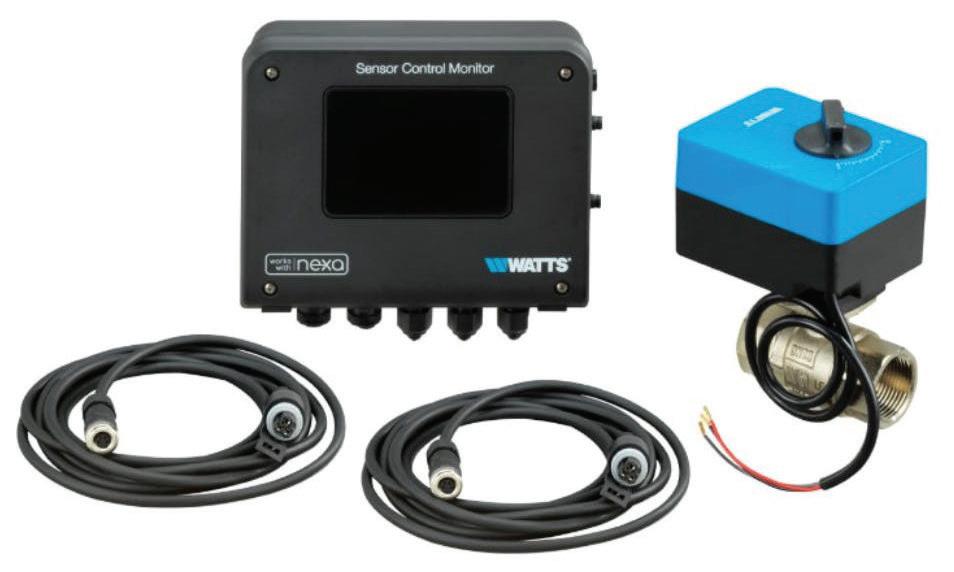
Strainers with differential pressure monitoring from Mueller Steam are designed to help facility and process teams maintain system performance and reduce unplanned downtime. Pressure sensors come pre-installed on Mueller Steam duplex basket strainers and are available on wye strainers when specified at the time of order. For wye strainers, automated blowdown is available via an optional motorized ball valve. These smart strainers are powered by a new, easy-to-configure sensor control monitor that provides local system status information through an integrated display and supports connectivity to centralized monitoring platforms.
Mueller Steam
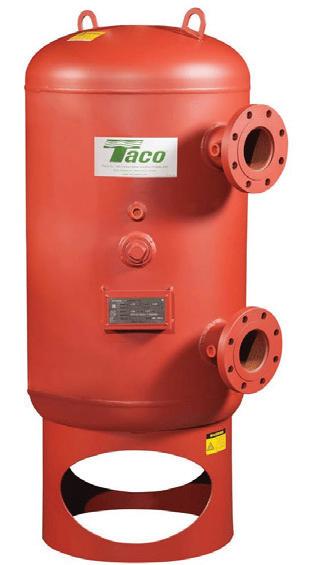
Thermal energy storage tanks from Taco play a critical role in shifting energy loads, improving hydronic system efficiency and helping commercial buildings meet decarbonization goals. The tanks are typically used as emergency backup for data center chilled-water cooling systems. The stratified tanks store water in distinct temperature layers, offering performance advantages for large hydronic systems, whether for hot water or chilled water storage, by supporting load-shifting. TES tanks offer scalable and cost-effective solutions for data center operators seeking to improve cooling resilience, reliability, energy efficiency and long-term operational stability.
Taco Comfort Solutions
NIBCO adds sizes and configurations to its BenchPress and BenchPressG line of carbon steel fittings for plumbing and mechanical carbon steel pipe applications, as well as fuel and gas carbon steel pipe applications. The fittings allow for easy, clean and fast installation of residential, commercial and industrial carbon steel piping systems. These heavy-duty fittings feature stainless-steel grip rings and separator rings to ensure premium performance. Sizes range from 1/4 in. through 2 in. They can be installed in seconds and require no threading equipment or lubricants, while maintaining joint integrity and professional appearance.
NIBCO
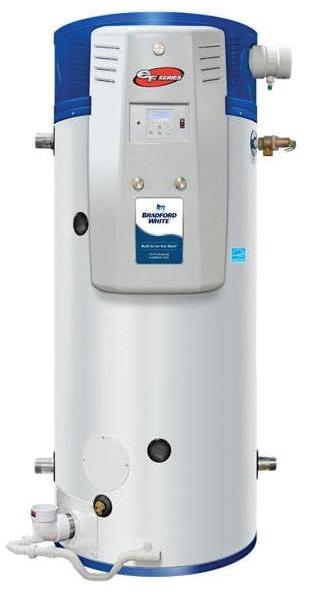

The EF Series turbo commercial water heater from Bradford White Water Heaters employs Turbo flues to deliver thermal efficiencies of 97% at 399 kBTU/hr and 96% at 499 kBTU/hr. The downfired premix power burner is paired with an advanced smart control system that ensures burner modulation with turndown ratios of up to 6:1. Additional features include protective powered anodes, designed for optimal tank protection; BMS integration for Modbus and BACnet via gateway kit; exclusive Vitraglas tank lining with Microban antimicrobial technology; and multiple venting materials and diameters, plus common venting for up to three units. Available in 119- and 125-gallon configurations.
Bradford White Water Heaters
JUMO introduces the favoTRON compact PID controller for entry-level applications. The two- and three-state controller with program controller function, autotuning and universal measurement input offers a modern solution for a wide variety of processes. An intuitive user interface with plain-text display in four languages (English, German, French and Spanish) enables quick, straightforward operation, parameterization and configuration. It features simple configuration via the USB-C setup interface and fast, secure cabling using spring terminals with PUSH IN technology. The integrated service and operating hours counter supports predictive maintenance planning and minimizes downtime.
JUMO
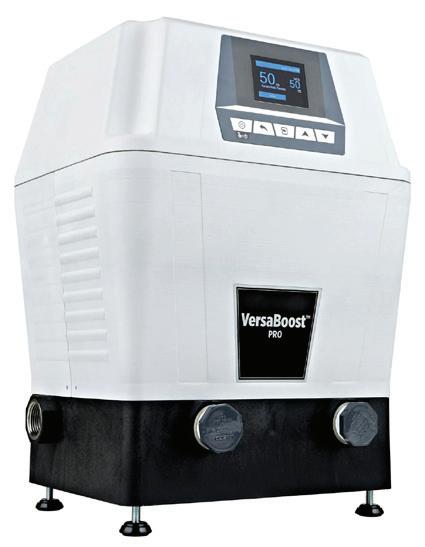

Franklin Electric Co. launches its VersaBoost Pro series constant-pressure boosting system. The compact solution maintains consistent water pressure throughout a property, even as demand in the system changes. Powered by the company’s 4-in. submersible pump-motor and built-in variable-frequency drive, the unit delivers consistent pressure anywhere—under sinks, in basements, indoors or out. Features a rotatable top cover with an integrated display, allowing for multidirectional installation and easy access in right-to-left or rear plumbing applications. The series includes two options: VersaBoost Pro (for applications up to 25 gpm) and VersaBoost Pro XT (for applications up to 45 gpm).
Franklin Electric Co.
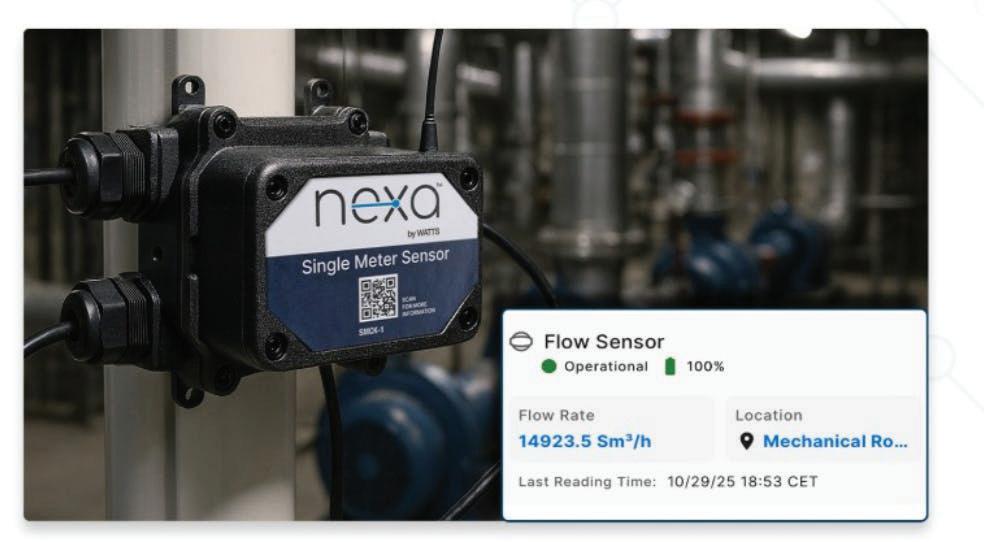
Watts launched a new Nexa website, offering facility maintenance professionals, engineers, specifiers, architects and contractors a simple-to-use site to help them understand the capabilities of the Nexa intelligent water management platform for new construction or retrofits. It is designed to showcase the breadth and scale of the Nexa platform and its ability to help users prevent leaks, reduce water use and operate more efficiently. This allows users to get to the information they want faster. The site features expanded thought leadership content in the form of case studies, blogs and white papers, along with online learning tools and the ability to easily request a quick 30-minute product demonstration.
Watts
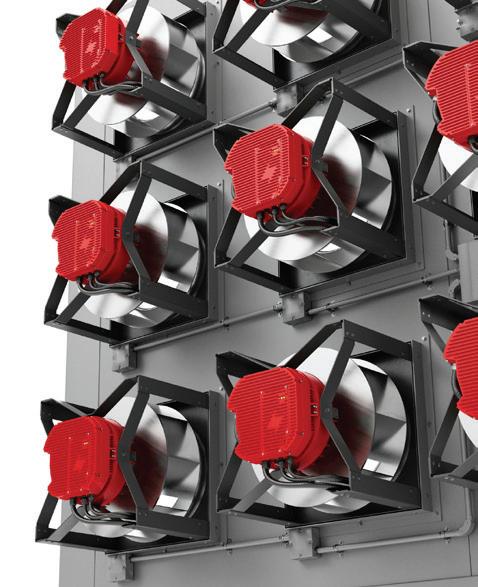
Infinitum launches its EC fan systems for HVAC, industrial and mission-critical applications. The high-efficiency, integrated (fan, motor, variable-frequency drive) solution features high power density, reliable performance and quiet operation. Proven motor-drive technology maintains high efficiency at a wide range, and delivers more airflow per kilowatt, with up to 25% energy savings and 91% system efficiency. Fan systems can be sized precisely for application needs with flexible, custom-rated motors (1-15 HP). Integrated Active Front End technology maintains total demand distortion below 5% across the entire load curve, supporting grid-friendly power. Infinitum
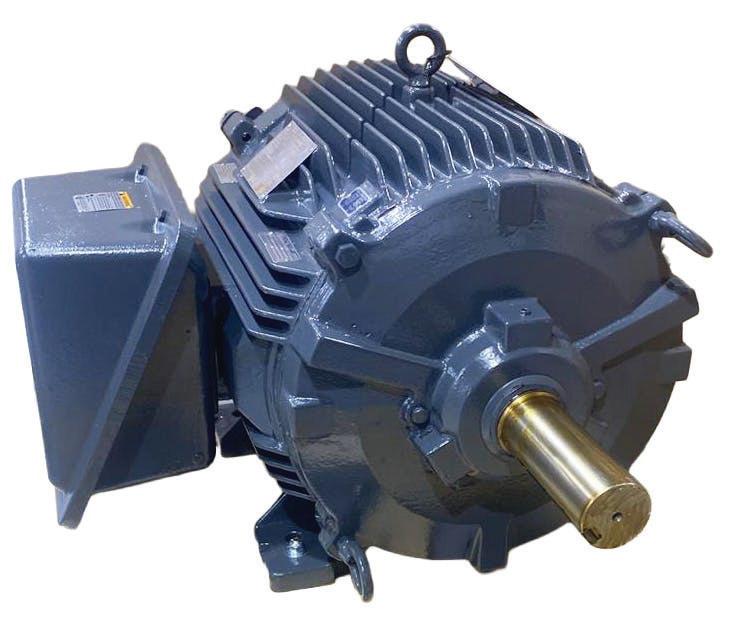
Nidec introduces the World Motor cooling tower motor, designed for use not only in cooling towers but also in evaporative condenser and other commercial and industrial applications requiring protection from harsh operating conditions with high humidity. The World Motor line of cast-iron, totally enclosed fan-cooled motors delivers severe-duty performance for the harshest environments. Built for various industries and applications, including HVAC, it offers fast delivery and custom engineering options to keep operations running smoothly and efficiently.
Nidec/U.S. Motors
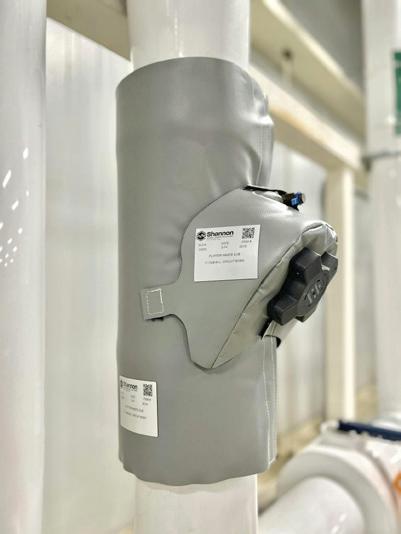
Shannon Global Energy Solutions launches the Hydronic Insulation Shield is a reusable insulation solution engineered to reduce radiant heat loss and improve energy efficiency across hot water and chilled water systems. Designed for valves and fittings operating at lower temperature ranges from 40° F to 190° F, the system offers a cost-effective alternative to traditional hard insulation methods that are often damaged or discarded during routine maintenance. Combining energy savings with easy access, it allows maintenance teams to remove and re-install insulation quickly without compromising system efficiency.
Shannon Global Energy Solutions











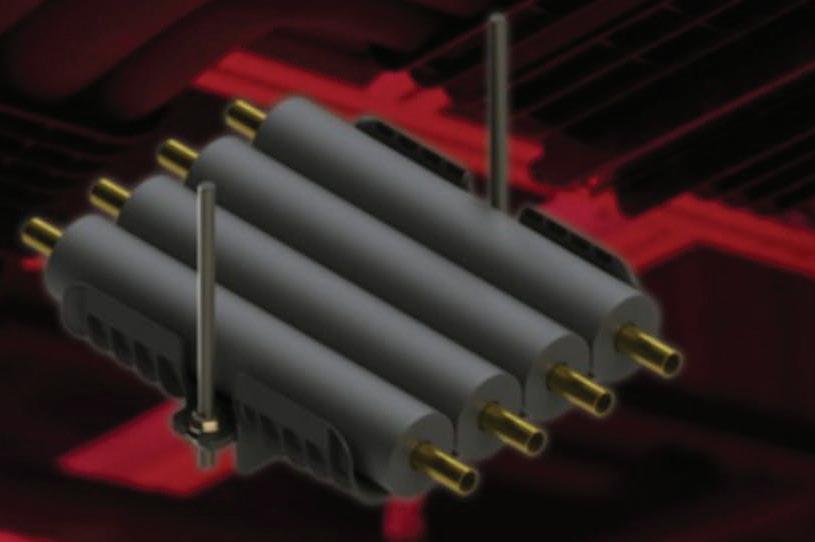
Malco Tools’ PipeLounge is a pipe support system that redefines how multiple pipes are supported. It cushions refrigerant lines while allowing for natural expansion and contraction—delivering a cleaner, more efficient installation for modern mechanical systems. It is designed to simplify multiline pipe support by eliminating the need for traditional strut in many applications. The modular system supports multiple refrigerant lines in a compact footprint while protecting insulation and improving long-term system reliability. The modular and stackable design adapts to different jobsite conditions and pipe configurations with one scalable system. It is ideal for congested mechanical rooms, ceiling spaces and renovation work.
Malco Tools










RANDI ROGNLIE, VISITING PROF.,
Much more than just ‘Johnny Tundra,’ our beloved columnist and commissioning pioneer is remembered fondly by one of his admiring colleagues.
The world of mechanical engineering and commissioning lost a friend and dedicated colleague earlier this year, just a few days after his 77th birthday. In true Ron Wilkinson fashion, he died doing what he enjoyed, riding his E-bike to the grocery store near his beautiful Pacific Northwest home, likely to gather ingredients for one of his delicious creations for partner Edie Rutledge.
No, Ron Wilkinson did not slow down in his retirement. If he had lived to be 100, he wouldn’t have slowed down. Anyone who knew him even slightly would agree. For those of you who didn’t know Ron, I urge you to read his formal obituary, which really describes him perfectly: www.dignitymemorial.com/obituaries/seattle-wa/ ronald-wilkinson-12734882.
He was truly one of a kind, and even that seems like an understatement.
I first met Ron many years ago, when he working for the State of Montana in the State Architect’s office. As a construction manager, I depended on him for any and all mechanical engineering advice, and soon Ron introduced the practice of commissioning to our admittedly, somewhat unsophisticated industry in Montana around 2000.
dedication to family and friends and without a doubt, his unique brand of humor.
Hearing of Ron’s death was a shock. He took great care of both his physical and mental health, riding his bicycle with passion throughout retirement, working feverishly with partner Edie on their home landscaping projects, and always, always thinking deeply about a wide variety of subjects, from science to art to personal experiences. Ron was genuinely curious, seemingly about everything.
Some have described him as “brilliant” and I’ve heard “quirky” tossed about, too, but what impressed me most was

After much hand-wringing and gnashing of teeth by my fellow engineers and contractors, commissioning (Cx) finally took off and people began to understand its importance locally, all thanks to Ron. In truth, he launched the industry here, and then took it on the road, to New York and elsewhere.
But wherever he worked, Ron was principled. He never backed down. Of course, there isn’t a building or mechanical retrofit project now in Montana that doesn’t involve Cx. But his efforts here saved far more than just the cost of Cx in mechanical efficiency, maintenance expenses, and three important costs in the construction industry: Time; Warranty Callbacks; and Preemptive Conflict Resolution.
When Ron was called to bigger and better things in New York City, the legacy he left us with, besides his wonderful children, was immeasurable. Those who knew him professionally will miss his intellect and wisdom. Those who knew him personally will forever miss his creativity,
how Ron genuinely cared for the people in his life, including his professional life. I have worked in the engineering and construction world for over 40 years, so I know a little about the general personality of engineers. Ron shattered the stereotype. His sense of humor was indescribably creative. His family Christmas letters were hilarious. And who but Ron could write humorous stories about mechanical building systems in cold climates?
Yes, the mechanical engineering and Cx world has lost someone very special, a man who celebrated the unique and original in this world and in each of us. So ride your bicycle, laugh with friends, watch an offbeat movie, and read any episode of Ron’s creative gift to engineering, The Adventures of Johnny Tundra, Cold-Weather Engineer. And after you do any of those things, please take a moment to smile and raise a glass of orange juice to one of the genuine good guys... Ron Wilkinson, P.E., LEED, AP CPMP!























AAON Delta Class delivers comfortable, clean air in exceptional environments — like yours.







AAON is always innovating. Learn more about our dedicated outdoor air systems (DOAS).