Eurolab April 2026

Page 1


SUBSCRIBE FOR FREE

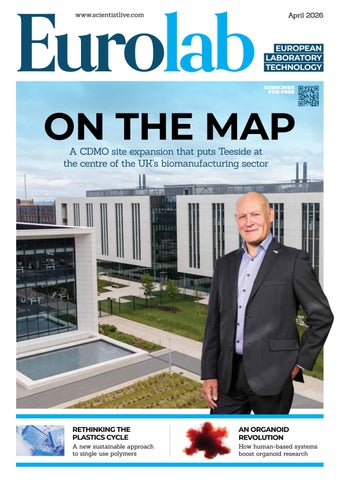
ON THE MAP

A CDMO site expansion that puts Teeside at the centre of the UK’s biomanufacturing sector

RETHINKING THE PLASTICS CYCLE

A new sustainable approach to single use polymers

AN ORGANOID REVOLUTION

How human-based systems boost organoid research

ADVANCED ROLLER COMPACTORS

Gerteis Innovation Centre News

Learn about the latest dry granulation innovations available only on GERTEIS® roller compactors. Introducing our cutting-edge In-Line Density Measurement Solution, the new Ultra Small Amount Funnel and the Design of Experiments Software Feature!

PAT: In-Line Density Measurement

Real-Time Insights: Say goodbye to off-line testing delays. Our system provides instant density measurements during production, allowing timely adjustments and informed decision-making.

High Precision: Accurate density data is key to robust process control. Whether you’re scaling up or down, our system ensures reliable results.

Closed-Loop Feedback: Linking density measurements to process parameters enables dynamic adjustments. Stay ahead of variations and maintain product consistency.

Design: Ultra Small Amount Funnel

Ideal for Small Batches: Process materials with as little as 10 grams of product — perfect for laboratory development and pilot projects.

No Residuals: Almost no product remains in the equipment, making it an excellent high yield small amount option.

Ease of Use: The funnel seamlessly integrates with the compaction unit of the Mini-Pactor, providing the same superior performance you would find in a full scale production machine.

Software: Design of Experiments (DoE)

Efficient DoE Implementation: Design of Experiments is the fastest and most cost-efficient way to create effective experiments. Tap into the power of DoE without the long learning curve.

Built-in Process Support: This goes beyond ordinary DoE software. It guides you on how to make optimal experimental choices, skipping impossible settings to save product and time.

Complete Guidance: From parameterization to execution, the software provides step-by-step instruction and support.

This Spring issue of Eurolab celebrates work being done in the UK and Europe to grow and develop the life sciences sector. Many of the articles also reflect the ongoing push for sustainability. Rethinking the cycle from Alpha Laboratories (page 18) addresses the issue of single use plastics, and A Good Foundation (page 42) argues that sustainability is a big driver when using virtual reality to train medicine makers. The latter article focuses on the work of Resilience, a UK-based Medicines Manufacturing Skills Centre, and how its work will dovetail with the NHS 2030 net zero commitments.

The cover story On the map (page 8) features the expanded Fujifilm Biotechnologies facility in Teeside. The launch of a single-use plastics facility at the site demonstrates a quandry biotechnology professionals face when trying to marry ISO levels of cleanliness and efficiency with sustainability goals. As an expert from Alpha Laboratories states in their article, perhaps the solution is not to do away with single use plastics, but rather to bring them into a circular sustainable economy. Similarly, Ready to unlock (page 12) provides survey results from Starlab International demonstrating that lab technicians believe cost savings should come from sustainable practices, but that, as yet, they do not.

There are many other articles of note in this issue and it is worth acknowledging the large show preview section. We are moving into trade show season and Chemspec and the AAPS events highlighted should be on the radars of chemical specialists and biotechnologists respectively.

8

8

On the map

What the expansion of the Fujifilm Biotechnologies facility means for Teeside

INDUSTRY NEWS

6 Global news Stories for laboratory professionals

ANALYTICAL AND LAB EQUIPMENT

10

12

Black box benefits

How tunable DPSS lasers eliminate the need for external support hardware

Ready to unlock

An analysis of Starlab International's survey of European laboratories

COVER STORY

more from less

at a head-to-head dataset from Integrated DNA Technologies

A wider reach Exploring an optoelectronic range expansion

PUBLISHER

Jerry Ramsdale

EDITOR

Nicola Brittain nbrittain@setform.com

CONTRIBUTING EDITOR

Saskia Henn shenn@setform.com

DESIGN – Dan Bennett, Jill Harris

HEAD OF PRODUCTION

Luke Wikner production@setform.com

HEAD OF SALES & PARTNERSHIPS

David Pattison

ACCOUNT DIRECTORS

John Abey | Peter King

SENIOR ACCOUNT MANAGERS

John Davis | Darren Ringer | Roy Glasspool

ACCOUNT MANAGERS

Paul Maher | Iain Fletcher | Marina Grant e advertising@setform.com

of

must attend show for chemical specialists

opportunity to share innovation

Conference

next generation solutions

hive mind

Setform’s international magazine for scientists is published twice annually and distributed to senior professionals throughout the world. Other titles in the company portfolio focus on Process, Design, Transport, Oil & Gas, Energy and Mining engineering.

The publishers do not sponsor or otherwise support any substance or service advertised or mentioned in this book; nor is the publisher responsible for the accuracy of any statement in this publication. ©2026. The entire content of this publication is protected by copyright, full details of which are available from the publishers. All rights reserved. No part of this publication may be reproduced, stored in a retrieval system, or transmitted in any form or by any means, electronic, mechanical, photocopying, recording or otherwise, without the prior permission of the copyright owner.

Setform Limited | 6 Brownlow Mews, London, WC1N 2LD, United Kingdom t +44 (0) 207 253 2545 e mail@setform.com

Expansion of a Fujifilm Biotechnologies site

GLOBAL INDUSTRY INSIGHTS

A roundup of world news in the science industry

EXPLORING THE DARK GENOME

An innovative new partnership will explore non-coding RNAs otherwise known as the dark genone with a view to finding new cures for cancer. Despite making up 98% of our DNA, there is not much known about these genes.

Biotechnology company Kahimmune Therapeutics has signed an exclusive licensing agreement with Gustave Roussy, a European leader in oncology, and SATT Paris-Saclay, experts in technology transfer.

Created at the end of 2025, Kahimmune draws on the latest discoveries in immunology relating to the dark genome. The 2024 Nobel Prize in Medicine was awarded to researchers in this field, meaning the area is getting more traction across the world.

The agreement signed by Gustave Roussy and SATT Paris-Saclay grants Kahimmune an exclusive license over the core technology of its Kahinomics platform and the first neoantigens derived from it, known as Kahigens. This innovative

platform will enable the discovery of novel tumor-specific antigens inside the dark genome, using safe and effective techniques, according to the company.

Kahimmune will subsequently develop shared mRNA cancer vaccines. The companion vaccines will be designed to improve patient survival and quality of life post diagnosis. Any resulting cancer vaccines will be combined with already developed treatments to optimise their efficacy. The company’s first vaccine candidate will target colorectal and pancreatic cancer.

For more information visit: www.gustaveroussy.fr/en

UK BIOTECH DEMONSTRATES RESILIENCE

A report from the BioIndustry Association (BIA) argues that the UK’s Biotech industry has entered 2026 with renewed confidence and an increasing investor appetite.

The report, released in January this year, says that the UK biotech sector has emerged from one of its most selective investment climates in a decade, ending 2025 with renewed momentum. It adds that the UK retained its position as Europe’s leading national biotechnology market in 2025, representing 30% of all European venture financing totalling £1.79bn across 58 deals in the industry, this was despite a 13.2% year-on-year drop in investment overall,.

Much of the capital came from two first-quarter transactions; in Isomorphic Labs and Verdiva Bio which the report argues demonstrated that global investors continue to view

the UK as a destination of choice for biotechnology financing.

The report also argued that transactions provided a strong indicator of sector confidence. MSD’s £7.5bn acquisition of Verona Pharma was one of the largest global biotech exits in recent years, underscoring sustained international appetite for high quality UK biotech despite the absence of IPO activity. Major acquisitions by Sanofi and other global pharmaceutical leaders further reinforced this trend.

Crucially, 2025 saw the policy

foundations laid for a new era of domestic capital deployment, where the company committed to turning policy into action. This was most evident with the Life Sciences Sector Plan, the Mansion House reforms and the first evidence of pension backed investment into the sector through the Draig Therapeutics financing and Aviva investing in Cambridge Innovation Capital. With overseas institutions making up 68% of investors in UK Series A deals and 89% of investors in Series B+, the quality of UK opportunities are not in question, but the BIA argues that this presents a clear opportunity for greater participation by UK domestic institutions, such as pension funds.

For more information visit: www.bioindustry.org

EU ADVANCES THE BIOTECH SECTOR

On 16 December 2025, the European Commission (EC) published its Proposal for a Regulation on establishing a framework of measures for strengthening the Union’s biotech and biomanufacturing sectors particularly in the area of health. The Proposal follows a public consultation held between August 2025 and November 2025 and forms part of the Commission’s broader life sciences strategy, The work has resulted in the EU Biotech Act which aims to provide access to funding and reward key innovations in the sector.

Health biotechnology accounts for most of life sciences value and employment in Europe and is playing an increasingly central role in the development of innovative medicines, including advanced therapy medicinal products (‘ATMPs’), personalised therapies, and biological medicinal products.

As noted in the Proposal’s

Explanatory Memorandum, the EU has faced challenges in turning early-stage research into large-scale development, manufacturing, and commercialisation of innovative health biotechnology products leading to companies seeking help outside the EU.

The Biotech Act aims to address these gaps by improving

access to funding, rewarding key innovations, simplifying and accelerating regulatory pathways, simulating alternative approaches through regulatory sandboxes, and strengthening industrial and manufacturing capacity.

For more information visit: www.commission.europa.eu

UKRI SPOTLIGHTS GOVERNMENT-BACKED BUSINESS INCUBATOR

Seven biotech start-ups from the UK have joined a governmentbacked business incubator to bring innovations to market.

The DeepTech Catalyst Biotech

Incubator (DTC Bio) is a collaboration between the Science and Technology Facilities Council (STFC) and the Biotechnology and Biological Sciences Research Council (BBSRC).

The news was reported by the UKRI, a non-departmental public body sponsored by the government.

Addressing a range of real-world challenges, the latest businesses to join the DTC Bio include:

• Oshun Labs: developing functional products derived from seaweed to support women during and after menopause, helping to reduce longterm health risks such as heart disease

• GutSee Health: using AI and virusbased therapies to remove harmful bacteria, offering more targeted treatments for infected wounds and gut infections

• The Good Pulse Company: helping cheese manufacturers make healthier, better-tasting, more nutritious and more sustainable plant-based cheese, with no additives and lower production costs.

For more information visit: www.ukri.org

A recent expansion of the Fujifilm facility in Teeside promises to make the area a biotechnology hotspot

Japanese megalith Fujifilm Biotechnologies has invested £400m in a significant expansion of its Fujifilm facility in Teeside, helping to mark the area as an employment hub and biotechnology hotspot.

SINGLE USE BIOPHARMACEUTICAL FACILITY

The facilities expansion, to come online imminently, will include the opening of the largest single-use biopharmaceutical CDMO facility in the UK which, when the rollout is complete, will be the biggest in Europe, according to the company. The facility will employ almost 1,000 people across its sites in Billingham, Wilton, and Darlington, and staff will work in biologics, vaccines and advanced therapies.

The UK expansion will introduce 2,000 and 5,000 litre single-use bioreactors with a capacity of up to 19,000 litres to provide small and midscale antibody manufacturing, with the flexibility to grow and support customer programmes as needed. The manufacturing facility will be 110,000 square foot in size.

SINGLE USE MANUFACTURING

The new single-use manufacturing facility, which uses disposable, presterilised polymer-based equipment, will feature the company’s SymphonX downstream processing skid, effectively a complete piece of equipment that will run all downstream unit operations across multiple scales. This will enable scaling flexibility in fed-batch and continuous processes.

In parallel with the launch, was the opening of the Bioprocess Innovation Centre UK (BIC UK), a laboratory for both high-throughput, and continuous process development capabilities, that will operate as a centre for biomanufacturing innovation and process development.

The launch was attended by several luminaries including representatives from the Embassy of Japan, the Confederation of British Industry, the BioIndustry Association, and the Japanese Chamber of Commerce and Industry in the UK; as well as Health Innovation MP Dr Zubir Ahmed, and the MP for Stockton North Chris McDonald.

VOTE OF CONFIDENCE

At the opening, Dr Zubir Ahmed argued that the expansion demonstrated the high regard with which the UK and Teeside is held by its business partners: “Fujifim’s investment is a vote of confidence in both the North East and UK manufacturing,” he said. Ahmed also emphasised the similarities between the government’s life sciences plan and those of Fujifilm in terms of digitalisation and bringing point of care treatment to care homes.

He went on to expand on the UK government’s commitment to the sector: “The UK is an R&D powerhouse with the second highest government spend in the world - life sciences make up almost a fifth of that budget,” he said. Recent spending announcements include a £520m commitment to the Life Sciences Innovative Manufacturing Fund, a £1bn 10-year investment by BioNTech, and a £600m project for health data research.

Much was said about the ongoing trade connections between Japan and the UK with the British Ambassador to Japan Julia Longbottom citing bilateral trade of £33.4bn with Japanese investment supporting over 150,000 UK jobs.

The Fujifilm Biotechnologies production facility

DOVETAILING WITH GOVERNMENT COMMITMENTS

The Life Sciences Innovative Manufacturing Fund (LSIMF), originally announced on 2 March 2022, is a £60m fund to support UK life sciences manufacturing. A new, expanded iteration of the LSIMF, providing up to £520m, opened for applications on 30 October 2024.

Fujifilm Biotechnologies discussed the expansion of its site in Teeside with biotechnology partners including Thermo Fisher Scientific and the High Value Manufacturing Catapult, helping to demonstrate the level of collaboration in the sector.

THE KOJOX ECOSYSTEM

The site is one of several in Fujifilm’s KojoX ecosystem. The KojoX model integrates modular and standard procedures with a view to creating a resilient and streamlined bioproduction network given the likelihood of sector volatility.

Such an ecosystem is designed to address the challenges of supply chain shocks, regulatory complexity, and geopolitical risks, enabling biopharma companies to deliver life changing medicines when needed.

Lars Petersen, president and chief executive officer, of Fujifilm Biotechnologies said: “This site represents the first small and mid-scale manufacturing hub in our global KojoX ecosystem, providing our partners with supply chain flexibility and agility. In leveraging KojoX, we aim to create a framework where our partners can easily scale up and out from process development through clinical and commercial.”

Speaking at the event Steve Bates the chair of the Bioindustry Association (BIA) said: “Our country has the talent, scientific excellence and industrial base to lead in advanced bio manufacturing globally. With the right policy environment, this sector can be a major engine of growth for the UK economy. This facility is not just a great new site for Fujifilm in the UK; it also showcases the North East as a place to build and scale globally competitive capabilities.”

THE UK’S LIFE SCIENCES SECTOR IN NUMBERS

• The UK biotechnology and life sciences sector is currently valued at approximately £25.3bn.

• 3,321 businesses are currently classified as biotechnology companies. Within the broader life sciences sector, there are 7,320 companies.

• The UK government has contributed £520m of life sciences innovation funding torwards schemes like the VPAg Investment Program for sustainable medicine manufacturing.

• Life science manufacturing supports over 115,000 jobs in the UK.

• The country exported £25.5bn worth of medicines and pharmaceutical products between April 2023 and March 2024 making it one of the top-ten largest pharmaceutical exporters in the world.

This site represents the first small and mid-scale manufacturing in our global KojoX ecosystem, providing our partners with supply chain flexibility and agility

Lars Petersen is president and CEO of Fujifilm Biotechnologies

BLACK BOX BENEFITS

New

air-cooled, tunable DPSS lasers

eliminate the need for external support hardware, according to an industry specialist

When original equipment manufacturers (OEMs) design and build systems, they frequently integrate technologies from third parties in areas outside their core expertise. These commercially available components are often complex and highly specialised, yet they must function as close to ‘black box’ solutions as possible, allowing seamless integration without the need for additional programming, alignment, or engineering effort.

Tunable Optical Parametric Oscillators (OPO) lasers, often used in medical laboratories, are a good example. These lasers can be ‘tuned’ to a wide spectrum of specific wavelengths across the UV, visible and infrared. The laser light can then be directed, or transmitted over fibre, to physically interact with matter by depositing short, intense bursts of energy into a sample.

OPO lasers are useful anywhere analytical work depends on releasing material from a surface, generating

ions, or selectively exciting molecular states. As a result, they are employed in fields such as surface science, materials characterisation, and chemical analysis.

Instruments that rely on laser-driven desorption or ion formations, such as laser desorption/ionization mass spectrometers, laser ablation ICP-MS systems, and laser induced breakdown spectroscopy (LIBS), benefit directly from the tunable energy these sources provide. They are also valuable in spectroscopic techniques that depend on targeted electronic or vibrational excitation, including resonant Raman, infrared spectroscopy, UV–Vis fluorescence spectroscopy, and various multiphoton or resonance-enhanced ionisation methods.

In all these cases, the tunability and pulsed nature of OPO light allow product developers to match photon energy precisely to the physical interaction they require.

However, integrating a laser into a larger piece of equipment has historically been difficult.

OPOs have long provided broad wavelength tunability

Tunable lasers seldom achieve true ‘black box’ simplicity because their physical footprint is substantial and they require an array of supporting components. Water-cooling units, extensive cabling, external controllers, and other auxiliary hardware are typically necessary, preventing these systems from operating as compact, self-contained devices.

NEW CATEGORY OF LASERS

Now a new category of OPO lasers based on diode-pumped solid-state (DPSS) technology is reducing the amount of heat generated and, by extension, eliminating the need for water-cooling and other auxiliary equipment.

The new air-cooled tunable lasers are roughly the size of a couple of shoeboxes and offer performance comparable to much larger, traditionally cooled systems. The reduced electrical and mechanical complexity not only lowers operating costs but also simplifies installation, making them well suited for OEM integration.

PROGRESS TOWARD BLACK-BOX CAPABILITY

OPOs have long provided broad wavelength tunability by converting

Pic caption in here xxx xx xxxxx xx xxxx

Removing the water cooling hardware cuts costs for OEMs

the fixed 1064 nm output of a Nd:YAG laser into a wide selectable range. However, this ‘tuning’ requires both the pump laser and the OPO to be precisely positioned through complex manual adjustments.

Over the years, technological progress has steadily moved these systems closer to a genuine plug-and-play format. Current models place the laser and OPO module within a single, rigid enclosure that preserves optical alignment throughout transport and setup. Automated controls now handle crystal rotation, harmonic selection, attenuation, and routine alignment verification. In addition, many configurations support fiber-based beam delivery.

“OPOs now come as integrated, user friendly devices that no longer require a laser engineer to set up and calibrate,” explains Dr. Mark Little, director of sales and support services at Carlsbad, CA-based Opotek.

These improvements simplified integration and reduced the laser head to a manageable size, but one barrier remained. Traditional configurations, even when the laser head is compact, require multiple interconnected units. These include separate motor-

control electronics for the OPO, a large floor or rack-mounted power supplies, and numerous high-voltage and cooling cables.

The adoption of DPSS laser technology has effectively removed this constraint.

DPSS: THE SHIFT TO AIR COOLING

Most commercial OPOs today rely on flashlamps, a high-intensity light source used to energise, or ‘pump,’ solid-state lasers. The resulting light emits over nanosecond time periods at very high pulse energies, often in the range of several hundred millijoules.

However, reaching these energy levels requires considerable electrical power, typically involving high voltage, high current, and sizable capacitor banks. As a result, flashlamp-based systems produce intense pulses that generate substantial heat. To keep the system stable and protect components from thermal stress, they require robust water-cooling infrastructure designed to manage that heat load effectively.

DPSS-based lasers provide a much more efficient method of generating the required photons. While peak

energy output levels are lower than flashlamp sources, greatly reduced heat generation allows DPSS to reach higher repetition rates or eliminate water cooling altogether.

Fortunately, recent improvements in diode fabrication and supply availability have made this approach commercially viable for use in OPO lasers.

“For instrument manufacturers that need a tunable light source to drive an analytical process, this aircooled DPSS configuration meets all key requirements. It supports commercialisation by providing a compact, self-contained module that functions as a true black-box component,” says Dr. Little.

For OEMs, removing the watercooling hardware cuts cost, reduces maintenance, and simplifies integration while removing any electronic safety hazards. With the core functions contained in one enclosure, developers can work with a cleaner, more manageable package.

For more information visit: www.opotek.com

Over the years, technological progress has steadily moved these systems closer to a genuine plug-and-play format
Air cooled OPO laser with DPSS technology

Cost-cutting measures are still having a big impact on laboratories

READY TO UNLOCK

A survey by Starlab International reveals that European laboratories have rarely felt so constrained, but have never been more willing to change

European laboratories are facing significant structural funding shortages entering 2026. An annual survey conducted by life science group Starlab International GmbH revealed that for the first time, lack of budget ranks as the biggest challenge facing European laboratories.

Starlab specialises in the manufacture and distribution of laboratory products, with a focus on liquid handling. The group has headquarters in Germany, Switzerland, France, Italy and the UK, as well as distributers throughout Europe. Since 2021, Starlab has conducted an annual survey to gauge the mood of European laboratories.

This year’s study was titled ‘Ready to unlock: What paralyses Europe’s laboratories, which levers are effective’. It surveyed 368 laboratory employees from Germany, the UK, Switzerland, Italy, France and Austria in January 2026. Participants included master’s, PhD and post-doc students (8%), buyers (8%), researchers and medical researchers (7%), professors and project managers (4%) and laboratory directors (2%). Another 13% worked in other laboratory areas.

BREAKING THE BANK

The survey’s 2026 results are a departure from Starlab’s 2025 survey, which listed rising prices for

consumables as the biggest challenge by 42% of participants. This year’s shift toward budget concerns indicates more fundamental problem with European laboratory funding.

“The problem seems to be less cyclical than structural. This is a warning signal,” says head of Starlab Group Benedikt Geldmacher-Voss. “If financing becomes the number one concern, the entire future viability of the industry will come under pressure.”

As a response to concerns about lack of budget, 57% of laboratories have introduced cost cutting measures, a 7% decrease from 2025. However, Starlab’s survey indicates that savings are being made in the wrong places.

Equipment and infrastructure are the largest areas from which funding has been stripped, with 74% of participants reporting cuts in this area. 54% of participants have stopped new hires and 22% have reduced funding for conferences and professional development. All three of these areas are crucial to building future research capacity during a time when the sector is already experiencing a shortage of skilled personnel. “Those who save on investing in the future are saving on their own foundations,” says Geldmacher-Voss.

Employee satisfaction has also declined since last year. In 2025, 76% of laboratory employees said they were satisfied with their work. In 2026 that figure has fallen to 63%. One in three respondents now reports a high or very high level of stress.

THE POTENTIAL FOR CHANGE

Despite the many concerns about budget and wellbeing, the industry has adopted a pragmatic and progressive approach to the future, with sustainability being embraced by most laboratories in the survey.

Resistance toward the use of sustainable products in laboratories has largely disappeared due to environmental protection (42%) and cost-saving (36%) motivations. 78% of laboratories have already implemented recycling programmes and 58% employ reusable systems. 64% of participants said they would use recycled materials if the quality was right.

“The potential for change is there – it just needs to be unleashed,” says Starlab product manager Lennart Walter. Walter is responsible for

Starlab’s TipOne range of universal-fit pipette tips, which use fully recycled plastic for the clear polypropylene system components and 25% recycled material for the rack base.

Starlab also runs a closed-loop recycling service for laboratories. Laboratories return used PP packaging which Starlab processes into granulate and uses to manufacture new racks. Participation in this programme increased from 23% of registered customers in 2024 to 31% in 2025.

Over the same period, the volume of granulate produced rose from 60t to 100t, representing growth of nearly 68%.

“Sustainability is not purely an environmental issue, but a cost factor,” says Geldmacher-Voss. “Those who think holistically across departmental boundaries can see that ventilation rates, temperatures and outdated routines offer considerable potential for savings. These savings can then be deliberately reinvested in AI skilled staff, future-ready technology and sustainable processes.”

Saving money to reinvest in new technologies appears to be exactly what is happening across Europe, as digitisation and AI are

becoming increasingly established in laboratories. The survey revealed that 46% of laboratories already use AI occasionally, while 13% use it regularly. The fear of AI taking over laboratory jobs is minimal, with only 15% citing this concern.

A RICH TAPESTRY

While 2026 budget constraints, cost cuts and personnel satisfaction paint a concerning picture, other factors such as an optimism toward sustainability, digitisation and AI, make European laboratories a rich tapestry. The potential is there for new, advanced tools to make an impact, if the financial architecture does not get in the way.

As Geldmacher-Voss says: “The laboratories have the tools, the will and the knowledge. Now they need the right framework conditions, and the courage to question existing structures and change them themselves.”

For more information, visit: https://www.starlabgroup.com/ GB-en/starlab-mood-barometer -2026

Staff are personally committed to sustainability, but financial circumstances may not always allow it
The survey found that cost savings are being made in the wrong place with too little focus on sustainability
Respondents expected there would be more focus on sustainability in 2026 than there actually is
The real-world impact of AI does not match concerns about its use

CONTAMINATION CONTROL

Elizabeth Norwood from Microcare explores how to validate cleaning processes in Electronic Medical Device manufacturing

The manufacture of electronic medical equipment within cleanroom environments demands strict contamination control and comprehensive process documentation. For printed circuit board assemblies (PCBAs) used in diagnostic, monitoring and life-support equipment, cleaning validation ensures that residual contaminants are consistently removed to acceptable levels. Flux residues, process oils and particulates remaining after assembly can compromise electrical performance, leading to corrosion, leakage currents and insulation degradation. Within cleanroom production, where particulate levels and environmental conditions are tightly regulated under ISO 14644 and associated cleanroom standards, validated cleaning processes ensure assemblies leave manufacturing in a defined, contamination-controlled

state. This is particularly critical for medical electronics deployed in clinical settings, where reliability is linked to patient safety and device performance over time.

CLEANING CHALLENGES IN CLEANROOM MANUFACTURING

Modern medical PCBAs present significant cleaning challenges as circuit density and material diversity continue to increase. High-density layouts with fine-pitch components create complex geometries where contaminants can become trapped beneath components or within microscopic gaps that traditional cleaning methods struggle to reach. Mixed material construction, often combining metals, plastics, ceramics and specialised coatings, further restricts which cleaning fluids can be used without risking part degradation. The cleanroom environment

itself introduces added constraints. Cleaning processes must be carefully controlled to avoid introducing particulates or moisture that could compromise environmental classification. As a result, cleaning approaches must not only be effective, but also inherently compatible with cleanroom operation and capable of being validated and documented.

THE ROLE OF CLEANING FLUIDS IN PROCESS VALIDATION

Cleaning fluid choice forms the foundation of any validated cleaning process. Fluids must effectively remove flux residues, oils and particulates while staying compatible with all materials present on the assembly. In medical device manufacturing, this compatibility extends beyond immediate cleaning performance to long-term material stability. Fluids must not degrade polymers, attack metal finishes or

leave residues that could result in latent failures.

Cleaning fluids developed specifically for electronics manufacturing are formulated to penetrate tight spaces, remove contaminants efficiently and evaporate without leaving residues. Their properties support effective cleaning of dense PCBAs while staying compliant with air quality and operator safety regulations, making them suitable for use in regulated cleanroom environments.

PRECISION CLEANING METHODS FOR CLEANROOM OPERATIONS

Two precision cleaning techniques are commonly used to address the challenges of cleaning complex medical PCBAs in cleanroom environments: benchtop cleaning and vapour degreasing. Each method offers advantages depending on production scale, assembly complexity and validation requirements.

Benchtop cleaning is well suited to small-batch production, prototype builds and assemblies requiring targeted intervention. Cleaning fluids are applied directly to contaminated areas, allowing control over fluid volume, contact time and mechanical action. When used with measured dispensing systems, benchtop cleaning supports waste reduction while maintaining the process control and documentation required for validation.

For higher-volume production or applications where consistency is

Precision cleaning ensures medical PCBAs leave the cleanroom contaminationcontrolled, documented and ready for reliable clinical use

critical, vapour degreasing offers specific advantages. The process uses a closed-loop system in which assemblies are cleaned using heated fluid and vapour, followed by a controlled rinse and drying phase. Assemblies emerge from the vapour degreaser clean, dry and ready for later manufacturing stages without introducing moisture or particulates into the cleanroom environment.

The effectiveness of vapour degreasing lies in both the properties of the cleaning fluid and the stability of the process itself. Vapour-phase cleaning enables penetration into tight gaps and under components, lifting residues that are difficult to reach using other methods. Once refined and validated, the process stays stable over extended production cycles, delivering reproducible results with minimal variability. Vapour degreasers are also highly scalable, accommodating different batch sizes and assembly geometries while maintaining compact equipment footprints suitable for cleanroom layouts.

VALIDATION REQUIREMENTS AND DOCUMENTATION

Regulatory frameworks including EU MDR (2017/745), ISO 13485 and ISO 14644 require manufacturers to provide documented evidence that cleaning processes used in medical device production are effective and repeatable. This requires proving that defined process parameters consistently deliver results that meet predetermined specifications. When

properly controlled and recorded, both benchtop cleaning and vapour degreasing can be validated to meet these requirements.

Standard operating procedures form the core of this validation framework. In cleanroom manufacturing, SOPs (standard operating procedures) define equipment setup, operation and maintenance while specifying critical parameters such as cleaning fluid choice, fluid temperature and cycle time. Quality control checkpoints and acceptance criteria embedded within SOPs ensure that deviations are found and addressed in a controlled manner.

Supporting documentation, including cleaning fluid batch records, equipment calibration data, process logs and cleanliness verification results, provide objective evidence that cleaning stays within validated limits. This documentation shows that PCBAs meet functional cleanliness requirements while maintaining cleanroom classification and particulate limits in line with IPC-A-610 and IPC-CH-65B guidelines.

SUPPORTING LONGTERM RELIABILITY

Beyond regulatory compliance, validated cleaning directly affects device reliability and longevity. Reducing the risk of latent contamination supports stable long-term performance and greater confidence in devices throughout their intended service life within laboratories, lowering the likelihood of premature failure in clinical use. As PCBAs continue to increase in density and complexity, validated cleaning processes using appropriately selected cleaning fluids remain essential to the manufacture of compliant, reliable medical electronics within cleanroom facilities.

AUTHOR INFORMATION:

Elizabeth Norwood is a Senior Chemist at MicroCare, LLC, which offers precision cleaning solutions. She has been in the industry for more than 25 years and holds a BS in Chemistry from the University of St. Joseph.

The

Biomek i3 will help with high throughput screening and drug discovery workflows

SMOOTH RUNNING

A pipetting tool from Beckman Coulter promises to streamline liquid handling across many laboratory processes

Liquid handling is a core component of laboratory work, particularly for technicians working in genomic applications such as synthetic biology and sequencing.

As with many lab practices automation and data gathering has become an essential aspect on the work and a product from life sciences giant Beckman Coulter called the Biomek i3 Benchtop Liquid Handler promises to move liquid handling into the digital age. Built for low to medium throughput workflows, the handler delivers automation in a compact, costeffective format, according to the company. It operates within a gridbased deck design includes 15 standard and 5 flex positions, enabling flexible configuration to accommodate a wide range of labware and protocols. The instrument supports genomic applications such as synthetic biology, sequencing, epigenetics, gene

expression, and high-throughput screening, as well as drug discovery workflows including cell-based assays, biochemical assays, ADME-Tox, and combination sequencing.

8-CHANNEL PIPETTING TOOL

An 8-channel pipetting tool allows the operator to select up to 8 tips in a single sequence thereby minimising tip waste and setup time. With a wide volume range of 1–1,000 μL, the product handles both delicate low-volume assays and largevolume transfers with precision. The integrated gripper supports ANSI/ SLAS-compliant labware, including lids, plates and tip boxes to help with the workflow.

Crystal Girod, product manager at Beckman Coulter says of the product “This marks a natural evolution of the Biomek Liquid Handling platform, extending its capabilities to a broader range of laboratories.”

The

instrument supports genomic applications such as synthetic biology, sequencing, epigenetics, gene expression, and high-throughput screening, as well as drug discovery workflows including cellbased assays

CUSTOMER FEEDBACK

She continued “Feedback from customers has helped us understand the space and budget limitations many smaller labs face. In response, we developed a solution that helps them with liquid handling capabilities

to drive groundbreaking research. Lab teams can automate complex workflows with little effort since the software has been designed to be intuitive with a user-friendly interface, and no prior automation experience required.

The instrument supports heating,

cooling, shaking, tilting, and thermocycling, enabling automation of complex protocols and enhancing process control without manual intervention. A large touchscreen interface with drag-and-drop functionality simplifies operation, while the MyBeckman Learning platform and a library of downloadable demonstrated methods support users with no prior liquid handling experience.

Brian Gorre-Clancy, scientist, assay development and automation at Archer Daniels Midland is a user of the product and he said: “Our productivity in the lab has increased significantly with the addition of the Biomek i3 liquid handler,” says. “this means our larger Biomek i7 system is freed up to do what it was designed for, and the Biomek i3 instrument gives us an accessible means to use automation during development on a lab bench scale.”

Easy Filter Tips Refill System with an Eco-Conscious Design

RETHINKING THE CYCLE

Single-use plastics in science: an expert from Alpha Laboratories explores new approaches to recycling

Single-use plastics account for a significant percentage of laboratory waste

Single-use plastics remain essential to modern science, both in research and healthcare environments. They are safe, versatile and indispensable in applications where sterility and contamination control are critical. For many laboratory and clinical procedures, there is still no viable alternative that can guarantee the same level of reliability.

Yet their use comes with a visible environmental footprint. Despite the rise in research and development aimed at tackling plastic waste management, progress has slowed in recent years. A significant share of plastic waste continues to end up in landfills or the natural environment, with long-term consequences for ecosystems and human life.

The scale of the issue is not insignificant. Researchers have estimated that bioscience laboratories around the world generate around 5.5 million tonnes of plastic waste each year. To

put this into perspective, that is roughly equivalent to the weight of the Great Pyramid of Giza. The estimate itself is telling: the scientific community has begun to measure its own impact and to reflect on the consequences of its operational practices.

CHANGE IS UNDERWAY

Encouragingly, change is already underway. Laboratories, research institutions and healthcare organisations are introducing new initiatives to reduce waste, optimise materials and improve waste management. These efforts go beyond simple disposal strategies. Increasingly, they point toward a broader idea: plastics should be viewed not as a linear resource that is used and discarded, but as part of a circular system.

Instead of the traditional ‘takemake-dispose’ logic, plastics can be integrated into a circular supply

chain that minimises emissions, maximises resource efficiency and preserves the benefits they bring to science and healthcare.

When viewed in this way, the challenge of single-use plastics becomes part of a much larger system. It involves manufacturers developing more efficient materials, laboratories optimising their usage, procurement teams favouring sustainable options, and recycling partners helping to return materials to the production cycle. Each element influences the others.

In practice, many solutions already exist. Product design can reduce the volume of material required for laboratory consumables. Manufacturers can incorporate recycled or recyclable polymers. Laboratories can work with specialised recycling partners capable of handling scientific plastics. Across the supply chain, the use of cleaner energy and improved logistics can further reduce environmental impact. Digital tools and data systems are also

Rethinking plastics waste will require considerable innovation

beginning to support better tracking and optimisation of materials. As seen from Alpha Laboratories, there is a push to use recycled and recyclable materials in the production of the FastZAP pipette tips that are designed with a minimal amount of packaging while preserving product quality.

These changes illustrate an important point: rethinking the plastics cycle is not only about waste reduction. It is also about innovation and industrial development.

Across Europe, the plastics sector is undergoing a period of transformation. Plastic production has declined in recent years due to a combination of regulatory pressure, rising energy costs and global market dynamics. At the same time, the recycling industry – which plays a central role in the circular economy – has faced significant challenges, including reduced investment and facility closures.

REINFORCING CIRCULAR SYSTEMS

Reinforcing circular systems could help address these pressures. Strengthening recycling infrastructure, improving material recovery and developing new processing technologies can support

Researchers have estimated that bioscience laboratories around the world generate around 5.5 million tonnes of plastic waste each year. To provide perspective, this is roughly equivalent to the weight of the Great Pyramid of Giza

the emergence of new industries and specialised services. From waste collection and decontamination technologies to advanced recycling processes and recycled polymer manufacturing, the circular plastics economy has the potential to stimulate innovation and create considerable numbers of skilled jobs.

For the scientific sector, this transformation offers an opportunity to lead by example. Researchers and healthcare professionals are not only users of plastics; they are also drivers of technological and behavioural change. By reconsidering how materials are designed, used and recovered, the scientific community can influence suppliers, manufacturers, procurement systems and even regulatory frameworks.

The benefits extend beyond environmental protection. Circular management of plastics can also strengthen supply-chain resilience by reducing reliance on virgin materials and long international supply chains – an increasingly relevant factor in a world shaped by geopolitical tensions and economic uncertainty.

Ultimately, the challenge of singleuse plastics in science is not simply a question of waste management. It is a

question of how a critical material can be integrated responsibly into a broader economic and environmental system. Rethinking the plastics cycle will require collaboration across the entire value chain – from laboratories and hospitals to manufacturers, recyclers and policymakers. But the foundations for this transition are already being laid.

1 Urbina, M. A., Watts, A. J. R., & Reardon, E. E. (2015).

“Labs should cut plastic waste.” Nature 528, 479.

https://doi.org/10.1038/528479a

2 Global trends in plastic waste management Organisation for Economic Co-operation and Development (2022).

Global Plastics Outlook: Economic Drivers, Environmental Impacts and Policy Options.

3 Urbina, M. A., Watts, A. J. R., & Reardon, E. E. (2015).

“Labs should cut plastic waste.” Nature 528, 479

4 Plastics Europe (2023).

Plastics – The Fast Facts: An Analysis of European Plastics Production, Demand and Waste Data.

https://plasticseurope.org

5 Plastics Recyclers Europe (2023–2024). Industry reports and market monitoring on European plastics recycling capacity.

https://www.plasticsrecyclers.eu

PULSING PERFORMANCE

Neelam Akram, Anders Grahn and Tobias Jonsson explore how a high-resolution liquid flow meter can optimise the performance of peristaltic pumps

Peristaltic pumps are attractive for continuous or intermittent dosing of liquid reagents thanks to a simple construction that avoids wetting of any other parts than the pump tubing. However, these pumps inherently generate flow pulsations which can influence the accuracy and precision of the processes they are connected to. Pulsations are influenced by parameters such as the size and number of rollers squeezing the tubing, plus the diameter of the rotor. Such factors are set by the pump construction and thus differ between brands and models. To accomplish a certain volumetric flow rate, the user will vary the tubing inner diameter and material, plus the rotational speed, all of which also may affect the pulsation behaviour.

CHARACTERISATION OF LIQUID FLOW PULSATION

The recent development in small and convenient devices for continuous monitoring of liquid flow rates [1] enables laboratories to characterise and optimise the performance of pumps for various applications. In this report, we used high-resolution

Pulsations are influenced by parameters such as the size and number of rollers squeezing the tubing, plus the diameter of the rotor. Such factors are set by the pump construction and thus differ between brands and models

data from a hand-held bidirectional liquid flow meter (see Figure 1) to test the effect of different pump tubing, all set to accomplish the same average volumetric flow of water (1 mL/min). The experimental setup was very simple (see Figure 2) and included varying tubing dimensions and the rotational speed (rpm) of a small four-roller peristaltic pump. The test comprised four thermoplastic elastomer pump tubing with identical wall thickness (1/16”) and varying internal diameters of 1/16”, 3/32”, 1/8”, and 3/16”, which correspond to the standardised tubing sizes #14, #19, #16, and #25, respectively.

The gathered flow rate data summarised in Figure 3 highlights significant pulsations of the liquid, at intervals corresponding to the number of rollers passing per time unit. Especially notable was the repeated brief reversed flow with the larger tubing diameters, an effect that appeared most pronounced with the #16 tubing having 1/8” (3.2 mm) inner diameter. All displayed data were recorded with brand new pump tubing since we noted that slightly worn tubing tended to result in more distinct negative flow. This ageing effect was most pronounced with the size #16 pump tubing, with which we

Figure 1. The Biotech Liquid Flow Meter that produces highresolution flow rate data

recorded negative flow rate pulses exceeding -3 mL/min, see Figure 4. These measurements confirm that the momentary negative flow from peristaltic pumps is a significant contributor to the pulsations, which agrees well with published theoretical

calculations [2]. We therefore consider that the more extensive pulsation with the #16 pump tubing, likely was the result from a particularly unfortunate combination of rotor size, rotational speed, roller diameter, and tubing inner diameter.

Figure 3. High-resolution flow rate data recorded during two minutes at 78 ms resolution using an AB-40010 Biotech Liquid Flow Meter calibrated with water. The pump was a four-roller peristaltic pump (Shenchen LabS3 Minipump01) operated at various rotational speeds and equipped with four different sizes of PharMed BPT pump tubing as specified in the figure. All pump tubing had been in use less than one hour before the test. The solid red line indicates the set average volumetric flow rate of 1.0 mL/min in each case, and the dashed red line highlights the zero-flow rate value, below which liquid flow was reversed

IMPACT OF FLOW PULSATIONS ON CHROMATOGRAPHIC ANALYSIS PERFORMANCE

Subsequently, the peristaltic pump was applied in a simple and affordable setup for suppressed conductivity detection within a chromatography system for analysis of inorganic anions (fluoride, chloride, nitrite, bromide, nitrate, phosphate, sulphate) using a typical bicarbonate-carbonate eluent (1.7+1.8 mM) delivered at 1 mL/min. In this setup, the peristaltic pump was used to continuously deliver aqueous solutions of dilute sulfuric acid as regenerant for a membrane suppressor [3] positioned between the separation column and conductivity detector.

During the ion chromatography analyses we recorded the noise level (as peak-to-peak noise within two minutes excluding drift) using the

Figure 2. Experimental setup for continuous flow rate measurements

Figure 4. High-resolution flow rate data recorded with a worn pump tubing. Rotational speed was adjusted slightly to maintain average volumetric flow rate at 1.0 mL/min. All other conditions identical to Figure 3

same peristaltic pump tubing and rotational speeds as tested before. It was found that the noise during these analyses could be reduced to 1-2 nS/cm when the peristaltic pump parameters were selected to minimise flow pulsations, whereas it generally was twice that or more at other conditions. The distinct pulsation patterns from the peristaltic pump could, however, not be detected in the chromatogram recordings, presumably due to dampening effects of the connecting tubing and the suppressor.

CONCLUSION

The recording of high-resolution flow rate data enabled us to avoid conditions for the peristaltic pump that provided excessive flow pulsations thus allowing selection of more appropriate operational parameters. The less pulsating flows tended to give lower levels of noise during ion chromatography analysis with a chemically regenerated suppressor. This resulted in higher

It was found that the noise during these analyses could be reduced to 1-2 nS/cm when the peristaltic pump parameters were selected to minimise flow pulsations, whereas it generally was twice that or more at other conditions

signal-to-noise ratios which consequently would allow for reliable detection and quantifications of lower concentration levels.

References

[1]. Biotech Liquid Flow Meters https://biotechfluidics.com/sensors/biotechliquid-flowmeter (accessed 2026-03-09).

[2]. P. Ferretti, C. Pagliari, A. Montalti, A. Liverani, “Design and development of a peristaltic pump for constant flow applications”, Front. Mech. Eng., 9 (2023) 1207464.

[3]. XAMS Membrane Suppressor. https://diduco.com/products (accessed 2026-03-09).

Authors

Dr. Neelam Akram, Research Intern, Diduco AB, Umeå, Sweden.

Anders Grahn, Chairman & Founder, Biotech Fluidics AB, Onsala, Sweden.

Dr. Tobas Jonsson, CEO, Diduco AB, Umeå, Sweden. For more information visit: www.biotechfluidics.com

Switch versus professional plunger

DESIGNED FOR COMFORT

A scientific approach to ergonomic pipette design

Pipetting is one of the most frequent tasks in life sciences laboratories, yet its physical demands are often underestimated. An hour of pipetting involves up to 1,000 repetitive movements of the thumb and wrist, frequently in situations requiring awkward postures. Over time, the combination of repetition, force and constrained positioning can lead to musculoskeletal discomfort affecting the wrists, thumb, shoulders and neck. In high throughput environments, stresses can accumulate, reducing productivity and contributing to chronic health conditions.

A recent research collaboration between Integra Biosciences and Zurich University of Applied Sciences (ZHAW) examined pipetting from a biomechanical perspective, aiming to define the ergonomic parameters that should be considered when designing liquid handling instruments to ensure user comfort and health.

WHAT INFLUENCES THE ERGONOMIC COMFORT OF PIPETTES?

The research identified several recurring stress factors in pipetting. These included repetitive thumb flexion and abduction when aspirating and dispensing, sustained muscle

loading throughout the arm, joint stress in the thumb, and radial deviation of the wrist. Over time, these stresses accumulate, leading to issues such as tendonitis, carpal tunnel syndrome and neck or shoulder pain. Rather than focusing on single parameters, the study emphasised

Recurring stress factors include joint stress and radial deviation

that ideal ergonomics require a more holistic approach to design. Manufacturers therefore need to pay close attention to handle geometry, plunger mechanics, instrument weight and the overall workflow efficiency when designing pipettes.

DESIGNING WITH ERGONOMICS IN MIND

Optimising ergonomics requires careful consideration of both weight and shape. Weight needs to be low enough to allow continuous use and balanced to ensure the pipette is comfortable to operate – spreading the load throughout the wrist and forearm – even during long pipetting sessions.

The geometry of the pipette also plays a key role, with ergonomic guidance stating that handle lengths should be between 6.6 to 11 cm, and diameters between 3 and 4 cm, to ensure a comfortable, secure grip. For example, undersized handles increase local muscular effort – especially during extended sessions – due to an unnatural distribution of grip forces, increasing compensatory muscle activity. Surprisingly, ZHAW’s research into pipette ergonomics revealed that several widely used manual pipettes fall outside of these recommended ranges along at least one axis.

Another consideration is plunger height. Traditional manual pipettes typically have variable plunger height depending on the selected volume. This means that the thumb may be forced to overextend at larger volumes while, at lower volumes, awkward flexion angles can be required. Both scenarios increase stain on the thumb’s saddle joint. Even at comfortable volumes, many manual pipettes require a substantial amount of force to depress the plunger, with forces of up to 17.5N found to be required in the ZHAW study. In contrast, novel pipette designs with consistent plunger heights enable lower actuation forces and a more

natural grip, reducing the cumulative strain over lengthy pipetting sessions.

NEW FEATURES TO IMPROVE ERGONOMICS AND WORKFLOW EFFICIENCY

Although alterations in design can improve ergonomics for carrying out repetitive tasks, minimising repetition – or eliminating it altogether – offers far greater potential for improvement. For example, volume adjustment on many traditional pipettes relies on rotation of the plunger, forcing the user to repeatedly rotate their wrist. Innovative volume setting techniques and electronic components can reduce the amount of rotation needed for large volume changes.

Another area where repetition can be minimised is protocols requiring repeat dispensing of identical volumes of reagents into each well of a plate, such as ELISAs or RT-qPCR setup. When using a standard single channel pipette, this necessitates returning to the stock solution for every liquid transfer to aspirate. Repeater pipettes overcome this issue, but have historically been large and cumbersome, increasing the strain on the user. New technologies are now enabling repeat dispense functionality to be built into manual pipettes, creating a hybrid solution that allows multiple aliquots to be delivered from a single aspiration. In controlled comparisons, this feature halved the time to dispense 10 aliquots compared to separate aspirations.

APPLYING THE RESEARCH TO CREATE THE IDEAL PIPETTE

The research conducted by ZHAW assessed Integra’s Switch hybrid pipette according to the parameters discussed above, to determine how its design aligns with established ergonomic standards. The pipette’s shape is carefully crafted for maximum ergonomic comfort, fitting within the ideal parameters for diameter and length. The plunger remains at a constant height regardless of volume and requires significantly less force to operate than a traditional manual pipette. It also allows repeat dispense technology to be integrated within the body of a conventional pipette for fewer repeat movements.

More broadly, this study underlined that all manufacturers should ground product development and evaluation in objective ergonomic evidence, ensuring that innovation is guided not only by performance metrics, but also by reducing user strain. Handle geometry, plunger height, actuation force, weight distribution and workflow efficiency interact to determine overall musculoskeletal load, and improvements must be spread between all parameters to ensure comfortable long-term use.

www.integra-biosciences.com

How

to push the Switch plunge

THE RIGHT MODEL

An expert from CN Bio explores considerations when choosing an in vitro liver model

As the major drug metabolising organ, the liver is central to safety and DMPK assessments, however, a diverse set of in vitro liver models are available from simple suspension cultures to advanced microphysiological systems (MPS). No model is universally best. Each provides different strengths, limitations and practical considerations. When selecting the right tool for the job, it is imperative to match the model to the specific question you need to answer.

Across our industry the same challenges hinder decision making, unclear or conflicting animal data, late stage failure risk and more mechanistic clarity. Addressing these issues requires aligning model capabilities to what you need to predict, detect, or understand. This article explores three common scenarios where liver models diverge in suitability, highlighting where MPS provides clarity to proceed with greater confidence.

SCENARIO 1. PREDICTING DRUG CLEARANCE OR METABOLITE-INDUCED DILI

When the question is ‘what metabolism affects my molecules and how quickly are they cleared?’ your model needs to demonstrate high human metabolic fidelity, broad enzyme coverage and stability over time.

Kratochwil et al., (2017)1 compared the metabolic activities of multiple liver cultures across 11 enzyme markers. HepaRG, HepatoPac, and HµREL were broadly comparable to primary human hepatocytes (PHH) suspensions, with some differences. Contrastingly, iPSC derived hepatocytes and HepG2 activities were tenfold lower and therefore less suited. HepaRGs offer cost and scalability advantages but can underpredict due to slower metabolic turnover, while PHH suspension assays are short-lived. To extend study windows, researchers previously turned to HµREL, or HepatoPac formats. However, certain questions require longer experimental windows, including clearance studies beyond a week, or studying enzyme induction - which typically requires multiple dosing cycles. Additionally, more sophisticated systems may be required to assess the combined effects of metabolism by gut and liver to improve oral bioavailability predictions. These previously un-addressable questions

OOC models need to demonstrate high human metabolic fidelity
A liver MPS

require a different approach using complementary perfused Liver MPS (Liver-on-a-chip) offering the highest possible metabolic relevance. Their dynamic flow conditions extend performance over weeks and enable human gut and liver models to be interconnected2

Where your question relates to predicting metabolite-induced DILI, is a simple yes/no triage sufficient, or are deeper mechanistic insights required?

Spheroid models represent a practical screening tool to improve human relevance, but sensitivity is restricted, as demonstrated by Rubiano et al., (2020), who showed that PHH CYP3A4 activity was significantly higher and more stable in Liver MPS cultures3. The enhanced capabilities of MPS also benefit mechanistic pathway interrogation and latent hepatotoxicity identification. This is particularly relevant for idiosyncratic DILI which can develop slowly as metabolites accumulate. Therefore, combining spheroid screening with more translational MPS insights delivers a comprehensive workflow for reducing late-stage risk.

SCENARIO 2. DETECTING THE MECHANISM OF CHOLESTATIC INJURY

When the question becomes “Do my lead candidates pose cholestasis risks?” requirements shift to high bileacid transport fidelity, stable longterm function and detecting a panel of cholestasis-relevant endpoints.

MPS systems are the primary option, but sensitivity varies between platforms. In a comparative study, Nitsche et al., (2025) highlighted that only CN Bio’s PhysioMimix Liver MPS detected consistent bileacid reductions and early mechanistic changes across cholestatic toxicants. Both perfused HepaRG and PHH cultures reported changes in total bile acid (late-stage cholestatic biomarker). Glycine conjugated bile acids, consistent with human liver, were most abundant in PHH cultures, whereas HepaRG mainly produced taurine conjugates4. This suggests an optimal PhysioMimix Liver MPS workflow of HepaRG for initial cost efficient risk identification, then PHHs for mechanistic confirmation

with clinically aligned biomarkers. Bile acids are measured in media (via kits or LC-MS), whilst bile acid synthesis/metabolism/ transporter expression is via OMICs analysis of recovered microtissue.

SCENARIO 3. UNDERSTANDING IF PRECLINICAL IN VIVO TOXICITY WILL TRANSLATE TO HUMANS

Another challenge is determining ‘which animal species predicts the human response’, when two animal species give opposing or inconsistent results. This requires consistent cross-species culture conditions, stable function >10 days and the detection of interspecies divergence.

In 2025, Negi et al., compared primary hepatocyte function and drug effects in human, monkey, dog and rat using a PhysioMimix Liver MPS and 2D assays5. MPS assays maintained longer-term function and captured more species specific toxicity responses than 2D. Although more expensive and lower throughput, the number of drugs to be screened in this context is nominal. Therefore, the translational clarity offered by MPS is justified to

minimise drug misclassification risk, support confident clinical development progression and prevent safe asset loss from pipelines.

SUMMARY:

Each liver model provides different strengths in metabolic and mechanistic competence, practicality and cost. Rather than asking which model is ‘best’, understanding and strategically combining these tools to answer specific questions will derisk programmes earlier.

As global regulatory momentum shifts towards NAMs approaches, MPS have become a risk reduction necessity for guiding decision making and building holistic, mechanistically informed regulatory packages that accelerate the path to market.

1. https://doi.org/10.1208/s12248-016-0019-7

2. https://doi.org/10.1016/j.dmd.2025.100130

3. https://doi.org/10.1111/cts.12969

4. https://doi.org/10.1007/s00204-025-04263-1

5. https://doi.org/10.1021/acsptsci.5c00554

For more information visit: www.cn-bio.com

MPS use for cross-species translation

Organoids

THE ORGANOID REVOLUTION

An expert from Sino Biological explains how scalable human-based systems are empowering organoid research

Organoids, or miniature organ-like structures derived from stem cells, have emerged as transformative tools in biomedical research. Unlike traditional twodimensional (2D) cell cultures, organoids possess a three-dimensional (3D) architecture and multiple cell types, closely mimicking the structural and functional properties of native organs. This makes them highly versatile, scalable platforms for studying human biology in a controlled laboratory environment. As regulatory landscapes evolve, the demand for these models is surging. In April 2025, the US Food and Drug Administration (FDA) announced plans to phase out certain animal testing requirements, explicitly promoting organoids as superior, human-based alternatives for drug

Figure 1. Diverse applications of organoid technology (Image from Corrò et al. used under CC BY 4.0. https://doi.org/10.1152/ajpcell.00120.2020)

development. With over 180 organoidrelated clinical studies registered by mid-2025, the industry is rapidly

transitioning toward these highfidelity systems for drug sensitivity testing and precision medicine.

QR Code 1 ProPure endotoxin free proteins
QR Code 2 ProPure

Figure 2. Generation of reproducible human fetal thyroid organoids hFTOs (Image from Liang et al. used under CC BY 4.0. https://doi.org/10.1002/advs.202105568)

TECHNICAL HURDLES IN ORGANOID CULTURE

Despite their potential, the path from bench to bedside is hindered by persistent technical challenges:

• Batch-to-batch variability that compromises experimental reproducibility.

• Insufficient tissue maturation and limited scalability.

• Restricted access to clinically compatible, high-performance reagents.

• Endotoxin contamination, which can activate innate immune signaling, alter cellular metabolism, and induce stress responses, ultimately confounding drug response data.

SINO BIOLOGICAL’S 3D ORGANOID RESEARCH SOLUTIONS

To address these bottlenecks, Sino Biological offers a comprehensive portfolio of high-quality cytokines, growth factors, small molecules, and marker antibodies that are essential for organoid culture and characterisation. The company’s research solutions are optimised for nearly 30 popular physiological and tumor organoid models, providing robust support for oncology, disease modeling, and drug screening.

For example, Fudan University’s Jianqing Liang, PhD, and his colleagues used Sino Biological’s recombinant human EGF protein (Cat#: 10605HNAE) to establish an optimal culture

system for human fetal thyroid organoids hFTOs. Figure 2A depicts the schematic diagram of the digestion and seeding of fetal thyrocytes, and the culture medium of hFTOs, while Figure 2B represents the time point bright field images of hFTOs.

To further support the scientific community, Sino Biological offers a consolidated hub of technical guidelines, brochures, and expert-led webinars designed to streamline the organoid research workflow.

ENSURING CULTURE INTEGRITY

In organoid culture systems, recombinant cytokines and growth factors play central roles in directing stem cell differentiation, maintaining tissue identity, and sustaining longterm growth. However, trace levels of endotoxin contamination can profoundly disrupt three-dimensional cultures by activating innate immune signaling pathways, altering cellular metabolism, and inducing stress responses or cell death. Such unintended effects compromise experimental reproducibility, obscure true disease phenotypes, and confound drug response data, particularly in sensitive, patientderived organoid models.

Sino Biological provides ProPure endotoxin-free proteins for researchers to establish robust and translationally relevant organoid platforms. These highly purified preparations minimise inflammatory artifacts, reduce batch-to-batch variability, and enable consistent lineage specification across large-scale cultures. In highthroughput drug screening and preclinical studies, these reagents help ensure that observed biological responses arise from therapeutic candidates rather than cultureinduced artifacts, supporting confident data interpretation and regulatoryfacing research workflows.

CONCLUSION

Organoid technology is reshaping disease modeling and drug discovery by providing physiologically relevant, human-based platforms. Overcoming challenges such as variability, limited scalability, and endotoxin interference is essential to fully realising their translational potential. With highquality, endotoxin-free reagents and comprehensive technical support, Sino Biological empowers researchers to build robust, reproducible organoid systems that accelerate innovation and therapeutic development, according to the company

For more information visit: www.sinobiological.com

GET MORE FROM LESS: AMP CHEMISTRY VERSUS HYBRID CAPTURE

A head-to-head dataset from Integrated DNA Technologies shows that Anchored Multiplex PCR (AMP) sustains quality control (QC) and variant recovery where hybrid capture becomes input limited

FFPE tissue is the most common specimen type used for solid tumour profiling in many laboratories, but DNA extracted from FFPE is often fragmented, chemically modified, and available in limited mass. These characteristics directly stress the target enrichment step and, by extension, downstream QC, increasing the likelihood of QC failure, uneven coverage, reduced library complexity, and incomplete variant identification, especially when input mass is low. In an original white paper, of which this article is an abbreviated version, Integrated DNA Technologies compares two fundamentally different approaches for targeted DNA sequencing under matched sample types and stated inputs: Archer’s Anchored Multiplex PCR (AMP) chemistry VARIANTPlex Pan Solid

Tumor (PST) v2 (Cat. No.AB0196) and VARIANTPlex Complete Solid Tumor (CST) v2 (Cat No. AB0198) with Archer Analysis and a hybrid capture approach illustrated by Illumina’s TruSight Oncology 500 (TSO500) v1 DNA (Cat. No. 20028213) paired with DRAGEN TruSight Oncology 500. The evaluation uses the same reference materials across a broad DNA input range and includes a deidentified FFPE tissue cohort tested at 40ng input.

In this dataset, the workflows show broadly comparable expected variant calling at higher inputs (≥40 ng), but the separation becomes pronounced as inputs become more constrained: under low input (≤10 ng) and poorer DNA integrity, AMP demonstrates fewer analysis QC failures and recovers a higher fraction of expected SNV/indel variants. Together, these findings indicate that AMP provides a

wider functional operating range for degraded and low mass FFPE DNA than hybrid capture, supporting more consistent outcomes when specimens are limited or compromised.

AMP SHOWS QC RESILIENCE WHEN INPUT IS LIMITING

In this study, ‘QC failure’ follows each workflow’s default NGS QC rules applied to the sequencing data. Although the two pipelines do not use identical thresholds, the pass/fail outcomes remain directly relevant because they quantify how often each chemistry produces data that its own paired software considers acceptable for downstream interpretation. Under the lowest input conditions, hybrid capture showed higher QC failure rates than AMP: for the lowquality inputs, failures were 57%

with hybrid capture versus 21% with AMP; for the medium quality inputs, failures were 40% with hybrid capture versus 0% with AMP. In this dataset, 5ng and 10ng inputs did not meet key coverage and depth requirements for the hybrid capture workflow, suggesting that increasing input mass is the most practical route to restoring performance under those conditions. By contrast, within the low input AMP series, additional AMP outputs including coverage and outlier style metrics can support confidence in interpretation without necessarily requiring a full library repeat; the only explicitly described AMP failure in the lowest mass, poorest-integrity condition was linked to insufficient unique start sites.

An explanation based on the underlying chemistry used fits the QC pattern observed here. Hybrid capture depends on efficient

Figure 1. Study design and input series. Triplicate libraries were prepared across a 5–200 ng input range for the OncoSpan (medium quality) and Severe (low quality) reference materials. Deidentified FFPE tissue DNA (not depicted) was evaluated at 40 ng input using both workflows. Libraries were sequenced on an Illumina NextSeq 2000, and analysis was performed using the vendor paired pipelines (Archer Analysis v7.4.2; DRAGEN TruSight Oncology 500 v2.6.0)

Figure 2. Analytical QC outcomes at low input. Percent of libraries failing analysis QC is shown for OncoSpan and Severe at low input. The figure highlights that hybrid capture exhibits higher QC failure rates than AMP under the lowest input conditions, increasing the likelihood of repeats or workflow switching when DNA is limited

probe hybridisation and recovery of sufficient unique molecules through capture and post capture amplification – steps that become increasingly template limited when DNA is both fragmented and scarce, and therefore more sensitive to reduced library complexity.3,7 AMP, by design, uses anchored, nested amplification to recover target signal

from degraded templates through amplification rather than relying on capture dependent recovery, which can make performance more tolerant of fragmentation when input mass is constrained.6 Interpreted in this context, the QC outcomes observed here align with the expectation that chemistry choice becomes most consequential precisely where FFPE

Hyb Cap

Hyb Cap AMP

Tissue type

Figure 3. Expected SNV/indel detection across low-input reference materials and 40 ng FFPE tissue DNA. (A) Percent of ddPCR confirmed expected SNV/indel variants (≥5% AF) detected in OncoSpan and Severe reference materials at 5 ng and 10 ng input for AMP (VARIANTPlex) and hybrid capture (TSO500 V1 DNA). (B) Expected SNV/indel calling in deidentified FFPE tissue DNA samples at 40 ng input using the same workflows

samples are most challenging: at low DNA integrity and low input mass.

AMP DETECTS

EXPECTED SNV/INDEL AT 5–10 NG WHERE HYBRID CAPTURE DROPS EXPECTED SITES

Sensitive variant detection from limited input is where differences in enrichment chemistry become most visible in assay onboarding decisions. In this study, ddPCR characterised variants in reference materials were used to define an ‘expected’ set of SNV/ indel calls (variants present at ≥5% AF), providing an external methodology benchmark for detection while keeping the comparison constant in the same specimens and the same input mass series across both workflows. Both workflows called all expected SNV/indel variants at higher inputs (notably ≥40 ng, data not shown), but performance diverged sharply at 5 ng and 10 ng. For the medium quality OncoSpan reference (15 expected SNV/indels), AMP called 98.9% at 5 ng and 100% at 10 ng, while hybrid capture called 57.8% at 5 ng and

82.2% at 10 ng. For the low-quality Severe reference (8 expected SNV/ indels), AMP called 77.1% at 5 ng and 91.7% at 10 ng, while hybrid capture called 16.7% at 5 ng and 54.2% at 10 ng. Expressed as absolute differences, AMP recovered an additional 41.1 and 17.8 percentage points over hybrid capture for OncoSpan at 5 ng and 10 ng, and an additional 60.4 and 37.5 percentage points for Severe at 5 ng and 10 ng. Of note, while the reference standards include variants spanning a broad expected AF range (approximately 1% to 33% in manufacturer characterisations), the ‘expected’ set for the recovery analysis was defined using ddPCR at ≥5% AF.1,2 The magnitude and consistency of these differences across a low input series with triplicate library preparation can rule out sampling variation as the primary driver and instead support a systematic difference in how the two chemistries preserve detection when usable template molecules are limited.

A chemistry consistent interpretation is that hybrid capture becomes ‘molecule limited’ as DNA mass drops and fragmentation

increases thereby fewer intact, unique template molecules are recovered efficiently through capture, which can lead to uneven target recovery and dropout at some expected sites.3,7 By contrast, AMP’s anchored, nested amplification is designed to recover target signal from degraded templates through amplification, consistent with the higher expected variant recovery observed here under challenging inputs.6 These results support AMP as a natural fit for poor quality and low quantity FFPE workflows, not only as a rescue method after capture fails, but as a primary approach when limited inputs are anticipated.

COMPARING AMP ALLELE FREQUENCY (AF)

Beyond detection, many laboratories also assess whether observed AFs track an external expectation closely enough to support consistent thresholds for review and reporting. In Figure 4, ddPCR expected AFs for the Severe reference at 10ng input are compared with observed AFs from each workflow for the variants it detected. In this poor integrity, low input

Mimics Human Physiology Like No

PhysioMimix Core is the only microphysiological system that’s easy to adopt, adapt and scale right away

Figure 4. Allele frequency (AF) concordance with ddPCR in the Severe reference at 10 ng input. Expected AFs measured by ddPCR are plotted against observed Afs from AMP (VARIANTPlex) and hybrid capture (TSO500 V1 DNA) for detected variants. The figure highlights tighter ddPCR to observed AF agreement for AMP under low quality, low input conditions

condition, the dataset shows stronger concordance between ddPCR and AMP (VARIANTPlex) than between ddPCR and hybrid capture (TSO500 V1 DNA). This pattern is informative because AF distortion commonly happens when coverage is sparse or when expected sites drop out, forcing estimates to be derived from fewer unique molecules and less stable sampling. Consistent with the detection results at low input, improved recovery of expected sites in the AMP workflow provides a plausible basis for the tighter ddPCR to observed AF relationship, because more complete and more even sampling reduces the likelihood that AFs are skewed by under sampling. Taken together, Figure 4 adds a complementary conclusion to the expected variant recovery data: under constrained

Both methods deliver comparable performance at adequate input making AMP the clear choice to streamline and unify your workflow

FFPE inputs, AMP not only detects more of what should be present, it also yields Afs that more closely reflect an orthogonal ddPCR benchmark for the variants recovered, supporting more stable quantitative interpretation in the conditions tested.

Both methods deliver comparable performance at adequate input making AMP the clear choice to streamline and unify your workflow. A useful comparison does not only show where one method wins; it also clarifies where the methods converge.

To read the full whitepaper visit: www.scientistlive.com

SEE IT IN ACTION > Lowest plunger force.

The FIRST manual pipette that repeat dispenses.

This familiar lab tool is anything but ordinary. With INTEGRA's SWITCH you choose; pipette manually or 'SWITCH' to repeat dispense mode and gain productivity while enjoying the lowest plunger force possible.

A WIDER REACH

The Si QPDs have larger active areas that in previous offerings

Exploring an optoelectronic range expansion that sets new standards for sensitivity and optical capture in demanding applications

Leading photodetector and optoelectronic solutions provider Marktech Optoelectronics has expanded its silicon photodiode platform, setting new standards for sensitivity and optical capture in demanding applications across atomic-scale microscopy, according to the company.

The lineup features single-element detectors and an expanded family of silicon quadrant photodiodes (Si QPDs) with larger active areas than in previous versions This expansion translates directly into superior low-light detection, enhanced position precision, and expanded capabilities for optical alignment, analytical instrumentation, and position-sensing systems, according to the company.

Marktech has also manufactured extremely large active area silicon photodiode arrays such as a complex 64-element array. The company’s arrays all use proprietary cross-talkreduction technology to enhance the signal integrity of individual elements.

The Marktech West 64 element silicon photodiode array (see figure) has active areas from 0.01mm2 to 35mm2, a 3500X difference on the same monolithic chip.

Barry Jones, Marktech west business manager and Si PD expert said: “Our silicon photodiodes are manufactured in the US (California), allowing us to tightly control the manufacturing process from design through silicon device fabrication, packaging, and final testing.”

MORE LIGHT, SIGNAL AND PRECISION

Jones continued “Larger active areas fundamentally change what’s possible in optical detection,” adding “by capturing more incident photons, these detectors deliver substantially

higher signal levels and can detect lower light inputs that smaller devices cannot capture, which is a critical advantage in applications like spectrophotometry, biomedical diagnostics, and environmental monitoring. Larger area silicon quads provide improved alignment tolerance and better detection of large, weak, and divergent beams.”

The new silicon photodiodes achieve excellent responsivity across the 250–1100 nm spectrum, with peak performance optimised in the NIR, UVA-blue-green, and visible spectral ranges, making them ideal for near-infrared (NIR) beam alignment, fluorimetry, colorimetry, and high-accuracy optical feedback systems.

QUADRANT PHOTODIODES

Marktech’s expanded silicon quadrant photodiode lineup, now feature active areas of 5.8 mm2, 25 mm2, 50 mm2, and a 100 mm2 device currently in development.

This represents a 4.3× to 17.2× increase in optical capture area— enabling improved precision in beam positioning, optical nulling, tracking, and alignment systems.

The Marktech silicon photodiode array has active areas from 0.01mm2 to 35mm2

Quadrant detectors can be used in Atomic Force Microscopes (AFMs) to measure nanometer-scale cantilever deflections, enabling scientists to map surface topography at atomic resolution.

MAINTAINING RELIABILITY

The product’s hermetic TO-can packaging maintains reliability even under challenging environmental conditions. Marktech can also custom package its new detectors in highperformance ceramic SAW, proprietary hermetic ATLAS SMD (see MT03-081), and hybrid formats (photodiodes copackaged with TIAs and TECs)..

Key features include exceptional uniformity, high linearity, and fast response – essential characteristics for precision detection in medical diagnostics, industrial instrumentation, and high-resolution optical feedback loops.

CUSTOM DETECTOR SOLUTIONS INCLUDE:

• Multi-element monolithic or assembled photodiode arrays using SiC, silicon, and InGaAs

• Customised peak responsivity (e.g., 1064 nm) – For volume orders, NRE & tooling charges apply

• OEMs to specify responsivity, peak spectral sensitivity, active area, segmentation, lens configuration, optical filters, hybridisation (TIAs, TECs), and packaging to match exact system requirements – this helps with triangulation sensing, dispersive spectroscopy, and multiaxis displacement systems, according to the company.

For more information visit: www.marktech.com

Every Formulation Deserves a Perfect Surface

Nine coating options. Clean release. Longer punch life.

Sticking and picking, common challenges in tablet production, can often be eliminated by applying a specially engineered coating to your tooling. Natoli offers a variety of coating options that gives you an additional solution alongside formulation adjustments. Scan here for more information

AVOIDING TABLET DEFECTS

An

expert from Natoli explores how to avoid tablet defects like sticking and picking in pharmaceutical, nutraceutical and confectionary manufacturing

Sticking and picking are common tablet compression defects in pharmaceutical, nutraceutical, and confectionery manufacturing. These problems can affect tablet quality, interrupt production, and increase manufacturing costs. Although they are often discovered during large-scale manufacturing, their causes frequently originate earlier in formulation development or tablet design. Understanding how formulation properties, compression conditions, and tooling interact are essential to preventing these defects. Tablet appearance can also influence manufacturing performance. Distinctive shapes and embossed logos are frequently used for identification and branding, but complex designs can create challenges during compression if they are not properly evaluated. Early

collaboration between formulation scientists and tooling specialists can help identify potential issues before tablet designs are finalised.

CAUSES OF STICKING AND PICKING

Sticking and picking occur when the adhesive forces between the formulation and tooling is greater than the cohesive forces within the tablet. During compression, powder particles are consolidated to form a solid tablet held together by mechanical and chemical bonding between particles. These cohesive forces must be strong enough to maintain the tablet’s integrity once it is ejected from the die.

At the same time, the tablet surface is in contact with the punch face and any embossed features in the tooling. Adhesive forces between the formulation and these metal surfaces

can compete with the internal bonding of the tablet. When adhesion exceeds cohesion, particles may remain attached to the punch surface during ejection, producing sticking.

A specific type of sticking known as picking occurs when material accumulates in or around embossed characters or logos on the punch face. This often results from design features that prevent uniform powder compaction, such as narrow engraving widths, sharp corners, or small enclosed areas.

Physical properties of the active pharmaceutical ingredient (API) and excipients influence how the formulation behaves during compression. Compaction and strain-rate studies can help predict compression behavior and identify potential scale-up risks.

OPERATIONAL FACTORS

Several processing conditions can influence sticking and picking and should be evaluated before modifying tablet design or tooling.

Moisture content is a common contributing factor. Excess moisture in the formulation or high humidity in the compression environment can increase adhesion between the powder and punch surfaces.

Precompression force often requires optimisation with a setting most commonly used to simply

Sticking and picking are common problems for tablet manufacturers

Pre-pick measurements

de-aerate the powder. This entails making the softest tablet possible when using precompression alone, that is easily crushed by hand.

Compression force also affects tablet formation. If compaction pressure (compression force divided by die hole surface area) is insufficient, particle bonding within the tablet may be incomplete. Weak cohesive forces allow adhesive forces to dominate, increasing the likelihood of sticking. Note, many formulations have an elastic limit where too high a compaction pressure can be detrimental.

Lubrication levels can influence tablet release as well. Slightly increasing lubricant concentration may improve release characteristics, but excessive lubrication can weaken particle bonding and worsen sticking.

Pre-pick and taper measurements

The condition of the punch surface is another important factor. Scratches or wear can trap small amounts of formulation, leading to buildup and eventual filming on the punch face. Regular inspection and polishing can help maintain smooth surfaces and improve release properties.

Surface finish may also affect performance. While polished punch faces are often preferred, some formulations may perform better with a matte or bead-blasted finish.

TABLET DESIGN CONSIDERATIONS

If processing adjustments do not resolve the issue, the tablet and tooling design may require review. This might include making the font selection simplified and more practical; ensuring that designers recognise that smaller stroke angles, deeper stroke depths and smaller break radii are more prone to picking.

Characters containing partially enclosed regions, known as peninsulas, can also cause picking. Letters such as E, S, K, and M, as well as numerals like 2, 3, and 5, commonly contain these features. To address this, engraving designs may incorporate tapering, where the engraving depth gradually decreases along the peninsula.

TOOLING MATERIALS AND COATINGS

Tooling material selection can also affect sticking and picking performance. Punch steels containing higher chromium levels are commonly

used to improve corrosion resistance and enhance product release from the punch surface.

Surface coatings may also be applied to improve release characteristics. Common options include hard chrome and chromium nitride coatings, which provide a durable, low-friction surface. Other specialised coatings may be used depending on the formulation.

CONCLUSION

Sticking and picking are influenced by formulation properties, compression conditions, tablet design, and tooling materials. Because these factors interact during compression, preventing these defects often requires evaluating the entire tablet development process.

Operational adjustments – such as controlling moisture levels, optimising compression force, and maintaining tooling surfaces – can often resolve minor sticking issues. When these measures are insufficient, reviewing embossing design, engraving geometry, and tooling materials may provide effective solutions.

Early collaboration among formulation scientists, process engineers, and tooling specialists can help identify potential risks during development, reducing the likelihood of production problems and supporting consistent tablet manufacturing.

Engraving cut measurements
PRE-PICK

Mini-Pactor equipped with inline density measurement

IMPROVING PHARMACEUTICAL ROLLER COMPACTION

Michael Schupp explores the role of inline ribbon density measurement in pharmaceutical roller compaction: a process analytical perspective

Roller compaction is a widely adopted dry granulation technique for oral solid dosage form manufacturing, particularly suitable for moisture- and heat-sensitive active pharmaceutical ingredients (APIs). Ribbon density is a critical quality attribute (CQA) that directly influences downstream granule properties and final tablet performance. Traditional offline density assessment limits timely process control and increases the risk of batch variability. Inline ribbon density measurement, implemented within a Process Analytical Technology (PAT) framework, enables real-time monitoring and control of compaction parameters.

This article discusses the scientific rationale, technological approaches, and regulatory implications of inline density measurement in pharmaceutical roller compaction. Roller compaction converts powder blends into densified ribbons by applying compressive force between counter-rotating rolls, followed by milling into granules. The process is governed by multiple interacting critical process parameters (CPPs), including:

• Press force

• Roll gap

• Roll speed

Among the resulting product characteristics, ribbon solid fraction (or ribbon density) is a primary

determinant of granule size distribution, mechanical strength, flow properties, and compressibility. Consequently, ribbon density is frequently designated as a CQA within Quality by Design (QbD) frameworks. Historically, ribbon density has been assessed offline through gravimetric or geometric measurements, which often results in delayed feedback and limited process control capability. As a reflection of the extent of powder consolidation and particle bonding under applied stress, ribbon density serves as a critical quality attribute that influences granule breakage behavior during milling, porosity and surface area, recompaction characteristics during tableting, and subsequent dissolution and drug release kinetics. Mechanistically, insufficient ribbon density may result in weak granules with poor flowability, whereas excessive densification may reduce tablet compressibility due to work hardening. Consequently, maintaining ribbon density within a defined design space is essential for ensuring robust downstream performance and consistent product quality.

THE GERTEIS INLINE DENSITY MEASUREMENT PRINCIPLE

The real-time determination of ribbon density is executed through the innovative Gerteis Inline Density Measurement principle, which utilises the fundamental physical relationship where density is defined as mass divided by volume. To achieve this in a continuous manufacturing environment, the system employs a dual-variable acquisition strategy. Mass flow is captured by a specialised inline scale comprising two valves mounted on high-precision weighing cells, while the corresponding volume flow is calculated dynamically based on the roll dimensions, roll speed, and the instantaneous roll gap. By dividing the measured mass flow by the calculated volume flow, the system yields a direct and continuous estimation of ribbon density throughout the production cycle. The integration of this measurement principle into a supervisory control system facilitates a sophisticated closed-loop feedback mechanism;

this allows for the automated, realtime adjustment of Critical Process Parameters (CPPs) to ensure the ribbon consistently meets the required density specifications.

Inline monitoring aligns with Process Analytical Technology principles promoted by regulatory agencies such as the US Food and Drug Administration and the European Medicines Agency. Inline density measurement enables closed-loop control strategies. Deviations from target density can be corrected through adjustment of the specific press force. This reduces process drift and mitigates the propagation of variability into downstream unit operations. Continuous monitoring minimises reliance on end-product testing and enhances batch-to-batch consistency. Variability in granule size distribution and tablet mechanical properties can be significantly reduced when density is actively controlled.

Roller compaction is frequently integrated into continuous manufacturing lines. Continuous processes require stable CQAs supported by real-time data acquisition. Inline density measurement provides a quantitative foundation for real-time release testing (RTRT) strategies.

Within a QbD paradigm, establishing a robust design space for ribbon density necessitates a comprehensive understanding of its relationship with CPPs and material attributes. Transitioning to inline measurement facilitates a more sophisticated approach by supporting data-rich process characterisation, the development of multivariate process modeling, and the implementation of enhanced control strategies, all while providing rigorous documentation of process capability. Given that regulatory guidance increasingly emphasises

science-based control strategies, the integration of inline density measurement strengthens regulatory submissions by demonstrating a commitment to proactive quality assurance rather than relying on retrospective quality control.

EXPLORING COMPACTION ACROSS SCALES

By leveraging density data during development, researchers can systematically explore compaction behavior across various scales. The availability of continuous density profiles significantly enhances the transition from laboratory to pilot-scale production, facilitates the identification of material-specific compaction signatures, and reduces the overall number of required experimental iterations. Furthermore, model-based scale-up achieves a higher level of reliability when density is monitored as a continuous variable throughout the process rather than being treated as a simple endpoint measurement. Ribbon density is a mechanistically significant CQA in pharmaceutical roller compaction, with direct implications for granule and tablet performance. Inline density measurement transforms density from a retrospective quality metric into an actively controlled process parameter. Within a PAT and QbD framework, this capability enhances process robustness, supports continuous manufacturing, reduces material waste, and strengthens regulatory compliance. In the context of the pharmaceutical industry’s transition to data-centric manufacturing, Gerteis’ inline density measurement provides the necessary real-time insights to transform dry granulation from an empirical practice into a highly predictable, scientifically controlled operation.

About the author: Michael Schupp, is Head of Technology & Process Engineering, Gerteis Maschinen + Processengineering AG, Stampfstrasse 85, 8645 Jona, Switzerland.

Function principle inline density control

A GOOD FOUNDATION

There is increasing evidence that foundational skills lead to better employment prospects. One government funded training body is tasked with providing entry level medicine makers with the basics

Areport from the Harvard Business Review released in Autumn last year argued that recruiting and training for soft skills was the key to filling entry level roles in a tough market. It found that foundational skills like collaboration, mathematical thinking and adaptability were more important than technical skills for both individuals and companies.

HIGHER WAGES, MORE ADVANCED ROLES

The report, which analysed data on over 1,000 occupations across industries between 2005 and 2019, found that those who scored well on basic skills were more likely to earn higher wages throughout their careers, as well as move into more advanced roles, learn specialised skills more quickly, and be more resilient to industry changes. The development of foundational skills didn’t just make workers more competitive for entry

Resilience uses VR to train medicine makers

level jobs – they determined how far a candidate could climb the career ladder.

INTRODUCING RESILIENCE

A UK government backed scheme called Resilience aims to bridge a significant skills gap in the life sciences sector and medicine making by focusing on these foundations skills. The programme, established in April last year, will last for two years and has received £4.5m in funding. Codirected by Professor Ivan Wall, the programme uses tools like virtual reality to train medicine makers in core skills that will be impractical, disruptive, and expensive to gain in the real world.

The programme, established in April last year, will last for two years and has received £4.5m in funding

Professor Ivan Wall is co-director of Resilience, a Medicines Manufacturing Skills Centre of Excellence

Resilience makes use of immersive virtual reality (VR) to train its students, this means learners train in a realistic, risk-free and sustainable setting. Foundational courses currently on offer include Data Analytics 1: Introduction to Statistics, a twoday online course covering the fundamentals of statistics, with a focus on practically implementing the methods as well as understanding why they work.

Other more tailored courses include Bioprocess Design and Economic Evaluation which looks at how to specify a complex bioprocess and determine its economic feasibility. Resilience aims to provide teaching and outreach materials to 150 schools, colleges and universities for free, meaning these bodies will become affiliate members of the network. The body also helps nurture the talent pipeline for the medicines manufacturing sector through education, mentoring and outreach.

RESULTS

The programme, which has just completed its first year of operation, has had the following results:

· 1,200 trainees attended industry relevant training events led by Resilience partners

· 13,500 students from across the UK participated in training and outreach activities through 170 events

· 75 future sector leaders from 23 organisations developed skills through leadership accelerator programmes

· 66% of future leaders across the leadership accelerator programme identified as female

· 45% of future leaders across the leadership accelerator programme came from BAME backgrounds

Professor Ivan Wall explained why the work is so important: “Skills are the engine of growth. When companies know they can tap into talent, they are more likely to invest, expand, and innovate. By building this

pipeline, we can boost productivity at home and safeguard the sector, while making the UK the natural destination for global life science companies looking to establish and succeed.”

Funded by the Office for Life Sciences, part of the UK Government’s Department for Science, Innovation & Technology, Resilience is managed through Innovate UK.

PARTNER ORGANISATIONS

The project works with several UKbased partner organisations including the University of Birmingham, University College London (UCL), Teesside University, Heriot-Watt University and Britest.

As well as bridging the skills gap, Resilience is helping the NHS to meet its long-term goal of achieving net zero. Some 25% of NHS emissions are in the supply chain, and VR will help the industry deliver net zero medicines manufacturing by reducing laboratory waste.

ADAPTING TO THE RATE OF CHANGE

As the report from the Harvard Business Review stated: “Foundational skills can seem especially important when one considers the rate of change in industry. This adaptability is especially crucial as specialised skills rise and fall with surprising speed.

“For example, Adobe Flash was once the gold standard for interactive web content, supporting a whole generation of developers. But when Flash was discontinued and browsers phased it out, only those who could pivot to HTML5 and JavaScript remained in demand. More recently, niche technical skills like Hadoop engineering and blockchain development have experienced steep rises and falls.

HackerRank’s 2025 Developer Skills Report lists Hadoop among the fastest-declining skills, and LinkedIn data show blockchain-related job postings and developer activity have dropped by over 40% in just one year as investment and interest shifted toward AI.”

Resilience is helping to bridge a skills gap in the life sciences sector

The Polyphonic Digital Ecosystem helps to train surgeons

THE HIVE MIND

Following Johnson & Johnson’s successful scheme to train medical staff using AI, the company has launched an AI literacy training course for community health workers

Global healthcare company Johnson & Johnson (J&J) and Artificial Intelligence (AI) specialist TechChange have launched an AI Literacy Training for Community Health Workers. The course will help equip staff with the foundational knowledge and skills to use AI tools when delivering point of care medical help at home.

The course has been created in collaboration with members of the Community Health Impact Coalition network (CHIC) including Living Goods, Dimagi, and Medic. It is aimed at both those already familiar with AI and those looking to build on knowledge and improve confidence and safety. J&J and TechChange say they have launched the programme because they “want to play an active role in shaping how AI is used in health care globally”. This course is free and open to Community Health Workers everywhere.

The training will equip healthcare workers to:

1. Define AI and identify examples of AI in everyday life and health work.

2. Describe how AI supports health at the individual, community, and global level,

and explain how it can help improve health outcomes for the people you serve.

3. Explain how AI uses data and identify practical steps to keep client information private, secure, and protected.

4. Recognise the advantages and limitations of AI tools and apply critical thinking to evaluate AI responses before acting on them.

5. Describe how AI can support Community Health Workers when paired with human care, sound judgement, and community trust.

6. Use AI tools effectively and responsibly with the confidence to make decisions that put the community first.

The launch follows a series of AI driven training courses launched by J&J. Over 47,000 of the company’s employees have now been asked to complete a foundational Generative AI course, allowing them to use internal AI tools.

In addition, over 30,000 staff have completed J&Js intensive digital boot camp and it operates its own in-house Generative AI Platform which provides an internal environment for IT staff to safely practice engineering without

compromising data security or compliance.

CLINICAL AND SURGICAL TRAINING

Perhaps the most publicised AI training tool run by the company is one operating in the MedTech division, responsible for training and development of surgeons as well as clinical teams. In 2024, J&J launched the Polyphonic Digital Ecosystem with Nvidia. This is an open, secure, and cloud-based digital surgery platform that helps create ‘digital twins’ of patients and operating rooms, according to the company.

The device creates high-fidelity simulations which allows trainee surgeons to practice on virtual models before entering the real operating room. As one spokesperson for J&J said: “Surgeons are like high performance athletes, they need to be able to learn from their performance, and the polyphonic digital ecosystem allows for collaboration, feedback, and practice through repetition.”

For more information visit: www.jnj.com and www.techchange.org

UNLEASH YOUR

PERFORMANCE

ENHANCED DETECTION. LESS DOWNTIME. MORE DISCOVERY.

Maximize Data Quality and Method Performance with Next-Generation RMX Columns

• Analyze a wide range of problematic compounds with confidence.

• Achieve lower detection limits with picogram-level sensitivity.

• Maximize profitability by extending method performance and column lifetime.

GET INVOLVED

e advertising@setform.com

t +44 (0)207 253 2545

YOUR GUIDE TO DISTRIBUTORS, SUPPLIERS AND MANUFACTURERS IN THE INDUSTRY

Biotech Fluidics

Global provider of Great Fluidic Solutions directly to instrument manufacturers and to end users through trusted distributors. Experts in inline degassing and fluidic system components, and competent supplier of innovative sensors, detectors, valves, plus more.

T +46 300 569180

E info@biotechfluidics.com

W www.biotechfluidics.com

INTEGRA Bioscience

INTEGRA is a leading provider of high quality laboratory tools and consumables for liquid handling. We are committed to fulfilling the needs of laboratory professionals in research, diagnostics, and quality control within the life sciences industry.

E info@integra-biosciences.com

W www.integra-biosciences.com

PHC Europe

As part of PHC Group, we provide high-quality laboratory equipment for biomedical and diagnostic applications, ensuring precision, reliability and performance. We offer expert service, certification and innovative solutions for life science, healthcare and industrial sectors.

T +31 76 5433833

E marketing@eu.phchd.com

W www.phchd.com/eu/phceu

Creative Biolabs

A leading global supplier, offers highquality biological products like recombinant antibodies, membrane proteins, and cell lines, and custom services in therapeutics discovery to support your research needs.

T 1-631-416-1478

E info@creative-biolabs.com

W www.creative-biolabs.com

L.B.Bohle

Headquartered in Germany, a leading system supplier for the pharmaceutical industry. We provide sustainable machines and processes for efficient batch and continuous manufacturing, ensuring high-quality solutions for demanding production needs.

T +492524 – 93 23 0

E info@lbbohle.de

W www.lbbohle.com

Gerteis

A Swiss manufacturer of advanced highquality pharmaceutical roller compactors. Our understanding of the dry granulation process combined with patented roller compaction systems make Gerteis® the technology leaders in the field of dry granulation.

T +41 (0)55 222 55 22

E sales@gerteis.com

W www.gerteis.com

Natoli Engineering Company, Inc.

A trusted partner for over 50 years to tablet manufacturers across the globe, Natoli provides precision tooling, highperformance presses, and expert technical solutions that transform ideas into scalable, reliable tablet production.

T +1 636-926-8900

E info@natoli.com

W www.natoli.com

Restek

Chromatography is what we do and who we are. From LC and GC columns to sample preparation, standards to accessories, Restek is your first and best choice. Restek is Pure Chromatography.

T 1-814-353-1309

E crm@restek.com

W www.restek.com

Sino Biological

A global leader in manufacturing affordable, high-quality reagents, including recombinant proteins, antibodies and cDNA clones in-house.

T +49 (0)6196 9678656

E marketing@sinobiological.com

W www.sinobiological.com

CHEMSPEC EUROPE

A longstanding show that promises to provide insights into sustainability, growth and expansion strategies

Chemspec Europe will take place on the 6th and 7th May 2026 in Koelnmesse Germany. The show, which has been running for almost four decades, markets itself as the leading meeting point for the fine and

speciality chemicals community.

Across two days, chemical industry professionals from around the world will source bespoke solutions, discuss technical challenges, and explore the full spectrum of fine and speciality chemicals of all types.

Chemspec is a meeting point for fine and speciality chemicals professionals

The programme is split into four main themes: key insights and market drivers; sustainability and green chemistry; growth and expansion strategies; and advanced technology and innovation.

Sessions include an opening keynote called Navigating global chemical regulations – what to expect in 2026-2027 and from Molecule to Market: Embedding Sustainability into Speciality Formulation.

The organising company, RX Events, expect to welcome 7,000 industry professionals and 424 internationals suppliers from 62 countries.

THE AAPS SUMMER SCIENTIFIC FORUM

The AAPS will run a summer event for scientists to share ideas

AAPS, the convener of the pharmaceutical industry –see show preview on page 50 – is running a second event this summer called The Summer Scientific Forum. This event will bring scientists working in pharmaceutical analysis and bioanalysis together to share their research and cross connect with other professionals in shared high level sessions focused on regulatory issues that impact both disciplines. The forum will be arranged around networking events designed to bring together all attendees.

The programme will contain a bioanalytical track and a pharmaceutical track each with two themes.

The biological track will discuss the following subjects: From signals to impact: translating bioanalytical

The Summer Scientific Forum will bring scientists together to share research

data to clinical meaning and Beyond platforms: new bioanalytical

challenges and opportunities.

The pharmaceutical track will discuss Analytical tools, technologies, and approaches for driving efficiency and innovation and risk as well as Risk-informed analytical control strategies: advancing drug development, lifecycle management and manufacturing excellence.

Scientists were asked to submit presentations for programming and the Scientific Programming Committee (SPC) is in the process of selecting and assembling submissions. All speakers are subject to approval by the SPC.

AAPS CONFERENCE

For delegates looking to engage with next generation solutions and connect

with pioneers

The biotechnology sector is entering a defining era. As transformative scientific modalities including artificial intelligence (AI) and Machine Learning (ML) accelerate the development of new life-saving and life-enhancing therapeutic products, challenges remain in scalable manufacturing, quality assurance, regulatory alignment, and reliable delivery to patients. Bridging the gap between breakthrough innovation and real-world clinical impact remains one of the defining challenges of modern biotechnology.

WHEN AND WHERE WILL IT BE HELD?

The Scientific Programming Committee behind the 2026 AAPS National Biotechnology Conference to be held on May 11-14 in San Diego are inviting delegates to engage directly with the science driving these solutions and to connect with the leaders pioneering them.

This year’s conference is structured around two pillars.

TRANSLATIONAL PRINCIPLES ACROSS THE DEVELOPMENT LIFECYCLE

Translational medicine aims to predict the benefit-risk profile of therapeutics across the entire development continuum from early discovery through clinical trials and into individualised patient care post-approval. At the same time, as innovative products for new targets and rare diseases enter the market, optimising translational strategies becomes increasingly complex.

Within this track, the following keynote presentations offer deep dives into transformative approaches:

• New approach methods – From ugly ducklings to beautiful swans Speaker: Thomas Hartung, M.D., Ph.D., Johns Hopkins University

• Beyond translation: Accelerating development to bring breakthroughs to patients faster

Speaker: Amit Rakhit, M.D., M.B.A., BlueRock Therapeutics

• Finding the right patients: Diagnostic-driven commercialisation for emerging therapies

Speaker: Hannah Mamuszka, Founder and CEO, Alva10

• Additional sessions: Explore cutting-edge advances in biomarkers, predictive modeling, AI/ML applications, and multiomics integration, with scientific leaders from PBL Assay Science, Halozyme, Certara, Astrazeneca, and other organizations shaping the future of translational biotechnology.

PRECISION SCIENCE AND PATIENT-CENTRIC INNOVATION

The convergence of advanced bioanalytics, computational modeling, intelligent formulation design, manufacturing, and regulatory science is enabling precise, scalable, and effective treatments for personalised care. Keynote talks highlighting this include:

• Implementation of generative AI for drug discovery and safety

Speaker: Jason Pennucci, Director, Moderna

• Advancing the design logic of mRNA nanomedicines

Speaker: Owen Fenton, Ph.D., University of North Carolina

• Strategic implementation of AI in regulated bioanalytical testing during clinical development

Speaker: Jean-Claude Marshall, Ph.D., Moderna

Additional sessions delve into immunogenicity analysis, whole exome sequencing assays, ML models for product characterisation, and microfluidics-enabled innovation. Scientific leaders from BioAgilytix, Lumetics, Eurofins, and the University of Southern California will share insights on advancing next-generation therapeutics with rigor, scalability, and patient-centered focus.

In addition to the scientific sessions and poster presentations, numerous exhibitors will be on hand to showcase new technologies, techniques, and instruments for attendees to consider when conducting research in their laboratories.

Featured exhibitors include Evosep, Gyros Protein Technologies, Malvern, Nanoscience instruments, Pion, ProImmune, Rheosense, SCIEX, and Yokogawa Fluid Imaging Technologies.

Keynote presentations will provide information across several scientific pillars

Lowest plunger force.

The FIRST manual pipette that repeat dispenses.

This familiar lab tool is anything but ordinary. With INTEGRA's SWITCH you choose; pipette manually or 'SWITCH' to repeat dispense mode and gain productivity while enjoying the lowest plunger force possible. SEE IT IN ACTION >

GREAT FLUIDIC SOLUTIONS

BIOTECH LIQUID µFLOWMETER

Continuous Flow Measurement 10 nl – 80 µl/min

Software compatibility with leading CDS

DEGASi® NANO

Efficient degassing at µl/min flow rates

Widest Chemical Compatibility