Managing Director, Content & Editor in Chief Paul J. McLane, paul.mclane@futurenet.com, 845-414-6105
Content Producer Nick Langan, nicholas.langan@futurenet.com
Technical Advisors W.C. “Cris” Alexander, Thomas R. McGinley, Doug Irwin
Contributors: Michael Baldauf, David Bialik, John Bisset, Edwin Bukont, James Careless, Ken Deutsch, Todd Dixon, Mark Durenberger, Charles Fitch, Donna Halper, William Harrison, Alan Jurison, Paul Kaminski, John Kean, Mark Lapidus, James O’Neal, Jim Peck, Mark Persons, Jeremy Preece, John Schneider, Gregg Skall, Dan Slentz, Randy Stine, Tom Vernon, Chris Wygal
Production Manager Nicole Schilling
Senior Design Director Lisa McIntosh
Senior Art Editor Will Shum
ADVERTISING SALES
Senior Business Director & Publisher, Radio World John Casey, john.casey@futurenet.com, 845-678-3839
To subscribe, change your address, or check on your current account status, go to www.radioworld.com and click on Subscribe, email futureplc@computerfulfillment.com, call 888-266-5828, or write P.O. Box 1051, Lowell, MA 01853.
LICENSING/REPRINTS/PERMISSIONS
Radio World is available for licensing. Contact the Licensing team to discuss partnership opportunities. Head of Print Licensing Rachel Shaw licensing@futurenet.com
MANAGEMENT
SVP, MD, B2B Amanda Darman-Allen
VP, Global Head of Content, B2B Carmel King
MD, Content, Broadcast Tech Paul J. McLane
Global Head of Sales, Future B2B Tom Sikes
Managing VP of Sales, B2B Tech Adam Goldstein VP, Global Head of Strategy & Ops, B2B Allison Markert VP, Product & Marketing, B2B Andrew Buchholz Head of Production US & UK Mark Constance Head of Design, B2B Nicole Cobban
FUTURE US, INC.
Future US LLC, 130 West 42nd Street, 7th Floor, New York, NY 10036
If you submit material to us, you warrant that you own the material and/ or have the necessary rights/permissions to supply the material and you automatically grant Future and its licensees a licence to publish your submission in whole or in part in any/all issues and/or editions of publications, in any format published worldwide and on associated websites, social media channels and associated products. Any material you submit is sent at your own risk and, although every care is taken, neither Future n or its employees, agents, subcontractors or licensees shall be liable for loss or damage. We assume all unsolicited material is for publication unless otherwise stated, and reserve the right to edit, amend, adapt all submissions.
Radio World (ISSN 0274-8541) is published bi-weekly by Future B2B. 130 W. 42nd St, 7th Floor, NY NY 10036.
Periodicals postage paid at New York, NY and at additional mailing offices. POSTMASTER: Send address changes to PO Box 1051 Lowell MA 01853.
Please recycle. We are committed to only using magazine paper which is derived from responsibly managed, certified forestry and chlorine-free manufacture. The paper in this magazine was sourced and produced from sustainable managed forests, conforming to strict environmental and socioeconomic standards. The manufacturing paper mill and printer hold full FSC and PEFC certification and accreditation.
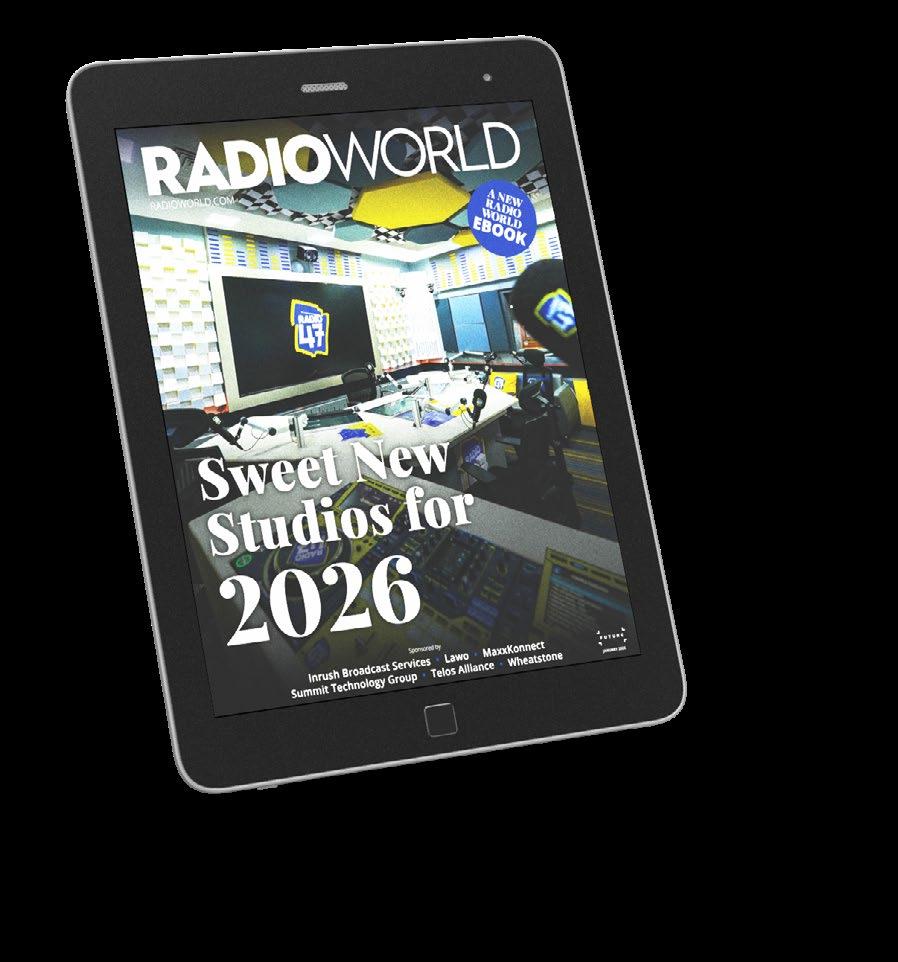
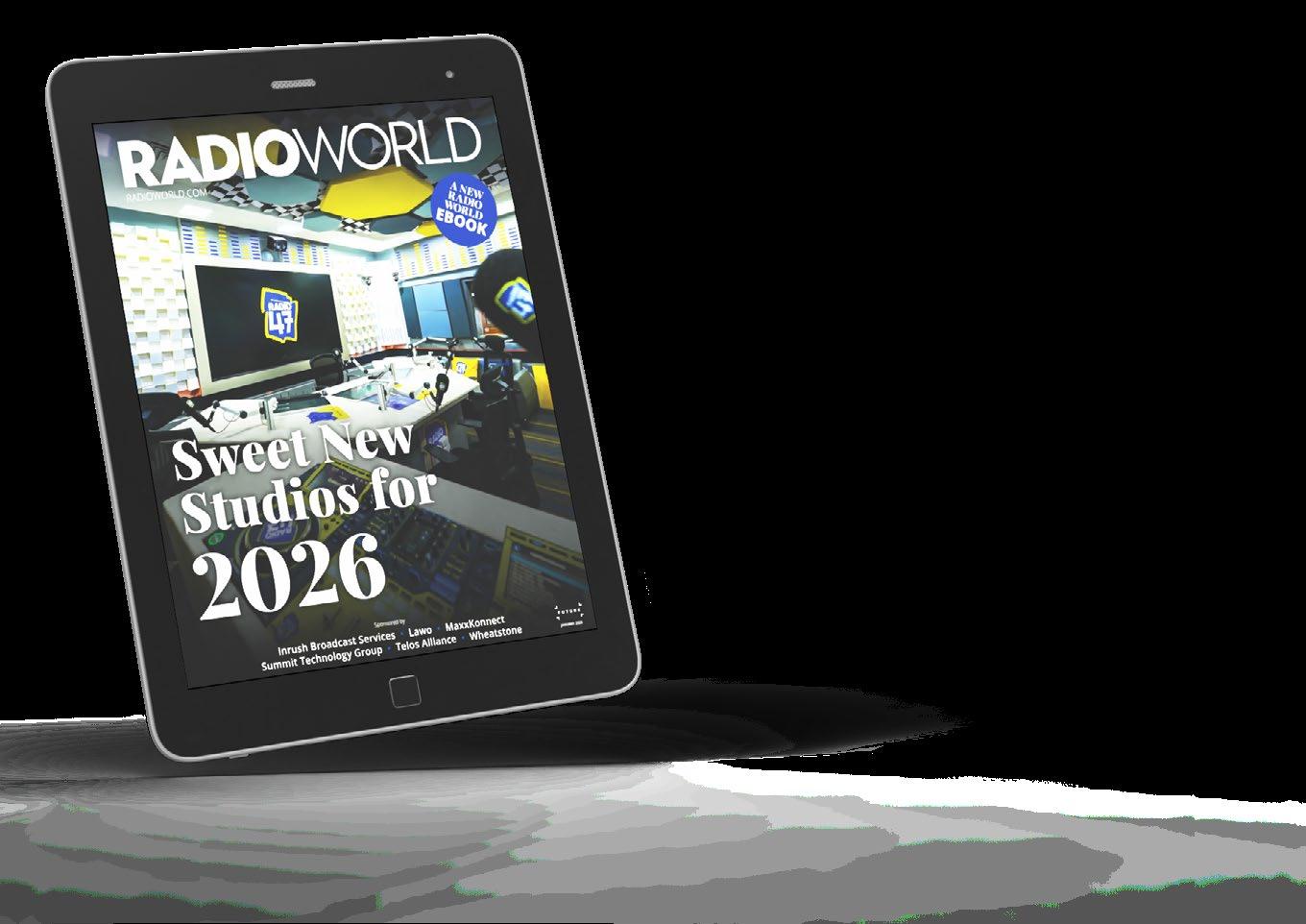
Sweet studios
Your latest ebook features a tasty sampling
Paul McLane Editor in Chief
enjoy putting together our annual ebook featuring recent radio studio installations. The latest edition is out and you can access it at http://radioworld.com/ebooks. Here’s a sampling:
Huskers Radio Network, part of the University of Nebraska, was part of the athletic department’s move of its entire multimedia department at Memorial Stadium. Spotify has opened a second facility in Los Angeles, focusing mostly on video podcasters.
A major studio relocation is nearing completion in Indianapolis as Radio One continues the move of nine radio stations, one television station and the Network Indiana head-end into a newly renovated facility. This move brings an end to decades of broadcasting from the Emmis Communications building on Monument Circle, which served as temporary home to Radio One after the acquisition of the Emmis radio properties in 2022.
WUWM “Milwaukee’s NPR” has installed a new AoIP infrastructure to serve four studios and reworked its technical core.
Ocean State Media, created by the combination of Rhode Island PBS and The Public’s Radio (formerly Rhode Island Public Radio), moved from historic Union Station in downtown Providence to the Rhode Island PBS studios about four miles away. Purpose-built 1990s TV audio production suites were turned into effective radio studios.
Radio 47 in Nairobi, Kenya, installed an IP-based ecosystem supporting remote access, automation and visual radio simulcasting.
KUT Public Media in Austin upgraded production spaces and modernized the main air studios with advanced AoIP consoles and infrastructure.
Cincinnati Public Radio opened the new Scripps Family Center for Public Broadcasting last spring; it’s a two-story facility featuring both modern technology and versatile event spaces, described as a “cultural hub” for CPR’s listeners. And Hubbard opened a “big, bright, roomy” pair of studios for WRMF in Florida.
As I wrote in the introduction, the ebook arrives at a time of significant change in how studios are planned due to many factors that we’ve documented: audio over IP, virtualization, the end of the main studio rule,
Ownership
The National Association of Broadcasters pressed its case that the FCC should strike down local radio and television ownership restrictions to create a competitive balance in today’s “radically transformed” media landscape.
NAB reiterated its arguments in an 87-page reply comment filing in January. The commission is conducting its 2022 quadrennial review of ownership rules.
“Despite dramatic changes in how Americans consume media, local broadcasters continue to be shackled by rules first crafted nearly a century ago — rules that do not apply to our competitors,” NAB wrote.
At present, in each of the largest radio markets, a licensee can own up to eight commercial radio stations, and the subcaps limit a licensee from owning more than five in each band in a market. The cap shrinks as market size decreases.
The commission’s 2-1 Republican majority is viewed by most observers as being supportive of rule reform. What’s not clear is how far it might go.
NAB said critics rely on “legally untenable arguments and very selectively chosen data to ignore today’s competitive media landscape.”
Opponents of lifting the caps include the National Association of Black Owned Broadcasters as well as more familiar NAB critics like the musicFirst Coalition, the Future of Music Coalition and SAG-AFTRA.
FMC and musicFirst argue that the public interest requires the FCC to keep its FM subcap “in order to protect and promote viewpoint diversity, localism and competition between local AM/FM radio broadcasters.”
They cited specific or general comments about broadcast deregulation from organizations as disparate as iHeartMedia, Newsmax, the American Conservative Union Foundation’s Center for Regulatory Freedom, Free Press and NABOB.
The coalitions believe further deregulation would hurt “all smaller broadcasters who want to continue to compete for audiences and advertising dollars within the local markets they serve” and that it would be harmful to the entire AM radio industry.
Kent Nishimura/Bloomberg via Getty Images
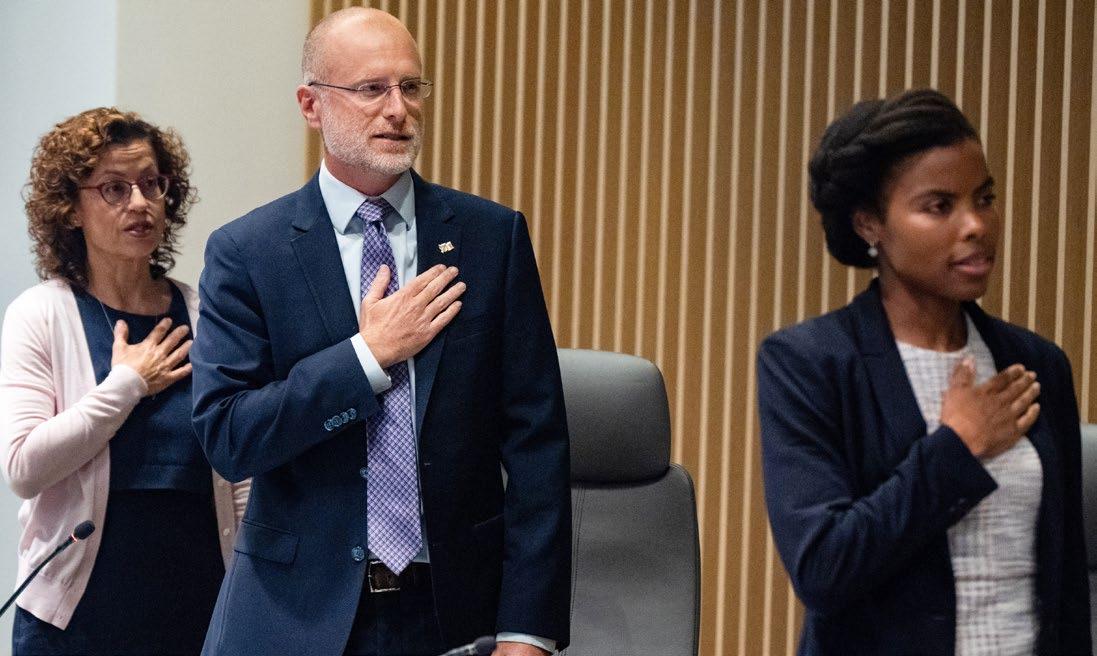
Commissioner Gomez, Chairman Carr and Commissioner Trusty at an FCC meeting in September.
Writer
Randy J. Stine
Stingray aims to be a global audio powerhouse
Its acquisition of TuneIn in December raises the profile of the Canadian company
Stingray’s acquisition of TuneIn provides insight into the competitive global audio marketplace. We talked with TuneIn CEO Rich Stern about the deal, and about radio’s role in cars with IPbased connections and the possible benefits to radio of a larger presence in connected TVs.
Stingray Group is based in Montreal and is publicly traded. Its businesses include music and video content distribution, business services and advertising solutions.
Radio aggregator TuneIn was founded as RadioTime by Bill Moore in 2002; six years ago Innovation Endeavors took a controlling stake. TuneIn is headquartered in New York but has various locations including San Francisco, where it long was based.
Eric Boyko is the founder, CEO and president of Stingray. He calls the TuneIn purchase a strategic acquisition that enhances Stingray’s reach by combining its own premium music and video content with TuneIn’s partnerships with device manufacturers, auto companies and content providers.
The TuneIn live-streaming audio service is seen by many as an important tool in radio’s digital distribution and monetization strategies. TuneIn content is distributed across approximately 200 platforms and connected devices, including some 50 in-car audio systems in 100 countries.
The acquisition closed in December and is valued at up to $175 million, based on TuneIn’s forecast sales of $110 million for the 12 months ending Dec. 31, 2025. Stingray was to pay $150 million at closing and up to $25 million by next December.
Dash potential
Rich Stern joined TuneIn as CEO in 2020, with a background in product management for Audible, Playstation and Amazon Studios.
He said being part of Stingray ensures that TuneIn is capitalized to deliver on its mission: to “reinvent radio” with its partners in the digital world.
“This is a big win versus TuneIn as a standalone company,” he said.
“We had been successful to a point, but it was still a venture-backed company. We did a hundred million or so in revenue every year. Now we’re about five times the size of that, coming together with Stingray. And we’re a public company that has a market cap of just over a billion dollars.”
TuneIn has about 110 employees and 75 million monthly active users. Its footprint is substantial, partnering globally with 100,000 stations and approximately 5 million podcasts.
The author recently profiled Nautel CEO Kevin Rodgers.
Above
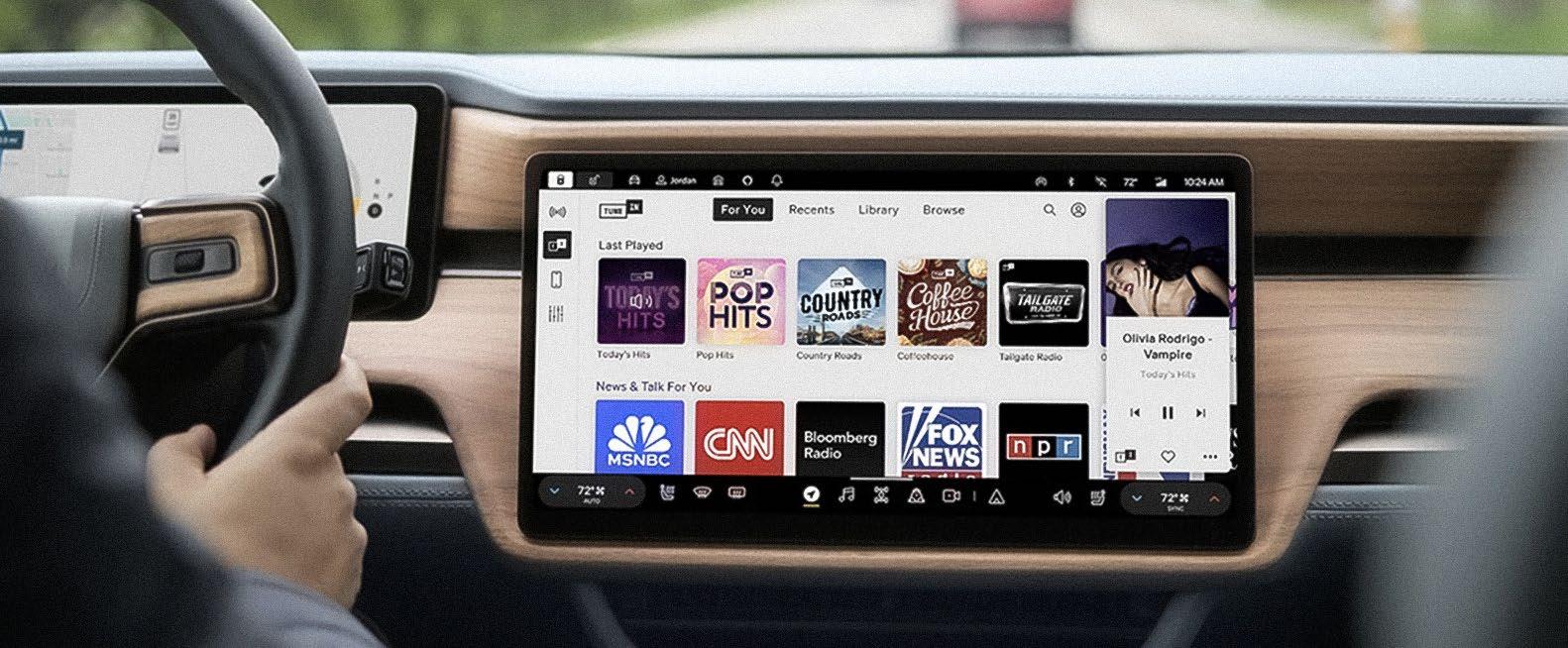
The TuneIn platform in a promotional image, shown running on the dashboard of a Rivian electric vehicle.
Audio Platforms
Above
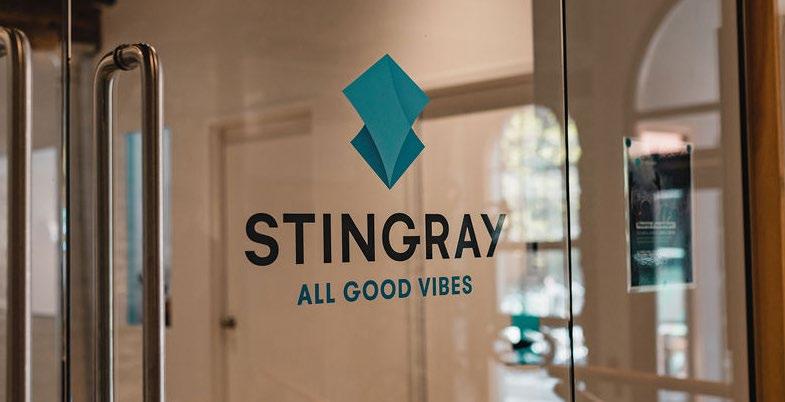
The entrance to Stingray headquarters in Montreal.
Below
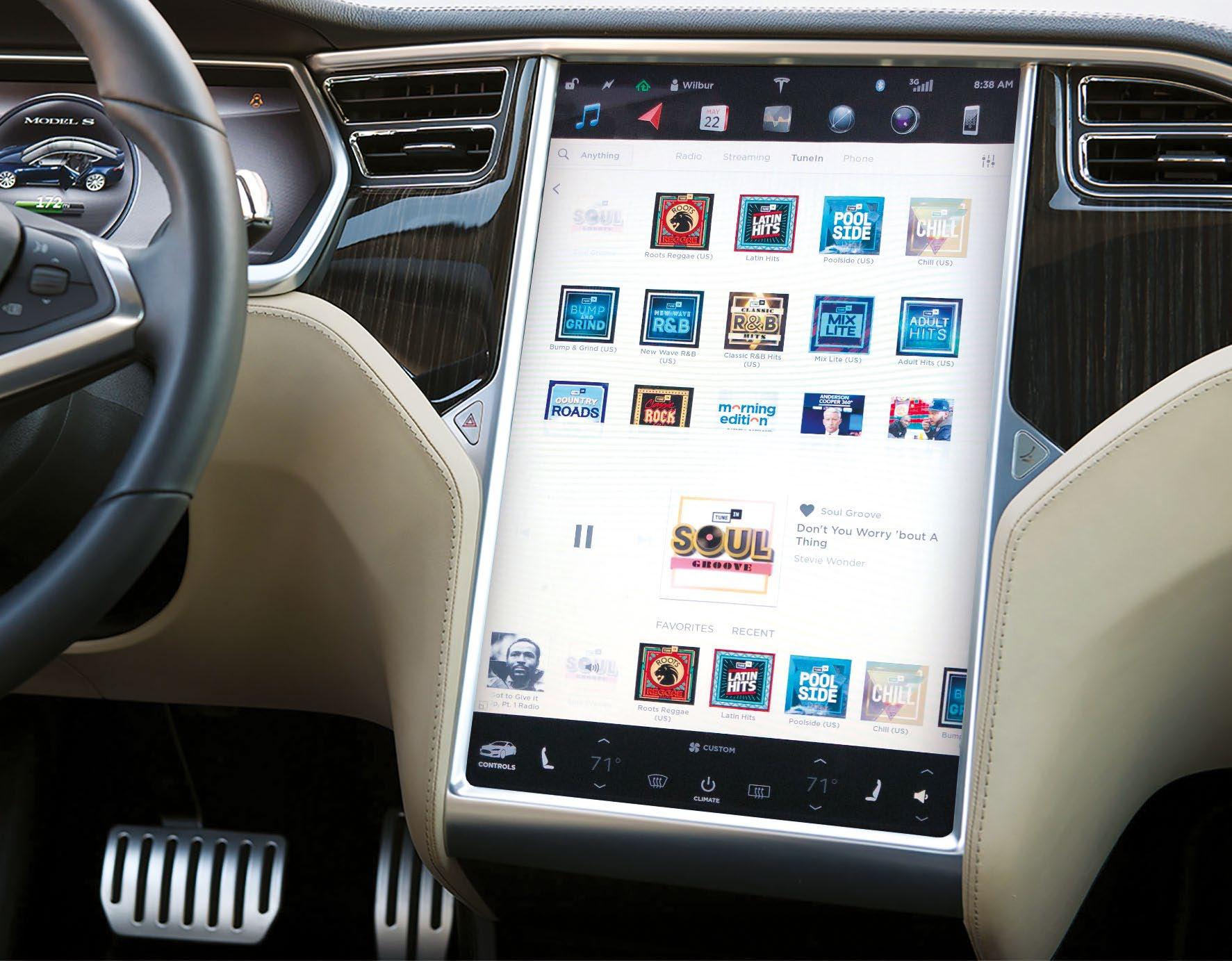
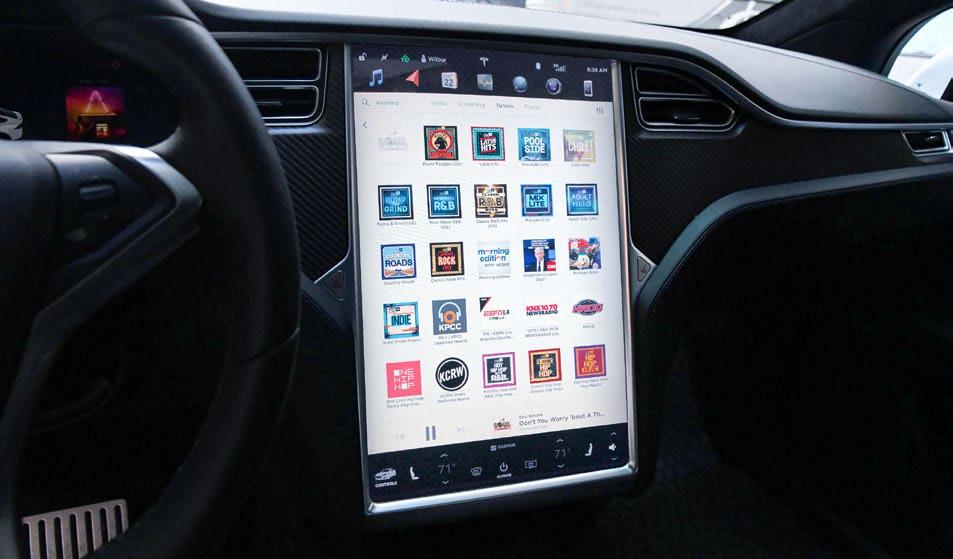
TuneIn displayed in a Tesla.
The portal’s biggest focus will remain on the car, Stern said. It’s a “growing opportunity for radio,” with ongoing integration of the audio streaming app in in-car operating systems.
That space is changing quickly. He pointed to GM’s decision eventually to end smartphone mirroring for Apple CarPlay and Android Auto in GM gas and electric vehicles, as we have recently reported.
He says that decision won’t necessarily have a negative impact on TuneIn but creates an opportunity for a more seamless, native in-car experience through direct integrations — a pre-installed, pre-configured TuneIn platform would be better for both passengers and the service.
“By partnering directly with automakers, apps like TuneIn are easier for drivers and passengers to discover and start listening rather than dealing with wires and Bluetooth connections. Essentially, it opens up the service to new audiences who may not have downloaded the app or connected their phone, expanding reach while delivering a safer experience,” he said.
“We eventually hope to have TuneIn’s player embedded in every car manufacturer in the world.”
Bullish on radio
Stern said carmakers are deciding on the best way to bring radio into new cars that now have high-speed data connections.
“Does it make sense to rely on AM/FM chipsets and antennas, or is it time to go digital? Or in some cases is it time to have a hybrid of both? Do they want to switch to an all-digital version in their cars that would offer you the same content, but just deliver it via IP, whether that be a 4G or a 5G data connection in the vehicle?”
Stern believes auto manufacturers have nothing against radio but are looking for more digital-first experiences for driver and passenger.
come in, take over the screens in their vehicles and then decide what the experience for a GM driver or passenger is in that car. (Automakers) want to control that. We think that we’re now in a better position to help build a great experience.”
The TuneIn platform has the largest directory of radio stations on the planet, according to Stern, with more live audio than any other audio platform including Spotify, SiriusXM and others in that category.
He acknowledges that OTA radio is struggling as an industry but is a fan of what companies like iHeartMedia and Audacy are doing.
“I continue to be very bullish about radio. There is a significant transformation that’s underway as we go from traditional over-the-air broadcast to radio in its digital incarnation,” he said.
“I think the future is very bright. Even if you look at very large-scaled broadcast organizations like iHeart, the growth that they’re seeing on the digital side of their businesses is noteworthy. Look at the opportunity that they’re creating with their partnership with TikTok. There’s a lot of room for innovation.
“I’ll give you another example. Audacy went into bankruptcy to reorganize their debt. Now as a private company, I think Audacy’s doing great. They’re a partner on the platform, I see how their business is performing. That reorganization has given them a fresh start.”
Stern called Audacy CEO Kelli Turner “a fantastic leader.”
“Similarly, Bob Pittman and the iHeart team have been dealing with their debt. If they can give themselves some breathing room and continue to innovate, there’s lots to be excited about.”
Still, he said the traditional over-the-air broadcast side of radio will face turbulence. “That’s where a lot of the disruption is happening right now. That’s where a lot of the business is transforming.”
“Growing like crazy”
Stingray has done a lot of work in connected TV, Stern says, which opens up a device category in which TuneIn has not been strong.
“We’ve done a great job in connected vehicles. I think we’ve done a great job in smart speakers. But connected
“Mary Barra at GM is saying ‘Look, infotainment really matters.’ They don’t want to be in a position where a large tech platform like Apple or Google can
television is a massive category. Audio is growing like crazy there, and Stingray really gives us a leg up. They’ve got major relationships with LG, with Samsung, with Vizio, all of which have access to TuneIn as part of (Stingray) buying the company.”
He called this an opportunity to extend and diversify the reach that TuneIn offers its broadcast partners.
“Television sets are the media hubs for the home because people are already listening to podcasts on their connected TVs. They’re already listening to music on their connected TVs. Radio should absolutely be part of that ecosystem.”
Additionally, Stern says, many of its radio partners now produce video content.
“They’re putting cameras in their studios for their morning shows. They’re developing a lot of video content that they can bring to social media to other platforms like YouTube. And this gives us an ability to not just distribute their audio content but also distribute their video content on devices with screens like connected TVs.”
The parent company’s expertise in ad tech will allow it to grow the programmatic monetization capabilities of TuneIn, he said.
“Stingray helps us go even further in terms of what we’d be able to do on that front, both in terms of addressability data, but also just the diversity of demand that they’re
Audio Platforms
doing. So going into [2026], broadcasters are going to see more options to work with TuneIn to help sell your inventories in a programmatic digital marketplace.”
He expects more demand partners coming to TuneIn looking for broadcast inventories and more opportunities to create new revenue streams for broadcast partners.
“Stingray has retail media, they have incar karaoke, they also have some traditional streaming music stations that they curate on their own. And figuring out how we can bring their portfolio and our portfolio together to bring more value to our device partners, that’s something we’re going to spend a lot of time on.”
Stingray appears poised to play an increasingly important role in the world of audio. It also recently introduced BYD Audio by Stingray, a partnership with BYD, a Chinese manufacturer of new energy vehicles.
In a press release, the company said BYD Audio by Stingray will deliver “hundreds of expertly curated music channels refreshed weekly with the latest hits and new releases, over 4 million popular podcasts and access to thousands of global radio channels,” to drivers and passengers.
Top
Rich Stern
Above
Eric Boyko
Codecs go far beyond point-to-point
Tony Gervasi is Intraplex sales manager at GatesAir. This is an excerpt from “Trends in Codecs 2026,” accessible at radioworld.com/ebooks
What would you say is the most important trend in the design or use of broadcast codecs?
Tony Gervasi: Distribution — it’s more than just point-to-point. It’s NOC to multi-city and satellite replacement distribution. I am currently working with multiple large broadcasting companies, both radio and TV, on designing new public and private IP distribution systems.
How do today’s codecs avoid problems with dropped packets?
Gervasi: Intraplex offers multiple ways to make up for lost or dropped packets:
Above
Forward Error Correction (FEC) with or without interleave: The IPL units offer four choices of FEC but at the expense of additional bandwidth. FEC is very effective for random/ isolated losses.
Secure Reliable Transport (SRT): This open-source transport protocol is similar to TCP, however it is performed on the application layer using UDP as the underlying transport. SRT supports retransmission of lost packets while maintaining low latency, 120 ms by default. SRT also supports AES encryption. SRT does require a bidirectional UDP path.
Dynamic Stream Splicing: This is exclusive to GatesAir Intraplex. DSS sends grouped streams via path diversity, time diversity or both, providing “hitless” operation.
What are the implications of FM-MPX and microMPX?
Gervasi: GatesAir Intraplex IPL series support FM-MPX, uMPX as well as our proprietary FM-MPX, which transports uncompressed baseband MPX with RDS in 1.64 Mbps.
The current IPL line allows you to select from analog audio, AES3 audio and AES192 as I/O. This provides the most flexibility, as you can deploy audio today and then when you’re ready, convert to MPX / uMPX.
Something unique to the IPL series codec is the ability to transport MPX/RDS with E2X data for HD. By “marrying” the
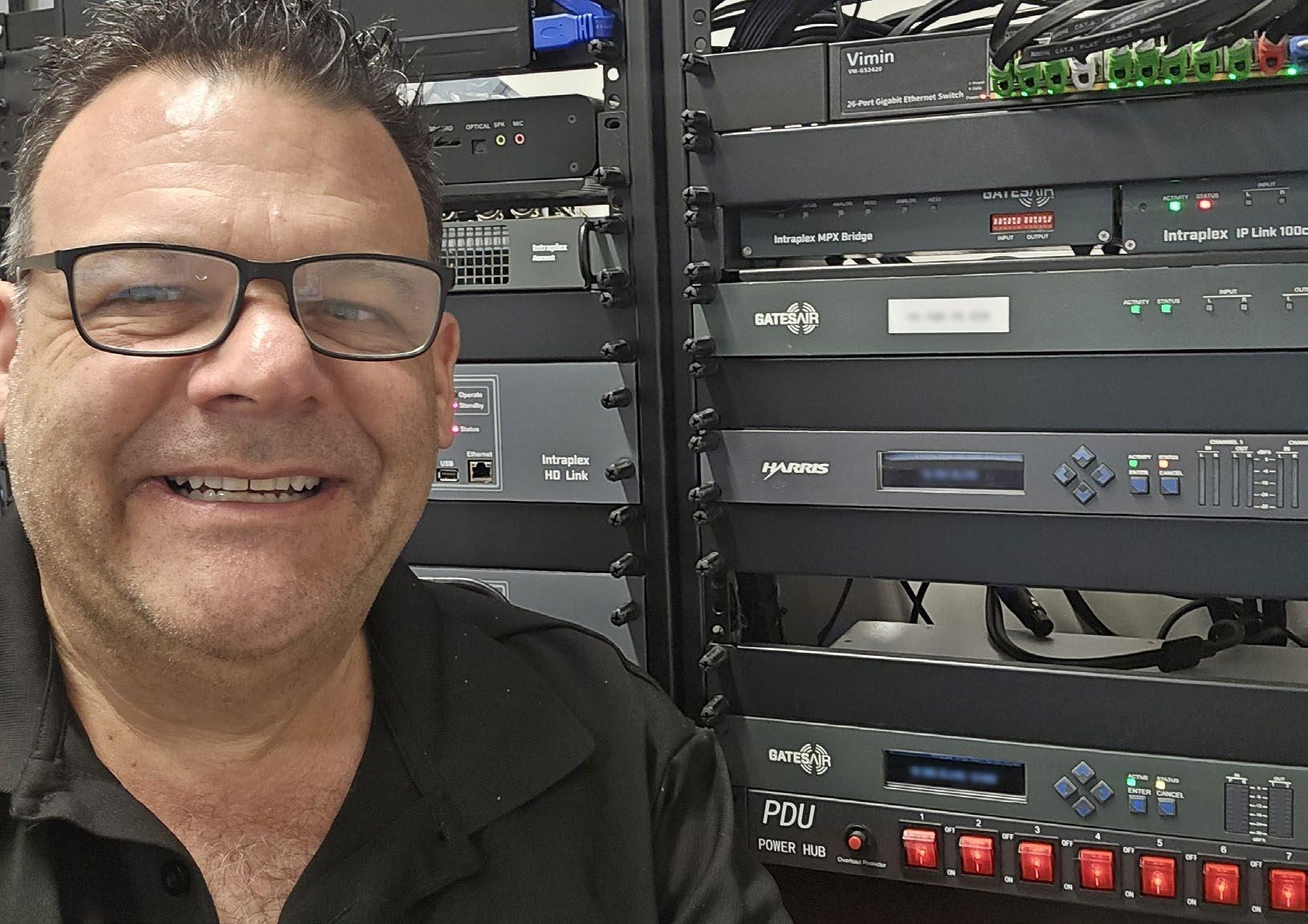
Tony Gervasi in his workshop in Delray Beach, Fla.
E2X data to the MPX data, once time alignment is set it will not drift. We have stations that are sending this MPX/RDS/ E2X bundle to multiple transmitter sites via one IPL unit. And they don’t have to worry about having time alignment hardware for each site. The audio processing and importer/ exporter are located at the studio, allowing for easy deployment and maintenance.
What tools are available for sending audio to multiple locations at once?
Gervasi: The Intraplex IPL series codec allows for multicoding for each audio input with transport up to 12 unique destinations, meaning you can send uncompressed audio to Location A, Opus to Location B, and AAC to Location C. There are some limitations due to sample and coding overhead.
How can an engineer protect codecs and their related infrastructure from cyberattacks?
Gervasi: Protect the codec behind a firewall and only open the ports that are required.
Change the default passwords. I know this sound basic, but there are many devices out there that still have the default log-in. Also disable any protocols that are not being used. The IPL series allows the end user to disable HTTP/ HTTPS, FTP/SFTP, SNMP, etc.
If your codec allows, you may want to include whitelisting IP address(es) for management.
John Bisset
CPBE
The author is in his 35th year of writing Workbench. He handles western U.S. radio sales for the Telos Alliance and is a past recipient of the SBE’s Educator of the Year Award. Send your tips Workbench submissions are encouraged and qualify for SBE recertification credit. Email johnpbisset@ gmail.com.
Shelly Plus Uni module impresses for under $20
Also, who can identify this piece of vintage gear?
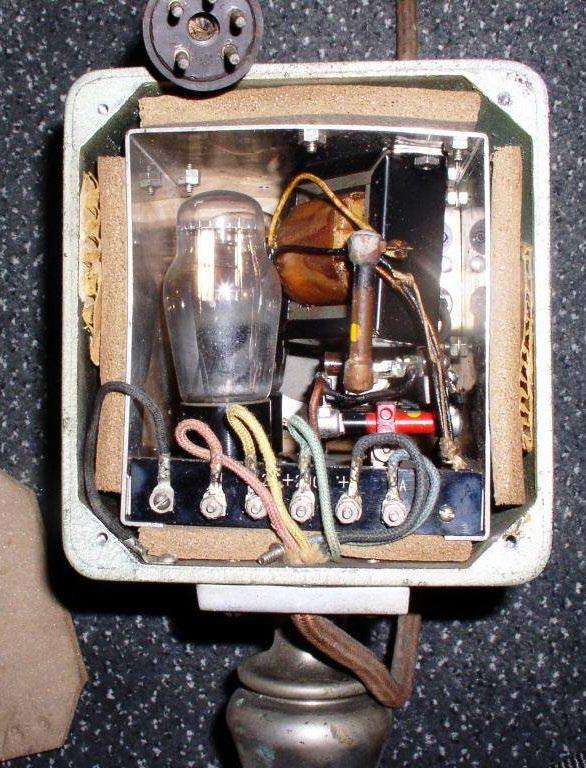
Take a look at the photo at right, which was sent in by Dan Slentz. Can you identify it or guess what it might be? The answer is at the end of this text.
Inexpensive Wi-Fi module
Veteran radio and television
attorney John Garziglia not only loves communications law, he loves electronics and broadcast engineering too.
John writes that in the last few months, he has become enamored with a tiny Wi-Fi device called the Shelly Plus Uni.
Not only does it do things no other device does, but it costs under $20 instead of several hundred.
This is a low-voltage Wi-Fi- and Bluetooth-controlled module with dry relay contacts. It is compatible with both Alexa and Google Home. The best part: No hub is required!
In addition to dry solid-state relay contacts, its small form-factor module has two digital inputs and one analog input that can be used to provide precise data readings.
The Shelly Plus Uni can be used to control devices using a mobile phone, PC or tablet. With its embedded Web interface, it can monitor and control as well as adjust settings.
One purchaser on Amazon wrote, “It’s like the Raspberry Pi of automation.” My mind is racing with application ideas, so if you invest your $18.99, be sure to let Workbench readers know your experience.
On Amazon search “Shelly Plus Uni.” You can see the specs at us.shelly.com/products/shelly-plus-uni.
Shelly makes “smart home” products including flood sensors, smart switches and plugs, thermostats, energy meters, safety devices and more.
Top Do you know what this is?
Can you pass the test?
Few people like to take exams. And fear of failing is a common reason cited by engineers who have told me they haven’t taken an exam to be certified by the Society of Broadcast Engineers.
I think the society’s leadership is aware of this, which is one reason they offer a series of practice exams for the various levels called CertPreview.
CertPreview means you won’t be going into a test blind. The types of certification continue to grow; there are 13 practice exams listed.
Right
The Wi-Fi module by Shelly.
Workbench
There’s special pricing of $45 per practice test. Head over to https://certpreview.sbe.org to learn about it.
Certification may help you get a pay raise or set you apart from other candidates when you are seeking your next career opportunity. Do your career a favor and make SBE certification a goal for 2026.
Test results are kept confidential. So if you blow a test — like I once did — no one else knows.
Take a hike
Larry Wilkins, the director of engineering services for the Alabama Broadcasters Association, would like you to take a hike … around your guy anchors.
Inspect for vegetation growth on or around the anchors. Look for signs of rust, broken ground connections and cracks in pier concrete.
View the guy paths to make sure they’re well clear of any trees that may fall on the wires. Tower erectors suggest you create a clear path 50 feet either side of the guys and 50 feet behind the outer guy anchor, if possible.
Enclose each anchor with a locked fence. Make sure the enclosure is large enough to allow maintenance vehicles to clear the wires.
As you inspect, use your smartphone to take pictures of each of the anchor points, along with notes of the inspection. Place these in your maintenance log.
Larry recommends you take a hike quarterly.
Left
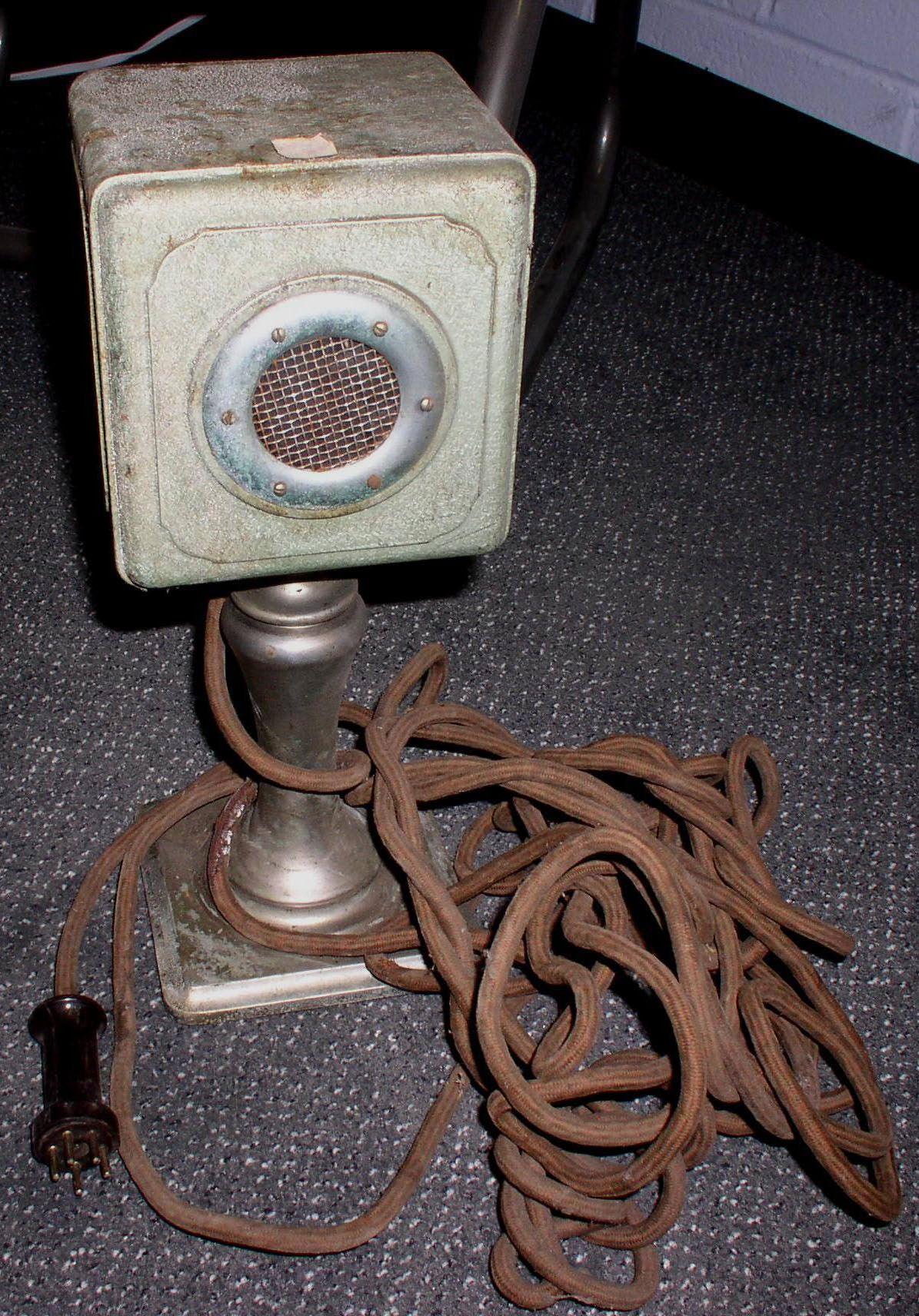
What’s inside this 1920s Western Electric microphone?
Right
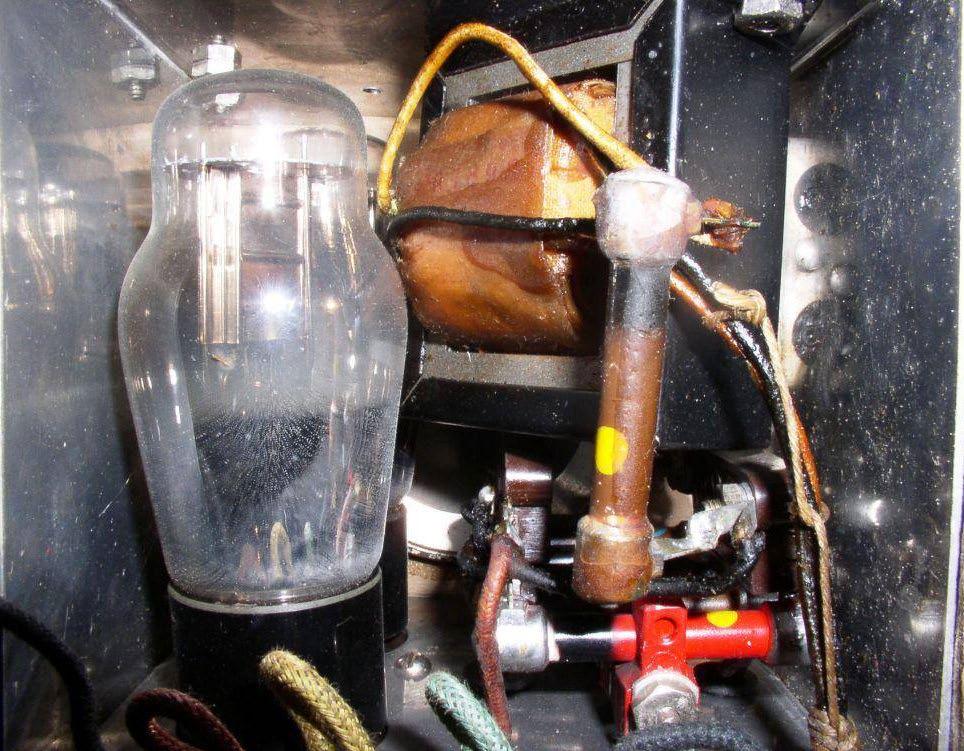
The Western Electric mic included a preamplifier.
From the new to the old
How did you do with our mystery photo? If you guessed “amplifier” you are on the right track. If you identified the picture as a mic preamp, you know your stuff!
One has to marvel at how communications and broadcasting have evolved over the years.
Frequent contributor Dan Slentz found this old mic at WHIZ in Zanesville, Ohio, and he had to open it to see what was inside. He’s pretty sure this was the AM station’s first mic, used when it signed on in 1928.
Dan notes that RCA had a similar mic but a label inside this one said, “Western Electric — Iowa.” Does anyone in Workbench land know more about this particular mic model?
My address for all tips and submissions is johnpbisset@ gmail.com
Writer
Michael Baldauf
The author wrote recently about liquid cooling in transmitters.
Let’s get this place spiffed up
Your spring cleaning plan should include a review of obsolete equipment
Massive technological changes in every aspect of the radio industry have left behind a trail of obsolete equipment. Facility downsizing is the next logical step, and ongoing consolidations will reduce the number of facilities.
If the radio stations you are responsible for are not already “lean and mean,” it’s time to get ahead of the curve.
Here are a few suggestions to get started.
Do the PR. Get written approval from the boss.
Let staff know this is nothing more than housecleaning on your part and solicit their suggestions. Are there interns who can help and learn at the same time?
Make a timeline and set deadlines. Otherwise, the process will go on and on.
Be methodical. Develop a plan and share it. How will you dispose of the equipment? Are there electronics recyclers
in your area? How will the equipment get to the disposal area? How much will it cost?
Designate a location for any equipment that is going to be stored.
If the equipment has inventory tags, keep a spreadsheet listing all of the major items to be removed and their tag numbers. Take pictures and remove tags if necessary.
Odds are someone in the organization eventually will demand this information. Remember that there can be tax and valuation implications if obsolete items remain on the inventory. Items that are obsolete may still be on the inventory list at their original purchase price.
Then it’s time to get your hands dirty.
Start with the low-hanging fruit. Look in every space. There’s stuff in places people rarely go including closets, vacant offices, attics, basements and sheds.
Donate consumer electronics and other suitable items. Sort them into a separate department as you go along.
Readers of Radio World are well aware that studios have evolved dramatically. We read stories all the time about how much wiring was pulled out when a studio went AoIP. But you don’t need a complete rebuild to freshen your room. Clean out unused equipment and as much old wiring as feasible. Are you still looking at rarely used CD players?
Old computers? Fill-in-the-blanks?
Now hit the racks and your engineering spaces. Is there an STL transmitter sitting in a rack even though its dish was removed years ago? How about that first-generation HD Radio importer? Satellite receivers?
Of course you also should turn your attention to your transmitter site(s).
Whatever time you think you’ll need, double it. Unless you’ve followed a regular program of keeping your site current, you’ll find equipment and materials that have become invisible because you’ve walked past them hundreds of times.
There might be an old STL receiver. How about that ancient audio processor? Bring a box of trash bags, gloves, masks, cleaning materials. What about a vacuum? And will your usual vehicle have enough space to carry off the items you’ll remove?
Once the process is completed, notify the staff that you consider the work done and thank them for their patience. The station now will be more prepared for whatever the future brings, and troubleshooting will be simpler in the future.
Got tips for freshening and spring cleaning? Email radioworld@futurenet.com with “Letter to the Editor” in the subject field.
Jeff Detweiler retires
Former CE and PD became one of the “faces of HD Radio”
After 47 years in and around radio technology, Jeff Detweiler has retired from Xperi.
He was senior director of broadcast business development at the company, where he played a key role in the rollout of HD Radio technology over several decades.
“I grew up in the New York metro area, listening to what I still believe was the best radio,” Detweiler told Radio World’s Elle Kehres.
“In my early years, my mornings started with Rick Sklar’s Music Radio 77 WABC, featuring legends like Harry Harrison, Ron Lundy, Dan Ingram, Bruce Morrow, the iconic ‘Cousin Brucie’ and Jay Reynolds. Late at night, I tuned
in to Jean Shepherd on WOR(AM), whose off-the-cuff storytelling, comedic stunts and interactions with listeners fascinated me.”
A carrier-current project in college introduced him to Dick Crompton, owner of LPB Inc., and marked the beginning of his experience in broadcasting.
“I love radio so much that I worked ridiculous hours and felt a strong sense of duty to deliver the best technical sound and content I could,” Detweiler said of those years.
“Unfortunately, many stations have abandoned this calling and have been forced to focus entirely on the bottom line. Now, anyone with a mic and a playlist can deliver ‘radio,’ but it’s not the same as a well-curated station with real on-air personalities.”
He studied at Lebanon Valley College and ICS, both in Pennsylvania; the Connecticut School of Broadcasting; and Upsala College in New Jersey.
Detweiler began his commercial career in 1979 at stations in Wellsboro, Pa., where he served as program director and morning personality. At WSUS(FM) in New Jersey he played the dual roles of chief engineer and program director. “That experience sparked my passion for the technical side of broadcasting, designing, building and maintaining systems to keep stations on the air.”
He went on to work for Broadcast Service Company, part of Continental Electronics, then became chief at Nassau Broadcasting stations in Princeton, N.J., where he managed a new six-tower DA and an FM site build. Later he was director of engineering for Lake Erie Radio stations in Cleveland.
He also worked in sales for Allied Broadcast Equipment, and then went to manufacturer QEI Corp., where he worked for 11 years, rising to worldwide sales and marketing manager.
In 2000 he joined iBiquity Digital Corp., successor to USA Digital Radio and Lucent Digital Radio, as its broadcast business rollout manager.
“It was a fantastic time in my life, working with broadcasters who wanted
to save the industry and scientists who had ideas about how to do so,” he said.
“It was like being in a race to build the best, high-performing system. Each day was exciting, marked by progress, while setbacks marked others. But we were in the arena fighting the good fight.”
iBiquity subsequently was sold to DTS and Tessera, which ultimately became Xperi, Inc.
Where does he see our industry heading?
“I’m convinced radio has a strong future, especially as programmatic ad buying meets near-real-time attribution,” he said.
“That combination unlocks real revenue potential for broadcasters and positions radio as a serious player in the data-driven ad ecosystem.”
Despite this revenue potential, Detweiler said there’s a catch.
“If we keep churning out cookiecutter formats and homogenized branding, listeners will tune out. They want variety, personality and local flavor, not another station that sounds like the one they just left.
“The next big win for radio isn’t just tech, it’s creativity,” he said. “Pair innovative monetization tools with distinctive programming, and we’ll keep audiences engaged while proving radio’s value.”
Read our full profile story at tinyurl. com/rw-detweiler
Remote & Sports Broadcasting
About Buyer’s Guide
The Buyer’s Guide section appears in every other issue, focusing on a particular category of equipment and services. It is intended to help buyers know what’s on the market and gain insight into how their peers are using such products.
Amitrace streamlines school webcasts with Henry
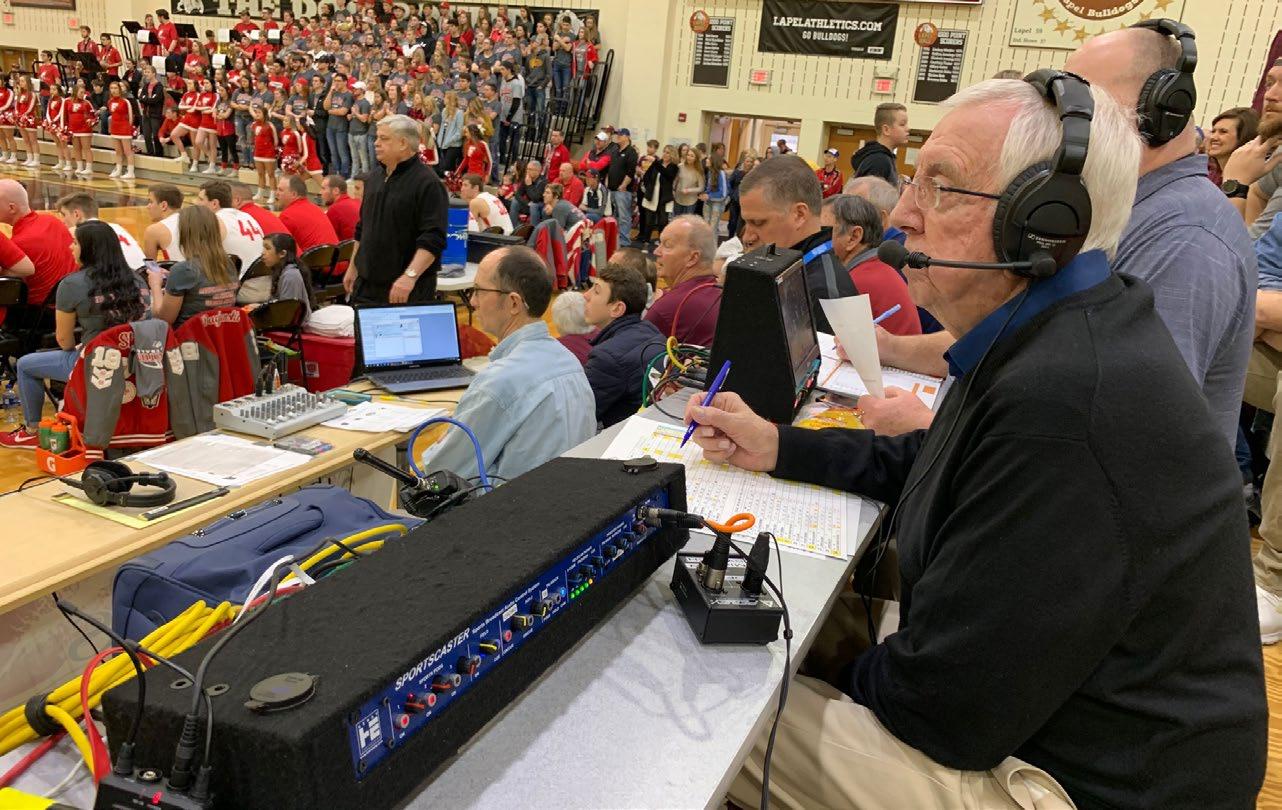
Tom White utilizes SportsCaster to simplify audio setups for student production
Tom White, a former high school video production instructor, is intimately familiar with the complexities of producing live video webcasts for sporting events.
He’s now with Amitrace, a systems integrator specializing in video production systems for education, government and corporate environments. White relies on Henry Engineering’s SportsCaster to solve the “audio headache.”
While video gear has become more accessible, he said audio remains a challenge for schools.
“Before we had the SportsCaster system, it would take me hours to install the audio gear,” White said.
“I was using several mixers just to deal with the headphone feeds and intercom. It was a complicated mess and never worked very well.”
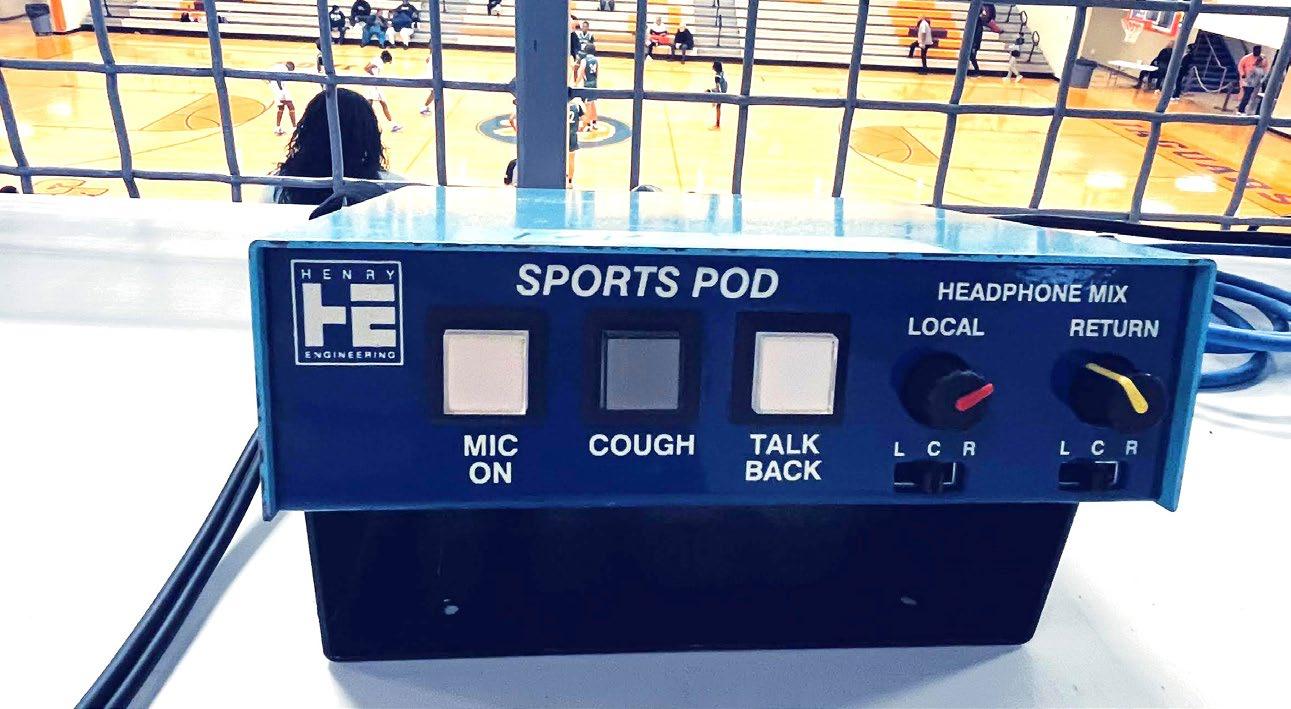
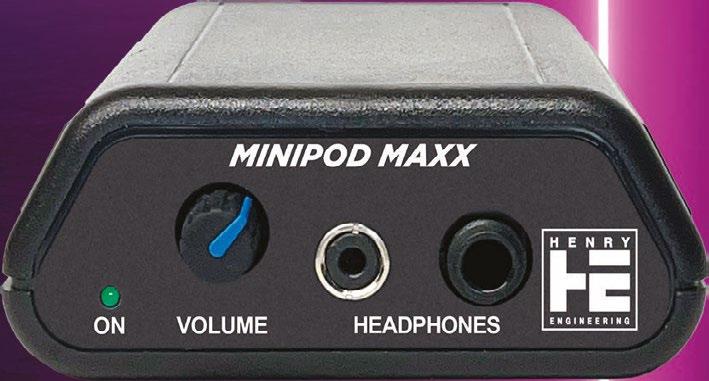
The SportsCaster integrates announcer mic mixing, specific headphone mixes for the crew,
and duplex intercoms for off-air communication.
“The SportsCaster allows me to mix audio and communicate with all of the members of our production staff with ease,” White said.
For football games involving playby-play talent, color analysts, field reporters and various producers, the unit replaces complex wiring
schemes. White noted that the producer can give cues to on-air talent while simultaneously “calling the shots” to camera operators. The system isolates audio paths so team members hear only what is necessary, minimizing confusion for inexperienced student techs.
“Teaching students how to use [legacy setups] was nearly impossible,” White recalled. “Hank at Henry Engineering worked with us to design a system that would streamline the process. That’s where the SportsCaster came from.”
Today, White uses his years of webcasting experience to help others set up the system through Amitrace. He reports that the learning curve has dropped drastically.
“The struggle we had in the past was giving all of these people the ability to talk with each other,” White said. Now he can train a producer minutes before kickoff.
Right
White on the job.
Tech Update
Telos VCP Merges Communications
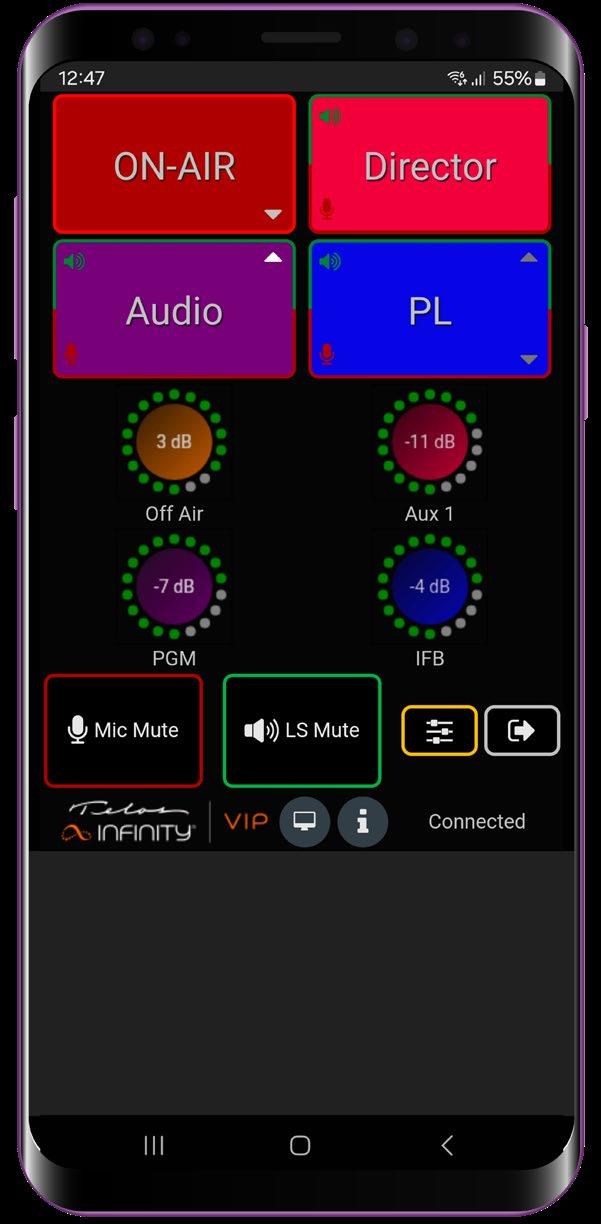
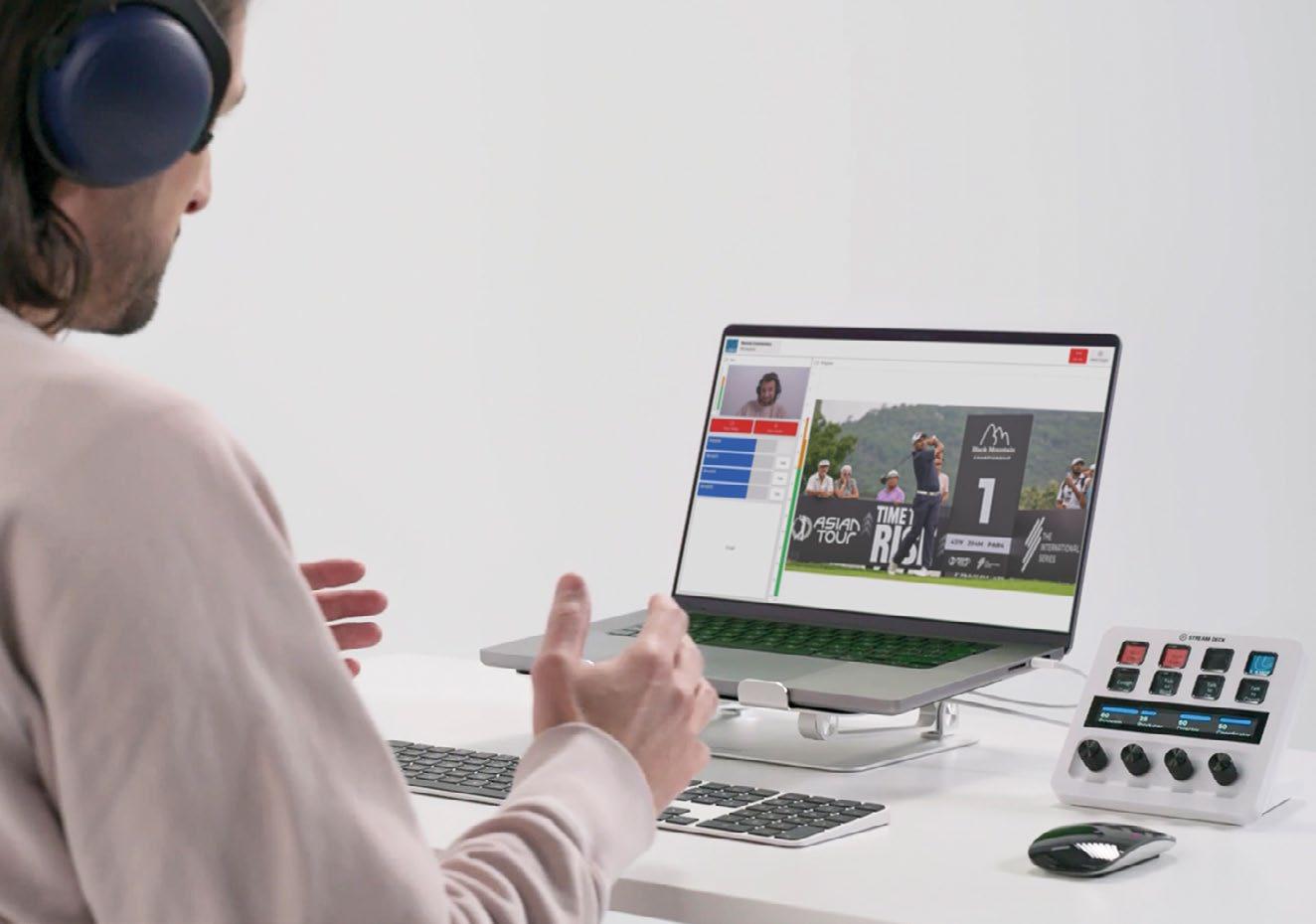
The Telos Infinity Virtual Commentator Panel, or VCP, is a new licensed extension for the Telos Infinity VIP virtual intercom platform.
It offers commentator-panel functionality in a browser-based software package that can be deployed using an on-premises server or via cloud platforms such as AWS, suitable for professional radio sports coverage.
“Functionally, VCP merges commentary audio and production communications into a single workflow,” Telos said.
Instead of fixed hardware panels, Infinity VCP allows commentators, announcers and field reporters to access a commentary station from a PC, tablet or smartphone.
The interface replicates physical commentator panels to minimize training requirements, Telos said. VCP runs in HTML-5 web browsers via encrypted WebRTC and is supported by its Infinity VIP apps for iOS and Android devices.
Sportscasters can maintain a continuous on-air output path while accessing intercom channels, with automatic muting of the on-air microphone when comms are active. Custom monitor mixes can be built from IFB, program, mix-minus and auxiliary sources with individual gain controls.
For users preferring tactile control, Telos said that VCP integrates with the Elgato Stream Deck+ via a dedicated plug-in. The system uses adaptive bitrate control to manage sound quality and network reliability.
Infinity VCP is available as a licensed option on Telos Infinity VIP systems running version 3.0 or later in four-, eight- and 12-button configurations. The cloudbased Infinity Virtual Intercom Platform makes cloud-based production available on smartphone, laptop, desktop or tablet, through HTML5 browser or Android and iOS apps.
Info: www.telosalliance.com/InfinityVIP
KPGZ captures Kearney championship run with Comrex
FieldLink enabled Sideline reports for Bulldogs’ football broadcasts
Across the U.S., the fall high school sports season is an exciting time not just for the student athletes but for the communities their teams represent.
Most of us are aware of the “Friday Night Lights” phenomenon that brings together small towns all over America. Recently, 102.7 KPGZ(FM) in Kearney, Mo., helped amplify that community spirit with a live broadcast of the Kearney High School Bulldogs’ boys football team on their quest to claim the Missouri High School MSHSAA Show-Me Bowl 2025 Football State 4A Championship.
The varsity boys football team went undefeated in 2025. KPGZ aimed to capture the momentum.
“All of our high school athletes do a wonderful job of representing their school and it reflects so well on the community,” said Brian Watts, KPGZ’s general manager.
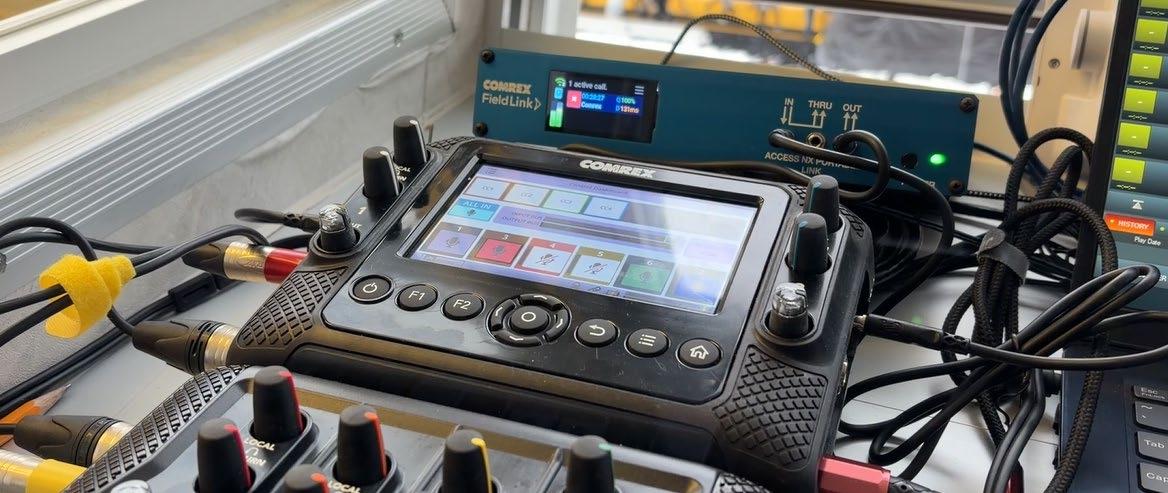
Just as the Bulldogs were upping their game, so was the station as its media partner. When KPGZ heard about the new FieldLink sideline reporter codec from Comrex, it felt it would be a great addition to its game broadcasts.
Watts was familiar with Comrex gear, as the station uses an Access NX portable for its play-by-play. But sideline reports from on-field reporter Eric Stevens had always been a challenge due to the cost of wireless mics and IFB gear.
FieldLink uses the free Comrex FieldTap app, available on iOS and Android smartphones. Watts said that all told, the equipment was well within KPGZ’s budget. The FieldLink arrived just in time for the state semifinal matchup in November.
The matchup pitted Kearney (14–0) against Festus (10–3). In a dominant performance, the Bulldogs went on to win 52–24 to advance to the state championship. The playoff game was a win for KPGZ, too, as its commentating crew received validation from listeners on the crisp-sounding sideline reports.
“Just really freaking cool,” Stevens remarked.
Kearney went on to defeat Hannibal 24–14 to capture the 4A State Championship title.
Right
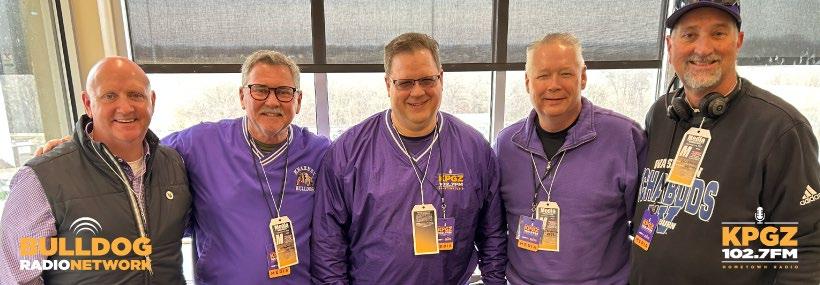
Kelly Gentry, Bulldog Radio Network color analyst; Mike Davis, Bulldog Radio Network special assignment reporter; Brian Watts, KPGZ general manager; Jim Dickerson, Bulldog Radio Network play-byplay voice; and Eric Stevens, Bulldog Radio Network field reporter.
Tech Update
AVT Enables Video Calls for Live Reporting
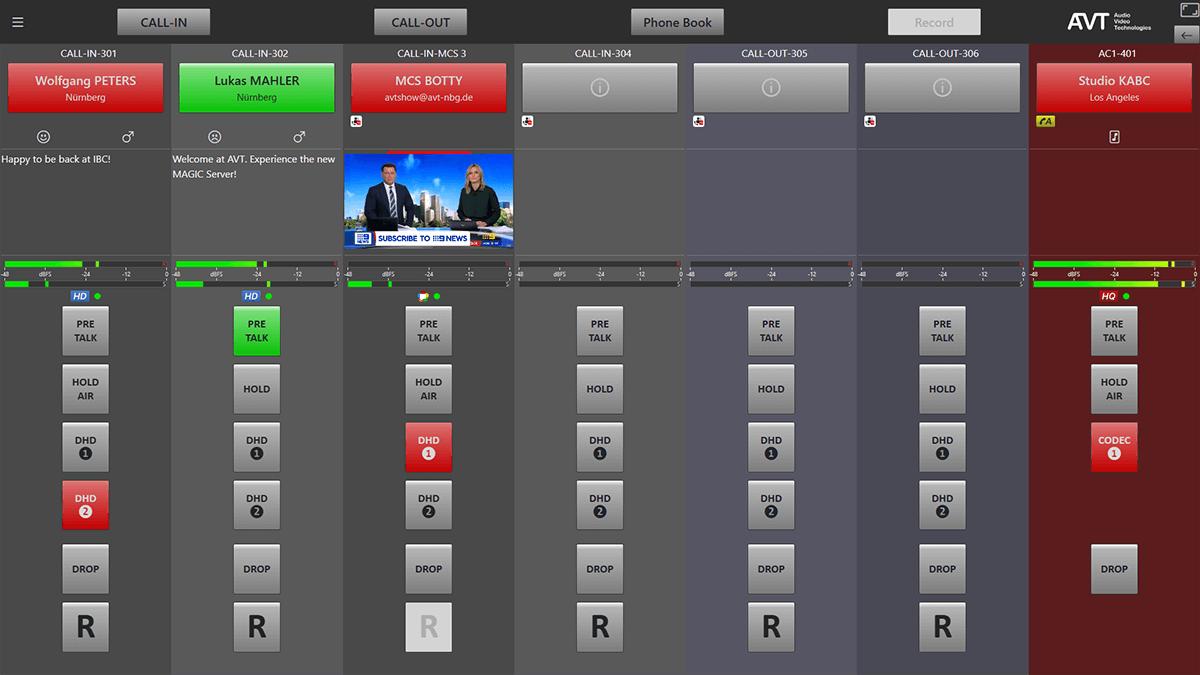
AVT Audio Video Technologies has rolled out a feature called Collaboration Services.
It says that with the discontinuation of the popular Skype video-calling platform, this is a suitable replacement for broadcasters. It can be added to existing AVT hardware telephone hybrids as well as to its software-based Magic server.
Collaboration Services supports WebRTC connections and Microsoft Teams calls. AVT expects to add support for Zoom and WhatsApp in the future.
The system allows WebRTC invitations to be sent via email from the user interface. A reporter or interview partner can click a link in their email to establish a call using a standard web browser. This can also be done on a mobile device.
Off-air consultations with the reporter can be conducted via a pretalk intercom function, and a visual symbol alerts the reporter when the system is switched to on-air mode.
Through Collaboration Services, a reporter can signal events such as a goal being scored or a penalty being called, keeping the operator in the studio informed.
“Several reporters can be connected at the same time and each one can still inform the studio about an important event,” AVT said. If Microsoft Teams is being used, a complete list of Teams clients within the organization is available in the system’s phonebook.
Info: www.avt-nbg.de
Hawaii’s New West Broadcasting integrates Tieline solutions
On the Big Island, the company’s stations are reaching even remote areas with IP delivery
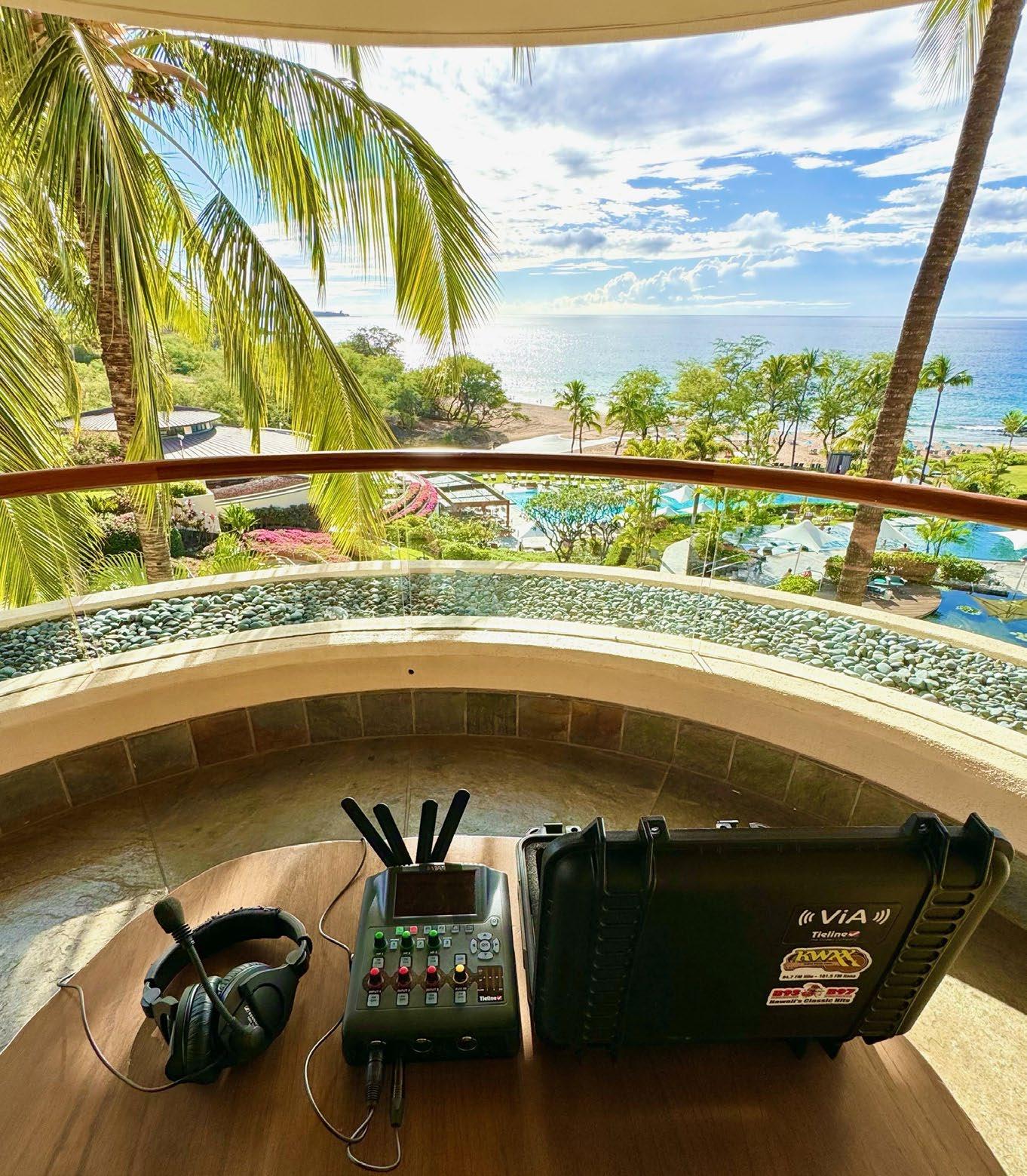
Chris Leonard has served as president and general manager of Hawaii’s New West Broadcasting since 1996. The company operates six signals on the Big Island, airing three primary station brands serving a population of approximately 200,000. The stations, Leonard said, specialize in a live and local focus. “We do over 100 off-premise events per year,” he said.
Relying on Tieline to feed their signals to transmitter sites are 94.7 KWXX(FM) in Hilo, simulcast on 101.5 KAOY(FM) in Kealakeukua; 97.1 KNWB(FM) in Hilo, simulcast on 93.1 KMWB(FM) in Captain Cook; and 670 KPUA(AM) in Hilo with its 98.5 FM translator.
“One of my first Tieline codecs was a Genie STL we won in a competition at the NAB Show,” Leonard recalled.
He followed that up with a ViA remote codec to enhance New West’s remote broadcast capabilities.
Today, Leonard employs Tieline Bridge-ITs, Gateways and the Report-IT app. He also recently set up an MPX STL link.
For remote broadcasts, including retail and community settings, the Tieline ViA is New West’s backbone. Leonard said he has also used the codec for sports play-byplay. “The ViA can connect to all of our stations and any studio we want.”
He installed a dual SIM internal module in the ViA, utilizing Verizon and AT&T LTE cards for redundancy. Leonard reports this setup has worked well in more remote portions of the island when paired with a Starlink Mini.
A Gateway 8 codec in Hilo and Gateway 4 codec in Kona replaced legacy T1/ISDN codecs to connect the stations over IP. Leonard said the feeds have provided reliable connectivity and superior audio quality. Being able to choose compression options was helpful when bandwidth was limited.
Tieline’s Cloud Codec Controller software allows New West to keep an eye on its gear to ensure it is running smoothly. Leonard monitors and configures MPX codecs, Gateways, the ViA and even Report-IT users.
During COVID-19, the company used Report-IT to perform client voiceover sessions remotely.
“We are a relatively small company on the most remote landmass in the world, but Tieline treats us like a giant,” Leonard said.
Tech Update
Jutel Refreshes RadioMan Lamppu for Reporters on the Go
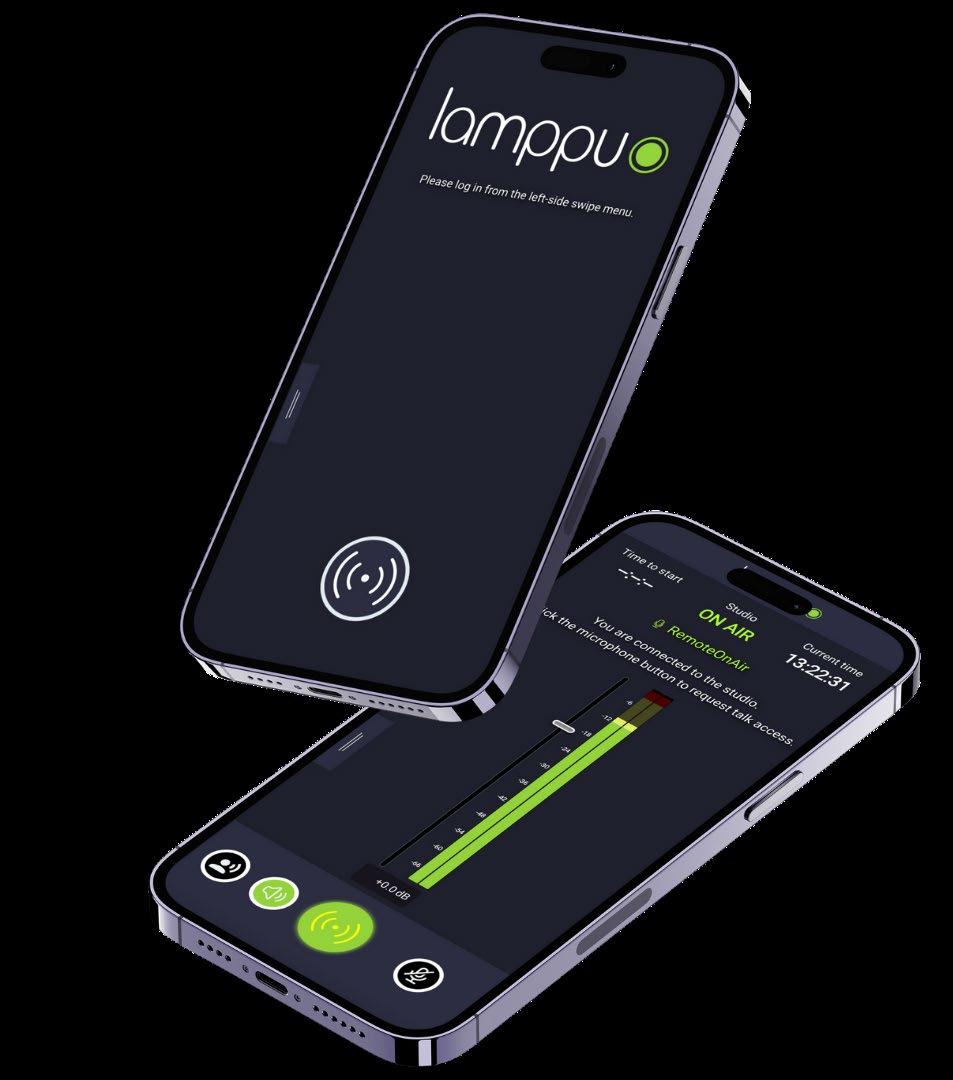
Jutel has released updates to RadioMan Lamppu, an extension of its shift away from traditional hardware toward a software-first approach.
Lamppu is an iOS and Android app that allows radio journalists to join terrestrial or internet broadcasts using a smartphone, eliminating the need for field codecs or external mixers.
The latest RadioMan Lamppu update adds several features designed to improve coordination between the field and the studio.
Two-way talkback capability allows for private off-air communication between the studio and field contributors. A clock display and countdown timers are visible to assist with scheduling during live programs. Audio cues are accessible to support handovers between speakers and segments.
The app also has an invite-based mode to add journalists or guest contributors to a broadcast securely.
As part of the RadioMan family, Lamppu allows teams to work across multiple locations and streamline live production
workflows. Broadcasting and audio mixing are handled by the RadioMan Media Node, which can run in the cloud or in a physical studio.
Jutel positions the software as a costeffective alternative to traditional remote gear for sports coverage, breaking news and distributed productions.
The RadioMan On-Air interface itself is accessible through a web browser, allowing management of the program, cart wall item and playout nodes from any Windows PC or tablet.
Info: https://jutel.fi/radioman-lamppu/
Tech Update
Lawo Commentary App Simplifies Remote Broadcasts
Lawo said it designed the Home Commentary App to offer a flexible approach to remote and on-site commentary. It is for radio operations that need fast deployment, intuitive operation and broadcast-grade performance via a browser-based interface.
The app allows commentators and contributors to monitor up to two video streams, send their audio and video to production, and interact via integrated talkback. Lawo said its simplified setup requires just a host device, microphone and headphones.
The app is controllable via the Lawo Workspace UI, an HTML5native interface that provides access to the app from a desktop, laptop, tablet or smartphone. It allows engineers to provide remote support via the same browser-based interface.
Audio coordination mixes and talkback routing are handled in the back end of the Home Apps ecosystem, with local mixing and lowlatency monitoring processed in the app via its audio engine.
For high-end productions, the app can integrate with professional audio hardware. For rapid-response workflows or mobile commentary, it can support a USB-C mic and the device’s onboard camera.
Lawo said the app is part of its Home Apps suite and benefits from secure operation, centralized access control and interoperability with other apps and panels as needed.
Info: www.lawo.com
Tech update
Radio.Cloud
Targets Remotes
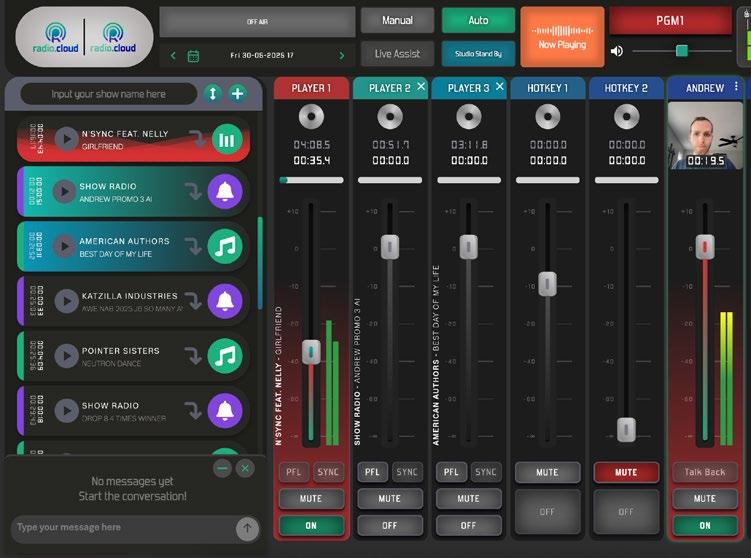
Radio.Cloud’s Live Studio offers a browser-based solution for remote broadcasts, designed for scenarios such as community remotes, high school or college sports games, and other out-of-studio scenarios.
Live Studio is available as part of the Radio.Cloud operating system or as a standalone product.
The virtual console runs on a standard laptop with a microphone and internet connection, though it also supports touchscreens and MIDI consoles.
The interface displays three audio channels, two hotkey channels with a stack of hotkeys, four microphone faders and a SIP/IP phone
hybrid. This allows stations to manage calls within the browser, potentially eliminating the need for a board operator in the studio.
Remote collaborators can be invited via an email link, and the interface also functions as a recording studio for pre-recording or voice tracking.
Info: www.radio.cloud
Writer Juan Galdamez
Senior Director, Broadcast Strategy & Business Development, Xperi
From estimates to evidence: Measurement evolves
Connected-car insights are reshaping how radio decisions are made
For decades, radio has been one of the most powerful and resilient media channels in the U.S., especially in the car. Yet broadcasters have long made critical programming and business decisions using data designed for a different era, when listening occurred primarily at home and audience behavior could only be estimated weeks or months after the fact.
Today, research shows that the majority of AM/ FM radio’s reach takes place in the vehicle as people move throughout their day, creating a growing disconnect between where listening happens and how it is measured. Until recently, radio lacked a way to measure listening at scale, in context and with enough timeliness to inform strategy, and significant portions of real-world audience behavior were not consistently or clearly measured.
But now measurement has reached an inflection point. For Xperi, this moment reflects years of ongoing work to evolve the in-vehicle broadcast experience with DTS AutoStage as a platform. It isn’t just the size of the data set that makes this moment meaningful, but its usability — invehicle listening transformed into insights broadcasters can apply day to day.
Real behavior
Traditional AM/FM measurement has provided an important industry standard for decades. However, it relies on limited samples, delayed reporting and methodologies that rely on a listener’s willingness to wear a device or on their recall. In a media environment shaped by streaming platforms, digital dashboards and advertiser expectations for transparency, those constraints are increasingly apparent.
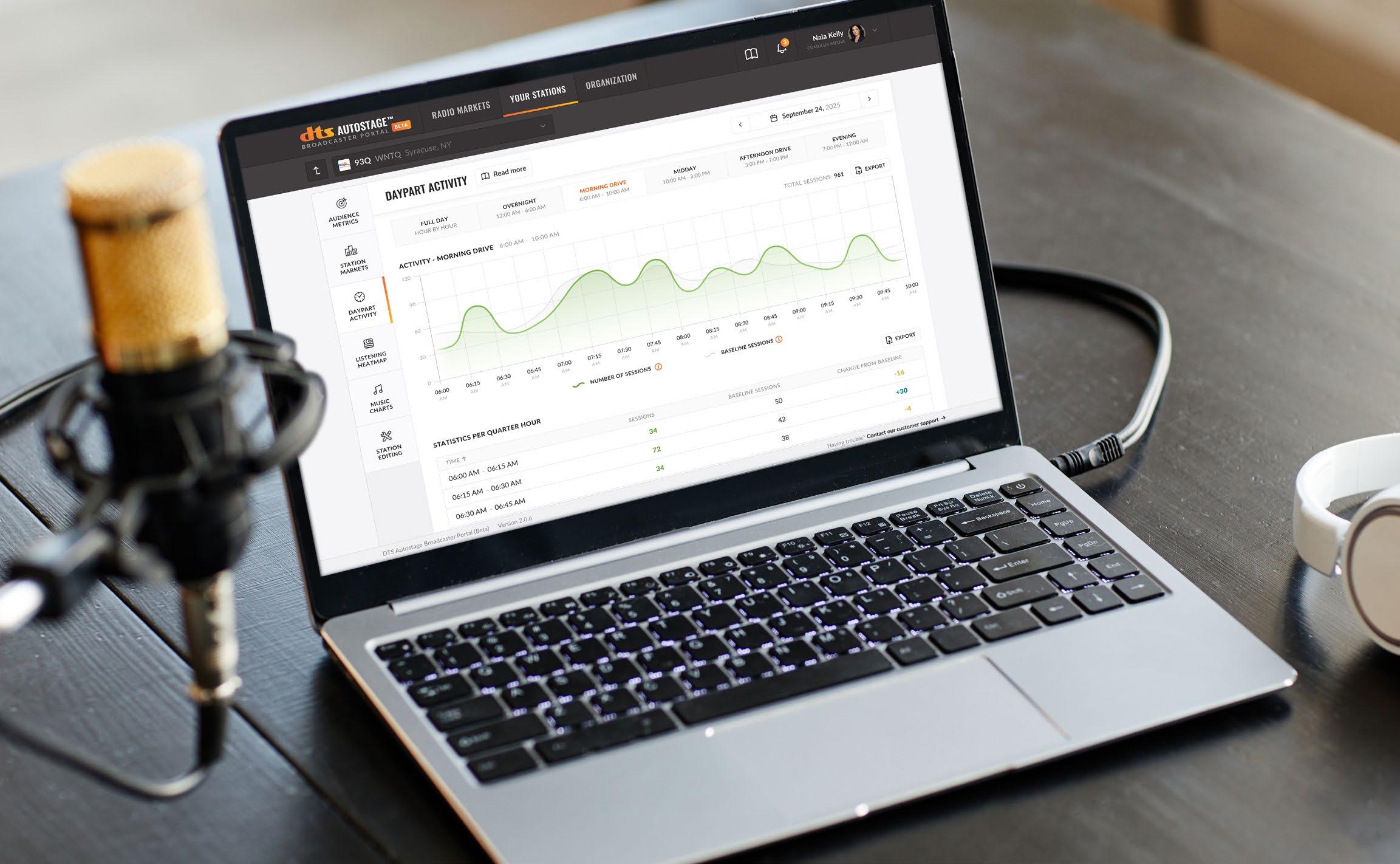
Above This display shows a station’s daypart activity for morning drive.
SeventyFour/Getty Images
In today’s vehicle, radio plays a central role in adsupported audio. Roughly eight in 10 U.S. consumers are reached daily by in-vehicle AM/FM radio, and about half of all listening among adults 25–54 takes place there (per data from Xperi, MRI-Simmons and Edison Share of Ear).
Importantly, AM/FM also accounts for approximately 85% of ad-supported audio time spent in vehicles, reinforcing the reality that in-vehicle listening is widespread and largely centered on AM/FM radio. Radio listening in connected vehicles changes the equation because tuning behavior can be measured as it happens, rather than by listener recall.
The DTS AutoStage Broadcaster Portal, launched in 2023, is designed to translate connected-car data into insights broadcasters can use strategically. With the most recent updates, the portal is delivering a broadcaster-facing dashboard that makes large-scale listening data usable for day-to-day decision-making.
Because it is built on the DTS AutoStage platform, which supports millions of vehicles across the U.S., it provides visibility into 250 markets, many of which have not been measured before.
Inside the Portal
The DTS Broadcaster AutoStage Portal gives a stationlevel view of in-vehicle listening by market, time of day and geography. With data refreshed within 24 hours, broadcasters can examine trends across days, weeks, months or quarters, and drill down hour by hour.
In the largest U.S. metros, connected-car samples reach into the hundreds of thousands (example: Los Angeles with 240,000+ vehicles). In mid-sized and smaller markets like Knoxville (15,132), daily insights are derived from thousands or tens of thousands of vehicles. Some smaller and mid-sized markets have historically lacked reliable thirdparty measurement. For the first time, markets of all sizes can be evaluated using a single, standardized measurement framework.
This scale means sample sizes that are materially larger than those used in traditional measurement — 16 times larger than current radio samples, and 57 times larger for the top 25 U.S. market samples, offering a level of stability and reliability that has historically been difficult to achieve, particularly outside the largest markets.
As a result, broadcasters can compare listening trends across markets in ways that were previously difficult or impossible, making it easier to identify stability,
growth and meaningful change over time. This enables better programming decisions to keep audiences sticky and engaged.
For an individual station, this means tracking how invehicle listening behaves across dayparts and geographies within a single view. Programmers can track how a morning show performs hour by hour, assess whether a format change is gaining traction over days or weeks, and understand where listening is coming from inside and outside their core market, using data that reflects actual listening behavior.
Among the newest capabilities are:
Context at scale made usable: The portal surfaces invehicle AM/FM listening by station and market, helping broadcasters understand how their performance fits within overall in-car listening patterns.
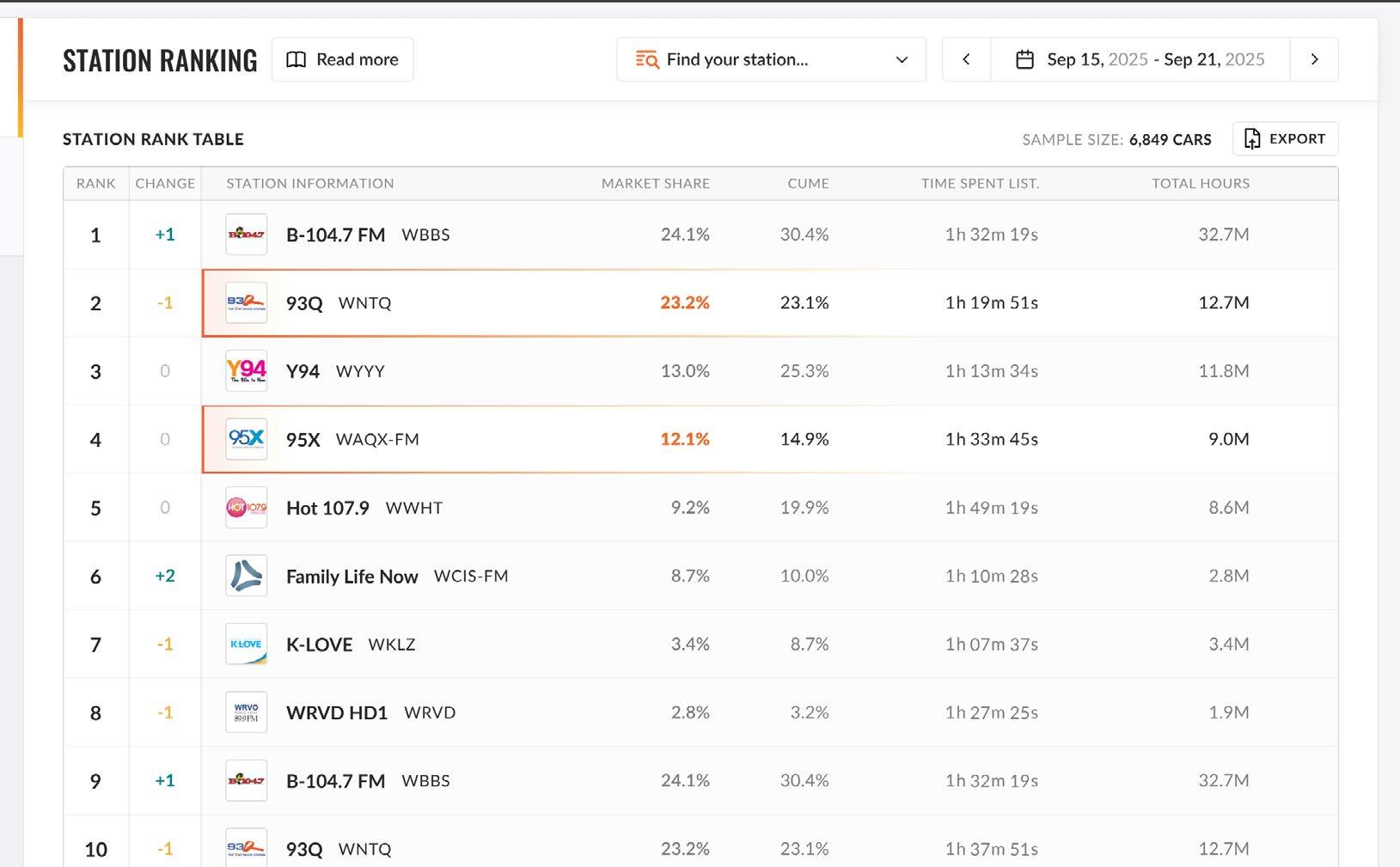
Stable, comparable measurement: Large connected-car samples are translated into consistent station rankings,
Below
This example shows station ranking in the Syracuse metro area. The sample size is given at upper right.
“For the first time, markets of all sizes can be evaluated using a single, standardized measurement framework.
Below
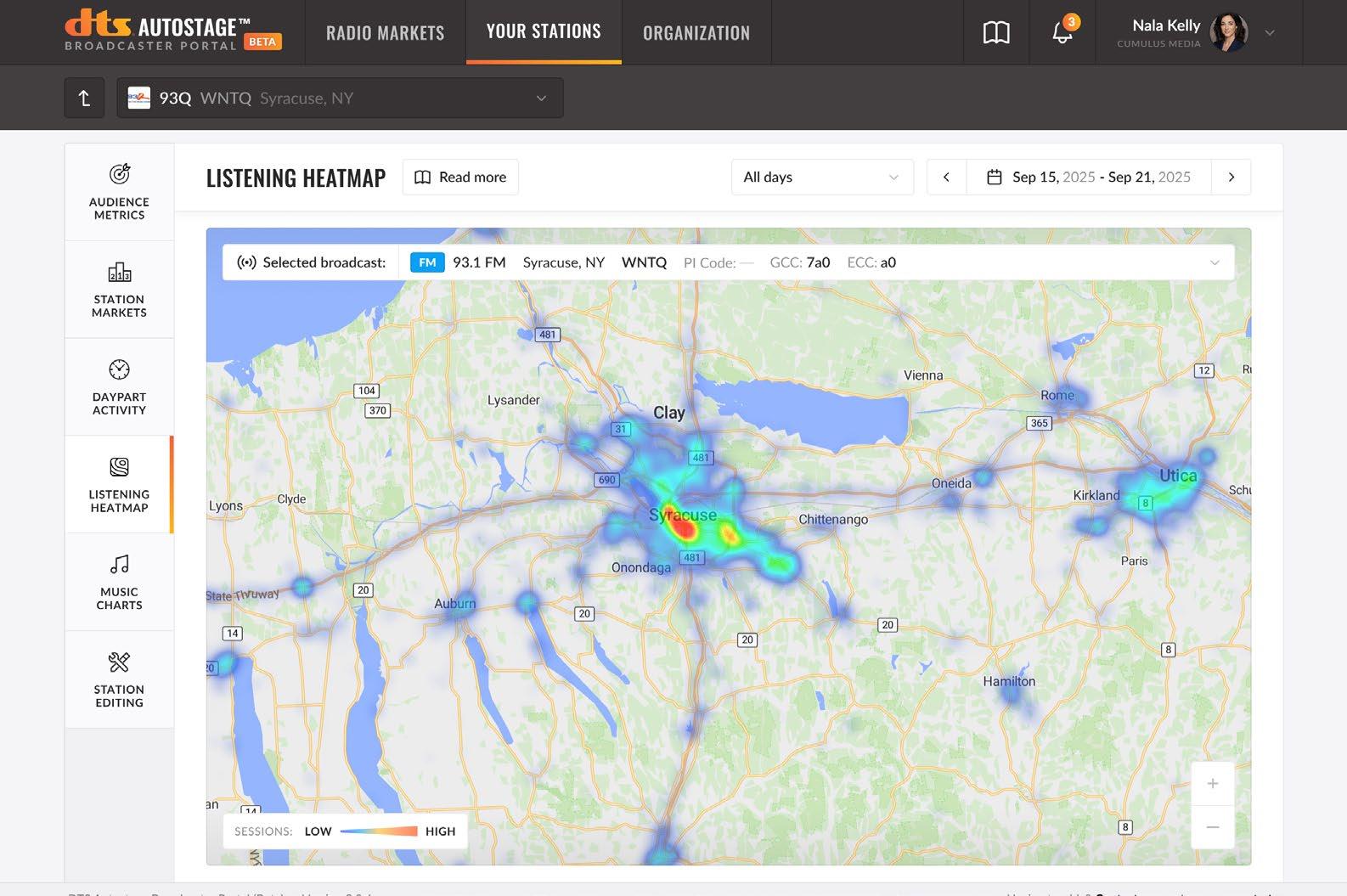
The “heat map” shows you where listening activity took place.
Radio Measurement
share trends and cume reporting across markets, giving music and content teams a clearer view of performance trends for evaluating strategy.
Daily audience movement, visible: With overnight refreshes, the portal allows broadcasters to see when listening shifts following programming adjustments, promotions or major events, providing faster directional insight than traditional, delayed summaries.
Daypart and format insight: Interactive daypart views show how listening evolves hour by hour, helping stations understand where formats, shows or scheduling decisions are gaining or losing traction throughout the broadcast day.
Overnight dayparts: First-time insights into how listeners are engaging with broadcast content during overnight dayparts.
Geography that informs strategy: Heat maps and outof-market listening views reveal where listeners are tuning in, both inside and beyond a station’s core market, turning signal reach and audience spillover into measurable, strategic information.
Strategy in motion
One of the most consequential changes enabled by connected-car radio measurement is speed.
Instead of waiting months to understand whether a programming or format change resonated, broadcasters can observe audience movement more quickly. This also makes it easier to distinguish between localized market dynamics and broader audience trends, helping broadcasters determine when a change reflects a marketspecific shift rather than a national pattern.
That immediacy supports smarter experimentation. Programmers can observe seasonal effects — such as
back-to-school drive-time shifts, Friday night sports listening in smaller markets or travel-driven spikes in resort regions — as they unfold, helping stations respond in near real time rather than retroactively explaining results.
This also changes how performance can be communicated internally and externally. Rather than debating projections or reconciling delayed reports, teams can ground discussions in observable audience behavior that reflects where listening actually occurs.
A foundation
What broadcasters see today in the expanded DTS AutoStage Broadcaster Portal represents the foundation of a broader evolution in radio analytics. These additional capabilities are expected to roll out over the next two years.
Ad measurement and gross impressions: In-car reach and frequency reporting for radio campaigns.
Greater daypart and time-period granularity: Measurement down to quarter-hour increments, with support for custom dayparts and specific minute ranges to assess the impact of special programming features.
Enhanced trending: Improved ability to demonstrate audience stability over time and better capture the impact of special events and programming changes.
Demographic and socio-economic profiles: The ability to layer in demographic, socio-economic and purchasing context from third-party data sources to better profile radio audiences.
Attribution — proving radio works: Analysis of retail visitation among audiences exposed to radio campaigns versus those unexposed, helping assess whether radio advertising drove incremental location visits.
Together with the portal’s current functionality, these planned enhancements change the game for broadcasters, enabling greater accountability and insight into audience behavior and advertising performance — particularly in the in-vehicle environment where radio remains strongest.
Radio’s enduring strength has been its connection to listeners and the communities they serve. As measurement continues to evolve to reflect real-world listening, broadcasters are gaining the timeliness and understanding needed to compete more effectively, make smarter decisions and demonstrate radio’s value in a rapidly changing media landscape.