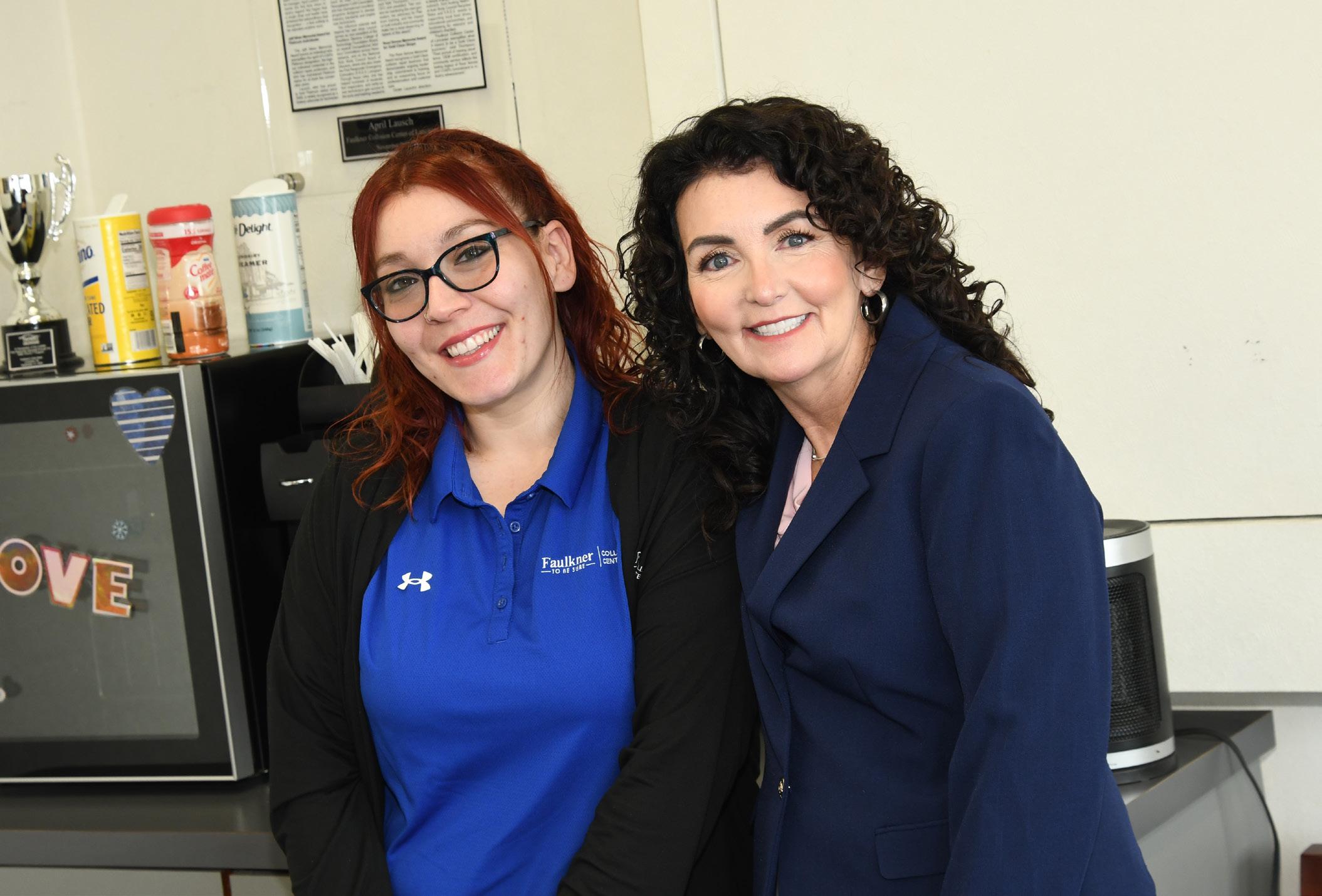
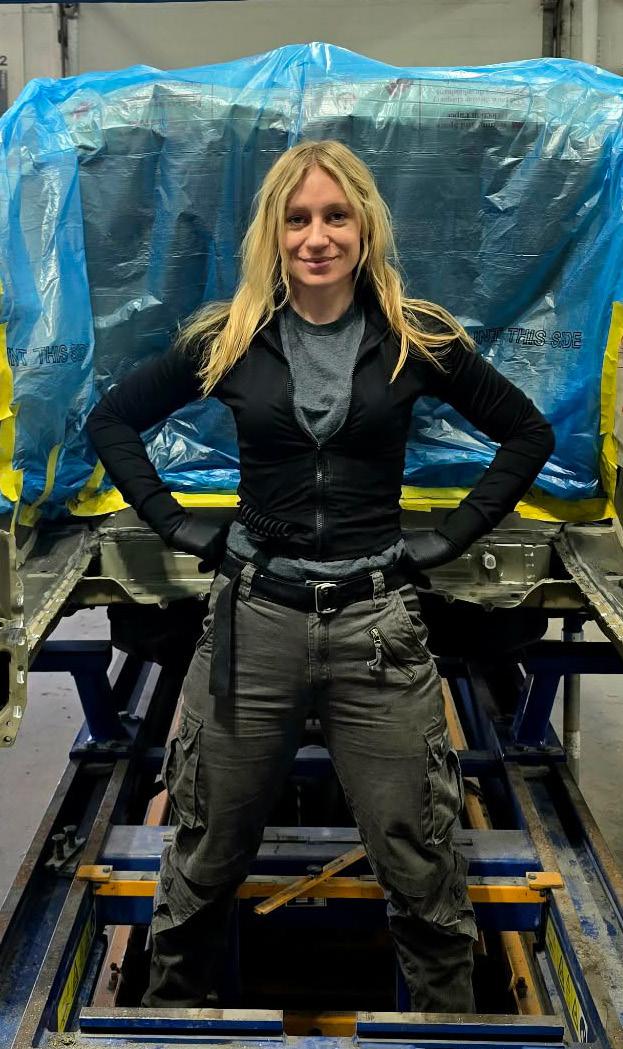
Giving it 100% As manager of Faulkner Collision Center of Lancaster (Pennsylvania,) Lausch has committed to a culture of craftsmanship, safety, and accountability.
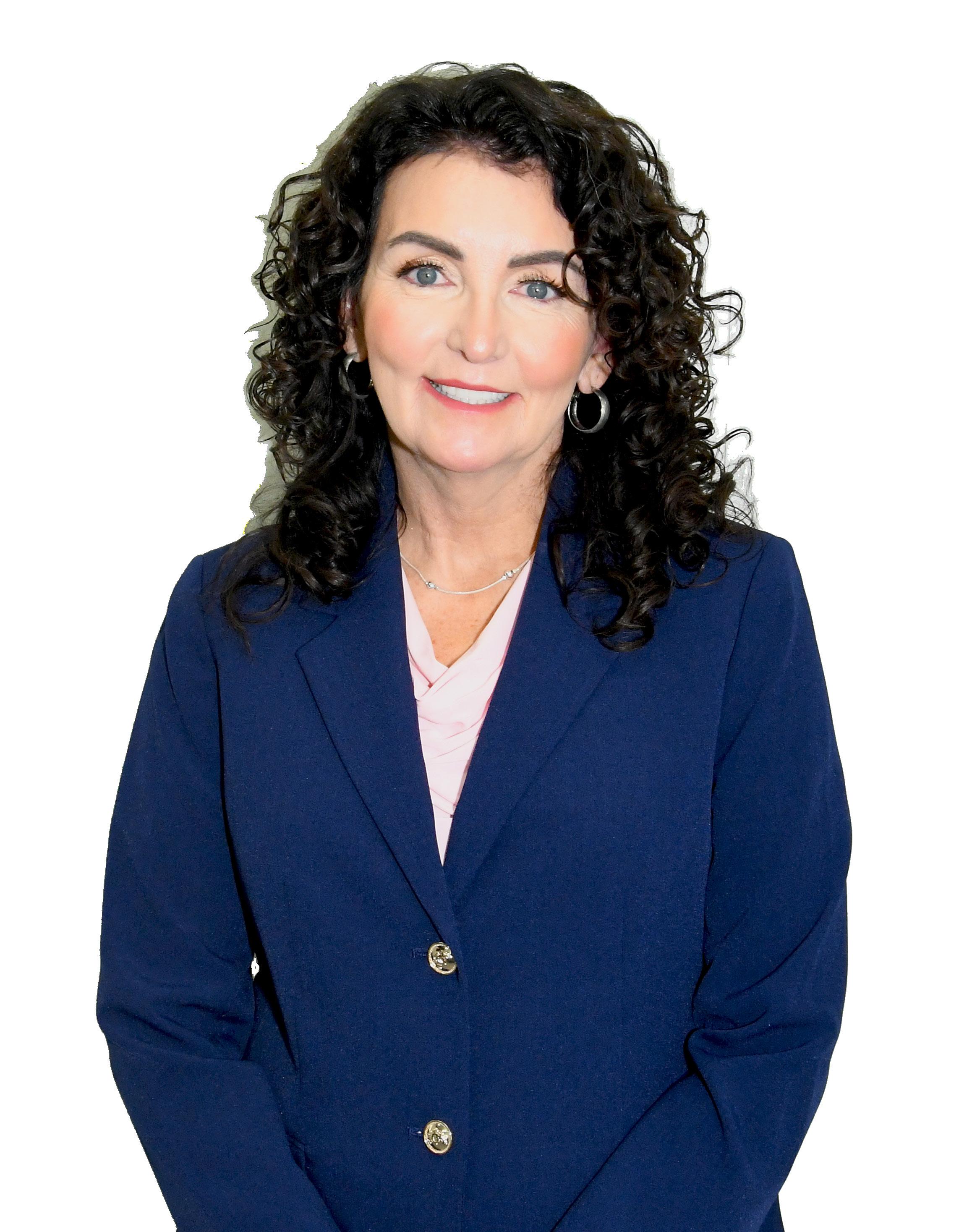
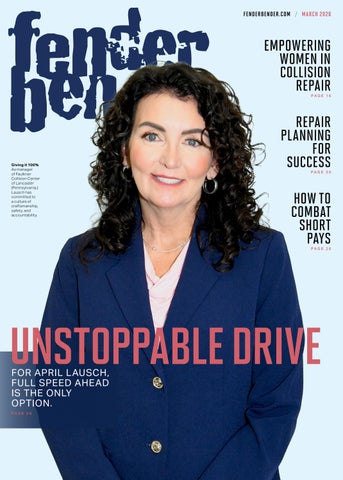
Giving it 100% As manager of Faulkner Collision Center of Lancaster (Pennsylvania,) Lausch has committed to a culture of craftsmanship, safety, and accountability.

































































SRSSIDEAIRBAG COUSSINGONFLABLELATÉRAL (SRS)




notlean againstthedoor⁄
not use seat coversthat block side airbagdeployment
⁄ee owner’s manualfor moreinformation
AVERTISSEMENT
vousappuyez pascontrelaporte⁄
’utilizez pas un couvre siège qui peutbloquerledéploiementducoussingonflablelatéral
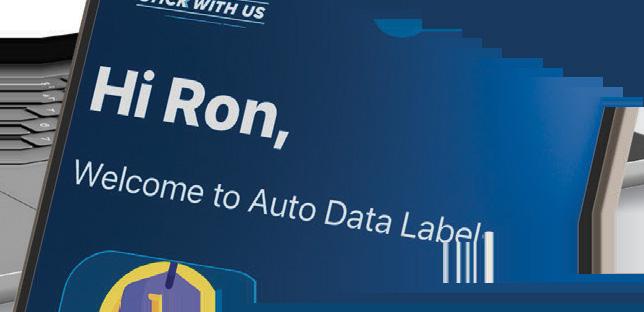
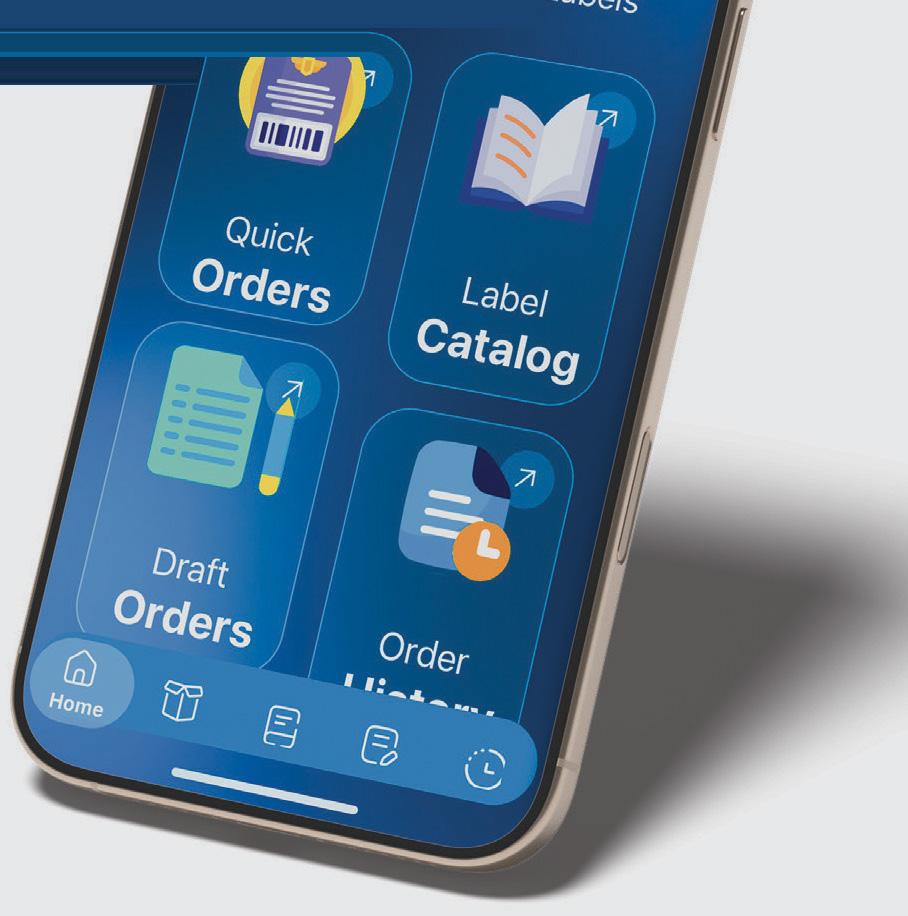
We’re excited to share that the ADL Mobile App and LKQ B2B Web Portal (portal.lkqcorp.com/ login) now use the same login . One password for both platforms — simple, secure, and seamless.
Voirle manueldu conducteur pour deplusamplesrenseignements

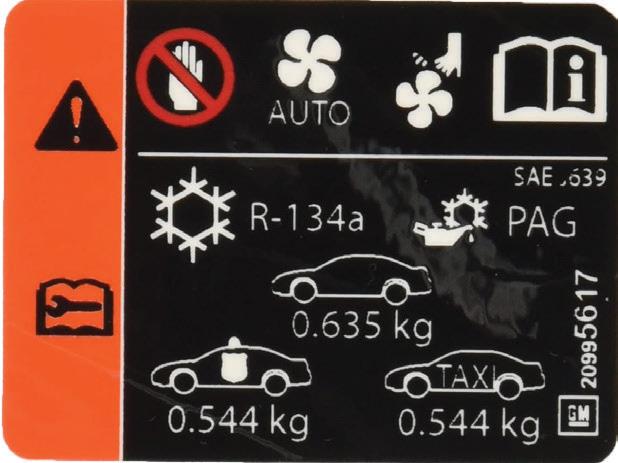
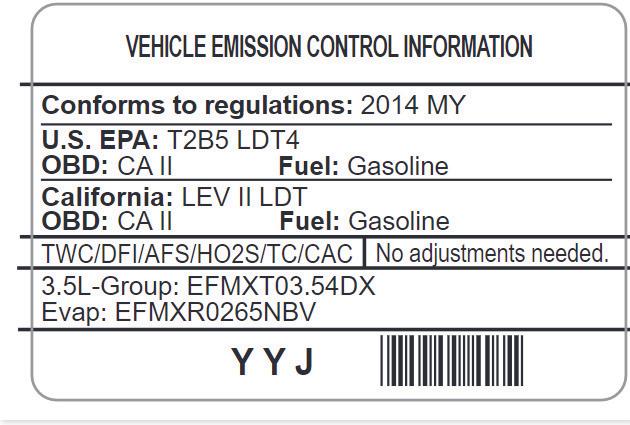
Conformstoregulations: 2015 Fuel: Gasoline U.S.EPAclass/stds: LDV/TIER2 Californiaclass/stds: PC/ULEVqualified Group 0180111.2L
Evap:SFI/H
New Dashboard is available on our Website & Mobile App










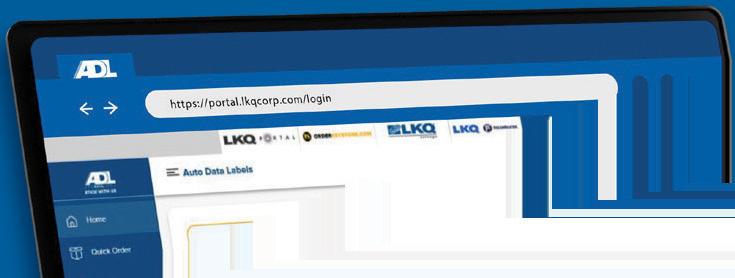











• Faster, Easier Ordering: Place orders in just a few clicks with our streamlined interface.
• Track Your Orders: Get real-time updates on every order you place.
• Order History: Quickly search past purchases and reorders.


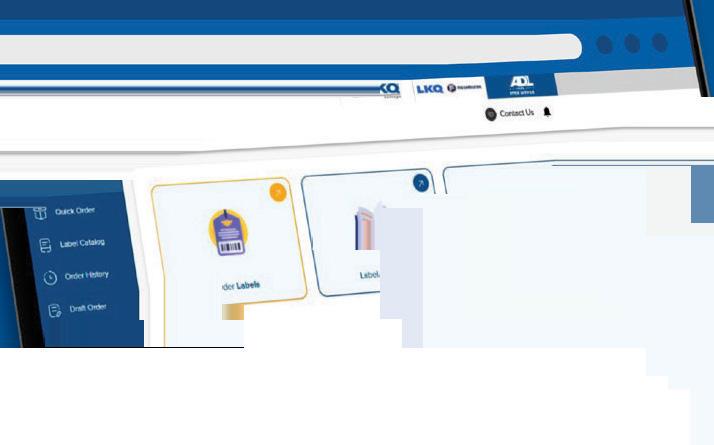


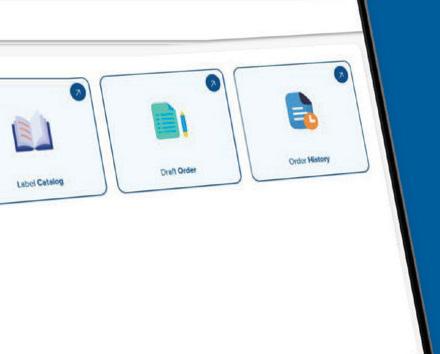


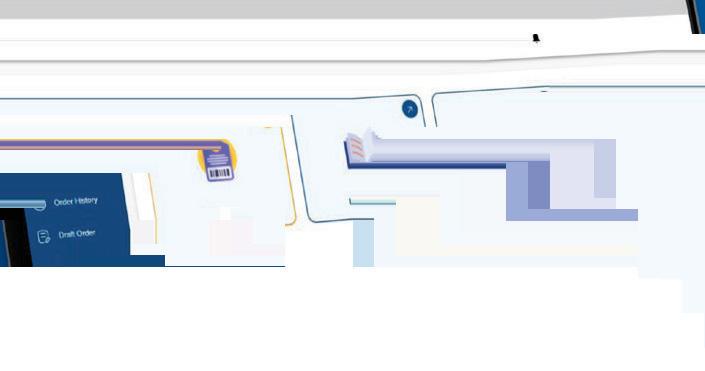

• Access Shipping Info & Reprint Invoices: All your order and billing details in one place.
• View Credits: Easily see account activity and available credits.















ONTROLINFORMATION ons: 2016 MY with










ents

























LINDSEY GAINER
PAST THE PAGE
The top video of the month is on remote ADAS diagnostics and calibrations. Plus: LKQ has initiated a review to enhance shareholder value that includes a potential sale of the company.
Mahoney Discusses Her Focus as Collision Engineering President


EDITORIAL
Chris Jones VSRG Editorial Director
Jay Sicht Editor-in-Chief
Peter Spotts Associate Editor
Kacey Frederick Assistant Editor
Emily Kline Special Projects Editor
Leah Marxhausen Special Projects Editor
Noah Brown Contributing Writer
Lindsey Gainer Contributing Writer
Todd Kortemeier Contributing Writer
Greg Lobsiger Contributing Writer
Stan Medina Contributing Writer
Tiffany Menefee Contributing Writer
Carol Badaracco Padgett Contributing Writer
Elisabeth Sobczak Contributing Writer
EDITORIAL ADVISORY BOARD
Jason Mundy Mundy’s Collision Center
Jordan Beshears Steve’s Auto Body
Sheryl Driggers Collision Advice
Stan Medina Certified Collision Works
SALES
Andrew Johnson Publisher ajohnson@endeavorb2b.com
Mattie Gorman-Greuel Associate Sales Director
Cortni Jones Director of Business Development
Diane Johnston Account Executive (National Accounts)
djohnston@endeavorb2b.com
Marianne Dyal Account Executive (National Accounts) mdyal@endeavorb2b.com
Chad Hjellming Account Executive (National Accounts) chjellming@endeavorb2b.com
Lisa Mend Account Executive (National Accounts) lmend@endeavorb2b.com
Austin Miller Account Executive (National Accounts) austinm@endeavorb2b.com
Kyle Shaw Account Executive (National Accounts) kshaw@endeavorb2b.com
Sean Thornton Account Executive (National Accounts) sthornton@endeavorb2b.com
ART AND PRODUCTION
Mariah Straub Production Manager
Jen George Ad Services Manager
Mitch Bradford Art Director
ENDEAVOR
CEO Chris Ferrell
COO Patrick Rains
CDO Jacquie Niemiec
CALO Tracy Kane
CMO Amanda Landsaw
EVP Transportation Chris Messer
EVP Endeavor Business Intelligence Paul Mattioli
VP of Content Strategy, Transportation Group Josh Fisher
HOW TO REACH US
Endeavor Business Media, LLC 571 Snelling Ave N Saint Paul, MN 55104 tel 651.224.6207 fax 651.224.6212
The annual subscription rate is $90 (U.S.A. only) for companies not qualified to receive complimentary copies of FenderBender.
LETTERS TO THE EDITOR editor@fenderbender.com
Opinions expressed in FenderBender are not necessarily those of Endeavor Business Media, and Endeavor Business Media does not accept responsibility for advertising content.


LKQ Eyes Potential Sale of Company
In a Jan. 26 press release, LKQ Corp. announced that its Board of Directors “has initiated a comprehensive review to enhance shareholder value.”
As part of that review, the Board is working with advisors “to evaluate the Company’s strategic alternatives, including a potential sale of the Company.”
There is no deadline or definitive timetable set for completion of this strategic review, and there can be no assurance the review will result in any transaction or other strategic outcome.
FENDERBENDER.COM/55355287
QuickChat: How Remote ADAS Diagnostics are Reshaping the Industry
Learn how remote, OEM-specific diagnostics are helping collision shops keep up without slowing down.


Independents: Change What You Can Control in 2026
Learn In the second part of this two-part podcast, Dave Luehr of Elite Body Shop Solutions discusses how a transformational approach can allow you to have customers for life through your unique selling propositions. Maximize your OEM certification ROI in the dealership service lane, plus learn how to change what you can control over insurer pushback. They’re just a few ways independent shops can win in 2026.

SEVEN INSURANCE COMPANIES received a grade of “A-” or higher from collision repairers in terms of how well those carriers’ claims practices help promote quality repairs and customer service, according to the just-released 2026 Insurer Report Card. A total of 35 auto insurers received a “B” or higher to earn a spot on this year’s “Honor Roll.”
The results of the survey, conducted annually by CRASH Network, show that 22 companies, including six of the largest U.S. auto insurers, received a grade of “C-” or lower for the second straight year. None of the Top 10 largest national auto insurers received an overall grade higher than a “C+,” with more than 60 other insurers ranking higher.
Body shops were asked to evaluate how well each insurer’s “policies, attitude and payment practices ensure quality repairs and customer service for motorists.” North Carolina Farm Bureau topped the list again this year, continuing to be the only insurer consistently earning an “A+”. Acuity Insurance (A-), Alfa Mutual (A), Chubb (A), Erie Insurance (A-), Michigan Farm Bureau (A-), and PURE Insurance (A-) also were among the highest-graded insurers.
While many of the highest-graded insurers – including Amica (B+), Farm Bureau Property Casualty (B+), Grinnell
Mutual (B+), Mutual of Enumclaw (B+), Rural Mutual (B+), Southern Farm Bureau (B+), and West Bend (B+) – do not sell policies in all 50 states, consumers are likely to find one or more of the “Honor Roll” insurers offering coverage where they live.
More than 1,100 body shops around the country each graded as many as 40 different insurance companies in their state. They said the highest-graded auto insurers are better than others in terms of claims processes, having more experienced and responsive claims personnel, paying for OEM repair procedures, and not pressuring shops to select replacement parts based primarily on price.
They criticized the insurers to which they gave lower grades, saying those companies “take forever to review a claim,” “refuse to pay for quality parts,” “argue about paying for repair procedures designated by the automakers,” and “have poorly-trained staff,” sometimes adding days or weeks to the repair time.
The list of highest-graded insurers in 2026 was consistent with the prior year’s findings; among the 10 highest-graded insurers in this year’s Insurance Report Card, nine were in the Top 10 last year as well.

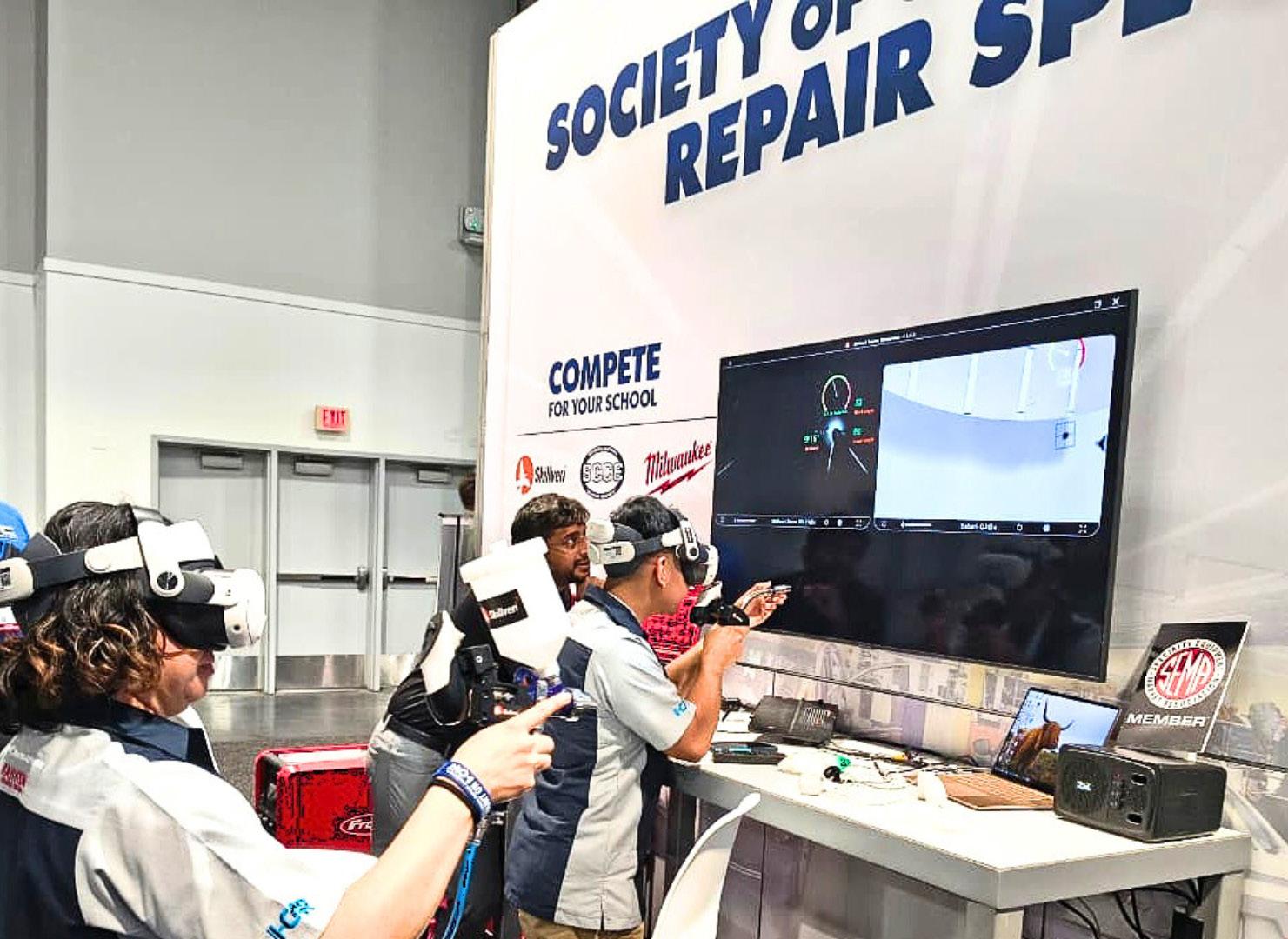
Simulations provide realistic, customizable training scenarios for students and technicians.
By PETER SPOTTS
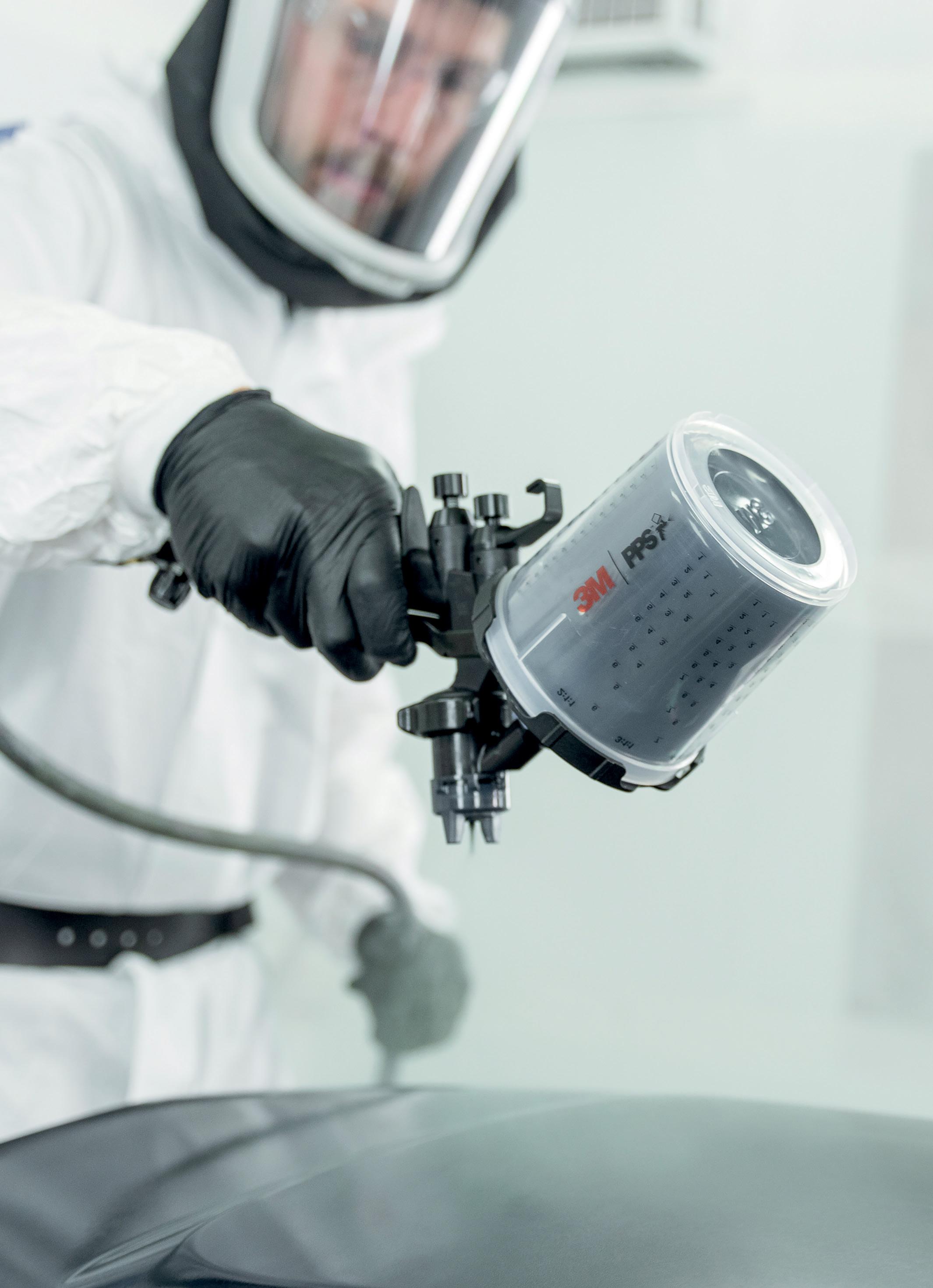
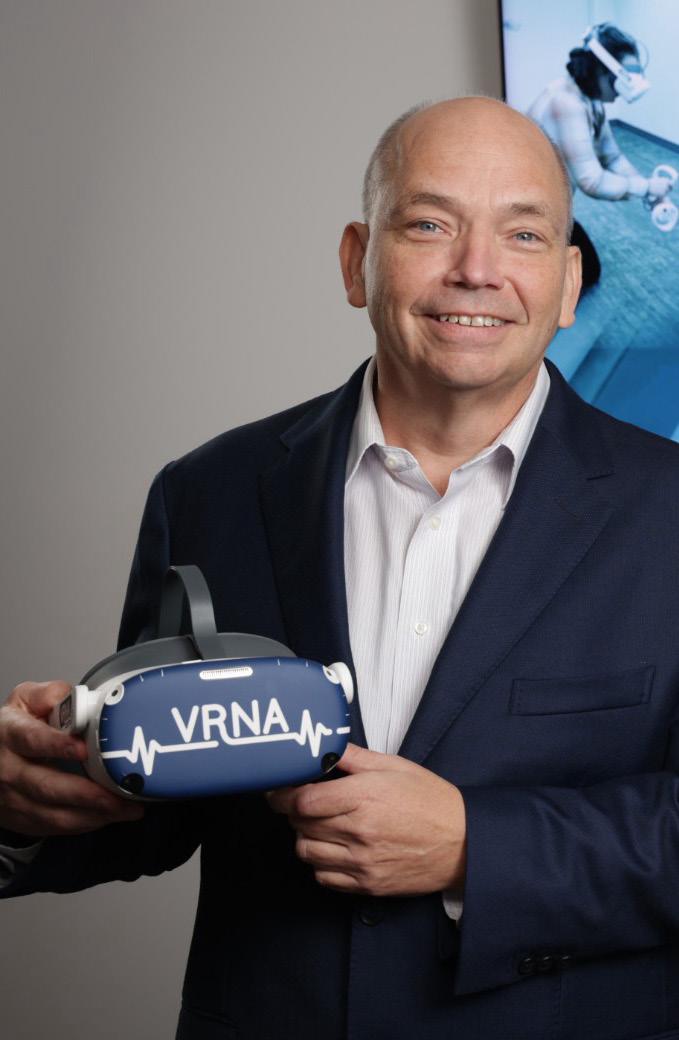
LEARNING PROPER REPAIR techniques takes time and repetition. Virtual reality simulations can provide technicians with opportunities to gain experience without needing materials for the work.
The SEMA Show featured multiple demonstrations of current VR simulations, including a couple of welding and refinishing kits and even a front radar replacement simulation from I-CAR. Simulations can
measure technique and performance with instant, quantifiable feedback and analysis of the work performed, and even help screen job applicants to see if they know what they’re doing.
“We [can] retrace your hand movement and then it’s color-coded with green, yellow and red and it’ll tell you what it did right, what it did wrong, where is the dry film thickness of the paint higher, where do you
have a rundown, all of that,” said Sabari Nair, CEO of Skillveri, which is a member of the Society of Collision Repair Specialists. VR simulations aren’t just for common practices such as painting a panel. VRSim’s refinish simulator is highly customizable, so shops can set up very specific scenarios to match exact manufacturer specs or a rare part that might not be commonly found in a shop to practice on.
“On new, unfamiliar, or especially difficult parts, it’s an invaluable tool,” said VRSim CEO and President Matthew Wallace. “Take a door with a strange crevice where you have to layer the paint and angle it with a specific technique. You’ll learn it eventually, but it’s far better to practice on a simulator - where you can do it wrong, see what didn’t work, and try again. It gives people a safe, experimental space.”
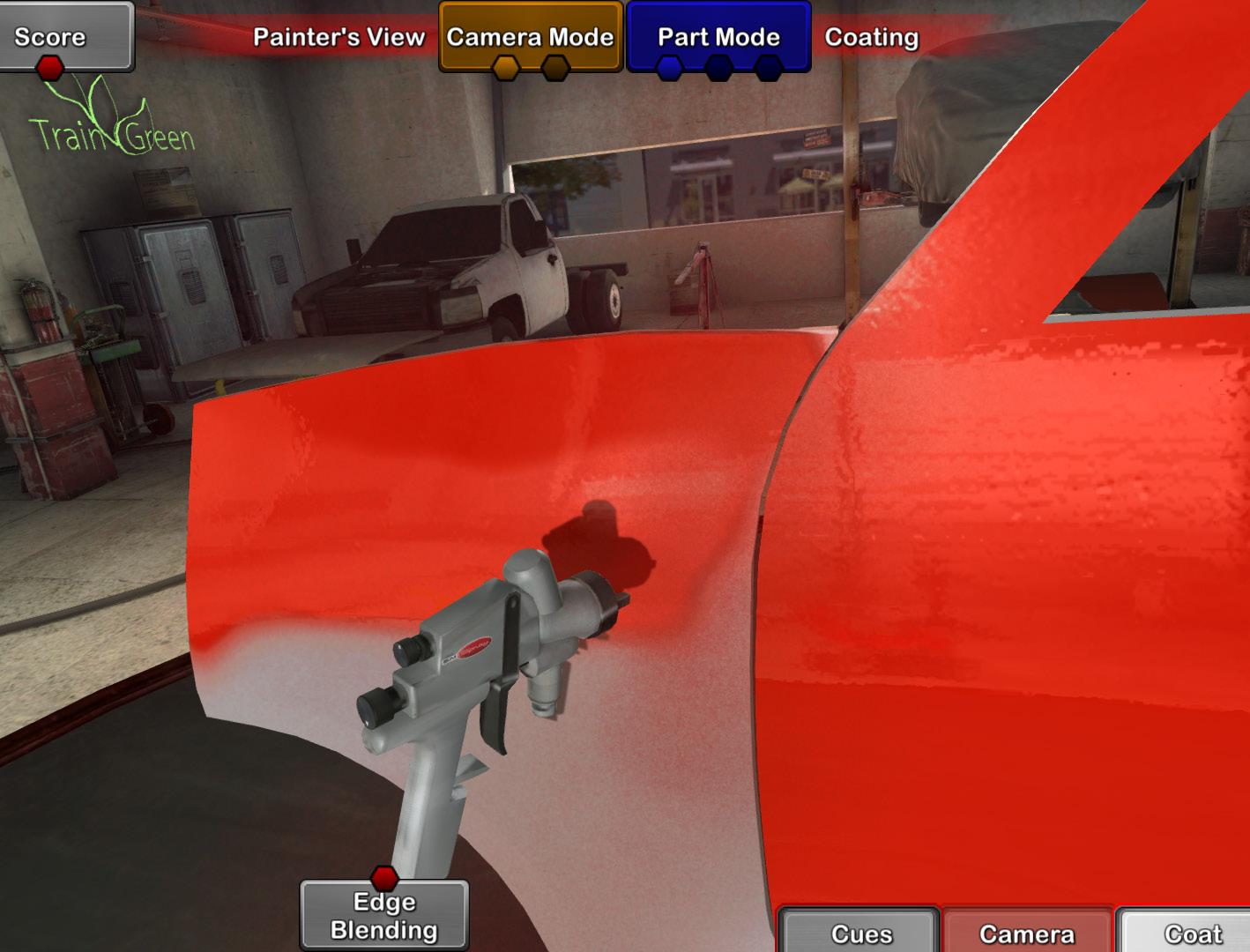
While simulations can help teach a specific standard and technique for refinishing or welding, the metrics it measures can be customized to accommodate experienced professionals who have developed their own style.
“You can set all of it. There are sliders for quality vs. speed - 50/50 coverage, heavier coverage - every bit of it is customizable,” Wallace said, offering the example of another painter who prefers a 75% overlap technique. “His base simulator scores were terrible because he paints fast and thin, but he does multiple coats. He’s a great painter. Once we adjusted the simulator to account for thinner coats, more passes, and a higher rate of speed, he scored just fine.”
Nair said they’ve commonly found that painters who didn’t have a formal education tend to reach the same quality of finish by compensating. For example, someone spraying from too far away also sprays slower to maintain the same film thickness. Based on calculations to determine the most efficient painting method, it could result in the same quality but use more paint.
“They may get the right finish, but they may have taken up to 50% more paint to get the same job done because a lot more would have gone waste into the air or in getting oversprayed,” Nair said. “Our belief is, when it comes to training fresh learners, teach
them to not just paint, but to paint in the most efficient way possible.”
VR technology can help upcoming students and future technicians learn the trade, and experienced technicians keep their skills sharp and learn new techniques. Skillveri does the bulk of its business currently with colleges and collision repair programs. Nair said their membership with SCRS helps them connect with shops and currently work with almost 100 schools.
“All of them talk to us with some thoughts that they would have,” he said. “So, we keep making a list of these things we keep hearing from the market.”
VRSim has seen its business move from 75% education eight years ago to 60% industry businesses and 40% education today as the company has expanded its applications across automotive, aerospace, and industrial industries.
The ROI of VR simulations isn’t limited to just cost savings on materials. Wallace said the most important factor is the time VR training can save. Shops can train on site without having to travel to another location or mail one VR set between multiple shops while getting more practice reps in.
“The real savings is time. Billy Huneycutt, a teacher in North Carolina, had students who went on to compete in Skills autobody painting competitions - and they placed well,” Wallace said. “Why? In
part because they had essentially practiced hundreds of repetitions instead of (maybe) 50. They didn’t have to sandblast and repaint every time because they were practicing in simulation: click a button, get a new part. The number of repetitions is dramatically higher.”
The technology doesn’t stop at refinishing or welding. Nair sees many possibilities to apply VR training from the beginning to the end of the repair process with the dream of being able to, one day, be able to have a user be able to start a virtual repair with blueprinting and diagnostics and go through a complete, simulated repair.
“Anything that you teach with VR, you don’t spend on actual materials, or you don’t risk getting hurt or damaging actual equipment,” Nair said. “So anywhere where there are safety concerns or difficult to replicate scenarios, training could be done efficiently and very cost-effectively using virtual reality.”
Later this year, Wallace said, VRSim hopes to release an update for spot and edge blending, which can be difficult to teach and wants to work to create a simulation for structural repair in the future.
“I like the repair side things like frame straightening and structural repair work,” he said. “That’s very much on my mind in terms of going to that next level there and offering more of an integrated curriculum.”
THE NUMBER OF RESPONDENTS to our annual Industry Survey reporting they have at least one OEM certification took a large jump from just under 48% in 2024 and 49% in 2023 to 65% in 2025.
OEM certification programs can provide a number of benefits, including repair information and training, and often as a way to draw customers without the concessions often required with direct repair programs (DRPs.)
As before, several respondents mentioned they did not expect a return on investment for their program participation, especially for those OEMs that do not restrict parts availability.
These figures are part of the 2025
*Figures are rounded to the nearest number




After four decades at Enterprise Mobility, Mary Mahoney discusses her new focus on Collision Engineering and developing industry talent.
By PETER SPOTTS
MARY MAHONEY HAS BEEN an industry fixture at Enterprise Mobility for the past four decades, but now, it’s time for a new adventure. She officially took the role of president at the Collision Engineering Career Alliance in February and is looking forward to continuing its mission of building the next generation of collision repair professionals.
Mahoney helped found the nonprofit organization in 2020 as a direct response to the technician shortage in the collision repair industry. After observing how the model prepares people for future careers, she’s made the move to expand her involvement full-time due to a sense of responsibility and belief in what Collision Engineering has built.
Mahoney answered questions from FenderBender about making the switch from Enterprise to Collision Engineering and her goals for the organization. Anyone interested in helping support the industry’s next generation can visit the Collision Engineering website at beacollisionengineer.com.
After over 40 years with Enterprise Mobility managing relationships with global insurance, collision repair, dealer and OEM customers, you’ve retired. But you’re not letting grass grow under your feet. You’re expanding your role with the Collision Engineering Career Alliance you helped build by taking the helm as president of the nonprofit organization Feb. 1. What drove that decision?
What drove the decision for me to continue this important work as president of the Collision Engineering Career Alliance was really a sense of responsibility and belief in what we’ve built. Collision Engineering didn’t start as an abstract idea; it was created in response to a very real workforce crisis. Over the past four years, I’ve seen firsthand that this program model prepares people for real jobs in collision repair.
When I decided to retire from Enterprise Mobility, I wasn’t looking to slow down but rather focus my energy where it could make the greatest long-term impact. Collision
Engineering represents the future of how our industry develops talent. Not just by teaching technical skills, but also by preparing people for meaningful careers. Stepping into the president role felt like a natural continuation of the work I’ve already been invested in and an opportunity to help guide the national organization through its next phase of growth.
What are your goals or objectives for your first year as president of Collision Engineering?
Our focus is on strengthening the program foundation as we continue to scale as a national organization. That work is very much a team effort, centered on ensuring consistency across our partner colleges, providing better support for our instructors and employers, and continuing to build the systems needed to sustain growth without losing what makes the program effective.
We are also focused on deepening industry engagement by helping partners
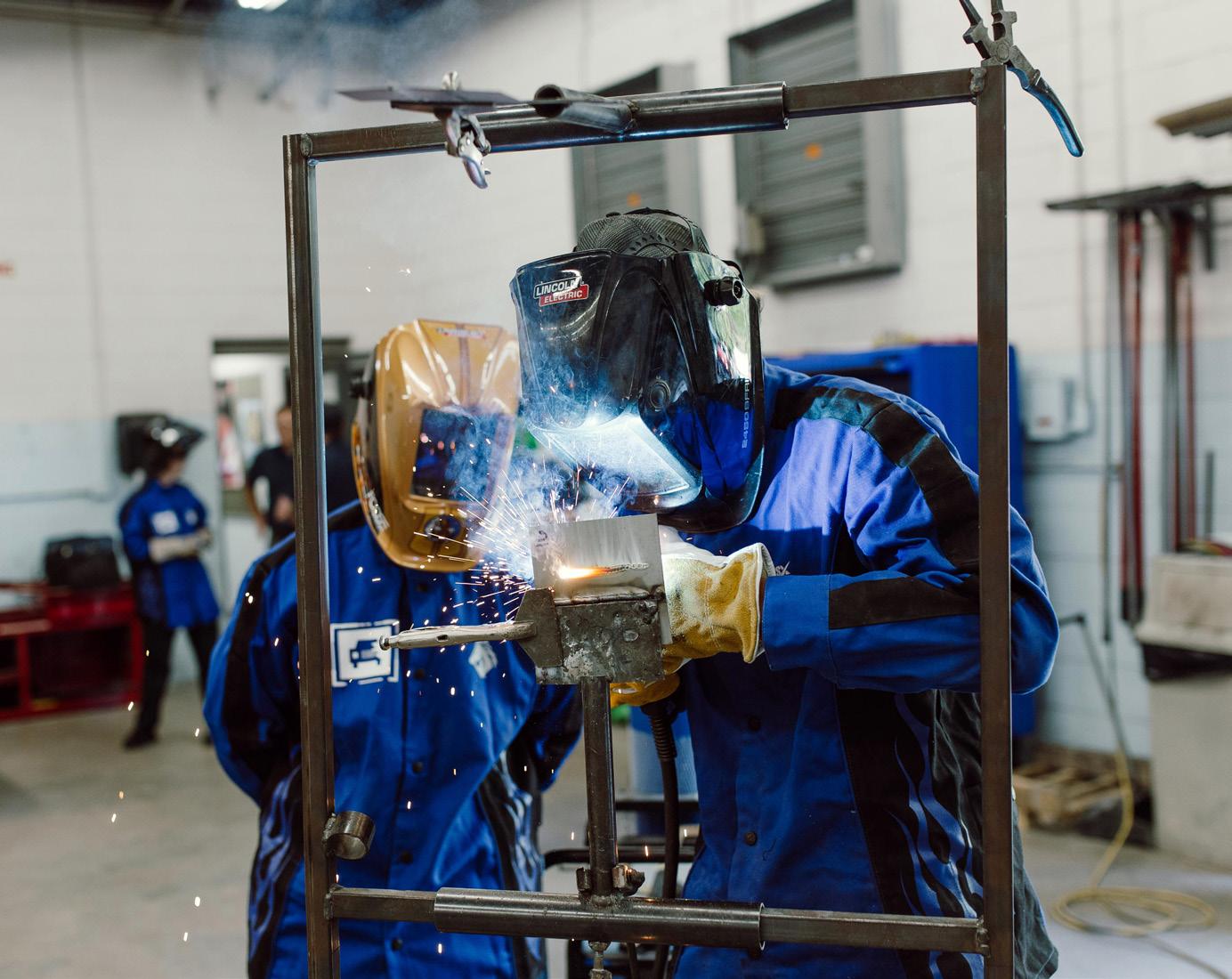
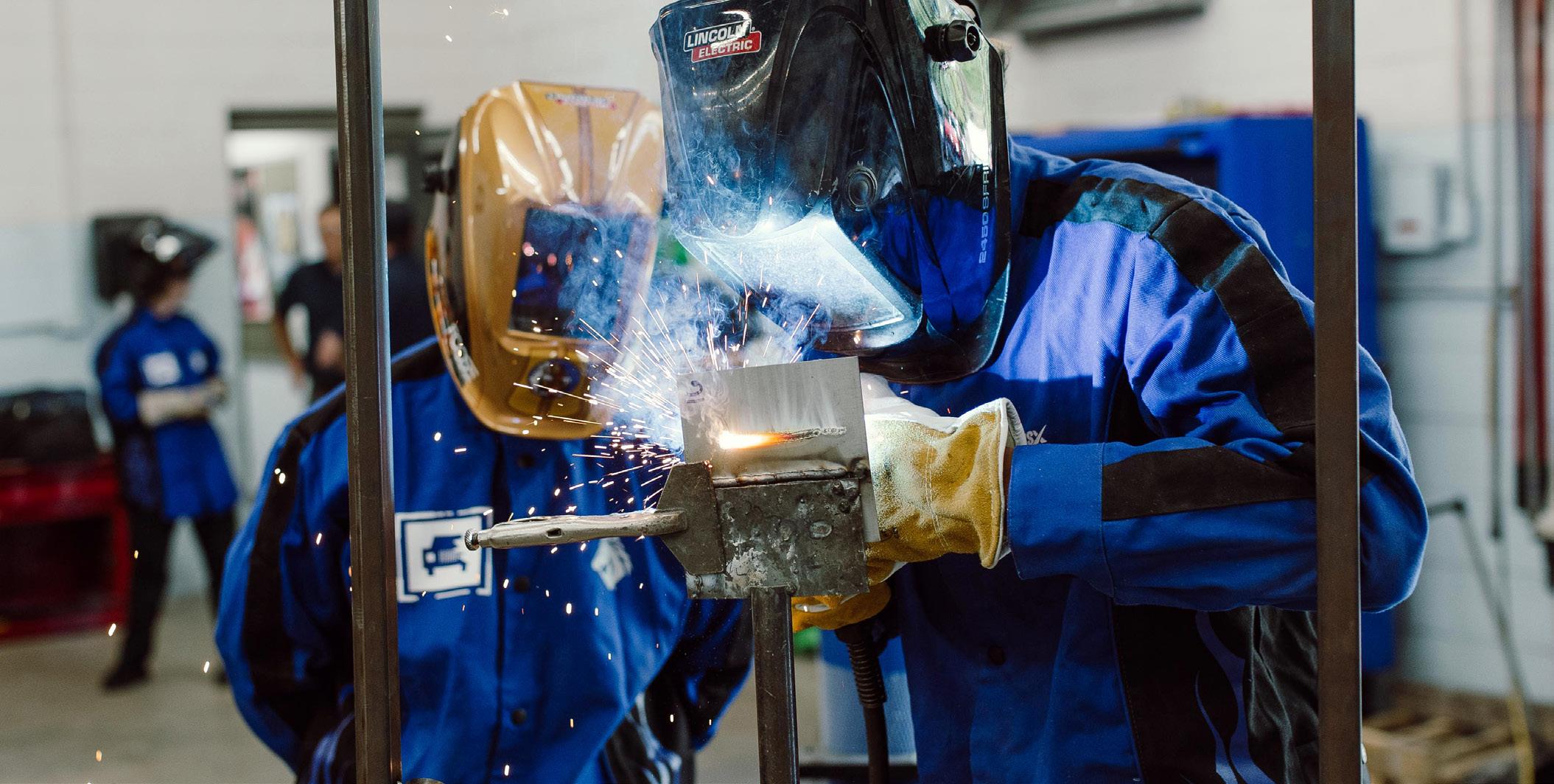
A student gets hands-on instruction in welding at Sandhills Community College as part of the Collision Engineering Program that prepares students for successful careers in the industry.
clearly understand their role, how they can contribute in meaningful ways and how their involvement directly supports student success. It is equally important to communicate the impact of this work. The outcomes we are seeing with program students, participating collision repair shops and partner colleges reflect the strength of the Collision Engineering program model. Sharing those results helps reinforce why long-term investment in workforce development is essential for the future of our industry.
Are there any lessons, skills or experiences from your time with Enterprise Mobility that you feel will help you achieve those goals?
Absolutely. Much of my career has centered on building trust and developing relationships with partners across the industry. That experience translates directly to this role.
I’ve learned the value of collaboration, clear communication and long-term strategy. Sustainable solutions don’t come from one individual or group acting alone. Collision Engineering succeeds because it brings industry and education together around shared outcomes. My background has prepared me to help manage those relationships thoughtfully while keeping the mission front and center.
What are currently the biggest roadblocks or challenges for developing skilled technicians, and how does Collision Engineering help address these?
One of the biggest challenges in developing skilled technicians is the lack of consistency across the ways students learn and train. Whether students come through high school programs, college and Career and Technical Education (CTE) programs, or enter the workforce directly into a shop, the level of preparation and exposure to real world expectations can vary widely. That inconsistency makes it
difficult for employers to know what skills a graduate truly has and for students to transition confidently and successfully into the workforce.
Collision Engineering helps address this by establishing a standardized, industryaligned program model that combines a paid apprenticeship with an associate degree. Students rotate between the classroom and the shop, allowing them to immediately apply what they are learning in a real work environment while gaining consistent, hands-on experience. Equally important is the program’s emphasis on personal and professional development. Students and mentors work through structured tools and assessments that strengthen communication, accountability and professionalism. This focus helps students build the life and workplace skills needed for long-term success, while also supporting mentors and improving retention and culture within participating shops.
How has the program evolved since it was formed over four years ago? Was there anything that emerged that wasn’t originally on your radar?
One of the most meaningful evolutions has been realizing how much the program impacts not only students, but also instructors, employers and the broader industry. While we expected strong technical outcomes, we’ve seen even greater value in how the model strengthens mentorship, improves communication, and supports retention within shops and classrooms.
As the program expanded, it also began to connect colleges, industry partners, instructors and students from across the country. What started as a training model has grown into a true network of shared learning and support. That sense of connection and collaboration has continued to strengthen the program and has become a defining part of what it means to be part of the Collision Engineering Career Alliance.
We have also learned that growth requires a shared standard and a strong sense of community. As more colleges and partners join, aligning around common expectations, practices and values has been essential to maintaining quality and ensuring the program operates effectively at a national level. That focus on consistency and collaboration has shaped how we grow and has been critical to our operational success.
Can you explain the role of industry supporters and industry advocates? Can shops help in ways beyond providing apprenticeships?
Industry supporters and advocates play a critical role in the ecosystem. While apprenticeships are essential, there are many other ways shops and partners contribute to the program and student success. They serve on advisory committees, help shape curriculum, support program instructors, share personal stories and talk with students about career opportunities in the industry.
Advocates help us keep the program aligned to real-world needs, while supporters help ensure students have access to resources, tools, and opportunities that extend beyond the classroom. The strength of Collision Engineering lies in collaboration, and we encourage engagement at many levels. Any final thoughts or remarks?
The technician shortage is not a short-term challenge, and it won’t be solved by one organization or one solution. I’m energized to witness the industry rethink how it attracts, prepares and supports talent. Collision Engineering exists to be a bridge between education and employment, between potential and opportunity. As we continue to grow, our focus remains on people, partnerships and building a workforce model that serves the industry and the individuals who choose this career pathway. I encourage others to join us in supporting this critical need. It will take all of us to safeguard the future of collision repair.
Monitoring the KPIs Revenue Per Employee and Payroll Available Per Employee can boost profitability.
Last month, we discussed three different types of employees: Problem-Creators, Problem-Preventers, and Problem-Solvers. We then discussed ways to help move the Problem-Creators into at least the Problem-Preventor category or better yet, into the elite Problem-Solver club.
What shop owners and managers often forget is this: The more we respect our employees, the happier they will be working for us. In turn, our employees will take better care of our customers. Here is the order: First, employees, second, customers, and third equals a thriving business. It MUST stay in this order. Honda Motor Co. even has this order posted in many of their factories.
There is a business key performance indicator that every body shop on the planet should be monitoring IF they want to achieve an annual 20%+ net profit. Unfortunately, I must live on a small island, as most of the body shop industry totally misses this! It’s called RPE: Revenue Per Employee. It’s a meaningful KPI, because it measures how efficiently each shop utilizes its employees. Ideally, a shop wants the highest ratio of RPE possible, because the higher the ratio, the greater the productivity per employee. RPE also suggests that a shop is using its most valuable resource — in this case, its investment in human capital — wisely by developing/training employees to become VERY productive. Thus, shops with high RPE ratios are more profitable than shops with a low RPE.
Now let’s look at some actual numbers.
Low RPE, AL’s Auto Body: Gross sales of $5,000,000. Employee head count: 20. Revenue Per Employee $5 mil / 20 = $250,000 per employee
Middle of the road RPE, Bob’s Auto Body: Gross sales of $5,000,000. Employee head count: 16. Revenue Per Employee $5 mil / 16 = $312,500
High RPE, Charlie’s Auto Body: Gross sales of $5,000,000. Employees head count: 12. Revenue Per Employee $5 mil / 12 = $416,667
So, why should one care whether we have 20, 16 or 12 employees if each shop has a 20% net profit, you’re wondering? The reality is this: most of the Al’s shops across the nation are making more like a 10% or less net profit (in a good year), compared to the Charlie’s shops that are more likely making a 20% net (in most years). Why, you ask? Al has more Problem-Creators and Charlie has more Problem-Solvers. Al’s fewer elite Problem-Solving employees’ time is being taken up by putting out the fires their fellow Problem-Creator employees
are starting. It’s just a vicious cycle of wasteful activity at Al’s shop. Meanwhile at Charlie’s shop, Problem-Solvers are spending more of their time solving new complex problems, such as dealing with insurers that won’t pay for “X” or an OEM now has a new safety inspection needed, etc.
Food for thought: I would trade two ProblemCreator employees at $75k each in payroll per year for one rockstar Problem-Solving employee at $150k, all day long!!!
An additional KPI that the industry total misses is Payroll Available Per Employee (PAPE). Take the example Charlie’s shop from above, at $5,000,000 in gross sales. To maintain a 20% net profit, Charlie’s technician’s payroll would need to be around 15% of gross sales, plus admin payroll of around 11%, for a total of 15% + 11% = 26%. Therefore, total payroll available for Charlie’s $5,000,000 shop would be $1,300,000.
So, what is the available PAPE between the three above example shops?
Al’s Body Shop: $1,300,000 / 20 employees = $65,000 avg. wages per employee
Bob’s Body Shop: $1,300,000 / 16 employees = $81,250 avg. wages per employee
Charlie’s Body Shop: $1,300,000 / 12 employees = $108,333 avg. wages per employee
If a new hire was trying to decide for long term employment between all three shops, which one do you think they would choose: Al’s, Bob’s or Charlie’s? It doesn’t take Einstein to figure out Charlie’s is the place to be, as this shop pays between $27K to $43K more in average wages per employee per year. Along with that, Charlie’s shop has less firefighting, less stress and each employee have more satisfaction driving home knowing they had a very productive day! Disclaimer: Al’s shop may have a $2,000,000 payroll, thus have a PAPE of $100K. The catch is Al is broke, and Charlie is not!
The reality is this: everyone in the shop is busy, but the more important question is whether everyone is doing something that would be of value to the customer! Leadership’s primary role should not be giving answers but instead observing and asking more questions. For the leaders reading this twopart series, I would run your RPE & PAPE #’s to see where you fit into these three comparison shops. Then track them going forward to drive them both up. It’s time to work with Problem-Creators to help move them into at least the Problem-Preventer, or better yet, the Problem-Solver category!!
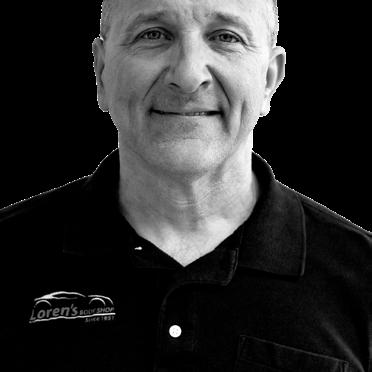
GREG LOBSIGER
Greg Lobsiger has owned Loren’s Body Shop in Bluffton, Indiana, for over 23 years. He has been a member of Mike Anderson’s groups for ten years and had extensive lean manufacturing training.
EMAIL: greg@lorensbodyshop.com
ARCHIVE: fenderbender.com/lobsiger
White glove on-site setup and installation*
Where available, an authorized Bosch field representative will unpack, assemble and provide instruction on the use of the DAS 3000.
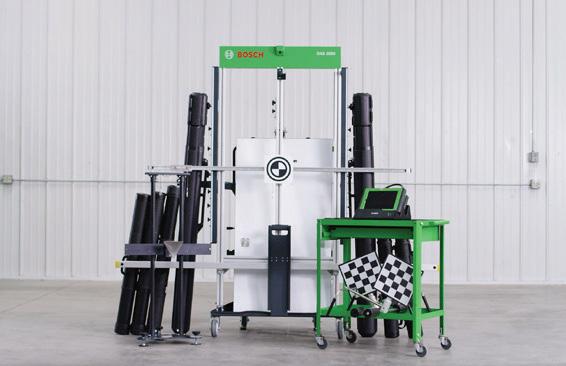
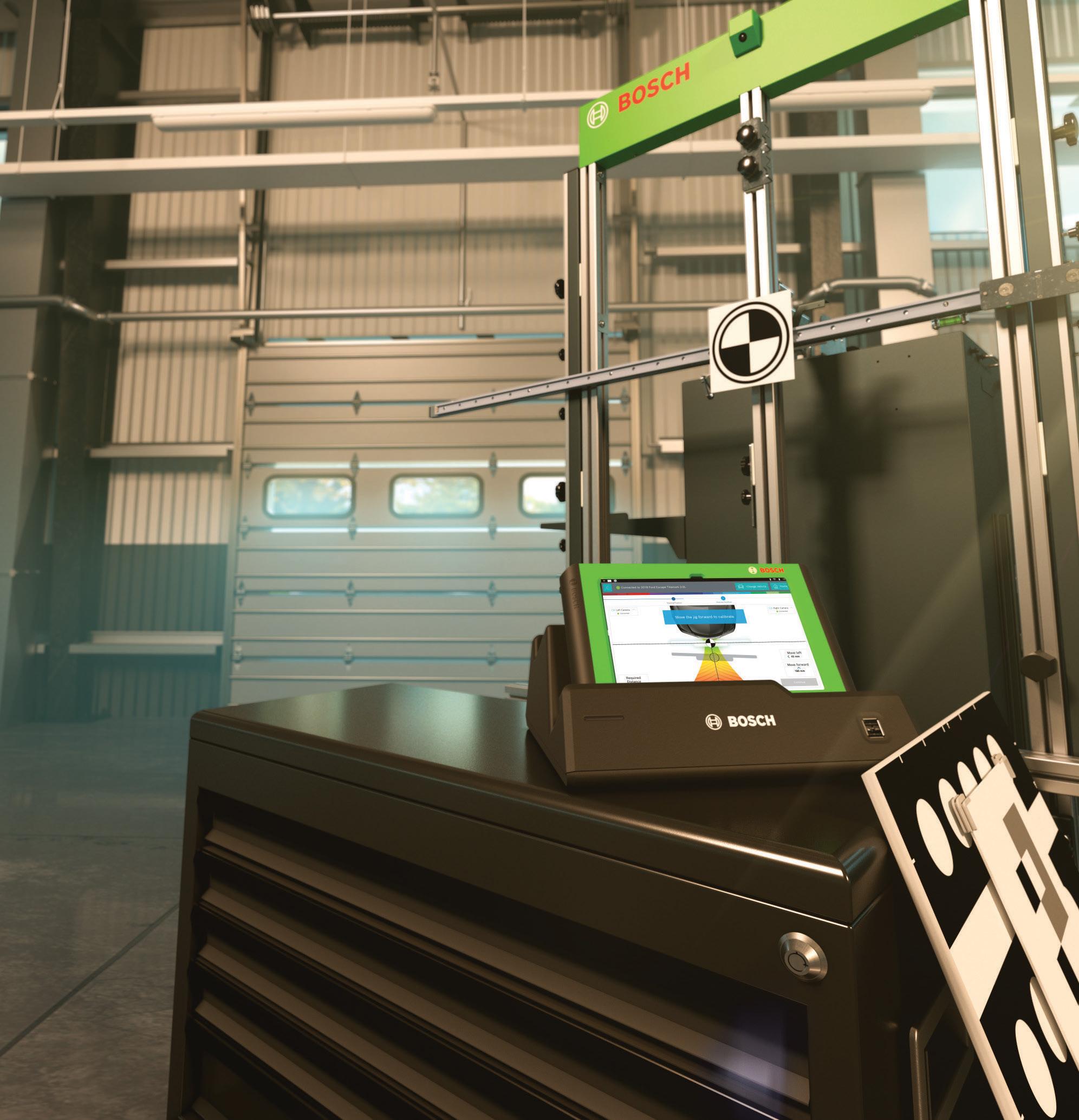
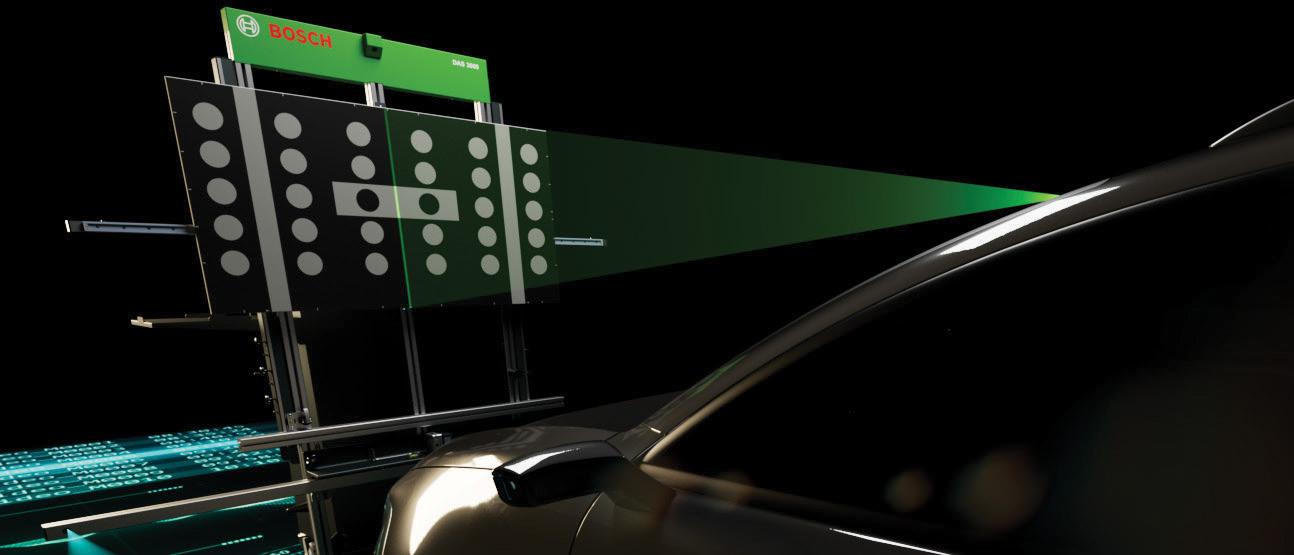
As the only automotive supplier co-developing ADAS tech with OEMs and the equipment to recalibrate it, Bosch delivers the ultimate calibration solution: OEM specs, factory tolerances, and industry-best standards. Equip your shop with unmatched technology and equipment to drive new business growth with precision and confidence.
Modular and future-proof
Designed to work with new targets and future generations of ADAS technologies.
Guided interactive workflow
Step-by-step instructions walks users through the entire recalibration process including fixture placement, target selections and sensor recalibration.
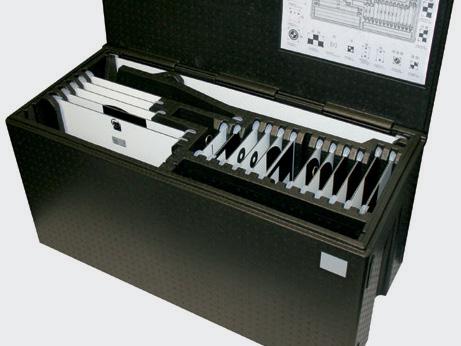
Integrated storage and maneuverability
Keep your equipment organized, clean, serviceable, and ready for immediate and long term use.
*White Glove Service valid in the U.S.A. only. Limitations apply.
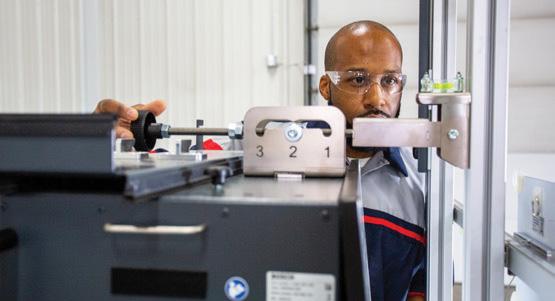
Bosch ADAS Positioning (BAP) software
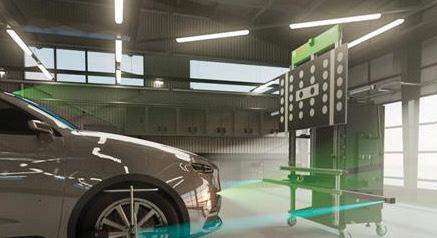
Fast and efficient target placement using digital vision positioning to automatically measure vehicle distances and angles ensuring precise calibration.
Bosch DAS 3000
The calibration solution for fast, reliable and precise calibrations on a wide range of dynamic and static advanced driver assistance systems.
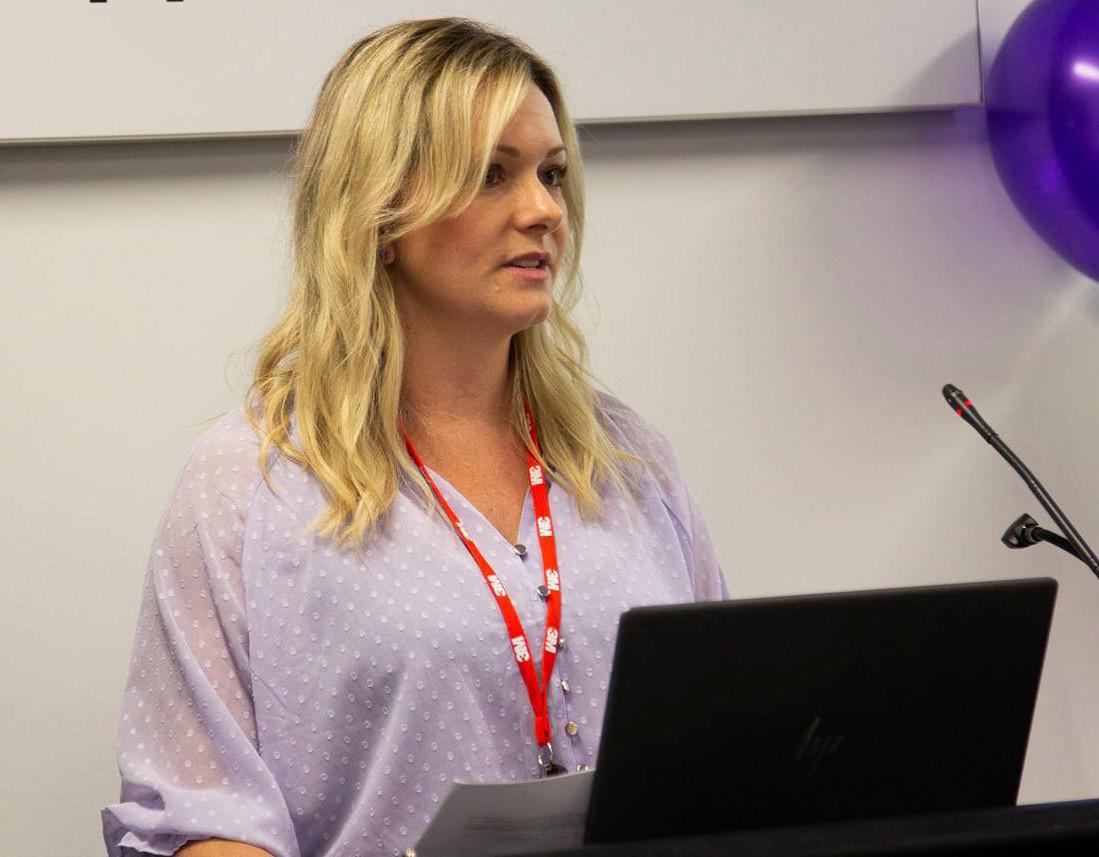
From technicians to executives, these five are thriving in the collision repair industry today.
By CAROL BADARACCO PADGETT
INthe collision repair industry today, women are everywhere. Driving innovation. Performing body repair. Leading manufacturers’ global teams. Adding artistry to exteriors. And helping mentor the next crop of amazing automotive specialists, many of them female.
In a male-dominated industry, their total count is lean, and yet they are unmistakably present in a wide range of roles that help impact the bottom line and accelerate business growth.
FenderBender caught up with five women thriving in the collision repair industry today to find out how they got here and what makes them stay.
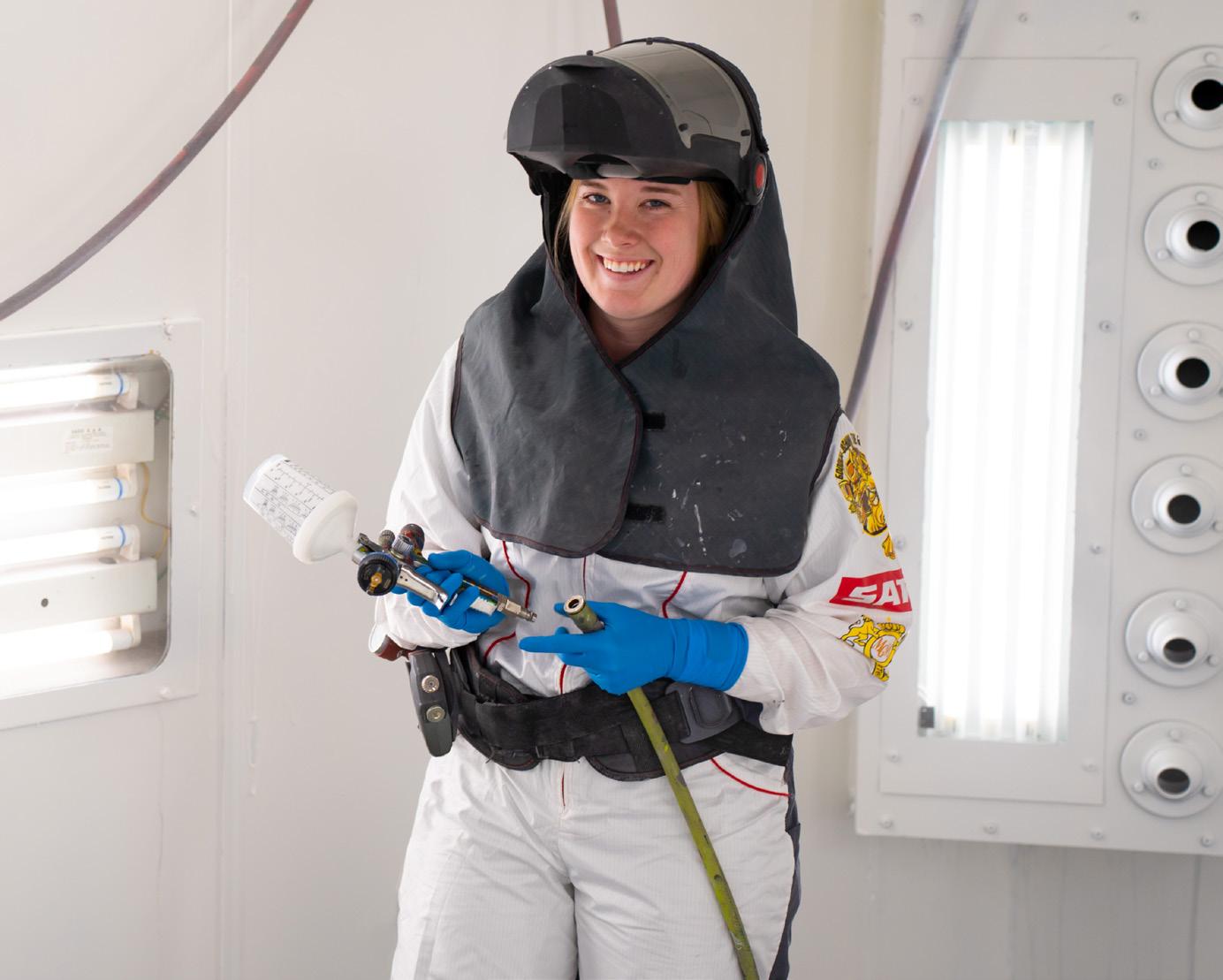
Painter | Iron Manz Collision Repair
Missouri Valley, Iowa
At 26 years old, Natalie Haynes is seven years into her career as a full-time painter at her family’s collision repair business. And even though she is just beginning to get to know other women painters, she does find some online and has met several through SATA and at the SEMA Show.
“On TikTok, there are all these women painters who are popping up, and I just love to see it,” she says. “You’ll see women in all sorts of roles in the automotive industry, not just painting but estimating and doing repairs … and I’m like, ‘Go for it.’”
As a young teen, Haynes was captivated watching her dad paint cars, and when she asked if she could try, he invited her into the booth and taught her everything he knew.
Haynes also took classes with Axalta Coating Systems, and she practiced her craft on her own ’69 Camaro SS — a gift from her mom and dad on the condition that she do all the repairs and paint it herself.
As a seasoned painter today, Haynes is known in the shop for her keen eye for color and strong attention to detail, and she believes that women painters naturally excel in these areas.
“Science does say women have a better eye for color,” she notes. “We also pay attention to detail, to the little things. And so the things men might miss, women are apt to notice those details.”
Haynes adds, “I’ve hit a point where I can’t see myself in any other industry. I enjoy it so much, the challenges and the re -
wards, and I think I’ve kind of made a name for myself. I couldn’t leave the automotive industry behind.”
Global Marketing Operations Manager
3M Automotive Aftermarket Division Sydney, New South Wales, Australia As a young contract employee and customer service rep, doors opened for Kasey Douglas when a female manager took notice of her talent for management and leadership. So, Douglas took initiative, stood up, and stepped inside.
It happened like this.
After Douglas had worked at the company for about 18 months, the manager came to her and said, “We think you can do so much more, and we’d like to expand your education.” So, 3M allowed her to spend time doing different functions around the company to figure out what she wanted to do.
“I spent time with marketers, salespeople, labs, and all different folks at 3M to see what would really turn me on,” Douglas says. “Marketing really jumped out at me. So the company got behind me and said, ‘We’ll invest in you and you do the work … and they put me through university.”
She adds, “It took me six years to complete my degree, working on it part-time because I was at 3M full-time. I was lucky because two years into my degree, a junior marketing role came up in this business, which was perfect for me.”
Fifteen years later, Douglas is grateful she seized the opportunity that came her way. “After I completed my degree, I went from the ju-
nior marketing role to assistant product manager for Australia. And then during a merge, I became the marketing manager for Australia and New Zealand and I ended up having a team of marketers reporting to me. Most recently, I was very, very lucky to get approached to apply for my current job three years ago.”
Today, she sits on the global marketing team as global marketing operations manager at 3M’s Automotive Aftermarket Division and is based in Australia. She helps pull together and roll out initiatives to the company’s marketing teams around the world, showing up to the industry consistently via global events, public relations, and training and education.
“My end goal was always to be on the global team, because I felt like I can add so much that we can replicate globally and do the best for this industry and for 3M,” Douglas says. “This all started with a female manager who believed in me, and I like to tell this story because it’s a thankyou moment to the organization.”
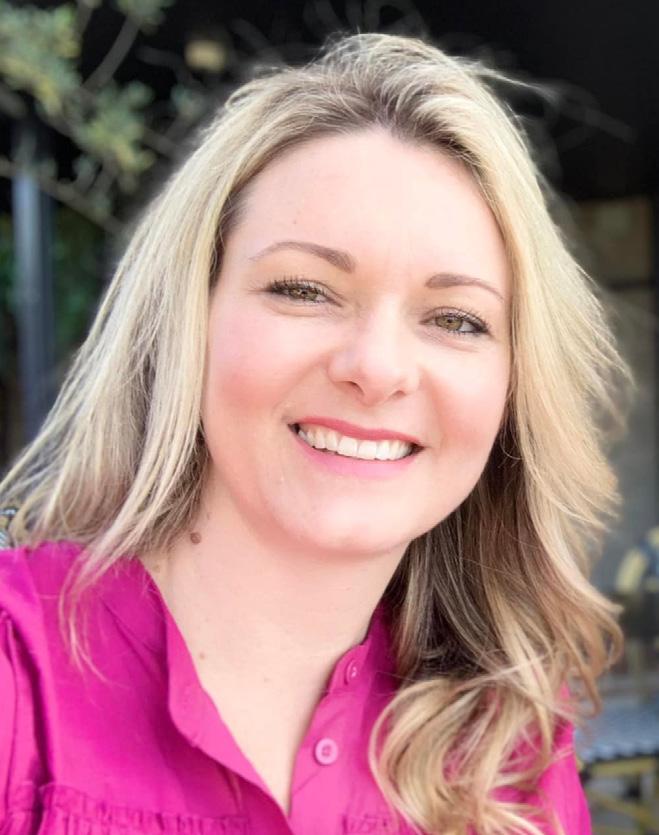
Kasey Douglas began working at 3M as a contract employee and customer service rep. Today, she helps with marketing initiatives around the world.
Body Technician | Vernon Collision Center | Manchester, Connecticut
Cassandra Thibeault didn’t ask for permission. In her late 20s, she recognized which roles in collision repair revved up her interest the most — body technician — and over the course of nine years, she went for it.
“I pretty much did every position around painting and body tech, and then one day I decided, whichever opportunity comes open first, I’m going to do it,” Thibeault says from her post as a body technician at Vernon Collision Center in Manchester, Connecticut, where she started out three years ago doing everything from priming and prepping to parts and teardown.
“I was always more interested in being a body tech, but I really didn’t see any women doing it,” she says from the vantage of three years as a body tech under her belt today.
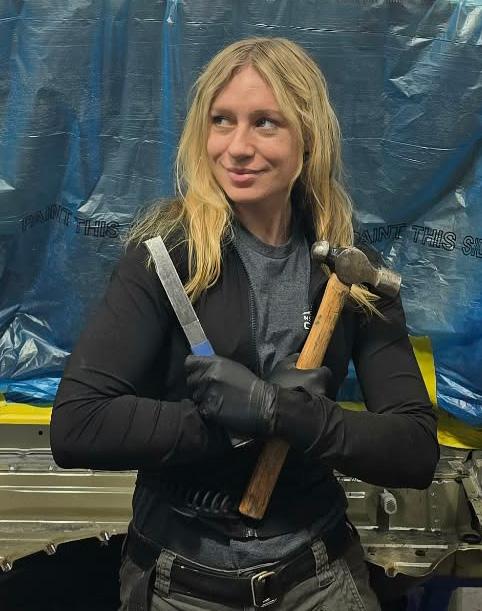
interest
Thibeault’s husband, Alan, also works at Vernon Collision Center, which was the 65th location of MSO Vive Collision in October. “Working together in the same place and in the same field is very cool because we know a lot of the same people, and it happened organically. To share the same passion is awesome,” she says. “When you get home from work and say you’re tired, the other person knows exactly what that feels like.”
In addition to sharing a deeper connection with her spouse because of their shared commitment to the industry, Thibeault is forthcoming about past substance abuse and a bipolar disorder diagnosis. Time and again, she finds that her openness surrounding the topics tends to draw out others in the industry — men and women — who are struggling with mental health issues in silence.
“Being transparent about my experiences has only brought me genuine interactions and relationships,” she says. “The company is very supportive, as well.”
Brand President for Collision | Driven Brands | Hamilton, Ontario Sabrina Thring’s career journey to the role of president has been circuitous. When Driven Brands secured CARSTAR in 2015, she came on board to run finance. “When I joined, I truly joined to do finance,” she says. “That was the core of my capabilities and skills.”
Soon, though, she made a move into operations because, like Douglas, someone spotted her innate potential. For Thring, it was a man — then-CEO Jonathan Fitzpatrick.
Thring recalls, “He said, ‘I’d like to take a chance on you, and do something different. I’d like to see you run a business.’” First, though, Fitzpatrick wanted to see her operational capabilities.
So, a leap of faith landed Thring in multisite operations at Maaco, where she oversaw some of the larger MSO groups. Her operational ability was tested in multiple ways, because she was a mother to three children.
“There was a lot of angst from going to an office setting and going home every night to being on the road, traveling the United States, being in every shop and learning from the ground up,” Thring shares. “I’m thankful to my husband, who’s been my anchor, and my

kids because they let me do it and they did it with grace and unwavering patience.”
Next, when Driven Brands acquired Auto Body Repair of America and Fix Auto USA in 2020, Thring became COO and ran all its brands.
“I built out my Collision Group under Dean Fisher, who was president at the time, and then I became president in June 2023,” Thring says from her Hamilton, Ontario, base. “Today, I oversee CARSTAR Canada, CARSTAR U.S., Abra, Fix Auto USA – all in all around 1,080 locations altogether, all franchised.”
When asked about her career trajectory in the industry, Thring says, “I could not have dreamt I would be in this role and, quite frankly, one of the first females to ever step into a collision presidency role. I really have Driven Brands [and its franchise partners] to thank for taking a chance on me and letting me show my hunger, willingness, and capability to learn. What an incredible journey it has been!”
Senior Vice President of Collision | OEC | Portland, Oregon-based Tanya Sweetland and her team oversee the company’s collision repair software platforms relevant to body shops and the partners who would like to be connected to them.
“This includes our platforms of certification and networking management and marketplace, which is where all the parts procurement solutions reside, including TraxCollision and CollisionLink, two body shop solutions,” Sweetland says. “Then, we have a handful of software solutions and services for insurance companies and claims handling.”
She adds, ““We’re not an estimating company, so we’re different. We take care of different parts of the workflow that some of the other solutions don’t address.” (Insurance solutions and claims processing included.)
On the certification side, OEC manages approximately 80% of OEM certification programs. It offers Repair Edge, as well, a program that brings coaching to collision repair shops on business performance and process.
Sweetland held a string of positions with various companies in the industry before com-
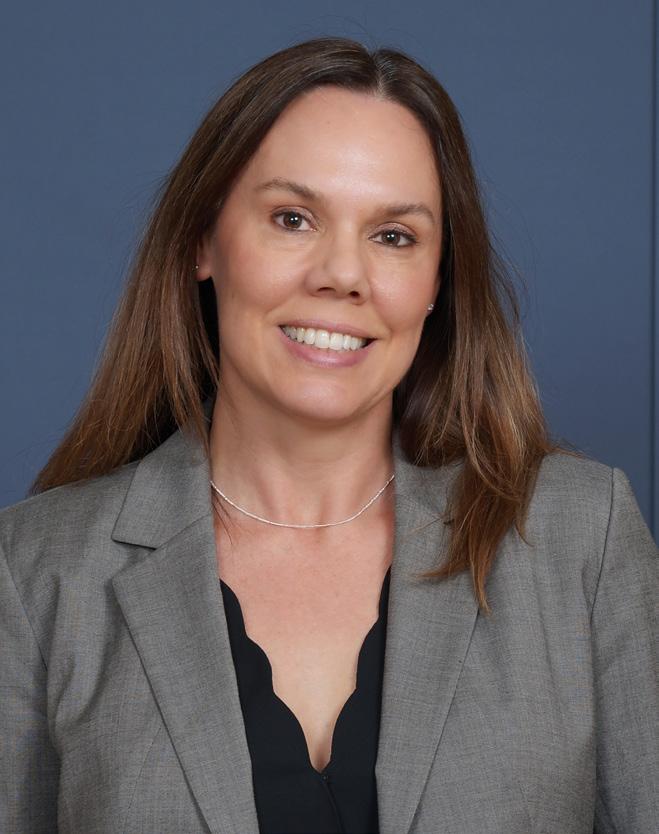
ing to OEC, and she was an entrepreneur in the industry, as well. As she explains, “I initially became involved with OEC because they bought a startup that I co-founded, called OEM IQ. And that brought the RepairLogic planning platform to life and into the OEC position.
Rewind to the very start, before collision repair was even on Sweetland’s radar, and she was a 19-year-old looking for a job to help pay the bills while she was going to college. The first job she snagged was with ADP Claims Solution Group in 1993. In the entry-level position, she called people about cars they were selling to calculate a fair market value for a total loss vehicle.
“It was a great job to pay the bills, [but] it took me a little longer to actually get that degree (in management and organizational leadership) because I got married and started a family,” Sweetland says. “I was pregnant with my second child when I finally graduated.”
She took that first job with strong support and encouragement from her family, and she stayed there for 24 years. And as the company changed hands and morphed throughout the years, Sweetland kept learning, growing, and contributing.
There was another factor that kept Sweetland with ADP for so long. “I was in walking distance of the office, just three blocks from home, and it was a really good situation to get home quickly during the day in the months following three maternity leaves. And for years, I was close enough to regularly volunteer in the schools.””
“I just worked my way up and through the operations and into technology and product management,” Sweetland says, which eventually led to her role today with OEC.
“Solving great big problems … is so much fun, and so fulfilling, but you don’t solve them overnight. It’s through 100,000 sit-ups that you’re able to get to your end goal, right?” she adds.
Snapshot:
Collective wisdom and support
When asked for key advice for other women interested in a career in collision repair, three consistent themes emerged in each woman’s story. Here’s a sampling of interview outtakes:
1-Support from family and a supportive company culture help set up women for success.
For Haynes, a supportive culture was built into the experience when she developed a love for painting as a young teen. “I grew up in the shop,” she shares. “I watched dad in the booth and listened for [people’s] knowledge, and I picked it up and applied it myself.”
2-A can-do attitude, sense of humor, and unapologetic focus help women go the distance.
“You’ve got to advocate for yourself; I always did. Work hard and play hard, and have fun while you do it,” Douglas says. “I’ve got twin girls and I tell them all the time, girls can do anything boys can do.”
3-Networking with other women in the business helps make everybody stronger.
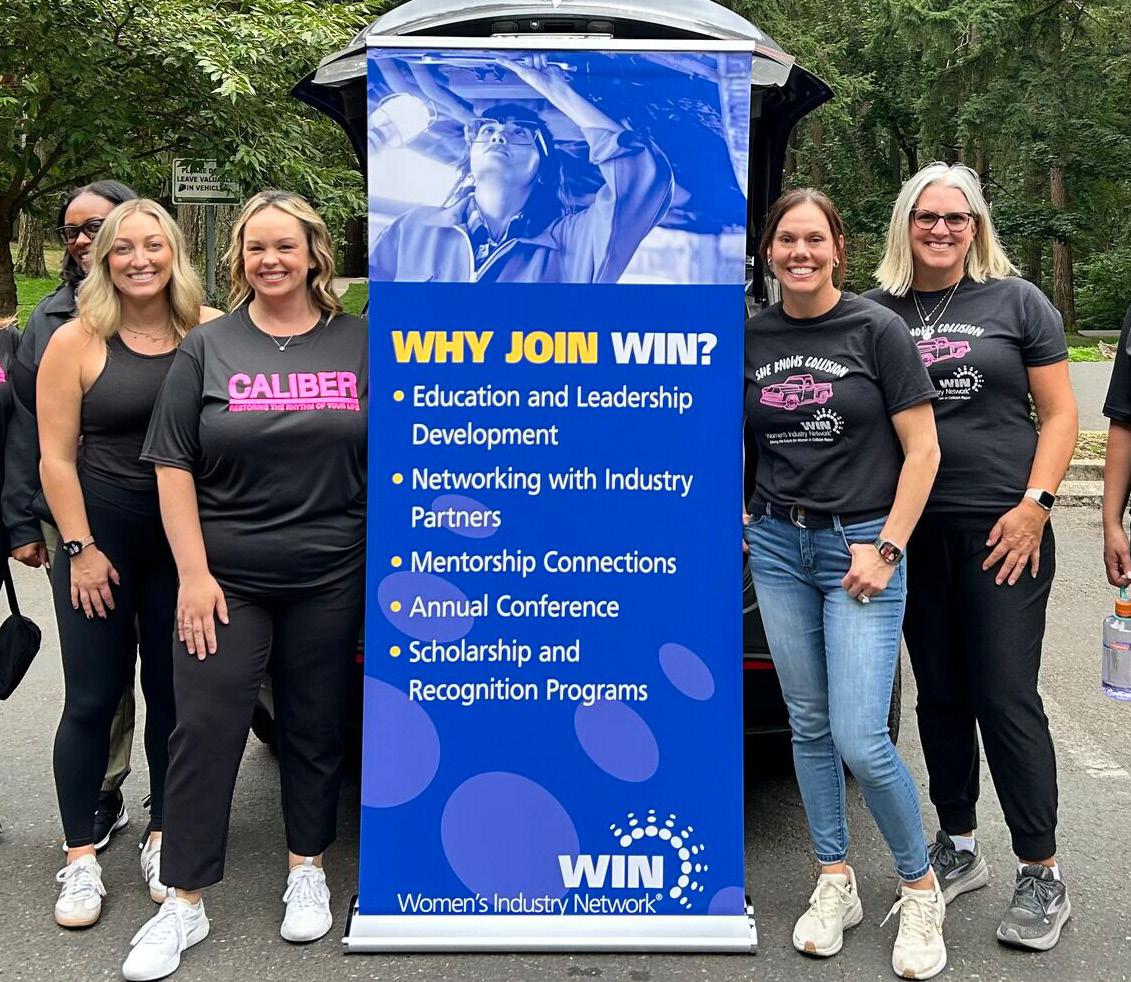
The Women’s Industry Network (WIN) organization, targeted to the collision repair industry, has given Sweetland a place to both give something and get something. She is both a past chair of WIN and a recipient of its 2025 Most Influential Women Awards.
“WIN has made a huge difference in my life and my career. Your personal growth goes through the roof, and there’s a lot of fulfillment in the ability to set goals and deliver with a team of like-minded people who are working in the trenches along with you,” she says.
For Thring, “I’m committed to WIN, and I do quite a bit of work there. And today I have WIN board members who report to me. I didn’t have to go out and search for women to fill leadership positions—they just happened to be the right people at the right time and with the right skill sets to do the job.”
She adds, “My philosophy is, I don’t care if you’re a man or a woman. As long as you can do the job and show me the appetite, hunger, willingness, and commitment, I’ll give you a shot.”
In the realm of female body technicians, Thibeault started the group “bodywomen” on Instagram to fill a void. “I noticed there were a lot of groups geared towards female painters, and I got inspired by that,” she says.
“I started the group so I could start meeting other female body techs,” Thibeault says. “Now there’s this community that didn’t exist before where people can join and share their work — and not get roasted.”
For April Lausch, full speed ahead is the only option.
By LINDSEY GAINER | STEPHEN HALL/OBSCURE PHOTOGRAPHY
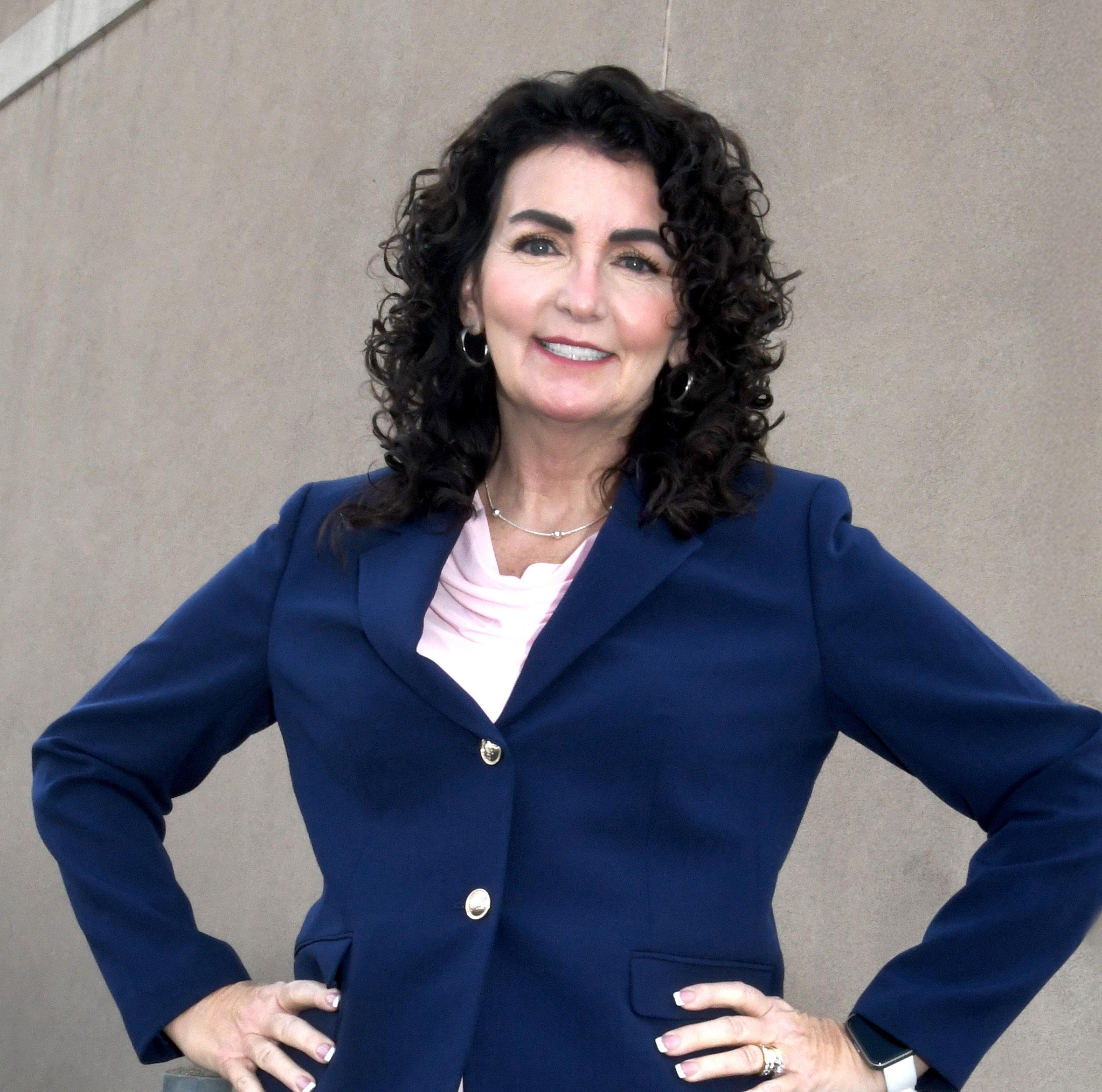
Looking at April Lausch today — manager of the highly-successful Faulkner Collision Center of Lancaster, Pennsylvania, and the recipient of nearly 20 prestigious industry awards — it’s hard to imagine there was ever a time when she was unfamiliar with the world of collision…but, she says, that’s exactly how it all began 30 years ago.
After graduating with a degree in business and accounting, Lausch was offered the position of office manager at a small collision shop, Brookside Collision, where she would gain her first glimpse into the world she now adores.
Learning alongside a formative manager, Joe, and embracing the opportunity to attend estimating school, Lausch officially caught the bug. And the industry has benefited every day since.
“I don’t know when the last time was that I actually stopped, honestly,” Lausch admits. But it’s that unstoppable work ethic, that unstoppable drive, that’s helped her achieve what would take two lifetimes for most.
After having a conversation with Lausch, you leave certain of this — she never gives less than 100% effort to everything she takes on.
“When I put my mind to something, I make it happen, no matter what,” she says. And she’s got the track record to prove it.
After working at Brookside for about five years, she moved on to a full-time estimating position with a Chevy dealership for the next five, again learning everything she possibly could from her manager, Paul, and the techs in the shop. She then joined
Faulkner Collision Center of Lancaster 16 years ago as an estimator and quickly moved into management within the first year — again, surrounded by excellent mentors and colleagues.
Lausch didn’t waste any time obtaining Certified Collision Repair Center (CCRC) status through BMW, something several previous managers had attempted but never successfully finished. At the time, Lausch was one of only three women in the U.S. leading a team that achieved the designation.
“We did it in 16 months,” she says. “For 16 months straight, we flew to California, North Carolina, and New Jersey whenever we had to. Anywhere there was a class that we had to take, we flew somebody there to take it.”
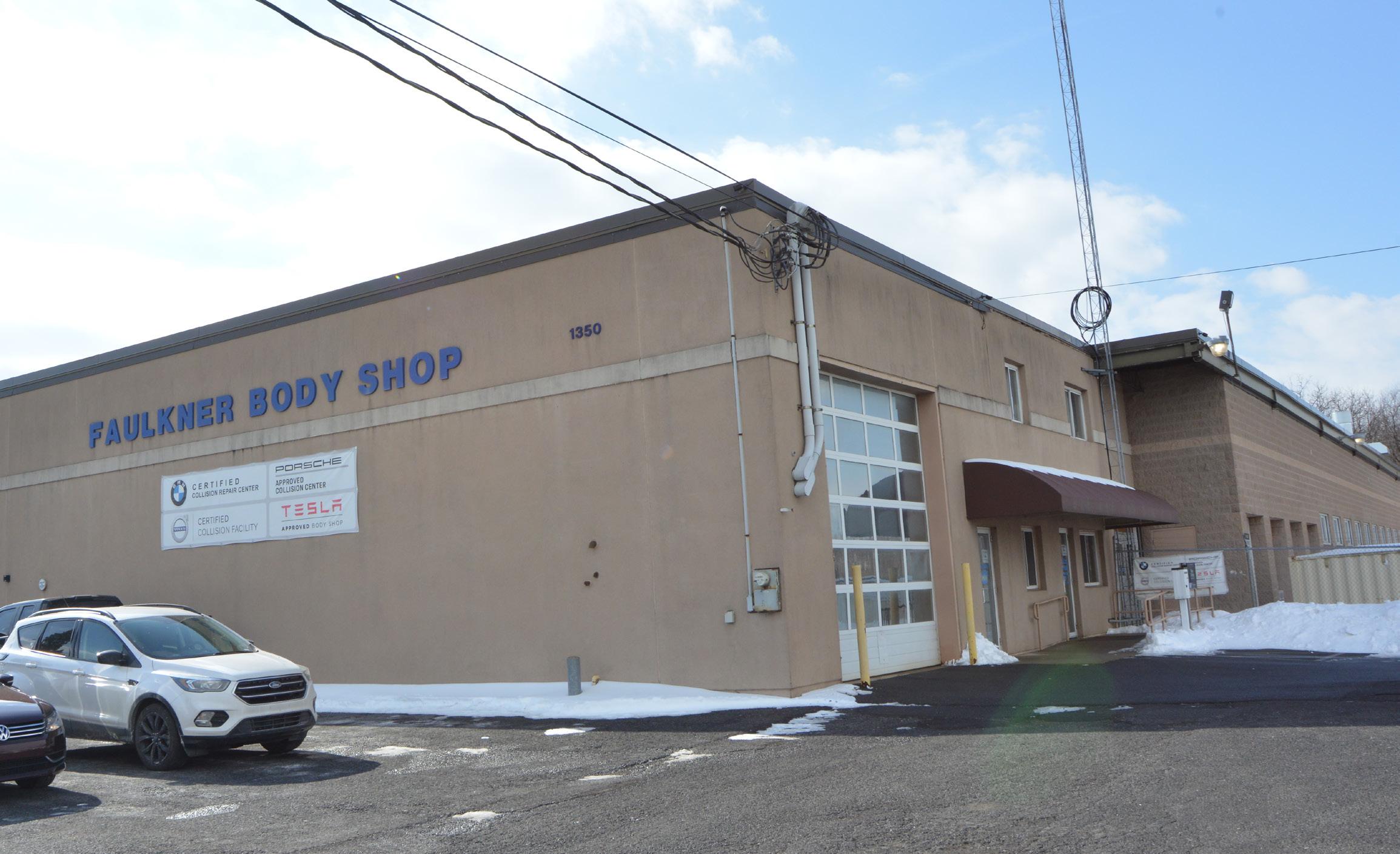
Tesla, Porsche, and Volvo certifications followed, cementing the Lancaster shop as the go-to for high-end repairs in the 10-location Faulkner Collision Center network throughout Pennsylvania.
“We have those dealers close to us, and they trusted me to take the high-end line and run with it.”
As manager, Lausch says her mission is to lead with integrity, elevate repair excellence, and deliver an experience that leaves every customer the team serves feeling confident in their work.
“I am committed to building a culture where craftsmanship, safety, and accountability are nonnegotiable, where my team is empowered to perform at their highest level, and where every vehicle leaving our facility reflects the quality and trust that define the Faulkner name,” she adds. “Through clear communication, operational discipline, and unwavering dedication to doing what’s right, I strive to create an environment where customers feel supported, employees feel valued, and our collision center consistently sets the standard for performance and professionalism.”
Every repair, says Lausch, is completed with meticulous attention to detail using only OEM-approved methods by highly trained, certified techs. The technology of today’s vehicles requires nothing less, in her opinion.
“The cars are changing daily, weekly. If you don’t stay on top of the tech, then you’re going to fall behind. That’s why my team and
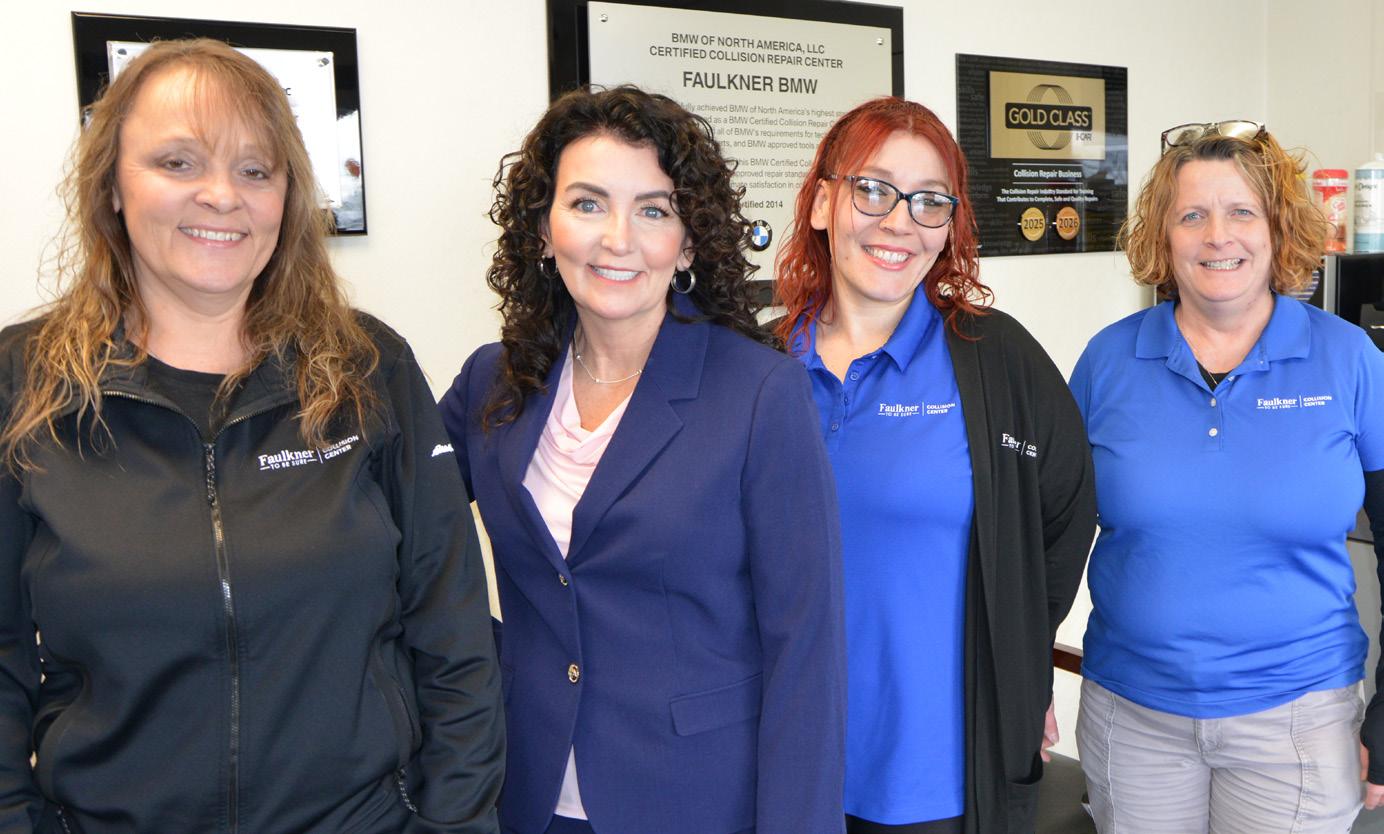
I complete OEM certifications. I’m I-CAR Platinum-certified and the shop is Gold Class.”
And speaking of her team, Lausch shares that the best advice she ever received was this: “Your techs don’t work for you; they work with you.”
“You’re only as good as your team,” she adds, and hers, she says, is exceptional.
“They’re my family.”
Lausch’s conscientious approach to shop operation and repairs has garnered plenty of attention from the industry, both for her personally and the shop, collectively.
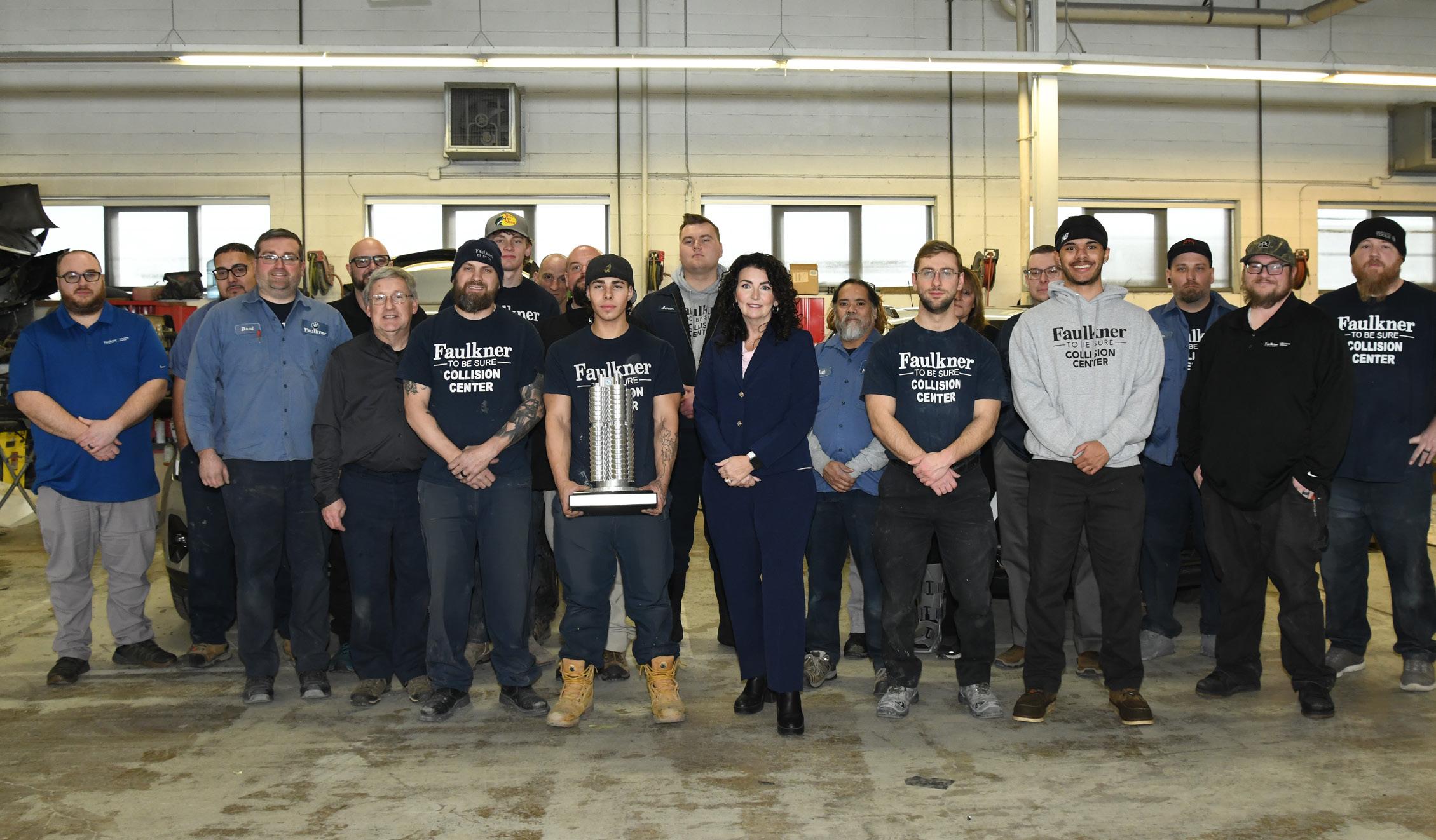
In the past several years, alone, Faulkner Collision Center of Lancaster was named BMW’s #1 Shop of the Year (2023), and Lausch and the shop were awarded I-CAR’s two highest honors simultaneously in 2025: Lausch won the Jeff Silver Memorial Award for Platinum individuals and the shop won the Russ Verona Memorial Award for Gold Class collision repair shops.
It’s only the second time that a shop and its leader have won the awards together, and only the second time in the history of the Jeff Silver Memorial Award that a woman has won.
The recognition is the latest in a long string of accolades bestowed on Lausch and her team—tangible proof of just how committed to her work she truly is.
“I remember going to my first BMW conference in 2015, and at the awards ceremony
I thought to myself, ‘We’re going to be up there on stage one day, winning #1 shop in the country.’ I knew our amazing team would make it happen, and we did it! It was a huge honor, and I’m hopeful we’ll do it again this year. Regardless, I’m incredibly proud of our team — we’ve been top three in the U.S. the last three years, and that is quite the accomplishment!”
As we talk about it, she humbly admits the attention is surreal at times — but she’s extremely appreciative that people have taken notice of her and her team’s tireless work both in and out of the shop.
“The recognition…not that I need to be recognized…but it drives me even more because I know there’s people who care about me and my accomplishments outside of just making money for the shop.”
The kind of success Lausch has achieved didn’t happen overnight, and it wouldn’t have happened at all without the backing of her husband and kids, she says, and the mentorship she’s received from her colleagues in the industry over the years.
“My husband is amazingly supportive, as are my kids,” she says proudly. “I am so grateful for them. My mentors, too — without them, my career likely would have headed in a very different direction.”
It’s one of the reasons she’s so passionate about mentoring other up-and-comers in the
industry, and finding ways to attract new talent for the future.
Lausch serves as vice president of the Thaddeus Stevens College of Technology Foundation Board and chairs their occupational advisory committee (OAC) as well. She’s also chair of the Central Pennsylvania I-CAR Committee.
“I wish more people understood just how multifaceted the industry really is, and how many different opportunities exist. If the first avenue you try isn’t for you, try another! We can teach anyone anything they need to know to be in the industry. When I see someone drop out [of tech school] I just want to grab them and say no, no, no, no… we’ve got a place for you, you just haven’t found it yet!”
Another invaluable avenue of growth for Lausch, she says, has been the Women’s Industry Network (WIN), an organization devoted to attracting and supporting women in the field of collision. She was recognized with their “Most Influential Women in the Collision Repair Industry” award in 2023.
“Being part of WIN has given me a combination of professional growth, community support, and industry visibility that I wouldn’t have found anywhere else. It’s empowering to be part of a movement that highlights women’s contributions in a traditionally male-dominated field, and help shape a more inclusive future for the industry.”
Want to follow in Lausch’s footsteps? Here’s how, in her own words.
Your technicians, estimators, CSRs, and parts staff are the business.
“Invest in training and certifications so they stay sharp. Create a culture where people feel respected and supported. And communicate expectations clearly and consistently. Shops with strong teams outperform shops with fancy equipment every time.”
Collision repair is chaotic by nature—your processes are what keep it under control.
“Build repeatable SOPs for estimating, blueprinting, parts ordering, and QC; use checklists religiously; and audit your processes monthly to catch drift. Shops that blueprint thoroughly and early see fewer supplements and faster cycle times.”
Most customers don’t understand the repair process, and uncertainty creates frustration.
“Set expectations early about timelines, parts delays, and insurance involvement, and provide proactive updates—don’t wait for them to call. Also, utilize text updates if possible; customers love them. A well-
informed customer is almost always a satisfied customer.”
You can’t manage what you don’t measure. “Track cycle time, touch time, gross profit per repair order, and parts-to-labor ratios,” she recommends, and review KPIs weekly, not quarterly. “Don’t be afraid to adjust staffing or workflow based on data. Shops that understand their numbers make better decisions and stay profitable even in tough markets.”
Whether you love DRPs or avoid them, relationships matter.
“Good relationships reduce friction and keep work flowing. Be consistent, reliable, and transparent with adjusters, and build partnerships with parts suppliers who deliver accuracy and speed.” She also recommends maintaining OEM certifications in accordance with what makes sense for your unique market.
Not every tool is worth the money, but some are gamechangers.
“Don’t buy tech you won’t fully utilize. Smart investments pay for themselves quickly.” In addition to prioritizing equipment that improves safety, accuracy, or cycle
time, you should also keep calibrations and ADAS capabilities in mind, she says.
“This is the future of the industry.”
Always repair vehicles to OEM standards and document everything.
“Shops that cut corners eventually get exposed,” warns Lausch. “Stand behind your work. Reputation is currency in this industry!”
“Faulkner is a place where hard work is recognized, teamwork is real, and you’re given the tools to succeed in a fastmoving, customer-focused environment,” Lausch says.
It’s also a place where that success is shared.
One of the hallmarks of Faulkner’s businesses — which also includes a network of dealerships in addition to the Collision Centers — is a long-standing commitment to giving back to the communities they’ve served for 90 years. The Faulkner Family Foundation contributes to a variety of charitable causes on a large scale, and teammates in all areas of the business are encouraged to find ways to make a difference in their local markets.
With the company’s support, Lausch and her team have refurbished 30 cars for the National Auto Body Council (NABC) Recycled Rides program since she first started — eight just in the last year. They also lead the annual
NABC First Responders Emergency Extraction (F.R.E.E.) event for the committee that Lausch chairs through the NABC, where she serves on the board of directors.
“Serving on the NABC board has been an incredibly meaningful experience. Their passion, integrity, and commitment to giving back inspire real and lasting change. I’m proud to support & serve a Board that leads with purpose, compassion, and a true sense of service to our industry and our communities where we are ‘changing and saving lives.’”
Unusable parts are often donated to local schools for training as well, and, over the course of the last three years, Lausch and her team have raised $100,000 through fundraisers for scholarship funds. She also had the opportunity to partner recently with NHRA racer Steve Johnson to expand his Be a Technician scholarship program, after two students she was helping received the award.
“Together with the ASE Education Foundation, we found ways to grow the scholarship to reach even more students. It was incredibly rewarding to speak to the recipients and follow up with them after they started their careers in collision and hear how his scholarship changed their lives.”
“Things like that, they drive me,” Lausch says. “Knowing that we’re making a difference not just in our customers’ lives, but in the lives of so many other people outside these four walls, too…it’s motivating, for sure.”
Melvin Jones Fellow Award, Lions Clubs International Foundation 2026
Jeff Silver Memorial Award 2025
Russ Verona Memorial Award 2025
BMW #2 Shop of the Year 2024
I-CAR Recognition for Central PA Earning Platinum Committee Status 2022-2025
BMW #1 Shop of the Year 2023
Most Influential Women in the Collision Repair Industry by WIN 2023
Business Journal “Women of Influence” Award 2023
BMW #3 Shop of the Year 2022
Enterprise Rental Outstanding Performance Award 2020
Thaddeus Stevens College Alumni Service to the College Award 2020
BMW Outstanding Performance Award 2020 & 2015
Nationwide Showmanship of Excellence Award #1 in Country 2019 #3 in the Country 2017
National Autobody Council Award of Distinction 2019
Automotive News - 40 Under 40 Honoree 2015
By ELISABETH SOBCZAK
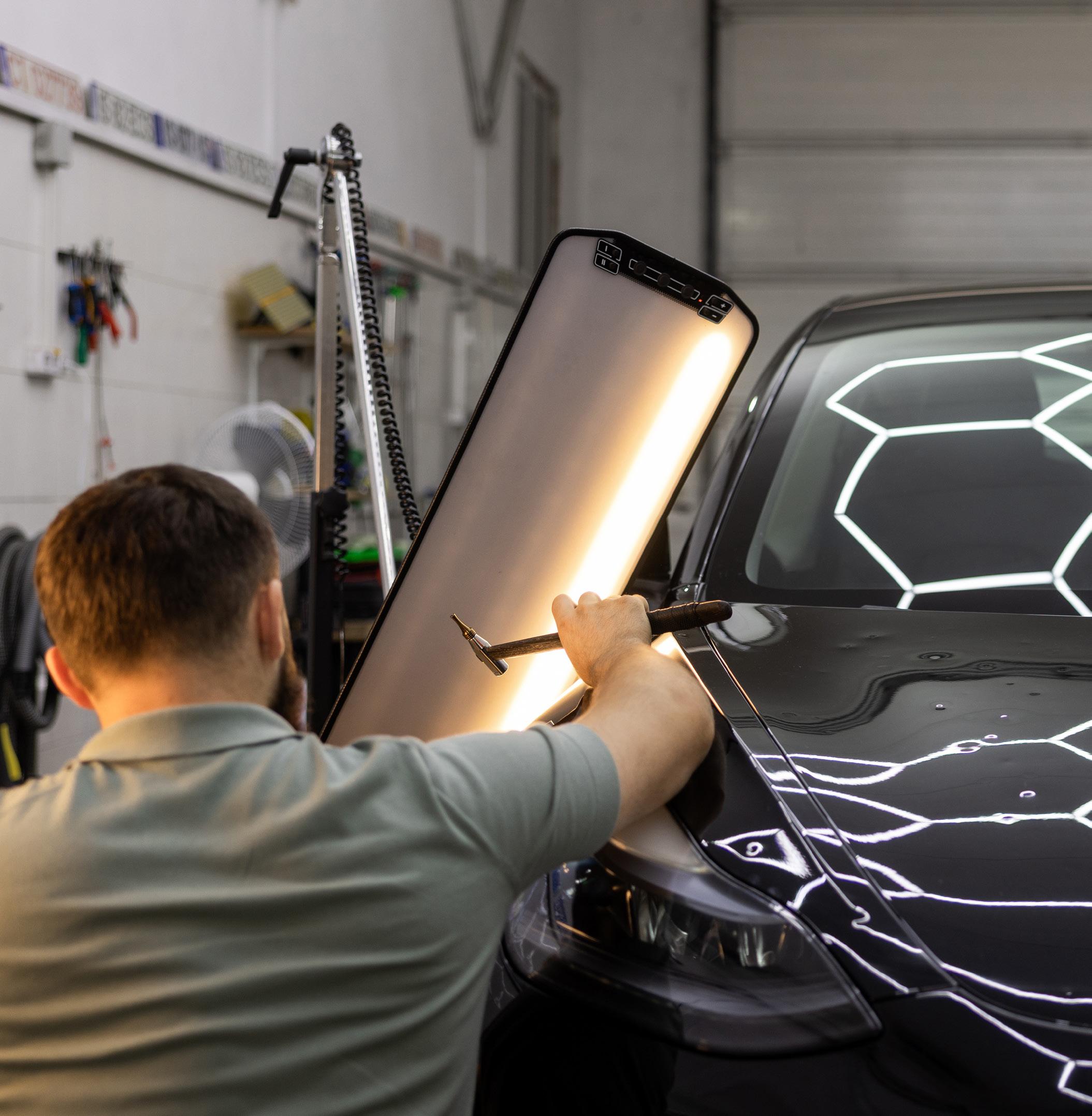
A hailstorm hits. Tow trucks line up. Parking lots overflow. Phones ring nonstop. And within days, sometimes hours, tension sets in between shops, carriers, adjusters, DRPs, and customers.
CAT season does not create conflict; it reveals it.
As a mediator working in regulated, highstakes environments, I see the same disputes surface year after year during CAT events: pricing disagreements, scope creep, supplement fatigue, scheduling gridlock, and customer frustration caught squarely in the middle. What is striking is that most of these disputes are entirely predictable and therefore preventable.
The key is mediation thinking before the first damaged vehicle arrives.
When hail volume begins rolling in, many shops default to reaction mode:
• “We’ll deal with pricing once we see the volume.”
• “Let’s just get cars in the door.”
• “We’ll figure out scheduling as we go.”
That approach almost guarantees friction. Once vehicles are disassembled, technicians are scheduled, and customers are emotionally invested, every disagreement becomes harder to resolve. Positions harden. Emails get copied up the chain. Adjusters rotate. Timelines slip. Trust erodes.
Mediation teaches a simple yet powerful lesson: the best time to resolve a dispute is before anyone feels wronged.
Mediation is not a Meeting — It is a CAT Framework. When people hear “mediation,” they often
picture a formal sit-down after a dispute has already gone sideways. In a CAT environment, thinking comes far too late.
Mediation is a framework for alignment before pressure hits. It is a disciplined way to surface assumptions, clarify authority, and lock down decision paths before the first hail-damaged vehicle rolls onto the drive.
CAT claims do not fail because people do not care. They fail because no one slowed down early enough to align on pricing authority, scheduling expectations, escalation paths, and decision ownership, until volume made those gaps impossible to manage.
A mediation mindset asks different questions up front:
• Who has the authority to approve exceptions?
• What decisions can be made immediately without escalation?
• What happens when volume exceeds staffing assumptions?
• How are pricing disagreements resolved in real time?
This is not about avoiding conflict; it is about designing for it.
Hail events expose pricing disagreements faster than almost anything else. Matrix rates, PDR assumptions, aluminum labor overlaps, and supplement thresholds all become flashpoints once volume spikes.
In one regional hail event, shops and carriers disagreed sharply on aluminum labor and blend operations. Because escalation paths and pricing assumptions were documented in advance, disputes were resolved within hours, not weeks, without stopping production.
CAT volume breaks standard scheduling logic. Customers expect speed. Carriers expect throughput. Shops know capacity has limits. Mediation principles require acknowledging constraints early, defining intake caps, and aligning realistic cycle-time ranges, rather than renegotiating under pressure.
Most CAT frustration is not about damage; it is about uncertainty. Mediation emphasizes informed consent: what the customer understands, what assumptions they are making, and how timelines may shift. Aligned messaging before CAT season keeps shops from being caught in the middle between carriers and customers when expectations diverge.
Today’s CAT environment includes higher vehicle complexity, technician shortages, increased consumer awareness, and greater regulatory scrutiny. The margin for error is thinner. Mediation does not slow you down; it protects throughput by preventing disputes from consuming time, energy, and relationships.
CAT season will always be intense. Disputes do not have to be.
The most brilliant CAT strategy is not faster estimating or bigger parking lots. It is a structured alignment before pressure arrives. Download a Pre-CAT Alignment Checklist here: https://bit.ly/46pEmNV or scan the QR code.
About the author: Elisabeth Sobczak, LL.M., MS.B., is the founder and principal mediator of Equitable Resolution Group. As a mediator and automotive leader, she helps shops and carriers resolve disputes quickly, accurately, and with less drama.
Learn the tools to confront insurer underpayments and strengthen customer trust.
By NOAH BROWN
SHORT PAYS HAVE BECOME such a routine part of collision repair that many shops barely blink when an insurer’s check lands short of the final invoice. But while the industry has long accepted this as part of doing business, attorney Sean Preston says
“THIS IS AN INDUSTRY THAT’S BEEN CHEWED ON AND CHEWED ON FOR DECADES. AND WE’VE GOT TO MOVE QUICKLY, BECAUSE THE INSURANCE COMPANIES ARE GETTING READY TO SWALLOW.”
—Sean Preson, founder, Coverall Law
the industry shouldn’t have to and, worse yet, accepting short pays is slowly strangling the entire collision repair ecosystem.
Preston, founder of Coverall Law and longtime corporate counsel serving Fortune 500 companies, now devotes his practice exclusively to small and medium-sized businesses. After relocating to Massachusetts several years ago, he became deeply involved in the collision repair space and alarmed by what he saw.
“This is an industry that’s been chewed on and chewed on for decades,” he says. “And we’ve got to move quickly, because the insurance companies are getting ready to swallow.”
His perspective is rooted in both law and economics. With most collision repairs paid for by a handful of national insurers, Preston says the market has entered what economists call a monopsony, which is essentially a reverse monopoly.
“In a monopsony, with only a few payers, they are able to artificially keep the price down,” he says. “That’s exactly what we see in reimbursement rates.”
The impacts are cascading, with programs closing, shops shuttering, reduced labor pipelines, consolidation and razor-thin margins that make it nearly impossible for technicians to one day buy the independent shops they work in.
And in many ways, Preston says it all ties back to short pays.
The first step to solving short pays, Preston argues, is understanding what they actually are. And it’s not simply the gap between the insurer’s estimate and the shop’s invoice.
“I wouldn’t say it’s anytime the insurance payment is less than your final invoice,” he says. “A short pay is any time the insurer has paid less than they are legally obligated to pay on a claim.”
That distinction is key. Insurers commonly push a narrative that shops overcharge, telling customers that shops are prone to bill for unnecessary procedures, sewing doubt before the repair even begins. That framing, Preston says, isn’t a simple misunderstanding; it’s a strategy.
“The first party that can successfully frame what the argument is about has already won,” he explains. “They’re positioning themselves to win before the consumer even understands the issue.”
Preston says the real issue is much simpler than insurers portray it.
“Insurers must pay for any parts and procedures required to return the vehicle to its pre-accident condition,” he says. “That’s what a valid claim requires.”
But shops, afraid of upsetting customers or losing business, often avoid pushing back, even as their margins shrink to the point where profitability is no longer a guarantee.
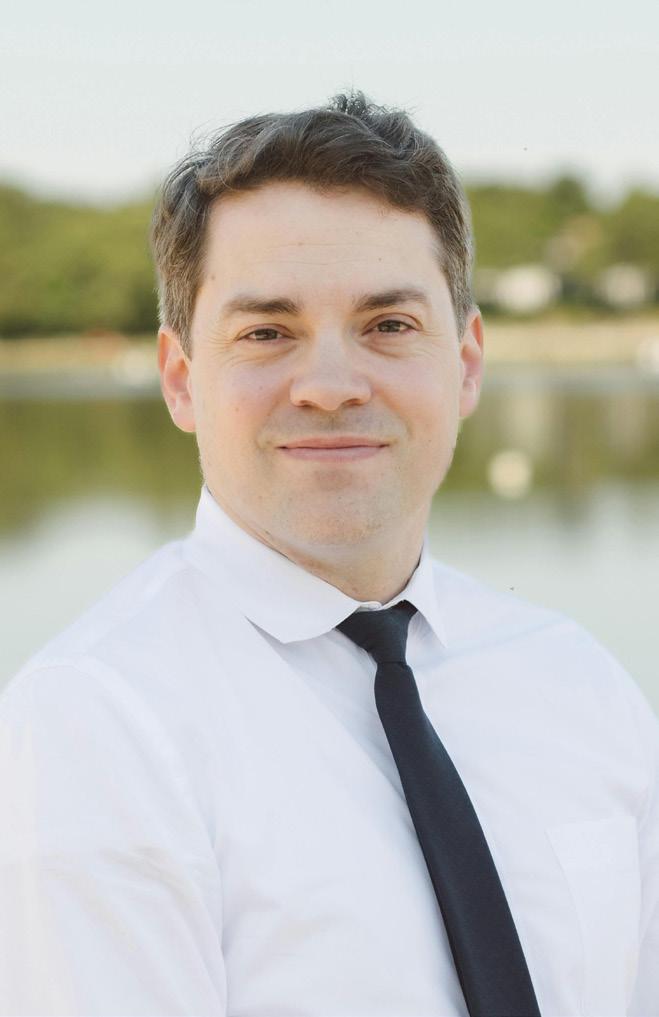
Sean Preston, founder of Coverall Law
“When you work on painfully small margins, any mistake puts that job in the red,” Preston says. “No other industry survives like that.”
As with any systemic problem, there’s no one-size-fits-all fix. But Preston says there are a few steps shops can follow to combat insurance companies, and the process should begin far earlier than most expect.
The first step, which Preston admits sounds a bit counterintuitive but says is often the most effective path, is customer pay.
Preston admits this sounds counterintuitive, but insists it is often the most effective path.
“Customer pay wins by a nose,” Preston says. “The insurer would far and away rather reimburse the customer than pay the shop.”
Shops fear backlash from customers, but Preston says those fears are largely unfounded.
“Shops are right to be nervous. But they are pleasantly surprised to find customers are understanding and happy to do it.”
“YOU ARE OWED FOR EVERYTHING YOU DO THAT RETURNS THE VEHICLE TO ITS PRIOR CONDITION. PERIOD.”
—Sean Preson, founder, Coverall Law
Still, customers need support. That’s where Preston recommends creating what he calls a “super bill,” which is a package empowering customers to secure reimbursement.
A super bill should include a paid-infull invoice, supporting documentation such as OEM procedures or best practices, and evidence such as before-and-after photos that show why repairs were needed.
With these three components, customers have what they need to secure what they are legally entitled to receive by justifying the repairs to insurers.
The second step is to hold the vehicle.
“The vehicle is your collateral,” Preston says. “Your bill needs to be paid.”
Many shops fear replevin actions, but Preston argues those fears typically stem from bad or incomplete paperwork. At Coverall Law, Preston says everything starts with strong terms and conditions.
“Every dollar that comes through the shop represents unlimited liability,” he says. “Shops have the right and responsibility to own the terms and conditions of every dollar.”
State laws vary, and Preston emphasizes that forms must be compliant with local regulations. Simple missteps like failing to document whether a customer was offered their replaced parts can expose a shop to liability.
The third step is to get an assignment of rights. Shops do not have a direct legal relationship with insurers unless they’re DRPs, which means that assignments are traditionally obtained after the fact. Preston believes that model is outdated and risky, and his firm integrates an assignment of rights into the intake paperwork for every repair.
This allows shops to stand in the customer’s shoes, pursue underpayments and bundle claims for litigation.
Bundling is especially critical. Instead of suing for $600 or $1,200 at a time, which are amounts too small for most attorneys, shops can bundle 10 to 15 claims and pursue $20,000+ in damages.
This approach simplifies litigation, too. Instead of debating everything under the sun, Preston focuses each case narrowly, homing in on blend time, paint and materials, total loss fees, posted labor rates or OEM safety procedures.
“Judges don’t understand this industry,” Preston says. “Keeping it simple prevents them from splitting the baby.”
Fittingly, Preston says shops that adopt this three-step system see three major changes. The first comes from their customers.
“Shops are often shocked at how willing customers are to pay and pursue reimbursement, especially when educated,” Preston says.
The second comes from making insurers’ obligations clearer legally. Once a customer pays a bill, that puts insurers on the clock.
“They trigger unfair claims practice laws,” Preston says. “The insurer must reimburse them within a reasonable time.”
Liability increases when insurers drag their feet, creating additional leverage for the customer.
The third comes in the form of making litigation more manageable.
Simple, bundled cases begin reshaping legal precedent. Preston says the goal is to
“repaint the legal landscape state by state” so shops can simply get paid without shifting the burden to customers.
Though short pays have been an issue for far too long, Preston says shops have the power to reframe the conversation.
Instead of arguing about required vs. recommended procedures, he suggests politely challenging the insurer’s authority by asking them to show in their policy where they don’t owe for a specific repair. That becomes a lot easier when shops implement a “super bill” system.
Most importantly, though, Preston says shops need to play the role of educator with their customers. In addition to helping them understand why short pays happen, he also encourages shops to implement simple, neutral phrasing into conversations such as “everything on this repair plan returns your vehicle to its pre - accident condition” and “we’ve seen insurers be more agreeable paying customers directly.”
Short pays are difficult to navigate, and Preston recommends bringing in legal support early.
“As soon as you’re considering opening for business,” Preston says. “These issues start long before a short pay shows up.”
Short pays may feel like a cost of doing business, but Preston believes the industry can reverse decades of economic pressure if shops stop playing defense.
“You’re doing a solid for the insurance company by repairing that vehicle,” he says. “Everything you do that returns the vehicle to its prior condition is owed. Period.”
FenderBender is delivered free to qualified collision repair professionals—USPS periodicals rules require us to update subscriber records regularly. If you haven’t renewed recently, please take a moment to confirm your information. It keeps your issues coming without interruption.


Two award-winning repair planners share their tips and tricks for successful blueprinting.
By TODD KORTEMEIER
IT’S NATURAL for shop operators and employees alike to get caught up in day-today business and forget just how remarkable collision repair is. Customers might refer to it as “magic,” but there’s nothing supernatural about it. It takes advanced knowledge, extensive experience, and
highly refined skills to make it happen. And it’s a process that starts with the repair planner.
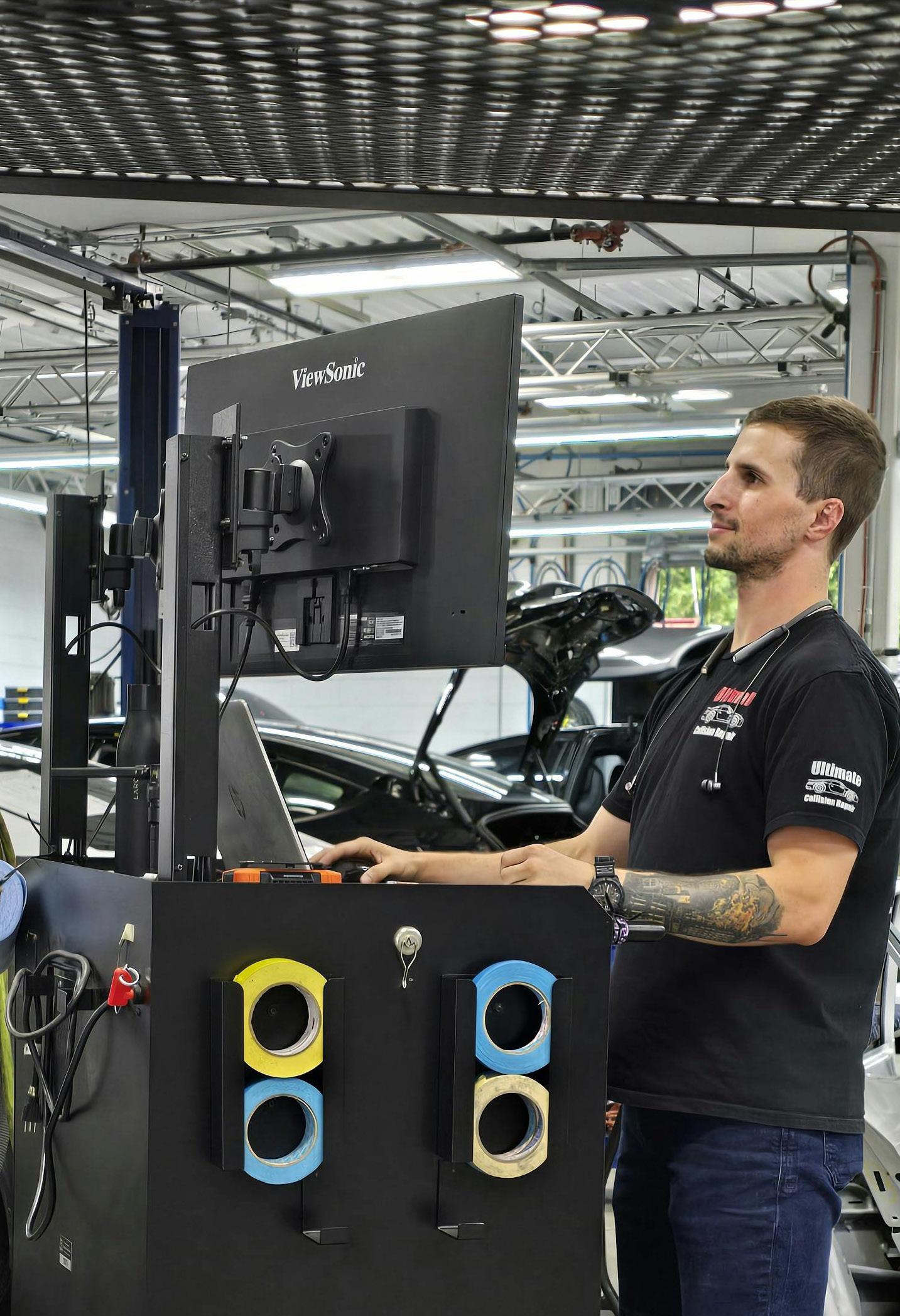
“With blueprinting and being at a body shop, you have to be an expert in all types of damage, as well as all types of vehicle manufacturers,” says Anthony McNee, blueprinter at Ultimate Collision in Edison, New Jersey. “So I have to be an expert in knowing every single procedural website, the parts catalog, the calibration systems, every single thing. And it’s a lot to try and figure out, because every car is different, and everything is completely independent from one another.”
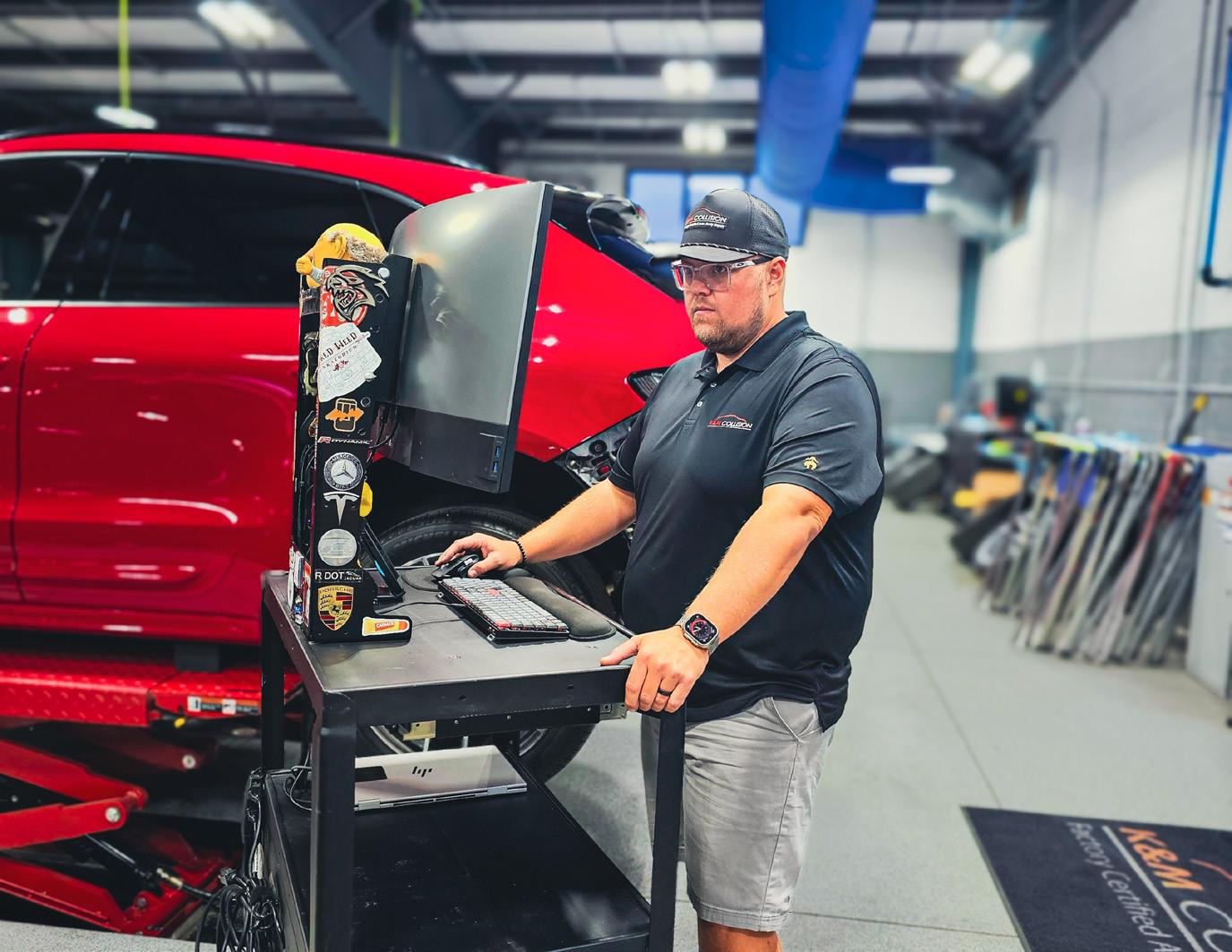
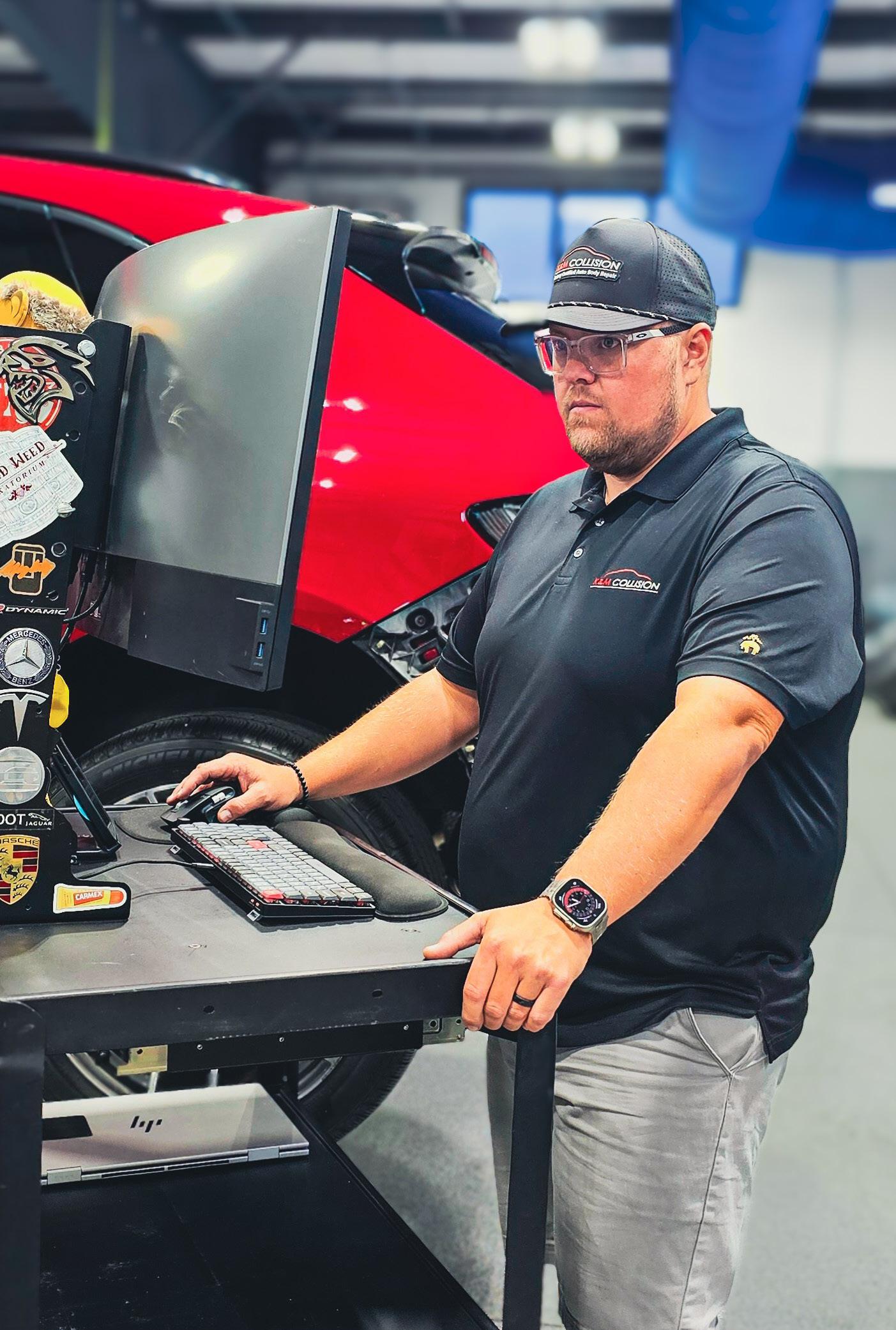
Someone like McNee, the winner of our 2024 Best Repair Planner/Estimator Award, might make it look easy, but repair planning is challenging work. 2025 award winner Will Barkley, of K&M Collision in Hickory, North Carolina, might also seem like someone who has it all perfect, but he knows to focus on one job at a time, never taking anything for granted.
“Take your time; you don’t want to cut the process, ever,” Barkley says. “You want to have the same approach whether you’re doing a bumper job or you’re doing a quarter panel replacement. Whether it’s minor damage versus a hard hit, you’ve got to have the same approach.”
These award-winning estimators offered a few of their top tips for success in blueprinting, from the tools of the trade to what they need from management. In an era where repairs are more complicated than ever, blueprinting success is directly linked with shop success.
To be a blueprinter today is also to be a researcher, and both McNee and Barkley emphasized taking the time to find out what you need to know about each vehicle to write the estimate. “Procedures change all the time,” McNee says. “Sometimes they even
change weekly, or they get updated. So, I always reference the latest information. Just because I did the same thing last week, for example, I still double check it and I go and check the latest information.”
McNee mentions storing files like position statements in files on a device where you can easily find them, as opposed to having to navigate a website where files can change locations and names without warning. Barkley says it’s vital to have access to scan reporting and have that infor -
mation in front of you so you know what ADAS equipment is on the vehicle.
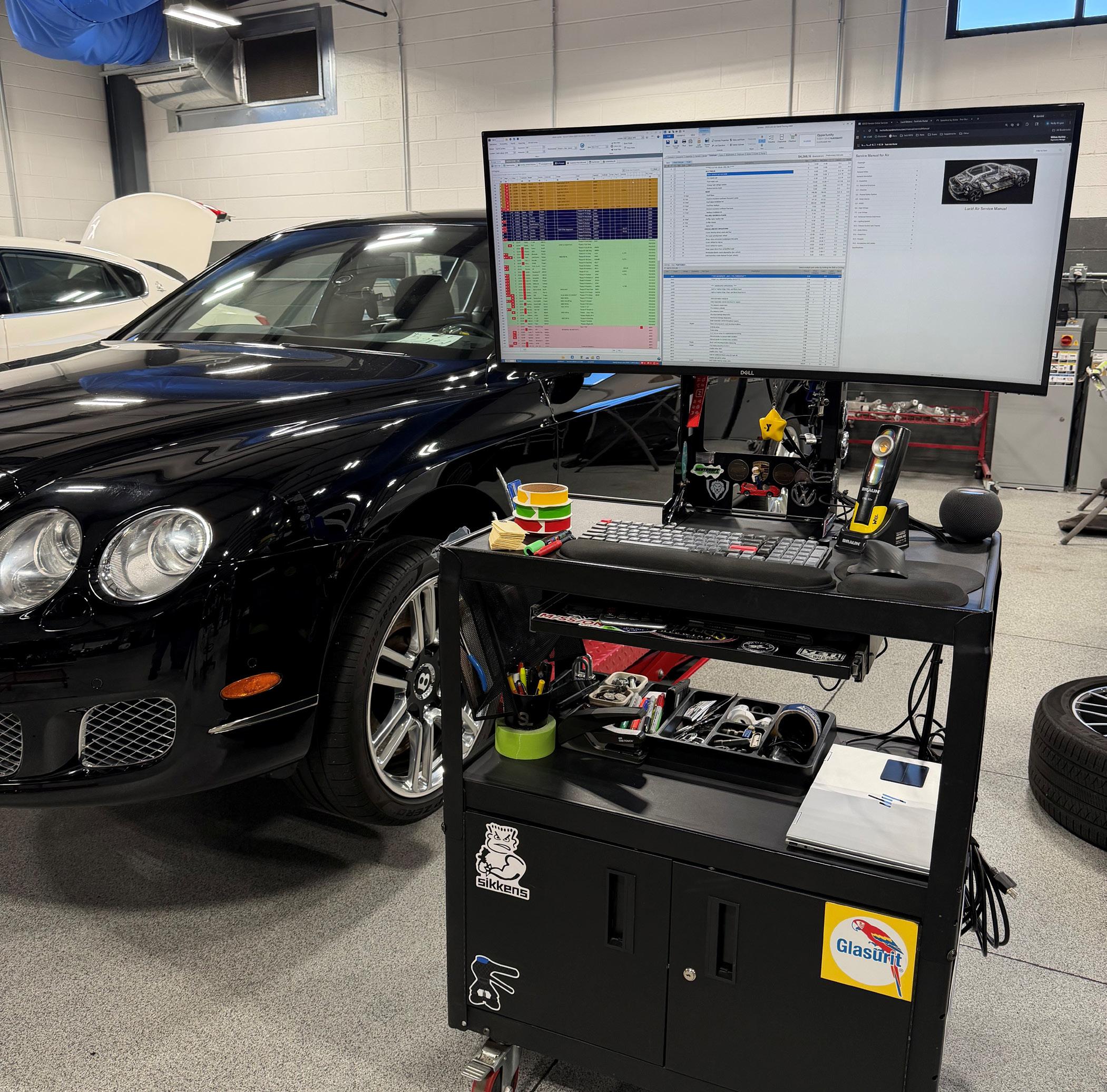
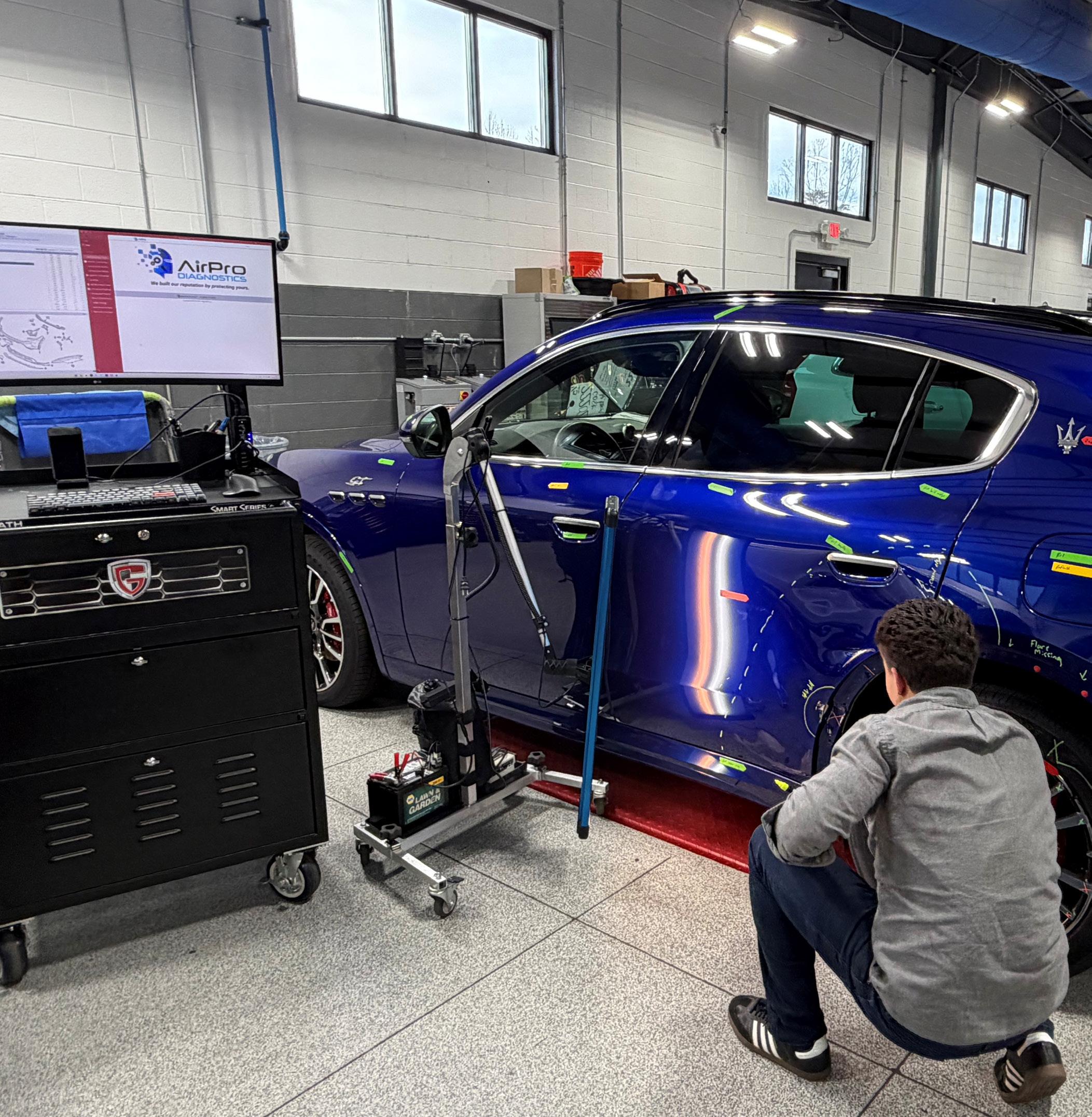
At K&M, Barkley maps out the vehicle using estimating stickers. Red is for parts to be replaced; yellow is for repairs or a blend panel, and green is for R&I parts. Those things are also noted in the written description, with paint markers used for emphasis in photos so that whoever looks at that car is on the same page. Barkley also stresses the importance of workstations being located at the vehicle, so that you’re not
going back and forth to the office trying to put the estimate together.
McNee also notes the importance of marking vehicles, so that everything is clear both in photos and in person. McNee also utilizes a dent board to show grid lines and illustrate depth in photos. But maybe the most important tool? A simple notepad. Technology is great, but if you’re walking through the shop and someone reminds you of something, you’re not at a keyboard to add it to a file. You might not have your phone on you. So, it is forgotten 10 minutes later.
“It’s very easy to get distracted in this industry with how many things are going on,” McNee says. “... Just having a notepad with you to document it, it just ensures consistency and accuracy. Because if I write something down, I’m going to reference it. I can cross it out. I can double check it.”
Too much paper gets messy quickly, however. McNee recalls he used to over-rely on Post-it notes with reminders, but he transitioned those into checklists of universal things to do on each repair. “Every single time I’m going to write an estimate,” he says, “I have a series of checklists as well as a whole operation database for an estimating tool I created, and I’m just referencing it every single car that I have to write.”
You already know how important communication is in any business, but it is especially true in a body shop where many hands and eyes combine to work on a single repair. The estimator really sets that tone and can help facilitate communication throughout the shop. If not, “every department is going to be doing whatever they think is next, going through the review process as you’re as blueprinting,” Barkley says. “I think it’s always good just to kind of recap on what you’re adding to your sheet.”
Everyone needs to be on the same page, and that comes down to the application of your SOPs, Barkley says. He gives the
example of how at K&M, there are two teams: One estimator each has a team. Those two teams must be operating off of the same procedures, otherwise their results are going to be far different. Barkley also says that at his shop, techs have the same access to pulling procedures, so they don’t have to rely on the estimator to communicate information that they need to know.
Lastly, support from shop ownership and management is crucial in a number of ways. It is financial support, ensuring the estimator has whatever equipment they need to do the job properly. Support comes via trust, allowing employees the freedom to find processes that work best for them, while still adhering to shop SOPs. Shops should also be permissive with time. Time is money, but the cost of not
doing a job properly is exponentially more. If an estimator needs more time to do research and prevent a mistake further along in the repair process, then that is time well spent.
“Your management has to understand that if you roll up to a car, it may take you two hours,” Barkley says. “It may take you three hours to complete that repair plan
to the full extent where that car can go through the process without any hiccups.”
Shops also should consider being tolerant with allowing time for training, whether that is training done on a computer in the shop or allowing estimators to get hands-on training off-site. It’s like an investment in the future success of the shop. Given the increased importance
of proper repair planning, it’s one that’s likely to pay off.
“There are some hands-on trainings where if you’re never allowed to leave the shop and go do those things and learn from that, I think that’s a real holdback,” Barkley says. “I think there are a lot of people who would like to go to stuff like that, but don’t get the opportunity.”

We may be watching the early stages of a deeper shift in ownership and control.
As small to mid-sized collision repair shops, we’ve built our businesses on adaptability. We’ve adjusted to DRP pressure, advanced materials, evolving paint systems, and the explosion of ADAS technology. Every few years, something shifts and we invest, train, and recalibrate.
Now, the shift isn’t just in the vehicle. It’s in the ownership model itself.
Auto subscriptions are no longer a concept; they’re becoming reality. We need to start talking about what this could mean for independent repair facilities.
Recently, we repaired a vehicle equipped with an advanced lane detection system. The customer had received a complimentary one-year subscription when she bought the car. While the vehicle was in our shop, that free year expired. When she picked it up, the system no longer worked. Naturally, she assumed something had gone wrong during repairs.
We rescanned the vehicle, verified calibrations, double-checked procedures. Everything was correct. After some digging, we discovered the subscription had simply expired. A small issue, but a revealing one.
As more features become subscriptionbased – satellite radio, heated and cooled seats, remote start, ADAS functions – how do we verify functionality on systems that are inactive because payment has lapsed? How do we document proper repairs when the feature is behind a paywall? This affects liability, quality control, and customer trust. And this is only the beginning.
Right now, subscriptions mostly apply to features. But we need to think bigger. What happens when the vehicle itself becomes subscription-based? Instead of owning or leasing a car, customers may simply subscribe. The manufacturer retains ownership; the customer only has access.
If that model expands — and it’s already happening in Europe and being tested in parts of the U.S. — control shifts dramatically. Meanwhile, manufacturers continue moving into adjacent markets. Consider
Toyota Motor Insurance and Tesla Insurance. These are not side projects. They’re part of a strategy to capture more stages of the automotive lifecycle.
Other industries have shown how vertical integration creates powerful revenue loops, where services, distribution, and payments all stay under one corporate umbrella. Now picture that applied to automotive.
The customer subscribes to a vehicle. Insurance is bundled or required through a manufacturer-affiliated carrier. The vehicle is involved in a collision. The subscription agreement directs repairs to approved facilities, likely manufacturercontrolled collision centers or tightly managed dealership networks. OEM parts are purchased directly from the manufacturer. The subscription continues to generate recurring revenue.
Manufacturers profit from the subscription, the insurance premium, the parts, and the repair network control.
It’s efficient — for them. But where does that leave independent shops?
Look at consumer behavior. The next generation of drivers is growing up in a subscription world. Music, streaming services, fitness memberships, grocery delivery, vehicle maintenance plans — access has replaced ownership in many areas of life.
Recurring revenue is predictable. Predictability attracts investors. Automakers see that.
If vehicle subscriptions go mainstream, control of repair decisions shifts to whoever owns the vehicle — not the driver. That’s a fundamental break from today’s model.
Even before full vehicle subscriptions take off, we’re already facing challenges. How do we verify subscription-based ADAS features during post-repair inspections? How do we protect ourselves from liability if a system appears nonfunctional due to expired service? How do we educate customers about features tied to paid services? How do we document inactive or paywalled systems?
We need updated intake procedures. Shops might have to note which features are active at drop-off, add disclaimers, and improve customer communication. These weren’t considerations five years ago.
If manufacturers control the vehicle, independent shops could gradually be pushed to the margins.
It won’t happen overnight. It may start with preferred repair networks tied to subscription agreements. It may continue with restricted access to software, telematics, or calibration data. Insurance steering could strengthen through manufacturer-owned carriers. Over time, revenue concentration could increase, and shop independence could decrease.
We’ve navigated change before. We can navigate this, too, but only if we’re proactive. Here are a few areas to consider. Evaluate OEM certifications strategically, not just as marketing tools. Invest in advanced diagnostics and scanning. Diversify revenue beyond traditional DRP pipelines. Strengthen community relationships and customer loyalty. Stay engaged in industry discussions and associations.
I don’t want smaller and mid-sized shops caught off guard. We’ve seen consolidation. We’ve seen insurer influence expand. We’ve seen technology reshape repairs. Now we may be watching the early stages of a deeper shift in ownership and control.
Independent shops have always been resilient. But resilience requires awareness. The future of collision repair may just depend not just on how well we fix cars, but on understanding who truly owns them.
EMAIL: tiffanykaymenefee@gmail.com
ARCHIVE: fenderbender.com/menefee
AI can serve as a silent partner to streamline workflows, boost profitability, and foster a positive shop culture.
AI is no longer just a buzzword or futuristic fantasy; it’s becoming the silent partner that every shop owner needs. For small and midsize collision repair shops, it’s like gaining a 24/7 business coach, marketing strategist, and operational assistant all in one. And the best part? You don’t need to be tech-savvy to take advantage of it.
I even used AI to help me organize my thoughts for this column after recording myself talking for about two hours about how we use AI in our business.
AI helps reduce the guesswork in running a shop. From scheduling appointments and automating follow-ups, to using predictive tools for job timelines, it transforms your day-to-day workflow. Think of it as having a reliable operations manager who never sleeps. For example, AI can review employee assessments to help place the right team members in roles that match their strengths, leading to higher productivity and morale.
With AI-enabled estimating software like CCC One, shops can now upload photos and get fast, accurate estimates based on massive data sets. Even better, AI can double-check those estimates for accuracy, identifying over- or undercharges, helping you avoid costly mistakes and improve profitability.
AI can help you connect with customers more personally. Whether it’s generating custom emails, responding to leads after hours, or helping you understand your customers’ behaviors through data, AI allows you to create a seamless and more memorable experience. One of the most exciting ways we use AI is by offering customers consistent follow-ups and reminders for things like checkups or maintenance tips, giving them a sense that they have their own personal assistant.
AI isn’t just a tool; it’s a culture-builder. By bringing AI into live meetings, it acts as a neutral
facilitator, keeping everyone aligned, factual, and focused. It reduces tension and makes it easier for your team to focus on solutions. It can even analyze DISC or CliftonStrengths (formerly StrengthsFinder) results to suggest who should work on which tasks, or how to better communicate across the team.
For me, AI has helped refine not just how I run the business but how I think about the future. It brings clarity to vision, shortens the time between idea and execution, and becomes a living file that grows with the business. It’s not about replacing people; it’s about giving shop owners and teams the ability to build faster, smarter, and with more freedom.
As shop owners, we all know it can be lonely trying to figure this stuff out. That’s why I started sharing everything I’ve learned through my YouTube channel, Collisionpreneur. It’s where I break down exactly how we’re using AI, improving operations, and building real legacy systems inside our shop. And through Certified Elite, we’re coaching other shop owners and technicians to implement these tools, scale up, and grow their businesses the right way. It’s not just about the tech; it’s about building better leaders, creating repeatable systems, and helping more shops thrive.
So, if you’re ready to go deeper, learn from others doing it in real time, and start implementing AI without the overwhelm, check out Collisionpreneur on YouTube and explore what we’re doing at Certified Elite.
If you’re reading this and feel unsure about AI, just start small. Open a free tool, ask it a question about your shop or yourself, and treat it like a team member. It’s not magic; it’s a multiplier. If you feed it the right data, it’ll give you insight that saves time, money, and headaches. And remember, the real power isn’t just in the tool. It’s in you, your vision, your grit, and your leadership.
Paint
Aftermarket Recycled
Transmissions and Engines




With more than 500 locations across North America and thousands of dedicated employees to serve you, LKQ has the automotive parts you need.
Whether it’s Paint, Aftermarket, Recycled, or Transmissions & Engines, we’ve got it!



Drivetrains
Fuel Delivery
Interior
Power Steering
Cooling/HVAC
Electrical
Emissions
Exhaust
Audio
Restraint System
Parts to Paint
Body Repair Supplies
Equipment ...and more!