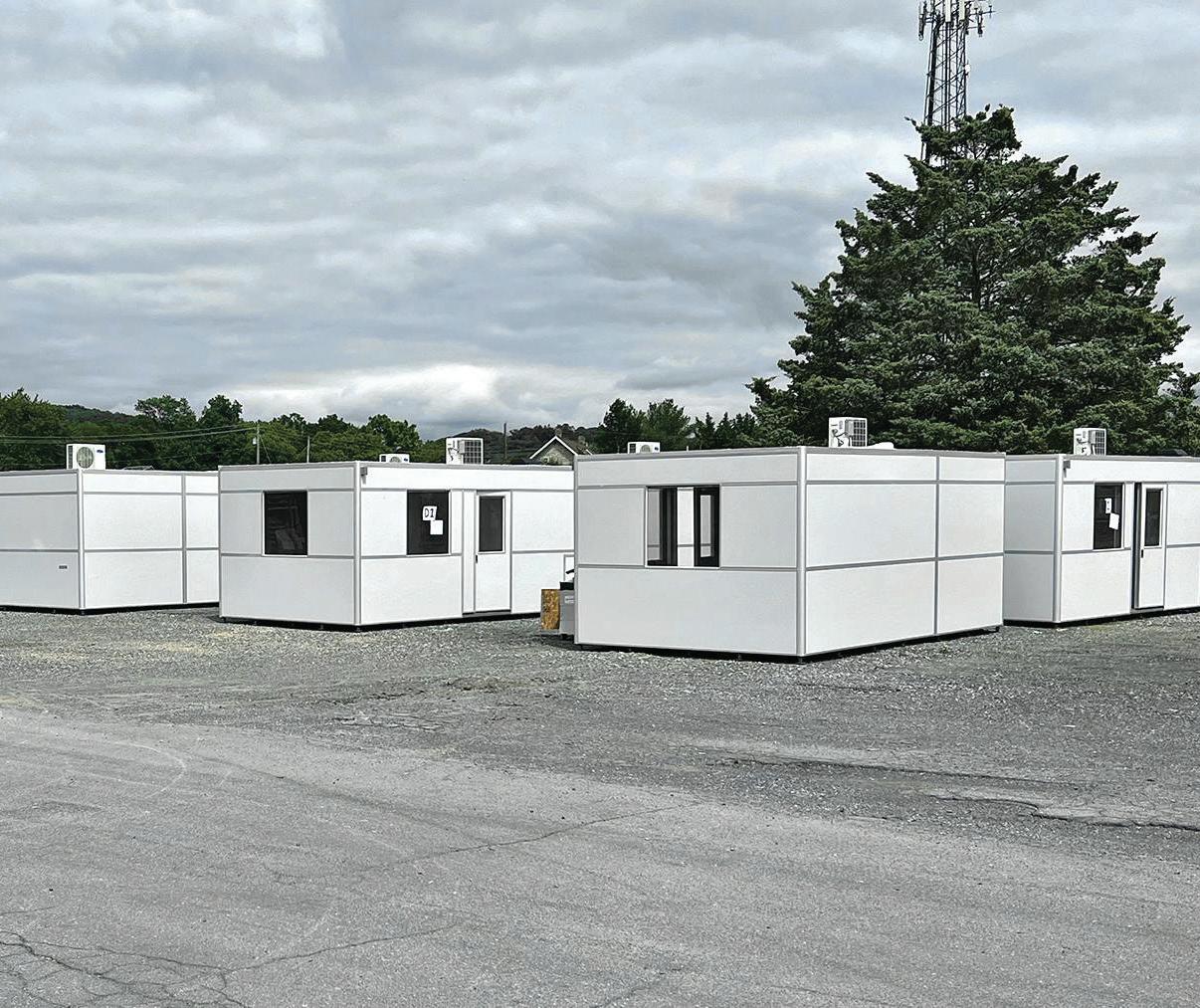
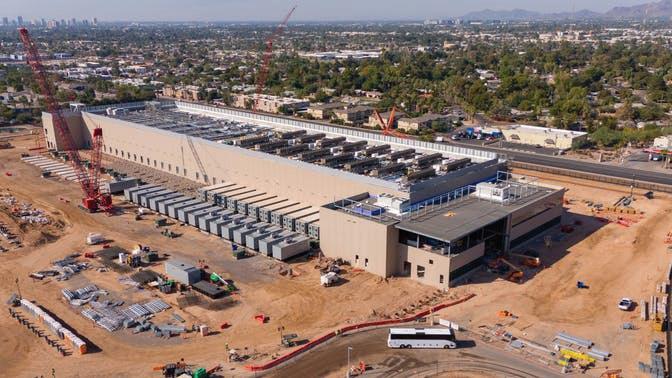
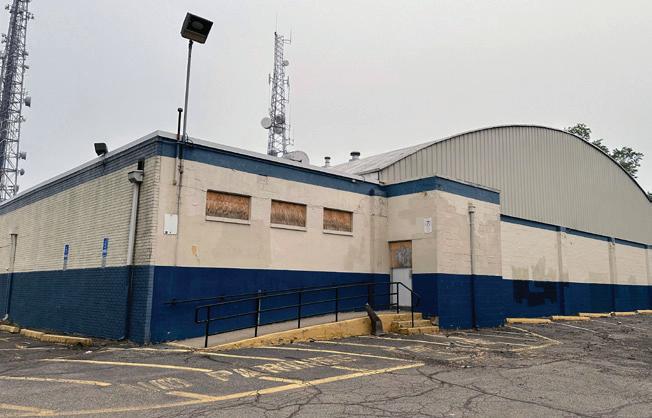
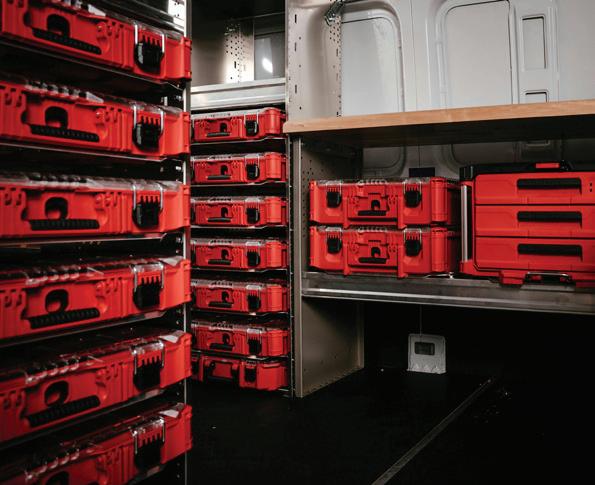
BOSTON, MA — MOCA Systems, Inc. (MSI), a construction services and technology firm, has released a new market analysis through its research arm, MSI Economics. The Sizing the Surge: US Data Center Construction Outlook to 2030 report offers an in-depth look at the forces driving record data center construc-
Fed Efficiency Rules
As lawmakers, agencies, and courts re assess federal efficiency programs, trade groups are watching closely, mindful of how rulemakings may shift the land scape related to faucets, fixtures, boilers, and water heaters.
The Trump administration is currently reviewing more than 30 rules, including some related to appliance standards and potentially higher water-flow standards for faucets, although stakeholders don’t
MINDS OVER DRAIN MATTERS
DRAIN BRAIN FOR: 41 Years LOCATION: McKees Rocks, PA SPECIALTY: Operations Wizard GO-TO TOOLS: Expertise & Experience
PROVEN PERFORMANCE. General Pipe Cleaners, the industry’s Drain Brains, develops proven solutions like the patented Flexicore ® cable. For 95 years, we’ve been designing and building products to take on the toughest drain problems.
MIKE SILVERMAN
Education, Collaboration Center Stage at ASPE Tech Symposium
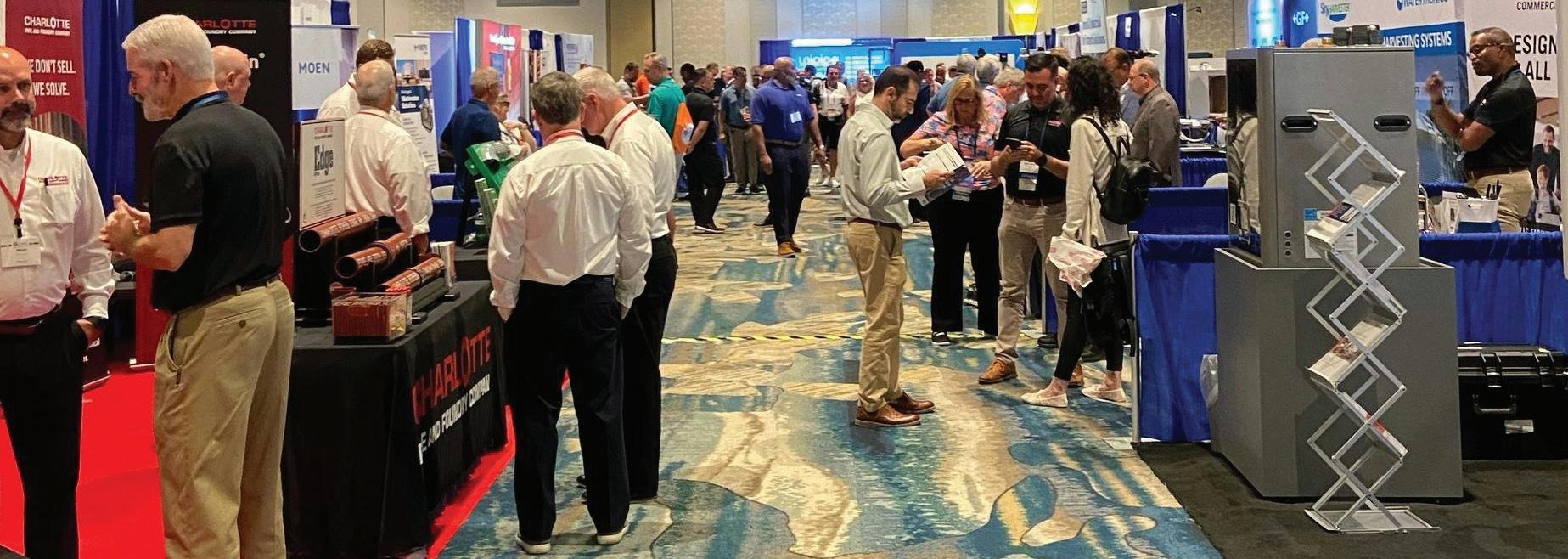
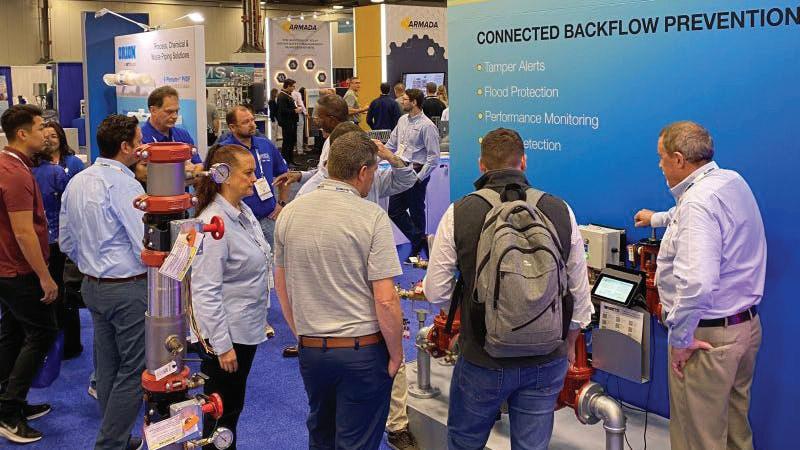
The 2025 ASPE Tech Symposium was held at the Rosen Centre Hotel in Orlando, Florida, September 24-28. The Symposium welcomed plumbing engineers and designers of all career levels to engage in technical exchanges, education opportunities and networking.
“This week isn’t just about meetings and reports—it’s about fueling the future of our
➤ Turn to Education, page 38
Broad Coalition Backs Landmark California Water Law
SACRAMENTO, CA — Governor Gavin Newsom has signed SB 72 into law after the bill passed unanimously through the California Legislature. The legislation establishes clear statewide water supply targets and sets in motion long-term strategies to secure reliable water for residents, businesses, agriculture, and the environment.
➤ Turn to Broad, page 44
IAPMO Elects New Leaders, Honors Industry Achievements
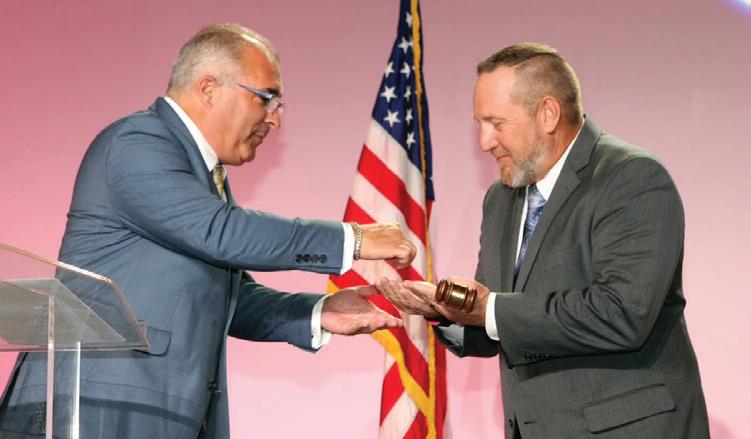
PALM SPRINGS, CA — Plumbing and mechanical professionals from across North America gathered Sept. 14-18 for IAPMO®’s 2025 Education and Business Conference at the Renaissance Palm Springs Hotel. The event ran in conjunction with ASSE International’s Annual Meeting and ARCSA International’s Annual Conference.
➤ Turn to IAPMO, page 45
EDITORIAL STAFF
VP/Market Leader-Buildings & Construction
Mike Hellmann, mhellmann@endeavorb2b.com
Editor-In-Chief
Steve Spaulding, sspaulding@endeavorb2b.com
Editor-At-Large John Mesenbrink, jmesenbrink@endeavorb2b.com
Contributing Writer Kelly Faloon COLUMNISTS
Al Schwartz, Management
Pat Linhardt, Hydronics & Radiant Patti Feldman, Technology Matt Michel, Marketing
Art Director, David Eckhart
Ad Services Manager, Deanna O’Byrne
Production Manager, Sam Schulenberg
Audience Development Manager, James Marinaccio
Endeavor Business Media, LLC CEO, Chris Ferrell COO, Patrick Rains CRO, Paul Andrews CDO, Jacquie Niemiec CALO, Tracy Kane CMO, Amanda Landsaw EVP Endeavor Business Intelligence, Paul Mattioli EVP Building & Construction Group, Chris Perrino VP of Content Strategy, Mike Eby
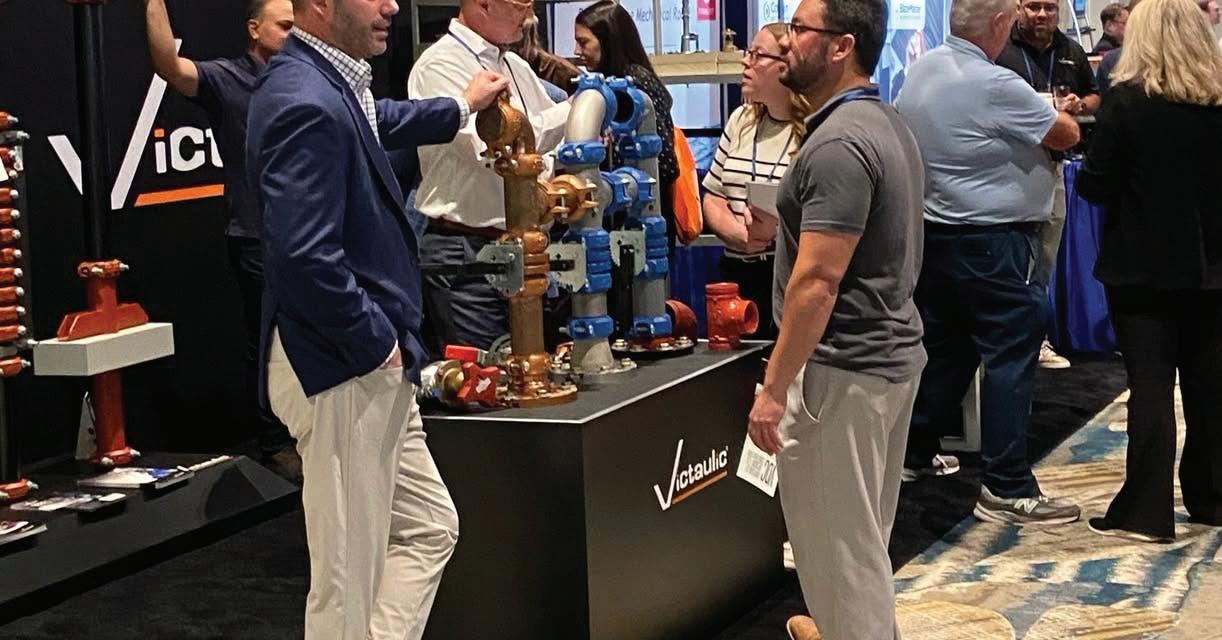
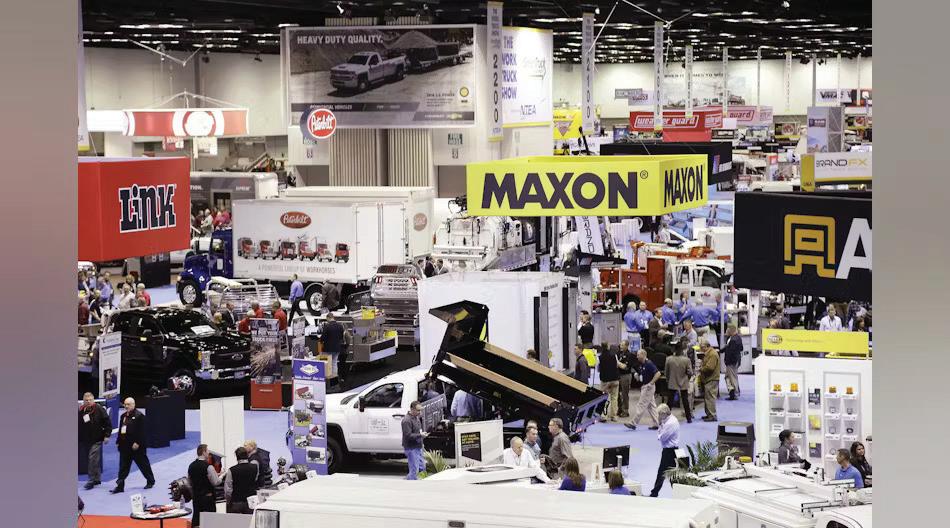
The Victaulic booth at the ASPE Tech Symposium.
In Brief
Buildots, a leader in AI-powered construction management, has announced its acquisition of workforce and safety management platform
Genda. The move paves the way for Buildots to connect progress and workforce insights, advancing its vision of unifying construction delivery on a single platform.
Cortec® Corporation, a global leader in corrosion protection technologies, has announced the appointment of Ivana Radic Borsic to the position of Executive Vice President and Managing Director of its key European subsidiary, CorteCros. Her new role gives her command of the company’s strategic growth, sales, logistics, and production.
ServiceTrade, a leader in software for commercial fire and life safety and mechanical HVAC contractors, has announced “Grow Your Own” Technician Workforce, an initiative created to help contractors recruit, train, and retain the next generation of skilled technicians. The inaugural grant—$5,000 to VSC Fire & Security—will support the hiring and training of a new apprentice in partnership with Durham Technical Community College.
NEFCO, a leading provider of valueadded construction supply solutions, has announced the recent acquisition of Big D Tool Center, a construction supply company based in Dallas, Texas. The acquisition is a key step in the company’s nationwide growth strategy and represents their fifth location in the Lone Star state.
J.C. Whitlam Manufacturing Company has announced the appointment of Josh Brodsky as Eastern Regional Sales Manager. Brodsky brings more than 20 years of experience in sales leadership, business development, and market expansion across the plumbing, hardware, and building materials industries.
Wright has announced the induction of Chairman Terry Taylor into the 2025 Barberton Walk of Fame, an honor that recognizes individuals whose service and dedication have made a lasting impact on the City of Barberton, Ohio. The Barberton Walk of Fame was established in 2015 through a partnership with Neighborhood Development Services, Inc., supported by a grant from the Ohio Capital Impact Corporation.
Videos & Media Galleries
Rasmussen Mechanical
Brass Knuckle
HVAC THE NEXT WAVE OF COMFORT
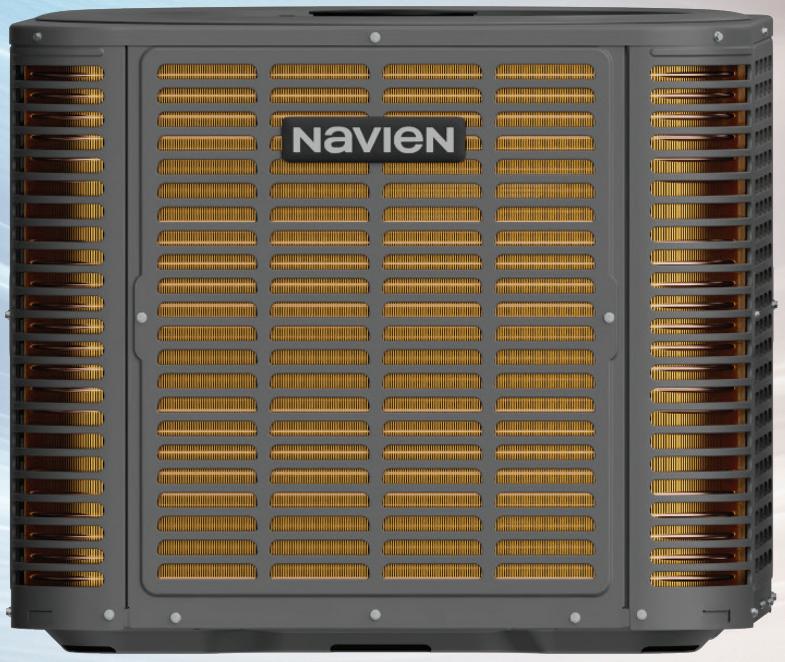
NEW NAZ Air-to-air heat pump inverter-driven heating and cooling systems
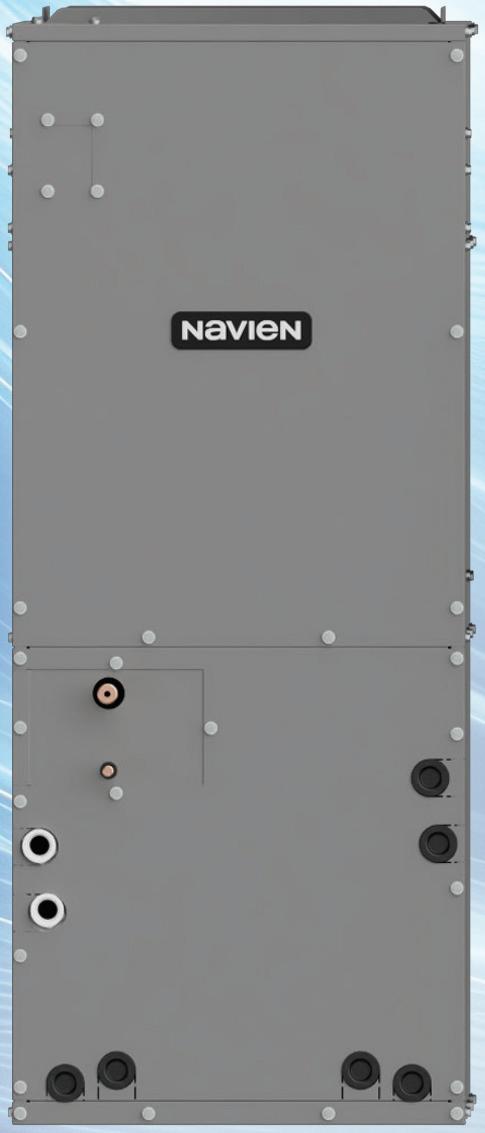
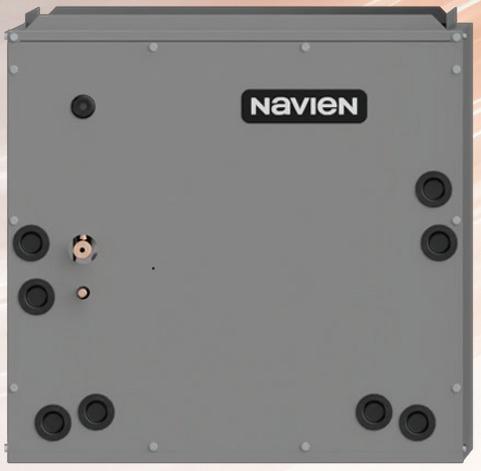
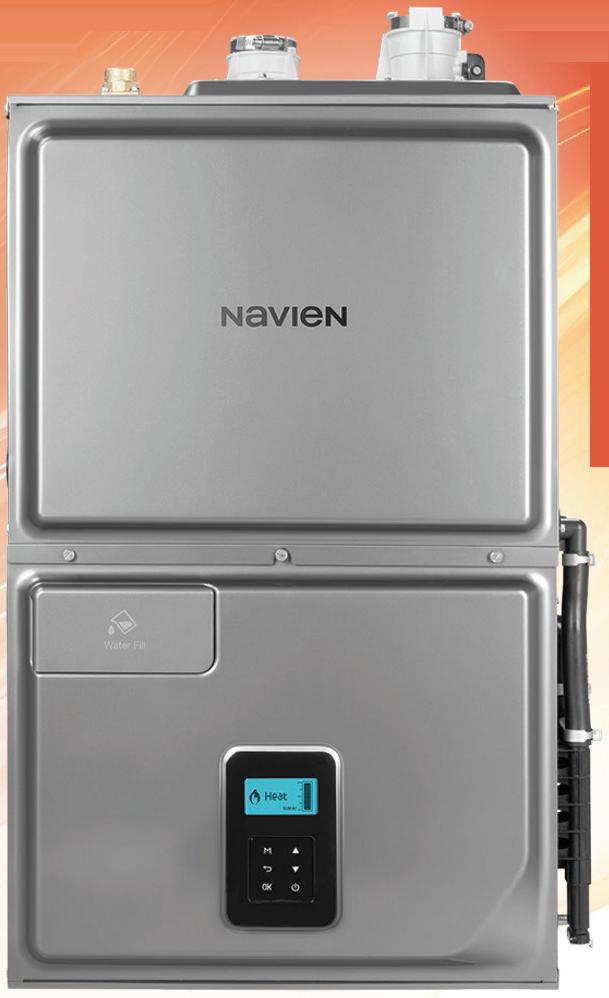
Navien introduces its full line of HVAC products, featuring new NAZ Heat Pumps, NAS Air Handlers, NAM Cased Coils, and other forced-air components. Deliver a whole-home AHRI matched Navien comfort system when pairing with the NPF Hydro-furnace, including a powerful dual-fuel system with gas-powered NPF and the NAZ Heat Pump. To learn more about Navien HVAC comfort, visit us at navieninc.com.
NPF Series Hydro-furnaces
NAS Series Air Handlers
NAZ Series Air-to-air Heat Pumps
NAM Series Cased Coils
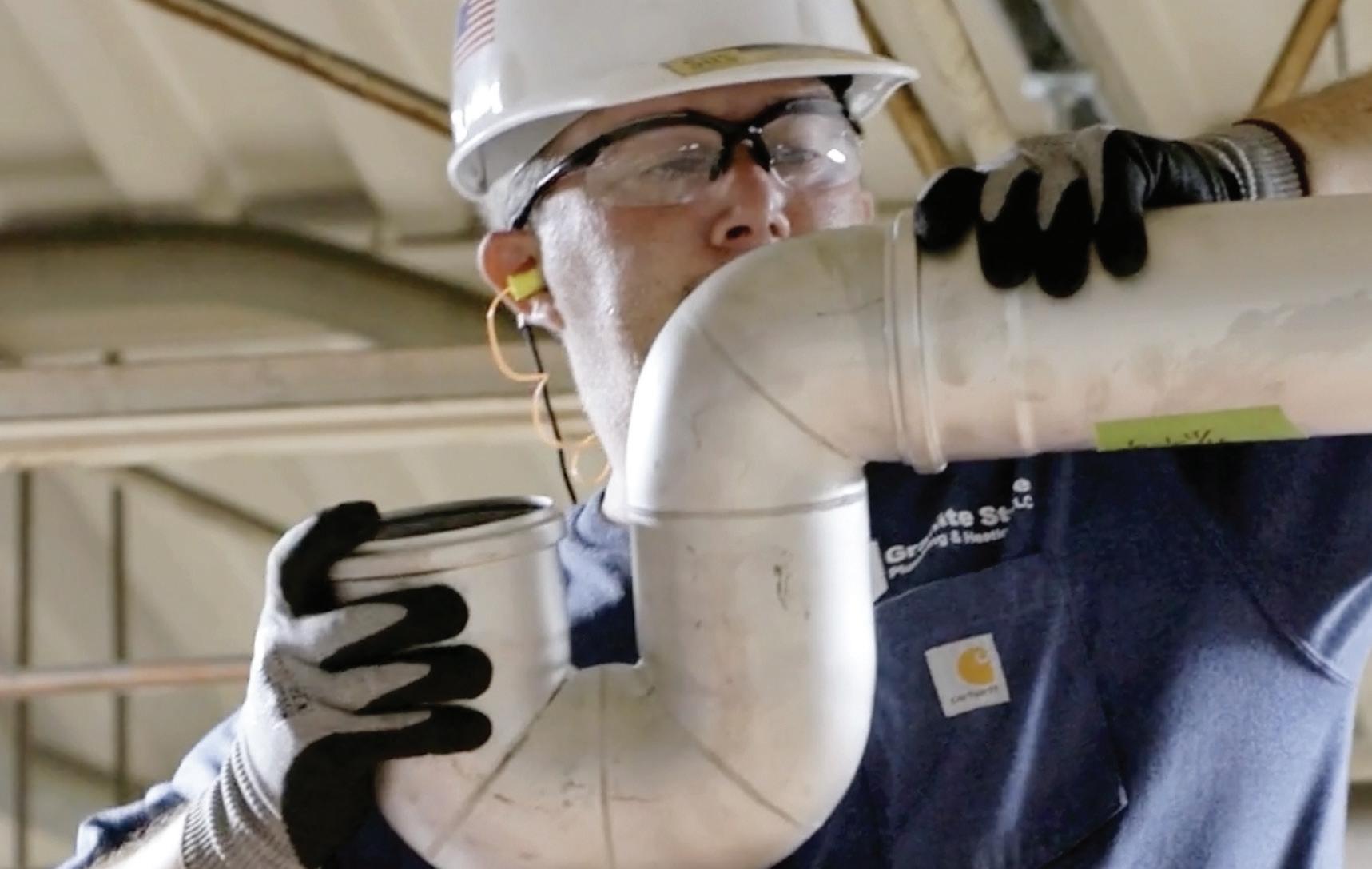
Shop Class to the World Stage: One Apprentice’s Journey to WorldSkills ‘26
Apprentice Charles Goede is honing his craft with help from UA Local 777 and industry mentors as he prepares to represent US plumbing in Shanghai.
The WorldSkills organization traces its mission and history back to the dark days following the Second World War. Entire nations lay in ruins and the need for skilled labor in the massive work of reconstruction was as desperate as at any point in history.
Some took this challenge as an opportunity to introduce young people to the world of the skilled trades. Francisco Albert-Vidal was charged with creating a skills contest for the youth of Spain and Portugal. Albert-Vidal was an activist, political prisoner during the Spanish Civil War, and a later a teacher at the Virgen de La Paloma VET, a public vocational training institute in Madrid, Spain.
The first of what would later be known as the WorldSkills Competitions, Madrid 1950, was a modest event by today’s standards, but it gave birth to a movement. Today, 89 WorldSkills member organizations reach two-thirds of the world’s population, working to raise the recognition of skilled people and show how important skills are in achieving economic growth and personal success.
The WorldSkills Competition—held every other year—remains the organization’s signature event. The next will be held September 22-27, 2026, in Shanghai, China.
The competition is more than an opportunity to promote and celebrate the skilled trades, it is also a stage where countries from around the world showcase their best trainees, and by extension their training programs and methods. In all, more than 20 different trades are represented, including plumbing.
Winning Formula
However, WorldSkills is not a stage where the US has done its best in recent years as Dan Quinonez, Executive Director of the PHCC Educational Foundation and Chief Operating Officer of the National Association, laments.
“The US as a competitor in the plumbing competition was coming
in near the bottom,” Quinonez said.
“The joke is that we were losing to countries that didn’t even have work ing plumbing.”
Quinonez attributes that lack of success to several factors, but the most critical seemed to be finding the right person to compete and then getting that person properly trained. Last year, the PHCC began scouting candidates very early in the process. The apprentice they settled on was Charles Goede
Goede is a plumbing apprentice and graduate of Ella T. Grasso Technical High School in Groton, CT. He is in his third year of a five-year apprenticeship at UA Local 777. Goede earned the 2024 SkillsUSA Connecticut state championship and went on to take second place nationally in plumbing at the SkillsUSA Championships in Atlanta.
Right Person for the Job
Goede began his journey in the trades through an exploratory program at his vo-tech high school. “I discovered plumbing through some older friends in the plumbing shop, and it really spoke to me the most as a trade,” Goede said. “I said to myself, this is something I definitely can make a career of, and I would be happy if I did.”
petition, a member of the Connecticut PHCC asked about his interest in the WorldSkills competition.
“I was overjoyed to hear that they considered me, and I was even more ecstatic when they selected me,” Goede said. “I love the people I’m working with, I love where I’m working. I couldn’t ask for a better group of people to be around.”
Banding Together as an Industry
Now, Goede is going through a period of intense training to prepare him for Shanghai. Hands-on technical coaching will be provided by Robert Hahn, plumbing and heating instructor at Eastwick College/HoHokus School of Trades, and Larry Shoemaker, owner of Deluxe Plumbing & Heating LLC and a member of the PHCC Educational Foundation Board. The PHCC Educational Foundation is also providing financial and logistical backing to get Goede competition-ready.
“Last year, for the first time, we really banded together as an industry to start looking at ways to better train the competitor for WorldSkills,” Quinonez
tion (UA) and other industry partners. Goede has a dedicated training space at the JATC Center in Connecticut and has been training in 40-hour blocks every other month, with additional training every other Saturday.
“We purposely bought some metric fittings and tools,” Vinne Valente, Training Coordinator at Local 777 said. “We’re trying to get him right in that mindset, you know, where the things that he touches today will be the same things he sees in the competition. We’re very, very proud that he’s going to represent the United States. I don’t think you could have picked a finer young man. He’s just a great kid.” While Goede is focused on nextyear’s competition—even learning a few essential phrases in Mandarin— he hasn’t lost sight of the big picture: building a future career for himself in the trades. He hopes someday to work his way up to foreman and run his own crews.
And who knows? He may one day come full circle to serve as an instructor for a future generation of young plumbing trainees.
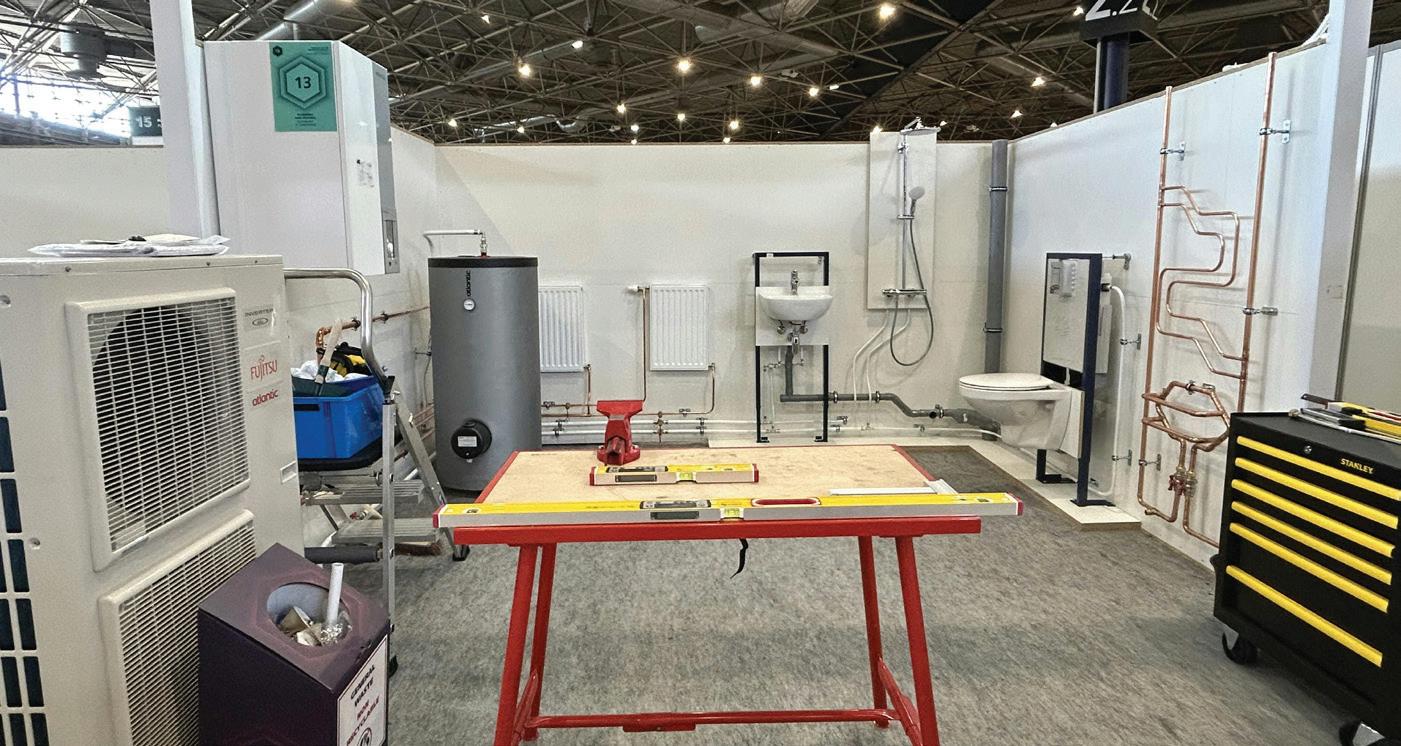
An example of the plumbing competition set-up from WorldSkills 2024 in Lyon, France.
BY STEVE SPAULDING OF CONTRACTOR’S STAFF
Navien Donates $50,000 and HighEfficiency Water Heaters to Flood Relief
IRVINE, CA — Navien, in partnership with its Texas sales representative Champions Marketing, has contributed $50,000 to the Kerr County Flood Relief Fund through the Community Foundation of the Texas Hill Country. The donation will go directly toward recovery and rebuilding for residents, small businesses, and local infrastructure damaged by the July 4th flooding.
Support for Long-Term Recovery
Central Texas, and Kerr County in particular, endured devastating damage when torrential rains pushed the Guadalupe River over its banks. As of mid-July, the storm had claimed at least 96 lives and left more than 160 people missing. With a federal disaster declaration in place, recovery efforts remain ongoing.
Community Foundation Leading Relief Efforts
“We’ve seen an incredible outpouring of generosity in the days since the flood, and we so appreciate that
spirit of giving,” said Austin Dickson, CEO of the Community Foundation of the Texas Hill Country.
“Recovery doesn’t happen quickly, and for many, the path forward feels uncertain. That’s why sustained collaboration and commitment are so important. We are proud to work alongside so many local partners
to ensure help reaches individuals, families and small businesses, not just today, but in the months to come.”
Navien Donation Includes Equipment
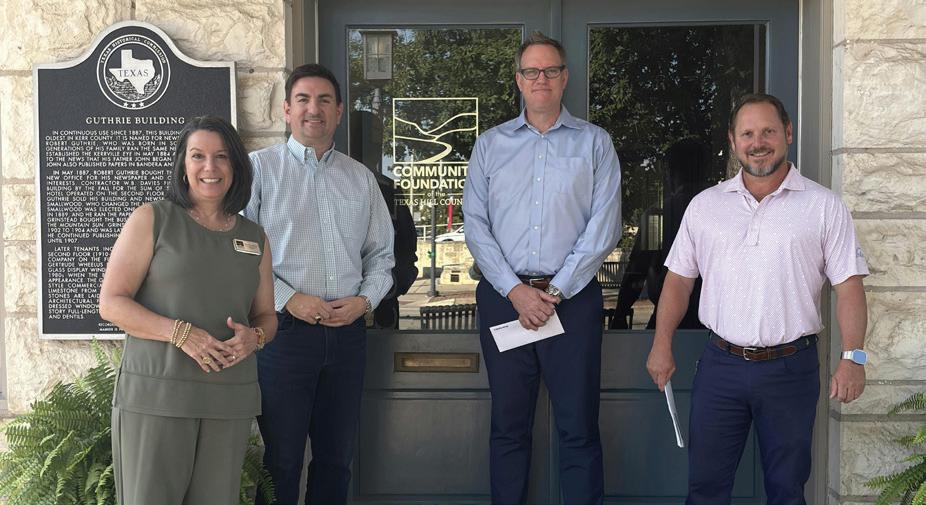
Navien COO Darren Sheehan and Champions Marketing President Hunter Gordon presented the $50,000 donation at the Community Foundation’s Kerrville office. Alongside the financial support, Navien will also provide high-efficiency water heaters to aid housing rehabilitation and community rebuilding efforts.
How to Get Involved
Contractors, businesses, and community members who wish to contribute to recovery efforts can:
• Visit rebuildkerr.org
• Email jayne@communityfoundation.net
For more information visit NavienInc.com.
Note: this press release was rewritten with help from generative AI.
Left to Right: Jayne Zirkel, Austin Dickson, Darren Sheehan and Hunter Gordon. Navien
•
•
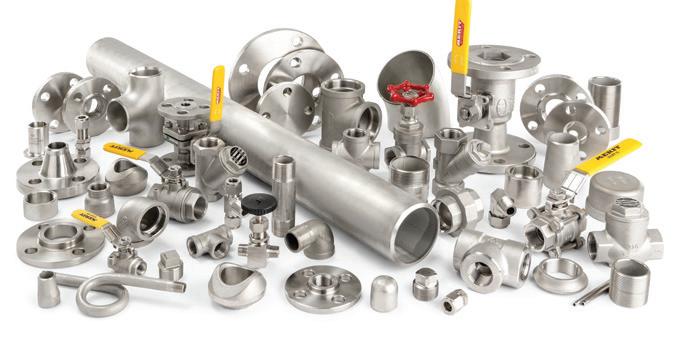
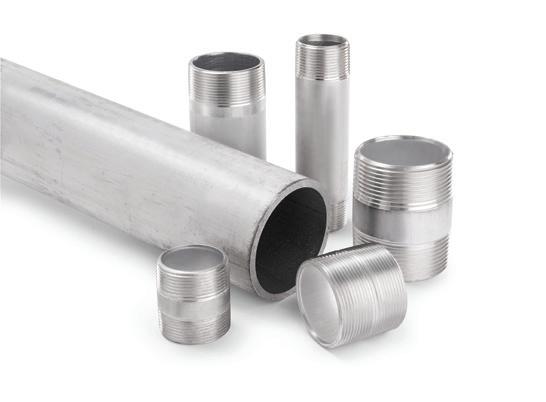
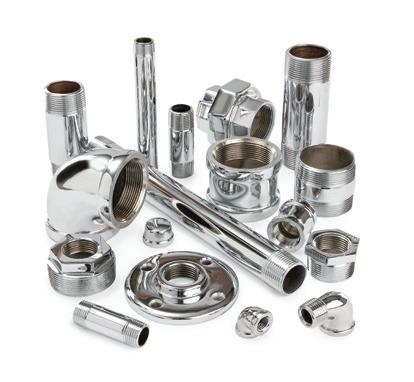
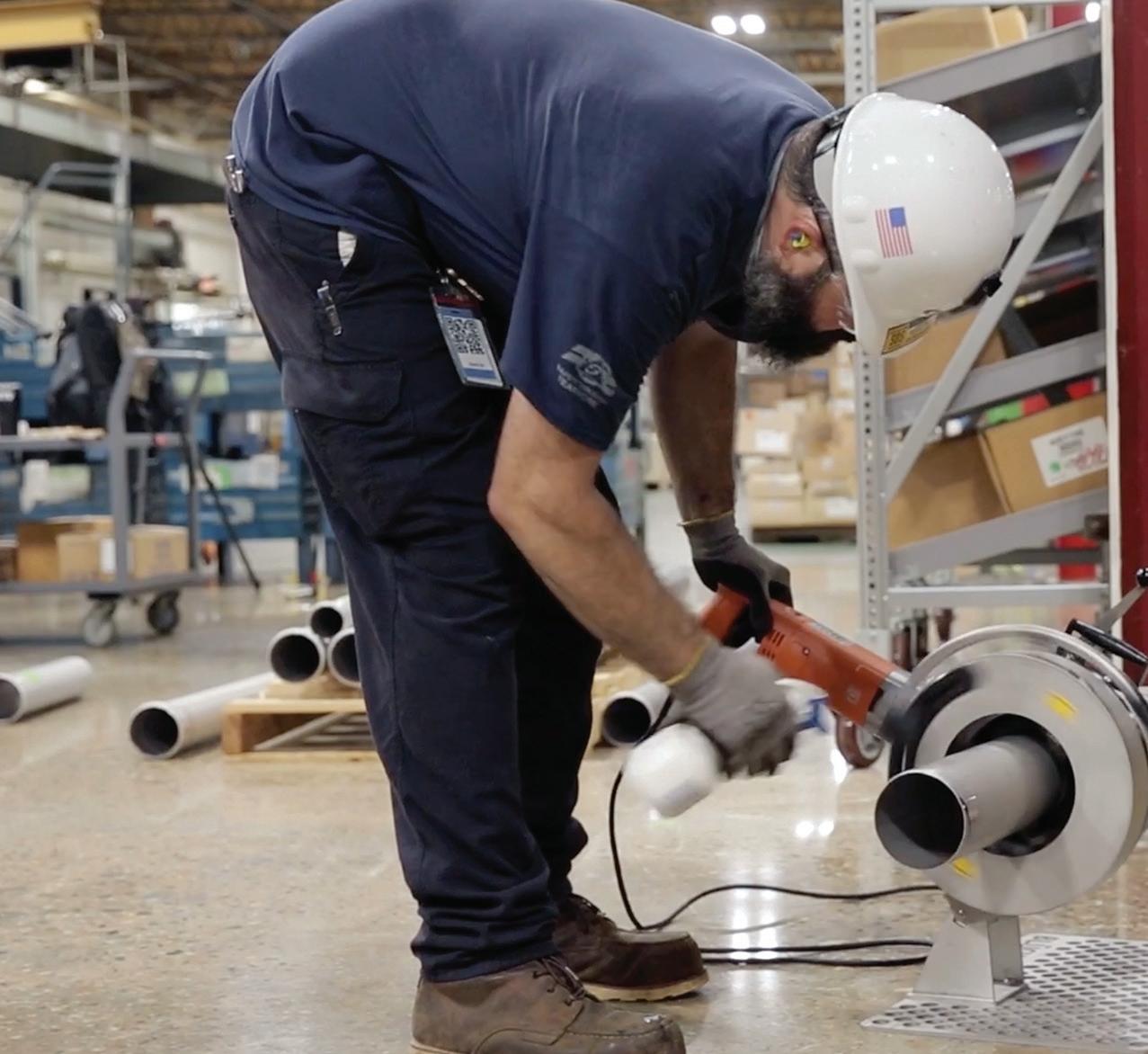
• Lightweight pipe is easier to mobilize and hang by one person
• Electric pipe cutting machine reduces messy pipe prep
• Pre-cut pipe available in 9 different lengths up to 20 feet
ServiceTitan Partners for Path to Pro
LOS ANGELES, CA — ServiceTitan (Nasdaq: TTAN) is bringing additional job opportunities and skills programs to contractors by connecting them with The Home Depot’s Path to Pro program. This initiative provides ServiceTitan customers
access to a robust pipeline of skilled tradespeople while offering aspiring professionals streamlined pathways into careers in HVAC, plumbing, electrical, and beyond.
The skilled trades industry is facing a critical labor shortage, with over 400,000
open construction jobs in the US today.
“The trades industry is facing a generational workforce challenge, and solving it requires bold collaboration,” said Bryan Olshock, Chief Marketing Officer at ServiceTitan. “Through our
A Single-Source Supplier for Electricians
Stop chasing parts all over town and half the internet. When jobs call for electrical, plumbing, and HVAC parts, place one order and knock out your next job from start to finish with SupplyHouse.
partnership with the Home Depot’s Path to Pro program, we’re connecting our customers with talent, while helping to create a sustainable future for the trades by investing in the next generation of skilled professionals.”
By registering for Pro Xtra, Home Depot’s free contractor loyalty program, contractors will gain access to a hiring network for skilled tradespeople, and graduates of the Path to Pro Skills Program will be connected with high-demand career opportunities at some of the fastest-growing service businesses in the country.
Through Path to Pro, contractors using ServiceTitan can access a range of free resources and tools designed to build the pipeline to the trades, including:
• PathtoPro.com: A comprehensive resource hub offering career guidance and information for students, parents, educators, and anyone exploring opportunities in the trades.
• Path to Pro Skills Program: Free, on-demand training and educational content designed to prepare the next generation of trades and construction professionals.
• Path to Pro Network: A hiring platform that connects contractors with jobseekers. ServiceTitan contractors can now post jobs, review candidate portfolios and experience, and connect with skilled tradespeople to meet their hiring needs.
How Contractors Can Get Started
Contractors can sign up for the Path to Pro program by registering for Home Depot’s free contractor loyalty program, Pro Xtra, Once registered, contractors gain access to the Path to Pro Network, where they can post job openings, connect with trades professionals, and take advantage of free training and resources. Learn more about the Path to Pro program at www.pathtopro.com
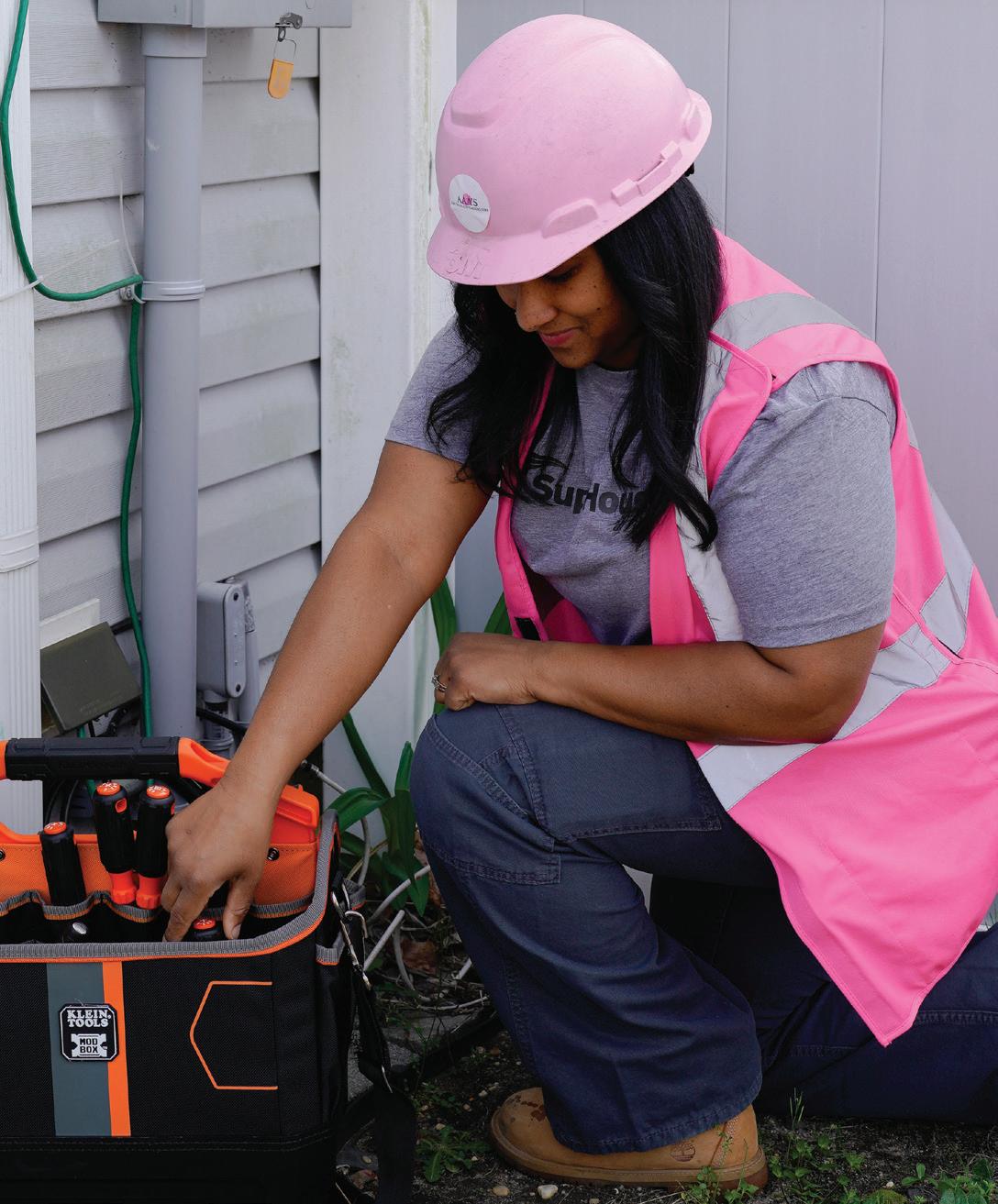
FEATURED TRADEMASTER: Shantel, AAA’s Electrical Contracting
Guardian Booth Solves ADA Plumbing Challenge in FEMA Hospital Retrofit
➤ Continued from page 1 tionality—without permanent alterations to the building.
Height Restrictions Complicate Plumbing Design
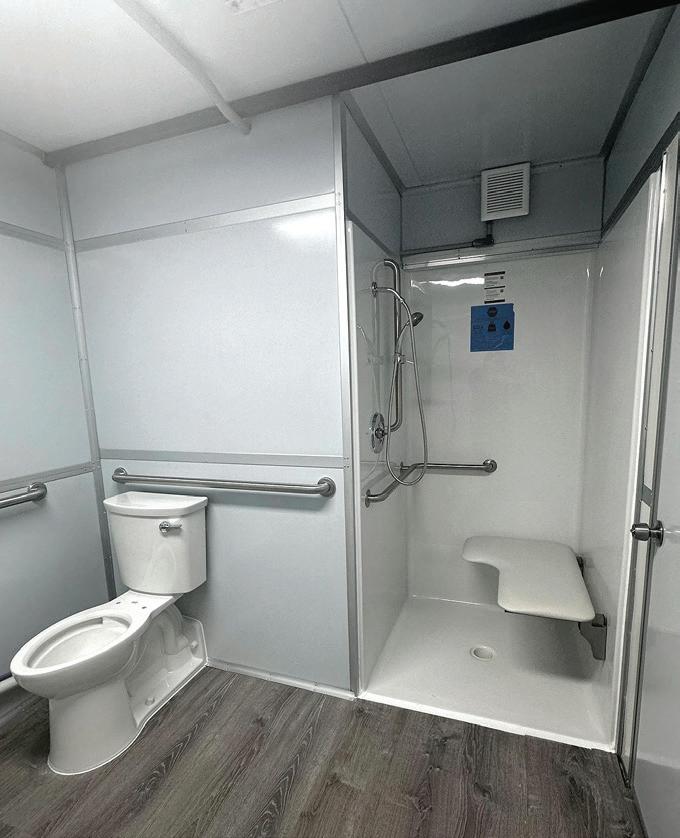
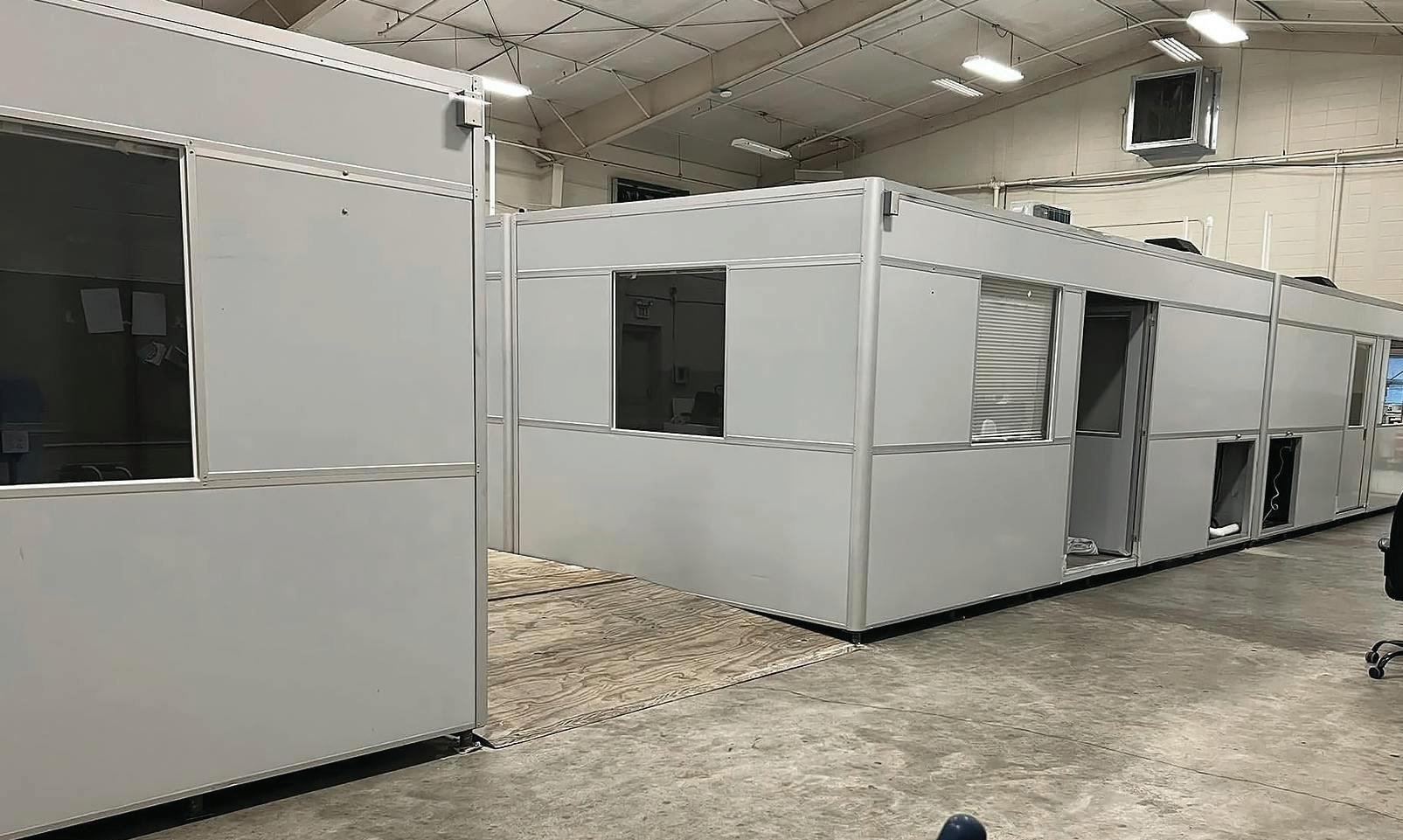
The retrofit required 12 modular units, each 10-by-20 feet and equipped with an ADA-compliant bathroom including a sink, toilet, and shower. But traditional plumbing wasn’t possible. The booths could be elevated only 3.5 inches above the existing concrete floor, limiting space for drainage lines.“The biggest challenge we faced was the impact of this height restriction on the plumbing for our booths,” says Ben Johnson , Guardian Booth’s Director of Sales, Marketing, and Engineering. “We couldn’t make any permanent modifications to the building, such as breaking through the floor to install drainage systems. This made maintaining proper drainage slopes and managing wastewater extremely challenging.”
Johnson explains that raising the platforms to accommodate utilities underneath would have triggered another problem: “For every inch of the rise, the ramp needed to extend one foot to comply with ADA specifications, making the ramps impractically long. Additionally, space constraints also
Sanicubic 1 Simplex Grinder Lift Station
The Sanicubic 1 is a heavy-duty simplex (one-pump) grinder system with a one-horsepower motor. It is designed to pump away wastewater from multiple bathroom and kitchen fixtures in a single structure.
Sanishower Gray Water Drain Pump
The Sanishower is a compact, medium-duty, gray water pump for residential and commercial applications. Ideal for showers, sinks, laundry tubs, and similar fixtures, it pumps wastewater up to 12 feet vertically or 100 feet horizontally.
limited how much we could raise the platform without creating a tripping hazard or violating code requirements for width.”
Saniflo Pump Systems Provide the Solution
Faced with these challenges, Johnson and a Guardian Booth engineer began exploring alternatives. After extensive research and consultation, they turned to SFA Saniflo for a solution.
“We called and explained our challenges, shared our plans, and Saniflo Customer Service reviewed everything thoroughly,” Johnson comments.
“They walked us through our options and provided valuable insights. Once we outlined the specific challenges, they offered great solutions. After several conversations, we ultimately landed on the Sanicubic simplex grinding lift station and the Sanishower drain pump.”
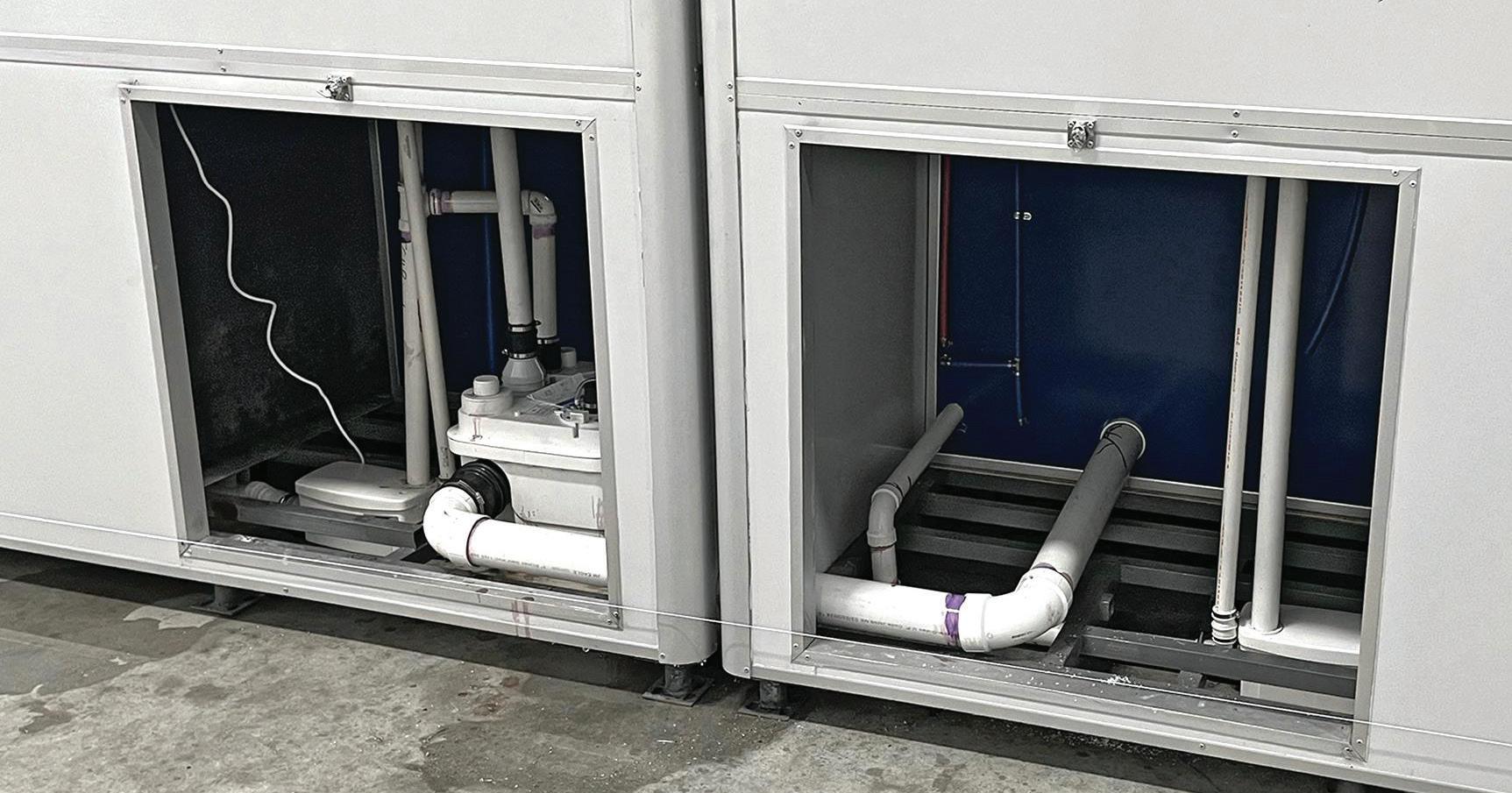
Within the 93-by-80-foot community center, a local plumber installed the modular layout: one Sanicubic 1 unit connected to two toilets and two sinks, with each shower draining through a dedicated Sanishower pump. The Sanicubic units were placed directly on the floor, discharging 15 feet vertically and 70 feet horizontally into the municipal sewer.
Smooth Installation, Reliable Results
The installation went smoothly, supported by Saniflo’s quick response and technical guidance. Johnson says the collaboration proved highly effective: “From a customer service standpoint, Saniflo did a great job taking care of us and ensuring we had everything we needed.”
The pumps have performed reliably since the project’s completion in September 2024, providing Guardian Booth and their client with confidence in both the setup and ongoing support.
“Now that we have familiarized ourselves with this type of setup for
remote applications, we can definitely see using this system more,” Johnson notes. “It’s ideal for structures that don’t have a standard plumbing setup, and it’s perfect for those unique scenarios where a pump system is necessary.”
Guardian Booth has assured its client that if issues arise, SFA Saniflo’s USbased service team can deliver fast, effective support. “Now that we’ve seen how well this works in the field, we’ll definitely consider using this system again,” Johnson adds.
Note: this case study was rewritten with help from generative AI.
Guardian Booth provided modular patient rooms for a FEMA-funded community center retrofit, serving as a temporary hospital after devastating tornadoes in 2020.
The Sanishower had its own dedicated discharge line to ensure proper drainage.
Guardian Booth and their client hired a local plumber to install one Sanicubic 1 unit for two toilets and two sinks, with the shower draining into a Sanishower.
Saniflo
Saniflo
Saniflo
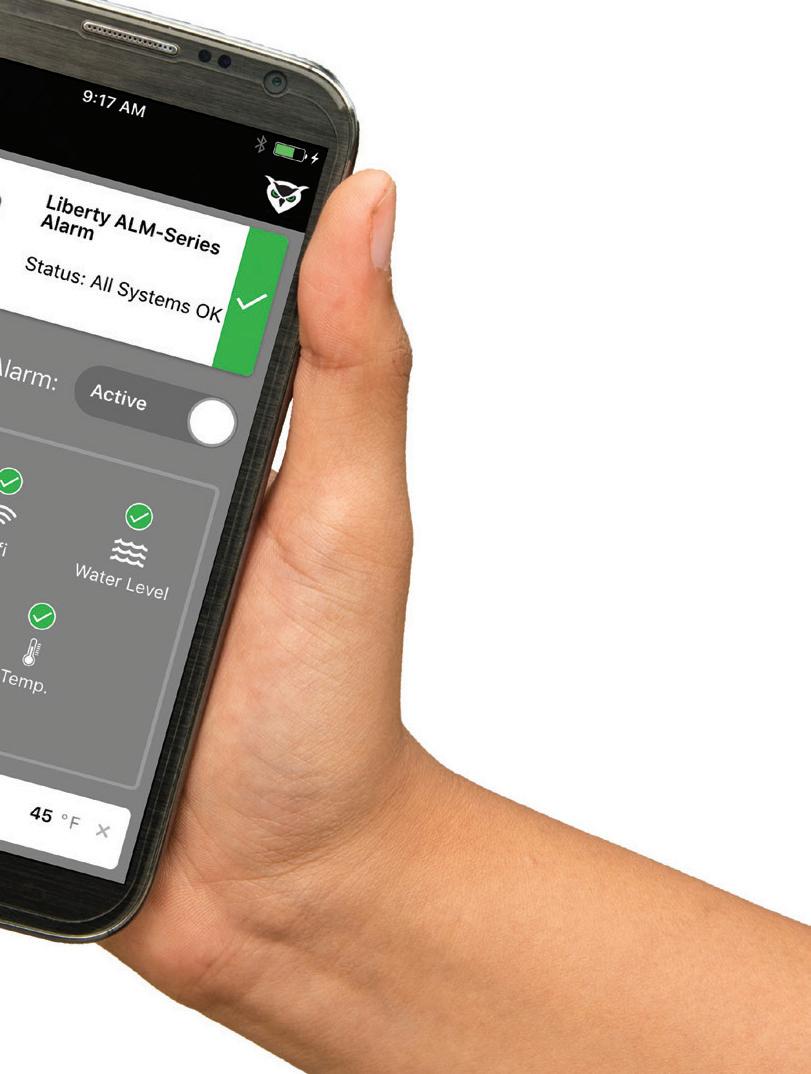
Know what's happening with your pump - anywhere in the world, with NightEye® wireless connected products by Liberty Pumps. SAFETY AND PEACE OF MIND WHILE AWAY FROM HOME.
• Free app download
• Cloud-based system designed exclusively by Liberty Pumps
• No service or subscription fees
• Works through your home's wireless router
• Connect using simple BlinkUp™ technology - no PC required
• Available on pump alarms and emergency back-up pumps
• Apple® iOS and Android® compatible
• One NightEye® app can support multiple devices/installations (Separate control/alarm unit required for each installation)
• User-defined low basement temperature alert
Fed Efficiency Rules Face Uncertainty as Lawmakers, Agencies & Courts Reassess
➤ Continued from page 1 expect significant revisions to be proposed until at least next year.
“We’re working with the Trump Administration and the Department of Energy on understanding existing rules, how they were developed, and identifying opportunities to protect consumers from the rising costs of new equipment,” said Alex Ayers , Vice President of Government Affairs for Heating, Air conditioning, and Refrigeration Distributors International.
But for many, current and potentially forthcoming regulatory changes are already demonstrative of a significant shift in approach between the Biden and Trump administrations.
Biden-Era Regulations and Trump-Era Rollbacks
During the Biden administration, a sweeping set of energy efficiency regulations dramatically increased federal oversight on consumer products, prompting manufacturers to adjust.
“The Biden Administration put out a lot of energy efficiency rules over the last four years, which have pushed much of
If the court rules against stricter standards, it would set a precedent which makes it harder for DOE to implement aggressive rulemaking in the future.
the industry to look for ways to reduce the economic impact of continuous rulemakings on consumers,” Ayers said.
That aggressive regulatory posture stands in stark contrast to the Trump administration, which has focused heavily on eliminating regulatory oversight for companies and products and leading rollbacks through the Congressional Review Act (CRA).
One final Biden-era rule issued in December 2024, for example, related to efficiency standards for gas-fired tankless water heaters. The rule would have required consumer units to use about 13% less energy than today’s least efficient models, but was nixed when requirements were returned to baseline standards in May.
Current Water Heater Regulation Timeline
Residential Water Heaters
Effective date: May 6, 2029.
• Key change for electric storage models:
For new units between 20 and 120 gallons, heat pump technology will be required, a major shift from current electric resistance models.
• Key change for gas storage models:
New units under 20 gallons will have new energy factor (UEF) standards added. New units between 20 and 55 gallons will require an added damper for efficiency.
New units over 100 gallons will have new UEF standards.
• Insulation:
Increased insulation will be required for many models, which may lead to a slight increase in the physical size of newer units.
• Gas tankless models:
A December 2024 rule which would have banned non-condensing models was repealed in April 2025.
Commercial Water Heaters
Effective date: October 6, 2026.
• New gas commercial water heaters must be high-efficiency (condensing) models.
“Products are already much more efficient now,” said Chuck White, Vice President of Regulatory Affairs for the Plumbing, Heating, Cooling Contractors National Association, which supported the rule withdrawal.
“When you look at how much savings you can generate, there were a lot of savings when we started with 60% efficiency, but if you’re already at 85% or 90% efficiency, you keep having smaller increases, so it’s diminishing returns.”
Congressional Pushback
Since this spring, when nine CRA resolutions were signed into law, Congress has tried to further scale back the federal government’s regulatory thumb, including by making a renewed push to advance the Energy Choice Act (ECA), which would prohibit states from mandating a single type of fuel for appliances such as water heaters.
“We support consumer choice, electric or gas, because we have members that make both,” White said. “This bill would ensure that states allow both options, whether it’s a heat pump water heater, or a gas model.”
In July, lawmakers also introduced a bill aimed at reforming the Energy Policy and Conservation Act (EPCA) by requiring that any new standards be both technologically feasible and economically justified to account for the costs and real-world impacts of new regulations. Specifically, the bill would also make it more difficult for the Department of Energy (DOE) to tighten flow rate limits on faucets and showerheads and prevent the adoption of stricter efficiency requirements for boilers and water heaters.
While limiting the authority of DOE to update rules is a main aim of the Act, however, some regulations look like they may be influenced through executive orders anyway—without going through Congress at all.
Courts and Executive Orders
In 2020, President Trump signed an executive order altering the flow rate limits of showerheads, reversing an Obama-era standard. The Biden administration then reversed Trump’s change, which Trump reversed again in an executive order on April 9, 2025.
The debate has centered on whether limits apply to a single shower head or all devices in a shower compartment: Under one interpretation, all combined outlets couldn’t exceed 2.5 gallons per minute at 80 pounds per square inch; under another, each individual device installed on a wall could meet that limit.
When it comes to water heaters, furnaces, and boilers, the courts may have a say, too. In relation to commercial boiler efficiencies, a forthcoming ruling issued by the US Court of Appeals for the District of Columbia could open the door for the Trump administration to reintroduce more flexible standards. If the court rules against stricter standards, it would set a precedent which makes it harder for DOE to implement aggressive rulemaking in the future.
For White, of the Plumbing, Heating, Cooling Contractors National Association, there is no telling what will happen on so many fronts, with certain areas of the legislative process decelerating, and other regulatory changes enacted through the Administration and Congress.
“We’re waiting on a lot of things,” White said. “To some extent there’s a bit of guesswork going on.”
Natalie Olsen is an independent journalist and former editor for The Associated Press. Her work has been featured in The New York Times, Washington Post Magazine, Los Angeles Times and many other outlets.
Supports Digestion of Solids
Scientifically proven to break down food waste to support your customer’s septic system 2
Septic Safe Non-corrosive and safe for plumbing and septic fields
Scent Fresh citrus scent helps reduce odors
Compatible with all InSinkErator® Disposals
Contractors Face Record Data Center Demand as AI Drives Market Expansion
➤ Continued from page 1
tion across the country, along with what it means for engineering, contracting, and trades professionals in one of the fastest-growing segments of nonresidential construction.
Report Highlights Data Center Construction’s Unprecedented Acceleration
The 17-page report blends analyst forecasts, MSI’s proprietary capital deployment data, and project-level research to provide a comprehensive snapshot of the US data center construction market through 2030. MSI Economics’ findings point to near-term growth that’s significantly outpacing traditional long-range models—suggesting that depending on compound annual growth rates (CAGR) alone could lead to underprepared planning around labor, infrastructure, and capital.
While most models project 15%–30% CAGR through the decade—with some AI-related forecasts reaching as high as 65%—MSI’s near-term data shows even more aggressive, front-loaded activity already underway.
Tracking the Real Size and Impact of the Boom
MSI Economics analyzed more than a dozen market forecasts and combined them with data on committed projects, power utility filings, and permitting
pipelines. The resulting picture shows rapid expansion in data center construction tied to AI training demand and hyperscale cloud growth—tempered by growing pressure on grid capacity, skilled labor, and long-lead equipment.
Key Findings
• Contractors remain central: Contractors will continue to capture the majority of spend as engineers and architects focus on solving complex power and cooling challenges.
• $86 billion surge in 2026: AI-driven demand and secured power positions will push US market growth sharply higher.
• Grid constraints: Transmission interconnection timelines have stretched significantly, with gigawatt-scale projects competing for limited capacity.
• Labor shortages: Skilled workforce gaps remain a major bottleneck across trades.
• Permitting delays: Site approvals often stretch from six to 18 months across building, environmental, and utility agencies.
• Equipment lead times: Transformers, switchgear, and generators are seeing procurement windows as long as 80–210 weeks.
• Technology adoption accelerating: Rapid digitization of project delivery will shape which firms come out ahead.
Real-Time Data Beats Long-Term Models
“For stakeholders, the message is clear: relying solely on smooth CAGR models risks underestimating the current boom,” said Brandon Michalski , MSI’s principal economist and author of the report. “Firms must anchor their planning in real-time capital deployment, project-level data, and the realities of grid interconnection queues, labor bottlenecks, and equipment lead times. Success will come to those who can balance near-term intensity with long-term adaptability—designing projects that meet today’s requirements while retaining flexibility for the next wave of growth.”
A Resource for Construction and Trades Professionals
The report provides actionable insights for firms involved in data center design, construction, and infrastructure delivery—particularly contractors navigating the intersections of power, cooling, and digital infrastructure. It also serves as a reference for investors, industry analysts, and journalists tracking the expansion of US data center capacity through the decade.
To download the report visit mocasystems.com/ wp-content/uploads/2025/10/MSIDataCenterReport_ Final.pdf
To learn more about MOCA Systems, visit systems.com.
Infrastructure and Data Centers Drive Construction Confidence in September
WASHINGTON, DC — Associated Builders and Contractors has reported that its Construction Backlog Indicator remained unchanged at 8.5 months in September, according to an ABC member survey conducted Sept. 22 to Oct. 6. The reading is down 0.1 months since September 2024.
Over the past year, backlog has declined in the commercial and institutional and heavy industrial categories, while it has increased substantially in the infrastructure category.
ABC’s Construction Confidence Index reading for sales declined in September, while the readings for profit margins and staffing both increased. The readings for all three components remain above the threshold of 50, indicating expectations for growth over the next six months.
View ABC’s Construction Backlog Indicator and Construction Confidence Index tables for September, or view the full Construction Backlog Indicator and Construction Confidence Index data series by visiting www.abc.org.
“Falling industry-wide employment, a dearth of job openings and ongoing decreases in construc tion spending have not diminished ABC contractor member backlog or confidence,” said ABC Chief Economist Anirban Basu. “This stability primarily stems from two sources. First, public sector activity has held up far better than its private counterpart, and that is supporting elevated backlog in the infra structure category.
“The second source of industry momentum is, un surprisingly, data centers,” said Basu. “Approximately 1 in 5 contractors was under contract to work on a data center project in September. While that’s a slightly lower share than in August, contractors that have data center work had significantly higher backlog (12.0 months) than those who did not (8.0 months).”
One brand. Every application. Only Weil-McLain.®
The trusted leader in hydronics, offering a wide range of energy-efficient solutions for a changing world.
Weil-McLain is redefining hydronics with smart, sustainable solutions for every space. From our unmatched lineup of high-efficiency and cast iron boilers to next-gen innovations like heat pumps and hybrid systems, our contractor-friendly designs simplify installation and maintenance while delivering long-lasting performance for residential, commercial or institutional applications.
Backed by over 140 years of excellence, we continue to lead the way, helping contractors stay ahead—today, tomorrow and beyond. Explore our full offering on our website.
SCAN TO LEARN MORE
by Al Schwartz
Sales and Salesmanship in Your Contracting Business
There have been many columns written on markets, marketing and market share, as well as presentation by both you and your employees. It all comes down to one thing: if you are in business, you are in business to make money. In today’s atmosphere, that is not always a concept that is absolute, but the fact is that if you are in business, you are there to make a profit... period!
There is just no other way to explain why a person (or persons) would choose to put everything that they own, or have, on the line to work sixteen- or eighteen-hour days, six or seven days a week for months (if not years) on end. You give up your free time, strain familial bonds, incur debt that sometimes seem so crushing you cannot see how you’ll ever repay it, scramble for work, do the work, bid, bid, bid and bid some more, all for the elusive goal of seeing your efforts produce a successful business.
This business would, ostensibly, be capable of producing enough income to pay your bills, taxes, suppliers, insurances, and employee’s (assuming you have some) wages and leave enough behind to repay you for your effort. Then maybe, just maybe, put enough away for maintenance and vehicle repairs (that always pop up at exactly the wrong time), or the rainy days you know will come around. If you’re really lucky, or good, or both, the cycle will keep going and you’ll have a successful business. At some point, it becomes obvious that you will need to sell your services to the public. This usually comes about sooner, rather than later, and takes the form of prospecting for new business to keep the fires of commerce fed.
If you’re a service-oriented operation, you’ll probably look into advertising at a local level at first, social media, internet advertising, or some other electronic means of getting your message out. In more rural or suburban areas, you might try printing flyers and stuffing mailboxes (old school, I know, but effective nonetheless) or some other form of print media (radio ads are expensive, to say the least).
Some people are born salesman. Others become so by necessity or accident. Still others need help of the outside kind.
If new residential or commercial construction and/or remodel is your area of expertise, you’ll need a different, more personal approach. The most effective way is to sell yourself, and your company, face to face to the prospective clients at, say, a booth at a home and garden show. Dollars spent on such a venue are usually high, but the rewards can be great.
Of Sales and Salesmen
Some people are born salesman. Others become so by necessity or accident. Still others need help of the outside kind. Let us say that businessman A is a good journeyman who interacts with people well. He can carry a conversation and is well enough versed in his business and the accompanying products that he can sell his company to a new client. Whether or not the sale involves a new faucet, water heater, A/C unit,
bath or kitchen remodel or his ability to perform on a large commercial project, doesn’t matter, businessman A can sell it to the customer. The more he sells, the better his chances of being successful. So he has become not only the means of production, but the sales force as well.
Businessman B, on the other hand, is an outstanding journeyman too, but doesn’t do well with people. Either he is shy, lacks self-confidence, has a speech impediment (actually a true story) or just plain doesn’t like to sell. For whatever reason businessman B needs a different approach to expanding his business. Word-of-mouth is great, but only goes so far. Getting the word out especially in today’s interconnected world, means selling your company at the top of your lungs.
What is businessman B ’s answer? If he can’t or won’t sell, get someone
who can. Hiring a professional salesman or training an employee to sell is the most expedient way to get the business you want and need. What good does it do you to struggle along picking up a little work here and there when a sound sales program could bring in more work than you could do? Starting a sales program doesn’t have to be a large investment, but it can certainly pay large dividends.
Leads, Calls, Presentations, Closings
There are thousands of websites containing millions of words and articles as well as books available on sales and selling. They encompass everything in the world that has been or could be bought and sold, and the techniques for being successful at selling. It is entirely possible that many are better at marketing their ideas for selling then actually selling anything, but that isn’t the point. They all come down to ratios. The ratio of sales leads to calls to presentations to closings. It looks something like this:
X (number of sales leads) = Y (number of sales calls) = Z (number of presentations) = $$$ (number of closed sales)
The ratio numbers vary according to the success of the salesman, with the goal of reducing the numbers down to a 1:1 conclusion (i.e. one sales lead, one call, one presentation, one closing). The entire exercise is, of course to bring more business to you. Success at any level means success at all levels in this case. When it is your business on the line, you owe it to yourself to make the best effort you can to keep it alive and thriving. Good salesmanship and good business sense spell success.
The Brooklyn, N.Y.-born author is a retired third generation master plumber. He founded Sunflower Plumbing & Heating in Shirley, N.Y., in 1975 and A Professional Commercial Plumbing Inc. in Phoenix in 1980. He holds residential, commercial, industrial and solar plumbing licenses and is certified in welding, clean rooms, polypropylene gas fusion and medical gas piping. He can be reached at omeletman01@gmail.com.
From 3D to Prefab to Modular: Codes Can be the Affordable Housing Catalyst
BY STEVE SPAULDING OF CONTRACTOR’S STAFF
WASHINGTON, DC — The Department of Housing and Urban Development’s Innovative Housing Showcase was held September 6-10 on the National Mall. The annual event raises awareness of innovative and affordable housing designs and technologies that have the potential to increase housing supply, reduce barriers to construction, and build for stability.
This year the theme for the Showcase was “The American Home is the American Dream”, with a focus on history-defining events in housing, and the role homeownership plays in our national identity.
The Showcase kicked off with remarks from HUD Deputy Secretary Andrew Hughes and Senator Tim Scott (R-SC), Chairman of the Senate Committee on Banking, Housing and Urban Affairs. It included exhibits from prominent builders and building materials manufacturers, and educational panel sessions with experts from around the building industry.
One session was Breaking Down Regulatory Barriers, which discussed cutting-edge building technology and how to get it more rapidly into the construction pipeline. Panelists included Colt Davis, CEO of Clayton Home Building Group; Lesli Gooch, CEO of the Manufactured Housing Group, and Ryan Colker , Executive Director, Energy, Resilience & Innovation at the International Code Council.
[Editor’s note: you can view the full panel presentation at https://www.youtube.com/ watch?v=Qm-SZiaxTww.]
Colker spoke with CONTRACTOR about the work of the Code Council, the current housing affordability crisis, and how events like the Innovative Housing Showcase are creating opportunities for progress.
CONTRACTOR: Cutting-edge construction technologies present unique opportunities but pose a challenge to code development. How does the Code Council keep up with the latest developments? What sort of relationships have you needed to cultivate?
ICC’s Ryan Colker explains how thoughtful code development and evaluation processes are paving the way for safe, scalable adoption of nextgeneration building technologies.
Ryan Colker : It’s both a push and a pull to support bringing new technologies into the mainstream.
The nature of the code development process allows folks to bring their new approaches to the table. Anyone can participate in the code development process by proposing code changes and providing testimony. By updating the codes every three years, it allows for new research, technology and lessons learned to be incorporated into the codes on a timely basis.
The product evaluation process recognized in the codes allows for the use of new products that either may not have an existing standard or may not currently be recognized in the codes. This brings manufacturers to the ICC Evaluation Service, where we can establish acceptance criteria to validate new products.
We are also proactive through the development of guidelines and standards that bring experts together to dive into
technology which can be incorporated into the codes. Our off-site construction suite of guidelines and standards is a perfect example.
In 2019, we recognized the opportunities off-site construction provides to address numerous industry and societal challenges. However, approaches to approval of off-site constructed projects varied, creating inefficiencies. We partnered with the Modular Building Institute (MBI) to develop a suite of standards that can drive consistency.
Those standards have already been adopted in five states and are currently being considered for incorporation into the 2027 International Building Code® and International Residential Code®. In addition, guidelines also provide an opportunity for us to identify new or emerging approaches. For example, Guideline 6 provides strategies to facilitate the productization of closed panels and has been adopted in Colorado.
My team participates in a variety of industry events both in the US and internationally to identify new approaches and solutions. From there, we can bring them back to identify how they best fit within the ICC solution set.
CONTRACTOR: The US faces a housing affordability crisis, and the hope is 3D printing, prefabrication and modular construction could be (part of) the answer. How does good code development spur the safe adoption and wider promotion of these technologies?
Colker: The codes and standards development process itself provides the mechanism to ensure that new technologies are vetted and deliver the safety and affordability needed. Stakeholders from across the industry, including builders, manufacturers, fire and building safety officials, advocates and others identify the pros and cons that come with adopting new technology. Ultimately, the competing perspectives are optimized to deliver a balanced, consensus-based approach that has buy-in from across the industry. This provides confidence to key industry stakeholders, allowing solutions to scale.
Once new technologies and practices are recognized within the codes ecosystem, designers, contractors and code officials can have confidence in the approach, expanding use.
CONTRACTOR: Part of the mission of the HUD Innovative Housing Showcase is building public awareness. What is the Code Council’s message at the showcase to the wider public?
Colker: The Showcase is an opportunity for innovators in the industry to collaborate. Working together, we assist them in bringing their innovations to the market. Because new technologies and practices often come with skepticism from both the industry and the public, our role is to build confidence in these innovations through codes, standards, product evaluation, plan review and inspection to address critical issues such as the housing crisis.
ICC’s Ryan Colker speaks at the Innovative Housing Showcase on the National Mall in Washington, DC.
By Steve Spaulding, Editor-in-Chief
Titan Construction Transforms Aging Bowling Alley into Modern Fitness Facility
To meet the high demands of Iron Culture’s newest location, Titan Construction Management redesigned every system—from hot water and HVAC to gas and sewer— creating an efficient, high-performance gym for the 21st century.
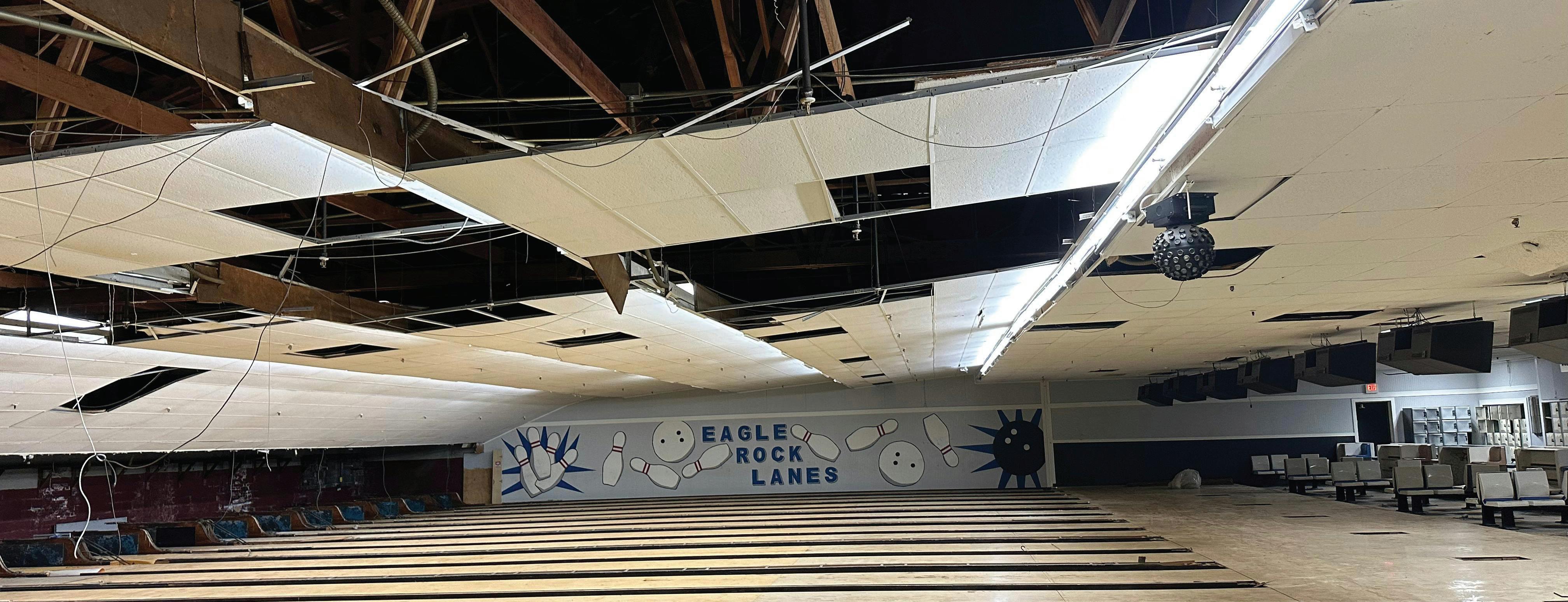
WEST ORANGE, NJ — Thanks in part to the invention of the automatic pinsetter, the 1950s saw a bowling craze sweep the nation. At its peak, more than 20 million Americans were regular bowlers, and bowling alleys, such as Eagle Rock Lanes in West Orange, NJ, were popping up in major cities like mushrooms.
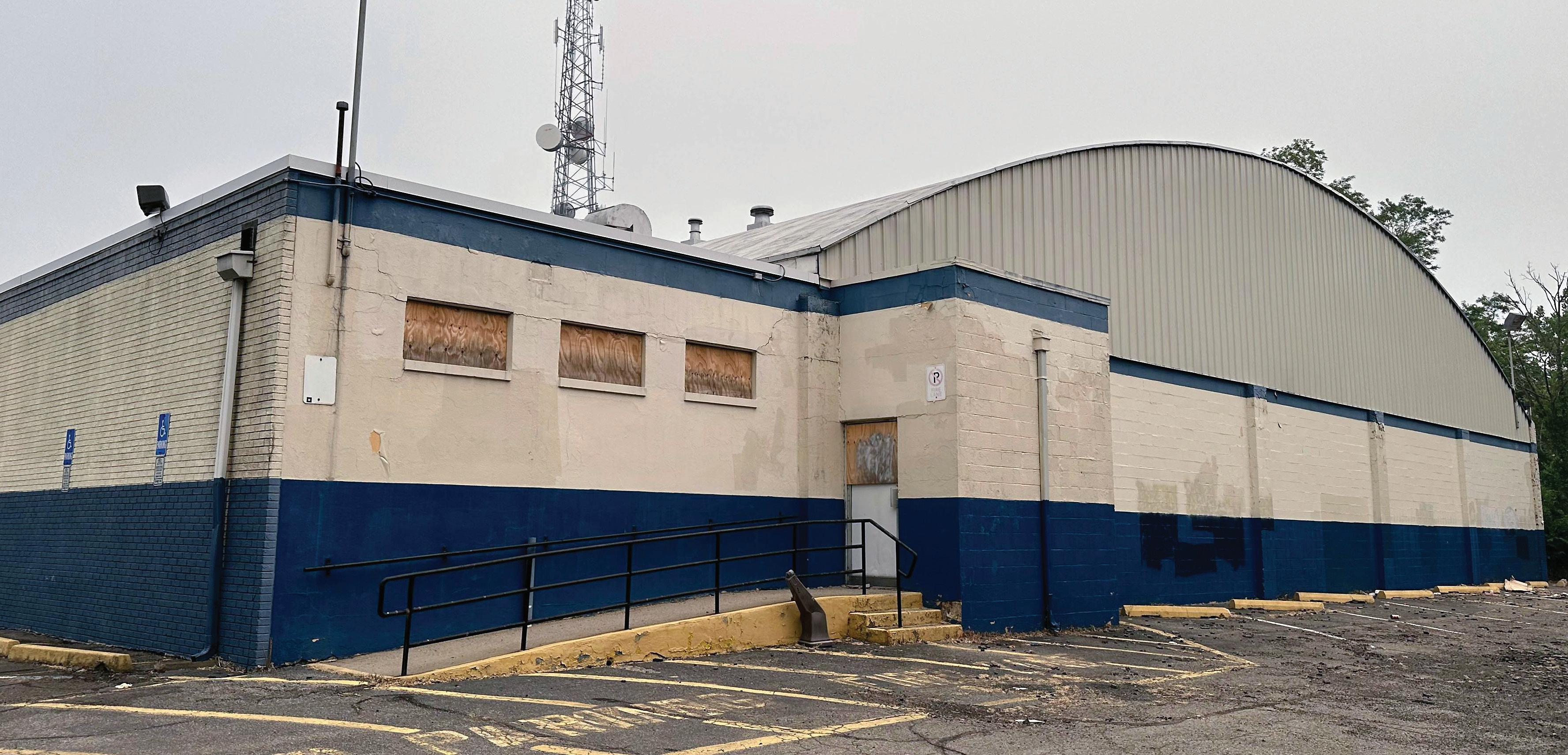
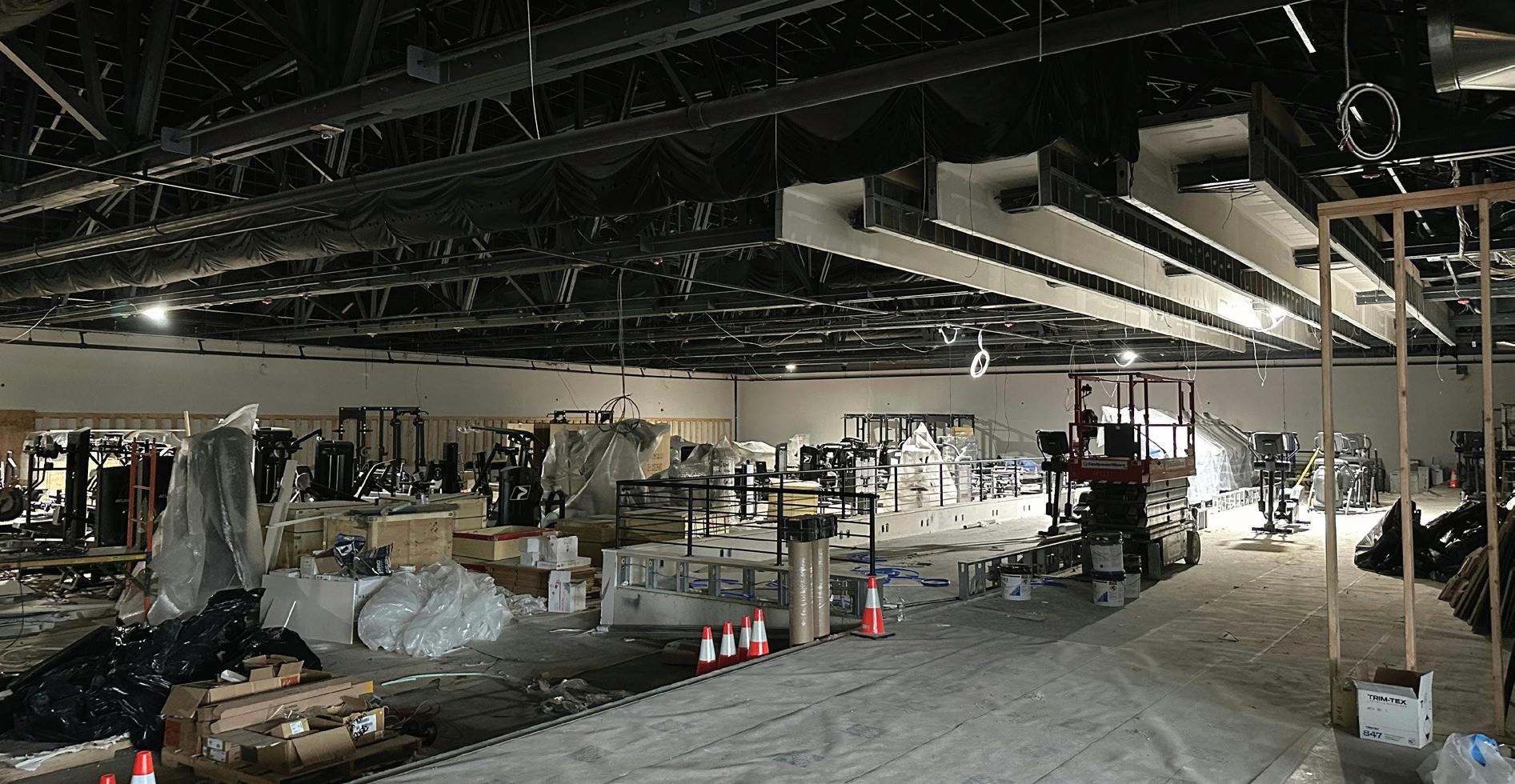
Fast forward to the 2020s and Eagle Rock Lanes had fallen on hard times with the 26,000 sq. ft. community landmark in a bad state of disrepair. Enter Arthur Imperatore, Jr., the founder of Iron Culture Gym, who was looking for a third location for his thriving fitness business.
Iron Culture offers workout space, personal training, group classes, and all the amenities of a modern fitness enterprise—but the company has also stressed fostering community among its members and with its neighbors. The West Orange location reinforces Iron Culture’s role not just as a fitness operator, but as a redevelopment partner breathing new energy into underutilized spaces.
A cost-effective, efficient plan to retain the most desired qualities of the old bowling alley while serving the needs of the new fitness center involved a process of adaptive reuse—a practice that’s been around for centuries, but since the 1970s has been embraced by the sustainable building movement.
Titan Construction Management
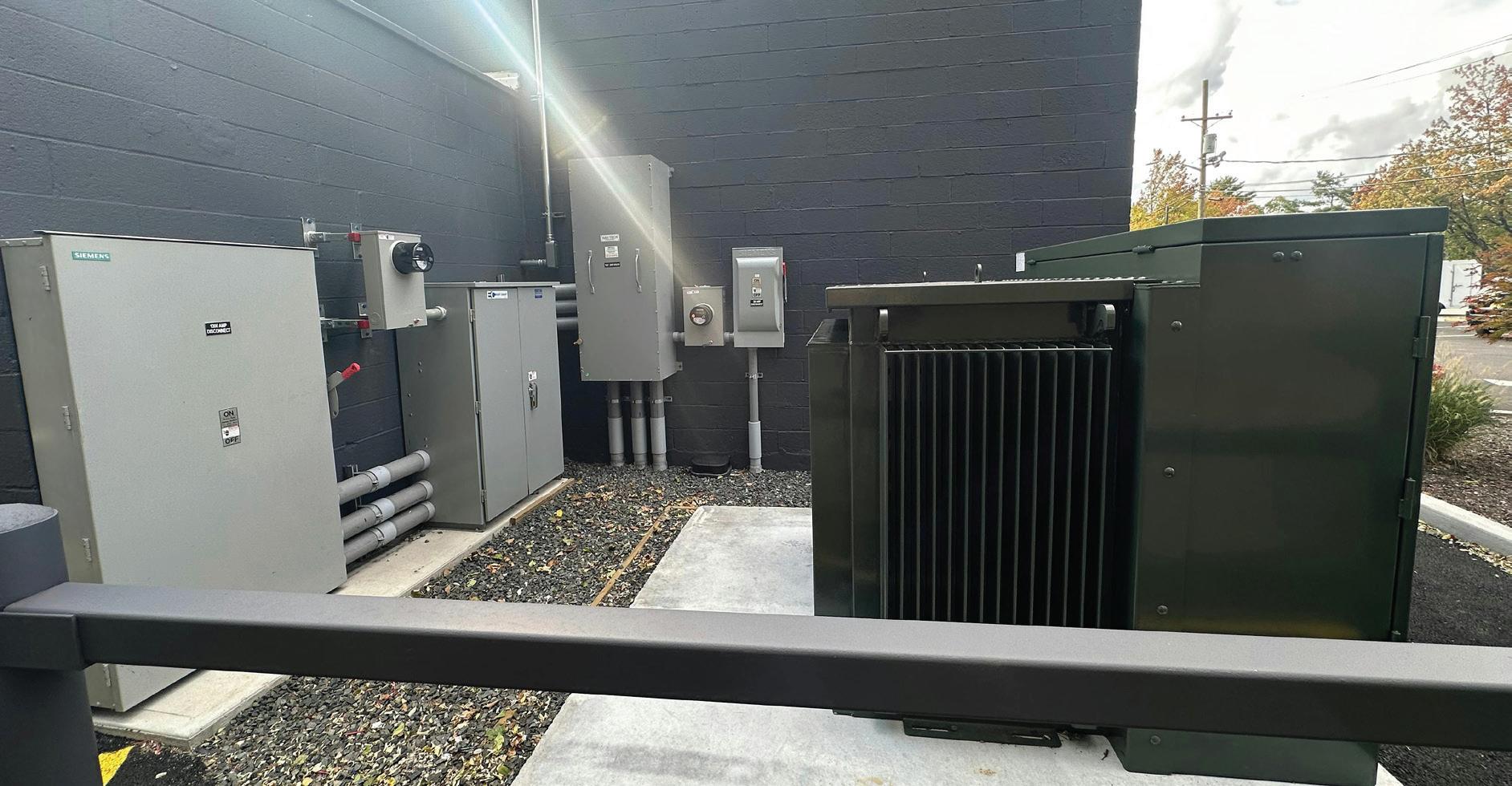
To complete the transformation, Iron Culture turned to Titan Construction Management of Fairfield, NJ. Titan has extensive experience in a variety of sectors, including restaurants, nightclubs, fitness centers, office space, retail, and various high-end projects. Apart from the building’s structural and cosmetic challenges, a key concern of the project was the projected increase in hot water demand. “The bowling alley’s domestic water, sanitary sewer and gas systems were cut outside the building and completely redesigned to service the gym’s increased demands,” John Hughes, Principal at TCM and Project Lead,
An exterior view of Eagle Rock Lanes, prior to the renovation.
An interior shot, prior to the renovation.
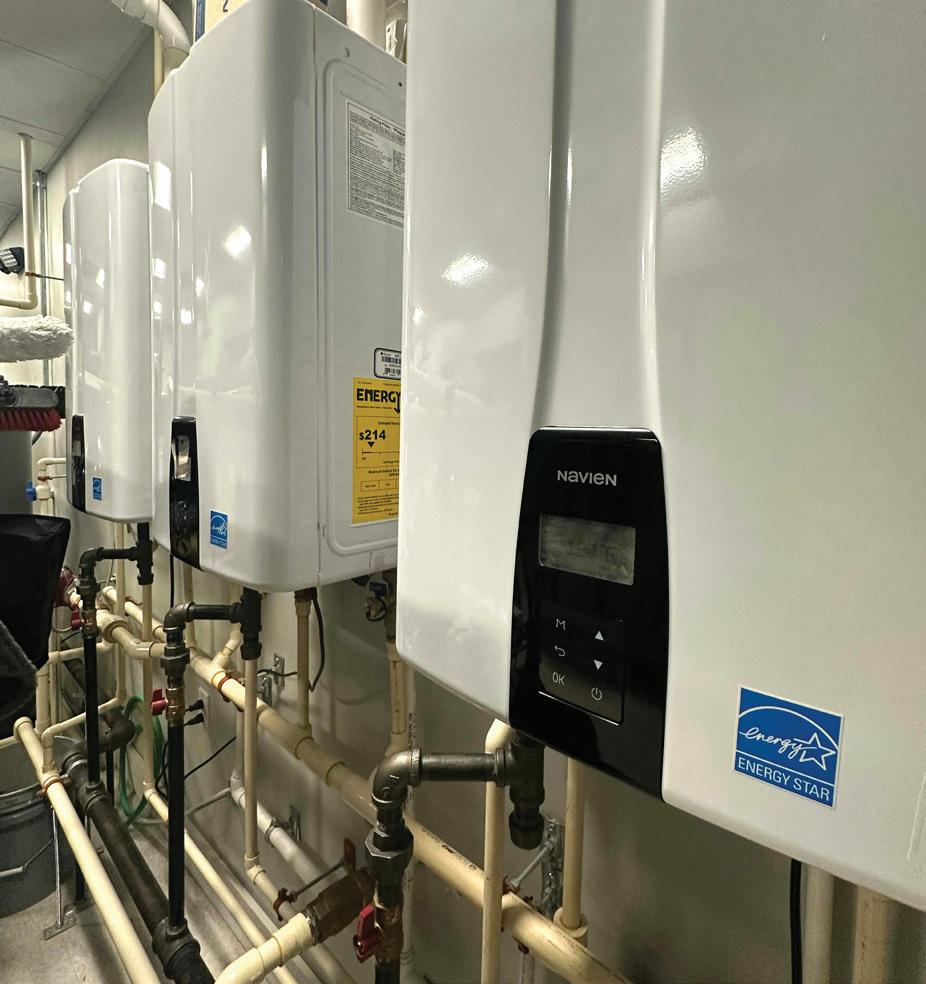
Three Navien NPE-240S2 units.
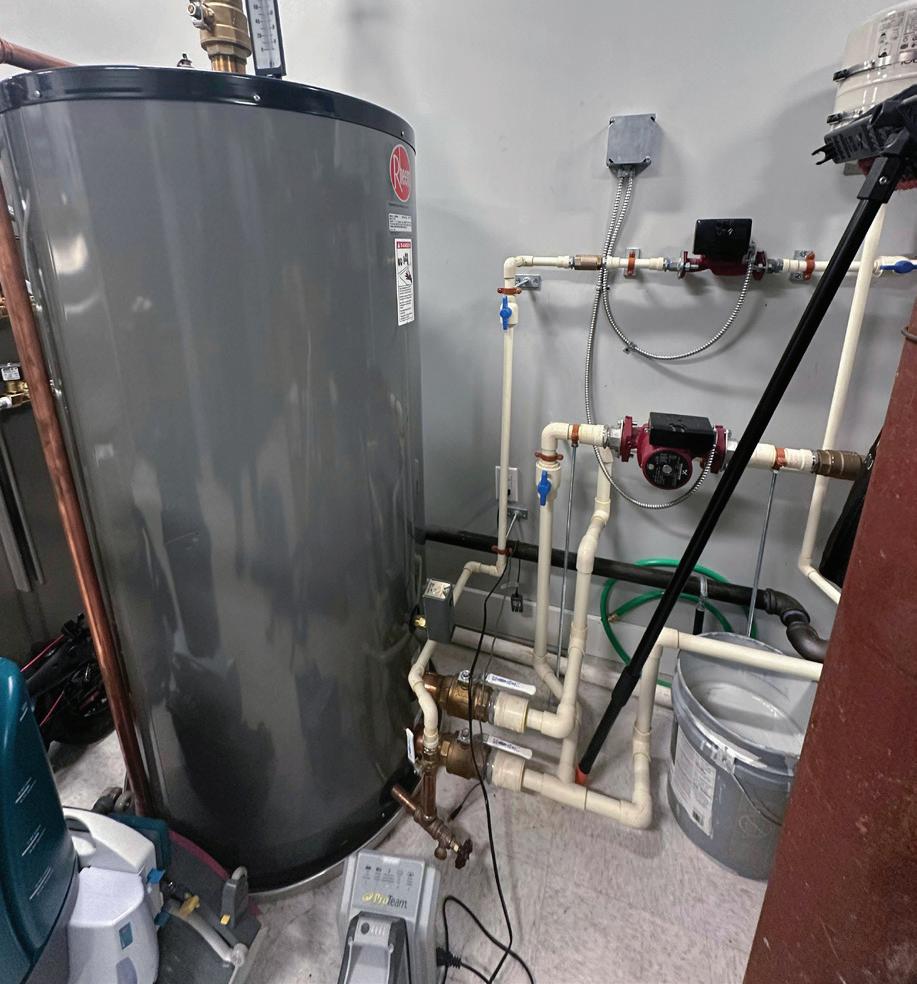
The Rheem storage tank with external piping and circulators.
A high pressure gas distribution system was installed to feed the buildings seven rooftop HVAC units and gas dryers.
TCM
TCM
Violet PR
said. “TCM was tasked with the base building design, and we worked closely with our MEP engineer to join an open, modern layout with efficient utility design.”
Unique Demands
The redesign began by considering the unique needs of a high-traffic fitness center: elevated hot water demand per occupant, and usage peaks during the morning rush and after-work crowds.
To meet that demand, three Navien 95% AFUE, 200K BTU tankless boilers cascade and fill a 300-gallon reserve hot water tank from Rheem. The Navien NPE240S2 units feature condensing efficiency, dual stainless steel heat exchangers, and low NOx emissions. Up to 12 units can be common-vented. An aquastat-governed recirculation system delivers hot water quickly while maintaining system efficiency.
A 2” RPZ protected copper water service starts off the domestic water system and transitions to CPVC above-ceiling. The facility features twelve rainshowers from Brizo, nine wall hung water closets from American Standard, three urinals using Sloan flushometers, and eight lavatories with Moen faucets servicing the main locker room area.
Since clean people need clean towels, a 110 lb commercial Milnor extractor and two stacked gas dryers serve as the backbone to the facility’s in-house towel cleaning operations.
The new sanitary sewer was cut through the building’s concrete slab and tied into the cast iron street lateral outside of the foundation wall. This sanitary design incorporated the strategic placement of floor drains and cleanouts to ensure ease of maintenance, without placing unsightly metal access plates in highly visible areas.
A high-pressure gas distribution system was installed to feed the building’s seven rooftop HVAC units and gas dryers. 120 tons of installed rooftop HVAC ca-
pacity heat and cool an air volume of approximately 600,000 cubic feet. 100 tons are supplied to the open gym floor via ceiling-hung, linearly perforated fabric ducts, while the remaining 20 tons are distributed through traditional ceiling registers.
Finishing Touches
The project worked to preserve core elements of the site while integrating modern building systems and finishes. The new fitness center features high ceilings—
Equipment List
Wall boilers: Navien NPE-240S2NG
Commercial storage tank: Rheem ST120
Recirculators: Grundfos UPS 15-55 SFC
Washer-extractor: Milnor 36026 V5J
Dryer: Wascomat D750SS
Wall-hung toilet: American Standard 3351191.020
Flushometer: Sloan Royal 111 ES-S
Rainshower system: Brizo T60280-PC
Trough lavatory: Sophstone - Custom 144”
Deck mount lavatory faucets: Moen CA8302BL
Commercial refrigeration: MoTak MSD-2DR-BAL-35
Commercial freezer: MoTak MSD-2DF-BAL-35
Built-in architectural coolers:
Structural Concepts C53R-UC
High-temp dishwasher: MoTak MUC-HT30
Underbar ice maker: Scotsman CU50PA-1
In-wall water dispensers: Elkay EZH20 EZWS-ERPBM8K
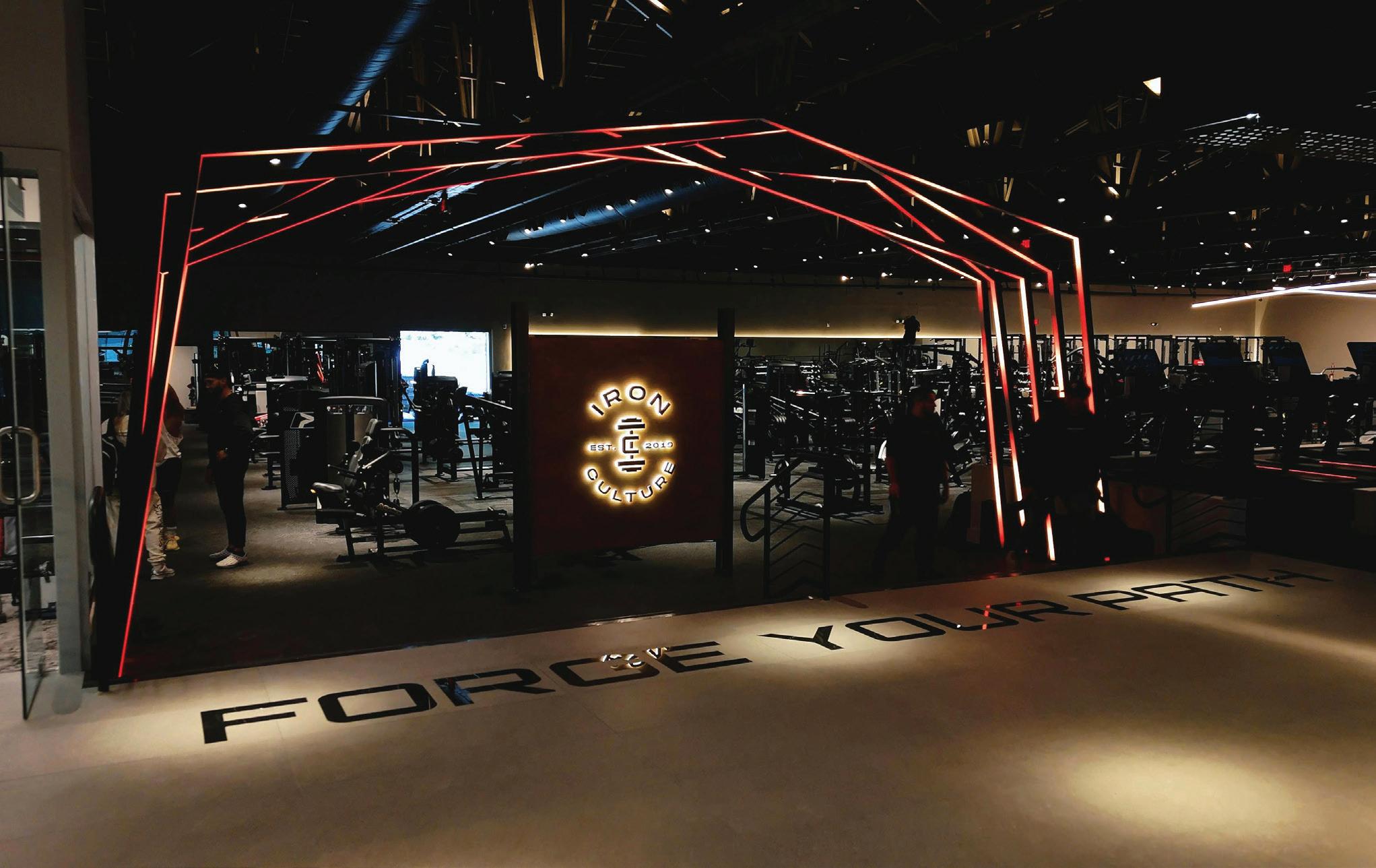
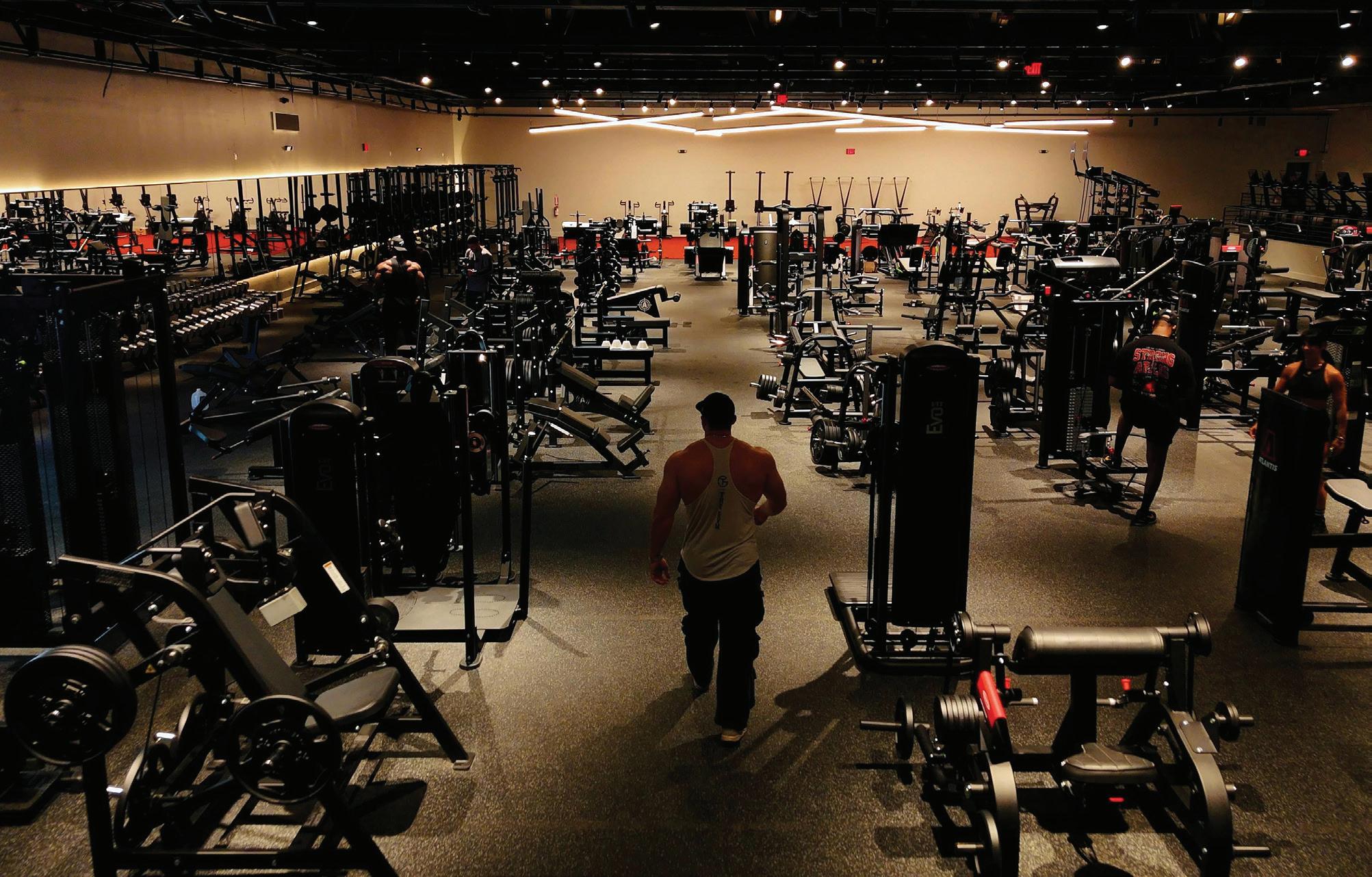
extending to 34’ at the apex—as well as re-leveled flooring. The remodeled entryway features a gritty/ industrial look with metallic finishes that helps reinforce the Iron Culture brand identity. The finished facility also offers immersive lighting and mirrors, and thousands of square feet of amenity space.
The new gym is now open and ready for business. The build-out has given the formerly-dormant property new economic and social life, attracting members from across Essex County, NJ, and beyond.
An interior view of the renovated gym.
Another view of the new gym.
Violet PR
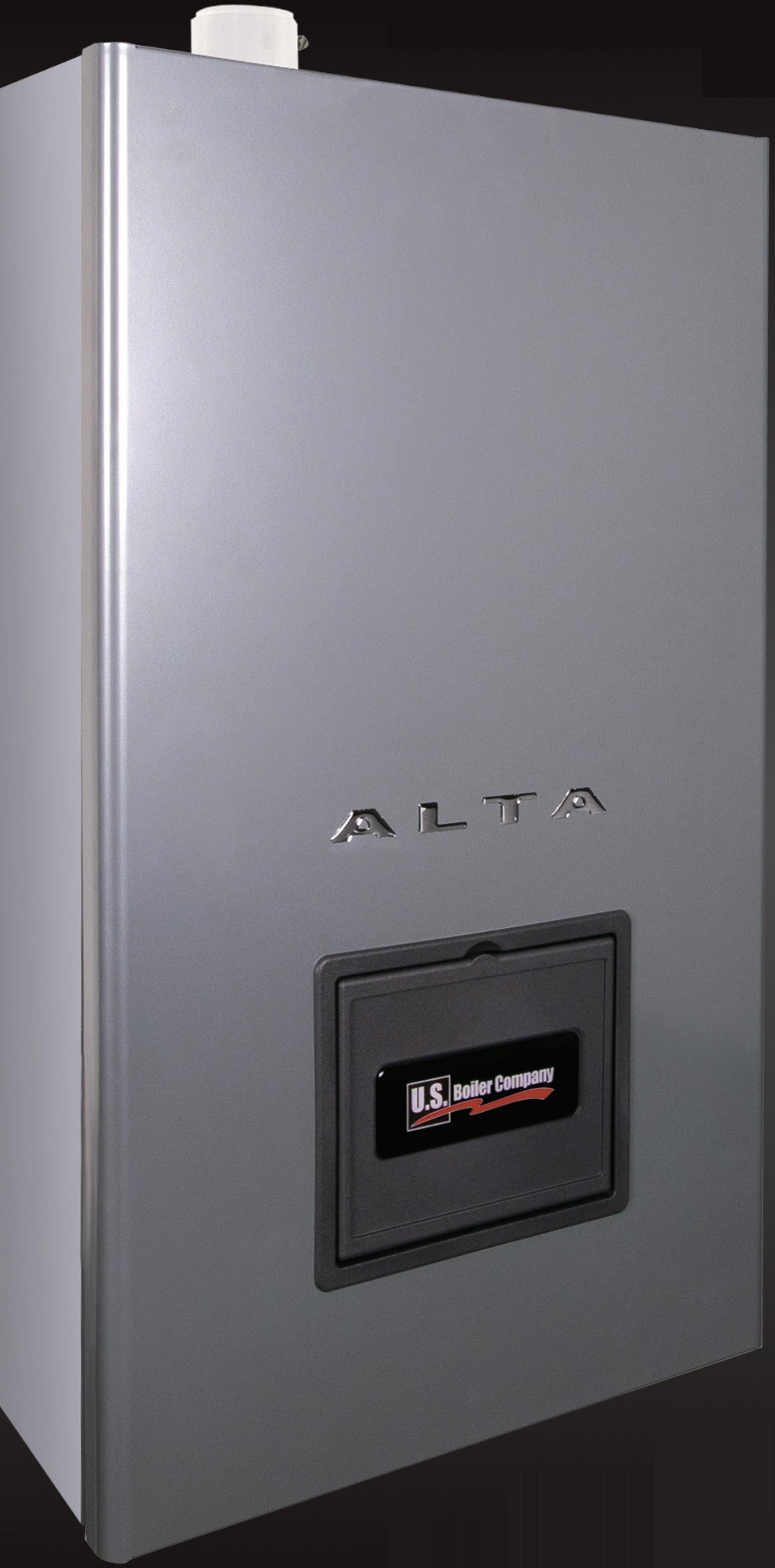
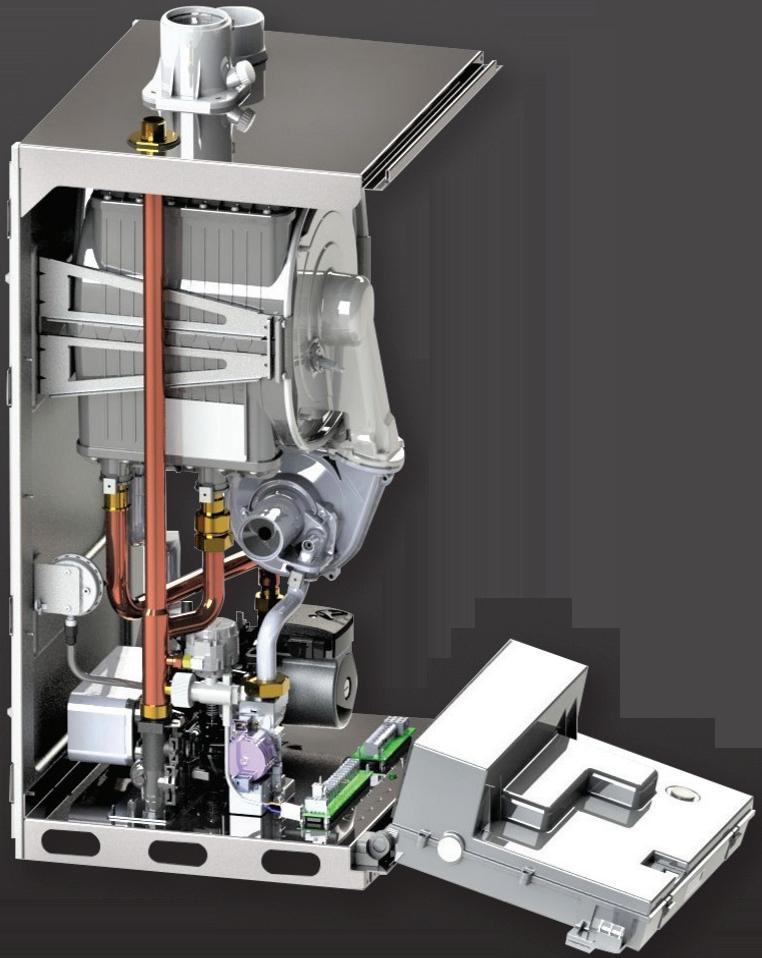
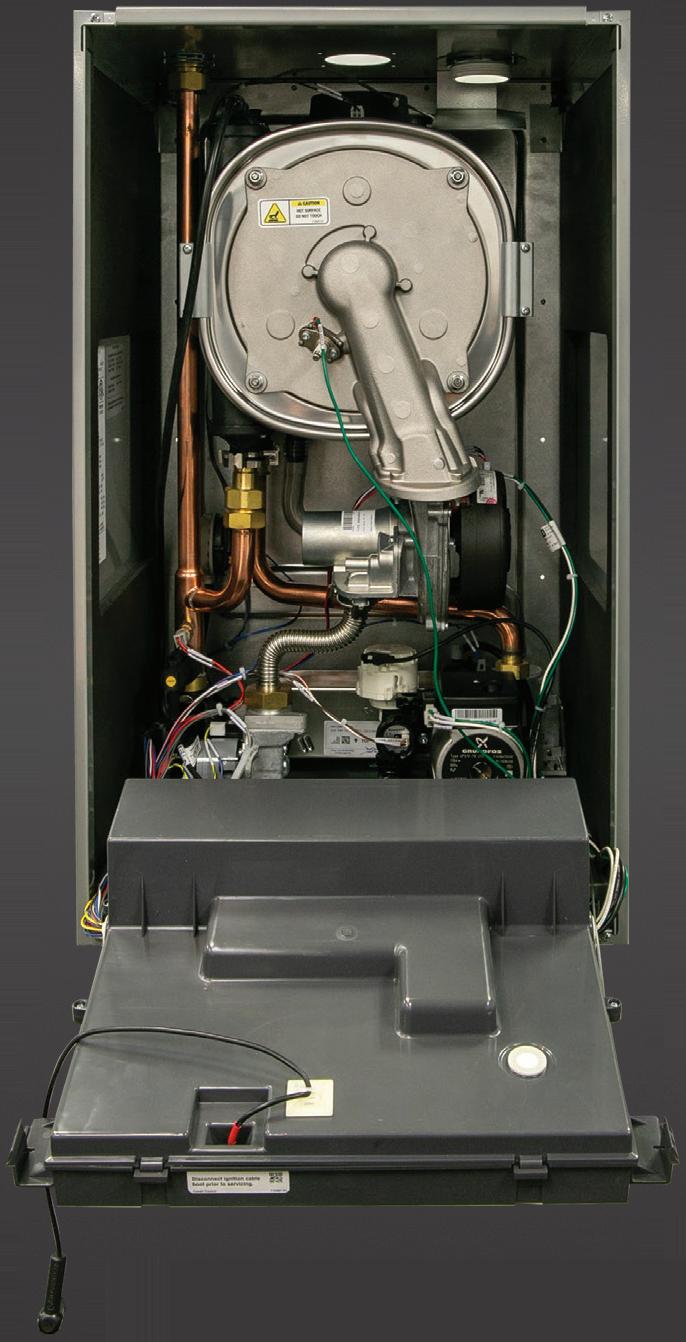
What’s the easiest way to handle tight service space inside a high efficiency boiler?
Just open the front panel and drop the hinged control enclosure to see the difference. Need more? Simply remove four screws and take the side panels off for unobstructed access.
Presented
by Patrick Linhardt
HYDRONICS MANAGER AT CORKEN
STEEL PRODUCTS CO.
Beware the Butterfly Effect
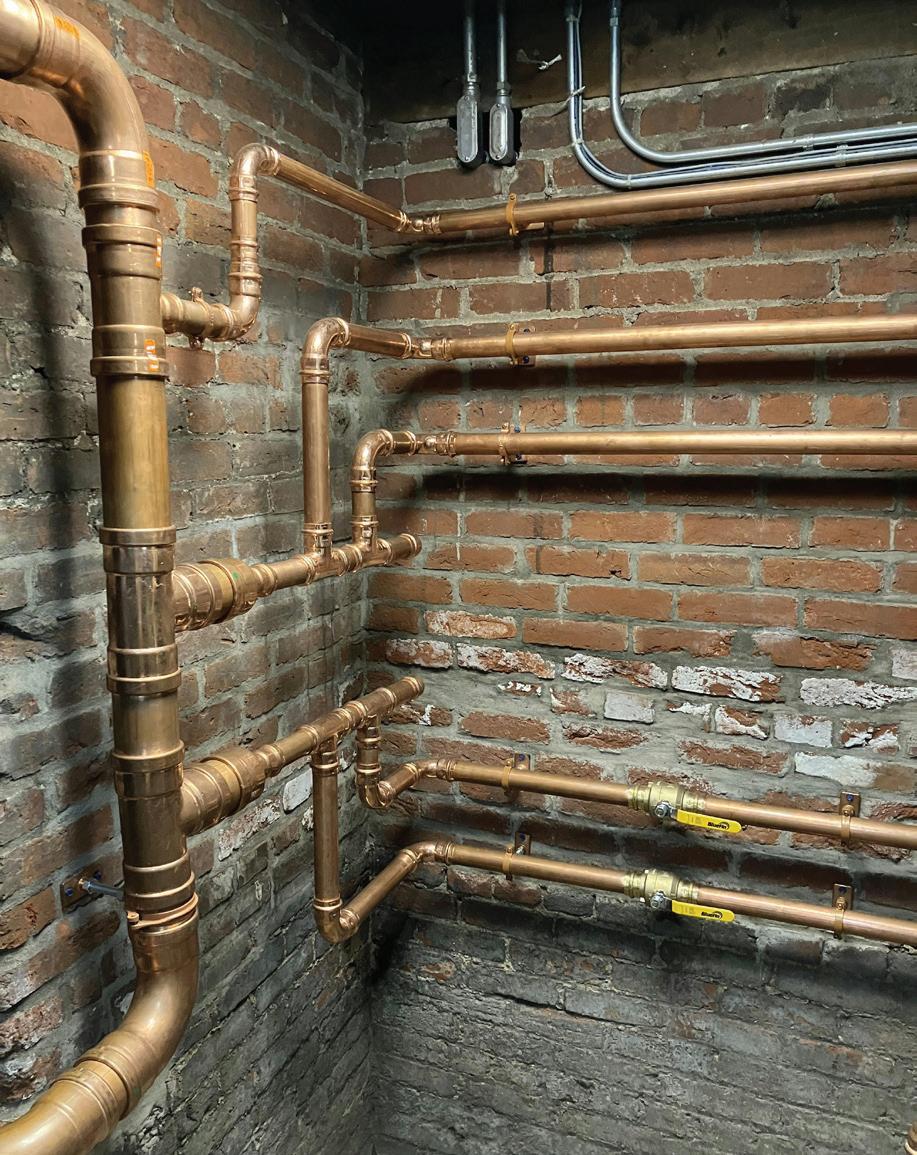
What beautiful piping! That was my initial reaction when I walked into the boiler room. I’ve always loved the color of copper, and that’s big stuff. The larger piping is 3” while the smaller pipes are 1-1/2”. It’s like a metal sculpture you would see hanging on an exposed brick wall in a trendy art gallery.
To the Right and the Left
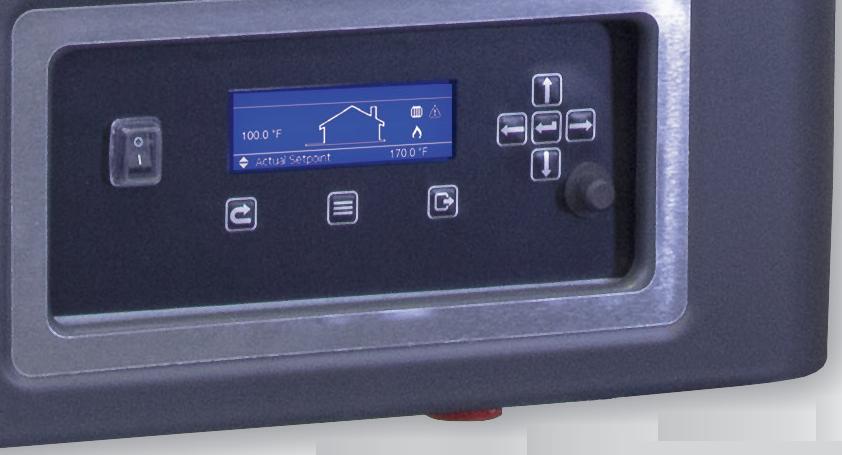
What you don’t see to the right are two 500,000 btuh mod-con boilers with touch screen controls. The programing is now done by sliding bars and saving changes. I’m not completely sold on the idea yet, but the more I work with it, the more favorable my opinion.
We started years ago with interpreting the code on the screen, then we got actual words that described actual parameters that we could adjust to match the application. Now, we have it all literally at our fingertips. What next, flying cars?What you don’t see to the left is an in-line air separator and then two zone pumps, a big one for the big zone and a small one for the small zone. The return of that small zone is the top 1-1/2” pipe that connects into the 3” line at the top reducing tee. On the top run of that tee is the return from the big zone.
So the flow from the system is coming from right and left to combine into the vertical 3” pipe, flowing down, or from the ceiling to the floor. The next two full size tees are part of the primary/secondary connection, allowing the system loop (primary) and boiler loop (secondary) to have flow rates that don’t affect each other.
I was taught many years ago that the main loop was the primary and the branch loop was the secondary. Made sense to me, but most boiler manufacturers changed that around when they introduced the concept with mod-cons.
Nowadays, I say system loop and boiler loop when referring to primary/secondary piping, low loss headers, or hydraulic separators. All three piping techniques have four connections: boiler supply, boiler return, system supply and system return.
The Kid is Growing Up
I was teaching a class the other night, the Kid was there. You remember the Kid, the guy I was training years ago. Well he interrupted me while I was explaining primary/secondary piping to the class. Maybe I was between points, but it definitely surprised me because he’s usually pretty quiet.
He went up to the whiteboard and drew a primary/ secondary connection done wrong, on purpose. He had it configured like many installers have tried over the years, with the branch connections of the tees piped together. It makes a nice square on paper, but isn’t the way it’s supposed to be.
The author troubleshoots a mod-con boiler installation that looks great, but keeps going into lockout.
He explained that the correct way is with the common connection between the tees to be on the run of the tees, not the branches. He then drew a primary/secondary connection for a mod-con boiler the right way. A tear came to my eye; the Kid is growing up.
Less Than Perfect
This job was piped correctly, primary/secondary connections can be in a horizontal or vertical orientation. The tees are close enough and full size. Then there is a reduction from 3” to 1-1/2” on the boiler loop, which isn’t exactly correct, but he called one day to say his fitting supplier couldn’t furnish the right stuff and could he do it like that.
Sometimes I allow less than perfect/correct piping because the difference doesn’t have much effect on
performance. In this case, the smaller than ideal pipe size creates more water pressure drop in the common boiler loop piping, when both boilers are running. This increase is easily handled by the boiler loop pumps, which have extra capacity. They might run on the high speed instead of the medium speed.
The installer took great care to make the connections on the boiler loops the same distance, what I call the butterfly look, since butterfly wings are generally identical. In this case, with the piping running horizontally, he branched the return piping up while branching the supply piping down.
It looks great, but creates an effect—a butterfly effect. Since it goes up higher than the return connection on the boiler, it has to go back down. Whenever a horizontal pipe goes up vertically and goes back down vertically, air can get trapped at the high point. When enough air gets trapped, circulation stops.
Troubleshooting
That is exactly what happened when we started up the boilers. The burners came on, the water in the heat exchanger got super-hot and the boiler went into a hard lockout. I had them check the wiring for the boiler loop pump, since this is an indication that we didn’t have water flow through the boiler and found out that they were wired incorrectly.
With this boiler manufacturer, the boiler loop pump is wired differently depending if it is a commercial or residential boiler. He must have had his residential thinking cap on when he wired it. After it was re-wired, it did the same thing. It was the air in the return line. We were able to purge the air out by closing the valves on the boiler supply lines and opening the boiler drains, one boiler at a time. It worked a couple of times but reappeared a couple of times before we decided to go to lunch. Air was coming back from the system and getting trapped in those high points on the boiler return lines.
At lunch, it was decided to add manual vents to those high points to bleed the air out, after leaving the system pumps on for the weekend to get more air out through the in-line air separator.
This is the seventy second column I’ve written for CONTRACTOR. When they called me six years ago, I said I would try to do this for three years. I sometimes think that I will run out of informative topics, but then one of the next site visits has that photo op that I can ramble on about.
Patrick Linhardt is a forty-one-year veteran of the wholesale side of the hydronic industry who has been designing and troubleshooting steam and hot water heating systems, pumps and controls on an almost daily basis.
Flow from the system is coming from right and left to combine into the vertical 3” pipe, flowing down, or from the ceiling to the floor. The next two full size tees are part of the primary/secondary connection.
Patrick Linhardt
Hydronics & R adiant
Presented in partnership with Radiant Professionals Alliance
Lochinvar Celebrates Two Decades of Innovation with Knight® Boilers
Compact, efficient, and built for serviceability, the Knight boiler family delivers 20 years of proven performance for contractors and facility pros alike.
LEBANON, TN — Lochinvar is marking 20 years of the Knight® Residential Boiler, a high-efficiency line that’s become a staple for residential and light commercial hydronic heating. Since its debut in 2005, the Knight has evolved through six generations of design updates, each incorporating new technology and contractor-focused improvements.
Built for Smarter Residential Heating
Originally introduced as the Knight Heating Boiler, the unit was designed to simplify multi-boiler systems by allowing several units to be controlled by one boiler. The first model featured a 5:1 turndown ratio and up to 93% AFUE. Today’s Knight delivers up to a 10:1 turndown and 95% AFUE, reflecting two decades of refinement in efficiency and control.
Throughout its updates, the Knight has kept a compact, lightweight form that simplifies installation and service. That contractor-friendly approach has earned recognition across the industry.
A 20-Year Standard for Flexibility and Serviceability
“Knight has significantly impacted the residential boiler industry since its introduction 20 years ago. It is widely recognized as the gold standard for installation flexibility and ease of serviceability,” said Mike Lahti, Vice President of Sales, Marketing and Business Development at Lochinvar. “The Knight boiler family is a testament to Lochinvar’s dedication to constantly innovating our technology. Throughout the last two decades, this unit has evolved to meet the varying needs of customers with the introduction of new models and features. We look forward to many more years of producing leading technology within the industry.”
Expanded Line for Residential and Light Commercial
Today’s Knight family includes both floor and wallmount models, along with the Knight XL for larger commercial jobs. All models feature Lochinvar’s CON·X·US® Remote Connectivity and SMART TOUCH™ controls, giving contractors and facility managers system visibility and remote adjustment capabilities.
Engineered for Long-Term Efficiency
Every Knight boiler includes a corrosion-resistant stainless steel fire-tube heat exchanger, a negative regulation combustion system, and a variable-speed ECM circulator. The circulator alone can cut energy use by up to 90% compared to conventional circulators, contributing to overall system efficiency and reliability.
To explore the full Knight boiler lineup, visit www. lochinvar.com.
Note: this release was rewritten with help from generative AI.
Rinnai Expands North American Footprint With New GTA Distribution Hub
A new warehouse in Markham, Ontario improves access to Rinnai’s tankless and heating products for contractors across the Greater Toronto Area and beyond.
PEACHTREE CITY, GA — Rinnai America Corporation, a leader in tankless water heating and hydronic solutions, has opened its first Canadian warehouse to better serve contractors and distributors across the Greater Toronto Area (GTA) and beyond.
The new distribution hub, located in Markham, Ontario, is now fully operational and shipping Rinnai’s full line of residential and commercial products. The expansion shortens lead times, improves delivery consistency, and increases product availability for Canadian PROs.
Faster Delivery Across the GTA
Situated within Canada Cartage Logistics Solutions’ distribution center, the Markham site provides direct access to Highways 404 and 407—two of the region’s busiest transportation routes. Its strategic location near Toronto means shorter transit times
and steadier inventory flow to contractors and distributors across Ontario.
Commitment to the Canadian Market
“This warehouse represents more than just a distribution point. It reflects our dedication to the Canadian market and our confidence in its growth potential,” said Frank Windsor, President, Rinnai America Corporation. “By establishing this facility, we’re delivering on our brand promise of Creating a healthier way of living® by providing the Canadian market with the highest level of product accessibility and service they expect from Rinnai.”
Strengthening Supply Chain and Partner Support
“Launching Rinnai’s first location here has been a key priority, and I’m proud to see it realized. It also helps keep partner projects on schedule, while underscoring our commitment to reliability and value,” said Daniel Zrubak, General Manager of Rinnai Canada. “In addition, the expansion strengthens Rinnai’s supply chain by improving service and minimizing import-related costs.”
Expanding North American Network
The GTA facility joins Rinnai’s established North American distribution centers in Griffin, Georgia, and Reno, Nevada, enhancing product flow and service coverage across the continent.
To learn more about Rinnai, visit www.rinnai.us
&
Hybrid Hydronic Heat and Domestic Hot Water for Smarter Residential Comfort
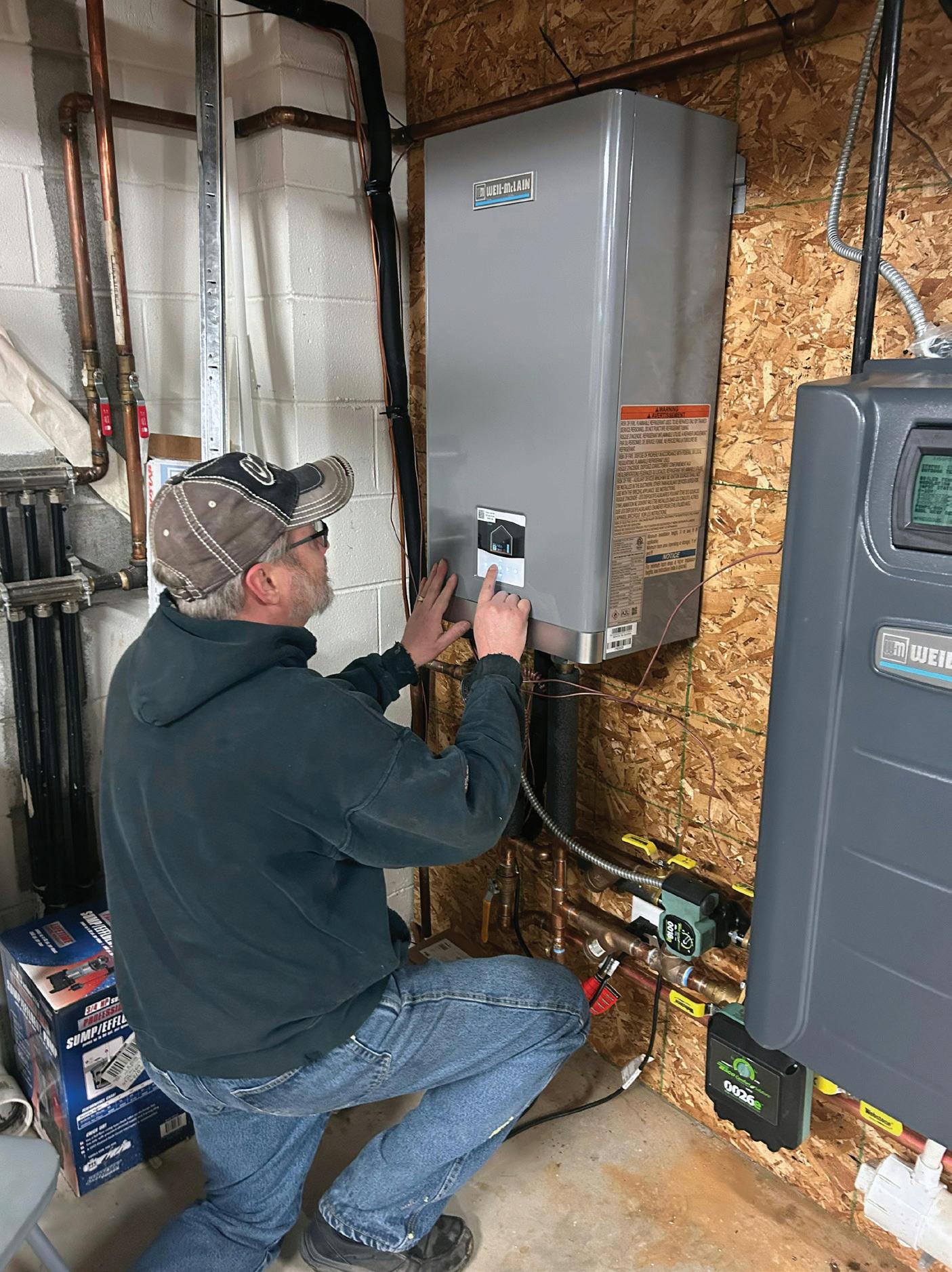
JMD Associates installs the ECO™ Hybrid Dual Fuel Hydronic System from Weil-McLain® in a 20-year-old home near Lake Michigan.
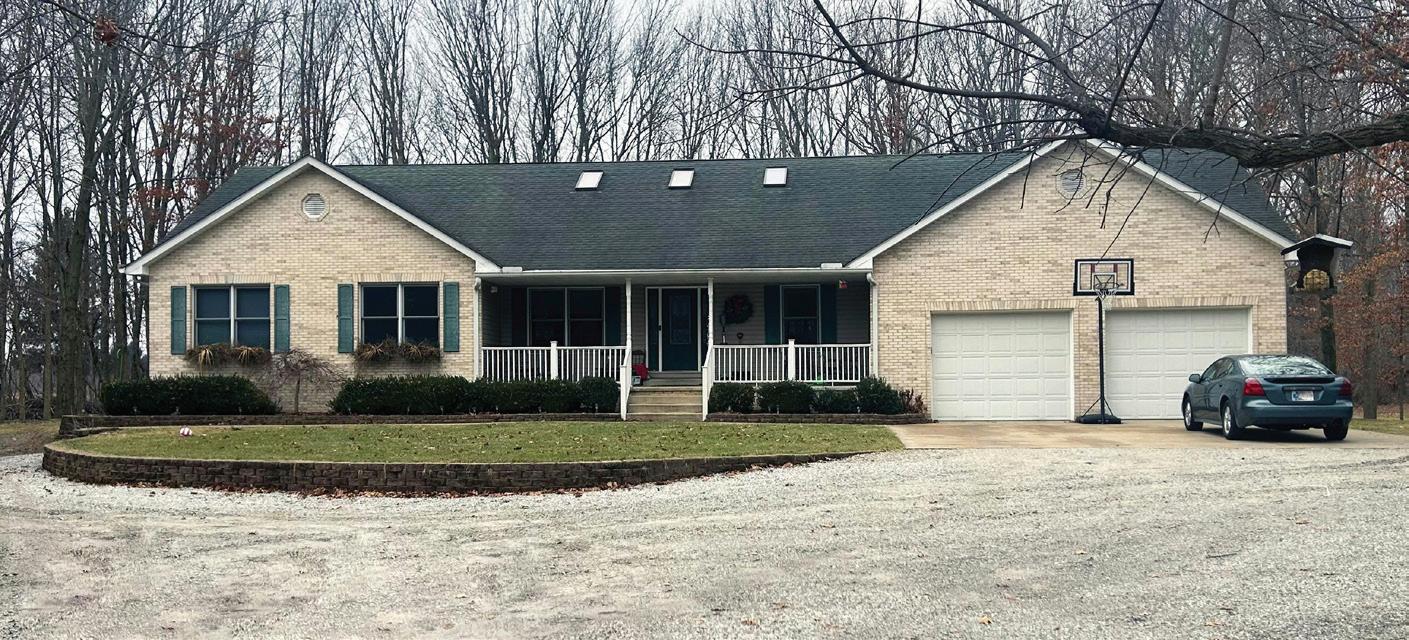
When a homeowner in the Chicagoland area wanted to improve energy efficiency and lower propane heating costs, contractor James Downs of JMD Associates recommended an innovative solution: the ECO™ Hybrid Dual Fuel Hydronic System from Weil-McLain®. Installed in a 20-year-old home near Lake Michigan, the system combines an air-to-water heat pump with a high-efficiency gas boiler to deliver optimal performance and flexibility across a wide range of temperatures.
A Home Ready for Hybrid
The home featured an existing hydronic radiant floor heating system, as well as a snow melt system for the driveway and sidewalk, which were powered by a propane-fired high-efficiency Weil-McLain boiler. Downs described the property as
an ideal candidate for a hybrid installation due to its low-temperature heating setup and the homeowner’s desire for greater sustainability and cost control. The homeowner was motivated not only by rising fuel costs, but by a desire to make more climate-conscious decisions and maximize efficiency with their existing radiant system.
“With radiant floor heating already in place in the home and the climate conditions in the Chicagoland area, this was a great opportunity for a hybrid setup,” said Downs. “The heat pump is designed to handle most of the heating season efficiently, and the boiler only kicks in when needed—striking a smart balance between performance and comfort.”
The chosen solution featured a Weil-McLain ECO Hybrid System,
which included an outdoor air-to-water heat pump and a compact indoor wallmounted unit, both designed to work with the existing high-efficiency modulating propane boiler.
The ECO HP is designed to integrate seamlessly with Weil-McLain’s high-efficiency condensing boilers. By combining a durable, inverter-driven outdoor heat pump with a compact indoor unit, the system intelligently shares the heating load—maximizing energy efficiency and minimizing fuel consumption.
The ECO HP features an intuitive user interface, integrated staging control capabilities and compatibility with indirect water heaters. Ideal for residential applications using radiant floor heating or low-temperature hydronic systems, the system delivers quiet operation, long-term reliability and measurable
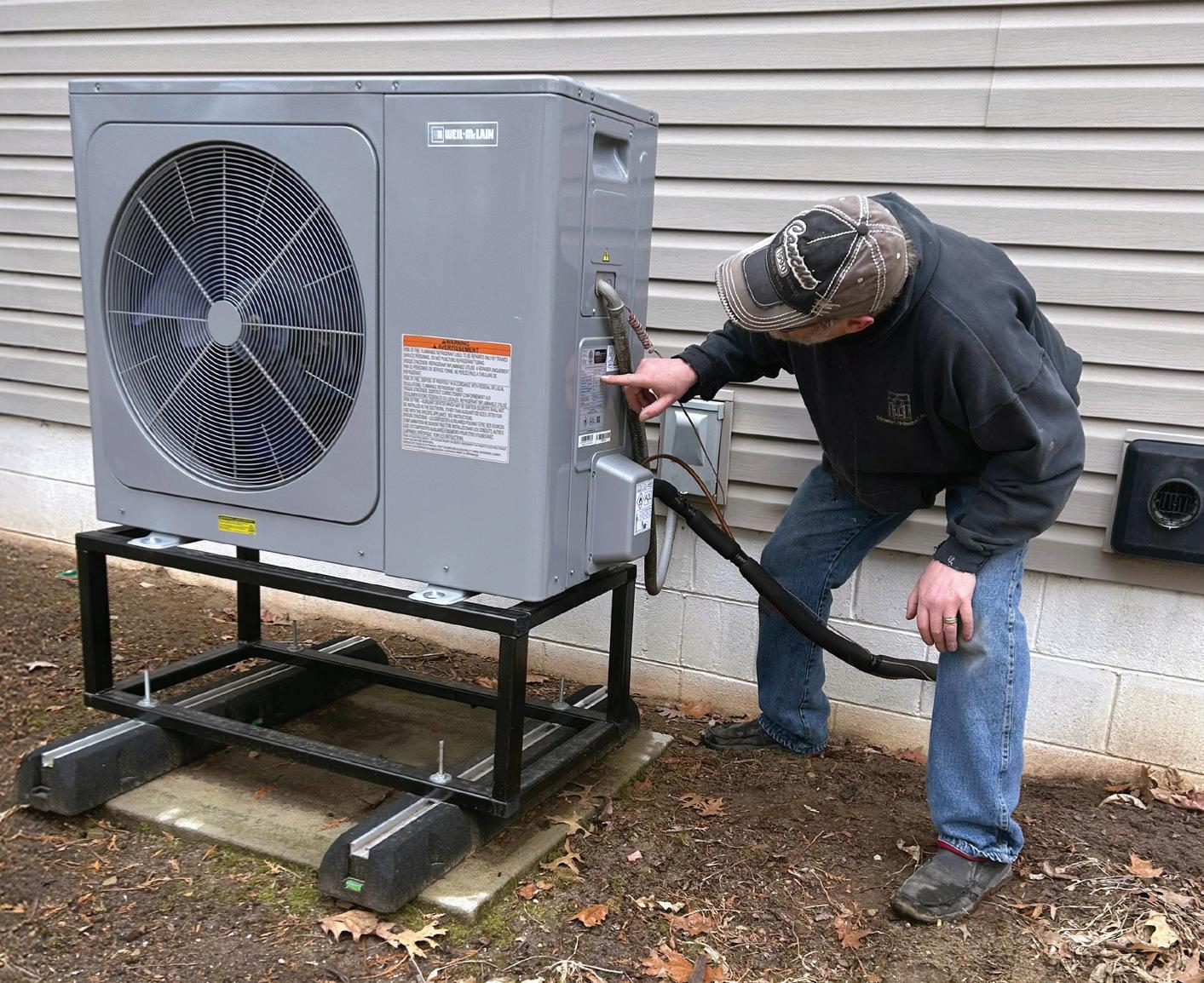
reductions in energy costs. In this case, the outdoor unit was mounted on a stand to prevent snow accumulation and ensure proper drainage—an important consideration in Lake Michigan’s lake-effect climate.
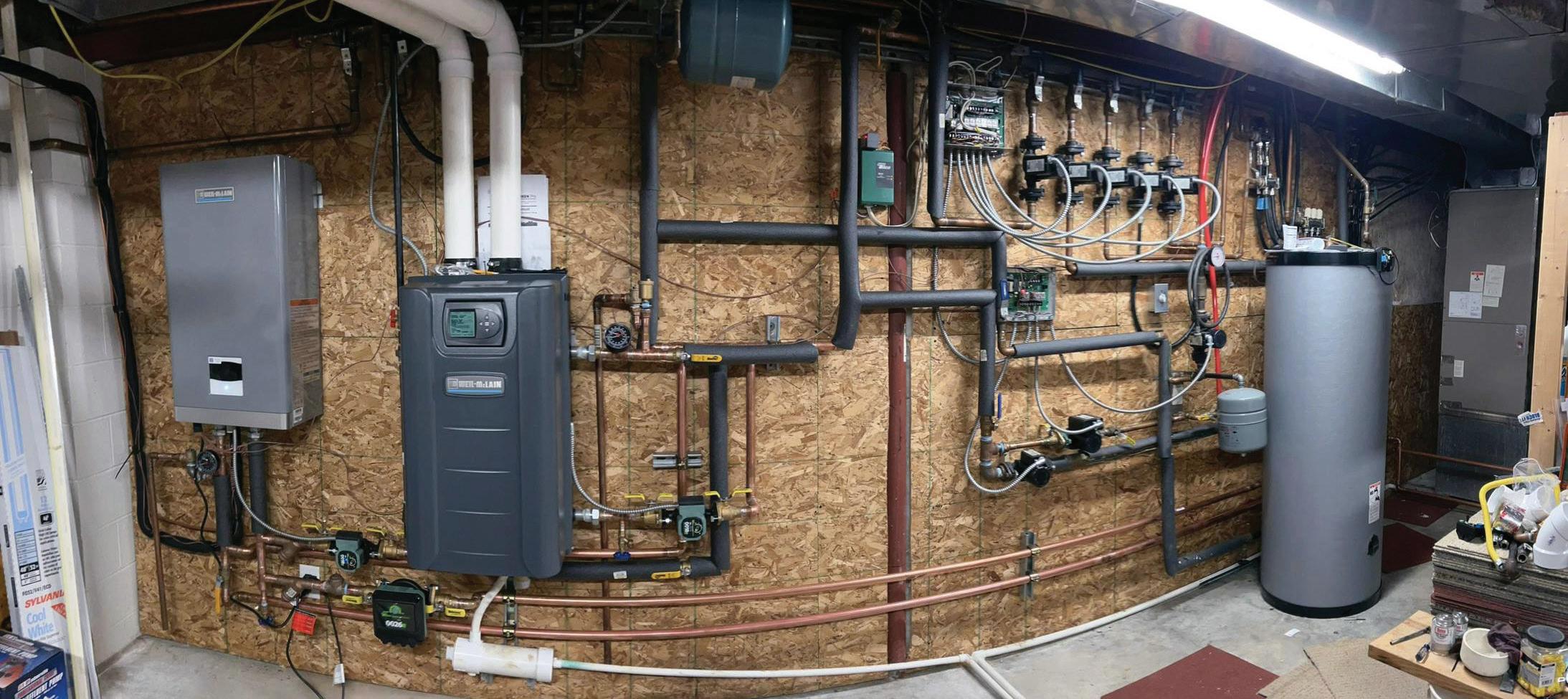
As a bonus for the home’s domestic hot water needs, an indirect tank was integrated into the system, while a dedicated heat exchanger handled the snow melt functionality for exterior surfaces. Heating throughout the residence was divided into six zones, each managed through a centralized zone control panel for efficient distribution.
Smooth Installation and Reliable Performance
According to Downs, the installation was straightforward and similar to setting up a conventional central air
A panoramic view of the home's mechanical room.
Weil-McLain
system. “The indoor unit was lightweight and compact—easy to mount with standard tools,” he said. “The outdoor unit connected via flare fittings, and the line set was within the range for the unit’s pre-charge, so everything aligned perfectly.”
The 120V indoor unit and 240V outdoor unit required standard connections. Controls were intuitive, and the system relied on Weil-McLain’s guidelines to set compressor runtime limits and optimize switchover from the heat pump to the boiler. Downs noted that while the system was new, the manual was easy to follow. “If you’re already doing mini-splits and hydronics, this is very manageable,” he said. The installer also credited Weil-McLain’s ECO Calc Application Sizing Tool, which guided setup of system parameters and switchover logic.
For this application, the hybrid system is designed to allow the heat pump to meet demand down to approximately 15°F. In colder conditions or during long domestic hot water calls, the boiler supplements the heat pump without shutting it down, maintaining comfort while maximizing efficiency. In this installation, a 30-minute runtime threshold on the compressor triggers the boiler, ensuring fast response without sacrificing energy savings. Downs reported approximately $600 in propane savings in the first season alone. “The propane deliveries noticeably dropped,” he noted. “That, combined with stable indoor temperatures and quieter operation, made it a win for the homeowner.” Comfort remained consistent with no cold spots. Domestic hot water is stored
at 140°F and tempered with a mixing valve for safe delivery, providing reliable service even during peak use.
A Thoughtful Investment
While the upfront investment for hybrid systems can be higher than traditional replacements, the propane fuel source made the business case compelling. Downs believes additional savings will become evident over time, especially as rebates become more accessible.
“This was about reducing environmental impact and operating costs. With the heat pump carrying the load for much of the year, that’s exactly what we achieved,” he added.
Downs views the ECO Hybrid System as an ideal choice for this low-temperature hydronic application. “The ECO Hybrid is a really smart upgrade as long as you
evaluate the heat emitters and understand your reset curves,” he said. It’s not a one-size-fits-all solution, but if you’re working with radiant floors or low-temp baseboards and looking to cut fuel costs, especially with propane, it’s a great fit.”
Zachary Golden, Product Manager, Channel Development with Weil-McLain, added: “This installation is a prime example of how a well-matched hybrid system can deliver real value. With contractors like James leading the way, we’re seeing high-efficiency systems work smarter for homeowners.”
The hybrid installation offers long-term benefits in efficiency, comfort and performance—making it a model for future heating system upgrades in cold climates.
To learn more about Weil-McLain’s ECO Hybrid System visit www.weilmclain.com
James Downs setting up the compact indoor wall-mounted unit.
James Downs makes a few adjustements to the outdoor unit.
An exterior view of the home. Both driveway and sidewalk feature a snowmelt system.
Weil-McLain
Weil-McLain
Weil-McLain
by Patti Feldman
Solutions for Fuel Control, Scheduling, and Automation
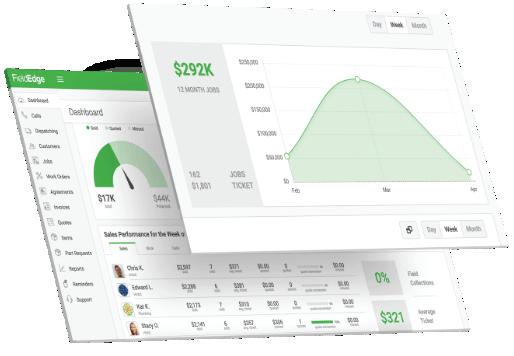
FieldEdge by Xplor ( www.fieldedge.com) , a global platform integrating software, payments, and commerce- enabling services and Service
Autopilot by Xplor recently teamed up with Coast fleet fuel card to launch a GPS-powered fuel management solution for service businesses by which field managers can atomatically block unauthorized purchses at the pump.
The integration of Coast’s smart fuel card technology with FleetSharp (www. fleetsharp.com) GPS tracking gives real time control over fuel spending and includes the ability to clock unauthorized fuel purchases automatically, track mileage automatically with automatic odometer readings with each fill-up, issue instant alerts for theft or discrepancies if tanks are overfilled or fuel goes missing, and afford protection of up to $25,000 against fuel fraud.
Through the partnership, field managers can automatically block unauthorized purchases at the pump.
Kickserv
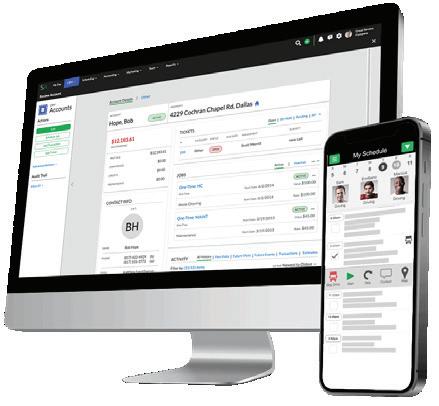
Kickserv by EverPro (www.kickserv.com) software solution for HVAC & Mechanical pros handles scheduling of appointments, creation of professional estimates, and customer requests for service. Plus, users can set up automatic sending of reminders to customers.
Users can store and manage details of every job for easy access. An integrated planner tool enables visibility into which employee is at what job and features a calendar that shows who is working on certain days, to help facilitate efficient job planning.
Technicians can create estimates and invoices and request payments from their mobile phone. An included payment tool allows you to accept a deposit on your mobile device before you order parts. Kickserv syncs payments and costs to QuickBooks.
Clients can log into the Customer Center to schedule or reschedule an appointment online, pay an invoice, and leave notes for technicians. The software supports customizing tags to help organize, categorize, and segment
Reviews of FieldEdge, Kickserv, Joist, Synchroteam, and Command Post Notes.
your data and you can easily identify upcoming jobs by the date or filter jobs by the type of service offered. Some of the Kickserv plans also offer the option of placing a job on hold while waiting for parts. Kickserv syncs payments and costs to QuickBooks.
Pricing: five plans available to accommodate startup, small, growing, established, and large businesses, each with fee per month.
Joist
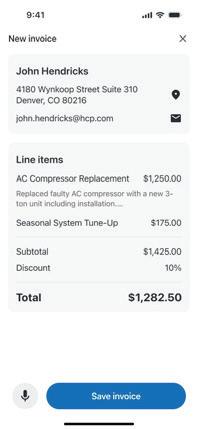
Joist software (www.joist.com) is an allin-one estimate and invoicing solution for smart phone, tablet, and computer, designed to enable trade contractors—in the field and in the office—to manage business, from pre-award to invoicing. Users can quickly create professional estimates with inputting of line items for labor and materials, custom invoices, manage client data, track projects, and accept online payments. Once approved, an estimate can be converted instantly into a branded invoice.
Project management features include contract templates for repeat use, digital
signatures, and the ability to track progress, and add notes, and save line items, photos (up to 20 per document, including before/after comparisons for individual line items) and other attachments.
The software also offers homeowners financing options, which costs contractors nothing—no signup or fees required. The financing process is seamless: clients see a “view financing options” button and can get pre-accepted within minutes, with funding in one-to-two business days. Automated review requests are sent when invoices are paid, helping build Google Reviews.
Pricing: three monthly tiered plans: Basic, Pro, and Elite, differentiated by the number of documents and inclusion of advanced features. Basic includes up to five invoices or estimates per month, credit/ debit/online payments, and homeowner financing options. Pro adds abilities for unlimited estimates and invoices, e-signatures and work orders and QuickBooks sync. The Elite plan further includes sales and marketing reports, ability to send and manage change orders, and options to include social links (display website, Face-
book, Google, Instagram and Yelp links on estimates/invoices) and add license information. Free trial of Basic plan available.
Synchroteam
Synchroteam cloud-based field service management software (www.synchroteam. com, 855/809-6200), see April 2018 tech column, www.contractormag.com/management/feldmans/article/20883255/three-cloudbased-solutions) recently updated its platform with addition of AI functionalities to automatically trigger various actions within the software to allow for a more productive workflow. They are designed to help enhance lead generation, find suitable job postings, and monitor the supplier’s website for inventory pricing and stock levels and update inventory. Synchroteam can be integrated with Browse AI, a no-code web automation tool that extracts and monitors data from any website. You can use both solutions together to create automated workflows. For example, if you use Browse AI to monitor your website for new service requests, you can configure it to automatically create a new job entry for the new request in Synchroteam. Also, if a customer’s information is updated on a third-party site, Browse AI can detect that change and push the updated information to the customer’s record in Synchroteam.
Command Post Notes
Command Post Notes (Command Technologies, Inc. www.commandpost.ai/ notes, 858/642-2900) is a simple daily reporting app built for field crews. Easy to utilize, it enables users to capture voice, photos, and typed notes in one tap to document progress and problems. The app timestamps, organizes by work area and topics, and produces Daily Reports to speed dispute resolution and keep HVAC projects on track. Offline friendly with English/Spanish transcription, it is designed so crews reliably use it.
Pricing: free app, optional organizational features on annual plans.
Patti Feldman writes articles and web content for trade magazines and manufacturers of building products.
BOOST RECRUITMENT AND RETENTION WITH CARHARTT®
An Apparel+ workwear program gives your business an edge in attracting and keeping top talent with quality Carhartt® gear that makes your team feel valued. Plus world class service at a convenience you never knew existed.
Weekly laundry, repairs and delivery included
No upfront cost required
by Andrew Pfeiffer
The 5 “E”s Every Plumbing Contractor Should Master
If you have ever finished a 12-hour day, covered in sweat, and still had three estimates to send before bed, you are not alone. Every leak gets fixed, every boiler gets installed, but somehow you never find time to breathe. You started this business for freedom and family, yet the business now runs you.
Most plumbing and hydronic heating contractors do not struggle because they lack skill. They struggle because they are running their business reactively instead of proactively.
There is a better way, and it starts with structure.
From Firefighting to Framework
Just as a good installation requires the right layout and sequence, a good business needs systems that ensure consistency—such as the 5 E’s Framework: Experience, Expectations, Execution, Education and Empowerment.
The 5 E’s are not only for your team or your customers. They start with you— how you lead, communicate, and make decisions sets the tone for everyone else.
This is not a theory. It is a best-practices model built from years of working alongside contractors who wanted to step out of daily chaos and lead their company with confidence. The goal is simple: bring the same precision you apply in the field into the way you run your business.
Experience
Experience is more than what the customer sees. It is also what you, the owner, feel each day running your company. If your experience is disorganized and stressful, your team and customers will feel it too.
In the field, experience shows up everywhere: how your tech greets a customer, the cleanliness of the job site, how the invoice is presented, and how callbacks are handled. Every touchpoint builds or breaks trust.
When you define what a great customer, employee, and owner experience looks like, you stop leaving it to chance. Consistency in the experience creates predictability, and predictability is the first step toward freedom.
Most contractors do not struggle because they lack skill. They struggle because they are running their business reactively instead of proactively.
Expectations
Most conflict in the trades comes from unclear expectations. One tech thinks “finish” means buttoning up the site; another thinks it means just getting the water running. The owner expects both.
Set expectations for everything: response times, materials, cleanliness, job photos and communication. Write them down, talk about them and review them.
Do the same for yourself. Decide when you will check messages, when you will be in the field, and when you will focus on planning. When you set expectations for your own time and habits, it becomes easier to hold others accountable. This one shift alone can cut callbacks and confusion in half.
Execution
You already know the power of repetition. The same applies to how you run your business. A repeatable process for scheduling, estimating and job costing will do more for your profits than any marketing campaign.
Create job checklists, standard material lists and a consistent flow from
estimate to invoice. When the process stays the same, your people can perform at a higher level and you can finally step out of the middle.
Execution also starts with you. Owners who follow through on commitments, track metrics, and complete their own weekly priorities model the discipline they want from their teams.
Good execution turns chaos into control.
Education
In plumbing and hydronics, a mistake can cost thousands. But most training stops at technical ability. The best companies go further and teach context.
When your foreman understands not just what to do but why it matters for margin, schedule and customer experience, everything improves. Hold short weekly toolbox talks on lessons learned, safety or communication. Ten minutes a week compounds faster than any onetime seminar.
And do not stop at teaching others. Keep learning yourself—on leadership, finance, or communication—because a
company can only grow as fast as its owner’s understanding.
Education builds confidence, and confident people take ownership.
Empowerment
If every decision still flows through you, you have created a bottleneck. Empowerment does not mean losing control. It means sharing responsibility within clear limits.
Let your service manager approve parts up to a set amount. Allow your foremen to handle small customer decisions in the field. The key is defining boundaries, not micromanaging.
Empowerment also means giving yourself permission to step back and let the systems you built do their job. Freedom starts when you trust the structure you created. Empowered teams move faster, solve problems sooner and respect leadership more because they are trusted to act like professionals.
Structure Creates Freedom
The 5 E’s are not a checklist. They are a lens. When you view your business through Experience, Expectations, Execution, Education and Empowerment, you start to see where the friction is and how to fix it.
You will notice fewer callbacks, smoother scheduling and stronger communication. But more importantly, you will start to regain time—for planning, for family, for life.
The 5 E’s are as much about how you lead yourself as how you lead others. When you grow through them, your business follows.
Your business should serve you the way a well-installed system serves a home: reliably, efficiently and quietly in the background.
That begins when you stop firefighting and start building with the 5 E’s.
Andrew Pfeiffer serves as a Project Director at Cogent Analytics, where he partners directly with business owners to uncover inefficiencies, align teams, and implement strategic improvements that lead to longterm business success.
Get hands-on with the latest tools and learn tips from expert-led training and education sessions. Engage with pros from across the industry and discover cost-effective and cutting-edge solutions to real-world problems. AHR is your place to expand beyond your day-to-day.
FEB 2 -4 2026
by Candace Roulo FLEET MANAGEMENT AUTHORITY
AI-Powered Telematics Unlock Safety and Efficiency for Contractors
In the world of fleet telematics, artificial intelligence (AI) is not new. Many service companies, including plumbing contractors, already use AI-powered fleet management systems to monitor vehicle usage, manage maintenance schedules, and ensure their fleets operate as safely and efficiently as possible. For contactors that are new to AI-powered fleet management systems, there are many valuable benefits to using these systems.
AI Moves Beyond the Vehicle
In the automotive world, AI began with early automation systems, like cruise control and anti-lock braking system (ABS) technologies, according to the article Self-driving cars: how and when machines began taking control. In the early 2000s, features like lane-keeping assistance and automated parking became more common. Then came self-driving vehicle projects that advanced the potential of AI in autonomous driving. Artificial Intelligence was then extended beyond vehicles into fleet management—optimizing routes, predicting maintenance and improving driver safety.
When Telematics and AI Converge
First, to get our definitions straight. Telematics is the branch of information technology which deals with the long-distance transmission of computerized information.
Artificial Intelligence is the ability of a computer to perform tasks commonly associated with intelligent beings. The term is applied when developing systems with intellectual processes characteristic of humans—the ability to reason, discover meaning, generalize, or learn from experience.
Telematics has always been associated with vehicle tracking. Now with the integration of predictive analytics, AI is a game-changer. According to the article The Future of Telematics: Predictive Analytics and AI Integration, predictive analytics involves using historical data, statistical algorithms, and machine learning techniques to identify the likelihood of future outcomes based on vehicle pat-
For contractors that are new to AI-powered fleet management systems, there are many valuable benefits to using these systems.
terns. When combined with AI, telematics systems gain the ability to learn from data, adapt to changing circumstances, and make informed predictions.
Improved driver safety, enhanced operational efficiency, predictive maintenance, route optimization, streamlined compliance, and reduced emissions are some of the benefits when using an AI-powered telematics system. For this article we will focus on improved driver safety and enhanced operational efficiency.
How AI-Powered Telematics Helps Contractors Focus on Safe Driving
AI-powered telematics can help foster a culture of safe driving at plumbing companies. For example, Motive, an AI-powered Integrated Operations Platform, not only offers a robust fleet management system, it also offers the new AI model Positive Driving that automatically identifies positive driver behaviors, such as quickly reacting to obstacles to avoid collisions or creating a safe following distance when cut off
by another vehicle. By automatically surfacing these moments in real time, insights from Positive Driving enable fleet managers to lead coaching sessions with recognition, foster a more motivating safety culture, and reduce accidents and turnover.
Motive’s Positive Driving feature is powered by highly accurate AI to automatically identify smart driving behaviors before Motive’s expert Safety Team validates them within seconds. Combined with Motive’s industry-leading unsafe behavior detection, Positive Driving provides a comprehensive view of driver performance.
Zuper, another provider of intelligent field service management solutions, recently introduced Zuper Fleet—a new product designed to extend Zuper’s intelligence to fleet operations with real-time fleet tracking and maintenance, vehicle health monitoring, and AI-powered safety cams.
The safety cams improve safety and lower insurance costs. The dash cams and telematics monitor driver behavior, coach in real time, and assign employees
safety scores that promote better habits. With recorded footage and usage insights, Zuper Fleet helps reduce liability, accelerate claims resolution, and potentially lower insurance premiums.
Powerfleet Inc., a global leader in the artificial intelligence of things (AIoT) software-as-a-service (SaaS) mobile asset industry, recently launched its automated AI risk intervention application, an innovative AI video module engineered to redefine how companies automatically detect, assess, and prevent risk in real time.
Built on Powerfleet’s 20+ year heritage in safety and integrated into the Unity ecosystem, this innovative AI-powered enterprise application ushers in a new era of proactive safety management. It enables an automated real-time risk assessment targeted at preventing incidents before they happen. With this new AI-powered application, plumbing contractors can focus on proactive safety operations. The system uses advanced AI processing on both the edge and cloud to detect risky patterns—such as fatigue, distraction, and aggressive driving—and triggers escalation workflows automatically in real time to save lives.
How AI-Powered Telematics Helps Contractors Run Efficient Businesses
Not only does AI-powered telematics focus on safer driving habits, but these systems also enable contractors to run leaner plumbing businesses. Telematics powered by AI is a great tool that will give plumbing contractors many insights into fleet operations, allowing contractors to pinpoint areas for optimized operations and to cut costs.
For example, RoadFlex’s AI-powered fuel risk management platform features enhanced fuel management and improved security for plumbing contractors. RoadFlex integrates with many telematics systems, providing real-time validation of driver and vehicle locations. It also offers fuel fraud technology that employs three-point authorization systems to verify the vehicle, driver, and fuel
by Jason Abajian NORTH AMERICAN SALES MANAGER AT RESIDEO
Pressure Management: Pressure Reducing Valves and Leak Prevention
In today’s homebuilding and plumbing environments, water conservation isn’t just a sustainability goal—it’s a business and liability imperative. From fluctuating municipal water supplies to the risk of excessive pressure damaging pipes and fixtures, residential and commercial plumbing systems face new stressors that demand smarter solutions. Pressure reducing valves (PRVs) offer a reliable first line of defense.
PRVs help homeowners and professionals solve one of the most common causes of leaks: inconsistent or excessive water pressure. When pressure spikes— especially in new construction zones where municipal pump stations evolve over time—home plumbing systems are at risk of burst pipes, fixture damage and water waste.
PRVs regulate incoming pressure, reducing the risk of catastrophic failure and improving overall system efficiency. They also help minimize energy use in homes that rely on water pressure to drive appliance performance, such as dishwashers and washing machines.
The Case for Pressure Control
When my dad went through heart failure last year, the doctors explained that part of the problem was a restriction in one of his arteries—like a kink in a vital pipe that kept blood from flowing the way it should. Once they cleared that blockage, his heart could pump more freely, easing the pressure and giving his body the steady flow it needed.
It reminded me of how a pressure reducing valve works in a plumbing system. If water comes in at too high of a pressure or gets blocked along the way, the whole system is at risk—pipes can burst, joints can leak and fixtures can fail. But when the restriction is removed and the PRV steps in to regulate flow, everything runs smoothly, safely and with balance.
In both plumbing and in life, it’s the unseen regulators and the removal of dangerous restrictions that keep everything working the way it was designed to.
The key to preventing plumbing leaks often lies in stabilizing water pressure before it ever enters the home. In fact,
PRVs regulate incoming pressure, reducing the risk of catastrophic failure and improving overall system efficiency.
in many jurisdictions, any water pressure over 80 PSI requires the use of a PRV to meet ASSE1003 code.
However, even homes that start with acceptable pressure levels can experience issues years later as nearby development expands. Builders and plumbers who understand this risk are increasingly insisting that every new home be outfitted with a PRV as a preventive measure—especially in fast-growing residential areas.
Having a PRV installed is one of the smartest and most cost-effective steps a builder or plumber can take to help protect a home from long-term damage. It also helps prevent expensive repairs and homeowner callbacks, which can damage a contractor’s reputation and bottom line. It’s the same reason it is important for my dad to manage his blood pressure. It’s a proactive first line of defense that can prevent issues before they start.
A Critical Link in Water Conservation
While much attention is given to detecting leaks after they happen, PRVs help prevent them by controlling system pressure. This not only conserves water but reduces wear and tear on appliances and fixtures.
Think of it like the plumbing equivalent of blood pressure control: unchecked high pressure strains your home’s internal systems, while steady regulation leads to long-term health.
With rising awareness of water usage and the cost of water-related damage, PRVs represent a simple yet powerful step toward conservation and protection. They can also contribute to improved performance in smart water monitoring and leak detection systems, serving as the first line of defense before alerts are ever triggered.
Designed for Today’s Plumbing Professionals
PRVs aren’t just designed for protection; they’re built with performance and flexibility in mind. For example, Resideo’s PRV range includes models for residential, commercial and industrial applications. Key features across the portfolio include:
• Connection flexibility, including recent introductions of press-connect options
• Models designed specifically for use with tankless water heaters
• Integrated filters to block sediment and protect downstream fixtures
• Made-in-Germany engineering and design quality
Resideo’s legacy in plumbing projects, built under the Braukmann name, spans more than 90 years and reflects a proven track record of reliability and performance valued by contractors and wholesalers alike. Resideo offers a full range of PRVs to meet varying project needs, from reliable everyday models to premium, high-performance solutions. For contractors looking to standardize their installation process or streamline inventory, the breadth and consistency of the Resideo PRV portfolio is a valuable asset. Whether you’re installing one unit or hundreds, the same reliability and product support apply.
With growing pressure on homes from aging infrastructure and new development, PRVs are more relevant than ever. Whether used in new construction or as part of a retrofit upgrade, Resideo PRVs provide the protection, consistency and water conservation today’s homes demand.
Jason Abajian is the North America Sales Manager - Plumbing Channel & Key Accounts at Resideo. With more than 20+ years in the HVAC industry, he brings a unique background that combines classroom teaching with hands-on field experience. Jason is passionate about educating the next generation of professionals and advancing high-performance, environmentally responsible water solutions across residential and commercial markets.
by Nancy Novak CHIEF INNOVATION OFFICER AT COMPASS DATACENTERS
Rethinking the Owner–Contractor Relationship: Transaction to Transformation
Construction is a team sport. Every owner, contractor, supplier, and subcontractor laces up on the same field with the same goal: to deliver something extraordinary. Yet, too often, instead of huddling together, we line up on opposite sides—each guarding our playbook like it’s a zero-sum game. The result? Projects that feel more like tug-of-war than teamwork.
I’ve been in this industry long enough to see both sides—owner and contractor—and I can tell you this: when relationships are built on trust and collaboration, the work sings. When they’re transactional, the work stumbles. And in today’s world, where labor shortages and climate pressures are real and urgent, that’s a recipe for falling behind. For all of those reasons, we, as an industry, need to take a different approach.
The Ripple Effects of Transactional Thinking
When we treat each other as adversaries instead of allies, the costs cascade downstream. For contractors this results in endless hours chasing the next RFP instead of focusing on current projects, creativity being stifled because every idea feels like a risk rather than a contribution, and margins being squeezed until innovation is a luxury no one can afford. For owners, the transactional approach results in higher costs, longer delays, and missed opportunities to capture the best ideas from the people who live and breathe construction every day.
Owners will be left with a decline in the “iron triangle” of time, cost, and quality, not from lack of skill—but from lack of relationship. For the industry, transactional mindsets result in burning out our people, scaring off new talent, and missing the chance to innovate with methods that improve safety, sustainability, and diversity. The very things our clients, communities, and planet are asking for.
Staying stuck in transactional patterns isn’t just frustrating—it’s dangerous. Projects bog down, trust erodes, and innovation stalls.
When relationships are built on trust and collaboration, the work sings. When they’re transactional, the work stumbles.
We can all agree that contractors and business owners aren’t approaching project partners transactionally from a place of bad intentions or malice. If you have been in this business for long, chances are that you have experienced a project that went wrong and left you in a tough spot. These experiences can jade us if we let them, tempting us to believe that the best approach is to ensure nobody takes advantage of us again. The problem is, this just perpetuates dysfunctional patterns and negatively impacts the things we were all taught are the most important goals in this business: delivering on time, building with quality and making a profit. What we need is a purposeful reset.
What Happens When We Flip the Script
Let’s imagine a scenario where the opposite is true; where instead of treating Owner-Contractor interactions like glad-
iator matches, we treat them as invitations to co-create. Instead of contracts that read like battle plans, we design them as frameworks for collaboration.
When owners and contractors lean into relationships, contractors bring their best ideas forward which give rise to solutions that make projects faster, safer, greener, and more profitable. Owners save time and money while unlocking innovations that would never survive in a transactional setup. Upstream partners like suppliers, manufacturers, and designers see clarity and consistency, reducing rework and waste. Downstream stakeholders—operations teams, end users, and communities—benefit from facilities that are built to last and built with purpose.
At Compass, we’ve seen it firsthand. By inviting our partners to help shape— not just execute—projects, we’ve unlocked advancements in prefabrication, worker safety, and carbon reduction
that would never have emerged if we kept our GCs at arm’s length. Collabo ration creates compounding value, like interest on trust.
A Call to Courage
The truth is, distrust is easy, collaboration is courageous. It takes guts to loosen control, to trade rigid prescriptions for open dialogue, and to embrace the idea that your partner’s success fuels your own.
But the alternative—staying transactional—carries consequences we can’t afford: higher costs, longer schedules, burned-out teams, and stagnant innovation. In a world racing toward bigger builds and tighter resources, that path leads nowhere. Trust is so critical when organizations come together to work on ambitious construction projects.
In my role as a construction owner in my work at Compass Dataenters, I have made trust a focal point when approaching our contractor partners, which has resulted in relationships that foster innovation, drive efficiency and cost reduction, accelerate delivery timelines, and drive advancements in quality, sustainability and worker safety. When given the chance to act as true partners, again and again I have seen contractors step up, embrace the opportunity, and bring tremendous ideas to the table that make projects better every time.
So, let’s choose the harder, better way. Let’s move from transaction to transformation, building partnerships that last longer than the projects themselves. Because when owners and contractors stop pulling against each other, we unlock the strength to pull the whole industry forward.
Nancy Novak is Chief Innovation Officer at Compass Datacenters, a company that designs and constructs data centers for some of the world’s largest hyperscalers and cloud providers on campuses across the globe. Our corporate culture is predicated on continual improvement and innovation and has enabled us to marry technology with modern manufacturing methods to enhance our ability to consistently deliver our customer’s projects faster, with no sacrifices in quality.
by Matt Rechtin MANAGING DIRECTOR AT MERIDIAN CAPITAL
The Construction Tech Shake-Up: M&A and the Contractor’s Bottom Line
Technology is now as integral to the jobsite as pipe wrenches and soldering torches. Tools such as software and drones that map large commercial builds are reshaping how contractors work, bid, and manage projects. But alongside this rapid adoption has come another trend: consolidation.
Large players like Procore, Trimble, Autodesk, Nemetschek and Hexagon have been on a buying spree, acquiring numerous smaller, specialized software firms over the last few years. For contractors, this wave of mergers and acquisitions has real implications for how you manage your business, deliver projects, and prepare for the future.
What’s Driving Consolidation in Construction Tech
Tech adoption traditionally moves slower in construction. While banking and healthcare invested heavily in IT, construction firms often focused dollars on labor, equipment, and materials. That has shifted. Rising material costs, persistent supply chain disruptions, and an ongoing skilled labor shortage have pushed contractors to look for smarter, more efficient ways to operate.
Investors and software companies see the same pressure points. As a result, billions of dollars have flowed into construction tech, driving dealmaking at a record pace. In just the last 18 months, acquisitions have spanned everything from jobsite safety platforms to billing automation tools.
For the big strategics, the goal is to build end-to-end platforms that cover every stage of a project, from bidding and estimating to field management, safety compliance, and even facility operations.
The Upside for Contractors
For the plumbing contractor running three service trucks or the hydronics outfit juggling multiple commercial projects, consolidation can offer real benefits. Instead of using five separate apps for time tracking, inventory, scheduling, and billing, acquisitions often mean integrating those tools into a single, more seamless platform. Bigger companies usually
Consolidation in construction technology will have real implications for how you manage your business, deliver projects, and prepare for the future.
bring more resources for training, customer support, and updates, all of which can be challenging for smaller startups. Finally, consolidation can reduce the risk of long-term stability by aggregating investments in niche tools under the umbrella of an established player. Often, the practical effects include smoother workflows. A plumbing pro might generate estimates in the office, dispatch jobs to field techs, track time and materials, and send invoices all within one integrated system instead of switching between multiple tools and logins.
Risks to Watch For
Despite the benefits, consolidation isn’t without challenges. As platforms expand, contractors may find themselves paying for bundled features they don’t need. Subscription fees can creep up, especially if pricing moves from small-scale packages to enterprise-level tiers. Each
acquisition tends to bring new interfaces and updates, requiring teams to retrain multiple times as platforms evolve. And with fewer independent vendors, there’s a risk of reduced competition and innovation in certain niches.
For small and mid-sized contractors, the key is to be proactive. Evaluate the ROI of each tool, stay vocal with providers about what works and what doesn’t, and resist being upsold into systems that don’t match your actual business needs.
What Consolidation Means for the Construction Industry
Consolidation is accelerating the digitalization of construction. Ten years ago, large contractors were experimenting with digital twins, VR safety training, or drone mapping. Today, these tools are working their way down to specialty trades and smaller firms.
For plumbing and hydronic heating pros, more general contractors and
owner requests for proposals will expect digital documentation, real-time progress reporting, and integration with project management software. Tools like prefabrication software and automated scheduling can help smaller teams deliver larger projects without overworking crews. Consolidated platforms often include compliance and safety modules, giving contractors clearer ways to document and track adherence on jobsites.
Just as power tools once transformed productivity, today’s tech tools are quickly becoming the baseline for doing business.
How Contractors Can Prepare
For contractors deciding how to respond, consider a few steps.
First, audit your current tech stack to identify what you use daily, what creates actual value, and what sits idle. Choose tools that integrate with others, reducing double entry and data silos. Ask vendors about pricing transparency, exit clauses, and which features are core versus addons when negotiating contracts. Invest in training; a platform is only as good as your team’s ability to use it. Finally, stay informed by following trade publications and M&A updates. Knowing who is buying whom helps you anticipate what’s coming next.
Looking Ahead
Despite representing roughly 13 percent of global GDP, productivity growth has historically lagged in construction. Technology, driven by both innovation and consolidation, offers a clear path forward. For contractors, the opportunity lies in adopting tools that genuinely save time, reduce costs, and improve safety, while staying cautious about overbuying features or getting locked into expensive systems. While consolidation continues to reshape the industry, those who approach it thoughtfully will be better positioned to continue operating, scaling, and doing good business.
Matt Rechtin is Managing Director at Meridian Capital.
Education and Collaboration Take Center Stage at 2025 ASPE Tech Symposium
Continued from page 3
profession and making sure ASPE continues to lead from the front,” Bryan L. Hutton, ASPE President, wrote in his letter to the Society introducing this year’s Symposium.
“Over the next few days, our members will come together not as individuals, but as a community of problem-solvers,” he continued. “This Symposium is our chance to challenge each other, share insights, and sharpen each other’s skills so we all return to our firms better prepared to contribute and lead. This is where ASPE’s strength is most visible—in the connections we build and the knowledge we share.”
Technical Education Program
The Tech Symposium featured professional development sessions designed to help plumbing industry professionals at all levels of experience learn new skills or refresh their design repertoire. Sessions were taught by experts in the field and offered 0.15 CEUs to be used for license and certification continuing education requirements.
The sessions were designed to integrate the most current design techniques with hands-on calculation and application examples.
The program featured five tracks:
• Codes and Standards/ Water Quality
• System Design
• Sustainability/Construction Discussion
• Healthcare/Specialty Design
• Fire Protection & More
Notable speakers included Hugo Aguilar, PE, Senior Vice President of Codes and Standards for IAPMO; Kevin Brace, Senior Specification Specialist, East for Rheem; Brian Conner, Director, Codes, Standards, and International Technical Support, for Charlotte Pipe and Foundry Co.; Kevin Freidt, EIT, LEED AP, Director of Product Management and Technical Support at Caleffi North America; Tony J. Furst, MSEd, CPD, LEED AP, Senior Systems Engineer–Commercial Training at Taco Comfort Solutions; Paul G. Galvin, Business Development Manager, Life Science/
Institutional, for GF Industrial Group Americas; Christoph Lohr, PE, CPD, IAPMO’s Vice President of Technical Services and Research; Lance MacNevin, P. Eng, Director of Engineering for the Plastics Pipe Institute’s Building & Construction Division, and many more.
For a full list of sessions and speakers, visit aspe.org/2025-aspe-tech-symposium/ education-program
Product Show
The Product Show ran Thursday afternoon to Friday morning, featuring some of the industry’s top manufacturers showcasing their newest products and teaching their application in specific plumbing system designs.
All in all, 62 manufacturers exhibited products ranging from water heaters and boilers to piping, fittings, valves, circulators, fixtures, tools, pumps and much more. Live demonstrations allowed attendees to get hands-on with the latest products and equipment, and to seek advice from industry experts.
For a full list of exhibitors, visit aspe.org/2025-aspe-tech-symposium/ product-show.
Networking & Business
The Symposium also featured several networking opportunities, including the ASPE Young Professionals Leadership Academy (Sponsored by Peak Industries),
the ASPE Lunch & Awards Ceremony, and several group breakfasts.
During the Lunch & Awards Ceremony, held on Saturday, September 27, the Society honored numerous local Chapters and members for their efforts in community outreach and membership services for the 2024–2025 year. Awards included the Chapter Award of Merit for the five different regions, the Membership Growth Award, the Membership Retention Award, and the Coin of Appreciation, given to those members who volunteer in leadership positions.
For a full list of award winners, visit aspe.org/pipeline/aspe-honors-deservingchapters-and-members-with-2024-2025membership-awards
The Symposium was also an opportunity to conduct the business of the Society, with meetings of the Membership, Legislative, Long-Range Planning, Education, and Women of ASPE committees.
Throughout the event, ASPE’s working groups, regional leaders and members partnered to further the work of the Society and advance its mission to represent all aspects of the international plumbing engineering community.
“I’ve said it before: our mission is growth, education, and community,” Hutton concluded. “Let’s seize the energy of the Symposium, show each other what leadership looks like, and remind ourselves that when ASPE works together, there’s no limit to what we can achieve.”
A demonstration of the Nexa intelligent water management system at the Watts booth at the ASPE Tech Symposium.
A shot from the floor of the Product Show at the Rosen Center Hotel, Orlando, FL, during the ASPE Technical Symposium.
ASPE
Watts
John Bouchard & Sons Co. Celebrates 125 Years of Mid-South Innovation
NASHVILLE, TN — John Bouchard & Sons Co. (JBS) is celebrating 125 years of building and sustaining the infrastructure that keeps the Mid-South moving. From manhole covers to valve boxes and drainage grates, JBS products are visible—and often essential—across communities throughout Tennessee, Kentucky, Mississippi, Alabama and beyond.
A Legacy of Innovation and Reliability
Since its founding, JBS has combined craftsmanship and innovation to meet evolving industry needs. Early projects included refrigeration systems for The Hermitage Hotel and Vanderbilt Hospital. Today, the company provides iron construction castings, equipment sales and service, construction, and machine services to thousands of commercial, institutional, industrial, and municipal clients. Notable installations span Churchill Downs, Oak Ridge National Laboratory, Eastman Chemical, Redstone Arsenal, Bridgestone Americas, Metro Water, and Memphis International Airport.
Family Leadership, Proven Values
“We’re still here because we hold ourselves to high standards: get it right the first time, treat customers as we hope to be treated, tell the truth, and be like family to each other,” said Lisa Bouchard Morgan, fifth-generation owner. The company’s longevity is rooted in mentoring, camaraderie, and a commitment to skilled trades across 10 unique disciplines—offering clients unmatched agility and customized solutions.
Commitment to Workforce and Community
William D. Morgan, company president since 2001, emphasized the lasting value of skilled trades: “It’s really amazing to think of the people that we’ve had at this company, people with incredible skills and work ethic and talents… a trade and a skill—something that our society is going to always need.”
JBS employees have consistently given back to their communities, from contributions during both world wars, to mid-century leadership in the Tennessee Girl’s Ranch, to modern-day charitable work including disaster recovery and local nonprofit support. The Tennessee Legislature recently recognized JBS with a resolution honoring its 125th anniversary, signed by Governor Bill Lee. The company is also a certified Woman Business Enterprise under the State of Tennessee’s GO-DBE program.
with
Honoring 125 Years of Mid-South Infrastructure
A forthcoming commemorative book from Grandin Hood Publishers will chronicle the company’s journey—from John Bouchard ’s 19th-century immigrant American Dream to the modern industrial projects of today. Rich with stories of innovation, risk, and loyalty, it reflects how JBS has endured economic downturns, natural disasters, and leadership transitions while shaping the MidSouth’s infrastructure.
Learn more at JBouchard.com/history
John Bouchard (seated)
employees.
At the John Bouchard & Sons foundry.
Gov. Bill Lee signs a proclamation honoring 125 years of John Bouchard & Sons Co.
John Bouchard & Sons
John Bouchard & Sons
John Bouchard & Sons
IAPMO Opens Public Comment Period for 2027 WE•Stand, USHGC,
ONTARIO, CA — The International Association of Plumbing and Mechanical Officials (IAPMO®) is seeking public input on the 2025 Report on Proposals (ROP) for the 2027 editions of its model codes: the Water Efficiency and Sanitation Standard (WE•Stand), Uniform Solar, Hydronics and Geothermal Code (USHGC), and Uniform Swimming Pool, Spa and Hot Tub Code (USPSHTC). These codes are recognized as American National Standards. Comments must be submitted by 5 p.m. PST on Jan. 16, 2026, through the new IAPMO Codes Portal at codeproposals.iapmo.org. Users must create an account to participate. A step-by-step guide for submitting comments is available at codes.iapmo.org/docs/IAPMO%20 Instructions%20for%20Submitting%20Comments.pdf.
How to Submit Comments
Each comment should include the exact wording recommended for the proposed change, along with one of three actions: accept as submitted, accept as modified, or reject. Submissions must also identify the issue addressed and include any technical justification supporting the recommendation.
Technical Committees to Review Comments in May 2026
All public comments will be distributed to IAPMO technical committee members by April 3, 2026, and
reviewed during committee meetings scheduled for May 11–14, 2026, in Ontario, California.
Industry Participation Encouraged
IAPMO encourages installers, plumbing and mechanical officials, engineers, manufacturers, and others in the construction industry to participate in the open code development process. Broad input helps ensure
the Uniform Codes continue to protect public health, safety, and welfare through fair, balanced standards.
Contact Information
• For USPSHTC-related questions: Enrique Gonzalez, 909/230-5535, enrique.gonzalez@iapmo.org
• For USHGC or WE•Stand inquiries: Taylor Duran, 909/218-8126, taylor.duran@iapmo.org
IAPMO Seeks Experts for Pool, Spa and Hot Tub Code Task Group
group to review code change proposals and shape the next edition of the standard.
Code Change Review Task Group
Formed
The USPSHTC Code Change Review Task Group will
evaluate all submitted proposals published in the 2025 USPSHTC Report on Proposals and prepare public comments for Technical Committee review. These recommendations will guide development of the 2027 code.
Open Call for Industry Participation
Task group members will meet virtually by conference call or web platform, share their technical perspective, and help draft formal recommendations. Applicants do not need to be current members of the USPSHTC Technical Committee.
How to Apply
Interested individuals can submit an application a forms.iapmo.org/iapmo/committee/app_task_group.aspx
Interested individuals may also contact Enrique Gonzalez at 909/230-5535 or by email at enrique.gonzalez@ iapmo.org
Rooftop mounted solar water heating system.
ONTARIO, CA — IAPMO® is seeking subject matter experts to join a task group reviewing proposed changes to the Uniform Swimming Pool, Spa and Hot Tub Code (USPSHTC). The Uniform Swimming Pool, Spa and Hot Tub Code Technical Committee is forming a task
Vesta Recalls VST Brand Tankless Water Heaters Due to Carbon Monoxide Risk
Vesta and the Consumer Products Safety Commission have announced a recall of its VST gas-fired tankless water heaters. The exhaust duct can crack, allowing gases to escape inside of the home, posing a carbon monoxide (CO) poisoning hazard that can result in death or serious injury.
Vesta has received 33 reports of cracked exhaust ducts allowing exhaust fumes to leak out. No injuries have been reported.
Consumers should immediately stop using the recalled water heater and contact VESTA.DS to have a certified technician install the free repair. The Vesta recall support page can be found at www.vestahws. com/?act=info.recall&ch=support.
Consumers who must continue using the water heater while awaiting repair should have working smoke and carbon monoxide alarms in their homes.
Specifics
This recall involves VST-brand residential wall-mounted gas boilers, Series VT, VR, and VR Plus, with model numbers VRS150, VRS-199, VRP-150, VRP-199, VRS Plus-150, VRS Plus-199, VRP Plus-150, VRP Plus-199, VTS-150, VTS-199, VTP150, and VTP-199.
The white label on the side of the boiler has the model number bolded, near the top of the label. The boilers are metal, rectangular units and have either VST printed in white on the control panel
near the bottom, or VESTA.DS.Inc. printed in gray near the top of the panel.
About 36,700 units were sold in the
US, and about 3,500 were sold in Canada, in plumbing supply stores from May 2017 through July 2025.
Please visit www.vestahws.com or w ww.cpsc.gov/commissioners for further information.
An example of one of the recalled VR Plus and VT Series Vesta Water Heaters.
Vesta
AI-Powered Telematics Unlock Safety and Efficiency for Contractors
➤ Continued from page 34
card at the fueling location. This integration improves fuel tracking accuracy and ensures fuel is dispensed only when all parameters are verified, preventing theft and misuse.
With the fuel card plumbing contractors use instant control features to monitor transactions in real time and set specific spending limits. The fuel cards are compatible with Apple Pay and Google Pay and can detect fraud because they continuously analyze transaction data to provide real-time insights and identify suspicious activity before it becomes a problem.
RoadFlex also offers advanced reporting and analytics tools. Contractors obtain detailed insights into spending patterns, fuel consumption trends, and driver behavior. This information will help plumbing contractors identify inefficiencies, like excessive idling
or unnecessary detours, and provide opportunities for further cost reductions and optimized operations.
Also, powered by AI, Geotab offers a fleet management system to enable plumbing contractors to plan efficient routes, predict maintenance needs, keep drivers safe, detect fraud, optimize efficiencies and more.
When paired with Pitstop Connect, it adds advanced fault-code diagnosis, real-time data analysis, and preventative scheduling. Pitstop Connect turns raw data into repair tasks, so contractors know the specific work that needs to be done on their vehicles. It also ranks vehicle issues by risk and cost and creates repair orders automatically. This decreases vehicle down time, saving both time and money.
Choosing the Right AI-Powered Telematics System
There are many AI-powered telematic systems that
offer a variety of features and benefits, giving you valuable insights into your operations—from reducing fuel consumption and optimizing routes to improving driver safety.
If you are not already using an AI-powered telematic system, now is the time to research which systems fits your needs the best. Be clear about your priorities and the specific insights you want to obtain from the system. Most providers offer demos, allowing you to test their capabilities before deciding what AI-powered telematics system fits your plumbing business best.
Candace Roulo, is a former senior editor of CONTRACTOR and has more than 15 years of industry experience in the media and construction industries. She covers a variety of mechanical contracting topics, from sustainable construction practices and policy issues affecting contractors to continuing education for industry professionals.
ServiceTitan Partners with Bluon to Supercharge Field Pro AI Platform
IRVINE, CA — Bluon, Inc., a software company known for its comprehensive technical data and support for HVAC contractors, has entered a strategic partnership with ServiceTitan to power its new Field Pro AI platform.
The integration embeds Bluon’s massive equipment database and training data directly into Field Pro, giving service technicians immediate access to accurate, job-ready information in the field.
AI-Driven Support Inside the Service Workflow
ServiceTitan’s Field Pro AI platform expands on the company’s earlier Sales Pro features to offer both technical and sales support within a single tool. With Bluon data built in, technicians can access model-specific troubleshooting guidance, schematics, manuals, and compatible replacement parts without leaving their workflow.
According to Bluon Chairman and CEO Peter Capuciati, the partnership tackles two of the HVAC industry’s biggest challenges: a shrinking skilled workforce and an overwhelming flood of technical information.
“Field Pro will give ServiceTitan users easy, integrated access to our immense database and training data via their simple-to-use AI platform,” said Capuciati. “This solves both issues—technicians can now find and use Bluon’s data directly in the industry’s dominant field service platform.”
A Database Built for Field Speed and Accuracy
The combined system connects users to data for more than 200 OEMs and 25 million unique HVAC units, including full Bills of Materials, age and spec data, schematics, and verified compatible replacement parts. Blu-
on’s proprietary troubleshooting library—over 50,000 problem-solution sets drawn from 120,000 live tech support calls—adds another layer of intelligence, giving AI-generated responses that reflect real-world conditions.
Giving Contractors a Competitive Edge
With the skilled-labor shortage making it harder to train and retain experienced techs, tools like Field Pro are designed to help contractors onboard junior technicians faster and improve accuracy in the field.
“Bluon is the gold standard in providing HVAC technicians—and now plumbing professionals—with technical data and support,” said Vincent Payen, SVP of Pro Products at ServiceTitan. “Having this data power Field Pro gives our users a clear competitive advantage in a market where skilled labor continues to be the biggest challenge to scaling one’s business.”
Bluon’s training data links more than 200 million relational connections across equipment models, enabling Field Pro to deliver the most precise guidance available for nearly any unit in the market—inside or outside the ServiceTitan ecosystem.For additional information about Bluon, visit www.bluon.com For additional information about ServiceTitan, visit www.servicetitan.com.
WHERE FACILITY CHALLENGES FIND SOLUTIONS
CENTRAL VALLEY
March 18-19, 2026
Lodi, CA
RENO
August 2026
Reno, NV
SOUTHERN CALIFORNIA
April 8-9, 2026
Anaheim, CA
NORTHERN CALIFORNIA
September 2026
Santa Clara, CA
NORTHWEST
April 29-30, 2026
Portland, OR
NORTH TEXAS
October 2026
Irving, TX
A. O. Smith Names Howe Senior VP
A. O. Smith Corporation (NYSE: AOS), a leader in water heating and water treatment, has appointed Chris Howe as Senior Vice President and Chief Digital Information Officer (CDIO). Howe succeeds outgoing Chief Information Officer Melissa Scheppele
CDIO Role Signals Strategic Shift
The company intentionally shifted from a CIO to CDIO title to emphasize its commitment to technology-driven innovation. In this expanded role, Howe will oversee core IT functions while driving enterprise-wide digital initiatives, advanced analytics, and AI adoption.
“We made the change from CIO to CDIO intentionally to reflect our focus of selecting a leader with the experience to oversee our current technology operations and the vision to drive digital innovation across the company,” said President and Chief Executive Officer Steve Shafer.
Track Record in AI and Cloud Transformation
Howe most recently served as CEO and co-founder of Rise and Shift, a cloud transformation and Generative AI consulting firm. There, he led the development of a widget-based GenAI platform that reduced compliance burdens and accelerated time-to-market in regulated industries. His team also partnered with Amazon Web Services and global tech providers to deliver digital manufacturing and AI transformation solutions for clients worldwide.
Prior to launching Rise and Shift, Howe spent 25 years at 3M in senior IT and business leadership positions, including senior vice president of business transformation, vice president of global IT applications, and director of global supply chain IT applications.
“Chris is the transformational leader we need to leverage the technologies we have invested in today and help
us invest in new technologies of the future to drive greater value realization,” said Shafer.
Military Service and Leadership Experience
Howe is a US Marine Corps veteran who served during Operations Desert Shield and Desert Storm, as well as Operation Sea Angel, where he provided humanitarian aid to Bangladesh following a devastating cyclone.
To learn more visit www.hotwater.com.
Note: this release was rewritten with help from generative AI.
Broad, Bipartisan Coalition Backs Landmark California Water Law
➤ Continued from page 3
Bipartisan Support Secures Long-Term Water Strategy
SB 72, authored by Senator Anna Caballero, was backed by a broad coalition of water, environmental, business, public safety, and agricultural organizations.
The bill requires state agencies, water providers, and stakeholders to work together on durable supply solutions that extend beyond any single administration.
“I am pleased that Governor Newsom understood the importance of SB 72 and chose to agree with the unanimous legislative support in his signing of the bill,” said Senator Caballero. “California residents, businesses, and the environment statewide will reap the benefits of SB 72 as we finally have a modernized strategy signed into law that will further protect California’s future generations and ensure a reliable and long-term water supply for all.”
Water Agencies Praise Governor’s Action
Craig Miller, President of the California Municipal Utilities Association (CMUA) and General Manager at Western Water District, said the new law puts California on a more sustainable path.
“We are thrilled with the Governor’s support of SB 72, and want to extend our gratitude to our bill author, Senator Caballero, and all of the members of the legislature who unanimously agreed on the urgency of this legislation,” Miller said. “SB 72 sets bold statewide water supply targets and ensures durable planning that carries beyond any single administration. This is the important next step in building a reliable, climate-resistant water future for communities, farms, the environment, and our economy.”
Key Provisions of SB 72
The legislation is designed to transform California’s approach to water management by:
• Establishing statewide supply targets to capture and produce enough water for all uses.
• Requiring collaboration between state agencies, the water community, and stakeholders to develop long-term solutions.
• Enhancing the California Water Plan to improve drought resilience.
• Complementing Governor Newsom’s Water Supply Strategy with enduring targets and action.
Broad Coalition Support
The bill was co-sponsored by CMUA, the California State Association of Counties (CSAC), and the California Council for Environmental and Economic Balance (CCEEB). Leaders from both groups underscored the importance of SB 72:
• “This legislative milestone is a watershed moment for California’s water future. SB 72 establishes an accountable framework for water planning across the state,” said Tim Carmichael, President of CCEEB.
• “California can’t build its future without water, and SB 72 gives counties and communities the tools to do just that,” said Graham Knaus, CEO of CSAC.
About CA Water for All
CA Water for All is a statewide initiative focused on educating policymakers and uniting stakeholders around sustainable solutions to California’s water supply challenges. The effort seeks to ensure reliable water for all beneficial uses today and for future generations. Learn more at CAWaterForAll.com
Note: this press release was rewritten with help from generative AI.
Chris Howe.
IAPMO Elects New Leaders, Honors Industry Achievements at 2025 Conference
➤ Continued from page 3
For further information on the Education and Business Conference, including the vital work of advancing the 2027 Uniform Codes, visit www.contractormag.com/ industry-event-news/news/55318616/rock-roll-vibes-energize-iapmo-conference-in-palm-springs.
New Leadership Elected
Delegates elected Jeremy Stettler , coordinator/ inspector with Davis School District in Utah, as IAPMO president. Brian Hamner , senior plumbing inspector for the city of Des Moines, Iowa, was elected vice president. Keith Bonenfant , plumbing and mechanical inspector for the California Department of General Services, was appointed secretary/treasurer.
Newly elected directors include Tamara Kuykendall, New Mexico Construction Industries Division; Brad Elliott, city of Las Vegas; Steve Fernlund, city of St. Paul, Minn.; and Rick Moreno, Astro Mechanical Contractors, Inc.
The conference was hosted by Wyatt Stiles, UA Local 398 organizer, with Jaime Valdivia, UA Local 398 president, serving as chair.
Focus on Public Health and Safety
“This year’s conference was a powerful reminder of why we do what we do,” said Steve Panelli, IAPMO immediate past president. “Bringing together professionals from across the industry to share knowledge, celebrate achievements, and reinforce our commitment to public health and safety is what makes this association so vital. As we approach our centennial, our focus remains clear—building a future rooted in collaboration, innovation, and integrity.”
Awards Recognize Industry Contributions
The conference’s opening session honored individuals and partners for outstanding contributions
• IWSH Award: Dr. Bonifacio Magtibay, WHO Philippines; Shane DeLong, UA Local 290
• Legislator of the Year: Massachusetts State Rep. Tackey Chan
• President’s Green Oval: Doug Marian, retired SoCal Pipe Trades DC 16
• Joseph Kneidinger Sustainability Professional of the Year: Billy Smith, ASPE Executive Director/CEO
• Bruce Pfeiffer Committee Member of the Year: Dan Daniels, retired Pueblo, Colo. Chief Plumbing Inspector
• Industry Person of the Year: Robert “Chap” Thornton, UA Local 286
• Government Person of the Year: Robert
‘As we approach our centennial, our focus remains clear—building a future rooted in collaboration, innovation and integrity.’
Gray, Chief Building Official, Los Gatos, Calif.
• George Kauffman Lifetime Achievement Award: Phil Ribbs, retired city of San Jose Inspector
• IAPMO Fellows: Ron Bauer, Tom Bigley, Charlie Campbell, John Clark, Rick Coff-
man, Bill Guthrie, Bill Hoffman, Jesse Kealy, Shayne LaCombre, Brian Rogers, Earl Setches, Echo Svoboda
Student Achievements Highlighted
Winners of the 15th IWSH Scholarship Essay Competition were also announced. First prize went to Saba Ahmed, Calvin University (Mich.). Runners-up included Rifah Maulidya, University of Indiana; Hannah Schaeffer, Sheridan College (Ontario, Canada); and Sakethram Ramakrishnan, Johns Hopkins University (Md.).
Looking Ahead to 2026
IAPMO’s centennial Education and Business Conference will take place Sept. 13-17, 2026, in Los Angeles—the city where the association was founded in 1926.
END THE TOXIC RELATIONSHIP
Many inhibited antifreezes come with health risks and hazard warnings. PhosphatesNitrates2-EHA
Choose Fernox Antifreeze Protector Alphi-11: the safer choice for lasting protection.
• Free of environmental/human health hazards
• Non-toxic formulation made with virgin MPG
• Protects against frost, corrosion, and limescale
• NSF HT1 certified
unCommon Construction Opens New Training Campus in New Orleans
NEW ORLEANS, LA — unCommon Construction (uCC), a nonprofit that equips high school students with paid trade experience, has opened its first permanent headquarters and training hub in New Orleans. The organization marked the milestone with a ribbon cutting and workforce development panel featuring national and local industry leaders.
New Campus Anchors Training in the Heart of the City
The new facility, called the unCommon Campus, is located at the edge of the Central City neighborhood, steps from the Caesars Superdome and Smoothie King Center. It serves as the operational headquarters for uCC and a community center for both youth and adults interested in construction careers.
Apprenticeship Model With National Reach
uCC is best known for its high school apprenticeship program, which hires students as W-2 employees to build homes and other projects while developing trade and leadership skills. Apprentices earn hourly pay, school credit, and a matching scholarship upon completion. Each year, the program provides more than 125 apprenticeships in New Orleans and Minneapolis.
Expanded Capacity and Industry Partnerships
Construction of the unCommon Campus began in 2024. With the new facility, uCC plans to nearly triple the number of young people served and broaden opportunities for non-apprentice youth and adult learners. Specialized training spaces include:
• The Co-Lab, supported by a $600,000 Gable Grant from the Lowe’s Foundation
• The DIY Studio, backed by The Yass Prize
• The Sherwin-Williams Paint Lab, funded by the Sherwin-Williams Foundation
Ribbon Cutting Brings Together Industry and Community
About 50 partners, board members, and local leaders joined uCC to tour the campus and hear perspectives on the future of the trades. The workforce development panel included representatives from the Associated General Contractors, Lowe’s Foundation, Sherwin-Williams Foundation, and Landis Construction.
Elected officials also took part in the program. Councilmember Lesli Harris welcomed guests, Congressman Troy Carter delivered remarks, and former apprentice Josh Bolds shared his story as the youth keynote speaker. Now an author, business owner, and construction management student, Bolds credited uCC with setting him on his career path.
“My time as an apprentice gave me hands-on construction experience and mentorship that showed me I could turn my skills into something bigger,” said Bolds. “Today, through my company and my book, I focus on building up my community—not only by providing construction, landscaping, and property services, but also by sharing my story and lessons learned to help others believe in what’s possible.”
Building Momentum for the Trades
uCC CEO Aaron Frumin closed the event by thanking the many partners who made the unCommon Campus possible.
“We’re honored to share this awesome moment with so many of the people who helped bring the unCommon Campus to life,” said Frumin. “This new building is a place for unCommon Construction to operate, gather, and grow so that we can empower more young people like Josh to create futures filled with possibility and become leaders in their communities.”
To learn more, visit www.uncommonconstruction.org Note: this release was rewritten with help from generative AI.
The ribbon cutting ceremony brought together approximately 75 guests and speakers, including youth representatives and elected officials.
The front of the new campus. Because of the focus on career exposure in the trades young people will have the opportunity to shadow unCommon's plumbing and HVAC subcontractors.
Keynote speaker Josh Bolds.
unCommon Construction
unCommon Construction
unCommon Construction
Tubing Cutters let you cut copper faster and easier than conventional cutters allow—even when there’s less than an inch of clearance. Simply snap the cutter on the tube, close the gate and start turning for a clean cut. To learn more, visit drainbrain.com/AutoCut or, call the Drain Brains® at 800-245-6200.
• “No touch” combusition setup, 5 minute
• Unobstructed 3-side
• Instantaneous DHW response (combi models)
editor’s choice
THE PARTSKEEPER CABINETS AND SHELF MOUNT for the Milwaukee Packout system from Ranger Design are Purpose-built for tradespeople and fleet operators who demand strength and organization. Constructed from lightweight, composite aluminum, the Partskeeper Cabinet starts at just 32 lb. yet supports up to 57 lb./shelf. This strength-to-weight advantage helps fleets maximize payload without sacrificing toughness in demanding conditions. The Shelf Mount offers added adaptability, installing seamlessly onto the manufacturer’s 14-in., 16-in. and 18-in. shelves or workbenches, freeing up valuable floor space and enabling a flexible storage setup. A single mount can lock in multiple Packouts or toolboxes.
Ranger Design
WWW.RANGERDESIGN.COM
▲ THE PLUMBING VAN INTERIOR PACKAGE (BP666-62) from Knapheide is designed to help plumbing contractors better store, organize, access and secure the tools, equipment and materials they use on the job. It is compatible with the Ford Transit, Ram Promaster and Mercedes Sprinter and potentially others, depending on their body length and roof height. A typical plumbing van setup may house cargo such as pipe, fittings, showers, tubs, sinks, fixtures, appliances and other relevant parts and supplies. Knapheide
WWW.KNAPHEIDE.COM
▲ VANPRO CABINETS from CTech are engineered for durability, ease of use and seamless integration with Ford Transit, Mercedes Sprinter and Ram ProMaster commercial vans. They are made with lightweight aluminum for strength without the weight. Van profiling matches curved van walls for a seamless, space-saving fit. Pre-built packages make it easy for contractors to get everything they need.
CTech Mfg.
CTECHMANUFACTURING.COM
▲ THE STEEL VAN RACK (VR401-W) from Werner fits conventional vans with rain gutters, has a load capacity of 600 lb., is easy to install with minimal tools, comes with silicone sealant for protection against rust, and includes pre-drilled uprights. Cargo positioners and vinyl strips help to protect cargo while in transit. A third bar option for increased load capacity is available as a separate purchase.
Werner
WWW.WERNERCO.COM
▲ CUSTOM-FIT STORAGE BINS from Weather Guard are configurable, making it easy for crews to keep tools in order and within reach. The redesigned van bins grip onto the manufacturer’s shelves yet are easy to remove, stack and carry to the jobsite. Solo or side by side, the bins stay securely in place. Contractors can store tools, smaller parts or anything else needed on the job. They spend less time looking for and cleaning up spilled parts during transit.
Weather Guard
WWW.WEATHERGUARD.COM
▲ PLUMBER VAN UPFITS from Sterling focus on pipe racks, cable management and an easily accessible loading and unloading area—the top three essentials that can simplify a plumber’s work. The plumbing van setup includes adjustable shelf dividers designed to accommodate the secure transport of tubes and pipe, cables and essential parts for installation.
Sterling Fleet Outfitters
STERLINGFLEETOUTFITTERS.COM
▲ THE 2025 TMAX 1-11 ALUMINUM MECHANIC TRUCK from Stellar Industries combines extensive crane compatibility and customization options. With its modern design and advanced abilities, this updated model includes infinite shelving possibilities with new mounting rails, improved wiring access with added pass-through holes between compartments, the incorporation of 16-in. bale-style handle drawer sets for better tool organization, and simplified back-end design with minimized welded holes on the truck body for improved durability. Stellar Industries WWW.STELLARINDUSTRIES.COM
▲ THE CLASSIC II STEEL SERVICE BODY from Reading Truck provides the durability and strength of premium steel. Stainless-steel locks and paddle handles have a clean, fastener-free appearance. Locks and handles include a pry-resistant, automotive-style “freewheeling” design with double-bitted keys. Handles are gasketed and include O-rings to prevent water intrusion. Galvanized shelves provide 2" dividers for small item storage, with full access between all vertical compartments. Reading Truck
WWW.READINGTRUCK.COM
▲ COMMERCIAL VEHICLE UPFITTING from Ford Pro allows customers to order trade packages from the factory, saving time in the orderto-delivery process and reducing orderto-delivery complexity. At the factory, experts install licensed accessory packages tailored for specific jobs. The cost of the upfit is included right on the window sticker.
Ford Pro
WWW.FORDPRO.COM
▲ PROFILE SERIES LADDER RACKS from Adrian Steel are designed to adapt to almost any vehicle. The allaluminum construction, stainless-steel hardware and durable powder-coat finish are built to withstand heavy use. The modular design can be easily upgraded for specific utility use. The base of the rack consists of OEMspecific mounting feet and powdercoated aluminum crossbars.
Adrian Steel
WWW.ADRIANSTEEL.COM
software spotlight
COMMISSIONING AI AGENTS (CxAI) are a new way to deliver commissioning work—faster, smarter, and with less manual effort. An agent is equipped with tools, with the range of tools differing from agent to agent based on their action steps. If you need to find a model number on a name plate, the agent will use the camera tool to take a picture of the name plate and then use either an OCR tool or an LLM model to extract the model number. Even minor activities such as inputting just a string of text can be done by an agent. With many small tasks done by an agent, the user can focus on doing the real commissioning instead of admin works.
CXPlanner
CXPLANNER.COM
THIS GPS-POWERED FUEL MANAGEMENT SOLUTION
▲ INSIGHTS AGENT CONSTRUCTION
INTELLIGENCE
was developed via partnership between FieldEdge and Service Autopilot with Coast. Fleet managers can block unauthorized purchases at the fuel pump, identify fuel discrepancies as they occur, and eliminate manual mileage entry.
Field Edge
FIELDEDGE.COM/COAST
▲ THE ADEPT INTEGRATED DESIGNER FUNCTION simplifies the process of selecting and sizing pumps, accessories and more, all from a single interface. Designed to save time and improve accuracy and energy efficiency, the tool enables the seamless creation of comprehensive equipment schedules and system layouts with preconfigured solutions. The tool recommends the optimum pump size and number.
from Housecall Pro allows field technicians to generate and send invoices with simple voice commands. Features include voiceactivated AI invoicing to capture job details and send bills on the go; fieldready functionality for use during “gloves-on” moments, without returning to the office; a payment solution accepting credit cards, Apple Pay and Google Pay; and automated follow-ups and digital tipping.
Housecall Pro
WWW.HOUSECALLPRO.COM
▲ THE ATLAS INTERFACE from ServiceTitan is an advanced AI tool representing the next evolution of Titan Intelligence. Contractors can interact directly with the interface in the ServiceTitan platform, typing or speaking in plain English, and ask it to run reports, find jobs, dispatch technicians or guide them through workflows. The interface can also take direct action for businesses.. ServiceTitan WWW.SERVICETITAN.COM
from ALICE Technologies enables users to interrogate schedules, understand differences between plans and uncover optimization opportunities—with clear explanations that make decisions easier to validate and communicate. Powered by the latest generative AI models, it is built as a conversational interface in the ALICE platform. Users can directly “chat” with their schedule, asking questions in plain language and receiving context-rich answers in seconds, all without the need for complex filters or manual analysis. The agent also supports multilingual interaction, enabling users to ask questions and receive answers in their preferred language.
ALICE Technologies
WWW.ALICETECHNOLOGIES.COM
▲ THE REMATO CREW & TOOLS MANAGEMENT PLATFORM gives contractors real-time visibility and control over both workforce and equipment in one mobile-first solution. For crews, it digitizes time tracking, task assignment, scheduling and progress documentation with GPS-verified timesheets, photo capture and shared project documents, simplifying payroll and reducing disputes. For tools, it centralizes asset tracking, check-in/ check-out logs, condition monitoring and maintenance scheduling, preventing losses, cutting downtime and maximizing ROI. Together, they replace paper, spreadsheets and fragmented apps with a unified app that saves contractors time, money and effort on every project.
Remato
WWW.REMATO.COM
THE SITESTACK INDUSTRY INEFFICIENCY PLATFORM from BigRentz leverages a proprietary AI engine trained on more than $1 billion in historical transactions and more than 13 million supplier responses to help teams optimize equipment
rentals, coordinate vendors and streamline jobsite logistics at scale.
BigRentz
WWW.BIGRENTZ.COM
▲ WEX FIELD SERVICE MANAGEMENT helps contractors save time, cut costs and scale with confidence by consolidating operations into an all-in-one simple solution. It brings the value of the WEX Fleet Card (fleet management), includes Advanced Reporting and gives access to GoodLeap's flexible financing options and Enhanced Pricebooks, powered by Pricebook Digital, within the new mobile app. WEX
WWW.WEXFSM.COM
▲ IN-APP
ORDERING
AND DISTRIBUTOR COMMUNICATION from FieldPulse and Prokeep connects contractors to the more than 8,500 distributor locations, helping contractors place orders faster. For contractors, the integration allows them to centralize purchase order communications and logistics in one place, save time and reduce friction. FieldPulse
WWW.FIELDPULSE.COM
by Steve Spaulding
AI For the Job and AI As the Job
Artificial Intelligence is reshaping the American economy at a rate not seen since the desktop computing boom of the 1990s. There is hardly an industry in the US that is not taking advantage of AI in some way.
Case in point: publishing. As you’ve been reading this issue of CONTRACTOR you may have noticed a tagline at the bottom of some articles, “This release was rewritten with help from generative AI.” This is not us being lazy. In fact, this adds additional steps to the publishing process. By running a press release through AI we can make it more tailored to the interests of plumbing and hydronic heating professionals (our key readers) which helps drive reader engagement. It also makes each release—any one of which could be going out to several media channels—unique to us, which helps our search engine ranking. If this sounds like we are using one set of machines in an attempt to satisfy a different set of machines, well, yes, that is part of it. And if doing that sounds a bit silly (or even a tad dystopian), you’re not wrong. I and my fellow editors have
been having a lot of conversations about the brave new world AI is creating.
The mechanical contracting industry is also adopting AI—either directly or through software tools that have begun incorporating AI-powered features.
But contractors are typically conservative when it comes to new technology,
a quarter—27%—said AI is central to their company’s overall strategy, while only 4% said it is not a strategic focus at all.
But for mechanical contractors the growth of AI means more than just a new set of tools. For a segment of the industry—those possessing the right skills and equipment—it has become a huge driver
AI means more than just a new set of tools. For a certain segment of the industry— possessing the right skills and equipment— it has become a huge driver of revenue.
and AI is no exception. According to the 2025 AI Benchmarking Report from BuiltWorlds—which specifically surveyed construction companies—35% of respondents said their companies are still exploring AI’s potential but haven’t fully embraced it.
Another 33% reported that AI is a core strategic focus, though limited to specific departments or initiatives. Just over
of revenue. AI means data centers, and those data centers are being cooled with hydronic systems.
In this month’s cover story, MSI Economics projects $86 billion in US data center construction by 2026—far exceeding traditional growth models. According to MSI, “Contractors will continue to capture the majority of spend.”
Associated Builders and Contractors has surveyed their members and seen stable backlogs and steady confidence in the face of economic headwinds, which they attribute to two main factors: infrastructure projects and data center construction.
According to ABC Chief Economist Anirban Basu, “approximately 1 in 5 contractors was under contract to work on a data center project in September. While that’s a slightly lower share than in August, contractors that have data center work had significantly higher backlog than those who did not.”
Now, call me a cynic who has been working this job too long, but any time I see a boom—telecom, dot-com, subprime mortgage—I can’t help but worry about the bust. Right now, there are a few factors slowing down this train (labor shortages, permitting delays, and power grid demands to name just three), but we’re still moving awfully fast. Let’s hope that when the rush of enthusiasm ends and reality sets in there’s enough real value from AI to prevent too damaging a crash.
PREVENTATIVE MAINTENANCE & INSPECTIONS
The Customer Equipment Solutions team at United Rentals specializes in owned equipment repair, maintenance, parts and inspections. Our inspections meet ANSI and CSA requirements so you can protect your investment and safeguard your employees. We can service your owned equipment in the field or at one of our locations and we specialize in medium to heavy-duty equipment, such as scissor lifts, backhoes, mini-excavators, and boom lifts. Our trained technicians can keep your owned fleet operating safely, at peak performance, and according to regulations!