Professional Tool & Equipment News – December 2025
Unmatched Power in a Compact Frame
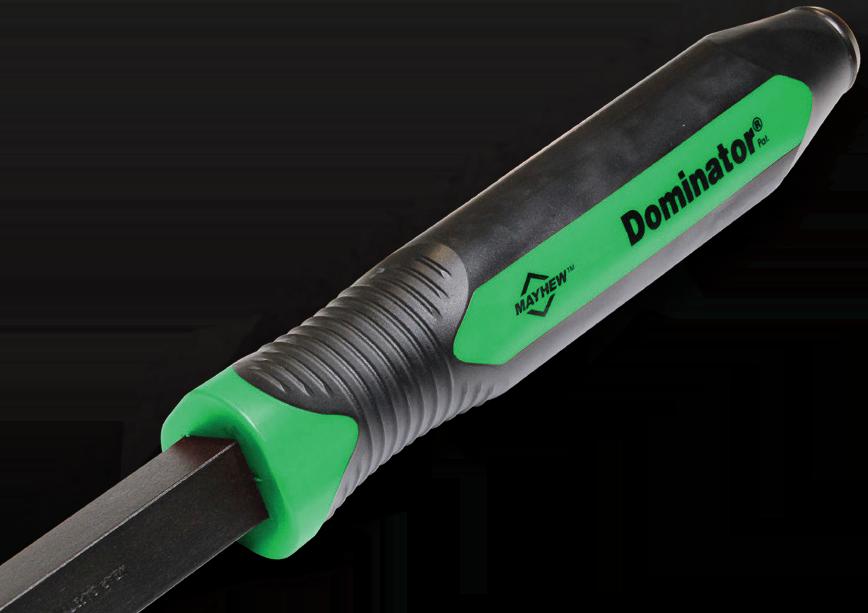
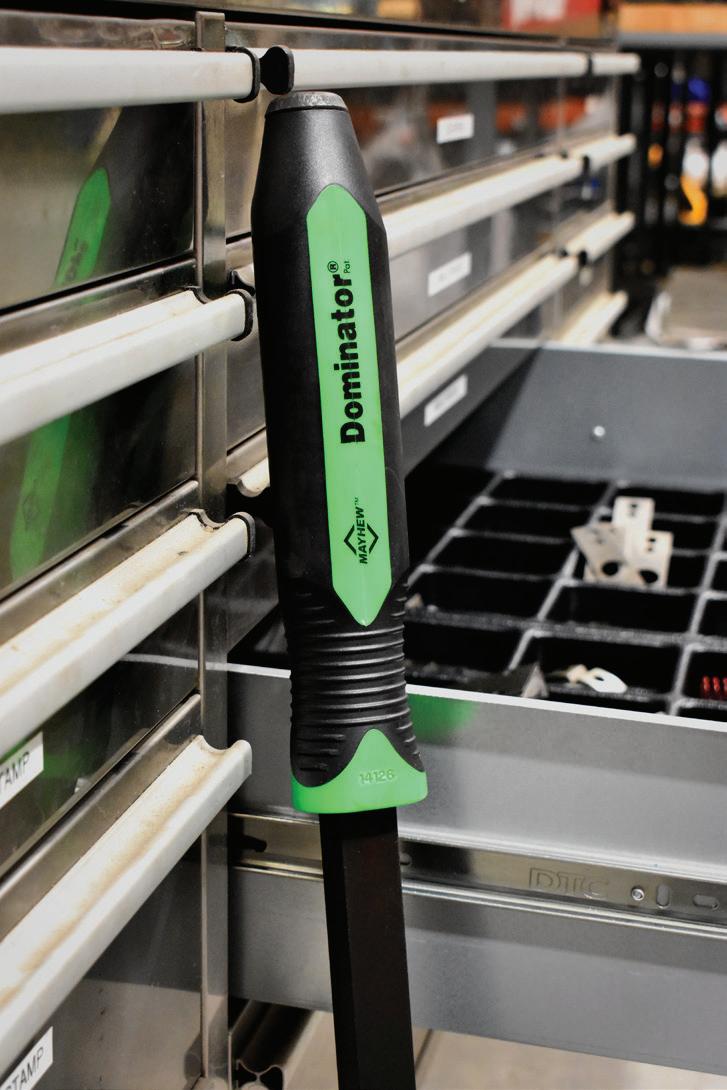
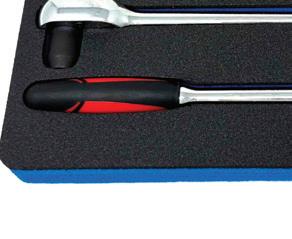
Meet the Dominator® Pro “Big Stick Jr.”, the heavy-duty pry bar built for serious leverage in tighter spaces. Engineered for lifting, prying, and separating, this 34” bar delivers the professionalgrade strength and reliability Mayhew is known for. It is made from thicker steel than the average pry bar, with rugged 7/8” square steel stock, to resist flex and maximize torque when the job fights back. A patented extra long two-composite handle adds reach, comfort, and a locked-in grip, giving pros confident control and power where it counts.
Engineered Tough. Built for Performance.
Maximum Durability & Prying Power: Hardened chrome-vanadium steel shaft for exceptional strength.
Strike-Ready Capped End: Strike without handle damage; transfers force and reduces hand fatigue.
Ergonomic Dominator Pro Handle: Patented two-composite handle for secure, comfortable grip, and superior control.
Versatile Heavy-Duty Use: High-quality foam maintains its shape and grip, is solvent resistant, and durable to withstand daily use.
American-Made, Lifetime Guarantee: Proudly made in the USA and backed by a lifetime warranty.
Choose the Big Stick Jr. for ultimate performance and unmatched versatility! LEARN
MORE
79.5" OF
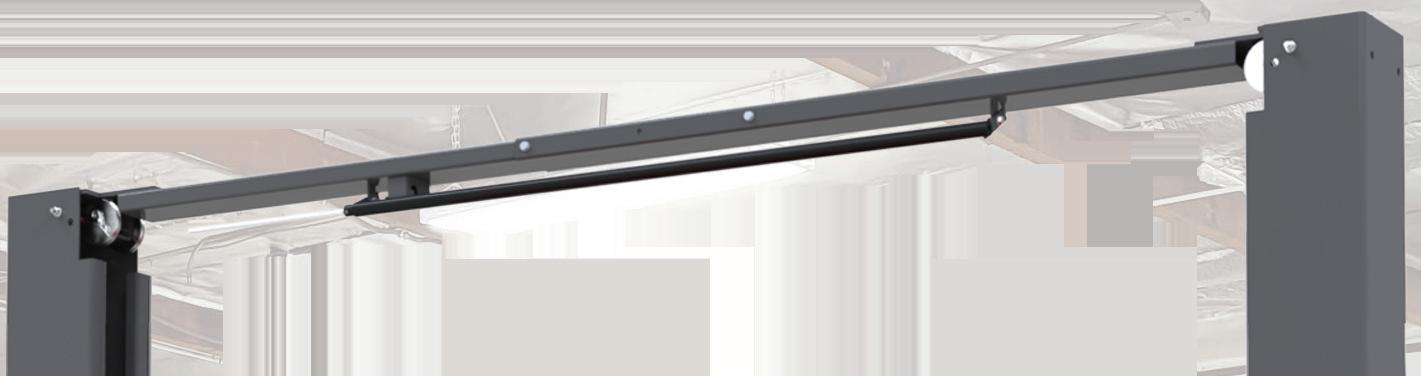
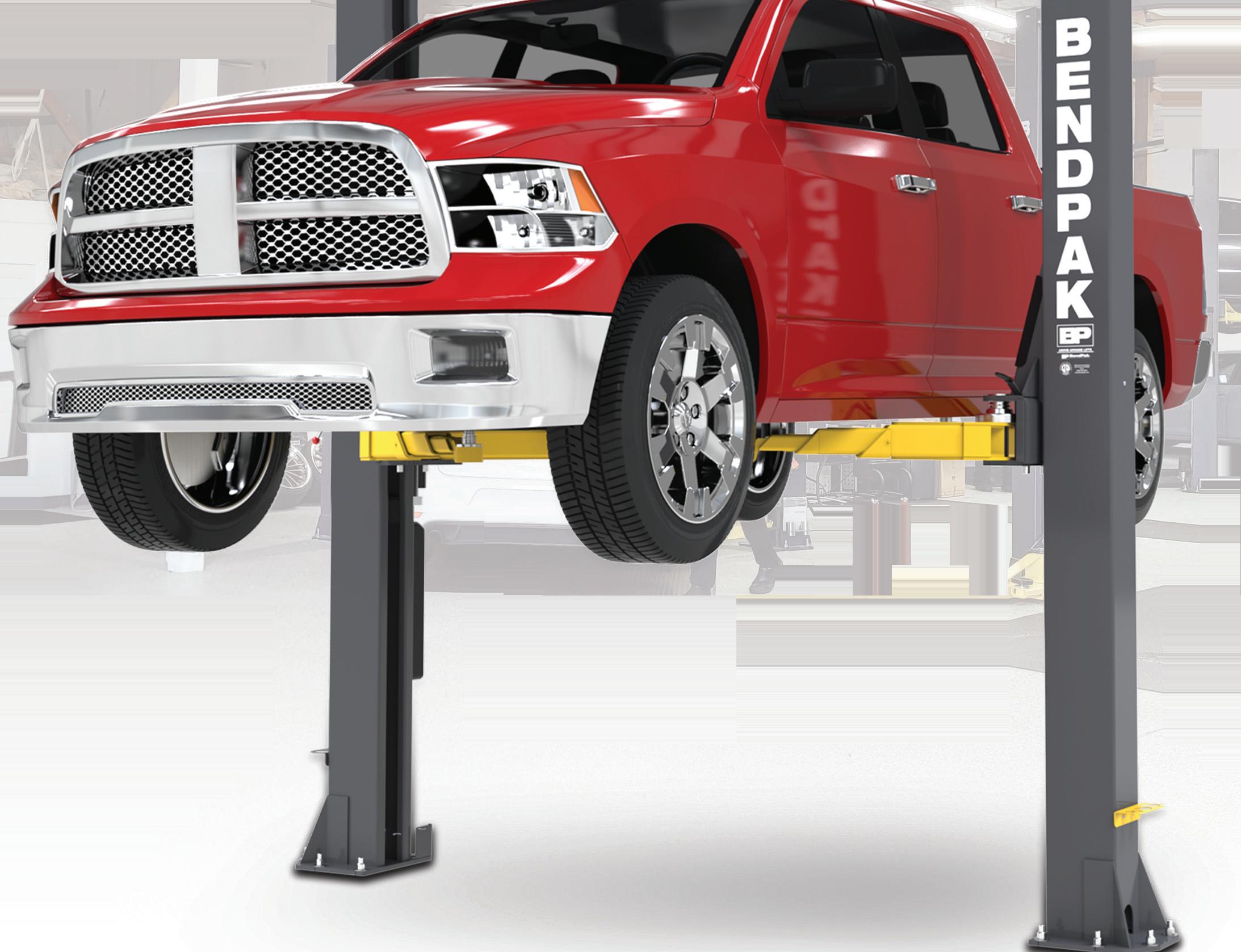
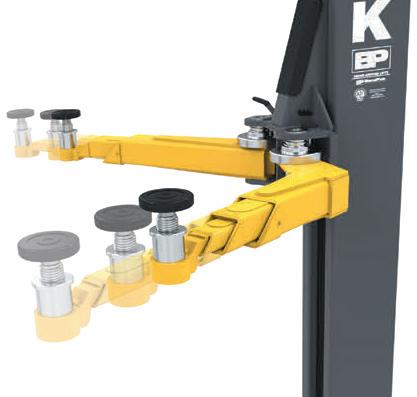
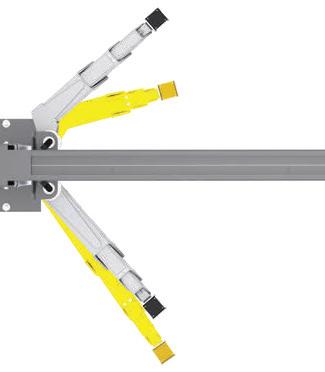
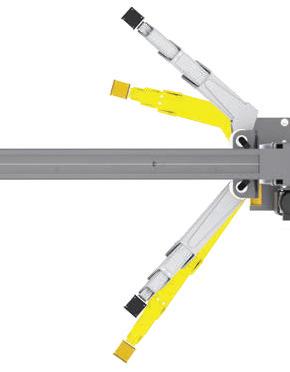
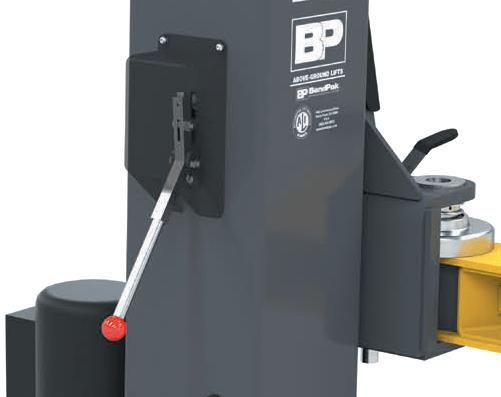
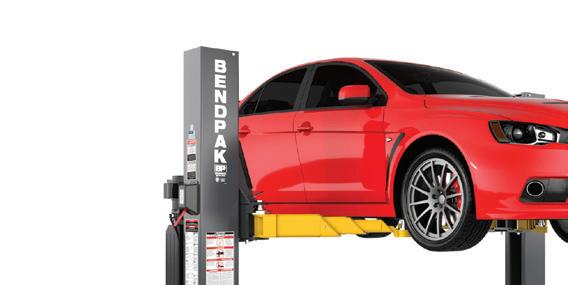
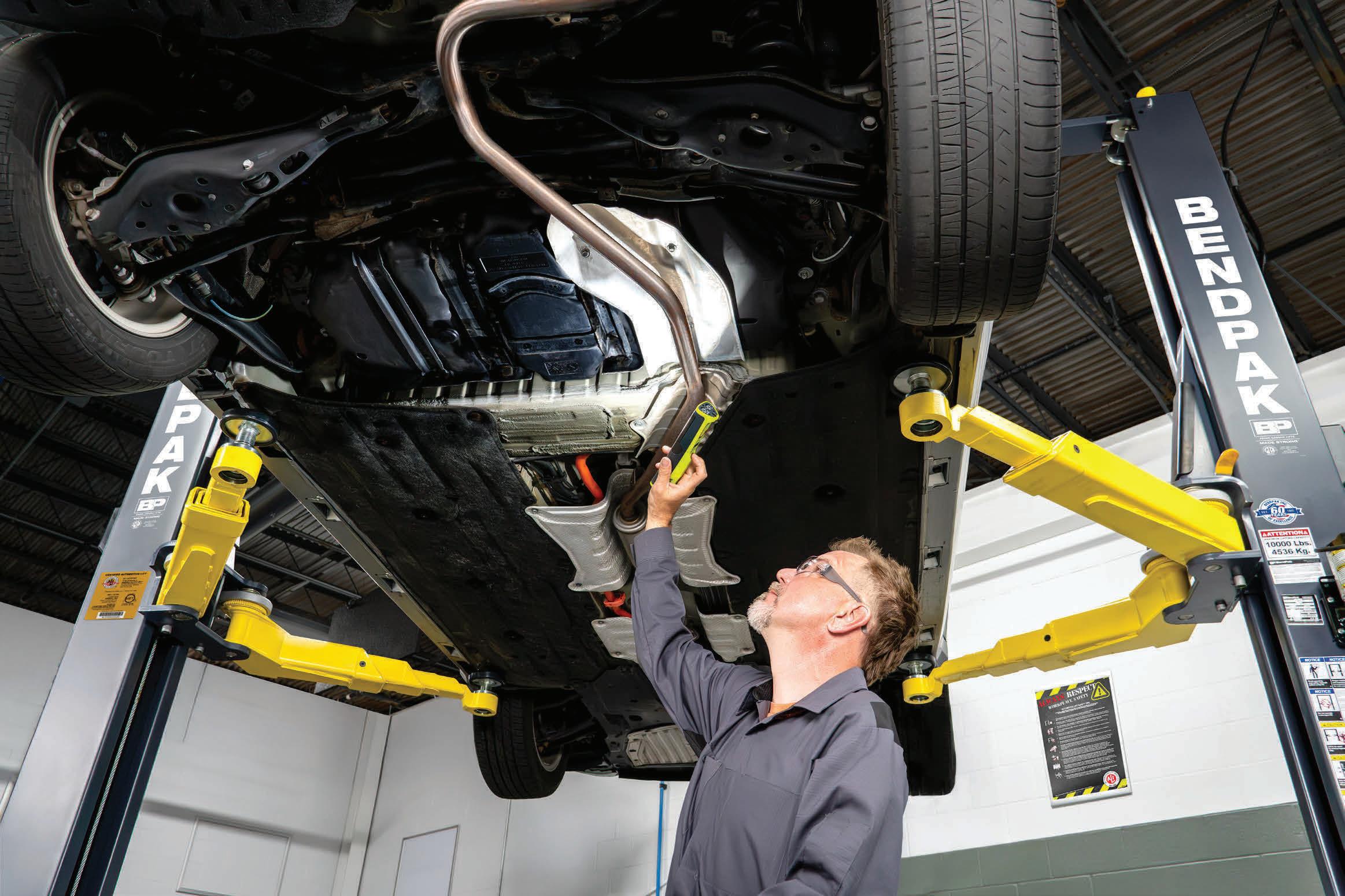
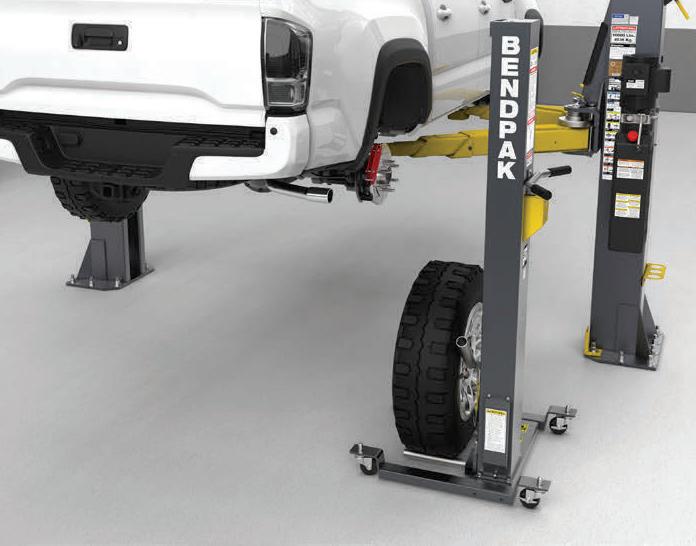
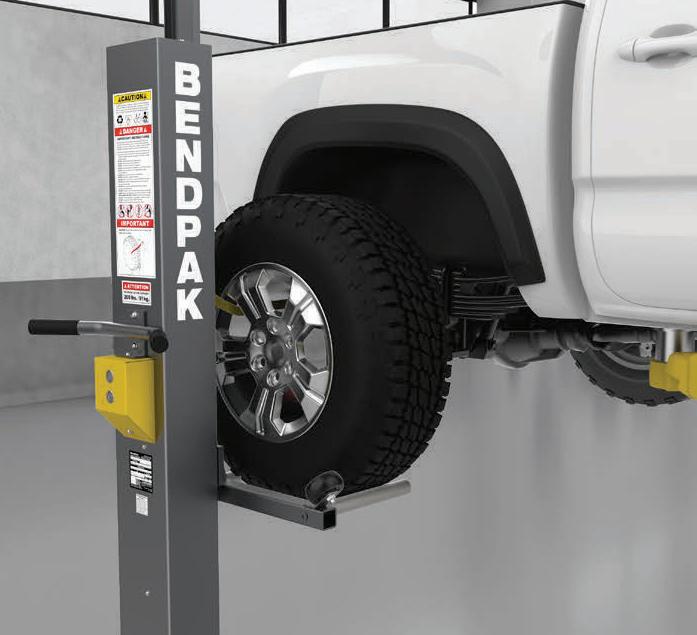
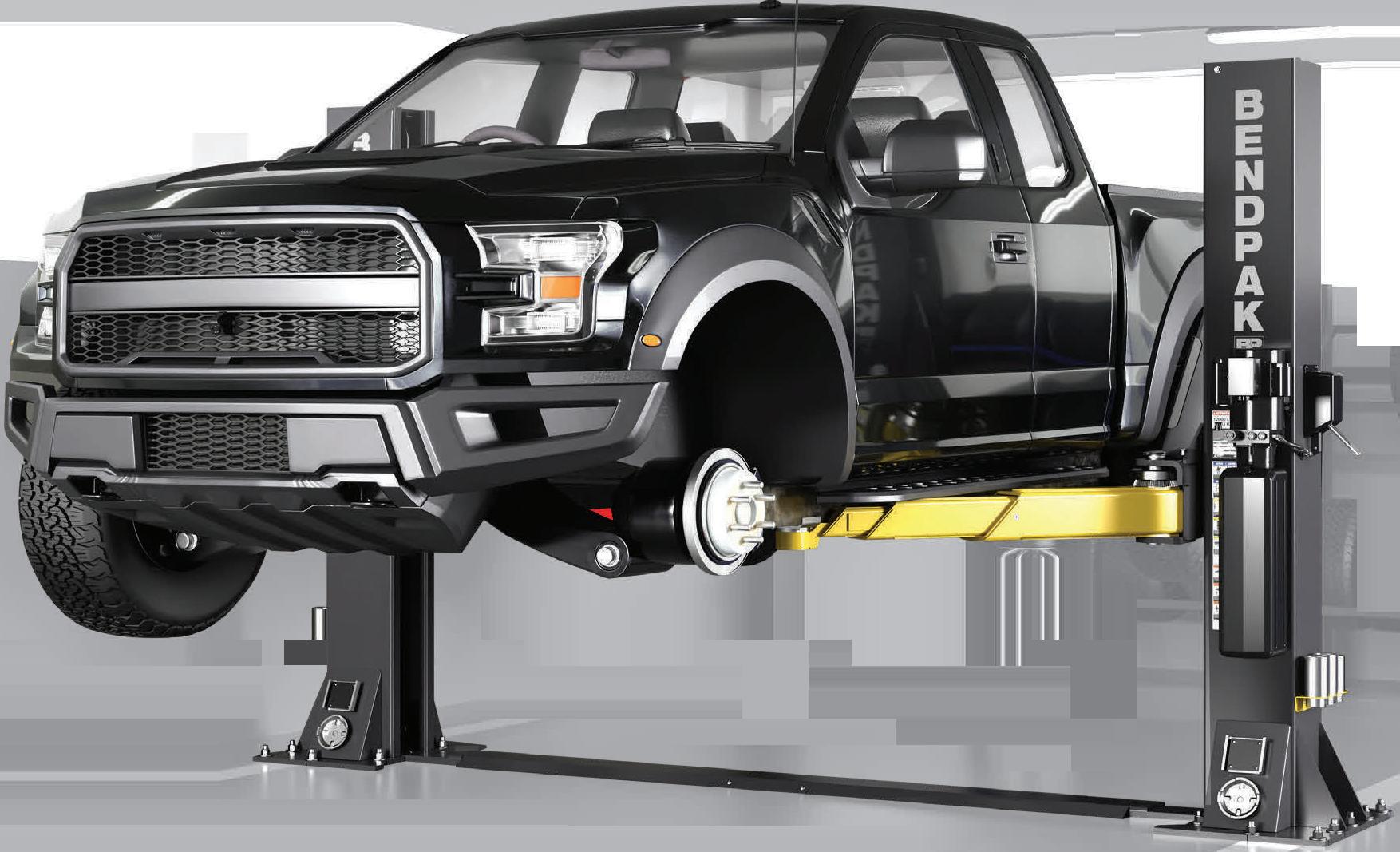
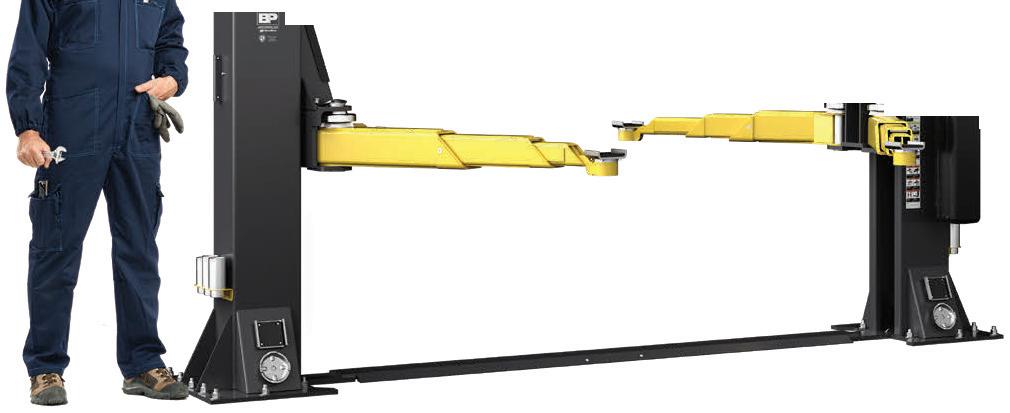
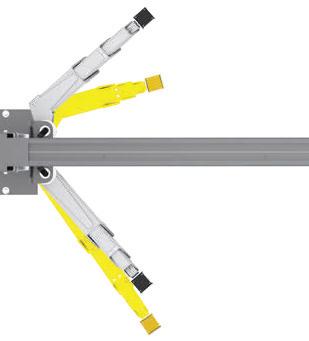
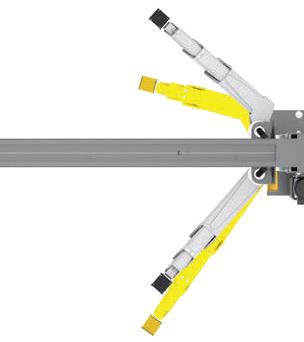
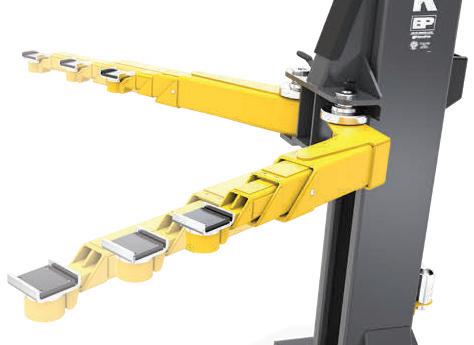
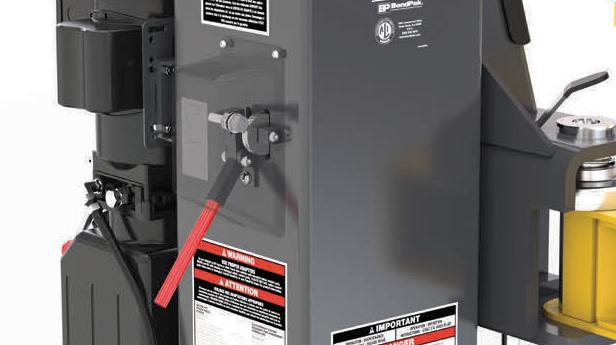
The 10AP Series combines increased lifting height with unmatched versatility, making it ideal for larger vehicles and undercarriage work. The extra height creates a more comfortable workspace for taller mechanics to perform intricate repairs on trucks or SUVs. Built for durability and safety, it features an expandable top beam and Bi-Metric™ arms that accommodate symmetric or asymmetric lifting. Its 2-in-1 design maximizes flexibility, while efficient engineering keeps costs low and productivity high—perfect for busy shops. Check out the full line of AP-Series lifts at bendpak.com or call us at 1-800-253-2363.
ACCOUNT EXECUTIVE Sean Thornton 269-449-0257 SThornton@EndeavorB2B.com
PRODUCTION MANAGER Jane Pothlanski 224-324-8507 JPothlanski@EndeavorB2B.com
AD SERVICES MANAGER Karen Runion 330-736-1291 KRunion@EndeavorB2B.com
ART DIRECTOR Eric Van Egeren
AUDIENCE DEVELOPMENT MANAGER Debbie Dumke
ENDEAVOR BUSINESS MEDIA, LLC
CEO – Chris Ferrell
COO – Patrick Rains
CDO – Jacquie Niemiec
CALO – Tracy Kane
CMO – Amanda Landsaw
EVP – Transportation Group – Chris Messer
VP of Content Strategy – Transportation Group – Josh Fisher
Subscription Customer Service 877-382-9187; 847-559-759
Circ.ProfDistmag@omeda.com PO Box 3257 • Northbrook IL 60065-3257
Check out PTEN ’s top 25 most viewed products of 2025.
Pete Rudlo shines a light on shop and technician lighting needs.
Article reprints reprints@endeavorb2b.com
Q & A with Je Del Rossa, general manager for ProMAXX Tool.
Professional Tool & Equipment News (USPS 012-426, ISSN 1081-4485 print; ISSN 2150-2072 online) is published eight times a year in March, April, May, June, August, September, October and December by Endeavor Business Media, LLC. 201 N Main St, 5th Floor, Fort Atkinson, WI 53538. Periodicals postage paid at Fort Atkinson, WI 53538 and additional mailing offices. POSTMASTER: Send address changes to Professional Tool & Equipment News, PO Box 3257, Northbrook, IL 60065-3257. Canada Post PM40612608. Return undeliverable Canadian addresses to: Professional Tool & Equipment News, PO Box 25542, London, ON N6C 6B2.
Check out the latest o erings from Hazet, Mayhew, Ari-Hetra, and more.
Our review panel tests two di erent tools and gives their feedback.
Chris Biediger, Snap-on
Subscriptions: Individual subscriptions are available without charge in the U.S. to qualified subscribers. Publisher reserves the right to reject non-qualified subscriptions. Subscription prices: $62.50 per year, $116.25 two year (U.S.A. only). All subscriptions payable in U.S. funds. Send subscription inquiries to Professional Tool & Equipment News, PO Box 3257, Northbrook, IL 60065-3257. Customer service can be reached toll-free at 877-382-9187 or at circ.PTEN@omeda.com for magazine subscription assistance or questions.
Printed in the USA. Copyright 2025 Endeavor Business Media, LLC. All rights reserved. No part of this publication may be reproduced or transmitted in any form or by any means, electronic or mechanical, including photocopy, recordings or any information storage or retrieval system, without permission from the publisher.
Endeavor Business Media, LLC does not assume and herby disclaims any liability to any person or company for any loss or damage caused by errors or omissions in the material herein, regardless of whether such errors result from negligence, accident or any other cause whatsoever. The views and opinions in the articles herein are not to be taken as official expressions of the publishers, unless so stated. The publishers do not warrant, either expressly or by implication, the factual accuracy of the articles herein, nor do they so warrant any views or opinions offered by the authors of said
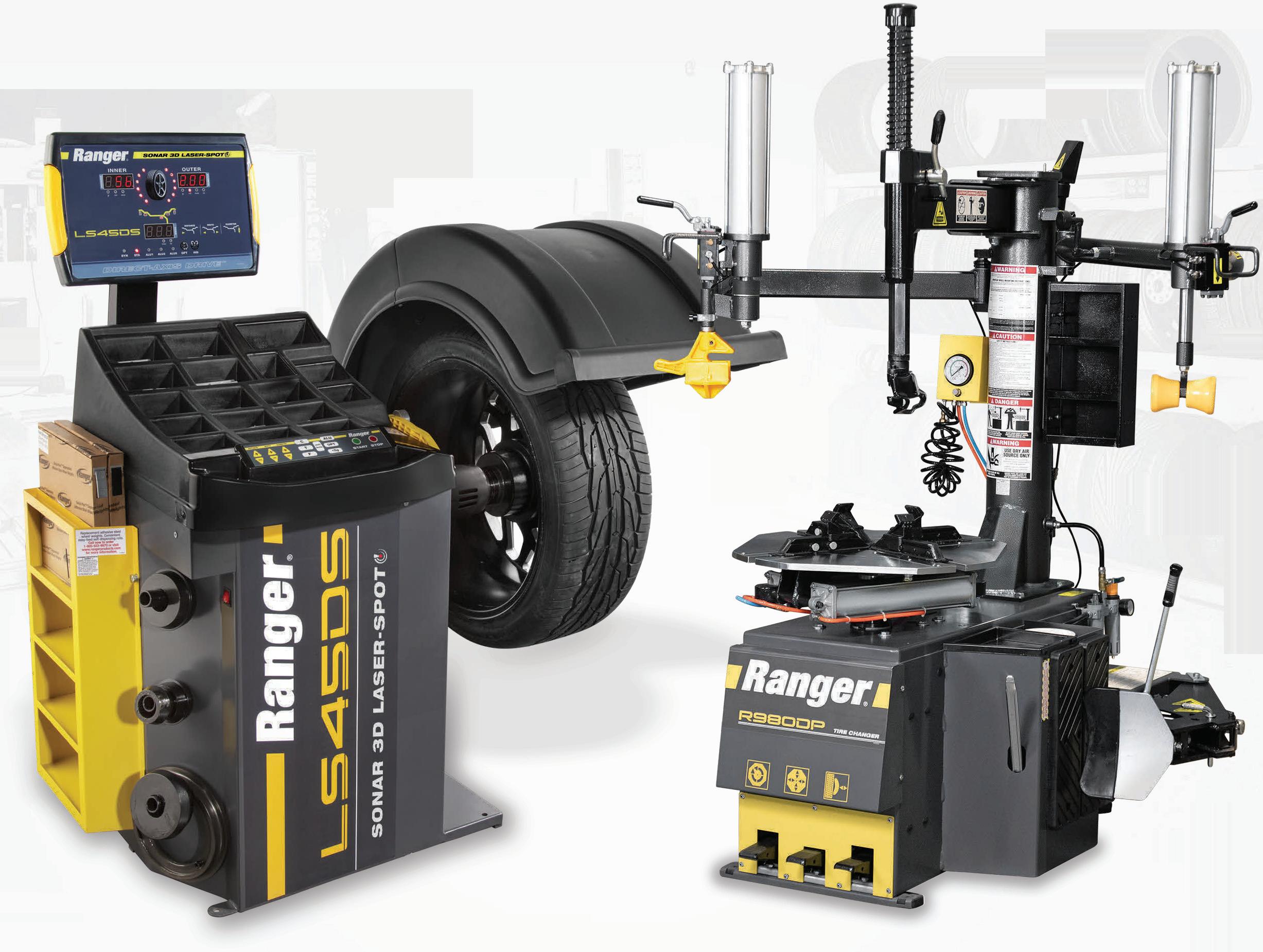
Two Machines. One Price. Limitless Performance.
Revolutionize your tire and wheel service center with the ultimate pairing of precision and efficiency. Our combos redefine the standard, bringing you cutting-edge features without the hefty price tag. Elevate your services, amplify your efficiency, and see a direct impact on your profits. Don’t miss out on this opportunity to upgrade your work shop to the next level of performance. Connect with us at 1-800-253-2363 to speak with our experts or explore our combo offerings at www.bendpak.com. Discover the innovation, efficiency, and satisfaction that only Ranger can deliver – brought to you by BendPak.
Editor-in-Chief Nadine Battah speaks with Jeff Weiss, Senior Product Manager for Power Tools at Snap-on, about the evolution of cordless ratchets in today’s shop.
This gallery provides a look at notable tools, booths, and activity from SEMA 2025. View the full collection here.
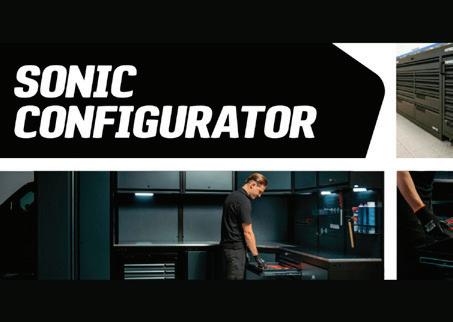
Tools launches Sonic Configurator, a digital platform designed to help tecnicians and shop owners design, visualize, and optimize their workspace.
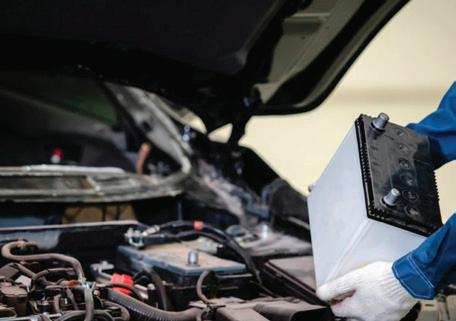
Clore Automotives's Jim O’Hara discusses the complexities of EFBs (enhanced flood batteries) and how to properly incorporate them into your shop's service operations.
Kicking off the New Products section each month, our Featured New Products page includes brand new products showcased on the cover that are available to the automotive market.
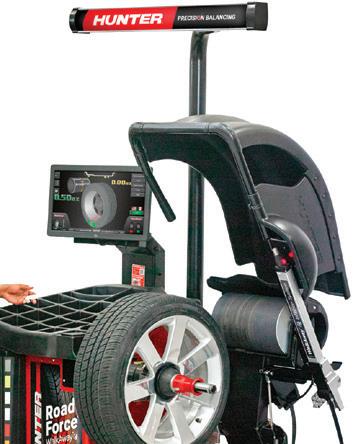
WALKAWAY INFLATION SYSTEM RELEASES INFLATION CHUCK
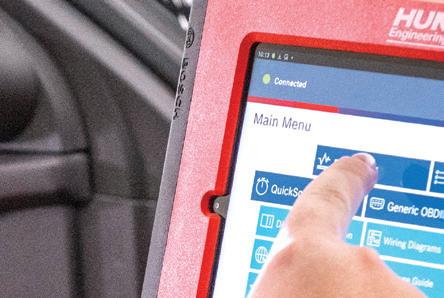
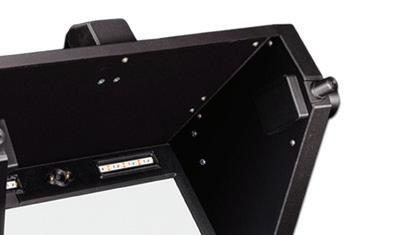
The Hunter Engineering Road Force WalkAway Wheel Balancer is capable of reducing door-to-door four-tire changeover times by up to 45 percent. The key component for the timesaving is the WalkAway inflation system, which automatically releases the inflation chuck when inflation is compelete. This allows the machine to perform the balance spin, greatly reducing the time spent inflating assemblies on the tire changer. Additional features include a new two-piece hood that enables the balancer to sit 4.5” closer to the wall, a new hood angle sensor to provide a smooth opening, and updated software.
For more information, visit VehicleServicePros.com/55329797
FEATURES MAGNETIC SOCKET EXTENSION HOLDER
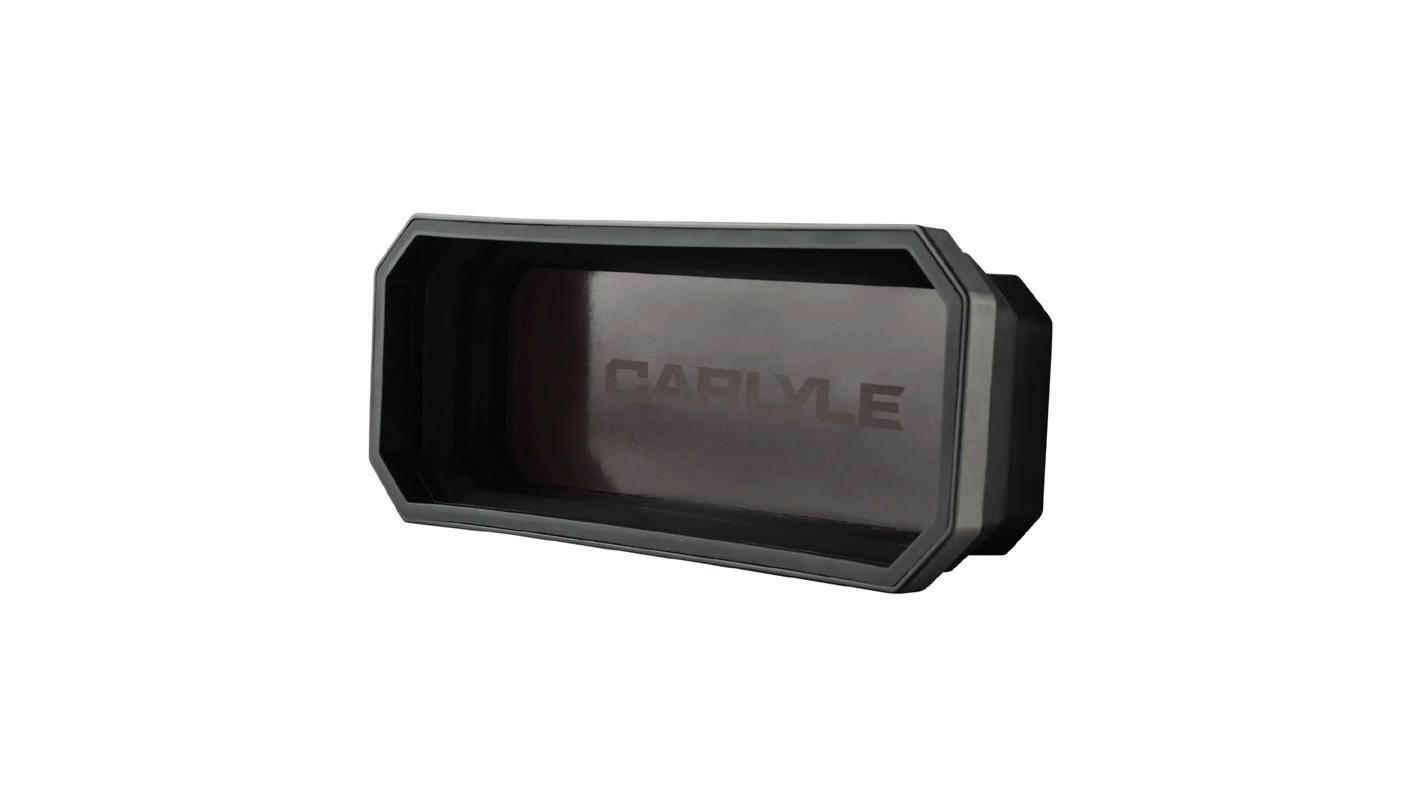
The Carlyle Tools Magnetic Tool Tray socket extension holder with a non-marring design to protect surfaces while keeping sockets organized and within reach. Its low-profile, flexible construction bends easily to fit in tight spots or curls up for compact storage. Designed to magnetically cling to toolboxes, lifts, and even curved or ferrous surfaces. Available in a 4” or 10” option.
FEATURES 2-HOUR CONTINUOUS RUNTIME
For more information, visit VehicleServicePros.com/55326608
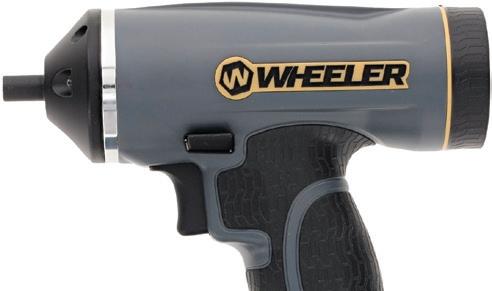
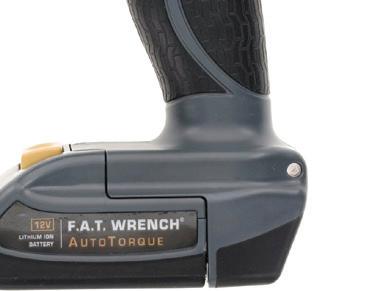
The Wheeler F.A.T. Wrench AutoTorque features an ultra-precise digital torquing sensor to prevent damage and easy torque adjustments between 10-65 in-lbs. It also offers a variable speed with a multi-speed trigger with up to 200 rpm motor speed, a magnetized 1/4” hex drive that securely holds bits, and an easy-to-read digital LCD screen that displays torque settings in 0.1 in-lb increments. The AutoTorque is powered by a 12V detachable battery with a USB-C charge port and a quick-check LED for battery status, capable of providing a continuous runtime of 2 hours on a single charge. It comes with 15 of the most popular bits, including SAE hex and Torx bits.
FEATURES ROUNDING PREVENTION TECHNOLOGY
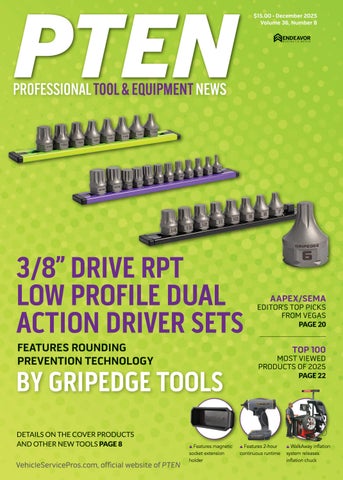
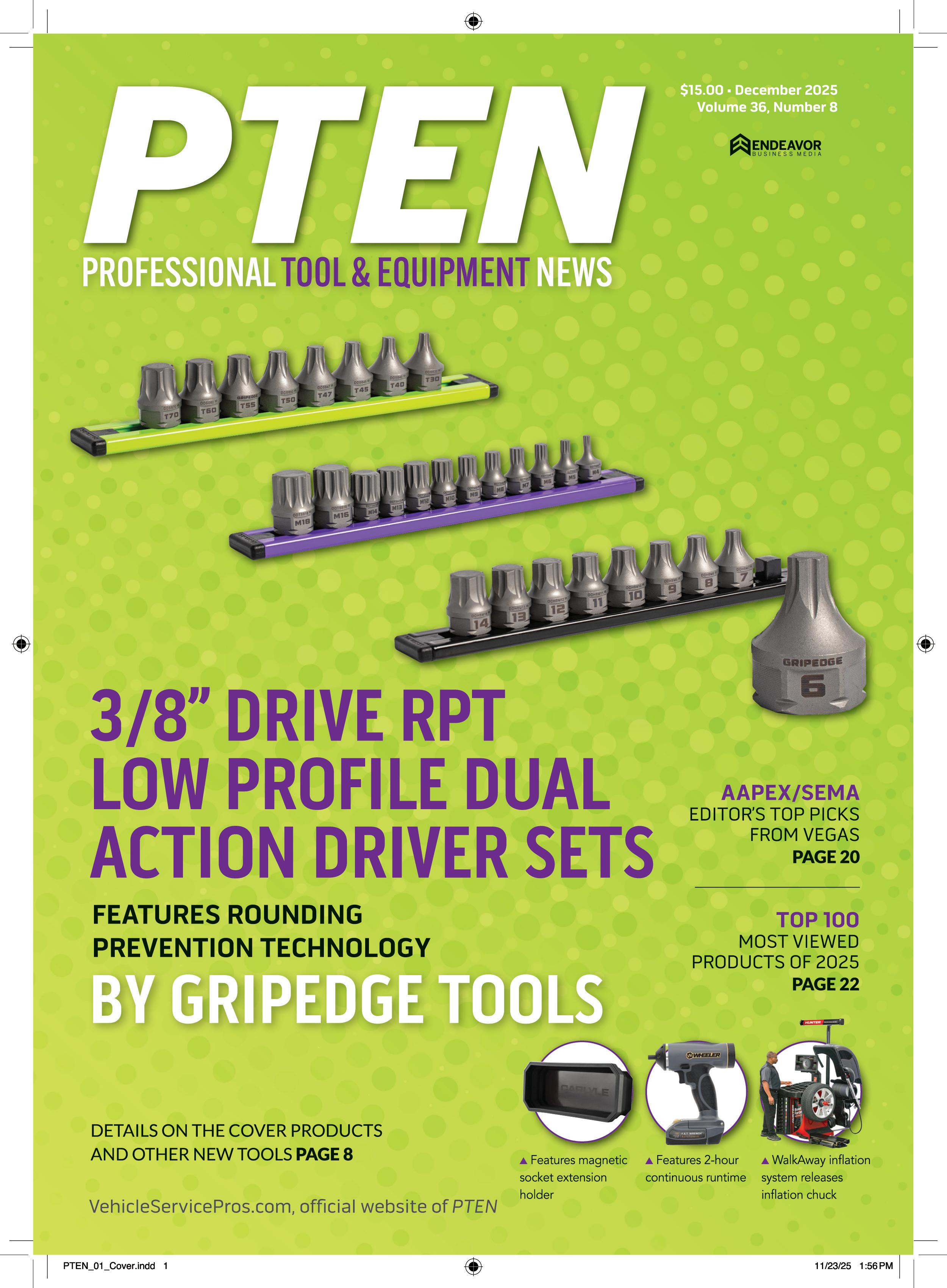
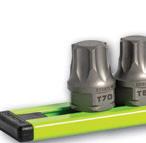
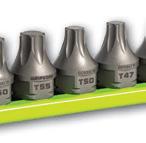
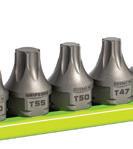
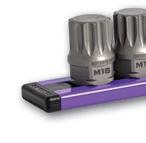
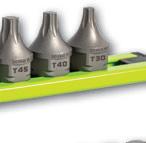
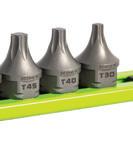
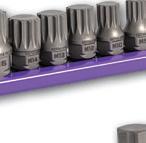
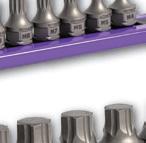
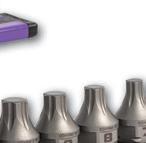
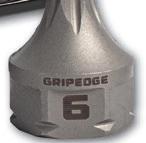
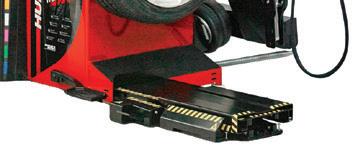
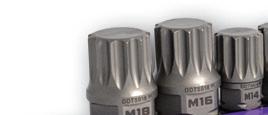
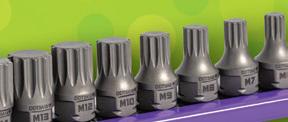
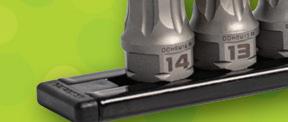
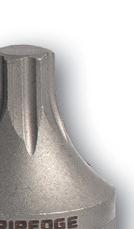
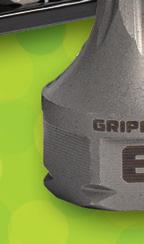
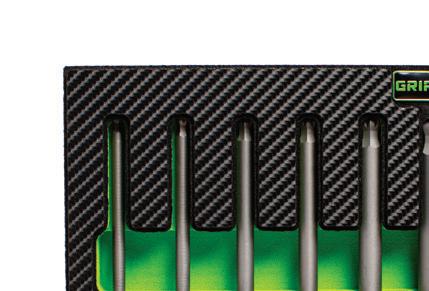
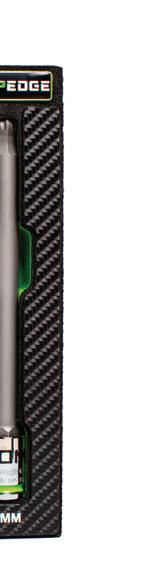
GripEdge Tools 3/8" Drive RPT Low Profile Dual Action Driver Sets, Nos. DDHBM9S, DDHBS6S, and DDSB8S, come as metric, SAE, or star. Each set's bits measure just 1-1/16" or 27mm in length, allowing for greater access in recessed or tight spaces. The drivers can be driven using standard 3/8" drive square tools or the external 11/16" (17mm) hex. These sets maintain a full-length geometry across most sizes, ensuring a secure fit within the fastener. Each driver features GripEdge's patented Rounding Prevention Technology (RPT). RPT geometry is engineered to replace conventional tools by preventing the rounding of good fasteners and removing damaged ones. Each set features laser-etched size markings, a one-piece S2 steel construction, and is packaged in a second-generation aluminum rail. For more information, visit VehicleServicePros.com/55327157
ADJUSTABLE BOX-END HEAD PIVOTS FOR GREATER ACCESS
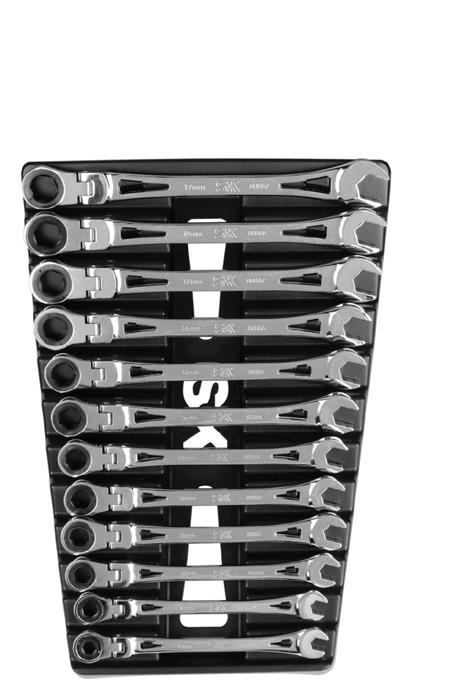
The 7-pc Flex-Head X-Frame SAE Ratcheting Wrench Set , No. 80090, from SK Tools features an exclusive X-Frame design, engineered for strength, balance, and precision in tight spaces. The wrenches feature a 180-degree flex head rotation, with an adjustable box-end head that pivots for additional access in hard-to-reach areas. Additional features include an ultra-low 1.7-degree arc swing, a dualpawl engagement that ensures constant contact for faster turns, an I-beam handle construction, a SureGrip anti-slip design, and more. This set includes 3/8”, 7/16”, 1/2”, 9/16”, 5/8”, 11/16”, and 3/4” sizes.
For more information, visit VehicleServicePros.com/55329677
DESIGNED TO MOUNT SEAMLESSLY ON HATS
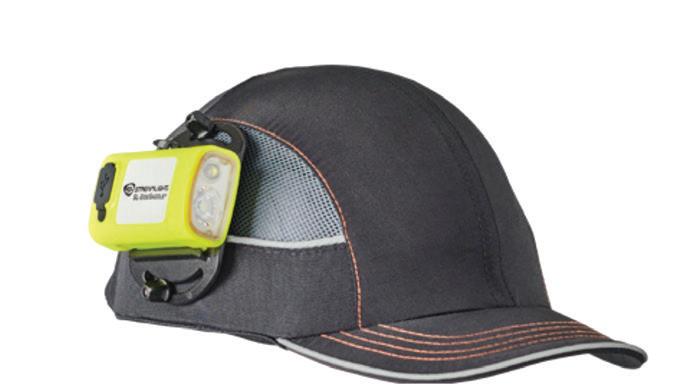
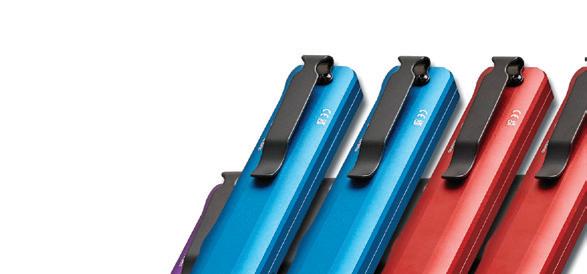
The Streamlight SL-SideSaddle USB is a compact, unobtrusive lighting system designed to mount onto hats, hard hats, and helmets. It stays clear of essential gear. Dual LEDs offer spot, flood, and combo beam options, while a blue safety taillight boosts visibility from behind. A push-button switch with mode memory remembers your last setting. The light is IPX7-rated and waterproof to 1m for 30 minutes. Spot: 350 lm on high for a 6.25-hour run-time, 100 lm on low for a 12-hour run-time. Flood: 325 lm on high for a 7-hour run-time, 85 lm on low for a 12-hour runtime. Combo: 400 lm on high for a 5-hour run-time, 160 lm on low for a 7-hour run-time.
For more information, visit VehicleServicePros.com/55324273
TESTS 6V AND 12V BATTERIES
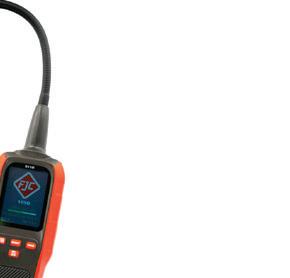
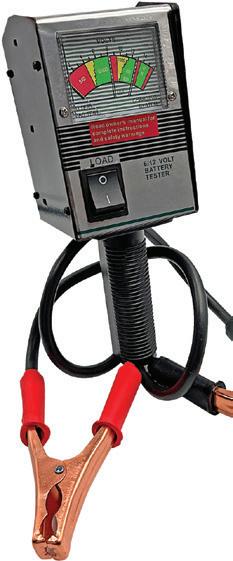
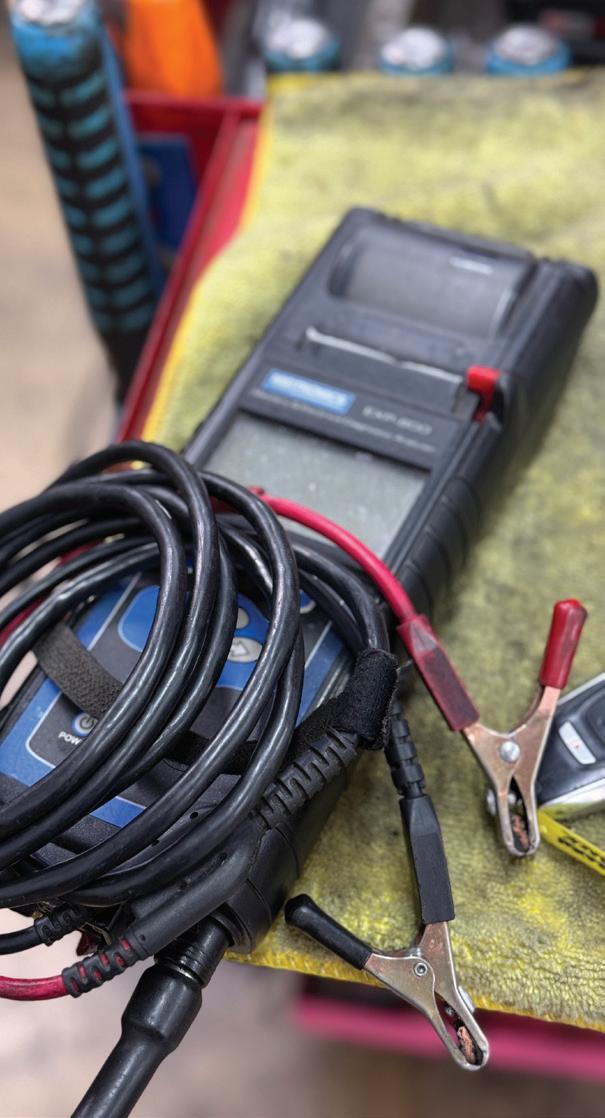
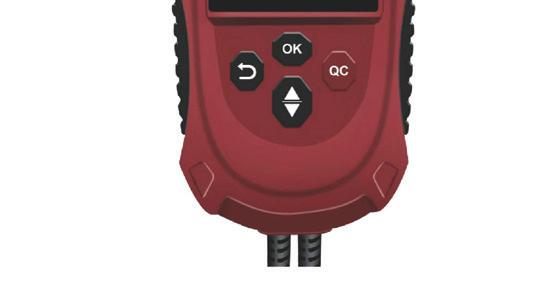
The FJC Battery Tester 125A , No. 45107, tests 6V and 12V batteries for cars and trucks. It checks voltage, current draw, and alternator performance, all with a quick load test.
For more information, visit VehicleServicePros.com/55320634
FEATURES COLUMN HEIGHT OF 93.5”
The 10,000-lb-capacity Short-Rise Two-Post Lift , No. 10AP-SRT, from BendPak offers a solution for shops that want the productivity of a two-post lift without the unnecessary height and footprint of traditional full-rise models. With a column height of 93.5” and a maximum lifting height of 46.25”, AP-SRT Series lifts are designed for safe, ergonomic work. The 10AP-SRT features BendPak’s patented triple-telescoping swing arms that extend and retract to reach more vehicle lifting points and offer lower pad heights to accommodate low-sitting vehicles. The Automatic Swing Arm Restraint System (ASARS) uses forged steel components and delivers over 2,000 lbs of load-holding force. Equipped with a high-performance power unit and ALI Gold certified. For more information, visit VehicleServicePros.com/55311259
FEATURES 3 RATCHETING LEGS
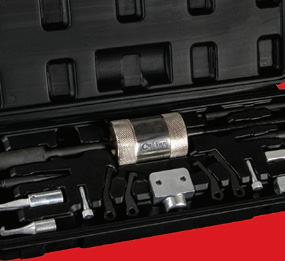
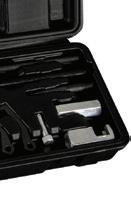
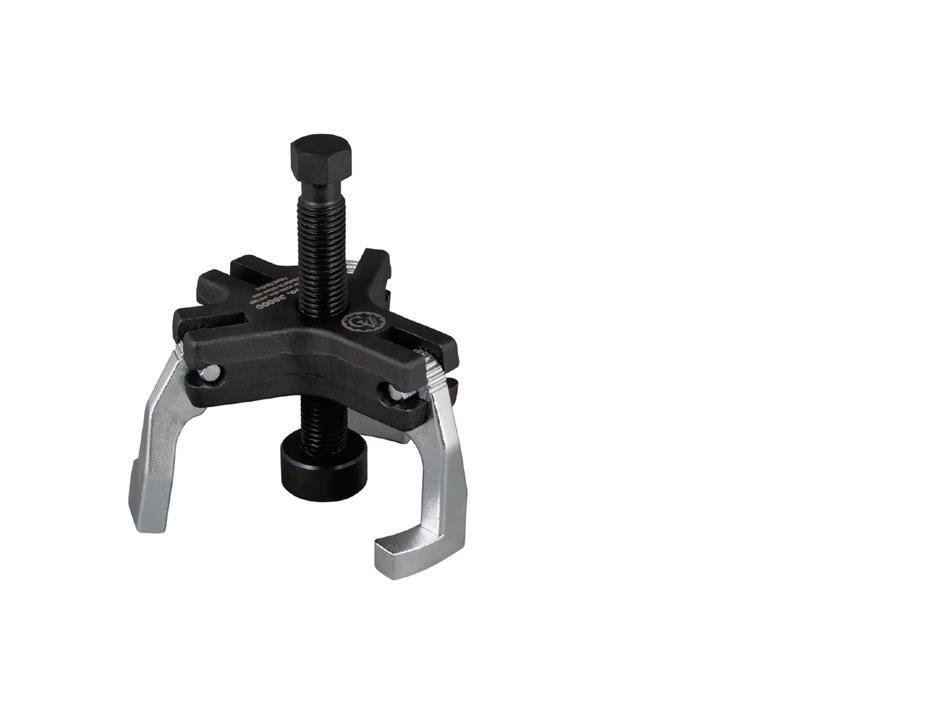
The Ratcheting Harmonic Balance Puller, No. 38000, from Cal-Van Tools is designed to remove harmonic bal-
FEATURES LOWER STORAGE TRAY FOR TOOLS AND SUPPLIES
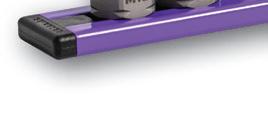
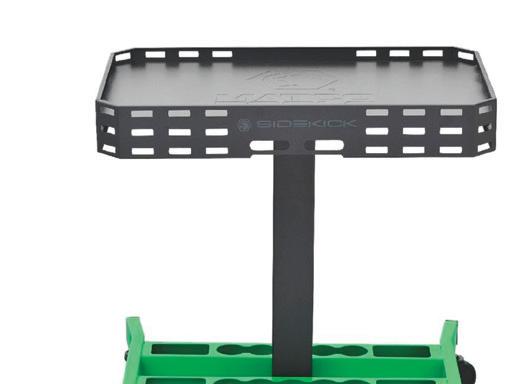
The Matco Tools SIDEKICK Ready Worktable , No. MSCXWT, features a quick-adjust lift height mechanism that allows for easy height adjustments. The table is built with heavy duty materials to stand up to the demands of a shop environment, and each includes a lower storage tray for keeping supplies and tools within easy reach. The table is compatible with the modular SIDEKICK organizers and the Matco Parts Tray, allowing users to create a setup that meets their unique needs. It is available in green, black, purple, or gray.
For more information, visit VehicleServicePros.com/55293684
IDEAL FOR PRYING OR LIFTING
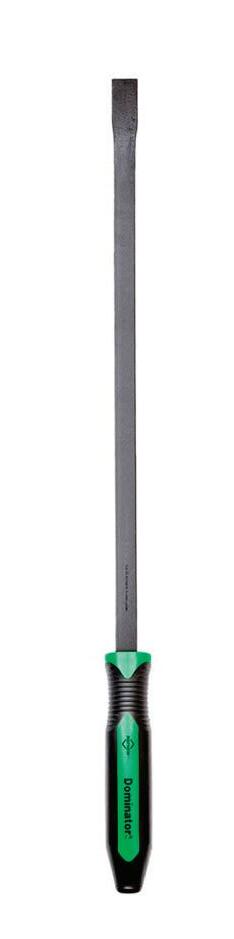
The Mayhew Tools Dominator Pro 34” Heavy Duty Pry Bar 14126GN, is ideal for any prying or lifting. The bar is designed to be struck without damaging the handle, which also serves as a shock absorber, reducing hand fatigue. The patented two composite handle is ergonomically designed to provide superior comfort and grip. The hardened and tempered alloy sheet shaft runs from the cutting edge through the handle to deliver maximum force. Available in green with a black oxide finish to help prevent rust.
DESIGNED FOR MAXIMUM ORGANIZATION
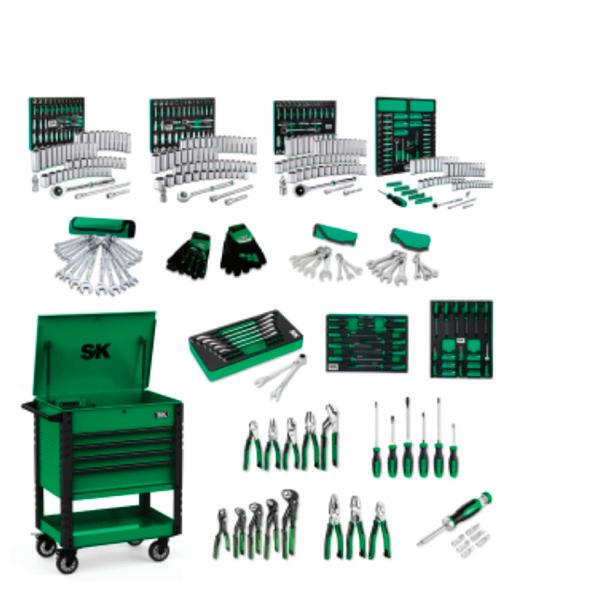
The 4-Drawer Tool Cart Set from SK Tools comes stocked with the company’s latest socket sets, precisionengineered screwdriver sets, and durable dual-material handle pliers sets. This tool cart is designed for maximum organization and efficiency and includes exclusive SK swag. This fully-loaded cart is also available as a 6-drawer option.
For more information, visit VehicleServicePros.com/55328060
VehicleServicePros.com/55329203
For more information, visit VehicleServicePros.com/55327705
IDEAL FOR USE ON HARDTO-REACH FIXINGS
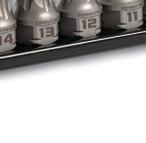
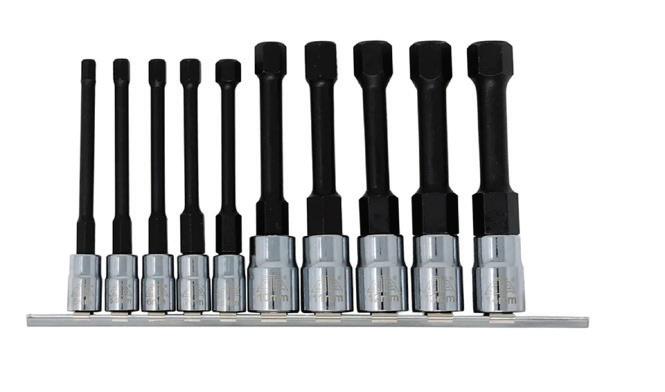
The CTA Tools Metric Hex Socket Bit Set w/ Reduced Shank, No. 2244, is a 10-pc set of reduced shank hex bit sockets ideal for use on hard-to-reach fixings. The set includes 5mm, 5.5mm, 6mm, 7mm, 8mm, 10mm, 11mm, 12mm, 13mm, and 14mm hex key bits. The reduced shank diameter allows for additional access in tight areas. The 1/4” drive socket bits are 5mm, 5.5mm, 6mm, 7mm, and 8mm, at a length of 87mm. The 3/8” drive socket bits are 10mm, 11mm, 12mm, 13mm, and 14mm, at a length of 93mm. These sockets are manufactured from robust chrome vanadium steel, with a polished chrome finish. The bits are made from impact-grade S2 steel. For more information, visit
VehicleServicePros.com/55324251
INCLUDES SPRING-LOADED LOCKING PLIERS
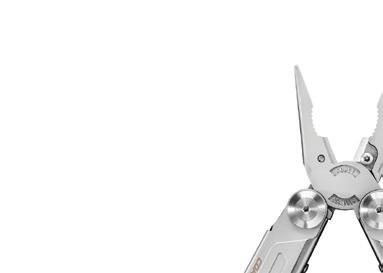
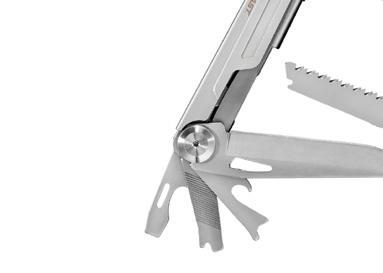
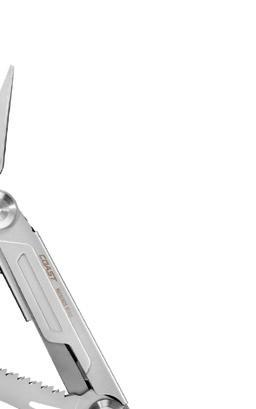
The Coast Mackenzie Multi-Tool , No. MT400, features 13 tools packed into a stainless steel frame. The Mackenzie is designed for one-handed use, weighs 8.6 oz, measures 4.1” in length when closed, and includes a pocket clip and lanyard loop. It includes: a straight edge 3” blade, Phillips screwdriver, flat screwdriver, bottle opener, can opener, wire stripper, fingernail file, 3” wood saw, spring-loaded locking pliers, hard-wire cutters, and wire cutters. It is backed by Coast’s lifetime warranty.
For more information, visit
BACKED BY LIFETIME GUARANTEE
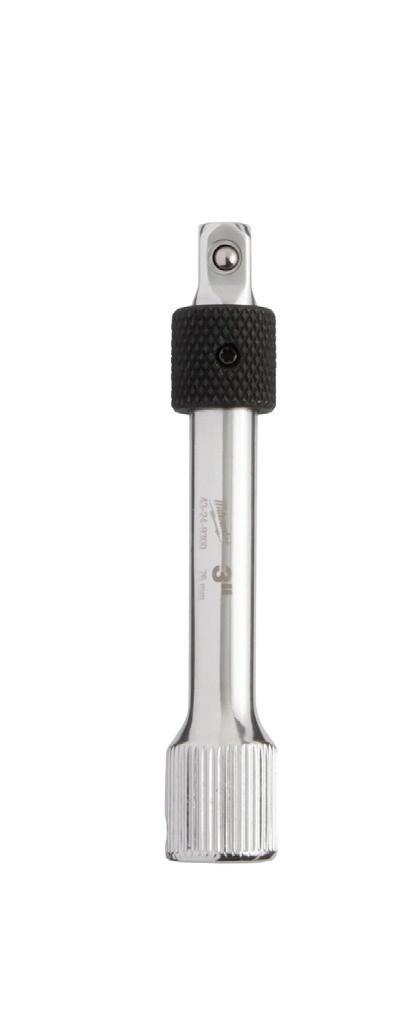
The Milwaukee Tool 1/4” Drive 3” Locking Extension , No. 43-249300, offers control and security in tight applications. The extension features the largest knurling surface on the shaft and female drive end, allowing precise control even when working with oily materials. A durable knurled locking collar keeps the socket secure, and a detent hole increases engagement with the ratchet head. The extension is chrome-plated for corrosion and rust protection, and it is backed by a lifetime guarantee.
For more information, visit VehicleServicePros.com/55322066
INCLUDES A 30” DOUBLEEND TIRE SPOON
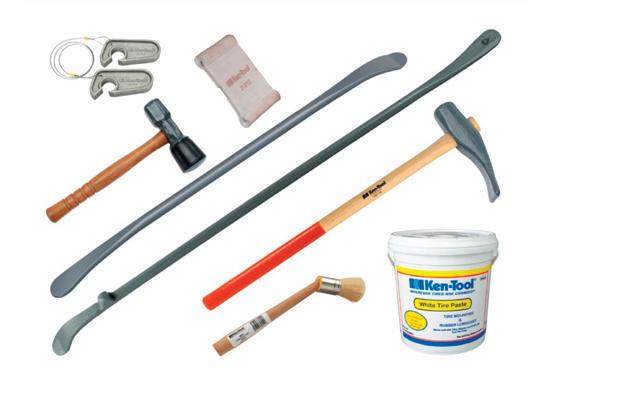
The Ken-Tool Truck Tire Service Kit , No. PN 35645, is engineered for long-lasting performance in the shop or on the road. The kit includes a T45A Tubeless Tire Iron, a 30” double-end tire spoon, the T11ES Bead-Breaking Wedge with Safety Handle, the T35 Heavy Duty Tire Hammer with a 16-1/2” handle with replaceable rubber head, an 8-lb bucket of white tire paste, a Euro-style lube applicator brush, two aluminum C-Lok bead holders, and a leather rim protector to prevent rim scratches and damage.
For more information, visit
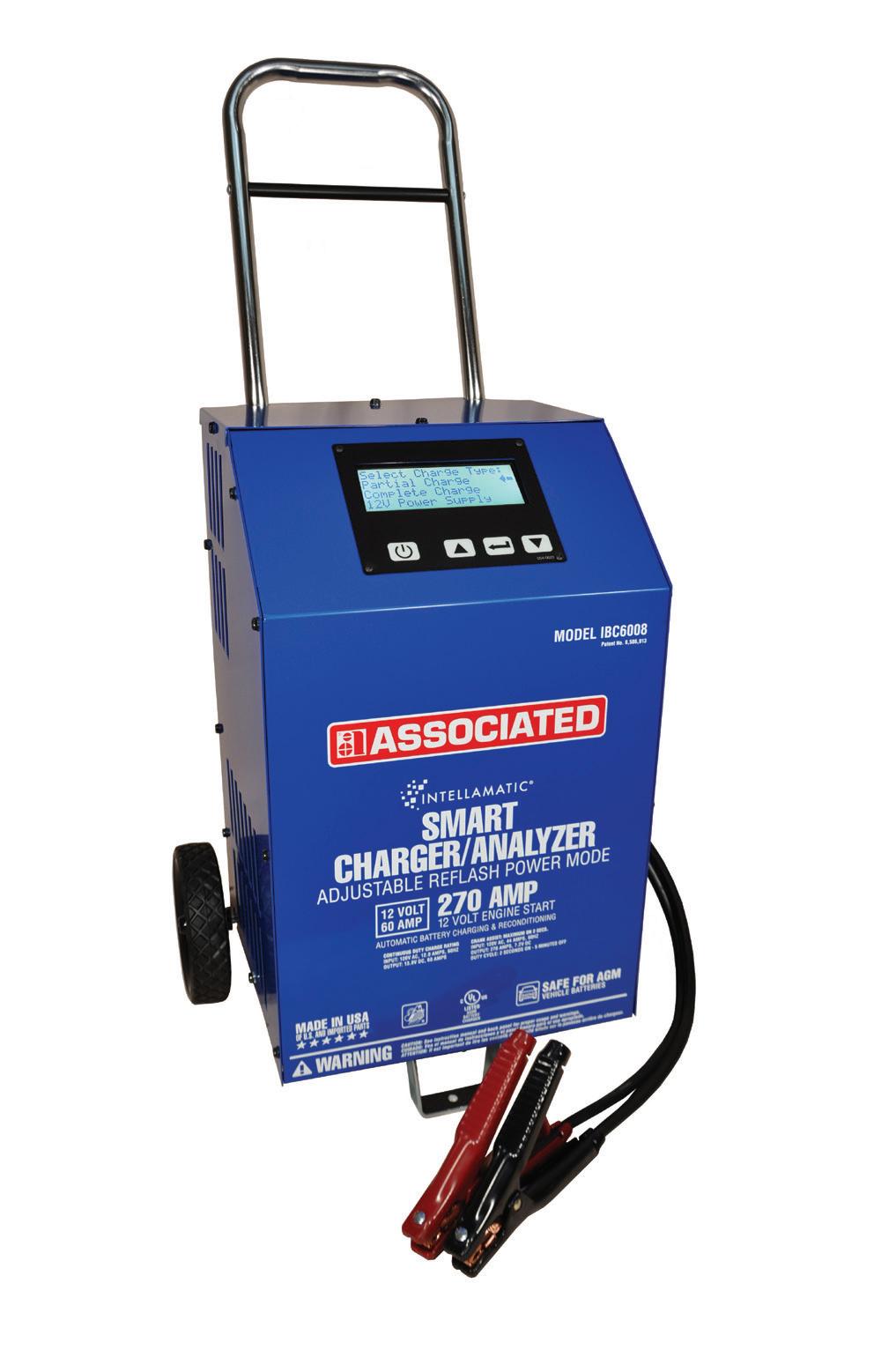
• Adjustable charging voltage within each battery type as well as adjustable charging amperage to accommodate smaller batteries and to comply with OE vehicle and battery manufacturer specifications.
• Adjustable voltage reflash power mode required by several OEM’s affords extended vehicle reflash procedures and key-on/engine off diagnostics while holding a specific voltage.
• Partial or Full Charge Mode to address charge & retest messages.
• Adjustable 12 Volt 60 Amp Charger
• Adjustable 70
• 270 Amp
INCLUDES 1/4”, 3/8”, AND 1/2” RATCHETS
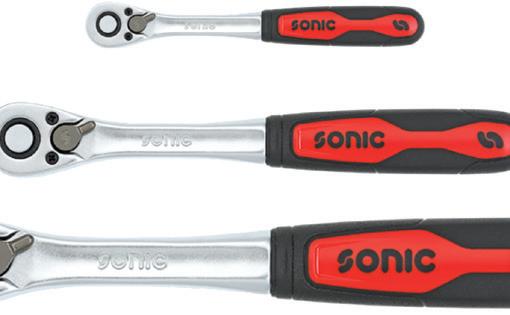
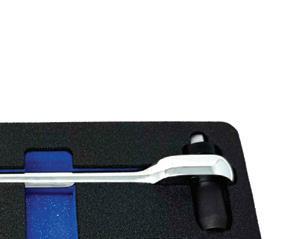
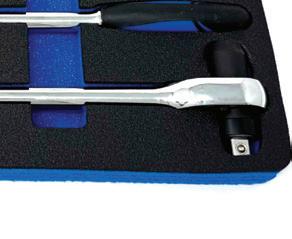
The Sonic Tools NEXT Ratchet Set is a 15-piece collection designed for precision and reliability. The set includes three ratchets, 1,4”, 3/8”, and 1/2”. The set is designed with an ergonomic, thermo-plastic grip that ensures optimal hand contact, resulting in greater comfort and enhanced power transmission of up to 558.3 ft-lbs. Each ratchet features a 60-tooth mechanism that delivers smooth operation, rugged performance, and minimal back drag. All ratchets include sealed heads that protect internal components from dirt and debris, extending their lifespan. Backed by the company’s Lifetime Warranty.
For more information, visit VehicleServicePros.com/55328375
FEATURES BALL-SCREW TECHNOLOGY
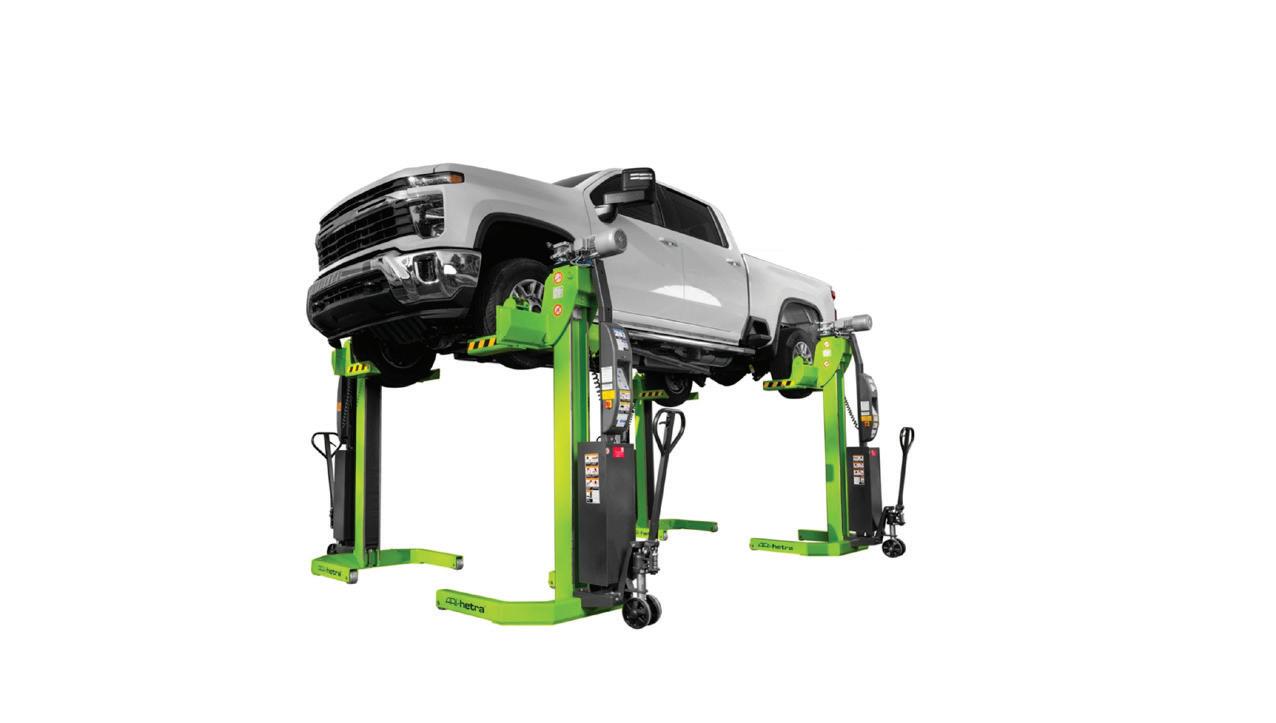
The ARI-hetra 36,000-lb Battery-Powered Wireless Mobile Column Lift System is designed to deliver precise, synchronized lifting through its ball-screw technology. The hydraulic-free design means no fluids, seals, or leaks, according to the company. It is fully self-powered with four deep-cycle batteries per column for long-lasting performance and quick 110V charging from any standard outlet. Its compact, slim design is intended to enhance maneuverability, positioning, and visibility around vehicles making it ideal for tight service bays. Additional features include continuous mechanical locking and redundant safety systems, as well as compatibility with adjustable carriages and cab-off adapters. This lift is ALI-certified.
For more information, visit VehicleServicePros.com/55324265
TEMPERED TO 54 TO 58 HRC
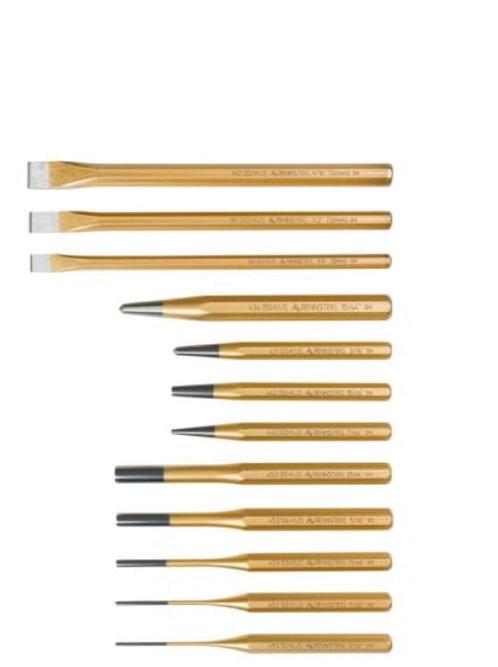
The 12-pc Punch and Chisel Set , No. 9R-400-012, from KNIPEX includes three 8” cold chisels, two center punches, two tapered punches, and five pin punches. The octagonal shape makes the punches easier to grip when striking, and also prevents the tool from rolling away when placed on a surface. The material core design prevents mushrooming of the striking head. Tools are tempered to a hardness of 54 to 58 HRC and comply with the DIN 7255 standard. The chisels feature a hand-ground, sharpened edge designed to cut and shear cold metal. The striking head is turned and chamfered.
For more information, visit
VehicleServicePros.com/55328594
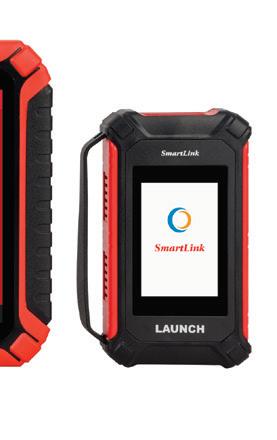
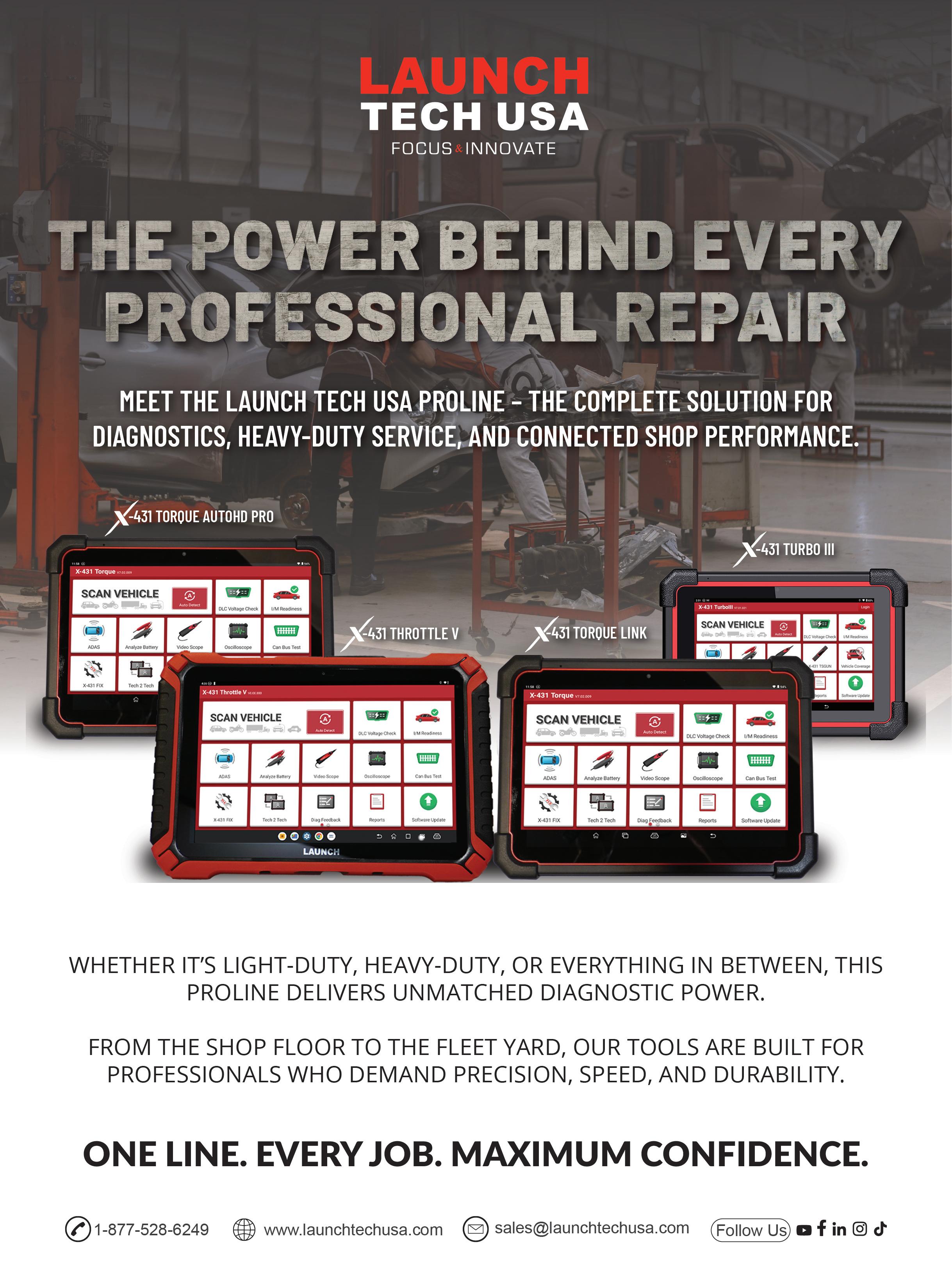
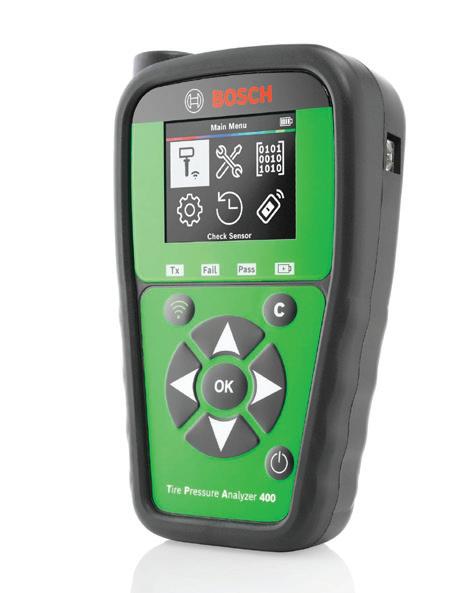
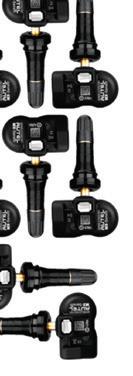
DESIGNED TO STREAMLINE TPMS SERVICES
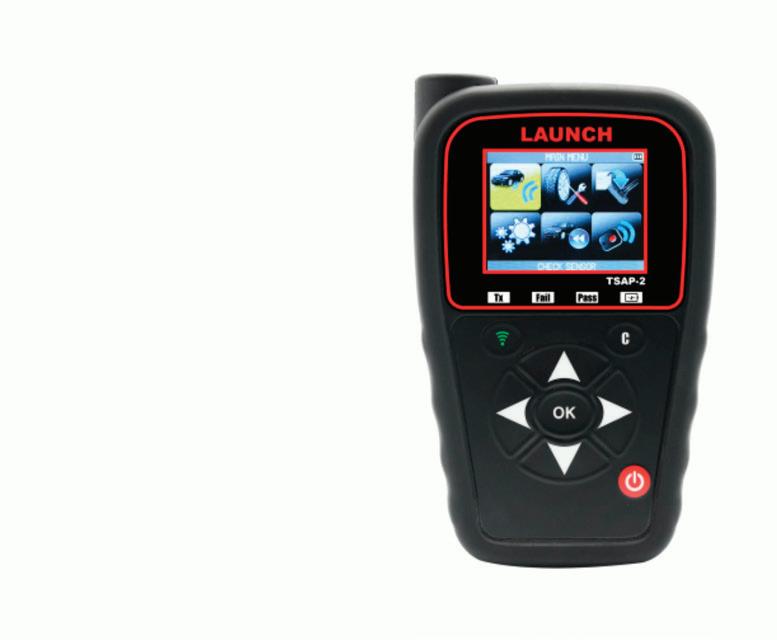
Launch Tech USA is designed to streamline and simplify TPMS service by offering an intuitive
SUPPORTS UP TO 1,500 LBS
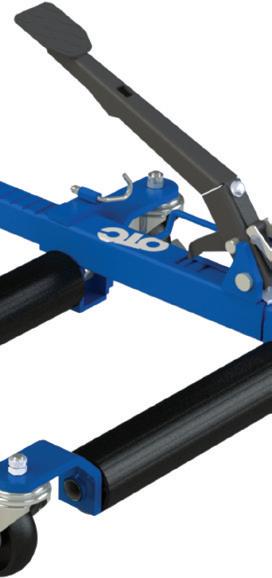
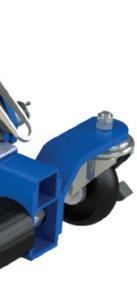
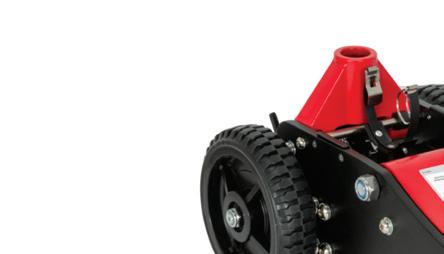
The OTC Tools Vehicle Positioning Jack , No. PJM15, is a single-car dolly that can lift and support up to 1,500 lbs to help safely move disabled vehicles. The ratcheting foot pedal quickly lifts a vehicle corner by the wheel, keeping the car in place and the user’s hands free. An automatic ratcheting lock functions similarly to a vehicle lift, locking in place as the vehicle is lifted, to prevent accidental lowering. Two locking casters keep the vehicle secure after positioning. The heavy duty casters roll smoothly along the shop floor and prevent scratching or scuffing of finished concrete. Integrated side handles make it easy to carry the dolly to and from the vehicle.
For more information, visit VehicleServicePros.com/55289479
can diagnose TPMS sensors on both domestic and import vehicles and has the ability to program most aftermarket sensor brands. Users can pair the TSAP2 with the Launch LTR TPMS sensors for a more complete solution.
For more information, visit VehicleServicePros.com/55324280
NARROW, KNURLED TIPS PROVIDE EXTRA GRIP
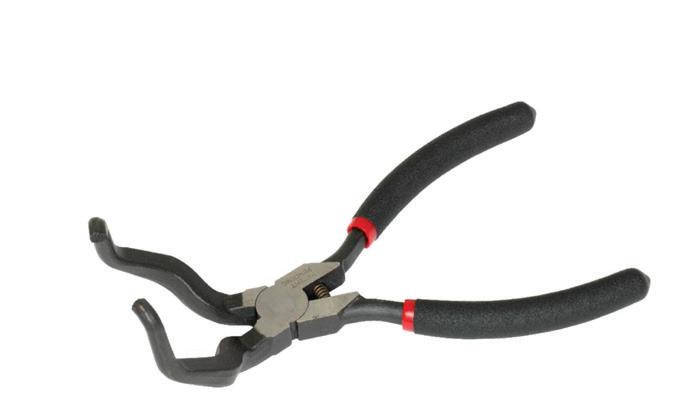
The Lisle Corporation 90-degree Electrical Connector Pliers , No. 38030, feature angled tips for easier access to hard-to-reach connectors. It is designed to remove many single and double connectors found on many cars, trucks, and heavy duty vehicles. The narrow, knurled tips provide extra grip when removing connectors in tight spaces. The pliers may also work on fuel lines, EVAP lines, and DEF fittings with tabs that must be depressed to disengage. The tool is 7” long and made from forged carbon steel for extra strength and durability. The pliers feature dual material grips for additional comfort.
For more information, visit VehicleServicePros.com/55327381
PROVIDES DIAGNOSTIC INSIGHTS AND HARDWARE CAPABILITIES
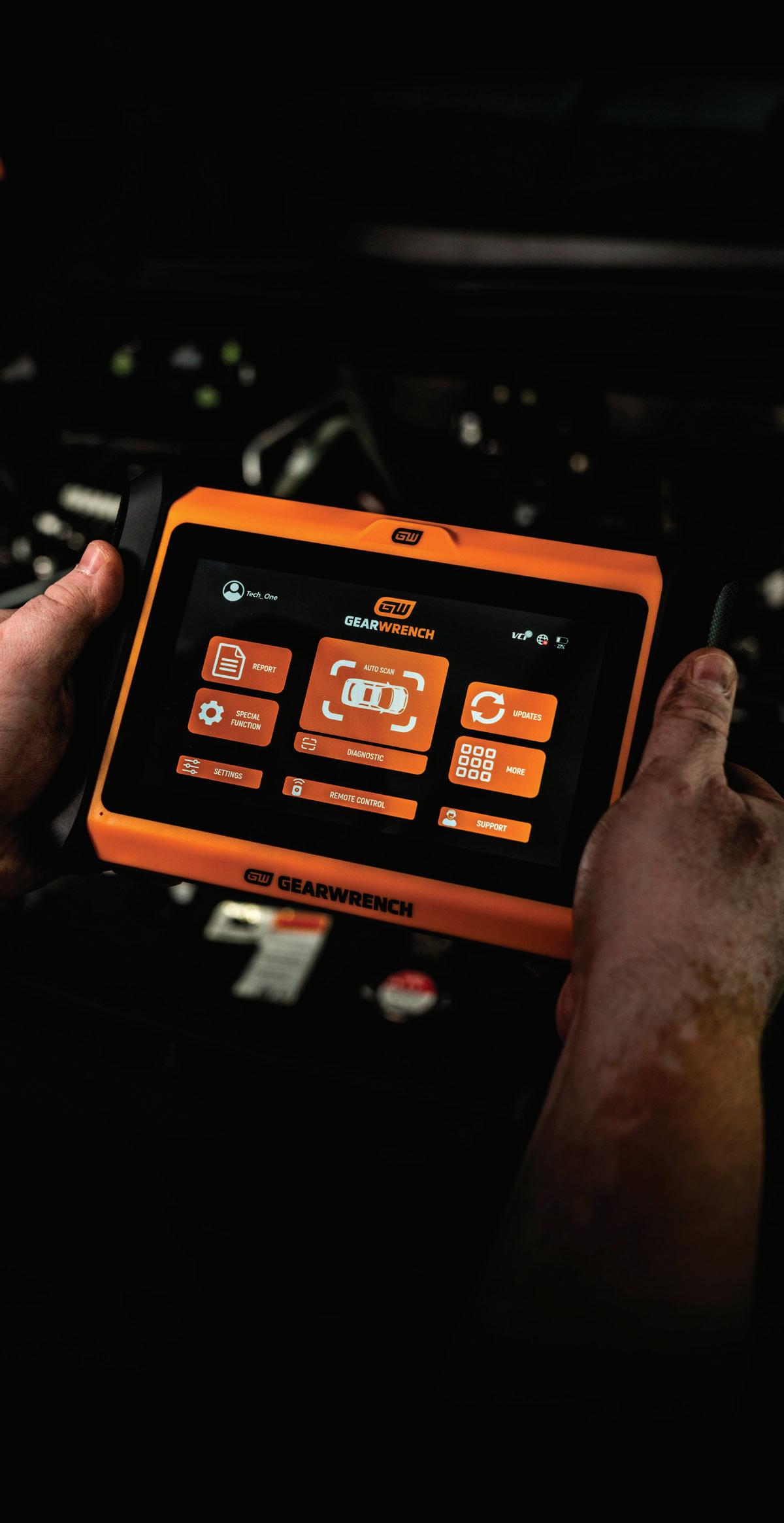
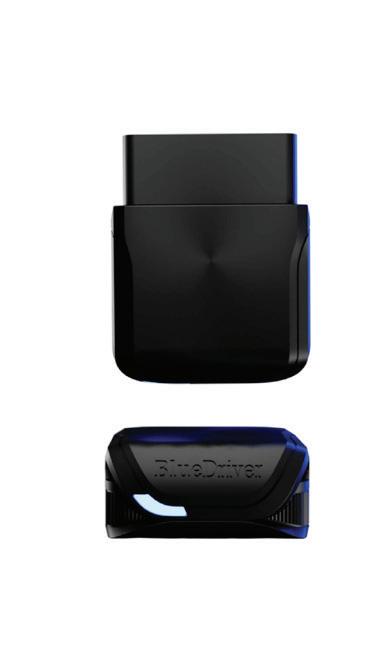
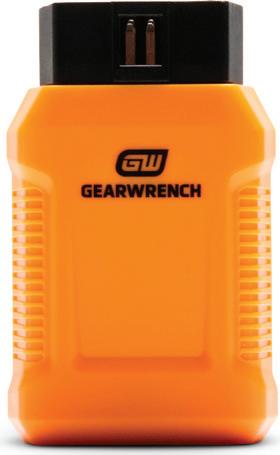
The BlueDriver MAX designed to serve the commercial diagnostic needs of dealerships, fleets, and inspection businesses conducting high-volume scans and calibrations. This tool provides enhanced diagnostic insights and offers expanded hardware capabilities. BlueDriver MAX is optimized for cost reduction and revenue generating opportunities, according to the company. It offers administrative controls for oversight into work being conducted in the field and provides opportunities to generate custom reporting.
NEW PRODUCTS
SUPPORTS UP TO 220 LBS
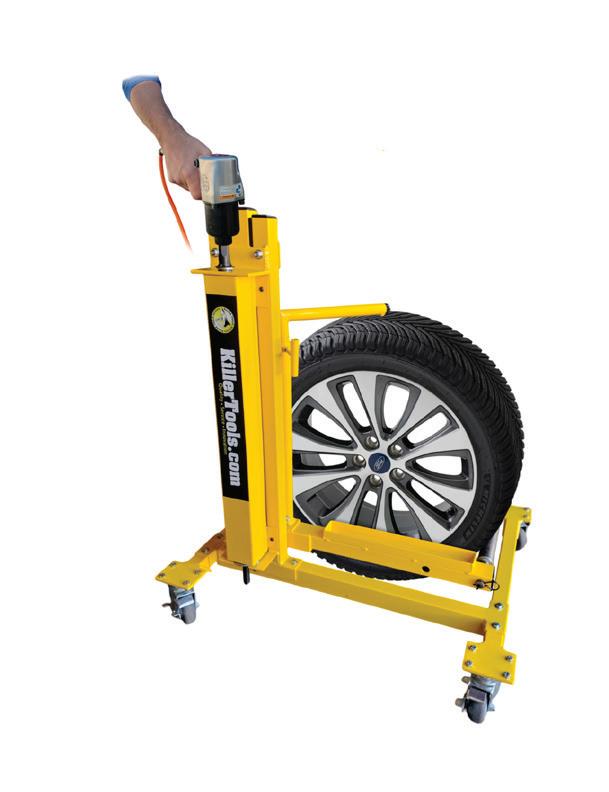
The Killer Tools Heavy Duty Tire Lift , No. ART47, is engineered for safe and effi cient tire handling, enabling techni cians to remove and install tires with ease. Its heavy duty, powdercoated steel frame sup ports tires up to 220 lbs, and the wide stance with locking casters keeps the unit secure. The offset col umn and built-in lug tray offer convenient access and lug storage. It features precise height adjustment up to 27” with an ACME thread and 1/2” impact drive for precise tire alignment. Adjustable rolling arms and a securing bar fit most tires up to 38”.
For more information, visit VehicleServicePros.com/55329583
For more information, visit
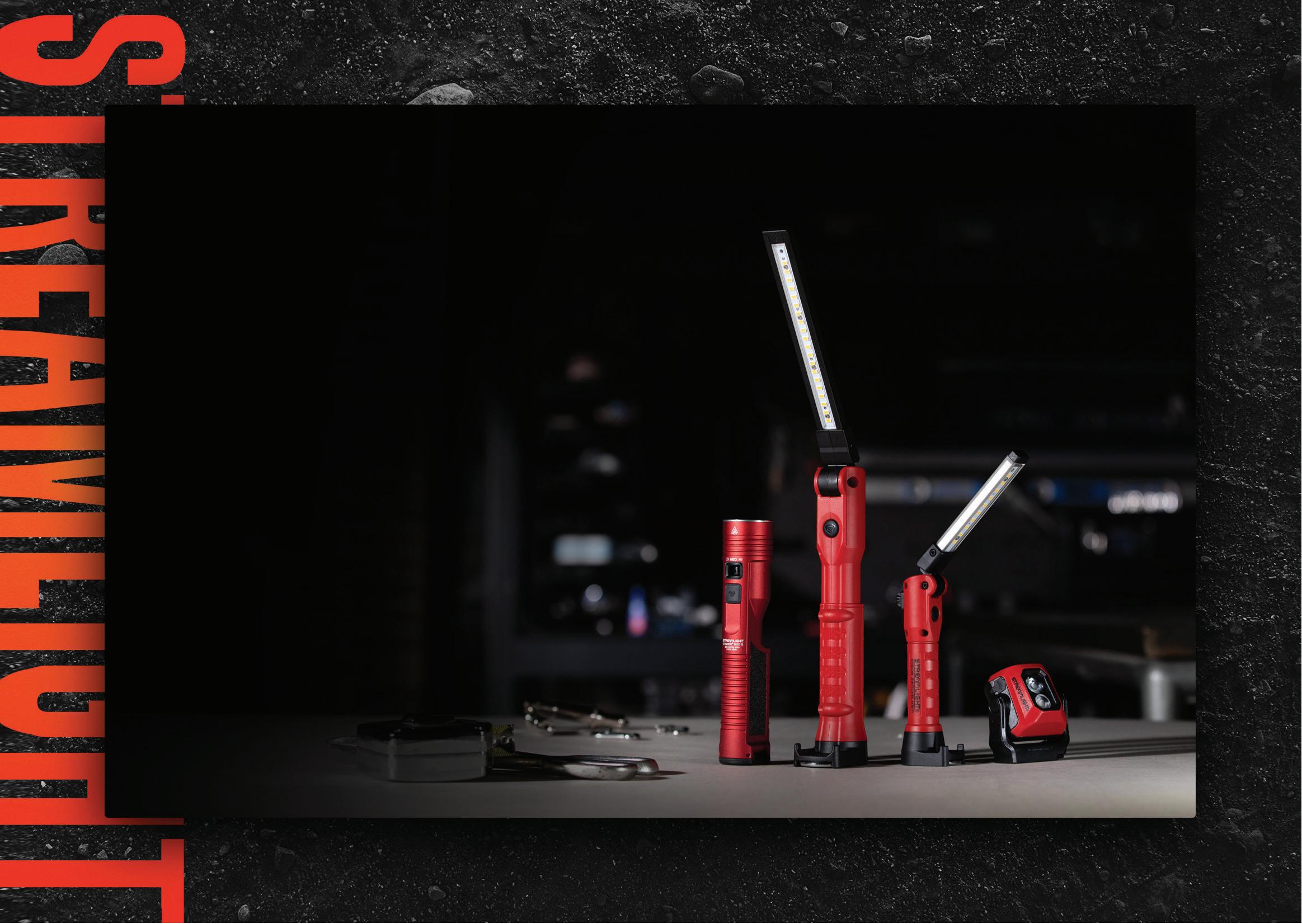
WORKLIGHTS
Get the ultimate in brightness and versatility with a broad selection of lights for delivering precise lighting or illuminating large areas. Fewer trip hazards and unlimited portability mean you can work harder for longer. All backed by 50 years of Streamlight’s commitment to the industry.
Building your diagnostic tool arsenal
No matter the number of tools in your arsenal, if you don’t know when and how to use them, they’re all useless.
By Scott Brown, Technical Editor
Today, a technician can be presented with challenges that may require a wide range of tooling, but it’s knowing which tools and techniques that makes the modern diagnostic technician an asset. Knowledge and skills must come first because you can have the best tools available, but without the knowledge of when and how to effectively apply that tool, you won’t get anywhere. Knowledge is king!
In this article, I’ll break down many of the tools I have first-hand experience with and others some of my colleagues have found to be successful across the following categories:
• Low voltage
• High voltage
• Driveability, ignition, fuel, and emissions
• General servicing
LOW-VOLTAGE ELECTRICAL TOOLS
Low-voltage electrical systems can produce all sorts of faults across almost every vehicle system. With some of today’s vehicles hosting hundreds of modules, a sound electrical system is a top priority, and that starts at the battery.
Battery starting and charging system testing tools should include a trusty DVOM, a variety of test leads, connections, and a battery charger and test device. When I started in this industry,
it was common to see a volt amp tester (VAT) in the workshop. The tool contained a voltmeter, an ammeter, and a carbon pile. Eventually, the carbon pile took a back seat as a small handheld battery tester entered the market (Figure 1).
The advantage here was that battery assessment could be performed on a battery that was not fully charged. While this test is accurate to a degree, it can still provide ambiguity. Having a secondary way to assess a battery through a tried-and-true load test is one method we use in my shop. Additionally, the carbon pile is used to apply a load to a
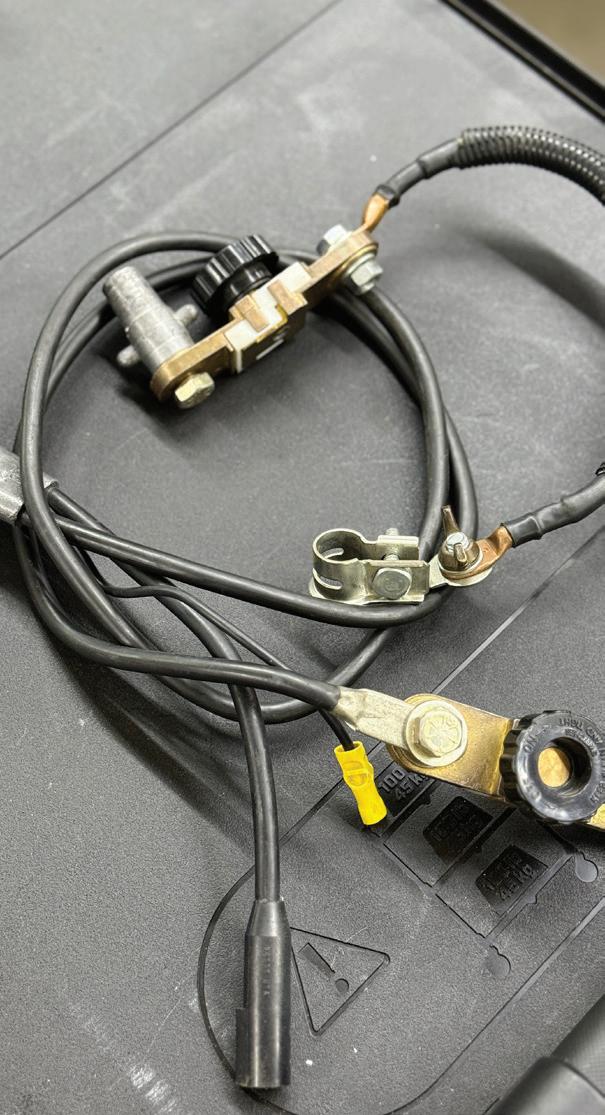
charging system, so one could quickly observe an alternator’s ability to perform, and moreover, if you find yourself wanting to test the DCDC converter performance on a Hybrid or BEV, the carbon pile can be of great assistance. Parasitic load testing is another test that is always performed in my shop for every battery service to ensure that the battery has every opportunity to live a long life. Performing this test has had its pain points, especially if you’re going to conduct the test properly. What I mean by this is that unless you have a fully accurate low-amp current probe, you will need to get in between the nega-
p Figure 1 — Midtronics Battery Tester
p Figure 2 — Parasitic Load Testing Adapters
Photos courtesy of Scott Brown
tive battery post and cable to measure with your DVOM’s ammeter. Doing this without losing vehicle power is generally where the challenge lies. Over the years, we have adopted special cabling adapters that we would be able to connect between the negative post and the cable so we would be able to start and shut down and exit the vehicle, and then move on to inserting our ammeter without losing vehicle power (Figure 2).
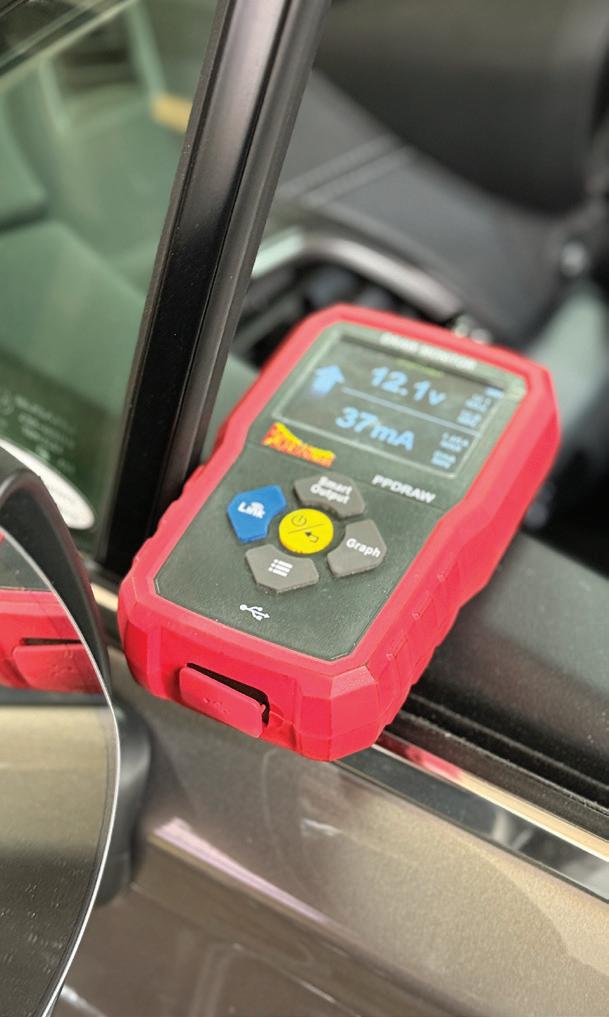
Fast forward to today, and we’re now using a new tool called the PPDraw from Power Probe. This is a tool I saw demonstrated during industry week in Las Vegas, and since that time, one of my apprentices purchased one. This tool has completely simplified our test routine and, more importantly, cut down the test time tremendously (Figure 3).
They also have a few complimentary tools that are used to help one identify the parasitic load source as well, and I highly recommend anyone tasked with performing these routines to investigate what these tools can do.
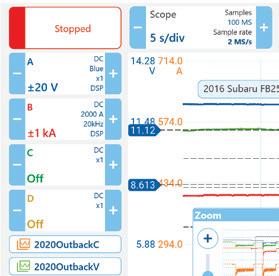
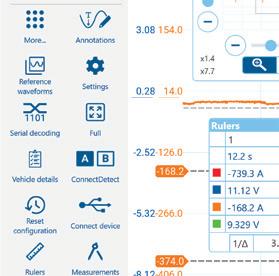
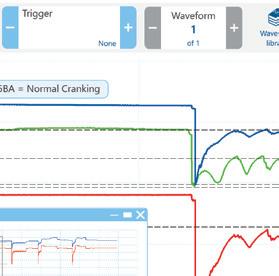
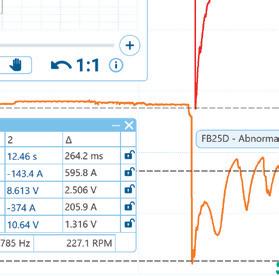
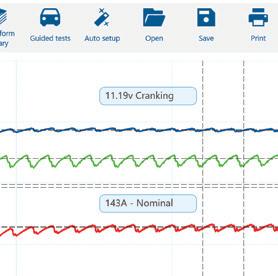
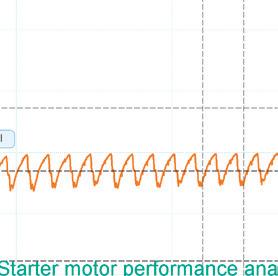
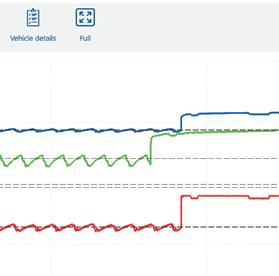
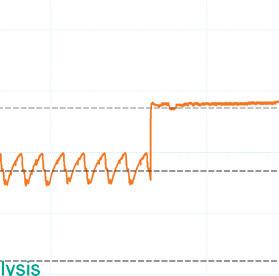
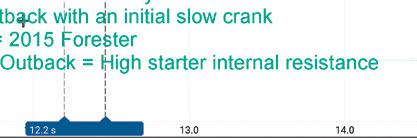
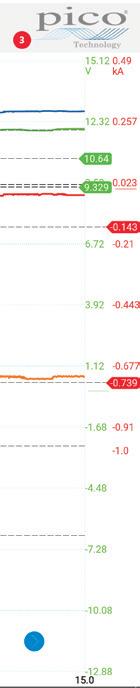
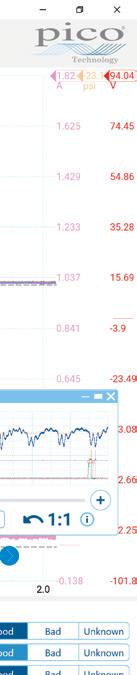
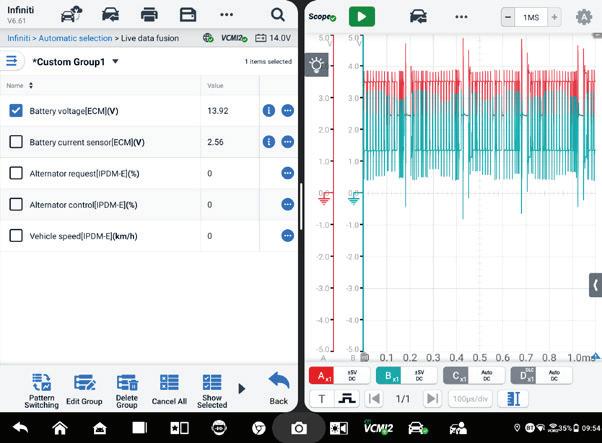
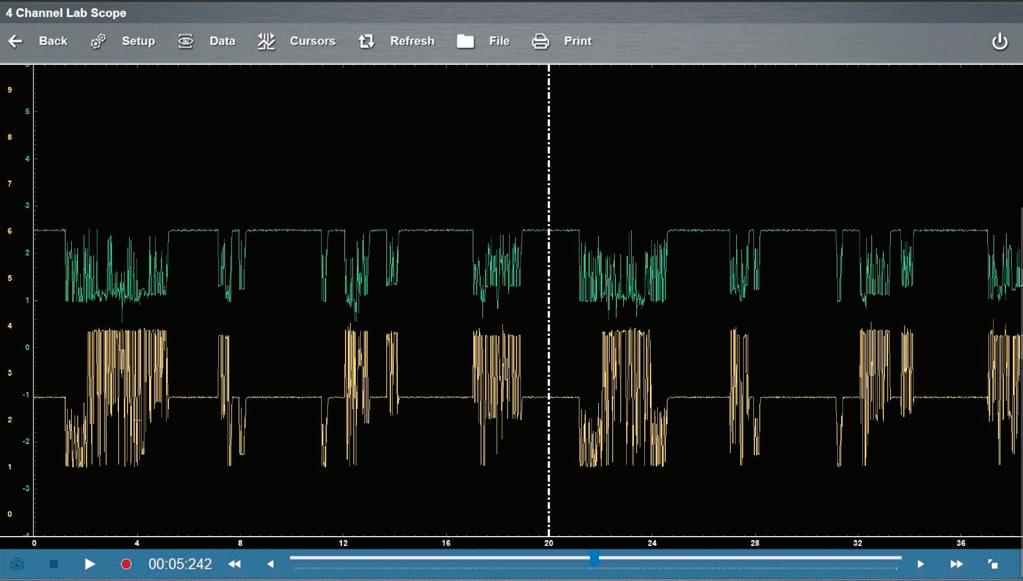
Additionally, I am seeing the lab scope come in handy today when addressing cranking abnormalities. Whenever I hear a vehicle with an initial slow cranking event, I will usually set up a multi-channel scope to have a look at the starter circuit’s internal resistance by monitoring the initial stall current.
Lower stall current with nominal source voltage indicates unwanted circuit resistance. With proper termination verified, the starter motor’s internal resistance can be seen. The orange current trace shows lower than normal in-rush current as compared to a normally performing vehicle (Figure 4).
HIGH-VOLTAGE ELECTRICAL TOOLS
Anyone working on hybrid or BEVs should already possess basic safety skills and understand how to address the high-voltage (HV) system when problems arise. Two essential tools needed for HV side testing are a
Figure 3 — Power Probe PPDRAW
Figure 4 — Picoscope starter motor current comparison
Figure 5 — Pico Technologies Milliohm Tester
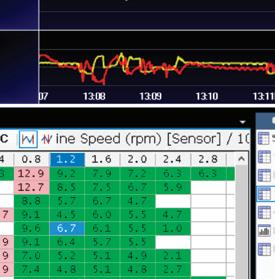
Figure 6 — VCM scanner before
capable DVOM with the appropriate level of insulation testing ability and a milliohmeter. The two devices I have in my shop are the Fluke 1587 and the Pico Technology MT03a Milliohmeter and Motor Tester. When you’re faced with an isolation fault, OE test routines will likely have you performing insulation tests on HV circuit devices after the battery pack has been isolated from the rest of the vehicle.
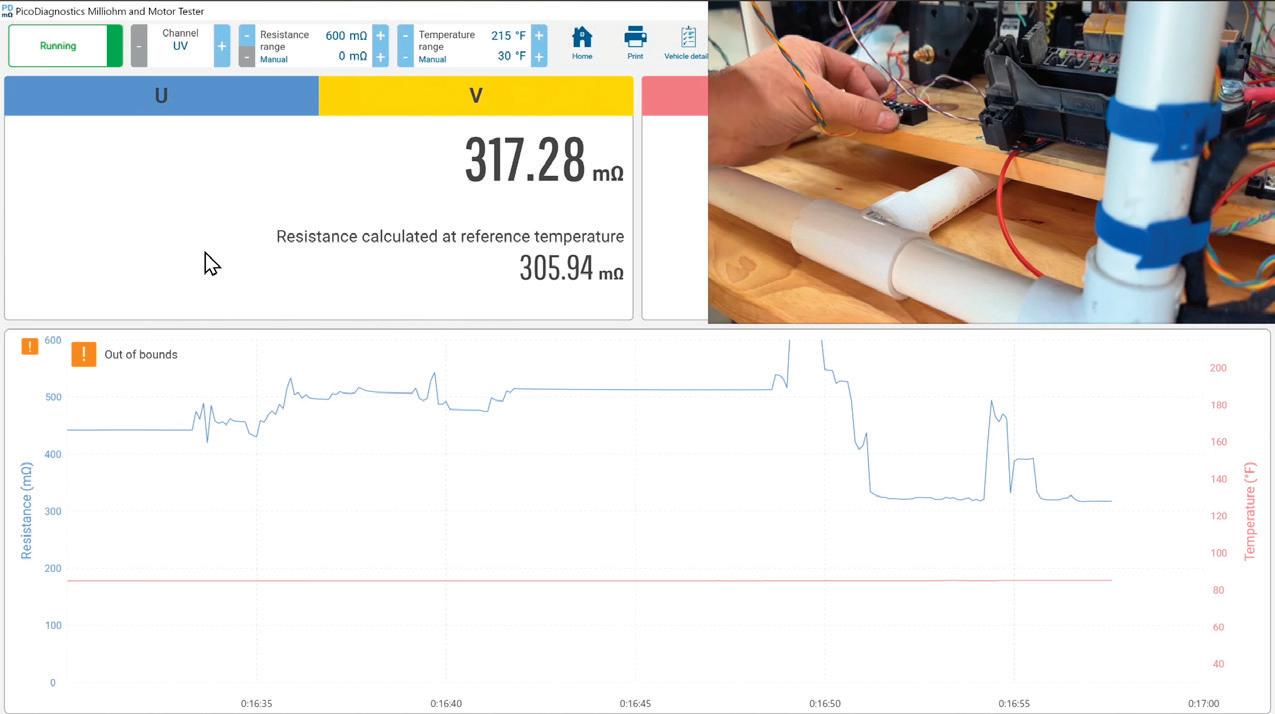
The milliohm meter will typically be used to assess motor stator windings to verify ohmic specification and balance. Keep in mind, today we’re seeing more vehicles equipped with brushless DC motors driving everything from blower motors to fuel pumps, so the Milliohmeter will come in handy when performing tests on these devices. Not only that, but the device also comes in handy when addressing suspected unwanted resistance (especially intermittent) in network communication wiring (Figure 5). I produced a video highlighting the power of the milliohm meter for reference: youtu.be/m06ghtl 8laE?si=Vy05E2lbAzmUCzme.
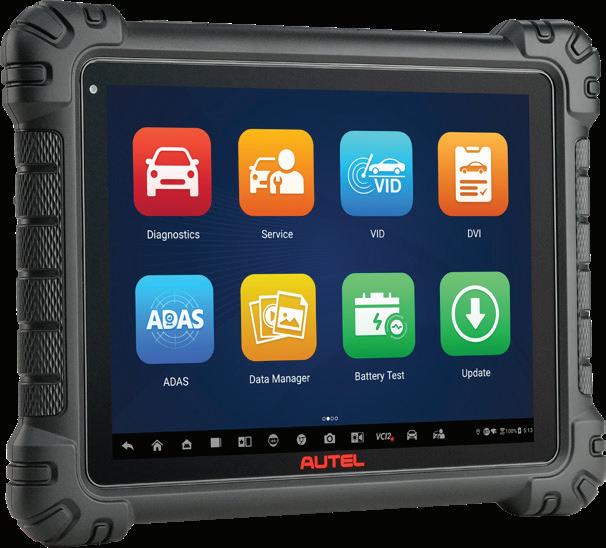
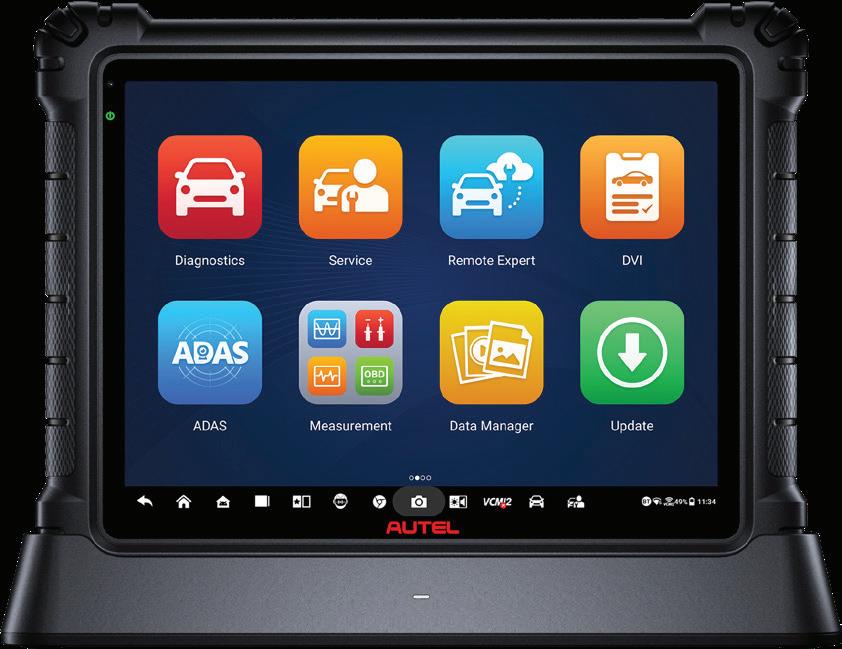
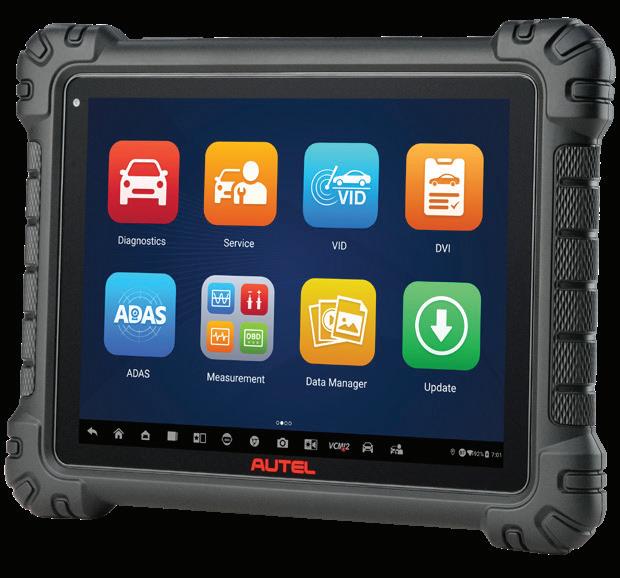
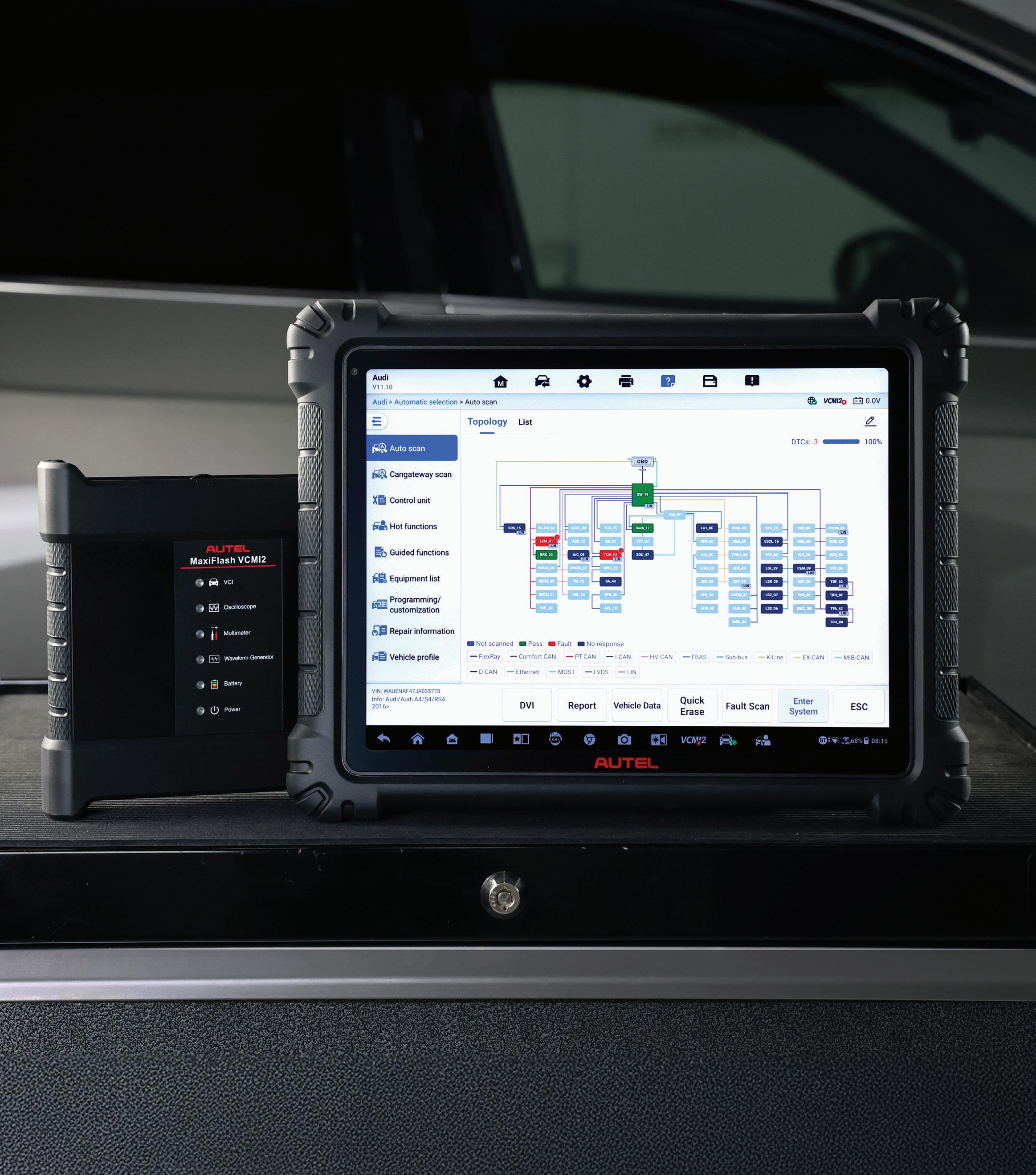
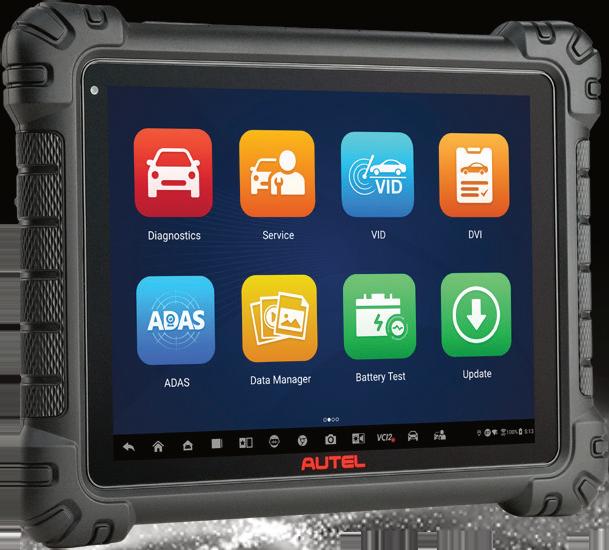
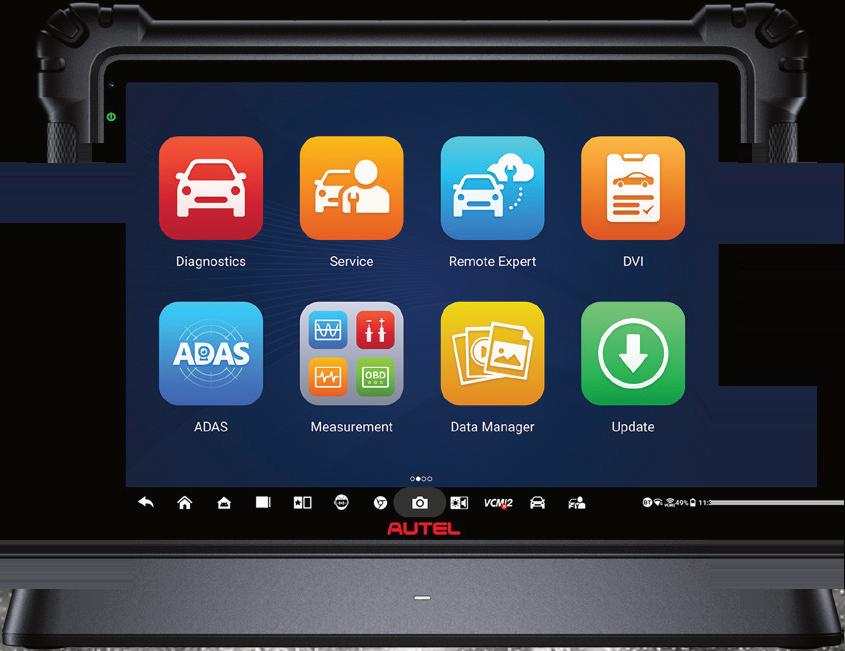
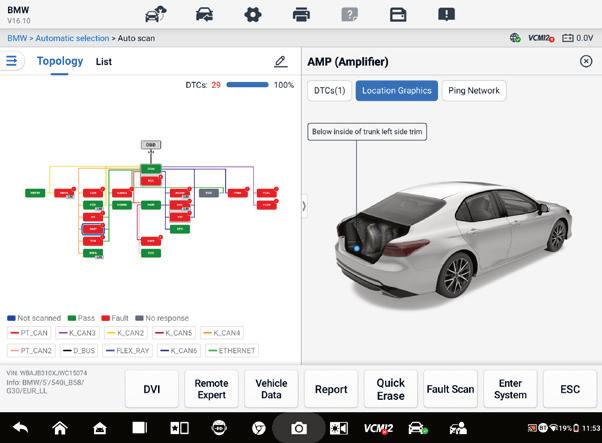
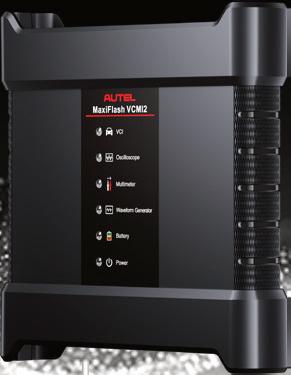
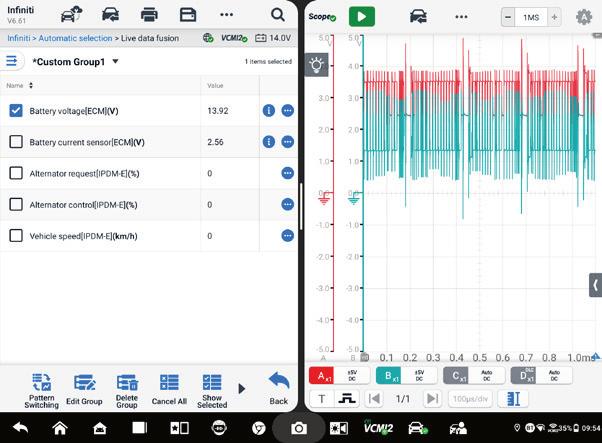
Additionally, one should possess the appropriate scan tools for addressing EVs. The Autel lineup has an outstanding set of tools that can be leveraged for diagnosis. Additionally, they have a very capable tool that can be deployed to interrogate the BMS of most EVs. This can come in handy when assessing used batteries before they are installed in the vehicle.
DRIVEABILITY, IGNITION, FUEL, AND EMISSIONS TOOLS
The scan tool is my primary go-to device when addressing most driveability complaints. And like any diagnostic tool, the best tool for the job is the one that can deliver the appropriate information needed in a timely manner. So, depending on the vehicle, symptoms, and conditions, I may choose any of the following tools, and some of course would be used together.
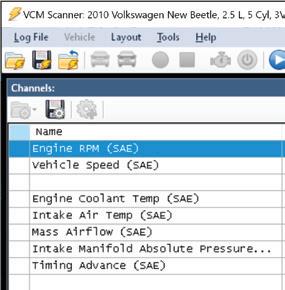
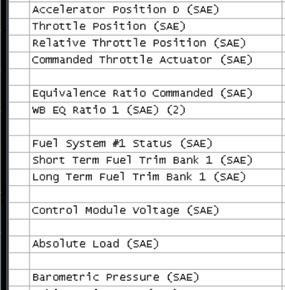
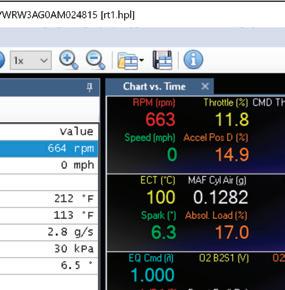
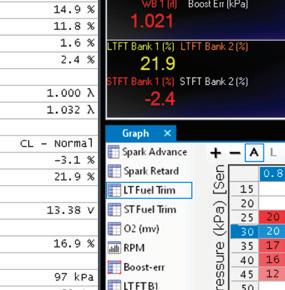
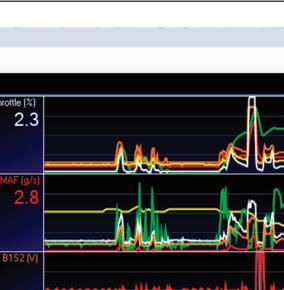
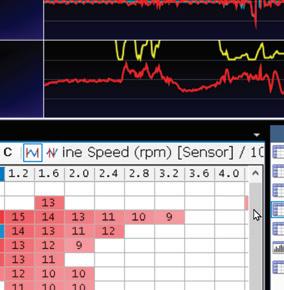
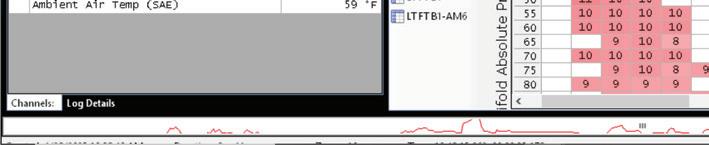
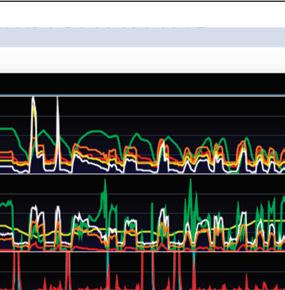
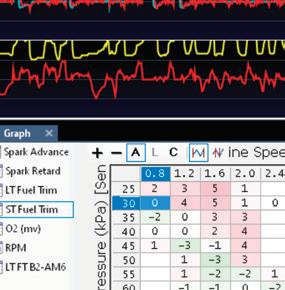
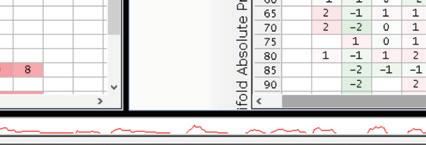
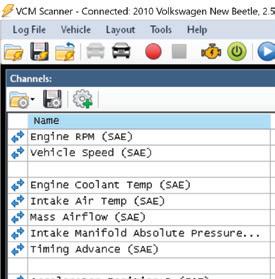
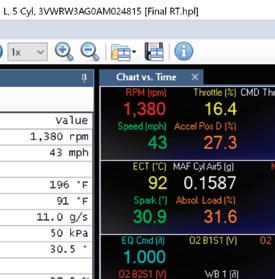
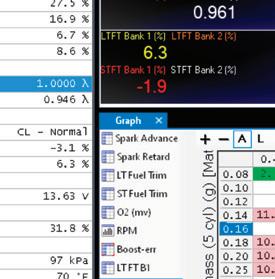
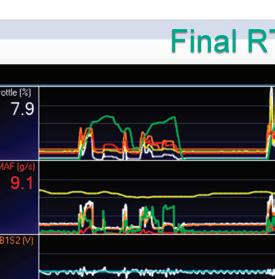
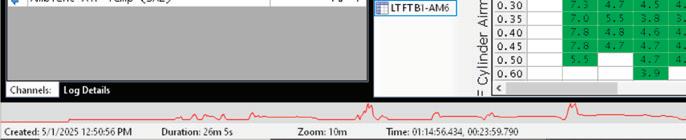
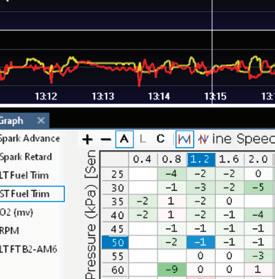
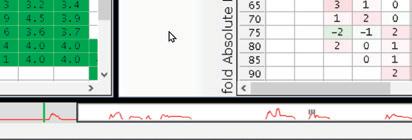
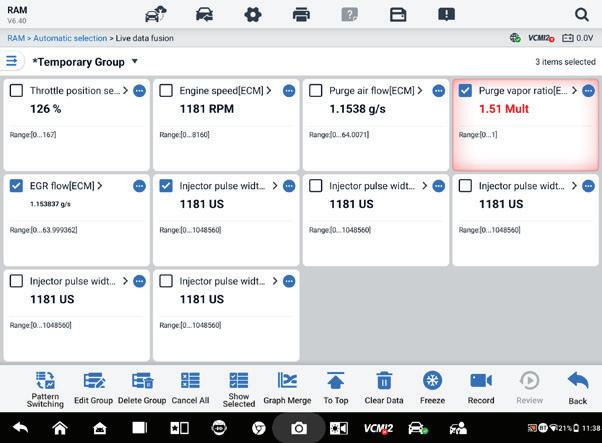
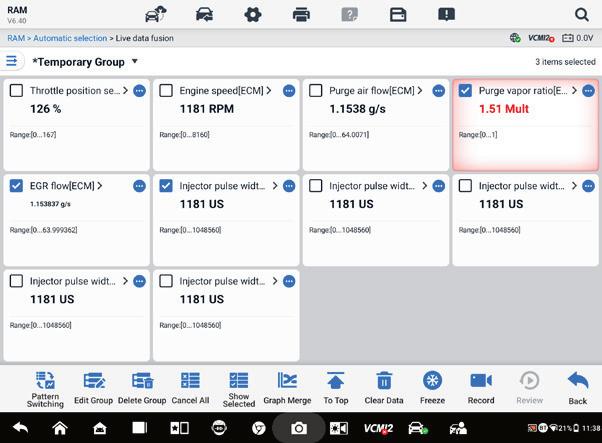
VCM scanner - HPTuners - In most driveability situations, I like to use this tool on road tests since it’s always recording, and playback/review is great. The tool allows one to configure, save, and recall display panels to their liking, and since it’s PC-based, it allows me to screenshot and mark up views, streamlining my documentation process (Figures 6 & 7).
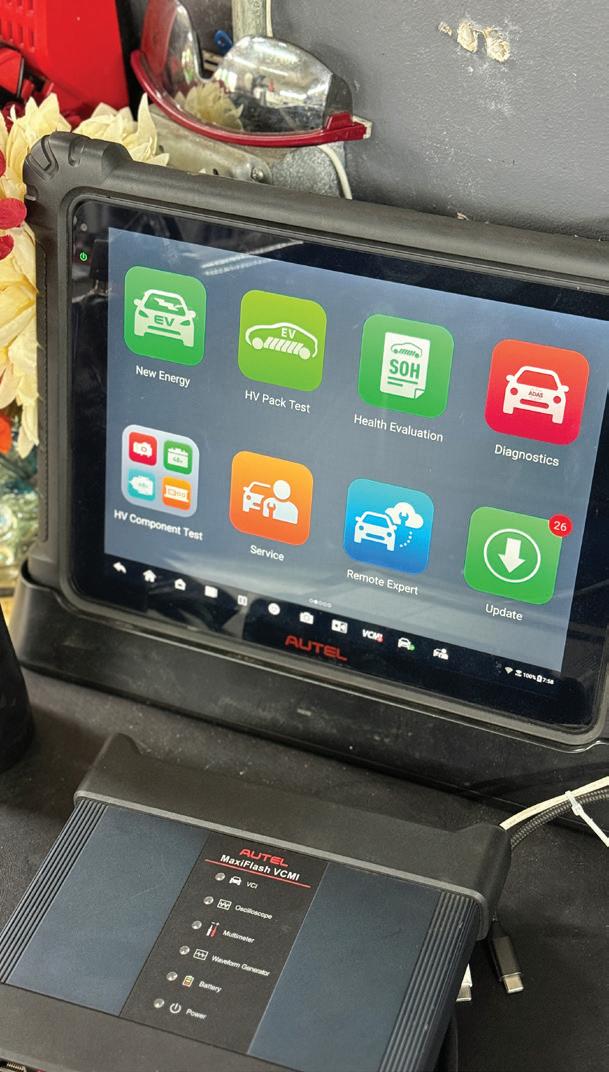
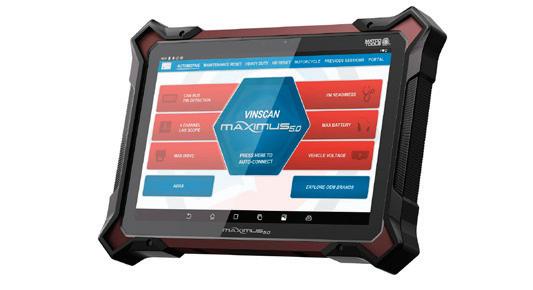
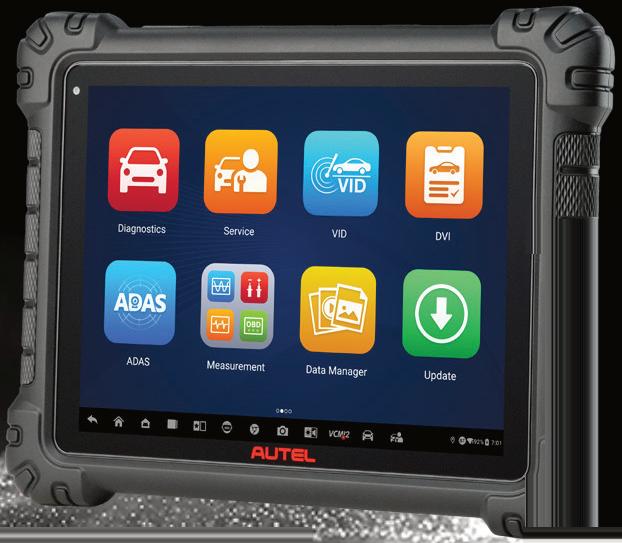
Autel Maxisys - This tool is like the Swiss Army knife, meaning that it
is quite versatile for many operations (Figure 8).
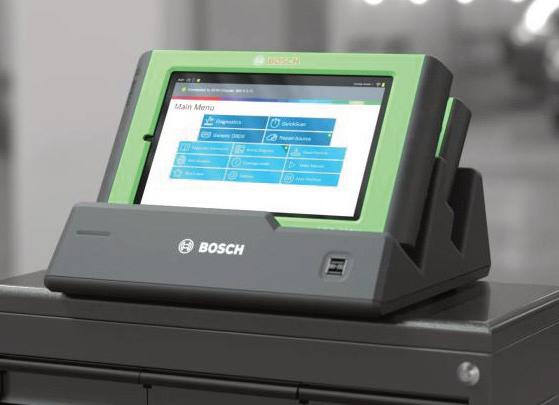
Bosch ADS 525x - Our SMS will allow this device to report directly into an open work order streamlining workflow during routine inspections.
Standalone wideband meterMotec PLM - This device is coupled with a tailpipe adapter, allowing us to compare values with the vehicle’s air fuel ratio sensor. Here’s a real-world example:
Figure 7 — VCM scanner after
Figure 8 — Autel Maxisys
Figure 9 — Commanded lambda vs. lambda
Figure 10 — Mityvac FST Pro MV5545
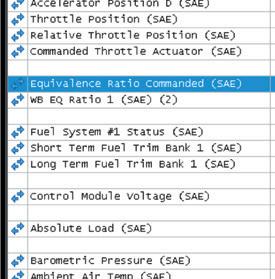
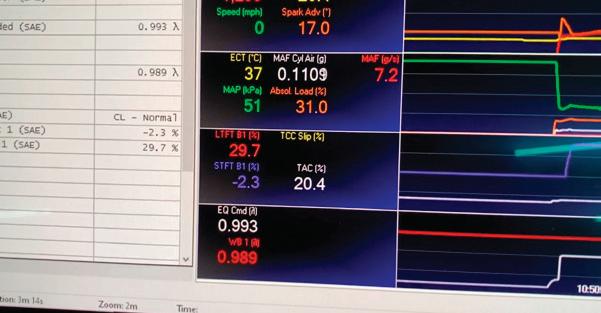
Scan tool data shows a commanded EQ value of 0.993 and a reported lambda value of 0.989 (Figure 9).
If compared to the tailpipe standalone lambda meter, you would see that the actual value is 0.840. This vehicle has a brand new wide-band sensor that was damaged because the PCM’s control over the heater circuit was shorted.
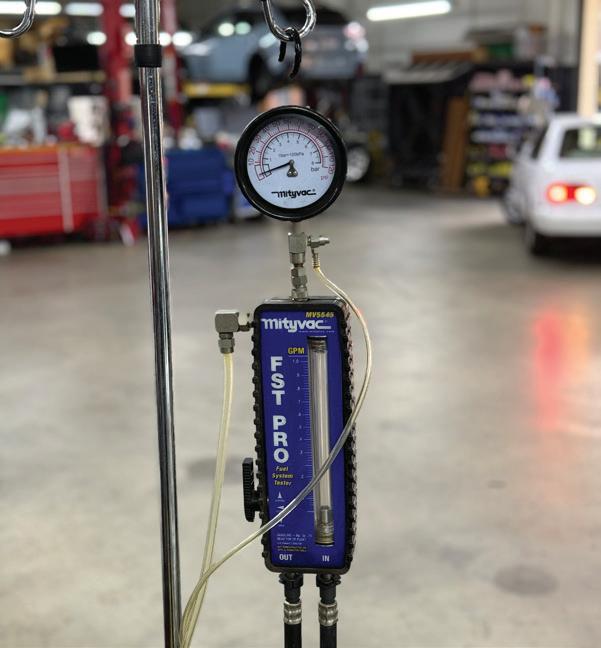
Fuel pressure - Mityvac FST Pro, No. MV5545 - This tool gets less use these days since most vehicles today provide a fuel pressure PID within the scan tool. For the times when you need to measure pressure and volume, even on a return-less system, this tool gets the job done (Figure 10).
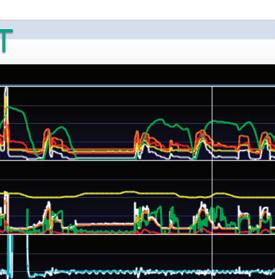
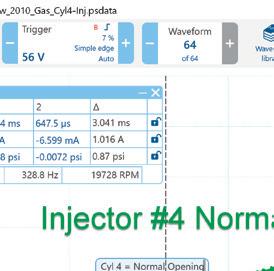
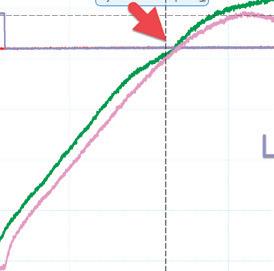
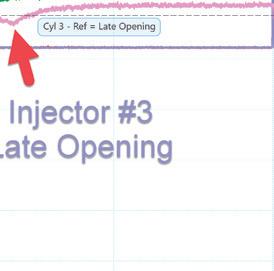
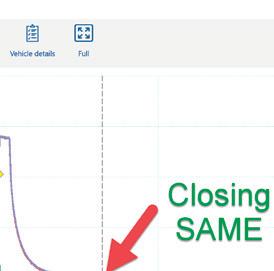
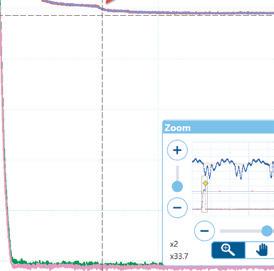
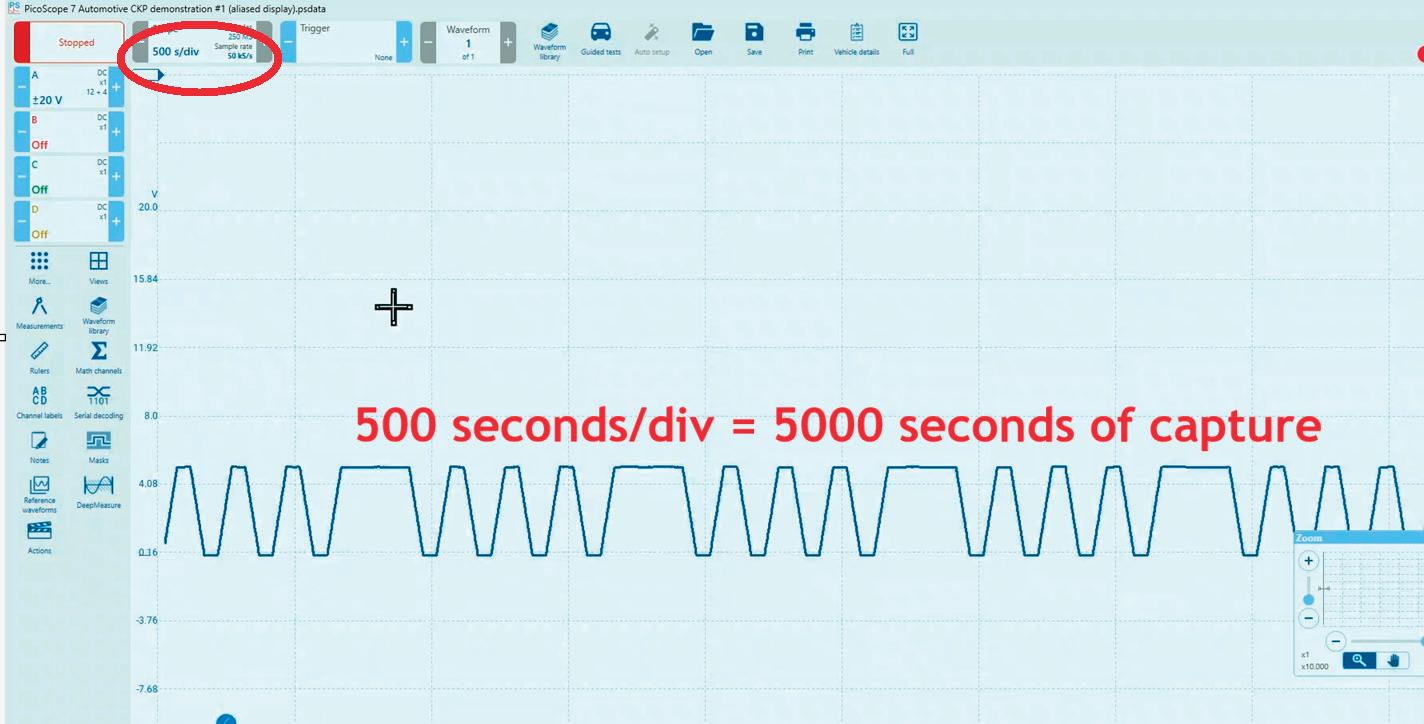
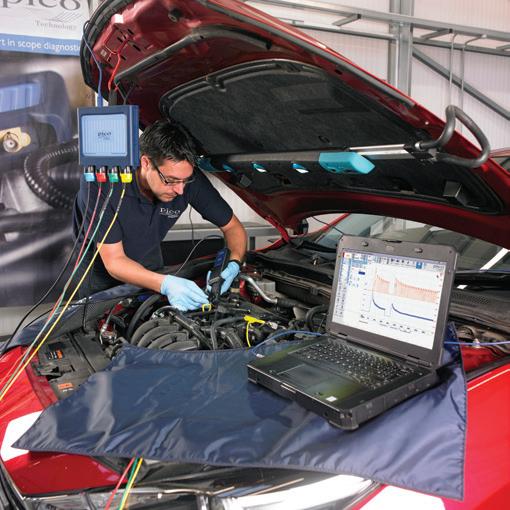
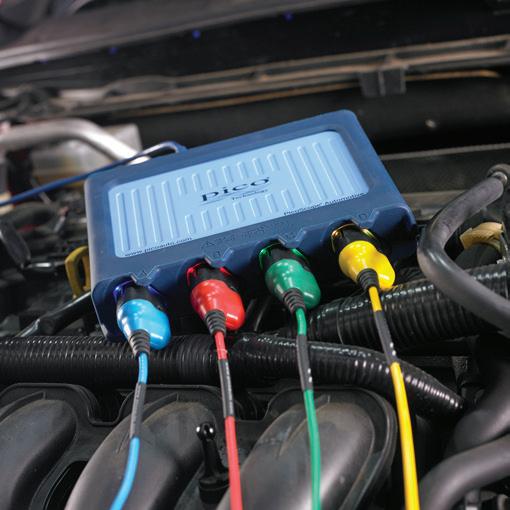
Picoscope 4425A - This is a 4-channel scope that comes with all appropriate probes, including voltage, ignition, current, pressure sensors, and more. Like most advanced tools, this tool will take you as far as your knowledge allows. From basic battery starting and charging system tests, as mentioned earlier, relative compression, in-cylinder waveform collection, and multi-cam CMP/CKP relationship testing to network signal analysis and more. In the following example, I am comparing one suspect injector with another and was
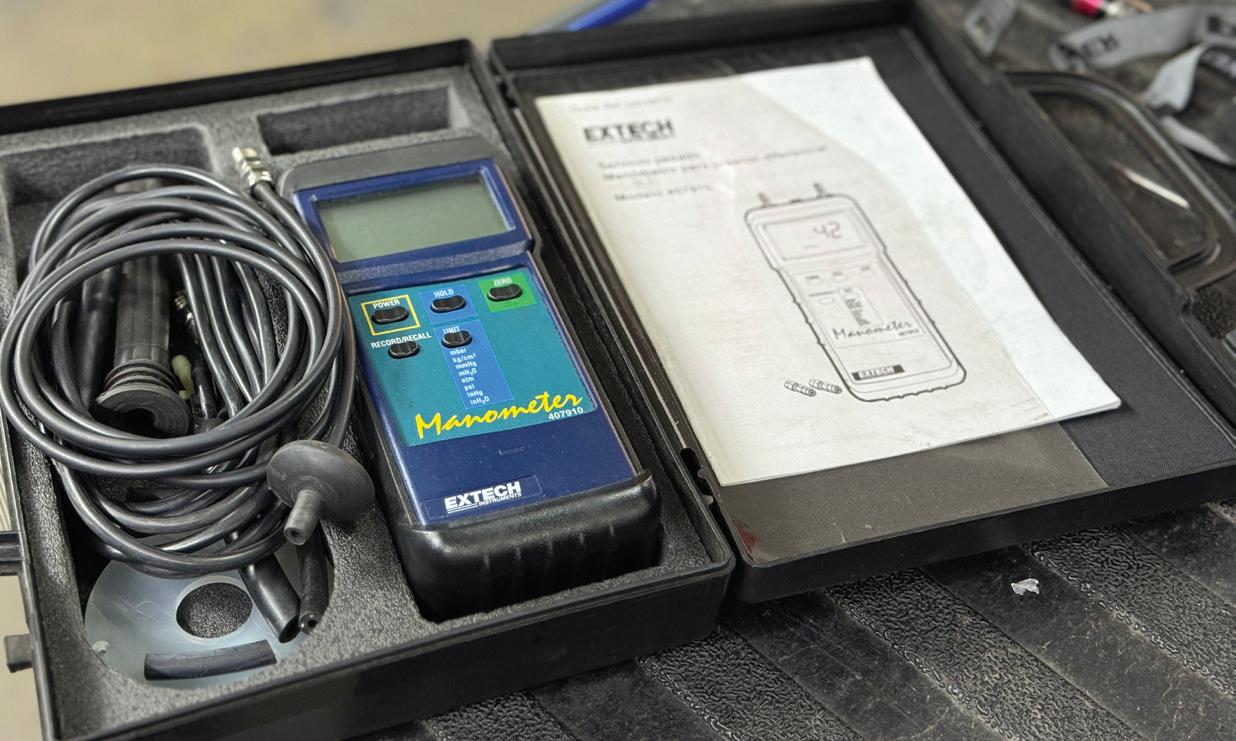
Figure 12 — Extech Manometer
Figure 11 — Picoscope Injector current comparison
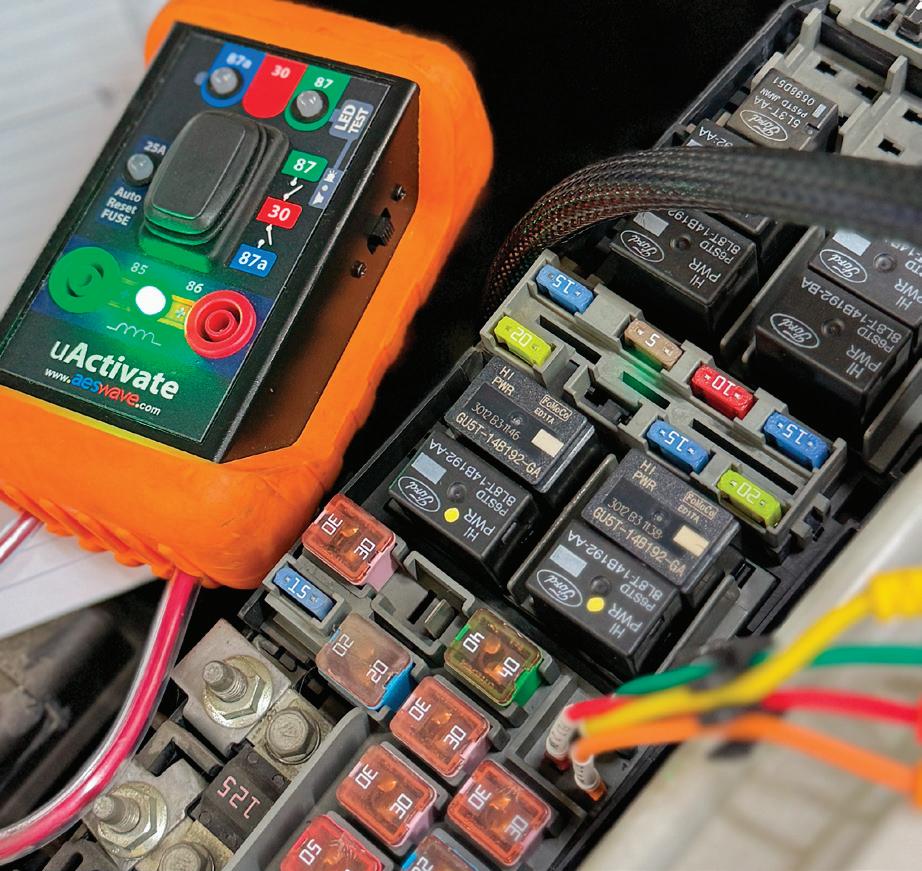
Figure 14 — AESwave uActivate
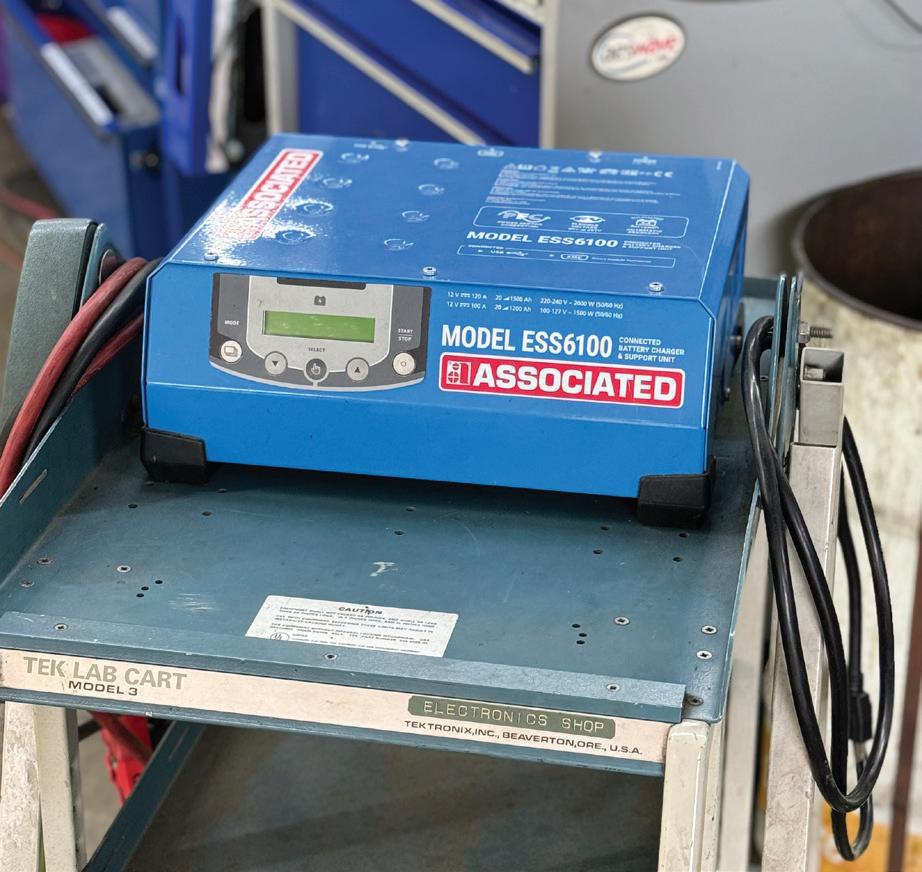
Figure 13 — Associated Battery Maintainer
able to see that the suspect injector was physically opening later than normal (Figure 11).
Manometer - This is a tool that is primarily used on vehicles that need to have the crankcase ventilation system verified. Many cars today have sophisticated PCV systems (especially on boosted applications), and when they fail, they can be the source of a variety of engine performance faults (Figure 12).
GENERAL SERVICING
If you’re doing any level of diagnostics, it is imperative to maintain sufficient vehicle power during testing, analysis, and, more importantly, programming and calibration. Our shop has several maintainers (Figure 13).
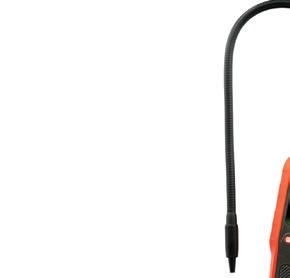
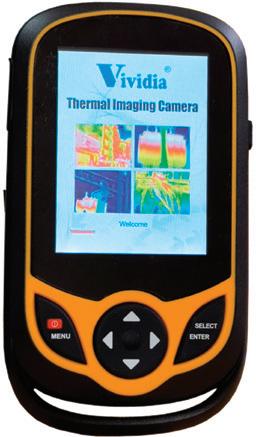
Inspection camera - Vivida VA-450Another great tool for general service and maintenance is the inspection camera. We use the Vivida VA -450. Back in the day, a mirror and a light were sufficient; today, we have access to digital inspection tools, which come in handy often.
And finally, general electrical system checks of load devices at a power distribution center can be quickly performed by one of the go-to devices I’ve been using for more than a couple of decades. The uActivate from AESwave. com makes for quick work (Figure 14).
For example, you have a vehicle that was towed in, and you want to check the fuel pump circuit. Simply, unplug the relay and insert the tool. Now you have access to timely information and actions you can perform to help you move through your diagnostic processes.
In conclusion, the modern diagnostic technician’s value lies in their knowledge and skills, which enable them to effectively utilize a wide range of tools and techniques. By continuously updating their tool arsenal and honing their diagnostic skills, technicians can stay ahead in the ever-evolving automotive service industry.
SCOTT BROWN is an ASE Master Certified L1 Technician and has over 37 years of professional service industry experience. He is an independent shop owner in Southern California and is engaged at various levels within the industry. He has a deep
understanding of the challenges technicians experience at the service level and is continuously striving to move the industry forward through education and networking. Brown founded Diagnostic Network (diag. net) after 22 years of service at iATN, where he retired as company president in 2018. SBrown@VehicleServicePros.com
The only time people notice an air compressor is when it’s not working. That’s why Jenny has basically gone unnoticed since 1927. It’s the hazard of offering the most reliable compressors on the market, but we wouldn’t have it any other way…nor would our customers.
›› Isn’t it time a Jenny was hiding in your shop?
We saw a number of products introduced at the AAPEX and SEMA shows again this year. Here are some new tools and equipment selected by our editorial staff that piqued our interest.
Midtronics
Prevents unintended EV movement
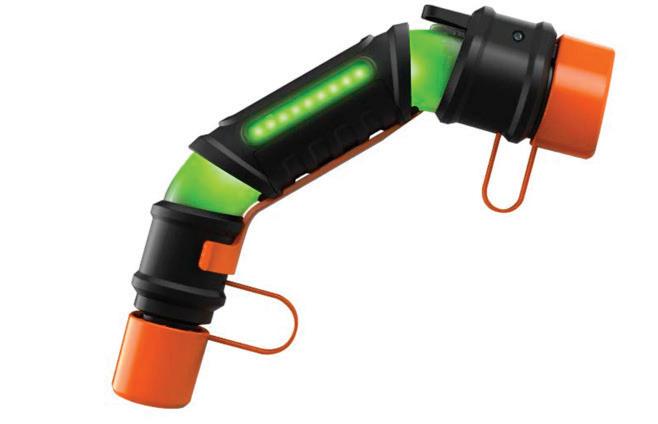
The Midtronics Electric Vehicle Immobilizer, No. xIM-100, can be used in situations where an electric vehicle may appear disabled but is still active. The xIM-100 provides clear, authoritative vehicle-status indication, and where supported, immobilization of BEVs and PHEVs through the universal charge-port interface. The tool helps to prevent unintended EV movement and offers instant visual confirmation of a secure connection — green for immobilized and red for caution. Users will have no direct contact with the highvoltage system, and its universal fit means it works in any charge port. The tool also maintains power for essential vehicle functions such as the windows, seats, and lights.
Editor’s Note: Shop safety is crucial, especially for shops working on electric vehicles. Utilizing this immobilizertool,technicianscanconfidently ensure that an EV has been disabled before they start any repairs.
For more information, visit VehicleServicePros.com/55330262
2025 EDITOR'S PICKS
Ansell
ANSI A9/ISO F-rated
The Ansell HyFlex, No. 11-594, is an ANSI A9/ ISO F-rated glove. The glove features an AEROFIT Coating, which is up to 30 percent thinner than the standard Ansell glove with the same level of protection, for improved tactility and control. It also has an 18-gauge liner providing users comfort in precision handling. According to the company, the gloves are certified skin-friendly and touchscreen compatible to reduce glove removal during work. Editor’sNote:Cuts,chemicalburns,andotherinjuriesawaitatechnician’shands every time they step into the shop. By wearing the proper protective gear, such as these ANSI A9/ISO F-rated gloves, they can prevent these accidents. For more information, visit VehicleServicePros.com/55330268
JohnDow Industries
Dedicated evacuation access at each bay
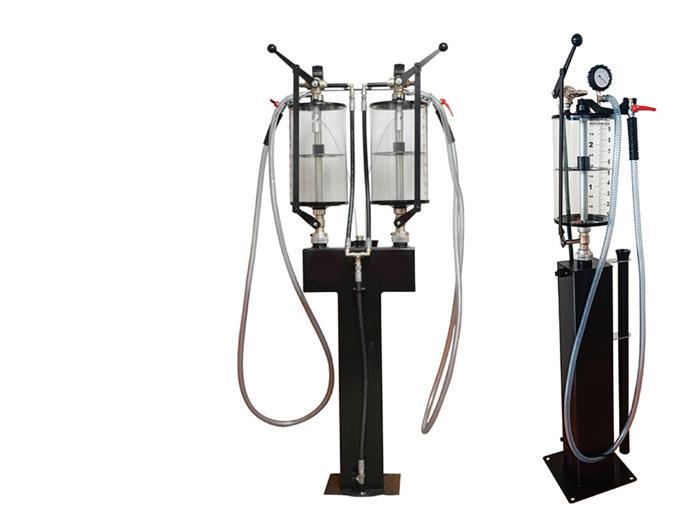
The JohnDow Industries Centralized Fluid Evacuation System is built directly into the shop. This permanent system allows technicians to perform quick and efficient topside oil changes without removing skid plates or drain plugs. By eliminating messy steps and streamlining the process, it reduces labor time, prevents costly damage to drain plugs, and improves overall safety, says the company. With dedicated evacuation access at each bay, technicians save time moving equipment, while shops benefit from cleaner workspaces, faster vehicle turnaround, and higher customer satisfaction.
Editor’s Note: The Centralized Fluid Evacuation System allows technicians to perform oil changes in 90 seconds, works for about 75 percent of vehicles on the road,andincludesacamerathatcapturestheamountofoilremovedfromavehicle.
For more information, visit VehicleServicePros.com/55330257
OTC Tools
Safely remove oil pan drain plugs
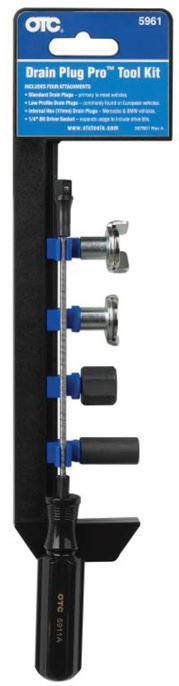
The OTC Drain Plug Pro Tool Kit, No. 5961, features an interchangeable design. The kit includes attachments for standard drain plugs, low-profile drain plugs, internal hex drain plugs (17mm), and 1/4” hex bits. It can be used with any 1/4” square drive socket, and helps users safely remove oil pan drain plugs by avoiding contact with hot oil and preventing them from dropping drain plugs and other fasteners. The flexible shank with 1/4” square drive helps remove or thread smaller fasteners even in hard-to-reach places. Contained on a handy socket rail for hanging or tool drawer storage.
Editor’s Note: Utilizing OTC’s Drain Plug Pro Tool Kit technicians can save time and money by avoiding dropping or losing drain plugs. For more information, visit VehicleServicePros.com/55330266
asTech Sends automatic calibration alerts
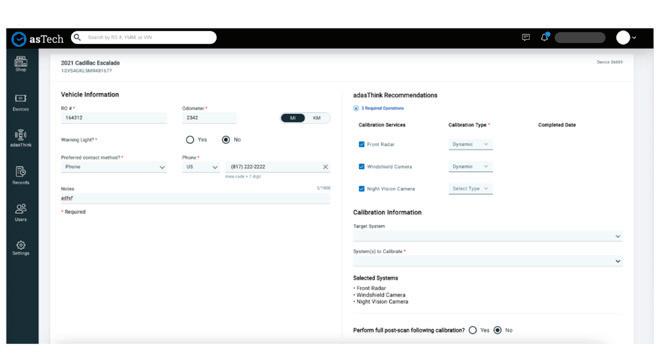
An enhancement to asTech’s adasThink, Connected Calibrations is integrated into the repair order submission process. Connected Calibrations automatically flags required calibrations in a real-time dashboard so estimators at collision repair facilities can track them from initial bid to completion. Built-in notifications alert shops when a calibration is not ordered. This ensures that calibrations are not missed during the repair process and enables shops to capture more revenue opportunities.
Editor's Note:ADAS, and the repair work that comes with it, is still pretty new to many technicians, and having technology like Connected Calibrations can help prevent more inexperienced technicians from missing crucial calibrations. For more information, visit VehicleServicePros.com/55330259
SP Tools USA
Bolt-busting torque of 1,600 ft-lbs
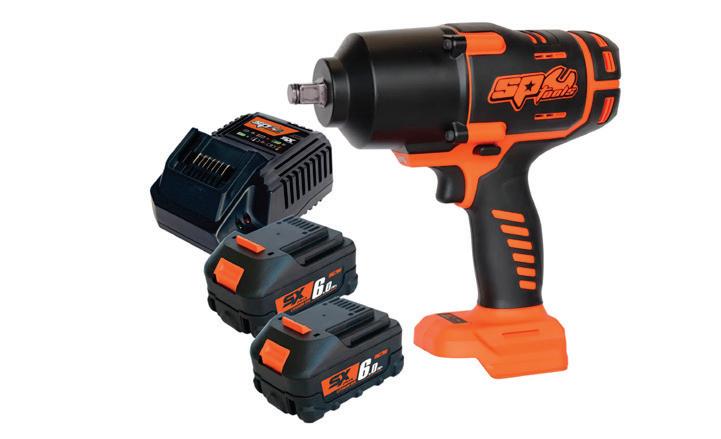
The SP Tools USA 18V 1/2” SX Drive High-Torque Impact Wrench Kit, No. SP83130US, is designed with a highpower brushless motor to ensure efficiency and longevity, a variable speed switch with a brake for precise control during any application, and a nextgen battery cell with INR chemistry for high safety, low resistance, and improved energy capacity. It features a bolt-busting torque of 1,600 ft-lbs and a working torque of 900 ft-lbs. The RPM ranges from 0 to 1,400, and the BPM ranges from 0 to 1,950. Without the battery, the tool weighs 7 lbs. Battery charging takes 1 hour with an auto cut-off. The kit comes with the 18V 1/2” Drive Impact Wrench, two 18V 6Ah Li-ion battery packs, and an 18V battery charger.
Editor's Note: SP Tools' 18V HighTorque Impact Wrench gives technicians the confidence to tackle demandingjobswithitsstrongperformanceandcontrolledpowerdelivery.
For more information, visit VehicleServicePros.com/55330352
Autel Uses Nitrogen for pressure leak test
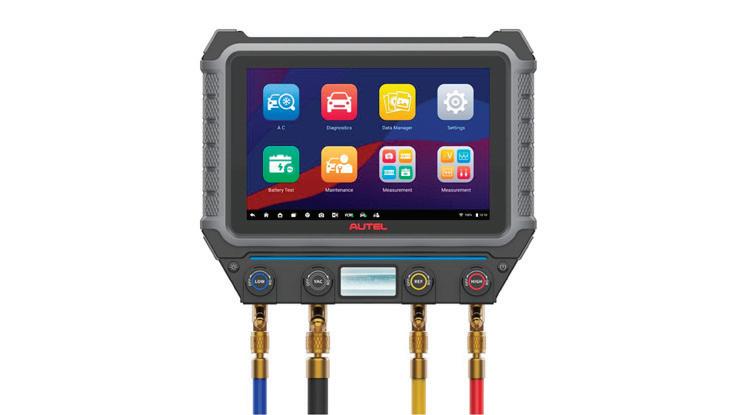
The Autel MaxiHVAC AC909 is a 4-port manifold system designed to bring skill, understanding, and precision to HVAC diagnostics. The system provides step-by-step guided instructions for equipment hookup and the entire repair workflow. It also features a vehicle-specific overview of A/C specifications and locations, including compressor and refrigerant types. The tool introduces the use of Nitrogen for a pressure leak test, “system tightness test,” and purge procedures for faster evacuation. According to the company, this is the first A/C manifold gauge tool that decouples from the A/C lines while still monitoring low and high pressures.
NextLED
5 color temperatures with memory function
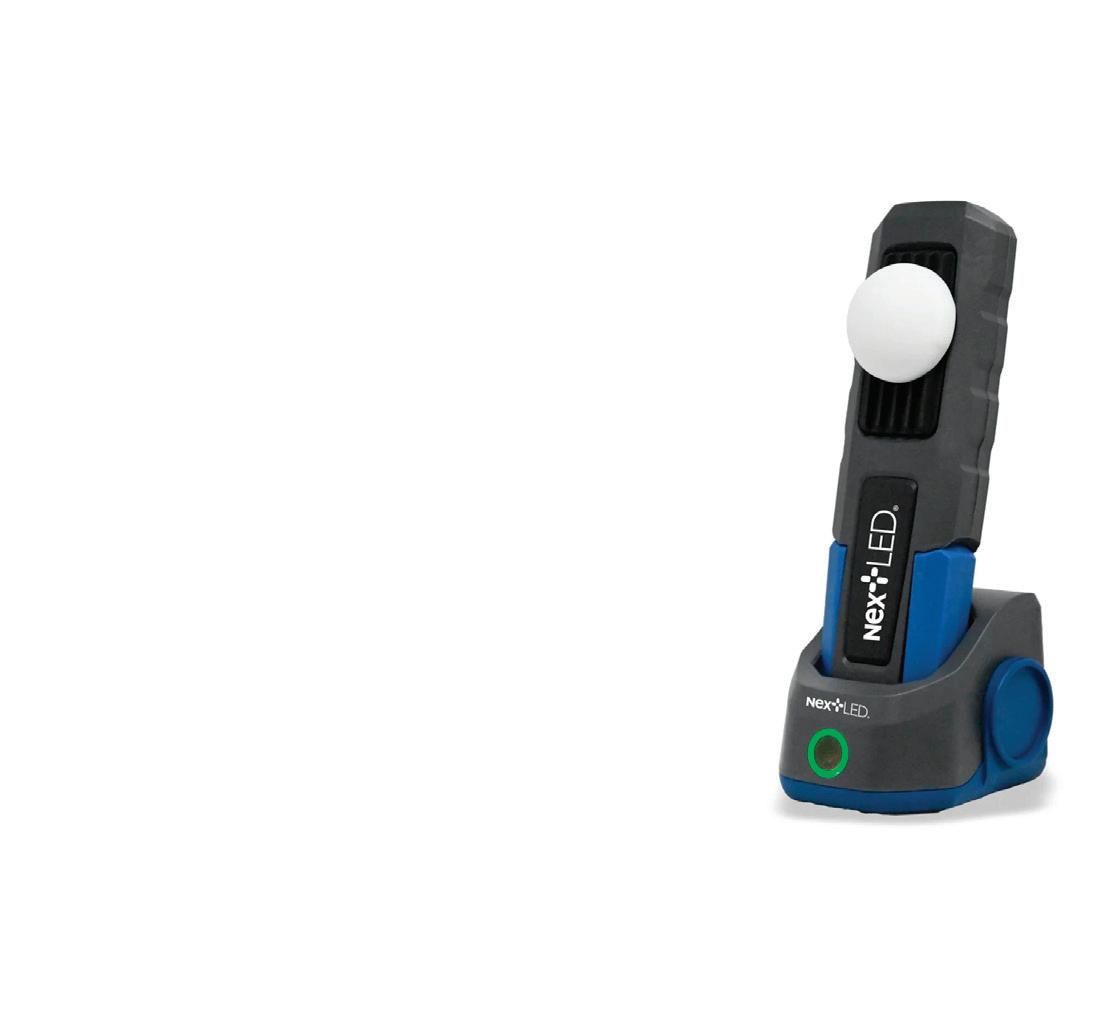
The NextLED Rechargeable Color Matching Light, No. NT-6692M, is a CRI 96+ rated light with five color temperatures (2,700K, 3,500K, 4,500K, 5,500K, and 6,500K) for critical color matching and identi-
Editor’s Note: With its step-by-step workflow, vehicle-specific data, and innovative ability to monitor pressures even after disconnecting from the lines, the AC909 supports more accurate,confidentrepairsinarapidly changing service landscape.
For more information, visit VehicleServicePros.com/55330343
Editor’s Note: Tools like the NEXTLED Color Matching Light help reduce guesswork by offering precisecolortemps,adiffusertocut glare,andflexiblemounting,giving technicians clearer visibility.
For more information, visit VehicleServicePros.com/55330328
EACH YEAR, WE COMPILE
A LIST OF the most viewed products we’ve featured in PTEN This year we shared over 500 products, from the smallest bits and nuts to the biggest lifts and toolboxes. Our goal in sharing this list is to help you stay informed on what other technicians and shop owners are most interested in, helping you keep your toolbox up to date. These products were pulled based on the number of pageviews they received over the last year on our website VehicleServicePros.com. The next pages showcase the top 25 products of 2025. You can find the full top 100 list by visiting VehicleServicePros.com/2025-top-100-products.
–Elli Carder, Assistant Editor
Cuts hub removal time by up to 80 percent
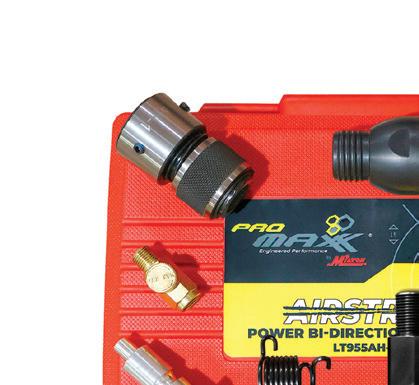
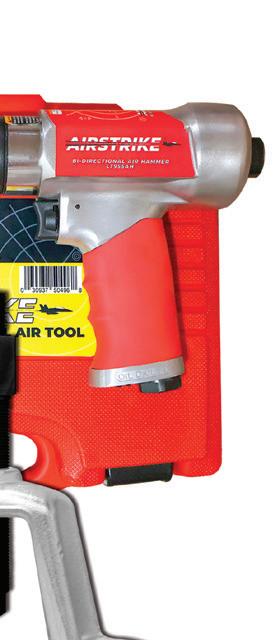
ProMAXX Tool by Milton Air Hammer-Powered Tommy 475 Wheel Hub Puller, No. PMXTOM475PRO For more information, visit VehicleServicePros.com/55308401
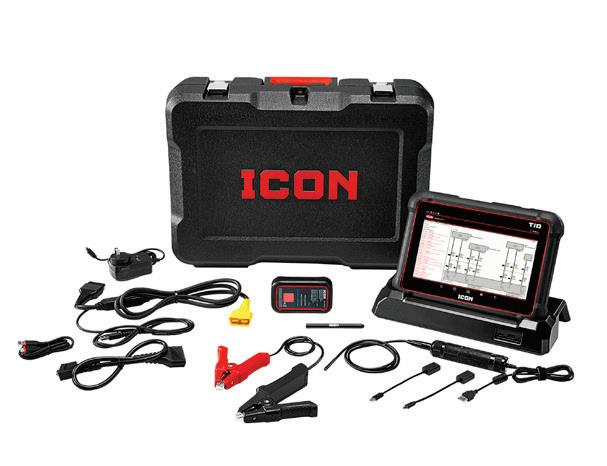
Includes two years of Identifix Code-Assist Harbor Freight Icon T10 Comprehensive Diagnostic Scanner
For more information, visit VehicleServicePros.com/55137957
Available in 8 different color schemes Matco Tools
75” x 25” Triple-Bay 2s Series Toolbox, No. 2325TB For more information, visit VehicleServicePros.com/55261998
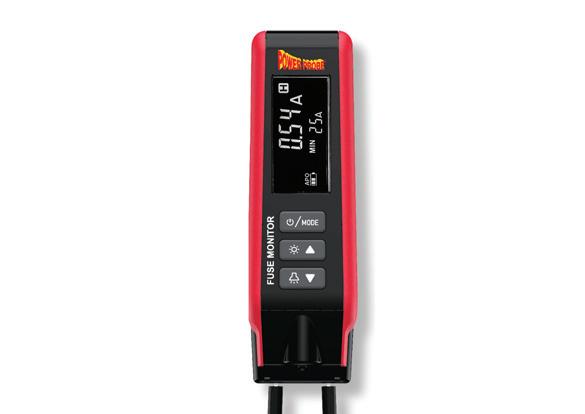
Displays real-time current readings Power Probe
PPFUSE Fuse Monitor
For more information, visit VehicleServicePros.com/55267311
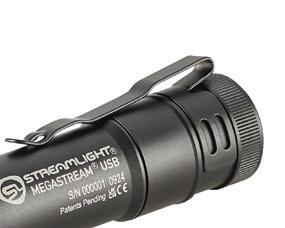
2-hour run-time on high Streamlight
MegaStream USB For more information, visit VehicleServicePros.com/55262542
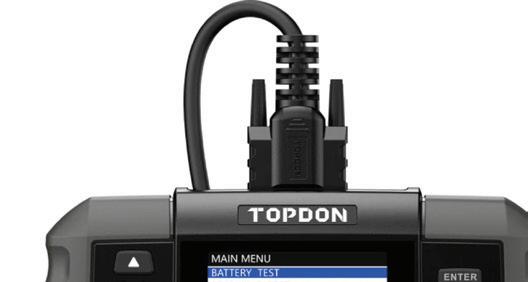
Battery tester for 12V and 24V systems
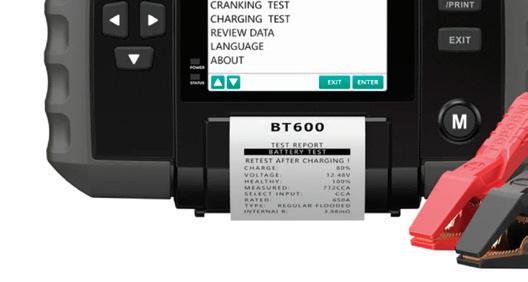
TOPDON BT600
For more information, visit VehicleServicePros.com/55288054
Covers more than 7,400 static ADAS procedures
Hunter Engineering
Ultimate ADAS
information, visit
Features polished plunger pistons
Prints health report 3 seconds after scan Matco Tools
Digital Battery Tester with Printer, No. MDMAX
For more information, visit VehicleServicePros.com/55250605
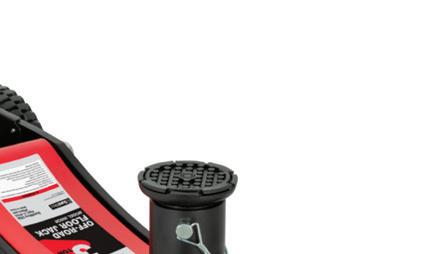
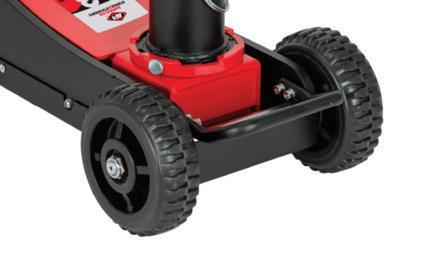
3-Ton Off-Road Floor Jack
For more information, visit VehicleServicePros.com/55288050
disassembles
Features six barrel lock-secured drawers SUNEX Tools
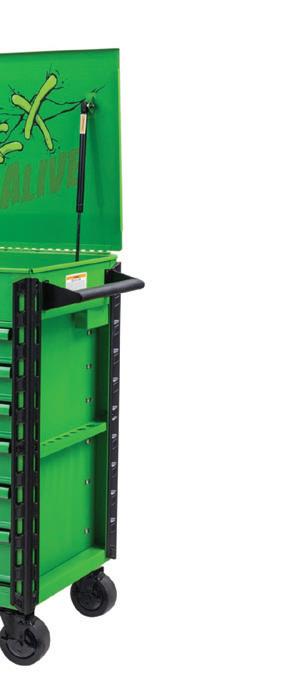
Tony Squindo “It’s Alive!!” Premium Full Drawer Service Cart, No. SUN8057XTL
For more information, visit VehicleServicePros.com/55273286
Features adjustable lift forks
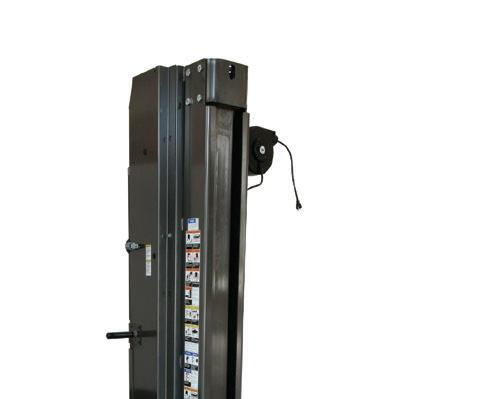
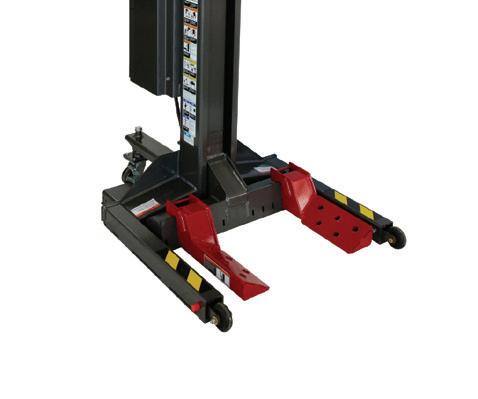
Gray Manufacturing WPLS-50 Light Duty Mobile Column Lift For more information, visit
Includes two of each available color Streamlight
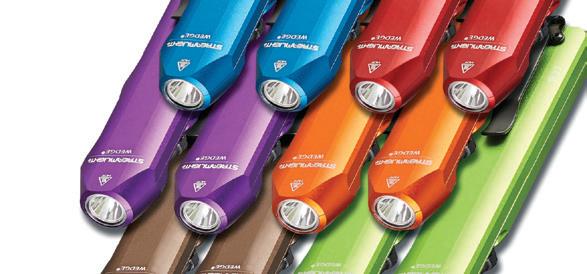
Wedge Buy Pack, No. 88823 For more information, visit VehicleServicePros.com/55300885
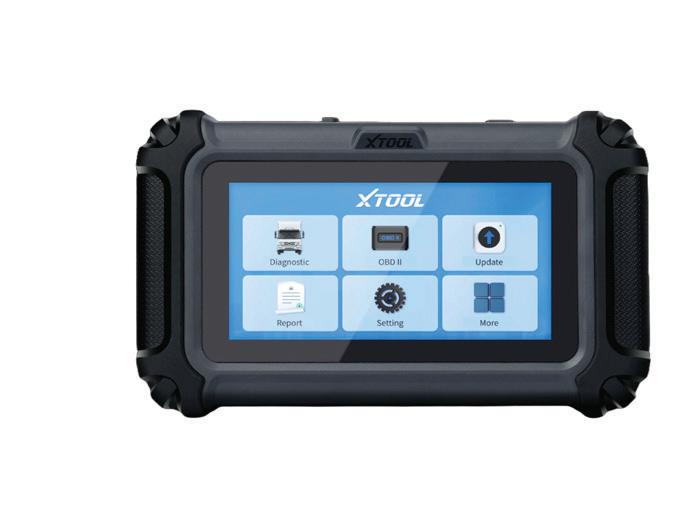
MD600CV Heavy Duty Diagnostic Tablet For more information, visit VehicleServicePros.com/55276744
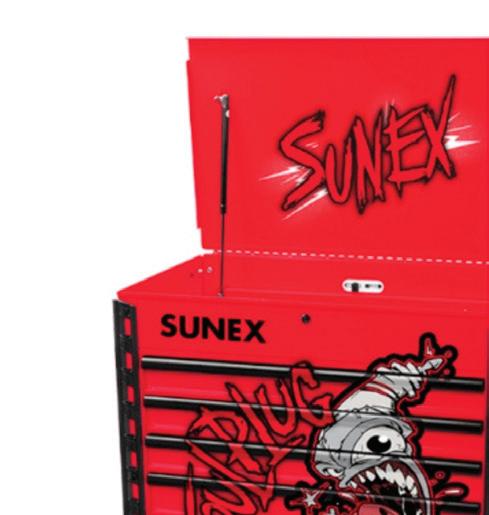
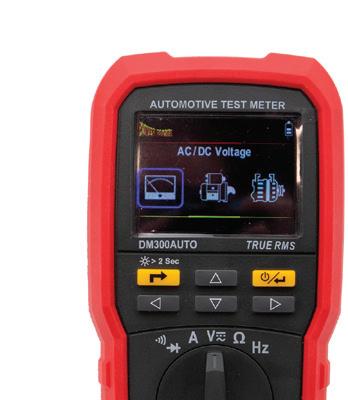
Original designs by Tony Squindo SUNEX Tools “FOUL PLUG” Premium Full Drawer Service Carts, No. 8057XTRFOULPLUG For more information, visit VehicleServicePros.com/55304084 Low saddle height of 8-1/2" Snap-on 1-1/2 Ton Hydraulic Transmission Jack, No. FTJ150 For more information, visit VehicleServicePros.com/10095993 Identifies parasitic draw and locates active circuits
Every day, professionals and DIYers trust their lives to vehicle lifts. But the web is flooded with offshore resellers pushing uncertified, no-name lifts with bold claims — no proof, no oversight, no accountability.
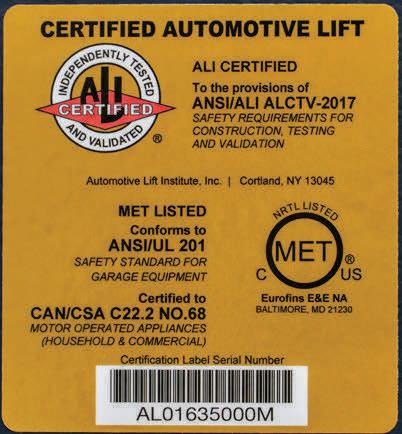
BendPak certified lifts meet ANSI/ALI ALCTV (current edition), the only nationally recognized lift safety and performance standard. Only certified lifts carry the ALI Gold Label and appear in the official ALI Directory, proof of third-party testing and validation.
At BendPak, safety is engineered into every lift. Built strong. Certified tough. And every Gold Label tells the story.
If you’re lifting cars and putting people under them, nothing matters more than safety. Don’t risk it on unverified imports. Get the lift that’s certified. Get BendPak. Demand
Designed for accuracy and mobility
AirPro Diagnostics
Auggie
For more information, visit VehicleServicePros.com/55252959
Prevents over- and under-tightening
CTA Tools
Torque Limit Ratchet Wrench Set, No. 8945
For more information, visit VehicleServicePros.com/55278769
Lifting pucks for car lifts and jacks
BendPak
AutoPucks
For more information, visit VehicleServicePros.com/55267641
Ready to jump in 70 seconds
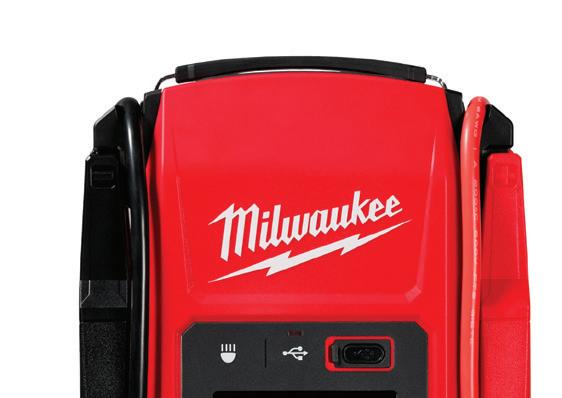
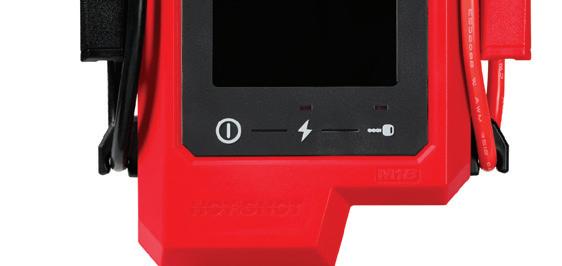
Milwaukee Tool M18 HOTSHOT Jump Starter
For more information, visit VehicleServicePros.com/55298829
Includes locking mechanism and keys
Matco Tools
Triple-Bay 2s Series Hutch, No. 2325HTC
For more information, visit VehicleServicePros.com/55262001 Features direct access to Direct-Hit database
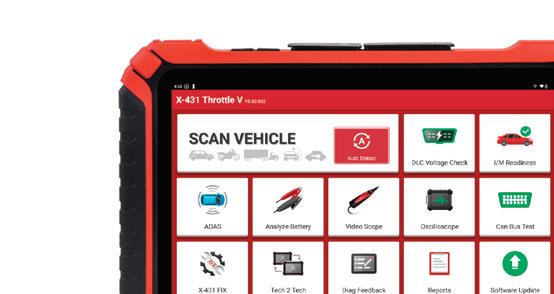
Launch Tech USA X-431 Throttle V from For more information, visit VehicleServicePros.com/55019102
For more information, visit VehicleServicePros.com/55289221
ENGINEERED FOR HARD WORK BUILT FOR REAL SHOPS
Mobility And Muscle Without the
Cord.
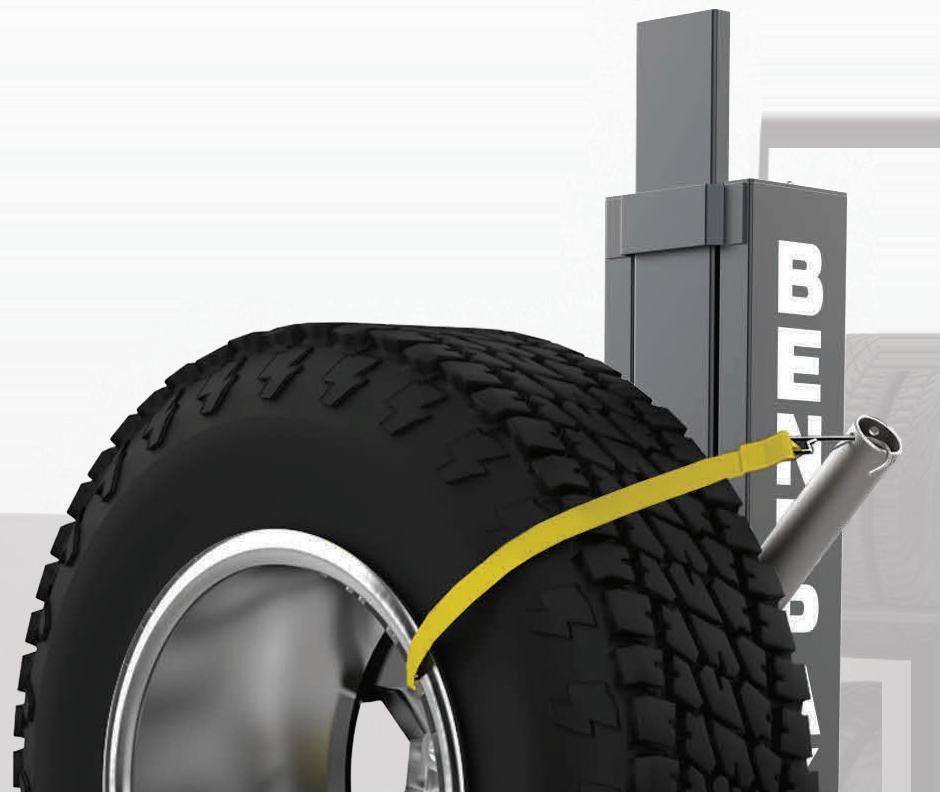
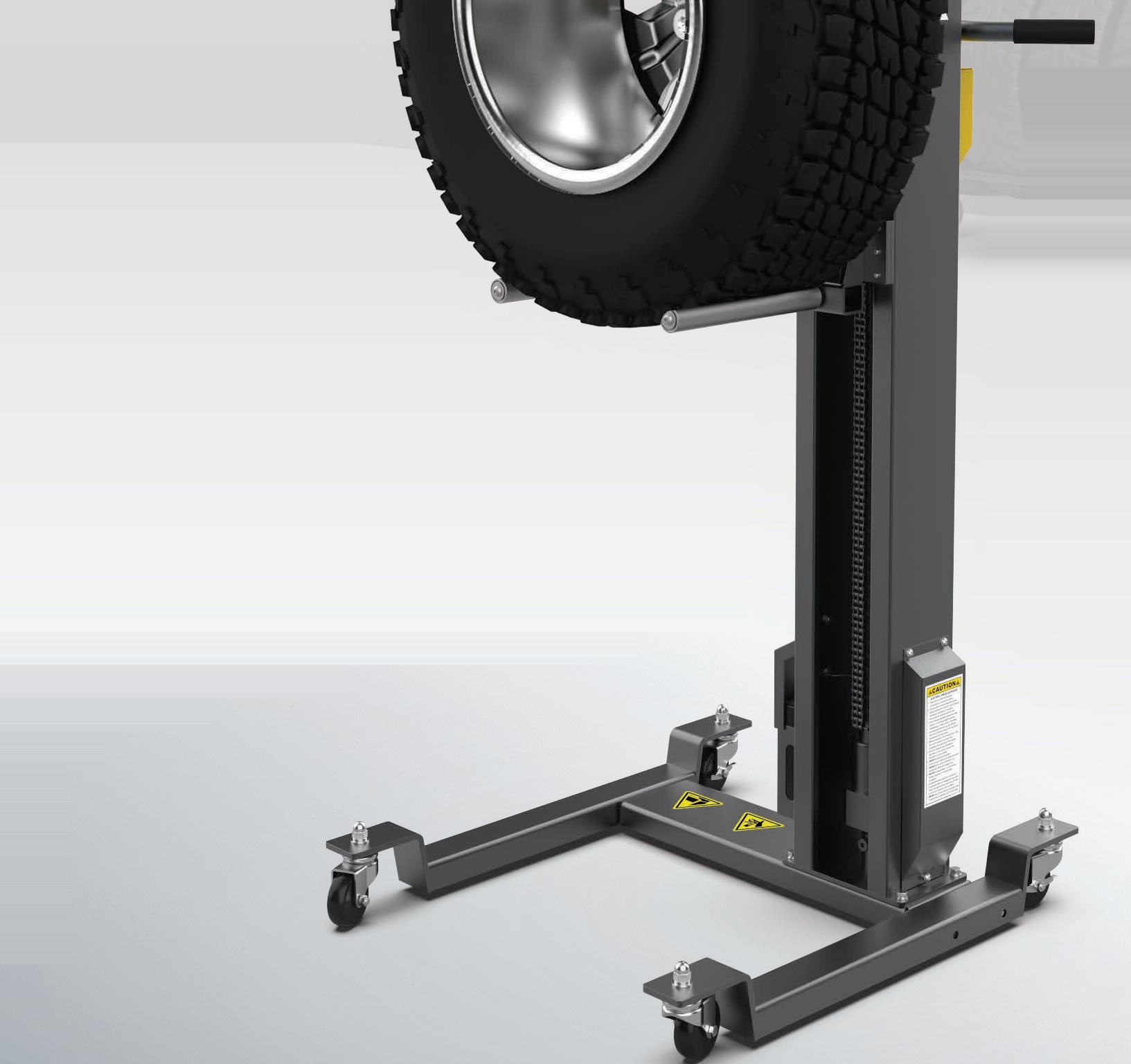
The BendPak RWS-200WL battery-powered wheel lift is engineered to tackle the heavy lifting of tires and wheels, significantly reducing technician fatigue and workplace injuries. With a robust 200-lbs. of lifting capacity, precision lithium-ion powered actuator, and rugged steel construction, it offers cordless freedom, quiet operation, and unmatched safety, ideal for tire shops, fleet facilities, and EV service bays.
Getting out of the Dark Ages
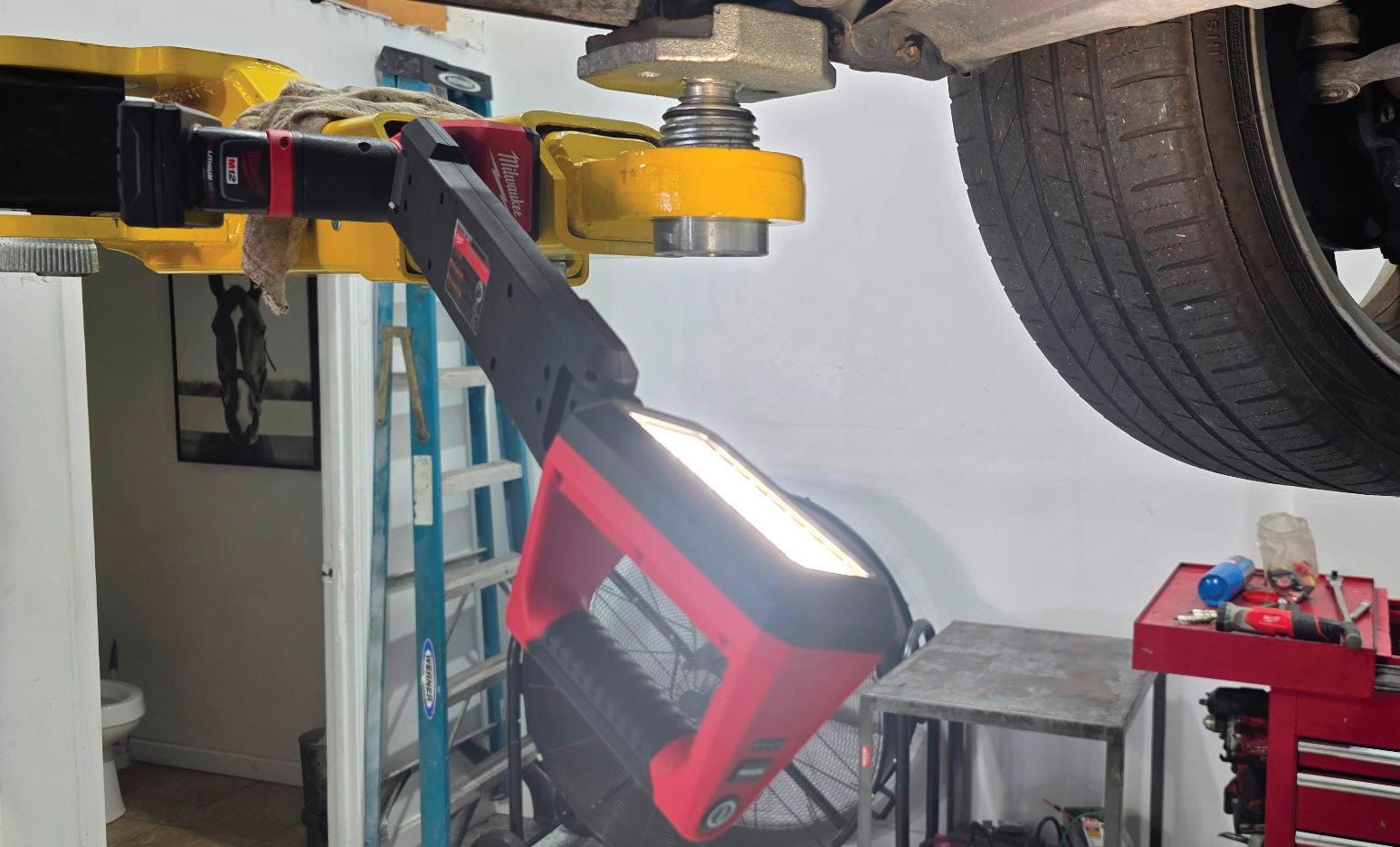
Shining a light on shop and technician lighting needs.
By Pete Rudloff, Contributing Editor
Let’s face it, lighting is an oft-forgotten but critical part of everything we do. Almost all of us, especially those of us with older, tired eyes, have encountered a time when we needed more light for something we were working on. Even for those with excellent eyesight, you won’t find a technician anywhere in the world who doesn’t value a good service light or have a trusted, favorite flashlight/ headlamp.
Much like the automobile, technician and shop lighting technology has transformed significantly over the last 100+ years, including some meaningful advancements in the past 25 years. Since the early 1900s, incandescent lights were the only option better than a simple kerosene lantern. While it pales
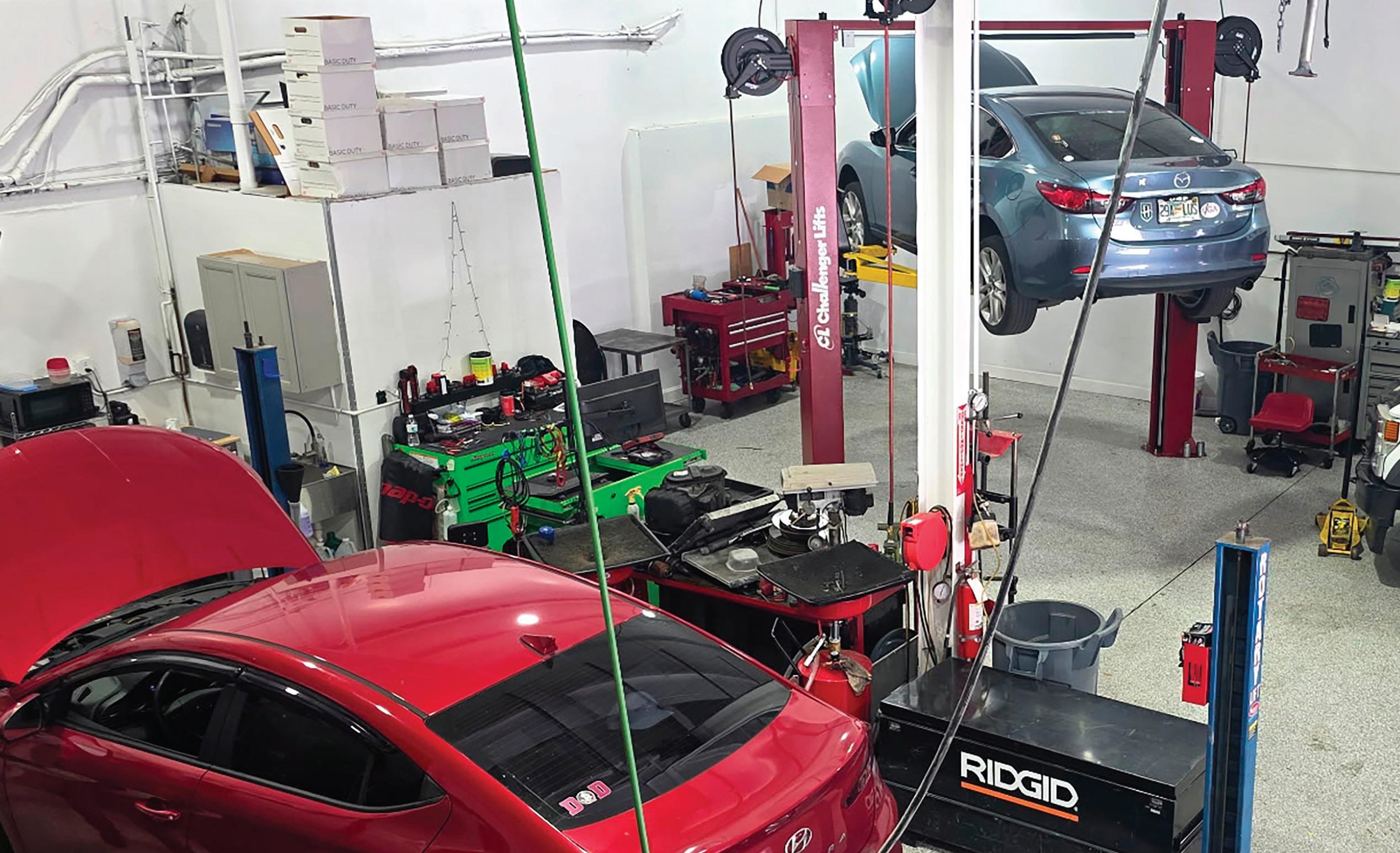
Figure 3 — Shops struggling to find reliable help should take note that no technician wants to work in a dark and dingy shop. Well-lit shops, like Assured Auto Works in Florida, set a high standard for prospective employees.
Photo courtesy of Brin Kline
in comparison to current technology, incandescent lights were leaps and bounds ahead of kerosene lanterns. The 1930s saw the adoption of batteryoperated, hand-held work lights; though these could be described as dim on their best day, they were better than nothing.
It has been an incredible advancement in lighting technology over the past 100 years, and LED lighting is the best technology currently available.
SHOP FACILITY LIGHTING
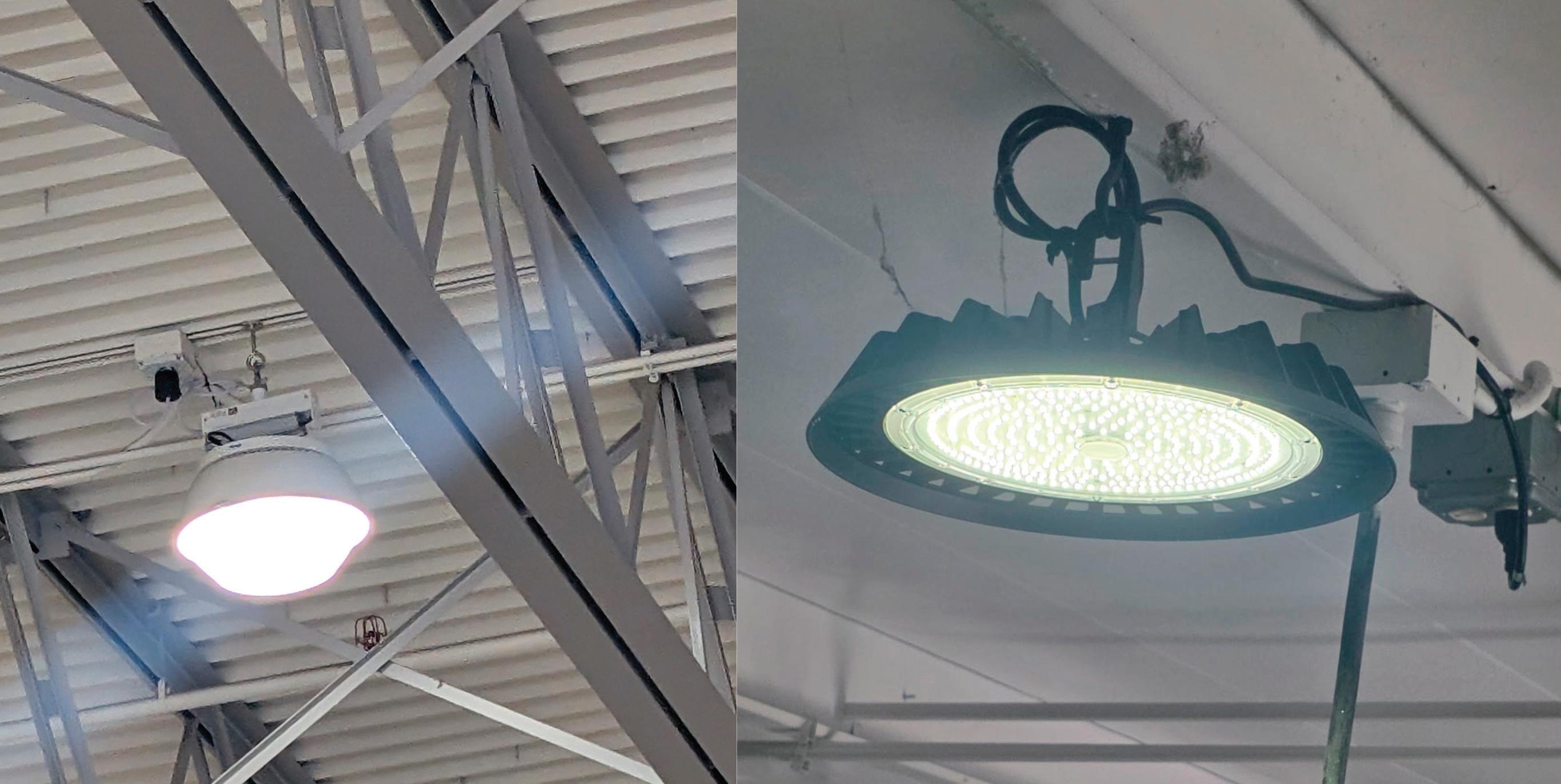
In the 1950s and 60s, many shops began moving from incandescent bulbs towards either fluorescent-type bulbs or high-intensity discharge (HID) bulbs, often referred to as high bay lamps. By the late 1970s, most auto repair shops were using one or the other. Lighting was decent with either, though both had issues with cold temperatures, and HID in particular required a good amount of warming up before they produced a usable light to work with. Fluorescent lights were typically used with inside ceiling heights under 10’, and the HID lights tended to work best when ceilings were 12’-15’ high, or more (Figure 1).
In the early 2000s, we began seeing light-emitting diode (LED) technology that at the time looked promising, but was very expensive. Boasting significant reductions in electricity consumption and huge boosts in lighting output (lumens), LEDs slowly started to find their place. As their popularity grew, the cost to implement LED lighting dropped significantly. By 2020, LED technology had firmly taken its place as the best lighting technology for indoor and outdoor spaces. Offering a huge range of designs, LEDs have become the “Swiss Army Knife” of lighting. You can basically find a design that fits any need for any building, inside or outside. They are brighter, can be fully weatherproof, have better energy efficiency, and can be had for pennies compared to incandescent, fluorescent, or HID lighting.
A few years back, I completed my shop. A 2,400 sq. ft. building, and I didn’t hesitate to outfit it with 20, 8’ long LED light packs, purchased on Amazon for about $20 each. They boast a 15k lumen rating, and, when installed in my 20’ high ceiling workshop, emit so much
light that I tend not to look up! There really is no other, more viable lighting option for a shop than an LED bulb. Specific workspace lighting is also important. Aside from updating to LEDs on the ceiling of workshops, progressive-thinking shops are adding light
Exciting new shop products
Three powerful solutions to elevate your service game.
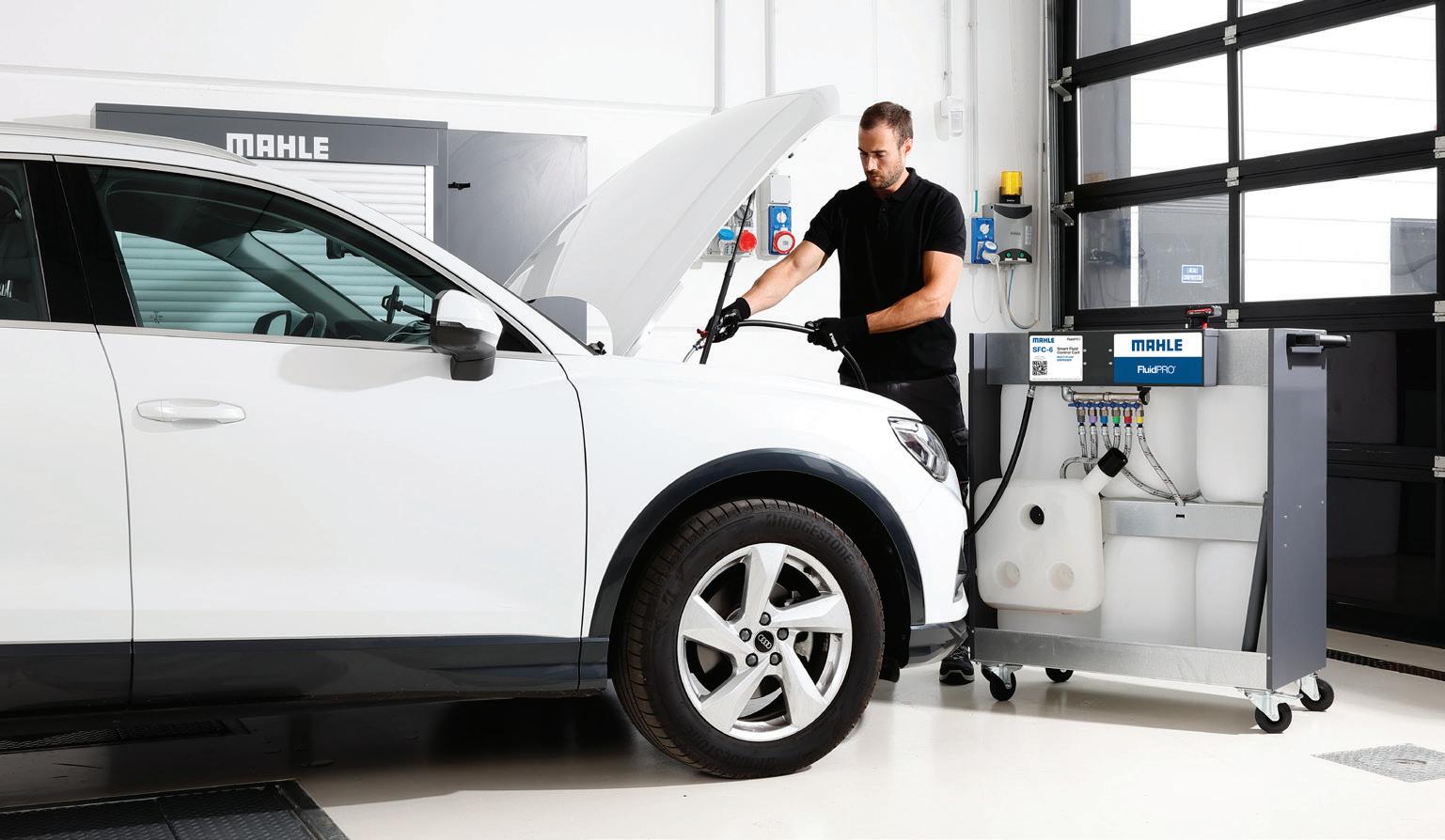
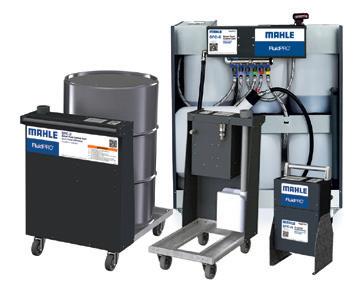
FluidPRO® Smart Fluid Control
Streamline your shop’s fluid handling with the MAHLE
FluidPRO® Smart Fluid Control systems. These mobile, battery-powered units offer precise dispensing, with WiFi-enabled tracking, and zero cross-contamination. Perfect for ICE, hybrid, and EV maintenance.
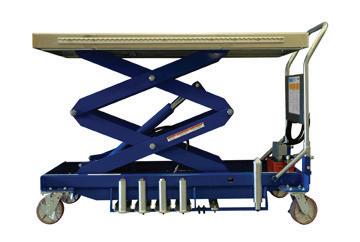
ShopPRO® Multi-Use Lift Table
Lift engines, EV batteries, and more with ease. The MLT-2200 delivers 2,200 lbs of lifting power, a spacious tabletop, and smooth air-over-hydraulic operation. Built for safety, mobility, and precision in any service bay.
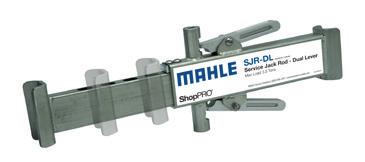
ShopPRO® Service Jack Rods
Replace bulky jack stands with these compact, patented jack rods. With adjustable height, high load capacity, and secure locking, they’re ideal for everything from DIY garages to fast-paced commercial shops.
Scan this QR code to view the entire MAHLE Service Solutions product offering.
attachments that push light up from the floor or attach to a vehicle lift arm, giving the technician even more options to have handsfree lighting on whatever they are working on (Figure 2).
Lighting doesn’t just have value for
the technician. Bright exterior lighting makes any business look safer and more inviting to prospective clients. The same can be said for well-lit waiting areas. Having a dingy, dark office may scare off prospective clients and
p Figure 1 — High bay HID lights like these (left) used to be the standard for high ceiling workspaces. High bay LED (Right) has all but eliminated this technology.
▪
HOLD-A-ROTOR
Photos courtesy of Pete Rudloff (left) and Brin Kline (right)
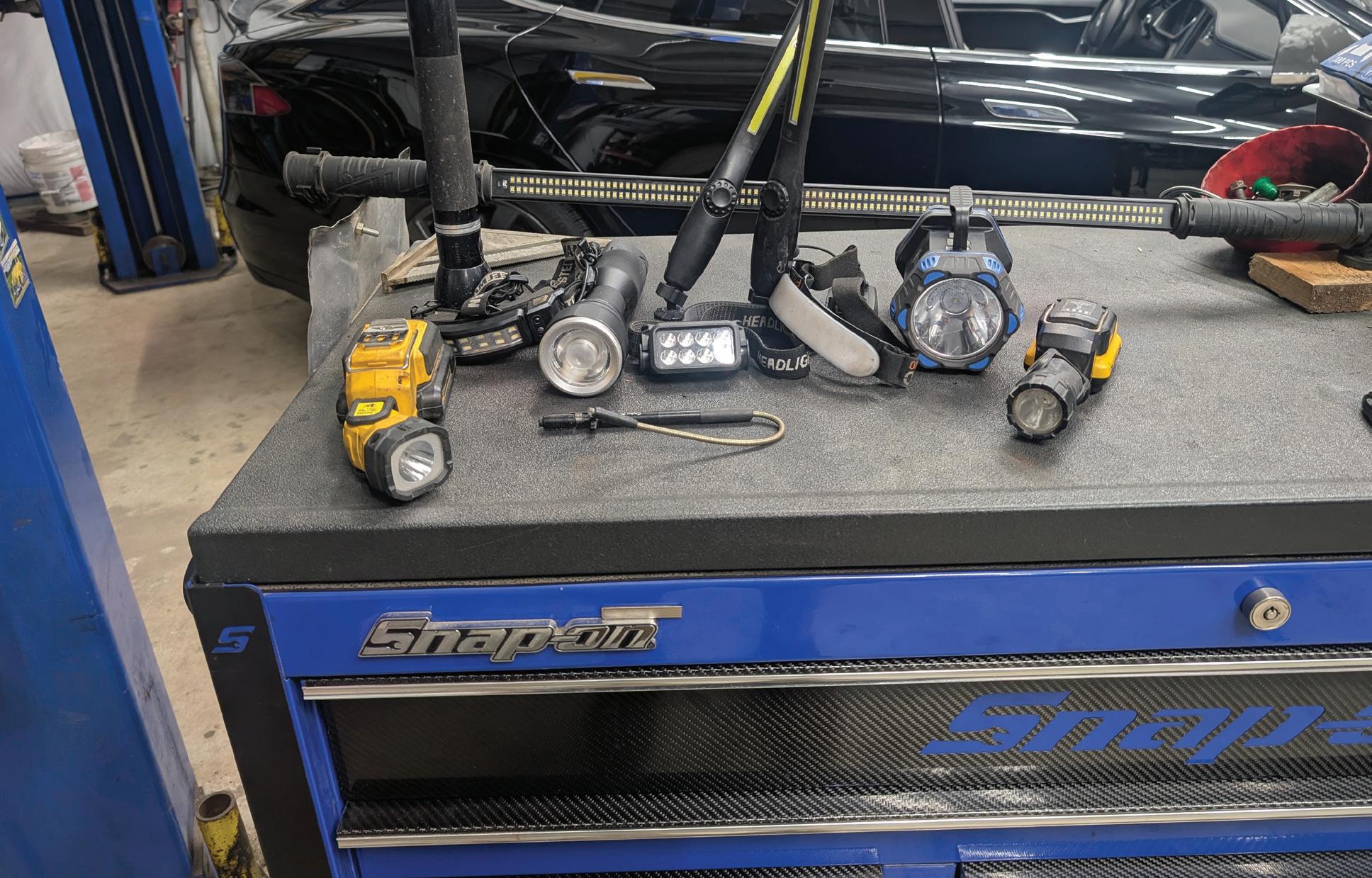
Figure 4 — Most seasoned technicians have more than one type of work light. Here’s a small sampling of some of mine.
Photo courtesy of Pete Rudlo
certainly could lead them to prejudge a business’s competence before they get a chance to see how great the staff really are. Smart shop owners know this and invest in bright, clean light, inside and outside their facilities (Figure 3).
TECHNICIAN LIGHTING
Good shop lighting is important, but even good shop lighting leaves a lot to be desired for the typical technician who has to work under or inside a car. For a long time, technicians relied on a drop light that was attached to a cord and pulled down from a retractable reel from the ceiling. These worked because we didn’t know any better. Corded droplights had a lot of drawbacks, not the least of which was that they were restricted by how long the electrical cord was.
Other drawbacks included incandescent bulbs that generated a lot of heat, which could inadvertently melt things on a car’s interior. Plus, incan-
descent bulbs are really fragile. Even with a metal cage around them, most bulbs wouldn’t survive a drop from 30” off the ground. Not to mention, dropping an incandescent bulb around an open fuel source, like when replacing a fuel filter, could result in a devastating fire. Corded fluorescent and then LED droplights solved some of the most dangerous drawbacks to having droplights, but generally speaking, there are much better, non-corded solutions for today’s technician.
FLASHLIGHTS
I cut my teeth as a dealership technician in the early 1990s, and back then, there was one name that technicians recognized as better than all others: Maglight. Maglight flashlights were a staple in every technician’s toolbox from the 1970s up through the 1990s. Ranging in sizes, probably the most popular were the aluminum-bodied models that took the “C” size batteries.
Back in my early days, the rechargeable Maglight with a halogen bulb was the holy grail. They were expensive, but any technician who had one was known to take their job seriously, and I had two. Moving forward to today, we’ve seen the flashlight market become extremely competitive, especially with the adoption of super bright, energy-efficient LED bulbs. Flashlights come in all shapes and sizes to fit the needs of any technician. It may even make sense for a technician to own multiple different flashlights. (Figure 4).
HEADLAMPS
Headlamps started to gain popularity in the early 2000s, but were large, clunky, and didn’t have very good battery life. In the past 15 years, we’ve seen these shrink, get lighter, brighter, and, with LED technology, we’ve seen headlamps that can last 6+ hours. This type of light is useful because it frees up both of the technician’s hands, and it’s easy to
p Figure 2 — Magnetic mount and adjustable LED work lights like these are becoming standard equipment in many shops.
Photo courtesy of Brin Kline
point where you need the light because it’s attached to your head. You can find comfortable, lightweight headlamps for well under $100 nowadays. There are so many options available that you’ll have to try a few to see what suits you best.
INSPECTION LIGHTS
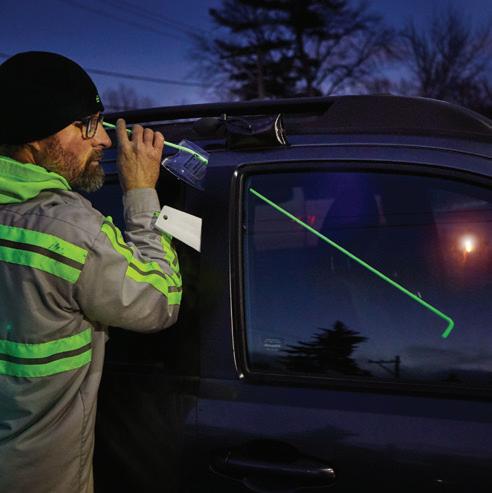
Inspection lights are lights with flexible ends that allow you to manipulate them into tighter spaces, sometimes utilizing a fiber optic tube to help with this. I like using inspection lights for peeking inside a wheel to see how much brake life is left. Inspection lights don’t shine as bright as a flashlight, but you can put light on exactly what you need, and for cases like checking brake life, an inspection light works best.
Ultraviolet lights are another type of inspection light. They are really useful when chasing fluid leaks. You can add
fluorescent dye to just about any fluid, and a UV light helps make the dye really pop at the leak source.
LIGHTING TRENDS
I’m starting to see a trend in new ideas for lighting popping up throughout the trade. Lights that are flexible enough to fasten around a wheel well, lighting up the entire well area and all the suspension and brake components. This shows innovation that will be useful for many technicians. Under-lift lighting options are also starting to gain popularity. These are lights that clip onto a loft arm and can be manipulated under the vehicle to shine up at the work area. It is hard to write about lighting for the auto repair industry and not think about how lucky we are to even have the ability to create our own light. It was only in 1879 that Edison invented the
first viable incandescent light bulb. To think, before that, all workshops were lit by gas and kerosene lanterns. I couldn’t imagine working in those conditions. It is amazing to see how far we have come in workshop lighting, and I’m looking forward to seeing what the innovators of the lighting field will come up with next.
PETE RUDLOFF is a nationally awarded technician, national automotive instructor/ consultant, technical writer, software developer, automotive trade advocate, and owner of Pete’s Garage Inc. in Newark, Del.
Rudloff has a national reputation as friend to the general auto repair shop and is known for fixing difficult to fix cars and facing challenging trade issues head-on. In 2016, Rudloff created FlexCheck Auto DVI in order to help independent auto repair shops nationwide increase their revenue.
Cal-Van Brake Anchor Pin Press
Reviewed by Eric Moore, independent technician in Columbus, Ohio.
Q: How did the tool function as far as saving you time?
A: The Cal-Van Brake Anchor Pin Press really does work exactly like the name says. It is just the right size, plenty stout, and just works. Not having to remove the backing plate or the hub, it fits over the top and lines up nicely.
Q: What kind of setup was involved before using the product?
A: Very little setup was required to use the tool. Take it out of the case and choose whether the additional adapters are needed or not.
Q: How easy was it to use?
A: This tool is very easy to use and pretty self-explanatory in how it functions.
PRODUCT DESCRIPTION
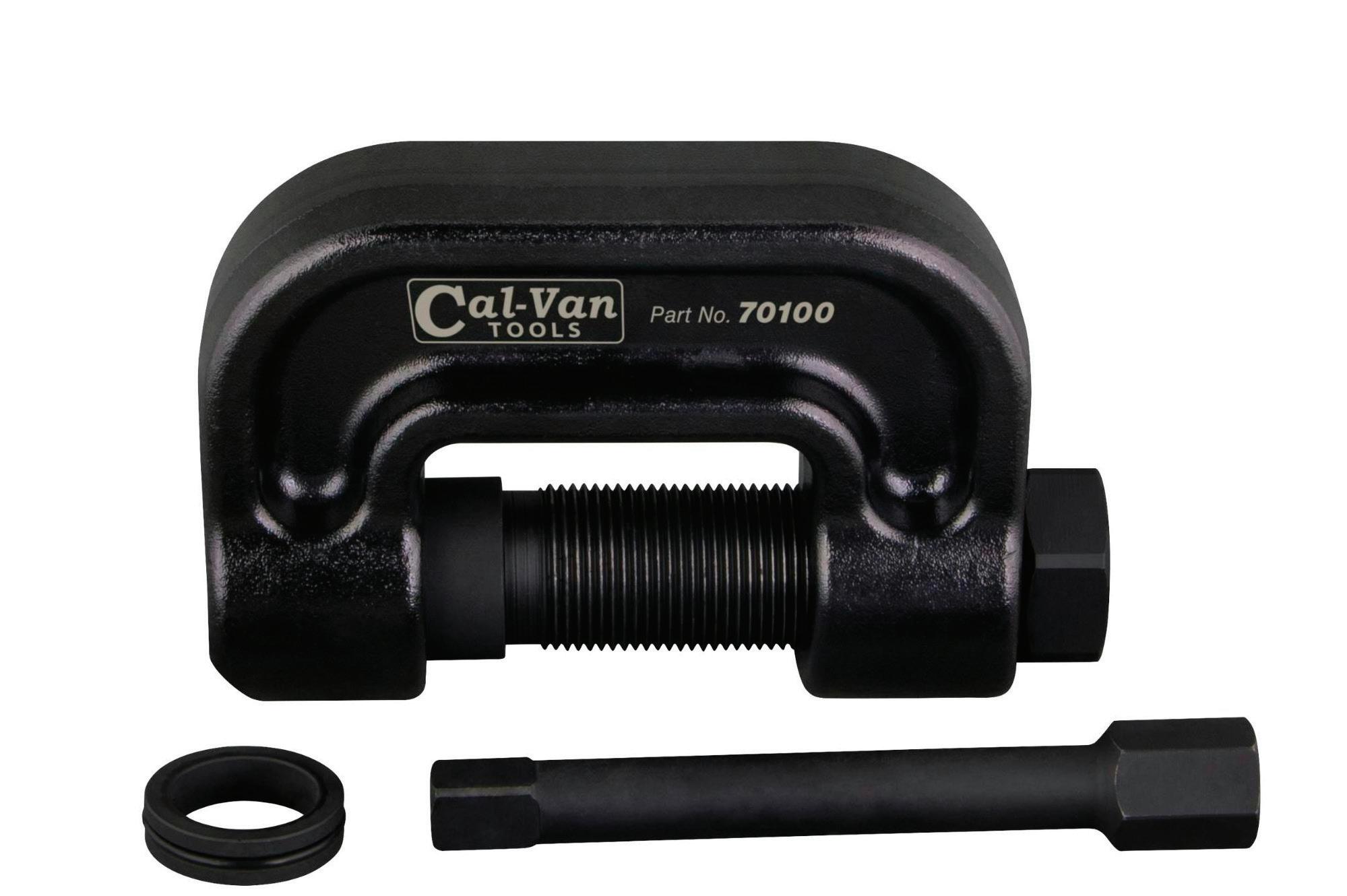
The Brake Anchor Pin Press, No. 70100, from Cal-Van Tools is designed to remove brake anchor pins and bushings on 16-1/2” S-Cam trailers and Tractor Q brake systems. With this tool, there’s no need to remove the hub or dust shields. Designed for use with 1/2” impact wrenches, it has a 10-ton capacity C-frame and can easily remove seized anchor pins. For more information, visit VehicleServicePros.com/55281332
This
Q: How was its packaging? Did it come with any accessories?
A: The brake anchor pin press comes in a labeled blow molded case. It has an additional extension and centering adapter for removal. The press itself is a forged C-shape press body with a screw press sized for the S-cam busings on most trailers and air brake systems we see.
Q: Was there a manual included? If so, did you use the manual, and was the manual easy to understand?
A: No manual is included. Use of the tool is pretty intuitive.
Q: What features did you like?
A: I feel like this is a nicely forged tool; strong materials were used. It’s built to be used with an impact.
Q: What types of jobs/repairs did you use this tool for?
A: We used it specifically for what it is designed for — the removal of S-cam bushings and brake pin anchors, and it works well. Anyone who has replaced S-cam bushings knows that there are easy ones and ones that don’t play nice. This tool handled every one we used it on simply, smoothly, and relatively quickly. We did have to get a couple of bushings warmed up for them to press out easier, but even if we hadn’t, the tool was moving them.
Q: Have you used a previous version of this tool? If so, what are some new features compared to the old version?
A: I know there are other types and brands of S-cam presses, but I have not used them before. I have used other types of press tools similar to this for different situations or repairs. Most comparable would be a ball joint press or universal joint press. I think the only difference is that this tool would be an extension. Overall, it’s similarly constructed, just sized appropriately.
Q: On a scale of 1 to 10, how would you rate this tool overall? Why?
A: That’s going to be a challenge. Not everyone needs this specialty tool. However, if you do heavy duty brake repair, this is a smart investment for making a not-so-fun repair just a bit more manageable. Trying to fit this into a scale… I’d have to say if you’ll use it, it’s an easy eight.
ERIC MOORE began his career working on cars at several franchise dealerships. Initially, he leaned towards smaller vehicles, settling into Powersports vehicles, where he stayed for over 20 years. Then, Moore went the total opposite direction, landing at a medium and heavy duty truck dealership. Eventually, he moved into management and has performed most roles at the dealership level except for owning his own franchise.
Hunter Engineering Ultimate ADAS
Reviewed by Erik Screeden, technical and multimedia content director for EndeavorB2B.
Q: How did the tool/equipment function as far as saving you time?
A: Fantastic – this tool is the most user-friendly piece of ADAS equipment I have used.
Q: How has using this tool impacted your shop’s profitability?
A: The Hunter Ultimate ADAS absolutely streamlines the wheel alignment and static ADAS calibration process. For both the technician and the shop owner/manager, the ability
PRODUCT DESCRIPTION
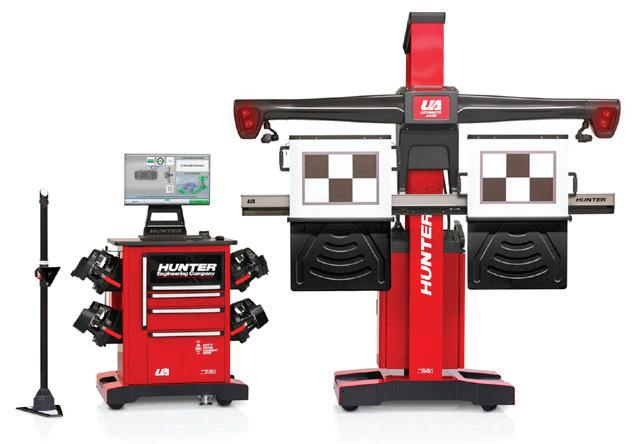
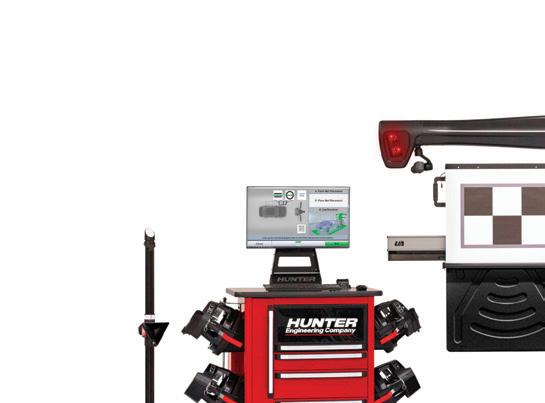
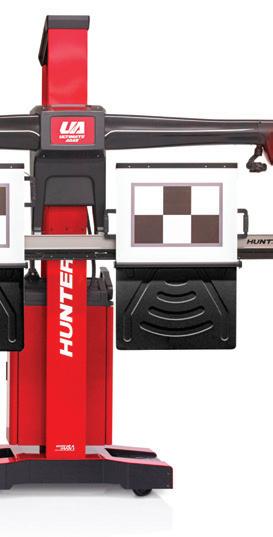
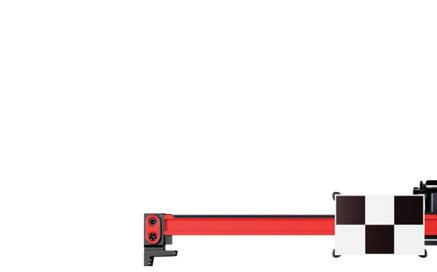
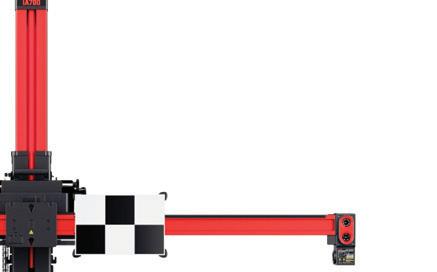
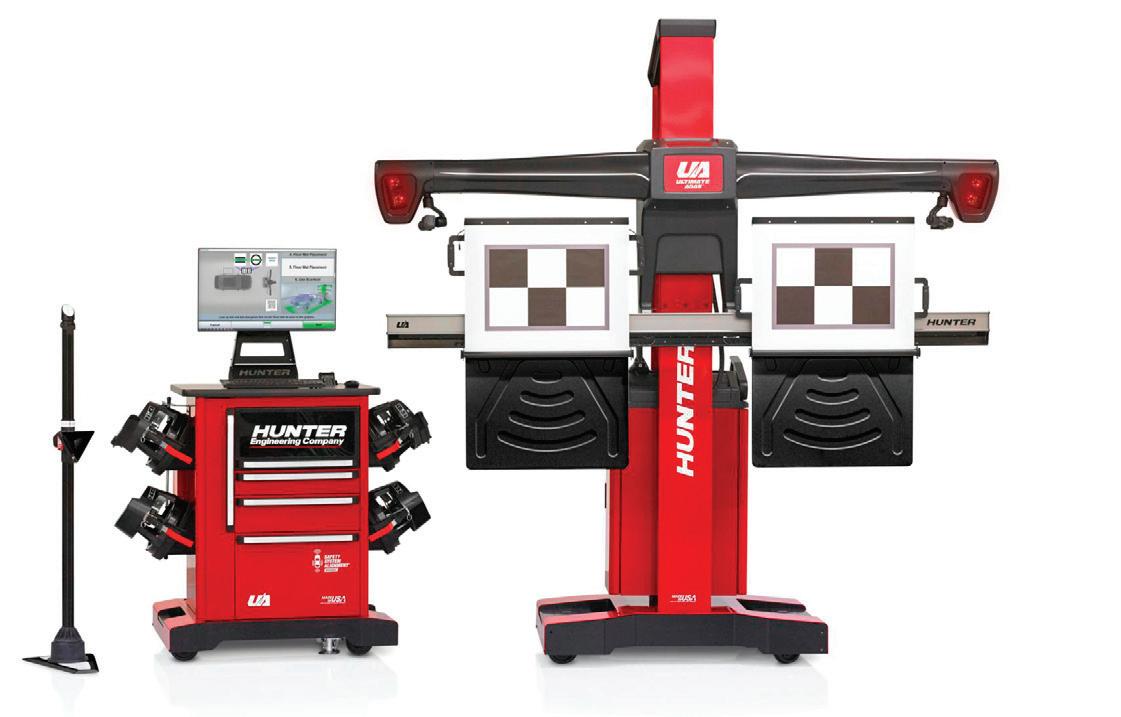
Hunter Engineering’s Ultimate ADAS system is designed to eliminate error-prone manual layouts common to static ADAS calibrations. Ultimate ADAS combines Hunter’s alignment technology with a guided target placement system for around-the-vehicle coverage. Gimbal-mounted lasers are the key component, replacing the inexact guesswork of strings, plumb bobs, and tape measures. The gimbals’ onscreen guidance provided by Hunter’s WinAlign software increases target placement precision by automatically compensating for non-level floors, monitoring for placement errors, and confirming accuracy with laser measurements each step of the way. WinAlign covers more than 90 percent of vehicles.
For more information, visit VehicleServicePros.com/53077999
to complete vehicle repairs fast and accurately translates directly into realized revenue.
Q: What kind of setup was involved before using the product?
A: Setup is very easy. Having the aligner and ADAS calibration unit all in one makes the process extremely streamlined.
Q: How easy was it to use?
A: The Hunter Ultimate ADAS takes a lot of the manual process out of ADAS static calibrations. The laserguided target placement gets rid of the normal manual process of metric tape measures, plumb bobs, laser levels, and crawling around on the shop floor. The tower is easily movable and locks securely into position, making for accurate placement.
Q: How was its packaging? Did it come with any accessories?
A: The target storage and access are well thought out and organized. Each piece is coded into the system with a unique identifier, making it virtually impossible to use the wrong target or cone.
Q: Did you use the manual, and was it easy to understand?
A: Hunter does an excellent job of outlining the step-by-step process both on Ultimate ADAS. The instructions are clear, easy to understand, and, to ensure accuracy, will not allow any process to continue until all steps are done correctly.
Q: What features did you like?
A: I love the fact that Ultimate ADAS takes a lot of the manual and timeconsuming steps out of the calibration process. This also ensures the utmost accuracy in the calibrations being performed, which is critical for proper system function and passenger safety.
Q: What types of jobs/repairs did you use this tool for?
A: I used this for a static calibration of both the forward-looking radar sensor and front outside view camera on a 2024 Toyota Camry SE.
Q: On a scale of 1 to 10, how would you rate this tool overall? Why?
A: A 10 as I stated earlier, this is the most user-friendly ADAS offering I have used. Ultimate ADAS makes the process easier and more automated, which allows the shop and technician to be more efficient and profitable.
ERIK SCREEDEN Erik Screeden is the Technical and Multimedia Content Director for the Vehicle Repair Group. He has been in the automotive industry for over 24 years. During that time, Screeden was a technician. He started out at a Ford dealership and continued to several independent repair facilities as well as spent time in the specialty aftermarket where he had the opportunity to work at a GM-specific performance shop. After his time as a technician came to an end, Screeden transitioned into a role providing scan diagnostic and J2534 tool support. He was then able to parlay his experience as a technician and a support specialist and use that in several technical sales roles.
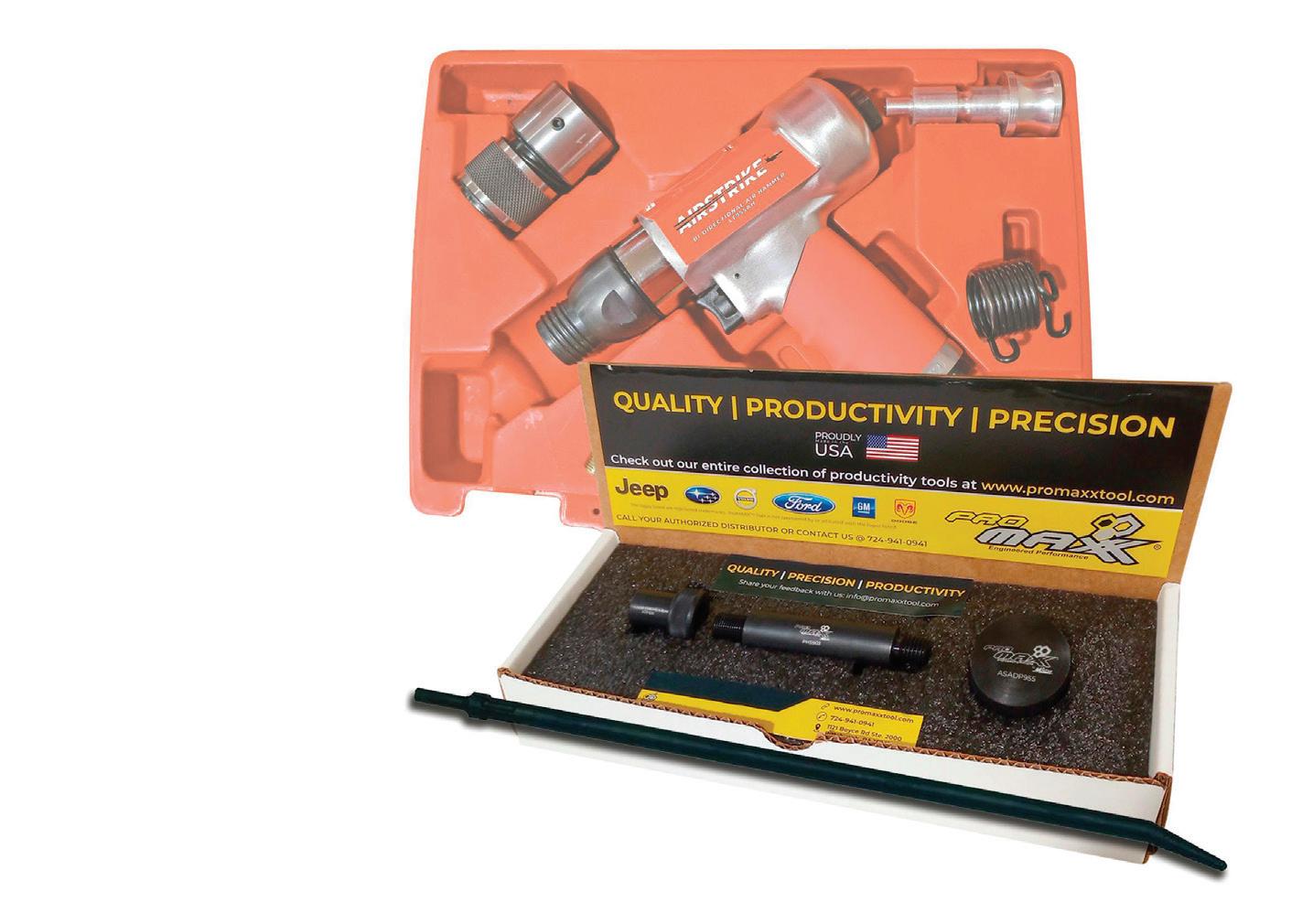
ProMAXX Tool 900 Series Air Hammer-Powered Fuel Injector Puller ProKits
Q & A with Jeff Del Rossa,
general manager of ProMAXX Tool.
Q: What makes this product innovative?
A: Direct fuel injection has become the predominant way of delivering fuel efficiently, and most engines now use steel injectors in aluminum cylinder heads. Those unlike metals create corrosion inside the injector cavity. Fleet and commercial vehicles also build heavy carbon because they often idle instead of shutting off. The combination makes injectors very difficult to remove. The innovation behind this tool was targeting the technician’s inability to remove injectors in a timely and productive way.
Q: What was the inspiration behind creating this product?
A: Technicians were spending 15 to 17 hours removing cylinder heads just to free a seized injector on Power Stroke and Duramax engines. We wanted to eliminate that. With this tool, you can get a stuck injector out in under 15 minutes without removing anything else. The ROI and time savings drove the innovation.
Q: How will this product improve the lives of technicians and shop owners?
A: It drives profitability and predictability. If they get something done quicker, they can get to other jobs faster, and the overall shop is more productive. Customers get their vehicles back sooner. There’s nothing more rewarding for a technician than delivering a fleet vehicle that’s an asset.
Q: What has been the feedback from technicians who’ve purchased this tool?
A: Outstanding. We had customers in Utah and in Greensburg, Pennsylvania, who had stuck injectors with no solution. They were facing 17 to 19 hours of work. They
bought the tool and removed the injectors within 45 minutes. That saves days of labor and the cost of gaskets and singleuse fasteners you have to replace when removing parts. It all adds up, and this eliminated that entire burden.
Q: Anything else our readers should know?
A: Traditional methods still work in some cases, but modern engines are more challenging. The harmonic vibration and pulling power of a tool that can oscillate at 6,000 blows per minute cannot be replicated manually. This gives technicians another option in their arsenal. With technicians becoming harder to find and the technical demands rising, we need ways to make them more productive. That has been the driving force behind my vision.
PTEN is the only publication to feature the prestigious Innovation Awards. Every year since 1999, the Innovation Awards highlight the newest and most innovative products introduced to the automotive aftermarket. For 2025, PTEN received over 100 submitted product entries in 25 categories. We will be featuring the top scoring products in monthly Innovation Award Profiles. To view a full list of winners online, visit: VehicleServicePros.com/2025IAWinners.
The Innovation Awards honor companies that take their products to another level and offer unique features that make a technician’s job easier. If you would like to submit a product to be considered for the 2026 Innovation Awards, entries will be accepted starting in January 2026.
PERFECT FOR TIRE SHOPS
SWING ARMS
The BendPak 12AP-SRT short-rise two-post lift cost-effectively improves tire shop productivity and efficiency while mitigating risk. With 12,000 pounds rated capacity, massive wingspan that reaches most OEM lifting points, and BI-METRIC™ arms to suit virtually every vehicle lifting requirement – symmetric or asymmetric. The 12AP-SRT can raise 99 percent of cars, SUVs, and trucks to a comfortable working height much faster (and easier) than a set of jacks. Its single-point safety lock system, super-strong automatic arm restraints, and limited max lifting height of 47 inches deliver superior peace of mind. The short 93.5inch columns offer lower product, installation, and maintenance costs, plus a cleaner floorplan. Check out the full line of BendPak lifts at bendpak.com or call us at 1-800-253-2363
POWER & AIR TOOLS
Every repair shop needs the ef ciency and control that a good set of power and air tools bring. These tools are evolving with every new release, with ergonomic handles, higher speeds, lighter frames, and so much more. We know it can be dif cult to narrow down all the options out there, so we’ve compiled a list of the latest power and air tools for you to consider.
FEATURES TRIPLE-LAYERED CHROME FINISH
The 11-pc 1/2” Drive SAE X-TREME Grip Socket Set , No. SP33035, from SP Tools USA , is made from chrome-vanadium steel and features a triple-layered chrome finish for corrosion resistance. The sockets also feature Center Drive technology that allows them to undo bolts up to 90 percent rounded off by applying pressure to the center of each bolt’s flats, and twin knurling ensures a secure grip even in greasy or oily conditions. The set includes 3/8, 7/16, 1/2, 9/16, 5/8, 11/16, 3/4, 13/16, 7/8, 15/16, and 1” sockets.
For more information, visit VehicleServicePros.com/55300718
FEATURES ACTIVE ZINC PHOSPHATE COATING
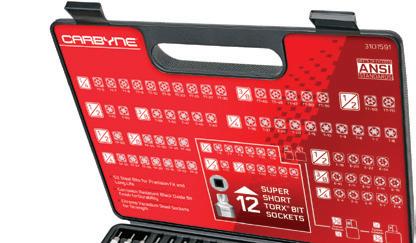
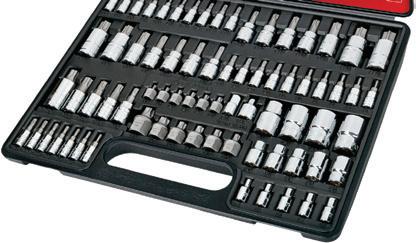
The Carbyne Tools 74-pc Master Torx Bit Socket & E-Torx Socket Set , No. 3101591, includes super short bit sockets (T10-T60), standard bit sockets (T6-T70), tamper-resistant bit sockets (T6H-T70H), and E-Torx sockets (E4-E24). Each bit features an active zinc phosphate coating for corrosion resistance and is press-fit into hardened chrome vanadium sockets for strength and durability. The set is manufactured under license from Acument Intellectual Properties for authentic Torx geometry and fit, and it meets and exceeds ANSI standards. The set is packaged in a durable case with clear size markings and comes with a lifetime warranty.
For more information, visit VehicleServicePros.com/55316629
EQUIPPED WITH A RAREEARTH MAGNET
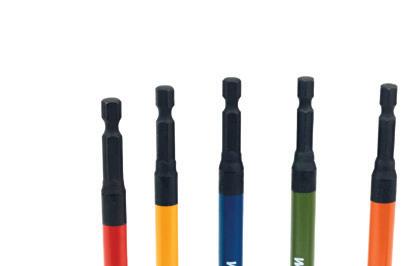
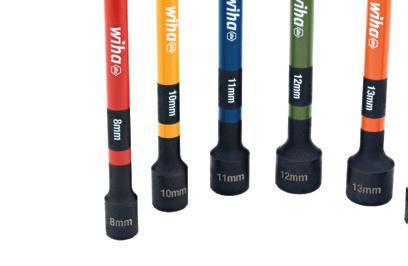
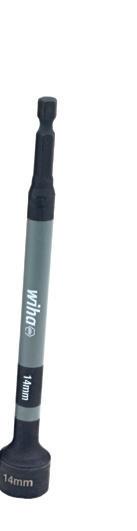
The Color Coded Nut Setters , Nos. 70486 and 70487, from Wiha Tools , are equipped with a heavy duty rare-earth magnet, hard-wearing black oxide coating, and high-visibility colors. The 6” length ensures optimal reach, eliminating the need for extensions and complications. New color coding won’t wear off and allows for fast selection. Available in metric and inch sizes.
For more information, visit VehicleServicePros.com/55269328
FEATURES AN EXTRA-LONG DESIGN
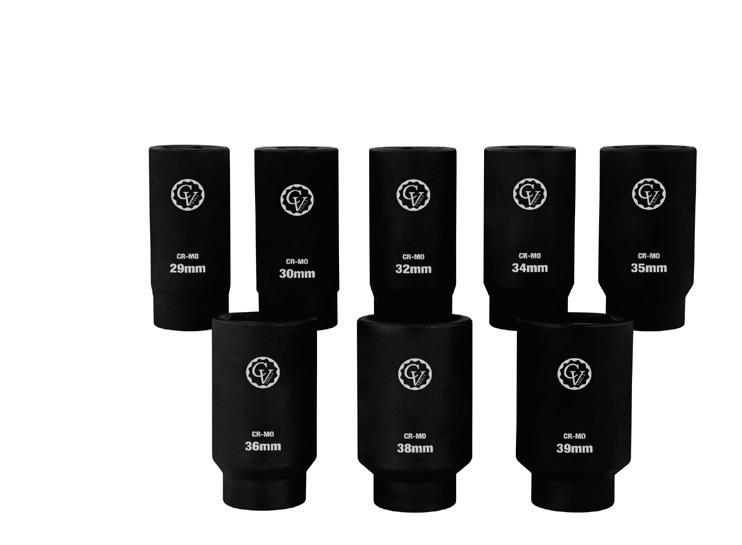
The Cal-Van Tools 8-pc, 1/2” Drive Axle Nut Socket Set, 6-PT includes eight 6-point deep alloy sockets designed for removing and installing axle nuts on a wide range of domestic and import cars, trucks, and SUVs. The sockets are compatible with a 1/2" drive ratchet, torque wrench, or breaker bar. Their extra-long design ensures full contact between the nut and socket, helping prevent slipping or distortion during use, and making the set suitable for heavy duty applications. Sizes include 29mm, 30mm, 32mm, 34mm, 35mm, 36mm, 38mm, and 39mm.
For more information, visit VehicleServicePros.com/55313332
MADE IN GERMANY
INCLUDES INTEGRATED NOZZLE GUARD FOR SAFETY
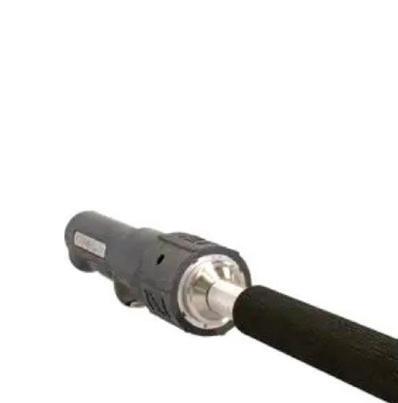
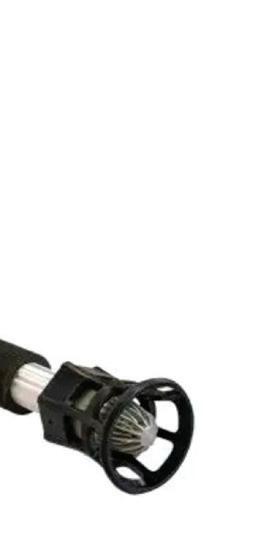
The EXAIR TurboBlast Safety Air Gun with Gate Valve is designed for tough cleaning and blowoff applications. It features an easy-adjust gate valve that allows fine-tuning to meet users’ specific needs on the fly. It has an ergonomic cast aluminum handle with a rugged elastomer grip that’s insulated from heat and cold and resistant to UV and chemicals. It also includes a light touch activation trigger, a “Dead Man’s” grip that turns the air off if the tool is dropped, and an integrated nozzle guard for added safety.
For more information, visit VehicleServicePros.com/55276859
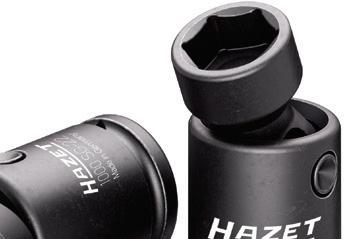
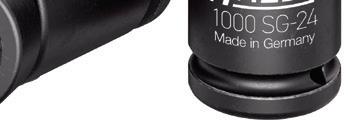
The Hazet 3/4” Universal Joint Sockets are available in sizes 22mm and 24mm, making them ideal for chassis and brake repair work and as an alternative to conventional joint sockets. Each socket features the Hazet traction profile and was made in Germany. The sockets are also available as a 2-pc set with a soft foam insert.
For more information, visit VehicleServicePros.com/55317940
FEATURES A SHALLOW DESIGN AND BUILT-IN ANGLE
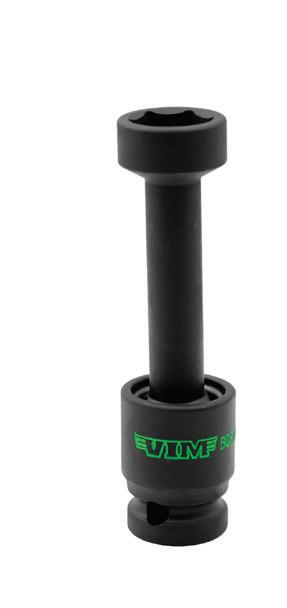
The VIM Tools 17mm UJ Brake Caliper Socket 1/2” Drive BCS817, is a low-profile, 17mm impact-rated socket designed specifically for Subaru brake caliper bracket bolts, and also fits select Toyota and Isuzu applications. Its shallow design and built-in angle provide the clearance needed to remove caliper bracket bolts quickly and efficiently, allowing the impact to do the work instead of requiring hand loosening. This pinless universal socket helps speed up both installation and teardown while reducing strain on the technician. Backed by VIM Tools’ lifetime warranty. For more information, visit VehicleServicePros.com/55313883
FEATURES 1,350 FT-LBS OF BREAKAWAY TORQUE
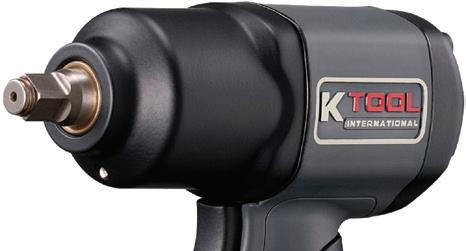
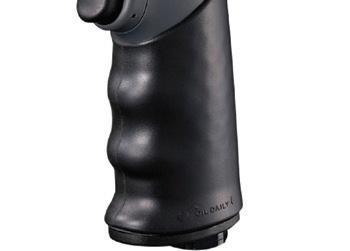
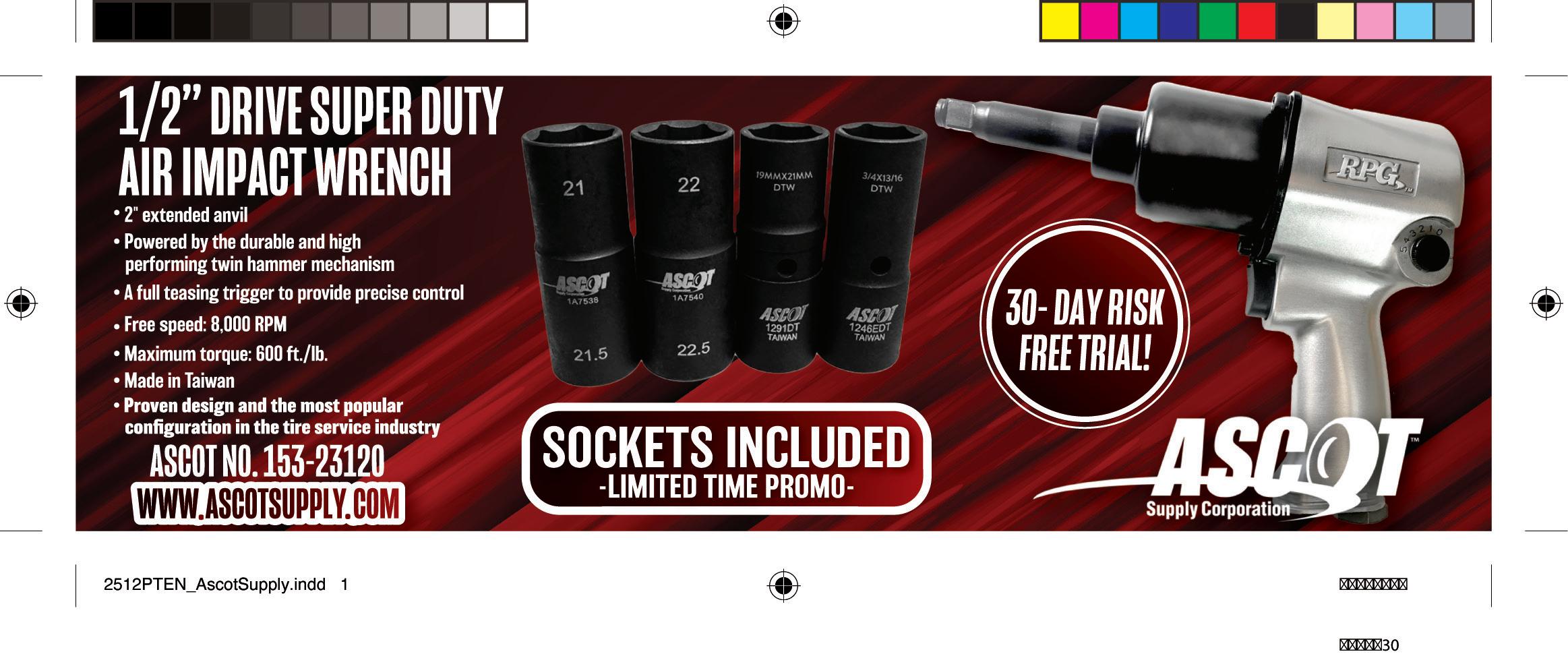
The K-Tool International 1/2” Drive Composite Impact Wrench , No. KTI81635, offers the best power-toweight ratio of all high-powered impacts, according to the company. It features a twin hammer mechanism that offers up to 1,350 ftlbs of breakaway torque. The wrench’s body is made of lightweight aluminum for user comfort, and it includes an exhaust handle to direct airflow away from the user and work area. The KTI81635 also has a variable speed trigger with three forward torque settings and a full-power reverse setting.
For more information, visit VehicleServicePros.com/55274826
BALL HEX GEOMETRY ENABLES 22.5-DEGREE PIVOT ANGLE
The GripEdge Tools 3/8” Drive RPT
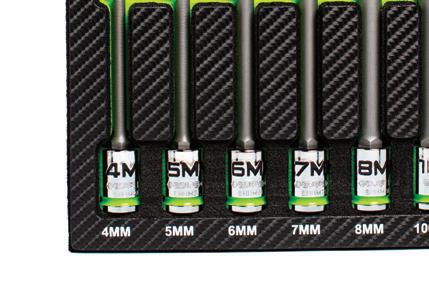
Metric & SAE Long Ball Hex Driver Sets , Nos. BHBM6LS and BHBS6LS, feature Rounding Prevention Technology that provides up to 50 percent more torque on new fasteners compared to standard tools. The metric set, No. BHBM6LS, includes sizes 4mm, 5mm, 6mm, 7mm, 8mm, and 10mm, while the SAE set, No. BHBS6LS, includes 5/32”, 3/16”, 7/32”, 1/4”, 5/16”, and 3/8”. RPT Ball Hex geometry allows up to a 22.5-degree pivot angle. Each bar is formed from S2 steel and precision-machined to reduce thickness and increase access to hardto-reach areas, and each socket has an overall length of 6”. The sockets feature large, stamped, ink-filled size markings and come in an EVA foam tray with size markings.
For more information, visit VehicleServicePros.com/55317653
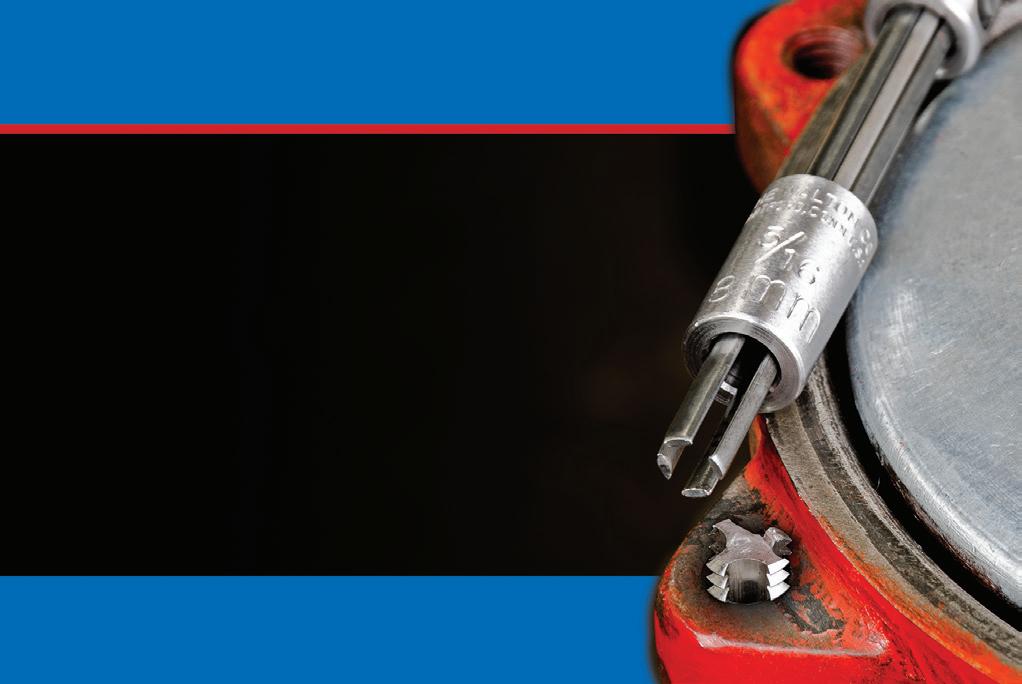
TAP EXTRACTORS
DESIGNED WITH FINGER-WIDTH DIVOT
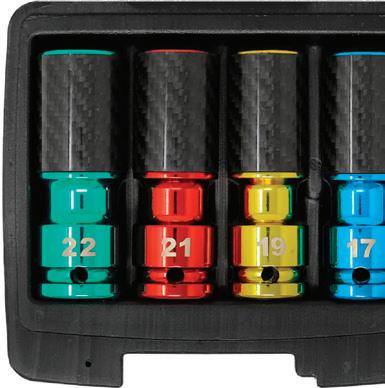
The 4-pc Metric Lug Socket Set with Carbon Fiber Sleeves , No. 4250, from CTA Tools includes removable, extra-thin carbon fiber protective sleeves to safeguard wheel finishes from damage. The fiber sleeves enhance socket durability, allowing for a thicker overall socket design that resists cracking at hex points under extreme impact torque. Designed with a finger-width divot, these sockets offer easier installation and removal compared to standard impact lug nut sockets. For use with 1/2” square drive tools. This set includes sizes 17mm (blue), 19mm (yellow), 21mm (red), and 22mm (green). Packaged in a compact blow molded case for organized storage in any toolbox.
For more information, visit VehicleServicePros.com/55296530
FEATURES BUILT-IN SILENCING
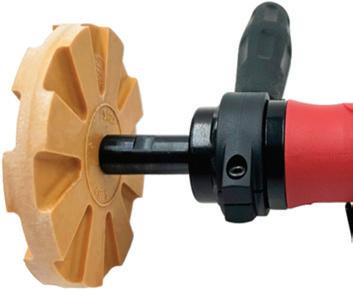
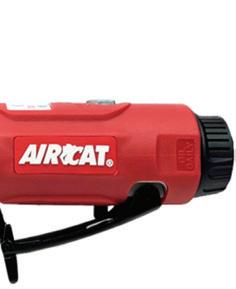
The AIRCAT 0.6hp Decal/Pinstripe Removal Tool , No. 6345, offers a free speed of 2,600 rpm with a 0.6hp motor. The tool includes built-in gear reduction that eliminates stalls and silencing that reduces tool noise to 80 dBA. It uses a 4” rubber eraser wheel that is ideal for decal and pinstripe removal and has a 360-degree adjustable side handle that ensures user control while under load.
For more information, visit VehicleServicePros.com/55252876
SINGLE-SLEEVE CHUCK MAKES CHANGING BITS EASY
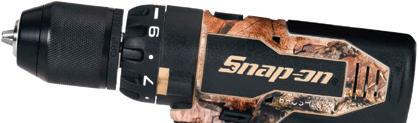
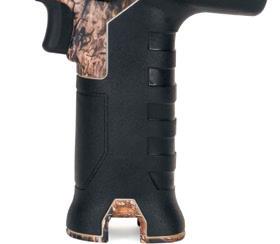
The Snap-on 14.4V 3/8” Drive MicroLithium Cordless Drill , No. CDR861CM, offers 200 in-lbs of torque with a two-speed gearbox (450 and 1,550 rpm) and a variable-speed featherable trigger. It features a nine-position clutch for optional torque settings and a 3/8” keyless single-sleeve steel chuck that makes it easy to change bits. The drill also has a non-slip handle to help users maintain control and comfort. The tool features a limitedtime camouflage pattern.
For more information, visit VehicleServicePros.com/55238457
TOOL WEIGHS LESS THAN 2.6 LBS
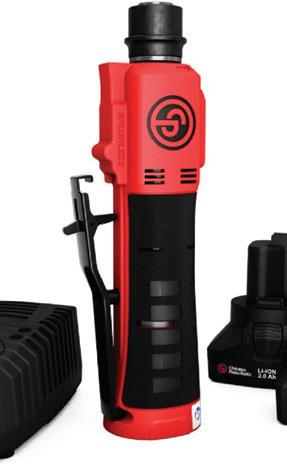
The Chicago Pneumatic CP8323 Cordless Tire Buffer features a compact design, weighing in at only 1.16 kg. It features two speed settings, 0-1,200 rpm and 2,500 rpm, for precise drilling and buffing. The CP8323 also includes LED lighting for boosted visibility, and the lack of emissions or an air hose makes it easy to use anywhere in the shop.
For more information, visit VehicleServicePros.com/55300630
FEATURES BIDIRECTIONAL GRIPPING DESIGN
SOCKETS ORGANIZED IN HEAVY DUTY CASE
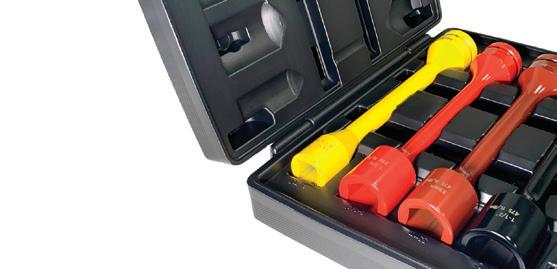
The Ascot Supply Medium/Heavy Duty Torque Sockets , No. 168-04994, are designed to precisely torque wheel nuts to the exact factory specifications, reducing the risk of wheel and rotor damage and preventing overtightening or uneven tightening of lug nuts. This set also comes with a heavy duty case for enhanced durability and organization. Each socket is color-coded: red is 1-1/4” by 250 ft/lbs, brown is 1-5/16” by 475 ft/ lbs, black is 1-1/2” by 475 ft/lbs, and yellow is 13/16” by 475 ft/lbs.
For more information, visit VehicleServicePros.com/55268245
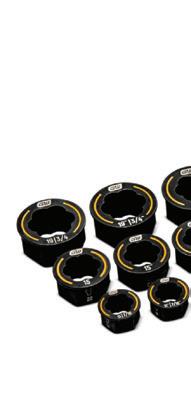
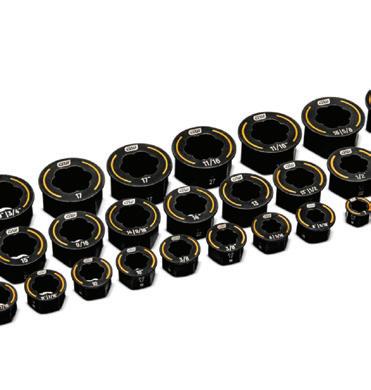
The GEARWRENCH 30-pc Bolt Biter SAE/ Metric Wrench Insert Set , No. KDT86193, is engineered for maximum versatility and efficiency in removing or tightening rounded, frozen, and damaged fasteners. Featuring a bidirectional gripping design, they seat quickly and securely while allowing easy removal after use. Their ultra-thin profile, 70 percent thinner than traditional extraction tools, makes them perfect for tight spaces. The hex base is compatible with multiple wrench types, while the magnetic retention system ensures a secure fit. With dual-sized inserts for both SAE and metric fasteners and high-visibility laser-etched markings, these inserts provide a reliable, precise, and effortless fastener removal solution.
For more information, visit VehicleServicePros.com/55279385
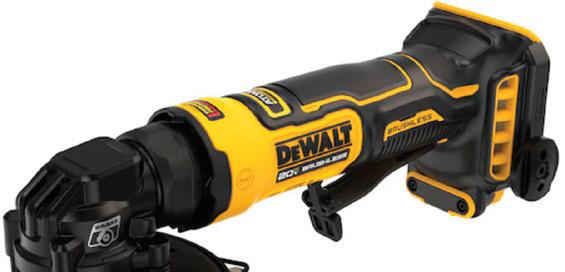
DEWALT’S FIRST CORDLESS 4” ANGLE GRINDER
SIZES RANGE FROM 1/16” TO 1/2”
The 29-pc Pyramid Point Drill Bit Set , No. 6629DSA, from Mac Tools is made from durable M35 Cobalt steel for drilling through materials including stainless steel, hardened alloy, grade 8 fasteners, and cast irons. The pyramid point design acts as a self-centering step drill for precision without walking on curved surfaces. The tri-flat shank design on 1/8” and above helps to eliminate slippage. Sizes range from 1/16” to 1/2” to accommodate a wide variety of light and heavy duty applications.
For more information, visit VehicleServicePros.com/55319785
The ATOMIC 20V MAX 4” Angle Grinder, No. DCG400, from DeWalt is the company’s first cordless 4” angle grinder compatible with standard 4” by 3/8” and 4” by 5/8” accessories. This tool is equipped with the DeWalt ANTI-ROTATION System to help maximize control. This feature quickly stops the wheel when a pinch, stall, or bind-up event is sensed, reducing reactionary torque. An ergonomic design allows access to ultra tight spaces, while the clip-on guard can quickly convert a Type B guard into a Type A guard. According to DeWalt, the grinder is 13 percent lighter than competitive pneumatic angle grinders, and delivers up to 44 percent more power than 0.7 HP rated pneumatic angle grinders.
For more information, visit VehicleServicePros.com/55315651
Make it Kawasaki green
This technician made his dream of owning a Kawasakigreen Snap-on toolbox come true, and now, he’s working toward his next goal — a “Mr. Big” box.
By Emily Markham, Editor
Chris Biediger has worked as a professional technician for 11 years. Though it was at age 15 that he began working on his own vehicle, his interest in how things work and making repairs started long before
“As a kid, I would take my Xbox apart and try to repair it and take remote control cars apart,” Biediger says. “So, when I was in college, I was like, ‘You know what? I don’t really like sitting in a classroom,’ so I got a job at a Toyota dealer … and haven’t looked back.”
Now, as the shop foreman/lead technician at Hill Country Yota Works in New Braunfels, Texas, he is an ASEcertified Master Technician who’s on track to get his L1, L3, and L4 certifications early next year. Though his shop works on only Toyota and Lexus vehicles, they do “anything and everything,”
Chris Biediger
Shop: Hill Country Yota Works
Location: New Braunfels, Texas
meaning Biediger has amassed quite the collection of tools and equipment.
WORKING HIS WAY UP
When Biediger started his career, many of his fellow technicians had Snap-on toolboxes, and he wanted one too, so he set that as his goal. He started out with a few different Craftsman toolboxes and worked his way up to his current setup.
Now, the shop foreman has a 72” triple bay Master Series from Snap-on with a hutch and a side locker. In addition to his main toolbox, he also has a Snap-on EPIQ roll cart and the Juic’d Box from Sunex Tools.
Biediger has also added a few customizations to make his toolbox his own, such as the LED lighting he ran on the inside to give himself a green backlight, and in his locker, he drilled a hole, clear-coated it, and installed a grommet to transform it into a power locker — this was before power lockers were available.
Though arguably, the most important customization is the color of the box.
“It’s green with black trim, a very bright Kawasaki green,” Biediger says. “I’ve loved that green since I was six years old, when I got my first Kawasaki.”
However, when it comes to the setup of the toolbox, he notes that the hutch is his favorite part.
“This is my first box with a hutch,” he says, “and ever since owning it, I’d never own a toolbox without one again. I keep my computer in there, my workstation, all my tickets, my scan tool—it’s just really handy to have.”
MIX N’ MATCH ORGANIZATION
To keep his setup organized, Biediger utilizes a mix of organization tools from companies like Ernst Manufacturing, Alien Space Saver, and VIM Tools.
“You kind of have a mix of what fits when you configure a bunch of stuff into a small area,” he explains. “You can use a bunch of widgets, but then you might need a skinny [VIM] Magrail to fit something where a widget won’t fit. You kind of have to mix and match.”
Looking ahead, Biediger says he would like to get a “Mr. Big” setup from Snap-on or at least something similar to that size. For now, as with earlier in his career, the shop foreman is content to work his way up to that “EPIQ” box.
Biediger added LEDs inside his box to create a green backlight.
Photo courtesy of Chris Biediger
Engineering and designing tool-storage solutions that work as hard as you do—for over 75 years.
10 Feet OF High-performancE
This is more than a toolbox It’s the centerpiece of a professional- grade shop.
” RS PRO CTS (RDCTS12002)
HOMAK is setting new standards for those who refuse to compromise. True productivity isn’t measured by speed alone; it’s the combination of organization and pride in the workspace.
Whether you’re running a high-output automotive bay or a precision performance shop, the CTS solution gives you the work surface and organization to perform at your best—every time.
WORK FASTER. WORK SMARTER. STAY ORGANIZED
•24 drawers with PVC liners provide a variety of storage options.
•100/200 lb ball-bearing slides provide smooth, reliable access.
•Lift locking drawers – keeps the drawers secure and in place.
Choose heavy-duty casters for mobility or adjustable leveling feet for rock-solid stability—perfect for every shop layout. also available in 102”
•Dual full-height side cabinets with four adjustable Shelves and 8 drawers
•Two overhead storage compartments for larger storage.
•Optional sleek/clean solid or perforated backboard to keep essentials visible
• finished in a bold, UV-protective high-gloss powder coat finish
ULTRA SERIES
Photo courtesy of Autel
ONLINE EXCLUSIVES
Mastering Diagnostics #20: Adding Thermal Imaging to Your Diagnostic Toolbelt
In this episode of Mastering Diagnostics, Motor Age Technical Editor Brandon Steckler describes how he leverages the power of emissivity to make light work of some diagnostic situations.
To view this video, visit VehicleServicePros.com/55263380
BLOG
Mastering ADAS recalibration
This blog explores why ADAS recalibration matters, the different types of calibration required, and how Snap-on diagnostic platforms equip technicians with the service information, guided workflows, and exclusive features to complete these complex jobs.
To read this blog, visit VehicleServicePros.com/55328857
REVIEW
Tool Review: Matco Tools Maximus 5.0
Chris Martino, owner of ADAS L.I. in Amityville, New York, reviews the Matco Tools Maximus 5.0 scan tool.
To read this review, visit VehicleServicePros.com/55285469
DIAGNOSTIC PROCESS
Technician-induced diagnostic dilemmas
Blindly approaching a fault is like jumping into an empty pool ... you may quickly get to the bottom of it, but it’s probably going to hurt.
By Chris Farley
Irecently encountered two vehicles with technician-induced problems that I believe offer some valuable lessons. Whether we caused the problem or we’re there to diagnose it, rushing and jumping to conclusions often costs us more time in the end.
CASE STUDY 1: 2013 FORD FOCUS
The customer brought in a 2013 Ford Focus for an intermittent no-crank condition.
My usual diagnostic routine is a pre-scan, a quick visual inspection, and an interview with either the shop owner I’m called to assist or the vehicle owner. But as usual, I got only part of the story, even after thorough questioning. I’ll never understand why this happens.
The shop tested the car and didn’t find anything wrong, so it returned the vehicle to the customer. A week later, the vehicle returned to the shop on the hook of a tow truck. The customer stated that the vehicle had refused to start a few times, and this time it had died on the road. The technician at the shop approached the vehicle, and it started right up. The tech believed the starter must be the culprit. This is not a logical direction to head in for a vehicle that suddenly died on the road.
The shop owner told me they installed a starter, lowered the vehicle to verify it started, and then raised the vehicle to install the underbody shield.
Figure 1 This prescan from my Snap-on Zeus+ shows which modules are communicating. But more importantly, it also shows the ones that are missing.
They then lowered the vehicle, and it again failed to start. They tried to scan the vehicle and found it would not communicate. They decided to push the car out and give me a call.
JUMPING THE GUN
I connected my Snap-on Zeus+ scan tool, and the first thing I noticed was that the vehicle did not auto-identify with the scanner. I manually selected the vehicle and reestablished communication with some of the onboard modules. Now, this is where I’m guilty of having jumped the gun. Since I received the call, all I could think of was the common fault for the symptom that these vehicles experience, a faulty transmission control module (TCM).
Sometimes we need to be reminded of why we have a diagnostic process, and we need to be humbled when we get lazy or ignore it. Although I followed my process, I wasn’t focused because I had
already convinced myself the problem was a failed TCM before I even connected my scanner.
It was a rainy day, and I was in a parking lot. But in my head, I believed all I had to do was unplug the TCM and I’d see vehicle communication return. So, I laid down in the rain and unplugged the TCM, but communication had not returned. For the rest of the day, all I had to show for my effort was wet clothes. Now that my bubble had burst, I got to kick myself and regroup. I went back to my process and I reviewed my scan report (Figure 1). I noticed that the power steering control module (PSCM), the powertrain control module (PCM), and the transmission control module (TCM) are the only modules missing from the bus. At this point, I reviewed the system wiring diagrams, and since I already had the TCM unplugged, I started my testing there. I tested to verify the TCM had everything it needed
Figure 2
This is the CAN bus waveform when testing at the DLC with my Snap-on Zeus+.
to communicate (voltage supply, ground supply, and communication signals coming in). The only issue I noted was the signal from the high-speed CAN bus low (Figure 2).
THE SECOND APPROACH
My next step was to install my AESWave LineSpi breakout box. I connected the Snap-on scope (Zeus+) and saw the same high-speed CAN low pattern, so then I performed a resistance check on the high-speed CAN network. This test checked the integrity of the circuit and offered me direction.
To perform this test, I turned the key off (so the network isn’t active) and connected my Snap-on DMMacross high-speed CAN+ and CAN-. You should anticipate a 60-ohm reading displayed. However, that is not the reading we were getting here, which tells us there was an incomplete circuit and one resistor was bypassed (Figure 3). I then retraced my steps to decide on which direction we should go:
• The scan report showed that the PCM, TCM, and PSCM were offline.
• A resistance test proved a circuit was open in the high-speed CAN network.
A review of the CAN system topology I sourced for this vehicle from ALLDATA showed the terminating resistors for this network are located in the body control module (BCM) and the PCM (Figure 4). But of those two, only the PCM failed to communicate.
I looked at the CAN bus network diagram (Figure 5). The communication wires pass through connector C238 to splices S109 and S110. From there, the circuit heads toward the ABS module and to connector C140. The ABS module was communicating, so I realized wiring integrity was good up to that point.
The next best place to check our signal is connector C140, which is located alongside the battery. I’ve accessed the high-speed CAN- wiring at pins 3 and 4 with my pierce probes from AESWave (Figure 6). The circuit comes through pin 3 to splice S112, which splits the circuit (to the PSCM and back through C140 pin 4/out to the PCM and TCM).
I performed another resistance test at connector C140 (pins 2 and 3) and measured 120 ohms, but pins 4 and 5 displayed an open circuit. This confirmed the fault was between the two chosen test points.
I jumped pins 3 and 4; communication returned, and I could talk to all
Figure 3 — Resistance test being performed (using my AESWave LineSPI breakout box and Snap-on DMM at the DLC) of the CAN bus.
Figure 4 — The CAN bus topology overview found in ALLDATA shows the location of the terminating resistors.
Figure 5 This is the wiring diagram of the high-speed CAN bus wiring, including connectors and splices, which is used to create a test plan.
DIAGNOSTIC PROCESS
modules. I then knew I would find my circuit issue between S112 and C140.
A STEP IN THE RIGHT DIRECTION
To access that section of the wiring, I removed the battery, covers, and tray. Once they were removed, I saw a shiny new transmission mount looking at me. The wiring harness comes out of C140 and goes along this mount before S112. I disconnected C140 and tried to move the harness to gain access for testing, but it was pinched under the mount.
I questioned the shop owner about the new mount. Suddenly, his memory came back, and he told me he had replaced the mount after he confirmed the starter was working (I’ll never understand why it is so difficult to get the whole story up front).
After removing the bracket, I freed the harness and removed the conduit from the harness (Figure 7). This is the extent of the damage (Figure 8). With only a slight tug on the wires individually, two of the wires instantly pulled apart. The shop let me repair the wiring, which allowed me to test the vehicle again after repairs and confirm everything was working properly at that time. I add the “at that time” reference because I know their repair caused this no-start issue, but I don’t think the starter caused the previous issue of the vehicle “died while driving.” We may never know the root cause of this vehicle’s stalling issue, but time will tell.
CASE STUDY 2: 2021 JEEP GRAND CHEROKEE - MIL AFTER REAREND COLLISION
I got a call to look at a 2021 Jeep Grand Cherokee with multiple indicators illuminated and a handful of DTCs. It was hit hard in the right rear of the vehicle, and the shop had already replaced a physically damaged module in that area. But when I got to the vehicle, it seemed
all the original faults remained.
IF YOU CAN’T STAND THE HEAT, STAY OUT OF THE KITCHEN
The shop owner told me he called another mobile guy first, and when he saw all the codes (63 to be exact), he turned the job down. When I asked about the replaced module, all he could tell me was that it was behind the right rear interior panel. There are multiple
modules in that location, but they couldn’t be any more descriptive. And of course, they threw out all the old parts. The good news is the odometer was flashing (for those of you who haven’t seen that yet, it means a module in the network needs a proxy-alignment/ configuration). This is a procedure that transfers the vehicle configuration from the BCM into the new module that was installed.
Figure 6 Connector C140 is a perfect spot to divide the circuit to isolate the location of the fault.
Figure 7 — The harness was caught between the mount and bracket.
Figure 8 — The damage to the harness, visible after it was freed from the bracket.
Diagnose Faster. Fix Smarter. Move More Vehicles.
Software on Bosch ADSX Diagnostic Scan Tools is more powerful & flexible than ever before.
• Trusted OE Platform: Powered by Bosch, the OE leader—ensuring accurate diagnostics and fewer comebacks.
• 98.5% Coverage: One Software, All Vehicles: Broad coverage across domestic, European, and Asian makes—plus EVs and ADAS-equipped models.
• Efficient, Repeatable Workflows: A consistent user interface across all makes & models helps reduce learning curves and increase throughput so technicians can focus on fixing cars, not learning a new tool.
• Actionable Reporting: Generate customizable pre- and post-scan reports with shop name, RO number, and full system status in seconds.
• Flexible Subscription Options: Tiered plans (Basic, Enhanced, ADAS*) let you scale capabilities based on shop needs and budget.
• Tech-Ready Features: Built-in Google Search, Identifix®, AllData® and Mitchell® links to streamline research and repair time plus access to Google Play Store.
• Protected Investment: Never lose capabilities— ADSX platform unlock access to OE-licensed Secure Gateway Modules (SGW) for OEMs such as FCA/ Stellantis, Nissan Ariya, Hyundai, Kia, Genesis, Ford/Lincoln, Honda/Acura, Subaru, Porsche, and Volvo vehicles, plus supports J2534 passthroughs.
• One-Tool Efficiency: AutoID, DTCs, resets, relearns, and bi-directional tests— all in one platform, built to minimize unnecessary tool switching.
*ADAS capabilities on the ADS 625X only.
DIAGNOSTIC PROCESS
I connected the factory interface (Micropod3) to the vehicle and ran the proxy procedure. The scan tool alerted me that the power liftgate module wasn’t aligned, so now I knew which module was replaced. I performed the procedure, and I cleared the DTCs. I was then left with only seven remaining DTCs (four for rear parking sensors shorted to ground, two for rear radar blind spot circuits open, and one for private CAN network in the central ADAS decision module (CADM)). In a situation like this, I typically choose one code and chase only that one DTC’s root-cause fault. In this case, I chose the rear radar module, a circuit open (C00C4-13).
First, I asked the shop to remove the bumper so I could gain access to the wiring and modules. In factory service information, the set conditions for this DTC are as follows: “The CADM detects a power supply circuit for the left-rear mid-range radar.” A check of the OEM wiring diagram shows voltage coming in through connector XY510A pin 10 (beige/red wire) (Figure 9)
The connector is on the passenger side of the bumper and has plastic covers over both sides, making it nearly impossible to see the colors of the wires. When I removed the covers
from the vehicle side of the harness, I found voltage available at pin 10, but no voltage available at the radar unit. I then removed the cover from the harness on the bumper side, and I found no wire in that connector cavity. The wires that are present did not match the colors indicated in the wiring diagram.
I had another conversation with the shop owner, and he confirmed he had replaced the bumper harness. I decided to inspect the parking sensor wiring and found it was routed through connector XY511A (which is the connector on the driver’s side of the same bumper harness) (Figure 10). I removed the covers
from connector XY511A to inspect the wiring. A beige/red wire at pin 10 on the bumper side of the connector was mated to an empty cavity in the vehicle side of the harness. I wouldn’t have guessed this from the start, but this was a case of the bumper harness having matching connectors on both sides. This allowed it to fit (with all the connectors going across the bumper, for parking sensors) with the wire in either position. Strangely enough, there were no fitment issues, and the only way you could tell there was a difference was if you looked at the terminals in the connectors. A quick swap of the harness, clearing the DTCs, and we had a functioning parking and radar system with a clean post-scan.
Both case studies were shop-inflicted issues that could happen to any of us when rushing to complete a job. Whether it is attempting to drive efficiency up or the pressure we get from impatient customers to get their car back, spending a few extra minutes on either of these jobs would have prevented these issues. They also show how following a diagnostic process and not jumping the gun saves time in the end, even if you are up against 63 DTCs!
Figure 9 — The radar wiring diagram found in the OEM factory service information shows the voltage coming in on pin 10 of the connector.
Figure 10 Here is the connector location view found in ALLDATA of the XY511A and XY510A connectors.
TRITON
Stronger in numbers. Add yourself to the equation. Miguel isn’t one to ask for help. Equipped with The TRITON™, which provides verified fixes harvested from users across the globe, he doesn’t have to. Offering a 2-channel lab scope and wireless connection, it’s like having 70 thousand techs, each with 40 years of experience at his side. So you can cover Miguel’s back, and he’ll cover yours. Plus up your numbers with the diagnostics system that adds you to the equation.
AI and the future of auto repair
Should technicians be worried about being replaced by AI?
By Austin Spencer
It’s impossible to scroll through your social feed, watch the news, or browse the internet without artificial intelligence (AI) creeping into the conversation. And for the most part, the headlines about AI seem grim. Some recent “for instances” include:
• FOX Business: Layoffs in October hit highest level for month in 22 years as companies cite cost-cutting, AI
• CNBC: AI-washing and the massive layoffs hitting the economy
• Variety: Rise of the AI job-killing machines
• The New York Times: IBM to cut thousands of workers amid AI boom Reading enough headlines might give you an uneasy feeling that something eerily close to the Terminator film franchise is afoot. Are we stuck in a time loop? Is Arnold going to visit us from the future to save us from ultrasmart machines set to systematically wipe out humanity?
Of course (fingers crossed) not. But let’s not discount the fact that AI is having a very real impact on the business workforce right now. Writing, computer programming, accounting, research, and even acting seem to be the frontline casualties of the AI surge.
But what about auto repair? Are AI robots going to start wrenching on cars?
Probably not.
THOUGHTS ON AI IN THE AUTO INDUSTRY
Some people at the top of the automotive food chain tend to agree that auto repair is, and will remain, in high demand. Ford’s CEO, Jim Farley, has been very vocal lately about the dwindling number of skilled craftsmen in
Is it possible that AI will handle automotive repairs in the future?
the workforce. For all the talk about how AI will wipe out white collar jobs, he believes too little attention is being paid to skilled crafts like HVAC, plumbing, construction, and, of course, auto repair.
In a LinkedIn post on June 2025, Farley highlighted the fact that the US needs 600,000 more manufacturing workers, 500,000 construction workers, and 400,000 automotive technicians.
“Right now, the problems we’re trying to solve are pretty practical. I need 6,000 technicians in my dealerships on Monday morning,” he says.
Another respected voice in the automotive industry agrees.
Regarding AI’s impact on automotive repair, Haakan Light, the manager of training and development at TOPDON U.S. says, “The future of AI in auto repair isn’t one of human replacement, but rather one of collaboration. It’s simply like every other diagnostic tool in the toolbox. You must combine human intuition and ‘gut feelings’ with AI’s complex computation power in order to understand its limitations and maximize its capabilities.” Light,
who traverses the country training auto technicians, believes AI is a mixed bag of opportunity.
“I already see the front office embracing AI more so than the shop itself. Answering phones, helping with accounting, and setting appointments offer limited risk and have the potential to streamline front office operations,” he notes. “But when we get into the technical operations of the repair shop, there’s some danger in relying wholly on AI technology.”
AI MISTAKES IN AUTO REPAIR
One of the “for instances” Light offers up is when he used a premium subscription, which taps into more advanced AI models. He wanted to see if it could correctly diagnose and provide a workable solution for a mechanical issue on a vehicle he was repairing.
“I fed the AI model a bunch of information about the problem I was experiencing,” he says. “As a professional with a wide amount of experience and training and deep subject-matter knowledge, I looked at what AI spit out and knew the solution couldn’t be accurate.”
Photo: Aliaksandr Marko | 750779912 | Adobe Stock
In fact, Light sent AI back to the drawing board by telling it, “Your analysis is backwards. Lambda values above 1.0 are lean. Lambda values below 1.0 are rich. Please recalculate your analysis.”
AI responded with, “You’re absolutely right – my bad. Reworking the snapshot with that in mind.”
The fact that AI responded back with “my bad” is, in and of itself, quite hilarious (Figure 1). But, as humorous as the response may be, AI still made a fundamentally inaccurate assertion and analysis based on the initial inputs. But it was Light’s experience that coursecorrected the solution. By leaning on his experience and working through the specific issue with AI, the fault turned out to be a drivability-related issue for fault code P0131: “02 sensor circuit, bank 1, sensor 1, - low voltage.”
Figure 1 — Light has to correct AI, and it responds with "my bad." Using your own experience is crucial while utilizing AI as a tool. Photos courtesy of TOPDON
statistical probability. But someone still has to roll up their sleeves and put in the elbow grease.”
In a separate case, a customer approached Light’s colleague, a professional auto diagnostic technician, with all the reasons why his engine light was on – based on a ChatGPT query, of course. While the issues identified by ChatGPT were plausible causes for the engine light being on, only additional tests could prove which one of the issues it was – or if any of them were even valid.
Which, by the way, they weren’t.
Turns out the problem was a mundane and simple vacuum leak. A solution that didn’t even make his customer’s ChatGPT list.
“No matter what the AI model computes or spits out, testing is still required to prove what the problem is,” Light adds. “Sure, AI can help identify tactical problems and shorten the path from issue to repair based purely on
That’s because automotive repair isn’t just an intellectual exercise. By nature, it’s very physical. Working on a vehicle is not a repetitive task, like bolting screws on a chassis assembly line. It requires a high level of critical thinking, human intuition, and manual labor. Something that robotic AI labor can’t perform.
THE FUTURE OF AI IN THE SHOP
Where Light finds AI to be most useful regarding automotive repair, is in the aggregation and analysis of data. Feeding AI data and asking it to look for patterns is something it can do very well – and exposes a technician to less risk - while augmenting efficiency.
For example, AI helped Light spot a pattern from multiple diagnostic scans on the same vehicle. The synthesized AI report concluded that “the Gateway [19] retains all network fault memory and is likely the root hub of communication failure.” The recommended next
steps, which, this time, turned out to be helpful in isolating the problem, included checking network instability, power-supply issue, ground/reference drop, and gateway overload. According to Light, the failure on the vehicle was in fact a defective J533 Gateway Control Unit.
“Let’s say you upload a number of SAE PDFs, you can ask AI a specific question related to those documents that can lead to a more accurate response,” Light says. “You can also ask AI to ‘water it down’ or summarize the documents so you can cut through the clutter and get to the more conclusive and critical parts of the documents.”
Light also suggests that AI can be used as a more advanced search engine. Since some AI models are connected to specific automotive resources, like technical service bulletins, AI may be better able to help find that information faster than a traditional browser search.
AI IS JUST ANOTHER TOOL
Light’s understanding and experience with AI is helping TOPDON roll out
NEW TECHNOLOGY
the company’s new TopFix AI scan tool. To explain how this new tool will work, Light gives the example of working on European cars. “Mechanics who repair European makes usually don’t get enough information from the manufacturer about what a trouble code is, or how it’s being defined,” Light says. “TopFix AI can be used to search for extended definitions and additional information on a fault code directly from the OEM. “For example, if 5,000 technicians are asking the same questions about a specific code, TopFix AI can aggregate the data and provide a higher level of insight into the specific system or component that’s most often associated with the trouble code. It’ll behave similarly to a more sophisticated search engine. The difference is that it will be available through the scan tool itself. That is a game changer.”
TopFix AI, which was introduced at this year’s SEMA Show, will give techs struggling with a repair additional ideas or pathways to start. It can find a bulletin, for example, that’s tied to the specific fault code in question (Figure 2). While it’s not designed to replace a technician’s ability to solve problems, it can give immediate information or feedback that can streamline repairs instead of spending time on exhaustive searches online about the problem.
But what separates TopFix AI in the marketplace is the fact that it’s been developed by automotive professionals, not software engineers. So, it’s specifically designed to help auto technicians who struggle with common repairs, not just perform random, pre-programmed functions.
Light’s hope for AI in the automotive repair space is that it will become a productivity or efficiency tool. “As a trainer, we want to teach everybody how to use their tools effectively, he notes. “Whether we’re talking about a
battery tester or charger or scan tool, AI should be seen as just another tool in the toolbox.”
YOU WON’T BE REPLACED BY AI
Automotive repair is unpredictable, at best. While vehicles over the years share common engineering, transmissions, fuel, braking, exhaust, and suspension systems, they can be wildly different between vehicle makes and models. There are literally hundreds of thousands of complex components and parts to each vehicle. The idea of asking AI to accurately diagnose and properly identify the solution to an engine light warning is highly unpredictable.
Where Light sees AI as most likely to help the automotive tech is in creating greater efficiency.
“If you can ask AI to retrieve the vehicle manufacturer wiring diagram for a manifold air pressure sensor and have it downloaded directly to your phone,” he explains,” that can have 10 times the value to augment productivity and day-to-day workflow.”
It would be great if AI could tackle diagnostic repairs more efficiently. But maintenance and repair are still going to fill the bays more than specialized diagnostics services. If we can simply ask AI to log into a subscription account to parse service information and retrieve an accurate wiring diagram, Light believes it would be a massive time saver.
While AI can touch many aspects of automotive repair, the nuanced and hands-on nature of the job, not to mention the complex problems presented by vehicles with little to no computerized systems, will remain an essential part of the auto repair process.
“As I see it now, AI is not going to replace the person who is technically trained and who practices every day using their tools,” Light adds. “As I
cross the country training technicians, one of the primary concepts I teach is critical thinking. That’s because modern vehicles are highly complex systems of mechanical parts, sensors, electronic components, and software. Nothing can replace that human intuition that comes from observing the sound of an engine knock or the burning smell of a slipping belt.”
So, what’s the takeaway? If you’re an auto technician, or plan to become one, rest assured that it’ll be years…if ever… before AI robots can replace you under the hood or beneath a lifted car.
Now, whether Arnold’s going to jump through a time loop and take your job decades down the road? Well, we’ll just leave that storytelling to Hollywood.
Figure 2 — TOPDON's new TopFix AI scan tool will give techs struggling with a repair additional ideas or pathways to start.
Photo courtesy of TOPDON
LEARNING TOOLS
Finding the limitations of your tools
By understanding your tools’ limits, you’ll be better able to wield them to your advantage.
By Brandon Steckler
Every tool you own has a limitation. It’s easy to see with something like a ratchet—a short one doesn’t provide enough leverage for high torque, while a long one makes it hard to feel low torque accurately. The same holds true for diagnostic equipment. Contrary to popular belief, it doesn’t matter how much or how little you spend on diagnostic tools — every single
one has its limitations. And if you don’t know what those limitations are — what the tool can and cannot do — you’re in for a world of hurt. You’ll end up relying on that tool for information, and even if you understand what you’re looking for, if the tool can’t accurately show what’s happening within a component, system, or circuit, you’ll be working with bad information.
TOOLS AS EXTENSIONS OF YOUR MIND
One thing I want to point out is that tools, if you really think about them, become an extension of our mind. They allow us to behave like the scientists we are. Once we understand how individual components work, we can see how they come together as a system to accomplish a goal. From there, we can carry
Photo: Stevanovicigor
out tests to determine whether a function was performed correctly, either by a single component or by the system as a whole.
We form hypotheses based on our fundamental knowledge of what should be happening, and it’s our tools that let us test those hypotheses and reach diagnostic conclusions — whether something’s broken or everything’s fine. The tests we perform give us the answers we’re looking for. But that brings us back to the point about limitations: if we don’t know what a tool can’t do, we may rely on it for information that isn’t correct. And even if we know what we’re doing, bad information still leads to bad diagnostic decisions.
PUSHING TOOLS TO THEIR LIMITS
We’ll be testing tool limitations based on what I’ve learned over the course of my career about implementing tools. I’ll be carrying out some tests — essentially taking these tools for a test drive — to see what they can do and, more importantly, what they can’t. By pushing them to their limits, we can better understand what’s really happening within the components and circuits we’re testing.
We’ll use several tools — a test light,
a digital volt-ohm meter (DVOM), and a lab scope. Each of these offers valuable information when used correctly, but each also has limitations. I want to show you what those limitations are and how to identify them for yourself.
This matters because if you’ve ever watched a truly skilled diagnostician, it looks effortless — almost like a game. That’s because they know how to implement their tools the right way, using them as extensions of their mind to test hypotheses and make accurate diagnostic decisions quickly. But when a diagnostician doesn’t understand what their tools can and can’t do, that’s when bad decisions happen.
THE TEST LIGHT
Let’s take a look at a functioning light bulb circuit. It’s simple — a switch to turn the circuit on and off with no other resistance in place besides the light bulb itself. What we have here is essentially a switched resistor; we can switch the resistor in or out of the circuit. When the resistor is switched off, it acts like a fusible link, bridging the gap in the circuit board.
Now, the light bulb’s resistance measures about 7 ohms. Check out
Figure 1 to see the change in brilliance of the bulb as I switch in the resistor. You can see a slight change in brightness, but it’s so small that if you blink, you might miss it. The bulb still appears nearly the same, even though we’ve added resistance.
In this circuit, we can see the bulb illuminate to a certain brightness. But our eyes can’t measure that brightness precisely. When we added resistance nearly double the bulb’s own value, the change in brilliance was minimal because the circuit already has relatively high resistance.
The point is that the light bulb here can represent an incandescent test light or a noid light we might use on a fuel injector circuit. The bulb illuminates, so we assume the circuit is healthy. But as this test shows, even when resistance doubles, the light still appears the same — potentially misleading a technician into thinking the circuit is fine when it’s not.
THE DIGITAL MULTIMETER
Let’s take this a step further and apply the same fault using a different tool. This time, we’ll use an ohmmeter to measure the resistance of both the light bulb and
Figure 1 — Not much change is visible in the bulb’s brilliance. This is the limitation of leveraging the test light. Photo courtesy of Brandon Steckler
LEARNING TOOLS
the added resistor. Remember that the light bulb alone measures about 7 ohms. When we switch the resistor into the circuit, the total resistance increases by nearly 50 percent (Figure 2).
You can see that the ohmmeter clearly shows the issue, while the test light did not. The light still appeared nearly the same even though resistance doubled. The ohmmeter, however, revealed an increase in resistance, pointing to a fault in the circuit. It doesn’t tell us where the fault is — that would require isolating components — but it does confirm a
resistance problem.
Now, what if that same fault existed in a circuit that functioned, but not well — a more dynamic circuit that switches on and off rapidly? In that case, an ohmmeter wouldn’t be the right tool.
Looking back at our circuit, the red lead measures the voltage feed, and the white lead measures the ground side, or injector driver control. Since this is a ground-side driven injector, there’s no voltage when the circuit is inactive. When we turn it on, the DVOM shows
nearly source voltage — about 12V. Using the DVOM’s Min/Max mode, we see a highest reading of 12.12V and a lowest just under 12V, less than a 200 millivolt difference.
You might wonder, ‘How can that be?’ The capture rate of the DVOM is simply too slow to register the quick changes happening in the injector circuit. The ohmmeter could only show that a problem existed, not where. To pinpoint the fault, we’d have to open the circuit and test at different points. But with a more dynamic test, like a voltage drop test, we can allow current to flow and measure voltage across the circuit in real time. This method reveals faults without disassembly because the circuit is being tested dynamically.
Now let’s look at a circuit that operates dynamically and changes state very quickly. To better capture what’s happening, we’ll use a different function on the DVOM. By pressing the frequency button, we can see it reads 5 Hz — meaning the injector is firing five times per second (Figure 3).
So, let’s do a quick recap. Even though the DVOM is a step up from the simple light bulb brilliance test — and the ohmmeter left us guessing because we’d need to take the circuit apart to
Figure 3 — The meter is displaying a 5 Hz signal, indicating that the injector is being driven five times in one second of elapsed time. Photo courtesy of Brandon Steckler
Figure 2 — Although this low current circuit didn’t show a major change in bulb brilliance, the ohmmeter shows a nearly 50 percent increase.
Photo courtesy of Brandon Steckler
find the fault—voltage drop testing gave us more insight by allowing current to flow dynamically. However, on this fast-switching injector control circuit, the DVOM’s update rate was too slow to accurately capture voltage changes in voltage mode.
By using the frequency function, we can at least see how quickly those injector pulses occur. But remember, the goal here is understanding tool limitations. While the frequency mode shows pulse rate, it still can’t identify whether a fault exists in the circuit. That’s where a lab scope becomes essential.
THE LAB SCOPE
Let's replace our meter leads with the scope leads, switch in our added resistance and review the first waveform
capture from the fuel injector. Remember, the injector was functioning normally until we introduced unwanted resistance.
Looking at Figure 4, you can see the circuit being sampled with the lab scope in the red outlined box. An ‘X’ marks before and after the resistance was switched in. On the left, the injector operated normally; on the right, we introduced additional resistance. This shows exactly what the DVOM showed us — a full injector cycle lasting about 200 milliseconds, which equates to roughly five injector cycles per second, matching the DVOM’s frequency reading.
But now let’s focus on what the DVOM didn’t show us. Looking closely at the voltage drop, the normal injector
waveform shows about a 120-millivolt drop across the injector (Figure 4 – lefthand side), which is completely normal. However, once the added resistance was introduced on the ground control side, the voltage drop spiked to nearly 1.7 volts (Figure 4 – right-hand side), which is a significant change that neither the light bulb test, the DVOM in voltage mode, nor the DVOM’s frequency reading revealed.
Those were the limitations of those tools. The lab scope, however, showed us exactly what we needed to see.
A LAB SCOPE’S LIMITATIONS
As you can see, the lab scope covers nearly everything we’ve discussed so far. It lets us see available voltage, voltage drop across the injector, injector
LEARNING TOOLS
pulse frequency, and any corresponding voltage drop occurring away from the injector. That pretty much gives us everything we need to see.
However, we have to remember that every tool has its limitations. Even what many consider the best tool in an automotive technician’s arsenal, the multi-channel lab scope, has its own. The lab scope relies on its high sampling rate — how often it takes a measurement and plots a data point. That overall sample rate is shared among all active channels, so the more channels you use, the fewer samples each channel receives. Likewise, the more time you display on screen, the more those data points must be spread out to cover the full time base.
To demonstrate this, we’ll use our simulator board to capture a crankshaft position sensor signal. I’ll capture this in two aspects — one correctly and the other incorrectly — and we’ll take a closer look at the differences.
In the first capture, the scope is set to 5 seconds per division, so about a 50-second sweep. The scope handles this easily, and when we zoom in, the waveform appears as a clean, healthy square wave transitioning between 5V and 0V ( Figure 5), exactly as it should.
Figure 4 — For the first half of the capture, the circuit operates normally. In the second half, a 5-ohm resistor was switched into the circuit. When zooming in, the voltage drop created by the resistance is clearly visible. Photo courtesy of Brandon Steckler
Figure 5 — A crankshaft position sensor (CKP) signal is being captured from an idling engine. With 50 seconds of capture time, there is more than sufficient sample rate to accurately display the sensor’s output. Photo courtesy of Brandon Steckler
Figure 6 — Pushing the scope beyond its limits gives an insufficient sample rate. As a result, the waveform peaks appear triangulated and don’t represent reality. Photo courtesy of Brandon Steckler
Now, look at the same signal captured at 500 seconds per division. This leaves us with an hour and 23-minute capture. The sample rate is the same, but those samples are now stretched out across a much longer time frame. As a result, the square wave now appears triangulated and distorted (Figure 6), as if there’s a problem with the sensor or reluctor wheel. But there’s nothing wrong with the system at all — this distortion is simply a limitation of the scope.
I don’t know of a scope, at least in the automotive field, that can record an hour and a half of data and still maintain a high enough sample rate to accurately represent the waveform that would be exhibited from a rotating reluctor wheel past a Hall
effect crankshaft position sensor. The transition time between sample points becomes very deficient.
FINAL THOUGHTS
So, what do you think? As you’ve seen, every single tool I showed you does indeed have a limitation. If you don’t take the time to discover those limitations, you’re doing yourself a disservice. It’ll take you much longer to become the efficient, accurate, and confident diagnostician we all strive to be.
Take the time to pull out your tools, test known good vehicles, and push those tools to their limits. Learn what they can show you and what they can’t. Once you understand that, apply those same tests to faulted vehicles
— you’ll see how well the tools serve you once you know their boundaries. A great benefit of doing this is that you’ll start learning to leverage your tools to infer information — allowing you to make accurate diagnostic decisions without tearing everything apart. Relying on your tools to deliver accurate test results saves time while maintaining accuracy, and that’s the goal. These new, more efficient tests will eventually replace the older, time-consuming ones, so make sure you’re staying ahead of the game.
Editor’s Note: This article is based on Brandon Steckler’s episode of Mastering Diagnostics #23: The Importance of Finding the Tools’ Limitations. To view the video, visit VehicleServicePros.com/55283119.
PRODUCTS
INCLUDES COVERAGE FOR ASIAN, DOMESTIC, AND EUROPEAN VEHICLES
The iSCAN NX from Autoland Scientech can read and clear fault codes, perform service resets and component activations, and has live data streaming and data parameter graphing functionality. It features a quad-core processor for faster operation and two Wi-Fi cards that allow it to connect to the internet and VCI simultaneously. Its diagnostic software covers Asian, domestic, and European models, as well as some medium-duty trucks. It includes bidirectional controls and ECU adaptation, coding, and programming, and it can act as an integrated J2534 Pass-Thru device. The iSCAN NX also features a multi-position locking kickstand and a built-in QR code scanner and camera magnifier.
For more information, visit
DESIGNED FOR ACCURACY AND MOBILITY
The Auggie, developed by AirPro Diagnostics, is a forward-facing camera (FCC) solution for advanced driver assistance systems (ADAS) calibrations. Auggie leverages machine learning and vision technology to accurately replicate ADAS targets and lighting conditions, ensuring precise alignment for proper FCC ADAS calibrations as specified by vehicle manufacturer specifications. Auggie is engineered for user-friendliness and accuracy, enabling dependable calibrations in any environment. Compatible with advanced calibration-capable scan tools, the Auggie mobile ADAS solution streamlines the calibration process, allowing the user’s business to operate more efficiently and improve profitability, according to the company.
For more information, visit VehicleServicePros.com/55252959
OFFERS DEDICATED ENTRY-LEVEL HEAVY DUTY DIAGNOSTICS
The XTool HDGURU offers heavy duty vehicle diagnostics via standard OBD-II protocols, with over 60 bidirectional tests, more than 35 Cummins dedicated functions, and advanced feature and parameter programming across over 45 applications. It features a streamlined Linux system and a 5.45” display. The HDGURU can provide DTC scanning and clearing, ECU information, live data, freeze frame, and more for Cummins ECUS via OBD-II and 6+9-pin Cummins diagnostic connectors. The tool can also perform various maintenance functions, including special functions, feature activations, and parameter modifications for all major Cummins ECUs. The HDGURU has 35GB of storage and a 3150mAh battery.
For more information, visit VehicleServicePros.com/55322642
COMPATIBLE WITH 20 UNIVERSAL SENSOR BRANDS
The Bosch TPA 400 is designed for configuring universal TPMS and Bosch QUICK FIT+ sensors. Powered by an integrated OBD module and over-the-air software updates, this tool is compatible with 20 universal sensor brands, including Bluetooth sensors, and boasts vehicle coverage of over 95 percent. Technicians are supported by step-by-step instructions for sensor programming and vehicle relearn procedures, accessible via a 2.8" color display.
For more information, visit
VehicleServicePros.com/55329942
COVERS MORE THAN 150 CAR MANUFACTURERS
The GEARWRENCH GWSMARTBT provides advanced functionality with full system diagnostics, bidirectional programming, 23 pro reset functions, and live data mapping without any missing features, hidden costs, or financial strain. With comprehensive coverage for over 180+ manufacturers, a 2-year warranty, and free lifetime software updates, it delivers a powerful solution that offers unparalleled value and performance while setting a new standard.
For more information, visit VehicleServicePros.com/55133097
LARGE TOUCHSCREEN DISPLAY
The Vividia T-200 Pocket-Sized Thermal Imaging Camera from Oasis Scientific comes equipped with a 3.2” touchscreen and 256 by 192 infrared camera for high precision realtime thermal imaging. Compatible with PC, iPhone, iPad, and Android devices, a built-in Wi-Fi duplicate display makes viewing the imaging easy for customers or other technicians. The device’s lightweight and compact construction makes it convenient for carrying and use. It has a thermal sensitivity of 0.07 degrees C and can measure temperatures ranging from -4 to 1,022 degrees F (-20 to 550 degrees C).
For more information, visit VehicleServicePros.com/55037337
PERFORMS 28 SERVICE FUNCTIONS
The TOPDON ArtiDiag800 features full system diagnostics for 54 vehicle makes and offers 28 service functions for domestic, European, and Asian vehicles newer than 1995. The ArtiDiag800 has a 7” display, a yearlong warranty, and a year of updates. It also includes AutoVIN technology, one-click upgrades, access to detailed vehicle and software information, the ability to read and clear codes, and the ability to view and graph real-time data.
For more information, visit VehicleServicePros.com/55322105
ONE TOOL. EVERY JOB. NO LIMITS.
From the shop floor to the fleet yard, the Launch Tech USA X-431 Torque AutoHD Pro scan tool is built to do it all. Whether you’re under the hood of a family SUV or beneath the chassis of a Class 8 diesel, it delivers full-spectrum diagnostics with precision and confidence. Light-duty or heavy-duty, gas or diesel — one connection, endless capability. Why switch tools when one can handle it all?
For more information, visit VehicleServicePros.com/55309027
AUTOMATICALLY DETECTS AND SELECTS TEST FUNCTION
The Cornwell Quality Tools CBPDM150 True RMS Smart Digital Multimeter with Color LCD offers smart meter capability, allowing it to automatically detect if the user is measuring voltage (AC/DC), resistance, or continuity. It features an ultra-fast screen refresh rate, an auto-brightening screen, and dual display. The CBPDM150’s test functions include volts, ohms, continuity, amps, capacitance, diodes, frequency, and temperature. It indicates a blown fuse with an on-screen message, eliminating the guesswork with a 0 amp reading. It measures up to 600V AC/DC, 10A, and 600mA, and the unit comes with 40” test leads, a temperature probe, batteries, and an instruction manual.
ABLE TO SHARE IMAGES INSTANTLY
The Teledyne FLIR E6 Pro is a rugged pointand-shoot thermal camera designed to help inspect, locate, and diagnose automotive problems quickly using 240 by 180 thermal resolution (43,200 pixels) and vibrant thermal imagery supported by FLIR-patented MSX (multi-spectral dynamic imaging). Featuring a 3.5”, 640 by 480 resolution touchscreen, the E6 Pro allows users to edit and organize photos, add detailed notes, and upload files directly from the camera to the FLIR Ignite cloud for convenient access from any device. Users can also share images with customers and create quick reports directly in FLIR Ignite or create advanced reports in FLIR Thermal Studio.
For more information, visit
VehicleServicePros.com/53073052
INCLUDES EIGHT SENSORS
The Autel MaxiTPMS TS900K8 Kit includes the MaxiTPMS TS900 tablet and eight 1-Sensors. The Androidbased tablet offers TPMS, diagnostics, and service functions, including sensor activation, relearning, and programming. It is compatible with Tesla OE and Autel BLE sensors. The TS900 provides advanced diagnostics, preand post-scans, and supports over 40 service functions. The 1-Sensor is a universal, programmable TPMS sensor with dual frequency and interchangeable valve stems.
For more information, visit VehicleServicePros.com/55320183
For more information, visit VehicleServicePros.com/55301437
PRODUCTS
PERFORMS 31 SPECIAL FUNCTIONS
The Mac Tools Automotive and Motorsports Scan Tool, No. ET4200, features a rugged 7” body and seamless wireless connection to the VCI. The ET4200 is equipped with the BSCAR VII diagnostic connector that supports cutting-edge protocols like CANFD and extended DoIP. It allows users to perform a wide range of functions, including reading and clearing DTCs, data stream analysis, actuation tests, coding, matching, service lamp reset, brake pad reset, and more. Intelligent VIN identification provides swift diagnostics. The kit includes motorcycle connectors and other essential accessories. Battery tester and video scope expansion modules can be added for more utility.
For more information, visit VehicleServicePros.com/55276617
FEATURES A MECHANICAL PUMP DESIGN
The FJC Electronic Leak Detector, No. 5110 , is designed to detect all CFC, HFC, HCFC, and HFO refrigerants, including R-134a and R-1234yf. It features automatic calibration, a mechanical pump, three sensitivity levels, and a low-battery indicator. Includes four AA batteries. Compliant with SAE J2791, SAE J1627, and EN14624 standards.
For more information, visit VehicleServicePros.com/55320620
PROVIDES ALL-SYSTEM DIAGNOSTICS
Innova Electronics Corporation has introduced the tant , a new addition to the company’s Smart Diagnostic series. The SD39 is currently available at AutoZone, with additional parts retailers expected to carry it later this year. The tool is designed for advanced DIYers, technicians, mobile mechanics, and fleet service providers who want diagnostic capabilities in a compact format without moving to a tablet platform. It provides all-system diagnostics, reset functions, active tests, and integration with the RepairSolutions2 (RS2) app. Through RS2 compatibility, users can access diagnostic data, vehicle-specific fix recommendations, and repair guidance.
For more information, visit VehicleServicePros.com/55312719
PROBES ARE ALL IP67 WATERPROOF
The Teslong NTS700 Pro Inspection Camera features a 7” 720p HD IPS color display, offering crisp visuals that allow the user to easily identify issues in cylinder heads, exhaust systems, wiring systems, and other tight spaces. The screen’s IPS technology ensures accurate colors and wide viewing angles. With a 6000mAh rechargeable lithium battery, the user can perform extended jobs without frequent recharging. The camera probes are all IP67 waterproof and dust resistant. For added versatility, users can select a probe with either a dual or triple lens to experience split-screen capability, enabling them to view multiple camera angles at once. Additional features include Wi-Fi streaming capabilities and a flexible design.
For more information, visit VehicleServicePros.com/55272138
FEATURES PRE-FILTERED FUNCTIONAL TESTS
The Snap-on TRITON features a wireless connection, a sleek, streamlined design, rugged grip handles, and a lightweight body. Fast-Track troubleshooting allows users to see how other technicians have tackled the same problems. Smart Data automatically selects the PIDs related to the code that the technician is working on and flags which ones are out of range. Prefiltered functional tests and technical service bulletins help confirm the right path to repair. Guided component tests and a 2-channel scope help users confirm the fix. Its 10” capacitive color touchscreen display provides improved readability and superior visibility. With fast boot-up and one-touch code scan and clear, users can work more quickly through repairs.
For more information, visit VehicleServicePros.com/55291236
QUICKLY SHARES AND DOCUMENTS VIA EMAIL
The Milwaukee Tool M12 Auto Shop Borescope with Wi-Fi File Sharing is optimized for the automotive shop, delivering simplified inspections and faster repair approval. Users can quickly share and document findings from the 5.5” HD touchscreen display, as well as add context to photos and videos through onboard drawing, audio, text, and video trimming features. Once connected to the shop’s Wi-Fi, it can quickly share and document findings via email for faster repair approval.
For more information, visit VehicleServicePros.com/55301530
FEATURES FULLY UNLOCKED SOFTWARE CAPABILITIES
The Maximus Pro from Matco Tools is a mid-level scan tool designed for automotive technicians. It features fully-unlocked software capabilities, technicians can service all makes and models without additional purchases. Its innovative user interface ensures easy navigation for quick diagnostics, says Matco, while the latest Android 15 powers enhanced speed and performance. Featuring a large screen, the Max Pro is IP-65 rated for durability against dust and water and is built to withstand tough shop environments. With the MaxSync VCI and MaxFix included, users have the tools they need to maximize their diagnostic capabilities.
For more information, visit VehicleServicePros.com/55283010
FEATURES AI-SUPPORTED DIAGNOSTIC ASSISTANT
The IDC6 HD Truck Diagnostics - AI Diagnostic Assist from TEXA USA features redesigned navigation and a new homepage layout that simplifies options and adapts to user habits with tooltip messages recommending ideal functions and highlighting frequently used selections and options. It includes an AI-supported Diagnostic Assistant that provides guided repair experience features. It also offers the AI Global Search function and AI Smart Diagnosis function to provide technicians with the advanced experience and troubleshooting knowledge to quickly and accurately diagnose repairs.
For more information, visit VehicleServicePros.com/55277362
TESTS AND DIAGNOSES NOISE, VIBRATION, AND HARSHNESS
The PicoScope NVH Essentials Standard Kit from Pico Technology is a comprehensive package for testing and diagnosing the noise, vibration, and harshness of a vehicle. The kit is powered by the PicoScope 4425A and allows measurement on 3 axes with the option to measure vibration or sound on a single axis at an additional vehicle location. The addition of the Mongoose-Plus ISO/CAN 3 J2534 Lead (TA512) allows users to acquire engine and road speed signals.
For more information, visit VehicleServicePros.com/55300929
FEATURES INTEGRATED AI CHAT SUPPORT
The OPUS IVS DrivePro 2 Plus is designed to be a diagnostic platform that the company says offers 100 percent brand coverage. Users can access their own OE software through MyCarDAQ or pre-existing OE applications through the tool’s Farsight mode, and the device supports advanced J2534 applications. The DrivePro 2 Plus allows users to access direct communication with brand-specific master technicians as well as integrated AI for instant repair suggestions and troubleshooting. It features up to 16GB of RAM, an Intel Core i3 or i5 processor, and is 5G capable. It comes in a rugged, drop-tested body with a 13” Gorilla Glass touchscreen.
For more information, visit VehicleServicePros.com/55242483