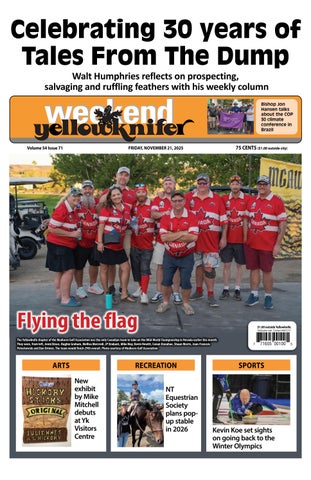
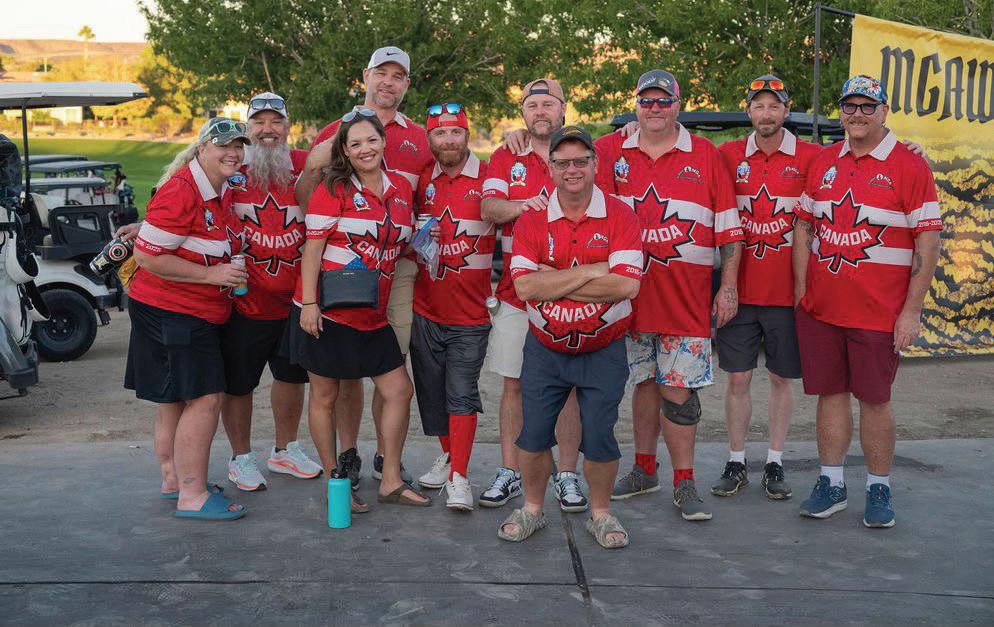
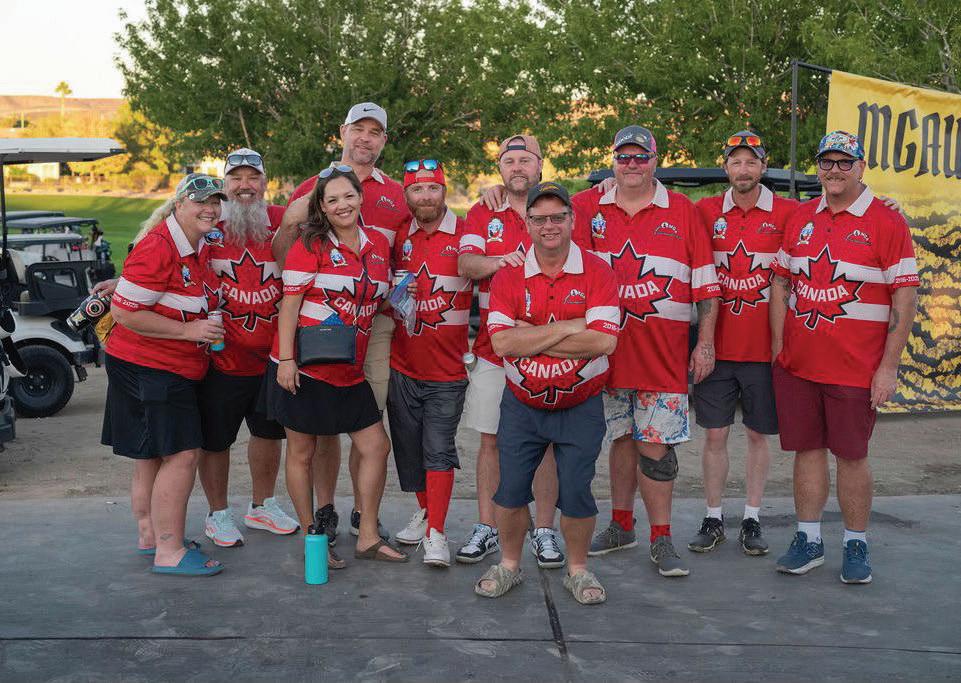
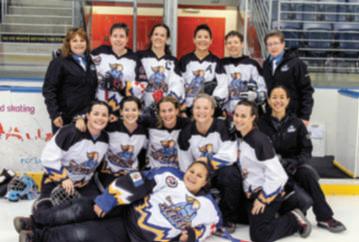
The Yellowknife chapter of the Mediocre Golf Association was the only Canadian team to take on the MGA World Championship in Nevada earlier this month. They were, from left, Jenni Bruce, Hughie Graham, Mellisa Mercredi, JP Brabant, Mike May, Kevin Hewitt, Conan Donahue, Shaun Morris, Jean-Francois Pelechowski and Dan Drimes. The team would finish 29th overall. Photo courtesy of Mediocre Golf Association
Will AI automation really kill jobs? A new survey finds Canadian workers are split on the answer
Since 2023, there has been a steady increase in media stories about the potential for automation by artificial intelligence (AI) to displace workers. As sociologists who study what people think and feel about work, we wondered if these narratives were gaining any traction among workers.
Understanding worker attitudes toward automation is a crucial part of studying AI’s broader impact on work and society. If large segments of the workforce feel threatened or left behind by AI, we risk not just economic disruption but a loss of trust in institutions and technological progress.
To explore these attitudes, we fielded a nationally representative survey of 2,519 working Canadians from Sept. 8 to 18 with the support of the Angus Reid Forum. The survey was designed to assess public attitudes and perceptions about the AI-related threat of job displacement.
We found Canadians’ responses were far from uniform, reflecting a mix of concern, skepticism and cautious optimism.
Mixed reactions to job loss
We asked respondents: “A CEO of a major AI company recently made this statement: ‘AI could wipe out half of all entry-level white-collar jobs and spike unemployment to 10 to 20 per cent in the next one to five years.’ How likely do you think this is?”
The quote came from Dario Amodei, CEO of Anthropic, who was interviewed in an Axios article in May. The central thrust of the article was the imminent AI-related turbulence in the world of work.
In our survey, however, Canadian workers expressed mixed reactions to that dismal scenario: 16 per cent felt it was “very likely,” while another 48 per cent said it was only “somewhat likely.” The remaining 36 per cent said it was “not too likely” or “not at all likely.”
We then asked open-ended followup questions to gather qualitative insights about the ways that people are thinking and feeling about the AI threat. Most respondents expressed a pessimistic outlook, but a significant minority contrasted their view with optimism.
Concerns about corporate greed and job loss
A common thread among pessimistic responses was concern over corporate greed and profit. “Companies are greedy,” a 63-yearold writer said. “They want to get rid of as many jobs as possible.”
A 66-year-old clinical manager echoed the sentiment: “Companies are always looking to reduce cost and improve efficacies, so there is a strong probability this is going to happen in many organizations over the next 5 to 10 years as AI continues to be used.” Some respondents felt these trends were happening already. “The trends and increases in speed of which AI has begun dominating the business world,” a 30-year-
old engineer said. “I believe that whether or not society approves, companies will attempt to replace their entry level-jobs with AI.”
A 32-year-old real estate legal assistant said: “AI has already advanced so much in a short space of time. Combined with our society’s prioritization of profit, I doubt many companies will have any scruples about replacing people with machines.”
Others were concerned
about the looming loss of dignity and respect for workers. “Executives do not see the value of the human mind compared to a machine,” a 53-year-old senior government policy analyst told us. “It shows they have no concern for employees, just profits.”
A 70-year-old civil construction inspector similarly said: “Worker productivity is low, immigration has overwhelmed services and
housing, corporations have no respect for workers no matter where or what the task. There will simply be too many people competing for jobs.”
“Companies see AI as a cheap way to lay off many workers and maximize their own profits — even though doing so will make their products worse,” said a 22-year-old barista. “Companies only care about money, not the workers that
generate their revenue.”
Optimism about human adaptability
Not everyone was so gloomy. Many expressed optimism about AI and the human capacity to adapt and evolve.
“AI is not a replacement for humans,” said a 54-yearold community television producer, while emphasizing that rather than replace humans, AI “should allow humans to accomplish more at their jobs.”
Others shared this confidence, drawing parallels to other historical changes in technology. “The job market will adapt as needed,” speculated a 34-year-old service officer, “switching to different roles that match the current technology, just as we have done in the past.”
A 33-year-old project co-ordinator said: “I think people and jobs will adapt to utilize technology in the same way we adapted to the internet. I think the job market will change, but overall, we’re more likely to adapt than have high unemployment.”
Some reinforced the human relevance of work.
“Regardless of the nature of the job, individuals will still need to train the younger generation” said a 32-yearold economist. “While we might not need data entry people anymore, we still need to understand how data entry works to hold upper-level positions — it can’t just be taken away from people completely.”
What this tells us
These findings show that, despite sensational headlines about AI and job loss, Canadian workers’ perceptions about the issue are complex.
It’s clear that the emotional landscape of work is filled with frustrations about corporate priorities and skepticism about whether workers will be protected. And yet, our survey found traces of resilience in the belief in the essential humanness of work.
Over the next one to five years, we’ll continue to track how this all plays out, and the ways that Canadian workers, business leaders and policymakers adapt and evolve to the ongoing changes brought by AI.
—Scott Scieman is a professor of sociology and Canada Research Chair at the University of Toronto. Alexander Wilson is a PhD student in sociology at the University of Toronto. This article was originally published on The Conversation, an independent and nonprofit source of news, analysis and commentary from academic experts. Disclosure information is available on the original site.
Canadians expressed a mix of concern, skepticism and cautious optimism about artificial intelligence and its impact on work, according to a recent survey. Beyzaa Yurtkuran/Pexels photo
Did we get it wrong?
Yellowknifer is committed to getting facts and names right. With that goes a commitment to acknowledge mistakes and run corrections. If you spot an error in Yellowknifer,call873-4031andasktospeaktoaneditor, or email editorial@nnsl.com. We’ll get a correction or clarification in as soon as we can.
News Briefs
Have
your say
on the NWT Mineral Resources Act
The GNWT is starting to develop regulations to bring the NWT Mineral Resources Act (MRA) into effect and they want your input.
Specifically,staffaregatheringfeedbackon policy intentions concerning benefit agreements and socio-economic policy.
Thiswillbethesecondofthreepublicengagementsaboutthepolicyandstartedback onNov.10withthefinaldaybeingDec.19. ThefirstonebeganonOct.29anddealswith mineralresourcesadministrationpolicy,drill cores, and the removal of minerals policy. That’s scheduled to run until Dec. 3.
The third public session is scheduled to start sometime in December and will deal with the Mineral Rights Review Board and transition of existing interests.
TheMRAanditsregulationswaredesigned to “modernize the regulatory environment fortheexploration,developmentandproductionofmineralsintheNorthwestTerritories (NWT).Thiswillimprovethemanagement ofmineralrightsandwillevolvethegovernment’s relationships and collaboration with Indigenous governments and Indigenous organizations.”
YoucanvisittheGNWT’sHaveYourSay websitetoleaveyourthoughtsandyouhave until Dec. 19 to do so.
Nominees for community awards wanted
If you know someone who’s gone above and beyond in the community, maybe they deserve some recognition.
Nominations for the NWT Association of Communities Community Awards are now open. The idea is to honour those who makeourcommunitiesstrongerandhealthier places to live, and to acknowledge communities that are striving to become more energy efficient.
There are four awards up for grabs: CommunityBuilderAward,HealthyCommunity Award, Energy ExcellenceAward, and ClimateChangeResilienceAward.Thewinners willbeannouncedattheassociation’sannual general meeting on Feb. 28, 2026.
You can get all the details on the awards the association’s website under the AGM page and you have until Jan. 23, 2026 to nominate someone.
Early bird tickets available for Folk On The Rocks
Folk On The Rocks is still more than half a year away, but if you’re looking to get the jump on tickets, now’s your chance.
OWLpassesandearly-birdticketswillbe going on sale beginning Nov. 28 at 10 a.m. for the 2026 edition of the music festival, whichisscheduledtotakeplaceattheFOTR site from July 17 to 19.
The OWL Pass will get you access to the exclusive performer barbecue, access to Warm The Rocks on Long Lake, skipping the line at the beer garden (capacity permitting), access to the OWL & Artist Lounge, 10freedrinksandtwogourmetmealsaday plus snacks. You must be at least 19 years of age to buy those.
Youth or senior day passes will also be going on sale with youth 12 years of age and under being let in for free.
There will be a limited amount of early bird tickets on sale.
Pop-up stable to offer lessons, horseback riding next summer
NT Equestrian Society raising funds for permanent stable
the facility closed permanently, leaving the local equestrian community without their beloved equines and the place they loved.
For Caterina Walsh and Abbey Wilson, ridingandcaringforhorsesisanexperience thatoffersnotonlypureenjoyment,butalso one that provides skills and leadership development for people of all ages.
“It’s sometimes hard to explain, but it’s having a deep connection with this animal thatissobig,andattimescanfeelintimidating if you’re not used to them,” said Walsh, who has been horseback riding for most of her life. “And then it’s really learning how to build that trust and that relationship with this animal.
“And you become partners, and they are yourteam,”sheadded.“Youhaveanunspoken bond, and you really have to learn how to work and respect the animals, and also earn their respect back to be able to ride, and to be able to connect and compete, or if you’rejustwantingtospendtimewiththem, to build that trust.”
Itwas an appreciation of thatspecialbond thatWilsonsaidhelpedherdecidetorelocate to Yellowknife four years ago.
“The barn and the equestrian community was one of the reasons that I moved here. You know, it’s like nothing else,” Wilson said.
That close-knit community of horses and riders at North Country Stables was dismantled, however, when those horses had to be sent south due to the 2023 wildfire evacuation.
NonereturnedtotheirhomeinYellowknife, the only stable in the North Slave region.
After the death of stable owner Tom Pisz,
“North Country Stables was just an amazing facility.And Tom Pisz really started the legacy of bringing horses up here,” Walsh said of the substantial influence he had on the community to foster a love of all things equestrian.
With that loss, however, Wilson said a renewed appreciation for the sport and recreational opportunity has grown within the NT Equestrian Society.
“Weknowthathorsebackridingandhorse handling improves things like physical fitness,responsibility,leadershipskills,mental well-being. You know, these are all great benefits to working and being around horses,” she said.
Unique opportunity
With that in mind, along with the strong desire to once again ride horses in Yellowknife, the society came up with an idea that could make that dream a reality.
A temporary pop-up stable will be establishednextsummeratOspreyMeadowswith thehelpofcommunitysupportanddonations, enabling the equestrians to ride again.
“We’re really hoping to re-establish that community connection through this popup, and hopefully through a facility in the future,” Walsh said.
“And just by restoring access, we really hope to open the doors for a broader community engagement here in Yellowknife and the territory, and just provide lots of educational opportunities with horses and other connections through equestrian expe-
riences,” she said.
With access to a grant, plus the donation of land from Arctic Farmer, soil from RTL Construction and fencing and labour from Lupo Fire & Security Ltd., the temporary stable will offer lessons and rides for youth riders and beginners.
Fourhorseswillbeborrowedfromstables in Hay River and Alberta for the summer: Solo, Mira, Poncho and Zalika.
“And so this is going to be a summer-only program,andwewillbeabletoofferlessons, mental well-being and wellness, potentially trail rides, and just opportunities for the community to interact with horses again,” Wilson said.
Fundraising raffle
“We’rereallyhopingthatthisisgoingtobe apilotprojectthatwillhelpusraisethefunds in the capital to be able to have a permanent solution in the future,” Wilson added.
To help reach that goal, the society is currently holding a fundraising raffle with a varietyofprizes,including$4,000.cash,she said. The draw will take place on Dec. 16. For more information on purchasing tickets orthepop-upstable,shesaidpeoplecanvisit the NT Equestrian Facebook page.
Walshsaidwhilesomeoftheyoungathletes have been travelling south to participate in various camps, it’s difficult when they do not have access to a horse at home.
“It’s been really amazing just to see our youth athletes and how passionate they are abouttheirsport,andjusthorsesingeneral… we’re really excited to hopefully be able to bring that back here to Yellowknife.”
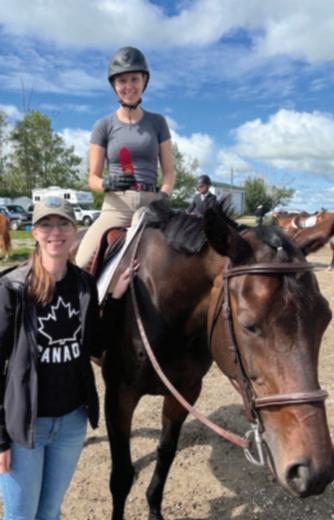
Caterina Walsh stands with Maisey Murray during a horseback riding session with Surilla. A fundraising effort is underway by the NT Equestrian Society to help re-establish a stable in Yellowknife after the closure of North Country Stables. Photo courtesy NT Equestrian Society
Abbey Wilson enjoys a horseback riding session with Zalika. As a member of the NT Equestrian Society, she is looking forward to having a pop-up stable in Yellowknife next summer. Photo courtesy NT Equestrian Society
Jill Westerman Northern News Services
Prospector finds Yellowknife dump fodder for writing columns — 30 years and counting
Walt Humphries has spent three decades trying to figure out mysteries behind discarded items
As a prospector, Walt Humphries knows how to find interesting things.
He goes out on the vast Northern landscapetodiscoverthingsofvalue, like minerals, gold or diamond deposits.
But over three decades ago, Humphries made a discovery that kept on givingandreplenishing.Andhedidso in the most unlikely of places — the Yellowknife dump.
“Like a lot of people, I used to take myowngarbagetothedumpbecause it was easier than street pickup. So I’d be out at the dump quite often,” Humphries said.
During those regular visits, he said he started to notice some interesting items that had been tossed into the ever-growingpileofdiscardeditems.
Salvaging was quite a popular pastime then, with far fewer restrictions compared to today.
Humphries recalled one of his first majordiscoveries,onethatspurredon a letter to the editor of Yellowknifer.
“The federal map office in town shut down. They got a shredder, and they were shredding their maps before taking them to the dump. The shredder broke, so they just took a stack of several thousands maps up
money,andwiththemapofficeclosing intown,itwasgoingtobedifficultgetting maps. It just seemed like such an incrediblewasteoftaxpayers’money, and making it difficult for those of us whousedmaps,whowouldthenhave to order them from Ottawa.”
Othersuchfindsbecameadditional reasons for Humphries to write more letterstothenewspapers’editor.Eventually,insteadofsendingareporterto investigate each time, the newspaper suggestedthatHumphriesbecomethe eyes and ears of the dump by writing his own column.
Tales from the Dump soon arose from his salvaging activities.
Weaving his brand of humour with some occasional advice into a tale proved popular with readers — and he continues to write 30 years later.
“The public generally like my columns, and the people who are being so wasteful don’t — so the city, the federal government, the territorial government,”hesaidmatter-of-factly.
“It’sabsolutelyamazinghowmuch money and material and things they throw away at the dump.
“Absolutely they don’t like it when I point out the waste. And some big companiesdothesamething.It’sjust that they don’t think about it, and so they just throw things away.”
Humphries recalled other waste
food bank.Another time it was radio tubes used by the military — something a ham radio operator was glad to acquire. And he was perplexed when he foundaquantityofwrappedChristmas presents — toys meant for children.
“As a prospector, you go to the dump and you look around, and you try to put a value on the different things. So several times I tried to show to them that the stuff that was
They see it as garbage. They don’t see it as a resource.
“I think every dump in the country should be open to salvaging, and they should have licensed salvagers or people who go through and rescue the good stuff and then sell it or give it away.”
Humphriessaidthediscardeditems fromthedumphavealwaysgenerated topicideasforhiscolumns—family photo albums, sports gear, piles of food past its expiry date and more. It’ssomethingthateventuallybecame anideaforthecreationoftheYellowknife Food Rescue program.
Overtheyears,however,Humphries said the area in which the public could salvage has become smaller and smaller.
“They don’t realize that it’s part of our culture and heritage. You get to know the other people who go out there. It’s a community-oriented activity, and all those things, our society has slowly done away with — the community-based stuff,” he remarked.
He estimates that his columns are now based on the dump about 25 per cent of the time, and the rest of his musingspertaintonature,wildlifeor other observances.
and his father placed one of Humphries’ drawings over his home office desk. The drawing was entitled, ‘Smokers of the world unite!’ It depicted a “circle of happy cigarette smokers around the world congressing over their love for this filthy habit,” Bryant said.
“It was just one small example of Walt’s irreverent view on life that I would later come to know and enjoy as a journalist and editor at Northern News Services,” he remarked. “Walt, from what I’ve observed over the years, has never been afraid to take on sacred cows, especially if those sacred cows were politicians eating up all the hay.
“And as far as I know, no city in the country cashes in on their dump.
“That’s what a prospector does; a prospector sees something and is trying to figure out the story behind it. That’s what I do.”
“He unfailing does so with a wry sense of humour. What else can you say about a columnist whose principal scene setter is the city dump?” Bryant added. “Walt Humphries is a true Northern treasure and it’s been a pleasure and an honour to work with him and read him for all these years.”
Valpy marvelled at Humphries’ ability to connect various dump finds to greater observation about what was happening to the planet.
“Every week he exhorted us regular folks to bend over and pick up that one piece of trash within arm’s reach, to begin the collective movement toward cleaning up and preserving our precious Earth. I still think of him when I pick up — or don’t pick up — a candy wrapper while walking the streets of Yellowknife,” Valpy joked.
“Walt approached his readers from so many different angles: prospector, geologist, craftsperson, painter, satirist, bushman, environmentalist, city hall critic, Northern humourist, and, of course, weekly columnist,” he continued.
“Few people understand what a massive commitment of time and effort it takes to carry that off for 30 years. Even though he makes it sound easy, it is not.”
Valpy added that he’s pleased that Humphries plans to keep writing Tales from the Dump.
Braden recalled the “consternation” shared by numerous Yellowknife residents several years ago when Humphries’ 10-metre-long outdoor mural at the former Stanton Hospital was found lying in a heap on a gravel pile near the site of the new hospital. The mural had to be removed to allow construction, but such “gross negligence was unforgivable,” according to Braden.
“He [Humphries] quite rightly raised hell with the government — at no less than the premier’s office — and sure got attention. The mural, to government’s credit, was promptly recovered, professionally restored and reinstalled a couple years later.”
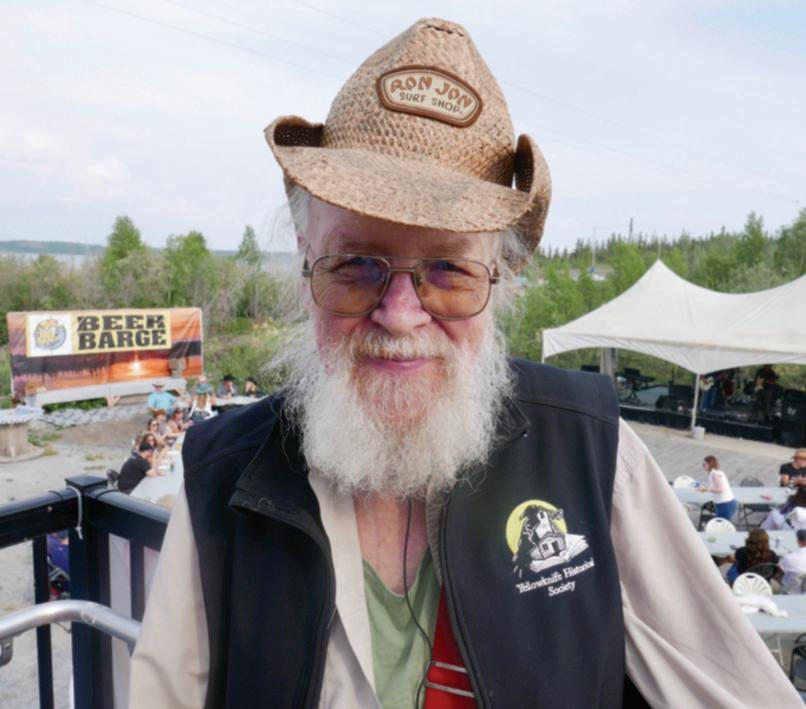
Walt Humphries, a resourceful Yellowknife prospector, artist and historian, has written his newspaper column ‘Tales from the Dump’ for 30 years now. NNSL file photo
Jill Westerman Northern News Services
Norman Yak’eula reclaims his family’s name
Returns to original spelling and pronunciation after generations of colonial influence
When Norman Yak’eula attended residential school in the Northwest Territories, the teachers didn’t even bother to learn his name.
Instead, he was number 153.
“In residential school, at five years old, we were referred to asanumber,”hesaid.“Youhad to put your number on all your personalbelongings.That’show theyidentifiedyou—theycalled outyournumber.Whentheysaid yournumber,youwouldhaveto put your hand up. My brother Dannywashelpingmewritemy numberonmysocks,mypants, my T-shirt, my underwear, my jacket, my toothbrush… all my personal belongings.
“Foragoodportionofmystay from September to June, I was a number.When you get home, your parents call you by your name and you’re not used to it because you’re used to being called by a number. Where do youlearnthatsystem,whereyou identifypeoplebynumbers?The only places I’ve read about are not too good.”
Even outside the institutional nightmare the people of Turtle Island were forced through by colonists,theshadowofoppression loomed long.
“YakeleyacamefromaRoman Catholic priest trying to write ournameinEnglishandnotunderstandingtheDenelanguage,” he said. “So they mistakenly wrote our name the way they saw it and they’ve done that to manynativepeopleinthevalley.
“Our parents and our grandparents were right about who we are. They must be commended—theytolduswhowe are and they were not wrong, even though the church and the government tried to force their perspective. We really have to thankourgrandparentsforkeepingstrongandkeepingourway of thinking.
WhenKenKyikavichik,thengrand chief of Gwich’in Tribal Council, announced he was reclaiming his family name and dropping the colonial surname of ‘Smith,’ Yak’eula began to ask his Elders about his own family history.
Piecing together old stories, researchinghistoricaldocuments andlearningwhatEldersknew, Yak’eula was able to trace his namebacktotheoriginalspelling and pronunciation.
Even after all that effort to learntheoriginalDenepronunciation, he admitted he took a year to still think things over before he decided to make the change official.
“It’s significant, but I also want to honour ‘Yakeleya’ becauseit’swhatIgrewupwith,” hesaid.“Ididnotwanttodisrespect my dad and grandparents of that name.
“But inside me, I said that wasn’tright.Ifeltstrongaboutit whenacolleague(Kyikavichik) changed his name and used his Gwich’in name.”
Pronounced “Ya-Kay-OoLah,”Yak’eula’snamehasmultiplemeanings—translatingto mean “the accomplished” and “singing in the heavens.”
Reclaiminghisnameissetting reconciliation into motion, said Yak’eula, noting that his son is alsoworkingtowardsreturning to his traditional family name.
“It’s there, it’s an opening,” he said. “Part of reconciliation is reclaiming our original Dene names, so by going through the process hopefully I’ve planted the seed.
“In the residential schools, theytoldusourlanguagewasthe language of the devil. Can you imaginetellingthattoafiveyear old — that their grandmother’s language is the language of the devil?Theytolduswewerestupid, we were savages — that’s not right. My grandmother was right — we are kind, we are good, we are smart.”
Yak’eula encouraged anyone on their own healing journey to considertakingbacktheirstolen identity.
“Our people were right,” he said. “Our Elders were right. Our language was right. The government and the churches were wrong.
“They gave us a pretty good licking,butwekeeponticking. It’sOKtobeIndigenousandlive on our land. No one can ever forget that.”
For more stories from the 2025 Indigenous Culture Guide, click here.
Capsule Comments
Healthcare workers have a responsibilitynottoharmtheir patients.
People in nursing homes often have compromised immune systems, making them more susceptible to illness.
Healthcare workers are encouraged to get their flu shots yearly.
If, for some reason, they don’t, at least wear a mask while on the job. Flu shot facts
Information for those who arehesitanttogettheirflushot:
-Youcan’tcatchtheflufrom the vaccine
-For those who believe the flu is “just a bad cold,” not so. More than 6,000 people die each year from flu and
pneumonia
-20-30 per cent of people carrying the virus have no symptoms but can still spread the virus
Diabetes awareness
November is Diabetes Awareness Month.
Some diabetes facts:
-One Canadian is diagnosed withdiabeteseverythreeminutes.
-In2024,4millionCanadians werediagnosedwithdiabetes, whichisapproximately10per cent of the population
-DiabetescoststheCanadian healthcaresystem$50million per day.
Surviving blood cancer
In2024,anestimated23,600 Canadianswerediagnosedwith a blood cancer, according to the Canadian Cancer Society.
Blood cancers represent about10percentoffallcancer diagnoses. Treatments have mushroomedoverthepastdecades. At one time, only IV therapies were used to treat the disease, but today there are veryeffectiveoralmedications thathaveincreasedthesurvival rates dramatically for blood cancer patients.
Aaron La Borde is a pharmacist at Sutherland Drugs.
Norman Yak’eula has gone by many names throughout his life, but he’s finally found the traditional way of spelling and pronouncing his surname.
Photo courtesy Norman Yak’eula
Eric Bowling, Local Journalism Initiative Northern News Services
Mediocre Golf Association takes Vegas vacation
Yellowknife chapter the lone Canadian entry featured in this year’s MGA World Championship
There is no more golf inYellowknifeforthisyear.Thatfact is plain to see.
Butifyouwanttogolf,yougo southtowherethereisn’tmuch snow and that’s what a bunch ofplayersfromYellowknifedid earlier this month.
The Yellowknife chapter of theMediocreGolfAssociation madethetriptotheRevereGolf ClubinHenderson,Nevadafor theannualMGAWorldChampionship. They not only represented the city, but also the countryasawholeastheywere the lone Canadian chapter to make the trip down.
As a unit, the team finished in 29th place overall — after 10th place as the MGAcalls it —withascoreof580.Thetop threeindividualscoresovertwo rounds were used to determine the winning team.
Individually, Hughie Gra-
hamhadthebestshowingwith a 36-hole total of 190, while Jean-FrancoisPelechowskiwas next best at 194. Shaun Morris andConanDonahueeachcarded 196 for the joint third-best. Morrissaidatotalof10players from the city made the trek and everyone had a blast.
“I’vebeenthereseveraltimes, butthenewguysallhadagreat time,”hesaid.“Theygottosee how much fun it is and that’s what it’s meant to be.”
In past years, there have beentwodifferenttournaments played at the world championship:themainevent,whichwas for everyone who either won a tournamentduringtheseasonor finished in the top 10 of their chapter’s money list, and what wascalledtheBornHairyTour, a play on the Korn Ferry Tour, themaindevelopmentaltourof the PGATour. That event was for everyone else who didn’t meet the criteria listed above. This year was different, said
Morris, in that everyone had a chance to play in the opening round of the world championship and it was called the LastOpportunityInQualifying (LOIQ).
“Yourscoreondayonedetermined whether you got to play fortheworldchampionshipon daytwoorifyoujustplayedout thesecondroundinanon-competitive fashion,” he said.
Oneofthesideeventsfollowingtheworldchampionshipwas calledtheTakeTwoChallenge, ateamcompetitionwhereduos went out and played a round to try and get the best score.
and
“Itwasasignificantimprovement on our 92nd
Morris
his partner, Diego EsquibelofAlbuquerque,New Mexico,endeduptiedfor12th.
place finish last year,” said Morris.
The Yellowknife chapter of the Mediocre Golf Association was the only Canadian team to take on the MGA World Championship in Nevada earlier this month. They were, from left, Jenni Bruce, Hughie Graham, Mellisa Mercredi, JP Brabant, Mike May, Kevin Hewitt, Conan Donahue, Shaun Morris, Jean-Francois Pelechowski and Dan Drimes. Photo courtesy of Mediocre Golf Association
Shaun Morris celebrates a nice shot on the fairways. Photo courtesy of Mediocre Golf Association
JP Brabant watches an approach head somewhere. Photo courtesy of Mediocre Golf Association
Shaun Morris, left, and Diego Esquibel from New Mexico teamed up for the Take Two Challenge. Photo courtesy of Mediocre Golf Association
Jenni Bruce, left, and Mellisa Mercredi show off their best impressions of a couple of familiar video game characters for the Take Two Challenge. Photo courtesy of Mediocre Golf Association
James McCarthy Northern News Services
A look at 51 Years in the Biz
an up and coming artist for the past four years.
TheYellowknifeVisitorsCentrewas theplacetobeonWednesdayasanew exhibithostedbytheYellowknifeArtistRunCommunityCentreopenedup to the public.
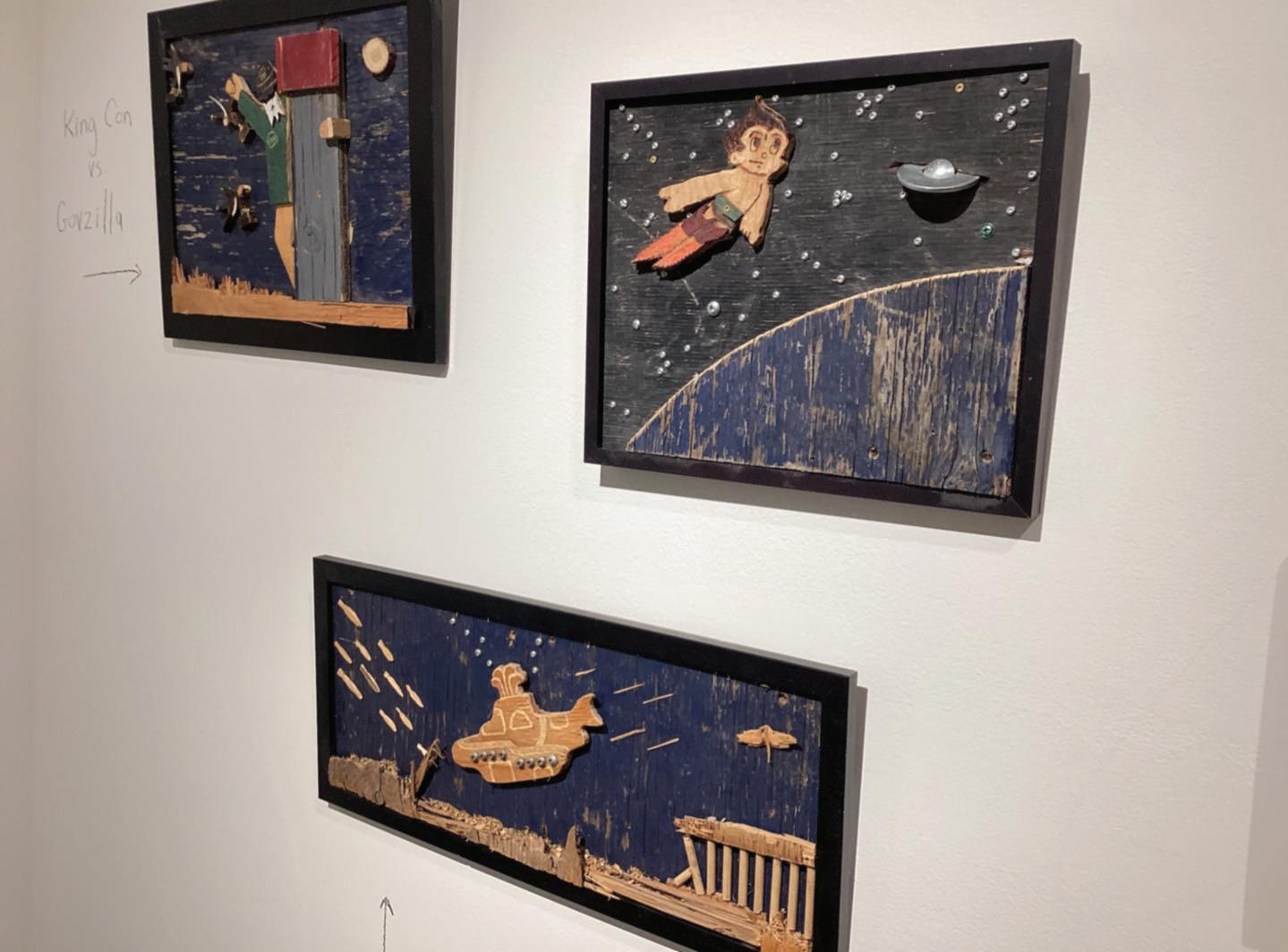
51 Years in the Biz features work done byYellowknife’s Mike Mitchell andit’sadisplayofvariouswoodwork madebyMitchell.Thenumberreflects Mitchell’s age; he’s been working as
Whatmakesituniqueiseverypiece was put together as is — no paint was usedatallandanypiecethatispainted was found that way.
If there’s a word to describe the collection, it would be raw. Mitchell showed life is full of opportunities at any age.
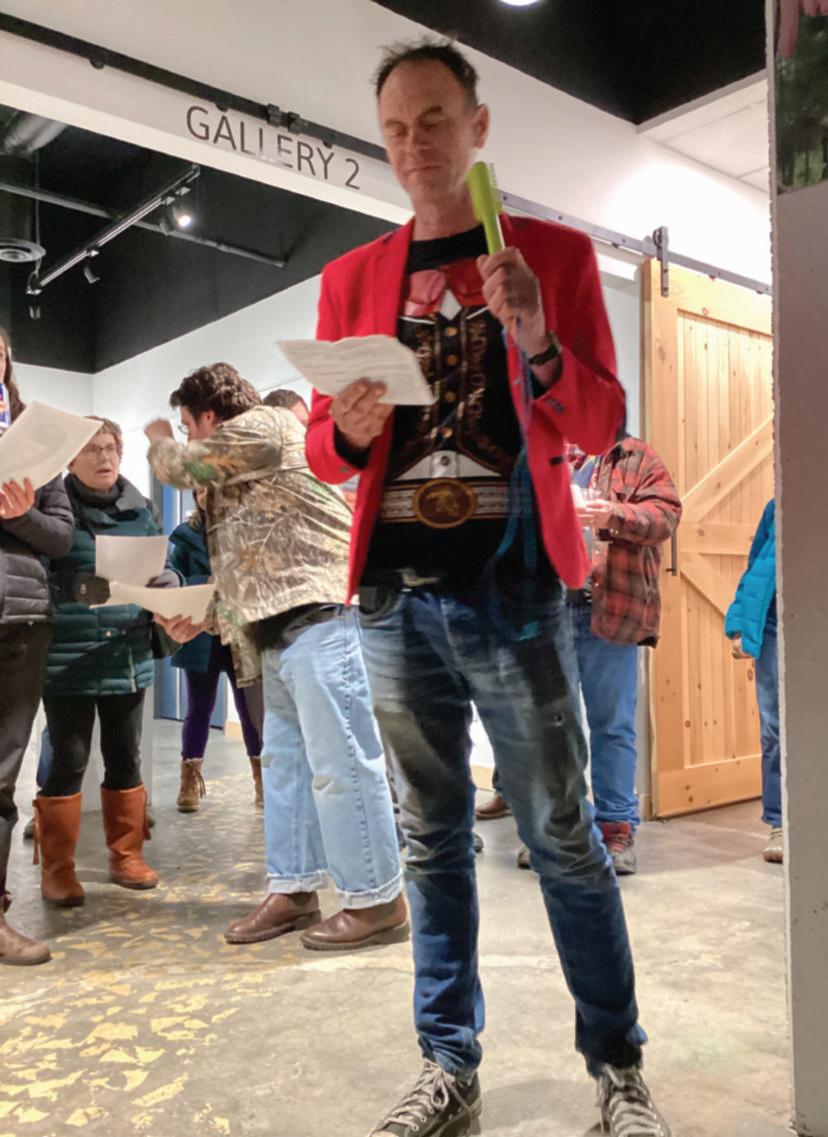
Mike Mitchell admires the program during the debut of his exhibit titled 51 Years in the Biz at the Yellowknife Visitors Centre. Nancy Vail/NNSL photo
The Robertson Headframe, top left, and Astroboy, top right, are just some of the works created by Mike Mitchell. Nancy Vail/NNSL photo
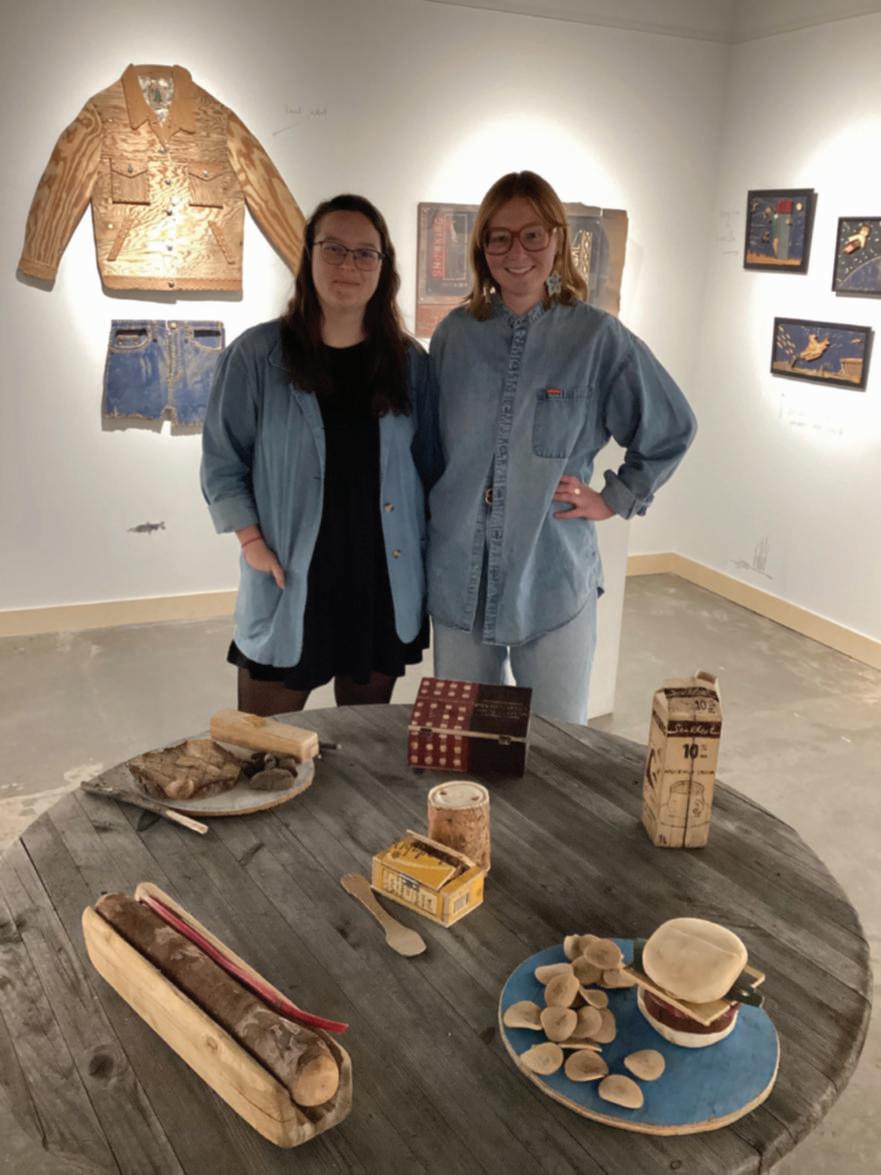
Mary Buckland, left, vice-president of the Yellowknife Artist Run Community Centre, and Laura Hodgins, the centre’s president, were on hand for the opening of the exhibit. Nancy Vail/ NNSL photo
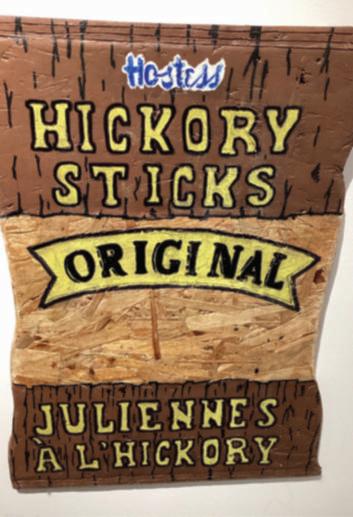
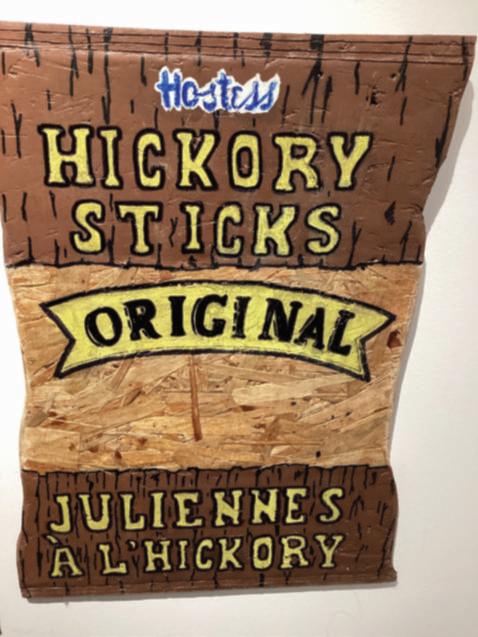
The classic snack Hickory Sticks in wood form. Nancy Vail/ NNSL photo
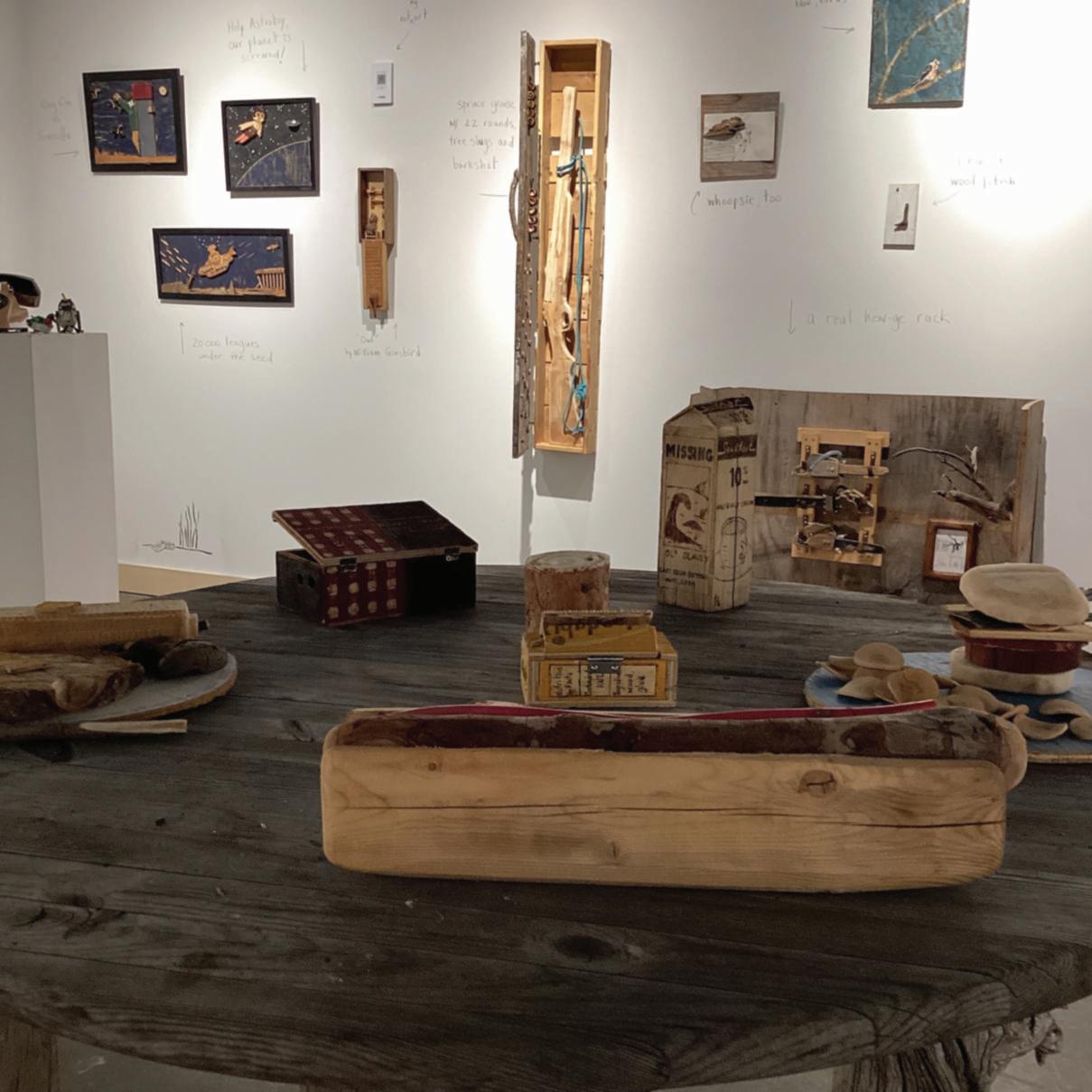
Several works by artist Mike Mitchell will be on display through the new year at the Yellowknife Visitors Centre. Nancy Vail/NNSL photo
Nancy Vail Northern News Services
Published Wednesdays and Fridays
P.O. Box 2820, Yellowknife, NT, X1A 2R1
Office: 5108 50th Street, Yellowknife
Phone: (867) 873-4031
Fax: (867) 873-8507
Toll free: (855) 873-6675
E-mail: nnsl@nnsl.com
Website: www.nnsl.com
FOUNDER (1934-2018): J.W. (Sig) Sigvaldason
An ode to 100 million telephone poles
GENERAL MANAGER: Shane Weaver – shane.weaver@nnsl.com
MANAGING EDITOR: James McCarthy - james.mccarthy@nnsl.com
Editorial board: Shane Weaver • James McCarthy Derek Neary
Reporters: editorial@nnsl.com
Derek Neary • Jill Westerman James McCarthy Sports: sports@nnsl.com
ACCOUNTING: receivables@nnsl.com Simran Kaur
ADVERTISING advertising@nnsl.com
Representatives: Petra Memedi • James Boylan
Director of product development: Laura Whittle
Customer service: classifieds@nnsl.com
CIRCULATION: circulation@nnsl.com
Circulation coordinator: Edison Mathew
Circulation clerk: Maya Cardenas-McGregor
Subscriptions:
Decades ago, I was doing a self-guided tour of the dump and spotted a backhoe digging a trench.
Close by were five or six old utility poles and some city workers. So, I walked over to see what was going on.
SEND US YOUR COMMENTS
You can e-mail us at editorial@nnsl.com; mail to Box 2820, Yellowknife X1A 2R1; or drop your letter off at our office at 5108-50th Street. All letters submitted must be signed with a return address and daytime telephone number so that we can confirm it came from you. Not all letters will necessarily be published. Preference is given to short letters of broad interest or concern.
We particularly encourage new contributors as we attempt to publish a cross-section of public opinion.
Letters of more than 300 words, open letters and those published elsewhere are seldom used. We reserve the right to edit for length or taste and to eliminate inaccurate or libelous statements.
We may also choose to use a letter as the basis for a story.
Apparently, they were digging a hole or grave for the old utility poles. That struck me as an odd thing to do, so I asked why.Apparently, the government had just declared the poles as hazardous waste, and they had to be disposed of accordingly. Someone, presumably in the government, had decided that burying them in the dump was a safe and appropriate disposal method.
poles were is use in Canada, but, as usually happens, finding data for all of Canada is difficult. I found a site that said there are 150 million such poles in use in NorthAmerica and 100 million of those are wood. The rest are either made of metal or concrete.
Here is a little background: In 1849, the telegraph was invented, so telegraph poles began to appear along roads and railway lines to wire the country so people could telegraph each other. Shortly after this, telephones became popular, so the poles were used for both purposes and then electricity was added and they became utility poles.Also, the business of providing the poles took off. Out of curiosity, I tried to find out how many
Awooden pole can be used for 30 to 40 years and up to 70 years if it has been treated with wood preservative and maintained. Wood preservative is a poison used to keep ants, termites, beetles, fungi and mildew away. They use creosote, pentachlorophenol and arsenicals for this.After decades of using these chemicals, they discovered they were hazardous to humans. So, they stopped using them on wood used to make playground equipment, fences and walkways where people come into physical contact with the wood. They can also be burned in permitted facilities.
The internet says poles can also, as a last resort, be buried in landfills. But you should have gloves on if you are handling them. So, people are getting a rather mixed message — are these poles hazardous waste or not? If you stop and think about it, this is a rather important question because in the next 70 years at least 100 million of them have to be dealt with.
It would be interesting to know how many poles are buried in the city dump, and do they keep track of exactly where they are buried in case they want to dig them up someday and dispose of them in some other way?
Imagine 100 years from now, some alien archeologists are digging up our dump to better understand our current civilization. What are they going to make of the wooden poles? Was this some sort of religious practice?And why are they buried in dumps across NorthAmerica? Why would you make poles, soak them in wood preservatives so they don’t rot and then bury them in a dump?
Why are our dumps full of discarded food, clothes, books, metals and stuff? We bury an incredible amount of perfectly good stuff. Currently, we are burying old metal vanes from windmills and wind turbines and soon we will be burying a whole bunch of solar panels when they start to wear out.Also, a significant amount of plastic is ending up in dumps. One site I visited said 18 per cent of garbage in the world is plastic and that percentage is continuing to grow. Plus, we are still trying to figure out what to do with radioactive waste.
Theoretically, we are an intelligent species, so we should have a way of disposing of the things we make and have those in place before we start manufacturing them.After all, we didn’t have a problem with telegraph poles until we started using wood preservatives.
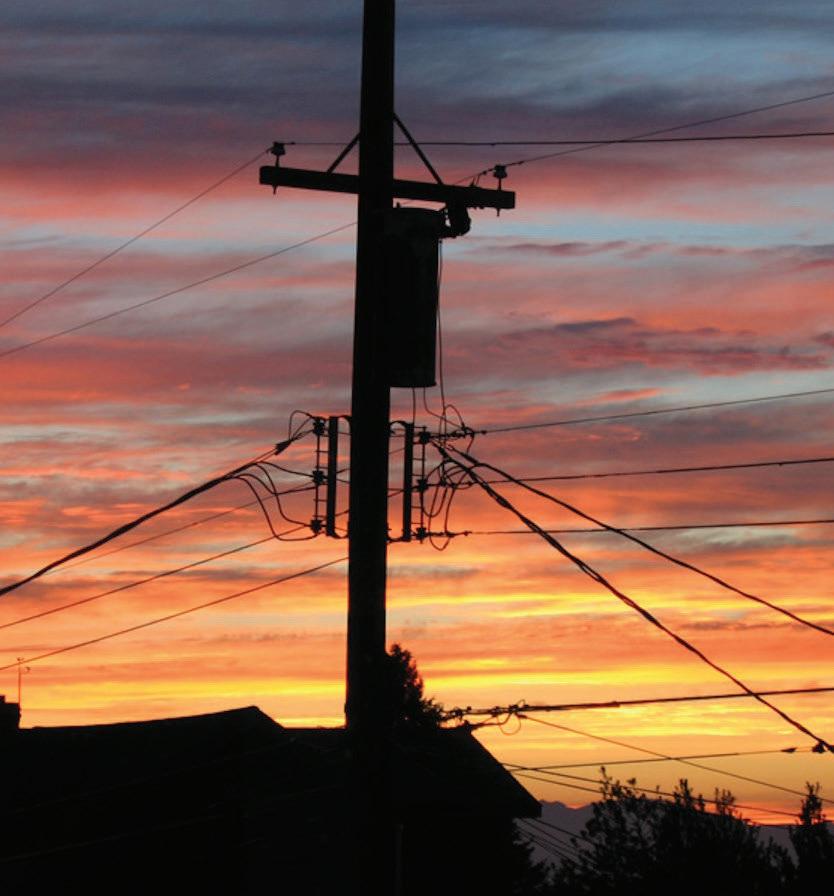
Are utility poles hazardous waste or not? If you stop and think about it, this is a rather important question because in the next 70 years at least 100 million of them have to be dealt with. Chas Redmond/Wikimedia Commons photo
TALES FROM the dump
Walt Humphries is a well-known Yellowknife artist and prospector. Northern News Services
NWT bishop increasingly focused on climate change issues
Living in a territory that is experiencing the brunt of climate change impacts in Canada and possibly the world, it’s no wonder that one of two bishops in the country who is attending the COP 30 climate change summit is from the Fort Smith diocese, which has its head office in Yellowknife.
Bishop Jon Hansen, who lives in Yellowknife, is a member of Development and Peace — Caritas Canada, founded by the Catholic Church and focused on humanitarian aid. Because First Nations are often paying the price for our changing climate, Hansen has a special interest in environmental issues, especially here in the North, where its fragile beauty lies deep in his heart.
NOTES from the trail
“Because this area is so important, I find I am being pulled into climate change issues more and more,” he said.
Speaking from a Catholic nuns’compound in Belem, Brazil, in theAmazon basin over the weekend, the bishop said that living in a place that has experienced two wildfire events in 10 years coupled with almost Third-World living conditions in some communities, it made sense that the Catholic church would send a representative from the Northwest Territories to COP.
He visited theAmazon jungle Tuesday. “I was honoured to be chosen,” said Hansen, adding that when he became bishop, his work originally focused on Truth and Reconciliation.
However, when working with the Indigenous population here it was easy to see how he needed to encompass environmental issues and climate change since honouring the land is a main component of First Nations’cultural and spiritual identity.
Further, First Nations tend to show more respect for the land, unlike colonial developers, since their existence is often directly linked to it in ways that people from the south or with a developmental mindset do not see.
In fact, many of the protests and presentations at COP this year were by Brazil’s Indigenous people, who want to be included in the talks because their way of life is so threatened.
The church’s participation at COP was also significant at a time when the federal government did not send an official delegation and has been accused of moving away from climate change goals and targets reached in the ParisAgreement. Its move tends to favour more development, particularly in the resource sector, to offset financial threats coming from south of the border.
Yet, as the bishop noted, the North is the victim of ongoing wildfires because of climate change and there are real fears that Tuktoyaktuk is being washed away by rising water levels. Those levels are directly related to melting sea ice and some residents of the Northern communities argue that once those communities go, so too will Arctic security. They consider themselves to be the eyes and ears of the North, letting the rest of Canada know about any unusual activity, which is more of a concern now as foreign powers covet the resources of Northern Canada.
Arctic security has become an issue of international concern recently as some foreign powers have expressed more of an interest in mining here. The race to mine rare earth minerals may happen to the detriment of the vulnerable Northern environment.
This failure to recognize threats posed by climate change also comes at a time when the American president calls climate change a hoax and is encouraging fossil fuel development, including in previously protected areas.
Plea for greater care
The church’s emphasis on environmental issues took centre stage under Pope Francis, who wrote the encyclical letter Laudato SI of the Holy Father Francis on Care for our Common Home, which documented the then-pope’s urgent concern for the fate of the planet. This call for more care has been echoed by Pope Leo, who has pointed to human greed and, in particular, fossil fuel and mining developments as the main drivers behind climate change. That there was such a large representation at COP of Indigenous people was because climate change is putting an even greater rift between ‘have’and ‘have not’countries, with the poorest ones being asked to pay the highest price. Their message is “Don’t make decisions without us.Allow us to have the power to solve the problems in our own region,” said Hansen, adding that echoes of concerns of
Northern First Nations people.
Both groups suffer from inadequate and disappearing food sources.
“When companies come in and bulldoze whole areas, they rob the populations of medicines and destroy food diversity. It is meant for profit and sale elsewhere,” Hansen said.
Brazil too has had tailings ponds destroyed, which spills into waterways affects everything downstream — an ongoing issue in Canada’s North too.
When it comes to food security, for example, a recently released study revealed that some caribou populations have dropped by almost half in just two years. Country food sources are quickly disappearing because of mismanagement and lax enforcement activities, among other contributing environmental factors.
Last week, theAmerican administration opened the long-establishedArctic Wildlife Refuge inAlaska for sale in breach of U.S.
and Canadian agreements, putting caribou, migratory birds, polar bear and Indigenous populations on both sides of the border at risk. Further, a study released last week found that some caribou populations in this territory had dropped by almost 50 per cent, leaving some herds on the brink of extinction.
This would effectively eliminate one food source from the Northern diet.
Helping all these populations navigate these challenging times has become one of the main focuses of the church, which argues that without a healthy planet, there cannot be a healthy population.
Hansen says he plans to share information with the local church when he returns Friday then he will update bishops in the south.
“I want the church in Canada to be part of the North-south alliance,” he said, adding that he’s open to giving public presentations, if requested.
Pope Leo has pointed to human greed and, in particular, fossil fuel and mining developments as the main drivers behind climate change. Edgar Beltran/Wikimedia Commons photo
Bishop Jon Hansen, third from right, of the Fort Smith diocese, travelled to Belem, Brazil, to attend the COP 30 climate change conference. Photo courtesy of Jon Hansen
Nancy Vail is a longtime Yellowknifer concerned with social justice.
Northern News Services
Sports&Recreation
Team NWT hits the ice for Canadian Curling Club Championships
Thebestclubcurlersinthecountryare gathered in Winnipeg this week for the CanadianCurlingClubChampionships, which got going on Tuesday.
Both teams had yet to find the win columninanyoftheirgamesasofpress time.
Herearesomeimagesfromtheaction on the ice.
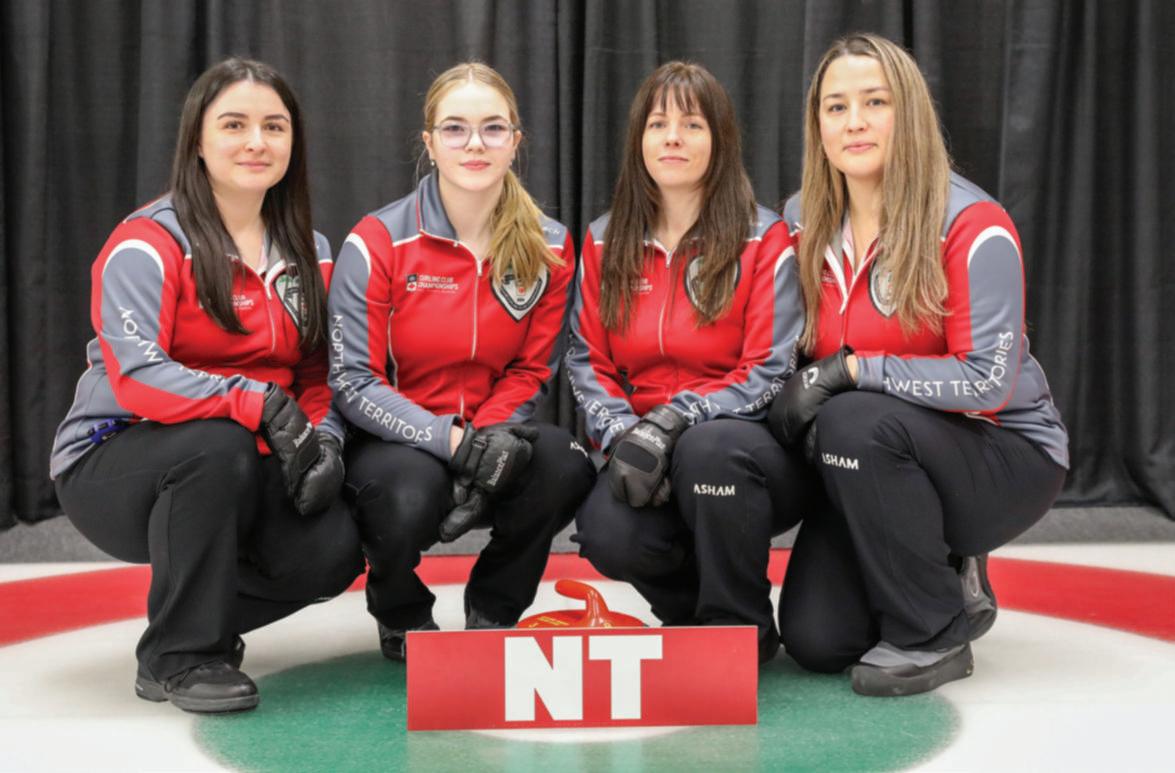
Both of the NWT rinks this year hail from the Inuvik Curling Centre. The men’s rink featured DonovanArey and hisrinkofHansLennie,JohnVoucrach andGlenTingmiak,whilethewomen’s rink saw Carina McKay-Saturnino and her team of Brooke Smith, Kate Jarvis and Jenna McDonald.
Team NWT’s men’s rink featured, from left, Donovan Arey, Hans Lennie, John Voudrach and Glen Tingmiak. Curling Canada/Connie Laliberte photo
Team NWT’s women’s rink consisted of, from left, Carina McKay-Saturnino, Brooke Smith, Kate Jarvis and Jenna McDonald. Curling Canada/Connie Laliberte photo
John Voudrach, centre, aims for the broom down ice as Glen Tingmiak, left, and Hans Lennie get set with the brushes. Curling Canada/Connie Laliberte photo
Hans Lennie, centre, lines up one of his stones as John Voudrach, left, and Glen Tingmiak get ready with the brushes. Curling Canada/Connie Laliberte photo
Carina McKay-Saturnino delivers one of her skip rocks during action on Nov. 19. Curling Canada/Connie Laliberte photo
Jenna McDonald zones in on the broom as she delivers one of her leads’ stones. Curling Canada/Connie Laliberte photo
James McCarthy Northern News Services
Kevin Koe eyes gold at Montana’s Curling Trials
Olympic qualification bonspiel gets underway in Halifax on Saturday
When Kevin Koe steps onto theiceinHalifaxthisweekend, it won’t just be another major curlingevent.It’shisshotatthe ultimateprizeandredemption.
The four-time Brier champion and two-time world champion is skipping one of eight men’s teams competing at the 2025Montana’sCurlingTrials intheNovaScotiacapitalandit allgetsunderwaytomorrowat theScotiabankCentre.Koehas beenalong-timefixtureonthe Canadiancurlingsceneandhis veteran experience could give himanedgeashepursueswhat many consider the pinnacle of the sport.
Theprizeforthewinningrink is a ticket to the 2026 Winter Olympics in Italy this coming February.
Koe is a past winner of this event in 2017 when it was
knownastheRoaroftheRings and won the right to wear the maple leaf at the 2018 Winter Olympics in PyeongChang, South Korea. Koe’s veteran Canadian squad entered as heavy favourites to win gold, but ultimately left with disappointment.
After a solid round-robin
performance, Koe advanced to the playoffs, only to fall in thesemifinalandthendropthe bronze-medalgametoSwitzerland, finishing fourth.
“That experience was very humbling,” said Koe. “You worksohardtobeintheOlympicsandthentomakethemedal (round),andwecameupshort.”
Halifax is more than just a stop on the calendar for Koe. It was the site of his very first Brier win in 2010.
“I can still remember that moment very well,” he said.
“Halifax has a special place for me.”
The trials format is different fromaregulareventandisalso
The fish are jumping
unforgiving.
The eight teams will play a singleround-robinandonlythe top three will advance to the playoff round. The first place teamearnsadirecttickettothe final, while second and third mustbattleitoutinasemifinal.
The final itself will be a bestof-three showdown.
“I won’t say it’s the same as anyothereventbecauseyoutry to qualify for this for years,” said Koe. “We just need to focus on putting ourselves in position to win and make that final three games.”
Koe’s first match-up will be on Sunday as he takes on Brad Jacobs to open up his account.
Kevin Koe delivers a rock during the the 2025 Boston Pizza Cup, which is the Alberta qualifier for the Brier. Koe and his rink are in Halifax for the Montana’s Curling Trials hoping to win the right to represent Canada at the 2026 Winter Olympics. Black Press file photo
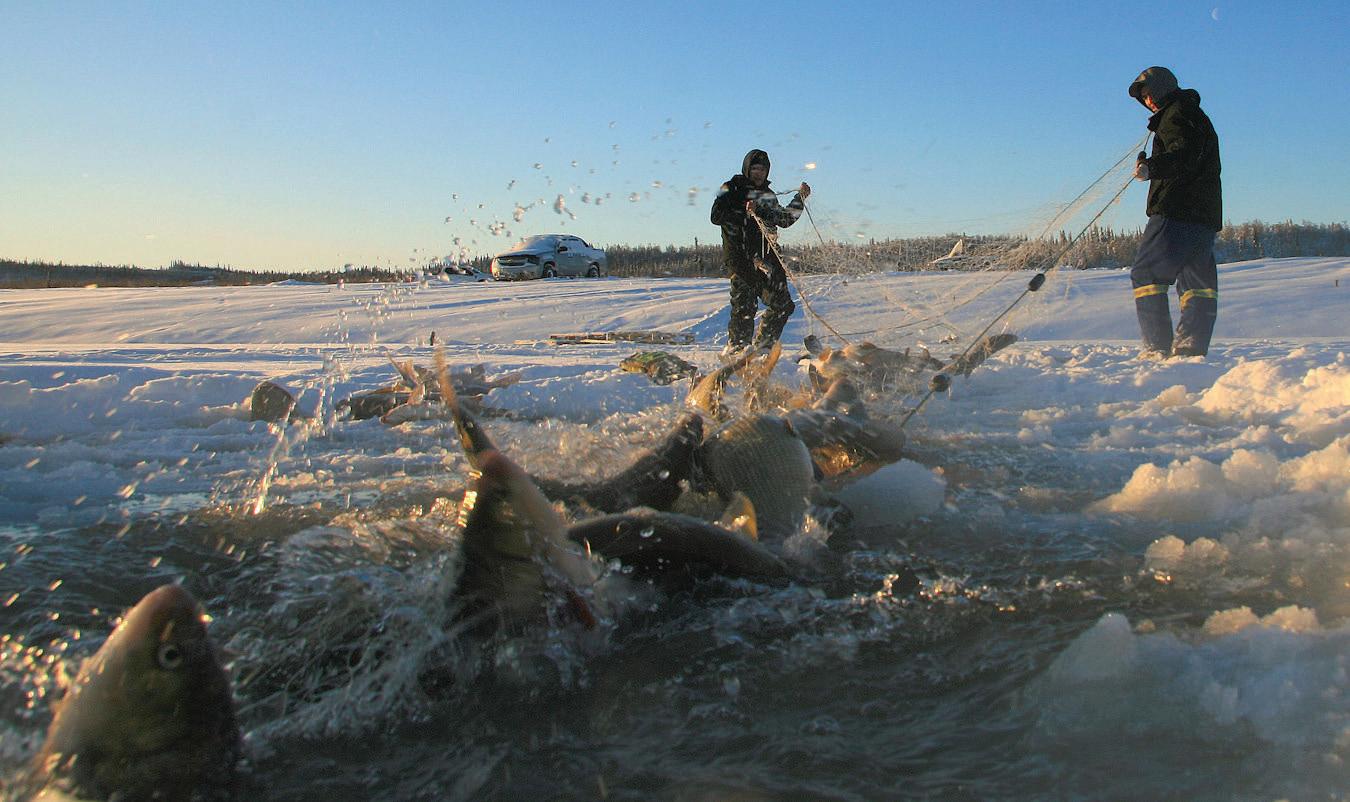
Grandsons Trinton, left, and Trevor Niditchie check a fish net for their didii (grandfather), George Niditchie, in Tsiigehtchic. Photo courtesy of Lawrence Norbert
Martin Gavin Special to Northern News Services
The season that broke you might be the one that builds you
There’s a season in everyone’s life that feels like a complete disaster. The kind where everything seems to fall apart: relationships, plans, the sense of who you are.
It’s the kind of season that you’d rather erase from your life story altogether.
But here’s the thing: we all have that chapter. The one that didn’t go the way we planned. The one we’d rather not talk about but probably should, because people don’t connect to our wins, they connect to our wounds. They see themselves in the moments we fell down, not in the moments we stood tall.
weak, it makes you human. It builds trust and opens up both yourself and the listener to vulnerability within the relationship. It reminds others they’re not alone in their own mess, and you could very well be saving someone who’s weeding through the depths right now.
It takes courage to talk about the things that didn’t go right. The things that fill us with regret, pain or wishes for choices we could undo. The failures. The losses. The heartbreak.
But when we do communicate, something shifts both for us and for the people listening. Sharing what broke you doesn’t make you
I’ve shared chapters of my life with my clients, friends and perfect strangers.At first it was a bit scary, worrying what they would think about me. Not surprisingly, they softened. They felt the safety net go out and were then willing to open up about their own struggles. Before this moment, the other person held their cards close to their chest, avoiding the topic, stuffing it down deeper, and carrying on with life as if nothing happened. I know I’ve helped more people than I realize just by telling my own stories. When you share the part of your story that nearly took you down, you’re not just unloading pain, you’re giving someone else a lifeline. You’re showing them they’re not alone in their
struggles and that we’re all human and in this world together.
Those humans you see on social media looking like they have their life together, not a shred of stress, disappointment, or hardships… they don’t. Maybe in that one moment they do. But,
Notice to Commercial Fishers Great Slave Lake
Fisheries and Oceans Canada (DFO) is developing an Integrated Fisheries Management Plan (IFMP) for Great Slave Lake. This plan will guide the sustainable use of the lake’s fishery resources.
If you are currently or have previously worked as a commercial fisher on Great Slave Lake, your experience is essential. DFO wants to hear your insights on the state of the fishery, the challenges you face, and opportunities for improvement.
Townhall Meetings
DFO will host townhall meetings to gather input from fishers:
Hay River - November 25, 2025
Time: 5:00 PM – 8:00 PM
Location: The Royal Canadian Legion, 7 Nahanni Rd, Hay River
in general, they also wake up daily to issues, to tough decisions, to realizations. Regardless, they continue to post the highlight reels. Realness comes from vulnerability, not the strength of putting on a face and stepping out into the world polished. The moment you
can take the hardest thing in your life and extract and learn more from it than it stole from you, is the moment your life changes forever.
If I could go back, I’d tell my younger self to talk about it. Talk about the times I didn’t know how to make it work. Talk about the heartbreak, the failure, the fear. When people see a motivational success story, it’s often because the road to success came with lots of bumps and ditches. They see themselves in those bumps. That’s where connection lives: right in the messy middle.
It takes courage to talk about the things that didn’t go right. The things that fill us with regret, pain or wishes for choices we could undo. Vitaly
Gariev/Unsplash photo
Sara Aloimonos is a columnist, life coach and functional nutritionist in Yellowknife.
Northern News Services
FIREARMS
WANTED FOR OUR 2025 AUCTION PROGRAM: Firearms, Ammunition, Accessories, or Militaria. Collections, Estates or single items. For Auction, or Possible Purchase: Contact us: 1-800-6942609, Email: sales@switzers auction.com or Visit us at www.switzers auction.com for Auction Dates & Details.
WANTED: Looking for 1970-1971 Barracudas and 1969-1970 Chargers, in any condition. Running or not. TOP PRICE PAID for 6-pack or Hemi car. Call 306221-5908.
EXTRAORDINARY
VILLA IN OSOYOOS, BC, breathtaking lake views, just 3 minutes from town. Vacation in Canada's warmest destination. Or warmer weather, two luxurious 5-star resort units in Phoenix, Arizona. Doug 306-7162671.
PRIVATE MORTGAGE
LENDER. All real estate types considered. No credit checks done. Deal direct with lender and get quick approval. 403-543-0927 www.firstand secondmortgages.ca.
IN THE SUPREME COURT OF THE NORTHWEST TERRITORIES
IN THE ESTATE of JOHN ALBERT LUNDQUIST, late of the Town of HAY RIVER, in the NORTHWEST TERRITORIES, deceased.
NOTICE TO CREDITORS AND CLAIMANTS
If you have a claim against the estate of John Albert Lundquist, who died August 30, 2025, you must file and provide details of your claim by December 28, 2025, with the estate solicitors at the address below. If you do not file by the date above, the estate property can lawfully be distributed without regard to any claim you may have.You may contact the estate solicitors, at the address below, for any further information you may need.
Cathy Lundquist Administrator, in care of her solicitors McLennan Ross LLP, c/o Elisa Rabello 600 McLennan Ross Building 12220 Stony Plain Road Edmonton, AB T5N 3Y4 (780) 482-9159
November 16 - November 22, 2025
LIBRA
ADMINISTRATIVE ASSISTANT
FLEXIBLE & PART-TIME OPTIONS
Yellowknife, Northwest Territories
The Tłıchǫ People have strong, traditional ties to the land, water, and wildlife, so ensuring responsible use of land and water for the benefit of Tłıchǫ People is of paramount importance. The Wek’èezhìı Land and Water Board is an affirmative action employer. Land claim beneficiaries and Indigenous and northern candidates are strongly encouraged to apply.
The Administrative Assistant is based out of the Yellowknife office and provides administrative support totheExecutiveDirector,theAdministrativeCoordinator, and the WLWB team. Working hours are flexible. Responsibilities include supporting financial and records management, with opportunities to develop skills in policy, social media, communication, financial literacy, and IT. We encourage team players interested in a supportive learning environment to apply.
The starting pay is $40/hr plus a northern allowance, with potential benefits based on hours worked, and a Bilingual Bonus Policy. For more info or to submit a resume, contact Danya before Monday December 8th, 2025, at 5pm.
Send Resume and cover letter to Danya Harrison, Human Resources Generalist: Dharrison@MVLWB.com
RE: Administrative Assistant Competition
Masì for your interest in this competition.
ARIES
If you’re feeling antsy, break free from the daily grind by going on new adventures with your partner. This will bring a fresh dynamic to your relationship. At work, you’ll make bold choices and confidently tackle major decisions.
TAURUS
You’re the go-to person everyone counts on in emergencies.This quality will help you at your job. In your love life, focus on showing your feelings through small, thoughtful actions.
GEMINI
If there’s tension in your relationship, don’t rush to fix it. Take the time you need to cool down. In work and other areas of your life, you’ll experience a sense of pride by commanding respect even when things are hectic.
CANCER
Be patient with a family member who may need more attention than usual this week. You may have already started decorating for Christmas and making your home look more beautiful than ever. You may unexpectedly consider moving.
LEO You’ll have to travel a lot for work or personal reasons this week. To avoid frustration, take the initiative to resolve a long-standing conflict. Don’t let a simple mistake become an excuse to criticize your partner.
VIRGO
If you’re struggling financially, you’ll uncover the perfect solution to get back on track. Don’t hesitate to showcase your skills; it could help you win the support of your boss.
Your mind will be buzzing with ideas this week. You’ll find yourself juggling multiple unfinished projects. You’ll feel enthusiastic and suggest plenty of activities to your friends. However, be prepared for a certain work task to take longer than expected.
SCORPIO
Stress may be draining all your energy.Togetbackontrack,giveyourself time to rest and make some big changes in your routine. Exploring your spiritual side could bring you serenity and peace of mind.
SAGITTARIUS
You’ll have an active social life this week. Even if you’re craving solitude, someone will pull you out of your shell with a smile. Instead of resisting change, go with the flow; it could lead to great opportunities!
CAPRICORN
You’ll be responsible for organizing a major work event this week, possibly a decisive meeting.Try to combine efficiency and friendliness.This will help create a positive atmosphere where everyone can enjoy themselves and stay productive.
AQUARIUS
Even if you haven’t made any plans, a romantic getaway could be on the horizon. If you’re taking a training course, make sure to stay focused and finish strong. At work, take the time to analyze every detail, even if it seems tedious.
PISCES
Your emotions could feel overwhelmingattimesthisweek.Tohelpyou regain your sense of balance, try to let go and immerse yourself in more spiritual pursuits. If you’re in a relationship, prioritize spending quality time and trying new things with your significant other.
ACROSS 1. Cover with gold 5. “God’s Little ____” 9. Soaking
Stop, to Dobbin
Poison ____
____ diving
Permits
Puppy’s bite
Event
Bald bird
In short
Character
Operated 28. Served for a point 30. “____ Girl”
34. Aardvark’s snack
35. Spring bird 37. Glacier material
38. Put on cargo
40. Old stringed instrument
41. Fish “arm”
42. Perceive sound 44. Loses traction
46. Utensil
49. Entry
Not loud
Ancient
Stages of history 58. Prospector’s quest
Rope 60. “____ Rider”
Tie the knot
Flip, as a coin
Spout
Oxygen or helium, e.g.
Provoke
Hawaiian handout
Do the electric slide
Hole punchers
Popular barbecue items
Spoil
Artist’s tripod
Bird’s flapper
“____ Woman”
Classify
Long way off
Fore’s partner 22. Bikini tops 23. Go on and on 24. Division preposition 26. Emend 29. Kind of soda 31. Sound gear: hyph.
Etching liquid 33. Decade numbers
Aerie
“____ Do You Love”
Pass, as a law
Holds on to
Not very busy
Leaf opening
Had bills
Does arithmetic
Sticky glop
Musical style
Do needlework
Edmonton man faces numerous charges after drugs and gun seizure in Hay River
during an eviction from the residence on Monday. Photo courtesy of RCMP
Accused, 23, was arrested during eviction by NWT Sheriff’s Office on Monday
An Alberta man has been charged with numerous offencesafterpoliceseizeddrugs, cash and a firearm from a residenceinHayRiveronMonday.
According to a release on Tuesday,officersfromtheHay RiverRCMPdetachmentwere called to the home in question as the NWT Sheriff’s Office was enforcing an eviction notice. Police were apparently toldthereweresafetyconcerns at the location.
Inside the residence, the occupant was found to be in possession of illicit cannabis
and a weapon in violation of hisexistingbailconditionsnot to possess weapons. He was also supposed to be inAlberta atthetimeasaconditionofhis bail. He was eventually taken into custody.
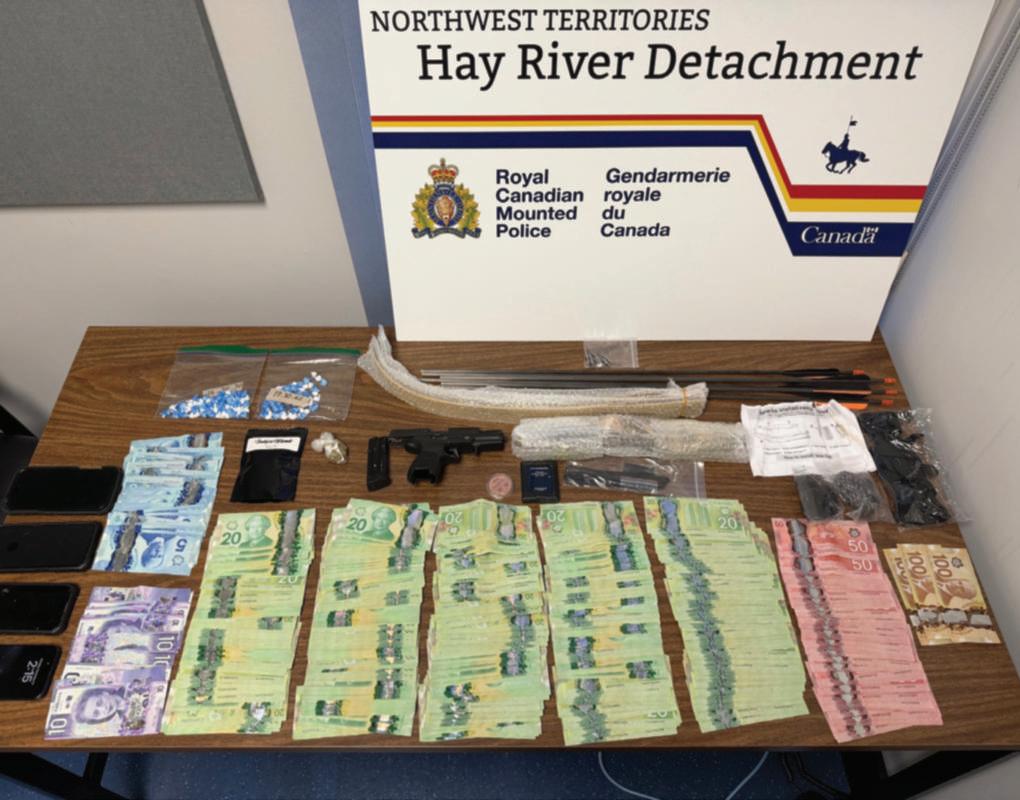
During a search of the residence,officersfound49grams of suspected crack-cocaine, pre-packaged for sale, a prohibited pistol with the serial number removed and more than $12,000 in cash.
As a result, Rukundo Fota, 23, of Edmonton, has been charged with two counts of possession of a weapon for a dangerous purpose, unsafe storage of firearms, un-
authorized possession of a prohibited weapon, possession of a prohibited weapon while knowing possession is unauthorized, possession of a prohibited firearm with ammunition without licence, possession of a weapon obtained by crime, possession of a firearm with tampered serial number,possessionofproperty obtainedbycrimeover$5,000, possession of a controlled substance for the purpose of trafficking, possession of illicit cannabis and failure to comply with release order conditions. He appeared before a justice ofthepeaceandwasremanded into custody.
Inuit university funding among reasons why
Idlout abstained on the federal budget
Arctic Infrastructure Fund and money for housing also cited
by Nuanvut MP
Nunavut MP Lori Idlout was one of four abstentionsduringthefederalbudgetvoteonNov. 17,andthoseabstentionswerepivotaltoallowing the budget to pass by a vote of 170-168, thus avoiding a federal election.
Idlout said Nunavummiut told her that promises made in Prime Minister Mark Carney’s first budget were worth securing, despite some of her objections.
Commitmentstobuild700residencesinNunavutthroughBuildCanadaHomes,$50million for Inuit Nunangat University from the Build CommunitiesStrongFund,developmentsfrom the Arctic Infrastructure Fund, and the Urban Rural Northern Indigenous Housing Strategy convinced Idlout to abstain rather than oppose the budget.
However, the Nunavut MP still condemned parts of the Liberal minority government’s spending plan.
“There are major concerns, like cuts to programsthatIndigenouspeoplesareforcedtorely on,” Idlout said.
NomoneyhasbeenallocatedfortheInuitChild
First Initiative, nor for Jordan’s Principle even though those funding streams are set to expire in March 2026.
Indigenous Services Canada Minister Mandy Gull-Masty told Nunavut News that the Inuit ChildFirstInitiativewillcontinue,butdeclined to explain how the program will operate with no federal government dollars.
The other MPs to abstain from voting on the federal budget were NDP MP Gord Johns and Conservative MPs Shannon Stubbs and Matt Jeneroux.
Green Party MP Elizabeth May voted in favour of the Liberal budget, the only opposition MP to do so.
ThefiveotherNDPMPsintheHouseofCommonsvotedagainstthefederalspendingplan.A press release from interim federal NDP leader Don Davies called it a “conservative” budget.
Davies and Idlout said they wanted to show theiroppositiontotheLiberalgovernment’splan while still avoiding an election.
“While critics say abstaining has negative connotations, the NDP heard from Canadians thatwhiletheyaredisappointedwiththebudget, theywantedustoworktopushforbetterfederal programsratherthanlaunchthecountryintoan election,” Idlout said.
A look at the drugs, cash and gun that was all seized by police from a residence in Hay River
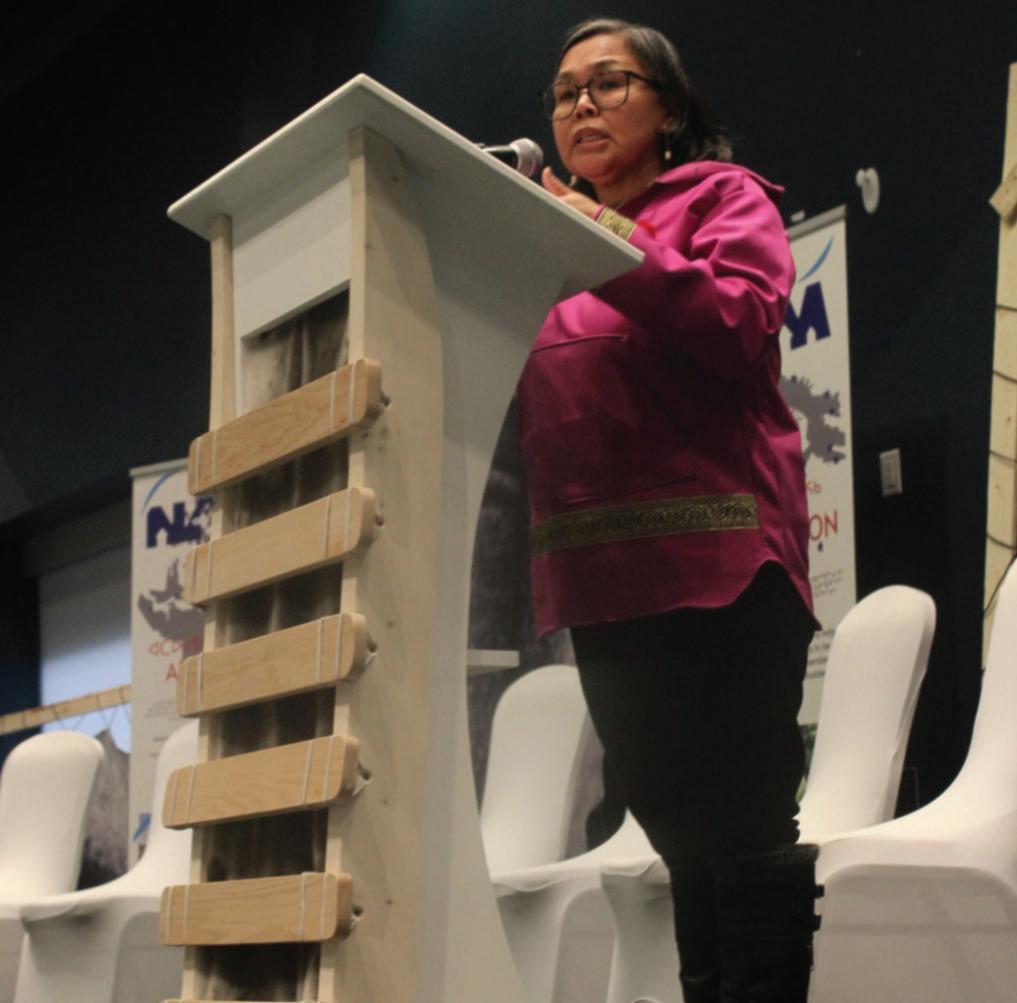
Nunavut MP Lori Idlout abstained from voting on the federal budget on Nov. 17. Her decision not to oppose the federal spending plan helped allow the budget to pass and avoided a federal election. William Koblensky Varela/NNSL photo
James McCarthy Northern News Services
William Koblensky Varela, Local Journalism Initiative Northern News Services
Premier assigns portfolios to Nunavut’s new ministers
Eight cabinet members oversee 33 portfolios
Premier John Main appointed the 33 ministerial portfolios to eight Nunavut cabinetmembersatthelegislativeassembly’sswearing-inceremonyonNov.20.
George Hickes will serve as deputy premier while DavidAkeeagok will assume the role of House Leader.
Theotherassignmentsareasfollows:
Premier John Main
-Minister of Finance
-Minister of Indigenous affairs
-Minister of Immigration
-Minister of Executive and IntergovernmentalAffairs
-Minister responsible for Utilities Rights and Review Council
-Minister responsible for Seniors
-MinisterresponsibleforNunavutLiquor and Cannabis Commission
-MinisterresponsibleforNunavutLiquor and Cannabis board
The premier can take a ministerial position away from an executive council member, but only a majority vote in the legislative assembly can remove an executive council member from the governing body.
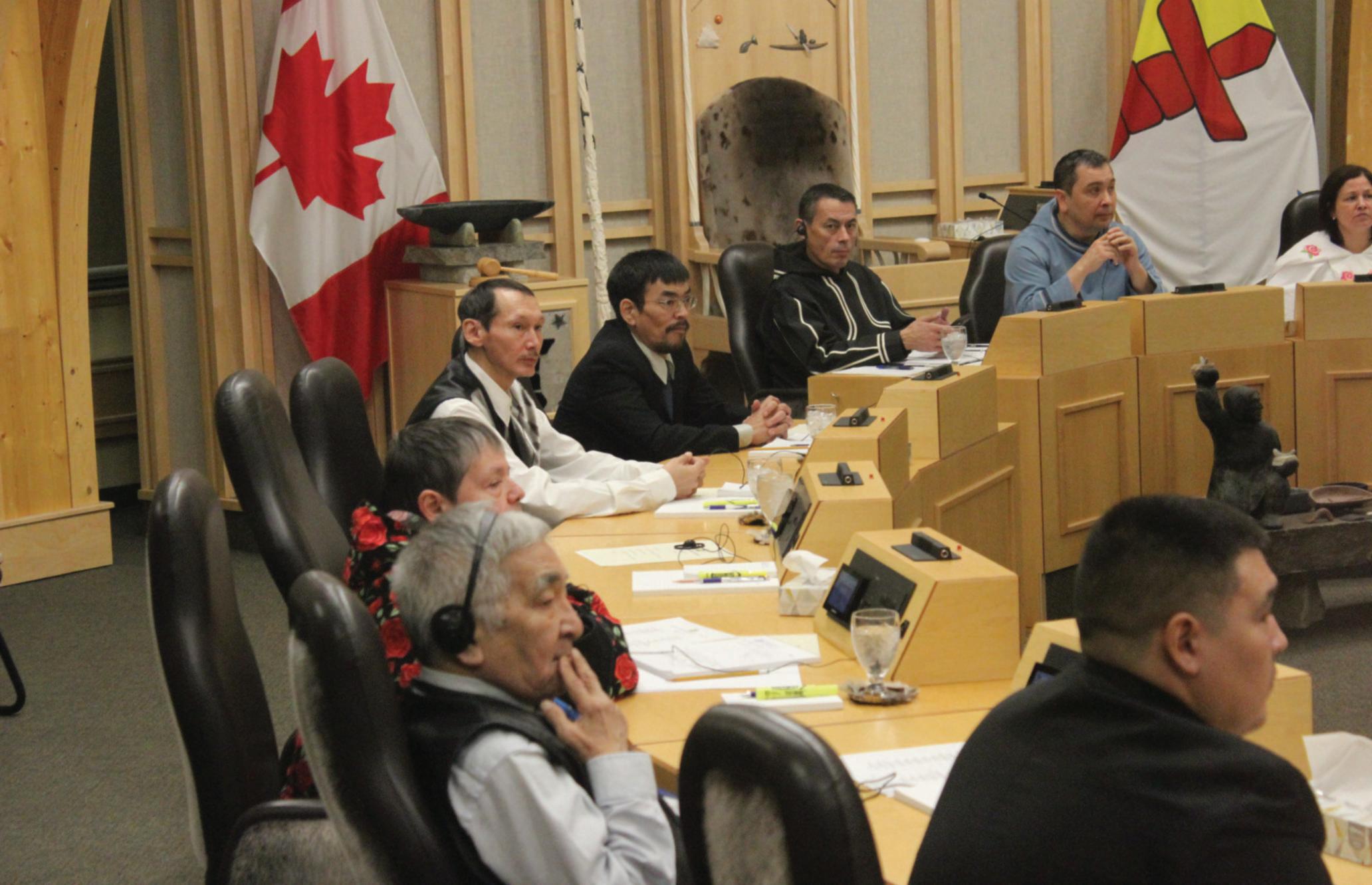
New Premier John Main gave cabinet members their ministerial positions at the legislative assembly’s swearing-in ceremony on Nov. 20. Foreground, Steven Taqtu, MLA for Quttiktuq; Alexander Sammurtok, MLA for Rankin Inlet North-Chesterfield Inlet; Annie Tattuinee, MLA for Rankin Inlet South; Brian Koonoo, MLA for Tununiq; Gordon Kautuk, MLA for Uqqummiut; clerk assistant Stephen Innuksuk; and Speaker David Joanasie. William Koblensky Varela/NNSL photo
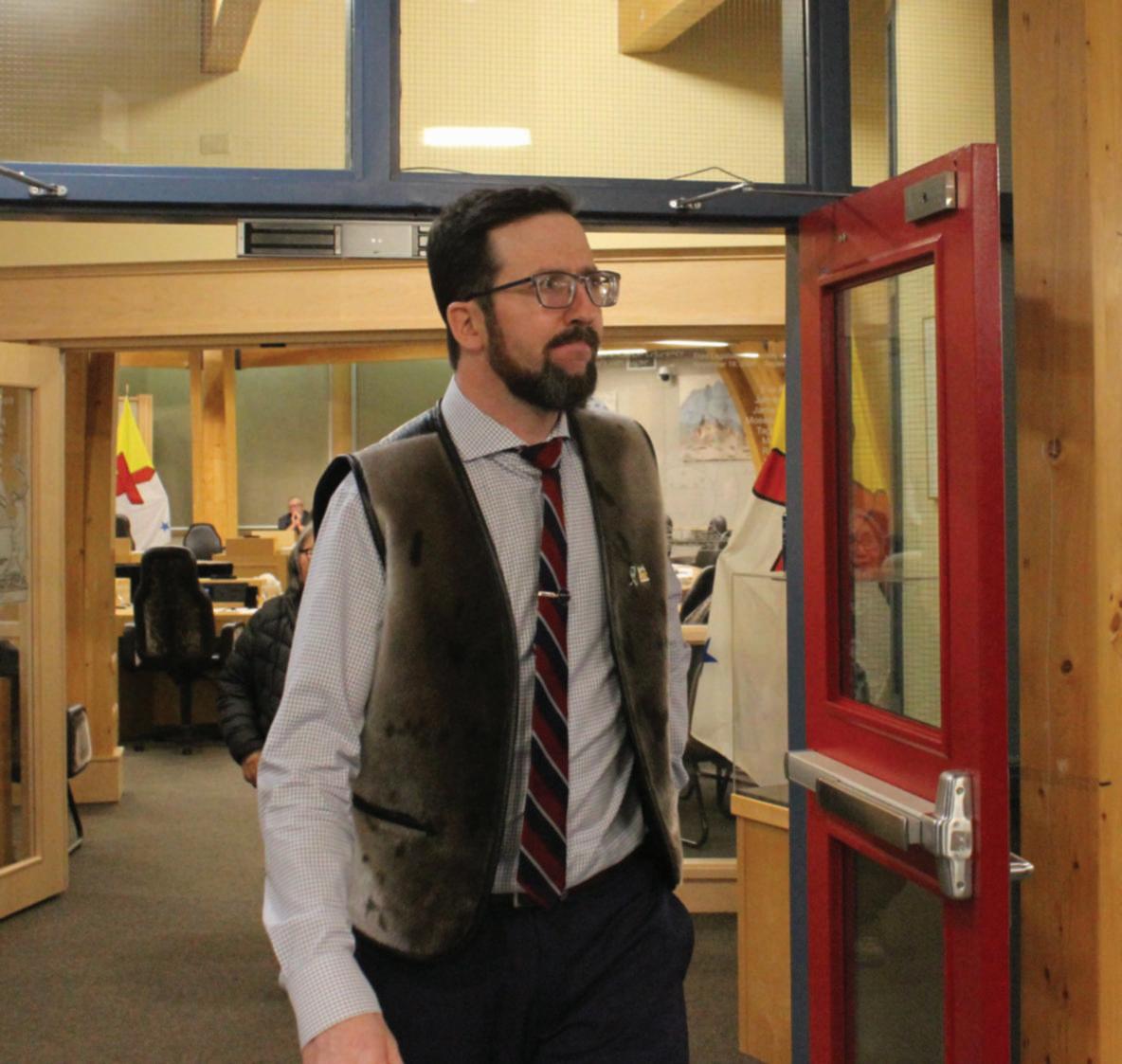
John Main exits the Nunavut Legislative Assembly chambers as Premier for the first time after being elected by his fellow MLAs at the leadership forum on Nov. 18. Main handed out cabinet positions on Thursday. William Koblensky Varela/NNSL photo
William Koblensky Varela, Local Journalism Initiative Northern News Services
Physicists and philosophers have long struggled to understand the nature of time: Here’s why
The nature of time has plagued thinkers for as long as we’ve tried to understand the world we live in. Intuitively, we know what time is, but try to explain it, and we end up tying our minds in knots.
St. Augustine of Hippo, a theologian whose writings influenced western philosophy, captured a paradoxical challenge in trying to articulate time more than 1,600 years ago:
“What then is time? If no one asks me, I know; if I want to explain it to a questioner, I do not know.”
Nearly a thousand years earlier, Heraclitus of Ephesus offered a penetrating insight. According to classical Greek philosopher Plato’s Cratylus: “Heraclitus is supposed to say that all things are in motion and nothing at rest; he compares them to the stream of a river, and says that you cannot go into the same water twice.”
Superficially, this can sound like another paradox — how can something be the same river and yet not the same? But Heraclitus adds clarity, not confusion: the river — a thing that exists — continuously changes. While it is the same river, different waters flow by moment to moment.
While the river’s continuous flux makes this plain, the same is true of anything that exists — including the person stepping into the river. They remain the same person, but each moment they set foot in the river is distinct.
How can time feel so obvious, so woven into the fabric of our experience, and yet remain the bane of every thinker who has tried to explain it?
An issue of articulation
The key issue isn’t one most physicists would even consider relevant. Nor is it a challenge that philosophers have managed to resolve.
Time itself isn’t difficult to grasp: we all understand it, despite our persistent struggle to describe it. As Augustine sensed, the problem is one of articulation: a failure to
precisely draw the right boundaries around the nature of time both conceptually and linguistically.
Specifically, physicists and philosophers tend to conflate what it means for something to exist and what it means for something to happen — treating occurrences as if they exist. Once that distinction is recognized, the fog clears and Augustine’s paradox dissolves.
The source of the issue
In basic logic, there are no true paradoxes, only deductions that rest on subtly mishandled premises.
Not long after Heraclitus tried to clarify time, Parmenides of Elea did the opposite. His deduction begins with a seemingly valid premise — “what is, is; and what is not, is not” — and then quietly smuggles in a crucial assumption. He claims the past is part of reality because it has been experienced, and the future must also belong to reality because we anticipate it.
Therefore, Parmenides concluded, both past and future are part of “what is,” and all of eternity must form a single continuous whole in which time is an illusion.
Parmenides’pupil, Zeno, devised several paradoxes to support this view. In modern terms, Zeno would argue that if you tried walking from one end of a block to the other, you’d never get there. To walk a block, you must first walk half, then half of what remains, and so on — always halving the remaining distance, never reaching the end.
But of course you can walk all the way to the end of the block and beyond — so Zeno’s deduction is absurd. His fallacy lies in removing time from the picture and considering only successive spatial configurations. His shrinking distances are matched by shrinking time intervals, both becoming small in parallel.
Zeno implicitly fixes the overall time available for the motion — just as he fixes the distance — and the paradox appears
only because time was removed. Restore time, and the contradiction disappears. Parmenides makes a similar mistake when claiming that events in the past and future — things that have happened or that will happen — exist. That assumption is the problem: it is equivalent to the conclusion he wants to reach. His reasoning is circular, ending by restating his assumption — only in a way that sounds different and profound.
Space-time models
An event is something that happens at a precise location and time. In Albert Einstein’s theories of relativity, space-time is a four-dimensional model describing all such occurrences: each point is a particular event, and the continuous sequence of events associated with an object forms its worldline — its path through space and time.
But events don’t exist; they happen. When physicists and philosophers speak of spacetime as something that exists, they’re treating events as existent things — the same subtle fallacy at the root of 25 centuries of confusion.
Cosmology — the study of the whole universe — offers a clear resolution.
It describes a three-dimensional universe filled with stars, planets and galaxies that exist. And in the course of that existence, the locations of every particle at every instance are individual space-time events. As the universe exists, the events that happen moment by moment trace out worldlines in four-dimensional space-time — a geometric representation of everything that happens during that course of existence; a useful model, though not an existent thing.
The resolution
Resolving Augustine’s paradox — that time is something we innately understand but cannot describe — is simple once the source of confusion is identified.
Events — things that happen or occur — are not things that exist. Each time you step
into the river is a unique event. It happens in the course of your existence and the river’s. You and the river exist; the moment you step into it happens.
Philosophers have agonized over time-travel paradoxes for more than a century, yet the basic concept rests on the same subtle error — something science fiction writer H.G. Wells introduced in the opening of The Time Machine.
In presenting his idea, the Time Traveller glides from describing three-dimensional objects, to objects that exist, to moments along a worldline — and finally to treating the worldline as something that exists. That final step is precisely the moment the map is mistaken for the territory. Once the worldline, or indeed space-time, is imagined to exist, what’s to stop us from imagining that a traveller could move throughout it?
Occurrence and existence are two fundamentally distinct aspects of time: each essential to understanding it fully, but never to be conflated with the other.
Speaking and thinking of occurrences as things that exist has been the root of our confusion about time for millennia. Now consider time in light of this distinction. Think about the existing things around you, the familiar time-travel stories and the physics of space-time itself.
Once you recognize ours as an existing three-dimensional universe, full of existing things, and that events happen each moment in the course of that cosmic existence — mapping to space-time without being reality — everything aligns. Augustine’s paradox dissolves: time is no longer mysterious once occurrence and existence are separated.
—Daryl Janzen is an observatory manager and astronomy instructor at the University of Saskatchewan.
This article was originally published on The Conversation, an independent and nonprofit source of news, analysis and commentary from academic experts. Disclosure information is available on the original site.
Time itself isn’t difficult to grasp: we all understand it, despite our persistent struggle to describe it. Black Press file photo