































By Mark J. Pescatore
By Kathy Katz
By Jennifer Guhl


By Mark J. Pescatore
By Kathy Katz
By Jennifer Guhl

Captain Kirk is about to be very impressed.
Recently, Jabra and the London School of Economics and Political Science (LSE) shared some research about voice AI. Not to be confused with AI voices, which are getting scary good at this point, their voice AI research was focused on using talking instead of typing to interact with GenAI. The behavioral study was led by Michael Muthukrishna, a professor of economic psychology at LSE, and relied on data from 171 workers of various ages from various industries.
First, let’s acknowledge that we’ve been working toward this level of voice interaction for some time. Dictation machines have been around since the 1880s. In more modern times, professionals have been using cassette tape-based and digital voice recorders to take notes for later transcription.

Today, it's not unusual for someone to "write" a text by speaking into their phone. Plus, I've recently reviewed products from Insta360 and viaim that literally recorded my conversations, converted them to text, and used AI to format those ramblings into useful documents. And we can't forget about Alexa or Siri, which have been doing our electronic bidding via voice for more than a decade.
I hope I'm making James Burke proud when I say you can follow the connections. To me, there is a clear technological line (stretching over the last 145 years or so) from recording your voice to improve workflows to using your voice to direct workflows. Now, we're poised to take the next step.
The Jabra and LSE study suggests that voice will be “a primary interface for generative AI in many work scenarios” within three years. That might seem like an aggressive timeline, but 14% of study participants already prefer voice to typing when interacting with GenAI, which exceeds the study’s threshold for the early adopter phase.
In other words, voice AI is already happening—and mass adoption is right around the corner. And no, it’s not just the young’uns. Older professionals were on board with voice-first AI interaction for work tasks once they used it.
Here’s something that surprised me: Trust in AI rose by 33% with voice interaction compared to text. According to the report, “Voice adds something essential: a sense of connection. It makes AI feel less like a tool and more like a collaborator.”
What could a voice-first future mean for integrators? Well, let’s head out for a field test. Imagine you’ve completed a complex conference room built around AVoIP technology. There’s just one problem: When you press the proverbial power button, the system doesn’t work or certain devices malfunction.
Now, if it’s me in that equipment room, I’m going to be yelling at clouds to express my frustration. “Why isn’t this working?” I will inquire angrily to no one in particular.
But with voice AI, I could ask the system, “Why isn’t this working?” and actually get a response. Then, I could tell the system to verify the connectivity of the gear, check for incompatibility between operating systems, or even perform a system-wide diagnostic. Put simply, I could tell the system to fix the problem without having to type specific instructions for each level of problem solving. Nice.
The Jabra and LSE study suggests that voice will be “a primary interface for generative AI in many work scenarios” within three years.
Still, there’s more work to do: During the study, some tasks performed via voice AI were about 20% less effective. The researchers also acknowledge the need to address privacy concerns, normalize voice AI behavior, identify the work scenarios where voice AI works best, and, of course, equip the workforce with the right technology. I’m betting Jabra has a few ideas to help you with that last one. We’re quickly approaching the promise of voice-based computer interaction that seemed so futuristic when Star Trek debuted in 1966. Of course, that show was set in the 23rd century. We seem ready to hit the USS Enterprise’s level of voice AI about 200 years ahead of schedule, thanks to the (forgive me) warp speed at which GenAI is advancing. However, before voice AI boldly goes into the mainstream, let's make sure we get it right.
Content Director Mark J. Pescatore, Ph.D. mark.pescatore@futurenet.com
Senior Content Manager Wayne Cavadi
Contributors James Careless, Jennifer Guhl, Carolyn Heinze, Nyere Hollingsworth, Kathy Katz Art Editors
Rob Crossland, Sam Richwood
Production Managers
Nicole Schilling, Heather Tatrow
ADVERTISING SALES
Managing Vice President of Sales, B2B Tech
Adam Goldstein, adam.goldstein@futurenet.com, 212-378-0465
Sales John Casey, john.casey@futurenet.com, 845-678-3839
Janis Crowley, janis.crowley@futurenet.com, 845-414-6791
Debbie Rosenthal, debbie.rosenthal@futurenet.com, 212-378-0468
Zahra Majma, zahra.majma@futurenet.com, 845-678-3752
Andi Tureson, andi.tureson@futurenet.com, 646-544-0007
SUBSCRIBER CUSTOMER SERVICE
To subscribe, change your address, or check on your current account status, go to avnetwork.com and click on About Us, email futureplc@computerfulfillment. com, call 888-266-5828, or write P.O. Box 1051, Lowell, MA 01853.
LICENSING/REPRINTS/PERMISSIONS
SCN is available for licensing. Contact the Licensing team to discuss partnership opportunities. Head of Print Licensing Rachel Shaw licensing@futurenet.com
MANAGEMENT
SVP, MD, B2B Amanda Dawrman-Allen VP, Global Head of Content, B2B Carmel King MD, Content, AV Anthony Savona Global Head of Sales, Future B2B Tom Sikes Managing VP of Sales, B2B Tech Adam Goldstein VP, Global Head of Strategy & Ops, B2B Allison Markert VP, Product & Marketing, B2B Andrew Buchholz Head of Production US & UK Mark Constance Head of Design, B2B Nicole Cobban
FUTURE US, INC. 130 West 42nd

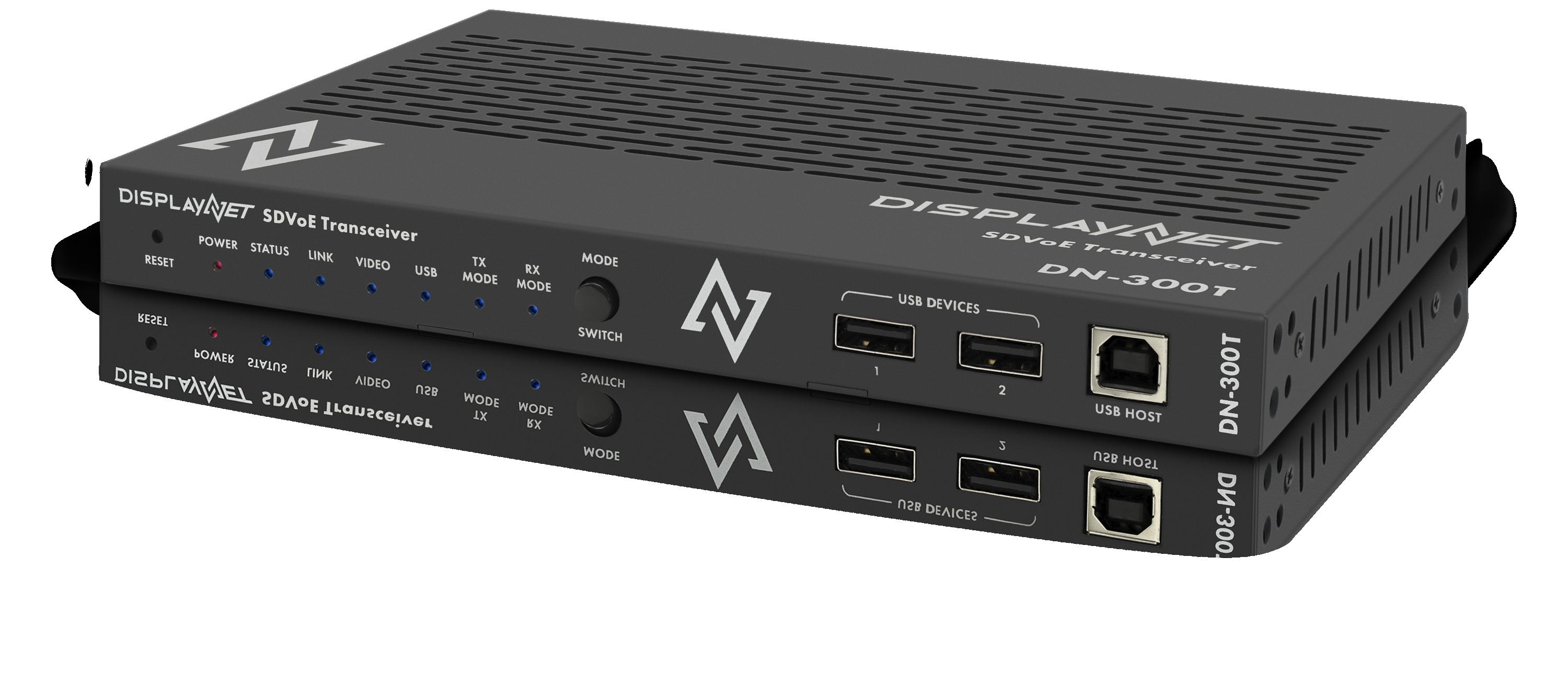
The DisplayNet DN-300 Series delivers an unprecedented level of AVoIP performance, versatility and reliability— at a price point that defines the industry benchmark for value. Based on the latest SDVoE technology, the DN-300 Series provides 4K/60 (4:4:4) video distribution with limitless scalability, zero-frame latency and zero image artifacts.
These units offer unique features that provide system designers with exceptional versatility:
Switchable Transmitter / Receiver operation
Bi-directional Transceiver mode (DN-300T)
Dual (copper / fiber) 10G network interfaces
Long Range: 100 meters (copper), 30 km (optical)
Auxiliary H.264/5 video output streams
Powerful network security features

PoE+ support
Silent, fanless operation
Ultra-compact, rackmountable case
Versatile KVM Routing
DN-300H: USB HID device instant switching
DN-300T: full-bandwidth USB 2.0 routing
DisplayNet also provides software-defined MultiViewer and Advanced Video Wall engines that power a wide range of applications without the expense and complexity of ancillary products. A highly intuitive web-based UI and API greatly simplifies setup and installation, as well as integration into third-party control systems.
Contact us today to see how DisplayNet can move your next AV system into the future.
sales@dvigear.com
(888) 463-9927
www.displaynet.com














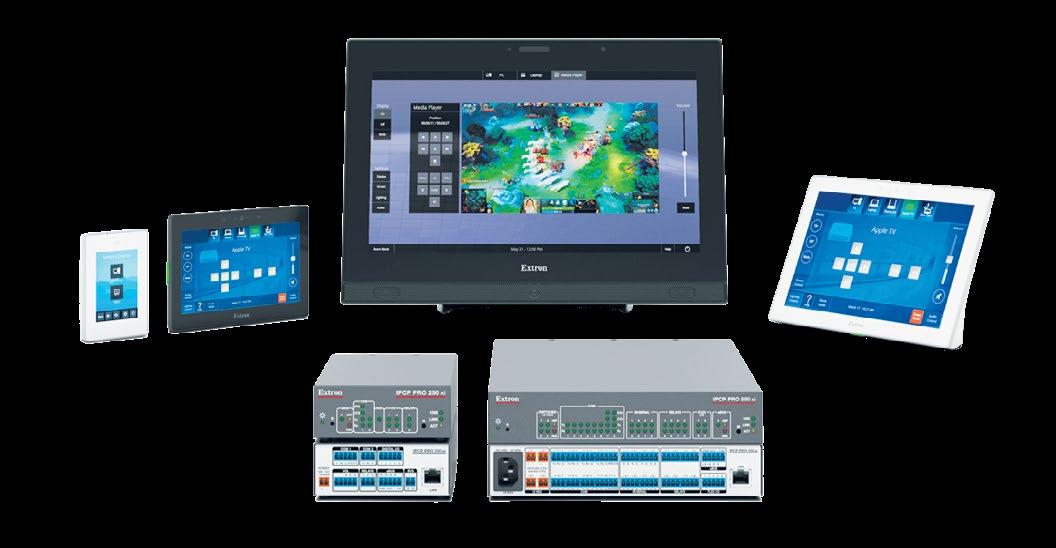
Select Extron control and automation products have received Joint Interoperability Test Command (JITC) approval by the U.S. Department of Defense Information Systems Agency (DISA). This certification results in confident installation of control and automation systems in the most secure information and network infrastructures.
Extron control and automation products on the Approved Products List (APL) include all IP Link Pro xi Series control processors and a wide selection of TouchLink Pro touchpanels. A complete list of approved Extron products tested to JITC Interoperability (IO) and Information Assurance (IA) certification is available on the DISA website.
“Extron has a long history of providing the greatest selection of Pro AV products for government installations,” said Casey Hall, chief marketing officer, Extron. “Achieving JITC certification for our control and automation products is a testament to our dedication to engineering excellence. We now offer one of the most comprehensive DoD-tested and approved AV solutions in the industry, ensuring secure and reliable performance in mission-critical environments.”
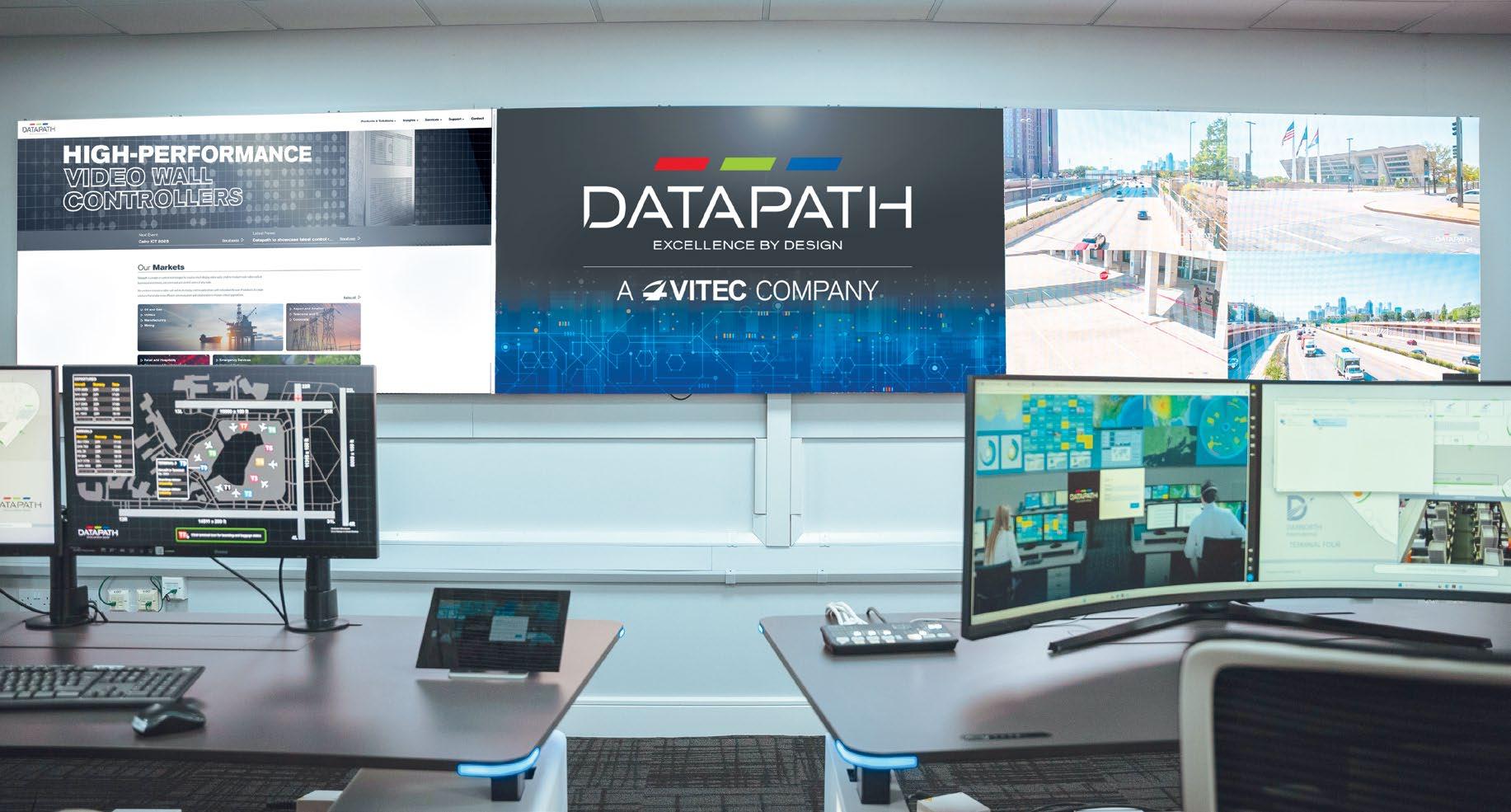
In November, VITEC formally announced the acquisition of Datapath, a strategic move designed to strengthen VITEC’s video wall and video distribution portfolio, offering customers access to expanded engineering capability, customer support, distribution, and geographical reach. Datapath is known for its real-time video processing for largescale video walls, AVoIP content distribution, and KVM control in mission-critical control rooms, commercial applications, and creative environments.
The integration will see Datapath’s product names and categories—including its video wall controllers and processors, AVoIP solutions, capture cards, and control room solutions—preserved within the VITEC portfolio. VITEC intends to maintain familiarity, while enhancing support and development capabilities for Datapath. Datapath serves customers in more than 100 countries across multiple verticals.
Datapath’s advanced video wall processing, multi-display graphics, and AVoIP engineering expertise will be integrated into VITEC’s solutions,
AVPros announced its rebrand to Tecnetics in November. The change marks a significant evolution in the company’s identity, mission, and scope of services. The new name reflects the organization’s expanded capabilities beyond AV integration, encompassing low-voltage infrastructure, physical security, and managed IT field services designed to deliver complete, measurable outcomes across every layer of enterprise technology.
The transition to Tecnetics represents the company’s growth from a regional AV integrator into a national technology partner with standardized playbooks, governance models, and performance metrics. The name “Tecnetics” encapsulates the company’s focus on technical precision, connectivity, and integrated delivery.
Tecnetics is being led by industry veterans Ciaran Hamilton, co-founder and CEO, and Giovanni Agramonte, co-founder and COO. Hamilton leads with a consultative mindset, bridging engineering precision with strategic insight to help organizations adopt solutions that enhance the way they work. Agramonte, a seasoned AV and IT professional, brings extensive experience in system design, implementation, and operations management.

Existing customers will continue working with the same dedicated teams and processes, now supported by expanded resources and a unified brand promise. “Our clients asked us to take greater ownership across interconnected systems—from AV and network design to security and support—and this rebrand is our commitment to doing exactly that,” said Hamilton.
allowing it to offer a broader range of capabilities to support IPTV distribution applications. Once the integration is complete, nearly 50% of VITEC’s workforce will be engineers, underscoring the company’s commitment to technical innovation and customer-centric development.
Phil Webster, VP of R&D for VITEC, was leading the R&D team at Datapath. Now, he will be responsible for the engineering teams across the entire VITEC portfolio of video streaming solutions. “Bringing VITEC and Datapath together will allow us to accelerate product development and offer an even broader range of solutions, features, and services,” he said. “We’ve worked hard internally to align systems and strengthen both businesses, and we’re excited to integrate our combined expertise.”
Nicolas Quesne, deputy CEO of VITEC, said the company’s portfolio complements VITEC’s IPTV distribution technologies and opens new opportunities in the control room sector. “This move marks an exciting new phase for VITEC as we continue our growth as a company,” he added.
Out-of-home (OOH) ad-tech provider Broadsign has acquired Place Exchange, an independent OOH supply-side platform (SSP), with a minority investment from Crestline Investors. Marking Broadsign’s fourth acquisition in less than seven years, the agreement expands Broadsign’s network of programmatically transactable OOH inventory to 1.8 million screens.
The acquisition includes the Place Exchange platform, including its expansive network of inventory in the United States and abroad, deep demand-side platform integrations, and suite of innovative programmatic solutions, including the PerView OOH measurement solution. Combined with Broadsign’s content management system, ad serving, and buy-and-sell side capabilities, the acquisition bolsters Broadsign’s global programmatic digital OOH offering and fast-tracks innovation across its entire OOH ad-tech portfolio.
Keizer City Television, a government access channel serving Keizer, OR, has deployed Telycam Vision+ N3 PTZ cameras to upgrade the visual quality of its live meeting coverage.
Broadcasting and streaming from council chambers in the Keizer City Hall, the channel, which is managed by the city and operated by Ambition Pictures, provides live coverage of city council and other municipal activities including planning commission, transportation, and parks advisory board sessions. Last summer, KeizerTV set out to replace and improve upon its aging, first-generation NDI PTZ cameras.
“At KeizerTV we do our best to maintain a high level of production for everything we do, to give our viewers an optimal experience,” said Phillip Wade, producer at KeizerTV. “Our existing cameras were starting to have issues such as focus drift, but we also wanted to improve our overall quality to meet our high standards.”
Wade’s quality goals included increasing the number of cameras, as well as improving the optical zoom range to allow better close-ups across the council chamber space. “The resolution of our existing cameras was 1920x1080 HD, but we wanted better color reproduction, exposure, and sharpness,” he added. “Being able to get better color and exposure in our council chambers improves the overall production quality.”
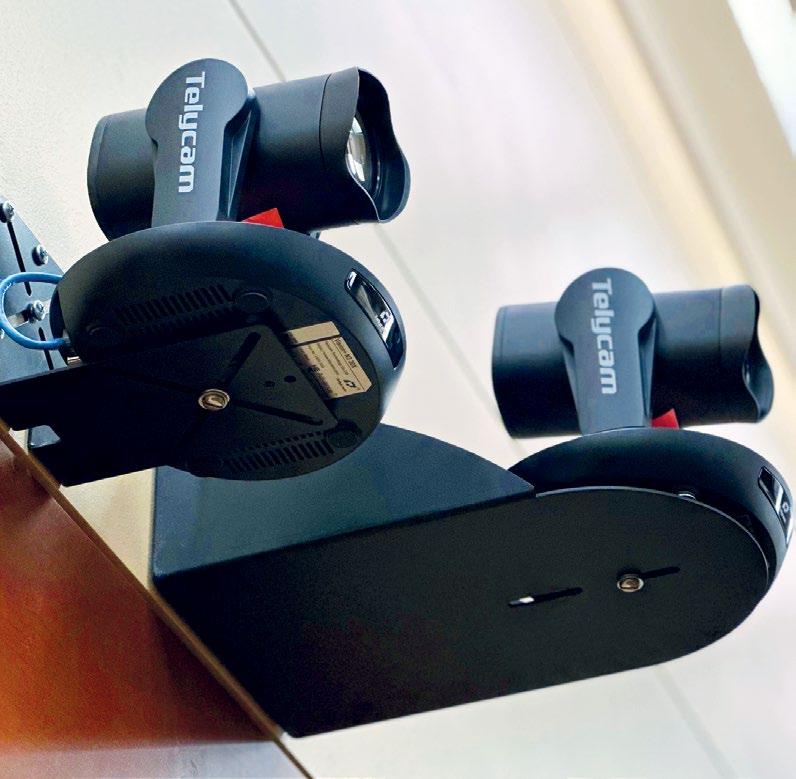
On the recommendation of reseller Mid-Valley Media, Wade evaluated Telycam’s Vision+ N3 cameras with 30x optical zoom. The city purchased and deployed four of the cameras, going live with them in late August 2025.
The city council chambers feature a forwardfacing curved dais at the front of the room that seats seven participants, with smaller offshoots at each side for additional participants. Two Telycam cameras at the back of the room capture close-up and wide shots of people on the main dais, while the other two cameras are positioned at the sides of the room to
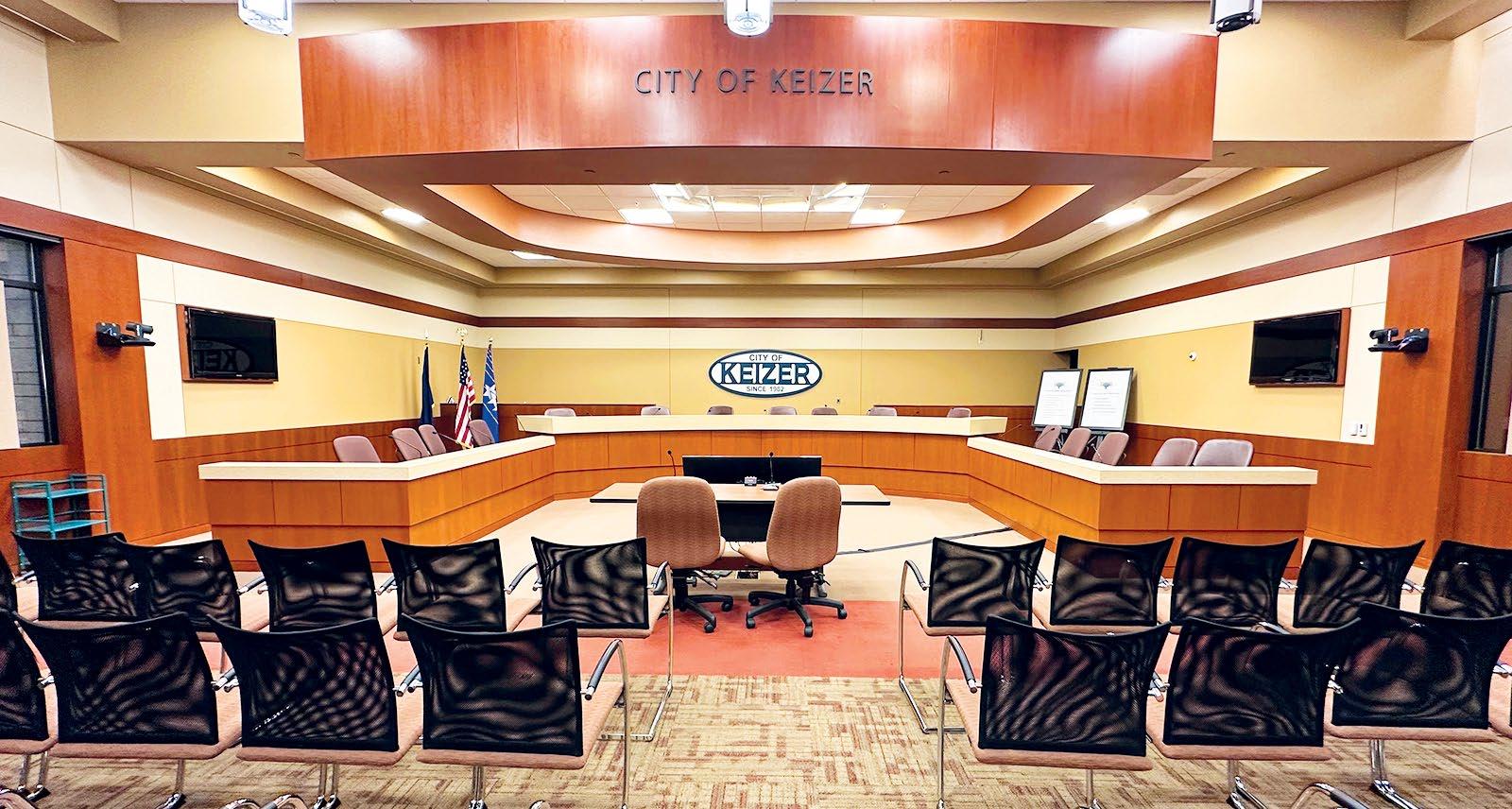
capture people seated on the offshoot wings. The side cameras also cover the area where members of the public present or speak during city meetings.
KeizerTV’s setup includes a Vizrt TriCaster TC1 Pro production switcher in an IP-based workflow using the NDI HX3 connectivity standard. In addition to being broadcast on television via Comcast, the output of the TriCaster is also streamed live on the city’s Facebook and YouTube channels in both English and Spanish. The Spanish streams are created by sending the NDI feed of the TriCaster’s program output to another room where it is translated by interpreters, with the Spanish audio translation mixed in with a TriCaster Mini.
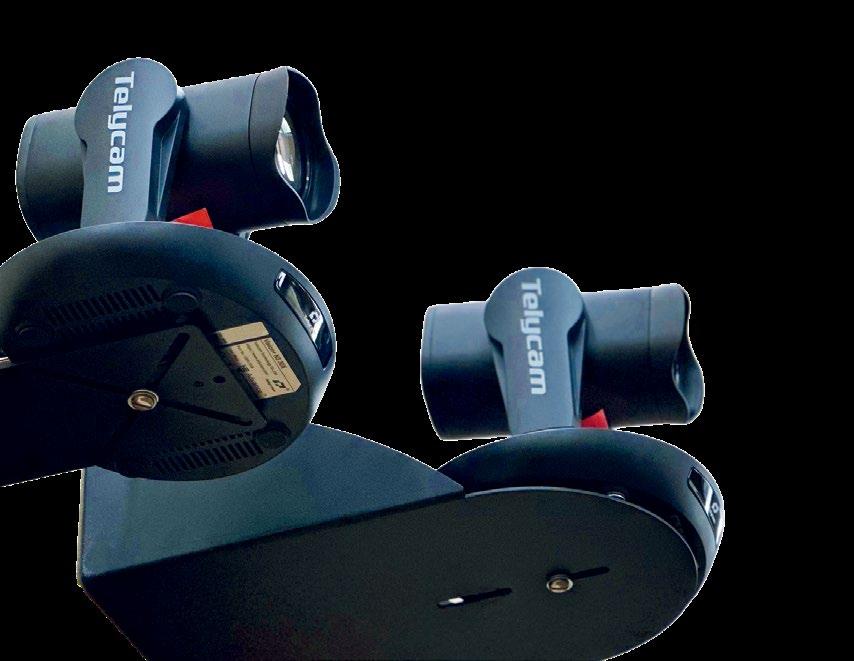
cameras through the TriCaster TC1, but found it cumbersome to do so through the same control surface being used for switching. As a result, Wade added a Telycam V-Joy+ AT controller to the installation. “It’s important for us to be able to quickly select a camera and move it,” he said, “and the Telycam controller lets us do that efficiently.”
Initially, KeizerTV initially controlled the Telycam
According to Wade, the Vision+ N3 cameras have met all of KeizerTV’s objectives and expectations. He appreciates the quality of the video they produce, as well as the speed and precision of the auto-focus. “I also appreciate being able to manually set the aperture of the camera,” he said. “That gives us some control of the depth of field, which makes the footage look and feel higher end. We’re very pleased with the Telycam cameras. They do a fantastic job.”
DCC Technology, Almo Pro AV’s parent company, has rebranded as Nexora. More than a name change, Nexora marks a significant step forward, defining the future of the group with clarity, purpose and momentum. The rebrand brings together 27 specialist businesses, including Almo and JAM in North America, and 2,500 people under one shared vision to deliver progressive technology that enriches lives.
“This is an exciting milestone for our business,” said Clive Fitzharris, CEO of Nexora. “Nexora reflects who we are today and where we are going, a community of specialist businesses built on deep expertise and strong partnerships.”
Nexora was chosen for its simplicity, positive energy, and alignment with the company’s purpose to deliver progressive technology that enriches lives.
Formed from “Nex” meaning next and “Ora” meaning energy, Nexora symbolizes progress, momentum, confidence, and forward motion. With the completed sale of Exertis’ UK IT businesses and the exits from lower-margin IT activities in France, Spain, and the Netherlands, the Exertis name is being retired by the businesses in the Nexora family.
“For Almo Pro AV, the brand evolution of our parent company from DCC Technology to Nexora more accurately represents who we are as a Pro AV specialty
distribution business, and the energy and progressiveness we continue to bring to this industry,” Dan Smith, EVP of Almo Pro AV, told SCN. “Most importantly, our vendors, integrators, and resellers will see no changes to their business relationship with Almo Pro AV as a result of the brand update. All contacts and joint plans remain the same. Our dedication to the Pro AV industry remains as steadfast and strong as ever. We aren’t going anywhere.”

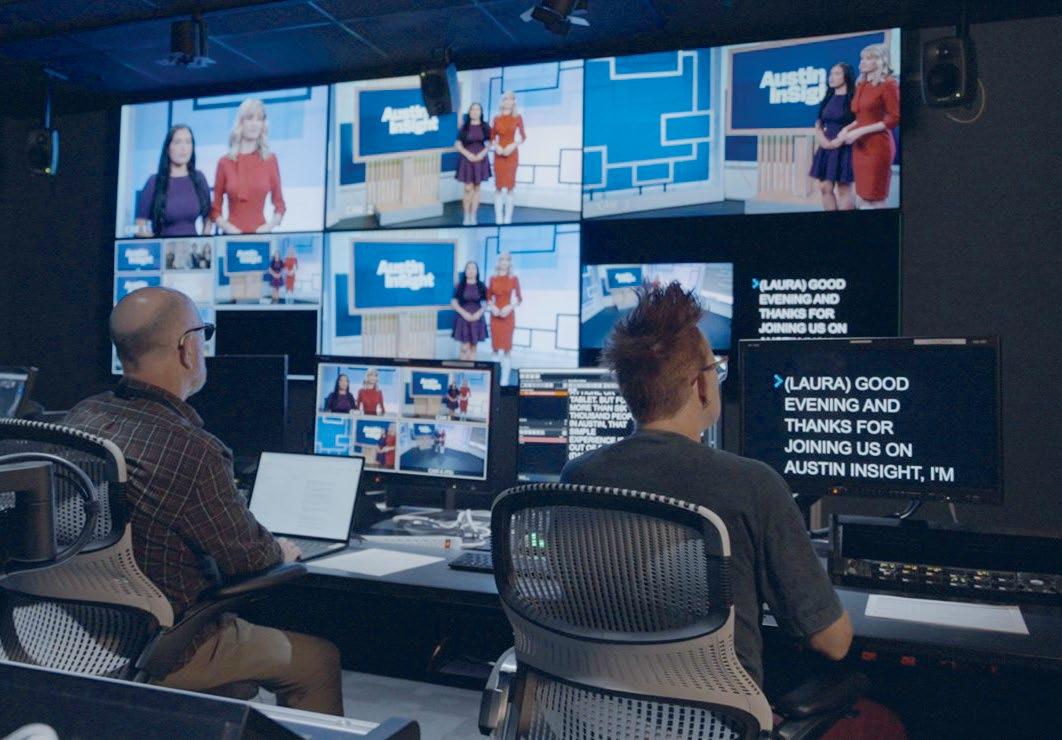
Austin PBS recently upgraded its facilitywide communications infrastructure, deploying Clear-Com’s Eclipse HX, FreeSpeak II beltpacks, and V-Series panels to support productions across its three studios and offices. The project was designed and implemented in collaboration with Key Code Media, which helped ensure the new facility had solutions tailored to the station’s unique workflow needs.
The Clear-Com system combines a powerful digital matrix infrastructure with wireless and operator panels to deliver steady communication across every department. The facility-wide system supports roaming across multiple studios and
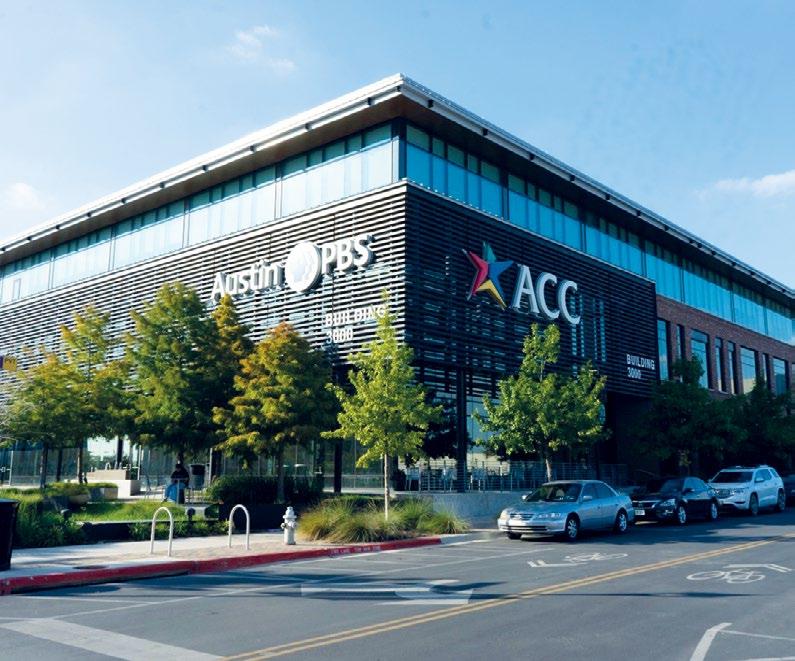
offices, with different programming for each studio and partyline. Austin PBS employs 81 full-time staff and dozens of day-rate production staff, but this integrated approach lets staff stay connected anywhere in the venue, helping to manage every production.
“This system allows us to scale rapidly for any type of production, from small documentary crews to large events with over 100 staff,” said Chris Ostertag, CTO at Austin PBS. “Key Code Media didn’t just deliver specs; they stood side by side with us every step of the way. Without them, this facility would not be what it is today.”
“PBS isn’t a product we’re selling, we’re here to
protect and serve our community,” added Katherine Heard, manager of engineering and IT at Austin PBS. “Partnerships like this are critical in helping us deliver on that mission and continue moving forward.”
Heard emphasized the flexibility and reliability of the Clear-Com solutions, which includes V-Series panels for fixed operator stations as well as 35 beltpacks and 15 transceivers for wireless coverage. “With FreeSpeak II beltpacks, an Eclipse core, and the ability to utilize bone conduction audio, our team can move across studios, offices, and events while staying connected,” she said. “Even our Zoom communications are integrated directly through Clear-Com panels.”
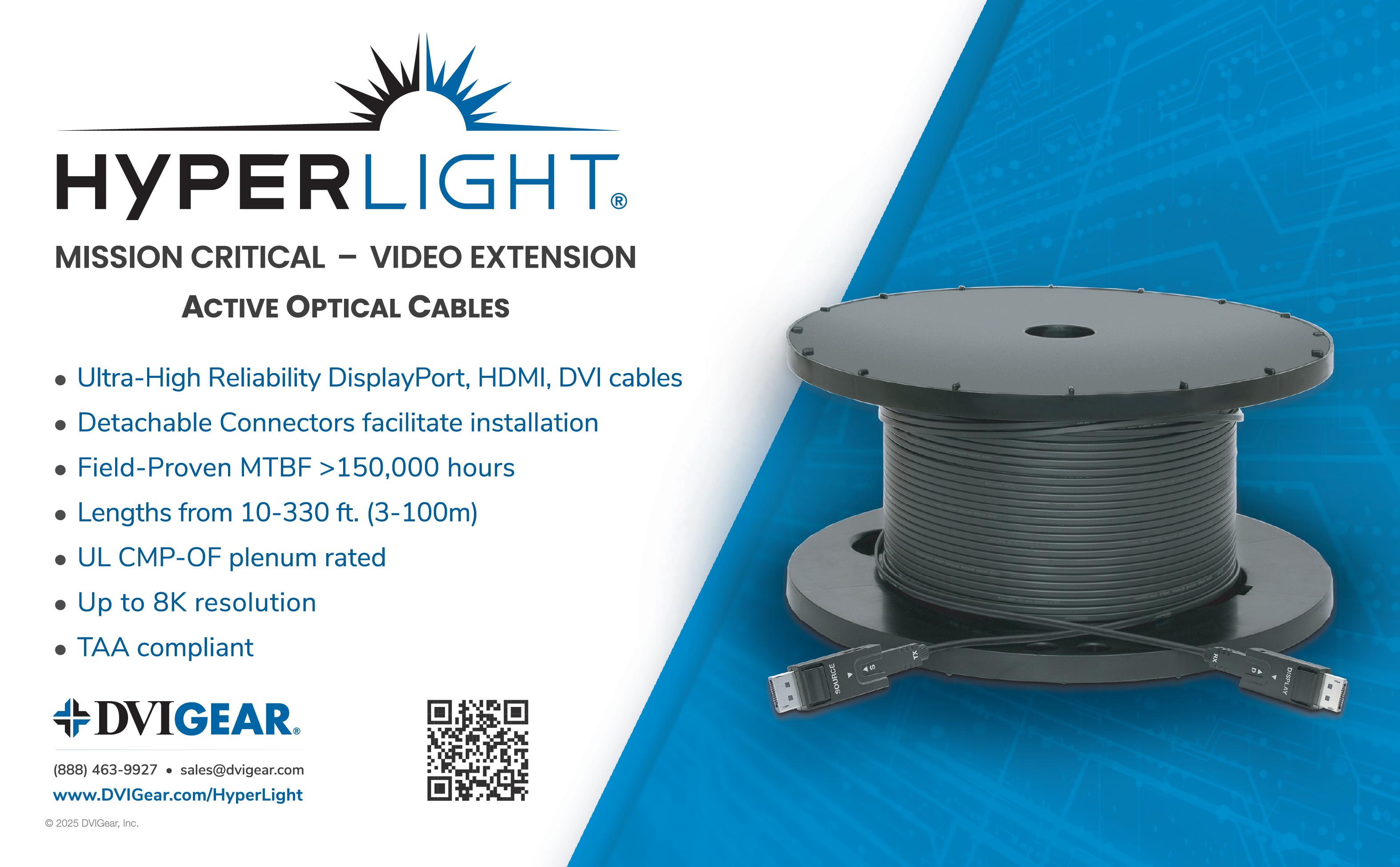
DVIGear optimizes user experiences and embraces SDVoE with its DisplayNet platform.
By Mark J. Pescatore
SCN: How long have you been with this company, and what are your responsibilities?
Lisa Barlow Flournoy: I joined DVIGear formally in 2013. As marketing support manager, I oversee our marketing initiatives. My role includes developing brand and product marketing materials, managing digital content and coordinating our trade show presence. I also work closely with our technical and customer support teams to provide product support and ensure a smooth experience for our customers.
SCN: DVIGear celebrated its 25th anniversary back in 2024. What’s the secret to your longevity?
LBF: Founded in 1999, DVIGear was an early player in the digital video connectivity market. Over time, the AV market moved from analog to digital, and the number of “pedestrian” connectivity products grew exponentially. As the market swelled, it moved into a commodity model that emphasized high volume sales with low profit margins. One of our fundamental corporate tenets is to provide unique and innovative product solutions. Rather than investing in commodity products, DVIGear resolved to focus on engineering its own value-added products, maximizing design and development based on the needs of our customers.
SCN: What is something that most end users still don’t quite understand when it comes to AVoIP?
LBF: Many AV customers don’t understand the intrinsic value that AVoIP offers. At times, there seems to be a reluctance to embrace new technology. Another aspect of AVoIP that people may not understand is the difference between the types of systems, 1GbE versus 10GbE, utilized by the SDVoE standard.
One of the largest budget considerations in an SDVoE system is the number of endpoints (Tx and Rx) required. While a 10GbE Ethernet switch is more expensive than a 1GbE switch, the added cost is negligible when looking at the overall system price. A much larger concern is the cost of the Tx and Rx endpoints, as many are required for most systems. Further, an SDVoE AVoIP system provides more capabilities and better quality with no or minimal compression.
SCN: What makes the DisplayNet platform unique in the AVoIP distribution space?
LBF: We believe that DisplayNet is unique because there is no other product in the AVoIP market that has the combination of features, flexibility, and ease of setup that we offer. Like some other products,
DisplayNet is based on SDVoE technology; however, each manufacturer decides what SDVoE features will be used in their product line and how they will be implemented. DisplayNet is known for its robust but flexible implementation of the SDVoE 10GbE platform. It boasts highly advanced software, including sophisticated, responsive, web-based documentation built into our DisplayNet Server.
Driven by the user experience, DisplayNet software development is a core strength of DVIGear’s AVoIP platform. For designers and installers, the DisplayNet Manager emphasis is on configuration ease and optimized user experience. For end users, the same qualities are focused on execution via DisplayNet Controller, which is newly released software for end users to utilize a DisplayNet system on a day-to-day basis in a production environment. It focuses on fewer options and simplified functionality.
SCN: How does DisplayNet Manager simplify system setup?
LBF: DisplayNet Manger is highly intuitive and webbased, with built-in, context-sensitive documentation. Our development team actively uses AI to optimize documentation and code. Many hundreds of hours of refinement have been geared to optimize the user experience. Layout, menus, organization, built-in documentation, and warning screens all contribute to facile use of the platform.
Who is the user? A system designer, system engineer, or installer doing setup and configuration work. Software that is not as intuitive as DisplayNet can be confusing, hence time-consuming and frustrating to employ. Documentation that is not integrated into the system likewise degrades the user experience. DisplayNet documentation is context sensitive, intelligently routing the user to applicable Help subsections.
SCN: DisplayNet is built to support SDVoE workflows. What made you commit to that standard?
LBF: The SDVoE model is very compatible with our corporate culture in that it emphasizes flexibility to design unique solutions and provide added value. The attributes that SDVoE offers are in line with what DVIGear believes in as a company: high quality, minimal compromise, and an emphasis on flexibility, versatility, and added value. We’ve been working with the SDVoE team for over 10 years and have a long-term relationship and stellar track record with the platform. Longevity is a key aspect of committing to the standard. The dedication to and hours spent with this platform underscore the importance of refining and executing this solution for our clients.

Lisa Barlow Flournoy
Position: Marketing Support Manager
Company: DVIGear
Overtime: What do I enjoy? Papillons, enough said? We have two, one still in the prime of puppyhood. When they give me time, I garden, read, and have been a lifelong devotee of textile arts.
SCN: I’ve seen DVIGear as part of esports demonstrations at trade shows. How important is the esports market for you?
LBF: While esports have not been core in the DisplayNet wheelhouse, applications such as Formula IP racing have been a fun—and fast—way to demonstrate the real-world advantages of SDVoE, which are highquality imaging and zero latency. Latency can be a big problem on other AVoIP systems, but not with SDVoE.
SCN: Beyond esports, what are some of the more common deployments for DisplayNet?
LBF: Command centers with many sources and displays are one of the most important applications, such as monitoring utility pipelines and traffic, transportations systems, and emergency response centers. Another vital deployment is professional production studios that require high-resolution imaging and collaboration among many artists, engineers, and other users. Flawless AVoIP workflow facilitates the need to work with one another in real time. SDVoE technology enables easy sharing of digital workflow and screens in demanding creative environments. DisplayNet, with our emphasis on responsive software development, has been able to help transform the business of creative content development in ways that were not possible before.
SCN: So, is AVoIP the future of Pro AV?
LBF: AVoIP is certainly an important part of the future of Pro AV. Given the diversity of our field, its needs, and applications, there will always be more basic solutions that make sense. These may be smaller applications with more limited scope, such as the commodity products we discussed earlier. DisplayNet allows tremendous functional versality. Conversely, in commodity products that require application engineering to work with the hardware features, the hardware becomes the limiting factor.
AVoIP products are very powerful in creating systems that have many diverse capabilities. It’s very scalable in that it is easy to add more sources or displays. AVoIP will continue to be a good approach because it uses Ethernet technology to handle AV applications. Because the Ethernet market is so immense and ubiquitous, using it as the backbone for AVoIP systems is a sound, future-proof way to design complex systems.

Midwich Group's reorganization of its North American leadership structure is designed to better leverage the combined strengths of Midwich US and SFM (a Midwich Group company) while enhancing service and support across U.S. and Canadian markets. The new structure formalizes a holistic approach to regional leadership while maintaining distinct business models, local leadership teams, and operational independence that drive success in each market.

GHYSLAIN BERGER has been named CEO for North America, assuming regional CEO responsibilities. Berger has been part of SFM’s executive team for more than seven years, six of which as COO, and more recently as president. CHANTAL BARANIUK

MORIN assumes the dual role of COO and CFO for North America. In this expanded capacity, all finance, HR, IT, and operations functions for both Midwich US and SFM report to her leadership. She has more than six years of experience with the organization.

MONIQUE REZAEI joins as chief revenue officer for North America. A familiar face within the AV industry, Rezaei brings extensive channel experience from senior leadership positions at HP Poly and, most recently, Microsoft. All sales, marketing, and services functions will report to Rezaei while continuing to be managed at the local level.


TYLER BREBBERMAN has been appointed chief vendor officer for North America, taking on leadership responsibility for all business and brand management functions across the region. He has more than 10 years of experience with Midwich. And RANDAL TUCKER transitions to the role of executive advisor to the CEO. In this strategic capacity, Tucker advises on matters of strategy and overall direction with particular interest in professional services and other strategic global business initiatives.


ATLASIED has appointed CAMERON JAVDANI as VP of market development for security solutions and GLENN LIN as director of sales, APAC. Javdani has extensive expertise in both the audio and security sectors, earning a solid reputation as a respected voice within the Security Industry Association and among leading integrator networks. In his new role, Javdani focuses on accelerating AtlasIED’s presence in the security market by strengthening relationships with integrators, consultants, and technology partners. With more than 20 years of experience in business development and sales across the APAC region, Lin’s career has focused on expanding market presence, building distributor networks, and strengthening B2B relationships. In his new role, Lin is expanding AtlasIED’s reach across the APAC region by supporting integrators, consultants, and end users, while strengthening the company’s regional sales infrastructure.
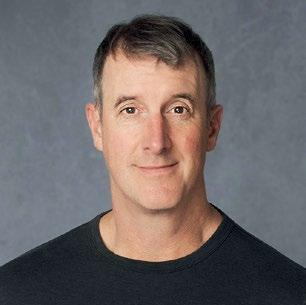
FIVESTONE STUDIOS, along with their colleagues at commercial production and post company Bella, have welcomed creative innovator GREGORY HADDEN to their teams as EVP, Creative and Growth. Hadden brings more than two decades of global creative leadership experience to his new role, having built and led studios and campaigns for the likes of Google, PepsiCo, and IKEA. He’s working across Fivestone Studios and Bella to shape integrated growth strategies, build longterm client partnerships, and drive creative excellence across every discipline.
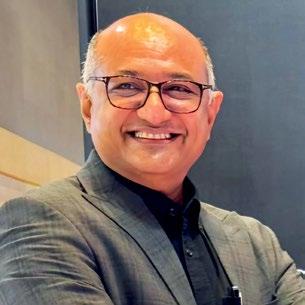
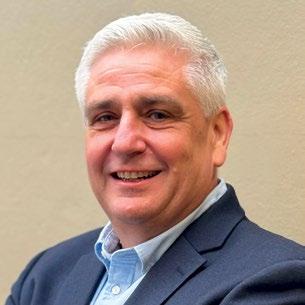
HARMAN PROFESSIONAL SOLUTIONS has named AMAR SUBASH to lead the professional solutions sales organization across the EMEA region while continuing to oversee sales leadership responsibilities for India. In this expanded role, Subash sets a strategic direction for both regions, focusing on accelerating growth and delivering on HARMAN’s commitments to customers. With Subash’s transition, NICK SCREEN has been selected to lead the APAC sales organization. Screen currently oversees channel sales and audio solutions across APAC, where he has focused on building strong partnerships and supporting the growth of HARMAN’s professional audio business.
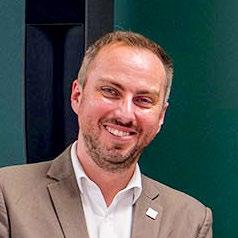
L-ACOUSTICS has established a new global real estate division under the leadership of GERALD YVEN as global real estate director. Yven brings extensive finance and project management expertise to his role, with previous experience in facility management at Generali and Unibail-Rodamco-Westfield. The real estate division will oversee L-Acoustics’ substantial investments into its global corporate and industrial real estate portfolio, coordinating major real estate projects from site acquisition and renovations to the design and construction of specialized L-Acoustics spaces such as creative studios and showrooms.

LEA PROFESSIONAL appointed ANDREW GOULSON as strategic account manager. Goulson supports LEA’s sales and expansion efforts, working closely with the team to represent LEA’s technology catalog. Goulson has nearly 20 years of experience in the AV industry, specializing in live sound and recording engineering. He leverages his extensive experience by collaborating nationally with LEA’s representatives and dealers.


MULTIDYNE added industry veteran NEIL MAYCOCK as chief marketing officer on a fractional basis, while SEBASTIAN MUCHA has been promoted to EVP of sales and strategy. Maycock works closely with sales and executive leadership teams within MultiDyne, while also liaising with channel partners and customers to better understand the needs of these various stakeholders and engages with various industry bodies to generate market research and insights that will prove valuable to company growth. In his new role, Mucha oversees global sales and business strategy, focusing on growth, product alignment, and expanding MultiDyne’s international presence.

ADELINE FERRO has joined NEMAL ELECTRONICS as its new director of business development. She is leading Nemal’s expanding efforts in healthcare technology, focusing on OR connectivity solutions built with Neutrik’s Hybrid Med connectors. She also serves as a link between Nemal’s sales representatives throughout the Americas and its engineering team, ensuring the delivery of custom solutions tailored to clients’ needs.
With more than 25 years of experience in broadcast and Pro AV, including leadership roles at Viacom, Ferro brings deep industry knowledge and a customer-first mindset to Nemal.

OPENDRIVES has promoted ALEX DUNFEY to CTO from his former position as SVP of engineering. Before joining OpenDrives in 2023, Dunfey served as an engineer and technical lead at EMC, VMware, and Simplicity, later sharpening his skills at Amazon Web Services. At OpenDrives, Dunfey has guided the company’s transition from a traditional hardware-based storage model to a software-defined organization, aligning strategies to match an evolving landscape.
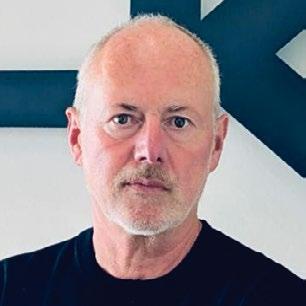
PK SOUND has welcomed pro audio industry veteran MIKE CASE to its team in the role of director of global network and partnerships. Based in the U.K., Case brings a strong history of establishing disruptive new technologies and advancing brands to the Calgarybased manufacturer. In his new role, Case leads the company’s growing international network in further expanding the brand’s profile and reach. Case has previously held positions with Yamaha Commercial Audio, Digidesign, and d&b audiotechnik.


PPDS has welcomed digital signage sales specialist, HENDRIK HACK, as sales manager digital signage for north and northeast Germany. Hack is specializing exclusively in digital signage and interactive display sales and project management. Also joining PPDS is EMILY PIRTLE in the newly created role of regional sales manager for TOLA, where she develops and manages relationships with integrators, resellers, and customers, identifies new sales opportunities and leads, and collaborates with partners.
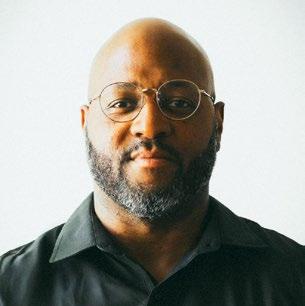
QUICKLINK has appointed AUSTIN HINTON as its new solutions enablement engineer. In this role, Hinton serves as a go-to technical expert, supporting QuickLink’s customers and partners across North America with deep, hands-on technical insight into StudioPro, StudioEdge, and the broader QuickLink portfolio. Hinton joins QuickLink from Vizrt, where he served as a customer success manager, following several years with NewTek.

RENKUS-HEINZ has appointed JONATHAN PHILLIPS as chief revenue officer. Phillips oversees global partnerships and revenue strategy. Phillips brings more than 25 years of expertise scaling
technology companies from innovation to market. A named inventor on patents in materials processing and algorithmic analysis, he secured multi-million-dollar development programs from the Canadian government while advancing manufacturing technologies with an advanced science team at Equispheres.






We've got industry leaders. We've got integrators. We've got manufacturers. We've got visionaries. We've got engineers. We've got engineers who are visionaries. You get the idea. It's time to celebrate nine individuals who represent Pro AV excellence, each one leaving their own indelible mark on our industry. We proudly present to you the SCN Hall of Fame for 2026.


By Wayne Cavadi
Dawn Cagliano is a trailblazer in the industry.
She has spent 20 years at SCN Top 50 systems integrator IVCi, working her way up the proverbial ladder to become the first female president in the company’s history. Over that two-decade span, her focus has never changed: to create spaces that connect people and create great experiences for people.
Cagliano wasn’t Pro AV bound from the start. She began her career managing call centers. It wasn’t so much the centers she was focused on, but the experience for the customers.
“I was very focused back then on how to make the telephone conversation a more seamless interaction,” Cagliano reflected. “I love connecting people, and I have always tried to improve the telephonic experience. That’s what drew me to the AV world, the video component of the people connection.”
She began on the managed services team, starting as a video operator. As the years passed, she turned her attention from the service-oriented portion of the business to the installation side. “They wanted to bring
more of that white-glove, concierge experience into the installation side because AV installations haven’t always been about the experience,” she said. “It was our owner who really wanted to put more of a focus on the experience on the installation side of the house.”
And that is what truly defines Cagliano. Yes, she is very good at what she does, but the reason she is a Hall of Famer is her focus on others’ experiences. It has led her to be a mentor to many coming up through the industry, a position she does not take for granted.
“It is my passion,” Cagliano said of being able to mentor the future of Pro AV. “I really love looking across a team of people and trying to spot the rising stars, spotting those who I believe have the motivation and potential to go forward and helping them to harness that. And the harder that is, the more I enjoy it.”
While Pro AV is evolving, women are still navigating a once completely male-dominated industry. For Cagliano, IVCi was a place that never closed a door for opportunity. As president, she is in the unique position to share her story.
She said IVCi has a culture of accountability. “As long as you’re an accountable person here, you’ll be a successful person here,” she added. “I think it’s important for women, particularly in our industry, to

create spaces of mentorship, to be role models to each other, and to seek out the other women in the industry and guide them.”
A mother of four, Cagliano doesn’t have much room for free time (although she does love her woodworking). Instead, her passion lies in advancing the industry. Cagliano is now a member of the NSCA Education Foundation Board of Directors.
“I’ve always raised my hand to try to be as involved as possible in the NSCA,” Cagliano said. “It’s fun to be surrounded by people who are going to challenge the way you’re thinking about not just AV, but leadership styles. This is an opportunity to get in front of the young people who are considering career paths to get them to understand just how powerful the AV industry is.”
Cagliano will continue to focus on mentoring and creating those seamless experiences for customers and her own employees. And that’s because, 20 years in, she still has that same curiosity as she did two decades ago.
“For the curious, the AV industry is a wonderful and cool place to be,” Cagliano concluded. “I think the most dangerous thing is when you think you know it all, so be open minded and be curious. You can’t train somebody to be curious. When I see curious people, people who have some questions, people who challenge why we do it this way or why does it work this way, I think that that’s a really valuable trait.”


By Wayne Cavadi
Meet Sarah Cox, a mastermind in the “experience economy.” Currently the chief commercial officer at Stage Precision, Cox is also the founder of Neutral Human—and while she loves to immerse herself in technology, she is driven by helping move creative storytelling forward.
Young Sarah Cox was always a tinkerer. With a neurodivergent brain, she had to learn through figuring out the puzzle of all things. “I think that’s what drew me to technology,” she said. “To try and pick it apart, put it back together, and make something so I understood the process.”
Cox grew up loving to sing, so she never shied from the stage and spotlight. As she moved up the high school ladder, something else grabbed her attention: lights.
“There was a guy up in the booth and he was playing with the lights,” Cox recollected. “I went up to have a look and it was literally love at first sight. He was pressing these buttons on this little board and
color changing the school stage. I was just drawn to the power that this guy had with this little tech board.”
Those lights led Cox, who enjoyed DJing in her spare time (she had a regular gig on New Year’s Eve at the Comedy Store for years), to the world of video at the inflection point of 2D video playback. Then, she was off to Disguise, immediately immersing herself in the 3D and real-time visual experiences aspect of the industry.
It was an old co-founder of Disguise, then D3, that created the spark that led to Neutral Human. Cox had done so much for D3/Disguise when it was a startup, her old colleague said she should do the same for other startups.
“I left with a little seed in the back of my head,” Cox said. “There are a lot of technologies out there that come out of creative applications that are made by artists and creative technologists, made by people who don’t have any productization experience. They don’t know how to get connected to users. They don’t know if it’s any good. But they’re sitting on something that’s absolute dynamite.”
Through Neutral Human, Cox helps artists and tech creatives find the missing links in workflow gaps, find
the right people for them to talk to, and explore commercial routes where they move their technologies forward. That’s what led her to Stage Precision, one of her early clients with Neutral Human.
“There’s a massive gap in our experiential future,” Cox explained. “We’ve done audio, we’ve done lighting, we went into media, we went into advanced media, we went into real-time generative content. That is literally the career path that I followed. Now, we’re into this next gap, which is data and management of 3D data and spatial intelligence. How can we use technology and tie it all together to create truly interactive spatial experiences?”
Though she has yet to be inside the Vegas Sphere, there was a eureka moment for her: ABBA Voyage, the virtual concert residency in London. “Immersive viewing is here and it’s a shared experience,” she noted. “I felt a defining moment for shared immersive entertainment happening in that digital theater experience, a format that we will see more and more.”
Cox’s journey is far from over, and that’s mainly because she will keep tinkering. “Keep being curious,” Cox advised. “I know so many artists create their greatest work in the moment when they're just playing and tinkering and something really beautiful and extraordinary comes out of that playful moment.”







By Carolyn Heinze


In 2024, Sennheiser launched Spectera. The digital wireless ecosystem uses the manufacturer’s implementation of Wireless Multichannel Audio Systems (WMAS), which enables more microphones and IEMs—as well as their control data—to operate on a given spectrum while simultaneously protecting these systems against interference.
Behind Spectera are two of Sennheiser’s lead system architects working out of the company’s headquarters in Wedemark, Germany. Dr. Sebastian Georgi earned his Ph.D. at Germany’s Hamburg University of Technology; his thesis explored Orthogonal Frequency Division Multiplexing (OFDM). He has been with Sennheiser since 2010, and has spent much of his time researching wireless broadband techniques and how they apply to Pro AV.
Jan Watermann joined Sennheiser in 2001, where he began by developing a combination of modulation and multiplexing techniques for professional wireless audio


applications. He played a key role in the development of Sennheiser’s Digital 9000 wireless microphone system.
Both are musicians: Georgi plays the bassoon while Watermann plays bass and guitar. Georgi believes that this makes both he and Watermann sensitive to the needs of performers.
“We know what stage fright is,” Georgi said. “[Performers] are all alone on stage, and they have to rely on the technology. We both very much know how it feels to perform on stage and understand the need for rock-solid audio.”
The pair’s collaboration was almost by accident— they found themselves sharing an office space. In 2013, they began researching how broadband technology fits within the challenging requirements of pro audio applications. Over the next several years, Georgi and Waterman worked on prototypes, which they would eventually use to show regulatory bodies such as the European Telecommunications Standards Institute (ETSI) and the Federal Communications Commission (FCC) how WMAS works.
Working with the regulators was the critical step to Sennheiser releasing a WMAS product. For Spectera to succeed, the manufacturer needed them to change the rules.
By Jennifer Guhl
David Labuskes is a leader in the Pro AV industry, promoting innovation, global growth, and advancements in professional certification. However, the AVIXA CEO’s entry into the industry was far from typical.
“My pathway into AV was actually through IT, and working as a consultant led me to an architectural engineering firm where I built a consulting practice for the design of all low-voltage communications,” he explained.
These experiences ultimately led him to InfoComm International, now AVIXA, where he has served as CEO for the past 13 years. “Randy Lemke, my predecessor, announced his retirement. A couple of people suggested that I put my name in the hat for the CEO position,” he said. “And to make a long story short, here I am, 13 years later.”
During his tenure, Labuskes has expanded AVIXA from mainly a North American association into a global organization. AVIXA’s initiatives and offerings include trade shows, training, certifications,
standards, and grassroots industry networks like the AVIXA Women’s Council, the Diversity Council, and the Rising Professionals program.
“When I started at AVIXA, I think about 12% of our membership was outside of North America,” he explained. “Today, over 50% of our revenue is generated outside of the U.S. Our fastest-growing membership is outside of North America.”
And this expansion isn’t accidental. It’s missiondriven—and as a nonprofit, AVIXA is able to prioritize its mission. “You are focused first on, does this serve our mission? Does this advance the industry?” Labuskes said.
He also emphasized the meaning he finds in AVIXA’s mission-driven model, and its purpose is what motivates him every day. “Somebody said it once … we get to do good business, for the good of humanity,” he noted.
Reflecting on his 13 years with AVIXA, it’s evident that technology is just one aspect of industry change; the AV professional is just as essential. “Technology has exploded and changed,” Labuskes said. “The AV professional is needed to be a network professional, needs to be a cybersecurity expert, needs to be a user interface expert, a solution provider, a coder. I think
Sennheiser submitted the first input document defining WMAS to ETSI in 2014 and first demonstrated WMAS to ETSI in 2016. By 2017, it gained approval. In its recommendations for wireless microphones, the European Conference of Postal and Telecommunications Administration (CEPT) removed bandwidth limitations in 2018. That same year, Sennheiser approached the FCC, which began allowing WMAS in the U.S. in 2024. Several months later, the company launched Spectera.
For both gentlemen, one of the most rewarding aspects of bringing a solution to fruition is gathering user feedback. During Spectera’s early prototyping phase, shortly before a concert, they visited The Donots, a German punk band. After testing the prototype, they insisted on using it during their gig that night
Georgi and Watermann watched the show from backstage. To their delight, the prototype came through, and the band announced their satisfaction with the technology right in front of the audience.
“When we get feedback from them, they will say that they will never go back to the old system,” Watermann said. “One of our favorite parts [of this process] is introducing this to talent for the first time.”
that has led to a really exciting career path.”
But sometimes your greatest failures can lead to success, and that was the case for Labuskes. He didn’t hesitate to share a key story from early in his career, long before his time with AVIXA, when he was fired.
“I was terminated because I wasn’t doing a good job as an executive. I wasn’t a good leader,” he recalled. “Out of that time frame, I really solidified my character around some specific values.”
The values he learned from the experience, including the importance of listening, maintaining a work-life balance, and relationship building, have solidified his approach to leading AVIXA and the incredible members he works with and for on a daily basis.
Labuskes believes the industry stands at an exciting intersection of science and art, creating a rich environment for ideas, opportunities, and exploration, one that nurtures an industry full of dedicated and passionate people. “People who don’t love the industry, they kind of leave it pretty quickly,” he observed. “And so, you end up with this industry of just really fantastically committed people that love what they do.”
Looking to the future, Labuskes is energized about what lies ahead for AVIXA, including its recent expansion into new markets, such as Mexico City. His excitement for the new initiatives is palpable, and he made one final confession: “I have the best job in the world.”


By Jennifer Guhl
For John Minnick, audio wasn’t just a career choice; it was a calling. Long before streaming platforms and wireless ecosystems, he was soldering circuits in his parents’ basement, chasing fidelity, and learning signal paths by hand.
“AV has been part of my life forever. I got into audio when I was in high school,” he said. “I built my own power amps.”
This passion led him to engineering school, preparing him for roles in developing consumer imaging equipment, commercial electronics, wireless and wired networking solutions, and digital audio, long before these fields integrated across the industry. His professional career kicked off at Eastman Kodak.
“It was an amazing company at the time,” Minnick recalled. “Some of the best engineers and people I’d ever worked with in my entire life worked there.”
From there, he worked on one of the earliest digital
jukebox and music server platforms at Gibson Audio, a precursor to personal streaming libraries, then went on to shape wireless innovation at NuVo Technologies. All this led to Minnick’s most pivotal chapter: joining Bogen Communications in 2013. It was an unexpected opportunity and came with something rare. “It was kind of a clean slate,” he explained. “They gave me a lot of latitude, which you don’t get very often in your career.”
Minnick hit the ground running with Bogen by establishing a new development center in Orlando, FL, building a multidisciplinary engineering team, and leading the development of Nyquist, Bogen’s first fully digital, software-based audio and communications platform. Originally a project code name, Nyquist helped Bogen transition from traditional PA and intercom systems to networked audio, software, and services.
Using a long-term engineering approach, the team architected the solution to evolve over time, eliminating the need for frequent resets. This has paid off, with Nyquist becoming one of Bogen’s most successful and profitable platforms. “We didn’t want to blow it up in five years and start over,” he noted. But last year, he decided the time had come to
retire, which took effect only recently (his last day was just a week before our interview). “After going at it for 12 years, it’s time for some new visions, new thoughts, new people,” Minnick said.
When he expressed his wish to step away from a company he had dedicated so much to, Bogen honored him by naming its Orlando engineering facility after him, which he joked is “usually when somebody dies.” But the gesture highlights the significant impact he had on Bogen and the industry as a whole.
As he looks ahead, the evolution of audio remains just as exciting for him as when he first explored stereo systems decades ago. The advice he gives to newcomers is straightforward: “Be passionate about it,” Minnick said. “If you have a passion for it, it’s well worth it.”
Minnick channeled this lifelong passion into creating innovations that will continue to grow and make a lasting impact on the Pro AV industry. Through it all, he has always remained connected to the creative spirit that initially drew him to the audio industry.
“That passion’s been with me all my life. I just really love audio reproduction and how it’s evolved,” he said. It also spilled over into his family life—today, two of his children work in the AV industry. “I rubbed off a bit,” he said with a laugh.






By Carolyn Heinze
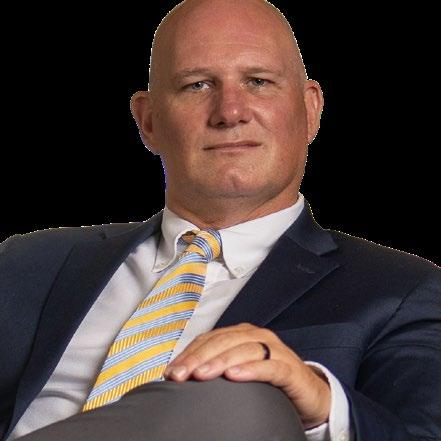
One of the striking things about Dave Van Hoy is how unhurried he seems. As president of Advanced Systems Group (ASG), based in Emeryville, CA, he oversees a team of 500 employees. His firm comprises multiple locations across the United States and Canada, and most recently an office in London. Some of the world’s most famous companies rely on ASG’s services—brands like NFL, Spotify, and Google. In short, he’s got a lot going on.
Still, Van Hoy is always up for a conversation. He’s naturally curious and eager to share. After nearly 30 years in business and almost 50 years in Pro AV, he continues to wear his genuine enthusiasm for this industry on his sleeve.
“I come from [a spirit of] being very passionate about the industry, and I think that is different from a lot of people that end up leading companies,” Van Hoy said. “You may not be the very best at something personally, but if you’re passionate about it, it carries you a long way.”
Founded in 1997, ASG began by servicing the DVD

By Wayne Cavadi
Joe
Way,
Ph.D.,
CTS, executive director
of Digital Spaces at UCLA, has helped to change the way higher education students learn and teachers teach—and along the way, he created one of the livelier atmospheres on the InfoComm show floor. Way was not necessarily destined to make this kind of impact. He was a dual major in philosophy and Greek archeology and earned his master’s in biblical studies. So, how did someone who studied all that become one of our industry’s leaders in higher ed?
Way entered USC in 1991 for recording engineering, but it wasn’t quite what he expected. “This is back in the days when you learned how to run a soundboard by standing behind some old guy with a ponytail smoking off four cigarettes an hour,” Way explained. “When I went to college, I didn’t want to do theory classes. I wanted to get on the board. I wanted to do stuff.”
Despite switching majors, Way still got to do … stuff. USC hired him as a student worker to run the sound and technology at the various venues on campus, like the large auditoriums where live events
authoring market. Not long after, it expanded into full-service production and post-production systems integration. Today, as one of the country’s biggest AV firms, it offers consulting, engineering, integration, managed services, and training and support to broadcasters, corporate media teams, houses of worship, and media and entertainment companies (including live sports broadcasting houses).
While Van Hoy may be a techie at heart, he also enjoys the human aspect of Pro AV. The reward comes from working through the issues, whatever they are. “I love the puzzle, whether it’s a technical problem, whether it’s a human problem,” he said.
In its recruiting activities, ASG’s message is clear: “If you don’t like to learn something new every day, please do not come work here,” Van Hoy explained. “I have a basic philosophy that has never changed: Hire smart people, pay them the best you can afford, and let them do their jobs. Where I can help, I want to help. The rest of the time, I want to get out of their way.”
It was his father—an electronics research engineer at Scripps Institution of Oceanography in San Diego— who introduced a teenaged Van Hoy to live sound. “His passion was audio and recording, and I was out doing live recording jobs with him on the weekends and
evenings, probably starting around 12 or 13,” he recalled.
The pair would record choirs, orchestras, and jazz ensembles. A few years later, Van Hoy would become a professional audio engineer before moving into live television and then live TV production.
It’s these early experiences that Van Hoy attributes to another one of his striking qualities: The guy always seems so even-keeled. He says that live production helped him develop the ability to stay focused on what needs to be done in the moment. After all, panicking has never helped anyone eliminate the 120-cycle buzz in the PA while 40,000 screaming (and possibly drunk, high, or both) fans wait for their favorite band to hit the stage.
“When you’re on the technical side of that, let’s just say it’s a high-pressure job,” Van Hoy said. “If you’re going to succeed, you learn to be very calm in high-pressure situations.”
Looking to the future, Van Hoy underlines the need for Pro AV to develop new talent. While many may be creating content, he highlights a dearth in production and tech deployment skills that support creatives. “The biggest thing the industry needs to do now is focus on growing the next generation of audio and video people,” he said. “The most important thing the industry can do now is make sure there’s a new generation, and we’re trying to be very active in that.”
occurred. “I did that as my job rather than as my major. And when I graduated, I went into the entertainment industry like everyone in L.A.,” Way explained with a laugh.
For 10 years, it was a little bit of TV, a little bit of film, and a little bit of live stage events. He owned his own production company, sold it, and then began working for his church in 2011. “That’s where I drifted into the commercial side,” Way said. “I fell in love with having a purpose with AV.”
As it turned out, one church volunteer was a professor that pointed Way to California Baptist University, an institution that was looking to standardize the way things were done on campus. In 2016, Way started with Cal Baptist, and the rest is history.
He returned to his alma mater in 2019. Still a relatively new face in the field, Way settled in at USC when the pandemic happened.
As USC was going through its digital transformation, Way asked one simple question: What if we turn every classroom into a Zoom? USC quickly became hybrid ready, so in 2020, they were learning ready. “I remember our provost asked, ‘Joe, what are we going to do?’” Way recalled. “And I said, ‘We’ve already solved it.’”
Along the way, the Higher Education Technology Managers Alliance (HETMA) was born, co-founded by
Way and his friend, BC Hatchett. After doing an education track at InfoComm circa 2016, Way realized after being in the industry for so many years, he was now an outsider.
“I started the Higher Ed AV Podcast, which later spun off into HETMA, because I didn’t really know anybody,” Way recalled. Add a global pandemic, a growing presence at InfoComm, an educational summit trip to Japan, and a partnership with AVIXA, and suddenly, HETMA is one of the most influential groups in Pro AV.
It was the AVIXA virtual conference during the pandemic, with no InfoComm, that HEMTA blew up.
“That’s where it was lightning in a bottle,” Way recalled. “Next thing we know, we had 250 people on that call, which was amazing. Now we have 20-some initiatives and our signature Prysm Scholarship, which is probably one of the things I’m most proud of.”
Now, HETMA has roughly 6,000 global members and the road has led Way to UCLA. There, along with standardizing AV/IT systems, he’s leading the future of higher ed.
Way has risen to the top of the Pro AV world because he’s never been afraid to stop asking questions, and as he admits, has benefitted from being in the right place at the right time. “Don't be afraid to have that conversation,” he advised. “We all might be competitors in some form, but the fact is we're all family.”


By Jennifer Guhl
For Gene Zimmerman, a lifelong career in broadcast engineering started on a farm in northern Illinois, with a broken radio and a curious kid.
“I took the tubes out, walked them down to the gas station to test them, and came back with three new ones,” he recalled. “The radio worked. I looked at that sucker, going, how does this work?”
That simple moment sparked a lifelong fascination that’s still with Zimmerman today. By high school, his teachers found it hard to challenge him, so he trained on the same systems the military used on tubes and transistors and learned to fix TVs at the vocational center. “After that, they didn’t know what to do with me,” he said, “so I helped them build a new TV studio.”
His first job after college was as a design engineer at Odetics Broadcast, where he developed automated tape and master control systems. Simultaneously, he was consulting for National Teleconsultants,
working on major projects for Warner Brothers and Fox, and immersing himself in the engineering community by joining organizations such as SMPTE, STE, AES, SBE, and SCTE. This opened doors for him to work on the 1996 Olympics, which later led to his involvement in the 2000 and 2002 games.
After the 1996 Olympics, Zimmerman was asked by his former employer to help Fox News for a couple of days, which turned into a three-year engineering role during its formative years. But these experiences and milestones were just the lead-up to his biggest career achievement.
When production shifted from analog to digital, Zimmerman noticed a crucial gap. “Every camera had a monitor,” he explained. “There were no multiviewers. Trucks were changing to SDI and needed an affordable way to convert digital to analog for their monitors.”
At the time, the solution was replacing every monitor, each costing $4,000 to $5,000. With 340 monitors in a truck, that could cost $ 1.5 million.
NEP Group wanted to see if Zimmerman could create something better; he proved he could, and they

liked it, which led to Zimmerman founding Cobalt Digital, where he now serves as president and CEO. “I was surprised when the first order came in for 1,400 units. That’s really what launched Cobalt, solving customer problems,” he said.
Since then, Cobalt has become essential across trucks, networks, and streaming platforms.
Zimmerman describes Cobalt as “a very advanced Swiss Army knife.” The company has garnered widespread industry acclaim, including an Emmy, in addition to what Zimmerman has personally won, which includes two Emmys from his work on the Olympics.
Zimmerman champions open standards—Cobalt strongly supports them and believes customers should have options. This approach led to the creation of openGear, developed with Ross Video, which has become the industry standard for modular signal processing. This same philosophy also guided Cobalt’s involvement in IPMX for AV over IP and RIST for reliable internet transport.
As the industry moves more toward IP and open interoperability, Zimmerman sees only opportunity. “The future of the AV industry is incredible,” he said. “IP brings total flexibility, as long as we stay committed to open standards. That’s where we want to be.”








By Kathy Katz
It’s time to embrace low-voltage lighting as part of the AV ecosystem.
n corporate AV, when we talk about innovation, we often look toward displays, AI-enhanced meetings, immersive technology, cameras, and audio upgrades. But increasingly, one of the most productive changes requires looking slightly higher. To the ceiling.
Low-voltage lighting is transforming our corporate spaces, combining studio-quality lighting with low-voltage, IT-friendly power and control. It’s creating a harmony that redefines the creative and operational possibilities of corporate AV.
The most popular approaches to low-voltage control are PoE and DMX. From DMX consoles to wall controls to APP control through PC, Macs, and phones, simple signal converter interfaces facilitate most front-end methods.
Advancements in low-voltage lighting technology now accommodate single cable runs of standard Cat 5 or Cat 6e cable to the fixtures, further contributing to the efficacy and simplicity of the systems.
Low-voltage lighting operates at 24V or 48V DC. With high-voltage requirements eliminated, installations can be completed by integration teams already on site, increasing QC by reducing complexity. Running cooler and less susceptible to voltage fluctuations, low voltage lighting systems can add to system longevity with minimal back up when staying “on-air” is critical in the event of a power outage.
The ability of most low-voltage systems to integrate into IP-addressable control creates the opportunity to add lighting to cloud-managed services, supporting client peace of mind while increasing the integrator’s piece of the recurring revenue pie. Interface choices should be based on certifications specific to the country of use and the front-end control preferences of the end users.
In a corporate environment, this integration means that lighting is no longer siloed from AV and
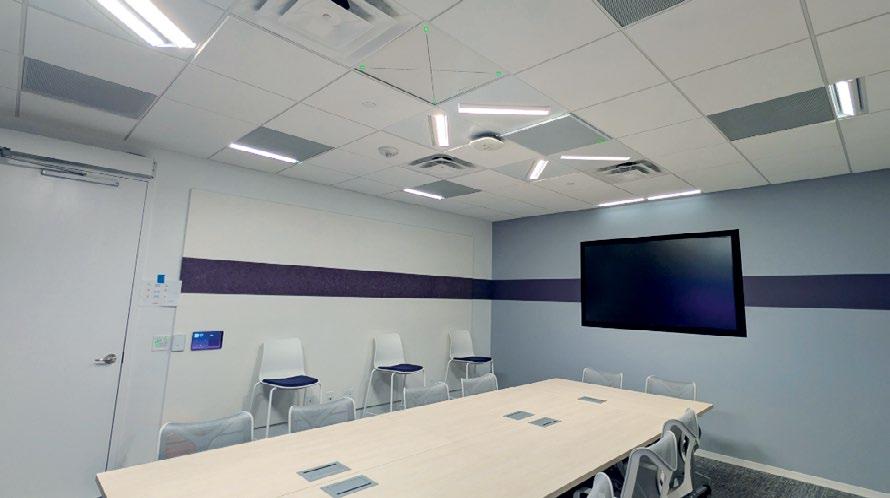
same sophistication as an AV ecosystem, creating a unified workplace experience. Companies can create meeting rooms with presets for videoconferencing, presentations, and collaborative work. Lighting can be adjusted to optimize camera image quality and reduce glare and shadows for those calling remotely.
This enables easier installation, streamlined integration, and lower energy consumption. Clients are free to focus on the creativity of their content versus the integration and operation of their video lighting systems.
When evaluating low-voltage lighting systems, look for technology that offers variable white color control, which allows users to adjust the color temperature of white light. This provides significant creative, operational, and technical benefits, including increased color fidelity, practical light source matching, and the ability to mix light sources of different color temperatures.
Today’s lighting systems offer vast creative control and can also be pre-programmed to offer “instant on” operation. When appropriately selected, the array of features, playback options, and adjustments of a chosen system can contribute to the successful video output, increasing both system adoption rate and content absorption.
For corporate clients, low-voltage lighting brings cost efficiency, flexibility, and a better user experience. Energy savings are immediate, especially when fixtures are paired with LEDs and advanced controls. Operational costs come down as do the costs of reconfiguring a workplace, which is critical when adapting between in-office, hybrid and remote work models.
For AV integrators, low-voltage lighting expands project scope. Installations are simple and often don’t require electrical subcontractors. Networked lighting can be monitored remotely, updated with firmware patches, and optimized for energy efficiency, which could lead to an expanding and continued managed services offering from the integrator.
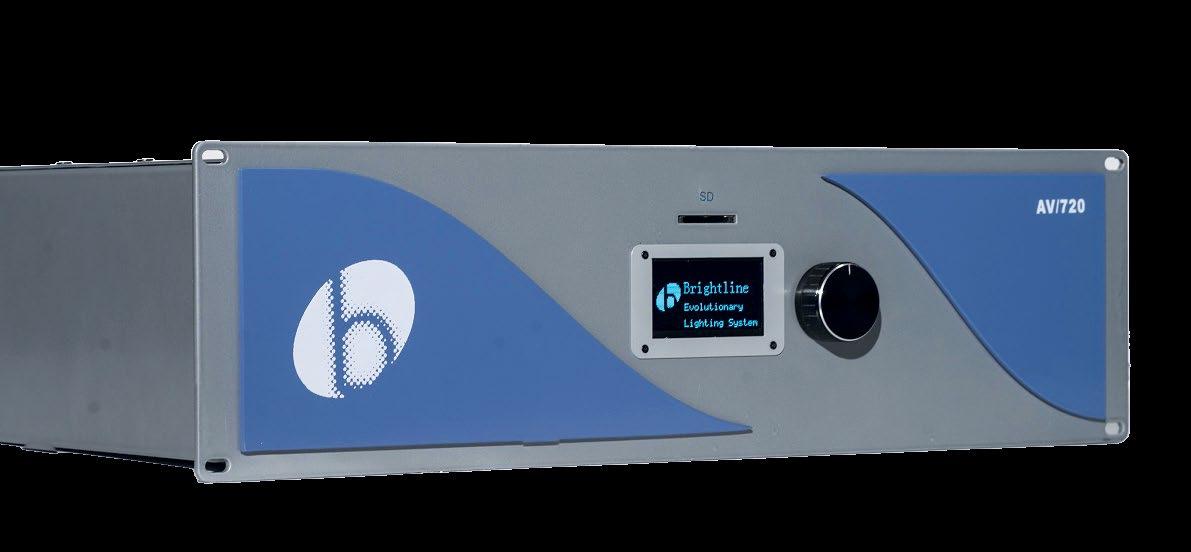
Brightline, for example, has introduced the AV/720 to simplify low-voltage lighting. It’s a 20-port, DMX-controlled, variable white, and easily scalable system that interfaces with IP-addressable control. With pre-labeled light fixtures, cables, and ports, the AV/720 basically brings “lighting by numbers” simplicity to the world of professional video lighting.
As corporations face increasing pressure to meet sustainability goals, low-voltage lighting becomes more than a cost-saving measure—it can be a compliance and branding asset. Reduced power draw, longer fixture lifespans, and compatibility with daylight harvesting all support green building initiatives.
Proposals that lead with efficient lighting options align with clients that require LEED certification or have watts per square foot restrictions. With 90% of S&P 500 companies publishing environmental, social, and governance (ESG) reports, integrators can partner in their strategy with low-voltage offerings.
While good lighting can have an ethereal quality, there is nothing ethereal about the benefits of low-voltage lighting. Positioned as partners in the sustainability initiative, integrators who embrace low-voltage lighting benefit from increased project scope and service opportunities, while their clients realize reduced operating costs, more flexibility, and enhanced video results. Integrating low-voltage lighting with other LV technologies increases workplace safety and efficiency.
Light transforms our outdoor world daily, organically and automatically, and innovative lighting systems can bring the same transformation indoors to your video environments. As AV, IT, and building systems converge, low-voltage lighting will continue to redefine what’s possible in corporate video environments.
Kathy Katz is the managing partner of Brightline.
• Conserve resources with less work.
• Save clients’ money while making more.
• Eliminate high voltage and ensure safety.
• Reduce cable size and increase aesthetic.
• Produce high-impact video with little power.


Pro AV continues to power the journey toward meeting equity.
By Jennifer Guhl
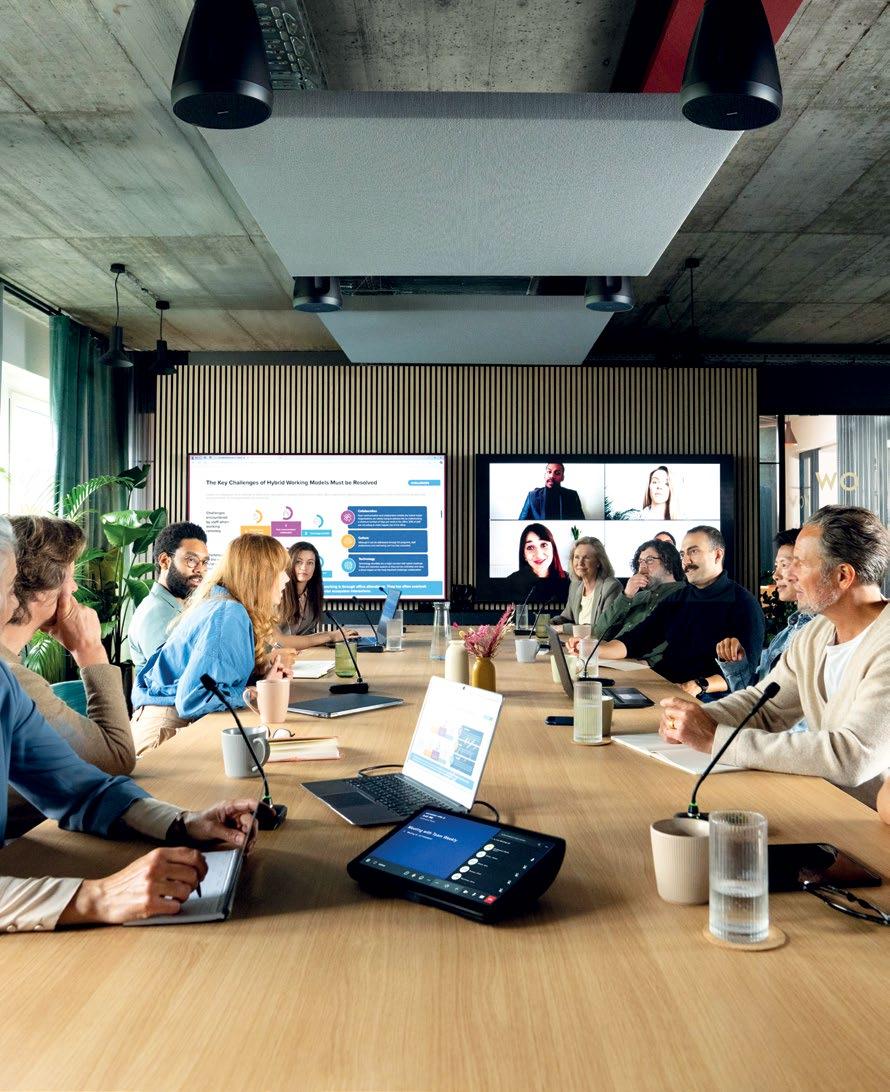
Work environments have transformed from what they once were—and for many, it feels like it happened overnight. As a result, meeting technology is rapidly adapting to keep up with these new environments.
“In the last five years, work dynamics have undergone more significant changes than in the previous 50 with the rise of remote, hybrid, and in-office workstyles,” said Yannic Laleeuwe, marketing director, workplace collaboration at Barco ClickShare. This change makes it hard to keep a strong connection between remote and in-office workers, leaving companies with discouraged employees who feel they are not properly represented by company technology.
“Our research has shown that one in three remote meeting participants find it difficult to speak up,” Laleeuwe added. “Even six in 10 remote workers say they have difficulty grabbing attention in the meeting.”
To address these issues, you might assume that companies are at least equipping meeting rooms with video to improve employee connectivity, but you would be wrong. Recent studies in 2024 by analyst firm Frost & Sullivan reveal that less than 15% of all meeting spaces are video-enabled. However, they predict the penetration rate will almost triple between 2020 and 2027.
“If we want the hybrid workplace to be successful, we clearly need technology that enables us to collaborate in a better and smarter way,” said Laleeuwe. “We need technology that supports flexible workstyles and personal preferences.”
Meetings and what happens during them are also changing. They have evolved from simple informationsharing sessions to tackling more complex issues like decision-making and relationship building. To do this effectively, meeting technology needs to advance further. It should enable everyone to hear each other, observe body language, interpret facial expressions, and share the same space, whether virtual or hybrid.
“Today’s reality? Meeting quality varies significantly depending on which space, and that inconsistency itself becomes a barrier to connection,” said Laleeuwe.
Flexible, people-focused spaces like jump spaces, focus rooms, and modular areas are emerging trends to overcome this barrier. However, scaling quickly and affordably can also be a challenge to achieving more widespread meeting equity.
“The best meeting experiences are often limited to expensive, complex rooms,” said Tyler Troutman, strategic development with Shure. “We need to bring those capabilities to smaller spaces and make them deployable at scale, so more people can benefit from true meeting equity.”
Dave Silberstein, North American channel sales
manager for DTEN, believes that fear of change is the biggest obstacle to achieving meeting equity. People may not like change, but he said it will make us more productive. “As an AV designer, it is hard to propose something new when the IT staff does not see the need or know how their own rooms are used,” he added.
For example, Silberstein recounted a recent experience where an IT professional told them that no one uses whiteboards at their company—but when they toured each room, there was writing on the glass walls because they lacked a whiteboarding solution. This indicated that they needed a whiteboard solution, but they also needed to invest in training on how to use it and where users could find their work afterward to make it truly impactful. Without education on how to use the technology, it would just sit idle.
Silberstein said that people are afraid of technology, but not literally. “They are not scared of technology because it is technology,” he explained. “They have a message they need to deliver, and they don’t want change to get in the way, even if it is for the better. Delivering your message and opinion is the important part, and if you don’t feel you can do that remotely, you go to the office for that meeting.”
The more people trust in the technology to improve the delivery of the message, the more it will be used. With smart meeting rooms here to stay, AV and IT teams must work better together to demonstrate the potential of the installed technology, which could lead to significant growth in equity. “When meeting spaces are equipped with the right tools, and those tools are
easy to use, everyone benefits, not just the people in the room, but also the teams making it all work behind the scenes,” added Laleeuwe.
At last year’s AV/IT Summit, the “Future of AV Technology” panel discussed meeting equity, believing that, although progress has been made, it has not yet been fully achieved. “Meeting equity is achievable with the right technology, but with the right technology, you need someone to tell you how to use it,” said Sharath Abraham, strategy manager with Jabra GN.




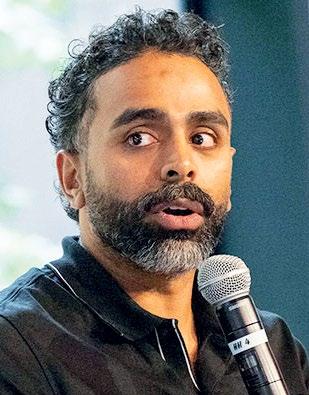
meeting equity. AI can also be transformative in promoting equity and accessibility through real-time captioning, transcription, and translation, thereby breaking down barriers for individuals with hearing loss or non-native speakers.
That includes training everyone on how to use the technology, as well as making sure they actually use it after training. Behavioral norms are a key (and often overlooked) part of developing people-driven steps toward meeting equity. “It starts from the top,” explained Michele Ferreira, VP of system integration at Advanced Systems Group. “If you have the buy-in from the top and every single time they’re on call, their camera is on, I’m more likely to turn on the camera.”
During the panel discussion, Ferreira also noted that interoperability can make meeting equity a challenge. “We’ve all been on a Teams meeting and a Google meeting and a Zoom meeting, and it’s always
wreaking havoc within our system to the point sometimes we’re rebooting,” she said. “We’ve got to reboot before the next meeting because the camera won’t work and the audio is messed up.”
Although many meeting technologies are now designed to ensure participants feel equally included, not everyone is investing in these upgrades. And even if they are, disparities still exist with these technologies, with accessibility being one area still not widely addressed.
“Challenges such as language barriers and accessibility needs have not been fully addressed,” admitted Troutman. “The future is about moving beyond AV and making meetings truly accessible for everyone.”
Speaking of the future, emerging technologies, such as AI, are making a significant difference in
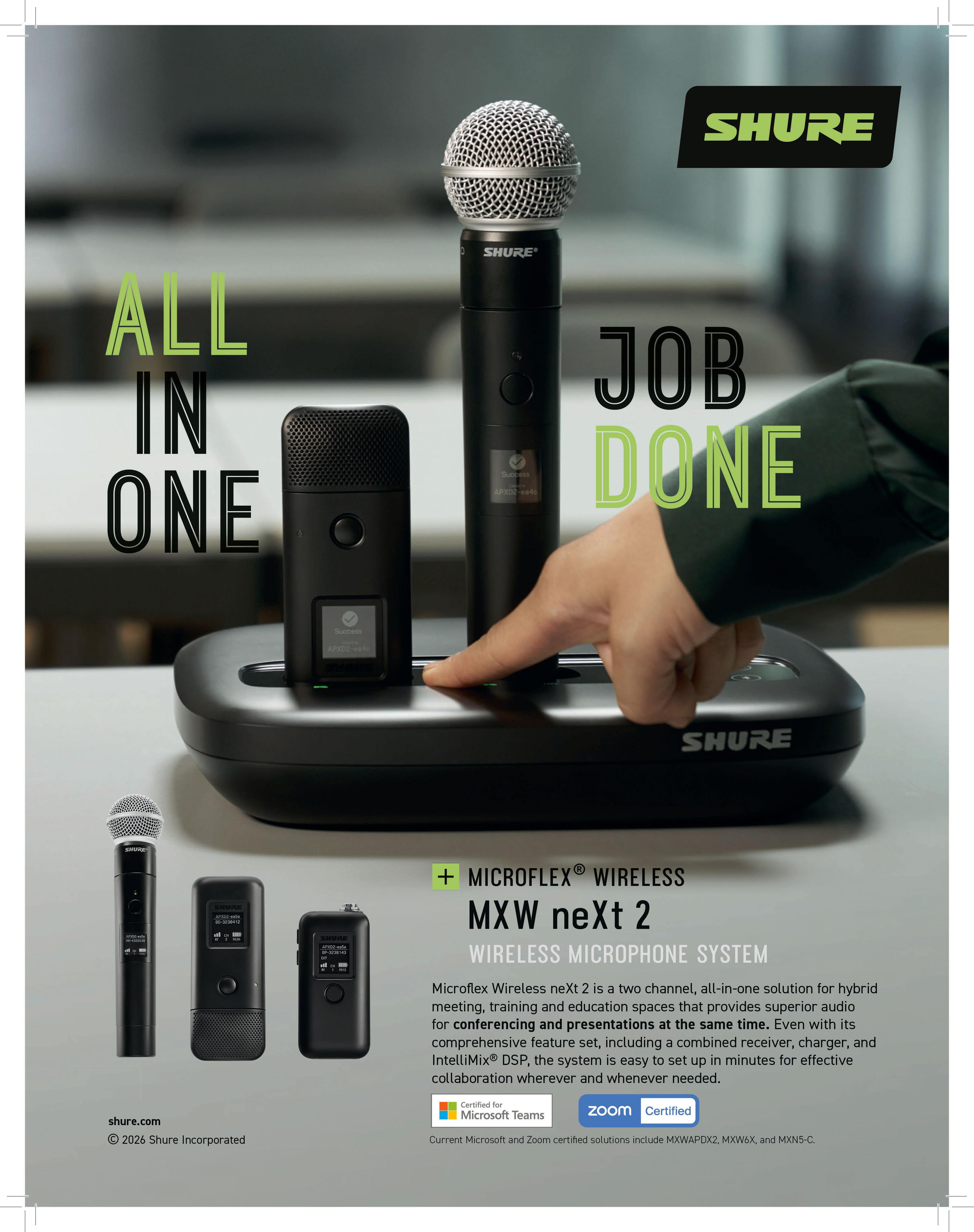
Shure is focusing on using AI to improve audio quality, which is crucial for accurate closed captioning and real-time transcription. “With IntelliMix Room, our software-based audio processing solution, AI-powered Denoiser and Deverb dramatically improve audio clarity by removing background noise and room echo,” said Troutman. “This ensures every voice is captured cleanly, allowing AI-driven features like transcription and translation to perform at their best.”
Barco also believes the future lies in AI-powered solutions, such as Microsoft Copilot, which bridges physical distances while enhancing the overall meeting experience. “Ultimately, collaboration technologies are evolving from static experiences limited by the physical hardware within the room to adaptable solutions that follow users into every meeting space, catering to individual preferences,” said Laleeuwe.

What are the biggest concerns for BYOD capabilities in today’s conference rooms?

Sr. Product Manager, Professional Displays, Sharp BYOD in modern conference rooms offers flexibility but raises several concerns. Security is the biggest issue, as personal devices can introduce malware or unauthorized access to corporate networks. Compatibility challenges also arise when diverse devices struggle to connect smoothly to room systems. User experience can suffer due to confusing connection methods or unreliable wireless presentation tools. Bandwidth strain is another concern, especially when many participants stream or share content simultaneously. IT support complexity increases, since teams must troubleshoot a wide variety of devices and platforms. Together, these factors make managing BYOD environments both technically and
operationally challenging. Sharp PN-LM series collaboration displays make it easy to integrate a secure device into your conference room environment.

Manager of Marketing and Graphic Design, Atlona BYOD setups sound simple in theory, but they introduce two major challenges that can derail a meeting fast. First is interoperability. Conference rooms often need to support a mix of USB-C and HDMI sources, plus both Mac and Windows devices. That combination doesn’t always play nicely together. Port mismatches, adapter issues, and driver quirks can turn what should be a seamless plug-in into a mini troubleshooting session. Second is USB 3.0 extension. High-bandwidth devices like 4K cameras, microphones, and room peripherals
require reliable USB 3.0 data over distance—and standard cabling just isn’t built for long runs. Without the right infrastructure, you end up with signal drops, limited device placement, or performance that simply can’t keep up with modern videoconferencing expectations. As BYOD becomes the norm, solving these two problems— interoperability and long-distance USB data—has become essential for creating meeting spaces that actually work the way users expect.

Collaboration Ecosystem and Engagement, Shure
The biggest BYOD concerns today center on balancing flexibility with control. Employees expect to walk into a room and instantly connect with colleagues regardless of their physical
location. Organizations must ensure these connections are secure, consistent, and scalable across every space. Integrators need solutions that standardize the experience, reduce configuration complexity, and eliminate the variability that personal devices introduce. For end users, the priority is a frictionless, equitable meeting experience regardless of device, platform, seating position, or dial-in location. BYOD works when audio, video, and workflow are reliable and ensure every participant can contribute.

Product Director Meeting Experience, Barco ClickShare BYOD is no longer a trend, it’s an expectation. It unlocks flexibility and productivity in today’s meeting spaces. Employees and guests want to use their own devices for collaboration because it’s familiar, flexible, and boosts productivity. In fact, ClickShare research shows 70% of employees prefer a BYOD workstyle. With ClickShare, we’ve managed BYOD for over a decade,
ensuring hybrid meetings remain effortless, secure, and inclusive. Our customers can benefit from seamless connectivity, as they balance protecting networks with delivering an intuitive employee experience. ClickShare empowers people to work smarter, wherever they are.

Senior Product Manager, Business Communication
Product Management, Sennheiser
One of the biggest concerns for BYOD capabilities is ensuring consistent, highquality audio performance across a wide range of personal devices and operating systems. Differences in hardware, connectivity, and software can create uneven user experiences that hinder collaboration. To address this, organizations should prioritize secure, reliable, and platform-agnostic audio solutions that integrate seamlessly with existing Wi-Fi networks. All-in-one conferencing systems deliver a truly frictionless BYOD experience that allows users to connect instantly, communicate clearly, and collaborate effectively, all while


reducing hardware costs and minimizing ongoing maintenance.

National Sales Director, Absen The primary BYOD challenges today stem from inconsistent device behavior, variable network conditions, and interoperability across meeting platforms. Integrators must account for secure wireless protocols, signal reliability, latency, and the need for display hardware that minimizes setup friction in multipurpose environments. Display systems that support standardized interfaces and native wireless sharing reduce integration complexity. Absen’s all-in-one platforms—and the foldable 138-inch FlexScreen— address these technical concerns with integrated wireless screen mirroring, Android OS–based control, and pre-assembled deployment that maintains alignment and calibration. Its portable, motorized-height design supports repeatable performance across rooms with different sightlines and structural constraints.

























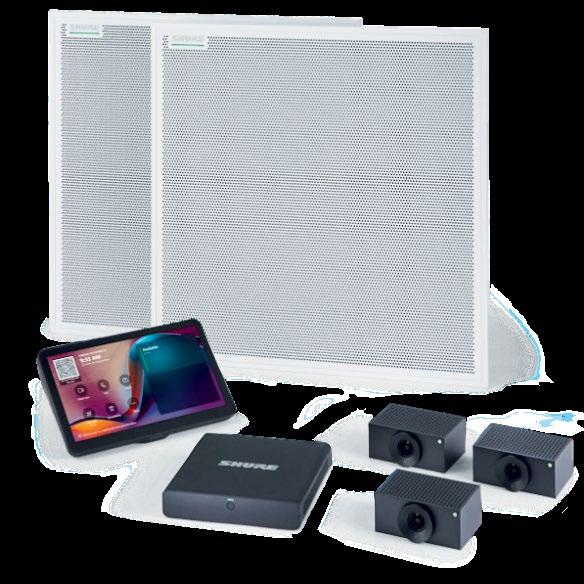
The AT-USB-EX350-KIT is a powerful USB extension solution designed for modern meeting rooms and collaboration spaces. It reliably delivers USB 3.2 Gen 1 data rates up to 5 Gbps over a single Cat 6a cable, reaching distances up to 330 feet (100 meters). Ideal for 4K cameras, soundbars, interactive displays, and other highbandwidth peripherals, it removes distance limitations without sacrificing performance. The kit ensures fast, stable connectivity for today’s high-demand BYOD and videoconferencing environments.
IntelliMix Room Kits are complete, certified for Microsoft Teams Room Kits with superior audio and video for small to large meeting rooms. Featuring the MXA902 Ceiling Array and Loudspeaker for full-room audio coverage and intelligible speech, plus AI-powered video and software-based DSP to ensure every voice is heard and every face is seen, the kits set a benchmark for modern collaboration solutions. The kits simplify deployment and give IT teams powerful, cloud-based remote management capabilities.
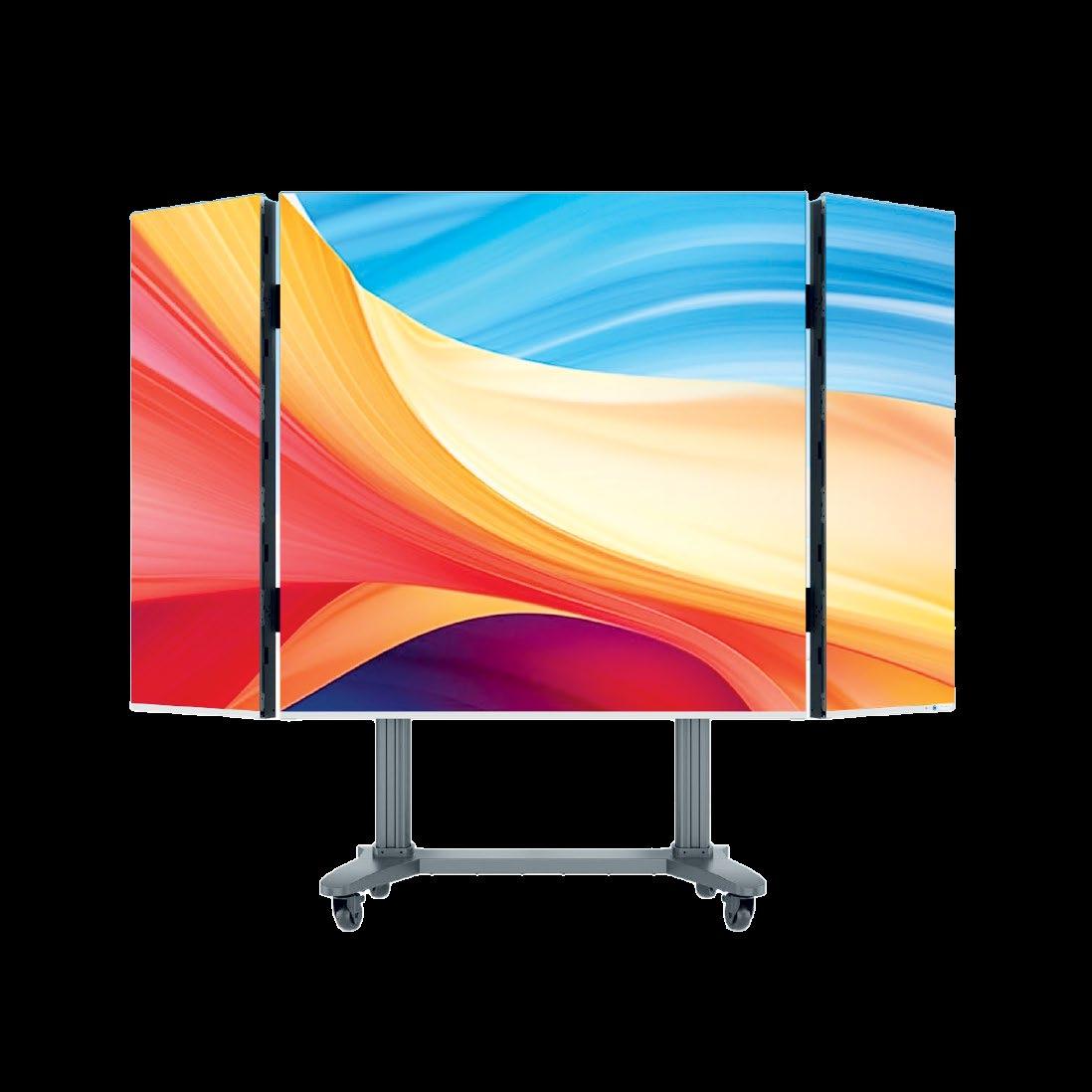
The 138-inch Absenicon LED FlexScreen is a fully integrated, foldable display engineered for rapid deployment in corporate, education, and event environments. Its portable design and motorized height adjustment (77.09–99.84 inches) simplify transport, doorway clearance, and multi-room use. Pre-assembled inside a road case, the system enables fast setup with maintained alignment and calibration. Featuring 1080p resolution, 600 nits brightness, and built-in wireless content sharing via Android 11.0, FlexScreen delivers reliable, BYOD-ready performance anywhere.
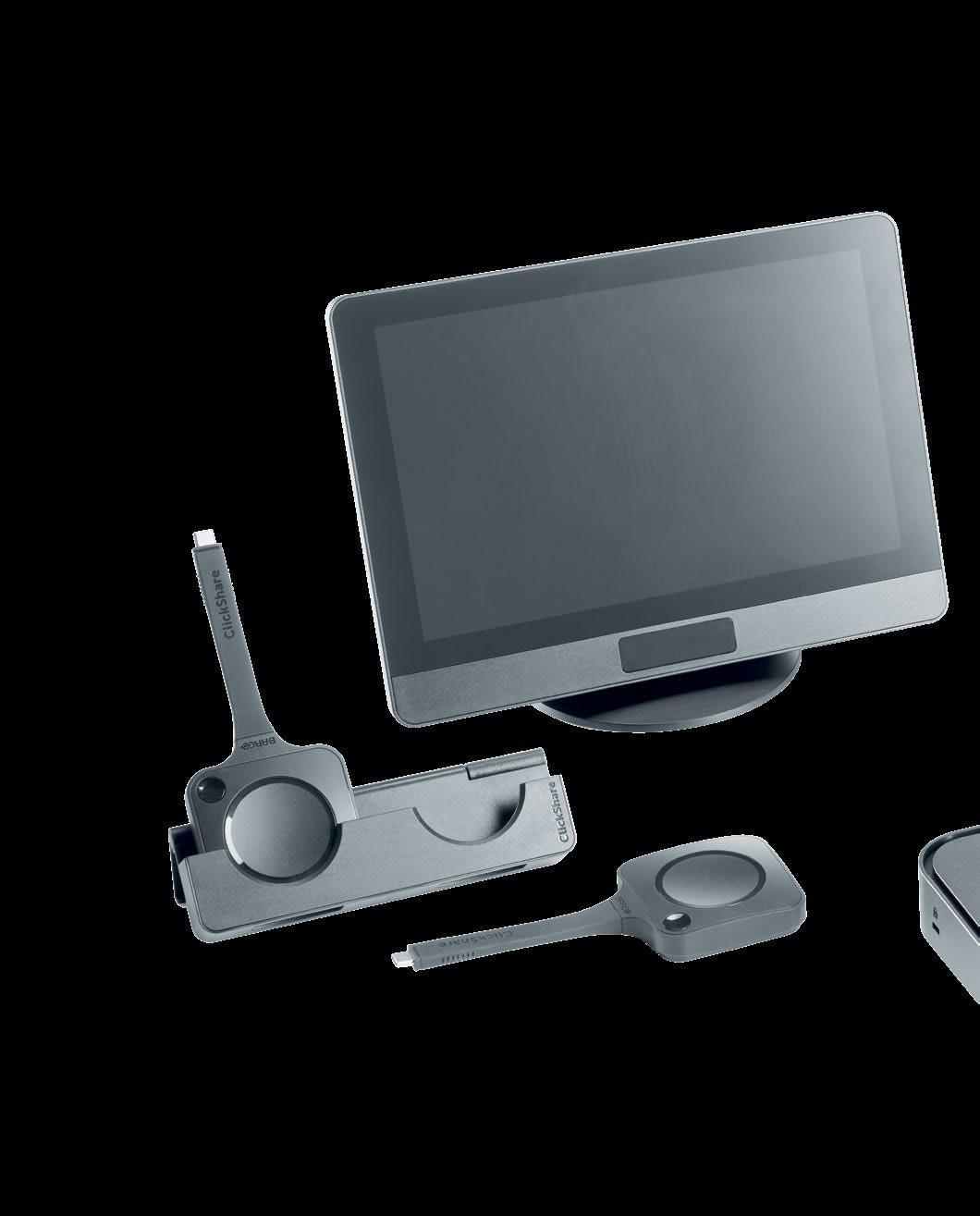
The Sharp PN-LM Series AQUOS BOARD Collaboration Displays combine versatility, performance, and ease of use for modern workspaces. Available in 43 and 55-inch Class sizes, these touchscreens feature Android OS14, 500-nit brightness, and high-precision touch for clear, vibrant visuals. Built-in apps, wireless casting, whiteboarding tools, and USB-C connectivity enable seamless collaboration and content sharing without an external PC. Flexible mounting and orientation options allow adaptation to a variety of office and digital signage environments.
Part of the TeamConnect Family, the TC Bar S and TC Bar M offer all-in-one scalability for small to large rooms, with premium microphones, speakers, and a 4K AI-enhanced camera. When powered and connected to a laptop via USB, the TC Bar becomes a true BYOD, plug-and-play conferencing solution. Advanced beamforming ensures clear audio and freedom of movement, while flexible mounting, remote management, brand-agnostic integration, onboard Dante, and strong security make deployment simple and reliable.
Barco ClickShare Hub Pro
ClickShare Hub Pro is a premium, modular, wireless videoconferencing room system for enhanced hybrid meetings. Featuring two next-generation ClickShare Buttons (with Wi-Fi 6E and USB-C DisplayPort), it ensures meeting participants enjoy secure, 4K wireless content sharing. With dual and ultrawide display support, it guarantees engaging meetings. To IT managers, ClickShare Hub Pro offers standardized installation, enterprise-grade security, and expanded connectivity options for more advanced, customizable setups—all while supporting sustainability goals and including a three-year warranty.
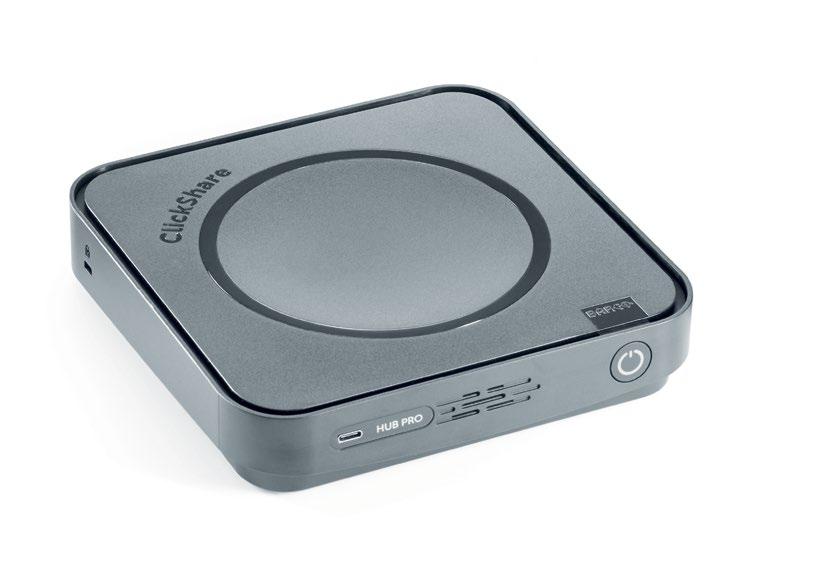
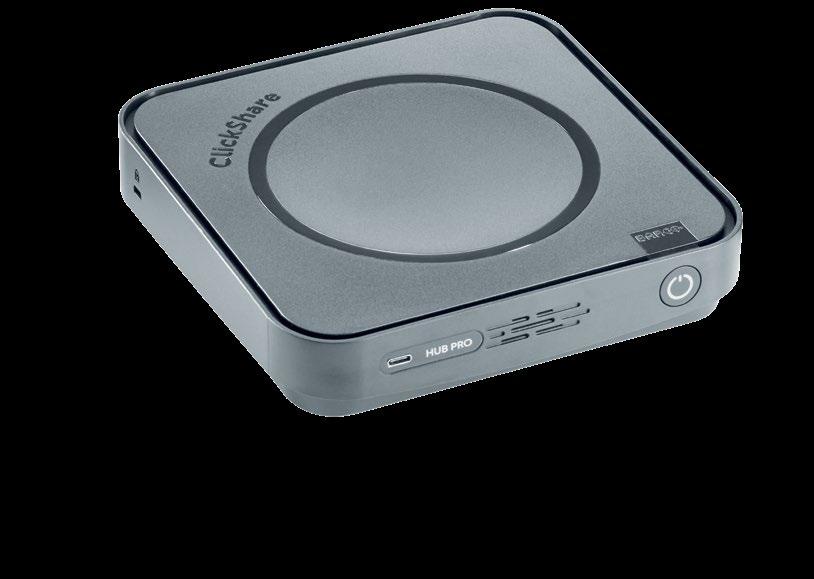
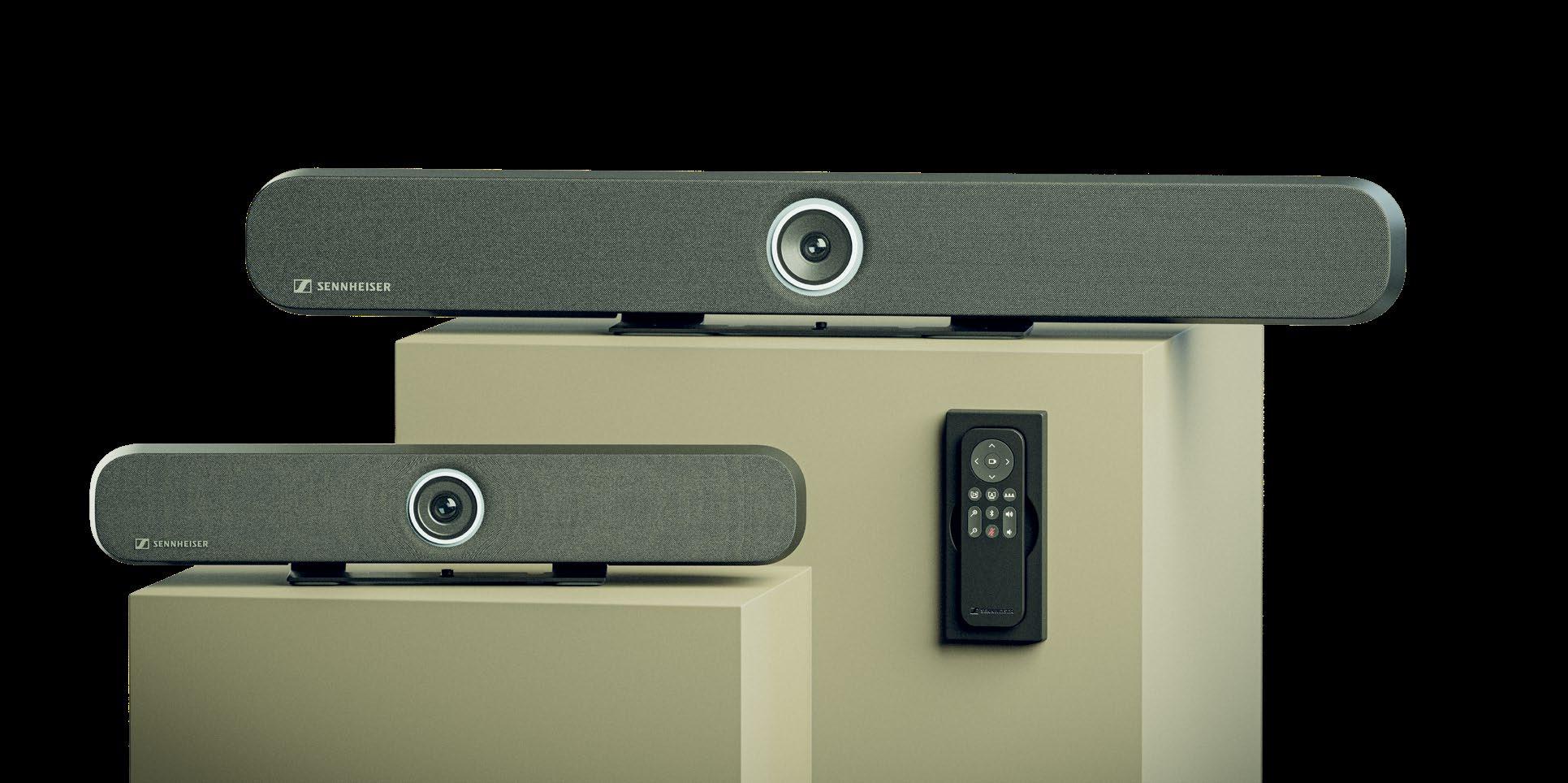
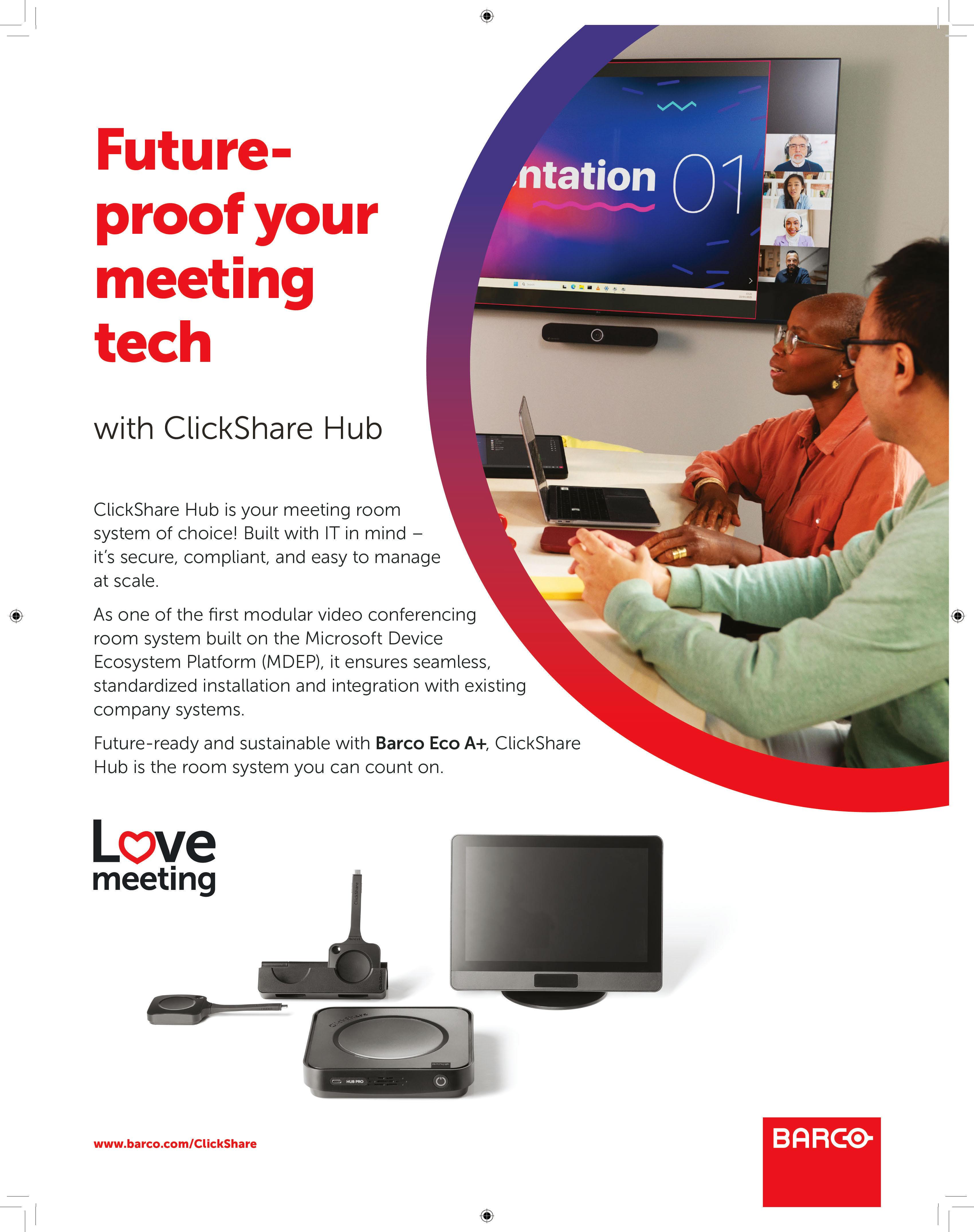
The University of Rhode Island is standardizing 164 AV-equipped spaces.
By James Careless
In astronomy, a “singularity” is the center of a black hole. At the University of Rhode Island (URI),
“The Singularity” is the name of a massive AV installation project. The Singularity’s goal is to standardize and upgrade AV equipment in 150 classrooms and 14 auditoriums at URI’s main Kingston campus.
This ambitious project, which is now being executed by URI’s five-person Information Technology Services (ITS) AV department, was inspired by the university’s struggles to cope with the COVID-19 pandemic. “When COVID hit, almost none of our classrooms were hybrid capable in any way, shape or form,” recalled Jeffrey Levesque, URI’s lead information technologist. “The non-standard solutions we managed to patch together served their purpose back then—but we knew we needed to come up with an approach that was consistent campuswide, easy for staff to operate using a consistent touchpanel interface in each room and capable of being supported remotely from our office.
“This is why we decided to standardize our AV equipment campus-wide. I wanted equipment that I could put into every room no matter what it was, whether it was an auditorium, an active learning, or standard classroom, a meeting room—all of them.”
To manage the entire system, URI selected Epiphan’s Pearl Nexus AV over IP content playout and lecture capture solution. This included using Pearl’s Panopto for content management and Q-SYS Core Nano platform for control. The result is a fully automated AV environment in each classroom that allows instructors to walk in, make a few connections, and teach.
“I really enjoyed programming in the Q-SYS environment,” said Levesque. “Our rooms use Core Nano so that we don’t have to run audio ins and outs into those spaces. Instead, everything is running on a Dante network.”
URI uses NETGEAR AV line switches and network power supplies to run its internal AVoIP multicast network. In each upgraded room, URI installs an Apple Mac Mini computer, QSC TSC-70-G3 touchscreen controller, Q-SYS NV-21-HU ingest and receiving device, QSC SPA-Qf 60x2 audio amplifier, and two QSC AD-S8T loudspeakers. There is also one QSC NC-20x60 PTZ conference camera with audio tracking. Each lecture is captured using an Epiphan Pearl Nexus that supports automated recording.
Video is displayed in two ways in URI’s classrooms and auditoriums. Each space is equipped with Sony
laser projectors (the VPL-PHZ60 and VPL-PHZ61 are the main models) and Da-Lite Model C with CSR pulldown screens. Select rooms also include Sony 4K BRAVIA monitors, which are typically 65 inches but can be as large as 85 inches.
To ensure accurate, clear, and echo-free audio capture, each space features an Audio-Technica ATND1061DAN beamforming ceiling array microphone, which can automatically focus on designated zones for audio pickup, such as the lectern or areas where students are speaking. At the same time, this system prioritizes the instructor and follows them as they move, so the lesson’s audio never gets missed.
The ATND1061DAN shares its voice tracking information with the QSC PTZ cameras in real time. This allows the cameras to automatically adjust and follow whoever is speaking, resulting in human-level tracking quality without requiring an actual operator.
Plus, the ceiling mic can support up to 32 user-defined pickup zones, which are configured using AudioTechnica’s Digital Microphone Manager (DMM) software. This also includes defining exclusion zones near doors and other problematic areas to block unwanted noise. For instructors who are still not ready to rely on ceiling mics, URI also has a Catchbox Plus wireless lavalier mic system available.
URI supports a BYOC (Bring Your Own Conference) approach, where users can access platforms like Zoom, Teams, and WebEx. For those instructors and students who want to plug their own devices into the classroom AV system, URI provides HDMI, USB-C, and Barco ClickShare wireless connections.
In fact, the only thing that URI’s standardized AV rooms don’t have is their own scheduling system. “This is because room bookings are handled by our scheduling department on campus,” said Levesque.
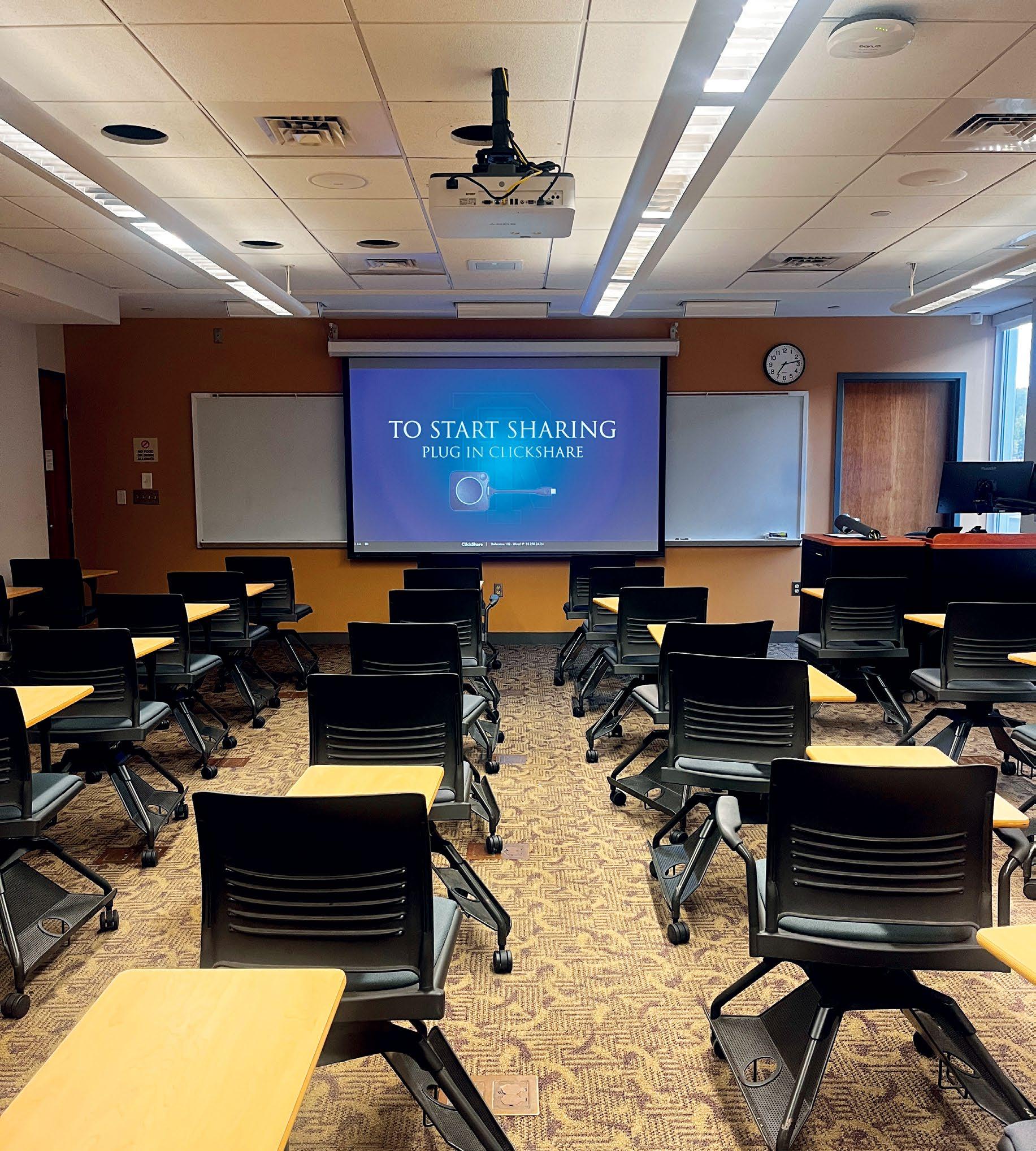
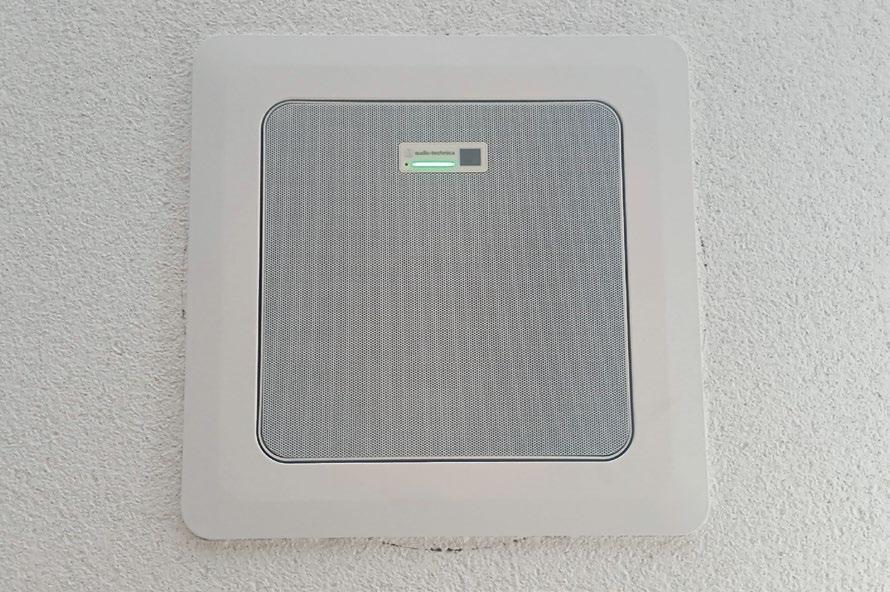
Installing a standardized AVoIP network to 164 locations is a tall order for any IT department, especially one with only five employees. To handle the challenge realistically, Levesque and his people resorted to intensive planning before a single cable was cut.
“Our philosophy is to do all your prep work ahead of time and get all of the parts in house before you do anything,” Levesque shared. “Once you have what you need on hand, it is time to put a prototype system together and try to break it—in other words, try to figure out what things can go wrong in the installation and what can be done to fix it. We applied that philosophy to this new install, and that’s what helped make it go really seamlessly.”
That said, challenges did arise once the actual installation began. “One of the biggest challenges was learning to stand up and manage the dedicated, internal AV over IP multicast network that we needed, which is isolated from the main campus network,” said Levesque. “Luckily, the NETGEAR switches made it really easy thanks to their intuitive interface, while their support has been top notch.”
The URI IT team also had some issues when it came to adding AVoIP into larger rooms where a typical 48-port switch wasn’t enough. The solution was to start stacking switches. “That’s been a little bit of a challenge to execute, but it’s actually not that bad,” Levesque said. “Frankly, once we had the AV over IP networks up, the subsequent issues we’ve faced are really trivial.”
Since starting The Singularity AV standardization upgrade project in Spring 2024, URI’s ITS department has completed more than 30 rooms. Because the university operates on a seven-year planning cycle, its goal is to transition the remaining rooms within the next three to four years, pending annual funding allocations.
Providing URI with a standardized AV infrastructure is proving to be a shrewd move. As for lessons learned from the project? As outlined above, extensive upfront planning and prototyping results in fewer problems during installations and faster overall delivery times. “Putting together a fully working classroom in my office first really paid off,” said Levesque.
“We’ve learned that we can’t ask our student population to help us install things,” he said. “We had issues when we tried to do that.”
The third and final lesson: “While we can stand up our own networks, we’re slowly reaching that point where we do need to expand our team, especially now
that we’re moving to more network-based classrooms,” said Levesque. “The trend in AV these days is to put everything on the network. As a result, we really do need to hire somebody full time to help manage the AV over IP network that we’re standing up all over campus.”





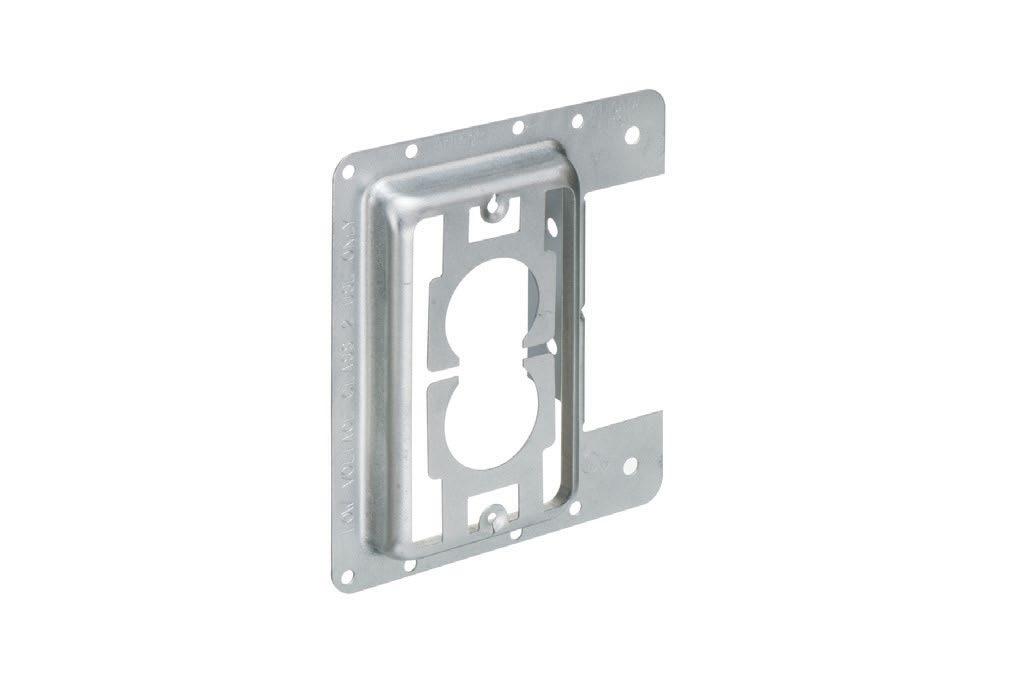
It’s also vital to have the professional installation team do all of the work themselves, rather than solicit support from people who could do some of it for less.
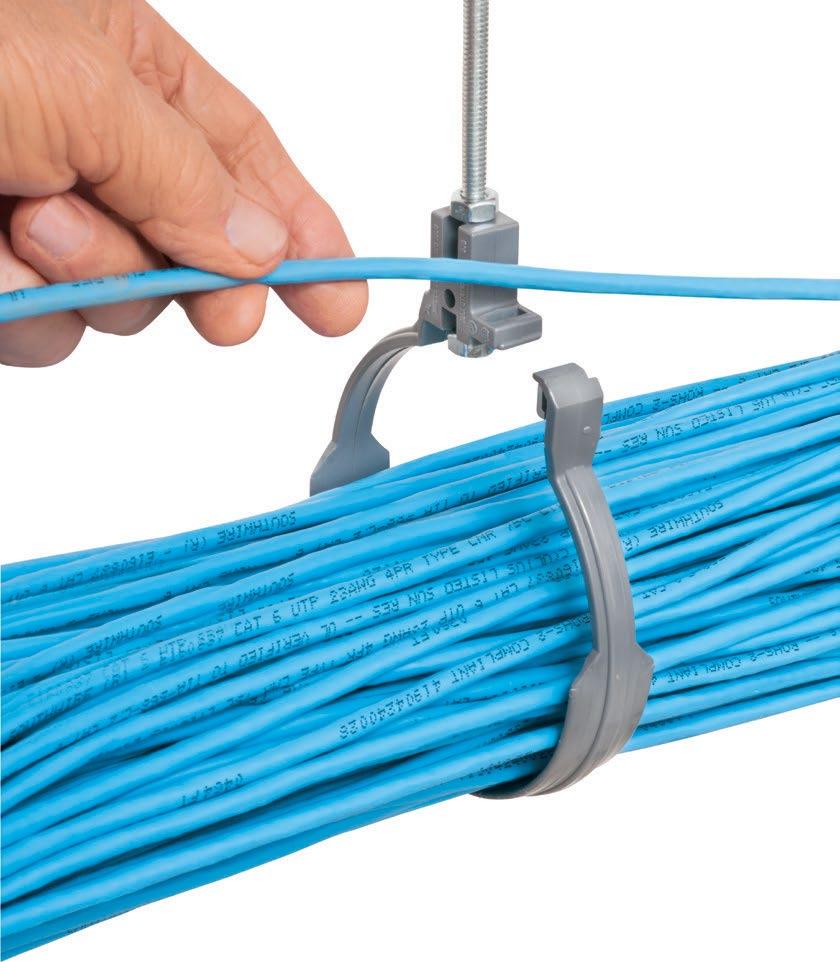
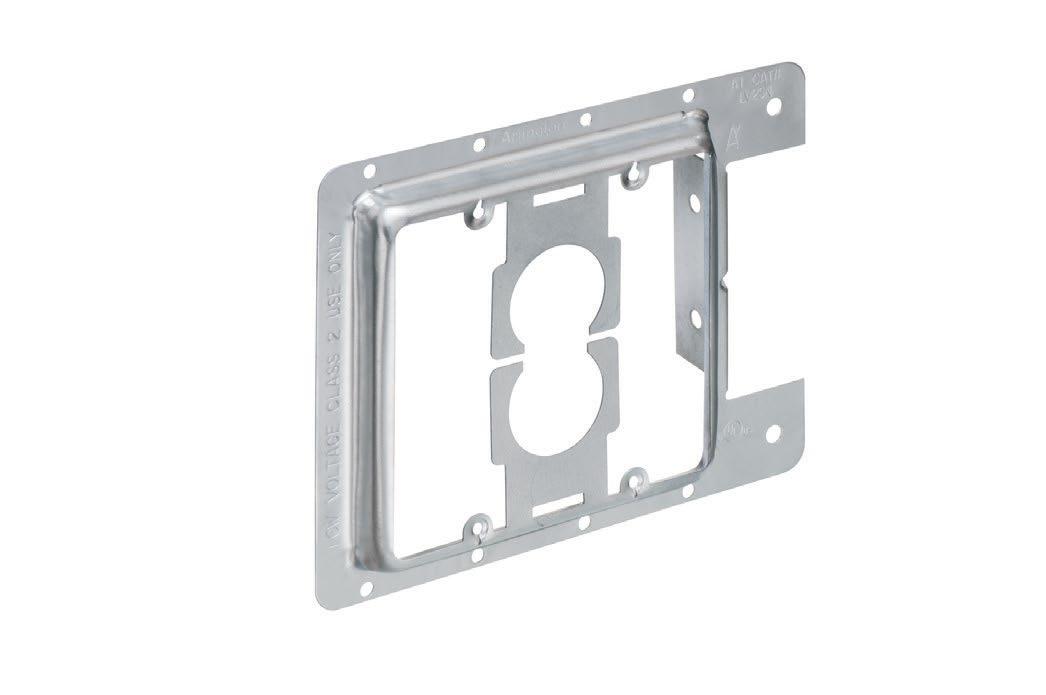




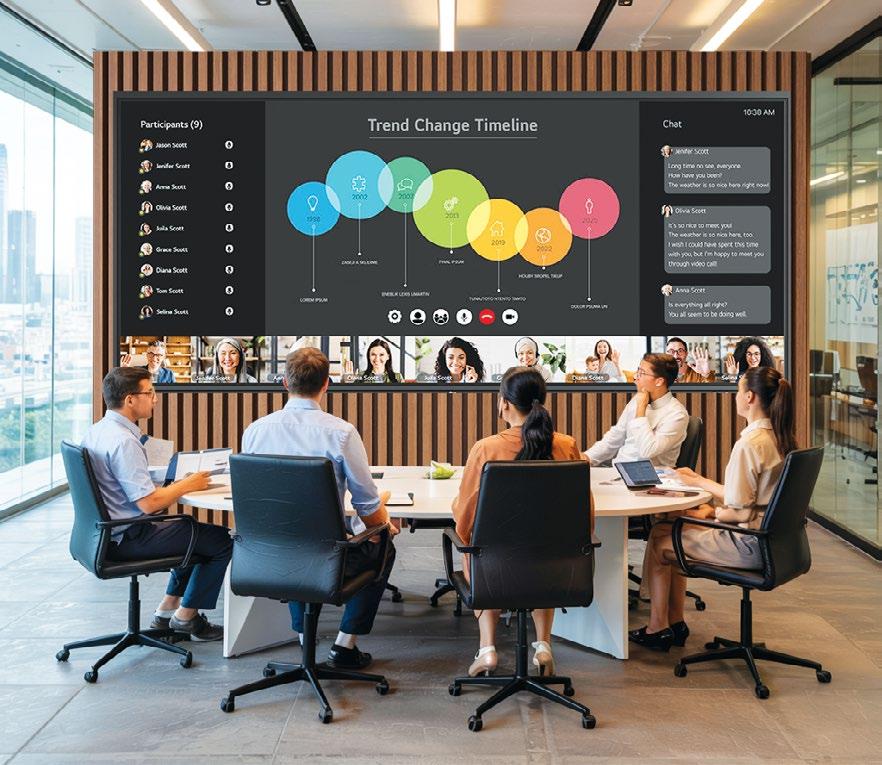
The 105-inch LG CreateBoard UltraWide (105TR5WP) is designed to improve work efficiencies for corporate and educational establishments. Offering a large workspace with a 21:9 aspect ratio (expanding on standard 16:9 LG CreateBoard interactive displays by 30%) and 5K resolution, it is optimized for Microsoft Teams Rooms (Front Row layout). The new model expands the current LG CreateBoard lineup—which includes 86-inch, 75-inch, 65-inch, and 55-inch options—to create a full suite of displays for virtually any environment, from small chat rooms and classrooms to boardrooms and beyond. Easy to connect, share, and charge personal devices via a single USB-C connection, the new LG CreateBoard UltraWide includes a built-in mic array and subwoofer. Multi-window mode enables multiple apps to share the same screen simultaneously. A collaboration with DisplayNote Technologies integrates its Launcher Windows 10 application to simplify the meeting room experience.


HARMAN Professional Solutions has launched the JBL Professional Control 400 Standard Coverage Series and Control 400 Premium Coverage Series ceiling speakers. Comprised of 15 new models, these series join the Control 400 Enhanced Coverage Series, introduced earlier this year, completing the Control 400 ceiling speaker family. Together, these variants provide options at three distinct tiers of coverage consistency and price. The Standard Coverage Series provides high-performance audio at affordable price points, while the flagship Premium Coverage Series leverages JBL’s proprietary conical Radiation Boundary Integrator (RBI) technology to achieve coverage consistency for installations where audio quality and clarity is paramount. Terminal covers allow for convenient top or side cable entry, while the reliable captive dogear design accommodates a variety of ceiling thicknesses, ensuring versatility for any environment. Most options include transformers to support both 70V/100V and low impedance applications.
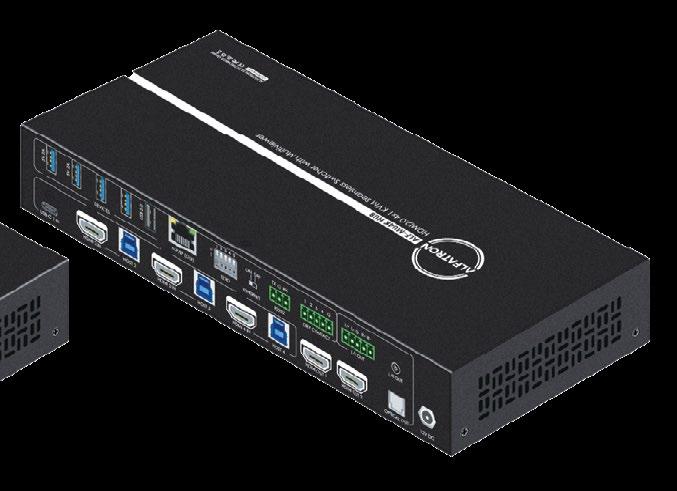
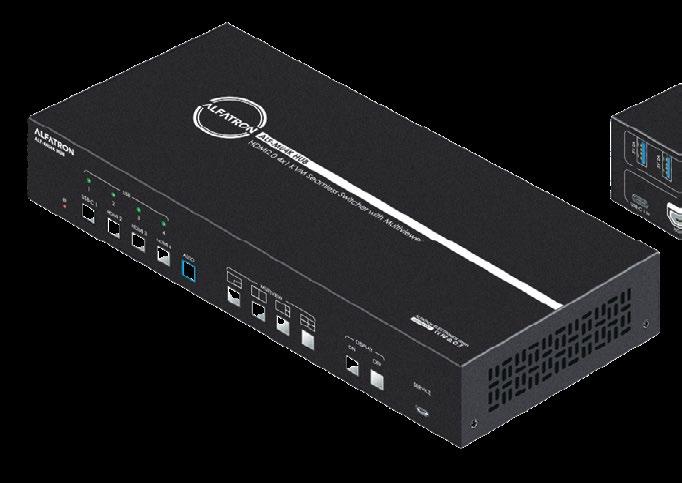

among two computers at 10 Gbps. Connectivity includes four USB 3.2 ports, a single USB 2.0 KVM port, and USB-C and HDMI inputs with Host USB ports for Unified Connectivity. Ethernet is enabled for all USB-C and B Host ports.
The ALF-MU4K HUB is an ideal solution for managing a variety of input sources/signals to make conferencing a more intuitive and seamless process. With support for 4K resolutions and USB 3.2, plus versatile control via TCP/IP for the GUI, the ALF-MU4K HUB is designed to support the latest equipment and the highest signal resolutions and transfer speeds. This includes HDMI 2.0 with support for 18 Gbps bandwidth that enables 4K60 4:4:4. The unit also supports HDCP 2.3 and is backward compatible. The hub’s multiview function provides selection among various modes. To ensure intuitive operation, the hub provides KVM switching
Jetbot Drawings is an AI-powered tool that generates complete system schematics within the Jetbuilt platform. Powered by Jetbuilt’s proprietary AI engine, Jetbot, its schematics represent connections exactly as an engineer would design them using customized lines, colors/styles, and wire number schemes. Over the last two years, Jetbot has been trained on thousands of product manuals, integration guides, and AV best practices. Jetbot Drawings leverages the project’s specific bill of materials and scope of work already entered into Jetbuilt. Designers retain full control, with the ability to manually move and adjust connections, add components, or move devices as needed. Users can make natural language requests, from small adjustments to larger conceptual changes that can reconfigure an entire patch setup. Jetbot Drawings can also be exported in DWG format, enabling seamless integration with platforms such as AutoCAD and Vectorworks.
The new Swoop range of robotic cranes from Shotoku Broadcast Systems replaces manually operated cranes and jibs, which typically require one or even two dedicated operators. The range launches with two sizes: Swoop 140 and Swoop 220, representing a boom arm reach of more than 4 feet and 7 feet. Both versions feature precision engineering, enabling production directors to create and precisely repeat sweeping shots with confidence and ease. Swoop integrates seamlessly with Shotoku’s TR-XT advanced control system for complete control of the crane within the studio. Plus, multiple intelligent proximity detectors are mounted along the length of the arm and above and below the payload creating a dynamic protective “bubble” that detects obstacles, stops all movement, and prevents collisions. A single button switches Swoop into local mode for repositioning when required. Two base options match production needs and budgets.
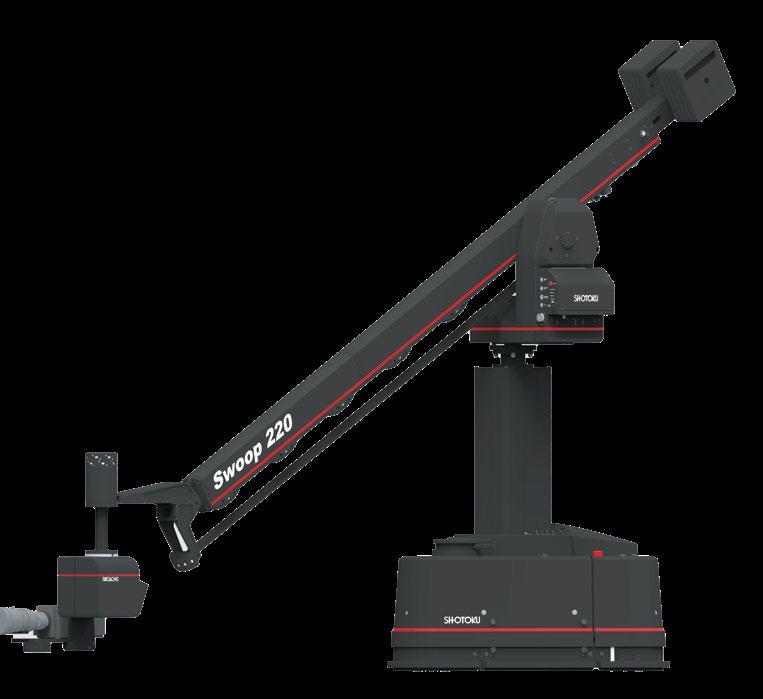
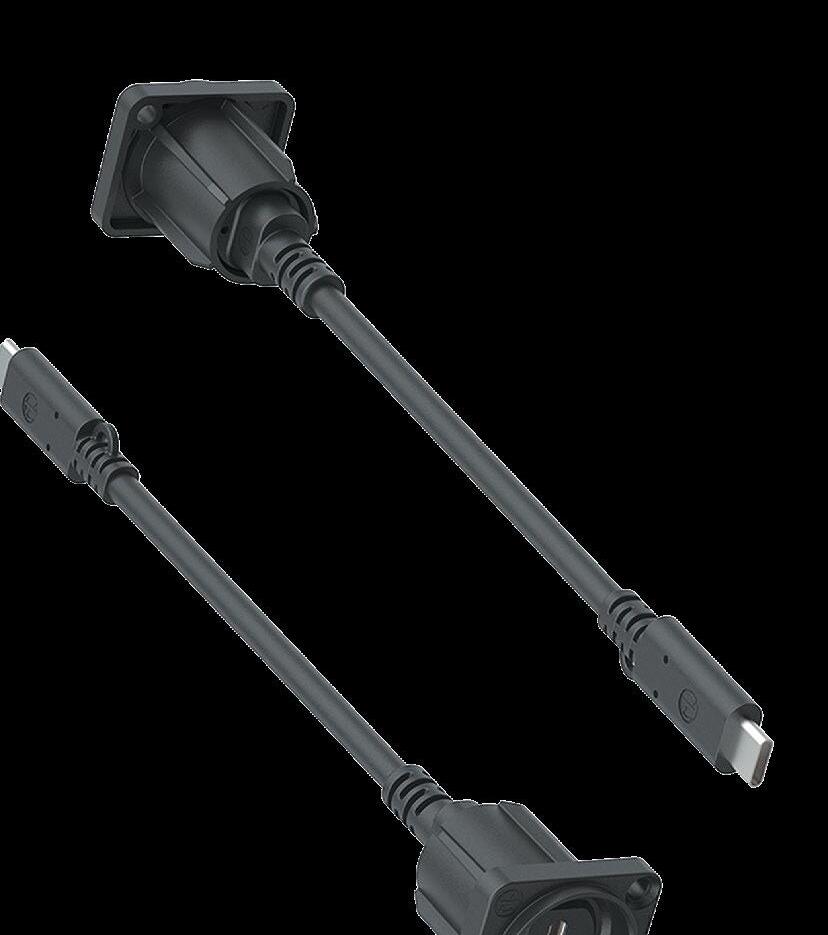
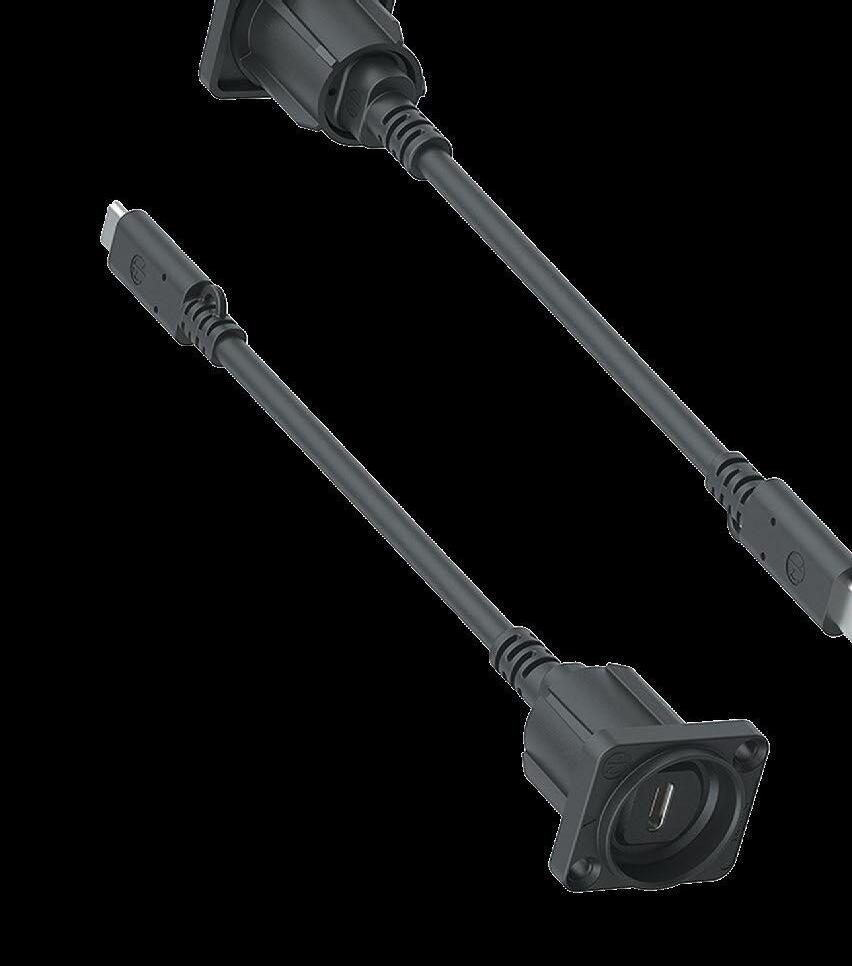
NEUTRIK’s new NAUSBC-5G-FL chassis connectors are rugged D-size connectors designed for
feature integrated fly-lead patch cables at the rear, with four different
lengths. The connectors are rated for Gbps data speed (USB 3.1 Gen 1 specification) and 100W (20V/5A) power transfer for device charging and powering. The front of the chassis connector accepts standard USB Type-C patch cables. The connectors’ integrated rear-side multiple benefits. By removing a passive integration by providing the necessary cable to connect to active equipment. This reduces both system cost and complexity. Since the patch cables are an integral part of the connector design, they greatly reduce the risk of accidental cable pullout within the enclosure or behind the rack.
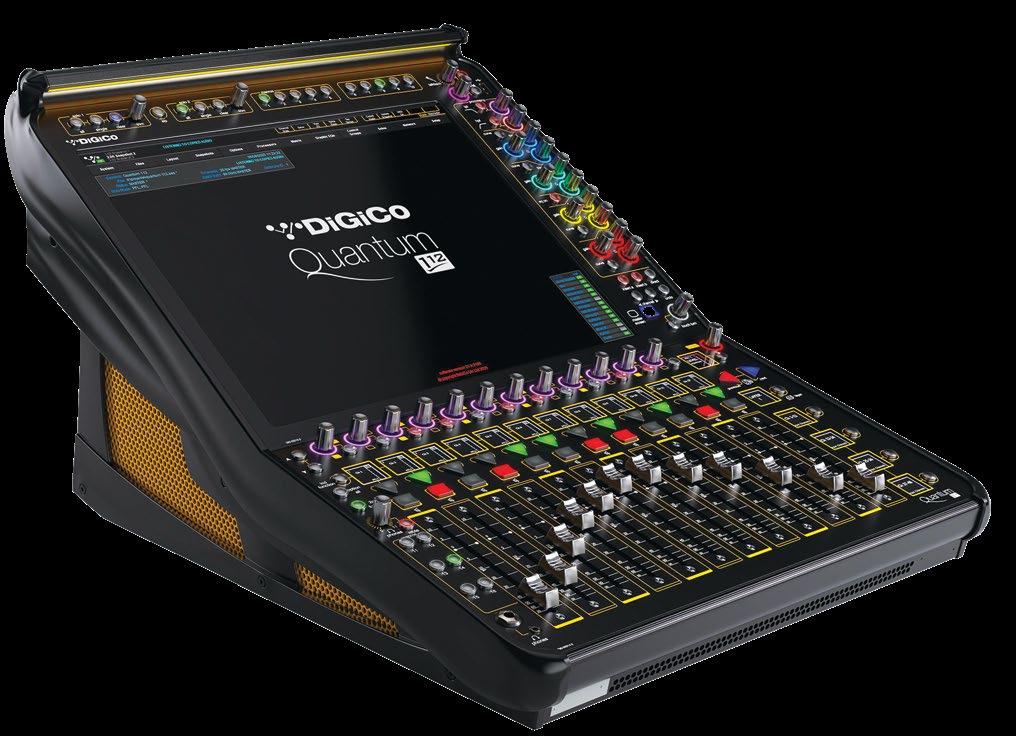
The smallest and newest addition to the Quantum Range family of digital audio mixing consoles, the Quantum112 is a single-screen, 12-fader desk that is the company’s first true flypack mixer. Designed to fit within a Pelican Air 1637 case, the console (when packed) weighs only 50 pounds, qualifying it as a standard checked bag option on most flights. Despite its compact form factor, the Quantum112 offers 80 input channels with 24 aux/subgroup busses, LR/LCR master busses, and a 12x8 matrix, all with full channel processing. Twelve control groups plus two solos are also available. Sporting a 17-inch multitouch screen, the Quantum112 is additionally equipped with 18 individual TFT channel displays to provide clear user feedback and interaction. Beneath the main display are a dozen newly sourced, touchsensitive faders, selected for their smooth movement and precision control.
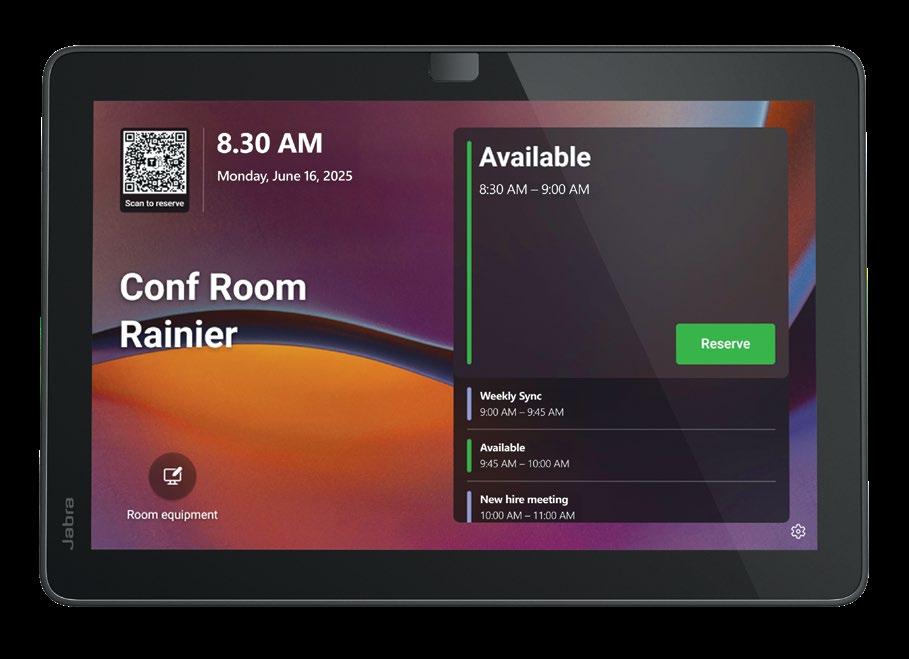
The Jabra Scheduler is a touchscreen scheduling panel that displays meeting room availability and allows users to reserve spaces directly at the room or through their digital calendars. It works seamlessly with both Microsoft Teams Rooms and Zoom Rooms. Once synced, upcoming meetings appear in real time on the interactive touchscreen display. LED indicators clearly signal whether a space is free or in use, helping to reduce interruptions and keep meetings running smoothly. In addition to complementing Jabra’s audio and video portfolio, the Jabra Scheduler can also be used in environments and rooms that don’t currently feature Jabra devices. With integrated cable management, the panel connects directly via a category cable, making installation straightforward once power is in place. It also offers several flexible mounting options, with all hardware included in the box to streamline deployment and minimize complexity.


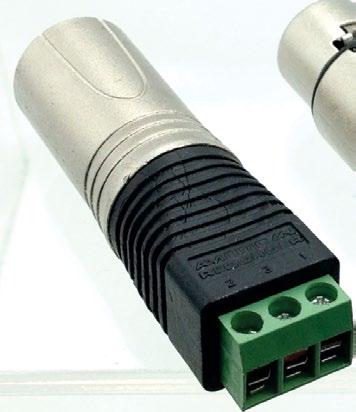
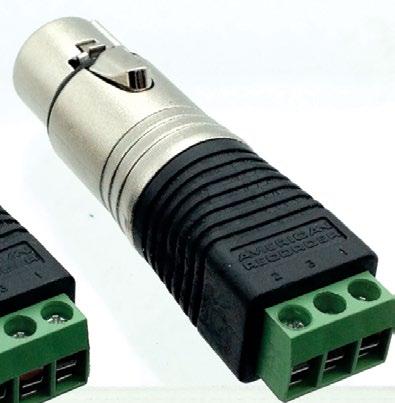



MODULAR FLOOR BOXES


By Nyere Hollingsworth
For me, the holiday season is always a time of reflection on the past year, where I get to pause for a moment to celebrate accomplishments and spend time with the ones I love and that make this life worth living. This is also a time where I get to plan for the year ahead and chart the success criteria that will govern the actions that I take to do my part to make this world a better place as best I can.
Looking back on 2025, it is clear to me that AI is taking over the technology lexicon and there are increasingly few conversations that are had in our community that don’t revolve around the promise and power that this technology has in store for us. On the one hand, there is legitimate fear that a lot of jobs today will be replaced by AI agents. On the other hand, it is clear to me that human connection is and will continue to be the glue that holds the economy together—and it is essential for us to all focus our energy on doing things that machines can’t do.
One of the most striking moments of a recent tech conference I attended was the opening remarks of one of the event sponsors highlighting the fact that the room was full of about 800 technology professionals and not a single AI agent. The reason for that was that technology still needs people to put it all in context and make it make sense for those that rely on us to create the collaborative environments that allow us to service our customers.
Looking forward to 2026, it is imperative that we continue to emphasize the fact that humans still matter. In fact, humans matter more now than at any other time in our history because routine, repeatable, and mechanical work can all be done by machines now.
We’ve been heading toward this moment since the dawn of the mechanized economy; the world of humans doing any of those tasks is rapidly fading away. As a result, we’re going to have a little more time on our hands to engage with one another to decide what we are going to tell the machines to do on our behalf.
Given that we as technology professionals design, deploy, trade, and support the machines that make up these physical and virtual environments, we have a responsibility to get this moment right and leverage our humanity to create space for deeper human connections. As such, what are the things that we need to do to reduce the friction that impedes that human connection?
For Those Supporting Colleagues
Provide the right technology and standardize access. It’s no longer OK to throw a hodgepodge of hardware
at our colleagues and expect them to wrestle with machines that were not designed and configured to make it easy to connect with each other. We must eliminate this point of friction and build to standards that set up our organizations to engage with each other with little thought on the underlying technology.
Automate everything and let machines do what they do better than humans. Now is the time to move away from relying on people to walk around and check every room to ensure its function. Instead, embrace the power of automated monitoring and self-healing solutions.
In a world of agentic AI, our organizations are demanding that we all play on the same network so the computers can talk to each other to do work on our behalf. This will require deeper conversations with our partners in cybersecurity and networking—but at this stage, the cost of not doing so far outweighs the time and effort required to make this a reality.
Be vigilant and relentless about ensuring meeting equity and inclusive collaboration. This is where the machines need us to fill the gap in that human-tocomputer interaction and equalize the physical and virtual workplace experience. Inevitably, someone that is important to the creative process or decision to be made is going to be remote to the in-person attendees, whether they are in their home office or satellite location.
While we continue to get better at this, there is still opportunity for technology professionals to educate our colleagues on maximizing the utility of collaboration solutions. The market is ripe with solutions that make this very easy. We need to continue to learn how to leverage them so we can spend more time creating and deciding.
Think outside of your box. If your solution is solely dependent on a little black box, you’ve already lost and are on the path toward irrelevance. Software-defined ecosystems are here to stay, and we need you to embrace the opportunities to connect with multiple cloud-based technologies and services to enable that frictionless experience for your customers. Solutions that capture meaningful data and are able to feed into other technologies in the customer ecosystem will win the day and further enable the technology transparency we all desire.
Ask the question and solve the problem. Every conversation with a
customer should start with this question: “What problem are we trying to solve?” Starting anywhere else will inevitably lead you down the path of negative experiences and poor outcomes.
By the time you engage with an end user these days, they have already researched products and services, and can recite the differences between you and your competitors based on the information that is publicly available. Therefore, the added value comes from asking the question, listening to the customer, and crafting solutions that solve their problems.
Play well with others. The days of proprietary ecosystems are over. Your customers need you to accept the fact that they have a mixed environment and they need you to help tie it all together.
Success in 2026 is going to involve a lot of talking to competitors to create and deploy solutions for your customers. We’re all having different versions of the same conversation—the faster we sit down with each other to compare notes and build better products, the better it will be for the entire industry.
Whether or not your colleagues and customers are coming to the office out of mandate or necessity is no longer important. Your work product by and large is happening on a machine somewhere, because a group of humans created a product that automated a task and another group of humans said this is the product you should use and this is how you should use it.
Facilitating this organization of humans to create things and make decisions is the real work in front of us in this space. Success in 2026 will look like the physical workplace being transformed into a space where people enthusiastically gather to shake hands, share hugs, and compare lived experiences in order to create things and make decisions.
Nyere Hollingsworth is an IT transformation leader and an expert in digital workplace strategy, UC, and enterprise platforms.