

PURPOSE Builds STABILITY
LESSONS FROM A MISSION-DRIVEN LAW PRACTICE FOCUSED ON CLIENT EDUCATION AND IMPACT

In This Economy,
PURPOSE Builds STABILITY
LESSONS FROM A MISSION-DRIVEN LAW PRACTICE FOCUSED ON CLIENT EDUCATION AND IMPACT
STABILITY DOES
NOT COME FROM CHASING THE
LOUDEST CHANNELS
OR THE NEWEST TRENDS. IT COMES FROM
ENGENDERING TRUST,
OFFERING CLARITY, AND STAYING RELEVANT TO THE CLIENTS WE SERVE.

BY ELSA W. SMITH, ESQ.
PRACTICING LAW IN THIS ECONOMY
In times of economic uncertainty, many law practices feel tempted to scale back or stick with familiar routines. Thriving practices understand a deeper truth: stability does not come from chasing the loudest channels or the newest trends. It comes from engendering trust, offering clarity, and staying relevant to the clients we serve.
For those of us devoted to purpose-driven work— educating clients to understand their options, protect their families, and plan for the future—this approach remains the most sustainable way to maintain a modern law practice amid economic uncertainty, anchored in service to others.
From the perspective of a purpose-driven boutique estate planning firm—where “purpose” defines why we do the work and “mission-driven engagement” describes how we put that purpose into action—this article explores what “alternative marketing” really means, why client education has become an essential anchor for modern law practices, and how purpose-led initiatives—such as my podcast Wills, Women & Wealth—bring these principles to life. Along the way, I’ll share practical takeaways for building stability and resilience in your own practice. To begin, it helps to pause and consider what we mean by “alternative marketing” in the context of a modern law practice.
WHAT DO WE MEAN BY “ALTERNATIVE MARKETING”?
The phrase “alternative marketing” naturally prompts a question: alternative to what? Traditionally, law firms relied on television commercials, referral networks, newspaper ads, billboards, local directories, or brochures. While effective in their time, these methods offered limited ways to educate or engage clients beyond transactional interactions.
Newer approaches—podcasts, videos, blogs, webinars, and social media—are often labeled “alternative” because they fall outside traditional channels. While some social media
emphasize clicks, likes, or purely sales-driven promotion, purpose-driven use can transcend these metrics. At their core, these tools provide mission-centered engagement: offering clarity, answering questions, and reinforcing credibility through consistent, meaningful communication rather than flashy advertising or gimmicks.
Podcasts, for example, allow for in-depth conversations on my practice area of estate planning, equipping listeners with knowledge they might not otherwise receive. Shortform videos and social media posts offer practical tips, demystify legal processes, and showcase a firm’s values in action. When approached intentionally, these tools become extensions of the lawyer’s role as educator and trusted adviser, rather than conventional marketing.
Framing these efforts as mission-driven engagement shifts the conversation. The question is no longer whether a firm is “marketing enough,” but whether it is effectively fulfilling its purpose: serving clients with clarity, relevance, and integrity. In this way, what is often called “alternative marketing” becomes a natural, sustainable path to strengthening a law practice in today’s evolving professional landscape. As Simon Sinek has observed, “People don’t buy what you do; they buy why you do it.”1
FROM MARKETING TO MISSION: CLIENT EDUCATION AS THE ANCHOR
For many clients—particularly women—estate planning is deeply personal, rooted in lived realities and closely tied to autonomy, responsibility, and long-term security. Many arrive feeling under-informed, excluded from prior financial decision-making, or unsure what questions to ask. In this context, education is not a marketing tactic; it establishes trust. As Stephen R. Covey observed, trust is “the glue of life” and the foundation of effective communication.
Client education builds trust. When individuals understand why certain documents matter, how decisions affect their families, and what options exist, they can participate fully
1 Simon Sinek, Start with Why: How Great Leaders Inspire Everyone to Take Action (2009).

in estate planning. This sense of agency is especially important for women, who statistically live longer, are more likely to manage estates alone later in life, and often serve as caregivers across generations. Education meets clients where they are and fosters collaboration rather than transactional relationships.
A purpose-centered approach prioritizes clarity over complexity and relevance over volume. It focuses on answering real questions in plain language, addressing misconceptions, and acknowledging both emotional and legal realities. Over time, this approach transforms the attorney–client relationship from a one-time transaction into an ongoing, trust-based partnership. As Maya Angelou observed, “People will never forget how you made them feel.” Purpose-driven client education does just that—it empowers individuals, fosters collaboration, and deepens relationships over time.
From a practice perspective, education-centered engagement strengthens stability. Informed clients tend to be decisive, aligned with their plans, and confident in the guidance received. They return for updates, refer others, and see their attorney as a longterm adviser—once established, confidence compounds. Growth follows naturally when client education anchors the practice, grounded in shared values, sustained by reliability, and resilient even in uncertain economic times.
CASE STUDY: WILLS, WOMEN & WEALTH WITH ATTORNEY
ELSA W. SMITH
Wills, Women & Wealth, a podcast hosted by me, evolved from Women Winning Wednesdays, a weekly Facebook Live series addressing practical estate planning questions. From the outset, the goal was not marketing, but education—empowering women to understand their options, ask informed questions, and take control of decisions shaping their families’ futures. Women were, and remain, at the center of this work. As an attorney of Afro-Cuban
A
PURPOSE-CENTERED APPROACH PRIORITIZES
CLARITY OVER COMPLEXITY AND RELEVANCE OVER VOLUME. IT FOCUSES ON ANSWERING REAL QUESTIONS IN PLAIN LANGUAGE, ADDRESSING
MISCONCEPTIONS, AND ACKNOWLEDGING BOTH EMOTIONAL AND LEGAL REALITIES.
descent, it was also important to me to normalize the presence of women of color in the estate planning space and to communicate that estate planning is for us, too. Representation matters—seeing someone who looks like you guiding these important decisions reinforces that everyone has the right to understand, protect, and plan for their family’s future.
After approximately one year, maintaining weekly live episodes became unsustainable. Toward the end of 2024, I made the deliberate decision to pause the series and reassess how best to continue the mission without compromising quality or the firm’s operations. As former IBM CEO Ginni Rometty observed, “Growth and comfort do not coexist.” That pause required courage, but it also created the space to step back, reflect, and redesign the approach.
Professionals often feel bound by the momentum of established routines, reluctant to change course even as circumstances evolve. Yet a thoughtful recalibration, instead of constant output, can be exactly what is needed to serve clients effectively and strengthen a practice.
The result was Wills, Women & Wealth, a pre-recorded podcast available on Apple, Spotify, and YouTube. Moving from live broadcasts to a controlled format allowed for longer, more in-depth conversations and a more sustainable production schedule. This shift illustrates a central principle of purpose-driven engagement: the tool should serve the mission, not dictate it.
Women who engage with the podcast now arrive at consultations better informed and more confident, leading to richer and more collaborative conversations. While women remain the largest audience segment, the podcast resonates broadly, providing value to anyone navigating estate planning. During periods of economic uncertainty, this form of purposeful outreach has provided stability by prioritizing intention over constant activity.
Ultimately, the evolution from Women Winning Wednesdays to Wills, Women & Wealth underscores a key lesson: reinvention is not a departure from purpose, but an extension of it. Centering clients, pausing when necessary, and shaping platforms to serve the mission deepen trust, reinforce credibility, and support longterm professional sustainability.
STABILITY IS NOT STATIC: THE NEED FOR ONGOING EFFORT AND INNOVATION
Purpose may anchor a modern law practice, but execution is the sail. Stability, especially in uncertain times, requires responsiveness, reflection, and intentional action. Client needs, technology, and economic conditions are constantly evolving. Practices grounded in education and reliability must periodically assess which approaches—and which tools—continue to serve clients effectively. Innovation is not novelty; it is relevance, ensuring communication remains clear, accessible, and aligned with client realities.
PROFESSIONALS OFTEN FEEL BOUND BY THE MOMENTUM OF ESTABLISHED ROUTINES, RELUCTANT TO CHANGE COURSE EVEN AS CIRCUMSTANCES EVOLVE. YET A THOUGHTFUL RECALIBRATION, INSTEAD OF CONSTANT OUTPUT, CAN BE EXACTLY WHAT IS NEEDED TO SERVE CLIENTS EFFECTIVELY AND STRENGTHEN A PRACTICE.

Complacency is a subtle risk. Once a strategy works, familiar rhythms can feel comfortable, yet comfort should not be confused with sustainability. Practices that endure remain curious. They reassess, ask difficult questions, and stay willing to learn—about emerging technologies, changing client expectations, and new ways to deliver clarity—before circumstances demand change. Clarity of purpose also requires resisting constant comparison. Observing other firms can be instructive, but imitation without intention erodes focus. Technology, like marketing, should never dictate direction. Strength comes from remaining resolute in the work you set out to do and selecting tools that support that mission, not distract from it.
This work is especially challenging in solo and small law firm settings, where time, staffing, and resources are limited. Balancing client service, operations, and thoughtful engagement can feel overwhelming. Yet in these environments, clarity of purpose matters most. Filtering decisions—including whether to adopt or discard a technology—through a clear mission helps prioritize effort, remain responsive to clients, and prevent burnout.
Purpose-driven engagement requires discipline, creativity, and commitment without exhaustion. That balance must be recalibrated over time. Recession proofing a law practice is less about insulating against change and more about building the capacity to adapt thoughtfully, learn continuously, and evolve without losing direction.
RECESSION PROOFING A LAW PRACTICE IS LESS ABOUT INSULATING AGAINST CHANGE AND MORE ABOUT BUILDING THE CAPACITY TO ADAPT THOUGHTFULLY, LEARN CONTINUOUSLY, AND EVOLVE WITHOUT LOSING DIRECTION.
PRACTICAL TAKEAWAYS:
Several principles emerge for sustaining purpose-driven law practices:
PURPOSE BEFORE PLATFORM.
Purpose provides continuity; tools, technologies, and channels evolve to serve the mission.
EDUCATION OVER PROMOTION.
Clients seek understanding, not advertising.
SPEAK TO SOMEONE, NOT EVERYONE.
Focused communication fosters meaningful engagement and builds trust.
CONCLUSION
Economic uncertainty challenges every law practice, inviting reflection not only on what we do, but also on why we do it. Stability does not come from louder messaging or constant visibility; it is built through purpose, sustained by credibility, and reinforced through clarity and relevance.
As an estate planning attorney, this work is part of the legacy I am building. I find profound fulfillment in watching clients grow confident and empowered as they gain clarity about their options and responsibilities. Estate planning transforms families’ understanding, conversations, and decisions—providing clarity and long-term security beyond the documents themselves. That
STABILITY IS INTENTIONAL.
It is not achieved by doing more or being everywhere. It is built by showing up with purpose, offering clarity, and allowing relationships to develop over time.
CONFIDENCE COMPOUNDS.
Consistency, clarity, and thoughtful execution deepen relationships and sustain practices.
is the mission: not accumulating likes or clicks, but supporting individuals and families as they move, step by step, toward greater understanding and agency. Over time, these moments compound, strengthening both the families we serve and the practices that support them.
This work requires effort, reflection, and a willingness to evolve— especially in solo or small practices. Yet it offers a resilience no strategy or platform alone can provide. When purpose anchors the practice and execution remains intentional, law practices navigate uncertainty with clarity and confidence, guided not by trends but by a clear sense of direction—and sustained by the lasting impact on the people they serve.
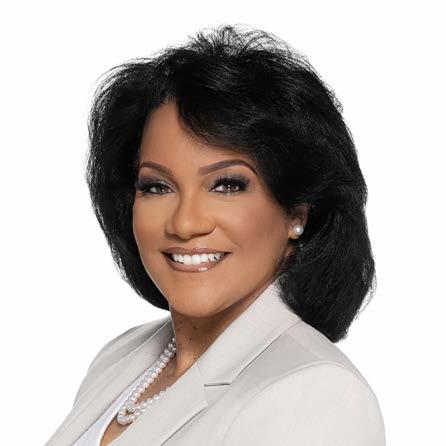
ELSA W. SMITH, Esq. is the founder and managing attorney of the Law Offices of Elsa W. Smith, LLC, a boutique estate planning firm based in Annapolis, Maryland, serving clients across the state. The firm is dedicated to empowering women—and all clients—through education, guidance, and purposedriven legal services.