The Acceptable Addiction
BY A MARYLAND LAWYER
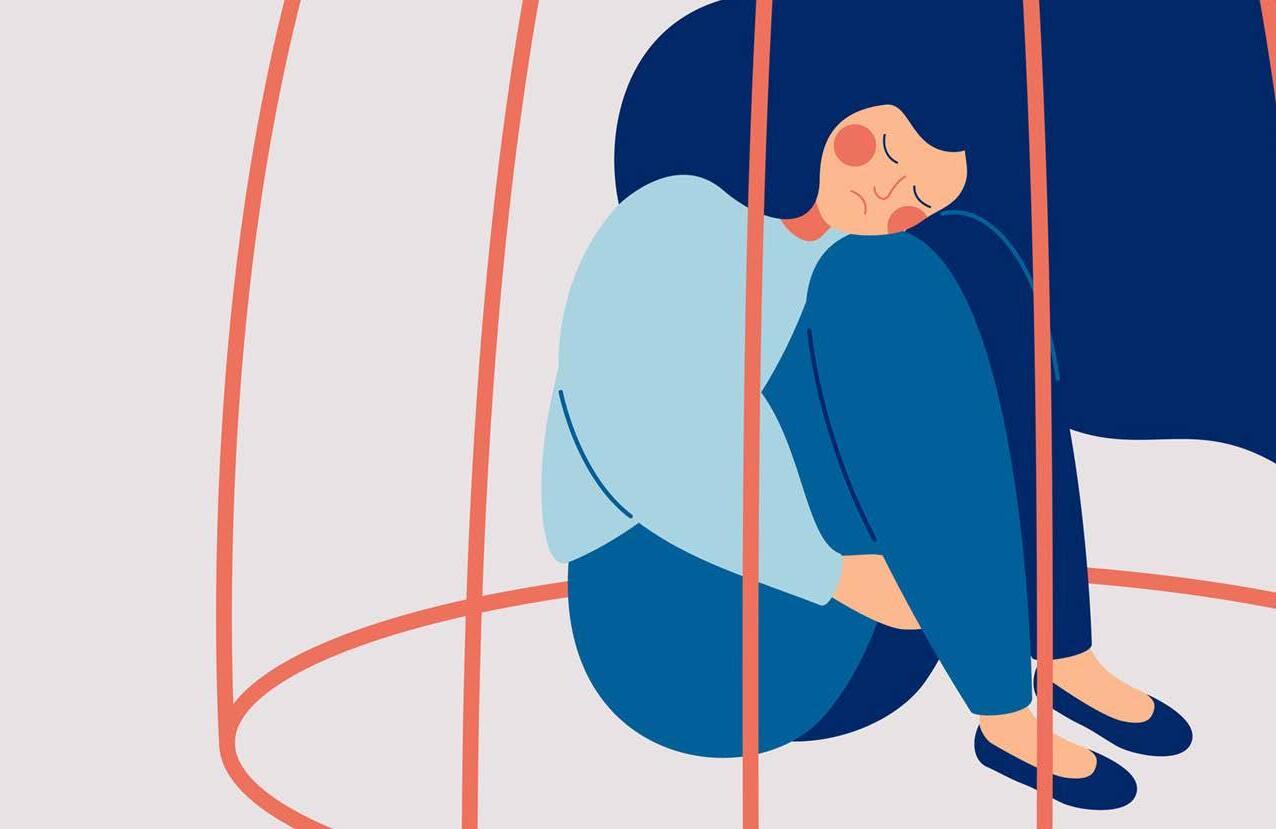
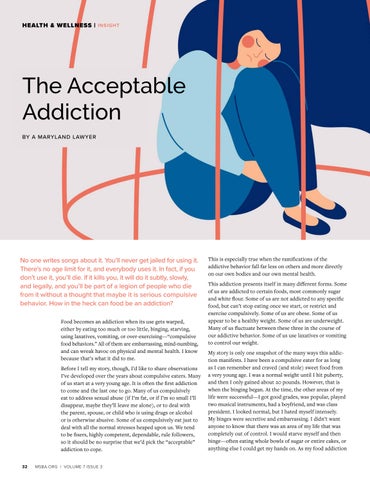
No one writes songs about it. You’ll never get jailed for using it. There’s no age limit for it, and everybody uses it. In fact, if you don’t use it, you’ll die. If it kills you, it will do it subtly, slowly, and legally, and you’ll be part of a legion of people who die from it without a thought that maybe it is serious compulsive behavior. How in the heck can food be an addiction?
Food becomes an addiction when its use gets warped, either by eating too much or too little, binging, starving, using laxatives, vomiting, or over-exercising—“compulsive food behaviors.” All of them are embarrassing, mind-numbing, and can wreak havoc on physical and mental health. I know because that’s what it did to me.
Before I tell my story, though, I’d like to share observations I’ve developed over the years about compulsive eaters. Many of us start at a very young age. It is often the first addiction to come and the last one to go. Many of us compulsively eat to address sexual abuse (if I’m fat, or if I’m so small I’ll disappear, maybe they’ll leave me alone), or to deal with the parent, spouse, or child who is using drugs or alcohol or is otherwise abusive. Some of us compulsively eat just to deal with all the normal stresses heaped upon us. We tend to be fixers, highly competent, dependable, rule followers, so it should be no surprise that we’d pick the “acceptable” addiction to cope.
This is especially true when the ramifications of the addictive behavior fall far less on others and more directly on our own bodies and our own mental health.
This addiction presents itself in many different forms. Some of us are addicted to certain foods, most commonly sugar and white flour. Some of us are not addicted to any specific food, but can’t stop eating once we start, or restrict and exercise compulsively. Some of us are obese. Some of us appear to be a healthy weight. Some of us are underweight. Many of us fluctuate between these three in the course of our addictive behavior. Some of us use laxatives or vomiting to control our weight.
My story is only one snapshot of the many ways this addiction manifests. I have been a compulsive eater for as long as I can remember and craved (and stole) sweet food from a very young age. I was a normal weight until I hit puberty, and then I only gained about 20 pounds. However, that is when the binging began. At the time, the other areas of my life were successful—I got good grades, was popular, played two musical instruments, had a boyfriend, and was class president. I looked normal, but I hated myself intensely. My binges were secretive and embarrassing. I didn’t want anyone to know that there was an area of my life that was completely out of control. I would starve myself and then binge—often eating whole bowls of sugar or entire cakes, or anything else I could get my hands on. As my food addiction

progressed, I became desperate enough to eat food with bugs in it, food out of trash cans, and frozen and expired food. I stole food. I gained more weight, although I never became obese. My health began to suffer as eating such large quantities at a time impacted my digestive tract. I contemplated suicide.
At the time (the late 1970s), I couldn’t find anyone to take my desperation seriously. Addictive food behaviors were not yet on most professionals’ radar screen, and often I was told just to use a little more “will power” or not to worry about it. Luckily, I stumbled upon an organization that understood and saved my life. I joined Overeaters Anonymous (OA), which is patterned after Alcoholics Anonymous and uses its same 12 Steps and 12 Traditions. While I have yet to put my decades-long membership at the top of any resume (and still choke on the words Overeaters Anonymous), I can’t deny its positive impact on my life. It taught me how to stop the binging, obtain a normal relationship with food, and deal with life in a way that didn’t require addictive behavior. I still work this program and am so grateful for it.
Although I will always be a fan and advocate of OA, today, there are many organizations that provide help for food addictions. Fortunately, it is recognized as a serious condition. The MSBA Lawyer Assistance Program (LAP) can provide a guide to these.
1 Overeaters Anonymous, Inc., overeatersanonymous.org.
BELOW IS A SERIES OF QUESTIONS TO DETERMINE IF COMPULSIVE EATING IS A PROBLEM:
Do I eat when I’m not hungry, or not eat when my body needs nourishment?
Do I go on eating binges for no apparent reason, sometimes eating until I’m stuffed or even feel sick?
Do I have feelings of guilt, shame, or embarrassment about my weight or the way I eat?
Do I eat sensibly in front of others and then make up for it alone?
Is my eating affecting my health or the way I live my life?
When my emotions are intense—whether positive or negative—do I find myself reaching for food?
Do my eating behaviors make me or others unhappy?
Have I ever used laxatives, vomiting, diuretics, excessive exercise, or diet pills to try to control my weight?
Do I fast or severely restrict my food intake to control my weight?
Do I fantasize about how much better life would be if I were a different size or weight?
Do I need to chew or have something in my mouth all the time: food, gum, mints, candies, or beverages?
Have I ever eaten food that is burned, frozen, or spoiled, from containers in the grocery store, or out of the garbage?
Are there certain foods I can’t stop eating after having the first bite?
Have I lost weight with a diet or “period of control” only to be followed by bouts of uncontrolled eating and/or weight gain?
Do I spend too much time thinking about food, arguing with myself about whether or what to eat, planning the next diet or exercise cure, or counting calories?1
If you answered yes to many of these, you aren’t alone, and LAP can help.