
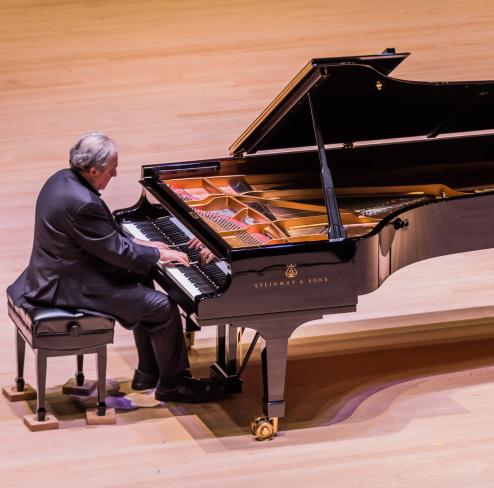
Yefim Bronfman
Friday, February 13, 2026 | 8PM
Soka Performing Arts Center
Yefim Bronfman
Friday, February 13, 2026 | 8PM
Soka Performing Arts Center
Arabeske in C major, Op. 18
Piano Sonata No. 3 in F minor, Op. 5
Images, Book 2
Piano Sonata No. 23 in F minor, Op. 57, “Appassionata”
ROBERT SCHUMANN
Born June 8, 1810, Zwickau
Died July 29, 1856, Endenich
Schumann moved to Vienna in the fall of 1838, thinking that he and Clara Wieck might establish their home in that fabled city after their marriage. The visit was not a success. Unlike so many other composers, Schumann did not like Vienna–he found it a closed society, so conservative in its attitudes that he could not think of publishing his progressive musical journal Neue Zeitschrift für Musik there. He remained only until the end of March 1839, when the death of his brother called him back to Leipzig.
The visit was not a total loss, however. While in Vienna, Schumann visited Schubert’s brother and in a stack of old music discovered the manuscript to the “Great” Symphony in C Major; this he sent to Mendelssohn, who performed it even before Schumann left Vienna. And while there, Schumann composed some pieces for piano. To his publisher he wrote: “I am composing very intensely at the moment and hoping to elevate myself to the rank of favorite composer of all women in Vienna.” His intending this music for women pianists was not meant as disparagement (Clara Wieck was one of the finest pianists on the planet) but as a statement about the music’s marketability: he was well aware of the growing number of young amateur women pianists, the daughters of the growing middle class. Like Schubert before
him, he was ready to write for this new market, and the Arabeske–composed in December 1838–was intended (at least in part) for it.
Yet this lovely music should not be written off as a relatively easy piece intended for domestic consumption. Schumann’s use of the title Arabeske may seem open to question. An arabeske is not a specific musical form but rather a composition full of florid atmosphere and decoration (as in Debussy’s two Arabesques). Schumann’s Arabeske is in a classical form: it is a rondo based on a flowing–almost impulsive–main subject, heard immediately. Along the way, Schumann offers two contrasting episodes, both full of dark and expressive shading, then rounds things off with a slow coda derived from the rondo tune.
Whatever its original purpose, Schumann’s Arabeske continues to bring pleasure to audiences and performers–female and male–long after it was written.
Born May 7, 1833, Hamburg Died April 3, 1897, Vienna
Like so many other nineteenthcentury composers, Brahms burst to fame as a virtuoso pianist who happened to compose. But the young composer chose as his model not the recent (and formally innovative) piano music of Liszt and Chopin but the older classical forms of Haydn, Mozart, and Beethoven.
Of Brahms’ first five published works, three were piano sonatas. He completed the last–and finest–of these sonatas in October of 1853, when he was still only 20 years old.
By coincidence, in that same month appeared Robert Schumann’s article on Brahms in the Neue Zeitschrift für Musik, extravagantly hailing the young composer as one “at whose cradle graces and heroes mounted guard,” a composer who would show the world “wonderful glimpses into the secrets of the spirit-world.” Schumann had seen several of Brahms’ early manuscripts and significantly referred to “sonatas, or rather veiled symphonies.” Schumann had very probably seen an early version of the Sonata in F Minor, for this massive, heroic sonata has struck many observers as being of orchestral proportions, a symphony masquerading as a piano sonata. It is in five movements rather than the expected three, and the young Brahms apparently set out to wring every bit of sound possible from the piano: the sonata features huge rolled chords, the music races between the highest and lowest ranges of the instrument, and Brahms creates textures so rich in color and sound that virtually every critic who writes about this sonata refers to its “orchestral” sonorities. Schumann may have hailed Brahms as a “young eagle,” but in this sonata the composer comes on like a young lion.
Brahms marks the sonata-form first movement Allegro maestoso, and majestic it certainly is. This powerful,
heroic music grows almost entirely out the simple theme-shape announced in the first measure; Brahms marks one of the quiet derivations of this theme fest und bestimmt (“firm and determined”), and that might stand as a marking for the entire movement. In sharp contrast, the Andante is a nocturne, and Brahms prefaces it with a few lines from a poem of Sternau: “The twilight falls, the moonlight gleams, two hearts in love unite, embraced in rapture.” A quiet center section (marked “As gentle and tender as possible”) leads to a return of the opening material and then a stunning coda: over a quiet A-flat pedal, the music gradually rises to a triumphant climax before falling back to end quietly.
The third movement is a lopsided scherzo that leaps across the keyboard; its quiet trio section is entirely chordal. Brahms marks the fourth movement Intermezzo, an unusual movement for a sonata, but even more unusual is his parenthetical subtitle: Rückblick (“Reminiscence”). He brings back the theme from the second movement, but now it is very somber–the gentle love-song has become a funeral march. This is the movement that seems most “orchestral” to the critics, and some claim to hear the sound of timpani, snarling basses, and trumpets as the movement develops dramatically. The finale is a rondo-like movement based on a halting main theme. Along the way, Brahms remembers themes from earlier movements and treats them contrapuntally as the sonata races to its thunderous
close.
In his piano music, Brahms turned next to variation form and later to the short pieces he preferred in his mature years, and in these forms he would create some of the greatest music ever written for the piano. But apparently he felt that with the Sonata in F Minor, composed at age 20, he had said all the things he wanted to in piano sonata form. He never wrote another.
Born August 22, 1862, SaintGermain-en-laye
Died March 25, 1918, Paris
BIn the early years of the twentieth century, Debussy’s piano music, already a miracle of subtlety and tone color, took on a new depth and sophistication. It may be possible to find reasons for this in the composer’s life. After years of struggle, Debussy–now in his early forties–had two significant successes: the opera Pelléas et Mélisande was produced in 1902, and the orchestral piece La Mer followed three years later. With these achievements behind him–and with a new sense of orchestral sonority derived from composing the opera and La Mer–Debussy returned to composing for piano. He produced the first book of Images in 1905, the second in 1907.
Audiences should both take the title Images seriously and they should ignore it. It is true that some of these six individual pieces have visual titles and seem at first to
proceed from the images they suggest. Yet Debussy’s intention here is much more subtle than mere tone-painting: he aims not for literal depiction of the title but for a refined projection of mood, a combination of title, rhythm, and sonority to create an evocative sound-world all its own. Debussy was quite proud of his achievement in this music. When he sent the first set off to his publisher, he wrote: “With no false vanity, I believe that these three pieces are a success and that they will take their place in the literature of the piano, on the left hand of Schumann, or the right hand of Chopin, as you like it.” Few would argue with that claim.
Book II of Images offers much greater complexity than its predecessor: it is written in three staves throughout and shows new attention to color. Cloches à travers les feuilles (“Bells Heard through Leaves”) is meant to suggest the sound of distant churchbells heard through a forest on Halloween. It is marked by the sonority of ringing bells and layers of sound at different dynamics; it is a sign of the refinement of Debussy’s thinking here that he asks that one passage sound “like an iridescent vapor.” Et la lune descend sur le temple qui fût (“And the Moon Descends on a Ruined Temple”) has a static quality, and some have heard in this steady chordal progression the play of light from the sinking moon over solitary ruins; that title, though, was suggested to Debussy by a friend after the piece was written. The entire work is at a very quiet dynamic, often at the
level of pianississimo. The final piece–Poissons d’or (“Goldfish”)–is another water-music piece, but with a difference: it was inspired not by actual goldfish but by a piece of Chinese lacquer with a goldfish on a shiny black background. Flashes of movement and color leap from out of the rippling accompaniment.
LUDWIG VAN BEETHOVEN
Born December 16, 1770, Bonn
Died March 26, 1827, Vienna
Between May and November 1803, Beethoven sketched the Eroica, a symphony on a scale never before imagined. Nearly half an hour longer than his Second Symphony, Beethoven’s Third thrust the whole conception of the symphony–and sonata form–into a new world, in which music became heroic struggle and sonata form the stage for this drama rather than an end in itself. It was a world of new dimensions, new sonorities, new possibilities of expression, and with the Eroica behind him, Beethoven began to plan two piano sonatas. These sonatas, later nicknamed the Waldstein and the Appassionata, would be governed by the same impulse that shaped the Eroica
While Beethoven completed the Waldstein Sonata quickly, the other sonata, delayed by his work on his opera Leonore, was not finished until early in 1806. The subtitle “Appassionata” appears to have originated with a publisher rather than with the composer, but few works so deserve their
nickname as this sonata. At moments in this music one feels that Beethoven is striving for a texture and intensity of sound unavailable to the piano, reaching for what Beethoven’s biographer Maynard Solomon calls “quasiorchestral sonorities.” Despite the volcanic explosions of sounds in this sonata, however, it remains piano music–the Appassionata may strain the resources of the instrument, but this music is clearly conceived in terms of a pianistic rather than an orchestral sonority.
The ominous opening of the Allegro assai is marked pianissimo, but it is alive with energy and the potential for development. As this long first theme slowly unfolds, deep in the left hand is heard the four-note motto that will later open the Fifth Symphony, and out of this motto suddenly bursts a great eruption of sound. The movement’s extraordinary unity becomes clear with the arrival of the second theme, which is effectively an inversion of the opening theme. And there is even a third subject, which boils out of a furious torrent of sixteenthnotes. The movement develops in sonata form, though Beethoven does without an exposition repeat, choosing instead to press directly into the turbulent development. The rhythm of the opening rhythm is stamped out in the coda, and–after so much energy, the movement concludes as the first theme descends to near-inaudibility. When this sonata was published in 1806, a reviewer–aware of the new directions Beethoven was taking music–tried to offer some measure
directions Beethoven was taking music–tried to offer some measure of this movement: “Everyone knows Beethoven’s way when writing a large-scale sonata . . . In the first movement of this Sonata (15 pages in 12/8 time) he has once again let loose many evil spirits . . .”
The second movement, a theme and four variations marked Andante con moto, brings a measure of relief. The theme, a calm chordal melody in two eight-bar phrases, is heard immediately, and the tempo remains constant throughout, though the variations become increasingly complex, increasingly ornate. Beethoven insists that the gentle mood remain constant–in the score he keeps reminding the pianist to play dolce, and even the swirls of 32nd-notes near the end remain serene. The sonata-form finale, marked Allegro ma non troppo, bursts upon the conclusion of the second movement with a fanfare of dotted notes, and the main theme, an almost moto perpetuo shower of sixteenthnotes, launches the movement. The searing energy of the first movement returns here, but now Beethoven offers a repeat of the development rather than of the exposition. The fiery coda, marked Presto, introduces an entirely new theme.
Beethoven offered no program for this sonata, nor will listeners do well to try to guess some external drama being played out in the Appassionata. Sir Donald Francis Tovey, trying to take some measure of this sonata’s extraordinary power
and its unrelenting conclusion, has noted: “All his other pathetic finales show either an epilogue in some legendary or later world far away from the tragic scene . . . or a temper, fighting, humorous, or resigned, that does not carry with it a sense of tragic doom. [But in the Appassionata] there is not a moment’s doubt that the tragic passion is rushing deathwards.” That may be going too far, but it is true that–in sharp contrast to the shining, exultant conclusions of the Eroica, Leonore, and the Fifth Symphony–this sonata ends with an abrupt plunge into darkness. Program notes by Eric Bromberger © 2025.
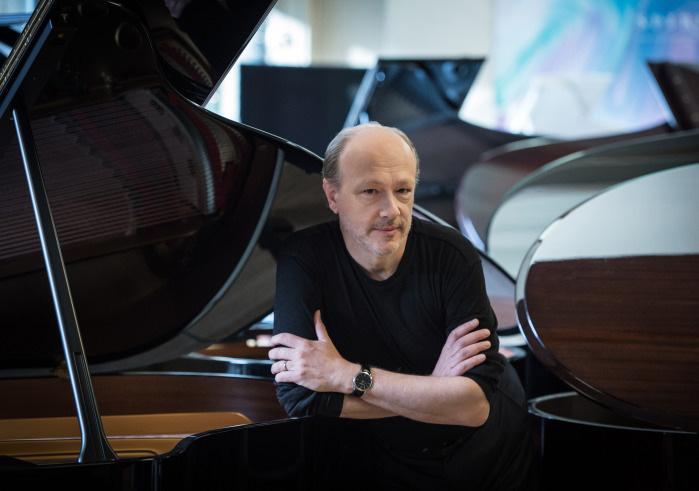
Internationally recognized as one of today’s most acclaimed and admired pianists, Yefim Bronfman stands among a handful of artists regularly sought by festivals, orchestras, conductors and recital series. His commanding technique, power and exceptional lyrical gifts are consistently acknowledged by the press and audiences alike.
Following summer festival appearances in Vail, Tanglewood and Aspen the 25/26 season begins with an extensive recital and orchestral tour in Asia including China, Japan and South Korea. In Europe Bronfman can be heard with orchestras in London, Kristiansand, Paris, Berlin, Amsterdam, Dresden and on tour with Israel Philharmonic. A special trio project with Anne-Sophie Mutter and Pablo Ferrandez will continue with performances in Switzerland, Spain, Germany and France in the fall of 2025. With orchestras in North America he returns to New York, Rochester, Cleveland (in Miami), Pittsburgh, Kansas City, Montreal and in recital, Bronfman can be heard in Prague, Milan, New York, Newport, Beacon, Los Angeles, San Francisco, San Diego, Orange County, Charlottesville, Toronto.
Mr. Bronfman works regularly with an illustrious group of conductors, including Daniel Barenboim, Herbert Blomstedt, Semyon Bychkov, Riccardo Chailly, Christoph von Dohnányi, Gustavo Dudamel, Charles Dutoit, Daniele Gatti, Valery Gergiev, Alan Gilbert,
Vladimir Jurowski, Zubin Mehta, Riccardo Muti, Andris Nelsons, Yannick Nézet-Séguin, Sir Simon Rattle, Esa-Pekka Salonen, Jaap Van Zweden, Franz Welser-Möst, and David Zinman. Summer engagements have regularly taken him to the major festivals of Europe and the US. Always keen to explore chamber music repertoire, his partners have included Pinchas Zukerman, Martha Argerich, Magdalena Kožená, Anne-Sophie Mutter, Emmanuel Pahud and many others. In 1991 he gave a series of joint recitals with Isaac Stern in Russia, marking Mr. Bronfman’s first public performances there since his emigration to Israel at age 15.
Widely praised for his solo, chamber and orchestral recordings, Mr. Bronfman has been nominated for 6 GRAMMY® Awards, winning in 1997 with Esa-Pekka Salonen and the Los Angeles Philharmonic for their recording of the three Bartok Piano Concerti. His prolific catalog of recordings includes works for two pianos by Rachmaninoff and Brahms with Emanuel Ax, the complete Prokofiev concerti with the Israel Philharmonic and Zubin Mehta, a Schubert/Mozart disc with the Zukerman Chamber Players and the soundtrack to Disney’s Fantasia 2000. His most recent CD releases are the 2014 GRAMMY® nominated Magnus Lindberg’s Piano Concerto No. 2 commissioned for him and performed by the New York Philharmonic conducted by Alan Gilbert on the Da Capo label; Tchaikovsky’s Piano Concerto No.1 with Mariss Jansons and the Bayerischer Rundfunk; a recital
disc, Perspectives, complementing Mr. Bronfman’s designation as a Carnegie Hall ‘Perspectives’ artist for the 2007-08 season; and recordings of all the Beethoven piano concerti as well as the Triple Concerto together with violinist Gil Shaham, cellist Truls Mørk, and the Tönhalle Orchestra Zürich under David Zinman for the Arte Nova/ BMG label.
Now available on DVD are his performances of Liszt’s second piano concerto with Franz Welser-Möst and the Vienna Philharmonic from Schoenbrunn, 2010 on Deutsche Grammophon; Beethoven’s fifth piano concerto with Andris Nelsons and the Royal Concertgebouw Orchestra from the 2011 Lucerne Festival; Rachmaninoff’s third concerto with the Berlin Philharmonic and Sir Simon Rattle on the EuroArts label and both Brahms Concerti with Franz Welser-Möst and The Cleveland Orchestra (2015).
Born in Tashkent in the Soviet Union, Yefim Bronfman immigrated to Israel with his family in 1973, where he studied with pianist Arie Vardi, head of the Rubin Academy of Music at Tel Aviv University. In the United States, he studied at The Juilliard School, Marlboro School of Music, and the Curtis Institute of Music, under Rudolf Firkusny, Leon Fleisher, and Rudolf Serkin. A recipient of the prestigious Avery Fisher Prize, one of the highest honors given to American instrumentalists, in 2010 he was further honored as the recipient of the Jean Gimbel Lane prize in piano
performance from Northwestern University and in 2015 with an honorary doctorate from the Manhattan School of Music.
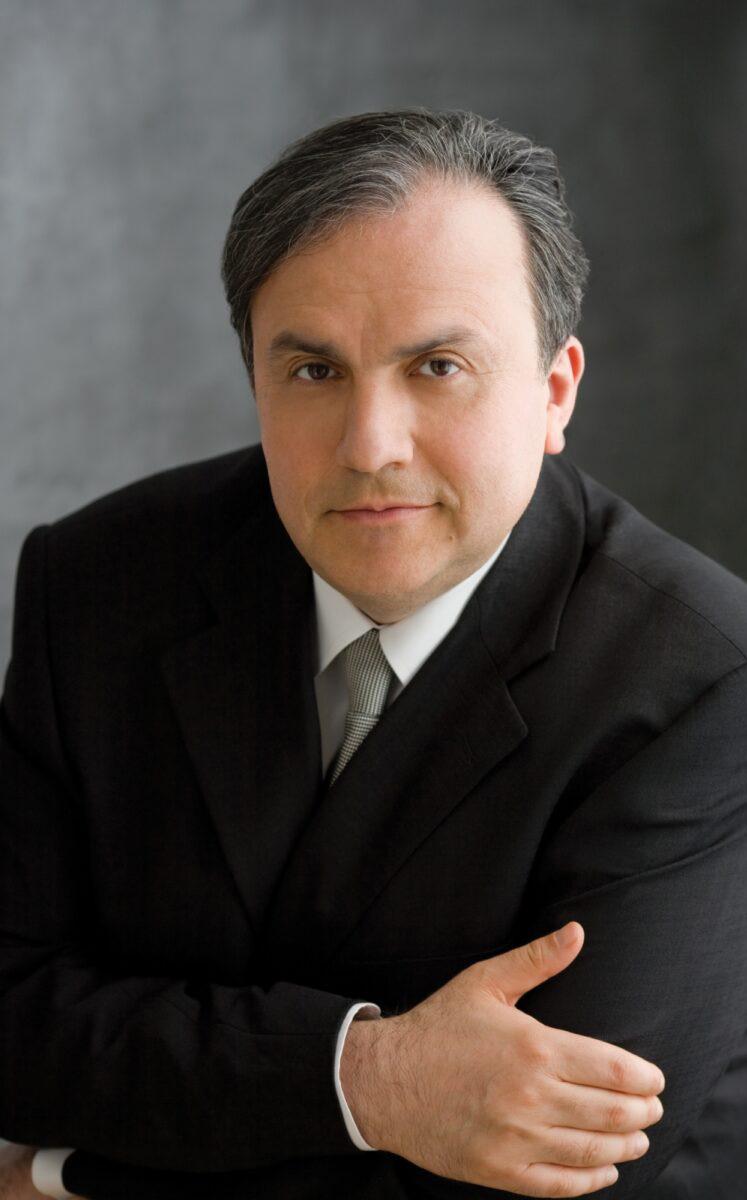

SUNDAY, MAR. 22, 2026 | 3PM
PROGRAM
BACH Partita No. 5 in G major
SCHUMANN Sonata No. 2 in G minor, Op. 22
COUPERIN From the Sixième Ordre
RAVEL Le Tombeau de Couperin
“I know of no musician whose Bach playing is of greater subtlety, beauty of tone, persuasiveness of judgment or instrumental command” - BBC Music Magazine
TICKETS &

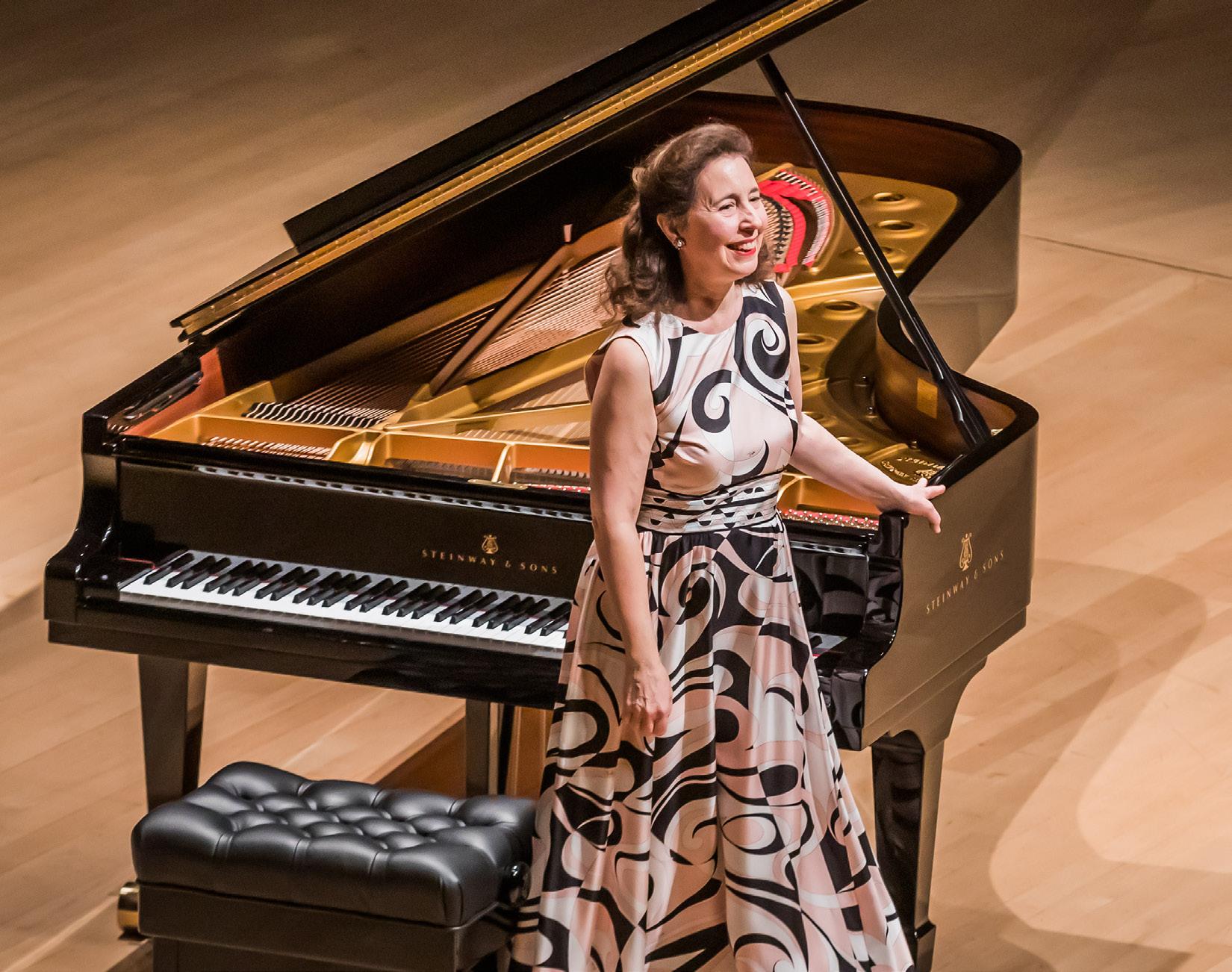
SUNDAY, APR. 12, 2026 | 3PM
PROGRAM
HAYDN Sonata in D major, Hob. XVI:37
BEETHOVEN Piano Sonata in C major, Op. 2, No. 3
MEDTNER Danza festiva, Op. 38, No. 3
RACHMANINOFF Étude-Tableau in E-flat minor, Op. 39, No. 5 and more!
“Hamelin’s legend will grow - right now there is no one like him.” - Alex Ross, The New Yorker
A wide variety of wine, beer, soft drinks and freshly prepared snacks will be available before the concert and during intermission.
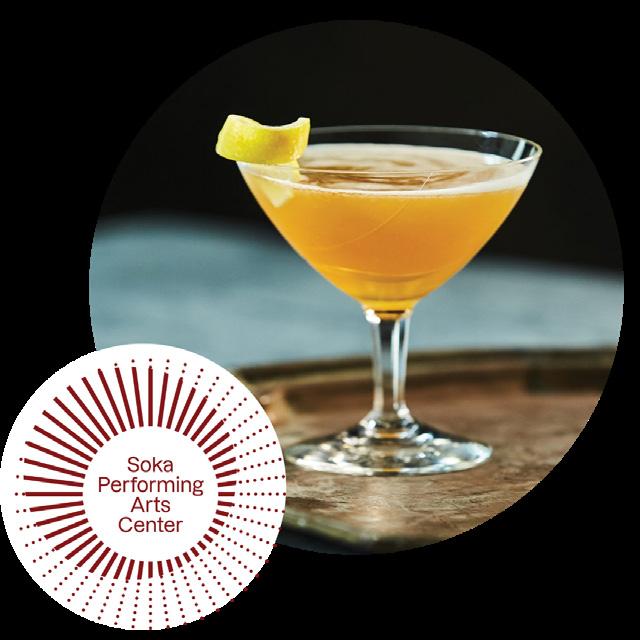
We asked our staff for their favorite drink pick to feature at concessions! Champs Élysées was selected and will be available for purchase before the performance and during intermission.
Pre-order your concessions and skip the line during intermission!


Our mission is to Engage, Educate, and Elevate the Human Spirit
Soka Performing Arts Center is dedicated to elevating the human spirit through transcendent live experiences. Discover the unmatched beauty of our acoustics. Expand your understanding and appreciation of music through our programs that illuminate new perspectives. Build community and forge deep connections through the shared experience of live performance. We invite you to become a part of our Soka Performing Arts Center family and to Listen. Feel. Transform.
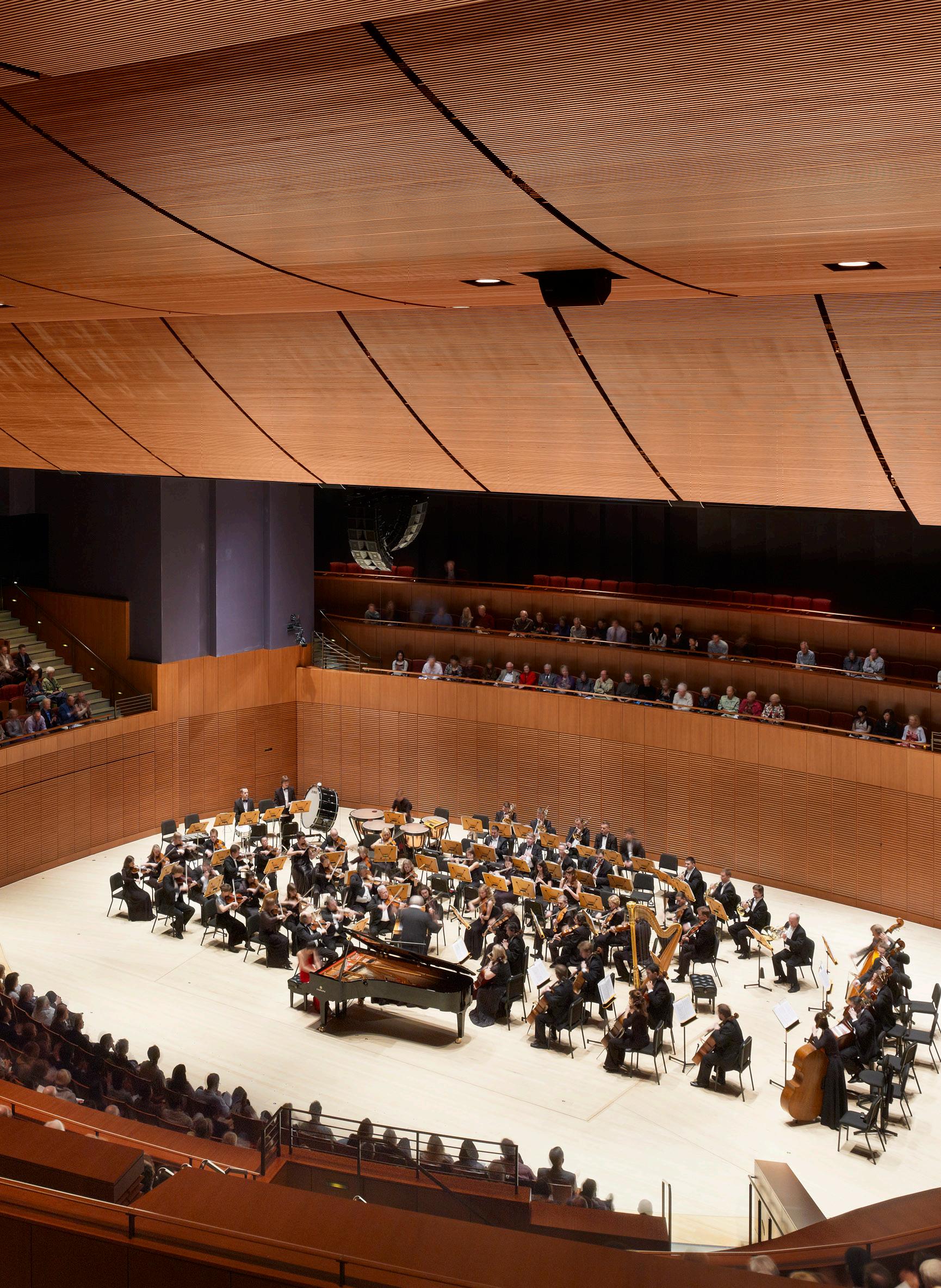

Soka Performing Arts Center is located on the beautiful hilltop campus of Soka University of America in Aliso Viejo. Our facility includes the 1,042seat Concert Hall featuring world-class acoustics designed by master acoustician Yasuhisa Toyota, designer of the Walt Disney Concert Hall in Los Angeles and Suntory Hall in Tokyo, among many others. We also have an intimate 350-seat Black Box Theatre that allows for multiple seating configurations including club seating with bistro tables.
More than 800 performances have taken place since the center’s dedication on May 27, 2011. The 2025-26 season marks our fifteenth season presenting first-class programming in our world-class concert hall. We are continuing to expand our programming and outreach with the addition of a Children’s Concert Series and the only Great Pianists Series on the West Coast. From classical and jazz to world and contemporary music, the Soka Performing Arts Center has become a prized space for artists and audiences alike.
We are proud to be the home of the Pacific Symphony Chamber Orchestra. Our Sundays @ Soka Series with Pacific Symphony continues to be one of our most popular series year after year. Our presentations with other Orange County arts organizations have enabled us to reach further into our community to offer arts education and programming. Our partnership with the Philharmonic Society of Orange County includes our Philharmonic Society Series, which brings superlative artists to our stage. We also partner with Philharmonic Society for our Outreach Program, bringing over 7,000 school children to Soka Performing Arts Center to experience live performances with outstanding musicians.
With its world-class acoustics and first-class performances, Soka Performing Arts Center is quickly becoming one of the cultural jewels of Orange County.
DIRECTOR’S CIRCLE ($75,000+)
Dr. Kenneth & Sandra Tokita
Sam* & Lyndie Ersan
CONCERTMASTER ($10,000+)
Ms. Emi Maeda
STAGE CHAMPION ($5000+)
Yoshitomo & Takemi Daido
STAGE BENEFACTOR ($1000+)
Anonymous
OC Chinese Cultural Club
John and Sue Prange
Terumi Saito
Jochen Schumacher
Alex & Sandy Scott
Scott A Shuping
Anson and Marilyn Wong
PLATINUM CLEF ($500+)
Anonymous
Jeffrey Hendrix
Edward D. Jones
Jane A. Lynch
GOLD CLEF ($200+)
Judy Kaufman
Lorraine Leiser
Naomi Uchiyama
SILVER CLEF ($100+)
Renée Bodie
Sam Chang
Masako Inage
Debrah Jiang
Chiharu Nagai
Paul Porto
Thomas Prigorac
Jonia Suri
Joseph Whittaker
BRONZE CLEF ($25+)
Raquel Bruno
Kenneth Hanawa
Ryosuke Iga
Jeannette Pease
Joyce M Wrice
Taro Yamanashi
* Deceased
List current as of 09/26/2024
The Soka Performing Arts Center deeply appreciates the support of its sponsors and donors, and makes every effort to ensure accurate and appropriate recognition. Contact Renée Bodie, General Manager at (949) 480-4821 to make us aware of any error or omission in the foregoing list.
DONATE TO SOKA PERFORMING ARTS CENTER
Your support helps ensure Soka Performing Arts Center fulfills its purpose: to engage, educate, and elevate the human spirit. Your gift supports the programming of world-class performances, provides transformative educational outreach experiences, and opens the opportunity to build engagement with our community by sharing the joy of live music.
Our subscription and renewal program provides you with even more flexibility in our season packages*. With our enhanced program, you now have the power to curate your very own unique experience.
• 15% Discount for a 3 performance package
• 18% Discount for a 4 performance package
• 20% Discount for a 5+ performance package
*full details online at soka.edu/pac
• Blueport Jazz
• Philharmonic Society of Orange County
• Pacific Symphony
• Parnassus Society
Renée Bodie
General Manager & Artistic Director
John Morgan
Box Office Manager
Antoinette Rossman
House Manager/Assistant to the General Manager
Steve Baker
Production Manager
Jarmil Maupin
Internal Events Manager
Ian Smith
Technical Services Manager
Katie Ohrn
Lighting Supervisor
Piano Tuners
Kathy Smith Lead Tuner
Ron Elliott
David Stoneman
David Vanderlip


Website soka.edu/pac
Soka Performing Arts Center resides on the beautiful campus of Soka University of America. We thank the SUA Board of Trustees and the SUA Leadership Council for all of their support.
Stephen S. Dunham, JD | CHAIR
Vice President and General Counsel Emeritus, Pennsylvania State University | Baltimore, Maryland
Tariq Hasan, PhD | VICE CHAIR
Chief Executive Officer, SGI-USA | New York, New York
Andrea Bartoli, PhD
President, Sant’Egidio Foundation for Peace and Dialogue | New York, New York
Matilda Buck
Benefactor | Los Angeles, California
Lawrence E. Carter, Sr, PhD, DD, DH, DRS
Dean, Professor of Religion, College Archivist and Curator, Morehouse College | Atlanta, Georgia
Andy Firoved
CEO, HOTB Software | Irvine, California
Jason Goulah, PhD
Professor of Bilingual-Bicultural Education and Director, Institute for Daisaku Ikeda Studies in Education, Director of Programs in Bilingual-Bicultural Education, World Language Education, and Value-Creating Education for Global Citizenship, College of Education, DePaul University | Chicago, Illinois
Clothilde V. Hewlett, JD
Commissioner of Department of Financial Protection and Innovation, State of California | San Francisco, California
Karen Lewis, PhD
Sondheimer Professor of International Finance and Co-Director, Weiss Center for International Financial Research, Wharton School, University of Pennsylvania | Philadelphia, Pennsylvania
Luis Nieves
Founder, Chairman Emeritus AUL Corp, Benefactor | Napa, California
Isabel Nuñez, PhD, MPhil, JD
Professor of Educational Studies, Dean of School of Education, Purdue University Fort Wayne | Fort Wayne, Indiana
Gene Marie O’Connell, RN, MS
Health Care Consultant, Associate Clinical Professor, University of California, San Francisco School of Nursing | Corte Madera, California
Adin Strauss
General Director, Soka Gakkai International-USA | Santa Monica, California
Yoshiki Tanigawa
Benefactor, Soka Gakkai | Tokyo, Japan
Gregg S. Wolpert
Co-president, The Stahl Organization | New York, New York
Edward M. Feasel, PhD
President, Soka University of America (ex-officio member) | Aliso Viejo, California
Edward M. Feasel, PhD
President
Chief Academic Officer
Professor of Economics
Archibald E. Asawa
Executive Vice President for Finance and Administration
Chief Financial Officer
Chief Investment Officer
Katherine M. King, PHR
Executive Vice President of University
Community
Chief Human Resources Officer
Title IX and Section 504 Coordinator for Faculty, Staff and Others
Michael Weiner, PhD
Executive Vice President for Academic Affairs
Professor of East Asian History & International Studies
Bryan E. Penprase, PhD
Vice President for Sponsored Research and External Academic Relations Professor of Physics and Astronomy
Tomoko Takahashi, PhD, EdD, LHD
Vice President for Institutional Research and Assessment
Dean of the Graduate School Professor of Linguistics and Education
David Welch, JD Vice President University Counsel
M. Robert Hamersley, PhD Dean of Faculty Professor of Environmental Biogeochemistry
Hyon J. Moon, EdD Dean of Students
Title IX and Section 504 Deputy Coordinator for Students
Michelle Hobby-Mears, MBA
Associate Dean of Students Director of Student Activities
Andrew Woolsey, EdD Dean of Enrollment Services
Martin Beck, MA
Executive Director of Strategic Marketing and Communications