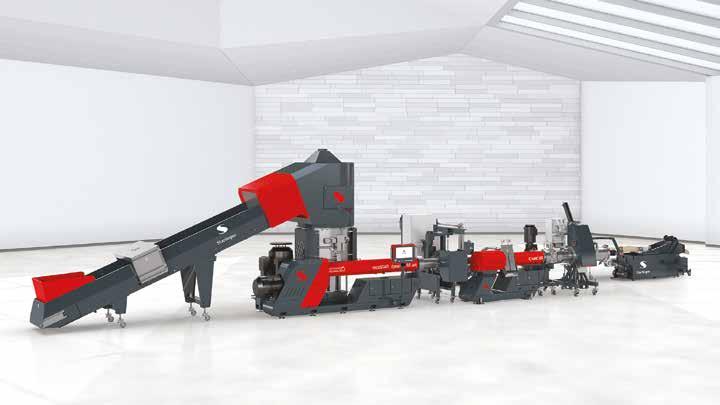
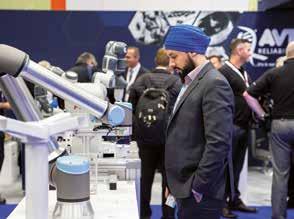
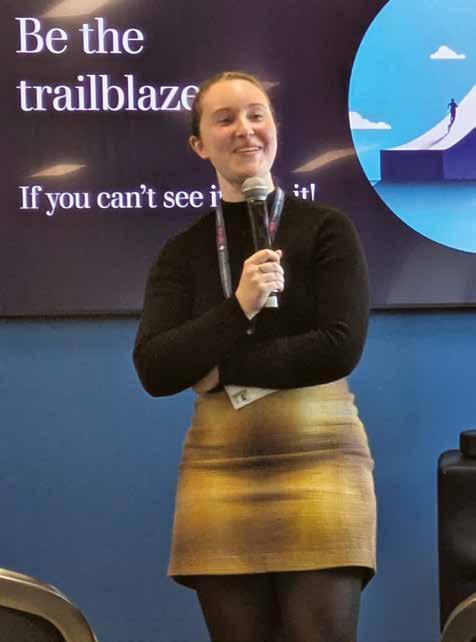
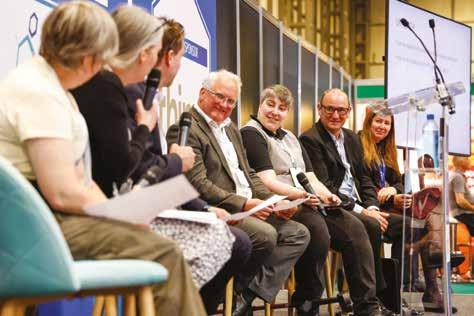
Recycling is a prominent feature in this issue, the first International Process Engineer of 2026. The cover story From Forest to Fibre on Page 8 explores how several innovative companies are manufacturing durable fabric from wood pulp. Although the recycling section of the magazine has not be running long, it has fast become one of the most lively in the magazine. Defining the Process on pages 42 and 43 is a smart introduction to a range of recycling plastic methods and Plastic Fantastic on page 38 looks at an interesting tool for plastic recycling from refinement specialist Starlinger. Another recuring theme this issue, in line with sustainability, is the importance of local supply chains and how they can create regional advantages. The 'made in Europe' interview with Joachin Braun from ABB on page 14 explores Europe’s manufacturing heritage versus its rivals in the US and China in the face of tariffs and trade wars. Braun argues that the EU and UK have the advantage of deep technological know-how and expertise. Similarly, the new geography of EMS on page 20, makes the case for local knowledge when securing a supplier. Our International Process Engineer team were out in force at the Smart Manufacturing show in Farnborough last month, and several articles in this issue come from the show and the broad range of seminars we attended. We cover a presentation by Alexia Williams on the benefits of apprenticeships (page 50); sustainable electronics in Rething PCBs on (page 34) and the aforementioned EMS geography on page 20.
Nicola Brittain Editor
Optimum overlay
The importance of weld overlay in industry 18 Electric heating Engineering medium voltage electrification for process heating
20 The new geography of EMS
The importance of near shore electronics management
application specific modifications increase
Coriolis flowmeters enable profinet over Ethernet-APL
a 1.8% fuel efficiency gain when reforming methanol
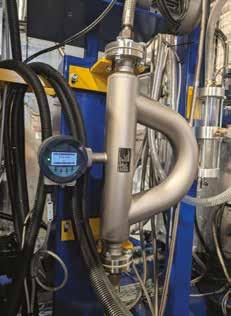
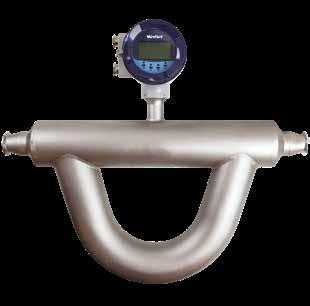
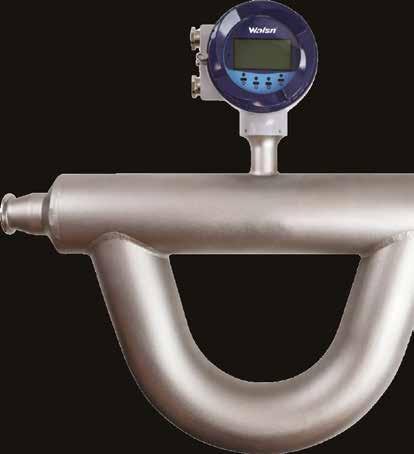
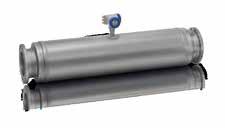
A look at the range of Coriolis flowmeters
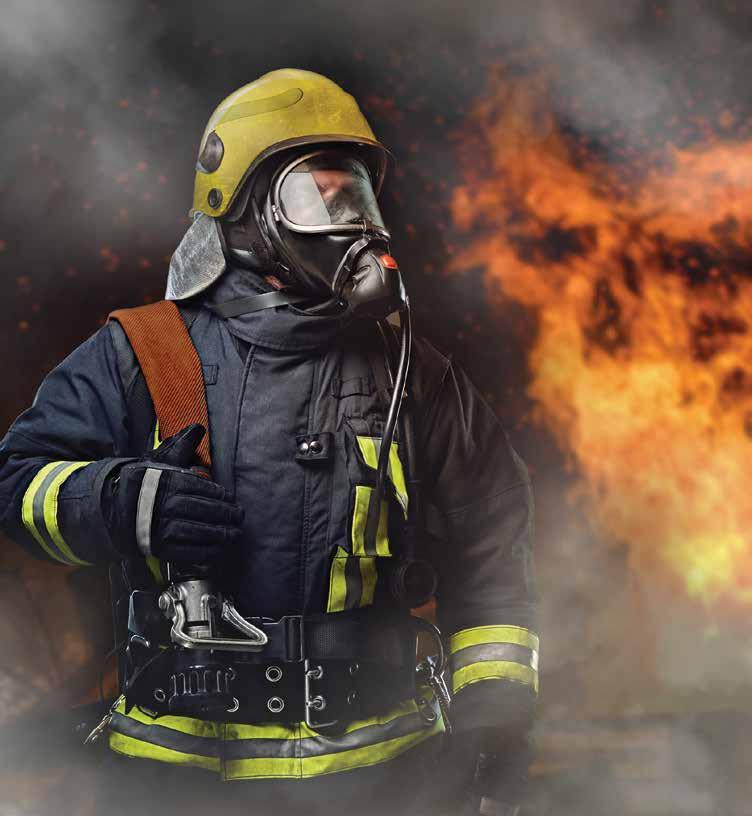
Exploring the shift towards safer textiles
regulated purchases demand human expertise
PUBLISHER
Jerry Ramsdale
EDITOR
Nicola Brittain nbrittain@setform.com
DEPUTY EDITOR
Saskia Henn shenn@setform.com
STAFF WRITER
Lydia Arundel larundel@setform.com
DESIGN – Dan Bennett, Jill Harris
HEAD OF PRODUCTION
Luke Wikner production@setform.com
HEAD OF SALES & PARTNERSHIPS
David Pattison
ACCOUNT DIRECTORS
John Abey | Peter King
SENIOR ACCOUNT MANAGERS
John Davis | Darren Ringer | Roy Glasspool
ACCOUNT MANAGERS
Paul Maher | Iain Fletcher | Marina Grant e advertising@setform.com
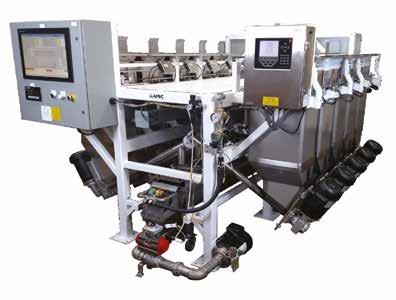
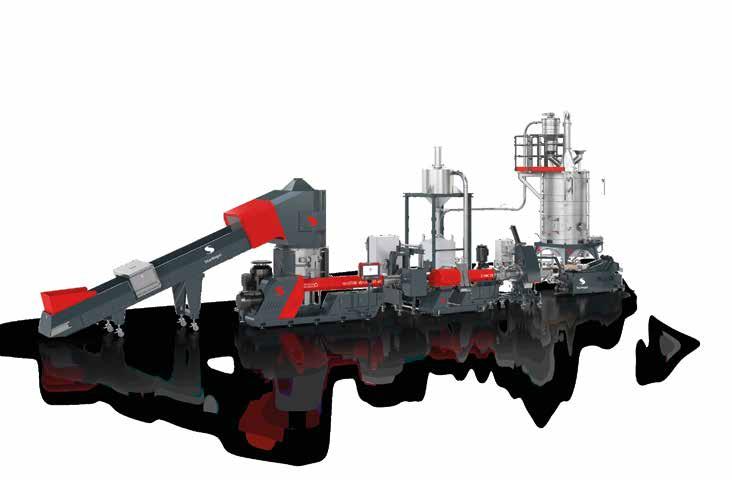
A processing system recycles a wide range of post consumer plastics
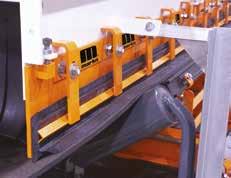
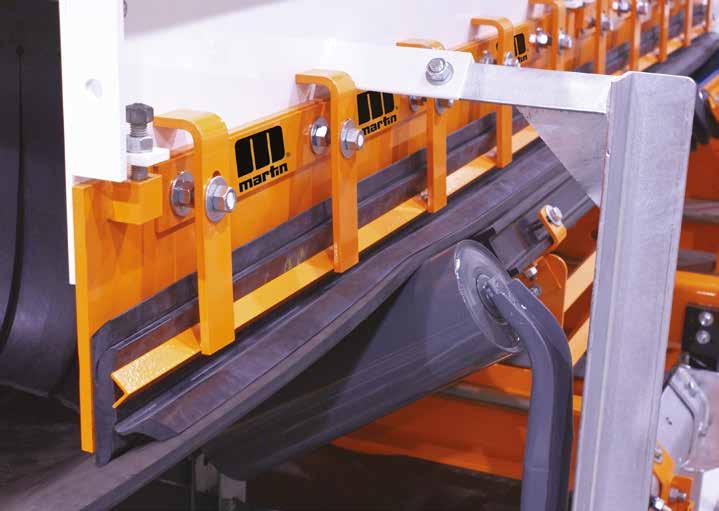
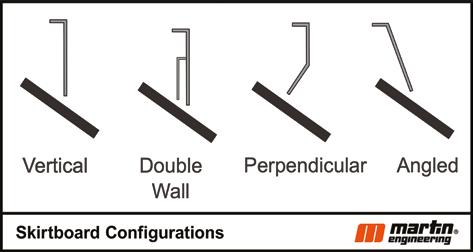
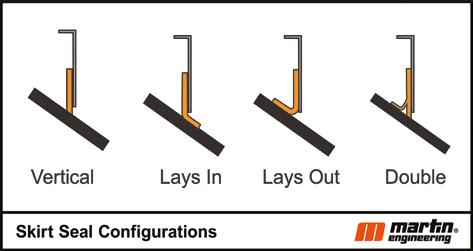
How skirt design prevents spillage in recycling
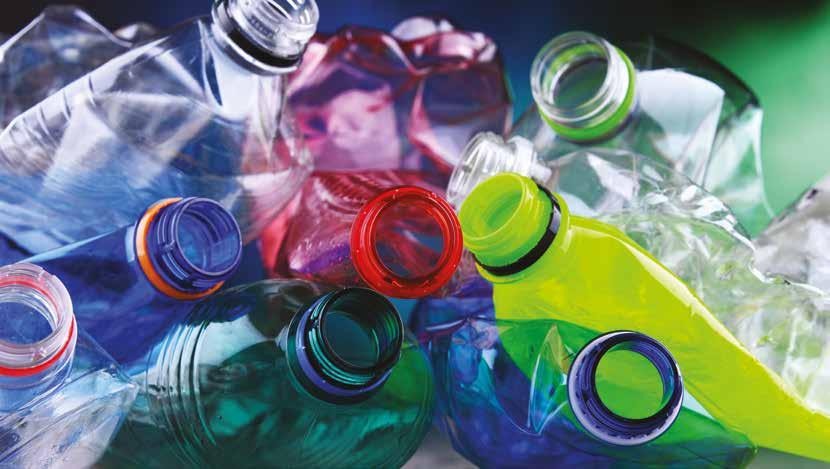
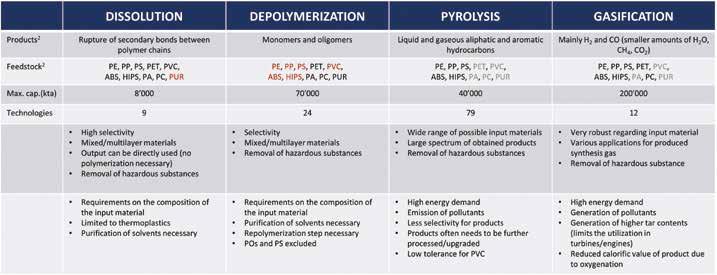
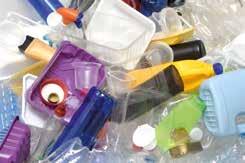
Exploring various plastic recycling processes
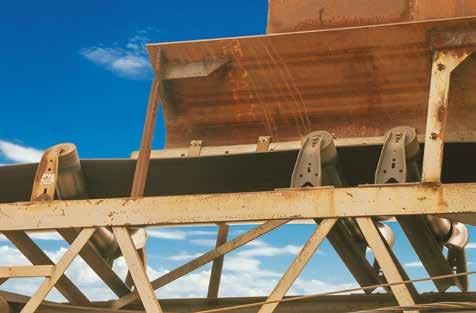
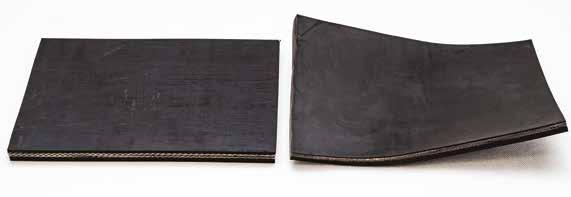
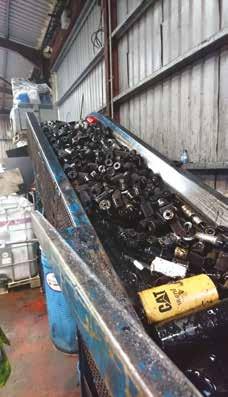
Preventing recycling conveyor belt dowtime
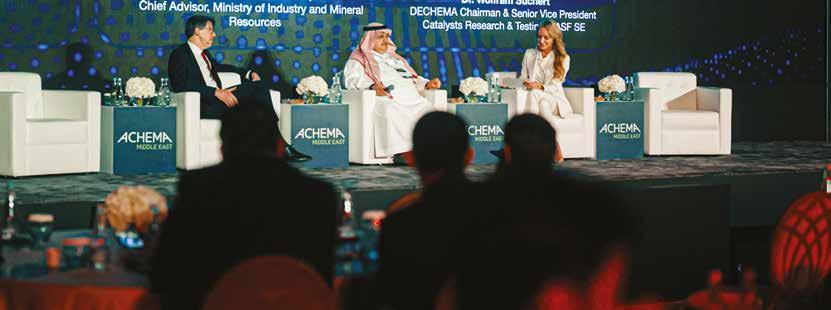
This Saudia Arabia-based show targets growth
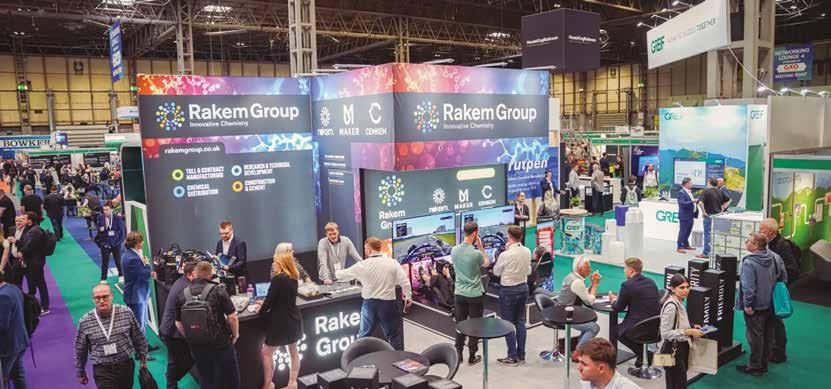
A look at this leading UK show
Setform’s international magazine for engineers is published quarterly and distributed to senior engineers throughout the world. Other titles in the company portfolio focus on Oil & Gas, Design, Transport, Mining, Energy and Power.
Setform Limited | 6 Brownlow Mews, London, WC1N 2LD, United Kingdom t +44 (0) 207 253 2545 e mail@setform.com
DOPAG SIMPLIFIES DRUM CHANGING
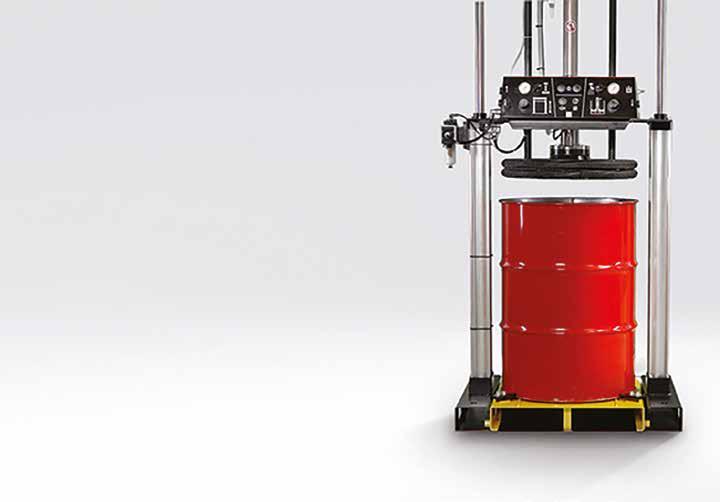
Dispensing technology manufacturer Dopag has launched a new range of drum change equipment that enables efficient changing of lubricant and adhesive drum pumps, and was developed with the increasingly stringent requirements for work safety and worker protection in mind. Dopag’s range of drum change equipment aims to make work in the process industry and production significantly easier and more efficient. The drum change equipment is suitable for lubricant and adhesive pumps and is available in three sizes: 30, 80 and 200 litres. There are also three versions available: 1) Drum roll-in mechanism - with a roller attached, 200-litre drums can be lifted onto the pump base plate and positioned with ease and low effort. 2) Integrated drum roller conveyor - the integrated drum roller conveyor allows full mobility of the 200-litre containers. The container can be pushed to the rear and centred under the pump lifter via several rollers. 3) Drum pallet - the drum pallet is the third and final expansion stage for the 200-litre pumps. The transportable pallet design eliminates the need to lift the drum. The entire container is changed via the lift truck, which is used to remove the empty container and bring in the new one. This reduces the operator’s workload and saves time when changing drums. By using several pallets, the drums can be pre-positioned and prepared in the warehouse, this means the changes can be carried out with minimal effort and production thereby reducing interruptions, according to the company.
For more information visit: www.dopag.de
EMESENT LAUNCH ADVANCES AUTONOMOUS MAPPING
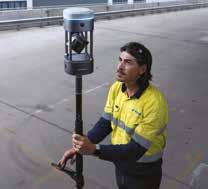
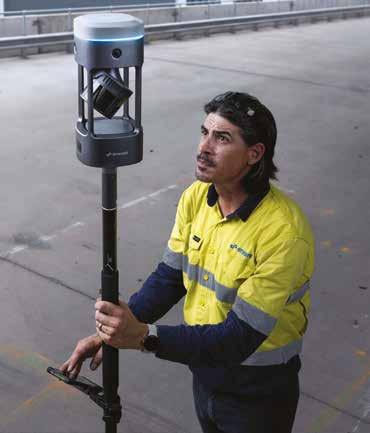
Global leader in autonomous mapping technology, Emesent, has launched the Emesent GX1, an integrated Simultaneous Localisation and Mapping (SLAM) and Real-Time Kinematic (RTK) scanner. The product achieve 5-10mm global accuracy to deliver precision for topographic surveying and building and infrastructure construction, marking an industry breakthrough according to the company. The GX1 is an integrated, all-in-one system where LiDAR, RTK, cameras, and software work together from capture to validated deliverable. It brings SLAM technology that has been tested in challenging environments to everyday surveying applications while eliminating the longstanding trade-off between mobile scanning speed and dependable survey-grade accuracy that survey firms and the architecture, engineering, and construction industries face. The product also benefits from Integrated RTK georeferencing with real-time quality monitoring and 4 x 20 mega-pixel cameras for 360° panoramic imagery.
For more information visit: www.emesent.com
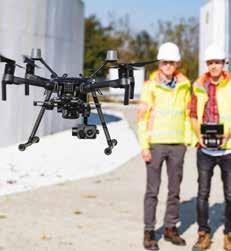
The Emesent GX1 delivers precision for topographic surveying
Dopag’s drum-change range was developed with new industry regulations in mind
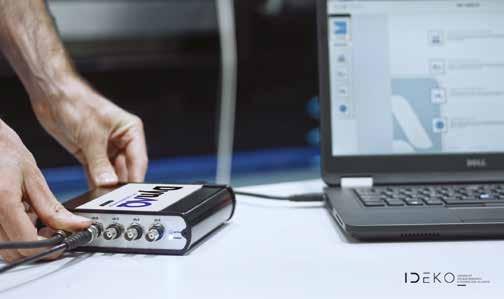
IDEKO DEMOS MARK CORRECTION TECHNOLOGIES
Advanced manufacturing specialist Ideko will showcase a technology portfolio at the upcoming 2026 International Machine Tool Biennial (BIEMH) that is designed to address two major challenges for precision manufacturing: chatter phenomena and surface marks on components. Ideko will display various samples showing the before-andafter results of applying its surface texturing and mark
correction technologies in the precision grinding process. “Surface marks are often below one micrometre, yet they can compromise the functional performance of a bearing or an aerospace engine component,” says Dr. Jokin Muñoa, scientific director at Ideko.
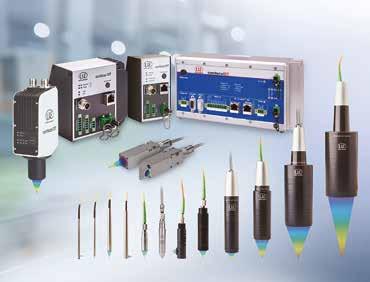
MICRO-EPSILON EXTENDS CONFOCAL CONTROLLER RANGE
FDS enables controlled texturing of components
To address this, the Ideko research centre has developed Fast Dressing Servo (FDS), a technology that enables controlled texturing of components through the grinding wheel dressing process. This approach enhances tribological properties, improving lubrication performance and reducing wear and friction by up to 30%, according to the company. This methodology replaces costly manual processes, such as scraping, with an automated and ergonomic solution.
Ideko has also developed the Virtual Vibration Absorber (VVA), an external actuator designed to eliminate forced vibrations in high-precision machines. This ensures that highly demanding sectors such as energy and aerospace can achieve ‘zero-defect’ targets in their components.
For more information visit: www.ideko.es/en/home
Precision sensor supplier Micro-Epsilon has extended its confocalDT IFC 241x range of confocal chromatic controllers with the new IFC2412 and IFC2417 controllers, providing users with high performance, two-channel variants of the ultra-compact IFC2411 and IFC2416 controllers. The new controllers deliver the same high performance as their single-channel counterparts, according to the company.
Owing to integrated computing functions, the two-channel controllers enable two-sided thickness measurements using a single controller. This expands the range of applications, particularly in industries such as semiconductor manufacturing, battery cell production, optical inspection of lenses, and machine building.
The compact IFC2412 controller offers two channels with an adjustable measuring rate up to 8 kHz and sub-micron resolution from 2nm. The IFC2417 controller operates at a measuring rate of up to 25 kHz and also enables multipeak measurements of up to five transparent layers. Active exposure control of the CCD line ensures stable measurement results in both versions, even on challenging surfaces. The controllers are equipped with a robust IP40 aluminium housing and can be easily integrated into existing systems
owing to their extremely compact design. The controllers are conveniently mounted on a DIN rail in a control cabinet –ideal for OEM applications and industrial series production. Both controllers come with Ethernet and EtherCAT interface and two analogue connections. Additional fieldbus connections will be introduced later in 2026.
For more information visit: www.micro-epsilon.co.uk
The compact IFC2412 controller offers two channels
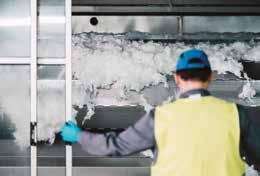
Lenzing products are well suited for use in protective
FROM FOREST TO FIBRE
The verdict is in and fast fashion is out, as the clothing industry’s water-intensive practices are finding a more sustainable way
The clothing industry is a notorious industrial polluter, accounting for up to 10% of global carbon emissions, according to recent fast fashion research by Uniform Market. The clothing supply chain is also water intensive. Thirsty crops and dyeing practices lead to the use of about 93 billion cubic metres of water annually.
The clothing supply chain has many steps, including but not limited to, design, material sourcing, spinning, weaving, knitting, dyeing, manufacturing, distribution and logistics. Each of these steps impacts the environment.
Since 2000, the number of new garments made annually has more than doubled and is now estimated to be around 100,000 billion garments each year. With the production and consumption of fast fashion surging, each step of the clothing supply chain also matters more now than ever.
SUSTAINABLE FIBRES
One way that companies are combatting the destruction caused by the clothing industry is by incorporating the development of sustainable fibres into the supply chain. Sustainable fibres are made from organic, natural and recycled materials that reduce supply chain tensions by easing reliance on water, energy and chemicals. Materials such as hemp and bamboo are often used as natural materials, but another alternative is Tencel, a regenerated cellulose fibre made from sustainably sourced wood pulp.
The Lenzing Group is an Austrian fibre specialist using cellulose as its renewable raw material to make Tencel Lyocell and Modal fibres. Lenzing produces fibres used in fashion, performance wear, home textiles and personal care products such as facial sheet masks, wet wipes and feminine care items.
Both Tencel Lyocell and Tencel Modal fibres are made with at least 50% fewer carbon emissions and water consumption than generic versions, according to the Higg Materials Sustainability Index.
The company’s cellulose fibres are made from wood harvested from forests certified by FSC or PEFC, and are produced in a closed-loop system that recovers over 99% of solvent. The recovery of solvent is a particularly important part of the clothing supply chain that is necessary to reach a zero-waste goal, according to a review of recent technologies for transforming textile waste published in Current Research in Biotechnology 2024.
To create Tencel Lyocell fibres, wood pulp is dissolved and the solution is pumped through spinnerets to form a filament that is cut into staple fibres, which are dried, washed and pressed into bales. The fibre structure is known for high moisture regulation,
wear
Fibre dryer: The Lenzing fibres are known for high moisure regulation
Various stages of the fibre-making process
thermal capabilities and reduced odour development.
The process is different for the creation of Tencel Modal fibres. For these cellulose is chemically altered and then dissolved, filtered, spun and cut into staple fibres. These fibres can withstand many wash and dry cycles, and feature high moisture regulation, high tenacity and the ability to support rich colours.
While the fibres were created to support a more sustainable process, their inclusion also impacts the quality of the final product, providing tailored options for different needs.
BETTER IN COLOUR
Targeting the dyeing process is another way to minimise the amount of water used in the clothing supply chain. Lenzing has its own approaches to dyeing that minimise water use that it has amassed through partnerships. However, many companies do not have the resources to arrange in-house dyeing technologies. In that case, organisations such as UK biotechnology company Colorifix become vital to the clothing supply chain.
Colorifix replaces the traditional chemical dyeing process using microbes to produce and fix pigments onto fabrics. The company works with
existing industrial systems and earns royalties from the mills that sell dyed products to fashion brands.
Colorifix analyses DNA codes using online databases to determine the exact genes that produce the pigment desired. The DNA is built and inserted into the Colorifix microbe before the microbes are engineered in a fermentor. Everything in the fermentor, including the microbes, water, and residual salts and sugar, are pumped into standard dye machines with the items designated to be dyed.
The company produces the pigments, implements the bioreactors at customer sites and grow it into the dye liquid needed for dyeing locally. This minimises the need for transportation from Colorifix to customer facilities.
The most recent third-party verified life-cycle assessment performed for two different dyeing processes found there was an 80% chemical reduction and 77% less water was consumed. There was a 31% savings on CO2 emissions.
Lenzing and Colorifix are exhibiting at a London exhibition titled Performance Without Toxicity. Located at The Mills Fabrica, Kings Cross the free exhibition is running until 26th June 2026.
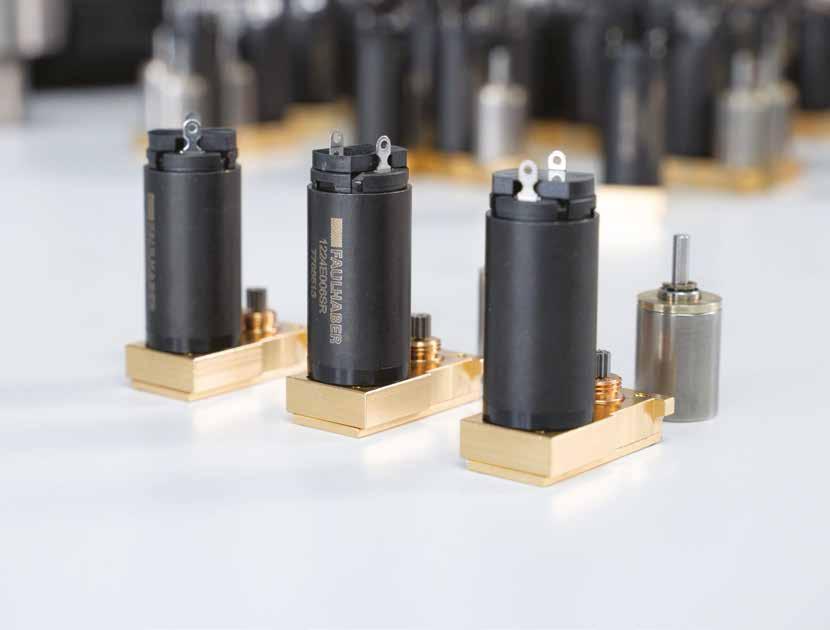
Lightweight, precision transfer gearbox for healthcare
MINIATURE MARVELS
Chris Handcock from EMS looks at the impact of miniaturisation on the process industry
From bulky control cabinets that once dominated plant floors, to today’s compact drives embedded directly into process equipment, modern engineering increasingly demands greater capability with a reduced physical footprint. But miniaturisation brings both opportunities and challenges in design. Here, Chris Handcock, design lead at drive system supplier Electro Mechanical Systems, explores how miniaturisation is changing product design.
For more than two decades, we’ve seen technology get smaller, and the same applies for the technology used in industrial spaces. This is evident in slimmer control cabinets, compact actuators integrated directly into equipment and smaller drive units embedded into packaging and finishing systems, often allowing original equipment manufacturers (OEMs) to reduce their machine footprint while maintaining access for maintenance upgrades.
In manufacturing and process environments, miniaturisation is being driven by the need for higher throughput, cleaner layouts and more flexible production lines
Chris Handcock design lead at EMS
Smaller, lighter, more efficient systems offer clear advantages, but miniaturising drive systems isn’t simply a matter of scaling down existing motor designs. It must carefully balance torque, power density, motor type and thermal management.
MINIATURISATION IN PROCESS ENVIRONMENTS
In manufacturing and process environments, miniaturisation is being driven by the need for higher throughput, cleaner layouts and more flexible production lines. Compact drive systems are now routinely used in applications such as conveyor positioning, valve and damper actuation, metering and dosing systems as well as automated inspection equipment. By reducing the size of motors and gearboxes, machine builders can shorten axis lengths, reduce moving mass and place motion exactly where it is needed – often directly at the point of process.
In process industries such as food, beverage and pharmaceuticals, highspeed packaging and automated production lines are critical stages in the overall production process. Here, compact drive systems are enabling higher throughput and greater flexibility without increasing machine footprint. According to the Electric Micro-Motors Market Trends 2026 report, more than 55 per cent of newly designed production-line equipment upgrades now prioritise micro motor integration. By reducing moving mass and eliminating complex mechanical transmissions, miniaturised drive systems support faster cycle times, improved positional accuracy and lower energy consumption, helping to maintain overall process efficiency in the same production envelope.
THE CHALLENGE OF COMPROMISE
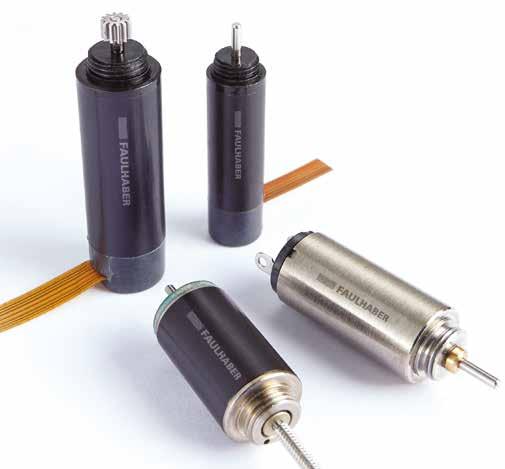
But reducing size can create issues. Reducing motor size requires a careful balance of torque and efficiency to ensure performance doesn’t suffer. Small motors do not automatically deliver the same output as larger ones. To meet the same standards, engineers must carefully consider factors like torque output, power density, load-handling capability and energy efficiency. Smaller motors tend to have lower torque, meaning that designers may need to compensate with gearing, high-performance materials or alternative motor types. Here, selecting the correct micro motor technology becomes critical. In process industry operations, Faulhaber brushless DC motors like those supplied by EMS, are
often favoured for continuous operation owing to their efficiency, controllability and long service life.
PRECISION ENGINEERED THROUGH CUSTOM DESIGN
Thermal management is a critical bottleneck in miniaturisation. As motors get smaller, the surface area available for cooling diminishes. Left unmanaged, this heat accumulation degrades efficiency and damages components.
To address this challenge, designers must treat heat management as a core element of the engineering process rather than an add on. Approaches may include optimising magnetic materials, enhancing insulation, developing housings or airflow routes that improve heat dissipation, or integrating thermal sensors. In more advanced applications,
heat spreading housings, micro cooling channels or other specialised thermal management technologies.
Addressing these considerations at the start of a concept is essential, as thermal limitations can dictate the performance envelope of a miniature motor. This is where precision manufacturing becomes crucial. Offthe-shelf motors and gear systems are often unable to meet the tight spatial, mechanical and performance constraints associated with tiny applications. For bespoke solutions, consider selecting a partner such as EMS, which provides a comprehensive custom design and manufacturing service, from its Dorset based facility.
By driving new expectations for system performance, energy efficiency and plant design, miniaturisation is reshaping the process industry. Compact, lightweight components are enabling tighter integration in both continuous and batch processes, unlocking capabilities that once seemed impossible. But real success demands more than shrinking hardware – it requires careful consideration of motor selection, uncompromised manufacturing precision and the support of custom design solutions that maintain process stability and uptime.
For more information visit: www.ems-limited.co.uk/blog/
Brushless motor group from Faulhaber
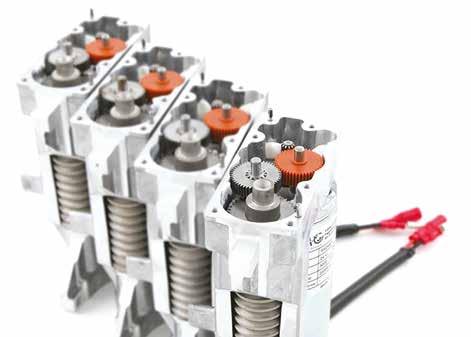
Multi-stage gearbox and worm drive
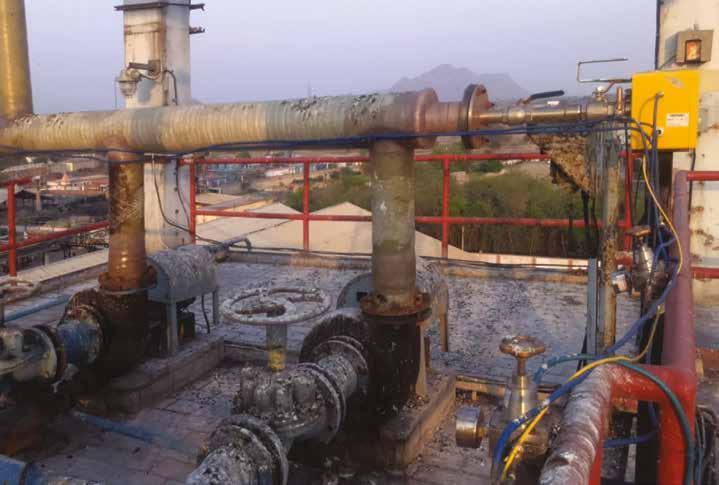
A fast-loop in practice. Trouble-free monitoring requires ruggedised equipment
GAS MONITORING IN THE CHLOR-ALKALI INDUSTRY
Bengt Löfstedt from Opsis discusses a solution for monitoring small concentrations of aggressive gases with low maintenance costs and high data availability
The operation of a chemical industry often comes with handling of dangerous and aggressive substances. Spills and leakages can have disastrous consequences not only to the operations but also to health and the environment. Long-term exposure to relatively low levels of these substances can also have negative effects. There are therefore often legislation and emission limits in play, and there are usually regulations that mean limits must not be exceeded. An example is the monitoring of aggressive gases in the chlor-alkali industry which produces chlorine and other bulk chemicals.
THE CHLOR-ALKALI PROCESS
The chlor-alkali process is a method for converting sodium chlorine (NaCl) into chloride gas (Cl2) and caustic soda (sodium hydroxide, NaOH). The process also generates hydrogen gas (H2).
In the process, an aqueous solution of NaCl is fed into one side of an electrolysis chamber where the anode splits the NaCl bond. Cl2 gas and Na+ ions are formed. In the other side of the chamber, fed by water only, the cathode splits the water whereby gaseous hydrogen and OH- ions are formed. The two sides are separated by a membrane which allows the Na+ ions to travel to the cathode side.
There, they react with the OH- ions and form caustic soda. The Cl2 and H2 gases are caught on their respective sides of the membrane, while the NaOH solution is tapped on the cathode side.
Let us focus on the chlorine being produced. The gas must be cooled whereby gas-phase water residue also is condensed and removed from the gas mixture. Then compression and further cooling follow, producing liquid Cl2 which then can be stored and distributed.
There are also a variety of ways of managing and using the hydrogen generated, and the caustic soda is of course also utilised.
EMISSIONS MONITORING
In practice, the chlorine is not completely liquified in the cooling stages, and there may also occur gaseous impurities in the chlorine gas which are not condensed. This tail gas usually leads to a series of scrubbers catching and sometimes utilising the remaining gas. Nevertheless, at the end of the process, there is waste gas emitted to the ambient air, potentially containing a variety of pollutants such as gaseous Cl2 and HCl. These emissions may cause health and environmental concerns and it is therefore necessary to monitor the gas concentrations continuously.
PRACTICAL CHALLENGES AND SOLUTIONS
There are several ways of monitoring gases like Cl2 and HCl but there are a number of practical considerations. First, the gases themselves are aggressive even in low concentrations which excludes most sampling instrumentation. Second, the ambient environment at a chlor-alkali industry can be rather harsh, requiring very ruggedised equipment if an operator is to avoid too regular maintenance and replacement of equipment. At the same time, the emission limits
can be low, calling for very precise monitoring solutions with low detection limits.
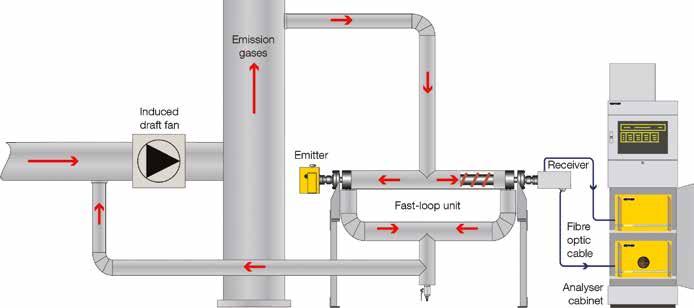
This leaves few options. One that has proven to be a very good solution is the Opsis fast-loop monitoring system. It operates with non-contact optical detection along a light path. To gain low-enough detection limits, a part of the flue gas is led with a relatively high flow via durable tubing to a monitoring cell which can be several metres long, enabling detection of the gases at very low concentrations. The gas is then returned to the duct, hence the name ‘fast loop’. To withstand the aggressive gases, the tubing and the cell is often manufactured in stainless steel or durable plastic.
It is only the measurement cell with its light emitter and receiver that is exposed to potentially tough ambient conditions. The light from the cell is led via an optical fibre to a shelter where the core instrumentation is located, analysing the spectrum of the light and calculating the sought-after gas concentrations.
OTHER MONITORING APPLICATIONS
So far we have only discussed emissions monitoring, but these gas
concentration measurement principles can also be used for process control applications. The concentration levels of interest might be much higher but both fast-loop monitoring systems and direct monitoring in gas ducts (‘in-situ’) can still be applied. With multi-gas analysers, the systems also become very cost-effective. Proven and durable monitoring systems keep maintenance efforts and operational disturbances at a minimum.
The open-path technology described in this article can also be applied to ambient air quality monitoring. In the context of chemical industries, so called fence-line monitoring is of particular interest. There are then monitoring light beams in the open air around the industry (‘along the fence’, hence the name), allowing quick detection of unintentional emissions irrespective of wind direction. Alarms can be raised for immediate attention to the situation, and data from the long-term monitoring can be used to assess the air quality in general and for studies on how to reduce the impact of the industry on the environment.
For more information visit: www.opsis.se
An illustration of the principles of a fast-loop monitoring system
A ‘MADE IN EUROPE’ MOMENT
Dominic Bridge asks ABB about the strengths of Europe and the UK versus their faster competitors, China
and the US
Europe’s heavy industries are at a turning point. Rising trade barriers, state-backed competition from the US and China, and growing restrictions on critical technologies have exposed the fragility of global supply chains. Energy prices remain higher in Europe than in the US, while China continues to strengthen its manufacturing base through coordinated state support and rapid capacity expansion.
Against this backdrop, calls for a renewed ‘Made in Europe’ movement are gathering pace. The ambition is clear: rebuild resilience, protect strategic capability and anchor more production closer to home. But ambition alone does not close competitiveness gaps. Europe cannot compete on cost. The important question, then, is how it can sustain high-value, local production while managing cost pressures, decarbonisation targets
and geopolitical risk.
One possible answer lies in engineering-led digital scale: embedding digitalisation deeply into core operations to improve productivity, increase efficiency and reduce reliance on vulnerable external supply chains.
To explore that proposition, I spoke with Joachim Braun, global division president, Process Industries at ABB.
For Braun, digital transformation should be as much a part of manufacturing and the process industries as automated control systems and electrification are to them, in fact, he argues, that longevity depends on how digitalisation is engineered into the core of operations.
“Digital transformation succeeds long-term when it is engineered to scale and embedded into plant level operations, not treated as a series of isolated pilots.”
In sectors such as mining, metals, and pulp and paper, assets are built to
operate for decades. As electrification, automation and control systems are tightly integrated, digitalisation cannot sit on the periphery. It must work safely inside environments where reliability and continuity matter more than speed of deployment.
As Braun puts it, “When proven digital solutions are scaled across operations, they improve uptime, energy efficiency and operational predictability year after year.”
That cumulative performance matters. Industrial businesses are facing challenges from various quarters: regulatory change, decarbonisation pressure, materials constraints and geopolitical risk being a few. In that environment, consistency can be more valuable than headline innovation. But can European industry scale decisively enough to match competitors that often move faster, even with a higher tolerance for risk?
Joachim Braun global division president, Process Industries at ABB
GOING LOCAL
The renewed emphasis on local production reflects similar tensions. Extended supply chains have proven vulnerable in recent years, and resilience is a key boardroom agenda. But localisation carries cost implications, particularly in high-wage and high-energy-price economies.
Braun is pragmatic. “Stronger local production is a critical part of that foundation today. Localising production is not about stepping away from global trade, but about designing systems that can continue operating when conditions change.”
In practical terms, shorter supply chains can create closer feedback loops between design, operations and maintenance. Digital systems perform better when they are aligned with real-world operating conditions.
“In practice, smarter operations emerge when digitalisation, engineering discipline and supply chain strategy are designed together rather than treated as separate initiatives.”
However, integration at that level requires coordination across investment cycles, regulatory frameworks and industrial partnerships. All areas where Europe has historically been slower and more fragmented than other regions.
The UK’s position post-Brexit
provides one example of uncertainty and continuity. Trade mechanics have changed since 2020, but technical collaboration remains embedded in many industrial sectors.
POST BREXIT INTEGRATION
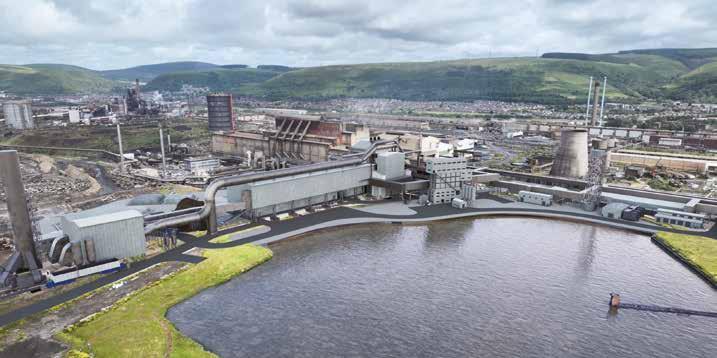
“This integration,” Braun explains, “is reflected in real projects that tie together capability, innovation, and supply chain continuity. For example, ABB and French partner Clecim are working with Tata Steel on automation, electrification, and digital technology for a new 1.8 million metric ton pickle line at Port Talbot, a key part of the site’s transition towards lower-CO2 steel making and broader resilience in UK steel operations.”
It is clear that shared standards, technologies and operational practices still bind UK and EU supply chains together. Whether that alignment will deepen or gradually diverge is less clear. Much depends on investment consistency and regulatory coordination over the coming decade.
Globally, Europe is not alone in its digital ambitions. China continues to demonstrate strength in rapid infrastructure deployment and large-scale coordination. The US has been aggressive in pairing software innovation and AI capability with industrial modernisation. Both models emphasise speed.
Europe’s advantage lies in deep process expertise and engineering rigour, integrating digital systems into long-life assets under stringent safety and sustainability requirements. That strength supports durable transformation once solutions are proven.
Braun is explicit about the next step: “Europe’s opportunity is to accelerate execution, scaling proven digital solutions more decisively while maintaining rigour, safety, reliability, and security.”
Whether Europe can accelerate without compromising its standards remains an open question. Europe’s ‘Made in Europe’ moment, then, may hinge less on where production sits and more on how effectively digital capability is embedded and how those decisions are made by industry leaders like Braun, whose reassuring rhetoric projects a positive outlook:
“The next phase of competitiveness will be defined by who can scale digitalisation responsibly and consistently. Doing so will strengthen resilience, enhance safety and facilitate collaborations that make a difference. We have the map, we have the keys, so let’s continue to find what unites us and drive forward.”
For more information visit: www.abb.com
Stronger local production is a critical part of process manufacturing today
OPTIMUM OVERLAY
A close up on the importance of weld overlay in refinery and other industrial sectors
Automated field welding is increasingly positioned as a solution to the industry’s productivity and quality challenges. But while automation can improve consistency and repeatability, technology alone does not guarantee success.
According to Antoni Zarychta, global welding operations lead at Integrated Global Services (IGS) a company that specialises in automated weld overlay applications across oil and gas, petrochemical, power, and waste-toenergy sectors, the real differentiator is execution experience.
“Automation brings predictability,” he explains. “But only when it’s supported by proper planning and the ability to adapt when real-world conditions don’t match the drawings.”
TURNAROUND WORK
In refinery and LNG environments, turnaround scopes are typically based on inspection data from previous outages, often conducted two or three years earlier. When vessels are opened, corrosion or cracking can be significantly worse than anticipated. Scope expansion during outages is common. The ability to respond quickly determines whether the project stays on schedule.
“Less experienced contractors can struggle when conditions change,” Antoni says. “If you don’t have the right expertise on site, small deviations can cause major delays.”
In complex weld overlay projects, particularly those involving corrosionresistant alloys such as Inconel or stainless steel, mobilising additional resources and adjusting execution strategy must happen immediately.
A CASE STUDY
Antoni recalls a past project where a general contractor was responsible for replacing a vessel window prior to weld overlay work. Once the original section was cut out, wall thinning from corrosion meant the replacement component no longer
matched the original drawings.
Without sufficient equipment or field adjustment expertise, the contractor was unable to properly fit the replacement, causing delays across multiple workstreams.
“In tight turnaround environments, even small coordination gaps can cascade into significant downtime, something nobody wants” he explains.
The lesson is that welding competence alone is insufficient.
Complex field scopes require planners who understand both engineering tolerances and field realities.
AUTOMATION IN HARSH ENVIRONMENTS
Currently, Antoni’s team is completing a large-scale weld overlay project in the Middle East for one of the world’s largest LNG producers.
The scope involves overlay application on more than 150 pipe ends under challenging environmental conditions:
Dust and wind exposure
High humidity
Sequenced construction controlled by a general contractor
Environmental factors can directly affect weld quality if not properly managed, Antoni explains.
“Mitigating environmental impact requires experience,” he continues. “Our crews know how to mitigate environmental factors to prevent impact on weld quality. They know how to protect the weld area, control the process and maintain quality standards despite harsh conditions.”
The project also highlights a broader industry trend toward integrating multiple surface protection technologies. In this case, weld overlay work has been coordinated with high velocity thermal spray (HVTS) applications to create hybrid protection systems.
WHAT SEPARATES SUCCESSFUL DEPLOYMENTS?
According to Antoni, successful
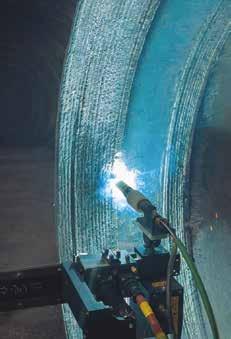
Succesful weld overlay requires expertise
automated welding projects share three characteristics:
1. Detailed upfront planning
2. Agile response to scope change
3. Continuous communication with clients and contractors
Automation improves consistency, reduces operator fatigue, and enhances schedule predictability. But its value depends on how well it is integrated into broader project workflows, including safety procedures, stakeholder coordination, and daily sequencing.
THE FUTURE IS INTEGRATED, GLOBAL EXECUTION
As asset owners demand shorter turnaround windows and higher reliability, the integration of automation, global resource flexibility, and cross-disciplinary protection systems is becoming essential.
Experienced multinational crews, drawing expertise from North America, Europe, and Africa, are increasingly mobilised across regions to execute specialised scopes under compressed timelines..
For more information visit: www.igs.com
ELECTRIC HEATING
Johann Lainer from Watlow looks at how to engineer medium-voltage electrification for high-duty process heating
Electrification is becoming an increasingly practical option for high-duty process heating across a wide range of industrial sectors. As organisations work towards lower-carbon operations, process engineers are being asked to evaluate electric alternatives for heating duties that have traditionally relied on combustion, steam or heat transfer fluids. The challenge lies not only in reducing emissions, but in doing so without compromising reliability, controllability or long-term operability.
High-power heating applications place demands on electrical infrastructure. As power requirements increase, conventional low-voltage electric systems can become complex and costly, driving the need for extensive cabling, large transformers and additional plant space. These constraints often represent a critical barrier to electrification.
OVERCOMING LIMITATIONS
Medium-voltage electric heating offers a way to overcome these limitations. By operating at higher supply voltages, medium-voltage systems reduce current levels and associated infrastructure demands, making electrification more viable for large-scale process heating. However, medium-voltage operation introduces its own engineering considerations, particularly around electrical integrity, insulation performance and system integration.
DESIGNING SYSTEMS FOR RELIABILITY AND DURABILITY
At higher power levels, the relationship between voltage, current and infrastructure becomes increasingly significant. Low-voltage systems require high current to deliver megawatt-scale heating, which in
turn drives the need for large copper conductors, oversized control panels and substantial heat dissipation within electrical rooms.
Medium-voltage systems reduce these challenges by lowering current for the same power output. This can substantially reduce copper usage in both cabling and transformers, simplify electrical layouts and, in some cases, eliminate the need for step-down transformers altogether. For retrofit projects, this reduction in electrical footprint can be the difference between a feasible and impractical electrification scheme.
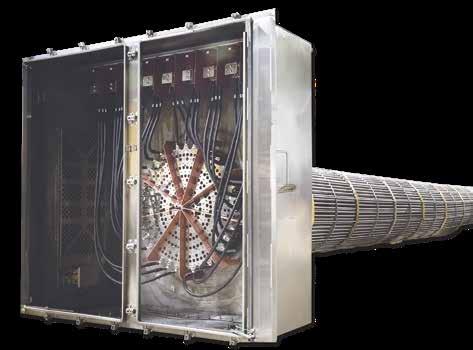
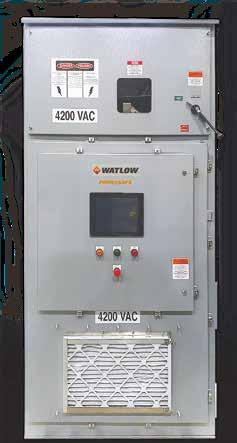
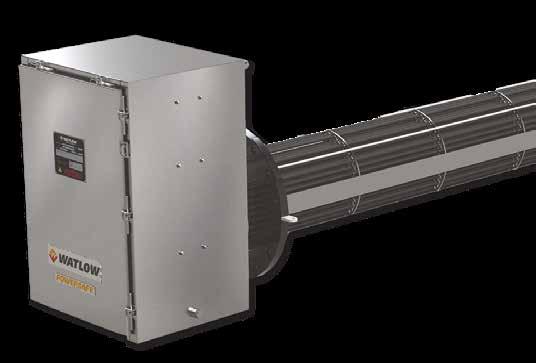
One example of how these requirements can be addressed is the Powersafe system from Watlow. The system has been developed to enable direct connection to mediumvoltage supplies through an integrated thermal architecture that combines the heater, power delivery and control elements into a coordinated design.
Inside Watlow’s Powersafe Medium Voltage Thermal System
Operating at medium voltage also introduces electrical phenomena that are less critical in low-voltage systems. One of the most important is partial discharge, where localised electrical stresses lead to small discharges within or around insulation systems. Over time, partial discharge can degrade insulation and compromise system reliability.
In the Powersafe system, the design of the busbar and connection arrangement has been engineered to manage electric field intensity. Geometry, spacing and insulation materials are selected to prevent the conditions that lead to partial discharge, supporting long-term electrical durability in demanding industrial environments.
Insulation performance is also influenced by environmental exposure. Many electric heaters rely on mineral-based insulation that can absorb moisture, reducing insulation resistance and potentially triggering protective shutdowns. Advanced sealing approaches used in the Powersafe thermal solution are intended to prevent moisture ingress throughout the product lifecycle, reducing the risk of unplanned downtime caused by insulation degradation.
EXPANDING THE ELECTRIFICATION ENVELOPE FOR INDUSTRIAL PROCESS HEATING
Historically, limitations around temperature capability and continuous duty have constrained where electric process heating could be applied, particularly in applications traditionally served by fired equipment or indirect heating systems. As a result, electrification was often restricted to lower-duty or ancillary processes.
Medium-voltage designs with enhanced thermal capability change this assessment. They allow electric heating to be considered for a broader set of high-duty applications, including reactor preheating, column reboiling, charge heating and other continuous processes common in refining, petrochemicals and chemical manufacturing. Comparable large-scale thermal duties are also present in minerals processing, food production and other energy-intensive sectors, where electrification is increasingly being evaluated at the process level rather than as a peripheral upgrade.
For process engineers, this expanded operating envelope shifts electrification from a niche option to a viable alternative for core heating duties, without the infrastructure penalties associated with large lowvoltage systems.
In parallel, electrification can simplify thermal system architecture. Replacing steam or heat transfer fluid loops with directly integrated electric heaters reduces the number of auxiliary systems that must be designed, operated and maintained. While routine inspection and cleaning requirements remain comparable to conventional heat exchangers, the removal of boilers, hot oil circuits and associated pipework can improve overall system clarity and operational robustness.
OPERATIONAL VISIBILITY AND CONFIDENCE IN ELECTRIFIED SYSTEMS
As process plants become more digital, expectations around visibility and predictive maintenance are increasing. High-duty heaters are often critical to production, and unplanned downtime can have significant financial consequences.
The Powersafe system incorporates monitoring capability through Watlow’s Thermalwatch technology, which tracks key operating parameters such as temperature and electrical load. By analysing this data, operators can identify early indicators of abnormal behaviour and plan maintenance interventions before failures occur.
Electrifying high-duty process heating is not a purely environmental exercise. It is an engineering challenge that demands careful consideration of electrical design, thermal performance, system integration and long-term reliability. Medium-voltage solutions such as the Powersafe system demonstrate how purpose-designed electric heating architectures can support reliable, scalable and lowercarbon process heating across a broad range of industrial applications.
For more information visit: www.watlow.com
Medium Voltage Heater Bundle
Watlow Control Panel
THE NEW GEOGRAPHY OF EMS
How near-shore EMS can build UK supply chain resilience, by Lydia Arundel
Electronic manufacturing services (EMS) are the backbone of the electronics supply chain and absolutely central to the process industry.
The UK EMS market is expected to grow at a CAGR of 7.8% from 2025 to 2033 according to several market commentators. Yet discussions around electronics resilience often focus on components and semiconductors, overlooking the EMS layer that integrates and industrialises them. So, what exactly does EMS encompass, and why is it becoming increasingly critical?
EMS refers to companies that provide a wide range of services across the entire lifecycle of electronics production, including design and engineering, manufacturing, testing and quality control, and distribution and logistics.
The EMS industry is essential to modern electronics. It provides the following benefits:
Companies that outsource manufacturing to EMS providers can reduce the operational costs associated with establishing and maintaining in-house production facilities.
OEMs can focus on their core competencies while outsourcing manufacturing to specialised EMS partners.
EMS providers can accelerate production cycles, enabling faster time-to-market.
Specialist expertise and advanced technologies help enhance product quality and reliability.
RETHINKING EUROPE’S EMS FOOTPRINT
With this in mind, Enkeleda Kuka, CEO of Atronix, gave a presentation entitled: ‘Why Europe needs new electronic manufacturing services geography’ at Southern Manufacturing last month.
Atronix is an EMS provider based in Albania and highlights its geographic position as a strategic advantage, enabling efficient transport links between Albania and wider
The Balkans may be a more viable EMS partner for the UK than Asia
European markets while operating in a comparatively less saturated landscape.
During her presentation, Kuka argued that European manufacturing must make a strategic shift, prioritising resilience, proximity, flexibility and sovereignty over pure cost optimisation.
To achieve this, she advocated expanding near-shore EMS capacity, particularly in high-potential regions such as the West Balkans (Albania, Bosnia and Herzegovina, Kosovo, Montenegro, North Macedonia and Serbia). This, she suggested, would provide manufacturers with a balanced approach – strengthening supply-chain stability while maintaining competitive economics.
Kuka believes that the sooner the industry moves beyond simply identifying near-shore opportunities and instead recognises the West Balkans as an integral extension of Europe’s electronics manufacturing ecosystem, the stronger and more resilient the region’s supply chains will become.
THE IMPORTANCE OF EMS RESHORING
EMS reshoring is becoming increasingly important to the UK as it redefines its supply chains and industrial autonomy post-Brexit.
Several factors are driving this shift: Geopolitical instability, including rising tensions between China and Taiwan, including trade wars and export controls.
Freight logistics challenges include container shortages, disruptions in the Red Sea and Suez Canal, and rising shipping costs.
Lead-time volatility, with UK companies facing delays of up to 10–14 weeks from Asia compared with two to five days from Southern Europe.
Hidden costs, including higher buffer stock requirements, expensive revisions due to quality mismatches, IP and compliance risks, and longer lead times that hinder innovation and responsiveness.
A CALL TO ACTION
Kuka has called on UK manufacturers to diversify their EMS partnerships. She identified Southern Europe as a near-shore buffer against dependence on Asian supply chains, with the Western Balkans positioned as a strategic addition to the UK’s agile EMS network.
FILTER INTEGRITY
Exploring the mechanics behind filtration in high-purity environments
The integrity of a filtration system is often judged by its smallest details. While the filter media does the primary work of separation, the filter plates provide the essential structural foundation. In high-purity environments, the surface quality of these plates is not merely an aesthetic choice; it is a critical regulatory and functional requirement that dictates the success of sterilisation and the prevention of cross-contamination, this is particularly true when processing pharmaceuticals.
IMPROVING FROM RECESSED CHAMBER PLATES TO MEMBRANE FILTER PLATES
When we transition from standard recessed chamber plates to membrane filter plates, the ‘surface request’ (the technical requirements for surface quality) becomes significantly more complex.
In these systems, the plate isn’t just a rigid wall; it’s a dynamic component that uses a flexible membrane (inflated with air or water) to physically squeeze the filter cake. This mechanical movement creates unique surface challenges that go beyond simple roughness.
HIGH FLEXIBILITY AND SMOOTH SURFACE
New technologies provide a new set point in the membrane technology. With a high flex material around 90ShA and a surface roughness lower than 0,5 Ra, the pharmaceutical application can work with new dimensions, round pips and developed geometrical structures.
IMPROVED PROCESS STEPS BESIDES COMPRESSION
In many pharmaceutical processes, the goal isn’t just to dry the cake, but to wash it. If the plate surface is rough:
1. The wash liquid will follow the ‘path of least resistance’ through the surface valleys.
2. This causes channelling, leaving pockets of unwashed impurities in the cake.
3. A high-spec, smooth surface ensures the wash liquid is forced through the cake uniformly, maximising purity.
CLEANING IS ALSO VERY IMPORTANT
A low-roughness surface finish is essential for effective cleaning of pharma membrane filter plates, minimising product adhesion and biofilm formation while enabling rapid, reproducible CIP. The smooth surface design supports hygienic operation, reduces cleaning time and chemical consumption, and contributes to reliable compliance with stringent pharmaceutical cleaning and validation requirements.
CONCLUSION OF NEW DIMENSIONS
By integrating high flexible membrane material in filter plates, pharmaceutical manufacturers achieve controlled filtration performance, higher product purity, and reduced risk of contamination. These systems not only enhance operational efficiency but also align with regulatory compliance and sustainability goals—making them an essential component in modern pharmaceutical processes.
The surface quality of filter plates is a regulatory and functional requirement
HAMPRO® HIGH-PRESSURE PROCESS TECHNOLOGY
The high-pressure pumps of the HAMPRO® series are used in the Oil and Gas Industries to pump a very wide range of fluids, meet the stringent requirements of the relevant safety and reliability regulations and are characterized by a robust design and careful use of resources.
Our experienced team of experts will be happy to help configure the perfect solution for your individual application.
RECIPROCATING PUMPS TO API 674
- Glycol pumps - Leak test pumps
- Methanol pumps
- Produced water injection pumps
- Sea water injection pumps
Pressure: 50 – 4000 bar
Flow rate: 0,1 – 256 m³/h
Hammelmann GmbH
Carl-Zeiss-Straße 6-8
(0) 25 22 / 76 - 0 pp@hammelmann.de
D-59302 Oelde www.hammelmann-process.com
STREAMLINED STRAINING
Robert Presser from strainer specialist Acme explains how application-specific modifications enhance efficiency and expand applicability
For industrial plant managers, automatic scraper strainers are among the closest solutions to a true ‘set-andforget’ system, effectively removing both large and fine suspended solids from industrial water, cooling tower water, liquids, and slurries.
BASIC STRAINER DESIGN
The basic design represents one of the most efficient and cost-effective industrial self-cleaning strainers available. The motorised unit is engineered for minimal maintenance and operator involvement and can remove solids as small as 75 microns. These strainers allow for continuous, uninterrupted flow, including during blowdown cycles.
Cleaning is performed by a springloaded blade and brush system controlled by a fully automatic control unit. The two blades and two brushes rotate at 8 RPM, producing an effective cleaning rate of 32 passes per minute. The scraper brushes penetrate the wedge-wire slots to dislodge stubborn particulates and adhered solids.
This design enables the scraper strainers to resist clogging and fouling even in applications with large debris and high solids concentrations. It also ensures a complete cleaning and is very effective against biofouling.
However, incorporating minor customisations or application-specific modifications can further optimise the automatic scraper strainer’s performance and suitability for a given application, according to Robert Presser, president of Acme Engineering Products.
Presser recommends the following design refinements that can improve overall effectiveness and operational results of scraper strainers for specific applications.
CHOOSE THE SCREEN BEST SUITED TO THE APPLICATION
Scraper strainers are available in various screen constructions, each engineered to address different process requirements and operating conditions.
Reverse-formed wedge wire screens are the standard configuration and are widely used owing to their mechanical strength, long service life, and resistance to deformation under high differential pressures. Their smooth, continuous slot profile minimises particle wedging and allows effective use of automatic brush cleaning mechanisms, making them well suited for continuous-duty and demanding industrial applications.
For processes that require finer filtration or more precise particle retention, multilayer sintered metal
Incorporating customisations can optimise the scraper strainer’s performance
mesh screens are the preferred option. These screens consist of multiple layers of woven wire mesh bonded together to form a rigid, porous structure. This construction provides consistent and accurate filtration ratings while maintaining good permeability and structural stability, making them suitable for applications involving fine solids or strict product quality requirements.
In applications handling fibrous or stringy materials – such as those commonly encountered in the pulp and paper industry – perforated screens with round holes offer superior performance. The round-hole geometry reduces the tendency of fibres to lodge in the openings, promoting easier self-cleaning and more reliable operation. As a result, these screens help maintain stable flow conditions and reduce the risk of blinding in fibreladen process streams.
AFFORDABLE SOLUTIONS FOR MORE EFFECTIVE SOLIDS REMOVAL
Scraper strainers allow the solids to accumulate at the bottom of the vessel, where the blowdown valve will open periodically to clear them out. Blowdown occurs only at the end of the intermittent scraping cycle when a valve is opened for a few seconds to remove solids from the collector area.
The inherent flexibility of automatic scraper strainers allows for application-specific customisation, enabling design refinements that further enhance performance where needed
Liquid loss is minimal, accounting for less than one percent of the total system flow.
If additional pressure is required to clean the screen during operation, an inexpensive trash pump can be added to the blowdown line to help with removing the solids, debris, and sediment that collect in the strainer sump.
Alternatively, the sump can be replaced by a cylinder bracketed by two gate valves that open and close as needed to remove the solids waste.
SPECIFY FRP CONSTRUCTION
When the chemical properties and temperature of the process fluid raise concerns about material compatibility, automated scraper strainers are available in other materials such as Monel, D2205, SD2507, and even Fiber-Reinforced Plastic (FRP). The internal mechanism and wetted components can be manufactured from super duplex or similar highperformance steels.
Although standard carbon steel construction is adequate for typical
use, corrosive environments such as those involving seawater, erosive slurries, or aggressive chemicals can quickly corrode conventional equipment. This can lead to potential issues in safety, quality, and compliance as well as production downtime, requiring premature strainer component replacement.
In many industries, duplex or super duplex stainless-steel construction is used to resist corrosion, but at considerable cost.
Today, a much more cost-effective option is to use FRP strainers that are specifically designed to be resistant to corrosive environments at a fraction of the cost of duplex or super duplex stainless steels.
Presser points out that FRP can be used for external strainer construction, including for pressure vessel applications up to 300 PSI. The internal mechanism is still manufactured with super duplex or similar steels. With this approach, manufacturers can reduce costs by approximately 50% while maintaining required performance
standards during operation.
As a result, OEMs are increasingly adopting fiber-reinforced plastic (FRP) for applications that demand high corrosion resistance without the expense associated with traditional materials. Typical uses include desalination systems, wastewater treatment, irrigation infrastructure, power generation facilities, and equipment used in the manufacture of food, pharmaceuticals, and both consumer and industrial products.
In addition, the inherent flexibility of automatic scraper strainers allows for application-specific customisation, enabling design refinements that further enhance performance where needed. This adaptability ensures optimal filtration efficiency and long-term operational effectiveness, even in demanding or highly variable service conditions.
Corrosive environments such as those involving seawater or aggressive chemicals can corrode conventional equipment
CONNECTING CURRENTS
How
Krohne’s Coriolis mass flowmeters have enabled Profinet over Ethernet-APL communication
Coriolis mass flowmeters are available with a range of communication protocols. In addition to traditional comms such as Modbus, Hart, Profibus and Foundation Fieldbus, more advanced options, including Profinet and EtherNet/IP for industrial Ethernet, are becoming more widely used across industries. Now, taking this a stage further, Krohne is shaping the future of industrial communications with Profinet over Ethernet-APL and Bluetooth. The future of industrial communications is now a reality.
APL EXPLAINED
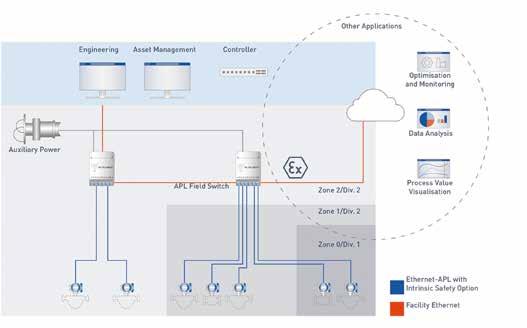
What does APL mean? APL stands for the Advanced Physical Layer. This layer needs to be combined with an industrial protocol to get a working automation system, for example, Profinet. Ethernet-APL extends the 10BASE-T1L single-pair Ethernet standard with specifications tailored for process automation. These include the intrinsic safety concept 2-WISE (2wire intrinsically safe Ethernet), long cable lengths, and robust operation in harsh environments. Using a trunkand-spur network topology, it connects field switches to devices over spurs while maintaining a powered backbone for extended distances.
What about hazardous areas? A key feature of Ethernet-APL is its ability to permit high-speed data to instruments in hazardous areas while meeting intrinsic safety requirements. Devices can be installed directly in zones 0, 1 or 2, and divisions 1 or 2, simplifying plant design and reducing the need for additional protective equipment. The intrinsic safety approach used in Profinet over Ethernet-APL is designed to ensure interoperability across compliant devices and infrastructures.
At the field level, Profinet (EthernetAPL/10BASE-T1L) supports advanced diagnostics, parameterisation, and integration with process control systems. Its Ethernet foundation
means it can also support other protocols, paving the way for future adoption of OPC UA and other IIoT-oriented data exchange models. This aligns with NAMUR Open Architecture (NOA) principles for parallel data access.
What are the advantages of operation and engineering? Compared with legacy 4…20 mA/HART or fieldbus systems, Profinet over Ethernet-APL provides:
Increased data availability, including multi-variable and diagnostic information
Faster commissioning and simplified network configuration
Standardised Ethernet infrastructure for IT/OT convergence
Easier lifecycle management through remote updates and configuration
Reduced complexity by consolidating power and data cabling
This is just the beginning, the possibilities of Profinet over Ethernet-
APL are endless in industrial automation. It will enable the Industrial Internet of Things and the concept of autonomous plants, based on APL.
Further, Bluetooth technology allows the user to make a secure wireless connection to any Bluetooth-equipped Optimas Coriolis mass flowmeter from a distance of up to 20 metres (depending on the environment), even in hazardous areas, and SIL certified devices via the free to download Opticheck Flow Mobile app for Android or iOS on a mobile phone or tablet.
A key benefit is that a variety of commissioning tasks can now be completed wirelessly, including zero calibration, diagnostics configuration, NE 107 configuration (including mapping events to NE 107 statuses), and monitoring of meter performance and application parameters.
Ethernet-APL can permit high-speed data to instruments in hazardous areas
FOOD SAFETY
The design and selection of food processing equipment must align with health and safety regulations
Caleb
Townsend from
APEC explains how in-factory equipment can be engineered to meet modern food safety standards
In food processing, safety is not just a regulatory checkbox, it’s a critical element of product quality and brand trust. As public expectations and industry standards evolve, process engineers play an increasingly pivotal role in ensuring that manufacturing equipment supports safe, hygienic, and compliant food production environments.
This article explores key principles in the design and selection of food processing equipment that align with health and safety regulations, with a particular emphasis on material selection, design for cleanability, and modular maintenance features.
MATERIAL MATTERS: BUILDING FROM THE GROUND UP
One of the most fundamental decisions in equipment design is material selection. For food-grade applications, the use of 316 stainless steel is often preferred owing to its superior corrosion resistance, particularly in environments exposed to acidic ingredients, high humidity, or cleaning chemicals. This material resists pitting and maintains structural integrity over time, reducing the risk of contamination from metal fatigue or flaking.
Equally important are gaskets, lubricants, and seals. These should meet food-safe standards, often designated by governing body certifications. Using components that are chemically inert and resistant to breakdown under heat and pressure helps prevent contamination from degraded materials.
By specifying materials that can withstand repeated sanitation cycles without compromising function or safety, engineers can extend equipment lifespan while minimising food safety risks.
ELIMINATING HARBORAGE POINTS: CLEANABILITY BY DESIGN
One of the leading causes of microbial contamination in food facilities is the presence of harborage points – hidden or hard-to-clean crevices where bacteria can accumulate. These include weld cracks, exposed threads, sharp corners, or overlapping joints.
Equipment designed with smooth, continuous surfaces and proper radius at bends reduces these risk areas.
Polished finishes, particularly those
For food-grade applications, the use of 316 stainless steel is often preferred
rated to RA 32 or finer, prevent food residues from adhering and simplify the cleaning process. Designs that minimise horizontal surfaces or incorporate sloped edges further promote drainage and deter buildup.
In practice, cleanability should be engineered into the equipment from the outset. This includes designing components that are easily disassembled for cleaning – ideally without specialised tools – and ensuring that disassembly does not require reaching into blind spots or compromising worker safety.
MODULAR COMPONENTS: ACCESSIBILITY WITHOUT COMPROMISE
Process engineers are increasingly advocating for modular designs that facilitate both safety and operational efficiency. Equipment such as rotary feeders and coating systems can now be specified with features like swingout chambers or sliding assemblies that allow full interior access for sanitation and maintenance.
For instance, a rotary feeder with a sliding rail system enables operators to pull out internal components for inspection or cleaning without needing to uninstall the entire unit. Similarly, liquid coating systems designed with hinged chambers or tool-free latches allow for faster turnaround between production runs or maintenance cycles.
This kind of modularity not only streamlines cleaning procedures but also reduces the risk of error during reassembly, an often overlooked contributor to cross-contamination or mechanical failure.
DESIGNING FOR GLOBAL COMPLIANCE
Food safety is a global imperative, and equipment used in processing environments must meet the regulatory expectations of diverse markets. Whether aligning with the European Union’s Regulation (EC) No 1935/2004, Canada’s Safe Food for Canadians Regulations (SFCR), or international schemes recognised by the Global Food Safety Initiative (GFSI), hygienic equipment design is foundational to compliance. Standards such as ISO 22000, BRCGS, and FSSC 22000 emphasise not only the
safety of food-contact materials but also the cleanability, traceability, and maintenance of processing systems.
For process engineers working across borders, specifying equipment that adheres to widely recognised sanitary design principles ensures greater ease of market entry, smoother audit outcomes, and consistent risk reduction across facilities worldwide.
ENGINEER-LED RISK MITIGATION
Ultimately, engineering plays a proactive role in food safety. By specifying equipment that is constructed with compliant materials, designed for optimal cleanability, and built for modular maintenance, process engineers can significantly reduce the risk of contamination events and downtime.
This systems-level approach to safety doesn’t stop at equipment design. Engineers should also evaluate how equipment integrates into broader production workflows. Are sanitary zones clearly defined and maintained?
Is cleaning validation built into routine maintenance schedules? Are there mechanical or software safeguards to prevent operation during cleaning cycles?
These are not just design questions – they are operational strategies that can define whether a facility is merely compliant or truly optimised for safety. In an industry where safety and quality are inextricably linked, the design and selection of processing equipment cannot be left to chance. Process engineers have the technical insight and strategic influence to ensure that every component, from the material makeup to the clean-in-place system, supports both compliance and operational excellence. As food safety standards continue to evolve, so must our engineering practices –prioritising not just performance, but protection.
For more information visit: www.apecusa.com
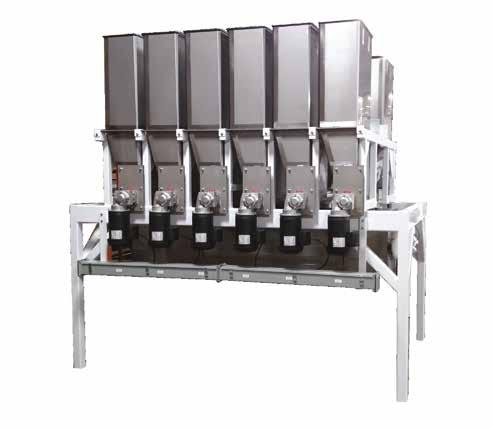
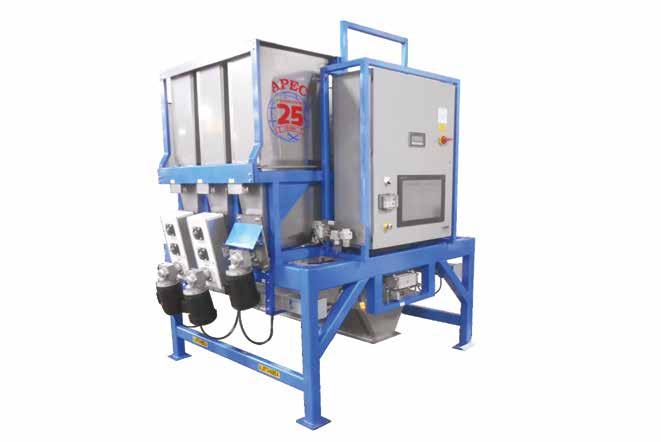
Rotary feeders with a sliding rail system enable operators to pull out internal parts
GO WITH THE FLOW
A look at the role of Coriolis flowmeters in a range of industries
WHY CHOOSE A NONINVASIVE FLOWMETER?
Non-invasive flowmeters offer significant advantages, making them essential for industries that demand precise and reliable fluid measurement. Alongside traditional contact-style flowmeters such as gear, axial turbine, Pelton wheel, and variable area flowmeters, are more advanced solutions including advanced Coriolis and magnetic inductive flowmeters. These noninvasive technologies deliver exceptional accuracy, reliability, and long-term performance.
CORIOLIS FLOWMETERS IN THE POLYURETHANE FOAM INDUSTRY
Within the polyurethane foam industry, Coriolis flowmeters have become indispensable for the accurate measurement of isocyanates and polyols. These critical components directly influence foam quality,
density, and overall performance, making precise dosing essential. Coriolis flowmeters provide instant mass flow measurements that are unaffected by changes in temperature, pressure, or fluid viscosity. This ensures accurate dosing and maintains the correct stoichiometric ratio throughout the production process.
In addition to mass flow, Coriolis flowmeters measure fluid density, enabling real-time process monitoring and adjustment. This capability enhances product consistency while significantly reducing material waste. Their suitability for challenging applications was demonstrated recently when UK Flowtechnik, which offers Coriolis flowmeters as part of its range, supported a customer processing a demanding polyol containing 62% abrasive solids. Conventional mechanical flowmeters were unsuitable owing to their moving parts, which risked separating solids from the carrier fluid and compromising measurement accuracy. A Coriolis flowmeter provided an effective solution, allowing both fluid and solids to pass through unhindered while maintaining mixture integrity. The result was highly accurate measurement of the twopart components, achieving linearity accuracy of ±0.2 percent. A detailed reference is available on request.
MAGNETIC INDUCTIVE FLOWMETERS IN THE BEVERAGE INDUSTRY
Magnetic inductive flowmeters have proven invaluable within the beverage industry, providing precise, non-intrusive measurement of conductive fluids such as water, juices, and syrups. They are widely used in critical processes including mixing, batching, and filling,
where measurement accuracy and repeatability are paramount. These flowmeters operate based on Faraday’s Law of Induction. As conductive liquid flows through a magnetic field, a voltage is induced that is directly proportional to the flow rate, ensuring highly accurate and repeatable measurement. A key advantage of magnetic inductive flowmeters is their design, which features no moving parts. This reduces maintenance requirements and minimises the risk of contamination—an essential consideration in food and beverage production where hygiene and safety are non-negotiable. Additionally, they introduce minimal pressure drop, helping to maintain consistent flow rates and optimise process efficiency. Their ability to handle varying fluid viscosities and temperatures makes them suitable for a broad range of beverage applications, including carbonated drinks and fruit juices.
CONCLUSION
The applications of non-invasive flowmeter technologies extend far beyond these examples, demonstrating their versatility across numerous industries. By adopting Coriolis and magnetic inductive flowmeters, businesses can achieve enhanced accuracy, improved efficiency, and long-term reliability while meeting stringent industry standards. UK Flowtechnik remains committed to delivering cutting-edge flow measurement solutions to help their clients optimise processes and maintain a competitive edge, according to the company.
Coriolis flowmeters provide instant mass flow measurements
Windows® Tablet IS945.1
Bridging mobility with desktop-grade performance and enterprise integration in the field.
Windows 11 IoT Enterprise LTSC – Long-term support until 2034
Enterprise security built-in – BitLocker, TPM, Windows Defender ATP
Familiar environment – Accelerated deployment, reduced training costs
Arm64 efficiency – 5G-enabled edge computing with AI (and minimal heat generation)
Maximum compatibility – Seamless integration into Windows infrastructure
isafe-mobile.com
SARTORIAL SAFETY
A spokesperson from Alsico Europe explores the shift towards safer textile treatments in chemical protective workwear
In chemical industrial environments, workers are frequently exposed to hazardous substances that can pose serious risks to both health and safety. From routine handling of chemicals to unexpected spills or emissions, the need for effective personal protective equipment remains critical.
At the same time, regulatory frameworks and expectations around worker protection continue to evolve. This has expanded the evaluation of protective workwear beyond immediate performance criteria, placing greater emphasis on material safety, long-term use and the behaviour of textile treatments over time. As a result, the design and selection of garments in chemical workplaces is being reassessed.
TRADITIONAL CHEMICAL TREATMENTS WITHIN TEXTILES
Traditionally, protective workwear used in chemical environments has relied on a range of textile treatments to enhance resistance to liquids, splashes and contamination.
These treatments have played an important role in garment performance and durability. However, their use in industrial applications has increased attention on textile
finishing processes, particularly during production, repeated industrial laundering and wastewater management.
This has led to closer examination of how textile treatments behave over time, both during use and across the broader lifecycle of the garment including laundering and prolonged contact with the wearer. Existing approaches are therefore being reviewed to ensure they remain aligned with evolving safety, regulatory and operational requirements.
EVOLVING EXPECTATIONS IN THE CHEMICAL INDUSTRY
Expectations within the chemical industry continue to evolve, with regulatory frameworks becoming more detailed and demanding. This requires employers to take a more structured approach to worker protection and risk management during daily operations.
Alongside regulatory considerations,
user expectations have also evolved. Comfort, consistency of performance and reliability over long periods of use are increasingly recognised as important factors in maintaining effective protection in demanding work environments.
REASSESSING TEXTILE FINISHING APPROACHES
In response to these developments, the chemical workwear sector is reassessing how textile finishes are developed and applied. Greater focus is being placed on refining finishing processes and aligning them with the actual protection requirements of specific applications. While finishes not based on PFAS technology can deliver effective protection against acids and alkalines, they do not provide the same performance level against oils and solvents. As a result, a clear assessment of real protection needs is essential when considering alternative finishing solutions.
This shift can also be seen in specific product developments within the sector. For example, Kibo is a chemical protective workwear development incorporating a finish not based on PFAS technology, used here as an illustration of wider industry efforts to address long-term material considerations alongside established protective requirements.
Alongside this, alternative finishing solutions are being evaluated to ensure effective resistance to liquids and splashes without compromising wearer comfort or usability. These developments reflect a broader effort to balance protection, comfort and long-term material performance within demanding chemical work environments.
Regulatory frameworks around worker protection continue to evolve
There is increased attention to textile finishing processes
COMPETENCE NOT CLICKS
Chris Dodds from Thorne & Derrick explains why high voltage and ATEX regulated purchases demand human expertise
In the age of one-click B2B buying, a dangerous assumption is taking hold: that industrial safety equipment is just another line item. For high-voltage (HV) and ATEX-regulated purchases, that assumption is a liability.
Specialist distributor Thorne & Derrick International is pushing back. The company insists that it isn’t a catalogue supplier, rather it’s a consultative partner. Because when a mis-specified component can trigger catastrophic failure, product selection isn’t procurement; it’s risk engineering.
“Customers aren’t buying a commodity,” says Chris Dodds from the company. “They’re investing in assurance: that products comply, perform, and integrate safely within complex, hazardous operating contexts. No dropdown menu captures T-Class, Gas Group, bushing interfaces, or HV cable configurations. That requires human intelligence.”
Online marketplaces bring speed, but in regulated environments – ATEX, IECEx, DSEAR and HV for example – they also introduce risk. Products may look identical online, but subtle specification differences, certification gaps, or counterfeit units can slip through. The cost of error isn’t a return shipment. It’s safety.
Thorne & Derrick’s model is built on a simple equation: certified products + competent installation = safe outcomes. Their technical sales engineers undergo continuous CPD in hazardous areas and HV standards, supporting clients from specification through site survey, training, and commissioning. It’s expertise “embedded in the supply chain not added at
checkout”, according to the company.
As energy systems evolve the compliance landscape around hydrogen, BESS, renewables and decarbonisation intensifies. Legacy knowledge isn’t enough, according to Dodds. Thorne & Derrick positions its engineers as active partners in
clients’ safety ecosystems, applying contextual intelligence to match equipment to site reality.
Technology will reshape procurement. But in zero-error-tolerance environments, the human layer remains essential. The cheapest or fastest option isn’t always the safest. And safety, ultimately, isn’t purchased, it’s engineered through partnership.
For engineers specifying critical infrastructure, that partnership may be the most vital component in the
Thorne & Derrick brands itself as a consultative supplier
RETHINKING PCBs
Lydia Arundel explores how PCB substrates can help reduce e-waste
E-waste is one of the fastestgrowing waste streams globally. The following current estimates from several key industry commentators highlight the scale of the issue:
Only 17% of global e-waste reaches a recycling facility
Each person discards an average of 6kg of e-waste per year
Around 70% of the world’s toxic waste stream is attributed to e-waste
Recoverable metals within annual e-waste are valued at approximately $62.5 billion
Global output could reach 120 million tonnes annually by 2050 if trends continue
An estimated 350 million tonnes of e-waste currently sit in landfills
These figures paint a stark picture and while the environmental imperative is clear, barriers such as performance requirements, cost pressures and rapid technological advancement continue to hinder adoption of sustainable electronics. Despite these challenges, sustainability presents tangible benefits. Manufacturers can reduce utility consumption, minimise material waste, and increase end-of-life value through improved material recovery.
THE PCB PROBLEM
One major contributor to e-waste is the printed circuit board (PCB), particularly those manufactured using FR4, a flame-retardant, glass-reinforced
epoxy laminate. As a thermoset composite, FR4 is extremely difficult to recycle due to its cross-linked resin structure, resulting in circuit boards, embedded components, and valuable metals often ending up in landfills.
FR4 alternatives
Several material innovations aim to address this challenge.
Ceramic substrates
Ceramic-based PCBs use materials such as alumina, aluminium nitride or beryllium oxide instead of fibreglass. These substrates are non-toxic and offer high thermal conductivity, low thermal expansion and strong electrical insulation.
Halogen-free FR4
Manufactured without brominated or chlorinated flame retardants, halogenfree FR4 reduces toxic emissions during disposal and supports safer recycling processes. These materials also improve thermal performance, signal integrity and corrosion resistance while maintaining compliance with environmental directives.
Bio-based and dissolvable substrates
Flexible PCBs are increasingly incorporating bio-based materials designed for biodegradability or compostability. Polylactic acid (PLA), derived from renewable sources such as corn starch or sugarcane, is one
example. Other solutions, such as watersoluble substrates made from natural fibres, facilitate the easier recovery of precious metals at end of life.
Soluboard
Soluboard, developed by Jiva Materials, is positioned as a fully recyclable and biodegradable PCB substrate that can help manage the problem of e-waste. Compatible with standard fabrication processes, including etching, drilling, plating, and platedthrough-hole (PTH) applications, it can be used in double-sided PCB designs without requiring major manufacturing adjustments. When put in hot water, the substrate dissolves, allowing copper, components and natural fibres to be recovered more easily. Jiva Materials states that Soluboard has a carbon footprint 67% lower than conventional PCB materials and can save 10.5kg of carbon per square metre of PCB produced.
SOLVING THE CRISIS
Transitioning to sustainable PCB materials will not, on its own, solve the global e-waste crisis, but material innovation represents a critical shift from treating electronics as disposable products to designing them as recoverable systems.
INTRODUCING THE
System
• Up to 5x More Crush Resistant
• Clog Resistant and Reusable
• Allows for Improved Flow and Pressure Equalization
PATENTED PRODUCT
OPTIMASS with sensors and electronics MFC 400 for Safety Instrumented Systems
• Using the new OPTICHECK Flow Mobile app on mobile devices or FDT/DTM on laptops commissioning, parameterisation, verification, performance monitoring and application parameters can be managed on-site via a secure Bluetooth® connection (<20 m/65.6 ft) –ideal for inaccessible areas or EX Zone 1
METHANOL REFORMING
A spokesperson from IGS explores how to achieve a 1.8% fuel efficiency gain when reforming methanol
Figure 1: Stack temperature trend (2015-2025)
In steam methane reforming, efficiency losses develop as fouling accumulates on the external surfaces of finned tubes in the convection section. The operational consequences include elevated stack temperatures, increased fuel consumption, constrained steam conditions and restricted throughput. This can significantly reduce margins and sustainability performance.
A recent project at a large methanol facility in the Middle East illustrates how targeted robotic defouling can recover lost efficiency and redefine maintenance strategies in hightemperature process environments.
THE COST OF CONVECTION SECTION FOULING
The convection section plays a critical role in overall reformer performance. Recovering heat from flue gases directly influences stack temperature, fuel utilisation, and steam generation efficiency. When fouling accumulates on finned tube external surfaces, heat transfer resistance increases, reducing thermal recovery and forcing the system to compensate elsewhere. At the facility in question, stack temperatures had risen to 168°C (320°F), significantly above the 135°C (275°F) target (Figure 1). This
deviation represented recoverable energy being discharged through the stack. To meet process requirements, additional fuel input was required, thereby increasing operating costs and associated emissions.
The impact extended beyond fuel use. The reformer was limited to approximately 93-95% of its design capacity and was unable to achieve the desired superheated steam temperatures. Conventional cleaning methods were complicated by limited accessibility and the inherent risks of confined-space entry in furnace environments.
For process engineers, these conditions present a familiar challenge of how to restore optimal heat-transfer performance quickly, safely, and comprehensively, without introducing additional operational risk.
ENGINEERING ACCESS AND PRECISION
To address fouling, a robotic cleaning system from IGS TubeTech, specifically designed for heavy deposits in the convection sections of fired heaters, was deployed.
Rather than relying on manual access, the operation was executed
remotely. Existing access points were utilised and supplemented by additional engineered openings to reach the affected tube banks. This approach eliminated confined-space exposure while enabling precise targeting of the finned-tube external surfaces.
From an engineering perspective, successful deployment required more than cleaning capability alone. Protective measures were implemented to safeguard the existing refractory, and a controlled effluent management strategy was designed to capture and remove cleaning media effectively.
The result was a controlled, repeatable process that addressed fouling at its source while maintaining asset integrity.
QUANTIFYING THE EFFICIENCY RECOVERY IN ENERGY INTENSIVE PROCESSES
Post-intervention performance data demonstrated the value of the approach.
Stack temperatures were reduced by 34°C (93.2°F), representing a significant recovery of lost heattransfer capability. This improvement resulted in a 1.8% increase in total fuel efficiency for the primary reformer.
In energy-intensive processes such as methanol production, even marginal efficiency gains generate substantial financial and environmental benefits. Reduced fuel consumption lowered operating expenditure while decreasing combustion-related emissions. Importantly, the reformer returned
to full throughput capacity, thereby removing the previous production constraint.
For facilities operating at scale, a 1-2% efficiency recovery represents a material improvement in both cost position and carbon intensity.
FROM CORRECTIVE ACTION TO PREVENTATIVE STRATEGY
While the immediate operational improvements were measurable, the longer-term impact was strategic.
Following the project, the facility incorporated routine robotic cleaning into its maintenance framework. This transition from reactive intervention to planned performance management reflects a broader shift within the process industries of recognising fouling not as an unavoidable byproduct of operation, but as a controllable variable within asset lifecycle management.
The success of the programme also prompted further evaluation of complementary solutions aimed at preserving refractory condition and sustaining heat-transfer efficiency over extended operating cycles.
BROADER IMPLICATIONS AND ADVANTAGES FOR THE PROCESS ENGINEERING SECTOR
As the industry accelerates decarbonisation efforts and seeks incremental gains in thermal efficiency, attention is increasingly turning to areas of recoverable loss. The convection section represents a significant opportunity for
performance optimisation.
Robotic cleaning technologies offer several advantages aligned with modern operational priorities:
Elimination of confined space exposure
Precision targeting of heat transfer surfaces – ideal for large banks with many tube rows
Reduced outage duration
Improved repeatability and datadriven maintenance planning
For process engineers, the implications extend beyond maintenance execution. Restoring heat transfer efficiency directly improves energy intensity, reduces fuel demand, lowers emissions, and supports throughput stability. In effect, it strengthens both operational resilience and sustainability performance.
The case from the Middle Eastern methanol sector demonstrates that targeted robotic defouling can deliver measurable efficiency gains while establishing a foundation for proactive asset management.
In high-temperature process industries, the difference between acceptable and optimal performance is often marginal. Reclaiming those lost efficiency percentage points safely, systematically and strategically may represent one of the most immediate and cost-effective pathways to improved thermal efficiency, according to the company.
Before convection section cleaning
After convection section cleaning
PLASTIC FANTASTIC
The new Recostar dynamic art plastics recycling system has a high degree of automation, low maintenance and high machine uptime
How a processing system from Starlinger recycles a wide range of post-consumer plastics with high throughput and efficiency
Recyling used plastics and scraps is of increasing importance for many processing plants looking to meet increasingly tight environmental legislation.
A product called the Recostar dynamic art recycling system from recycling technology company Starlinger processes a wide range of used plastics and scraps; this is done with increased throughput and ease of operation and maintenance, according to the company.
Key factors in the construction of Starlinger’s latest machine model for post-consumer plastics recycling were a high degree of automation and digitalisation to improve energy efficiency and achieve a significant output increase.. The Austrian machinery manufacturer offers mechanical recycling systems that cover a wide range of applications, including PET bottle-to-bottle and HDPE/PP cap-to-cap recycling.
“We have technically optimised the machine components of the Recostar dynamic art recycling system in such a way that production output and efficiency have increased significantly,”
explains Paul Niedl, commercial head of Starlinger recycling technology. “For example, the Smartfeeder has been made larger, and we use more powerful
We have technically optimised the machine components of the Recostar dynamic art recycling system and this has significantly increased production output and efficiency for our customers
drive motors with a low energy class. At the same time, we have simplified and shortened machine maintenance which leads to high machine uptime. Together with the Starlogger software which ensures accurate data recording and our Dynamic Automation Package plus which now features a convenient automatic on/off function, the new system is easier and more userfriendly than ever.”
Starlinger’s Recostar dynamic art recycling systems are particularly suited for heavily contaminated post-consumer plastic waste that has a high moisture content owing to storage or after washing, as well as strongly smelling plastic scraps. This system turns them into high-quality regranulate that can be used in demanding applications.
SPECIAL FEATURES
Special features of the new Recostar dynamic art recycling systems include the spin-feed technology and the Dynamic Automation Package (DAP). Technically sophisticated design elements such as the newly conceived ribs in the Smartfeeder, where the input material is prepared
for extrusion, and the special geometry of the cone bushing and the feed zone of the extruder ensure that the material is held longer and enters the extruder with more pressure and spin. This so-called spin-feed technology leads to a significant increase in system performance and higher production outputs.
The Dynamic Automation Package ensures maximum production efficiency by detecting fluctuations in the input material owing to differences in bulk density, size, or moisture content, and regulates the extruder speed accordingly. It also responds to interruptions in material feeding by automatically putting the system into standby mode and restarting it when feeding resumes.
The new underwater pelletising unit ideally complements the highly automated production process. It works with top efficiency also at high throughput rates and allows the processing of a wide variety of input materials, giving plastics recyclers more flexibility regarding material
streams. An optional PCUplus pellets conditioning unit at the end of the recycling process provides odour reduction by flushing the recycled pellets with ozone-enriched process air, thus achieving high-quality decontamination and removal of odours.
The large multi-touch panel ensures convenient and clear operation; it gives access to the circuit diagrams of the recycling system and the operating instructions. The entire system can be started easily by means of the one-button start/stop function.
VALIDATED DECONTAMINATION PERFORMANCE
Post-consumer PET bottle-to-bottle recycling is the second area in which Starlinger is one of the leading technology providers. “Our PET bottleto-bottle recycling lines are among the most widely employed recycling systems for used PET bottles. National and international authorities such as US FDA and European EFSA, as well as a number of multi-national
beverage producers have approved our PET recycling process for foodcontact applications”, says Paul Niedl.
In 2025 the European Food Safety Authority EFSA issued a positive Scientific Opinion which is based on the new EU Regulation 2022/1616 for Starlinger’s Recostar PET art recycling process, confirming its high decontamination performance. The new regulation significantly simplifies the approval process, as Starlinger can license the process directly to PET recyclers once the official approval has been granted and the recycling process authorisation number (RAN) has been issued. With the newly added extruder size of 265 mm the systems of the Recostar PET art series cover a throughput range from 1000 kg/h to 4,500 kg/h, meeting market demands for bigger production volumes.
For more information visit: www.starlinger.com/en/ recycling-technology
PREVENTING SPILLAGE
Todd Swinderman from Martin Engineering explores how conveyor skirt design prevents spillage in the first of this two-part series
Components of a skirt board system must work together to contain the load
Belt conveyors without an enclosure at the transfer point loading zone may still exist in some processing operations but are becoming a thing of the past owing to dust violations and excessive spillage. Whether the transfer chute is a dead drop, rock box design, or sloped design, dust and spillage from dry bulk material will still exist and must be controlled. Spillage can limit system access for maintenance and foul rolling components, increase labour costs for cleanup and reduce workplace safety.
A skirtboard on either side of the conveyor belt, sealed with a cover, certainly helps, but operators have found that air turbulence from loading still allows fugitive dust to escape unless a wear liner and skirting are applied. Moreover, there are nuanced details that conveyor engineers should consider when designing a conveyor transfer point. While controlling belt wear and the release of fugitive materials, all
components of a skirtboard system must work together to contain the load as it forms a stable profile in the centre of the belt. Several skirtboard system design approaches can be used based on industry historical
A fabricated curve skirtboard is hard to maintain when replacing wear liners and skirting
practice and the application. This article covers some of the common approaches bulk handlers use to mitigate dust and spillage and ensure a safe and compliant workplace with a lower cost of operation.
CONFIGURING THE SKIRTBOARD
By far the most common configuration is the vertical skirtboard. It is the easiest to fabricate and is a common detail for most engineering design firms. [Figure. 1] The height of the skirtboard is based on the sealing system components and is commonly at least 300 mm high. The double wall skirtboard is sometimes used with dust extraction for very fine free flowing materials.
The perpendicular and angled configurations are used in some industries. Angled skirtboards are designed to allow the load to centre. Perpendicular skirtboards relieve side pressure on the skirtboard seal. In theory, the perpendicular arrangement should allow for light seal contact but in reality, the angle of attack of the seal is not nearly as important as having a running flat belt surface for the seal and liner system to function best.
SKIRT SEALING CONFIGURATIONS
A vertical seal with a rubber or elastomeric material is the most common sealing system. [Figure. 2] The seal is held in place with a series of clamps which can be loosened to adjust the seal against the belt. The main drawback to the vertical seal is that an undulating or vibrating belt can break the sealing contact unless the belt is supported. The lay-in and lay-out seals are selfadjusting depending on the elastic nature of the sealing material. The double skirting configuration is the most effective in retaining a belt seal. Even if the belt profile fluctuates, the secondary seal rides softly on the belt, retaining the seal. Any material that gets in between the double seal strips is nonabrasive, being carried by the belt, and rolls back to the centre once the skirtboard ends.
The double wall skirtboard is sometimes used with dust extraction for very fine free flowing materials
It is a common belief that the seal material must be softer than the belt but the real concern is the abrasion resistance of the seal should be less than the belt top cover. The seal should be considered sacrificial and designed for easy adjustment and replacement without the need for excessive sealing pressure. Over adjustment can cause excessive friction heat of the seal leading to heat damage on the belt, as well as premature wear of skirting. In extreme cases, the heat can cause the seal to stick to the belt during shut down, which can prevent startup. The sealing pressure should be light with the skirtboard or the liners designed to reduce pressure on the seal. There isn’t much published on seal pressure values. For the selfadjusting seals, use 15 kPa contact pressure. CEMA proposes added belt tension of about 4 kN/m per side without considering the seal thickness.
CONCLUSION
In the next article, to feature in the June issue of International Process Engineer, we will explore seat sealing and wearliner configurations. Each of these approaches is unique to the application and the bulk handling environment, but it must be recognised that preventing dust and spillage in the ways described makes the cost of modifications much easier to justify over the long run.
Figure
DEFINING THE PROCESS
Chemical recycling is a complex and changing field; here Thomas Blocher from Buss ChemTech shines some light on the issue
Chemical recycling spans a broad range of methodologies with distinct advantages and drawbacks
The chemical recycling industry encompasses several distinct classes of methods; and each class has many technology suppliers often with somewhat different variations. Many are still under development. Even the term ‘chemical recycling’ does not have a single uniformly accepted definition. No wonder there is confusion among most stakeholders about what chemical recycling is, for which polymer a particular recycling method is appropriate, and which technology(ies) are commercially viable. This article attempts to bring some clarity to the situation.
THE DIFFERENCE BETWEEN CR AND MR
Chemical recycling (CR) is a term originally coined to differentiate the ‘new’ plastic recycling methods from the long-established mechanical recycling (MR) method. MR refers to the physical manipulation (primarily shredding and extrusion) of fairly pure streams of a single polymer type back into a form that can be used directly to make new plastic products. Although the MR process leads to some degradation of the polymer, it does not materially change the underlying chemical structure of the plastic polymer and is thus considered a ‘physical’ recycling method.
A NEW METHOD: DISSOLUTION
A new method emerged that didn’t quite fit with the definition of CR, namely dissolution. This method brings polymers into solution, which is generally considered a physical, rather than a chemical, process. Thus, dissolution is more accurately grouped together with MR as ‘physical recycling’, with all other processes changing the chemical structure of the polymers and thus, classified as ‘chemical recycling’.
One way to organise CR methods is by considering how ‘circular’ the method is. The more direct the route is back to a plastic product, the tighter the circle. There are also ‘conversion’ processes, whose products are inputs to Petrochem facilities – which first need to be made into monomers, then polymers, then converted, and finally made into an end product – and thus have the widest circle.
Enzymolysis is a method that uses enzymes to depolymerise plastics into their relevant monomers. While the youngest and one of the least developed of the classes, it is a technology to watch as these biocatalysts are highly specific and selective and have the potential to recycle plastic not suitable for other depolymerisation technologies. Solvolysis, the next category and with many variants, makes use of solvents to depolymerise
plastics back to monomers, dimers, or oligomers which can also be used as feedstocks for the production of new plastics. The last category of depolymerisation technologies is thermal depolymerisation. Sometimes confused with pyrolysis as elevated temperatures are employed, the goal of these technologies is to break down the target plastic, not into an oil as with pyrolysis, but only back to the monomer.
CONVERSION TECHNOLOGIES
Now to the last group of technologies. These are labelled as ‘conversion’
NASA technology readiness levels
as the output of these processes no longer resemble the plastic polymers they started out as and can only be used indirectly to produce new plastic products. Pyrolysis is a process that uses heat in the absence of oxygen to break down the plastic into a complex mix of hydrocarbons of varying lengths. The resulting oil is the main product, typically comprising 65% to 85% of the output, and is most often used as a replacement of fossilbased crude oil. The pyrolysis oil can require some additional processing (analogous to ‘refining’ crude oil) before it can be sent to the petrochem industry and converted into plastics.
Gasification operates at significantly higher temperatures than pyrolysis, and with some oxygen, to convert the plastic to very short chain molecules, namely hydrogen and carbon monoxide, the two major components of what is known as synthesis gas. ‘Syngas’ is a versatile intermediate used mostly to create ammonia and methanol (basic building blocks for a variety of other chemicals), although as it is combustible, it is also used as a fuel.
To evaluate the viability of each method, we can try to measure their ‘technology readiness level’ or TLR. Originally developed by NASA in the 1970s, TRL is widely used, including by the EU for funding and project management. From a survey of available information: presentations, articles, the technology suppliers’ own websites as well as from independent sources like the chemical recycling project list maintained by Sustainable Plastics, we can establish an approximate TRL range for each chemical recycling method. As shown in Figure 2, pyrolysis leads the list, which is in part a reflection of the fact that research into this method began long before most of the others.
EVALATING THE UTILITY OF EACH CHEMICAL RECYLING METHOD
Evaluating the utility of each method, is a much more complex task – a thorough review of academic literature is required. Few entities have performed such a review and
As stated at the outset, chemical recycling is a broad range of methodologies for recycling waste plastic
even fewer have produced a summary report. For this article, I’ve extracted (with permission) from nova Institut’s Mapping of Advanced Recycling Technologies and Global Capacities published in November 2024. See Figure 1 for a summary of the overall advantages and limitations of the more developed chemical recycling methods and for which polymers they can be applied.
As stated at the outset, chemical recycling is a broad range of methodologies for recycling waste plastic and as such, it cannot really be judged as a whole. Each class of technologies has their own set of pros and cons, some of which are still being determined and/ or verified. It is safe to say that some of these technologies will fail to become commercially viable solutions. On the other hand, I’m also confident in saying that some will.
Figure 1: Comparison of chemical recycling methods
Figure 2: TRLs for various chemical recycling methods
NO TIME TO WASTE
Conveyor belt specialist Bob Nelson provides us with an analysis of causes, costs and solutions for recycling stoppages
When a conveyor has to be stopped to carry out running repairs or unplanned maintenance, the materials being transhipped stop moving but the costs most certainly do not. In fact, quite the opposite, not only in terms of the remedial work itself but even more significantly, the cost of lost throughput. Conveyor stoppages in the waste recycling industry as a result of problems with either the conveyor belt or the conveyor itself are hugely expensive. In this special feature, Bob Nelson explains how stoppages can be minimised and, in a great many cases, avoided entirely.
A CHALLENGING BUSINESS
Recycling and waste processing is a challenging business at the best of times, especially with ever-increasing demands for better waste-type segregation and safety. At the same
time, price pressure and inflation create an increasingly difficult economic backdrop. Efficiency is crucial and to be truly efficient means
that waste needs must be processed, sorted and separated and channeled extremely quickly and with as few interruptions as possible.
Against a difficult economic backdrop, efficiency is crucial
UNPLANNED DOWNTIME
Conveyor stoppages disrupt the entire workflow; productivity stops, leaving the workforce in limbo while emergency repairs such as patches and clipping rips and tears are carried out. Maintenance becomes reactive rather than proactive, which places increased strain on both equipment and staff. Repeated stoppages also drive-up operational costs including call-out charges and the cost of replacement components from rollers to complete conveyor belts.
THE FALSE ECONOMY OF ‘GOOD ENOUGH’ COMPONENTS
Faced with repeated component failure, a great many recycling and waste plants choose cheaper, lowerquality components to reduce outlay. Whatever the reason, placing a higher importance on the headline price of a component rather than its whole life cost is invariably a false economy in more ways than one. Apparent savings are quickly lost in unexpected failures, frequent repairs, and premature replacement. The two components that most commonly cause stoppages are rollers/idlers and the conveyor belts themselves.
ROLLERS/IDLERS
Low-grade bearings and rollers are susceptible to premature wear and when they fail, they can seize up or disintegrate, causing significant
False economy – apparent ‘savings’ quickly disappear due to the cost of frequent repairs
friction that can lead to motor burnout or extremely expensive belt damage. stopping the entire line in its tracks.
The Solution: In all cases, only use premium quality rollers. The market for rollers and idlers is extremely competitive with huge price differences but, as with just about any product, the price is usually the best indicator of quality. Low-priced components are cheap for a reason. Precision-engineered bearings and robust rollers minimise friction and heat, extending their lifespan and requiring less energy to operate. They are designed for prolonged use, providing the fundamental
Damaged rollers cause stoppages and damage conveyor belts
reliability needed for high-throughput operations.
The two most common types are steel and nylon, with steel being the most regularly used, but the quality can vary enormously. Steel rollers rollers with high quality seals and bearings are generally the most durable and longer lasting. Nylon rollers are usually fine for lighter duty work and recycling applications where there are moisture/chemical corrosion concerns caused by the type of waste being conveyed, especially household. In these environments, nylon rollers will often outlast poorly sealed steel rollers.
KEEP THEM CLEAN
Bearings and rollers are particularly prone to contamination from the materials they carry, which can break down lubricants and cause increased friction. Over time, this leads to accelerated belt wear and collateral damage, increased noise, and premature failure. Regular cleaning and lubrication together with maintaining as clean a working environment as possible will considerably extend their working life and the life of the conveyor belt, all of which reduces downtime.
CONVEYOR BELTS
The standards of the physical properties of the rubber used for the outer protective covers are the single biggest influence on durability and the
AND DISTORTS RUBBER BELT – SAMPLES EXPOSED TO OIL FOR 2 WEEKS
length of a belt’s operational lifetime, which in turn is the biggest influence on the true cost of a conveyor belt. The quality of the rubber also plays a critical role in minimising the need to intervene and carry out repairs. However, rubber represents some 70% of the mass and 50% of the material cost of producing a conveyor belt so it provides an irresistible temptation for manufacturers to sacrifice even the most basic standards of resilience to create a more price-competitive edge.
OILS AND CHEMICALS
In recycling, the most predominant cause of conveyor belt problems is the damage caused by oils and chemicals. Organic waste is the
largest component of household waste mixture (69%) so it contains very high levels of vegetable oils and resins that have an extremely detrimental effect on the performance and life expectancy of rubber conveyor belts. The waste can also contain a wide variety of chemical-based domestic products including bleach, corrosives and other aggressive chemicals.
When oil penetrates the rubber covers, the ability of the rubber to withstand wear decreases very quickly. As the rubber softens it also steadily loses its tensile strength and at the same time becoming much more prone to cuts, rips and tears. The next stage is swelling and distortion that cause steering and handling problems and a serious reduction in the elongation at break (the amount of stretch before the belt snaps) as well as recurring splice joint failures.
Many belt manufacturers and traders only offer one type of oil resistant rubber, which is commonly designated as ‘Medium oil resistant’ (MOR), which is usually fine if the waste material being conveyed is confined to vegetable oils and not, as is so often the case, mineral oils, which are more aggressive, and chemicals such as those found in household waste for example.
In most recycling and waste plants, what is needed is ‘specific task’ oil resistant rubber, which are readily available from manufacturers such as Fenner Dunlop in The Netherlands, who have developed two types - ROM (for vegetable oils) and ROS for mineral oils and chemicals. They also have three additional grades that combine fire and oil resistance which. In view of the fires being caused by lithium batteries, is fast becoming an absolute necessity.
The best quality oil resistant belts can have covers based on a combination of SBR (Styrene Butadiene Rubber) and NBR (Nitrile butadiene rubber). However, because of the high cost of nitrile butadiene, manufacturers who engineer their belts based on price attractiveness rather than resilience and longevity, not only use lower-grade nitrile but also in very limited concentrations. For mineral oil, a full Nitrile butadiene rubber (NBR) synthetic rubber is required. The greater the concentration of nitrile within the polymer, then the greater resistance there is, not only to oil but also to corrosives. This is because nitrile provides protection against a range of aggressive chemical elements such as sodium hydroxide and potassium hydroxide, nitric acid and ammonia. The key point to all this is that although premier brand quality belts come with a higher price tag, their vastly superior resistance to abrasive wear and corrosive materials will undoubtably result in much increased levels of waste processing and a significantly lower whole life cost.
CONCLUSION
Downtime is hugely expensive in the waste and recycling industry, and the use of low-grade components is the most frequent cause. The cost of stoppages, together with the actual costs of repairs and more frequent replacements, need to be integral to the calculation of the whole-life cost of conveyor components because the lowest price frequently comes at the highest cost.
Mineral oils are generally more aggressive than vegetable oils
Left – good quality oil resistant belt. Right – mediocre standard of oil resistance OIL SWELLS
OIL RESISTANT BELT
NON-OIL RESISTANT BELT
PREPARING PILOTS
An advanced drone course will train pilots to operate on high-risk
industry sites
Experienced drone professionals are being given the opportunity to gain the advanced skills needed to operate on complex industrial sites.
This, the result of increased awareness of the advantages of using unmanned aircraft systems (UAS), has led to an increased demand for pilots who have the specific knowledge and skills to fly in industrial settings.
And the result is the Engineering Construction Industry Training Board (ECITB)’s new ECITB Advanced Industrial Drone Operations Course.
A free pilot course, funded by the Swansea Bay City Deal Skills and Talent Programme and the ECITB, is being run by ECITB-approved training provider Global Drone Training at RSPCA Llys Nini Centre in Penllergaer, near Swansea, on the week commencing March 23, with the assessment taking place the week after.
Martyn Johnson, ECITB head of region for Wales, said: “The growing use of drones in industrial settings is improving safety, increasing efficiency
and reducing workers’ exposure to work-at-height risks and other hazardous environments, such as for asset inspections.
THE PROGRAMME
“The ECITB Advanced Industrial Drone Operations course is designed for experienced drone professionals working in, or preparing to work in, high-risk engineering and construction environments.
“This intensive five-day programme goes far beyond basic flight skills. It prepares operators to safely and effectively deploy UAS on complex industrial sites, where safety, compliance, data integrity and teamwork are non-negotiable.
“Participants will develop a deep, practical understanding of how drones really behave in challenging industrial environments, how failures occur and how to identify, assess and manage risk on live industrial sites.
“The course also covers operating drones safely alongside other disciplines in complex workspaces and making operational decisions under
real-world constraints.
“It is aligned with the expectations of industrial clients, site owners and principal contractors, providing assurance that operators can work safely, professionally and competently in the most demanding environments.”
The course is suitable for drone operators employed on refineries and petrochemical facilities, power generation and transmission infrastructure, nuclear sites or major construction and engineering projects.
Assessments includes a practical flight test and examinations held under realistic operational conditions.
Development of the advanced course comes after the ECITB launched a quality-assured Foundation UAS Course in 2023, which was created in collaboration with the UK Drone Association, ARPAS-UK, alongside a working group made up of industry and drone experts.
The course is designed for experienced professionals working in high-risk engineering environments
A RISING STAR
A talented ex-apprentice encourages young people and employers to recognise the benefits of this career stepping stone
Choosing the right GCSEs and A-levels are essential before embarking on a career in engineering, according to Alexia Williams a technical lead from Rolls Royce who was hosting a seminar on apprenticeships at the Southern Manufacturing show in Farnborough last month.
The talk, ‘From classroom to leadership: My 6 year journey from apprenticeship to technical lead,’ took place during International Apprenticeship Week and explored Alexia’s impressive career to date. It also emphasised how foundational her Rolls Royce apprenticeship was to this.
Alexia started her STEM career with a four year aerospace engineering degree apprentice. On completion she was awarded a bachelors in aerospace engineering alongside an NVQ Level 2 and 4, all based around manufacturing and engineering. Following this she took on a full-time role as a deployed lifecycle engineer on the shop floor, alongside fitters inspectors and engine and machine specialists. It wasn’t long before she embarked on a part-time Apprenticeship Masters at Cranfield University, funded by Rolls Royce and she has since moved into submarine maintenance for the company.
TIPS FOR EMPLOYERS
Pay: Alexia explained that pay is important when attracting new staff, it’s the first thing an employee will take into consideration especially when moving away from home. A huge barrier for apprentices is not being able to live independently when taking on the course. Pay should be disclosed in the company website, Alexia said.
Values: A young person will be considering whether a company’s values mirror their own when choosing a position. They might be enthusiastic about sustainability and looking for a position in this field, for example. Perhaps the company’s purpose is trying to make the next fastest plane, and, if so, this should be made clear. “Unless new talent
A Alexia said that young people want pay, aligned values and promotion
You’re not coming in to make coffee or do the tasks that no one else wants to do. This work is very practical and hands on
can see what a company’s passion and direction is, they’re unlikely to sign up,” Alexia said.
Progression: A young person will want to know what their career path will look like after an apprenticeship, whether they can progress from an NVQ level 2 to a level 4 or 6. Similarly, they will be interested in the roles on offer after their apprenticeship, whether they be able to go straight into work and what that work will look like. It is important to be clear about progression routes and timelines too. Putting case studies of ex apprentices on a company website will attract new talent.
TIPS FOR APPRENTICESHIPS
Alexia also offers a tip for young people themselves. “Once you get into the business, push yourself. So for me this meant meeting new people and taking on new positions outside the business, as well as supporting young people in their early careers. I didn’t have anyone showing me what an apprenticeship was, and so I wanted to be that person for others.”
As demonstrated by Alexia, it is important to step outside of your comfort zone and do something that may be different from but complementary to your day job. Over the course of the last six years Alexia has taken on a host of roles such as acting as a non-executive board member for other companies and speaking on panels, .
Apprenticeship promotion is a key aspect of Alexia’s extra curricular work. “There are stereotypes that I want to address,” she said. “You’re not coming in to make coffee or do the
HANNOVER MESSE 2026
THINK TECH FORWARD
Global meeting place for industrial transformation, where innovation and responsibility converge to shape the future of manufacturing.
20 – 24 April 2026 Hannover, Germany hannovermesse.com
boring tasks. This work is practical, challenging and hands on.”
Alexia also does a significant amount of STEM outreach such as judging competitions and appearing on panels. “I’m interested in promoting engineering and manufacturing, and encouraging young people to be interested in STEM.” she said.
For more information visit: www.rolls-royce-smr.com/ careers/early-careers
Alexia spoke at the Smart Manufacturing show in Farnborough last month
NEXT-ERA GROWTH
ACHEMA Middle East, a new global industry show, will take place between 26–28 October 2026. in Saudi Arabia. The event aims to ‘increase connectedness, industry, and investment across MEASA’, according to the organisers.
The show targets the process, pharma, laboratory, digital, green and energy sectors and will look at how these sectors converge and compliment one another.
The launch of ACHEMA Middle East 2026 marks the first Middle East edition of the long-established process industry show reflecting growing regional demand for integrated, knowledge-driven industrial ecosystems.
The three-day event will take place at the Riyadh International Convention & Exhibition Center (RICEC), under the patronage of the Saudi Ministry of Industry and Mineral Resources and with the support of ASAS.
The event brings ACHEMA’s century-long heritage in chemical
engineering, process technology and applied industrial science to a region undergoing rapid industrial development and downstream expansion, according to the show’s organisers.
LAUNCHING IN SAUDI ARABIA
The show’s arrival to Saudi Arabia extends ACHEMA’s role into the Middle East, Africa and South Asia (MEASA) where it will connect international solution providers with regional manufacturers, policymakers, researchers and technology leaders.
Organised by Messe Frankfurt and DECHEMA, ACHEMA Middle East is aligned with Saudi Vision 2030 and the kingdom’s industrial development agenda. The event is designed to support local businesses, advanced manufacturing, sustainability, digitalisation and long-term investment across sectors including chemicals, energy, pharmaceuticals, food production, water technologies and advanced materials.
The exhibition covers the following core product groups - industrial engineering and process technology; laboratory and analytical solutions; automation and digital systems; packaging and supply chain solutions; and innovation-led R&D. This integrated scope reflects the interconnected nature of modern process industries and the need for cross-disciplinary solutions.
PROGRAMME CONTENT
Programme content is structured around six innovation themes and delivered through CPD-accredited conferences, technical sessions and expert-led discussions addressing current industrial challenges and future pathways, including electrification, bioprocessing, AIenabled operations and circular economy models.
For more information visit: https://achema-middle-east. ksa.messefrankfurt.com
APEC
Specializing in the design and manufacturing of ingredient automation equipment and controls for liquid coating and handling, continuous feeding, mixing and blending, weighing, batching, material handling and automation controls.
T +1 (616) 374-1000
E terrys@apecusa.com
W www.apecusa.com
Boehmer
Böhmer has focused on one product - the ball valve. The portfolio is nevertheless more than impressive: The application-optimized valves in the nominal sizes from DN 3 (1/8”) to DN 1400 (56”) are available in around 100,000 different designs..
T +49 2324 / 7001-925
E oertgen@boehmer.de
W www.boehmer.de
Gas Clip Technologies
Gas Clip Technologies provides a comprehensive range of gas detection solutions engineered to protect personnel in the most demanding environments worldwide, including oil and gas, chemical processing, manufacturing, and other high-risk sectors.
E sales@gascliptech.com
W www.gascliptech.com
HILLIARD
Hilliard offers a diversified product line for industrial applications in a wide variety of industries. Hilliard products are designed, manufactured and sold according to our customers’ applications.
T +1 607 733 7121
E rdoud@hilliardcorp.com
W www.hilliardcorp.com
LabFacility
The UK’s leading ISO 9001-accredited manufacturer and supplier for the complete temperature chain. From Temperature Sensors, Thermocouple Connectors and Cabling to supporting instrumentation and components, we are the GO-TO people.
T +44 (0) 1243 871280
E Sales@labfacility.com
W www.labfacility.com
Starlinger & Co Gesellschaft m.b.H
Sustainability in the bag: From polypropylene tape production to the woven plastic bag back to recycled plastics for packaging production –Austrian machinery manufacturer
Starlinger offers the technology to close the loop for plastic packaging.
W www.starlinger.com/en
Greenwich University Wolfson Centre
Providing cost-effective solutions to industrial problems: Consultancy services and training for industries that handle powder or granular materials as part of their processes.
T +44 20 8331 8646
E wolfson-enquiries@gre.ac.uk
W www.bulksolids.com
Rotork
A market-leading global provider of mission-critical flow control and instrumentation solutions for oil and gas, water and wastewater, power, chemical, process and industrial applications.
T +44 (0) 1225 733200
E mail@rotork.com
W www.rotork.com
+44 (0)207 253 2545
CHEMUK 2026
CHEMUK 2026 will take place on the 20th and 21st of May in Hall 5 at the NEC in Birmingham. This annual show is a meeting place for those involved in the UK chemical and process industries.
The show will appeal to raw material producers, distributors, toll manufacturers, process engineers, plant managers, EHS and regulatory teams, as well as laboratory
professionals, it’s fair to say that the show has a wide appeal.
During this two day event approximately 5,000 attendees will have the opportunity to talk with more than 600 specialist suppliers and more than 100 expert speakers. The show will be organised into five focused zones: the chemical supply zone; the chemical management zone; the process and chemical engineering zone; the chemical laboratory zone; and the formulated product manufacturer zone.
Conference sessions will look at managing PFAS emissions; scaling modular customised manufacturing; raman spectroscopy and more.
CHEMUK has become a vital annual touchpoint where the sector unites to solve challenges and shape new opportunities, according to the event’s organisers.
Hägglunds Thunder
That’s more than a sound you hear. It’s expectations being shaken. One small change that sets the stage for so much more. When the new Hägglunds Thunder resonates with your needs, the result is electrifying. Learn what a difference a single difference can make at www.hagglunds.com.
Hägglunds is a brand of Rexroth. An electric start to a lasting boom.