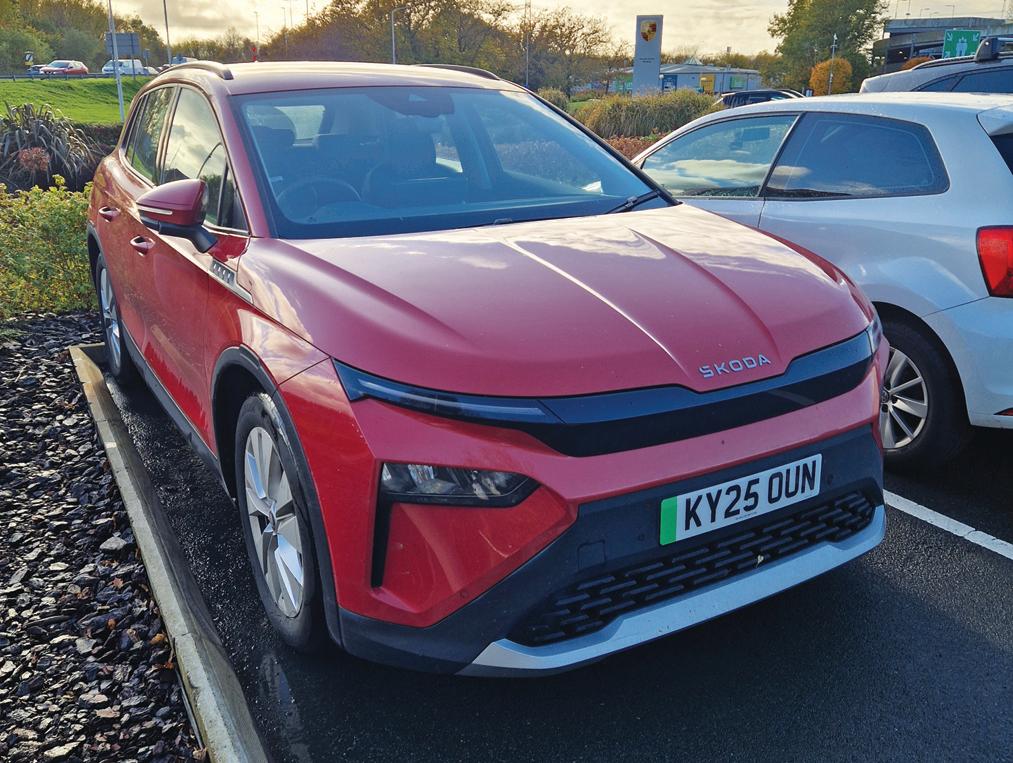
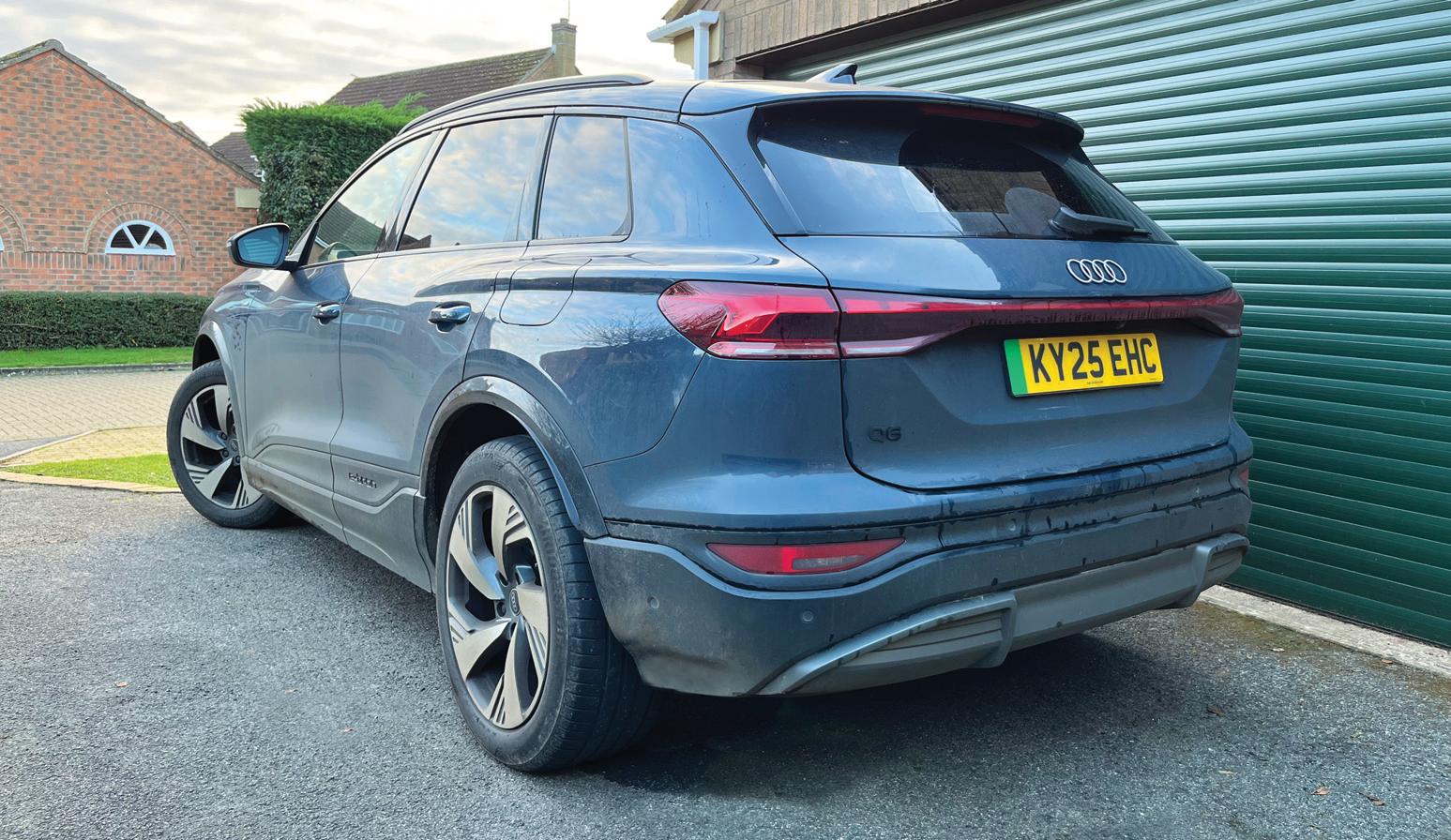
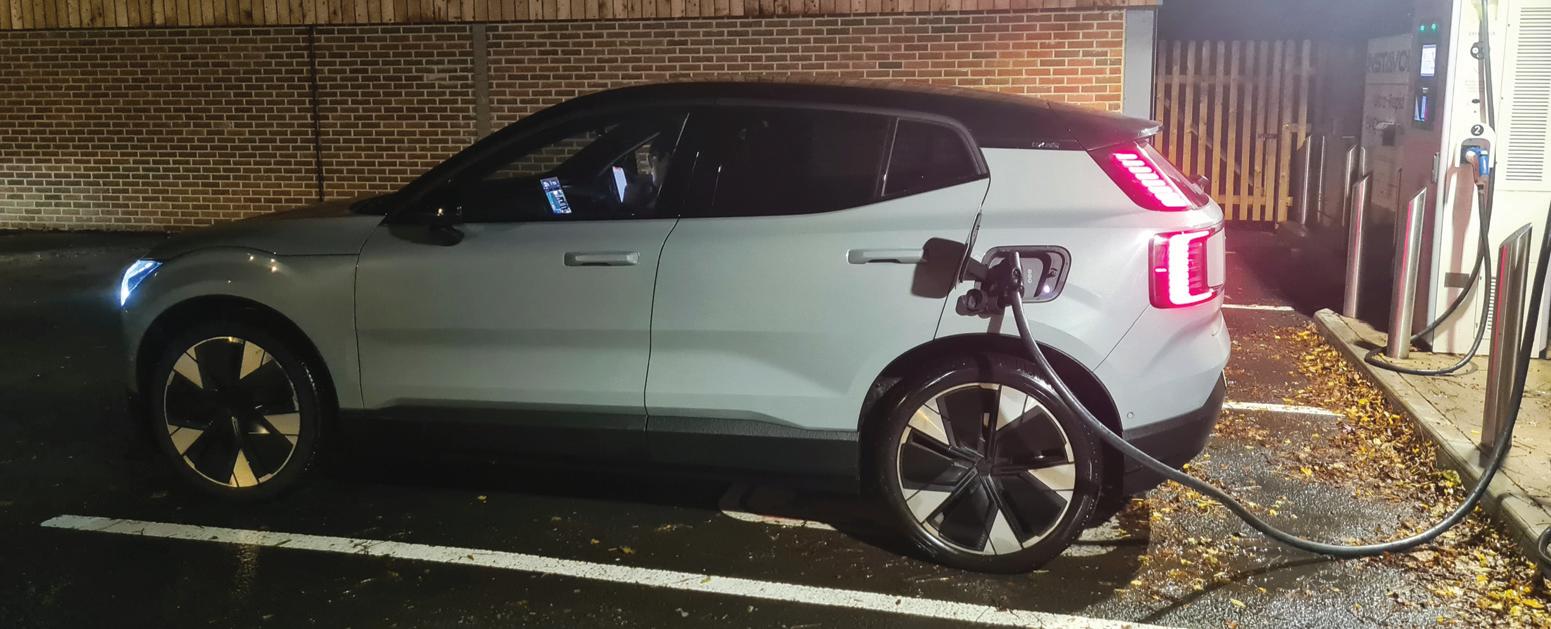
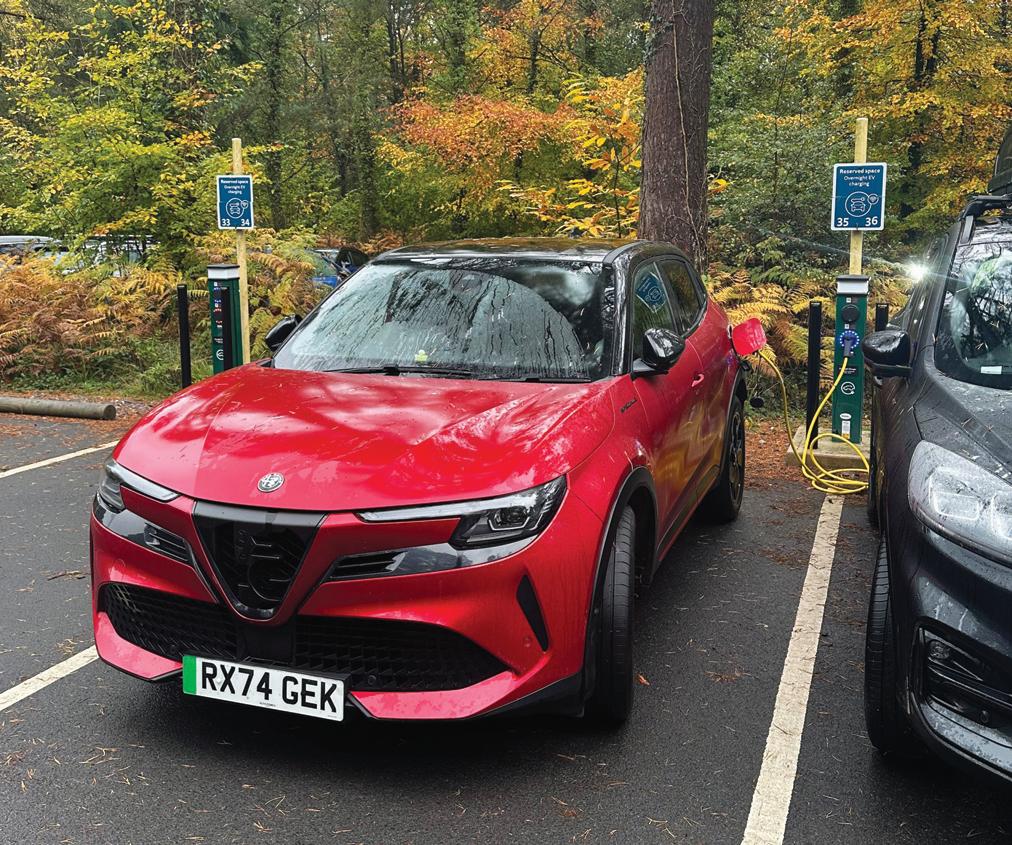
“The roads are awash with SUVs these days, but back in 2001, more than 86,000 Mondeos were sold in the UK”
The problem with predictions
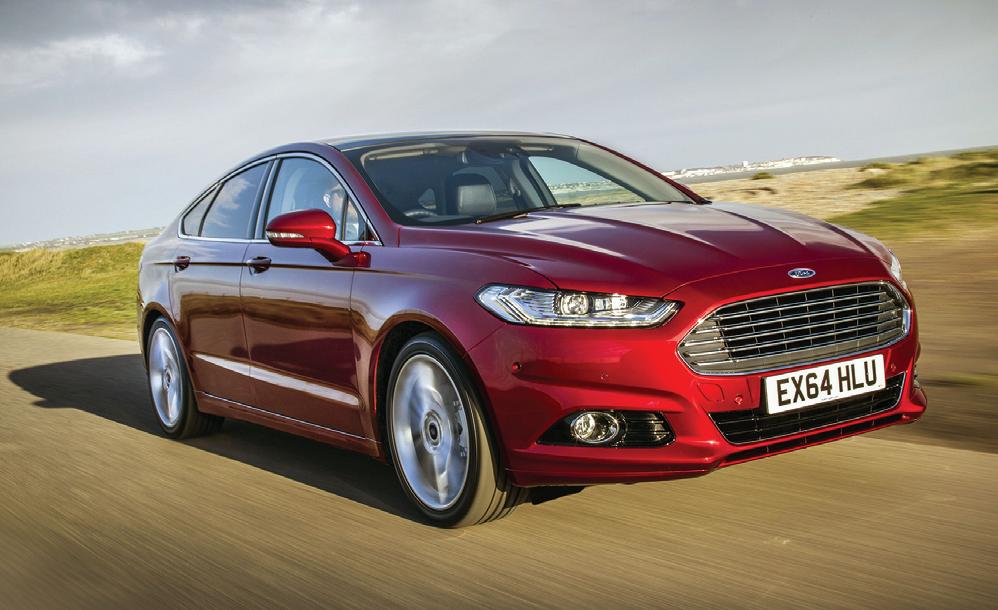
As I drove along the M25 last month, I was struck by a 2015MY Ford Mondeo in the rush-hour traffic. I’m not quite sure why it grabbed my attention – it’s not exactly a particularly rare spot, although today’s numbers of the once-adored ‘world car’ from Ford in operation are dwindling.
I think I was more struck by its decent condition – judging by the driver’s attire and the time of day, the Mondeo was clearly serving someone well as a daily driver and long may that continue. I might be biased, as a big fan of the Mondeo as well as many other Fords from that era, but the hint of recent nostalgia (if that’s even a thing) warmed my heart. The roads are awash with SUVs these days, but back in 2001, more than 86,000 Mondeos were sold in the UK. By 2014 (the era of the version I spotted), Ford predicted sales of no more than 20,000 a year – although way past the glory days, still a pretty decent return.
As I looked on, I also thought that the Mondeo is also a car that has stood the test of time, even if the numbers didn’t support the extension of its life in the UK. At the time of the axe falling on Mondeo, a company spokesperson said the reason for it being discontinued was “changing customer preference”, adding that Ford was “evolving our passenger vehicle range in Europe to meet changing customer needs as we move to an all-electric future”. It’s fair to say that transition hasn’t exactly gone to plan – in fact you could argue Ford is a good example of a legacy manufacturer that has found the EV landscape challenging. What’s more, the domination of SUVs means that saloons – with hatchbacks to a degree – are at risk of extinction, arguably too soon.
That is always the danger with going in a different direction and making knee-jerk reactions. Since the introduction of the new Renault 5, I’ve daydreamed about an electrified and reimagined Mk I Fiesta – and pondered just how popular that car would’ve been. But Ford pulled the plug on the whole model, so it’s very much – and very sadly – a case of “Look at what you could’ve won” (a nod to the recently reprised Bullseye – another staple of my younger days).
Change is often a risk and can turn out to be the wrong decision. But, we often don’t know that and then are left to rue our choices. In this, our future of fleet issue, there are industry experts much better equipped than me to predict what 2026 might bring. Clearly no-one can see into the future to guarantee what might happen, but my top three (vague) tips would be greater choice and demand for EVs, challenges over the infrastructure and an ongoing need for fleet efficiency, at every turn. Enjoy the issue!
And thank you...
... to all the fleet operators who took part in our EV Survey 2025, helping us inform the industry of the direction of EVs in fleet. Turn to page 35 to get the lowdown from your peers.
SCAN HERE TO SEE THE LATEST ISSUES ONLINE SUBSCRIBE NOW!
FLEET15
Sarah Tottle head of fleet, Polestar
What is your ambition in your current job role?
I want Polestar to be the premium and sustainable brand of choice for fleets. We need to be really transparent with our customers and understand them, their processes and their requirements.
What job did you want to do when you were growing up?
I wanted to be a vet and actually worked in my local veterinary surgery from the age of 13.
The best takeaway food?
A tough choice between fish and chips and Chinese, but I’d have to go with Chinese.
What’s the proudest moment in your career?
Becoming head of fleet because it really brought together all my experience and knowledge over 30 years.
What’s your favourite film and why?
The Wizard of Oz. It’s bright, full of energy and I can’t think of another film where so many characters stand out.
If money was no object, what’s the first thing you would buy?
I would financially support the man who runs the charity in Serbia where my rescue dog came from.
Name three cars in your dream garage?
Aston Martin DB 7, Polestar 5 and the Saint’s Volvo P1800 S with ‘my’ number plate: ST 1.
What are the biggest challenges facing fleets at the moment?
It’s a minefield for fleets right now. There’s so much choice across brands, products and fuel types, but against a backdrop of confusing government policy and a transition to EV.
You’re on your dream holiday. Where are you?
In a water bungalow on Bora Bora, with zero contact with the outside world.
Night in or night out?
A bit of both. Getting together with friends to either cook or get a takeaway and then maybe head out afterwards.
Supermarket of choice?
My partner works for Lidl, so I don’t have an option.
What car do you currently drive?
Polestar 4.
Tea, coffee or other?
Decaf tea, milk, no sugar.
Books, mags or podcasts? Magazines, especially House and Garden.
Who is your idol in life and work?
My maternal grandmother who was an Avon lady for over 50 years and who taught me so much about treating customers.
Make room for
YOUR BIG IDEAS.
THE
MINI ACEMAN.
Highway robbery?
From
the new EV road tax to fuel duty ‘staged hikes’ and luxury car tax revisions, the Autumn Budget had some big announcements. By
In one of the most-anticipated fiscal statements of all-time, Chancellor Rachel Reeves has announced a series of tax changes to fill a black hole in public budgets. A pre-Budget leak by the Office for Budget Responsibility (OBR) may have dominated headlines overall but, for those expecting some big changes for fleets, Reeves did not disappointment.
Most prominent was the widely trailed announcement of a new EV-pay per mile tax. Dubbed Electric Vehicle Excise Duty (eVED) the mileage-based charge on electric and plug-in hybrid cars will be implemented from April 2028 to help counter declining fuel duty revenue as drivers switch to EVs. The EV charge will be set at 3p per mile for battery electric cars and 1.5p for plug-in hybrid (PHEVs) cars in 2028/9, with the rate per mile increasing annually with CPI.
The revenue generated from eVED will support investment in maintaining and improving the condition of roads across the country. The charge will be levied in addition to the current vehicle excise duty (VED) charges paid by all vehicles; as of 1 April 2025, electric vehicles are liable for VED and the Expensive Car Supplement. A consultation is open on the plans and will run until 11:59pm on 18 March 2026.
“What is needed now is a conversation across the fleet sector about what we want from such a scheme in terms of its timetable and implementation – a dialogue where we expect the AFP to take a central role,” said Paul Hollick, chair of the Association of Fleet Professionals (AFP). “Initially, our main concern is that it shouldn’t arrive in a form that could hamper electrification
Natalie Middleton
or cause any hesitation among potential business and private EV buyers.”
But Toby Poston, chief executive of the BVRLA, said the plans were “poorly timed and very problematic to implement”. “In its current form, this retrospective tax will punish existing EV users and provide yet another deterrent to those considering the move,” he added.
Regarding the Expensive Car Supplement, Reeves announced that the threshold for the so-called luxury car tax will go up from £40,000 to £50,000 for zero-emission cars. The change will take effect from 1 April 2026 and will apply to ZEVs registered from 1 April 2025 onwards. The move follows lobbying from the automotive and fleet sector. Analysis published by Alphabet GB this year showed the number of EVs accessible to consumers for under £40,000 is severely limited.
The Government has also conceded, at least temporarily, to calls not to change employee car ownership schemes (ECOS). Such schemes were due to come into scope of company car Benefit-inKind rules from April 2026, but the
Treasury confirmed that the implementation has been delayed to April 2030, with transitional arrangements until April 2031. There was also good news for EV salary sacrifice with confirmation that cars are not affected by the National Insurance changes in the Budget.
Big changes were also announced for fuel duty, as the Chancellor confirmed that current rates will remain frozen until next September, when the current 5p-a-litre discount will then be reversed through a staggered approach. From April 2027, fuel duty rates will be uprated annually by RPI.
Reeves also confirmed the introduction of the long-awaited Fuel Finder scheme from early 2026. This will mean that petrol stations will need to report their prices allowing customers to find the cheapest fuel wherever they are. According to the Chancellor, it will save the average driver £40 a year.
There’s changes in store too for plugin hybrids too with confirmation of a tax easement. The European Union’s new Euro 6e-Bis regulation could see the official carbon dioxide emissions of PHEVs hike up significantly, eroding their Benefit-in-Kind benefits for fleet drivers. But the Government has said it will introduce a temporary tax easement in the BiK system to prevent their tax charge increasing significantly due to the new emissions standards. This easement will be in place until 5 April 2028.
“The revenue generated from eVED will support investment in maintaining and improving the condition of roads across the country”
D o n' t ju s t manag e your f l ee t. El ec tri fy it. The world’s leading choice for telematics.
The future of fleet management is electric, and it's powered by Geotab. Our newly enhanced Sustainability
Center puts you in control of your fleet's environmental impact like never before.
Transition to EVs with ease
Cut fuel costs and emissions
Meet your sustainability targets
Access everything in one place
Ready to lead the charge? Request a demo
What
is
it? Electric city car
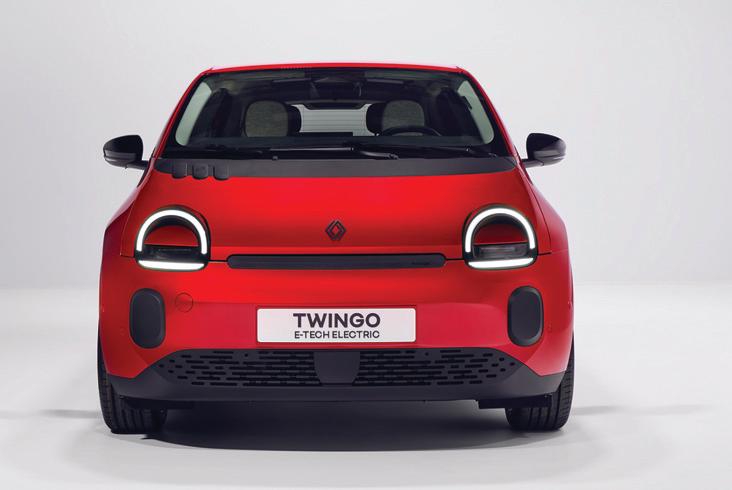
INCOMING RENAULT TWINGO
When is it available? 2027
Biggest changes? Reintroduction of a popular model Fleet appeal? Electric powertrain; distinctive looks
A big move for a small car
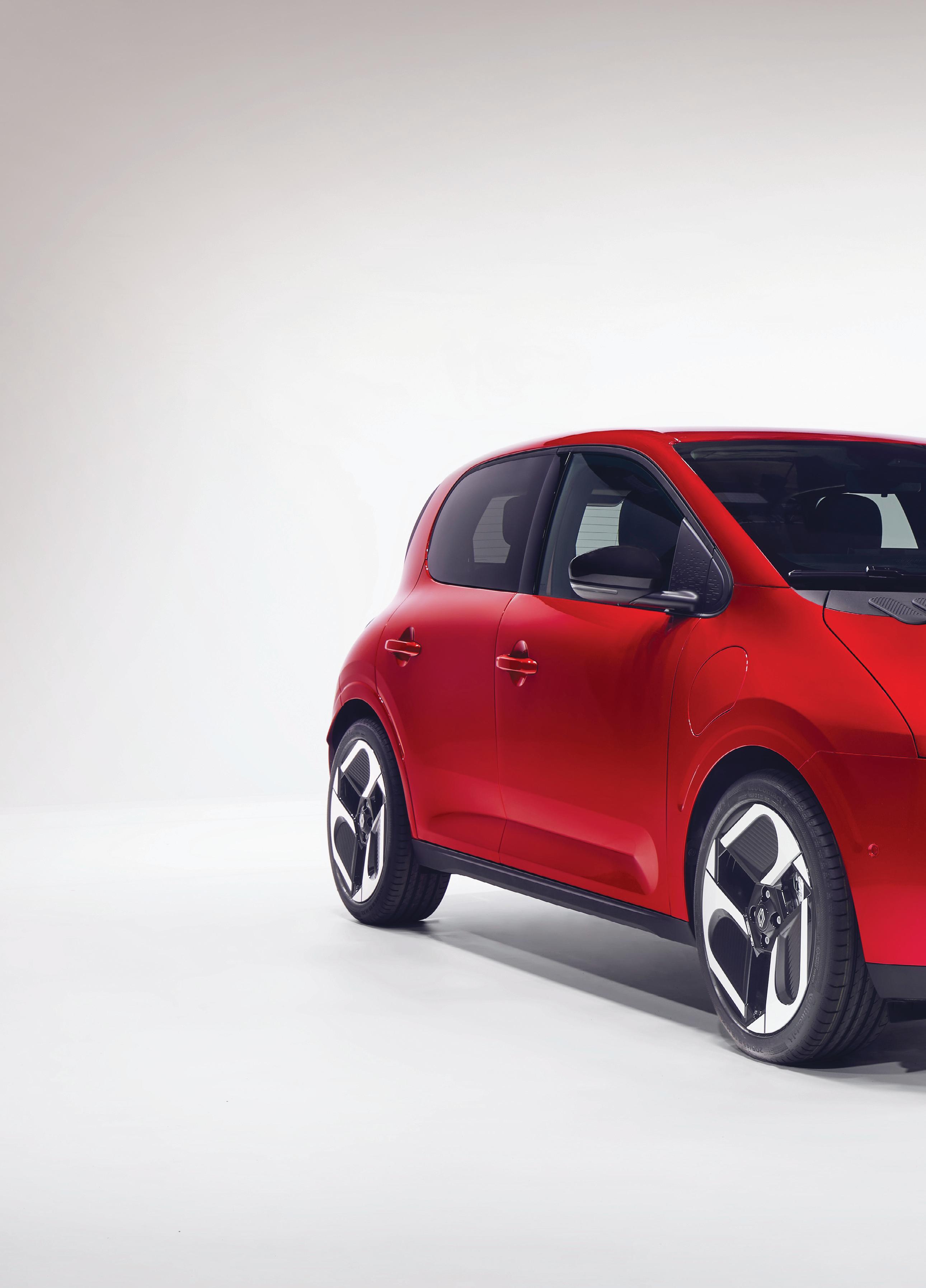
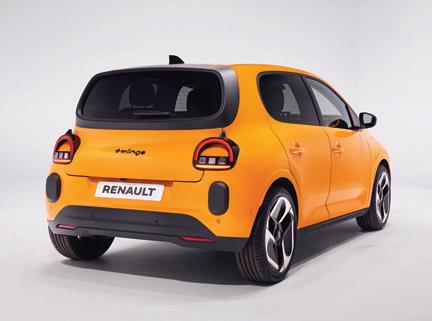
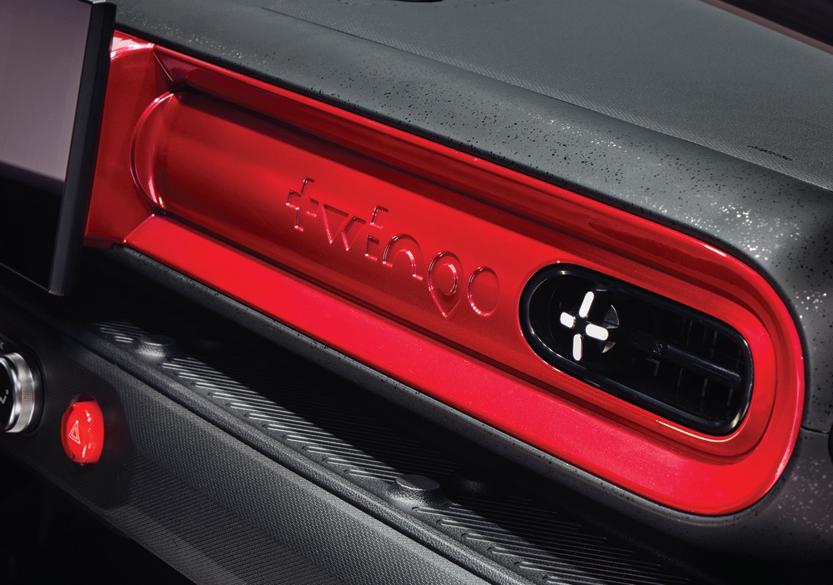
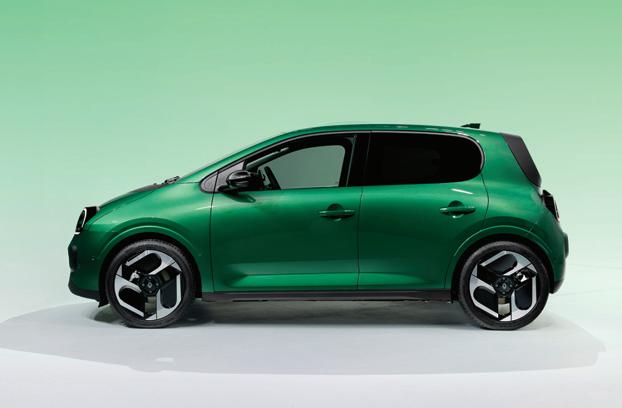
The A-segment might only represent a tiny portion of the automotive market, but there are a growing number of options to whet the appetite of drivers. Taking a step down in size from the popular Renault 5, the Twingo’s compact proportions – 3,789mm-long and 1,720mm-wide – will appeal to urbanites and those looking to get on the EV ladder.
Renault’s rechargeable revolution
With the Twingo, Renault says it hopes to help “make electric cars easier to drive and encourage more people to make the switch”. As well as city-friendly dimensions, the LFP (Lithium Iron Phosphate) battery is small (27.5kWh useable), but provides up to 163 miles (WLTP), with the motor’s 82hp ample for those surroundings. A one-pedal function helps make light work of traffic, too.
Inside lines
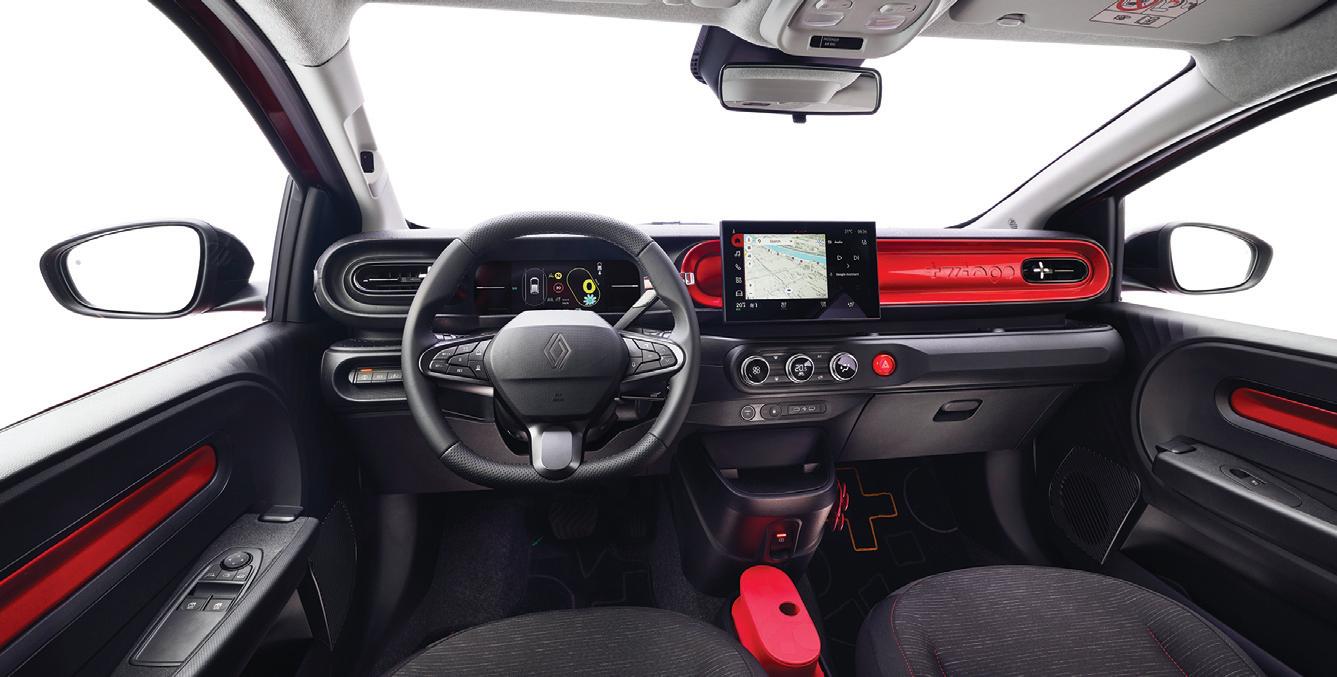
A dual horizontal screen setup awaits Twingo drivers, with the 7- inch driver’s digital instrument panel being joined by a 10-inch central display. Around these screens are generous splashes of colour – including new hues, such as Absolute Red, Absolute Green, and Mango Yellow – on the dashboard and the doors. There will also be a range of coloured accessories to make the interior even brighter, adding to the overall sense of fun and positivity!
Back to the future
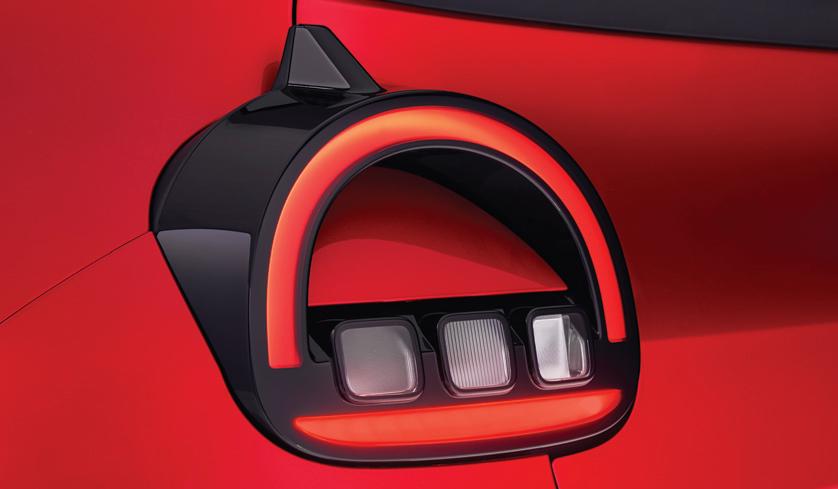
Elements of the original 1992 Twingo have not been forgotten, in what the French manufacturer is calling a “modern reboot”. One quick glance at the car confirms that it largely stays true to its roots, but this time around there are three main objectives: to make e-mobility more affordable; reducing vehicle development time and maintain a competitive European production base.
VERDICT
Renault is on a roll at the moment, largely driven by the arrival of the 5 E-Tech, but also the 4. As the latest hit of ‘nostalgia with a modern spin’ the new Twingo looks set to continue the run of impressive and desirable models from the French brand. Priced from under £20,000 – and with an impressive list of standard kit –there could be a big waiting list for the small car.
AT LARGE
Alex Grant
Our editor at large has discovered that the latest rules and regulations introduced in Wales aren’t quite as straightforward as S-U-V
In case you missed the headlines, my hometown recently made a UK-first stand against the inexorable rise of the SUV. Within three years, Cardiff Council will penalise residents south of the A48 if they park their oversized vehicles on the street –and many commentators have suggested that it could set a precedent. Is the tide about to turn on crossovers?
Most mainstream news outlets opted for attention-grabbing photos of luxurious behemoths or the most popular soft roaders, but the reality isn’t quite so black and white. The cut-off for an inflated residents’ parking permit is a 2.4-tonne gross weight, rather than being decided by bodystyle – a BMW 330e Touring (at 2,420kg) would be penalised, for example, whereas the smaller X1 xDrive20d diesel wouldn’t.
However, Cardiff Council did go as far as singling out SUVs’ 60% share of the new car market, alleging that they are “more polluting, more expensive and more dangerous to other road users” compared to “a regular car”. It isn’t the first time I’ve seen this argument crop up, and I think it lacks nuance.
Like most UK cities, the Welsh capital is not gridlocked with Range Rovers. The majority of that 60% market share is made up of compact crossovers (think Nissan Juke and Qashqai) and that’s illustrated by the SMMT’s year-to-date best-seller list. Eight of the country’s 10 most popular cars are SUVs, seven of them fit into those two segments – and the Ford Puma is at the top of the charts. Within that line-up, the only models over the 2.4-tonne gross weight threshold are plug-in hybrids. How ironic. It’s also short-sighted to portray SUV customers as a homologous group, so blinded by their love of ruggedised styling that they’re unwilling to consider cheaper alternatives. From personal experience, practicality is equally important. It isn’t so long ago that a Fiesta owner needing more space would have traded up to a Focus or B-Max – and both of those were less efficient (i.e. more polluting), more expensive and bulkier in a crash than the car they replaced. And, like the Puma, I’d argue that neither of them is equivalent to the Fiesta. A weight threshold also can’t differenti-
“The last Fiesta was a smartphone shorter end-to-end than the first Focus, while only a matchbox separates the latest Focus from the Sierras I grew up with”
ate between those who need a big car, and those who want one. Should the family of six with a Volkswagen Tayron SUV pay more to take up almost the same amount of parking space as their single neighbour in a BMW 4 Series Coupé, for example? Nor does it solve the issue of Cardiff’s suburbdwellers who can take their drivewayparked SUVs, with all the associated environmental and safety issues, right into the city centre without being penalised. However, I agree with the principle. Modern cars are too big for our aged road infrastructure and perhaps it is time for policymakers to push back on that trend. But this isn’t an SUV issue, per se. The last Fiesta was a smartphone shorter end to end than the first Focus, while only a matchbox separates the latest Focus from the Sierras I grew up with. You can see it in crowded old car parks, as drivers squeeze out of tightly paced spaces.
Ironically, I’m discovering this in an SUV, in Cardiff. At the time of writing, there’s a latest-generation Vauxhall Mokka on the driveway and it’s been a delight to live with – big enough for family-hauling, small enough for tight school run parking spaces, comfortable enough for long distances –and so it ought to be, given that it’s the same size as a 1990s Astra. It’ll take some aggressive (and, I think, misguided) policy changes to overcome the plus points driving the SUV’s still-inexorable rise.
Paul Hollick chair, Association of Fleet Professionals
ALWAYS ON YOUR MIND industry insight
A closer look at the current subjects on the fleet agenda
As part of September’s Expo event, the Association of Fleet Professionals (AFP) organised a series of round table events for members, which consistently see strong attendance and active participation.
A key factor behind the success of these discussions is that fleet managers are consulted about preferred topics and, while it is not possible to cover every suggestion, their proposals provide a fascinating snapshot of what is on fleet agendas right now. So, what are we seeing as we look ahead to 2026? In no particular order, these are five subjects that were among most requested.
1
/ Electric van feasibility
Sales of electric light commercial vehicles are growing, but remain slow. The core issues behind this sluggishness are simple –compared to their diesel equivalents, electric vans tend to suffer more operational downtime along with a range of charging and cost issues. Despite these concerns, many fleet managers are continuing to push ahead with adoption – partially for corporate environmental reasons and partially because of the ZEV mandate.
2 / Shared charging access
The AFP believes there is huge potential for shared charging – where fleets provide access to their depot and office chargers to others. It promises not just to exponentially increase the number of chargers available to operators but also to substantially reduce the cost of on-the-road power. In May, we signed a deal with technology start-up Evata to provide the digital infrastructure that will deliver on this vision and are onboarding members and others who would like to take part. There is significant interest in this initiative and it is very much a current topic of discussion for fleets, who stand not just to gain access to charging but income, too.
3
/ Simplifying fleet administration
When fleets talk about administration right now, they tend to be referring to parking and speeding tickets. A previous Fleet World article discussed how this issue is becoming more and more troublesome, especially rising numbers of private parking fines. Processing them is escalating into a bigger and bigger issue and there is much dialogue between fleets about creating the best procedures for payment as well as the most effective methods of challenging unfair
fines. The Government is currently holding a consultation on this subject and the hope is that we will see a new and improved industry code of practice soon. Depending on where they operate, fleets are also experiencing issues with the Dartford and Blackwell tolls, as well as Low Emission Zones.
4 / Potential for AI in fleet management
The fleet sector, of course, already makes widespread use of technology and has, in recent years, undergone an extensive process of digitalisation. But, so far, there has been little sign of AI making a deep impact. Some manufacturers of products such as fleet software are using it to introduce new features but any gains so far have tended to be incremental rather than radical. Our view is that discussions about the potential for AI in fleet tend to flip between relatively prosaic improvements and far future blue sky thinking, with less attention paid to ideas in the middle ground that could provide major advances. It’s certainly an area that has huge potential.
5 / Latest news in fleet taxation
When we survey AFP members about why they join the organisation, having access to the latest news and thinking about legislation and taxation is always high on the list. Current developments being discussed include revised emissions measurements for plug-in hybrids, changes in the road fund licence for electric vehicles, rulings covering Benefit-inKind taxation for double cab pickups, the new split-level advisory electric rates, salary sacrifice considerations and more.
“The AFP believes there is huge potential for shared charging –where fleets provide access to their depot and office chargers to others”
GET THE RIGHT FLEET MIX FOR 2026
Fleets are showing the way to successfully transition to electric vehicles as the ICE ban approaches. However, there are other pressing challenges for businesses around controlling costs, improving efficiencies and navigating the pros and cons of AI as we look to 2026 and beyond.
Thankfully, help is at hand from a Fleet World panel of experts covering all aspects of the industry. Their insight could prove invaluable over the next 12 months – a time when one of the only certainties could be uncertainty.
Read on to find out what the future might hold…
ABEYOND COMPLIANCE:
FORGING A PROACTIVE SAFETY CULTURE FOR 2026
s 2025 draws to a close, it’s clear the year has been a pivotal moment for fleet safety. For managers and drivers alike, the landscape has been reshaped by mounting regulatory pressure, rising operational costs and an urgent focus on driver welfare. The wave of new rules, from London’s HGV Progressive Safe System, to mandatory enhanced tachographs and stricter HSE guidance, are more than a series of compliance hurdles. They represent a fundamental shift in responsibility, demanding a safety strategy that is proactive, not reactive.
For too long, fleet safety has relied on looking in the rearview mirror, analysing incidents after they occur. This approach is no longer sufficient. The data is stark: a recent Geotab survey revealed that 46% of UK commercial drivers have considered leaving the profession, citing stress and safety concerns. To protect our most valuable asset – our people – we must move beyond simple compliance and foster a supportive, preventative safety culture. The future lies in empowering drivers in real-time, turning every moment behind the wheel into a coaching opportunity.
The practical application is two-fold. First, for the driver, the technology acts as a real-time partner. Solutions such as Geotab’s GO Focus Plus AI dashcam use AI to detect specific risky behaviours, such as tailgating or mobile phone use. Instead of that data being used punitively later, the system delivers an immediate, neutral in-cab voice prompt. This
Technology must evolve from a passive recorder to an active co-pilot.
“For too long, fleet safety has relied on looking in the rearview mirror, analysing incidents after they occur”
empowers the driver to self-correct instantly, turning a potential offence into a micro-learning opportunity. In fact, another Geotab survey revealed that 91% of UK drivers would prefer instant audio coaching to inward-facing video being stored for later review. Secondly, for the fleet manager, the technology transforms their role from enforcer to coach. The AIpowered video intelligence platform automatically surfaces the most critical patterns and repeat behaviours, eliminating the need to manually search through hours of footage. This allows managers to have targeted, supportive conversations backed by contextual data, focusing on fostering improvement. The holistic approach is proven to build a stronger safety culture, with pilot results showing that this method of instant feedback can slash tailgating by 90% and phone use by 95%.
We see a clear path forward. Looking ahead to 2026, the goal isn’t just to meet new regulations, but to exceed them by building a resilient safety culture from the driver’s seat out. By uniting advanced data analytics with intelligent, real-time support, we can create safer roads, retain our best talent and build stronger, more sustainable operations for the years to come.
Oliver Holt I sales manager, UK and Ireland I Geotab
AI & AUTOMATION
HARNESSING AI AS A SUPPORT MECHANISM IN FLEET
The fleet rental landscape is forever evolving, and artificial intelligence (AI) is very quickly outgrowing its buzzword status and becoming a pivotal part of business across the industry. The key in using AI as a business advantage is designing a system that applies it as a supporting mechanism for the teams orchestrating the operations, not deploying it to usurp those roles. Tech works best when used in harmony with human intelligence.
The benefit of AI in fleet lies in its ability to look beyond the vehicle. At Nexus, we have adopted an AI-powered allocation system (provided by a third-party company called Peak) and linked with our Iris platform, which draws on the 25 years of historical booking and operational data we have access to. This alone has allowed us to optimise which bookings go where, and when. The system, in partnership with Peak, predicts which supplier would be best suited to fulfil the reservation in a timely and cost-effective manner. This has led to bookings being confirmed 30% faster and increased our rates of fulfilment.
The innovation and benefits behind AI are an ever-evolving piece of work. We are planning to expand the use of AI into case management. The AI system can automatically categorise and route incoming support requests based on their content. For example, it can distinguish between topics such as billing, damage claims or contract extensions, ensuring the case goes directly to the right department or agent. It also can analyse the tone of a message to detect urgency, helping the frontline teams to resolve critical issues faster. This in turn will help to free up the time of the team to handle more strategic cases and focus on customer satisfaction management and improvements.
Beyond the general use of AI, we focus largely on ensuring we use the technology in a sustainable way. Transport is the UK’s largest emitting sector, so by using AI to allocate vehicles, we can incorporate distance, supplier efficiency and vehicle sustainability criteria. Linking this up with the vast amount of data modern fleets generate, AI will allow fleet operators to take a more scientific
approach to optimisation, demand prediction and improving vehicle utilisation, even creating a tailored customer experience. It can help the industry move from reactive decision-making to proactive, evidence-based operations with sustainability at the core.
As we embrace smarter systems, we must also commit to ethical AI. Efficiency gains should not come at hidden environmental costs. It’s vital that as we reduce emissions on the road, we don’t shift the problem into energy-hungry data centres. Responsible AI requires transparency around data use, carbon impact and efforts to balance innovation with sustainability.
AI will not replace people. It removes repetitive tasks so teams can focus on strategic work where human expertise and judgement remain essential, especially in complex logistics, customer care and ethical decision-making. The future of fleet management isn’t about automation for its own sake; it’s about using AI to turn data into decisions, and decisions into better customer experiences.
From predictive AI to real-time 昀eet optimisation, Nexus is investing in smarter tools and the people who use them to build the future of 昀eet management.
Peter Ennis I chief technology officer I Nexus Rental
CHARGING
FUTURE OF FLEET ELECTRIFICATION:
THE IMPORTANCE OF AFFORDABLE CHARGING
Fleet operators across the UK are accelerating plans to transition company car fleets to electric vehicles as part of broader net-zero strategies. Yet, one major hurdle threatens to slow this transition: the high cost of public EV charging. According to the RAC, charging an EV on the public network is roughly 40% more expensive per mile than running a petrol car, and three times as costly as charging at home.
This price disparity erodes the fuel cost advantage of EVs and is especially punitive for drivers without access to cheap home charging. In fact, over nine million UK households lack off-street parking (and thus home charging), forcing them to rely on public chargers where energy can cost more than petrol or diesel, particularly at rapid charging stations.
This dynamic creates what many describe as an unfair ‘two-tier’ system in which EV adoption becomes a privilege of those with driveways or depot facilities, rather than a viable choice for all. High charging costs aren’t merely a frustration; they are actively slowing down the shift to electric, jeopardising the UK’s ability to hit its net zero transport goals.
The Charge Scheme: Cutting charging cost by 20-50%
Addressing this cost barrier head-on is The Charge Scheme, the UK’s first EV charging salary sacrifice solution.
Designed for company car fleets, this innovative scheme enables drivers to save 20-50% on all their EV charging costs by paying for electricity through gross salary deductions. In essence, it extends the well-known salary sacrifice model, which has already made EV leasing up to 50% cheaper for thousands of drivers, to cover day-to-day charging expenses.
Employees can now save on all personal charging costs through salary sacrifice,
“The fleets that succeed in this transition will be those that pair electrification with smart cost-management strategies”
making electric car charging cheaper for everyone, whether at home, the office, or in public. By routing charging payments through an HMRC-compliant salary sacrifice agreement, an EV driver’s charging spend is taken from their pretax income, instantly cutting the effective cost of every kilowatt by the employee’s income tax and National Insurance rate. This translates to hundreds of pounds saved per driver each year.
Affordable charging fuels the fleet future
Looking 5-10 years ahead, the UK fleet industry is poised for a transformation. By the early 2030s, electric cars will likely dominate new fleet acquisitions, driven by the 2030 ban on new petrol and diesel car sales and growing pressure to decarbonise corporate travel. The fleets that succeed in this transition will be those that pair electrification with smart cost-management strategies. Affordable charging will play a pivotal role in keeping electric fleets economically viable and scalable. We can expect to see more initiatives that mirror or build upon the salary sacrifice charging model, ensuring that no driver is left behind paying a premium for fuelling their EV. In practice, that means fleet decision-makers must not only procure electric cars, but also champion fair charging solutions.
Tom Eilon I founder and CPO at The Electric Car Scheme / creator of The Charge Scheme
DRIVERS
Technology isn’t just making fleets safer, more efficient and more sustainable. It’s now being seen as key to helping recruit the next generation of drivers who are attracted to a life on the road but with the tools, connectivity and career progression they expect from any modern workplace.
It’s one of the themes explored in a new series of blogs published by Samsara based on recent research and interviews with fleet leaders across the UK. Together, they paint a picture of an industry where digital transformation is not only improving safety and productivity but reshaping what it means to be a driver.
This is good news for any fleet struggling to recruit new employees. According to our survey of 1,000 young people aged 16-25, 62% said they have a positive view of driving-based careers, and 58% described them as an attractive option. If nothing else, it suggests that young people are interested in a driving-based career.
Gen Z are interested in driving for a living So if that interest is there, why is it still so
difficult to recruit the next generation of drivers? And why the continuing narrative of a driver shortage? The answer, in part – according to the fleet leaders who were interviewed for our research – lies in the perception of the industry. Too often, driving is still seen as old-fashioned and at odds with the digital, connected world younger workers have grown up in. Yet for those working in the industry, that image is fast becoming outdated.
From AI-enabled safety systems and digital workflows to in-cab video coaching, the job is evolving into something far more technical and data-driven than many realise. Increasingly, digital tools are embedded across the business – from vehicle checks and safety reporting to wellbeing forms and training workflows – all routed through the same connected platform. Does that sound like an industry stuck in the past?
That’s why it’s up to all of us to help get that message out there. We need to change perceptions and show that physical operations is a modern industry that can offer a great career regardless of
whether you stay behind the wheel or take a seat behind a desk.
Changing perceptions is key
We need to let people know that forward-thinking companies aren’t just using tech to make them safer or more efficient. They’re also using it to build a culture of recognition, support and continuous improvement, making drivers feel valued.
So, if I may, I’d like to replace my prediction for 2026 with an ambition. No, a request. I want the industry to continue to use technology not only to make fleets safer and more efficient, but to make driving itself a more attractive, modern and rewarding career.
I want the industry to keep showing that a career in driving or logistics means being part of a modern, connected, data-driven industry where driving is regarded as a highly skilled role that underpins the entire economy. If we can get that message out there, I am sure that we will be able to connect with the next fleet generation.
Ryan Yu I VP, product, EMEA I Samsara
MOBILITY
CHANGE THE FOCUS AND REDEFINE CONVENIENCE
Business mobility is about people travelling from A to B – and sometimes from B to C – efficiently, comfortably and in line with the travel policy. Any conversations about the future of fleet services, or about deployment of technology solutions, connected cars or new fuel types, need to include people as the most important criteria for future mobility planning.
It’s essential to match the policy and available transport options with technology and solutions that are closely aligned to individual needs and, ideally, enable some degree of personal or bespoke choice. Ensuring it delivers what ‘convenience’ means for the workforce is even better.
The many meanings of convenience
While our employee research puts convenience at the top of journey planning, priorities differ. For some employees, convenience is speed. For others, it’s an automated, tech-driven transaction. Some may require additional support, especially when there are a range of transport options and if they aren’t regular travellers.
Every solution must be based on where teams are located – and what employees actually want and need. Hybrid workers may need options close to home, non-car commuters may need mobility at the office, while regular international travellers may
“It’s essential to match the policy and available transport options with technology and solutions that are closely aligned to individual needs”
need a frictionless transaction that bypasses the airport rental counter.
Good first impressions are essential when it comes to identifying new and convenient mobility options. Plan how the programme introduction will court employee buy-in to the travel policy. Will suppliers partner with your business to hold launch days, answer questions and offer advice and guidance that helps the fleet manager to communicate the benefits?
Offering a connected, aligned service across multiple business travel partners – travel management company, rental company, leasing firm, micromobility suppliers – helps to keep costs down and encourages better driver satisfaction. Such a setup ensures that people choose the right, policy-compliant, most convenient vehicle every time.
Track behaviours to overarching business goals
Aligning driver behaviours to the travel policy and preferred transport options can be as effective as changing vehicle and fuel types when it comes to achieving overarching business goals, such as lowering emissions and increasing cost-efficiency.
Hardwiring travel policy entitlements in the day-to-day booking process makes it easier for employees to behave in compliance with business priorities when they need to go some-
where. Don’t assume everyone will know what is in the travel policy or where to find it when they need to make a trip.
It’s especially important to look after new hires and infrequent business travellers. It can be time-consuming and inefficient for an employee to call up their line manager every time they need permission to hire a car or buy a train ticket because they’re not clear on what they’re empowered to do.
Similarly, businesses can analyse the behaviours of their more regular travellers to spot ingrained habits that could benefit from change. What does the data say? Could the two members of the same team who make the same trip every month share a single car rather than renting two vehicles?
The benefits of focusing on traveller behaviour
If businesses focus on the person travelling and not just on the means of transport, they can build a programme that encourages smarter, more sustainable and efficient traveller behaviours while creating a great overall experience. Cost-effective and sustainable travel choices can also help attract and retain great employees if they are planned with convenience in mind. With the growing focus on talent, that’s a great reason to ensure future business travel starts with people.
Andy Bland I head of business rental, UK and Ireland I Enterprise Mobility
HOW HGV FLEETS CAN NAVIGATE ELECTRIFICATION CHALLENGES DECARBONISATION
Heavy goods vehicles (HGVs) account for up to 20% of the UK’s transport emissions, highlighting the urgent need for decarbonisation if the industry is to meet its net zero targets.
But decarbonisation through the process of electrification is not as straightforward as simply swapping diesel for electric. The transition requires a complete transformation of fleet operations – one that takes time, investment and strategic planning to successfully navigate the complexities of the energy transition.
Encouragingly, progress is already underway. The latest findings from the Electric Freightway Project – a Department for Transport and Innovate UK initiative led by Gridserve and Hitachi ZeroCarbon – show that many of the UK’s largest fleet operators are already moving at pace toward government targets, with more than half a million zero-emission miles driven on UK roads as part of the project.
This shows that with the right systems and infrastructure in place, fleet managers can turn this challenge into a strategic opportunity. Electric fleets are becoming central to the business of energy, and only through embracing the transition can organisations unlock new value, continue to innovate and future-proof their operations for a low-carbon economy.
Balancing the grid
Fleet electrification is transforming how operators interact with the grid. They become active participants in
energy and flexibility markets – and this requires them to determine the optimal times to charge vehicles at the lowest cost, whether by ‘fuelling’ during offpeak hours or adjusting charging in response to grid signals. This approach marks a shift toward smarter, more responsive energy use across the transport sector.
The future of electrification lies in dynamic, decentralised energy systems supported by integrated technologies. Smart charging and telematics enable businesses to monitor performance and adapt to real-time grid conditions. As more EV depots connect to this ecosystem, electricity demand is rising sharply, making grid balancing increasingly vital and reshaping energy consumption patterns as EV adoption accelerates.
Gaining complete insight
As fleet managers enter the business of energy through electrification, maximising return on investment, optimising energy use and protecting asset life will depend on a deep understanding of vehicle health and performance. Electrification presents an opportunity for fleets to undergo a digital transformation, with data analytics and realtime insights at the very centre of strategic decision-making.
Access to live performance data –such as battery health, charge levels and energy consumption patterns –enables fleet managers to make informed, proactive choices. They can ensure vehicles are charged and operational, optimise charging schedules based on routes and terrain and antici-
pate when batteries may face greater strain during deliveries.
Complete visibility over key assets –particularly EV batteries – allows managers to monitor state-of-charge, degradation and maintenance needs to extend battery life and preserve residual value. With advanced analytics, they can also link energy use per mile to driving behaviours, helping refine operations, reduce costs and build more efficient, sustainable fleets.
Gearing up for a successful fleet electrification
Fleet electrification is already redefining the logistics landscape, creating new opportunities for innovation while driving a fundamental shift in how fleets operate and interact with the energy system. As vehicles, depots and data become increasingly intertwined, the boundaries between transport and energy management continue to blur. Fleet managers, engineers and maintenance teams are adopting new mindsets – focused not just on vehicle performance, but also on optimising energy use, extending asset life and ensuring operational resilience.
To stay competitive and aligned with carbon reduction targets, fleet operators must now think beyond vehicle deployment to consider how their operations fit within the wider energy ecosystem. Those that harness data, embrace digital tools and invest in smart infrastructure will not only reduce costs and emissions but also unlock long-term strategic value in a rapidly evolving, low-carbon economy.
Mike Nugent I chief revenue officer I Hitachi ZeroCarbon
>>
SMARTER FLEET MANAGEMENT FOR 2026 FUEL CARDS
Today’s fleet operators have a lot on their plates – at the same time as dealing with mounting cost pressures and economic uncertainty, businesses are navigating technological change, shifting regulations and under decarbonisation pressures. To rise to the challenge, a fundamental shift is needed: from treating fuel as a fixed expense on a budget sheet to managing it as a strategic asset that drives efficiency.
The shifting landscape
Volatile fuel prices and tightening emissions standards are pushing fleets to explore the transition to cleaner energy. Over the next year, fleets will continue to rely heavily on diesel; however, the pace of change will accelerate once regulations and economics push the sector toward cleaner alternatives. During this transition period, operators will need to re-evaluate the fleet total cost of ownership (TCO). In addition to age-old factors such as vehicle purchase and maintenance costs, they will increasingly focus
“During this transition period, operators will need to re-evaluate the fleet TCO”
on charging infrastructure, refuelling times, cost per mile and route optimisation. Businesses that effectively manage these metrics will be better positioned to control costs and maintain competitiveness as the market transitions.
Data-driven fuel efficiency
Technology is becoming central to fleet management. Telematics, predictive analytics and AI are already influencing how fleets consume fuel. Real-time monitoring using telematics tools enables managers to track vehicle performance, driver behaviour, idling time and route efficiency, allowing them to fine-tune operations dynamically. This move towards ‘smart’ fleet management will continue as AI continues to be embedded into business operations. In 2026, we’ll see management dashboards evolve to combine telematics, fuel card data and EV charging information, creating a unified platform that gives fleet managers a more comprehensive view of fleet performance. This data will increasingly inform business decisions, enabling fleets to reduce overall fuel consumption, lower emissions and manage operating costs.
Sustainability and compliance
Sustainability will continue to evolve from a ‘nice-to-have’ to a core operational requirement. From the growth of Low Emission Zones and the ZEV mandate to
broader net zero targets under the Climate Change and Environment Acts, fleets are increasingly required to demonstrate compliance or incur additional costs. Accurate tracking and reporting of fuel data will be increasingly crucial for ESG (Environmental, Social and Governance) reporting. Strong sustainability metrics offer a competitive advantage to many businesses, helping them win contracts, access funding and enhance their brand reputation – especially as larger businesses come under pressure to report their energy use and downstream emissions under the SECR.
The road ahead
During 2026, diesel will remain dominant, but the def inition of ‘fuel efficiency’ will continue to evolve. The most successful operators will treat fuel management as a strategic discipline, harnessing data, training drivers and investing in new solutions that enhance operational efficiency and effectiveness. The fleets that thrive will be those that treat every litre of fuel and piece of telematics insight as a valuable data point in smarter, cleaner and more costeffective fleet management practice.
At The Fuel Store, we believe the future of fleet management lies in smarter decisions, cleaner operations and strategic fuel use. 2026 is the year to make that future a reality.
Jamie Bridgen I managing director I The Fuel Store
INSURANCE
HOW THE EV REVOLUTION COULD AFFECT COSTS AND PREMIUMS
The general UK insurance market is expected to grow in 2026 – and commercial motor insurance is expected to be a contributor. More businesses will mobilise, while increased uptake of electric vehicles – especially vans – will lead the way for growing fleet sizes and vehicle transitions.
Advances in technology and risk management are increasingly being used by fleet underwriters and in claims control – and this provides those fleet operators with good risk management controls an opportunity to benefit from improved premiums in 2026. There is both opportunity and challenge with the shift to EVs as newer fleets may be better managed, but that could come with increased risk/cost implications.
Claims inflation, parts and repair costs pressures remain and while the underlying premium increases seen in previous years may have eased, EVs cost more to repair, and parts and labour costs remain inflated.
The broader motor insurance market is facing worsening profitability. While the least optimistic projections are for ‘personal’ vehicles, many of the costs pressures will overflow into commercial vehicles and fleets. We are seeing some insurers being more selective about their fleet risks, with some carriers not inviting certain renewals or those with weaker profiles and poor risk management seeing premium increases or restricted covers.
Although the overall projection is that premium increases may be lower than in previous years – circa 4% – don’t be surprised if your insurer is a little more forensic in their risk analysis prerenewal and fleet operators should not
“The general outlook for 2026 will see those well-managed fleets with good risk controls having only modest premium increases”
be expecting sharp premium reductions or discounts.
Among emerging risks, EVs continue to bring new repair cost dynamics – and with them risk modelling uncertainties. Social changes, for example: the push for zero-emission vehicles and driver behaviour regulation, in addition to changes to legal costs, all impact on pricing models. And then there is the general market volatility brought about by economic pressures, inflation and supply chain issues, which may cause unexpected cost spikes for all.
So the general outlook for 2026 will see those well-managed fleets with good risk controls having only modest premium increases. The more you can demonstrate strong risk management, the more competitive the terms; however fleets with poor claims history, older vehicles or hazardous operations may well face increases and tougher terms.
While I’m sure, like me, you will not be shedding too many tears for fleet insurers where underwriting margins remain under pressure, there is little doubt that if these cost pressures continue and premiums don’t keep pace, profitability will be squeezed and fleet operators can expect more scrutiny from their insurers.
As I mentioned earlier, some insurers may look to restrict or withdraw capacity in more marginal or niche trades –and I recommend that those requiring bespoke cover plan well ahead of renewal, potentially using specialist brokers. Those with a high propensity to EVs will need to account for increased repair times, data-led risk management and telematics.
A final word of warning – I wrote at the start that the commercial motor insurance market is expected to grow in 2026, but, as a consequence, as the market grows, so do vehicle numbers and also claims!
In summary, my recommendations for all fleet operators in 2026 are:
• Invest in risk management and ensure that you provide evidence when negotiating terms
• Plan ahead with EVs, understand their implications and ensure your insurer has an understanding of these risks
• Engage with your insurer partners early; don’t wait until the 11th hour to negotiate terms, especially if your fleet is ‘non-standard’
• Request regular feedback, at least quarterly, from your insurance provider regarding claim patterns. If the fleet risk is improving, you may be able to negotiate better terms, but if deteriorating, expect tougher renewals
• Budget for cost inflation; ensure your total cost of fleet operations is optimised.
Peter Smits I managing director I Ashbourne Insurance
WEEK BEHIND THE WHEEL Porsche Macan Electric
If you’re a company car driver and a fan of Porsche, the Macan Electric could be the ultimate option for your daily transport. By John Challen
DAY 1
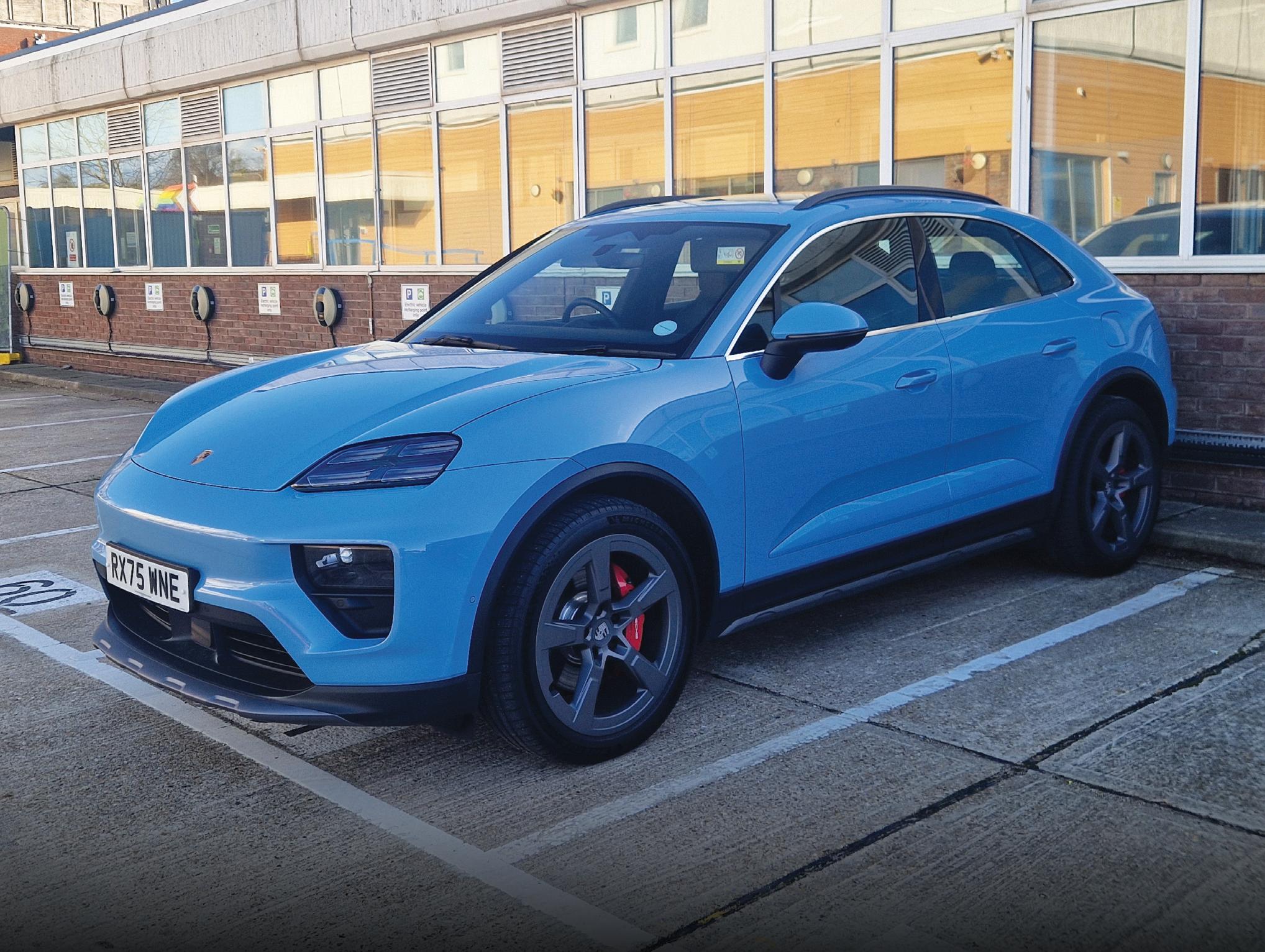
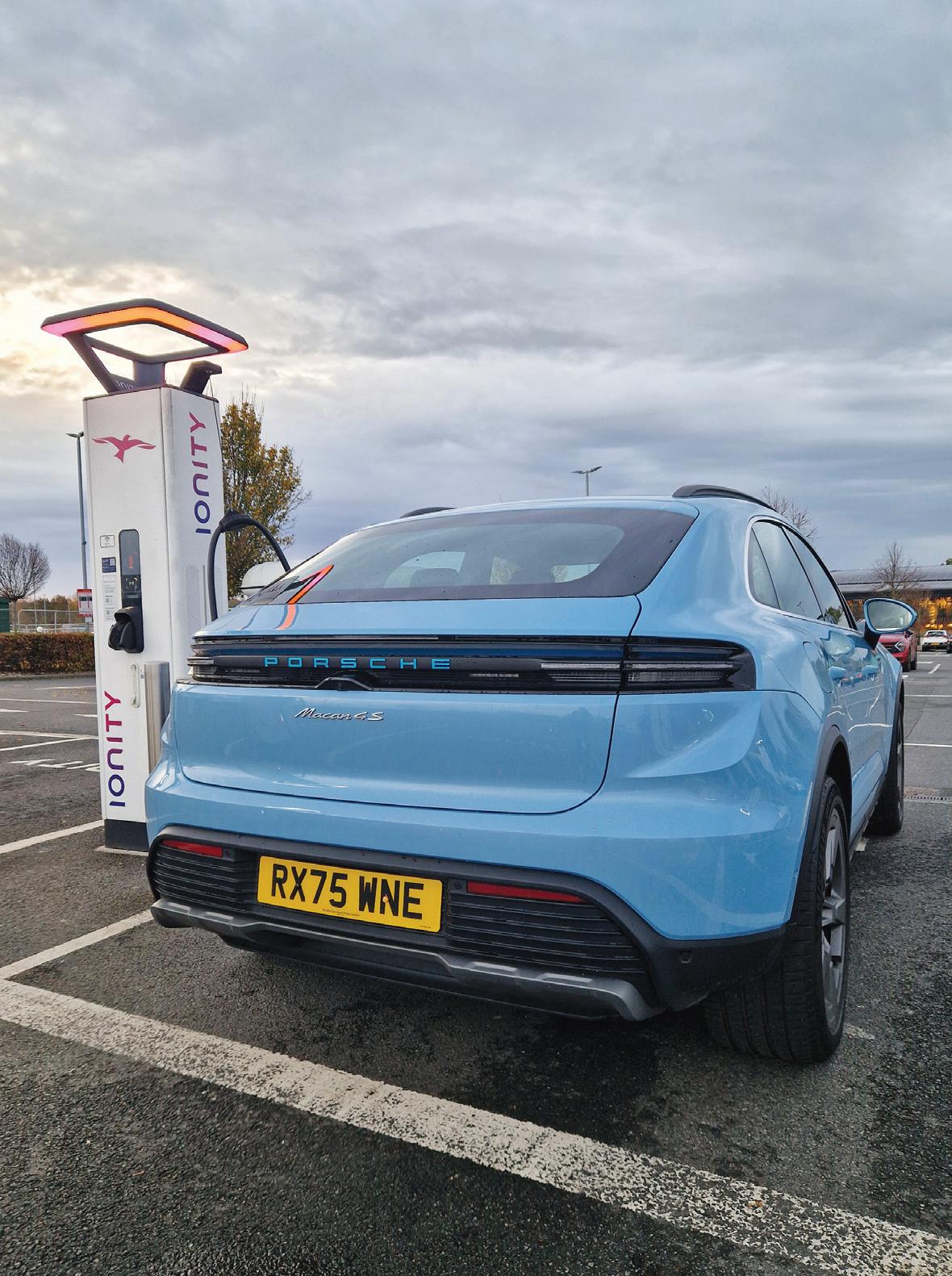
When Porsche moved away from sports cars and into the world of SUVs with the Cayenne, many people turned their noses up. But broadening the product portfolio turned out to be a shrewd move, which is probably why the smaller Macan is now the company’s biggest seller. With the latest version, Porsche has gone all-electric and, on first impressions of this 4S with 448hp and 820Nm, it’s another good decision. As well as the performance, the Frozen Blue paint job (a £1,185 option) helps it stand out.
DAY 2
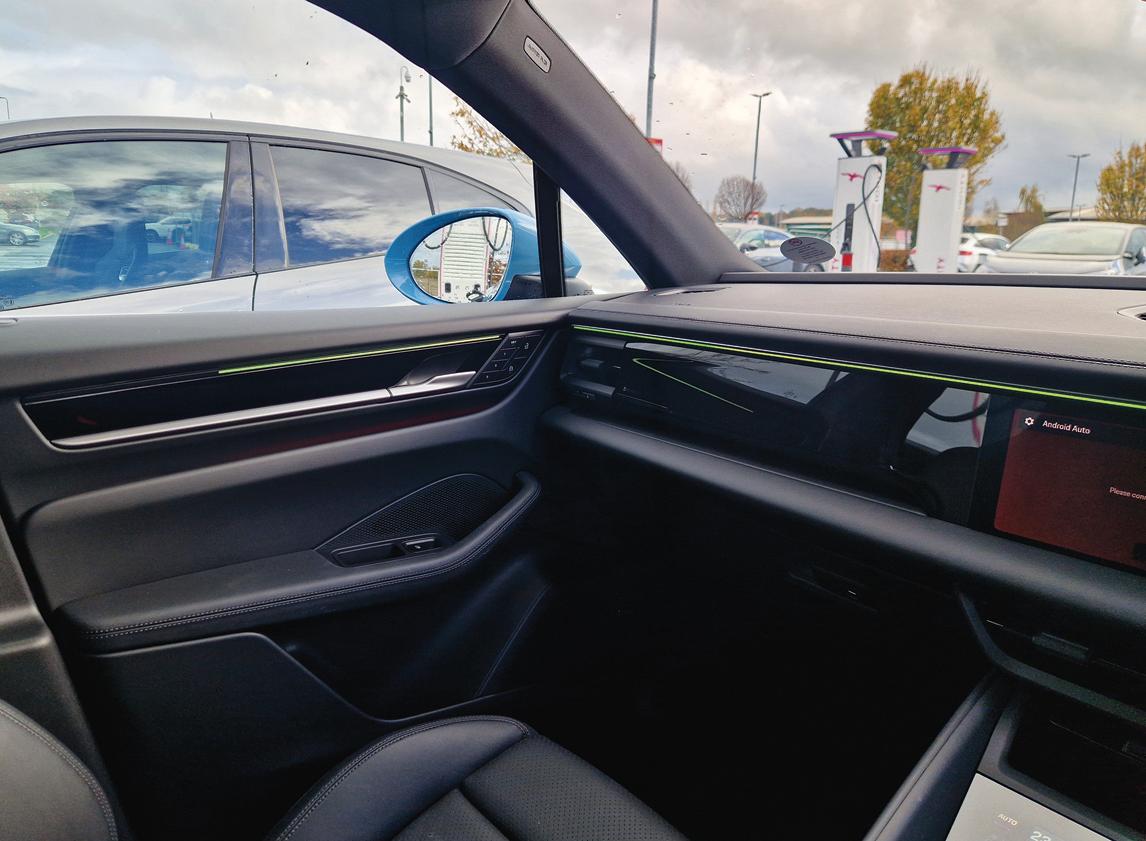
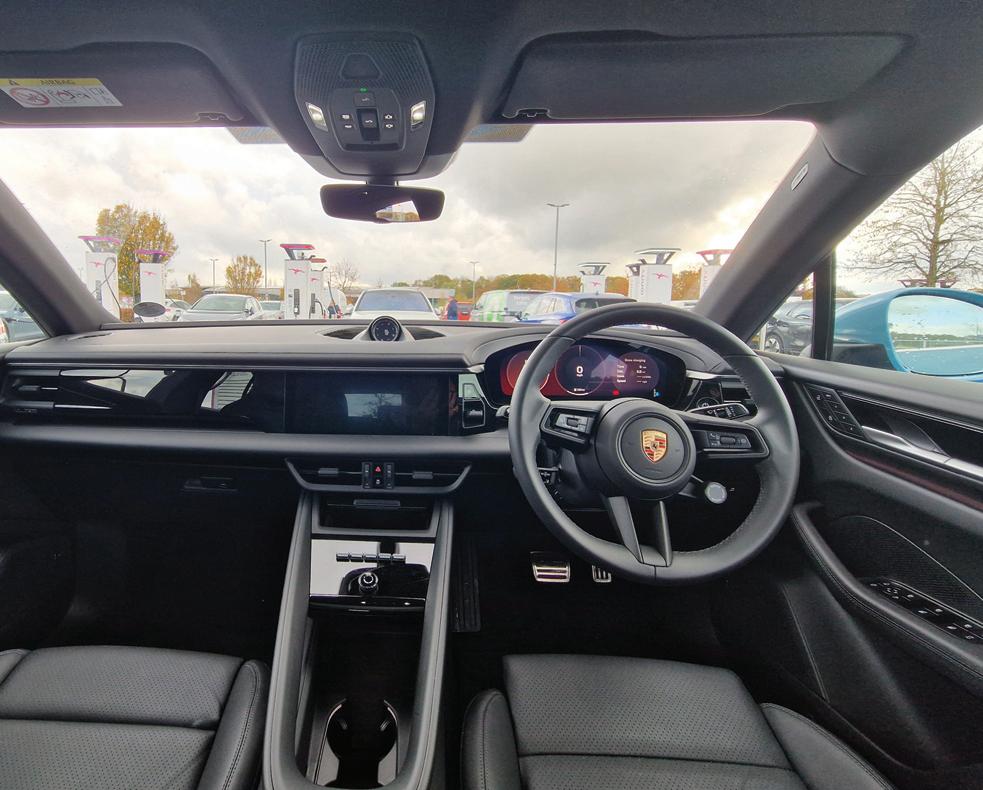
As you might expect, quality is the order of the day, inside and out. Settling into the 14-way electrically adjustable comfort seats, passengers are surrounded by leather interior, a collection of screens and plenty of storage spaces. Packaging-wise, there are some neat elements – such as the heated steering wheel button hidden at the rear of the base of the wheel and the external boot release button tucked away nicely. Our car came with a lot of options (totalling nearly £20k, for full disclosure), many of which definitely fall into the ‘nice to have’ as opposed to ‘essential’ category.
DAY 3
Despite it being an SUV, the Macan still ticks the ‘sporty’ and ‘dynamic’ boxes – to a greater degree than the vast majority of similarly shaped models on the market. That shouldn’t come as a surprise, given the German manufacturer’s pedigree, but the ride and handling setup is a joy. A comfortable ride – achieved in large part to Porsche’s active suspension system – is combined with sharp and direct steering to bring a smile to your face on many occasions.
DAY 4
I’m a regular user of wireless phone charging, but there is the odd occasion where I need, or prefer, a cabled connection to keep the mobile alive. Using the USB-C ports in the Macan led me to discover one of the few negatives about the car, because the location of the dual ports – stashed away at the back of the centre console – are not the easiest to reach. I get that they are, to a point, out of sight and out of mind to keep with the aesthetics, but it was still more difficult than it should be to plug in.
DAY 6
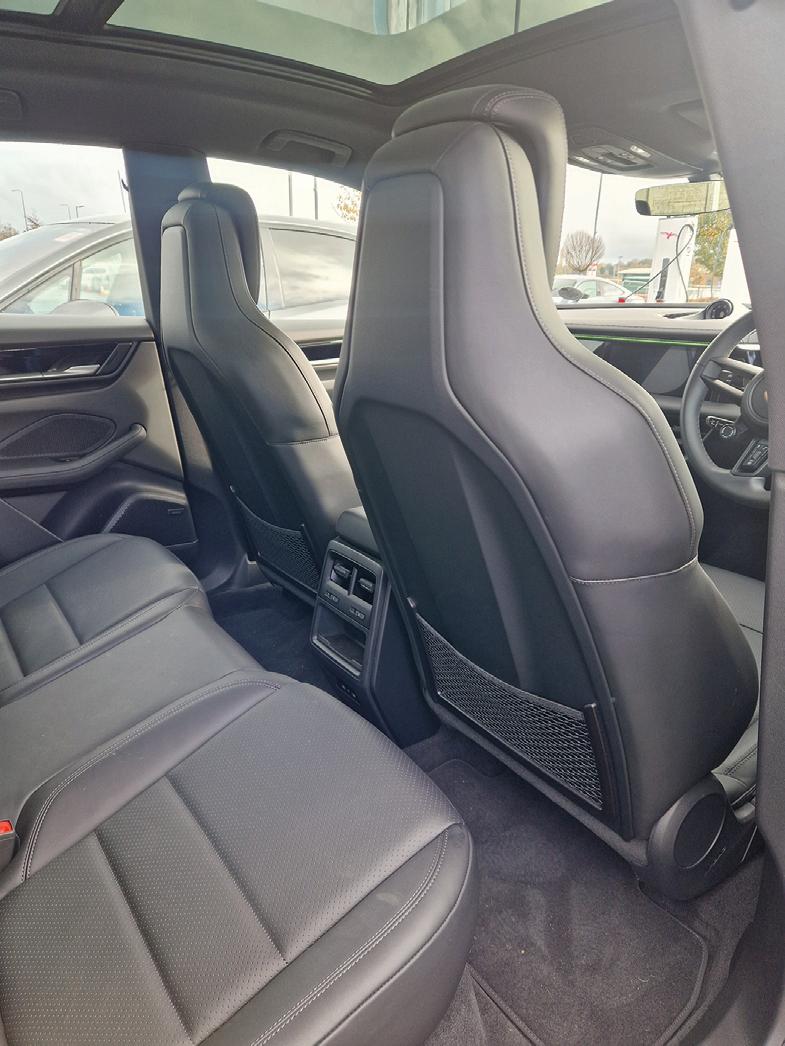
Of course, getting from A to B isn’t just about the driver and front passenger. An SUV – regardless of what badge is on the front – has to seat at least four people in comfort. While there might be more space in front and above of you in some other models, the rear of the Macan is by no means cramped. The level of relative luxury and quality is carried over from the front, too, meaning that all occupants get the full experience – as well as the view out of the panoramic roof (£1,283). Decent-sized boot, too.
DAY 5
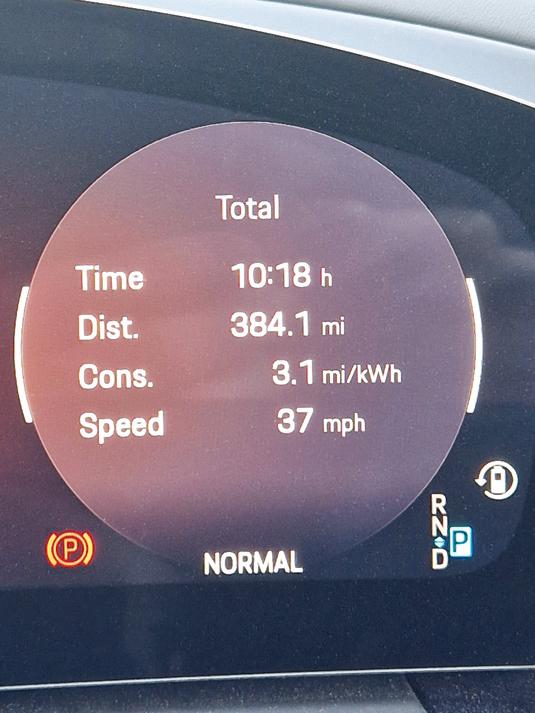
A long run in the Macan to another event gave me a good chance to see how the claimed economy of 3.19mpkWh fared in the real world. Pretty good as it turned out because I managed 3.1mpkWh across 250 miles of all forms of roads and traffic densities (the joy of trying to avoid rush hour on the M25, only for an accident to put a spanner in the works). The mileage range predictor was another plus point, as it stayed accurate throughout the journey, even revising upwards after the more economical stretches.
“A comfortable ride –achieved in large part to Porsche’s active suspension system – is combined with sharp and direct steering to bring a smile to your face on many occasions”
DAY 7
At the end of the seven days spent with the Macan Electric, I was left to reflect on just how impressive it is. Granted, with a price tag pushing six figures, it arguably should leave you wanting for nothing, but as an overall package it is very impressive. There are countless neat touches inside and out, including Porsche’s bespoke elements such as the dashmounted compass and race-inspired gear selector. Performance, practicality and personalisation are another three Porsche plus points that make it easy to see why Macan is the company’s best-seller. JC
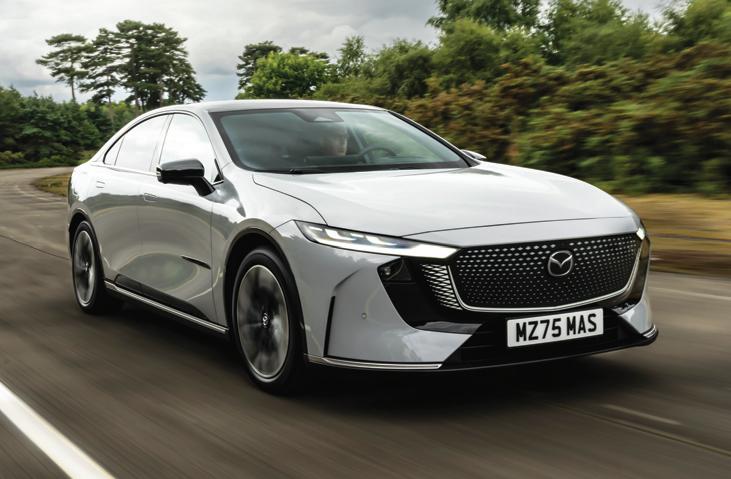
Mazda6e
Early access to Mazda’s latest EV before it officially arrives in the UK in 2026. By John Challen
For some time, Mazda has been proud of the fact that it is still competing on all powertrain fronts, including diesel. One area that has arguably been lacking when it comes to strength in depth has been pure electric. Yes, there’s the MX-30, but that’s been about for a while, so the arrival of the Mazda6e cannot come too soon.
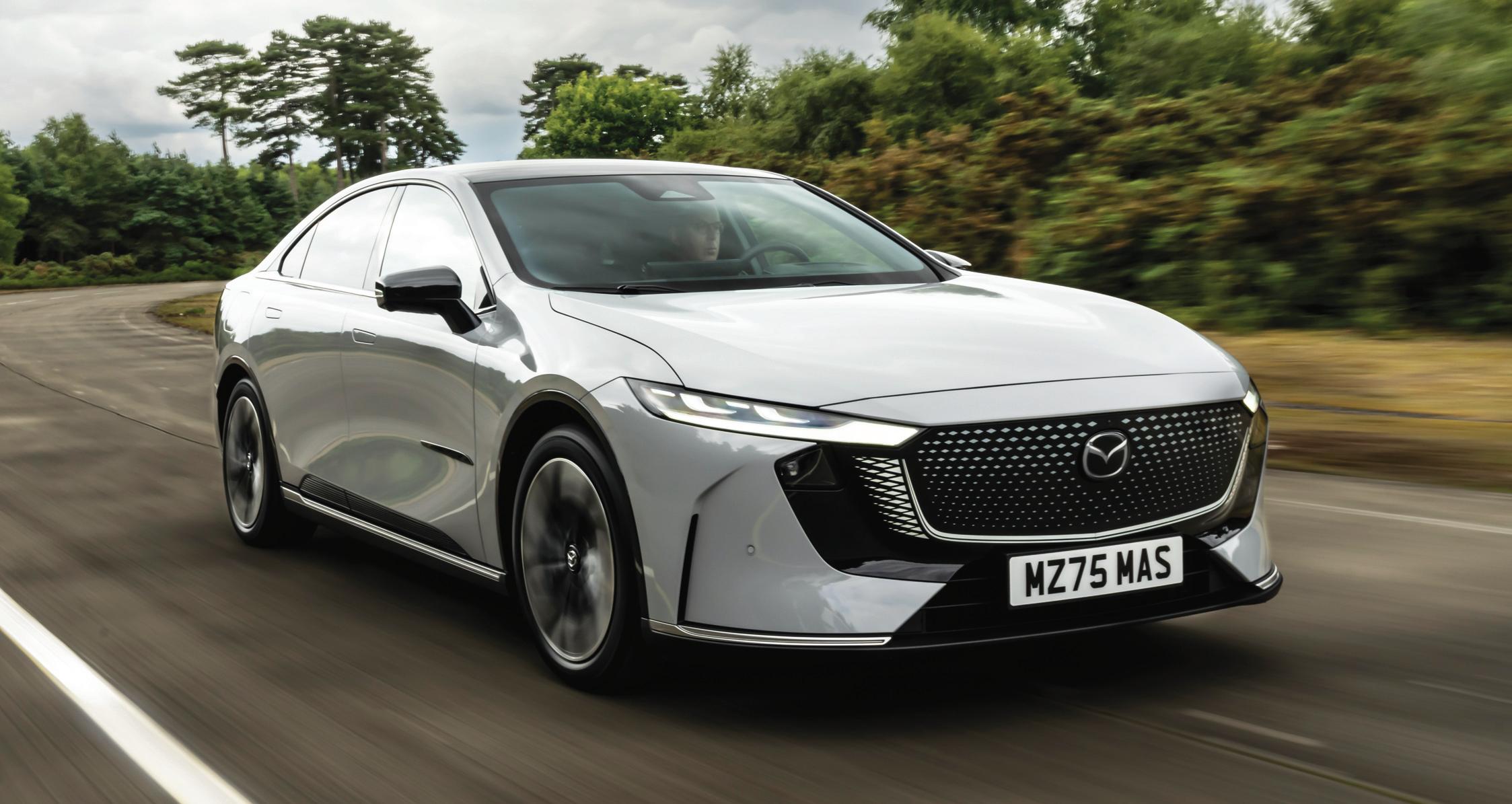
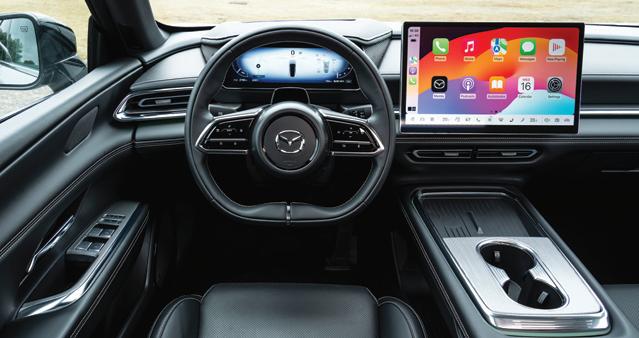
In Mazda’s search for electrification, it has found a donor at its Chinese manufacturing partner Changan. That means the Changan Deepal SL03 has been used as a base for the new Mazda, which means a new direction in terms of interior layout –there’s a lot of screen square inches, but not many physical buttons. Yes, it’s another model where pretty much everything is controlled via the screen (in this case there’s a 14.6-inch central touchscreen alongside a 10.2-inch driver display), or by voice control.
The steering wheel is also fully loaded with controls for everything from audio to navigation to cruise control. There’s nothing inherently wrong with the technological shift, but it’s a marked departure for Mazda and something that customers will have to get used to. To help the transition, there’s a customisable menu strip along the bottom of the screen, which should make life easier.
But there’s no shortage of styling cues
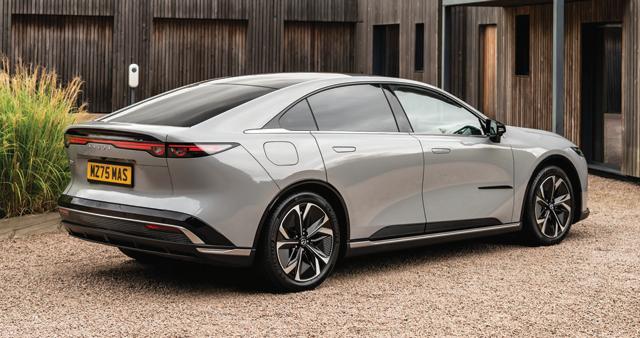
and interior touches that still make the car recognisable as a Mazda. Company representatives talk of “smooth flowing lines” and “bold features” to give the car presence. And inside, it is a spacious and comfortable cabin, featuring quality materials in both the Takumi and Takumi Plus available trims. Measuring 4,921mm long (and 2,895mm wide and 1,485mm high), the 6e is slightly shorter than Mazda’s flagship CX80 SUV, which means it has a strong presence in profile and on the road.
“When it goes on sale in the UK, there will be two battery choices offered: a 68.8kWh unit and an 80kWh option”
When it goes on sale in the UK, there will be two battery choices offered: a 68.8kWh unit and an 80kWh option. The former is mated to a 258hp electric motor and provides just shy of 300 miles WLTP. Using DC charging, the battery can be replenished from 10% to 80% in 22 minutes – potentially adding 145 miles in 15 minutes. Meanwhile, the larger battery option works alongside a 244hp
motor, with a theoretical 345 miles possible. The 10-80% charging time here is 45 minutes, meaning that the longer-range model notably charges at a slower speed than the standard model – and has less power, too. Both setups have 310Nm.
Dynamically, it’s a bit of a mixed bag from the big Mazda. The ride and acceleration are plus points and it is very comfortable across the speed range. Acceleration is pretty good too. But the steering feels pretty vague and is arguably too light for a car of this mass. As a result, it’s not very confidence-inspiring across different road types, but also quite unMazda like, which is a shame.
To be honest, that assessment sums up the car as a whole, which means a bit of a challenge for the Japanese brand. However, Mazda confirms that the car is set to go through another round of tweaks before it officially arrives, so hopefully some of the issues might be ironed out between now and then.
IN BRIEF
WHAT IS IT?
Key fleet model Takumi 68.8kW
Striking looks; comfortable seats
Infotainment; low charging speeds
7-word summary A departure – and a risk – for Mazda
Also consider BYD Seal / Hyundai Ioniq 6 / Volkswagen ID.7
Vauxhall Frontera Electric
Another name from the past returns for the electrified
For an issue of Fleet World that is meant to be devoted to the future, there are quite a few mentions of automotive pastmasters in these pages. Following the chat about the Ford Mondeo and the reintroduction of the Mazda6 (opposite), comes the return of the Frontera nameplate.
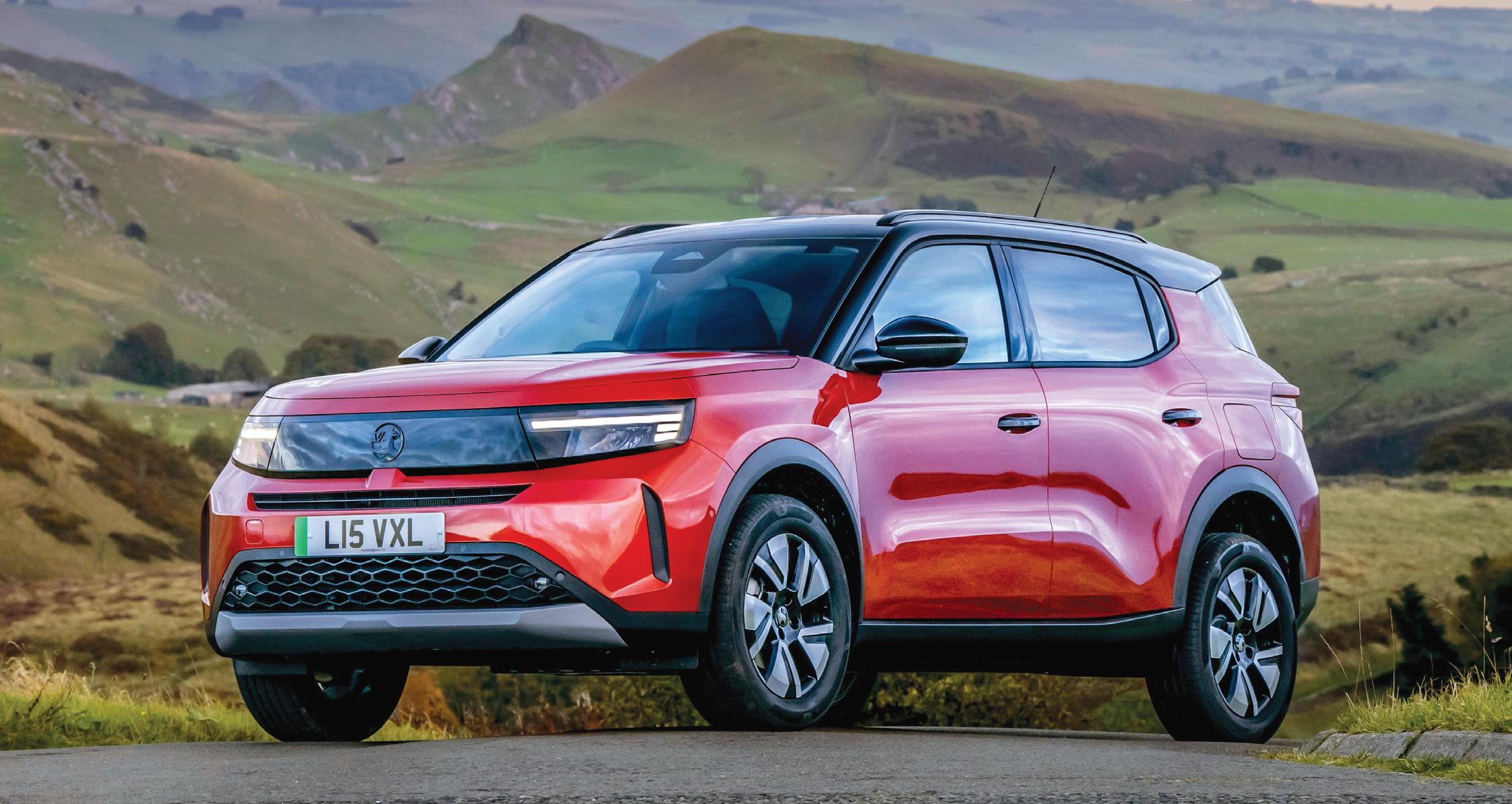
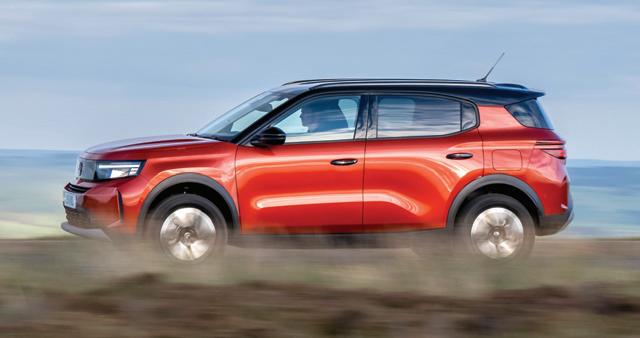
This car isn’t, as the original Vauxhall was, a 4x4 with “lifestyle” at its heart, but an important addition to the brand’s growing portfolio of electric SUVs. According to Vauxhall, Frontera is “the right car at the right time” for the brand as well as ‘the last piece in the puzzle for electrification. It sits in-between the Mokka and Grandland and is designed to be the most accessible electric family car in the market. That’s partly because the Frontera is offered in hybrid and pure electric form – with two different power options for each. Not only that, but there is price parity between the duo, for the ultimate fair choice – but we’ll concentrate on the BEV.
There is an element of retro in the new Frontera, as the design was described as “rugged” and the strong wheel arches and prominent C-pillar are a nod to the original model, albeit with a more modern package around it. The car measures 4,385mm long, 1,795mm wide and is 1,655mm high, with a boot that is larger than an Astra Tourer Electric’s. There is a seven-seat
future, discovers John Challen
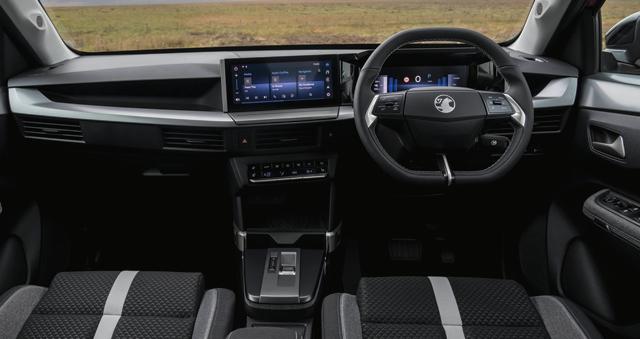
Frontera option but only on the hybrid and, to be fair, it’s not the most spacious so only the smallest passengers need apply. Elsewhere inside there’s the now relatively standard dual-screen setup, with two 10-inch central and driver displays. While the majority of inputs are completed via the screen, there are still physical controls for HVAC and ADAS deactivation. All models have wireless capabilities for charging and also smartphone connectivity. Despite being a compact SUV there’s enough leg and headroom in all of the seats, which feature Vauxhall’s ‘Intelli-Seat’ technology for extra comfort. This addition has been a staple of recent models from the brand and makes a very noticeable difference when spending a decent chunk of time behind the wheel. Something for drivers to bear in mind if long journeys are going to be a regular occurrence.
As mentioned, two power outputs are offered, with drivers having the choice of a 44kWh battery or the 54kWh extended range model. The latter adds an additional 67 miles to the theoretical range, pushing it up to a WLTP figure of 253 miles. The power outputs are the same across both models – 113hp and 125Nm –and the zero to 62mph times are very similar, too (12.8 seconds versus 13.0 seconds).
Vauxhall says the extra efficiency has been achieved with eco-tyres, fins on the rear spoiler and improved airflow on the lower rear bumper – as well as a specially developed alloy wheel design on the GS and Ultimate Fronteras.
Again, as with other Vauxhall models, there are three clear trim levels: Design joining the aforementioned duo. All are well equipped, with GS adding the likes of a leather-effect steering wheel and black roof, while drivers of the range-topping Ultimate get heating for windscreen, steering wheel and seats.
The Frontera EV is certainly a compelling proposition from a price perspective – it’s actually cheaper than the hybrid when factoring in the Electric Car Grant – but the interior quality reflects that, to a point and there’s no seven-seat option. However, the ride is good, the interior pleasant and spacious and it is a great option for those looking to transition to electric when on a budget.
IN BRIEF
WHAT IS IT? C-segment electric SUV
HOW MUCH? From £22,495
RANGE? 186-253 miles (WLTP)
CHARGE 10-80%? 26 mins (100kW DC)
Key fleet model GS 54kWh
Value; specification; choice
No third-row seats; low range 7-word summary
High-value Vauxhall that caters for all Also consider Citroën C3 Aircross / Hyundai Kona Electric / MG S5
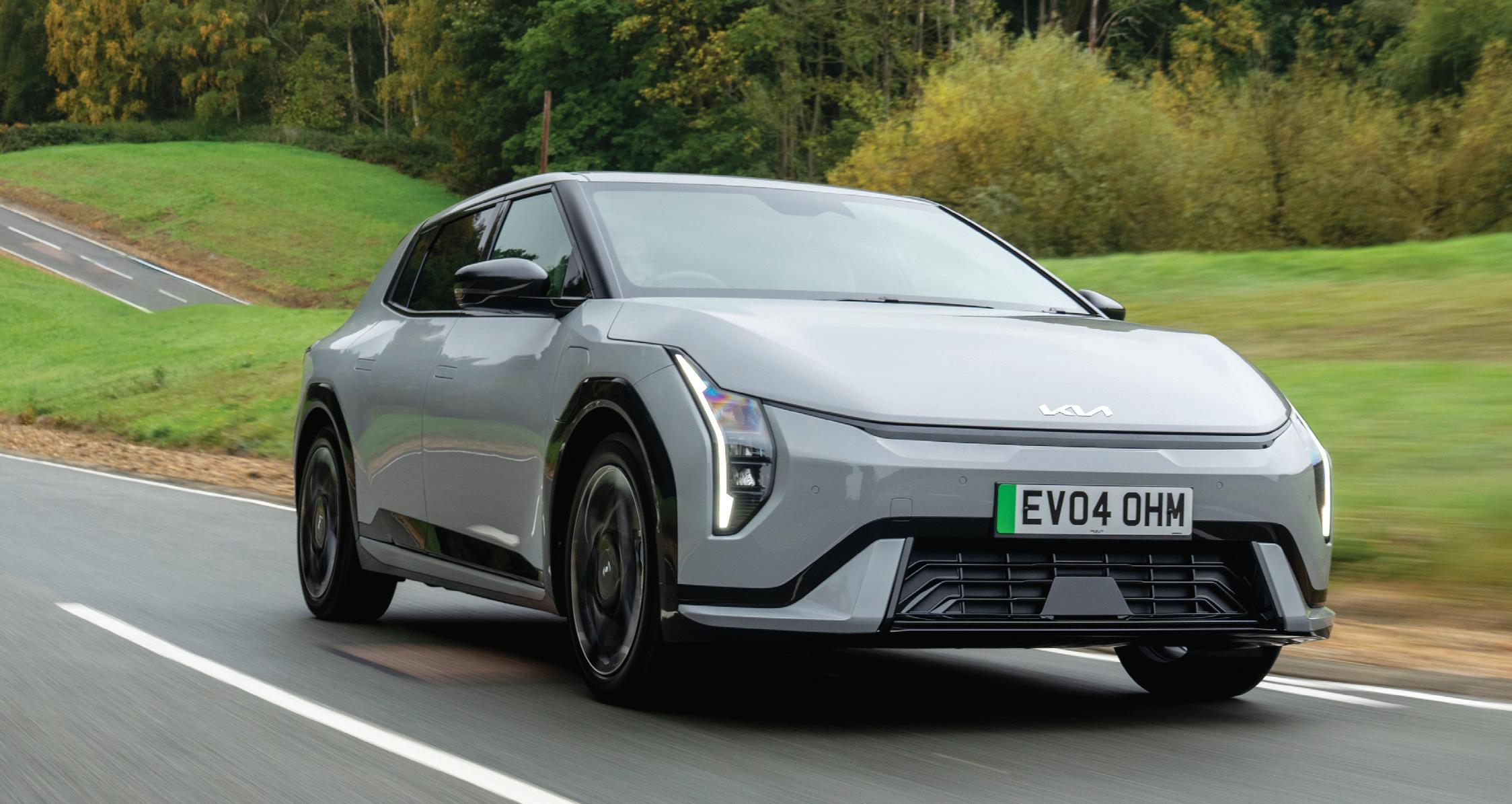
Kia EV4
The Korean brand enters the hatchback era of its EV revolution from a successful starting point. By John Challen
We’ve waxed lyrical in these pages about Kia and its impressive portfolio of electric vehicles – winners of countless awards, including models being voted the best car in the UK two years in row. So going into the launch event of the EV4, we were expecting good things.
The EV4 is the first electric hatchback from Kia and sits alongside a Fastback (saloon) version of the car. The former is likely to take the lion’s share of sales in the UK, so that’s the one we’ll concentrate on here. There is plenty of choice: two battery packs (58.3kWh and 81.4kWh) and three model grades (Air; GT-Line and GT-Line S).
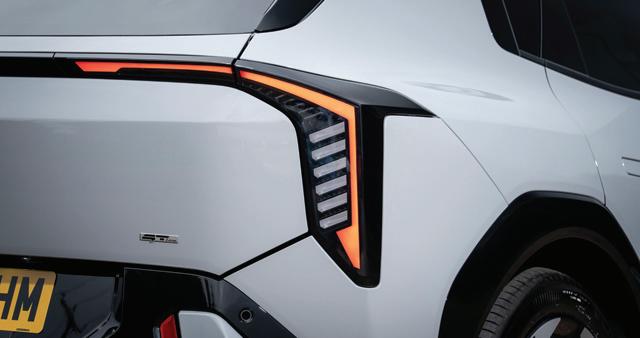
Sticking with a winning formula seems to be the approach from Kia, with the exterior look adopting the family design language from the likes of the EV3, EV6 and EV9, and the interior also having a certain familiarity about it. That’s a good thing in our eyes, because people like what they’ve seen and it makes it easier to keep things the same when moving up or around a brand’s models.
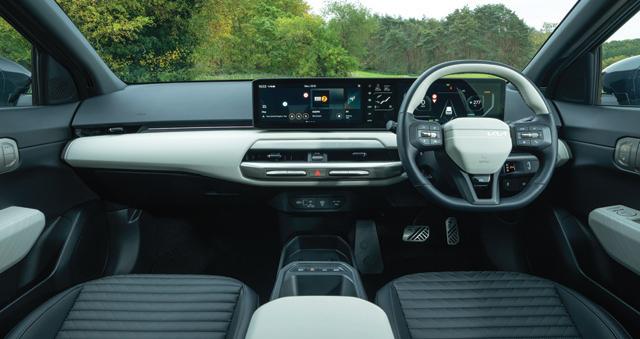
From the driver’s seat there are highquality materials (regardless of grade), seats set lower for a more driver-centric feel and twin 12.3-inch central touchscreens, which sit alongside a smaller (5.3-inch) climate control screen. One departure from other Kia ‘EV' models is
the repositioning of the gear selector to the steering column – a move that saves space and makes the cabin look that bit cleaner. Despite the lower roof of the hatch, there’s plenty of space inside the cabin and also in the boot – 435 litres of luggage space is available, increasing to 1,415 litres when the rear seats are folded.
“Despite the lower roof of the hatch, there’s plenty of space inside the cabin and also in the boot”
All EV4 models have the same power output figures (204hp and 283Nm) and top speed (105mph), with zero to 62mph speeds all recorded at 7.9 seconds or quicker. The real variation comes in the battery size and how many miles are on offer. The base Air model is offered with the standard-range lithium-ion battery, which boasts a still-impressive 273 miles (WLTP) and a 10-80% DC charging time of 29 minutes (at 150kW). The Air also comes with the long-range 81.4kWh battery pack, which pushes the theoretical driving range up to 388 miles and takes two more minutes to hit 80% charge from 10% under the same conditions as above. The GT-Line and GT-Line S are only available
with the bigger battery and both offer 362 miles of range (WLTP).
Spec-wise, there are plenty of technologies and safety features as standard on all EV4 models. Starting with the Air, drivers get: automatic air conditioning; four USBC charging points; wireless smartphone connectivity; 17-inch alloy wheels and heated front seats. Move up to GT-Line and there are 19-inch wheels, automatic flush door handles, electric lumbar support and customisable ambient lighting. Finishing off the range, the GT-Line S model has ventilated front seats; electric driver seat adjustment with memory, LED lights and a customisable head-up-display. It makes perfect sense that the EV4 should be every bit as good as the EV3 and that certainly seems to be the case. Taking the best elements of an impressive SUV and implementing them in a hatch has certainly worked – Kia’s hope is that there are enough non-SUV drivers out there to take advantage.
IN BRIEF
WHAT IS IT? C-segment electric hatch
HOW MUCH? From £34,695
RANGE? 273-388 miles (WLTP)
CHARGE 10-80%? 29 mins (150kW DC)
Key fleet model GT-Line Choice; decent range; interior Growing competition; a bit pricey 7-word summary Kia kicks on with an electric hatch
Also consider MG4 / Renault Megane E-Tech / Vauxhall Astra Electric
INDUSTRY From Reaction to Foresight: Alphabet Connected Fleet FROM THE
Fleet management has always been about keeping many priorities in motion at once. Costs need to be controlled, vehicles kept on the road, drivers supported, and sustainability goals met. As data volumes grow and electrification accelerates, the challenge is no longer access to information but how effectively it can be turned into action.
Alphabet Connected Fleet provides that clarity. By linking live vehicle data with intelligent analytics, it helps fleet managers anticipate rather than react, identifying risks early, steering maintenance proactively and improving operational planning across every vehicle and driver.
Powered by Geotab, a global leader in connected vehicle solutions, the platform standardises live OEM data across brands and delivers it securely into the Alphabet ecosystem. Whether it is odometer readings, diagnostic alerts or charging behaviour, every insight is based on verified, near real-time information. This allows managers to detect wear before it becomes downtime, plan resources more efficiently and align performance with sustainability goals.
Accessible through the 360 Fleet Portal and a single Alphabet ID, Alphabet Connected Fleet integrates seamlessly with tools such as the Alphabet Carbon Manager and existing reporting systems. The result is a unified view of operations, from utilisation and driver safety to consumption and emissions, enabling faster, more confident decisions every day.
The updated Alphabet AI Assistant adds another layer of intelligence. It interprets live data, highlights trends and creates tailored dashboards or reports within seconds.
Managers can track electrification progress, assess consumption patterns or recalibrate contracts simply by asking. What once required hours of manual analysis now happens in a single, intuitive interaction.
Alphabet Connected Fleet is designed to evolve with its users. As fleets diversify and new use cases emerge, the platform adapts, supporting the shift to electric mobility, enabling precise ESG reporting and strengthening operational resilience across Europe.
Alphabet Connected Fleet gives our customers the ability to stay one step ahead, using foresight instead of reaction. It is about making confident decisions, every day, backed by data you can trust. By connecting insights across vehicles, systems and markets, we are creating the foundation for smarter, safer and more sustainable mobility that grows with our customers’ needs.
Experience the new standard in connected mobility on the new Alphabet International website.
Jesper Lyndberg CEO Alphabet International
SambaSafety
ON THE SAFE SIDE
ICharles Smith, VP of product at SambaSafety, explains why fleets must leverage data for better risk
predictability
f you can’t decide what to wear today, how about watching the weather forecast? That “70% chance of rain” prediction might not guarantee getting caught in a shower, but you can, at least, prepare by putting a raincoat on. We trust the Met Office to give us a pretty reliable idea of the prevailing conditions via triedand-tested measuring equipment and established understanding of weather patterns, providing sophisticated visualisations of the next cold front.
What if fleet managers could do the same with road risk? As it stands, many tend to chalk up every minor collision to bad luck. Trouble is, there’s no such thing as a minor collision nowadays. Increased cost of parts and long lead times for repairs have driven up the severity of crashes in financial terms, making the outlook feel overcast when it’s time for insurance renewal.
Risk isn’t random SambaSafety recently released its 2025 UK Driver Risk Report, offering a detailed snapshot of the current climate of motor risk. Based on long-term studies of data, from UK fleets and global logistics operators who use our data aggregation capabilities, the report’s findings were eye-opening and demonstrate just how predictable risk can be.
For example, our data shows that, among employees who drive for work, crash risk peaks when they are two to three years into their role, not just when they’re new and inexperienced. Employers may be offering worthwhile safety training when onboarding new drivers, only to have complacency or overfamiliarity override those efforts later on.
Another key predictor of future incidents is the seriousness of previous speeding offences. Drivers clocked travelling at more than 20mph over the limit are shown to be 80% more likely to make a claim in the following 12 months. Having access to this data and knowing how it constitutes a ‘weather warning’ can aid managers in identifying and averting future incident risk.
Insurers are listening Telematics data, combined with the full range of risk-related driver information, provides insurers with a powerful barometer for future claims. In their ultracompetitive marketplace, being able to make robust predictions informing appropriate pricing, without undue reliance on a fleet’s claims history or industry benchmarks, gives them a significant edge. What’s more, it allows them to advise and even incentivise fleets
to create training strategies that help reinforce and perpetuate positive trends.
Our research found that 74% of fleets are already using telematics to inform driver training activities, but only 30% are sharing data with their insurers, the majority saying they’ve never been asked to. Amid the spiralling pressures on motor insurance costs, data-led risk assessment is becoming ever more essential in driving down loss ratios. Some 64% of insurers say they either already offer telematics-based insurance programmes for fleets, or plan to roll these out in 2026, so fleets need to get ready.
A brighter forecast
At SambaSafety we’ve known for a while that this is the direction the industry is taking and we’re continually working with insurance partners to encourage fleet clients to share their risk data for mutual benefit. These collaborations are where we’re seeing the biggest successes. One major UK retailer, over a five-year period of huge expansion in the size of its dotcom fleet, achieved a 22% reduction in claims frequency and a 50% reduction in third-party claims involving bodily injury, resulting in a 24% reduction in spend on third-party claims.
We know it’s challenging to make sense of telematics data alongside drivers’ history of endorsements, claims, PCNs and NIPs. Our ‘Risk Cloud’ has been designed to tackle that for you. By pulling all those risk indicators into a single view, we help you and your insurers to visualise the emerging patterns, target training efforts wherever the cloud is most ominous, and to know you’re getting it right when you see the sun shining through.
“Drivers clocked travelling at more than 20mph over the limit are shown to be 80% more likely to make a claim in the following 12 months”
SUBSCRIBE NOW
TECH TRENDS
Aaron Jarvis, associate VP for EMEA at Geotab, talks about the impact of new technologies and AI for fleets
Geotab is now into its 25th year and, over that time, we’ve grown a lot, but remained privately owned – a strong position to be in. The company was founded by the Cawse family – specifically Neil Cawse, our CEO – and his siblings, and that family feel has been retained. We’ve also got customers that have been with us for the entire 25 years and their confidence in the product is what’s enabled us to invest so heavily in research and development.
That focus on technology, rather than purely sales figures, has been key over the past quarter of a century. We’ve operated primarily in an indirect fashion, selling through trusted partners to allow them to focus on their speciality, which is building relationships with customers. Meanwhile, we’ve concentrated on what’s core to us, which is that R&D investment.
We’ve now got more than 3,200 staff and everyone knows the CEO and is able to speak to him whenever they want. That is one differentiator between us and other players in the market. In the UK, we’ve been around for nearly six years
and have some of the best people for the job. That means the best automative engineers, including people with backgrounds at Mercedes-Benz, Ford and other OEMs. Helped by this background they can really focus on solving customer problems from the vehicle side, as opposed to the telematics side.
Future fleet wins
The latest advances in technologies are really helping us with predictions and insights to help drive costs down. Using technology, we can help fleet managers who need to be quite hands off, because it’s not their full-time job, but also the technology can be applied to those who are very hands on.
We talk about cost efficiency, but as we’re getting increasingly concerned with sustainable procurement and keeping everything sustainable, sometimes the difference between winning and losing a contract is having a plan in place to say that, over a five-year contract, the fleet of vehicles will go from x emissions to y emissions. We’re really able to step into that world and help impact the outcome.
AI and I
The whole AI area is fascinating and what I’m spending a lot of my time talking to customers and partners about. Geotab has been working with AI since before it was cool! Our products have been using AI for seven years now, to make sure we’re on the front edge of machine learning.
In our core vehicle data product, for a long time now, we’ve been creating insight which is based on making predictions through machine learning. The easiest example is our electrical systems rating score where we’re looking at billions of data points of the cranking voltage of the 12V battery in ICE vehicles. With this data, we can take any crank and compare it to all those previous
“The whole AI area is fascinating and what I’m spending a lot of my time talking to customers and partners about. Geotab has been working with AI since before it was cool!”
examples and predict the likelihood of battery failure. That means we’re able to point to reliability and say to customers that, for example, within the next six months, that battery is going to fail, or the alternator’s going to fail. The impact of that is immense because, for a delivery driver, if the battery fails in the morning and they didn’t know that was going to happen, they lose the whole day’s work. But telling them six months in advance, so it doesn’t even become unplanned maintenance, means it goes into the maintenance schedule, bringing the costs down from potentially thousands of pounds to near zero.
The future is AI
We’re really driving ourselves to use AI in everything that we do, but we genuinely believe that AI won’t take people’s jobs. People who do use AI will take the jobs of people that don’t. That’s really true to everything we do at Geotab, which manifests itself in the products that we continue to invest in. Our AI-based solutions mean fleet managers with hundreds or thousands of vehicles can access their insights quickly, but they also benefit those fleet managers from smaller operations who can just ask a quick question and get the answer. Every single tool that we have as a company is broadly adopting AI in one way or another.
association with
EMISSION STATEMENT
The pursuit of net zero CO2 is driving change throughout the transport sector, and especially for fleets. This year’s Fleet World EV Survey, in association with Europcar, Geotab, Ogilvie Fleet and EY, asked decision-makers about their experiences with using EVs – and how they’re addressing the remaining bottlenecks.
in association with
1 How healthy is the UK’s EV fleet market?
Despite recent uncertainty in the EU and USA, the UK has held firm on its commitment to electrification. All new cars must be at least full hybrids by 2030, while new cars and vans must be zero emission (CO2, at the tailpipe) from 2035. Manufacturers are already facing fines for not meeting mandatory targets.
Fleets are vital stakeholders. With incentives in place until 2030, this sector registered 79% of new EVs in the first six months of 2025, according to the Department for Transport. And this shows up in our data, with 81% of respondents having at least one EV.
2
What do fleets want from their EVs?
EV uptake was similar to last year’s survey, but the results show costs are a higher priority in 2025. Motivating factors can be broadly grouped into three themes:
61% are aiming to cut their CO2 emissions
32% want to reduce their impact on local air quality
That compares to 81% and 32% respectively in 2024
Higher purchase/ lease prices ranked as the most common challenge fleets have faced deploying EVs
HOWEVER... uptake is unbalanced:
97% 52% 90% 79%
of car fleets have EVs, compared to… of van (and pickup) fleets. of large businesses (>250 employees) are electrifying, versus… of medium (50-250 employees) and 73% of small businesses.
PERCEPTIONS
36%
said EVs were good for their brand image 20%
cited demand for EVs from drivers
Both factors were similar last year, at 39% and 26% respectively
3 How are operators building a business case for EVs?
The steep decline in battery costs has helped edge EV prices ever closer to their fuel-burning counterparts, but the two are not yet aligned.
Higher purchase/lease prices ranked as the most common challenge fleets have faced deploying EVs (62%), followed by range and performance anxiety (50%) and long charging times (45%) – all of which impact total cost of ownership (TCO). Four in five (82%) said cutting the 20% VAT on public charging to match 5% at home would help with uptake.
Van fleets were even more sensitive to in-life challenges, with 27% reporting a lack of suitable vehicles, and 29% citing operational challenges with the largest models. Light commercial fleets with a gross weight of between 3,500kg and 4,250kg can be driven without additional training, but still have to comply with some HGV-derived rules.
COSTS
39% want to cut their fuel bills
40% are attracted to tax and National Insurance savings In 2024, these were much lower – 33% and 25% respectively
With almost a quarter (23%) claiming TCOs are uncertain for EVs, operators recognise that real-time data is critical for optimising their fleet. Asked what was most valuable:
Convenient and reliable charging is a cornerstone of a cost-efficient EV fleet
4 Where are fleets’ vehicles charged?
Convenient and reliable charging is a cornerstone of a cost-efficient EV fleet, and drivers have more choice than ever. Almost two-thirds (62%) of operators charge their vehicles overnight, while others are factoring this into shift times (16%) or drivers’ breaks (12%).
Each option has some challenges. Unreliable (or unsuitable) public charging was named as a challenge by 38% of fleets, 34% said their drivers can’t charge at home, while 19% claim to have faced issues installing depot chargers – such as upgrade costs.
5 How are fleets supporting drivers with home charging?
According to the latest Zapmap Price Index, the average cost (per kilowatt-hour) of a DC rapid charger (76p) is almost 10 times higher than plugging in at home using an off-peak tariff (8p).
Not surprisingly, our data shows fleets using home charging were more likely to say EVs are cutting their operating costs (53%) than those who don’t (44%). Almost half (45%) said they will use home charging to support additional fleet electrification.
Employers can fully fund home chargers without this being taxed as a Benefit-inKind, and 42% of survey respondents do so. Half of that group offer this to any driver, while the rest restrict it to job-need users.
6 What do fleets want from workplace charging?
Workplace charging can help fill gaps in the wider network, especially for vans. It’s an important element, with a third (35%) of van fleet operators saying they’d struggled with a lack of suitable public charging, while a similar share (33%) added that drivers couldn’t plug in at home.
HOWEVER... this infrastructure needs to grow:
over half said workplace charging installations are challenging. 33% 44% 56%
only a third of fleets said they have adequate power onsite. less than half said they have enough chargers to meet their needs.
The benefits aren’t only internal. Of those who said they have their own chargers, 17% are sharing them with other fleets. Almost one in 10 (9%) fleets said using other operators’ chargers would be important future-proofing strategy.
7 How are fleets maximising EV benefits?
Our survey shows fleets are reaping the benefits of going electric. Most (88%) said they had reduced their CO2 emissions, while a third (33%) added that they are benefitting from lower operating costs.
Smarter energy usage has also become more common, up from 47% of fleets with depot charging in 2024, to 64% this year. Fleets who were already using these solutions were more likely to have reduced their CO2 emissions (91%) and significantly more likely to report cost savings too (58%).
88% of fleets said they had reduced their CO2 emissions
Four in five (79%) decisionmakers said their organisation is developing a net zero policy or has one in place
8 How are businesses engaging with Net zero?
The UK is on a pathway to becoming a net zero CO2 economy in 2050, and businesses’ environmental impact is under ever-greater scrutiny. Four in five (79%) decision-makers said their organisation is developing a Net zero policy or has one in place. Although that’s similar to last year (75%), there was a notable rise among medium (85%, up from 74%) and small (61%, up from 47%) businesses.
9 What information do fleets need?
Net zero targets can also indirectly impact fleets. Larger organisations are increasingly reporting Scope 3 (supply chain) emissions, putting pressure on suppliers to reduce their environmental impact too. Three-quarters (76%) of respondents said it had come up in conversations and tenders, while the majority expect their fleet management software to generate automated, auditable reports to support this.
10 What is influencing fleets’ EV strategies?
Asked how critical that functionality is:
With unwavering targets and long-term incentives for phasing out combustion engines, fleets are confident about the road ahead. Almost all (99%) fleets expect to increase (84%) or maintain (15%) their share over the next five years. Asked what was influencing that process, fleets highlighted similar factors to last year, but with notable trends away from cost, choice and CO2 targets.
The cost of buying/leasing electric vehicles
Government phase-out dates for non-ZEVs
The choice of electric vehicles
Our own CO2 targets
The cost of charging
Access to workplace charging Driver demand
Access to public charging
Incentives for vehicles and chargers
Access to home charging
The cost of workplace charge points
ON FLEET
ŠKODA ELROQ SE L 60
The more time I spend in the Elroq, the more I realise that it is a very capable and dependable car. That might sound like I’m damning it with faint praise and –in a way – that is the case, because it gets on with the job at hand with minimal fuss. In a world of an increasing amount of gadgets and gizmos that are designed with a view to ‘enhance the customer
experience’ or something, the Elroq keeps things user-friendly. The simplicity of items such as physical buttons is welcoming, even if the overall experience might not blow you away.
One example of this approach are the seats. Yes, they are heated – something that comes in very handy on many mornings –but there’s no faux leather,
memory presets or electric operation here. Just good old-fashioned fabric alongside manual controls to make sure you get comfortable quickly and with the least fuss. All of the seats are supportive, too, so kudos to the foam supplier for helping keep drivers fresh during – and at the end of – a long journey.
I mentioned in a previous report about a very slight fear over the available mileage, but recent journeys have not caused any concerns. It turns out just under 240 miles has been optimal for the trips I’ve had to make, albeit helped on at least one occasion by an available charger at my destination for the morning, which replenished the battery enough to make it back to the south coast with miles to spare.
Mr Kendall commented in his initial musings on the Škoda that it was one of the quietest EVs he had driven. I would agree with that assessment and also add that the acceleration – eight seconds
AUDI Q6 E-TRON S line Performance
The cooler weather has seen efficiency drop in the Q6 – so much so that a full charge now offers about 30 miles less range than in the height of summer (down to 260 miles from a peak of 295 miles).
It’s not enough to cause huge
concern, but it does mean that I now need an extra charge to complete four commutes a week. I guess this is the trade-off for having toasty warm hands and bottom, and clear windows all around.
Despite this negative, the Q6 remains a brilliant car in which to
THE
commute – silent power delivery coupled with seamless acceleration and gentle retardation. Once up to cruising speed the lack of noise and drama is so noticeable, meaning a long-distance journey will no longer be a chore.
Even the suspension is supple
dead to 62mph from a standstill in the SE L 60 – is swift, without being overwhelming, which can often be the case in EVs. Although they are slightly different propositions, I liken it to the Volkswagen ID.3 that I spent six months with earlier in the year – and that is very much a compliment.
With a cold snap approaching, I’m interested to see how the available miles will be affected. I’m expecting it to take a bit of a hit, so I am already preparing a lighter right foot if the need arises. A few extra minutes on the road to save a longer chunk of time at a charger is always preferable to me.
John Challen
– something you can’t often say about an S line Audi. I’m no engineer, but I guess that Audi has built in plenty of suspension travel to counter the considerable 2.2-tonne kerb weight of the Q6.
All told, the Q6 is a firm favourite, but there are a couple of niggles – the front passenger seatbelt buckle clanks against the plastic door trim when not in use, the door lock buttons on the driver’s door are too easy to accidentally activate; and the driver’s door opens so wide that it is a real stretch to close it (although this could be because of my stature).
Julian Kirk
MINI COOPER JOHN COOPER WORKS ELECTRIC
My brief stewardship of the Mini is over, more’s the pity. While I don’t think that £35,000 is a Black Friday bargain for most production models, in the world of electric cars, there’s a fair bit of competition around that price. If that was my company car budget
and I had no-one else to consider, I would be very tempted. It’s a quick car by any standards and if handling and roadholding are more important than ride quality, the Mini offers bangs per buck and smiles per mile in one compact package.
PDE-FLEET REPORT
I have outlined what I think are the drawbacks before and those remain – switchgear and controls, which I think need some comprehensive revision to a more userfriendly set-up. That said, the JCW Mini is still a great deal of fun to drive with all that torque
VOLVO EX30 Single Motor Extended Range RWD Ultra
ro-EV sentiment is rising fast, but one of the chief sticking points that I keep coming across from the anti-EV brigade is about having to stop and charge on longer journeys.
It came up in discussion when I was talking with someone about two recent excursions with my son to check out prospective universities. Both were around a 220-mile round trip, so clearly within our Volvo’s official 296mile range, although they’d put
the 220-240 miles I get out of single charge to the test.
In both cases, plans for efficient driving were scuppered by multiple traffic jams that meant we had to pick up the pace, eroding the chance to make it home without charging.
The anti-EV person I spoke with exclaimed over this, but it was never going to be a problem. I’d checked and there were a wealth of chargers on or near the motorways on the way home and there
were no time constraints for our return journey.
At Warwick University, I was able to give a quick zap on the newly installed Zest devices. At 7kW for only a couple of hours, it wasn’t going to give us all the electrons we needed but as Tesco says…
And there was an absolute wealth of devices at Warwick South. Better still, although I was aiming for the Gridserve ones, I got stuck on the one-way system
available and a sharp chassis. Having carped about the switchgear, I am a fan of Mini interiors (we’ve had two ourselves). Obviously, the feeling of distance from the windscreen is a design element from the original Mini and it also reminds me of a Saab 900 I used to have. It feels spacious, particularly for solo driving or with a passenger. It’s not really a car for long distances with four aboard, not least because of the restricted boot space. Think of it as a quick two-seater and it makes a lot of sense.
Farewell then Mini. One day... John Kendall
in front of a tailgating driver and ended up at a bank of 16 Applegreen ones – which are much cheaper and faster.
The journey back from Bristol University a week later was equally problem-free, with a quick stop at an InstaVolt site at the Three Trees farm shop off the M4 – as suggested by the Volvo’s built-in Google Maps system.
The fact that I wasn’t pushed for time on the way back and had range to spare was a big help. But the whole experience should also take the wind out of the sails on arguments about the hassles of having to stop to charge.
Natalie Middleton
DE-FLEET REPORT
ON FLEET
ALFA ROMEO JUNIOR Elettrica
Six months – and some 5,000 miles – after it arrived, my time with the Alfa Romeo Junior Electtrica has come to a close. Scrolling back to my first report of the car, I must admit to being somewhat cynical, partly because the 54kWh battery was smaller than I’d been used to.
At least it had looks on its side. The oversized front Alfa grille doesn’t look as imposing in real life as it does in pictures and has won plenty of admirers, especially among my neighbours. Officially, the range was 254 miles with a 4.1mpkWh efficiency, but a 54kWh battery after
the previous 87kWh battery in my last long-termer, a Renault Scenic, had me worried about its real world range and efficiency. I didn’t have long to wait to be proved wrong though.
Very quickly the Junior started recording at least 4.0 or 4.1mpkWh and higher on shorter journeys and while it dipped a little below that on motorways and on faster cruising roads, those were relatively little of my overall mileage. In fact, it has only dropped recently because so many of those more recent miles have been on the motorway.
On the road it was comfortable enough, boasted a good ride and handled pretty respectably too. When the mood and road took us, the steering was sharp with a good turn-in and what it lacked in absolute feedback, it made up for in terms of its enthusiasm. It was certainly enough to put a smile on my face more than once.
The Junior’s size wasn’t the hindrance I was expecting either.
VOLKSWAGEN GOLF Style 1.5 TSI eHybrid 204
Our plug-in hybrid Golf is continuing to impress with its no-nonsense approach to affordable business motoring –
excellent fuel economy, low emissions and affordable tax bills make it an appealing on-paper choice. And, as a vehicle to live with
day-in, day-out, I can really recommend it too. There’s a real simplicity to the Golf’s appeal, which has lasted for decades – it simply does everything well. Rivals may handle better, or be slightly faster, but none can match the all-round appeal of a Golf.
Even in our test model’s Style trim, it manages to look appealing without breaking the bank by adding on sporty accoutrements such as big alloys and deep spoilers.
Our test model benefits from a couple of upgrades from the options list; some I would recommend, others I’d be more hesitant on. Let’s start with the no-thank yous – the Anemone Blue Metallic paint is a nice hue but I could live with one of the standard colours and save the £I,375 cost. Likewise, the Technology package that bundles together keyless entry and additional packing features for £725 wouldn’t be my choice. And the £280 for rear tinted glass is
THE NUMBERS
P11D £35,695
BiK* 3% I £18 (20%) / £36 (40%)
RANGE 254 miles
ON FLEET RANGE 248 miles
EFFICIENCY 4.0mpkWh
Yes, the rear seats are hardly palatial and adults wouldn’t want to be there for any length of time, but on the rare occasions I did have three passengers, it coped well enough. The same goes for the 400-litre boot, which only for longer family holidays meant any overspill going onto the rear seats. For my son and I, it was perfectly good.
In conclusion, the Junior has been an unexpectedly superb companion and transport throughout my time with it. Easy to live with, efficient, capable and well engineered with it, it’s no exaggeration to say that I would happily buy one tomorrow. Praise indeed.
Nat Barnes
THE NUMBERS
P11D £37,280
BiK* 26% I £37 (20%) / £74 (40%)
CO2 EMISSIONS 25g/km
ECONOMY 252mpg ON FLEET 95.2mpg
defi nitely a non-essential luxury.
However, I would tick the ‘Area View’ box – for £335 this feature gives you a panoramic view of the parking area to cut down on those annoying car park dings. The Winter Pack, essential at this time of year, brings heated front seats and steering wheel, both of which are well worth the extra outlay.
In terms of our everyday driving – mainly stop-start urban trips – we’re averaging nearly I00mpg thanks to the pure EV range of about 65 miles. As a result, I can’t remember the last time I put any petrol in the Golf.
Julian Kirk
CUPRA LEON 1.5 e-Hybrid V3
It occurred to me the other day that I hadn’t really addressed the drivetrain of the Leon in previous reports, save for the fact that it’s been delivering on or around 75 miles to a full charge via its electric motor alone.
It’s worth mentioning though, as the seamless blending of ‘electric’ power, with the ICE engine kicking in when required – like a decent referee in football – goes unnoticed. And the latest e-Hybrid system in the Leon is a case in point.
Most of the time, if you have a 20-mile commute, you can set the car to stay in fully-electric mode. However, on a recent (mercifully) traffic-free journey around the M25, I knew that I would deplete the battery’s range, so I switched into ‘hybrid’ mode for the motorway miles – ticking the on-screen box stating “preserve battery charge” and the Leon’s 1.5-litre petrol power unit proved it will happily sit at 70mph all day.
I was then able to manually switch back to electric mode for town driving and visiting the local DIY store, and it was pleasing to see my battery charge had actually increased due to clever recuperation, and the overall consumption comfortably registering a diesel-defeating 91mpg!
It’s less fiddly and complicated than I’ve made it sound here, and soon becomes second nature. So even if your drivers are cynical about going full-EV, as some still will be, a plug-in hybrid like the Leon represents an excellent stepping stone for the sceptics.
Luke Wikner
FANTASY FLEET
MOBILITY OUTSIDE THE BOX
I’ve never been to the Japan Mobility Show (known as the Tokyo Motor Show in its former life), but I’ve always been fascinated by it – as well as the country itself. Domestic manufacturers putting in an extra effort at these types of events is nothing new – I’ve seen enough of that in France and Germany – but Japan seems to take it to another level. And 2025 was no exception.
The Toyota Group had a BIG show. Not only did it announce the Century name as a standalone brand, there was a Corolla concept and even a Lexus catamaran. But for this column, none of those cut the mustard –plus we did boats last time out, so it’s time to lift the lid on the LS Micro Concept!
words John Challen
Price: TBC
Wheels: Three
Seats: One
Driver controls:
Very few
Room for passengers or luggage: Minimal
Likelihood of making it onto the fleet? 0.01/10
This vehicle isn’t to be confused with the standard – well, I say standard, but it had six wheels – LS. No, the Micro Concept is part of Lexus’ new brand direction called ‘Discover’. I’ll leave it to chief branding officer, Simon Humphries, to explain more: “With Century in the exclusive ultra-luxury space, Lexus now has the freedom to strengthen its promise to customers at the heart of the luxury marketplace. And that promise is to ‘discover’. To think independently confidently, to be adventurous and innovative, all with the explicit goal of helping our customers discover a new luxury lifestyle.”
So there you go – hope that’s clear.
The Micro LS Concept is a single-seat,
three-wheeled self-driving ‘car’. A congestion-buster or last-mile solution, but with a hint of class. Inside, there’s bespoke glassware, a reclining chair and – in a variation on privacy glass – slatted windows. In a way, it’s a downsized version of the LS concept (as you might expect), but without much detail about power source, range, or anything else. It’s certainly not an option for today – or even tomorrow. Fittingly, in this, our ‘Future of Fleet’ issue, the Lexus LS Micro Concept really could be one for the future – but maybe 2050. A mode of transport for a time that seems as alien to us now as some of the controls and technologies would’ve appeared if we’d been introduced to them 25 years ago.
“The Micro LS Concept is a single-seat, threewheeled self-driving ‘car’. A congestion-buster or last-mile solution, but with a hint of class”
evfleetworld.co.uk
vanfleetworld.co.uk
John Kendall
VFW editor
“The most likely vehicles to go autonomous first, in my opinion, will be trucks”
The age of autonomy
I often wonder how likely it is that in the next 50 years we will all have abandoned driving and given it over to autonomous systems to carry us and freight in all shapes and sizes safely from one place to another? To be honest, I don’t think there’s an easy answer. What’s more, I think we need to look at which vehicles are more likely to be autonomous, rather than assuming all will be automated at the same time.
Firstly, I would say that fears about safety are possibly overstated. Practically all commercial passenger flights are in the hands of computers; most use fly-by-wire systems where there are no direct links between controls in the cockpit and the parts of the aircraft being controlled. Railways such as the Docklands Light Railway in London have never had a driver, although autonomous control of a vehicle on rails with minimal traffic interactions is clearly quite different from on a road.
The most likely vehicles to go autonomous first, in my opinion, will be trucks. In the first instance, there is a permanent shortage of drivers, while set routes, where vehicles generally follow the same schedule each time, could be the easiest to automate. There are already research projects underway in places such as ports, where there are few people – and these projects will roll out to short local delivery routes in time.
Some light CV operations could become autonomous for similar reasons, but because they generally take place in areas where there are more people, it could take a while yet before they happen. I think that we could see more autonomous, small, low-speed vehicles carrying limited loads in urban areas too. Again, these would be learning how to navigate around people, essential data before fully autonomous vehicles could become a reality.
There are other stages in transport operations generally that could be automated more easily, such as administrative functions, where AI could be more easily trained.
Finally, one thing that should not be overlooked is that we are generally quite good at driving. What’s more, some of us actually enjoy it too. I would happily automate driving on the M25 in rush hour and if I’m in a vehicle with adaptive cruise control, I will usually let it do the start/stop work. In short, I think we will be driving for some time to come with different vehicles using autonomous control in different ways, in different situations.
LCV technology
CELLS PITCH
IA
few years ago, the hydrogen fuel cell was seen as the hope for the future of long-distance transport, but does it have a viable future? Toyota believes so, says John Kendall
n recent years, we have seen heavy truck manufacturers revise their estimates about how much long-haul work will be carried out by fuel cell trucks and, in the light CV sector, Stellantis has pulled out of its plans for fuel cell-powered vans. Renault has not committed to a date for its fuel cell vans yet, but one vehicle manufacturer is still pursuing research.
Toyota has announced that it plans to offer a fuel cell Hilux in 2028. Meanwhile, the company, which has invested heavily in the technology, is continuing with research – part of its multi-path philosophy. As a potential customer for the fuel cell Stellantis vans, it is not clear at this stage if Toyota would go it alone with a Proace conversion.
The problems are technical. It’s 30 years since I first saw a fuel cell prototype van –a Mercedes MB100 – and although fuel cell systems have become a lot more compact since, the technical issues are proving difficult to crack. The biggest problem is the efficiency of fuel cells, while another is the size of the hydrogen molecule – it’s small enough to work past many conventional seals and leaking a flammable gas is not ideal. Then there is the infrastructure issue. We basically do not have one in the UK and attempts to get one off the ground are not making much progress. Gas sealing probably isn’t helping.
That said, it’s a technology with a great deal of promise and Toyota sees it as another potential tool to reduce our carbon emissions. Currently, the company is developing and building fuel cell systems in different sizes for marine transport, railway locomotives, trucks and static generators in addition to the Hilux project. It is clearly giving the company a breadth of knowledge and data in planning its electric future.
As part of this strategy, Toyota has been running five fuel cell-powered trucks in its own parts operation based near Brussels for over a year. We have had an opportunity to visit the operation and travel in one of the trucks to see the technology for ourselves.
The trucks are operating on four particular routes, which enables Toyota to gather data and assess how they need to progress the technology. Toyota supplies the fuel cell systems for these trucks, which are based on the DAF CF, with conversion work carried out by VDL Groep. The vehicles can travel up to 250 miles on a tank full of hydrogen. In these vehicles, the hydrogen is carried in a bank of six tanks mounted on the back wall of the truck cab.
As you would expect from any electrically propelled vehicle, noise is greatly reduced, compared with a diesel truck but
there is a fair amount of noise from the gas system, which constantly supplies the fuel cell stack which generates the electricity. That noise is probably more noticeable to those in the cab than those outside around the vehicle. Obviously, the project is still in its early stages and issues such as this are among those that the development team will be addressing.
“We know that we need to make some improvements and one of them is power, which is not enough, and the range is also not enough because of the packaging space,” says Eugene Reginald, technical manager – advance powertrain design (and technical leader for the project). “The standard specification, like the sleeper cab, is not included which would then allow the driver to drive more hours.
“From the infrastructure point of view, the hydrogen stations along the route are not there,” continues Reginald. “That’s why Toyota is focusing on eco-cluster building, which means we choose an area where we build an eco-cluster with hydrogen stations, where we have selected vehicles running there. It means the stations will get the uptake that they need and there will be no issues when it comes to refuelling for the truck operators or any other vehicle.”
Can these issues be overcome to be viable enough in the face of rapidly developing battery electric technology? Time will tell.
INDUSTRY
Lightfoot > Driver-centric tech unlocks major fleet efficiencies FROM THE
As fleets continue to navigate rising costs, tightening sustainability targets, and pressure to reduce incident rates, many operators are revisiting the fundamentals of how realworld performance is influenced. For Lightfoot, the answer has always been clear: the biggest determinant of efficiency isn’t the vehicle – it’s the driver.
“Technology is essential,” says David Savage, Chief Revenue Officer at Lightfoot, “but it’s the people behind the wheel who ultimately shape outcomes. Our belief is that if you want lasting improvement, you have to bring drivers with you, not apply more pressure from above.”
This thinking led Lightfoot to champion driver engagement and gamification long before it became an industry trend. The company’s approach is built on empowering drivers rather than scrutinising them, reframing them as active participants in fleet performance instead of passive data points in a telematics system.
A shift from monitoring to motivation
For years, traditional telematics has centred on retrospective data and compliance-led reporting. While valuable for analysis, Savage notes that such systems rarely deliver sustained behavioural change.
Lightfoot instead focuses on real-time influence. The in-cab device provides instant feedback to help drivers adjust in the moment, while a complementary app reinforces good habits through scoring, recognition, and reward mechanisms. “If drivers understand how they’re performing as they drive, and they feel supported for doing well, the culture changes. It becomes self-improving,” Savage explains.
On average, around 80% of Lightfoot users achieve Lightfoot’s Elite Driver benchmark (an 85% weekly score), giving them access to prize draws, competitions, and leaderboards that help keep engagement high.
Impact on fleet performance
According to Savage, the results show why driver-first thinking is gaining traction across the industry.
Lightfoot-enabled fleets report:
• Up to 15% fuel savings, equating to more than £31m saved last year
• Up to 15% cuts in CO2, avoiding 36,488 tonnes in 2023
• 84% reduction in dangerous driving events
• 40% fewer at-fault collisions
• 46% drop in speeding incidents
• 15% increase in EV range
Culture as the differentiator
With fleets under increasing operational and environmental scrutiny, Savage argues that culture – not hardware – is emerging as the critical performance lever.
“You can adopt any technology you like, but if drivers don’t buy into it, its impact will always be limited. The fleets that get ahead will be those that elevate drivers as partners in the process.”
Lightfoot positions its approach as a route to safer roads, lower operating costs, and improved sustainability outcomes - driven by people, enabled by technology.
Scan the QR code (right) to explore how Lightfoot’s driver-centric model is being applied across UK fleets.
Matt MacConnell investigates how the use of RFID tags can help your light commercial vehicle operations
Technology is advancing at a rapid rate and we must either embrace it, or remain behind. Embracing it, as daunting as it may be, makes perfect sense as certain technology can make processes easier and faster, meaning you can sweat more on the bigger stuff and automate other processes.
One technology that has become readily available in recent years is RFID, or Radio Frequency Identification. Before investigating how this technology can assist light commercial vehicle operations, let’s look at how it works.
RFID is a form of wireless communication that uses three main components: a scanning antenna; a transceiver; and a transponder. The transponder is the RFID tag – a special sticker placed on the item – while the antenna and transceiver are combined and are what scan the RFID tag.
So, you’re probably wondering what differentiates RFID tags from barcodes. They work very similarly; however, RFID tags can be scanned from inches to feet away, while barcodes require closer proximity for scanning.
RFID scanners can also read many tags at once without seeing them, saving you time if there are lots of items to check –and RFID tags can also be read through materials such as cardboard and plastic, meaning you don’t need to flip items to find a barcode. They can also be used to scan vehicles, meaning fewer manual check-ins or cash payments at toll booths.
However, there are some disadvantages to RFID. While the technology is slowly replacing traditional barcode systems, RFID costs more to set up, making it harder for smaller businesses to invest. Likewise, metal and liquids can block RFID signals – and although tags can be read from afar, some people worry this could be used to track individuals. Particularly those carrying personal information such as passports or credit cards.
And finally, there are increased security risks. Like any wireless technology, RFID is vulnerable to hacking if security measures are not implemented. Weak security protocols can lead to data breaches. Of course, implementing such technology correctly can have an advantage.
ISSUES TO OVERCOME Fleet and equipment company ABAX says theft is a problem, but equally, lost and misplaced items are too – and it’s directly controllable by individual businesses. “At ABAX, we’re pretty technology agnostic; whether you’re using RFID, Bluetooth, or GPS,” says Craig Allen, ABAX director of specialised sales (right). “The key thing is knowing where your assets are, where they’ve been, who’s got them, and making sure nothing gets left behind.
“When we talk about assets, we don’t just mean expensive things; it’s anything that delivers value to the business. If you can’t find it, you probably can’t do your job, and that carries a cost,” he adds. “The impact of losing tools, equipment and other assets goes way beyond the replacement cost. It’s the downtime,
missed jobs and damage to your reputation that really hurts, and that’s before we have factored in wasted time and fuel (therefore CO2) in unnecessary journeys to compensate for these ‘missing’ assets. Location data of assets is also a benefit when ensuring inspection or calibration requirements are met. Most businesses will have an asset register system that monitors what requires either calibration or an inspection: but not ‘Who has it?’, ‘What van is it on?’ or ‘Is it still at the last job?’. With a locationbased solution, these questions are a thing of the past.”
Allen cites one national study that reported the average value of equipment per van was around £2,500. “That shows visibility is no longer a ‘nice-to-have’, it’s now an essential to keeping your business moving,” he believes.
“RFID scanners can also read many tags at once without seeing them, saving you time if there are lots of items to check”
LCV telematics
TAG TYPES
There are two types of RFID tags: active and passive. Active RFID tags require a power source, while passive tags are powered by the RFID reader’s electromagnetic field. Active tags are permanently installed in a vehicle or attached to key chains; they usually have an internal battery, but there are various solarpowered options available.
When selecting an RFID tag for your fleet, it’s important to choose the correct one. If your LCVs often operate in rain, dust, or extreme temperatures, you are better off opting for a tag with an IP67 rating or higher. IP67-rated devices are dust-tight and protected from immersion in water up to one metre for about 30 minutes. They will also withstand temperatures of minus 40°C to plus 85°C.
ABAX’s new RFID 2.0 allows fleet managers to monitor fleet operators and check who was driving and when. Fleet managers will also be able to see any unauthorised journeys. Each driver is provided with a unique ID card, which communicates with driver ID hardware or a driver ID mobile app. The driver then hovers the card over the RFID reader, which registers the driver. ABAX driver ID is configured to allow the driver to stay logged in after each trip; a timesaver if the employee drives that vehicle most of the time.
BREAK THE BAD HABITS
Tying an RFID system with a driver behaviour monitoring system can make sense. Fleet management software company Jaama says technology is also changing how fleets monitor and improve driver behaviour. Telematics and in-cab tools can now provide real-time feedback, helping drivers correct unsafe habits, such as phone use or harsh braking, before they escalate into incidents.
“Instant feedback creates accountability and learning in the moment. It gives drivers the tools to selfcorrect, while managers can step in only when patterns start to emerge,” says Mark Francis, chief product officer at Jaama (right). “That saves time and supports a more positive safety culture.”
control, yet will still be held responsible for when something goes wrong.
“With an integrated fleet management platform, such as Jaama’s Key2 software, compliance becomes part of how you work every day,” adds Francis. “Drivers can’t skip essential checks because managers are automatically notified when issues arise – and every action creates a digital audit trail. It’s compliance by design, not by document.”
Fleet managers often think of compliance in limited terms – inspections, MOTs, or training records. But, as Francis explains, some of the greatest risks come from outside the depot. “Thirdparty agents and workshops can introduce hidden blind spots. Unlike operators, they’re not subject to the same level of audit or scrutiny. If a vehicle is signed off but hasn’t actually been touched, it’s still the operator who carries the liability.”
This lack of oversight highlights a fundamental truth: outsourcing tasks doesn’t mean outsourcing accountability. Without reliable audit trails and proactive checks, fleets inherit risks they can’t
Regarding cost, RFID tags are priced between 10p (passive) and £10 (active), while readers range from £500 to £3,000. Similarly, software can cost from £40 to £1,000 a month. For example, if you’re deploying a system with readers and active tags to track 1,000 items, the total cost could exceed £20,000 a year. This means the complete cost of RFID tracking can range from £5,000 to £50,000.
This said, it would mean fewer headaches when it comes to vehicle and asset tracking versus a traditional barcodebased system. For those on a budget, some providers offer a free system. This doesn’t include the purchase of RFID tags, though – and there may be a limit on user access and taggable items with these.
Telematics and in-cab tools can now provide real-time feedback, helping drivers correct unsafe habits
LCV regulations
T
CROSS-CHANNEL CHECKLIST
If your LCV fleet operates within the EU, make sure that you are legally entitled to do so. By John Kendall
here are relatively few areas where operating light commercial vehicles crosses over into the much more regulated environment of truck operations. Senior transport commissioner Kevin Rooney highlighted one at the recent FORS (Freight Operator Recognition Scheme) conference in Birmingham. In his keynote speech ‘Compliance for Tomorrow’s Fleet’, he raised the issue of international operations for light commercial vehicles (LCVs), advising operators who travel or intend to travel to and from the EU to check their transport manager requirements.
Although the latest regulations were introduced back on 21 May 2022, as part of the UK/EU Trade and Co-operation Agreement, it’s worth a look at what the law requires of light vehicle operators and drivers. It would be easy to assume that crossing the channel with an LCV would be no more regulated than driving one here, but that is simply not the case.
LCV fleets that form part of a fleet of trucks will already be compliant with Operator (‘O’) licence requirements, which generally apply to all goods vehicles exceeding 3,500kg gross vehicle weight (GVW). Since 2022, LCVs based in England, Scotland or Wales carrying goods for hire or reward in the EU, Iceland, Liechtenstein, Norway and Switzerland may need a standard inter-
national goods vehicle operator licence.
The rules will apply if you operate LCVs with a GVW between 2,500kg and 3,500kg, LCVs or cars towing a trailer with a gross train weight (GTW) over 2,500kg, up to and including 3,500kg. The gross train weight is the sum of the GVW plus the maximum authorised weight of the trailer, shown on the trailer plate. Hire or reward basically means carrying goods in return for payment, whether that payment is in money or some other benefit to you. If in doubt, seek legal advice.
If you are not using the vehicle for hire or reward, e.g. the purpose is simply to get to your overseas destination and back again for a holiday, the rules do not apply.
Operators who only run light CVs in the UK are unlikely to have a goods vehicle operator licence. To obtain one, it is not just a simple process of applying for a licence. Before you can do that, you will need to appoint a transport manager.
A transport manager is likely to carry responsibility for a range of things including planning routes and scheduling delivery times, managing your drivers and administration staff, ensuring drivers follow company and industry regulations, arranging vehicle maintenance, MOTs and tax payments and organising vehicle replacements.
There are two ways that you can appoint a transport manager if you do not have one. The first is to employ someone with a transport manager Certificate of Professional Competence (CPC) qualification – this person would be on your payroll. Alternatively, you can hire in an external transport manager. They must have a contract with you setting out what they will do as a transport manager. As transport manager, they can only work for a maximum of four vehicle operators, including you and manage no more than 50 vehicles in total across all the operators who have hired them as their transport manager.
Once you have a transport manager, you can go ahead and apply for a standard international goods vehicle operator licence.
You will also be legally required to show that you have access to a set amount of finance to run your fleet, known as ‘financial standing’. This will depend on how many vehicles you will be running. The law states that you must have access to £8,000 for the first vehicle in your fleet then £800 for each additional LCV or car and trailer in the fleet.
As we have said already, if you have any doubt about your operations, take legal advice, preferably from a firm of solicitors that specialises in transport law.
“It would be easy to assume that crossing the channel with an LCV would be no more regulated than driving one here, but that is simply not the case”