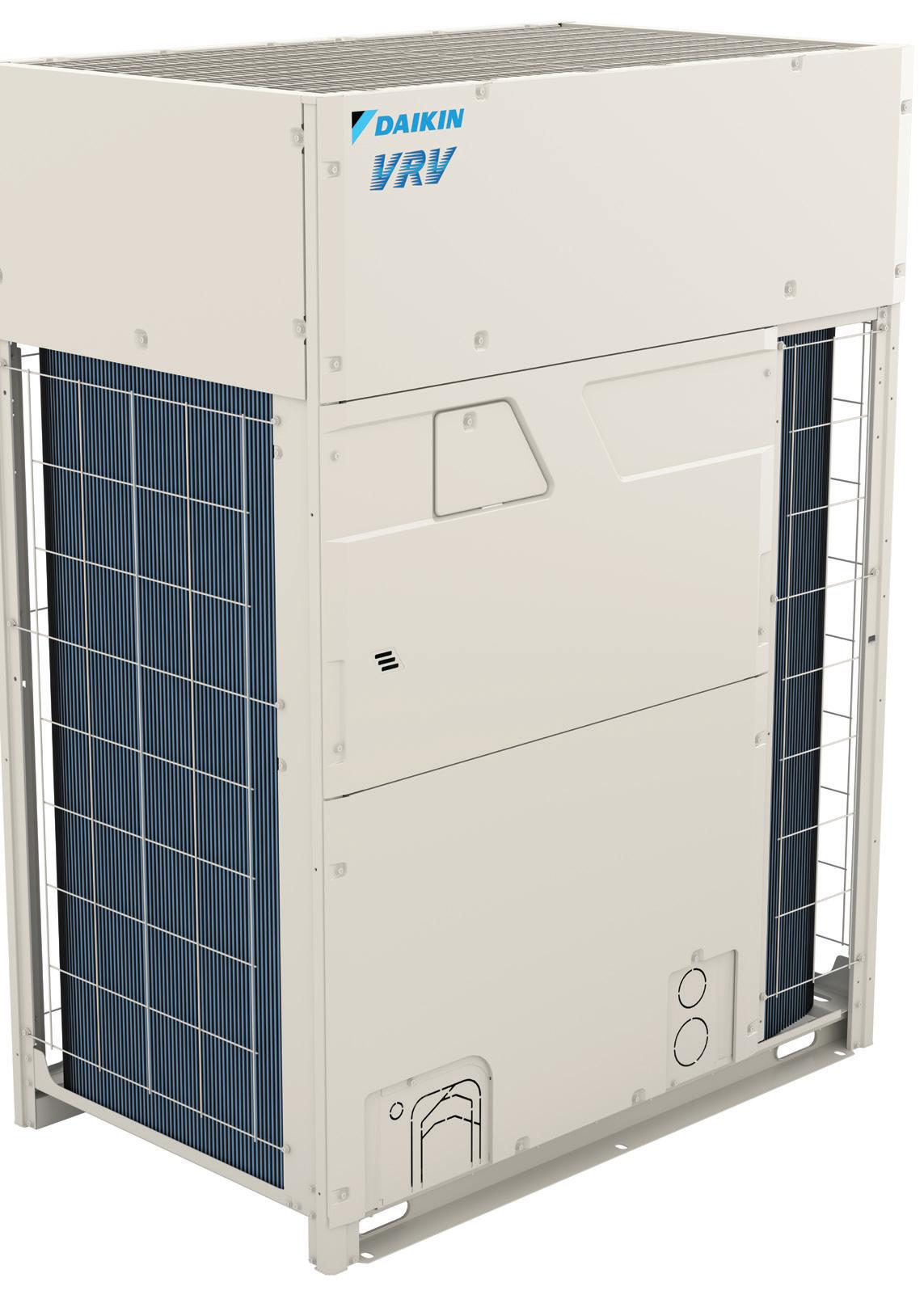
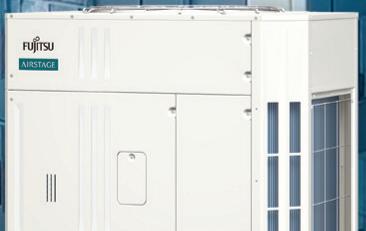
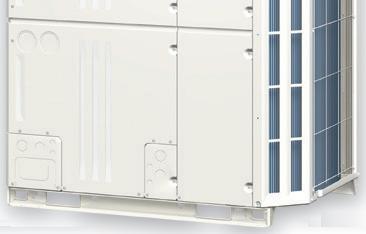
» Simple, stylish single-module units from 6 – 20 T and dual-modules up to 40 T
» Space-saving 16 – 20 T single module units provide up to 34% footprint and up to 500 lbs./ unit weight reduction*
» High energy efficiency with IEERs up to 30.0 delivers up to 30% efficiency increase*
» Year-round comfort and energy savings with Daikin’s Variable Refrigerant Temperature Technology (VRT)
» Heating down to -13°F as standard and high heating capacities at 17°F make it an ideal choice for all-electric heat pump solutions
» Dual-fuel ready with connectivity to Daikin communicating gas furnace or all-electric heat pump heating for optimized operational costs based on utility rates
» 208 / 230 or 460V
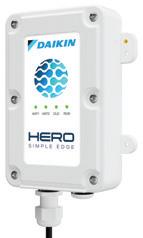
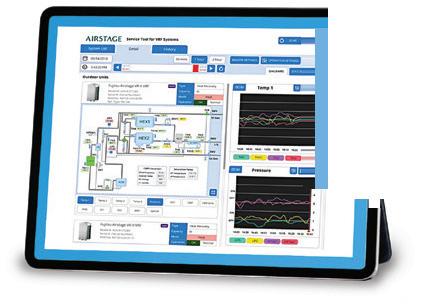
From the world’s #1 air conditioning company, discover the cloud connected benefits of VRV EMERION provided by Daikin’s HERO Cloud Services
* Model specific: Check product specifications for details.
Additional Information
Before purchasing this appliance, read important information about its estimated annual energy consumption, yearly operating cost, or energy efficiency rating that is available from your retailer.
22 AI-Driven, Decentralized Mesh Networks Can Transform Smart HVAC Efficiency
To solve the ‘Infrastructure Paradox’, our industry is now looking at mesh architecture to serve as the wireless backbone for a truly agentic HVAC ecosystem.
By Fabio Zaniboni
25 ABMA ‘Amplifies’ Mission, Sets Agenda for Spring Expo
Educational sessions and expert speakers now set for March-April event in Nashville.
By Shaunica Jayson
10 Latest AIA Consensus Forecast Sees Less Growth
Nine industry forecasters combine to lower 2026 expectations due to “an uncertain and unbalanced economy.” Data center construction continues to lead all markets, by far.
By Kermit Baker
Engineers Touched by Better Angels By Rob McManamy
Urban AI: What It Means for Intelligent HVAC By Paul Doherty
HPAC Engineering (USPS Permit 464-930, ISSN 0039-0895 print, ISSN 1930-8957 online) is published 6x a year (Jan/Feb, Mar/Apr, May/Jun, Jul/ Aug, Sep/Oct, Nov/Dec) by Endeavor Business Media, LLC. 201 N Main St 5th Floor, Fort Atkinson, WI 53538. Periodicals postage paid at Fort Atkinson, WI, and additional mailing offices. POSTMASTER: Send address changes to HPAC Engineering, PO Box 3257, Northbrook, IL 60065-3257. SUBSCRIPTIONS: Publisher reserves the right to reject non-qualified subscriptions. Subscription prices: U.S. ($ 111.25); Canada/Mexico ($123.75); All other countries ($148.75). All subscriptions are payable in U.S. funds. Send subscription inquiries to HPAC Engineering, PO Box 3257, Northbrook, IL 60065-3257. Customer service can be reached toll-free at 877-382-9187 or at HPACengineering@omeda.com for magazine subscription assistance or questions.
Printed in the USA. Copyright 2026 Endeavor Business Media, LLC. All rights reserved. No part of this publication may be reproduced or transmitted in any form or by any means, electronic or mechanical, including photocopies, recordings, or any information storage or retrieval system without permission from the publisher. Endeavor Business Media, LLC does not assume and hereby disclaims any liability to any person or company for any loss or damage caused by errors or omissions in the material herein, regardless of whether such errors result from negligence, accident, or any other cause whatsoever. The views and opinions in the articles herein are not to be taken as official expressions of the publishers, unless so stated. The publishers do not warrant either expressly or by implication, the factual accuracy of the articles herein, nor do they so warrant any views or opinions by the authors of said articles.
Now, cost doesn’t have to be the biggest elephant in the room when choosing a BMS.
Experience the benefits of an innovative virtual Building Management System with Fujitsu AIRSTAGE Cloud.
Don’t let a ton of upfront costs keep you from optimizing your facilities’ energy costs. Fujitsu’s innovative AIRSTAGE Cloud BMS, coupled with AIRSTAGE VRF products, allows facilities managers to install, control, troubleshoot, and reduce energy costs – all from a simple online platform. This new, virtual private BMS produces a strong ROI in months, not years! Plus, our full line of AIRSTAGE VRF solutions is backed by 45 years of HVAC expertise and delivers more flexibility, power and comfort in less space. Say goodbye to the elephant in the room – and hello to a smarter, more cost-effective BMS solution…Fujitsu AIRSTAGE Cloud. Visit airstagecloud.com
MEMBERS ONLY PODCASTS
Hope is in the Air with Dr. Stephanie Taylor
*NEW PODCAST* The renowned IAQ expert, architect, and medical doctor tells us why the future of healthy buildings is now. www.hpac.com/55338418
Equivalent
Clean Airflow and Air Cleaners, Keys to Sustainable
IAQ
NOW ON DEMAND: Recorded 11/18, IAQ expert Dr. Bill Bahnfleth explains this revolutionary concept, redefining standards with new air cleaning technologies. www.hpac.com/55236601
MEMBERS ONLY EXCLUSIVES
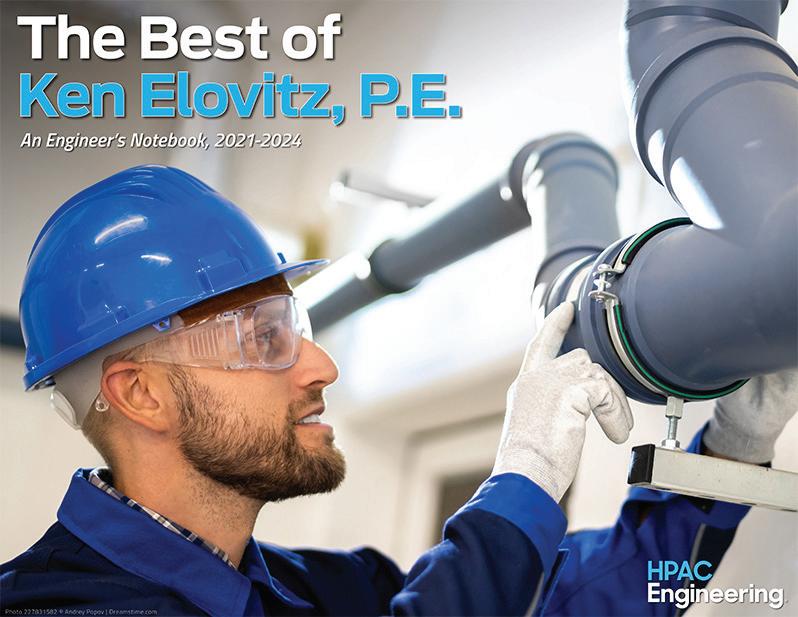
Engineering eBOOK: The Best of Ken Elovitz, P.E.
An Engineer’s Notebook, 2021-2024. Dive into this collection of useful professional advice, laced with helpful legal acumen. www.hpac.com/55020330
FEELING SOCIAL?
HPAC 2026: Our January Quiz!
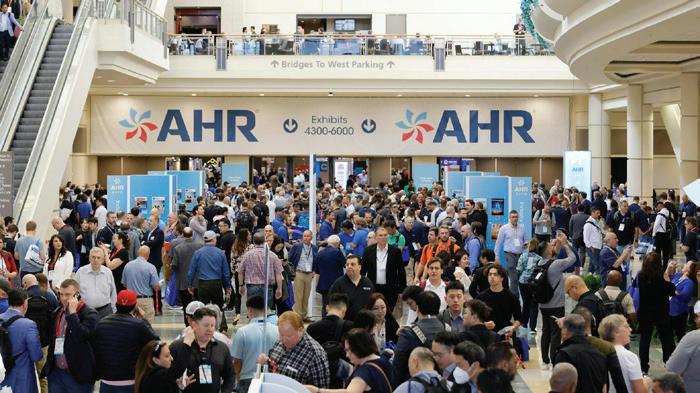
HAPPY NEW YEAR! Since many of you will be in Las Vegas next month, let’s dive into the history of AHR Expo. www.hpac.com/55341092
Follow us on Twitter at @HPACEng, as well as our sister publications, @Contractormag, and @ContractingBiz. Retweet our up-to-date content, send comments, questions. Expand your world of engagement with us, at no extra charge!
EDITORIAL OFFICE
8001 Lincoln Ave. • Suite 720 Skokie, IL 60077 www.hpac.com
EXECUTIVE TEAM
CEO: CHRIS FERRELL
COO: PATRICK RAINS
CDO: JACQUIE NIEMIEC
CALO: TRACY KANE
CMO: AMANDA LANDSAW
EVP, BUILDING & CONSTRUCTION GROUP: CHRIS PERRINO
EDITORIAL CONTACTS
MIKE EBY
VP of Content Strategy, Building & Construction Group meby@endeavorb2b.com
ROB MCMANAMY
Editor-in-Chief rmcmanamy@endeavorb2b.com
DAVID ECKHART Art Director deckhart@endeavorb2b.com
SALES CONTACTS MIDWEST BILL BOYADJIS 973-829-0648 bboyadjis@endeavorb2b.com
SOUTH & WEST
RANDY JETER
512-263-7280 • Fax: 913-514-6628 rjeter@endeavorb2b.com WEST
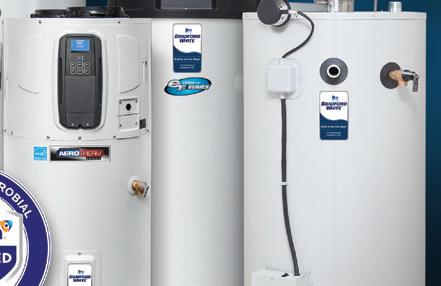
• Built-in Bradford White WaveTM Connectivity for easy diagnostics and remote-control access via mobile app
• Zero clearance requirements on sides & rear
• English, Spanish, and French languages
• Exclusive Vitraglas® tank lining with Microban® antimicrobial technology
ROB MCMANAMY,
Engineers Touched by Better Angels
Only a few days before this issue was scheduled to go to press, I learned that longtime HPAC
Engineering contributor and Editorial Advisory Board member Ron Wilkinson, PE, LEED AP, CPMP, had died unexpectedly of a heart attack. He was 77.
To many of you, Ron might be better known as the creator of The Adventures of Johnny Tundra, Cold-Weather Engineer, a one-of-a-kind, 13-part comic series about a fictional engineering hero in Montana (and his faithful dog). One of this publication’s most popular features ever, the light-hearted Johnny Tundra ran online and in print from May 2015 to December 2017. Illustrated by Cleveland artist Ashley Riblett, the strip captured hearts and amused readers in engineering schools and jobsites, alike.
“Of all the wonderful people I worked with in my 18 years with HPAC Engineering, Ron was my favorite,” says former editor Scott Arnold, now a senior manager at AMCA International. “He joined the editorial advisory board around 2001, so I had the pleasure of working with Ron often. He was always responsive and friendly and had a great sense of humor. The most fun I have had thus far in my career was collaborating with him on Johnny Tundra.”
died of cancer right before Christmas, and another college classmate just went into hospice, herself, after New Year’s.
It all has made me even more appreciative of the moments we share with each other and the opportunities we have for connection at our jobs each day, not just to make money, but to change lives, and to help each other. And it occurred to me that I am far from alone in thinking that way in this industry. Check out the mission statements that hundreds of thousands of you have signed on for at these professional groups:
ASHRAE: To serve humanity by advancing the arts and sciences of heating, ventilation, air conditioning, refrigeration and their allied fields. NSPE (National Society of Professional Engineers): Fostering licensed professional engineers in service to society.
ASME (American Society of Mechanical Engineers) helps the global engineering community develop solutions to real world challenges.
ASPE (American Society of Plumbing Engineers) is dedicated to the advancement of the science of plumbing engineering, to the professional growth and advancement of its members and the health, welfare and safety of the public.
EDITORIAL ADVISORY BOARD:
William P. Bahnfleth, PhD, PE The Pennsylvania State University Glenn Barrett, PE DC Engineering
Kenneth M. Elovitz, PE, Esq. Energy Economics Inc.
Charles E. Gulledge III, PE, HBDP, LEED AP, FASHRAE Environmental Air Systems LLC
Elise Kiland, PE, YEA Cambio
Nancy Kohout, PE, LEED AP SmithGroup
Stephanie Taylor, MD, M.Arch, ThinkLite Air
Arnold’s second favorite collaborative experience was working with him on a separate series, HVAC in Popular Movies: Did Hollywood Get It Right?.” Ron also moonlighted as a movie critic. Notes longtime life partner Edie Rutledge, “Ron was a brilliant, articulate man with a fabulous sense of humor and knowledge and enthusiasm for all kinds of things. A wonderful, charismatic nerd. He will be missed very much.”
Indeed, the last several months have been rather heavy, I must say. Last summer, I started volunteering at a local hospice, which has been a remarkably rewarding experience. But coincidentally, one younger friend
AMCA (Air Movement and Control Association International): Our mission is to advance the knowledge, growth, and integrity of the air movement and control industry. Think about those statements. They are not just boilerplate pablum.
“Serving humanity...” “Service to society”... “Advancement of science”... “Integrity.”
This is an industry that cares about doing the right thing for the greater good. Take pride in that. So much of what we see in politics and global discourse these days is petty, childish, and disconcerting. But HVACR engineering is serious, professional business, solving real-life problems, both big and small. Even with a nerdy sense of humor.
James P. Waltz, PE, CEM, ACFE Energy Resource Associates Inc.
Michael K. West, PhD, PE Advantek Consulting
Ron Wilkinson, PE, LEED AP Wilkinson Commissioning Management
Gerald J. Williams, PE, LEED AP 8760 Engineering LLC
Ron Wilkinson
Latest AIA Consensus Forecast Sees Less Growth
Nine industry forecasters combine to lower 2026 expectations due to “an uncertain and unbalanced economy.” Data center construction continues to lead all markets, by far.
By KERMIT BAKER, FAIA, Chief Economist, American Institute of Architects
Spending on nonresidential building activity over the second half of last year was disappointing. As of mid2025, members of the AIA Consensus Construction Forecast Panel had projected that spending on building construction put-in-place would be up almost 2% for 2025, followed by a similar gain this year.
But now, that modest forecast gain looks instead to have been a decline of a similar magnitude.
These disappointing results for 2025 were evident across the board. The 1.5% projected gain in the commercial sector looks instead to have been a 3% or so decline. An expected modestly weak performance for the manufacturing sector looks instead to have been a 5% decline, and a
healthy 6% projected increase for institutional building saw growth at less than half that pace, according to current panelist estimates.
The weakness that we saw as 2025 progressed is expected to continue into this year and next. The forecast panel is projecting just a 1.0% gain in spending on building this year, increasing to just 2.2% in 2027. Since these figures are not adjusted for inflation, the modest expectations for growth likely won’t even cover increased construction costs.
Within the broader building category, spending on commercial facilities is projected to increase 3.0% this year and an additional 3.5% next. Manufacturing spending is forecast to decline 3.9% this year, and an additional 0.9% in 2027. Spending on institutional facilities is expected to increase 2.7% this year, and an additional 2.8% next year.
While very modest gains may be the best description of the overall building outlook, it is not an accurate portrayal of most of the individual building categories, particularly in the commercial sector. Data centers are expected to see continued healthy gains over the next two years.
In contrast, spending on traditional offices (net of data centers, which are included in the broader office category) is expected to see a steep decline both years, while spending on retail facilities, including warehouses, is forecast to see almost no growth this year and only modest gains in 2027. The institutional categories tend to see more stable spending levels, but even here, health care facilities look to see gains in the mid-single digit range for the year and next, while both the education and amusement and recreation categories are likely to see almost no growth either year.
Comparing the Individual Panelists*
Looking at the individual predictions fed into the Consensus Forecast for construction spending put-in-place, the most optimistic outlook belongs to ConstructConnect, an industry software developer and provider that also offers market intelligence. This year, the firm predicts that the nonresidential construction market total will grow by 6.3%, helped greatly by an anticipated 16.8% increase in data center projects.
Indeed, data centers are the only category expected to see double-digit growth in eight of the nine forecasts. And those hugely upbeat numbers skew the overall forecasts in multiple ways. For instance, S&P Global expects data center spending on construction put-in-place will jump another 45.2% this year, but its overall nonresidential prediction is still negative, anticipating a 1.7% decline.
Similarly, Moody’s Analytics believes data center work will leap by 24.1% this year, by far the most positive category in its general nonresidential forecast of 0.4% growth for 2026. All told, economists at S&P Global and Associated Builders and Contractors are the only two panelists forecasting overall declines for this year, but take away data centers, and several other panelists may be in the red, too.
An
uncertain and unbalanced
economy
The overall U.S. economy is reasonably healthy. GDP is estimated to have increased slightly over 2% in 2025 and is projected to grow by about 2.5% this year. However, the economy has been influenced by two characteristics, uncertainty and imbalance. The uncertainty has been caused by longer-term impacts of tariffs, immigration policy, and federal government spending.
Tariffs Policy
Tariff policy uncertainty has resulted from shifting policy positions. Producers and investors typically have not had
much clarity as to what countries, what products, or what tariff levels might be in place over the longer term. This makes decision making difficult and often encourages inaction and delays in supply chain sourcing and investment decisions.
Construction is an industry that is particularly impacted by this uncertainty, as investments in new facilities typically play out over several years. Therefore, the lack of visibility into long-term tariff policy makes this planning very challenging.
Immigration Policy
The construction industry is impacted by immigration policy as much or more than any other industry in our economy. Of the 12 million payroll and nonpayroll employees in the construction industry, a quarter are foreign-born, and this share rises to a third for the craft workers in the industry. An estimated half of these foreign-born workers are undocumented, meaning that they are particularly vulnerable to immigration enforcement. Construction is estimated to have a higher share of undocumented workers than any industry in our economy, with agriculture being the only other industry that comes close.
Federal Spending Cuts
The magnitude of federal government spending cuts is still uncertain, given that many face ongoing court challenges. The best estimates are that federal outlays were reduced by well over $300 billion in 2025, or almost 5% of the federal budget. About 300,000 federal positions were eliminated last year by voluntary and involuntary reductions. These reductions will ripple through the broader economy in the coming years.
Additionally, the strength of the economy is unbalanced.
A few sectors, mostly related to investment in artificial intelligence, have buoyed both the stock market and the overall economy. Some economic analysis suggests that AI-related spending in the U.S. has accounted for over half of all economic growth recently.
Only a relatively small share of the population has benefited from the modest growth the economy has seen in recent years. This is a key reason why consumer confidence scores have weakened. The Conference Board reports that its consumer confidence index scores dropped from 79.6 in December of 2024 to 54.9 this past November. Lower-income households, who are not seeing the economy work effectively
for them, have reported much lower confidence scores recently compared to upper-income populations.
Like the broader economy, the construction sector has seen uneven growth. The surge in e-commerce during the pandemic led to a rise in warehouse construction. Federal spending on infrastructure and technology projects led to strong growth in manufacturing and construction.
More recently, the dramatic growth in AI investment has led to an unparalleled rise in data center construction. For the past three years, spending on these three sectors has accounted for over 40% of all spending on building construction nationally. In 2019, the share for these three sectors was 25%.
Construction Spending Has Stalled
The same concerns facing the overall economy — tariffs and the cost of goods, labor availability, continued high interest rates, and cutbacks in federal spending — are also impacting the construction sector. Spending on nonresidential building projects likely declined modestly last year and will continue to see headwinds moving forward.
Traditional leading indicators of construction activity are not all aligned. The AIA Architecture Billings Index® (ABI) has been weak for three years now. The design contracts index, which measures new project work coming into architecture firms, has been just as weak as billings, so there is no evidence that design work is poised for an upturn.
Construction starts, meanwhile, which measure the anticipated cost of a project at the time it breaks ground, paint a more optimistic picture.
Through the first eleven months of 2025, construction starts for nonresidential buildings increased about 5%, according to one of our forecast panelists, and over 15% according to another panelist. However, project delays and cancellations have become more prevalent recently, bringing into question the actual timing of construction spending, or even whether the construction will actually occur.
Contractors express a degree of nervousness about the outlook. Concern over materials prices and labor availability continues. A recent survey by Associated General Contractors (AGC) and Sage reported that almost two-thirds of
respondents say that they have had at least one project postponed, scaled back, or cancelled within the past six months. Common reasons cited included uncertain or reduced funding, and funding that was unavailable or too expensive. Also, contractor backlogs have been easing. The November reading by Associated Builders and Contractors (ABC) of 8.1 months for the average member backlog tied the lowest such reading since the pandemic.
Moreover, just as we have seen in the overall economy, the construction industry is unusually unbalanced in terms of recent performance, as well as in growth prospects. Different sectors may be described as strong, growing, stalled, or declining.
Strong: In this category, data centers stand alone. Spending increased by an estimated 32% last year, and our forecast panelists are expecting additional gains of 26% this year and almost 17% next.
Growing: Outside of data centers, projected growth rates drop off significantly. The best rating any other sector can command is growing, with health care and hotels falling into this category. Despite federal cutbacks in
Still-surging data center construction is the only market category predicted to have double-digit growth this year in eight of the nine forecasts gathered by AIA.
Our Technical Services team is here to solve, not sell. When you choose our pipe and fittings, you’re also armed with technical expertise, industry knowledge, and a library of resources. Get services you can rely on and answers you can trust.
some key funding programs, spending on health care facilities eked out a modest estimated increase of 1.5% last year. Given the strong demographic tailwind behind this market, namely an aging population, spending on health care facilities is projected to increase over 4.6% this year, and 4% in with an 2027.
Hotels are the other sector that can be characterized as growing, although fairly modestly. Spending on hotel construction collapsed during the pandemic, and the industry is still recovering. However, business travel continues to pick up, as a recent survey reported that three-quarters of firms increased their travel spending last year, with twothirds predicting that spending this year will outpace last year. The forecast is for hotel construction to grow by just over 3% this year before accelerating to 5% growth in 2027.
Stalled: A large number of construction sectors fall into this category, indicating that projections are for no growth, or growth below the anticipated rate of inflation in the costs of construction. Education, retail, warehouses, and amusement and recreation fall into this category.
The disappointing projections for the education market are the result of three trends. The first is that the federal
government has been cutting back on research funding to colleges and universities. The second is immigration policy, which is discouraging foreign students from attending U.S. colleges and universities.
However, the most critical factor is demographics. The Census Bureau projects that between 2025 and 2035, there will be 600,000 fewer 5- to 9-year-olds nationally, 1.5 million fewer 10–14-year-olds, 1.9 million fewer 15–19-year-olds, and 1.0 million fewer 20–24-year-olds. This will limit the need for new construction in this sector but increase the need for reconstruction of older facilities. After a very modest decline in spending last year, our forecast panel is projecting only very modest gains this year and next.
The modest projected gains in construction spending in the retail category, warehouses, and amusement and recreation facilities are likely the result of the weak consumer confidence outlook. Additionally, the warehouse sector was overbuilt in many areas during the pandemic, while the amusement and recreation sector is slowing after strong growth in recent years.
Declining: Two sectors, moving in very different directions in the long run, currently fall in the declining category: manufacturing and offices. Manufacturing construction spending had seen phenomenal growth in recent years, increasing by over 50% in 2022, another 62% in 2023, and then another 16% in 2024.
However, growth paused last year as spending in this category fell about 5% and is projected to decline another 4% this year and 1% in 2027. The longer-term prospects look much more promising, as construction starts for manufacturing projects have shot up again. Since many of these starts are for megaprojects, such as large semiconductor fabrication plants that entail a complex construction process, it may take a while before the activity shows up in the construction spending data.
With remote work continuing to be a popular option nationally, the demand for office space has fallen significantly.
Cushman & Wakefield report that the national office vacancy rate was 20.5% at the end of 2025, up from 20.2% at the end of 2024, and from around 15% five years ago. This has not only reduced the pace of construction for offices but also has encouraged the conversion of existing office space to other uses, particularly housing. Netting out data center spending from the Commerce Department’s office construction spending figures, the AIA forecast panel is projecting spending declines in the double-digit range for office construction both this year and next.
*NOTE: The three paragraphs on ‘Comparing the Individual Panelists’ was contributed by Rob McManamy of HPAC Engineering.
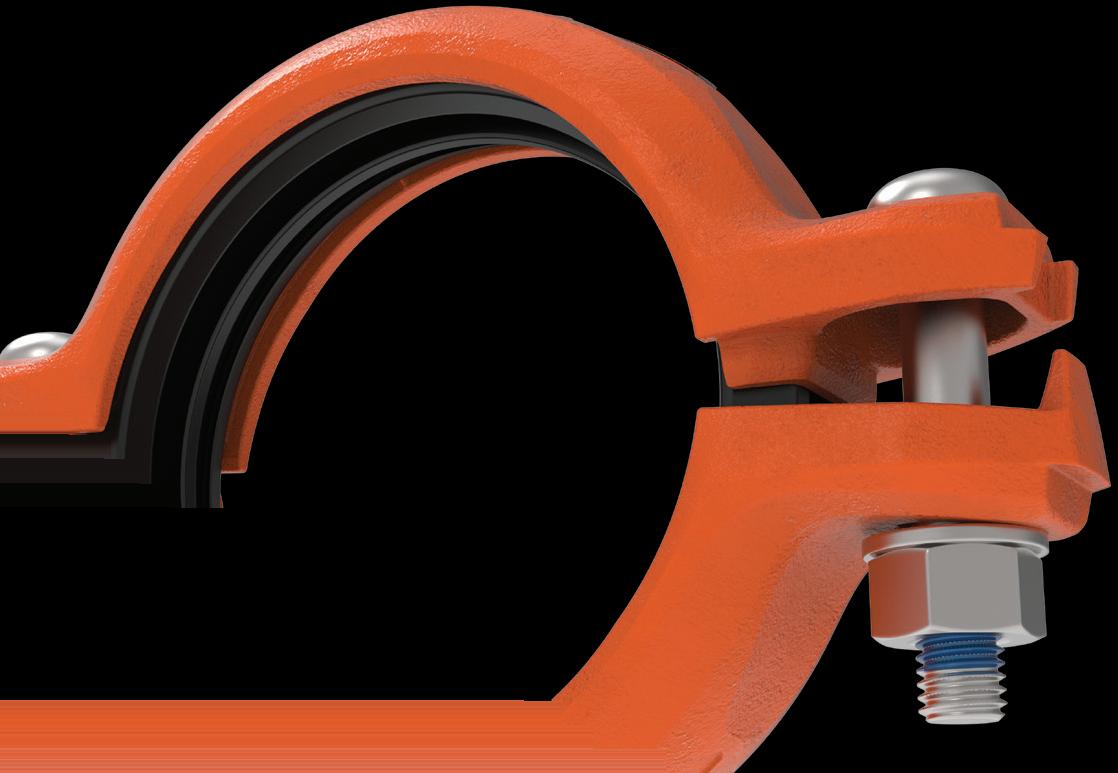
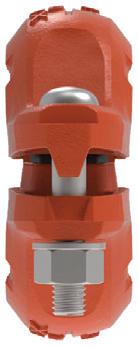
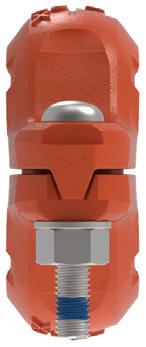
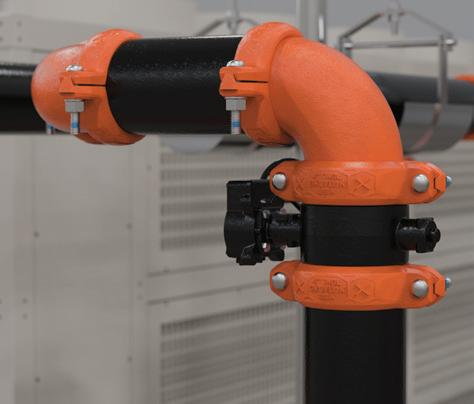
Introducing
the Fig.
74-CL for Mechanical Systems
The Fastest, Easiest to Verify Rigid Coupling Available
• Visual and Tactile Installation Verification
• All-new Patent-pending Design Features Coated Hardware for Corrosion Resistance
Industry thought leaders weigh in on what they expect to see in the year ahead.
As our industry embarks on yet another year of innovation, adaptation, education, and constantly evolving challenges, HPAC Engineering asked members of its editorial advisory board and several other HVACR thought leaders to tell us what they expect and/or hope to see in 2026.
Some had more to say than others. But all offered earnest insights. From refrigerants to cybersecurity, artificial intelligence to indoor air quality, sustainability to next-generation recruiting, here is their take and what’s ahead this year...
Bill McQuade, PE, LEED
AP, CDP, FASHRAE, 2025-26
ASHRAE President
VP and Head of Government Affairs and Sustainability, Baltimore Aircoil
The impact of Generative AI will continue to grow, impacting both demand for commercial equipment to cool data centers and on intel ligent buildings and AI-facilitated MEP design. Higher operating temperature for chips will open up new approaches to data center design.
Kent Peterson, PE, FASHRAE, Chief Technical Officer, P2S Inc.
The breakout of collaborative AI in MEP design will define 2026. Engi neers will increasingly partner with AI tools that draw on vast data sets and internal company knowledge bases to accelerate design cycles and improve quality. AI-powered predictive analytics will optimize HVAC system performance, and generative design tools will help engineers explore more options faster than ever.
Increasing awareness of the importance and value of indoor environmental quality (IEQ) at both the enterprise and societal level will impact designs for commercial new construction and major retrofits.
The transition to A2L refrigerants will require more training for both designers and service contractors. Despite our diligence in in preparing for the transition, our industry will learn some lessons along the way and have to adapt our standards and approaches accordingly.
Decarbonization and resilience will be key drivers impacting commercial building design globally.
The breakout of collaborative AI in MEP design will define 2026.
—Kent Peterson, PE, Chief Technology Officer, P2S
This isn’t about replacing engineers; it’s about using available technology to amplify their capabilities. We saw this in the 1980s when computers were introduced to assist design. Clients want more for less, and collaborative AI can help us deliver sustainable, elegant solutions.
Stephanie Taylor, MD, M Arch., Medical Advisor, ThinkLite Air
The U.S. government has recently dropped the ball on clean air by rolling back restrictions on fossil fuel energy use. As a result, the responsibility for good IAQ is on the shoulders of those who determine budgets for capital and operating cost of buildings. Meanwhile, increases in illnesses following exposure to air toxins released by wildfires across the North American continent have reinforced the need
McQuade
Peterson
to design spaces with safe IAQ. Will businesses and build ing owners invest in protecting occupant health through indoor air monitoring and remediation solutions, or not? I certainly hope the answer is yes.
To move forward, building decision makers must expand their cost analyses to include occupant productivity and health. Thankfully, ASHRAE president Bill McQuade has made healthy indoor environments a key goal for his tenure. So I am trying to remain opti mistic about the future of safe IAQ. The immensity of the opportunity to decrease acute and chronic illnesses through health IAQ remains.
The question is... Will we seize this opportunity?
We will start to see robots on our job sites. We haven’t seen much robotics due to the complexity of our working environment. But now, robots are becoming agile and able to move around in our world.
deployments – whether it be streamlining routine tasks, improving quick access to information, or handling prep work. At NFPA, for example, we’ve enabled some exciting new AI features within NFPA LiNK® that we hope will be incredibly valuable to users from a safety perspective. As others in our industry have said, now is the time for skilled workers to start adopting AI to help them do more and to stay competitive.
Ron Wilkinson, PE, LEED AP, aka “Johnny Tundra”
Given the demands of increasing cooling for digital processing We will see greater emphasis on direct cooling of computer chips. Improved manufacturing methods will integrate cooling surfaces directly into the chips, as opposed to attaching the cooling surfaces onto the completed chips.
Technology has improved significantly over the last two years, driven by advances in hardware and software. We are using reinforcement learning, motion capture, and simulation to make them adoptable. They are no longer limited to the form factor of human movements. Also, they are getting cheaper and more durable. So robots will help us fill the labor shortage and improve both productivity and safety on our jobsites.
Jim Pauley, President, National Fire Protection Association (NFPA)
One area of opportunity that consistently stands out to me is something that we’re talking a lot about as an industry: AI development and deployment. I’m a firm believer that AI can’t replace skilled labor. However, it would be naive (and frankly, shortsighted) to think that we can move forward as an industry without exploring AI
Another example of beneficial integration is the integration of solar panels or solar-pow ered absorption chilling generators directly into roof/wall structures. The panels will provide shelter and structural integrity and, at the same time, either generate electricity or heat the absorption cooling media. The cooling media could then be applied directly to computer chips in a vapor form, or the electricity used to operate conventional cooling apparatus. These arrangements offer increased security by providing power directly at the required site. Even if building integrated cooling and power generation does not provide all of the processing needs, it would allow continued partial operation in the event of grid destruction.
Nancy Kohout, PE, LEED AP, BD+C, Senior Principal | Mechanical, SmithGroup Inc.
Industry changes in 2026 will include rising rack power densities in data centers and a shift toward cooling strategies that avoid both evaporative water use and com pressors. As cooling fluid return temperatures approach 130°F, direct waste heat reuse becomes simpler and more economically viable—ideally supported by emerging policy, or advanced by innovative designers.
Grid-interactive design and load shifting will grow in importance as data center demand strains infrastructure, with thermal and electrical storage, heat pumps, and geothermal systems playing key roles. Despite some federal IRA rollbacks,
Taylor
Kaplanoglu
Pauley
Wilkinson
Kohout
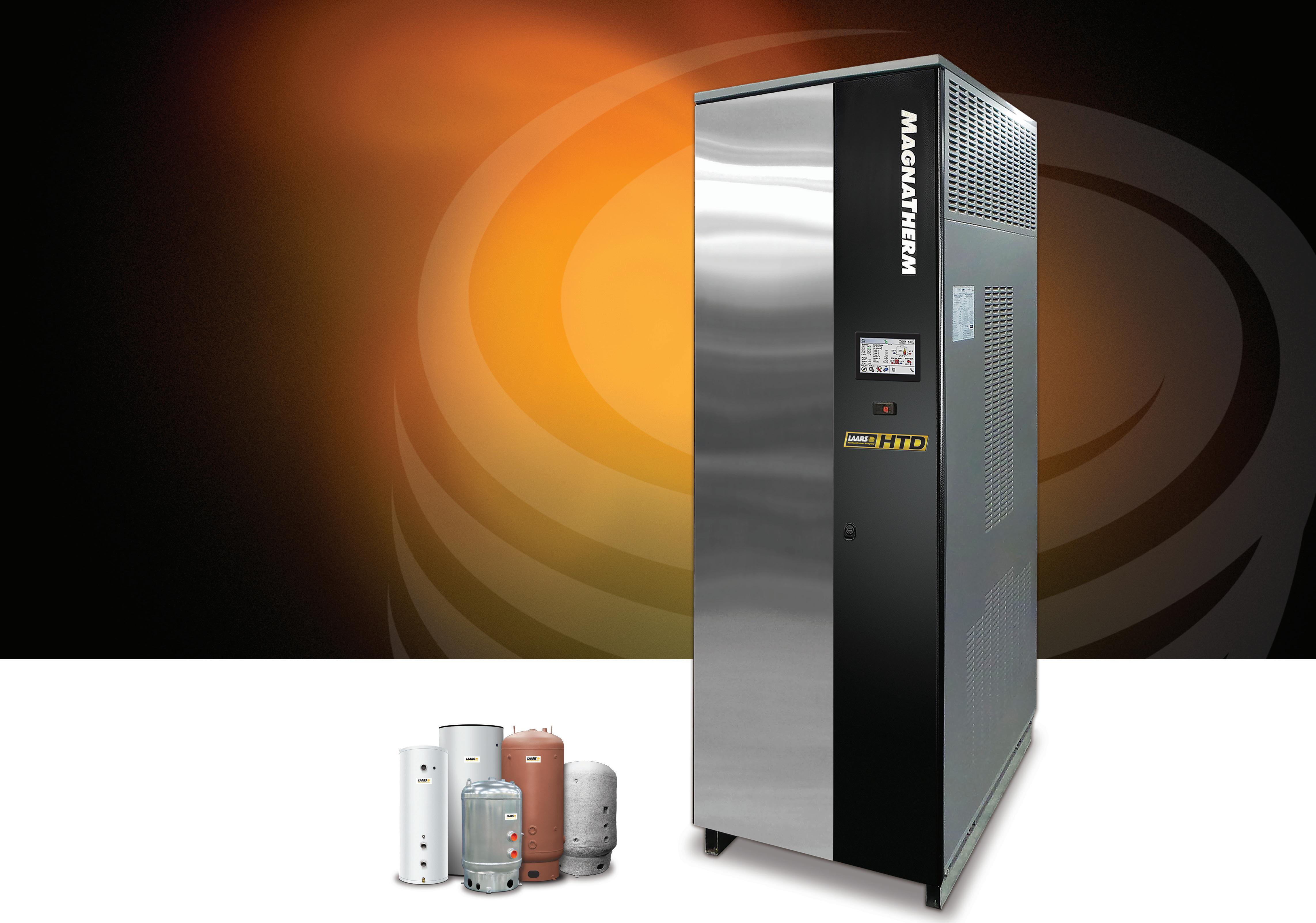
WHEN YOU NEED TO THINK BIG THINK MAGNATHERM ®
l LAARS LINC® Intuitive Touch Screen Controls
l Available in 6 sizes from 1600-4000 MBH
l 20:1 turndown & up to 96% thermal efficiency
l Field-proven, durable stainless-steel heat exchanger
l Proprietary Tru Trac® O2 trimming system
LAARS® MagnaTherm® HTD Condensing Boiler or Volume Water Heater brings ultra-high efficiency and flexibility to any large commercial project.
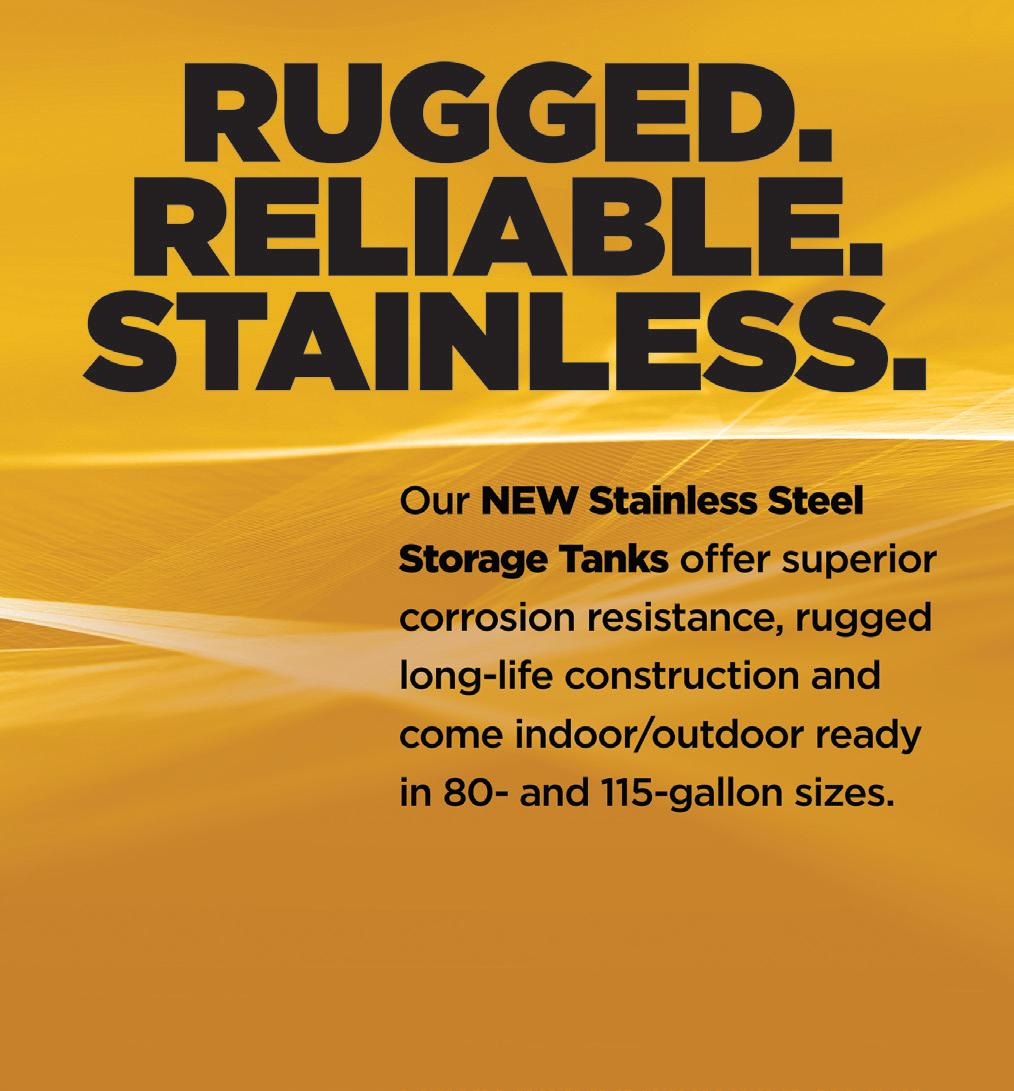
PAIR IT WITH LAARS STORAGE TANKSINCLUDING NEW STAINLESS-STEEL OPTIONS.
Choose from a wide variety of standard jacketed tanks up to 200 gallons and custom options up to 6,000 gallons. For hydronic buffer tanks through domestic hot water storage, whatever your next project demands, count on Laars for a highperformance solution.
geothermal remains incentivized, supporting decarbonization driven by state, local, utility, and corporate goals.
Charles E. Gulledge III FASHRAE, HBDP, LEED AP, Director of Engineering —
Construction, Environmental Air Systems LLC
The big push now is ultra low dew point dehumidification, hyper scale data centers, and technical water direct-to-chip, and perhaps dust collection. We are expect ing a robust year in 2026. Strong bookings and backlog in the data center, pharma, and advanced manufacturing space. So, I am looking for talent!
momentum as AMCA and Eurovent standards are increasingly embedded in national regulations, signalling a clear shift towards higher efficiency and verified performance. At the same time, rapid investment in India’s sunrise sectors, such as solar, EVs, semiconductors, and pharmaceuticals, is driving strong demand for high quality, energy-efficient, hygienic, and certified solutions, leading to greater investment in production among manufacturers.
My appointment as AMCA President for 2025–2026, as the first from South Asia, reflects this shift in the region. Guided by the theme “Global Vision, Sustainable Action,” my priorities include strengthening AMCA standards, expanding the Certified Ratings Program beyond compliance, and developing clearer performance differentiators through collaboration. By aligning regions globally while enabling local action, AMCA can drive a more resilient and sustainable HVAC industry.
Nancy Simoneau, Chair, American Boiler Manufacturers Association (ABMA), President, Le Groupe Simoneau Inc.
From my perspective, 2026 will reward decisiveness. The HVACR and boiler industry is no longer waiting for certainty; it is learn ing to move through it. Inflation, geopolitics, and supply volatility are real, but climate pressure, energy efficiency mandates, and aging infrastructure leave little room for delay. Investment will continue, especially in industrial and institutional markets.
So we will see clear winners and a few hard resets among major players this year. Success in 2026 will belong to organizations that collaborate, move with purpose, protect their people, and stay relentlessly focused on customer trust.
Nick Espinosa, Cybersecurity Chief Security Fanatic cybersecurity
will feel less like a technical problem and more like a daily business risk. Attacks will increasingly target people instead of systems, and use highly personalized scams powered by AI. Data breaches will become faster, quieter, and harder to detect, and I think they will start spread ing across suppliers and partners instead of being contained to the original targeted company. Regulators will continue to raise expectations, making
Asokdas
Damodaran
President, AMCA International; Managing Director, Systemair India
As ventilation standards evolve globally, the HVAC industry is moving decisively towards sustain ability, performance transparency, and lifecycle value, yet progress remains uneven due to fragmented regulations. Against this backdrop, Asia-Pacific and the Middle East are no longer merely following global trends in air movement and control; they are starting to shape them. In India, for example, we see a change in the
Firms that treat cybersecurity as part of jobsite safety... will be way better-positioned to avoid disruptions.
—Nick Espinosa, cybersecurity expert
organizations more accountable for how they protect data. The winners will not be those with the most tools, but those with clear visibility, strong fundamentals, and the ability to respond quickly when something goes wrong. For mechanical contractors and engineers, cybersecurity risk will increasingly come through project emails, shared drawings, building automation systems, and trusted vendors, rather than traditional IT systems. Firms that treat cybersecurity as part of jobsite safety, such as protecting plans, controls, and access as carefully as physical equipment, will
Gulledge III
Simoneau
Damodaran
Espinosa
be way better-positioned to avoid costly disruptions and financial liability.
Liz Beardsley, Senior Policy Counsel, U.S. Green Building Council (USGBC)
This year, we expect to see increased investment in existing buildings and their energy and HVAC sys tems. Owners and developers are being driven to renovate by several factors. First and foremost, build ing performance standards, bench marking, and emissions disclosures (including global investors subject to EU requirements) together are creating a regulatory push.
Larry Clark, PE, author of Clark’s Remarks
To be honest, I am very concerned right now that climate change seems to have fallen off the mainstream radar. It was a big issue during the last U.S. presidential campaign, but now, both sides seem to have gone dark on the subject. Nevertheless, climate change remains a clear and present danger. To our credit, engineers are still very much engaged on sustainability and decarbonization.
Second, construction cost spikes, both tariff-related and tied to labor shortages, along with the cost of capital, seem to disfavor big new construction projects in the U.S. right now. The OBBA’s restoration of 100% expensing for capital real estate investments also is a significant enabler of renovation starting this year. Lastly, owners are motivated to reposition assets in soft CRE markets, and may find opportunities for conversions as the housing crisis ensues. In sum: existing buildings will see resurged investment including upgrading and modernizing HVAC for efficiency and grid-connectedness.
Kenneth M. Elovitz, PE, Esq.
Regarding A2L refrigerants, new air conditioning and refrigeration systems will utilize low Global Warming Potential (GWP) “mildly” flammable refrigerants like R-454B and R-32. Codes and standards are evolving to define safety consider ations that the “mild” flammabil ity presents. ASHRAE Standard 15-2024 already has seven addenda in just over a year since the standard was issued, so it might not be feasible, or even possible, for engineers yet to know what the standards say and how to apply them properly.
Nevertheless, engineers can utilize long accepted practices like refrigerant detection and alarm, as well as service access space, minimum machinery room volume, and ventilation. Machinery room exhaust fans might need to be spark-resistant construction with motors out of the air stream.
But if this issue fades from the headlines and the general public is allowed to just forget about it, then all the gains we had made in recent years will be forgotten. The momentum of the whole movement will be set back for years. And time was already of the essence.
So my hope for 2026 is that climate change will once again become a priority here in the U.S., like it still is overseas. Not to sound too alarmist, but we are truly running out of time.
Glenn Barrett, PE, DC Engineering
The biggest challenge in the super market industry is the TTR rule changes that are being proposed and commented on. Currently the enforcement, and rules to follow, are in quasi-“limbo” regarding GWP limits and the dates those “new” limits will be enforced.
While engineers are not usually responsible for safe work practices, a design that makes it impossible or even difficult for mechanics to work safely might deviate from the engineer’s standard of care.
Owner/operators of grocery stores are tying to make design decisions now, but they are concerned about costs associated with changing equipment before its end of life just to meet today’s “code requirements.” But by the time they install the “new” equipment, the rules change and they realize they did not need to remove equipment that still had useful “life,” after all.
OEMs and consultants are stuck trying to read tea leaves and therefore can’t really provide good direction or options due to the unknowns.
Adoption and installation of A2L-based supermarket refrigeration systems will start to ramp up slowly in 2026, most owner/operators are moving forward with CO2, but watching the outcome of the first A2L projects with great interest.
Fear exists that an inspector could stall a store grand opening for a code requirement that was not addressed in the manner they expected. Best practices are not yet established. So some leak mitigation infrastructure may cause the refrigeration equipment to shut off or pump down unnecessarily (no leak, but something in the control or sensor thinks there is a leak and the system no longer keeps the products cold).
Beardsley
Elovitz
Barrett
Clark
AI-Driven, Decentralized Mesh Networks Can Transform Smart HVAC Efficiency
To solve the ‘Infrastructure Paradox’, our industry is now looking at mesh architecture to serve as the wireless backbone for a truly agentic HVAC ecosystem.
By FABIO ZANIBONI, Founder and CEO, BubblyNet
As we navigate 2026, the building management landscape has shifted from “smart” aspirations to “autonomous” realities. For building engineers and facility
managers, the pressure is no longer just about keeping the lights on or the chillers running; it is about balancing aggressive ESG (Environmental, Social, and Governance) mandates with the soaring demand for occupant wellness and productivity.
The “Infrastructure Paradox” has long been the bottleneck: we have more
sensors than ever, yet most HVAC systems remain reactive, tethered to centralized controllers that struggle with the latency and complexity of modern building usage.
To solve this, the industry is now looking toward a decentralized mesh architecture, originally perfected in lighting, to serve as the wireless
Fabio Zaniboni, Founder and Chief Executive Officer at BubblyNet, is a technology leader with over two decades of experience in the Internet of Things (IoT), digital transformation, and sustainable innovation, particularly in the lighting industry. His career, including roles at Emerson Electric and Comau Robotics, has given him a global perspective on market insights. He now leads an R&D team determined to integrate advanced technologies to enhance building efficiency, sustainability, and user experience. His research on how factors like light, sound, and air affect well-being is driving smarter, more sustainable building solutions. Known for transforming complex technologies into scalable applications, Fabio partners with global organizations to foster digital innovation and sustainability in the built environment. For more about BubblyNet, visit https://bubblynet.com/.
AI systems equipped with VOC and CO₂ sensors can automatically trigger increased ventilation the moment levels begin to rise, maintaining a “high-performance” cognitive environment.
Decentralized mesh networks transform lighting into the building’s nervous system, enabling AI-driven HVAC decisions at the edge.
backbone for a truly AI-driven, agentic HVAC ecosystem.
Mesh as Nervous System: Why Decentralization Matters
Traditional Building Automation Systems (BAS) often rely on a “huband-spoke” model. This centralized approach creates two critical failures: a single point of failure and a massive data bottleneck. In contrast, a decentralized mesh architecture, specifically leveraging the Bluetooth® Mesh standard, transforms every luminaire and sensor into a node that can process data locally.
For a facility manager, this means the lighting system becomes the building’s nervous system. Since lighting is already distributed throughout every square foot of a facility, it provides the most granular occupancy and environmental data available. By embedding AI microchips directly into these devices, the building can make localized decisions about airflow, heating, and cooling without waiting for instructions from a central server.
This architecture is also inherently resilient. If one node fails, the mesh
reroutes the data, ensuring that critical HVAC operations, such as maintaining negative pressure in a lab or safe CO₂ levels in a boardroom, are never compromised.
From Reactive to Agentic: AI’s Role in HVAC Optimization
In 2026, we have moved beyond simple “if-then” logic. The modern HVAC system is “agentic,” meaning AI agents are capable of making complex, predictive decisions based on a synthesis of millisecond-interval data points.
1.
Load Forecasting and Predictive
Setpoints: AI-enabled systems no longer wait for a thermostat to register a temperature spike. Instead, they use predictive load forecasting, analyzing weather patterns, historical occupancy trends, and real-time energy pricing to pre-cool or pre-heat spaces. This “thermal batteries” approach allows facilities to shift energy consumption to off-peak hours, significantly reducing operating costs while maintaining perfect comfort levels.
2. Occupancy-Based Dynamic Adjustments: Occupancy-based controls are the low-hanging fruit
of energy efficiency. However, AI takes this further by distinguishing between “active” and “passive” occupancy (e.g., a guest sleeping in a hotel room vs. a meeting in progress). By using delayed-off features and machine learning occupancy models, HVAC systems can reduce energy waste in unoccupied zones by 35% without the risk of “nuisance tripping” that plagues traditional sensors.
Human-Centered Engineering: The ROI of Well-Being
While energy savings are the “hook,” the true value of AI-driven HVAC lies in human capital. We know that people are a company’s most expensive asset, often 100+ times the cost of the building’s energy.
The Hidden Cost of CO₂
Poor indoor air quality (IAQ) is a silent productivity killer. At levels as low as 1,400 ppm, CO₂ can slash daily productivity by nearly 10%. Harvard studies have shown that high concentrations of CO₂ and particulate matter
AI-optimized indoor environments improve air quality, thermal comfort, and cognitive performance—delivering measurable gains in productivity and well-being.
lead to significantly slower cognitive response times and reduced accuracy.
AI systems equipped with VOC and CO₂ sensors can automatically trigger increased ventilation the moment levels begin to rise, maintaining a “high-performance” cognitive environment. This is not just a health benefit; it is a financial strategy. Improving employee productivity by just 10% can add an additional $50 per square foot in value to a business.
Thermal Comfort and Retention
Temperature is the number one complaint in any workplace or co-working space. AI-driven systems learn the individual preferences of occupants, adjusting micro-climates in real-time. When employees are comfortable, they are more engaged and less likely to leave, directly impacting a firm’s talent retention and satisfaction metrics.
Navigating the Challenges: Security, Cost, and Legacy
For the mechanical engineer, the primary concern with any new technology
is the “how.” How do we install it? How do we secure it? How do we pay for it?
Cost-Effective Retrofits: Traditional wired retrofits are often financially impossible for older structures due to hazardous materials or historical preservation laws. Wireless mesh
Temperature is the number one complaint in any workplace or co-working space.
solutions, particularly those that are factory pre-programmed, can reduce installation costs by as much as 60% by eliminating extensive cabling and central hubs.
Edge Computing and Cybersecurity: By processing data “at the edge” (on the device), sensitive occupant information stays within the building rather than traveling to the cloud. This
decentralized approach is significantly more secure than centralized systems, which represent a massive target for cyberattacks.
Interoperability: Modern AI systems must support open, standardized protocols like BACnet and Bluetooth® Mesh. This ensures that the HVAC system can communicate seamlessly with lighting, security, and fire safety systems, avoiding vendor lock-in.
The Future is Autonomous
The goal of the modern facility manager should be to create a “living building”—a structure that anticipates the needs of its occupants before they even walk through the door. By leveraging the ubiquitous infrastructure of lighting as a decentralized mesh backbone, we can finally give AI the granular, real-time data it needs to optimize our world.
When we invest in technology that enhances well-being, we aren’t just improving day-to-day operations—we are building a foundation for longterm, sustainable success.
ABMA ‘Amplifies’ Mission, Sets Agenda for Spring Expo
Educational sessions and expert speakers now set for March-April event in Nashville.
By SHAUNICA JAYSON, Vice President of Membership & Marketing, American Boiler Manufacturers Association (ABMA)
The industrial steam landscape is standing at a critical crossroads. As facility managers, mechanical engineers, and consulting firms navigate the complexities of decarbonization, digital transformation, and a shifting workforce, the need for a centralized hub of innovation has never been greater.
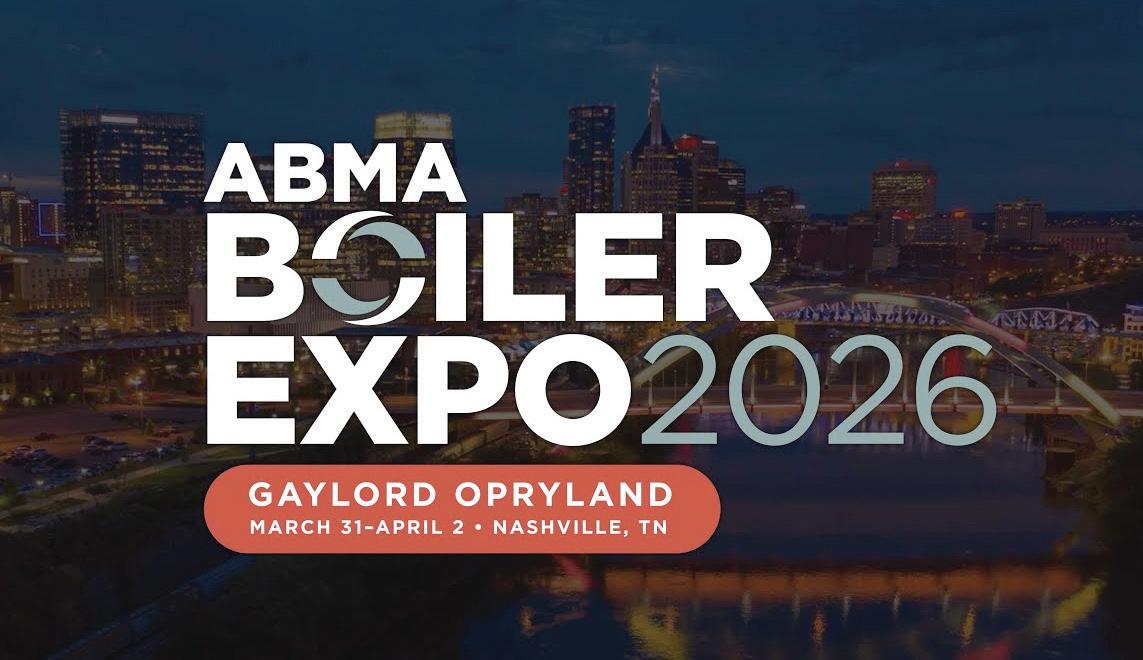
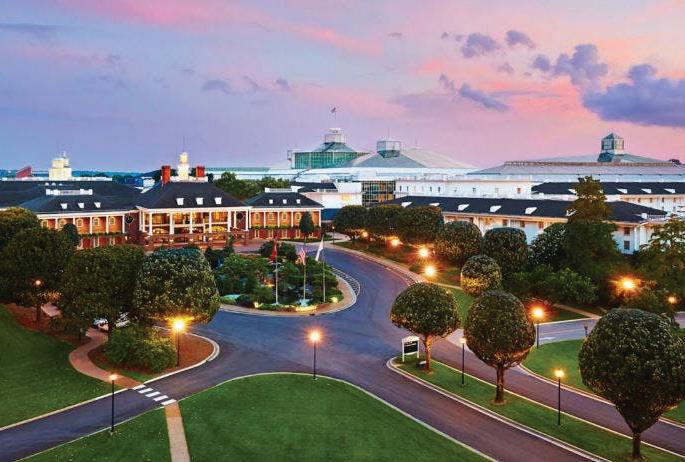
At the American Boiler Manufacturers Association (ABMA), we have heard this call clearly. Our response is AMPLIFY—the theme for our 2026 BOILER Expo , taking place from March 31 to April 2, 2026, at the legendary Gaylord Opryland Resort & Convention Center in Nashville, TN.
As the only national trade show focused exclusively on the boiler supply chain, BOILER Expo has evolved into a catalyst for the next generation of steam technology. As of mid-January, we are currently seeing record registration numbers, pointing toward record all-time attendance. This signals a significant desire for the industry to reconnect and to keep evolving.
This year, we are also proud to be co-locating with the International BIOMASS Conference & Expo. In a major value-add for our community, attendees with all-access passes can attend the BIOMASS show in addition to the ABMA BOILER Expo—offering two shows for the price of one. To kick off this partnership, we will host a joint welcome reception that brings
together leaders from both the boiler and renewable energy sectors.
Setting the Pace:
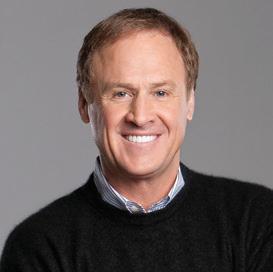
Keynote Rusty Wallace
Every high-performance system requires precision, leadership, and a commitment to excellence—qualities that define both the boiler room and the racetrack. To kick off the 2026 Expo, we are honored to welcome NASCAR Hall of Famer Rusty Wallace as our keynote speaker. Wallace’s legendary career was built on technical mastery and high-stakes decision-making. His insights into building winning teams and optimizing performance will set an inspiring tone for our general session, challenging attendees to apply that same “championship” mindset to their own operations.
Deep-Dives: Pre-Conference Workshops and On-Site Tours
To provide even greater value, ABMA this year is introducing specialized pre-conference workshops
and unprecedented access to operational systems.
First, we will feature a workshop led by Jude Wolf from WARE Inc. Known for his popular “Boiler University” education programs, Jude brings hands-on knowledge essential for mastering boiler room operations. Additionally, we are partnering with the Association of Water Technologies (AWT) for a comprehensive Water Treatment Workshop, focusing on the chemistry that serves as the lifeblood of steam systems.
A unique highlight for 2026 is the opportunity for attendees to participate in hands-on boiler training and exclusive tours of the Gaylord Opryland’s own boiler room. Seeing one of the country’s most complex hospitality thermal infrastructures in action provides a rare, real-world perspective on large-scale steam management.
The
Pilot ‘Qualified Buyer’ Program
To maximize efficiency for high-level
BOILER SYSTEMS ENGINEERING
decision-makers, ABMA has launched its new “Qualified Buyer Pilot Program.” This initiative is specifically designed for senior professionals responsible for boiler systems and thermal infrastructure. Rather than navigating the show floor independently, accepted participants receive a curated, pre-scheduled agenda of 1:1 technical meetings with manufacturers that align directly with their current priorities and project scopes. Participation in this program is complimentary for those who qualify, providing a streamlined, high-ROI experience for the industry’s top leaders.
Technical Education: Confirmed 2026 Sessions
Our revitalized educational program features over 20 breakout sessions led by industry experts and categorized into four new key tracks: Fundamentals & Essentials; Safety & Compliance; Technology & Innovation; and Emerging Trends & What’s Next. These sessions will provide actionable data attendees can implement ASAP.
Confirmed Speakers & Topics Include:
• Jay Ehrfurth (ASOPE): The Art of Replacing Boilers in a Centralized Plant
• Tom Garrett & William Evans (Autoflame): Emissions Standards & Future-Ready Monitoring
• Scott Kossman (Chicago Blower): The Truth About Unrealistic Fan Sound Ratings
• Nate Klein (Clark-Reliance): ASME Section I Requirements for Level Instrumentation
• Brandon Fultz (Elliott Tool Technologies): Master the Heavy Wall Challenge: Tooling and Techniques for Successful Drift Rolling
• Tim Dwyer & Russell Wilfong (Emerson): Boiler Valve Operations
• Jon Kapel (Steamworks): Top 10 Must-Have Skills for Boiler Operators
• Jamie Tighe (E-Tech): New Heat Recovery Retrofits into Legacy Systems
• Dominik Mahne & Bernie Sapp (Gestra): Improve Boiler Efficiency Through TDS Control
• Jim Lieskovan (Nationwide Boiler): Emissions Regulations, Control Strategies, Lessons Learned
• David Eoff (Preferred Utilities): Understanding the Fundamental Safety of Burner Management Systems
• Matt McDonald (RF MacDonald): Hybrid Systems with Gas or Electric Boilers Plus Heat Pumps
• Troy Edens (Rogue Combustion): CFD Modeling
• Robert Reid (Weishaupt): Combustion Theory and Low NOx Technology
• Don Whitman & Mokhtar Matallah (Superior Boiler): Firetube vs. Watertube: The Right Boiler Type for Your ApplicationAdditional topics and speakers will be announced in the coming weeks. For the most up-to-date information, visit the 2026 BOILER Expo Speaker page
The Gaylord Opryland Resort will open up its own complex, high-efficiency boiler room for attendee tours.
Promoting a Diverse Workforce: WIBI + ‘Ladies of Steam’
A vibrant future for the boiler industry demands a diverse workforce. This spring, ABMA’s Women in the Boiler Industry (WIBI) professional community is thrilled to host a lucheon panel featuring the remarkable Ladies of Steam, a platform dedicated to celebrating, supporting, and connecting the women of the steam world.
This confirmed panel will include Ladies of Steam cofounder Nicole Wallace, a licensed hobby boiler operator who has spent over 20 years restoring and operating steam traction engines. She even designed her own replacement boiler for a 1919 Minneapolis steam engine to modern ASME standards.
The Expo Floor: 120 Exhibitors and the Mobile Equipment Pavilion
The 2026 Expo floor will be a high-tech hub featuring over 120 exhibitors. Highlights will include three special attractions:
• Mobile Equipment Pavilion. This expanded area is the heart of the show floor, featuring the latest skid-mounted and trailer-mounted mobile units. It will also host our Grand Industry Reception with live country music;
• Lincoln Electric Virtual Welding. Partnering with Lincoln Electric, we offer virtual welding stations to test your skills and see the technology training the next wave of fabricators;
• The Viskup Race Car. A fun reminder of the engineering excellence that has historically linked motorsports with the boiler world.
Taken all together, the 2026 ABMA BOILER Expo is your chance to focus on the future of your facility and your career. ABMA is committed to bringing more qualified buyers to the Expo and our exhibitors, raising the ROI for the entire boiler community. We invite you to join us in Nashville as we AMPLIFY the volume on our industry.
Learn more and register at ABMABOILERExpo.com.
NEW PRODUCTS
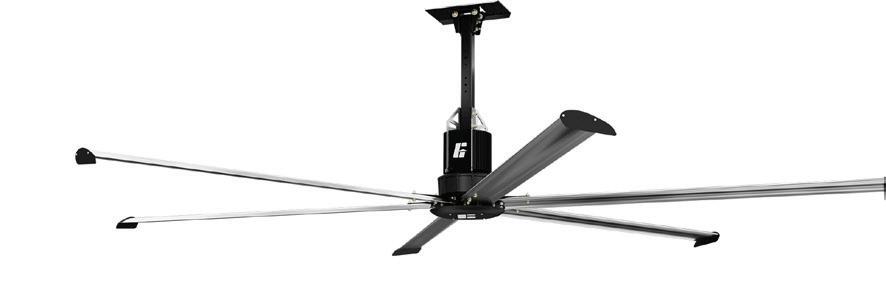
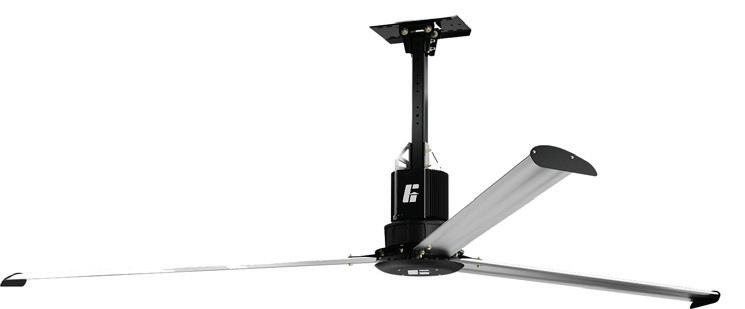
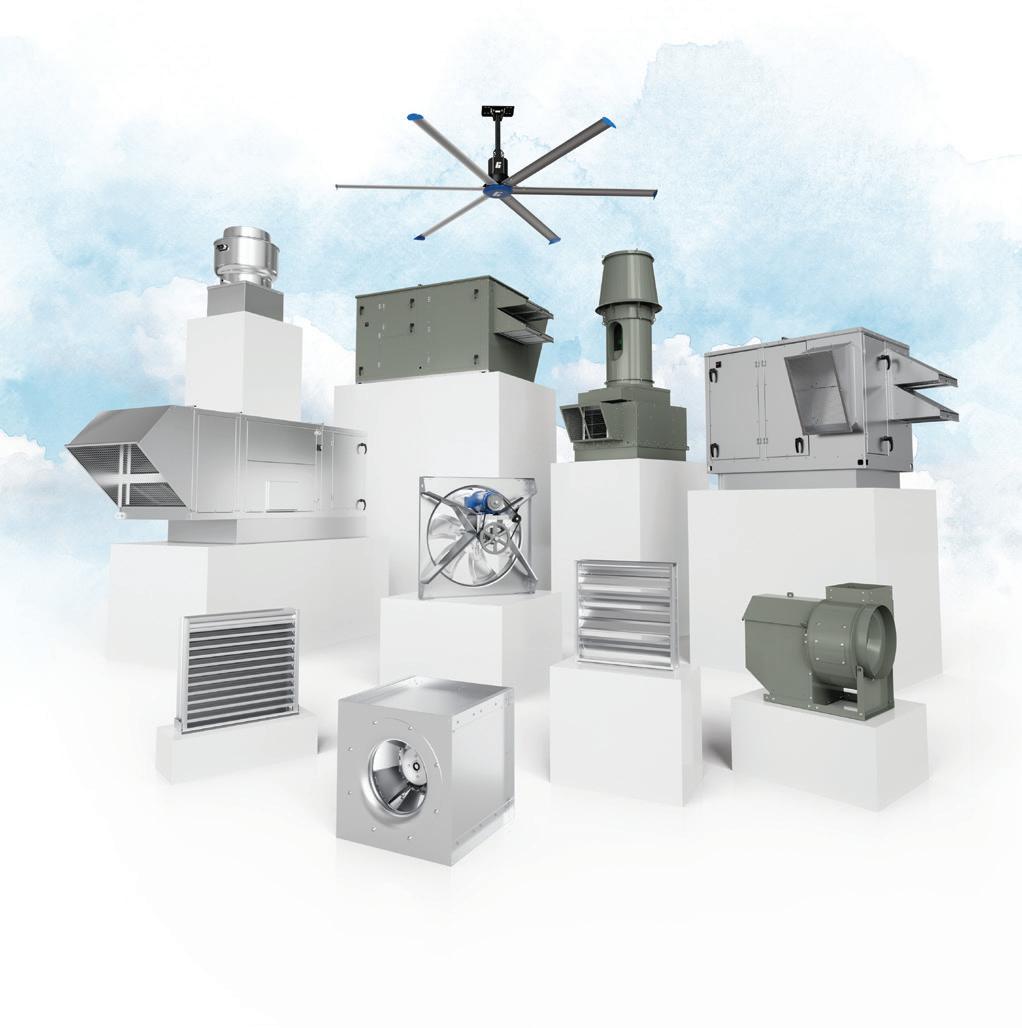
Greenheck DS-3 HVLS Overhead Fans
Greenheck has announced the redesign of its DS-3 three-bladed and DS-6 six-bladed High Volume Low Speed (HVLS) overhead fans, engineered to deliver significant performance advantages, best-in-class reliability, advanced configurability, and ease of installation for a wide range of applications. Engineered for superior efficiency, the DS-3 and DS-6 achieve Ceiling Fan Energy Index (CFEI) values up to 83% higher than the minimum DOE requirements.
Greenheck
EnviroMax HEPA-Filtered Enclosures
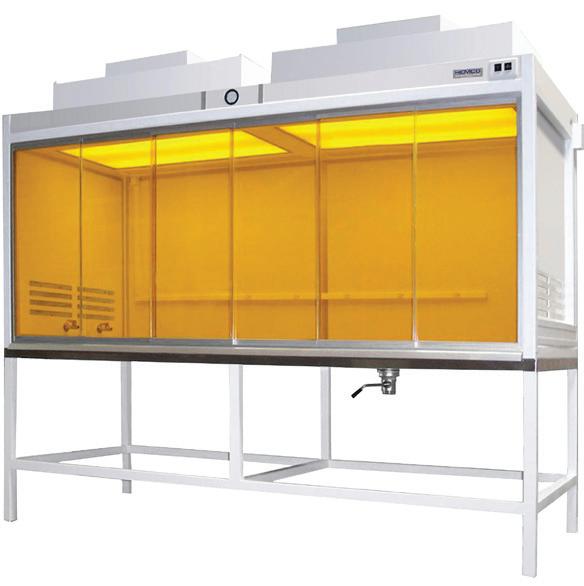
HEMCO’s EnviroMax HEPA-filtered enclosures are designed to isolate liquidhandling workstations, HPLC equipment, sample weighing, high-throughput screening, powder handling, and other lab-automated processes by providing exhaust air systems or HEPA-filtered laminar-flow workstations. They protect personnel from hazardous fumes and processes from lab contamination. Using a flexible, modular design, they are engineered and built to meet customer size and design requirements.
HEMCO
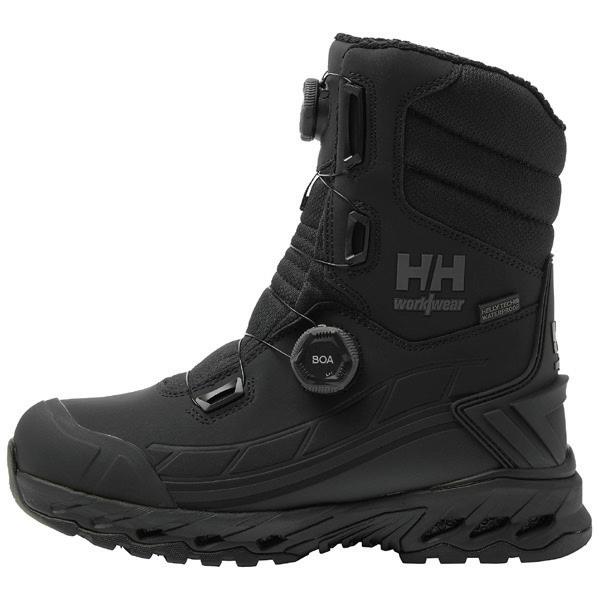
Bifrost Winter Tall BOA Work Boots
Helly Hansen launches the Bifrost Winter Tall BOA work boot, a rugged, blizzard-ready boot rated to –40° F. Loaded with tech and designed with professionals working in the Arctic, it is engineered for extreme cold and high-performance jobsites. Packed with Solarcore Sc foam—a thin, soft and flexible insulation based on the NASA-developed Aerogel that delivers enhanced thermal performance with less bulk—HELLY TECH waterproofing, 400g PrimaLoft Gold insulation and a Dual BOA fit system. At just 25.4 ounces, the boot is incredibly lightweight compared to others in its class. Also available in a non-BOA variation with composite toe protection.
Helly Hansen
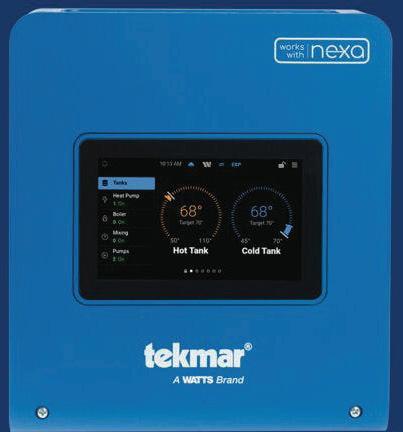
Smart Heat Pump Control 291
The Smart Heat Pump Control 291 from tekmar operates up to four heat pumps in a two-pipe or four-pipe configuration. The system can be expanded to customize it for maximum home comfort. The system can deliver heating and cooling of buffer tanks simultaneously (in a four-pipe configuration) and be extended to support up to 16 heat pumps, up to three mix temperatures, and support a dedicated boiler loop. It supports a backup boiler or a backup boiler loop with a Smart Boiler Control 294. The Nexa by Watts web and mobile applications provide real-time remote monitoring, setting adjustments and notifications.
tekmar
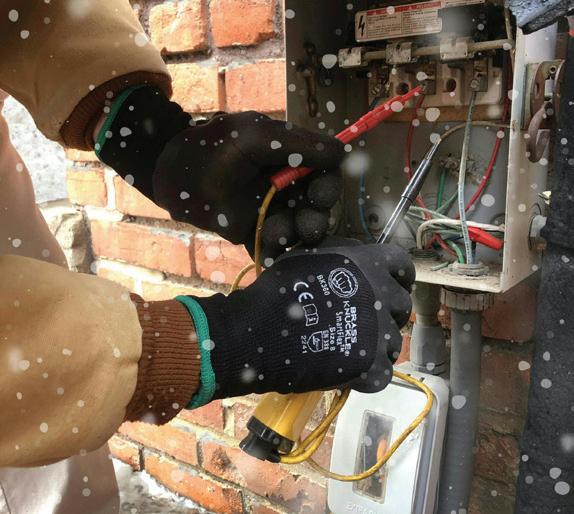
SmartFlex Bk360 Cold-Weather Work Gloves
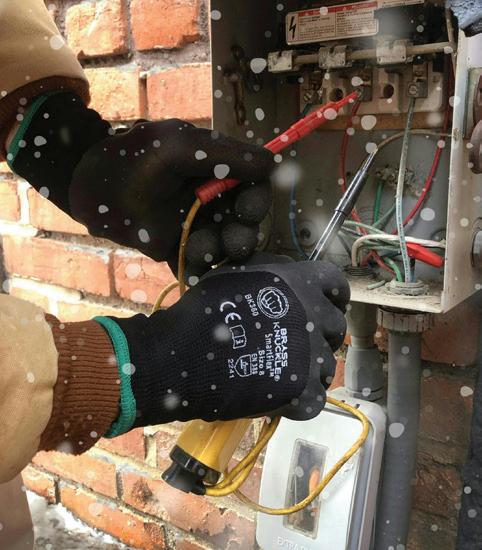
SmartFlex BK360 cold-weather work gloves from Brass Knuckle is engineered to keep hands warm, dry and productive in punishing conditions. A 13-gauge nylon shell fits over a soft, 7-gauge napped acrylic liner for warmth and comfort. It’s finished with a full foam latex palm and fingers—and three-quarter coverage on the back of the hand—for superior insulation and grip. Unlike standard coatings that stiffen in low temperatures, the foam latex stays pliable and responsive, preserving tactile control in cold environments. The sponge-like foam coating provides a strong, dry grip and draws moisture from the palm surface in wet conditions, helping maintain slip resistance.
Brass Knuckle
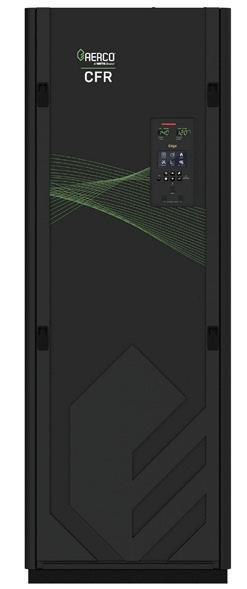
CFR Boiler 2000 MBH Model
AERCO expands its CFR stainless-steel condensing boiler line with the addition of a new 2000 MBH model. Patented StackGuard technology enables the unit to operate as a high-efficiency boiler while maintaining dry flue gas, making it safe for Category I vent systems. Features include thermal efficiency up to 87.1%, 4:1 turndown ratio (dependent on capacity), no need for secondary or bypass pumps, zero side clearance installation, fits through a standard 36-in. doorway, and serviceable from the front, side or top. Equipped with the Edge controller for intuitive system optimization and seamless integration with building automation systems.
AERCO
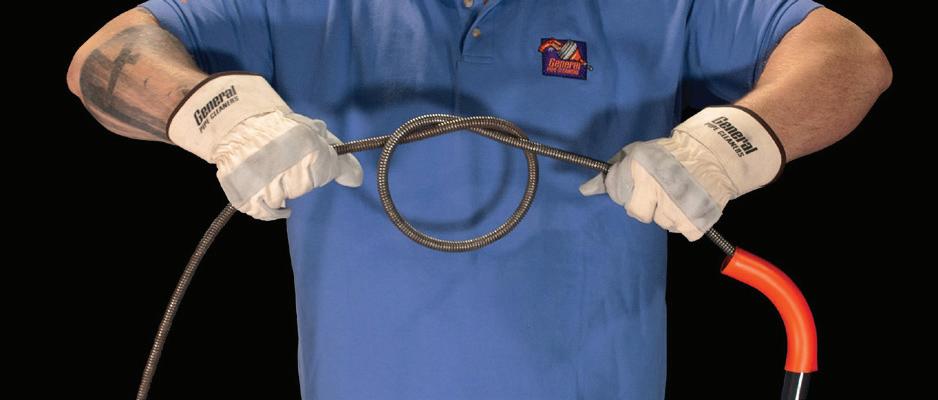
Teletube Flexicore
Heavy-Duty Closet Augers
Teletube Flexicore heavy-duty closet augers from General Pipe Cleaners carry three extra feet of cable telescoped inside the guide tube that can be accessed by pushing the button for extra cable length when it is needed. Closet augers are the ideal tools for clearing clogged toilets. Flexicore is comprised of two layers of tempered spring steel coiled tightly around a core of 49-strand wire rope, providing remarkable resistance to kinking. They also feature a vinyl bowl guard, vinyl grip handle and turning handle, and a “grip clip” for securing the cable.
General Pipe Cleaners
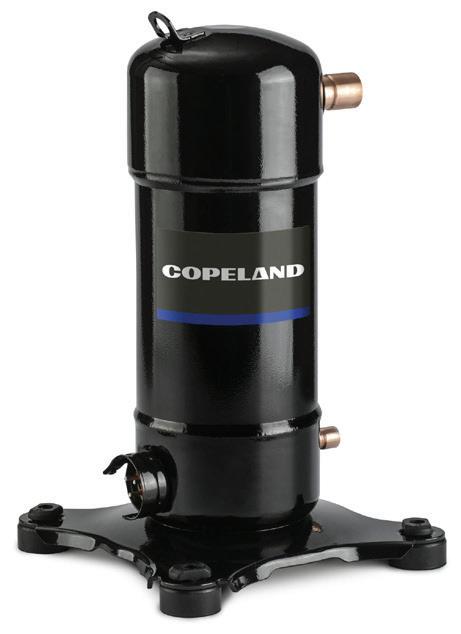
KF Variable-Speed Scroll Compressor
Copeland launches the KF variable-speed scroll compressor with the EV4 variable frequency drive platform. It is optimized for the low-GWP A2L refrigerant R-454B and is engineered to meet future efficiency standards. Its 10:1 turndown ratio provides strong efficiency across a wide range of operating conditions. With a capacity range of 1.5 to 5 tons and potential for advanced features such as vapor injection, it supports nextgeneration designs.
Copeland
NEW PRODUCTS
PressACR Line Extension
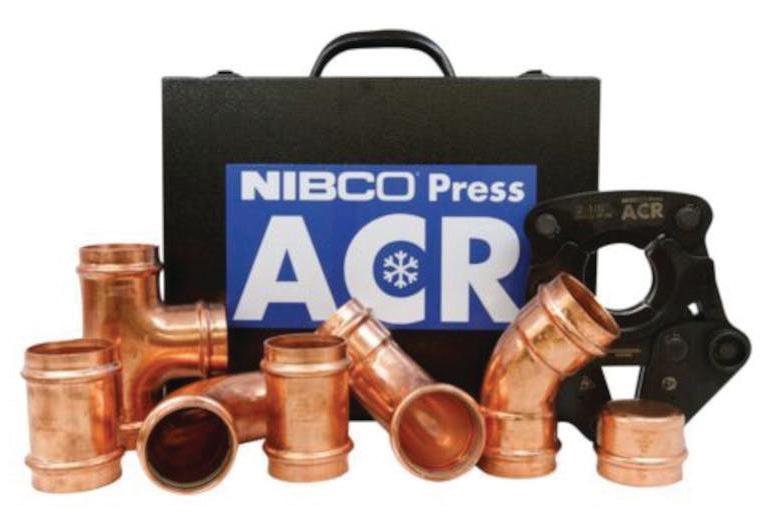
NIBCO introduces 2 1/8-in. OD fittings to its PressACR line. The patented interior groove design and gray HNBR seals make them suitable for high-pressure HVACR applications. Featuring a professional appearance and delivering consistent joint quality, tthe fittings meet stringent certification and compliance standards that support applications rated up to 700 psi.
NIBCO
Service Wrench Line
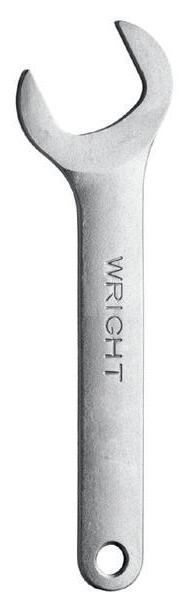
The service wrench line from Wright adds a new line of metric service wrenches and two new extended SAE sizes. Designed for use in tight spaces and demanding industrial environments, the new offering includes 21 metric sizes, ranging from 19mm to 65mm, and two larger SAE sizes, 2 1/2 in. and 2 9/16 in. The 30-degree angle metric wrenches are engineered for restricted clearances. A satin-chrome finish provides a professional-grade appearance, while easy-to-read, stamped size markings make identification quick and easy on the job.
Wright
Multi V I Heat Pump
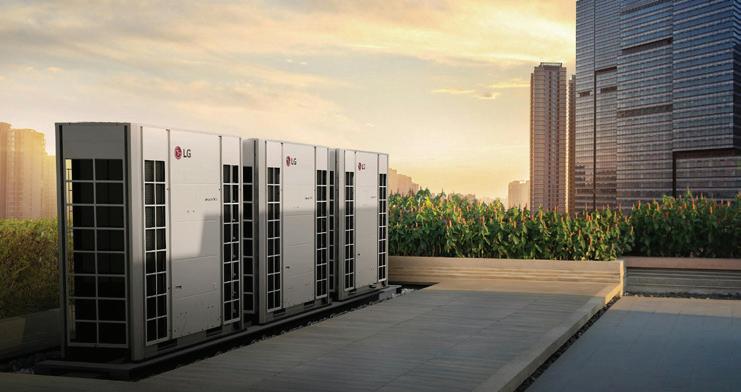
LG Electronics introduces the LG Multi V i, an all-electric heat recovery, variable refrigerant flow heat pump solution. It is designed to transform commercial spaces and meet today’s demands for energy efficiency, design flexibility and intelligent climate control. Onboard controls monitor temperature, occupancy and humidity levels to support efficient facility management. It also monitors consumption and sends alerts before thresholds are exceeded. The unit may improve the Energy Efficiency Ratio by up to 28.3 percent versus the previous generation Multi V 5 models. It uses low-GWP R-32 refrigerant with a reduced charge. Auto-tuning, remote firmware updates and compressor balancing reduce downtime and service calls.
LG Electronics USA
W.steps PRIME Line of Telescopic Ladders
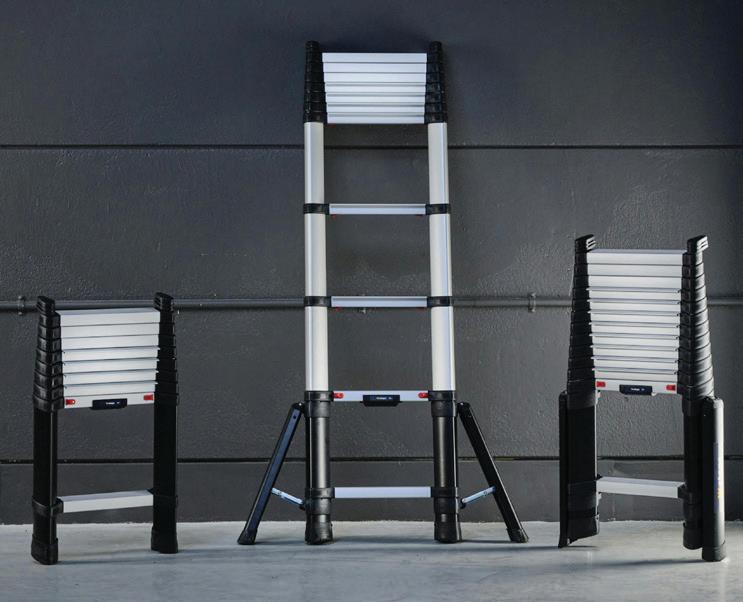
Hultafors Group North America launches its W.steps (pronounced “veesteps”) PRIME Line of telescopic ladders. The patented triangular tube design provides greater torsional rigidity, making the ladders stronger and more stable than round-tube telescopic ladders. Made from aircraft-grade, certified aluminum. The rungs have grooved channels to disperse dirt and moisture for a better show grip and are 3 1/8-in. wide to help prevent slipping, provide more comfort and reduce muscle fatigue. The ladder bases have angled rubber feet, and the top rails are capped with durable rubber that can be adjusted individually to accommodate uneven or obstructed surfaces.
Hultafors Group North America
i-Vu Pro v10 Building Automation System
Carrier introduces i-Vu Pro v10, a next-generation building automation system designed to help facilities of all sizes enhance operational efficiency, collaboration and resilience. Designed for seamless integration with Carrier HVAC equipment, it provides facility managers and technicians with powerful tools to support smarter building performance and more connected stakeholder engagement. Facility teams can share dashboards, trends and reports securely with stakeholders, even if they don’t have direct BAS access. Advanced visualization tools make it easier to interpret building data, spot trends and take timely action. Automated, real-time system backups support rapid recovery from unexpected events, minimizing downtime. Organizations can choose between on-premises or cloud deployment.
Carrier
6-Way Diverting Valve Panel 731
Colorado Contractor Hub
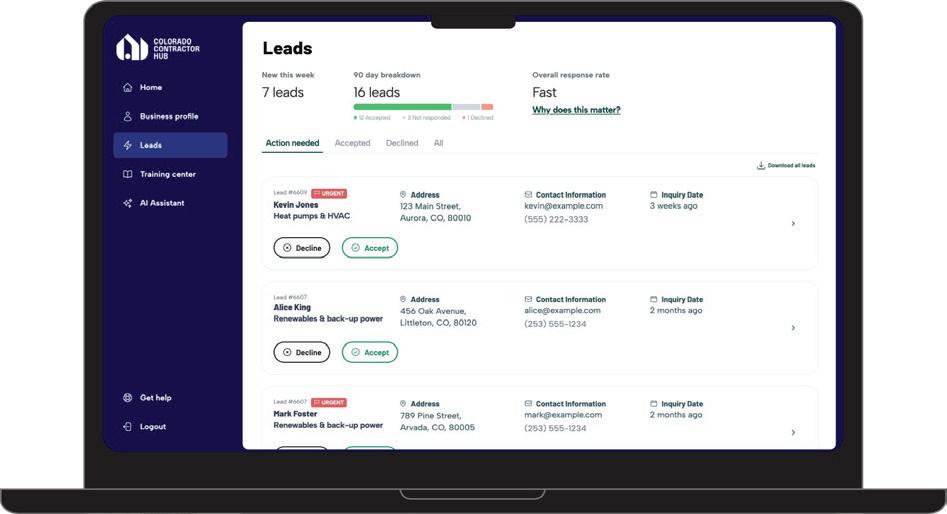
Power Ahead Colorado and the Building Decarbonization Coalition launch a full-service digital workspace for Colorado heat pump installers. The free Colorado Contractor Hub delivers heat pump contractors customer leads, training, tools and funding, incentive information, and other services and resources to grow their businesses.
Building Decarbonization Coalition
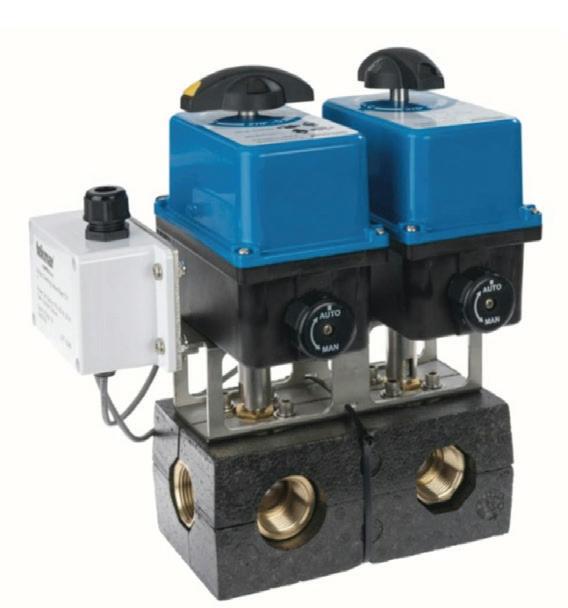
The 6-Way Diverting Valve Panel 731 from tekmar operates dual three-way valves with actuators to divert water between hot and chilled water tanks in four-pipe configuration heat pump systems. Designed for various applications from singlefamily homes to commercial buildings with building automation systems, the 731 ensures seamless switching between hot and chilled water. With a built-in relay that synchronizes the valves for efficient operation, the system can handle up to 21 gal. per minute. The assembly features 1-in. female NPT threads and comes pre-insulated to prevent sweating, offering an all-in-one solution for HVACR engineers. tekmar
DS023KX Range Igniter
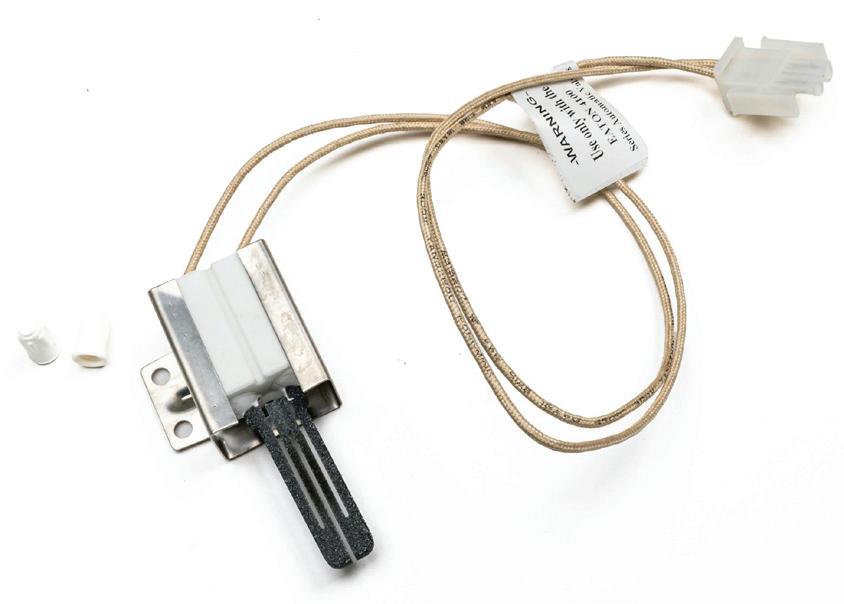
Surface Igniter introduces the DS023KX Range Igniter, engineered as a direct replacement for GE part numbers WB13K10043, AP5645233, and PS4704151. Built to meet original equipment manufacturer materials and specifications, it delivers consistent, reliable ignition performance that matches factory standards. It enables service professionals and facilities managers to provide fast, efficient repairs and minimize appliance downtime.
Surface Igniter
NEW PRODUCTS
Gen-Eye Fusion High-Definition Pipe Inspection System
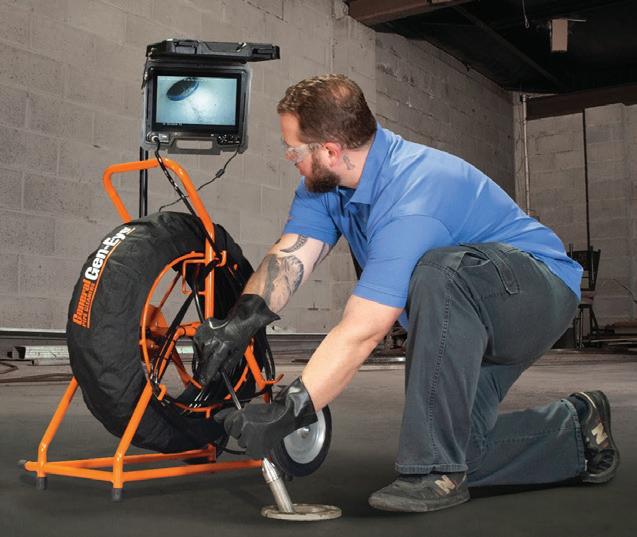
General Pipe Cleaners introduces the Gen-Eye Fusion video pipe inspection system, combining a high-quality, high-definition camera with three recording options, a touchscreen keyboard for titling, a Gen-Pack battery adapter for remote operation, and a durable Gel-Rod push rod. Crisp, clear images and recordings are viewed on a large 10.1-in. LCD touch screen built into a durable, compact case. The command module features an advanced video recorder with full high definition 1080p recording capability. It supports USB-to-flash drive recording and has 64 GB of internal memory, which provides approximately 32 hours of inspection recording.
General Pipe Cleaners
Verta Air-to-Water Heat Pumps
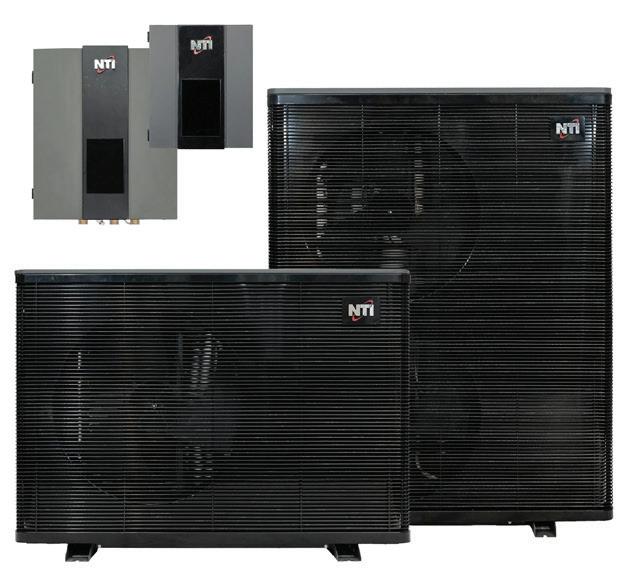
The Verta Series air-to-water heat pumps from NTI provide an alternate solution for hydronic heating and cooling as well as domestic hot water. The intuitive touchscreen control system interface enables users to effortlessly connect and manage external products such as boilers and electric heaters, ensuring seamless integration of hybrid applications. Automatically adjust outlet water temperature based on ambient temperature. Heating and cooling can be switched automatically based on ambient temperature or an external signal. Users can program specific DHW timings to ensure plenty of hot water during the busy times. Equipped with R32 refrigerant.
PAUL DOHERTY,
Urban AI: What It Means for Intelligent HVAC
A prominent ‘smart cities’ expert discusses how artificial intelligence will disrupt all building systems, including HVAC.
Cities are the most complex systems humans have ever built. They are living networks of infrastructure, people, capital, energy, and data, constantly evolving, often under stress, and always constrained by legacy decisions.
Today, artificial Intelligence is helping to remove those constraints. No longer just a tool that cities use, AI is fastbecoming the intelligence layer that cities run on.
For the past decade, “smart cities and buildings” were focused on digitization: sensors, dashboards, IoT devices, and data lakes. While valuable, these efforts often stopped at visibility. But now, “Urban AI” goes further. It moves from seeing to understanding, predicting, and optimizing it.
For HVAC professionals, in particular, this provides a striking departure from the status quo. Urban AI systems can:
• Predict infrastructure failures before they occur;
• Optimize energy demand across neighborhoods;
• Optimize and manage de-centralized water and energy systems (like Battery Energy Storage Solutions).
In this way, Urban AI transforms static urban planning into continuous, adaptive decision-making. Cities generate vast amounts of structured and unstructured data, from building permits and zoning codes to mobility patterns and energy consumption. When unified and modeled intelligently, this data becomes an economic asset. As a result, Urban AI enables cities to function more like platforms.
This creates new opportunities for public-private collaboration, performance-based financing, and outcome-driven policy design. Urban AI’s greatest impact will be felt in the built environment where design, construction, operations, and finance all converge. Just imagine:
• AI-generated urban master plans that balance density, carbon, cost, and livability;
• Digital twins of entire cities used to stress-test climate resilience;
• Buildings that continuously optimize HVAC, energy, maintenance, and occupancy;
• Capital flowing dynamically based on real-time performance, not static forecasts.
What are the mechanisms that are creating the environment for Urban AI to occur and what should HVAC professionals pay attention to? AI, Blockchain, and Digital Twins.
Blockchain
Earlier blockchain efforts failed because they were speculative, consumer-facing, and/or disconnected from real workflows. Those constraints are now gone. In 2026:
• Enterprise-grade, permissioned ledgers are stable, scalable, and auditable;
• Smart contracts can be tied directly to verified project data and milestones;
• The industry no longer debates “crypto”; it adopts invisible infrastructure that reduces friction.
Digital Twins
These are transitioning from static models to real-time operational systems connected to schedules, sensors, and performance data. As a result:
• AI and cloud platforms enable continuous validation of progress and risk;
• Owners get living assets, not archived models;
• Financial flows are tied directly to verified digital states. Once a digital twin becomes authoritative, it then becomes the trigger for payment, insurance, and optimization.
This is not science fiction.
The foundation technologies already exist. What’s missing is integration, governance, and leadership. Urban AI represents a once-in-a-generation opportunity to rethink how cities and buildings are designed, financed, and operated.
The question is no longer if AI will shape our cities, but who will design the intelligence that shapes them.
An architect and longtime construction technologist, Paul Doherty is founder and CEO of The Digit Group, Inc., now a Smart City development firm located in Memphis, TN. Contact him at pdoherty@thedigitgroupinc.com.
WHERE FACILITY CHALLENGES FIND SOLUTIONS
CENTRAL VALLEY
March 18-19, 2026
Lodi, CA
RENO
August 19-20, 2026
Reno, NV
SOUTHERN CALIFORNIA
April 8-9, 2026
Anaheim, CA
NORTHERN CALIFORNIA
September 2026
Santa Clara, CA
NORTHWEST
April 29-30, 2026
Portland, OR
NORTH TEXAS
October 14-15, 2026
Irving, TX
Bring the the outdoors in.
AAON Delta Class delivers comfortable, clean air in exceptional environments — like yours.
AAON is always innovating. Learn more about our dedicated outdoor air systems (DOAS).