















































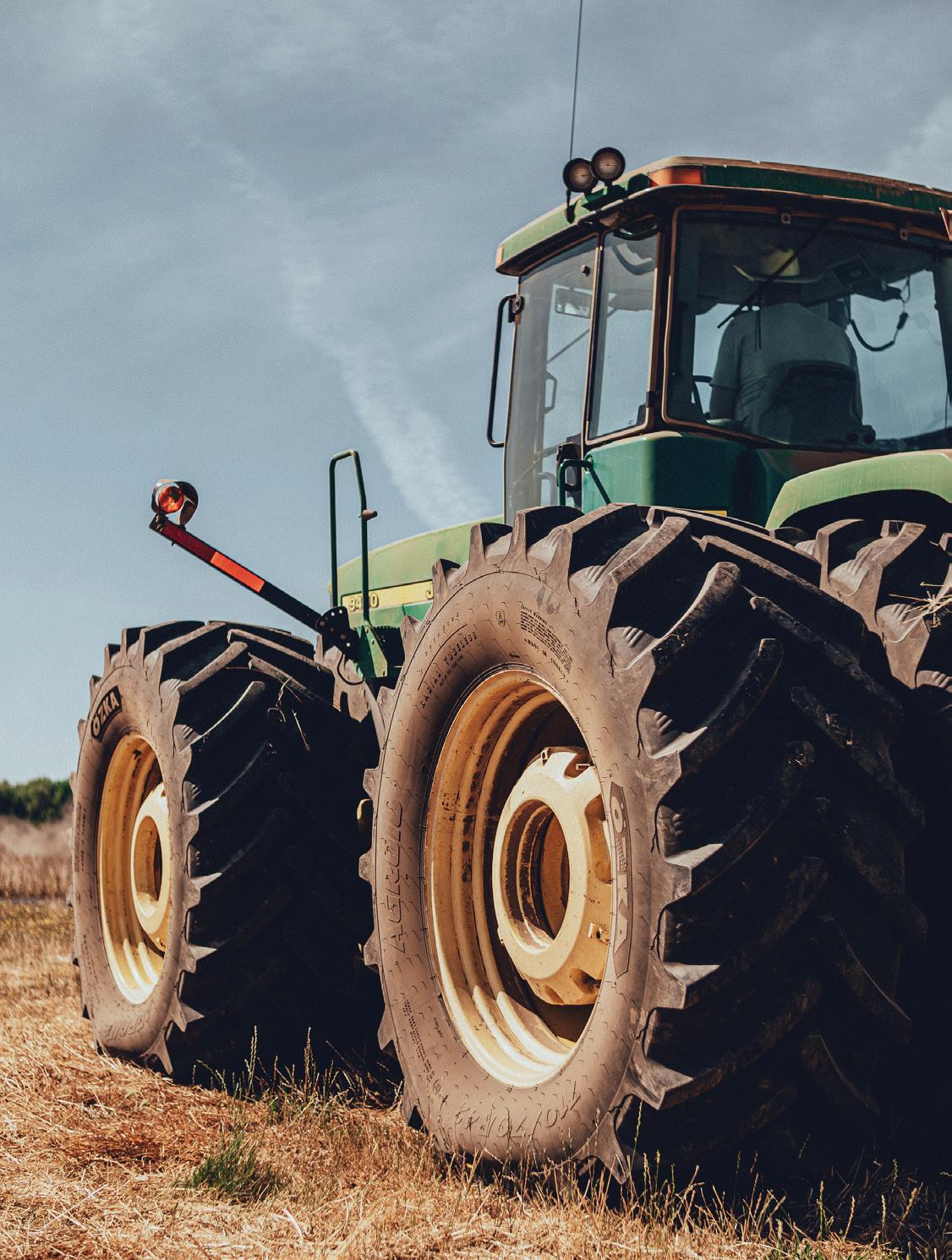
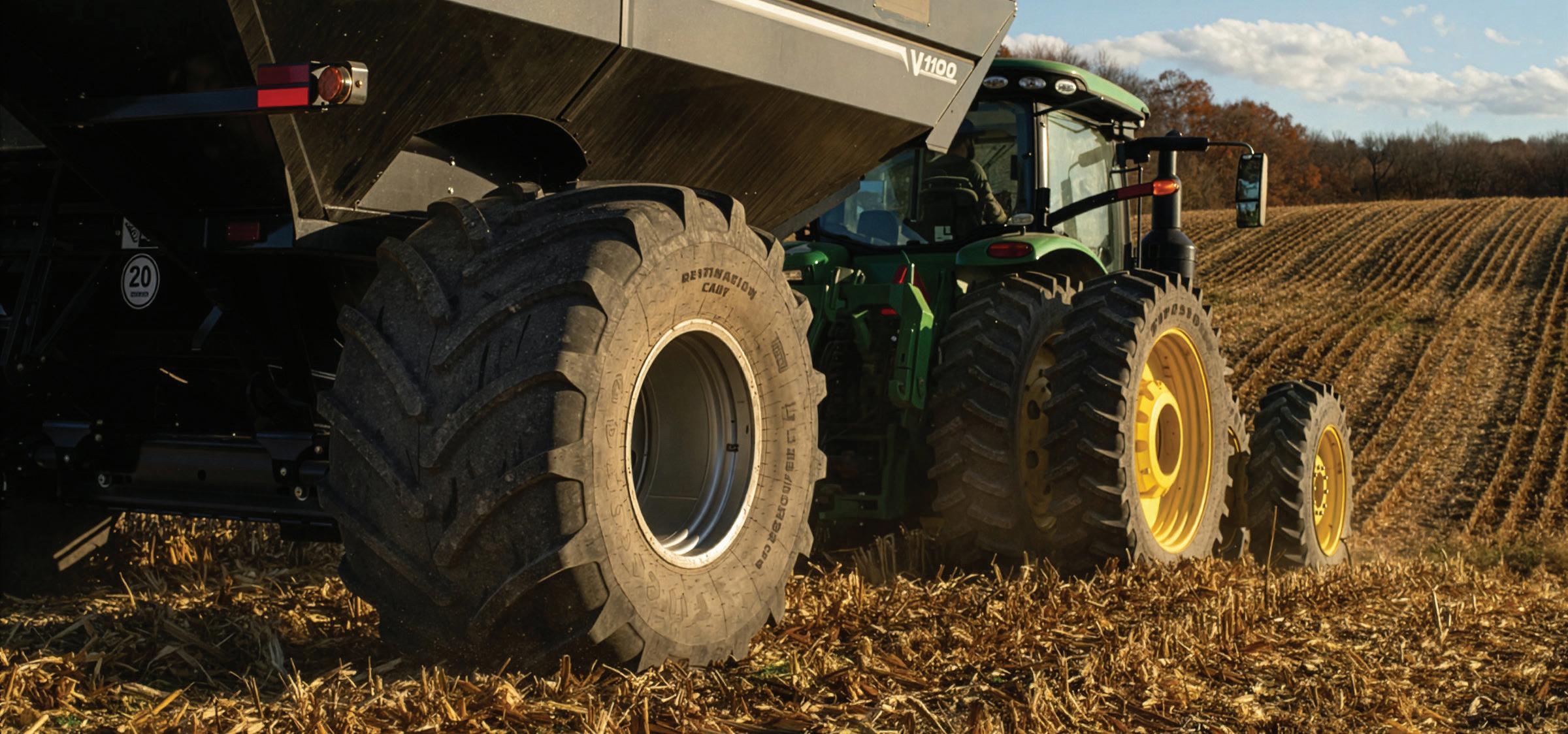
FInd out why 2025 was a tough year for ag tire sales.
Photo: CMA/Double Coin

Mike Manges By
Mike Manges By
re your technicians meticulously checking tread depth levels on customers’ tires as soon as their vehicles roll onto your lot? I hope so. Tread depth checks can mean the difference between life and death. Alex Bebiak knows this all too well.
On Feb. 10, 2023, his son, Jackson, died after the car he was riding in hydroplaned and collided with an 18-wheeler. Jackson, who was wearing a seat belt, was 19 years old. The cause of the accident? Excessively worn tires.
In response, the Bebiak family established the Road Ready Foundation, whose mission is to “save lives on our roadways through crash prevention by educating young and experienced drivers on tire safety and roadside safety education.”
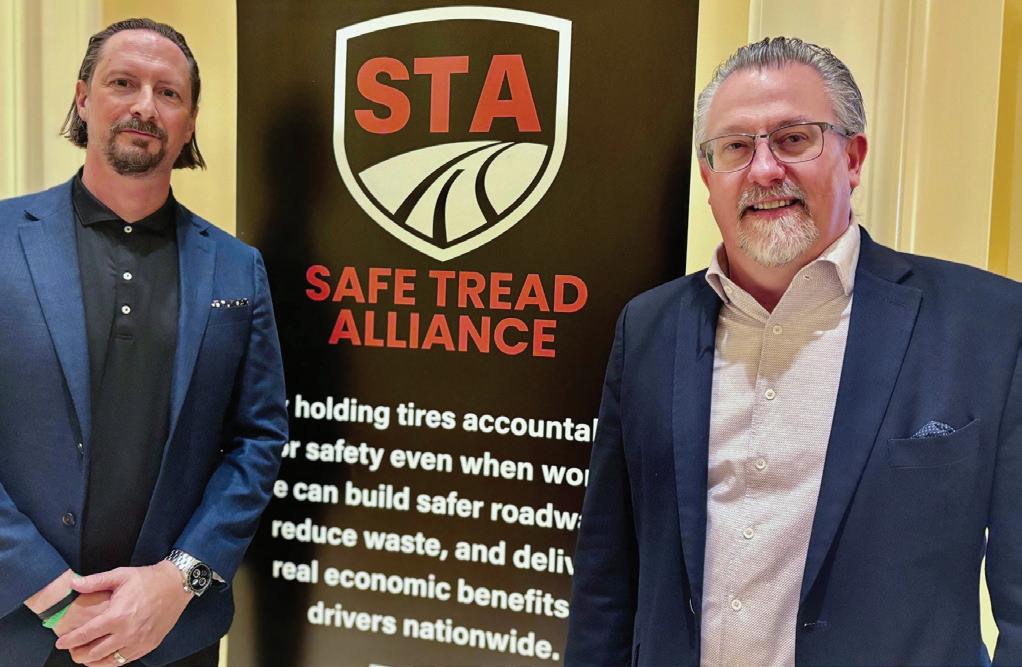
They aren’t stopping there. Alex Bebiak and Jamie Ward, CEO of Cincinnati, Ohio-based Tire Discounters Inc., recently formed the Safe Tread Alliance (STA), a non-profit that “brings together a powerhouse team of industry experts dedicated to addressing tread awareness and advancing tire safety education.”
STA is advocating for the modernization of tire safety standards and the elimination of outdated tread depth check practices. The group held its first board meeting in Las Vegas, Nev., before the start of the 2025 SEMA Show. I was there.
“Every year, thousands of crashes across the U.S. are linked to worn or unsafe tires,” said STA officials. “Between 2019 and 2023, the Fatality Analysis Reporting System documented 2,740 fatal crashes and 3,136 deaths involving tire-related factors.
“The Safe Tread Alliance believes these tragedies can be prevented through stronger tread standards, better consumer education and a renewed focus on proactive maintenance.”
STA is proposing that consumers replace the old “Lincoln penny test” with a tread depth check using quarters.
“For decades, drivers have been told to use the penny test to judge tire safety, placing a penny in the tread and assuming the tire is safe if Lincoln’s head is partially covered. However, research shows that by the time a tire reaches the penny’s benchmark of 2/32 of an inch, its stopping distance, traction and ability to resist hydroplaning are already dangerously compromised.”
Instead, STA is calling for widespread adoption of the “quarter test, a simple, accessible method for determining when tires are no longer safe. When a quarter is placed into the tire’s tread with (George) Washington’s head down, if the top of his head is visible, the tread depth is at or below 4/32 of an inch — the point where performance and wet-weather safety begin to drop significantly.
“Independent testing has shown that vehicles with tires worn to 2/32-inch can take up to 87 feet longer to stop in wet conditions than those with 4/32-inch tread,” according to STA officials. (Pulling worn tires at 4/32-inch isn’t a new idea. Former MTD Editor Bob Ulrich wrote about the topic in 2008.)
“Unsafe tires shouldn’t be a matter of opinion or luck,” said Bebiak. “We have the data, the technology and the responsibility to act. The quarter test is more than a tool. It’s a movement towards a new standard to save lives.”
That covers the consumer component. But what can you, as a tire dealer, do?
It may sound basic, but make sure that tire pressure checks are performed every time, all the time, without exception, on every vehicle that arrives at your dealership.
Make sure each person who works at your dealership knows how to conduct a proper tread depth check.
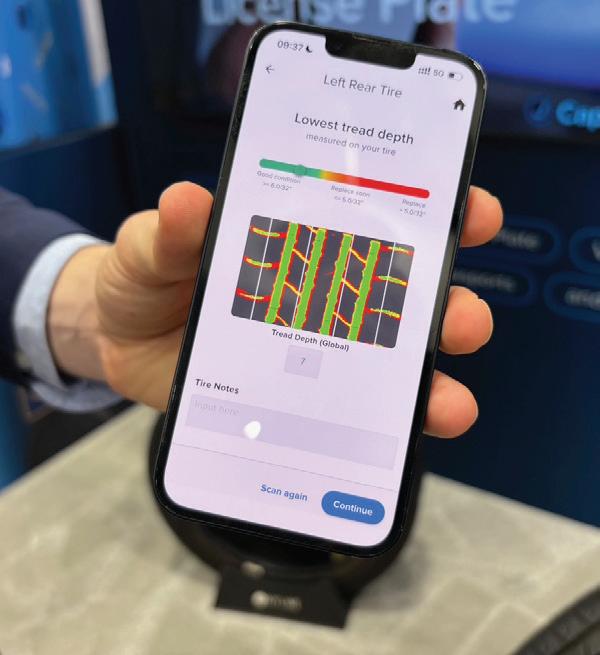
Use appropriate tools when checking tread depth, whether it’s a mobile phone app, a scanner or an old-fashioned tread depth gauge. (The dealer who sold a new set of tires to me a few years ago scanned the tread depth of our old tires and showed me the results almost instantly, making the tire replacement decision a “no-brainer.”)
Set a policy and stick to it. Removal at 4/32-inch? Removal at 2/32-inch? Consistency is critical.
Also make sure that you clearly communicate your dealership’s policy to both employees and customers. Customers should understand that you’re doing it for their safety.
Finally, consider supporting the STA and its efforts. Visit www.safetread.org for more information.
We’ll revisit the topic of tread depth checks in an upcoming edition of MTD. ■
If you have any questions or comments, please email me at mmanges@endeavorb2b.com.

















































DIGITAL RESOURCES FOR THE INDEPENDENT TIRE DEALER
The Modern Tire Dealer Show is available on Apple Podcasts, Spotify, iHeart Radio, Amazon Music, Audible and MTD’s website.
Sign up for Modern Tire Dealer ’s eNewsletters to receive the latest tire news and our most popular articles. Go to www.moderntiredealer.com/subscribe.
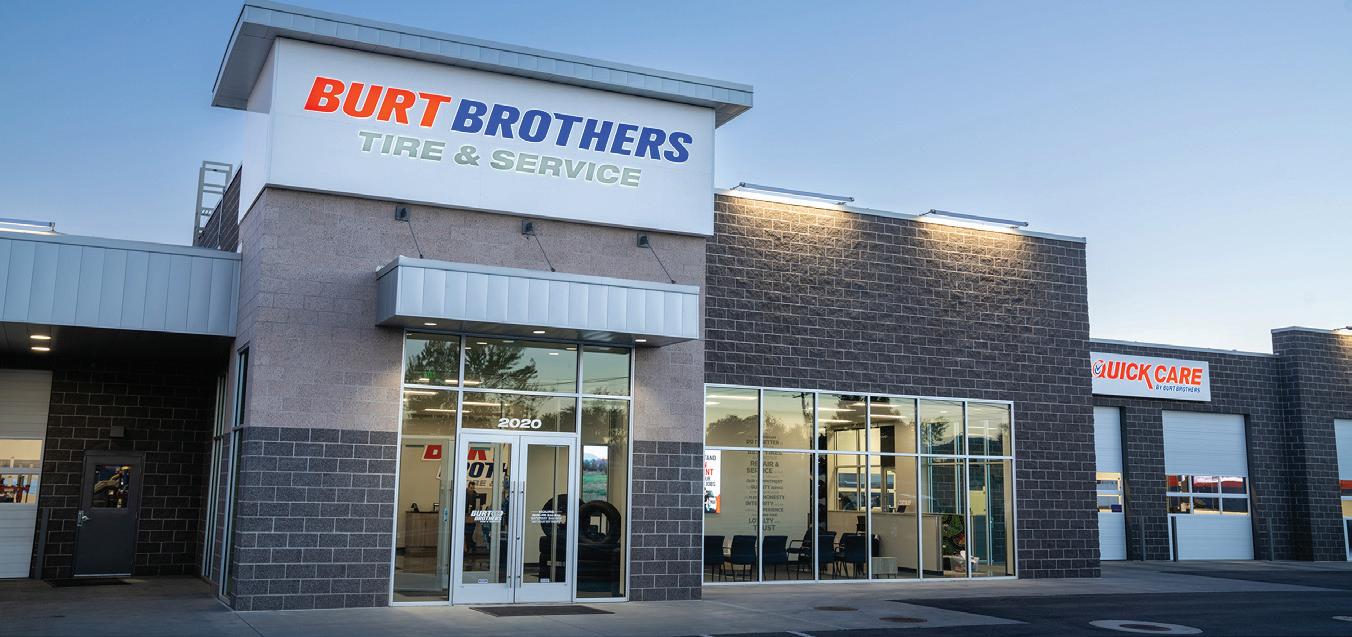
Big Brand Tire & Service recently purchased Burt Brothers Tire & Service, adding nearly 40 stores to its expanding network.
Private equity rms are now selling tire dealerships to other private equity rms. Big Brand Tire & Service, which is owned by Percheron Capital, recently acquired Burt Brothers Tire & Service, which was owned by Bestige Holdings. That was just one of the most widely read www.moderntiredealer.com stories of the past month. Below are some others.
1. Michelin deploys TreadEye technology
2. Goodyear launches new Wrangler Outbound AT
3. Who are the biggest commercial tire dealerships?
4. S&S Tire doubles down on family ownership
5. Big Brand buys Burt Brothers Tire
6. New Plaza Tire location opens in Illinois
7. Rema unveils virtual reality tire repair training
8. Big Brand owner closes recapitalization
9. Kumho wins design excellence awards
10. Retail sellout remains in growth mode
Check out MTD ’s digital edition at www.moderntiredealer. com/magazine Like us Facebook: facebook.com/ModernTireDealer Follow us X: X.com/MTDMagazine
3515 Massillon Rd., Suite 200
Uniontown, OH 44685 www.moderntiredealer.com
PUBLISHER
Greg Smith gsmith@endeavorb2b.com (330) 598-0375
EDITORIAL
Editor: Mike Manges mmanges@endeavorb2b.com
Associate Editor: Aden Graves agraves@endeavorb2b.com
PRODUCTION
Art Director: Erin Brown
Production Manager: Karen Runion (330) 736-1291, krunion@endeavorb2b.com
ACCOUNT EXECUTIVES
Darrell Bruggink / dbruggink@endeavorb2b.com
Marianne Dyal / mdyal@endeavorb2b.com
Mattie Gorman-Greuel / mgorman@endeavorb2b.com
Cortni Jones / cjones@endeavorb2b.com
Diane Johnston / djohnston@endeavorb2b.com
Sean Thornton / sthornton@endeavorb2b.com
Kyle Shaw / kshaw@endeavorb2b.com
Lisa Mend / lmend@endeavorb2b.com
Chad Hjellming / chjellming@endeavorb2b.com
MTD READER ADVISORY BOARD
Rick Benton, Black’s Tire Service Inc.
Jessica Palanjian Rankin, Grand Prix Performance
John McCarthy Jr., McCarthy Tire Service Co. Inc.
Jamie Ward, Tire Discounters Inc.
CUSTOMER/SUBSCRIPTION SERVICE (877) 382-9187
moderntiredealer@omeda.com
ENDEAVOR BUSINESS MEDIA, LLC
CEO: Chris Ferrell
COO: Patrick Rains
CDO: Jacquie Niemiec
CALO: Tracy Kane
CMO: Amanda Landsaw
EVP Transportation Group: Chris Messer
VP of Content Strategy, Transportation Group: Josh Fisher
VSRG Editorial Director: Chris Jones
LLC. 201 N
5th Floor, Fort Atkinson, WI 53538. Periodicals postage paid at Fort Atkinson, WI, and additional mailing offices. POSTMASTER: Send address changes to Modern Tire Dealer, PO Box 3257, Northbrook, IL 60065-3257. SUBSCRIPTIONS: Publisher reserves the right to reject non-qualified subscriptions. Subscription prices: U.S. ($81.25 per year). All subscriptions are payable in U.S. funds. Send subscription inquiries to Modern Tire Dealer, PO Box 3257, Northbrook, IL 60065-3257. Customer service can be reached toll-free at 877-382-9187 or at moderntiredealer@omeda.com for magazine subscription assistance or questions.
Printed in the USA. Copyright 2025 Endeavor Business Media, LLC. All rights reserved. No part of this publication may be reproduced or transmitted in any form or by any means, electronic or mechanical, including photocopies, recordings, or any information storage or retrieval system without permission from the publisher. Endeavor Business Media, LLC does not assume and hereby disclaims any liability to any person or company for any loss or damage caused by errors or omissions in the material herein, regardless of whether such errors result from negligence, accident, or any other cause whatsoever. The views and opinions in the articles herein are not to be taken as official expressions of the publishers, unless so stated. The publishers do not warrant either expressly or by implication, the factual accuracy of the articles herein, nor do they so warrant any views or opinions by the authors of said articles.
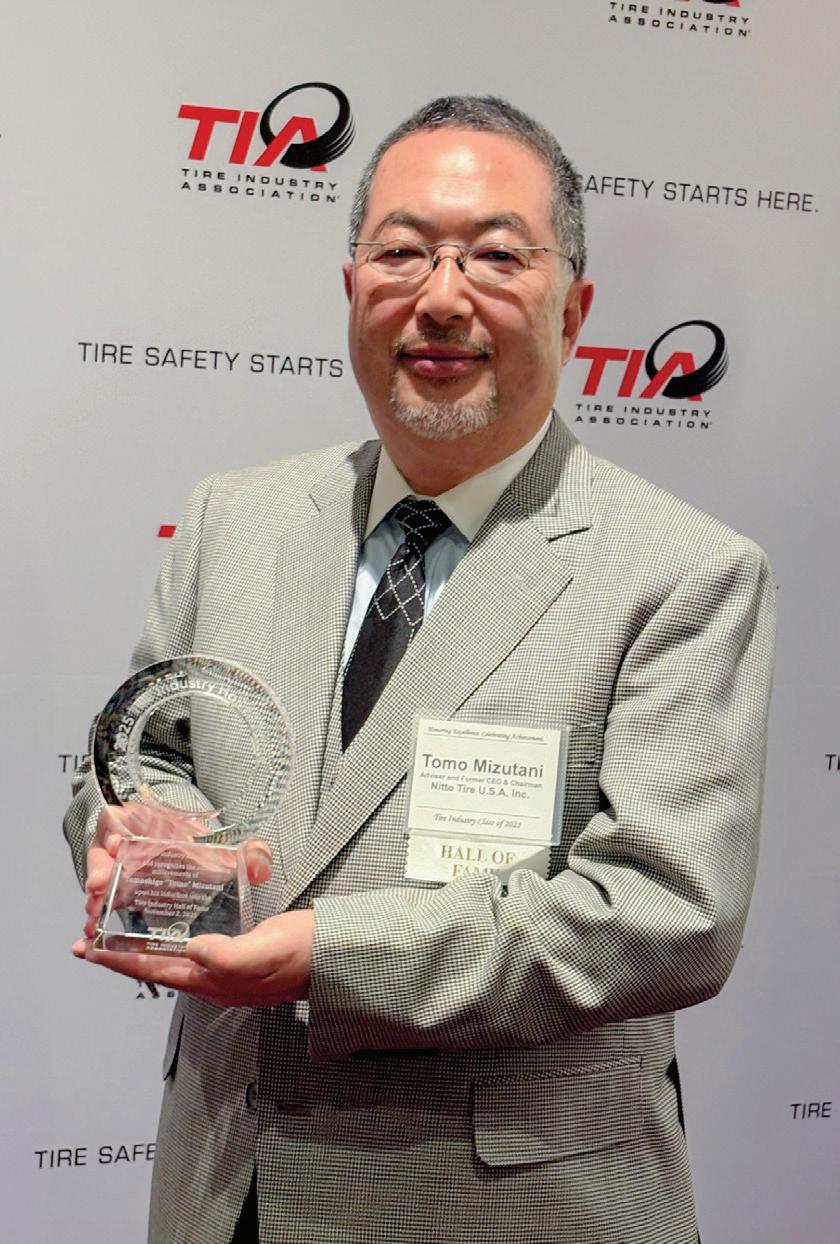
Tomo Mizutani, chairman emeritus, Toyo Tire Holdings of Americas Inc., was instrumental in many notable achievements during his 33-year tire industry career.
Under his leadership, Nitto Tire U.S.A. Inc. grew from a company that was on the verge of bankruptcy when he joined it to a thriving corporation with nearly $1 billion in annual revenue.
Mizutani was an early and very successful adaptor of social media and digital marketing. He also has been a longstand-
ing champion of Japanese-American business relations, which has earned him various honors, including the International Citizen Award from the Japan America Society. And he recently was named to the Tire Industry Hall of Fame.
In this MTD exclusive, Mizutani looks back on his career and discusses how he was instrumental in the revitalization of Nitto. (For a full, unabridged version of this interview, see the Modern Tire Dealer Show podcast episode, “Interview with a Hall of Famer,” available on www.moderntiredealer.com and various podcast platforms.)
MTD: How does it feel to be a member of the Tire Industry Hall of Fame?
Mizutani: It’s beyond my dream and I feel extremely honored.
MTD: How did you get your start in the tire industry?
Mizutani: After graduating from college, I began my career at a major Japanese trading house, where HR placed me in the tire division. At that time, I had little say in the matter and was not particularly enthusiastic about the mandate. In hindsight, what began as a mandate grew into a remarkable, rewarding career path that proved far greater than I could have imagined.
MTD: What made you decide to come to the U.S.?
Mizutani: I was the person in charge of the rest of the world, except the U.S. and Japan, in mainly mining tires. I had no idea about the U.S. market. Then the
company bought a company called Tire Masters. Unfortunately, Tire Masters was not doing well. At that time, I had a great competitive record in my territory and management decided that, ‘Even though that guy is young and has no experience in the U.S, let him handle it. He may have an interesting way to fix that issue.’
MTD: What do you remember about your fist tire industry job in the U.S.? Was it easier or more difficult than you thought it would be?
Mizutani: It was extremely difficult. Our tire was a red ocean product (with) no unique feature ... (with) probably no name recognition among consumers. It was almost impossible to move the products that our factory wanted us to move. When I came to the U.S., Nitto had only $6 million in sales with $8 million in inventory. It was not in good shape and the company demanded $15 million in sales, which then equated to around 500,000 tires, to keep the ship afloat.
MTD: However, you managed to make that happen, taking Nitto from the verge of bankruptcy when you started to the thriving, growing $1 billion-a-year corporation it is today. Can you tell us a little bit about how you transformed the company?
Mizutani: Simply speaking, tire products (are) negative purchases. When consumers purchase (tires), it’s a negative feeling. ‘I don’t want to buy that. I have to buy’ — like a water bill, like an electric bill or a gas bill. So it’s a very difficult product to make money (with). However, there are segments in this world (that are) positive purchases. ‘I don’t need, but I want to buy.’ Apparel, jewelry, nice bags... you name it. We tried to leave the negative purchase segment... (and move to) a positive purchase.

MTD: You were instrumental in the revitalization of Nitto. How did that come about? How did you revitalize the company?
Mizutani: We tried to get into the positive purchase segment. Of course, there were a bunch of positive products already in the market. However, if you are belonging to (the) copycats, you cannot be a price leader. So we needed to do something. One day, I spent time in a tuning shop. There were a bunch of 20-inch wheels ... however, no tires properly fitting to the luxury sedans. People were dreaming (of having) a 20-inch tire. I studied it and we issued a (size) 245/35/20. Prices were high, profit was great. Within a couple of months, (we) sold out. We needed to have a second mold — sold out. Third mold — sold out. Fourth, fifth ... eventually, we had 10 molds. We owned that market for probably a couple years until some other manufacturers (joined). We revitalized the company because (we created ) a positive purchase.

“What began as a mandate grew into a remarkable, rewarding career path that proved far greater than I could have imagined,” says Mizutani.
Photo: MTD
MTD: You also were a very early adaptor of digital marketing. Can you tell us about your social media strategy and innovations on the digital side?
Mizutani: I have to name a few people, especially Mr. Andy Ando. He was gracious enough to show me there was a huge opportunity stemming from the rising import performance car market. He was the person who opened my eyes to the import performance market and that was the trigger in getting into the ‘want’ product (category). If we followed other companies (that had) a much bigger budget, we had no way to compete against big national name brands, so we had to do something unique. Digital marketing gave us a chance to be better, if we were nimble. At that time, I had no idea about IT. However, I met a person named Justin Choi. He was my mentor to lead digital marketing. At the same time, we had the lucky opportunity to have great talent to drive our engine, like (Nitto’s Senior Director, Brand Publishing) Stephen Leu, (Nitto’s Senior
Manager, Brand Publishing) Harry Kong and (Nitto’s Senior Director, Brand Experience and Technical Services) Efrain Viveros. These people are driving our digital marketing.
MTD: What are some of the changes you’ve seen in the U.S. tire industry during your career?
Mizutani: The biggest change is private equity (PE) all of a sudden appeared and they really changed the format of distribution. Basically, I think there are two reasons. Number one is politics. Probably the majority of people do not remember, (but the) U.S. federal government limited banks to stay only in (their) state. However, deregulation came in the ‘80s and deregulation allowed bankers to have multi-state (presence). Then they started supporting multi-state, interstate dealerships. Secondly, communication cost is way down. Used to be, we depended on telephone ground lines, but now have the internet. The cost reduction has been huge. These are things that invited PE to be a major player in the tire industry (at
a) much bigger financial scale, as well as more sophisticated IT technology. These changes were huge for the tire industry.
MTD: You’ve made an incredible impact on Japanese-American business relations and have been instrumental in advancing understanding between the two countries and cultures in a business setting.
Mizutani: I had a different cultural background in Japan. And also I started in the tire business with a trading house. I didn’t get formal tire training when I was young. So the answer was, ‘Work harder — double or triple.’ We put in a lot of effort to understand the market.
MTD: So innovation, communication, capitalizing on opportunities, sheer hard work, recognizing what customers want and working very hard and very innovatively to deliver that to them have all contributed not just to Nitto’s success, but your success. In your current position as chairman emeritus, what’s next for you?
Mizutani: Japanese companies have their own policy (governing) retirement age. I’m still young. I’m still capable. I’d like to find a way to keep working. I’m looking for the right opportunity in the future.
— Mike Manges








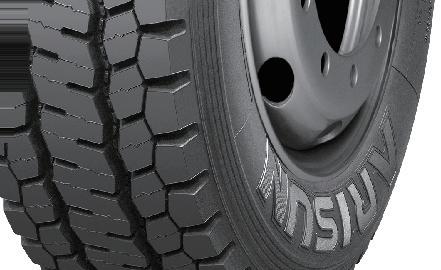

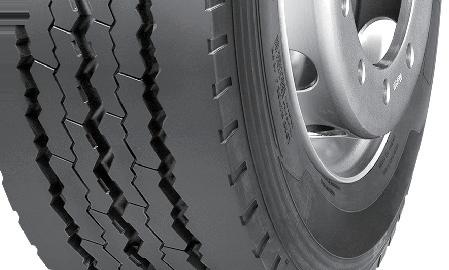

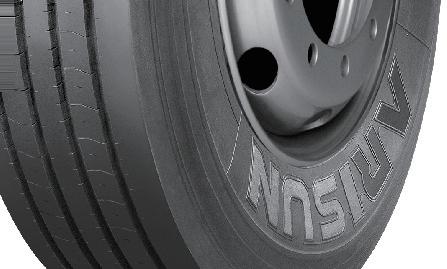










Sentury Tire USA’s new AxisA3 tire technology is “a branded representation of the company’s existing advanced tire engineering.” According to Sentury Tire USA officials, AxisA3 technology “equips tires with features that deliver longer-lasting, more durable tires, along with multiple other benefits, including 3-Peak Mountain Snowflake-rated winter traction.” Two Landsail tires from Sentury currently include the technology.
Monro Inc. says its comparable store tire sales were flat during its second fiscal quarter versus the same period last year. However, the Rochester, N.Y.-based company saw comparable store sales gains in front end/shocks, up 18% year-over-year, and brakes, up 6%. For the second quarter of Monro’s fiscal year, which ends in March 2026, the firm posted $288.9 million in sales, a decrease of 4.1% on a year-over-year basis.
Telle Tire & Auto Centers continues to expand, recently opening a store in Ballwin, Mo., and another in Chesterfield, Mo. The openings give the Webster Groves, Mo.-based dealership 16 Telle Tire-branded locations in the St. Louis, Mo., area. Telle Tire & Auto Centers also operates three stores in the St. Louis market under other names. The dealership has nearly 70 locations.
Bethlehem, Pa.-based Service Tire Truck Centers (STTC) has acquired the assets of Oasis Truck Tire Service, which has three locations in Connecticut. Founded 30 years ago by Dave Petros, Oasis Truck Tire Service “has built a strong reputation for providing exceptional truck and earthmover tire services,” according to STTC officials.
The new year will bring a new leader to the top of Bridgestone Corp. Yasuhiro Morita will replace Shuichi Ishibashi as CEO on Jan. 1, 2026.
Ishibashi is retiring on Dec. 31 and will leave his seat as a board member at the company’s annual shareholder’s meeting in March 2026.
Morita joined Bridgestone in 1996 and has extensive experience, primarily in Europe and Asia. He’s been a managing director for the tiremaker’s Thai and Chinese operations and in 2023, was named CEO of Bridgestone Asia Pacific Pte. Ltd.
In 2024, he became a vice president and senior officer and in 2025, was named an executive vice president and representative executive officer.

Morita will replace Shuichi Ishibashi as Bridgestone Corp.’s CEO.
Bridgestone says a new global management structure for 2026 will be announced once it is finalized.
GreatWater 360 Auto Care has acquired Muskego, Wis.-based Richlonn’s Tire & Service Centers, a five-location tire dealership serving the greater Milwaukee area.
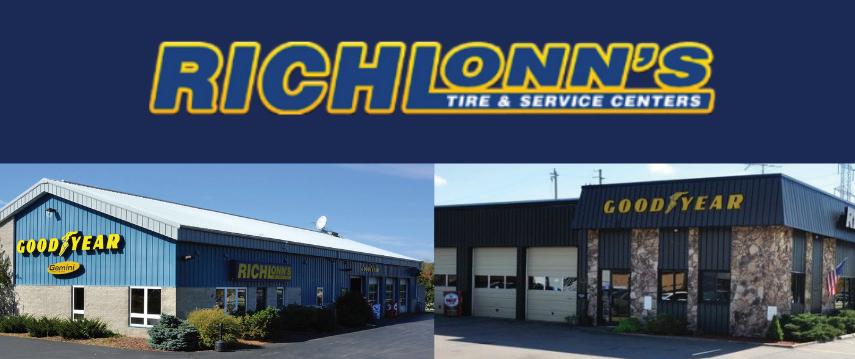
“Richlonn’s has become a household name in southeastern Wisconsin,” say GreatWater 360 Auto Care officials.
Photo: GreatWater 360 Auto Care
Founded in 1964 by Dick Matschke and Lonn Stone and most recently owned by Dick’s son, Brett Matschke, “Richlonn’s has become a household name in southeastern Wisconsin for full-service automotive repair and tire expertise,” say GreatWater 360 Auto Care officials.
“With shops in Greenfield, Racine, Waukesha, Muskego and Greendale, the brand has built a loyal following through its customer-first approach, team longevity and deep community ties.”
“For over 60 years, Richlonn’s has been delivering top-tier service and building lasting relationships across the Milwaukee area,” says Brett Matschke. “Our brand and legacy remaining intact, along with the reassurance the team was in great hands, were my focus when going through this transition.”
High Ridge, Mo.-based Dobbs Tire & Auto Centers will open nearly 40 new locations through both new construction and brownfields.
“This expansion marks another exciting chapter for the company, further strengthening their presence in Missouri and Ohio, while entering Michigan, Minnesota, Pennsylvania and Wisconsin and increasing their ability to serve even more customers with the expert care and dependable service Dobbs is known for,” according to Dobbs Tire & Auto Centers officials
The dealership recently opened two new locations: one in St. Louis, Mo., and another in Tyler, Texas. Three more Dobbs Tire & Auto Centers locations are scheduled to open in the St. Louis market within the next 60 days.



JON VANCE Global Director of Marketing
When AOT partners wanted hard data that proved our tires could perform in a variety of conditions, we gave them a lot more than a spreadsheet. Our marketing team held an exclusive event at a race track to demonstrate their real-world performance. After days of grueling testing under different conditions, the tires left no doubts of their capabilities. They also made the job of selling the tires a lot easier for our partners.
WHAT’S YOUR CHALLENGE?





Relevant statistics from an industry in constant motion
3
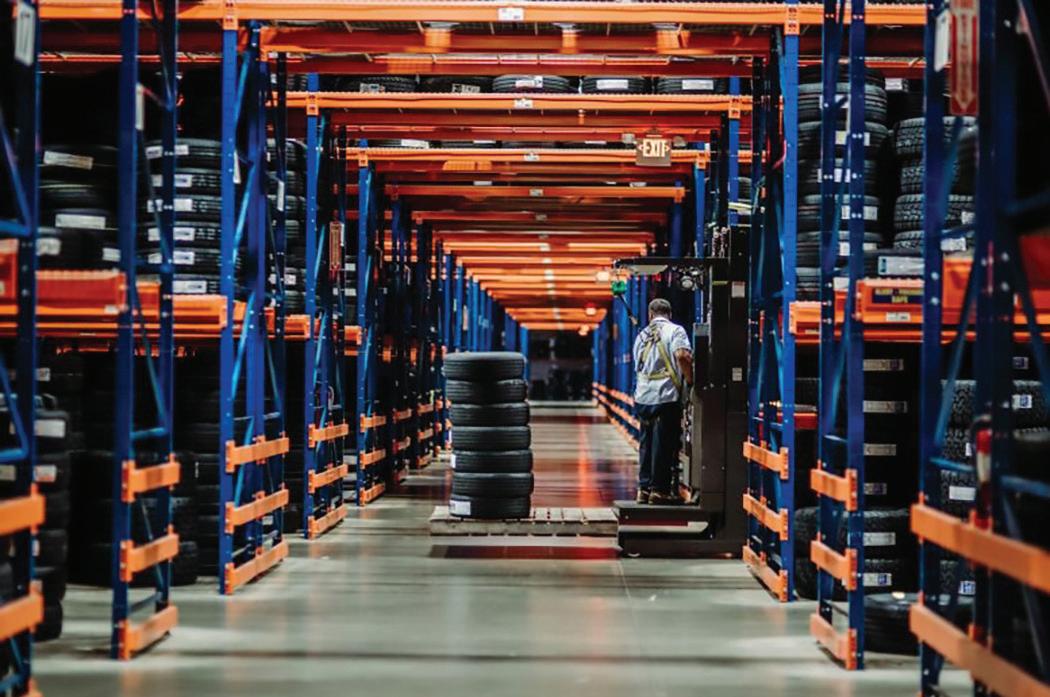
Number of tire brands American Tire Distributors added to its portfolio in September and October 2025.
Source: MTD
Photo: American Tire Distributors

$650 MILLION
What Gemspring Capital Management LLC paid for Goodyear Tire & Rubber Co.’s chemical business, a deal that the two parties nalized on Oct. 31.
Co.

1993




When MTD’s Tire Dealer of the Year Award program was established.
Source: MTD
Photo: K&M Tire Inc.










1,000
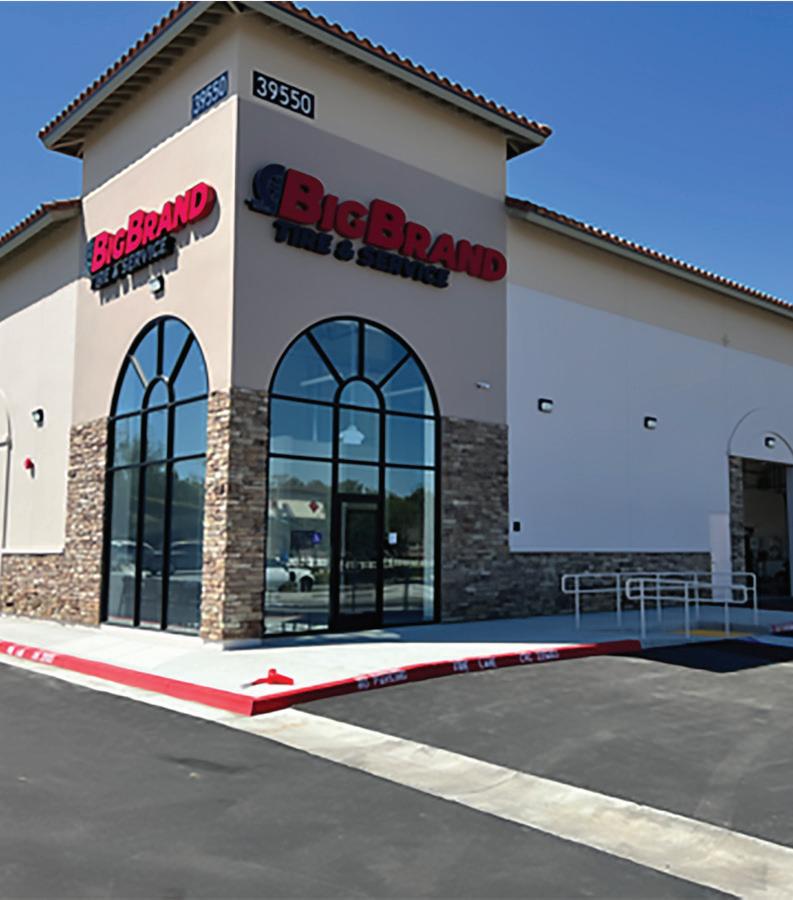
Number of stores that Big Brand Tire & Service wants to have by the year 2030.
Source: MTD

460-PLUS
Number of Big O Tires franchise locations located throughout 24 states.
Source: TBC Corp.
Photo: TBC Corp.







ENROLLMENT IS NOW OPEN!

LANDSAIL TIRES IS EXCITED TO ANNOUNCE THE LAUNCH OF THE NEW ELYTE ASSOCIATE DEALER PROGRAM™.




INDEPENDENT TIRE DEALERS WHO SIGN UP NOW AND PURCHASE FROM AN AUTHORIZED LANDSAIL DISTRIBUTOR
CAN EARN UP TO $3 PER TIRE, SHOWCASING OUR COMMITMENT TO REWARDING YOUR DEDICATION AND PARTNERSHIP WITH THE LANDSAIL BRAND.
No opening order required - just sign up and start earning!
PAYOUTS ARE AS FOLLOWS
Level 1: Minimum 48 units - $1.00/tire
Level 2: Minimum 120 units - $2.00/tire
Level 3: Minimum 240 units - $3.00/tire

ANNUAL PAYOUT POTENTIAL
Level 1: $192
Level 2: $ 9 6 0
Level 3: $2,880+
DISTRIBUTORS









If you want to sell Landsail Tires and offer ELYTE rewards to your dealers, contact us today on our website at LANDSAILTIRES.COM/dealer-inquiries.


John Healy By
ur recent check-ins with independent tire dealers indicate that retail sellout trends were roughly up in the low single digits year-over-year in October 2025, ahead of September results.
Dealers highlighted average sellout increases of 1.2% during the month of October, up from an increase of 0.8% the previous month, with trends flat to slightly up, on average, during the third quarter of 2024.
Looking more closely at volume for October 2025 on a regional basis, the Southeast, Midwest and Southwest experienced positive volumes.
Other regions saw flat or negative volumes, with the Northwest experiencing the weakest trends, down a moderate 1.3% year-over-year.
From our view, the fall of 2025 yielded strong sellout trends, with September and October both showing increases. Early fall brought a lift in seasonal activity as dropping temperatures and visible signs of the changing seasons encouraged consumers to address maintenance and replacement needs.
We also note that November 2025 had a flatter comp, with retail sellout volumes of 0.7% due to a healthy increase in October and the weather continuing to change in some regions. We would not
be surprised to see full-month November volumes to be flat or event slightly positive.
In addition, we note that 62% of dealers who responded to our latest survey reported that they experienced positive demand trends in October, up sequentially from the 40% demand seen in September.
Consumer deferment and trade-down have been consistent themes over the past several months. We believe that we may have seen this begin to soften as consumers think about winter weather.
We do note that consumers continue to trade down to tier-two and tier-three tires. Dealers continue to call out softer trends for tier-one tires.
Our recent survey of tire dealers indicates tier-two and tier-three brands remain the most in-demand by consumers for the second month in a row. This marks the third time that tier-two tires have been in the most in-demand segment, with the first month being January 2025.
October results are in-line with the long-term trends we have seen in our survey, with tier-two being the most in-demand segment in the decades-plus history of our Tire Demand Index.
Tier-three maintained a position of
Snapshot of Dealer’s PLT Tire Volumes (Year-Over-Year Change)
SOURCE: NORTHCOAST RESEARCH ESTIMATES
being second as consumers try to balance value and performance while they prepare for winter.
We continue to see weaker sellout trends in tier-one, with a tough macroeconomic environment putting a level of strain on consumers, leading to a tradedown dynamic.
With tier-two and tier-three being atop our survey, we continue to believe that consumers are still opting for less-expensive tires. We do see a high level of votality in our month-to-month tier rankings, but expect tier-two brands to be the most in-demand segment longterm, offering consumers a balance between cost and performance.
Given volatile industry conditions due to the cost of inflation and other macroeconomic factors, we continue to look at several data points to assess the health of automobile travel demand, which correlates to tire usage and wear. Looking at miles driven, trends were down in the low single digits during October, following a low single digit decline during the second quarter of 2025. The third quarter, on average, showed declines of 1.9%.
More specifically, our Miles Driven Momentum Index showed declines versus a healthy 5.5% comp in October 2024. We continue to see miles driven trends being ahead of pre-pandemic trends and expect to continue to see trends that are flat to slightly elevated. ■
John Healy is a managing director and research analyst with Northcoast Research Holdings LLC, based in Cleveland, Ohio. Healy covers a variety of subsectors of the automotive industry. If you would like to participate in the monthly dealer discussions, contact him at john.healy@ northcoastresearch.com.

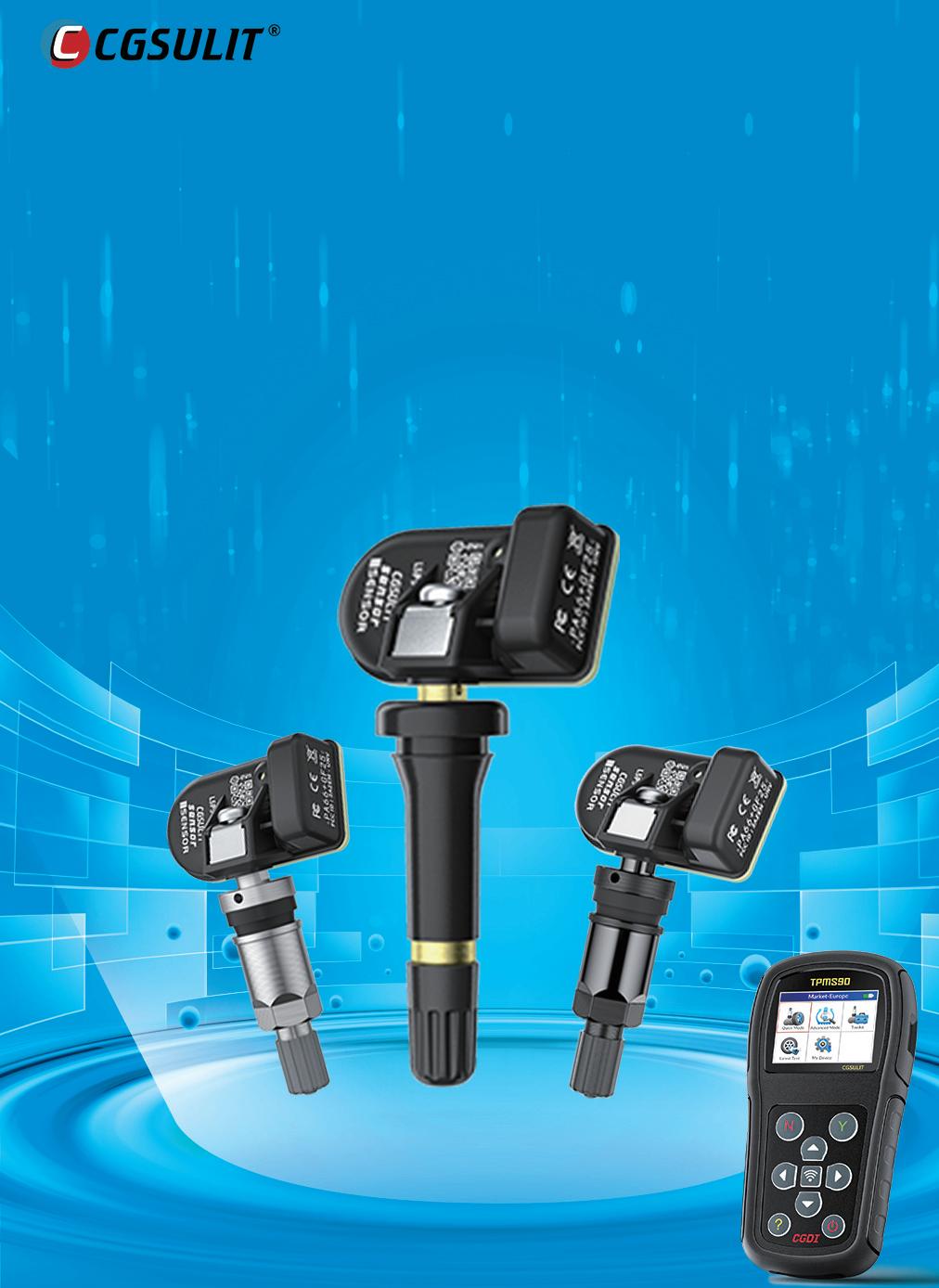
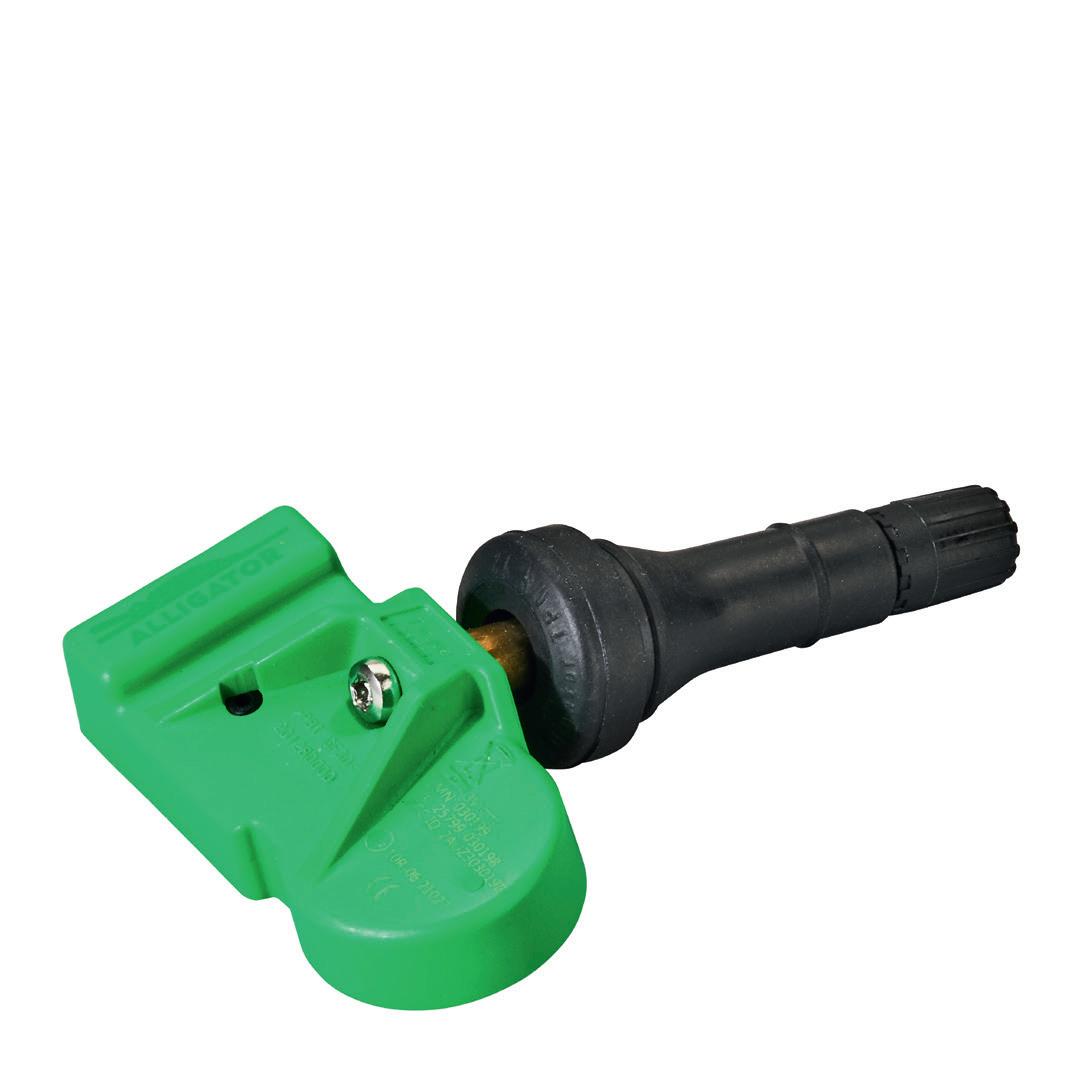
The TPMS universal sensor that can communicate with any vehicle.
By Mike Manges
Anumber of tire manufacturers and suppliers displayed new — and in some cases, already-established — tires at last month’s SEMA Show inside the Global Tire Expo. Tire pressure monitoring system (TPMS) scanner and sensor suppliers — as well as tool, technology and shop equipment providers — also showcased new and existing products at the show. Here’s a look!
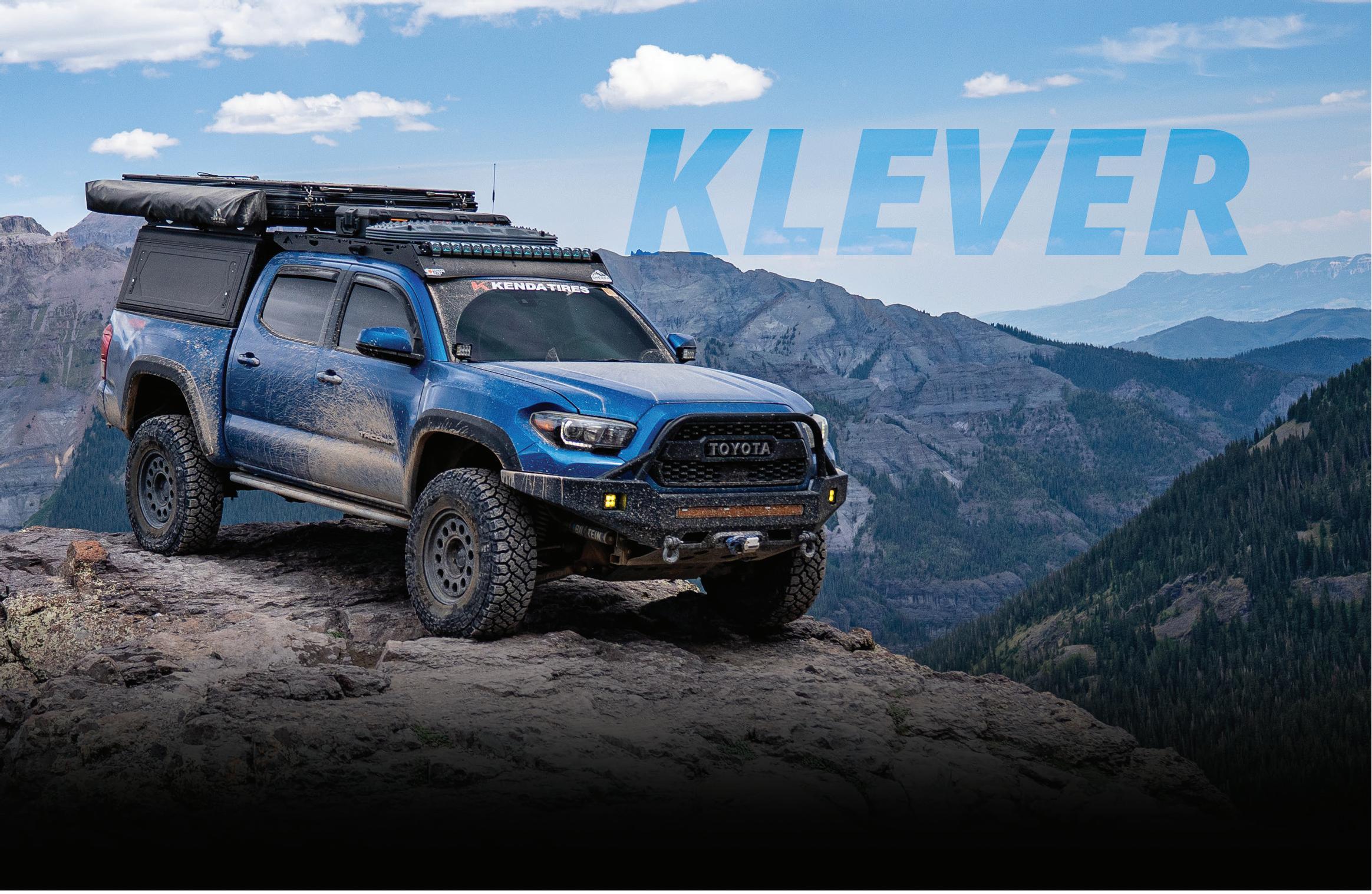
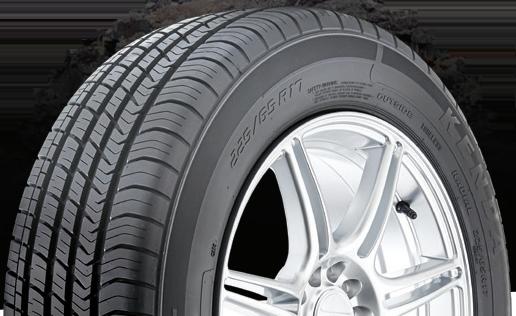
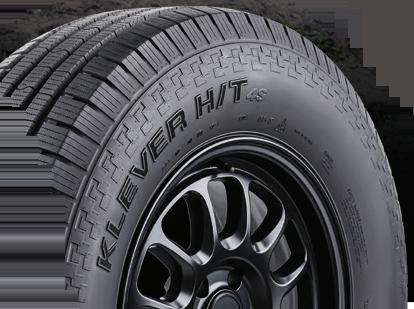
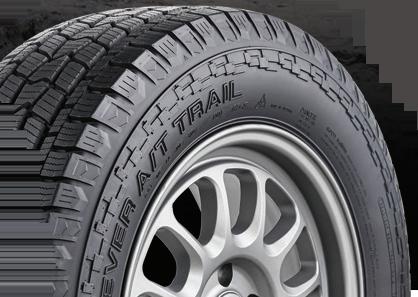
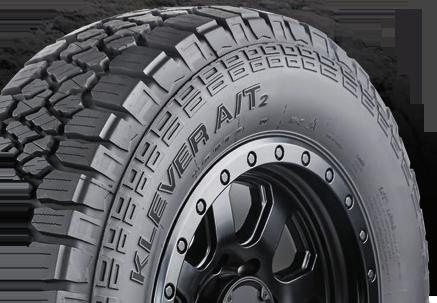
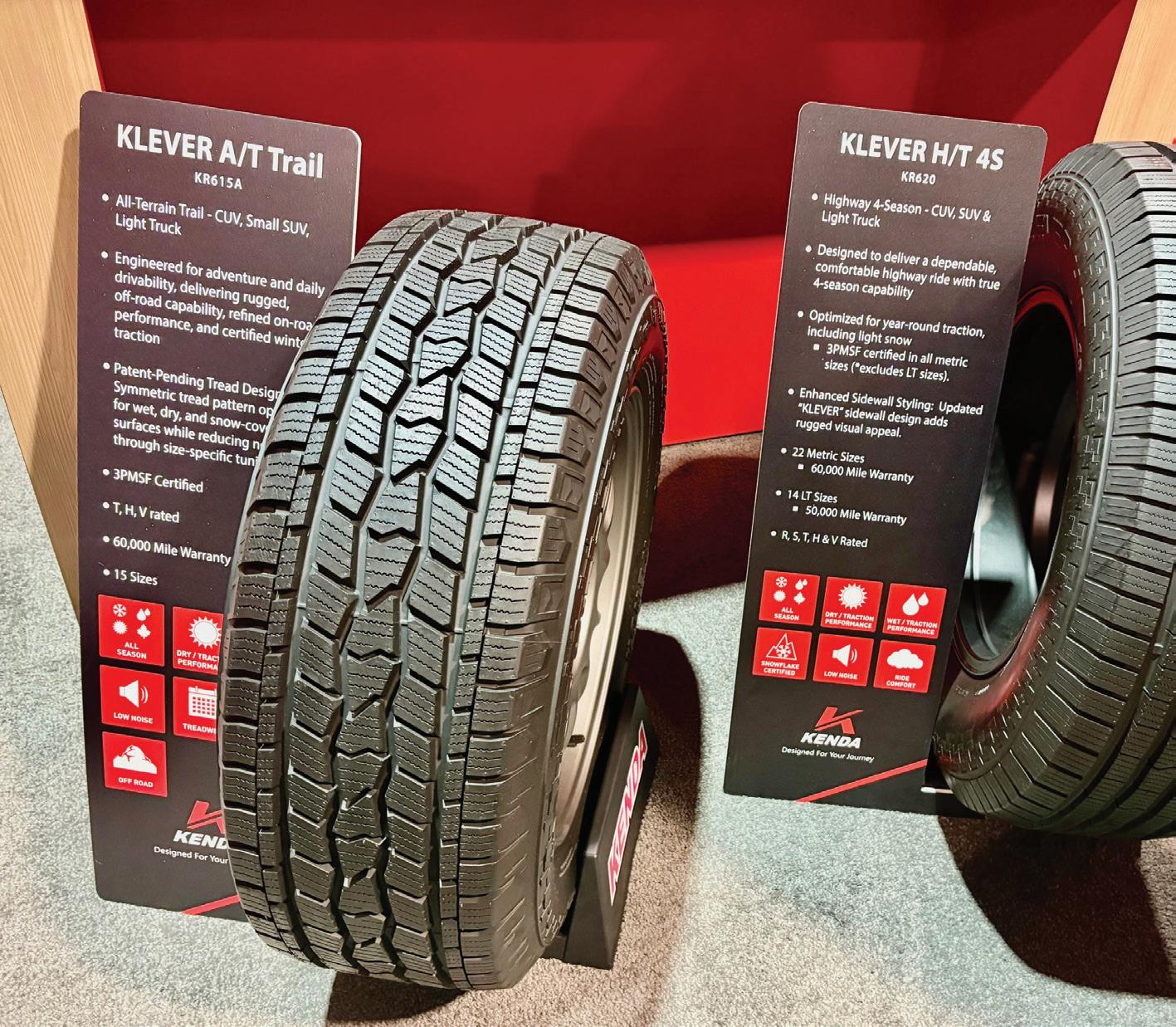
American Kenda Rubber Co. Ltd. highlighted a number of new tires. Among them were the Klever A/T Trail and the Klever H/T 4S.
e Klever A/T Trail is an all-terrain tire that targets light trucks, CUVs and small SUVs. “Enigneereed for adventure and daily driving,” the tire delivers “rugged, o -road capability, re ned on-road performance and certi ed winter traction,” according to Kenda o cials.
The Klever A/T also has earned 3-Peak Mountain Snow ake (3PMS) certi cation and is available in 15 sizes in T, H and V speed ratings. e tire comes with a 60,000-mile warranty.
Kenda describes the Klever H/T 4S as a “highway, four-season tire.” e product is designed for CUVs, SUVs and light trucks and has been engineered “to deliver a dependable, comfortable highway ride with true four-season capability.”
Also 3-Peak Mountain Snow ake-certi ed, the Klever H/T 4S boasts enhanced sidewall styling with an updated design that “adds rugged visual appeal.” e tire is available in 22 metric sizes that come with a 60,000-mile warranty and 14 LT sizes that come with a 50,000-mile warranty.
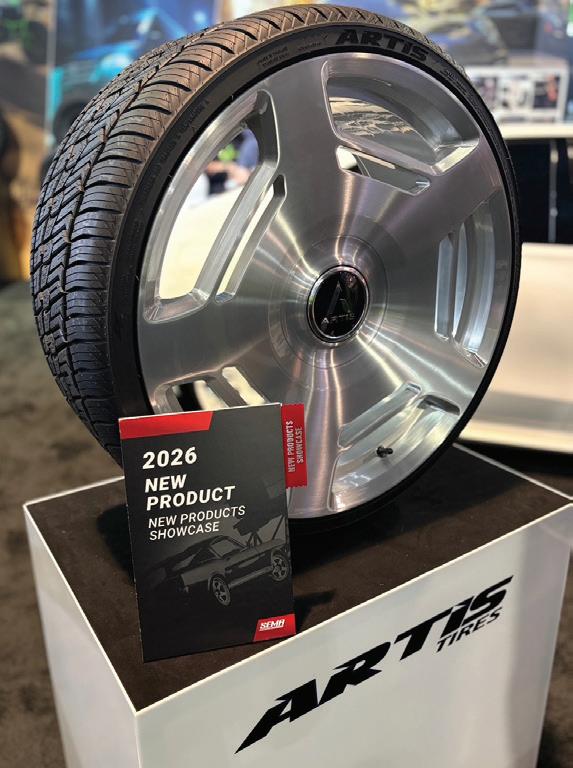
Atturo Tire Corp. and Artis Wheels collaborated to create the new Artis, which Atturo bills as the “ rst luxury high performance tire on the market.
“Born in southern California, Artis Wheels emerged from a community de ned by passion and precision,” said Atturo o cials. “Inspired by the region’s deep-rooted car culture and the individ-
American Kenda Rubber Co. Ltd. highlighted a number of new tires at the 2025 SEMA Show. Among them were the Klever A/T Trail and the Klever H/T 4S.
Photo: MTD
MTD December 2025
uals who shape it, Artis was created for those who see their vehicle not merely as a mode of transport, but as a personal statement of class and identity.
“In keeping with the Artis ethos crafted to embody artistry, innovation, luxury and quality with refined performance, each tire is a sculpted expression of balance, strength and durability.”
Atturo officials said the Artis boasts a construction “more similar to a premium touring tire, combined with an ultra-high performance tread compound.”
The tire’s debut size range emphasizes staggered fitments and ultra-low-profile sizes for premium vehicles.
Coker Tire Co. launched several new tires and added sizes to its Firestone Wide Oval Radial line.
The new Coker Classic Star Series tire has been engineered with new molds and compounds, “with a sharp focus on balance and performance,” according to Coker officials.
Coker Classic Star Series tires are available in 28 sizes, fitting wheels ranging from 13 inches to 17 inches in diameter, with most offered in 14-inch to 15-inch sizes for fitment on 1940s through 1970s classic cars and trucks.
Also new from Coker Tire was the Excelsior Roadster, a “bias-look radial tire” designed to provide the traditional look of a bias-ply tire, “while offering the smooth ride of a modern radial.”
The product is available in five sizes, including 600R16 that fits 1935 through 1948 Ford cars, as well as light-duty trucks into the 1950s. The complete size line-up includes 450/475R16, 600R16, 650R16, 700R16 and 750R16.
“These sizes cover most Amerian makes and models from the 1930s and 1940s, as well as select European sports cars.”
New sizes for the Firestone Wide Oval Radial, which Coker officials say are “perfect for Day Two muscle cars with aftermarket wheels and mild modifications,” include Er60-15, FR60-15, GR60-15, HR60-15, LR60-15 and NR50-15. Tires in these sizes carry the alpha-numeric sizing structure of the original Firestone Wide Oval.
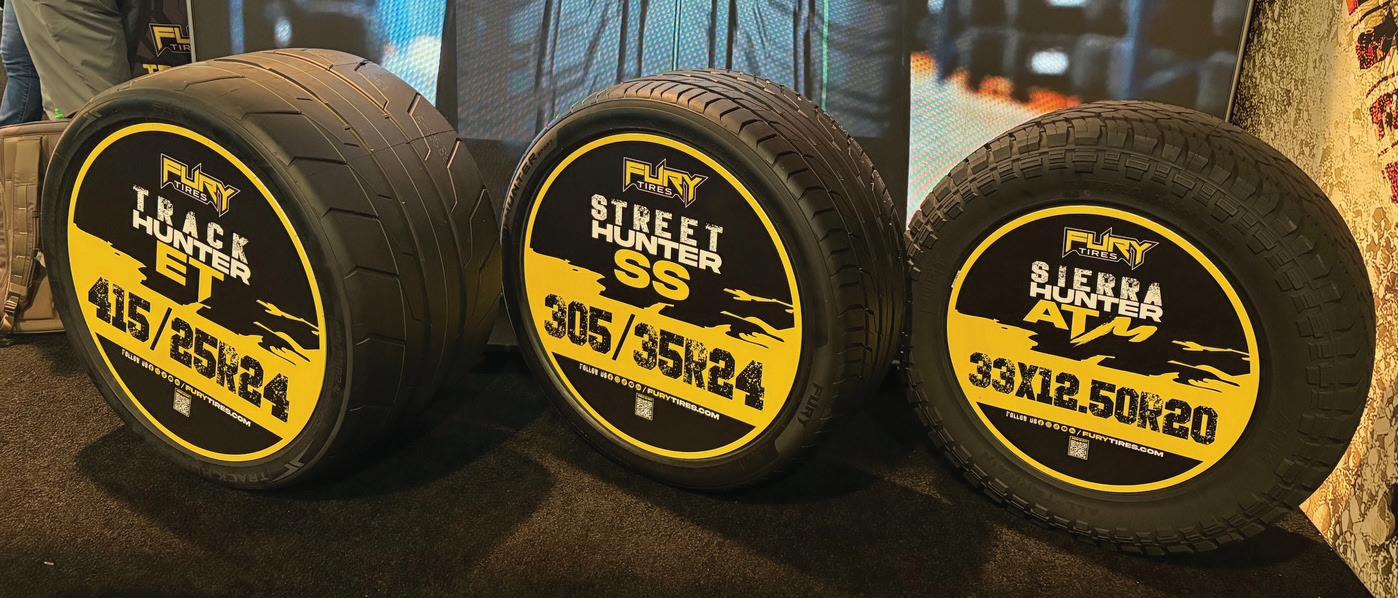
Fury Tires showcased its new Street Hunter SS and Track Hunter ET.
The Street Hunter SS fits wheels up to 28 inches in diameter and has been “engineered for high performance in all seasons,” according to Fury Tires offi-
cials. “Its deep grooves and sipes channel water fast to fight hydroplaning while maximizing wet grip and safety. On dry roads, a wide contact patch and special compounding deliver precise handling, quick response and confident cornering.”
The Track Hunter ET is a DOT-compliant competition tire “built for big horsepower and dry pavement dominance. A sticky compound and unique tread deliver fierce grip, stable launches, predictable handling” and other benefits.
The Track Hunter ET is available in a range of sizes, fitting wheels from 20 inches in diameter to 26 inches in diameter.
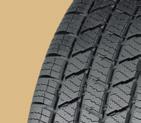
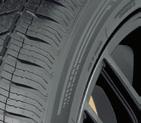
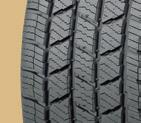
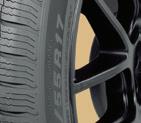
A new Mickey Thompson “ultra ultra high performance” tire and the new Mickey Thompson Baja Belted II were introduced by Goodyear Tire & Rubber Co.
The Street Comp GHT is a “next-generation ultra ultra high performance summer tire built for high-horsepower American muscle,” said Goodyear Tire & Rubber Co. officials. “Designed for drivers who demand precision, grip and control, the GHT marks a bold reinvestment in Mickey Thompson’s street and performance tire segment and a clear signal of where the brand is headed.”
Features include an aggressive tread design “that channels water away while enhancing dry traction and reducing road noise;” lightweight construction and aerodynamic profile for improved steering response and reduced drag; and more.
The tire’s initial size line-up “will be modest, targeting key fitments and applications, and will be available through authorized Mickey Thompson retailers beginning spring 2026.”
The new Baja Belted II “blends vintage attitude with modern engineering. Available in sizes for 15-inch, 16-inch, 17-inch, 20-inch, 26-inch and 30-inch wheels, it’s designed to fit everything from classic lifted 4x4s to modern custom builds.”
Features include steel-belted radial construction in select sizes for enhanced ride quality and reduced flat-spotting; a precision-tuned tread pattern for a smoother ride, longer wear and reduced road noise; and more.
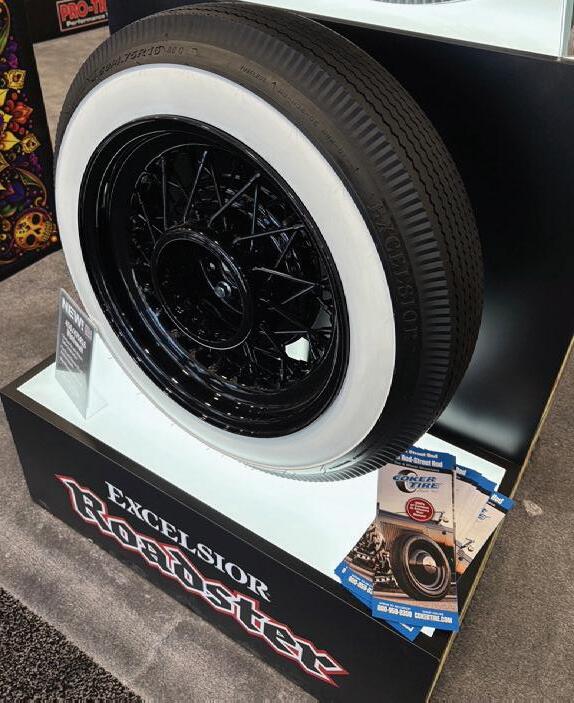
Excelsior Roadster from
Tire is designed to provide the traditional look of a bias-ply tire, “while offering the smooth ride of a modern radial,” said Coker Tire officials.
The Baja Belted II also will be available for purchase through authorized
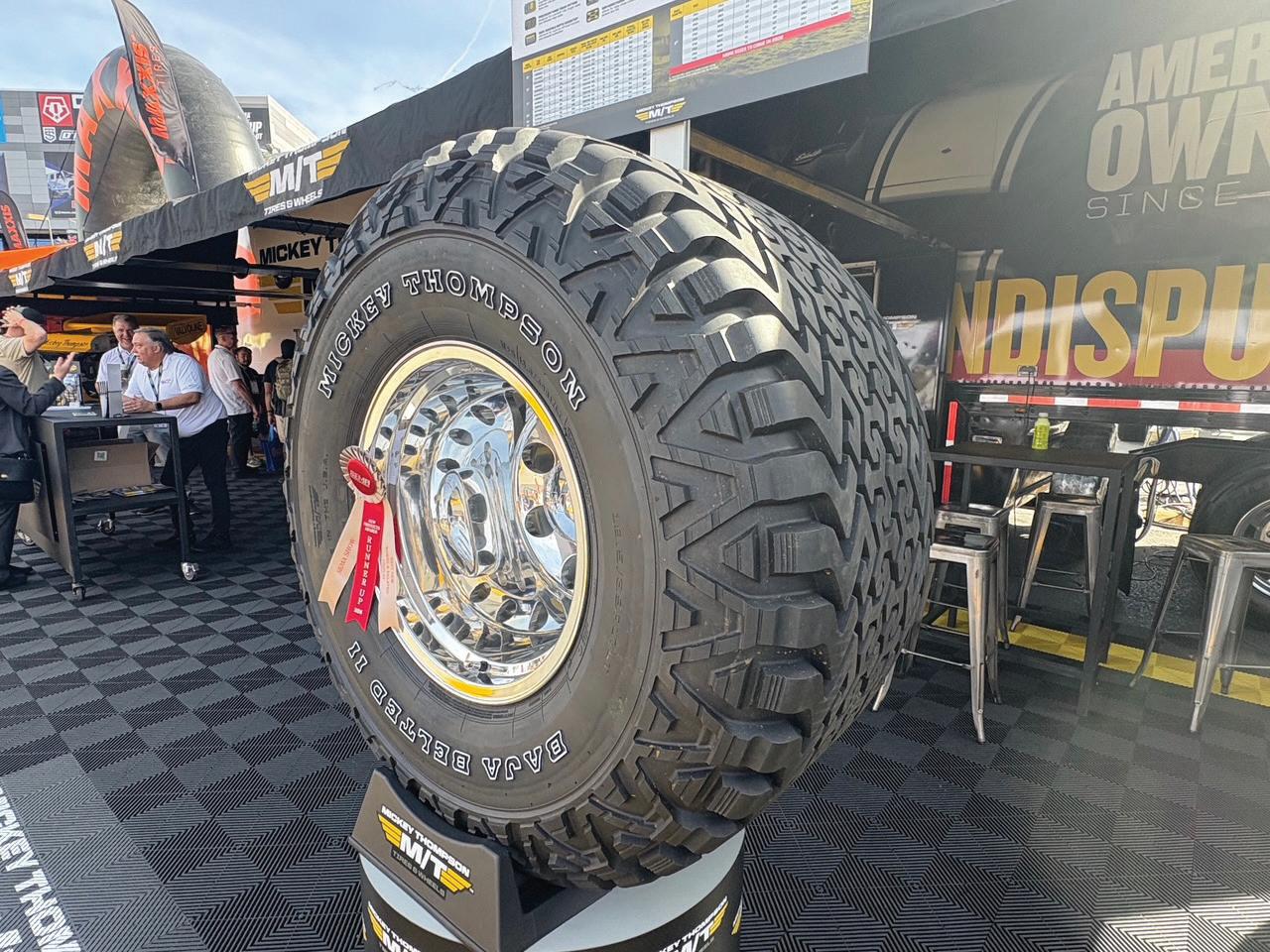

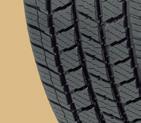
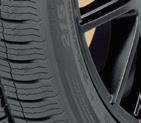
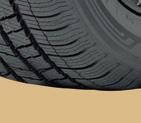

Mickey ompson retailers beginning in spring 2026.
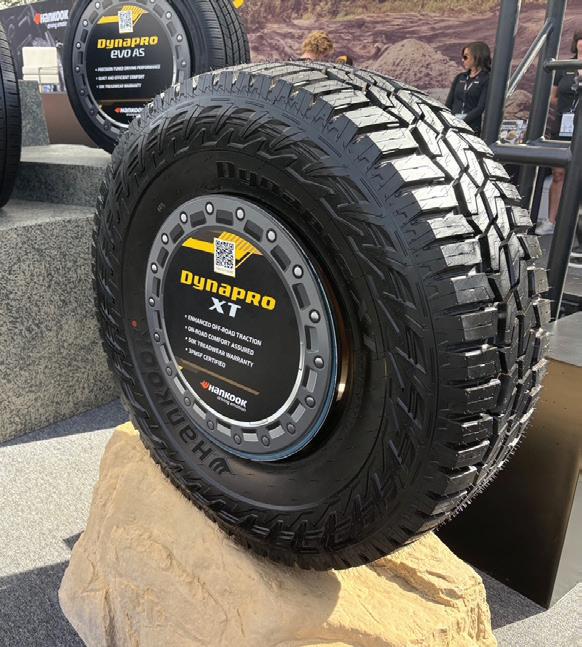
Hankook Tire America Corp.’s Dynapro line once again took center stage at the company’s SEMA Show booth.
“Speci c o -road products — including Hankook’sDynapro AT2 Xtreme, XT and MT2 — (were) featured across a range of enthusiast builds on display at this year’s booth,” said Hankook o cials. “Alongside Hankook Tire’s comprehensive, o -road-focused Dynapro line-up, which includes the Dynapro MT2, AT2 Xtreme, and XT,” Hankook also showcased its newly launched Dynapro evo AS and Dynapro HT2.
“With its full portfolio of Dynapro SUV and light truck o erings on display, event attendees (experienced) rst-hand the innovative technology designed to perform across a wide spectrum of onand o -road environments.”
“ e SEMA Show is not just an event,” said Rob Williams, president, Hankook Tire America Corp. “It’s a unique opportunity to connect innovation with industry.”
NAMA Tires unveiled the NM627, an all-steel specialty trailer tire in the company’s Overload series.
“Engineered with strong carcass structure, the NM627 features ultra-hightensile alloy steel cords, which e ectively increase the rated single-tire load capacity by 15%,” said NAMA Tires o cials.
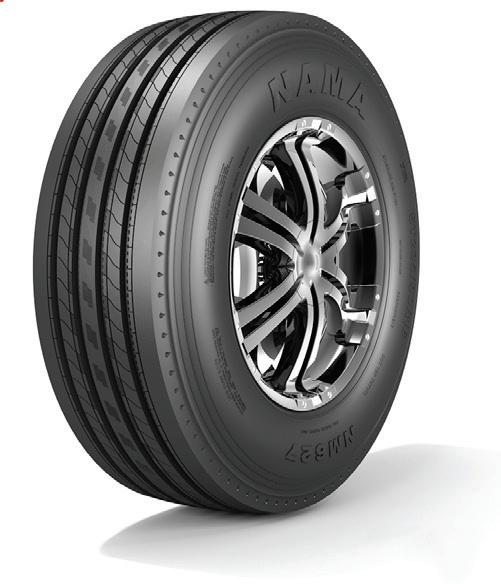
“This advancement significantly enhances the tire’s resistance to deformation and fatigue. rough utilizing hybrid steel-aromatic fiber composites and anti-aging formulations, (it) ensures superior stability, heat resistance and durability against environmental degradation.”
e tire is available in the following sizes: ST225/75R15, ST235/80R16 and ST235/85R16.
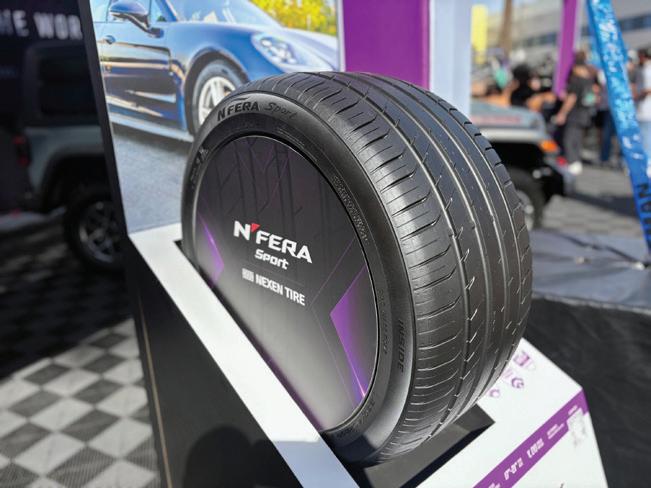
Nexen Tire America Inc. showcased the new N’Priz S and N’Fera Sport at its SEMA Show booth.
e N’Priz S is a grand touring all-season tire and is Nexen’s rst electric vehicle (EV)-compatible o ering.
Available in 48 sizes, tting wheels ranging from 15 inches to 20 inches in diameter, the N’Priz S targets EVs and internal combustion engine sedans and features a reinforced center block and enhanced footprint “to deliver high torque smoothly to the road,” according to Nexen o cials.
e N’Priz S comes with an 80,000mile tread wear warranty. It replaces three tires: the Nexen Roadian GTX, the Nexen




Aria AH47 and the N’Priz AH8. Also on display was the N’Fera Sport, a premium ultra-high performance summer tire. Available now in 63 sizes, fitting wheels ranging from 17 inches to 21 inches in diameter, the N’Fera Sport replaces the Nexen N’Fera SU1.
Features include a four-channel groove design for optimal water evacuation; a slant shoulder block design for improved braking; an upgraded profile “using infinite analysis technology to reinforce handling, braking, performance and durability” and more.
An expanded range of Prinx allweather, all-terrain and TBR tires were on display at Prinx Chengshan Tire North America’s (PCTNA) SEMA Show booth.
“With 400-plus SKUs spanning passenger, light truck, and commercial categories, Prinx continues to deliver value without compromise,” said PCTNA officials.
Showcased products included the HiCountry A/T; HiSeason 4S; and the new PDW1 winter drive tire, “each engineered to deliver superior traction, durability and comfort. Prinx also (introduced) a new 5-rib AM210-A and 445/65R22.5 AM211 to strengthen its commercial line-up."
The HiCountry A/T is a “rugged all-terrain tire offering off-road capability and quiet highway comfort, backed by a 50,000-mile limited warranty.”
The HiSeason 4S is an “all-weather touring option with 3PMS certification, engineered for safety and confidence year-round.”
The new PDW1 winter drive tire has been designed for “severe commercial use, combining deep tread and advanced compound technology for longer service life. And the five-rib 315/80R22.5 AM210-A and 455/65R22.5 AM211 expansions” help deliver greater stability, handling and mileage for mixed-service fleets.
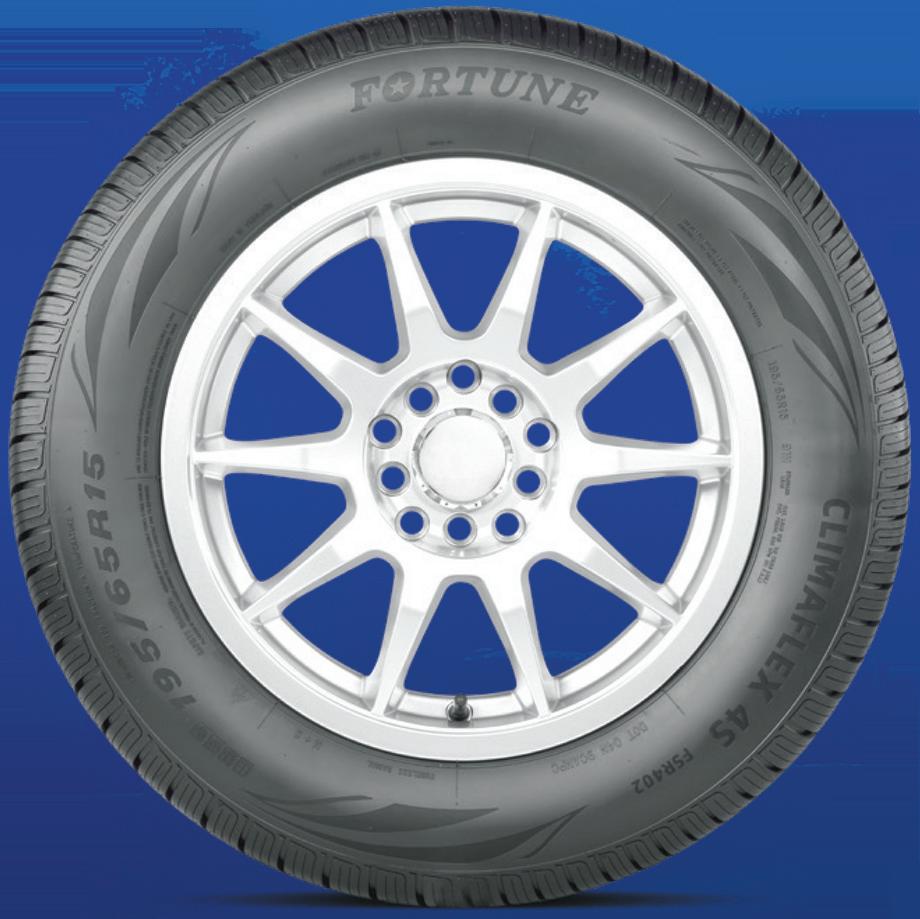
PCTNA also highlighted several Fortune brand tires at the SEMA Show.
“Every Fortune tire is developed with dealer feedback in mind,” said Ken Coltrane, vice president of marketing and product development, PCTNA. “From expanding our all-weather line to introducing new drive and mixed-service TBR options, Fortune continues to evolve in ways that support dealer profitability and consumer confidence.”
Tires on display include the all-terrain, 3-Peak Mountain Snowflake-rated Tor-
menta A/T, which PCTNA officials said has been designed “with aggressive tread and quiet comfort, is ideal for light truck and SUV applications and (is) backed by a 50,000-mile warranty;” the ClimaFlex 4S, “a true all-weather touring and CUV tire, available in 61 SKUS and 3PMScertified for year-round traction;” and the FDW802 winter drive tire, built for severe conditions “with enhanced tread depth and stability for dependable winter performance.”
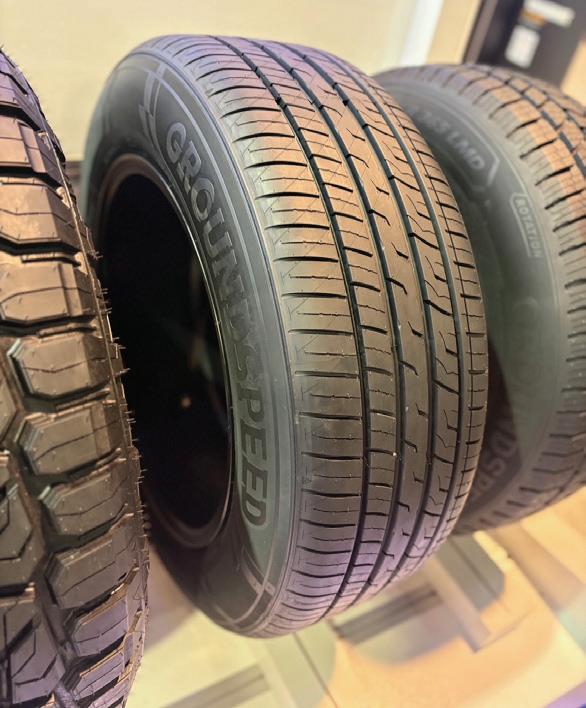
All Fortune TBR tires are supported with a seven-year, three-retread warranty. Sentury Tire USA displayed its new Groundspeed Voyager GT-AS all-season tire.
The Groundspeed Voyager GT-AS “features a tread design that aids in water evacuation and helps prevent hydroplaning, combining dry grip and rapid water dispersal technology to improve traction in both wet and dry road conditions,” said Sentury Tire USA officials. “Additional grooves and siping add all-season performance, increased traction and improved handling.”
The design of the tire also “ensures even contact pressure distribution and provides increased tread block stiffness, which improves handling and increases fuel efficiency.”
“We are excited to add this versatile all-season offering to Groundspeed’s range of quality passenger tires,” said Maxwell Wee, executive vice president of Sentury Tire USA. “The Voyager GT-AS meets the needs of today’s touring driver by providing a fuel-efficient tire with excellent traction and handling year-round.”
Sentury Tire USA also launched five new commercial tires for regional and



mixed-service use under its Landsail brand. All feature Sentury Tire USA’s specialized KTM Tread Compounds, which “enhance (their) functionality

and longevity,” according to Sentury Tire USA officials.
The Cargoblazer AP360 is a regional all-position tire “designed for superior performance and durability,” while the Cargoblazer CSD780 regional closed shoulder drive tire as been built “for ultimate durability” and offers long tread life.
The Cargoblazer OSD550, a regional open shoulder drive axle tire, provides “improved mileage performance and confidence in challenging terrain.”
The Cargoblazer TRL400 regional trailer tire “is durable and performs in any condition, with an optimized footprint for fuel efficiency and extended tread life,” said Sentury Tire USA officials.
And the Cargoblazer APM555, a mixed-service tire, has been designed to provide “maximum durability, enhanced traction and cut/chip resistance.”
“The new Cargoblazer line-up, refined through key industry collaboration, marks the beginning of a series of long-lasting products built to exceed the demands” of truck drivers across the United States, said Nick Gutierrez, ter-
ritory sales and marketing director for Sentury Tire USA.
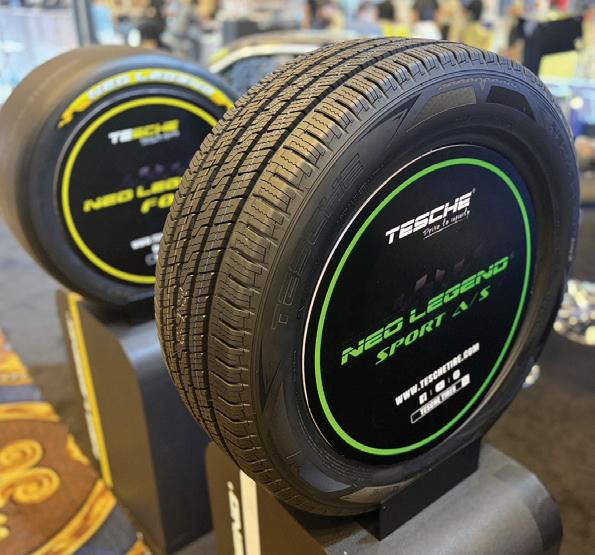
Tesche Tires’ new Sport A/S integrates the company’s racing tire technology “with daily driving needs,” said company officials
The all-season tire’s asymmetric tread pattern and specialized compound “deliver reliable traction in dry, wet and low-temperature conditions,” while its optimized structure and noise reduction technology “balance EV compatibility with a comfortable driving experience, truly delivering on the ‘one tire for all seasons’ concept and offering a comprehensive solution for quality-focused drivers.”
The Sport A/S is available in 17 16-inch sizes, 12 17-inch sizes, more than 10 18-inch sizes, two 19-inch sizes, two 20-inch sizes and one 22-inch size.
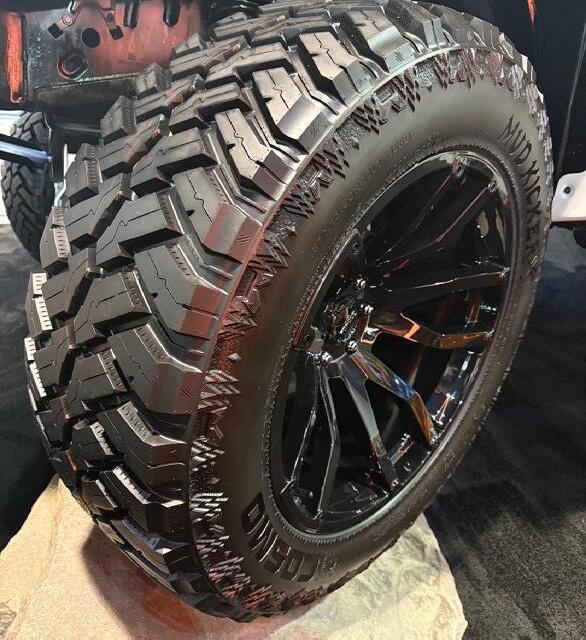
The new Cosmo Mud Kicker X from Tire Group International LLC (TGI) was showcased during the SEMA Show. The tire is now available and features “a multitude of upgrades,” according to TGI officials. It features patent-pending Shoulder Claws that have been redesigned



THE MR. TIRE AND BIG 3 TIRE PROGRAMS ARE DESIGNED TO HELP YOU SHAPE THE FUTURE OF YOUR INDEPENDENT TIRE DEALERSHIP WITH THE TOOLS NEEDED TO REACH YOUR MAXIMUM POTENTIAL WITHOUT SURRENDERING YOUR IDENTITY.
with “a deeper, industry-leading 9 mm shoulder depth for next-level traction. Add to that our patent-pending Bead Claw Technology for unbeatable bite in deep mud and snow and you’ve got a tire that simply refuses to quit.”
Other features include a mud rating “to excel in deep mud and snow;” Cosmo Quiet Kat Technology, boasting “geometric isolation” that reduces road noise; dual sidewall styling with bold raised lettering on one side “for an aggressive look” and another side with indented lettering and a “textured pebble shoulder aesthetic;” a three-ply sidewall and robust undertread construction for optimal strength and impact resistance; tread block divots and stone ejector ridges that push out mud, rocks and debris “to maintain grip and extend tire life;” and more.
The tire is initially available in size
37x13.50x22, with an additional eight sizes “as part of our phase one development that customers will be able to order by the end of Q1 2026.”
Nine more sizes will be introduced during phase two, according to TGI officials.
The Cosmo Mud Kicker X comes with a 50,000-mile warranty and Cosmo’s Hassle-Free Road Hazard Warranty, “giving our retailers an edge and every driver peace of mind.”
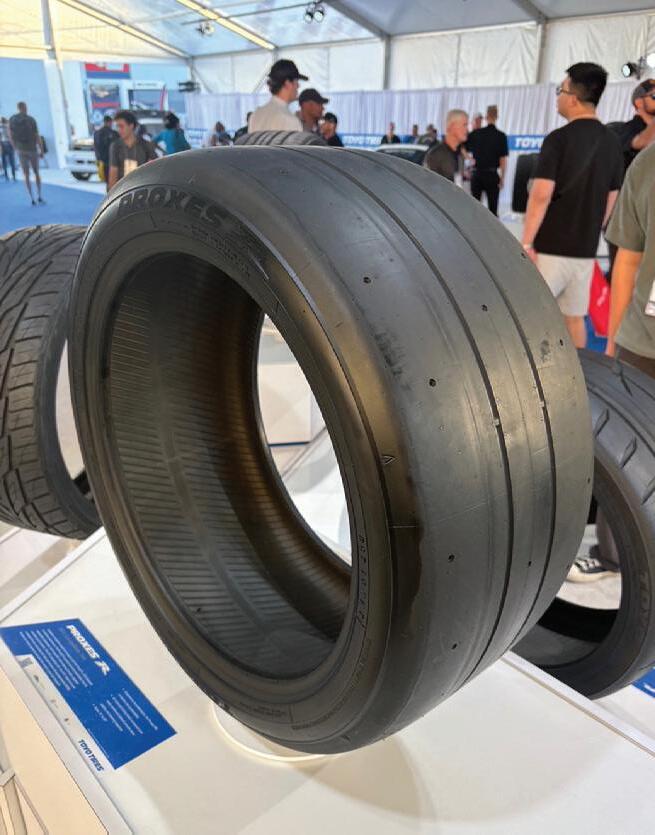
Toyo Tire U.S.A. Corp., in its popular Treadpass area, displayed the recently unveiled ProxesSport R, an extreme performance summer tire “designed for passionate drivers and motorsports enthusiasts.
“Delivering outstanding capability in dry conditions, the Proxes Sport R features an aggressive directional tread pattern, reinforced internal casing and a high-grip compound,” according to Toyo officials.
The tire will be produced in over 50 unique sizes and load/speed combinations for 13- to 21-inch wheel diameters. Initial sizes will be available for sale in the first half of 2026, with additional fitments released throughout the remainder of next year.
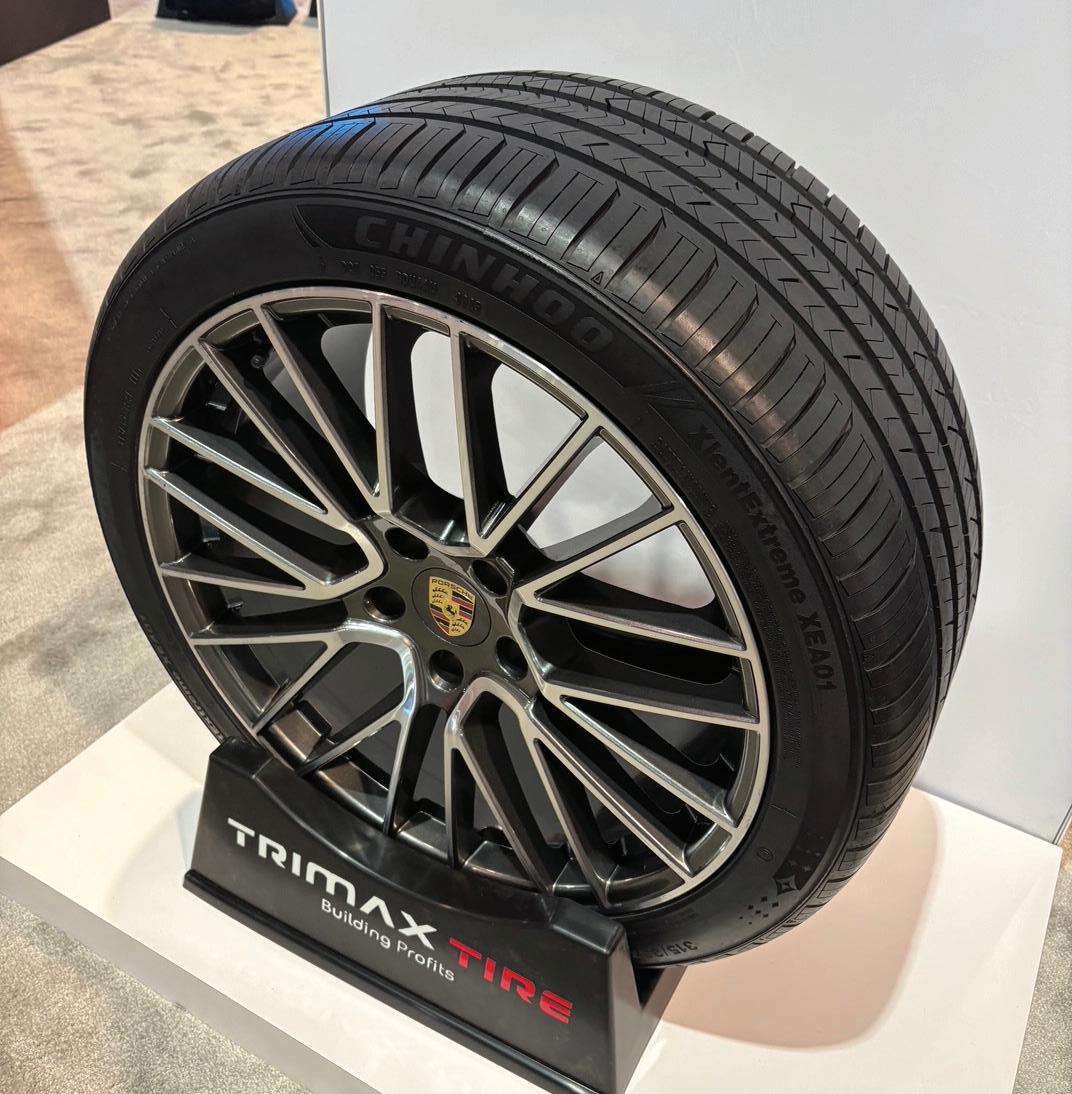
Trimax Tire unveiled its new Chinhoo brand, which includes nearly 300 sizes. According to Trimax Tire officials, the 2025 SEMA Show saw the debut of tires in the following applications and sizes: “summer (15 sizes; 17 inches to 22 inches), all-season UHP (65 sizes; 16 inches to 20 inches), HP-PCR/SUV (57 sizes; 14 inches to 24 inches), HT-PCR/LTR (42 sizes; 15 inches to 20 inches), AT-PCR/LTR (78 sizes: 15 inches to 24 inches), RT-LTR (27 sizes; 17 inches to 24 inches) & MT-LTR (11 sizes: 16 inches to 22 inches).”
Trimax Tire, which has been importing tires primarily from China since 2014, “represents the following brands for North America: Haida, MileKing, ANSU, Farroad Kapsen, Opals and Saferich. With all the recent tariff turmoil this year, we are excited to introduce the Chinhoo Tire brand to North America, positioned as a quality value tire.”
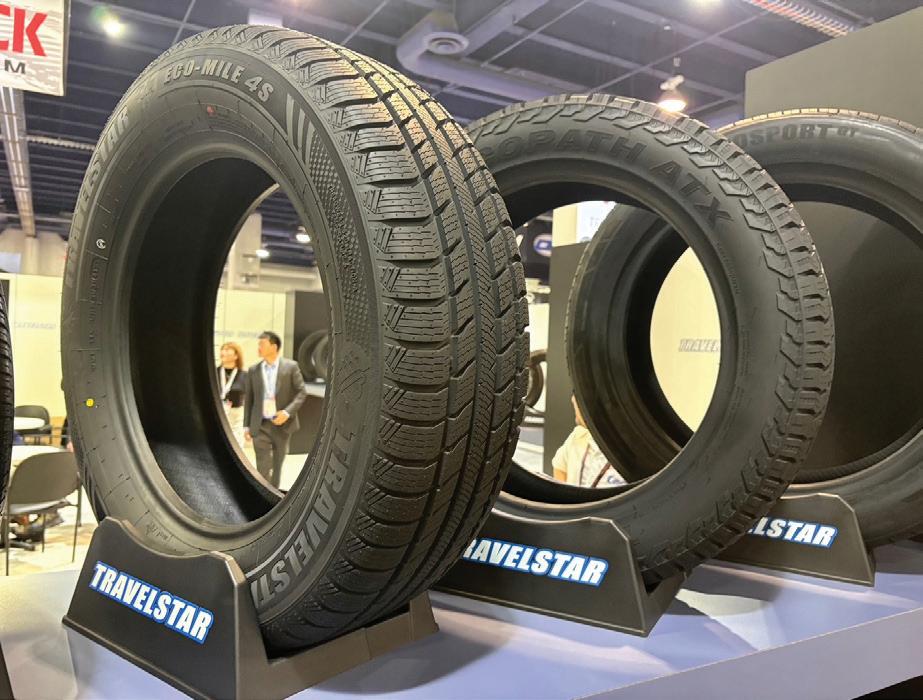
Unicorn Tire Corp. displayed several new Travelstar brand tires at the 2025 SEMA Show. They include the Travelstar Ecopath ATX, Travelstar Ecopath RT and Travelstar Eco-Mile 4S.
“These three tires are the first offerings from Travelstar’s new second-generation
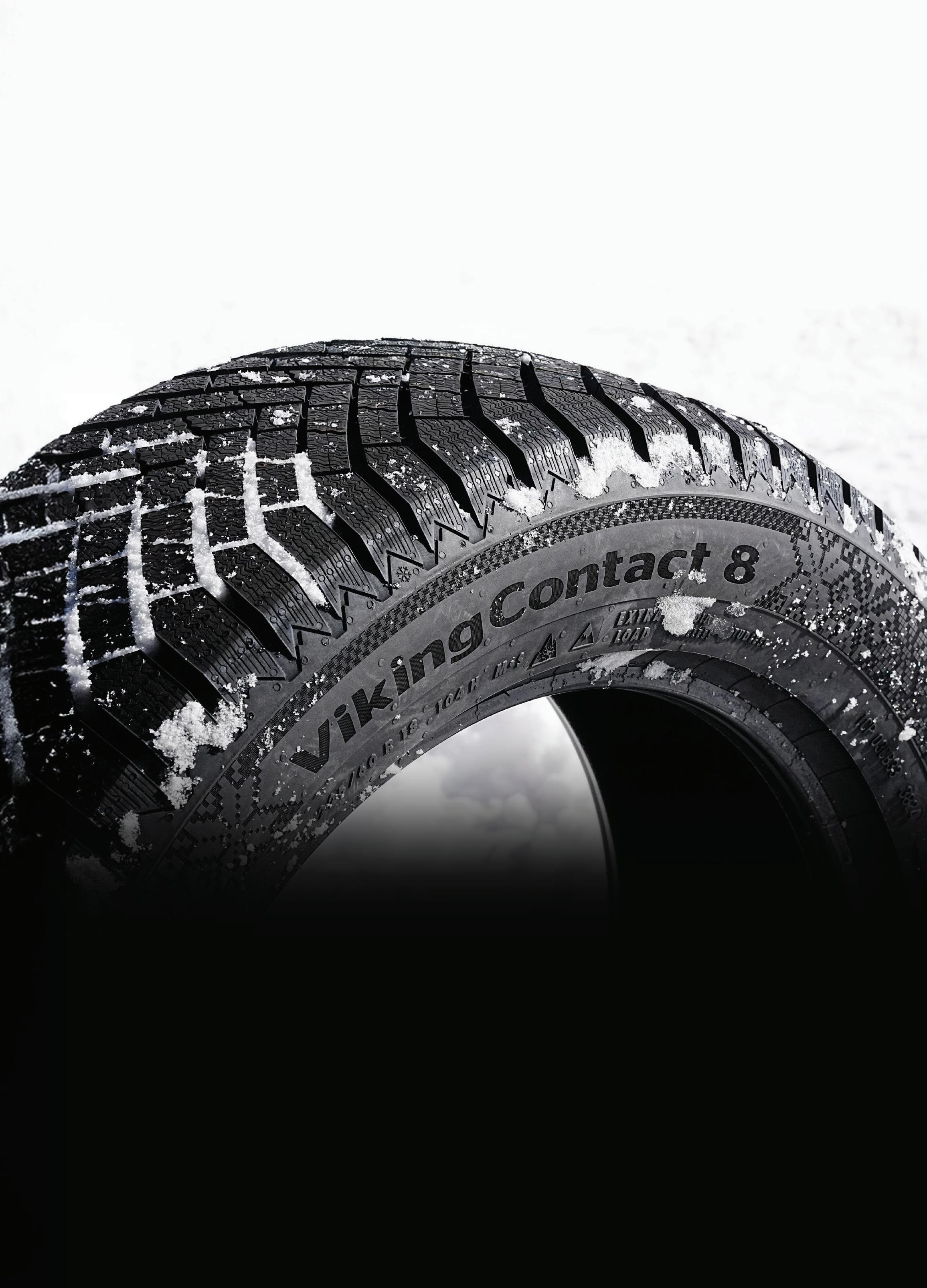
line,” said Unicorn officials. All are 3-Peak Mountain Snowflake-certified, “meeting severe snow standards for confident winter performance.”
The Eco-Mile 4S is an all-weather tire designed for CUVs and SUVs. Its features include an asymmetric tread design for enhanced handling and wet and snow traction; strong outer blocks for extra stability; 3D inner blocks for grip; four wide grooves for efficient water evacuation; a multi-pitch tread for road noise reduction; and more. The tire is available in 64 sizes.
The Ecopath ATX is available in 14 sizes, fitting wheels up to 20 inches in diameter.
Features include an all-terrain tread for balanced on- and off-road performance; an advanced compound for rain, dirt, mud and snow performance; two wide longitudinal grooves for wet surface handling; and others.
The Ecopath RT is a rugged-terrain off-road tire that comes in 23 sizes, fitting wheels up to 24 inches in diameter. Features include dual-sidewall design for aesthetic flexibility and mounting options; raised branding and tread lettering; and more.
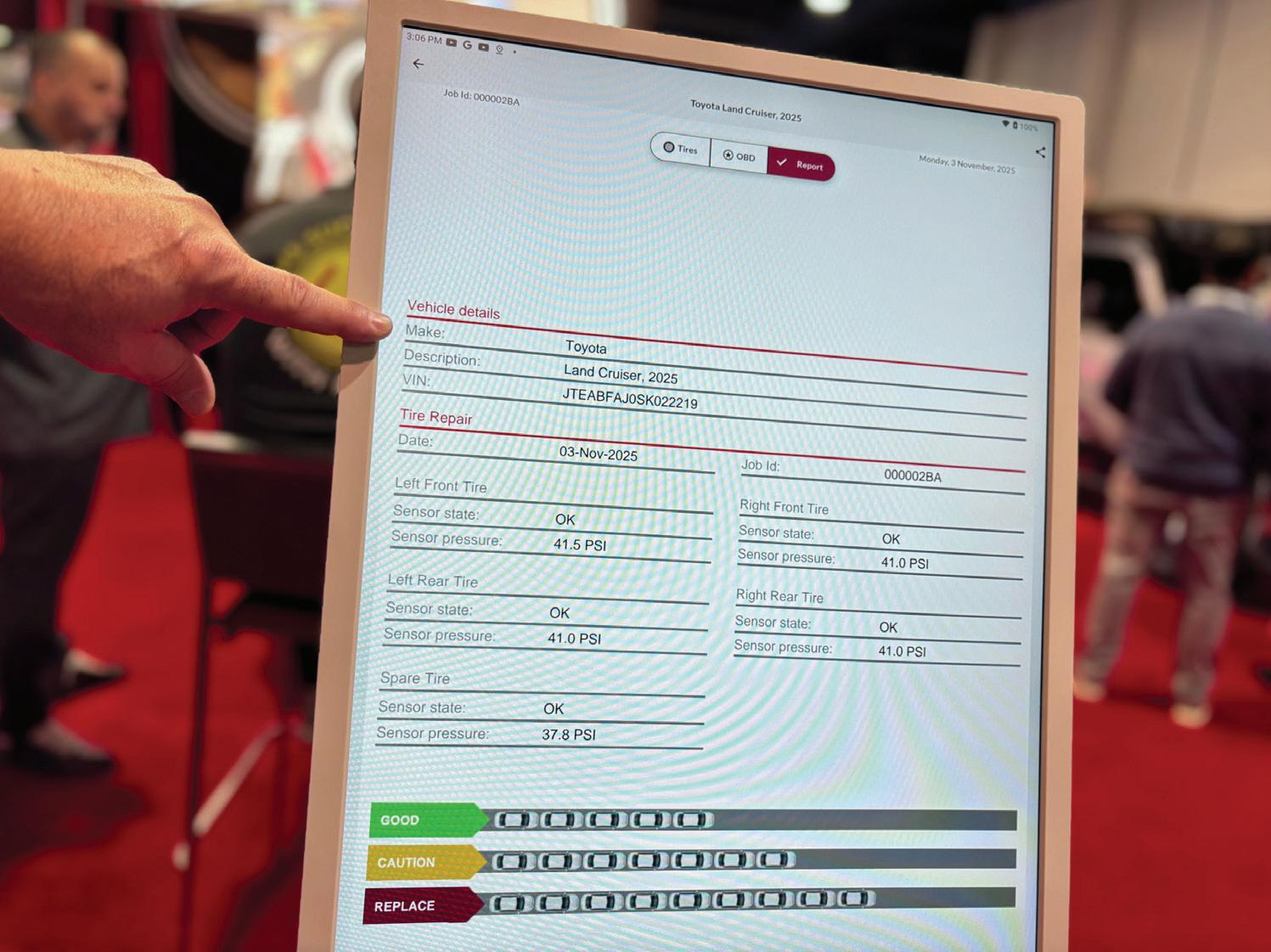
Bartec TPMS continued to build on its Connected Support strategy with the launch of the new Bartec365 App.
Available for both Apple and Google devices, the Bartec365 App “is an all-inone solution for automotive service professionals working in tire pressure monitoring systems (TPMS),” said Bartec officials.
“Designed to streamline technician workflow, Bartec365 brings together tool management, detailed service reports, a comprehensive knowledge base and direct access to Bartec’s technical support team.”
The app allows users to update tools, purchase software, configure WiFi, collect service data from Bartec TPMS tools, create and print reports and contact Bartec support staff. It also includes TSBs, videos, articles, parts numbers and vehicle relearns.
“The Bartec365 application is a platform that Bartec will continue to build upon, with future features including Rite-Sensor warranty registration and tracking, TPMS tool updating and training and field support requests.”
Hamaton Inc. showcased its latest
Heavy-Duty TPMS product line-up. The products, according to Hamaton officials, are designed to “deliver durability, flexibility and advanced diagnostic capabilities for commercial vehicles, trailers and mixed fleets.”
The expanded offering includes the VT Truck 2.0 Tool, the HD Band-Mounted Sensor and the HD Valve-Mounted Sensor — “a powerful combination engi-
neered to simplify TPMS maintenance, improve reliability and reduce downtime for heavy-duty applications.”
The Hamaton VT Truck 2.0 Tool “provides a powerful, user-friendly interface for TPMS maintenance and programming.” Designed for heavy-duty trucks, buses and trailers, the tool features an allin-one display that shows complete TPMS information on a single screen. It can read

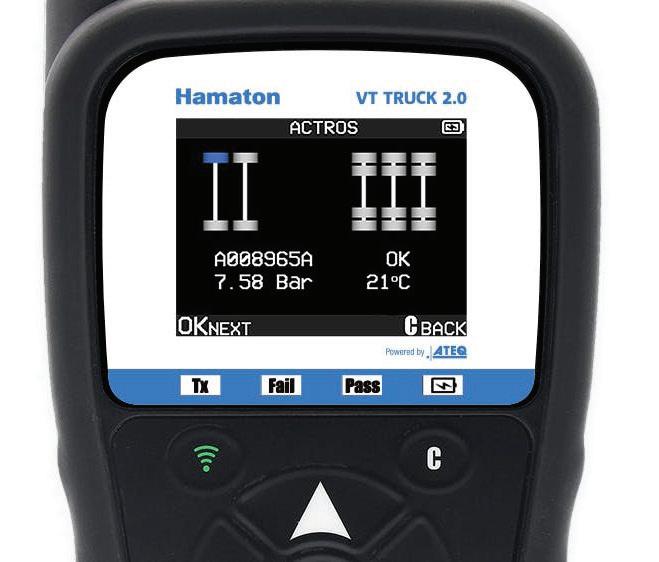
sensors “with ease” and quickly activate sensors, “even in twin-wheels set-ups.”
Also new is the HD Band-Mounted Sensor, which Hamaton said “delivers a reliable and cost-effective TPMS solution for one-piece, 17.5-inch to 24.5-inch wheels.”
Schrader TPMS Solutions is launching its new Heavy Duty OE Replacement TPMS portfolio, including sensors, valves and the VT Truck 2.0 TPMS Tool.
Schrader says its HD TPMS sensors “are engineered for leading OEMs and a wide variety of heavy-duty applications.”
They include the PN 53707, for Scania G, L, P, R and S Series (2022-plus); PN 53715, for Volvo New VNL (2024-plus); PN 53718, for Prevost H-Series (H3-45); X-Series (X3-45, X3-45 Commuter) and Volvo 9700 (2022-plus), as well as the PN 53736, for Kenworth T180, T280, T380, T480, T680, T880, W990 and Peterbilt 520, 535, 536, 537, 548, 567, 589 (2025-plus.)
Features and benefits include “reliable 433 MHz frequency for robust performance;” design that enables “seamless integration with OEM systems;” and more. In addition, they are “built for durability and long service life in demanding environments.”
Key features of the VT Truck 2.0 TPMS Tool include the ability to diagnose and relearn “all TPMS sensors and features;” an integrated OBD-II module for fast, accurate diagnostics; all TPMS information on one screen for easy access; and others.
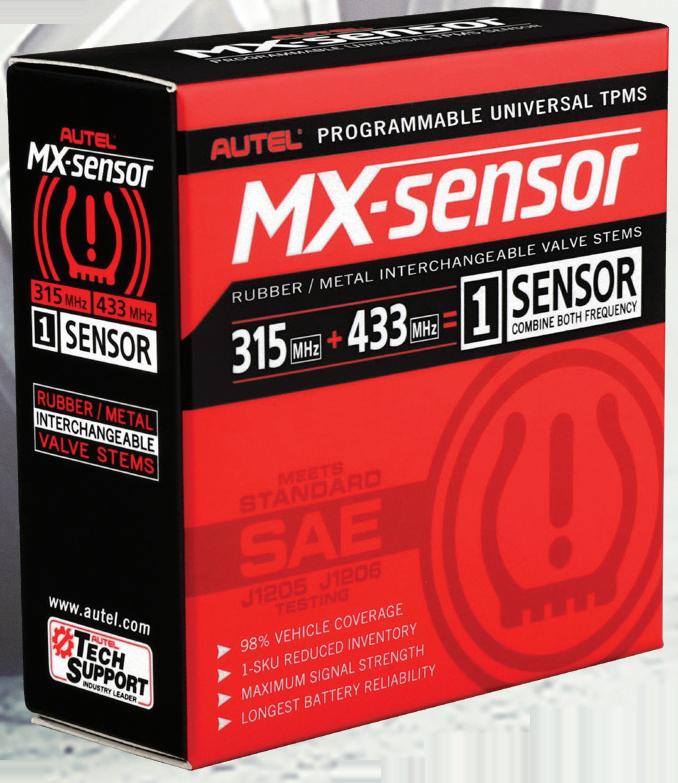
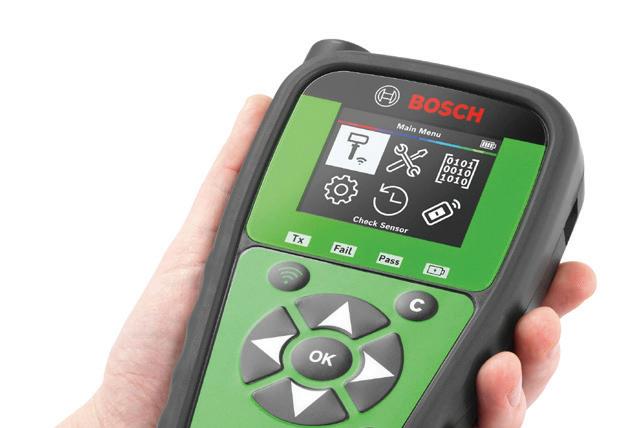
Bosch Mobility highlighted a number of products at the SEMA Show, including the Bosch TPA400, which is “fit with an integrated OBD module and over-theair software updates” and is compatible “with over 20 universal sensor brands and boasts vehicle coverage of over 95,” accordng to Bosch officials.
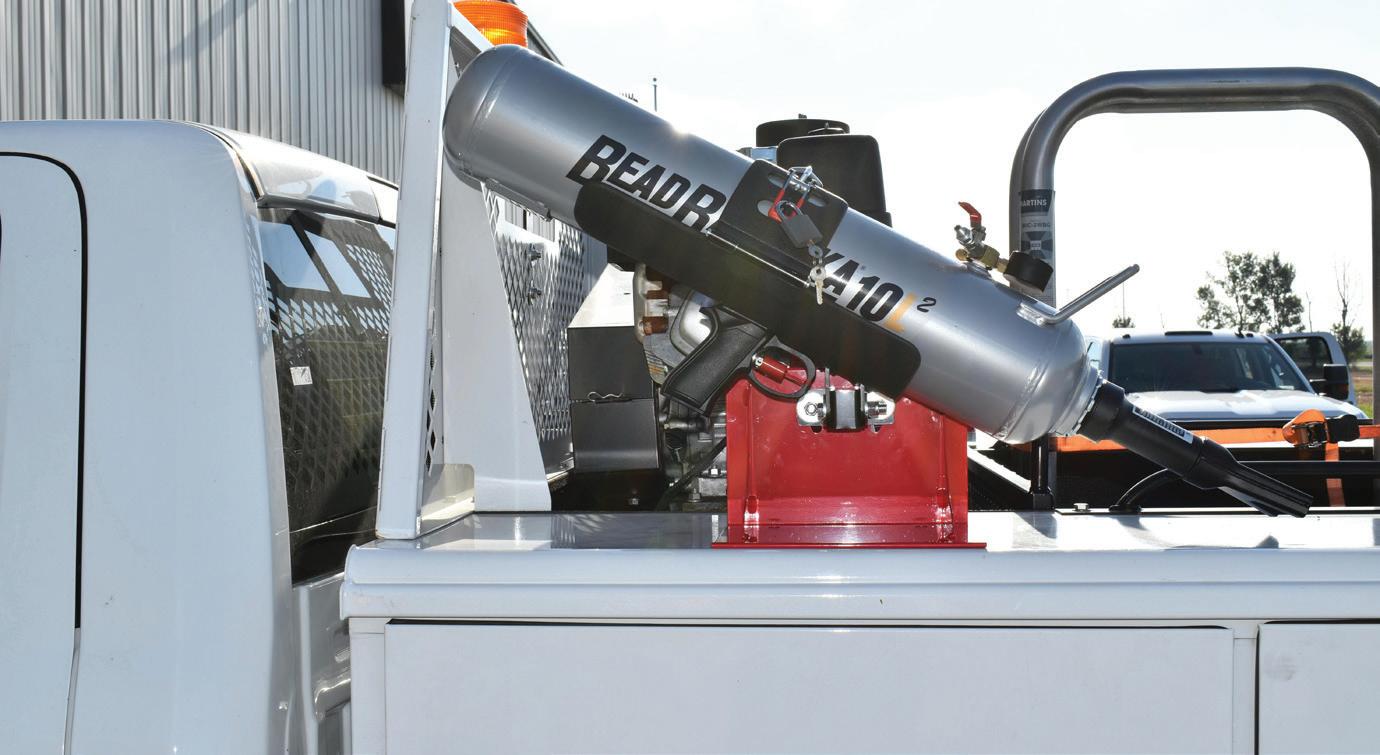
Gaither Tool also showcased several new products, including additions to its Bead Bazooka tool.
The Bead Bazooka Car Seat mounting system serves as a holster that keeps “your Bead Bazooka secure and out of harm’s way while conducting service on the move in the most demanding of environments,” said Gaither officials.
“It is designed to be bolted directly on to service vehicles regardless of make or model and can accommodate all of our Bead Bazooka bead seater models.”
Also new is the Bead Booster GB-38L3, a “more powerful 3in Rapid Air Release (RAR) valve replacing the previous two -inch valve. This new upgrade retains the
same renowned reliability and repairability of the original valve, but adds more power by allowing more air to escape the tank more quickly during discharge.”
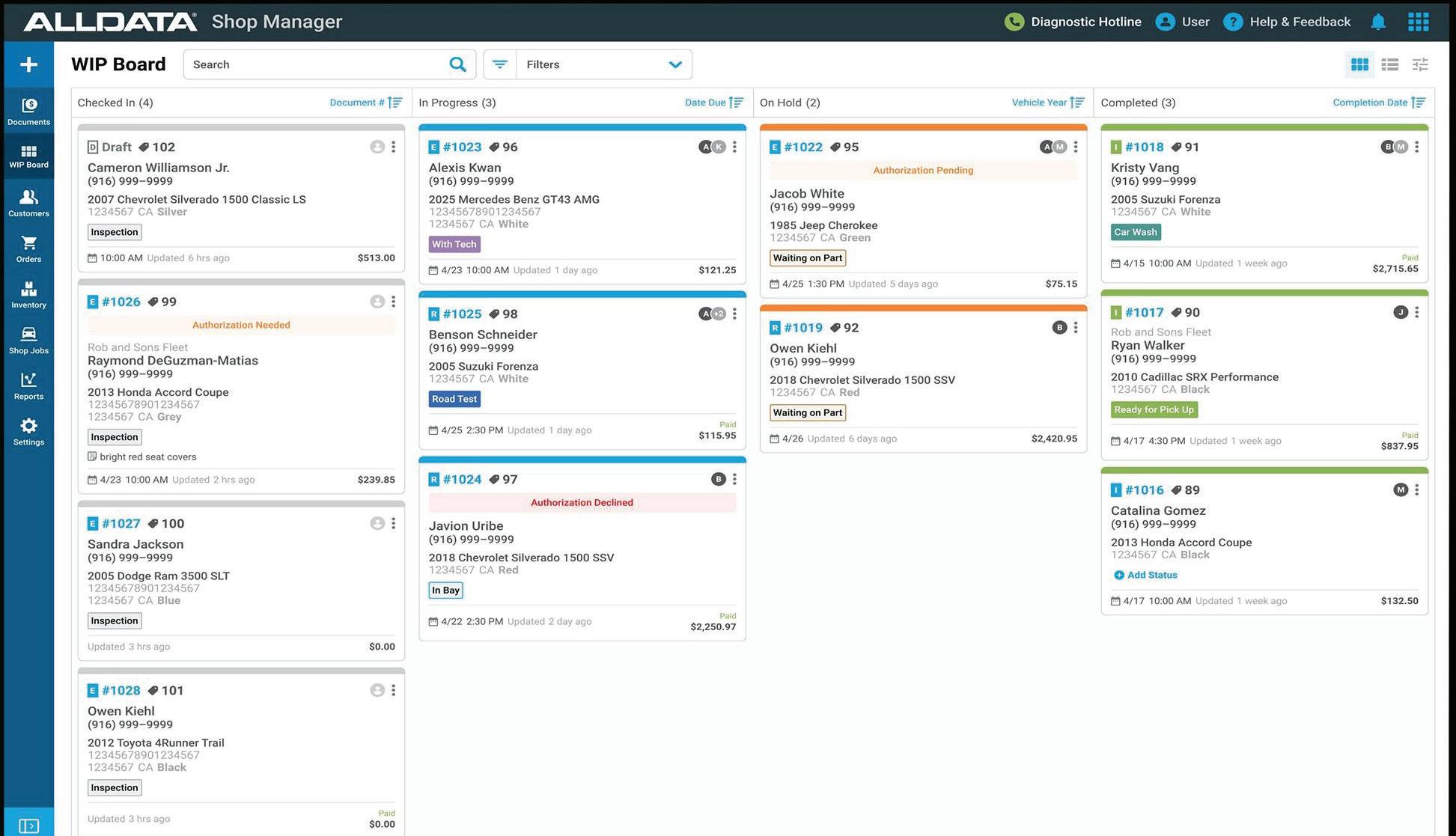
ALLDATA launched Shop Manager Pro, a shop management platform with enhanced functionality. Shop Manager Pro is designed “to help growing shops work smarter and scale with confidence,” according to ALLDATA officials.
ALLDATA said the platform is the only shop management platform that provides seamless integration with ALLDATA Repair, leveraging the full extent of ALLDATA Repair’s parts, labor and repair information, plus unedited factory diagrams, data and procdures,
Features include attachable photos and videos and two-way texting to enable the sharing of real-time updates, request work approvals and document repairs; automated parts and labor look-up with automated workflows for faster, more accurate estimates; and more.
Anyline unveiled major upgrades to its TireBuddy app at the 2025 SEMA Show.
“Built on a foundation of advanced AI, the enhanced TireBuddy app now delivers a more intuitive user experience,” said Anyline officials.
Key upgrades include an AI Assistant that autofills inspection notes, flags potential tire issues and improves technician-to-customer communication; improved on-boarding, which allows first-time users to benefit “from guided tips and intuitive walk-throughs to quickly master the app and its features;” enhanced scan guidance with visual overlays to help technicians capture accurate sidewall and tread area scans: and others.
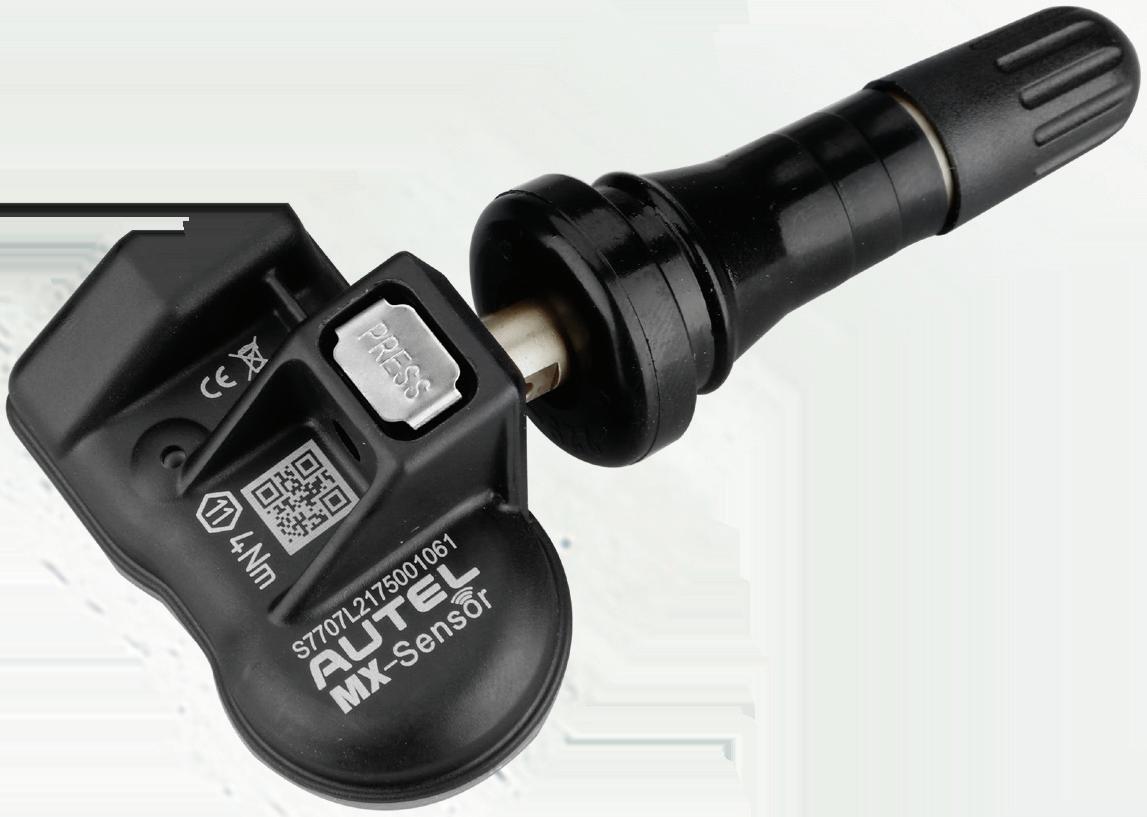
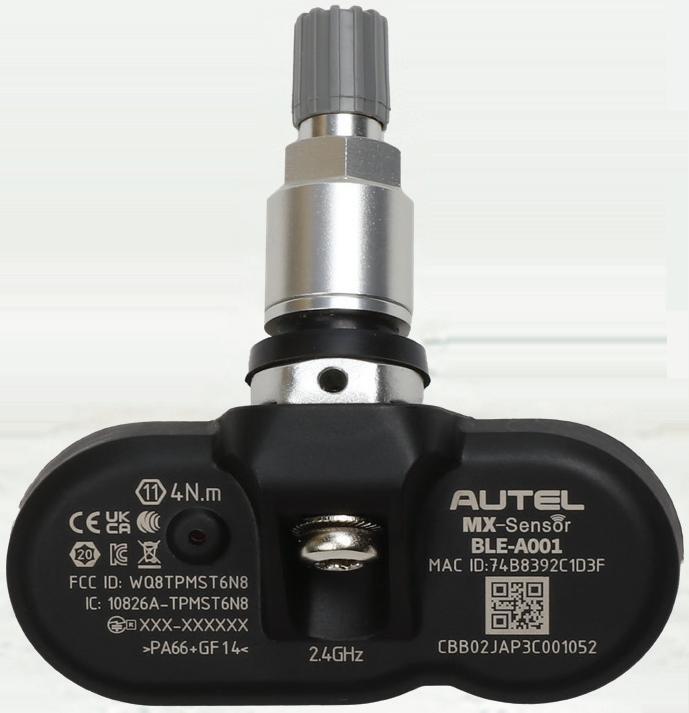
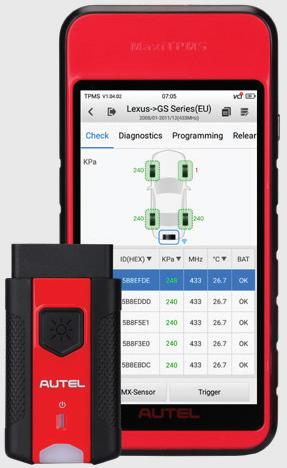
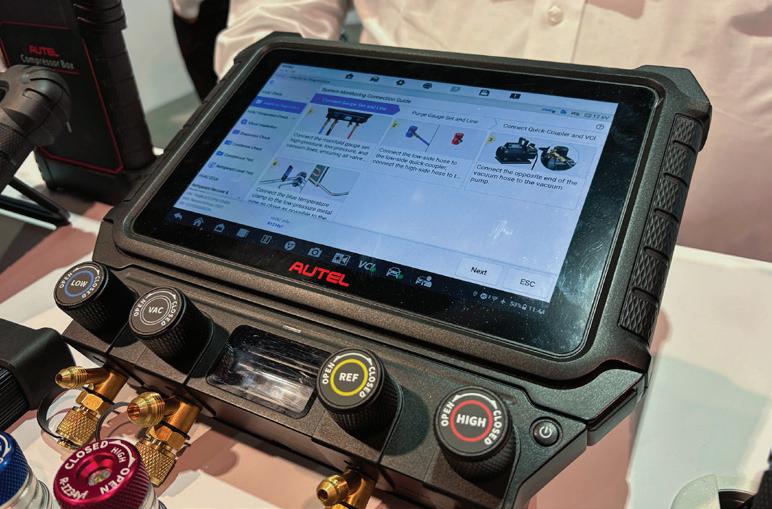
Autel introduced the MaxiHVAC


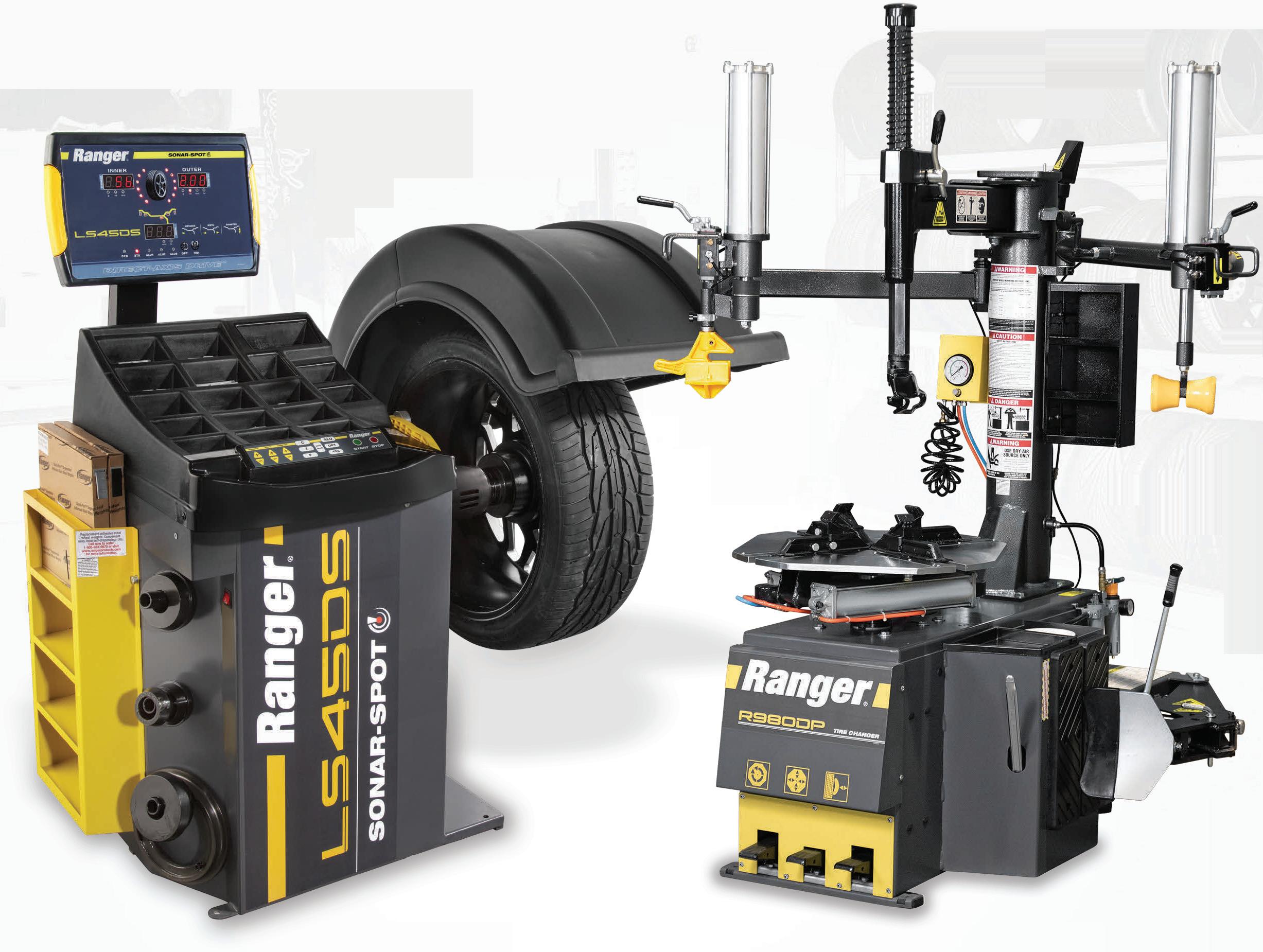




Tire Shop Package Includes: (1) LS45DS-220V Wheel Balancer + (1) R980DP-220V Tire Changer + (1) Tape Wheel Weights




Revolutionize your tire and wheel service center with the ultimate pairing of precision and efficiency. Our combos redefine the standard, bringing you cutting-edge features without the hefty price tag. Elevate your services, amplify your efficiency, and see a direct impact on your profits. Don’t miss out on this opportunity to upgrade your work shop to the next level of performance. Connect with us at 1-800-253-2363 to speak with our experts or explore our combo offerings at www.bendpak.com. Discover the innovation, efficiency, and satisfaction that only Ranger can deliver – brought to you by BendPak.



AC909, “a revolutionary four-port manifold system designed to bring skill, understanding and precision back to HVAC diagnostics.”
Autel o cials said the MaxiHVAC AC909 combines “advanced technology, intelligent workflow and true system insight to restore the lost art of vehicle climate diagnostics and servicing.
“The AC909 is built to empower technicians with the knowledge and precision-focused tools and procedures that true HVAC system analysis demands and that technicians need to con dently service their customers’ vehicles today and tomorrow.”
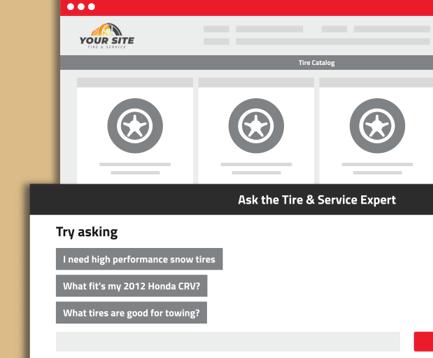
Net Driven made several enhancements to its Connected Digital Platform to help tire dealerships strengthen their visibility, attract additional customers and more.
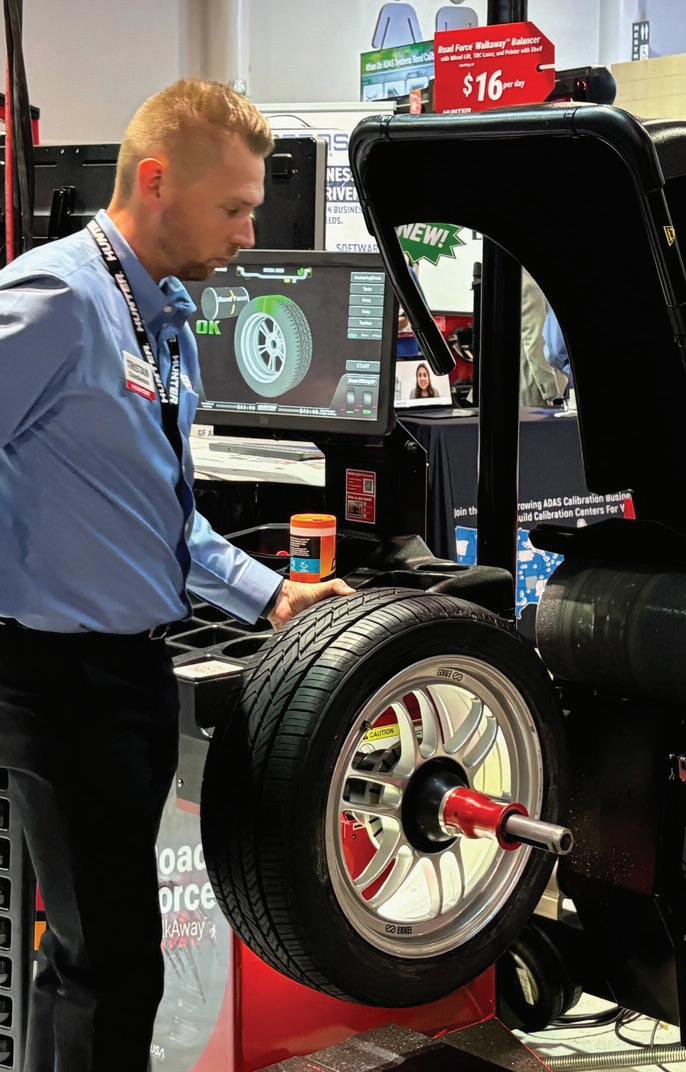
Hunter Engineering Co. demonstrated its new Road Force WalkAway wheel balancer, which the company says can cut tire changeover times by up to 45%.
“ e key component for the dramatic timesaving is the WalkAway In ation System, which automatically releases the inflation chuck when inflation is completed, allowing the machine to then perform the balance spin,” said Hunter o cials. “ is greatly reduces the time spent in ating assemblies on the tire changer.
Features include a shop performance dashboard, which provides real-time visibility into car count, repair orders and campaign results “to drive con dent decisions,” according to Net Driven o cials; smart quoting tools that will help provide “accurate service estimates online or by phone using each shop’s real parts and labor data;” and a digital marketing suite that provides automated outreach “that keeps shops top of mind with maintenance reminders and declined-service follow-ups.”
“ e time saved frees up the technician to tend to other tasks during in ation, such as retrieving more assemblies from the vehicle, cleaning vehicle hubs, changing tires on the tire changer, installing and pre-torquing assemblies or removing old wheel weights.”
When used in tandem with “a basic tire changer,” the Road Force WalkAway can help technicians change tires up to 29% faster, according to Hunter o cials. When paired with Hunter’s Revolution tire changer, “the time savings jumps to a potential 45%.
“Measured in minutes, the time savings are approximately 10 minutes with a basic tire changer, 12 minutes with Hunter’s Maverick tire changer and 15 minutes with Hunter’s Revolution tire changer.”
Other features include a new two-piece hood that enables the balancer to sit 4.5 inches closer to the wall; a new hood angle sensor to provide a smooth opening; and updated so ware. ■
As shopper expectations evolve, dealers are turning to datadriven insights and reliable tire options, with brands like Sailun providing products designed to meet the needs of tomorrow’s buyers. Modern buyers increasingly prioritize verifiable performance, family safety, and dependable choices when selecting tires.
As the tire industry moves forward, dealers are seeing notable changes in consumer behavior. Today’s buyers are more informed, often researching tire specifications, traction ratings, treadwear, rolling resistance and overall value. Many pay attention to performance certifications and approvals, such as wintercapable ratings or independent familyfocused endorsements. These patterns indicate that modern tire buyers increasingly prioritize longterm value, consistent handling, and safety rather than simply price.
Consumers are more focused on the practical benefits of a tire. Drivers want to understand how a tire performs in dry, wet, or winter conditions, how long it will last, and whether it contributes to fuel efficiency or ride comfort. Dealers that provide objective, datadriven guidance are better positioned to meet these expectations and build customer trust.
Meeting these demands requires balancing inventory to accommodate different vehicle types and driving conditions, while offering tires that are reliable and costeffective. Tires with published performance ratings helpstreamline conversations with customers, allowing dealers to present options that meet realworld needs rather than relying on marketing claims.
Several Sailun tires in the current lineup carry certifications and approvals that provide added assurance.
The Atrezzo 4S and Terramax AT2 have earned the 3Peak Mountain Snowflake (3PMSF) designation, indicating they meet industry standards for winter traction performance. Additionally, the Atrezzo 4S , ERANGE EV and Terramax AT2 have been granted the Today’s Parent Approved badge, reflecting independent evaluation for familysafe performance. These verified ratings help dealers guide customers toward tires that deliver allweather performance and peace of mind.
The Atrezzo 4S is a touring allweather tire for drivers who want a single tire for varied road and weather conditions, eliminating seasonal changeovers.
The Atrezzo SVA2 UHP is positioned for ultrahighperformance passenger vehicles, combining responsive handling with published performance ratings for wear and traction. These specifications allow dealers to offer factbased guidance to customers evaluating different performance priorities.
Electric vehicles are also influencing tire selection trends. Tires designed with rollingresistance optimization are increasingly relevant to EV drivers focused on efficiency and range. Sailun’s ERANGE EV uses proprietary EcoPoint3 technology engineered to balance grip, wear, and energy efficiency, making it an example of how tires can meet specific needs for a growing EV market segment.
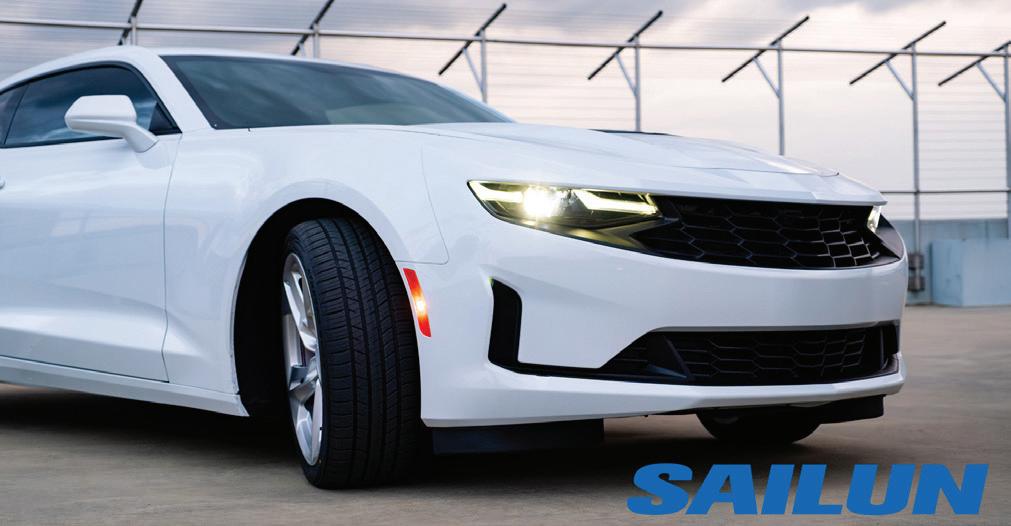
SUVs and light trucks are another area where consumers are seeking versatile and reliable tire options. Sailun’s Terramax line provides allterrain and highwayfocused choices. The Terramax AT2 combines guaranteed on and off road traction with highway manners, while the Terramax HT2 emphasizes premium comfort, quiet cabin and longwear performance. Both models carry verifiable ratings, enabling dealers to explain realworld benefits in measurable terms.
All Sailun tires mentioned are covered by mileagebased limited warranties ranging from 50,000 to 65,000 miles / 60 months , depending on the model, and are included in a 2-year Road Hazard replacement program, giving drivers added protection and peace of mind.
Underlying these product lines is a focus on consistent manufacturing and quality control, which ensures that tires perform reliably across production runs. Technical resources, such as spec sheets and application guides, help dealers address common questions about tread life, seasonal capability, and vehicle compatibility.
Looking toward 2026, dealers will face a market in which buyers are increasingly selective, research driven, and focused on tangible data. Tires with verified ratings, consistent manufacturing, and multiseason capability are expected to influence purchasing decisions. Offering products that can be explained clearly and factually — supported by technical resources — enables dealers to deliver a confident, datadriven shopping experience.
Success in 2026 will depend on a dealer’s ability to translate technical information into meaningful customer guidance. By leveraging tires with documented performance, using available educational resources, and understanding evolving consumer expectations, dealers can help drive repeat business and longterm satisfaction.
Models like the Atrezzo 4S , Atrezzo SVA2 UHP , ERANGE EV , and the Terramax series exemplify how tire options can meet practical performance needs across multiple vehicle types. ■
Visit GoSailun.com
Sailun tires are distributed exclusively by the TBC Corporation in the United States.

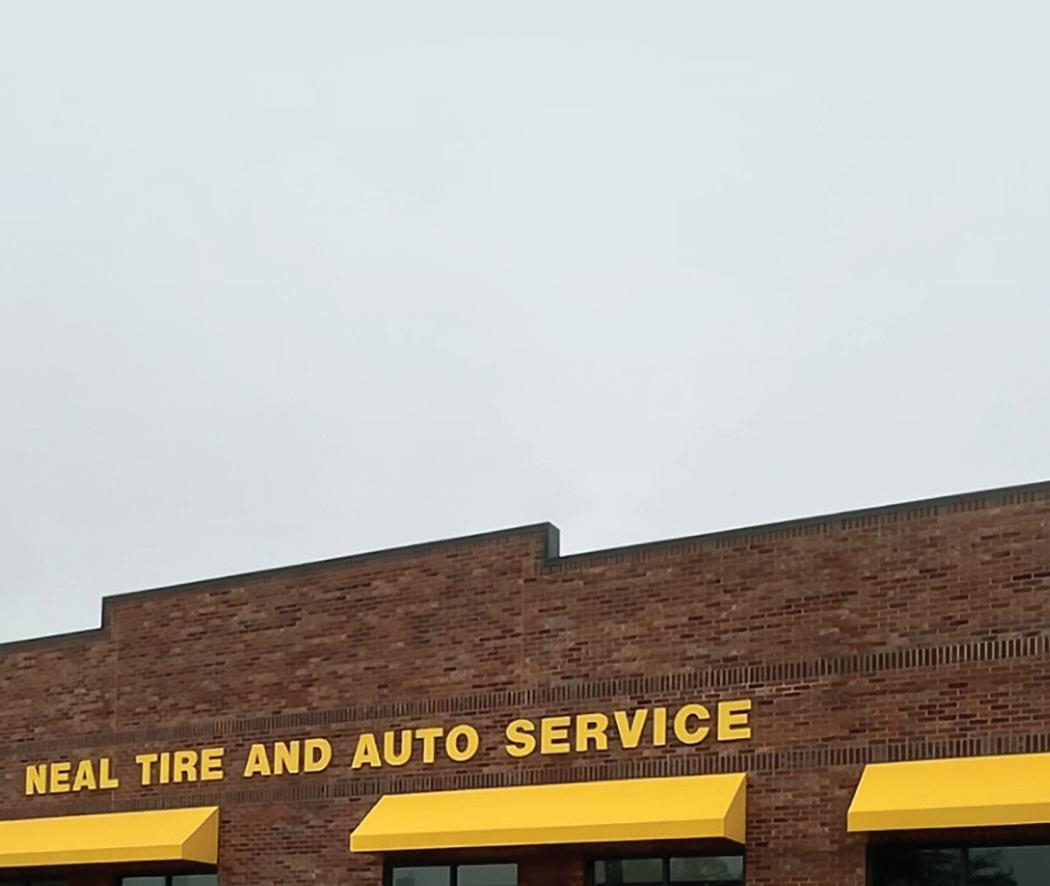
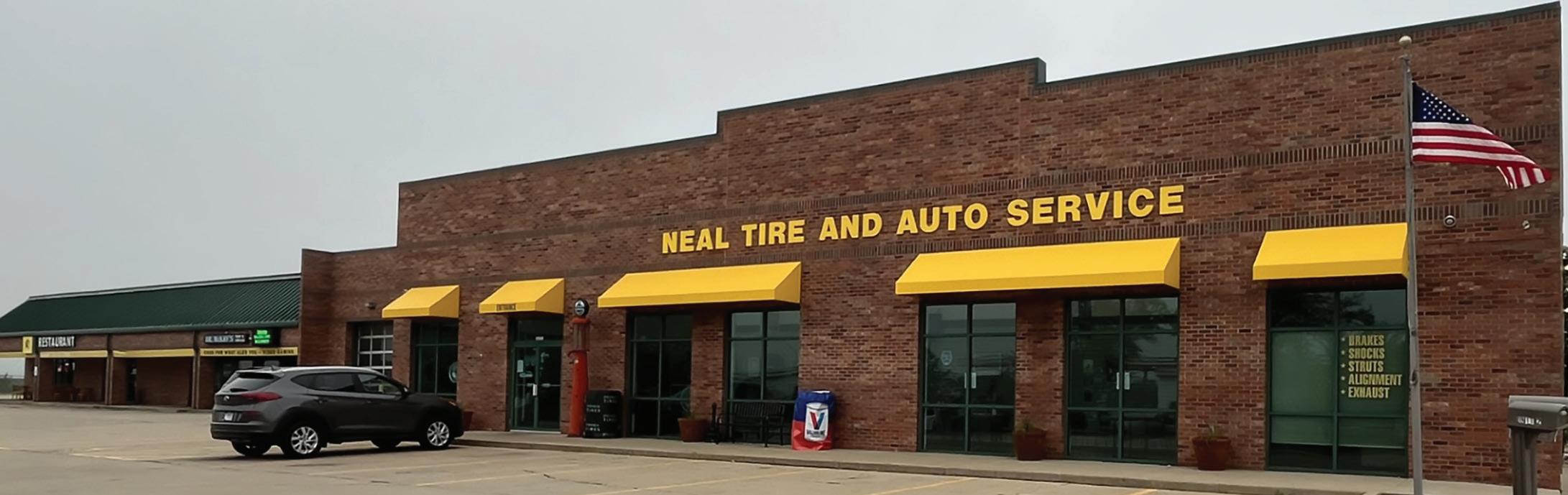
Ben Tire has six wholesale warehouses and 25 retail stores that go to market as Neal Tire & Auto Service. The business operates in Illinois, Indiana and Kentucky.


Joy Kopcha By
With a century of service that spans six warehouses, 25 retail stores and about 300 employees, the story of Ben Tire Distributors Ltd. began on a much smaller scale, with a single service station in Toledo, Ill.
Edgar Neal opened that service station as Neal Oil Co. in 1925 and grew it into a medium-sized petroleum distributorship in central Illinois. In 1943, he became a B.F. Goodrich distributor.
Two years later, Edgar Neal’s son, Burnham E. Neal, returned home a er completing his military service.
e younger Neal took over operations at the service station and was eager to expand its tire business.
In 1959, the Neals opened a warehouse in Tuscola, Ill., and began to sell Dayton tires.
A year later, a tire dealer in Mattoon, Ill., sold his business to the Neals. It became the rst Neal Tire & Auto retail store.
In the decades since, both the wholesale and retail arms of the operation have grown and expanded with locations in three states: its original home turf in Illinois, plus Kentucky and Indiana.
Burnham Neal used his own initials to rename the corporate entity Ben Tire. e


retail stores continue to operate under the Neal Tire name.
A er 100 years in business, Ben Tire has withstood plenty of challenges. Jim La Neve is Ben Tire’s fourth CEO and he says in 2025 the company is well-positioned for the future. ese are “exciting times for Ben Tire. We’re in a really strong position (and) we can look at the next step, which is growth.”
Burnham Neal was ahead of his time in some regards. In 1991, he sold 30% of his shares of Ben Tire to employees to start an employee stock ownership plan (ESOP).
Preston Smith is chairman of Ben Tire’s board of directors and a retired banker.
Smith met Neal in 1979, when he took a new bank job as vice president of commercial lending. Neal was on the bank’s board of directors.
ey got to know each other well over the years and eventually became good friends. Smith remembers fondly Sunday morning rounds of golf. Neal and his wife, Nancy, had a home near the 12th hole and “you never went by … without stopping at Burnham’s house for a Bloody Mary.”
Over time, Smith watched Ben Tire grow and saw the Neal Tire footprint expand.

He remembers being in the bank president’s o ce the day Neal decided he wanted to create the ESOP.
“It was all Burnham’s idea from the beginning,” he says. One bene t, as Smith sees it, is that it allowed employees “to have skin in the game. at was certainly a big reason that he did it.”
Creating the ESOP also presented Neal with some signi cant tax bene ts, which Smith believes paved the way for Neal to make sizeable philanthropic contributions in his hometown and across Illinois.
Burnham and Nancy Neal’s names are attached to everything from the YMCA that was built in Toledo to student scholarships of Lake Land College. A nursing institute opened in 2004 with their names and in 2012, when Burnham Neal died, Eastern Illinois University recognized him as one of “the biggest nancial supporters in the university’s history.”
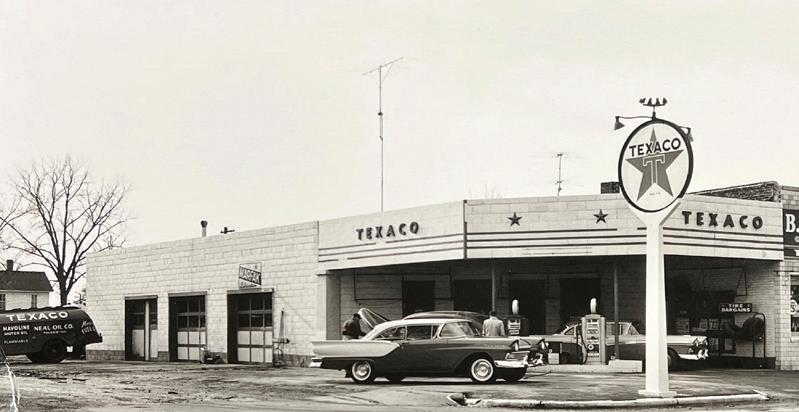
Smith says Ben Tire comes from a region heavily focused on agriculture. He’s seen with his own eyes how both the dealership’s wholesale and retail businesses are focused on customer service.
“ at was Burnham’s corporate culture: ‘Be nice to your customers because you’re going to need them worse than they’ll need you.’”
Amy Robinson is well-acquainted with Ben Tire’s hometown roots. She grew up in Toledo and was aware of the importance of the Neal family. When her sons were young, she took a part-time secretarial job at the company.A few months later, she was asked to join as a full-time worker. She took on di erent roles and landed in human resources, the department she now manages.
“My dad was talking about it (and said), ‘ at place has been around for a long time and it’s going to be around for a long time. I’m sure they have good bene ts. ey’re going to take care of you.’”
Robinson now spends much of her time working on things tied to those bene ts — and to the work of nding and retaining employees.
“Retaining talent is hard,” she says. “One of the things about the ESOP ... we try to get that in (a new employee’s) system quickly, so that they can understand it. It is our retention tool.
“Our hiring strategy is, ‘We’re not here to hire temporary people.’ We want to bring people on board, tell them the history (and tell them), ‘ is is what you’re part of now.’”
La Neve says the ESOP will serve an important role in Ben Tire’s future. It’s a critical piece in retaining employees. (In 2016, Ben Tire became fully owned by its employees.)
“If we can get them to stay a year, where they get that rst ESOP statement, people stay,” says La Neve. “Our turnover then is a lot lower. But that rst six months is the hardest part.”
He adds that paying a competitive wage is imperative, but also just the starting point. Ben Tire goes to market promoting its ESOP as “an investment for you.” e company also o ers a 401(k), and a company match.
Ben Tire started as a service station and then an oil distributor in Toledo, Ill. Today, the company has 300 employees who are celebrating the dealership’s centennial.
Photo: Ben Tire Distributors
“A lot of ESOPs don’t have that,” explans LaNeve, who say that many workers are so heavily focused on their hourly rate that they o en dismiss the extras that come with bonuses, plus the perks of the ESOP.
Ben Tire is poised to grow and La Neve
says the bene ciaries of that growth will be employees. In the rst 25 years of the ESOP’s existence, its share price grew by 2.7 times. In the last eight years, La Neve says it’s grown another 3.2 times.
“We can maintain that, but we want to keep it going and get some more multiples,” he says.
“To do that, we’ve got to grow the top line even more.” ■
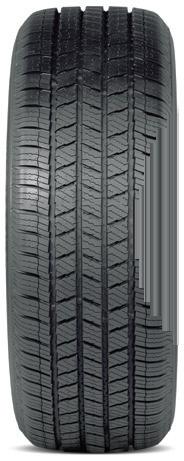
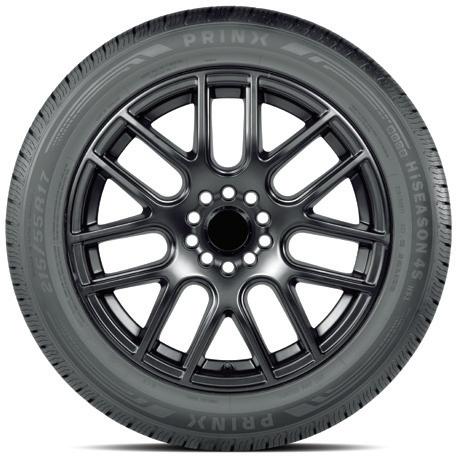
• 61 sizes available to order
• Outstanding traction and handling
• 3PMS-rated for wet and wintry conditions
• Special grooves and sipes for clearing snow and water
Scan here to become a Prinx Tires dealer.
heat, and snow.

“2025 has been a challenging year,” says

To those who closely follow the United States ag tire market, it almost goes without saying that 2025 has been a tough year for ag tire suppliers and dealers. Ag tire manufacturers explain why — and o er a preview of what 2026 might bring — in this MTD exclusive.
MTD: What factors are negatively impacting ag tire demand and sales?
GAVIN BROUSSARD, national sales head, Apollo Tyres Ltd. (Vredestein): It’s been a tough year for both OE and replacement. Fortunately for us, the business still continues to grow strong.
ALAN ESKOW, head of replacement sales, BKT USA Inc.: e uncertainty of the market and the recent changes in U.S. trade policy had an impact on both OE and replacement agricultural tire sales in the U.S, thus causing an increase in production costs and supply chain complexities. Additionally, it paved the way for a reduction in export opportunities.
By under severe nancial strain. Commodity prices have slipped dramatically — corn recently dropped by more than 50% from its highs — and yet input costs remain stubbornly elevated. Meanwhile, global demand has so ened and trade tensions continue to undermine export prospects. A recent poll of U.S. growers suggests that anxiety about the future is widespread. Nearly half believe the sector is approaching a crisis. More than twothirds say they are more worried about their farms' nances in 2025 compared to the year prior. e capital investment outlook is also dim. According to surveys and lender reports, roughly 58% of farmers are likely to delay new equipment purchases. An estimated 38% may cut back on fertilizer or other input. Such belt-tightening is compressing margins and reducing reinvestment in operations. e extended use of aging machinery is slowing demand in the new equipment market. e fact that farmers are holding onto their equipment longer is adversely a ecting OE equipment sales, but bene ting ag tire replacement sales. In the replacement market, farmers are doing thorough research, looking for the best tire they can get at the very best price.
RYAN LOETHEN, president, CEAT Specialty Tires, North America: Over recent years, U.S. farmers have operated
TONY CRESTA, director of product management, CMA: Demand across the board was weak in 2024 and persisted into 2025. On the OE side, farmers have delayed new equipment purchases, while replacement sales are also so due to many macroeconomic factors. Higher interest rates, tighter farm margins and tari concerns have slowed down demand.
JAMEY SMART, vice president, North America, Firestone Ag: 2025 has been a challenging year for the U.S. ag tire market across both OE and replacement segments. So er commodity prices, high interest rates and persistent input costs have put pressure on farmers, prompting many to delay major purchases and extend tire replacement cycles. Dealers and OEMs are also taking a cautious approach a er the inventory build-up in 2022 and early2023, focusing on managing existing stock rather than placing new orders. In addition, newer equipment cycles in recent years have already refreshed much of the eet, leading to less immediate replacement demand. Weather has added another layer of di culty, with late planting and uneven growing seasons limiting eld time and extending tire life. Despite these headwinds, the long-term outlook for U.S. agriculture remains strong,
CHRIS RICE, executive vice president of sales, Galileo Wheel: 2024 through early 2025 has been di cult. Both OE and a ermarket segments show clear declines. Industry data backs this up. Dealers who over-ordered in 2024 are being more careful. What’s happening at the farm level explains why. e core problem is simple: farmers are making less money. Corn prices dropped to $4.10 to $4.40 per bushel in 2024 and forecasts show $3.90 for 2025. Soybeans follow the same pattern: $10.80 in 2024, trending toward $10.00 or below in 2025. Meanwhile, input costs haven’t come down to match. Fuel, fertilizers, labor costs, interest rates — all remain high. When margins get squeezed like this, equipment purchases wait, so







CALLING ALL DEALERS. ARE YOU READY TO HYPERDRIVE YOUR BUSINESS?
Delinte Tire’s NEW HYPERDRIVE Associate Dealer Program™ is here to give independent tire dealers an opportunity to put some extra cash in their pockets.

Join the HYPERDRIVE Associate Dealer Program today and start earning up to $3 per tire.
IT’S EASY. NO OPENING ORDER REQUIRED. JUST PRE-ENROLL>SELL>START EARNING.
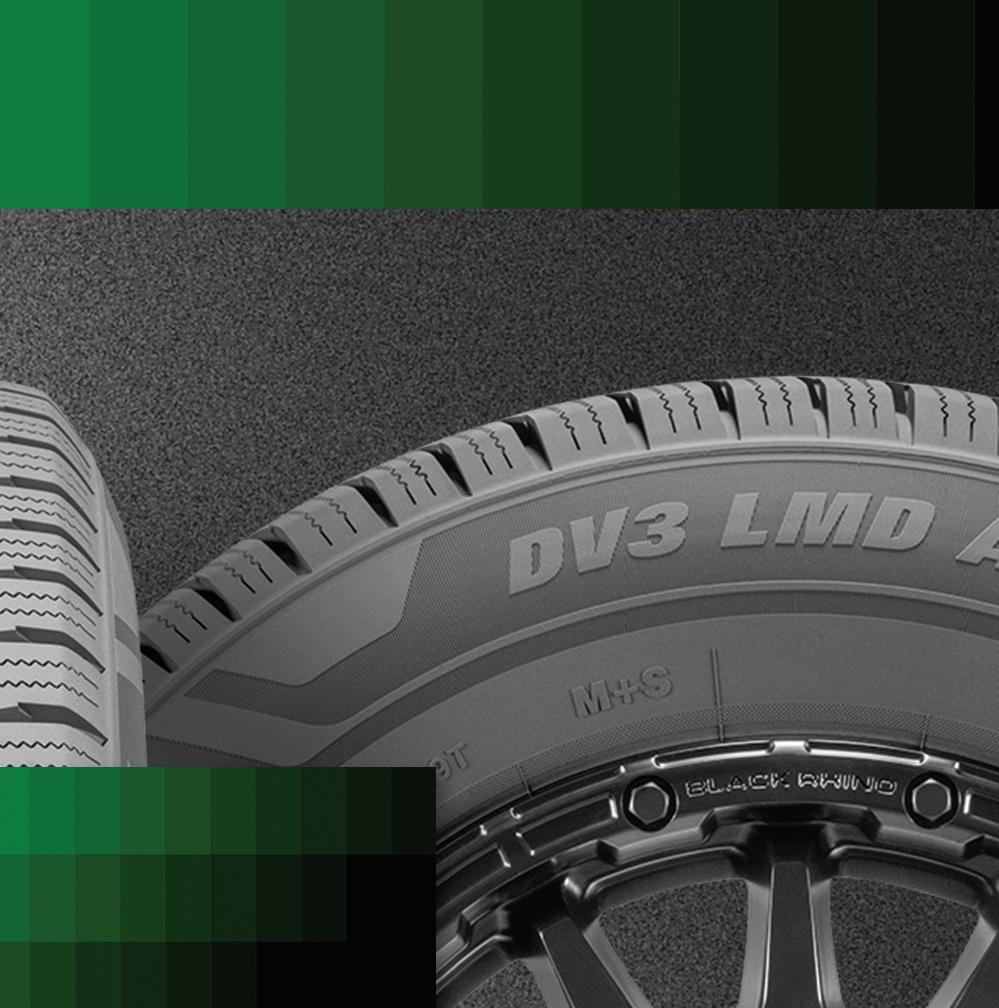
All Delinte PCR and LTR tire models, including the new DV3 LMD AS Last-Mile Delivery tire are eligible for the rewards.
EASY MONEY HYPERDRIVE REWARDS LEVELS:
LEVEL 1 Buy 48 units - GET $1 per tire [ $192 per year ]

LEVEL 2 Buy 120 units - DOUBLE your rewards to $2 per tire [ $960 per year ]
LEVEL 3 Buy 240 units - TRIPLE your rewards to $3 per tire [ $2,880+ per year ]



YES! YOU CAN EARN OVER $2,880 DOLLARS A YEAR WITH HYPERDRIVE.
DISTRIBUTORS:
IF YOU WANT TO SELL DELINTE TIRES AND OFFER HYPERDRIVE REWARDS TO YOUR DEALERS, CONTACT US TODAY ON OUR WEBSITE AT DELINTETIRES.COM/ DEALER-INQUIRIES.
ENROLL TODAY TO START RECEIVING REWARDS SCAN TO ENROLL




farmers respond by keeping equipment longer instead of buying new. This hits OE sales hard, but provides some support to the replacement market. Farmers still need tires to keep older equipment operational. We’re also seeing weakness in adjacent sectors like construction, which affects demand for skid steer and construction-oriented tires. Another point is that the agricultural sector moves in cycles. U.S. gross farm income grew from $250 billion in 2001 to over $604 billion by 2022. During and after COVID-19, demand for irrigation equipment stayed strong. Center pivot machines use a lot of tires. That demand started falling in 2024 as the cycle turned down. It will turn back up eventually. Timing depends on how various market factors play out. Longterm direction stays positive even when short-term numbers look rough. Food production doesn’t stop, so farmers need equipment and equipment needs tires. The sector proves recession-resistant time and again. The real question isn’t if recovery happens, but when — and which companies come out stronger. The ones that keep innovating and serving customers well during tough periods usually get higher profits when things improve.
GREG GILLAND, vice president, global agriculture, Maxam Tire North America: The answer is going to be unique for each tire manufacturer. Maxam is a newer brand to the U.S. ag market and we are still growing our brand footprint both in the dealer/distributor-driven aftermarket,
while engaging the OEMs to grow our footprint. Our performance in 2025 has allowed us to positively grow our sales year-after-year, despite having to make capacity changes due to the newly tariff conditions. From the farmer or grower perspective, commodity crop prices remain stable versus 2024, with some short-term gains or losses crop by crop. The current outlook for 2026 — with fuel costs lower than in 2024, with improvements in 2025 — means that despite operational costs being high but stable, crop prices, especially for corn and soy beans, are expected to increase in 2026. As always, farmers are going to buy when they can to keep profit amortized or invested in their business versus paying higher profit taxes.
PAUL HAWKINS, senior vice president, aftermarket sales, Titan International Inc.: It’s been a challenging year in these channels. Lower farm income and uncertainty with corn and soybean sales this year are delaying farmers making large investments, including replacement tires. Farmers are limiting expenditures to essential needs — prioritizing equipment repair over replacement to maintain operations at minimal cost.
TOM RODGERS, commercial director, ag, North America, Yokohama TWS: The U.S. agricultural tire market has certainly faced headwinds in 2025, shaped by a combination of global and local factors. Lower commodity prices, partly influenced by
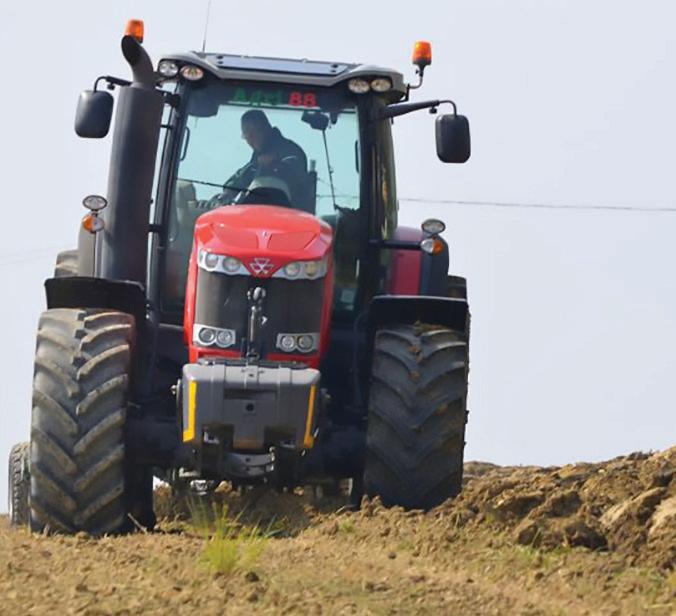
“The uncertainty of the market and the recent changes in U.S. trade policy had an impact on both OE and replacement agricultural tire sales,” says Alan Eskow, head of replacement sales, BKT USA Inc.
Photo: BKT USA Inc.
ongoing trade tensions with China; a weaker farm bill; and persistently high input costs have all put pressure on farmers’ budgets. As a result, many producers have chosen to delay investments in new machinery and equipment, which has primarily impacted the OE segment. On a more positive note, we’ve seen above-average crop yields across much of the Midwest, which should translate into stronger farm incomes and consequently, improved replacement demand toward the end of the year.
CHAN PHOTHISANE, OTR national sales director, ZC Rubber America Inc.: The ag tire industry is down due to



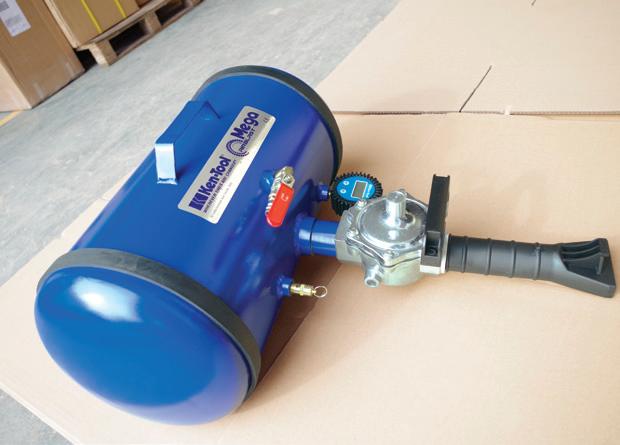

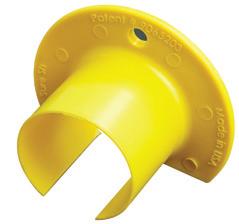






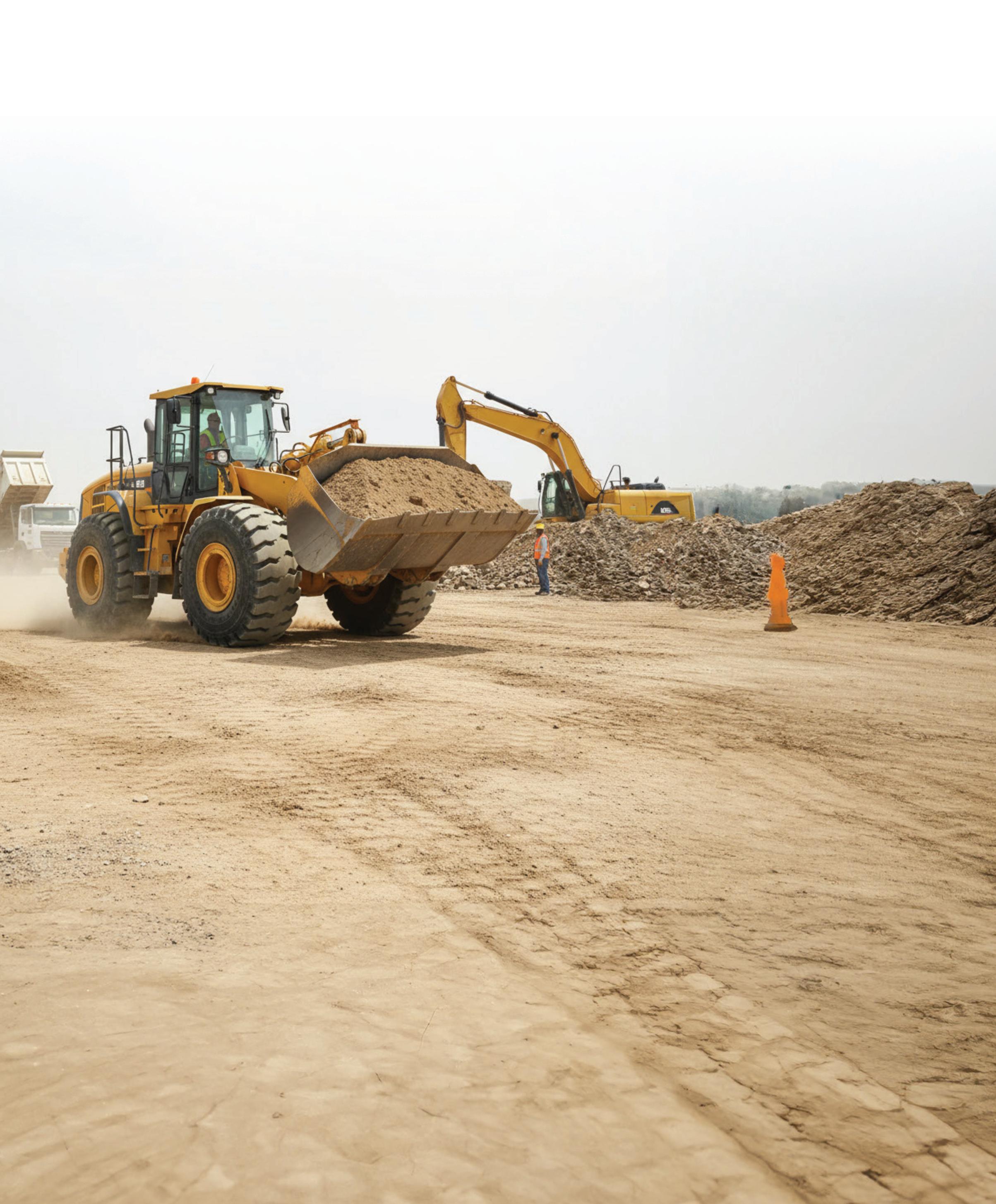

When the work is heavy and conditions are punishing, Yokohama OTR bias tires deliver the durability, stability, and cut resistance that tough earthmoving jobs demand. Their strong sidewalls and solid, proven construction make them ideal for dozers, loaders, and scrapers operating on rock, dirt, or uneven terrain — where long hours, sharp turns, and constant torque can challenge even the best radial. Dependable. Proven. Built to last shift after shift, year after year.






















































Ask your Yokohama OTR rep about our complete line of bias tires, or visit yokohamaotr.com









www.yokohamaotr.com

































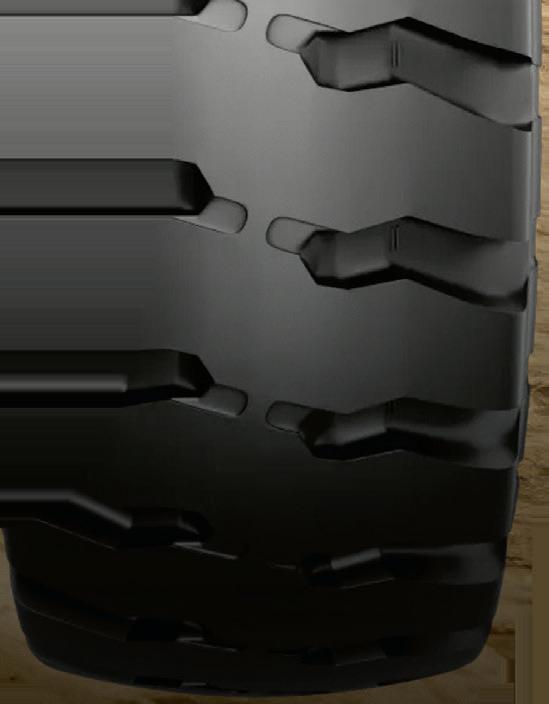
several factors. Inflation has affected the operating cost and crop price has fallen. The Midwest states experienced abnormal drought to severe drought and other farm areas had too much rain. Slow demand from OE carried over from 2024 into 2025. This did not help move domestic inventory stock out of the warehouse. Aftermarket factory-direct container sales are down due to the uncertainty of tariffs. Everyone
was waiting for the final tariff decision. Many tire dealers did not want to overstock and were ordering domestically. Tire wholesalers were watching their inventory closely and only ordered what was needed.
MTD: Have tariffs had an impact on your ag tire business? If so, what are you doing to mitigate the impact? How are your dealers and distributors reacting?
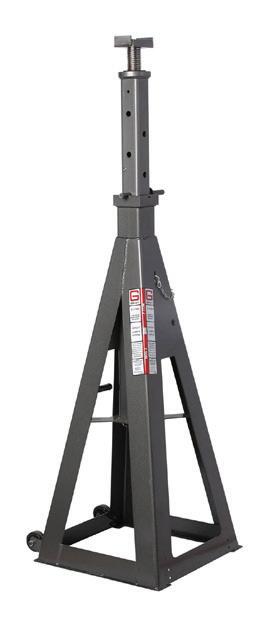
¶ Visual inspection relating to damage
¶ Cracked welds
¶ Retention pin holes oblong-shaped
¶ Correct retention pins
¶ Readable decals and placards
¶ Compromised
BROUSSARD (APOLLO/VREDESTEIN): Tariffs have certainly created headwinds and questions for us. We’re managing this through tighter cost controls, smarter logistics and closer coordination with our dealer partners to stay competitive during the shift.

¶ Visual inspection relating to damage
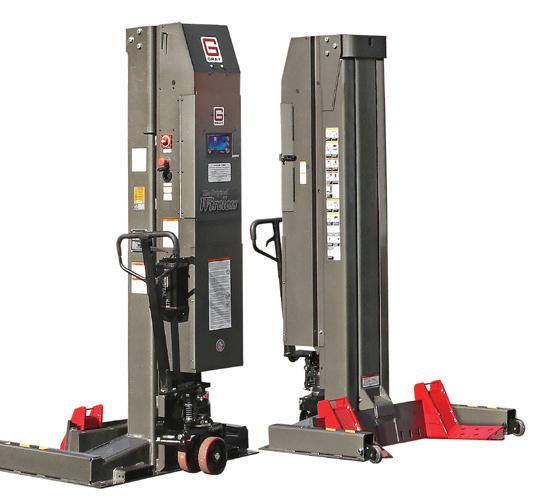
¶ Excessive wear
¶ Missing components
¶ Leaks



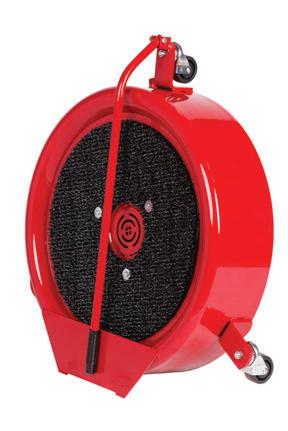


¶ Complete functional test
¶ Readable decals and placards
¶ Visual inspection relating to damage
¶ Leaking fluids
¶ Non-OEM conforming, tampered with or missing components
¶ Readable decals and placards



Visual inspection relating to damage
Cracked welds
Excessive wear
Missing components
Complete functional test
Readable decals and placards
Compromised





ESKOW (BKT): Despite the difficulties and the many challenges that have arisen in the global and local scenario — both related to recent changes in U.S. trade policy and due to the geopolitical landscape — BKT is working in synergy with its distributor partners and dealers to mitigate the effects of this situation. For example, we have carefully managed our spending to minimize the impact of tariffs and maintain our position.
LOETHEN (CEAT): The marketplace is extremely unpredictable right now, largely because of the ongoing tariff situation. With so much uncertainty about how things will develop, I’m encouraging our dealers to stay laser-focused on their farmers’ immediate needs. The priority should be having enough inventory on hand to support customers through the upcoming season, whether it’s harvest or planting.
CRESTA (CMA): Our ag tires are produced in Turkey, which was on the lower end of the scale — 15% tariff — compared to other countries, (with) India, for example, currently sitting at 50%. While we have seen a slight price increase on our products due to these tariff costs, we remain very competitive in the current market. There were a lot of pre-buys and we saw competitors filling their warehouses in the lead-up to the August enactment of the full reciprocal tariff. The stock levels in the U.S. aftermarket right now will need some time to level out. Once inventory works its way out and if the tariffs remain at current levels, we expect our Ozka ag tires, made in Turkey, to remain highly price competitive. Our dealers remain cautious, but we have very open communication lines on the tariff subject.
SMART (FIRESTONE AG): Tariffs have added complexity to the U.S. ag tire market, influencing costs for certain imported products and raw materials. These shifts have required manufacturers and distributors to be more strategic about sourcing and production. For Firestone Ag, the
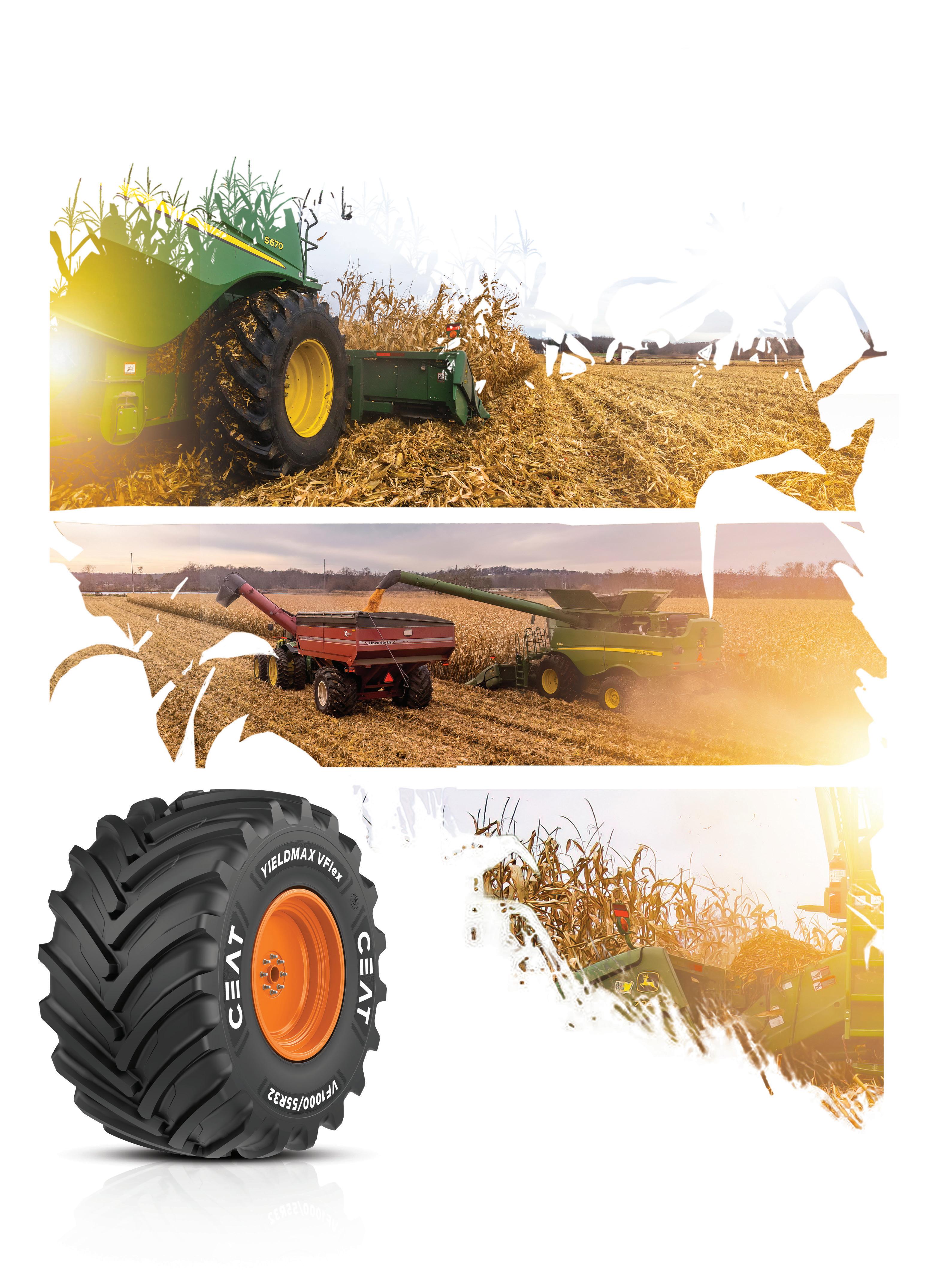

www.CeatSpecialty.com csti@ceat.com
“As a distributor of farm tires, we look for quality, dependability and diversity in sizes, along with affordability. CEAT covers all our bases, along with one of the best warranties in the business and the best group of people to work with.”
JAY SELLERS OTR, Farm & Track Manager | T&W Tire

impact has been minimized thanks to our strong domestic manufacturing footprint and local-for-local supply strategy. By prioritizing U.S. production and optimizing sourcing across our global network, we’ve maintained reliable product availability and supported customers despite market fluctuations.
RICE (GALILEO): The tariff impact is real and ongoing. We’re headquartered in Israel, with manufacturing in India, so we face 50% tariffs on Indian imports — one of the highest rates the U.S. applies to any trading partner. We’re not the only ones dealing with this. The 50% rate hits about $48 billion in Indian exports across various labor-intensive sectors. The bigger question is whether this tariff approach brings manufacturing back to the U.S. or just shifts it to other countries. For companies running on import supply chains, the uncertainty creates as many problems as the tariffs themselves. For companies like ours, these tariffs create immediate pricing pressure. Our customers — farmers, distributors (and) dealers — face substantially higher landed costs. We either raise prices, which hurts competitiveness, or absorb costs, which compresses margins. Neither option works well. Manufacturers are still finding ways to respond to the challenge.
GILLAND (MAXAM): The biggest hurdle the ag industry will face in 2026 will be the net impact to ag tire availability in 2026, should the heavy tariffs expected on India or China-sourced products curtail supply in the new year. The impact of this governmental decision can create both a boon for the non-affected India or China manufacturers, but as well a run on product that could lead to short-term ag tire scarcity in 2026.
HAWKINS (TITAN): Tariffs have had an impact on our U.S. ag tire business. Titan’s domestic manufacturing assets have allowed us to be well-positioned to meet customers’ needs, while supporting American jobs and economic growth.
RODGERS (YOKOHAMA TWS): Tariffs have undoubtedly created some uncertainty in the U.S. market. In the replacement channel, a number of dealers and distributors initially sought to build up inventories of imported products to off-set potential cost increases. However, this led
to elevated stock levels and higher carrying costs in an already soft market — an approach that has proven unsustainable. Mitas, on the other hand, is in a unique position. Most of our agricultural tires for the U.S. market are produced locally in the heartland of America. This domestic footprint allows us to remain unaffected by import tariffs and fluctuations in ocean freight costs, ensuring stable pricing and dependable supply for our customers.
PHOTHISANE (ZC RUBBER): Agricultural tires imported from China have slowed down. The recent tariff increase on Chinese imports has doubled. Our largest ag product consumer is China. Due to the tariff situation, China purchased their soybeans from Brazil and other South American countries. Commercial and residential construction continues to boom in many parts of the regions, expanding new construction outside of the suburbs and into the countryside. Farmland is being sold to commercial and residential entities. Therefore, we are losing more growers.
MTD: Looking ahead, what will the market look like in 2026? Is there cause for optimism?
BROUSSARD (APOLLO/VREDESTEIN):
We expect stabilization once inventories rebalance. And we are optimistic that the tariff situation will resolve, with more trade deals being worked upon.
ESKOW (BKT): At BKT, we remain optimistic about the future, as the replacement ag tire market is expected to perform well in 2026. Key trends — such as the increased adoption of high-tech radial and VF (very high-flexion) tires, central tire inflation systems and the growing size and power of agricultural machinery — offer strong growth opportunities. Additionally, OE sales are expected to rebound by mid-year as developments in administration policies will provide farmers with some relief, enabling them to accelerate equipment upgrades.
LOETHEN (CEAT): Farmers hanging onto their tractors and other equipment longer

will continue in 2026 and that’s creating real momentum in the replacement tire market. It’s a great time for ag tire dealers who understand their customers’ needs. We’re also seeing more farmers move away from the big-name tire brands.
CRESTA (CMA): We are cautiously optimistic. Improved farm income and easing financial pressures could lift replacement demand, with OE following along with the equipment cycle. Corn and soybean exports have weakened in 2025 and any rebound would provide much-needed relief for farmers. Strengthening commodity prices after three years of decline since 2022 would support both replacement and OE tire markets. Even as we have seen inflation hit home in grocery store prices, per-bushel prices on corn and soybeans have dropped from 2022 through 2025 — an average of 35% — leaving our farmers with less income and less purchasing power. While risks remain from tariffs and higher interest rates, there will be growth opportunities if we start to see stronger crop prices and renewed export opportunities.









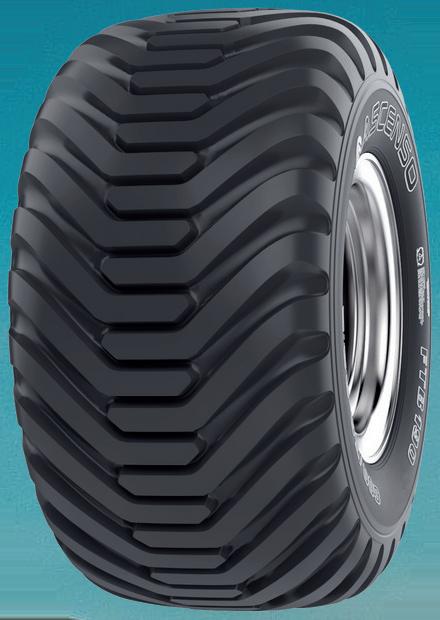





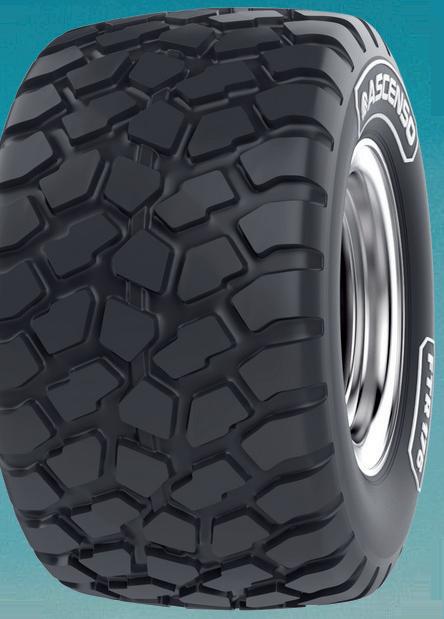





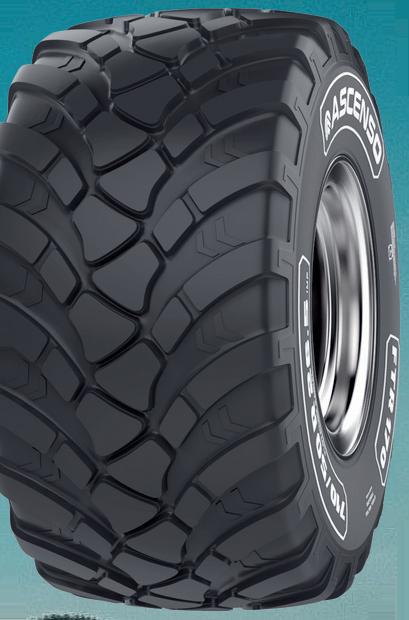
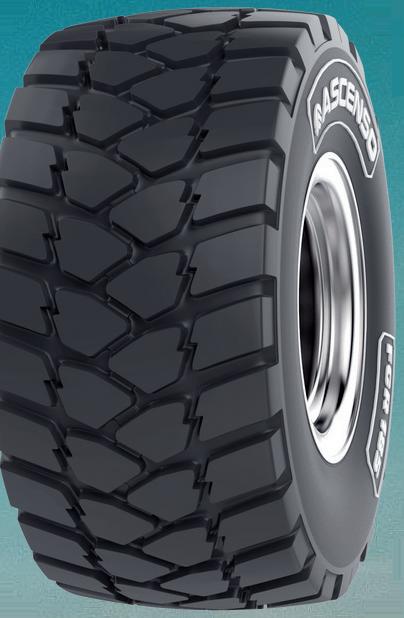



















SMART (FIRESTONE AG): We see reasons for cautious optimism as we look toward 2026. As dealer and OEM inventories normalize, replacement demand is expected to rebound, particularly as equipment purchased during the strong years of 2022 and 2023 begins to age and accumulates more hours. If interest rates ease and farmer profitability improves, we anticipate renewed investment across the ag sector, lifting both replacement and OE activity. This growth will also be supported by dealer consultation and technical expertise around fitment and inflation management, helping farmers make the most of advanced tire technology. At the same time, technology will continue to drive growth. Farmers remain focused on productivity and efficiency, fueling steady adoption of advanced radial and VF tire technologies that improve load capacity, fuel economy and soil protection.
RICE (GALILEO): I’m cautiously optimistic about 2026. Conditions will stay challenging, but several indicators point toward an inflection point. Agricultural
markets run in cycles, as I mentioned earlier. After strong demand through COVID-19 and the period following, we’ve seen corrections throughout 2024 and into 2025. Economic forecasts suggest we’re getting near the end of this downturn, with pent-up demand starting to build. Whether that releases (demand) depends on crop yields improving, commodity prices rising or input costs dropping, but the cycle positioning looks better for 2026.
GILLAND (MAXAM): There is no crystal ball that can truly predict what the market will be like in 2026. However, there is some guarded optimism in the market due to the following business conditions that are fueling opportunity. Overall fuel expense and costs are significantly lower in 2025 versus 2024, with the expectation of further improvement in 2026. Fertilizer costs are still high versus the five-year average, but significantly lower than the extreme peaks faced in 2021 through 2023. Crop prices are still well above the five-to 10-average and there is no expectation that crops will go back to the days of $3 corn

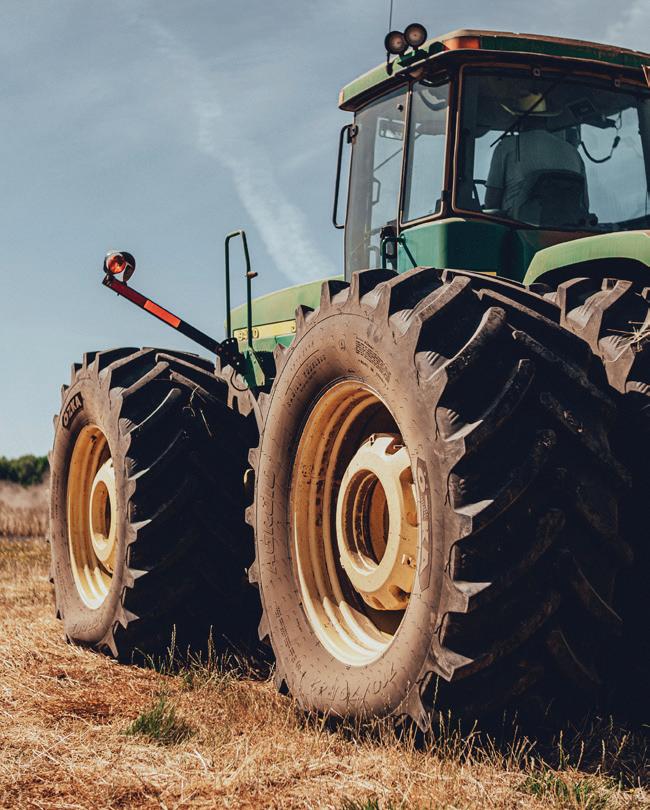
or $7 soybean bushels of yesteryear.The summary of the above is that the ag boon of 2021 through 2022 — followed by the cost storms of 2023, as well as 2024 — have been a harsh teacher to most farmers or growers, forcing them to manage their business inputs and outputs astutely. The wise farmer has learned to live with the high costs out of his control and manage or control his business results to achieve his needed profits in 2025.
Wold supplies rims and wheels for every ag application — from custom builds to OEM solutions. Partner with us as a dealer to expand your offering, attract new customers and earn more repeat business with rims and wheels built for the field.
Learn more about becoming a Wold dealer.
TITAN (HAWKINS): There are reasons to be optimistic about the future of the ag tire market. Replacement demand is likely to recover in the near future, as many farmers have deferred tire purchases over the past two years — despite planting the same number of acres and maintaining full farming activity — making replacement both necessary and inevitable.
RODGERS (YOKOHAMA TWS): While challenges such as tariffs, input costs and moderate commodity prices will likely persist into 2026, we remain optimistic. Farmers are expected to continue focusing on maintaining and optimizing their existing equipment rather than investing in new machinery, which will drive strong demand for replacement radial tires, particularly for high-horsepower tractors and large-scale operations.
PHOTHISANE (ZC RUBBER): Inflation, weather and tariffs played a big role in 2025. 2025 was a year of lost crop yield and less profit. When demand slows down, you have to work much harder to sell ag tires. The salesman who continues to call on the customer and be persistent will outperform the salesman who is waiting for a phone call. ■









• Gain 15 bushels per acre with LSW
• 1 SEASON PAYS FOR 1 SET OF LSWs
• $30,000 increase in revenue on a 2,000 acre farm
• Improve root structure and crop health
• Backed by nationwide field support
Joy Kopcha By

Six years ago, the first Tire Safety Leadership Summit brought together 21 employees from 14 commercial tire dealerships to share best practices and the latest in safety technology. The dealer-born event has evolved beyond the commercial tire space and in 2025 grew to encompass more than 70 people from 38 tire dealerships, plus safety-focused suppliers.
This year, like all the others, safety leaders brought concerns and problems from their tire dealerships and brainstormed with their peers to find solutions.
Here are seven takeaways from the 2025 summit, where MTD once again had an exclusive seat. These are presented in no particular order:
TPMS policy. Just like many tire dealerships have created an in-house rule about whether they install tires bought somewhere else, Brian Rigney, president of Dill Air Controls, suggested that tire dealers create a policy about tire pressure monitoring system (TPMS) installations.
Rigney said there’s no across-theboard standard for TPMS sensors. “There’s no ‘Here’s the minimum bar it must meet.’”
As a result, there are some inexpensive and unreliable options that might be attractive to consumers. “What we’ve seen recently is people buy four sensors on Amazon (and) they’ll walk into your store and say, ‘Can you install these four sensors?’ You didn’t test them and you don’t know where they came from. If you install them, are you now responsible for their performance? As an industry we have to develop standards (of) what’s acceptable and what’s not, because these are safety systems.”
The rules of C-metric tires. In the eyes of the Occupational Safety and Health Administration (OSHA), C-metric tires often found on cargo vans are commercial truck tires. OSHA made that ruling last
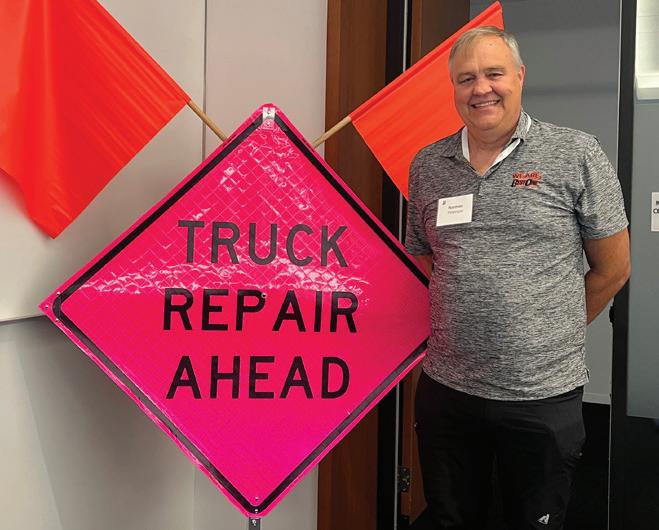
A serious injury to a Best-One Tire commercial roadside tire technician this past summer inspired the group to invest in reflective safety signs that can be placed at any work site. Norm Peterson, safety and training facilitator for the Best-One Tire Group, said BestOne ordered more than 200 of the signs to help alert motorists that a technician is at work.
Photo: MTD
year after the Tire Industry Association sought clarifying guidance on whether those tires, which have similarities to light truck tires, can in fact be handled as marked LT tires. OSHA said no. Russ Devens, director of safety and risk management at Wilkes-Barre, Pa.-based McCarthy Tire Service Co. Inc., said the ruling means the tires must be inflated either in a cage or while mounted on a vehicle using a stand-off inflator.
Overnight battery and tool charging. Several tire dealerships represented at the summit already have rules on the books about battery charging. Patricia Otterbach, safety manager at Deland, Fla.-based Boulevard Tire Center, said her company has a simple policy: “Everything has to be unplugged when (employees) leave the building. (They) can’t leave anything plugged in and charging overnight.”
Common injuries. A poll of the room didn’t show a single consensus, but dealers had a few notes to share about employee injuries. Josephine Foley, manager of safety and fleet at Norwell, Mass.-base Sullivan Tire Co. Inc., said “we have seen a huge increase in hand lacerations.” She regularly reminds teammates to clean
their cuts, because there have been cases of lacerations leading to swollen hands and infections.
Unusual retention benefits. Tire dealerships are always working to retain good workers and Chase Cavanaugh, vice president of operations at Commercial Tire Inc., said his company realized it had some locations with no staff turnover. To find out why, Commercial Tire started polling employees at those stores. Survey results showed that older generations were swayed only by wages, but that wasn’t the case with younger workers, who are looking to make social connections with their co-workers.
Roadside safety. A Best-One Tire Group roadside tire service technician was injured in June after he was hit by a tractor-trailer truck driver in the middle of the night. The technician survived, but was seriously injured and lost a leg in the accident.
Norm Peterson, safety and training facilitator for Best-One Tire Group, said Best-One is working to outfit its service trucks with reflective signs that technicians can place on the side of the highway or at any work site to alert motorists. Peterson says Best-One ordered more than 200 of the signs this past fall.
OSHA budget cuts. Steve Hawkins previously managed Tennessee’s OSHA as part of his role as deputy commissioner of the Tennessee Department of Labor and Workforce Development. He’s now the chief operating officer of FDR Safety LLC. At the summit, he shared a glimpse of what the federal government’s fiscal 2026 budget means for OSHA and for OSHA inspections.
Hawkins explained that the proposed federal budget includes about $50 million less allocated for OSHA in fiscal 2026 compared to fiscal 2025.
Cuts include the elimination of the equivalent of 223 full-time staff. Hawkins said that with fewer staff, the agency would be capable of about 10,000 fewer inspections — a 30% reduction. ■








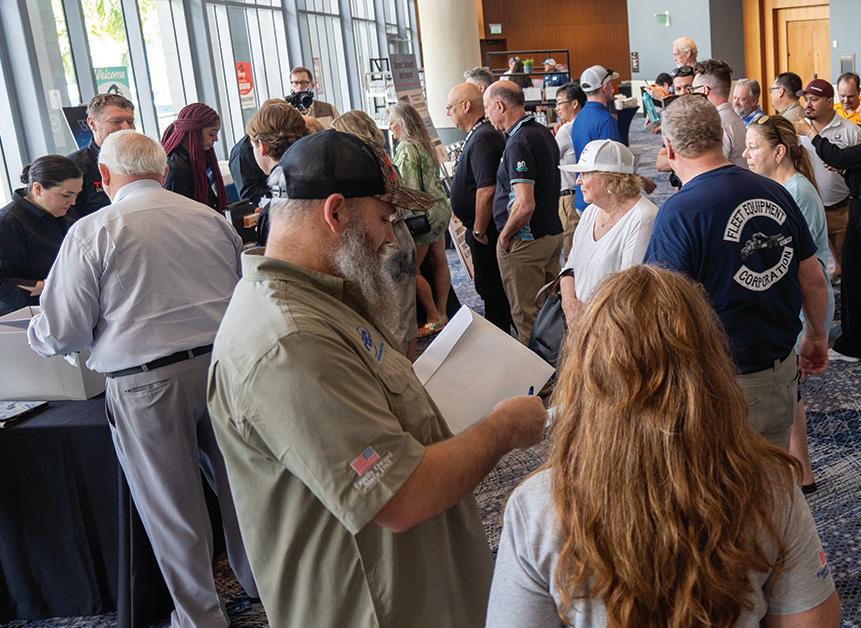


Modern Tire Dealer has partnered with AG Tire Talk to provide answers to insightful questions that farm tire dealers have about farm tire technology. This is the next installment in our ongoing series, which is designed to help farm tire dealers better connect with their customers. A trending question, followed by answers, appears in our Commercial Tire Dealer section every other month. For complete answers, click on www.agtiretalk.com.
QUESTION: What are the indicators of an out-of-round problem and why is it important to address out-of-round conditions?
DAVE PAULK, manager, field technical services, BKT USA Inc.: Out-of-round tires can cause vibrations, road noise and uneven tread wear. With the technology now used, many tires are more uniformly made than in days past. But tires and wheels are not made perfectly round. Each has a high spot and a low spot. If the high spot on a wheel is matched up to the high spot on a tire — or low spot to low spot — this can cause a vibration. The high spot of one needs to be matched up with the low spot of the other. Match mounting the tire to the wheel generally ensures the best ride possible.
If a tire is not properly seated on the rim, this could cause radial or lateral vibration. The bead of the tire should be properly seated on the rim all the way around the rim to eliminate run-out.
Low-horsepower tractors have a shorter wheelbase and can cause some vibration in the driver’s seat, which generally starts at about 20 mph. Sometimes this can be caused by the wheel not being centered on the hub. Adjustable rims are common on smaller tractors. While these rims are great for adjusting the wheelbase width, they are bad for wheel run-out, which can cause vibration.
There are three ways to limit run-out on a tire. First, in production, when tires are made, there is a splice in the building process. Since it’s not possible to eliminate this, the effect on run-out can be reduced by manufacturing.
Second, matching the tire and rim together with high spots and low spots can minimize the amount of run-out. Third, air pressures can be adjusted to ensure a good ride and minimal vibration
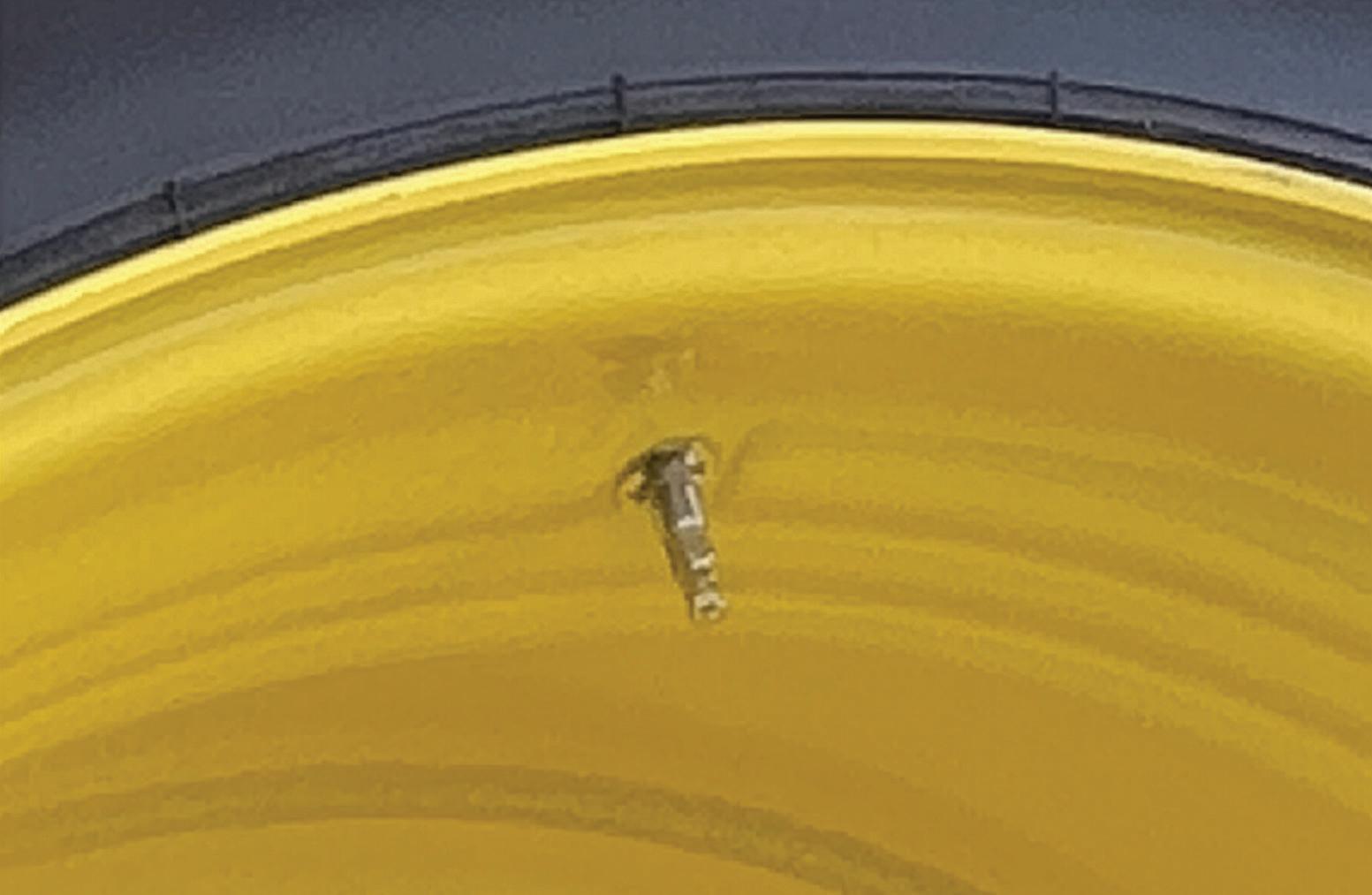
based on the weight of the vehicle and the amount of weight carried.
Unless the tire is out-of-round from the start due to manufacturing, application can play a part in how the tire rides and rolls.
Oftentimes, the heavier the equipment, such as combines and large tractors, the longer the wheelbase. The slower the speed, the less vibration will be felt. The faster and lighter the machine, the greater the chance of feeling vibration at certain speeds.
There is equipment available to check for run-out on tires. Radial and lateral run-out can be checked.
Radial run-out is the amount of up-and-down movement a tire shows. This is the most common cause of a problem and can cause a vibration in steering or the driver’s seat. The distance should be close to the same when measuring from the center of the wheel to the outside of the tread around the tire.
Lateral run-out is a side-to-side motion and is sometimes caused by
not properly seating the tire to the rim. No tire and wheel assembly is perfectly round, so there is always a bit of run-out. This should be minimized for the best tire and wheel performance.
GREG GILLAND, vice president, global agriculture, Maxam Tire North America: In general, out-of-round conditions on an ag tire stem from either poor quality control during manufacturing or poorly managed tolerance management in the tire specifications. In essence, an out-of-round tire is not round due to a distortion in the casing or tread that when mounted on a working platform, can result in an unstable tire; increased vibrations; accelerated or uneven tire wear; and increased instability when mounted. Ultimately, these results will reduce the tire’s expected service life. In extreme working conditions, out-ofround tires can also increase the friction of the tread, causing increased rolling
resistance, uneven or abnormal wear and greater fuel consumption due to greater slip rates.
Other possible causes that can lead to out-of-round conditions include:
• Poorly mounted tires that are not fully seated on the rims or flanges;
• Poor storage practices like barrel stacking or tires stacked too high, distorting the casing on the bottom tire of the stack;
• Uneven storage or ground conditions, resulting in distorted or misshapen tires over time;
• Tires that remain in one position for a long period of time without any movement or rotation, resulting in a distorted bead, casing, sidewall or tread area;
• Poorly maintained or damaged wheels when the tires are mounted, which results in a out-of-round vibration or harmonic;
• Poorly mounted tires on rims where the high spots are misaligned, and;
• Rims that are distorted from excessive use or poorly manufactured quality conditions.
Good housekeeping and best practices in the storage of tires can reduce the risk of tire distortions as described above. In addition, regular wheel inspections, replacement of damaged wheel components and wheel maintenance prior to tire mounting can also reduce the impact of an out of round tire. In some instances, even new wheels may have issues like rim concentricity, which occurs when all the bolted wheel components are not round and results in vibration harmonics when the tire is mounted. Therefore, the out-of-round conditions caused by a poor-quality rim or components may only be noticeable when operating on hard grounds or when roading from site to site. In those instances, adjusting the tire’s cold inflation air pressure can also help to mitigate or reduce the resulting vibration.
Most wheel and tire manufacturers minimize the risk of out-of-round conditions by ensuring that tires and wheels are tested at their manufacturing facilities using run-out equipment. They will mount the tires on a rim and mark both
the tire, as well as the rim’s high spot, to ensure alignment of the two spots. Each agricultural platform will either have higher or lower incidence of vibration. Roaded tractors may only experience some vibrations when operating at speeds greater than 15 mph or 20 mph on hard surface road conditions.
High-clearance, self-propelled sprayers or floaters will inevitably experience a higher incidence of vibrations when you have an out-of-round issue.
Harvesters may also only exhibit severe out-of-round issues or vibrations when moving from field to field on harder roads that can be masked at slower speeds — below 10 mph — when working in the field during harvest season.
In every instance above, checking the tire and wheel components to include the tire mounting, tire alignment to the vehicle and resulting camber of the wheel assembly in each position can impact the tires, resulting vibration or harmonic. When troubleshooting out-of-round conditions, below are some recommendations and suggestions to identify the


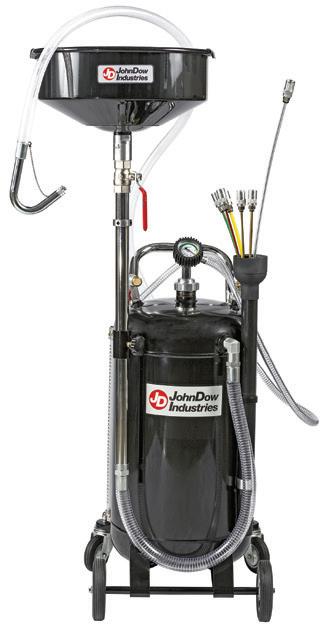















root cause of the vibrations or out-ofround issues:
• Evaluate the tire and wheel assembly/ lateral (side-to-side) run-out;
• Evaluate the radial (up-and-down) runout, and;
• Use a run-out gauge to evaluate both the lateral and radial stability of both the tire and the wheel separately.
As the tire and wheel are connected as an assembly, it is imperative that both be examined together and then separately to ensure all the component variables are assessed. A high spot or heavier spot on a wheel or component can become further amplified on larger tires as their center of gravity is further removed from the spinning center. As a result, the vibration force becomes more amplified on the mounted tire contacting the working surface.
DAVID GRADEN, global account manager, agriculture, Michelin North America Inc.: In today’s agricultural landscape, especially with high-speed equipment like sprayers and MFWD tractors, ride quality issues are sometimes blamed on out-ofround tires. It’s important to take a closer look at what’s really going on.
An out-of-round tire is one that doesn’t maintain a consistent radius as it rotates. This can be radial (up and down) or lateral (side to side). Symptoms may include:
• Vibration at specific speeds;
• Uneven wear patterns;
• Reduced traction and soil contact, and;
• Operator discomfort and fatigue
However, more often than not, the tire isn’t the issue. The issue is the wheel. It’s far more common for the wheel to be the source of an out-of-round condition.
In original equipment (OE) applications, we may check for a high/heavy spot or heavy harmonics — typically, where the tread rubber seam is located — but this is extremely rare.
In those cases, we might mark the tire so the OEM can match it with a low spot on the wheel to optimize ride quality.
Before assuming a tire is out-of-round, it’s critical to inspect for more common issues. These include improper mounting, bead damage and/or a bent or damaged wheel. These are far more likely to cause ride quality problems and/or out-of-round
Run-out of tire
Run-out of rim
conditions and should be ruled out first. If a vibration issue does occur, it typically shows up during roading, not in the field. Soft ground conditions and torque tend to mask minor imbalances. On the road, especially at higher speeds, those imperfections become much more noticeable. This is especially true for MFWD machines, which have suspensions that can amplify vibration frequencies. In contrast, 4×4 machines — with their heavier build and different vibration profiles — tend to absorb these issues more effectively.
If both the wheel and tire roundness check out and the issue persists, it may be worth trying a different tire with a different lug count or tread design.
Sometimes, the natural vibration frequencies of the machine simply don’t harmonize well with the tire’s pattern. Though rare, this mismatch can lead to noticeable ride disturbances, especially during transport at road speeds.
Ride quality matters, particularly as equipment becomes faster and more sophisticated. But when diagnosing vibration or imbalance, it’s essential to look beyond the tire.
CHRIS NEIDERT, ag marketing, training and development manager for Trelleborg and Mitas tires, North America, Yokohama TWS: An out-of-round tire is not a perfect circle and known as tire radial runout. There is another tire run-out: lateral run-out, which deals with the side-to-side
wobble. We will discuss radial runout. There is no tire that is a perfect circle. Tire manufacturers strive to be as close as possible to a 100% round tire. The closer the tire is to a perfect circle — smaller manufacturing tolerances — the higher the tire quality. The higher the manufacturing tolerance, meaning larger out of round values, the higher the possibility for the wheel to cause an up-and-down hopping motion felt as vibrations when the wheel spins. Excessive radial run-out leads to a bumpy ride and irregular wear and can cause vehicle vibrations. The higher the speed the equipment is moving, the more noticeable is an out-of-round tire or rim. Common causes of radial run-out include:
Manufacturing. Believe it or not, tires are not perfectly round from the factory. The tighter the manufacturing tolerances, the lower the out-of-round and the higher the tire quality;
Improper mounting. A tire may not be seated correctly on the rim; Wheels. Like tires, some wheels are not perfectly round from the factory, resulting in an out-of-round wheel assembly scenario;
A bent wheel. This is often caused from an impact and can cause a tire to appear out-of-round.
Out-of-round may also be caused by improper or not match-mounting the tire and wheel assembly. High-quality tires and rims are tested before shipping and marked for their low spot and high spot. ■

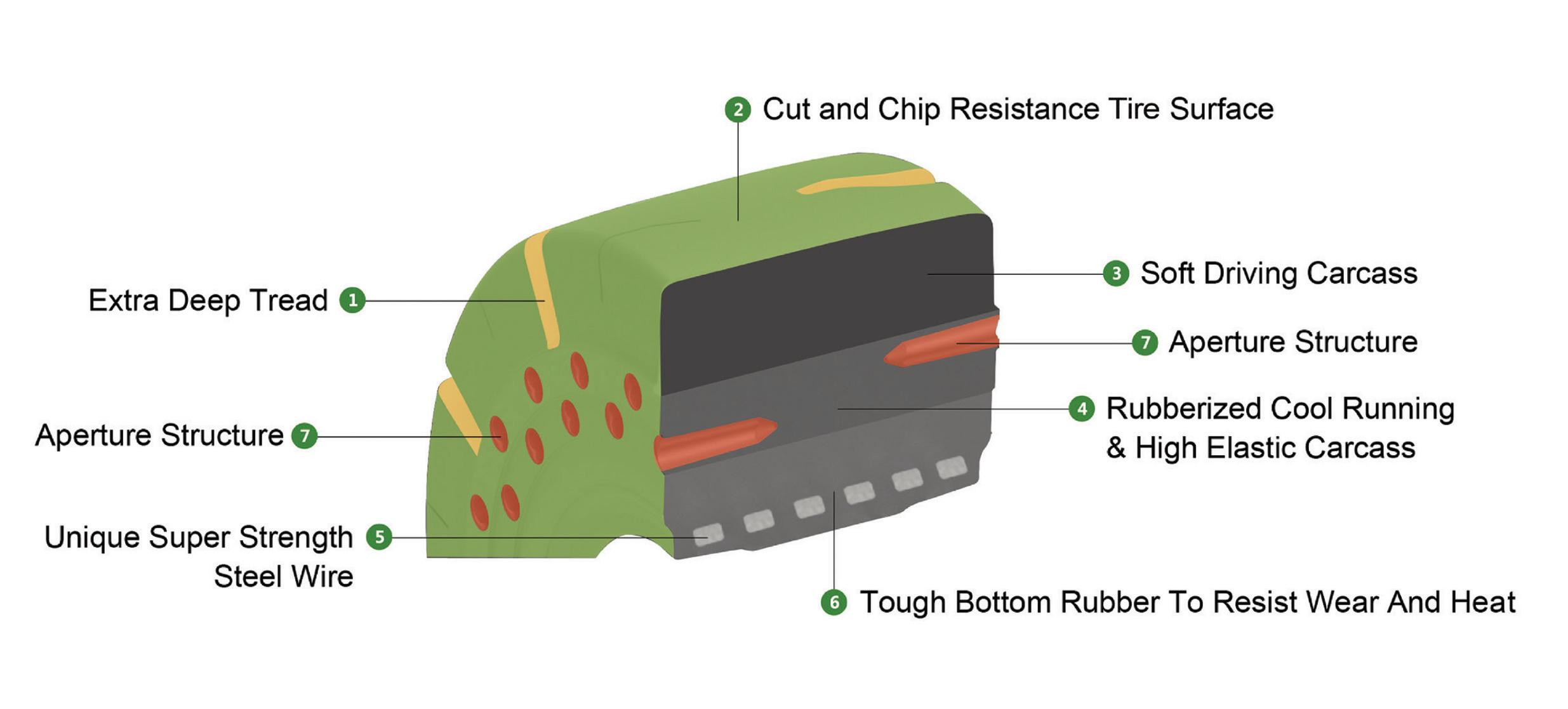












Premium 3-stage construction design



One stop supply, from 8 inch to 35 inch, with more than 500 SKU
The choices of more than 10 premium OEM brands
Continue service more than 160 countries for 30 years plus
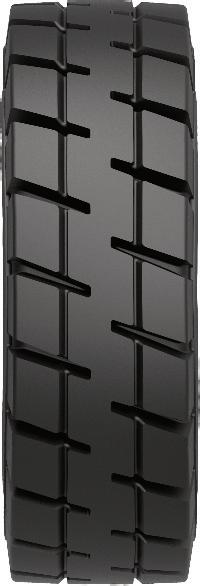
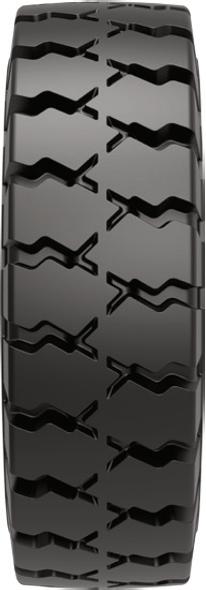
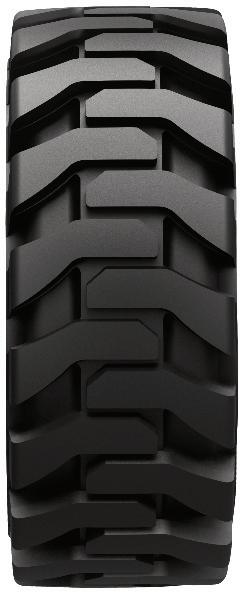
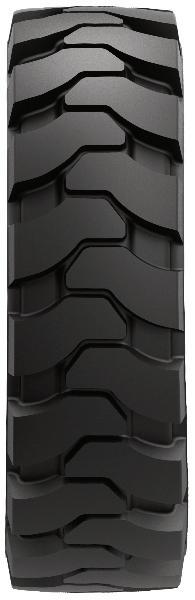

By

Dennis McCarron
Earlier in the year, I wrote about the difference between being nice and being kind. Nice has an expectation of reward — a returned favor. Someone is nice for personal reasons. Usually, they need something. Being kind — often associated with giving something of free will — expects nothing back. It is a state of being. People need help. You help appropriately.
We often see customers who are not at their best. Their good day was just ruined by a vehicle problem. Their schedule was suddenly thrown in the garbage and they’ve been calling audibles all day long. They’re scrambling. We won’t always get customers who are in a great mood when talking with them. Being nice will carry an aura of suspiciousness. Being kind will put them at ease. Similarly, being smart is not the same as being wise. Intelligence is a measurable aspect of the human brain. It is the mental ability to be accurate on facts, if you allow for a simple definition. Someone who has done a job often or long enough is usually pretty smart about how to get the job done. Intelligence is exposure, repetition and a developed cause and effect history of data.
Lots of people are smart about oil changes. The dipstick always comes out before you drain the oil. Always look at the filter being removed for the old O-ring. Don’t stand around watching the oil drain — and always multi-task!
The same can be said for selling or managing. A smart salesperson knows what to say. They’ve had a conversation about brakes 10,000 times. A smart manager knows when a customer is going to be desperate to replace tires — usually before the first snowfall in the Northeast, where I live — and when a shop will generally be slow — typically during summer vacation time. A smart manager knows things. A smart technician knows things, too. But what’s wisdom?
To be wise is to know what you should say, but you wait anyway. Wisdom is to know how to fix brakes only one way, the right way, regardless of outside pressure. To be wise is to understand not just what you are doing or saying, but in what environment and to whom.
Intelligence is understanding the problem at hand. Wisdom is understanding the space around that problem. Wisdom not only contemplates the steps to solve a problem, but weighs the solution over other options and choices and includes and encourages others to have input.
It’s all well and good that a basic brake job takes about an hour. But the customer in front of you with panic in their eyes about how long it will take should never be given the shortest time frame.
Wisdom introduces other options, like, “If you didn’t have to wait here, would I be able to have the vehicle longer?”

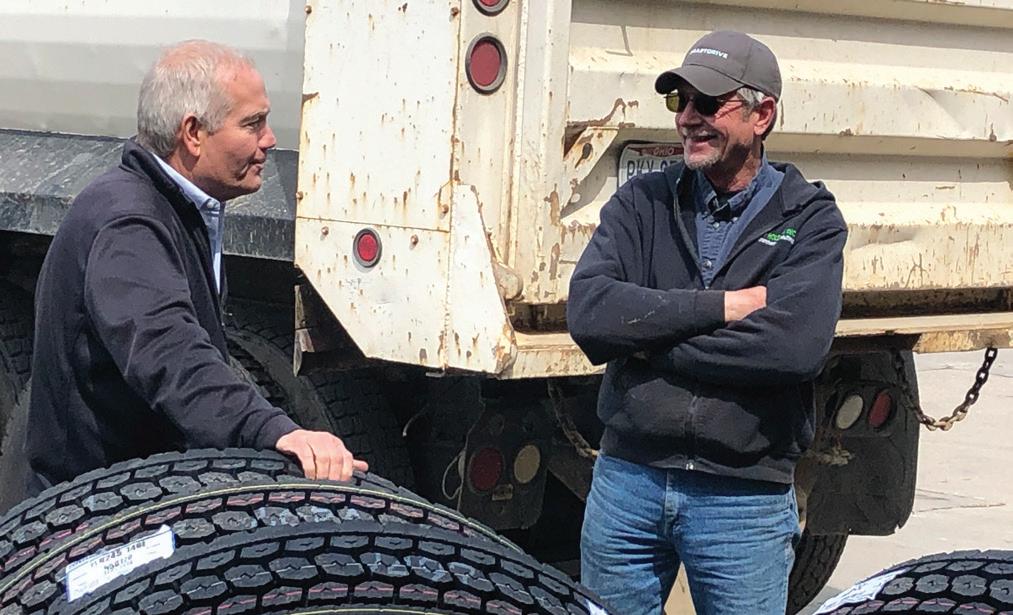
By including the emotional state of the decision maker – the customer — in the equation, a smart salesperson who knows how long a brake job takes becomes a trusted advisor who recognizes that any error — parts delivery, broken bolts, rust or an accident — will take an already anxious customer and spin them off into despair if they find out at 3 p.m. that they can’t pick up their kid at 4 p.m.
Wisdom knows to ask about problems a vehicle is having and what effect that’s having on its owner. Wisdom solves mechanical problems and emotional ones by getting out in front of them.
Yes, it’s not always possible to get complete stories out of customers. We don’t have all day to play therapist with each one. But you’d be surprised how much information a customer is willing to give up in under a minute if the right couple of questions are asked.
If it feels like an interrogation, customers will hide information. They will waste time trying to figure out your motives and the conversation can quickly become about winning. The problem with this is that there has to be a loser to have a winner and if it’s not the salesperson and it’s not the customer, then it’s the technician being asked to perform miracles in a tiny time frame.
Wise people get as much of the whole story as they can, just because it makes for a smoother process. Rocks in the road are unearthed early, when they are easier to deal with instead of when under pressure. Wisdom listens much more than it talks. It’s fast when fast is good. It’s slow when slow is good. And wisdom knows that problems never exist in a bubble. ■
Dennis McCarron is a partner at Cardinal Brokers Inc., one of the leading brokers in the tire and automotive industry (www.cardinalbrokers.com.) To contact McCarron, email him at dennis@cardinalbrokers.com.


The BendPak RWS-200WL battery-powered wheel lift is engineered to tackle the heavy lifting of tires and wheels, significantly reducing technician fatigue and workplace injuries. With a robust 200-lbs. of lifting capacity, precision lithium-ion powered actuator, and rugged steel construction, it offers cordless freedom, quiet operation, and unmatched safety, ideal for tire shops, fleet facilities, and EV service bays.
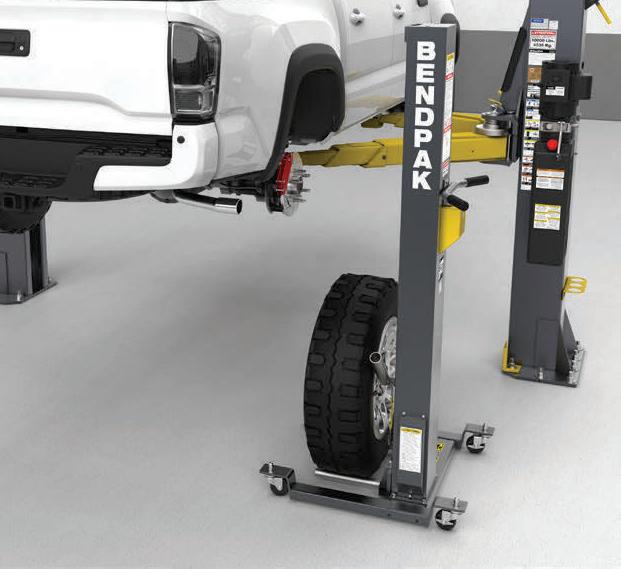

• Rechargeable 24V lithium-ion battery
• Ideal for removing and installing heavy wheels on vehicles raised on car lifts or floor jacks
• Integrated smart charger that accepts 110–240V AC input
• Onboard 12V accessory outlet $1,975.00*




Randy O’Connor By
DON’T FALL INTO THE COMMODITY MINDSET
s we turn the calendar to the New Year and set aside a moment of peace amid a fresh transition to a new beginning, I find myself reflecting — not just on tires sold or hours billed, but on something much deeper: the journey our customers take through our service experience as much more than a job, but rather as a craft.
Previously, I’ve written about understanding the purchase path and the importance of systemizing customer touchpoints.
For the coming year, I’d like to reframe that journey as an act of being — of service-craft grounded in inspiration, guidance and motivation towards a common outcome.
Vision statements speak to far more than internal culture or mission-based signage. It invites us to consider meaning, individual and collective behind each interaction. When we embrace that vision as operative and actionable, the customer journey becomes more than a sequence of steps. It becomes a creative act.
More specifically, I’m referring to you and your team’s relationship to the world — not just the output. I want you to consider you and your team as artists. Your canvas is your service bays, your dealership’s waiting area, the handshake with the customer and the vehicle hand-off. Your mediums are trust, clarity and relief.
In previous articles, I’ve emphasized various touchpoints: meet and greet, write-up, tech inspection, explanation, service delivery and follow-up. Those are important. But thinking of them as a craft elevates how we view those moments. It means that even mundane services — like checking tire pressure, verifying lug torque and providing mid-service updates — carry intention and belief. So let’s walk through how we can apply this craft lens in practice.
First, find inspiration and a purpose in every day. When a customer visits, they are bringing more than a car to you. They’re bringing trust, expectation and their concerns. Your system of beliefs should be visible. That’s the inspiration.
In other articles, I noted that the satisfaction of customers is influenced by the systems and processes we have in place. Now, I add that the soul behind those systems matters. When your team believes they are doing more than “just tires,” that belief becomes a force the customer senses.
Second, guide your systems with mindset. You’ve likely built processes to handle vehicle inspections, estimates, authorizations, quality control, etc. They’re all essential. But the craft mindset is what elevates them — guiding the customer through the journey with attention, clarity and empathy. What does an exceptional experience look like? We’ve all felt it.
Make sure your people are trained not just on what to do, but how to be during the doing. Calm, transparent and conversational are solid examples. That guidance reduces friction, reveals value and aligns with your vision’s common outcome of creating satisfied, returning customers.
‘This coming year, I encourage you to regularly lift your attention from the ledger toward the craft of service you deliver.’
Third, take personal ownership of the outcomes. Here we come to the motivation of not just your team, but of your customer. The common outcome is safe vehicles, trusted service relationships and profitability. When your team feels part of something larger — that their craft contributes to safety, mobility and life continuity — they find motivation in the purpose.
Consumer-focused cultures have strong staying power. I encourage you to invite your team members to ask, “How can we make the customer’s journey remarkable today?” When the question is asked not just once, but repeatedly, culture-wide, personal ownership and motivation grow.
Fourth, view creative application throughout the customer journey as an ongoing and developing state. Creativity isn’t just something you do from time to time. It’s an act of being. By treating the customer journey as a creative act of service, we shift from transactional to transformational. A customer leaves not just with four mounted and balanced tires, but with a renewed trust in your business, in our industry and in themselves. That’s the craft. That’s the common outcome. And yes, the proverbial magic dust I’ve referenced before is ours to spread, one creative act at a time.
This coming year, I encourage you to regularly lift your attention from the ledger toward the craft of service you deliver. In our industry, it’s easy to fall into commodity mindsets: tires, alignments, brake service, etc. But under the surface lies something far richer: the journey of the customer, the belief systems we bring and the relationships we build. If we treat that as a craft — guided by beliefs that inspire, guide and motivate oneself and others towards a common outcome — then every vehicle that rolls out of your service bay becomes a piece of work and a finely crafted experience.
Tire and auto service is not just what we do, but how we are, especially in the independent space. In that sense, our industry is an art form and our service journey is a canvas. So let’s make this year count, not only in sales and profitability, but in the way we serve, the way we believe and the way we live our visions.
From our house to yours, may you craft an unforgettable customer journey this holiday season, heading into the new year. ■
Tire and auto industry veteran Randy O’Connor is the Owner/Principal of D2D Development Group (Dealer to Dealer Development Group.) He can be reached at randy@d2ddevelopmentgroup.com. For more information, please visit www.d2ddevelopmentgroup.com.

Cole Strandberg By
WHow
and why — M&A deals fall apart AND HOW TO KEEP YOUR DEAL ALIVE
hen M&A deals die, it’s rarely for just one reason. More often, it’s a slow unraveling — a combination of misaligned expectations, emotional fatigue and the occasional unforced error that sends months of work down the drain.
Having spent years advising automotive businesses through the M&A process and going through a transaction with my own family’s business, I’ve seen nearly every kind of deal death imaginable. The good news? Almost all of them are avoidable with the right preparation and mindset.
One of the most common killers of good deals is having the wrong professionals at the table. M&A transactions are a different animal. They require advisors who live and breathe deals. When sellers hire a well-meaning but non-deal attorney — say, the same one who handled their real-estate closings or employee matters — things slow down fast. Every redline gets over-lawyered, every risk gets magnified and buyers get frustrated. Momentum dies.
If a deal falls apart after the letter of intent (LOI) stage, it’s often because the heavy lifting wasn’t done early enough. The LOI is where you align expectations on valuation, structure, earnouts, working capital and employment agreements. Get those details worked out up front and the purchase agreement becomes a relatively smooth process. Skip them and you’ll find yourself in a mess of re-negotiations.
Remember, the LOI is just the start — not the finish line. When either party relaxes too much after signing, deals drift. The energy that got the deal to the LOI must carry through diligence, financing and final documentation. Keep a cadence of communication, accountability and progress milestones. Lack of momentum kills more deals than bad news ever does.
Indecision also can kill deals. The fear of missing out on a better partner or a slightly higher offer often causes sellers to slow-play or reopen conversations mid-process.
Buyers sense that hesitation immediately. The best advice? Be confident in your process. In my experience, first-time buyers are often the most dangerous ones to deal with — not because they’re bad people, but because they don’t know what they don’t know. They’re more likely to get spooked by normal diligence findings, overestimate the complexity of post-close operations or let financing challenges derail their confidence. It’s why sell-side advisors should always test a buyer’s experience level and proof of funds early in the process. Let them be the “bad guys.”
Even when the economics work, cultural mismatch can sink a deal. A family-owned business that’s built on trust, community and relationships may struggle to envision its legacy in the hands of a data-driven private-equity firm. Buyers and sellers who align on values and vision get across the finish line faster and with a lot less stress.

But nothing kills momentum faster than bad financials. If your numbers aren’t clean, consistent and well-supported, the buyer’s quality of earnings process will uncover it and confidence will evaporate. This is why sell-side readiness is critical. A few months spent cleaning up books, confirming add-backs and resolving liabilities can save a deal from death later.
M&A deals are emotional, especially for founders who’ve poured decades into their businesses. The process is intense, invasive and exhausting. Even with a good offer on the table, some sellers walk away simply because they’re tired. A good advisor plays therapist as much as banker, helping clients stay focused on the why behind the transaction, not just the day-to-day friction.
Sometimes, sellers chase perfection: the perfect price, the perfect partner and the perfect timing. But deals, like life, are about trade-offs. The longer a seller waits for every box to be checked, the more likely market conditions, buyer appetite or their own stamina will change. The best deals aren’t perfect. They are fair, timely and executable. Deals die for many reasons. But most of the time, they die because the seller’s story loses clarity and momentum. The most successful transactions happen when both sides are aligned, transparent and motivated by the same goal: preserving value while creating opportunity.
In M&A, as in other aspects of business, clarity beats complexity and momentum beats perfection every time. ■
Cole Strandberg is a managing director with Focus Investment Banking’s automotive aftermarket team, specializing in mergers, acquisitions and capital raising for multi-location tire dealerships and automotive service businesses. Email him at cole.strandberg@focusbankers.com.

Motor Age Training offers the most complete and extensive ASE Training Series available anywhere
• Study guides
• Practice tests
• Detailed illustrations
• Available in your favorite format











Craig Van Batenburg By
Ihave been helping shops for over 30 years advance their technicians’ knowledge by holding hands-on classes, first as a Massachusetts Certified Emissions Repair Training Center called the Automotive Career Development Center (ACDC). The goal was always to fix and maintain cars and trucks so that they made less of an emissions impact. Here are my observations about the types of technicians that come to ACDC:
1. When I ask technicians why they come to class on their own, the answer is always “self-advancement.” What they don’t say is they are looking for a new place to work;
2. When the boss pays for a class, the feeling I get is mixed. Some are appreciative and others feel obligated;
3. If technicians comes to a day class during the work week, overwhelmingly they learn more and the sense of belonging to a great shop is most often displayed;
4. If the technician works at a flat rate service facility, it shows up in the hands-on part of the training. Many will rush through the exercise, missing some of the finer points;
5. The master ASE-certified technicians want to know everything and have a broader knowledge base. They are usually the best students.
ACDC has seen it all, including few interested shops in the beginning, when only two hybrids were sold here, the Honda Insight and the Toyota Prius. That was in 2000 through 2004.
In 2004, we closed the Honda repair part of my company and traveled extensively until 2014, as hybrids had spread across all major OEMs and EVs had just made some inroads, mostly Tesla.
During those 10 years, we were booked months out. Business was booming. The recession of 2008 to 2011 did not affect us. We also weathered the Covid-19 pandemic.
A few years ago, we won a large contract with my home state. That program pays the cost for many independent Massachusetts-based technicians to attend our two-week “Up Your Voltage” class. It’s 80 hours of advanced technology training using our fleet, consisting of xEVs, including Honda, Toyota, Ford, GM, Nissan, Kia, Hyundai, and Tesla vehicles. We also offer a one-day “Introduction to Heavy-Duty Electric Vehicle” class, as well. These programs have brought us more awareness about the concerns shop owners and managers have about sending their technicians to class.
As the cost of the classes is no longer an issue, what else is in the way? In no particular order, here is what I have learned from shop owners. I think these “reasons” are universal:
• “We are too busy and short-handed to lose a tech for that long;”
• “I don’t want to work on hybrids or EVs;”
‘There is a lot of great training out there for your technicians.’
• “My tech doesn’t want to go;”
• “I did the calculations and I don’t see enough profit from our investment;”
• “This whole EV thing is not going to last;”
• “We are a small shop and I only have one tech;”
• “We’re retiring soon. Let the next generation do it;”
• “If I train them, they will leave.”
I am sure there are more. These viewpoints are very real to these shop owners and many will never change their minds. To offer them something else to consider, here is what ACDC and many other training companies offer as reasons to not let your fears keep your techs from advancing their careers:
• Encourage them with a pay raise after class, as they will be able to work on more types of vehicles;
• Have them sign an agreement to pay you back for the training if they leave within 12 months after the class is over;
• Pay them while they attend classes.
What has ACDC done over the last few years to make it easier for shop owners to send their technicians to class?
• We offer night and Saturday classes;
• We’ve written one new book — printed or eBook — to make home study more accessible;
• We offer live webinars with open mics to have an interactive class;
• We’ve set up a recording studio and partnered with ProDiags for entry-level web training;
• We offer in-person, basic-to-advanced-level, two-day electrical labs;
• We built a kitchen at the school to offer fresh, hot food and drinks. You can’t teach a hungry tech!
There is a lot of great training out there for your technicians. Go get some! ■
Craig Van Batenburg is the CEO of Van Batenburg’s Garage Inc., dba Automotive Career Development Center (ACDC), which is based in Worcester, Mass. A 50-year automotive service industry veteran, Van Batenburg provides training for facilities that service — or want to service — electric and hybrid vehicles. For more information, see www.fixhybrid.com or email him at craig@fixhybrid.com.













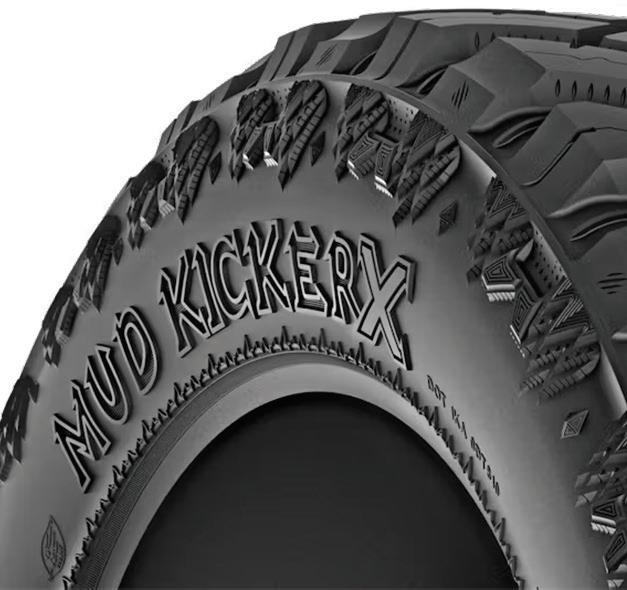
The recently introduced Cosmo Mud Kicker X from Tire Group International LLC (TGI) is now available and features “a multitude of upgrades,” according to TGI officials. The tire features patent-pending Shoulder Claws that have been redesigned with “a deeper, industry-leading 9 mm shoulder depth for next-level traction,” among other features. The new Cosmo Mud Kicker X is available in size 37x13.50x22, with eight additional sizes on the way.
TIRE GROUP INTERNATIONAL LLC www.cosmotires.com
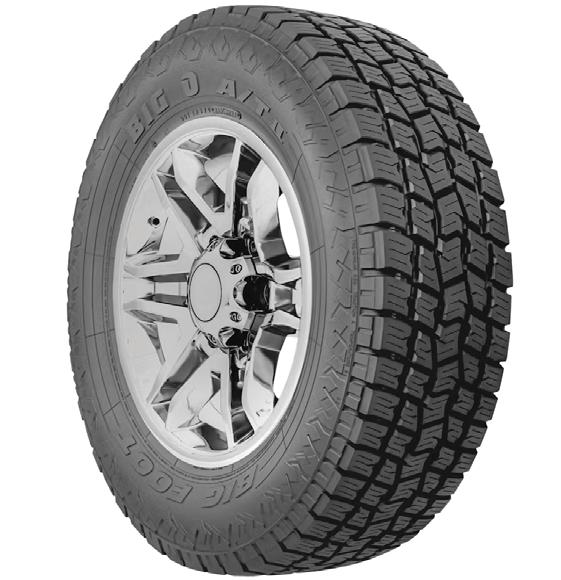
TBC Corp.’s Big O Tires organization has added sizes to its Big Foot All-Terrain II and Legacy AS Plus tires. Twelve sizes have been added to the Big Foot All-Terrain II, while 16 sizes have been added to the Legacy AS Plus. Big Foot All-Terrain (A/T) II tires are engineered for on and off-road adventures with a variable pitch pattern, block reinforcements, wide lateral grooves and staggered shoulder lugs,” among other features, say TBC officials.
TBC CORP.
www.bigotires.com
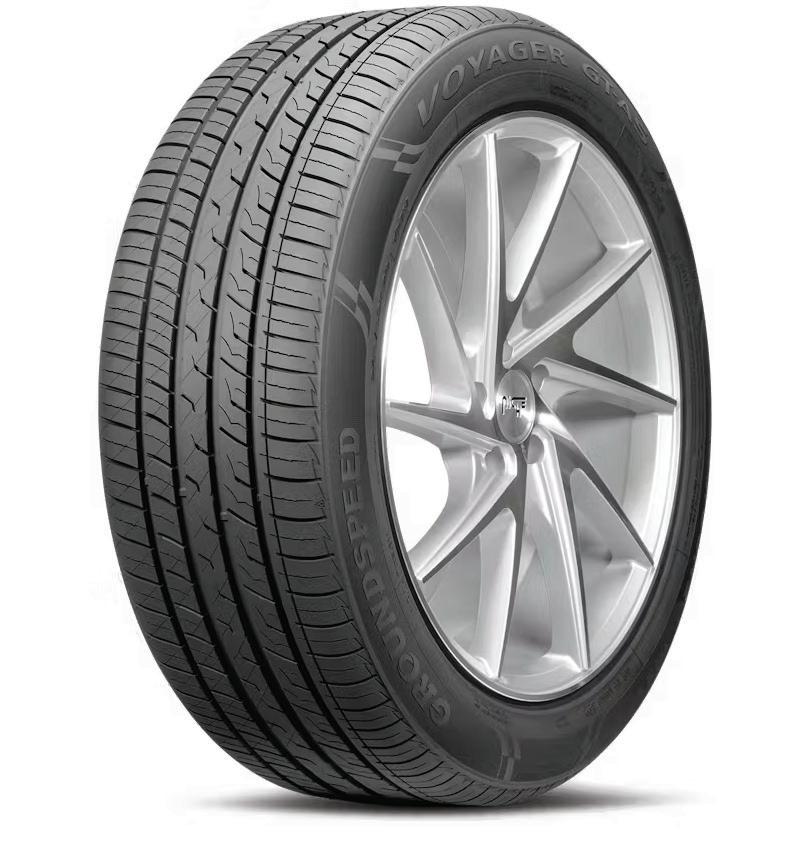
Sentury Tire USA’s new Groundspeed Voyager GT-AS all-season tire “features a tread design that aids in water evacuation and helps prevent hydroplaning — combining dry grip and rapid water dispersal technology to improve traction in both wet and dry road conditions,” say Sentury Tire USA officials. The design of the Voyager GTAS also “ensures even contact pressure distribution and provides increased tread block stiffness.”
SENTURY TIRE USA www.groundspeedtires.com
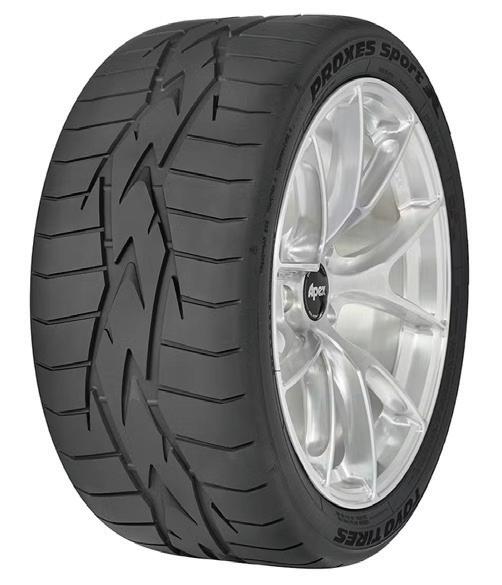
launches Proxes R
Toyo Tire U.S.A. Corp. has unveiled the Proxes R, which has been designed for motorsports enthusiasts and drivers of high performance vehicles. “The Proxes Sport R is our latest extreme performance summer tire, crafted for drivers who demand racetrack performance, along with the practicality for street use,” says Cameron Parsons, technical field manager, motorsports tires, Toyo. The tire will be produced in over 50 sizes.
TOYO TIRE U.S.A. CORP. www.toyotires.com
ATD adds to Ironman line
American Tire Distributors (ATD) is expanding its Ironman All Country line with the addition of the All Country AT-X. The tire “combines all-weather and all-terrain tire design for year-round performance on and off the road,” say ATD officials. “Now available at retailers, the new AT-X replaces the All Country A/T and AT2 models, offering enhanced performance and increased market competitiveness. The complete All Country AT-X lineup features 40 sizes, with 27 available now.”
AMERICAN TIRE DISTRIBUTORS www.ironmantires.com
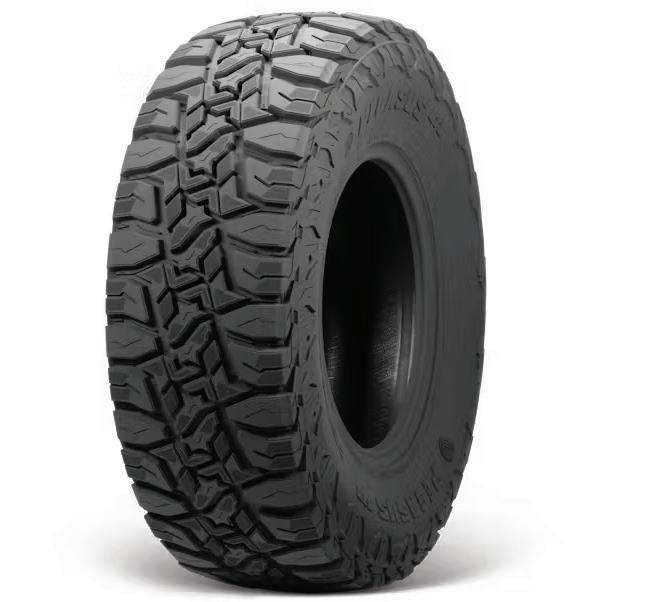
API unveils Pegasus line
American Pacific Industries Inc. (API) has launched its new Pegasus line, which features six tires designed for a wide range of applications. “This program introduces a full range of Pegasus-branded tires with proprietary tread designs that meet the demands of diverse driving environments — from smooth highways to rugged off-road terrains,” say API officials.
AMERICAN PACIFIC INDUSTRIES INC. www.apitire.com
The TPMS uses four valve stem-mounted sensors to monitor tire pressure. These sensors wirelessly transmit tire pressure data to the RTM. The RTM is a radio signal receiver which collects the tire pressure data and sends the information to the BCM, along a LIN. All TPMS functions are controlled by the BCM.
The BCM compares the tire pressure data sent by the RTM with a programmed tire pressure. This programmed pressure is specified on the VC label and cannot be changed.
If the actual tire pressure is less than the programmed tire pressure, the BCM sends a low tire pressure message to the GWM along the HS-CAN1. The GWM then sends this message to the IPC along the HS-CAN3.
The IPC responds by illuminating the TPMS warning indicator and displaying a low tire pressure message in the message center.
The TPMS sensors are trained (calibrated) to the BCM, which records the unique identifier for each TPMS sensor and records the location of each sensor based on the training (calibration) order.
The BCM sends messages to the RTM by first sending the information along the HS-CAN1 to the GWM, which then sends the information to the RTM along the MS-CAN.
The diagnostic scan tool is useful in diagnosing TPMS con-
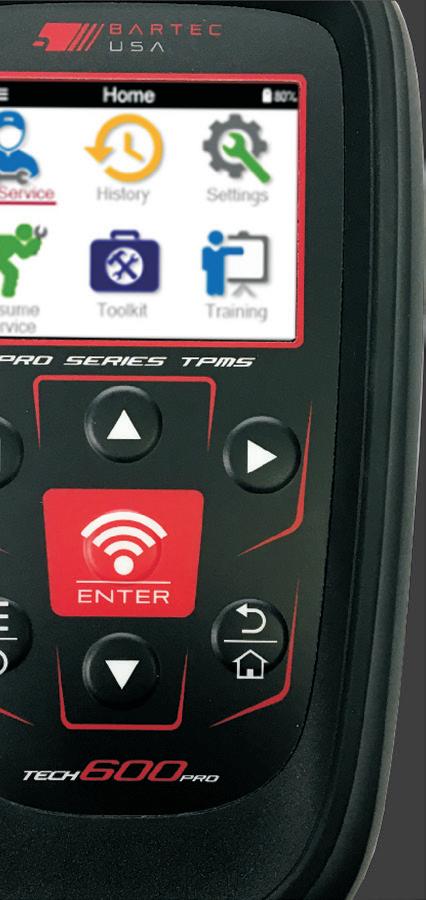
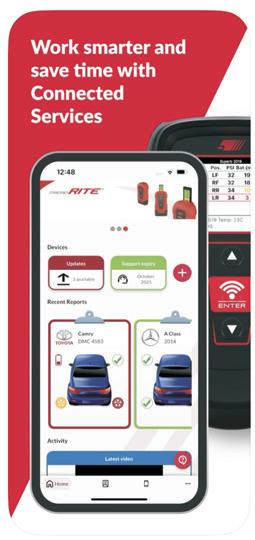
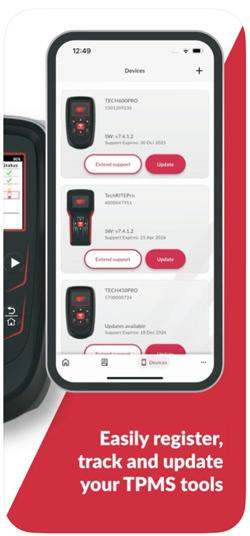
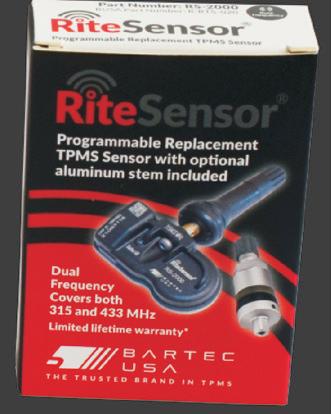
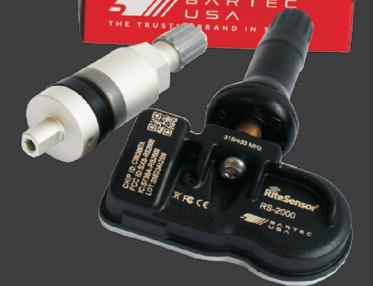
cerns and may be used to verify the accuracy of the tire pressure data transmitted by the TPMS sensors. This is accomplished by comparing the BCM tire pressure PID data to the actual tire pressure using a digital tire pressure gauge.
It is not necessary to train the sensors after a tire rotation on vehicles with the same front and rear tire pressures. However, the BCM cannot recognize when the sensor identifiers have been moved to different positions and retains the original position information for each sensor.
Training known good sensors from another vehicle can help determine whether the concern is with a sensor or the RTM. This technique cannot help determine whether the concern is due to RFI, as some RFI source could be preventing the RTM from receiving the tire pressure status from the known good sensors, as well as the original sensors.
If the RTM in the suspect vehicle cannot train any of the original sensors and likewise cannot train known good sensors from another vehicle, then the concern is with the module or RFI and not with the original sensors. The original sensors should not be replaced.
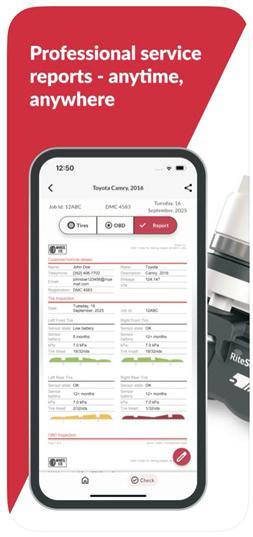
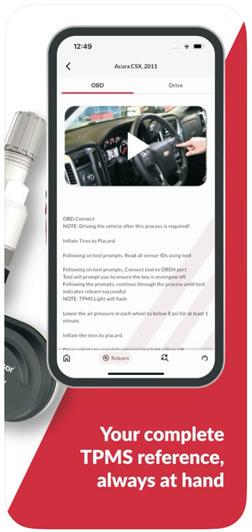
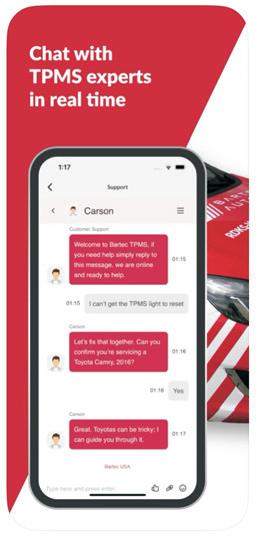



If a sensor in a certain location has caused several events, yet the sensor trains and seems to operate normally, moving that particular wheel to a different location on the vehicle is a good way to isolate the concern to a certain sensor/wheel location. Rotate the wheels and road test the vehicle.
This can be done in an attempt to replicate the concern and help determine if the concern followed the sensor or remained in the original sensor location. If the vehicle has been stationary for more than 30 minutes, the sensors go into a sleep mode to conserve battery power and need to be “woken up” so they transmit the latest tire pressure information to the RTM.
If the first sensor fails the TPMS training procedure, the BCM aborts the entire procedure. Starting the training procedure at a different wheel is a technique that can be used to determine if the remaining sensors canrain to the module.
This can help save time determining if one sensor is damaged, other sensors are having concerns or the BCM is experiencing training difficulties with a certain TPMS sensor location.
The tire pressure sensors will go into a sleep mode when a vehicle is stationary to conserve battery power. The sensors do not transmit information while in sleep mode. It will be necessary to wake them up so they will transmit the latest tire pressure information. The tire pressure data in the BCM can be cleared when the module performs a reset. When this occurs, the air pressure DIDs will be reset to the factory default and the cluster will display dashes:
1. Turn the ignition switch to the ON position.
2. Position the special tool against the Left Front (LF) tire sidewall at the tire valve stem.
The special tool should provide feedback in the form of a flashing green light and a beep sound for each successful response from a tire pressure sensor. This feedback may not always be present. Do not rely on it as a confirmation that the module heard a particular sensor. If a sensor does not respond to the special tool, move the vehicle to rotate the wheels at least one-fourth of a turn and attempt to activate the same sensor again. If the sensor still does not respond, attempt to activate the same sensor again using the customer acti vation tool. If the sensor still fails to train, attempt to train the sensor with the doors open:
3. Press the test button on the special tool to activate the sensor. Activate the sensor at least two times. Repeat steps two and three for the remaining tires.
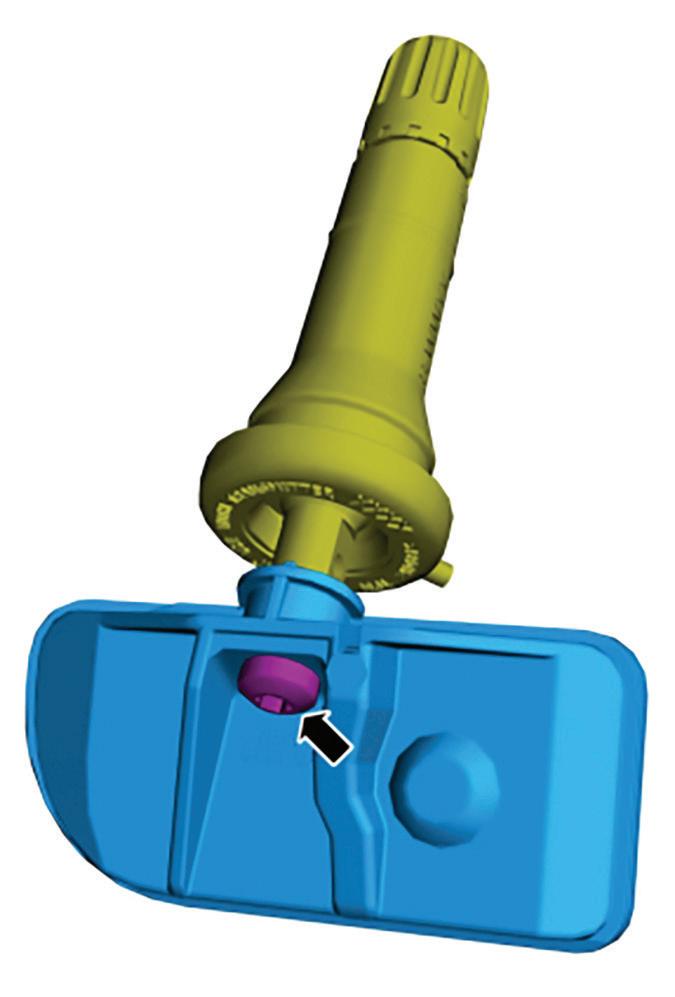
The TPMS can be placed into learn mode using a diagnostic scan tool or manually where a diagnostic scan tool is not available. The horn will sound once and the TPMS indicator will flash if the training mode has been entered successfully. If equipped, the message center will display TRAIN Left Front (LF) TIRE. Enter Training Mode With ID Scan Tool:
1. Select Chassis.
2. Select TPMS.
3. Select Training Mode. Use the General Equipment: Ford Diagnostic Equipment Enter Training Mode With FDRS Scan Tool
1. Select Toolbox.
2. Select BCM.
3. Select BCM — TPMS Initialization. Use the General Equipment: Ford Diagnostic Equipment
1. The horn will sound once and the TPMS indicator will flash if the training mode has been entered successfully. If equipped, the message center will display TRAIN Left Front (LF) TIRE. With the ignition OFF, press and release the brake pedal.
2. Using the start/stop switch, position the ignition from OFF to RUN 3 times, ending in the RUN position.
3. Press and release the brake pedal.
4. Position the ignition to OFF position.
5. Using the start/stop switch, position the ignition from OFF to RUN 3 times, ending in the RUN position.
It may take up to six seconds to activate a tire pressure sensor. The special tool must remain in place at the valve stem:
1. Place the special tool on the Left Front (LF) tire sidewall at the valve stem. Press and release the test button on the special tool. The horn will sound briefly to indicate that the tire pressure sensor has been recognized by the BCM.
2. Within two minutes of the horn sounding, place the special tool on the Right Front (RF) tire sidewall at the valve stem and press and release the test button to train the Right Front (RF) tire pressure sensor.
3. Repeat Step 1 for the Right Rear (RR) and Left Rear (LR) tires. The procedure is completed after the last tire has been trained. When the training procedure is complete, the message center (if equipped) will display TIRE TRAINING COMPLETE. For vehicles not equipped with a message center, successful completion of the training procedure will be verified by positioning the ignition to OFF without the horn sounding. If the horn sounds twice when the ignition is positioned to OFF, the training procedure was not successful.
4. Using the scan tool, locate the updated TPMS sensor identifiers trained to the BCM and document them on the applicable warranty claim.
NOTE: This step is required to clear DTC B1182:55, cause the BCM to exit the manufacturing mode and to make sure there are no other concerns with a newly programmed BCM.
5. If the sensors are being trained due to the installation of a new BCM, clear any DTC and carry out the BCM On-Demand Self Test.
Failure to follow the instructions below may result in damage to the TPMS. The TPMS sensor is mounted to the valve stem. Removal of the valve stem requires dismounting the tire from the wheel and removal of the TPMS sensor.
Use only the Digital Tire Pressure Gauge any time tire pressures are measured to be sure that accurate values are obtained:
1. Remove the wheel and tire. Note that the valve stem is connected to the TPMS sensor. Do not pull the valve stem from the wheel or damage to the sensor will occur. If a new TPMS sensor is being installed, remove and discard the valve stem-to-sensor screw and the sensor.
2. Remove the valve stem core and fully deflate all air from the tire. Do not allow the tire beads to move beyond the wheel mid-plane (middle of the wheel) when separating the beads from the wheels. Damage to the TPMS sensor may occur.
3. Some machines may have a nylon roller bead separator at the 12 o’clock position instead of the paddle-type bead separator at the 3 o’clock position. For a paddle-type tire machine, position the valve stem at the 12 o’clock or 6 o’clock position and the paddle at the 3 o’clock position. For a roller-type tire machine, align the valve stem with the roller at any position. If bead separation is difficult to achieve using the nylon roller bead separators due to high
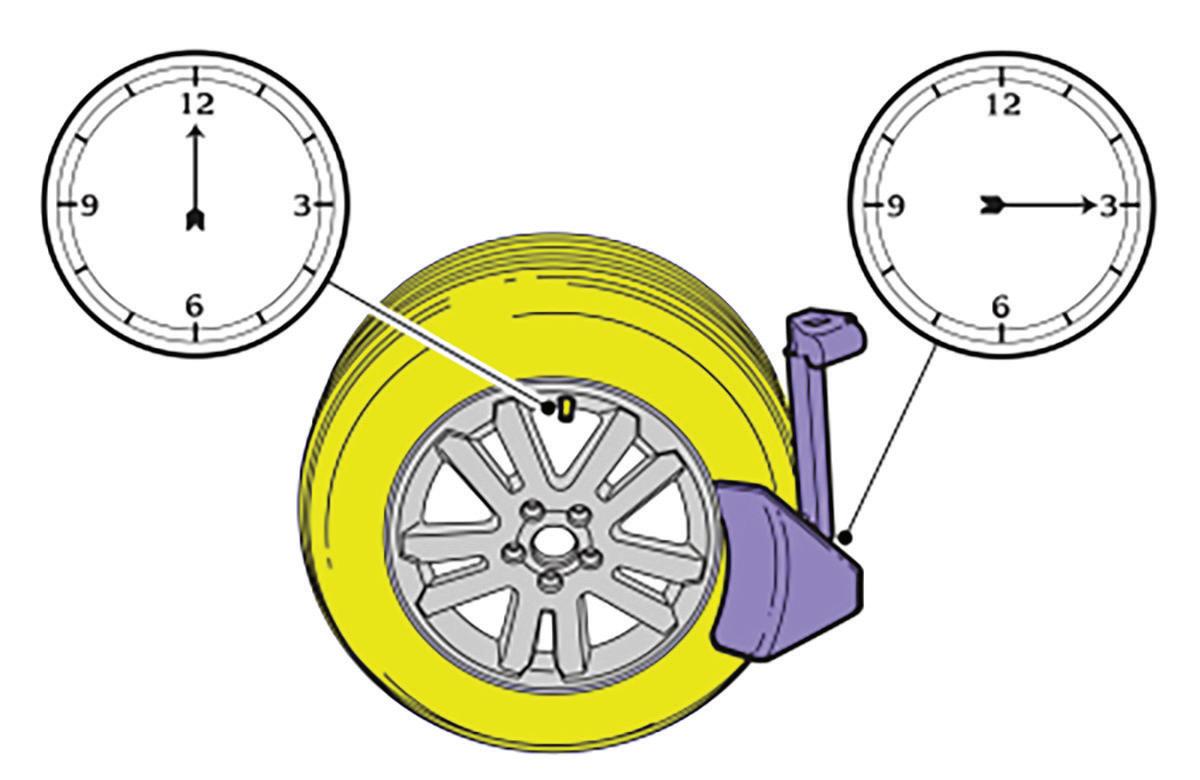
anchoring force between the tire and the wheel, the paddletype bead separator may be a more effective method. Index-mark the valve stem and wheel weight positions on the tire .
4. Place the wheel and tire assembly on the turntable of the tire machine with the valve stem at the 11:30 position and the machine arm at the 12 o’clock position and dismount the outer bead from the wheel.
5. Reset the wheel and tire assembly on the turntable of the tire machine with the valve stem at the 11:30 position and







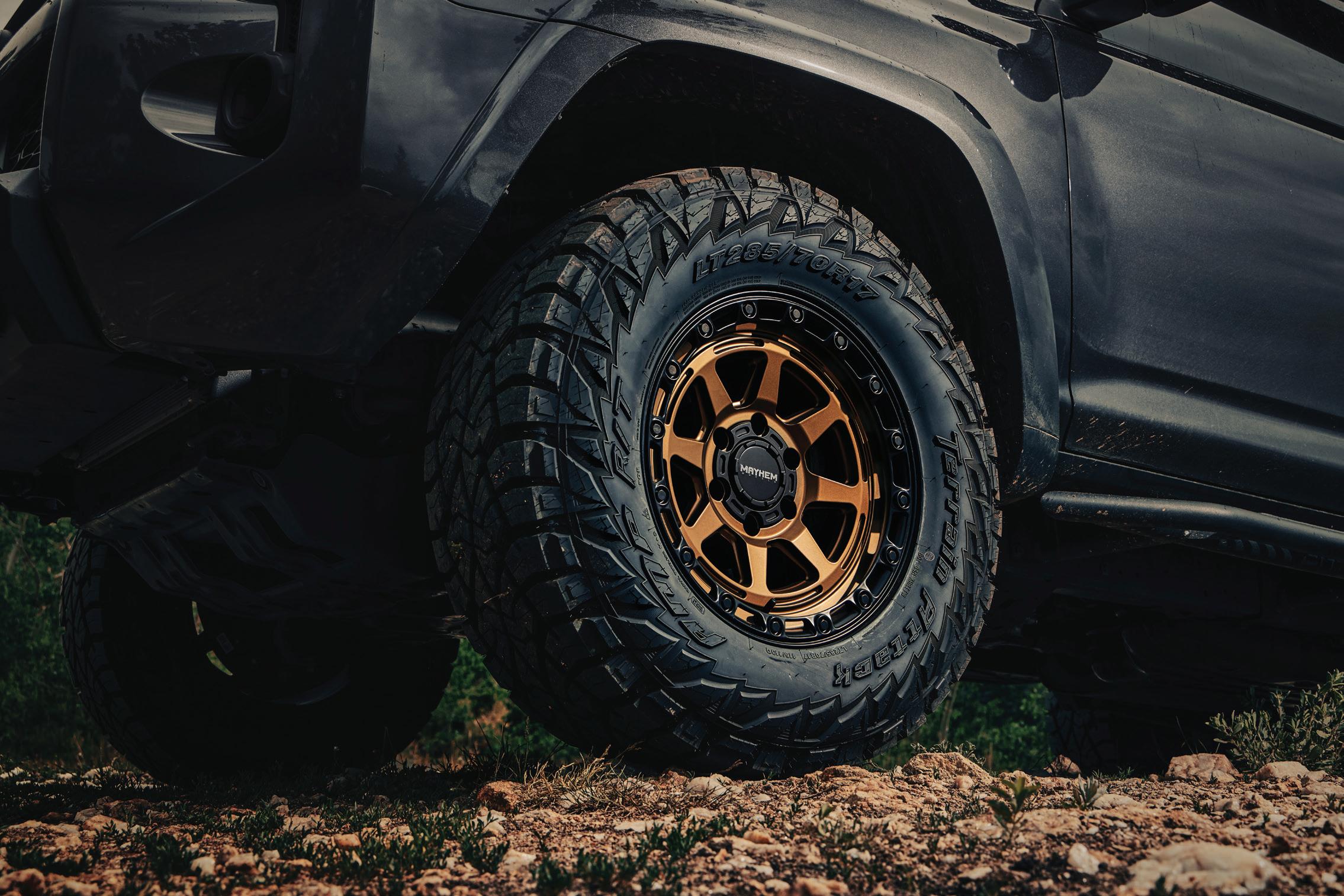
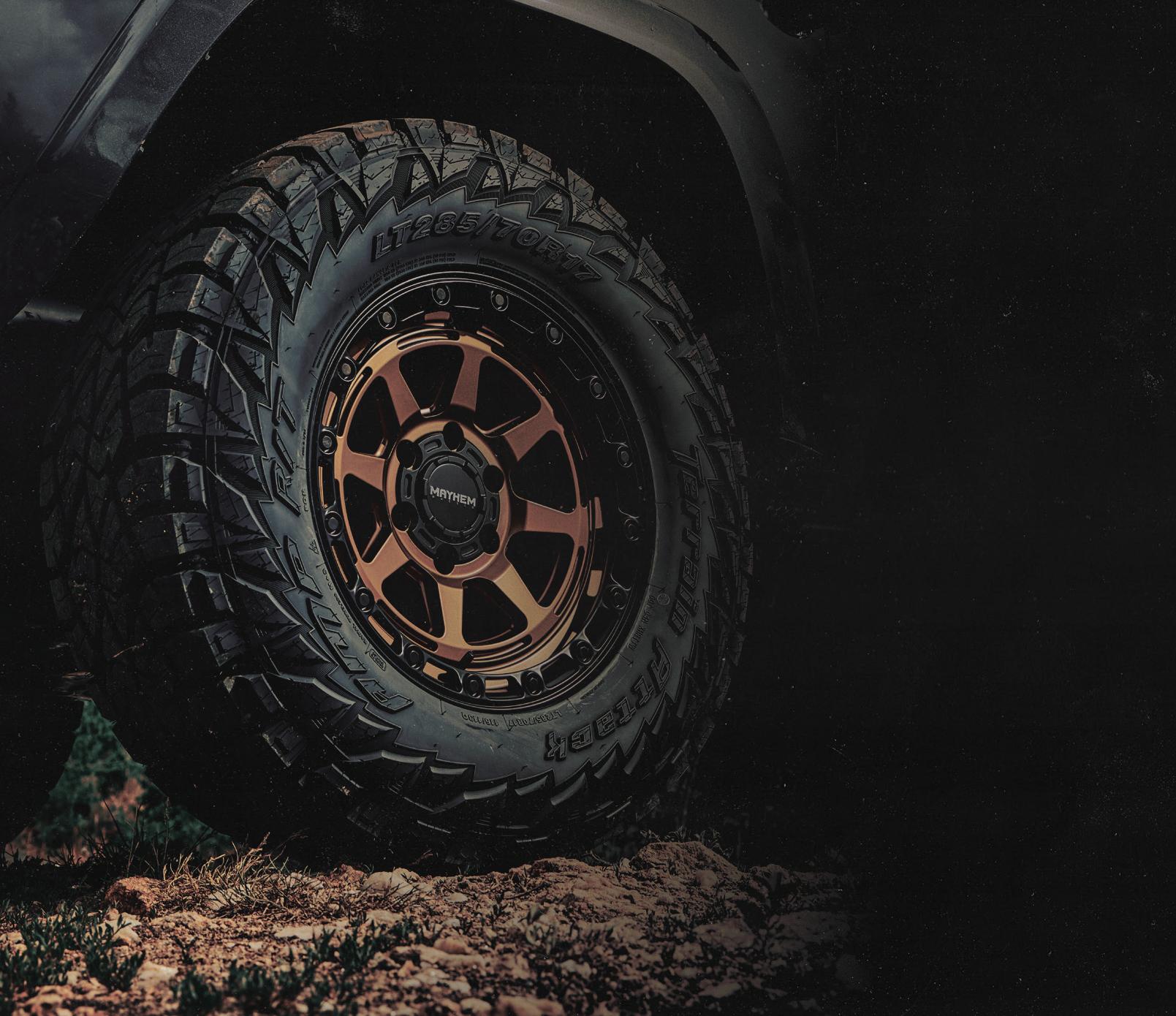




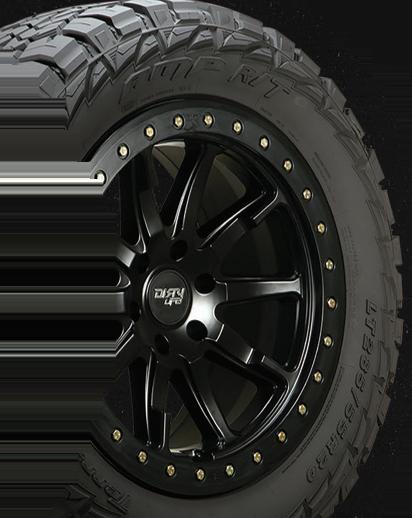





the machine arm at the 12 o’clock position and dismount the inner bead from the wheel.
6. Remove and discard the TPMS sensor-to-valve stem screw and separate the TPMS sensor from the valve stem. Discard the specified component. Follow local disposal regulations. When installing a new wheel, always install a new valve stem and sensor screw. Reuse the TPMS sensor from the previous wheel, if possible. The TPMS will not have to be trained if the sensor is reused.
If the TPMS sensor is being reused, inspect the TPMS sensor for damage and install a new sensor as necessary. To prevent TPMS sensor and valve stem damage, the valve stem must be installed onto the TPMS sensor and then installed into the wheel as an assembly.
When installing a new wheel, always install a new valve stemand sensor screw. Reuse the TPMS sensor from the previous wheel, if possible. The TPMS will not have to be trained if the sensor is reused.
If the TPMS sensor is being reused, inspect the TPMS sensor for damage and install a new sensor, as necessary. Position the new valve stem onto the TPMS sensor and install the new screw.
1. Damage to the TPMS sensor may result if the tire mounting is not carried out as instructed. It is important to pull the valve stem and TPMS sensor assembly through the wheel rim hole in a direction parallel to the valve stem hole axis. If the assembly is pulled through at an angle, damage to the valve stem and sensor assembly may occur. Use care not to damage the wheel surface when installing the valve stem and TPMS sensor assembly. Lubricate the valve stem with soapy water and install the valve stem and TPMS sensor assembly into the wheel using a block of wood and a suitable valve stem installer. Use the General Equipment: Wooden Block. Lubricate the tire beads using a suitable fast-drying, corrosion-inhibiting tire bead lubricant. Do not mount the tire at this time.
2. Position the wheel on the turntable of the tire machine, then lubricate and position the bottom bead of the tire on the wheel.
3. Position the wheel to align the valve stem with the machine arm, at the 6 o’clock position and mount the bottom bead of the tire.
4. Reposition the wheel to align the valve stem with the machine arm at the 6 o’clock position, and mount the top bead of the tire. Use only the Digital Tire Pressure Gauge any time tire pressures are measured to be sure that accurate values are obtained.
5. Inflate the tire to the pressure specified on the VC label located on the driver door or door pillar.
Proceed to the next step if the tire beads do not seat at the specified inflation pressure. If there is a need to exceed the maximum pressure indicated on the sidewall of the tire in order to seat the beads, follow all steps listed below. Failure to follow these steps may result in serious personal injury. The following steps should only be carried out if the tire beads cannot be seated by inflating the tire up to
the maximum inflation pressure listed on the tire sidewall:
1. Relubricate the tire bead and wheel bead seat area.
2. Install a remote valve and pressure gauge.
3. Wear eye and ear protection and stand at a minimum of 3.65 m (12 ft) away from the wheel and tire assembly.
4. Inflate the tire using the remote valve and tire gauge until the beads have seated or until the pressure gauge is 138 kPa (20 psi) more than the maximum inflation pressure on tire sidewall. If beads have not seated, deflate the tire and proceed to the next step.
5. Place the wheel and tire assembly in an OSHA-approved tire safety cage.
6. Inflate the tire using the remote valve and pressure gauge until the beads have seated or until the pressure gauge is 276 kPa (40 psi) more than maximum inflation pressure on the tire sidewall.Do not exceed 276 kPa (40 psi) above the maximum pressure on tire sidewall. Install a new tire if the beads do not seat at this pressure.
7. Install the wheel and tire. ■
Information for this column comes from the tire pressure monitoring systems data in ProDemand, Mitchell 1’s auto repair information software for domestic and import vehicles. Headquartered in San Diego, Mitchell 1 has provided quality repair information solutions to the automotive industry since 1918. For more information, visit www.mitchell1.com.