Honest SLATE
decemBer 2O 25
Honest Weight Food Co-op • 100 Watervliet Avenue, Albany, NY 12206 • 518-482-2667 honestslate@honestweight.coop • https://www.honestweight.coop/
Honest Weight Food Co-op • 100 Watervliet Avenue, Albany, NY 12206 • 518-482-2667 honestslate@honestweight.coop • https://www.honestweight.coop/
by Sheree Cammer and Tracy Frisch
On Saturday, Nov. 8, HWFC’s Environment Committee screened a special condensed version of the new documentary Regenerating Life by John Feldman. This film illuminates the forgotten role that nature and ecology play in climate regulation and disregulation.
The film does not dismiss the importance of reducing the burning of fossil fuels but shows how that is only part of the problem. It builds on our recognition of the importance of trees and the Amazon rain forest with a more nuanced understanding of how land-use decisions and the destruction of the natural world have contributed to the climate crisis.
Two panelists traveled from New England for the event. Christopher Haines, who lives in the Boston area, is an architect affiliated
by Marilyn Paarlberg
You’re six years old when your parents give you a globe. As it spins, so does your curiosity about the world. Your finger hovers and lands on brightly colored countries all across the whirling sphere; some are large, others remote. You ask questions. Your parents share what they know, research what they don’t, and you learn together.
This is no imaginary scenario for Michelle Dworkin, whose international odyssey began as a young child growing up in the Capital District with a globe of the world. When she reached high school age, her family hosted American Field Service students from Hong
with Biodiversity for a Livable Planet; journalist/author Judy Schwartz lives in the Bennington, Vermont area.
A lively discussion with panelists followed the screening, attended by 18 people. The wide–ranging discussion touched on local wildlife issues, the brave work of people defending ecosystems from capitalism, and the work of wildlife ecologist Douglas Tallamy, transforming home landscapes to promote biodiversity. The Environment Committee is considering setting up a follow-up workshop on the transformative power of home landscapes at Honest Weight in the spring.
Christopher explained the climate dilemma in terms of the physics of urban heat islands. Greenhouse gases trap heat like a pot-lid, but almost nothing is said about the source of that heat. On a hot, sunny day, bare soil and pavement typically heat up 30º or even
Kong, Brazil, Finland, and Ecuador. Her interest piqued, Michelle became an AFS student in Costa Rica with a family who spoke no English.
The language barrier posed little problem— by the time she finished high school, Michelle had studied Spanish, French, and Russian, as well as learning Hebrew at her synagogue school. Upon enrollment as a Tufts University undergrad, she added Arabic study along with two semesters abroad in Cairo and Tel Aviv, and earned a bachelor’s degree in International Relations and Anthropology.
After graduation, Michelle found employment with the Academy for Educational Development (now FHI 360), where she worked on programs funded by the U.S. Agency for
50º hotter than soil under growing vegetation. Plants actively cool the environment with their evapotranspiration; cities act as heat islands amplifying heat.
Judy piqued attendees’ interest with her suggestion that we can reduce heat by planting Miyawaki forests, following the example of the Boston area Biodiversity for a Livable Climate project. Miyawaki forests are biodiverse pocket forests that are planted very densely to encourage rapid growth. Within a few years, they become self-sustaining ecosystems, providing benefits such as sequestering carbon, improving water absorption, filtering air pollution, and supporting biodiversity. They also significantly reduce temperature in surrounding areas.
Readers are encouraged to view, purchase, or screen the 137-minute film at https:// hummingbirdfilms.com/regeneratinglife/ To arrange a local screening of the 49minute condensed version, contact sheree4614@gmail.com.
Ultimately, much is in our hands if we can find a way to work together and follow nature’s lead.
See additional resources on page 4.
continued from page 1
International Development (USAID) that provided education and training for Palestinian graduate students. Five years later, she began graduate studies at Brandeis University’s Heller School of Social Policy and Management, where she completed a year of intensive coursework followed by a practicum in Sri Lanka, earning a master’s in Sustainable International Development.
Equipped with two degrees, linguistic abilities, and lived experiences, Michelle went to work as a foreign service officer for USAID at age 29 and stayed for 17 years, living abroad in Afghanistan, Guatemala, Honduras, Egypt, and Colombia, as well as in Washington, D.C.
As she outlines in a recent opinion piece in The Hill (a D.C. digital and print news company) her multifaceted job included ensuring that “funds were spent according to U.S. congressional intent as laid out in law, and to respond to the congressional oversight critical to the checks and balances of a functioning democracy.”
What kept her at USAID all those years? She cites exquisitely meaningful and interesting work, committed colleagues who wanted to accomplish good in the world, and being able to be part of that effort—achieving positive, life-giving (and lifesaving) change in the lives of “real people” around the globe.
Given such a significant foreign service career, why did she leave? The short answer is the recent decision by the Trump administration to shut down USAID. As a result, those “real people” whom Michelle and her colleagues served now bear staggering losses.
Michelle acknowledges that while the sudden and callous manner in which USAID staff learned that their service and livelihood were ending was traumatic, she cannot stop thinking about the devastating impact on the local residents in countries served or employed by the agency. She is aware that some are now mistrusted and can’t find work, and due to crucial medicines and access to health care being cut off, many have suffered.
What now? How is she processing such losses? Where does she find support, and what are her hopes for the future?
Clearly perseverant, Michelle cites several examples of positive interactions since she arrived in Albany with her young daughter. She relies on the practical and emotional support of her parents and friends, and is seeking employment in the Capital District that would enable her to use her experience, expertise, and passion.
In the meantime, she enjoys serving as a volunteer with Refugee & Immigrant Support Services of Emmaus (RISSE). “I intend to fight back,” she assures, “and speak out when I can.” (In addition to her article in

Honest Weight has a wonderful selection of potatoes including Japanese sweet potatoes. If you haven’t experienced this variety of sweet potato, you are in for a treat! High in vitamins A, C, and Bs, as well as potassium, fiber, and antioxidants, this potato’s flesh is white, a bit starchier than an American sweet potato, and a bit sweeter. Adding baking soda to the water creates texture in the outer portion of the potato, yielding a crispy outside with a creamy middle. (This method also works well for russet potatoes.) Recipe serves 4–6.
4–5 Japanese sweet potatoes

1 Tbsp kosher salt for water
2 tsp baking soda
2–3 Tbsp olive oil
Kosher salt and pepper as needed
Directions:
• Preheat oven to 425°. Line a large baking sheet with parchment paper.
• Bring a medium/large size pot of water to a boil, adding salt and baking soda.
The Hill, Michelle was featured in a Nov. 5 Beyond the Brink podcast interview by journalist and SUNY professor Rosemary Armao.)
“It’s not hierarchical— everybody pitches in. You’re part of a team.”
Michelle enthusiastically notes another positive local interaction that began Oct. 1: She proudly wears her USAID cap as a new MO in HWFC’s Bulk Dept.
She appreciates the atmosphere at the Co-op, noting, “It’s not hierarchical—everybody pitches in. It’s important work, but there’s no pressure to be highly skilled. You’re part of a team, and that feels like a relief.”
This MO also values HWFC’s emphasis on healthy and fair-trade food and community involvement. As a “people person,” she likes interacting with customers. “Being at the Co-op gets me out in the community in a worthwhile activity besides job hunting. It’s a way of giving back and doing helpful things. We all need to step up and help our neighbors, near and far.”
Michelle Dworkin has done her share of helping neighbors around the world. For now, the globe has stopped spinning and points her to Albany. Welcome, Michelle; HWFC is glad to have you as part of the team!

• While water comes to a boil, peel potatoes & cut into 1" cubes.
• Add potatoes to boiling water and boil for 8' or so.
• Drain potatoes but do not rinse.
• Put potatoes back in pot and toss with olive oil, kosher salt, and pepper to taste.
• Arrange potatoes on baking sheet, careful not to overcrowd and leaving air space between potatoes.
• Bake 50–60'; flip once halfway through. Enjoy!
by Irene Kim
A small but energetic group of 8 convened on Nov. 20 to review Barons: Money, Power, and the Corruption of America’s Food Industry, by Austin Frerick (2024).
A former U.S. Treasury tax economist and current Yale faculty member, the author discusses erosion of the small family-farm landscape vis-à-vis the explosive growth of industrial agricultural corporations. He looks at the gigantic wealth of families behind these companies and how government regulations and market forces allowed them to amass billions.
Tracy Frisch ably led the group in Cara Benson’s absence. She asked for reactions and ideas about how the book relates to Honest Weight and kicked off discussion by asking individuals to share which part of the book had most surprised them.
Reactions were mixed, and at times discussion grew heated. Some were astonished by certain revelations, such as the ability of these current-day “robber barons” to take advantage of Farm Bill subsidies. Some were surprised to learn about the power and influence of lesser-known corporate families. In addition to well-known families, like the Waltons of Walmart and the Cargill-MacMillans of Cargill, the author also profiled the McCloskeys, who built a dairy empire that invented a modified milk called Fairlife; the Hansens, who have amassed a gigantic hog operation in Iowa; the Batistas, who own a global slaughterhouse network; and others.
Written as an exposé, the book uncovers the greed and business acumen that let these families exploit the regulatory, economic, and social environment to gobble up market share from small farmers, build their outsize empires, and leave small farmers in the dust. Tracy drew parallels between these “robber barons” and U.S. history icons such as Rockefeller, who vertically integrated organizations to control oil. “Robber barons” were described as expert at influencing government officials, working with trade organizations, lobbying, and taking advantage of zoning laws. A gigantic company like Driscoll,
with its international farm and import operations, can sell berries year round, while small farmers have to rely on a tiny months-long window to harvest berries.
Attendees explored our complicity in giving rise to circumstances that allow “robber barons” to flourish. One pointed out that Honest Weight’s growth has led it to transform from a buyers’ club to something more resembling a supermarket. They added that modern shoppers’ mode of engagement with groceries—even at the Co-op—included expectations to buy strawberries in the middle of winter. Hence, the store carries brands such as Driscoll. They pointed out that the modern consumer simply wants what they want when they want it. If that means eating strawberries in January, multinational conglomerates would have to be in the picture.
Eating strawberries in mid-winter inevitably involves global sourcing.
Tracy asked attendees to share which aspect of the book surprised them the most. One remarked that some corporate families had sprung up over only decades—some as recently as the 1990s. Another shared that they had always thought of these corporations as corporate entities, but the author revealed the individuals and families behind them.
Ruffled by cherry-picked data, someone cited a table that omitted crucial information. Another pointed out that the book sometimes provided a skewed context for its argument, perhaps implying that we get a bad bargain for the food we buy—whereas the U.S. consumer has much more purchasing power than consumers in other countries.
That led to discussion of the book’s (and many people’s) tendency to demonize corporations for making profits—although that’s exactly what they are expected to do in a capitalistic system.
One said that shareholders and boards expect profits and would never allow corporations to do the right thing at the expense of their own self-enrichment. They referred to the hypocrisy of owning retirement accounts that reap
returns from the Walmarts and Cargills of the world.
Another pointed out a tendency to glorify small farmers and regenerative farming techniques, recalling the recent HWFC film screening (Common Ground) in which local farmers shared their struggles making a living in a difficult industry so dependent on weather conditions.
The club briefly discussed regenerative practices such as diversifying vegetation, planting cover crops, and raising various types of animals. Tracy reported seeing a visible breakdown of the farming landscape over the years in recent trips to the Midwest, pointing out that market forces have pushed farmers to unsustainable agricultural practices, such as monoculture and relying on corn and soybeans because they are heavily subsidized. One participant commented that farming, no matter how benign the methods used, will always destroy the ecosystem.
Tracy also cited past examples of people fighting back against harmful farming practices. She mentioned that authors had been critiquing current practices and calling for better soil conservation, crop rotation, and so forth; but with the relentless westward expansion of the U.S., those voices mostly went unheard.
One member talked about how we have arrived where we are by the law of unintended consequences—making one decision after another according to the current situation, without thinking ahead to the end result. We’ve gotten so used to having everything immediately available that the “god of convenience” rules everything.
At the same time, they highlighted the value of being aware of our complicity and trying to do something about it. Even if small farmers are suffering from weather and market conditions—and monopolies— we can do more to support and recognize them and make an effort to buy their products. They quoted the comic strip character Pogo: “We have met the enemy, and he is us.”
by Erin Ethier

Black walnut (Juglans nigra), native to eastern North America, is favored for timber but also widely used for its medicinal properties. Leaves, bark, nuts, and green hulls are all used; I personally use the fresh green hulls to make a tincture. I harvest the green fruit typically in early September here in upstate NY.
The shells can be quite hard; I find that a hammer works well to split them open, then I am able to peel the hulls away from the nut (and yes, my hands do get stained black for 2–3 weeks after processing them).
Once I start to peel the hulls I process them right away. You can let the nuts dry and then break them open for the nutmeat if you want to eat them. Black walnuts were gathered and stored for food for winter by indigenous groups along with different parts also used for medicines.
I like to throw the nuts into the woods in hopes I have a black walnut forest someday! If you want to plant the nuts and try to get them to grow, keep in mind that
continued from page 1
The Environment Committee compiled the following resource list for further learning.
Judith D. Schwartz’s 3 illuminating books: Cows Save the Planet and Other Improbable Ways of Restoring Soil to Heal the Earth (2013) Water in Plain Sight: Hope for a Thirsty World (2016)
The Reindeer Chronicles and Other Inspiring Stories of Working with Nature to Heal the Earth (2020)
For a good overview of a nature-based perspective on the climate crisis, we refer you to two articles by Christopher Haines:
you don’t want them near gardens or anywhere with desired vegetation as anything growing below a black walnut tree will not survive. It releases a natural toxin called juglone that can stunt and kill many plants, but the juglone is the constituent prized among herbalists.
Black walnut has been used and is probably most widely known for its anti-fungal, anti-parasitic, and anti-bacterial properties. It is used internally for fungal infections, intestinal parasites, giardia, and candida, as well as for roundworms, pinworms, and tapeworms.
As an astringent it may help with intestinal permeability and clearing intestinal toxins. As a bitter and carminative, it can support normal digestion, addressing gas, abdominal pain, and bloating. It also may help with liver congestion and stagnation by increasing bile production, which in turn may help sufferers of chronic constipation.
Black walnut has also been used for herpes, shingles, impetigo, eczema, and other skin problems including athlete’s foot, ringworm, and cradle cap. It is thought to help when there is a buildup of waste and stagnation in the body. You can blend it with lemon balm for use both internally and externally.
It’s also used for hypothyroid because the black hulls contain a small amount of iodine and in traditional folk remedies it was used for goiters. Its bitterness may help to address constipation, circulation, and detoxing the blood.
You can find black walnut tincture in the Co-op’s Wellness section. Occasionally, the Bulk Department has whole black walnuts available.
I always recommend working with your doctor or herbalist if you are interested in taking black walnut for medicinal purposes. Excessive dosing can cause diarrhea and vomiting and black walnut is not recommended during pregnancy. It can stain skin if used externally or irritate skin in sensitive individuals. There are no known drug interactions at this time.
I typically recommend taking black walnut for no longer than 6-week intervals. Some herbalists will go shorter, and some will go longer based on what it is being used for—which again is why it is so important to work with a doctor or herbalist.
HWFC does not provide medical advice. Please check with a health care practitioner before treating any condition. See page 8 for policies and full disclaimer.
“What is causing devastating floods?”
(Resilience, Sept 3, 2024)
https://www.resilience.org/ stories/2024-09-03/what-is-causingdevastating-floods/
“What is causing record-shattering heat?” (Resilience, July 19, 2024)
https://www.resilience.org/stories/2024-07-19/what-is-causing-recordshattering-heat/.
Christopher has an extensive bibliography in his article “Greenhouse Gases: True, but Not the Whole Truth” (Journal of Sustainability Education, July 14, 2022). http://www.susted.com/wordpress/content/greenhouse-gases-true-but-not-thewhole-truth_2022_07/
An article by Christopher’s colleague Rob Lewis provides context: “Millan Millan and the Mystery of the Missing Mediterranean Storms” (Resilience, July 17, 2023) https://www.resilience.org/stories/2023-07-17/millan-millan-and-themystery-of-the-missing-mediterraneanstorms/
Christopher also recommends 2 books: Dirt to Soil: One Family’s Journey into Sustainable Agriculture (2018) by Gabe Brown
Water for the Recovery of the Climate: A New Water Paradigm (2008) by Michal Kravčík and colleagues. The English translation of this book, further background on nature-based-solutions, and public webinars through WGBH are also available at bio4climate.org.
Suggestion Box answers are provided by our Honest Weight managers and departments.
Q: Do you offer adult gardening classes? Would love to learn gardening tips from the Co-op.
A: We welcome helpers in our gardens, and we will see about adding a class come spring.
Q: Zayre is the BEST help in the Co-op! He deserves a raise and promotion, ASAP. Thank you!
A: Thanks for saying so! Zayre is awesome.
Q: Didi is a gem and all at the front desk.
A: We agree! Thanks for taking the time to write a nice note.
Q: Black/brown chickpea garbanzo beans. Bulk.
A: We’ve tried them in the past and will bring them in again.
Q: Put a sign on the shelf at the end of each lane that says “Handled bags [cost] __[however much].” Boxes are free.
A: Our cashiers will remind shoppers of the cost of paper bags.
Q: Rhubarb, frozen. Can you get it in?
A: We have been unable to find a source. We would carry it if it were to become available to us.
Q: Are we never able to carry Himalayan raisins again?
A: We’ve been unable to find them. We’ll check again.
Q: Can someone please sharpen the pencils, they’re awful.
A: We’ll see what we can do to keep up with the pencils.

Q: Veggie burgers—lentil/walnut, southwestern, black bean and beets, etc.!
A: We have a large selection of veggie burgers. Please speak with a frozen food staff or MO and help us to show you what we have and clarify your request.
Q: Can we get the products: Rebel Green’s Small But Mighty Laundry Detergent Sheets, NO FRAGRANCE, please?
A: We are working with Rebel Green to make sure we can get their products. We are very supportive of this company.
Q: Let MOs buy (at cost) the same cool tees + sweatshirts given to employees. (I have shirt envy…)
Q: Why do we no longer carry Gardein products?
A: Our nutrition committee has found that Gardein uses an ingredient that is not permitted by our Food and Product Manual.

A: We will have a new round of apparel available for sale in the near future.
Q: Can we have Kwanzaa-related items? Candles, cards, wrapping paper, etc.?
A: We have a selection of seasonal wrapping paper and also a Kwanzaa children’s book. We’re still looking for candles that meet our buying guidelines. We will find some cards to bring in.
Q: BOB + ED—gem cashiers! PHIL—gem bulk worker!
A: Bob and Ed are terrific! We value Phil’s one-of-a-kind efforts as our Bulk Dept. Manager. Thanks for your kind words.
Q: Instead of a “coffee card” have member number register prepared coffee purchases, like points.
A: We’ve researched this and there’s no way to offer member numbers to nonmembers. We choose not to make it an exclusive MO perk.
Q: Please carry Smash Foods toasties.
A: We are working on bringing in Smash Foods toasties.
Q: To stock: Republic of Tea Orange Ginger Mint flavor? Thank you!
A: We have contacted our Republic of Tea sales representative about bringing in Orange Ginger Mint.
Q: Can you carry poopy bags for picking up dog and cat waste?
A: There is a supply issue with this product. We will keep ordering it.
Q: Can you consider getting masking tape and waxed pencils for Bulk bins? I wouldn’t mind donating them if it is a question of $$.
A: We have masking tape available on request. Please ask a Bulk worker to give you some tape and a writing implement. Please free to donate wax pencils, if you wish.
Q: The “made in China” mercantile stuff is a bummer. I get how pricey all local stuff would be but still.
Q: Could we have more local vendor gifts offered this holiday season? I noticed that most of our merchandise is sourced from China.
A: We have many fair trade items and we like to carry items that are accessible to everyone at a variety of price points. We have great local pottery, candles, and more.
Q: I think we should do a Be the Change roundup for our regional food bank [this season]. People NEED FOOD!!!
A: Yes, they do! We have 2 other food-related organizations on the schedule. To nominate an organization for Be the Change, email Stasia for the application at AnastasiaRodgers@ honestweight.coop
Q: Although our rounding up program supports many worthwhile charities, as a food Co-op we would be happy to do a roundup that would provide people with a basic necessity: food!
A: You make a powerful point! The Co-op is involved with, or in charge of, several initiatives to get food into the hands of the most vulnerable who need it:
• Free Food Fridge: The fridge has its own budget and many others contribute when they can.
• Cull: If someone is hungry, our staff will look around the store for cull items to give.
• Food Pantry donations: Not only are we a dedicated donation site for the Food Pantry, but should someone need food we will allow them to take from the donation box.
• Nonprofit donations: This one is less specifically food-related, but part of our core mission is to donate 5% of net profits to area nonprofits.

With just a few shopping weeks left till the holidays, you might be despairing. There’s always too much to do and too little time.
But we just might have an answer to your dilemma. While loading up on groceries for your holiday feasts, you can also gift shop right here at HWFC. Your friends and family will appreciate unique fair trade and ethically sourced items and locally produced gourmet food and pottery. And instead of making Amazon richer, why not support the Co-op?
Granted, HWFC can’t fulfill all your shopping needs—it’s clearly not the place to buy a cashmere sweater or a smartphone—but many fine gift ideas are scattered around the store. Here are some of my favorites.
Grab one of the stunning small baskets from Ghana sitting high above the shelves on the back wall above the vegetables (for $29.99). The fun part: fill up the basket with whatever you think your intended recipient would most enjoy. Head over to the bulk section for a wide selection of nuts and dried fruits, spices, coffee beans, and teas.
Continue past the Cheese Department to find packaged, jarred, and tinned gourmet items such as hand-crafted Italian pastas, fancy olives, roasted chestnuts, and colorful tins of sardines from Portugal.
You could easily include a bag of specialty coffee and a ceramic mug; or tuck in a pretty tea towel. Other baskets, like the $13.99 medium-sized Creative Co-op brand (aisle 4), could also hold your goodies.
Minimize screen time with creative toys, games, & hobby kits for children and adults. Most children’s toys and books are in aisle 5.
For aspiring medical professionals, there’s a Surgeon Set from Plan Toys ($51.99), a sustainable toy company. It includes a replica of a human chest cavity with all the appropriate organs, as well as wooden surgical tools and a diagram of body parts.
For preschoolers, try Plan Toy’s Fruit & Vegetables play set ($31.99) that you “slice” with
by Robin D. Schatz
a wooden knife. The pieces are held together by Velcro.
Cuddly stuffed animals from Wild Republic are located near Produce and around the store. Some are small enough for a Christmas stocking.

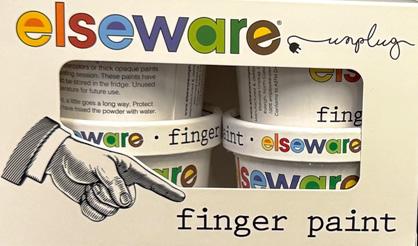
For budding young artists: eco-friendly and toxin-free finger paints and milk paints (both $19.99).
For adults who like a challenge, there are beautiful jigsaw puzzles in aisle 4, such as the colorful Cosmic Mushroom 1,000-piece puzzle ($19.99).
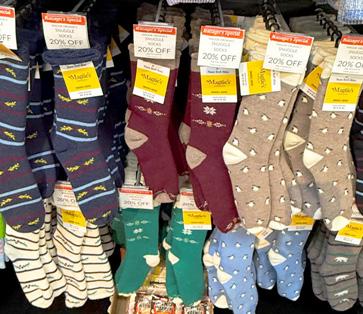
Who doesn’t love warm and cozy socks? Buy alpaca socks ($23.99) from Peru at 15% off and Maggie’s Organics Snuggle Socks at 20% off, while supplies last. You’ll find all socks at the endcaps near Produce and checkout lines. You’ll also find warm woolen mittens, hats, and headbands.

For men who like a good laugh, try a set of three hipster Emergency Beards from Gift Republic ($9.99, aisle 8).
Find a lovely sampler box of Pacha bar soaps ($7.99) in aisle 6. They smell divine and the company supports ethical sourcing, clean water initiatives, and entrepreneurship designed to break the poverty cycle.
Hand and body cream from Beessential is available in original honey, grapefruit, and lavender ($11.99, aisle 6).


Boho fashionistas can find beaded earrings from Fair + Simple in an assortment of colors and patterns ($33.99, next to socks).
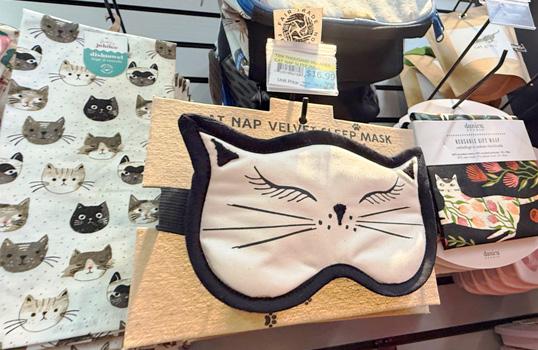
For all the crazy for cats people in your life, head to the far end of aisle 1 near the canned fish to find all manner of cat-themed gifts, including a Cozy Cat hot water bottle ($29.99), a fair trade Cat Nap velvet sleep mask from Ten Thousand Villages ($16.99), and a kitty prop kit ($8.99) to dress up your favorite feline.
continued on page 7
continued from page 6
If you want a “Crazy Cat Person” mug ($15.99), pad over to aisle 4, where you’ll also find “Feather than Ever,” a large and goofy squeaky bird made from four recycled plastic water bottles ($17.99). For the dog’s human, there’s an Uptown Dogs dish towel and a cute dog hair remover made of wood ($14.99).
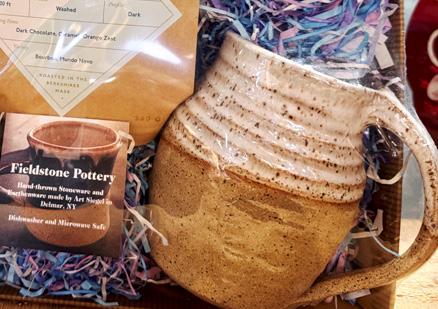
Housewares make lovely gifts. Near the coffee bar and Deli, you’ll find attractive stoneware and earthenware made by local potter Art Siegel in Delmar, all dishwasher and microwave safe. One boxed set ($64.99) includes two generous mugs and a bag of artisanal coffee grown at a Mexican cooperative and roasted in the Berkshires.
Stunning cheese boards by Biddeford Hand Works come in 3 sizes, starting at $26.99 (near the Cheese Department, opposite aisle 8). Add a marble cheese tool set from
Mon., Dec. 15 • 6:30–8:30pm
HWFC’s café fills with song, music, and readings every 3rd Monday! Coffeehouse Open Mic Night is open and free to Co-op Members and the public alike.
When we come together through music, song, stories, and fun, we reflect and regenerate our connectedness, unity, and capacity to create a space in which expressions of our talents, soulfulness, and unique vision are supported and valued—needed in our lives, our community, and our world.
Please join us for an evening featuring local performers and artists. Performer sign-in starts at 6pm. All types of family-friendly performances are welcome!
Maison du Fromage. Then pair it with a selection of this department’s stellar offerings!

In the same area, you can pick out some beautiful linen and cotton tea towels (prices vary) or colorful fair trade wool trivets from Felted Fields, which help support communities in Nepal.
For coffee lovers, there are Chemex filter pots ($45), French presses ($29.99), and assorted coffee mugs (aisle 8 next to frozen food). HWFC even sells filters for your brew.
Is a plant lover on your list? You’ll find many options on the shelves by the café, including some beautiful orchids and attractive house plants at a variety of price points.
To dress up plants, buy ceramic pots starting at $13.99, located next to Produce. In the same area you’ll find kits to grow a carnivo-
rous plant, avocado, and cactus; and a handy Penguin Pocket Plantcare book with information on 50 house plants ($24.95).
Glow in the dark Alien Plant Markers from Gift Republic ($14.99) are worth a laugh

For fungi lovers, check out mushroom growing kits just above fresh mushrooms in Produce ($29.99).
The path of least resistance can also be a very thoughtful present for that special someone who loves shopping at the Co-op. You can purchase gift certificates at the front desk in any denomination.
While I can’t guarantee that every item will still be available when you look for it, my best advice is to have fun exploring the store aisle by aisle as you shop; you’re bound to stumble on something wonderful.
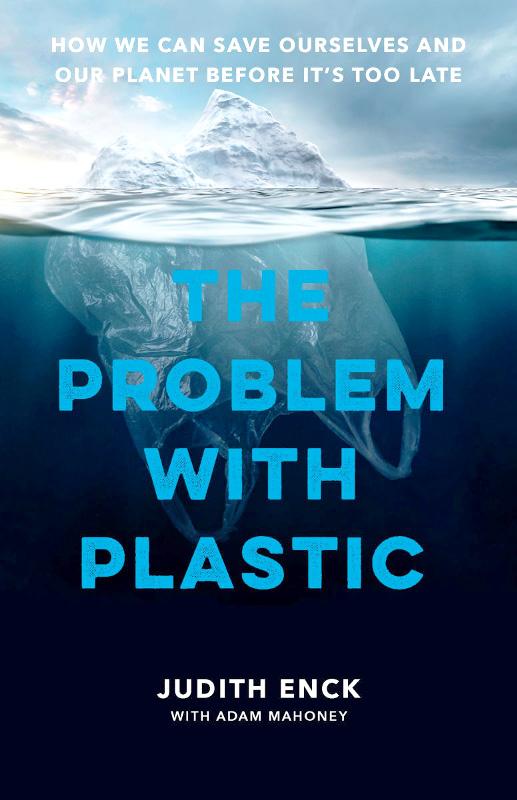
January’s Book Club selection is The Problem with Plastic: How We Can Save Ourselves and Our Planet Before It’s Too Late by Judith Enck, Adam Mahoney, and others from Beyond Plastics.
We are working on having a contributor to this book join our discussion!
Thursday, Jan. 15 • 6pm in the Community Room
At the Dec. 2, 2025, HWFC Board of Directors meeting, the Board decided to:
• Approve the Nov. 11, 2025, Board of Directors Meeting Minutes as submitted.
• Approve the Staff Representative Job Description as revised during the meeting.
• Refer to the Personnel Committee, and the current Staff Representative, consideration of creating a Staff Representative section in the HWFC Employee Manual outlining the number of Staff Representatives, Staff Representative terms, and protocol for assuring Staff Representatives are protected against retaliation.
• Make the Cooperative Leadership Manager and the Operations Manager HWFC signatories in perpetuity.
• Approve the HWFC Banking Resolution as presented.
• Approve the Oct. 26, 2025, Regular Membership Meeting minutes with added content making a correction to the Bylaws numbering as reported in the Bylaws Panel Nov. 2025 report to the Board.
Adjourned the meeting at 10:02 pm.

Our Co-op saves thou$ands on credit card processing fees when shoppers use cash, check, or pre-purchased gift card
Payment Method Fee
or Cash ............. no cost
One easy phone number links to our Zoom meetings.
To join any HWFC Zoom meeting by phone: +1 929 205 6099 US (New York) Find all meeting links on HWFC's Zoom link page
Check meeting schedules at: https://www.honestweight.coop/page/committee-meeting-calendar-322.html
Learn best committee practices at: https://www.dropbox.com/scl/fi/ftvx34ims3ggzkypsktiy/Committee-Guidelines-2023.pdf?rlkey=s579bylhckh94rcg7hz7w7yjo&e=1&dl=0
Committees and other groups can refer to Honest Weight’s Board-approved Governance Style Guide for appropriate usage in committee documents and presentations.

honestslate@honestweight.coop Contact with questions, comments, ideas.
Cara Benson
David Bulnes
Sheree Cammer
Phat Chiem
Erin Ethier
Kristin Fischetti
Tracy Frisch
Elisa Grimm
Don Kennison
Irene Kim
Nina Martinson
Carol Ostrow
Marilyn Paarlberg
Anastasia Rodgers
Karen Roth
Robin Schatz
Janet Sorell
• Maximum article length is ~800 words.
• Material is published at the discretion of the Honest Slate team.
• Only signed work is accepted. Items are edited for length, grammar, & style.
• We may consider unsolicited material but encourage submitting ideas first.
• Letters to the Editor do not require preapproval.
“Our mission is to promote more equitable, participatory, and ecologically sustainable ways of living. We welcome all who choose to participate in a community which embraces cooperative principles, shares resources, and creates economic fairness in an atmosphere of cooperation and respect for humanity and the earth.”
Sunday, January 25, 2026

Did you know that Honest Weight runs a monthly group dedicated to eliminating racism and white supremacy? Meetings are on third Thursdays from 6:30-7:45pm on Zoom.
Join us as we share our thoughts, feelings, successes, and mistakes with each other in a warm, friendly and non-judgmental atmosphere.
Contact Tam for the link at Listeningpartnerships@gmail.com
Honest Slate is a platform for HWFC Membership, Staff, Management, and Governance: promoting transparency, reporting news without bias, and sustaining community.
Honest Slate articles are for informational purposes and are not intended to diagnose or treat disease. Opinions expressed in Honest Slate do not necessarily represent the views or policies of Honest Slate or Honest Weight Food Co-op.
All contents ©2025 Honest Weight Food Coop; no material appearing in Honest Slate may be reproduced in any form without the express written consent of HWFC.
A summary of preliminary committee reports submitted to the Board of Directors (BOD) for its December 2, 2025, meeting. See Board Meeting packet for details. Board-approved committee reports are posted on HWFC’s website. Our committees help to run Honest Weight. See if there is a committee for you.
Finance Committee (FC)
Due to scheduled meeting date so close to Thanksgiving and limited availability of regular attendees, November’s meeting was cancelled. FC will announce a December date to avoid the holiday and will return to its regular meeting schedule on the last Tuesday of the month in Jan. 2026.
Membership Committee (MC)
• Discussed how to support MOs, Owners, and committee members; bulletin boards, and Ownership orientation needs; MO manual changes for Jan. RMM.
• Met Nov. 28 to review MO Manual and changes/discussion points for Jan. RMM.
• Planning a vote at January’s RMM on addition of hours bank language to MO Manual (approved language amended below). Since no language exists to compare to and this describes a benefit for MOs, 1) no sideby-side comparison document is planned. 2) Board-approved language will be posted on website, Board Board, and in Honest Slate. 3) Will work with ENC to produce ballots satisfying recommended timelines.
• Request to Board: Please advise on need for informational sessions prior to RMM as language describes a benefit MOs already receive and use. This simply adds a description of benefits for MOs’ information.
● Planned to discuss Membership Manual in depth at Nov. 28 meeting. Is there a possibility of granting the committee 30'-40' at January’s Membership Meeting to review the Manual, briefly focusing on Member rights and responsibilities and other proposed changes, and to invite input?
Amendment to Membership Report:
Language to be added to MO Manual, pending MO Vote:
Voluntary MO Emergency Hours Bank
• This emergency bank exists solely on Member-Owner (MO) voluntary donations, separate from an MO’s personal bank of
unused hours. This bank provides a safety net for MOs who have invested time regularly over the prior 6 months and are facing hardships preventing them from continuing time investment for an extended period. Hardships may include, but are not limited to, health issues, significant life changes, &or other situations at the discretion of the Membership Manager.
• Emergency Hours Bank requests will be fulfilled contingent upon the availability of hours in the bank at the time of request and may also be contingent on prior use of the emergency bank.
• To donate to the emergency bank or request donated hours, contact memberservices@honestweight.coop. All request and donation details will be kept confidential.
Elections & Nominating Committee (ENC)
• Prioritizing suggested election improvements: ENC brought up an inconsistency at September’s Board meeting: not all Board Directors are required to be fingerprinted (only the President, Treasurer, and Secretary). We asked the Board for the correct verbiage.
• Request: Provide update from Nov. 18 work session on liquor license language usage; advise when Board Manual and website will be updated.
• Discussed positive outcomes, needs for improvement following Oct. 25 RMM. One candidate ran for GRC re-election.
• Give voters better context for proposed revisions by displaying highlighted side-byside changes &or present a summary slide? Committee welcomes BLP’s input.
• Request: develop written guidelines to include expectation for ample information provided to MOs before and during RMM. Could feedback sessions or surveys be recorded or transcribed?
• Discussed targeting new strategies, education trainings to inspire MOs to consider Board/GRC candidacy. Are there best
recruitment practices? Are special skills required?
• Brainstormed ways to help ENC increase recruitment role. Demystifying Board work is challenging.
• Discussed proposed updates to elections and nominations forms.
Nutrition & Education Committee (NEC) Agenda/Items/Discussion
• Changes to FPM Section 7:
· Create intro to educate shoppers on items containing controversial ingredients.
· Include scientific information on fluoride and carrageenan prior to recommending any action.
• Submit recipes/articles to Honest Slate
• Continue tabling in-store re FPM.
• Updating website resources listed in FPM.
Environment Committee (EC)
• Plans March workshop on converting lawns into biodiverse habitats.
• Compiling report on immediate/long-term plastic reduction strategy at Co-op.
• Researching refrigerants.
Anti-Racism Committee (ARC)
• Reviewed questions for committees.
• Discussed potential “ways to save” display.
• Considered guest guidelines, recruiting.
• Requests: Offer potluck/video showing on racism. Should anti-racism training be mandatory or voluntary for Board, staff?
• Is there money allocated for training?
• Propose an in-store “Listening Table.”
Diversity, Equity, Inclusion Committee (DEIC)
• Welcomed two new members.
• Plans a soup gathering in January; creating promotional material.
Governance Review Council (GRC)
• Updated on progress of Conflict Resolution. Policy/Problem Solving Guide, particularly Peer Review Panel portion, and training for panelists.
Bylaws Panel (BLP)
• Request for Board Administrator to update Bylaws to reflect approved changes and correct a numbering issue.
Communications Committee (CC)
Reviewed Dec. Honest Slate, planned January’s issue. Next copy deadline is Dec. 26.
Greetings Honest Weight Community!
We gave 3 orientations in November and had 36 new Owners join our Co-op, with over 350 new Owners in 2025 to date. Amazing!
We made it through the Thanksgiving holiday period at the Co-op and Member Services has a lot to be thankful for! Valerie Onifade has joined the Member Services Department staff as our full-time Member Program administrative assistant. Valerie is relatively new to the Albany area, became an HWFC Owner in June, and has invested
time in the Meat Department and at the HWFC Café at the Empire State Plaza.
Thanks to everyone on staff and in Membership who has supported this department for over half a year now. With a full staff, we are looking forward to serving our Membership better and being able to support many more Member-centered activities in 2026.
Speaking of time investment, 30 Owners invested at least 10 hours on the floor instore in the 10 days before Thanksgiving
Next year, Honest Weight Food Co-op will mark its 50th year in Albany. It’s one of our all-time favorite things about the city, yet it still somehow flies under the radar.
Some people don’t even know it exists. If they do, they don’t know that it’s run as a cooperative grocery—or what that means exactly. Which means they don’t know about all of the discounts you can get, up to 24% off!
We’re going to break it all down for you. We don’t just shop there; we’re also what Honest Weight calls “Member-Owners” (and by “we,” we mean Phat ).
Founded in 1976 as a scrappy buying club, Honest Weight grew out of a simple idea: Food should be local, ethical, and accessible. A half century later, it still retains much of its hippy vibes. Shopping there can sometimes feel like stepping into an episode of “Portlandia.”
So what makes it a co-op? As a consumer cooperative, Honest Weight is literally owned by the people who shop there. Shoppers can become Owners by purchasing a $100 equity share (payable all at once or in installments). That plus monthly time investment gives you voting rights, access to discounts, and the ability to help decide how the store is run, like what it can and cannot sell.
and a lucky 3 will win a $50 gift card. We will be drawing those names and giving out the gift cards this week.
“10 in 10” again! The December holidays will give you another chance to participate by investing 10 hours on the floor in the store from Dec. 15–Dec. 24; we will draw those winners in the first week of January!
Thanks for all you do for our wonderful community.
Karen, Temporary Membership Manager
MO Phat Chiem recently publicized our Co-op in his local online newsletter, The 518, sharing this article written for the public that reveres all things HWFC!
Fun fact: In the early days, Honest Weight refused to sell chocolate because it couldn’t find a chocolate purveyor that it felt treated farmers fairly enough (long before “fair trade” became a thing).
Anyone can shop at Honest Weight, non-members included. But to get the biggest discounts, you need to contribute some of your time. You can help stock shelves, work the front registers, help with marketing, or spend time in any of the departments. Phat has been working at the meat counter—say hi if you see him!
You can also teach a class. Did you know that Honest Weight has a packed calendar of classes and events every month—everything from astrology to Zumba? Most classes are free or ask for a nominal fee ($5). It’s a lot more than just a grocery store. [As part of his time investment, Phat has signed up to teach Vietnamese cooking classes.]
Here’s the best part: For investing as little as 3 hours monthly, MOs bump their standard 2% discount to 8%. Contribute 12 hours a month, and you get a 24% discount on most everything (it’s the same discount store employees get).
Btw, seniors get an 8% discount on Wednesdays, and students get an 8% discount on Sundays; no membership required.
With Honest Weight’s top-quality produce, meats, and local products, expect prices to be on par with natural food stores like Whole Foods.
”The value is unbeatable.”
But here’s the difference: When you invest your time and unlock the full 24% discount, the value is unbeatable. In this economy, that’s something to celebrate.
The local co-op movement is growing. Electric City Food Co-op is going up in downtown Schenectady by mid-2026. The Niskayuna Coop has been operating in its current location since 1947.
Every dollar you spend is a vote for the kind of food system—and community— you want. If you haven’t discovered Honest Weight or been meaning to become a member, take this as your sign!
The deets: Honest Weight Food Co-op, 100 Watervliet Ave, Albany. Open 8a-9p daily. Be sure to check out all of the great classes and events on the website.
Pro tip: The Produce Department keeps a “cull” bin of items that are past peak but usually still perfectly good to eat. They’re free for anyone to grab. Tell your cashier it’s a culled item.