
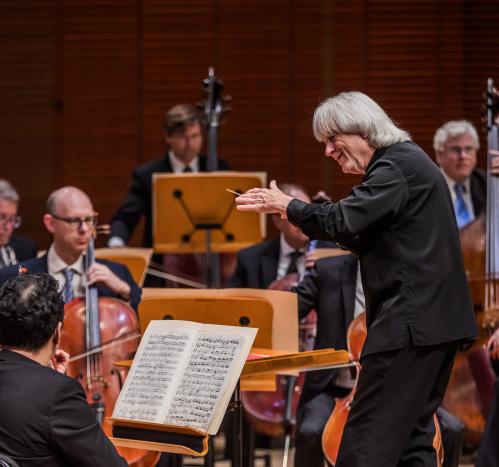
Pacific Symphony plays Haydn & Mendelssohn with Carl St.Clair cond., feat. Vitaly Starikov, piano
Sunday, April 26, 2026 | 3PM
Soka Performing Arts Center at Soka University of America
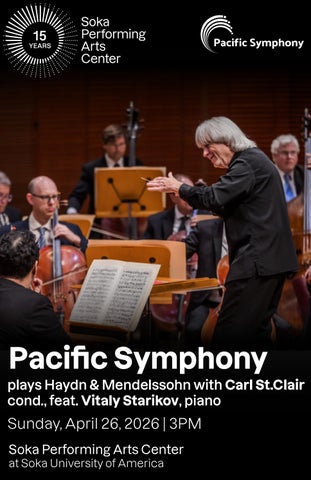
Pacific Symphony plays Haydn & Mendelssohn with Carl St.Clair cond., feat. Vitaly Starikov, piano
Sunday, April 26, 2026 | 3PM
Soka Performing Arts Center at Soka University of America
Symphony No. 88 in G Major
Adagio - Allegro
Largo
Menuetto: Allegretto
Finale: Allegro con spirito
Piano Concerto No. 1 in G Minor, Op. 25
Molto allegro con fuoco Andante
Presto - Molto allegro e vivace
FRANZ JOSEPH HAYDN
Born March 31, 1732, Rohrau
Died May 31, 1809, Vienna
Haydn spent thirty years as Kapellmeister to the Esterhazy family at their estates on the plain east of Vienna. If, as Haydn observed, that isolation forced him “to become original,” it also had the unfortunate effect of cutting him off from mainstream European musical life. Only gradually did his extraordinary achievement with the symphony and string quartet become known to musicians across Europe. By the 1780s, when Haydn was in his third decade with the Esterhazys, his prince finally allowed him to accept commissions from outside, and suddenly he had many requests for symphonies. For a concert series in Paris, he wrote his Symphonies No. 82-87 (known as the “Paris symphonies”), and for his two trips to England he composed his final twelve symphonies (Nos. 93-104), inevitably known as the “London symphonies.”
Between these two great cycles, Haydn composed five individual symphonies, probably all of them written with Parisian audiences in mind. He wrote the first two, Nos. 88 and 89, in 1787, at exactly the same moment Mozart was composing Don Giovanni in Vienna. One of the violinists in the Esterhazy orchestra, Johann Tost, was about to visit Paris, and Haydn sent the manuscripts of these two symphonies along with him, asking him to see to their publication. And here things got messy. Apparently Tost began to
play fast and loose, throwing in a symphony by another composer and passing all three off as the work of Haydn, arranging deals of his own, and not forwarding any of the receipts. Back in Austria, Haydn got wind of this and fired off letters to friends in France suggesting legal action. The matter appears to have been settled satisfactorily: Tost and Haydn were soon on good enough terms that the composer dedicated three sets of quartets to the violinist.
The first of the symphonies Tost took with him to Paris, the Symphony No. 88 in G Major, has always been one of Haydn’s most popular–it was recorded several times in the 1930s, when audiences knew hardly any of Haydn’s symphonies, and it remains a favorite today of both performers and listeners. When he wrote this music, Haydn was 55 years old and at the height of his powers. The Symphony No. 88 is compact (only about twenty minutes long), but it manages to be both very sophisticated and very appealing at the same time–there is something utterly infectious about this music. It also appears to have rushed out of Haydn at white heat: his biographer H.C. Robbins Landon reports that the manuscript is a mess, full of blots and mistakes–Haydn was desperately trying to get this music on paper as fast as it was occurring to him.
The first movement opens with a slow introduction full of grand and solemn chords. The music pauses, then steps out briskly at the Allegro as violins present a tune that seems almost childlike in its
simplicity. But the wonder is what Haydn then does with this “simple” little tune. The entire movement grows out of this theme, and–rather than introducing new ideas–Haydn builds the entire structure here out of intervals, bits, and rhythms of this spirited opening idea.
The Largo takes us into an entirely different world. Not only is the tempo slow, but the gestures are broad and dignified, the sound unique: the main melody, for instance, is first presented as a duet between solo oboe and solo cello. The movement unfolds as a series of repetitions of this noble theme, and Haydn gives it a subtly different color on each reappearance. There are surprises along the way, including huge outbursts from the entire orchestra, full of the sound of timpani and trumpets, instruments that (strangely) had sat silent throughout the first movement. This Largo has attracted many admirers, including Brahms, who is reported to have said that he wanted his Ninth Symphony to sound like this movement.
The third movement brings another sharp change: after the poised dignity of the second movement, this is a rollicking minuet. The most striking feature here comes in the trio section, where oboes and violins sing an agreeable little melody over a drone from bassoons and violas. This effect has led to a nickname for this symphony in German-speaking countries: Mit dem Dudelsack (“with the bagpipe”).
spirito, and spirited it certainly is. The principal theme feels like a first cousin to the main theme of the first movement, and this movement is just as infectious as the first, with its happy main theme used as the basis for a rondo. But once again Haydn slips in surprises. He separates reappearances of the rondo theme with some really brilliant passages for the violins, with both first and second violins playing in unison. And along the way he throws in some deft canonic extension of his main theme. That sounds cerebral, but–at the movement’s breathless tempo–it’s all part of the fun.
In fact, this whole symphony is fun. It is no surprise at all that over the last two centuries audiences all over the world have loved this music.to offer a third before five powerful chords cut the movement off abruptly.
Born February 3, 1809, Hamburg Died November 4, 1847, Leipzig
Mendelssohn made an extended visit to Italy in 1830-31, a visit that provided the inspiration for his Italian Symphony. While in Italy he also began thinking about a piano concerto and apparently composed the entire work in his head–when he journeyed to Munich, he set the concerto down on paper in three days. The first performance took place on October 17, 1831, in Munich with Mendelssohn as soloist. The score is dedicated to Delphine von Schauroth, a
passing romantic attachment of the 22-year-old composer.
The Piano Concerto No. 1 is both an innovative and a traditional work. Mendelssohn very much disliked the intrusion of applause between movements, so he linked the three movements of this concerto with brass fanfares that would squelch any applause before it got started (fourteen years later, Mendelssohn would link the movements of his Violin Concerto for exactly the same reason). He also dispensed with the lengthy orchestral exposition of the classical concerto and brought the soloist into the work after only a seven-measure introduction.
While the Molto allegro con fuoco may not be full of fire, it is at least full of energy. The piano’s opening octave drop energizes the first theme, and that drop recurs throughout the movement. The second subject’s dotted rhythms keep the music pressing ahead, while the tranquillo third idea, for piano alone, is nicely lyric. This is not a movement that offers a musical dialogue between orchestra and soloist but rather one that keeps the focus on the piano, which plays virtually throughout.
Following the brass fanfare that concludes this movement, a brief and subdued cadenza leads to the Andante, where the principal idea is presented by the lower strings. The piano serves largely to decorate this theme, often with an almost baroque filagree of notes above the quietly lyric strings. The brass fanfare returns to launch the vivacious finale which, like
the opening movement, is full of virtuoso writing for the piano. An unusual feature of this movement is that its second subject is a variation of the first movement’s second theme, a rare example of thematic cross-reference in music during this period.
Mendelssohn’s Piano Concerto No. 1 may not be profound music, but it is exceptionally good-humored and spirited music, full of sparkle (the spirit of the incidental music to A Midsummer Night’s Dream is never far off) and ample opportunities for virtuoso piano-playing. It was also a great success for its young composer, who both conducted and was soloist at the premiere. The performance was a gala benefit for the poor of Munich, and the concert was attended by King Ludwig, who led the applause and after the concert was introduced to the composer. In an excited letter home, Mendelssohn described the evening with boyish excitement:
The whole thing was very animated and everything worked. The orchestra played wonderfully and the poor must have received a good whopping sum . . . [my concerto was] applauded long and loud. The orchestra accompanied well and the work itself was really mad: the audience really liked it. They applauded to make me come out and take a bow, which is the custom here, but I was too modest and didn’t. During the intermission the King caught me by the arm, praised me highly and inquired about everything under the sun . . .
Pacific Symphony is the largest orchestra formed in the United States in the past 50 years and has earned national recognition for its adventurous programming, community engagement, and artistic growth. Founded in 1978, the Symphony has been led for 35 years by Music Director Carl St.Clair, one of the longest-serving music directors of a major American orchestra. In 2024, Alexander Shelley was named Artistic and Music Director Designate for the 2025–26 season and will begin his full-time tenure in the 2026–27 season, marking a bold new chapter in the Symphony’s artistic evolution.
With a purpose to lift the human spirit through the power of music, the Symphony is a pillar of the cultural landscape of Southern California, enriching lives and bringing communities together through creative and diverse programming. As the resident orchestra of the Renée and Henry Segerstrom Concert Hall, the Symphony presents more than 100 concerts and events each year and a rich array of education and community engagement programs, reaching more than 300,000 residents of all ages.
For more than 35 years, Carl St.Clair led Pacific Symphony, making him the longest-tenured American-born conductor of a major American orchestra. He was honored with
the lifetime role of Music Director Laureate in December 2025 during the orchestra’s 47th season, as well as inducted into the Orange County Hall of Fame by the Orange County Board of Supervisors. Under his leadership, Pacific Symphony has grown into the largest-budgeted orchestra founded in the past halfcentury, recognized nationally for its artistic, innovative programming, and community impact. St.Clair also helped catalyze the vision to build a 2,000-seat Renée and Henry Segerstrom Concert Hall in 2006, the Symphony’s permanent home and one of the nation’s finest concert venues.
St.Clair has guided the Symphony through many landmark achievements. In 2018, he led its sold-out Carnegie Hall debut celebrating Philip Glass’s 80th birthday, which the New York Times praised as proof that Pacific Symphony is “a major ensemble!” That same year, he conducted the orchestra’s first tour of China. Earlier, in 2006, he led the Symphony on its European debut, performing in nine cities across three countries, including Vienna, Munich, Cologne, and Lucerne, to capacity audiences and widespread acclaim. He also conducted the orchestra’s national PBS debut on Great Performances with Peter Boyer’s Ellis Island: The Dream of America. His artistic initiatives include the long-running American Composers Festival and Symphonic Voices, the orchestra’s acclaimed opera-in-concert series.
A champion of new music, St.Clair has commissioned and premiered
dozens of works. Recent highlights include the 2024–25 premieres of Viet Cuong’s Marine Layer and Adolphus Hailstork’s Piano Concerto No. 3 (“The Way Things Are”). In 2024, Pacific Symphony released the world-premiere recording of Sir James MacMillan’s Fiat Lux. Other notable commissions include works by Philip Glass, Michael Daugherty, William Bolcom, Richard Danielpour, John Wineglass, and Elliot Goldenthal. His discography also includes collaborations with Yo-Yo Ma, Lukas Foss, and others.
Internationally, he was appointed Music Director of the Thailand Philharmonic Orchestra in 2025 and holds honorary posts with the National Symphony of Costa Rica and Germany’s Sinfonieorchester Wuppertal. Earlier positions include General Music Director of Berlin’s Komische Oper and of the German National Theater and Staatskapelle in Weimar.
Equally committed to education, St.Clair has overseen the development of one of the country’s most comprehensive orchestra-based education networks, reaching more than 50,000 participants annually. Pacific Symphony’s award-winning Class Act program, arts-X-press, Youth Ensembles, Heartstrings, and Symphony on the Go bring music to schools and communities across Southern California. He has also taught at Chapman University, the University of Texas, Indiana University’s Jacobs School of Music, and the USC Thornton
School of Music, where he has served for more than three decades as Artistic Leader and Principal Conductor of orchestral programs.
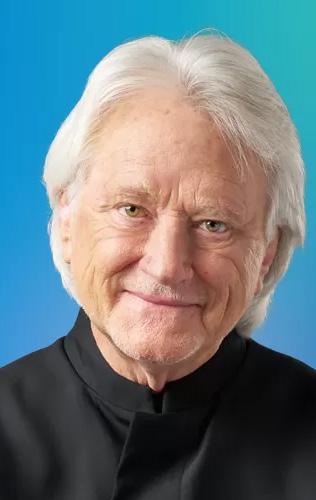
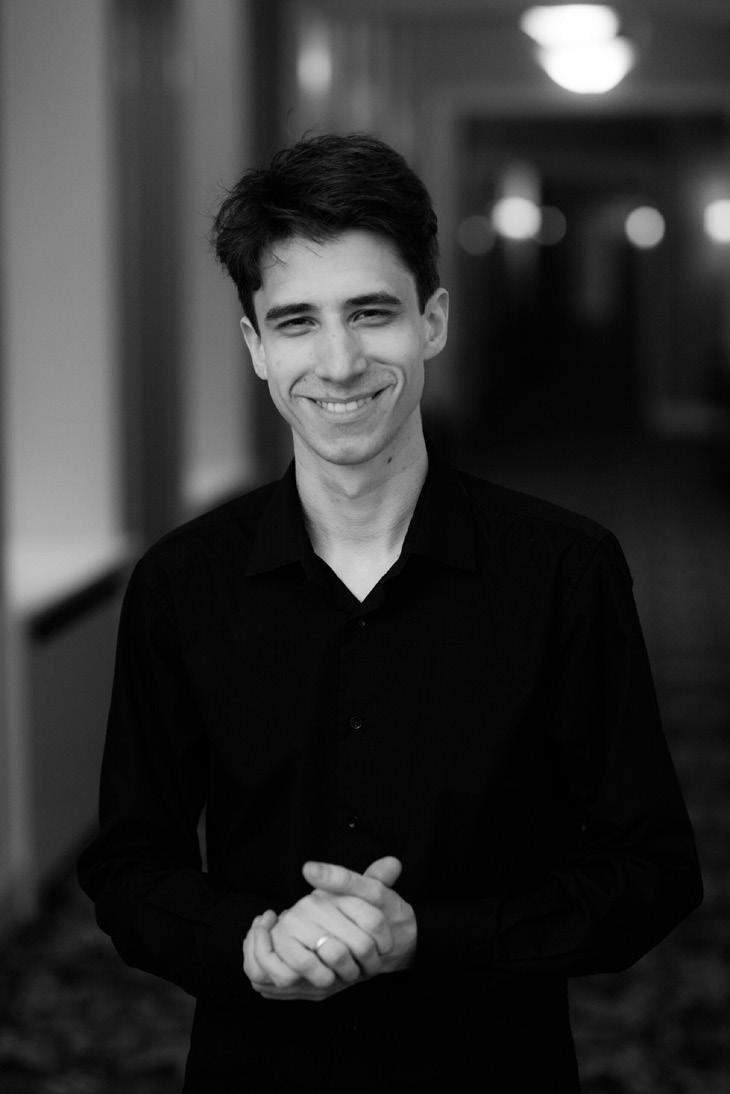
Vitaly Starikov, is a distinguished pianist whose artistry has graced some of the world’s most renowned stages, including the Sydney Opera House, Brussels BOZAR, and the Great Hall of the Moscow Conservatory. His discography includes a CD of Mozart’s Piano Concerto No. 23 with Frank Braley and the Orchestre Royal de Chambre de Wallonie. Vitaly’s collaborations with Hugh Wolff, LiWei Qin, Belgian National Orchestra and Sydney Symphony Orchestra underscore his profound musical insight. His artistry is celebrated on platforms such as medici.tv, ABC and SBS. Vitaly is is a laureate of top piano competitions including the Queen Elisabeth and Sydney International. He is a winner of the 26th Epinal Piano Competition.

FRIDAY, MAY 1, 2026 | 7:30PM
Free General Admission Event
Tickets Required - Subject to Capacity
All Tickets Unreserved Seating in Plaza & Loge Sections
4 Ticket Limit per Household
Concert will begin promptly at 7:30 pm with a powerful performance by SUA student club Josho Daiko.
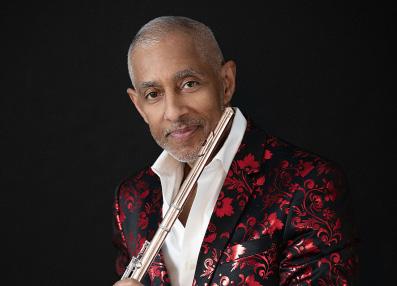
“It is an immense honor and privilege to have been part of the ceremonies of SUA’s first class and to return 25 years later. My heart is filled with great joy and profound gratitude.” - Nestor Torres
A wide variety of wine, beer, soft drinks and freshly prepared snacks will be available.
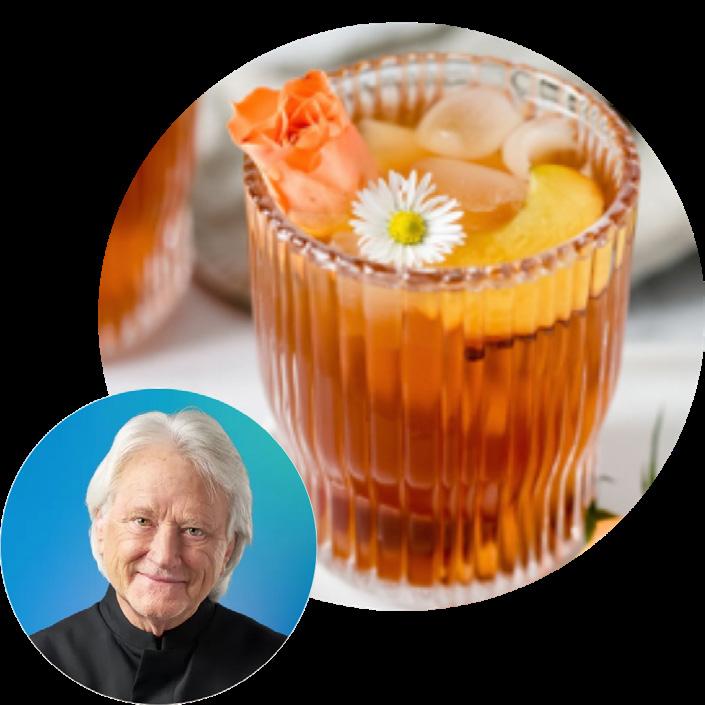
We asked the artist for their favorite drink pick to feature at concessions! Chamomile Peach Iced Tea was selected and will be available for purchase.
Pre-order your concessions and skip the line! Click here for menu and to order

Our mission is to Engage, Educate, and Elevate the Human Spirit
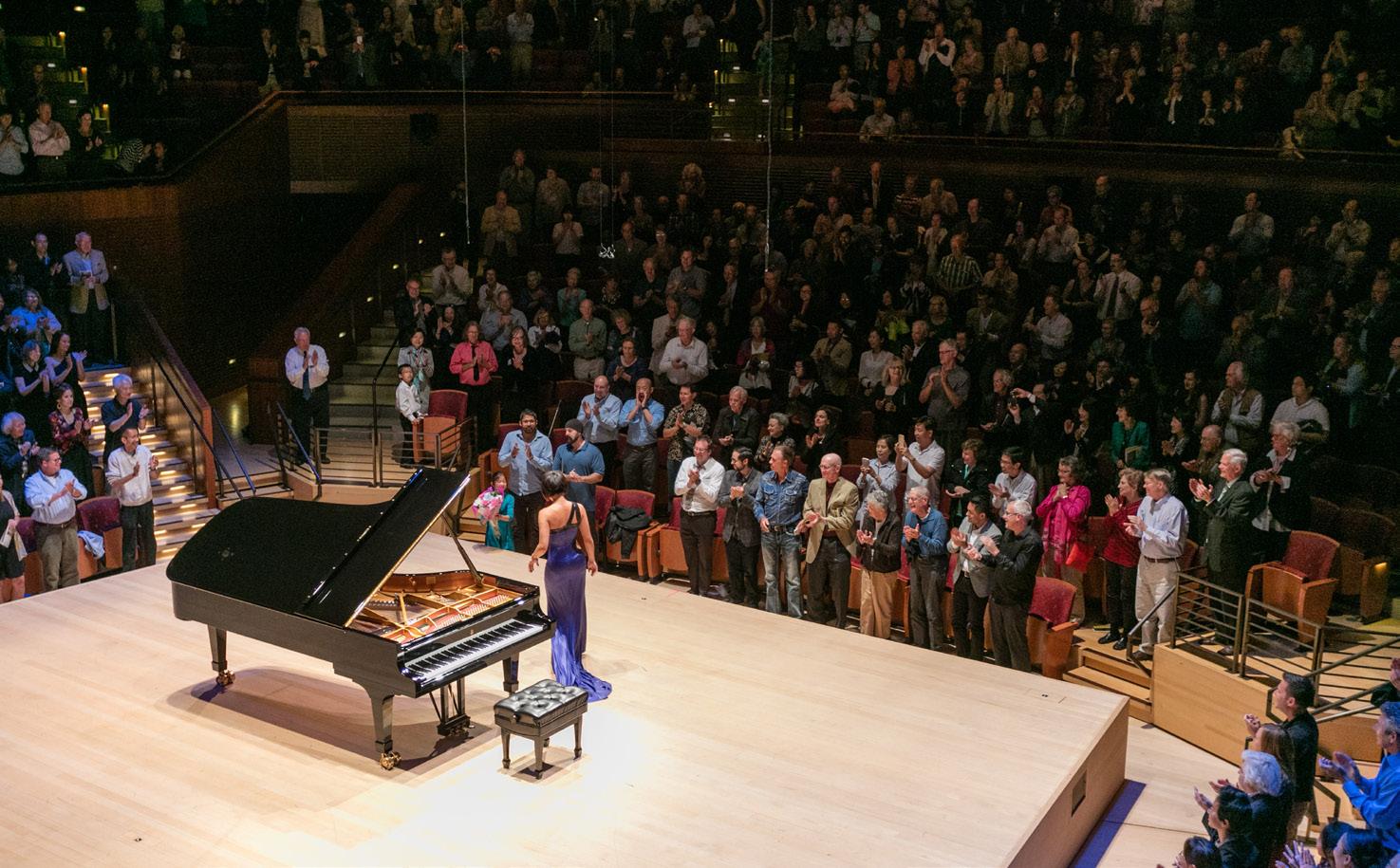
Soka Performing Arts Center is dedicated to elevating the human spirit through transcendent live experiences. Discover the unmatched beauty of our acoustics. Expand your understanding and appreciation of music through our programs that illuminate new perspectives. Build community and forge deep connections through the shared experience of live performance. We invite you to become a part of our Soka Performing Arts Center family and to Listen. Feel. Transform.
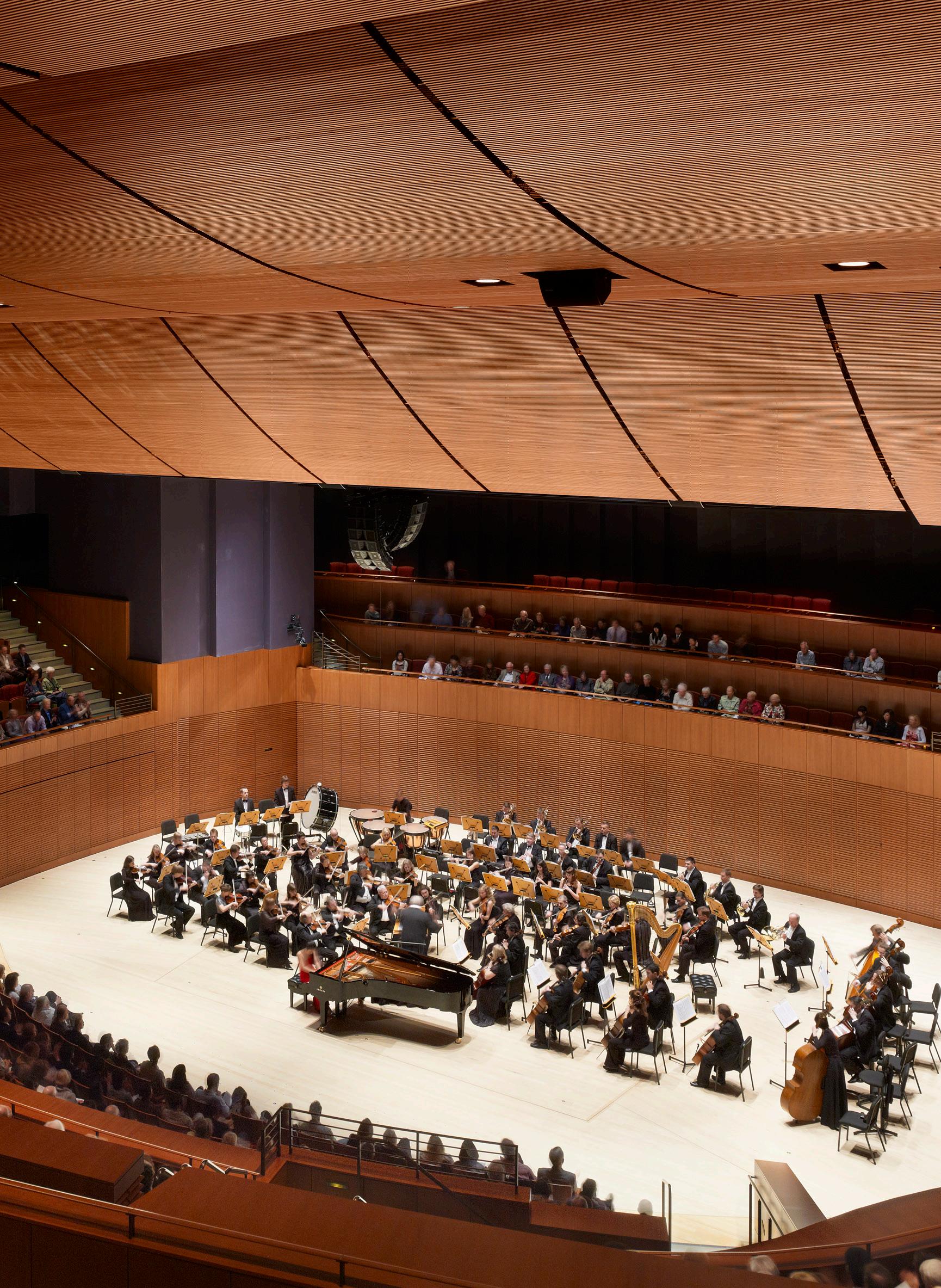

Soka Performing Arts Center is located on the beautiful hilltop campus of Soka University of America in Aliso Viejo. Our facility includes the 1,042seat Concert Hall featuring world-class acoustics designed by master acoustician Yasuhisa Toyota, designer of the Walt Disney Concert Hall in Los Angeles and Suntory Hall in Tokyo, among many others. We also have an intimate 350-seat Black Box Theatre that allows for multiple seating configurations including club seating with bistro tables.
More than 800 performances have taken place since the center’s dedication on May 27, 2011. The 2025-26 season marks our fifteenth season presenting first-class programming in our world-class concert hall. We are continuing to expand our programming and outreach with the addition of a Children’s Concert Series and the only Great Pianists Series on the West Coast. From classical and jazz to world and contemporary music, the Soka Performing Arts Center has become a prized space for artists and audiences alike.
We are proud to be the home of the Pacific Symphony Chamber Orchestra. Our Sundays @ Soka Series with Pacific Symphony continues to be one of our most popular series year after year. Our presentations with other Orange County arts organizations have enabled us to reach further into our community to offer arts education and programming. Our partnership with the Philharmonic Society of Orange County includes our Philharmonic Society Series, which brings superlative artists to our stage. We also partner with Philharmonic Society for our Outreach Program, bringing over 7,000 school children to Soka Performing Arts Center to experience live performances with outstanding musicians.
With its world-class acoustics and first-class performances, Soka Performing Arts Center is quickly becoming one of the cultural jewels of Orange County.
DIRECTOR’S CIRCLE ($75,000+)
Dr. Kenneth & Sandra Tokita
Sam* & Lyndie Ersan
CONCERTMASTER ($10,000+)
Ms. Emi Maeda
STAGE CHAMPION ($5000+)
Yoshitomo & Takemi Daido
STAGE BENEFACTOR ($1000+)
Anonymous
OC Chinese Cultural Club
John and Sue Prange
Terumi Saito
Jochen Schumacher
Alex & Sandy Scott
Scott A Shuping
Anson and Marilyn Wong
PLATINUM CLEF ($500+)
Anonymous
Jeffrey Hendrix
Edward D. Jones
Jane A. Lynch
GOLD CLEF ($200+)
Judy Kaufman
Lorraine Leiser
Naomi Uchiyama
SILVER CLEF ($100+)
Renée Bodie
Sam Chang
Masako Inage
Debrah Jiang
Chiharu Nagai
Paul Porto
Thomas Prigorac
Jonia Suri
Joseph Whittaker
BRONZE CLEF ($25+)
Raquel Bruno
Kenneth Hanawa
Ryosuke Iga
Jeannette Pease
Joyce M Wrice
Taro Yamanashi
* Deceased
List current as of 09/26/2024
The Soka Performing Arts Center deeply appreciates the support of its sponsors and donors, and makes every effort to ensure accurate and appropriate recognition. Contact Renée Bodie, General Manager at (949) 480-4821 to make us aware of any error or omission in the foregoing list.
DONATE TO SOKA PERFORMING ARTS CENTER
Your support helps ensure Soka Performing Arts Center fulfills its purpose: to engage, educate, and elevate the human spirit. Your gift supports the programming of world-class performances, provides transformative educational outreach experiences, and opens the opportunity to build engagement with our community by sharing the joy of live music.
Our subscription and renewal program provides you with even more flexibility in our season packages*. With our enhanced program, you now have the power to curate your very own unique experience.
• 15% Discount for a 3 performance package
• 18% Discount for a 4 performance package
• 20% Discount for a 5+ performance package
*full details online at soka.edu/pac
• Blueport Jazz
• Philharmonic Society of Orange County
• Pacific Symphony
• Parnassus Society
Renée Bodie
General Manager & Artistic Director
John Morgan
Box Office Manager
Antoinette Rossman
House Manager/Assistant to the General Manager
Steve Baker
Production Manager
Jarmil Maupin
Internal Events Manager
Ian Smith
Technical Services Manager
Katie Ohrn
Lighting Supervisor
Piano Tuners
Kathy Smith Lead Tuner
Ron Elliott
David Stoneman
David Vanderlip


Website soka.edu/pac
Soka Performing Arts Center resides on the beautiful campus of Soka University of America. We thank the SUA Board of Trustees and the SUA Leadership Council for all of their support.
Stephen S. Dunham, JD | CHAIR
Vice President and General Counsel Emeritus, Pennsylvania State University | Baltimore, Maryland
Tariq Hasan, PhD | VICE CHAIR
Chief Executive Officer, SGI-USA | New York, New York
Andrea Bartoli, PhD
President, Sant’Egidio Foundation for Peace and Dialogue | New York, New York
Matilda Buck
Benefactor | Los Angeles, California
Lawrence E. Carter, Sr, PhD, DD, DH, DRS
Dean, Professor of Religion, College Archivist and Curator, Morehouse College | Atlanta, Georgia
Andy Firoved
CEO, HOTB Software | Irvine, California
Jason Goulah, PhD
Professor of Bilingual-Bicultural Education and Director, Institute for Daisaku Ikeda Studies in Education, Director of Programs in Bilingual-Bicultural Education, World Language Education, and Value-Creating Education for Global Citizenship, College of Education, DePaul University | Chicago, Illinois
Clothilde V. Hewlett, JD
Commissioner of Department of Financial Protection and Innovation, State of California | San Francisco, California
Karen Lewis, PhD
Sondheimer Professor of International Finance and Co-Director, Weiss Center for International Financial Research, Wharton School, University of Pennsylvania | Philadelphia, Pennsylvania
Luis Nieves
Founder, Chairman Emeritus AUL Corp, Benefactor | Napa, California
Isabel Nuñez, PhD, MPhil, JD
Professor of Educational Studies, Dean of School of Education, Purdue University Fort Wayne | Fort Wayne, Indiana
Gene Marie O’Connell, RN, MS
Health Care Consultant, Associate Clinical Professor, University of California, San Francisco School of Nursing | Corte Madera, California
Adin Strauss
General Director, Soka Gakkai International-USA | Santa Monica, California
Yoshiki Tanigawa
Benefactor, Soka Gakkai | Tokyo, Japan
Gregg S. Wolpert
Co-president, The Stahl Organization | New York, New York
Edward M. Feasel, PhD
President, Soka University of America (ex-officio member) | Aliso Viejo, California
Edward M. Feasel, PhD
President
Chief Academic Officer
Professor of Economics
Archibald E. Asawa
Executive Vice President for Finance and Administration
Chief Financial Officer
Chief Investment Officer
Katherine M. King, PHR
Executive Vice President of University
Community
Chief Human Resources Officer
Title IX and Section 504 Coordinator for Faculty, Staff and Others
Michael Weiner, PhD
Executive Vice President for Academic Affairs
Professor of East Asian History & International Studies
Bryan E. Penprase, PhD
Vice President for Sponsored Research and External Academic Relations Professor of Physics and Astronomy
Tomoko Takahashi, PhD, EdD, LHD
Vice President for Institutional Research and Assessment
Dean of the Graduate School Professor of Linguistics and Education
David Welch, JD Vice President University Counsel
M. Robert Hamersley, PhD Dean of Faculty Professor of Environmental Biogeochemistry
Hyon J. Moon, EdD Dean of Students
Title IX and Section 504 Deputy Coordinator for Students
Michelle Hobby-Mears, MBA
Associate Dean of Students Director of Student Activities
Andrew Woolsey, EdD Dean of Enrollment Services
Martin Beck, MA
Executive Director of Strategic Marketing and Communications