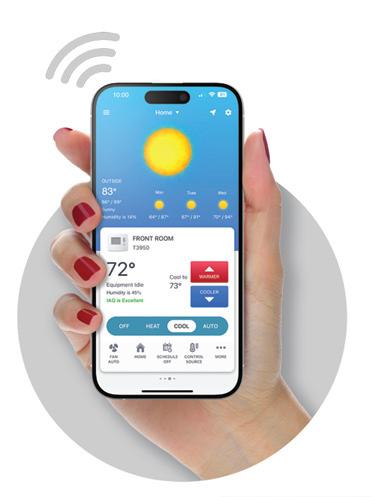
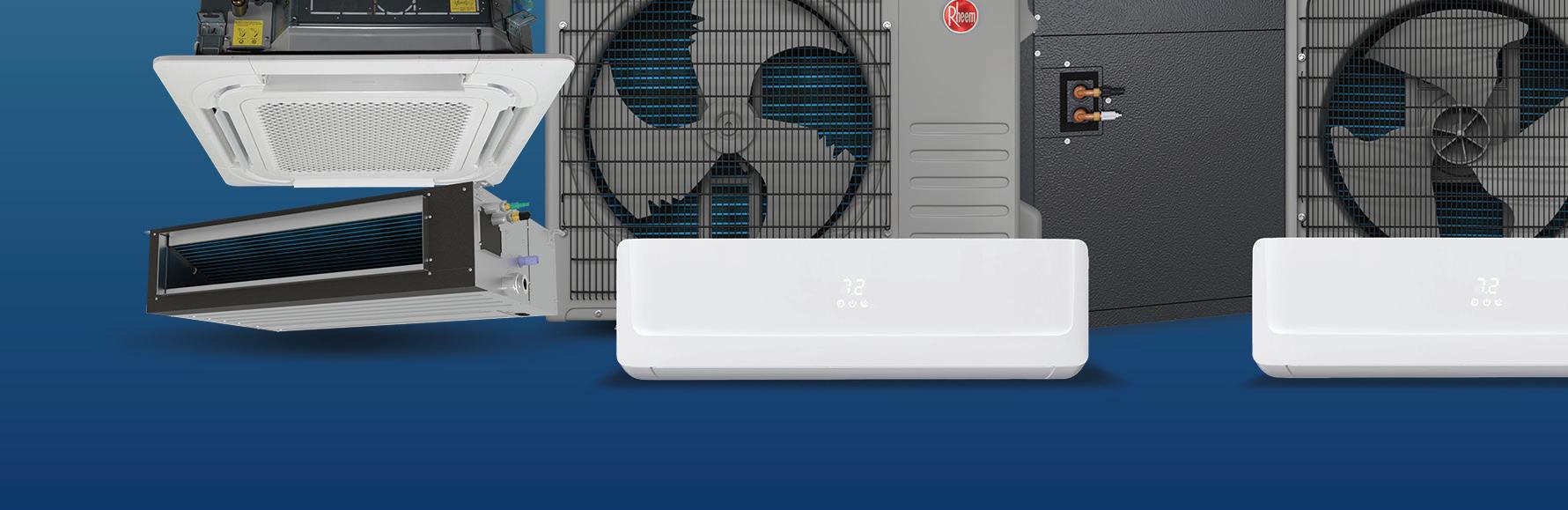
Innovative thermostats that raise the bar for connected features and value.
• Professional, contractor grade
• Residential, Commercial, and School models
• Easy to install, simple to program
• Can help reduce energy costs
• Reliable, feature rich, and better value
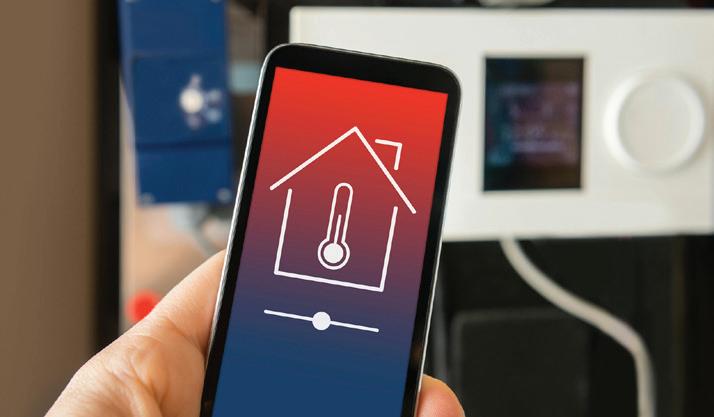
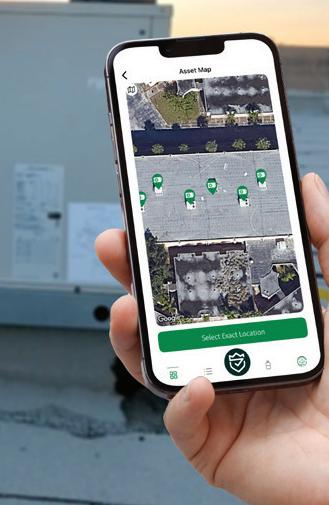
• Free Skyport Mobile App controls comfort from virtually anywhere
• Advanced geofencing, reporting, and alerts
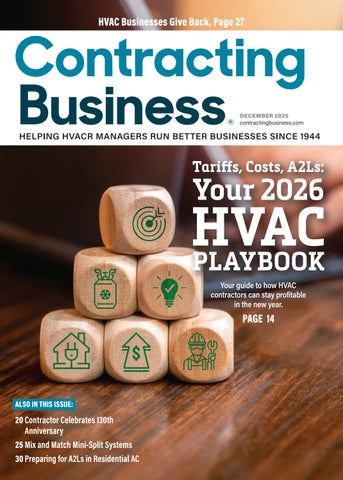
Next year, contractors must adapt to material cost increases, supply chain challenges, and evolving regulations while leveraging repair and service opportunities to maintain profitability.
ON THE COVER: Industry experts share strategic insights on how HVAC contractors can navigate the new year.
20 From 1895 to Today: How Welsch Heating & Cooling Continues to Thrive
St. Louis-based Welsch Heating & Cooling celebrates 130 years of resiliance, innovation, and community commitment.
HVAC
25 How Interchangeable Mini-Split Systems Simplify Inventory and Expand Options
With interchangeable indoor and outdoor units, contractors and distributors can mix and match configurations without being limited to fixed pairs.
27 Giving Back: HVAC Companies Supporting Local Causes and Building Trust
HVACR companies are increasingly integrating philanthropy into their core operations, building meaningful community connections and promoting long-term business success.
30 Repair or Replace? Preparing for A2Ls in Residential Air Conditioning
Exploring regulatory drivers, servicing best practices, and strategies for advising end-user customers.
water systems unlock the hidden potential
Make your building ready for the future with smart water systems
80% of the buildings that will exist in 2050 are already built*. That means the potential to drive change is already in place – hidden in the water systems we use every day. Yet, most of these systems in commercial buildings aren’t optimized. They run at full capacity even when demand fluctuates – wasting energy and driving up costs.
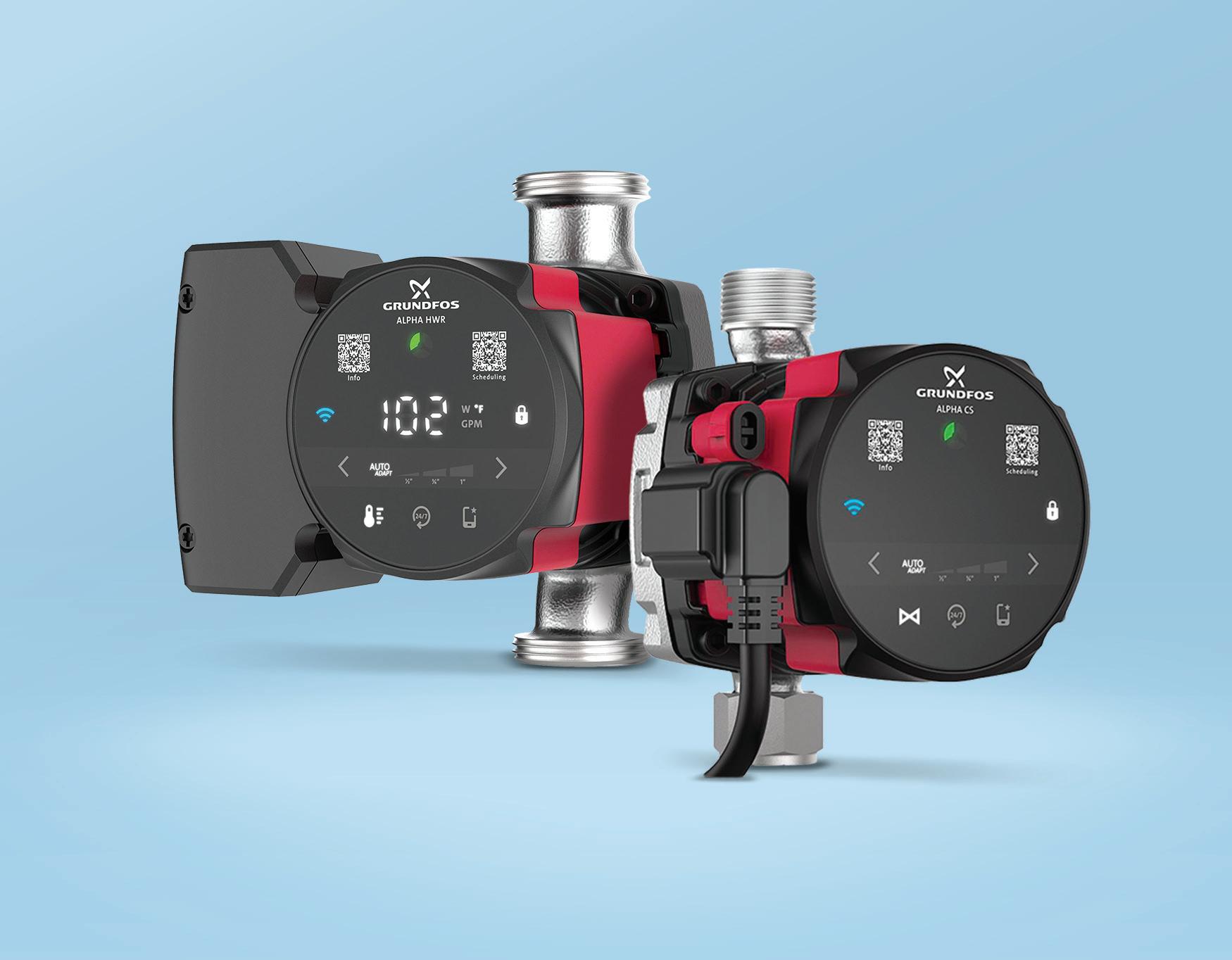
Grundfos helps you unlock the hidden potential.
Our smart, energy-efficient, and reliable solutions adapt in real time to improve flow, reduce consumption and enhance performance across the board – without compromising comfort. From heating and cooling to pressure boosting, reuse and wastewater, every part of the system can perform better – if it flows smarter.
Whether it’s a hotel, hospital, office building or airport, Grundfos helps you unlock your building’s capabilities and take a confident step toward your sustainability ambitions. Let water flow smart
Discover the smart way forward at grundfos.com/US/CBS
VIDEOS & MEDIA GALLERIES ▶
Key Business Advice for HVAC Contractors Heading into 2026
At Service World Expo 2025, leading industry partners shared their best advice for HVAC contractors preparing for the new year. contractingbusiness.com/55331589
Should You Seal Basement Ducts?
Many contractors assume basement duct leakage doesn’t matter since it’s “in conditioned space.” But that mindset could be costing comfort and credibility. www.contractingbusiness.com/55321430
HVAC Market Slowdown
Combined AC, heat pump shipments fall 14% YTD in 2025, in latest AHRI Shipments data. contractingbusiness.com/ 55330319
Test Your HVAC Skills: How Well Do You Know Residential Heat Load Calculations?
From Btu to building envelopes— see how your heat load know-how stacks up.
Audience Development Manager, James Marinaccio, jmarinaccio@endeavorb2b.com
Ad Services Manager, Deanna O’Byrne
CEO, Chris Ferrell
COO, Patrick Rains
CRO, Paul Andrews
CDO, Jacquie Niemiec
CALO, Tracy Kane
CMO, Amanda Landsaw
EVP Building & Construction Group, Chris Perrino
VP of Content Strategy— Buildings & Construction Group, Mike Eby
Contracting Business (USPS Permit 010-480, ISSN 0279-4071 print, ISSN 2771-652X online) is published monthly by Endeavor Business Media, LLC, 201 N. Main St., 5th Floor, Fort Atkinson, WI 53538. Periodicals postage paid at Fort Atkinson, WI, and additional mailing offices. POSTMASTER: Send address changes to Contracting Business , PO Box 3257, Northbrook, IL 60065-3257. SUBSCRIPTIONS: Publisher reserves the right to reject non-qualified subscriptions. Subscription prices: U.S. ($ 105.00); Canada/Mexico ($ 137.50); All other countries ($ 157.50). All subscriptions are payable in U.S. funds. Send subscription inquiries to Contracting Business , PO Box 3257, Northbrook, IL 60065-3257. Customer service can be reached tollfree at 877-382-9187 or at contractingbusiness@ omeda.com for magazine subscription assistance or questions.
Printed in the USA. Copyright 2025 Endeavor Business Media, LLC. All rights reserved. No part of this publication may be reproduced or transmitted in any form or by any means, electronic or mechanical, including photocopies, recordings, or any information storage or retrieval system without permission from the publisher. Endeavor Business Media, LLC does not assume and hereby disclaims any liability to any person or company for any loss or damage caused by errors or omissions in the material herein, regardless of whether such errors result from negligence, accident, or any other cause whatsoever. The views and opinions in the articles herein are not to be taken as official expressions of the publishers, unless so stated. The publishers do not warrant either expressly or by implication, the factual accuracy of the articles herein, nor do they so warrant any views or opinions by the authors of said articles. Follow us on Twitter at @ContractingBiz , as well as our sister
Expand or Specialize? How HVAC Contractors Can Plan for 2026
Personally, I’m not one to usually set a New Years’ resolution, unless you count how many books I plan to read in the annual Goodreads Reading Challenge. However, I know plenty of people who love setting personal goals. As the year comes to an end, it starts coming up more in conversations with friends and family.
It’s easy to draw parallels between personal goalsetting and the strategic planning HVACR contractors must undertake for the year ahead. Resolutions may be rooted in ambition, but real progress— whether at home or in business—comes from structure, accountability, and clarity of purpose. In our industry, success isn’t driven by wishful thinking or broad intentions. It’s built on data-backed forecasts, disciplined processes, and a willingness to evolve with market demands.
According to Kevin Ruppelt, senior vice president and general manager, U.S. Air, Rheem North America, heat pumps will remain one of the fastest growing categories, with lots of opportunity for HVACR contractors. Increased adoption is being drive by DOE efficiency standards, electrification goals and increased consumer awareness.
As economic conditions shift and consumer expectations evolve, contractors face important decisions about where to focus their time and resources. Should they broaden their offerings to include high-demand categories such as heat pumps, hybrid systems, and renewable HVAC technologies? Or, in a year marked by uncertainty, is it wiser to narrow their menu of services and double down on what they do best?
Doug Widenmann, senior vice president of marketing at Daikin, says contractors can continue to grow—even in uncertain economic conditions—by selectively diversifying their offerings. He emphasizes that providing multiple brand options, varying price points, and a mix of technologies such as ducted and ductless systems can open new revenue opportunities.
Widenmann notes that service work becomes even more important during tougher economic periods, especially when paired with smart diagnostics and remote monitoring that improve reliability and reduce callbacks. “Contractors that embrace new technologies and take an early adoption leadership approach can have an advantage over contractors that choose to stick with the same-old-stuff.”
“Contractors who can install and service both heat pump and dual fuel systems will be wellpositioned for growth,” he says. “Beyond HVAC, there’s a rising interest in integrated plumbing and HVAC offerings, creating a one-stop-shop model that simplifies service for homeowners and builders. Rather than narrowing offerings, contractors should consider smart diversification that builds expertise across connected, efficient, and multi-trade systems.”
Chris Forth, vice president, regulatory, codes and environmental affairs at Bosch Home Comfort, also predicts the heat pump trend will continue in 2026. “Particularly in regions where regulation is favorable, climates are moderate, and contractors are familiar with the technology. However, contractors in colder climate regions that have been slower to warm to heat pumps or in areas with limited electrical capacity should take a closer look at dual fuel systems, where a heat pump replaces a one-way air conditioner to pair with a traditional furnace. Benefits include fuel choice flexibility, fewer electrical upgrade requirements, and lower upfront and operation costs, mitigating several key barriers customers cite as preventing their switch to electrified home comfort.”
Economic uncertainty doesn’t have to stall growth for HVACR contractors—it can be a catalyst. By carefully assessing market trends (aka heat pumps), diversifying strategically, and leveraging technology to deliver smarter, more reliable service, contractors can uncover new opportunities even in challenging conditions. For more on our 2026 HVAC Market Outlook, turn to page 14.
DEMO Your place to
Get hands-on with the latest tools and learn tips from expert-led training and education sessions. Engage with pros from across the industry and discover cost-effective and cutting-edge solutions to real-world problems. AHR is your place to expand beyond your day-to-day.
FEB 2 -4 2026
Event Update: Service World Expo Celebrates 10th Anniversary in Las Vegas
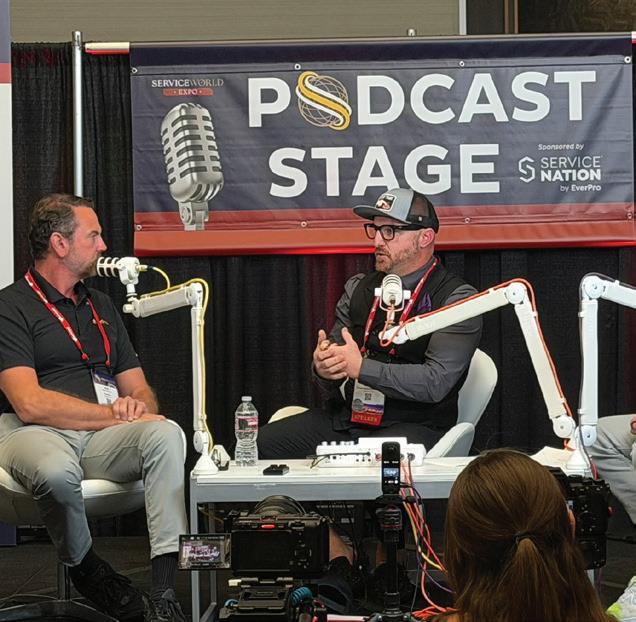
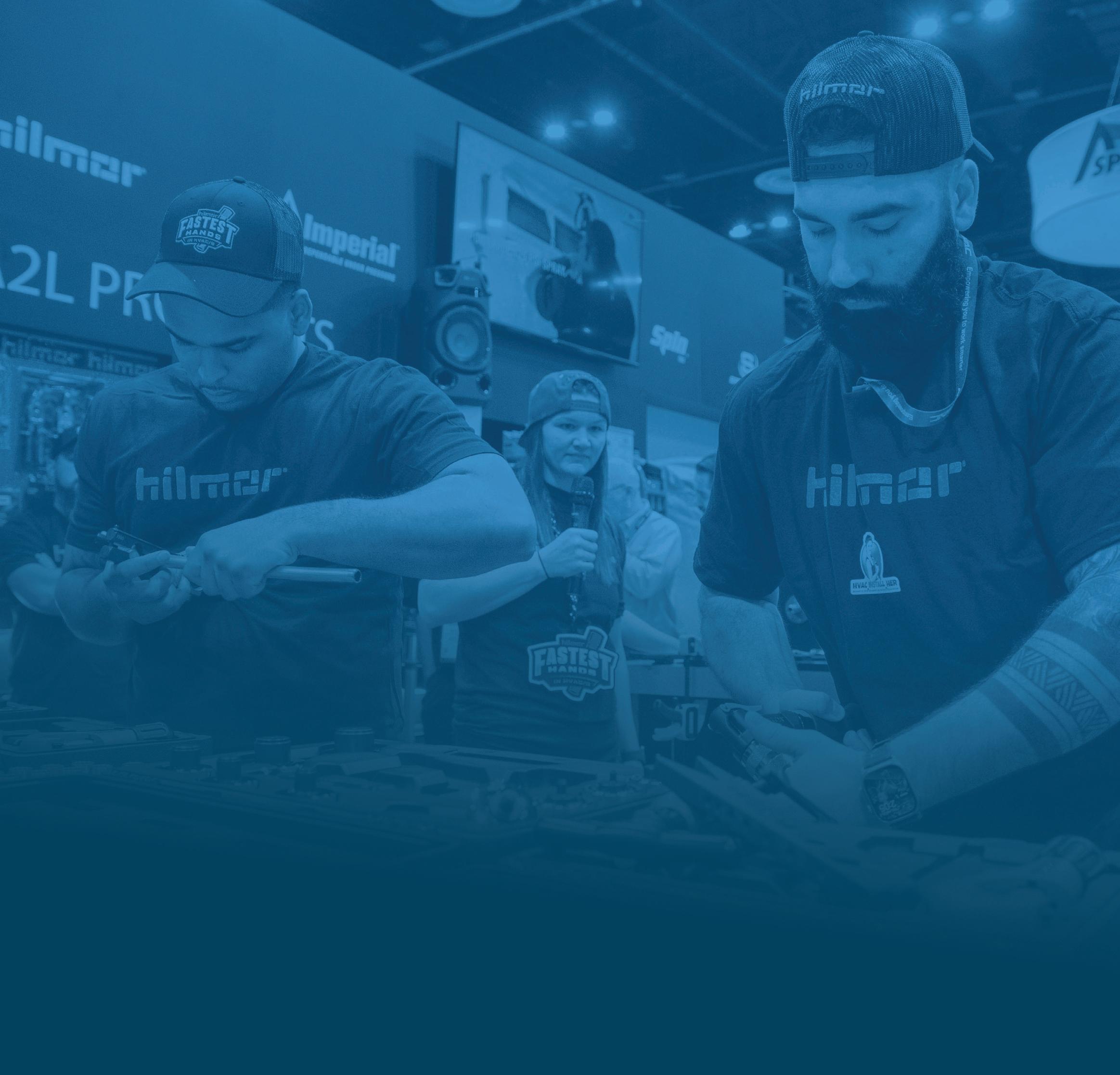
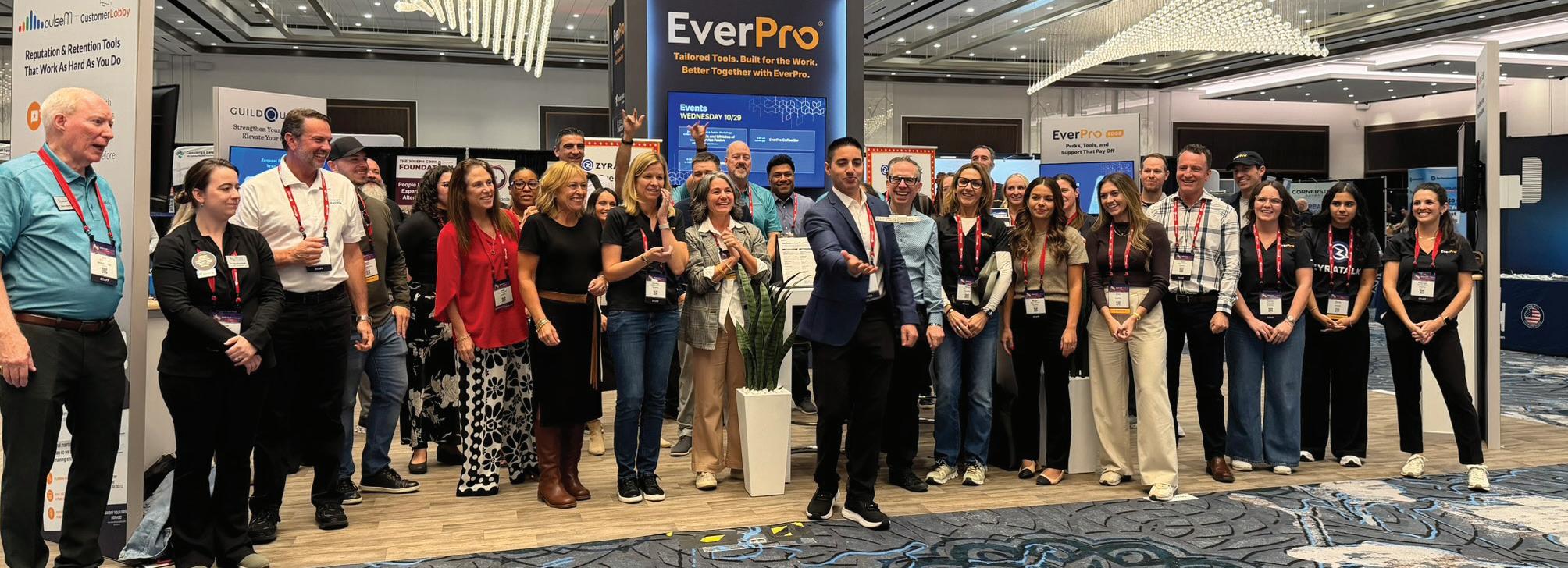
LAS VEGAS —Service World Expo returned to Las Vegas Oct. 26–30, marking the event’s 10th anniversary. The annual event brings together professionals from HVAC, plumbing, electrical, roofing, remodeling, pest control, and lawn care trades to learn, connect, and discover new solutions for business growth.
Educational sessions ranged from the importance of culture from Hobaica Services’ Service Manager Chase Cottam to the latest
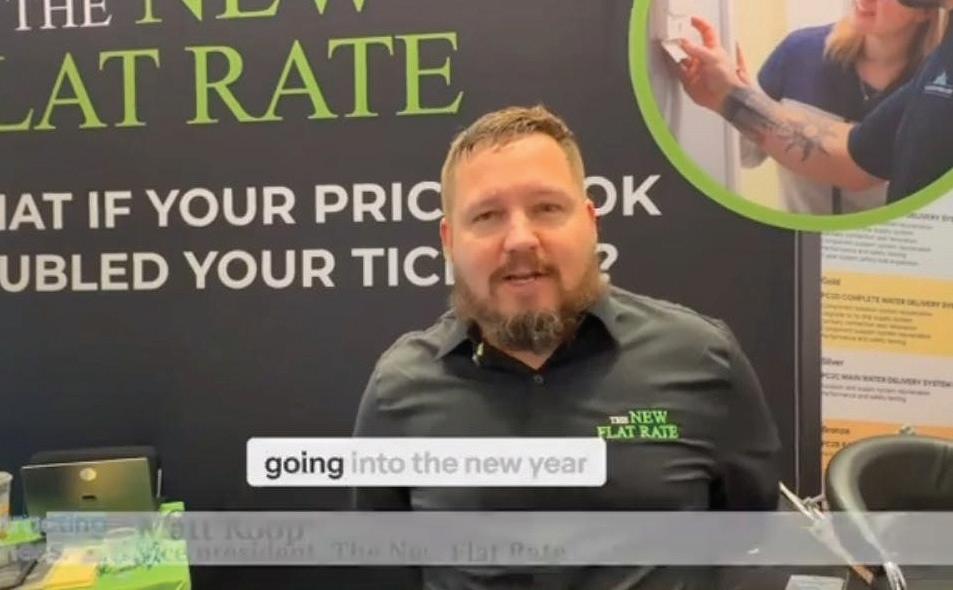
Google SEO updates and how AI-driven algorithm updates, including Google’s Search Generative Experience (SGE), is affecting local search visibility from Colleen Keyworth, vice president of sales and marketing at Online Access to and Matt Koop, vice president of training at The New Flat Rate, who offered best practices on making a good first impression and staying consistent with a proven sales process.
Networking and ongoing learning are essential for home services contractors to stay competitive and grow. Building relationships and staying informed are as crucial as technical skills for success in today’s trades industry.
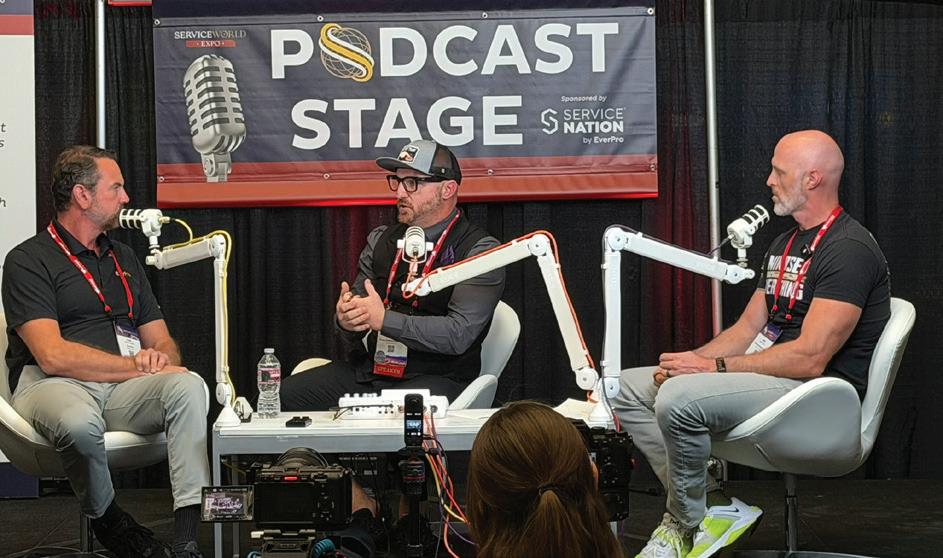
Tersh Blissett and Josh Crouch host a live episode of the Service Business Mastery podcast from the trade show floor at Service World Expo.
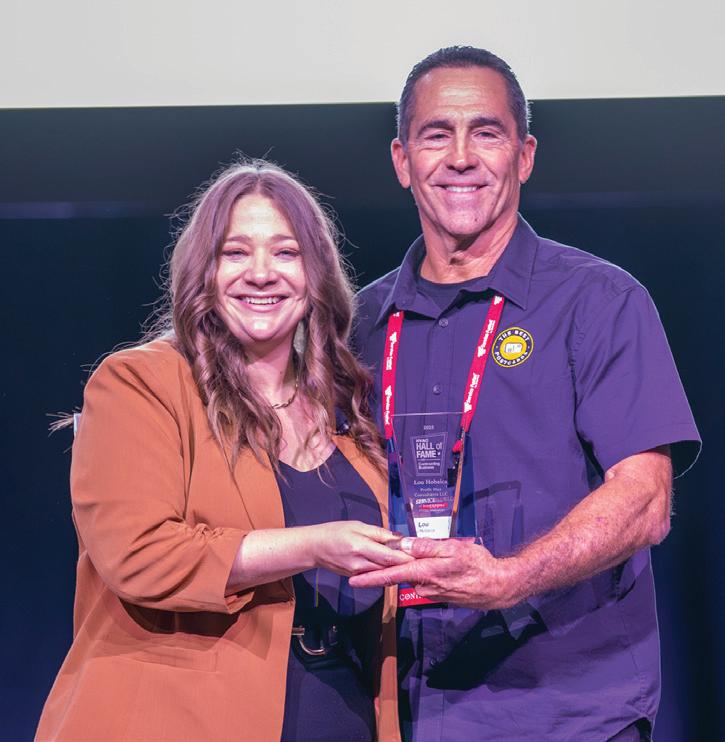
Contracting Business Editor-in-Chief Nicole Krawcke presents Lou Hobaica with an award, inducting him into the Contracting Business HVAC Hall of Fame during Service World Expo. Service World Expo
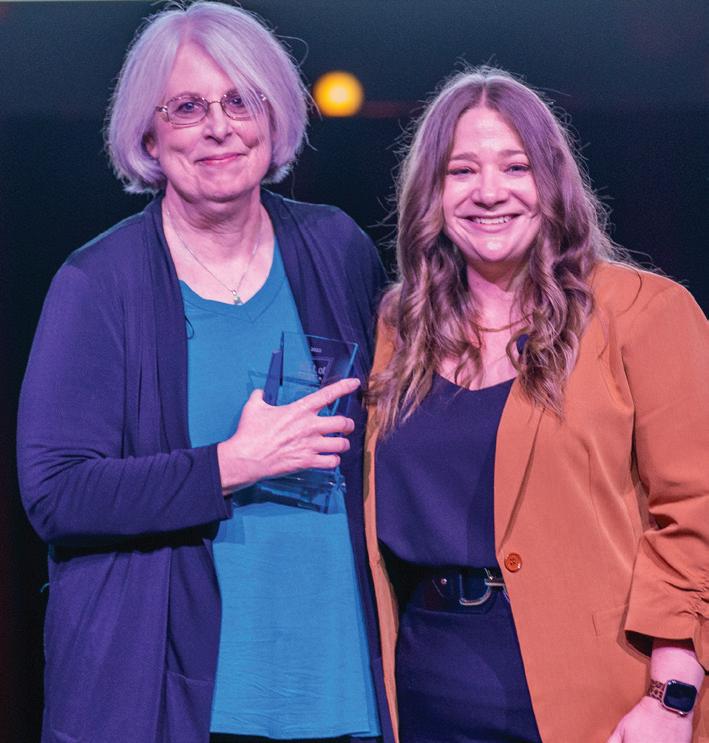
Contracting Business Editor-in-Chief Nicole Krawcke presents Ruth King with an award, inducting her into the Contracting Business HVAC Hall of Fame during Service World Expo.
Service World Expo
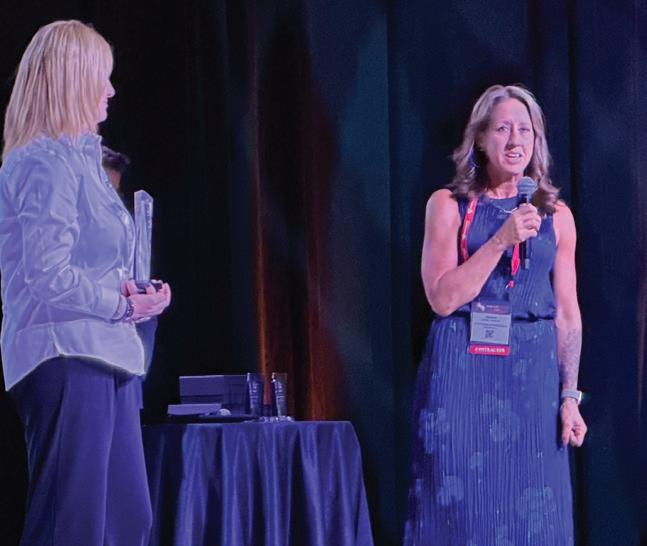
Janeen Norquist, president of Just In Time Heating, Air Conditioning & Plumbing Services, a familyowned home service company in Sandwich, Illinois, was recognized as the 2025 Woman of the Year at Service Nation’s Service World Expo 2025.
SMACNA Names B.J. Giri 2025 National Contractor of the Year
CHANTILLY, Virginia—SMACNA named B.J. Giri, managing principal, Holaday-Parks, Inc. in Seattle/Tukwila, Washington, as the recipient of its 2025 National Contractor of the Year Award.
The honor recognizes a standout contractor whose dedication, innovation, and leadership have made a meaningful impact on the industry. Giri received the award at SMACNA’s Annual Business Meeting and premier event of the year that gathers members, chapter leadership, and industry partners.
Giri’s professional achievements, leadership, and personal integrity are exceptional on every level. With more than 35 years in the mechanical contracting industry, he has demonstrated a commitment to advancing the trade and exemplifies the highest standard of a SMACNA contractor through his innovative, collaborative, and principled approach.
“B.J. brings remarkable energy to the industry, and his impact advancing our trade is clear,” said Aaron Hilger, CEO, SMACNA. “He has fostered a culture where employees thrive, and clients feel valued. His dedication is an inspiration to all those around him.”
PHCC Presents Industry Awards at CONNECT Conference
Grand Rapids, Michigan —PlumbingHeating-Cooling Contractors—National Association’s (PHCC) recognized HVAC industry professionals during its annual PHCC CONNECT 2025 in Grand Rapids, Michigan.
Larry Shoemaker, owner of Deluxe Plumbing & Heating in Lehigh Valley, Pennsylvania, was named PHCC’s 2025 HVAC Contractor of the Year. Shoemaker was recognized for his leadership in workforce development, commitment to customer care, and emphasis on operational efficiency. Under his direction, Deluxe Plumbing & Heating employs more than 40 professionals trained across plumbing, HVAC, and electrical services. The company’s ongoing education programs focus on both technical proficiency and service excellence.
Shoemaker has also made significant contributions to workforce education. A long-time member and past president of PHCC of Pennsylvania, he serves on the PHCC—National Education Board and teaches plumbing apprentices. His involvement in trade competitions and advocacy for improved licensing standards underscores his commitment to the skilled trades.
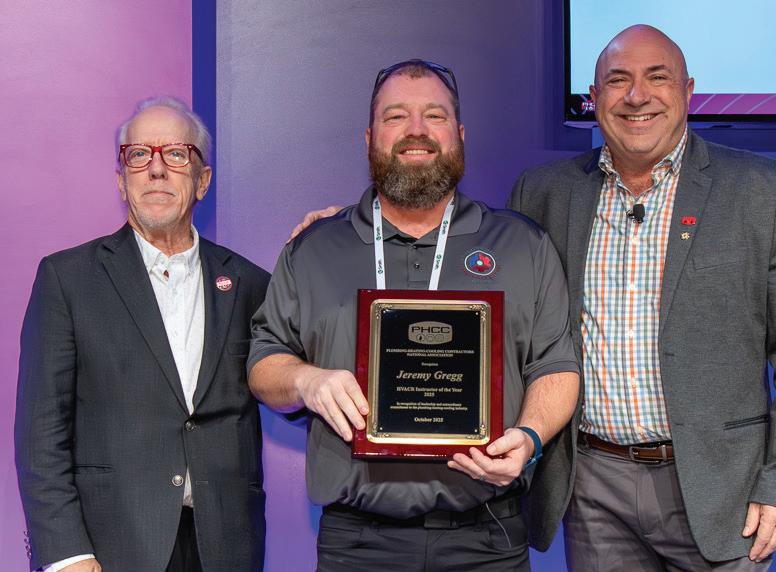
Jeremy Gregg of the Knoxville PHCC Apprentice School in Tennessee was named 2025 HVAC Instructor of the Year. A thirdgeneration HVAC professional with more than 30 years of field experience, Gregg has spent the past decade teaching and mentoring apprentices in both residential and commercial HVAC.
Nearly all of Gregg’s HVAC 1 and 2 students continued their education this
past year, reflecting his ability to motivate and engage future technicians. Known for combining technical rigor with relatable, real-world examples, Gregg uses personal experiences and even his own past mistakes to help students connect classroom lessons with field applications.
Jantzen Fisher of South Dakota was the recipient of the 2025 HVAC Apprentice of the Year award. Fisher, a student in the HVACR program at Western Dakota Technical College, was recognized for his technical ability, leadership, and commitment to professional growth.
Since beginning his training, Fisher has maintained a 4.0 GPA, earned a Build Dakota Scholarship, and served as president of his school’s HVACR student club. He also placed first at the state level in the SkillsUSA competition.
B.J. Giri received the award from Tom Martin, SMACNA’s Immediate Past President and President of T.H. Martin, Inc. SMACNA
PHCC—National Association named Jantzen Fisher of South Dakota as the 2025 HVAC Apprentice of the Year.
Larry Shoemaker of Deluxe Plumbing & Heating was named the PHCC—National Association’s 2025 HVAC Contractor of the Year.
Jeremy Gregg, an instructor at the Knoxville PHCC Apprentice School in Tennessee, was named PHCC’s 2025 HVAC Instructor of the Year.
Images courtesy of PHCC
NAVAC Opens Kentucky Training Center Focused on
Hands-On HVAC Skills
The NAVAC Technical Training Center, a new 1,700-square-foot facility designed to deliver hands-on instruction for working HVACR technicians, opened in Versailles, Kentucky.
LYNDHURST, New Jersey —NAVAC announced the opening of the NAVAC Technical Training Center in Versailles, Kentucky, a new 1,700-square-foot facility designed to deliver hands-on instruction for working HVACR technicians. According to the company, the center is built around a technician-first approach that emphasizes practical skills development and real-world application.
The NAVAC Technical Training Center limits each class to 10 participants to ensure personalized guidance and extensive equipment interaction. Training sessions cover core processes such as evacuation and recovery, along with advanced modules focused on troubleshooting, piping, and line set layout. Instruction is led by NAVAC’s User Experience Department, a team of actively licensed HVAC contractors who design the curriculum to reflect current field conditions.
The center also introduces a creative teaching method that incorporates parallels between Kentucky’s distillation culture and the refrigeration cycle, a strategy intended to make complex concepts easier to understand and retain.
NAVAC’s instructors combine backgrounds in HVAC, technology, and media production to support both in-person and virtual learning. The center includes a full studio for producing video content, live streams, podcasts, and remote training sessions, which are developed as high-quality, interactive programs rather than traditional online presentations.
Looking ahead, NAVAC plans to host monthly in-person classes for contractors, distributors, and manufacturer representatives. The company is also partnering with groups, including the GRIT Foundation and the ESCO Group, to expand outreach and support workforce development efforts in the skilled trades.
Milwaukee Tool Names Shane Moll Group President
MILWAUKEE, Wisconsin—Milwaukee Tool announced the promotion of Shane Moll to group president, effective immediately.
Moll, who has been with the company nearly 20 years, has taken full leadership of the organization. He has played a key role in Milwaukee Tool’s transformation and growth over the past two decades. Moll’s deep experience in product strategy, global engineering, and innovation combined with his strong focus on users, distribution partners, and culture has helped position the company as a disruptive leader in the industry, the company says.
In this expanded role, Moll will continue to be supported by a strong bench of leaders across the business. He reports directly to Steve Richman, CEO of Milwaukee Tool’s parent company, TTI. James Wamsley and Darrell Hendrix also report directly to Richman, while continuing to serve as key members of the Milwaukee Tool Executive Team and partners across TTI’s global operations.
“I’m proud and humbled to lead this next chapter for Milwaukee Tool, supported by the incredible strength of our people, culture, distribution partners, and our unwavering focus on innovating for skilled trades professionals around the world,” said Moll.
For more information, visit www.milwaukeetool.com.
RectorSeal Acquires MARS Parts
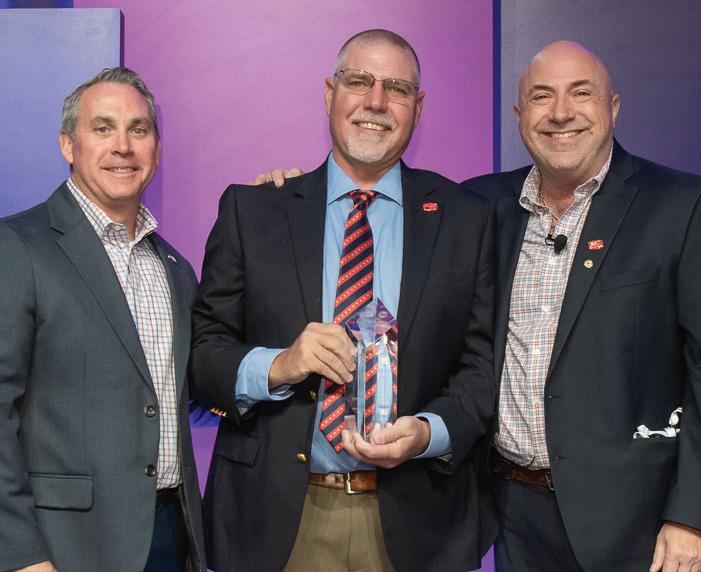
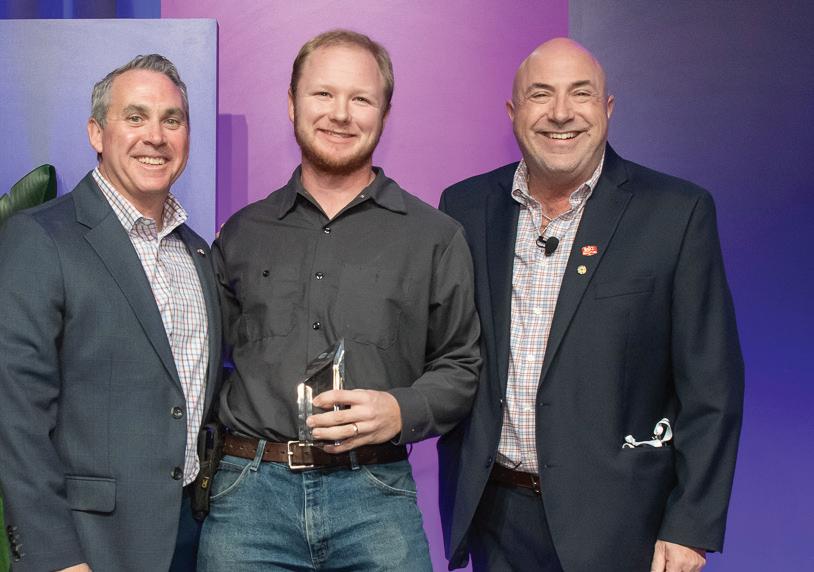
HOUSTON, Texas—RectorSeal, a manufacturer of HVACR and plumbing tools, has officially acquired MARS Parts, including Global, the Source, and MARS’ parts and accessories division. The acquisition, announced in October, closed on Nov. 4, expanding RectorSeal’s lineup of high-performance motors and electrical components for the professional trades.
Founded in 1946, MARS supplies premium motors, capacitors, relays, contactors, and other electrical components for HVAC aftermarket and original equipment manufacturers. Its Global division has introduced products such as the Turbo200 Universal Capacitor, AmRad Capacitors, and CPT compressor protection technology, widely used by HVAC professionals.
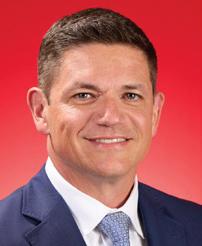
Jeff Underwood, president of RectorSeal, said the acquisition will significantly expand the company’s electrical product offerings, enabling better support for distributors and contractors. The integration brings strong U.S.-based manufacturing capabilities and established partnerships with leading producers.
With this acquisition, the company reinforces its commitment to delivering reliable, innovative solutions that enhance system efficiency, performance, and availability for professional HVACR technicians and contractors.
Shane Moll. Milwaukee Tool
WHERE FACILITY CHALLENGES FIND SOLUTIONS
CENTRAL VALLEY
March 18-19, 2026
Lodi, CA
SOUTHERN CALIFORNIA
April 8-9, 2026
Anaheim, CA
NORTHWEST
April 29-30, 2026
Portland, OR
Tariffs, Costs, A2Ls: Your 2026 HVAC PLAYBOOK
The HVAC industry in 2026 will continue to be shaped by refrigerant transitions and electrification. Contractors must adapt to material cost increases, supply chain challenges, and evolving regulations while leveraging repair and service opportunities to maintain profitability.
As 2026 approaches, HVACR contractors are entering a pivotal planning season— one shaped by shifting economic pressures, evolving regulatory demands, and accelerating technology adoption. Strategic business planning becomes even more important amidst uncertainty. It’s the foundation contractors need to to best position themselves to capture new opportunities and weather potential slowdowns.
Cindy Sheridan, CEO of Plumbing-HeatingCooling Contractors—National Association (PHCC),
“Demand has been subdued the past two years because of a weak housing market, and with mortgage rates likely to trend lower in the next 6-12 months, we’re expecting 2026 to be a good year for contracting businesses.” — Cindy Sheridan, PHCC—National Association
forecasts improved residential opportunities for HVAC and plumbing businesses in 2026. “Demand has been subdued the last two years because of a weak housing market, and with mortgage rates likely to trend lower over the next 6-12 months, we’re expecting 2026 to be a good year for contractor businesses,” she says. “However, it’s necessary to stress that tariffs will bring higher price levels in the months ahead, and higher prices may affect consumer demand. While we expect the benefits of lower mortgage rates to outweigh higher costs from tariffs, price levels remain an important variable to watch.”
Julian Scadden, president and CEO of Nexstar Network, says that demand for HVAC has not slowed, but consumer confidence has softened.
“What that means is there’s still a need,” he explains. “What this means is you have an opportunity in your business to learn a little bit less about lead generation and more about conversion. How can you establish trust with the homeowner? How can you provide a quality service and an experience that goes beyond what they’re experiencing from other contractors? If you can answer those questions, you’ll find that you’ll continue to grow and thrive.”
HVAC Trends to Watch
The HVAC industry will be shaped by three key forces in 2026, according to Kevin Ruppelt, senior vice president and general manager, U.S. Air, Rheem North America. They are: the A2L refrigerant transition, accelerated adoption of heat pump and connected technologies, and continued workforce transformation.
“The A2L shift remains one of the most impactful changes, influencing everything from product design to technician training and safety standards,” Ruppelt says. “At the same time, manufacturers are leaning into electrification and connectivity, developing smarter, more efficient, and easier-to-service systems. And a new generation of digitally fluent technicians is entering the field, bringing a sustainability mindset and driving faster adoption of emerging technologies.”
“You need to focus on the basics, and make sure you’re priced correctly with the changing dynamic of materials and everything associated with the supply chain.”
— Julian Scadden, Nexstar Network
Chris Forth, vice president, regulatory, codes and environmental affairs, Bosch Home Comfort, agrees that the transition to heat pumps will continue, especially in regional markets where state-level regulation and incentives are further driving adoption, particularly in the Northwest and even some colder climates in the Northeastern U.S.
Forth also predicts AI will continue expanding beyond technical support into inventory management and building automation.
Doug Widenmann, senior vice president of marketing, Daikin
Comfort Technologies North America, says the most significant trend will be the final leg of transitioning away R-410A residential products. “Products with a global warming potential (GWP) above 700 will no longer be allowed to be sold or installed after Dec. 31. However, the EPA has proposed revisions to the Technology Transition Rules as of this writing that could extend this time period. The residential transition this year will be followed by a very similar transition currently underway for commercial products to be implemented the following year, Jan. 1, 2027. In parallel with these large reengineering efforts, OEMs have and continue to be challenged with major global trade fluctuations affecting the cost of raw materials and components.”
“The A2L shift remains one of the most impactful changes, influencing everything from product design to technician training and safety standards.”
— Kevin Ruppelt, U.S. Air, Rheem North America.
Widenmann adds that the deregulation and elimination of federal tax credit incentives for electrification and decarbonization will also change how OEMs and contractors plan for 2026 and beyond.
Economic Headwinds
Material price increases, tariffs, and supply chain disruptions are expected to pressure contractor margins in 2026. Rising costs for metals and imported equipment may drive higher bids, while longer lead times could challenge scheduling and inventory management.
ITR Economics Consulting Principal and Chief Economist Brian Beaulieu notes that the leading indicator signs are good—not great—for 2026.
“It’s been a very sluggish 2025, and we’re not getting any sign that it’s going to miraculously improve for 2026, but there will be some improvement,” he says. “The great news is consumers are out there spending, they’re just doing it cautiously. Uncertainty right now is still off the charts. People are just being very conservative in terms of buying new houses or buying existing homes, which means they’re going to be repairing what they have. That’s where the strength of the market is going to be for HVACR businesses in 2026.”
Beaulieu adds that the high copper and aluminum prices won’t be coming down any time soon, and that’s not just because of tariffs, either. HVAC contractors need to be able to pass those increasing costs on as best they can. “To succeed, you really need to have a sound pricing strategy, which isn’t intuitive for a lot of people, but it’s absolutely necessary. I’m not getting into any price fixing, but in general, people will accept two 4% price increases rather than one 8% price increase. 8% throws them into sticker shock. Spread them out, though, and they say, ‘OK, I understand
“Repairing legacy R-410A systems may seem more cost efficient in theory, but in practice, the mandated phasedown has the supply of R-410A and replacement components dwindling... which will continue to spell higher repair costs throughout 2026.”
— Chris Forth, Bosch Home Comfort Group
that.’ Given everything that’s going on, you can’t continue to eat these costs. You’re just eating into your margins.”
According to Tim Botten, heating and cooling category manager at GF Building Flow Solutions, material costs for both residential and commercial markets are expected to increase by 4% to 5% in 2026. “These cost increases reflect shipping and logistics bottlenecks as well as labor shortages. Steel and copper prices rose by about 40% in the past year, and fluctuating tariffs further complicate cost estimating. Simultaneously, the shortage of skilled labor continues to be a major issue. As technology advances, the required skill set increases and so does labor cost.”
Repair vs. Replacement
Ruppelt agrees that increased costs will continue, but while these cost pressures are a reality, they have not impacted demand.
“Demand for HVAC replacements and upgrades is expected to remain stable as homeowners and building owners look to improve efficiency and meet evolving regulatory standards,” he says. “Contractors who can clearly communicate long-term value, such as reduced operating costs, improved comfort, and environmental benefits, will be best positioned to maintain steady business, even in tighter economic conditions.”
According to Sheridan, an improving housing market should, in theory, lead to higher replacement rates.
“Homebuyers tend to spend more on their homes in the first year after purchasing than non-movers, and we see this in historical P-H-C business demand patterns,” she says. “However, we’ll stress again here that the current tariff policies are unique in recent U.S. history, and there’s a chance that the economic patterns we’re familiar with (e.g. improving housing market creating more replacement opportunities) may not hold up.”
However, current economic uncertainty may result in customers pushing to repair existing units rather than replacing with new systems, Forth explains.
“Repairing legacy R-410A systems may seem more cost-efficient in theory, but in practice, the mandated phasedown has the supply of R-410A service refrigerant dwindling and key system replacement components such as compressors and TXVs being relegated for service-only—two factors that will continue to spell higher repair costs throughout 2026,” Forth says. “Contractors should encourage their customers to look beyond the upfront
“Position your company as a trusted partner providing innovative alternatives—not just a contractor offering HVAC systems at a price.”
— Doug Widenmann, Daikin North America
costs and consider how system replacements will offer benefits like improved efficiency, potential incentive qualification, lower maintenance and operational costs as well as faster repairs, all of which can lower initial investment cost and provide benefits for the long haul.”
Ruppelt agrees that the phaseout of older refrigerants will continue to make replacement more attractive, in many cases. “Contractors should be prepared to assist homeowners in understanding the financial and operational benefits of upgrading to new, efficient systems. Those who offer both repair and replacement expertise will be able to meet customers where they are and build long-term loyalty.”
Botten notes there has been a downward trend in new HVAC equipment sales in recent years, while demand for unitary equipment repair and servicing has grown. There is a bright side as contractors shift focus toward repair and service work, though. “This shift offers higher margins, recurring revenue, differentiation from competitors, and the chance to build a loyal customer base for future service. It also creates opportunities for annual service plans and preventative maintenance programs.”
Widenmann agrees that cautious consumers may continue to choose to repair their HVAC systems rather than replace them, making the service and repair portion of a contractor’s business more important in 2026. “New HVAC system installations and upgrading systems could remain a headwind until consumer confidence begins to turn around. New HVAC systems are a large expense, and offering flexible payment options is therefore becoming common practice, and it is important for contractors to include as a sales option.”
The Latest on A2Ls
The A2L transition will remain a top priority in 2026, according to Ruppelt. “Contractors will need to continue investing in training, tools, and certification to safely handle these refrigerants. Education will be critical for compliance and ensuring installations meet new code requirements without compromising performance. Manufacturers like Rheem are equipping contractors with resources, training, and products designed specifically for A2L compatibility, helping them navigate this industry-wide shift with confidence.”
Though most OEMs have shifted to using Low-GWP A2L refrigerants in production for both residential and light commercial offerings, contractors may still see a few applications remaining for legacy R-410A systems, Forth explains.
“While current regulation mandates that split system
components, such as indoor coils and outdoor condensers, can only be installed as service components beginning Jan. 1, 2026, a pending EPA proposal would allow indefinite installation or new R-410A split systems with components manufactured or imported before 2025. We’ll have a clearer idea of how contractors should operate when it comes to R-410A around the onset of the new year.”
The good news is that contractors have already navigated the most challenging parts of this refrigerant transition, including managing handling, storage, transportation, and installation of mildly flammable A2Ls and dealing with supply chain shortages of R-454B and increased costs, Widenmann says. “Daikin’s decision to use R-32 provided contractors with a reliable supply at a low cost. Daikin’s commitment to R-32 in the U.S. was to provide a refrigerant that is proven, easy to use, efficient, and widely available—a commitment reinforced by the fact that R-32 has been globally available and used in Daikin products since 2012. This approach has delivered numerous advantages for contractors offering R-32 products.”
Sheridan notes that HVAC contractors will be able to take a break from immediate changes in 2026, unless they also work in the refrigeration space.
“For contractors, 2026 will be a great year for focusing on best practices, which help them comply with upcoming regulations, such as refrigerant management,” she says. “The HFC phasedown is ongoing, reducing the supply of HFCs used in refrigerant production. This means recovery and reclamation are more critical than ever to mitigate refrigerant shortages in the coming years. In the supermarket refrigeration sector, servicing will transition to 100% reclaim only, meaning the industry requires more recovered refrigerant today to meet future demand. Another important point to address is the consistent rumor that a second HVAC transition is planned in 2030 to move to below 500 GWP. No EPA regulation requires a second transition in HVAC to below 500 GWP in 2030.”
The most significant threat to contractors from the HFC transition comes from the states, where PHCC expects additional activity in the coming years that could lead to further transitions, Sheridan adds.
Advice for a Successful Year
Scadden cautions HVAC contractors against rolling last year’s business plan into 2026 without a detailed review. He notes that many businesses overlook hidden expenses and recurring services that quietly inflate overhead—one Nexstar member cut 46% of overhead simply by auditing vendors and unnecessary subscriptions. Scadden emphasizes that annual planning must include a line-by-line examination of costs and renegotiation of everything from cell phone plans to fleet services to keep budgets aligned with current realities.
“You need to focus on the basics,” he says. “And make sure you’re priced correctly with the changing dynamic of materials and everything that’s associated with the supply chain. It feels basic and it feels small, but if you’re off there, that compounds over time in a way that will put you out of business faster than any competitor.”
Overall, Scadden says contractors should focus on weathering the storm and approach 2026 with steady, disciplined planning
“The shortage of skilled labor continues to be a major issue. As technology advances, the required skill set increases, and so does labor cost.”
— Tim Botten, GF Building Flow Solutions
rather than reacting to fluctuating economic conditions.
He cites Jim Collins’ “20 Mile March” principle—based on an Antarctic expedition with two groups of people. The group that marched a consistent 20 miles every day no matter the conditions survived, while the group that marched as far as they could on good days and hunkered down on bad ones did not. The lesson, he says, is that long-term success comes from consistency, not spurts of effort driven by external factors.
For HVACR businesses, Scadden advises defining their own “20 Mile March:” clear, sustainable targets that keep teams on schedule without burning out employees or causing confusion for customers and vendors. By maintaining a steady pace—regardless of market highs or lows—contractors can stay aligned with their long-term plan and remain resilient in a shifting 2026 landscape.
According to Forth, long-term inventory and business strategy planning is crucial to conduct at least annually, if not more frequently.
“The fundamentals still apply: Know your market, know your customers, know what you are good at and, more importantly, what you are not good at,” he says. “Plan your inventory as accurately as you can, providing a forecast of product needs to your distribution partner as far in advance as possible so they can, in turn, work with the OEM to ensure the supply chain operates smoothly.”
Botten notes that the contractors who will succeed are those who prepare early, adapt their business models, train their teams, and offer value beyond merely installing a unit.
Ruppelt agrees, saying, “Contractors who stay proactive, continually learn, adopt connected tools, and align with manufacturer partners who prioritize training will navigate change successfully and turn it into a competitive advantage.”
Widenmann also recommends being an early adopter of new technology as well as continuously educating employees.
“Embrace smart home automation and energy-efficient solutions,” he advises. “Position your company as a trusted partner providing innovative alternatives—not just as a contractor offering HVAC systems at a price. Don’t rely solely on traditional sales and installation methods. Grow your business by training your sales team to present choices, incentives, and financing, and highlight comfort, efficiency, and technology. Provide ongoing technical training for your technicians so they become early adopters of the latest solutions homeowners seek—solutions that integrate with home automation systems while delivering comfort, efficiency, and affordability.”
Next Level Comfort
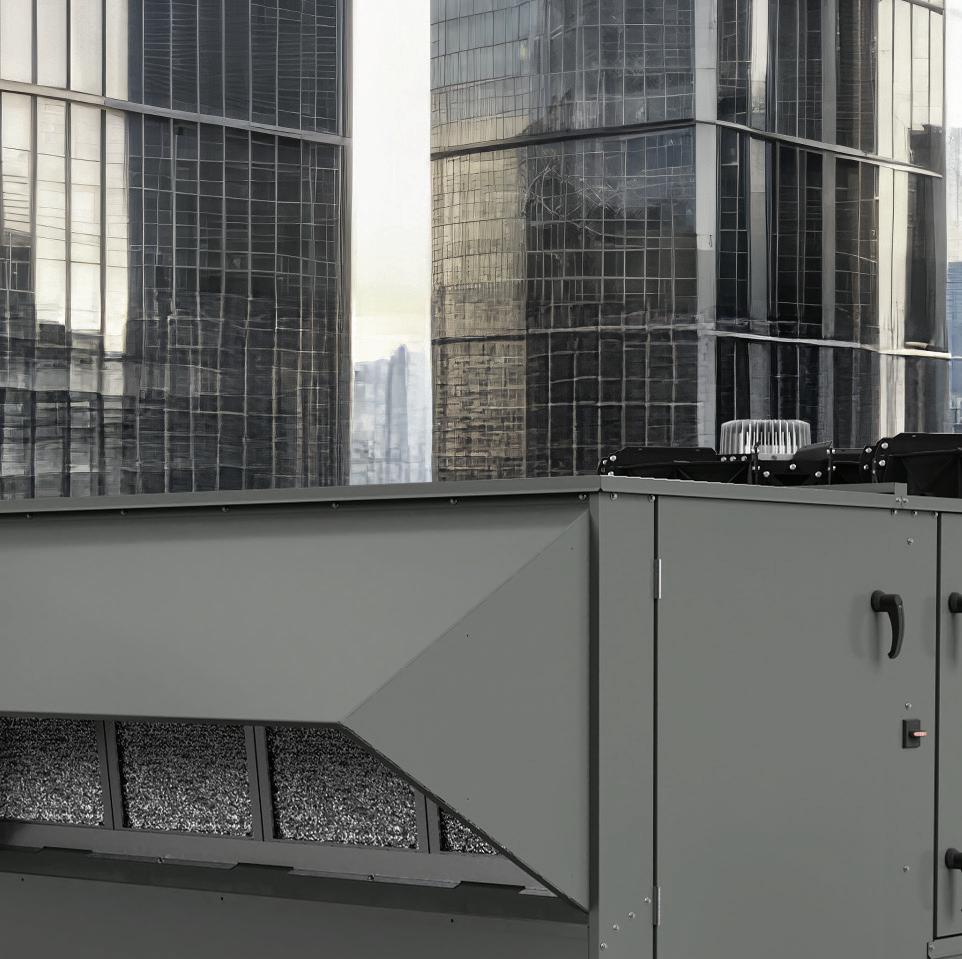
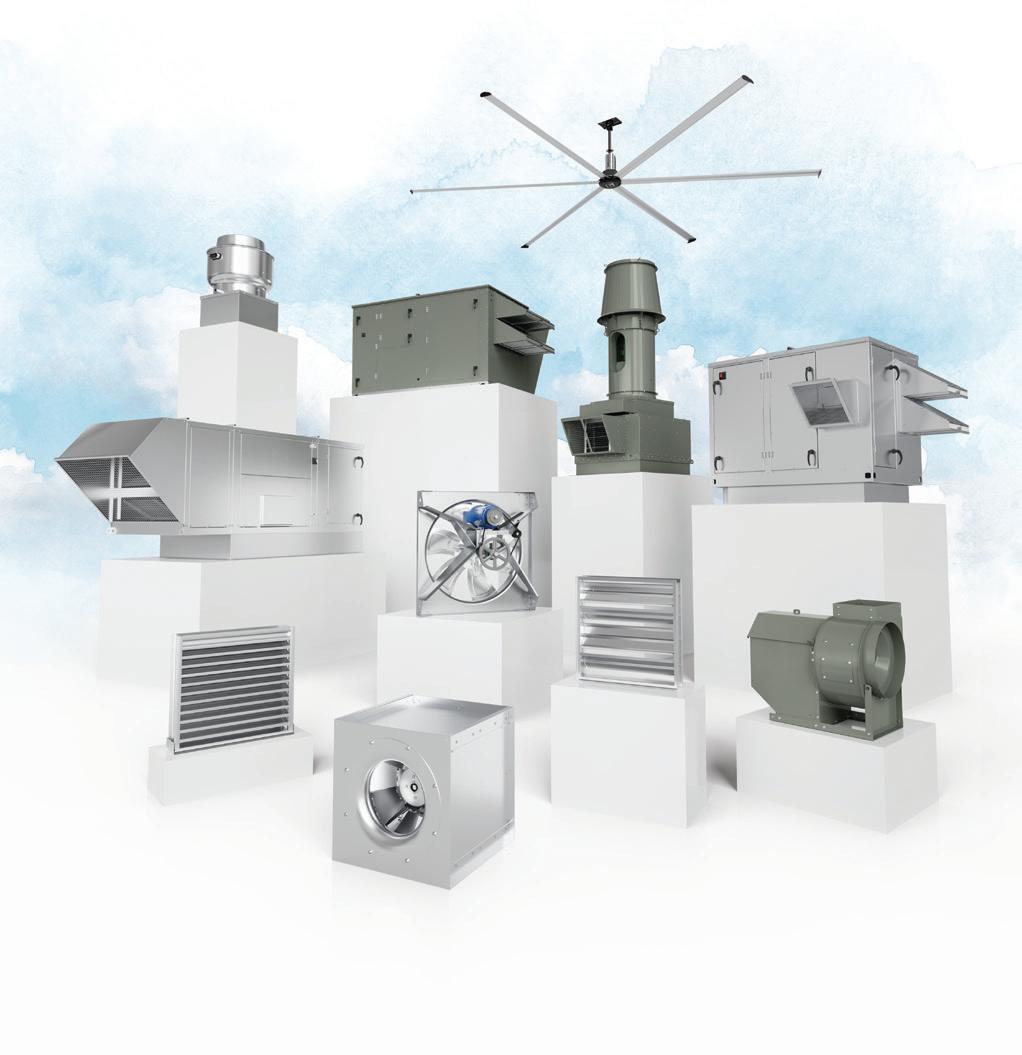
Greenheck is leveraging decades of applied equipment engineering expertise to evolve commercial building comfort. With efficient, adaptable products like dedicated outdoor air systems, energy recovery ventilators, and our newest line of rooftop units, Greenheck is more than a fan company. We’re solving the ventilation challenges of today’s buildings, raising expectations to the next level.
LEARN MORE
Comfortable Spaces, Applied Solutions
When it comes to fans and other air movement products, Greenheck has earned its reputation for reliability, value, and innovation. As codes and occupant expectations around ventilation, indoor air quality, and comfort have evolved, Greenheck continues to leverage its engineering and manufacturing expertise to deliver innovative applied equipment solutions designed to meet the challenges of today’s buildings.
Whatever a building’s requirements, Greenheck’s lineup of applied equipment has efficient, cutting-edge products to solve those needs. Greenheck’s energy recovery ventilators (ERVs) reduce tempering loads for ventilation and save operating dollars. Dedicated Outdoor Air Systems (DOAS) supply high percentages of outdoor air and can provide heating, cooling, and energy recovery. Greenheck’s latest innovation is high-performance rooftop units (RTUs) that simultaneously control temperature and humidity while modulating to increase comfort and save energy.
Rooftop Units
Greenheck’s Model RT rooftop unit is aligned with modern building design and ventilation trends, delivering more outdoor air than traditional RTUs with a smaller footprint and lower first cost than 100% outdoor air DOAS units. Standard features include modulating inverter scroll compressors that provide precise temperature and humidity control while adjusting speed for part-load conditions, and direct drive fans for variable air volume across a wide performance range. Options include modulating hot gas reheat for simultaneous cooling and dehumidification, and air-source heat pumps for all-electric heating and cooling to support decarbonization initiatives. With capacities up to 13,000 cfm, Model RT is an ideal solution when 100% outdoor air is not required.
“Greenheck continues to leverage its engineering and manufacturing expertise to deliver innovative applied equipment solutions.”
Energy Recovery Ventilators
ERVs provide outdoor air preconditioned with recovered energy from the exhaust airstream. This reduces energy costs and the tempering load for air conditioning, helping to meet energy initiatives and standards such as ASHRAE 90.1. ERVs can recover energy through either a low-maintenance enthalpy core or an enthalpy wheel, which provides the highest efficiency on the market.
Dedicated Outdoor Air Systems
For applications requiring 100% outdoor air or airflows up to 29,200 cfm, such as schools, hospitals, and industrial buildings, Greenheck’s DOAS products decouple the ventilation load from other equipment at very high efficiency to enhance indoor air quality. Models RV, RVE, and RVC temper and dehumidify outdoor air and can incorporate energy recovery wheels or cores to recover both sensible and latent energy. Air-source heat pumps are an option for a lower-carbon heating and cooling solution.
New models IVE and ERVi feature configurable, low-profile modular designs that fit through a 30-inch doorway and can be installed indoors in a mechanical room, attic, or basement. Model IVE builds upon ERVi’s modular design to include electric post-heat options up to 25 kW.
Take your commercial HVAC project to the next level by contacting your nearest Greenheck representative at greenheck.com/find-my-rep
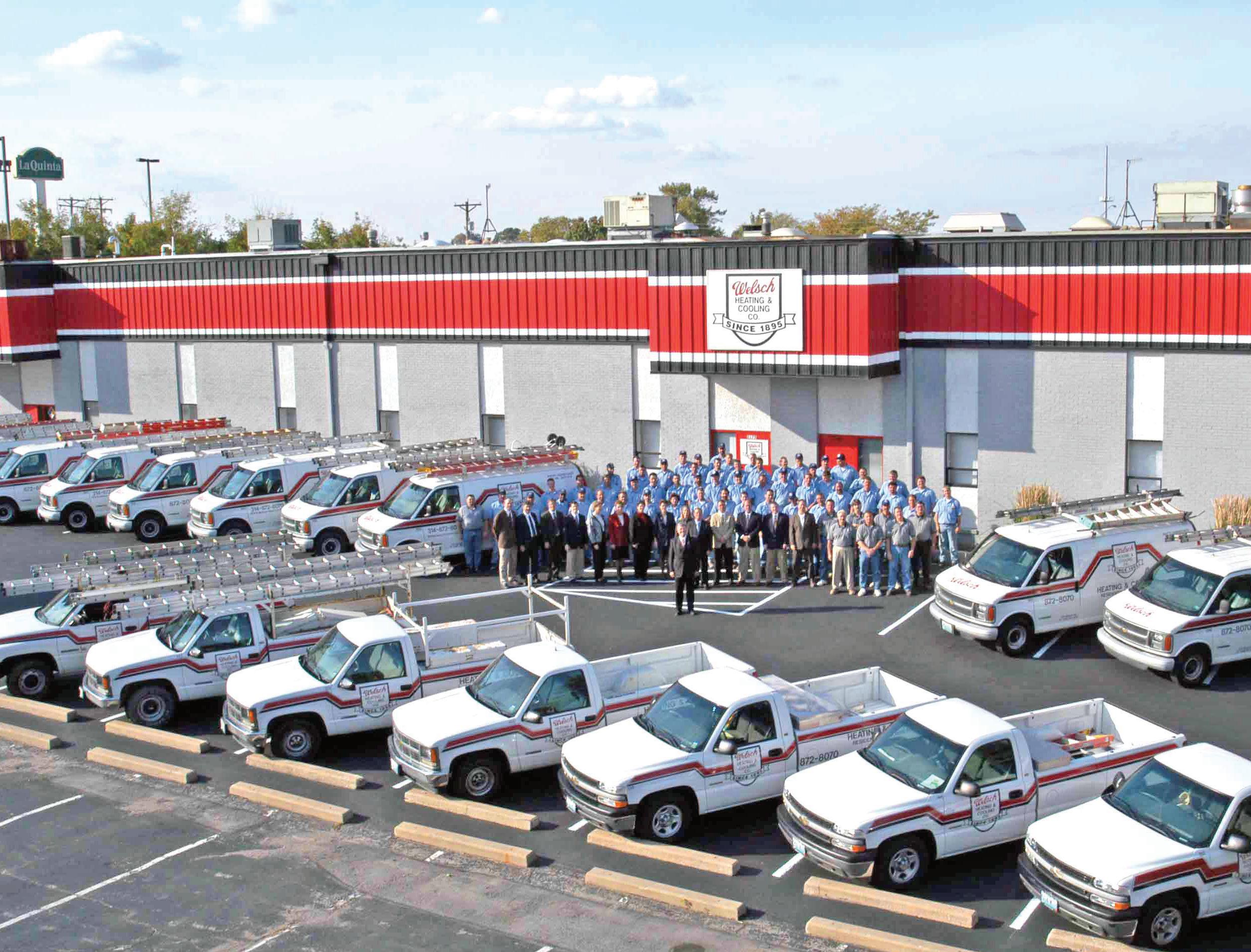
Welsch Heating & Cooling celebrated its 130th anniversary in 2025. Founded in 1895, the St. Louis-based company has evolved from a small general store into one of the region’s most respected HVAC contractors. With a staff of around 100 people, Welsch Heating & Cooling has cultivated a workplace culture rooted in compassion and mutual support.
From 1895 to Today: How Welsch
Heating & Cooling Continues to Thrive
Guided by generations of family values, Welsch Heating & Cooling has maintained its reputation for integrity and service excellence, celebrating 130 years of resilience, innovation, and community commitment.
Reaching 130 years in business is an extraordinary feat— especially for a family-owned company. In an industry where businesses often rise and fall within a generation, Welsch Heating & Cooling has not only endured but thrived. Founded in 1895, the St. Louis-based company has
evolved from a small general store into one of the region’s most respected HVAC contractors, guided by generations of family leadership, a commitment to quality craftsmanship, and a deep dedication to its employees and community. As Welsch celebrates its 130th anniversary in 2025, it stands as a rare and inspiring
example of longevity, adaptability, and the enduring power of family values in the HVACR industry.
Adapting Through the Decades
“When my dad’s grandfather started the company, there weren’t any furnaces or air conditioners at that time,” says George “Butch” Welsch, owner of Welsch Heating & Cooling. “So instead, they installed metal pan ceilings in old restaurants and offices, as well as pot belly stoves—that’s how we got started.”
The contracting company’s journey mirrors the evolution of the American HVAC industry itself. When Welsch’s grandfather took over in 1900, the company began to evolve alongside the nation’s growing need for comfort and modern living. Sadly, he passed away at a young age from cancer, and Welsch’s father dropped out of high school to take over the family business at age 17 in 1929. By the 1930s, as coal furnaces became common in basements across St. Louis, the company shifted its focus to installing and assembling these massive heating units, surviving the Great Depression through skill, adaptability, and grit. After World War II, with the rise of natural gas, Welsch again adapted—installing conversion burners that transformed coal furnaces into cleaner, more convenient gas systems, and later moving into the booming home construction market to install the first generation of gas-fired furnaces.
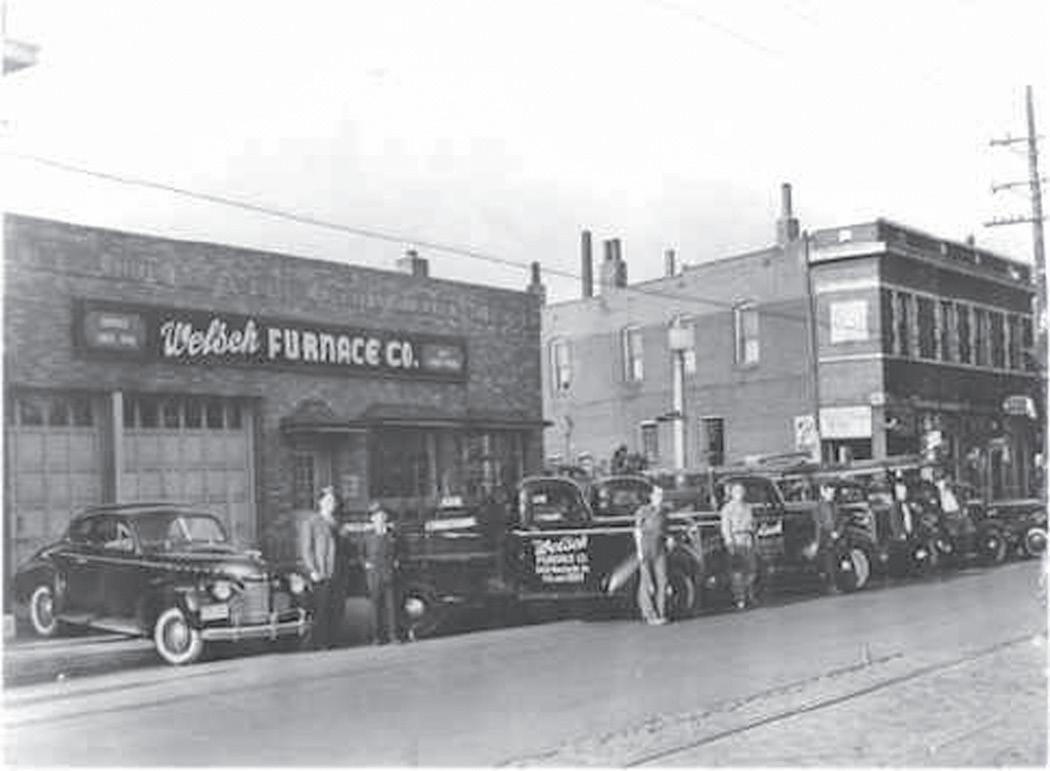
The Welsch Furnace Company (now Welsch Heating and Cooling) was founded in 1895 by current Owner and President George “Butch” Welsch’s great-grandfather, Adam Welsch. The business was more of a general store at that time, as it predated modern heating and air conditioning.
As comfort technology advanced, so did Welsch. In the late 1950s and early 1960s, air conditioning became the next big innovation, and the company quickly embraced this opportunity, launching a thriving “add-on air conditioning” business to retrofit homes they had previously heated. By the 1970s and 1980s, under the leadership of fourth-generation owner Butch Welsch, the company’s services expanded from new construction installations to include system replacements and ongoing maintenance—an evolution that proved essential during housing market downturns. By the early 1990s, Welsch had shifted its business model to balance new construction with service and replacement work, ensuring stability through economic cycles. Today, Welsch Heating & Cooling continues to honor its heritage of craftsmanship and customer care—proving that adaptability, integrity, and family leadership remain the foundation of its enduring success.
“If you had told me in 1986 when my dad died, that we’d still be going 40 years later, I probably wouldn’t have believed it,” Welsch says.
Lessons Passed Down
Welsch credits much of the company’s longevity to the wisdom of his father and grandfather, who taught him a simple but enduring philosophy: “Treat the employees well, they will treat the customers well, and profits will come.”
That mindset continues to define how Welsch operates today, standing in stark contrast to the profit-driven mentality of many private equity models moving into the home services space. From ensuring that every customer call is answered by a live person—24 hours a day, 365 days a year—to going the extra mile to source parts during shortages, the company’s focus has never wavered: do what’s right for the customer, even when it’s not the easiest or most profitable option.
That same commitment extends to how Welsch treats both its customers and employees—as people, not numbers. Welsch Heating & Cooling doesn’t just have long-term employees who
Images courtesy of Welsch Heating & Cooling
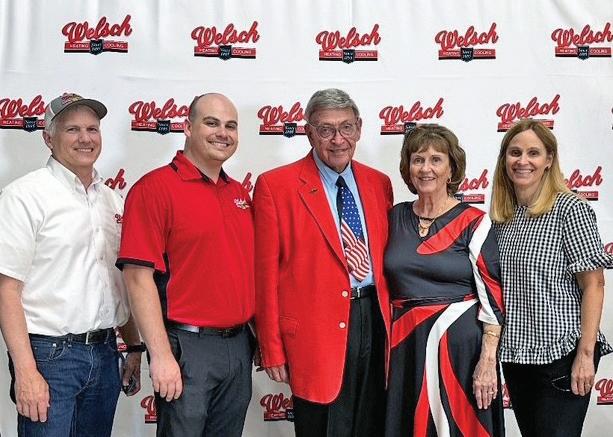
The Welsch family with fifth-generation leadership Matt and Wendy Finch (pictured on the ends).
have spent entire careers with the contracting firm, but also boasts customers who have relied on their services for over 40 years. That loyalty reflects the trust and consistency the contractor has worked hard to earn.
Welsch Heating & Cooling takes pride that every customer call is answered by a live person—24 hours a day, 365 days a year. The company’s focus has always been to do what’s right for the customer, even when it’s not the easiest or most profitable option.
Welsch personally writes thank-you letters to customers who share positive feedback and sends out thousands of hand-signed Thanksgiving notes each year as a gesture of appreciation.
“Christmas cards get lost in the Christmas rush,” he notes. Everybody’s busy, and they get a lot of Christmas cards during the season. Instead, we send a Thanksgiving note that thanks everybody who has purchased a replacement unit during the year. It usually amounts to about 1,000 people, and I personally sign all of them. Those little touches are what’s allowed us to be around all this time.”
A Culture of Caring
Within the company, employees are empowered to uphold these high standards of service, fostering a culture of accountability and pride that has endured across generations. By focusing on people first—customers, employees, and community—Welsch Heating & Cooling has not only outlasted economic cycles and industry consolidations, but also elevated the reputation of HVAC contractors throughout the St. Louis area. It’s that steadfast dedication to honesty, craftsmanship, and personal connection that continues to set Welsch apart after 130 years in business.
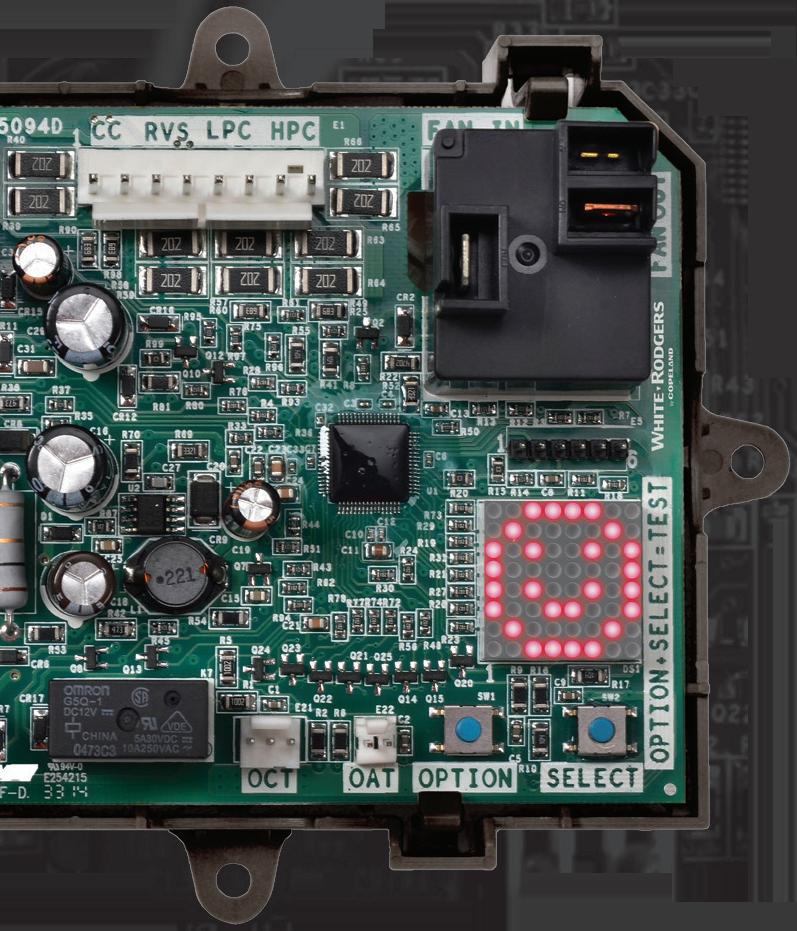
REPLACES VIRTUALLY ALL SINGLE STAGE DEFROST CONTROLS
The White-Rodgers Universal heat pump defrost control by Copeland replaces over 400 part numbers for both timed and demand defrost controls. Plus, you’ll bring the energy savings that come from using demand defrost instead of timed defrost, helping extend compressor life while improving comfort. Easy to configure to manufacturer default settings. And powerful enough to replace virtually all single stage defrost controls.
Paul Heimann, vice president and comptroller at Welsch Heating & Cooling, has been with the company his entire professional career, spanning 40 years. He followed in his father’s footsteps, who was a sheet metal worker.
“I have enjoyed every minute of working here,” Heimann says. “I love the family-owned business aspect of it. Mr. Welsch is a great guy to work for, has treated us like family, and continues to do that to this day. It’s just the principles he lives by, and something that we’ve tried to share along the way. No decisions are ever made without making sure it’s the right decision for the company and for the individual.”
Denny Turlin, comfort consultant, is a fourth-generation sheet metal worker and 20-year veteran of the company. Although he attempted a different path, he ended up coming back to the trade and working for Welsch, where his uncle was a foreman.
“When you work for Welsch, no matter what capacity you’re in, you definitely feel like you are working with a family,” he says. “It is nice that you’re not just a number in some big corporate business. We have a really good group of people who are accountable and responsible, and don’t need to be micromanaged. They get the job done and know they are appreciated by the company.”
Welsch Heating & Cooling employees aren’t just part of a team— they’re part of the family. With a staff of around 100 people, the company has cultivated a workplace culture rooted in compassion and mutual support.
When an employee faces a serious health challenge or personal hardship, Welsch’s leadership and staff rally together without hesitation—whether that means providing extra time off, ensuring bills are covered, organizing financial help, or preparing meals for the employee’s family. This genuine care extends far beyond company policy; it’s a reflection of the family values that have guided Welsch Heating & Cooling for the past 130 years. Heimann and Turlin attest that everyone knows when life takes an unexpected turn, the Welsch family and their coworkers will be there to lift them up.
“It’s a pretty good feeling,” Turlin says.
The Next Big Milestone
At 84 years old, Welsch himself is an industry legend. A past national president of SMACNA, he still volunteers his time on the organization’s scholarship committee.
And he has no plans to retire just yet.
“As long as I’m healthy enough to continue working, I’m going to continue working,” he says. “We have a timeshare in Florida
where we visit three weeks in late fall and three weeks in the spring. Those two three-week sessions are my retirement. I play tennis three days a week, I can’t play any more than that—my body won’t let me. I gave up golf for tennis. And my wife doesn’t want me home for sure; I cramp her style. I don’t like daytime TV. What else would I do? I think the employees would like me to retire and get out of their hair, but they do come and ask me questions from time to time, so I feel somewhat needed. It makes me feel good.
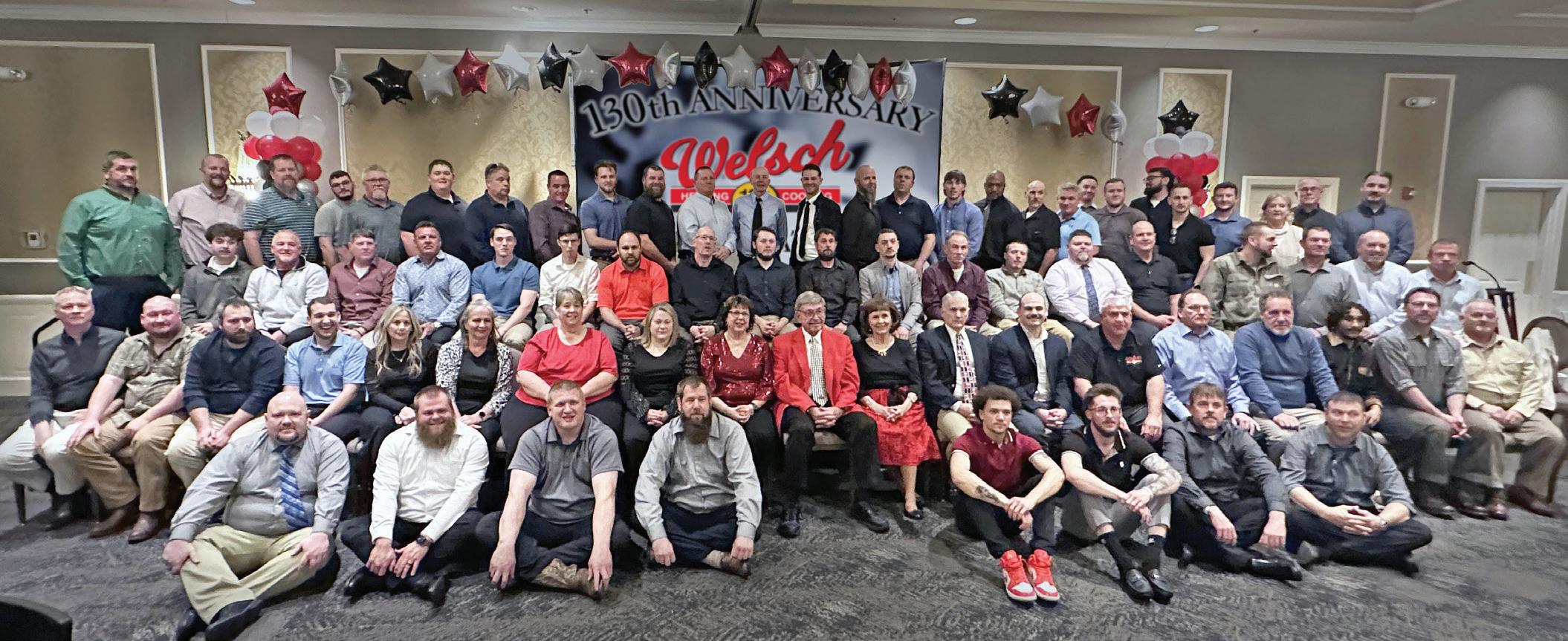
Welsch Heating & Cooling employees at the 130th anniversary celebration.
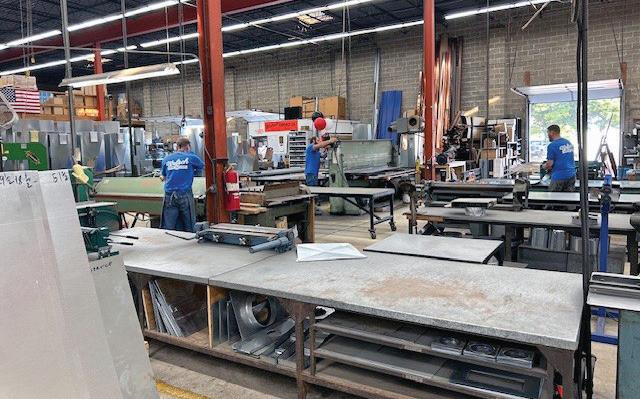
Welsch Heating & Cooling employees at work in the sheet metal fabrication shop.
Above: In the “boom” building times following World War II, and well into the 1950s, the company became a St. Louis leader in the installation of residential heating systems. Right: Welsch Heating & Cooling doesn’t just have long-term employees who have spent entire careers with the contracting firm, but also boasts customers who have relied on their services for over 40 years.
“I’ve also been to 78 Indianapolis 500s in a row, which is the current record as far as the Speedway is concerned,” Welsch adds. “I pretty much get to do what I want to do without being officially retired.”
While he may not plan to step away from the business in the near future, Welsch has taken careful steps to prepare the company for the future. Ownership will transfer to his daughter, a longtime educator, and her husband, Matt Finch, who already plays a key role in the business as the company’s new construction salesman. Though reserved by nature, Welsch notes that Finch has earned deep respect within the company for his technical skill, work ethic, and commitment to the company’s standards of quality and integrity. Meanwhile, Heimann will serve as the public face of the company, ensuring operational continuity and leadership stability.
Additionally, Welsch notes that every department has young talent ready to step into key roles when needed, preserving the company’s culture and service excellence.
The decision to keep the business in the family rather than sell—despite frequent offers—reflects a deep sense of pride in legacy over profit. “We’re more proud of what we’ve built than what we could sell it for,” Welsch said. That philosophy, paired with his refusal to expand into unfamiliar trades like plumbing or electrical, underscores a disciplined focus on what the company does best: HVAC.
When Welsch Heating & Cooling transitions to its fifth generation, it will do so with the same integrity, loyalty, and craftsmanship that have defined it since 1895.
“I feel 100% confident that the company will continue,” Welsch says. “I’ve told them that 150 is a good round number, and I’ll be gone by then, so they can do what they want at that point.”
How Interchangeable Mini-Split Systems Simplify Inventory and Expand Options
For years, distributors and contractors working with ductless mini-split systems have faced the same challenge: indoor and outdoor units have been tied together in fixed pairs.
In this traditional model, every indoor unit is designed to work with only one specific outdoor partner, and any mismatch in availability can delay an entire project. If that match isn’t available, the equipment becomes essentially useless, creating “stranded inventory.”
This issue has become even more pressing in today’s climate for HVAC contractors. Rising tariffs, higher equipment costs, and ongoing supply chain pressures force distributors to be more selective about how stock is managed.
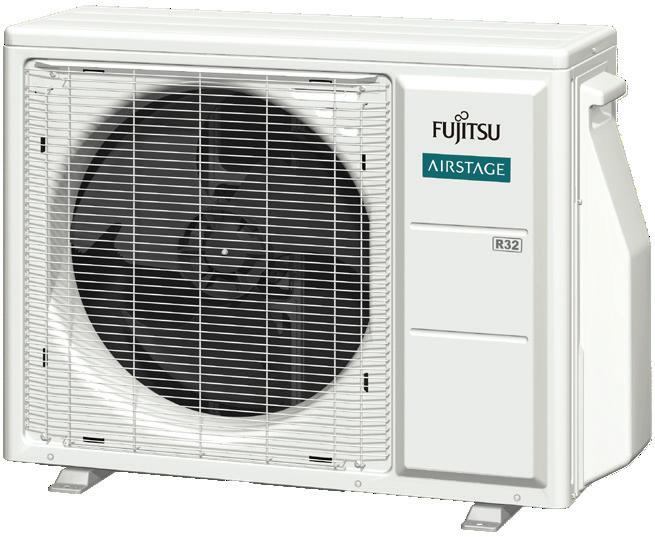
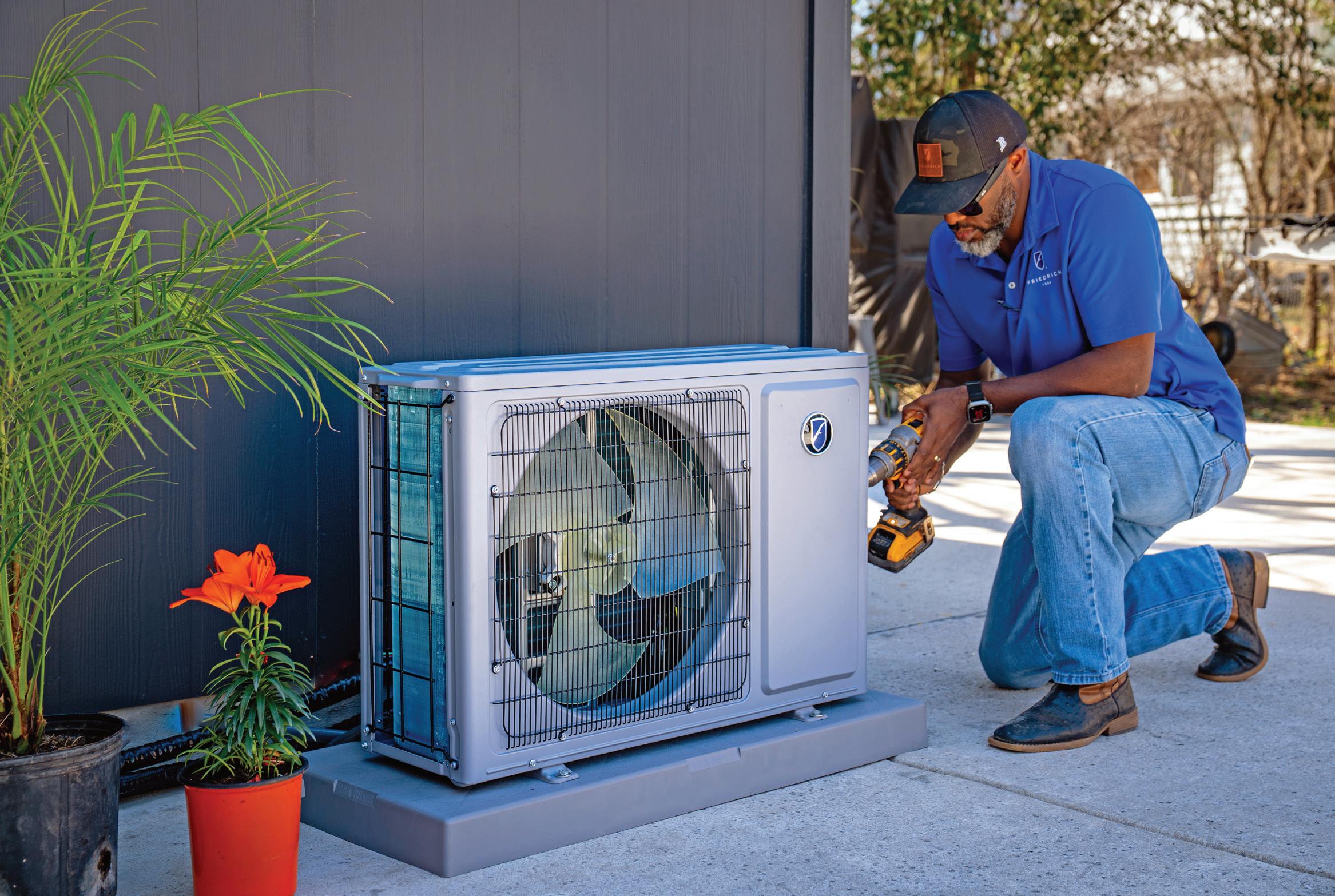
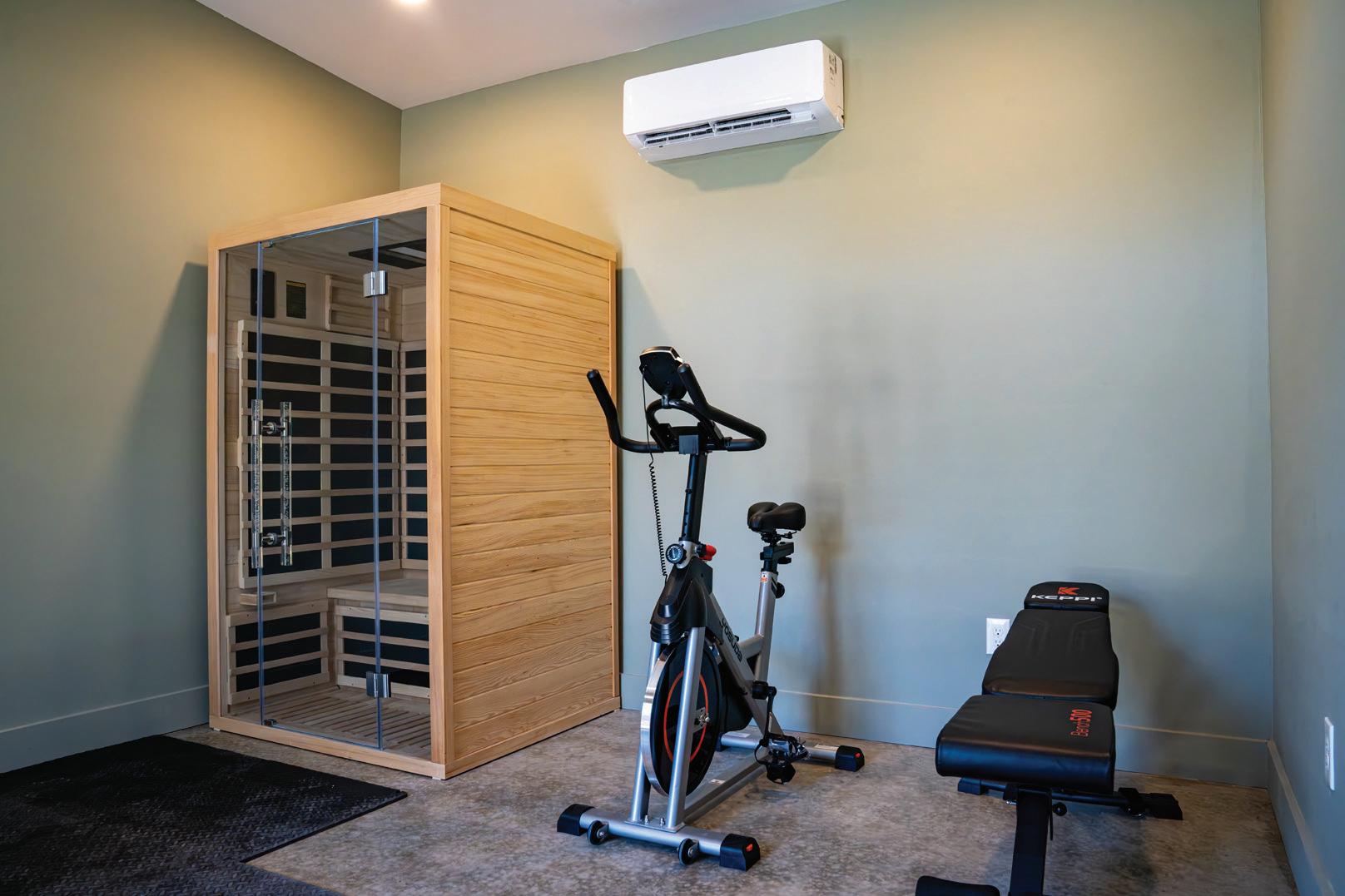
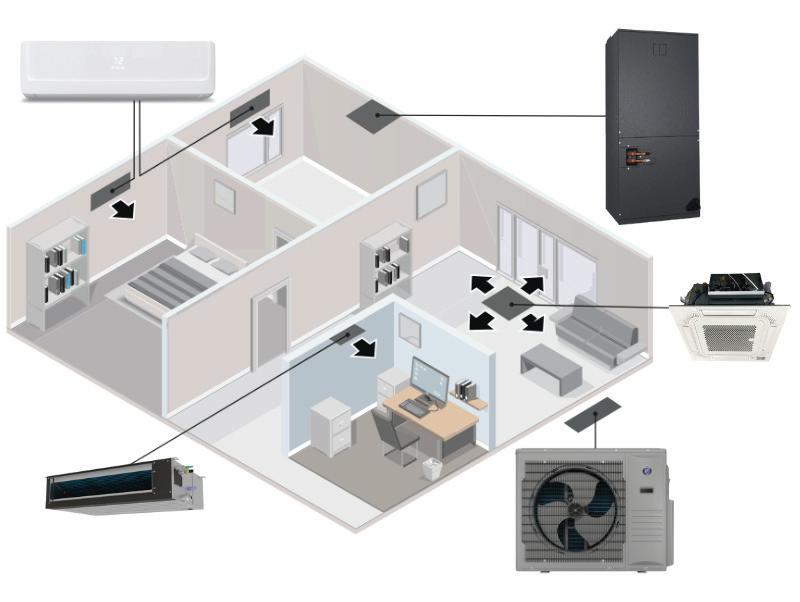
There is a solution. Manufacturers are now offering interchangeable indoor and outdoor HVAC units that minimize the number of fixed pairings that distributors must stock, simplifying inventory management while allowing contractors to tailor systems to each project. This way, contractors and distributors can mix and match configurations without being limited to fixed pairs.
This shift away from rigid pairing allows distributors to optimize their inventory, contractors to approach projects with
greater confidence, and end-users to receive tailored systems that actually meet their comfort and efficiency needs. Every link in the HVAC chain benefits.
Why Versatility Matters
The problems with traditional pairing extend far beyond stranded inventory. When a unit sits in a warehouse without a match, the consequences ripple throughout the supply chain.
Distributors must either hold onto that inventory and absorb carrying costs, or sell it at a discount, which might mess up margins. Contractors may find themselves waiting weeks for a compatible unit to arrive, delaying installations and frustrating customers. Homeowners ultimately face higher costs or longer waits for the systems they want. (Or worse, both.)
Versatility addresses these issues by giving each party more flexibility. Instead of holding dozens of fixed equipment pairings, indoor and outdoor units can be mixed and matched.
For contractors, that means fewer delays waiting for a specific pairing and more confidence that the right equipment will be available when a project is ready to start. It also gives them the ability to design the best system available for each job. Say a
Images courtesy of Friedrich Air Conditioning
This shift away from rigid pairing allows contractors to approach projects with greater confidence, and end-users to receive tailored systems that actually meet their comfort and efficiency needs.
Contractors should offer a range of products on everything from compact, single-room systems to whole-home solutions.
homeowner needs a wall-mounted unit in one room, a ceiling cassette in another, and a ducted air handler for the main floor, all connected to the same outdoor unit. Versatility makes it possible.
On the other hand, versatility can help stabilize pricing. Instead of distributors carrying dozens of niche inventory items, they can streamline to fewer, more versatile models. Distributors get a better stock management strategy.
Best of all, consumers get tailored comfort without compromise.
In a world of constant supply chain disruptions, availability and flexibility are everything, especially with the HVAC industry under more pressure than ever to balance efficiency with personalization. Versatility provides a solution that allows distributors, contractors, and homeowners to all benefit simultaneously.
Signs of a Distributor That Prioritizes Interchangeable Mini-Splits
When evaluating which distributors to work with on ductless mini-split solutions, there are a few things for contractors to consider to deliver on the promise of flexibility and performance: Mix-and-match compatibility. Work with distributors that choose systems where multiple indoor unit types can be paired with a single outdoor unit across both single and multi-zone applications. This flexibility ensures contractors can tailor each installation to the home without being constrained by availability. Range of capacities. A strong inventory portfolio should cover everything from compact, single-room systems to whole-home solutions. Confirming capacity coverage upfront with a manufacturer avoids situations where a system can’t scale to meet the project’s needs.
Installation efficiency. The U.S. Department of Energy found that simplified installation practices reduce labor hours, improve reliability, and lower callbacks. Many ductless systems
already include features like quick-access service panels or modular blower designs, which make servicing and installation faster. Contractors should confirm these features are part of the portfolio they choose. Even small time savings on each job compound into significant efficiency gains across a busy season.
Energy performance. With energy costs rising, consumers expect high-efficiency systems and ENERGY STAR certifications. Contractors who deliver energy-efficient solutions meet homeowner expectations and strengthen their own reputations as trusted advisors. Working with a distributor that offers minisplits can help avoid
systems offer contractors flexibility to tailor each installation to the home without being constrained by availability.
the energy losses associated with ductwork in central forced air systems, which can account for more than 30% of energy consumption for air conditioning.
Warranty coverage and after-sales service. Strong warranties and responsive after-sales support signal a distributor’s confidence in their interchangeable systems. Contractors benefit from reduced risk and a trusted path to escalate any issues that might arise.
As supply chain pressures increase, the industry will need smarter strategies for managing complexity. By prioritizing distributors who simplify choice without limiting performance, contractors can reduce installation headaches, win homeowner trust, and protect their margins in a shifting industry. Contractors who work with these manufacturers now will be better positioned to thrive in a market defined by constant change.
Niehaus is the national manager, ductless and universal heat pump sales at Friedrich Air Conditioning.
Brad
Interchangeable
Giving Back: HVAC Companies Supporting Local Causes and Building Trust
HVACR companies are increasingly integrating philanthropy into their core operations, which helps build meaningful community connections and promotes long-term business success.
One of the greatest superpowers in the HVACR industry is that contracting business owners tend to be generous to a fault. These businesses step up in powerful ways to support the communities they serve—from donating equipment and providing free repairs to volunteering time, raising funds, and partnering with local organizations and nonprofits.
These charitable efforts do more than make a meaningful difference for families in need; they also strengthen contractor reputations, deepen customer trust, and reinforce company culture. As the demand for socially responsible businesses continues to grow, giving back has become both a reflection of industry values and a smart strategy for long-term business growth.
The Spirit of Giving
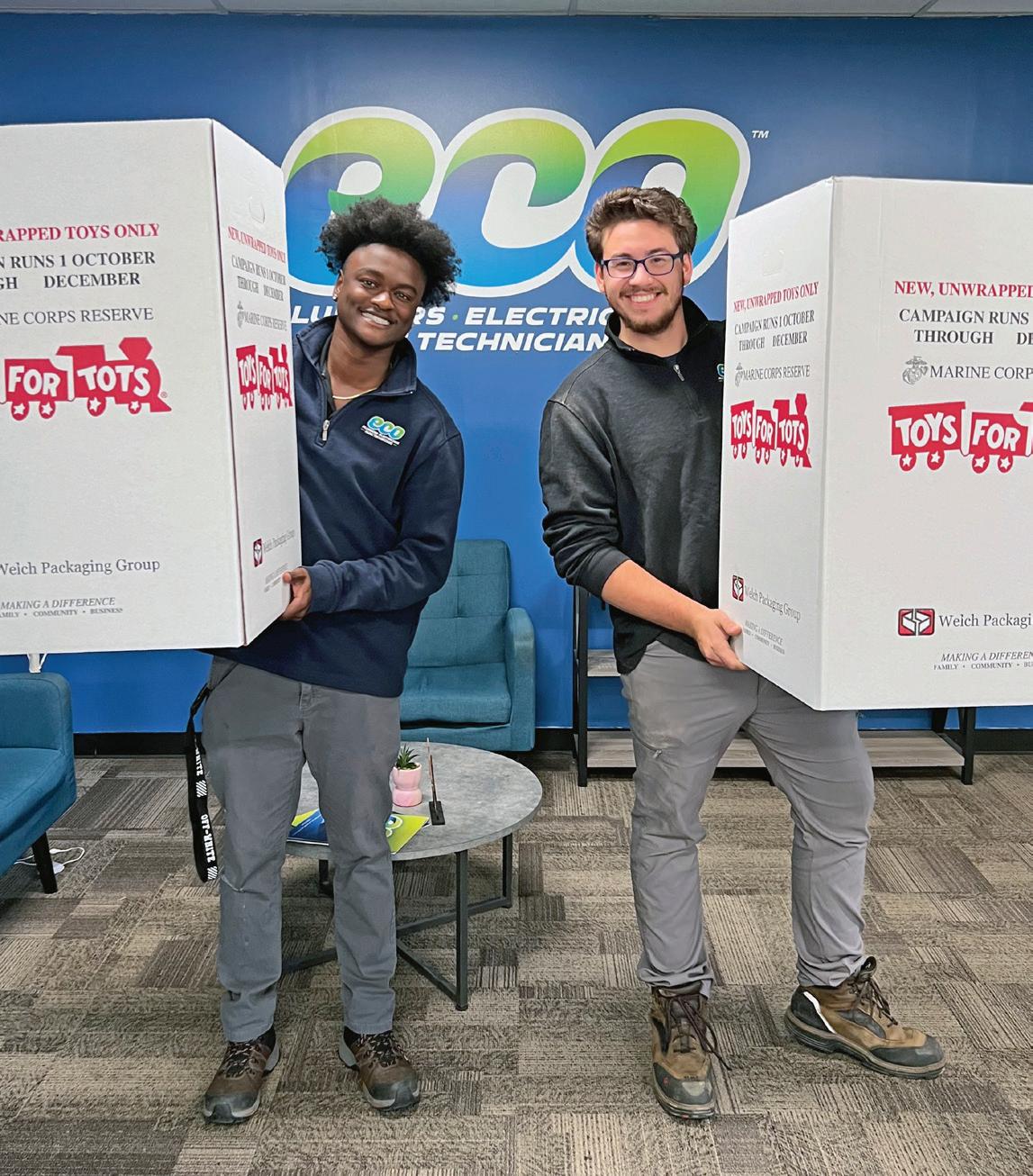
Hilliard, Ohio-based Eco Plumbers, Electricians, and HVAC Technicians is currently in its sixth year participating in Toys for Tots and its fifth year serving as a local drop site.
“I think a lot of people, including myself, didn’t always get to experience Christmas like a lot of other kids did growing up, so being able to provide a better experience for others is important to me and our team during the holiday season,” says Eco Founder and CEO Aaron Gaynor.
One of Eco’s favorite traditions is launching the holiday season with a massive toy-shopping trip led by the marketing team, donating roughly $2,500 worth of items to Toys for Tots at their headquarters. The kickoff sparks a friendly competition among employees, who challenge each other to bring in even more toys—often filling 20 to 25 large donation boxes each year. The company then extends the initiative to customers through social media, encouraging community involvement by designating all branch locations as drop-off sites and even allowing homeowners to contribute toys directly to technicians during service visits.
Beyond the holiday toy drive, Eco supports several charitable causes year-round. They serve as a corporate partner of Nationwide Children’s Hospital, promoting The Kids’ Mental Health Foundation during Mental Health Awareness Month and contributing annually through a local radiothon. Additional support goes to organizations such as Mid-Ohio Food Collective,
Eco Plumbers, Electricians, and HVAC Technicians is currently in its sixth year participating in Toys for Tots and its fifth year serving as a local drop site.
Eco Plumbers, Electricians, and HVAC Technicians
The Toys for Tots toy drive sparks a friendly competition among Eco employees, who challenge each other to bring in even more toys—often filling 20 to 25 large donation boxes each year.
Eco Plumbers, Electricians, and HVAC Technicians
Plumbing,
Air had
Sterling, Virginia-based Cardinal Plumbing Heating & Air has focused on ways to give back to the local community for the past year, according to Marketing Director Mandi Ehman. While the company donates to local organizations when asked, it was really looking for an event it could own. Ehman, a regular blood donor to the Red Cross, saw an opportunity to host a community blood drive at the shop, which took place in October.
“We had a great turnout,” she says. “But all the technicians were terrified. We had 25 of our techs and office staff sign up, and on the day of, we had another four who decided to donate. We ended up having 100% turnout, which our area manager said he’d never seen before. The guys were hanging around and watching other people donate, which I’m not sure was the best idea. They were excited for the opportunity, and at the same time, terrified of the process.”
Ehman explained that while community involvement naturally provides marketing visibility, the true motivation for Cardinal is rooted in its core values—treating customers like neighbors and reinvesting in the place they live and work. Giving back allows the team to acknowledge the financial commitment homeowners make in their HVAC systems while also extending meaningful support in return. She noted that charitable initiatives also create opportunities for technicians, many of whom have young families, to participate in acts of service they may not otherwise have time or access to. These efforts fulfill a deeper personal desire to contribute and make a difference.
employees and
Hope Hollow—providing housing for cancer patients traveling to Columbus—and Star House, a shelter for homeless teens, along with various other nonprofits throughout the year.
“Giving back is something that our team prides itself on, not only by providing quality service to our customers, but also by genuinely caring about the community around us,” Gaynor says.
“Supporting people through hard times, no matter what they’re going through, helps empower our team to go above and beyond for others and feel good about doing it.”
Ehman shared that the company plans to continue hosting community events, including another blood drive planned for January. Their most recent event brought together employees, community members, and even customers—one of whom volunteered as a host after recognizing the company’s involvement and wanting to participate. The positive response reinforced their commitment to making charitable efforts a regular part of their culture.
Folds of Honor is a nonprofit organization providing scholarships to the spouses and children of America’s fallen or disabled military and first responders. Since 2007, Folds of Honor has provided nearly 73,000 educational scholarships. Josh Campbell, owner of Rescue Air in Dallas, Texas, first got involved with the charitable group 10 years ago when he heard the very first recipient of a Folds of Honor scholarship, Sarah Duncan, speak at an HVAC industry conference. Her father was an F-16 fighter pilot killed in the line of duty.
Deeply moved by her speech, Campbell learned more about the organization and started partnering and sponsoring initiatives to help generate awareness and donations. Last month, he joined the board of directors for Folds of Honor.
“We’re deeply passionate about our military,” Campbell says. “As a society, we’ve done a disservice to the people who protect us in this world. Our military men and women, if something happens to them, not a lot happens for their kids. I’m a dad, and I think where would my kid be without me? Folds of Honor’s mission is to honor their legacy and their sacrifice.”
Cardinal
Heating &
both
community participation at its first ever Red Cross blood drive. Cardinal Plumbing, Heating & Air
Josh Campbell, owner of Rescue Air, donated two rare-breed Shoals Lagotto puppies, along with lifetime training and a skeet shooting experience with two Olympic medalists as auction prizes for the Folds of Honor Gala auction, helping to raise $4.6 million to help the spouses and children of fallen military and first responders. Folds of Honor, courtesy Josh Campbell
Campbell attended the Folds of Honor Gala last month, where President George W. Bush was a keynote speaker. Rescue Air donated two rare-breed Shoals Lagotto puppies, along with lifetime training and a skeet shooting experience with two Olympic medalists as auction prizes, helping the organization raise $4.6 million.
Campbell is humble about his involvement, noting he doesn’t do it to help his HVAC business.
“I’m not doing this for marketing,” he says. “But at the same time, I know we’ve got a platform of tens of thousands of customers that we get to communicate with. Folds of Honor is picking up steam, but there are still a lot of people who don’t know about it. Last year, 7,000 qualified applicants looking for scholarships went unfunded. That’s unacceptable to me. The goal here is to make sure that none of these go unfunded. What I want to do is spread the word. We put a lot in there about what we’re doing just because I think if people see that we’re doing something, they might, too. And that’s the way we promote it—just spreading awareness.”
Campbell also agrees that charitable giving is good for company culture.
“People want to be part of something that matters,” he says. “If you’re part of an organization that’s giving back, you know that you’re making an impact. So you can create a platform where people get to do something that contributes. I think the world’s just a better place if we’re all doing that.”
It’s not just HVAC contractors who get into the spirit of giving. Munch’s Supply raised $75,391 through community events to support St. Jude Children’s Research Hospital, continuing a decadelong tradition of philanthropy. F.W. Webb donated $200,000 to support veteran hiring, workforce development, and family assistance at Boston Children’s Hospital.
Rheem is also dedicated to uplifting the local community through its engagement program, Heart of Comfort, which aims
to unite employees in charitable efforts, offer support to those with urgent needs where employees and customers live and work, and amplify its impact by providing essential home comfort to underserved communities.
“Our Heart of Comfort program brings our teams together to make a meaningful impact in the communities where we live and work,” says CHRO Dipa Homer, Rheem.
Additionally, Rheem partnered with Habitat for Humanity to make homeownership a reality for a military veteran. The new homeowner, Michael, a father of five, has lived in Atlanta
“If you’re part of an organization that’s giving back, you know you’re making an impact. So you can create a platform where people get to do something that contributes. I think the world’s just a better place if we’re all doing that.”
— Josh Campbell, Rescue Air
for nearly a decade. Rheem was one of the home’s sponsors and also installed a new water heater and HVAC unit while dozens of metro-Atlanta-based employees volunteered on site to landscape and put final touches on the home. The manufacturer also has sponsored the 9/11 Day Meal Pack for the last three years, with over 100 volunteers in 2025.
Giving back to the community is more than a goodwill gesture—it strengthens the bonds between contractors and the neighborhoods they serve. By supporting local causes, contractors build trust, enhance their reputation, and create meaningful connections with both customers and employees.
“This world has a shortage of people who are getting out, spending their time, energy, and talent helping other people,” Campbell adds. “Most of the problems in this nation or in this world aren’t that hard to solve if you’re doing something to help. Just get out and do something. There’s an old figure of speech: ‘There are three things you can do in a situation: the right thing, the wrong thing, and nothing. And the worst one is doing nothing.’”
Repair or replace? Preparing for A2Ls in Residential Air Conditioning
Exploring the regulatory drivers, servicing best practices, and strategies for advising end-user customers. By Eric Strausbaugh
A2L refrigerants have officially arrived in the U.S. air conditioning (AC) sector. Since January 2025, all new residential and light commercial AC equipment has been required to use refrigerants with a global warming potential (GWP) below 700. A2Ls have been listed as approved alternatives. As A2L-optimized units enter the marketplace, HVAC technicians will be among the first to encounter this equipment in new installations and system replacements.
The 700-GWP limit—which was mandated by the Environmental Protection Agency’s (EPA) Technology Transition rule under the authority of the American Innovation and Manufacturing Act (AIM Act)—will effectively prohibit the use of the legacy A1 hydrofluorocarbon (HFC) R-410A (2,088 GWP) in new AC equipment. The AIM Act also authorized the EPA to phase down HFC production and consumption, which aligns with a global timeline to reduce HFC supplies.
However, the transition to A2L refrigerants in the AC sector won’t happen
A2L Servicing Best Practices and Tools
Despite any reservations and concerns about servicing A2Ls, specific best practices are the same as those currently used. Most are rules of thumb that technicians already know but have not always been required to follow with R-410A systems, including those listed in the table below.
Technicians must use only A2L-certified tools/gauges, replacement parts, leak detection, components, and compressors. Note that threading and labeling are unique to A2Ls to ensure differentiation from R-410A.
Be aware that mitigation measures, often including leak detection, will be mandatory on A2L units above ~4 pounds of charge. If needed, refrigerant detection devices and sensors will most likely be placed on or near the evaporator coil, where leaks commonly occur. Note: these devices and/or sensors must also be optimized to detect the system’s specific A2L refrigerant.
Repair step
1. Safely remove refrigerant, following local and national codes. Required Required
2. Purge circuit with inert gas (i.e., oxygen-free nitrogen). Best practice Required
3. Evacuate refrigerant. Best practice Required
4. Purge with inert gas for five minutes. Best practice Optional
5. Evacuate refrigerant again. Best practice Optional
6. Open the circuit by cutting or brazing. Final step Final step
7. Repair the system and purge with nitrogen during brazing. Required Required
8. Leak-test and pressure-test the unit. Best practice Required
9. Evacuate the system. Required Required
10. Charge the system. Required Required
Tool (versus A1 R-410A)
Gauges
Gauge manifold
Charging hose
Refrigerant recovery cylinder
Vacuum pump
Recovery machines
Gas detectors
Electronic leak detectors
Scales
Ventilation fan
Electrical hand tools
Dry chemical/CO2 fire extinguisher
Use A2L-compatible
A2L requirement
Right-handed (RH) threads (based on equipment service ports)
RH threads
Flammable label, left-handed (LH) threads
Check with manufacturer to see if A2L-compatible (switch located away from work zone)
Use A2L-compatible
Use A2L-compatible
Use A2L-compatible
No change
Similar
Use non-sparking (AHRI-8017)
Use chemical-compatible option
overnight. Existing R-410A equipment will still need to be serviced for many years throughout their useful lifecycles.
When new equipment enters the field, it often comes with new installation and application considerations. During the transition from R-22 to R-410A, these dealt with the change in pressure. Today, it is flammability. Replacement fluids R-454B and R-32 have a “lower flammability” A2L classification. Thus, these applications have specific safety considerations and must use A2L-optimized equipment for installation and servicing.
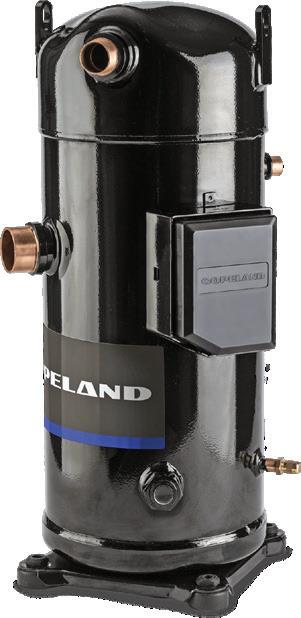
For many years, Copeland has been working with original equipment manufacturers (OEMs) to develop A2L-ready equipment to meet new refrigerant mandates. With the GWP mandate impacting residential AC, technicians are encountering these units in the field. However, many have questions about installing and servicing new A2L systems while supporting customers with R-410A units.
Technicians must be prepared to provide homeowners with system repair and replacement options. To protect their hard-earned reputations, they must also ensure that the new equipment they specify will align with their high-reliability standards.
Balancing Old and New—A2L Servicing Implications
For HVAC technicians, the mix of already installed R-410A equipment and new A2L units will require the knowledge, tools, and resources to manage multiple refrigerants in the field simultaneously. As a rule, it’s important to remember that fluids and components are not interchangeable—both among new and legacy equipment and specific A2L refrigerant blends. For example:
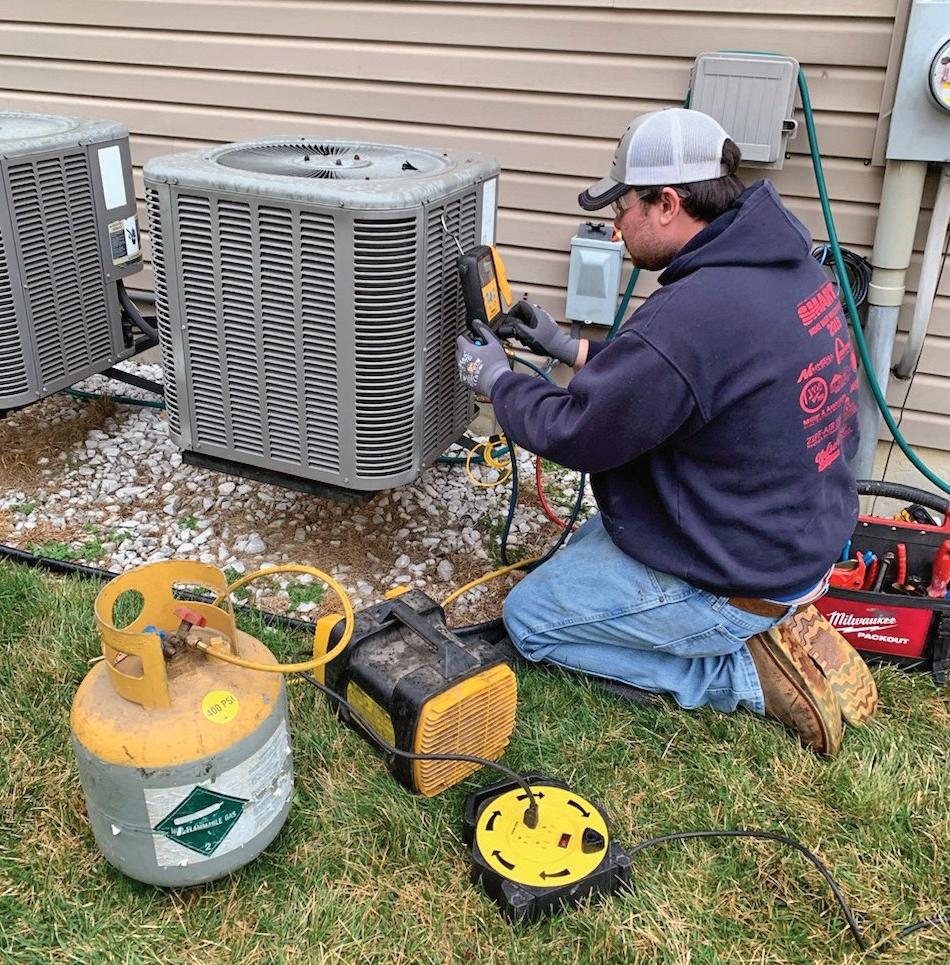
• Do not charge an R-410A system with an A2L refrigerant (or vice versa);
• Do not charge an R-454B system with R-32 refrigerant (i.e., two different A2Ls);
• R-410A compressors or components are incompatible in an A2Loptimized system (and vice versa); and
• In A2L systems requiring leak detection, devices and/or sensors must be optimized to detect a
specific A2L refrigerant (i.e., R-454B or R-32).
As with any new refrigerant platform, optimizing compressors for use with A2Ls requires various modifications and considerations, including lubrication, motor optimization, electronic componentry qualification, and material selection.
Repair or replace? Help Customers Make the Best Decisions
Your customers need to know that if their existing system is operating correctly, the EPA’s 2025 700-GWP limit does not require them to replace it. However, as the refrigerant transition progresses, the price and availability of HFC supplies may impact end users’ “repair versus replace” decisions.
Helping your customers make this decision will be an essential part of your service offerings and an opportunity for you to add value as a qualified technician. Consider the following criteria in your decision.
Refrigerant and legacy component costs.
The price of R-410A is expected to rise over the next several years in alignment with the HFC phasedown. In turn, legacy component costs may also increase, as may potential challenges in sourcing these components.
Energy efficiency evaluation.
Estimate the energy efficiency and/or consumption difference between their legacy system and a new A2L system. A1 systems nearing the end of their lifecycles may experience efficiency losses, while new A2L systems provide higher efficiencies. Recent minimum system efficiency requirements by the Department of Energy (DOE) may also be a factor when evaluating legacy and new A2L systems. It may be beneficial to upgrade from an energy efficiency standpoint alone.
Available incentives.
Depending on the installation region and other factors, end users may be able to offset replacement costs with available incentives and tax rebates. Check state programs, federal tax credits, local utility incentives, and manufacturer rebates.
Eric Strausbaugh is the director of residential product marketing at Copeland.
1. AIRSTAGE Centauri Heat Pump | Fujitsu General America
The single-zone AIRSTAGE Centauri is part of the H-Series R-32 heat pump line. With capacities ranging from 9,000 to 48,000 Btu/h and indoor unit options including ceiling-suspended, compact cassette, circular-flow cassette, and mid-static ducted units, Centauri offers options for almost any application. The AIRSTAGE Centauri offers quiet operation, a COP up to 4.04 and efficiencies up to 26.3 SEER2. It can provide cooling with outdoor temperatures as low as -5° F without the need for additional accessories. The heat pump features convenient service panels and easily accessible refrigerant service ports for quick maintenance. It includes self-diagnostics with error codes, pre-charged refrigerant, and corrosion-resistant coil coatings for durability. A base pan with drain ports/drainpipe prevents water buildup. Service monitoring functionality and extended line set lengths up to 246 feet are supported via compatible accessories. www.fujitsugeneral.com
2. Elite Series EL18KSLV Side Discharge Heat Pump | Lennox
The EL18KSLV Side Discharge Heat Pump features a narrow cabinet designed for easy installation in space-limited areas, such as zerolot-line homes. Its variable-capacity design adjusts output to align with household comfort needs while supporting energy efficiency. With ratings up to 19 SEER2 and 10 HSPF2, the unit is built to help reduce energy use and may contribute to lower utility costs throughout the year. A precision-balanced, direct-drive fan enables sound levels as low as 54 decibels, comparable to an electric toothbrush. www.lennox.com.
3. YAW and YAV Variable Speed Scroll Compressors | Copeland
YAW and YAV variable-speed compressor platforms help heat pump manufacturers overcome heating capacity challenges in cold climate applications down to -25° F, supporting the acceleration of sustainable heat pump adoption. YAW and YAV variable-speed scroll compressor platforms are engineered to deliver the heating capacities and efficiencies required to meet DOE’s strict cold climate heat pump (CCHP) standard. The YAV variable-speed scroll compressor platform extends heat pump capacity ranges to help maintain comfort in ambient temperatures as low as -25° F for residential and commercial applications. In part-load conditions, YAV variable-speed scroll compressors modulate to match lower-capacity requirements, avoiding costly stops and starts, which can consume excess energy. Available in tonnage ranges for both residential and
commercial applications, the YAW platform features a multitude of innovations, including scroll enhancements for lower-global warming potential (GWP) A2L refrigerant optimization, a new scroll design to improve heating and cooling efficiencies, and an injection port on the compressor for an enhanced vapor injection (EVI) loop. Its design enables OEMs to precisely inject vapor during the compression cycle while providing subcooling to the refrigerant before entering the evaporator, increasing heating capacity up to 25% and heating efficiency up to 10%—which expands heat pump operation in low ambient conditions. copeland.com
4. Vacuum Y with RealTorqueCore Removal Tool |
Ritchie Engineering/YELLOWJACKET
The patent-pending YELLOW JACKET Vacuum Y with RealTorqueCore Removal Tool (CRT) features the industry’s first integrated RealTorqueCRT, the company says. The dual-path ‘Y’ design, coupled with the ability to remove the Schrader core with the integrated CRT, increases evacuation volume to allow for faster system evacuations. The RealTorque torque limiting technology ensures the Schrader core is properly reinstalled to guarantee the system remains leak-free. The Vacuum Y is available in 1/4”, 5/16”, and 1/4” with 5/16” adapter separately or in the Deluxe MaxFlow Evacuation Kit. yellowjacket.com
5. Next-Generation Shelving & Accessory Line | Adrian Steel
The Next-Generation Shelving & Accessory product line features versatile, flexible shelving units that are configurable for a variety of pickup truck and van types and designed to minimize cargo dead space and provide better durability and safety, leading to improved productivity and ROI. Next-Generation Shelving offers the longest and tallest shelves in the industry, with lengths up to 144”. The innovative design allows for mix-andmatch customization, with four end panel heights, nine shelf lengths, four shelf depths, 12 drawer unit options, and six bin options. Constructed from high-strength low-alloy (HSLA) steel, these shelves are stronger than ever, holding an average of 50 pounds per foot (compared with an average of 35 pounds per foot on current shelving). The product line includes improved accessories that maximize shelf space with drawer units, door kits, and bins for all shelf sizes. www.adriansteel.com
SALES CONTACTS
SOUTH & WEST: SENIOR MANAGER, BUSINESS DEVELOPMENT
Randy Jeter Office: 512-263-7280
Cell: 512-426-9145
Fax: 913-514-6628 rjeter@endeavorb2b.com
EAST COAST: SENIOR MANAGER, BUSINESS DEVELOPMENT
Brian Sack Cell: 732-629-1949 bsack@endeavorb2b.com
ACCOUNT
Bill Boyadjis 973-829-0648
bboyadjis@endeavorb2b.com
CLASSIFIEDS/INSIDE SALES: MEDIA ACCOUNT EXECUTIVE
Steve Suarez Cell: 816-588-7372
Office: 941-259-0867
ssuarez@endeavorb2b.com
DIRECTOR OF SALES, BUILDINGS & CONSTRUCTION GROUP
Joe Agron 941-200-4778
jagron@endeavorb2b.com
Strong businesses and strong leaders don’t wait until Jan. 1 to start fresh. They start now.
Clean Your House Before 2026: The Unsexy Work That Builds Strong Businesses
As 2025 winds down, the talk everywhere turns to goals, resolutions, and big plans for the year ahead. But if you’re anything like me, sometimes that can feel a little overwhelming. Some years, it’s not about big goals or fresh starts; it’s about getting your feet back under you and preparing your business for a smoother, stronger year ahead.
In full transparency, this has been one of the toughest years I have had in business. There were more hard days than easy ones. Many days, I wondered why I kept putting myself through the chaos that comes with running a business. I don’t say that to be negative; I say it to be honest. Too often, we see highlight reels that make it look like everyone else is thriving, when in reality, most of us are just trying to make it through another day.
But those hard years teach you the most valuable lessons. And the biggest one I learned this year is this: you can’t build anything new until you clean up what’s messy.
Wearing the Wrong Hat
We have all heard the saying that wearing multiple hats is part of being a small business owner. But let’s be honest, wearing too many hats isn’t a flex, and wearing the wrong one can be downright damaging.
This year, I found myself deep in areas that aren’t my strengths: finances and HR. They are both important, but they are not what I love or what I’m best at. I’m happiest when I am being creative, strategic, and working on marketing and growth. Those are the things that move our business forward.
When you’re stuck doing work that doesn’t fit your strengths, you end up holding your business back. It’s not about doing it all; it’s about finding people who love doing the things that drain you. When the right people are in the right roles, your company grows, and you regain the energy and focus to lead.
Heading into 2026, ask yourself: what hat do I need to take off?
Get Real About the Numbers
Alyssa Rogers is vice president of Rogers Heating, Cooling, Electrical, with offices in Lynchburg and South Boston, Virginia.
Now for the unsexy truth: your finances matter. A lot. If you are only tracking what is in the bank and paying bills when they come in, you’re flying blind. The difference between a business that’s surviving and one that’s thriving often comes down to financial discipline.
For years, I thought as long as we could pay our bills, our team, and ourselves, everything was fine. But “fine” isn’t the same as healthy. It wasn’t until we
really started digging into the numbers daily, weekly, monthly, that I began to see where the gaps were.
Every dollar needs to be watched. You need people, not just software, keeping tabs on what’s coming in and what’s going out. When you finally get serious about your numbers, it’s like turning the lights on in a dark room. You see where the waste is, where the opportunity lies, and where your systems need tightening. It’s not glamorous, but it’s essential.
Protect Yourself
Here’s another uncomfortable topic: lawyers.
If you plan to grow and hire, you need legal protection. A good lawyer can review your employee handbook, pay structures, contracts, and policies to make sure you are compliant and protected. They can help you avoid the traps you don’t even know are there.
Pair that with a solid insurance review, and you will sleep better knowing that if something goes sideways, you’re covered.
The Foundation No One Talks About
Everyone loves to talk about building the “dream team” with your techs, CSRs, and managers. But your real foundation lives behind the scenes: your CPA, HR manager, and your accounts receivable and payable reps. These are the people who keep your business running smoothly when things get hectic.
So, before 2026 arrives, make this your focus: review your handbook, policies and pay structures; meet with your CPA and your lawyer; check your insurance coverage; and put the right people in the right roles.
These may not be the tasks that make flashy social posts or feel exciting, but they are what make a business sustainable. When your house is in order, you can finally focus on the things that drive you: leading your people, serving your customers, and creating a business that lasts.
Build Before You Begin
I’m not setting resolutions or chasing shiny new ideas. I’m cleaning up what’s messy, tightening what’s loose, and preparing for what’s next.
Because if there’s one thing I’ve learned, it’s that strong businesses and strong leaders don’t wait for Jan. 1 to start fresh. They start now.
Here’s to ending 2025 well, building a solid foundation, and stepping into 2026 ready for more good days than bad. Let’s clean the house and build something unshakable.
Whether You Need Parts Tomorrow...
Don’t sweat it. We carry replacement parts and equipment for hundreds of boilers, all in stock, with fast shipping available from coast to coast.
We’re helping pros stay ahead of the new 2028 efficiency standards with a reliable selection of compliant circulator pumps and on-site resources.
Is Ready for Both
Less searching, more finding. Scan to shop now. Visit SupplyHouse.com and see how you could simplify your next job.
» Simple, stylish single-module units from 6 – 20 T and dual-modules up to 40 T
» Space-saving 16 – 20 T single module units provide up to 34% footprint and up to 500 lbs./ unit weight reduction*
* Model specific: Check product specifications for details.
Additional Information
» High energy efficiency with IEERs up to 30.0 delivers up to 30% efficiency increase*
» Year-round comfort and energy savings with Daikin’s Variable Refrigerant Temperature Technology (VRT)
» Heating down to -13°F as standard and high heating capacities at 17°F make it an ideal choice for all- electric heat pump solutions
» Dual-fuel ready with connectivity to Daikin communicating gas furnace or all-electric heat pump heating for optimized operational costs based on utility rates
» 208 / 230 or 460V
From the world’s #1 air conditioning company, discover the cloud connected benefits of VRV EMERION provided by Daikin’s HERO Cloud Services
Before purchasing this appliance, read important information about its estimated annual energy consumption, yearly operating cost, or energy efficiency rating that is available from your retailer.