Welcome to the March 25th 2026 issue of Radio World

Welcome to the March 25th 2026 issue of Radio World
A look at engineering trends and sessions at the NAB Show
Is your signal secure?
Distributed infrastructures present operational risks that you may not have considered.
Badri Munipalla talks about the new terrestrial receiver from NPR Distribution.
AI in media
Labs discusses a strategic approach to artificial intelligence.
Vol. 50 No. 7 | March 25 2026
www.radioworld.com
FOLLOW US
www.twitter.com/radioworld_news
www.facebook.com/RadioWorldMagazine www.linkedin.com/company/radio-world-futureplc
CONTENT
Managing Director, Content & Editor in Chief Paul J. McLane, paul.mclane@futurenet.com, 845-414-6105
Content Producer Nick Langan, nicholas.langan@futurenet.com
Technical Advisors W.C. “Cris” Alexander, Thomas R. McGinley, Doug Irwin
Contributors: Michael Baldauf, David Bialik, John Bisset, Edwin Bukont, James Careless, Ken Deutsch, Todd Dixon, Mark Durenberger, Charles Fitch, Donna Halper, William Harrison, Alan Jurison, Paul Kaminski, John Kean, Mark Lapidus, James O’Neal, Jim Peck, Mark Persons, Jeremy Preece, John Schneider, Gregg Skall, Dan Slentz, Randy Stine, Tom Vernon, Chris Wygal
Production Manager Nicole Schilling
Senior Design Director Lisa McIntosh
Senior Art Editor Will Shum
ADVERTISING SALES
Senior Business Director & Publisher, Radio World John Casey, john.casey@futurenet.com, 845-678-3839
Advertising EMEA
Raffaella Calabrese, raffaella.calabrese@futurenet.com, +39 348 229 3293
SUBSCRIBER CUSTOMER SERVICE
To subscribe, change your address, or check on your current account status, go to www.radioworld.com and click on Subscribe, email futureplc@computerfulfillment.com, call 888-266-5828, or write P.O. Box 848, Lowell, MA 01853.
LICENSING/REPRINTS/PERMISSIONS
Radio World is available for licensing. Contact the Licensing team to discuss partnership opportunities. Head of Print Licensing Rachel Shaw licensing@futurenet.com
MANAGEMENT
SVP, MD, B2B Amanda Darman-Allen
VP, Global Head of Content, B2B Carmel King
MD, Content, Broadcast Tech Paul J. McLane
Global Head of Sales, Future B2B Tom Sikes
Managing VP of Sales, B2B Tech Adam Goldstein VP, Global Head of Strategy & Ops, B2B Allison Markert VP, Product & Marketing, B2B Andrew Buchholz Head of Production US & UK Mark Constance Head of Design, B2B Nicole Cobban

FUTURE US, INC.
Future US LLC, 130 West 42nd Street, 7th Floor, New York, NY 10036
All contents ©Future US, Inc. or published under licence. All rights reserved. No part of this magazine may be used, stored, transmitted or reproduced in any way without the prior written permission of the publisher. Future Publishing Limited (company number 02008885) is registered in England and Wales. Registered office: Quay House, The Ambury, Bath BA1 1UA. All information contained in this publication is for information only and is, as far as we are aware, correct at the time of going to press. Future cannot accept any responsibility for errors or inaccuracies in such information. You are advised to contact manufacturers and retailers directly with regard to the price of products/services referred to in this publication. Apps and websites mentioned in this publication are not under our control. We are not responsible for their contents or any other changes or updates to them. This magazine is fully independent and not affiliated in any way with the companies mentioned herein.
If you submit material to us, you warrant that you own the material and/ or have the necessary rights/permissions to supply the material and you automatically grant Future and its licensees a licence to publish your submission in whole or in part in any/all issues and/or editions of publications, in any format published worldwide and on associated websites, social media channels and associated products. Any material you submit is sent at your own risk and, although every care is taken, neither Future n or its employees, agents, subcontractors or licensees shall be liable for loss or damage. We assume all unsolicited material is for publication unless otherwise stated, and reserve the right to edit, amend, adapt all submissions.
Radio World (ISSN 0274-8541) is published bi-weekly by Future B2B. 130 W. 42nd St, 7th Floor, NY NY 10036.
Periodicals postage paid at New York, NY and at additional mailing offices. POSTMASTER: Send address changes to PO Box 848 Lowell MA 01853.
Please recycle. We are committed to only using magazine paper which is derived from responsibly managed, certified forestry and chlorine-free manufacture. The paper in this magazine was sourced and produced from sustainable managed forests, conforming to strict environmental and socioeconomic standards. The manufacturing paper mill and printer hold full FSC and PEFC certification and accreditation.
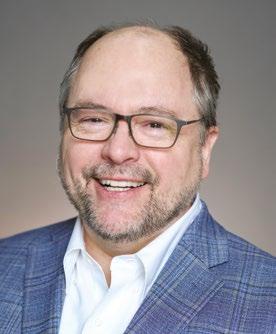
I hope you’ll join me for these two talks
Paul
McLane Editor in Chief
n this issue you’ll read about quite a few interesting sessions and presentations in and around this year’s NAB Show.
We’ve provided samplings from the Broadcast Engineering & IT Conference, the Society of Broadcast Engineers Ennes Workshop and the Public Radio Engineering Conference. In these stories we’ve tried not just to preview the talks but asked our sources to share some of their insights with us. I hope you’ll find these articles useful.
I’d also like to invite you to two events at which I’ll be speaking.
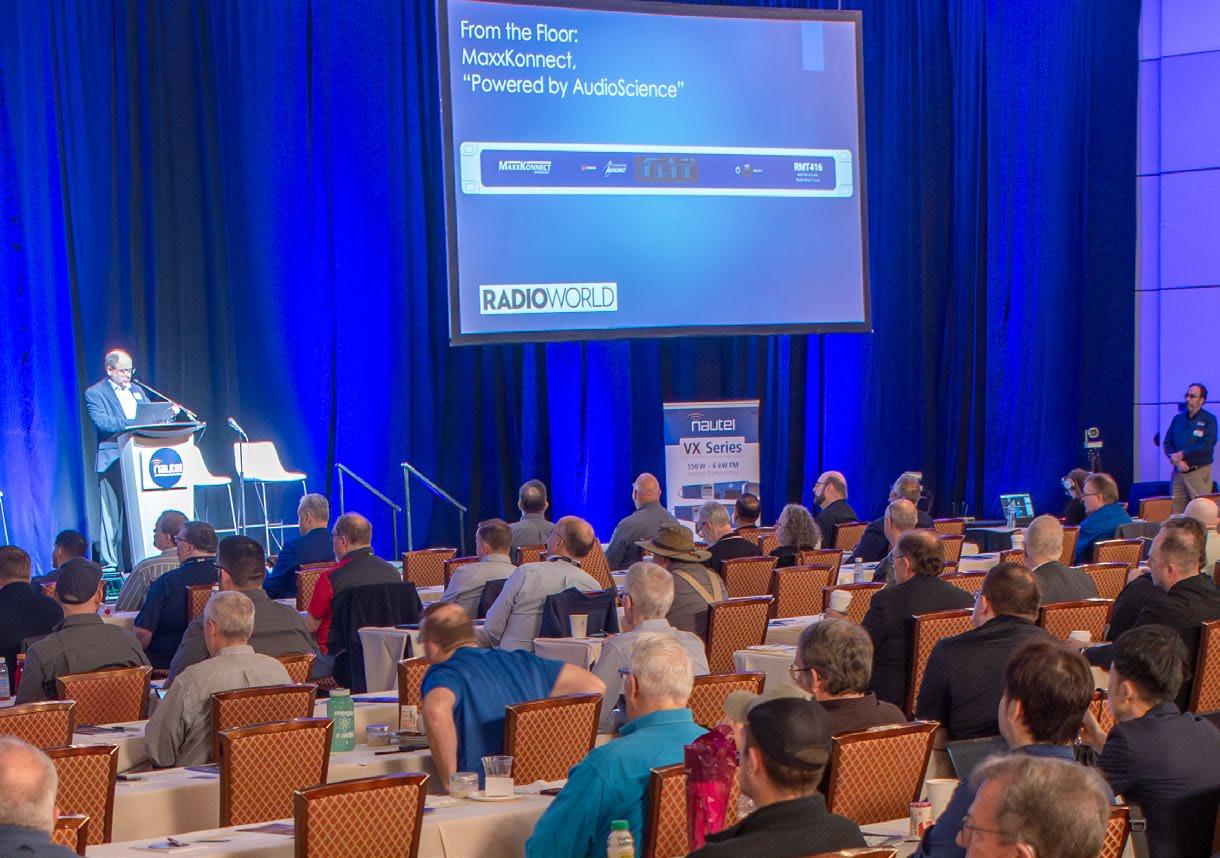
First, Nautel will reprise its popular Radio Technology Forum — still often referred to as “the NUG” but by no means limited to Nautel users — on Sunday morning April 19.
Conveniently, the forum this year will be held in the main ballroom at the Westgate, which is right next door to the Las Vegas Convention Center.
Nautel does a super job with the event — and I say this not only because they have the good taste to invite me to speak! The forum consistently pulls in 300 or more engineers and other broadcasters who gather to learn about new technologies from around the industry, from Nautel as well as other technology sources.
The doors open at 8 a.m. Here’s an insider tip: The first half-hour is a great time to grab some of Nautel’s hot coffee and mingle with an engineering “Who’s Who” of radio until presentations start at 8:30, so arrive early.
I then help kick things off with a short discussion about “What I’m Watching for at NAB.” Other speakers this year include Joe D’Angelo of Xperi
and Steve Newberry of Quu, as well as Jeff Welton with his famous “tips and tricks.”
A complimentary hot lunch is available for attendees. In fact the whole thing is free, which is a nice kind of price. Your attendance even qualifies for a half-credit towards SBE recertification in Category H. But advance signup is required. Visit www.nautel.com/nab
And later on Sunday, please join me on the stage of the TV and Radio HQ Theater on the Central Hall exhibit floor.
“Please join me on Sunday afternoon of the show for a chat with Andy Gladding and Bud Williamson that explores the intersection of engineering and station ownership. ”
I’m going to salute Andy Gladding, this year’s recipient of Radio World’s Excellence in Engineering Award; and then Andy and I will be joined by Bud Williamson for a conversation called “Radio — the New Boutique Business?”
We’ll explore the idea that owning a radio station is a great fit for Gen-X and Millennial professionals.
“People my age are looking for an opportunity to do something outstanding in their communities,” Andy told me recently.
“They’re investing in traditional small business, they’re buying farms, opening retail establishments and generally looking for an opportunity to succeed while having the power to have an impact at the community level and create lasting interpersonal business relationships.”
He believes that for media professionals who are competent with and trained in radio workflows and understand how to market local business, “radio can be a perfect for personal satisfaction and growth.”
Andy is an engineer with Salem Media Network and an educator at Hofstra University. He and his wife Katie recently acquired WKZE(FM) in Red Hook, N.Y. His friend and colleague Bud Williamson is also an engineer and station owner.
You can stop in while you’re browsing the booths of the Central Hall. Our talk is 3 p.m. Sunday at C2450, the TV and Radio HQ Theater.
Distributed infrastructures bring operational risks that you may not have considered
AMonday panel in the Broadcast Engineering & It Conference will explore “Securing the Signal: Field Operations, Site Safety and Security Protocols for Modern Broadcasters.” It includes experts from Fox, Dataminr, Smith Entertainment Group and Verkdata.
Steve Shultis, the CTO of New York Public Radio, is the moderator.
Steve what’s this session about?
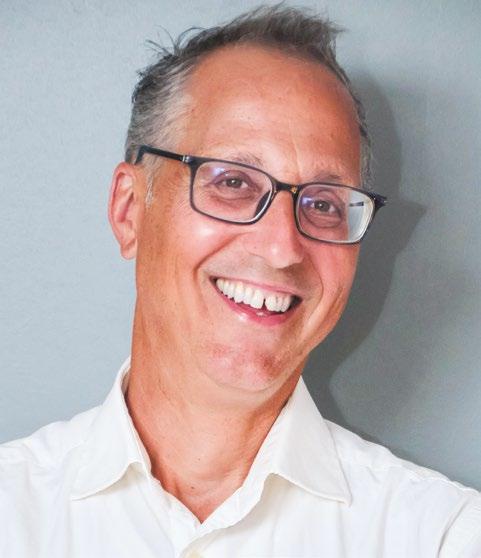
Steve Shultis: “Securing the Signal” examines how broadcasters can modernize their approach to field safety and site security as operations become increasingly distributed.
Today’s broadcast signals travel through our HQs, transmitter sites, remote field production environments, rooftop positions and shared infrastructure. Each of these locations introduces operational risk that often falls outside traditional security planning.
This panel brings together broadcast leaders responsible for safety and operations, along with technology experts to discuss practical frameworks for protecting both infrastructure and personnel.
The focus is on helping stations shift their security posture from reactive response toward proactive risk identification and prevention — using clear protocols, realtime intelligence and modern monitoring tools.
Can you give an example of best practices that stations should consider to secure their signals?
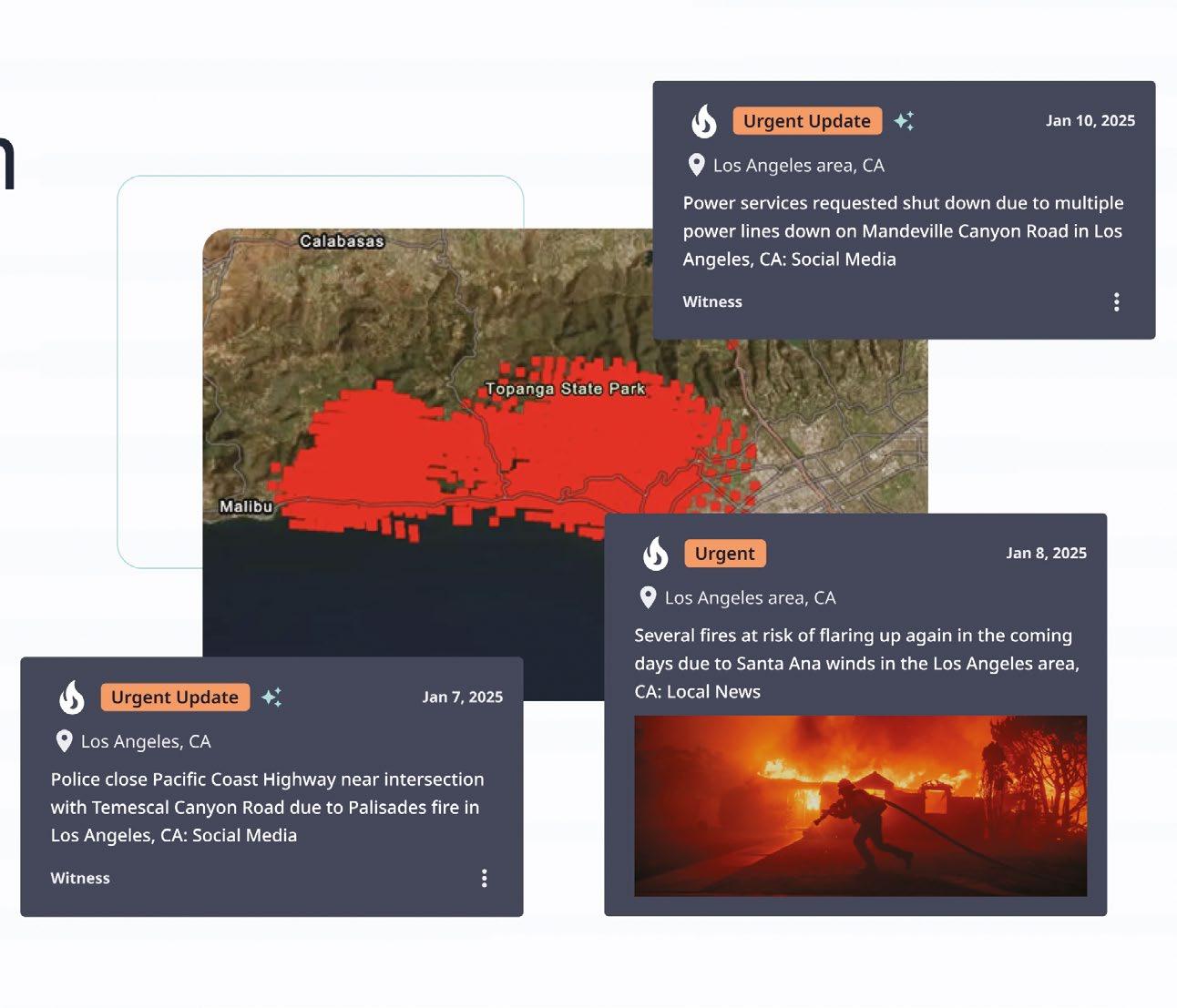
Shultis: First, integrating real-time threat awareness into field operations. This includes the use of threat intelligence aggregation and alerting platforms that provide situational awareness within defined geographic areas, allowing organizations to anticipate and respond to emerging risks affecting their personnel or sites.
And then enhancing physical site monitoring with intelligent video analytics. AI-assisted analysis can help identify unusual behavior, perimeter breaches or developing threats earlier, enabling faster escalation to internal teams or law enforcement when necessary.
“Field operations” is part of the description. What should stations know about securing their signals in this area?
Shultis: Field operations introduce unique challenges because teams are often working alone, in remote locations or in temporary environments such as live
Above
Steve Shultis
Below
During the session “Securing the Signal,” panelists discuss how threat intelligence platforms enable broadcasters to anticipate risks and safeguard field operations. The images are from the company Dataminr.
event sites.
Stations should ensure that:
• Clear check-in, “all-clear” and escalation protocols are in place for remote engineers and field crews.
• Site access procedures are standardized and documented.
• Risk assessments are conducted before deployments, particularly for high-profile events or in areas experiencing heightened activity.
• Safety planning is integrated into routine maintenance and upgrade workflows, not treated as a separate function.
Securing the signal in the field ultimately means securing the people responsible for keeping it on air.
Are there common misconceptions you’d like to dispel?
Shultis: One is that serious physical threats are rare or limited to large markets. In reality, incidents affecting broadcast personnel and infrastructure have occurred across market sizes, often in environments that were previously considered low risk.
Another misconception is that security is solely a facilities issue. In today’s distributed and IP-centric workflows, responsibility spans engineering, operations, IT, HR and leadership. Security must be integrated into everyday operational planning rather than addressed only after an incident.

The Society of Broadcast Engineers’ Ennes Workshop at the NAB Show will offer a combination of relevant trends and real-world advice that you won’t find in a classroom.
The event will again feature two tracks: “From Signals to Success: RF101 Gets You There” and “Emerging Technology.” In this story we focus on the latter track.
Important for your planning: The sessions will be held on show Tuesday Wednesday (April 21–22), a shift from previous years.
The workshop will be in the North Hall conference rooms of the Las Vegas Convention Center, N250 for Emerging
Writer Nick Langan Content Producer
Technology and N254 for RF101. You do not need to buy a full NAB conference pass to attend, and the workshop fee includes a pass to the NAB show floor. Registrants are provided lunch.
The Emerging Technology track will be busy with about eight hours of sessions both days. Planning began months ago, according to organizers David Bialik and Fred Willard.
Willard is the senior RF engineer at TelevisaUnivision. Bialik is the director of engineering at MediaCo New York and the recipient of the 2025 James C. Wulliman SBE Educator of the Year award.

At NAB in 2026 Tieline reveals ViA Duo, the new generation of trusted ViA technology that truly bridges the gap between field reporting and commentary. Built for reporters and commentators alike, it is an ultraportable broadcast platform that can operate as an IP codec, AoIP commentary node, or facilitate off-tube broadcasting with support for audio and video feeds.
Simply take the codec to the remote site, power it up, and connect to your preferred network and start broadcasting. There’s no need for additional outboard gear like mixers, equalizers, compressors, noise gates, expanders, recorders and playback machines – with ViA Duo it is all-in-one and ready to go!
ViA Duo supports HDMI video out, multiple AoIP protocols, plus IP streaming over multiple interfaces. It delivers an all-in-one solution consolidating your remote broadcast, commentary and off-tube broadcasting requirements into a single compact and lightweight box. It is ideal for:
• Reporters to use with a guest
• Two commentators broadcasting sports events
• Announcers working from home
• Talk show and other radio show hosts on the road
• Off-tube commentary, or use as a sports commentary unit over AES67, ST2110-10, Livewire, RAVENNA, or Dante (AoIP and Dante card is optional)
Pg:1 Tieline Unveils New ViA Duo Codec at NAB
Pg:2 Time is Running Out to Replace Satellite Links
Pg:3 Cogeco Media Upgrades Network with Gateway
Pg:4 Using NMOS and Ember+ to Control Codecs
Visit Booth: #C2246
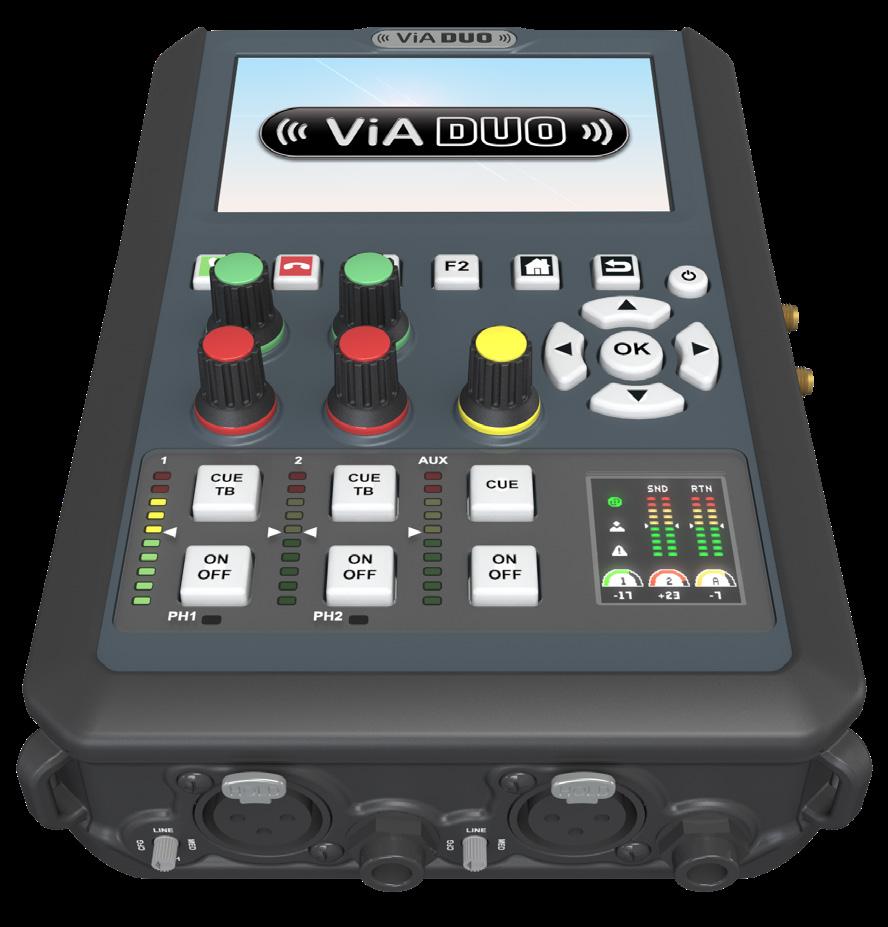
With ViA Duo the possibilities are endless. You can:
• Remote control the codec from anywhere, anytime using the built-in web-GUI or Cloud Codec Controller
• Configure SmartStream PLUS hitless packet switching, or Fuse-IP data aggregation
• Connect wirelessly with a Global LTE modem, USB modem, or built-in Wi-Fi, or with dual LAN ports
• Customize routing and headphone, cue and talkback matrices using the touchscreen
See ViA Duo for the first time at Tieline booth C2246 in the Central Hall at NAB 2026.
C lick here or scan the QR code for more Information.

It might be time to consider satellite link replacement options as the FCC is proposing to auction up to 180 MHz of upper C-band spectrum (from 3.98 GHz–4.16 GHz) through competitive bidding before July 2027. The NAB is recommending it be limited to 100 MHz but the final outcome is uncertain. This auction would price broadcasters out of the market as it will be difficult match offers from companies like Verizon, AT&T, and Starlink.
This will potentially affect broadcasters relying on satellite links for content delivery and studio-totransmitter links. For example, this may include transmitter tower sites or the primary facility of an affiliate that requires satellite links to receive network programming.
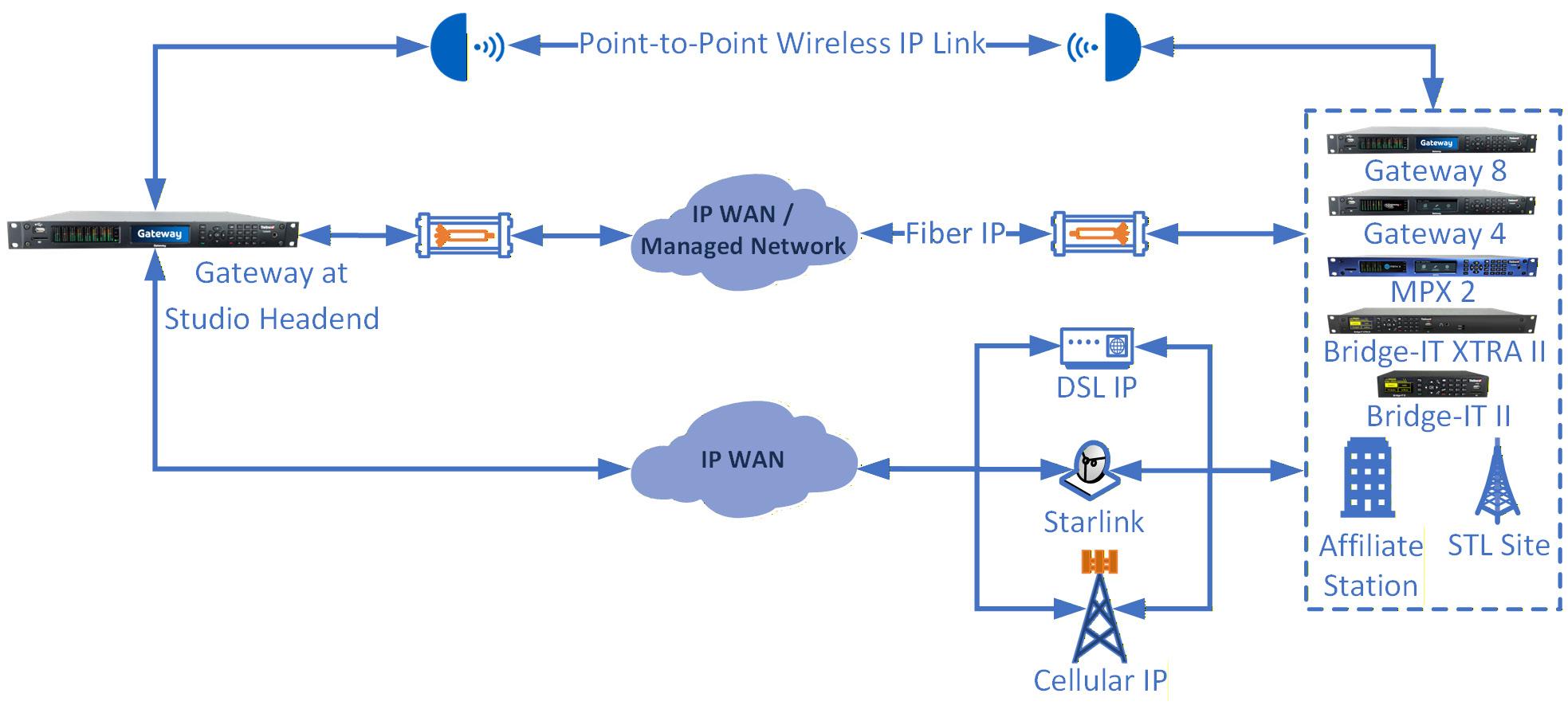
Tieline offers a range of codec solutions to resolve the issue for affected networks and it will in many cases reduce costs in the long run anyway. For content delivery the perfect headend option is a Tieline Gateway which delivers many connection options. Supporting up to 16 channels, you can configure up to 8 bidirectional stereo connections, in addition to multi-unicasting
and multicasting solutions. Sites receiving STL signals, or affiliates receiving network programming, can choose from the following options:
• Bridge-IT II or Bridge-IT XTRA II for low-cost simple syndication networks
• Gateway 4 or Gateway 8 to receive multiple signals
• MPX I and MPX II codecs for STL links.
For example, a Gateway 8 could receive a sport signal live on stereo 1 with stereo 2 receiving a Web Stream. Stereo 3 could carry a 2nd match with stereo 4 perhaps used for an HD Signal.
Viable connection alternatives include fiber, DSL, cellular, and wireless links (e.g. Ubiquiti) along with Starlink. Tieline offers hitless packet level redundancy with proprietary SmartStream PLUS technology and we recommend the headend invests in two (or more) good internet providers over fiber. For affiliates, if fiber is available then this is recommended. If the site is in a remote area with few options, we recommend considering whatever wired internet service is available, e.g. DSL, and perhaps investing in a wireless link as real-time hot backup.
Cogeco Media is one of Québec’s largest radio broadcasters and operates 20 radio stations across Québec and one in Ontario, reaching nearly 5 million listeners each week with varied and relevant programming.
Pascal Gélinas, Cogeco’s Head of Technology, and dealer Marketing Marc Vallee, approached Tieline to assist in designing a new distribution network for their content, as well as their contribution codecs. The goal was to standardize equipment to provide the best flexibility and make it easier on technical support staff.
Two Tieline Gateways were installed in 8 cities, including Montreal, Laval, Trois-Rivières, Sherbrooke, Gatineau, St-Jérôme, Chicoutimi, and Québec. Depending on the location, the Gateways had different purposes. For the most part these units were all part of the syndication network. They would either send streams, receive streams, or do a mix of both. The other Gateways provided the capability and freedom to do remotes, without touching the distribution network, as well as connect to other studios if need be.
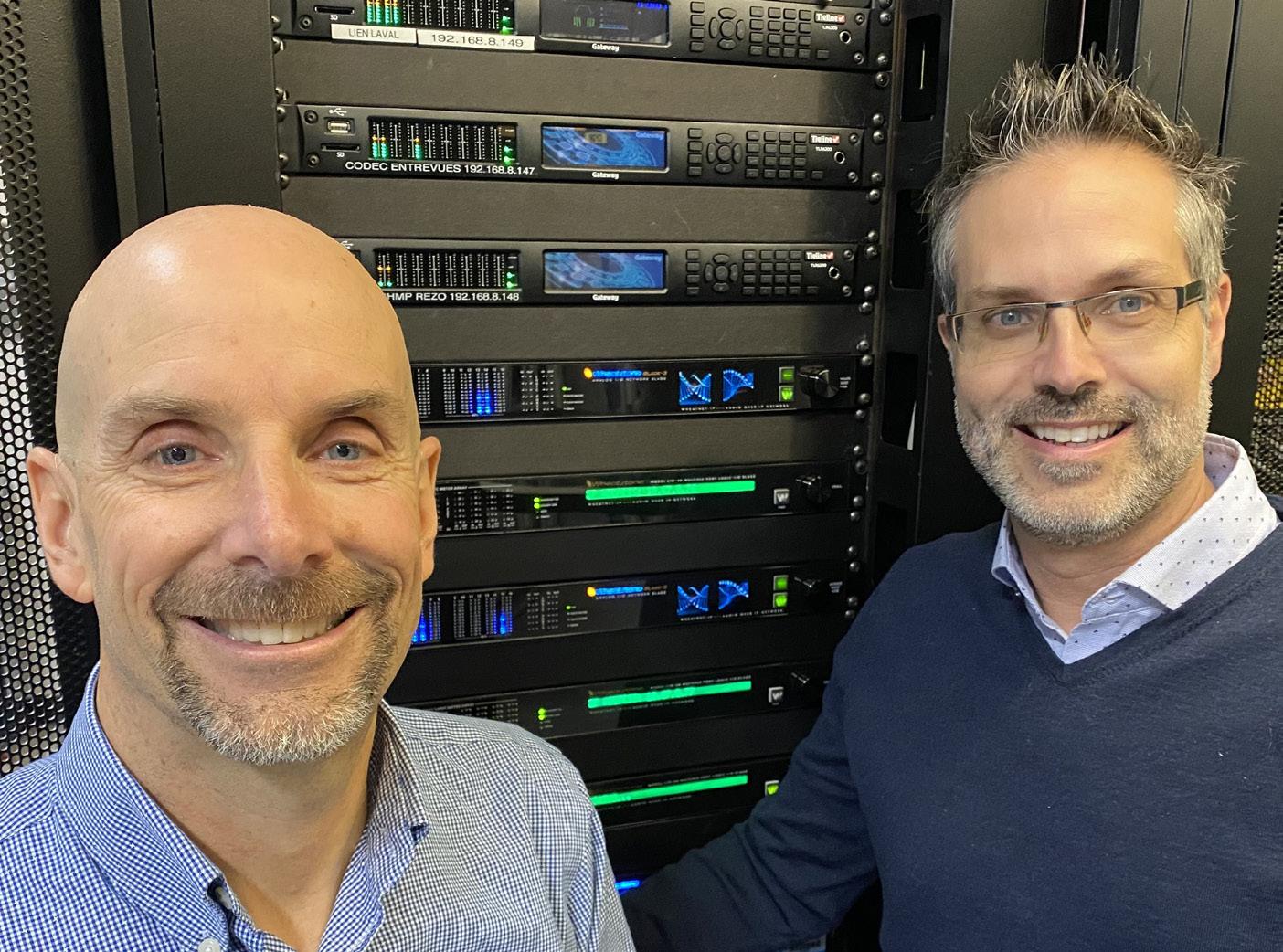
Cogeco Media has a number of Wheatstone studio installations, so the Gateway codecs needed to have WheatNet-IP cards to support seamless AoIP transport throughout their studios, as well as support for WheatNet logic IOs between sites. These logic IOs are important because they trigger all the commercial breaks.
“The codecs provide very low latency and high audio quality without compromising reliability. Additionally, the WheatNet-IP integration made the choice of Tieline Gateways a no-brainer,” said Pascal Gélinas, Head of Technology.
After requests from Cogeco, Tieline added SmartStream PLUS redundant streaming support to multi-unicast streams. This additional capability, along with access to multiple ISPs in all markets, ensured sufficient redundancy was built into the new infrastructure upgrade for their contribution links, peer-to-peer connections, and the new syndication network.
Frederic Vendette, Director of Technology Operations, is very pleased with the project’s outcome. “Our technical teams like the simplicity of the Gateway codecs and at the same time the ability to configure the devices for our different needs,” said Frederic.
C lick here or scan the QR code for the full story
Many engineers often ask us about NMOS (Networked Media Open Specifications) and Ember+ and how these protocols can be used to manage and monitor codec functions, as well as ST 2110-30, ST 2022-7 and AES67 IP streams. Here’s a brief introduction to the benefits of both protocols.
NMOS is a set of open standards developed by the Advanced Media Workflow Association (AMWA), which helps to standardise and simplify the interconnection of devices in IP media networks. Tieline audio codecs support Ember+, NMOS IS-04 (Discovery and Registration) and IS-05 (Connection Management), supporting interoperability, discovery, connection management and control in IP-based networks. They also support NMOS IS-07 (Events and Tallys), which facilitates sending messages to notify users about issues like stream failure.
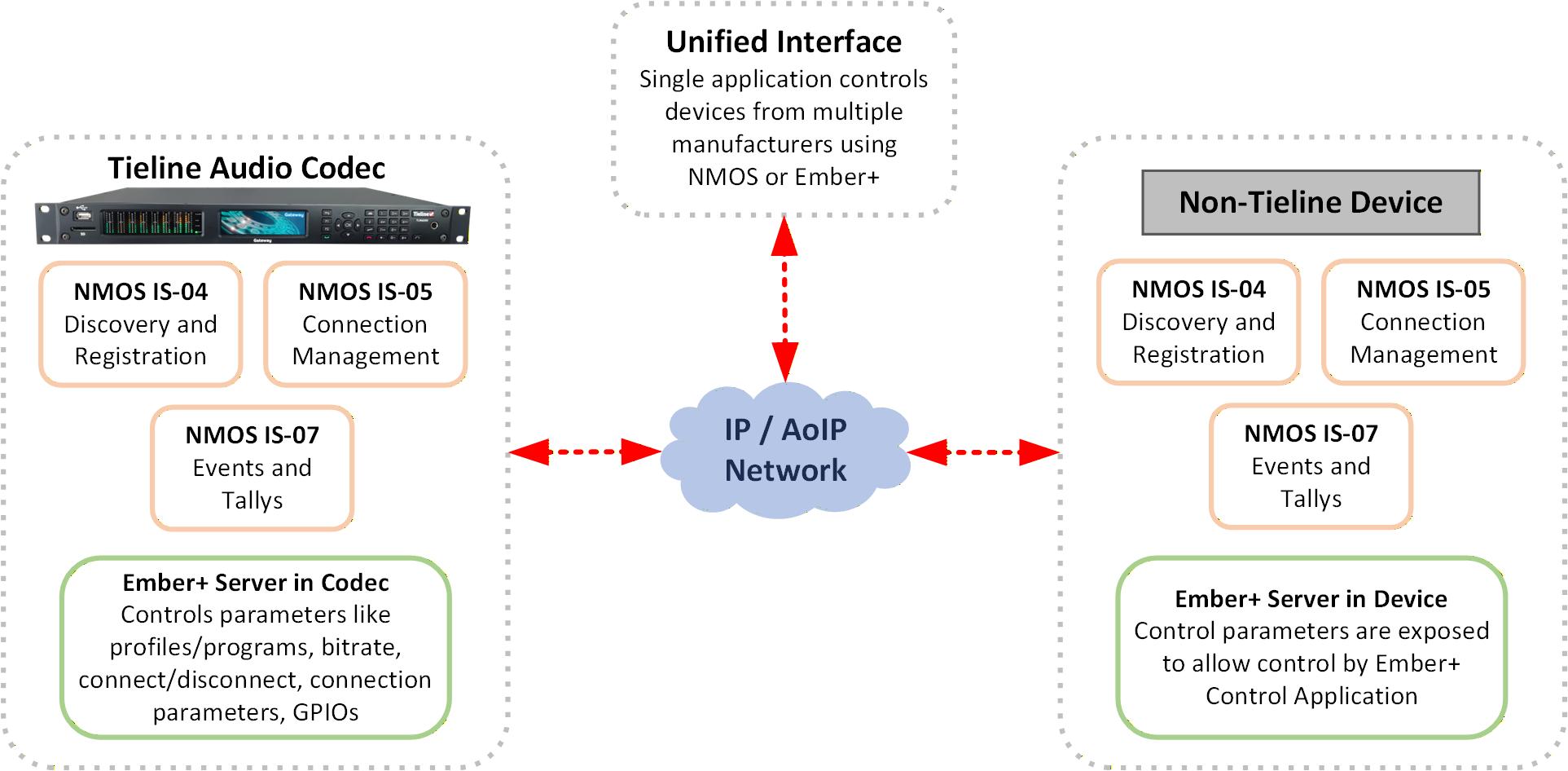
Overview of NMOS / Ember+ codec integration
provides network discovery, establishes connections, and activates events and tallys. Whereas Ember+ controls device functions at a more granular level. For example, in a codec Ember+ may configure physical and logical GPIOs, input and output settings, and connection settings like algorithms, stream names, IP addresses and ports.
Ember+ complements NMOS well. It is another opensource control protocol originally developed by Lawo for broadcast environments. Ember+ allows a third party application to gain access to device parameters via a parameter tree and adjust them. It provides a standardized way for devices like codecs to be remotely controlled, deliver real-time device status and monitoring, and integrate with broadcast control platforms.
Therefore, you could summarize by saying NMOS
When devices like audio codecs support both NMOS and Ember+ they support the wider objective of unifying control of devices from multiple manufacturers using a single interface.
C lick here or scan the QR code for the full story
Tieline America LLC
6505 East 82nd Street, Suite 201, Indianapolis, IN 46250
US Toll-free 1-888-211-6989
Ph: 1-317-845-8000
Fax: 1-317-913-6915
E-mail: sales@tieline.com

More Info
Find the full agenda of the workshop at https://sbe. org/ennesworkshop-2026nab.
Friends since their time as American University students, the pair have organized these sessions for more than 15 years.
The track places a focus on technology and technique. According to Willard, approximately 90% of the material is new. The sessions cover video as much as radio, given that many modern engineers are now expected to handle both.
“There’s no such thing as audio-only radio anymore, and there’s no such thing as only television,” Bialik said. “Any radio engineer nowadays has to know video because it’s a prerequisite now.”
A formatting choice from last year will return, with two to three sessions held back to back, followed by a break, and the day concluding with a combined Q&A panel. Bialik and Willard said the structure allows material to sink in, encourages hallway conversations and gives attendees time to formulate questions.
A core focus is audio intelligibility.
“There’s nothing you can do that will affect more listenership or viewership than having intelligible, clear audio, especially when everybody’s going through a small device,” Willard said. “It’s probably the most important technical aspect of any stream or broadcast, yet it’s rarely covered.”
Bialik emphasized the related need for loudness control. Consistent levels across programming and ads are crucial, particularly on radio’s streaming platforms.
“If streams have not locked in and set their loudness level on their content as well as on their ads, people are going to jump off,” he warned.
Rather than treating AI as a novelty, the organizers view it as an integrated tool now.
“AI is used in so many different ways, and while we have a session talking about where AI comes into play, it’s not a standalone topic anymore,” Willard said.
The track includes the rise of the NDI protocol, a videoover-IP standard that Willard said radio has adopted more rapidly than other mediums.
“It’s not considered a professional format, but it’s where the industry is going, and we have to find ways to mix with professional formats,” he said.
Attendees can expect presentations on other video standards that radio and media engineers must now navigate, including SMPTE ST 2110 and HDR.
The less glamorous but critical “other duties as assigned” facing modern technology managers, ranging from physical plant security to HVAC issues, will be discussed.
• “Dynamic Media Facilities” — Broadcast facilities are being asked to support more workflows, formats and
distribution paths, often with fewer resources and tighter budgets. Consultant Brad Gilmer and Cindy Zuelsdorf of Kokoro Marketing explore flexible production systems and dynamic media facilities.
• “Loudness and Dialog Intelligibility”: Robert Bleidt of Streamcrest Associates, Scott Norcross of Dolby Labs, Scott Kramer of Netflix, Bob Orban of Orban Labs and industry veteran Richard Friedel analyze audience retention science and consistency between disparate audio sources.
• “HD Radio Update” — Dave Kolesar of Hubbard discusses trends, statistics and technical specifications, the including AM digital format.
• “HVAC for Your Media Facility”: Media consultant Andy Butler explores important physical plant knowledge required to maintain stable environmental conditions in modern, data center-like facilities.
• “Protect the Most Important Asset: Your People!”: Steve Shultis of New York Public Radio and Claudia Haase of Securepoint dive into physical security risks and safety protocols for technical teams operating in today’s hot cultural climate.
“There’s no such thing as audio-only radio anymore. ”
• “Codec Technology Evolving Faster Than Ever” — This discussion explores both audio and video. Tom Hartnett of Comrex and Jing Zhou of Harmonic discuss HE-AAC, Opus, VVC, AV1 and more.
• “Media IP Troubleshooting: Hardware and Software”: John Davis of Wheatstone and consultant Steve Holmes provide a guide to fault-finding — covering packet jitter, latency and PTP sync — in the transition to IP workflows.
• “Engineering Design Considerations for Houses of Worship and Large Venue Audience Participation Spaces” — Daryl Porter and Derric West of CSD Group provide insights into the integration process in this specialized area.
• “From Engineer to Owner: Building a Station — and a Business”: Kirk Harnack, John Caracciolo and Bud Williamson share insights on making the leap from engineering excellence to business leadership.
The separate RF 101 track has 17 sessions over two days that cover RF basics, modulation, antennas, regulation, test and measurement and related topics.
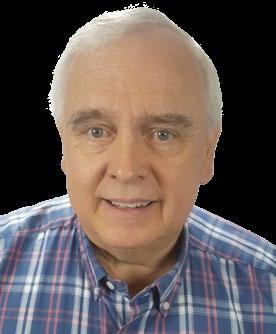
The author is in his 35th year of writing Workbench. He handles western U.S. radio sales for the Telos Alliance and is a past recipient of the SBE’s Educator of the Year Award.
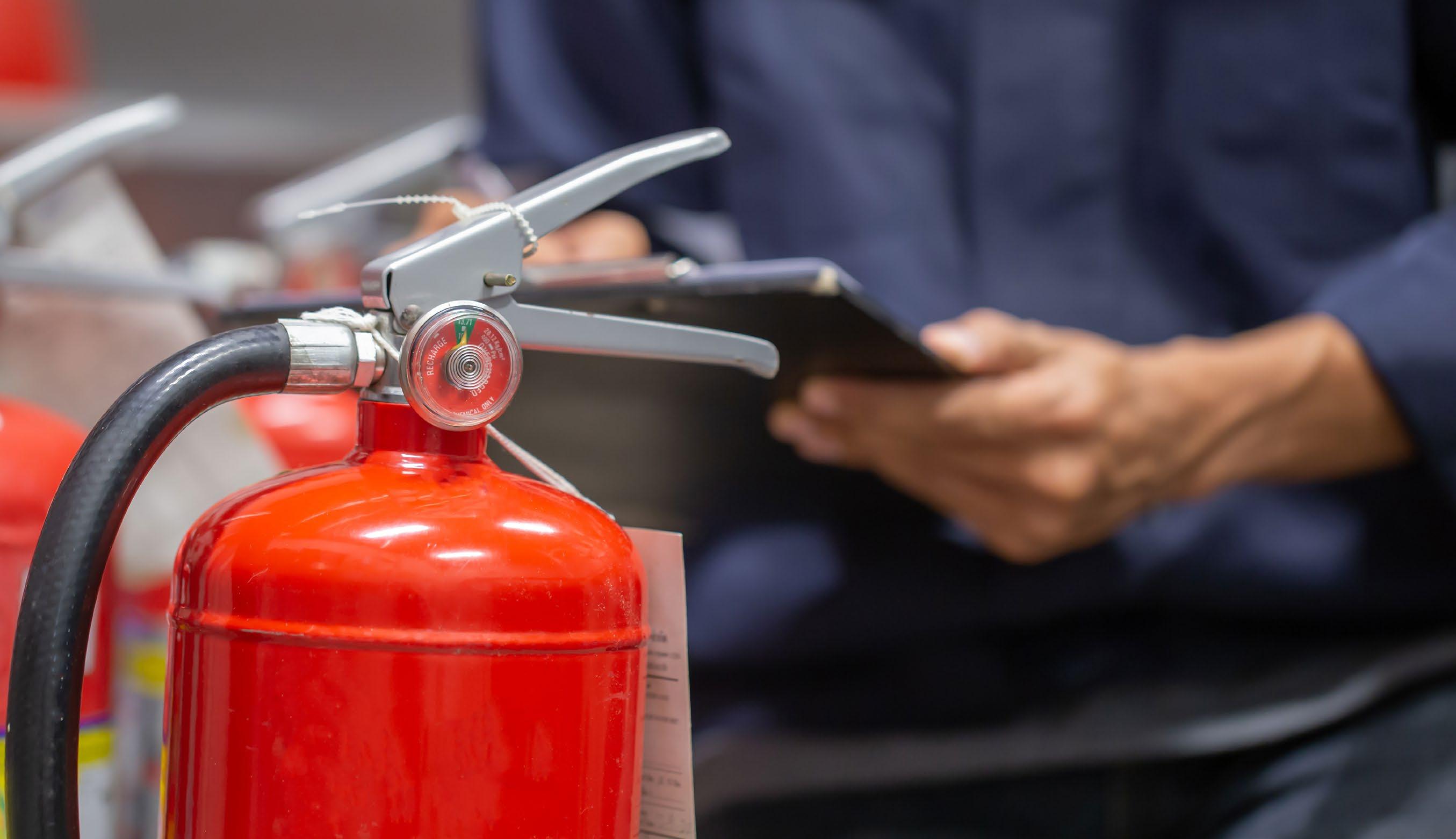
Contributor Dan Slentz passes along a relevant question from Doug Nelson: What kind of fire extinguisher should you install at your transmitter site?
There are six common types, according to manufacturer Kidde at http://kidde.com:
• Dry chemical agent extinguishers form a crust to remove oxygen and keep it from spreading.
• Water types absorb the heat, cool the burning material and remove oxygen.
• Wet chemical types seal the fuel to prevent vapors from igniting and cool the fire.
• Carbon dioxide types remove the oxygen and replace it with pressurized CO2 gas.
• Halotron is a clean agent fire extinguisher that discharges a non-conductive rapidly evaporating liquid.
• And foam types smother the fire by creating a barrier or film of foam.
According to the National Fire Protection Association (http://nfpa.org), extinguishers carry a letter rating that corresponds to the type of fire a device can put out:
• Class A are fires in ordinary combustible materials, such as wood, cloth, paper, rubber, and many plastics.
• Class B are fires in flammable liquids, combustible liquids, petroleum greases, tars, oils, oil-based paints, solvents, lacquers, alcohols and flammable gases.
• Class C fires involve energized electrical equipment.
• Class D are fires in combustible metals such as magnesium, titanium, zirconium, sodium, lithium and potassium.
• And Class K are fires in cooking appliances that involve combustible cooking media like vegetable or animal oils and fats.
With all the equipment at a transmitter site, you certainly don’t want to use an extinguisher that will leave a residue
that can ruin the electronics. To avoid damage, steer clear of Class A and B dry chemical extinguishers.
Engineer Blaine Wilson writes that Halotron, made by American Pacific, is a brand of “eco-friendly” halocarbon fire extinguishers that are non-conductive and leave no residue, suitable for Class A, B and C fires.
You should also consider an extinguisher’s rating and weight. The sites mentioned above have information to guide you.
What’s your experience? And have you ever had to use an extinguisher at your site? Email me at johnpbisset@gmail.com.
Engineer Steve Michaels suggests you take this question to your local fire department.
This seems a good idea on several fronts. First, you will get the latest information. Second, many departments will offer a free fire inspection of the transmitter site. Third, it’s a nice excuse to build a relationship with your local emergency responders.
With Microwave Power Products closing the former Econco facility, engineers will be looking for an alternative source for tube rebuilding.
Steve Tuzeneu writes that Massachusetts-based Kennetron rebuilds vacuum tubes, oscillator tubes, power grid tubes and electron valves used in broadcast and industrial applications. Its website is www.kennetron.com Do you have experience with the company to share?
Consultants Frank and Dave Hertel share a simple fix to a problem that you might encounter. It’s an emergency end cap for a 1-5/8-inch transmission line.
Perhaps you are on a job and the station’s “staff IT engineer” has an old transmission line adapter on a line that is leaking air excessively. His nitrogen tank is going “empty” once a day.
The nitrogen tank feed for the 1-5/8-inch line unfortunately is in parallel with a 3-1/8-inch line. The leak occurred when the engineer removed the 1 kW FM transmitter in order to send it to the factory for repair. Since he didn’t have a spare transmitter, he and management understood they would be off the air for some time. Fortunately, they also realized that their high-power transmitter should be protected by having nitrogen on its 3-1/8 line. The nitrogen feed is simultaneously on both the 3-1/8 and the 1-5/8 line so it would not take on any moisture.
Lady Luck must have been with them because a previous RF engineer had left a stockpile of parts and pieces. They found an old cut-off EIA 1-5/8 flange and converted it into an end cap. The flange caps the bottom run of the EIA flanged 1-5/8 coax while keeping pressure on both coax lines.
Top The flange adapter disassembled.
Middle Assembling the plug.
Bottom The finished adapter.
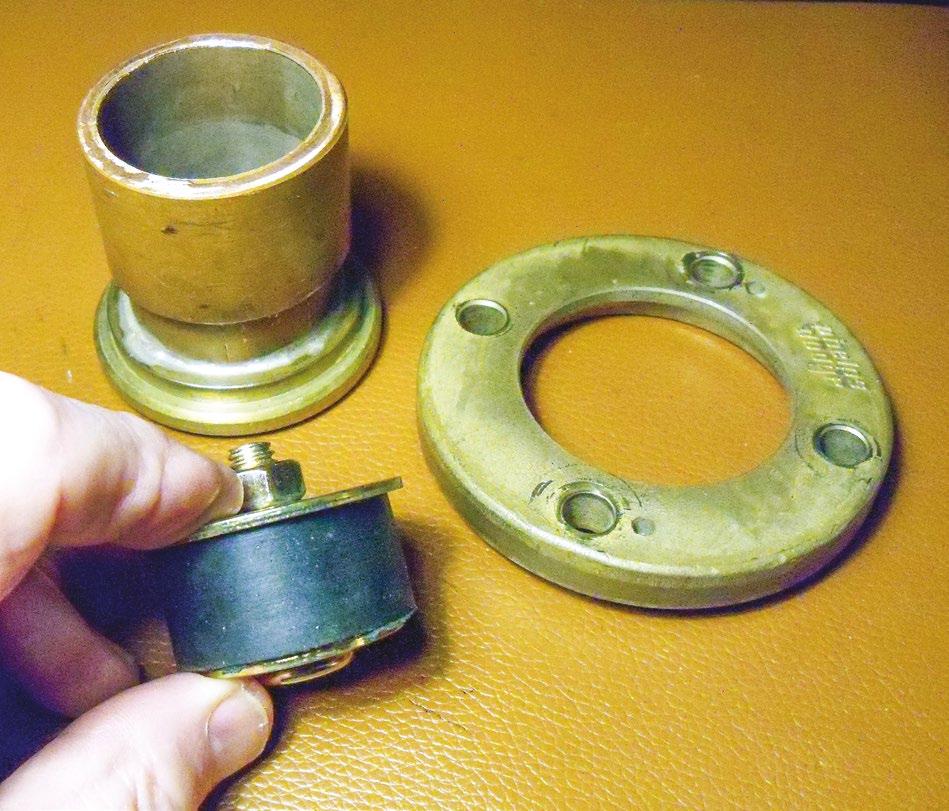
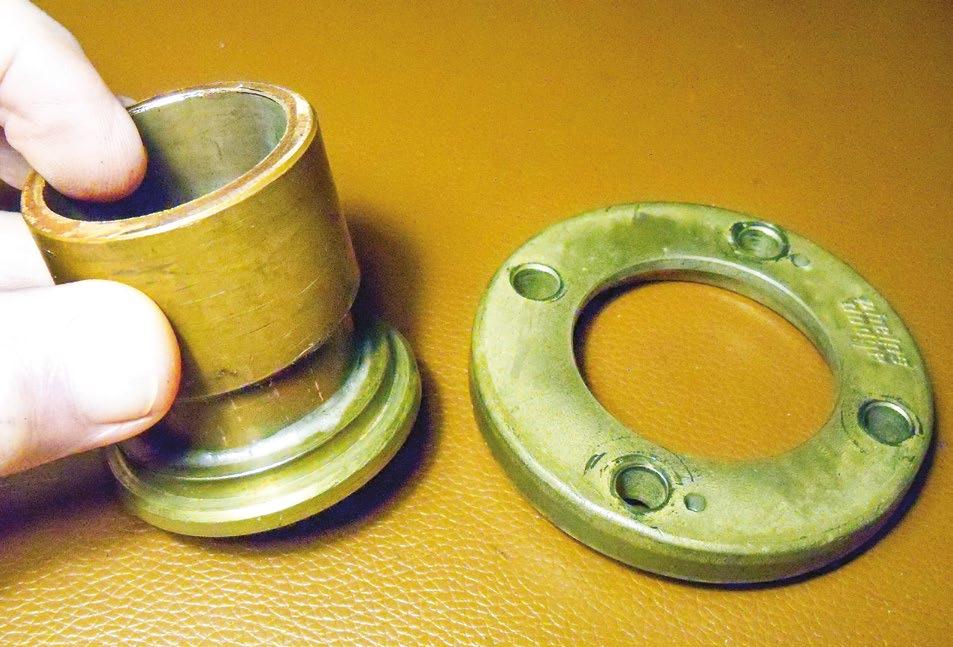
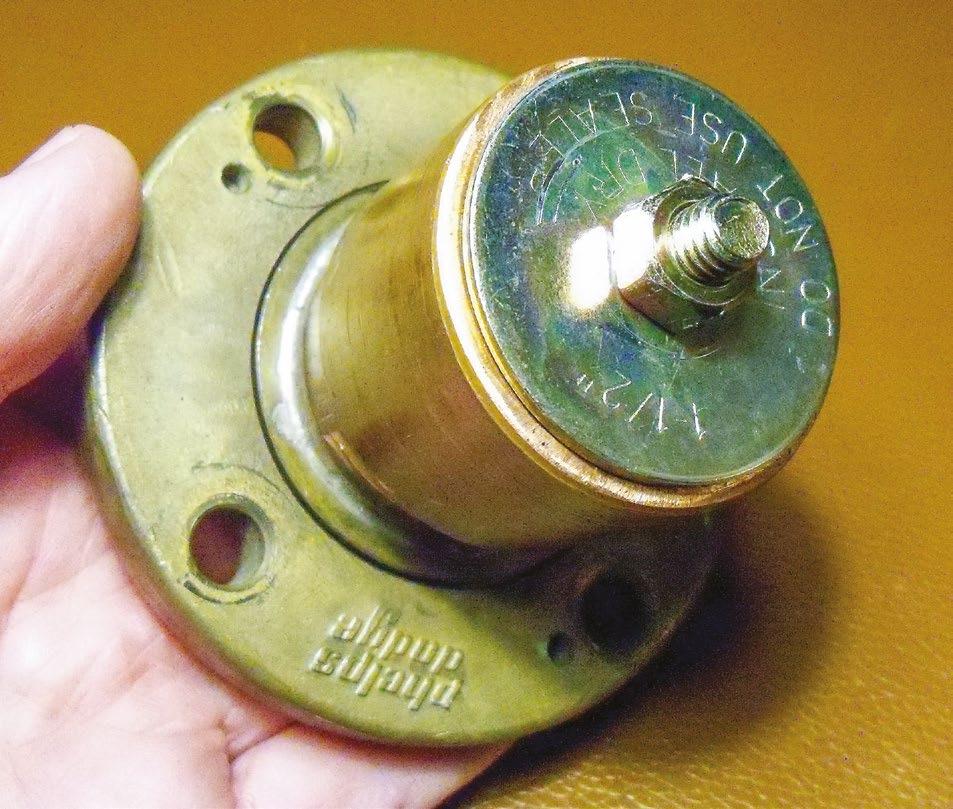
The photos show you how to correct the station’s line pressure requirement while awaiting a new, non-leaking adapter/connector for the 1-5/8-inch line and the return of the transmitter.
This can be used outside, if need be. It will withstand winter and summer conditions. The plug for the coax end is a 1-1/2-inch expandable freeze plug, also known as a welch plug, available from Amazon or an auto parts store.
Writer Nick Langan Content Producer
With loss of federal funding as a backdrop, public radio engineers will reconvene
The Association of Public Radio Engineers is preparing the 26th Public Radio Engineering Conference, which returns to Las Vegas with a focus on navigating the uncertain future of public broadcasting.
The event will take place Thursday, April 16, and Friday, April 17, at the Tuscany Suites and Casino, preceding the NAB Show.
This year’s speakers include engineers, representatives from product manufacturers and other recognizable industry names. PREC is public radio’s yearly gathering for broadcast engineers of all experience levels.
This year’s guiding theme is “what’s next.” While the content remains mostly technical, the dramatic changes in public media over the past year give the discussions a unique context.
According to APRE President Scott Hanley, the association board designed the event with that shifting landscape in mind. He also believes this is the one time of year such a large and diverse group of public radio technology experts can gather.
“We decided that our conference had become even more important than years past, as we face a future where effective, sustainable operation is at risk and important to our communities,” Hanley said.
Sample Thursday sessions include:
• “Audio Processing: How to Tune It and Why It Matters,” by Leif Claesson of Claesson Edwards
• David Layer of NAB presenting “AM Radio in the 21st Century”
• “Transmission System Troubleshooting Techniques” by Steve Wilde of American Amplifier
• “The Magic of LTSC and Other Ways to Make Legacy Tech Work,” by Scott Hanley, Darrell McCalla and William Harrison.
• “The Data-Driven Dashboard: Leveraging AutoStage Analytics for Public Media” by Juan Galdamez of Xperi. A sample of Friday’s schedule:
• “Advances in FM Antenna Technology” by Cory Edwards of Dielectric
• “NCE Translator Window and Other Legal Updates” by Derek Teslik of Gray Miller Persh
• An update on NPR Distribution by NPR’s Badri Munipalla, Jon Cyphers and Mike Pilone
• “Studios (Or No Studios At All): Some New Ways of Thinking” by Scott Fybush of Myriad broadcast software
• “How Engineers Contribute to Public Radio Revenue Growth,” Jeff Soderberg of StreamGuys
The newly formed Public Media Infrastructure will also present on Friday; its speakers were pending at this writing.
Organizers have held the in-person conference price flat at $350 for members since 2024. They also offer a virtual attendance option for engineers unable to travel.
Hanley also said APRE is expanding its financial aid footprint. The funds are designated both to assist attendees with financial needs and “to encourage the next generation of technical talent to get firmly engaged in the public media engineering community sooner rather than later,” according to Hanley.
The conference concludes on Friday evening with the annual APRE Awards Dinner at Lawry’s Prime Rib.
The APRE website is www.apre.us
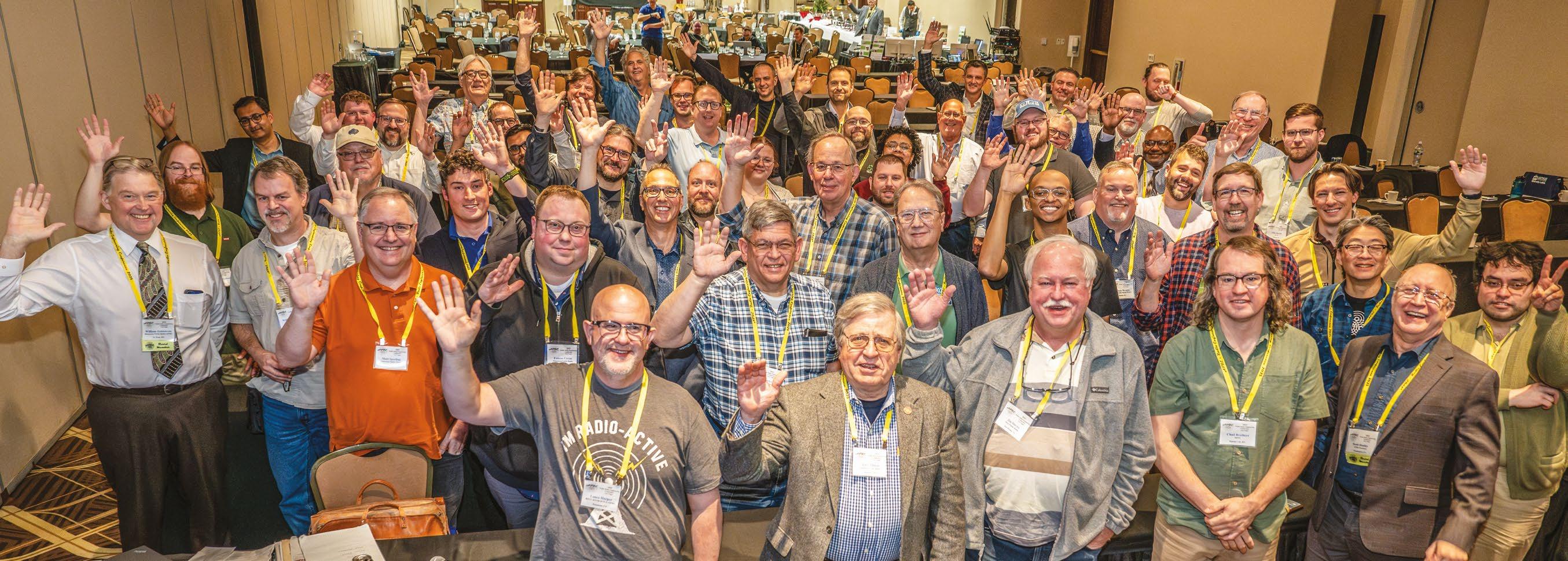
Representatives of NPR Distribution will speak during the Public Radio Engineering Conference at the Tuscany Suites and Casino preceding the NAB Show.
Badri Munipalla is vice president, NPR Distribution, which manages and operates the Public Radio Satellite System. It distributes approximately 400,000 hours of content annually to some 1,200 stations.
Which members of the NPR team are presenting at PREC?
Badri Munipalla: Thank you, Paul, for taking the time to talk with me. We appreciate the opportunity to speak with our public radio colleagues each year to talk about how we’ve listened to their needs and developed solutions to address them.
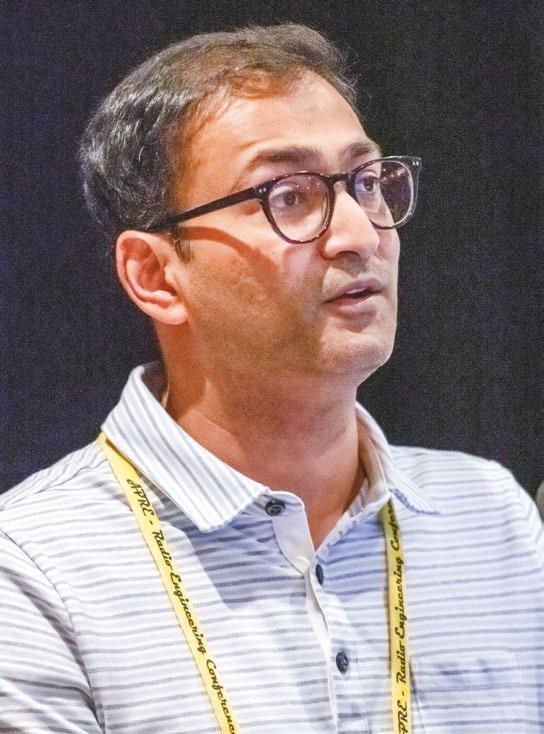
Three members of NPR Distribution will be speaking at the conference. Joining me will be Jon Cyphers, senior manager, product and product support, Distribution, and Mike Pilone, enterprise architect, Distribution. They have been instrumental working with our team on ContentDepot and other recent developments.
What is the topic?
Munipalla: We’ll provide updates about the PRSS and ContentDepot, public radio’s broadcast distribution and management platform.
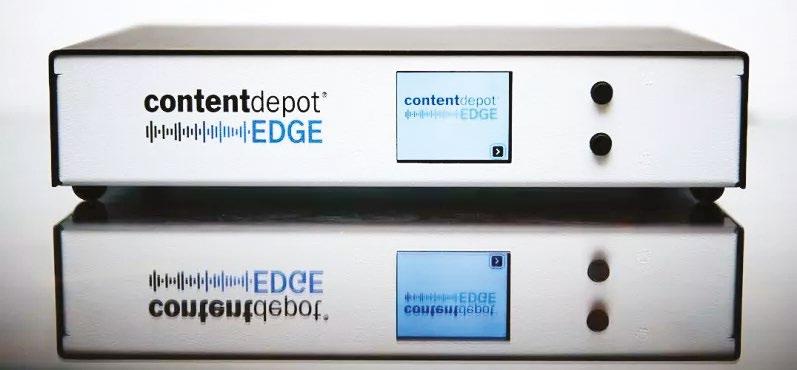
This year, in addition to discussing improvements to ContentDepot, we will provide updates on the nextgeneration ContentDepot Edge receiver that the NPR Distribution team has developed. It is a best-in-class terrestrial distribution receiver for live broadcast that will transform how public radio stations receive programming across America.
The integration of local and national news and programming is essential to the public radio experience. To advance innovations in broadcast distribution, NPR Distribution is introducing this low-latency terrestrial receiver. ContentDepot Edge, currently being piloted, enables stations to retain the core functionality of their existing distribution platform while adding new capabilities, including station-
to-station content sharing, geo-targeted delivery and enhanced metadata, monitoring, and playback functionality. This is a significant development in broadcast distribution.
The past year has brought huge changes to public radio, specifically in how the ecosystem is funded. How has this affected the work you and your team do to support public radio engineers and stations?
Munipalla: NPR remains committed to supporting the PRSS and public radio stations, and providing best-in-class reliable broadcast content management and distribution services, as we have for decades.
No changes are planned in that commitment, despite the loss of federal funding. In fact, underscoring our commitment to stations, NPR announced to the public radio system in November that we would immediately dedicate additional resources toward fortifying the public radio system. NPR secured five years of federal interconnection funding prior to the dissolution of CPB.
The NPR Board of Directors approved full and total relief of PRSS interconnection fees for two years for all interconnected public radio stations.
The defunding of public media by Congress has brought uncertainty to a system that is vitally important to many Americans. We remain committed to advocating for public sources of funding to support the public radio system.
How does NPR Distribution’s relationship with its users change now that Public Media Infrastructure is on the scene?
Munipalla: NPR Distribution’s support for interconnected stations hasn’t changed. We have multi-year funding, and have provided relief to all interconnected stations during these challenging times.
We continue to deliver reliable distribution services through PRSS, and we are delivering on future technologies that will respond to the needs of tomorrow’s public media. Our hardware and software are already developed, and operating both in pilots and in production. No other provider can offer that,
and none has a track record of delivering like PRSS.
We are working with our users to launch the ContentDepot Edge hardware and software solution designed to operate over public internet connections including fiber, 5G and satellite internet service providers.
What will change is that we will work with them to help ensure this new receiver will smoothly integrate with the existing ContentDepot platform to provide higher audio quality, faster file transfers and plug-and-play usability — all while maintaining NPR’s high standards for uptime and dependability.
One example is the recent collaboration of NPR with KCUR in Kansas City, Mo, to keep the station on the air when KCUR faced an urgent move to relocate its core broadcast equipment to its transmitter building in a single weekend. KCUR and NPR took the opportunity to work together to deploy ContentDepot Edge rapidly without interrupting its broadcasts.
Because the technology is designed to be highly adaptable and run over standard broadband, KCUR didn’t have to wait to rebuild complex satellite downlink infrastructure at its temporary setup.
Station engineers and general managers are already enthusiastic about this 21st century solution for the system. This is consistent with our mission as we led the way to satellite delivery, to online content management through
“The ContentDepot Edge receiver is a best-in-class terrestrial distribution receiver for live broadcast that will transform how public radio stations receive programming across America.
deploying the ContentDepot platform and now to a reliable terrestrial solution.
Through 2026 and beyond, we’ll be working closely with our public media colleagues at stations and producing organizations to address their needs and exceed their expectations in providing reliable, accessible and affordable broadcast content management and distribution.
Deliver your radio play-by-play to in-venue fans.
StreamGuys’ Ultra-Low Latency Streaming service delivers real-time audio directly to fans’ mobile devices.
Driving app downloads and sponsor revenue... ...for the most sophisticated sports broadcasters in the world.
Dan Merwin
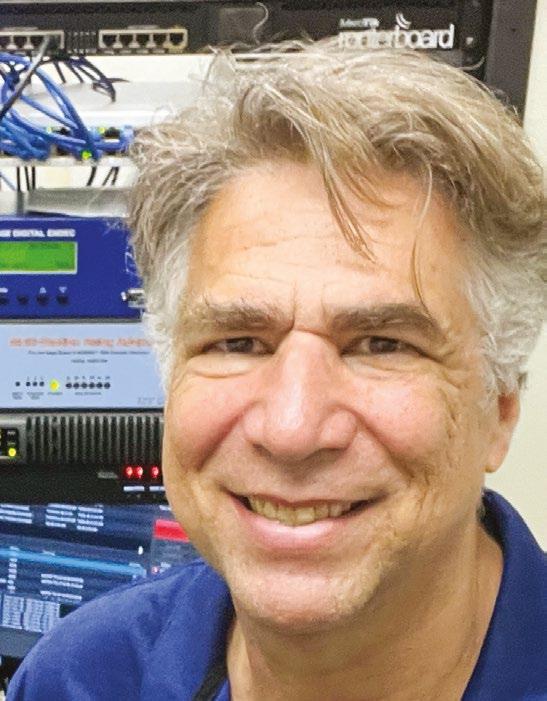
Telecom circuits and links are critical for today’s broadcast and media facilities. They’ll be the focus of a talk during the “Emerging Technology” track of the SBE Ennes Workshop at the NAB Show.
Dan Merwin is founder of Broadcast Telecom and a longtime telecom veteran; he also works part-time as a contract broadcast field engineer.
What is the most important trend in telecom links that we should know about?
Dan Merwin: Starlink will continue to evolve in all aspects, including probably eliminating the need for Carrier-Grade NAT (CGNAT). Space-based 5G and Amazon’s Project Kuiper low-earth-orbit constellation will also change the game in terms of ubiquity and performance.
Also, with the use of SD-WAN technology, which by now is quite mature, the need for expensive private links such as MPLS, Metro Ethernet, satellite delivery and even 950 MHz STLs has been greatly reduced for broadcast and media facilities. And just the fact of usually no longer needing to have multi-year contractual obligations to ISPs with huge termination fees is key.
How have platforms like Starlink, 5G and 5.8 GHz links changed the game?
Merwin: Starlink and 5G are at the forefront of the evolution of internet access in general in that it is vastly more useful to enterprises than in the past for a variety of reasons. It is more ubiquitous, higher-performing, more diverse, and far less expensive than 10 or 20 years ago.
There are many factors to take into account, though,
when making network changes. With Starlink, there is apparently an outage of 3:19 every night when the satellites and/or terminals are reset.
Regarding 5.8 GHz PtPs, yes, there are more options for wirelessly connecting sites and for extending the last mile, but the 5.8 GHz space has become crowded so people are often looking at instead utilizing licensed spectrum such as 6 GHz and 11 GHz.
How do SD-WAN technologies play into this discussion?
Merwin: It was inevitable that we’d see an explosion in cutting-edge technology that takes advantage of the changes in internet access. SD-WAN also addresses the fact that WANs have evolved from a datacenter-based topology to one that is based on the realities and necessities of distributed security, as well as applications that reside in the cloud and/or at any remote location.
Quality of Service has been supplanted by Quality of Experience, which is AI-driven. For broadcasters, SDWAN overlayed on top of two or three connections of various types provides a more cost-effective, reliable and manageable way to handle all of their applications, including audio, video, metadata, telemetry, etc.
Can you offer a few best practice tips?
Merwin: Engage a trusted advisor. With an SD-WAN deployment, what generally takes up the most time of the customer and the vendor(s) are the design, planning and configuration stages. That, and the fact that it often involves moving from a WAN made up of MPLS and/or Ethernet Private Lines, mean that salespeople and overlays (e.g. sales engineers) have to invest a significant amount of time, usually far more than in the past, in the pre-sales process, and are compensated relatively little.
Not only that, but in the case where they are paid based on a customer’s spend, they are cannibalizing their revenue
“It was inevitable that we’d see an explosion in cutting-edge technology that takes advantage of the changes in internet access.
Given the evolving options, it’s a challenge to make decisions about which SD-WAN platform to purchase, not to mention which MSP/ISP to engage.
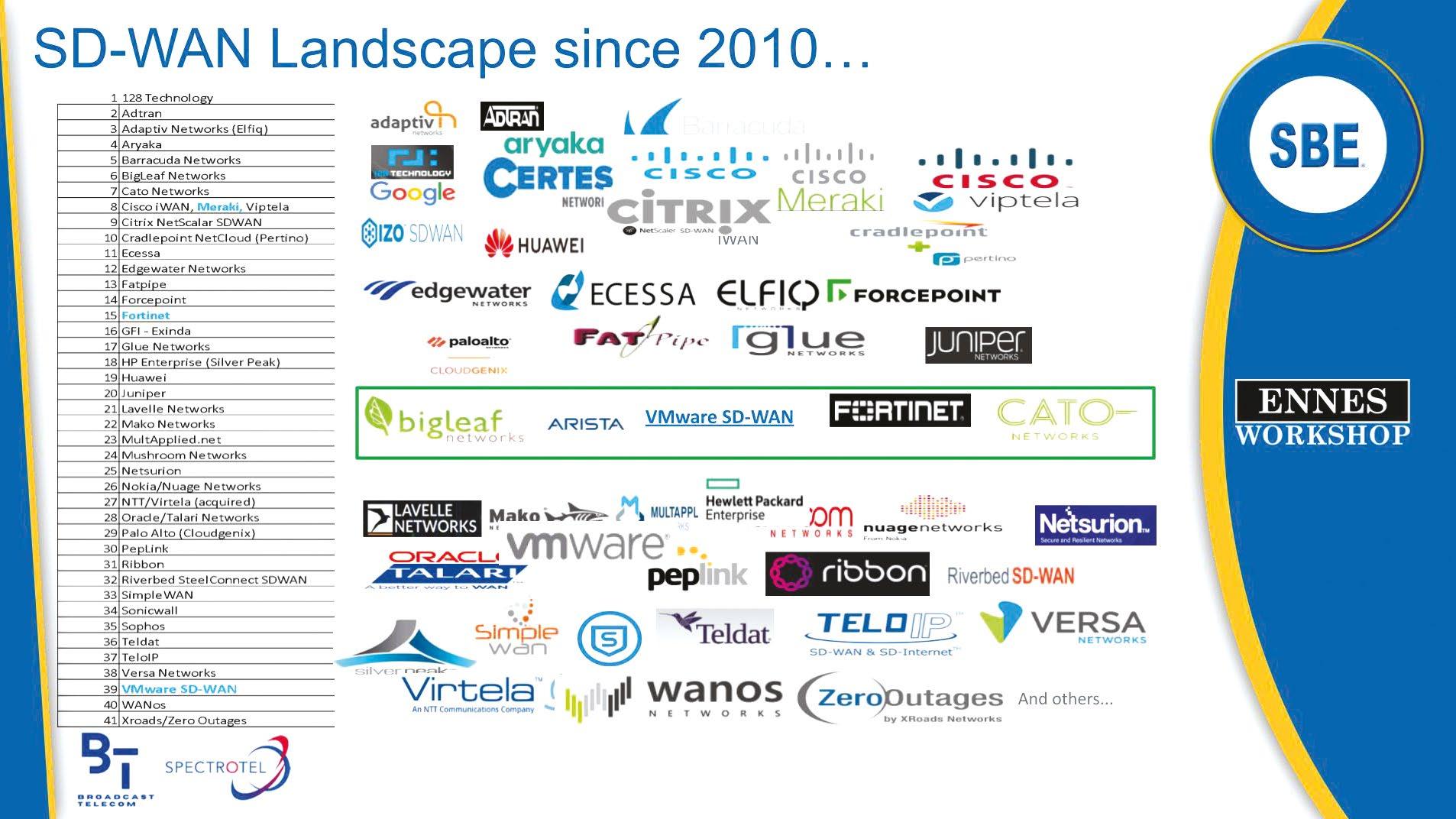
and thus their commissions. All this to say that they are mostly not motivated to try to move customers in that direction, and thus it is usually advisable to work with a consultant/agent who probably has more to gain and less to lose in order to help find the best fit.
Just a few examples of factors to consider:
• Some of the platforms redirect traffic on a per-packet basis, which facilitates seamless failover, whereas some just do it on a per-session basis, which will cause interruptions in case the primary link drops or bounces.
• Fortinet, for example, can go deeper into the LAN because they make switches and access points, but there are capabilities that some of the vendors have that they don’t.
• Is there a justifiable need to use a vendor that provides a “Middle Mile,” which enhances performance and security, such as Cato Networks?
Finally, when looking at moving to SD-WAN, it makes sense to do at least a cursory comparison of the benefits and potential drawbacks of self-deployed/managed, co-managed and fully managed SD-WAN, based on the IT resources available to the customer as well as the projected total cost of ownership, among other factors. Some providers will open tickets for you on any internet circuits (with a letter of authorization in place) as one example of the benefits of a managed service.
What kinds of questions do you get from radio engineers?
Merwin: Naturally, they often want to know how well Starlink will work for their air chains and how reliable it is, although more and more engineers are becoming aware of its use in the industry.
Cost is of course a common concern, so it’s nice to be able to talk to people about a technology change that will save them money in most cases.
How troubleshooting is done with SD-WAN is another common concern. But most SD-WAN platforms make that a snap, with visibility and analytics even up to the application level.
Are there misconceptions you would like to dispel? And what else should we know?
Merwin: It’s a little difficult for some people who have been involved with WANs for a long time to wrap their head around the idea that they might not need to have an expensive legacy private WAN anymore, and that low-cost, best-effort services such as cable internet can do the job perhaps even better when part of a redundant setup.
Meanwhile it’s estimated that there are still 7 to 8 million business POTS lines in the U.S. We have seen the prices go up for POTS as high as $1,500 per line! In addition, the copper infrastructure is no longer being maintained as it was in the past.
POTS replacement has also become a mature and diverse offering, and it’s a managed service, so the days of a telco tech going out to install lines that are not installed where or how they need to be are pretty much gone.
The presentation “Telecom Circuits and Links for Broadcast and Media Facilities” is scheduled for 1:15 p.m. on Tuesday April 21 during the SBE Ennes Workshop.
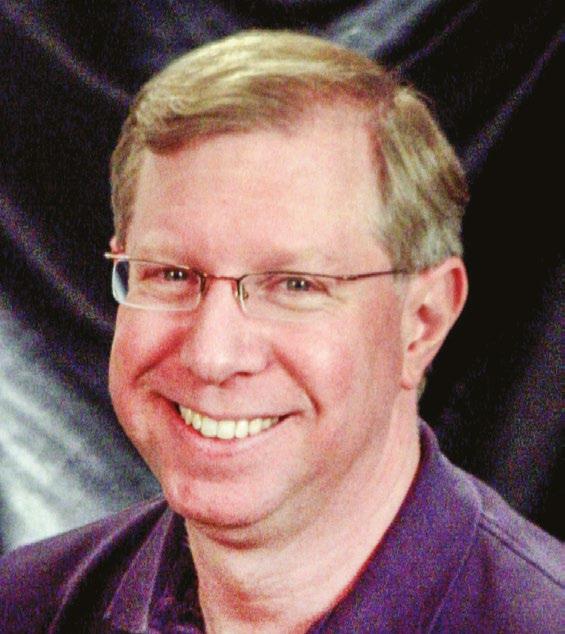
ASunday morning session in the BEITC will discuss “Successfully Launching Compelling Visual Radio Automation.” It will be by Fritz Golman, director of video systems and automation for RadioDNA.
It feels like video has been part of radio operations for a while now. What will you talk about?
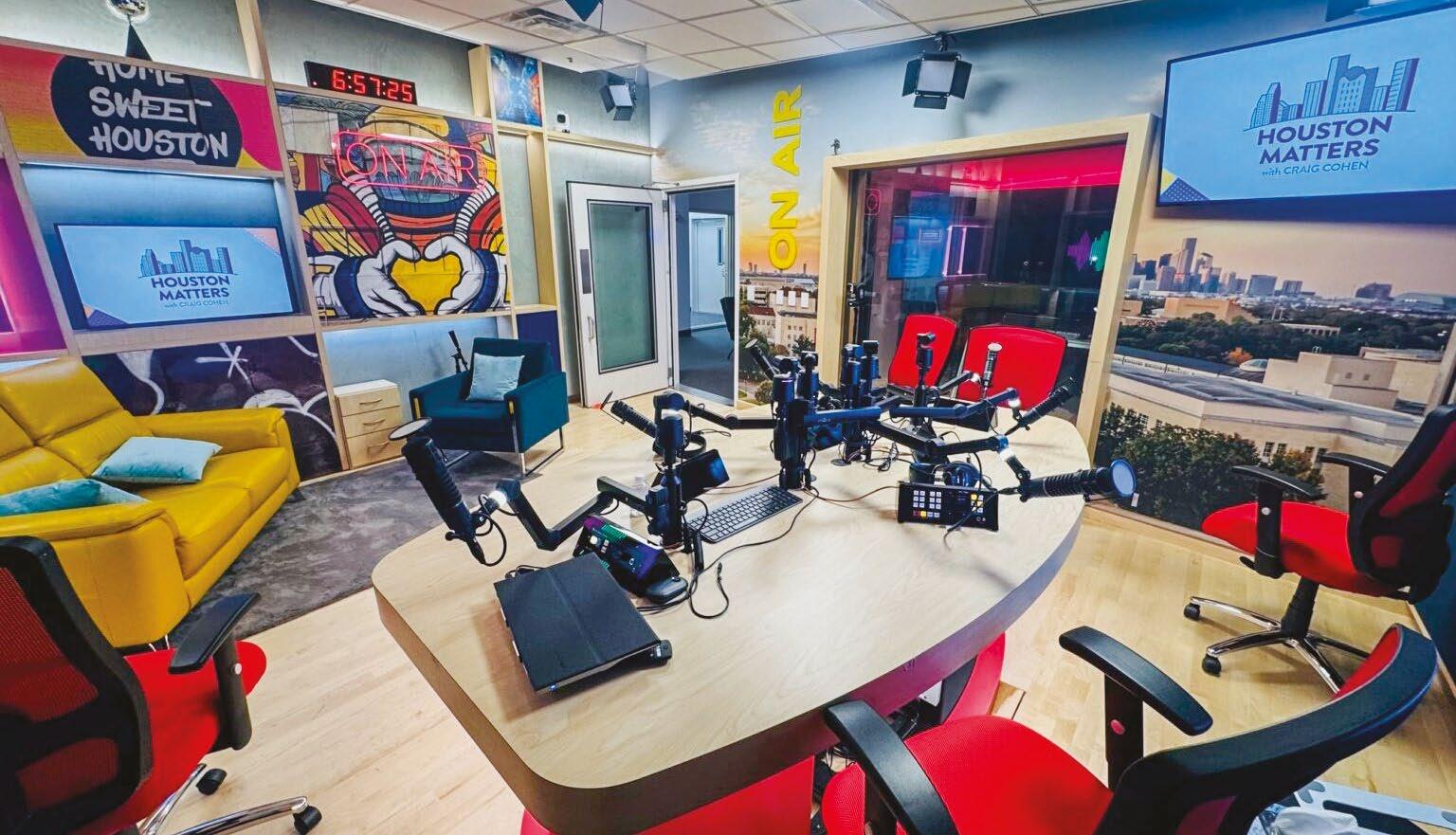
Fritz Golman: I’ll be presenting how we’ve successfully implemented a number of visual radio automation platforms. These case studies will highlight two projects of note, Houston Public Media’s KUHF, with two of their live flagship shows “Hello Houston” and “Houston Matters,” as well as Good Karma Brand’s WVMP/ESPN Radio Chicago and their 12-hour live broadcast day programming.
presentation methods are needed to maintain and grow audience numbers — and of even more critical importance, especially for public radio, new opportunities for generating revenue.
What would a typical station’s visual radio system consist of in 2026?
Golman: Although there is a temptation to utilize the least expensive components like low-cost webcams, the limitations they impose will be realized as soon as the operators of such systems when they want to “take it up a notch” with more sophisticated presentations. Thus we only specify IP video systems using NDI and audio over IP such Wheatnet, LiveWire or Dante. As these run on conventional network wiring, we eliminate the additional complexity of coax-based SDI cameras and dedicated digital video connections like HDMI.
In this day of declining traditional listenership, not only alternative channels (EG, streaming) but enhanced
The small additional upfront costs of these platforms yield long-term benefits of flexibility and interoperability. Then we integrate with a typical playout system like WideOrbit, RCS NexGen or RCS Zetta.

Can you give examples of best practices?
Golman: Don’t scrimp on network wiring or backbone. The tiny additional cost of Cat-6 versus Cat-5 wiring can make a huge difference in the near future.
Pull another wire or two more than what is needed at the time, you’ll find that will come into play sooner or later.
Don’t be tempted to use hardware video switchers. They are limited in capability and locked into that configuration permanently.
Be willing to learn about the visual medium and collaborate with others, potentially from disciplines outside of one’s facility, to get the “look” that will attract and keep viewers.
What else should we know?
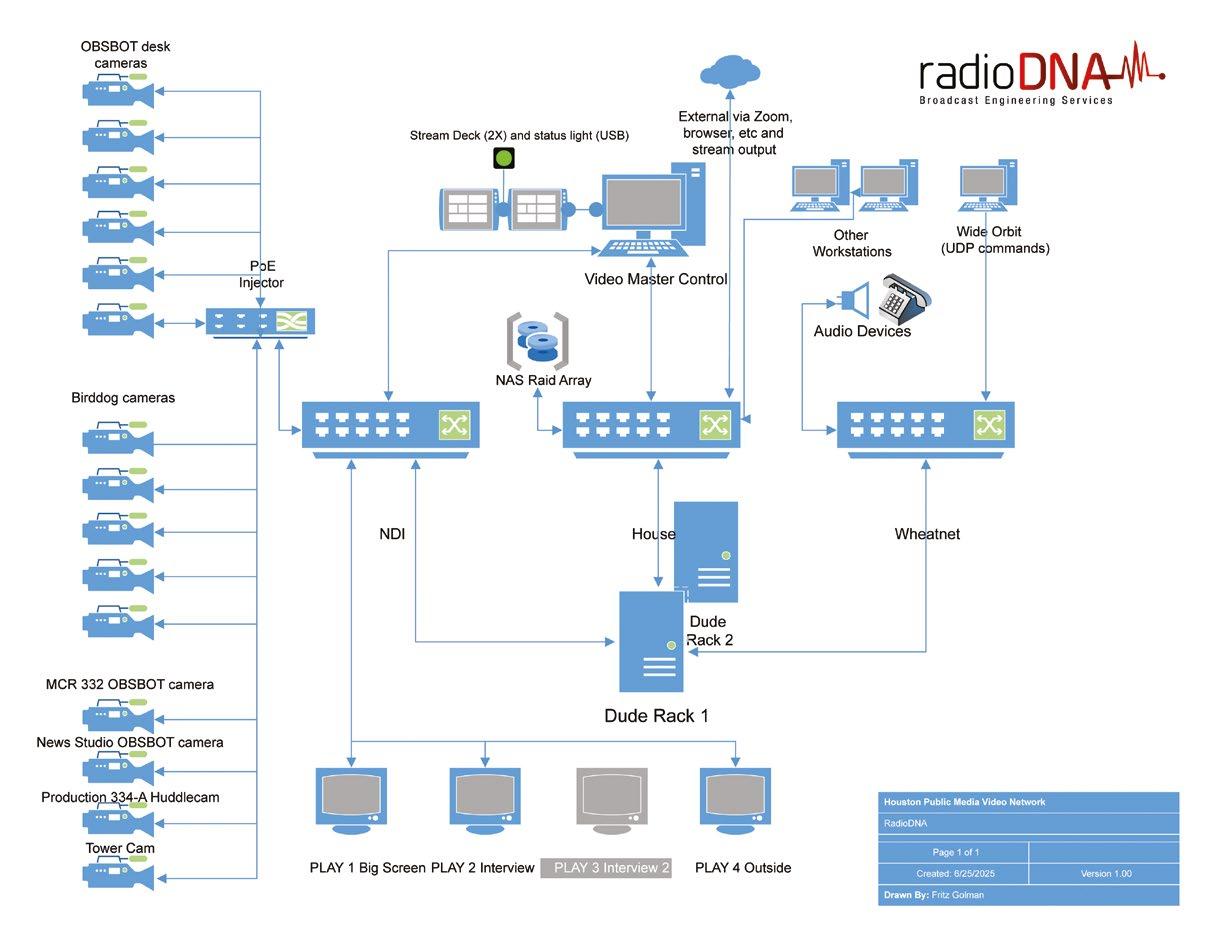
Golman: We like to configure our solutions around proven, widely used products. Although there are a number of software packages that can do at least some of what we’re fielding, the operator should consider how many other users are there of that piece of kit.
I like to say that if you can only find one or two video
clips showing the system in use or demonstrating features, it is probably not the package that has a lot of depth of support.
On the other hand, stay clear of open-source offerings. Even with the very tempting price (free), you will probably get what you paid for.











































Alan Spindel is president of the Radio Club of America and senior electrical engineer for Ten-Tec/Alpha RF Systems. He develops hardware and firmware for amateur and professional radio systems.
He will moderate a Monday morning session in the BEIT conference called “War Stories From the Front Lines of Broadcasting” featuring Bob Orban and Mike Pappas of Orban Labs, and William Harrison of WETA(FM) in Washington.
How did this session come about?
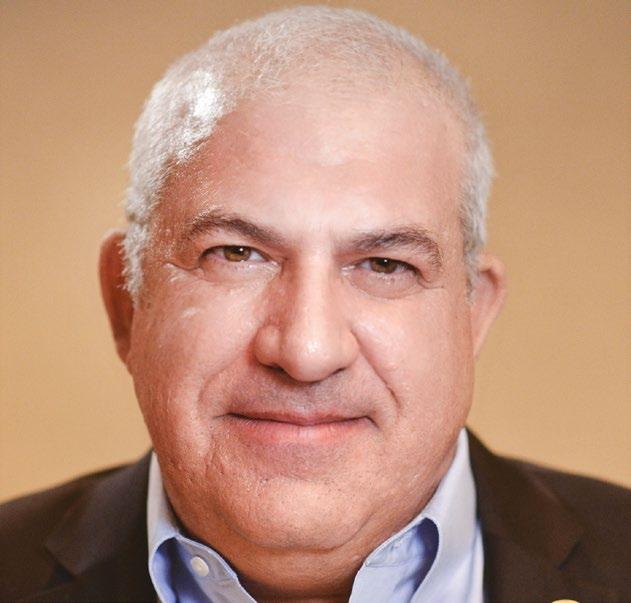
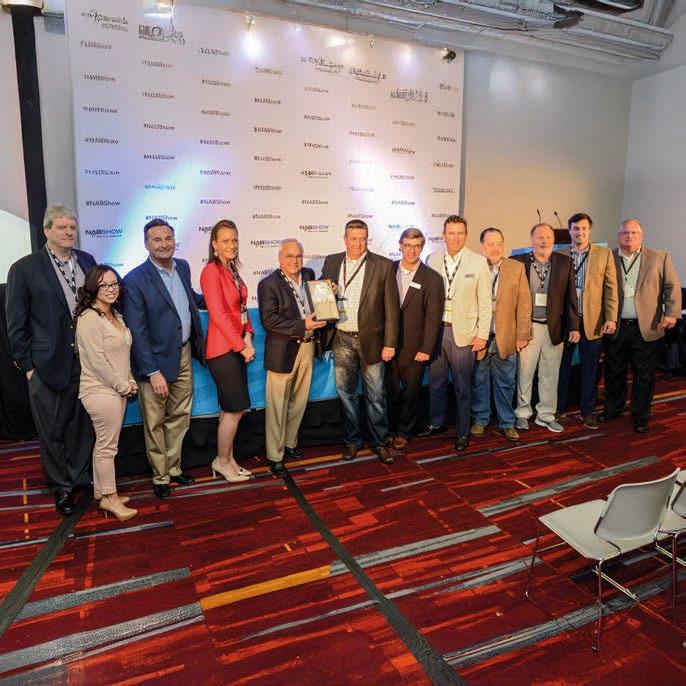
Alan Spindel: The Radio Club of America honored Bob Orban with the Jack Poppele Award, which is named after broadcast pioneer and VOA director Jack Poppele, at the club’s 116th annual awards banquet. The award recognizes individuals who have made important, longterm contributions to radio broadcasting.
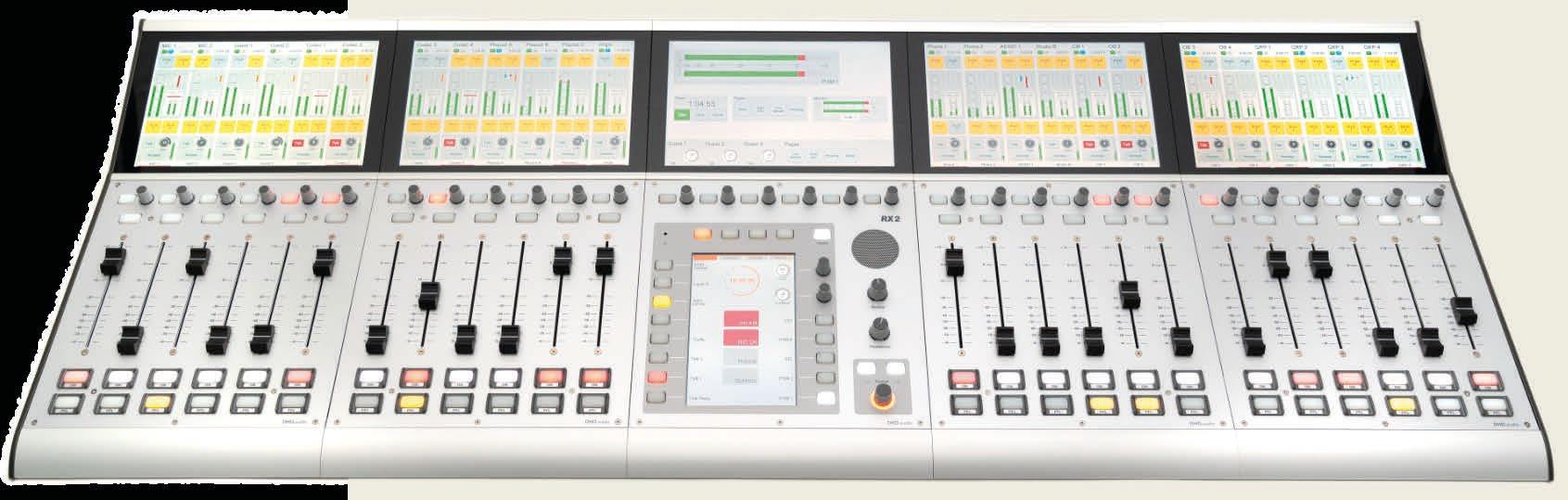
Above Alan Spindel
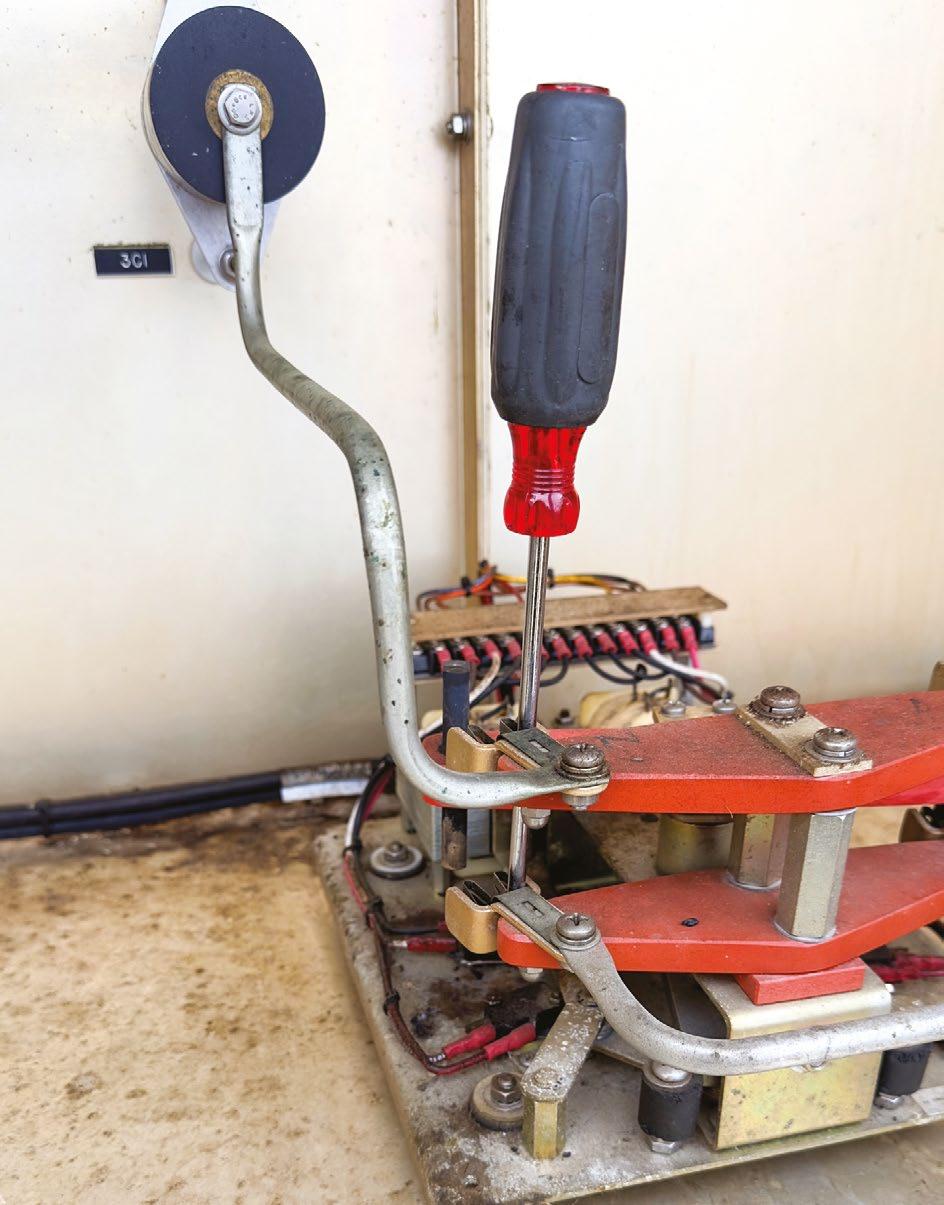
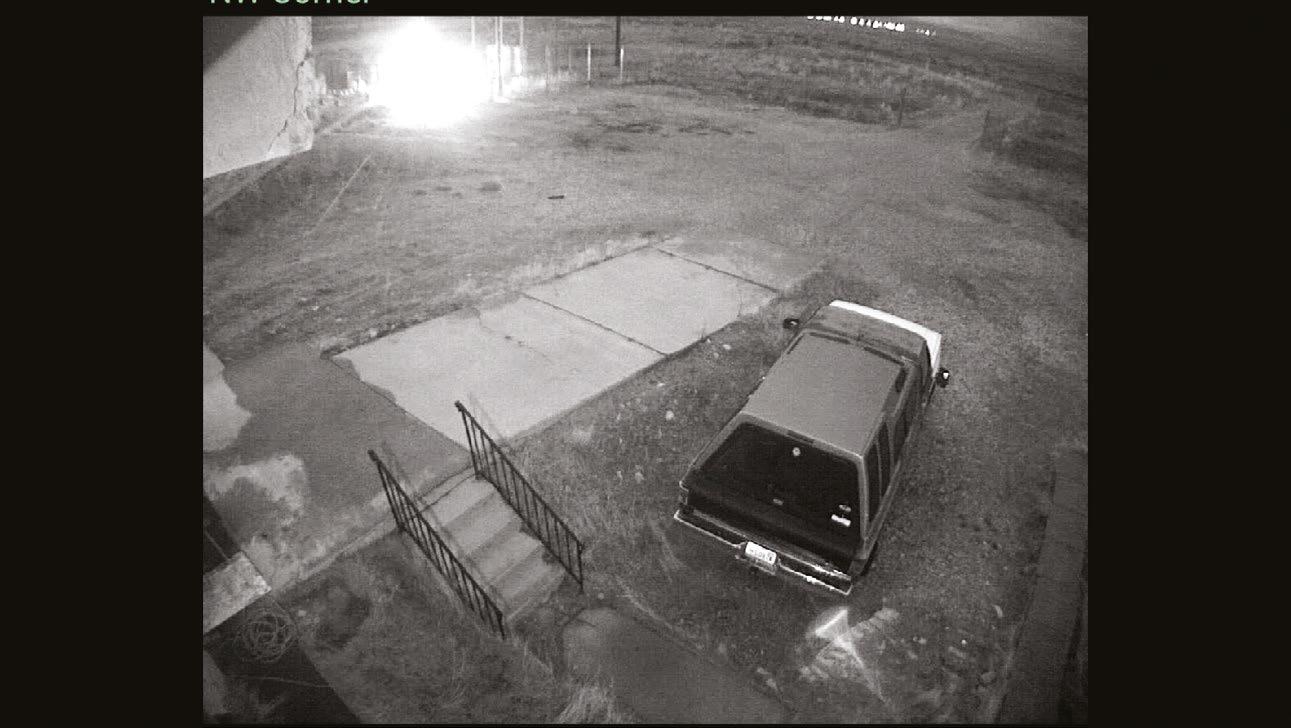
Below right A screwdriver is being used here for a purpose for which it was not designed.
Bob was unable to attend, so RCA Fellow Mike Pappas of Orban Labs accepted on his behalf. It is customary for recipients to give a talk at the technical symposium that accompanies the banquet; I asked Mike if he could share some practical field experience, as the symposium was heavy on theory this year.
Mike gave a great presentation that included an exploding transfer switch blown to bits on security camera footage; screwdrivers jammed in to hold RF contactors closed; and the results of someone accidentally running full daytime power into a nighttime low-power tuning unit.
When NAB asked RCA as a partner organization to host a panel at the BEIT, I asked Mike if he could reprise his talk and bring in other panelists. He agreed on the condition that I add some of my own war stories, a few of which involved Mike. We agreed the format would be irreverent and lighthearted.
Can you give a few more examples?
Spindel: Mike has great stories and photos from a recent AM site renovation in Utah. Other tales include a sixfigure hardline burnout caused by a 19-cent zener diode, and a DJ who panicked when the fire alarm annunciator
panel caught fire in the control room and emptied an entire dry-chemical extinguisher into the on-air console and cart library.
What kind of practical knowledge are you looking to impart?
Spindel: There is a common misperception that young, up-and-coming broadcast engineers lack adequate RF knowledge or experience. I believe it is a misperception because if you lack RF knowledge, you will gain it quickly on the job.
Much of the procedural and troubleshooting knowledge that exists in a modern broadcast plant is not in any textbook. These hard-won lessons must be passed down to each new generation.
Our goal is that practitioners of all experience levels take away something useful to apply or pass along. The takeaway: You must survive and thrive where failure is not an option. The show must always go on. We hope every attendee will be both enlightened and entertained.
What else should we know?
Spindel: A station GM, himself a former engineer, once asked me what I thought about a person he was considering hiring after meeting him for the first time. I said, “He’s like us: someone who would never leave the
transmitter site in the middle of the night while the station was still off the air.”
Broadcast engineering is a unique field with no formal academic path. It encompasses high power, RF, towers, generators, audio, video, microwaves, winches and fourwheel drives, to name a few disciplines. Knowledge is gained almost entirely through on-the-job experience. If this forum imparts even a small measure of that knowledge to the next generation through lessons learned, it will be a great success.

NAB’s Vice President, Advanced Engineering David Layer will give two talks before and during the convention.
What will your sessions be about?
David Layer: My presentation to the Public Radio Engineering Conference will focus solely on AM radio, and I plan to spend most of my time telling the audience about all the interesting AM radio-related work ongoing within the National Radio Systems Committee.
As it turns out, my colleague and good friend John Kean is presenting at the PREC as well, also about AM radio, so he and I will be coordinating our presentations as we work together on the NRSC projects. It’s fair to say that John is the brains behind a lot of this work, and we’re fortunate that he is “on the job” here.
Also I’ll be speaking on the NAB Show floor on Tuesday, in the TV and Radio HQ Theater, about “Improving AM Coverage and the Future of Digital Radio Listening.”
This talk will include some of the material I’m discussing at the PREC, in particular on the NRSC’s AM booster project, targeted to a different audience. I also plan to discuss my thoughts on the importance of broadcasters using digital radio signals and why digital plus hybrid — over-the-air plus internet — technology is the best combination to keep their stations “looking as good as they sound.”
The NRSC has been conducting research about AM single-frequency networks. What is the status of that work?
Layer: AM broadcasters are disadvantaged compared to FM and TV broadcasters in that they are not authorized by the FCC to make use of on-channel booster stations.
Also known as single-frequency networks or SFNs, main signal-booster signal combinations can help broadcasters reach listeners within a station’s service area that experience poor reception. Modern transmission technologies, including RF channel simulation tools that accurately model SFNs, and precise timing control between main and booster stations, are being used successfully in the support of SFNs in FM radio and broadcast TV services. It stands to reason that AM
broadcasters should also be able to employ these techniques and improve their coverage and service to listeners.
The NRSC is pursuing an AM booster project with the ultimate goal of developing a technical record to support adoption of a petition for rulemaking at the FCC that establishes rules for AM booster stations.
This project is expected to consist of a number of phases including laboratory testing of AM co-channel interference to develop parameters for booster station design; investigation into small antennas suitable for booster station operation; and ultimately construction and field testing of an AM radio SFN utilizing the learnings of the earlier work, under experimental authorization.
Our current challenge is identifying a full-service AM station that we can work with on booster experiments. We hope to identify a station in the Washington, D.C., area as that is where our testing resources are located. Once a plan is in place for conducting tests on a specific station, I expect the other parts of the project will move forward.
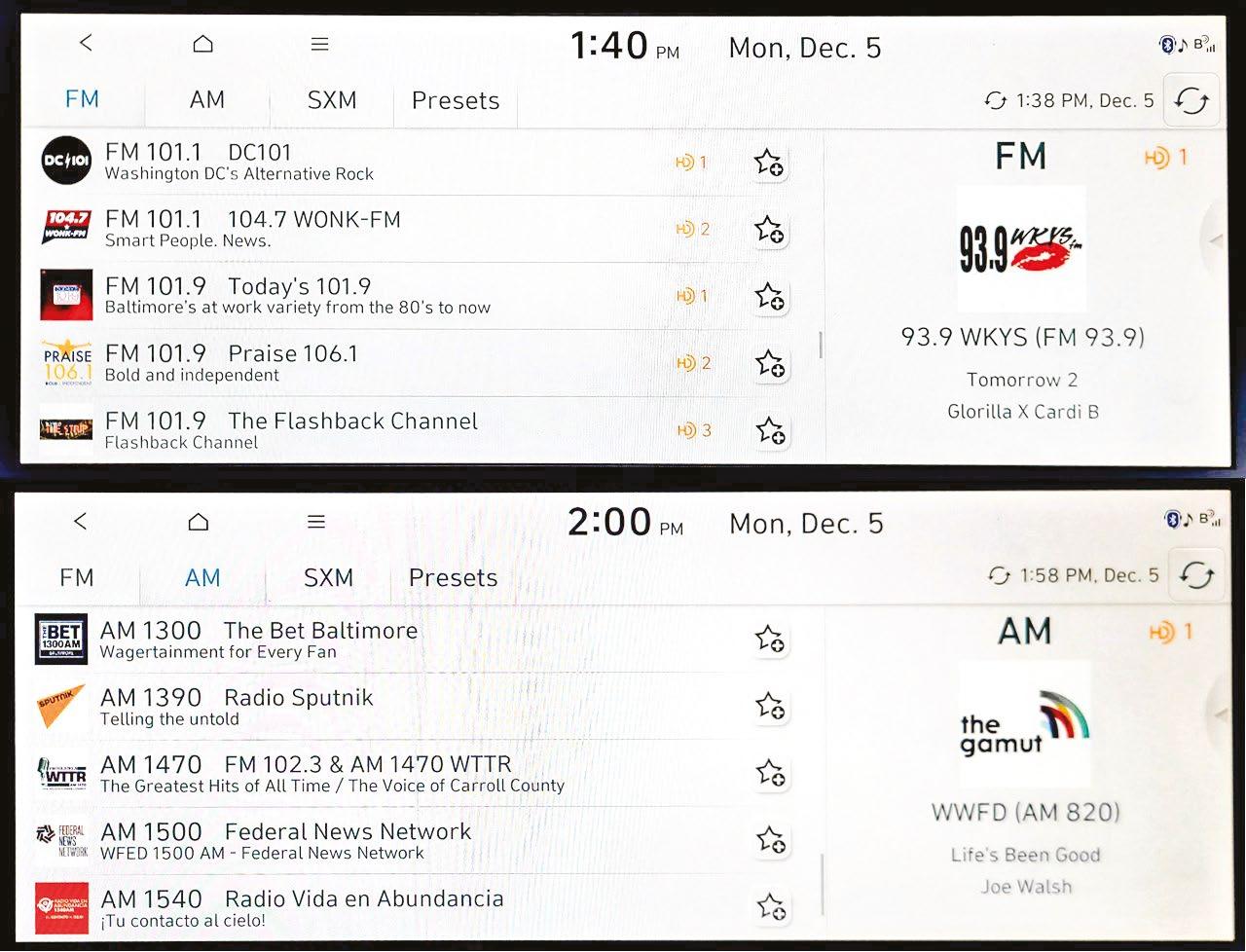
Hybrid radio systems like DTS AutoStage are becoming more prevalent in automobiles. What do they portend for the way radio uses metadata and its broader user experience?
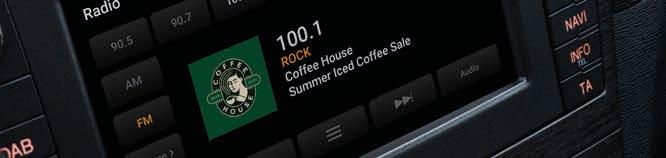
Layer: I am a big fan of hybrid radio systems, and DTS AutoStage is clearly leading in this technology. Welldesigned hybrid radio systems give the AM and FM radio bands a totally consistent user experience with respect to
“It stands to reason that AM broadcasters should also be able to employ these [SFN] techniques and improve their coverage and service to listeners.
metadata, where all stations in the band look great with station logos and station information.
NAB recommends that all broadcasters participate in hybrid radio and make the necessary investments to provide great metadata to listeners. At the same time, many broadcasters should also be thinking about how they can support digital radio (i.e., HD Radio) technology and start broadcasting in digital.
There are far more vehicles with HD Radio than with hybrid radio, and the radio “product” on the dash will look better and better as more broadcasters consistently transmit metadata using the HD Radio system.
The number of AM stations in the United States has been declining, slowly but consistently, for some time. What role do you see the band playing in American life in another few years?
Layer: AM radio continues to play a vital role in the emergency infrastructure of the U.S. as the backbone of the Emergency Alert System. This is a role not easily replaced by other technologies, and NAB has been a strong supporter of the AM Radio for Every Vehicle Act, which recognizes this and would keep AM radio in vehicles for the safety of all Americans.
As an audio service, both AM and FM face challenges due to the increased competition that internet-delivered
audio represents. I primarily focus on the technical aspect of these services in my role at NAB, and I expect NAB to continue to investigate and encourage use of technologies, like AM boosters and the use of digital radio, that help broadcasters to stand out in this ever more crowded field of choices.


Kyle Suess is co-founder of Amira Labs. He will give a talk during the SBE Ennes Workshop on April 21 about “Myriad Uses of AI in Media,” including for radio.
What does your company do?
Kyle Suess: Amira Labs builds AI software for broadcast and media teams to detect, diagnose and help resolve content issues in real time before viewers notice. We automate audio/video QC, compliance and language/caption checks across live and VOD workflows. Our solutions are deployed on-prem or in the cloud, including fully air-gapped installations where models run locally with no third-party APIs required.
What’s your background?

Above Kyle Suess
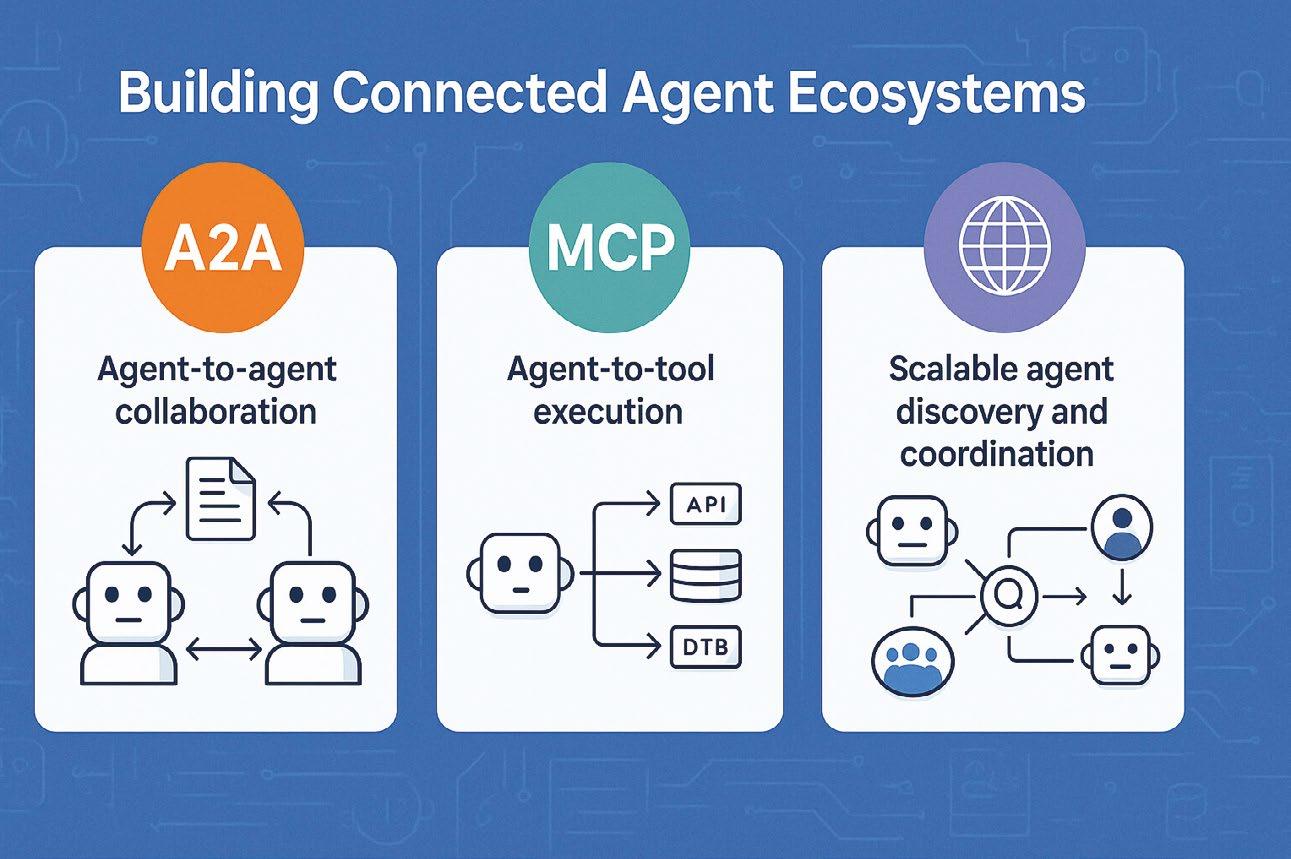
Below AI protocols that Suess will discuss for media uses cases.
AI help with quickly generating highlights to post across social media, analyzing saved files to generate metadata for easier searching in media asset management (MAM) systems, and generating synthetic voices to narrate a script or speak in another language.
From a pragmatic sense, AI is widely being used in media as a service delivered through one of the “Big 3” providers of Google (Gemini), OpenAI (ChatGPT) and Anthropic (Claude) for typical everyday tasks like debugging networking issues, generating show rundowns, analyzing advertising data, etc.
This works at an individual level, but can be very expensive and limiting at scale, especially when actually involving content — audio streams, media streams, codecs, containers. For a lot of media companies, the last few years have involved “R&D science projects” relating to incorporating AI.
Suess: It is in building software products. I became drawn to a blend of tech and media starting in college in 2013 while working at a startup that was commercializing natural language processing research for multi-language translation and metadata tagging of videos from YouTube, news publishers and other online platforms.
That was the spark that led me to working at another startup, Grafiti, where my Amira Labs co-founder Stefan and I leveraged machine learning to catalog thousands of graphics and charts to make it easy for journalists and news media to weave them into stories.
These experiences brought out a motivation to get more involved in SMPTE, to learn from those who know more than me, and ramp up building useful tools for broadcasters. Our first Amira Labs-product designed for scalable, low-latency captioning, translation and language identification won NAB’s PILOT Innovation Challenge award.
Broadly speaking, what are a examples of how AI is being used in media now?
Suess: Captioning is the big one that many people have seen by now. There are a lot of captioning choices in the market, though be mindful of aspects like language support, latency and usage costs for captioning for long periods of time across many feeds.
Clipping highlights, content tagging and dubbing/AI voiceovers are other top examples. These applications of
What I will highlight is bringing an engineer’s mindset to strategically approaching AI and navigating how to build with it, beyond R&D. It’s important to be cognizant of the bigger picture and be calculated with assessing options when making AI decisions. There’s so much innovation happening nearly every week in the open-source world. I’ll highlight some of the most impactful and useful projects for media organizations.
Specific to Radio World readers, what instances can you describe?
Suess: Translation of radio programs from English to
other languages, done locally by uploading a script, is one example. The motivation for this use case is from working with a radio station in Kansas that wanted to reach more Spanish speakers and automatically translate their English programs, while still making it sound natural and not as robotic. This can go beyond Spanish to other languages catering to the community demographics of different radio markets, like Chinese in the Bay Area, Vietnamese in Orange County, Arabic in Detroit, etc.
Another use case is real-time content classification and segmentation of radio broadcasts.
Consider that a major U.S. radio broadcaster has multiple programs running simultaneously and they want to listen and classify different segments of the programs, or conversations if it’s like a podcast. This is where AI can be useful to easily save snippets of content that could be repurposed for a multitude of uses, without having to put in hours and hours of manual effort.
Much of the attention around uses of AI focuses on negative impacts on human-based workflows. What’s your view?
Suess: First, I think it’s a valid concern and I wouldn’t dismiss it. We hear about the hype around the gold rush and efficiency multiplier aspects of AI in the news. Sometimes, it sounds like CEOs reimagining the 1960s
“Twilight Zone” episode, where an enterprise can turn itself into a workforce of machines overnight.
I think AI is a greater enabler and augmenter to save time on the work we struggle with doing and don’t look forward to doing. However, I’m not sold that propositioning AI as a full replacer of humans is the next best move.
There’s a divergence between business aspirations and reality, and the reality of the situation is there’s still so much nuance, tribal knowledge and (let’s face it) chaos involved in making media happen that it seems short-sighted to sacrifice those built up in-house advantages.
I think the biggest gains will come from equipping employees with the AI tools that will bring the people and technology together to achieve those more productive outcomes desired.
In thinking about the impact of AI on jobs, there’s a great video from 1979 on YouTube of an interview about the impact of computers. If you replace “computer” with “AI,” the same thoughts we are grappling with today seem not so different than those of 47 years ago.
Perhaps looking back at the past will help offer informative moments of clarity for what we should really be doing with AI when going forward.
Amira Labs will be in booth W2217, sharing space with Open Broadcast Systems in W2219.

Writer
Several presentations in the Broadcast Engineering & IT Conference will provide updates about the Broadcast Positioning System.
While not of direct relevance in radio, the initiative is clearly a big priority of the National Association of Broadcasters right now. NAB believes that with GPS increasingly recognized as a potential single point of failure for the delivery of data critical to national security, BPS has an important role to play.
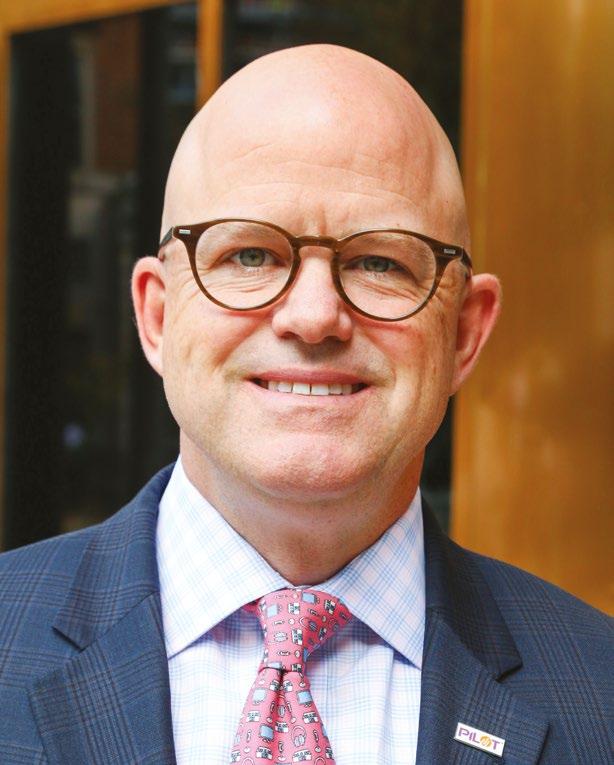
Sam Matheny is executive vice president for BPS. This is excerpted from our sister publication TV Technology.
The NAB in December realigned its technology leadership to advance the development and deployment of BPS, including putting you in this new role. Why?
Sam Matheny: NAB made this move to accelerate development of BPS and to put dedicated senior leadership behind an initiative that has clear public safety, critical infrastructure and national security implications. BPS has progressed from concept and early demonstrations into a phase where sustained focus, coordination and execution matter. This realignment allows NAB to concentrate technical leadership on advancing BPS while continuing to support broadcasters as they deploy and invest in NextGen TV infrastructure.
Last year, the Department of Transportation awarded a $744,000 contract to NAB to move forward with BPS field testing. How has that factored in?
Matheny: The DOT award in August was another validation that BPS is aligned with broader federal efforts to strengthen resilience for position, navigation and timing services. It signaled the continued shift from discussion to real-world evaluation, but importantly, it was part of a larger series of events.
In January of 2025, BPS’s time transfer stability was declared “comparable to or better than GNSS,” the Global Navigation Satellite System, and a “viable complementary PNT [Positioning, Navigation and Timing]
solution” by scientists at the National Institute of Standards and Technology in a peer-reviewed paper presented at the Institute of Navigation International Technical Meeting. These events, coupled with other indicators, helped drive NAB’s decision to align leadership around BPS so the organization can support field testing, data collection and engagement with government and industry partners in a more focused and sustained way.
For readers who aren’t familiar, briefly bring them up to speed.
Matheny: BPS, a technology invented and developed by NAB, uses NextGen TV broadcast signals to deliver resilient, terrestrial-based timing and location services. One can think of BPS as the terrestrial equivalent of GPS. It is designed to complement GPS. It can provide a backup when satellite signals are disrupted, jammed or spoofed, but it can also be integrated to work with GPS as a hybrid solution. Because BPS leverages high-power broadcast infrastructure that already exists across the country, it has the potential to scale nationally and provide a reliable layer of resilience for public safety, critical infrastructure and other essential services. Other nations that are deploying ATSC 3.0 have also expressed interest in BPS.
Tell us about the testing funded by the DOT contract.
Matheny: The field trial is focused on evaluating BPS performance in real-world environments rather than controlled demonstrations. The work is intended to assess how BPS can support critical infrastructure operations when GPS is unavailable or degraded, as well as how the system performs in terms of reliability, coverage and operational integration. NAB has partnered with Dominion Energy with a focus on energy grid resiliency. This testing is a key step in understanding how BPS could function at scale.
Can you tell us about partnering with Dominion Energy and the broader role of BPS for U.S. industry?
Matheny: Electric utilities rely heavily on precise timing to operate safely, manage load and maintain grid stability. Power enters the grid from multiple sources and has to be time-aligned for effective distribution. Precision time also plays a huge role in fault detection and helps grid operators identify and fix problems quickly should they occur.
Partnering with Dominion Energy allows NAB to evaluate how BPS could help sustain timing and synchronization for
electric grid operations during GPS disruptions. More broadly, BPS is being evaluated as a terrestrial complement to GPS that could support a wide range of industries that depend on precise timing, including energy, cellular communications, data centers, financial systems and transportation, where even short disruptions can have significant consequences.
Is BPS the killer app for ATSC 3.0 that could accelerate deployment by giving the government a national security incentive?
Matheny: BPS is a strong example of how NextGen TV infrastructure can enable services that go well beyond video and entertainment. While ATSC 3.0 supports many new consumer and business applications, the ability to deliver GPS-level resilient timing and positioning highlights its potential role in public safety and national resilience. That broader value proposition reinforces the importance of completing the transition to NextGen TV and ensuring the underlying broadcast infrastructure is fully deployed nationwide.
Is precise timing or precise positioning the initial priority for BPS?
Matheny: The near-term priority is accurate, traceable time delivery. Many critical infrastructure systems depend on accurate timing to function properly, and timing disruptions can cascade quickly across networks and services. A 2019 study by NIST estimated the economic impact of a loss of GPS at $1 billion per day. BPS is designed to provide resilient timing as a foundational capability, while positioning and additional services will continue to be developed and refined over time.
We live in an on-demand world. Yet somehow, the radio I listen to is still telling me to tune in at specific times.
I get it — it’s hard to walk away from over 100 years of tune-in promotion. And sure, teasing what’s coming up in the next few minutes might actually keep me hanging around if it’s convenient.
But asking me to remember to tune in at a scheduled time for something that isn’t even a live event? That ship has sailed.
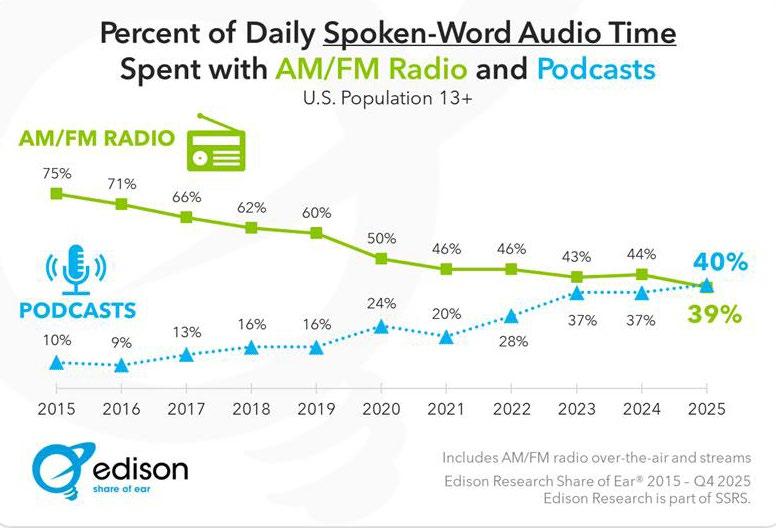
The evidence has been building for years, and the latest bomb dropped recently from Edison Research. The headline: “Podcasts Lead AM/FM in Spoken-Word Listening, Marking a First.”
Edison’s data shows podcast listeners now exceed half the U.S. population, while spoken-word radio’s cumulative audience has flatlined.
To be fair, podcasts only edged radio by one percentage point; but the trajectory is unmistakable. Just look at your own behavior and that of your family and friends, using on-demand access to niche content such as true crime, hobbies, business, academic subjects and hyper-specific news and opinion shows.
So what needs to happen? Terrestrial stations must get serious about rethinking programming, measurement, advertising sales and promotion strategy — all at once.
Mark Lapidus
The author wrote recently about the role of “dashboard” business tools in radio.
Below “Quarter by quarter and year over year, time spent using AM/ FM radio to listen to spoken-word audio has declined significantly and shifted to time spent with podcasts,” states Edison Research.
Programming — We have the ability to meet audiences wherever they are, live or on-demand.
Many big stations are trying but execution is lacking, especially with updates.
One legendary talk station I checked had only a handful of shows listed under “News” — one typo dated a segment as having been recorded 56 years ago (!) and another, the most recent, from 10 months ago. This is in a top10 market!
And while big companies like iHeart have solid apps loaded with national podcasts, good luck finding a local station’s shows. If we were trying to prove that local matters, we’d receive a failing grade for podcasts and ondemand audio.
Measurement — I’ve written before that once stations expand their on-demand content, they need unified internal dashboards combining ratings, streams and podcast downloads in one view.
Advertising — A multi-platform mindset has been essential for a long time, but there has been way too much lip service and not enough allocation of resources, if any. This starts with training and education from the ground up — so the other platforms stop being an afterthought.
Promotion — Rather than requiring listeners to tune in at specific times, remind them what you have on-demand and how easy it is to access it. And those on-demand segments, shows and podcasts should cross-promote the live broadcast … the product that’s always there at the push of a button.
And let’s talk streaming. This platform needs a dedicated supervisor to make sure user experience is always good.
For example, does your streaming app re-fire a pre-roll every time a mobile signal drops for a few seconds? That’s one supremely annoying user experience that I’ve regularly caught on apps. Another reminder: Make sure your streaming app includes your ondemand shows.
Our audience evolved long ago. The big question is whether radio will continue to do so as well.
Have you read your free ebook “Sweet New Studios for 2026”?
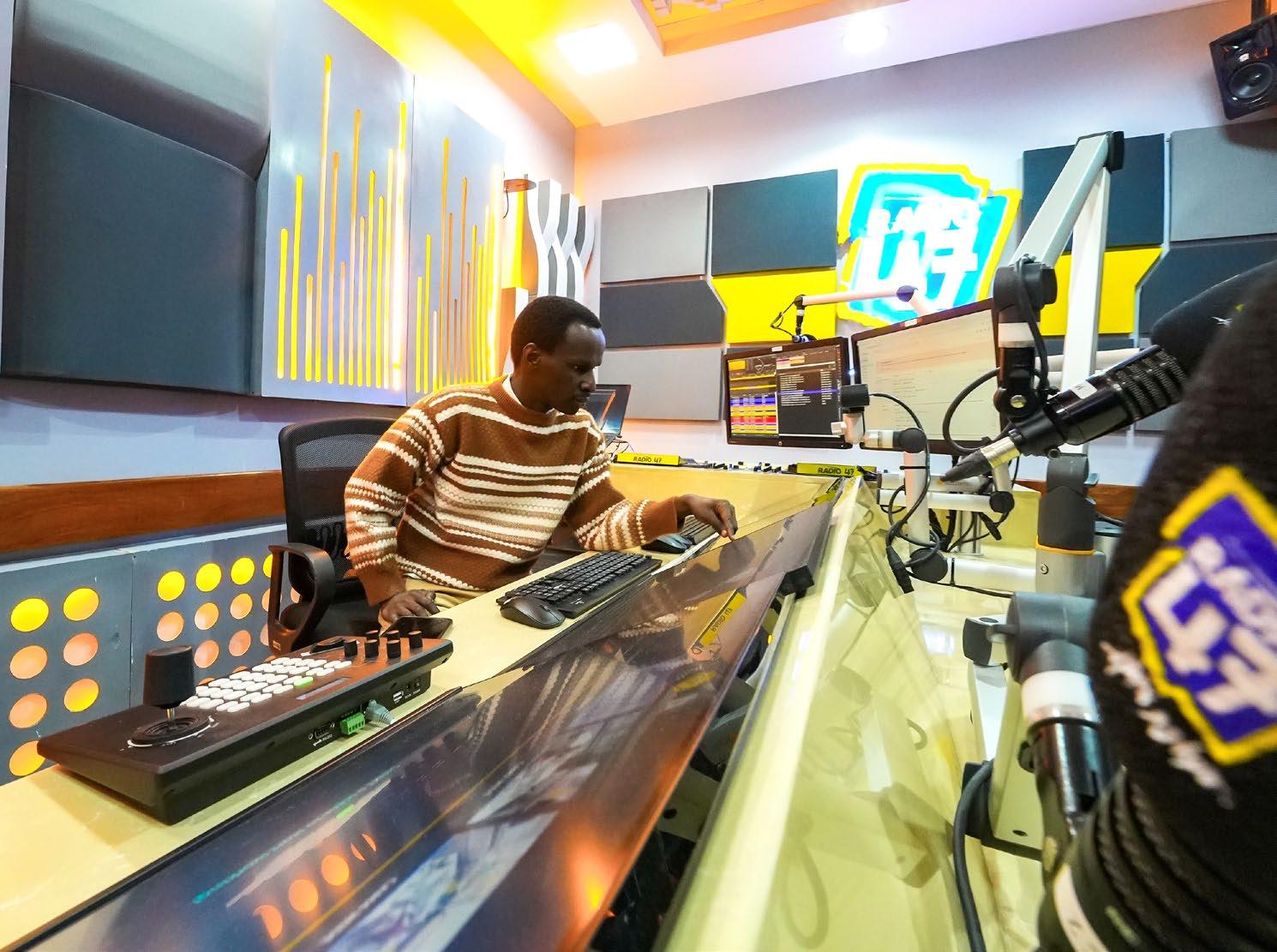
The process of planning and building radio studio infrastructure is evolving rapidly due to numerous factors that we’ve documented in Radio World. Broadcasters will still build studios; but today’s needs are much different than even a few years ago. This ebook captures a moment in time for our industry as this transitional process continues. We provide you a look inside facilities of companies like Spotify, Huskers Radio Network, Radio One, Hubbard, Ocean State Media, KUT Public Media and more.
For Radio 47 in Kenya, shown here, it was a transition from traditional infrastructure to a fully IP-based ecosystem supporting remote access, automation and visual radio simulcasting.
Your ebook is waiting for you at radioworld.com/ebooks.







Writer Mark Persons
CPBE, CBNT, AMD
The
Amultimeter is my go-to instrument for initially figuring out what is going on or going wrong in a circuit.
The “multi” in “multimeter” refers to the tool’s ability to read voltage, current and resistance. You may have seen one in my toolbox in a Radio World article some time back titled “What’s in YOUR Toolbox?”
Combining multimeter readings of voltage, current and/ or resistance will give watts of power when using Ohm’s Law. You may remember the article I wrote last year, “Look What You Can Do With Ohm’s Law” (at http://radioworld. com, type Ohm’s Law into the search field).
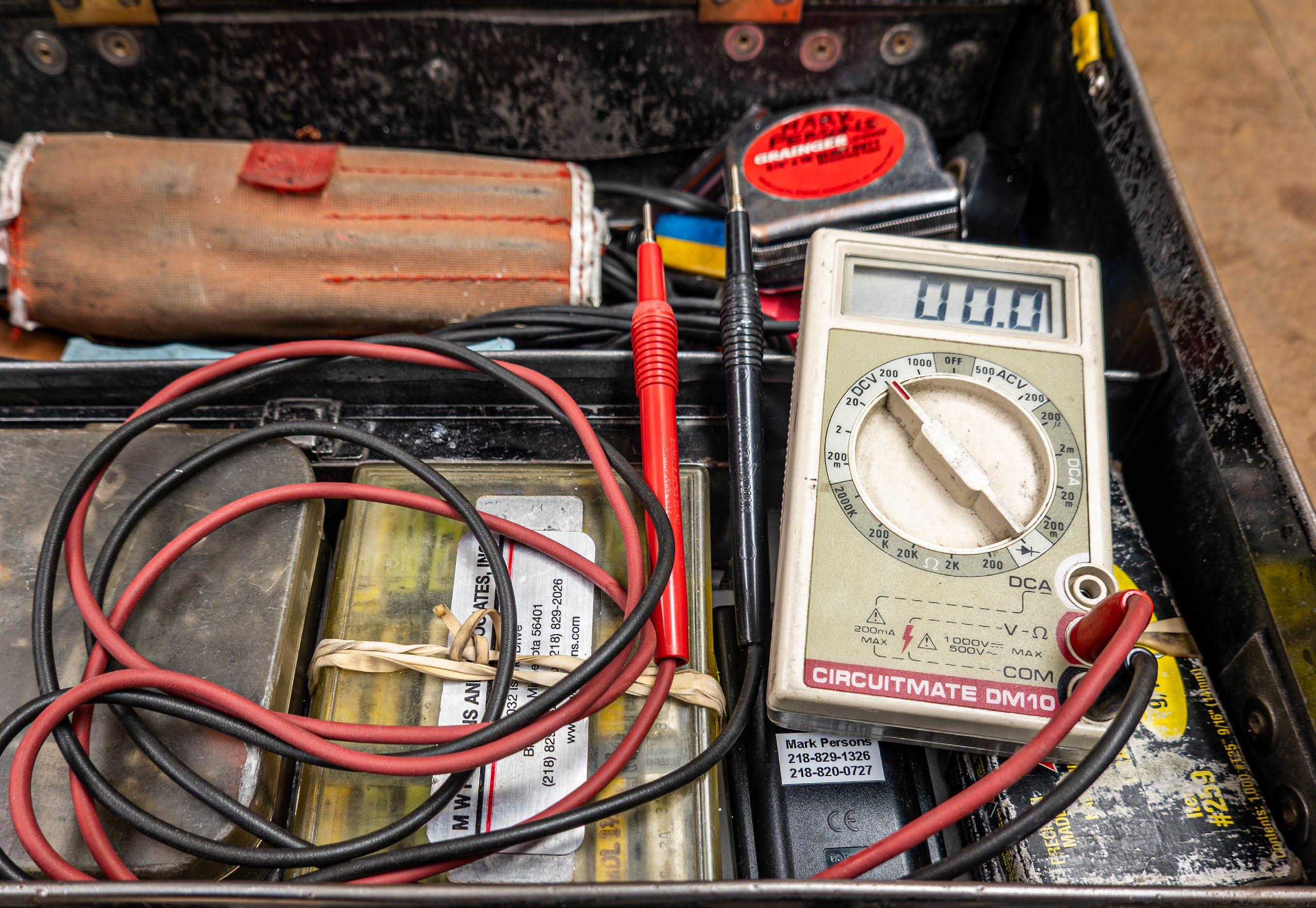
The Beckman Circuitmate DM10 in Fig. 1 is no longer in production but is an example of what I have in a toolbox. This little workhorse was not the cheapest on the market but relatively inexpensive. Small size for a hand-held meter is the major consideration. If it is too big to carry in your toolbox, you need to find a smaller meter or a larger toolbox.
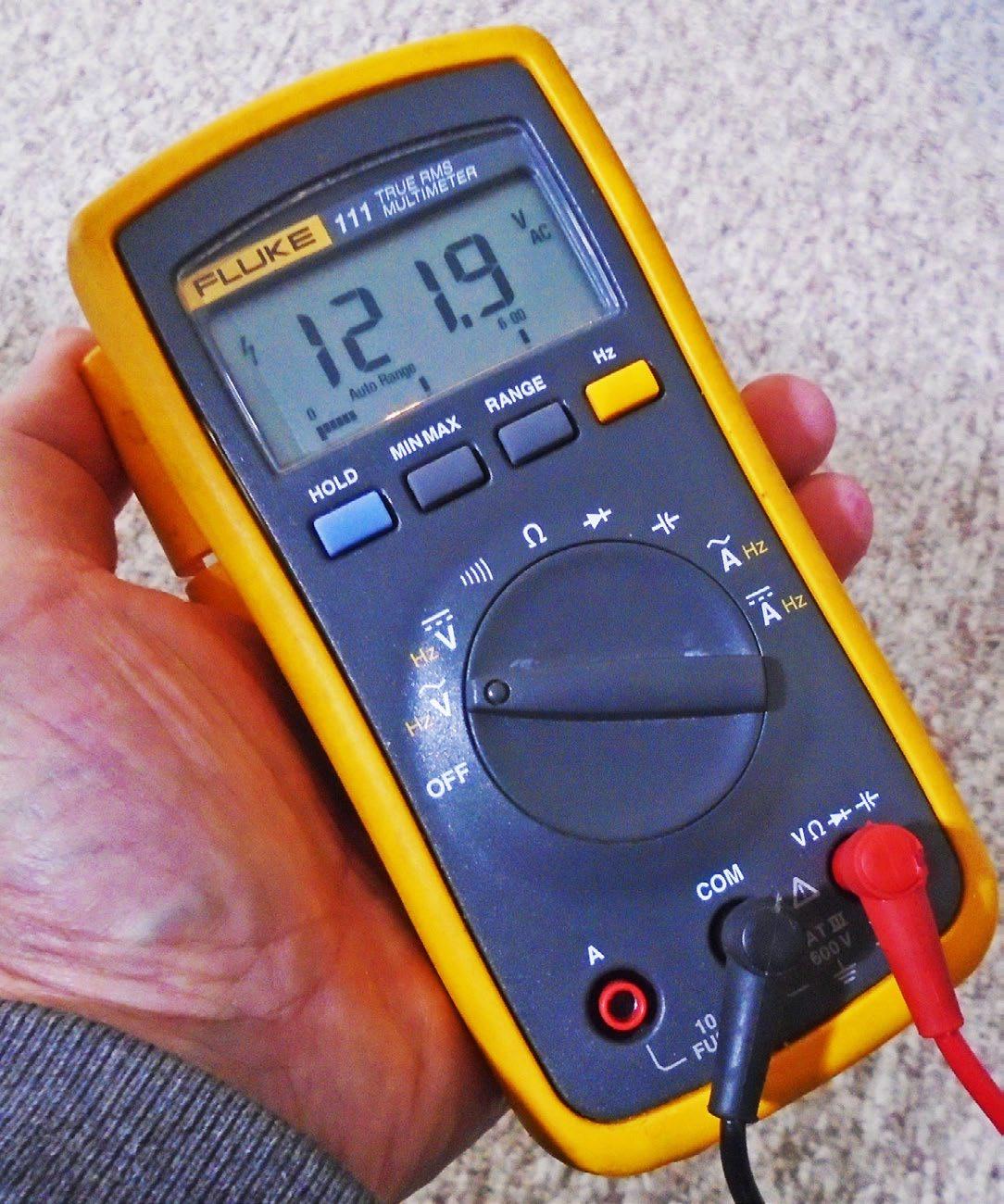
Fellow RW writer Buc Fitch’s “carry on” toolbox has a Fluke 111 (Fig. 2), which has now been replaced by Fluke with several newer and more versatile units that are about the same size. Other manufacturers in this area include Sperry, GB and Klein Tools, just to name a few.
Of course, there are the Chinese brands. I stay away from
$20 units in favor of something in the $100 class. If and when I need to replace my meter, it will likely be a Fluke 17B+ for about $125. The price is right.
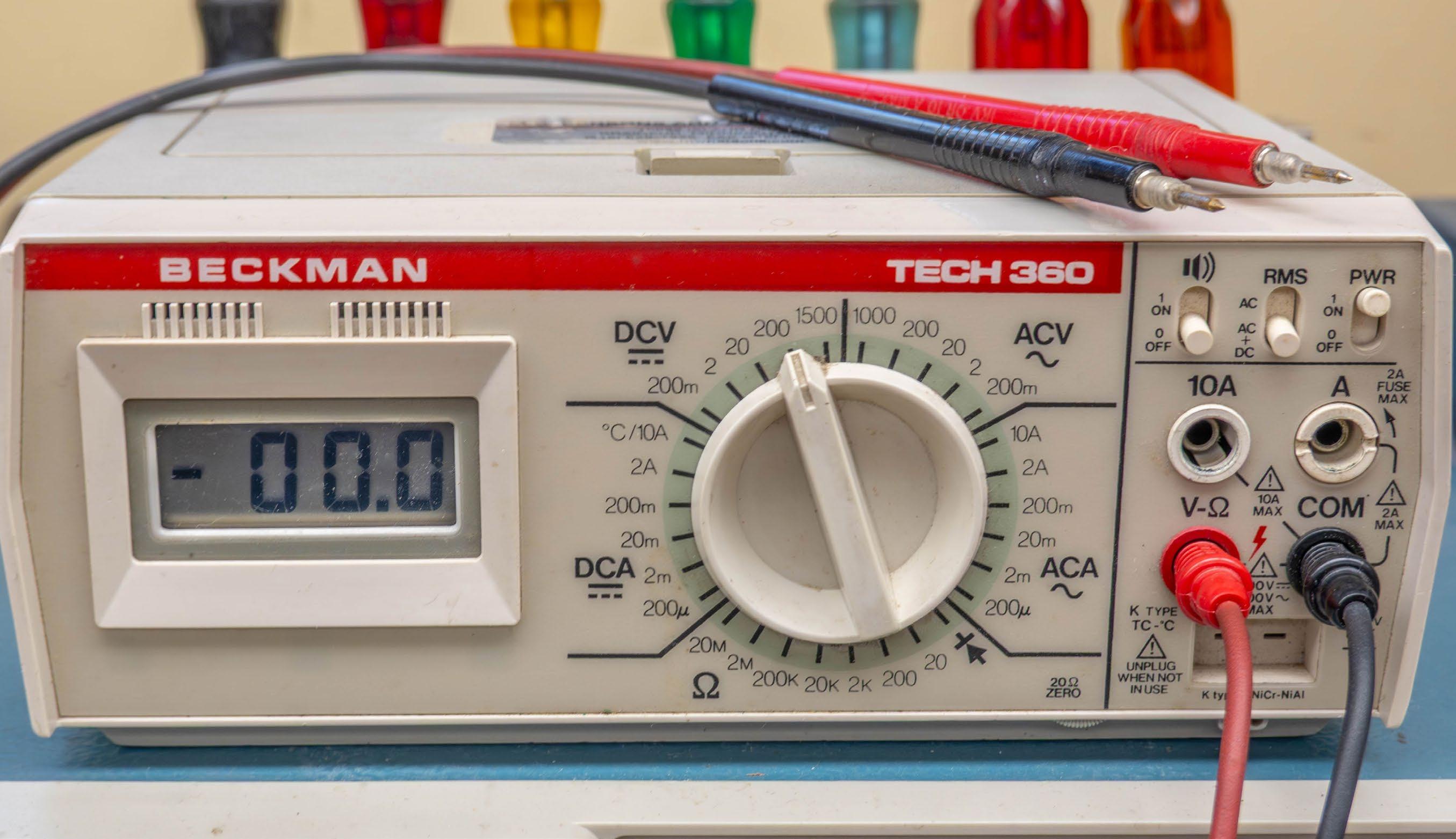
When asked why I don’t use a large, almost lab-grade multimeter at a broadcast facility, I reply saying that 95% of the time the small meter tells me all I need to know. My truck always carried the larger high-spec multimeter for more precision work (Fig. 3). It was the same one I use in the shop where there is bench space, nestled on top of an oscilloscope.
A better multimeter might be required when measuring potential over 1000 volts while connected to a specialized probe (Fig. 4). This particular one is rated at up to 50,000 volts. Best be very careful when using one of those!
Some multimeters measure capacitance and can even do peak hold on voltage and current readings. A few can measure power line frequency, such as from backup power generators, as seen in Fig. 5. Many uninterruptible power supplies want to see incoming line voltage and frequency that is close to what they get from an electric utility. A multimeter can help in getting a generator adjusted.
I find auto ranging of the digital meter scales a bit distracting. Current clamps for reading high-current AC and temperature probes are often available as
accessories. They work, but I prefer using specialized equipment for that. On rare occasions, I have needed to see a voltage going up and down several times a second. In that case, an old analog meter with a traditional scale pointer that moves, such as on a Simpson 260, is my choice.
The first thing I do when troubleshooting equipment is to check the power supply voltages. Only when those are right do I move on to problem diagnosis. If you skip this first step you can waste time and get frustrated.
When all should work but still doesn’t, I start by looking at individual components. A resistor may physically look normal but might be open when checked for resistance. I have seen that especially with older carbon composition resistors.
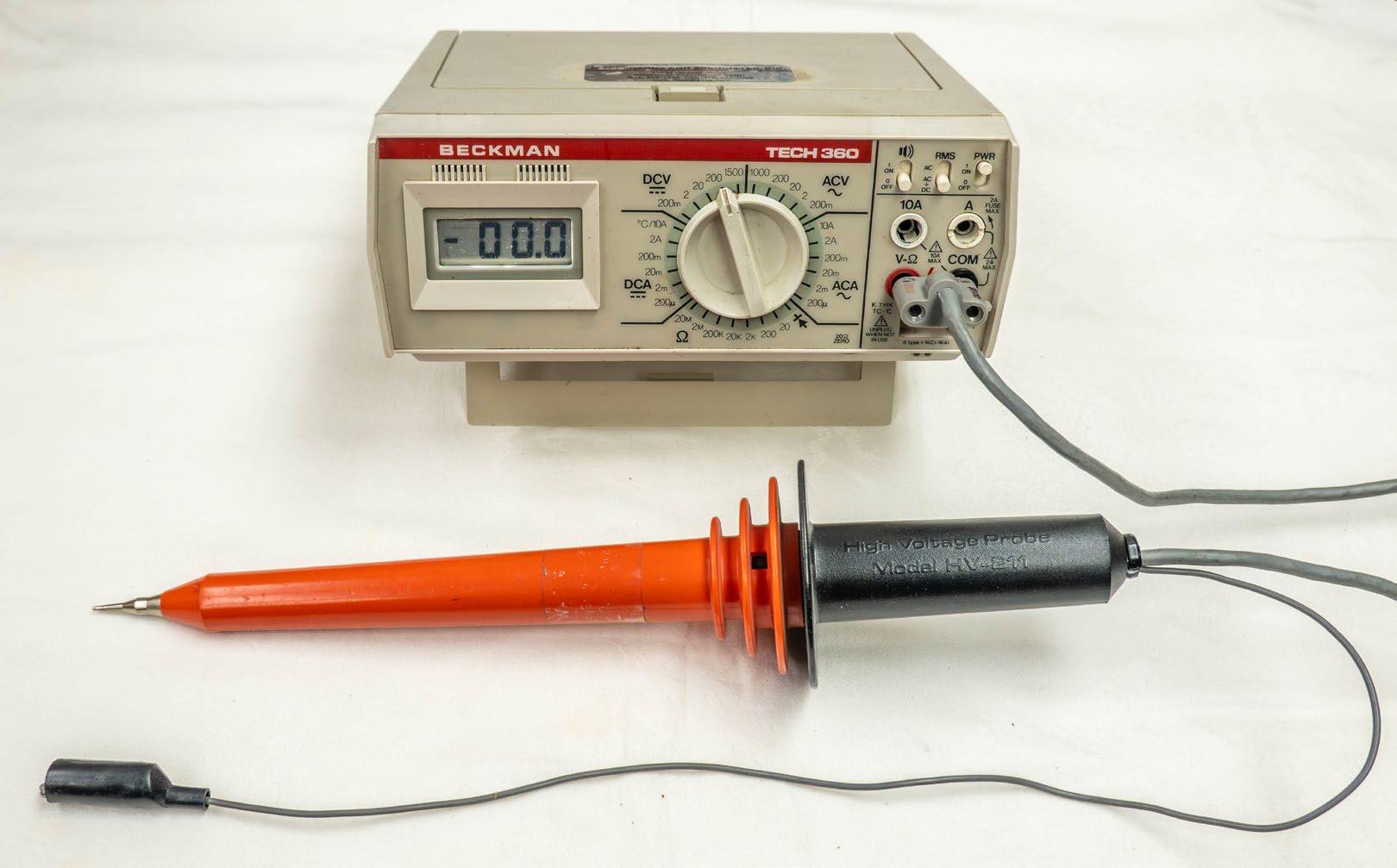
Top
Fig. 3: A larger multimeter in the shop.
Above
Let’s say you are going to check a wall-wart transformer. If the rating plate says 12 volts at 0.5 amperes, that is 6
Fig. 4: A probe for measuring high voltages.
watts (Ohms Law, 12 volts times 0.5 amperes = 6 watts). Ohm’s Law also tells us we can test it by connecting a 24-ohm resistor at its output (12 volts divided by 0.5 amperes = 24 ohms). If the voltage remains at or about 12 volts with the resistor connected, you know you have a good one. I remember one that read 12 volts until a load was
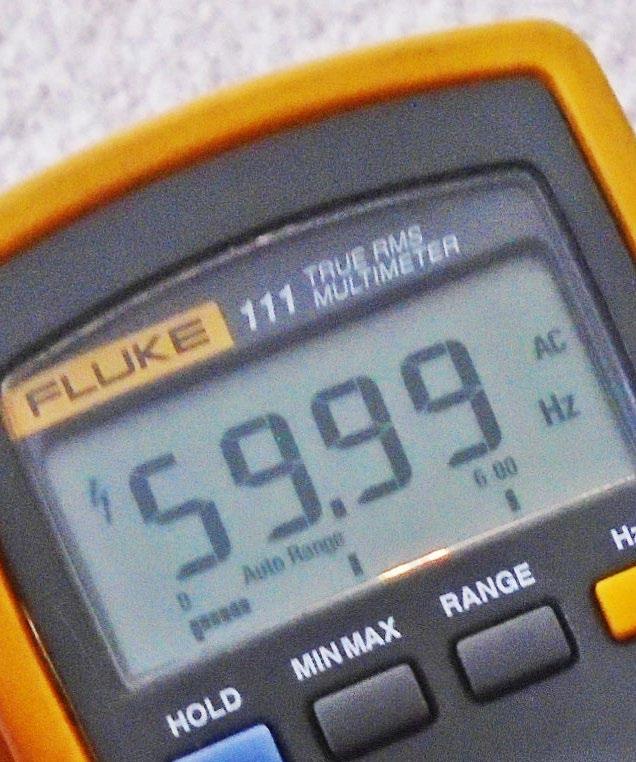
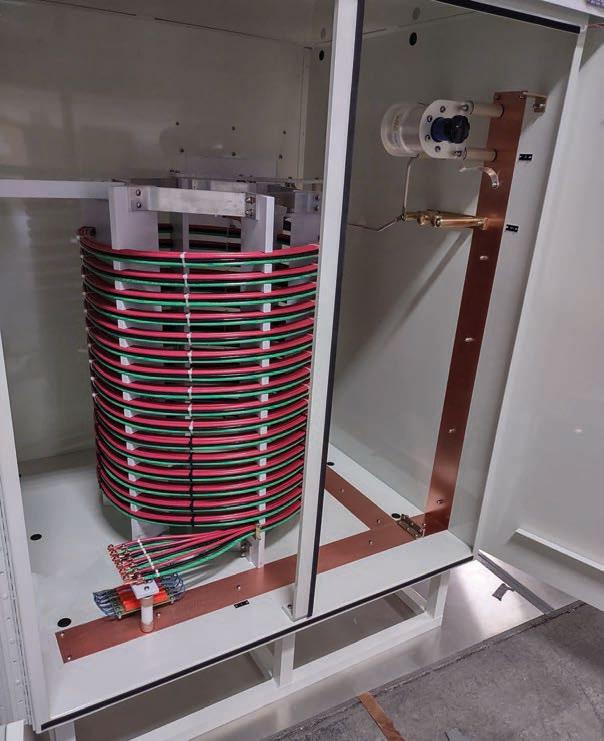
connected, then it dropped to 2 volts. If the wall-wart has a traditional transformer with a diode rectifier and capacitor, it might start out at 16 volts DC with no load, then drop to 12 volts when fully loaded. This is normal and OK.
Remember that 6 watts I mentioned? If all is well, the resistor is going to get 6 watts hot. If it is a 2-watt resistor, it will get hot in a hurry!
If you are working on a traditional analog audio console, chances are there is a + 12 or 15 volt power supply and a –12 or 15 volt power supply. Supply rails, as they are called, power analog audio integrated circuit (IC) chips, of which many are operational amplifiers.
I drew a simplified diagram of that in Fig. 6. The audio output should have nearly 0 DC volts when no audio is present. There is always a small offset of less than a tenth of a volt that you can normally ignore. Audio will make the output voltage move up and down between the supply rails.
If you know a console has problems, it is a good idea to measure DC output voltages of the audio chips. Do that when no audio is going through. A multimeter should read

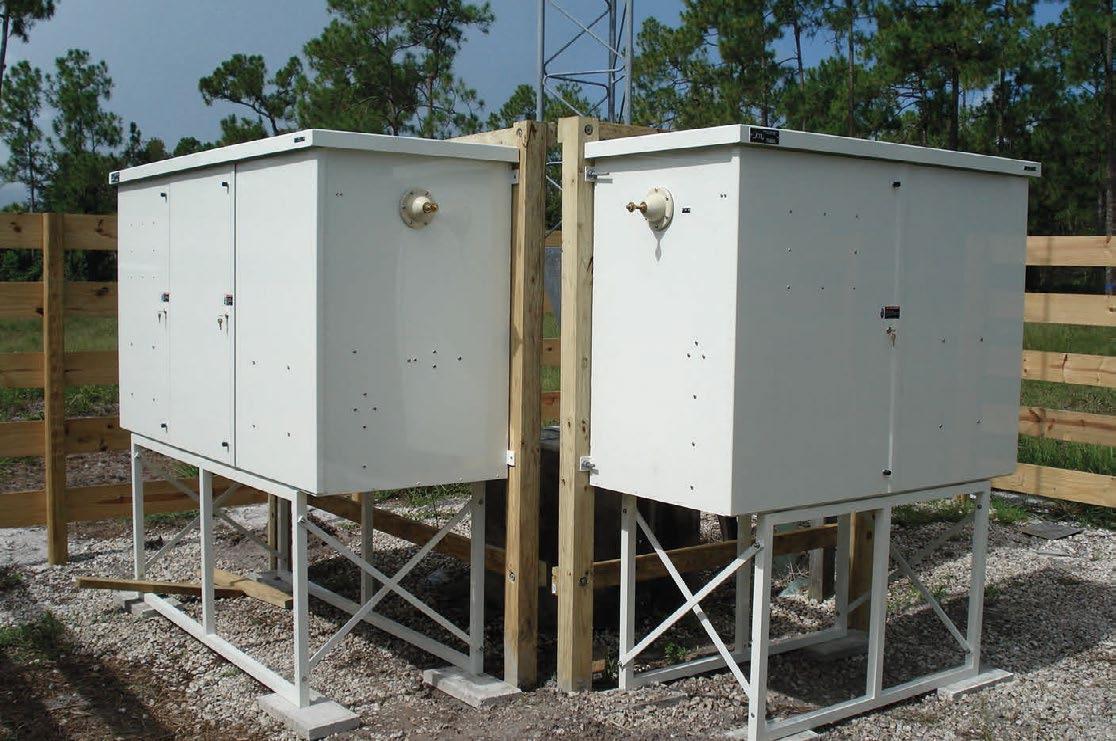
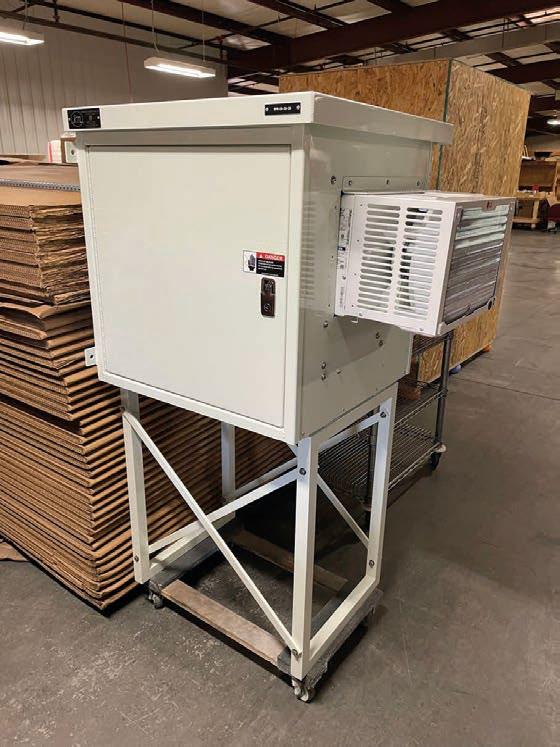
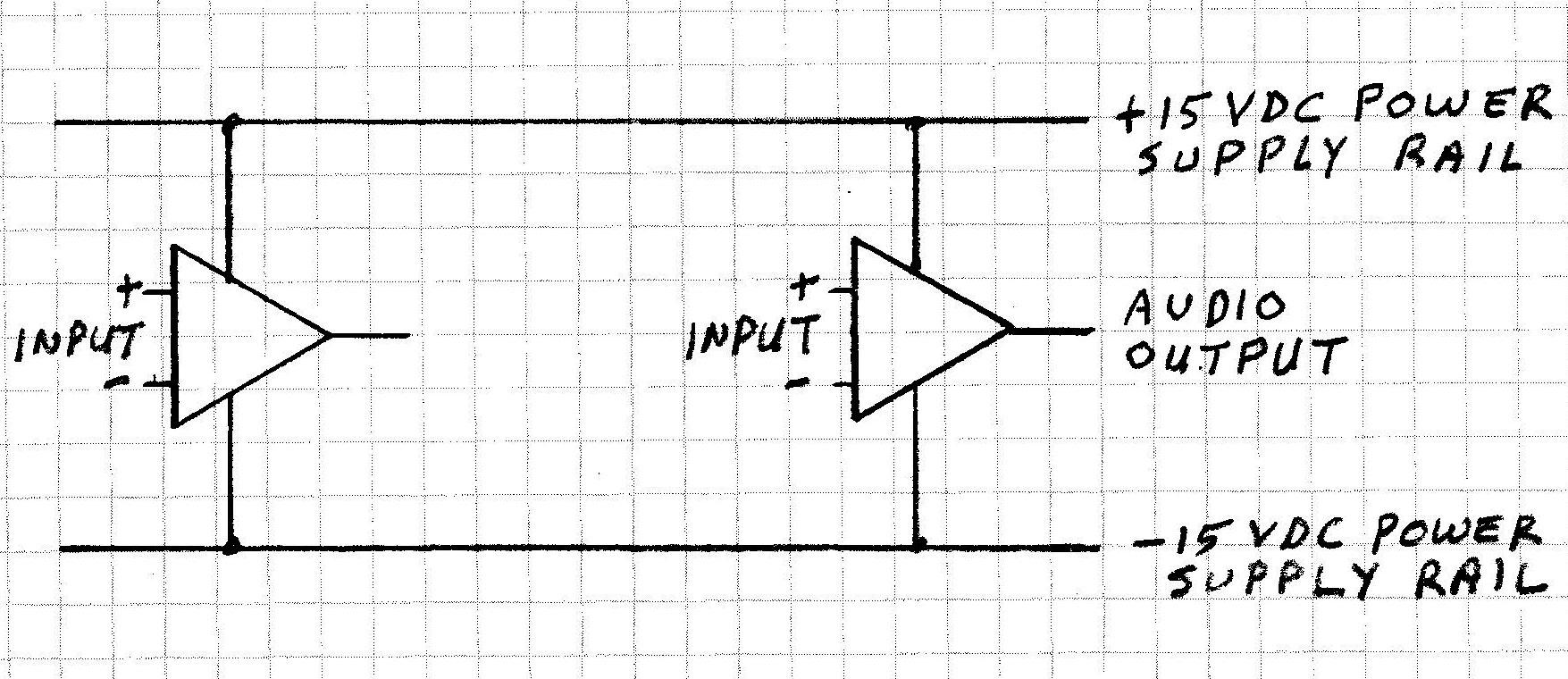
“The ‘multi’ in ‘multimeter’ refers to the tool’s ability to read voltage, current and resistance.
”
One trick I use, believe it or not, is to test batteries with the ammeter function on a meter. It might be anything from an AAAA to a D cell or a 9-volt battery.
I start with a new battery and measure how much current it can deliver directly to the meter in its DC current function for just two seconds. It might be around two amperes. Then I check the unknown battery the same way. If it is capable of one ampere, then it still has about half of its life left.
Above
Fig. 6: An operational amplifier simplified schematic.
is time to find some replacement IC chips. Hopefully they are the plug-in type for easy replacement. I have used that technique successfully on many occasions, it’s a real timesaver.
Root Mean Square: You are unlikely to need this feature unless you are measuring a voltage that is controlled by a switching power supply with a duty cycle other than 50%.
That could happen if you check power going to a variable speed motor. A standard non-RMS AC voltmeter or ammeter assumes it is seeing a sine wave when giving a reading. True RMS metering gives an accurate number regardless if the waveform is sine or square. Think of RMS as an accurate measure of AC and its ability to do work in a circuit.
Every meter will see this a bit differently, but the new vs. unknown is a valid test. Basically, it is a measure of the internal resistance of the battery plus resistance in the test leads. That is close to a short circuit. Don’t try this with larger batteries.
Just when you think you don’t need a multimeter, remember the remote control at the transmitter. You need to check logic and sample voltages to determine if they are right for the remote control. A quick voltmeter measurement can save a lot of headaches when trying to figure out why something is not working.
I keep a multimeter in my toolbox even when on vacation so I can diagnose a dead car battery or some other problem that would otherwise require outside help.
Mark Persons, WØMH, is an SBE Certified Professional Broadcast Engineer. Now retired, he mentors five radio broadcast engineers. He and his wife Paula were inducted into the Minnesota Broadcaster Hall of Fame after 60 years of broadcast engineering and 44 years in business. Their website is www.mwpersons.com.


Measuring the voltage of a dry-cell battery can be misleading. Nearly dead batteries show near-normal voltage.
Got a suggestion for an article by Mark to help readers understand radio engineering? Email radioworld@futurenet. com.
Broadcast Electronics has been acquired by an ownership group led by CEO Rich Redmond and majority investor The Alzana Group.
The transaction was structured as an asset purchase from BE’s previous owner, Italy-based Elenos.
The company will continue to operate as Broadcast Electronics but under a legal entity named BE Systems.
Redmond told Radio World that the new ownership is committed to the team at its headquarters in Quincy, Ill. He anticipates adding resources and that the company wants to help its clients create content and deliver it to consumers across multiple platforms: “terrestrial, streaming, wherever they want to consume it,” Redmond said.
Financial terms were not disclosed.
“Alzana is not a private equity firm, as it only invests its own capital and that of its partners,” it said on its LinkedIn.
Redmond will become a significant owner of BE and will work with John Danner, chairman of The Alzana Group.
Danner founded the investment firm in 2021. He also is former chairman of GatesAir and his time overlaps during Redmond’s 23year tenure there.
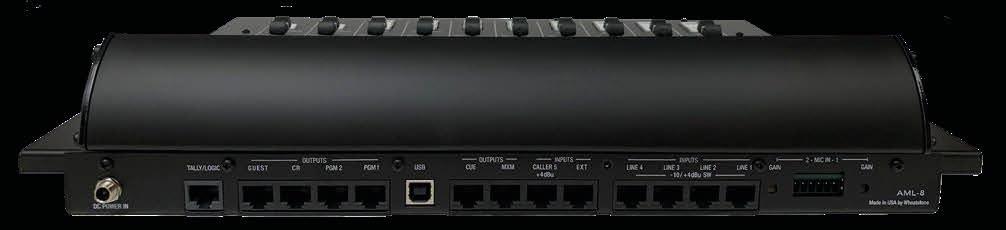
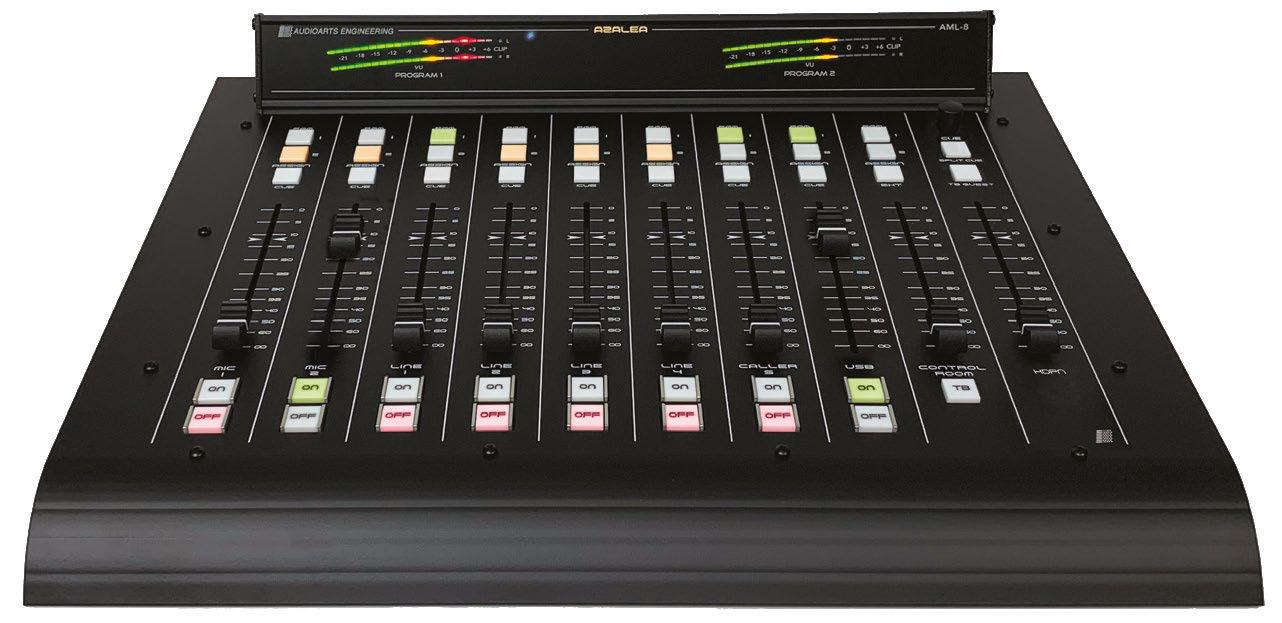

Danner said in a BE release that Alzana views radio broadcast as an “underserved” market in need of newer technology and better service.
BE was founded in 1959 and began manufacturing transmitters in 1977. It has been through several ownerships. Elenos acquired the company in 2017.




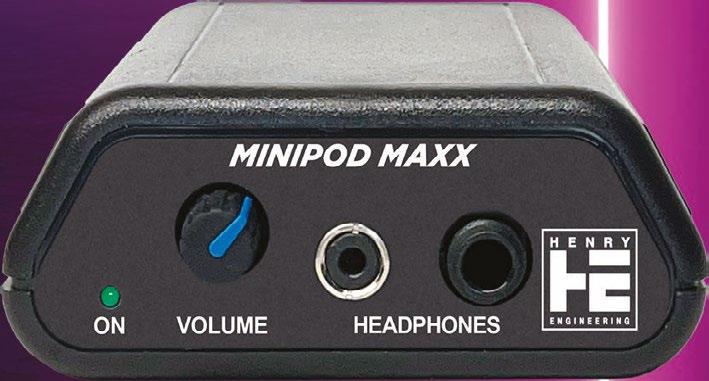



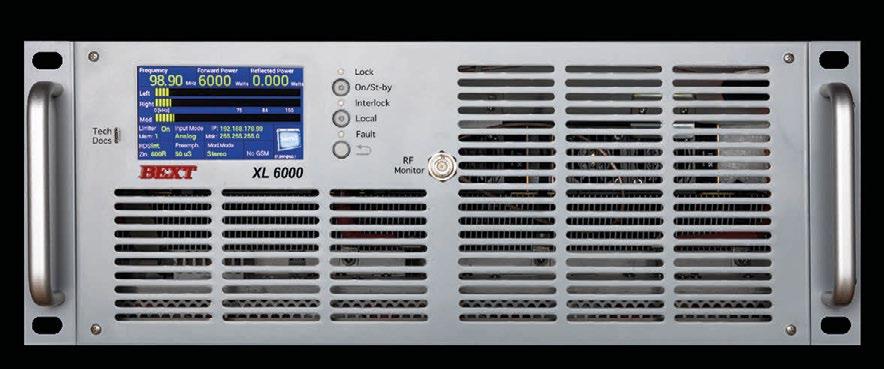










Writer
Gregg
P. Skall Telecommunications Law
The rule doesn’t mean what you may think it means
Almost everyone has heard about Chairman Brendan Carr’s assertion that shows like “The View,” “Jimmy Kimmel Live!” and “The Late Show” are not exempt from the “equal time” rule and that a failure to comply could trigger enforcement. His remarks have been associated with cancellation of the appearance of Texas State Rep. James Talarico on “The Late Show With Stephen Colbert” in February.
His statement constituted an apparent change of policy with respect to the “bona-fide news interview” exemption to what Carr called the “equal time” rule.
Actually there is no “equal time” rule. It should be called the “equal opportunities rule.”
The chairman was referring to a requirement established by Section 315(a) of the Communications Act titled “Equal Opportunities.” It states: “If any licensee shall permit any person who is a legally qualified candidate … to use a broadcasting station, he shall afford equal opportunities to all other such candidates …”
This was addressed in an FCC political primer in 1978, which noted that the law doesn’t use the phrase “equal time.” The provision refers to the right to obtain time in a period likely to attract approximately the same size audience as the period in which the opposing candidate appeared.
A footnote stated that “[i]n order to avoid repetitious language, we have sometimes referred to ‘equal time’
in this primer, but we mean ‘equal opportunities’ unless otherwise indicated.”
In addition, the FCC and federal courts have interpreted the requirement to apply only to candidates directly opposing each other. Section 315 requires that candidates be given equal opportunities, not necessarily equal time or an appearance on the same program.
A station is not required to sell or give a candidate any particular time period, or make available the same time period that was sold or given to his or her opponent. Rather, it must make periods that normally have comparable audiences available to competing candidates upon request; they may be in different programs or times of day. In fact, an opportunity for 30 minutes may be equal to an opportunity for 60 minutes if the station can make the case for it.
Moreover, it’s not the station’s responsibility to reach out to opposing candidates. The onus is on the opposing candidate to request equal opportunities within seven days. The station also is not required to notify the opposing candidate.
In recognition of the need for unhindered news reporting, Section 315 provides four exemptions from the equal opportunities rule. They apply to an appearance by a legally qualified candidate on any 1) bona-fide newscast, (2) bona-fide news interview,
(3) bona-fide news documentary (if the appearance is incidental to the presentation of the subjects covered by the documentary), or (4) on-the-spot coverage of bonafide news events (including but not limited to political conventions and related activities).
Here is where the real controversy begins.
The FCC began wrestling with how to classify talk shows under this framework in a 1984 decision involving the “Donahue” program. It held that certain programs qualified as bona-fide news interviews and thus were exempt from the equal opportunities requirement, even when they were included in “entertainment” programs.
The FCC ruled that including less-conventional interview formats in the bona-fide news exemption was consistent with Congress’ intent to increase news coverage of the campaign process.
It stated that “it would be unsound to rule that a program involving a unique or innovative approach to interviewing its guests somehow lacks sufficient licensee control evident
“According to Carr, the general rule is that equal time applies, although the statute says ‘equal opportunities.’ ”
in traditional news interview programs like ‘Meet the Press’ or ‘Face the Nation.’”
The fact that other “Donahue” segments did not relate to news or politics, it said, “would appear immaterial.”
The commission subsequently declared that “The Tonight Show With Jay Leno” met the criteria for exemption as a bona-fide news interview: The program was regularly scheduled, its producers controlled all aspects of the program, and they asserted that decisions as to format, content and participants were based on the producers’ independent news judgment as to the participant’s newsworthiness and not motivated by partisan purposes.
The chairman’s approach
Chairman Carr has a different take. His recent statement essentially overrules the “Tonight Show” precedent. According to the Hollywood Reporter, Carr said networks should operate under the assumption that such shows do not qualify as bona-fide news interviews.
Under this interpretation, TV hosts must give similar airtime to candidates of both parties. According to Carr, the general rule is that equal time applies.
So now a show desiring to interview a political candidate either must file a petition for declaratory ruling to determine whether they qualify for the bona-fide news exemption or be prepared to offer equal opportunity to opposing candidates that ask.
As noted, the rule is not necessarily a requirement to offer both candidates “equal time.” The act only requires that stations airing an appearance by a legally qualified candidate for any public office shall afford equal opportunities to other candidates for the office.
This principle has been judicially affirmed in United States FCC v. Summa Corp., Etc.: “The FCC itself has recognized that Section 315 refers to ‘equal opportunities,’ not equal time, and that there is thus no obligation ‘to make available exactly the same time periods, nor the periods requested by [the complaining] candidate.’ The time periods offered must only be ‘comparable as to desirability.’”
So here are some guidelines derived from past FCC rulings and policy.
What is required: Comparable availability; comparable classes of time; comparable opportunity to reach audience, or reasonably similar audience potential.
What is not required: Identical clock times; identical programs; the same format or host; or exact duplication of exposure
Those guidelines reflect the statute, the historic FCC interpretation and the so far unquestioned judicial confirmation of the rule.
However, Politico reported that Carr said TV hosts must comply with rules requiring they give similar airtime to candidates of both parties. So how the FCC might rule on an “equal opportunity” offering a different time or on a different show and the criteria it would employ to determine what constitutes an equal “opportunity” remain to be seen.
While the discussion has been about TV programs, Chairman Carr has clarified that the rule also applies to radio. Quoted in Politico, he has said there “wasn’t a relevant precedent … being misconstrued on the radio side.” So he didn’t see any reason to similarly press radio stations, although the same underlying rules apply. But with the mid-terms coming up, it will be interesting to see how hosts like Sean Hannity, Mark Levin or Dana Loesch, all of whom have had Republican candidates on their shows, deal with it.
This column is provided for general information only and should not be relied upon as legal advice pertaining to a specific situation. Decisions should be made only after consultation with a legal professional of your choosing.