Managing Director, Content & Editor in Chief Paul J. McLane, paul.mclane@futurenet.com, 845-414-6105
Assistant Editor & SmartBrief Editor Elle Kehres, elle.kehres@futurenet.com
Content Producer Nick Langan, nicholas.langan@futurenet.com
Technical Advisors W.C. “Cris” Alexander, Thomas R. McGinley, Doug Irwin
Contributors: David Bialik, John Bisset, Edwin Bukont, James Careless, Ken Deutsch, Mark Durenberger, Charles Fitch, Donna Halper, Alan Jurison, Paul Kaminski, John Kean, Larry Langford, Mark Lapidus, Michael LeClair, Frank McCoy, Jim Peck, Mark Persons, Stephen M. Poole, James O’Neal, T. Carter Ross, John Schneider, Gregg Skall, Dan Slentz, Dennis Sloatman, Randy Stine, Tom Vernon, Jennifer Waits, Steve Walker, Chris Wygal
Production Manager Nicole Schilling
Senior Design Director Lisa McIntosh
Senior Art Editor Will Shum
ADVERTISING SALES
Senior Business Director & Publisher, Radio World John Casey, john.casey@futurenet.com, 845-678-3839 Advertising EMEA Raffaella Calabrese, raffaella.calabrese@futurenet.com, +39-320-891-1938
SUBSCRIBER CUSTOMER SERVICE
To subscribe, change your address, or check on your current account status, go to www.radioworld.com and click on Subscribe, email futureplc@computerfulfillment.com, call 888-266-5828, or write P.O. Box 1051, Lowell, MA 01853.
LICENSING/REPRINTS/PERMISSIONS
Radio World is available for licensing. Contact the Licensing team to discuss partnership opportunities. Head of Print Licensing Rachel Shaw licensing@futurenet.com MANAGEMENT
SVP, MD, B2B Amanda Darman-Allen
VP, Global Head of Content, B2B Carmel King MD, Content, Broadcast Tech Paul J. McLane
Global Head of Sales, Future B2B Tom Sikes Managing VP of Sales, B2B Tech Adam Goldstein VP, Global Head of Strategy & Ops, B2B Allison Markert VP, Product & Marketing, B2B Andrew Buchholz Head of Production US & UK Mark Constance Head of Design, B2B Nicole Cobban
FUTURE US, INC.
Future US LLC, 130 West 42nd Street, 7th Floor, New York, NY 10036
If you submit material to us, you warrant that you own the material and/ or have the necessary rights/permissions to supply the material and you automatically grant Future and its licensees a licence to publish your submission in whole or in part in any/all issues and/or editions of publications, in any format published worldwide and on associated websites, social media channels and associated products. Any material you submit is sent at your own risk and, although every care is taken, neither Future n or its employees, agents, subcontractors or licensees shall be liable for loss or damage. We assume all unsolicited material is for publication unless otherwise stated, and reserve the right to edit, amend, adapt all submissions.
Radio World (ISSN: 0274-8541) is published bi-weekly by Future US, Inc., 130 West 42nd Street, 7th Floor, New York, NY 10036. Phone: (978) 667-0352. Periodicals postage rates are paid at New York, NY and additional mailing offices. POSTMASTER: Send address changes to Radio World, PO Box 1051, Lowell, MA 01853.
Please recycle. We are committed to only using magazine paper which is derived from responsibly managed, certified forestry and chlorine-free manufacture. The paper in this magazine was sourced and produced from sustainable managed forests, conforming to strict environmental and socioeconomic standards. The manufacturing paper mill and printer hold full FSC and PEFC certification and accreditation.
Shared signals
SBE Chapter 37 pulls off an AntennaFest
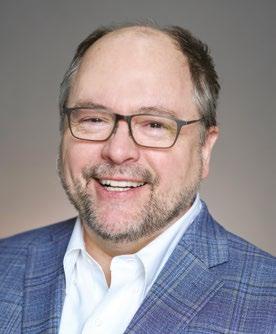
Paul McLane Editor in Chief
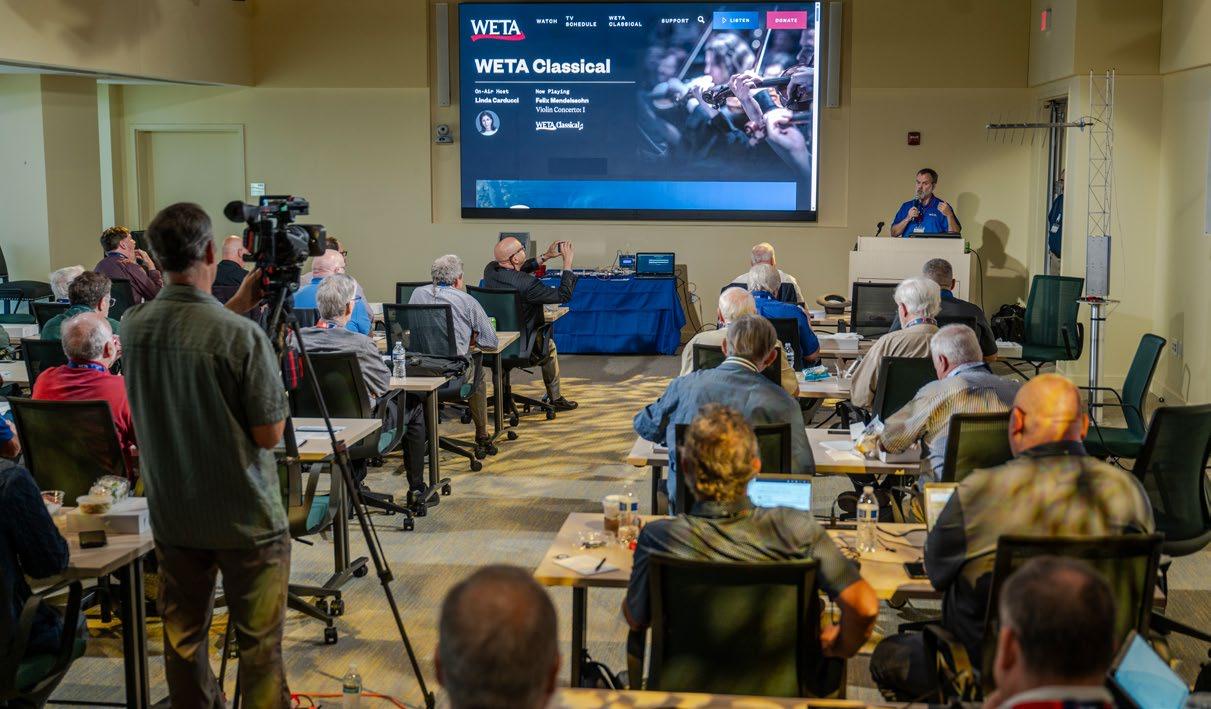
Congratulations to Chapter 37 of the Society of Broadcast Engineers for bringing together more than 50 attendees to learn about the benefits and drawbacks of shared antenna systems.
“AntennaFest 2025: Shared Signals” was a first-time event held at the headquarters of WETA in Arlington, Va., just outside of Washington, D.C. Its focus was on systems that allow multiple broadcasters on multiple frequencies to use a single transmission system and antenna.
William Harrison is chief engineer of WETA and chapter chair of SBE37.
“The number of broadcast towers keeps going down as corporations realize that the land beneath them is worth more than the tower space is,” William told me.
“So they get taken down and typically aren’t rebuilt. This forces broadcasters to try to relocate to other towers, which may not have space for additional antennas. Sharing one becomes desirable for a number of reasons.”
The idea of a gathering on such a specialized topic came about as the chapter board discussed meeting ideas. They realized that the D.C. market has shared antenna systems from three different manufacturers. Those systems differ in the technologies employed and specific requirements such as directionality and gain.
“We thought it might be interesting to discuss why certain manufacturers made one choice over another for a given project,” William said.
“It quickly became apparent that such a discussion would require background information from each manufacturer, and it wasn’t going to fit into our typical monthly meeting evening time allotment.”
That, combined with advances in the technology of combiners, antennas and system monitoring, suggested a half-day special gathering.
The event included presentations by Ben Brinitzer of American Tower; Gary Cavell of Cavell Mertz at Capitol Airspace Group; Cory Edwards of Dielectric; Nick Paulin, P.E., of Electronics Research Inc.; Jeff Welton of Nautel; and Steve Wilde of American Amplifier Technologies, parent of Shively Labs.
Jim
Correction In “Public Media Stations Confront Money Crisis” in the Oct. 8 issue, we misspelled the last name of All Classical Radio Interim President/CEO Greg Arntson.
Peck/SCMS
“For me personally, I really enjoyed seeing how far the industry has come through the use of technology,” William said.
“I’m amazed that we now have the ability to monitor transmission systems in real time, constantly, while they are running at full power, without disruption to the broadcaster. And in the design stage, being able to use complicated computer modeling systems to not only predict coverage but then iterate through thousands of possible configurations in order to determine the optimal layout of a system is incredible — something simply not possible just a few years ago. The use of HFSS and AI have become much more prominent.”
He felt it was important to discuss questions that engineers may not have thought through before deciding to proceed with a a combined system.
“Asking not only ‘Can it be done?’ but also ‘Should it be done?’ is only the beginning,” he said.
“Does it make sense to move to a combined site? Do we lose population coverage based on the pattern change? What would this gain us? Would we be allowed to move from the point of view of the FCC? Can the tower handle the additional load of a shared antenna or larger feed line? Would the move require FAA coordination based on the frequencies involved?”
He said that there’s clearly no single “right way” to build a combined system.
“Every situation is different, and the requirements dictate the approaches taken. And you don’t know what you don’t know — I’ve met folks who didn’t know combining was even possible, to those who believed that you can only combine two frequencies, to folks who didn’t think you can combine omni with directional coverage.
“Whether you’re new to the business, or an IT guy being pulled into engineering, or a seasoned RF engineer, there’s always something new to learn.”
Video of the entire event is on SBE37’s YouTube channel. And you can access the presentation materials at the chapter’s website.
I like sharing initiatives like this with you.
Recall me telling you about how the engineering team at Cumulus station WJR(AM) in Detroit hosted members of the region’s emergency alerting community. I thought that was an excellent example of how broadcasters can interact with local authorities.
Chapter 37’s event is a different animal, yet it too is proof that local engineering communities don’t need to rely on national associations and conferences to organize useful events. Putting together something like this does require a lot of time from a committed organizer, so go in with your eyes open. But if you plan it well, folks will come. And if you ask nicely enough, experts from the manufacturing and consulting communities might just come to you.
Writer
Randy J. Stine
The author wrote recently about the FCC considering possible further changes to the C Band.
The future of public radio distribution is in dispute
Tensions between CPB and NPR will likely play out in court
The Corporation for Public Broadcasting and National Public Radio found themselves at odds as CPB wound down most of its operations in September.
CPB awarded a grant to fund a new nonprofit entity to distribute programming to public media stations, but it was met with a lawsuit by NPR. The confrontation was another stress point in an already fraught public media ecosystem.
Public Media Infrastructure is the name of the new consortium. It was created by American Public Media Group, the National Federation of Community Broadcasters, New York Public Radio, Public Radio Exchange (PRX) and the Station Resource Group.
CPB announced that PMI would receive a grant of $57.9 million over five years to handle public radio distribution through 2030. Of that amount, $35 million is for satellite interconnection, and $22 million for other services.
NPR sought to block the CPB grant with a temporary restraining order to “stop immediate and irreparable
harms” to the public radio system. NPR manages the Public Radio Satellite System (PRSS), which faces the possibility of being defunded.
Because of the lawsuit, CPB said in October that it had yet to begin distributing grant money to PMI. It says this could delay rollout of essential distribution services. (About 30 staffers at CPB were continuing to work this fall to finalize remaining grants. That was expected to end in January. How the five-year grant would be administered beyond that was unclear.)
The saga has political aspects. In its filing, NPR claims that CPB pulled back a grant of more than $30 million for PRSS to distribute public radio content following pressure from the Trump administration.
Continued operations
NPR has managed the largely satellite-based PRSS for 40 years. NPR Distribution, which manages PRSS, says the service helps hundreds of public stations and independent producers to share programming. Each year it distributes
avdyachenkoan and metamorworks/ Getty Images
approximately 400,000 hours of news, music and specialized audience programming.
The transmission infrastructure is directed by the PRSS Network Operations Center in Washington. While NPR operates and maintains it, the system is a cooperative enterprise, with stations owning their equipment and sharing collective ownership of the satellite transponder capacity and core operating systems.
NPR’s request for an injunction to prevent the grant was scheduled to be heard in late October. NPR hoped the matter would be decided by the end of the year.
The motion is tied to a lawsuit filed in May by NPR and others against the Trump White House, challenging the executive order that led to the government clawing back funds for CPB. Ultimately, according to NPR, the “court ruling on the EO will decide if the grant money for satellite interconnection will go to NPR or PMI.”
Money Crisis
For more on the pubcasting financial crunch, see “Public Stations Confront Money Crisis” at www.radioworld. com/tag/publicradio
How distribution of public media programming in the United States would change is not clear. Nor is PMI’s business model known, observers told Radio World.
PMI said in a press release that it expects to work collaboratively with the PRSS and NPR to ensure the continuity of services. PMI’s proposal reportedly included a carve-out of funds to continue supporting PRSS until the new system is in place.
The consortium did not answer Radio World’s questions but replied with a statement:
“PMI will ensure the continuity and stability of core system-wide infrastructure — including satellite and emergency alert systems — while innovating radio and digital distribution systems, creating new tools for revenue generation and data analytics, and building content delivery services designed to enable local stations to remain vital sources of local news and programming for their communities.”
According to observers familiar with developments, PMI proposed using more of an internet-based content
“If NPR fails to prevail in its suit, what would be lost is the opportunity to build new capabilities for distribution, both broadcast and digital. There’s a lot of foundational technology that is required to deal with the shift toward on-demand consumption.
NPR’s grant agreement with CPB for PRSS funding ended Sept. 30. But NPR said it would continue operating PRSS for now with ongoing contracts and agreements in place.
“NPR’s board has passed a stable FY26 budget that will fund PRSS and not increase PRSS station fees, despite the loss of federal funding,” the organization said.
It said in a statement that it also plans to continue to support stations on the Grove content management system and to develop the ContentDepot Edge terrestrial distribution service.
It said its strategy focuses on growth and improvement for the public media system. “None of this planned work is dependent on this motion or on the PRSS money.”
“New tools”
Earlier this year, CPB posted a request for proposal to fund a modernization of national content distribution to local stations. NPR proposed a continuation of PRSS, which was one of two proposals. The other came from PMI.
”distribution system while innovating and adapting to rapid changes in technology.
One spectrum expert noted that the FCC earlier this year issued a notice of inquiry exploring a possible auction of upper C-band spectrum for wireless services. This person said perhaps that played a role in CPB’s decision to move in a different direction.
Such a move by the FCC could affect radio’s distribution infrastructure, since satellite companies use it extensively for radio and television downlinks. The FCC auctioned the lower portion of the C-band in 2020, generating around $80 billion in revenue for the government.
However, CPB said it recognizes that many broadcasters, particularly in rural, mountainous or remote areas, depend on satellite distribution because broadband alternatives are limited. At the same time, it wants the most “effective and accountable” future interconnection system.
“Beginning in 2026, together with cohorts of partner stations, PMI plans to design and pilot new services,
ContentDepot Edge
In May, NPR Distribution announced plans to pilot a new terrestrial distribution platform for live broadcast.
A low-latency terrestrial receiver called ContentDepot Edge would add capabilities like stationto-station content sharing, geotargeted delivery, and enhanced metadata, monitoring and playback using internet connections including fiber, 5G and satellite internet, integrating with the existing ContentDepot platform. 8
including live over IP and audience analytics,” a CPB spokesperson wrote in an email.
The public dispute has drawn further attention to the plight of public broadcasting in the United States. Since the Trump administration stripped away federal funding and grants for CPB, public media has come under increasing scrutiny.
According to a report by public media publication
Current, CPB officials have said even though it has been funding PRSS since 1979, the process has been a “grantmaking decision, not a statutory mandate.”
The developments come as NPR member outlets are demanding greater relief from programming fees and as some stations announced layoffs and content cuts.
NPR’s fiscal year began Oct. 1. In September it announced it was trimming its own operating budget by $5 million and reducing fees to some qualifying stations by that amount. Some observers say that may just be a starting point.
Affiliate tensions
More broadly, tensions have been simmering for some time between NPR and its member stations.
Paul Jacobs of consultancy Jacobs Media wrote on his blog, “Over this time, there was the expected tension between the network and its affiliate radio stations on a variety of different issues. Like any of these relationships, win/win situations are not always attainable. Sometimes what may be good for the network causes issues with those hundreds of affiliate stations.”
Mike Henry of Paragon Media said PRSS is a standard for program satellite delivery in the way that Dell or IBM are standards in computing.
“Stations paid more for that standard. Maybe the new entity can provide a less expensive and modernized standard,” Henry wrote in an email. “I was not surprised that CPB opted to fund a less expensive internet-based content distribution system.”
Stations that use PRSS are not likely to see much disruption to services in the short term. And with so much in flux in public media, Henry said some stations are
“I was not surprised that CPB opted to fund a less expensive internet-based content distribution system. ”
finding new ways to collaborate directly and not through a “mothership” such as NPR.
“In some cases, stations are distancing themselves from NPR due to negative brand perceptions, while others are questioning the expense of NPR’s programs and leaning into more local content.”
Steven Bass, former chief executive of Oregon Public Broadcasting, says NPR’s focus on serving and monetizing audiences, through channels such as podcasts, created new conflicts and tensions with affiliates.
“Friction is always present in a membership organization, just as it is in a typical affiliate structure. With NPR, the friction isn’t generally about fees or distribution such as PRSS. It’s more due to the rise of on-demand audio, which fundamentally shifted the relationship between NPR and its member stations,” he said.
He agreed that regardless of the outcome of the grant dispute, PRSS will remain operational and will be required to serve all public radio stations that were previously qualified to receive CPB support for at least a few more years.
“If NPR fails to prevail in its suit, what would be lost is the opportunity to build new capabilities for distribution, both broadcast and digital. There’s a lot of foundational technology that is required to deal with the shift toward ondemand consumption. NPR has tried to serve these needs but has not been that successful.”
Another observer wondered how NPR will be able to move forward either way.
“One thing that I can’t figure out is the business strategy behind the lawsuit. If NPR is successful, it will be at the cost of important relationships with the PMI partners. That doesn’t seem like a clear win to me,” this person said.
Steve Williams, president and CEO of Newark Public Media’s WBGO, said his station depends on PRSS for distribution of the show “Jazz Night in America.” He said WBGO has been completely satisfied with its relationship.
“It’s premature to fully assess the possible impact, although I suspect NPR will have a swift and appropriate operational response if the court action fails. I’m confident they will prioritize the immediate needs of the hundreds of stations that, like WBGO, rely on their hourly newscasts and tentpole productions like ‘Morning Edition’ and ‘All things Considered.’”
Williams listed several questions he and others in public media hope can be answered soon.
“What will be the distribution priorities? Is the model sustainable, after the CPB money is exhausted, in a depressed economic environment for public media?”
He continued: “If CPB and PMI are in a legal dispute with the network that produces and distributes the two most popular public radio programs, how will a fiscally challenged public radio system support two costly distribution systems? Are NPR and PMI planning to collaborate or combine efforts?”
John Bisset
CPBE
The author is in his 35th year of writing Workbench. He handles western U.S. radio sales for the Telos Alliance and is a past recipient of the SBE’s Educator of the Year Award. Send your tips Workbench submissions are encouraged and qualify for SBE recertification credit. Email johnpbisset@ gmail.com.
Scott Todd recaps his FX-30 exciter
He walks us through his steps
Broadcast engineer Scott Todd recently found that a 40-year-old Broadcast Electronics FX-30 FM exciter badly needed recapping.
Replacing all the dried-out electrolytic capacitors can be daunting. Scott found the oscillator module challenging because he had to remove all the silicon to get access to the board.
He kindly shares his experiences.
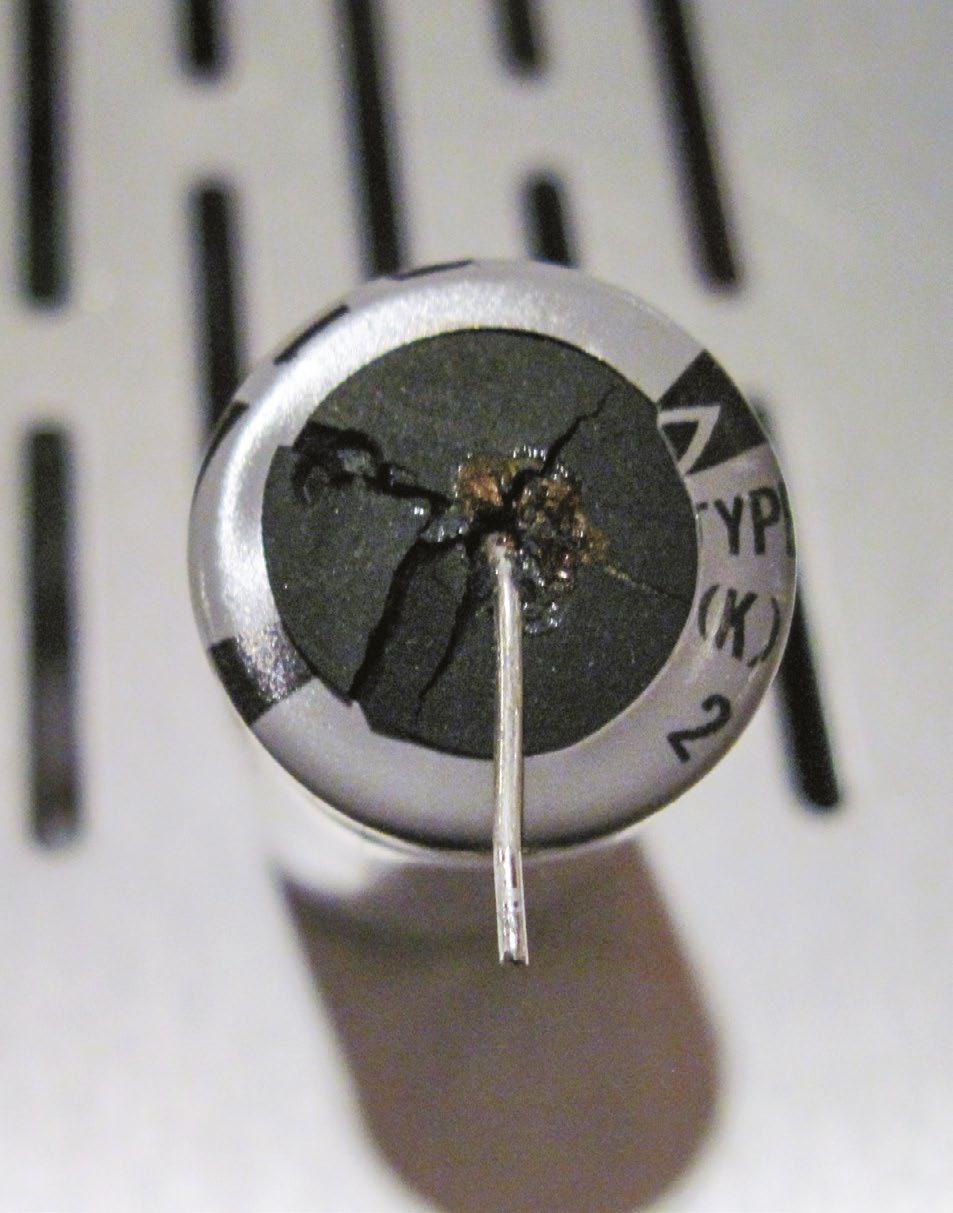
Fig. 1 shows a blown seal on one of the electrolytic capacitors. Bulging or blown (cracked) end seals are a giveaway that electrolytics have failed.
Scott recommends that you first take stock of all the electrolytics to be replaced, order them, and then replace the capacitors one at a time.
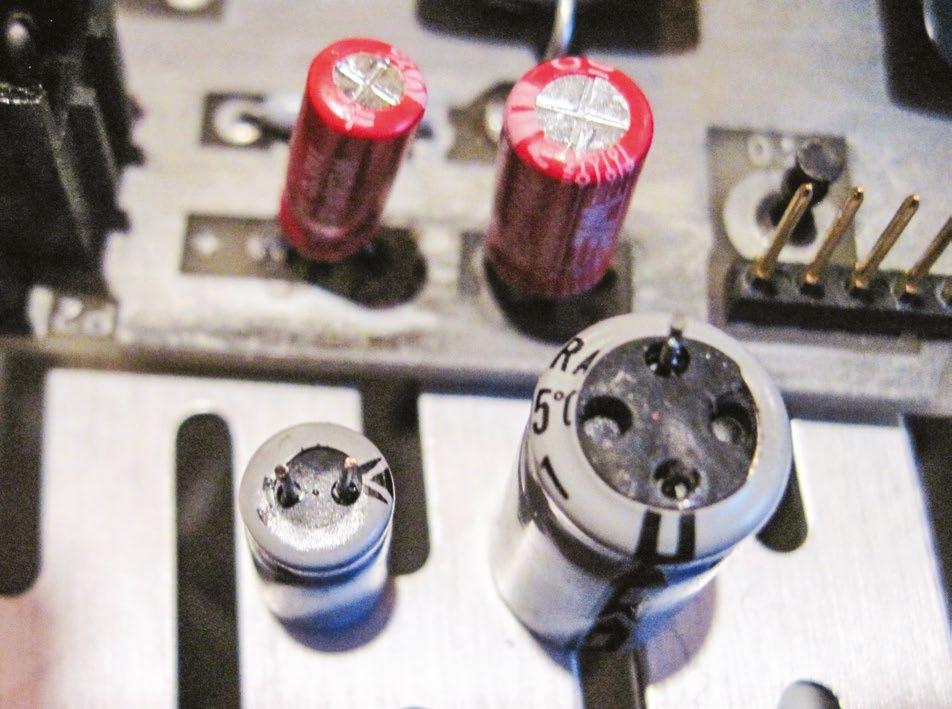
Scott obtained his replacements from Digikey and Mouser. Fig. 2 shows the new and old capacitors. It’s interesting that the replacements are physically smaller — efficiency in manufacturing!
Having completed the other boards with no issues, Scott began the process of recapping the oscillator board.
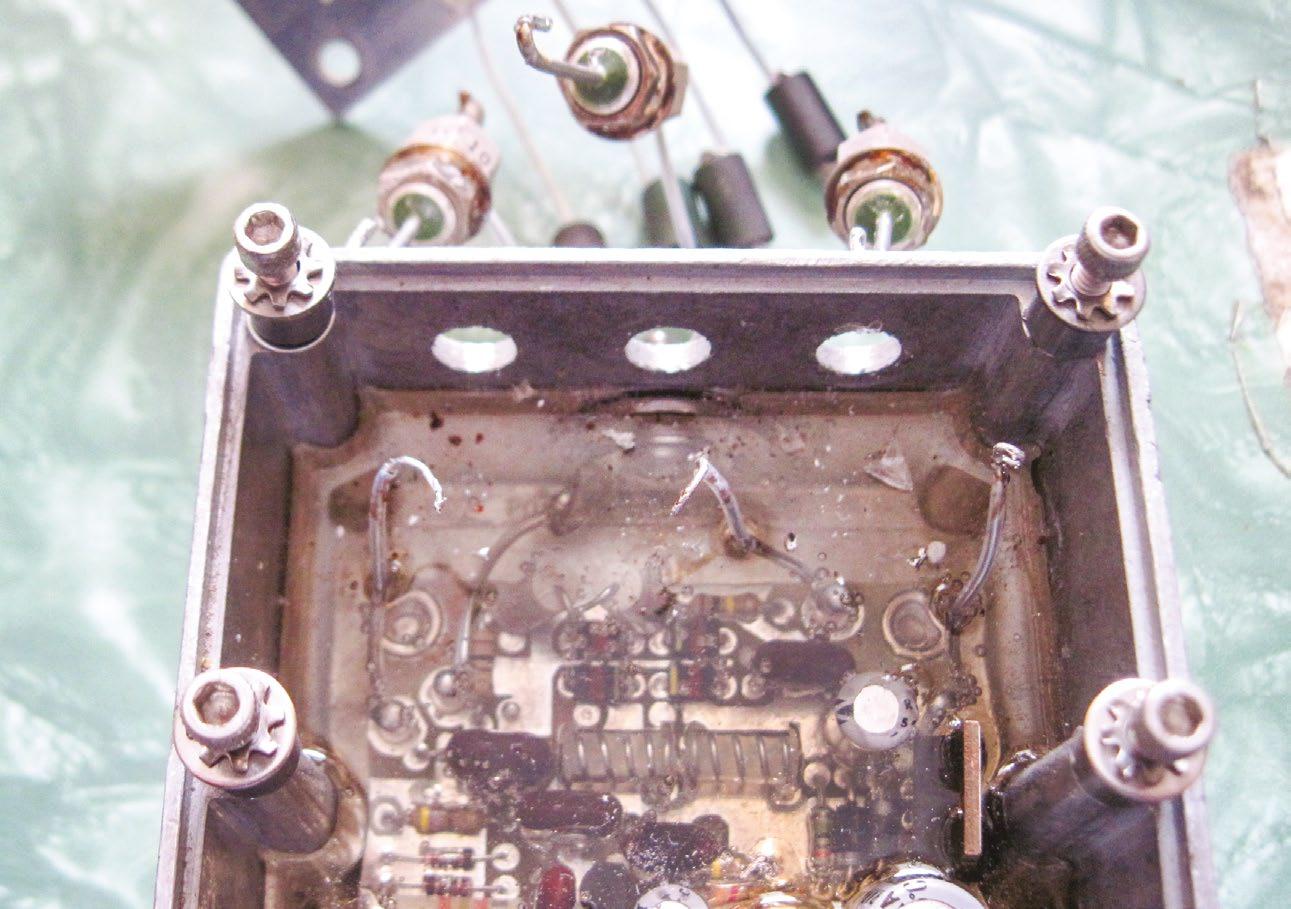
It begins with unsoldering the wires going to the three feedthrough capacitors on the module, then removing the nut to separate the feedthrough capacitors from the module; see Fig. 3.
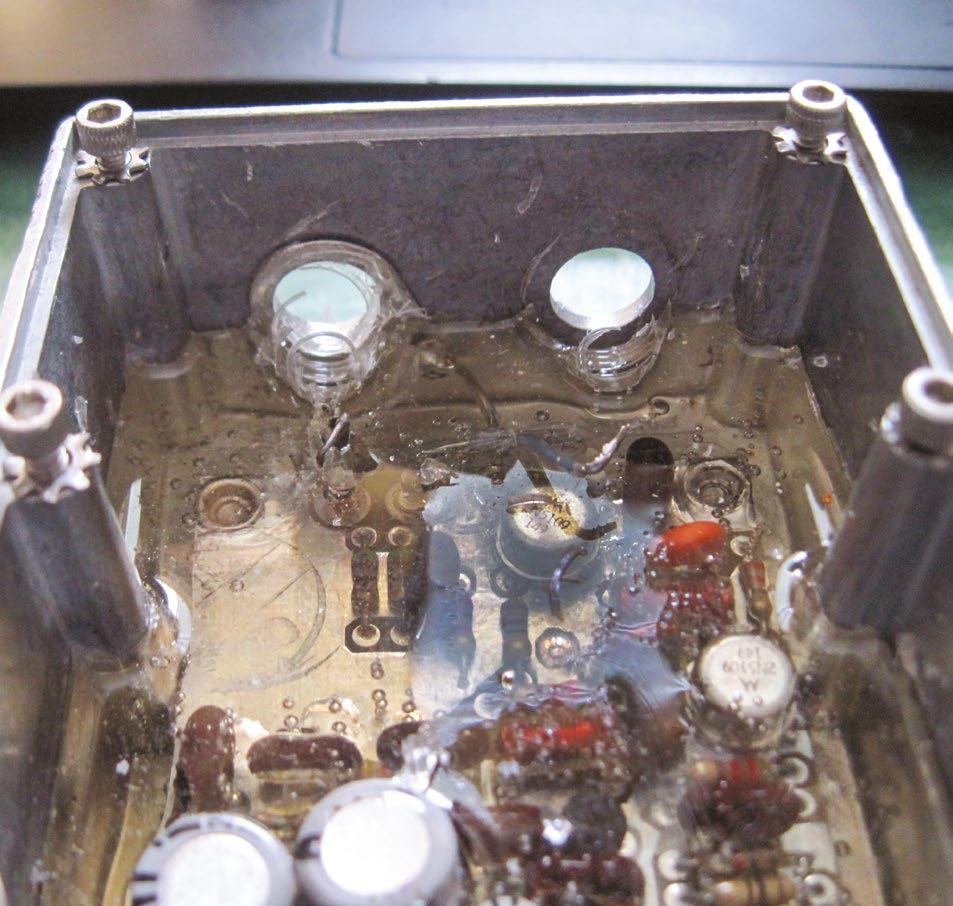
Cut away a bit of the silicon from the wires going to the two BNC jacks, then unsolder those. Cut away a bit more around the nuts of the jacks in order to remove the BNC nuts and jacks. This will give you room to access the oscillator board. Fig. 4 shows the residual silicon that held the BNC jacks in place.
Using a small paring knife, cut away the silicon from the sides of the case. Scott attempted to use the tip of a vegetable peeler to cut around the screw posts, but it was too blunt to do a good job, hence the paring knife. Run the knife around the edge of the circuit board and
A comparison of the new and old replacement
“Although a small paring knife works well in freeing the components, I’ve found an X-Acto brand or other quality knife with new blade to be effective.”
Above right
Fig. 1: A blown seal on an electrolytic capacitor points to the need for wholesale replacement of all electrolytics.
Right
Fig. 2:
capacitors.
remove as much of the silicon between it and the case; a small flat-blade screwdriver and a long, thin pair of needlenose pliers work best.
Unsolder the wire going to the feedthrough near the bottom of the case, then back out the screws most of the way, from the bottom of the case. Now press the module with the extended bolts on a hard surface to push the board up. This is a simple way to separate the board from the silicon.
At this point, the silicon should separate from the bottom of the case as you do this. Finish removing the screws and pull the board free. Now, peel the silicon off the bottom of the board.
Here’s where the fun comes in
Carve the silicon away from the components to be replaced. Scott suggests cutting away the compound from around the TO-220 regulator first, and bending it backward a bit, to give you more room to work. At this point, carve around the capacitors, being careful not to nick the components around them on the board or the board itself.
Take your time and cut most of the way down around the parts, then make a series of shallower cuts from further away towards the cuts you just made. This lets you remove the silicon in chunks. Scott was able to remove the 100 uF capacitor first, then the 10 uF on the other side of the regulator.
Scott replaced the latter but kept the other spot open to work on the remaining two electrolytics, marking the board for polarity. You can now solder the other 10 uF capacitor, along
Above left Fig. 3: The feedthrough wiring has been removed from the
Above right Fig. 4: A closeup shows the silicon sealant used in the module, which needs to be scraped away.
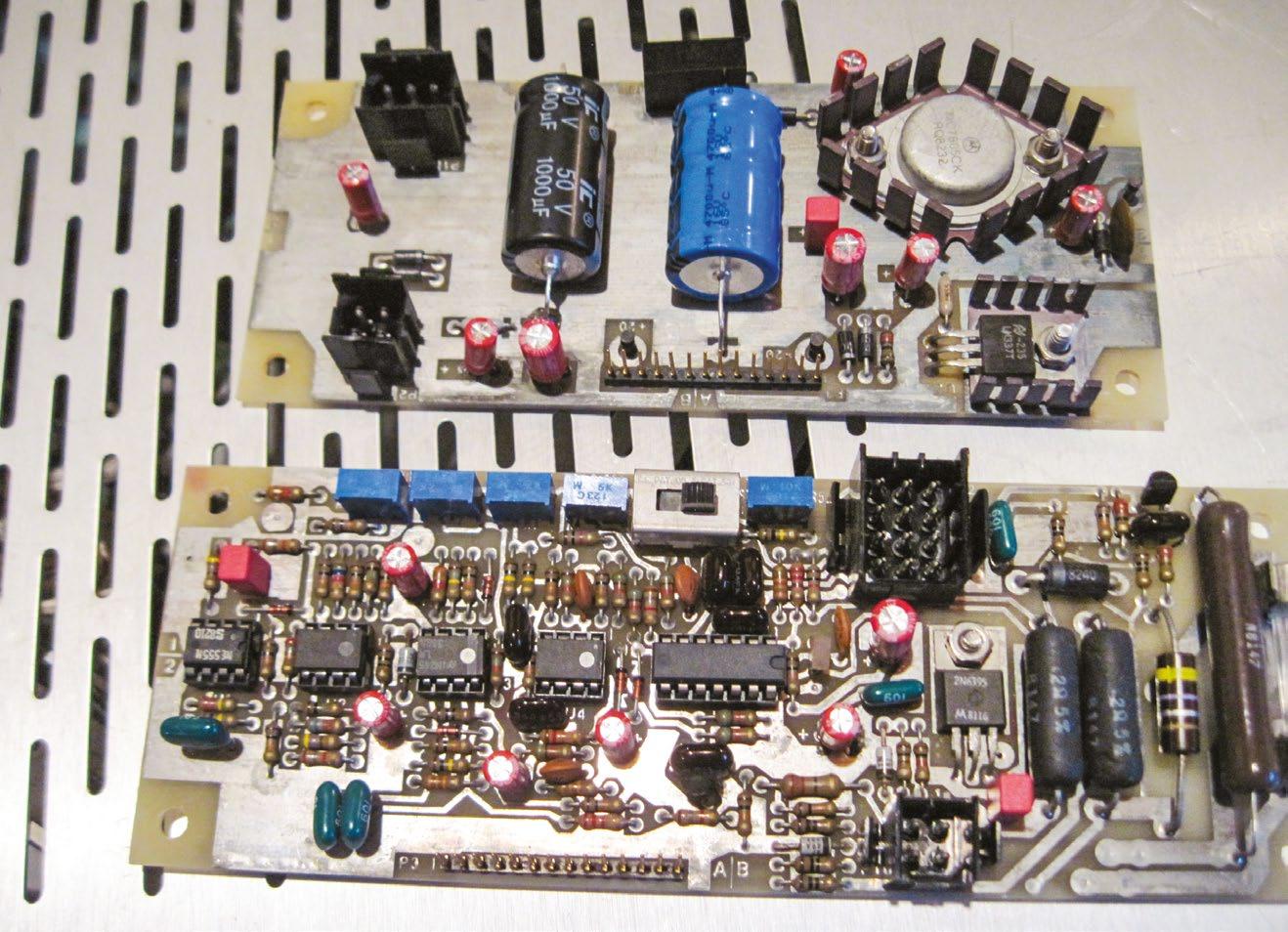
Below Fig. 5: Two of the completed boards (control and modulator) with new electrolytic capacitors.
with the two 100 uF capacitors.
Once finished, reinstall the board and re-solder the wire to the lower feedthrough. Now you can reinstall the BNC jacks and the upper feedthroughs, and resolder their respective wires.
The process isn’t necessarily difficult but it does take time, and you should not rush.
Although a small paring knife works well in freeing the components, I’ve found an X-Acto brand or other quality knife with new blade to be effective. Harbor Freight has a Gordon 13-piece precision knife set, consisting of handles and assorted blades, for under 5 bucks!
As Scott secured the replacement parts, he decided to upgrade the operating specs of the capacitors rated at 105 degrees at 5,000 hours. Scott used a desoldering tool, a necessary tool for removing parts from the double-sided PC boards.
He’s being honored by the Broadcast Pioneers of Philadelphia
It’s just different in Philadelphia.
That could be said for many things, from the diehard passion for its sports teams to the iconic news theme that everyone in the Delaware Valley knows.
This same spirit applies to the city’s broadcast engineering tradition, a legacy carried on by respected names. The history of broadcast innovation runs deep here, going all the way back to Philo Farnsworth’s groundbreaking television demonstration at the Franklin Institute in 1934.
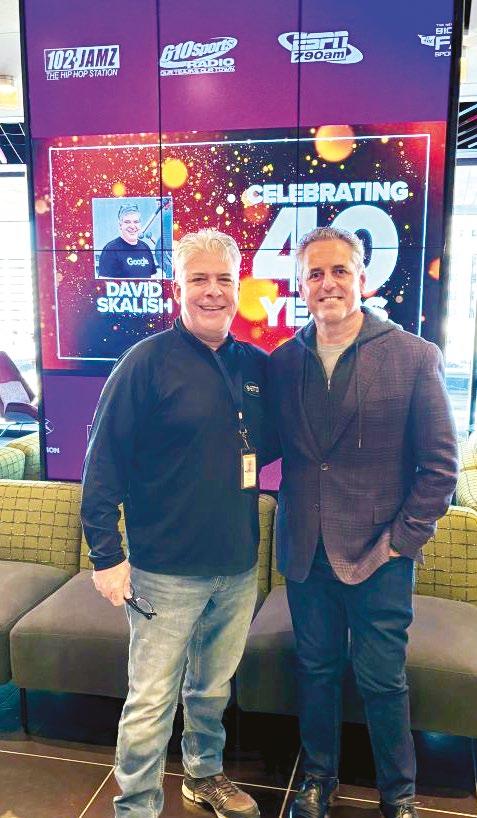
One of the engineers carrying the torch is Audacy’s Dave Skalish, a new member of the Broadcast Pioneers of Philadelphia Hall of Fame.
His career in radio here spans five decades. He has seen the industry’s immense evolution from a Philadelphia perspective — from corporate consolidation to multiple facility moves.
“The only constant is change,” he said.
Roots
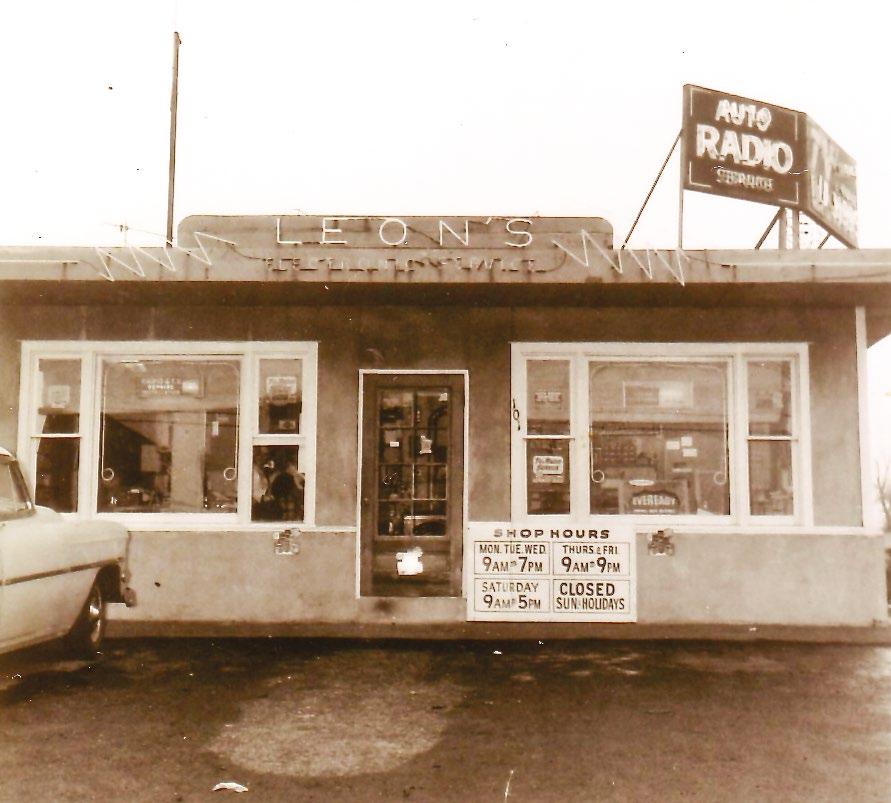
Skalish, 63, grew up in nearby Delaware County. His father ran Leon’s Electronics Service of Glenolden, which repaired radios, TVs and two-way equipment. A willing teacher, Leon planted the seeds for his son’s technical career.
“Philadelphia radio and TV were always around in the repair shop,” Skalish said. “I felt like it was a front-row seat to the region.”
He attended Philadelphia Wireless, where he got handson experience at the school’s 250-watt station, WPWT(FM). After graduation, he landed a job at 1060 KYW(AM) in July 1982, beginning a 40-year relationship with that legendary news station.
Writer
Nick Langan
The author wrote about the first deployment of ZoneCasting last issue.
Skalish credits Glynn Walden, its chief engineer at the time, with teaching him how to navigate a corporate environment as a young professional.
“It was his lessons on how to function within a corporate workplace — even beyond anything technical — that still resonate with me today,” he said.
Skalish started in studio operations, editing tape and recording various news feeds. He worked alongside wellknown figures in the newsroom at the station, which was owned by Westinghouse/Group W.
“Maybe ‘living out a dream’ is too strong,” Skalish said, “but I felt that it’s exactly where I wanted to be.”
Yet he left KYW in 1987. After a year and a half at Matsushita-Panasonic’s Northeast Philadelphia-based service center, servicing consumer and professional electronics, he went on to Radio Systems, working on studio installation projects for Dan Braverman.
Those jobs expanded his knowledge and prepared him for handling even more expansive broadcast setups.
Skalish returned to KYW in 1990 as production director. He’d eventually be introduced to the station’s maintenance shop, leading to hands-on work with studio and transmitter
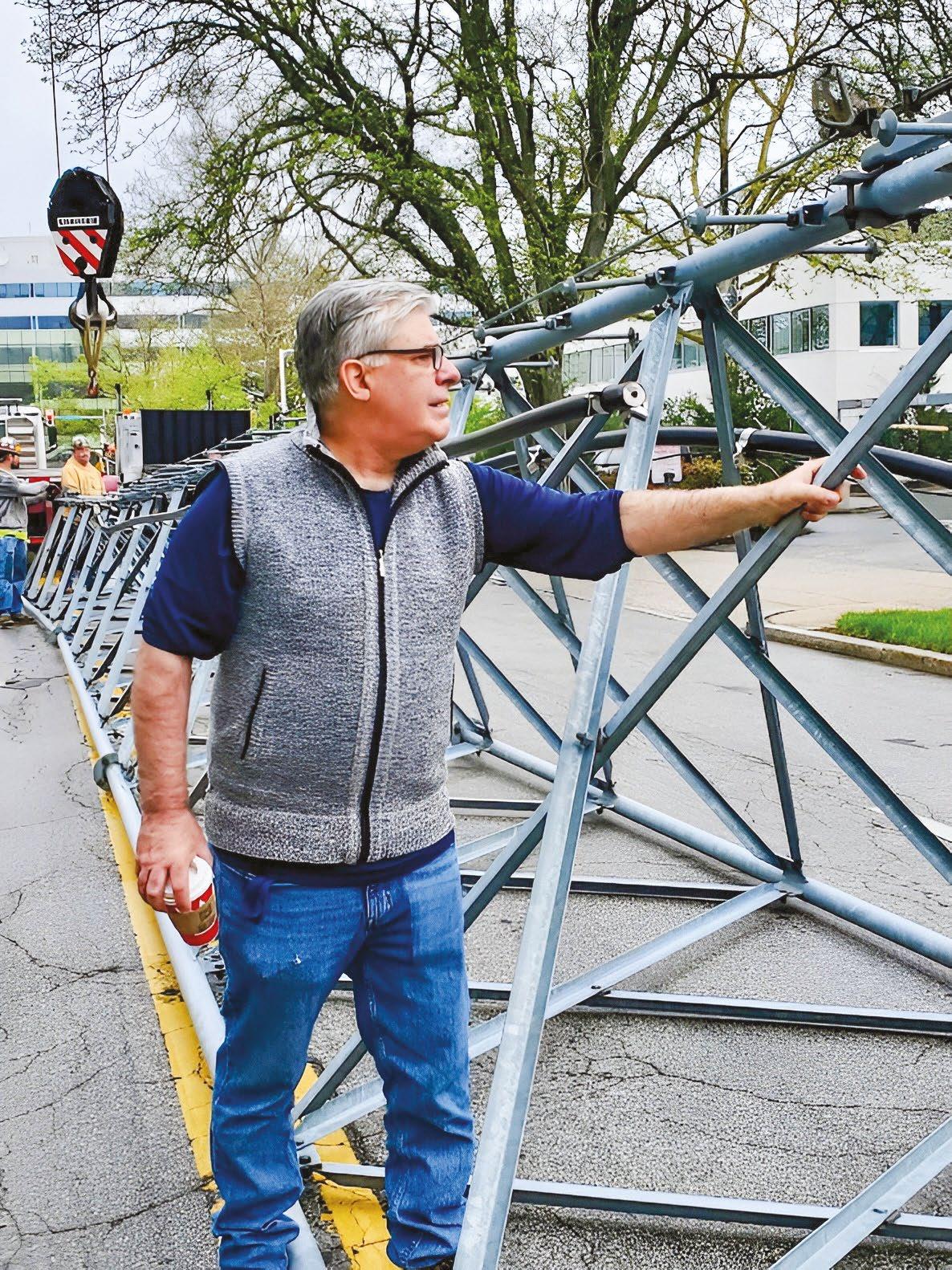
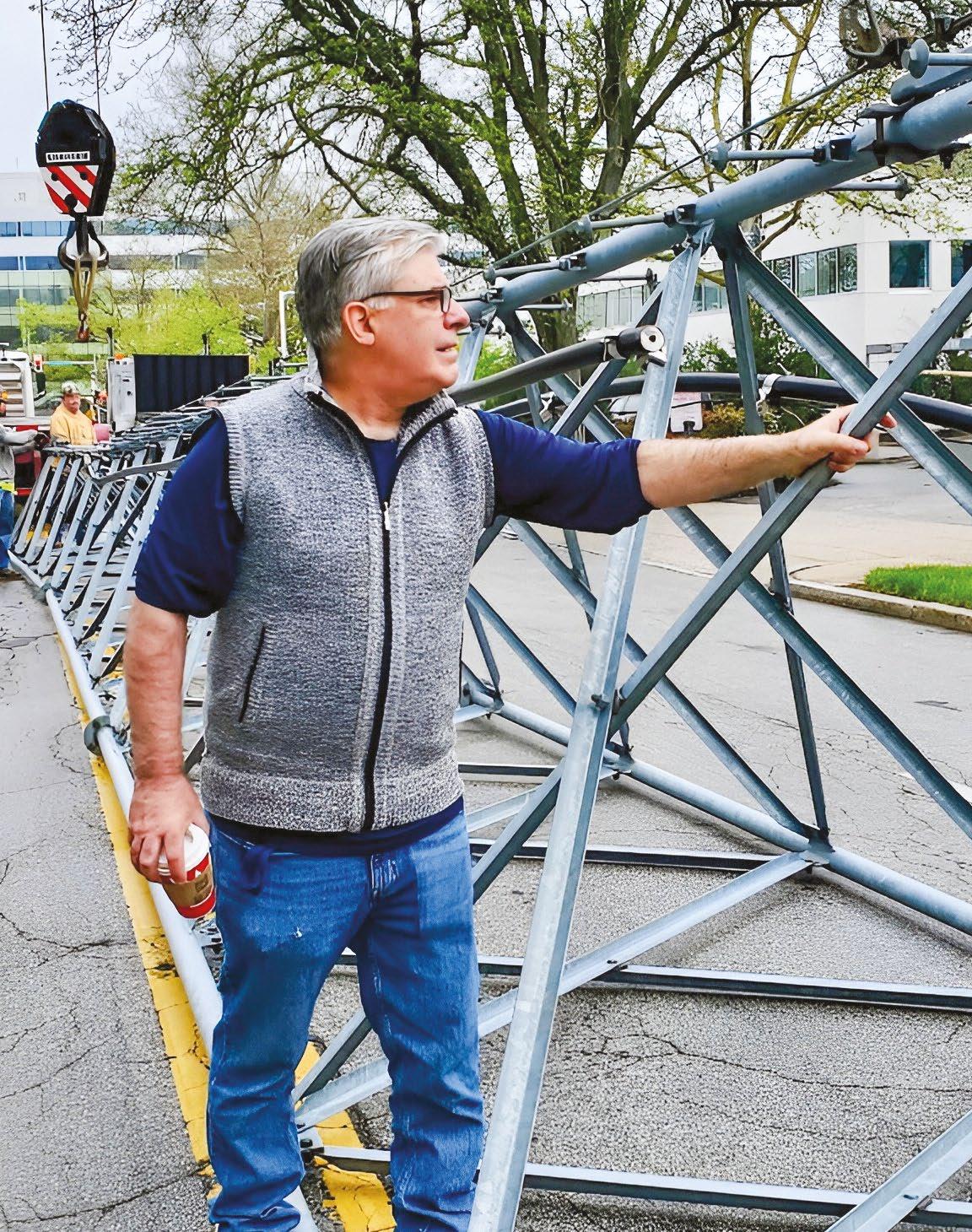
Above Skalish bids adieu to a dismantled tower that was used for WBEB(FM)’s STL from City Line Avenue in Bala Cynwyd, Pa., in 2024.
technologies. He also performed part-time engineering services for several suburban AM stations, including 1590 WPWA(AM), licensed to Chester.
During that time, 1590 briefly changed its call letters to WAWA in 1994, reflecting the name of a nearby unincorporated Delaware County community.
That drew great interest from a certain convenience store chain. Wawa filed a suit claiming that the calls violated trademark laws. The chain won the case, and 1590 changed its calls back to WPWA. Skalish calls it “an only-inPhiladelphia kind of story.”
Consolidation
His career continued to evolve as KYW’s owner, Westinghouse, became Infinity Broadcasting and, after the Telecom Act of 1996, expand its Philadelphia cluster. With stations scattered across the city, it could be difficult to manage them all.
Stations 94.1 WYSP(FM), 98.1 WOGL(FM) and 1210 WPHT(AM) would become part of the cluster, as would 610 WIP(AM) eventually.
He and his Infinity colleagues would make many trips from suburban Bala Cynwyd — home to the studios of WOGL and WPHT — to Center City and then back again.
“We played hopscotch with studios and broadcast gear,”
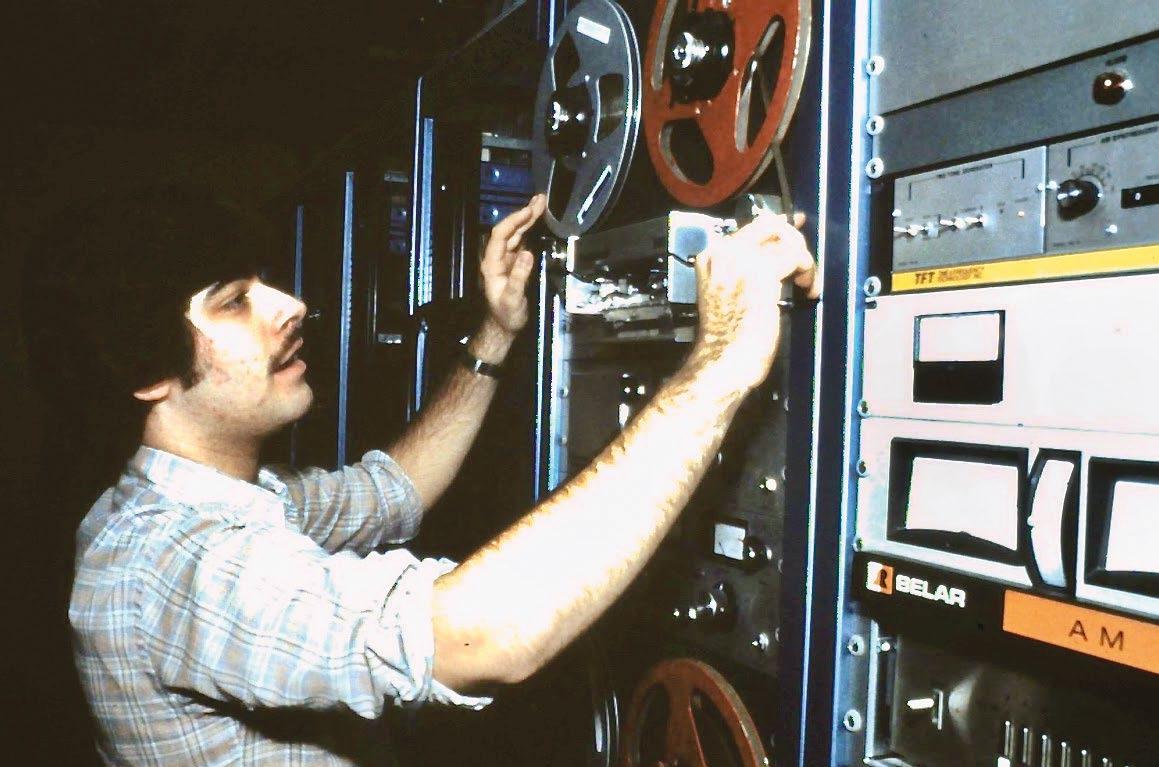
Above right Skalish assessed tape at KYW(AM)’s headquarters at Fifth and Market Streets, circa 1982.
Skalish said.
At the time, Skalish’s focus was still at KYW, which broadcast from its iconic studios at Fifth and Market Streets.
But in 2000, Skalish took a chance. A technical supervisor position opened at WPHT, and he decided to leave his familiar role for the leadership opportunity.
The station needed some technical love. And another of his mentors, Jan Kowalczyk, WPHT’s chief engineer, was supportive in the transition.
Skalish recalls the moment with pride. “Sometimes, you have to make the difficult choices in life to help yourself grow.”
His work was a success, and in 2007, he was promoted to chief engineer for both WOGL and WPHT.
Multistation managing
Today Skalish is technical director of the Audacy Philadelphia cluster of stations, including 94.1 WIP(FM), 96.5 WTDY(FM), 98.1 WOGL(FM), 101.1 WBEB(FM), 1210 WPHT(AM) and KYW(AM/FM). He has seen changes in parent companies and names from CBS, to Entercom, to Audacy.
Skalish works along with Vice Presidents of Engineering Paul Donovan and John Kennedy at Audacy’s futuristic 2400 Market St. headquarters overlooking the Schuylkill River.
“Philadelphia radio and TV were always around in the repair shop. I felt like it was a frontrow seat to the region.”
Today, he says, the job of a broadcast engineer is perhaps best described as that of a problem-solver. It is no longer simply overseeing studio operations or the on-air signal from the transmitter. As Skalish puts it, “you’ve got to keep the ATM machine going.”
Skalish mentions the advice of his mother Cecelia “to always be kind.” That spirit has helped him earn a strong reputation with his peers.
“One of the all-time great radio engineers and outstanding people,” KYW morning sports anchor Dave Uram wrote on Instagram in January. “A great engineer and
Above left Leon’s Electronics Service on MacDade Boulevard in Glenolden, Pa., in a photo from the mid-1950s. This is where young Skalish learned about electronics.
gentleman,” wrote veteran engineer David Bialik in an email to Radio World.
Career achievements
Skalish has managed broadcast logistics for some of Philadelphia’s biggest moments, from celebratory sports parades after Eagles and Phillies championships to live coverage from the White House, the Pentagon and city mayoral campaign headquarters.
He is particularly proud of two assignments.
In 2004, Skalish coordinated a weeklong WPHT broadcast from Guantanamo Bay, Cuba. U.S. Southern Command provided just three POTS lines. Skalish shipped down what he called a “kitchen sink” of gear, including a three-line Comrex unit, to make it work.
Five years later, WPHT’s Michael Smerconish conducted President Barack Obama’s first live radio interview from the White House. Skalish was on-site working with White House press staff to establish the local audio pool feed and the direct feed back to WPHT, where the show’s distribution originated.
“Truly memorable,” Skalish said, adding that clips of the interview were featured worldwide.
He has plenty of projects keeping him busy today.
One of them is an updated 13.2 kV switchgear system at the KYW’s AM transmitter facility in Whitemarsh. Audacy is working with FEMA to establish the 50 kW AM as a National Public Warning System (or Primary Entry Point) station.
KYW’s role in emergency preparedness is something Skalish takes seriously.
“There is this sacred bond we have with our listeners,” he said. “They are our customers, and our lifeline.”
Despite evolving technology, Skalish tries to make time for the basics, responding personally to every call or email — whether it’s about a reception problem during a Phillies game or trouble with the Audacy mobile app on a user’s device.
Keep tradition going
Part of Skalish’s Philadelphia broadcast legacy is paying it forward. He recognizes the importance of mentoring. He points to young, technically proficient engineers he’s helped guide, like K.J. Legrand, now a broadcast maintenance technician for WCAU(TV), and Austen Yim, a technical engineer with Audacy who leads its Eagles’ radio broadcasts.
He also urges up-and-comers to have interests beyond engineering. For him it’s working on classic cars like his 1967 Plymouth Fury VIP and 1991 Volvo V70.
“There are long hours involved with this job. But in pitching this profession to young people, you have to add the blend of life-work balance with the dedication of being accessible, service-oriented, technical professionals.”
Skalish looks back on his time in Philadelphia radio proudly. But he’d like to see the radio industry tell its story
Right Dave Skalish, left, and David Yadgaroff, Audacy’s Philadelphia senior VP and GM, are both new members of the Broadcast Pioneers of Philadelphia Hall of Fame. This was taken as Skalish was honored for 40 years of service with KYW(AM/FM) earlier this year.
better. Over the decades he has met countless dedicated listeners — people who, like his wife Diane’s grandmother, Myrtle, kept KYW on around the clock.
“Granny,” as they’d affectionately refer to her, would keep the all-news station playing atop a radio on her kitchen refrigerator at her home in the Delaware County borough of Norwood, often while she baked icebox cookies. “Made with a little lard and a lot of love,” Skalish remembered.
That type of listening may have evolved to mobile apps or smart speakers, but the bond with the listener, he says, is the same.
Among others being inducted into the Broadcast Pioneers of Philadelphia Hall of Fame this month is his longtime friend and boss, David Yadgaroff, Audacy’s Philadelphia senior vice president and general manager.
And Skalish is nowhere near finished; he says he’ll keep working proudly in the City of Brotherly Love.
“This is not New York, not Chicago, not Los Angeles,” he said. “Those places certainly have their history. But there is something uniquely Philadelphia about our broadcast story.”
Writer Mark Persons
How an RF spectrum analyzer can help you
These tools offer a “window” into the world of radio frequencies
Let’s say a corporate engineer or a consultant is coming to your station to diagnose and repair a problem using an RF spectrum analyzer. This would be a great time to schedule a meeting with your local Society of Broadcast Engineers chapter. They and you could learn about these tools.
While you are at it, use the analyzer on other parts of the facility like STL, AM and FM transmitters. If you are the one demonstrating the analyzer, you will find yourself learning in the process of teaching.
Don’t confuse an analyzer with an oscilloscope, which I have referred to a number of times since we published an article titled “Your Scope Is a Tool for All Seasons” in January 2013.
Oscilloscopes display electronic signals in a time versus amplitude format. A dot, sweeping across a screen, will go up or down as it displays audio or RF voltages.
Think of an RF spectrum analyzer as a radio with a slide rule dial where the lower frequency might be 88 MHz and the upper end at 108 MHz. It is a marvelous tool for seeing RF across the entire FM band.
Normally we analyze smaller pieces of the RF spectrum to see greater detail. Think of this technology as creating a “window” into the world of radio frequencies. You can see what and how much is happening on every frequency.
“Think of an RF spectrum analyzer as a radio with a slide rule dial where the lower frequency might be 88 MHz and the upper end at 108 MHz. ”
The author wrote recently about his visit to Trans World Radio’s “Shine 800 AM” on Bonaire.
Top right
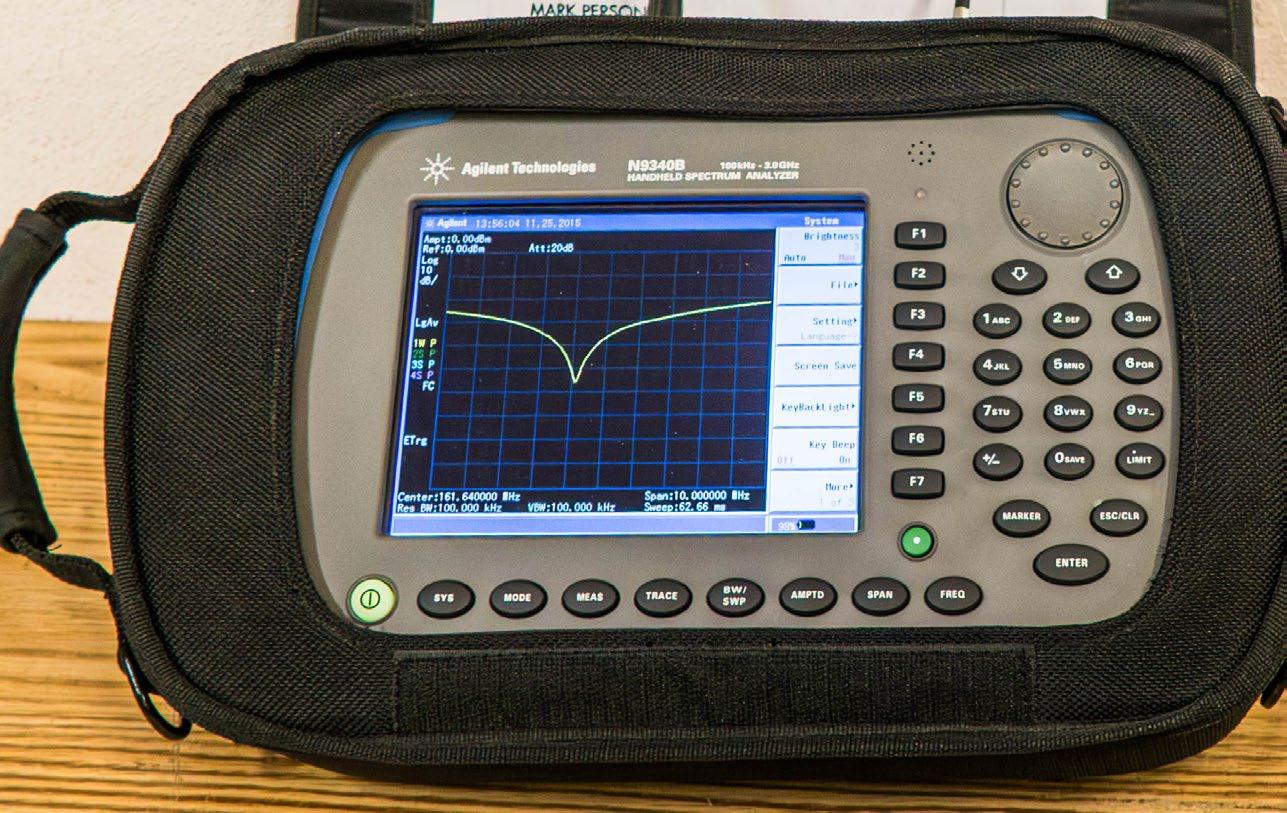
Fig. 1: An Agilent N9340B Spectrum Analyzer.
Right
Fig. 2: An IFR A-7550 Spectrum Analyzer.
Engineering Tools
Troubleshooter
I remember receiving a phone call from a station owner saying she could hear her FM at three spots on the dial. My first response was, lucky you, but my next was, I will be right over with my spectrum analyzer.
Sure enough, the station was broadcasting on three frequencies. I had seen this before and was prepared.
Two electrolytic capacitors on the power amplifier board of the station’s FM exciter had dried out, allowing signal spurs, each about 250 kHz from the licensed frequency. After we replaced the capacitors, the spectrum analyzer was the perfect tool for checking the station’s signal. Tuning around with a receiver would have been another method, but there could be other problems and would not confirm that the station’s signal was FCC legal.
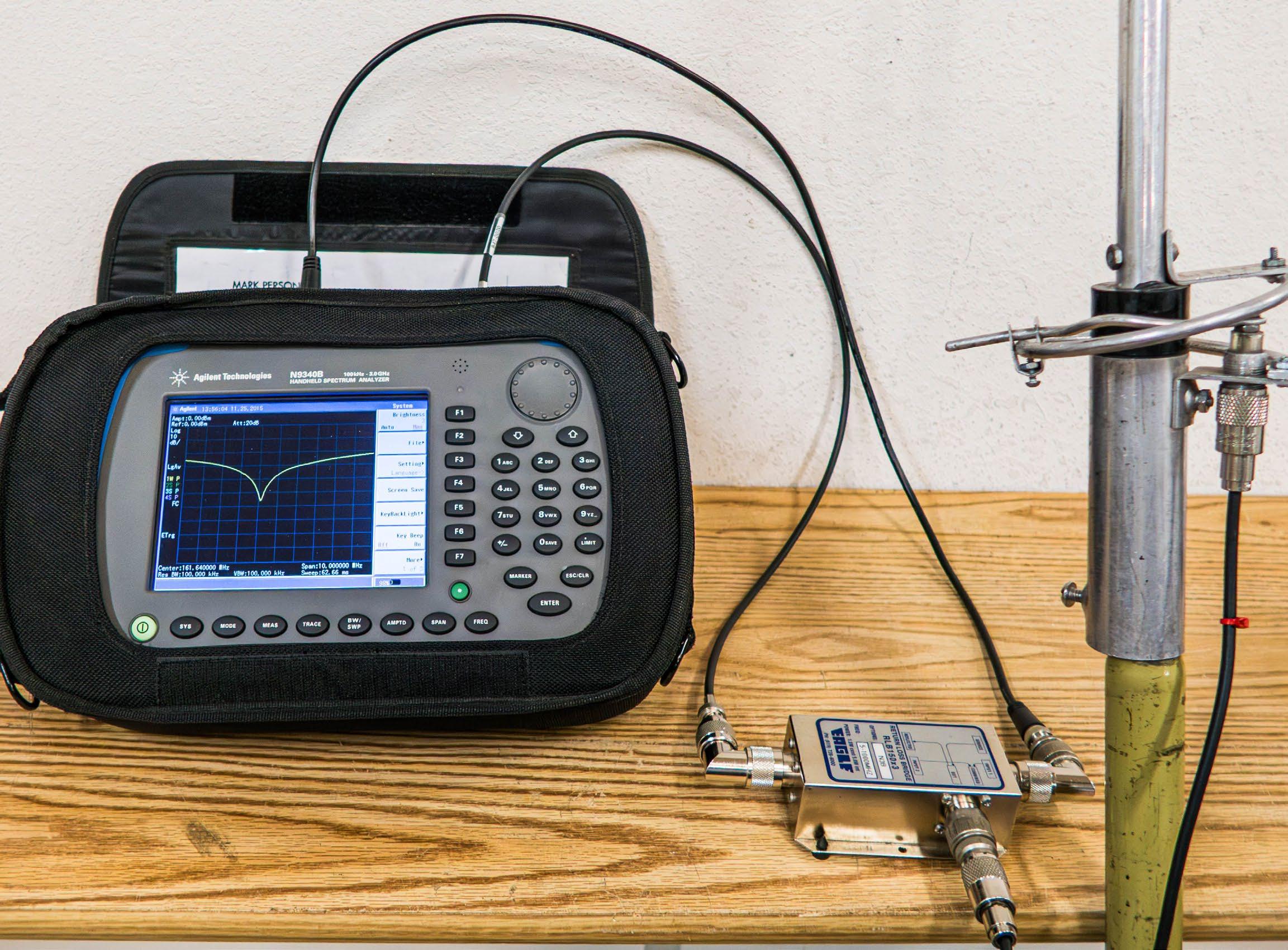
Fig. 1 on the previous page is an Agilent N9340B
Handheld Spectrum analyzer, a model that is no longer in production. It weighs 8 pounds, demonstrating that an analyzer can be taken into the field with ease. Anritsu made a similar model.
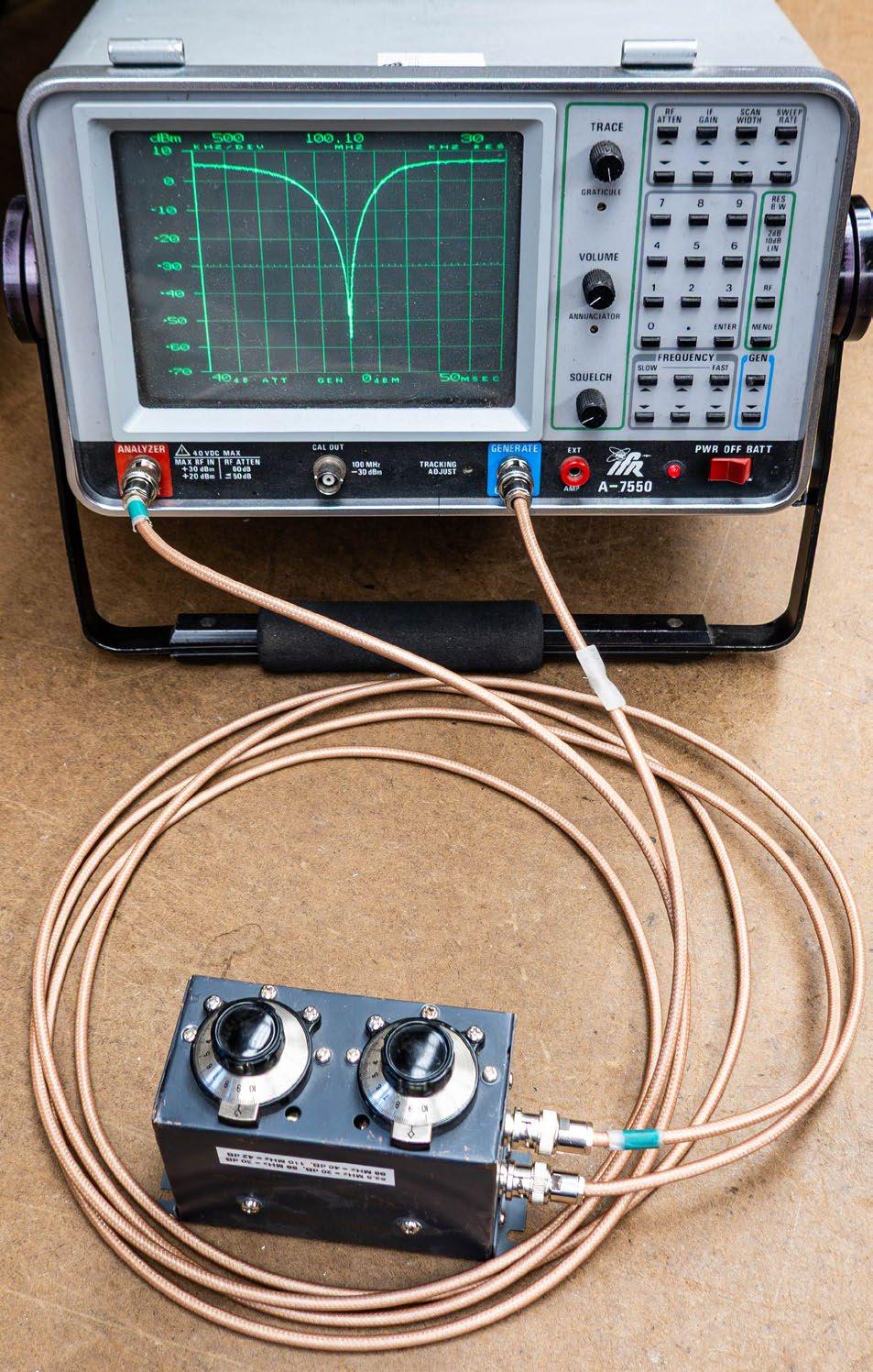
Fig. 2 is an IFR A-7550 RF Spectrum Analyzer, less portable at 28 pounds. This was cutting-edge technology in the 1980s. It is shown verifying a notch filter characteristic. The goal is for the filter to notch out a station’s frequency carrier and therefore extend the dynamic range of a station measurement beyond the analyzer’s 80 dB. The Agilent and IFR were $15,000 instruments back in the day.
More recent analyzer systems are much less expensive and consist of a notebook computer connected to a small box. The computer runs the box and provides a graphical display. Today we are returning to a one-box solution because the cost of an analyzer is often around $1,000.
Occupied bandwidth
Years ago, the FCC required audio performance measurements, with the hope that clean audio was also an indicator of spectral purity. RF spectrum analyzers now provide a way to prove that a station is using a licensed piece of the dial without causing problems to other stations up and down the dial.
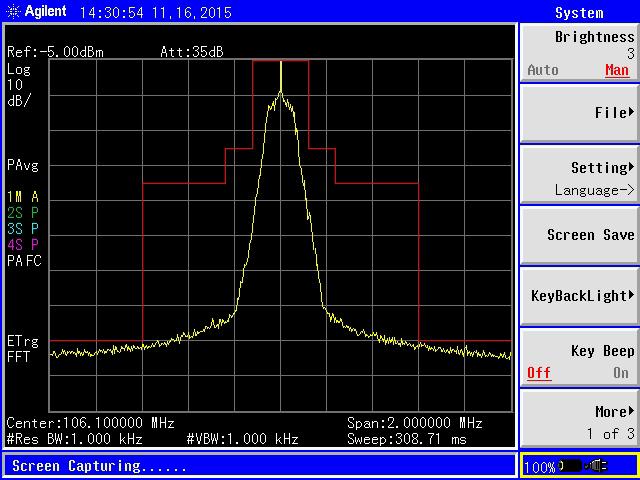
Fig. 3 is a spectrum analyzer’s FM display. The left to right frequency span, in this case, is 2 MHz; you can see the FM dial from 105.1 to 107.1 MHz. The red lines are the FCC occupied bandwidth limits, known as the mask. As you can see, this station just barely passes the test.
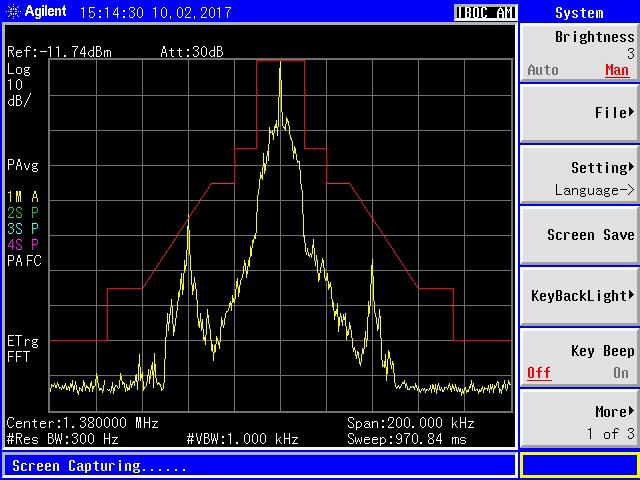
Fig. 4 is looking at an AM station on 1380 kHz. The display is 200 kHz wide, starting at 1280 kHz and going to 1480 kHz, with 1380 in the middle.
A station on 1340 kHz (two divisions left of 1380) just peeks above the red mask, but that has nothing to do with the 1380 signal under test. However, as you can see, the 1340 and 1380 mix to create a new signal at 1420 kHz. Fortunately, it is below the mask, so it is FCC legal. When the 1380 transmitter is turned off, the 1380 and the 1420 signals disappear, leaving just 1340 kHz. This on-off
Top Fig. 3: An FM station on 106.1 MHz.
Middle Fig. 4: AM NRSC measurement.
Right
Fig. 5: A 6.5 MHz sweep on the FM band.
Engineering Tools
testing is often used to prove which signals come from where. If the 1420 kHz mix product was above the red mask line, a filter would be needed to attenuate the 1340 kHz signal, at the 1380 transmitter, so the 1420 mix would be less.
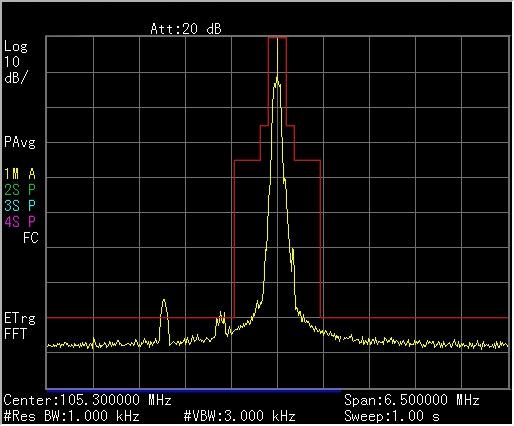
Fig. 5 is a 6.5 MHz wide sweep around 105.3 MHz.
Portions of the sweep go above the red mask at 103.7 and 104.5 MHz. Later in this test, the 106.5 transmitter was turned off and those two signals remained. This proved those were other stations on the dial.
It is rare that a spectrum analyzer sweep shows just the station of interest. FM stations and translators are popping up everywhere and it is wise to check stations on a regular basis, especially if you know that a new one was built within a few miles.
Return loss
Most transmitters have forward and reflected power meters. But that only applies to the frequency of operation.
A spectrum analyzer, with a return loss bridge, can look at the station’s frequency and nearby portions of the spectrum to see where antenna reflected power is lower or higher. The analyzer needs a built-in tracking generator in order for this to work. Think of this arrangement as a poorman’s network analyzer.
Some newer transmitters have displays to show antenna characteristics at and around a station’s frequency. It is great technology at our fingertips.
Fig. 6 shows a spectrum analyzer connected to a return loss bridge. If the bridge sees a 50-ohm load, the loss from its input port to its output port will be high, causing the displayed sweep to be lower on the screen. If the bridge is connected to an antenna, it will show where the antenna looks most like 50 ohms.
Antennas work best at one frequency. Adjusting the antenna hardware for best match to a transmitter is easily performed this way. As shown, this test setup was used when adjusting a 160 MHz remote broadcast antenna. The same test can be used on an FM broadcast antenna.
Above
Fig. 6: Return loss measurement.
Engineering Tools
Stub traps
Let’s say you build a shorted quarter-wave stub trap to protect an FM exciter’s power amplifier from a potential arc in a vintage tube transmitter. I described one in a Radio World article, “Prevent Transistor Failures With Science,” in May 2013. That technology is just as valid today. The stub is on one side of a T connector at the output of an FM exciter, or even the output of a full-power transmitter. Science tells us that shorting the center to the outer conductor of a coaxial cable will be electrically invisible if the short is one-quarter wavelength down the line at the frequency of interest. The best part is that it is a DC short to stop voltage spikes. In the case of the FM broadcast band, a shorted stub might be 20 to 30 inches long. Length depends on frequency and velocity factor of cable used.
You don’t just install one without testing first. Fig. 7 shows a return loss sweep of a stub at 97 MHz. The 25 dB dip in the middle is the same as 1:1.12 VSWR.
Analyzers
Not all RF spectrum analyzers are created equal. There are cost vs. performance tradeoffs. Just because an analyzer can look at the frequencies you want to see, doesn’t mean it is good enough for doing FCC required measurements. For instance, an analyzer must have a 300 Hz resolution bandwidth filter for annual AM NRSC measurements. That means it employs a narrow RF filter as it is sweeping across the frequencies of interest.
Above
Fig. 7: Shorted stub filter response.
An analyzer needs to have at least 80 dB of dynamic range between the top of the screen and the bottom to view and certify that unwanted noise and spurs from a 5 kW or greater transmitter is FCC legal. The number is 73 dB at the 1 kW level. That means the noise floor in the analyzer must be sufficient to prove a station is in compliance. Any analyzer you use will need to have a way to output its displays for documentation in an FCC report.
What’s the right model for you? Shop with care. In general, higher cost means more accurate measurements. But learn from someone who has experience in using an analyzer; and purchase one with a money-back guarantee in case the instrument is not right for you or your application.
Learning something new is a good way to grow in broadcast engineering. It makes perfect sense. Comment on this or any article. Write radioworld@ futurenet.com.
Mark Persons, WØMH, is an SBE Certified Professional Broadcast Engineer. He is now retired but still mentoring five radio broadcast engineers. He and his wife Paula were inducted into the Minnesota Broadcasters Hall of Fame after 60 years of broadcast engineering and 44 years in business. Their website is www.mwpersons.com.
“An RF spectrum analyzer provides a way to prove that a station is using a licensed piece of the dial without causing problems to other stations up and down the dial.
Writer Bud Williamson
Owner
Collaboration not competition: A new path for local radio
WALL Radio, WKZE and “The Low Darts” make beautiful business together
Local radio is not a business for the weak of heart. There — I said it!
As many readers of this publication are aware, the industry has been faced with mounting challenges that seem to increase every year, from new forms of digital media skimming ad dollars out of local markets to actions taken by the auto industry to reduce the presence of the traditional AM/FM tuner on the dashboard.
The new business model is to embrace other revenuegenerating methods in order to monetize the in-vehicle entertainment experience. Large, well-financed digital
marketing companies have heavily campaigned against legacy terrestrial radio, luring important local businesses away from local broadcasters with promises of highly effective targeted ad campaigns, visible audience metrics and seemingly instantaneous ROI.
For the local operator, these challenges can be overwhelming and defeating.
As owner/operators of multiple stations in the Hudson Valley market, my wife Juli and I have had a front-row seat to this transition.
Traditional suburban markets have always been a challenging environment for local radio stations, especially
Neversink Media Group, Orange County, N.Y.
Right
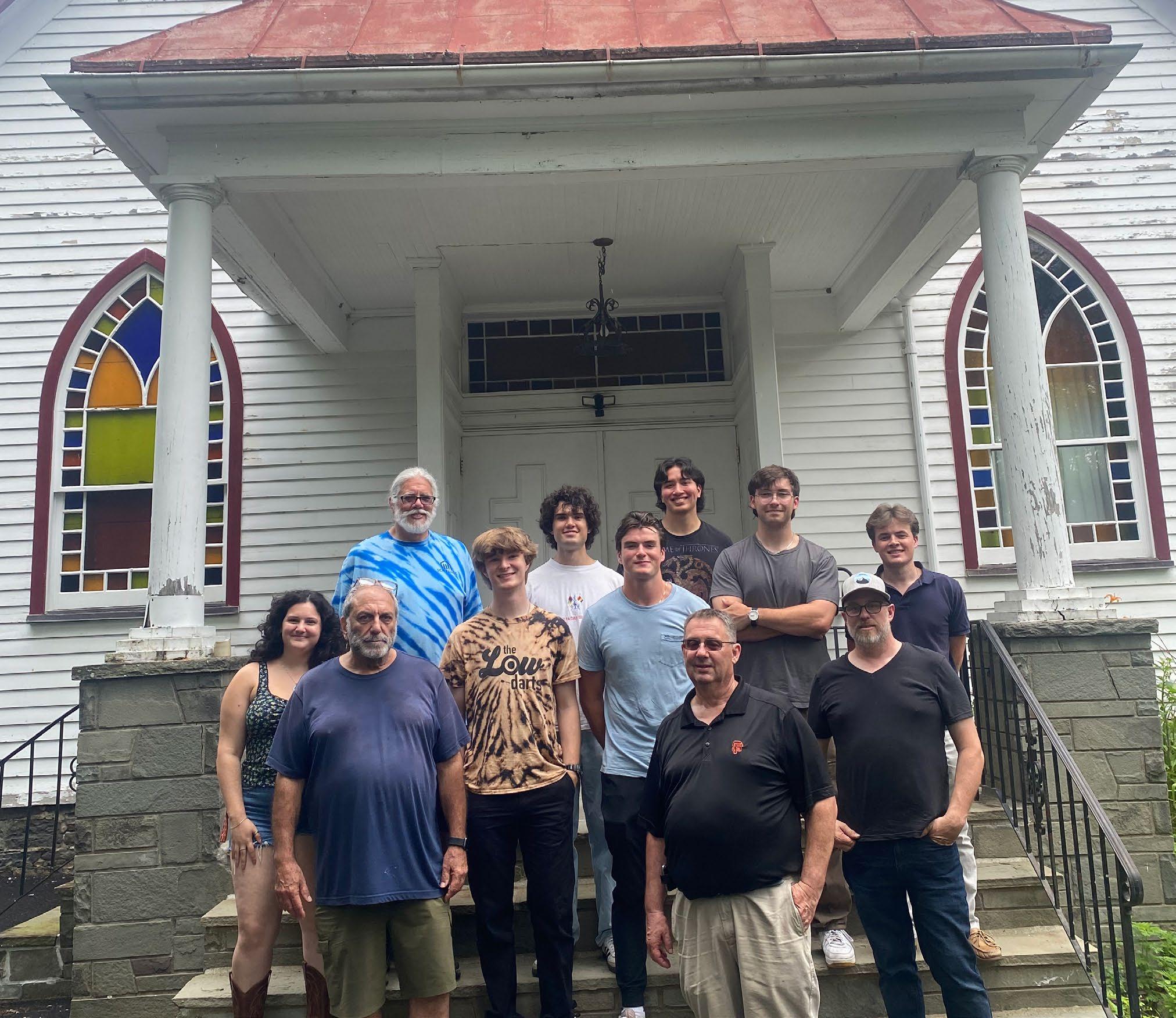
The author poses with the band and colleagues at Dreamland Recording Studios. Rear, from left: WKZE host Rick Schneider and Low Darts members Jonas Brown, Sebastian Rodriguez and Luke Foote. Middle: WKZE’s
Alyssa Sciarrone with band members Colman Connolly, Sean Byington and Bobby Master.
Front: Dreamland owner Jerry Marotta, author Bud Williamson and mix engineer David Chapman.
in the shadow of a major market like New York City.
Advertisers and listeners expect you to be able to offer content, reach, delivery and marketing opportunities that are standard operations for the much larger consolidated competitors they hear. At the same time, local businesses cannot afford the rates that a major market would demand.
This creates a complicated operating scenario. You have the capital expenses and expectations of a major-market station, but with an advertising base generating a fraction of the revenue.
Looking past the usual list of grievances posted by armchair warriors on radio message boards and in Facebook groups, I believe that there may be a path forward for the local operator, using an approach that, while unusual, has existed in the broadcast industry for decades.
What is “classic hits”?
As chairman of Chapter 15 of the Society of Broadcast Engineers, I am no stranger to collaboration, teamwork and mentorship.
Broadcast engineers, by nature, are always looking for solutions to problems and are often at the forefront of new technology and industrial trends. Engineers have a time-honored tradition working together to solve problems, even if it involves helping a colleague at a competing
broadcast organization.
A true engineer is an educator at heart. He or she respects the trade, craft and nature of broadcasting. I would be hard-pressed to think of a scenario where a member of an SBE local chapter would be unwilling to assist another engineer in need of a solution.
In July, I found myself in a unique situation as a station owner, one that required a creative solution.
One of my station brands, WALL Radio, is a legacy classic hits station, with a rich legacy serving the Hudson Valley and with a focus on Orange, Dutchess and Ulster Counties.
WALL has a loyal audience and strong following but it has been limited within the parameters of the traditional classic hits operating model.
We play tested chart hits with local favorites thrown in, as many classic hits stations do. We have high-end imaging, deliver engaging contests and provide incredible value and results to our advertising partners.
However, I recognize as the audience ages and our music moves into Y2K hits, WALL is going to need to provide an interactive media experience that the younger classic hits listener is expecting.
This is a tricky situation for the classic hits format, because as a radio station moves musically past the 1990s, the definition of “classic hits” widens considerably.
Mainstream radio hits of the late 1990s and beyond were
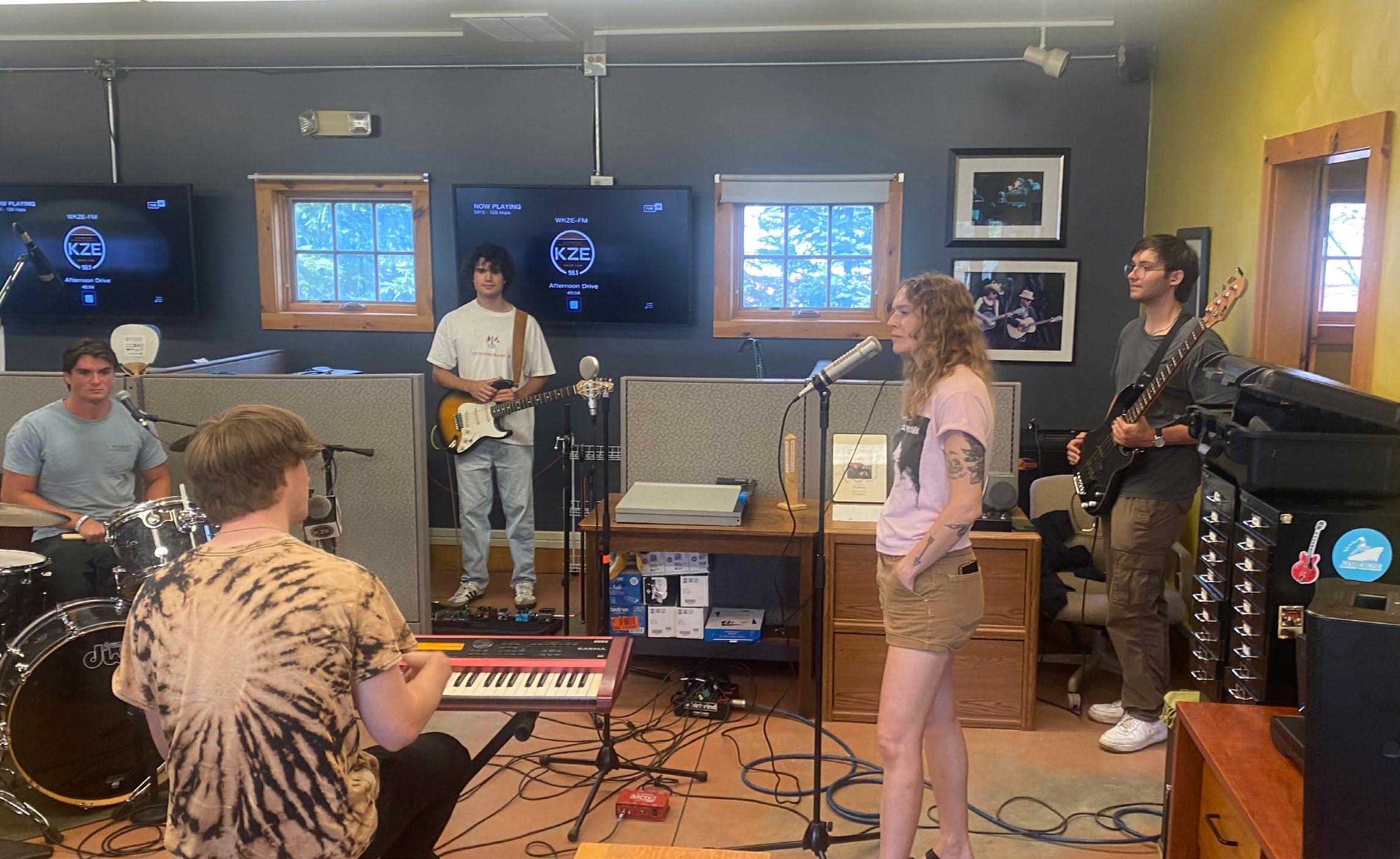
WKZE host MK Scully is at the mic, with band members Sean Byington, Colman Connolly, Jonas Brown and Luke Foote.
driven by video content and crossover television shows. They relied less on the disc jockey for delivery and more on cable channels like MTV and VH1 and “digital media” influencers. In this era, video did indeed kill the radio star.
Y2K hits are further complicated by the fact that alt-rock, metal, rap and hip-hop remixes were populating the charts, which means the traditional “feel good” classic hits format shifts into genres that may not be as familiar or welcomed by legacy listeners.
I knew I was going to need to find a solution if the WALL brand was going to remain a leader in the format and the market and stay connected to the next tier of classic hits listeners.
Music discovery
One night while surfing the web, I stumbled across “The Low Darts,” a band of 19- and 20-year-old college students from Fairfield, Conn., on my YouTube feed. I immediately took to these college-aged musicians playing off-the-record cover versions of 1970s and ’80s music.
This got me thinking: Is there a younger audience interested in the music that my classic hits station is playing?
I asked to meet the band. In speaking with them I immediately recognized their passion and talent for executing note-for-note recreations of rock and pop
songs that are now retro. I also recognized that they had a large number of social media followers, many of them college-aged.
I thought, “Hey, wouldn’t it be cool if we could present this group to the WALL Radio audience?” If I could build a bridge between the WALL radio listener and the Gen-Z audience using a group of 20-year-old musicians playing hit music, this could be a novel way to extend an olive branch to the “GEN-2” listener and bring new ears and eyes to the station without diluting the WALL music library.
The idea was excellent in theory, but I didn’t know how to execute it. This is when my engineering senses kicked
“This got me thinking: Is there a younger audience interested in the music that my classic hits station is playing? ”
in. I knew that if I ran this by someone who understood the other side of the audience and had the experience that I was looking for, I could find the solution. Enter the collaboration element, and the spirit of engineers helping each other.
My good friend Dr. Andy Gladding is vice chair of SBE-15. He had the pieces I was missing.
Andy is an experienced live audio engineer, college educator and recent entrant into the market as the owneroperator of WKZE(FM), also in the Hudson Valley.
Andy saw what I was trying to accomplish and offered to help, using his recently renovated station studios in Red Hook.
He knew that to execute my vision, we would have to find a way to get the band to broadcast live over the air. We would also need to shoot video to maximize the crossover between the WALL Radio audience, the successful social media content created by “The Low Darts” and the digital marketing platform that Andy and his wife and KZE coowner Katie Berghorn had recently deployed.
According to Andy, there would need to be a way to link the music, the FM, the story and the performance, to engage all parties and maximize our exposure.
So maximize we did.
“Instead of viewing crosstown operators as competitors, find ways to work together to deliver maximum results using resources you can share. ”
On July 10, “The Low Darts” prepared for their first “radio blitz.” At 8 a.m., lead singer and band leader Colman Connolly appeared as a guest with morning host Kate Brannan on WALL Radio. Kate and Colman spoke for almost 45 minutes, playing a number of the band’s recordings of “WALL-centric” covers, including Toto’s “Rosanna” and Player’s “Baby Come Back.”
Then at 11:30 a.m, the band arrived at WKZE’s studios in Red Hook and set up in the office area. Andy’s production team, which consisted of station staff and mix engineer David Chapman of Sturgeon Records and Bobby Master, the band’s sound engineer and saxophone player, wired the band for sound and video and conducted a broadcast dress rehearsal.
I had asked Andy if there was a way to increase the value of the day and reward the band for making the trip to the Hudson Valley, so tours were arranged at Dreamland Studios in Hurley and Utopia Sound Stages in Woodstock. Dreamland and Utopia are two of the top studios in the area; the musicians got a chance to speak with industry veterans Jerry Marotta, who has worked with Peter Gabriel and Hall & Oates, and with Pete Caigan, who has worked with The Wood Brothers and Simone Felice.
Andy believed that bringing the band (and me) to these two historic spaces would help “inspire” the overall presentation. It must have done the trick, because there were a lot of smiling faces that afternoon leading up to the FM broadcast.
On the air
At 5 p.m., KZE’s afternoon DJ MK Scully kicked off the live set from the station’s broadcast center. The band performed five songs, including the Steely Dan favorite “Kid Charlemagne” from the 1976 album “The Royal Scam.” In addition to the program and FM aircheck recordings that were captured, Sturgeon Records ran a multi-track recording using Pro Tools and Telos Axia. The multitrack was then mixed down to get a better studio mix, and the audio was synced to the video cut and uploaded to YouTube.
Reactions to the broadcast and video content were extremely positive. I believe that our efforts brought new listeners to WALL and created a unique partnership between my brands and WKZE. Now we have the framework and model to collaborate on future projects and work together to synchronize our audiences.
My takeaway as a local operator is that instead of viewing crosstown operators as competitors, find ways to work together to deliver maximum results using airtime, staff, hardware and other resources you can share.
Working together, two hyper-local stations were able to generate content that fit the listener profiles of both audiences, bring a young, up-and-coming group of musicians to the forefront of the market using FM, generate digital content that could be used and shared through the social sites of both stations, and create a unique audio and video experience for the listener.
As a bonus, the band had a show the following day at Daryl’s House Live Music Club in Pawling, N.Y. As part of the promotion, WALL Radio and KZE received tickets to give away, allowing the stations to support the venue, reward the audience and strengthen existing advertising partnerships. The house was packed.
This was a shining example of how collaboration, not competition, can help bring FM radio to the next generation of listeners.
Oh, and where did Colman first hear these songs from the ’70s and ’80s that the band perfected? He listened to a local classic rock FM station while growing up.
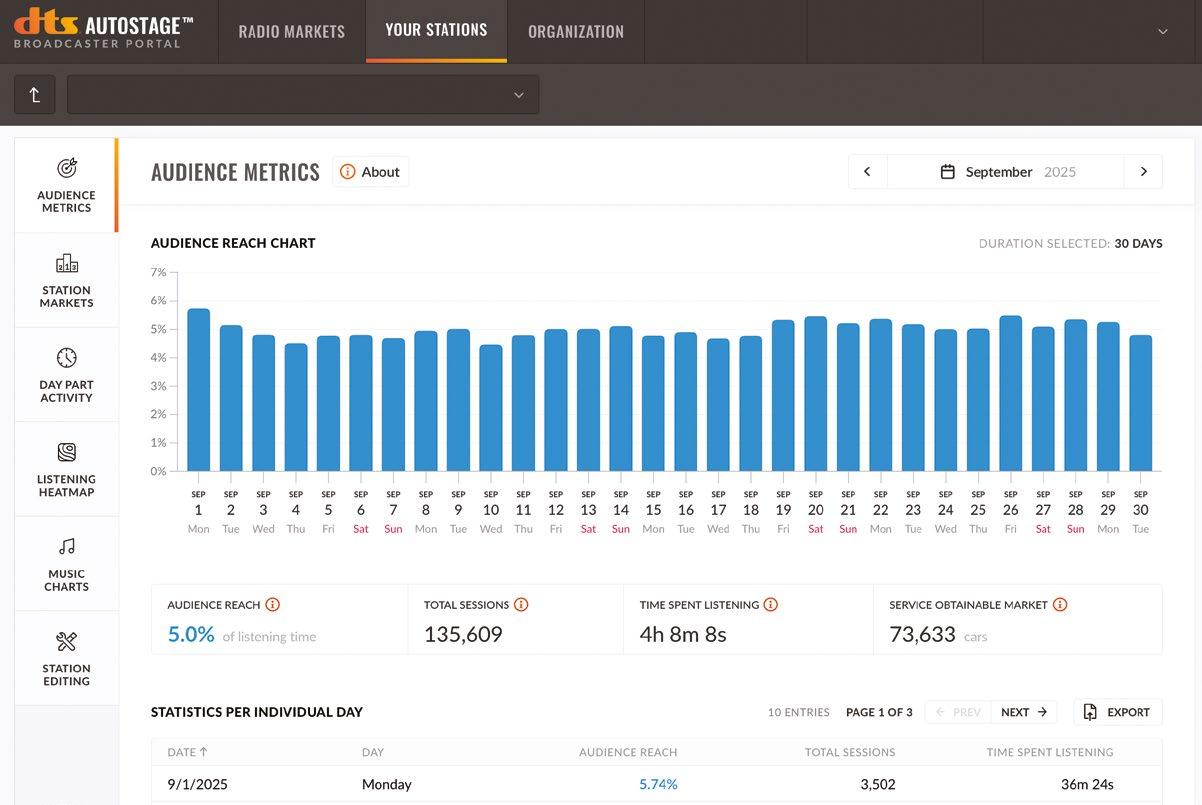
DTS AutoStage Expands Its Portal
Xperi has launched an updated version of the DTS AutoStage Broadcaster Portal.
It said the gateway provides radio broadcasters access to new detailed data analytics that until now have only been available to streaming solutions.
“The portal now delivers audience listening analytics across 250 distinct U.S. markets, which facilitates more nuanced insights based on geographic segmentation that are orders of magnitude above what was previously available.”
The portal is available to stations broadcasting in either analog or HD Radio. The original portal launched in 2023. It is built on the DTS AutoStage platform, which Xperi said is now active in 12 million vehicles globally.
The company said the new version allows broadcasters to measure in-car audience shifts in close to real time.
Stations can see audience listening data at the station level by time of day, market, rank and geography. Reporting capabilities include hourly flow, geographic heat maps and the number of vehicles used for reporting. Reports can trend by days, weeks, months and quarters, as well as hour-by-hour for selected days. Listening metrics include time spent, share, tuning occasions and cume.
The company said the number of vehicles providing the data continues to increase. For example there are 240,000 in Los Angeles, 233,000 in New York, 18,000 in Durham-Chapel Hill and 6,800 in Syracuse.
“Critically, with these new capabilities, broadcasters can now see how their radio stations perform beyond their core market, capturing listening in adjacent territories where their signal carries,” it said. For example, a New York station can measure audience engagement across New Jersey and Connecticut, while a Syracuse station can see listening in Utica or Rome.
“This expanded visibility allows sales teams to pursue advertising opportunities in new areas, turning spillover listening into incremental revenue.” Broadcasters can see audience shifts the next day, allowing them to adjust programming to seasonal spikes, live events or schedule changes more quickly.
Info: https://dts.com/autostage/
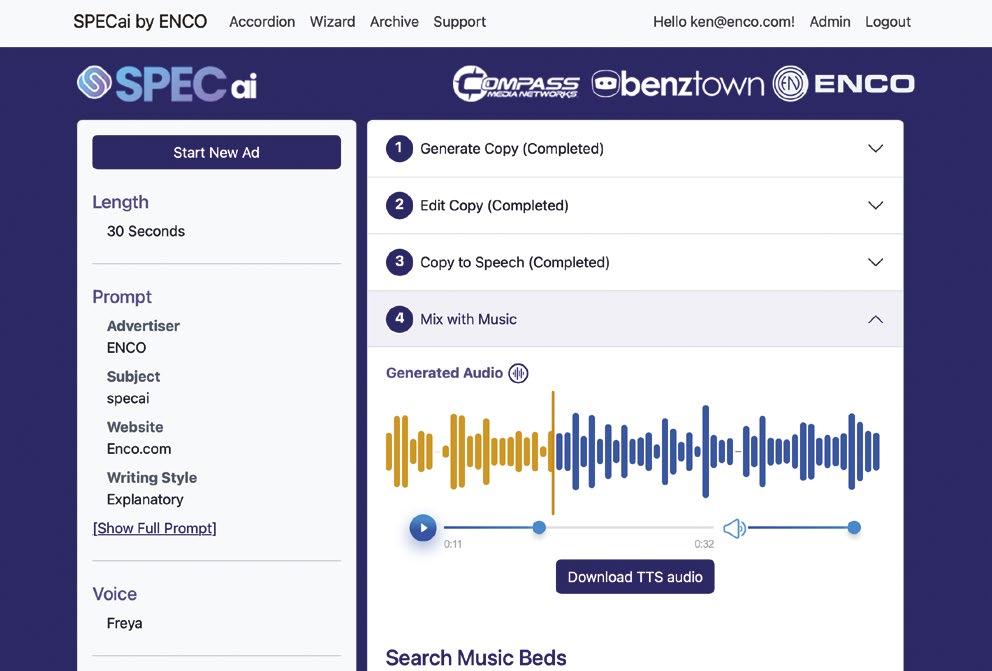
ENCO Updates Its Generative AI Solutions
At the NAB Show New York convention, ENCO highlighted its evolving generative AI solutions.
It said SPECai is now live in approximately 1,100 radio stations through a partnership of ENCO, Benztown and Compass Media Networks. Renda Media recently became its 50th SPECai broadcast client.
ENCO also is approaching availability of its fully productized aiTrack solution.
It said aiTrack’s dynamic content insertion capabilities now offer air and production teams more intricate customization and content creation.
“aiTrack allows users to immediately take fresh content, with instant turnaround and voice insertions of breaking news, weather, traffic and more into live broadcasts. Users can also generate scripts for insertion into scheduled programming over time, and develop more holistic strategies that blend human talent and AI content.”
New features include multi-language dialogue and more emotional tones and inflections to better match mood, region and language.
“Speech-to-Speech” allows users to take control of voiceover delivery by recording themselves and reading the script with the desired pacing and tone, with SPECai processing the voiceover in the user’s desired synthetic voice.
Voice Shift allows the user to set the voiceover at a specific point in a spot when precise timing and dramatic effect are desired. And a Voice and Music Interface enables filtering by category, tags and keywords, helping users narrow down and find the desired voice or music bed.
Info: www.enco.com/products/specai
Writer
Dave Mason
The author describes himself as having been “a radio geek since 1952.”
Why I love radio
I did, and I still do
If you were to ask, “Why do you love radio?” I’d suggest you grab a cold drink and sit down. It’s not a simple answer, because for me, it’s never been just about the music or the voices — it’s about everything. The sound, the feeling, the mystery of it all.
My love affair with radio goes back more than six decades, and it started, like many things do, at Grandma’s house.
Every Sunday, we’d have dinner at her place. She had this beautiful, big Zenith console radio in the living room, and as we arrived, you could hear the local Italian program echoing through the house. It wasn’t just background noise — it meant something. It meant we were together, it meant we were home, and somehow it meant there was a whole world happening out there that we could tune into.
My fascination deepened when my sister came home from a date and told us she’d visited a “radio station in a house,” where the DJ broadcast from the kitchen. I remember turning on our radio, finding that station and imagining what it looked like — how it worked. Who was moving the dials? How did they get music into that box? Then came Elvis. My sister brought home a Presley record. I heard it first in our living room — and then, a day later, on the radio. It took a while to make the connection:
The songs I loved at home were being played on the air for everyone to hear.
That was a big moment. But the biggest one came when my childhood friend Dick Zornow and I walked through the front door of WBBF radio in Rochester, N.Y.
That visit changed everything.
WBBF’s transmitter site was one of four radio facilities within two and a half miles of our home. This one had its control room open to view — and it was like walking into another world. While my friends played baseball or basketball, I found a folding chair and parked myself at the control center of the city’s #1 station. Watching. Learning. Soaking up every sound, switch and smile. I was hooked.
We lived so close to those RF plants, it felt like you could hear the signals in your teeth. Just up the road from WBBF was WSAY, a quirky local station where announcers came and went so frequently, they reused air names like “Tommy Thomas.” I learned something important there: If you could read clearly and someone left, you might just get a chance.
That chance came during the legendary blizzard of 1966. One of their announcers got snowed in and decided it wasn’t for him. I learned about the opening from friends, and that blizzard became the opening door to my professional life.
How to submit Radio World welcomes comment on all relevant topics. Email radioworld@ futurenet.com with “Letter to the Editor” in the subject field.
I was drawn in first by the energy — the fun of hearing people laugh and play their favorite records. Then by the tools: the turntables, the tape decks, the transmitters, the towers, the blinking lights, the clicking relays. I watched in awe as engineers cued up announcers with precision, flipped switches that launched the next event. I saw acetate discs being cut for commercials and got to witness the arrival of the Gates ST-101 tape deck. One day, WBBF unveiled a new invention: magnetic tape in a plastic cartridge, which revolutionized the way we played commercials — and later, music.
I get it now, as a parent. That kind of curiosity to understand how things work — that’s something some kids are just born with.
Before we moved to the suburbs, I’d visit a local park that had a carousel, but I wasn’t just there for the ride. I was mesmerized by the mechanism driving it all. Instead of a calliope, the ride was powered by a Seeburg jukebox spinning the hits of the day. Again, it was the music — but also the machine that delivered it.
On Feb. 13, 1966, I sat behind the mic for the first time as a paid radio employee. I remember staring at the controls, thinking, This is what you wanted. You’re finally here. Now what?
That moment was nearly 60 years ago. And it’s been 65 years since I first glimpsed the magic behind the mic. Long before that first paid shift, I was tuning in stations from Chicago, New York, Cleveland, Cincinnati — giants like WCFL, WLS, WABC, WSAI. I was supposed to be doing homework, but instead I dreamed of someday saying those call letters myself.
That dream came true, many times over. My first on-air moment was at age 13, calling into WHAM in Rochester during a local talk show. Since then, I’ve had the privilege
Readers’ Forum
A question of definition
When I saw the article “The World Is at Your Mouse Click” by James Careless, I was initially excited. In the past, I have really enjoyed
Then page 24 he defines SDR as “shortwavedefined radio” when in fact it is software-defined radio. These SDRs are simple hardware that do amazing things thanks to the software that
I have been using several of the WebSDRs for several years with great success for shortwave listening and as backup receivers during evening roundtables. Most are user-friendly.
of working behind the mic at legendary stations like WBBF, WSAY, WLW, WLAC, KOGO, KRTH, KGB, WSAI, WCKY, WGR, WKRC — and more.
It wasn’t just a hobby. It was in my blood.
My uncle was chief engineer at WRNY in the 1950s. My mother’s sister married the brother of a local DJ. The connections ran deep — and so did my need to understand everything.
Even now, I find joy in turning on a receiver and hearing voices and music in real time. AM, FM, shortwave — it still gives me that same thrill. I’ve collected radios capable of hearing time signals from WWV and WWVH, and like many of us, I once had my own “station” in the basement.
In 2025, I can still broadcast without even putting on shoes. And that’s something that amazes me — how much has changed, and yet, how much remains the same.
Some people say the days of towers and transmitters are numbered. That may be true. But the idea of broadcasting — of sending a message from one to many without wires or waiting — still holds power. It always will. Today’s media world is crowded. Streaming, podcasts, videos on demand. But when disaster strikes or breaking news hits, what’s still there for us?
Radio.
Reliable. Instant. Intimate.
We’ve added screens, yes. But the simple joy of tuning into a familiar voice or a favorite song remains unmatched. I believe radio continues to matter not in spite of its age — but because of it.
From Grandma’s Zenith to my own home studio, it’s been a lifelong journey of signals, stories and sound. I didn’t just fall in love with radio.
I lived it.
And I still do.
His reference to Shortwave.Info was spot on; I rely on that website to identify shortwave broadcast stations I can’t identify.
But I went to the Drake R8 website and was disappointed:
• The display is VERY small, with no way to make it larger on my 17-inch screen.
• Per his instructions, I type in a frequency (6825) and clicked the orange button. Nothing happened. I tried this with several frequencies.
• At one point the R8 went into scan mode and there was no way to stop it.
• I found no way to click on “Help” for this screen to get further assistance.
While I am not the sharpest WebSDR user, I found the R8 approach to be off-putting. If James can point me in the right direction to make all this work y’all have my attention.
Ron Fitch, WQ6X
The wording “shortwave-defined” radio was an editing oversight. — RW