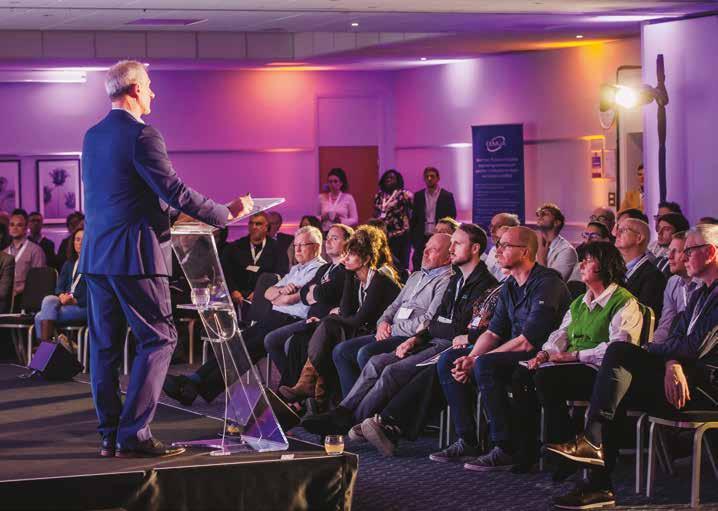
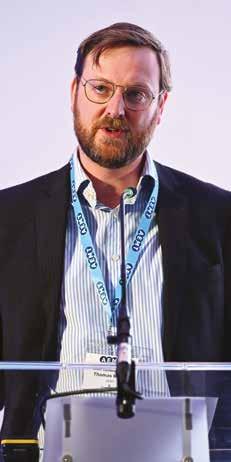
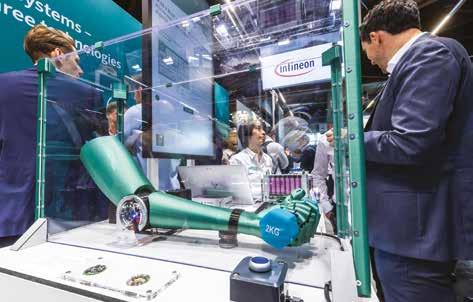
In this, the last International Process Engineer of the year, we look at packaging and maintenance, those core elements of the industry. Unsurprisingly the focus is on how new technologies such as digitisation, AI and big data are improving efficiency and responsiveness in these traditional areas. The cover story Packing it all in (page 8) looks at how the GS1 QR code can hold a wealth of environmental, health, and other data in one code. In addition, access is being broadened to include consumers as well as retailers and POS operators. Progressive packaging on page 24 looks at how the industry is being transformed by AI, leading to custom sizes, enhanced line flexibility and a mitigation of operational risk. In Accuracy is everything on page 32 the CEO of Beamex, Jan Henrik Svensson, tells us how calibration has changed as a result of digitisation, leading to increased ease of use, more regular updates and tighter collaboration with an ecosystem of players. Mark Walker from Mathworks talks about his role as a Senior Applications Engineer on page 38 and how this relies on a constant refresh of skills and knowledge. The maintenance articles include Integrating assets on page 36 in which Kiran Darmasseelane from Verdantix explains that despite the widespread willingness to spend on predictive and AI influenced maintenance programmes, most engineers still face issues preventing such an upgrade, these include siloed or patchy data or feeling unable to make a succesful business case to other departments.
Nicola Brittain Editor
Packing it all in A GS1-powered QR code will be a gamechanger for retailers
New industry equipment With new releases from Greif Velox, Emerson, Cartek and FieldConnex
18
Heat-seeking camera A thermal camera to help with predictive maintenance 20 Transforming inspection An x-ray system that delivers digital traceability
PUBLISHER
Jerry Ramsdale
EDITOR
Nicola Brittain nbrittain@setform.com
DESIGN – Dan Bennett, Jill Harris
HEAD OF PRODUCTION
Luke Wikner production@setform.com
HEAD OF SALES & PARTNERSHIPS
David Pattison
ACCOUNT DIRECTORS
John Abey | Peter King
SENIOR ACCOUNT MANAGERS
John Davis | Darren Ringer | Roy Glasspool
ACCOUNT MANAGERS
Paul Maher | Iain Fletcher | Marina Grant
e advertising@setform.com
CONTACT US...
t +44 (0) 207 253 2545
e mail@setform.com
is helping to steer the green transition
benefits of repair Why fixing is having a renaissance
your supply chain
Setform’s international magazine for engineers is published quarterly and distributed to senior engineers throughout the world. Other titles in the company portfolio focus on Oil & Gas, Design, Transport, Mining, Energy and Power.
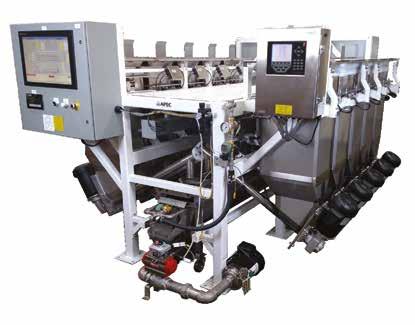
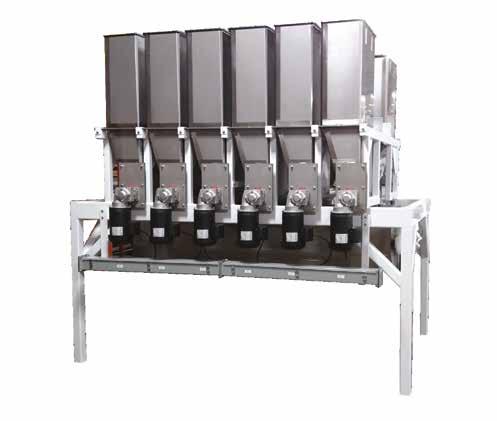
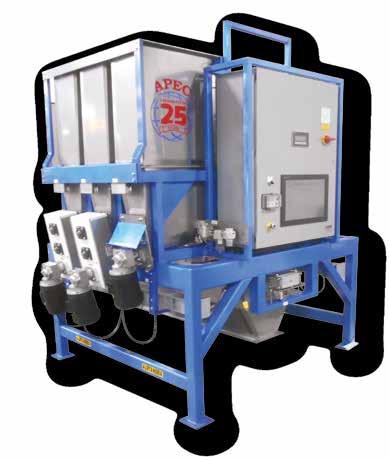
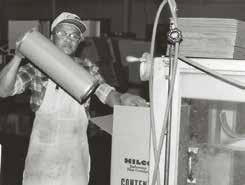
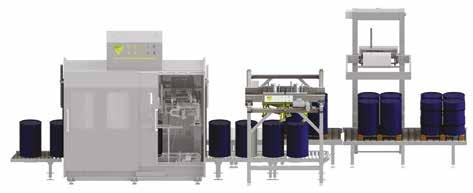
Packaging specialist Greif Velox has partnered with IIoT and industrial connectivity specialist ei³ to boost the performance of filling and bagging systems
The partnership between packaging machinery specialist Greif-Velox and leading provider of secure industrial connectivity and IIoT applications ei3 will see Greif-Velox’s filling and bagging systems start to collect, contextualise, and securely share machine and process data in a more integrated way. This advance will help with advanced monitoring, predictive insights, and continuous optimisation thereby creating a digitally enhanced packaging system.
This digital layer makes up the VeloXpert program, Grief-Velox’s service solution for monitoring, optimising, and supporting operating performance.
VeloXpert will consolidate the packaging expert’s digital and
will
the company’s digital and operational service offering
operational service offerings into a single performance program that includes VPN-based remote support, condition monitoring, data-driven analyses for efficiency improvement, and dashboards for machine and process oversight.
In addition, VeloXpert covers traditional services such as
commissioning, maintenance, training, and spare parts and warehouse logistics. The company also offers a “Packaging as a Service” (PaaS), financing option.
FIRE PROTECTION COATING
A new fire protection coating from AkzoNobel made its first outing at ADIPEC in Dubai
Paint and coatings specialst AkzoNobel International launched its new product Chartek 2218E, an epoxy passive fire protection (PFP) solution, at ADIPEC 2025 in Abu Dhabi last month.
The product ‘delivers enhanced performance and efficiency while maintaining the trusted protection that has made the product so well regarded in the industry,’ according to the company.
This coating product is the latest in hydrocarbon pool fire protection, achieving a two-hour rating in a single-coat application over a Charlok mesh.
Designed specifically for shopapplied steel, the patented, boronfree epoxy intumescent offers a low UL1709-certified thickness and weight compared with other products
for a W10x49 steel section.
AkzoNobel said that the easy application process enables faster project turnaround, lower energy consumption, and reduced risk of delays, while upholding safety and environmental standards.
The product has been designed to
be applied quickly as well as reduce expenses and material use helping both fabricators and applicators increase uptime and reduce costs.
Robin Wade, global fire protection manager at AkzoNobel, said: “Chartek 2218E represents the latest innovation in passive fire protection for the large two-hour pool fire market. This is critical for many oil and gas assets.”
The easy application of Chartek 2218E reduces costs and time=
VeloXpert
consoldiate
TANK MONITORING HUB
The Rosemount 2405 from Emerson provides real-time inventory insights with integrated features to simplify use, free up data and reduce costs
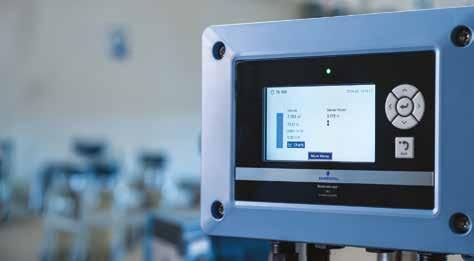
Manufacturing giant Emerson has released the Rosemount 2405 Monitoring Hub, a device that delivers full inventory control and monitoring of multiple storage tanks. The product is designed to simplify tank monitoring system architecture, enabling organisations to automate applications previously deemed too
complex or costly. The insights provided by the hub help to optimise inventory management, leading to improved decision-making, increased operational efficiency and reduced costs, according to the company.
Many organisations within the chemical, refining, oil and gas, metals and mining, and food and beverage industries still rely on manual inventory checks and lack the capability to implement an automated tank monitoring system. This can be compounded by the complexity and cost of integrating system components such as a display, a communication unit and a data concentrator. By integrating these three components into a single device, the Rosemount 2405 simplifies system architecture, making it easier and less costly to upgrade to an automated solution. This simplified system architecture is supported by the ability to connect up to eight Hart-enabled level, pressure or temperature transmitters to the Rosemount 2405. The hub then collects, calculates, visualises and communicates the measurement data for centralised monitoring and inventory management.
FIELD SWITCH OVERVIEW
A field switch from FieldConnex provides process engineers with an overview of the plant’s lifecycle
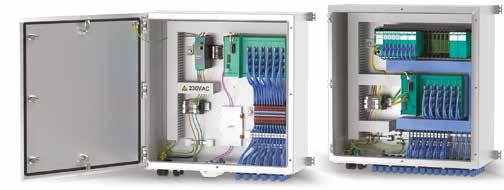
An Ethernet-APL Field Switch from FieldConnex claims to give users a complete overview from commissioning to plant management. The product was demonstrated by manufacturer Pepperl+Fuchs at Smart Production Solutions 2025 in Nuremberg Germany last month. Even during commissioning, the easy to install Ethernet-APL saves the customer time. Each switch and all connected field devices appear immediately in the system and the quality of the installation can be checked and documented immediately with a commissioning report. This ensures reliable communication right from the start. All settings on field devices and switches are configured remotely and fully documented in the asset management system. This helps to
minimise errors, especially when replacing devices. It also simplifies collaboration between all parties involved, according to the company. The asset management system can record the switch’s self-monitoring and the quality of the installation online. The switch provides real-time information about changes to the
installation quality. As a result, the maintenance team can generally intervene in a targeted manner without jeopardising production.
The Rosemount 2405 simplifies system architecture
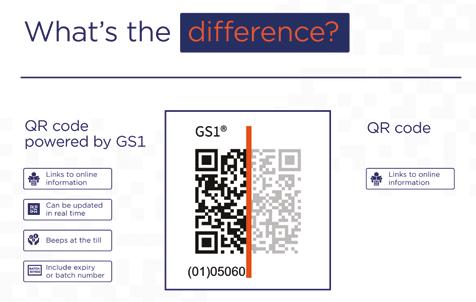
The GS1-powered QR code can contain up to 100 identifiers
PACKING IT ALL IN
The next generation of QR codes for retail products contains detailed and dynamic information that can be easily accessed. Nicola Brittain explores what this means for retailers, consumers and the environment
Consumers want to know more and more about the products they buy, and this doesn’t just apply to the isolated products themselves but rather their position within the wider ecosystem of waste, health, or consumer trends. This desire runs alongside a push for reduced packaging meaning that there simply isn’t the space for the information required to be written on the box, bottle or other packaging as might have happened in the past.
This is where a new QR code, being powered by standards body GS1 UK looks set to be a gamechanger.
GS1 UK is working hard to convince retailers across the world to dump the traditional Universal Product Code - the well known black lines signifyer - and take up the GS1 QR code instead. The standard barcode currently used by retailers is a machine readable ‘Global Trade Item Number’ (GTIN) that contains a unique number, granted by GS1 and used to identify a specific product. The code contains, if required, the product’s batch number, serial number, expiration date, packaging date, net weight and country of origin. However its capacity for additional data is limited.
Camilla Young, programme lead for the next generation of barcodes from GS1 presented at the recent Process and Packaging and Machinary Trade
The GS1-powered QR code can access a range of different information points
Show (PPMA) on the reasons the body were pushing for uptake of the GS1 QR code. She said: “There are over 100 different application identifiers which can be added to the new GS1 QR code. This will be helpful for consumers, retailers and the environment.”
She continued: “The GS1 QR differs from a normal QR code that will typically just take you to one source of information on the internet, a kind of website or URL. With the GS1 QR code, however, a retailer can take this code (if the POS system has been updated) and read it as a normal bar code and then point it a host of
Dynamic updates help with product recalls and best before dates
additional information on the web.”
She continued: “This means a retailer can look up information about this batch in a web hosted environment and it can pull through all the information that is needed for that product.”
The body is pushing for the GS1 QR code to be made a universal standard by 2027.
WHAT DOES THE GS1 QR CODE OFFER?
The most recent iteration of the GS1 QR code, updated in 2021, provides extensive product information, product history, certifications, carbon footprint, recycling information and more (see the boxout on page 10).
CONSUMER ACCESS
In addition, consumers can access the code with a standard smartphone, Once the data is added to the GS1 QR code, it can unlock a whole raft of additional consumer information such as recipes, nutritional information, tailored offers and promotions, and more. The code can also change the language depending on where someone’s scanning to enable more efficient sharing of data.
WHAT IS GS1?
GS1 is a standards body that has been using bar codes to streamline the way people live and work for 50 years. The company has 60,000 members, 76% of whom are from the retail industry. GS1 barcodes allow stakeholders across a broad range of industries to
Standards body GS1 has been using bar codes to transform the way people live and work around the world for 50 years
uniquely identify, describe and track their products, creating greater trust in data generally, according to the organisation.
INFORMATION TO HELP THE ENVIRONMENT
As Camilla explained the type of information consumers want about their products has changed significantly. Such information will now include how packaging can be recycled, whether it is responsibly sourced and whether it is safe to consume. In terms of recycling, the GS1 powered QR codes can help prevent people disposing of packaging. They might, for example, be put on reusable containers and linked to return points, with individual cups linked to each user, engaging and incentivising them to return their cup for reuse.
AI INPUT AND DYNAMIC INFORMATION
The GS1 QR code works with AI to help deliver important information to consumers, AI’s ability to quickly pull together related information means QR codes can be far more dynamic than they once were, meaning they can be updated when new relevant
JUST ONE SCAN:
With just one QR scan consumers could be provided with the following information:
• A digital product passport
• Brand and product information
• Waste reduction information
• Recipes and inspiration
• Point of sale information
• Health and nutrition
• Authentication
• Allergens and ingredients
• Returns management
• Offers and promotions
• Automated recalls and markdowns
• Regulations and legislation
• Market specific content
• Sustainability recycling
information is released or when products hit a threshold such as a best before or sell by date for example. This helps with traceability, automated markdown, inventory management, recalls, anti counterfeiting, and digital deposit return schemes.
BUILDING THE CODE
So what practical steps will a retailer need to make to begin using the GS1 powered QR code? First they will need to feed the relevant data from their internal systems into the software they use to generate the code. Second, this data generates a unique QR code –the retailer or QR code generator will need to check the dimension and error correction for this. Third, QR codes must be printed inline and the user will need to work closely with their print hardware supplier to ensure this is done accurately and according to standards. Finally, suppliers will need to verify the codes to ensure correct data is encoded and that they meet the agreed standards.
For more information visit: www.gs1uk.org
The type of information consumers want about their products has changed considerably
PERFECT ALIGNMENT
Chloe Hurst from Belzona explores how polymeric shimming and chocking systems protect assets against corrosion
BELZONA 7111 APPROVALS
• American Bureau of Shipping (ABS)
• Bureau Veritas (BV)
• Det Norske Veritas (DNV)
• Lloyd’s Register (LR)
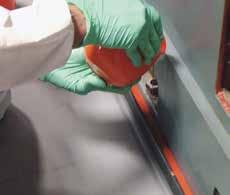
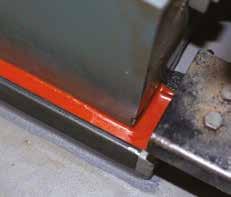
Above: Polymeric corrosion protection has been designed for resilience in demanding industrial environments
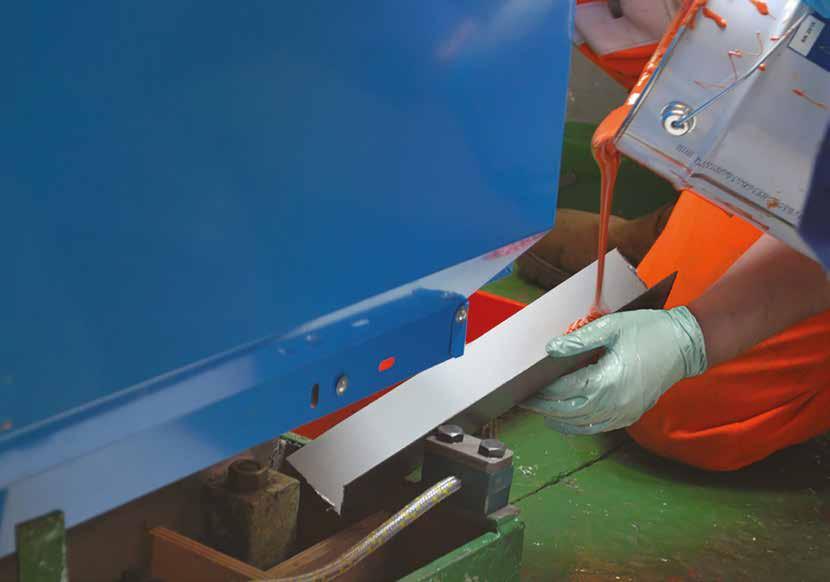
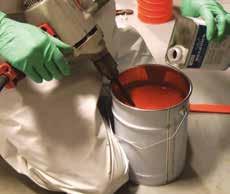
Below: The product is easy to apply and when executed correctly can prevent costly failures
Pourable shimming and chocking systems are used worldwide in marine, offshore, and many other industrial environments. They provide reliable alignment, reduced vibration, and long-term corrosion protection.
PRECISION ALIGNMENT
Within heavy-duty industries, precision alignment is essential for ensuring safe and efficient operation. Shimming provides fine adjustments to correct uneven interfaces and achieve this; while chocking fills larger gaps and creates a continuous,
load-bearing contact surface capable of supporting engines, propulsion systems, compressors, generators, gearboxes, and other critical assets. When executed correctly, these processes help prevent costly failures caused by mechanical stress, misalignment and vibration.
DRAWBACKS OF CONVENTIONAL SOLUTIONS
Conventional solutions such as steel plates, metal wedges, or cementitious grouts have their limitations. Metallicbearing shims and load-bearing
shims are vulnerable to corrosion and distortion, while cement-based products can shrink, crack or degrade under repeated thermal or dynamic loads. Over time, these weaknesses can lead to compromised structural integrity, vibration issues, or accelerated wear.
BENEFITS OF POLYMERIC TECHNOLOGY
Polymeric alternatives have proven to be highly effective in overcoming these challenges. Designed for resilience in demanding industrial
environments, they offer excellent dimensional stability, high compressive strength, and long-term protection against corrosion.
A SHIMMING SYSTEM FOR DEMANDING CONDITIONS
The shimming material, Belzona 7111, is widely used across the marine and industrial sectors. This 100% solids, two-component system is formulated for high-load, precision chocking applications. Its self-levelling, pourable properties allow it to flow easily into complex geometries, ensuring uniform contact between equipment and its foundation.
Once cured, Belzona 7111 forms a solid, monolithic block that resists deformation under static and dynamic loads alike. Because it is non-metallic and corrosion-resistant, it avoids the long-term deterioration seen with metal-based shims and wedges. This stability helps maintain proper alignment, reduce vibration and protect mounting hardware throughout the life of the equipment.
DEEP-POUR CAPABILITIES FOR COMPLEX SHIMMING SCENARIOS
For installations that require largevolume pours or deep fills, Belzona 7211 can be used to create strong, voidfree chocks in demanding applications. This system is frequently used when traditional load bearing shims or high-impact load-bearing shims cannot provide the continuous support required for heavy-duty equipment. With its self-levelling characteristics and excellent performance in uneven or irregular foundations, Belzona 7211 ensures consistent load distribution - reducing the risk of mechanical fatigue, vibration-related failures, and alignment drift.
LONG-TERM CORROSION PROTECTION AND DIMENSIONAL STABILITY
A key advantage of polymeric shimming and chocking solutions lies in their ability to prevent corrosion at the equipment interface. Metalbased bearing shims and cementitious
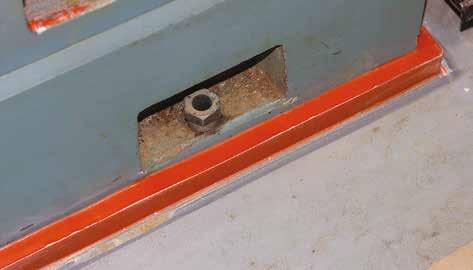
Belzona 7111 spreads out evenly across irregular surfaces
The shimming material, Belzona 7111, is widely used across the marine and industrial sectors
grouts can trap moisture, leading to crevice corrosion or cracking. Polymeric materials eliminate these vulnerabilities. They are nonporous and remain dimensionally stable in aggressive environments, including marine atmospheres, offshore platforms, and high-moisture industrial settings. By maintaining stable geometry and resisting corrosion, polymeric systems, such as Belzona 7111 and Belzona 7211, help to extend equipment life, reduce maintenance frequency, and prevent costly unplanned downtime.
For more information visit: www.belzona.com
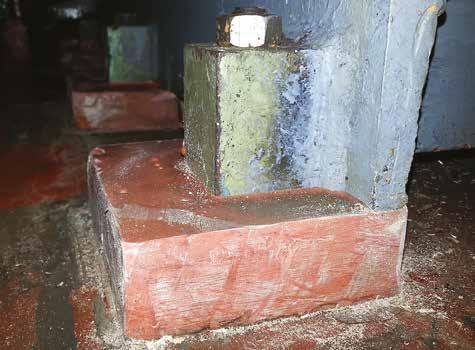
Belzona 7111 is a pourable self-leveling material that supports heavy equipment
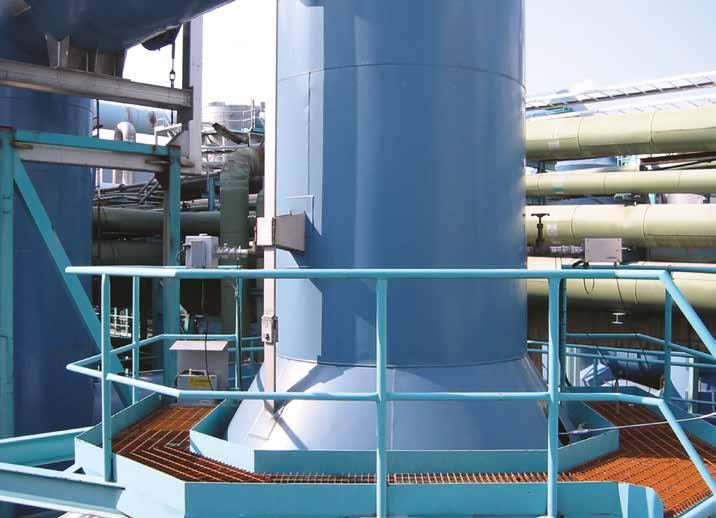
A cross-duct measurement path at a sulfuric acid production plant. The analyser is well protected and located in a separate
MONITORING SULFUR DIOXIDE
Bengt Löfstedt from Opsis discusses how a robust technical solution helps monitor sulfur dioxide at high concentrations within a harsh environment
Sulfur dioxide (chemical formula SO2) is a commodity in many chemical production processes. It is also a product of combustion of fuels containing sulfur. In either case, the levels of SO2 often need to be monitored in order to control scrubbers and other gas treatment processes. Let’s take a brief look at two areas where high or very high SO2 concentrations can be found: sulfuric acid production and power generation.
SULFURIC ACID PLANTS
Sulfuric acid (H2SO4) is used in a multitude of industrial processes
such as mineral processing, fertiliser manufacturing, oil refining, wastewater processing, and pulp and paper production. It’s a base commodity in the industrial world.
SO2 is one of the main intermediate chemicals in a sulfuric acid production process, and the monitoring of its concentration is central for process control. Due to SO2 slip in the process, it is often also of interest to keep track of SO2 in the tail gas in order to control emission reduction processes.
In the early stages of the production process, the SO2 concentration can reach very high levels, in the order of 10 % or more.
The gas mixture is often hot, wet, and containing high levels of particles, on top of that it is also pressurised.
POWER GENERATION FACILITIES
Fossil fuels often contain sulfur, and high levels of SO2 can be generated in the combustion processes. SO2 emitted through the stack of a power plant is eventually converted to sulfuric acid which can cause severe damage to health and the environment in general. It is therefore important to reduce the SO2 emissions as far as possible. This can be achieved by various types of gas scrubbers, often wet scrubbers where water or a lime slurry is injected.
shelter. Photo: Opsis AB
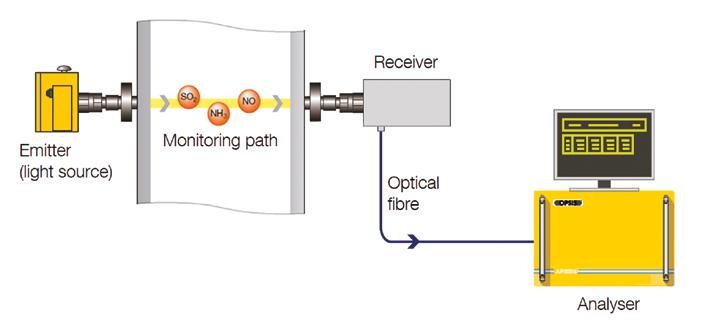
An illustration showing the principles of an in-situ, cross-duct gas concentration monitoring system: Opsis AB
The SO2 concentrations in the raw gas prior to the scrubber is monitored to control the scrubber injection process. Depending on fuel, the SO2 concentrations at this point can reach rather high levels, in the range of 1,000 ppm or more. Also in this application, the gases can be hot, wet, dust laden, and pressurised.
MONITORING TECHNIQUES
In theory, measuring SO2 concentrations is straightforward. The monitoring devices typically utilise the optical properties of the SO2 molecule, either by measuring the absorption of certain wavelengths or the emission of certain wavelengths. This signal then gives the concentration.
There are some different approaches to the practical design of an SO2 monitor. One method is to extract a gas sample from the duct via a heated tube and lead it into an analyser where a fraction of the sample is captured in a cell where
the absorption or emission of light can be measured. Gas dilution and/or miniature filters, scrubbers, converters, etc. along the path of the sample are used to manage the aggressiveness of the primary gas. However, this makes the systems rather complex with high maintenance needs, and they are often prone to breakdowns.
A better solution is to measure the concentrations directly in the duct. This is called in-situ monitoring. A beam of light is sent from an emitter to a receiver, straight through the gas mixture inside the duct. The received light is led through an optical fibre to an analyser which can be located seperately from the aggressive gases and the potentially aggressive ambient environment. The emitter and receiver are protected from the process gases by purge air. No active component of the monitoring system is exposed to the gases.
AN IN-SITU EXAMPLE
Opsis has supplied a large number of in-situ monitoring solutions to
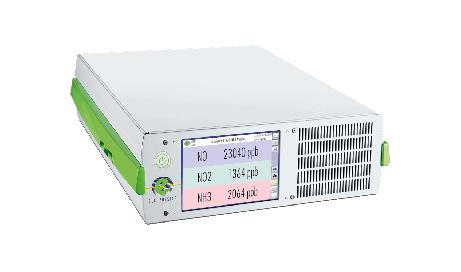
both acid production plants and power generation facilities for high-concentration SO2 monitoring. Thanks to the system design, a single monitoring system can keep track of gas concentrations at several monitoring locations. Additionally, it can also monitor many other process gases of interest, such as SO3, which is another intermediate in sulfuric acid production, and NO, NH 3 and HCl since their concentrations are of interest to control flue gas cleaning processes.
The systems allow a wide measurement range, can operate at very high temperatures and at notable overpressures, and can sustain high dust concentrations, all with a minimum of maintenance as evidenced by many references. A typical service interval is between three and six months.
For more information visit: www.opsis.se
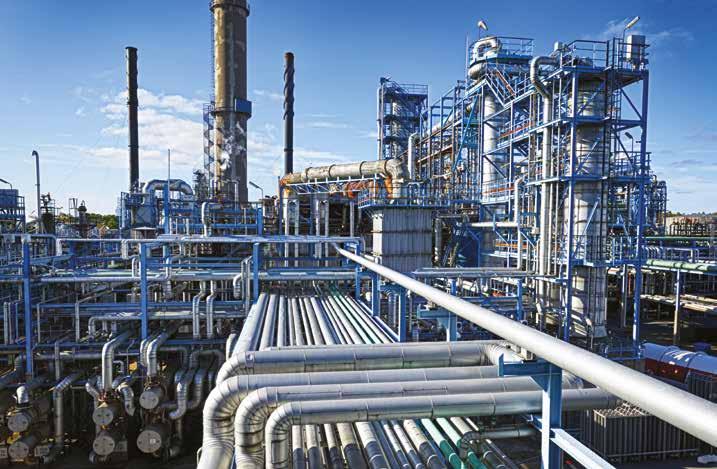
Electrification plays a pivotal role in improving efficiency and sustainability in the oil and gas industry
SUSTAINABLE SUPPLY
Volker Metzger from Watlow explores how advanced heater technologies in an integrated thermal loop can improve efficiency and sustainability
The real potential for achieving higher efficiency and sustainability lies in the use of advanced heater technologies in an integrated thermal loop, according to Volker Metzger, applied thermal expert at industrial technology company Watlow.
Electrification is no longer a mere trend but an imperative. Industries are under pressure from regulators, consumers and shareholders to decarbonise, and electric heating systems play a critical role in achieving this transformation.
LEVERAGING ADVANCED HEATER TECHNOLOGY
Continuous helical flow technology has revolutionised the efficiency and reliability of electric heaters. Traditional heating systems often suffer from dead zones, leading to hotspots, coking and fouling. These issues reduce efficiency and increase maintenance needs, causing costly operational disruptions.
Continuous helical flow technology mitigates these challenges by ensuring uniform temperature distribution across the heating surface, significantly reducing fouling and extending the heater’s operational life.
Another key development is the use of medium voltage electric heaters, which handle the high-power demands of industrial applications while offering improved efficiency and safety. Operating at up to 7,200 volts, electric heaters reduce the need for large step-down transformers and minimise the heat generated by cabling, leading to lower installation and maintenance costs.
TRUST IN THE THERMAL LOOP
However, the true potential of advanced heater technology is realised when it is integrated into a comprehensive thermal loop that includes not only heaters but also sensors, power management systems and data analytics. This system-
wide approach enables companies to fine-tune their operations with unprecedented precision, ensuring tighter temperature control, optimised energy use and long-term sustainability.
When integrated with proportionalintegral-derivative (PID) controllers and real-time data analytics, modern electric heating systems such as medium voltage solutions, provide superior performance in high-temperature processes. These solutions offer advantages over traditional gas-fired systems, such as greater temperature control, reduced energy consumption and minimised maintenance costs.
PREDICTIVE AND DATA-DRIVEN
The full advantages of electric heaters cannot be achieved without integration of predictive maintenance systems. By continuously monitoring system performance through real-time data analytics, operators can detect
Modern electric heating systems provide superior performance
early signs of system wear, such as temperature drifts or anomalies, before they escalate into major issues. This approach helps reduce unplanned downtime, extend equipment life and lower maintenance costs.
Incorporating digitalisation into the thermal loop also allows for data-driven optimisation, enabling companies to reduce energy consumption by adjusting power usage
Digitalisation enables companies to reduce energy consumption
based on real-time performance data. By analysing process trends and using predictive insights, companies of all sizes can optimise energy use, providing a significant competitive advantage in an era where energy efficiency is paramount.
Electrification plays a pivotal role in improving efficiency and sustainability in the oil and gas industry. However, the real transformation comes from the integration of advanced heater
technologies within a comprehensive and electrified thermal loop.
Innovations like continuous helical flow technology, medium voltage electric heaters and predictive maintenance systems allow companies to achieve greater efficiency, lower emissions and enhanced reliability.
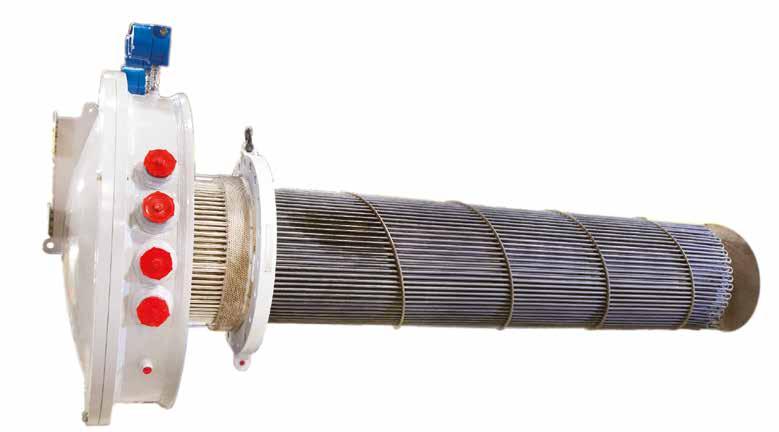
The Helimax electric heat exchanger delivers fast, efficient heating
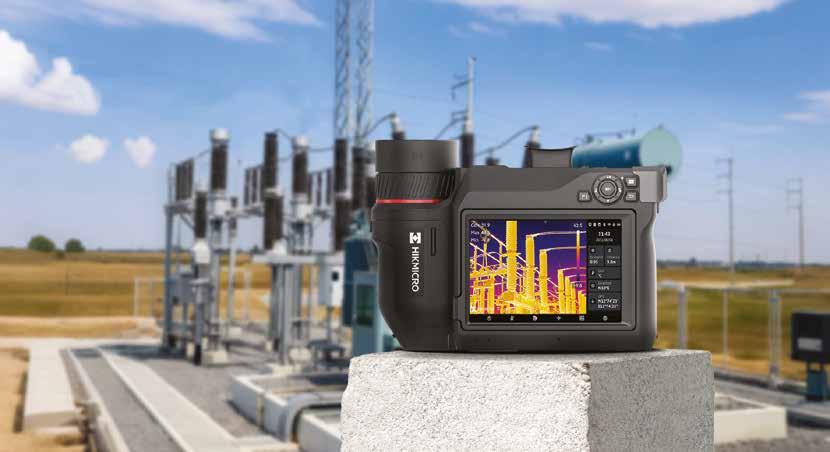
The SP100H deploys an image-based sensor to detect abnormal heat signatures
HEAT-SEEKING CAMERA
How a thermal camera uses image-based sensors to help with on-site predictive maintenance
Predictive maintenance is of ever-increasing importance to process engineers looking to reduce factory downtime. Tools they might use include IoT sensors that measure temperature, vibration, pressure power draw, or acoustics; vibration analysis sensors for rotating equipment; ultrasonic microphones; drones and robots; motor circuit analysers or infra-red thermography cameras.
Hikmicro has just released such a camera, the SP100H, which deploys an image-based sensor to detect abnormal heat signatures in components such as motor bearings or electrical systems since these can indicate a problem.
The camera, which benefits from a 865,000 pixel resolution and <20 mK thermal sensitivity, delivers “rugged reliability, and workflow efficiency that the electrical power industry demands to prevent failures, ensure grid stability and protect personnel,” according to the company.
TEMPERATURE VARIATIONS
The camera enables engineers and asset managers to accurately detect minute temperature variations in connections, transformers and circuit breakers from a safe distance and with clarity.
This, combined with an integrated software ecosystem made up of Hikmicro’s intelligent Analyser and Viewer App, eliminates workflow bottlenecks and turns raw thermal data and images into actionable and professional reports for management and regulators, to streamline compliance and the inspection process.
The SP100H is the latest in Hikmicro’s SP Series for utilities, substations and power transmission, which offers scalable solutions for everything from routine maintenance and operational checks (SP40/60) to the most critical fault detection and high-resolution analysis (SP100H/120H).
Shadow Zhang, overseas brand manager at Hikmicro, said: “Minor faults can lead to catastrophic downtime,
The return on investment is quantifiable because preventing a single substation transformer failure can save huge costs in equipment replacement and lost revenue
safety hazards, and financial loss. The SP Series is engineered to identify these anomalies early and before they become failures.
“The return on investment is quantifiable because preventing a single substation transformer failure can save huge costs in equipment replacement and lost revenue, while the ability to inspect live equipment from a safe and flexible distance, significantly reduces arc-flash and electrocution risks.”
TEMPERATURE VARIATIONS
As the latest solution in the high performance HIKMICRO SP Series, the SP100H’s 1040x832 IR resolution especially pinpoints overheating in small-gauge connections, faulty insulators and internal transformer issues. SuperIR enhancement technology at 30 Hz frequency also means that thermal images are upscaled 4X for exceptional detail in live and recorded radiometric data.
The 90° rotating screen and the 180° rotating lens design make viewing around, between, above, or below the target area much easier.
For more information visit: www.hikmicrotech.com
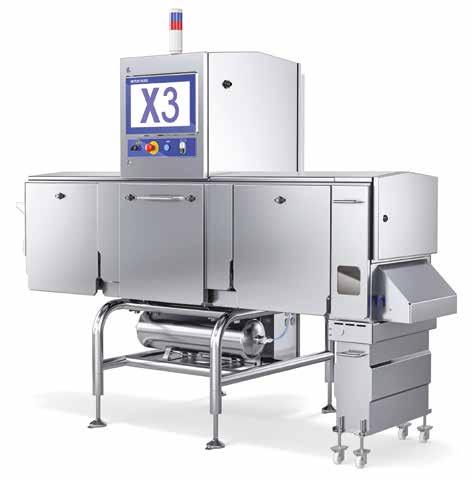
The X3 series is aimed at agriculture, confectionary and dried food sector
TRANSFORMING INSPECTION
A new x-ray detection system from Mettler Toledo delivers sharper detection and digital traceability, here we explore how it works
Accurate inspection of dry food stuffs is an integral part of any food production line and increased regulations have created the need for sharper detection and a need to trace products digitally. With this in mind, Mettler-Toledo, product inspection specialists, has launched the new X3 Series of bulk flow x-ray inspection systems aimed at the agriculture, confectionery and dried food production sector.
The products deliver physical contamination detection, precision waste reduction and simplified operation. The launch consists of two new models, the X13 and X53. The design of the X3 Series for bulk inspection is developed from the X2 family, with commonised parts. It offers hygienic design, streamlined usability, and advanced performance.
BULK FOOD APPLICATIONS
The X3 Series has been developed specifically for unpackaged, looseflow, bulk products on conveyors, this might include dried, fresh or frozen fruits and vegetables, nuts, pulses, root vegetables such as carrots and potatoes, confectionery and cereals. Both systems in the series can detect contaminants as small as 0.3-0.4mm, depending on application and contaminant material, this helps to protect equipment, reduce recalls, and help with safety standards compliance.
30 NOZZLE AIR BLAST
Reject options include a 30-nozzle air blast for pinpoint removal of contaminants in smaller products, or a six-flap pusher reject for the removal of contamination in larger produce. With reject devices positioned above
the product, they are less likely to become blocked or clogged with product debris, thereby maintaining performance and supporting hygienic handling. These targeted reject systems allow manufacturers to significantly minimise product waste and protect profitability.
The smart design of both systems includes tool-free belt and guide removal to simplify cleaning routines. This is complemented by an intuitive automatic product configuration to reduce operator errors.
With throughput rates of up to 5,000 kg/hour, the X3 Series maximises efficiency while giving manufacturers confidence in product quality and compliance.
X13 X-RAY INSPECTION SYSTEM
The X13 combines powerful detection
with an affordable price point to provide a easier gateway to advanced bulk inspection. Equipped with HiGain+ detector technology and ContamPlus software, it delivers sharp imaging and reliable detection of physical contaminants such as metal, glass, calcified bone and stone in a large variety of bulk flow applications, regardless of consistency or format.
X53 DUAL-ENERGY X-RAY INSPECTION SYSTEM
As the premium solution from the range, the X53 is engineered for manufacturers who handle the most complex bulk products and require exceptional accuracy. Building on the performance of the X13, the X53 integrates HiGain+ DE (Dual Energy) detector technology and AMD (Advanced Material Discrimination) Pro software to deliver an additional layer of analytical intelligence. By processing two energy spectrums simultaneously, the X53 can differentiate between materials with similar densities, such as bone and product, allowing it to detect challenging low-density contaminants that single-energy systems may miss.
The X53 also introduces enhanced traceability and automation features, including product validation routines, self-checking performance verification and a lockable inspection tunnel for secure operation. These capabilities make it the ideal choice for highthroughput or high-risk environments, where ultimate sensitivity, reliability and compliance are critical.
BOTH MODELS OFFER OPERATOR FRIENDLY DESIGN
Both X3 models feature front open conveyor access, and tool-free removal of key components. Options such as belt scrapers, water-cleaning systems and removable guide rails improve sanitation, while integrated cable management reduces clutter. Each system is available with a choice of ingress protection ratings up to IP69, providing flexibility to suit different hygiene standards and cleaning regimes.
Automatic set-up and a 15.6 inch touchscreen interface have been designed to make the systems easy
The X53 is engineered for manufacturers who handle the most complex bulk products
we have combined detection capabilities with hygienic design and and versatile reject options that significantly reduce waste
to operate, even in busy production environments. Because the design is intuitive there will likely be fewer training requirements, it also minimises the risk of human errors to support consistent compliance and uptime.
COMPLIANCE, SERVICE AND GLOBAL REACH
The X3 Series helps manufacturers inspect, protect and comply with confidence by combining detection performance with digital transparency. Full connectivity to ProdX enables real-time monitoring, automated reporting and long-term data storage, aligning with global regulatory priorities for traceability.
All Mettler-Toledo x-ray solutions can be remotely supported by a global Service Support team if required. Tailored service plans and spare parts
kits can be supplied to help maximise uptime and manage maintenance costs.
Chris Plant, head of sales X-ray Inspection, Mettler-Toledo Safeline X-ray says, “The X3 Series helps advance bulk flow inspection. With the X13 and X53, we have combined detection capabilities with hygienic design and versatile reject options that significantly reduce waste. From agricultural produce to confectionery, the X3 Series enables manufacturers to protect equipment, reduce costs and build consumer trust, while simplifying compliance in an increasingly demanding regulatory environment.”
For more information visit: www.mt.com/xray-x3-pr
A NEXT GEN WEIGH IN
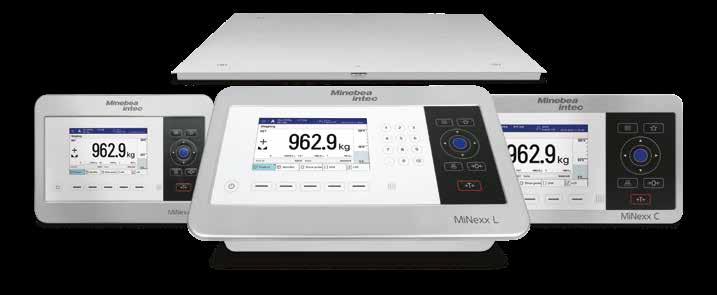
The Minexx scales have been designed for use in pharma and food production
Dominic Bridge explores how the new generation of hygienic weighing for food production promises to change the landscape
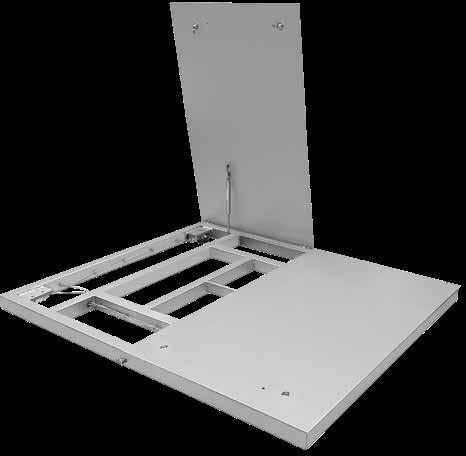
Food manufacturers face growing pressure to deliver precision, maintain strict hygiene standards and prove full traceability across their production environments. Minebea Intec’s MiNexx weighing portfolio, launched in August 2025, responds directly to these demands. The new range - including upgraded bench and floor scales and three advanced indicator modelsreplaces earlier Minebea Intec weighing platforms and introduces higher resolution, improved hygienic design and expanded digital integration.
Janine Nickel, product manager at Minebea Intec explains, “In the long term, MiNexx will replace the Combics, Maxxis 4/5 and X3 families. The previous generation needed to be technically updated, particularly with regard to its interface, compliance with current standards and cyber security capabilities. The new scales also address the need for a better user experience and benefit from wireless capabilities.”
Janine explained that the scales would suit a number of industries: “Users might come from pharma, food production, logistics, chemicals or a building materials background. We have already had success stories from UK and European installations since the August launch.”
REGULATORY PRESSURES AND HYGIENIC DESIGN EXPECTATIONS
For weighing systems, hygiene, documentation and traceability are key to meeting requirements set by food standards agencies such as the EHEDG, BRCGS, FSMA or HACCP. With the public health NSF certification and verified IP protection, MiNexx provides a solid foundation for use in food production.
“Additional features such as rolebased user management, GMP print functionality, historical data storage,
alibi memory and event logging support compliance with regulated environments. Even though some schemes – such as EHEDG – no longer offer product certification, our solutions are well equipped to meet the requirements, and we are confident that MiNexx fulfils them.”
HOW THE MINEXX TECHNOLOGY WORKS
Each MiNexx system begins with a high-precision load cell that converts mechanical force into an electrical signal. This signal is processed by the c, m and l indicators, which evaluate
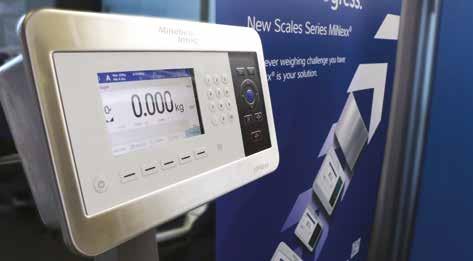
The Minexx weighing portfolio benefits from an updated user interface
the data, display the measurement and forward it to higher-level systems. The indicators can also run local applications such as batching, tolerance checking, recipe guidance or piece counting.
MiNexx also offers impressive connectivity. The platform supports a broad suite of industrial communications, allowing it to operate as a standalone scale or as a fully integrated node within automated lines. In many installations, the bench or floor scale becomes part of a conveyor or filling system, where weight data continuously flows to PLCs, SCADA systems or MES platforms. This enables automated corrections, reduces product giveaway and enhances batch documentation.
COMMUNICATION INTERFACES
The most commonly used interface is Ethernet with Modbus TCP, followed by Profinet and Ethernet/IP. Wireless interfaces are used mainly in mobile applications, which are less frequent. WLAN is widely used as an additional service interface, allowing software updates without disconnecting system cabling. Bluetooth barcode scanners are popular because they offer operator
mobility and avoid cable damage.
“Integration with PLC systems is very common, and connections to MES or ERP platforms are increasing owing to paperless workflows. OPC UA adoption is still emerging, but demand for secure, encrypted communication is rising—making OPC UA our fastestgrowing interface.”
Janine added: “Minebea Intec is strongly committed to cybersecurity and is currently implementing all necessary measures to meet the latest requirements. Beyond that, improving usability and serviceability remains a key focus. Features such as event logging, historical data storage and the service report already support in-depth device analysis and enable fast troubleshooting.”
ERROR HANDLING AND INTERVENTION
MiNexx indicators include multi-tier user access, password protection and secure data logging. These features are increasingly essential as manufacturers expand the digital footprint of their plants.
Weight deviations can have major implications, from inaccurate portioning to mis-dosed allergen ingredients. When MiNexx detects an out-of-tolerance value or internal fault,
it can raise alarms, pause a process, trigger reject mechanisms, or prompt operator action.
MiNexx displays alarms or messages on the screen and can trigger specific functions depending on the alarm type. User management can be configured so that only defined user groups are authorised to acknowledge alarms. All alarms are recorded through the eventlogging system.
WHAT CAME BEFORE – AND WHY MINEXX MATTERS
Prior generations of weighing systems often operated independently from plantwide digital systems, relying on manual data logging or limited communications. As food plants have evolved toward automation, fully traceable audits and datadriven quality control, the limitations of those systems have become clear. MiNexx improves on earlier approaches by offering higher measurement resolution and faster signal evaluation; more open hygienic design for shorter cleaning times; flexible interfaces for digitalised, automated plants; secure user management and auditready event logs; and compatibility with quality and ERP environments. These features position MiNexx not just as a measurement device but as an embedded component of plantwide process control.
FUTURE DIRECTIONS FOR INDUSTRIAL WEIGHING
The next phase of development in weighing technology aligns with broader manufacturing trends: IoT-enabled sensors, predictive maintenance, machine-learningbased drift detection, increased robotic integration, and more robust cybersecurity requirements. As plants become more interconnected, weighing equipment will be expected to self-monitor, predict failures and integrate seamlessly with automated decision-making tools.
For more information visit: www.minebea-intec.com/en/
The MiNexx 3000 Floor Scale 300-GF offers advanced digital integration
Gen AI is emerging as a major growth driver for the US$1.2tn global packaging market
PROGRESSIVE PACKAGING
A new report outlines how generative AI looks set to transform the global packaging industry, driving faster product launches, smarter supply chains and greater efficiency
According to a new report from Packaging Innovations & Empack’s official research partner, Smithers, the global packaging market is valued at US$1.2tn in 2025, with generative AI (GenAI) emerging as a major driver of growth, creativity, and efficiency across the sector. The research highlights how AI is transforming packaging design, production, and supply chain processes, enabling brands to launch products faster, reduce costs, and respond more effectively to shifting consumer demand.
“Every decade brings a new technology that reshapes the way we work – from the personal computer to the internet, mobile devices, and the cloud,” said Josh Brooks, divisional director – Packaging Portfolio at Easyfairs. “Now it’s AI. Global investment in AI infrastructure is expected to reach US$2tn in 2026, and the potential for packaging is immense. From creating personalised designs to optimising production lines, AI gives the industry the chance to rethink how we design, produce, and deliver packaging at scale.”
LOWERING BARRIERS FOR CREATIVITY
The report paints a clear vision for the future of packaging. GenAI is already lowering barriers for creativity, driving rapid growth in personalised and virtual content, and generating versatile packaging formats on demand. Brands can launch products with greater confidence, guided by deeper insights into consumer preferences, while reducing the time and cost of experimental trials. Integration with digital printing, finishing, and automated forming machines, combined with intelligent packaging, could transform supply chain management and customer communication.
IMPROVED STOCK MANAGEMENT
Smarter AI-driven systems are also improving stock management, efficiency, and waste reduction. Rising SKU numbers, shorter runs, and increasing demand for customisation are driving flexible packaging lines, while e-commerce is using AI to
create custom-sized packaging for individual deliveries. Robotics and collaborative robots enhance line flexibility without slowing production, while predictive AI helps mitigate operational risks.
The report highlights further innovations, including ‘rightsizing’ packaging to cut costs and improve sustainability, rapid line reconfiguration for complex shapes, and micro-fulfilment centres enabling 24-hour delivery. Real-time data allows companies to respond instantly to changing demand, promotions, or weather events, while self-learning AI supports a fully circular economy.
CREATIVE PROCESS
Generative AI is also transforming the creative process itself. Bespoke graphics can be generated on demand, enabling rapid prototyping and customisation, while AI agents adjust designs in response to market trends and consumer feedback. By 2025, AI is being applied across text, code, images, video, and 3D content, with outputs expected to outperform professional designers and developers by 2030, marking a step-change in productivity and creativity across packaging.
“Packaging Innovations & Empack is where the future of packaging comes to life,” added Brooks. “Visitors will see firsthand how AI, automation, and sustainable solutions are shaping every stage of the supply chain, from design and production to delivery. It’s the perfect place to explore innovation, discover new technology, and connect with the industry’s leading experts.”
The theme will be explored further at GenAI Packaging Innovations & Empack 2026, to take place on 11 & 12 February at NEC Birmingham. The whitepaper can be accessed via the URL below.
Innovations such as ‘right sizing’ packaging will cut costs and boost sustainability
A DIGITAL SAFETY GUARD
A digital safety guard promises to raise safety standards for critical work. We get the details from Dräger safety expert Thielo Hammer
In this Q&A with safety specialist Thielo Hammer from Dräger, Thielo tells us how the company’s new INARA digital safety guard promises to raise safety standards for the process industry.
Q:WHAT EXACTLY IS INARA AND HOW CAN THE SYSTEM SIGNIFICANTLY RAISE INDUSTRIAL SAFETY STANDARDS?
INARA is the world’s first digital safety guard. It is a battery-powered explosion-protected system that we can place in critical work areas. With its cameras and gas sensors, INARA constantly monitors the environment, enables voice communication and
knows who is in the work area. If critical work such as welding processes is in progress and the system identifies a danger, for instance if the ambient air becomes potentially explosive, it initiates an evacuation to immediately stop the work.
Q: WHAT ARE THE BENEFITS OF DIGITAL SOLUTIONS OF THIS SORT?
INARA provides entirely new opportunities in workplace safety. For example, we can see inside work areas that a human safety guard cannot even access. This allows dangers to be identified early on and preventive action to be taken more quickly. For example, when inspecting containers
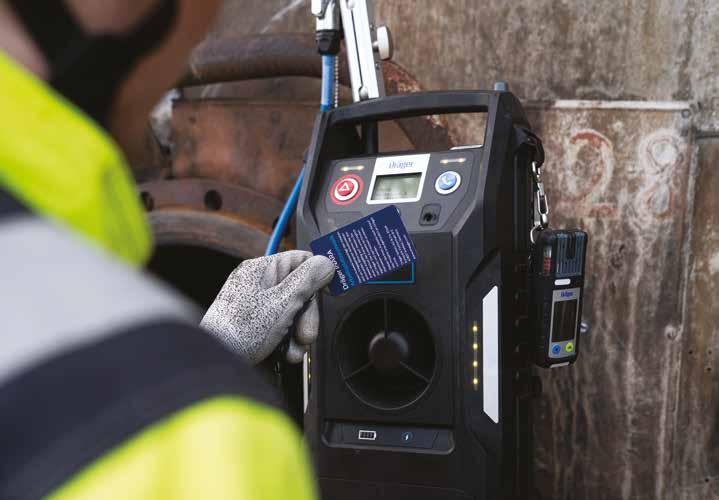
An INARA workplace box at vessel entry
Thielo Hammer, head of product management, rental & safety services, Dräger Safety AG & Co. KGaA
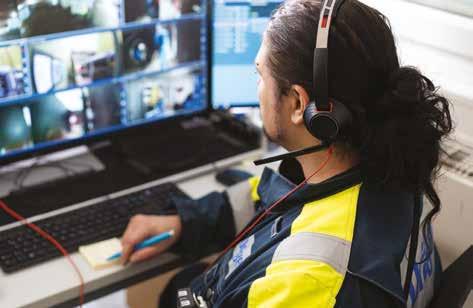
Monitoring of operator positions is currently being carried out
we can look directly inside to monitor the working conditions, which has not been possible before. What’s more, INARA offers customers much greater flexibility and cost-effectiveness. The system can be deployed based on their specific operational requirements. Imagine you need 50 or 100 safety guards, with INARA we can simply keep the systems on standby and deploy them immediately when needed. INARA does not generate any costs when not in use. It does not need to be housed or transported and just needs to remain charged, ready for immediate use.
Q: WHICH AREAS OF INDUSTRY WILL MOST BENEFIT FROM DIGITAL SAFETY GUARDS AND WHY?
Currently, the primary areas of application are refineries, petrochemical plants and the chemical industry. Energy suppliers and power plant operators are also showing increasing interest in our solution. The typical application scenarios are diverse, from the classic monitoring of critical work such as welding processes and working at heights, to confined space entries and monitoring of larger work areas. A particularly exciting new field of application has recently emerged in England. The police are interested in using INARA to monitor sewer systems during major events or state visits. This shows just how versatile our system is. INARA is a complete service concept – our
customers rent the hardware as well as the personnel who operate the system. INARA allows Dräger to offer this service worldwide, regardless of the availability of safety guards. This is particularly valuable for multinational companies with locations in different countries. We are taking a huge burden off our customers as our service model lets them focus entirely on their core processes. We take care of everything from setup to maintenance. We not only provide the technology, but also the trained personnel for operation and maintenance. Our operators are specially trained and can monitor several INARA systems simultaneously. This means a huge reduction in complex safety logistics, particularly for companies whose core business is the production of chemicals or fuels.
Q: WHAT CHALLENGES DO CUSTOMERS TYPICALLY FACE IF THEY ARE CONSIDERING SWITCHING TO DIGITAL SAFETY SOLUTIONS AND HOW DO YOU SUPPORT THEM DURING THIS CHANGE?
The greatest challenge often lies in adjusting existing processes. The introduction of digital solutions often requires our customers to adopt a new mindset. Procedures and risk assessments need to be adjusted – this is a big step. Many of our customers have well-established processes and
Our over-riding goal is always to make a sustainable contribution to work safety
introducing innovative technology, such as INARA, requires them to rethink their safety concepts. This starts with risk assessments that extend to all safety procedures. We work closely with our customers to make this transition as smooth as possible.
Q: WHAT DO YOU THINK THE FUTURE OF INDUSTRIAL SAFETY
WILL
LOOK LIKE
AND
WHAT ROLE WILL DIGITAL SYSTEMS LIKE INARA PLAY?
We see huge potential in the digitalisation of industrial safety, particularly with INARA. The concept is a world-first and ready for use around the clock. This allows us to cover peak demand periods that simply would not be possible using traditional safety guards. In the future, we believe INARA will be an integral part of everyday operations in industrial plants worldwide. We are constantly working on improving and expanding the system. For example, we are integrating additional sensors for temperature and humidity to monitor working conditions even more comprehensively. An exciting topic for the future is the use of artificial intelligence to automatically detect dangerous situations. Imagine a system that could independently recognise if someone is not wearing a safety helmet or is in a dangerous situation. Our over-riding goal is always to make a sustainable contribution to work safety. With INARA, we want to do more than just reduce costs for our customers. Above all we want to contribute actively to Vision Zero: which sees every employee returning home safe and sound.
For more information visit: www.draeger.com/en_uk/safety/ smart-safety/live-monitoring
Detailed negotiations during the allocation process will assess risk and safety considerations
WORK SMART NOT HARD
Nick Maggs, managing director of hard services at OCS UKI, argues that public sector facilities management needs a smarter approach
Facilities management in the public sector is under increasing pressure to deliver greater transparency and more measurable outcomes. For hard services in particular, expectations are also shifting.
Customers want to see evidence of strategic thinking, not just the delivery of operations. They want data-led insights as opposed to reactive fixes. They also want partners who understand their long-term goals, not just their immediate needs.
This shift is creating new opportunities for faciities management providers to rethink how they approach mobilisation, retention and
innovation. Simultaneously, it’s also raising the bar for what good looks like in public sector hard services, setting a new precedent for the future.
MOBILISATION SETS THE TONE
Retention doesn’t begin at the end of a contract. It’s shaped by everything that happens from the moment mobilisation begins. In public sector FM, where contracts are often complex, mobilisation is a critical phase. It’s where expectations are set, relationships are formed, and delivery begins.
Early engagement with operational teams is essential. Off-market conversations, ideally 12 to 18 months
before contract expiry, allow providers to explore extensions and avoid the disruption of formal tendering. However, these conversations only carry weight if mobilisation has been handled well, with poor mobilisation undermining confidence. Strong mobilisation, backed by a joined-up approach across sales, operations and PMO, lays the groundwork for long-term partnership. Customers expect to see commitments delivered from day one. That means having the right people in place, clear communication channels and a shared understanding of what success looks like. It also means being visible, responsive and consistent –especially in the early stages of delivery.
It is also very important during mobilisation, for both parties to correctly administer the contract. This will set the contract up for long term success. Correct contract administration should not be seen by either party as adversarial. There will often have been long and detailed negotiations during the tender process, allocating risk and setting up the principals of how the contract should operate. These can be a whole variety of things such as ESG obligations, change management, scope of services and safety considerations, to name but a few. It never fails to amaze me, how after all this work getting to an agreement, the contract is forgotten about and then everyone is surprised when things don’t go quite to plan – and the one thing we can guarantee, is that things will change!
DATA IS RESHAPING HARD SERVICES
Other than delivering statutory and mandated PPM (Planned Preventative Maintenance) tasks, Hard Services has traditionally been reactive,
focused on fixing faults rather than preventing them, for instance, ad hoc maintenance and call-out based servicing. But public sector customers are now demanding a smarter, more strategic approach. They want predictive, data-led solutions that offer real-time visibility, measurable outcomes and clear lines of accountability. It’s no longer just about maintaining assets, but increasingly about helping customers make better decisions about them.
OCS already has asset monitoring and AI optimisation as a standard provision in its energy business. The opportunity to develop this existing technology, to transform the future of FM, is significant. The bureau and communications are already in place to undertake planned and reactive tasks by augmented reality. Customers and suppliers now need to work together to modify contracts and work scopes to complete the enablement. Technology is also helping to drive consistency across complex public sector estates. Whether it’s a heritage building, a housing portfolio
or a civic facility, customers want to see how data is being used to inform service delivery, reduce risk, improve safety and support longterm planning. Providers must be able to show not only what they’ve done, but why it matters – and what they plan to do next.
RELATIONSHIPS MUST BE BACKED BY DELIVERY
Strong relationships remain central to successful FM contracts; they foster trust, enable collaboration and create space for innovation – but they must be earned.
Customers expect responsiveness, but they also expect proactivity – and increasingly so. They want providers who understand their strategic goals and actively support them; providers who aren’t just delivering services but are adding value in ways that matter.
For more information visit: www.ocs.com
BRIDGING THE GAP
IJan Rieks Zonderman from i.safe Mobile explores how the company’s Mobile Operator Panel bridges the gap between control room and field operations
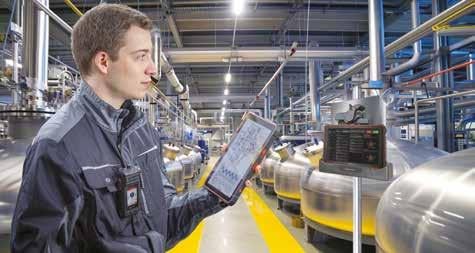
n process industries, many critical decisions occur directly in the field. Operators respond to alarms, coordinate maintenance during turnarounds, and oversee production across widely distributed assets. Traditional workflows often create inefficiencies: either operators must return to the control room, delaying responses or rely on radio communication, which increases the risk of misinterpretation and error.
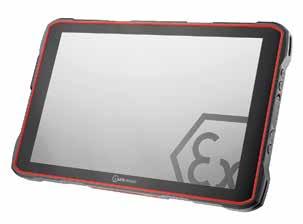
The Mobile Operator Panel from i.safe Mobile closes this gap by extending full HMI functionality into hazardous areas. Built on explosionprotected tablets and intrinsically safe connectivity infrastructure, this solution allows operators to access real-time process data, perform control actions, and document decisions securely at the point of work.
TECHNICAL FOUNDATION
The Mobile Operator Panel combines certified tablets, the Android-based IS940.1 or the Windows-based IS945.1 with the Ex-certified Connectivity System IS-CS1A.1. This connectivity system includes an interface module that mounts inside Ex-rated enclosures, as well as a docking station providing power and data transfer within hazardous zones. Through Ex-approved barriers, the interface module enables Ethernet, USB, and power connections while maintaining compliance for use in explosion-hazardous environments. Communication with SCADA or DCS systems is achieved via standard RDP or VNC protocols. When docked, the tablet remains continuously powered and charged, ensuring full readiness for mobile operation.
PRACTICAL IMPLEMENTATION
In a petrochemical plant performing catalyst regeneration, field operators traditionally rely on radio calls to
request valve positions or temperature readings. This interrupts control room workflow and increases the potential for communication errors.
With the Mobile Operator Panel from i.safe Mobile, operators in the field see the same process graphics as those in the control room. They can verify valve positions, analyse live temperature trends, and record each procedural step directly in the system. Actions become traceable through timestamped documentation, improving transparency and compliance.
In pharmaceutical production, where contamination control is essential, the Mobile Operator Panel located at the cleanroom entry allows batch monitoring, alarm handling, and recipe adjustments without removing equipment for charging, eliminating revalidation efforts and maintaining GMP integrity.
INTEGRATION AND OPERATIONAL BENEFITS
Integrating the Mobile Operator Panel from i.safe Mobile requires minimal changes to existing automation infrastructure. Interface modules connect easily to a plant’s LAN. Legacy systems remain fully
accessible using remote desktop protocols, preserving investment in existing controls.
Deployment of the Mobile Operator Panel delivers measurable performance gains across safety and efficiency parameters. Operators can access diagnostics immediately at the asset, cutting response times and improving fault resolution. Maintenance becomes more targeted, while emergency situations benefit from distributed situational awareness and faster, better-informed decision-making.
Facilities that align the capabilities of the Mobile Operator Panel with specific operational bottlenecks achieve the greatest value, whether by reducing delays caused by information gaps, improving coordination across teams, or simplifying documentationintensive workflows.
By extending control system access safely into hazardous areas through certified devices, the Mobile Operator Panel from i.safe Mobile bridges automation capabilities with field realities, providing operational clarity exactly where it matters most.
isafe Mobile’s Mobile Operator Panel: When field presence becomes a decisive factor
Smart Safety Solutions Dräger INARA
When every second counts, trust Dräger INARA — your digital safety guard. Ideal for shutdowns, turnarounds and confined space entry, INARA provides live video monitoring, real-time gas detection alerts and instant two-way communication to increase safety at your plant. You can also record, report and log incidents as they happen for post-incident analysis. All of this is provided by a fully ATEX-rated system.
Available, efficent and safe: Monitoring as a service. Scan the QR code to experience the future of smart safety.
ACCURACY IS KEY
Calibration is seldom a core concern for process engineers, but that doesn’t mean it’s not critical. Beamex CEO Jan Henrik Svensson discusses the history of measurement and how times are changing for the company
Calibration specialist Beamex has been a key player in the measurements industry for the last 50 years. International Process Engineer caught up with CEO of the company Jan Henrik Svensson to find out more about why calibration is so crucial when regulating and controlling operations and why these are key considerations for process engineers.
Q: FOR THOSE THAT DON’T KNOW MUCH ABOUT CALIBRATION CAN YOU EXPLAIN WHAT YOU DO AND WHY IT MATTERS
Measurements that are taken are
always slightly wrong. I mean, no measurement is totally correct and calibration can rectify small errors to provide our customers with safety and piece of mind. These clients typically work in the process, pharmaceutical manufacturing, energy efficiency or clean water industries.
Q: WHY MIGHT A PROCESS ENGINEER WANT TRUSTWORTHY MEASUREMENTS?
In part because of regulation, they need to be compliant. If a measurement is wrong, the technology might be unsafe for people working in that environment, In addition, customers need to get the
exact quality or quantity they pay for with a product.
Q: WHAT SORT OF TECHNOLOGY IS BEING USED TO MAKE THESE MEASUREMENTS?
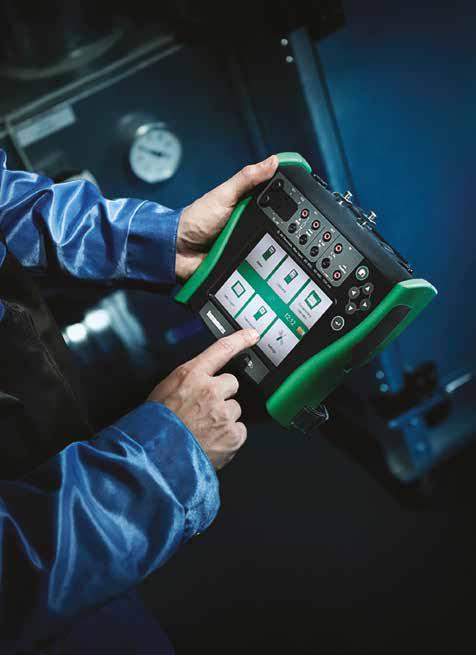
There are several; in order to understand whether the measurement is correct you need to compare it to a known value, and we provide the hardware and the calibrators that provide that reference value. These calibrators have very high accuracy measurement technology which provides measurements that are then used as a benchmark to compare the the process measurements against. In addition, we provide calibration
management software that oversees the whole program, as well as a consultancy service for those that need it.
Q: HOW DO YOU GET THE MEASUREMENTS IN THE FIRST INSTANCE?
Let’s say you want to measure the length of a product but you know there the product will be a difference size when indoors and warm compared with outside and freezing – the dimensions will differ according to the environment. We get these measurements using very accurate pressure sensors – three to four times more accurate than the sensors customers are using in the probe. The kit is intelligent and will test for different temperature environments for example.
Beamex has really strong pressure, temperature and electrical signal sensors. There are many others ways of measuring (such as weight) that we also provide software for.
Q:
HOW HAS THE CALIBRATION INDUSTRY DEVELOPED OVER THE YEARS?
Much has remained the same, so you need to be able to compare a known value that hasn’t changed with one that does. What has changed is that the process is now digital with fully traceable measurements. On top of that, compliance and regulation have become tougher, not least regulations around environmental pollutions etc.
Q: WHAT ROLE DOES AI PLAY WITH YOUR PRODUCT?
You can use AI to have more of a risk-based approach to calibration. You can also use it to provide a ‘four eyes principle’, for example. We have one technology, likely to come out in a year or two, that would provide a second pair of eyes to ensure an input was correctly measured.
Q: WHAT ELSE IS ON THE HORIZON
FOR THE CALIBRATION INDUSTRY?
One thing that I would say is that collaboration in general is more important than it used to be. An
ecoystem of service and technology providers have resulted in a diverse ecosystem of partners.
Another big trend is that IT (information technology) and OT (operational technology) are becoming more aligned. Information technology has always updated every few months, while OT (calibration is OT) used to be built and left for years. That’s not the case any more. The IT managers want data from the calibration systems to help with AI and big data and so the systems need to be updated regularly to abide by these requirements, Beamex works hard to keep up with these demands. Our cloud platform, Logical,
incorporates both these developments too. Users can bring in different organisations allowing for collaboration, they can also exchange data on the system.
Advanced software now also means that users are not required to have the same skills as when Beamex started. A maintenance technician or an electrician can do what a metrology expert once did, because the technical understanding is now built into the system.
The calibration industry in now digital and more collaborative than it was
GREEN SENSORS
New technology deploys highly accurate sensors to detect greenhouse gas emissions from wastewater treatment and agriculture, thereby monitoring the impact of fertilisers on the environment
Acollaboration between the University of Portsmouth and B4T, a Hampshirebased product design house that specialises in the Internet of Things, aims to significantly reduce the carbon footprint of utility operators and farmers.
WHY NITROUS OXIDE?
In addition to carbon dioxide (CO2), there are several other gases that contribute to climate change. Nitrous oxide (N20) - which is produced in soils during farming and when removing nitrates from wastewater - contributes about 300 times the global warming potential of CO2 It is therefore essential that this is considered when monitoring waste water plants or farms.
Human activity affects the nitrogen cycle when nitrogen is added to ecological and engineered systems as fertiliser, organic matter or wastewater. Denitrification can be promoted in wastewater treatment plans or wetlands to remove the chemical from effluents, or else it can happen at enhanced rates in the environment when nutrient rich runoff is exposed to reducing conditions. These process and soil emissions have meant that the wastewater treatment, agricultural and waste management sectors have become increasingly concerned that they won’t meet Net Zero emissions.
THE SENSORS
The collaboration produced a set of miniaturised, low-cost sensors called Manga [Monitoring Ammonia and Nitrogenous Greenhouse Gases] and software for farmers and utility operators to help them monitor emissions. The sensors focus on N2O in particular as it is a potent greenhouse gas whose management is an important part of the Net Zero strategy for targeted sectors.
Realtime information from rural locations is processed, and visualised, to have wide appeal and make decision support effective.
B4T already delivers best-of-breed Man-o-War sensors, currently used in horticulture with technology developed for maritime air quality. It has further developed its software to enable the IoT sensor output to be turned into meaningful data as part of an auditable blockchain.
The University of Portsmouth undertook field trials, using the facilities of the Environmental Technology Field Station (ETFS) at a wastewater treatment plant in Hampshire, to validate and seek accreditation for the sensors. This involved developing deployment protocols for assessing whole site and individual unit process level emissions.
Professor John Williams, academic lead for the project said: “Monitoring wastewater emissions usually involves extrapolating information from dissolved gas measurements or using bulky expensive devices or diffusion tubes, which lack resolution over time.”
“We are developing a set of miniaturised, low-cost sensors to monitor emissions - with a particular focus on N20. Reducing emissions
of this potent greenhouse gas is an important part of the Net Zero strategy for agriculture and wastewater management sectors.”
Alex Barter, managing director at B4T said: “This approach to tackling a hidden greenhouse gas monster is precisely where we play to our strengths, generating new evidence to contribute to policy and water company operations.
“It is our pleasure to once again join forces with the University of Portsmouth on vital environmental work. We look forward to collaborating with the domestic and global wastewater processing sector and are open to discussing our project.”
The Manga project will seek MCERTS accreditation for the technology. Once approved, it can be offered to the water and waste sectors at industry facing conferences and other events.
The project recently received £359,289 from Innovate UK, part of a body called UK Research and Innovation (UKRI).
The Manga sensors focus on nitrogen oxide, a potent greenhouse gas
PRECISION CLEANING
A water-based fine-cleaning solution allows for different cleaning technologies and drying processes to be combined and adapted to a customer’s requirements
Cleaning specialist Ecoclean has developed a new solution for water-based precision cleaning called EcoCvario. The product is modular and allows different cleaning technologies and drying processes to be combined and adapted to individual requirements meaning that high cleanliness specifications can be met reproducibly, quickly, and sustainably, according to the company. In addition, innovative equipment details, effective heat management, optimised media flow, and efficient media treatment to help reduce costs.
The product helps process engineers meet increasingly demanding cleanliness specifications. The product’s spray-flood cleaning system with a vacuum-tight working chamber is designed for batches weighing up to 150kg and measuring a maximum of 650 x 470 x 400mm and is equipped with three flood tanks as standard. Its compact footprint and wide range of automation options means it can be used for seamless integration into the production chain.
THE COMBINATION OF TECHNOLOGIES
By using various cleaning technologies that can be combined as desired, this innovative all-rounder can be adapted to a wide range of requirements. For example, the pulsated pressure cleaning (PPC)
change process enables contaminants to be reliably removed from complex internal geometries, fine capillaries, narrow undercuts, deep bores with small cross-sections, or the delicate structures of printed components. With power-controlled ultrasound at different frequencies, individual vibration units can be selected or deselected depending on the application and parts. For stubborn contamination, high-pressure cleaning comes into its own. Gentle flooding ensures that delicate and sensitive components emerge from the system clean and undamaged and in line with requirements. The rinsing function of the working chamber via additional nozzle bars reduces carryover to a minimum.
The EcoCvario also offers comparable flexibility when it comes to drying: equipped with combinable hot air and vacuum drying, optimal results are achieved in every case with minimal energy consumption and the shortest possible time. This is supported by sensor-controlled moisture measurement and monitoring integrated into the working chamber.
HEPA filters for treating the supply air during hot air drying prevent recontamination of the cleaned parts.
SYSTEM TECHNOLOGY DESIGNED FOR HIGH CLEANLINESS
In addition to the combination of cleaning and drying processes, the system technology supports high cleaning quality. This includes the working chamber made of polished stainless steel and the mediacarrying pipes welded using special processes that counteract deposits. The bogie integrated into the working chamber with frequency-controlled drive ensures precise positioning of the components and optimum accessibility of media and process mechanics. The flood pumps, which are also frequency-controlled, ensure fast filling and emptying of the working chamber or tanks with optimum adaptation to the items being cleaned. These are arranged vertically and are cylindrical. The flow-optimised design of the flood tanks prevents deposits from forming and contributes to improved media flow. This results in extended bath life and thus cost and resource savings as well as higher productivity.
EFFECTIVE MEDIA TREATMENT REDUCES OPERATING COSTS
Suspended and light materials, such as oil or casting dust, are reliably removed from the cleaning baths by effective gravity separators. The separate media circuits of the flood tanks are each equipped with fullflow filtration. Both bag and highperformance filter elements can be used in the flexibly designed filter housing without any modifications.
The EcoCvario meets demanding cleanliness specifications
The EcoCvario product is a modular solution
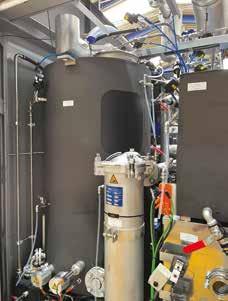
The Verdantix survey found most asset managers had a reactive approach
INTEGRATING ASSETS
When choosing asset management software should you choose a best of breed or an integrated best of suite solution? Two experts weighed up the pros and cons of both
During a recent webinar entitled ‘When to consider a fully integrated asset management solution’ Kiran Darmasseelane principal analyst at Verdantix, discussed the company’s recent research on the topic with Kerry Kim marketing manager at Cohesive. a specialist in integrated asset-management solutions.
When asked to describe both a best of breed and best in suite solution Kieran Darmasseelane from Verdantix, a consulting firm with a focus on asset management, said: “A best of breed solution means a platform is very specialised for single use cases. So if a user is looking for enhanced asset integrity or prediction, they might opt for this. There’s a huge amount of depth and innovation behind such solutions.” A user would be considering whether to keep divisions in their systems to help with section monitoring and very niche applications that offer
considerable value to the system. However, a best of breed solution would look at key problems right now and aim to increase uptime across the whole business. This is a more unified approach.”
A best of suite solution would tend to be provided by a single vendor. This would normally include maintenance and spare-part
management, orders, and scheduling. “There are clear advantages to both,” he said.
MAINTENANCE MATURITY PLATFORM
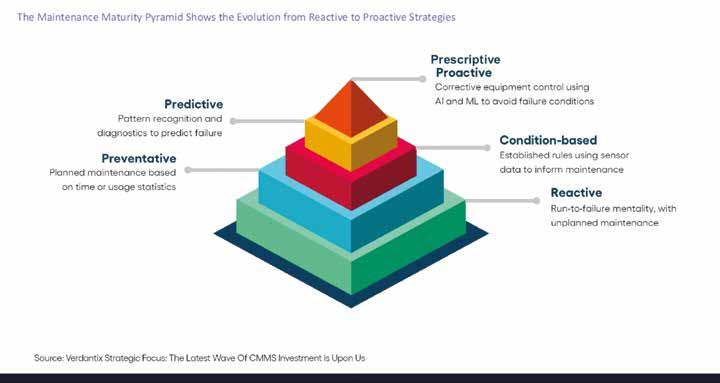
Kiran presented a ‘maintenance maturity platform’ - a useful scale to help help plant operators work out how advanced their asset management strategy is. At the most
A best in breed solution is a more integrated approach
Kiran Darmasseelane
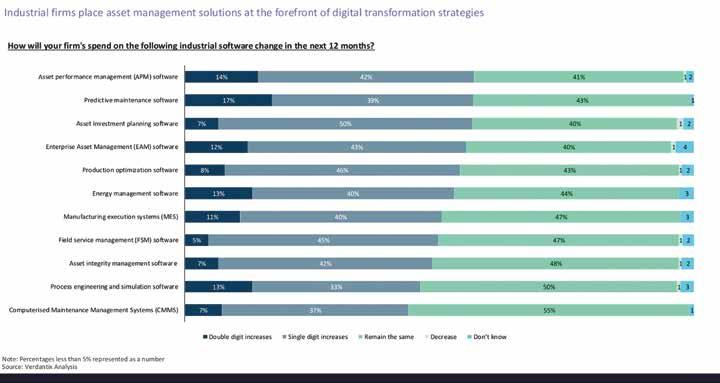
The appetite for investment in asset management solutions is high basic level is corrective maintenance where equipment or assets are fixed after they break.
Second is preventative maintenance where routing inspections are conducted with cleaning to prevent equipment failures. Third would be planned maintenance with scheduled maintenance activities at predetermined dates and times. This is followed by condition based maintenance, where asset health is monitored using sensors. Next is Reliability Centred Maintenance (RCM), where the probability of failure is identified. At the more advanced level are predictive maintenance where AI/ML models are used to predict asset failure; and condition based maintenance, where asset health is monitored using sensors.
SURVEY
Verdantix recently conducted a survey with 335 industrial executive across engineering maintenance about their preferences, budgets and priorities for the year ahead.
Kieran explained that although these managers generally wanted to move to predictive, 82% were still using corrective, preventative or planned approaches. The blockers preventing the development of their strategy included siloed and lost data; problems with
making the business case; and lack of internal technical capabilities.
That said, Kiran explained that “investment in asset management solutions is still at the forefront of most business investment.”
HOW TO PICK THE BEST OF BREED OR BEST OF SUITE
Whether to choose best of breed or best of suite will depend on a company’s needs, Kiran explained. Is it looking for a more reliability centred platform and a single view of asset health? Then best of suite will offers more clarity.
If the company wants to prioritise workflows and pre-integrated capabilities then, again, best of suite makes more sense. Similarly, this solution offers cross functional collaboration across maintenance, finance etc.
However, if a company wants to leverage data-driven decision making, predictive maintenance, and drive reliability of specialist assets then best of breed might be better for them. They can leverage advanced AI analytics and predictive maintenance to help with this. Similarly, if they want to achieve measurable results quickly then best of breed takes less time to become operational.
“There are a lot of different
solutions, it really depends on what you want to achieve,” he said.
COHESIVE’S ARGUMENT
As a systems integrator Cohesive leans into the best of suite approach. Kim said: “At Cohesive we’re a global asset advisory systems integrator and support and maintain a best of breed solution. Unless a company’s applications are a true source of competitive differentiation we have found that customers would rather consolidate ther stacks.”
“On the reliability side, firms do want to be smarter in terms of managing assets but there are issues. Getting organisational alignment within these companies can be a challenge.”
THE COHESIVE SUITE
Cohesive recently developed and launched a cohesive best of breed asset management platform called the Cohesive MaxAdvantage. “The goal with this product was to streamline the support and maintenance experience and as well as procurement processes,” Kim said.
Our tools are used across all of the leading aerospace companies including Airbus, BAE systems and Rolls Royce
A CURIOUS MIND
Mathworks Expo took place at the Silverstone circuit in November this year
International Process Engineer caught up with senior application engineering manager Mark Walker at MathWorks Expo. We discussed his role, his motivations and how he sees the industry changing
It is just a fact that MathWorks, an international software company best known for its Matlab and Simulink software, employs some very smart people. International Process Engineer caught up with one such person, senior application engineering manager, Mark Walker, at the recent Mathworks Expo at Silverstone. We discussed his role, his motivations, and how he keeps abreast of the industry’s rapid rate of change.
Q: CAN YOU GIVE ME AN OVERVIEW OF YOUR ROLE AT MATHWORKS
I’ve been with the company for the last 20 years and during that time have had insight into pretty much all industries. I have worked extensively with healthcare, aerospace and process manufacturing clients.
The work I do is around ‘engineered systems’. This can be applied to anything from an aircraft right
Mark Walker works with clients from the process manufacturing industry and aerospace
through to a manufacturing line.
Q: HOW DOES THE MATHWORKS SOFTWARE HELP YOUR CLIENTS?
Our products get things up and running quickly and for the first time. So they can help build prototypes, meaning they might model a system that can be used to express the behaviour wanted by a client – this is called rapid prototyping.
In addition, we try to give customers the tools to express their ideas in a high-level language that then delivers them concisely by converting them to software. This might be used to control
a production line or something similar. We work on lots of projects in this control area.
We also work in analysis and modelling to help clients that pull data from machines. This is often used to understand how those machines are performing and identify areas for optimisation. That data is then used to predict future behaviour by building mathematical models to enable predictive maintenance.
Such work helps our customers understand more about the remaining useful life in a component for example.
Q: WHICH SPECIFIC CUSTOMERS HAVE YOU WORKED WITH?
Much of the work we do is with ground-based rigs for aerospace operators. Our tools are used across all of the leading aerospace companies including Airbus, BAE systems and Rolls Royce for example. On the
process side in terms of analysis and modelling, we’ve also done some very interesting work with Unilever.
Q:
WHAT
DOES A SENIOR APPLICATION ENGINEERING MANAGER DO?
My goal is to demonstrate to our customers how the tools can be applied to solve their problem, often it’s a matter of discovery. We try to take useful routines and capabilities, and package them up to be applied to specific situations.
Q: HOW MIGHT A PROJECT WITH MATHWORKS
START?
We typically get an enquiry asking ‘can your tools help with x?’ First, we need to understand exactly what x is. We have a hundred different products each with a huge range of capabilities.
So as an application engineering manager I would need to get the necessary information from colleagues to work out best next steps. It is important that I know who at the company is working on what and seek their advice to best respond to the customer’s enquiry.
Q: TELL ME ABOUT YOUR BACKGROUND?
I came into MathWorks from a role in automotive control. The range of applications I’ve worked with has significantly broadened during my time here. I’ve worked closely with many different teams doing really quite advanced and diverse things.
Q: HOW HAS AI INTEGRATION CHANGED THE TYPE OF WORK YOU’RE DOING?
We have capabilities for AI within our products, and have seen an increasing number of enquiries in this area. AI is very good at recognising patterns which is extremely useful for process engineering. Such work will be looking for anomalies that happen periodically, and AI can easily identify this kind of thing. Discriminating between normal and abnormal is at the heart of predictive maintenance.
We’re also starting to see queries around bringing AI into the design process itself. So a customer might ask how it can be used to make decisions about what a system needs or how it’s going to perform.
Q: HAVE YOU HAD TO UNDERTAKE ONGOING TRAINING TO DEVELOP UNDERSTANDING OF NEW TECHNOLOGIES?
This role requires continual learning to keep on top of advances in the industry. I need to be aware of what’s about to come down the pipeline. To help with this, MathWorks operates a field training and development team that focuses on technology and soft skills. There is also curriculumbased training as well as exposure to technical knowledge forums. These invite teams working on in-depth advances to describe their work and its application to customer-facing engineering teams such as mine.
Q: HOW ELSE DO YOU EXPECT YOUR WORK TO DEVELOP IN THE COMING YEARS?
I expect we will be building more larger scale simulations. The scale and ambition of digital twins is starting to be very interesting. This might be in the form of manufacturing lines, an aircraft, or grid-level simulations for power distribution for example. Engineers need to think carefully about how these things are modelled and ensure they are only modelling the necessary parts and creating fidelity in these parts.
WHAT ADVICE WOULD YOU GIVE TO SOMEONE WANTING TO BECOME AN APPLICATION
ENGINEERING MANAGER?
They must have curiosity and an openness to new areas of knowledge. Typically, they would have a systems engineering or maths background. However, many of our successful applicants are also musicians – perhaps this combination of creativity and technical know how helps with the job.
Mathworks Expo saw presentations from Jon Friedman, aerospace senior manager (left) and Caroline Dahlgren senior application engineering manager (right)
SENSE AND SUSTAINABILITY
Uncertain market conditions make it increasingly difficult to turn a profit in the recycling business, it is therefore essential that recycling plant operations are as efficient as possible, writes
Robert Whetstone of Martin Engineering
Prices of recycled commodities like metal scrap, plastics, aggregates, paper and cardboard and have dropped significantly, yet the cost of processing recyclables has remained steady or risen owing to higher energy and labor costs. Energy costs for industries across all sectors have more than doubled, almost everywhere in the world. [Fig.1]
In fact, for companies specialising in sustainable materials management, the cost of recycling equipment, manpower and energy required to process materials has risen substantially while markets have remained subdued and prices stagnant at best.
The impact on the bottom line is exacerbated by the kinds of challenges faced by recyclers that rarely impact producers of primary materials – recycled feedstocks can be notoriously inconsistent, frequently contaminated with unwanted objects and non-recyclables.
The material characteristics of waste feedstocks often mean that they can quickly clog up processing equipment such as conveyor belts, transfer chutes, bins and hoppers, and cause excessive wear and tear on machinery, leading to unplanned, costly shutdowns.
Worse still, despite the overwhelming risks, it’s not uncommon for workers to be sent into hazardous situations to manually clear spillages, blockages and buildups in order to get plants back up and running quickly. Without the right risk assessments to ensure that the hazards associated with energy
isolation, working at height and confined space access are addressed, the consequences can be fatal.
From a safety standpoint alone, ensuring recycling plants run smoothly is critical, let alone the benefits in terms of productivity and profitability.
BEATING A BATTERING FROM BATTERIES IN MEXICO
One example that Martin Engineering was involved with was in Mexico, at Enertec (part of Johnson Controls) at a plant dedicated to the recycling of vehicle batteries. The machinery grinds down and separates the plastics from the lead in spent batteries and the materials are reprocessed and used to manufacture new batteries.
However, their main conveyor belt suffered from continual impact damage and misalignment as a result of heavy batteries dropping onto it. Smaller batteries (such as motorcycle batteries) tended to rebound out of the loading chute because the conveyor belt lacked an effective support system.
Some of the batteries ran down the back of the chute, which caused damage to the conveyor belt and also to the tail pulley. And others fell down the sides, getting stuck between the chute and the conveyor and accumulating over time. In addition to this problem, the lack of proper support meant that significant vibration was being transmitted to the nearby weighbridge.
All these issues were causing repeated drops in productivity and an increase in unplanned maintenance to allow corrective actions to be taken – this was mainly carried out during unscheduled shutdowns when it was necessary to manually clear the chute and surrounds, as well as replace and repair damaged conveyor components. Besides the loss of production time this was also expensive and labour intensive, not to mention the additional risks of clearing the blockages by hand.
Following examination from technicians at Martin Engineering, the solution came with the installation of an Impact Cradle positioned under the belt conveyor loading zone beneath the chute. The Impact Cradle absorbs the
Fig.1 - Annual price indices for industrial fuels excluding the Climate Change Levy (CCL)
force of falling objects and materials to prevent damage to the belt and surrounding structure. It eliminates any belt sag and is designed to minimise any bounce-back from the initial impact with the belt.
Like many of Martin’s installations the cradle was custom-manufactured to meet Enertec specific requirements – in this case that meant it had to be made from stainless steel to resist attack from the corrosive acids in the electrolyte solution of the batteries they recycle. Following installation, the problems of misalignment and impact damage were corrected and Enertec recorded fewer production problems and lower maintenance costs.
STEMMING THE
SPILLAGE FROM STEEL SLAG IN GERMANY
Another example comes from the steel industry in Germany, where residues from the blast-furnace are transformed into a cement substitute known as GGBS (ground granulated blast-furnace slag). This happens at steel plants the world over.
In this case the producer was experiencing extreme carryback on a main material transport belt, which was causing excessive build-up beneath the conveyor and significant damage to the superstructure and conveyor system. An existing belt cleaner made from a horizontal strip of metal plate tilted slightly to face the discharge chute did not adequately
remove dust and other material from the cracks and divots in the belt.
Carryback on the return side of the belt caused fugitive dust to travel away from the operation area and crested poor air quality throughout the plant. Spillage along the belt path also built up around the mainframe and increased operational costs for cleaning. The arrangement was impacting productivity and increasing maintenance costs. It also had the additional disadvantage of damaging the belt and catching on mechanical splices, causing costly premature belt replacement and running the risk of a catastrophic breakdown.
After a thorough inspection that included Martin’s unique Walk the Belt assessment, Martin Engineering representatives determined that a QC1 Cleaner HD STS was the right solution to clear the belt of adhered carryback. Using the patented Martin Spring Tensioner HD STS with a polyurethane blade formed in the ‘CARP’ (Constant Angle Radial Pressure) design, the blade creates a tight seal on the belt, runs easily over mechanical splices and maintains cleaning performance through all stages of blade life. Mounted on a sturdy stainless steel mandrel, the blade cartridge is serviced without confined space entry with a simple one-pin operation, making replacement a safe and simple procedure.
The result was improved belt cleaning efficiency and reduced airborne dust. Operators observed that considerably more material was discharging directly into the chute as intended, with significantly less carryback than they had ever experienced. Owing to the reduction of
fine material being held in cracks and divots on the return side of the belt, there was less dust that could become airborne, leading to an immediate improvement in plant air quality.
Spillage along the belt path was also significantly reduced, leading to fewer workers taking a fraction of the time to clean along the belt path, improving safety and reducing the cost of maintenance and cleanup. Furthermore, there’s been far less wear and tear on the conveyor belt and its operational life is reportedly double what the operator was achieving previously. Needless to say, the rest of the plant was converted to efficient belt cleaners from Martin Engineering.
SENSE AND SUSTAINABILITY
These examples highlight specific problems that were discovered along the entire length of processing lines as a result of Martin’s Walk the Belt approach to problem solving. This ensures that root causes are understood and fixed, rather than simply addressing a symptom at one
point caused by a deeper problem elsewhere in the system.
Given that no two plants are the same, and each different type of feedstock for recycling presents unique challenges, a tailored review under the guidance of material handling specialists is always the best starting point.
Hard-pressed operations teams are focused on keeping their plants running and overcoming the challenges as they arise – and that’s often as a result of badly designed or badly upgraded, mismatched processing machinery. It’s understandable that they don’t often have the time or the expertise to look at the bigger picture to identify the reasons why problems are arising.
That’s where specialists such as the team at Martin Engineering come in, to deliver maximum processing efficiency – especially critical when margins are squeezed. For materials recycling to make as much economic sense as it makes environmental sense, achieving smooth and efficient end-to-end processing has to be the goal.
The author, Robert Whetstone, is area vice president, EMEAI Region, Martin Engineering
STEERING THE TRANSITION
The energy transition has moved from being a hot topic to being part of a day to day reality for many process engineers. Trade organisation EEMUA is providing guidance every step of the way
The engine of EEMUA is its weighty guidance documents
EEMUA (the Engineering Equipment and Materials Users Association), a not for profit trade organisation, has been running for an impressive 75 years. The organisation was originally established to share information with members that needed common approaches to working in heavy industry – although its modus operandi has changed little since then, new issues have made themselves known to the industry, not least the need for an energy transition.
As John Lilley operations director at the organisation explained, although the fundamentals tend to remain the same the topics explored by EEMUA change over time.
ENERGY TRANSITION GUIDANCE DOCUMENTS
A few years ago the body released several white papers that aimed to guide members through the energy transition, but as a spokesperson for EEMUA said, “these themes have
moved less from being a hot topic, to something that is being gradually enacted in industry”.
The engine of EEMUA is its weighty guidance documents, and the white papers on the energy transition are an addition to the over 60 documents currently in use. They aim to set out what is needed in terms of safety, compliance and efficiency across a swathe of heavy industry.
The documents are provided free of charge to member companies from sectors including chemicals, oil and gas, power generation, renewables, maritime and defence, although they are also suitable for any heavy industry sector or one involving hazardous activity, substances or processes.
The three energy transition whitepapers focus on safety, people, and guidance and training respectively and argue that although at one level the energy transition is driven by policy decisions and technology, another major shift is
industrial infrastructure, and this is being delivered by the development of engineering expertise and good practice. Facilitating this is central to the activities of the EEMUA.
Although many of the papers are more applicable to readers of our sister publication, International Power Engineer, with several aimed at those working in the construction and maintenance of offshore wind facilities or solar plants, the majority of the guidance is of equal relevance to process engineers, these include EEMUA 230 a guide for maintenance and operation of of ageing rotating mechanical equipment in the petrochemical, process and power industries. Similarly, EEMUA 159 covers the inspection, maintenance and repair of above ground flat-bottomed storage tanks, EEMUA 183 gives good practical advice for preventing bottom leakage from steel storage tanks and EEMUA 231 looks at periodic examination and testing of the mechanical integrity of plants containing hazardous substances.
GUIDANCE DOCUMENTS FOR ENERGY TRANSITION FOCUSED PROCESS ENGINEERS:
EEMUA 159
Above ground flat bottomed storage tanks – a guide to inspection, maintenance and repair
EEMUA 231
The mechanical integrity of plant containing hazardous substances: a guide to periodic examination and testing
EEMUA 183
Prevention of tank bottom leakage – a guide for the design and repair of foundations and bottoms of vertical, cylindrical, steel storage tanks
EEMUA 224 A guide to risk-based procurement
EEMUA 232 Specifying, procuring and managing third party inspection services
EEMUA 186 A Practitioner’s Handbook for potentially explosive atmospheres
EEMUA 147
Recommendations for refrigerated liquefied gas storage tanks
EEMUA 230
Ageing rotating equipment – a guide to maintenance and operation
EEMUA 177
Guide to the UK Pressure Systems Safety Regulations (2000)
EEMUA 191
Alarm systems – a guide to design, management and procurement
Guidance documents are generated by member companies and other stakeholders (combining proven good practice)
THE ROLE OF MEMBER COMPANIES
Guidance documents are generated by member companies that sit on technical committees. There are approximately ten of these operating at any one time and they cover specific topic areas - the resulting documents are often accepted as good practice by national regulators. The organisation also hosts looser groups called technical forums that may produce some guidance, as well as exchanging ideas and getting updates.
In addition to forums and technical groups, EEMUA holds an annual conference for its members to discuss topical issues and regulations (pictured). The organisation also offers
several ways for engineers to test themselves on their competencies, and for employers to demonstrate that their staff are knowledgeable and competent. These tests were explored in The September issue of International Process Engineer (Page 46).
SHARING GOOD PRACTICE
As the energy transition gathers pace, new challenges are emerging that EEMUA is built to tackle through its structure of specialist technical committees. These enable the body’s broad industry membership base to meet and share good practice across sectors, in a non-commercial setting.
EEMUA’s specialised forums on topics such as inspection and testing, structural engineering, and cyber-security, offer further practical experience and inputs to committee work. They also complement the outputs of committees by sharing understanding through interactive discussion. Together, these help develop the engineers and expertise to improve the safety, environmental and operating performance of factories and facilities that are committed to moving away from fossil fuels.
For more information visit: www.eemua.org
THE BENEFITS OF REPAIR
Thomas Marks, general manager of the Association of Electrical and Mechanical Trades argues that skills around electromechanical repair are more important than ever
Today, perhaps more than ever, the smartest way to keep industry moving is to fix more and replace less. Trade tensions, political uncertainty, limited materials and unpredictable freight costs have made new equipment harder to source, slower to arrive and more expensive. In this climate, electromechanical repair is not a short-term fix; it is the essential infrastructure that keeps factories, utilities and transport systems running when supply chains falter.
GROWING PRESSURES
The pressures are wide-ranging and persistent. Shipping routes through the Red Sea remain disrupted, with freight rates and delivery times fluctuating sharply. Tariffs add further complications, driving up costs and delaying orders for motors, drives, pumps and gearboxes. At the same time, supply of key materials such as copper, electrical steels and rare-earth magnets remains tight, with China still dominating refining and magnet production. For asset managers, that means relying entirely on new equipment has become a risky strategy. Meanwhile, uncertain economic conditions and stretched capital budgets make new investment slower and more complex. The practical alternative is to get more life and performance from what already exists – by restoring, upgrading and recommissioning assets rather than replacing them outright.
SKILLED REPAIR ENGINEERS
This is where the electromechanical repair sector comes into its own. Skilled repair engineers can return failed equipment to service quickly through motor rewinds, gearbox rebuilds, pump refurbishments, on-site machining and drive retrofits that recover efficiency and improve process control. These interventions remove the
Repair has also become more strategic. The best repair houses do not simply return equipment to its original state
delays and costs tied to international shipping or component availability.
The financial argument is strong.
A study by Siemens called The True Cost of Downtime found large manufacturers now lose around 11% of annual revenue to unplanned stoppages – worth millions of dollars per hour in some sectors. A rapid repair that cuts downtime by even a few hours protects revenue, output and customer commitments.
But the case for repair goes beyond money. Unplanned stoppages disrupt supply, strain workforces and carry environmental costs. Scrapping and replacing large assets consumes materials and energy, while a wellexecuted repair restores efficiency and reliability with a far smaller footprint.
REPAIR HAS BECOME STRATEGIC
Repair has also become more strategic. The best repair houses do not simply return equipment to its original state; they engineer out weaknesses, upgrade components and adapt assets for their actual operating conditions. Improved insulation, higher-grade alloys and variablespeed drive retrofits all reduce future failures and lessen dependence on long global supply chains.
A repair can also buy valuable time. When a critical pump or motor fails, the ideal new unit may have a months-long lead time. Repairing the existing unit allows production to continue while a replacement is scheduled.
New equipment will always have its place when efficiency gains or safety requirements demand it. But with tariffs, material shortages and freight disruption distorting costs and schedules, the return on repair and retrofit is stronger than ever.
Thomas Marks makes the case for fixing rather than replacing
Looking to upskill?
IChemE is a market leader in professional training for the chemical, process and related industries.
Visit our website to browse the extensive range of courses on offer and search upcoming dates – online or face-to-face.
We also offer on-demand courses for independent learning when it suits you.
If you have a team to train, our expert trainers will come to you and provide customised courses if needed. Search our courses at
Process safety
█ Hazard identification and risk analysis techniques (including HAZOP and LOPA)
█ Process safety management
█ Understanding different hazards (eg hydrogen)
█ Human factors in the chemical and process industries
Contract and project management
█ Contract law for engineering contracts
█ Engineering project management
█ Applying the IChemE Forms of Contract
Process and plant operations
█ Chemical engineering core concepts
█ Distillation technology
█ Plant and production management
█ Scale-up of chemical processes
█ Introduction to sustainable process engineering
█ Sustainability leadership
█ Sustainability measurement
█ Material resource management and the circular economy
PCIM: THE POWER ELECTRONICS HUB
Every year since 1979, Nuremberg has hosted the Power Conversion, Intelligent Motion (PCIM) exposition and conference.
Last year, PCIM brought together over 16,000 visitors interested in power electronics, intelligent motion, renewable energy, and energy management. The exhibition area hosted 685 exhibitors and 818 conference participants from around the world.
This year’s conference topics are expected to include the latest developments in power semiconductors, passive components, products for thermal management, energy storage, sensors, new materials and systems.
Products are showcased on the expo floor while experts, industry leaders and scientists exchange ideas during on-stage conferences. Meanwhile, half-day seminars enable networking on a smaller, more in-depth level in a workshop environment. The topics of these seminars range from beginner basics of power electronics to highly specialised subjects.
Experts from a range of industries attend PCIM, including those with backgrounds such as electrical engineering, automotive, e-mobility, industrial electronics, renewables, automation and more. Whether you are in the research and development stage or already in production, the show has networking opportunities for
those at every department level.
PCIM is a resource for those gathering information about new trends and developments. The exchange of information helps to form new relationships and obtain an overview of the market from differing perspectives. Last year, visitors from Europe, Asia and the Americas contributed to discussions over the show’s three days.
PCIM will take place between June 9th to June 11th 2026 at Nuremberg Exhibition Centre.
APEC
Specializing in the design and manufacturing of ingredient automation equipment and controls for liquid coating and handling, continuous feeding, mixing and blending, weighing, batching, material handling and automation controls.
T +1 (616) 374-1000
E terrys@apecusa.com
W www.apecusa.com
LabFacility
The UK’s leading ISO 9001-accredited manufacturer and supplier for the complete temperature chain. From Temperature Sensors, Thermocouple Connectors and Cabling to supporting instrumentation and components, we are the GO-TO peopley.
T +44 (0) 1243 871280
E Sales@labfacility.com
W www.labfacility.com
Boehmer
Böhmer has focused on one product - the ball valve. The portfolio is nevertheless more than impressive: The application-optimized valves in the nominal sizes from DN 3 (1/8”) to DN 1400 (56”) are available in around 100,000 different designs..
T +49 2324 / 7001-925
E oertgen@boehmer.de
W www.boehmer.de
HILLIARD
Hilliard offers a diversified product line for industrial applications in a wide variety of industries. Hilliard products are designed, manufactured and sold according to our customers’ applications.
T +1 607 733 7121
E rdoud@hilliardcorp.com
W www.hilliardcorp.com
Rotork
A market-leading global provider of mission-critical flow control and instrumentation solutions for oil and gas, water and wastewater, power, chemical, process and industrial applications.
T +44 (0) 1225 733200
E mail@rotork.com
W www.rotork.com
Greenwich University
Wolfson Centre
Providing cost-effective solutions to industrial problems: Consultancy services and training for industries that handle powder or granular materials as part of their processes.
T +44 20 8331 8646
E wolfson-enquiries@gre.ac.uk
W www.bulksolids.com
SOUTHERN MANUFACTURING: STREAMLINING YOUR SUPPLY CHAIN
The Southern Manufacturing and Electronics show began in 1997 as a family-run gathering of engineering firms in the south of England. Since then, it has expanded and evolved, welcoming over 10,000 attendees last year and becoming the UK’s largest annual manufacturing and engineering trade show.
Over 550 suppliers are expected to attend the 2026 show, showcasing the latest industrial products, electronics and services. Live demonstrations of tools, systems and solutions cut out expensive site visits and bring the conversation directly to the show floor. Seminars are also available for suppliers, buyers and industry leaders to attend and participate in.
Southern Manufacturing and Electronics will take place February 3rd to February 5th at the Farnborough International Exhibition Centre.
Understanding the combustible properties of your facility’s dust is crucial to preventing devastating dust explosions. If you have questions about your dust, need testing or analysis of previous results, we’re here to help!
FIKE DUST TESTING INCLUDES:
• Explosibility Screening
• Kst & Pmax
• Minimum Explosible Concentration
• Limiting Oxygen Concentration
• Minimum Ignition Energy
• Minimum Ignition Temperature
• Minimum Auto Ignition Temperature
Hägglunds Thunder
That’s more than a sound you hear. It’s expectations being shaken. One small change that sets the stage for so much more. When the new Hägglunds Thunder resonates with your needs, the result is electrifying. Learn what a difference a single difference can make at www.hagglunds.com.
Hägglunds is a brand of Rexroth. An electric start to a lasting boom.