

12 Greg Rahn and Friends: On the Side Hustle BY ROBYN FLANS
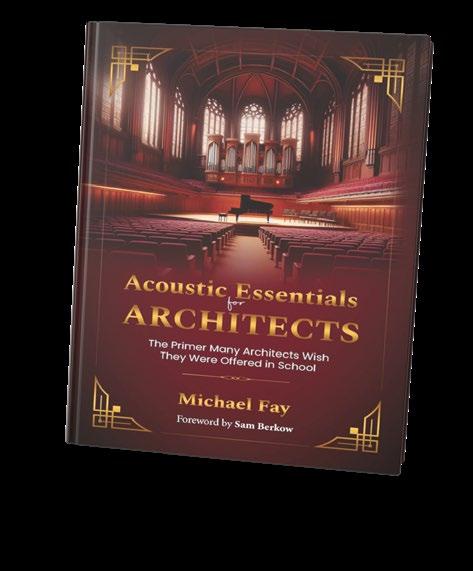
16 News & Notes: Book Review: Acoustic Essentials for Architects, by Michael Fay, Audiotonix Acquires DPA, Wisycom and Austrian Audio
30 Review: AMS Neve 88R LBC 500 Series Compressor BY BARRY RUDOLPH
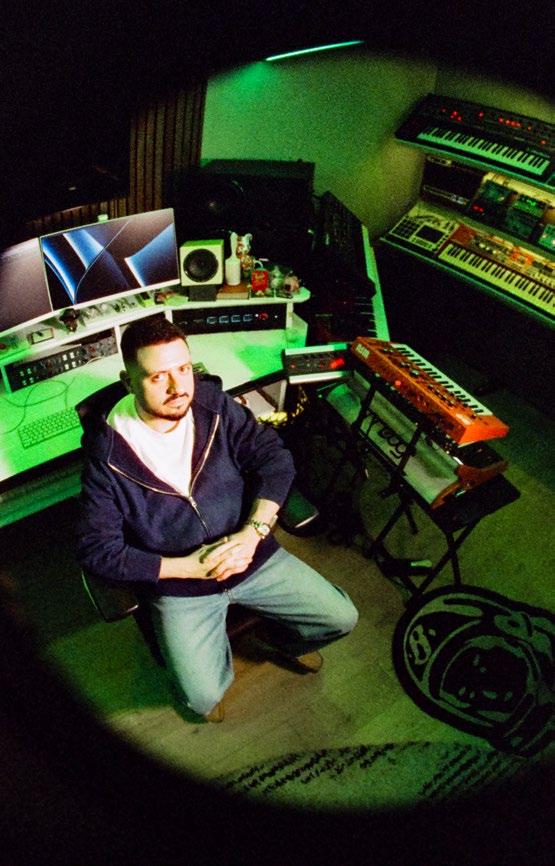
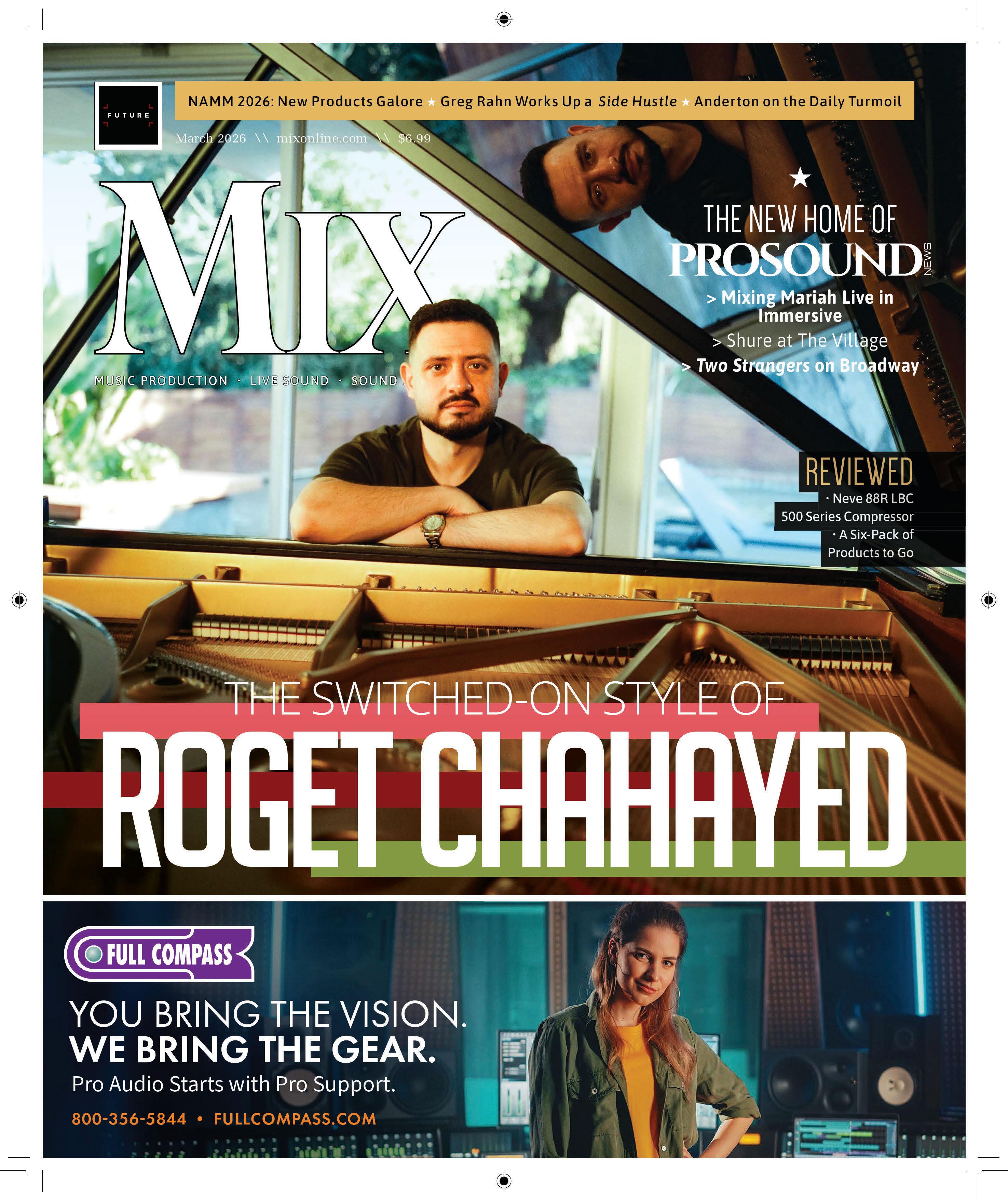
22 The Spontaneous, Switched-On Style of Producer Rogét Chahayed BY LILY MOAYERI
26 NAMM Show 2026: A Plethora of Pro Audio Products BY THE MIX
LIVE SOUND
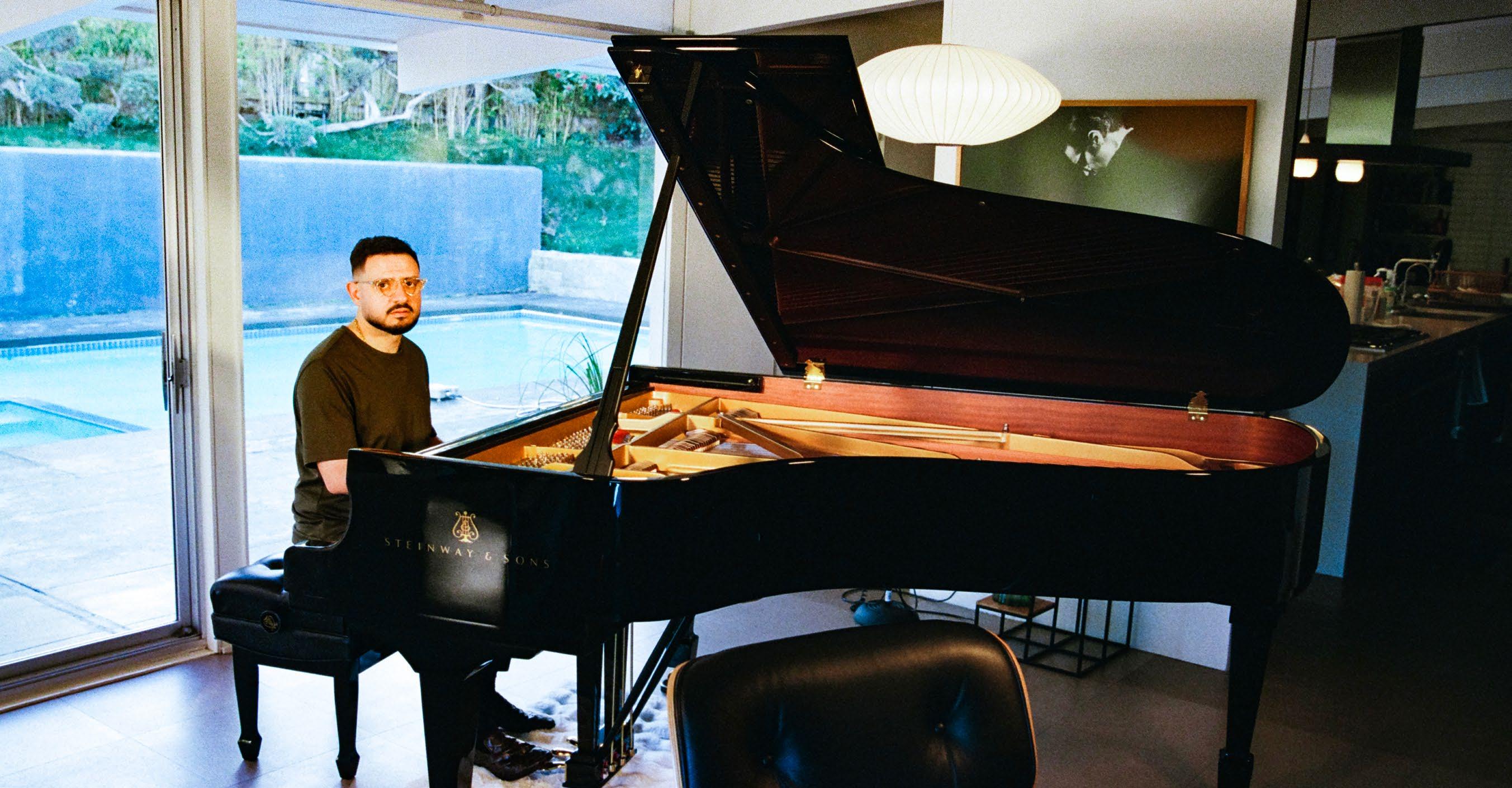
32 Review: A Six-Pack of Products for Those on the Go BY ROB TAVAGLIONE producer, musician, songwriter, beatmaker and musical instigator, finds creative energy in spontaneous collaboration, most often at his always-on home studio. Photo:
From the Editor:
So Many Ways to Make Music
Current: View From the Top—Andrea Kalas, Vice President, Iron Mountain Media and Archival Services; Best of Show Awards: NAMM and ISE
34 Open Channel: Turmoil, Guaranteed Fresh Daily! BY CRAIG ANDERTON 03.26 Contents
Volume 50, Number 3
BY
18 Mariah Carey in Las Vegas: Live and Immersive BY CLIVE YOUNG
20 News & Notes: Miami Theater Gets P.A. Refit for Netflix Special; Shure Gets Funky at The Village; Mixing the Sacramento Mandarins; Broadway Sound of Two Strangers
*



FOLLOW US twitter.com/Mix_Magazine facebook/MixMagazine instagram/mixonlineig
CONTENT
Content Directors Tom Kenny, thomas.kenny@futurenet.com
Clive Young, clive.young@futurenet.com
Senior Content Producer Steve Harvey, sharvey.prosound@gmail.com
Technology Editor, Studio Mike Levine, techeditormike@gmail.com
Technology Editor, Live Steve La Cerra, stevelacerra@verizon.net
Contributors: Craig Anderton, Barry Rudolph, Robyn Flans, Lily Moayeri, Rob Tavaglione
Production Manager Nicole Schilling
Design Directors Will Shum and Lisa McIntosh
ADVERTISING SALES
Managing Vice President of Sales, B2B Tech
Adam Goldstein, adam.goldstein@futurenet.com, 212-378-0465
Janis Crowley, janis.crowley@futurenet.com
Debbie Rosenthal, debbie.rosenthal@futurenet.com
Zahra Majma, zahra.majma@futurenet.com
SUBSCRIBER CUSTOMER SERVICE
To subscribe, change your address, or check on your current account status, go to mixonline.com and click on About Us, email futureplc@computerfulfillment.com, call 888-266-5828, or write P.O. Box 8518, Lowell, MA 01853.
LICENSING/REPRINTS/PERMISSIONS
Mix is available for licensing.
Contact the Licensing team to discuss partnership opportunities. Head of Print Licensing: Rachel Shaw, licensing@futurenet.com
MANAGEMENT
SVP, MD, B2B Amanda Darman-Allen VP, Global Head of Content, B2B Carmel King MD, Content, AV Anthony Savona
Global Head of Sales, Future B2B Tom Sikes
Managing VP of Sales, B2B Tech Adam Goldstein VP, Global Head of Strategy & Ops, B2B Allison Markert VP, Product & Marketing, B2B Andrew Buchholz
Head of Production US & UK Mark Constance Head of Design, B2B Nicole Cobban

I have a tendency to repeat myself. At a NAMM dinner, say, sitting with a few industry friends that I may only see once a year, I’ve found myself pausing mid-story and thinking, “Damn, by the looks on their faces, two of the three at the table have heard this before.” Over the holidays, I found out my brother Kit does the same thing. We decided that we need to start more sentences with, “Stop me if you’ve heard this before…”
It’s the same with pet sayings, although unlike the stories, they are mercifully shorter and tend to change every year or two. One of them, however, is an evergreen. I’ve been saying it for more than three decades now, and every time I inject it into a conversation, it’s in reference to something new, so it never gets old. It’s usually some variation on the phrase: “If you like sound, and if you like technology, it’s a good time to be alive!”
The first time I used it, I remember, was on a trip to the Midwest, sometime around late 1990 or early 1991, to write a feature about what was happening in Chicago studios. At the time, the trend was that video post facilities were adding audio post rooms, but when I stopped by Skyview Film and Video, after a quick tour of the new studio, the owner took me up to his office and said, “You gotta see this.” He sat down at a Mac and started dragging short video clips into a timeline for a Buick commercial, then moving one forward a few frames and dropping another clip in a half-second later, then moving it back three seconds and hitting Play. “It’s the Avid Media Composer,” he said, “and I got the first one in Chicago.”
The next day, I visited Streeterville Studios to meet with Jimmy Dolan, and he showed me how they’d been trying out the new AMS AudioFile on a few Alligator Records mixes. I was still relatively new to Mix and to pro audio at the time, but even I could see the Big Change Coming with non-linear editing.
From then on, advances in audio technology started coming fast and furious. I might have said the same thing on hearing the first powered desktop monitor or stadium-sized line array; the first software-based DAW or the first 32-bit plug-in; the first playback in discrete 5.1 and, many years later, immersive; software samplers and virtual instruments; digital consoles and control surfaces; multifunction audio interfaces and high-res converters for turning analog source into digital information.
All of these advances (and dozens of others) make it “a good time to be alive,” and with every introduction of New Tech, artists and creators have found new ways to push both their art and the technology forward—a symbiotic relationship that drives progress and lowers the barriers to entry.
This is a good thing, and it’s made even better by the fact that professional audio and recording, unique among industries that rely on
high-tech, has reverence for its elders. Microphones from 1947 don’t get put out to pasture, and tube-based processors aren’t placed in nursing homes. In transitioning to digital, audio left a path for analog electronics— tubes, resistors, capacitors, circuits, op amps—to sit in the signal chain alongside 3-D randomizers and AI-infused limiters.
If a director were to release a film today that included digital capture, CGI and 16mm cameras, the brain would freeze on the 16mm and think: Vintage. Nostalgia. If a rock producer today were to record a band live, in-studio, to 24-track analog tape, using vintage mics and a 60-year-old tube compressor, then dump the tracks into Pro Tools and add VI strings and 32-bit horn samples at the mix, when it was played back, the brain would hear Music. Because of this, there are now seemingly infinite ways to make and distribute music, incorporating tools and techniques developed across three or four generations, or tools developed last week—and they’re all valid.
In this issue alone, we have a profile of Greg Rahn, a composer who, back in 2017, spent the year in and out of sessions at Studio D in Sausalito with engineer Joel Jaffe. A big room, great musicians playing live and wearing headphones, an all-analog front-end recording to Pro Tools and/or Logic.
On the cover, we have red-hot producer/musician Roget Chahayed, classically trained on piano, who counts Ravel, Rachmaninoff and Prokofiev as inspirations. He makes music fast, throwing out ideas on synths and samplers in real-time, challenging the artist and thriving on collaboration and spontaneity. He might create a beat in 30 minutes one day, then hear it on a record a year later.
This is all just a long way of saying that AI is coming. Another Big Change. The Music Industry, at its most basic, is driven by Talent, Tech and Business, and while Business often seems to muck things up, if the past is truly prologue to the future, Talent and Tech will determine AI’s future role in music.
Who knows? Maybe five years from now, some enterprising producer/ musician/coder will develop a way for AI to verify copyrighted material, down to the sample, and award songwriters, publishers and artists fair payments in real time, any time that any song is downloaded or streamed.
To quote David Foster Wallace from his famous commencement speech: “Of course, none of this is likely, but it’s also not impossible.”
Tom Kenny, Co-Editor
There’s far more to modern media archiving than just backing up content off aging media.
By Clive Young
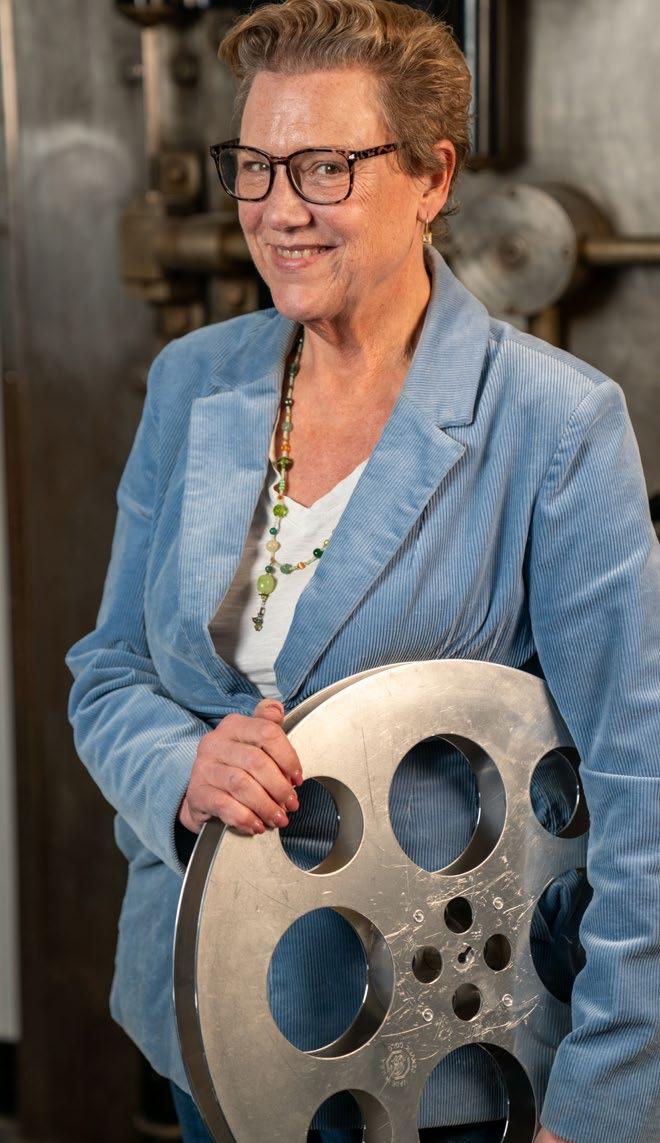
The team at Iron Mountain’s Media & Archival Services division catalogs and preserves some of the best-known archives in the world—films, recordings, artwork, physical items and far more—and overseeing the professionals that care for those collections is no simple task. It requires someone who understands not only managing people but also the value and critical nature of archiving itself—and that person is Andrea Kalas, vice president, Iron Mountain Media and Archival Services.
Having started out in film preservation, conservation and restoration at Paramount Pictures and the British Film Institute, Kalas sees herself as the archivists’ advocate, extolling the passion and determination that her teams bring to their work: “They understand both the rigor of managing collections with accuracy and care, as well as why it’s important. That dual perspective is something I carry with me every day. It helps me champion the value of preservation within Iron Mountain and ensures our organization never loses sight of the human, cultural and creative impact behind the assets we protect. My background gives me the empathy to understand what archivists need and the responsibility to make sure their work, and the stories it preserves, has the support it deserves.”
While Iron Mountain has carefully preserved aging media for years, its methods have changed over time. “While our core mission of preserving, protecting and enabling access to irreplaceable assets remains the same, the ways we execute this have expanded in important ways,” she explains.
In the past, many media companies treated their archives like attics full of half-forgotten
bric-a-brac, but those days are long gone. “We’ve seen shifts driven by economic pressures and the evolving expectations of the film, music and media industries,” says Kalas. “Clients are increasingly focused on efficiency, long-term risk mitigation, and finding new ways to monetize and activate their archives. In response, Iron Mountain has broadened its services. Now we still safeguard physical and digital assets, but we also provide more sophisticated workflows, digitization capabilities, lifecycle management and discovery tools that help clients get more out of what they’ve stored with us.”
The need for discovery tools stems from one of the greatest challenges clients and archivists face: Just because something is protected in a box doesn’t mean someone knows it’s there. “Many archivists inherit boxes of materials that have never been inventoried, documented or even properly labeled,” says Kalas. Faced with sifting through countless items, Iron Mountain has developed custom AI-powered machinery like the Archive Explorer solution to ascertain and ingest metadata derived from tape boxes, film reels and the like.
Hand-in-hand with that is Iron Mountain InSight Digital Experience Platform (DXP). “For musicians and music companies, it offers a secure, centralized platform where digital audio, video, photos and other assets can be stored, managed and accessed,” says Kalas. “Its intuitive interface, and the ability to layer on AI-powered search, auto-tagging and metadata enrichment means clients can finally organize their creative archives in a way that is both secure and highly usable.” The result, she says, is that InSight DXP and Archive Explorer “uncover hidden value within
archives, enabling clients to find, monetize and activate assets they didn’t even know they had.”
While Iron Mountain’s Media & Archival Services business has traditionally served music, film, broadcast and sports in the U.S., it’s now seeing growing international demand from the education and corporate sectors, including historic brands that want to preserve and protect their legacies for use in celebrating company anniversaries or other key milestones.
Another major change has been the division’s growing number of locations. While best-known for its legendary Boyers, Penn., facility, located 220 feet underground in a former limestone mine, it also has facilities based in Nashville; Hollywood; Moonachie, N.J., serving the New York region; Seattle; and London. The company’s Nashville facility was recently expanded to create new, temperature-controlled private vaults. “These spaces are ideal for Music City’s creative community,” Kalas explains, “providing secure, climate-appropriate storage for rare and special musical instruments, vintage pro-audio gear, tour wardrobe, production sets and other high-value materials requiring specialized care.”
It’s all indicative of a company intent on looking forward, even as it preserves the past. “My role isn’t to tell our engineers or archivists how to improve— they’re already the best at what they do,” says Kalas. “Instead, it’s to amplify the importance of their work and show, through these partnerships, how essential preservation is to our global cultural community—and how we can support it.” ■
Every year, the pro audio industry kicks things off with the one-two punch of The NAMM Show, held in Anaheim, Calif. in late January, followed by Integrated Systems Europe (ISE) in Barcelona, Spain. This year marked the Future B2B’s inaugural 2026 Best of Show Awards for NAMM and the second year that it has held an awards program for ISE.
In both cases, our panels of expert judges evaluated—and ultimately awarded—a variety of winning products from among submitted entries. Our judges are experts in the categories of products we have chosen for them to evaluate and always remain anonymous to the manufacturers. They are your peers, directors, engineers, or industry consultants and integrators.
Across FutureB2B’s many brands, there were dozens of submitted products up for consideration to be judged by Future’s Mix, Sound & Video Contractor, AV Technology, Installation, TVB Europe, Digital Signage, Residential Systems, Systems Contractor News and Tech & Learning brands. Entering the awards underlined their confidence in the products and determination to succeed in the months and years ahead. Congratulations to all the winners!
THE MIX BEST OF SHOW WINNERS FOR NAMM 2026 WERE (ALPHABETICALLY):
AKG AKG C-Series Microphones
Allen & Heath Qu Series consoles
Avid Pro Tools software
Blackmagic Design DaVinci Resolve Studio software
DAS Audio EVENT-M12A stage monitor
DiGiCo Quantum 112 console
L-Acoustics DJ immersive technology
Neumann Virtual Immersive Studio mix system
Polyend Endless AI effect pedal
QSC CB10 compact battery-powered loudspeaker system
Solid State Logic Revival 4000 channel strip
THE MIX BEST OF SHOW WINNERS FOR ISE 2026 WERE (ALPHABETICALLY):
Dejero TITAN Command router
L-Acoustics DJ immersive technology
Renkus-Heinz ICLX-48S column subwoofer
ShowCode SoundBase RF coordination platform
Shure DCA901 planar array microphone ■


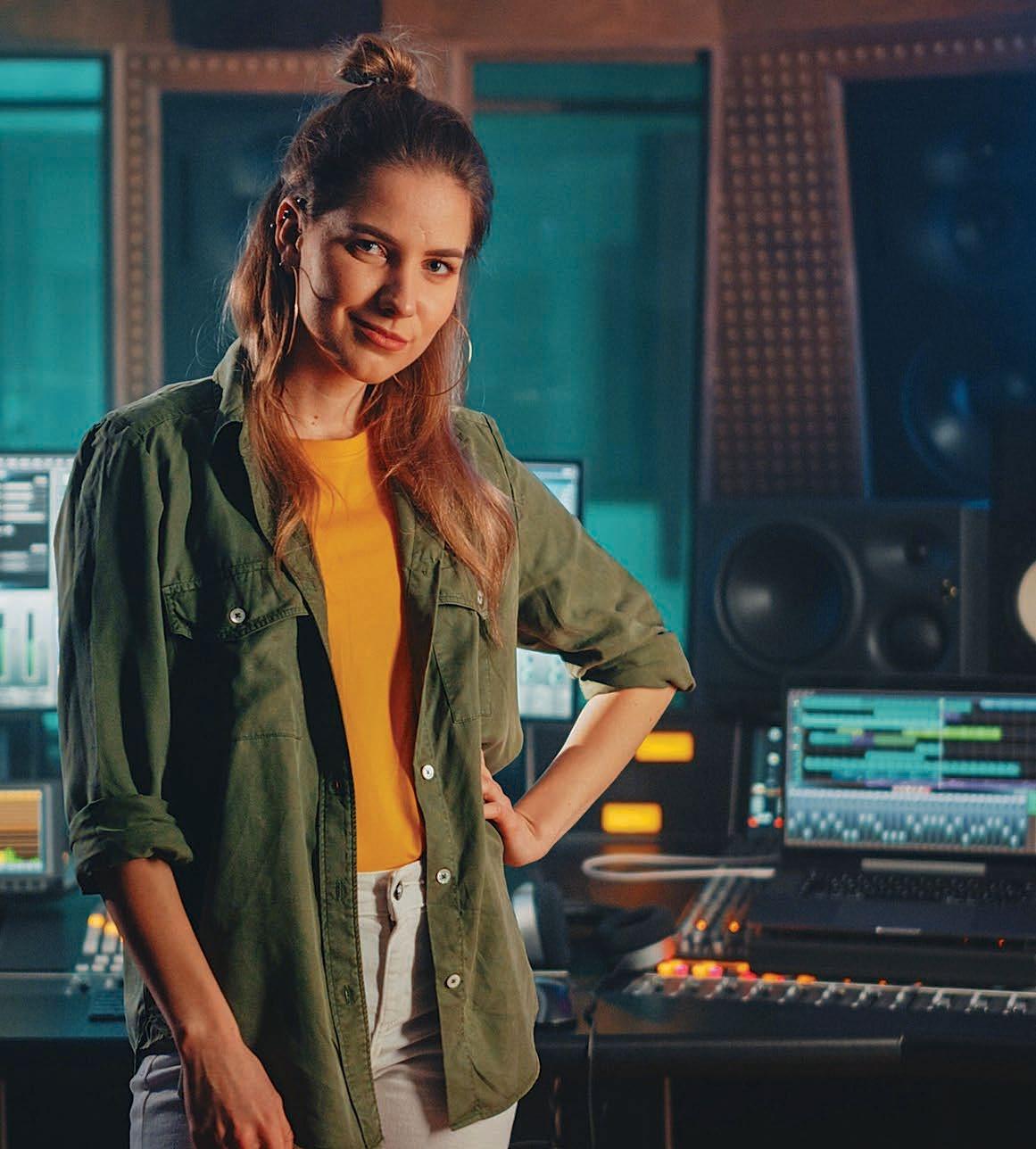



By Robyn Flans
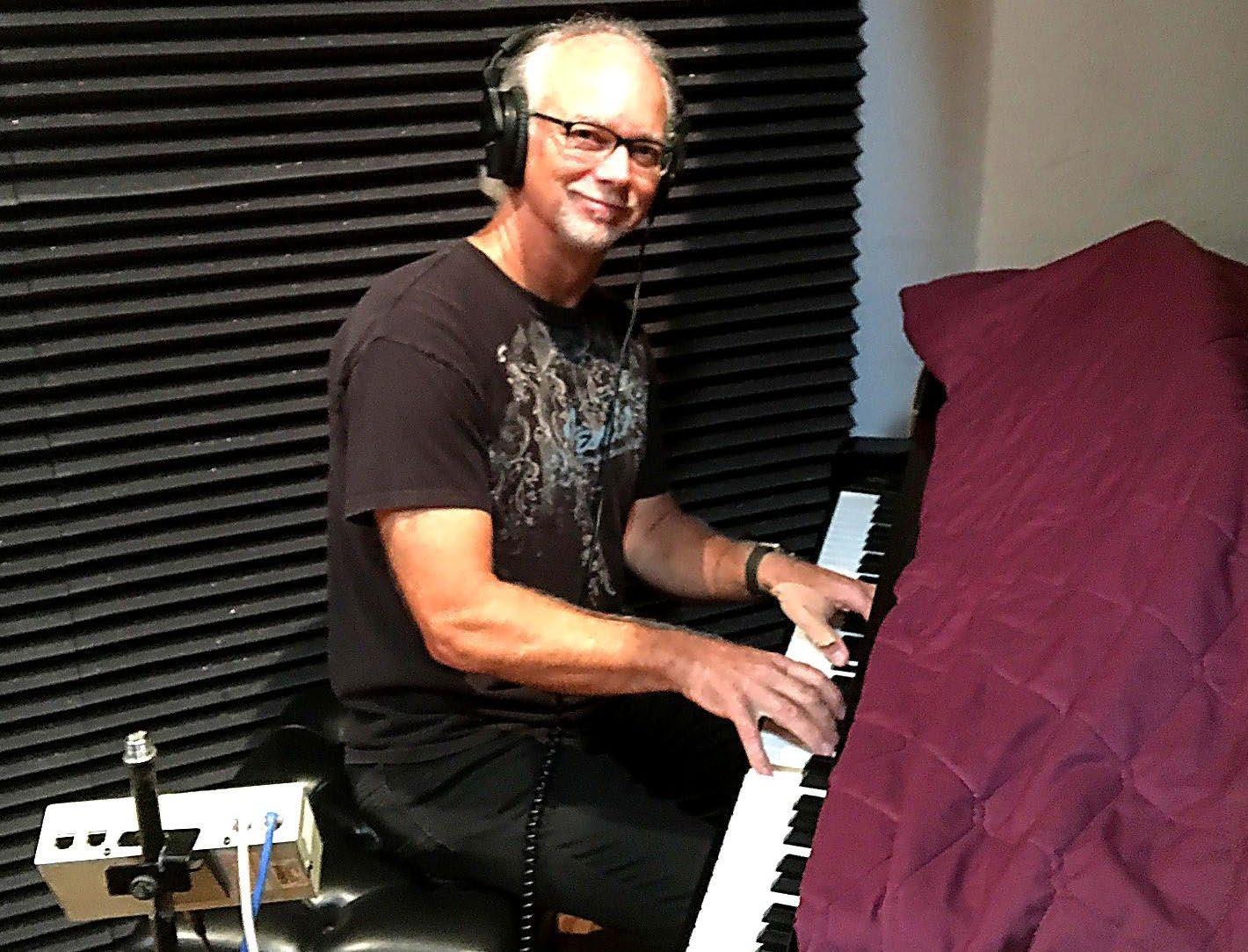
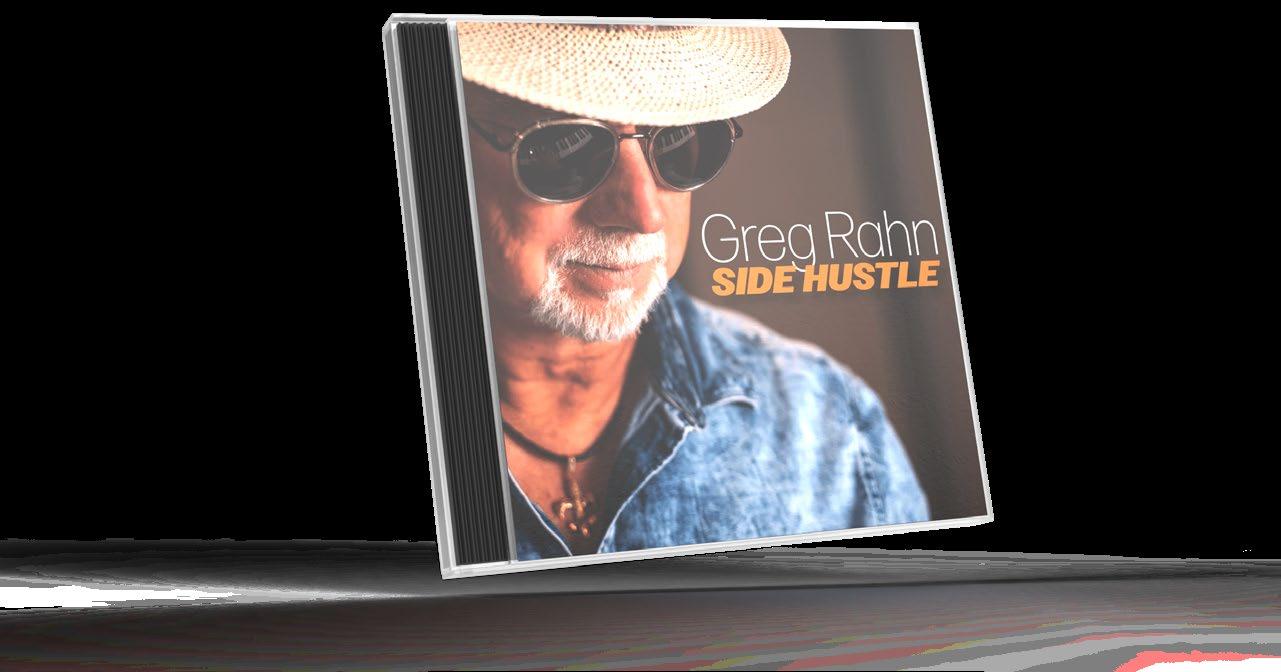
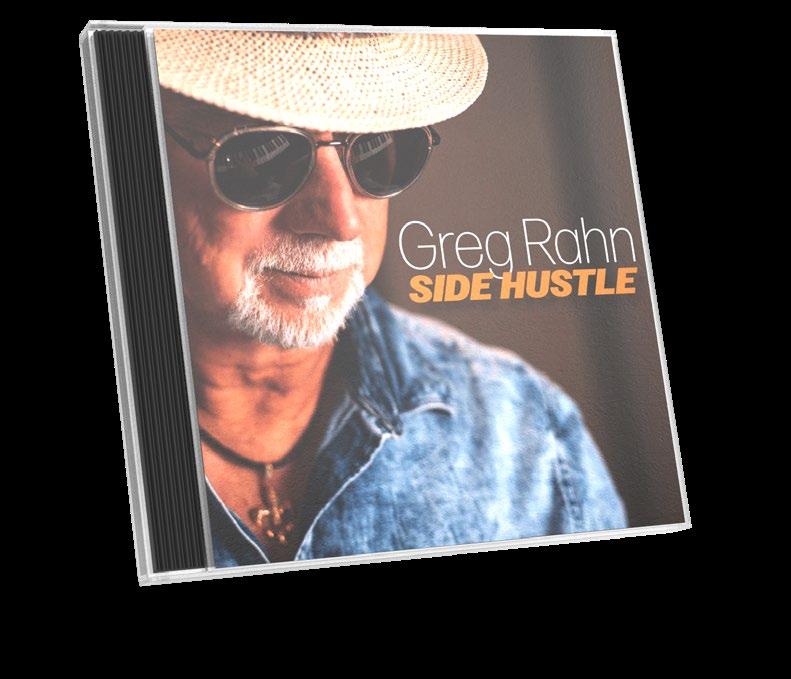
Keyboardist Greg Rahn’s Side Hustle—a wonderful canvas of color and an extraordinary display of musicality—is aptly titled. Over the past 25 years, the wellconnected Bay Area musician had carved out a pretty successful career in composing, arranging and producing music for video games, successful enough to afford him the pleasure of a side hustle: writing and playing music, live and in the studio.
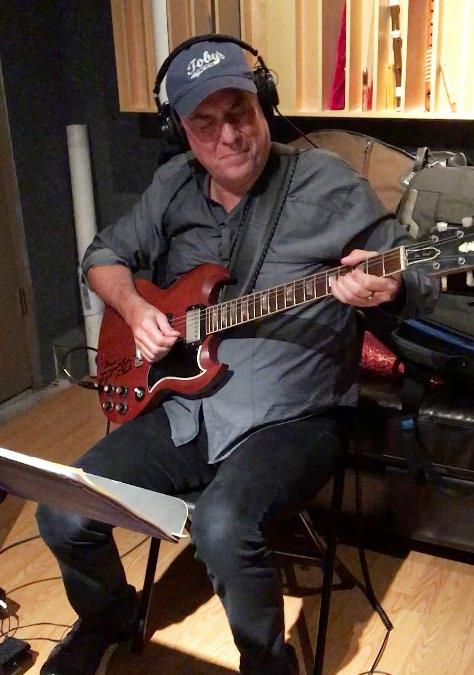
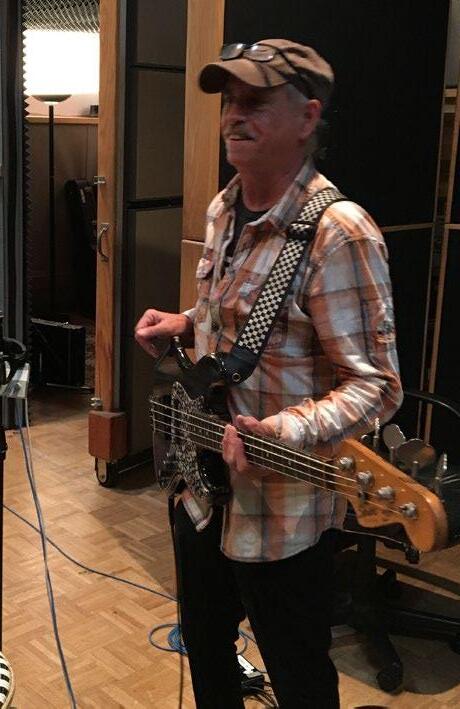
But side hustles can take time. While the album was completed in the summer of 2025 and released in mid-January 2026, the journey began nearly a decade ago, back in 2017, when Rahn spent a year writing and recording with a few Bay Area friends, including guitarist Drew Zingg, bassist Steve Evans, drummer Mick Mestek and percussionist Derek Rolando
Then, during the mix, Rahn felt the need to step away
“I just felt burnt out on the material. I had heard it so much,” he admits. “I was not inspired by it anymore.”
At the time, he intended on returning to it much sooner; instead, he got sidetracked recording and performing behind a solo piano album, Rent Party It wasn’t until 2024 that he returned to Side Hustle and started the mix back up in his home studio.
“The beauty of that was when I finally did come back to it, everything was new,” he says. “And when I listened to the songs, even the arrangements were clear to me.”
The newfound clarity allowed him to go through the songs objectively and cut portions that he realized were not relevant or did not serve the music. On “Jam Night,” he deleted a whole verse. On a “Brand New Bad Idea,” he realized that as he was nearing his burnout period, he had been
overthinking the track to the point that he had rewritten and recut the melody. With fresh ears, he realized that the original melody was superior, so he recalled those tracks.
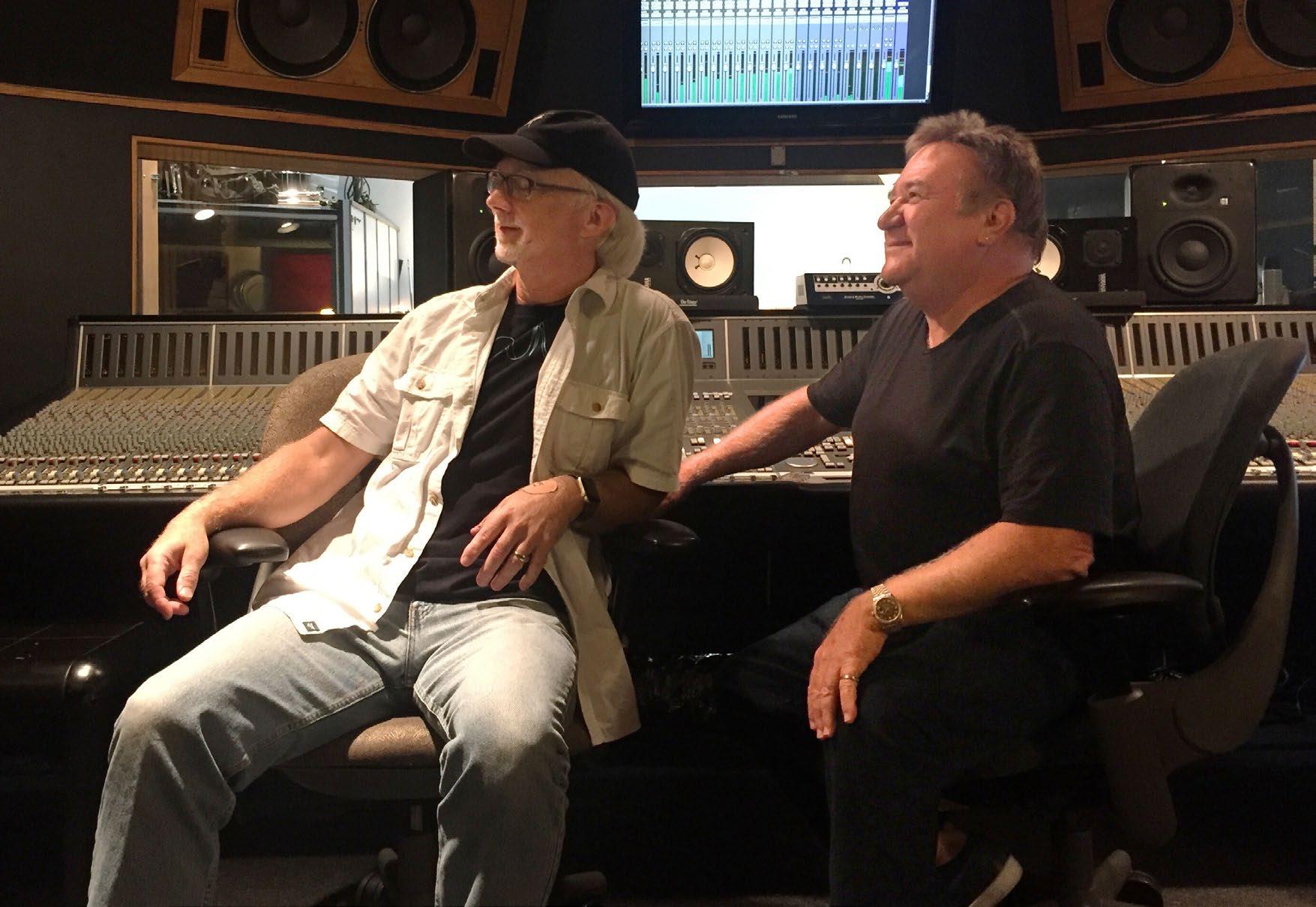
The majority of the album had been completed prior to its shelving, with most of the basic tracks recorded live by engineer Joel Jaffe at Sausalito’s Studio D, a room he had built specifically to capture the magic of a band playing live
“Even though he [Rahn] was playing live with the drums and they were in the same room,
the piano was isolated from the drummer,” Jaffe explains, “and the bass player had an amplifier in an iso booth so that he was isolated. But everybody was in the big room and had headphones on and were listening to each other at the same time.”
Inside the bass drum, Jaffe placed a Sennheiser MD 421, with a Neumann U47 FET on the outside, while on snare, he prefers a Sennheiser MD 431 on top and a Shure 57 on the bottom. For toms, he puts up two 421s.
“I use two mics on the low tom—one on the bottom of the tom as well as the 421 on the top,” Jaffe says. “The bottom mic on the low tom is
180 degrees out of phase, so you have to flip the phase, but when you do that, you’re capturing the low end off the tom, as well as the attack from the top end, and when you do that, you sum them and you have such an incrediblesounding tom.
“On the hi-hat, I used either a Neumann KM 84, a small condenser mic, and a smaller-capsule microphone,” he continues, “or I would use an AKG C 451, which is a small condenser mic usually used for overheads. I use it on the hi hat, facing away from the kit so that it’s fairly isolated, and that way you can really dial in how much of the hi hat you want in the mix.”
He put up a pair of C 451 condensers for overheads, as well as two Neumann UM 57s midroom to capture the ambience.
The Hammond B3 was covered with three mics; for piano, he placed two AKG C414 TLII (C12 capsule) microphones above the keys and soundboard—one on the high end and one on the low end. “When you’re listening, you’re hearing the high end on the left and the low end on the right,” he explains. “I mike the piano so you have a really good stereo image, as opposed to a mono sound.”
Needless to say, Rahn used an array of keyboards on the record. On “Brand New Bad Idea” alone, he plays electric piano, piano and keytar.
Rahn’s home studio is centered around a MacBook Pro running Logic Pro X and Pro Tools. His hardware input signal chain consists of the Focusrite Scarlett OctoPre through a pair of dbx 160A compressors, into a Universal Audio Apollo Twin. He may also make use of UA plug-ins in the Twin—UA 610-B, Pultec Pro Legacy, UA 1176 LN Legacy and Teletronix LA-2A—depending on what he is recording. He also owns an SSL 2+ USB interface and listens through Dynaudio BM6A monitors
Plug-ins and virtual instruments figure heavily in Rahn’s workflow. When calling up the tracks from 2017, he realized that a couple of his favorite samples, Tenor Trombone and Tuba from Native Instruments Session Horns Pro, had been used as placeholders while writing the Professor Longhairinspired “Slap Yo Mama.” He had always planned on recording real horn players, but while listening to the mix in 2024, he realized he was hearing sampled trombone and tuba.
“I was like, ‘Wait a minute, the whole thing sounds fine. The mix sounds fine. Even the
sample horns sound okay. They work for the song,” Rahn recalls. “I struggled with myself, asking, ‘Do I want a song with samples on it? I have all these live players; I shouldn’t have any samples.’ In the end, I just left it. When the trombone player who played on ‘Brand New Bad Idea’ was listening to the album with a friend, a tuba player, they both wanted to know who played horns on ‘Slap Yo Mama’. I guess that’s the acid test right there.”
“Chillin’ at the Crawdaddy Lounge” also needed a little attention. Evans had been unable to make it to the original tracking session, leaving drummer Jeff Campitelli and Rahn to provide the foundation. Evans came in to overdub the bass at a later date, but Rahn says that when he came back to the music in 2024, he had a different vision for a portion of the drum track, so he had Phil Hawkins take a pass. Ultimately he combined half of each drummer’s performances.
Two of his favorite divergent offerings, Rahn says, are the Snarky Puppy–influenced “Brand New Bad Idea,” and his unique keyboardcentric rendition of Steely Dan’s “Josie,” with background vocals by his wife and daughter, Patricia and Katie Rahn.
Side Hustle’s eclecticism, illustrated by the performance of jazz, funk, blues, rock, zydeco, fusion and rock, concerns him just a little, as he doesn’t know whether or not expect stylistic consistency. While his objective was to share all the genres he has learned and loved through the years, he’s not sure how the general public will react when they’re all single album.
Jaffe believes that is a strength and will be applauded. “He’s such a great player and so musical,” the engineer says “This album just shows how talented he is and how many different things he is able to do. I’ve always been very impressed with his musicianship—and he’s a lot of fun to work with.”
[Editor’s Note: Between 2017 and 2024, when Rahn returned to the project, guitarist Drew Zingg and bassist Steve Evans passed away. The album is dedicated to them.] ■
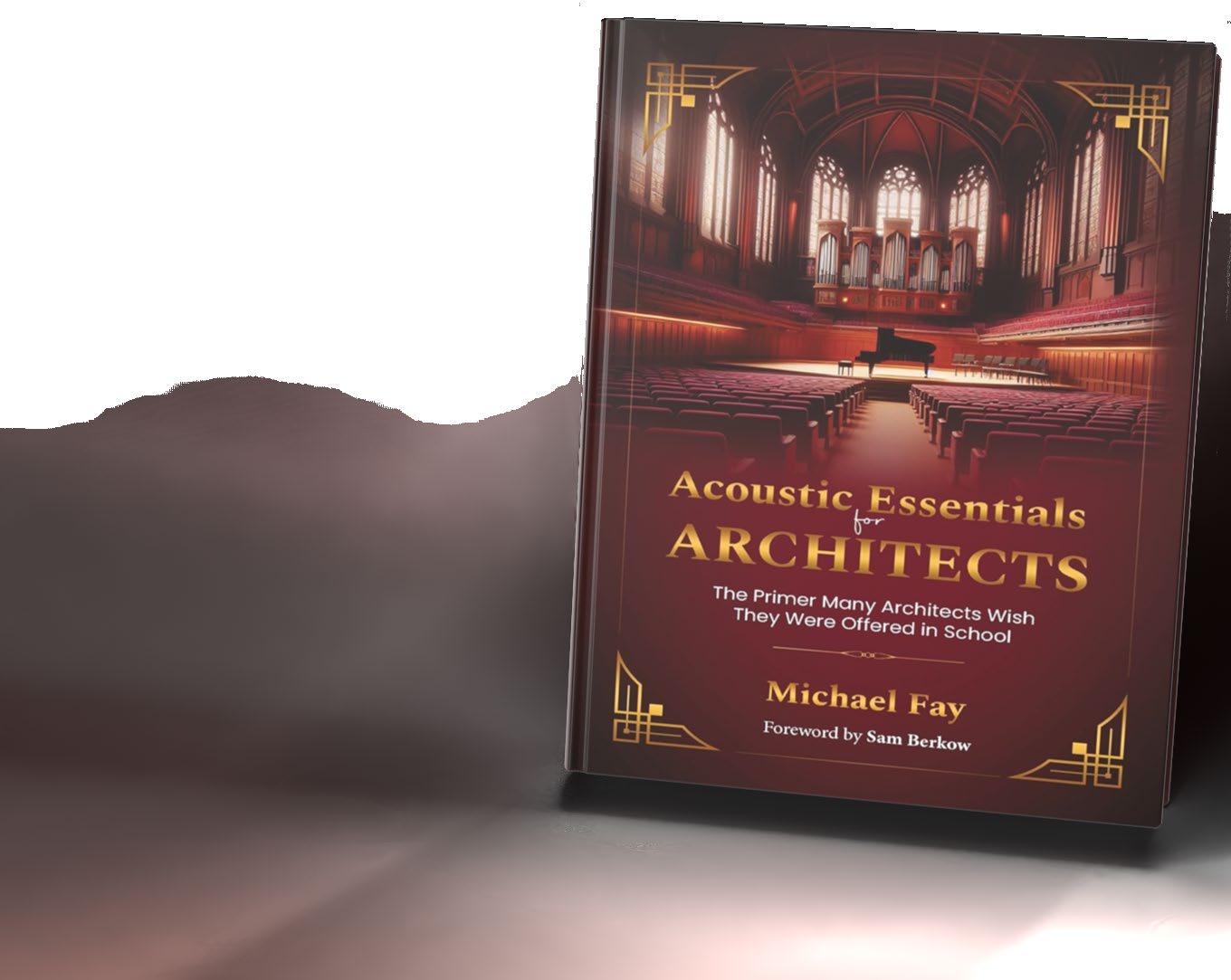
by Michael Fay
By Clive Young
If you’ve ever tried to explain acoustics to someone with no background or real interest in the topic, you’ve probably watched their eyes glaze over as you explain concepts like delay, reverberation and first-order reflections. That’s irritating but (sort of) forgivable if you’re talking to family and friends, but it’s not acceptable if you’re speaking with architects. As the creators of spaces where people live, work and entertain, they of all people should have a vested interest in understanding basic acoustical concepts, if only so they can make spaces sound better.
In many cases, however, you can’t really blame them for lacking that understanding— architecture schools often only fleetingly address acoustical properties and issues, and there aren’t many accessible resources that architects, whether students or professionals, can turn to outside of actual acousticians and consultants.
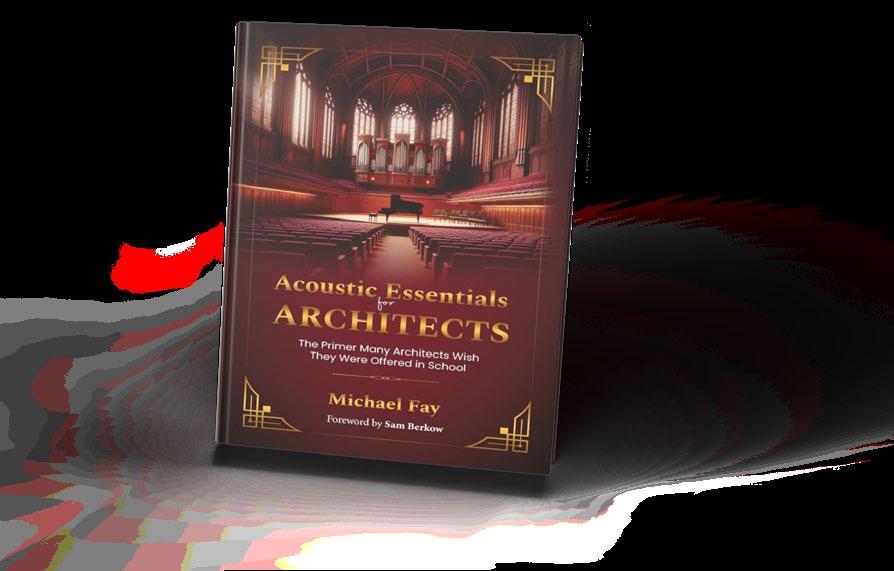
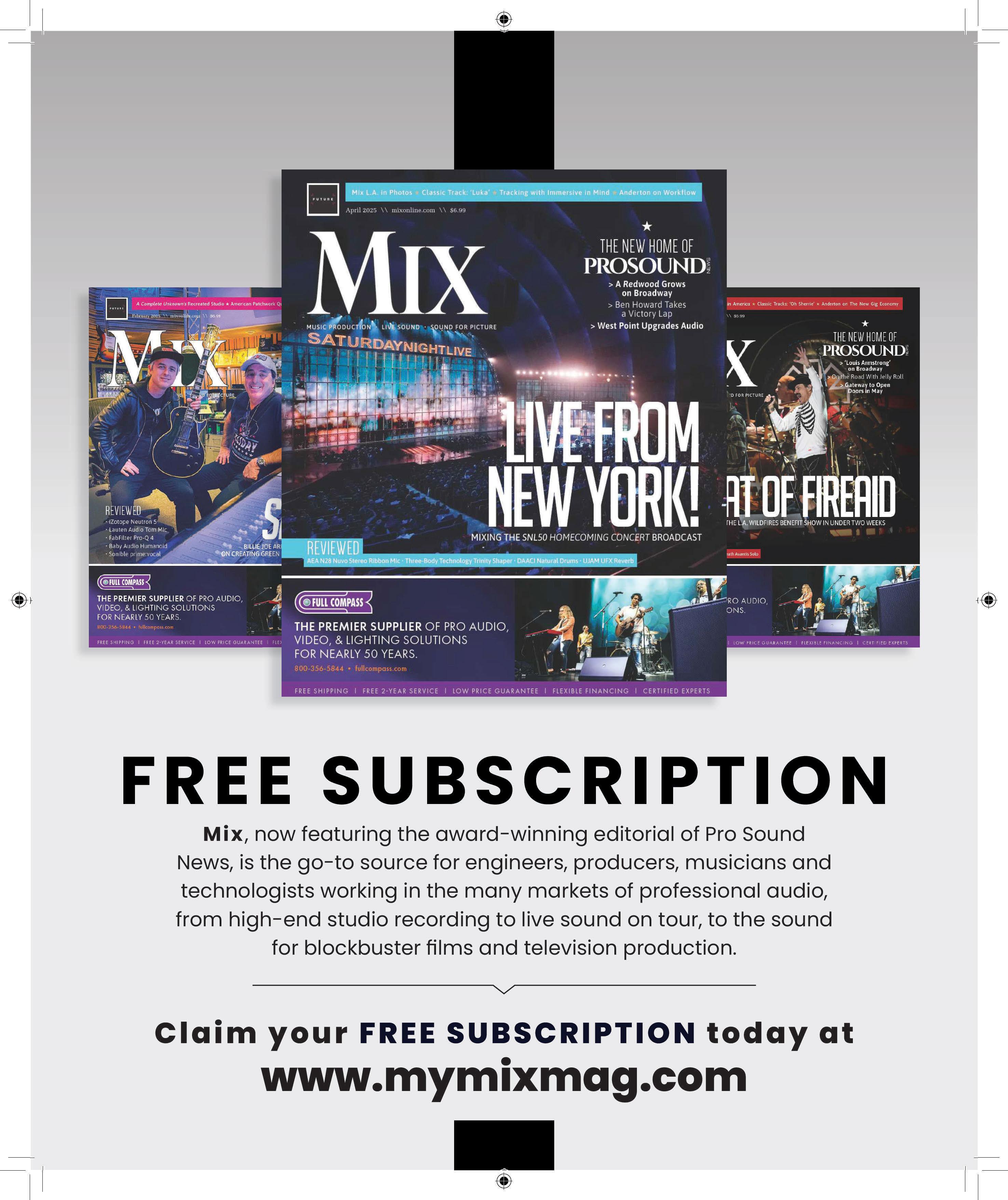
Stepping in to fill that void is Michael Fay’s new book, the appropriately titled Acoustic Essentials for Architects (J. Ross Publishing; $59,95). The tome provides a focused overview on acoustics that demystifies the subject, explaining different specific topics, problems, likely causes and possible solutions that its audience—designers, engineers and the like—may run into in the course of their work.
While complex concepts are addressed, they’re explained in straightforward, everyday language—case in point, the chapter entitled “Where Does All The Unused Sound Go?” While there’s a fair amount of handholding, the book never talks down to its readers, even as it gets increasingly complex, explaining the math and reasoning behind many of the topics addressed.
Throughout the book, readers are introduced to the vocabulary of acoustics so that they can


many of the book’s concepts to lay people), Fay has a knack for clear, concise writing that nonetheless is passionate when it needs to be, like when he makes his case that architects should consider acoustics to be a crucial design element of every project from the start, not something to be addressed after the fact.
Straightforward, inviting and upbeat, Acoustic Essentials for Architects is an excellent resource and reference guide with plenty to offer its readers, whether they’re entering the field as students or are established architects who need a quick brush-up on specific concepts and language. Augmented with plenty of fullcolor illustrations, charts and an optimistic foreword by industry legend Sam Berkow of SIA Acoustics, this book on acoustic essentials is, itself, essential, too. ■
By Clive Young
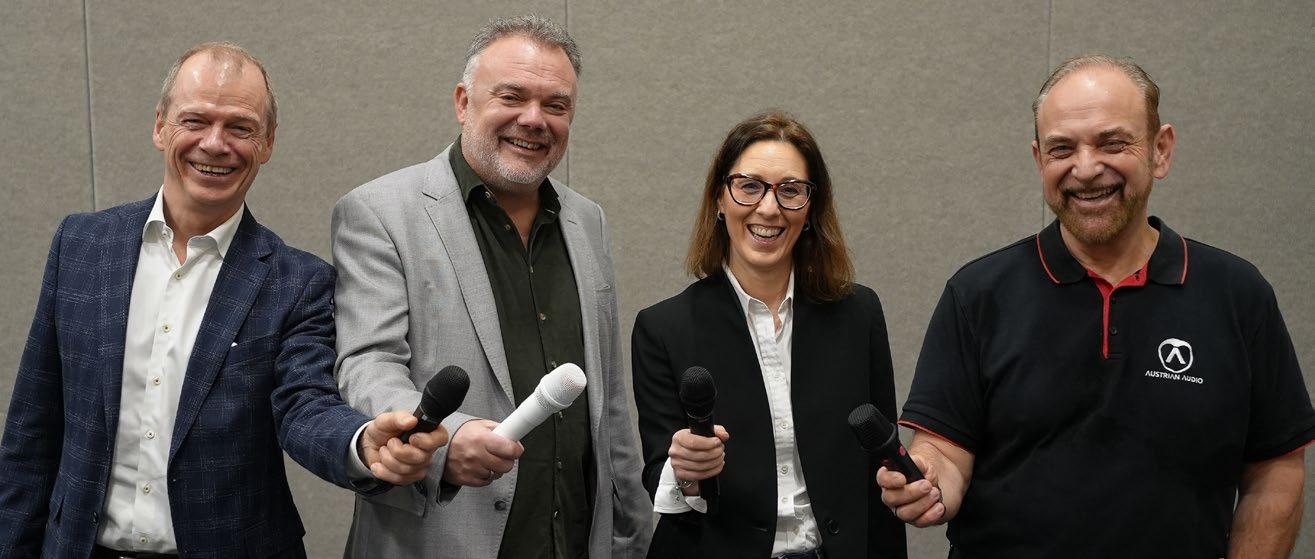
Chessington, UK—Pro-audio conglomerate Audiotonix is acquiring the interrelated microphone and wireless brands DPA Microphones, Wisycom and Austrian Audio.
It’s been a complicated few years for the three acquired companies— while each continued to produce well-received products, there has been a complex web of ownerships among them.
Founded in 1992s by former Brüel & Kjær employees, Denmarkbased DPA Microphones has long been a major name in mics, with its products used in variety of markets, most notably live sound, theatre, film and installation. Wisycom, meanwhile, is respected for its wireless RF technologies, used in broadcast, touring and more. Austrian Audio, created in 2017 by former AKG employees, quickly made a name for itself with its high-end studio and live mics, headphones, content creation tools and more.
In December 2013, DPA was acquired by private equity firm Riverside, which in turn sold the microphone manufacturer in January 2019 to Italian pro-audio conglomerate RCF Group. In May, 2023, Milan, Italy-based independent holding company Palladio Holding acquired DPA from RCF Group—which Palladio had alreadt been a minority shareholder in since 2017 (as part of the sale, RCF retained a small stake in DPA). Palladio Holding managing partner Nicola Iorio told pehub.com at the time, “Our goal is to continue to invest in the company [DPA] to develop the business even further and take it to the next level.”
That didn’t take long. Prior to buying DPA, in November 2022, Palladio acquired a majority stake in Wisycom, and in June 2024, DPA and Wisycom entered a strategic alliance in the U.S., aiming to consolidate operations. Less than a year later, at the NAMM Show in January 2025, DPA announced it had acquired Austrian Audio.
Their new owner, Audiotonix, has proven to be a safe harbor for many top-line pro-audio brands in recent times, as it acquired much of its brand portfolio—Allen & Heath, Calrec, DiGiCo, DiGiGrid, Fourier Audio, Group One Limited, Harrison, JH Audio, KLANG:technologies, Slate Digital, Solid State Logic, Sonible and Sound Devices—in the last five years. ■









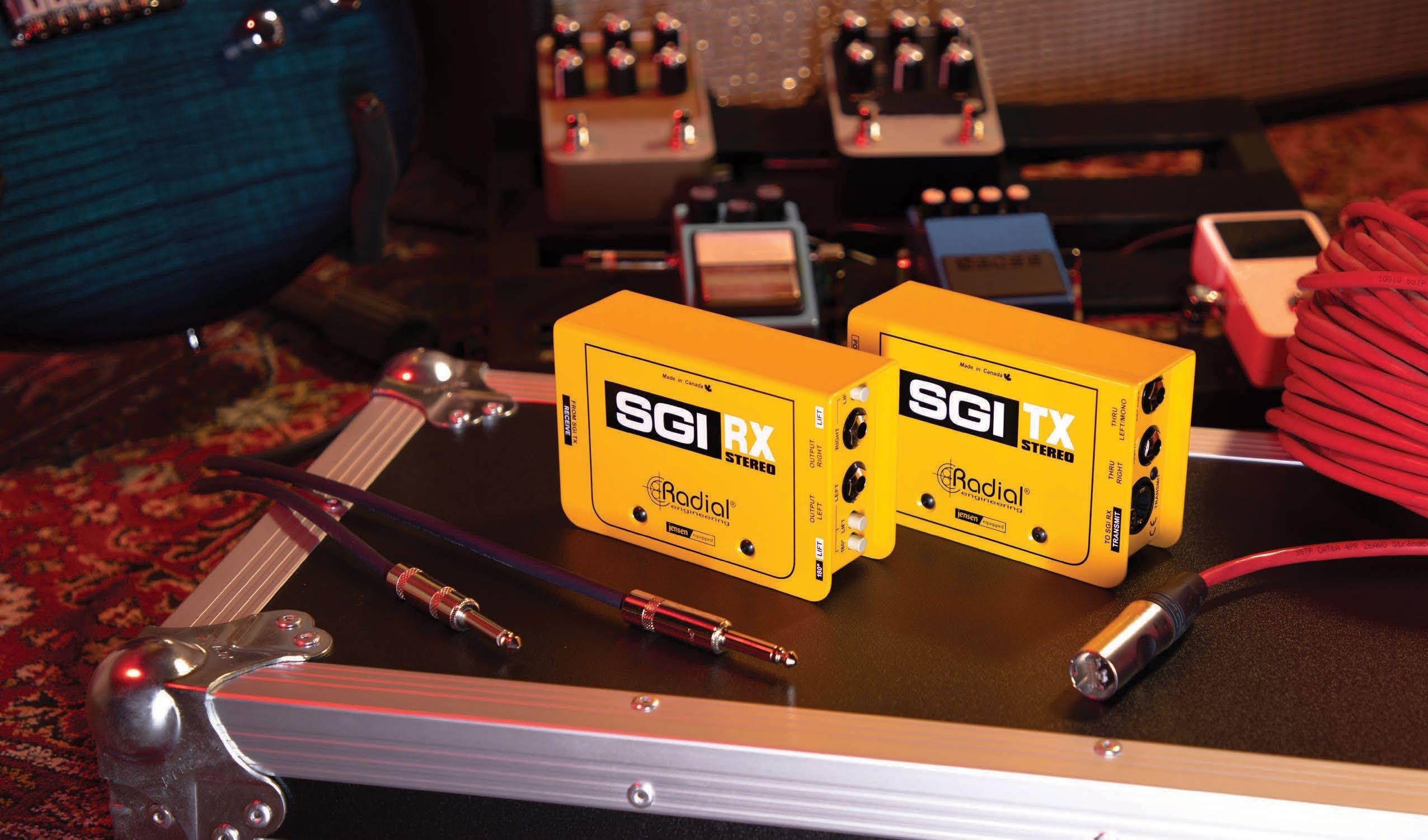

By Clive Young
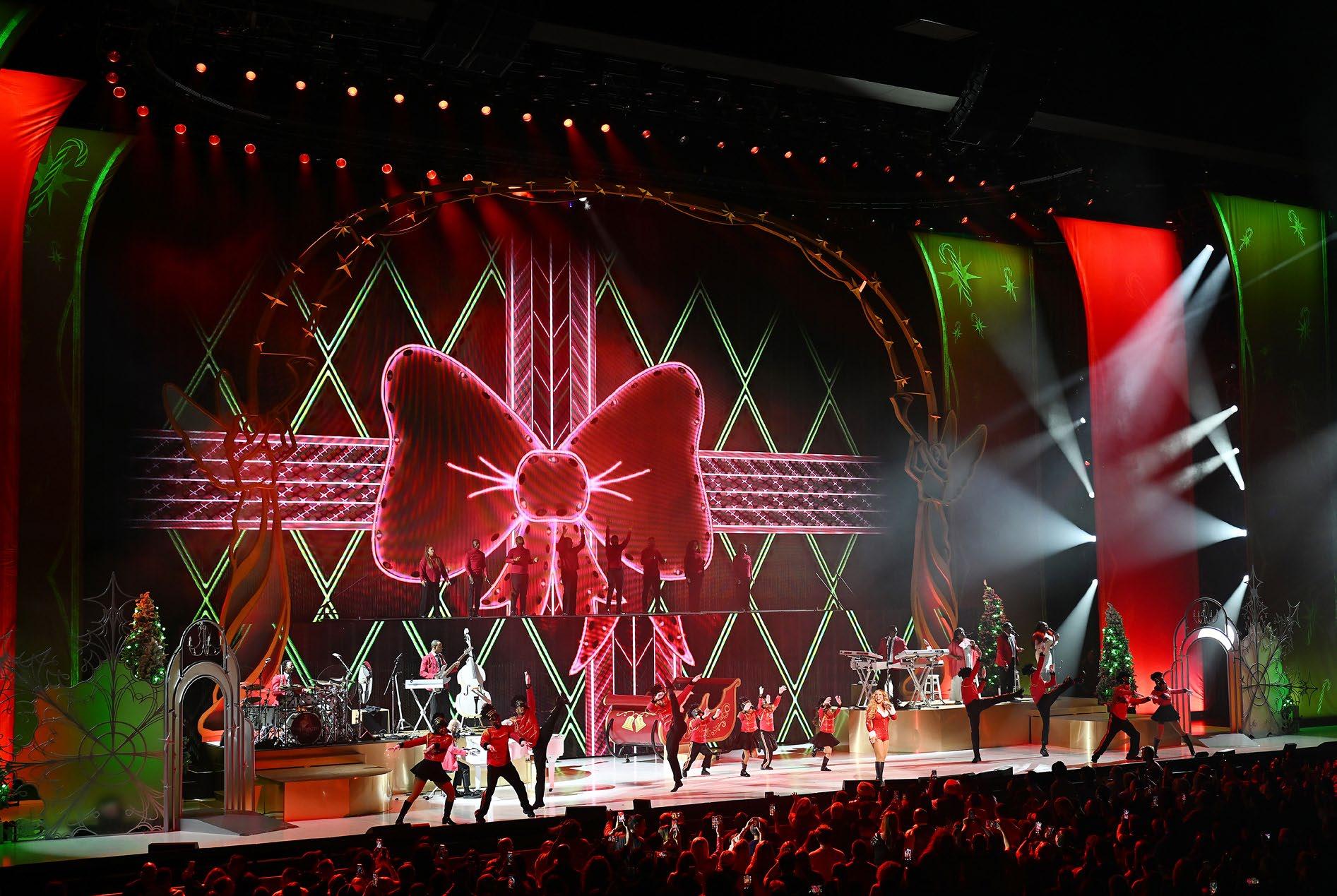
It might seem odd to read about Christmas concerts after the holiday season, but Mariah Carey’s recent Christmastime in Las Vegas residency was the kind of show people talk about for months after anyway. Packed with the songstress’ trademark hits and a sleigh full of Christmas classics, the 11-show run was held inside Dolby Live, the Atmos-outfitted theater at Park MGM on the Las Vegas Strip, and mixing the show nightly in immersive was Grammy-winning recording/mixing engineer Paul Falcone.
Carey began playing the venue in 2024 with her The Celebration of Mimi residency; a hit right
out of the box, the show kept getting extended to meet demand, ultimately resulting in 46 shows across three runs. Word of mouth spread about the spectacle, and last summer saw the residency show adapted into an international concert tour that played China, Australia and multiple stops throughout Asia before wrapping up in November at Japan’s K-Arena Yokohama. Keeping the momentum going, Carey and Company switched gears within days, kicking off the Las Vegas Christmas residency that same month.
While the international tour made use of a traditional touring system from Clair Global
based around Cohesion P.A. elements, the Las Vegas residencies gave Falcone the rare opportunity to mix live in Dolby Atmos.
Falcone’s studio career has seen him work on projects for everyone from Michael Jackson and Missy Elliott to R.E.M., Jay-Z and A$AP Rocky, while his broadcast work has seen him involved with World News Tonight, ABC News Live and the music crew of Good Morning America. When the opportunity to mix the Celebration of Mimi residency came up, Falcone jumped at the chance to use both his studio and live mixing skills inside the unique Vegas venue.
Dolby Live opened in 2021 with an Atmos-enabled audio system designed, calibrated and tuned by Dolby engineers to accommodate the size and specific acoustics of the theater. Placed around the venue are 402 L-Acoustics speakers—largely K2s—used to cover the 5,200 seats across the Orchestra, High Orchestra and Balcony levels; the furthest seat is only 145 feet from the 140-footwide stage.
“When I got to do the residency, the Dolby team was awesome,” Falcone recalls. “I showed up wanting to get highly experimental, and my system engineer at the time and the Dolby team system engineer also wanted to; we were like, ‘All right, let’s see what we can do with this!’ And they were very supportive—when we were learning how to [mix immersive], any open time that we needed in the theater, we got; it was great.”
Dolby Live’s house Atmos system is typically run via a custom GUI on an iPad that lets users control status snapshots of Atmos objects in the mix, but there are other options available. “They said, ‘If your playback guy is running Pro Tools, you can drive it dynamically using the Dolby Atmos Music Panner in Pro Tools,” Falcone remembers. “I said, ‘Well, my playback guy doesn’t use Pro Tools, but I do,’ so I started driving the Dolby system, locked to time code, using Pro Tools instead of using their iPad panner.”
UAD and Apple MainStage. Throughout the show, snapshots tied to time code were used to ensure all console and effect settings were changed as needed. He explains, “When you’re working with an artist like Mariah, whose career spans decades, you have hits from record to record that sound kind of different—but we have to make a cohesive live show, so the sound of the drums, for instance, has to change from song to song.”
Mixing immersive in a studio setting is often an exercise in restraint, and to a great extent, says Falcone, the same rules apply to live spatial audio. “Now, this isn’t an Avengers movie; I didn’t have objects flying around,” he jokes, “but sometimes there was a gimmick we wanted to pan around the room, or we wanted things to get wider as the song progressed, or we wanted the panning to change from song to song in an easy way. Using Pro Tools with the built-in Music Panner—now it has native Dolby panning but originally we had the Music Panner plugin—was fantastic. It was an easy workflow that allowed me to get what I wanted quickly and be able to drive the system dynamically; we were the first people to do that.”
Falcone mixed the residencies on a DiGiCo Quantum 5 console, and ran both redundant
While the Celebration of Mimi residency and international tour had similar setlists, the Christmastime in Las Vegas shows by necessity had a very different feel, kicking off with holiday classics before shifting to a mini set of material from Carey’s latest album, Here For It All, followed by a blizzard of big hits and the inevitable finale of “All I Want for Christmas Is You.” With the holiday residency beginning right on the heels of the international tour, however, the turnaround time to develop new live Atmos mixes was short and intense. “It was quick, but we got through it,” says Falcone. “Having that Pro Tools rig driving Atmos, plus having my console file already defined a bit, helped speed up the process immensely.
“Here’s the cool thing about mixing the Christmas residency: People always talk about
using Atmos to place things in the mix that you couldn’t easily place in stereo, but if I’m mixing in stereo, I’m always, ‘Oh, we’ll find a way to place it.’ It doesn’t seem that difficult—that’s mixing, right? Anyway, these mixes always start in stereo, and then we branch them out into Atmos. I heard the [Christmas songs’] stereo mixes, but when we put them into Atmos, the definition that we got in Dolby Live was, ‘Wow—I’m really hearing these as layers!’ The content for the Christmas show really lent itself to big, Atmos, theater moments—it was a really cool sound!” ■
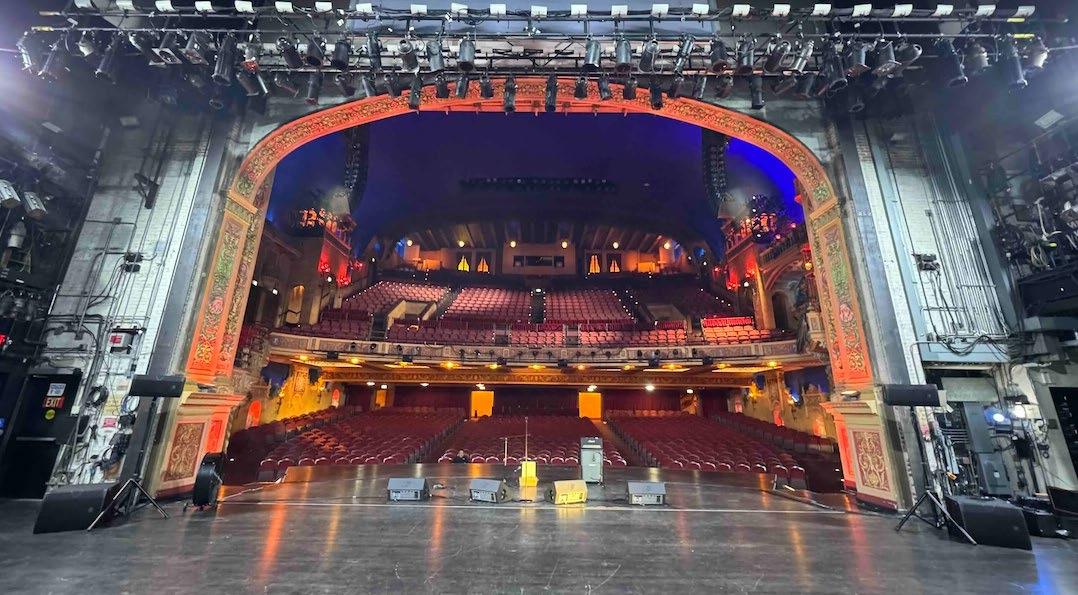
Miami, Fla.—SNL comedian Marcello Hernandez’s American Boy standup special hit Netflix in January, quickly garnering strong reviews for its thoughtful humor recalling his multicultural upbringing. To prepare for the show taping, engineer Abraham Oleksnianski and DAS Audio radically revamped the house sound inside Miami’s 100-year-old Olympia Theater.
The Olympia opened in 1926 as a movie theater; today the 1,500-seat venue is on the National Register of Historic Places. “This project meant the world to me,” said Oleksnianski, who’s worked there numerous times. “It’s a 100-year-old building with layers of history, and to walk back in, this time responsible for the sound of a Netflix special, was surreal.”
When he first scouted the theater for the Netflix production team, he expected the aging venue and outdated P.A. system he remembered. Instead, he discovered a newly installed DAS Audio Event Series system, implemented by another integrator just months prior. While he liked the system itself, coverage issues quickly came to light, particularly in the upper balcony. With the taping approaching, he contacted DAS Audio and together they began reconfiguring the system to bring the entire room into focus.
Working under the weight constraints of a century-old building, they redesigned the layout to maximize coverage, clarity and structural safety.
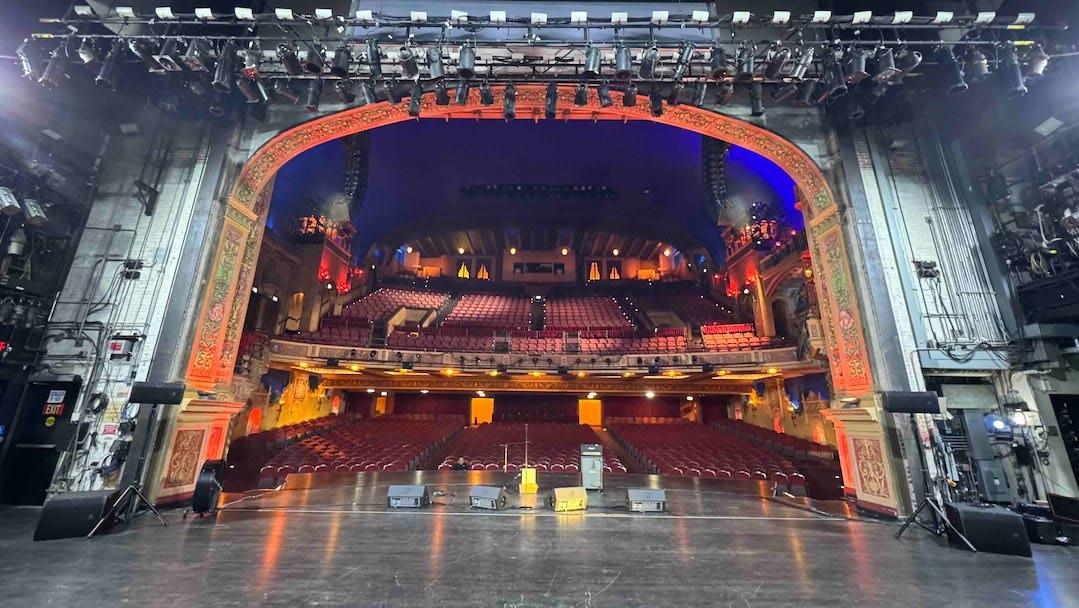
The final configuration includes two Event-115A subs flown per side; a dozen Event-26A deployed per side; two Event-118A subs on the ground; four ARTEC-526A front fills; ARA-M210 stage monitors; and strategic reorientation of the main P.A. to improve vertical coverage.
“DAS stepped in without hesitation,” Oleksnianski said. “They were there for every part of the process—design, support, tuning.” Once the redesigned system was up, its performance exceeded his expectations: “The clarity was unbelievable. No distortion, no artifacts, just clean, powerful sound. It felt like the boxes were performing beyond what should be physically possible.” ■
By Clive Young
Los Angeles, Calif.—In late January, Shure took over the famed The Village Studios in Los Angeles before the NAMM Show for a VIP soirée where it launched not one but two major lines— its new KMS Condenser mics for studio use, and for those in need of RF for touring, broadcast, content creation, house of worship and more, the new SLX-D+ wireless system.
It was a canny choice of venue for a pro-audio crowd. The former 1920s Masonic Temple was long ago converted into a facility housing four studios, an auditorium and performance space, the Moroccan Room; since then, it has birthed top albums from artists like Fleetwood Mac, Red Hot Chili Peppers, The Beach Boys, Tom Petty and the Heartbreakers, Smashing Pumpkins, The Brian Setzer Orchestra, Pink Floyd, Supertramp and others.
The KMS mics were shown and demonstrated inside the Studio D control room, garnering the interest of visiting pros like producer Ken Caillat, but to put the SLX-D+ systems through the paces for the 100-plus guests, the event used the Moroccan Room upstairs. There, Mike Petruccelli, senior product specialist at
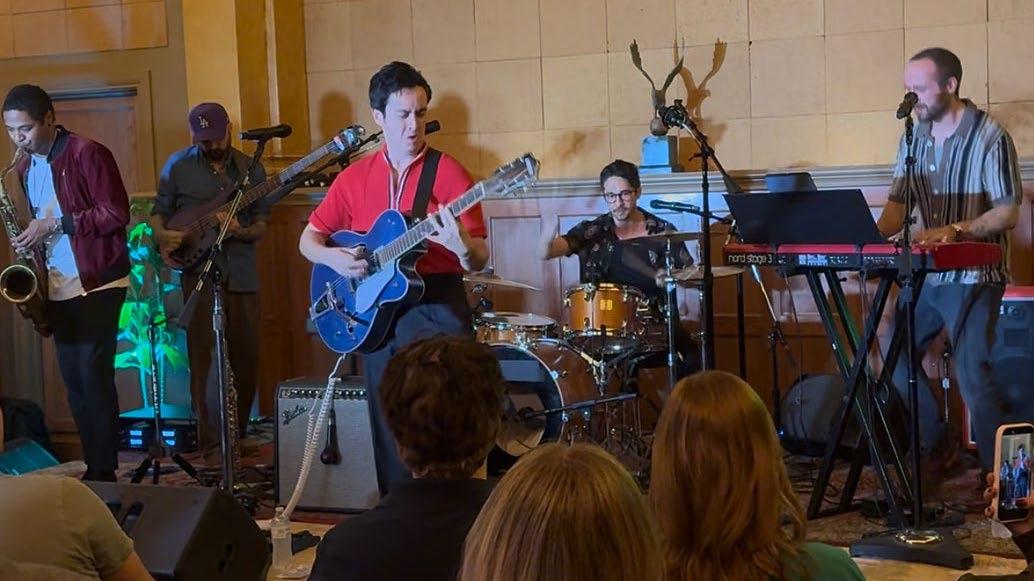
Shure, demonstrated SLX-D+ Interference Management, showing how the system can automatically scan for a new, clean frequency and deploy it to both the receiver and transmitter without requiring user interaction. He added that, building on the legacy of the SLX-D Series, the new line also offers wide tuning across all its components, simplified setup, remote system management, AES256 encryption, automatic feedback suppression and more.
Closing out the evening, the sound quality of the system’s various components was amply demonstrated by Los Angeles funk artist Dylan Chambers, whose band entertained the assembled crowd with a raucous set, highlighted by the impossibly dexterous playing of bassist Santiago Gonzalez. ■
Sacramento, Calif.—When do Mandarins abide by Law? When he’s mixing them. The Sacramento Mandarins drum & bugle corps has competed for decades, and since 2023, engineer Griffin Law has handled the Mandarins’ lead engineering duties and managed production staff for live performances.
Those performances are complicated, too, with 160 moving performers on a full-length football field, performing choreography and playing songs that Law mixes on an Allen & Heath SQ console, with a CQ-20B as a submixer used for keyboard percussion, which outputs multiple stereo feeds into the SQ and can be controlled remotely through a tablet.
“We don’t use the SQ as most people would, with one main stereo mix to the P.A.,” explained Law. “We use mainly post-fade aux buses to feed sets of speakers across the field, with the main layer as just a control for all the sends. The customizable fader banks on SQ are also mission-critical for what we do.”
Having performers across a wide field is another challenge for Law. “In a traditional live sound performance, you maybe deal with a vocalist moving 1020 feet across a stage,” he explained. “With a marching band, I have to deal with trumpet players moving distances of over 100 feet on the field.” To account
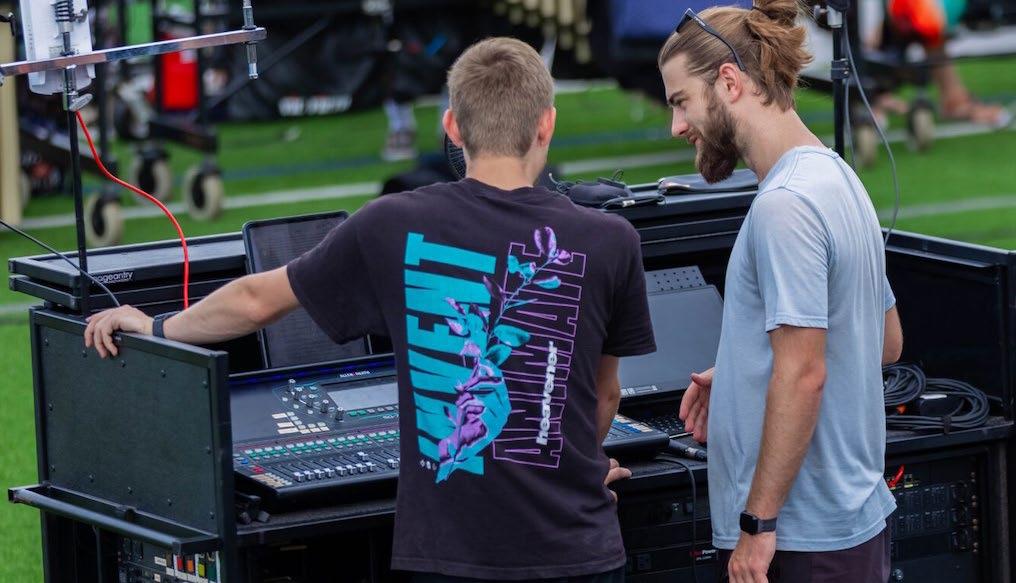
for this, Law’s team makes crucial delay calculations to keep performances sounding tight. “One of the things we really like about the SQ console is the ability to add delays on every input and output channel,” Law said. “Time alignment is very important with moving performers and multiple speaker stacks across the field, and Allen & Heath makes that very simple.”
The audio team pays close attention to the balance of acoustic and electronic elements. “We have lots of mics, which are blended with 80-plus brass members at any moment,” said Law. “We also manage the way the brass comes through, since the high and low frequencies interact and it skews brighter, so we mike the tuba players to add some of that depth.”
Law and the Mandarins’ audio team rehearse their mixes when heading into competition season. “We fine-tune our mic angles and focus on getting the delays right so it sounds better each time,” said Law. “We use about 30 different scenes for a 12-minute performance, trying to get the choreography and time alignment as close as possible to what we need.” ■
New York, N.Y.—As its name implies, Two Strangers (Carry A Cake Across New York) tells a small story in a big setting. The musical has been packing the Longacre Theatre on Broadway since it opened, but also filling the venue is a sizable L-Acoustics P.A. system, provided by PRG as part of a house system designed by sound designer Tony Gayle.
The show only features a cast of two, backed by five musicians seated upstage on a catwalk, so while the show’s intimate moments are more easily conveyed, the bigger, brassier scenes needed a sound design to match, bringing across the largerthan-life vibe of New York City. With that in mind, Gayle opted for L-Acoustics Kara II loudspeakers, which he had previously used on the show at an earlier out-of-town production at Boston’s ART theater.
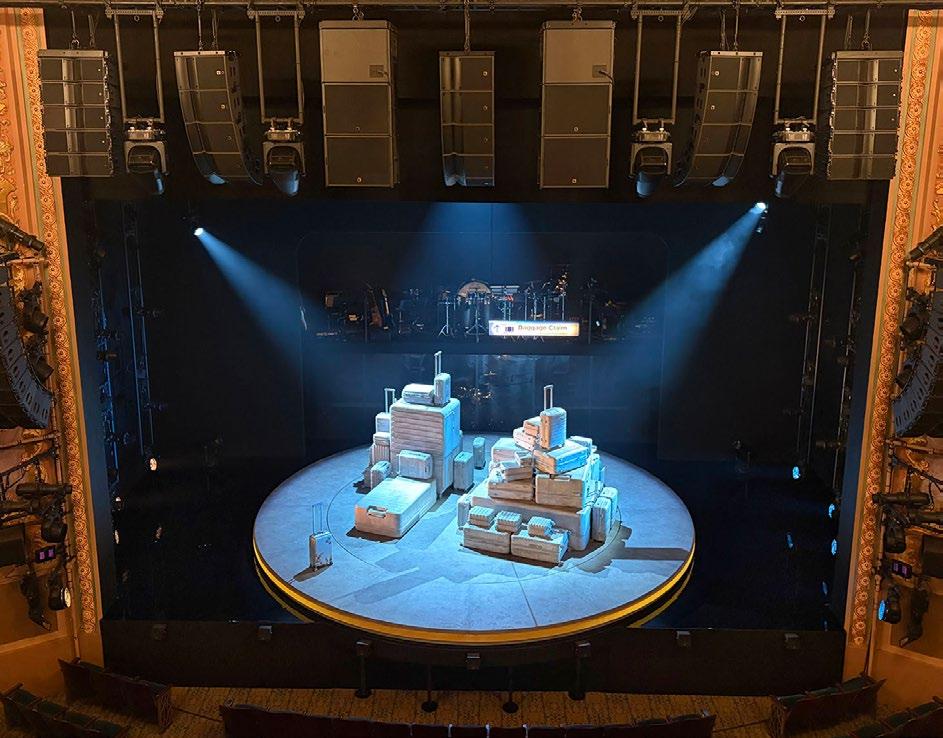
The P.A. is built around left and right main arrays, each comprising 10 Kara II enclosures addressing the orchestra and mezzanine seating areas. Flown above those hangs are two arrays of five Kara II per side covering the upper-balcony seating. Between those two upper arrays are three A Series loudspeaker hangs—three A10 Focus over two A10 Wide—interspersed with a pair of LF hangs both featuring a trio of SB18 subs. A pair of additional SB18 are located one per side behind and beneath the main Kara II arrays. Elsewhere, two-dozen coaxial X8 enclosures are used for fills, while 65 ultra-compact 5XT loudspeakers surround all three seating levels and line the left and right sides of the stage for 360-degree audio coverage. The entire system is powered and processed by 32 LA4X amplified controllers.
He noted that at a low level, he can hear the detail and excitement in the songs, but that as the music gets louder, the Karas maintain the same sonic signature. “With a lot of other speaker manufacturers, when it gets loud, it starts to change tonally,” Gayle observed. “You have to use plug-ins and EQ just to tame certain elements, especially the vocals. For me, vocals have to be very linear, very across the board, because that is what is driving the story. That’s so important.”
“I’m a very pragmatic sound designer—I approach each show for what it needs,” Gayle said. “What I really care about is: Can I hear the lyrics, and can I hear the orchestrations and detail in the songs?” His sound design, then, is created with that focus on supporting the songs through judicious sound reinforcement, so that the music can best support the story. He noted, “It’s making sure that the songs all sit within the same world tonally, so you don’t feel like something just came out of nowhere.” ■
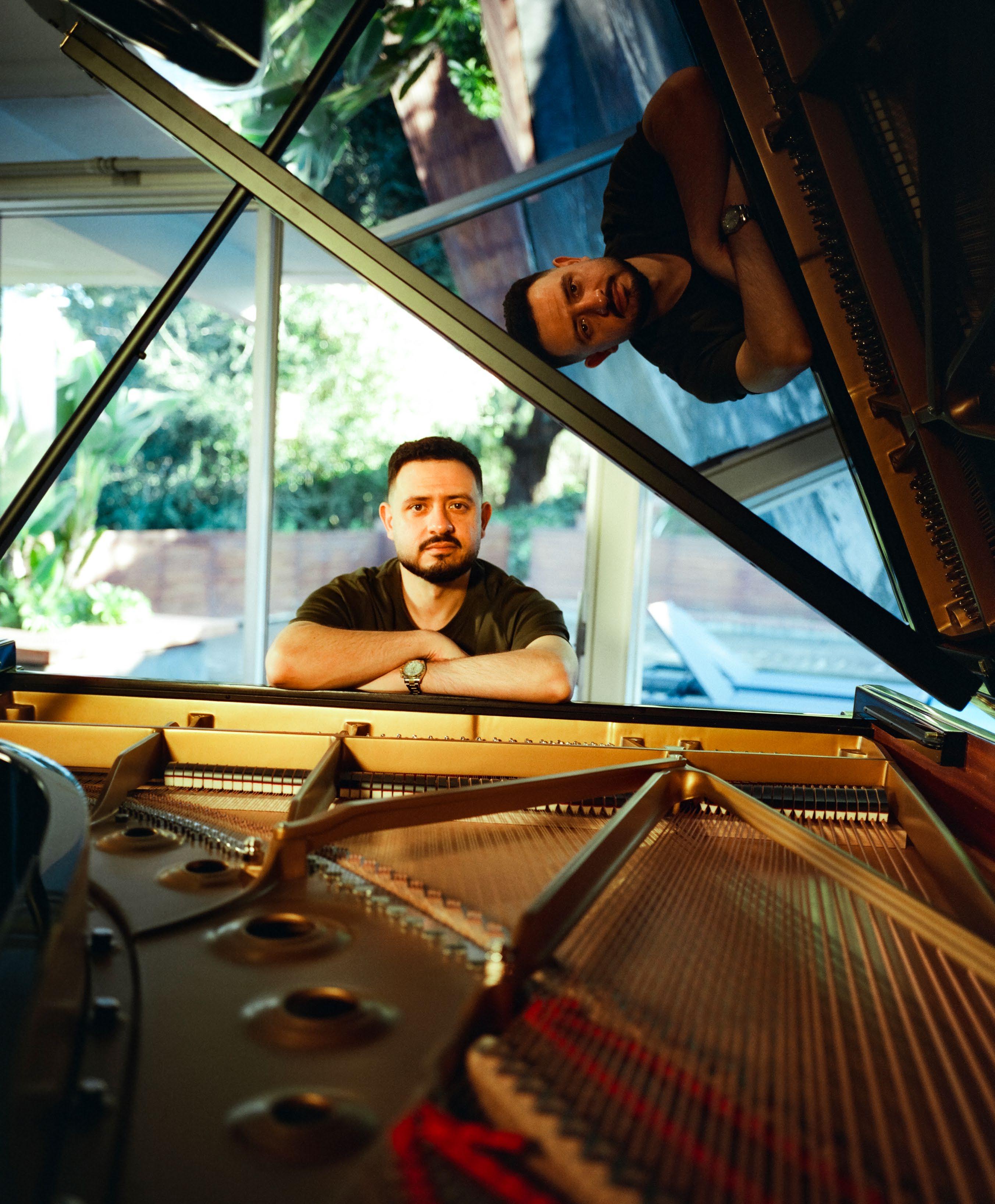
Classically trained, Grammy-nominated, beatmaking producer/musician fuels creativity by collaborating, inspiring and always staying in Record.
By Lily Moayeri
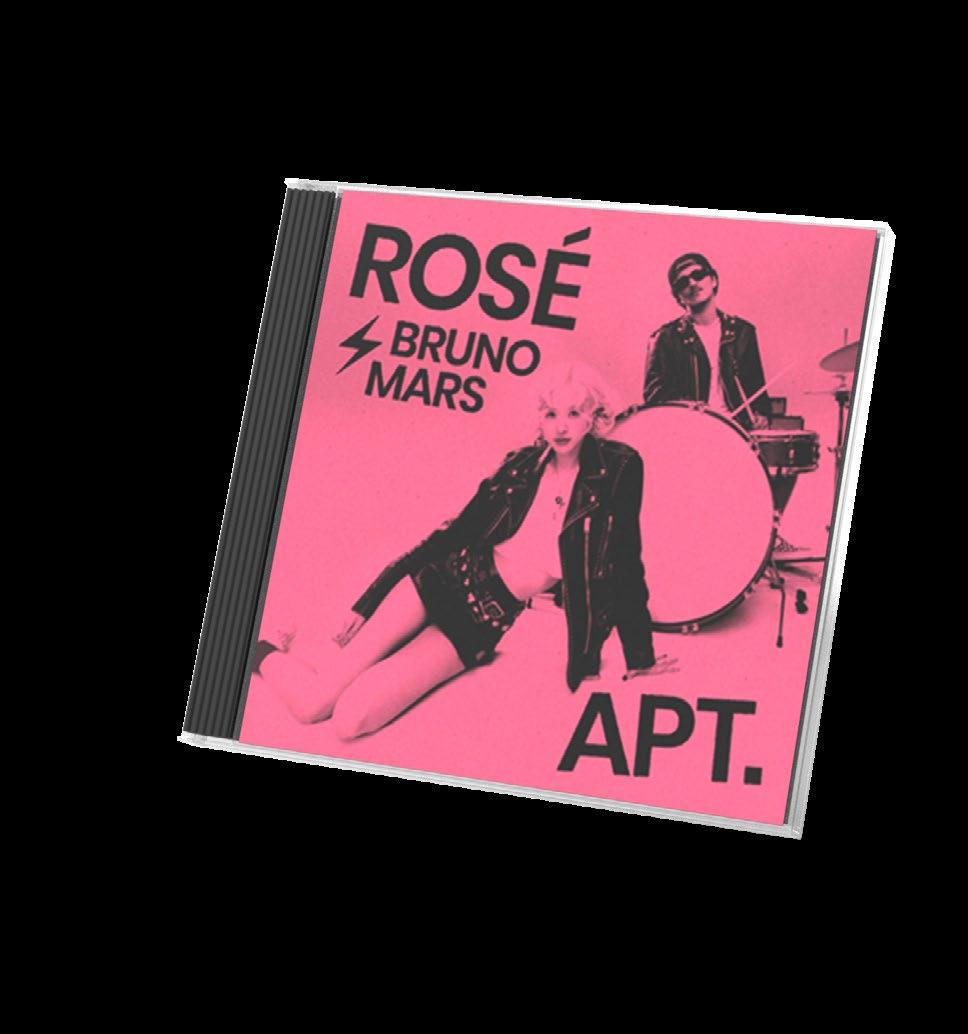
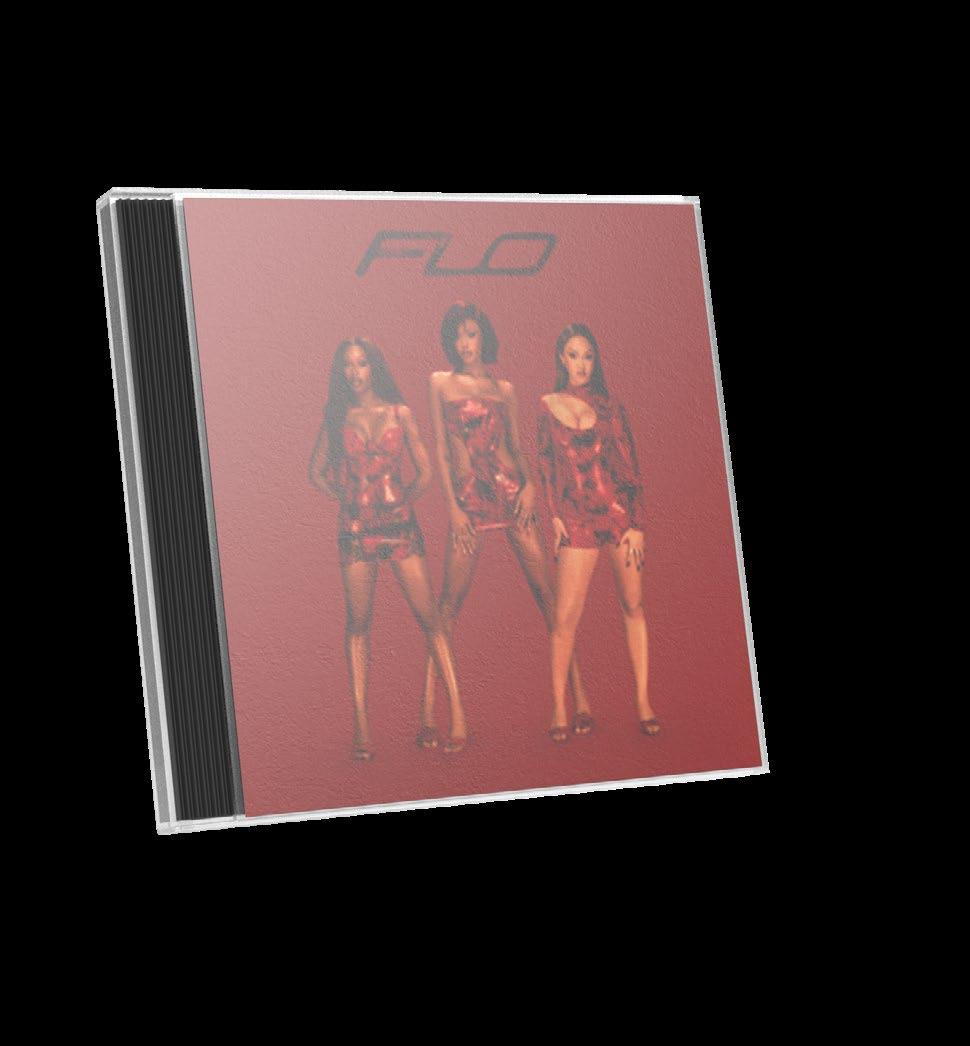
From the top of a steep driveway in the Tarzana neighborhood of Los Angeles, producer/musician Rogét Chahayed flips a switch and an imposing gate slides open, allowing entry into his home studio. As the producer and songwriter behind this year’s Grammy nominations for “APT.” from ROSÉ & Bruno Mars (Record of the Year and Song of the Year), as well as production credit on FLO’s Access All Areas (Best Progressive R&B Album) and Lecrae’s Reconstruction (Best Contemporary Christian Album), he has good reason to seek a certain degree of impenetrability: He is now in-demand.
Stepping into the two-room studio tucked beneath his home, all five senses are immediately awakened. Spa-like scents set the tone, while mood lighting frames colorful toy figurines scattered across surfaces. Coffee-table books elevate the space, and sleek contemporary trays invite visitors to set down a drink. The multi-function live room houses a drum kit, a vocal recording area, and an inviting couch for whenever the songwriting inspiration strikes. The furnishings are plush, and the acoustic treatments are tuned and precise. It feels almost homelike.
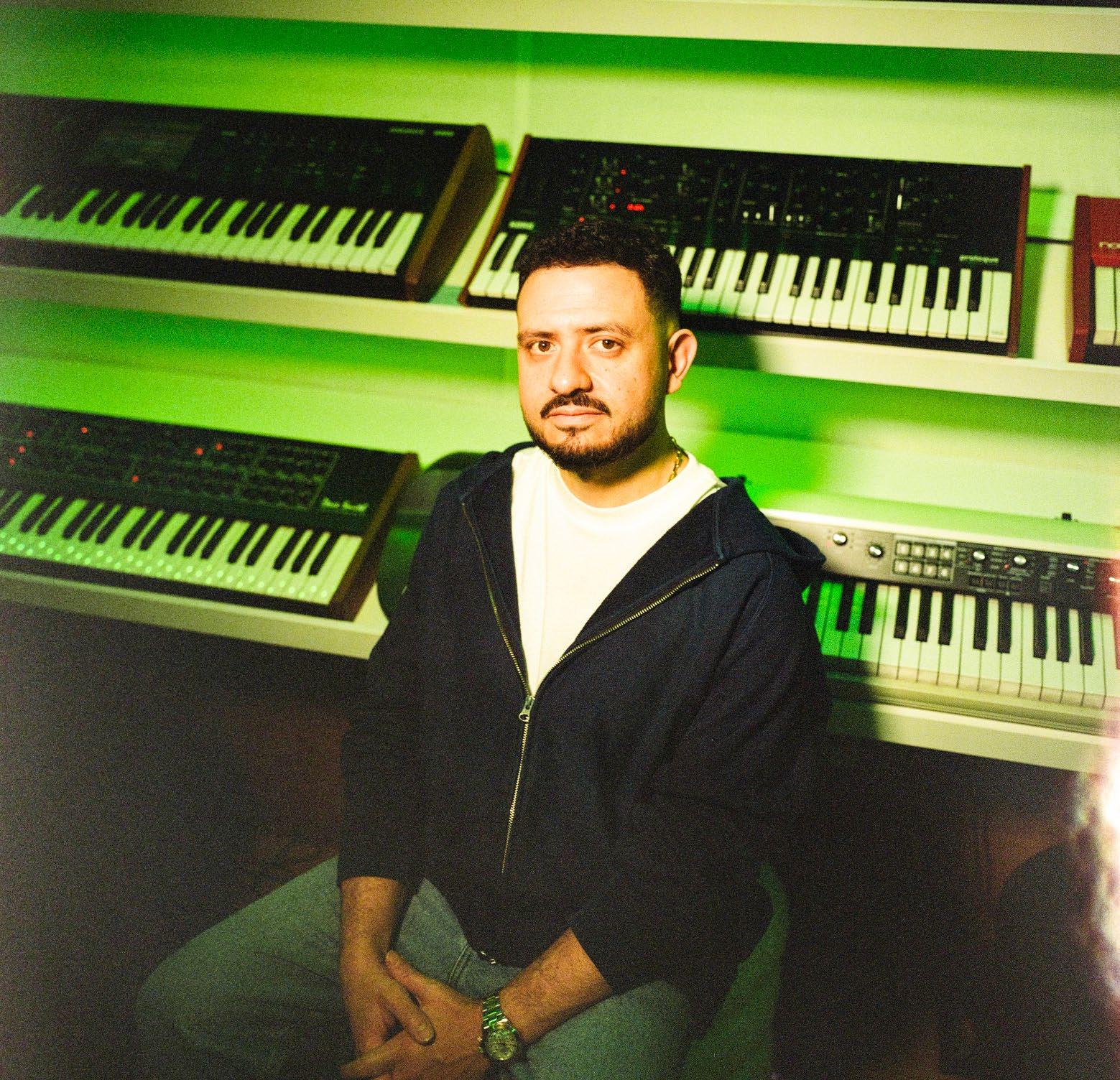
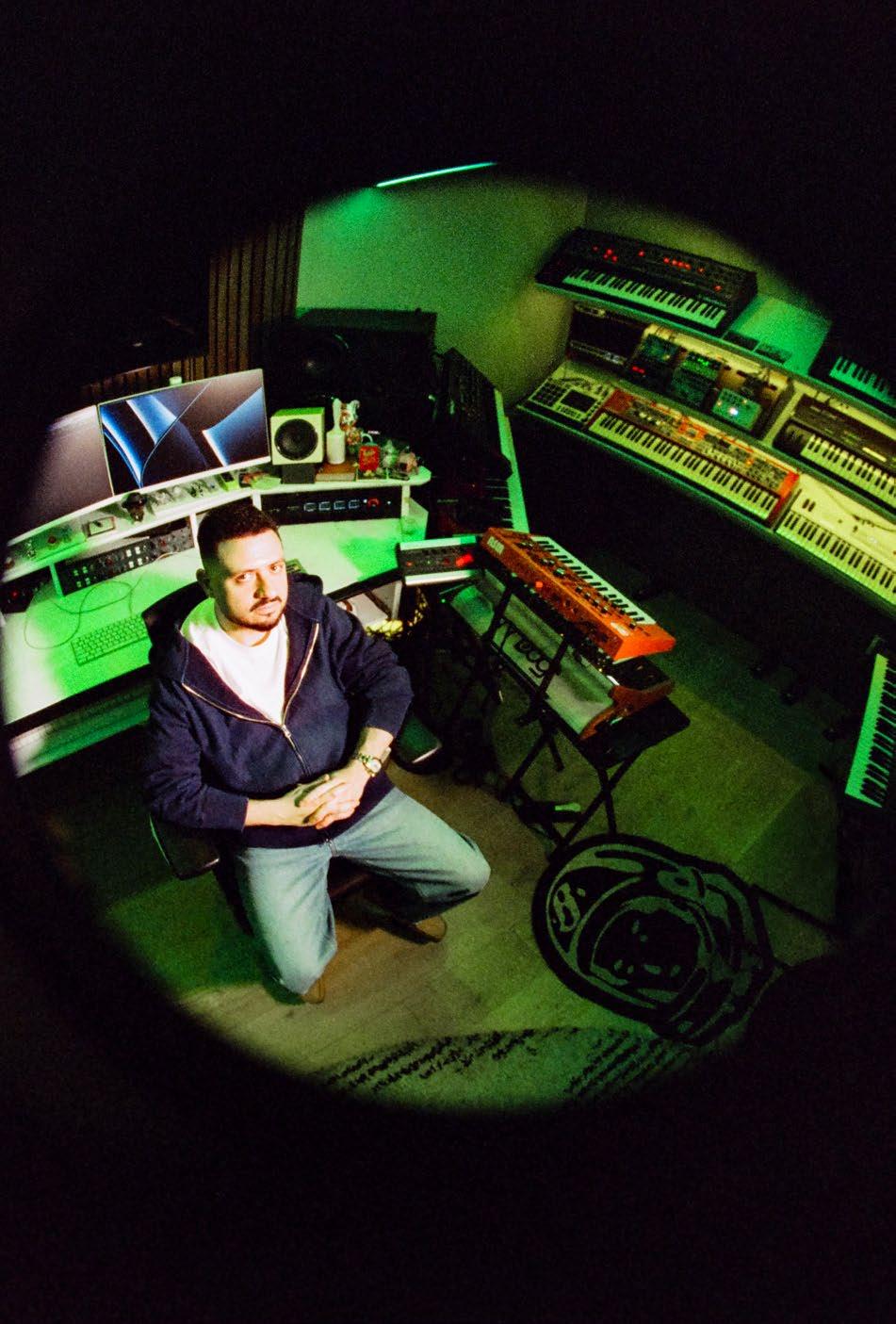
Meanwhile, in the control room, floor-toceiling racks and stands along the side walls hold rows of synths—digital and analog, modern and classic—with cloth-covered stools spaced beneath them. Blinking lights twist across and through the array of keyboards, making the entire command and control center feel like the cockpit of a jet.
Here, Chahayed, a classically trained pianist who studied at the San Francisco Conservatory of Music, sits back in an ergonomic chair, resting his crossed legs on a matching ottoman. The space’s atmosphere, combined with his inherent talent and advanced musicality, has drawn a wide range of musical creatives over the past decade, including Jon Batiste, Doja Cat, BTS, Mary J. Blige, Anderson .Paak, Nas, Kali Uchis, Travis Scott, Halsey, as well as executive production on Jack Harlow’s Come Home the Kids Miss You and Jennifer Lopez’s This Is Me…Now.
Growing up as the son of a Syrian father and an Argentinean mother (who live nearby), hip hop was not encouraged in the Chahayed household. It wasn’t until college that he dove into the genre and began making beats entirely on his own. After returning to Los Angeles, he established himself as a standout performer. From there, producer Mel-Man introduced him to Dr. Dre,
where he was on call for keys and production. “If playing is the only thing you can offer,” he says, “then you better be good; it better be different.”
Over the past decade, Chahayed has firmly established himself at the top of the charts, collecting more than 10 Grammy nominations, including Producer of the Year in 2022. His classical training has served him well, he notes, citing composers Ravel, Scriabin, Rachmaninoff and Prokofiev as inspirations, while also admiring producer/songwriters such as Pharrell Williams, Scott Storch, Timbaland, Ryan Leslie and Jermaine Dupri for their use of real instruments.
“I gave up on trying to be this insane pianist who masters all these pieces from 100, 200 years ago,” says Chahayed, adding that when seeking inspiration, he typically focuses on a few bars or a short passage from his favorites rather than entire compositions. “I was more fascinated by what they were doing in the composition, what they were going through at the time of their life and how they got to that place. I learned scales and finger exercises and technique, not so I can use it so much as it becomes embedded in you. I go off feeling. I go off the conversation I have with the artists. And in many cases, I go through what’s happening in my own life. Having feeling is part of having good technique.”
Chahayed subscribes to the idea that, “Love
is like playing the piano. First you must learn to play by the rules, then you must forget the rules and play from your heart.” To him, different key signatures tell different stories. Where you play affects the outcome of the song, and potentially the direction the artist wants to go. His understanding of orchestration, instrument ranges and where to place sounds gives him options on voicings and progressions, which in turn allows him to expand on ideas. He considers this one of his biggest strengths, a benefit that he brings to sessions.
Sometimes, he even finds himself scoring the artist while they’re speaking. As he gets a riff going, it often garners a reaction from the artist, who then

explains. “They hear a chord, and it’s like tasting a spice you’ve never had, and it’s interesting. They don’t know if they love it or hate it, but it’s giving them something. I feel that I’m able to incorporate that level of flavor because of my prior training.”
Solid-sounding instruments are Chahayed’s default. Piano, synths and other polyphonic tools that allow him to play chords. He’ll often turn to his Prophets when looking for something unexpected or new. The Rev2 is among his more recent additions, an instrument on which he’s found some “wild sounds.” He also points to the Kodamo Mask1, which he describes as “a new age
many of which he’s still discovering.
“When I was a kid, I used to go to Tower Records and I would buy music because I thought the artwork was interesting,” he says. “In that same manner, I will look through the Kontakt library and see the artwork and be like, ‘What is that? It looks cool.’ I let natural curiosities take me to where I don’t know.”
Everything runs through a central Mac computer, with each keyboard permanently routed to its own input in Logic, which is recording continuously through a system set up by his full-time engineer, Julian Vasquez. The same always-on approach applies to the drum kit and other instruments in the live room. The goal is to never miss a moment, matching Chahayed’s playing style, which often finds him moving between two keyboards at once—the right hand laying down chords, the left triggering, for example, an 808, a bass patch, or some other sound to introduce a different groove or feel.
Tools when it’s time to record vocals.
“It didn’t happen overnight,” Chahayed says of this efficient workflow. “In 2022, when I got asked to executive produce Jennifer Lopez’s album, which also became the soundtrack for her film, she wanted to work in her home movie theater and turn it into a studio. I wanted to bring what I have here, so we came up with a system where we can bring this setup anywhere in the world, a mini-mobile version of my studio where Julian brings his laptop, I select three or four keyboards to go through his rig, and he’s recording any and everything going on with the track.”

If an artist casually lands on something usable while tinkering on an instrument, it’s already been captured, without interrupting the moment. When Chahayed is working alongside another producer, Vasquez can immediately edit what he’s just recorded, prepping it for the other producer’s input while Chahayed moves on to the next idea, or layer, effectively doubling the pace of the session. For arranging and editing, Vasquez works in Ableton, switching to Pro
Lopez’s This Is Me… Now is the second album that Chahayed executive-produced, the first being Harlow’s Come Home the Kids Miss You For these projects, he was involved in every aspect: producing and songwriting, sourcing talent, tapping his network to bring in marquee collaborators, overseeing the budget, supervising the mix, and serving as a sounding board for nearly every decision. In both cases, the artists came to him, Harlow via Instagram DMs, and Lopez after hearing Harlow’s “First Class” and wanting to work with whoever made the record.
“I love it,” he says of the EP process. “You form a bond with the artist, there’s a lot of memories and you’re never going to forget each other. But what I don’t like about it is, you’re limited to that artist. You can’t spread yourself too thin. I am completely immersed in it all the way. And now,
I feel like I’m in an even better position to do it, because I have even stronger relationships.”
ROSÉ, BRUNO, FLO, LECRAE
In contrast, for his session with ROSÉ on “APT.,” Chahayed tapped back into his early production and songwriting instincts, choosing to “let the keys do the talking.” At the same time, he emphasizes the importance of restraint. “Sometimes you have to let things breathe and figure out what the artist wants to do, because you’re going to be annoying if you’re always playing,” he explains. “Some people don’t know when to stop. That’s something I learned in a heavy hip-hop environment. It’s in your best interest to be quiet, lay back and watch your surroundings.”
The session took place at producer-songwriter Cirkut’s home studio. Other than ROSÉ, Chahayed had worked with everyone else in the room. When she arrived, they explored a few ideas, but nothing was fully capturing her interest. During a pause, ROSÉ began showing songwriter Amy Allen the Korean drinking game APT, which includes a rhythmic chant. Songwriter Theron Thomas suggested incorporating it into a song. Cirkut then pulled up high-energy, super pop-y drums, while Chahayed and producer-songwriter Omer Fedi started experimenting on the keys.
“[On Fedi’s suggestion] I pulled up a horn sound on the Mellotron,” says Chahayed, and
while ROSÉ was in the vocal booth, he continued working. “I came up with the chords for the pre and the hook, and I had a little idea for a bridge. We put together the track and left thinking we made something pretty cool. I think Rosie felt the same. Later on, they were like, ‘Make sure you don’t send the bounce out to anybody; delete it off your phone. We don’t know if this is going to happen or how she feels about it right now.’ I just forgot about it, but it felt special.”
Nine months later, Chahayed ran into D’Mile, one of Bruno Mars’ key creatives, and asked after the artist, whom he has known and worked with for a decade. As it turned out, Mars was working on “APT.” Three months after that, Chahayed received the latest version of the song. “I didn’t hear it for about a year, and then all of a sudden, Bruno elevated it to a new level,” he says.
Chahayed’s path to the title track on British trio FLO’s album, Access All Areas, was far less deliberate. He was working with producersongwriter Pop Wansel on beats for Kehlani when the idea took shape. Kehlani ultimately didn’t use it, but, as Chahayed explains, “That happens with a lot of beats. You make a beat in a session for one artist, and then two years later, you hear, ‘I actually gave it to so-and-so.’ People will send the same beat to three or four different artists and cross their fingers. Some may not respond, some might say, ‘I got a song to this,’ and in rare cases, you’ll have two people that recorded a song on it.”
When FLO expressed interest in the beat, it was further developed by adding bass, pads and a synth lead, all built around a soulful sample that left room for layering additional sounds.
Likewise, “Holidaze,” from Lecrae’s Christian rap album Reconstruction, grew out of a session with Jon Bellion and producer Tenroc. Bellion is a longtime collaborator whom Chahayed often links up with when he’s on the East Coast.
Mellotron Micro • Sequential Prophet-8
• Korg Kronos 2 (61-key) • Sequential Prophet XL • Korg SV-2 • Korg Prologue • Sequential OB-6 • Nord Stage 3 • Moog
One • Sequential OB-8 • Akai MPC Live II
• Sequential Prophet-10 • Yamaha DX7 • Kodamo Mask1 • Nord Stage 4 Compact
• Roland Juno-106 • Expressive E Osmose
• Nord Piano 5 • ASM Hydrasynth • Moog Sub 37
and we left the verses open. Lecrae pulled up to his place one day and was like, ‘I want to play the album and just catch up with you.’ At the end, he was like, ‘Do you have anything for me?’ and Jon played him the demo. Lecrae decided to put verses on it and keep Jon on the hook.”
As Chahayed’s relationships with collaborators have deepened, his working process has evolved. Where he once relied on his playing to signal his involvement, he now adopts a more conversational approach. Some days, the studio is less about recording than it is about talking— creating the space for artists to get comfortable enough to share. Once that trust is established, he’s found, the results tend to be stronger.
“I like to lay down the foundation of the song, let them talk and listen from a distance,” he says. “A lot of times, once I know what they have going on and they’re cutting vocals, I’ll step out of the room. When you’re cooking something, you don’t want someone watching your every move. If it’s a younger artist, or someone less experienced, I want to make them feel like they know what they’re doing, but I will also give my feedback. With the bigger artists, if I have feedback, I’ll say, ‘Why don’t you let me try something different?’”
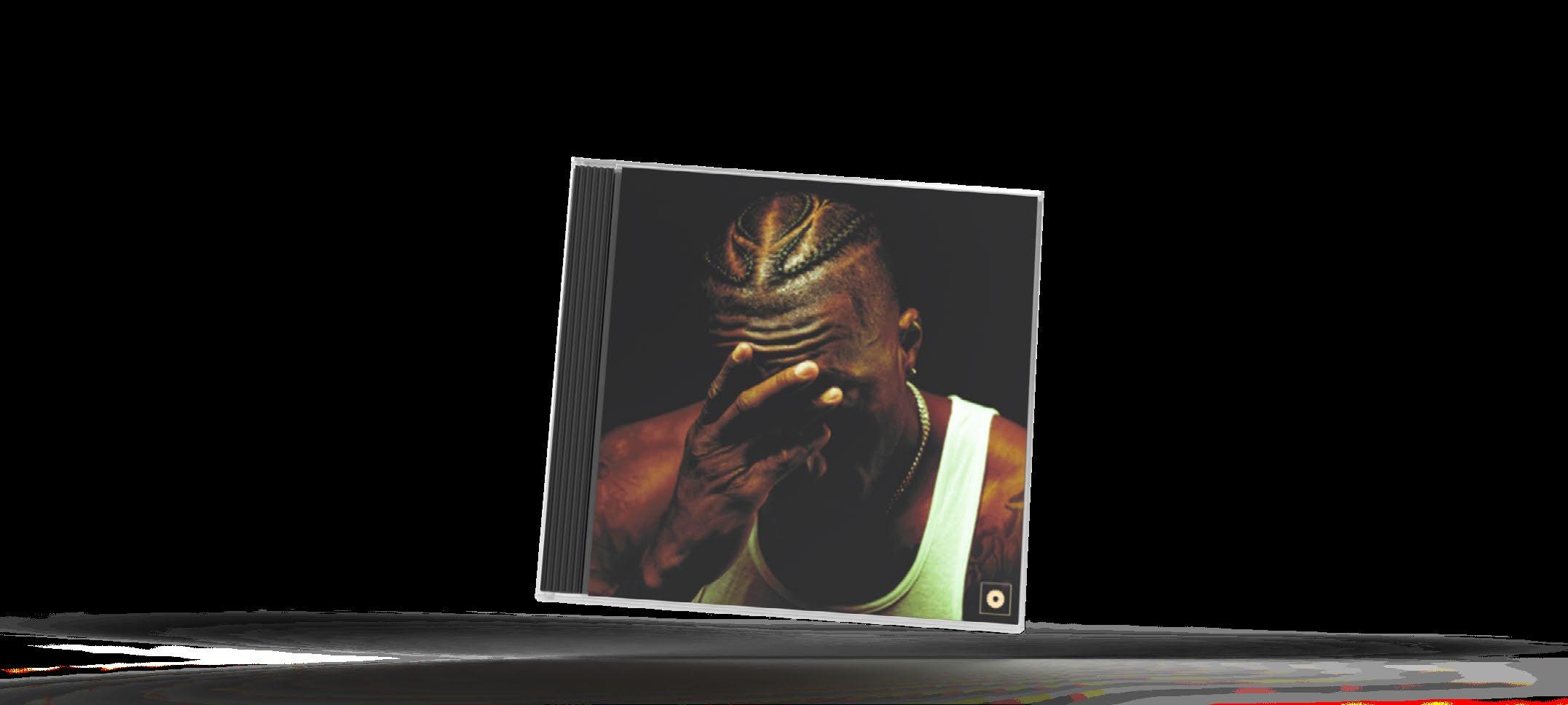

Hearing Chahayed speak about marquee music artists in this pleasant studio paints a glamorous picture of a modern day producer-songwriter, but
“The process is, many times, not glamorous,” he says. “In many cases, I was sitting at home and someone sent me a beat and I added something and it happened. For the most part, you’re sitting in a dark room with no windows for eight hours. It’s like when you’re watching a movie like Star . Those are all toys, but it looks like outer It’s crazy that we’re able to create this sonic illusion of something insane when we were just in a little room with a few keyboards.” ■
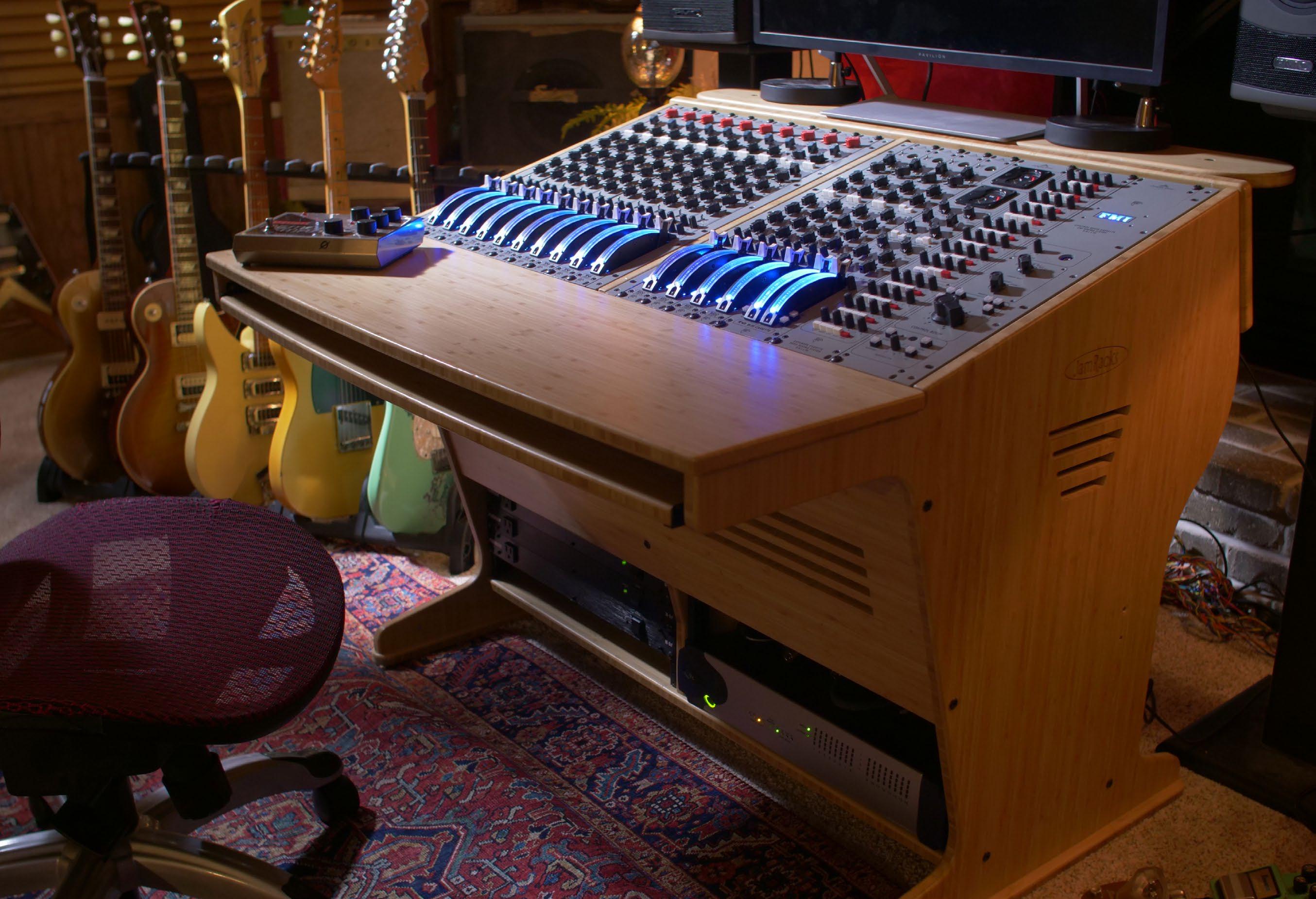
By The Mix Staff
The 2026 NAMM Show in late January was loaded with new product introductions, including a whole lot of microphones (studio and live), speakers (studio and live), analog and digital consoles (studio and live), and so much more. Here, in alphabetical order, are a few that caught the ears of Mix editors.
The REDD Mixing System from Abbey Road Studios and Chandler Limited is a fully modular mixing console that can be configured with a combination of EMI’s renowned REDD, TG and RS channel and bus cassettes. The first EMI Recording console to be released in more than 50 years, the custom-configurable system will fit into any 12U rack space and may be expanded to “nearly any size” using additional rack bays.
Adamson’s MS8.2 Milan AVB-ready network switch is optimized for stage monitors, small
arrays and distributed systems, and supports streaming of up to 48 networked loudspeakers. The USB Milan bridge provides direct Milan network connectivity, offers up to 32 inputs in four streams, 16 I/O and is USB-C bus powered.
AEA Ribbon Microphones’ FC2 twochannel tube preamplifier, designed with Fred Forssell, features a refined two-stage amplifier hybrid topology that keeps the tubes operating in their sweet spot throughout the entire gain range. Its 10 to 75 dB of gain handles a wide range of mic types.
AKG launched a line of versatile, stylish and cost-conscious condenser mics, the C-Series, with one small-diaphragm and two largediaphragm models for recording, podcasting and content creation. Sustainability was a top priority, from materials through manufacturing, according to the company.

Apogee Electronics’ Symphony Nova desktop audio interface features four high-end analog mic inputs, each offering the company’s new and enhanced ECS Channel Strip real-time processing. Symphony Nova also applies realtime DSP speaker correction on all analog outputs and supports importing SoundID files for headphone correction.
Integrator ASG has partnered with Nu·Studio to become the exclusive reseller of the first modular studio designed for immersive AV production. The portable, non-permanent framework installs in days and can be reconfigured or relocated as needs evolve.
The Novacore professional digital wireless platform from Audix includes single- and multichannel receivers with 48 MHz tuning range, handheld and bodypack transmitters, specialized vocal capsules, Novacore Frequency Coordinator software, antennas, charging stations and other accessories.
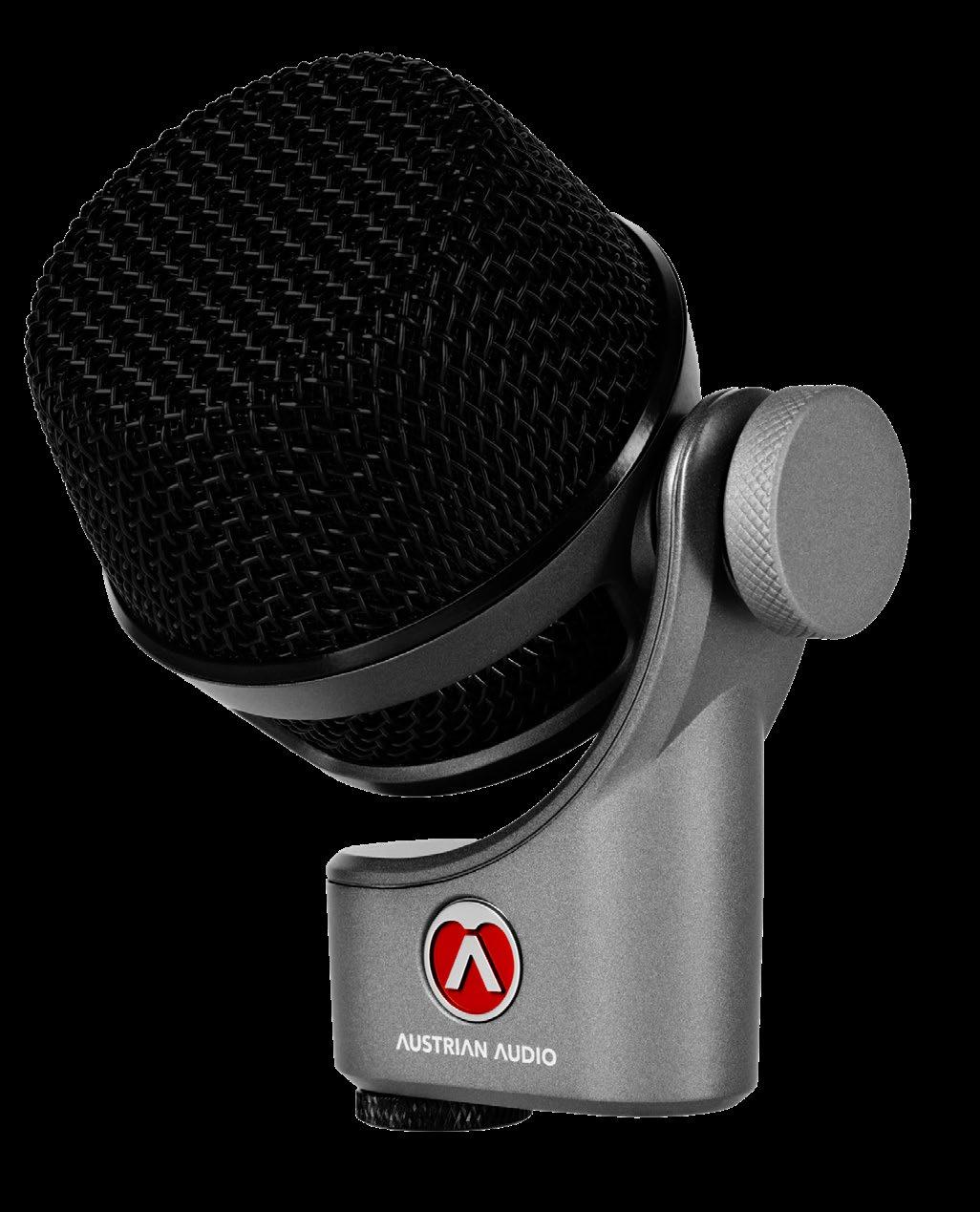
Austrian Audio introduced its first largediaphragm condenser bass drum mic, the OC-B6, featuring the new CKR6-B capsule and a swivel mount, and the DMK1 drum mic kit, featuring seven condenser mics and a dynamic mic in a compact, waterproof case.
The BC5000 Bigfoot Compressor from Burl Audio combines a classic optical design with a class-A, discrete transistor circuit path with input and output transformers, with I/O circuitry taken from the Mothership Mastering cards. There are multiple front-panel circuit switching options.
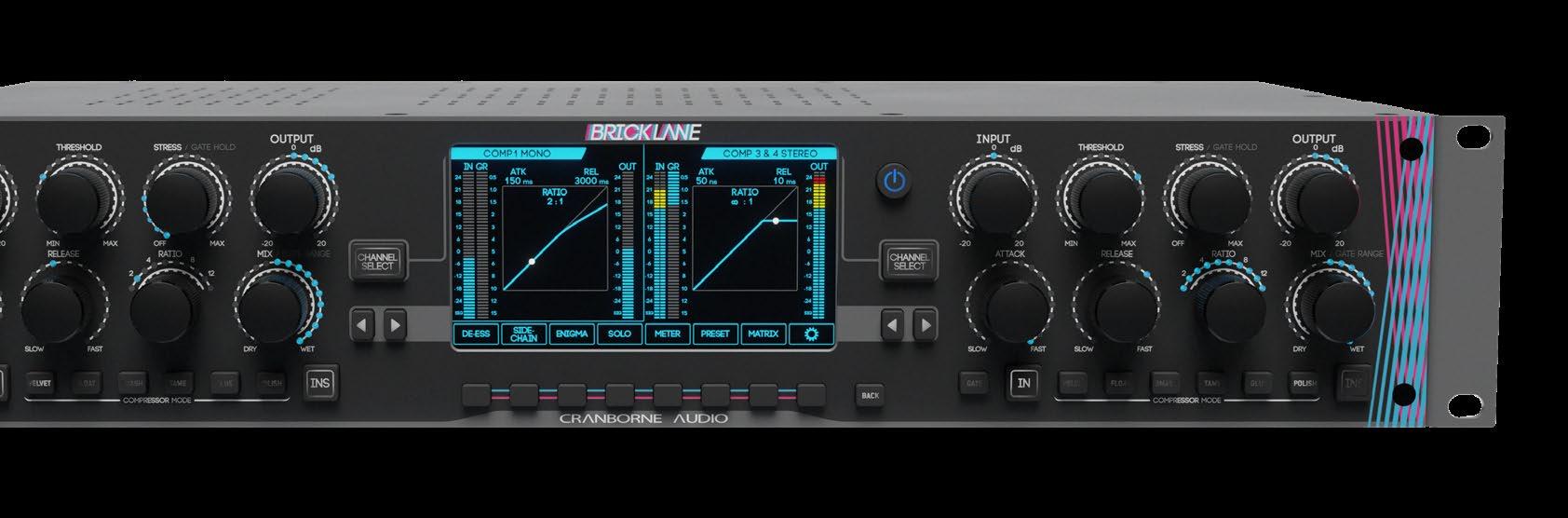
Cranborne Audio’s Brick Lane MC4 is a fourchannel dynamics processor built on proprietary modal PWM technology, configurable for mono, linked stereo or mid/side use. The fully analog path offers six types of compression with series, dual-band and de-esser modes, plus a gate per channel.
d&b audiotechnik introduced four Milanenabled products: the DS22 5-port audio network bridge, with 16 AES inputs; DS1 USB Milan playback and recording interface; 5DM Milan four-channel Class D installation amplifier; and DN2 AVB switch.
DAS Audio added three new systems to its Event Series: the Event-30A line array, featuring newly developed transducers and dual-compression drivers, dual-18-inch EventS218A subwoofer; and Event-M12A compact, coaxial stage monitor. All are built on a scalable DSP architecture that supports future firmware updates.
The VIO L1608 line array module from dBTechnologies aims to bring three-way, triamplified active performance to an enclosure the size of a traditional two-way, dual-8-inch array. The company credits its side-firing bassflex ports for the considerable output relative to its size.
Eastern Acoustic Works expanded its Newport Series portfolio with the NT206L compact, selfpowered line array loudspeaker. The NT206L module introduces Adjustable Horizontal Directivity, a new EAW Core Technology, offering
four horizontal coverage profiles through toolless field adjustments. The NT208L loudspeaker and NT116S subwoofer prototypes were also on display, and two additional Newport Series subwoofers are being developed for release later this year.
The channex|studio from Elysia features a high-end preamp, a dynamic four-band EQ, compressor/limiter and zero-latency monitoring. The mono channel strip is the first device from Elysia to offer full recall capability on the hardware and via a plug-in in the DAW session.
Flock Audio’s Patch se, supporting 48 channels (24 I/O), launches the company’s new Standard Edition line of affordable relay-based analog routing devices.
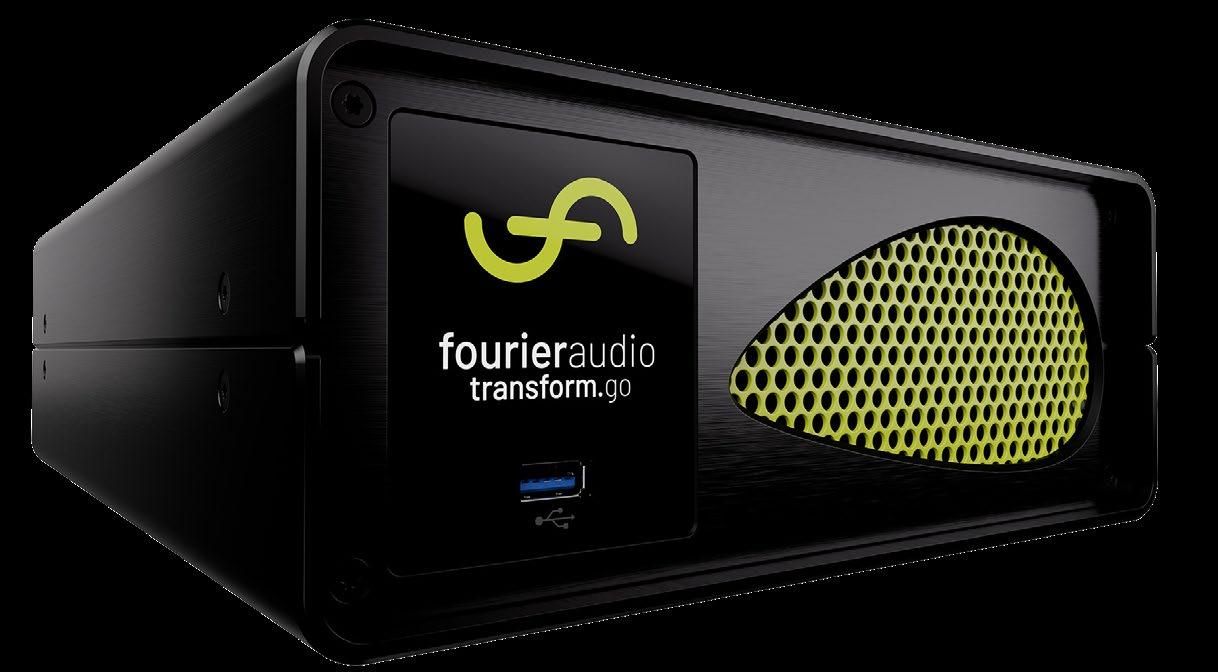
The transform.go plug-in server from Fourier Audio, designed to run VST3 plug-ins in a live environment, packs 16 channels of I/O into a compact device that fits into a backpack or carryon Pelican case. It debuted alongside Hyperport, a new audio transport with a 1.2-millisecond roundtrip latency.
The design of the H2 Audio Olympic 1100 Series console, hand-built in Detroit, was inspired by London’s Olympic Studios and the legendary Helios desks of the 1970s. It is available in versions from eight to 48 inputs; built-in compressors and patchbay are optional.
Klang:technologies’ ultra-compact Klang:1 and Klang:1pro professional processors introduce immersive in-ear mixing in new size and cost categories. Klang:1 features dual MADI I/O; Klang:1pro adds a second MADI input and redundant Dante networking.
KRK offered a peek at its all-new flagship V Series Five studio monitors, available this summer, which are said to offer “refined clarity, control and reliability.”
Meyer Sound previewed Tigra, a compact, self-powered, high-output line array element with Milan networking and onboard DSP, along with the 1800-LFC low-frequency control element. Tigra will be available in two versions, providing 80-degree and 110-degree coverage, respectively.
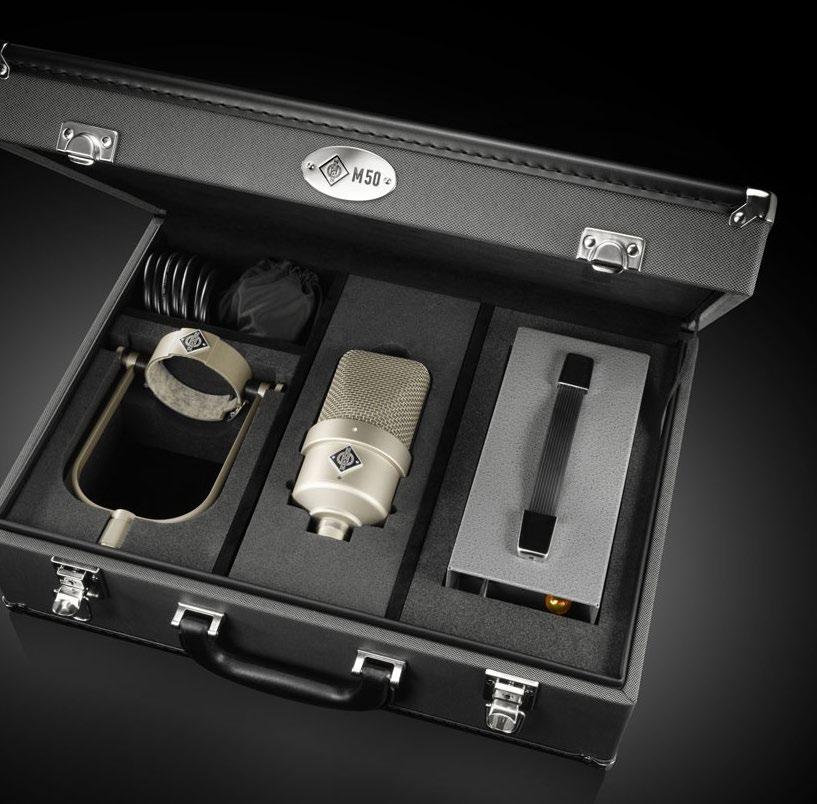
Neumann’s M 50 V reissue tube mic, handmade to order, preserves the circuit design and acoustical concept of the original, including the small-diaphragm omni capsule mounted in a 40 mm sphere, while introducing a titanium diaphragm for improved stability and longevity. The included NM V PSU also powers legacy M 50s.
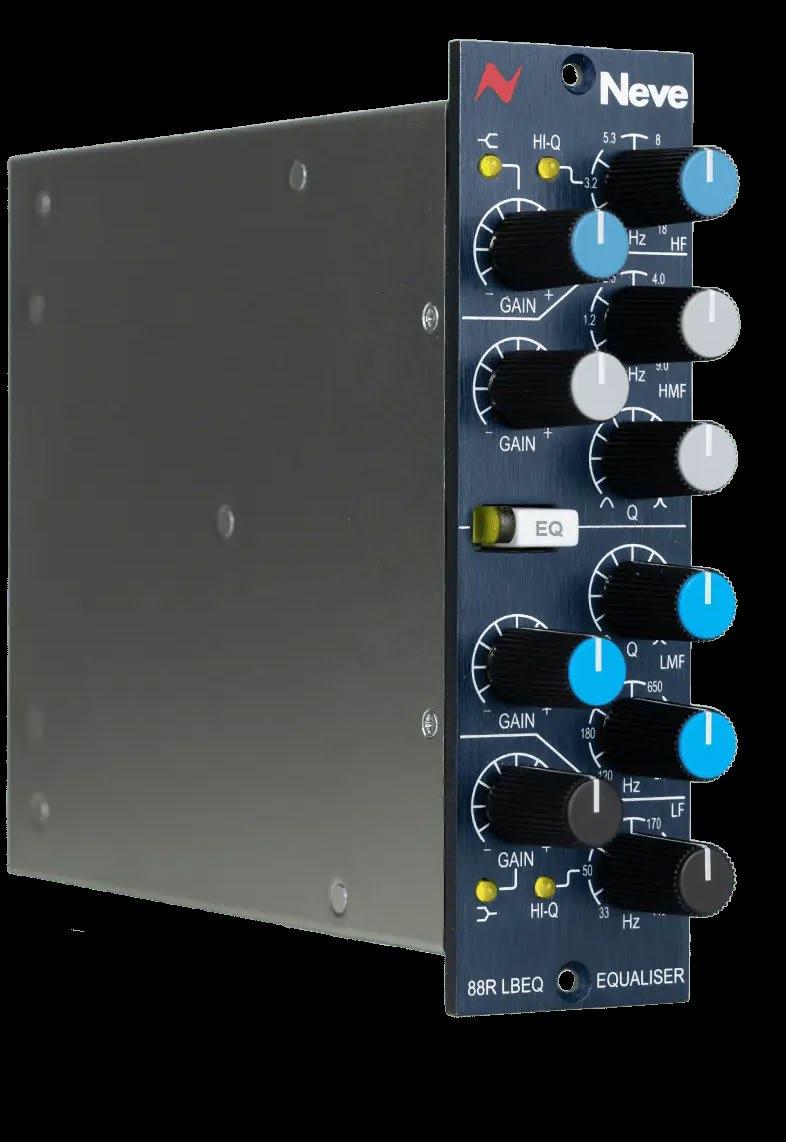
Neve’s latest addition to its 500 Series range, the 88R LBEQ is a four-band, fully parametric EQ based on the 88RS console’s analog circuitry, and is said to retain the circuit behavior and sonic integrity of that flagship desk.
MasterCheck 2, Nugen Audio’s latest evolution of its cross-platform mastering and loudness verification plug-in, enables engineers to audition how loudness normalization and data compression will affect a track before it reaches the listener. It now supports up to 7.1.4 channels, and offers additional presets and an enhanced GUI.
PK Sound’s Ts15 intelligent 15-inch subwoofer, from ACT Entertainment, in the Trinity robotically controlled line source range, is said to offer tight transient response in a compact form factor. A bass reflex design, it features onboard DSP and AVB end points.
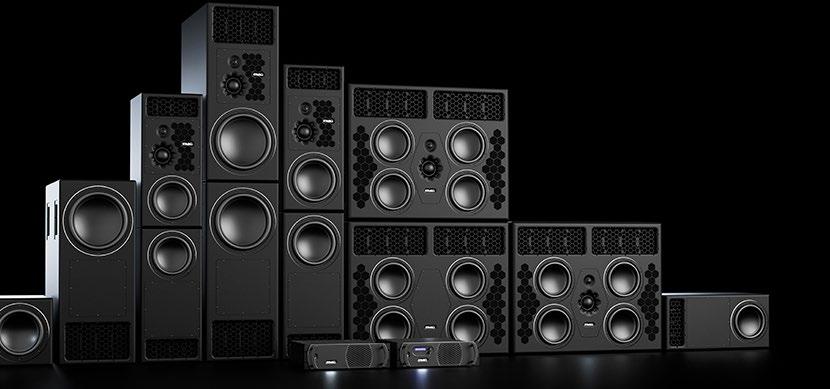
PMC’s Main Monitor Series comprises four fully active three-way speaker models based on the company’s new driver platform and ATL architecture. All operate standalone or with matching XBD low-frequency cabinets. PMC’s updated SoundAlign2 software environment and new Master36 DSP and amplifier platform provide power and control.
The compact QSC CB10 battery-powered twoway loudspeaker features an integrated threechannel mixer, two onboard combo XLR inputs equipped with DSP, independent factory presets
and Bluetooth capabilities. It is compatible with the QSC Loudspeaker Control app.
RCF has expanded its EVOX lineup with three active column systems built around a true threeway electroacoustic design, with a high-power bass reflex enclosure and a new amplification platform. Features include EQ presets and, in one model, an integrated eight-channel stereo mixer with processing and Bluetooth.
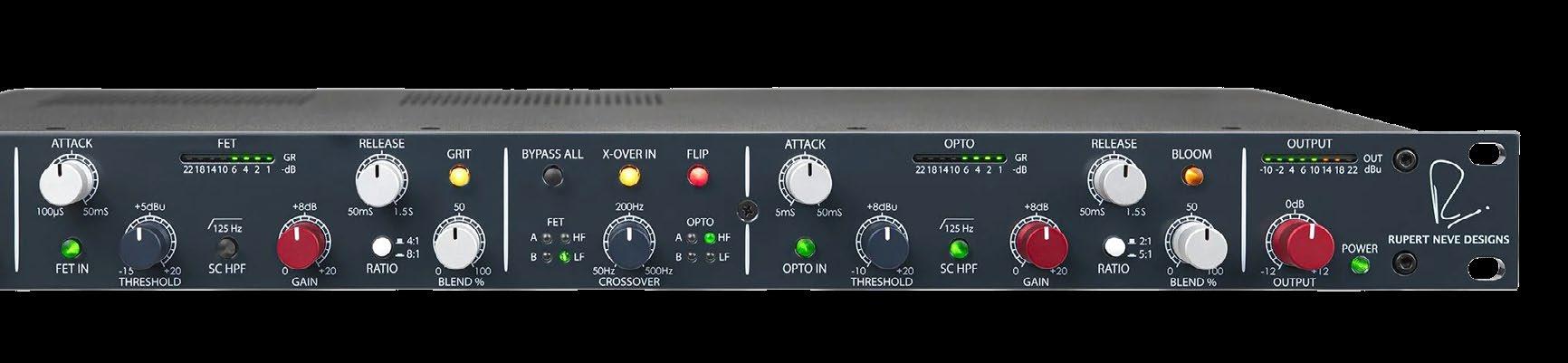
Rupert Neve Designs’ OptoFET combines a newly designed FET compression circuit with the brand’s classic optical design in a 1RU device. Dual Stage mode offers classic serial compression whereby a variable crossover enables independent processing of the HF and LF bands.
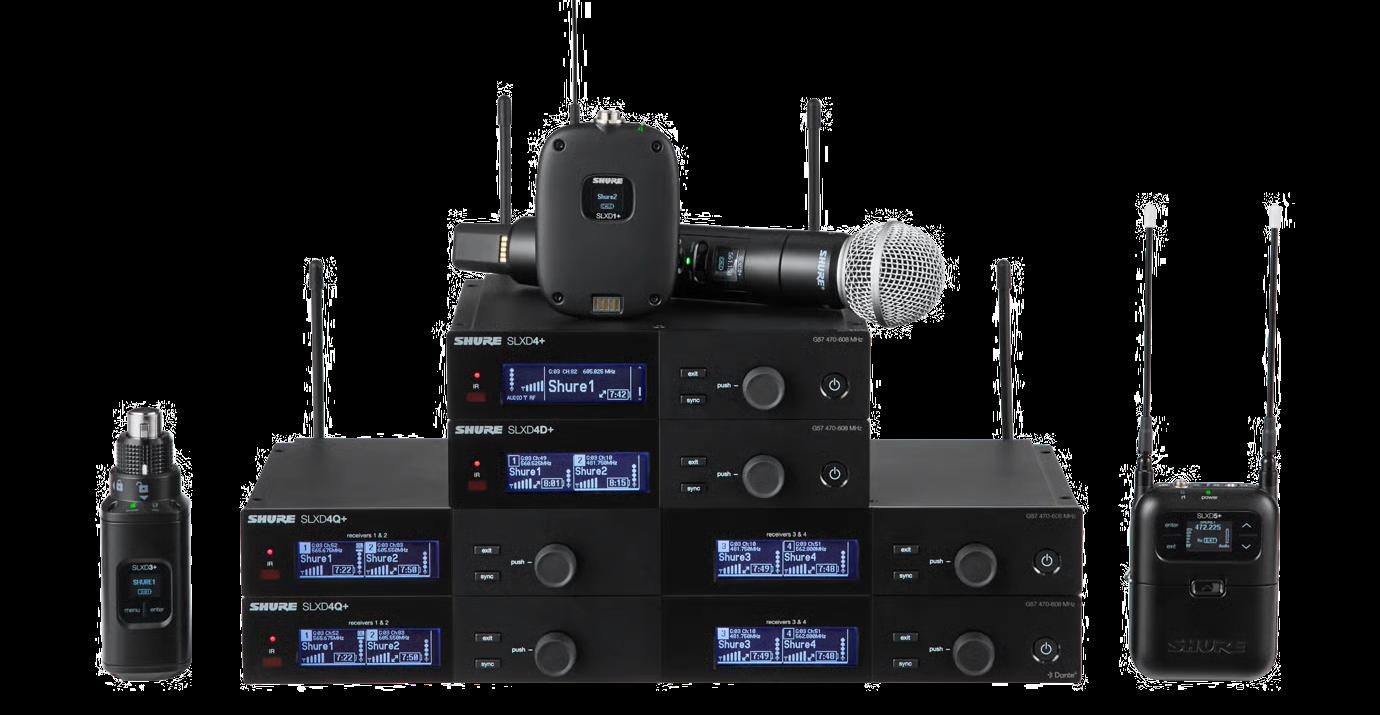
The Shure SLX-D+ wireless system offers tuning up to 138 MHz, allowing them to be used in multiple countries and different frequency bands, plus simplified setup, interference management, remote system management, AES-256 encryption, automatic feedback suppression and more. Shure also introduced its new versatile KSM Condenser line, designed for vocals, instruments, ensembles and more,

which includes 3/4-inch and cardioid 1-inch capsule models, along with a multi-pattern, dual-diaphragm mic with selectable polar patterns.
The latest addition to Slate Digital’s Virtual Microphone System, the ML-2A factory-matched pair of small-diaphragm cardioid condensers, with included mounting bar, offers users a library of 27 classic, modern and workhorse mics when combined with the VMS plug-in.
Sonarworks and Dolby’s SoundID Reference Tools mobile app enables personalization of Dolby Atmos headphone monitoring by capturing images of a user’s head, ears and shoulders using a mobile device, then loads the profile into the Dolby Atmos Renderer or a compatible DAW.
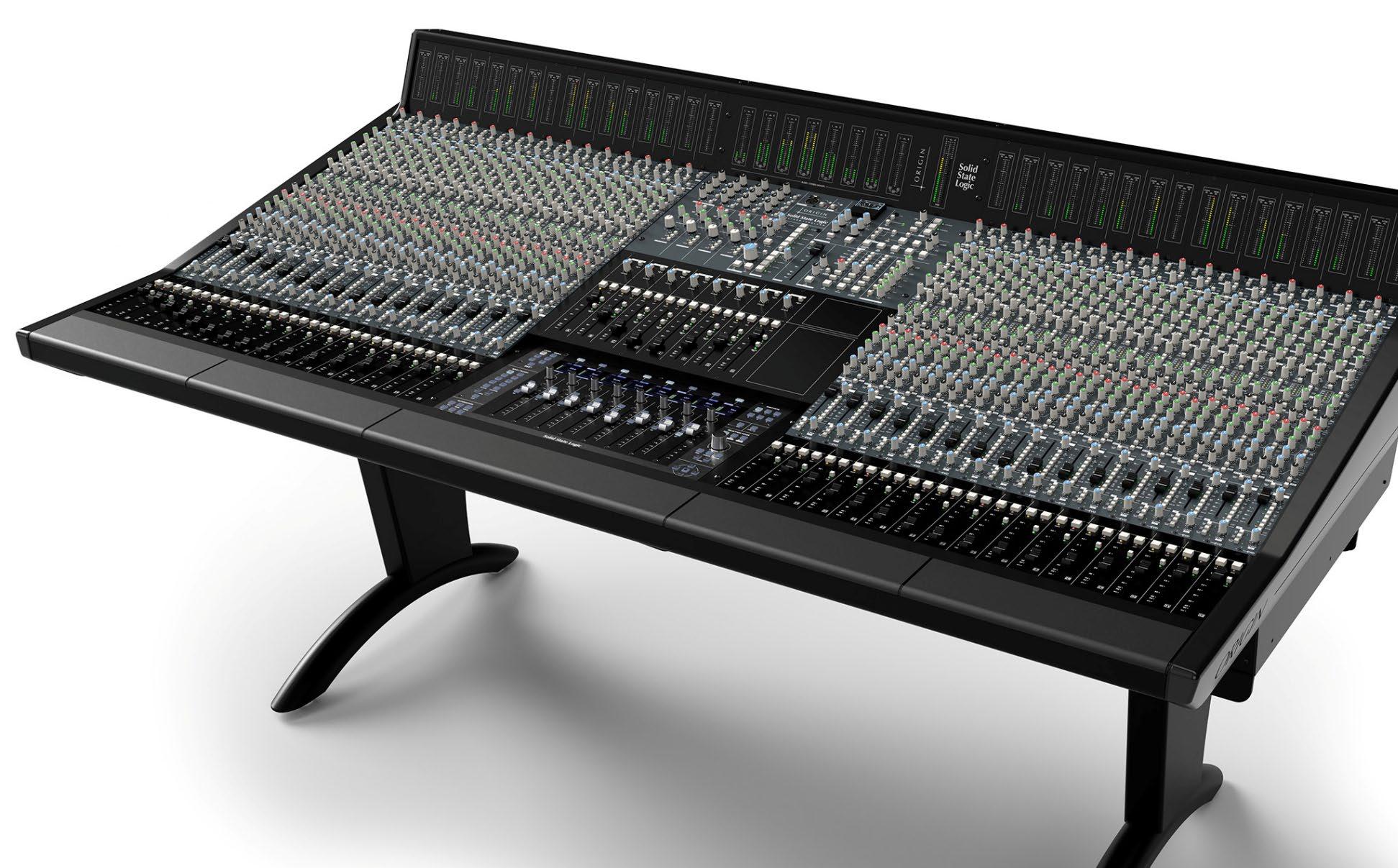
SSL’s 16- or 32-channel Origin Evo analog inline console offers an authentic re-creation of E Series dynamics processing on every channel, with 242 Black Knob EQ and SSL’s high-pass and low-pass filters, plus flexible PureDrive mic preamps. Hybrid workflows are supported via a 0 dB fader bypass for printing stems, plus insert points on both the large and small faders. SSL also debuted the halfrack UMD192, a portable, high channel-count USB audio interface for studio, live and broadcast applications that can bridge MADI and Dante. The front panel provides real-time feedback on signal flow, sample-rate sync, power status, network connectivity and more.
Telegrapher Speakers’ Carbon Fox monitor, developed in collaboration with FOH engineer

Marc Carolan (Muse), is a lightweight, road-ready, fully carbon-fiber reference monitor with an analog signal path, including analog crossovers, intended for use in touring applications.
Waves Audio’s Curves Resolve is the third installment in its intelligent mixing plug-in series and provides an advanced system for managing frequency masking and congestion between tracks and across complex mixes.
Wisycom’s MPR60 wideband IEM receiver, developed for high-end live production, theater and house of worship applications, supports frequencies worldwide in a single device. It introduces automatic audio power limitation, enhanced RF channel selectivity and stereo channel separation of more than 60 dB.
The Wolff Audio Quad Tutti brings the legendary Sunset Sound Studio 1 mic preamp
into a modern, four-channel, 1RU rack format for the first time. Designed by Paul Wolff in collaboration with Sunset owner Paul Camarata, the fully analog circuit, from the design by Camarata’s late father, Tutti, includes originalspec Cinemag transformers. The W1 Mic Pre 500 Series version of the mic pre, originally designed for Wolff’s console, offers “massive” headroom without the need for a pad by manipulating the transformer and op amp.
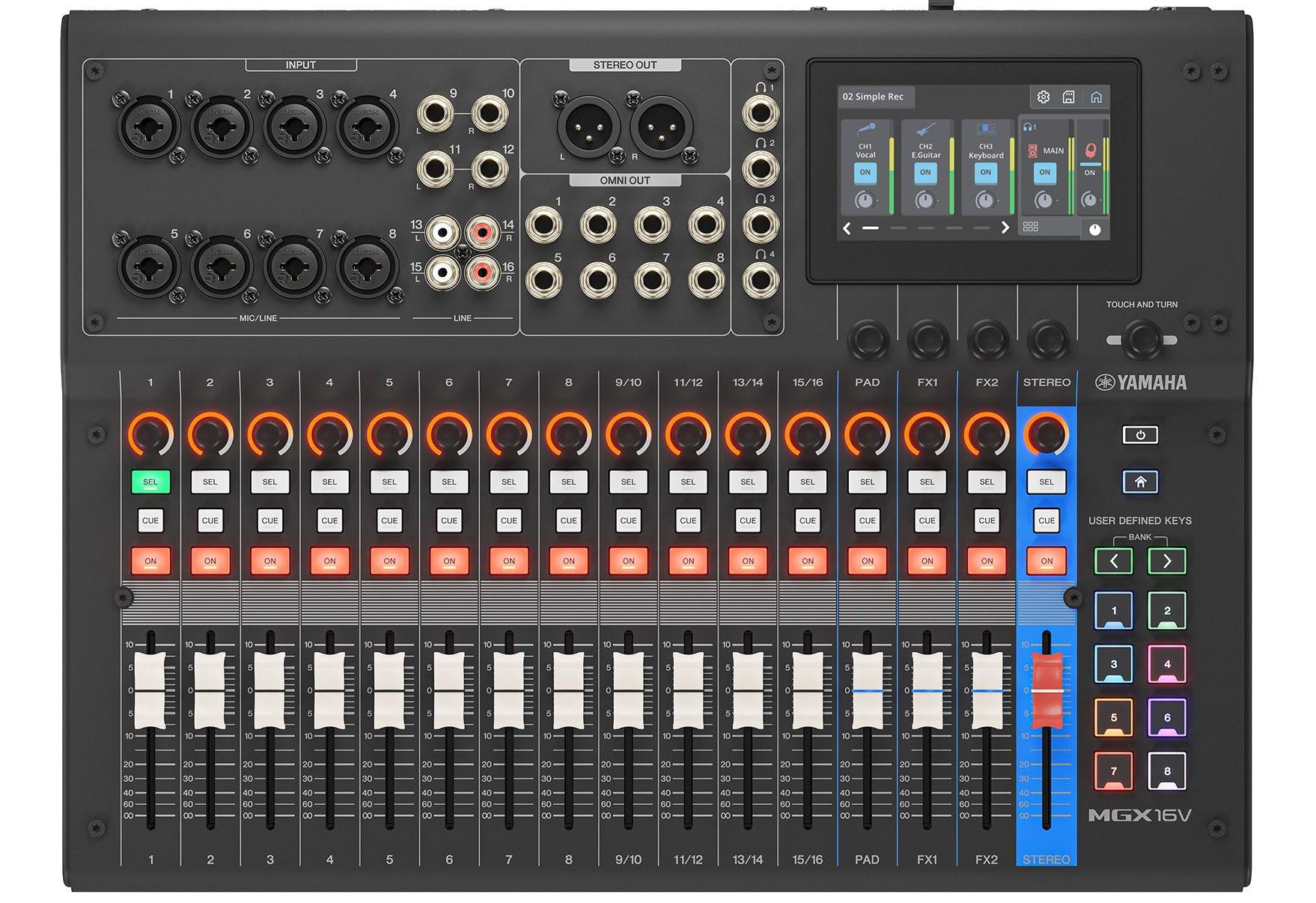
Yamaha ’s MGX Series of four digital mixing console models each feature a touch-panel GUI, various physical controllers and copious I/O options. Two models integrate a USBHDMI AV interface, enabling simultaneous video capture. Meanwhile, the three interfaces in the new URX Series have been designed to act as a central hub for recording, streaming and production. One model adds HDMI-USB video/audio interface capability. Lastly, the CC1 controller, aimed at those in music production, PC streaming, podcast and video content creation, features a 100 mm motorized fader, Elgato Stream Deck-compatible switching and DAW integration. ■
By Barry Rudolph
In the early 1970s, Neve-designed VCA (Voltage Controlled amplifiers) compressors were installed in the company’s 50 Series consoles. VCA-based compressors were a nascent technology back then, and compared to the colorful and easy-going Neve 2254E diode bridge compressor, the 88R LBC is clearer, more precise and more flexible. Ever since, VCA dynamics sections are standard kit in the popular Neve VR and 88R consoles.
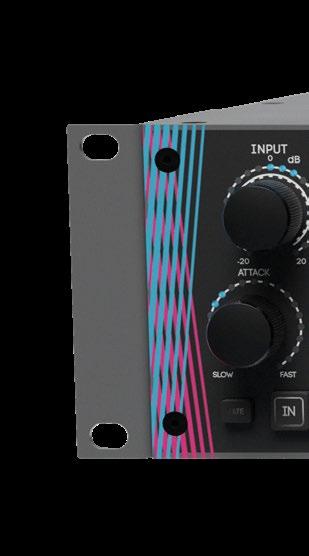
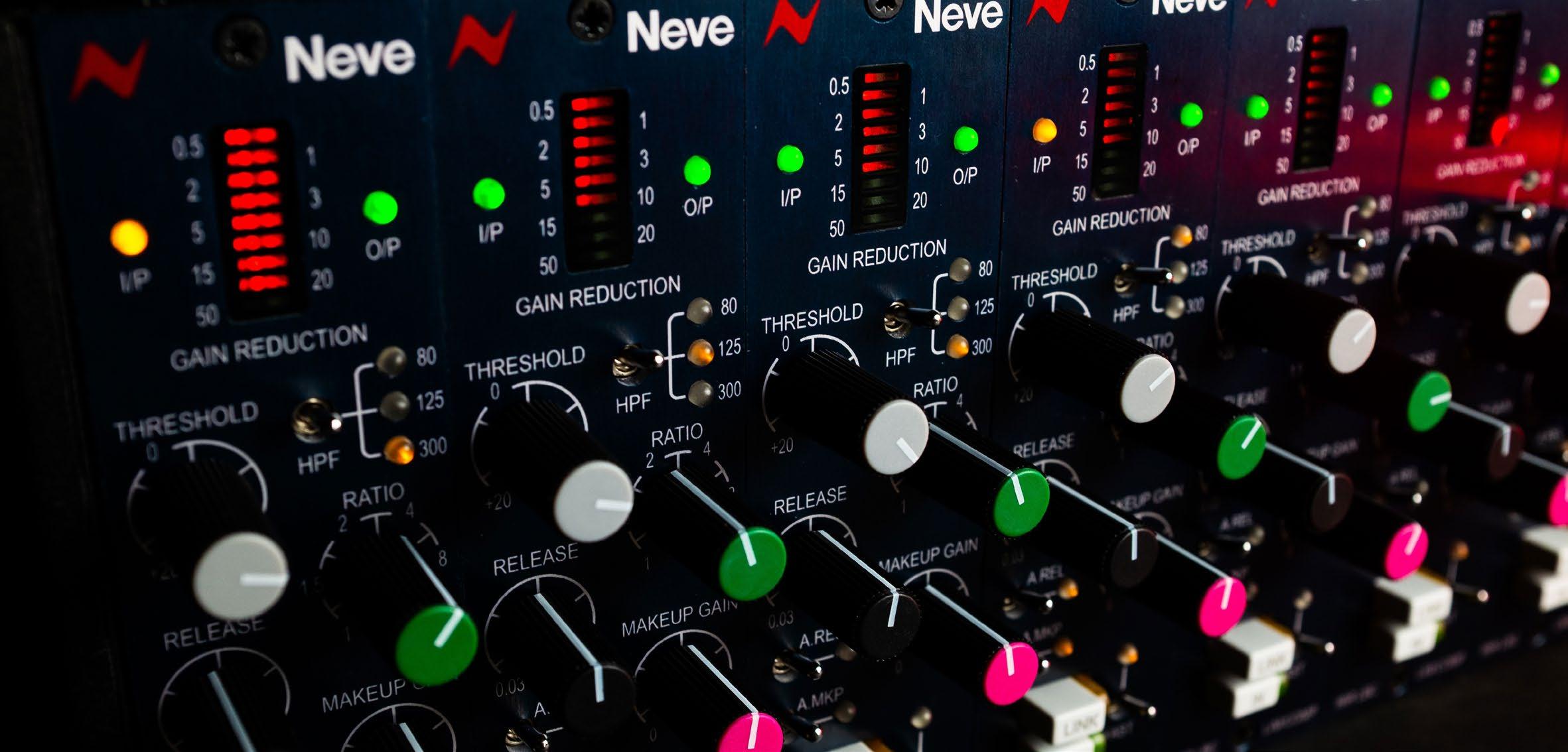
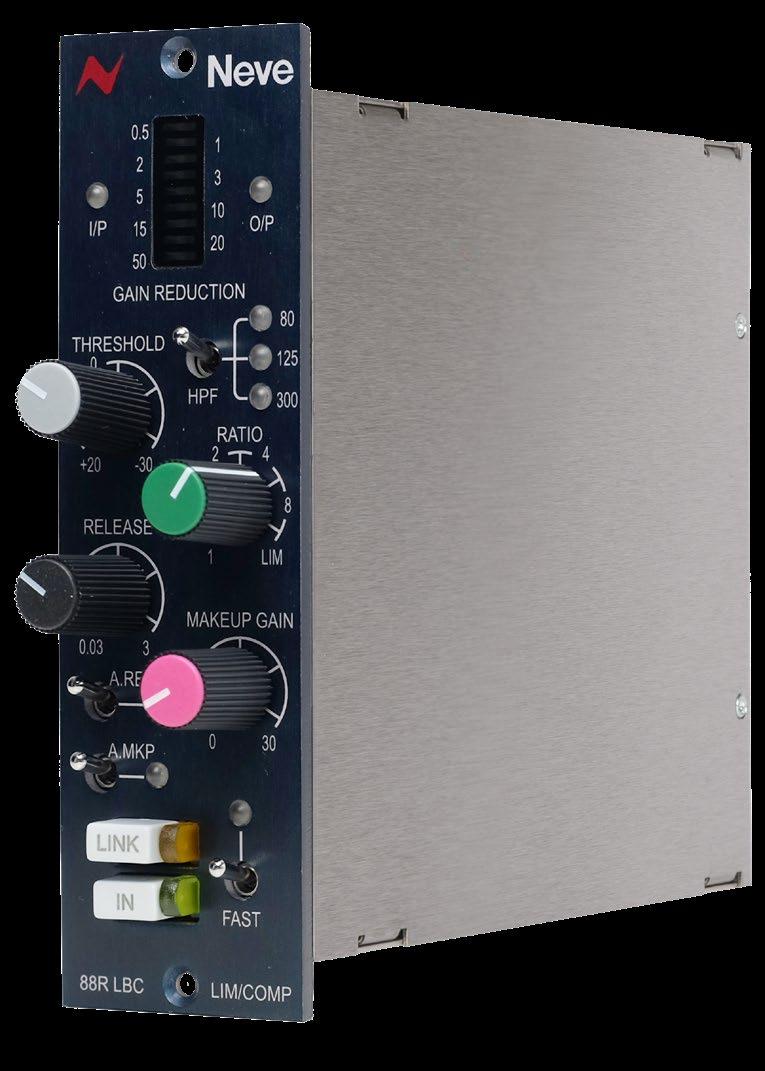
The new AMS Neve 88R LBC (Lunch Box Compressor) is an updated version of the dynamics section from the Neve 88RS console re-packaged in a single-slot 500 Series unit. It incorporates the same transformerless, balanced I/O and THAT Corp 2181 VCA chip. It is the
sixth entry in the company’s LB 500 Series line, joining the 1073LB mic pre, 1073LBEQ, 2264ALB mono compressor, 88R LBEQ (4-band equalizer) and the 88R LB (mic preamp).
The LBC updates include Auto Makeup gain and a switchable sidechain 12dB/octave highpass filter. The HPF can be cycled through three frequencies using a momentary toggle switch; one of four toggle switches used on the module. Frequency choices are: Off, 80, 125 and 300 Hz. Yellow LEDs indicate and verify which frequency you’ve selected.
At the top of the LBC’s front panel are both Input and Output tri-color LED signal-present indicators. When blinking green, the audio level is above -30 dBu, a yellow LED indicates
above +5 dBU, and red for above +18 dBu, indicating possible clip. The input and output LEDs are positioned on either side of the ninesegment Gain Reduction meter, with its clever, dual-expanded scaling to read compression of any amount. Up to 50 dB of gain reduction is possible. In operation, the blinking signalpresent LEDs and flickering GR meter present a rather glamorous display.
The Threshold control knob has a range of +20 to -30 dBu. These two extremes, at full counterclockwise and clockwise, are easy to find and adjust in low studio light. It’s good that 0 dB is straight-up at 12 noon. Likewise, the compression Ratio knob was easy to set with a variable range of 1:1 up 20:1, or limiting. I found low ratios ideal
to bring a track forward without collateral sonic damage. Conversely, ratios of 8:1 or higher clamp any unruly instrument effectively.
The LBC incorporates Neve’s Adaptive Attack technology, which was introduced in the 88RS console, so there is no Attack time control knob. Compressor attack time is program-dependent and automatically adjusted in response to the input signal’s transient rise time. With normal operation, levels up to 4 dB below threshold are instantaneously fixed at 5 milliseconds. On steeper rise times exceeding threshold by 4 dB or more, attack time is variable, ranging from 1.5 to 5 ms.
Another toggle switches to Fast attack mode, making attack times even faster. A fixed 5 ms attack time is maintained for signals up to 4 dB below threshold, but for signals 4 dB or more above threshold, the attack time range speeds up to 0.1 ms to 5 ms. The aim is to deliver precise, dynamic control while remaining musicalsounding, and this system works, providing faster attack times for louder transient peaks and slower attack times for quieter moments.
In manual mode, Release has a range of 0.03 to 3 seconds. I found manually setting release times on the LBC to be familiar and intuitive. Manual mode is best for predictable audio levels such as stereo mix-bus program. As expected, overly fast release time settings can induce distortion and pumping in the low frequencies of a bass guitar and synth.
Another toggle switch is for the A.REL, or Auto Release. It enables a program-dependent range of release timings; the longer the signal is above the threshold setting, the longer the release time. A.REL is excellent for dealing with individual instruments or vocals that are unpredictably dynamic. I used A.REL for recording vocals or percussive instruments with good results.
For an effect in a mix, I heavily compressed a lead vocal track (15 dB of GR) and heard less level pumping up on the singer’s breaths in between words. Appropriately named, AMS Anti-Breath Technology is also from the 88RS console, and ameliorates any sudden level drop (30 dB or more) below threshold. I was impressed with Auto Release and Anti-Breath working together. Unlike some plug-ins, both
worked immediately and didn’t require a lot of fiddling around, and both sounded more natural. The breaths are still there, just not as accentuated and as loud.
LBC’s Manual Makeup gain ranges from 0 to 30 dB and is for matching the compressor’s output level to the input; it uses a hardware bypass to A/B. Typically, except for heavily compressed audio using higher ratios, full CCW on makeup gain is about the same level as the input signal.
Another toggle engages Auto-Makeup gain, a feature unique to the 88R LBC module. Without any controls to set, A.MKP produces an acceptable output level so as to not distort your DAW interface or the processor(s) following in your recording chain. Manual makeup is disabled with A.MKP, which applies makeup gain based on the LBC’s threshold and ratio settings by adding gain to the output as the input exceeds the compressor threshold setting. A.MKP also takes into account the
COMPANY: AMS Neve
PRODUCT: 88R LBC 500 Series Compressor
WEBSITE: www.ams-neve.com
PRICE: $995 MSRP
PROS: Auto Release and Auto Makeup are outstanding modern features.
CONS: The momentary toggle switches are a little fiddly and hard to operate.
compression ratio in play.
This feature can be helpful when tracking a room full of musicians and getting sounds quickly with good, working levels and compressor settings. A.MKP settings may be refined later when more time allows it. In addition, by using A.MKP, the LBC can be added to previously uncompressed channels (in moderation) without a huge level and sonic difference. Hours into a tracking session, patching in a compressor no longer takes extra time to reset the recording level.
I had trouble with the low B string of a five-string Music Man bass sometimes distorting the signal chain. Instead of my usual tube compressor/ leveling amp combo, I used the LBC. Threshold was at 0 dB, release at 2 seconds (manual), AutoMakeup gain off, ratio 8:1, and the 125 Hz HPF sidechain filter on. This musically leveled out the bass with a maximum of 5 dB of gain reduction mostly occurring with the overly loud B string. The B string stood out, but no longer shook my monitors and the room.
A poorly recorded vocal track was dynamically rescued and tamed using the LBC. I was able to use a 1.5:1 compression ratio and kept the vocal level constantly clamped down in gain reduction—I used a 0.5-second release time (manual), 80 Hz HPF, with a 0 dB threshold setting. The vocal was not peaky anymore, but it also didn’t sound squashed. I used the same vocal track to check A.REL and A.MKP. Both worked amazingly well by keeping the singer’s breaths and inhalations at a much lower level. Compared to manual release, the breaths sounded natural and not too loud.
I used a pair of LBCs on a stereo bus, starting with them unlinked. For my fairly dynamically smooth mixes, I used low ratios of 1.5:1 to 3:1, max. I use a 1 kHz input tone to get unity gain throughput before setting the threshold. With the mix playing and threshold set, I linked up the pair and further refined my settings. It is easy to get the average mix loudness up and sounding nicely impactful. I used Auto Release but not Auto Makeup gain, as manual makeup allowed me to set the output exactly.
The 88R LBC combines versatile operation to accommodate any compression style, from complete, strict control to a natural-sounding, gentle lid on dynamics. A.REL and A.MKP are my favorite new features. ■
by Rob Tavaglione
I’ve been trying to find ways to up my game and ward off a slew of young bucks with laptops, drummer bots, Fiver hotshots and AI master blasters. Over the past few months, I’ve found a handful of helpful problem-solvers. Some are affordable, some not, but I guarantee they will all get the job done. A few even go above and beyond! Consider the following a rapid-fire rundown—a sixer to-go, if you will….
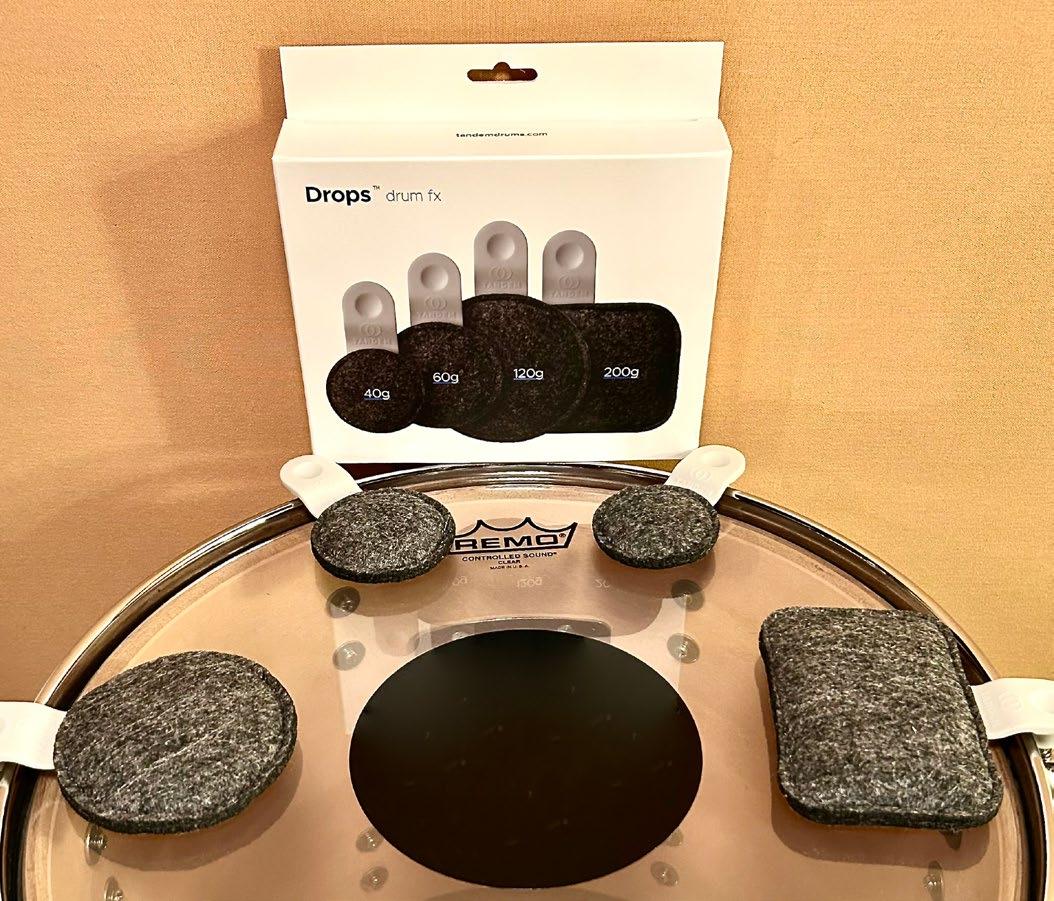
The Basics: 40, 60, 120 and 200-gram models, in sets of four, $59 direct.
The Apps: Leather wallets, t-shirts and moon gels all work well, but sometimes you’re looking for something in between dry and splashy, something open and punchy, but tamed. Drum Drops provides this by attaching (with a silicon tab mounted on a tension rod) a small felt sack full of steel beads, resting against the head until struck, then bouncing off as the sound opens up briefly, and dampening back down again soon after the hit. Drops help clear/ thinner heads be more manageable, and you can use multiple Drops on one drum. With “too many” heavy Drops on a splashy snare, the “gated” effect can be striking. Splurge for two sets at $99 and have enough for a full drum kit with options.
The Link: www.tandemdrums.com
The Basics: Reverb plug-in with a focus on clarity and transparency, $69 direct.
The Apps: PR2 uses Dynamic Room Response technology upon a “perfect” acoustic simulation model absent of any resonances or colorations, which allows resizing from natural ambiences to over-
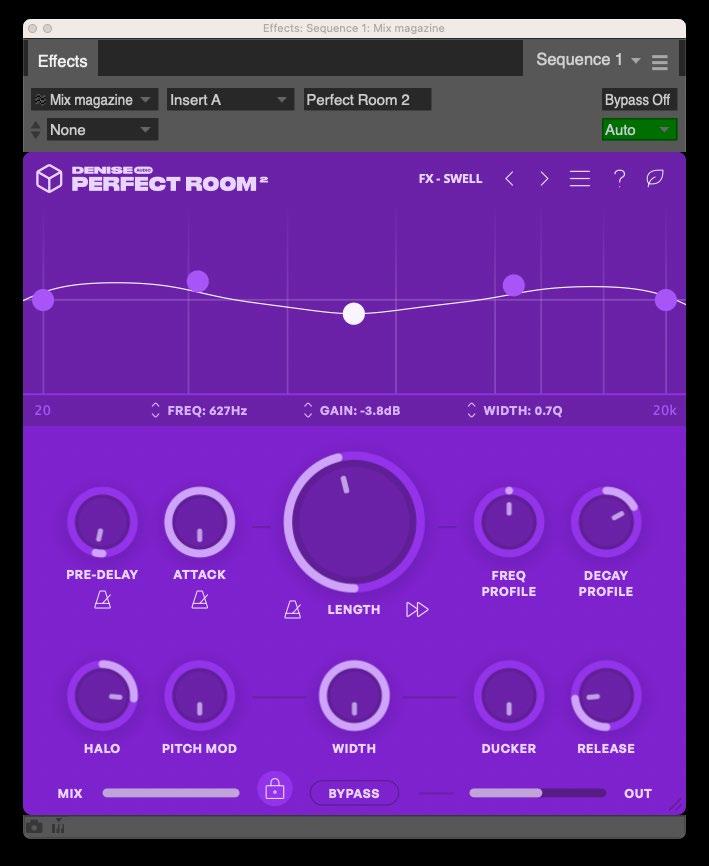
sized imaginary environments. Tempo sync, a ducker, the Halo effect (for lingering freq-specific tails beyond the reverb time) and the ability to deep-dive into the simulation itself allows for plenty of options, from quick-and-easy to full-on sculpting. Describing reverb isn’t easy, but there’s no graininess here, no unpredictable resonance, no frequency emphasis just a clear, defined and transparent elongation of time. You must try reversing the room and the Swell preset, among others; Denise’s transparency makes for a reverb both eerie and heavenly.
The Link: www.deniseaudio.com

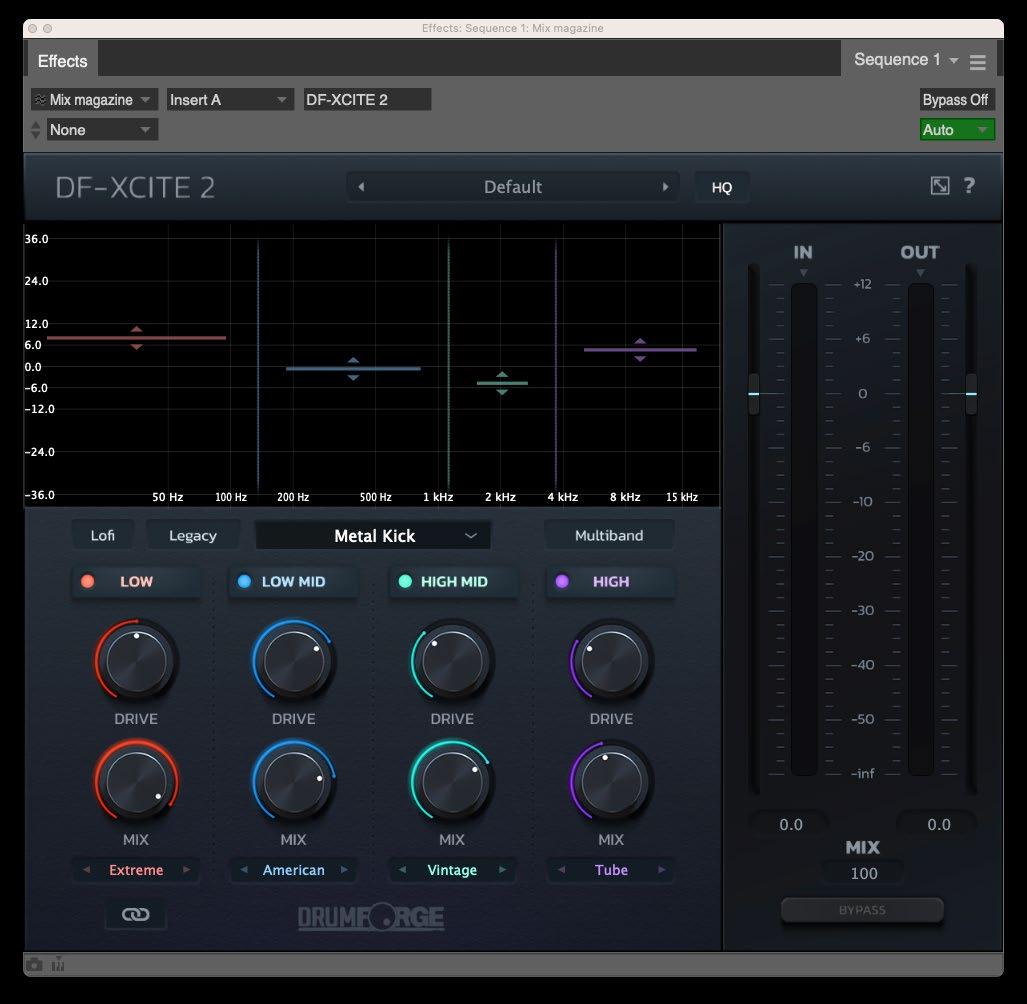
The Basics: Multiband harmonic exciter plug-in, $99 direct.
The Apps: Saturation was the “FX du jour” every single day of 2025, and this harmonic exciter from the makers of Joey Sturgis Tones gives you four frequency bands (or just one, if you’d prefer) to dial-in your harmonic soup with total control. You have Drive and Mix controls, plus six selectable excitation models selectable on each band, plus variable crossover points and modes. If this can’t get your drum bus (or bass DI, guitar tracks, dirty vocal, bland synth, or ) excited, then good gawd, man, what can?
The Link: www.drumforge.com
The Basics: Heavy-duty, motorized, monitor stands with decouplers, $949 each, direct
The Apps: When you have big 80-pound Focal mains like I do, you need heavy-duty support and ample isolation/decoupling to stop excessive resonance and achieve ideal placement. Now that “sitting is the new smoking,” I’m determined to spend more time mixing while standing. I splurged on a pair of Space Labs with the 44-inch tall center post, their largest platforms, heaviest Sylomer isolators and a power supply. Leveling them on uneven floors was made much easier due to a clever adjustablefoot design. The motors are precise and the build quality excellent, but the I got the best response
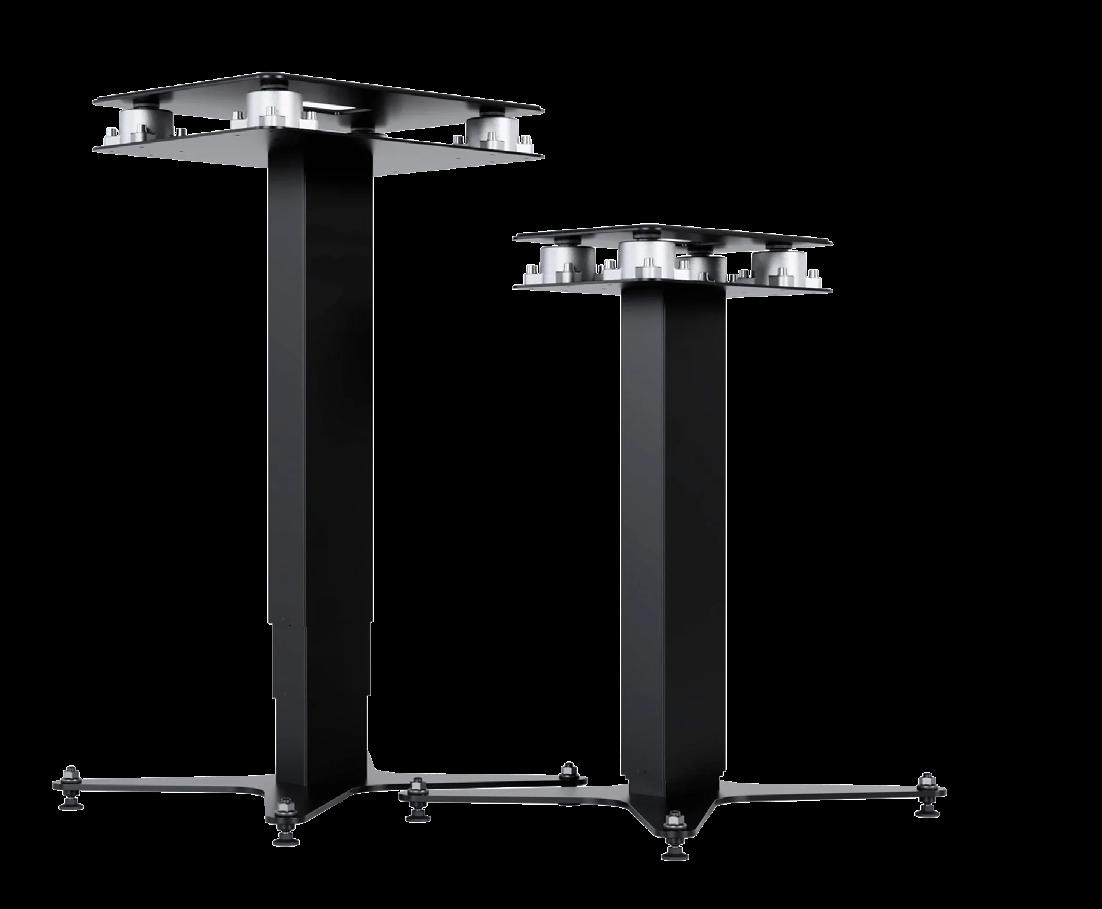
I’ve ever heard in my room. The bottom-end became flatter and stronger, the soundstage more balanced, and (finally!) dependable phantom center that doesn’t move around on me. A bit unexpected, I admit, but who’s complaining! www.spacelab.
The Basics: High-end hardware specialist unveils new line of throwback plugs, $139 each
The Apps: I recently reviewed the Heritage 73JR plug-in for Mix and was impressed by its overall warmth, the “features beyond the hardware” and the general ability to mangle with useful results. Those characteristics appear to fit all of the above plugs, with their authentic controls (which sometimes irks me, just a little), a focus on transformer- and tube-based non-linearity, and a chewy, analog-like response that has way more
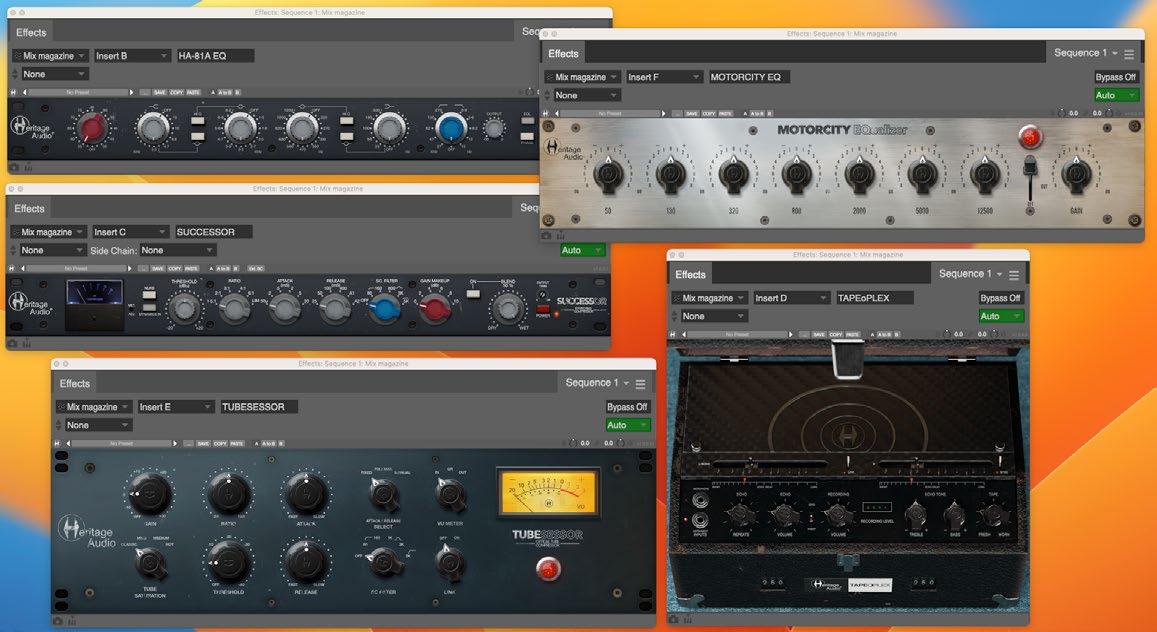
character than stock DAW plugs or low-budget, analog processors. The diode-bridge compressor emulator Successor, for example, has a Nuke button and parallel-blending for crushing channel apps, as well as gentle harmonics for mixes and buses. TapeOPlex takes that unmistakable Maestro Echoplex tone and allows different delay times for L and R, which, in my world, makes it bigger, fatter and chewier than a Snickers bar.
The Link: www.heritageaudio.com
The Basics: New plug-in offering a modeled collection of iconic electric piano preamps, amplifiers and mics, $125 direct
The Apps: Six preamps (from suitcases to hot mods to the MK8), with the added options of extra gain and parallel blending, feed seven amplifiers (from suitcases to guitar amps to full-range cabs), which feed seven mics (the typical dynamics, ribbons and condensers) for more than a few trunks’ worth of options. Electric pianos are natch, but this processing is a potential match for most any input. In fact, that’s the only problem for me too many options, not enough time. Add onboard, global EQ and reverb choices, and this plug-in deserves a deep dive and more than just superficial preset surfing (or go ahead and use a preset un-tweaked stock; just do what you’ve gotta, I won’t judge).
The Link: www.rhodesmusic.com ■
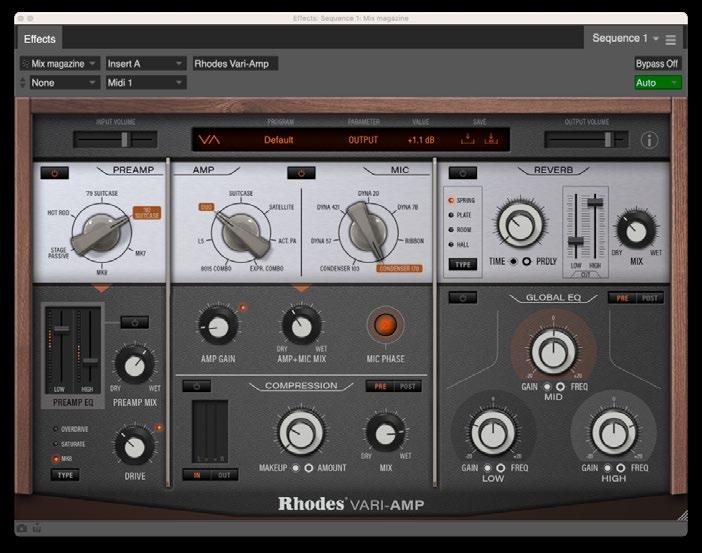

By Craig Anderton
The big post-NAMM news was Native Instruments teetering toward insolvency, thanks to a major debt load with insufficient income. During the time between writing this month’s column and when it’s published, who knows how the finances will play out. But having seen this movie before, I doubt the script will differ much, ending in either acquisition, a sell-off of the profitable part or liquidation.
That wasn’t the only shakeup. After 26 years, the PreSonus Studio One brand has been replaced with Fender Studio Pro. Granted, Fender is a much bigger brand, but producers/ engineers/musicians are known for a near-obsessive loyalty to their preferred tools. Compared to Yamaha’s hands-off approach in maintaining the Steinberg/Cubase/Nuendo identity, some found Fender’s appropriation off-putting.
Meanwhile, LANDR acquired Reason Studios. Over the past 25 years, Reason had gone from jaw-dropping, paradigm-shattering software to an ever-smaller piece of the DAW pie. (Or, maybe it was the plug-in pie, as Reason developed a split personality sometime around 2019.) To top it all off, a visual effects software company, Boris FX, bought Magix’s flagship audio programs—Sequoia, Samplitude and Music Studio.
What the hell is happening?
AI-native DAWs are becoming acquisition targets (Suno/WavTool), cross-discipline consolidation is accelerating and companies with financial backing are repositioning legacy DAWs. Yes, acquisitions can save companies, but sometimes the big companies with the big brains stumble for one or more of the following reasons:
Takeovers motivated by numbers, not knowledge. Some big companies acquired smaller companies for top dollar during the Covid “sugar high” of people getting into music during lockdown. Furthermore, some smaller companies overexpanded. Then consumers found that (surprise!) getting good at any artform takes effort. Industry veterans suspected the sugar high wouldn’t last. It didn’t. Then, of course, along came Generative AI, stomping the buzz altogether. Become a rock star! No effort required!
De-prioritizing user experience for user extraction. People hated it when Adobe went subscription-only because it felt like extortion—you had to pay every month just to edit your work—but Adobe’s broad user base made it easier to extract money from existing customers than to find new ones. Even if companies didn’t convince users to subscribe, extracting paid updates became another option. Speaking of which...
Misreading the consumer. Sometimes updates seem more about being “different” than “better.” NI’s Kontakt was innovative software that pushed boundaries, but recently, it seemed that NI just kept adding features and sound libraries to see what would stick. The irony is that many users don’t realize Kontakt can do sampling, not just sample playback, yet this feature
is somewhat hidden and not workflow-optimized. Perhaps elevating Kontakt’s sampling capabilities would have created more excitement than adding more content. At least for me, Kontakt’s updates occasionally made the program more confusing, not more streamlined.
Minimizing the importance of a company’s community. Big companies sometimes don’t realize that users are intensely loyal to the tools with which they express themselves. Forced, unannounced changes make users feel they have no input into the product they’ve supported for years with their money and allegiance. Think of it this way: Your neighbor decides to paint your house while you’re away on vacation. Uh…okay. Maybe he should have let you know he was going to do that, and that his favorite color is orange. Ignoring those who supported a company through thick and thin is an arrogant business practice that erodes trust.
Not understanding that DAWs are a niche market. Even though DAW users continue to request more features, DAW progress could be frozen tomorrow and people would still be able to make music. Enlisting new users is not easy, particularly with generative AI programs gaining traction and public school systems gutting music curriculums. Furthermore, companies sometimes forget that music is about art, not technology. Programs may sprawl into areas that may be technically impressive, but don’t make it any easier to enhance the music’s emotional impact.
As to where all this is going, I’d like to imagine a positive future ahead, but we’re not out of the turmoil yet. Political and economic events (e.g., tariffs) contribute to a background noise that doesn’t help. I assume (hope?) that eventually all this will shake out. People will still want to make and record music; eventually they’ll figure out that the difference between generative AI-made music and human-made music is analogous to the difference between having sex v. making love—they may appear similar, yet the causes, processes, and outcomes can be very different.
Who knows? Maybe streaming services will implode, and fans will want to support their favorite artists instead of throwing their support into a big pool where the rich get richer and the poor get drowned out by sheer volume. Maybe the music scene will become more like it is in South Korea. Or maybe we’ll end up like the movie Idiocracy, with people glued to their TVs as they watch shows named Ow! My Balls!
As we navigate this landscape, let’s reflect on how the Buddha thought: Suffering is unavoidable when people attach themselves to what they think will be permanent.
All life, and all events, are temporary. Those who can cope with chaos pivot as needed, realize that what was true a few years ago may no longer be relevant, and, most importantly, see reality as it is rather than how they wish it to be. These people have the best chance of surviving and even thriving.
Meanwhile, for those who expect business as usual, the world has changed to...business unusual. ■
APRIL 18-22, 2026
EXHIBITS APRIL 19-22
LAS VEGAS, NV
The tech, the trends, the people.
Join the thousands of visionaries and storytellers convening to find the inspiration, tools and technologies needed to create, distribute and monetize content.
Scan to register by March 28, 2026 and receive a free Show Floor Pass (a $219 value).