9087686986
kiyorndlabs@gmailcom
wwwkiyorndlabcom



9087686986
kiyorndlabs@gmailcom
wwwkiyorndlabcom
In the realm of materials science and engineering, composite materials stand out for their unique properties and the vast potential they oer across various industries, from aerospace and automotive to renewable energy and construction. As these materials become increasingly integral to innovation and development, the importance of composite material testing laboratories has surged. These specialized facilities are at the forefront of ensuring the safety, reliability, and performance of composite materials. This article explores the pivotal role of composite material testing laboratories, their methods, and the impact they have on advancing technology and industry standards.
Composite materials, known for their strength, lightweight, and resistance to corrosion, are engineered from two or more constituent materials with significantly dierent physical or chemical properties. When combined, they produce a material with characteristics dierent from the individual
components. The complexity and variability of these materials necessitate rigorous testing to understand their behavior under various conditions.
Composite material testing laboratories are dedicated to this task, employing a range of tests to evaluate the mechanical properties, durability, and performance of composite materials. These tests include but are not limited to tensile, compression, flexural, impact, fatigue, and thermal analysis. Each test provides critical data that can influence the design, manufacturing process, and application of composite materials in their respective fields.
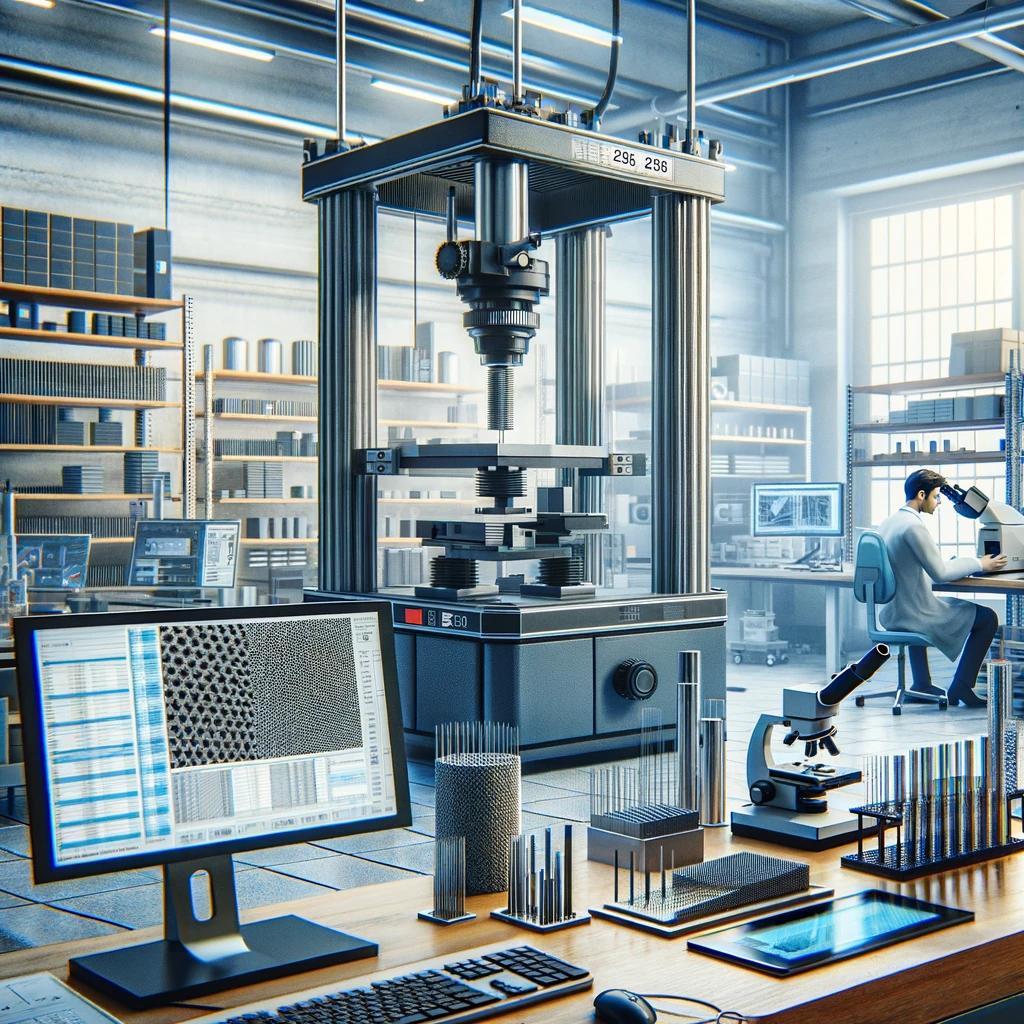
The primary role of composite material testing laboratories is to ensure that the materials used in products and structures are safe, reliable, and perform as expected. This is achieved through:
1. Material Characterization:
Understanding the basic properties of composite materials, including their strength, stiness, and behavior under dierent environmental conditions.
2. Quality Control:
Ensuring that materials and products meet specific industry standards and regulations through ongoing testing.
3. Failure Analysis:
Investigating material failures to determine the cause and to prevent future occurrences.
4. Research and Development:
Supporting the development of new materials and processes by providing data and insights that inform innovation.
Advancements in testing technologies and methodologies have significantly enhanced the capabilities of composite material testing laboratories Some of the cutting-edge techniques include:
Digital Image Correlation (DIC):
A non-contact optical method that measures deformation, displacement, and strain on an object's surface.
Thermography:
Uses infrared imaging to detect thermal anomalies and variations in materials, which can indicate defects or areas of concern.
Acoustic Emission Testing:
Monitors the sound waves emitted from cracks or faults in materials under stress, providing early detection of potential failures.
These advanced methods complement traditional testing techniques, oering a more comprehensive understanding of composite materials' behavior
The work of composite material testing laboratories has a profound impact across multiple sectors:
Aerospace and Automotive:
Ensuring the safety and performance of composite materials used in aircraft and vehicles, where weight reduction and strength are paramount.
Renewable Energy:
Testing the durability and reliability of composite materials in wind turbine blades and solar panels, contributing to the eciency and longevity of renewable energy sources
Construction:
Validating the use of composites in buildings and infrastructure projects for enhanced durability and resistance to environmental factors.
Conclusion:
Composite material testing laboratories are critical to the advancement and application of composite materials across industries. By providing detailed analysis and validation, these laboratories not only ensure the safety and reliability of materials but also drive innovation, supporting the development of
new materials and applications. As the demand for stronger, lighter, and more durable materials continues to grow, the role of composite material testing laboratories will undoubtedly expand, marking a vital contribution to technological progress and industry standards