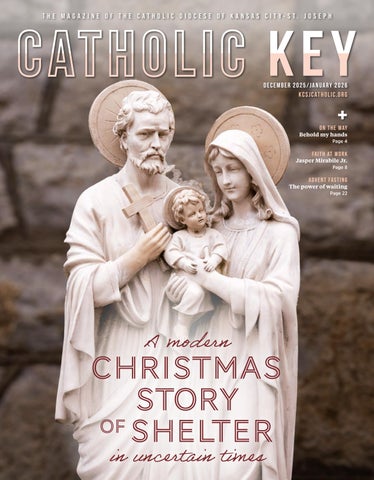
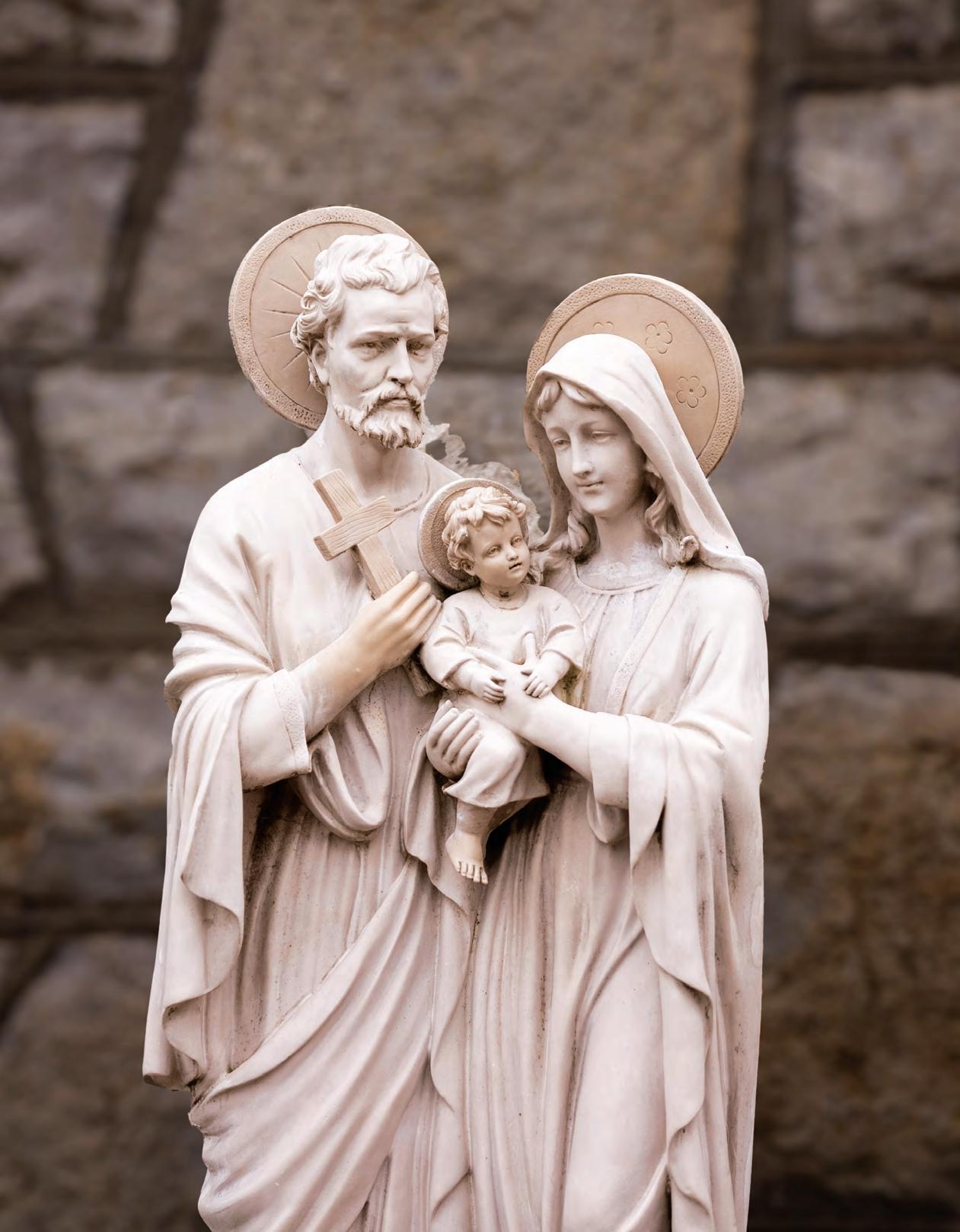
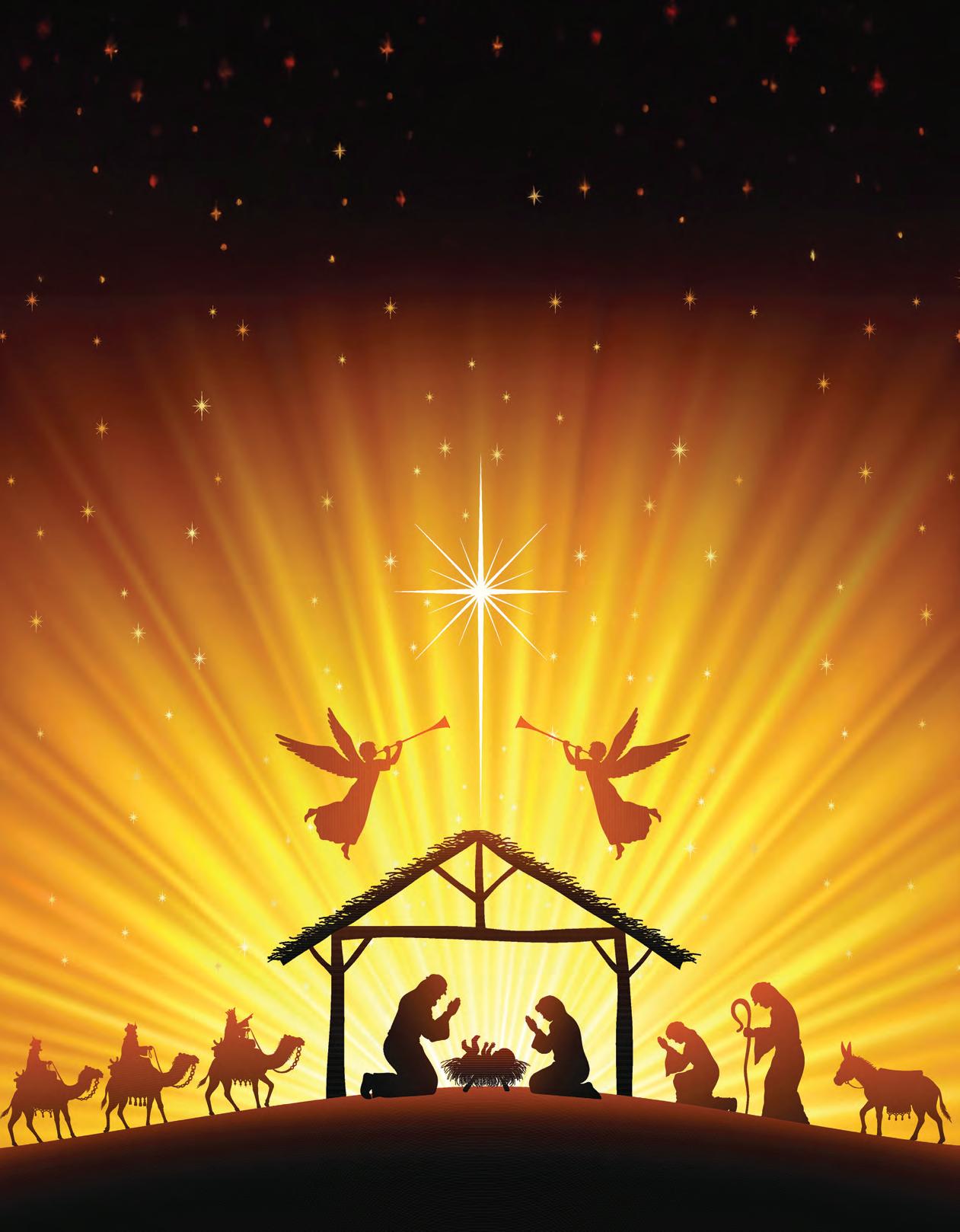
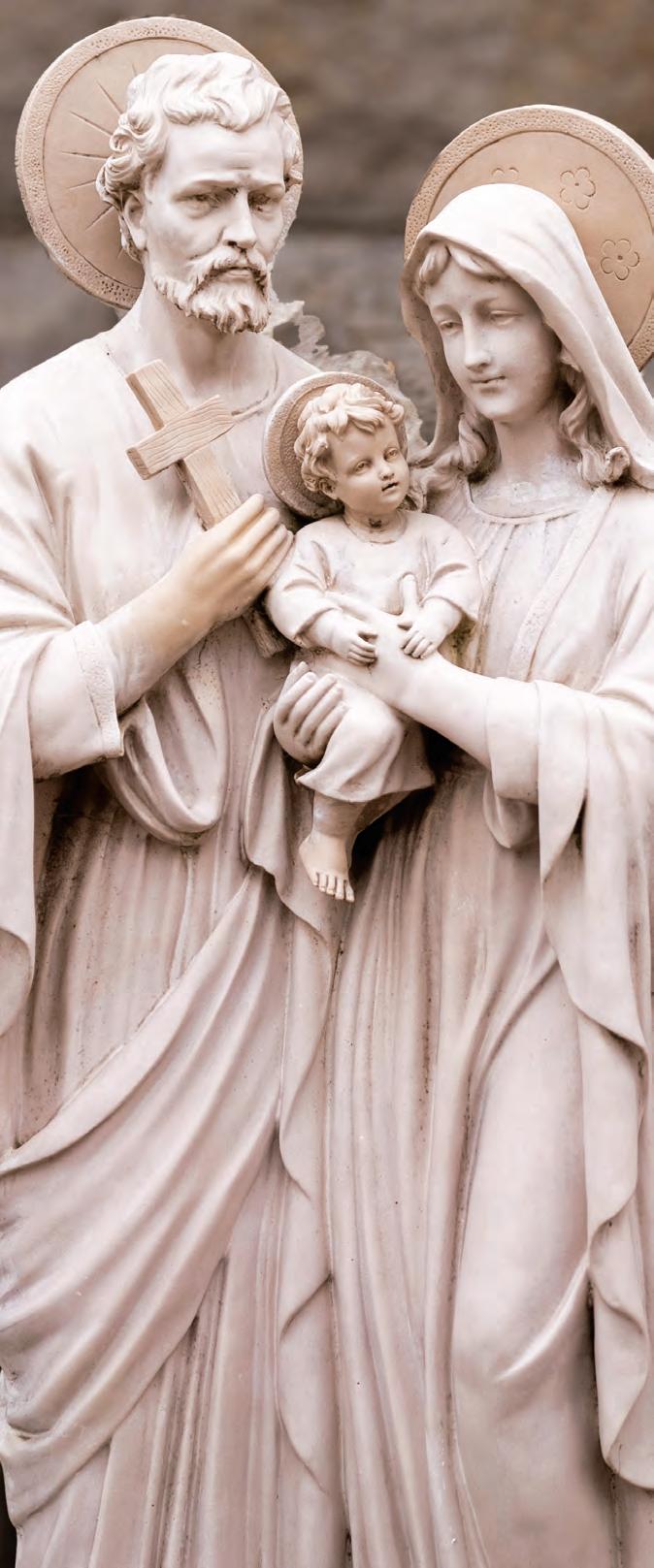
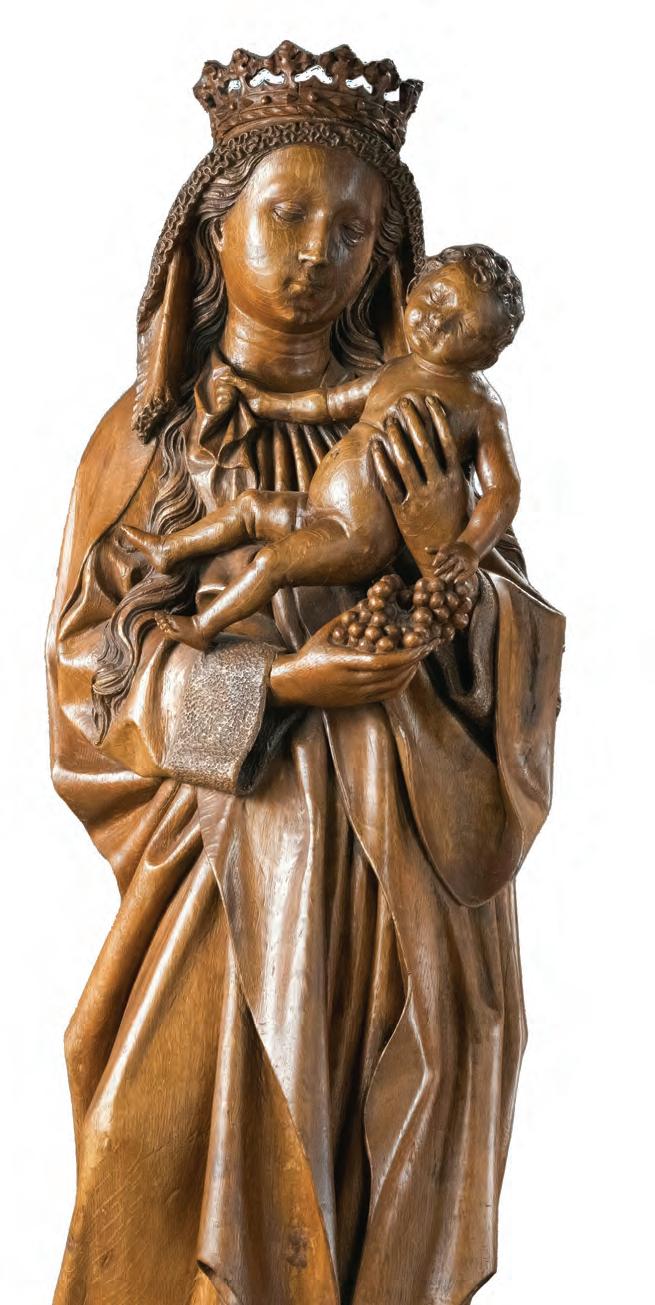
On the cover: This statue stands outside of Holy Trinity Parish in Weston, MO, as a reminder of the Holy Family’s example of faith and perseverence in the midst of uncertainty and crisis. Photo by Cory Thomason.
Ashlie Hand leads the Office of Communications for the Diocese of Kansas City – St. Joseph.
COVER STORY
A modern Christmas story of shelter in uncertain times | Karen Ridder
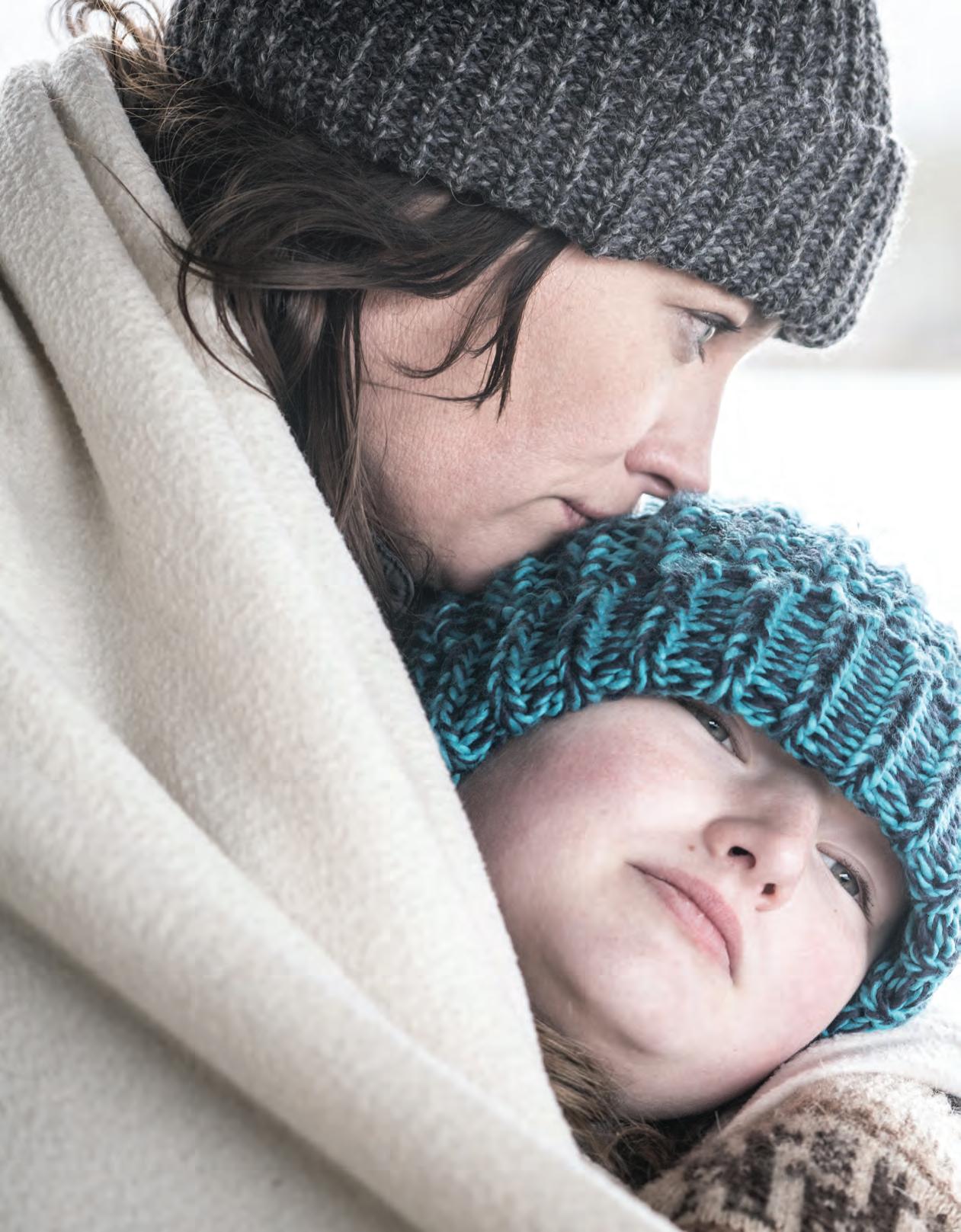
Jamie and Malcolm Cummings know what being in a tight spot feels like — having lived through uncertain times and finding themselves needing shelter with a young family. Together they have four children and work hard to keep their family strong, but two and half years ago, after their fourth child was born, Jamie took time off to care for the baby. Then Malcolm unexpectedly lost his job. They weren’t prepared and quickly found themselves in crisis.
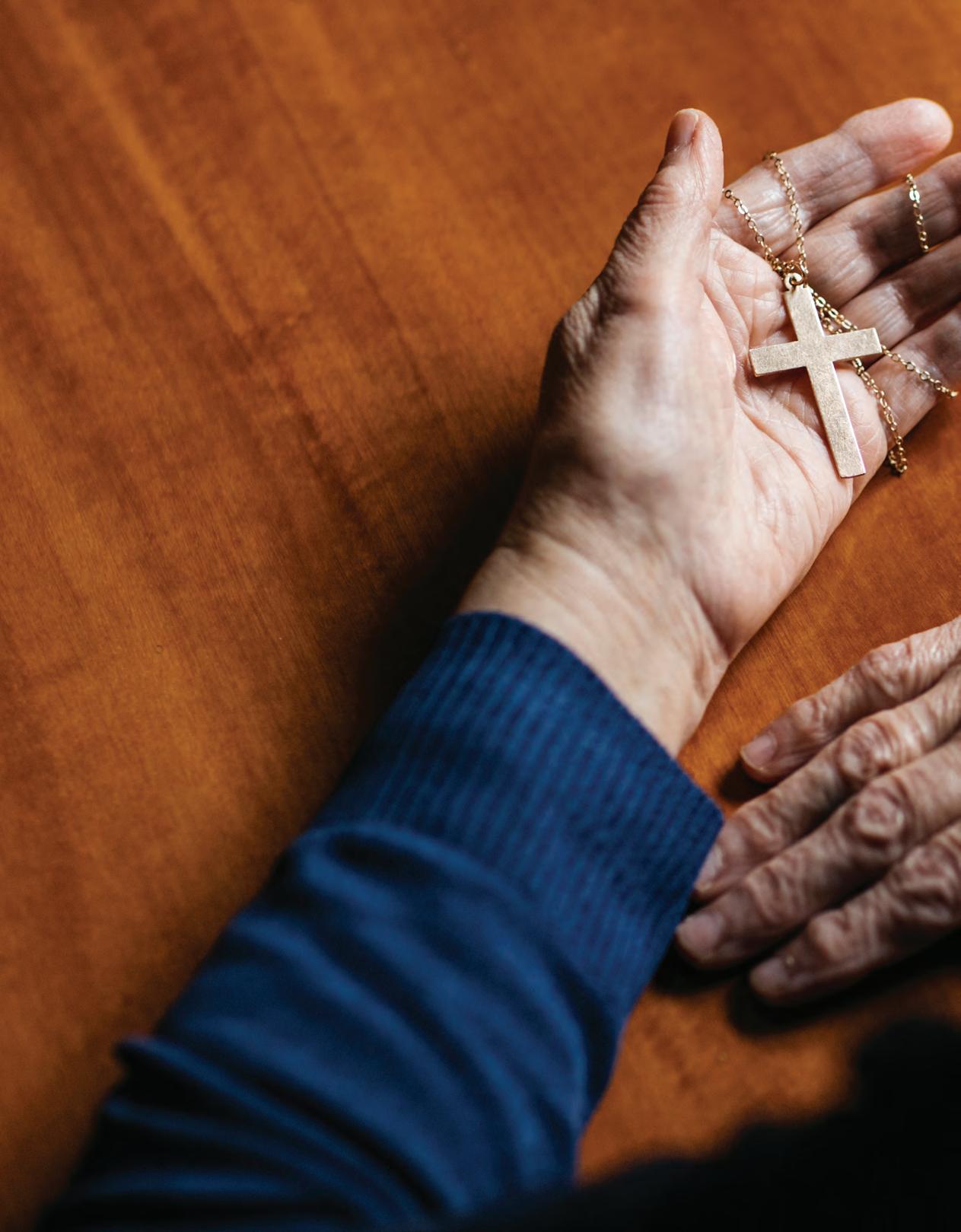
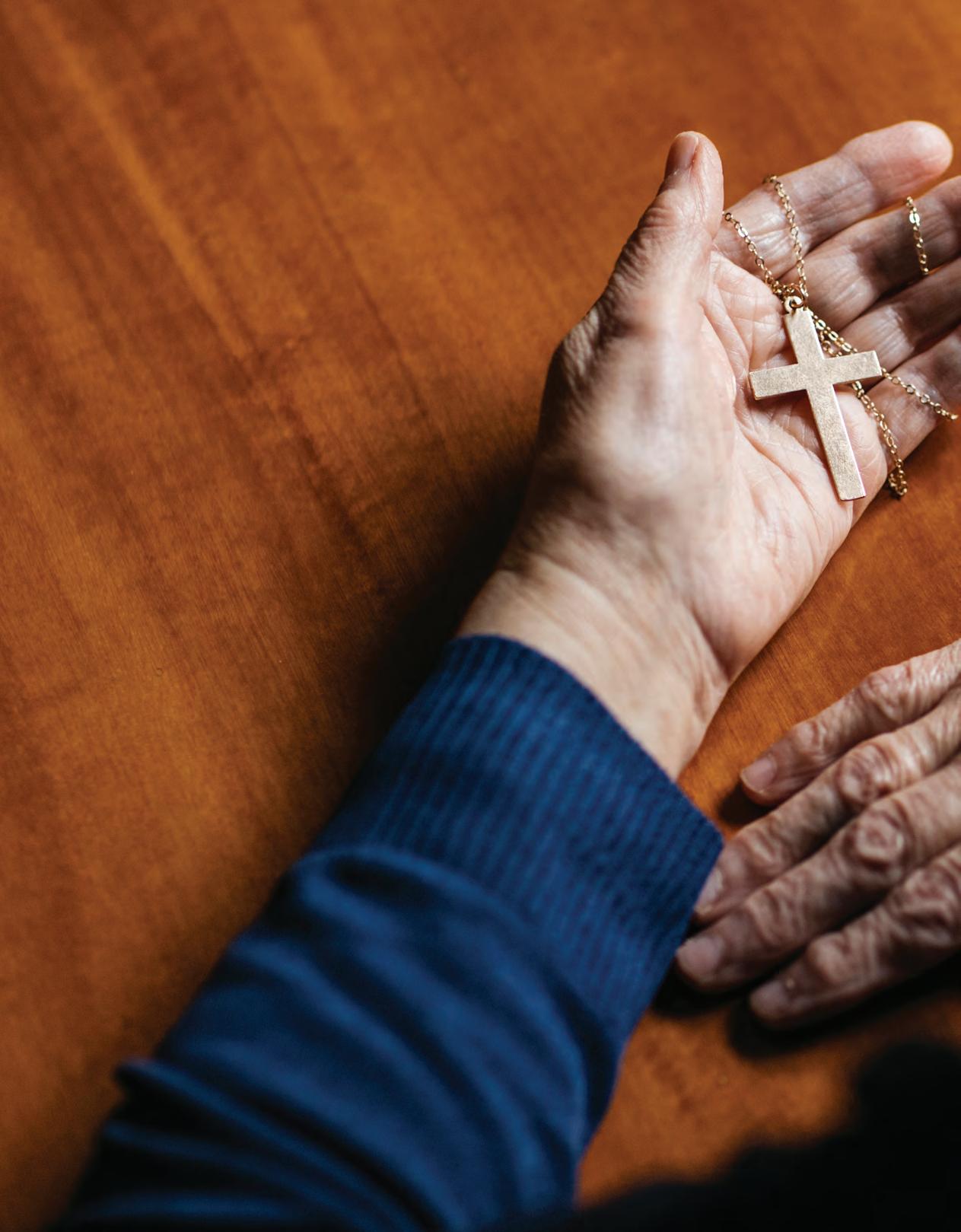
4 On the Way: Behold my hands | Bishop James V. Johnston Jr. Our hands are one of the most important and expressive parts of our bodies and, one could say, symbolic of the Christian life.
Karen Ridder is a Catholic journalist, wife and mother of four in Liberty.
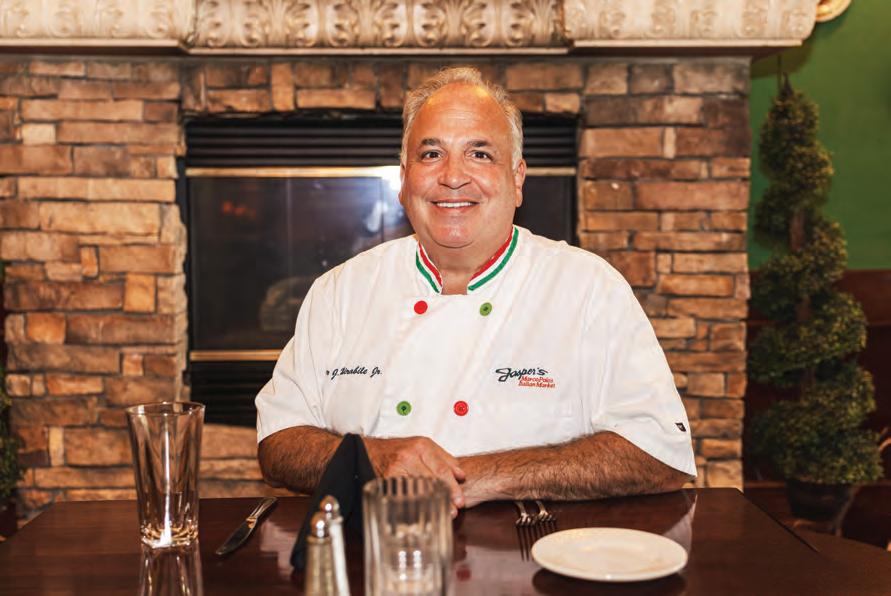
8 Faith at work: Jasper Mirabile Jr. | Ashlie Hand Meet Jasper Mirabile Jr., executive chef and owner of Jasper's Ristorante in Kansas City, a family-owned business for more than 70 years, where he carries on the legacy started by his grandparents and father.
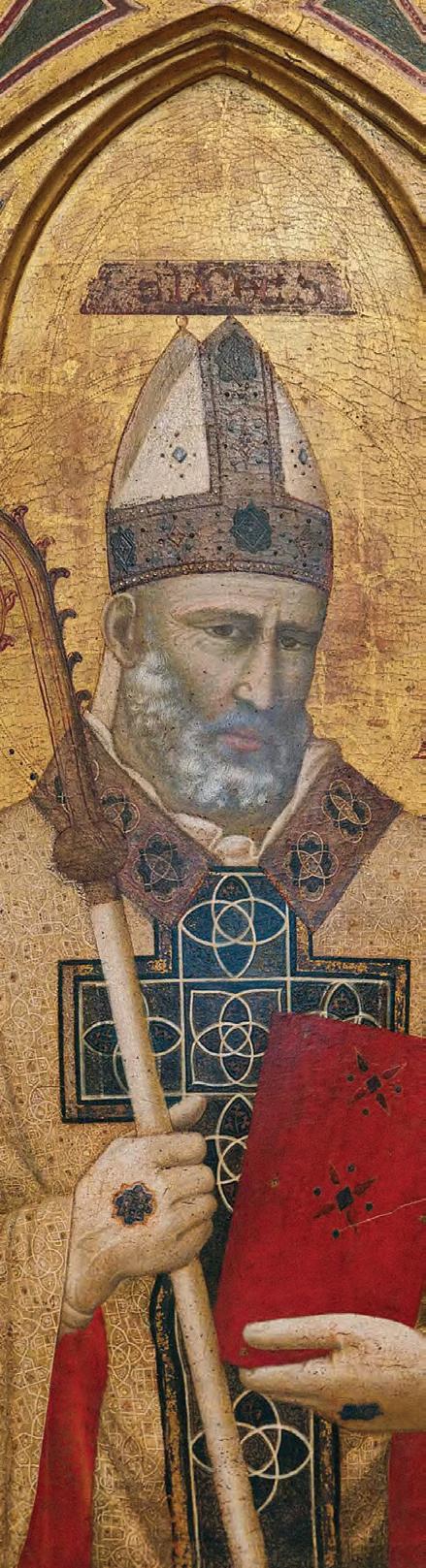
10 Saint Nicholas and the original spirit of giving at Christmas | Marty Denzer Saint Nicholas, the inspiration for our modern-day Santa Claus, was a fourth-century Christian bishop of Greek descent who used inherited wealth from his parents to help the poor.
11 Jubilee Year of Hope comes to a close | Allison Vrooman
While millions made a pilgrimage to Rome to participate in Jubilee celebrations and to obtain a plenary indulgence, three diocesan churches were designated as national pilgrimage sites for those looking to participate locally.
20 To Serve and Lift | Hope Ball offers a light in the darkness, a gift of love | Ashley Everett
In moments when fear threatens to overshadow joy, we need a light to guide us. That’s why Catholic Charities hosts Hope Ball, our biggest event of the year.
Allison Vrooman is the communications specialist for the Diocese of Kansas City – St. Joseph.
22 The power of waiting: Rediscovering prayer, fasting and almsgiving in Advent | Sara Kraft Advent is a time of quiet preparation — focusing on preparing our minds and hearts for the birth of the Christ child.
29
Celebrating the Magi at home | Marty Denzer
There are many ways of celebrating the Magi between Christmas Day and January 6.
31 St. Joseph family finds a 'Faith home' in St. James School’s classical model | Sara Kraft
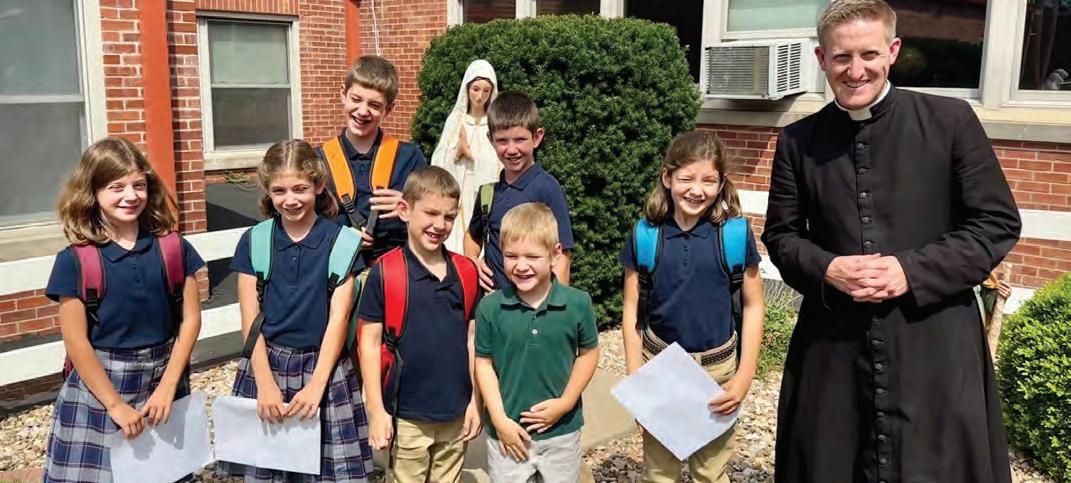
With the opportunity to give their children the gift of a classical Catholic education, seven members of the Wohletz family ages preschool through 7th grade began attending St. James School in Fall 2025.
34
Don't fear the emptiness: Finding God in the postholiday quiet | Lyndsay Hilton In the wake of the fullness of Christmastime, a sense of emptiness can follow.
En Español
25
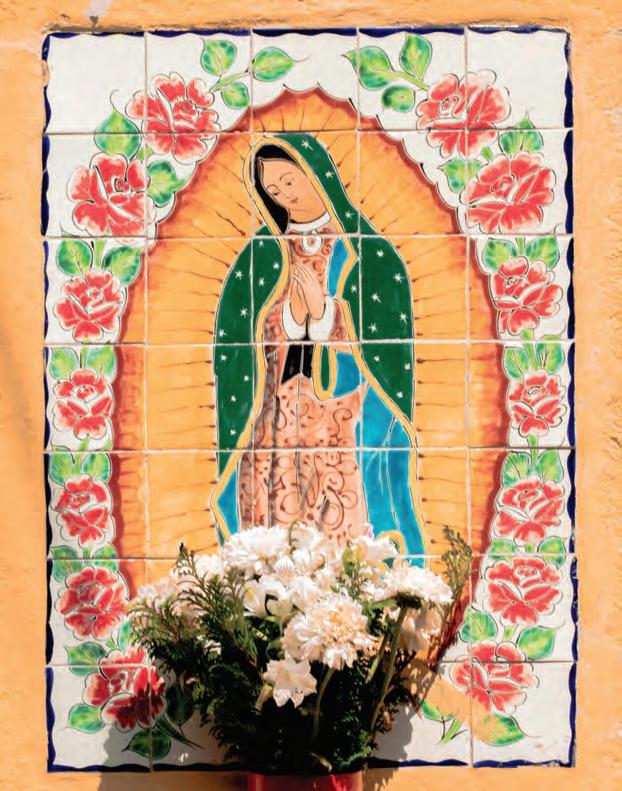
Guadalupe: Madre de un pueblo dividido | Por Leyden Rovelo-Krull
26 En el Camino: Miren mis manos | Por Obispo Johnston
Marty Denzer is a long-time writer in residence for the Catholic Key.
Sara Kraft is a freelance writer in St. Joseph.
“BEHOLD my hands ...”
(Lk 24:39)
I am often fascinated when I visit one of our rural parishes when the moment arrives during Mass for the distribution of Holy Communion and I am given a view of the hands of the people. I can tell who the farmers are. They have hands that are thicker, with calluses and other marks of hard work upon them.
Our hands are one of the most important and expressive parts of our bodies and, one could say, symbolic of the Christian life. This is conveyed in the way we speak. For example, we often say, “Let me give you a hand with that,” when we wish to help another. Or, “let’s give them a hand,” when we wish to express our gratitude with applause. We shake hands to express friendship and trust and even to confirm agreement on a contract. Even emojis make ample use of hands.
Our hands are expressive of emotion and intention — for good or ill. Priests raise their hands in the liturgy to direct the prayers of the congregation to the Father. We salute with our hands. We use our hands to emphasize a point. We sometimes witness hands used in anger in heavy traffic. You get the point.
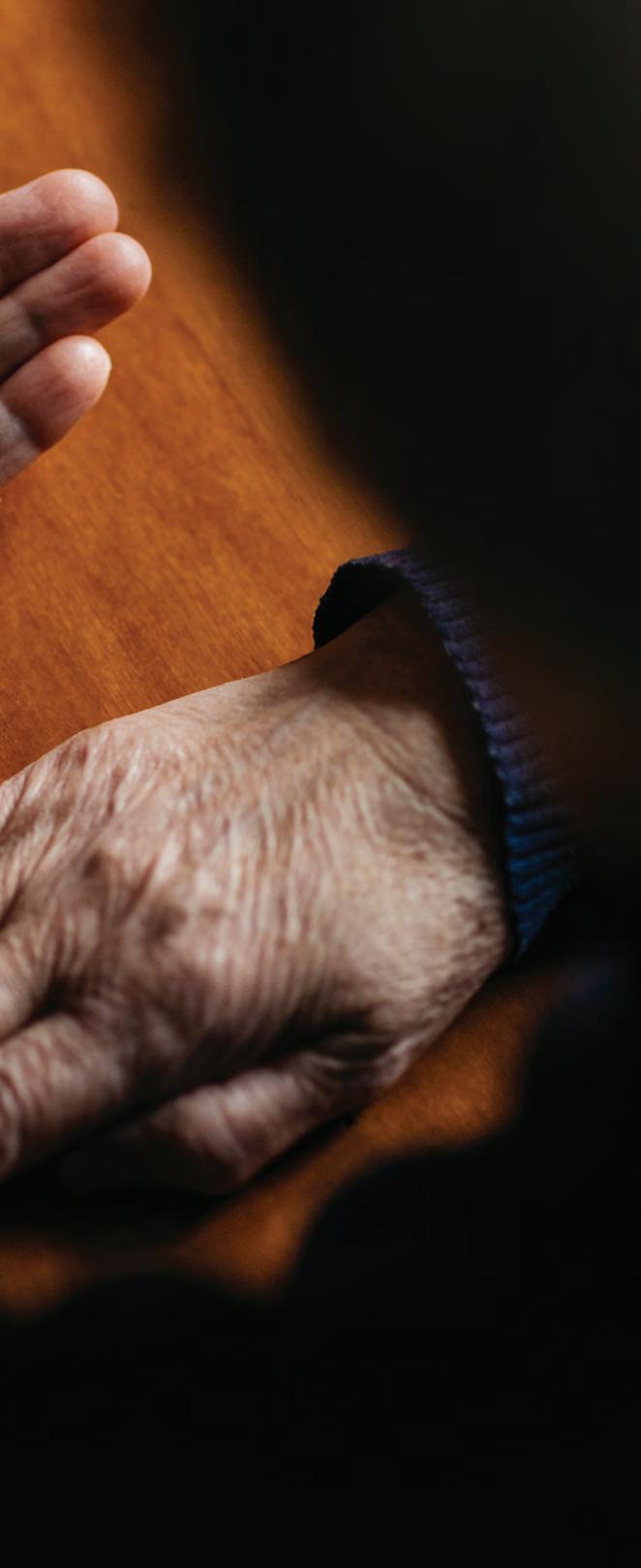
And it is significant that when Jesus mounted the wood of the Cross to win our redemption, it was by his hands that he was crucified. The same hands that healed and blessed and broke the bread at the Last Supper to give us his Body, were wounded to take away our sins. The image of Divine Mercy shows Jesus’ wounded hands raised in blessing. When Jesus appeared to his apostles on the day of the Resurrection, he told them, “Behold my hands …” (Lk 24:39).
As we celebrate this Season of Christmas, I invite you to behold your own hands. Look in amazement at what we often take for granted. Perhaps more than any other part of the human body, our hands have the capacity to carry out beautiful and holy things; to give, to comfort, to bless. Our salvation was brought about, literally and figuratively, by the hand of God. By way of imitation, may we too use our hands in service, peace and charity.
From the Bishop Bishop James V. Johnston, Jr. is the seventh bishop of the Diocese of Kansas City – St. Joseph
Week of Prayer for Christian Unity
January 18-25
Dear Friends in Christ,
Grace and peace be with you.
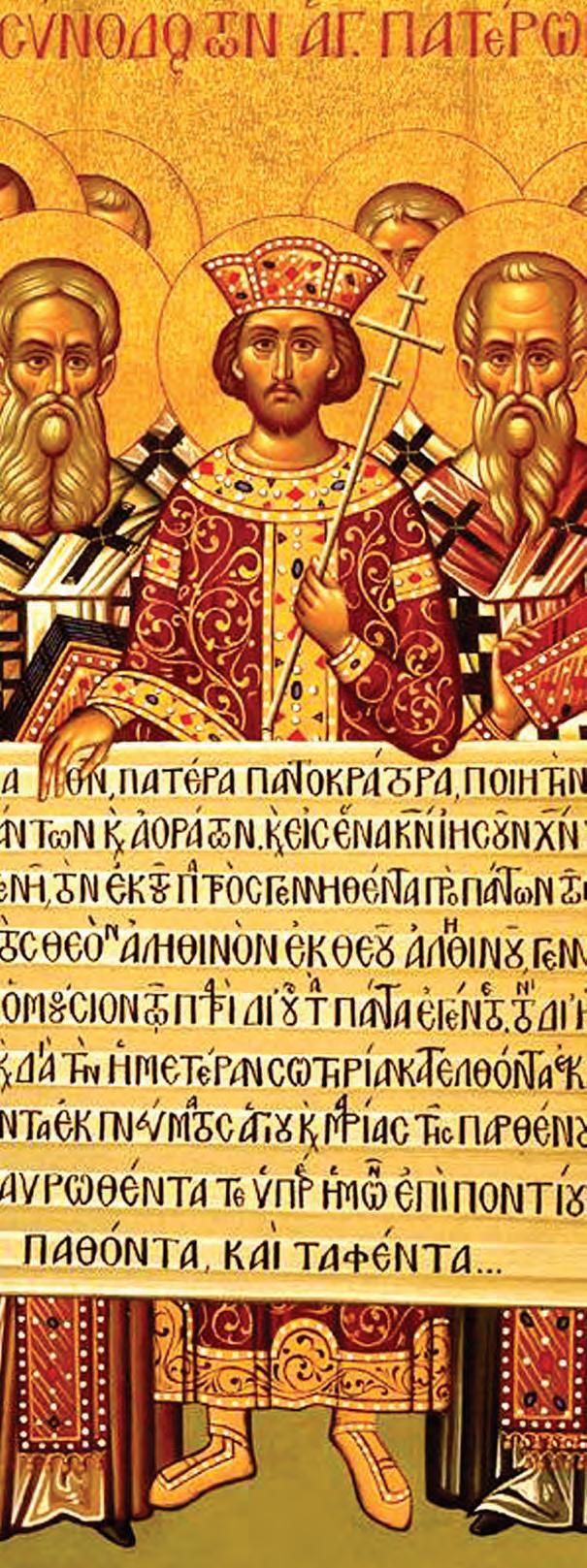
This past year marked the 1700th anniversary of the Council of Nicaea. At that first great ecumenical council, the Church articulated its faith in the one God, Father, Son and Holy Spirit, in the memorable formula that has now come to be known as the Nicene Creed. In these inspired words, the whole family of believers gave voice to their faith in Jesus Christ, the only begotten Son of God, who brings salvation to the human race through this passion, death and resurrection.
In recent decades, the Catholic Church has become more keenly aware of how the Lord’s prayer asks that all his followers be gathered into one (Jn 17:21) and summons her members to work for reconciliation and reunion among all who bear the name of Christ and profess the Christian faith expressed by the Nicene Creed.
Our Catholic Church celebrates the Week of Prayer for Christian Unity January 18-25, 2026. I ask that we all recommit to prayer and concerted efforts to restore communion among the scattered members of Christ’s flock. By humble witness, active engagement in ecumenism, and generous service to those in need, our local Church can be a powerful force for the unity that our Savior desires.
Gratefully yours in Christ,
Mary, Mother of God: Why It Matters
By Marc Cardaronella
Christmas isn’t just the story of a baby. It’s the shockwave of eternity inserting into time. And one week later, the Church gives us one more jolt to make sure we don’t miss the point: this baby is God. Consequently, his mother, Mary, is not just the mother of Jesus; she’s the Mother of God.
That admission shook the Church in the early fifth century. A bishop named Nestorius started saying a human woman could not be the mother of God. That’s like saying the clay made the potter? It feels backwards. God existed before Mary. He created her, not the other way around. So how can she be his mother? Nestorius held that Mary was only the mother of Jesus’ human nature — the mother
of Christ, not the mother of God. It sounded logical. A lot of people were convinced. But was it right?
Many bishops didn’t think it was. They argued that this formulation tore at the heart of the Incarnation and our salvation. By this logic, Nestorians said God didn’t suffer the Passion and wasn’t crucified; that only happened to the man Jesus Christ. This was no small matter. The Church had to respond.
united in one person. So when Mary gave birth to Jesus, she didn’t give birth to just his human nature. Mothers don’t give birth to natures; they give birth to persons. And the person she gave birth to is the Second Person of the Trinity — the Word made flesh. Two natures, one person. That’s the mystery of the Incarnation, and what we celebrate at Christmas. That is also why the Church calls her Theotokos, “God-bearer,” or, more simply, “Mother of God.”
As the Catechism puts it, “Called in the Gospels ‘the mother of Jesus’… . In fact, the One whom she conceived as man by the Holy Spirit ... was none other than ... the second person of the Holy Trinity. Hence the Church confesses that Mary is truly ‘Mother of God’ (Theotokos)” (CCC 495)
And that matters. Because if Jesus isn’t fully God, he can’t save us. And if he isn’t fully man, he can’t atone for us. So the title Mother of God isn’t just about Mary. It’s about protecting the truth of who Jesus is and what he did for us.
That’s why we celebrate it on January 1, not as a footnote to Christmas but as a capstone. We started by kneeling at the manger. We end by lifting our eyes to the woman who made that manger moment possible, not because of her own greatness, but because she said yes to God.
In A.D. 431, at the Council of Ephesus, the bishops gathered and settled the matter once and for all: Mary is the Mother of God, not because she came before God but because the one she bore is God. It all comes down to this: who is Jesus?
He’s one person — fully God, fully man. His human and divine natures do not exist as separate entities or individuals, but are
Jesus is God. Mary is his mother. And that changes everything.
Marc Cardaronella is the director of the Office of Catechesis and Faith Formation
Jasper Mirable Jr.
Jasper’s Ristorante and Marco Polo’s Italian Market
Jasper Mirable Jr. was born a Roman Catholic in 1962 and baptised at Christ the King Catholic Church on 85th and Wornall Rd. He attended St. Thomas More Catholic school for eight years and graduated from Rockhurst High School. He and his wife, Lisa, married at St. Thomas More Parish in 1988. They are now parishioners at Nativity Parish in Leawood, Kan. Jasper is also a first degree Knight with the Knights of Columbus in Kansas City. He is the Executive Chef and Owner of Jasper's Ristorante in Kansas City, a family-owned business for more than 70 years, where he works in the kitchen and dining room, upholding the legacy started by his grandparents and father. Learn more at jasperskc.com.
Q: How is your Catholic faith expressed during the work day?
A: My Catholic faith is an important part of who I am, but it’s something I tend to live quietly rather than talk about openly. I was raised with the idea of being “a man for others,” something I learned early on at Rockhurst High School, and that value still guides how I treat people every day.
Working in an Italian restaurant with my family, I find it easy to express my faith through actions rather than words, by showing kindness, patience, and genuine hospitality to every guest who walks through our doors no matter their background or beliefs. Sharing a meal is such an important part of Italian culture and faith, so treating others with
warmth and respect feels natural and meaningful.
Q: What are some ways you work prayer into your professional life?
A: I try to start each day with morning prayers before the day gets busy, and I end the night the same way with a few quiet moments of prayer before bed. During the day, I often take small pauses to ask God for guidance, especially when I’m making decisions or facing challenges. I am very grateful for the blessings in my life and for the strength to keep my faith through everything I do.
Q: Does your faith influence your interactions and decisions throughout the work day?
A: In the restaurant business, it’s not just about the food, it’s about people. I try to treat every guest and every member of my team with fairness, patience and respect. There are moments when a customer might be upset or an employee might be struggling, and that’s when I remind myself to respond with understanding and compassion. My faith reminds me to listen, to lead by example and to serve others.
Q: Is there a Bible verse or quote that you carry with you?
How does it help you remain grounded in your faith?
A: I’ve always felt a special connection to Saint Joseph, the patron saint of Sicilians. His quiet strength, humility, and devotion to family and work have always inspired me. One quote I try to keep in mind is, “Work while you work, pray while you pray.” It reminds me to approach each day with purpose and faith, whether I’m in the kitchen, greeting guests, or helping my team. Saint Joseph’s example reminds me that hard work and faith can go hand in hand.
Q: Do you have a favorite saint or other religious figure you turn to in facing challenges at work?
A: I regularly pray to and honor St. Philomena. She holds a special place in the hearts of many Italians and others around the world because she is known as a powerful intercessor and patron saint of those seeking strength, healing and hope. I often turn to her for guidance and protection, especially during challenging times. When I was very young, my mother gave me her medal and along with my brother, I still wear it to honor my faith in her.
Q: What is your go-to Catholic podcast or radio program?
A: Upon This Rock with Father Don Farnan.
What’s love got to do with it?
Observing at a Residents Encounter Christ (REC) Prison Retreat 17 years ago, one of the residents, who was seated at the table with seven other prison residents and myself, quickly pulled out a pencil and notebook and began to write. Members of the REC team presented meditations and residents were asked to discuss each talk, design posters, discuss the meditation, form table prayers, share Scripture readings or engage in other selected activities relating to their faith. This man continued to write the entire time, stopping at times and observing us all. By the last day of the retreat, he put down his pencil, looked me in the eye and said, “I am 50 years old. This is the first time anyone has ever told me they love me!”
We all sat in disbelief as tears flowed from this man’s eyes … listening to our talks and discussions on the Bible, the sacraments and the history of our faith, this man began to open his heart to really listen to God’s messages for us all. I witnessed a transformation in this man’s heart as well as a transformation in my own heart.
Those in prison ministry are called to share their love with all but most of all to those who are behind bars and who are in deepest need of being loved.
God’s command to us all is,”You shall love the Lord your God with all your heart and with all your soul and with all your mind.” And the second command is like it, “Love your neighbor as yourself.” Those who are incarcerated are our neighbors. They are created by God, in
his image, and we are called to visit them, to share God’s love, mercy, and forgiveness, and to validate that every person is a loved and valued son or daughter of God.
For those serving in prison ministry, we bring hope to many who have lost all hope; forgiveness to those who need forgiveness; mercy to those who need mercy; and love to all who feel unloved. It is our purpose to help them personally encounter Christ through the guidance of the Holy Spirit. At a recent weekend retreat, a prison resident came rushing up to me, saying, “Jesus really loves me! I know because I can see Jesus’ love in your eyes and in your smile!”
It is an honor to serve with others in prison ministry as we truly desire to walk the incarcerated through the changes that they are experiencing. We tell the men and women: “You are not defined by what you have done or by your past. Yesterday is gone. Today is a new day for you to become one with Christ; to turn to God so he can give you the strength you need to overcome whatever is keeping you from walking with him. Today is the first day of your new life … so live each moment with Christ, in his beautiful love.”
What’s love got to do with it? Everything! Love brings a new way of life for those who are imprisoned and hope for their futures with God.
After her first REC experience, Elaine became a volunteer for Missouri Correctional Centers in 2008. Nyla Bitunjac, Bob Rzepkowski and Elaine go into Western Reception, Diagnostic and Correctional Center (WRDCC) in St. Joseph to lead men in Bible study and three-day retreats. They also lead three-day retreats for women at Chillicothe Correctional Center. There is a great need for volunteers to join them in prison ministry. Visit lifeandjusticekcsj.org to learn more.
By Elaine Ingle, St. Rose of Lima Parish
Saint Nicholas and the original spirit of
giving at Christmas
By Marty Denzer
REMEMBER STRAINING TO HEAR “TINY REINDEER HOOVES”
ON THE ROOF, FOLLOWED BY “HO! HO! HO! MERRY CHRISTMAS!” SANTA HAD ARRIVED! WHO?
Saint Nicholas, the inspiration for our modern-day Santa Claus, was a fourthcentury Christian bishop of Greek descent living in Myra, Anatolia, then part of the Roman Empire, now in Turkey. Using inherited wealth from his parents, he helped the poor. His most famous deed was rescuing three impoverished girls from being forced into prostitution. Three times, late at night, Nicholas tossed a bag of gold through a window of their house, enabling their father to pay marriage dowries for all three daughters.
Whether true or not, the tale was told and retold through the centuries. Some versions claimed the bags landed in stockings hung by the fire to dry, leading to the tradition, “the stockings were hung by the chimney with care.”
Nicholas had a penchant for secretive giving, placing coins in shoes left out for him. Children today often leave shoes out for Saint Nick to fill with candy, fruit or small toys.
He died Dec. 6, 343, and was immediately acclaimed a saint. Nicholas was a Confessor, publicly confessing Christ despite threats of
punishment, even suffering a broken nose from being struck by one of Diocletian’s soldiers. He was one of the few saints celebrated during the Middle Ages for living his Faith, not dying for it.
Numerous miracles have been attributed to his intercession as the patron saint of children and unmarried people, among many patronages.
Over the centuries, tales of Saint Nicholas traveled around the world. Sinterklaas, the Dutch tradition, arrived in 17th century New York. In 1822, Clement-Clarke Moore penned “A Visit from Saint Nicholas,” renowned as “The Night Before Christmas,” for his children. That poem featured the first naming of Santa’s reindeer: “On Dasher, on Dancer, on Prancer and Vixen, on Comet, on Cupid, on Donder and Blitzen!” Parents still read it aloud on Christmas Eve.
In 1862, illustrator Thomas Nast created the rotund, red-clad Santa in a Harper’s Weekly series.
Music honoring Saint Nicholas has been written in many languages. Benjamin Hanby, in 1864, published “Up On the Housetop,” considered the first “Yuletide” song focused on Santa. “Jolly Old Saint Nicholas,” originally “Lilly’s Secret,” an 1865 poem by Emily Huntington Miller, was set to music by composer James R. Murray in 1874 under its famous title. Saint Nicholas died centuries ago, but his spirit of giving and caring for the less fortunate lives on in the hearts of children and families in Christian countries worldwide.
J UBI L EE YEAR OF HOPE
comes to a close
By Allison Vrooman
Catholics around the world took part in the 2025 Jubilee Year of Hope, searching for renewed purpose and hope on their journey to Heaven. While millions made a pilgrimage to Rome to participate in Jubilee celebrations and to obtain a plenary indulgence, three diocesan churches were designated as national pilgrimage sites for those looking to participate locally. The Basilica of the Immaculate Conception at Conception Abbey, the Cathedral of the Immaculate Conception in Kansas City and the Co-Cathedral of St. Joseph in St. Joseph spent the year welcoming visitors and hosting occasions for prayer and involvement in the blessings of the Jubilee Year.
The Cathedral of the Immaculate Conception kicked off the Jubilee Year in late December with a procession, opening of the Holy Door and Mass. During the homily of the Opening Mass, Father Charles Rowe shared that the Jubilee theme, ‘Pilgrims of Hope,’ is an invitation to seek Jesus. “Our faith in Jesus is the basis of our hope: we hope in Jesus, we hope to be with Jesus, and as pilgrims of hope we seek Jesus.”
All three churches saw an increase in visitors making a pilgrimage throughout the year. Families, couples, parish groups and vacationers made a trip to participate in Mass and obtain the indulgence. Additionally, Conception Abbey has seen an increase in the number of men and women attending their Encountering Christ retreats — an opportunity to experience the hope and peace that Christ alone offers. Resources such as pamphlets, posters and self-guided tour booklets were available at each of the sites to provide information about the church, the Jubilee Year and how to obtain an indulgence. At the Cathedral of the Immaculate Conception, guided group tours gave an in-depth experience into the historical, architectural and spiritual aspects of the Cathedral.
An added attraction to the Co-Cathedral of St. Joseph was a relic of the newly canonized Saint Carlo Acutis. With his canonization in the early fall, many pilgrims flocked to the Co-Cathedral to pray before the saint’s relic and to ask for his intercession. The church also hosts a relic of Saint Josemaría Escrivá, a saint known for promoting the idea that everyone is called to holiness that can be achieved in ordinary, everyday life. The relics of these two saints served as symbols of hope and purpose for pilgrims during the Jubilee Year.
As the year ends, the faithful are encouraged to continue with renewed spirits and hope in the Lord. Father Paul Sheller, OSB, of Conception Abbey shared, “God is powerfully at work in the world today and in this Jubilee Year of Hope. … With Jesus Christ there is always reason to hope!”
A modern Christmas story of shelter in uncertain times
By Karen Ridder
Photos by Michael Hogan
Each year through Advent and the Christmas season, the Church focuses on the experience of the Holy Family. Twice when Jesus was young, Mary and Joseph found themselves far away from friends or family without shelter. First, on the night Jesus was born in Bethlehem, the couple found a manger when all other options were exhausted. A short while later the young family found themselves again forced to leave their home to become refugees in a foreign land. Both times, they needed and found transitional help. Today, that kind of help looks a little different, but it is still available for local families in our area who are facing tough times.
at
Jamie and Malcolm Cummings know what being in a tight spot feels like, having lived through uncertain times and finding themselves needing shelter with a young family. The couple has been together for 20 years, married for 10. Together they have four children and work hard to keep their family strong, but two and half years ago, after their fourth child was born, Jamie took time off to care for the baby. Then Malcolm unexpectedly lost his job. They weren’t prepared and quickly found themselves in crisis.
“We were behind on rent. We were kicked out of the house and had nowhere to go,” said Jamie.
The family of six was without shelter. The Cummings didn’t have family support nearby. So, Jamie phoned the Kansas City resource number 2-1-1 and got connected with Hillcrest Transitional Housing. They were scrambling but quickly found an apartment to use through the organization.
“You never think it will be you, but you never know, and that doesn’t necessarily mean something’s wrong with you or your family. It’s just, something came up and you fell on hard times. Our parents are passed, and you can feel alone when you are in that situation, but Hillcrest made us not feel like we were not alone,” said Malcolm.
Purchases made
the Hillcrest Thrift Store at 936 SE 3rd St., in Lee’s Summit, supports the families served by Hillcrest Transitional Housing.
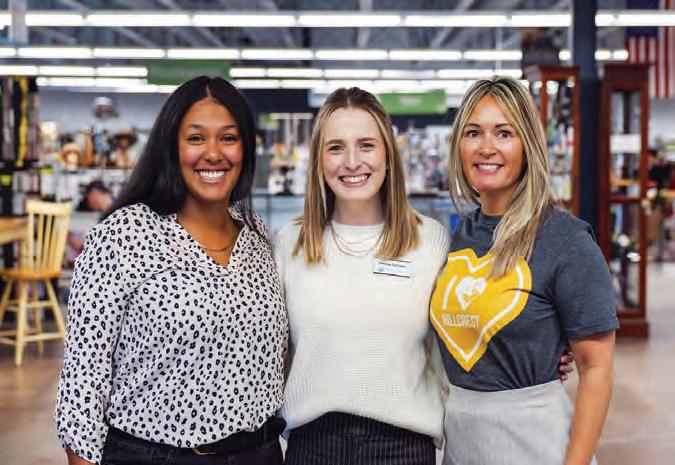
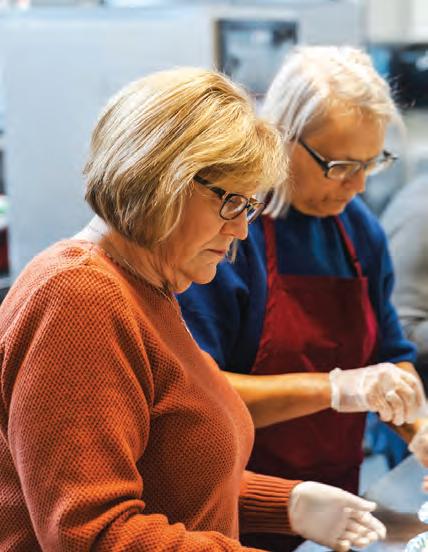
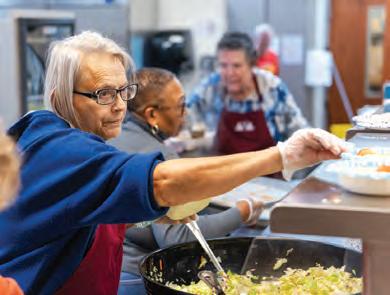
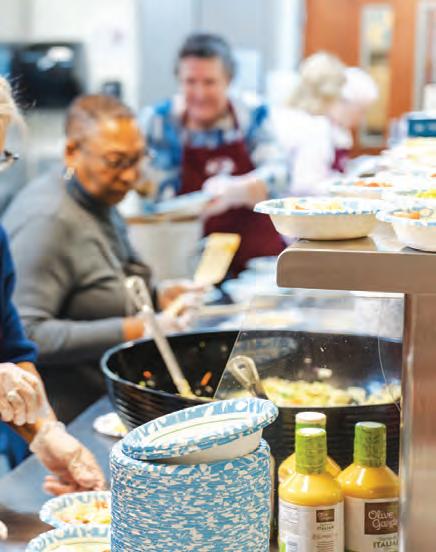
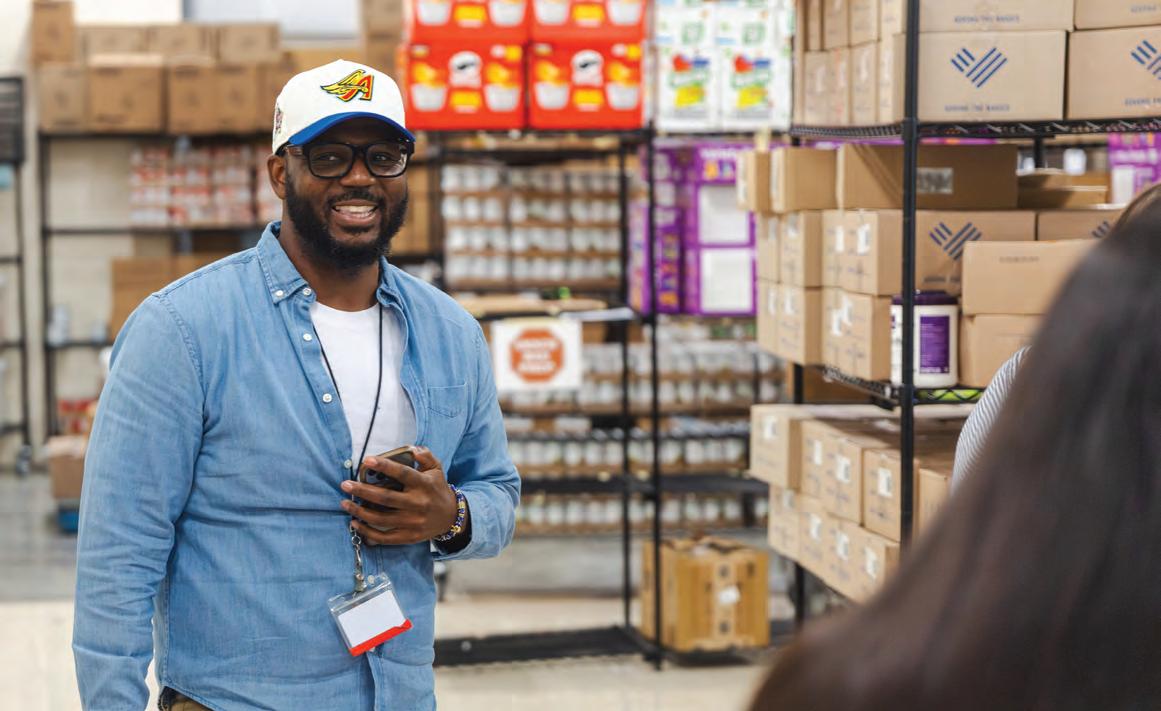
Volunteers at the Hillcrest Thrift Store in Lee’s Summit find a special joy in serving their neighbors in need.
As we enter 2026, Hillcrest Transitional Housing celebrates 50 years of providing housing for families in Kansas City. The organization is able to help about 155 households annually, not only providing a place of shelter, but also focusing on financial education to help make sure the families are prepared for any
“They were there to help in a lot of ways, not just in the shelter. They helped us get together as a family. We are more stable now. We are more in tune with each other, and as a family we focus more on what’s important,” said Malcolm.
While Hillcrest Transitional Housing is not a faith-based or ganization, many of the 74 apart ment units in the Kansas City area are sponsored by churches, including one by St. Mark’s Parish in Independence.
potential future challenges.
“Hillcrest was a lot different than what I was expecting. They gave us tools, a budgeting class, and the help still we can receive if we need it. Mostly, it was a big difference to know the community cared,” said Jamie.
After moving into the Hillcrest apartment, the couple was able to work to pay off bills and get back on their feet. They became program graduates and took on a new perspective on life.
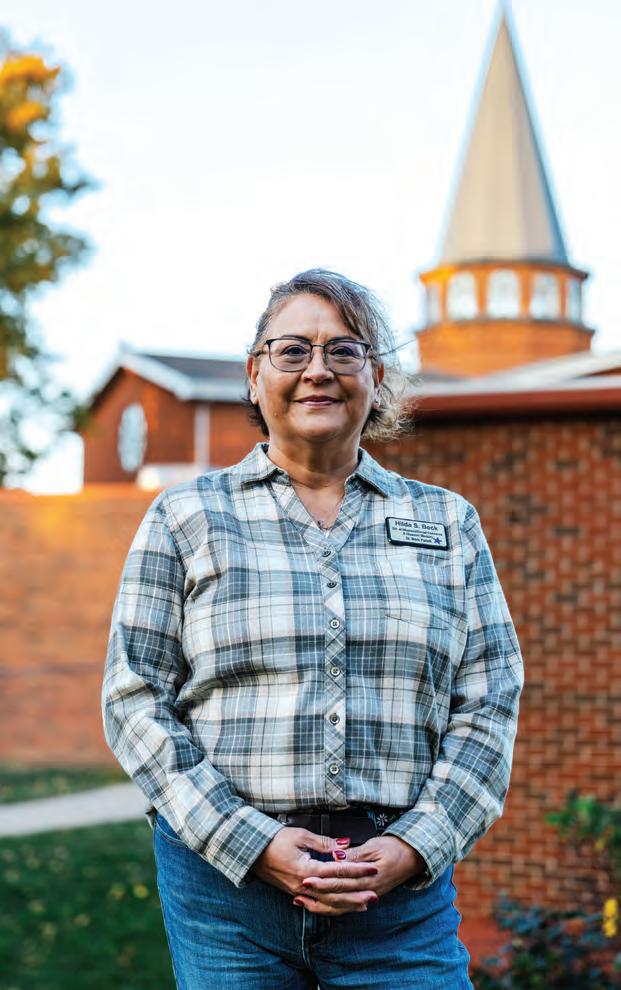
Hilda Beck is the Director of Missions and Social Justice at St. Mark’s. She says they have sponsored a Hillcrest Ministry Apartment since 2009. The commitment for the parish includes raising about $5,000 a year to pay for rent. They do that through an annual fundraiser. They also furnish the apartment, stock it with groceries, toiletries, and cleaning supplies. There are about 35 to 45 people at the church who work and help in the ministry or at the annual fundraiser.
Beck says the ministry takes their ability to help people through an emergency ministry at their church to the next level.
“We get to meet the families that come into the apartment and interact with them. We provide clothing and whatever they need. We’ve seen so many families come and go who have succeeded in the program and now have succeeded in life,” said Beck.
Beck says the ministry also gives back to the parish – offering many of the parishioners who have skills a practical place to serve the community.
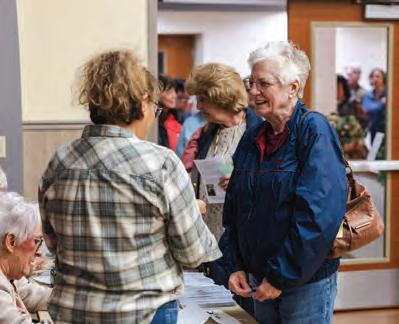
St. Mark Parish in Independence holds an annual fundraiser which provides funds needed to maintain an apartment at Hillcrest Transitional Housing.
Hilda Beck, director of missions and social justice at St. Mark Parish in Independence, organizes the parish’s support of one of the apartments at Hillcrest Transitional Housing.
“It really does provide a lifeline to people who are retirees and don’t have any other way to help. If there are other parishes looking for a way to help provide shelter – working with Hillcrest is a great option,” said Beck.
For the Cummings family, the shelter and support offered at Hillcrest Transitional Housing apartment was the start of something new.
“We are saving and budgeting now and once we are able, I would love to give back if I can,” said Jamie.
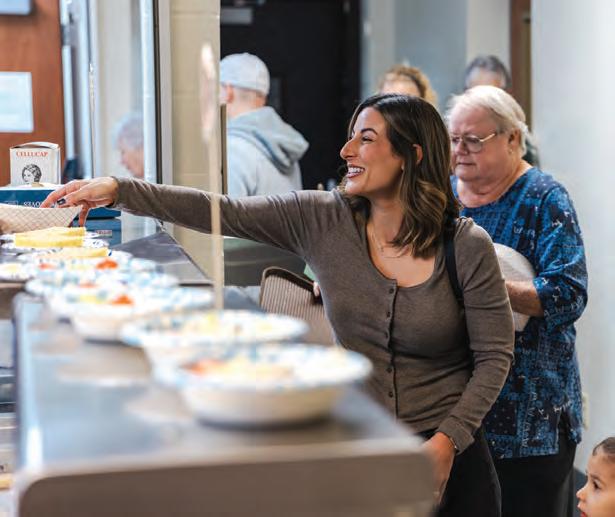
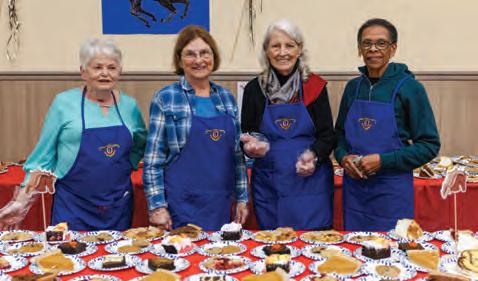
Volunteers serve a barbecue dinner and desserts as part of St. Mark Parish’s annual fundraiser supporting Hillcrest Transitional Housing.
TRANSITIONAL HOUSING is different than temporary shelter for homelessness. It provides a longer-term solution for individuals and families in an effort to help them move towards permanent housing. Often the housing is rent free – but families are required to work, budget, take classes and pay off debt. There are three organizations here in the Kansas City area using the “Hillcrest” name: Hillcrest Transitional Housing (noted in this story); Hillcrest Hope; and Hillcrest Platte. While the three were at one time part of the same organization, they split in 2015 and operate separately. Assistance for one organization does not go to another.
SOME TRANSITIONAL HOUSING ORGANIZATIONS IN THE KANSAS CITY-ST JOSEPH DIOCESE AREA SERVING FAMILIES INCLUDE:
St Mary’s Home: stmaryshomeformothers.org (for pregnant women and their children only)
Community LINC: communitylinc.org
Remote Preparation for Marriage
The role of parents and the Church: remote in timing, not in relationships
“REMOTE PREPARATION … AIMS, FROM CHILDHOOD, TO “PREPARE THE GROUND” ON WHICH TO SOW THE SEEDS OF A FUTURE VOCATION TO MARRIED LIFE.”
[ CATECHUMENAL PATHWAYS FOR MARRIED LIFE (CP), 27]
The term “remote preparation” is used by the Church to describe formation for sacramental preparation that occurs before formal classes, potentially for many years prior to the reception of a sacrament. It is often informal in nature and describes a number of different things that, together, provide a foundation for formal preparation to build upon.
Parents, grandparents, teachers and other mentors in the life of a child all have unique ways
they can assist the Church in the work of remote preparation for each of the sacraments. Here, we look at the sacrament of marriage. It was given particular attention in a recent document from the Vatican, Catechumenal Pathways for Married Life. Remote preparation can begin in the earliest years of life and unfold through teen and even young adult years. Overall, the goal is to provide “solid spiritual and catechetical formation that will show that marriage is a true vocation and mission” (Familiaris Consortio, Pope Saint John Paul II, 66).
Parents (and others) can actively instill in their children foundational truths of the Faith by living them and talking about them. In the earliest years, reading storybooks, children’s Bible stories, singing songs, even doing simple art projects about Bible stories and the saints can provide the ground to sow the seeds of the Gospel once children enter their school aged years. “The ‘ground’ may be considered well-prepared if esteem for every genuine human value is instilled in children, if self-esteem and
esteem for others are cultivated, if self-mastery is taught, even in small things, along with the right use of one’s inclinations, respect for persons of the opposite sex, and the dignity of every human being in general” (CP, 27)
It is the responsibility of the Church and the family “to ‘narrate’ to children the plan of love that God has for each person” (CP, 28). This is a central task of The Way (our diocesan initiative to support parents). The programs for each of the school-aged years provide ways to learn about God’s plan for each of us, the revelation of His love and mercy (1st and 2nd grades), respect for self and others, the vocation of the family (3rd grade), and facilitate discussion on the life of virtue starting with the 10 Commandments (4th grade).
Overall, The Way seeks to help parents form their children in “a healthy Christian anthropology … including the first elements of human sexuality and the theology of the body – and their baptismal identity should be developed in a vocational perspective, whether to marriage or religious life” (CP, 28)
The Way supports parents in this process of formation which should be “continued and deepened with adolescents and young people, so that they do not come to the decision to marry as if by chance and in the wake of an ad-
olescence wounded by affective and sexual experiences which prove painful for their spiritual life. Such experiences can cause deep emotional wounds, which will spill over into adulthood in their sexual and marital lives” (CP, 29). And many do carry wounds into young adults years which parents alone cannot adequately address. The Church along with parents can direct them to seek “the assistance of experts who can accompany these young people on a personal level” (CP, 29). Resources for this can be found on our diocesan marriage and family website, www.kcsjfamily.org.
According to research, parents can have a tremendous impact on their children. In fact, “all research in the United States today shows clearly that parents are by far the most important factor influencing their children’s religion, not only as youth but also after they leave home” (Smith, Handing Down the Faith, 69). Beginning with thoughtful and intentional remote preparation, parents (and others) can provide a firm foundation for a life of faith to be built up through formal classes. They can also provide the ongoing discussions and witness of faith lived in the home and in the world throughout the years and maintain a relationship of trust and guidance with their children, even into their adult years.
Dino Durando is director of the Office of the Domestic Church and Discipleship. He and his wife Cathy have been married for 27 years and have 10 children and one grandchild.
Guadalupe: Mother of a divided people
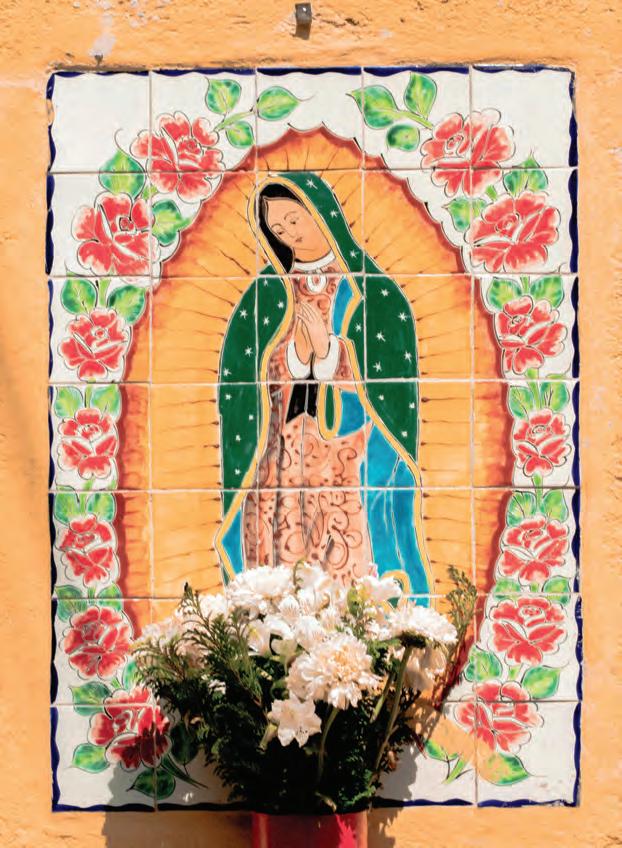
On Dec. 12, Catholics across the Americas will honor Our Lady of Guadalupe. In the United States, her image will be carried into parishes from Los Angeles to New York. Though she first appeared in Mexico, she belongs to the entire Church, proclaimed by Saint John Paul II as Mother of the Americas.
Why does Guadalupe still speak so powerfully, nearly 500 years after her apparition on Tepeyac Hill? Perhaps because she appeared as something radically new. She was not fully Spanish, not fully Indigenous, but mestiza. Her very face and presence announced a new creation, one that could not survive unless old and new were brought together into something integrated. Her message was clear: to flourish, the people of the Americas needed to embrace the work of becoming something new together.
The Work of Integration Continues
That same work of integration is still before us today. America in the 21st century is deeply divided politically, culturally and racially. Into this fractured moment, Guadalupe continues to speak: unity does not come by erasing differences but by allowing God to weave them together into a new identity.
By Leyden Rovelo-Krull, Director of the Office of Hispanic Ministry
For Hispanic Catholics, this is more than a lesson from history, it is a present-day responsibility. Like our ancestors who forged a new mestizo people under Guadalupe’s mantle, today’s Hispanic immigrants and their children are called to build bridges in the United States. Integration does not mean forgetting our heritage. It means embracing our role in this country’s future.
A Prophetic Call from Jeremiah
In the Book of Jeremiah, God tells the exiled people in Babylon: “Seek the welfare of the city where I have sent you into exile, and pray to the Lord on its behalf; for in its welfare you will find your welfare.” (Jer 29:7) In the lives of today’s immigrants, the prophet’s counsel takes on a new urgency.
Hispanic parents raising children in America carry the responsibility to help them see themselves as fully American, to participate in this nation’s prosperity, civic life and shared destiny. Loving our culture and loving our country are not competing loyalties. Rather, they are part of the same call to seek the good of the land in which God has planted us.
This also means being willing to face hard truths about immigration itself. Both the Church and the wider community must engage in honest, respectful conversations about law, justice and reform; seeking solutions that honor human dignity while respecting the rule of law.
The Church at the Crossroads
Our parishes are often the meeting ground of this integration. Spanish and English Masses, bilingual feast days and intercultural families are all reminders that the Church is where old and new can come together in Christ. The tilma of Juan Diego was itself a catechesis in unity: the stars and the earth, the moon and the sun, heaven and humanity, all reconciled in the figure of a young woman carrying the Son of God.
The Church in the United States has the opportunity to model this same unity for a divided nation. Such unity requires intention and effort. It requires Hispanic Catholics to lead the way, embracing both our heritage and our American identity with courage and faith.
Guadalupe’s Invitation
At Tepeyac, Our Lady showed that God could form a new people out of divided worlds. In America today, her call is the same. The work of integration is unfinished, and it falls especially to Hispanic Catholics who know what it means to carry two worlds within us.
To be children of Guadalupe is to build bridges while raising families who love this nation, nurturing parishes that unite cultures and helping the Church heal division. The mantle she spread over Juan Diego still covers us, calling us to become something new, together.
to serve and lift
Hope Ball Hope Ball
By Ashley Everett
TThe Christmas season is such a beautiful time — twinkling lights, warm meals and the joy of being with loved ones. But for many families, this season can also bring quiet heartache. One misfortune can derail a family: the loss of a job, a health emergency or the worry of not being able to provide enough. As a mom, I can’t help but imagine what it would feel like to face Christmas with more fear than joy.
In moments like these, when fear threatens to overshadow joy, we need a light to guide us. That’s why Catholic Charities hosts Hope Ball, our biggest event of the year. Inspired by the words of John 1:5, “The light shines in the darkness, and the darkness has not overcome it,” this one-night fuels hope for families weathering life's storms.
This year, the Catholic Charities’ light of hope has extended even further — expanding care for Veterans and their families across seven counties. We will serve around 500 Veterans, which is nearly double the number we expected to serve! To accommodate this growing need, we’re adding 15 new members to our team. It’s a leap of faith, but one rooted in trust and a deep commitment to those who’ve served our country, like Kurt, a 10year Army Veteran injured in a tank accident. Kurt recently shared his life with us, “When we were homeless, we slept in a tent at the state park. Catholic Charities helped us get this house. They bought us a refrigerator, helped us with food stamps, even a mower and a weed eater … [they] offered us more help than I ever expected.”
The “more help” than he ever expected is because it doesn’t just take giving someone a roof over their head to lift someone out of poverty. It takes a plan. It takes a vision. It takes effort over time and investment in people. That’s what Catholic Charities does. We invest in people over time through the generosity of folks who choose us to be their hands and feet of charity. Kurt’s story, like so many others, shows what happens when we come together in love with a plan and a purpose.
We’ll be showcasing Veterans at Hope Ball this year. The event is black tie, and we’re encouraging full-dress uniforms for Veterans or active military. It’s not just a fundraiser — our Hope Ball celebrates all those who serve — in uniform, in families and in faith. To that end, we continue our tradition of celebrating young Catholic leaders. Debutantes and Gentlemen, who’ve given their time in service to others, will be presented to Bishop Johnston and our community for their outstanding nature and charity. Their servant hearts remind me of the shepherds in the Nativity story: humble, faithful and ready to follow the light.
To me, the Hope Ball comes together like a modern-day manger scene: people from all walks of life, from shepherds to wise men, gathering in goodwill, filled with hope, bringing their talent and treasure to those in need. Whether you attend, sponsor or simply pray
“When we were homeless, we slept in a tent at the state park. Catholic Charities helped us get this house. They bought us a refrigerator, helped us with food stamps, even a mower and a weed eater … offered us more help than I ever expected.”
for the mission, you are part of that holy circle of light.
I invite you to join us. Let’s be the light that shines in someone’s darkness. Let’s remind our neighbors that they are not alone. And let’s do it all in the spirit of Christ, who came to bring hope to the world.
Kurt, a 10-year Army Veteran standing in front of the house his family moved into with the help of Catholic Charities.
The power of waiting
Rediscovering prayer, fasting, and almsgiving in Advent
By Sara Kraft
“Would you open your Christmas presents early?”
My husband often asks our children during the Advent season. Of course, they always say no. It’s his way of reminding our children that Advent is a time of quiet preparation — focusing on preparing our minds and hearts for the birth of the Christ child.
Advent is a traditional period of penitential waiting. The four Sundays of Advent represent the 4,000 years the Jewish people waited for their Messiah. In the early Church, Advent was practiced as another Lent. It was 40 days long and was often referred to as Saint Martin’s Lent because it began on Nov. 11 with the Feast of Saint Martin of Tours and ended on Christmas. It was a time of intense fasting. In the ninth or tenth century, the Church reduced the length to 28 days and changed the fasting requirements to forms of abstinence or giving things up in penance and preparation.
The Church still encourages penance in the form of prayer, fasting and almsgiving as a way of making room within our hearts for the arrival of Christ.
Here are four practical tips to make the most out of prayer, fasting and almsgiving this Advent:
1
Keep the spirit of Silent Night. Fast from noise or media this Advent. Silence can be uncomfortable. We fill our lives with distraction (hello, social media) just to avoid it. However, silence is essential to grow in prayer. This Advent, consider giving up radio in the car, surfing the web, social media, smart phone usage or turn off the television for a specified time and embrace silence for a short time each day.
2 Sacrifice for someone you love. Offering your penance for a specific person will enrich your Advent fast. It also expands the benefit by positively influencing you both.
3
Spend in a spiritual way. Avoid the materialism that so easily creeps into Christmas. Give up a portion of your spending on holiday treats and use the savings to financially support your almsgiving. Take those savings and put them in a jar. At Christmas, give them to a charity that supports the poor.
4
Make a spiritual gift. We often think of penance only as giving something up. Advent is a great time to add spiritual practices. Make a gift to Jesus. Consider making a weekly visit to the Eucharist, reading scripture or making a Jesse tree. There are numerous possibilities, but keeping an empty manger or Advent wreath in a prominent place are also simple additions which can prepare our hearts.
This Advent, make the most of your prayer, fasting and almsgiving to prepare for Christmas in a radically new way.
Getty Images/Kara Gebhardt
Mary, Our Lady of Advent
By Marty Denzer
During Advent, Mary has a unique role as we make ready to celebrate the birth of Jesus. She was just a teenager, 15 or 16 years old, when the Archangel Gabriel announced to her that she had been chosen to be the Mother of God. After asking Gabriel, “How can this be?” she responded, “I am the handmaid of the Lord. Let it be done unto me according to your will.” Mary’s fiat, her unconditional generosity and acceptance reverberates in us, if we listen.
Mary surrendered her will to God, in faith, humility and trust by saying yes to God’s plan.
The journey Mary took toward motherhood from the Incarnation to Jesus’s birth is chronicled in the Joyful Mysteries of the Rosary: 1. The Annunciation, 2. The Visitation, 3. The Nativity, 4. The Presentation, and 5. The Finding in the Temple. Through that period in her life, she was trusting in God, full of hope, faith and probably in awe. Her husband, Joseph, after his own visit from the Archangel Gabriel, who reassured him that Mary’s child was conceived by the Holy Spirit and that he should take her as his wife,
was also hopeful, trusting in God, and probably awestruck also.
The journey she and Joseph took to Bethlehem was to register in their ancestral hometown for the Roman census decreed by Caesar Augustus. Joseph was of David’s lineage, so Bethlehem was his ancestral home. While they were there, the time came for Mary to give birth to Jesus, which took place in a stable as there was no room at the inn. She accepted it as God’s plan. We emulate Mary during Advent through prayer and reflection, and by focusing on peace, joy, hope and love to prepare our hearts to receive Christ Jesus.
From Bethlehem to Birmingham The ongoing journey of liberation
Every Christmas, we return to Bethlehem, a small, forgotten town that changed the world. Bethlehem wasn’t beautiful, powerful or wealthy. It was a dusty village under Roman occupation, the kind of place where hope seemed small. Yet that’s where God chose to begin his greatest work. The Savior was not born in comfort but in struggle, a sign that God’s liberation begins where the world least expects it.
Fast forward to Birmingham, Ala., 1963, another kind of “Bethlehem,” a place of tears, courage, and deep faith. From a jail cell, Dr. Martin Luther King Jr. wrote, “Injustice anywhere is a threat to justice everywhere.” His words echoed the prophets of old and the cry of the Holy Family, who fled danger to protect the Child who would free all humanity. Like Bethlehem, Birmingham
became sacred ground, a place where God’s Spirit stirred hearts toward freedom.
Both Bethlehem and Birmingham remind us that salvation and liberation are not separate stories. God does not save us from the world; he saves us in the world, transforming our suffering into strength and fear into faith. He enters our human story not to erase our pain, but to redeem
it with purpose. In every cry for justice, in every act of courage, Christ continues his saving work, still being born wherever love refuses to give up.
This is the heart of Black Catholic spirituality, a faith that refuses to separate worship from witness, prayer from protest or salvation from justice. From spirituals sung in the fields to freedom hymns in churches, our ancestors knew that the God of Bethlehem is also the God of Birmingham. It’s the same faith that carried our ancestors through slavery, segregation and every other “no room at the inn” moment.
Bethlehem teaches us that God’s work often starts small, one baby, one act of love, one voice raised for truth. Birmingham reminds us that small acts of courage still move mountains. Together they tell a single sto -
ry: God steps into history, and through ordinary people, he sets captives free.
So this Christmas, may we look for God not just in the manger but in the movement, in every act of mercy, justice and love that brings light to darkness. From Bethlehem to Birmingham, God is still on the move, still bringing freedom, still being born in us.
By Father Leonard Gicheru, pastor of St. Monica Parish and Our Lady of Sorrows Parish and Chaplain to the Black Catholic Implementation Team
Guadalupe:
Madre de un pueblo dividido
El 12 de diciembre, los católicos de todo el continente americano honrarán a Nuestra Señora de Guadalupe. En Estados Unidos, su imagen será llevada a las parroquias desde Los Ángeles hasta Nueva York. Aunque primero apareció en México, ella pertenece a toda la Iglesia, proclamada por san Juan Pablo II como la Madre de las Américas.
¿Por qué Guadalupe sigue hablando con tanta fuerza casi 500 años después de su aparición en el cerro del Tepeyac? Quizá porque se presentó como algo radicalmente nuevo. No era completamente española ni completamente indígena, sino mestiza. Su rostro y su presencia anunciaban una nueva creación, que no podía sobrevivir a menos que lo viejo y lo nuevo se integraran en algo distinto. Su mensaje fue claro: para florecer, los pueblos de América necesitaban abrazar el trabajo de convertirse en algo nuevo, juntos.
El Trabajo de la Integración Continúa
Ese mismo trabajo de integración sigue ante nosotros hoy. Estados Unidos, en el siglo XXI, está profundamente dividido política, cultural y racialmente. En medio de este momento fracturado, Guadalupe sigue hablando: la unidad no llega borrando las diferencias, sino permitiendo que Dios las teja en una nueva identidad.
Para los católicos hispanos, esto es más que una lección de historia; es una responsabilidad actual. Al igual que nuestros antepasados que forjaron un nuevo pueblo mestizo bajo el manto de Guadalupe, hoy los inmigrantes hispanos y sus hijos están llamados a tender puentes en Estados Unidos. Integrarse no significa olvidar nuestra herencia. Significa asumir con responsabilidad nuestro papel en el futuro de este país.
Un Llamado Profético de Jeremías
En el libro de Jeremías, Dios dice al pueblo exiliado en Babilonia: “Busquen el bien de la ciudad a la que los he enviado al destierro, y rueguen al Señor por ella, porque del bien de ella depende el bien de ustedes” (Jer 29,7). En la vida de los inmigrantes de hoy, este consejo del profeta adquiere una urgencia renovada.
Los padres hispanos que crían a sus hijos en Estados Unidos tienen la responsabilidad de ayudarles a verse plenamente como americanos, a participar en la prosperidad, en la vida cívica y en el destino común de esta nación. Amar nuestra cultura y amar nuestro país no son lealtades en competencia. Más bien, forman parte del mismo llamado a buscar el bien de la tierra en la que Dios nos ha plantado.
Esto también significa estar dispuestos a afrontar las verdades difíciles sobre la inmigración misma. Tanto la Iglesia como la comunidad en general deben entablar conversaciones honestas y respetuosas sobre la ley, la justicia y la reforma, buscando soluciones que honren la dignidad humana y, al mismo tiempo, respeten el estado de derecho.
La Iglesia en la Encrucijada
Nuestras parroquias son, con frecuencia, el lugar de encuentro de esta integración. Las Misas en español e inglés, las fiestas bilingües, las familias interculturales: todo ello recuerda que la Iglesia es el espacio donde lo antiguo y lo nuevo pueden unirse en Cristo. La tilma de san Juan Diego fue en sí misma una catequesis de unidad: las estrellas y la tierra, la luna y el sol, el cielo y la humanidad, todos reconciliados en la figura de una joven que lleva en su seno al Hijo de Dios.
La Iglesia en Estados Unidos tiene la oportunidad de modelar esta misma unidad para una nación dividida. Una unidad así requiere intención y esfuerzo. Requiere que los católicos hispanos encabecen el camino, abrazando con valentía tanto nuestra herencia como nuestra identidad americana.
La Invitación de Guadalupe
En el Tepeyac, Nuestra Señora mostró que Dios podía formar un pueblo nuevo a partir de mundos divididos. En Estados Unidos, su llamado sigue siendo el mismo. La obra de la integración no ha concluido, y recae especialmente en los católicos hispanos que sabemos lo que significa llevar dos mundos en un mismo corazón.
Ser hijos de Guadalupe es construir puentes: criar familias que amen a esta nación, animar parroquias que unan culturas y ayudar a la Iglesia a sanar sus divisiones.
El manto que extendió sobre san Juan Diego nos cubre todavía hoy, llamándonos a convertirnos en algo nuevo, juntos.
Por Leyden Rovelo-Krull, Oficina del Ministerio Hispano
“MIREN mis manos …”
(Lucas 24:39)
Cuando visito alguna de nuestras parroquias rurales me fascina que, cuando llega el momento para la distribución de la Sagrada Comunión en la misa, a menudo puedo ver las manos de la gente. Me es fácil distinguir quiénes son los agricultores. Tienen las manos más gruesas, con callos y otras marcas de trabajo duro.
Nuestras manos son una de las partes más importantes y expresivas de nuestro cuerpo, y podríamos decir que simbolizan la vida cristiana. Esto se refleja en nuestra forma de hablar. Por ejemplo, a menudo decimos: "Déjame darte una mano con eso" cuando queremos ayudar a alguien. O "Unamos nuestras manos por …" cuando queremos expresar nuestra gratitud con un aplauso. Nos damos la mano para expresar amistad y confianza, y también para confirmar un contrato. Incluso los emojis hacen un amplio uso de las manos.
Nuestras manos expresan emoción e intención, para bien o para mal. Los sacerdotes levantan las manos en la liturgia para dirigir las oraciones de la congregación al Padre. Saludamos a la bandera con la mano. Las usamos para enfatizar un punto. A veces vemos cómo se usan las manos con ira en medio del tráfico pesado. Ustedes captan la idea.
Y es significativo que cuando Jesús subió al madero de la cruz para obtener nuestra redención, fue a través de sus manos que fue crucificado. Las mismas manos que sanaron, bendijeron y partieron el pan en la Última Cena para darnos su Cuerpo, fueron heridas para quitar nuestros pecados. La imagen de la Divina Misericordia muestra las manos heridas de Jesús alzadas en señal de bendición. Cuando Jesús se apareció a sus apóstoles el día de la Resurrección, les dijo: “Miren mis manos …” (Lucas 24:39)
Al celebrar esta Navidad, los invito a contemplar sus propias manos. Observen con asombro lo que a menudo damos por sentado. Quizás más que cualquier otra parte del cuerpo humano, nuestras manos tienen la capacidad de realizar cosas hermosas y santas: dar, consolar, bendecir. Nuestra salvación fue obra figurativa y literalmente de la mano de Dios. A modo de imitación, que también usemos nuestras manos para el servicio, la paz y la caridad.
Del Obispo
El obispo
James V. Johnston, Jr. es el séptimo obispo de la Diócesis de Kansas City –St. Joseph
Semana de Oración por la Unidad de los Cristianos
18-25 de enero
Queridos amigos en Cristo:
Gracia y paz estén con ustedes.
El año pasado se cumplió el 1700º aniversario del Concilio de Nicea. En ese primer gran concilio ecuménico, la Iglesia articuló su fe en el único Dios, Padre, Hijo y Espíritu Santo, en la memorable fórmula que ahora se conoce como el Credo Niceno. En estas palabras inspiradas, toda la familia de creyentes dio voz a su fe en Jesucristo, el Hijo unigénito de Dios, que trae la salvación a la raza humana a través de su pasión, muerte y resurrección.
En las últimas décadas, la Iglesia Católica ha tomado más conciencia de cómo la oración del Señor para que todos sus seguidores sean uno (Juan 17:21) convoca a sus miembros a trabajar por la reconciliación y la reunión entre todos los que llevan el nombre de Cristo y profesan la fe cristiana expresada en el Credo Niceno.
Nuestra Iglesia Católica celebra la Semana de Oración por la Unidad de los Cristianos del 18 al 25 de enero de 2026. Les pido que todos nos volvamos a comprometer con la oración y los esfuerzos concertados para restaurar la comunión entre los miembros dispersos del rebaño de Cristo. Mediante un testimonio humilde, un compromiso activo con el ecumenismo y un servicio generoso a los necesitados, nuestra Iglesia local puede ser una fuerza poderosa para la unidad que nuestro Salvador desea.
Agradecido suyo en Cristo,
A resolution rooted in grace
By Rev. Paul Turner, pastor of the Cathedral of the Immaculate Conception
DISSATISFACTION AND HOPE ARE THE TWIN DRIVERS OF NEW YEAR’S RESOLUTIONS. PEOPLE ARE DISSATISFIED WITH SOMETHING — THEIR WEIGHT, THEIR HEALTH, THEIR NUTRITION, THEIR ANGER OR SOME ASPECT OF A RELATIONSHIP. YET THEY HAVE SOME HOPE. THEY BELIEVE THEMSELVES CAPABLE OF CHANGE, SO THEY MAKE A RESOLUTION.
Catholics often enter Lent with similar drivers: we’re dissatisfied with our sin, distraction from prayer or lack of catechesis. Yet we have hope — not just in ourselves but also in Christ. We believe that he can give strength to reform our lives and lend grace to our resolve.
Many New Year’s resolutions fail within the first few weeks of the year. Perhaps it’s
because people base their resolve solely on themselves and not enough on grace.
The Catholic Church offers assistance for those making something special of the New Year. Plenary indulgences are available on both days under the usual conditions. On New Year’s Eve, you qualify if you recite the Te Deum publicly. On New Year’s Day,
you qualify if you pray the Veni, Creator
The turning of the year naturally invites a celebration of the sacrament of reconciliation. As you reflect on both blessings and dissatisfactions of the past year, and as you resolve to follow Christ more closely in the new year, you are already examining your conscience for a good confession.
The Gospel at Mass on Jan. 1 recounts an intimate moment in Mary’s young motherhood. After the birth of Jesus, the announcement by angels, the arrival of shepherds, and their departure as evangelists, Mary “kept all these things, reflecting on them in her heart.”
Whether we are driven by dissatisfaction or hope, we may do the same. Let us keep the past year in mind, reflect on its events, admit the dissatisfactions, set new spiritual goals, and keep our hopes on Christ.
Celeb r ating the Magi at home
By Marty Denzer
The Magi, according to Matthew’s Gospel, were learned men from the East — the Gospel states that they came from “the star’s rising.” (Mt. 2:2) — who followed “yonder star” to visit and pay homage to the infant Jesus.
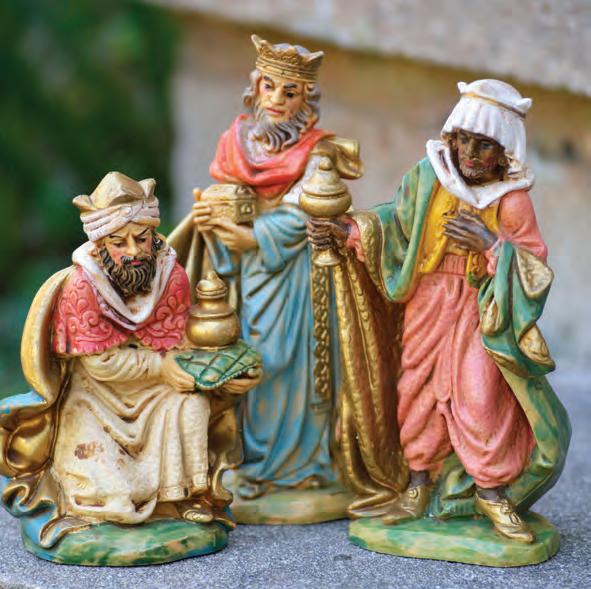
Caspar, Melchior and Balthazar, the Magi, brought the infant gifts of gold, frankincense and myrrh. While the gifts were of the kind usually given to kings, they have been given a spiritual meaning: gold as a symbol of kingship on earth, frankincense as a symbol of deity and the embalming oil, myrrh, as a symbol of death.
The last verse of the carol, “We Three Kings,” summarizes that interpretation. “Glorious now, behold Him arise, King and God and sacrifice.”
Epiphany, the Feast of the Magi’s visit, traditionally occurs in Western Christian countries on Jan. 6, concluding the 12 days of Christmas.
There are many ways of celebrating the Magi between Christmas Day and Jan. 6. A home may be blessed with holy water by a priest or resident sprinkling the water in the rooms. If you have a Nativity scene at home, moving the wise men figures around the house each day following Christmas symbolizes their journey to meet the
infant Jesus and is a visual reminder of their voyage of faith.
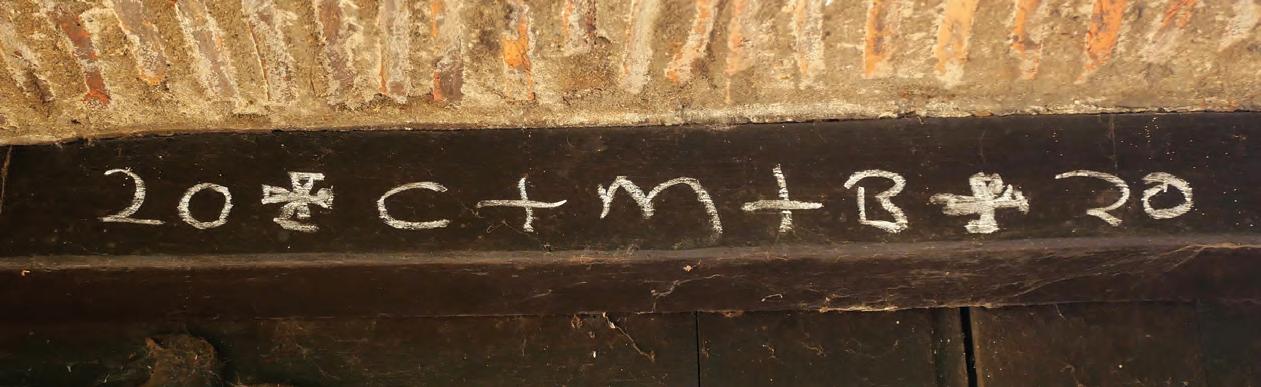
Chalking the doors, a centuries-old practice worldwide, is another tradition. The chalking tradition dedicates the year to God from its beginning, asking His blessing on the home and all who live, visit or work there. Between the beginning numbers of the year and the last two numbers are chalked the letters C+M+B+.
Usually, those symbols are chalked on the upper horizontal piece of the front door frame, like this: 20+C+M+B+26.
Of course, children can chalk the symbols where they can comfortably reach.
The letters C, M and B traditionally stand for Caspar, Melchior and Balthazar, but they may also stand for Christus Mansionem Benedicat, meaning, “May Christ bless this dwelling.”
Praying together and enjoying meals as a family also celebrates the Magi.
Seton CARES
PROVIDES CHILDREN’S MENTAL HEALTH RESOURCES TO SCHOOLS
By Allison Vrooman | Photos by Michael Hogan
A community health needs assessment completed by Children’s Mercy in 2021 found that mental health is a growing problem among Kansas City youth. An estimated 14.3 percent of children aged 5-17 experienced either “fair” or “poor” mental health. Diagnoses of depression and anxiety have spiked since the last assessment taken nine years prior. As children continue to face more challenges in an ever-changing society, one could assume that these numbers have only increased in the last four years.
Seton Center, a social services organization located in Kansas City’s urban core, has recently launched a new initiative to support children facing mental health challenges. The Seton CARES (Children’s Advocacy, Resiliency and Emotional Support) program offers individual and family therapy, skill-building classes and mental health assessments.
In response to requests for a children’s mental health program at Seton Center, program director Michael Duncan began researching and creating a program that is centered around therapy and classes that support social-emotional learning, conflict resolution and suicide prevention. In the spring of 2024, preliminary components of the program were defined and fund-
ing was obtained. In the following months, the program was built out and partnerships with local schools and youth organizations were formed. Seton CARES officially launched in February 2025.
“We have a lot of children who probably wouldn’t have the necessary funding to receive these services that are desperately needed, but we are able to offer them to the community,” Duncan
shared, stating that all services provided through Seton CARES are at no cost to the children or families. Besides cost, attending therapy is made accessible with the opportunity for children to have sessions at their school. “We try our best to reduce barriers that might interfere with therapy sessions,” he continued.
A partnership has formed between Seton CARES and diocesan Catholic schools. Duncan met with counselors from the schools to share a program overview and teach them how to send a referral when they encounter a student who could benefit from the services. Seton CARES began to receive referrals from the schools within the first few weeks of the partnership and have successfully connected those students with the services they need.
The next step in the collaboration is to offer on-site skill building classes. These classes will cover topics such as self-awareness, self-management, social awareness, relationship skills, responsible decision-making and more.
Dr. Karen Kroh, Superintendent of Schools in the Diocese of Kansas City — St. Joseph, shared her excitement for the opportunity to implement Seton CARES into the schools. “The Catholic Schools Office is grateful to collaborate with the Seton CARES program in providing meaningful mental health support services for students. Together, we are working to ensure that every child feels seen, supported and empowered to learn and grow in a safe, faith-filled environment.”
Michael Duncan leads The Seaton CARES (Children’s Advocacy, Reiliency and Emotional Support) program at Seton Center, which supports mental health needs of young people and their families.
‘Faith home’
St. Joseph family finds a ‘Faith home’ in St. James School’s classical model
By Sara Kraft
“T“The feeling of community within activities, faith, fellowship and friendship has really surprised me about St. James,” explains Rachael Wohletz. Rachael and her husband Robert have 11 children, ranging from a 19-yearold sophomore attending Benedictine College down to a 1-year-old. Seven of her 11 children are attending St. James Catholic School in St. Joseph, Missouri for the first time after being their entire lives home-schooled.
After experiencing a medical crisis, the Wohletz family began discerning if God was calling them to make a different educational decision for their children. In Fall 2025, they would have eight different students in seven different grades. While homeschooling had prepared their oldest son well for college and encouraged their 18-year-old daughter to consider a vocation to the Carmelite order, family circumstances had changed. They began to consider other options that would also offer faith, fellowship and friendship in a safe and faithful environment.
Rachael first learned at a parish council meeting that St. James School was moving to a classical education model. This matched the
philosophy with which her children had previously been educated. She also learned that St. James School has daily Mass four out of the five school days each week. “That kind of center around the Eucharist was the biggest selling point,” Wohletz explained. “If we could have afforded it, I probably would have said yes on the spot.”
Thankfully, a grant from a generous private donation made attendance possible. “It felt like an answered prayer,” recalled Rachel. Seven members of the Wohletz family ages preschool through 7th grade began attending St. James School in Fall 2025. The Wohletz family feels that St. James School has already offered many benefits for the family. “I really like that we go to Mass almost every day,” explains Evan, seventh grader. “My teachers are great, and the cafeteria food is the best around!”
Rachael believes that Father Davis and religious sisters teaching religion classes have inspired her children to take a further interest in their faith and ask better questions. “I love that it’s Catholic,” explains Amalie, third grade. “And I love Father Davis and Father Fenlon.”
Additionally, Catechesis of the Good Shepherd, a full immersion faith learning experience for children, has inspired the faith life of the youngest Wohletz children attending St. James School.
“I love that there are lots of nice people there and that I have good friends,” stated fourth grader Reagan.
“St. James has fulfilled the dream we have of having a faith home that also educates in the Faith,” explains Rachael. “It teaches how to completely live and fill every facet of life with faith.”
Father Jonathan Davis (right) encouraged the Wohletz family to enroll seven of their 11 children in St. James School in St. Joseph this year for the opportunity to experience its classical model of Catholic education. Photo submitted by Rachael Wohletz.
Belonging Belonging
By Karen Ridder
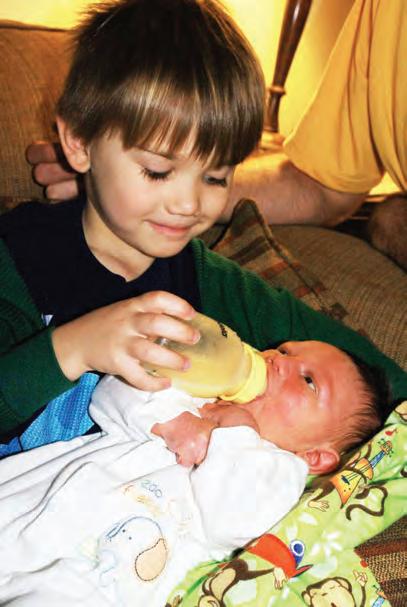
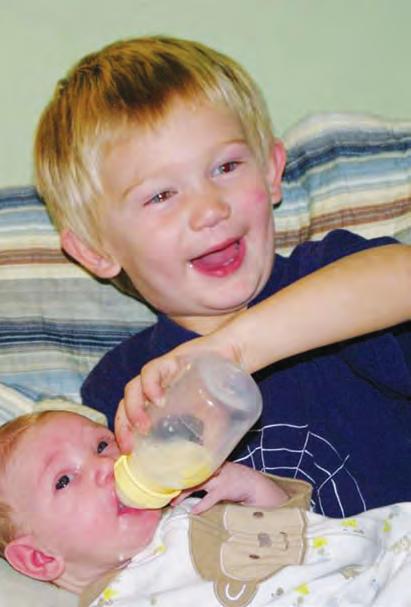
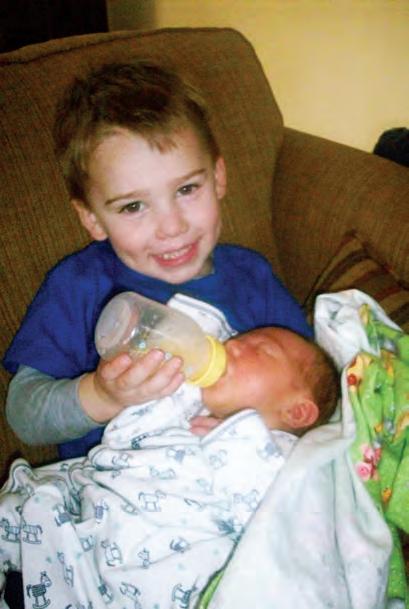
I handed each of my newborn babies to someone who absolutely could not handle the task.
These people really should not have been taking care of babies. I allowed it anyway, because I thought it was important.
These “people” were actually the freshly minted “big” siblings in our house – created by the new baby’s arrival. We allowed them to give the first bottle. Not the second or third, but the first bottle — before Dad even. Why did I do that? Because the greatest hope I have for my children is that they always believe they belong to each other, are responsible for each other and can take care of each other — even at times they don’t seem completely able.
Your children’s sibling relationships will be the longest of their lives. Best friends won’t come for a few years. Spouses show up decades later. You will very likely die before them. Their role in each other’s lives is important, and you are driving the ship on that whether you are completely aware of it or not.
In case you’re doubtful of this assertation, I will present two sibling sets from scripture. The first, Jacob and Esau, were twins. As often happens with siblings, they had very different personalities. That’s not an insurmountable problem. Their mother, Rebecca, however, decided she liked one better than the other. She convinced that favorite, Jacob, to lie, steal and connive to get the
blessing deserved by his brother. As you might expect, afterwards the brothers were at odds. Esau rightly felt slighted. The brothers lost contact for decades. Jacob grew to fear his brother. So much was lost when this mom pitted her sons against each other.
Another mother, Salome, also had two sons, James and John. Jesus called them “The sons of Thunder.” You may be tempted to believe that refers to their father, Zebedee. I’m convinced “Thunder” was actually their mother.
Salome was direct and opinionated. She’s known for boldly asking Jesus to seat her sons at his right and left hand in the Kingdom of God. He turned her down. But that didn’t detract Salome. She persisted as a key follower of Jesus. We see her both at the foot of the cross and at the entrance to the tomb on resurrection morning. Salome wasn’t just a demanding mother, she was a supporter whose sons reflected her devotion, not only to Jesus but to each other. As a result, her sons loved others, too. It changed the world.
Parents set the tone for relationships between siblings. It starts on day one. It never stops. If it’s not going well in your house, try to find little ways to show your kids they belong to each other. Then, get out of the way. The goal is for them to be a unified force together — without you. Try to be like Salome. Stay close to the cross and the resurrection. Let Jesus use your children to change each other, and it will change the world.
Balancing beauty and reverence
By Allison Vrooman
provided by Our Lady of Peace Parish
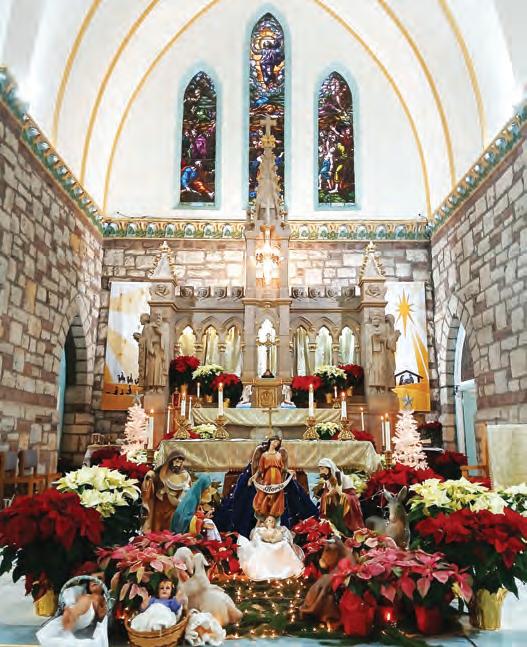
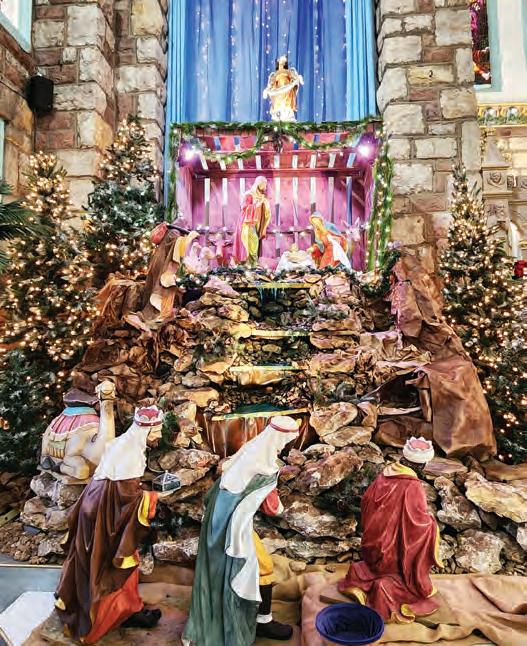
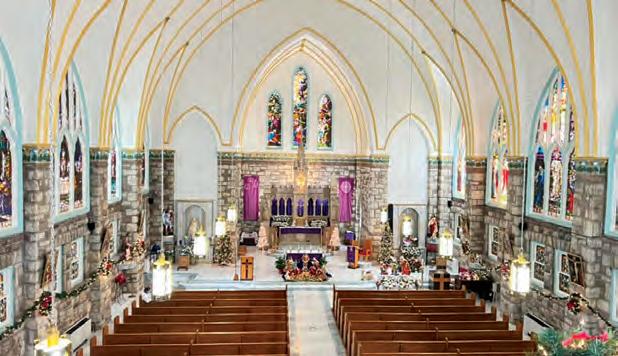
Each December, as the birth of Jesus Christ is celebrated, churches are adorned with flowers, evergreens and Nativity scenes. Not merely decorations, these symbols are meant to draw the faithful into reflection on the beauty of the season.
Polo Estrada, parishioner at Our Lady of Peace Catholic Church in Kansas City, has spent most of his life cultivating a balance of beauty and reverence through the ministry of church decorating.
“My uncle planted the seed of faith in my heart,” Estrada said, sharing that his uncle, a Franciscan friar who worked in the Vatican, encouraged him to become a priest when he was young. Estrada began catechism classes at six years old, received his First Communion at eight years old and started teaching catechism classes two days later. He continues to teach classes today.
Around that same time, Estrada was tasked with getting water from a local stream for the flowers at his church. This is when he first learned how to make floral arrangements. He also learned how to hang curtains and other decorations, being the only one small enough to fit into the tight spaces of the altar. Over the years, he has created hundreds of altar designs
for feast days, celebrations and liturgical seasons.
At Our Lady of Peace, Estrada is the main decorator of the church. Another parishioner helps with floral arrangements and a few more volunteer to set up the more extravagant displays.
Just before Advent begins, altar cloths, coverings and banners are changed to the appropriate liturgical colors, and the Advent wreath is set out. It takes two evenings to decorate the church for Christmas and each year’s decoration style is different.
Among the decorations, the Nativity set takes precedence.
“The Nativity scene has significance because it reminds us of Christ’s birth,” Estrada said. When he displays the Nativity scene and places baby Jesus in the manger, he is drawn to reflect on what that moment would have been like. His personal prayer is his inspiration, allowing him to focus less on whether the decorations look good and more on the purpose of the season.
When asked why he continues to serve his church through this ministry after many years, he answered simply, “Because I love Christ.”
Photos
Don’t fear the emptiness: Finding God in the post-holiday quiet
Last year was the first time I purchased a real, live Christmas tree. It smelled amazing, filled the room with cheer and then it died. Thus ensued the first time I had to get rid of a real, dead Christmas tree. Needless to say, a year later, I’m still sweeping up pine needles. But the real low point of giving my evergreen to the dump was walking back into my home and seeing the gaping hole where she once stood. It was a bit symbolic; the emptiness of my living room offering a reflection of that familiar postholiday feeling, and as I stared at the space, I immediately ran through ideas on how to fill it.
The Christmas season is a time of rejoicing in the fulfillment of God’s promise to deliver a Messiah. As we enter into Ordinary Time, that fulfillment is not negated, but there is a shift as we now turn our attention towards preparation for Lent. In the wake of the fullness of Christmastime, there can be a sense of emptiness that follows. As a society, we are largely uncomfortable with emptiness. We like to fill the space as quickly as possible, sometimes without any real discernment of how we’re filling it. Distraction, busyness and excess often clutter our lives, leaving little room for God.
By Lyndsay Hilton, MS, PLPC
When we take down the Christmas decorations and begin the process of decluttering and organizing our homes in the new year, we are provided with a chance to enter into that same disposition internally. It can be easy for us to rush through this activity as a necessary chore. By turning towards the act of decluttering with intentionality, we can reflect on the ways in which God is inviting us into greater simplicity within our daily lives.
With every ornament we box up and every scrap of wrapping paper we throw out, we can assess the commitments we’ve made that could be hindering our ability to be fully present to God and where He’s calling us. What obligations might we be able to step away from? What daily distractions could we choose to give up?
As we create space in our minds, hearts, and schedules, we allow more room for God to fill the emptiness. Perhaps He’s inviting you to serve the Church in a new way, offer that time to your friends and family, or simply sit with Him in the silence. Don’t be afraid of some discomfort, for God will not leave those spaces barren. It is when we clear out the noise that we become more disposed to hear His voice. As we enter into the new year, I invite you to embrace the space left by the Christmas tree.