PONY magazine, Olive Studio, The Timber Yard, Grange Road, Tilford, Farnham, Surrey GU10 2DQ
Tel 01428 601020
Advertising enquiries 01428 601028
Email pony@djmurphy.co.uk
Team PONY
Editor-in-Chief Louise Kittle
Assistant Editor Sarah Burgess
Staff Writer Nicky Moffatt
Editorial Assistant Megan Xavier-Witherington
Head of Art and Design Sarah Garland
Deputy Head of Art and Design Adam Witt
Art Editor Paul Smail
Designer Lucy Claydon
Marketing Manager Lianne Tadd
Digital Marketing Manager Alex Uren
Marketing Assistant Emily Weeks
Marketing Co-ordinator Alison Hill
Content Creator Kirsty Lucas
Advertisement Manager Evie Edgar
Production Manager Eleanor Dunn
Executive PONY
Managing Director Zoe Cannon
Commercial Director Abi Cannon
Smooth operation PONY
Office Manager Vicki Owen
Accounts Manager Caroline Leishman
Accounts Executive Sarah Smith
Photography
Bob Atkins, Lucy Merrell, Peter Nixon, Jon Stroud, World Horse Welfare. nigel baker photography, Callipso88, Nicole Ciscato, PIC Femke Ketelaar, horsemen, Anna List, Timothy A. Rowland, ALEX_ UGALEK, Yurich20/shutterstock.com. Jackie/stock. adobe.com.
PONY subscriptions 01442 820580
Back issues ponymag.com/shop Digital issues Visit the App store or Google Play
Printed by William Gibbon & Sons Ltd. Distributed by Marketforce
PONY magazine and Charlie are trademarks and copyright of DJ Murphy (Publishers) Ltd. No part of this publication may be reproduced or transmitted in any form or by any means without prior written authority from DJ Murphy (Publishers) Ltd.
While every effort is made to ensure the information and advice contained in these articles is correct, DJ Murphy (Publishers) Ltd, its employees and the authors will not accept any responsibility for loss or damage to any person acting or refraining from action as a result of anything included in or omitted from such articles.
Articles, photos and drawings are welcome but we cannot be liable for their safe return. Please enclose an SAE.
You can read our full terms and conditions, and privacy and cookies policy at bit.ly/PONY_TERMS and bit.ly/PONY_PRIVACY
The paper used in PONY is sourced from chain-of-custody certified manufacturers, operating within international environmental standards.
This ensures sustainable sourcing of the raw materials and sustainable production.
We’re sorry, but it may not be possible to include cover gifts on copies of PONY distributed outside the UK.
PONY supports social media safety – to have a Facebook, Instagram, Twitter or YouTube account you must be at least 13 years old. Always get your parents’ permission, too.
PONY recommends you wear an up-to-standard riding hat at all times when mounted.





okay, it’s time to let you in on a really, really big secret. Massive, epic. Well, 14hh, to be accurate. The PONY team has been really struggling to put the mag together this month, because we’ve been suuuuper distracted by the latest member of staff. Her name is Polly and we are totally in love with her, and I know you will be, too!
We can’t wait to share our adventures with Polly, and all the cool stuff she gets up to – she’ll be in the mag every month!

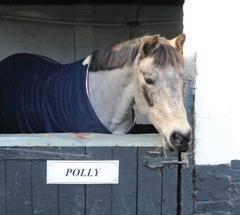
Polly on page 10!



Lou, PONY Ed Ted always gets the zoomies.

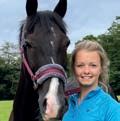


our ponies start their day...
Sarah, Assistant Ed Prince enjoys a cuddle.


Alex, Marketing Halo loves a good stretch.
Write to us at PONY mag, Olive Studio, The Timber Yard, Grange Road, Tilford, Surrey GU10 2DQ or email pony@djmurphy.co.uk
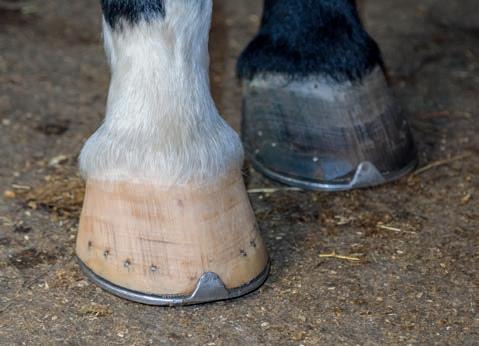
1 centimetre
How much a pony’s hoof grows each month three How many bones are in a hoof Ask
I’m going to try a new hacking route every
Nicky, Staff Writer
my competition progress so I can look back at the end of the year to see how far I’ve come. Alex, Digital Marketing



We’ve got a surprise, and she has four hooves!
We are soooo excited to introduce you to the newest member of Team PONY! She might not be great at typing, but she is the most popular member of the crew, and she’s only been here a few weeks. Meet Polly, the new PONY mag pony. Read on to find out more about her!
What do you mean, there’s a PONY pony?!
So, not that Polly isn’t super special (she 100% is!), but in fact she’s not the first PONY mag pony. There have been at least two PONY ponies before – the most recent one was Duggie, a super cute grey Connie. But we haven’t had a pony for a while and, well we missed it!
Polly BIO
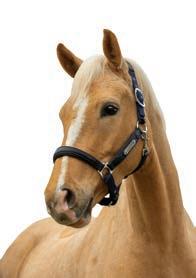
Height: 14hh Age: 11 Breed: Connemara cross Cutest habit: Whinnying for her dinner when she sees the feed room door open!
Getting to know Polly
Polly is 11 years old, so she’s got loads of experience but still has plenty of years ahead of her, too. Perfect! Polly came from a lovely home, doing lots of different Pony Club activities and having tonnes of fun. We’ll be doing lots of cool stuff with her, too!
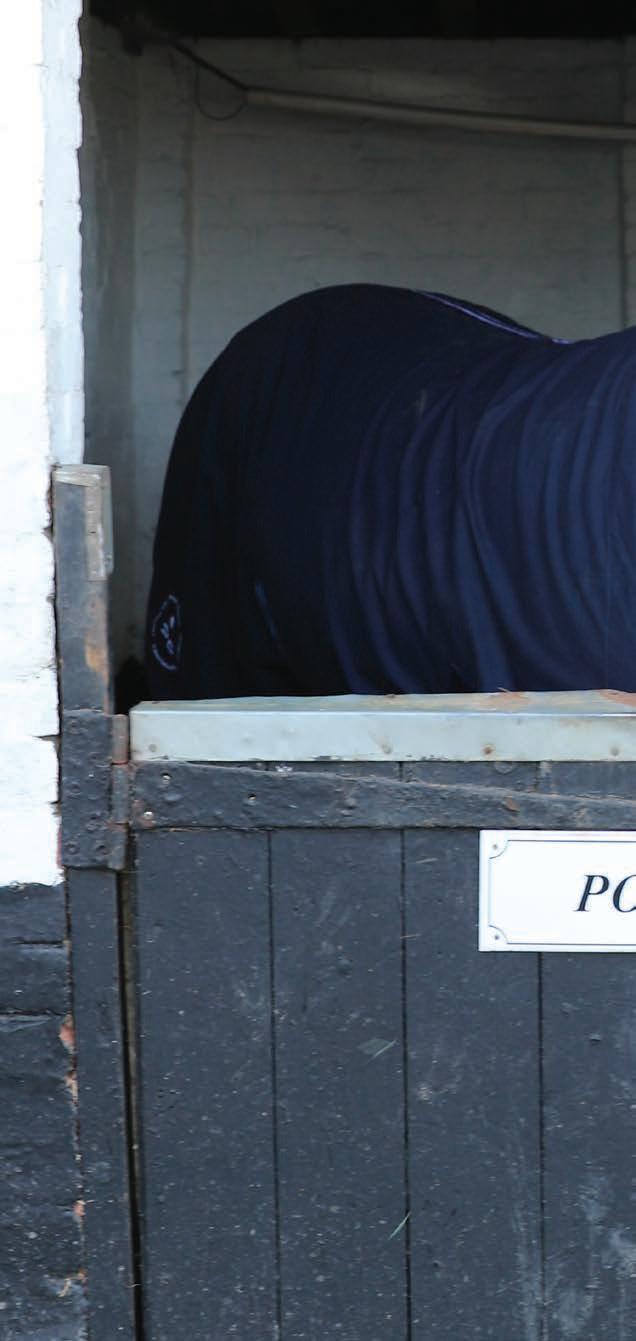
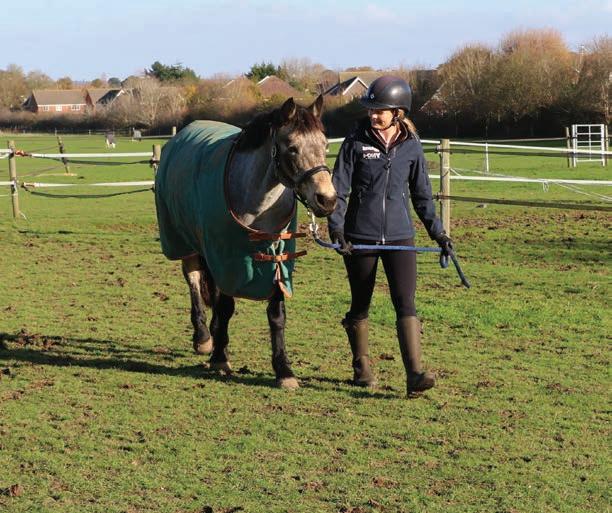
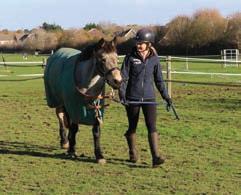
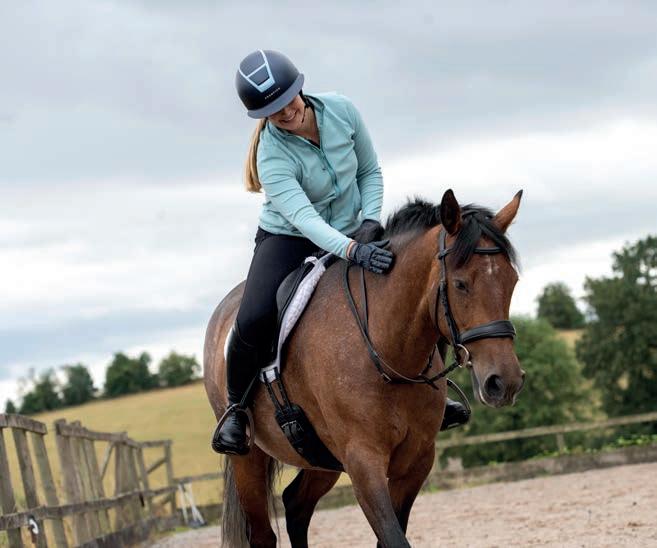
Sarah and Polly chat on the way in from the field
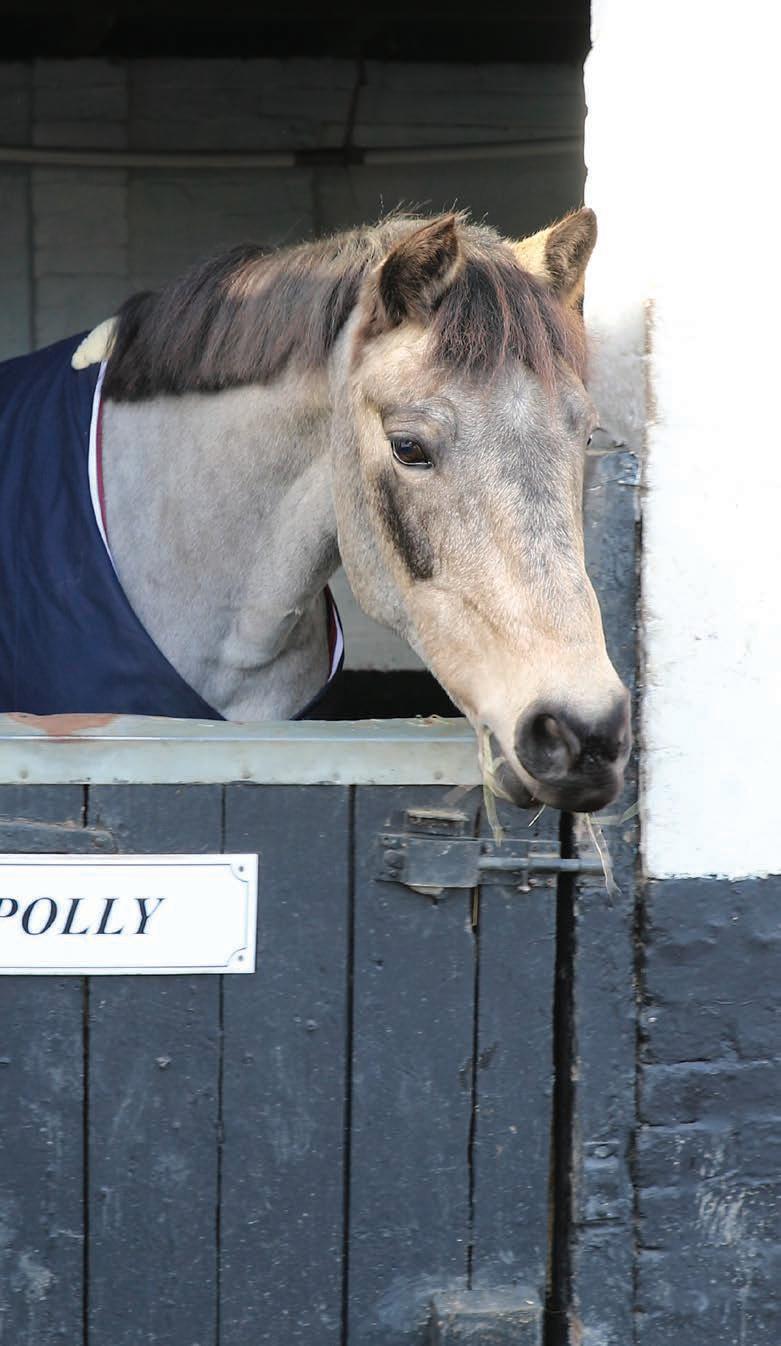
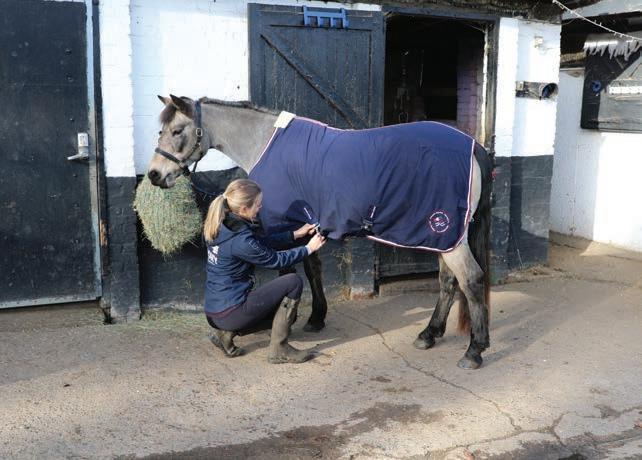
It’s important to give a pony time to settle into their new home before starting work – we’ve spent lots of time hanging out with Polly, grooming and just getting to know her. It’s been ace! did you know?did you know?
It’s really important to keep everyone safe when a new pony arrives, so Polly stayed away from other ponies until her tests were all clear and she had the green light to go out in the field with her new buddies. We gave Polly plenty of time to get used to her new routine and home before doing more with her.
Ponies like to know what to expect, so an important part of making Polly feel at home was to establish a routine. She is a good-doer, so only needs a fibre-based diet with a low calorie balancer to ensure she has the vitamins and minerals she needs to be healthy. Polly is stabled at night with her hay in a small-holed net (she loooooves her food!), and spends the day in the field with her friends. It’s like a slice of pony heaven! She comes in at tea time for a groom, exercise, dinner and bed.
You’ll be seeing lots more of Polly throughout PONY mag, as well as on the website, our socials, and in epic videos over on our YouTube! Look out for Polly!
Scan the code to see Polly’s latest adventures!

We’re still getting to know Polly, but here’s what we’ve discovered so far...
Go or woah? Polly likes to be busy – she has a really active walk and likes to get on with the job.
Apples or carrots? Apples, every time. Although, to be honest, we haven’t seen her turn down any snacks yet!
Neat or messy? Polly’s super neat in her stable but loves a good roll in the wettest patch of the field. Let’s just say, it’s a good job her coat is basically the colour of mud...
Jump or flat? Both! Polly loves everything we’ve done so far!
Explore or stay indoors? Explore, every time. Polly is loving getting to know her new yard and bridleways with her pony buddies!
Meg Elphick shares her tips for riding different ponies!
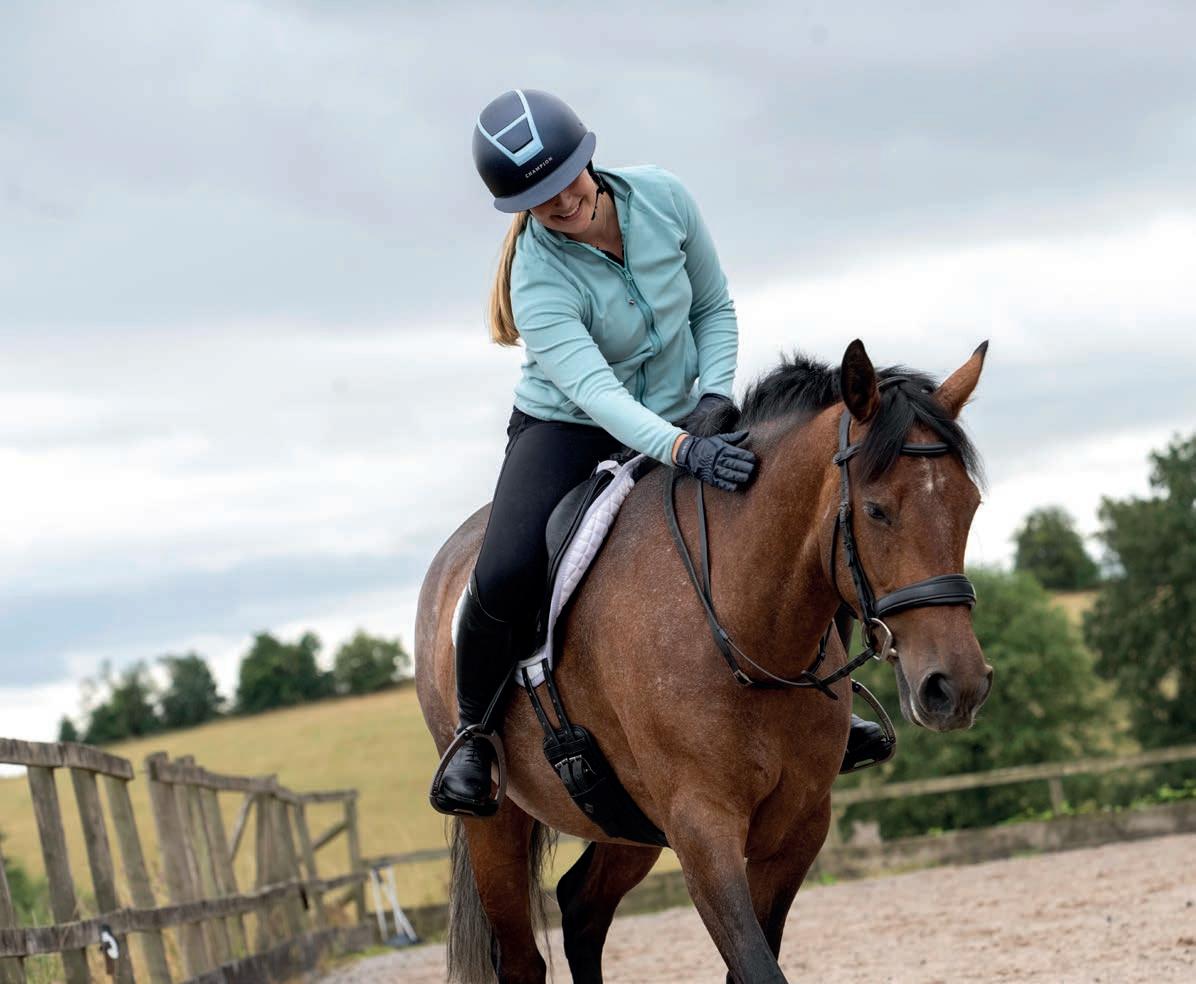
’m so lucky to have lots of different ponies to ride and train, but it doesn’t come without its challenges! With their different personalities, there’s so much to think about and I’ve got to be on the ball so I can set them up for success. But riding different ponies is great for your riding skills, so how do you make the most of it?

The more ponies you ride, the more experience you’ll get – it’s as simple as that! Gaining experience teaches you lessons, whether that’s learning the right way to ask for turn-on-the- forehand, for example, or even how not to do something. Learning from positive experiences, as well as your mistakes, will help you become a better rider and you’ll also have so much more knowledge. Every pony is different, which means you’ll discover how to adapt your riding and get the most from each pony you ride. As with developing any type of skill, whether that’s mucking out or swimming, the more you practise, the better you’ll become, which is why riding different ponies any chance you get is great! Plus, it means that if you get on a pony who is totally new to you, you’re likely to have more confidence.
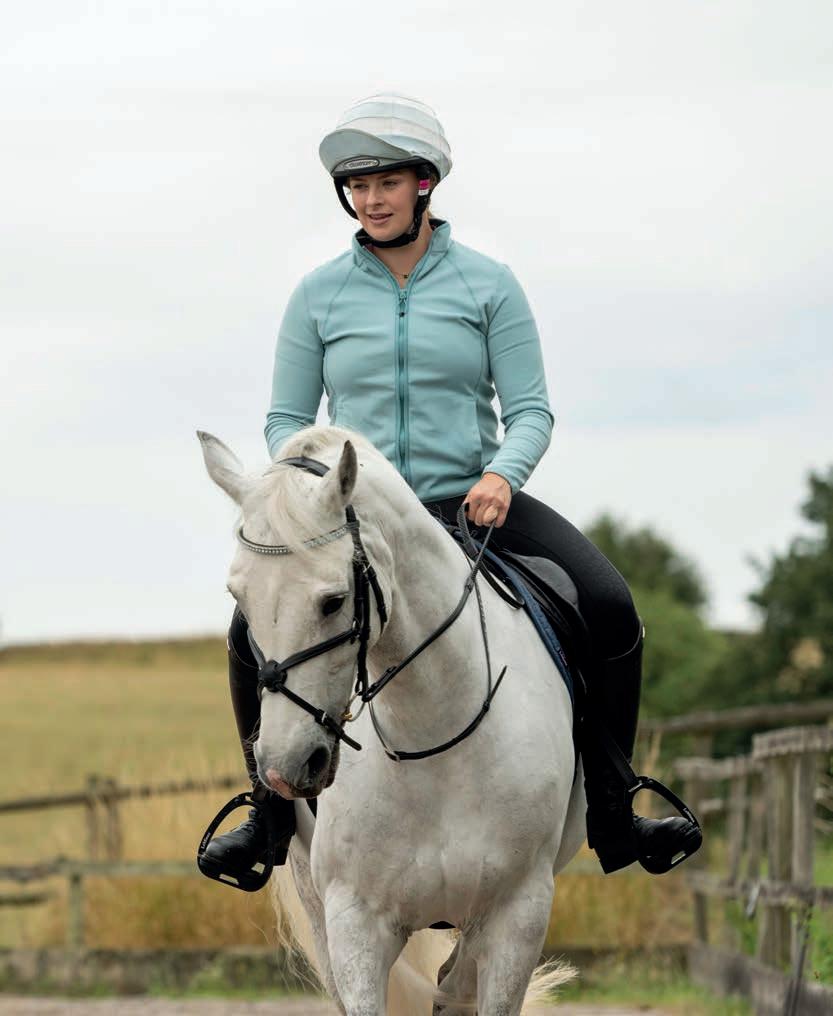
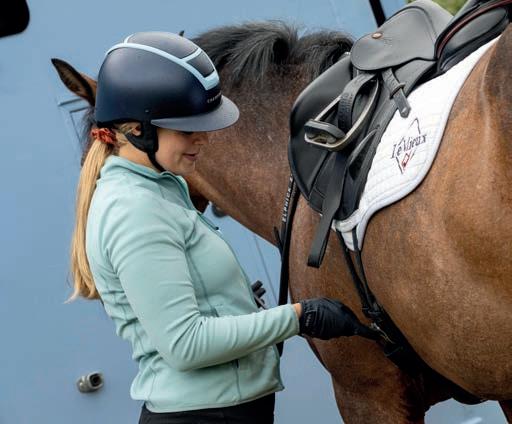
Ask what kit the pony you’re riding wears for certain activities. For example, they might wear boots when jumping or a martingale for hacking.
Like humans, ponies have their own personalities and every pony is unique! This means some will have certain talents and things they’re not as naturally good at, and some will prefer different communication and praising methods. Knowing what the pony you’re riding can and can’t do, and how they’ve been trained, is a great place to start, but it can take time to learn these things, so you might have to play around and find the right buttons while you’re getting to know each other.
As you start to ride more ponies, you’ll soon realise that they all feel so different! Winnie, for example, has quite a short stride and can feel a bit bouncier, compared with Kiki who has a longer stride and feels way more floaty – her paces are dreamy!
Learn everything you need to know about this super shape!
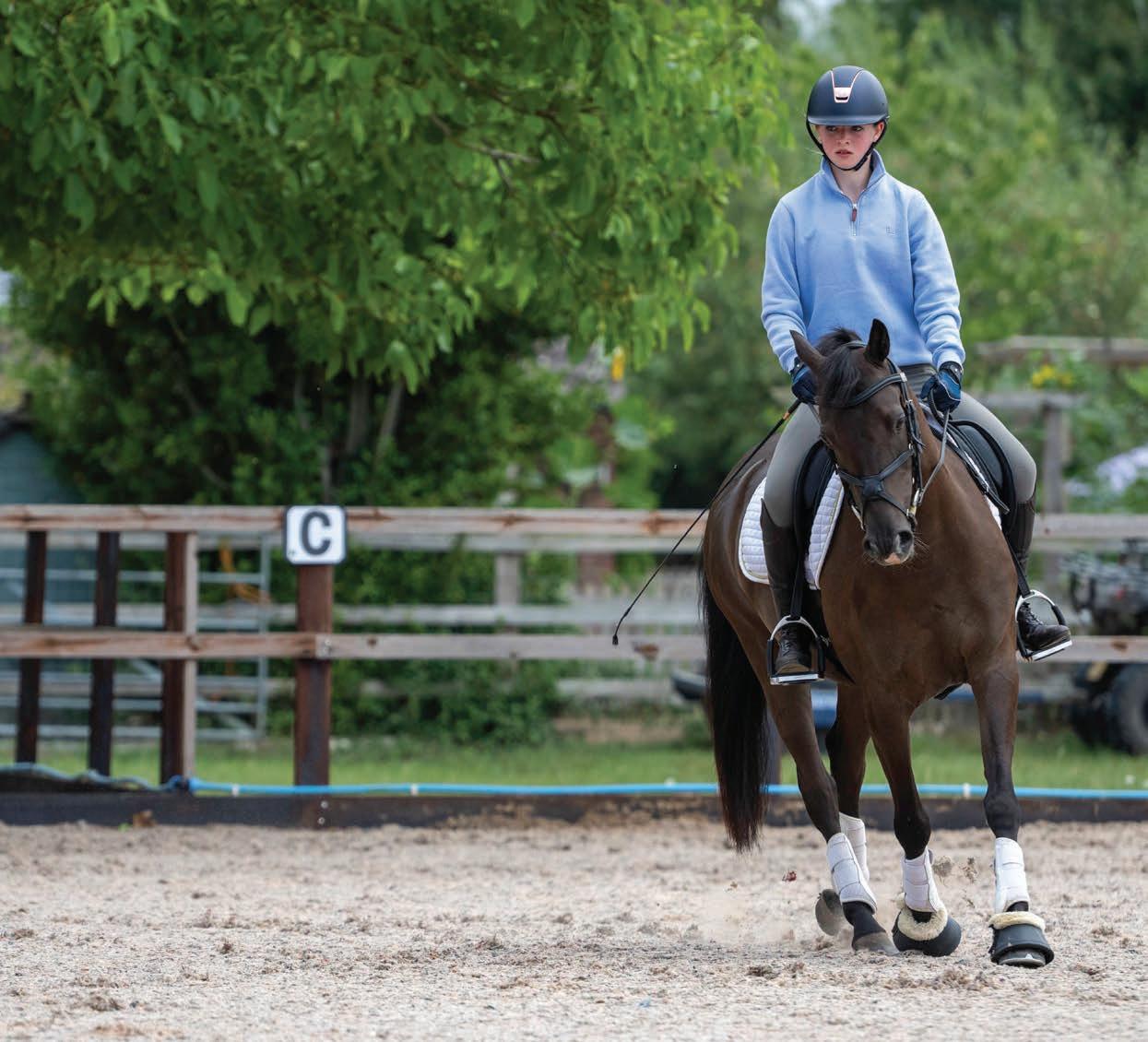
Riding circles and turns is a great way to improve your pony’s way of going, so what are you waiting for?! Let’s take a closer look at demi voltes and what they involve. And don’t worry – they might have a fancy French name, but with our tips you and your pony will be aceing them in no time!
In simple terms, a demi volte is a half circle that can be used to change the rein or ride from one movement to another.
If you’re wondering where this marvellous move got its name from, well – demi volte translates as a half turn.
As well as riding demi voltes, you can do complete small circles (known as voltes), too. That’s pretty cool!
did you know?did you know?
WW In dressage, circles and half circles of 6m, 8m and 10m in size are known as voltes, but anything bigger is called a circle.
Fancy having a try? Follow our step-bystep plan…
1. Ride around the arena in walk or trot. As you approach the corner marker just before a short side, start to prepare for a half circle.
2. Ride a smooth curved line from the marker to the centre line.
3. When you reach the centre line and are level with the marker you started
from, head in a straight line straight back towards the corner marker at the other end of the long side you came from. This will take you onto the other rein, so change your pony’s bend (and your diagonal, if you’re in trot).
4. Repeat the exercise on the other rein, riding it a few times each way.
5. Make the half-circle smaller to test your pony’s skills – remember you’ll need to support his outside shoulder on the turn!
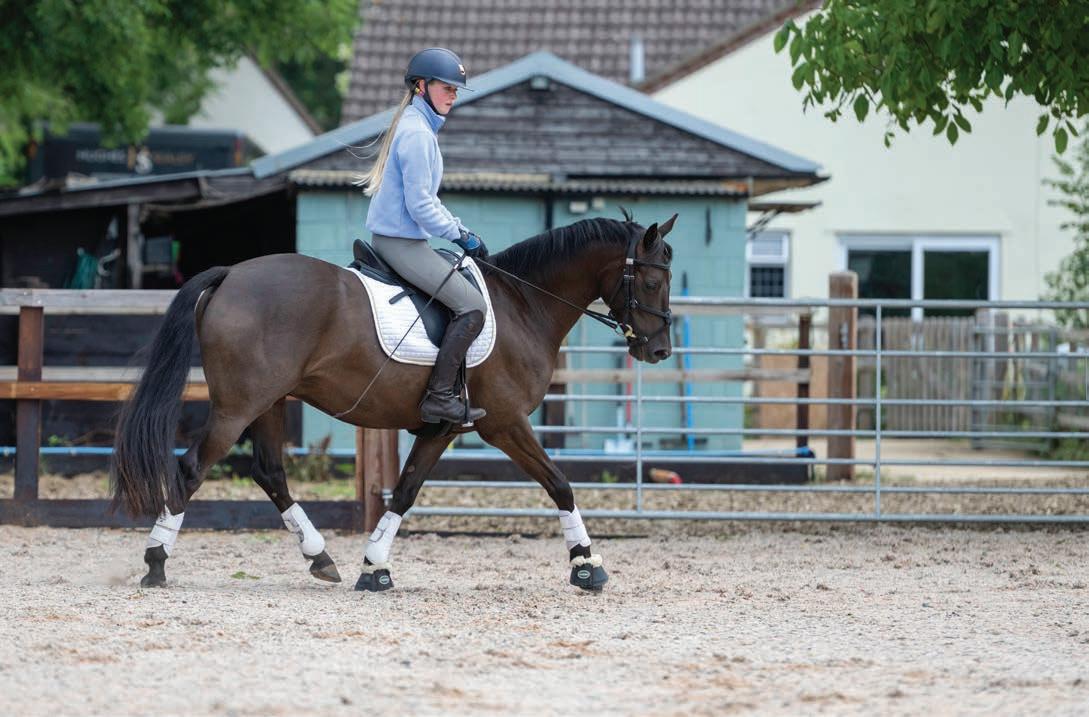
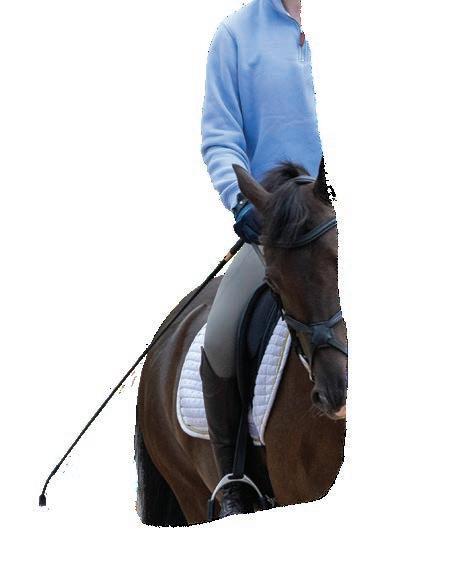
Look where you’re going and turn your shoulders towards the direction you’re heading. This will help your pony understand what you want him to do.
Once you’ve got to grips with 10m demi voltes, and only if your pony’s balanced enough, why not try some 8m or 6m ones, too?
WW Top riders use demi voltes to prepare their horses for the more advanced movements, such as half-passes or pirouettes – awesome, right?

If you’re wondering how demi voltes can help you and your pony, you’re in the right place. These nifty little circles…
• help to develop your pony’s balance
• make ponies more supple
• improve your ability to ride accurate turns and circles
• allow you to change the rein in a more interesting way