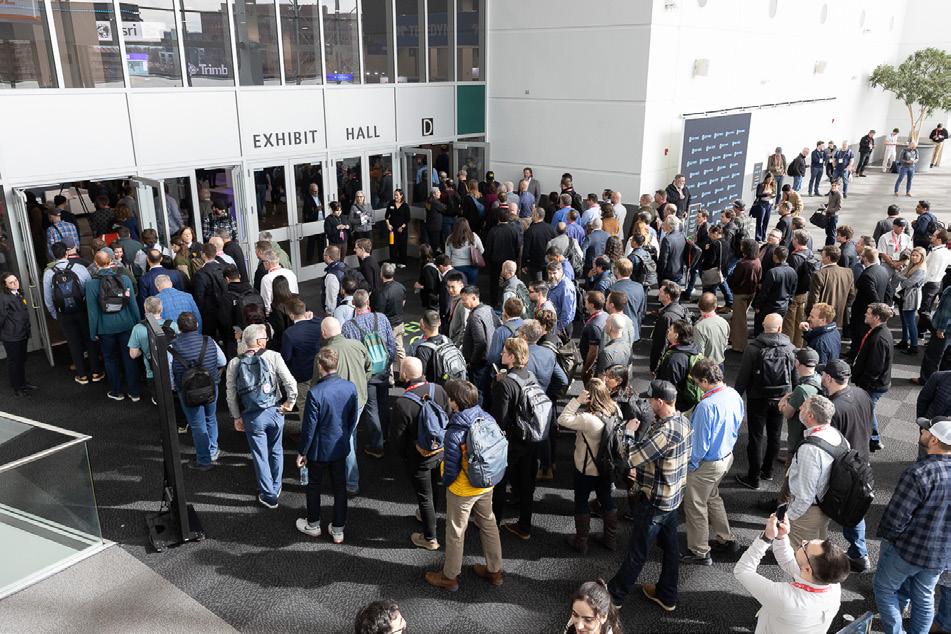
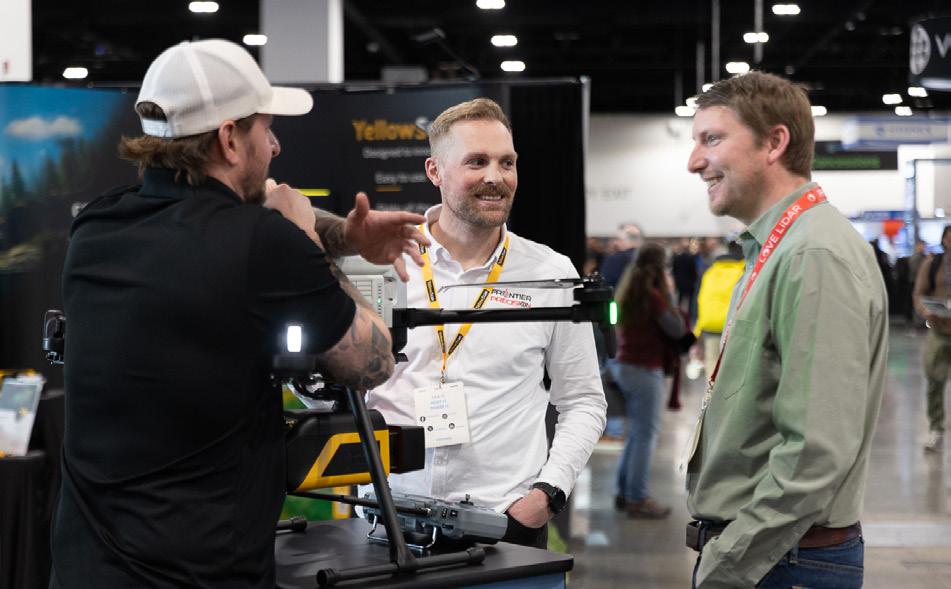
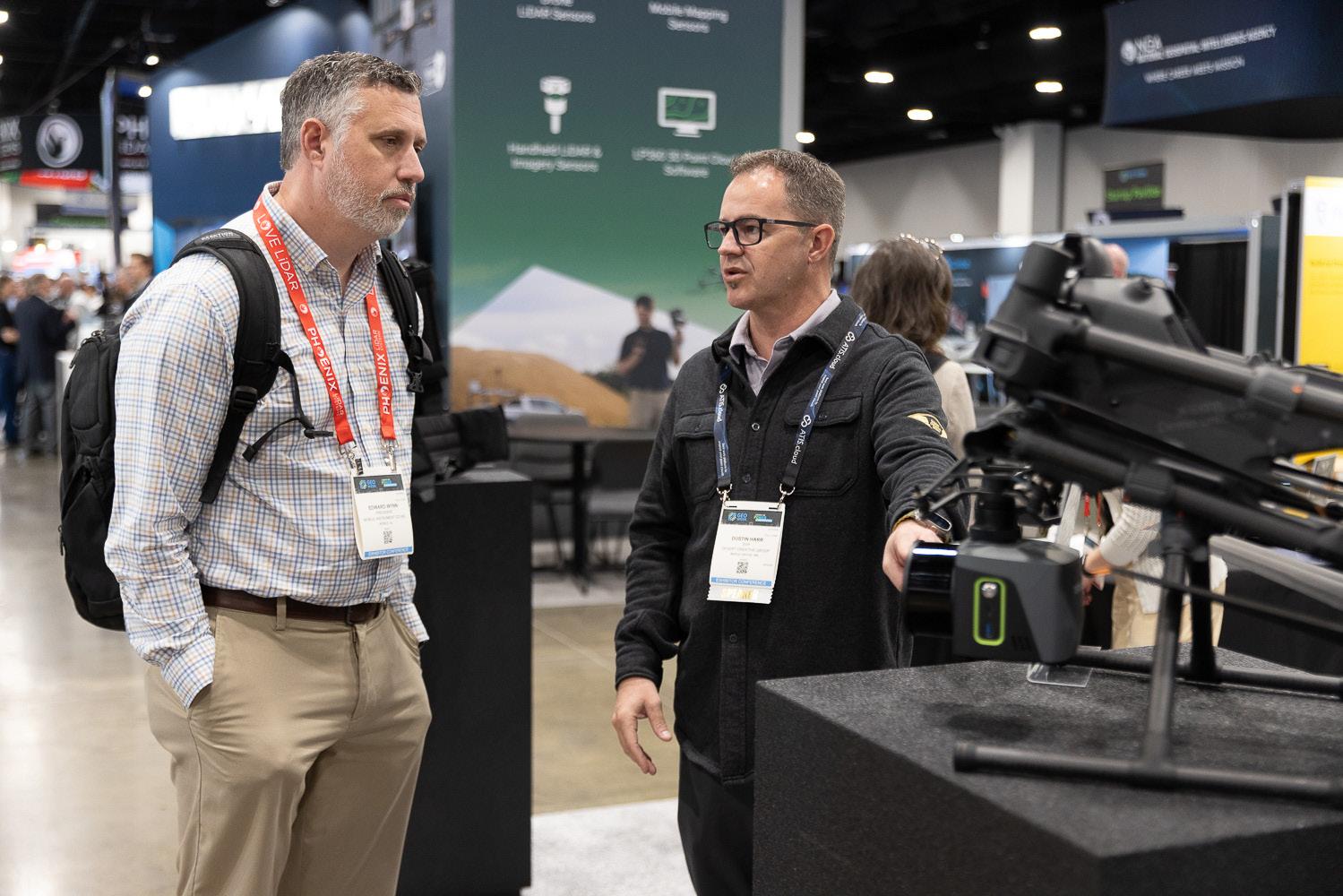
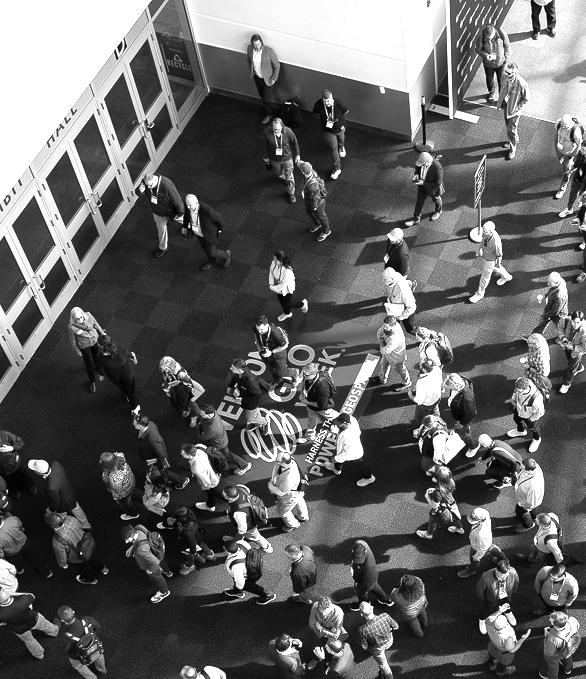
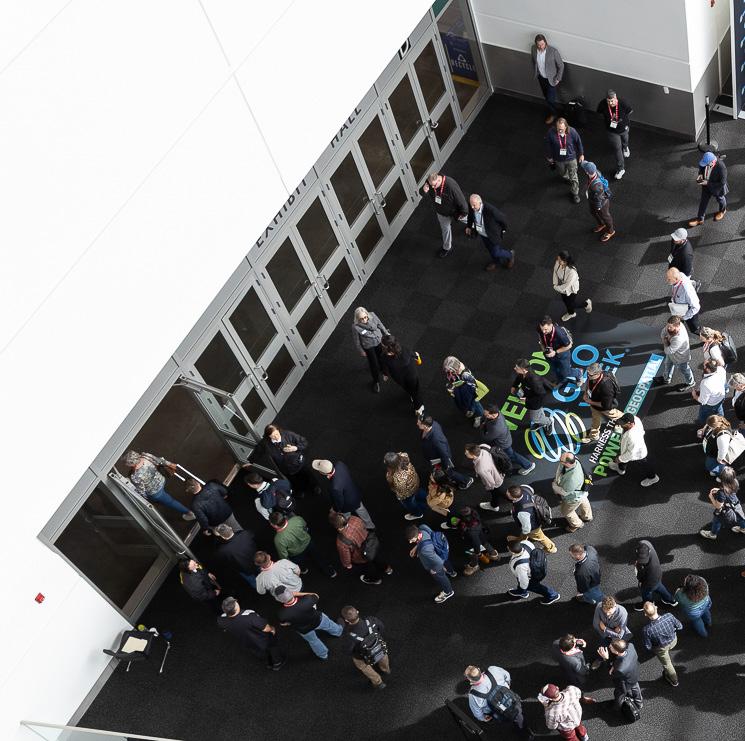
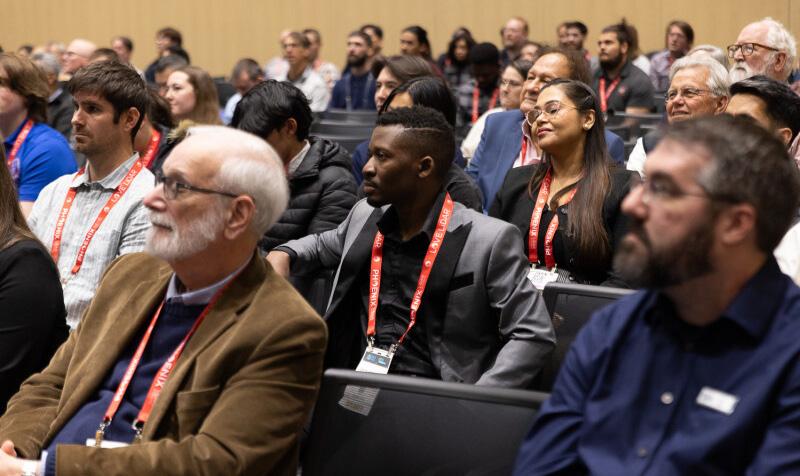
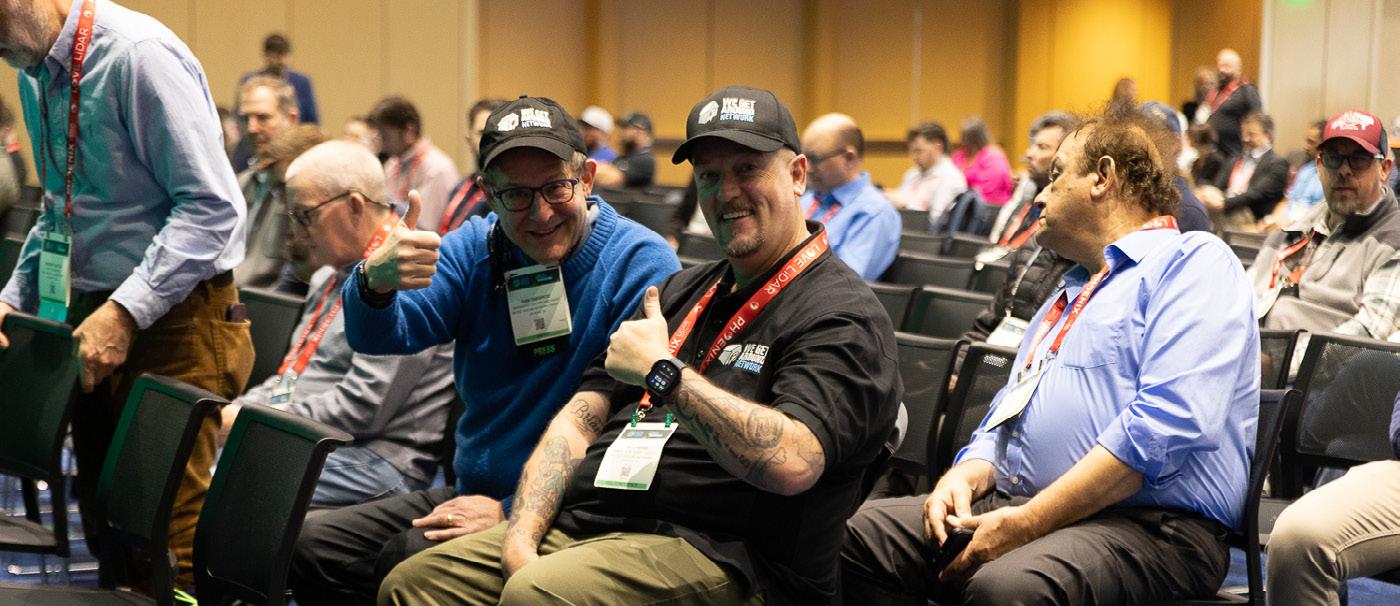
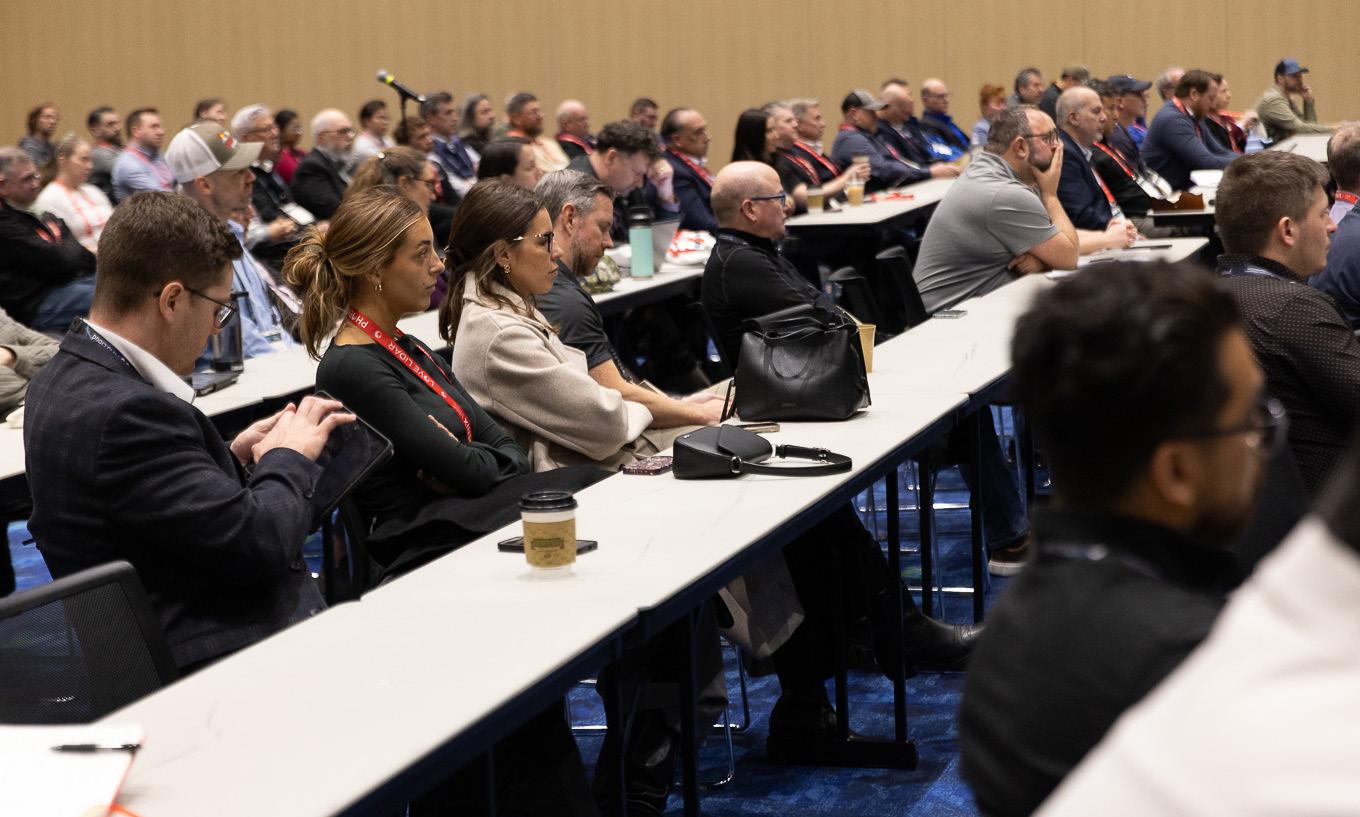
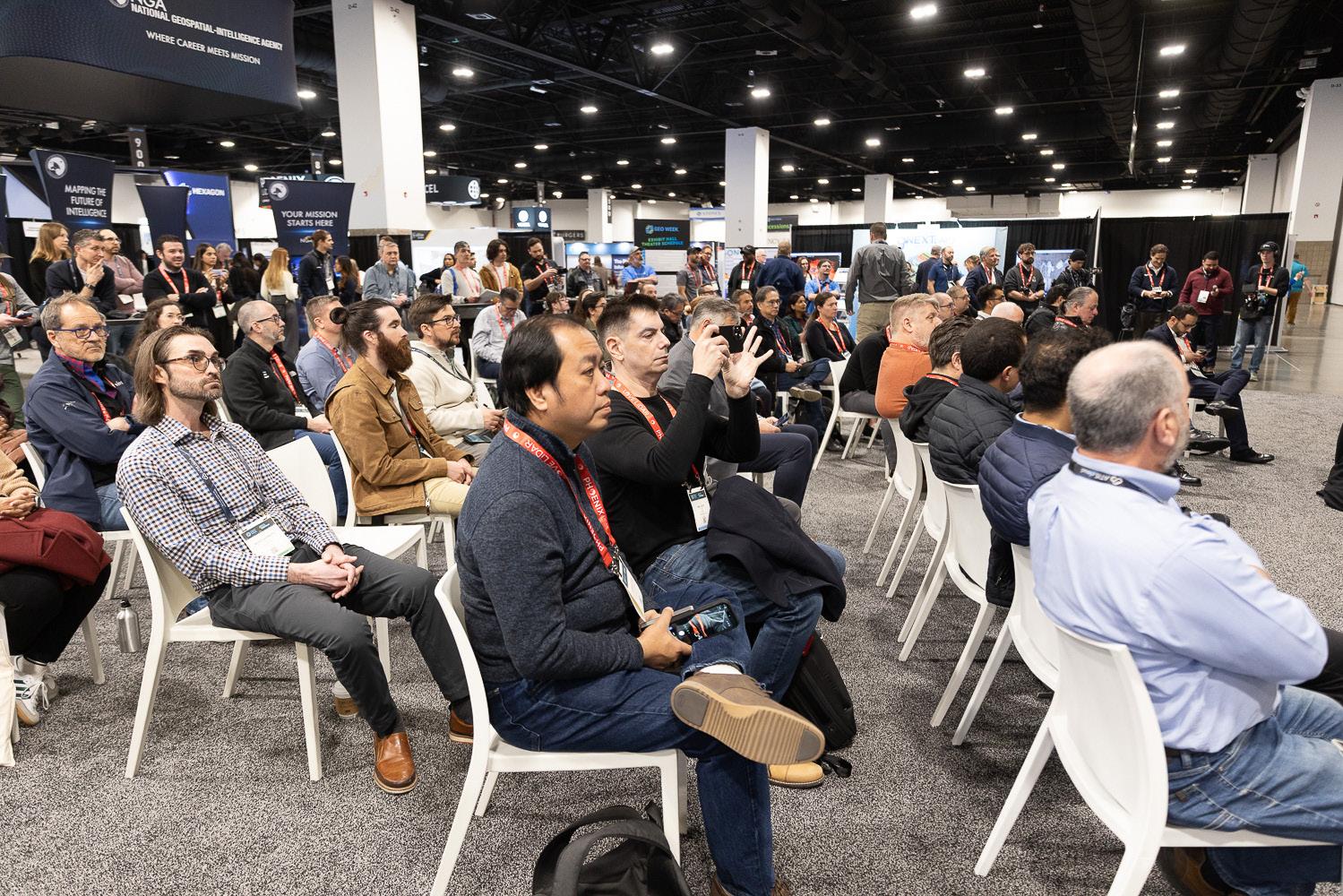
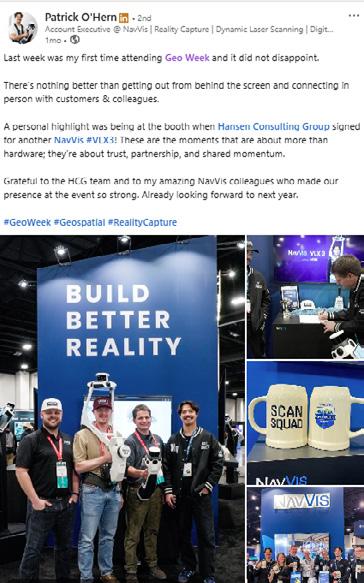
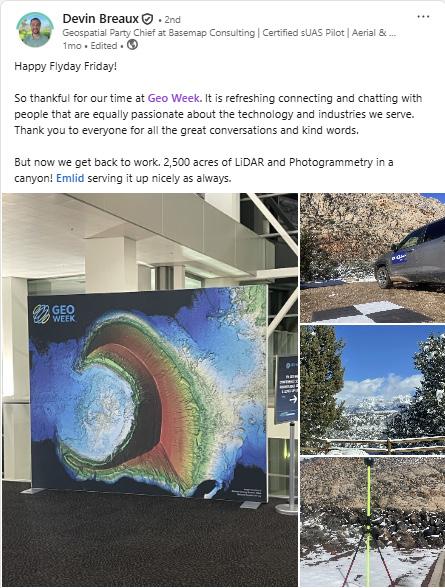
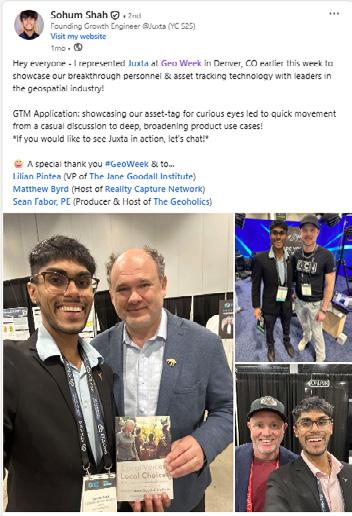
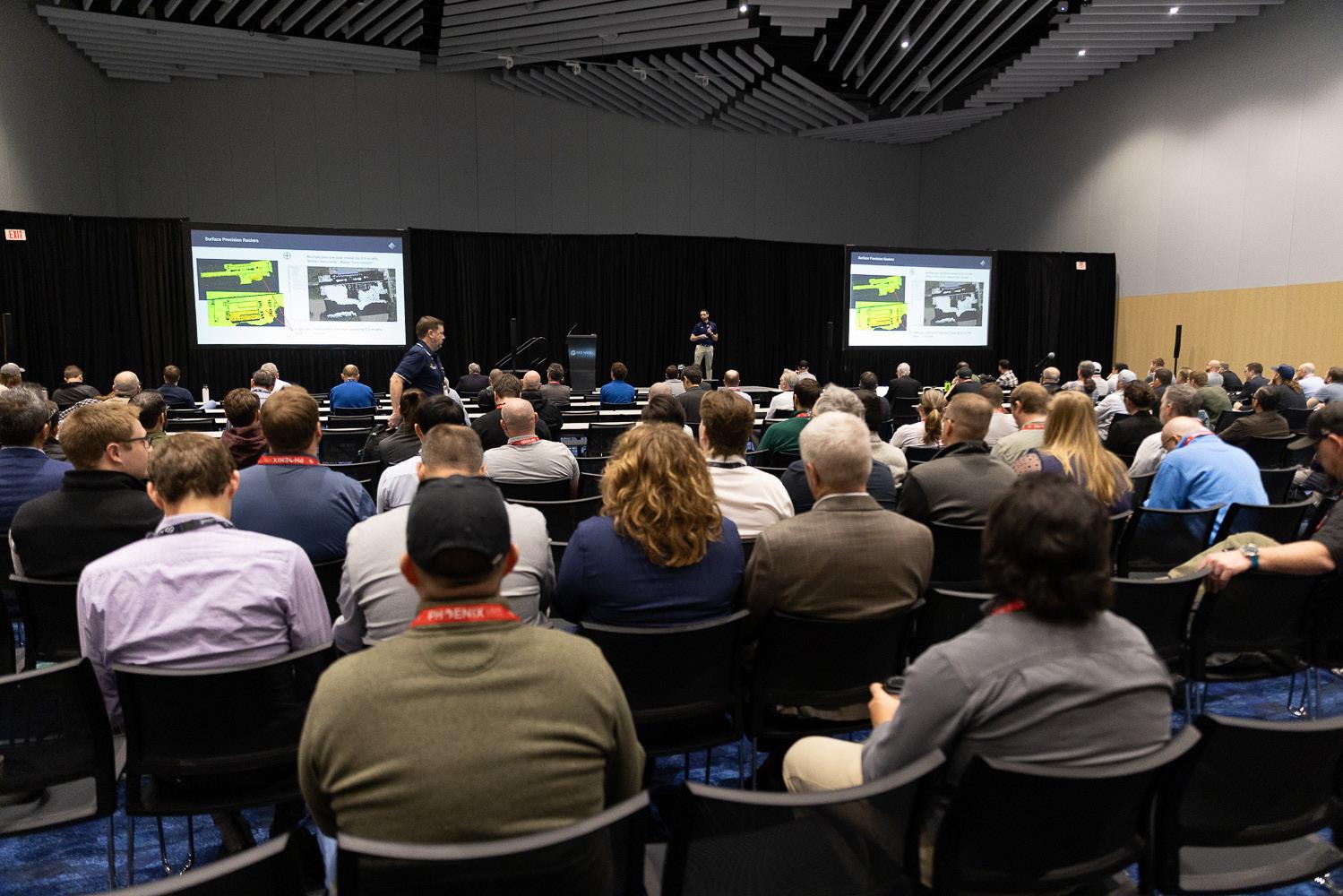
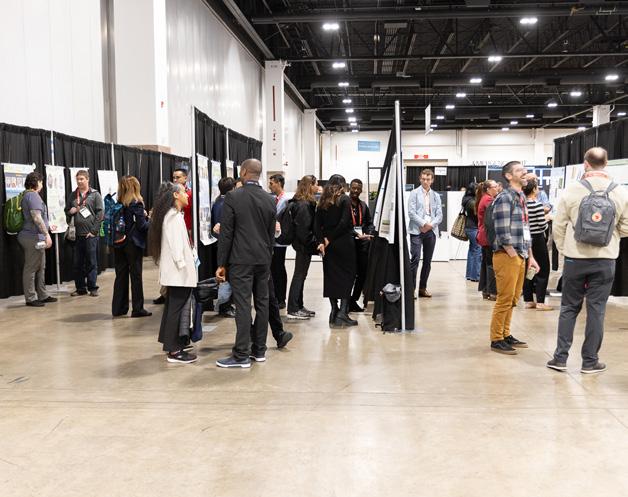
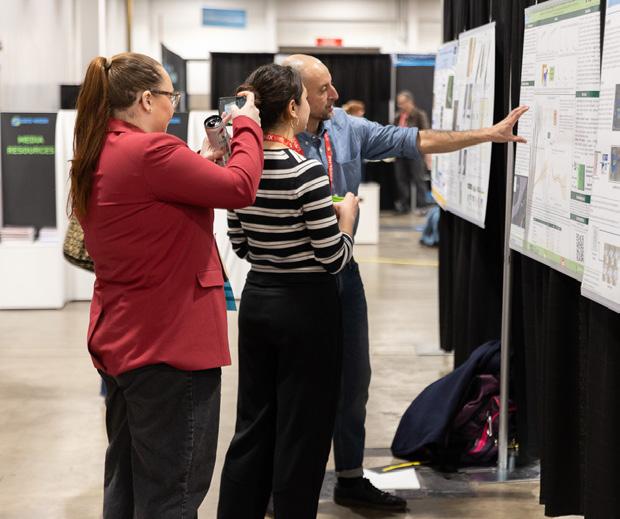
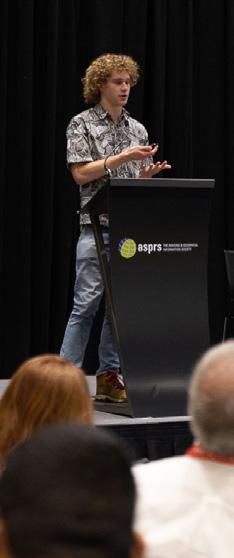
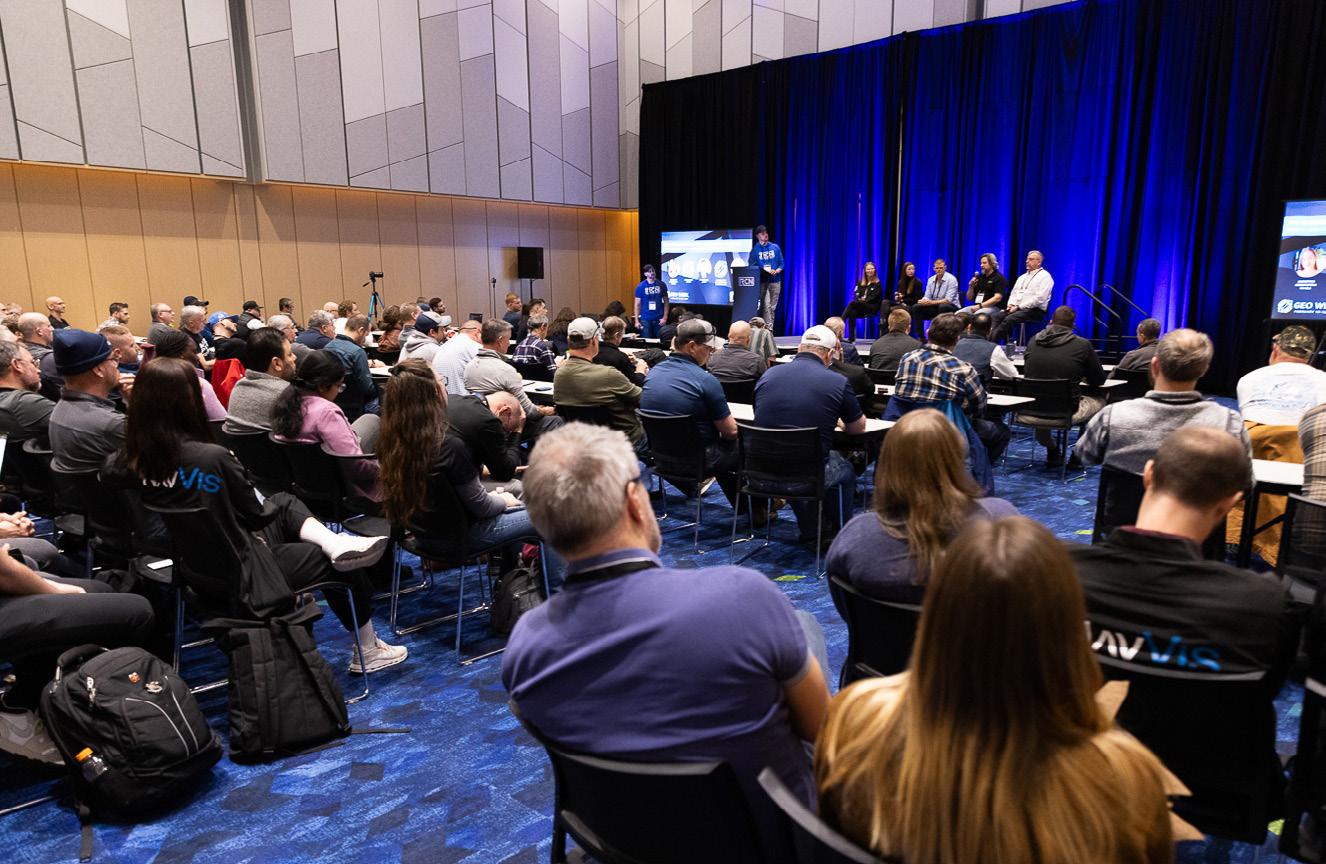
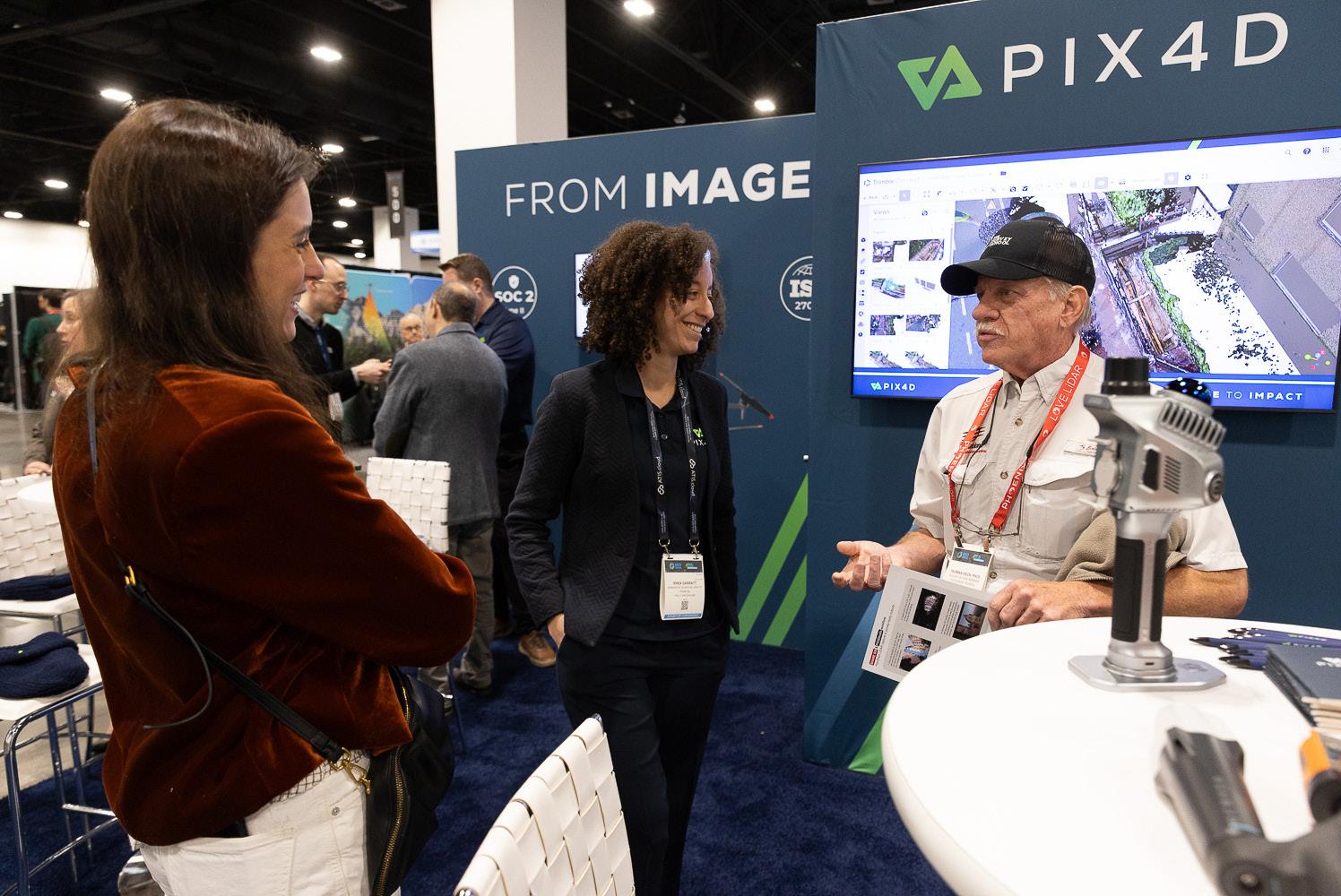
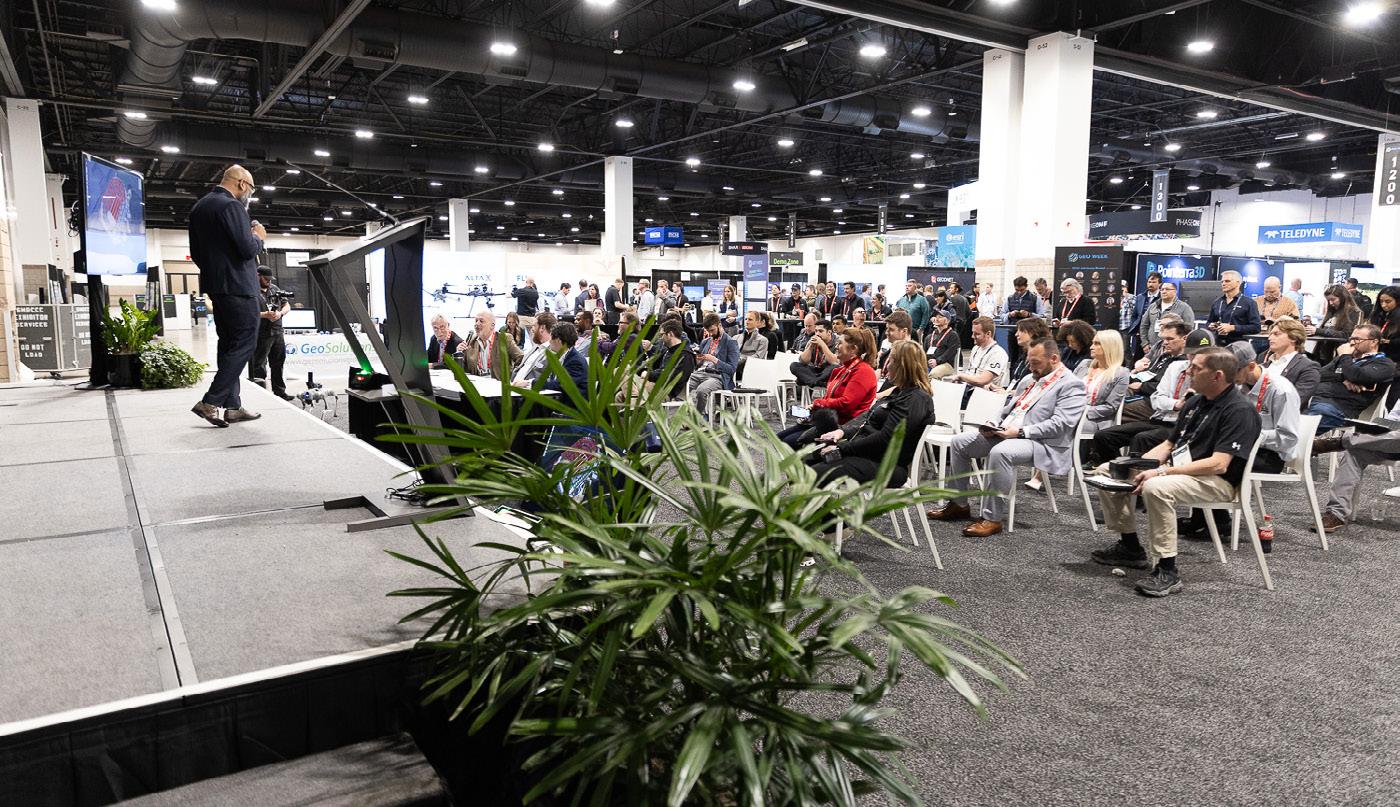
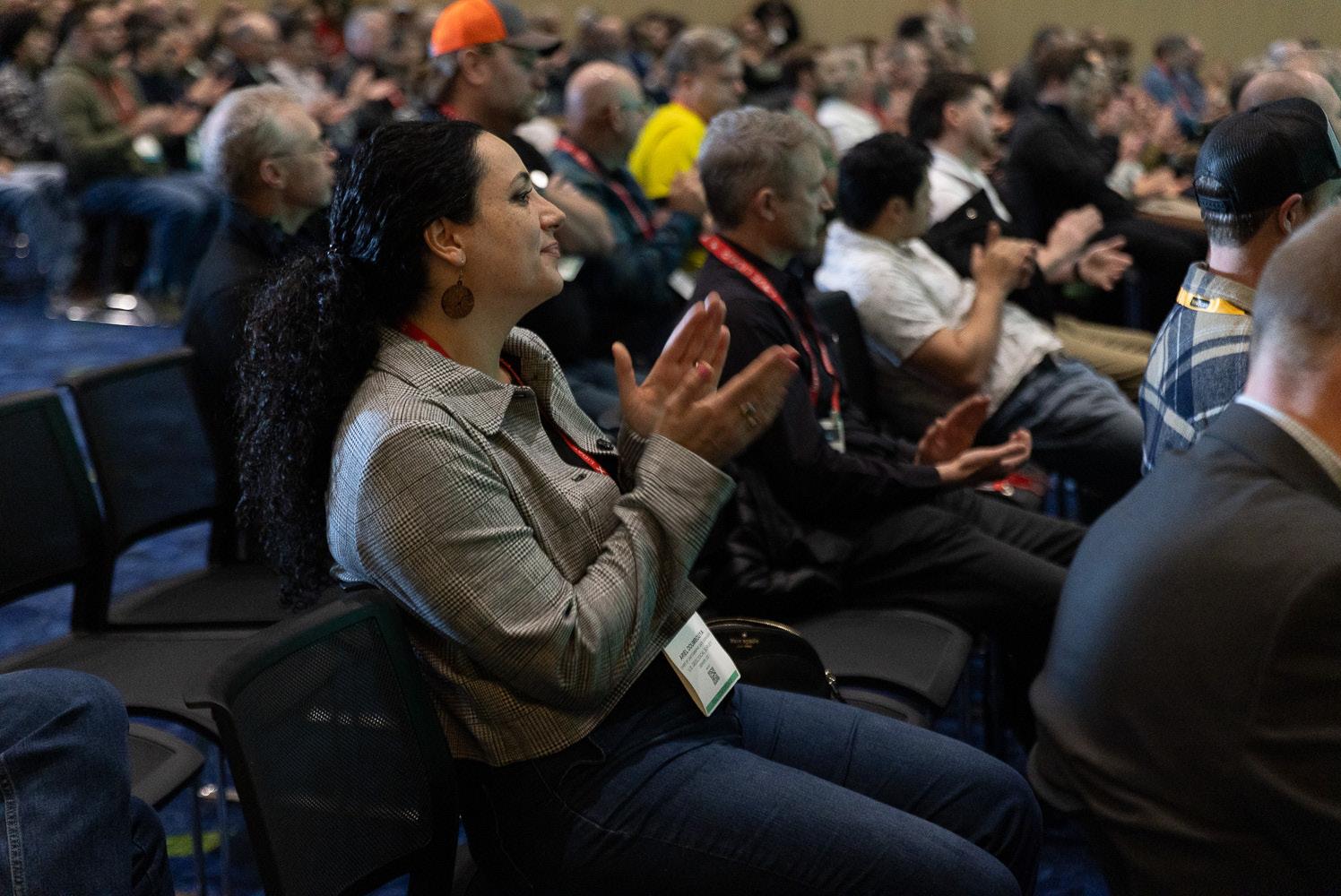
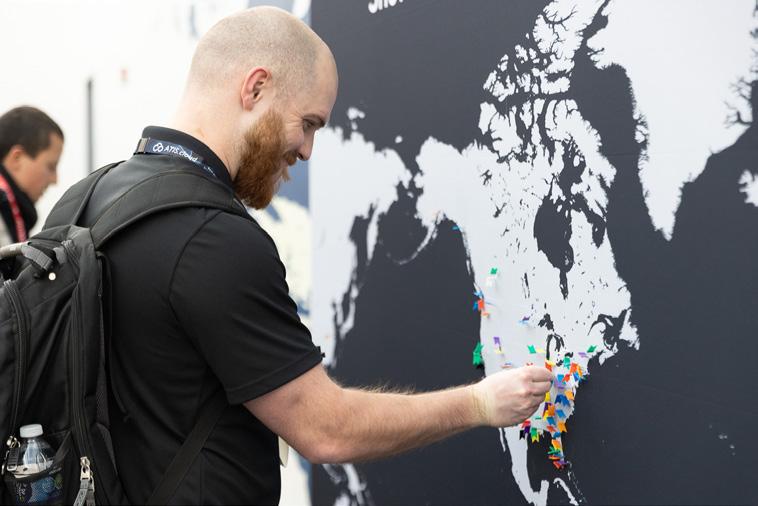
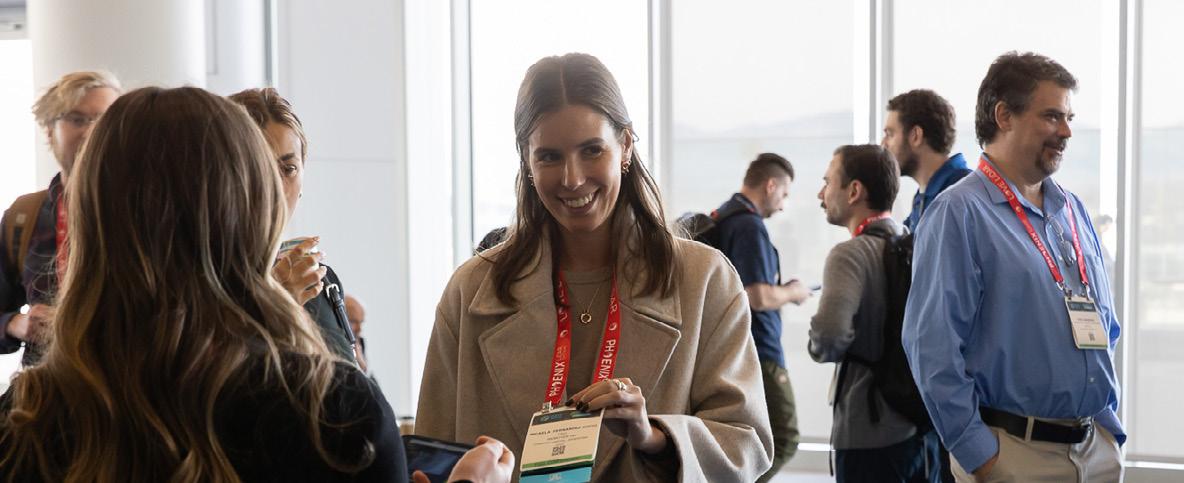
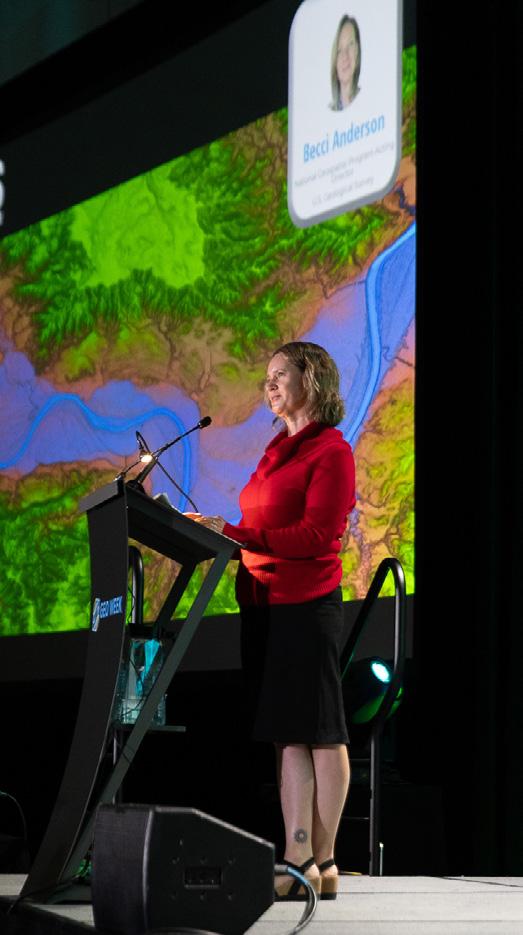
Geo Week 2026 brought thousands of geospatial and mapping professionals together in Denver for a landmark gathering of learning, networking, and innovation. With 3,500+ attendees and 238 exhibitors from 25 countries, this year’s event marked the largest exhibit hall in Geo Week history and set new records for engagement across every corner of the conference.
From groundbreaking keynotes to packed sessions and hands-on demonstrations, the energy on the show floor highlighted the vital role geospatial technologies play across industries. Attendees explored how lidar, imagery, drones, AI, and digital twin are shaping the way we monitor, model, and understand the world around us, whether accelerating conservation, optimizing infrastructure, or enabling smarter, data-driven decisions.
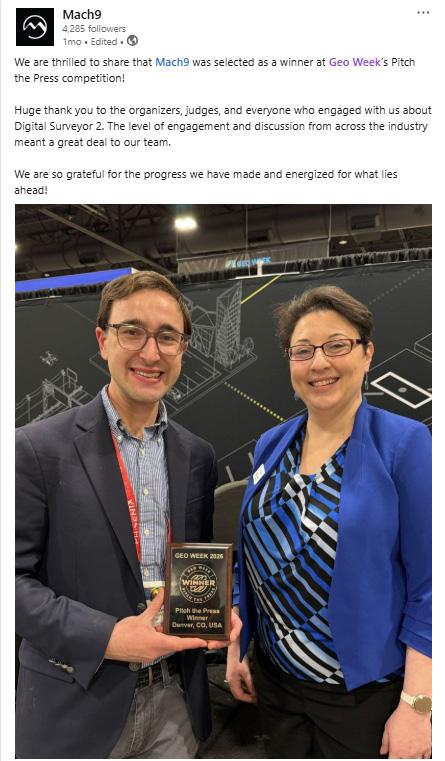
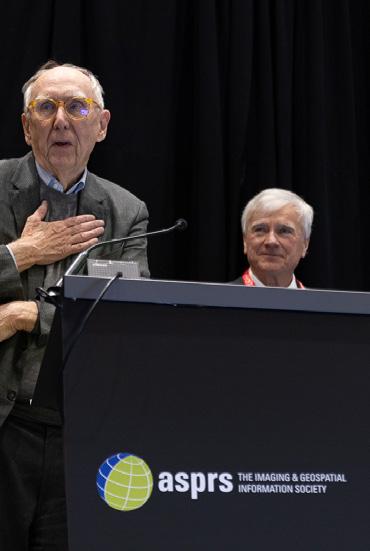
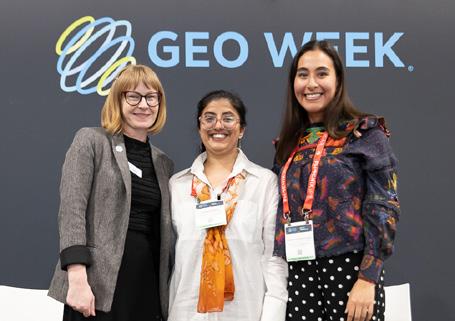
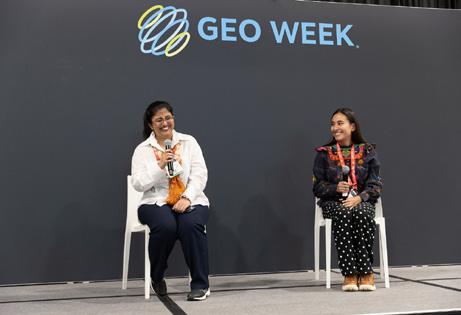
We were thrilled to celebrate industry leadership and innovation, from Jack Dangermond receiving the ASPRS Lifetime Achievement Award to the exciting winners of the Pitch the Press competition, showcasing advances in SLAM, lidar scanning, and AI integration. New additions like roundtable discussions, the Demo Zone, and a networking meetup for women in geospatial offered opportunities for deeper connections and hands-on exploration, and we’re excited to continue expanding these experiences in future events.
This report captures the highlights, insights, and trends that emerged at Geo Week 2026, reflecting not just what we saw on the show floor, but the evolving vision for the geospatial industry as a whole. We hope it provides valuable takeaways, inspiration, and a snapshot of the momentum driving this community forward.
Carla Lauter Senior Content Manager
The amount of actionable and relevant information with tools that are shared, previewed and discussed; combined with the exposure to industry professionals who you can real-time share and learn from, makes Geo Week one of the best values in the realm of Geospatial Conferences.” — Eddie Fossler, Olsson
SHOW FACTS & FIGURES
I'll be honest — I wasn't sure what to expect heading into my first Geo Week. But it completely exceeded what I had imagined. Walking the show floor, sitting in on sessions, and just talking to other people in the industry who get it... there's really nothing like it. I came back with a head full of ideas, a few new connections I'm genuinely excited about, and a renewed energy for the work we do. If you're on the fence about going, just go. I'm already looking forward to next year.
— Morgan Powell, Wingfield Scale
ATTENDEE SHOW FACTS & FIGURES
INDUSTRY SECTOR
ATTENDEE SHOW FACTS & FIGURES
» Aerial Mapping Project Manager
» BIM / VDC Manager
» Chief Photogrammetrist
» Chief Technology Officer
» Data Scientist
» Digital Engineering Director
» Director of Aerial Services
» Director of Flight Operations
» Director of Geospatial Technology
» Director of Mapping
» Director of Reality Capture
» Director of Survey
» Geomatics Director
» Geomatics Project Manager
» Geospatial Analyst
» Geospatial Program Director
» GIS Director
» GIS Solutions Architect
» IT Director
» LiDAR Director
» Lidar Project Manager
» Mobile LiDAR Group Leader
» National Director of Geospatial Services
» Photogrammetrist
» Principal Geospatial Scientist
» R&D Scientist
» Reality Capture Manager
» Remote Sensing Program Manager
» Remote Sensing Scientist
» Solutions Architect
» Survey & Mapping Practice Leader
» Survey Director
» UAS Operations Manager
» UAS Program Manager
» UAS Solutions Architect
» VDC Director
» Vice President of Geospatial Technology
» VP Business Development
» VP of Engineering & Operations
» VP Remote Sensing
» Water Resources Project Manager
» Wildlife Biology Field Lead
3,500+ professionals attended Geo Week from 50 U.S. states and 49 countries
EXHIBITOR SHOW FACTS & FIGURES
235+
of exhibitors were satisfied with their overall Geo Week experience 97.7% 72% of floor space was re-booked on-site
companies on the exhibit hall floor, representing the full geospatial ecosystem
It was wonderful to see so many new and familiar faces. I feel inspired and grateful to be part of such an innovative industry, surrounded by cutting-edge technology and passionate professionals.
Geo Week is the convergence point of technology, business, and praxis — where market realities and user demands meet bold ideas from industry leaders, and collective listening fuels the next wave of innovation.
FEBRUARY 23–25, 2027 | SALT PALACE CONVENTION CENTER | SALT LAKE CITY, UT
From collaborating on key conference content and providing exclusive training, to showcasing the technical capabilities of our vendors, these partnerships strengthen and advance the geospatial and built world communities by providing additional expertise and industry advocacy to the event.
EVENT PARTNERS
Founded in 1934 the American Society for Photogrammetry and Remote Sensing (ASPRS) is a scientific association serving professional members around the world. Its mission is to advance knowledge and improve understanding of mapping sciences to promote the responsible applications of photogrammetry, remote sensing, geographic information systems (GIS) and supporting technologies.
INDUSTRY PARTNERS
The GIS Certification Institute (GISCI) is a nonprofit 501(c)(6) organization established in 2002 to support and advance excellence in the geospatial profession. Through our internationally recognized certification programs—GISP® (Certified GIS Professional) and GISP-E® (Emerging GIS Professional)—we set and uphold high standards of competency, integrity, and service in the GIS field. GISCI is committed to promoting ethical practices, fostering professional development, and building a strong, connected GIS community. We champion mentorship, collaboration, and lifelong learning to help professionals thrive in a rapidly evolving industry.
The International Society for Photogrammetry and Remote Sensing is a non-governmental organization devoted to the development of international cooperation for the advancement of photogrammetry and remote sensing and their applications. The Society’s scientific interests include photogrammetry, remote sensing, spatial information systems and related disciplines, as well as applications in cartography, geodesy, surveying, natural, Earth and engineering sciences, and environmental monitoring and protection.
MAPPS is the preeminent national association of firms involved in many aspects and benefits of the geospatial field in the United States. MAPPS is dedicated to all the business aspects, networking, technical and professional education, geospatial policy, and legislation that private practitioners and the mapping community will always need.
NSPS is the voice of the professional surveying community in the US and its territories. Through its affiliation agreements with the respective state surveying societies, the National Society of Professional Surveyors (NSPS) has a strong constituency base through which it communicates directly with lawmakers, agencies, & regulators at both the national and state levels. NSPS monitors and comments on legislation, regulation, & policies that have potential impact on the activities of its members and their clients, and collaborates with a multitude of other organizations within the geospatial community on issues of mutual interest.
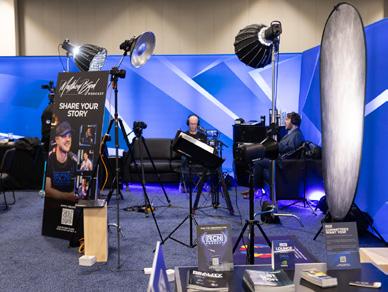
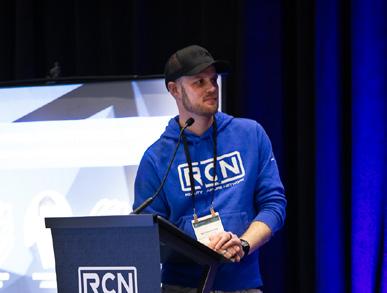
Reality Capture Network (RCN) is on a mission to inspire, inform, and empower companies in the built environment through its podcast, events, and online education center. By focusing on cutting-edge technology, innovative solutions, and industry collaboration, RCN helps firms embrace change and create new opportunities in the built environment.
The Open Geospatial Consortium (OGC) is a global community of experts working to advance open standards and innovation in geospatial technology. With members from government, industry, academia, and research, OGC helps ensure that location-based data and systems are interoperable, trusted, and ready to solve real-world challenges—from disaster response to climate resilience to smart infrastructure.
The United States Geospatial Intelligence Foundation (USGIF) is a 501(c)(3) nonprofit educational foundation dedicated to promoting the geospatial intelligence tradecraft and developing a stronger GEOINT community across industry, academia, government, and professional organizations. USGIF achieves its mission via its strategic pillars:
Build the Community | Advance the Tradecraft | Accelerate Innovation.
The U.S. Institute of Building Documentation (USIBD) is the first U.S. membership organization to focus specifically on supporting the Building Documentation Industry. The USIBD is committed to being the leading resource for all stakeholder groups with an interest in Building Documentation. As such, the USIBD strives to provide its members with a network of support and information, embracing industry professionals throughout the U.S. and Internationally.
The World Geospatial Industry Council (WGIC) is an association of companies representing the entire ecosystem of geospatial industry. WGIC endeavors to enhance the role of the geospatial industry and strengthen its contribution in global economy and society, facilitate exchange of knowledge within the geospatial industry and co-creation of larger business opportunities for the geospatial industry, represent business interest, and share perspectives of the geospatial industry and undertake policy advocacy and dialogue with public authorities, multilateral agencies and other relevant bodies
GEO WEEK NEWS COVERAGE
As a geomatics professional, I felt energized by the experience of being surrounded by colleagues and experts that brought a new perspective to my understanding of the current state of our industry.
— Juan Plaza, Plaza Aerospace
GEO WEEK NEWS COVERAGE
day, we found a community in distress. More than 13 people were missing, probably buried in the sediments. We found a community in despair."
"Now We See That We Are on the Map"
In 2002, when 1-meter Ikonos imagery became available, Dr. Pintea and his team did something unconventional: "We left our labs, printed them on paper and went into the villages sharing them with local communities. I was a little bit concerned how people would perceive that we have these incredible pictures of their backyards and gardens."
The response transformed JGI's approach. One villager said: "Thank you for bringing these maps to the village. I can see this village is on the map and I know that the world cares."
The evolution from data collection to community ownership involved unique and innovative techniques. By 2009, JGI became one of the first organizations in Africa to deploy Android smartphones with Open Data Kit mobile app to enable local communities to monitor their forests and wildlife. But challenges emerged: "Fifteen years ago, the first version of the touch screen was not as sensitive, and some Village Forest Monitors had difficulties using them since their fingers were too rough from working in the field. Finding internet access or power to charge smartphones in the villages was at the time a challenge as well. These problems are gone and have been resolved now with many community members having access and regularly using smartphones. "
By 2019, JGI was able to deploy forms, manage data in the cloud, and create dashboards for decision-making at multiple levels. Villages that were deforested in 2005 showed trees returning by 2014. "Places which forest monitors patrol the most experience the most tree cover recovery. The carbon content is improved. There is a decrease in fire frequency."
The impact expanded across western Tanzania. When TACARE started in 1994, only 9% of the chimpanzee range in western Tanzania was protected. By 2020, 52% was designated as protected under various forms of village land and district local authority forest reserves.
The Story That Changed Everything
Dr. Pintea shared a powerful moment sitting with communities around maps from 2005 and 2017. Women celebrated finding mushrooms to sell. Forest monitors appreciated walking in shade. Then one woman pointed to the map: "This was my farm and it took me 20 minutes to get there. Now it takes me an hour because now it's a forest reserve."
Dr. Pintea asked: "Was it worth it?"
"In 2005 we had landslides. There is erosion. Now the stream has improved. A few years ago, a big flash flood almost destroyed the school. I had two children in the school at that time. I better walk an extra hour, but I know that my children are safe."
Dr. Pintea reflected: "I realized that the true power of this technology was unlocked by TACARE, by creating that space where local communities trusted this information. They owned the process of improving their lives and technology was just a tool."
AI Breaking Down Silos
JGI is also deploying a generative AI platform to integrate decades of fragmented data: handwritten notes, videos, bioacoustic recordings, and satellite imagery. Dr. Jane Goodall addressed AI in one of her last videos, emphasizing that "AI should support people in their stewardship to protect the land and improve their livelihoods."
Josephine Rupia, a natural resources officer for Katavi Region, Tanzania, has been a champion in using forests change data from satellite images to inform forest management decisions. However, the district does not have a GIS officer, and she is very busy with many other responsibilities, then keeping up with GIS training. JGI has been providing access to GIS and satellite imagery maps to Josephine and other local decision makers working across two regions and four districts in western Tanzania. "Once in a while, on Sunday you get a WhatsApp message, 'Oh Lilian, I need this map on Monday.' Now she writes a simple prompt in Swahili using Global Nature Watch's AI platform to retrieve the satellite data and create maps herself; no technical GIS training needed. "I got another WhatsApp message last week when I was in Tanzania. I was worried it was another urgent request, but it was thanking me that this is actually working really well." Further, decreasing the accessibility gap between data and the people who need it most.
Clever Brains and Compassionate Hearts
Dr. Pintea's keynote demonstrated that the most powerful applications of geospatial technology aren't merely technical achievements, they're tools in service of a vision where human wellbeing and environmental conservation advance together.
"I'm excited to see how these tools, which back then were the first pilot, are now operationalized and integrated into so many workflows. I'm really excited about this new ecosystem of partners who have incredible technical skills, who decided to work at this bridge between application and technology providers, building applications with us on the ground."
Dr. Jane Goodall's philosophy that "clever brains must work in harmony with compassionate hearts" provides the ethical foundation for JGI's technological innovation. Geospatial tools provide transparency and accountability, but their ultimate value lies in empowering communities to protect the landscapes they share with wildlife.
As conference attendees filed out, they carried a challenge: How can the geospatial community ensure that our clever tools serve compassionate purposes?
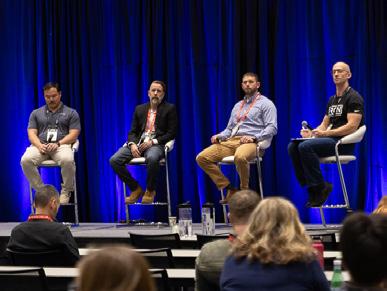
Geospatial at a Crossroads: Industry Leaders Chart the Path to 2026 and Beyond
Five geospatial leaders share what they see coming, what keeps them up at night, and what they want the next generation to know.
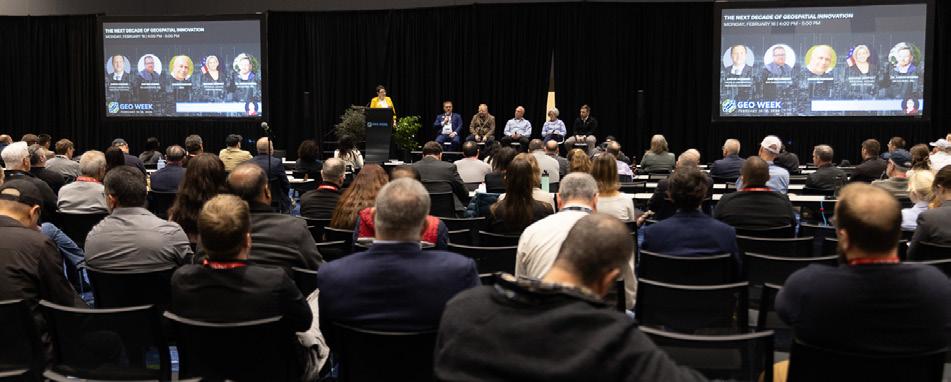
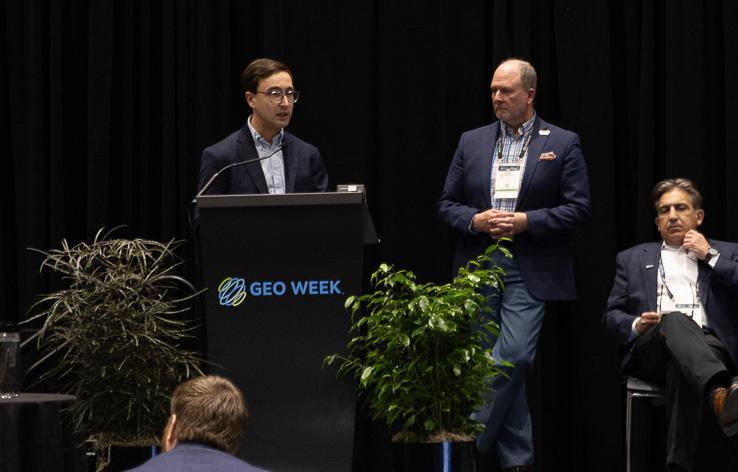
The geospatial industry is undergoing one of its most significant transformations in decades. At a recent panel discussion, five leaders from across the field gathered to share their perspectives on AI, data infrastructure, workforce development, and what comes next. What emerged was a picture of an industry brimming with potential but grappling with real challenges around communication, talent, and trust.
A New Kind of AI
Dr. Aaron Morris, Global Director of AI for Woolpert, Inc., opened with a bold prediction about where artificial intelligence is headed. He describes the shift as “codification,” where established workflows are being trained into systems rather
than simply emulated through software. It is a distinction that matters. Rather than building tools that mimic human behavior, the industry is beginning to teach machines to perform complex geospatial processes from the ground up.
Morris has written extensively on this topic, and in a recent deep dive into GeoAI, he described the field as the combination of sensing, AI, and GIS data, with geospatial scale and sensor data making it a uniquely complex challenge compared to other forms of artificial intelligence. He sees AI ultimately functioning as an “information amplifier,” combining geospatially aligned sensors to produce richer, more actionable outputs. He also pointed to the rise of Agentic AI as something worth watching, calling it a force for democratizing access to spatial information and potentially closing longstanding gaps between those who have access to data and those who do not.
Breaking Down Silos
A recurring theme throughout the conversation was the fragmentation of data across industries and organizations. Andrew Brenner, Vice-President Solutions Engineering at NV5, described the old world of geospatial as one where “the GIS lab was stuck in the basement.” That era is over. Today, geospatial data is woven into IT systems, decision-making platforms, and digital twins. The challenge now, as Brenner put it, is not just collecting data but asking the right questions: “Who cares?” and “So what?”
Dan Bellissimo, Director of LiDAR and Remote Sensing at GIS Surveyors, Inc., echoed this sentiment, expressing excitement about the prospect of meshing data across sectors. He pointed to utilities, autonomous vehicles, and indoor logistics as areas where breaking down data silos could unlock transformative solutions. He also offered a grounding note for anyone expecting AI to do all the heavy lifting: “AI is not replacing anyone yet. It’s just another tool.” Clients, he cautioned, need to understand there is no magic button.
The Communication Gap
Rachel Dempsey, Deputy Assistant Administrator for the National Ocean Service at NOAA, brought a perspective shaped by years as an end-user in the Navy and as an advocate on Capitol Hill. Her message was clear: geospatial information is not just a technical asset, it is a national one. “Geospatial information is the backbone of the modern digital infrastructure,” she said, underscoring how everything from geodetic data to tides and bathymetry supports navigation, disaster preparedness, and urban planning. Without a consistent geodetic frame, she noted, modern technologies simply do not fit together.
Dempsey is most excited about the upcoming modernization of the National Spatial Reference System, set for delivery in 2027. The update will allow continuous data updates, reflecting the Earth as the dynamic, living system it actually is rather than a static snapshot.
Decision-Grade Data and the Big Table
Aaron Addison, Executive Director of the World Geospatial Industry Council (WGIC), framed the moment with a Mark Twain quote: “It’s not what you don’t know that gets you in trouble. It’s what you know for sure that just ain’t true.” His point was that geospatial professionals now have a real opportunity to sit at the
table where decisions are made, but only if they can prove the quality and trustworthiness of their data. In a profile published by Geo Week News, Addison expanded on his philosophy, noting that he deliberately avoids overhyping AI because while it can do some things well, there is a much bigger list of things it cannot do.
He introduced the concept of “decision-grade data,” meaning data paired with a clear understanding of the AI model behind it rather than a black box output. And like Dempsey, he stressed the importance of speaking in terms that resonate outside the industry. If a farmer asks whether to plant his field today, he does not want a lecture on sensor fusion. He needs a yes or a no.
Advice for the Next Generation
The panelists closed with advice for young professionals entering the field. Morris emphasized the power of networks and broad skill sets. Dempsey encouraged newcomers to talk to as many people as possible and explore how geospatial data connects to policy, economics, and science. Brenner urged students to become problem solvers and seek practical experience outside the classroom. Bellissimo stressed the importance of spatial logic and the willingness to pivot. Addison recommended flexibility and travel early in a career, describing diverse experiences as capital that compounds over time.
The message across the board was consistent: the geospatial industry is no longer a niche technical field confined to specialists. It is becoming the connective tissue of how societies understand and respond to their world. The professionals who will thrive in this next decade are those who can bridge the gap between data and decisions, and who can make the case for why that work matters to everyone.
The Future of the Workforce at Geo Week 2026
An inspiring and nuanced theme for Day 2 of Geo Week 2026.
The future of the workforce was a recurring theme in Geo Week’s second day of sessions here in Denver. The day featured multiple presentations and discussions addressing the challenges in the demand gap, the lack of adequate resources for students, and the seemingly impossible process of applying to jobs. Along with the challenges came advice from experts in the field and the students who are carving their way despite it all. Attendees and speakers were left inspired by the voices and accomplishments of these young professionals.
In a panel discussion, Dr. Shawana Johnson shared research that stated the demand for geospatial talent in North America is growing nearly five times faster than the number of qualified graduates entering the field. According to the panelists, that gap has been widening for years, and it won't close on its own—not without the industry doing something fundamentally different. When the question was turned over to the students, they noted two main challenges in the journey to a career:
An Impossible Hiring Process
Nearly a third of successful hires come through personal referrals. Networking is the best solution, but employers must consider what it means for everyone without an existing connection to the industry. The formal application process has an interview rate of roughly 2% for entry-level candidates. Hundreds of applications and little to no responses,
The story of one physics graduate, Collin Collins, was jarring. Collins wasn’t able to attend the session due to an unexpected career opportunity, but his presentation was showcased by his colleague Ed Kunz. Kunz shared that Collins applied to 163 positions, was rejected by 122, and was ghosted by 35 more. He spent the better part of a year doing everything he was technically supposed to be doing, and it went nowhere. What finally worked was a 20-minute phone call, one person in the industry who knew his work and made an introduction. "I spent a year fighting algorithms," he stated in his presentation, "but got an opportunity in a few days talking to humans."
Companies That Don’t Come to You
Grace Braver is finishing a master's degree in geospatial analysis at East Tennessee State University. In six years as a student, she has never once seen a geospatial company at a campus career fair. Most students who break into the field do so through a professor's personal network, which means
their chances depend on whether they happen to work closely with the right faculty member. Conferences where the real networking happens are expensive, and for a student choosing between rent and a plane ticket, that's not a close call.
Job postings don't help much either. Listings labeled "entrylevel" range from requiring a high school diploma to demanding a master's degree and two years of experience. For someone trying to figure out where they fit, the signals are confusing at best.
Grace's request to the industry was simple: show up. "I remember every company and every person that made an impact on my conference experience," she said. "I am more inclined to have positive business relationships with them forever because they did something for me when I was a nobody."
The Solutions
The research and experts on the panel pointed to a few concrete directions. One is a university consortium: a structured program, modeled partly on partnerships the Space Force has built with academic institutions, that would move students through real commercial workflows and place them directly with member firms. Another is a shared talent bench for seasonal demand, so that smaller firms aren't constantly poaching from each other or burning out their best people during busy periods. Other recommendations include bringing students to industry conferences with dedicated networking spaces and travel support, and companies making a habit of visiting local universities and community colleges directly.
But perhaps the most consistent theme, across every interview and every case study in the research, is simpler than any program: human connection.
Jessica Touchard, at GeoSearch Inc., put it plainly. "Apply for a position, then find people within that organization to connect with. Introduce yourself. Explain what problems you can solve. That personal connection brings you to the top of the pile."
The structural fixes matter: the campus visits, the salary transparency, and the mentorship programs. But so do the phone calls, showing up at a career fair, and responding to the application from the candidate with a strong portfolio and no connections.
Near the end of the day, attendees were given a glimpse into what the next generation of geospatial professionals looks like, especially when given the proper resources and opportunities. Each year, the GEO Empower Scholarship recognizes students who are already doing meaningful work in the field. This year's recipients are an inspiration for the future of this workforce.
Barira Rashid (University of Arkansas) is a PhD student who uses AI and remote sensing to study how livestock operations affect water quality and hosts a podcast about phosphorus sustainability on the side. She's also contributed to NASA humanitarian data projects. Her goal, she says, is for her science to be "accessible and usable for all purposes."
Paulina Alejandra Vergara Buitrago (University of Minnesota) works with potato farmers in the Colombian mountains, using GIS to map land cover changes, but always in partnership with local communities, not just on their behalf. "I love the technology; I love the tool," she said, "but it's the human that brings me here today."
Khris Gonzalez Pebe (University of Southern California) was unfortunately unable to attend the ceremony, but is an impressive student committed to ensuring that geospatial work centers equity and cultural context, producing insights that empower communities rather than distort their realities.
Both Barira and Paulina, independently, offered the same advice to their peers that attendees heard throughout the day: don't chase volume; chase meaning. Make real connections. Show your work's impact on people, not just on datasets. The demand for geospatial expertise isn't slowing down. The question is whether the industry will support the people to meet it or spend the next decade wondering where everyone went.
How State DOTs Are Modernizing Infrastructure Management With Geospatial Tech
A panel at Geo Week 2026 showcased cuttingedge methods DOTs are using for modernizing their workflows.
One of the most powerful uses of geospatial technology is enabling better and more efficient transportation systems. Whether we’re talking about developing better highways, or more efficient train systems, or making pedestrian and bike lanes more accessible, Departments of Transportation around the United States are leveraging a myriad of cutting-edge technologies to modernize their infrastructure management, improve safety, and optimize long-term planning.
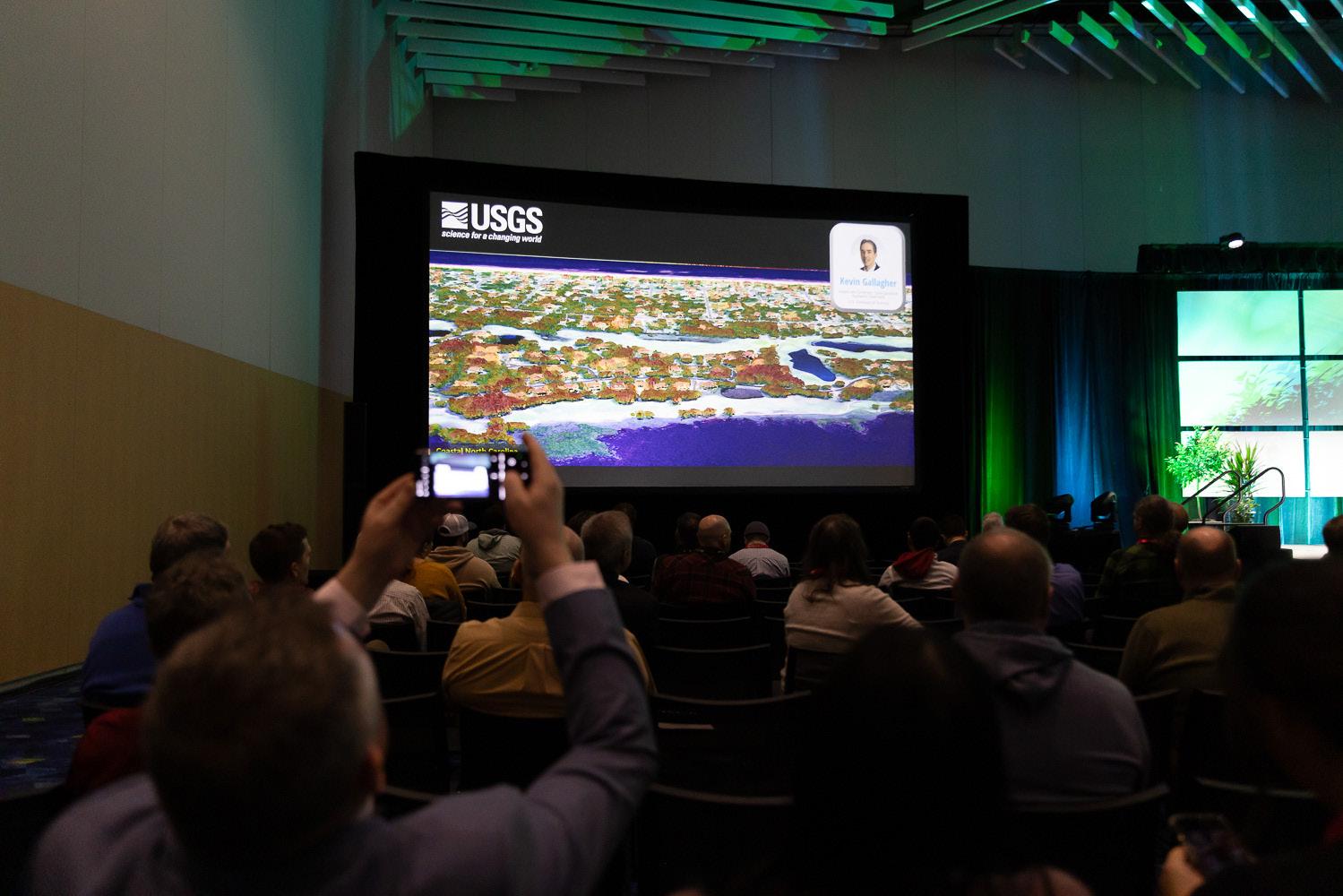
On the first day of Geo Week 2026, one session featured a trio
of presentations highlighting some of the most interesting examples of this work. The session, entitled DOT Case Studies in Digital Delivery, showcased case studies highlighting how transportation departments are integrating mobile lidar, cloudbased collaboration tools, and data governance frameworks to enhance efficiency and accuracy from the field to the office.
The first presentation featured insights from Aaron Morris from Michael Baker International and Alex Baikovitz from Mach9, showing how the two organizations are collaborating to automate workflows in collecting asset inventories across vast and complex roadway networks. This is a critical process for maintaining safety, compliance, and long-term capital planning.
Their featured two parts, starting with Morris explaining some of the work behind a statewide project being completed by TXDOT, including why it is so important for them to maintain consistent and high-quality inventory of their assets. As he explained in his portion of the presentation, backups in the state’s major metropolitan areas can cost the economy upwards of $30 million per hour, a massive impact. To help with the work of maintaining this massive inventory, Baikovitz talked about how Mach9’s Digital Surveyor was used on the project. The software solution injects mobile lidar and leverages AI to automatically classify assets around the project, saving significant time, and thus massive amounts of money.
Following Morris and Baikovitz was Sinan Abood from the MassDOT Aeronautics Division. In his presentation, he highlighted the Massachusetts Department of Transportation Drone Program and how it has changed the way the department operates since its founding in 2017. With this strategic implementation of UAS technology into their workflows, sectors like emergency response, aeronautics, highways, and rail have seen greater efficiency and more powerful results than ever before.
One of the big themes that cut across Abood’s presentation was all of the different departments and stakeholders with whom his Aeronautics team works. It makes sense, as UAS-derived data can help nearly every type of infrastructure and transportation project, and at every level of the project. Whether it’s design, construction, or operation, that data can be used for different projects. To that end, he showed off MassDOT’s platform to easily share data across all of the different stakeholders, with that data being easily searchable by project type, location, or other types of search functionality.
Wrapping things up was a presentation from Oregon State University’s (OSU) Michael Olsen, who talked about a new national effort being led by OSU and being funded by the Transportation Research Board. This Surveying and Mapping Guide for Transportation Projects addresses a key painpoint in a lot of this work across the country: A lack of standardized
practices across DOTs. This, in turn, leads to inefficiencies, miscommunication, and errors across the infrastructure lifecycle.
In his presentation, Olsen spoke a lot about the importance of standards, and talked through some of the most significant bottlenecks that are present when they aren’t utilized. He also, however, touched on how apprehensive many can be about standards. He said, “Standards are like toothbrushes. We all agree we need them, but no one wants to use somebody else’s.”
That being said, Olsen’s talk noted that this is the perfect time for national standards to be created, as the surveying community is on the precipice of a major shift with the modernization of the National Spatial Reference System (NSRS). With this in mind, the guide has many goals outlined in the presentation, including standard definitions of common terminologies, presenting an ROI methodology to measure the value of these standards, and supporting future lifecycle and business uses, among others.
The panel then ended with a short audience Q&A, that touched on a few different topics. Abood talked a bit more about both the parts of a project lifecycle in which his team’s UAS data is used as well as the role of analytics in this work. They also talked about the trouble with updating geographic standards when data is shared across stakeholders, and why starting with the most accurate data is the best way to ensure high-quality deliverables.
SOCIAL MEDIA
I was at Geo Week for one day, and got a job offer!
— Geo Week 2026 Attendee
SELECT PRESS COVERAGE & SOCIAL MEDIA
SOCIAL MEDIA
FOLLOW
CONFERENCE INFORMATION
Geo Week absolutely impressed me this year. As a first-time attendee, the scale, energy, and professionalism were on another level. It was easily the largest and most engaging industry event I've been part of... I found the amount of quality, in-person time with partners and customers to be invaluable. The whole experience was energizing and forward-thinking. Already looking ahead to Salt Lake City!
— Russell Snell, Leica Geosystems Inc.
KEYNOTES
MAPPING TECHNOLOGIES
ACCELERATING CONSERVATION
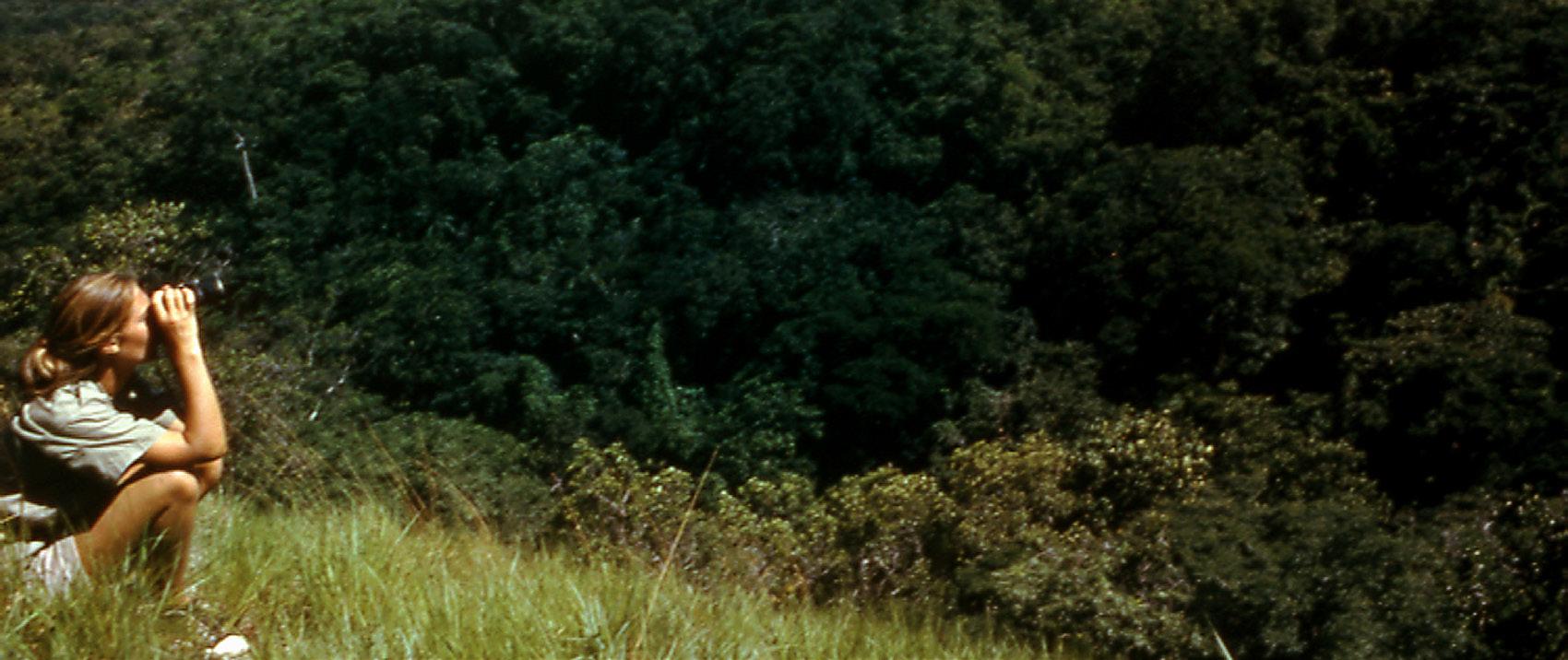
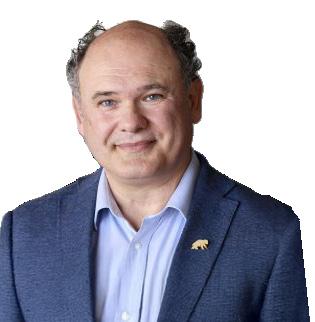
For more than 25 years, Dr. Lilian Pintea has been at the forefront of applying geospatial technologies to protect chimpanzees and their habitats across Africa. Working closely with Dr. Jane Goodall, whose legacy of visionary wild chimpanzee research transformed our understanding of the animal kingdom and redefined modern conservation, Dr. Pintea helped lead a technological revolution that continues to shape how governments, researchers, and local communities approach environmental stewardship.
In this keynote, Dr. Pintea highlighted the cutting-edge use of satellite, lidar, drone-based mapping, and AI-driven data integration, techniques that allow researchers to quantify forest structure, map chimpanzee habitats in 3D, and connect acoustic, behavioral, and environmental datasets in entirely new ways. These innovations drove digital twin creation, helping accelerate restoration efforts, improve habitat modeling, and build resilience in regions facing mounting pressure from climate change. Dr. Pintea highlighted how the Jane Goodall Institute's approach, grounded in transparency, equity, and collaboration with local communities, reflects Dr. Goodall's belief that effective conservation must benefit both people and wildlife. From advancing habitat modeling to supporting restoration and climate resilience, this session illustrated how humancentered conservation and modern mapping technologies can work together to drive measurable, meaningful change on the ground.
Lilian Pintea Vice President of Conservation Science, Jane Goodall Institute
PHOTO CREDIT: JANE GOODALL INSTITUTE
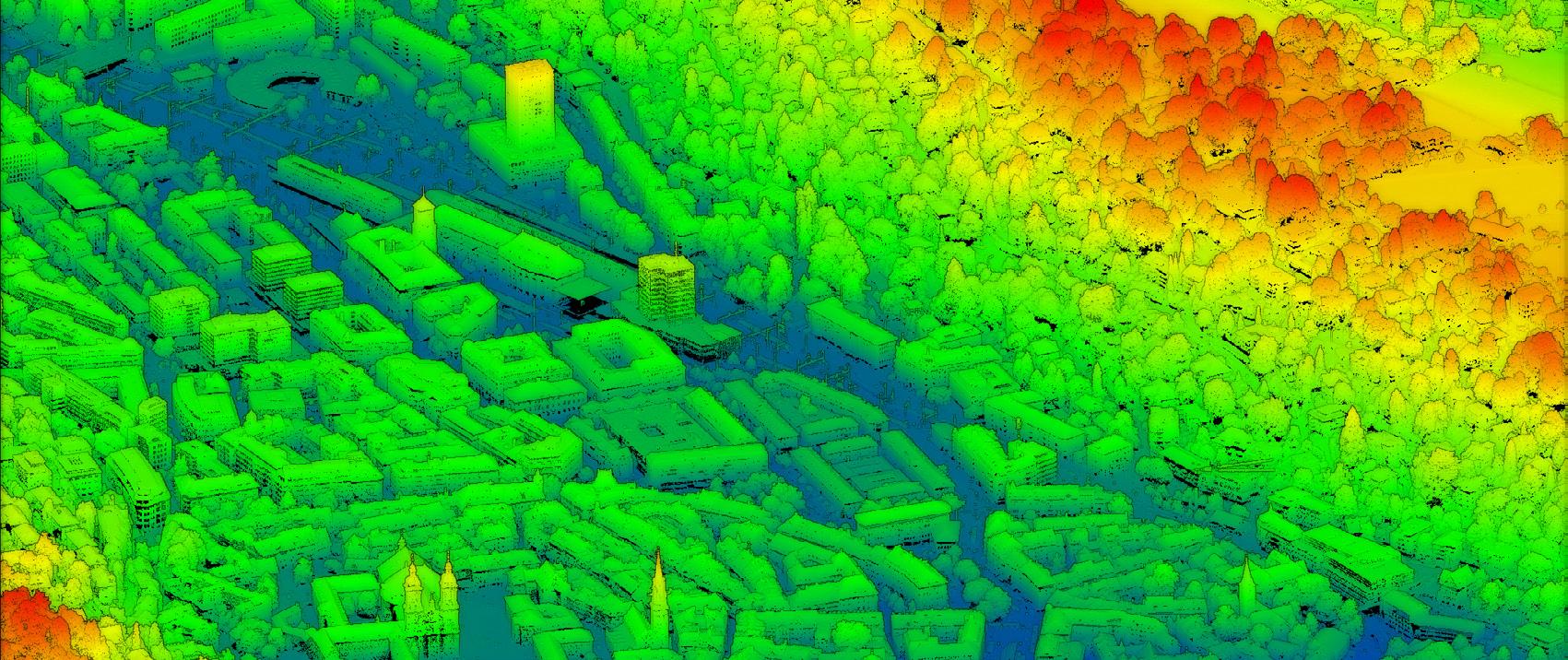
PRECISION AND INTELLIGENCE: POWERING THE NEXT ERA OF GEOSPATIAL INNOVATION
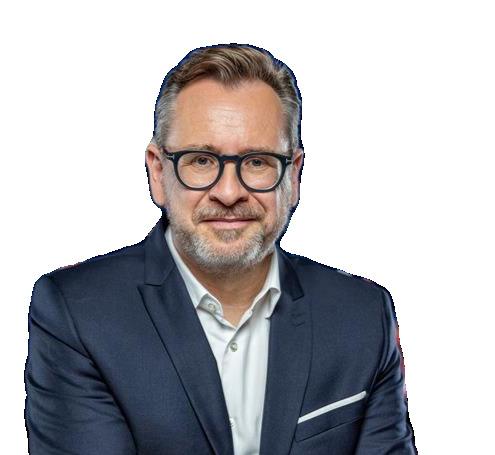
In an increasingly connected, data-driven world, the fusion of precision measurement and intelligent systems is redefining how we design, build, and manage our physical environments. In this keynote, Burkhard Boeckem, Hexagon Chief Technology Officer, explored how geospatial intelligence, powered by precision data and amplified by AI, drove innovation across infrastructure, construction, urban planning, and environmental monitoring.
Attendees learned how cutting-edge technologies that leverage autonomous reality capture, robotics, sensor fusion, and intelligent edge computing are creating dynamic digital ecosystems where the physical and digital seamlessly inform each other in real time. Precision mapping at any scale, autonomous workflows, and digital twins powered by spatial intelligence – this session highlighted transformative capabilities that were no longer aspirational, they were operational. For engineers, surveyors, city planners, and innovators, this strategic glimpse into the future highlighted how geospatial precision and intelligence will
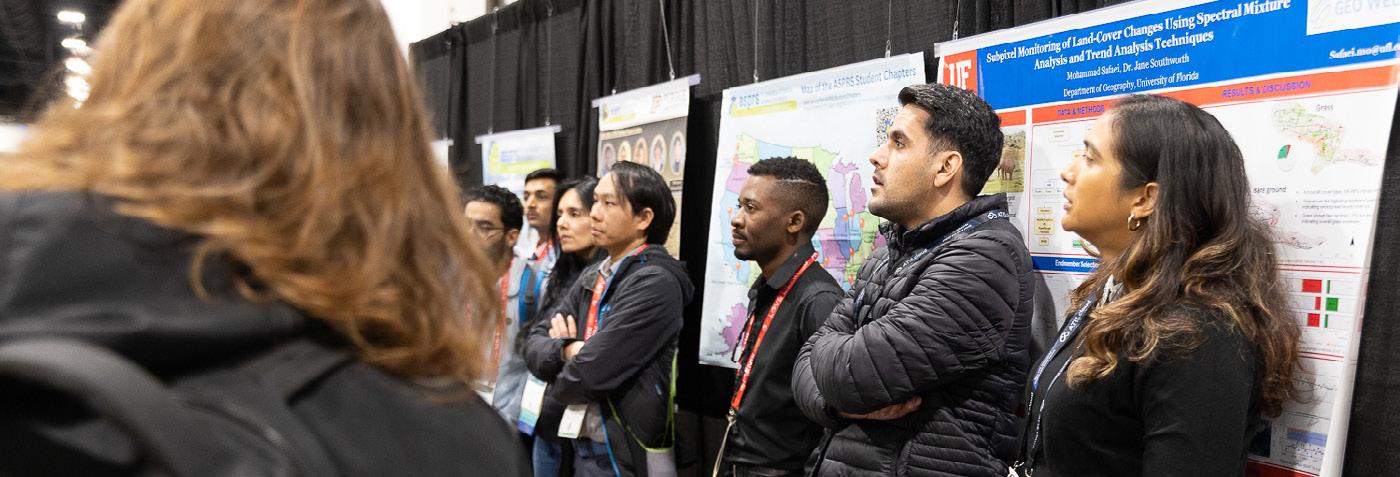
In 2026, ASPRS and Geo Week came together once again to offer a robust program accessible to all Full Conference Pass holders. This comprehensive offering delivered expanded education and technical training for professionals working in photogrammetry, remote sensing, GIS, lidar, and related fields. ASPRS also hosted add-on workshops for deeper dives into specialized topics, presented the Academic Hub, and hosted poster sessions in the Future Leaders Hub, which featured academic presentations and insights from leading universities.
Returning in 2026, RCN and Geo Week Conference Programming was accessible to everyone with a Full Conference pass, though attendees could purchase an RCN Track pass a la carte. The RCN Track at Geo Week spotlighted cutting-edge reality capture technologies. Attendees experienced a dynamic mix of case study presentations and panel discussions, providing in-depth insights into real-world applications and the transformative benefits of these technologies across various industries. Whether they were looking to enrich their knowledge of reality capture technologies or explore their diverse applications, the RCN track offered invaluable learning opportunities.
SUPPORTING PARTNERS
Geo Week is the place to be for learning about the latest tech and workflows from the best and brightest in the geospatial industry. I have met and learned from so many incredible people there.
— Ben Stocker, Skender
SUPPORTING PARTNERS
STYLE GUIDE
ONSITE EVENTS & SHOW HIGHLIGHTS
This was my first Geo Week event, and I advise that all professionals that are serious with their career should attend Geo Week to keep up with the evolution of Land Surveying, GIS and lidar industry and be on top of the market.
— Heisen Reyes, Dominion Energy
Emesent, GeoCue, and Mach9 Win Pitch the Press Competition at Geo Week
The panel of media judges selects top innovations from a selection of 18 presentations.
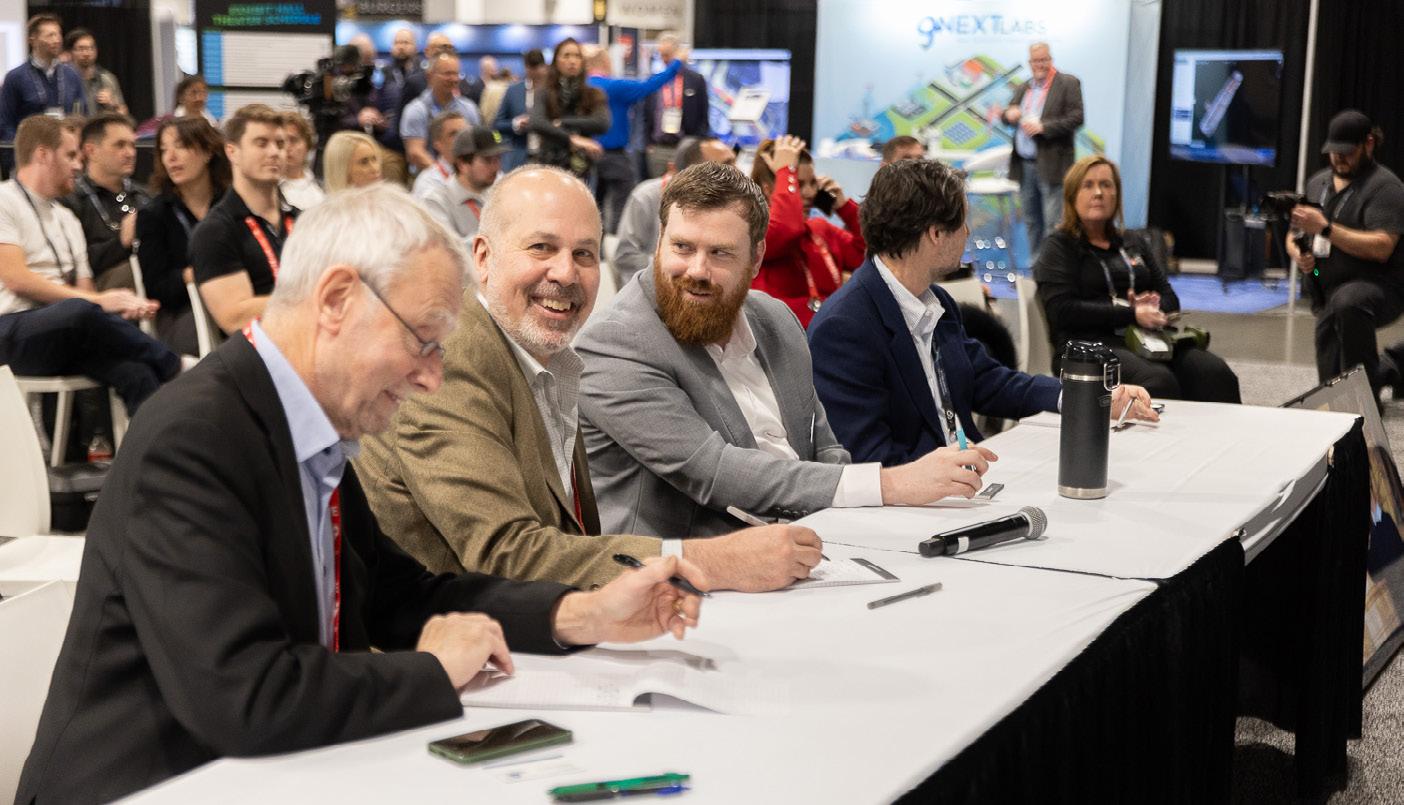
At Geo Week, the premier event that champions the coming together of geospatial and mapping professionals, three innovative solutions were chosen as the winners of the Pitch the Press event. The latest products from Emesent, GeoCue, and Mach9 were chosen from 18 presentations that were pitched rapid-fire to a panel of high-profile press representatives at Geo Week. These solutions represent the cutting edge in SLAM, lidar scanning, and AI integration.
In evaluating this year’s competing companies, the Pitch the Press panel of judges focused on contestants who took innovative approaches to solving problems and meeting the needs of the marketplace in today’s environment. Emesent’s new GX-1 scanning solution impressed the judges by bringing the company’s proven SLAM expertise into the surveying market. GeoCue, meanwhile, presented their latest TrueView 641 UAV
lidar scanning solution, emphasizing its NDAA compliance in combination with its quality and affordability. Finally, Mach9 stood out, presenting its Digital Surveyor 2 platform that significantly speeds up infrastructure workflows by leveraging AI for feature extraction, assistance in drafting designs, and more.
Pitch the Press is a unique opportunity for exhibitors to present their products to a group of editors and reporters looking for the most unique new technologies on display at Geo Week. Eighteen exhibiting companies opted to share their new product
PITCH THE PRESS
or service during the one-hour event. Each exhibitor gave a twominute brief to members of the media, followed by a one-minute Q&A.
“There was no shortage of creative thinking among this year’s Pitch the Press entries,” said Carla Lauter, Senior Content Manager for Geo Week.
“The three winners shared something that truly stood out: a deep commitment to working alongside their customers and the industry. That feedback loop was not just a part of their process, it defined their designs.”
Pitch the Press provides attendees with a sense of what products can be further explored on the Geo Week exhibit floor, which contains more than 230 exhibitors from around the world. Understanding the opportunities that companies like Emesent, GeoCue, and Mach9 are creating is just the beginning of where and how their respective industries will advance.
The “Pitch the Press” judging panel included Mark Safran, The Geospatialist ; Richard Thomas, xyHt and Inside Unmanned Systems ; Dr. Stewart Walker, LIDAR Magazine; and Matt Collins, Commercial UAV News
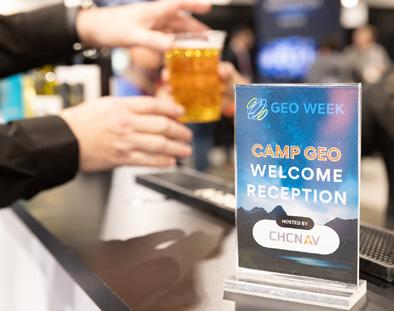
CAMP GEO WELCOME RECEPTION
CAMP GEO WELCOME RECEPTION
HOSTED
BY:
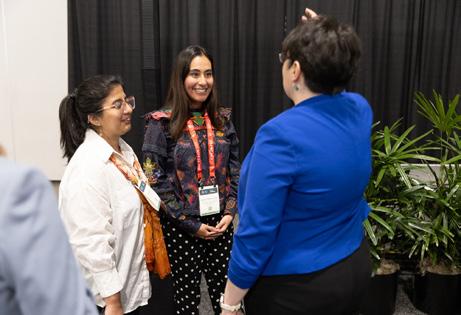
Geo Week kicked off the way it should — with good conversation, familiar faces, and the kind of energy that only comes from being in a room full of people who genuinely love what they do.
The Camp Geo Welcome Reception, generously hosted by CHC Navigation, set the tone for the week ahead. Attendees gathered in the Exhibit Hall to reconnect with longtime colleagues, meet new ones, and get their first look at the latest geospatial technologies and solutions on display. It was the perfect way to ease into the week — part networking event, part first glimpse at everything Geo Week had in store.
True to its Camp Geo spirit, the reception reminded attendees why this community is unlike any other: curious, collaborative, and always ready to explore what's next.
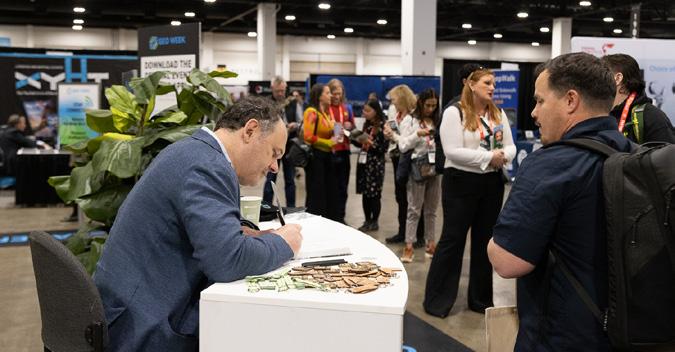
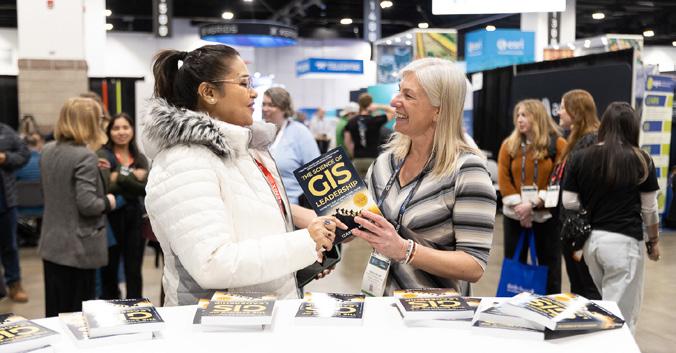
Geo Week 2026 gave attendees two special opportunities to connect with inspiring voices in the field — and walk away with a great read.
Dr. Lilian Pintea — Local Voices, Local Choices: The Tacare Approach to Community-Led Conservation
Attendees had the chance to meet Dr. Lilian Pintea and the team from the Jane Goodall Institute for a meet and greet and book signing that was equal parts inspiring and grounding. Local Voices, Local Choices explores the Tacare approach — a model that pairs geospatial technology with local knowledge to put people at the heart of conservation. It was a meaningful reminder of the real-world impact that geospatial work can have on communities and ecosystems around the globe.
Izabela Miller — The Science of GIS Leadership
For those thinking about what comes next in their career, the meet and greet with Izabela Miller was a must-stop moment. Izabela introduced attendees to her upcoming book, which offers a practical framework for making the leap from technical expert to enterprise leader. As a special bonus, attendees were able to claim a free preorder that included the Executive Influence Toolkit, 90-Day GIS Roadmap Builder, and Burnout-Proof Leadership Blueprint — tools designed to help GIS professionals lead with confidence.
SOCIAL IMPACT
Geo Week is an outstanding event that bridges cutting-edge geospatial research with real-world industry applications. The technical sessions and networking opportunities make it especially valuable for professionals working in lidar, remote sensing, and infrastructure monitoring.
— Anurag Sharma
SOCIAL IMPACT
Social Responsibility
Geo Week is accountable and committed to contributing to the well-being of communities and society through environmental and social measures.
Geo Week Elevating Sustainability
As a leader in the global expositions and conference industry, Diversified Communications, the organizer of Geo Week, recognizes its responsibility to understand and prioritize actions to reduce the carbon impact of the events it produces. Learn what we are doing at Geo Week, and what you can do to help.
Geo Empower
Geo Week is part of Diversified Communications’ Diversity, Equity + Inclusion efforts to drive discussions and actively advance the principles of racial equality, social justice, and inclusion. Through these efforts, we aim to influence and grow an ecosystem for the open exchange of ideas and the ongoing pursuit of best practices. Learn more about Geo Week’s diversity, equity, and inclusion initiative and how we can support your efforts in this area.
GEO Empower Scholarship
Each year, the GEO Empower Scholarship recognizes students who are already doing meaningful work in the field. This year's recipients are an inspiration for the future of this workforce.
SCHOLARSHIP RECIPIENTS
Barira Rashid (University of Arkansas) is a PhD student who uses AI and remote sensing to study how livestock operations affect water quality and hosts a podcast about phosphorus sustainability on the side. She's also contributed to NASA humanitarian data projects. Her goal, she says, is for her science to be "accessible and usable for all purposes."
Paulina Alejandra Vergara Buitrago (University of Minnesota) works with potato farmers in the Colombian mountains, using GIS to map land cover changes, but always in partnership with local communities, not just on their behalf. "I love the technology; I love the tool," she said, "but it's the human that brings me here today."
Khris Gonzalez Pebe (University of Southern California) was unfortunately unable to attend the ceremony, but is an impressive student committed to ensuring that geospatial work centers equity and cultural context, producing insights that empower communities rather than distort their realities.
Both Barira and Paulina, independently, offered the same advice to their peers that attendees heard throughout the day: don't chase volume; chase meaning. Make real connections. Show your work's impact on people, not just on datasets. The demand for geospatial expertise isn't slowing down. The question is whether the industry will support the people to meet it or spend the next decade wondering where everyone went.
Khris Gonzalez Pebe University of Southern California
Barira Rashid University of Arkansas
Paulina Alejandra Vergara Buitrago University of Minnesota
2026 ADVISORY BOARD
Dr. Qassim Abdullah Woolpert, Inc.
Dan Bellissemo GIS Surveyors, Inc.
Andrew Brenner NV5 Geospatial
Dr. Jason Stoker U.S. Geological Survey
2026 EVENT PARTNERS
John McCombs American Society for Photogrammetry and Remote Sensing (ASPRS)
2026 INDUSTRY PARTNERS
Aaron Addison World Geospatial Industry Council (WGIC)
Burch National Society of Professional Surveyors (NSPS)
Tony Spicci GIS Certification Institute (GISCI)
Dr. Derek Lichti International Society for Photogrammetry and Remote Sensing (ISPRS)
Renee Walmsley Management Association for Private Photogrammetric Surveyors (MAPPS)
John Russo
U.S. Institute of Building Documentation (USIBD)
Ronda Schrenk United States Geospatial Intelligence Foundation (USGIF)
Jonathan Murphy GoGeomatics Canada
Danielle O’Connell Skanska
Claire Rutkowski WSP
Thomas Haun Turner Staffing Group
Martin Flood GeoCue Group, Inc.
Mohamed Mostafa Trimble Applanix
Patrick Lohman Cloneable AI
Blaine Horner Merrick & Company
Shawana P. Johnson Global Marketing Insights, Inc.