


By Harry Siemens
A special June 17 edition of Manitoba Agriculture’s Crop Talk opened with a clear mes sage for farmers: Manitoba’s weather changed quickly, and some areas now face serious crop damage.
Alison Sass, Ag Meteorol ogy Specialist with Manitoba Agriculture, said May started cool across much of the prov ince. Many areas experienced later-than-normal seeding, with only a few warm days mixed in. But by early June, the situation changed dramatically.
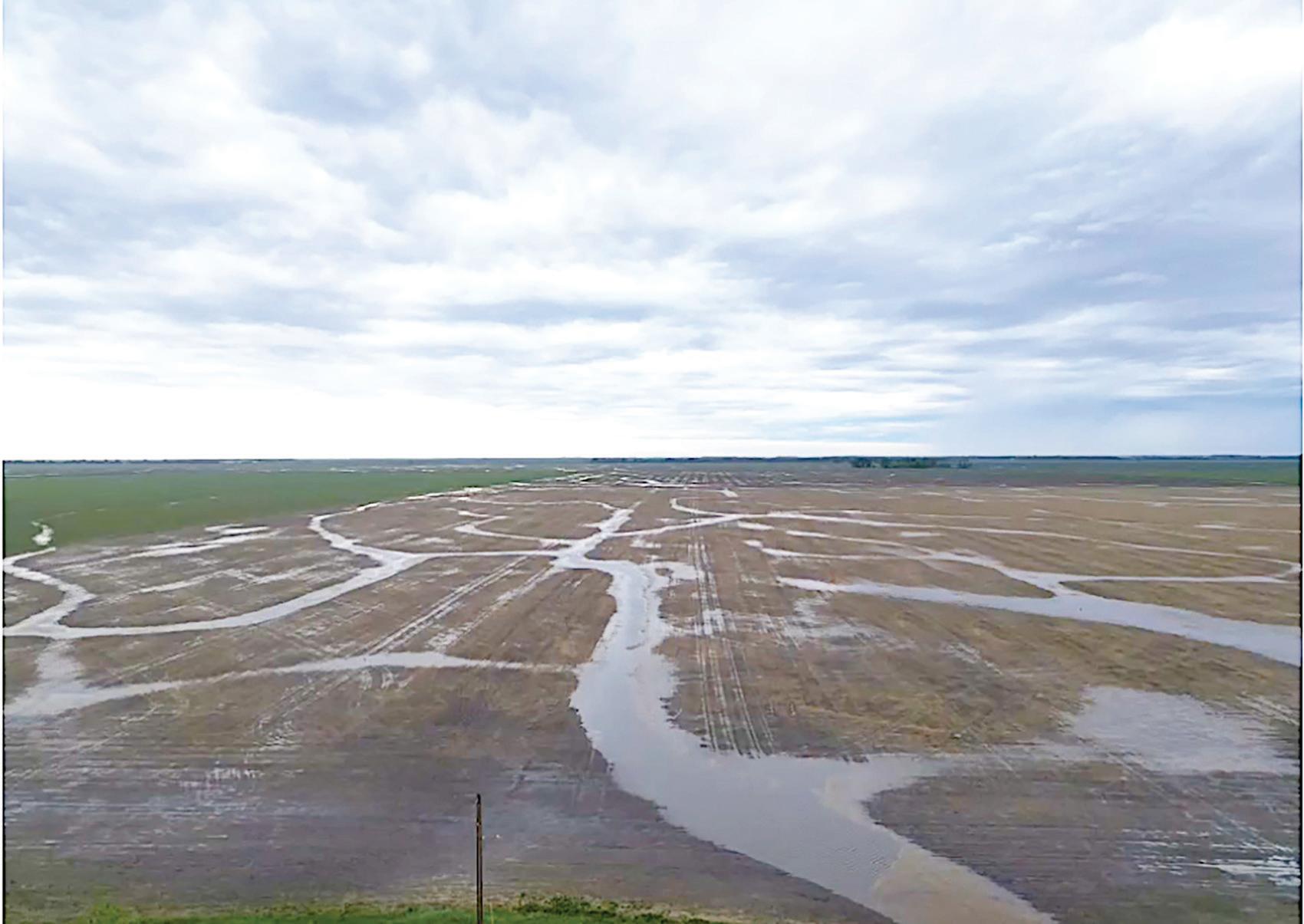
Sass said the most severe weather came on June 9 and 10, when long-lasting storm systems moved across Manitoba. She described the storms as powerful, slow-moving and unusual because of how long they lasted.
“These are not all just isolated storms,” she said during the webinar. “It’s a system after system after system.”
The storms brought intense lightning, strong winds, tornado warnings and major rainfall.
Sass said the southern Interlake, Red River Valley and eastern Manitoba took some of the hardest hits.
Stonewall recorded 255 millimetres of rain in just 14 hours. Petersfield recorded 230 millimetres, and Woodlands, Teulon
and Dugald also received heavy rainfall in a short period.
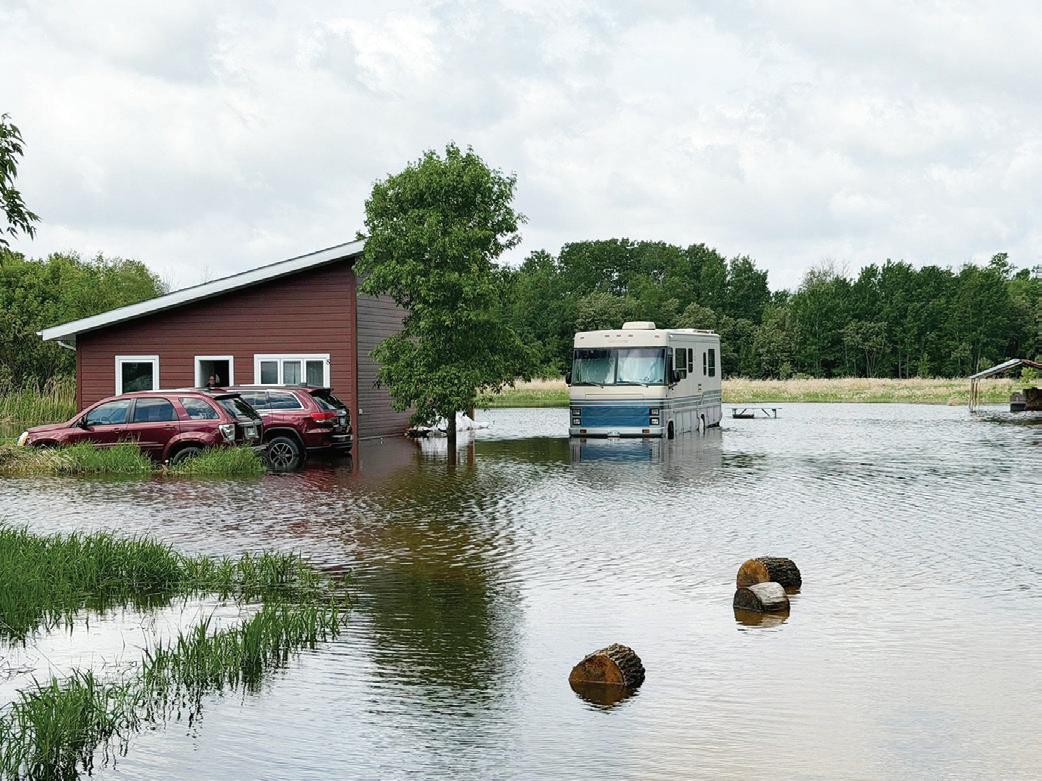
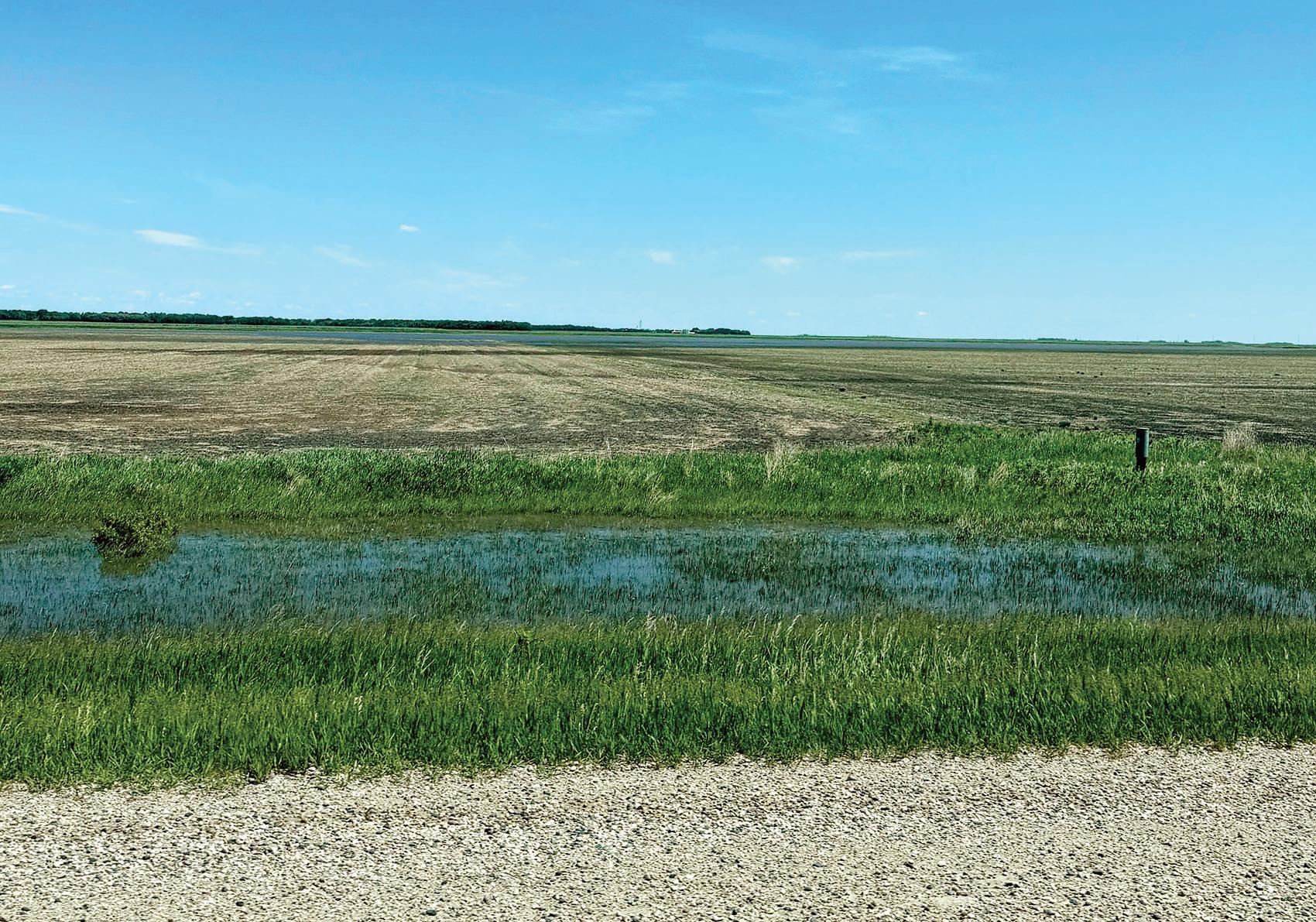
That much rain, Sass said, caused overland flooding, full ditches, flooded basements and fields that now look more like lakes than crops.
The storm system also produced confirmed tornadoes near Dufrost and Ste. Anne.
Sass said the rainfall quickly
Stonewall and parts of eastern Manitoba.
Looking ahead, Sass said Environment and Climate Change Canada forecasts show a 50 to 70 per cent chance of above-normal temperatures from mid-June to mid-July. The same forecast gives a 50 to 70 per cent chance of below-normal precipitation during that period.
For June, July and August, temperatures are also trending above normal, while precipitation remains uncertain.
changed Manitoba’s moisture picture. Areas that had looked dry only two weeks earlier shifted to above-normal precipitation. The northwest and Interlake now show very wet conditions, while parts of the southwest remain on the dry side.
She cautioned that percent-of-normal rainfall maps do
not tell the whole story. A field may show near-normal rainfall on paper, but if most of that rain came in one heavy event, it may not benefit the crop.
Current soil moisture readings show wet to very wet conditions across much of Manitoba in the top 30 centimetres. Deeper soil moisture readings also show very wet areas around Teulon,
Sass reminded producers to use Manitoba Agriculture’s current weather viewer for hourly station data. The system now includes precipitation totals for the last hour, last 24 hours and since the beginning of the month.
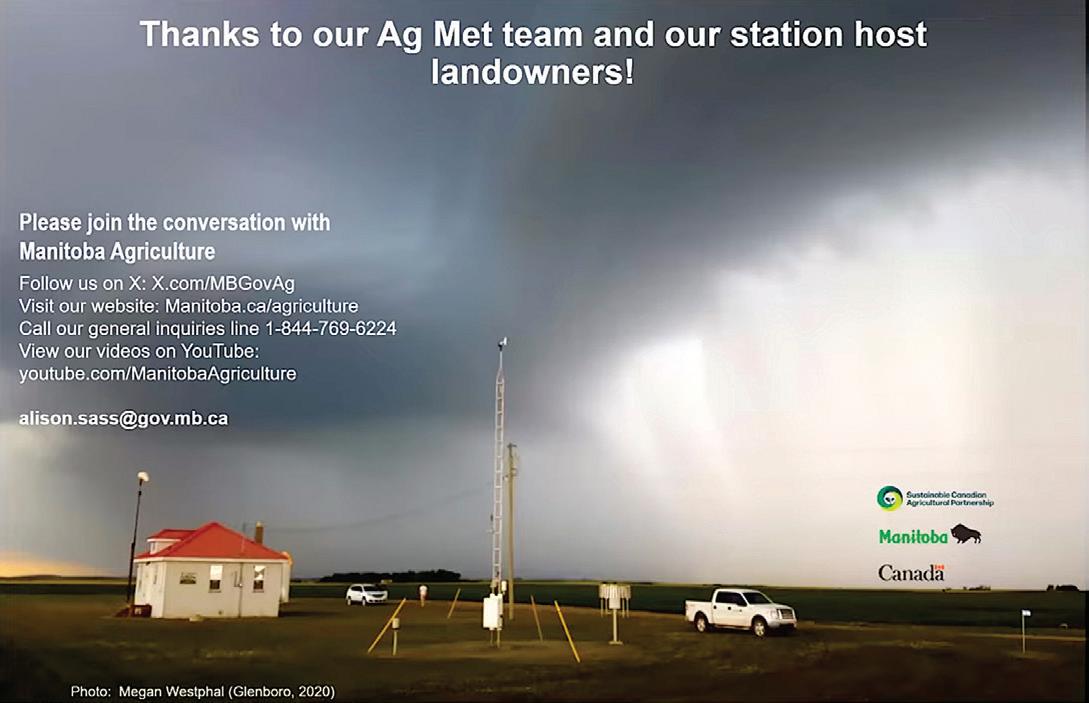
She also thanked the AgMet team and station landowners who keep the provincial weather network operating.
“These are the moments when we really need to capture what is happening,” Sass said.

By Harry Siemens
Manitoba farmers dealing with flooded fields, hail damage, and wind losses are being urged to begin by filing their seeded acreage reports, says Rheal Bernard of Manitoba Agricultural Services Corporation (MASC).
Bernard spoke during Manitoba Agriculture’s June 17 special edition of CropTalk, where attention focused on crop damage following heavy rainfall and severe storms across the province.
He said Manitoba has one of the highest participation rates in AgriInsurance, with more than 90 per cent of producers enrolled. That coverage is especially important in a year when many acres are affected by excess moisture, reseeding questions, and potential crop loss.
Bernard noted that June 20 is the key date and the final seeding deadline for many crops. After that date, coverage options change.
He encouraged producers who have
experienced damage to file their seeded acreage reports as soon as possible, even if seeding is not yet complete.
“That captures the whole picture of your farm right now,” Bernard said.
He said MASC can revise reports later, but the initial filing starts the process. In some areas, particularly where excess moisture is widespread, MASC aims to move quickly and may pay some claims by declaration.
Bernard said this approach could help in regions where flooded roads and field conditions make inspections difficult.
“We want to expedite the process and get money flowing as soon as we can,” he said.
The impact varies by region. Around Stonewall, many crops were already more than 90 per cent seeded when heavy rain hit. In other areas, including parts of the northwest, some producers still had 40 to 50 per cent of acres left to seed.
For damaged seeded crops, Bernard

said producers may still reseed before June 20 if field conditions allow. After June 20, if conditions remain too wet and reseeding is not possible, the crop can carry full coverage through to harvest.
He also reminded farmers that greenfeed remains an option. Producers who selected greenfeed coverage can seed until July 15, although coverage levels decline after June 20. Bernard said this option may still help producers produce feed for themselves or neighbours.
He also pointed to the Contract Price Option. Producers who have contracted grain but are concerned they may not be able to deliver should contact their MASC service centre. Contracts can be submit -
ted until June 30.
The option can increase coverage by blending MASC’s price with the contracted price and may also affect reseeding benefits.
Hail and wind claims have also been reported. Bernard reminded producers to carefully check crop seeding deadlines before reseeding. In some areas, the extended deadline for canola has already passed, while cereals may still qualify up to June 20.
His main message remained simple:
“When in doubt, reach out,” Bernard said. “We know our clients are going through difficult times, and we’re here to support them.”

Manitoba’s Progressive Conservatives are calling on the provincial government to provide immediate clarity and support for agricultural producers facing significant losses following unprecedented rainfall across parts of the province.
Lakeside MLA Trevor King, the PC critic for Municipal and Northern Relations, visited impacted areas in the Rural Municipalities of Rosser, Woodlands and Rockwood, where local producers showed the extent of damage caused by heavy mid June rainfall.
The rainfall has left fields flooded, access routes washed out and many farm families facing serious crop losses.
“Some producers are facing such a level of devastation that crop insurance alone will not make them financially whole,” King said. “These are farm families who need answers now, not months or years from now.”
King’s comments come shortly after Manitoba PC Leader Obby Khan acknowledged the provincial government’s decision to activate Disaster Financial Assistance (DFA) for Manitobans affected by the

flooding.
In a statement issued June 12, Khan thanked Premier Wab Kinew for taking what he described as an important first step in responding to the disaster.
“The provincial government has now activated disaster financial assistance for all Manitobans affected by this week’s severe flooding. While this is only the beginning, I’d like to thank Premier Kinew for taking this important first step,” Khan said.
“As Manitoba’s Official Opposition, Progressive Conservatives will work with the NDP government to ensure that the Province remains a reliable, effective, and responsible partner in the clean-up, rebuilding, and recovery process.”
While recognizing the activation of DFA, King said producers need further details on how the program will apply to agricultural losses and when assistance will reach those affected.
Mid June’s rainfall saturated fields, overwhelmed drainage
systems and created uncertainty for producers who are now assessing whether they can recover from the damage.
“Agriculture contributes between 8-10% of Manitoba’s GDP and employs around 50,000 people,” King said. “When producers are hit this hard, the impact is felt well beyond the farm gate.”
The PC caucus is raising concerns about the availability of support through DFA, noting that losses are generally not covered when insurance was
available, even if a producer was uninsured or underinsured.
King said the provincial government needs to clearly explain what assistance will be available for producers who may fall through gaps in existing programs.
“The premier has said that those requirements are ‘boilerplate’ and that everybody will be taken care of,” King said. “But Manitobans need to know what that actually means, how the premier plans to modify or work around a federal program, and whether producers will receive real support beyond crop insurance.”
Producers facing damaged land, lost production and infra-
structure impacts cannot afford a lengthy and uncertain assistance process, King added.
“DFA can take years to resolve, but these producers need support and answers now,” he said.
The Opposition is calling for clear timelines, eligibility information and immediate assistance for affected producers, municipalities and rural communities.
King said the PCs will continue pressing the provincial government to outline how it plans to support those impacted by the rainfall and ensure farm families are not left facing devastating financial consequences alone.
By Dan Guetre
The new Beef Cattle Traceability Task Force has been established to examine opportunities and barriers to improving traceability within Canada’s beef cattle sector.
The Canadian Cattle Association (CCA), National Cattle Feeders’ Association (NCFA), and Canadian Beef Breeds Council (CBBC) announced the creation of the task force, which will begin work immediately on developing recommendations for a practical and cost-effective traceability approach.
The task force will focus on how traceability can strengthen disease prevention, emergency preparedness and response within the beef industry while supporting producers and maintaining confidence in Canadian beef markets.
Its first responsibility will be to identify the outcomes a traceability system must achieve to best serve the industry and protect producers. From there, members will develop a proposed framework that considers whether those outcomes are best met through regulatory requirements, an in-
dustry-led approach, or a combination of both.
The ultimate goal is to provide the beef industry with a clear policy position on traceability, including the purpose, scope, success factors and a roadmap for implementation.
Task force members were jointly appointed by the CCA, NCFA and CBBC and represent the full beef cattle supply chain, including cow-calf producers, seedstock operators, backgrounders and feedlot operators.
Manitoba is represented on the task force by Matthew At-
kinson and Jon Vaags.
Members will participate in an independent capacity and will not represent the organizations, businesses or groups they may be affiliated with.
“The Traceability Task Force has been established to meet the needs of Canada’s beef industry on the specific topic of traceability,” said Tyler Fulton, President of the Canadian Cattle Association. “The task force has been mandated with providing recommendations and guidelines for a simple, feasible and cost-effective traceability system.”
Fulton added that the diverse representation across regions and sectors will help ensure recommendations reflect producer needs.
“We are confident that through representation from across the country and across the beef supply chain, the task force will bring forward a producer-led traceability solution that producers will embrace for its practicality and feasibility,” he said.
Brad Deleeuw, Chair of the National Cattle Feeders’ Association, said stronger traceability measures are important for
protecting the industry.
“Strengthening traceability across Canada’s beef supply chain is critical to supporting rapid response in the event of a disease outbreak or emergency, while maintaining market access and confidence in Canadian beef at home and abroad,” Deleeuw said. He added that the task force provides an opportunity to create recommendations that benefit the entire sector.
CCA, NCFA and CBBC will provide updates as the task force reaches key milestones throughout its work.


Some years, farming follows a familiar pattern. There are challenges, to be sure, but also a sense of rhythm. This year is not one of those years.
Across Manitoba and much of the Prairies, farmers have faced weather that swings from one extreme to another. Some areas have received heavy, damaging rains that have flooded fields, washed out roads, and left crops standing in water. Other regions have battled strong winds, hail, and localized drought. In some cases, neighbours only a few miles apart have experienced completely different growing conditions.
For farmers, that uncertainty can be difficult to explain to those not directly connected to agriculture. Every spring, producers invest thousands—and often millions—of dollars into seed, fertilizer, crop protection products, fuel, equipment, and land. They make careful plans based on experience, research, and the best information available.
Then the weather takes over.
A farmer can prepare the soil, plant the seed, apply nutrients, and protect the crop from weeds, insects, and disease. They can spend long days and short nights doing everything possible to give that crop the best chance of success. But no farmer can make it rain, stop a flood, prevent hail, or guarantee sunshine.
At some point, farming becomes an exercise in faith.
That does not mean farmers sit back and hope for the best. Quite the opposite. They constantly scout
fields, adjust plans, manage risks, repair equipment, and make decisions that affect both the current crop and future generations. They understand they are caretakers of the land.
Good farmers know the soil is one of their most valuable assets. They work to preserve it, improve it, and leave it in better condition than they found it. They carefully manage nutrients and crop protection products because stewardship matters. The goal is not only to grow a crop today, but to ensure productive farmland remains for tomorrow. Farmers also care for the people around them. Family members, employees, neighbours, suppliers, agronomists, and customers all play a role in the success of a farm operation. Agriculture remains one of the most community-minded industries in Canada. When disaster strikes, farmers are often among the first to help one another.
Equipment matters too. Modern farms depend on highly sophisticated machinery that requires constant maintenance and attention. When the weather finally provides a narrow window to work, every piece of equipment must be ready to go.
Yet despite all the technology, knowledge, and planning available today, farming still depends on something greater than ourselves.
As I travel across farm country and speak with producers, I am reminded that farming remains one of the most hopeful professions. Every seed planted is an act of optimism. Every field represents faith in the future.
This year has tested that faith. But farmers continue doing what they have always done—working hard, caring for the land, and trusting in the outcome they cannot control.
And for that, we all have reason to be thankful.
By Dan Guetre
Canada’s Agriculture and Agri-Food Minister Heath MacDonald concluded a meeting with his Group of Seven (G7) counterparts, promoting Canada’s agriculture sector while discussing global challenges affecting farmers and food systems.
The virtual G7 Agriculture Ministers’ Meeting, hosted by France as part of its 2026 G7 presidency, focused on global fertilizer supplies, rising input costs and measures to support farmers facing uncertainty caused by geopolitical events.
With global food security under increasing pressure and producers dealing with higher costs, ministers discussed agricultural supply chain challenges, including the impact of conflicts in the Middle East and disruptions affecting fertilizer markets.
During the meeting, MacDonald highlighted Canada’s role as a reliable supplier of high-quality agri-food products and emphasized the importance of efficient fertilizer use, open trade and resilient supply chains.

“With rising fertilizer and fuel prices causing major uncertainty for farmers around the world, the G7 agriculture ministers came together to talk about how we can help them face this challenge head-on,” said MacDonald.
“Canada’s approach is clear – we’re focused on helping farmers with cash flow, providing tools to manage income risks, and advocating for open, transparent, and predictable markets given
these extraordinary circumstances.”
The ministers agreed that information and analysis from international organizations, including the Agricultural Market Information System (AMIS), are essential tools for monitoring markets and developing solutions.
Canada was a founding member of AMIS in 2011 and is currently completing a two-year term as chair of the organization. AMIS provides global data on
agricultural commodities and fertilizers to help reduce price volatility, improve market transparency and support global food security.
The G7 ministers committed to continuing discussions at the officials’ level and supporting producers in their countries while maintaining focus on vulnerable agricultural sectors around the world.
A joint statement from the ministers noted that rising fertilizer and fuel costs could have long-term impacts on agricultural production costs and farm viability. Members agreed to continue monitoring developments and exploring ways to strengthen the resilience of agricultural supply chains.
Canada’s agriculture sector remains a major contributor to global markets.
In 2025, Canadian agriculture and food exports reached a record of more than $101 billion, exceeding the government’s previous export target.
Canada is also the world’s largest producer and exporter of potash, producing approximately 24.8 million tonnes

in 2025 and accounting for about onethird of global output.
While Canada imports some phosphate fertilizers from the United States and Morocco, and maintains integrated nitrogen fertilizer trade with the United States, officials say domestic capacity and diversified supply routes have helped strengthen resilience for Canadian producers.
The federal government also continues to support producers facing higher input costs. Through the Advance Payments Program, the interest-free limit was increased to $250,000 for all non-canola advances for the 2026 program year, helping participating producers reduce interest costs.
By Harry Siemens
Manitoba is strengthening its presence in Washington, D.C., as preparations intensify for the upcoming review of the Canada–United States–Mexico Agreement (CUSMA), a process that could have significant implications for the province’s economy.
Premier Wab Kinew says Manitoba is taking a proactive approach ahead of formal trilateral review discussions scheduled to begin July 1. The province recently received a report on CUSMA from its senior U.S. representative, Richard Madan, who presented his findings to Manitoba’s U.S. Trade Council on May 29.
Kinew emphasized that Manitoba’s economic future remains closely tied to North American trade.
“We know these next few months will be extremely consequential,” he said.
The United States remains Manitoba’s largest trading partner, with billions of dollars in goods and services crossing the border annually. Agriculture, manufacturing, mining, transportation and finan -

review and its push to protect stable trade access with the United States and Mexico.
Photo source: Mb. Government/Youtube
across the province. Those discussions highlighted the importance of maintaining stable trade relationships and reducing uncertainty for businesses and investors.
“The work of this office is to ensure the Manitoba government’s voice is heard before American decisions are made, not after,” Madan said.
Business leaders agree that predictability remains essential.
Chuck Davidson, president and CEO of the Manitoba Chambers of Commerce, said companies need confidence in long-term trade rules before making investment decisions.
“Our members have been clear that continued free trade with the United States is essential,” Davidson said.
He said Manitoba producers continue to supply high-quality food, fuel and fibre to domestic and international markets, but that success depends on predictable market access.
Hornby supports a full 16-year renewal of the agreement, calling it critical to the future of Manitoba agriculture and rural communities. The pork sector shares that view. Manitoba Pork general manager Cam Dahl said the industry wants governments to continue removing barriers that limit trade, including tariffs, regulatory differences and restrictive labelling requirements.
cial services all depend on reliable access to U.S. and Mexican markets.
To ensure Manitoba’s interests are heard, the province established a permanent office in Washington. Kinew said the office provides a direct connection to U.S. decision-makers and allows Manitoba to advocate for its priorities before policies are finalized.
Agriculture remains one of the sectors with the most at stake. Manitoba farmers depend heavily on integrated North American supply chains and export markets.
Madan’s report draws on consultations with 118 business, labour and Indigenous organizations
Colin Hornby, general manager of Keystone Agricultural Producers, said CUSMA has helped create a stable trading environment for agriculture across North America.
Dahl noted that the movement of live pigs and pork products across borders benefits producers, processors and consumers in Canada, the United States and Mexico.
As the review process begins, Manitoba’s message is straightforward: maintain open trade, preserve regulatory certainty and strengthen the integrated North American economy.
For a province built on exports, the outcome of the CUSMA review could shape economic opportunities for years to come.
By Dan Guetre
Farm Lending Canada (FLC) has announced a strategic investment from Farm Credit Canada (FCC) that will help expand financing options for Canadian farmers, particularly those facing transition, succession and changing economic pressures.
The investment is part of FCC’s recently announced commitment to deploy $2 billion by 2030 to support innovation in Canadian agriculture and food, including solutions aimed at improving food security and addressing critical challenges facing producers.
FLC Chief Executive Officer Robb
Nelson said the investment comes at an important time for Canadian farm families.
“We are proud to receive this strategic investment from FCC at a time when Canadian farmers need our help more than ever,” Nelson said. “The changing global landscape has put a great deal of stress on the men and women who put food on our tables. We are here for them now and will continue to be a source of capital for them into the future.”
Founded in 2019, Farm Lending Canada provides financing solutions for agricultural operations that may not have access to
traditional lending options. The company operates across Alberta, British Columbia, Manitoba, New Brunswick, Newfoundland and Labrador, Nova Scotia, Ontario, Prince Edward Island and Saskatchewan.
Since its launch, FLC has supported more than 100 Canadian farming families, with an average loan size exceeding $2 million.
The company works with agricultural borrowers to improve financial stability, manage debt and transition operations back toward conventional financing. Through its team of agricultural specialists, FLC provides guidance designed to
strengthen farm businesses and support long-term sustainability.
The new FCC investment will allow FLC to expand its loan portfolio and increase its ability to provide capital to farmers navigating ownership changes, succession planning and business transitions.
“Our strong Canadian agriculture sector depends on farmers having reliable access to capital to support growth, manage transition and navigate change,” said Adam Smalley, Managing Director of FCC Capital. “Partnerships like this help more producers get access to the capital they need to transition their operations, and
reflect the importance of working together to support the people building the agriculture and food sector.”
FCC’s investment builds on FLC’s existing relationships within the agriculture sector. The company is also seeking to raise an additional $200 million in capital over the next 18 months to further support Canadian farmers.
According to FCC and FCL, the investment reflects the importance of ensuring farmers have access to the financial tools needed to grow, adapt and successfully transition their operations to the next generation.
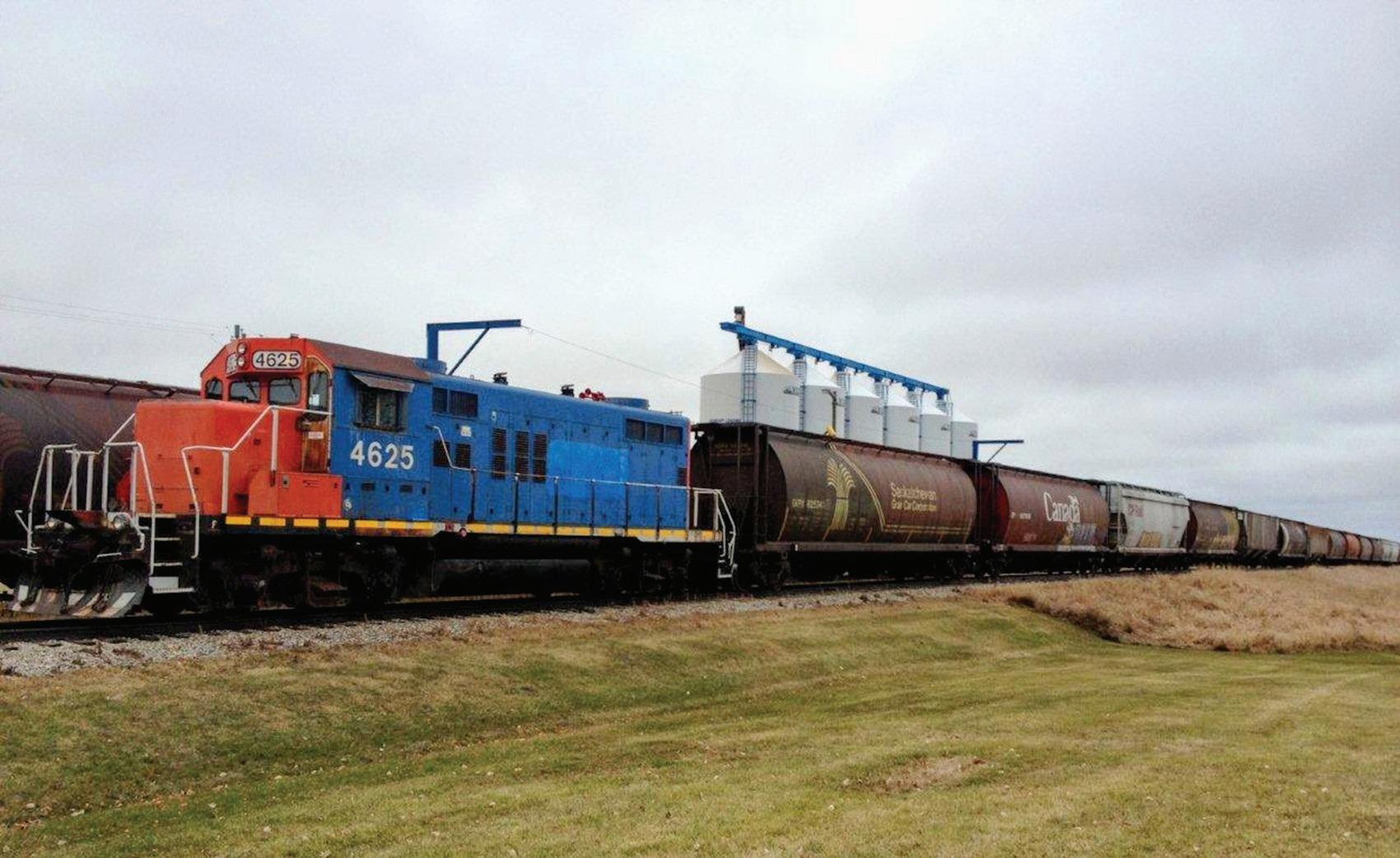
By Harry Siemens
Canada’s grain transportation system continues to move large volumes of grain despite signs of uneven performance across parts of the rail network, according to the latest Daily Network Status Report released by the Ag Transportation Coalition (ATC).
The ATC, which represents the Canadian Canola Growers Association, Alberta Grains,
Pulse Canada, Western Grain Elevator Association, Saskatchewan Wheat Development Commission and Prairie Oat Growers Association, monitors daily rail and port performance across Western Canada.
As of June 9, system loads on wheels stood at 7,562 rail cars, down just 60 cars from the previous day but slightly above the prior week’s average. Canadian National Railway (CN) recorded

4,042 loaded cars in the system, up 329 from the day before, while Canadian Pacific Kansas City (CPKC) declined by 246 cars to 3,331.
The report suggests grain movement remains generally stable heading into the summer shipping season.
One area showing improvement involved rail cars sitting idle for more than 48 hours. System-wide, 896 loaded cars were classified as not moving, down 48 cars from the previous day and slightly below the prior week’s average of 915.
CN accounted for most of the improvement, reducing its delayed-car count by 79 cars. However, CPKC moved in the opposite direction, with delayed cars increasing by 179. Overall, about 12 per cent of all loaded cars in the system had not moved in more than 48 hours, compared with approximately 10 per cent the previous week.
Thunder Bay remains a key corridor to watch.
The report shows 449 cars were dwelling for more than 48 hours in the Thunder Bay corridor, the highest level among all major export corridors. Much of that delay occurred at the destination rather than in transit, suggesting congestion at unloading points rather than problems moving grain across the Prairies.
Despite those delays, Thunder Bay continued handling strong grain volumes. The port unloaded 324 rail cars on June 9, marking the ninth consecutive day with unloads above 300 cars.
The current week’s average of 351 unloads per day closely matches the previous week’s performance.
On the West Coast, grain movement slowed somewhat.
Vancouver unloaded 724 rail cars, down 11 per cent from the previous day and 30 per cent below the previous week’s average. Prince Rupert provided some offset, unloading 203 cars, up 35 per cent from the day before and 28 per cent above the prior week’s average. Combined West Coast unloads totalled 927 cars.
The report also highlighted thin rail pipelines feeding both Vancouver and Prince Rupert. Vancouver had approximately 850 cars west of the Alberta-British Columbia border, while Prince Rupert had only about 200 cars currently en route from the interior.
While daily fluctuations remain common, the broader trend suggests Canada’s grain handling system continues to perform reasonably well. Railways are maintaining more than 7,500 loaded cars in motion, ports continue unloading significant volumes, and overall network performance remains close to recent averages despite corridor-specific challenges.
For grain producers, exporters and processors, the transportation system continues to move the 2025-26 crop year toward domestic and export markets, even as certain corridors experience periodic congestion and delays.
Canadian cereal growers are being encouraged to take a proactive approach to managing fusarium head blight (FHB) as crops move through critical growth stages this growing season.
The Keep it Clean campaign is reminding growers and agronomists that FHB remains one of the most serious fungal diseases affecting cereal crops, including wheat, barley, oats and corn. Durum wheat, spring wheat, barley and corn are among the crops most vulnerable to the disease.
FHB can create significant challenges for producers by reducing crop yield and quality, while also affecting market opportunities. The disease impacts kernel development, lowering yield and grade, and can contaminate harvested grain with mycotoxins produced by infected seeds.
One of the main concerns associated with FHB is deoxynivalenol (DON), commonly known as vomitoxin. High DON levels can limit the end uses and marketing potential of grain, as many importing countries have strict maximum limits for the toxin.
FHB and DON contamination can also affect livestock feed quality, wheat milling and baking performance, ethanol production, and the malting and
brewing characteristics of barley.
Keep it Clean recommends that growers focus on scouting for crop stage rather than waiting to see disease symptoms. Applying fungicide at the right time, when there is an elevated risk of infection, can help protect crops during key periods of vulnerability.
The risk of FHB infection increases when hot, humid or wet weather conditions occur during head emergence and flowering. Under favourable conditions, infection can occur in as little as three days.
“Scouting for stage” allows producers to identify the ideal timing for foliar fungicide applications and maximize their return on investment while helping preserve marketing options for harvested grain.
Additional support is now available through new Prairie-wide FHB risk maps, which provide growers with another tool to monitor disease risk throughout the growing season. The maps are available at prairiefhb.ca.
By combining timely crop scouting, preventative management and available risk tools, growers can reduce the impact of FHB and protect the quality and value of their cereal crops.
By Harry Siemens
Manitoba seeding reached 96 per cent complete as of June 15, but severe storms, record rainfall and overland flooding have created major crop concerns in several regions.
Manitoba Agriculture’s June 16 crop report says severe thunderstorms swept across southern Manitoba and the Interlake on June 9 and 10, bringing strong winds, hail, intense lightning, extreme rainfall and tornadoes. Two tornadoes were confirmed on June 9 — one near Ste. Anne and one near Dufrost.
The hardest-hit areas included Stonewall, Petersfield, Teulon, Woodlands, Dugald and Elie. More than 10 municipalities declared states of emergency because of flooding and storm damage.
Stonewall recorded 233.8 millimetres of rain in 24 hours on June 9. The same station recorded 69.1 millimetres in one hour. Petersfield received 28.5 millimetres in 15 minutes, while Argue recorded a wind gust of 114 kilometres per hour.
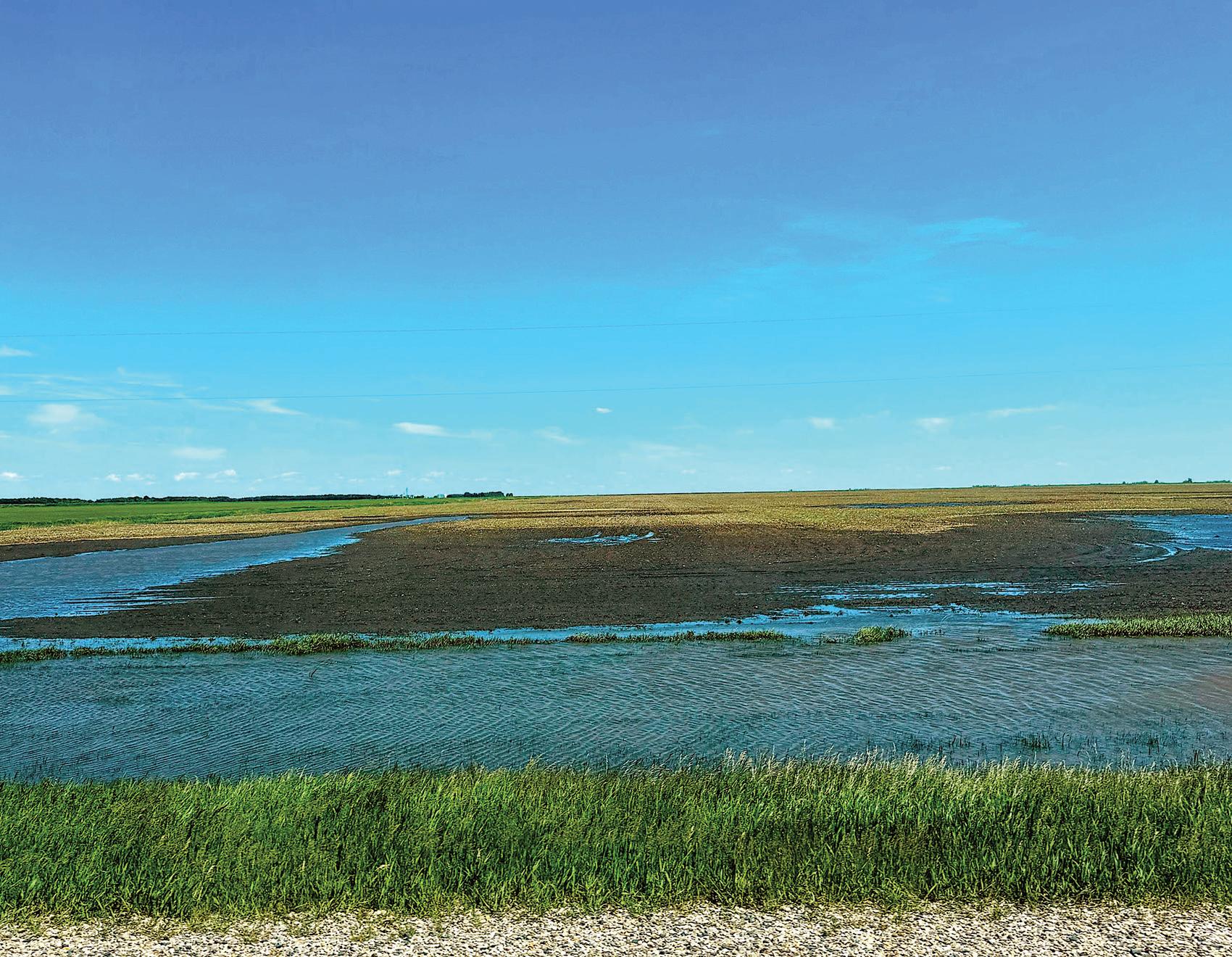
The Interlake and Eastern regions saw the most serious overland flooding. Parts of the southern Interlake near Stonewall have now received more than 250 per cent of normal precipitation since May 1. Large portions of the Northwest, Interlake and Eastern regions have received more than 80 millimetres since May 1. In contrast, most of the Southwest remains below normal, at less than 70 per cent of average precipitation.
Winter wheat and fall rye remain in good condition. Winter wheat is at the flag leaf stage, while some fall rye fields are beginning to head. Manitoba Agriculture says disease scouting will become more important as those crops advance.
Spring cereals are mostly at the tillering stage. Herbicide applications are underway or complete
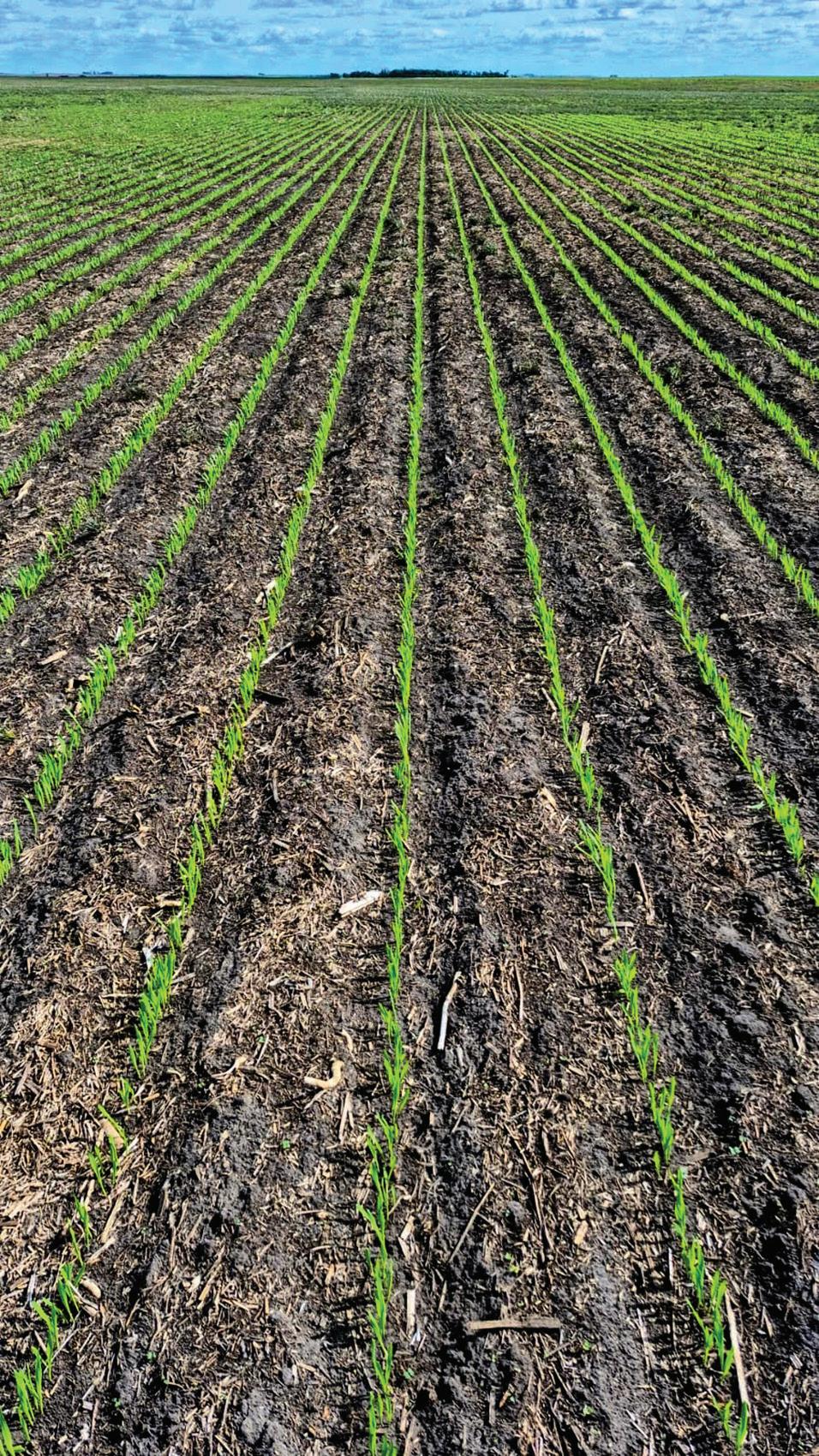
A young corn crop shows strong early rows in Manitoba, where most corn fields range from V2 to V4 despite some uneven growth in wetter areas.
Submitted photos
in many fields, but excess moisture, wind, road washouts and damaged infrastructure have delayed fieldwork in wetter regions. A few cereal leaf spot cases have been reported, suspected to be tan spot.
Canola development moved quickly over the past week. Most fields range from the cotyledon to the two- to three-leaf stage, with the earliest fields nearing four leaves. Flea beetles remain active, but seed treatments are providing adequate protection in most fields. Producers are urged to continue scouting younger canola.
Corn is advancing rapidly, and most fields are at the V2 to V4 stage. Stands generally look good, but wet areas show uneven growth and some early nutrient deficiencies.
Soybeans range from the unifoliate to second trifoliate stage. Peas are mostly at the fifth to sixth node stage. Pea leaf weevil feeding continues in parts of the Central region.
Forages are mixed. Hay fields with good moisture are progress -
Standing water remains in low-lying fields between Oakville and Elm Creek, reflecting the excess moisture and overland flooding reported in parts of Manitoba’s Central region.
ing well, and some dairy first-cut operations have started. However, wet fields have delayed haying in many regions and raised quality concerns. Low-lying native hayland may remain inaccessible until early August in some areas.
Cattle are generally doing well
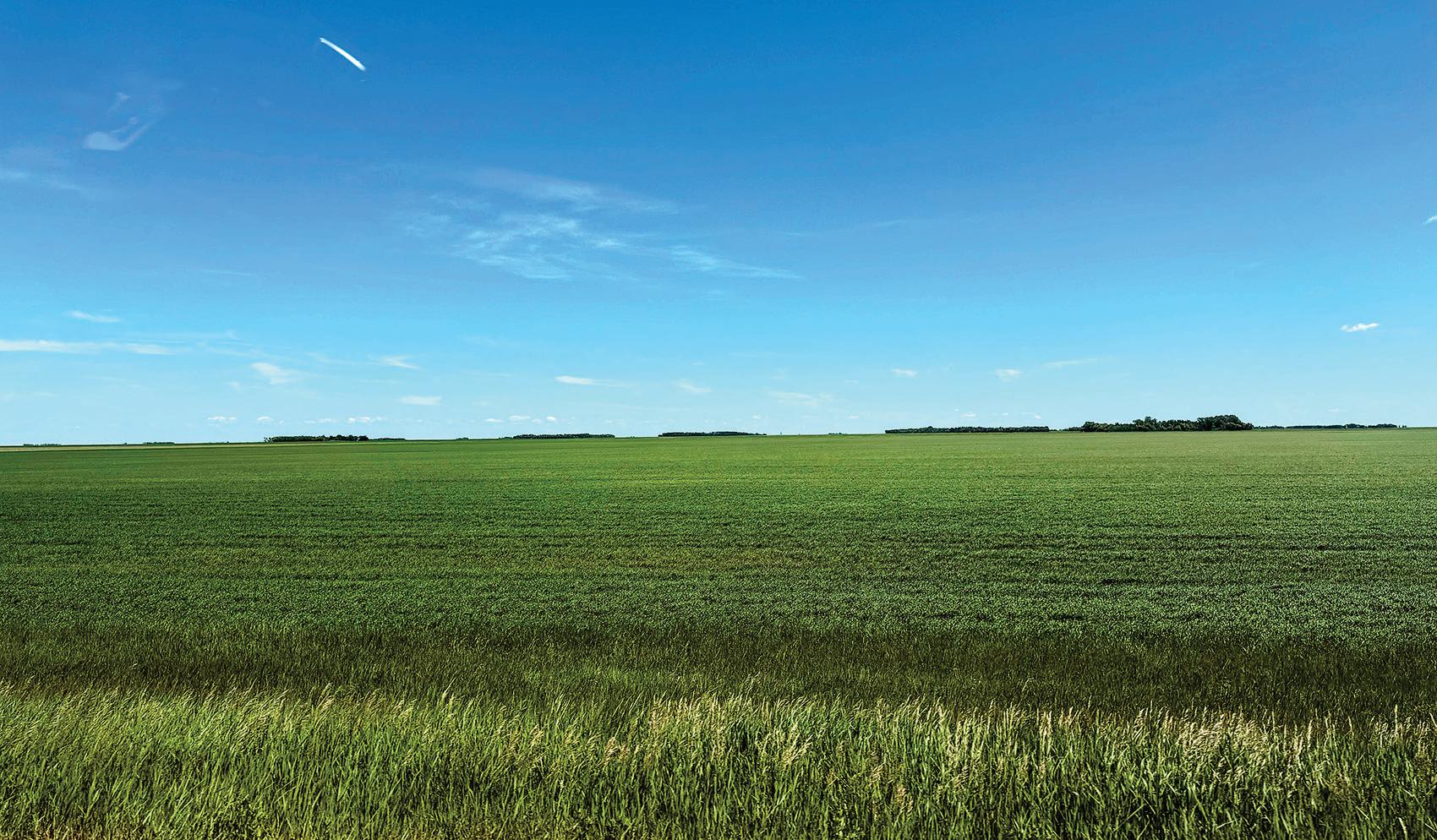
healthy green crop advances under good growing conditions, showing the wide range of field conditions across Manitoba after recent storms and heavy rainfall.
on pasture, but saturated pastures are causing localized damage, reduced grazing access and increased foot health concerns. Regionally, the Southwest is mostly seeded and recovering from wind and rain. The Northwest continues to deal with saturated fields, erosion and
others.
washouts. Central Manitoba has resumed field work in many areas, except low spots. Eastern Manitoba has standing water in drains and field lows. The Interlake faces the most serious delays, with flooded fields still draining and some reseeding decisions remaining uncertain.


By Harry Siemens
Manitoba Pork is welcoming a new animal health trade agreement between Canada and Japan that strengthens protections for the pork industry in the event of an African swine fever (ASF) outbreak.
The Government of Canada and the Government of Japan announced an agreement on the mutual recognition of containment zones for ASF. The agreement means that if an outbreak occurs, trade may continue from disease-free regions within a country rather than being shut down entirely.
ASF is a highly contagious and devastating disease that affects pigs. It is listed as an internationally reportable disease. While it has caused major losses in Asia, Europe and the Caribbean,
ASF has not been detected in pigs in Canada.
Manitoba Pork General Manager Cam Dahl said the agreement represents an important step forward in protecting the Canadian pork sector from the economic shock of a potential outbreak.
“Manitoba Pork congratulates the Canadian Minister of Agriculture, Hon. Heath MacDonald, for accomplishing this critical milestone,” Dahl said. “We would also like to thank Hon. Norikazu Suzuki, Japan’s Minister of Agriculture, Forestry and Fisheries, for his engagement and collaboration.”
Dahl said the stakes are extremely high for Manitoba and Canada. The province is one of the most export-dependent pork-producing regions in North America.
Manitoba produces about 8.5 million pigs annually, and roughly 90 per cent of those animals are exported as pork or live animals. Dahl said that level of trade exposure means an ASF outbreak would have immediate and severe consequences.
“The detection of African swine fever in Canada would be catastrophic for both the Manitoba and Canadian hog sectors,” he said. “It would result in a prolonged closure of international borders to pork and live animal exports, and a major financial impact on the province and country.”
The disease continues to spread globally. ASF has been reported across parts of Europe and Asia, and was also detected in the Dominican Republic in recent years, increasing concern

for North American producers.
Dahl said zoning agreements are a key tool in limiting economic damage during an outbreak. These agreements allow trade to continue from unaffected zones, even if a portion of a country is dealing with disease control measures.
“With the addition of Japan to this list, about 55 per cent of Canadian pork exports are now covered by ASF zoning agreements,” Dahl said. “If a similar agreement is reached with Mexico, that number could rise to about 65 per cent.”
He said these agreements are the result of long-term collaboration between government and industry, and they significantly reduce financial risk for producers and the wider economy.
Canada already has ASF zoning agreements in place with several key markets, including the United States, European Union, Singapore, Hong Kong, Vietnam, the United Arab Emirates and the Philippines.
Industry leaders say these agreements are becoming increasingly important as global animal disease pressures rise and international trade partners look for stronger assurances on food safety and disease control systems.

Manitoba Pork says continued investment in biosecurity, surveillance and international trade relationships remains critical to protecting the sector.
The organization represents pork producers across Manitoba and says its focus remains on ensuring the long-term sustainability and competitiveness of the province’s hog industry.
Manitoba livestock producers are being encouraged to take advantage of a free pasture, forage, and water sampling program offered this summer through Manitoba Agriculture’s Livestock and Forage Specialists.
The program is designed to help producers better understand whether pasture forages and water sources are meeting livestock nutritional requirements, particularly during the grazing season.
Testing will include forage analysis for protein, energy, and micro minerals. Water testing will assess conductivity, hardness, sulfates, nitrates, and other key quality indicators.
Manitoba Agriculture says past testing has identified widespread mineral imbalances across the province, including copper and zinc deficiencies in forage, as well as elevated molybdenum levels that can interfere with copper absorption in livestock. Officials say these findings highlight the importance of ongoing mineral supplementation for grazing animals.
Water quality results have also shown variability, with dugouts generally producing higher-quality water compared to wells in some areas.
Producers interested in participating are encouraged to contact their regional Livestock and Forage Specialist. Officials note that testing capacity is limited and will be offered on a first-come, first-served basis.
Producers can request sampling or learn more by contacting the following specialists:
- Kristen Bouchard-Teasdale, Beausejour — kristen.bouchardteasdale@gov.mb.ca | (431) 337-1688
- Pamela Iwanchysko, Dauphin — pamela.iwanchysko@gov.mb.ca | (204) 648-3965
- Elizabeth Nernberg, Roblin — elizabeth.nernberg@gov.mb.ca | (204) 247-0087
- Cindy Jack, Portage — cindy.jack@gov.mb.ca | (204) 768-0534
- Josie Pedersen, Killarney — josie.pedersen@gov.mb.ca | (431) 266-0171
Manitoba Agriculture says the initiative is intended to support better herd nutrition decisions and improve understanding of pasture and water quality across the province during the grazing season.
By Harry Siemens
Mangin Bros. Dairy Farm has grown through three generations of family commitment, innova tion and a shared passion for dairy farming.
The farm began in 1969 when Laurent Mangin started with 11 milking cows. He later passed the operation on to his sons, Rick and Florent Mangin. By 1985, the herd had grown to 26 cows, and the brothers eventually expand ed the barn and increased the herd to 56 cows.
As the next generation showed interest in dairy farming, Rick and Florent looked for opportunities to grow. In 2003, they built a new dairy barn, the first of its kind in the area. The facility introduced new technology and management practices that required a significant learning curve, but the family embraced the challenge.

even know it,” she said.
Learning has always been part of the farm’s culture. Florent’s son Jamie studied agribusiness at Assiniboine Community College before working as an agronomist in Shoal Lake. Even while working away from home, he remained closely connected to the family farm.
In January 2008, Jamie returned home to join the dairy operation full-time. The experience gave him a new appreciation for the dedication and hard work that had built the farm. His brother Steven followed a similar path, completing an agribusiness diploma, working away from home for a time, and returning in 2011 to farm alongside Jamie, their parents Florent and Judy, and their uncle and aunt, Rick and Lucy.
The farm also became the centre of family life. Jamie married Sheri, who grew up on a cattle farm, in 2010. Together, they are raising four children: Alivia, Cole, Maddison and Brayden.
The children already spend time helping in the barn, often alongside their grandparents. Alivia says her grandparents make chores enjoyable.
“You’re working and giggling at the same time, and you don’t
In 2020, the family installed two automated milking systems that allow cows to choose when they want to be milked, typically two to three times per day. The technology improved labour efficiency and gave the family greater flexibility.
Just two years later, disaster struck when a fire destroyed the dairy barn. Within 24 hours, Jamie and Steven agreed they would rebuild.
“When you’re born into dairy farming, it’s something you can’t shake,” Jamie said. “I really can’t see myself doing anything else.”
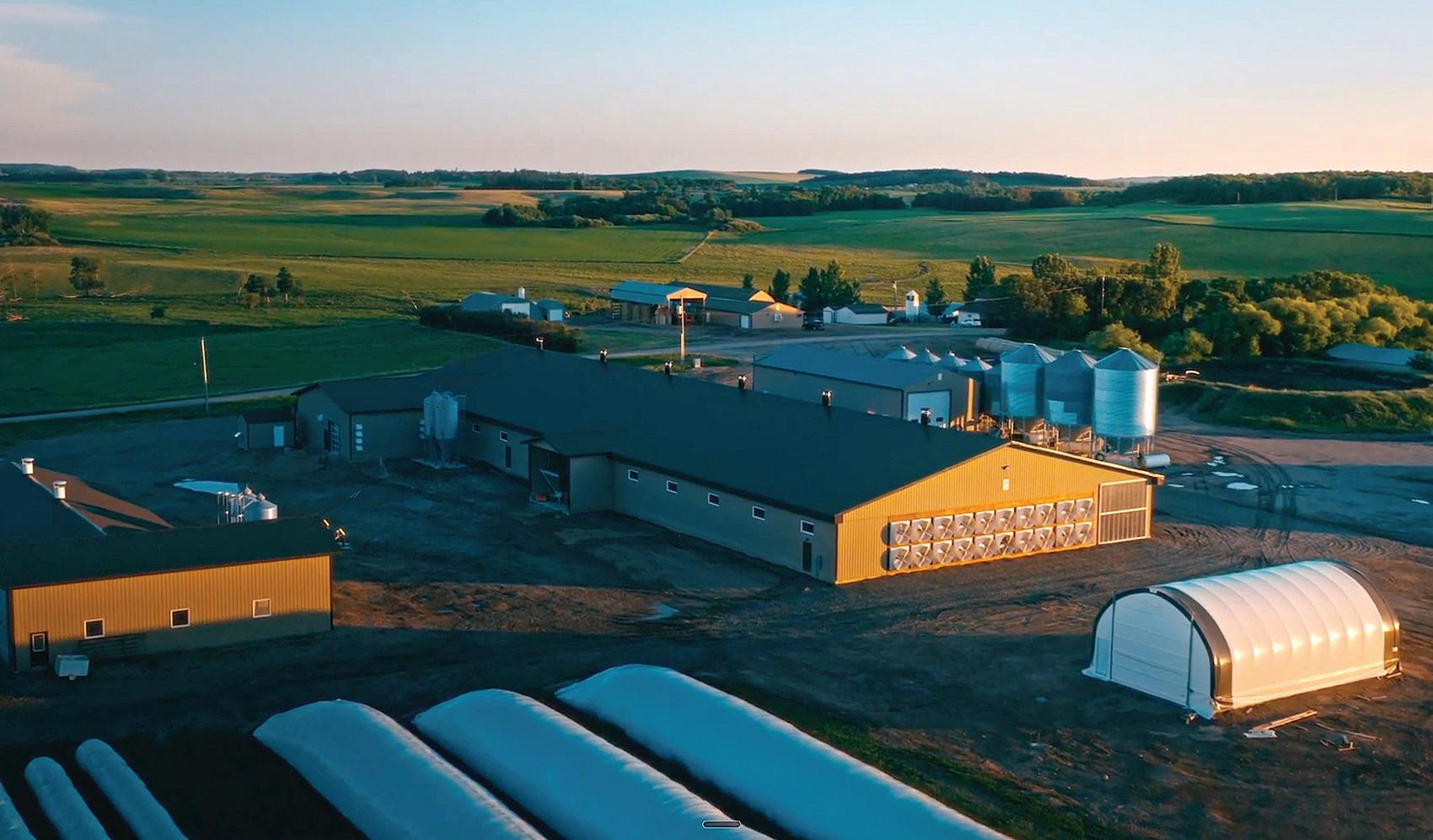
The new 28,000-square-foot facility features a guided-flow design that includes automated milking systems, a feed alley, resting areas and sorting gates. Cows wear transponders that identify them and help direct traffic through the barn.
The operation also became the first in Manitoba to adopt a behavioural analysis system that uses electronic ear tags to monitor animal activity and provide additional management information.
Cow comfort guided every aspect of the design. The barn includes cow brushes, ProMat mattresses, straw bedding, misters for hot weather, ventilation fans,
natural lighting and an automatic feed pusher.
Jamie said the family focused on energy efficiency, sustainabil -
ity, cow comfort and labour efficiency when designing the facility.
The result is a modern dairy
operation built to serve future generations while preserving the values that started with 11 cows more than 55 years ago.

By Harry Siemens
Avian influenza remains by far the most significant federally reportable animal disease affecting Canadian livestock and poultry operations, according to updated Canadian Food Inspection Agency (CFIA) statistics released June 10.
The CFIA’s annual summary of federally reportable diseases shows that avian influenza has accounted for 19 confirmed cases in farmed flocks across Canada so far in 2026, making it the most frequently reported disease this year. The only other reportable diseases recorded in 2026 were chronic wasting disease (five cases) and equine infectious anemia (five cases). The figures reflect the con-
firmed number of farmed herds and flocks affected by federally reportable diseases across Canada.
While 2026 numbers remain relatively low, the data also highlights the dramatic impact avian influenza has had on Canadian agriculture over the past five years.
In 2025, Canada recorded 119 cases of avian influenza, compared to 102 in 2024 and 133 in 2023. The disease reached its most recent peak in 2022, when 279 infected flocks were confirmed nationwide.
The contrast with other reportable diseases is striking.
Chronic wasting disease, which affects cervids such as deer and elk, ranged from
five to 13 cases annually between 2021 and 2026. Equine infectious anemia fluctuated between five and 28 cases per year over the same period. Bovine tuberculosis appeared only occasionally, with a single case reported in 2023, 2024 and 2025.
Other reportable diseases appeared even less frequently. Newcastle disease was reported twice in 2025, while cysticercosis appeared in two cases that same year. Bovine spongiform encephalopathy, commonly known as BSE or mad cow disease, appeared once in 2021.
The numbers demonstrate how animal health risks continue to evolve while highlighting the importance of sur-
veillance programs and rapid response measures.
For Canada’s poultry sector, highly pathogenic avian influenza remains the primary concern. Since 2022, outbreaks have resulted in the loss of millions of birds across commercial poultry operations, backyard flocks and wild bird populations. The disease has created significant challenges for producers, including depopulation requirements, movement restrictions and increased biosecurity costs.
The CFIA maintains strict reporting requirements for federally reportable diseases because of their potential impact on animal health, trade and market access.
Under federal regulations,
owners, veterinarians and laboratories must immediately report suspected cases of designated diseases to the CFIA.
Early detection allows officials to investigate outbreaks quickly and implement control measures designed to limit the spread.
The report also serves as a reminder of the importance of maintaining strong biosecurity programs on farms.
Disease prevention measures such as controlling visitor access, disinfecting equipment, monitoring animal health and limiting contact with wildlife remain critical tools for producers across all livestock sectors.
For the swine industry, the absence of diseases such as
African swine fever and footand-mouth disease remains encouraging. Both diseases continue to rank among the most serious foreign animal disease threats facing Canadian livestock production.
While avian influenza continues to dominate the statistics, the overall numbers show Canada’s surveillance and reporting systems remain active across multiple species and disease categories.
The latest CFIA data confirm that disease monitoring remains an essential component of protecting animal health, maintaining access to international markets and safeguarding Canada’s livestock and poultry industries from potentially devastating outbreaks.



13
By Dan Guetre
Canadian livestock officials are monitoring developments following the confirmation of a case of New World Screwworm (NWS) in Texas, while emphasizing that the risk to Canadian animals and people remains low.
On June 3, the United States Department of Agriculture (USDA) Animal and Plant Health Inspection Service (APHIS) confirmed a single case of NWS in a bovine in Zavala County, Texas. The affected animal was a three-week-old calf, with larvae identified in the animal’s umbilical area. No additional detections have been reported.
The USDA has activated its response plan and is working with Texas officials to contain and eradicate the parasite. Actions include establishing an incident command structure, implementing movement controls and surveillance, increasing trapping efforts, and expanding releases of sterile flies to reduce the NWS population.
The Canadian Food Inspection Agency (CFIA) announced June 5 that it would implement temporary import restrictions on livestock, including horses, entering Canada from affected areas. Animals originating from or present in Texas within 21 days before arriving at the Canadian border will not be accepted for import.
The CFIA said the measures are a precautionary step to protect Canada’s animal health status while officials continue working with U.S. counterparts to assess the situation.
New World Screwworm is a parasitic fly whose larvae, commonly known as maggots, feed on the living tissue of warm-blooded animals. The infestation can cause severe tissue damage and may result in death if left untreated. Unlike common flies that feed on dead tissue, NWS larvae invade living flesh, often entering through wounds or natural
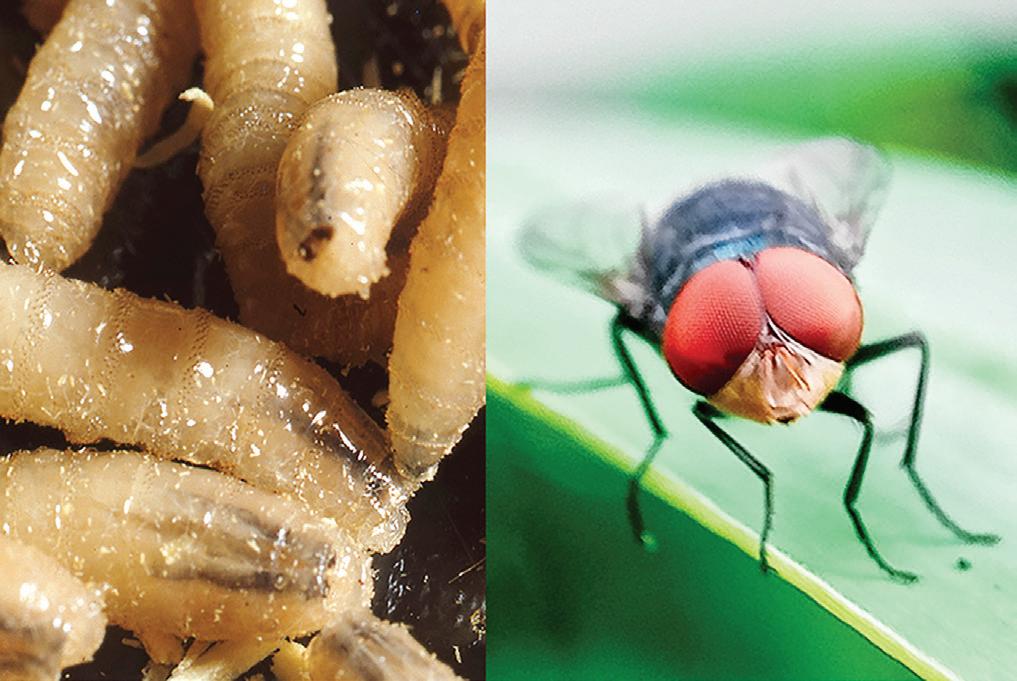
openings. The parasite can affect livestock, pets, wildlife and, in rare cases, humans.
Canada remains free of New World Screwworm. The disease is immediately reportable under the Health of Animals Act, meaning suspected cases must be reported to the CFIA. Canadian laboratories are required to notify the agency if the parasite is suspected or confirmed.
Officials say the risk of NWS becoming established in Canada remains low due to the country’s climate, particularly prolonged cold temperatures that are not suitable for the fly’s survival, along with existing import controls and animal health monitoring programs.
The parasite prefers warm, humid environments, generally thriving in temperatures between 25 C and 30 C. While it is not expected to survive Canadian winters, shorter periods of

summer conditions could allow temporary survival.
Canadian beef producers are being encouraged to remain vigilant and monitor imported animals for signs of infestation. Symptoms may include foul-smelling wounds, visible maggots, irritation, discharge and lesions around areas such as the navel, ears, branding sites, castration sites or dehorning areas.
Producers are advised to:
- Maintain accurate records of animal movements, including origin, destination and dates.
- Quarantine and closely monitor imported animals.
- Maintain strong fly control and wound management practices.
- Reduce risks of animal injuries.
- Immediately contact a veterinarian if NWS is suspected, and isolate affected animals until further instructions are provided.
Biosecurity remains one of the most important tools for protecting livestock from disease. The Beef Cattle Research Council provides additional resources for producers on maintaining strong biosecurity practices.
Officials also emphasized that New World Screwworm does not pose a food safety concern. Canadian meat and dairy products remain safe to consume, and animals affected by disease would not enter the food supply.
For livestock owners and veterinarians, early detection remains critical. A wound that worsens over time, develops discharge or produces a foul odour should be investigated. Identification of NWS can only be confirmed through laboratory testing.
Canadian authorities will continue to monitor the situation and provide updates as additional information becomes available.

By Peter Vitti
Breeding cattle suffer from heat-stress when the Temperature-Humidity Index (THI) exceeds 72 (22.2 C degrees, 100% humidity). At first glance, cattle are mildly uncomfortable, yet as the THI moves past 80 there is a progression of reproductive losses. Pushed to high THIs may lead to a few fatalities. Whenever, I see a THI chart, I try to place myself on it and get a slight glimpse of what cattle might be going through a hot prairie summer. To combat my heat-stress, I can simply turn on the AC, but the best practical solutions to keep breeding cattle comfortable is a lot more challenging.
Humans cope with hot weather by sweating yet breeding cattle sweat very little. They rely heavily upon panting which turns them into a heat-exchanger –mouth-breathing hot air in and releasing heat/water vapor from their lungs and out of their bodies. Heat-stressed cattle tend to visibly pant rapidly all-the-while standing
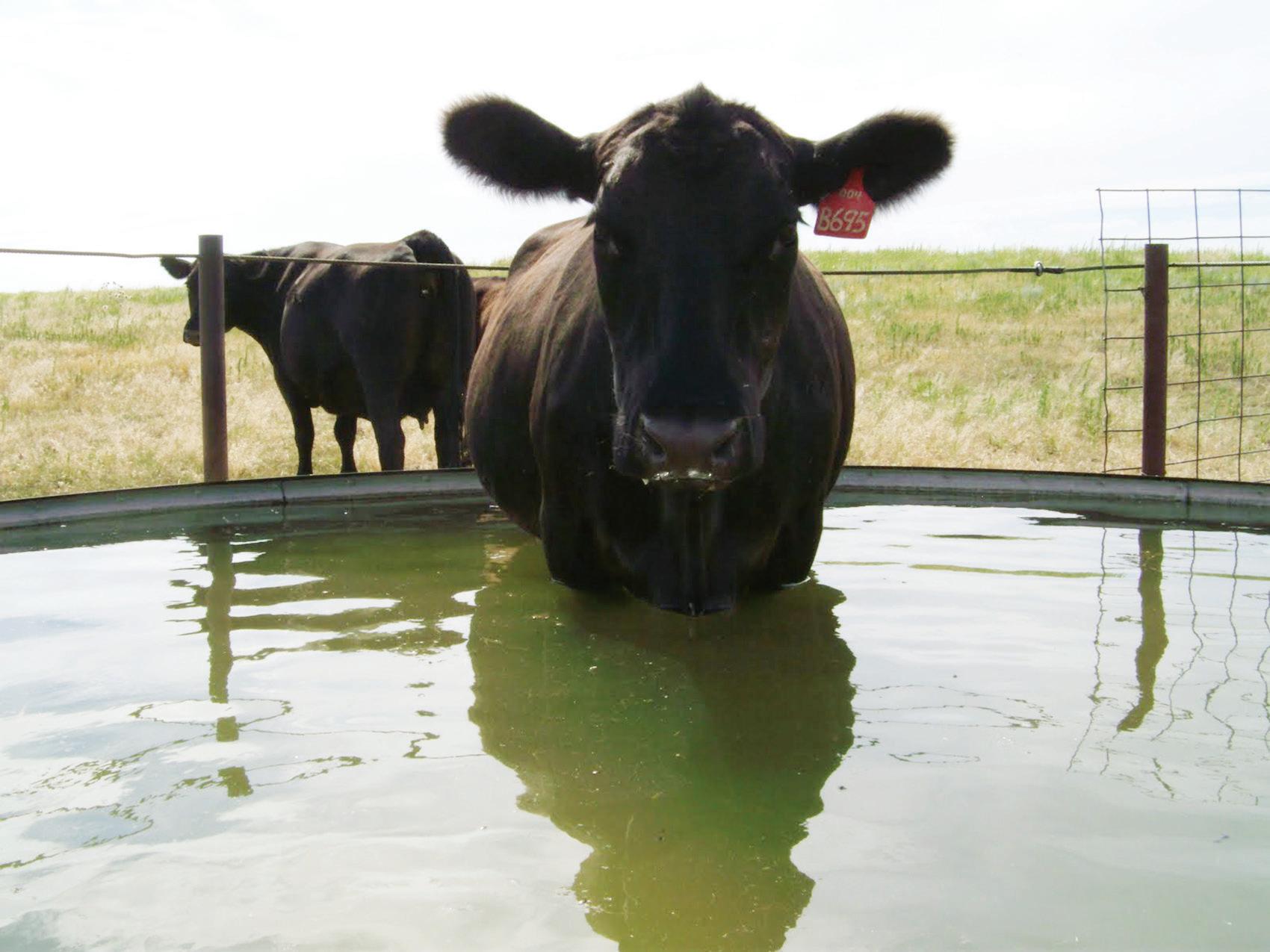

around in one spot - sometimes bunched up under any available shade. If natural shade is unavailable, I have seen them stand in each others’ shadows.
Unfortunately, heat-stressed cows cannot show you what happens inside of their reproductive organs. For example, a high THI (plus 80) causes a lack of cow standing heat and thus her acceptance of the bull. This is often due to her shortened estrus cycle compared to the same thing under more mild weather. Furthermore, there is a decrease in specific hormones in her blood, which otherwise would support normal ovulation. Rather, heat-stress causes abnormal follicular waves and undeveloped dominant follicles, which leads to temporarily infertility.
Even if a heat-stressed cow gets bred by the bull and is luckily enough to conceive, there might be more bad news. That’s because these cows suffer from a high probability of early embryonic deaths at two different stages of pregnancy; 0 – 7 days (loss of developing embryo), and from day 25 – 45 (early fetal loss). Cows that experience early embryonic loss during the first week of pregnancy quickly appear as repeat breeders (return to estrus cycling), because the embryo is affected by the cow’s elevated body temperature and thus a failure of implantation on her uterine wall. Cows that experience fetal death later-on might be initially confirmed as pregnant, yet come back as
open cows after the breeding season. Breeding bulls suffer from heat-stress too! It causes their temporary sterility by damaging developing sperm cells to a point where there is not enough viable sperm to fertilize the shed-egg of the cow. Bulls that suffer from any extended period of heat-stress do not fully recover for 60 days, which coincides with the nature process of full sperm production and maturation. Years ago, I witnessed a 20-monthold Simmental bull that failed to breed 18 replacement heifers during a month of 35c weather. Several months later, the bull successfully bred each one of them, which transfer them into a fall-calving herd.
When such scorching heat strikes these breeding pairs, there are a few things that we can do in order to help reduce its negative impact upon their general well-being and reproduction:
- Water, water and more water. Lots of cool clean water must be provided (10 litres/50 kg of body weight). Water drinking surface should be sufficient for a large number of cattle to drink at the same time. Plus, water flow within the waterers and tanks must be able to replenished water in minutes. Notewater temperature above 25c will contribute to heat-stress in cattle.
- Cattle should access to trees and other forms of shade. Open buildings and polesheds with light coloured roofs can provide good shade, yet watchout for good air-movement. Windbreaks will provide some shade, but they often reduce air movement and often contribute to heatstress.
- Pasture management should be adjusted. Rotate cattle through pastures, more quickly. This shortened timing allows cattle to graze new digestible forages. If dried-out pastures are supplemented with other feeds (hay); feed them near dusk, which allows cattle to consume forages during lower evening temperatures.
Good points that I try to implement during hot weather. I implemented myself. Last July (2025), I completed a 10 km hike in a western park. The temperature was 37 C with a humidity of no more than 10%. According to the chart, my THI index was 78, which should have put me under mild heat-stress. Consequently, I carried plenty of cool water bottles, rested under several trees and sat down on the odd patch of grass. Sorry to say - I was very heatstressed. Once, I got back to my SUV, I saw my park-pass had literarily melted on the dashboard. No problem – I cranked up the AC to a good Canadian winter.
By Dan Guetre extender;
A new project is aiming to turn a common byproduct of beer production into high-value food ingredients, supporting Canada’s growing focus on domestic food manufacturing and sustainability.
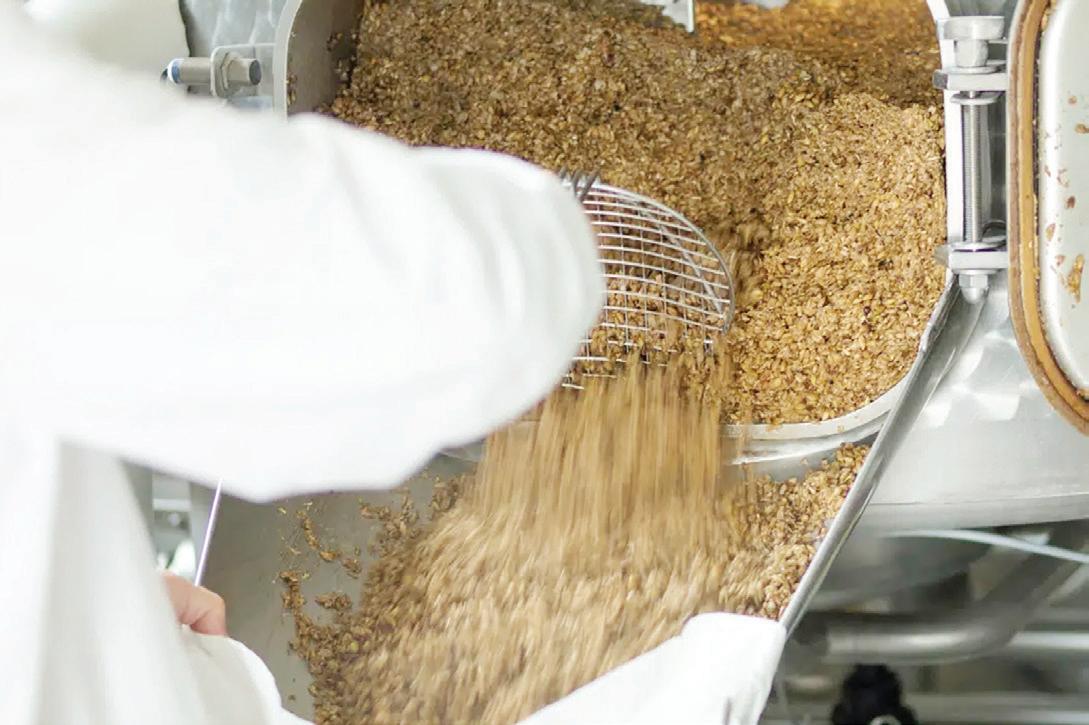
Protein Industries Canada has announced a partnership between Terra Bioindustries (Terra) and Great Western Brewing Company (GWBC) that will transform Brewers Spent Grain (BSG) into innovative ingredients through an advanced upcycling process.
The project is part of Protein Industries Canada’s Make It Here initiative, which encourages greater domestic processing and value creation from Canadian agricultural products.
“By connecting Canadian creativity with Terra’s technology, this initiative will strengthen our domestic food supply chain and reinforce Canada’s leadership in sustainability and innovation,” said Mélanie Joly, Minister of Industry and Minister responsible for Canada Economic Development for Quebec Regions.
The project will see Terra use its proprietary technology to convert BSG, a food-safe byproduct of brewing, into four new ingredients: TERRA Protina, a high-protein concentrate; TERRA Fibra, a dietary fibre; TERRA Choc, a cocoa
and TERRA Malt, a multifunctional barley syrup.
The partners will focus on developing TERRA Malt, which has potential applications as a low-carbon ingredient for food products.
Protein Industries Canada CEO Tyler Groeneveld said the project demonstrates how Canadian innovation can create more value from existing agricultural resources.
“This project is a strong example of how Canada can make more food here, creating more value from the crops and co-products we already produce,” Groeneveld said. “By transforming BSG into innovative, low-carbon ingredients, Terra and GWBC are helping strengthen our domestic supply chain, expand food production, and demonstrate what it means to Make It Here.”
Terra’s technology separates proteins, fibres, sugars and flavour compounds from BSG, allowing the material to be fully utilized rather than treated as waste.
“By separating proteins, fibres, sugars, and flavour compounds, we are able to use all of the BSG while concentrating the nutritional or functional qualities separately,” said Rebecca Palmer, Marketing Lead with Terra Bioindustries. “The ingredients are more versatile, production is more efficient, and nothing is wasted.”
By Joan Airey
Recently I read posts of at least ten people saying their carrot seeds didn’t germinate and thought it was the company’s fault. I had purchased my carrot seed from the same company and I was afraid mine wasn’t going to germinate either. We had had downpours of rain and when I went to hill my potatoes it took all my strength to get the top layer of soil broken and the potatoes hilled. Then we had gentle short rains off and on for a week. To my surprise both my Healthmaster and Kurdo carrots had germinated. I weeded one row of them yesterday but a shower of rain put an end to my gardening.
My sister poured hot water on the row of carrots seeds she planted and she said it worked for her that she got good germination. I mentioned this to a gardening friend and she said her friend Donna always poured hot water on the row where she planned to plant her carrots before she planted them. I plant my garden with a little machine so I think I will just water the row with a watering can if they don’t germinate. I just checked my journal and it was a month after I
planted them that my carrot seed germinated.
The carrots I planted last fall did not germinate but the seed may have been too old. I planted a planter of green beans under lights and we are going to have green beans for supper tonight.
Lettuce grown under lights has been keeping us in salads and I plan to move the planters outdoors in the shade and replant. My garden gets too hot in July for lettuce so I decided to try this way instead.
T &T Seeds say you can plant Russian Giant Sunflowers, Provider Bush Beans and Zucchini Noche seeds directly into the garden in June and they will grow fast once the soil is warm. I planted Zucchini last week and they are growing like crazy. They are doing much better than the ones I started in the greenhouse last year and transplanted to the garden. Last year I ended up buying another package of seed and planting them directly in the garden.
Some greenhouses still have plants available if yours were damaged by hail or too much rain. Here’s to sunshine and nice gentle rains across Manitoba.
As part of the project, Great Western Brewing Company will use TERRA Malt to develop a non-alcoholic beer. The barley-based syrup’s low fermentable sugar content could help reduce alcohol production during fermentation while also lowering transportation emissions and adding value to brewing byproducts.
“For Great Western Brewing Company, this project means thousands of dollars staying in our business—funds we can put back into our recent investment in innovation, strengthen our operations, and support good local jobs,” said Brendan Halbgewachs, CFO of Great Western Brewing Company.
The project represents a total investment of $1.1 million, with Protein Industries Canada contributing $486,000 and the industry partners providing the remaining funding.
The initiative supports Protein Industries Canada’s broader goal of growing Canada’s plantbased food, feed and ingredient sector into a $25 billion industry. The organization, one of Canada’s five Global Innovation Clusters, is working to position Canada as a global leader in sustainable plant-based ingredients.
The partners say the project highlights the potential to create new economic opportunities by building circular food systems and keeping more value from Canadian crops within the country.

By Harry Siemens
Canada’s beef cattle producers have an opportunity to help shape the next national standard for animal care as the public comment period for the revised Code of Practice for the Care and Handling of Beef Cattle moves toward completion.
The National Farm Animal Care Council (NFACC) opened the public review on April 13, 2026, and will accept comments until June 12. The revised Code is expected to be finalized in 2027.
The Code serves as a national reference for animal care across Canada’s beef industry. Producers, veterinarians, transporters, processors, regulators, retailers and consumers all use it as a guide for expectations and best practices in cattle care and handling.
The draft was developed through NFACC’s established Code development process, which brings together representatives from across the industry. Producers, veterinarians, researchers, animal welfare organizations, processors, enforcement agencies and consumers all participate in discussions that help shape the final document.
The public comment period gives people outside the committee a chance to review the draft and provide feedback before the final version is completed.
NFACC says the goal is to identify sections that work well, areas that need improvement and topics that may require additional consideration. Participants can review the entire document or focus
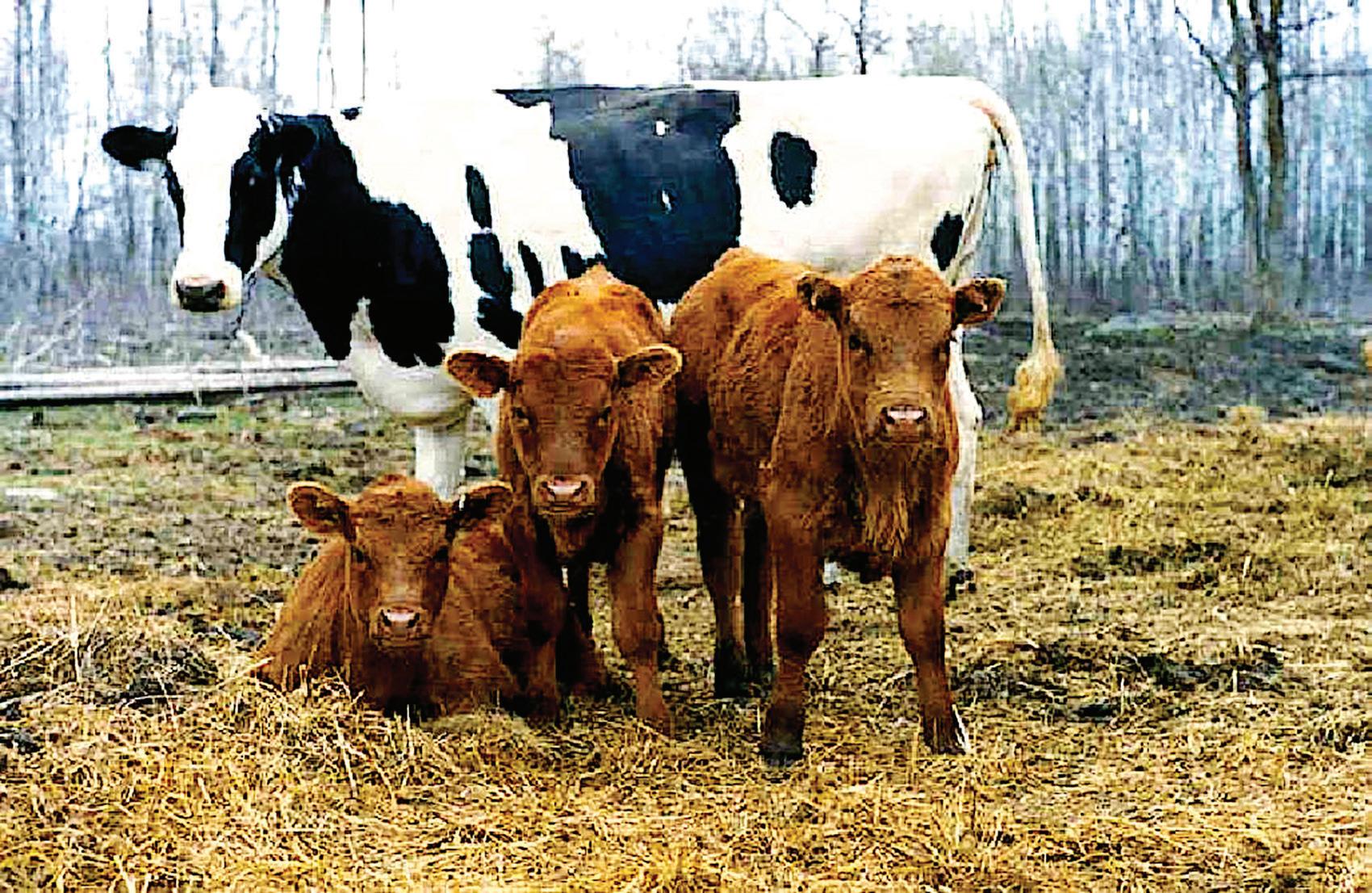
on sections most relevant to their experience and expertise.
The draft Code is approximately 70 pages long and is available for download and review. Comments, however, must be submitted through NFACC’s online review system, which guides participants through each section and provides opportunities for feedback.
The review process also includes access to a
peer-reviewed Scientific Committee Report. That report summarizes research on key animal welfare topics identified during the Code revision process and provides scientific information supporting committee discussions and recommendations. NFACC encourages constructive comments that clearly identify concerns, explain the reasons behind them and, when possible, suggest alternative wording. Reviewers are also asked to identify the
specific section they are commenting on to help the committee evaluate submissions effectively. For beef producers, the review provides an important opportunity to share practical experience. Cow-calf operators, backgrounders, feedlot owners, transporters and veterinarians can all offer insights into how proposed requirements may affect day-to-day cattle management under real-world conditions.
The consultation also welcomes input from consumers, researchers, government representatives, extension specialists and animal welfare advocates. The goal is to gather respectful and useful feedback that supports continual improvement in animal care.
Codes of Practice play an increasingly important role in agriculture. They influence industry programs, market expectations, public trust and discussions throughout the supply chain. They also help demonstrate that Canada’s beef sector takes animal welfare seriously while recognizing the practical realities of raising cattle across diverse regions and production systems.
As consumers, governments and markets continue to focus on animal care and sustainability, producer input remains essential.
The message from NFACC is straightforward: review the draft, focus on the sections that matter most to your operation and provide clear, constructive feedback before the June 12 deadline.
The decisions made today will help guide Canadian beef production for years to come.
By Harry Siemens
While some Manitoba farmers are still assessing damage from excessive rainfall, market analyst Jonathon Driedger says it is important to step back and look at the bigger picture before drawing conclusions about crop prospects or grain prices.
Driedger, vice-president of LeftField Commodity Research, acknowledges that some producers have been hit extremely hard. Certain areas received large amounts of rain, resulting in drowned-out acres, delayed seeding and damaged fields. Those losses are real and significant for the farms affected.
At the same time, Driedger cautions against assuming localized crop damage automatically translates into higher grain prices.
“I don’t want to sound dismissive of those farms that have been hammered,” he said. “But when you take a step back and look at Manitoba as a whole, most of the key growing areas are generally in pretty good shape.”
That is the balancing act facing analysts this year. Social media often highlights the worst situations. Pictures of flooded fields and washed-out roads
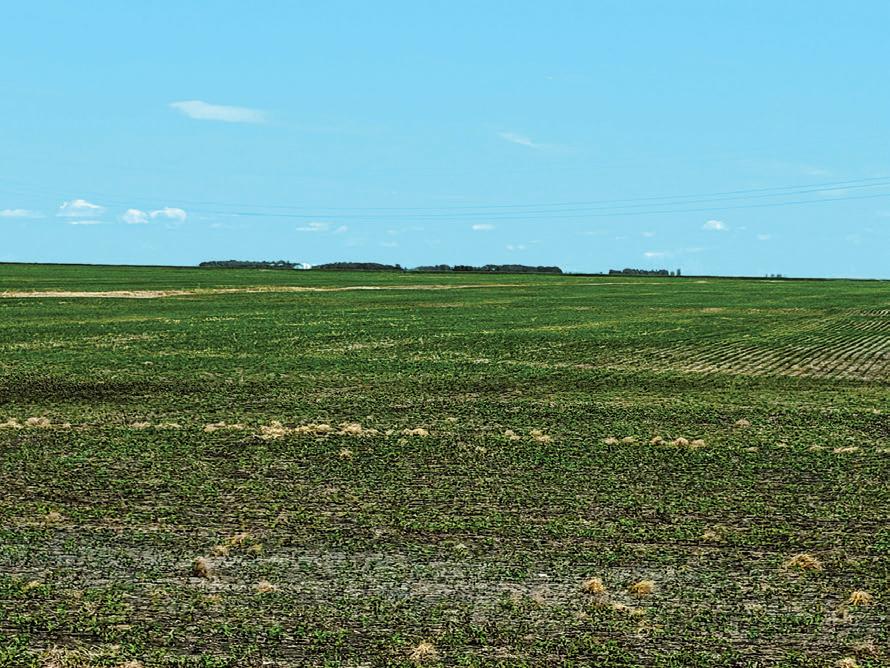
patches and uneven crop development. However, Jonathon Driedger, Vice President of LeftField Commodity Research, says most growing areas across Manitoba and Western Canada remain in generally good condition despite localized weather damage.
Submitted photo
quickly spread across the internet. While those stories are important, Driedger says they do not always represent the broader production picture. In many areas, the same rain that caused problems in one location brought much-needed mois-
ture to another.
“Overall, if you look at Manitoba and even Western Canada as a whole, most crops are looking pretty good,” he said.
Driedger believes the recent rains have likely been net beneficial for crop production despite the challenges faced by some producers. He pointed to the importance of drainage systems and the ability of many fields to recover quickly after heavy rainfall.
That assessment also influences his market outlook.
While weather concerns always attract attention, Driedger says global grain markets are currently focused on generally favourable crop conditions across many major producing regions. There are issues to watch, including smaller U.S. hard red winter wheat production, weather concerns in Europe and harvest challenges in China. However, when viewed collectively, world crop prospects remain relatively positive.
As a result, grain prices have been facing seasonal pressure.
“Most years prices tend to soften once the crop is
in the ground and growing,” Driedger explained.
“That’s a pretty normal pattern.”
One of the biggest mistakes he sees producers make is being unprepared for that seasonal decline.
Too often, farmers hesitate to make sales during spring rallies, expecting prices to continue climbing. When markets pull back during summer, they find themselves wishing they had locked in at least a portion of their production earlier.
“It’s not the same every year, but more often than not we see that seasonal rhythm,” he said.
Driedger also recognizes that today’s farmers face a much noisier environment than previous generations. Trade disputes, geopolitics, wars, currency movements and daily market headlines create constant distractions.
His advice is simple: focus on fundamentals, understand seasonal trends and avoid getting caught up in every headline.
“We don’t have a crystal ball,” he said. “But if we can help farmers think through their decisions and provide perspective, then we’re doing our job.”

I knew a dairy producer that put in a new dugout for his dry cows. Nothing happened for years until one spring day, he lost a cow. A few days later he lost another one. A couple days passed he lost two more. By the time, he lost a few more cows; he took water samples and sent them away for a complete mineral analysis. Fortunately, he got his lab results back quickly, which showed nothing was wrong. He figured this water was teemed with pathogenic bacteria; so, he went back to the dugout for more samples. When, he bent down to take a cup of water, he came face-to-face with a 9-foot alligator.
This tall tale should remind us that water quality might have nothing to do with the water itself, but something literarily swimming in it. Most of which is invisible to the naked eye.
Water that is finally provided to dairy cows must be clean, good tasting and free of dissolved or suspended contaminants – and anything else “swimming in the water”.
Depending on contamination type and its’ level in the water, cattle can have bad reactions that range from mild (slight diarrhea), to moderate (lower feed digestibility) to severe (death due to toxicity). Again, I never overlook the importance of good clean water and its link to good health and milk performance on the dairy farm.
My point of repetition: many dairy farms across Canada have salty water (greater than
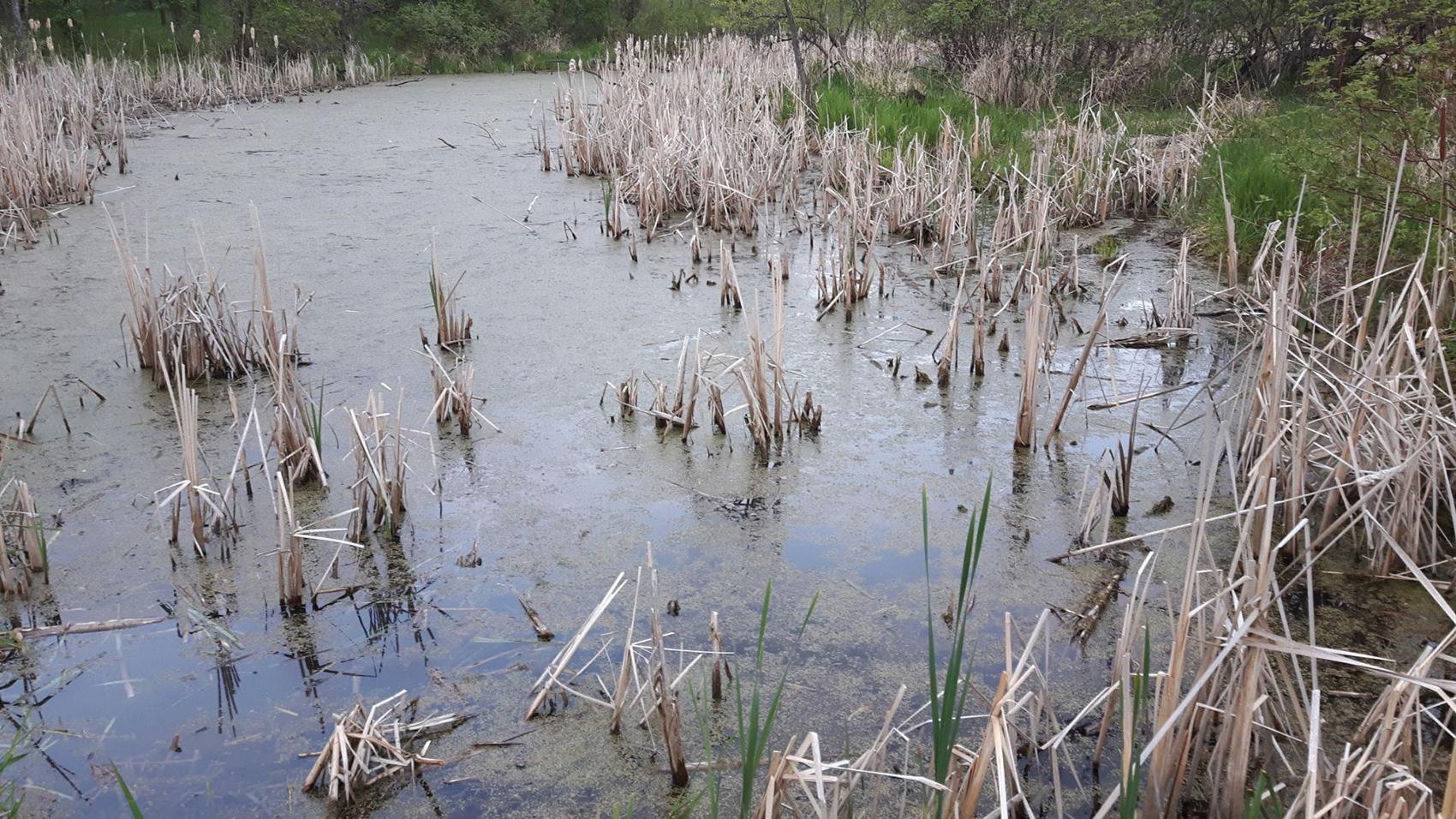
to moderate (lower feed digestibility) to severe (death due to toxicity) in a weed infested dugout.
3,000 mg/ml) as their sole source of livestock drinking water. It is usually non-life threatening to dairy cows, but still can cause diarrhea, which in turn increase the rate of feed going through their gut. Ultimately, fewer essential nutrients are digested and absorbed. As a result, otherwise good milk production can be lost.
Such a case of high salinity can be debilitating to the lactating dairy cows, but is not the sole reason behind poor quality water. Here is an outline of parameters (including salinity) that determine water quality for dairy cattle:
- Total Dissolved Solids (TDS): TDS provides an overall evaluation of water quality in a single index. As mentioned, salinity makes up a large
part of TDS and is often a water quality issue in many dairy barns. TDS of less than 3,000 mg/ ml is considered safe for mature dairy cattle.
- Mineral concentrations: High concentrations of sulphate, and trace minerals such as copper and iron are suspect to either bind nutrients or compete with them for specific absorptive sites in the gut, thereby increasing the nutrient requirements for essential nutrients. High iron water has also been implicated in causing salmonella to thrive and poor tasting water.
- Bacteria contamination: Even cold water near its freezing point can teem with bacteria. Pathogenic E. coli (causes disease), coliform bacteria (including fecal) and salmonella counts should
be zero. Given that all bacteria are opportunistic when favorable growing conditions exist (warmth of a cow’s rumen); can cause an unwanted outbreak ranging from temporary diarrhea to serious health problems.
- Algae and feed contamination: Cows often drop feed from their mouths and this could be a source of decaying organic matter in their troughs (black sludge). This pollution should easily be removed. Algae growth is also a common phenomenon all year around. On occasion, I recommend that producers shut off the water to troughs, empty them of existing water and scrub them down with a mild chlorine solution. Rinse and turn the water back on.
Any investigation to solve each one of above situations is different and some homework to find the root cause of a water quality problem. For example, I am currently working with a 100-milk cow dairy farm, which has unusual mild milk fever and ketosis symptoms appear in his freshened cows. The producer and I suspect that there might be harmful bacteria in the water - traced-back to dugout water that all the dry cows drink. Subsequently, we are gathering respective water samples in order to test for a complete mineral package as well as bacteria (especially fecal coliform bacteria).
Once both water analytical results are received, I will review them with the producer. If we find something amiss, then we can develop a strategy to correct it. In the past, when we found the water was too salty or hard, we considered implementing some type of mechanical filtration system or we combated high level of bacteria with diluted hydrogen peroxide. If we found one or two alligators in the dugout water, we found another clean water source.
By Dan Guetre
The next generation of agricultural leaders is being invited to help shape the future of Canada’s agriculture and agri-food sector as applications open for the fourth cohort of the Canadian Agricultural Youth Council (CAYC).
Heath MacDonald, Minister of Agriculture and Agri-Food, officially launched the application period for the new council intake, encouraging young Canadians with a connection to agriculture and food systems to apply. Applications are open until July 1, 2026, at 11:59 p.m. PT.
The Canadian Agricultural Youth Council serves as a consultative body to Agriculture and Agri-Food Canada (AAFC), providing a forum for young people to share perspectives, offer advice and contribute ideas on challenges and op-
portunities facing the sector.
Members of the council come from a wide range of backgrounds, including farming, food production, sustainability, innovation, food security initiatives, research and community-based food projects.
“Youth are critical to developing the future of Canada’s agriculture and agri-food sector,” said MacDonald. “With today’s announcement, I am calling for committed and thoughtful young people with a passion for agriculture to apply for membership on our Canadian Agricultural Youth Council. Together, we can empower the next generation to shape a more resilient, innovative, and sustainable agriculture and agri-food sector.”
The council has previously provided input on issues affecting the industry, including attracting
and retaining young people in agriculture, using technology to improve efficiency and innovation, and responding to changes in global food trade.
William McManiman, Co-Chair of the Canadian Agricultural Youth Council, said his experience on the council demonstrated the value of bringing together young leaders from across the country.
“The Canadian Agricultural Youth Council gave me a rare platform to exchange ideas with passionate young leaders from across Canada and beyond, deepening my understanding of the issues and opportunities shaping the future of food and farming,” McManiman said.
The council was first established in July 2020, with the inaugural group selected from more than 800 applicants. The original 25 members repre-
sented a diverse mix of agricultural subsectors, regions, Indigenous voices, producers, students, advisors, technicians and scientists.
The council is non-partisan, and members serve as volunteers.
Applicants between the ages of 18 and 30 who work, study or contribute to Canada’s agriculture and agri-food value chain are eligible. The selection process includes questions about candidates’ experience, along with written and recorded interviews focusing on their motivations and ideas for transforming the sector.
The fourth cohort will include new members as well as selected returning members from the third cohort. The group will begin a two-year term in the fall of 2026, with a goal of maintaining a maximum membership of 25 young leaders.
By Harry Siemens export certification.
The Canadian Food Inspection Agency (CFIA) has confirmed the first detection of golden nematode on a Manitoba potato farm, triggering regulatory measures to prevent the spread of the pest.
Golden nematode is a quarantine pest that attacks potato roots and can reduce yields of potatoes and other host crops by as much as 80 percent if left unmanaged. The pest does not pose a risk to human or animal health.
According to the CFIA, the detection was made following soil sampling conducted after the 2025 potato harvest. The testing was part of routine procedures used to support seed potato
Laboratory analysis initially identified a suspect case under Canada-U.S. Potato Cyst Nematode (PCN) guidelines. As a precaution, restrictions were immediately placed on the movement of soil, potatoes, and any equipment or materials contaminated with soil from the affected field.
Additional soil sampling began in April 2026 once weather conditions allowed. Earlier this week, CFIA laboratory testing using morphometric and molecular analysis confirmed the presence of golden nematode.
The agency said there have been no seed potato exports from the affected field during the past 10 years.
Golden nematode and pale cyst nematode are collectively known as potato cyst nematodes. These pests are particularly difficult to eliminate because they can remain dormant in soil for up to 40 years.
CFIA officials have been working closely with the grower and industry stakeholders throughout the investigation. Tracing activities have identified other fields that may have been exposed through soil movement or seed potato transfers from the affected location.
Those fields will now be placed under official control while additional soil sampling and testing continue through the summer and fall.
The CFIA emphasized that the pest affects plant roots rather than potato tubers. Unlike potato wart, golden nematode does not damage the harvested potato itself but reduces plant vigour and productivity.
Washing soil from potato tubers remains one of the most important measures for preventing the spread of potato cyst nematodes between regulated areas in both Canada and the United States.
The pest is already present in several regions of Canada, including Newfoundland and Labrador, St. Amable, Quebec, and Central Saanich, British Columbia. It has also been detected in parts of New York State and Idaho
and is known to occur in 65 countries worldwide.
Approximately 80 percent of Manitoba’s potato production remains within the province, either as seed potatoes or for processing into potato products.
The CFIA says it will continue surveillance and testing while working with industry to contain the infestation. Updates on the investigation will be posted as new information becomes available.
The agency noted that Canada’s plant protection program relies on monitoring, import controls, and international cooperation to protect agriculture from pests that can cause significant economic damage.

By Joan Airey
Many young people were thrilled to take part in the tractor pull aimed especially at youth. Mark and Taylor Phillips were in charge of the impressive equipment built by club members. In each age category, prizes were awarded to the top two winners.
Cory Christison had two tractors on display. The first was a 1950 McCormick-Deering W6, which was built from 1940 to 1953. It was the standard-tread version of the Farmall M row-crop tractor. These tractors were equipped with a 248-cubic-inch engine and a fivespeed transmission. It was rated at 33 horsepower at the drawbar and 37 horsepower on the belt pulley. It could comfortably pull a three-bottom plow and run a threshing machine with a 25-inch cylinder. Cory says the original price was $2,400.
“My grandfather Christison acquired this W6 in the 1980s when I was a little boy. It was in running condition and started easily off the crank. He did some mechanical work on it, but never a full restoration. In the 1990s, my uncle Garth and a friend of his overhauled the engine. After that, it did some light service work but was parked in the 2000s and not touched until 2015.
“My dad and I restored it in the winter of 2016. We added new paint and decals, new tires, and new wiring, including converting the charging system from a six-volt generator to a 12-volt alternator. It ran my grandfather’s threshing machine at the Harvesting Hope event and at our family’s Threshing Day in 2016.
“I have had it at Manitoba Plowing Association matches with a three-bottom Case Centennial plow. It has been in the Travelers’ Day Parade and to Cruise Night in Brandon. I took it for a ride in the countryside around Austin in 2020 as part of the first ‘Relic Run’ put on by the Manitoba Agricultural Museum.
“I’m proud to own these tractors. It means a lot to me. The memories of my grandfather and the time spent with my dad working on them are priceless,” said Christison.
Cory’s second tractor on display was a 1929 Case C. Case built and sold the Model C from 1929 to
1939. Prior to this, Case had what was known as the Cross-motor line, with numerous tractors varying in horsepower. In 1928, Case chairman Leon Clausen ordered the end of production of the Cross-motor units. Two models replaced them: the Model L and the Model C.
The Model C had a 260-cubic-inch engine and a three-speed transmission. It was rated at 17 horsepower on the drawbar and 27 horsepower on the belt pulley. It could pull a two-bottom plow and run a threshing machine with a 22-inch cylinder. The original price was $600.
“My grandfather acquired it in 1981 or 1982. I remember him bringing it home; it was in pretty rough shape. The paint and metal were badly oxidized. It must have sat outside for a long time. But my grandfather worked on it and brought it back to life.
“I was there the first time he started it after it was all back together and drove it out of his shop. My dad drove it in the 1983 Carberry Centennial Parade, and I rode on the float behind it.
“Whenever we had old tractors out at the family farm, I always took this one for a ride. After my grandparents were gone, my uncle Jim took ownership of it. He had the Model L, which was the big brother to the Model C, and wanted it to go with his L. So, it went to East Selkirk with its big brother.
“In the 2010s, Uncle Jim was talking about downsizing, so he and I made a deal on it. When he passed away in 2020, it came back to the family home farm in Carberry.
“It took some work to get it operational. The magneto was missing. I found a couple in my uncle’s shop that fit it and had them rebuilt. I put the better of the magnetos on it and got it timed with some help from friends. I cleaned the carburetor, and it has run like a song ever since.
“The steel cleats were long gone, and I wanted to be able to pull it up onto a trailer to go places. A couple of winters ago, my dad and I cut old conveyor belts into strips and bolted them onto the wheels, so at least it has some traction,” said Christison.
After lunch, the main tractor pull drew a large crowd.
Winners of the 6,000-pound-andunder class:
1st – Dean Hiebert
2nd – Gerry Wilson
3rd – Wes Pankratz
Winners of the 8,000-pound-andunder class:
1st – Rod Paterson Forrest 2nd – Don James
Winners of the 10,000-pound-andunder class:
1st – Dean Hiebert
2nd – Darren Pauls
3rd – Dean Hiebert
By Dan Guetre
The National Farmers Union (NFU) is raising concerns about provisions contained in Bill C-30, arguing the proposed legislation would grant sweeping new powers to the federal Cabinet to override key food, agriculture, health and environmental protections.
In a statement, Cathy Holtslander, Director of Research and Policy for the NFU, described the Spring Economic Update Implementation Act as an omnibus bill that includes measures unrelated to the federal budget and characterized the proposed changes as a significant expansion of Cabinet authority.
At issue is a section of the bill that would allow Cabinet to exempt individuals, corporations, activities or products from laws and regulations
administered by the Canadian Food Inspection Agency (CFIA) for up to six years. The proposed exemptions could be granted if deemed necessary to protect national economic security, regional economic security or national food security, provided they are not considered likely to pose an “unreasonable risk” to food safety, animal health, plant health, human health or the environment.
Holtslander said the proposal would apply to legislation including the Feeds Act, Fertilizers Act, Health of Animals Act, Plant Protection Act, Seeds Act and Safe Food for Canadians Act, among others.
“The amendment to Bill C-30 would give Cabinet sweeping power to weaken the oversight of Canada’s food, agriculture, health and envi-
ronment,” she said.
The NFU argues the legislation provides no clear definitions of terms such as “economic security,” “national food security” or “unreasonable risk,” leaving decisions largely to Cabinet discretion. Holtslander also expressed concern that Cabinet deliberations are confidential, limiting public transparency around decisions to grant exemptions.
According to the NFU, the proposed amendments could create opportunities for corporations to seek exemptions from regulations that have been established through parliamentary approval and public consultation processes.
The organization questions why such significant changes were not more clearly outlined in the govern-
ment’s Spring Economic Update. Holtslander noted that the document references the government’s intention to amend the Canadian Food Inspection Agency Act and the Pest Control Products Act to include consideration of food security and food costs, but does not explicitly state that Cabinet would gain authority to suspend or exempt compliance with existing laws and regulations.
The NFU also raised concerns about the potential long-term consequences of the amendments, including the possibility of weakened food safety standards, increased risks of plant and animal disease, reduced inspection oversight and the loss of regulatory expertise.
“Public trust is a critical element of our food system which the proposed amendment undermines,”
Holtslander said.
Rather than pursuing deregulation, the NFU argues the federal government should focus on addressing structural challenges affecting food security and farm viability. These include strengthening local and regional food processing capacity, improving storage and distribution infrastructure, addressing high input costs and low commodity prices, reducing corporate concentration in the food sector and tackling the financialization of farmland.
The federal government has said the proposed amendments are intended to allow greater consideration of food security and affordability in regulatory decision-making. Debate over Bill C-30 is expected to continue as Parliament reviews the legislation.
By Harry Siemens
Brazil’s soybean export map has changed, and North American growers need to pay attention.
Brazil remains the world’s largest soybean producer and exporter. Its largest producing state, Mato Grosso, sits in the country’s centre. For decades, soybeans from regions such as Sorriso moved south by truck to the Port of Santos in São Paulo. Today, a growing share is moving north.
A northern export corridor known as the Arco Norte, or Northern Arc, has become a major outlet for Brazil’s soybean and corn exports. The system combines trucks, barges and railways to move grain through northern ports that are closer to Europe and the U.S. East Coast, offering competitive access to global markets.
Drew Crawford of Austral Continental, an American based in Brazil who works with both U.S. and Brazilian industries, says Canadian and U.S. growers should watch the development closely.

The Port of Itaqui in São Luís, Maranhão, has become a major outlet for Brazil’s northern grain export corridor, handling growing volumes of soybeans and corn as the Arco Norte changes the country’s export map. Submitted photo
“They should watch it the way you would watch a new deepwater terminal opening on your own coast,” Crawford said.
The reason is simple. Brazil has not only expanded production; it has improved how it moves grain.
For years, transportation was one of Brazil’s biggest disadvantages. Farms in Mato Grosso faced truck
hauls of roughly 2,000 kilometres to southern ports. The Northern Arc reduces that challenge.
Grain now moves north to river terminals such as Miritituba on the Tapajós River, where barges carry soybeans through the Amazon system to export terminals. Farther east, grain from the MATOPIBA region moves by truck and rail to the Port of
Itaqui in Maranhão, one of Brazil’s fastest-growing export gateways.
Crawford says geography now works more strongly in Brazil’s favour.
A vessel leaving Itaqui begins its voyage much closer to Europe and the U.S. East Coast than one departing Santos. That shorter route can reduce transportation costs and improve competitiveness.
For soybean buyers, the delivered price matters more than the farm-gate price.
Brazil has long been competitive in production. Historically, transportation costs reduced part of that advantage. As logistics improve, competition is increasingly shifting from who can grow soybeans most cheaply to who can deliver them most efficiently.
That has direct implications for Manitoba and Ontario growers.
Canadian producers cannot match Brazil’s scale and operate from a landlocked position that depends on reliable rail service, port access and container availability. As Brazil low-
ers its cost per tonne, weaknesses in Canada’s transportation system become more significant.
The same pressure applies to American growers, particularly in export markets such as China.
Crawford believes transportation efficiency has become a deciding factor.
“The farm remains important, but the full supply chain can determine who wins the next sale,” he said.
Brazil’s success did not happen by accident. Private companies invested heavily in terminals, barges, rail infrastructure and port capacity, supported by long-term transportation policies.
Challenges remain. Northern routes depend partly on river levels, and drought can affect reliability. Even so, the direction is clear.
Brazil has quietly transformed one of the most important pieces of its agricultural economy. For Canadian and U.S. soybean growers, the message is not panic — it is preparation. In global agriculture, logistics now matter as much as production.
By Joan Airey
The past few weeks we have been enjoying asparagus on a regular basis. When I see store prices, I’m glad to have planted a patch years ago. Rhubarb has been producing too so we have been eating Strawberry Rhubarb Compote and Rhubarb Strawberry Pie plus froze some to make desserts next winter.
Friends who visited on the weekend had been hailed bad, including their rhubarb plants. I was able to send them home with enough rhubarb to make a dessert.
Rhubarb Strawberry Pie
2 cups strawberries
2 cups rhubarb
1 cup sugar
3 tablespoons Minute Tapioca
1 Tablespoon butter
1 teaspoon lemon juice
Clean and wash fruit. Mix sugar tapioca together and add lemon juice to the fruit.
Arrange fruit in an unbaked pie shell and dot with butter. Finish with a lattice top or top crust. Bake in a preheated 425F oven for 15 minutes, reduce heat to 350F and continue to bake until the fruit is tender and the crust is lightly browned for about 35 minutes.
The following recipe I have written about before but I have had several requests for it recently so I’m sharing it again today.

Rhubarb Strawberry Compote
4 cups rhubarb
2 cups strawberries washed and halved
½ cup orange juice
¾ cup sugar
Clean and cut the rhubarb into 1/2inch pieces. Place the orange juice and sugar in a 2-quart casserole. Cook uncovered 2 to 3 minutes or until it’s boiling and the sugar is dissolved. Add the rhubarb, stir well, cook uncovered 4 to 5 minutes stirring once. Cool for 10 minutes. Add strawberries. Serve very cold.

This spring when I made the compote, I added a bag of strawberries thawed from the freezer. The ones I made to freeze for use next winter. I bought fresh strawberries to add as mine are not ready yet.
Honey Mustard Dressing
The following Honey Mustard Dressing is from Joyce Stewart from Vernon. It’s delicious on fresh lettuce from the garden. I use it every spring.
3 Tablespoons vinegar
3 Tablespoons honey
6 Tablespoons mayonnaise
1 Tablespoon Djon mustard
2 Tablespoons canola oil
Fresh parsley if available
Heat honey and vinegar in the microwave. Add mayonnaise mustard and parsley. Whisk in oil. Will keep 3 days in Fridge.
Chocolate Zucchini Cake
Soon we will have more zucchini than what we know what to do with. This cake is one my kids loved when they were growing up and is still used regularly.
½ cup soft Margarine
½ cup canola oil
1 ¾ cups sugar
3 eggs
1 teaspoon vanilla
½ cup sour milk
2 ½ cups flour
4 Tablespoons cocoa
½ teaspoon baking powder
1 teaspoon baking soda
½ teaspoon cinnamon
2 cups of shredded zucchini ¼ chocolate chips
Cream together margarine, oil and sugar. Add eggs, vanilla and sour milk. Beat well with a mixer. Add dry ingredients. Stir in Zucchini and chocolate chips. Spoon into a 9 by 12-inch pan. Sprinkle top with chocolate chips. Bake in a 350F oven for 45 to 60 minutes until done.

By Harry Siemens
Canada’s Clean Fuel Regulations could help build a stronger domestic biofuels sector, but industry leaders say Ottawa must address key policy gaps before investment, competitiveness and farm market opportunities are lost.
The Canadian Agri-Food Policy Institute hosted the webinar “Closing the Gap: What’s at Stake in Canada’s Clean Fuel Regulations,” in partnership with RealAgriculture and BASF Agricultural Solutions. Tyler McCann, managing director of CAPI, moderated the panel discussion after Shaun Haney, founder and owner of RealAgriculture, opened with a one-on-one conversation with David Schick, vice-president, Western Canada, Innovation and Regulatory Affairs, with the

Canadian Fuels Association.
Schick said the Canadian Fuels Association represents companies that produce and distribute transportation fuels in Canada, including integrated oil companies and renewable fuel suppliers. He said the fuel sector now views bio -
fuels as a permanent part of Canada’s transportation energy mix, not a shortterm bridge.
“We are going to need liquid fuels for a long time,” Schick said.
He said aviation, rail, long-haul trucking and agriculture will continue to re -

growing domestic market that can reduce risk. He said Canadian farmers invest heavily each spring in seed, fertilizer, fuel and other inputs without knowing how weather, markets or transportation will unfold.
Burrows said farmers welcome new markets for canola, soybeans and corn, but they need policy certainty.
“Whatever regulatory framework is being discussed, it must work for Canada’s farmers,” he said.
quire energy-dense liquid fuels. Electrification may play a larger role in urban vehicles, buses and returnto-base delivery fleets, but Canada’s geography makes full electrification unrealistic across all sectors.
Schick said Canada needs a stronger policy response to the U.S. Inflation Reduction Act and its 45Z clean fuel production tax credit. U.S. producers can bring subsidized renewable fuel into Canada and still receive Canadian Clean Fuel Regulation credits, putting Canadian producers at a disadvantage.
The Canadian Fuels Association is calling for a credit multiplier under the Clean Fuel Regulations to help Canadian producers compete. Schick said the multiplier would create more credits for domestic fuel production and help offset U.S. incentives.
Bruce Burrows, executive director of Grain Growers of Canada, said grain farmers see biofuels as a
He said farmers face rising input costs, trade disruptions and global competition. He also noted that one in three acres of Canadian-grown canola now goes into the biodiesel pool, while about one-third of corn production supports ethanol production.
Brittany Woods, senior manager of Transportation and Trade Policy with the Canadian Canola Growers Association, said canola farmers see real opportunity in domestic biofuel production. She said the Clean Fuel Regulations have already helped increase Canadian canola oil use by about half a million tonnes.
Woods said biofuels are an important part of canola market diversification, especially when trade disruptions affect major markets such as China and the United States. She said Canada must recognize farmers and feedstock providers as the first link in the low-carbon fuel supply chain.
Andrea Kent, vice-president, Industry and Government Affairs with
Greenfield Global, said the ethanol sector faces the most immediate pressure. She said Canada’s ethanol demand continues to grow, but imports are capturing much of that growth.
Kent said U.S. ethanol enters Canada with a significant subsidy advantage, while Canadian ethanol producers wait for policy changes. She said shovel-ready projects in Ontario and Quebec remain stalled because investors need a clear Canadian equalizer.
“The threat has already arrived,” Kent said.
Chris Vervaet, senior associate with Bjornson & Associates and former executive director of the Canadian Oilseed Processors Association, said renewable diesel demand has doubled in Canada over the past five years. He said canola crush capacity could reach 15 million tonnes by the end of the year, equal to about 75 per cent of Canada’s canola crop.
Vervaet said Canada needs more domestic biofuel production and greater use of Canadian and North American feedstocks. He also called for a simpler, more durable policy framework beyond 2030.
The message from the webinar was clear: Canada has the crops, the technology, the producers and the fuel demand. What it needs now is a clean fuel policy that moves faster, supports domestic production and gives farmers, processors and fuel producers the confidence to invest.


Submitted photos
By Harry Siemens
Recycled fertilizers could help farmers reduce their reliance on mined phosphorus while supporting more sustainable crop production.
Aimée Schryer, lead author of a published study and a postdoctoral researcher at the University of Copenhagen, said phosphorus remains essential for plant growth, but many soils lack enough of it to support high yields. Farmers rely on fertilizers made from mined phosphorus, a finite resource.
Schryer, originally from Saskatoon, Sask., led research examining how phosphorus from recycled materials moves through soil over time. The team used the Canadian Light Source at the University of Saskatchewan to study phosphorus from sewage
The goal was to understand when and where phosphorus from these materials becomes available to plants.
Schryer said that matters because phosphorus behaves differently depending on the fertilizer source and soil type.
“Phosphorus is one of the most difficult elements in the soil to analyze in a conventional lab,” Schryer said. She said conventional lab results can make field recommendations difficult.
The synchrotron gave researchers greater confidence because it identified the chemical forms and amounts of phosphorus in fertilizers and soils.
The study found recycled phosphorus behaves differently than conventional mineral fertilizer. Mineral phos-
phorus usually becomes less available over time. Some recycled sources, especially those derived from sewage sludge, became more available over time and moved farther through the soil.
That movement could benefit crop production because mined phosphorus often stays close to where farmers apply it. If recycled phosphorus moves farther through the soil profile, plant roots may have better access to it.
“In the future, crop production could very well be sustained using recycled fertilizers,” Schryer said.
Unlike commercial fertilizers, recycled products require strong characterization before application. Farmers need to know how each product will react in the soil so they do not lose
plant-available phosphorus through soil fixation.
Soil type plays a major role. The study found carbonates created the greatest barrier to phosphorus movement. In non-carbonate soils, plant-available phosphorus remained constant or increased over time. In calcareous soils, much of the plant-available phosphorus reacted quickly with carbonates, making it more difficult for plants to access.
Schryer said the research shows a one-size-fits-all approach will not work. Farmers need to match recycled phosphorus products with the right soil conditions and application timing.
Sewage sludge and meat and bone meal showed strong potential to mobilize phosphorus in soil. Sewage sludge acted like a slow-release fertil-
izer, while meat and bone meal may have moved more readily because its carbon and nitrogen supported soil microbial activity.
For Canadian farmers, practical use depends on local conditions and supply. Schryer said Manitoba research shows recycled fertilizers cannot fully replace commercial phosphorus because the province does not produce enough waste material.
Still, recycled phosphorus could reduce dependence on imported mined fertilizer and improve nutrient management.
Schryer said her research group has started multi-year field trials across Denmark. The work offers a step toward a circular agriculture system, where waste materials become useful nutrients.
By Harry Siemens
The recent conflict in the Middle East is sending shockwaves through global chemical markets, pushing prices higher and creating new uncertainty for manufacturers, agricultural suppliers and industries that rely on petrochemicals.
According to ICIS analysts, disruptions to exports through the Strait of Hormuz have tightened supplies of key products, including polyethylene (PE), polypropylene (PP), ethylene glycol (EG) and methanol. The result has been rising prices and gains in the stock values of major chemical companies such as LyondellBasell, Dow,

Joe Chang, ICIS Global Editor of Chemi cal Businesses, says disruptions through the Strait of Hormuz are tightening chemical supplies worldwide, boosting prices and creating uncertainty across manufacturing, plastics and agricultural supply chains.
Submitted photo
and Celanese.
The Strait of Hormuz remains one of the world’s most important shipping routes for energy and petrochemical products. When traffic through the region is disrupted, the effects are felt across global markets.
ICIS Global Editor Joe Chang says North American producers are moving quickly to capitalize on tighter supplies. U.S. polyethylene producers are reportedly seeking contract price increases of about 10 cents per pound, while demand for North American exports is expected to strengthen.
At the same time, force majeure declarations and sales allocation programs
across Asia and the Middle East have further tightened supplies. Several facilities have reduced production because of shortages of naphtha, a key petrochemical feedstock.
Methanol markets appear particularly vulnerable. ICIS estimates disruptions could temporarily remove 18 to 20 million tonnes of Middle East methanol supply from global markets.
Methanol is widely used in the production of plastics, resins, fuels and other industrial products.
The impact is already spreading into downstream markets. Products such as methyl methacrylate (MMA), monoethylene glycol (MEG), PET resins
and epoxy resins are facing tighter supplies and higher prices.
For agricultural producers, higher chemical and plastic costs could eventually ripple through supply chains, affecting crop protection products, packaging materials, irrigation systems and equipment components.
However, analysts note the price spike may be temporary. If shipping through the Strait of Hormuz returns to normal, global chemical markets could again face significant oversupply as Middle East and Asian production recovers and China continues expanding exports. For now, uncertainty remains the dominant market force.