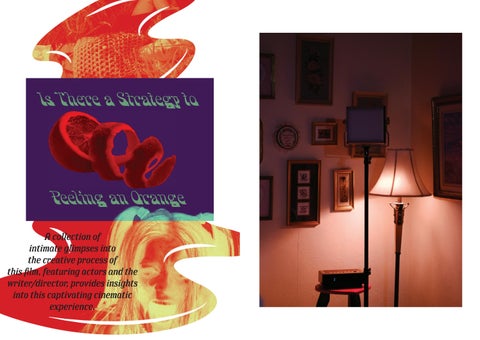
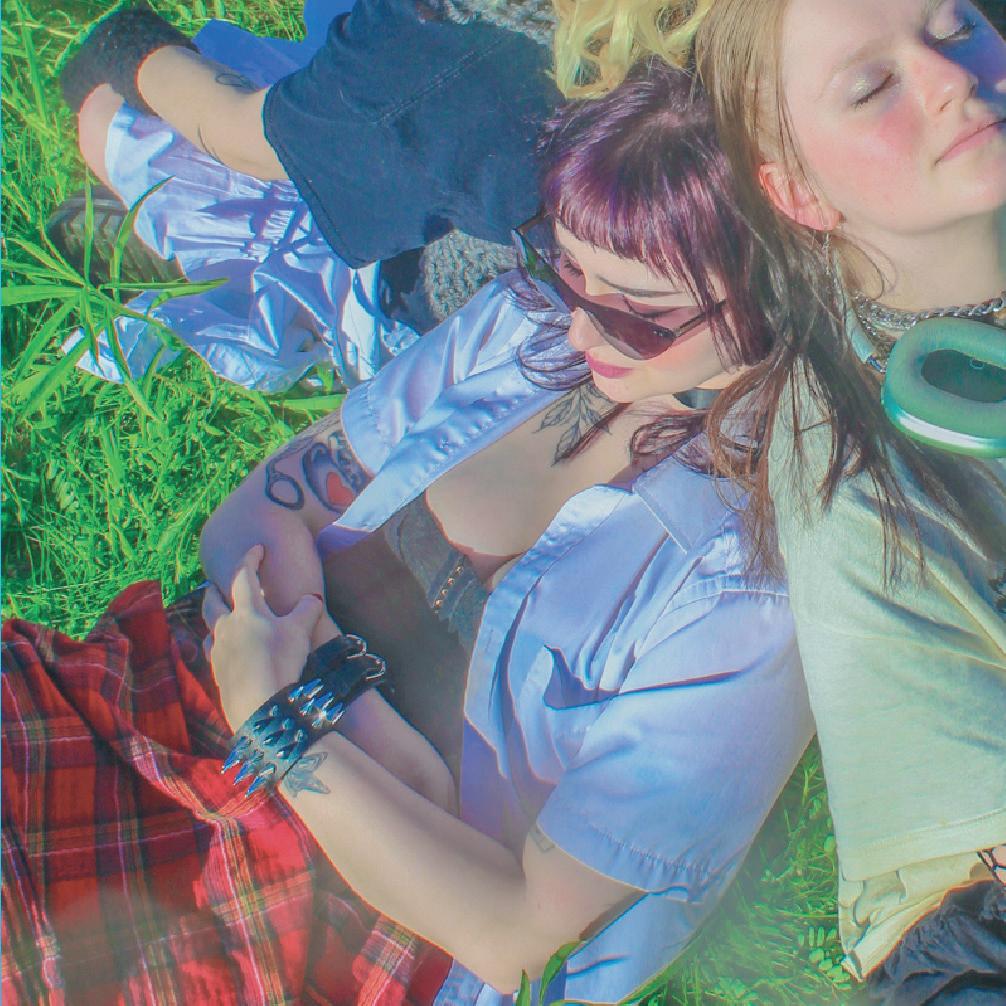
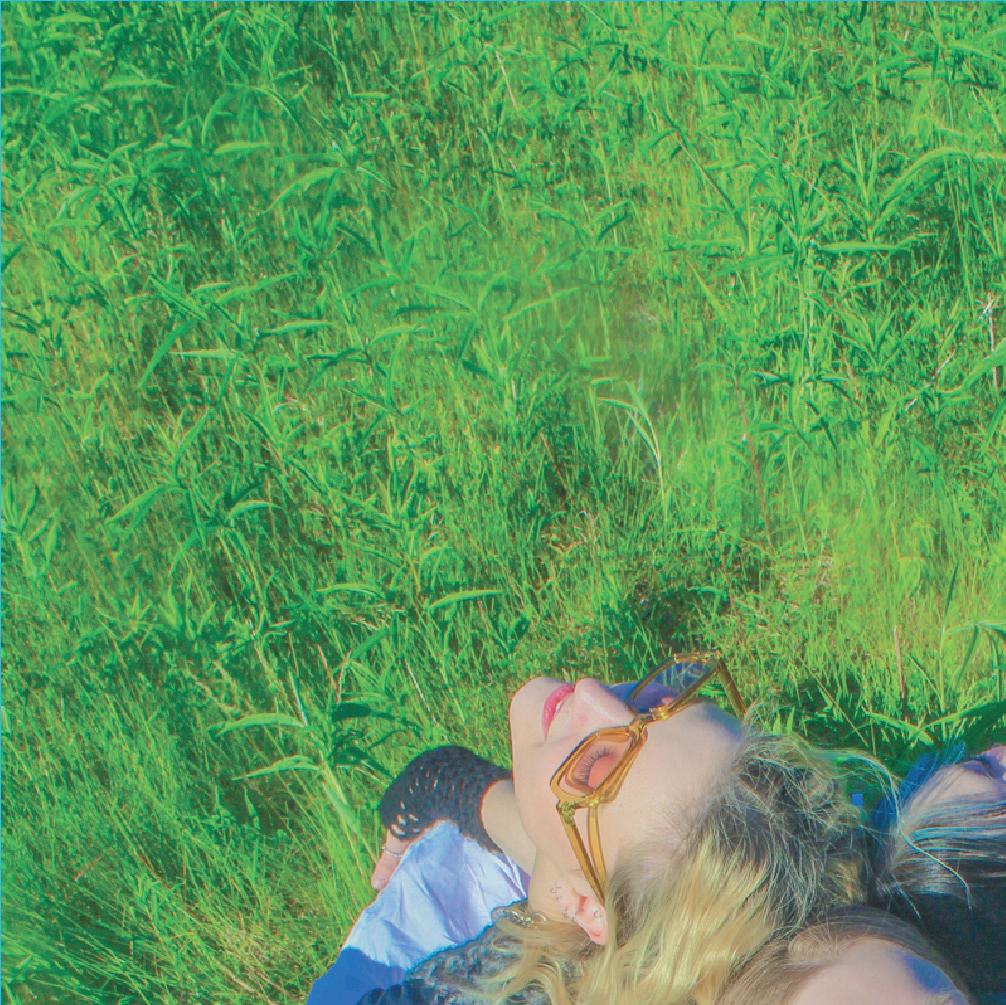
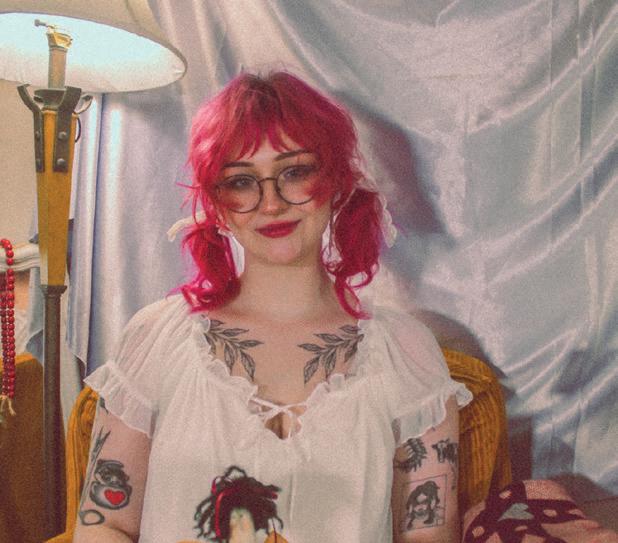
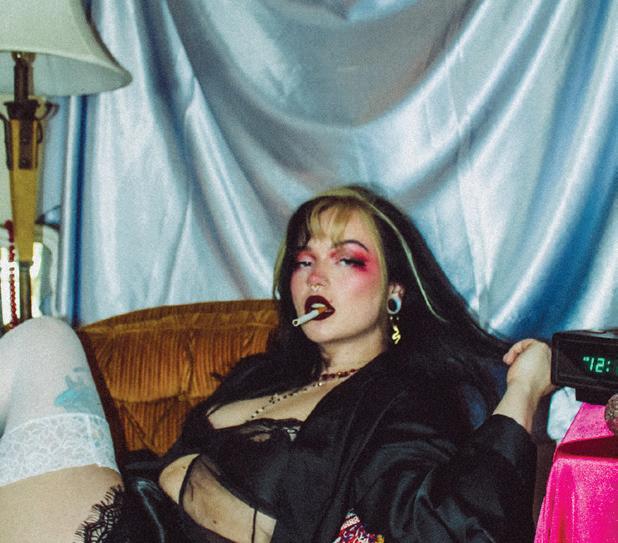
A collection of intimate glimpses into the creative process of this film, featuring actors and the writer/director, provides insights into this captivating cinematic experience.


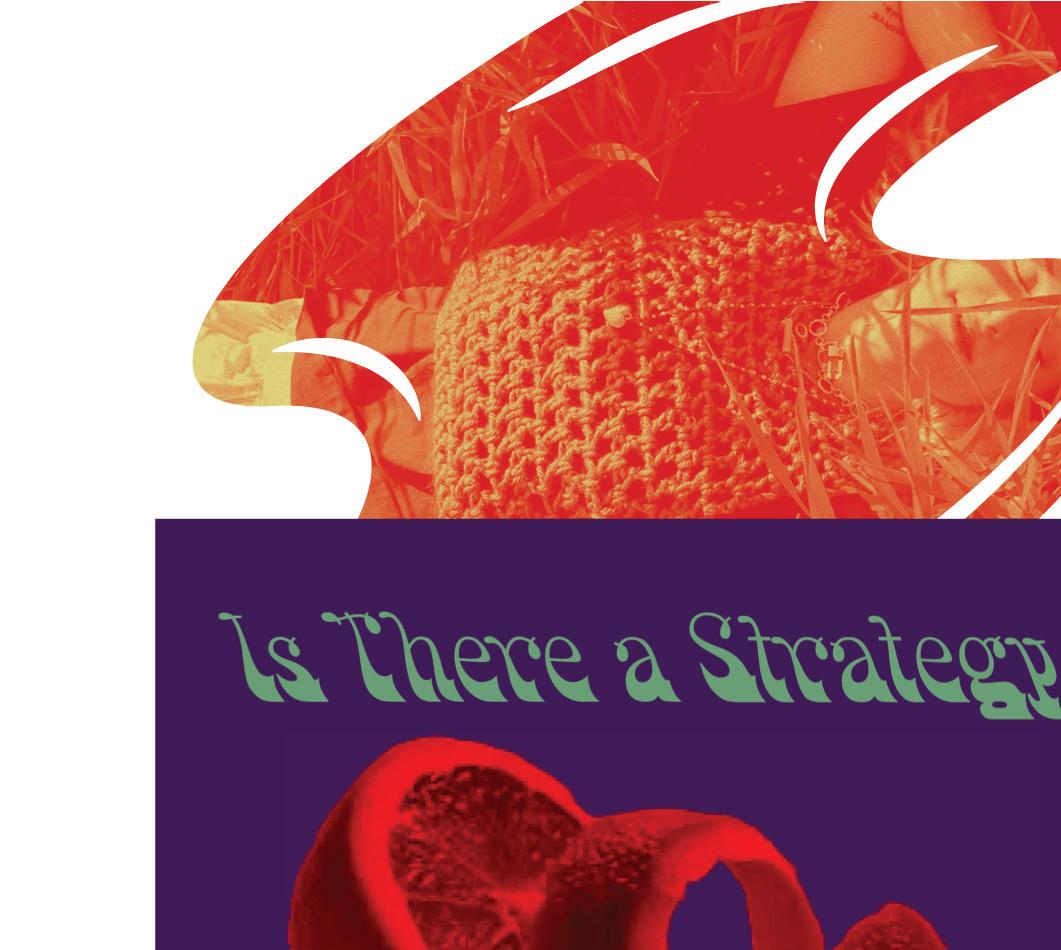
CREDITS
Set photos by Diego Avila @trashpimp
Interviews by Vieve Growel
Photos by Mary Hansen and Vieve Growel
Cover Art by Vieve Growel
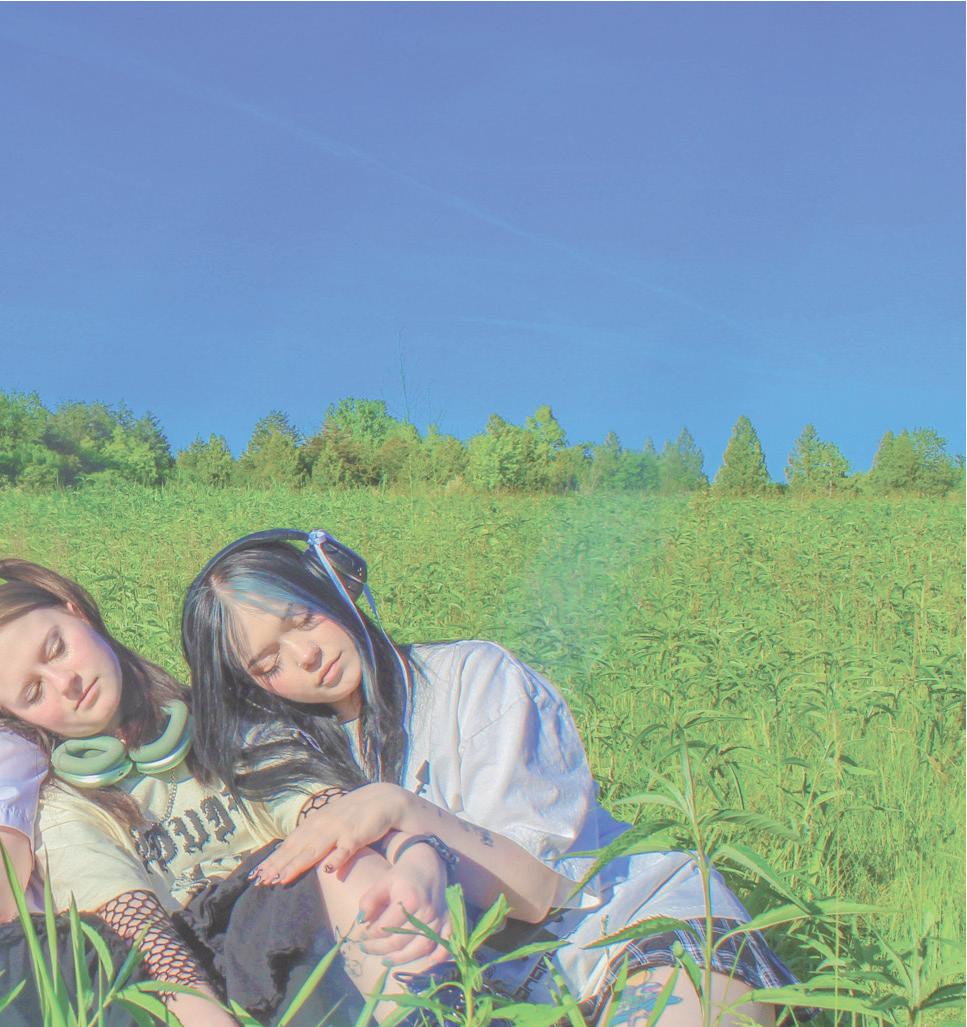
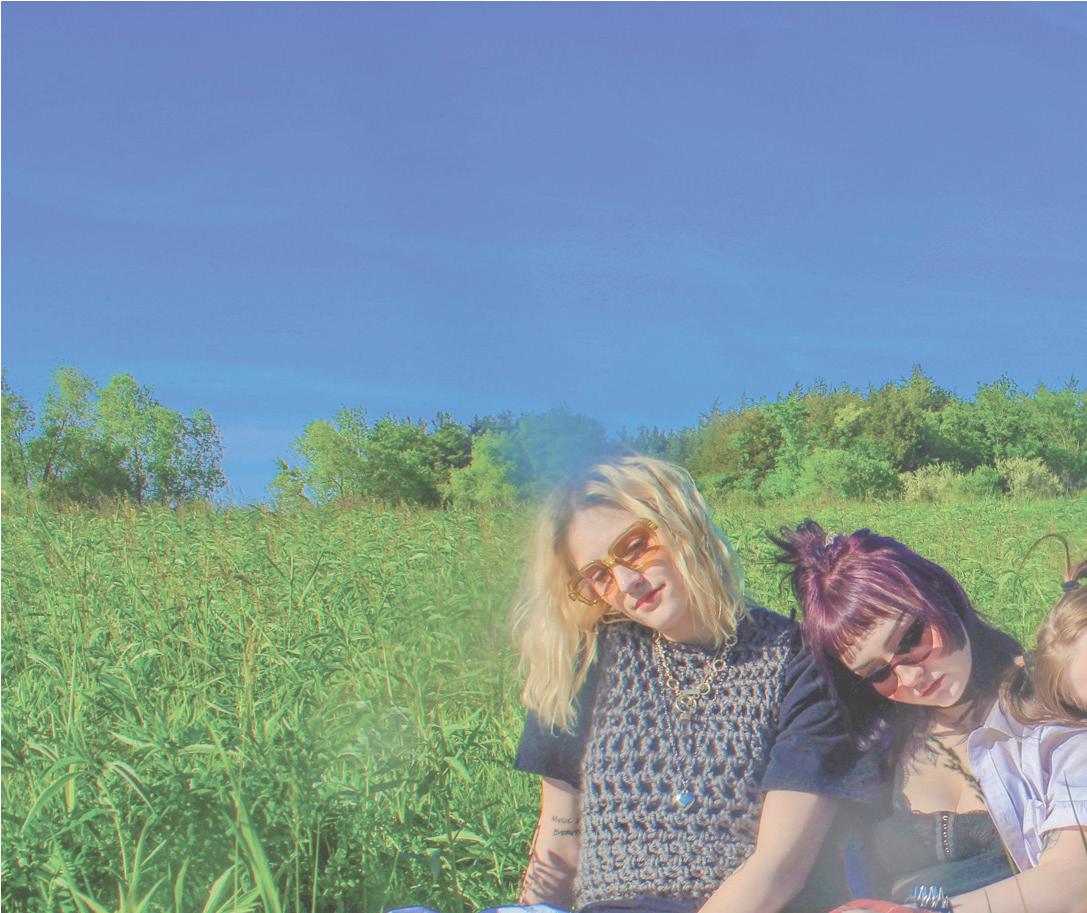
Is There a Strategy to Peeling an Orange” is an experimental film that delves into the realms of heartbreak, feminine experiences, and grief within a close-knit friend group. Exploring the emotional phases and varied perceptions of love, this delicately violent journey takes viewers on an introspective exploration of how heartbreak can reshape us and the enduring grief we carry. Just like biting into an orange, this film leaves a lingering combination of sweetness and sourness, evoking a range of emotions that resonate long after the credits roll.
direneed.online@gmail.com
instagram.com/direneedproductions


DIRE NEED CONTACTS
CAST
MARIA
Played by Moon Juliet
Maria has loved and been loved. She knows who she is at this moment, but fears for the future because we are all still guring ourselves out. She will always be thinking about how much of herself she gave away to people, and doesn’t want that to happen to these girls, although she also knows that it’s inevitable.
CALLIOPE
Played by Alyx Byrne
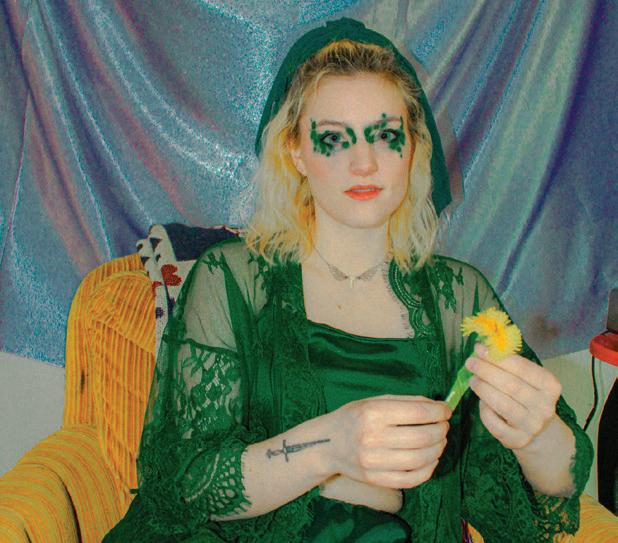
Calliope believes she’s in love, but she also knows that something isn’t right. She has dependency issues and is desperate for someone to love her in any capacity she can get. She’s been hurt before but she doesn’t want to believe it will happen this time.
AERIN
Played by Emmy Wallander
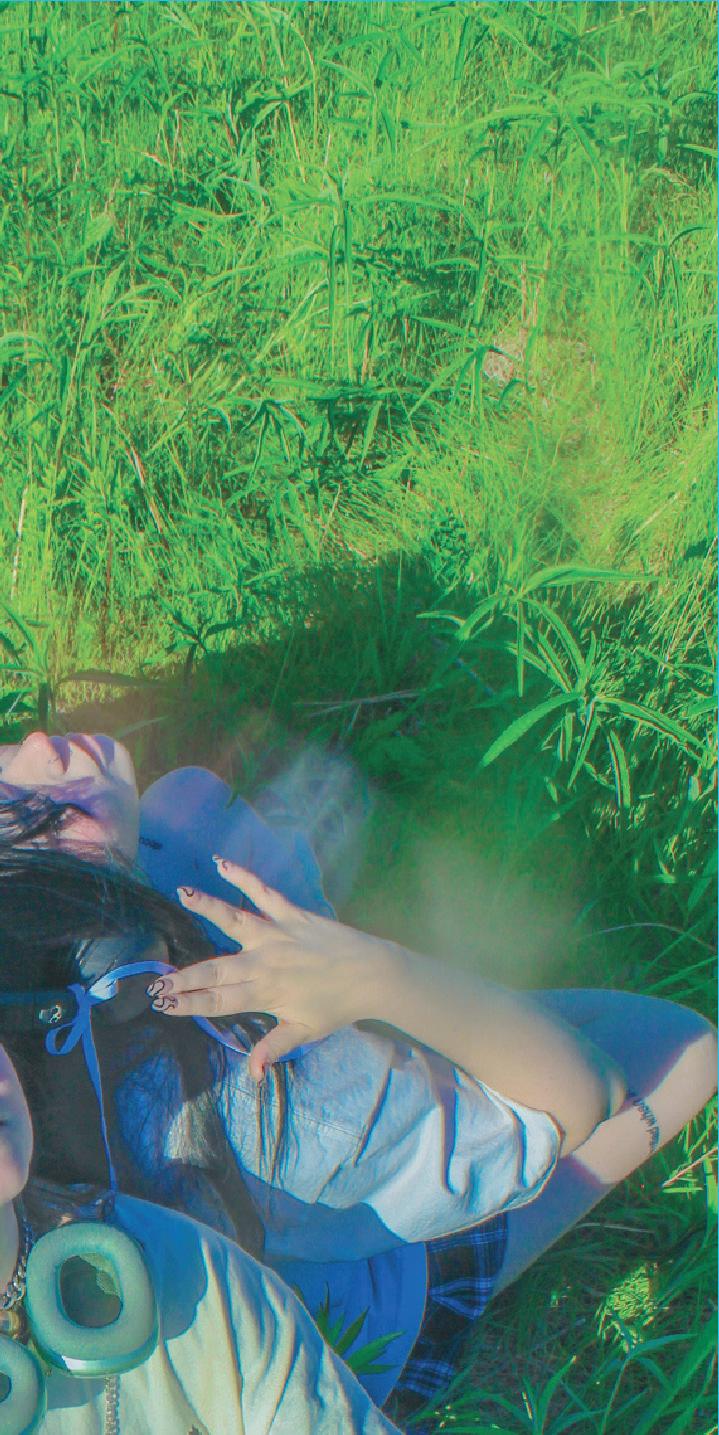
Aerin has severe trust issues, although she doesn’t want to admit it. is time hurt most for Aerin because it gave her a di erent view on herself. Aerin blames herself for not being enough and has trouble thinking about anything other than what she might have done wrong. She doesn’t yet know how to nd herself again
JULIA
Played by Zena Wells
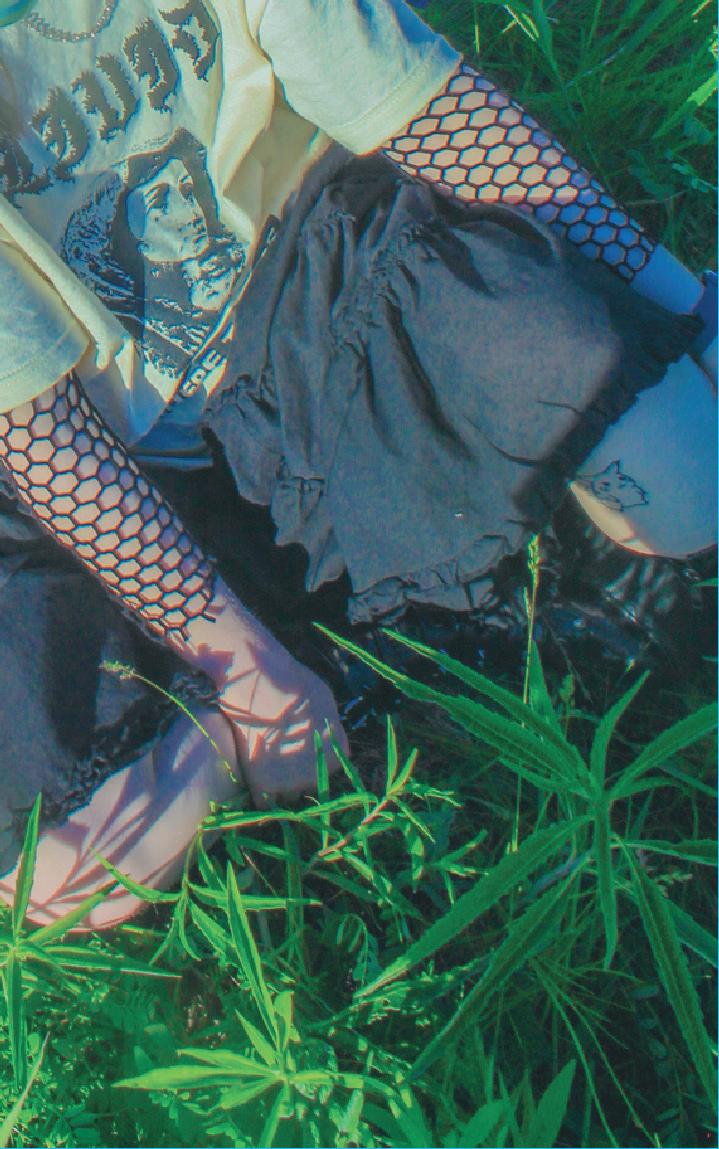
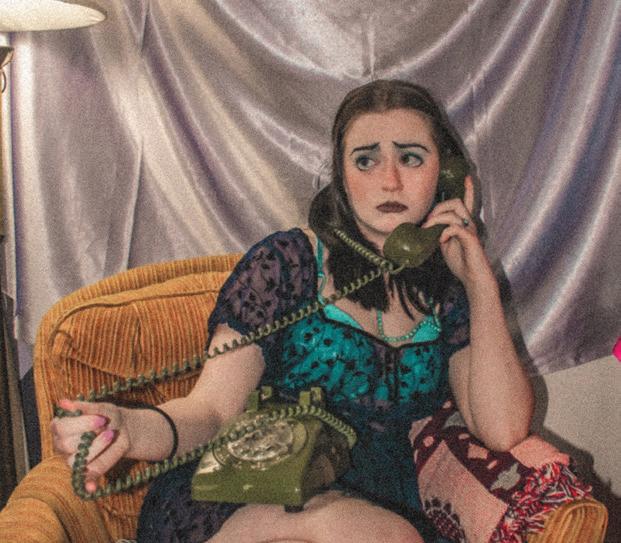
Julia isn’t dumb, but she would like to always see the best in people. She loves the idea of loving and being loved. She tries to remain positive in this room of girls who have been hurt because she doesn’t want them to give up on something she’s never gotten to experience yet. She doesn’t want them to ruin her perception of love. She wants to have hope.
In your opinion, how can filmmakers better accommodate actors or crew that are neurodivergent?

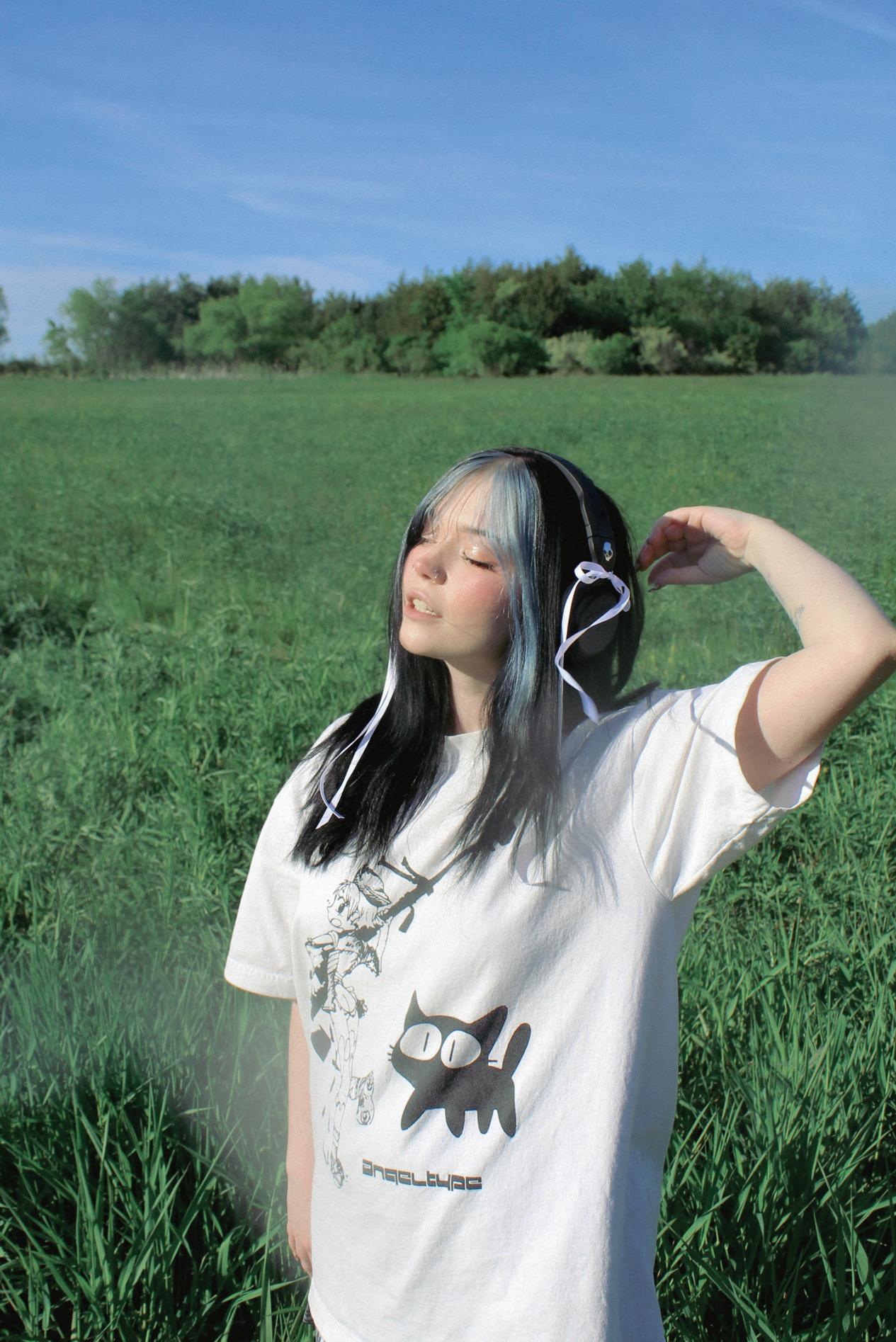
I think honestly, just being asked was huge. Even being asked what could be done to make things easier was, not to be dramatic, but I teared up a little. Just the feeling of “oh my god, they care! That’s so nice!” The quiet space during breaks and just sitting outside, feeling the cool air and a minute to step away from everything, was huge. Even just a separate room where people can go just to decompress would be really helpful, and I think all directors should do that. If anyone has the chance to work with Mary or Vieve or anybody [in our] cast and crew, do it! I would do it again in a heartbeat.
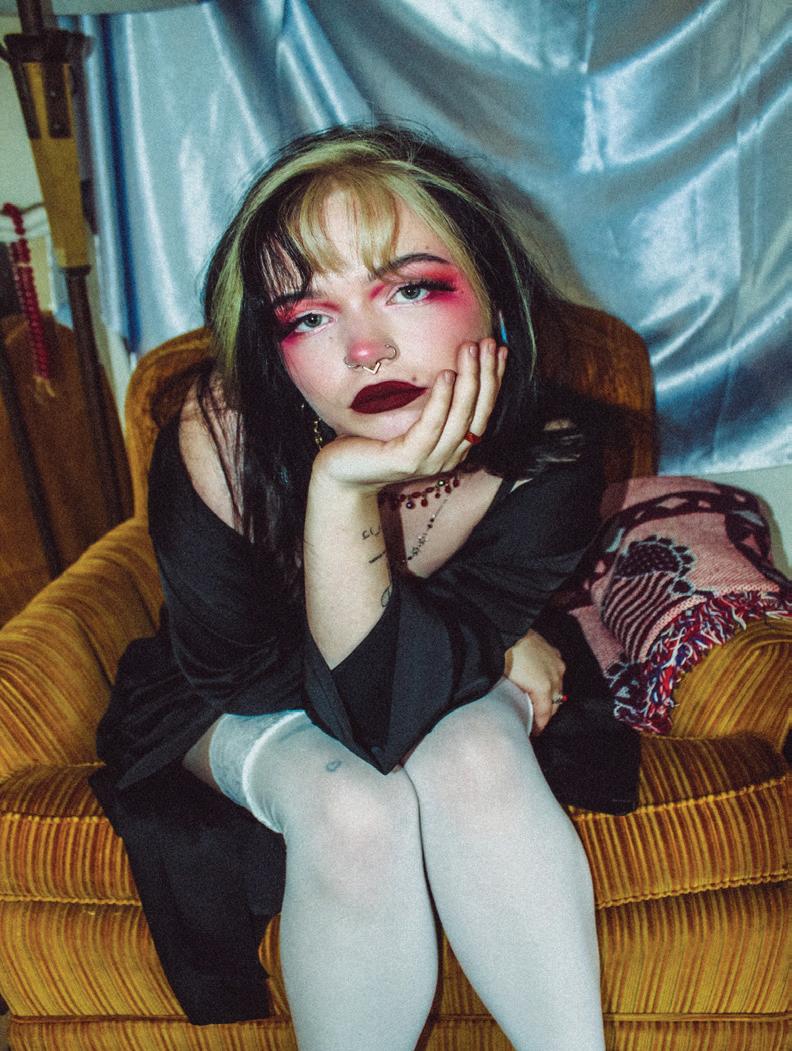
Moon Juliet
What drew you to the film?
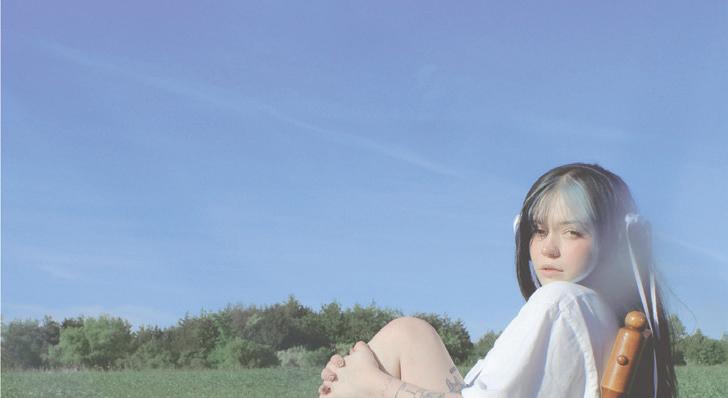
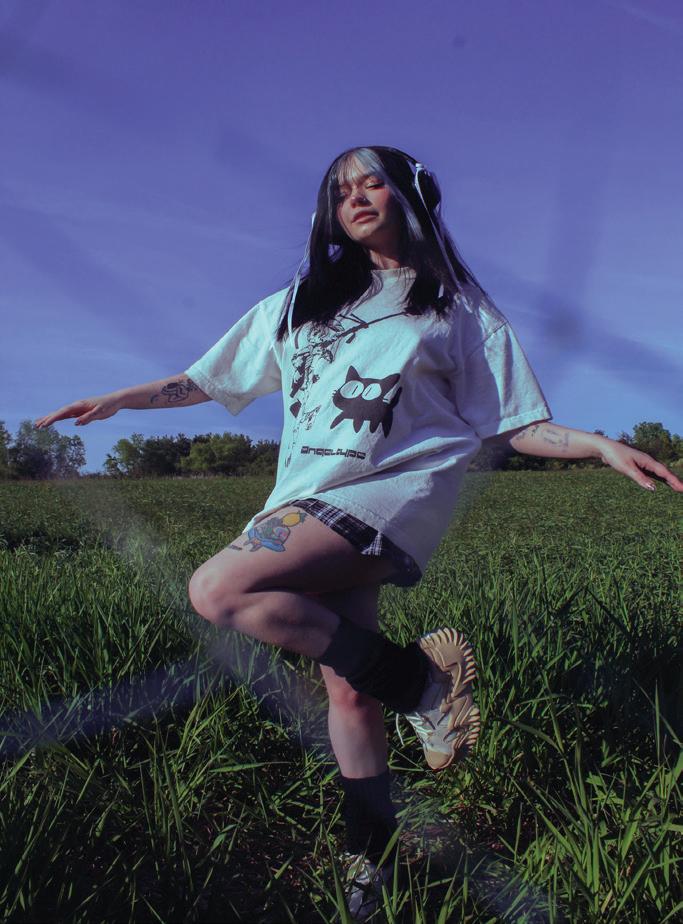
Maria is so opposite to me. Even though I was in a cold, bitter state when Mary (writer, director) sent me the script, I, at the time, felt that it was perfect. It got a little more difficult as we got closer to shooting. I was definitely healing, so it was harder to channel. It felt like I was growing even while shooting. I was so excited to stop being Moon for a minute and step into Maria’s shoes.
How was it acting in an experimental film?
This was actually my first time acting at all! I did some acting in middle school and a tiny bit in high school, but this is my first-ever film. I think if I wanted to be an actress, and in a perfect world, I definitely would want to do only experimental films. It was so much fun, and I loved how everything looked. It didn’t seem like your typical film, which of course is experimental, but the makeup was fun, the clothing was fun, how we were moving our bodies was fun. I loved it.
“Sometimes, I think people leave because I’m not who they imagined me to be.”
Is There a Strategy to Peeling an Orange?
MOON MOON MOON

How do you prepare for emotionally intense scenes?
I really dove deep into when I was in a pretty bad breakup situation. With the bitterness I felt, I remember telling my friend that I hope no one close to me ever feels this. I channeled the protectiveness I felt towards my friends and used that for Maria.
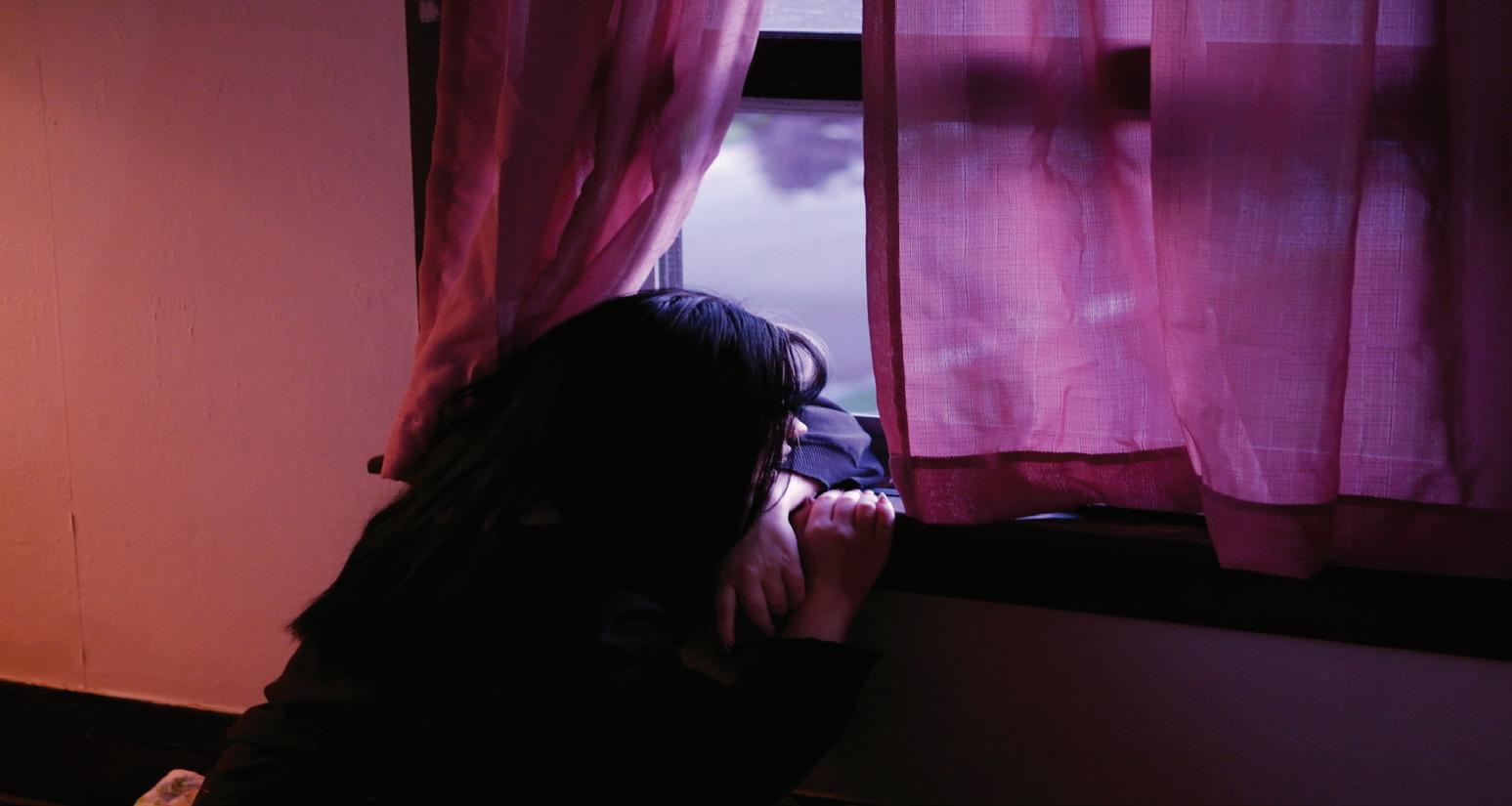
Was it difficult to snap out of that channeling?
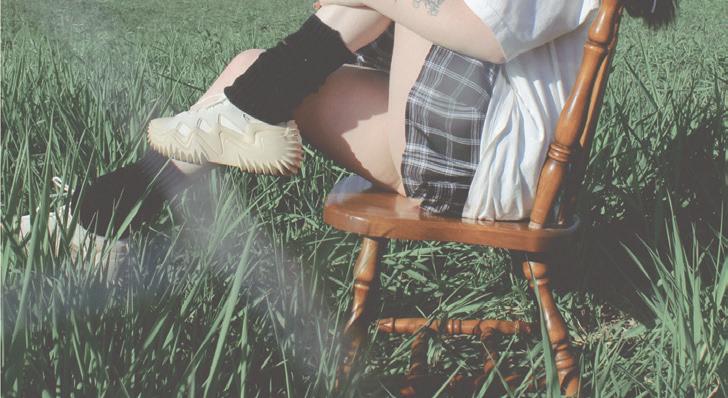
It was really cathartic. It felt like a way I could let it out. A true extract of that feeling. It was the most raw, opaque feeling of catharsis. Afterwards, I pulled out of it pretty quickly. I didn’t have much trouble with it.

Dire Need Productions
“It felt like I was growing even while shooting. I was so excited to stop being Moon for a minute and step into Maria’s shoes.”
ZENA WELLS
What were some similarities you had to your character?
I think that for my whole life, I’ve had a very naive and happy-golucky view on love that has gotten me hurt a lot. My family has given me a warped sense of that, and I’ve tried to be the opposite of that my whole life. I come from a divorced family; I was raised by my grandparents, who had a loveless relationship, so I’ve strived to love love because that’s what I wanted most in my life—to be loved. I will admit I’m very naive; no matter how many times it’s bitten me in the butt, I will never lose my naivety. I CAnthink it’s kept me going, and I think playing Julia reminded me of “don’t be too naive or bad things could happen.” I had a really good time playing Julia. Being autistic, I keep that mask on when I’m around people, and the mask that I portray is very Julia-esque. She’s very happy-go-lucky, innocent, naive in most ways. I just want to make everybody happy and comfortable.
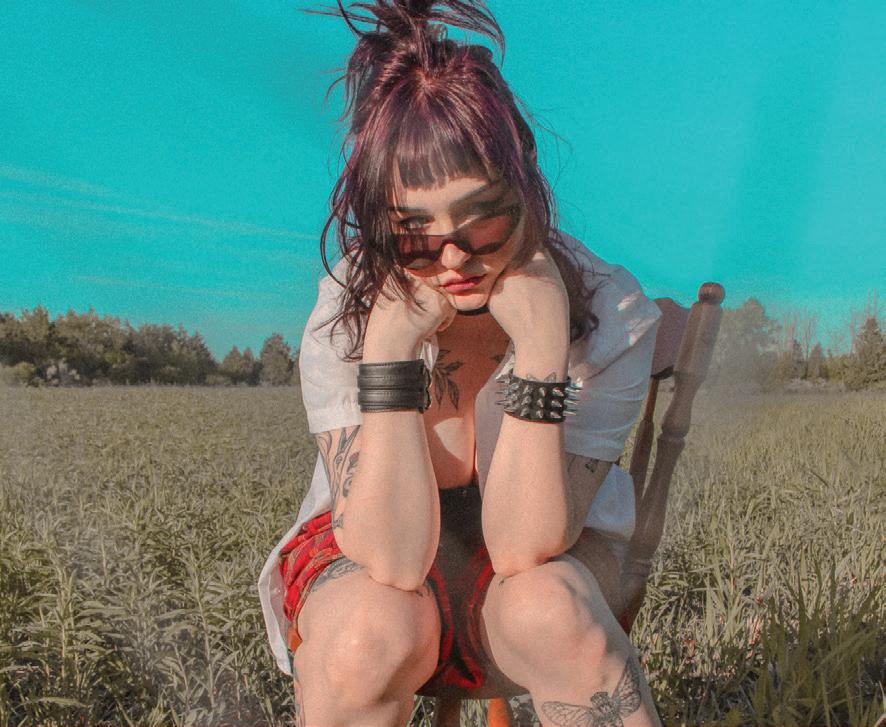
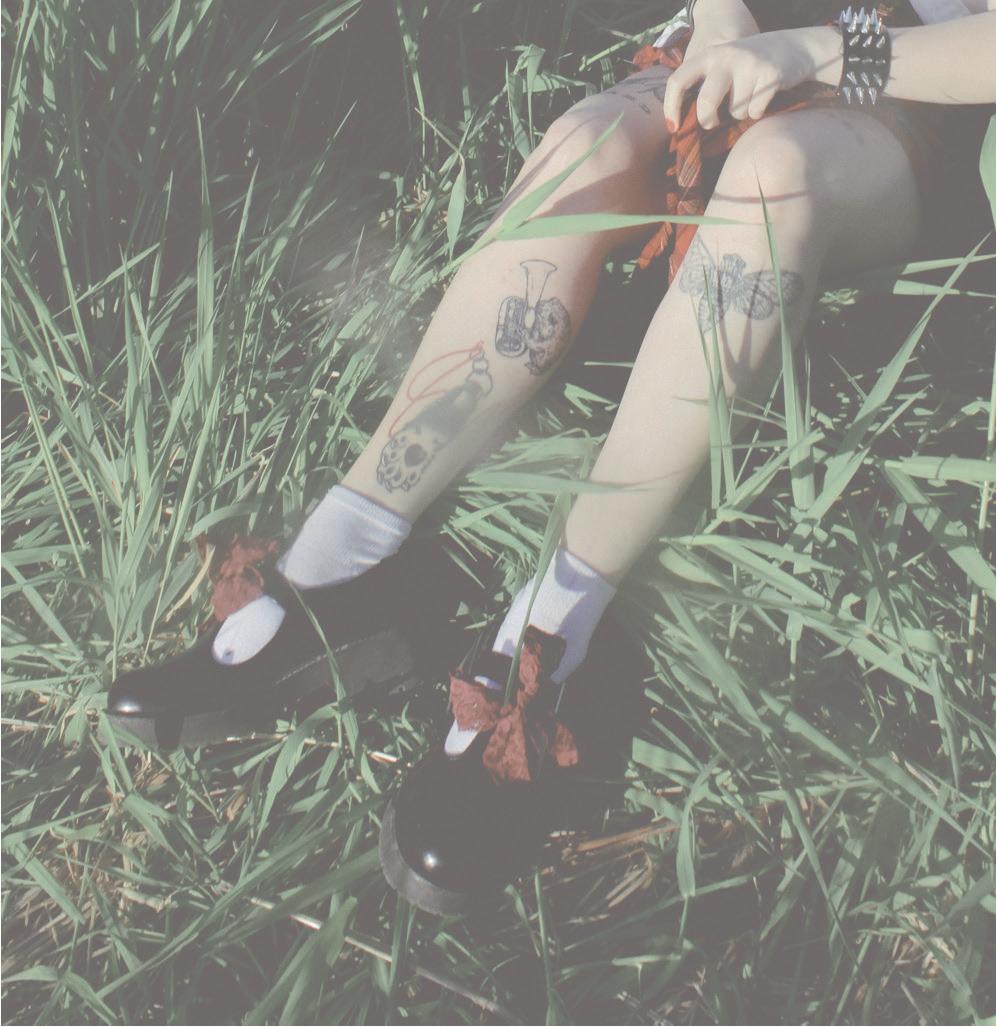

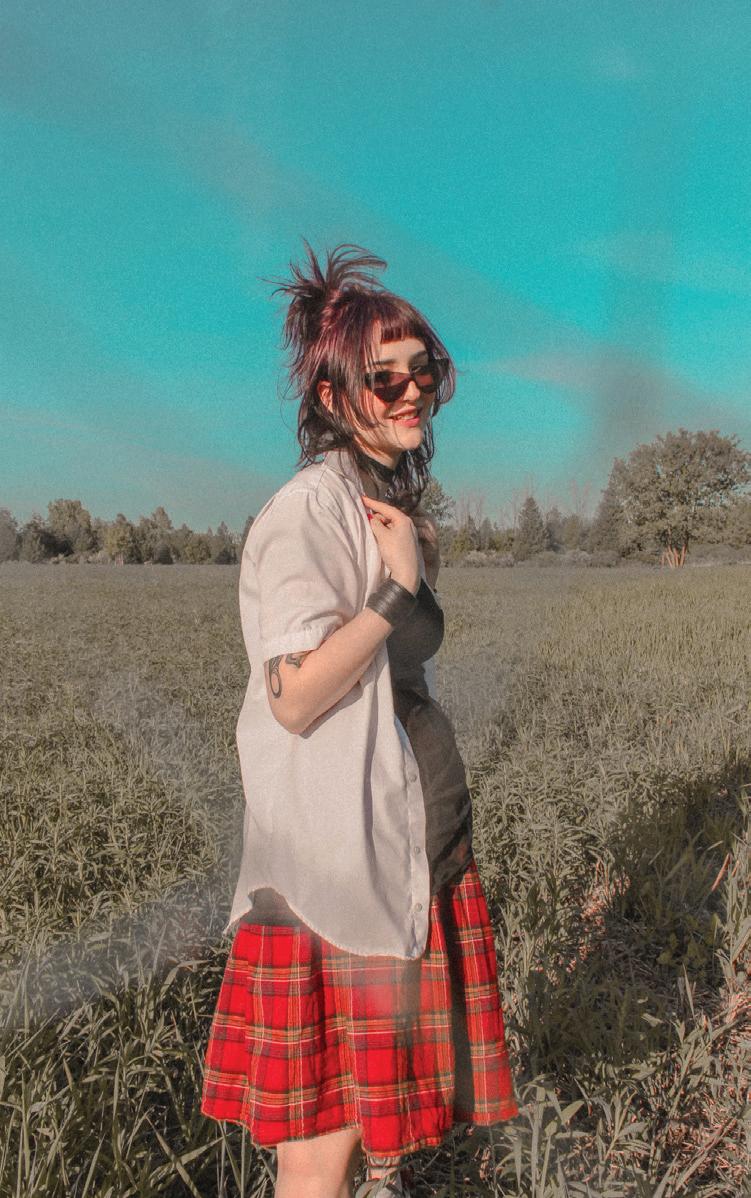
“CAN WE JUST STAY HERE? PLEASE?”
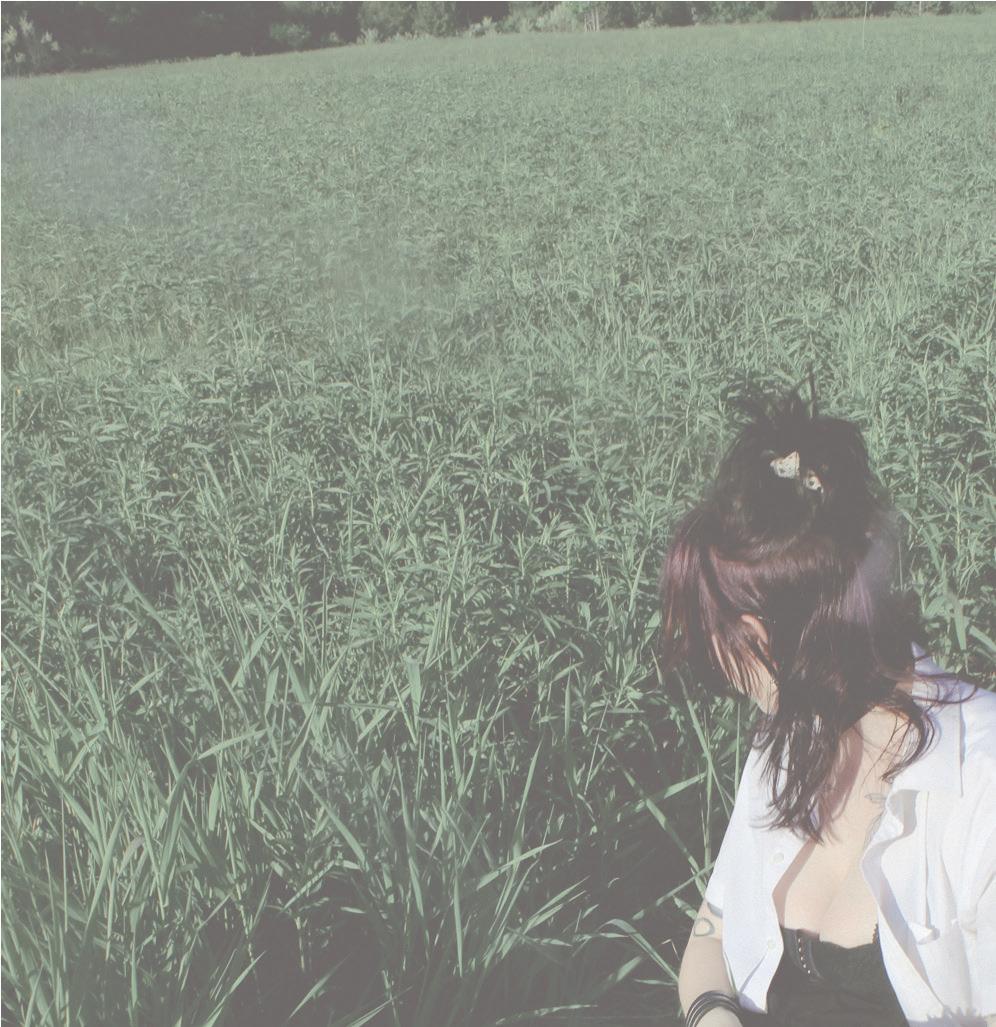
-Julia
What was your favorite memory on set?
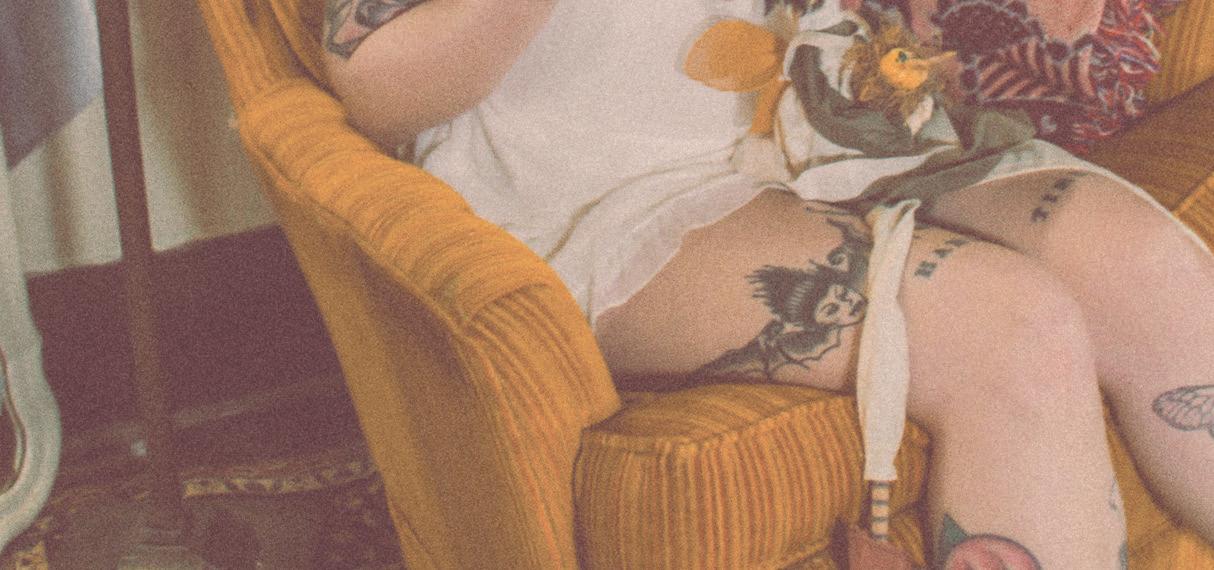
I think summoning people for the vapes. Ash, Vieve, Diego, Kenny— they all were just on that and came running with the vapes. It was really funny, and it just made me feel like people were listening to me and paying attention to me, and trying to make me feel comfortable no matter what. I also loved how everybody came together and brought different pieces for the set. I brought a lot of my own home decor, which I loved seeing being a part of it all. It was so nice seeing bits of everybody’s personalities come together as one on set. There was a little piece of all of us in there.
What was it like working on the makeup for the film?
I think Mary had a good vision for what she wanted the characters to be. I kinda just followed that vision the best that I could by trying to draw out the emotions of each character. I think I had the most fun with Callie’s makeup, and Aerin’s also was really fun. I love doing makeup in general, and I think it really draws out a character and says a lot. I think I struggled rushing to do everyone’s makeup on top of filming, but the second day I got more used to the role of it, and we had a process, and then it was good.
Since your last acting experience was in middle school, what was it like coming back to it for this film?
In middle school, I played one of the grandmas in Willy Wonka! I only had, like, one line. I was really shocked that I was able to remember my lines at all. I was really taken off guard by my own ability to do any of this. This is very out of my comfort zone. I was kind of manic when I agreed to do it! I was like, “yeah, I can do this no problem!” but when I got to set, I was like, “oh, fuck, how am I gonna pull this off? I have no idea what I’m doing!” But with the other cast members having more experience, it definitely helped a lot.
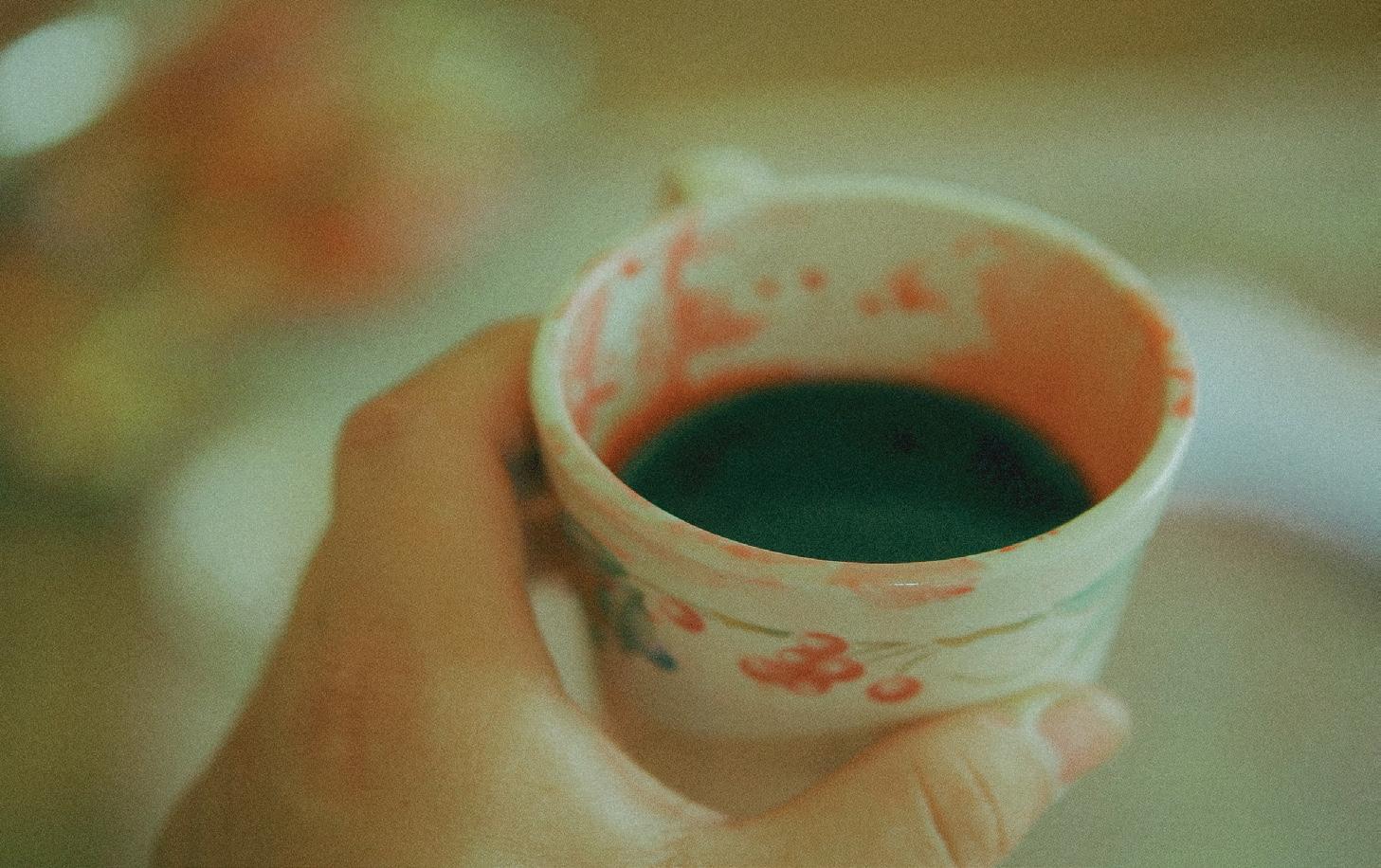
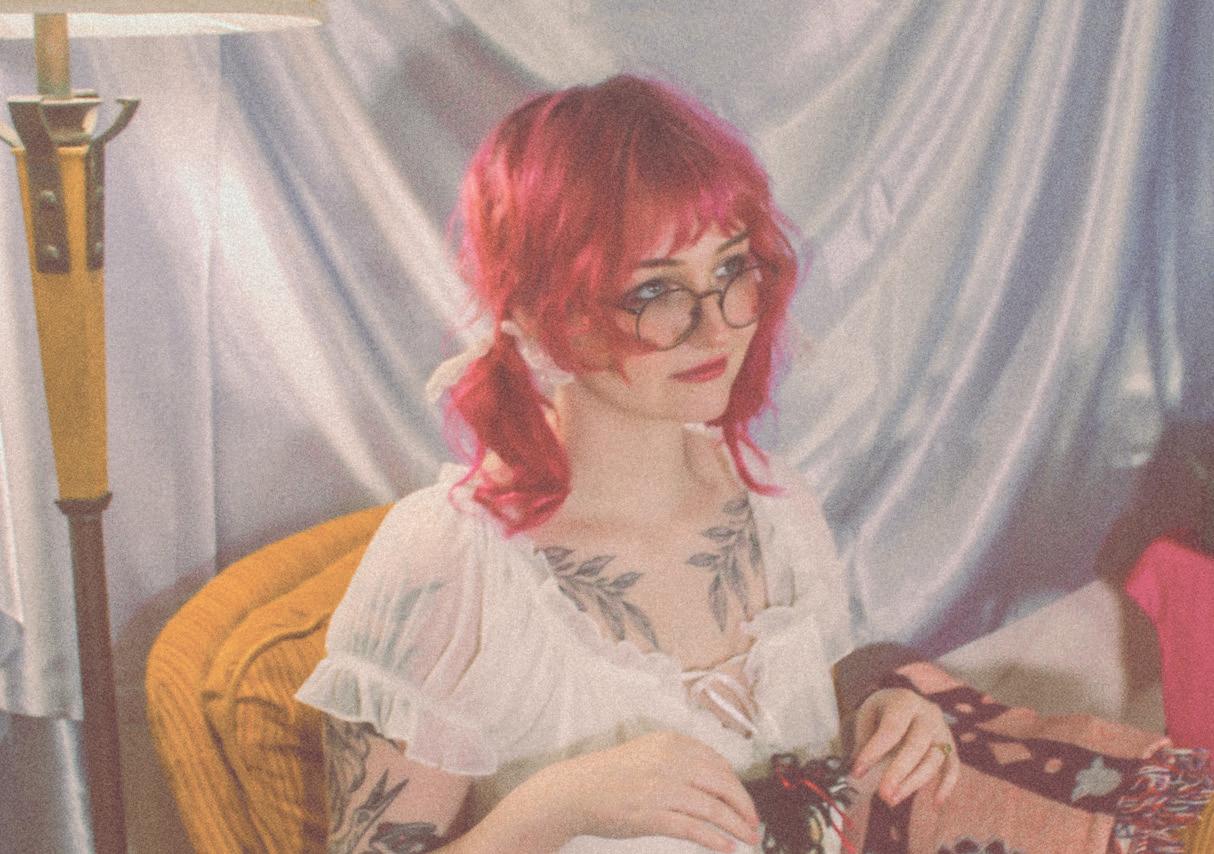

Emmy Wallander
So, each character had to show profound emotion throughout the script. How do you prepare yourself for that, mentally and emotionally?
My character, Aerin, was “anger, jealousy.” So, because it was a darker, heavier one, I feel like just the person that I am, having normally felt so much, especially the heavier emotions, I feel like it was relatively easy to connect to anger. But, I didn’t connect in the exact same way that Aerin did. So one of the things that I do frequently for all the different characters I play is I build a playlist. I find the core emotion that they’re feeling or sometimes I find a line from the script, and usually a song just pops into my head and that’s where I start. Before any intense scenes, I’ll take a minute to listen to the playlist.
What are some of the songs you added for Aerin?
I Feel Everything by Amelia Moore, Guts by Leith Ross was the first one that I added; it’s a sad song, but I felt like Aerin was such a heavy amalgamation of all the heavy thoughts and feelings. Bitter by Fletcher was also one I used to get angry and feel jealous!
What draws you to doing experimental films?
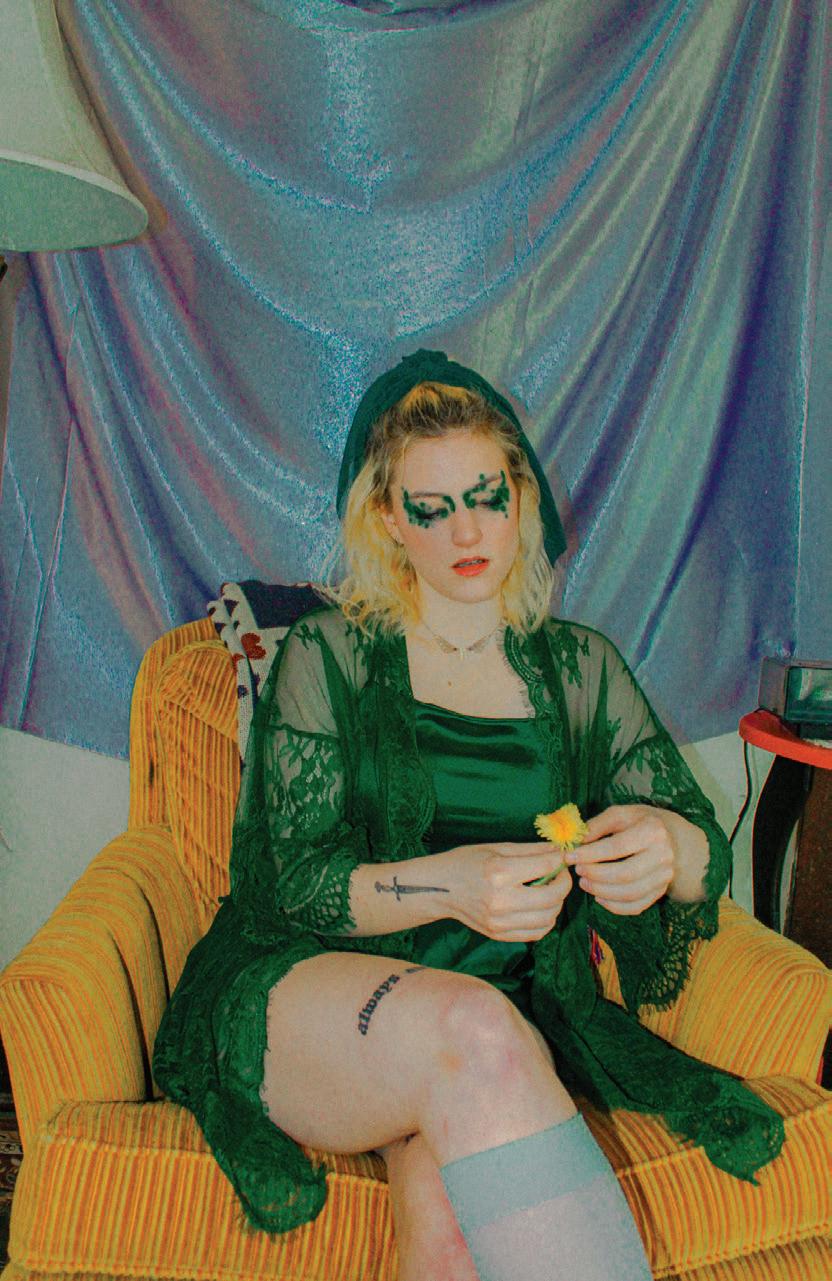
I like that there’s not a set expectation. So it’s not like you audition for a dramatic piece, a dramatic film, and then it has to stick to that one genre. I feel like with experimental films, you can kind of dip your toes into a lot of different genres. And I like that it doesn’t always have to make sense. Things don’t have to make sense. I feel like sometimes that really adds to a story and allows for a lot of creative freedom in storytelling.
Since the script was very emotionally charged, what was the most challenging aspect of the script? And how did you approach it?
The most challenging for me and my character, I think if you are an actor, and especially a healthy actor, you know how much to draw on your own personal life and kind of where to leave your personal life at the door. Aerin was kind of challenging, though, because I have felt that anger and I’ve felt that profound sadness. But it hasn’t been directed specifically at an ex-partner, and I’ve never had a really traumatic breakup, and I think that was the most challenging because I didn’t have a single real-life example of that experience that Aerin had, but I have experienced losing somebody that I had a relationship with, and then the intense emotions following the end of that relationship. So I drew on a relationship with my brother, which has been and is very turbulent, and that allowed me to get to the place emotionally, and then the words on the page were enough to connect Aerin’s experience to my experience.
Was it cathartic?
I think anytime I get to be angry and act angry, and I’m able to connect it to my personal life, I feel like it’s always cathartic. I feel like especially as women or AFAB people, we’re expected to not be angry. If we’re angry, it’s expected of us to turn it into sadness because that’s the more socially acceptable emotion that you can have. So it was really nice to play an angry woman.
For your character, Calliope, what was it like to get into her emotional mindset?
It was a little hard, I’m not gonna lie. I have plenty of sad experiences I could’ve drawn on, but I do think that in my healing journey, I’ve come a really long way. I had to dig for those emotions. Luckily, I had just done “Oh Rats!” with Jennavieve Growel directing, and that one was fun to play with because I felt like when we shot that, I was right at the same time as my character in that script. So when I was really trying to draw on those emotional elements for Calliope, I called back to what I called back to in “Oh Rats!” as well. And that really helped to flesh out the emotions for me. And I think just in general, we’ve all had a breakup that’s just made us so sad and upset. Just trying to remember what Alyx felt like when that breakup was over.
Was it easy to snap out of it when we stopped shooting?

ALYX BYRNE
Everyone on the crew and the cast did such a good job of being like a safety net. It never felt like falling out of the emotion, so much as taking a big breath after saying a really long sentence. I think everyone on the cast was able to connect with each of the characters, like we all remember when we were in love and the first time we felt scorned after love, and so I think it was just a big pot of us after scenes just all releasing together, which helped it not feel like an emotional crash, which I think can happen sometimes.
“I like that it doesn’t always have to make sense. Things don’t have to make sense. I feel like sometimes that really adds to a story and allows for a lot of creative freedom in storytelling.”
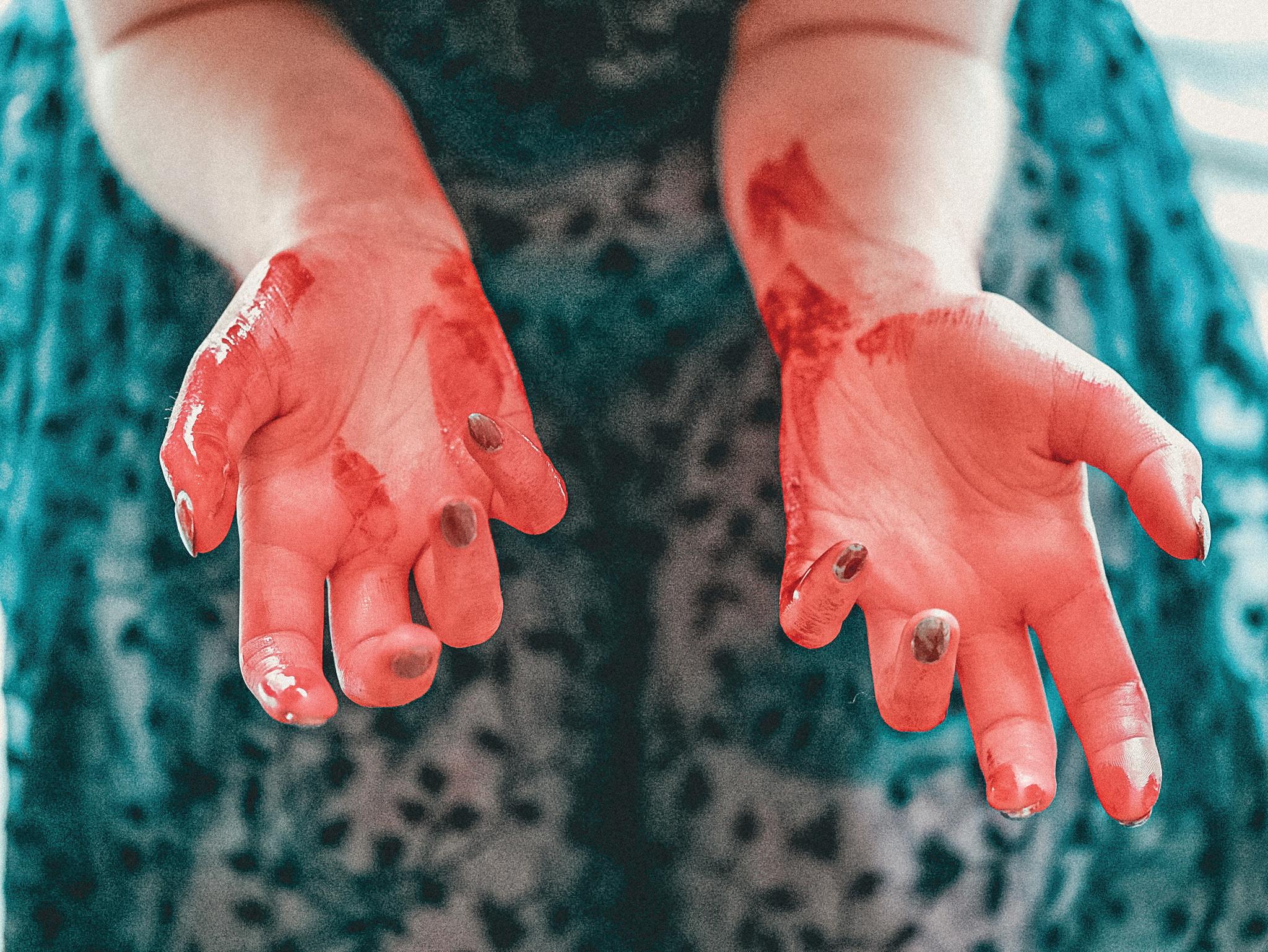
“I hate the way these make my fingers smell.”
-Calliope
What are your thoughts on the experimental genre?
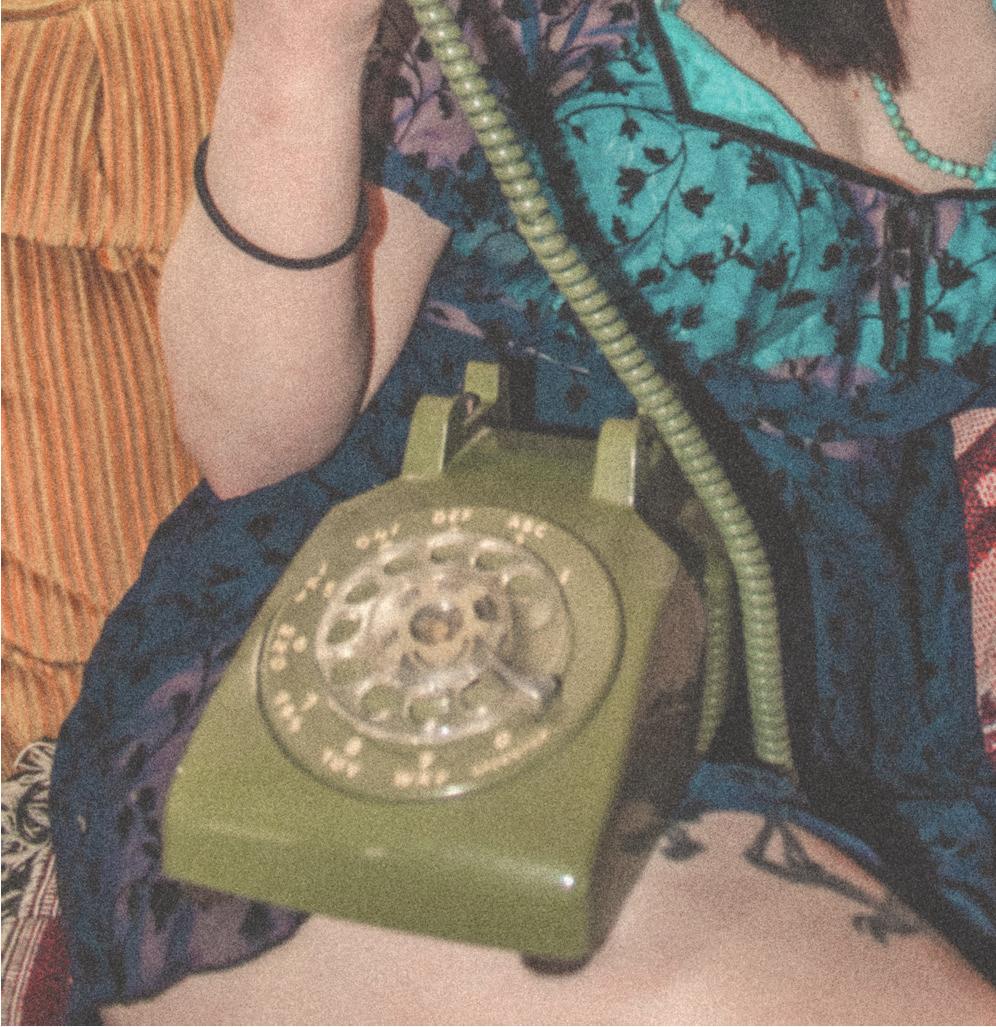
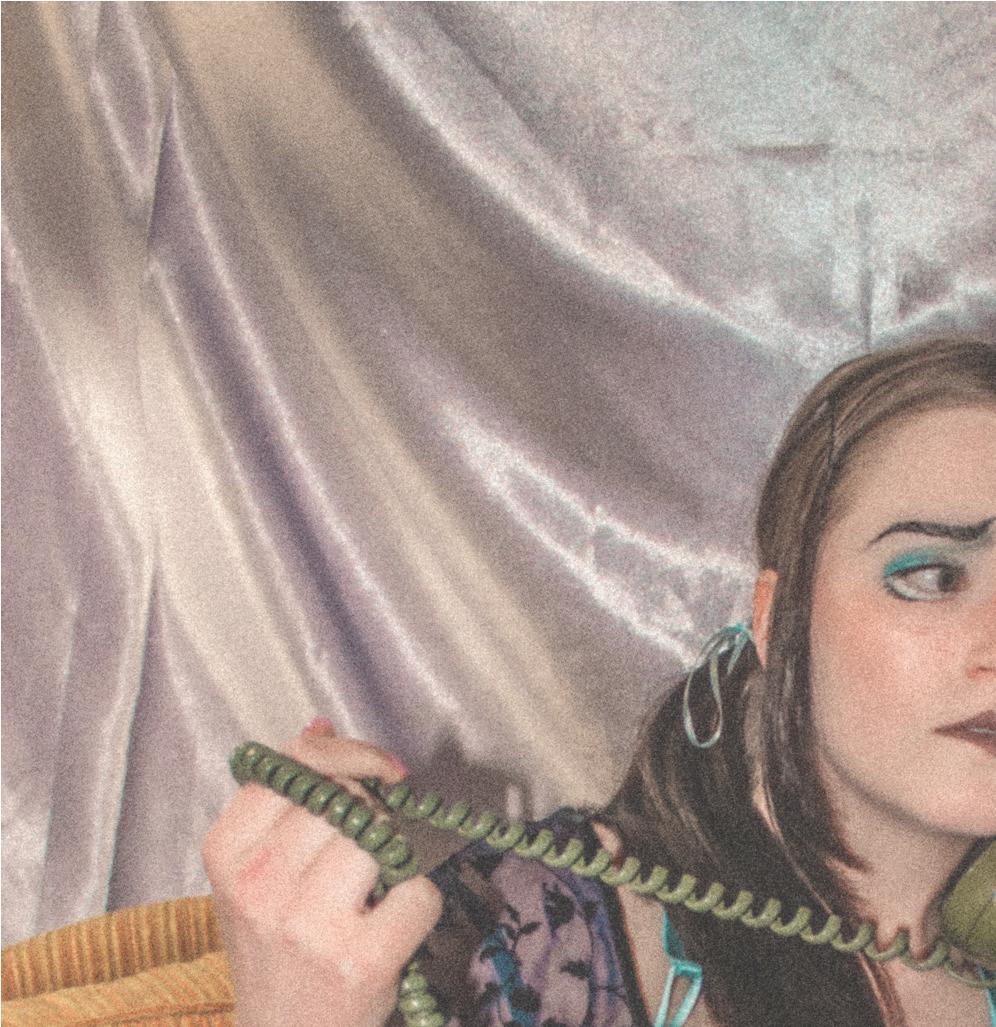
This is the first experimental film I’ve ever gotten to work on. I had the time of my life. I didn’t realize how much a set could influence the ease of becoming a character until I was on the set of “Is There a Strategy to Peeling an Orange.” The image that I think everybody had in their head of this space that we were going to be acting in came to such beautiful fruition. It felt like I was there in the image I had in my head. For an actor, until you’re on set, day of, you don’t really know the space you’re going to interact with. At least sometimes. With “Is There a Strategy,” we had two or three sessions over at Mary’s with blocking, but even then it wasn’t fully decorated and erected. I think getting there on the day, seeing all the photos, and the bed and pillows, and all of the decorations, I felt like I could just live in it as that character. I feel like just experimental films in general, with how much play there is with the set and the scene, as opposed to the dialogue, just felt really immersive.
What drew you to the script?
I think the overall script just had the universal feeling of the struggle of relationships that made such a good commentary on the pain and the process of grief and overcoming that grief. I felt that the commentary was so strong. How could I not be a part of it, ya know? For one, it’s just a beautiful idea. I loved it from the moment Mary explained it to me. I could relate to every character, and that was just so powerful to me.

What’s important for you to have in a space to thrive in?
100% people come first. I’ve been on sets where I haven’t known anybody but maybe the casting director. It can be scary and it can throw you off, especially when you feel like you don’t have a connection with the person you’re in a scene with. But I feel like everyone on this film set was like my best friend. We took the time to really connect and become friends, and I feel like that makes everything easier, especially when you’re dealing with an emotional film like this. It really pays to just have good people in your corner.
MARY HANSEN


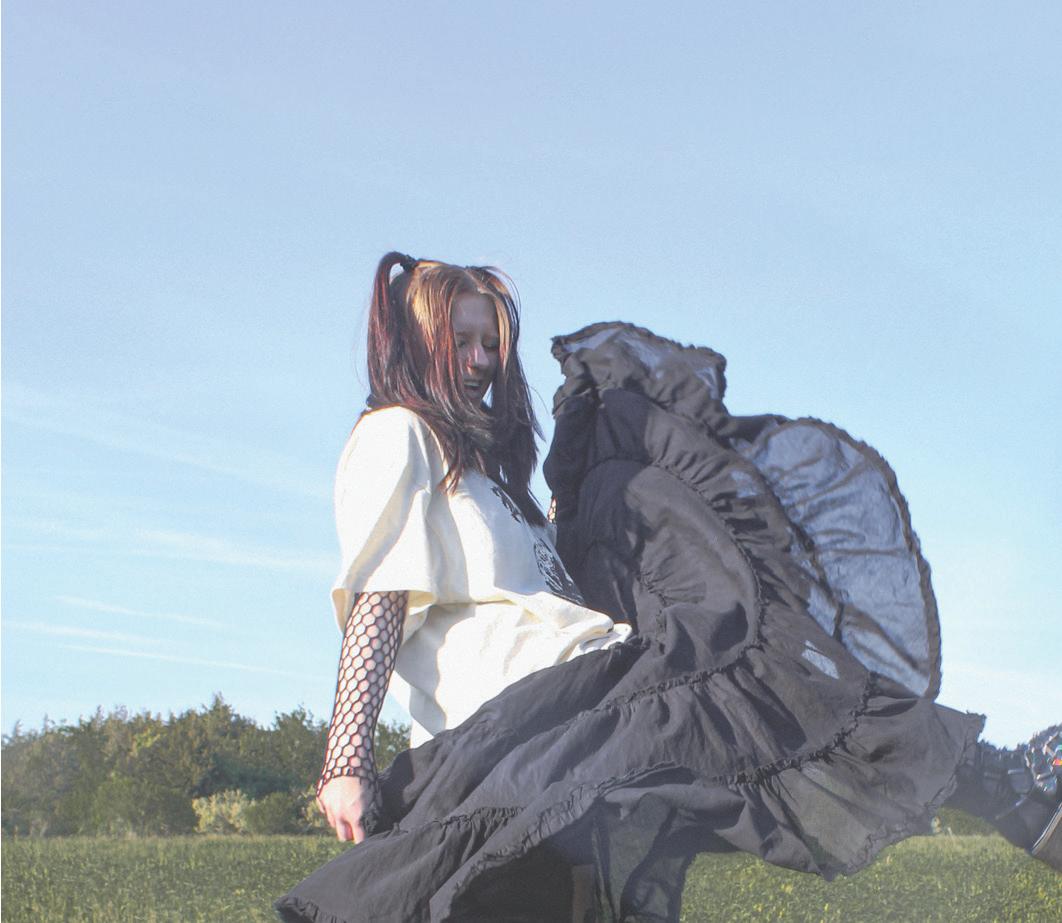
Can you walk us through your creative process while writing the script? How did you develop the story and its underlying themes?
I have a tendency to focus on one project at a time and just flesh it out no matter how long it takes. I wrote the first draft of the script in a single night and then spent the next few months altering it in so many different ways. I actually didn’t even finish the final draft of the script till about a week before filming. The cast also helped me with fleshing out the characters and inspiring me with their ideas for who the characters were and what they emulated. It was easy to write the script in the beginning because I knew I still kinda felt the way all the characters were feeling at the time, but it got more difficult to edit and flesh out the characters and their grief in the months before shooting because I was seeing someone who didn’t make me feel that way anymore.
What were some of the influences that shaped the aesthetic imagery in the script?

I drew a lot from a few different things, firstly was the short film Possibly in Michigan by Cecilia Condit. I liked the unsettling feeling that it evoked in me, and I also loved the music. The movies The Virgin Suicides and Antrum also were big influences in aesthetic and editing. I love The Virgin Suicides; it was directed by Sofia Coppola, and I just love how genuinely feminine it is. I think it encapsulates the teenage girl experience so well in a story of itself. I love the way Antrum by David Amito and Michael Laicini was edited; it’s very filmy and bright but also kind of muted in a way, and I drew inspiration from that for the editing style I wanted to go for.
As a filmmaker who is a woman of color, what do you believe the filmmaking community can do to support and empower femmes/ POCs in the industry?
Watch my short film! There is genuine value in watching and discussing these films written and directed by femmes, POC, and black people. That’s just the reality of the industry, I think. Watch my short film. Talk about it. Have fun with it. Buy it on Blu-Ray. Write fanfiction about it. Buy our action figures.
What valuable lessons or skills have you acquired through the filmmaking experience? Did it have a transformative impact on you as a person?
Patience is definitely not my strong suit, so that actually was a really tough thing I had to manage. I really wanted to get things done, and we were in a time crunch. I had to remember that people work at a different pace than I do, so I need to chill out. I also should’ve stopped to enjoy the reality of where I was. This experience also definitely made me feel like I was finally good at something. There were lots of times where I had big ideas but for some reason my hands just couldn’t create the way I pictured it in my head. This is the first time I’ve genuinely liked every part of what I created. It was amazing.
“ There is genuine value in watching and discussing these films written and directed by femmes, POC, and black people. That’s just the reality of the industry, I think.”
IsTherea
Strategy to Peeling an Orange?
DIRECTED BY MARY HANSEN
STARRING Alyx BYRNE Emmy
WALLANDER Moon JULIET Zena
WELLS
CINEMATOGRAPHER
Kenny HYLLBERG and Mary
HANSEN
Is There a Strategy to Peeling an Orange” is an experimental film that delves into the realms of heartbreak, feminine experiences, and grief within a close-knit friend group. Exploring the emotional phases and varied perceptions of love, this delicately violent journey takes viewers on an introspective exploration of how heartbreak can reshape us and the enduring grief we carry. Just like biting into an orange, this film leaves a lingering combination of sweetness and sourness, evoking a range of emotions that resonate long after the credits roll.