May/June 2024

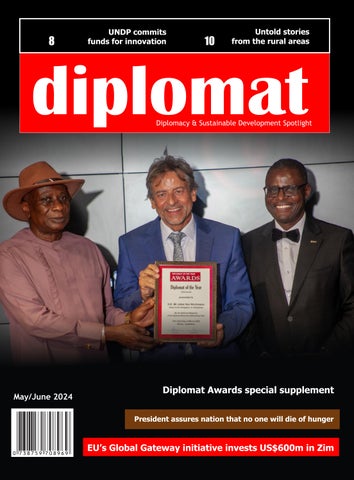
President assures nation that no one will die of hunger Diplomat Awards special supplement
8 10 Diplomacy & Sustainable Development Spotlight
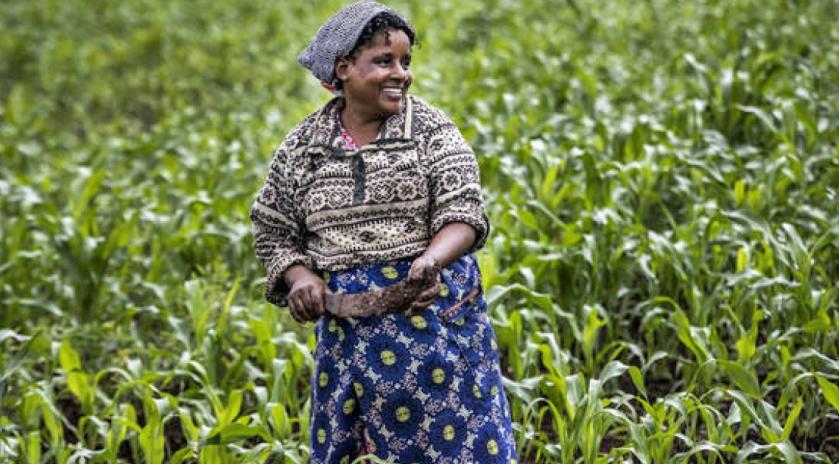
Untold stories from the rural areas UNDP commits funds for innovation
Impacting lives
Sharing knowledge & Experiences
Discovering opportunities
Cementing collaborations
BUSINESS NETWORKING CLUB DIPLOMAT
IN THE NEWS
President assures nation that no one will die of hunger
UNDP commits funding for innovation
EMBASSY PANORAMA
Dutch Ambassador's clarion for harmonious living with nature
Rwanda embassy commemorates the genocide against the Tutsi
The fascinating tale of Ambassador Peter Vowles
SPOTLIGHT
EU invests over US$600 million in Zim
Grappling with landmines in Zimbabwe
Transforming African agriculture
The inspiring story of Tracy Nhayitayi
The hidden costs of menstrual health
TRAVEL AND TOURISM
Take me back to Kariba
Victoria Falls Safari Lodge review
DIPLOMAT AWARDS SUPPLEMENT
12 years of Awarding excellence in Diplomacy
Awards spotlights localising Summit of the Future Stanbic Bank commits to the attainment of SDGS
Editor
Reginald Chapfunga
Sub-editing Edmore Zvinonzwa
Contributors
Lavenda Chandisareva
Anthony Chawagarira Shelma Sibanda
AngelineDimingo Pamela Machidha Valerie Chatindo Advice Mukono
Marketing Executive Itayi Mupawaenda
Advertising Imani Consulting +263772210694 +262776995846
info@imanicpnsulting.org
info@imaniconsulting.org
Published by Diplomat Media
39 Central Avenue (Between 4th & 5th St) Harare Zimbabwe
www.thediplomat.co.zw
www.thediplomat.co.zw news@thediplomat.co.zw
Contents
4 5 6 8 10 12 14 16 18 20 24 25 26 28 32 2 The Diplomat May/June





President assures nation that no one will die of hunger
LAVENDER CHANDISAREVA
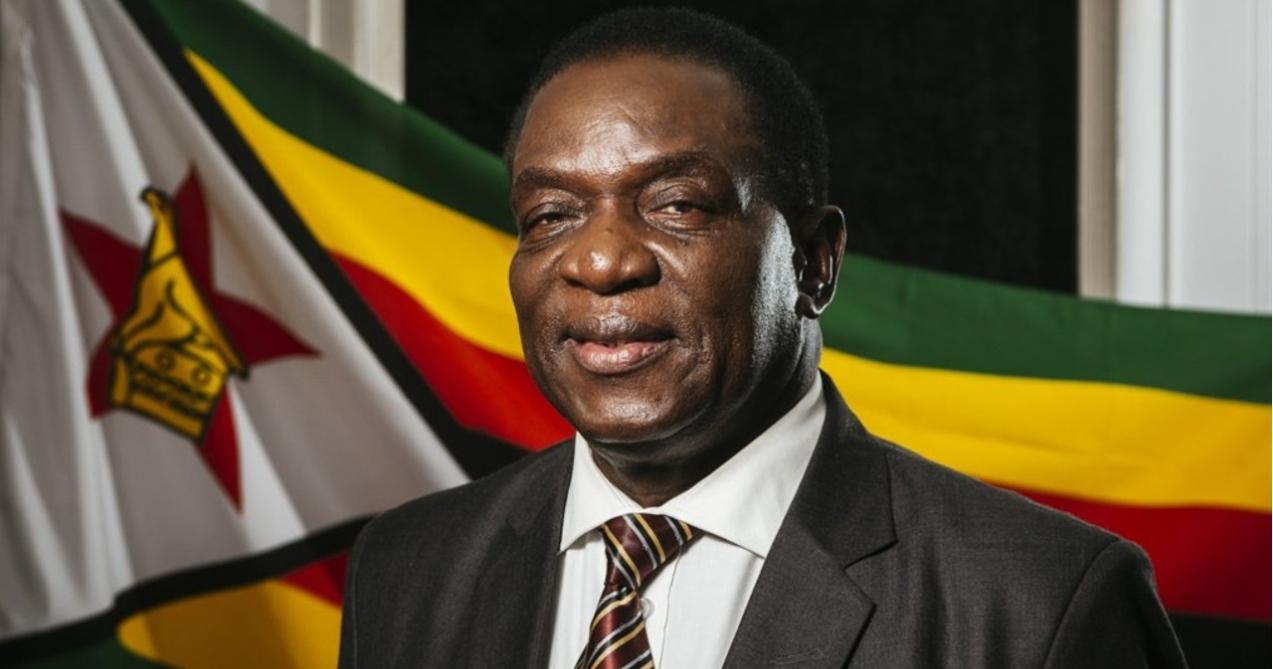
President Emmerson Mnangagwa said no Zimbabwean will die of hunger, as securing food for all cizens remains a top priority for the government.
“Top on our priority is securing food for all Zimbabweans. No Zimbabwean must die or succumb to hunger.”
The president said this while declaring a state of disaster for Zimbabwe owing to the El Nino-induced drought, which has impacted Zimbabwe heavily.
During the occasion back in April, President Mnangagwa said preliminary indicaons are that Zimbabwe needs US$2 billion in its naonal response strategy to the disaster.
However, the President reiterated that no one would die of hunger: “Top on our priority is securing food for all Zimbabweans. No Zimbabwean must die or succumb to hunger.”
He said adequate resource will be
mobilised and directed towards naonal food security, including through supplementary grain imports.
“A robust and responsive mechanism has been put in place to guarantee that food reaches needy communies mely,” reiterated President Mnangagwa.
The President said availability of clean drinking water was also a key priority.
“My government will connue to roll out comprehensive intervenons to ensure that drinking water is adequate for our people, for livestock and wildlife,” he said.
President Mnangagwa also appealed to all Zimbabweans, including those in the diaspora, the internaonal community, United Naons agencies, development and humanitarian
IN THE NEWS 4 The Diplomat May/June ...to page 5
...from page 4
partners, internaonal financial instuons, the private sector, churches and individuals to donate towards this naonal cause.
Data from the latest Zimbabwe Livelihoods Assessment Commiee Report, shows that 6 million people in the rural areas are in need of assistance, giving a total of 7.7 million people when added together with urban numbers.
The number excludes the 4.5 million pupils who require food under the school meals programme.
Speaking at the post-Cabinet briefing meeng this recently in the capital, Informaon, Publicity and Broadcasng Services Minister, Dr Jenfan Muswere said that the ZimLAC report has revealed the hard-hing effects of the drought, that has Zimbabwe at the epicentre, with half of the country's populaon food-insecure and in need of food assistance between May 2024 and March 2025.
“The Second Round of Crops, Livestock and Fisheries Assessment of 18 April 2024; and the Rapid Village-based Food Assessment concluded on 15 April 2024 established that 6 million people in rural areas will require assistance between May 2024 and March 2025. The Zimbabwe Livelihoods Assessment Commiee Report indicated that 1.7 million people who reside in urban areas will require assistance. A total of 7.7 million people, being 51% of the populaon will require food assistance. This excludes a further 4.5 million who would require school meals,” said Dr Muswere.
The situaon has been compounded by the obtaining El Nino-induced drought that has seen 80% of the country receiving below normal rainfall, rendering more people food-insecure.
According to the United Naons, a total populaon of
to page 7
UNDP commits funding for innovation at African Symposium
ANTONY CHAWAGARIRA
In a significant development for the African innovaon landscape, Dr Ayodele Odusola, the United Naons Development Programme (UNDP) Resident Representave, made a remarkable commitment to provide funding for innovaon during the African Symposium held at the Zimbabwe Internaonal Trade Fair (ZITF) recently
The symposium, which brought together entrepreneurs, policymakers, and thought leaders from across the African connent, focused on exploring strategies for fostering innovaon and drive sustainable development in Africa.
During his address, Dr Odusola pledged a significant poron of the UNDP's financial resources to funding innovave projects across Africa. He highlighted the importance of idenfying and supporng promising start-ups and iniaves that demonstrated the potenal to create posive social impact and contribute to sustainable development goals.
“The UNDP is commied to fostering an enabling environment for innovaon to thrive in Africa,” Dr Odusola said.
“We believe that by invesng in innovave ideas and empowering the connent's brightest minds, we can unlock Africa's true potenal and drive sustainable development that leaves no one behind.”
Dr Odusola outlined a comprehensive framework through which the UNDP would administer the funding. The iniave is aimed at supporng innovaon across various sectors, including agriculture, healthcare, educaon, renewable energy, and technology
The funding would be accessible to individuals, start-ups, and organisaons that showcased innovave soluons with the potenal for scalable impact.
Recognising that financial support alone was insufficient, Dr Odusola emphasised the importance of mentorship, capacity building, and networking opportunies to nurture and accelerate the growth of innovave ventures. He announced that the UNDP would collaborate with local and internaonal partners, including established businesses, academic instuons, and incubators, to provide holisc support to the selected projects.
IN THE NEWS The Diplomat May/June 5
EMBASSY PANORAMA
DutchAmbassador's clarion for harmonious living with nature
…Time to adopt eco-conscious habits in our daily lives

The Dutch Ambassador to Zimbabwe, Zambia and Malawi, Dr. Margret Verwijk, dedicated the King's Day celebraons at her residence in Harare to address the crical issue of Climate change and human acons on the environment.
Sighng the El Nino-induced drought affecng Zimbabwe and the region at large, Ambassador Verwijik said:
“Greenhouse gas emissions connue to change weather paerns around the world, making such events more common and more severe.
“Destrucon and polluon of crical ecosystems such as
wetlands, forests, rivers and soil make us less able to cope with these changes.”
She implored everyone to watch their acons and be part of the soluons rather than looking to others to solve the environmental challenges.
“Each of us must adopt ecoconscious habits in our daily lives, reducing our carbon footprint, minimising waste, and being more sustainable in our consumpon.
“For example, in the Netherlands, cycling has become a way of life. It has made our people healthier and happier, our cies more
accessible, while reducing polluon.
“Making cycling possible requires good planning and infrastructure. And it is possible for Harare! Many people are reliant on biking already,” she said.
She urged Zimbabwe's influenal people to speak out for the environment and protect the country's abundant natural ecosystems.
Ambassador Verwijik said climate acon is a catalyst for improvement on many goals and can yield a double dividend to change lives.
6 The Diplomat May/June ...to page 7
...from page 6
“In the hot and dry low-lying wards of Chimanimani, our partner PORET is training youth in permaculture and water harvesng. The ambion is to see them improve food producon while protecng the environment.
“But with the new skills and knowledge, they have started to run their own workshops, seed fairs, and tree nurseries in their communies. Two young women improved their family gardens so much, they were rewarded with land of their own. This is a huge step towards their independence, and has earned them a seat at the table in community affairs,” she said.
Commenng on the Dutch's commitment to supporng climate adaptaon and migaon, Ambassador Verwijik said the country's climate strategy takes a sector-wide approach and includes reducons by government.
“Our Ministry of Foreign Affairs requires Embassies to be carbon neutral by 2030. We are on it! Our switch to solar energy is nearly complete, and will sustainably power our work, and the hybrid vehicles we will start to use later this year.”
Dutch support for climate acon, Ambassador Verwijik added, is not just through the Embassy's climate budget and work promong sustainable business and trade but there are also significant funds allocated by the Netherlands to mul-lateral partnerships such as the Green Climate Fund, United Naons, and European Union, which are working across the region, including Zimbabwe.
She also said the Netherlands is increasing its contribuon to global climate finance each year, targeng US$1.8 billion by 2025.
...from page 5
in urban areas will require assistance. A total of 7.7 million people, being 51% of the populaon will require food assistance. This excludes a further 4.5 million who would require school meals,” said Dr Muswere.
According to the United Naons, a total populaon of 7.6 million people urgently requires lifesaving and life-sustaining humanitarian assistance and protecon support, as well as livelihood support, so that they may recover their losses, rebuild resilience, and access basic services.
About 40 percent of the country's maize crops was classified as “poor” while and 60 percent was “a write-off”
The livestock sector is also not spared, it risks being seriously affected in the coming winter months, due to very poor pasture quality and lack of drinking water
“Since December 2023, subsequent long dry spells, and high temperatures, coupled with poor rainfall performance, pushed the value of crop and livestock producon to a very low. Esmates for the 2024 crop season are of about 700 000 metric tons (mts) of maize, out of an annual requirement of 2.2 million mts. More than 1.4 million cale risk suffering deteriorang condions or starve, amid lack of food and pasture.
“The impacts of El Niño have negavely affected local producon, with esmates of a 52 percent shorall,” the UN Resident Coordinator and Humanitarian Coordinator, Mr Edward Mahew Kallon, said while launching the Drought Flash Appeal.
He said: “To respond to the scenario, this Flash Appeal requires US$429.3 million for humanitarian partners to target close to 3.1 million people. The appeal aims to mobilise humanitarian acon in support of the Government-led response and is directly complemenng the Government's own relief efforts.”
He emphasised that the drought appeal is priorised and principled. Mr Kallon expressed his confidence that the acvies planned are the most urgently needed to deliver immediate relief to the people who need it the most.
The Diplomat May/June 7
EMBASSY PANORAMA
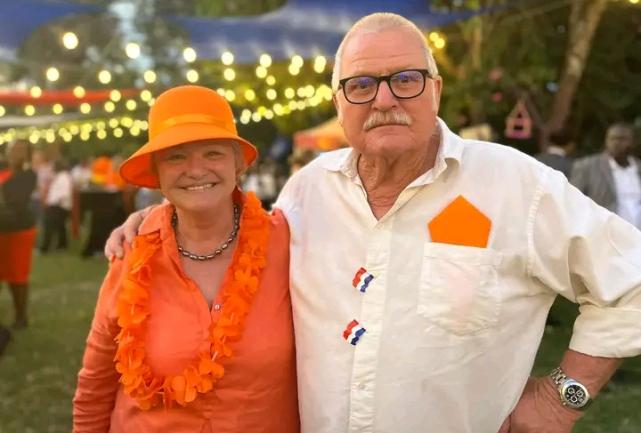
A bit of orange at King’s Day Celebraons
EMBASSY PANORAMA
Forgiven but not forgotten
… Rwanda embassy commemorates the genocide against the Tutsi
STAFF REPORTER
The Rwanda genocide remains one of the darkest chapters in modern history. In 100 days between April and July 1994, over a million Tutsis and moderate Hutus were killed. More than 250 00 women were reportedly raped.
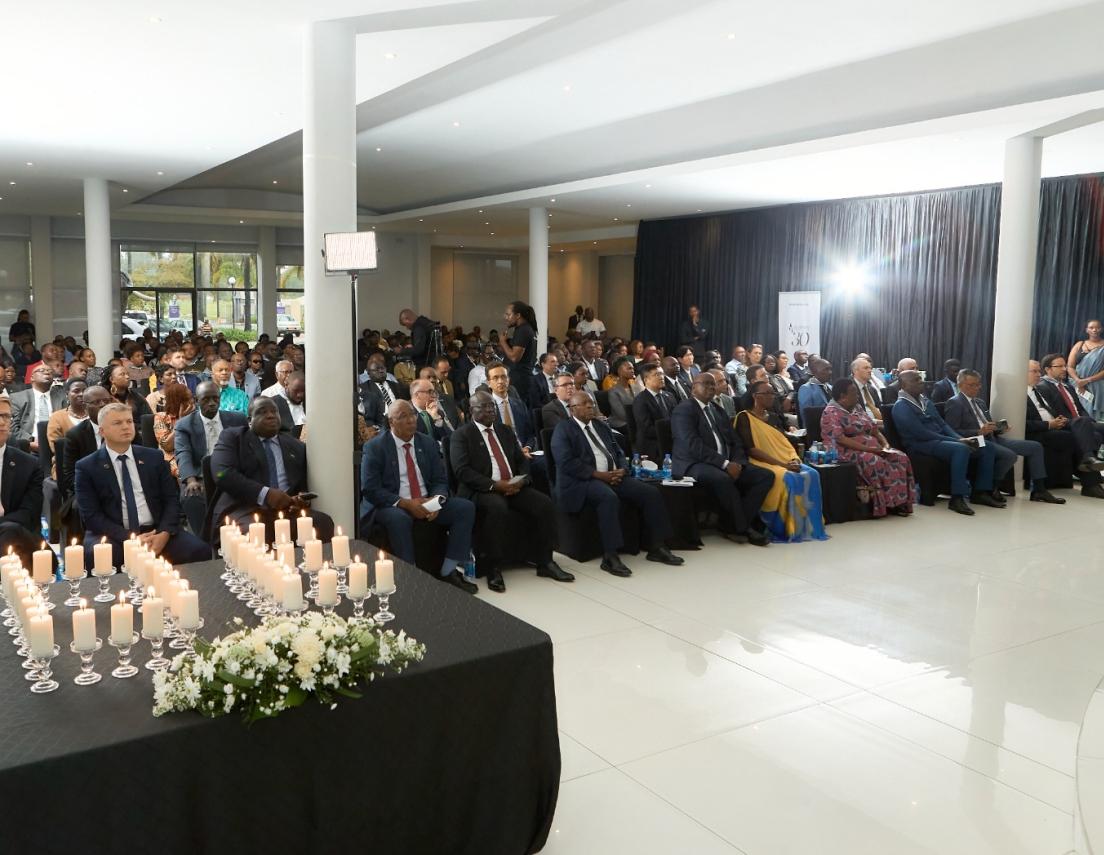
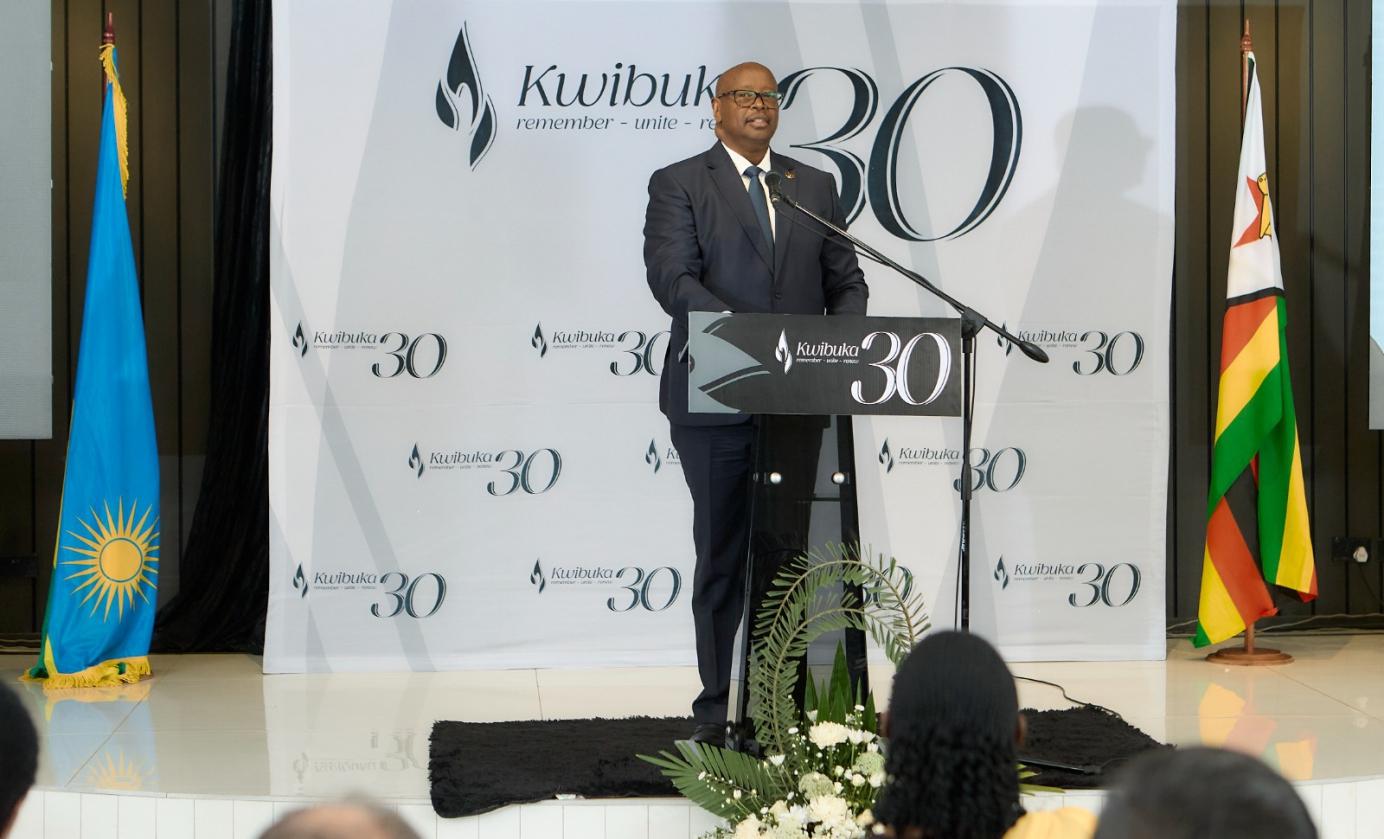
Marking the commemoraons in Harare recently, the Ambassador of Rwanda to Zimbabwe, Mr James Musoni said the remembrances honours all who stood against the genocide and provides
important lessons to all.
“The commemoraon of Genocide against the Tutsi is a global framework to honour the vicms, comfort survivors, and pay tribute to Rwanda Patrioc Army led by H.E Paul Kagame that stopped the Genocide and liberated Rwanda.
“It provides an opportunity for Rwandans and global community to stand together and draw lessons from Rwanda's tragic history with the goal of fighng genocide ideology, hate speeches and prevenng future
genocides around the world,” he said.
Ambassador Musoni saluted the people of Rwanda for emerging out of the dark chapter, a united force.
“As we commemorate the 30th anniversary of the genocide against the Tutsi, we also celebrate 30 years of resilience, unity, and reconciliaon with a whole new generaon of Rwandans aspiring for a future free of hatred and built on the principles of a shared identy (NDI UMUNYARWANDA) that is commied to fight and prevent the resurgence of any form of hatred and divisive polics,” he said Guest of Honour at the event, Mr Pearson Chigiji, Chief Director, Polical Affairs, Ministry of Foreign Affairs and Internaonal Trade expressed Zimbabwe's solidarity with the people of Rwanda and commended the unity that prevails in the country
“Our presence today, at this commemoraon, is not only a demonstraon of our solidarity with you and your country, Dear Ambassador, but this is also our way to express our admiraon to your country's visionary leadership under President Paul Kagame, in steering Rwanda towards naonal healing, reconciliaon, peace, as well as
8 The Diplomat May/June ...to page 9
...from page 9
“The commemoration of Genocide against the Tutsi is a global framework to honour the victims, comfort survivors, and pay tribute to Rwanda Patriotic Army led by H.E Paul Kagame that stopped the Genocide and liberated Rwanda,”Ambassad or of Rwanda to Zimbabwe, Mr James Musoni.
inclusive and sustainable development.
Chigiji said: “It can only take extraordinary strength and will power to overcome such profound pain and loss,” adding that the world should shun the barbaric acts that began on 7 April, 1994.
He also commended the developments that have taken place in Rwanda since the genocide and the bilateral relaons between Rwanda and Zimbabwe.
“Aer thirty years gone by, the great milestones that Rwanda has made are there for everyone to see. Rwandans have emerged from this genocide, a reunited and focused people who are
grounded on the posive ethos of unity, tolerance, social cohesion, and inclusive development.
“As we commemorate this sad but important event on your calendar, it would be remiss not to reflect and express sasfacon at the level of bilateral cooperaon that exists between our two countries.
In parcular, I wish to note that, in pursuit of deepening cooperaon, several Agreements and Memoranda of Understanding have been signed to promote close cooperaon in various economic, social, legal and polical areas of mutual interest.”
The Diplomat May/June 9
EMBASSY PANORAMA
Ambassador of Rwanda to Zimbabwe, Mr James Musoni
DIPLOMAT INTERFACE
UK Ambassador to Zim or honorary Zim Ambassador?
...The fascinating tale of Ambassador Peter Vowles
In this instalment of Diplomat Interface, we bring you lifestyle excerpts from the conversaon the Brish Ambassador to Zimbabwe, Peter Vowles had with netzines on #AnAudienceWith a plaorm presented by Mike Tashaya. The wide-ranging interview also touched on trade, immigraon, internaonal relaons, science and technology and below are excerpts of the interview.
In this instalment of Diplomat Interface, we bring you lifestyle excerpts from the conversaon the Brish Ambassador to Zimbabwe, Peter Vowles had with netzines on #AnAudienceWith a plaorm presented by Mike Tashaya. The wide-ranging interview also touched on trade, immigraon, internaonal relaons, science and technology and below are excerpts of the interview
Queson: Thank you so much for gracing our space and we are humbled to have you as our guest. Surely, with your status and agreeing to do this is humbling. I have a number of quesons for you our esteemed guest and some are personal and some professional. First where did you grow up?
Answer: I was born in Oxford and spend the first nine years of my life in the United States and France. My father was a salesman for a US tractor
company. Then we moved and seled just outside Ipswich in the East of the UK. I went to school in Ipswich.
When I finished school, I came to Zimbabwe where I taught in a rural school in Mudzi. I went back to the UK and started university, but to be honest, I realised that I wasn't much of an academic and I wanted to come back to Zimbabwe. I raised money to come back and worked in Guruve for a summer. Back at university, I was restless and spent most of my me figuring out how to come back to Zim. Finally, I got a job in Murewa so, I quit university (much to the disappointment of my friends and parents!) and rented a house in the growth point with a view of Hurungwe Mountain. I spent the next four years in Zimbabwe before returning to the UK in 1999.
Returning to the UK, I decided that I wanted to connue
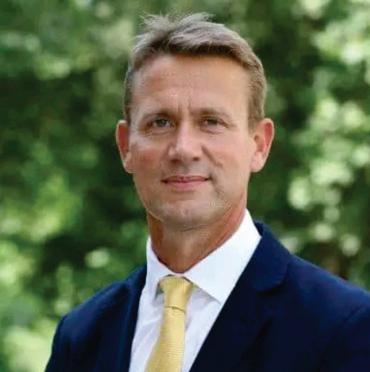
working on internaonal issues, but that I needed to improve my skills, so I joined the NHS Management Training Scheme, a two-year praccal leadership training programme alongside doing a Master's Degree. And from there - aer many failed applicaons - I finally got a trainee role with the World Bank health team, then with a private health consultancy programme and finally joined Government in 2006.
Since then, I've lived and worked in DRC, Kenya, Afghanistan, India, Bangladesh and Myanmar. But to answer your queson, I never thought I'd be an ambassador. But I did knew I would find a way to come back to Zimbabwe!
Q: Could you share with us some of the most memorable experiences from your me teaching in rural Mudzi and working on community projects in Guruve and Murewa?
10 The Diplomat May/June ...to page 13




EU's 'Global Gateway' initiative invests over US$600 million in Zim
SHELMA SIBANDA
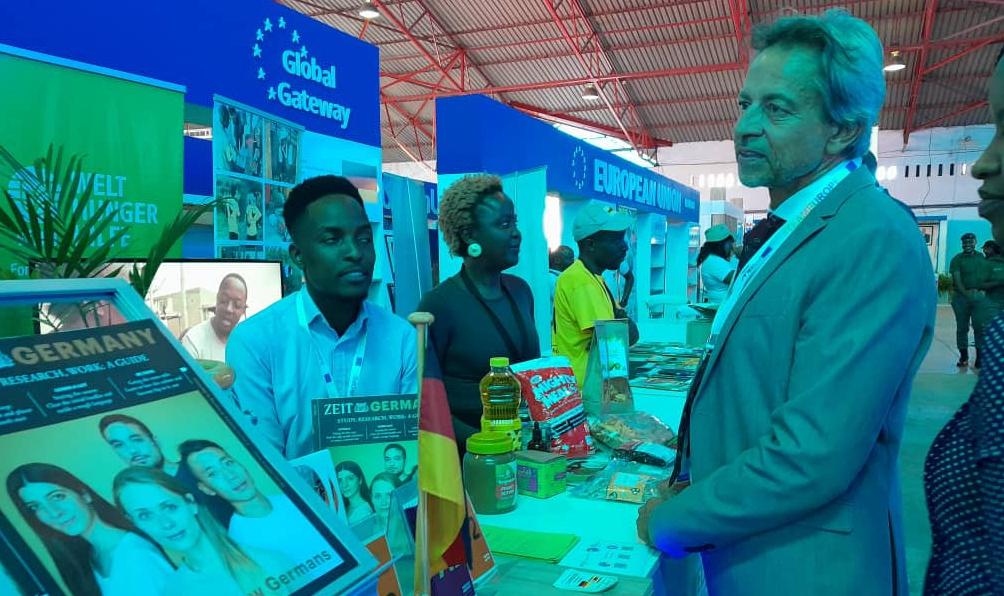
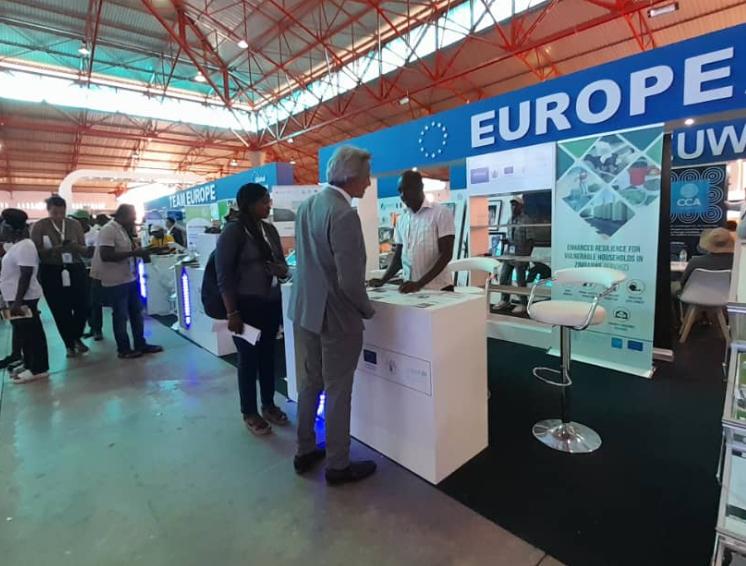
The European Union (EU) is invesng over US$600 million in Zimbabwe's key sectors through its “Global Gateway” iniave, promong sustainable development.
In an exclusive interview with The Diplomat, the Ambassador of the European Union to the Republic of Zimbabwe, His Excellency Ambassador Jobst von Kirchmann, revealed that under the overarching concept of Global Gateway, the EU has undertaken various projects in Zimbabwe, with a current investment of over US$600 million.
Under the comprehensive umbrella of the Global Gateway concept, the EU is focusing on crucial areas such as health, educaon, culture, youths and agriculture.
Ambassador Kirchmann said: “All our engagement in Zimbabwe falls under what we call Global Gateway with these enlarged terms, sustainable connecvity, and sustainability We have currently ongoing, over US$600 million projects. It covers different areas. It covers health, educaon, culture, youth and many other areas.”
Among the flagship iniaves, the Ambassador highlighted
two key programmes. The first one aims to empower women and promote gender equality, with an investment of over 200 million euros. The second programme focuses on green and climate-smart agriculture, with an investment of over 250 million euros. These iniaves contribute to overcoming challenges posed by factors such as drought and create employment opportunies and boost trade.
Ambassador Kirchmann added: “Now two specific iniaves, which are our flagships, the first one is on women empowerment and
INTERFACE 12 The Diplomat May/June
DIPLOMAT
gender equality to over 200 to 210 million euros and the other one is on green and climate-smart agriculture with over 100 to 250 million euros.”
He stressed the importance of these iniaves, parcularly in addressing challenges such as drought, unemployment and trade-related barriers.
“What we do helps first of all is investment, creang jobs, and therefore also trade,” he stated, highlighng the interdependence between investment and trade.
The Ambassador also highlighted the EU's efforts to support value chain development in Zimbabwe. The EU's investments, channelled through the European Investment Bank, aim to enhance the country's capacity to add value to raw materials. This support has already yielded success stories, including the start-up funding provided to a leather producon company in Bulawayo, which is now exporng its products to Spain
“Yesterday, I visited a leather producon firm based here in Bulawayo, which we are supporng and which we, at one me, gave start-up funding. I'm very happy to see that they were growing from doing a couple of shoes into producing for the Zimbabwe market and regional market and now also being able to export finished products to Spain. I think that's a fantasc success story”
In addion, the Ambassador expressed pride in the fact that the EU is currently the largest buyer of Zimbabwean horculture products. He aributed this achievement to the systemac support provided by the EU to various horculture value chains. This support includes investments through the European Investment Bank, which offers longterm funding with low-interest rates, and assistance in fulfilling export requirements.
DIPLOMAT INTERFACE
...from page 13
How did these experiences shape your perspecve on Zimbabwe?
A: Professionally, my me in Zimbabwe was life-changing for me. Living in rural communies I got to see - for a short me and obviously from a posion of privilege - the world from a different perspecve. I saw and felt how services were delivered whether in the school or our local clinic; I understood first hand transport challenges; the challenge of working in the evening with no electricity; I understood the impact of the 1992 drought etc. These experiences really shaped my subsequent career in development, and I hope have given me a different perspecve. On a more personal note, I loved being invited by the vakuru (elders) to join them sing in a circle under a tree to share a bucket of Chibuku, to join the community for a plate of sadza and nyama (meat) and playing slug (minisoccer) aer work with my colleagues. I could go on...
Q: Besides 'haifiridzi' which other Zimbabwean food/drink do you enjoy?
A: I genuinely enjoy a simple plate of sadza nyama with muriwo (vegetables). Though I find it harder to do in Harare, I love stopping off en route somewhere for nyama goch goch. I had some fantasc mazondo in Mutoko not so long ago. I haven't had any recently but remember loving meals with dovi (peanut buer). And I enjoyed the sadza rezviyo I made for the #highfiridzi challenge too.
In terms of drinks, I feel like I grew up drinking Mazoe! The borehole at the school was quite brackish and mazoe was essenal to ensure I got enough
...to page 19
The Diplomat May/June 13
'Warzones' long after war
Grappling with landmines
in Zimbabwe
LAVENDER CHANDISAREVA
“The inial contaminaon covered an area of 310.65 square kilometres, translang into a linear distance of approximately 850km with an esmated three million mines laid below and above surface.”
Landmines and other explosive remnants of war remain a serious threat to the safety, health, lives and livelihoods of people living in the proximity of contaminated areas, years aer conflicts.
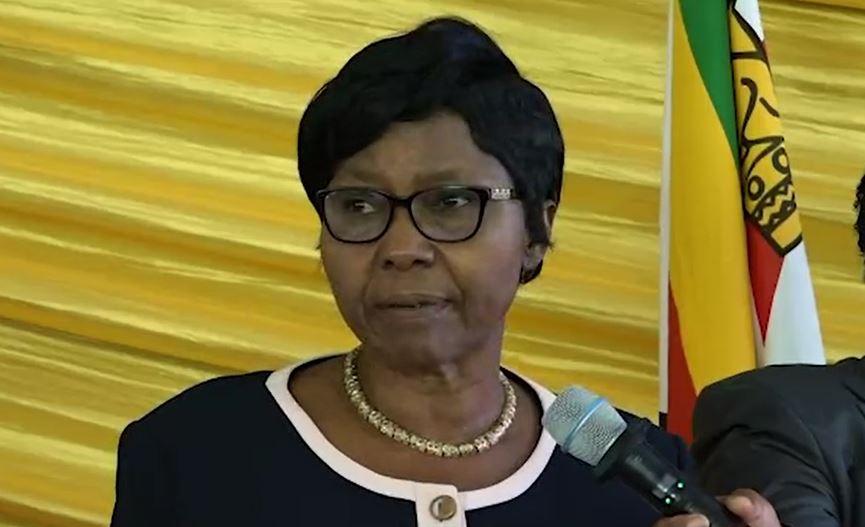
Speaking during commemoraons to mark the Internaonal Day for Mine Awareness and Vicm Assistance, the Minister of Defence, Oppah Muchinguri-Kashiri said Zimbabwe, like many countries across the world, has endured the devastang impact of land mines for far too long.
“The scars le behind by these insane weapons are a stark reminder of the long-lasng consequences of conflicts and wars,” said Minister MuchinguriKashiri.
According to Zimbabwe Mine Acon Centre (ZIMAC), “The landmine
challenge in Zimbabwe is traced back to the war of liberaon that culminated in the aainment of independence in 1980.
“At the peak of the liberaon struggle from 1976 and 1979, the then Rhodesian forces laid minefields along the Northern and Eastern borders of Zimbabwe with the aim of prevenng the infiltraon of freedom fighters into the country from Mozambique and Zambia respecvely. The inial contaminaon covered an area of 310.65 square kilometres, translang into a linear distance of approximately 850km with an esmated three million mines laid below and above surface.”
Impact on community
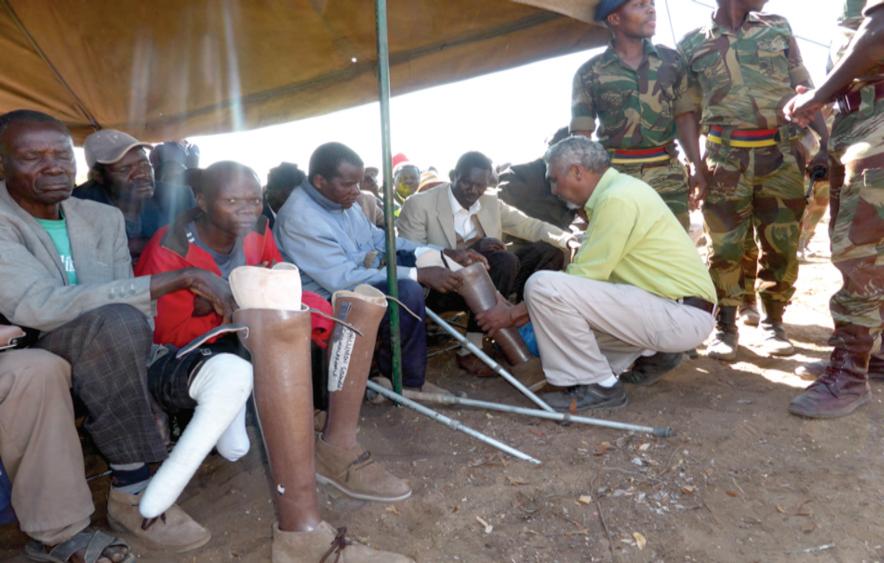
One of the partners in the demining exercise Halo Trust remarked that these unfenced minefields have killed or injured many people and more than 100 000 cale have been lost.
The organisaon added that while the loss of humans is huge, the loss of cale has also threatened livelihoods.
Halo reiterated that at mes, children take long detours to school every day to avoid crossing contaminated areas.
According to another partner covering the Sengwe Wildlife Corridor, APOPO: “The landmines pose a serious threat to wildlife such as elephants, lions, and wild dog as well as local communies who desperately need the land for grazing and agriculture.”
This was also echoed by Minister Muchinguri-Kashiri, who said: “These landmines are a real
...to page 15
SPOTLIGHT 14 The Diplomat May/June
Minister of Defence, Oppah Muchinguri-Kashiri
danger both to human beings and to wildlife. Living in the proximity of contaminated areas is a nightmare.
“It is like living in a war zone, more so for deminers who pay supreme sacrifice to clear some of these mine fields. Although the land mines gorge affects all of us in different ways, most vulnerable are women, children, the disabled and the elderly who live in fear day by day.”
Rising above the challenges
While Zimbabwe is sll grappling with the challenge of landmines45 years aer the liberaon war, the country has made significant progress in demining and creang safer places for people living in the affected communies.
“Our dedicated mine acon teams are working relessly to clear contaminated areas, educate communies on the risks caused by landmines, and assisng vicms of mine-related acts by providing them with all the necessary services to make them live normally.
“I urge all of us to redouble our efforts and make the lives of vicms of land mines much more comfortable,” remarked Minister MuchinguriKashiri
“As of 31 March 2024, and with assistance from our cooperang partners, we had cleared 294.091 square kilometres, which translates to 94.9% of the inial affected area of 310.66 square kilometres,” explained Minister Muchinguri-Kashiri. Remaining 15.75 square kilometres, translang to 5.1% were earmarked for compleon by end of 2025, a target that is no longer achievable, mainly due to a financial funding gap,” explained Minister Muchinguri-Kashiri.
Support to Vicms
Minister Muchinguri-Kashiri said while considerable progress has been registered in mine clearance, the other pillars of mine acon, like mine risk,
educaon, vicm assistance, advocacy and stockpile destrucon deserve equal treatment.
“Among other intervenons, parcular aenon needs to be given to vicms of landmines. Vicms of landmines require not only physical rehabilitaon but also counselling services to help them overcome the associated trauma and also to make them become economically effecve and acve again.
Unfortunately, not much has been achieved in these areas as a result.
“I urge all of us to redouble our efforts and make the lives of vicms of land mines much more comfortable,” remarked Minister Muchinguri-Kashiri
She also commended the work being done by the Ministry of Public Services, Labour and Social Welfare which leads the counselling and rehabilitaon of vicms of landmine partners and efforts of other stakeholders, government departments and agencies, civil society organisaons, internaonal partners and individuals who are contribung towards making Zimbabwe mine-free.
However, Minister MuchinguriKashiri highlighted gaps in the War vicms Compensaon Act restricng fair compensaon of all vicms.
“So, currently, the Ministry of Public Service, the war vicms and the Ministry of Veterans of the Liberaon struggle, are working together to amend the War Vicm's Compensaon so that they will also compensate
...to page 17
SPOTLIGHT The Diplomat May/June 15
...from page 14
Transforming African agriculture
Unlocking potenal, promong inclusive growth, ensuring food sovereignty
SHELMA SIBANDA
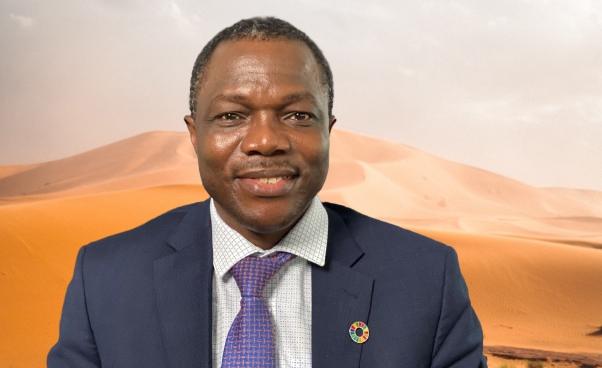
United Naons Development Programme (UNDP) Resident Representave to Zimbabwe, Dr Ayodele Odusola, has highlighted the potenal of agriculture as a springboard for development in Africa.
While presenng on the topic “Revitalising African Agriculture as a Tool for Inclusive Development Through Innovaon at Africa Symposium held at the Zimbabwe Internaonal Trade Fair recently, Dr Odusola emphasised the importance of product diversificaon in lowincome countries, stang that they can use agriculture to produce a wide range of agricultural products based on their geographical and climac zones.
He said: “And the opportunity is there for all types of countries in Africa to use it as a springboard of their development in so many ways, the low-income countries can use it to promote what you call product diversificaon so that we can produce even agricultural products based on the geographical and climac zones we have.”
He pointed out that leveraging the opportunity of agroprocessing is crucial for middleincome countries as well. By enhancing agricultural producvity, Dr Odusola argued, the dignity of people can be improved, prosperity can be promoted, and the protecon of the planet can be
guaranteed.
“Through agricultural producvity, and enhancement, we can enhance the dignity of people. We can promote prosperity and also protect the planet,” said Dr Odusola.
Dr Odusola referred to a comparave analysis conducted on eleven different countries across Africa, four in Asia, and three in Lan America, highlighng the profound lessons of this analysis.
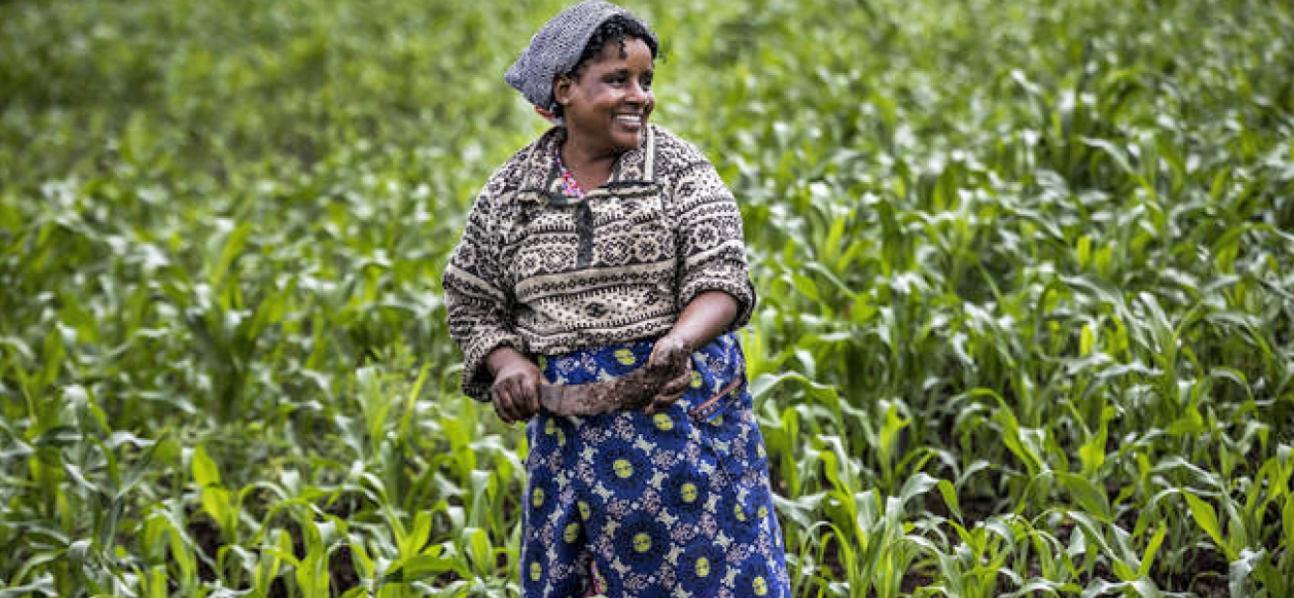
He said increasing the producvity of small-scale farmers is key to agricultural transformaon.
Addionally, he emphasised the importance of ensuring that farmers are fully integrated into naonal, regional, and global
...to page 15
SPOTLIGHT 16 The Diplomat May/June
...from page 16
markets, saying: “And also, it is really very, very important to ensure that farmers are fully integrated into the naonal, regional and global markets.”
Dr Odusola discussed Africa's comparave advantages in agriculture, including the fact that the connent hosts 60% of all ulised arable land in the world. However, only 12% of Africa's arable land is effecvely ulised, which is paradoxical considering the high levels of poverty and hunger in the region. He also menoned Africa's natural resources, such as the presence of the longest river in the world and the second largest river in terms of water volume, as well as the largest man-made lake with fresh water
Addressing external challenges, Dr Odusola noted that the share of agriculture in Africa's GDP is an indicaon that the sector is underperforming, as more transformed agriculture tends to contribute less to GDP. He also highlighted the disproporonate share of labour in agriculture compared to the total labour force in the country, stang that in Africa, it ranges from 60% to 90%.
Furthermore, Dr Odusola slammed Africa's dependence on imporng food that can be produced locally, saying the connent spends 62% of its foreign exchange, amounng to US$78.1 billion annually, on food imports. He argued that this is a waste of resources that could be used to promote local food producon.
Dr Odusola stressed the need for transformave iniaves in agriculture and idenfied four crical areas for development: adopon of technology, including research, development and irrigaon; improvement of small-scale farmers' capacity and capability; producvity enhancement through technological advancements like precision agriculture; and the promoon of climatesmart agriculture.
...from page 15
those that are affected or injured by these landmines.
“So, efforts are at an advanced stage to make sure that principles of the amendments are put in place, and they will be put through Cabinet so that the necessary amendments will take place and they will benefit accordingly,” said Minister Muchinguri-Kashiri.
Mr David Jairos, from Nyamapanda Border, one of the vicms, who shared his story, pleaded for assistance from the government.
“I am no longer able-bodied as before. Looking at my homestead, I am unable to build it like what others are doing. We are looking for help from Donors or Government to assist us since we are no longer able to do it.
“The Halo Trust came and assisted us with hampers, wheelchairs, crutches and movers. They also cleaned our area. Government should empower us so that we stop asking for help every me,” he said.
Innovaon in mine clearance
The Halo Trust Zimbabwe Community Liaison Manager, Akim Kaitano said they are developing new innovaons for safety and easy working condions in mines.
“Off late, the deminers were excavang the mines though with all the protecve clothing they will be wearing but now, we have micro excavators, humans no longer dig for the chimbambaira (landmines), we are using machinery
“In terms of me, it is faster than a human being. For instance, a person can take 30 minutes digging the ground while the machine can dig 60 mines per minute,” he said.
Zimbabwe's demining efforts have been successful due to the government's mine acon strategy and support from local and internaonal partners, including the Halo Trust, Apopo, GICHD, Oak Foundaon, World Without Mines, Irish Aid, Norwegian People's Aid, Mines Advisory Group and the governments of Japan, United Kingdom, Australia and Switzerland.
SPOTLIGHT The Diplomat May/June 17
UNDP Resident Representave to Zimbabwe, Dr Ayodele Odusola
Overcoming barriers through purpose and conviction The inspiring story of Tracy Nhayitayi
ANGELINE DIMING0
Woman married off into a polygamous relaonship at 15, becomes a beacon of strength and
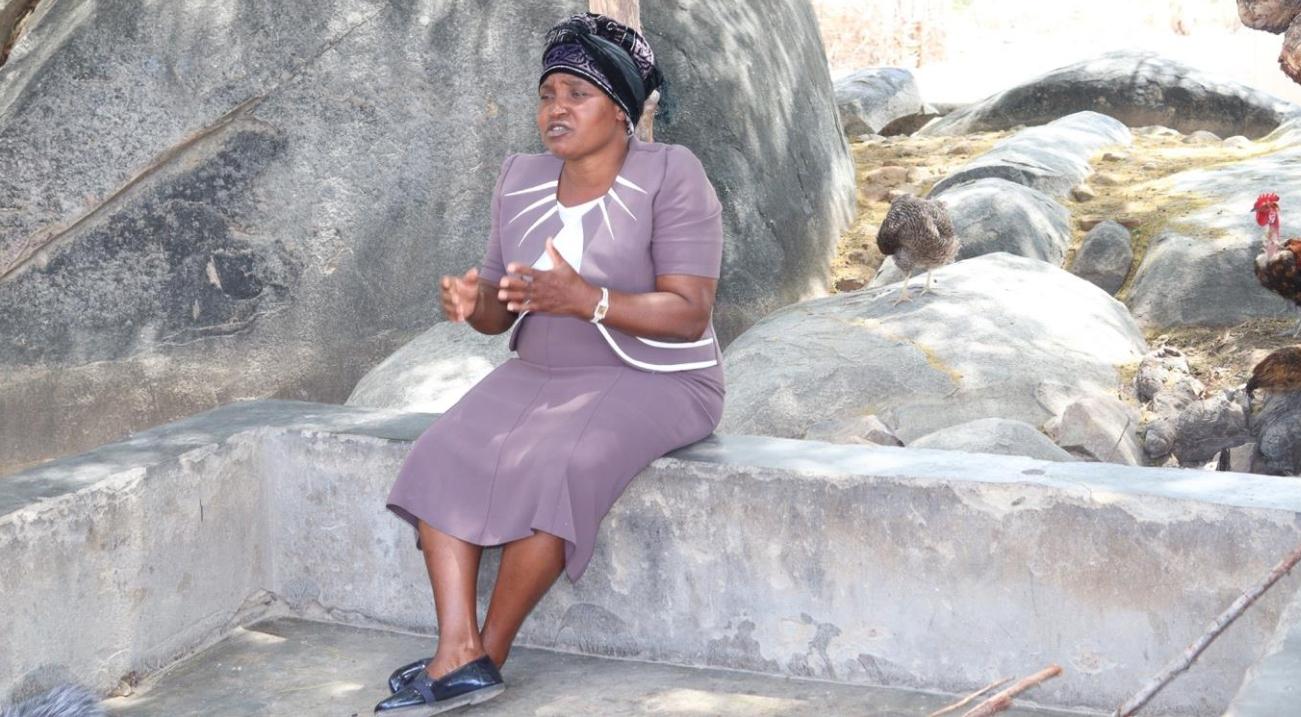
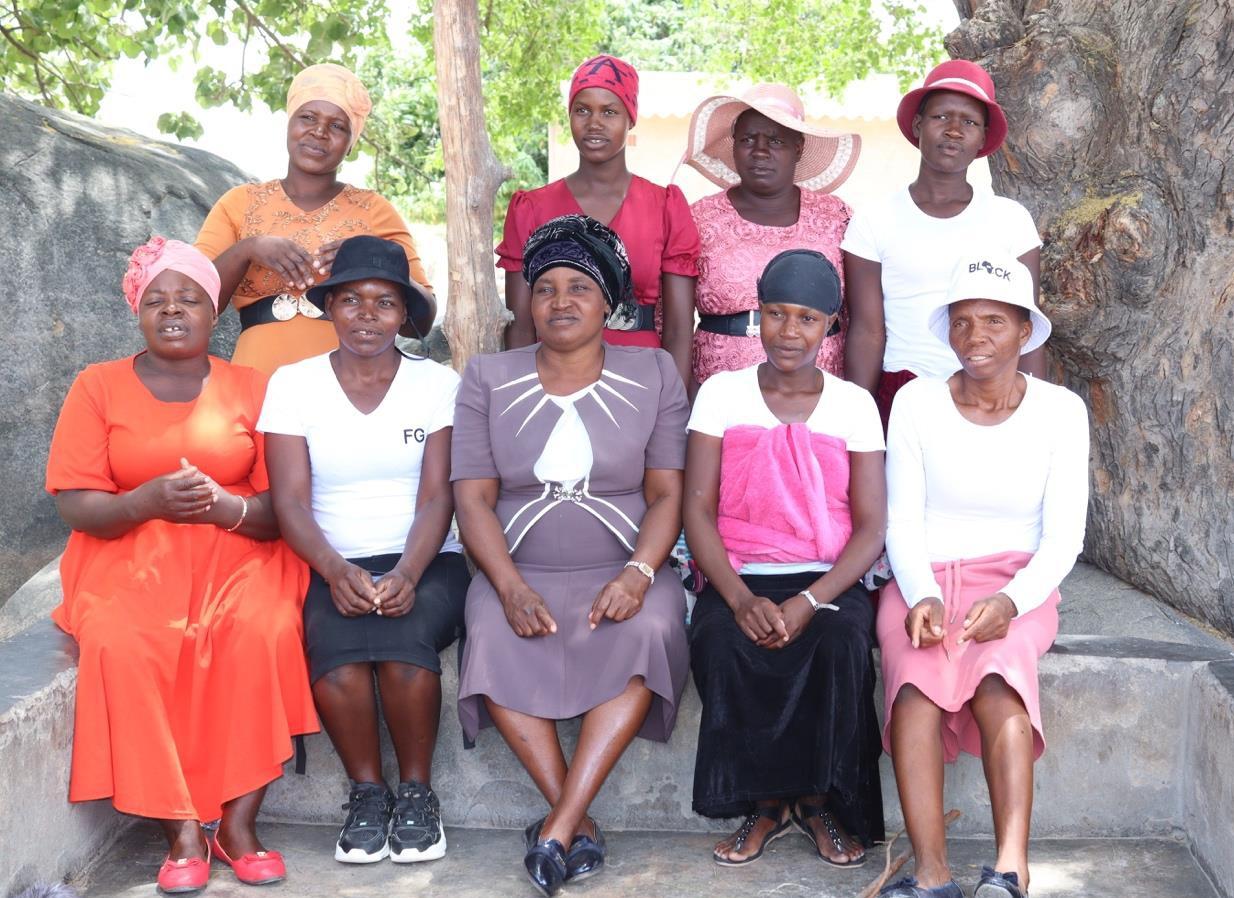
Tracy Nhayitayi, a 51-year-old woman has defied the odds and emerged as an influenal matriarch in her community. With significant contribuons towards educaon, acvism against early child marriages, provision of safe water and business, Tracy has become a beacon of strength and empowerment for the women and girls in Chinhuwo Village in the Buhera District of Manicaland Province in Zimbabwe.
Married off at the tender age of fieen, Tracy is the first of Nyasha Mwandiyambira's nine wives. She is a mother of fieen children and grandmother to thirty-five. She leads a family of over a hundred inclusive of her stepchildren, daughters-in-law but
exclusive of sons-in-law.
While polygamous families are usually infamous for hate, rivalry fights, backbing and unnecessary compeon, Tracy has defied the odds by playing a pivotal role in harmonising the family and creang empowerment opportunies from within the household.
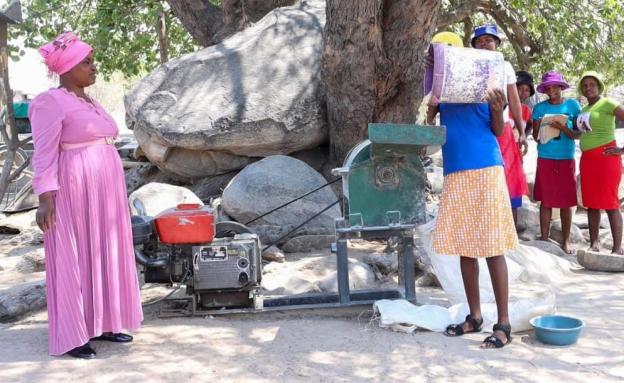
Tracy collaborated with seven of her co-wives and three of her daughtersin-law to start a Village Savings and Lending Associaon. The associaon also received a loan boost from one of the local banks. This partnership led to the establishment of poultry projects, a tuck-shop business and successively the acquision of a grinding mill. With training in leadership and
...to page 19
SPOTLIGHT 18 The Diplomat May/June
...from page 19
financial management from a local branch of Care Zimbabwe Internaonal, these ventures have provided financial stability for her large family. “This is serious business; we record all transacons for accountability purposes because it is the major source of our livelihood. We no longer depend on our husband for school fees and general upkeep of our children,” said Tracy.
The women share defined roles and responsibilies within the projects and are at liberty to run individual projects apart from the collecve projects. However, the young inexperienced wives prefer to be engaged in the collecve projects on a full-me basis as they feel that they are yet to learn from the family elders. Twenty-year-old co-wife and mother of one, Ruth Chigara, expressed her gratude. “I work at the grinding mill project as the miller, and I get paid on commission. As wife number eight, I had the fear of geng the intruder and rival treatment, but to my surprise, I was not only accommodated as a part of the family, but I also became gainfully employed. I have learnt to be self-reliant, and I do not have to fight with our husband over my day-today needs,” she said.
These business ventures have not only empowered these women to become selfsufficient and independent but have assisted the community through the provision of convenient services.
Addionally, the projects and the support they received from the local bank also brought excitement and exposure to the banking system to the previously disadvantaged community
...from page 22
...from page 13
liquid in the hot Mudzi months. Controversially, only orange flavour though (handidi kunwa cream soda, peach etc!). I like Zimbabwean clear beers - Castle by choice and I enjoyed the experience of drinking opaque beer (chibuku) enough to start enjoying it!
I've also recently been enjoying some of the newer drinks available in Harare - Happy Culture's cucumber and mint Kombucha is parcularly good (healthy but expensive!)
Q: What kind of music do you listen to?
A: I have always listened to Zimbabwean music ever since I was first here, listening to Leonard Zhakata, Leonard Dembo, Simon Chimbetu, Andy Brown, Thomas Mapfumo and of course Oliver Mtukudzi
I used to listen to them on the bus to Nyamapanda, at the bole store and at friends' houses/ homesteads powered off a car baery. I used to see Tuku live in Harare and occasionally at Murewa Hotel. When I le Zimbabwe, I le with all of them on tape and subjected friends across the world (from Kabul to Dhaka to Edinburgh).
I loved seeing Mapfumo and Tuku in London (but found it odd that we had to sit down to “watch” them at the Barbican). Zim music is for dancing.
Of course, I've other music interests - but the bulk of what I listen to is Zimbabwean or Congolese. I spent three years in Kinshasa and loved rumba, soukous, ndombolo and kwasa kwasa. Bob Marley, Horace Andy and Jonny Clark also feature a fair amount.
I am afraid I haven't really got into Amapiano or Zimdancehall. But I did go to Rusape (Vengere Stadium) earlier this year to see Jah Prayzah, Sugar Sugar and Alick Macheso. Was great fun but I had to leave before Macheso came on, so I am looking forward to seeing him - hopefully when he is playing Mutoko next!
But showing my age, Leonard Zvakata's Mugove, Batai Mazwi and, of course, Hupenyu Mutoro are the best. I love the lyrics, the moral messages and dancing! I recall many bole store evenings with these as our soundtrack. Full interview on Mike Tashaya’s Facebook page.
SPOTLIGHT The Diplomat May/June 19
Untold stories from rural areas
- The hidden costs of menstrual health
 PAMELA MACHIDHA
The problem is even worse in situaons where girls are raised by a single father. They find it difficult to ask for money to buy sanitary pads.
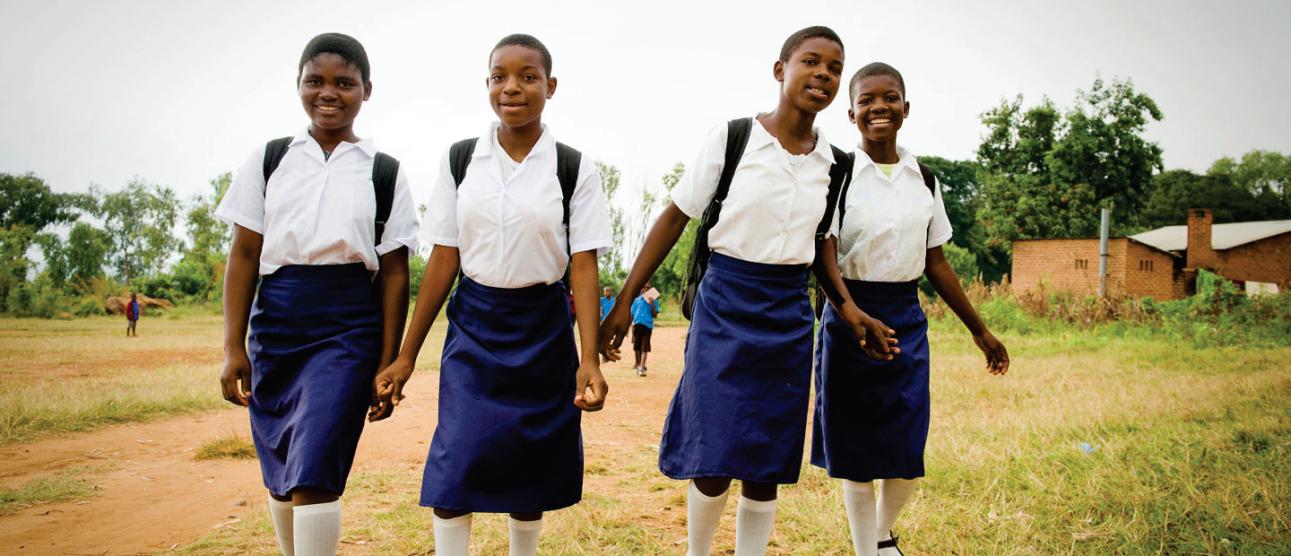
Girls in Zimbabwe's rural areas face immense challenges in accessing menstrual health products. Lack of proper livelihoods, coupled with devastang effects of the drought, have le families struggling to put food on the table, let alone procuring menstrual pads.
Girls in Chief Negove's area in Mberengwa are not spared either, they cannot manage their periods with dignity and comfort.
In an interview with the Diplomat, Primrose Nyangoni, the senior woman at Murerezi High
School in the Midlands district, and founder of the Differently Abled Iniave Foundaon (DAI), explained how the lack of safe and hygienic sanitaon facilies compounds shame and sgma for girls when they menstruate.
“Lack of access to sanitary products and proper sanitaon not only causes embarrassment but also puts girls' health at risk. They are forced to use cow dung, piece of blouses and newspapers to manage their periods.
“Unavailability of menstrual hygiene products has far-reaching consequences that go beyond the educaonal sphere. ln addion to the fear of judgment from peers, girls are facing social isolaon, shame and loss of selfconfidence. This sgma is deeply entrenched and even young girls in primary school face the challenges,” explained Nyangoni.
She said the problem is even worse in situaons where girls are raised by a single father. They find it difficult to ask for money to buy sanitary pads.
“The situaon is even more challenging for the
...to page 23
SPOTLIGHT 20 The Diplomat May/June


Overcoming barriers through purpose and conviction
...from page 19
off into a polygamous relaonship at 15, becomes a beacon of strength and women economic empowerment
Pelagia Mutsvungami, the associaon's secretary, could not hold her excitement as she joyfully narrated the memorable experience of geng into a bank for the first me. “I could not believe it. Me in a bank? Making a transacon? It was a dream come true, I never thought I would ever find myself in a bank one day”
Notably, the independence of the formerly overwhelmed family patriarch also became a panacea to the potenal domesc violence exultance and tension
within the family due to financial constraints. “We no longer fight with our husband nor among ourselves over insufficient supply of food and resources. For example, we only had a single plough in the family, and we had to use it in turns. This usually resulted in chaos and fights. Now most of us bought our own and we have even lost track of the whereabouts of the family plough.”
Tracy's impact extends beyond her immediate family. Along with her fellow wives, she engages in
...to page 19
Woman married
SPOTLIGHT 22 The Diplomat May/June
...from page 22
humanitarian acvies such as serving meals at the local school, paying school fees for disadvantaged children, providing free staonery and donang cleaning materials.
In addion to her business acumen and philanthropic efforts, Tracy is a vocal advocate for important social issues. She acvely campaigns for educaon, speaks out against gender-based violence and child marriages, and promotes iniaves for climate change adaptaon and clean water provision. Such has helped raise awareness and bring about posive
change in her community
“We as adults should protect children. Yes, I was married off at the age of fieen and did not have access to educaon as a girl child, that was then and now mes have changed,” emphasised Tracy.
Despite facing adversity, Tracy is rising above her circumstances to becoming a source of inspiraon and hope for those around her. Her unwavering commitment to her family, community and social causes serves as a shining example of what can be achieved through perseverance and a strong convicon of purpose.
...from page 20
raised by single fathers who may have limited understanding of the physical and emoonal challenges of menstruaon.”
She emphasised that the cost of pads is just one part of the equaon for rural girls with disabilies.
“For rural girls with disabilies, the cost of menstrual hygiene products can be a significant financial burden, especially when combined with the cost of medicaon and other health care needs.”
Nyangoni noted that the cost of sanitary pads is significantly higher in rural areas than in urban areas, where a packet of 10 sanitary pads costs 50 cents or 60 cents in urban areas while in rural areas, the same pack costs US$1.
“The economic hardship of rural families is further exacerbated by high cost of sanitary pads which are oen marked up significantly by retailers in order to make a
profit.
“For families with five grown-up daughters, the cost of pads alone can be as much as US$15 per month, per child. This is especially difficult for families who are already struggling to make ends meet due to economic hardship and crop failure.”
She narrated how her organisaon reached out local businesses and organisaons who can sponsor iniaves to improve the lives of rural schoolgirls.
“We have reached out to local businesses, banks and mining companies in an aempt to find sponsorship but so far, our efforts have been unsuccessful. They may not be fully aware of the gravity of the situaon,” she said.
Nyangoni expressed gratude to the Ministry of Primary and Secondary Educaon for including menstrual hygiene products in the school budget.
“The Ministry of Primary's and Secondary Educaon's proposal to include hygiene products in school
budgets is a posive step.
However, in the case of Murerezi High School, the families are struggling to pay schools fees which is prevenng girls from accessing much-needed menstrual hygiene products.
“In order to beer support rural schoolgirls, the government could consider creang resource centres in each school, in each ward, equipped with sewing machines, materials for making reusable pads. These centres would be staffed by community members with experience in making reusable pads which can be sold at an affordable price.
“Addionally, girl-friendly toilets would be a valuable addion to these centres, allowing girls to stay clean and confident during their menstrual cycles. Parentteacher meengs could be an opportunity for senior women or female to breakdown some sgma and misconcepons around menstruaon,” she said.
SPOTLIGHT The Diplomat May/June 23
Take me back to Kariba where the sprawling lake meets the sky
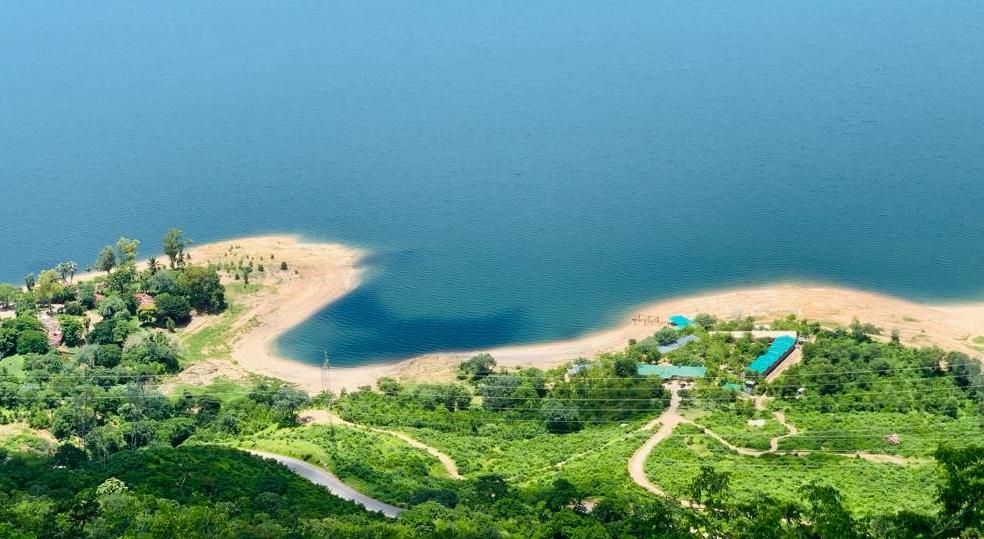
VALERIE TENDAI CHATINDO
The sun beats down on the dust-covered earth like a drummer. Unrelenng in its scalding blaze, a fiery combinaon of both heat and UV. It is hot! Yet something about this place soothes the soul. Its understated beauty and quiet humility. In the distance, the sprawling freshwater lake almost seems to join the earth to the sky, trees seemingly suspended in the air like the birds that hover above. Lake Kariba, home to the great and mighty snake river god, Nyaminyami, or so the Tonga within this region say
Kariba is the hub of acvity brimming underneath its facade of calmness. A dam producing thousands of megawas of electricity to power Zimbabwe and Zambia, a booming fishing and processing industry and the big game concealing themselves within the dense foliage. There is more to this place than what meets the eye. I first came to Kariba when I was in second grade with my parents when the economy afforded us the privilege of vacaoning regularly. My dad, a fishing fanac, opted for us to stay on water, in a rented houseboat for our three-day stay. It was amazing! Waking up
to the shards of light colouring the water gold and dining on bobbing and gently swaying waters was an experience. As someone who grew up in Victoria Falls, I wasn't at all perturbed by the great mighty crocodiles that slid lazily into the waters as we steered our fishing boat to well-known fishing grounds during the day. Call me mad, but I have a fondness for all God's creatures, cute and frightening. My trip this me around, with my few friends, is on a bit of a ght budget and I find that unlike the first, I want to do all the 'touristy' things. It's usually a six-hour drive from Harare to
TRAVEL & TOURISM 24 The Diplomat May/June
Kariba, passing through Chinhoyi and Karoi, but because we're on a picture snapping frenzy throughout the trip, we take eight hours to arrive at our desnaon. By the me we do, it is close to dusk and we are exhausted. Kariba hosts one of the best four-star rated hotels in the country, the Caribbean Bay Hotel, a feat of architecture built to resemble an Italian palazzo of sorts.
And in case you're wondering, this isn't my three-day home. Admiedly, I am made for the finer things in life, however my pocket limits me!
For an affordable price of US$80 per night, we book ourselves into the Waterfront Resort Hotel, which has its own nicees in the form of the friendly staff and the beauful scenery as it rests on the waterfront of the mighty lake. What a view!
By day two, we tour the dam wall and alternave border to Chirundu, we also visit the signal tower which is the communicaon front with all vessels on the waters and finally reach the famous view point which affords us a wider view of the totality of the dam.
It's sll only 12 noon and there's plenty of me to do more. We go on over to Marineland where we enjoy a wonderful and informave boat cruise on the lake with their amazingly friendly staff
Our day ends with a brief visit to the local crocodile farm owned by Padenga Holdings where we gaze upon the smelly and calculang cold-blooded crocs whose meat has become quite popular in Zimbabwe and skins fetch high prices in the fashion industry. I do not envy them at all.
All in all, it's an amazing adventure and short vacaon. Sure, we are more pigmented by the me we leave and naturally, very exhausted from all our vigorous acvity and dance with the sun but every second spent in Kariba has totally been worth every pricey penny.
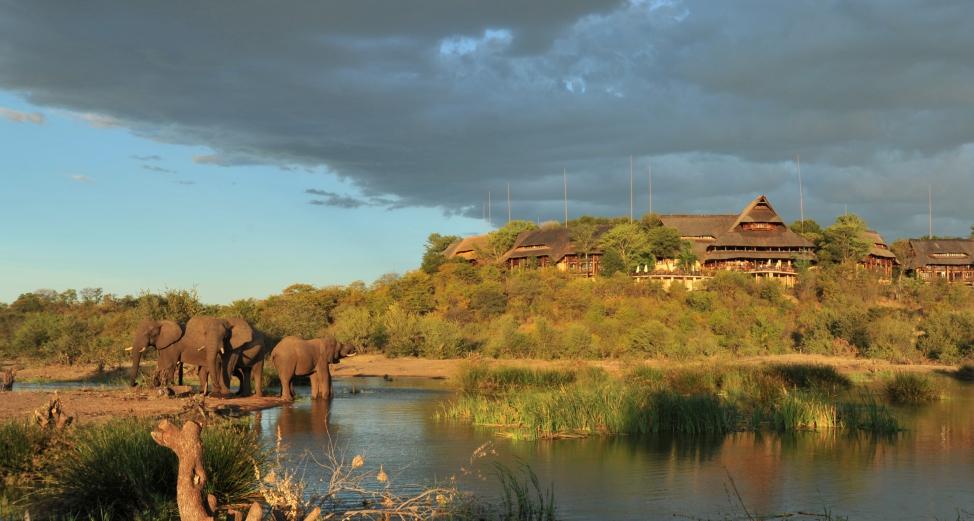
Victoria Falls Safari Lodge
Where wildlife, sunsets, and infinite views meet TRAVEL AND
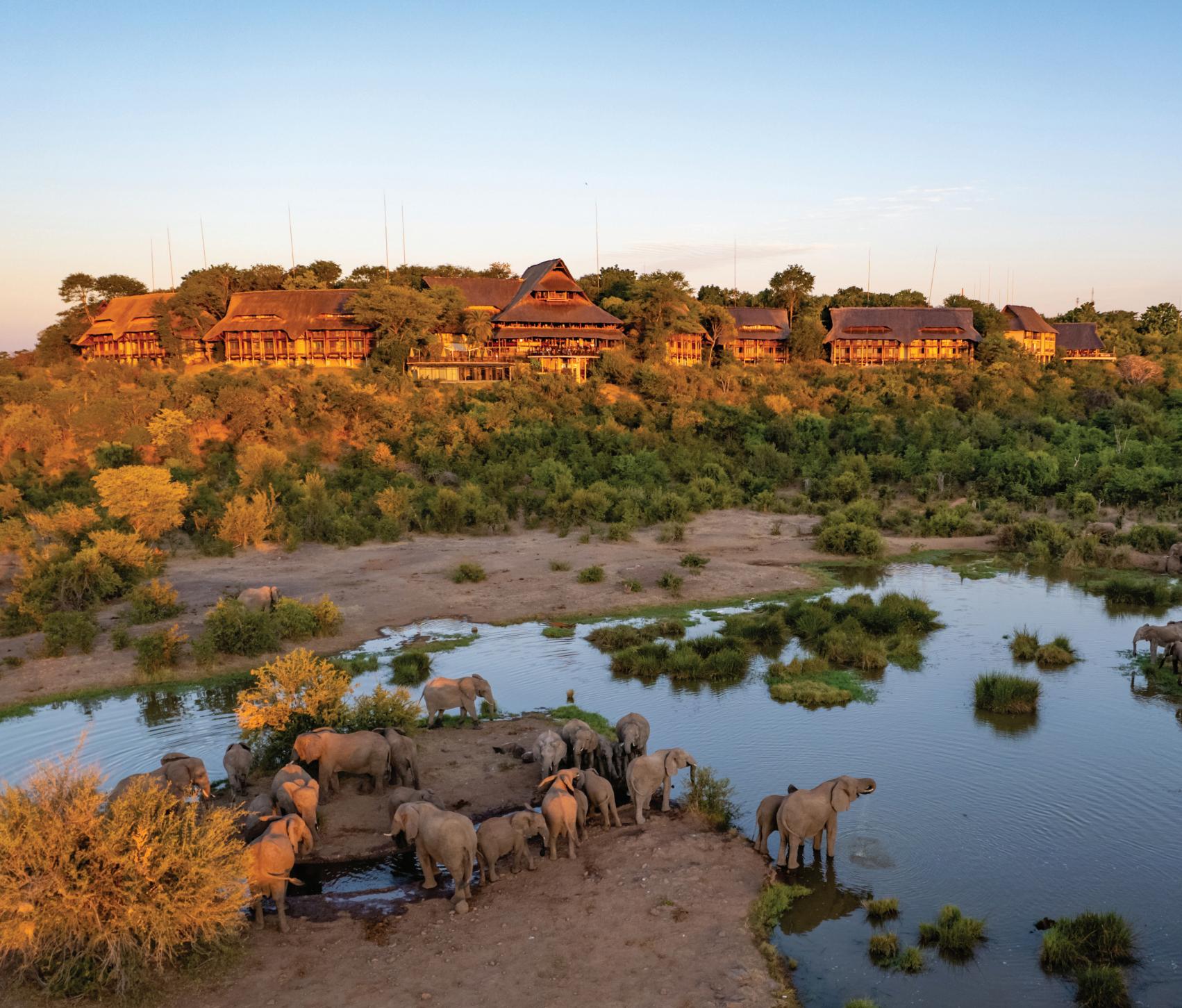
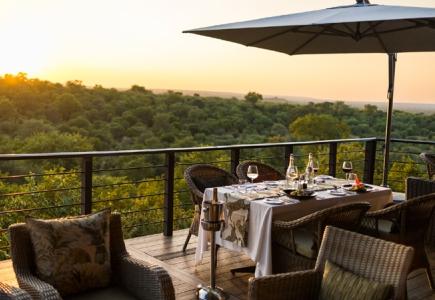
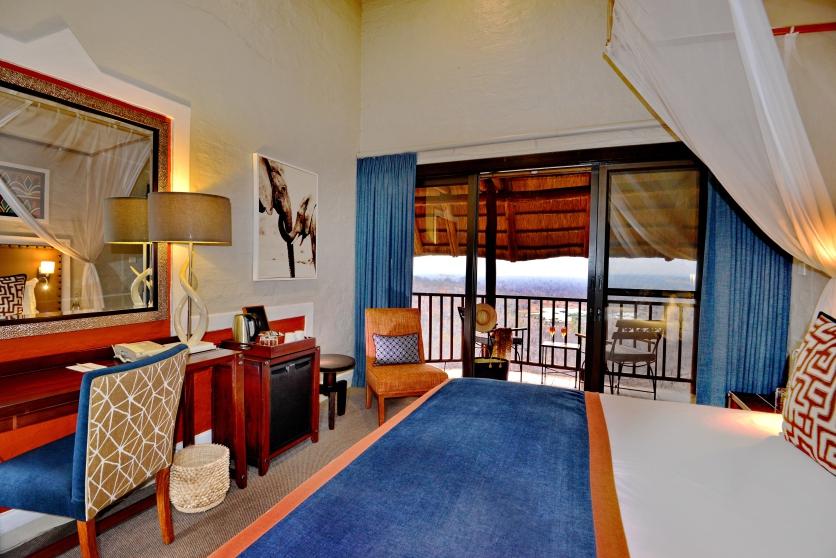
Perched on a plateau overlooking the Zambezi Naonal Park, Victoria Falls Safari Lodge stands as the flagship property of the Africa Albida Tourism (AAT) hospitality group. With 72 rooms facing the sunset and most boasng vistas of a wildlife-rich waterhole, this iconic lodge's seng promises an unforgeable experience that will create memories to last a lifeme.
AAT's porolio also includes the Victoria Falls Safari Club, Victoria Falls Safari Suites, Lokuthula Lodges, The Boma –Dinner & Drum Show and the Victoria Falls Safari Spa, all located on the Victoria Falls Safari Lodge estate, just 4km from the Victoria Falls.
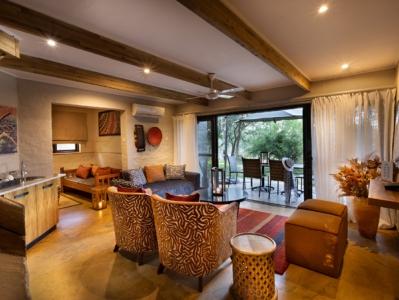
The premium 20-room Victoria Falls Safari Club, with its personalised butler-style service, two-ered swimming pool and fine dining restaurant, offers a haven of luxury. For families and small close-knit groups, the six spacious double-storey Victoria Falls Safari Suites, set amidst natural bush surroundings, are an ideal accommodaon choice, and overlook a small waterhole frequented by bushbuck, warthogs, and a myriad of bird species.
The Diplomat May/June 25
TOURISM
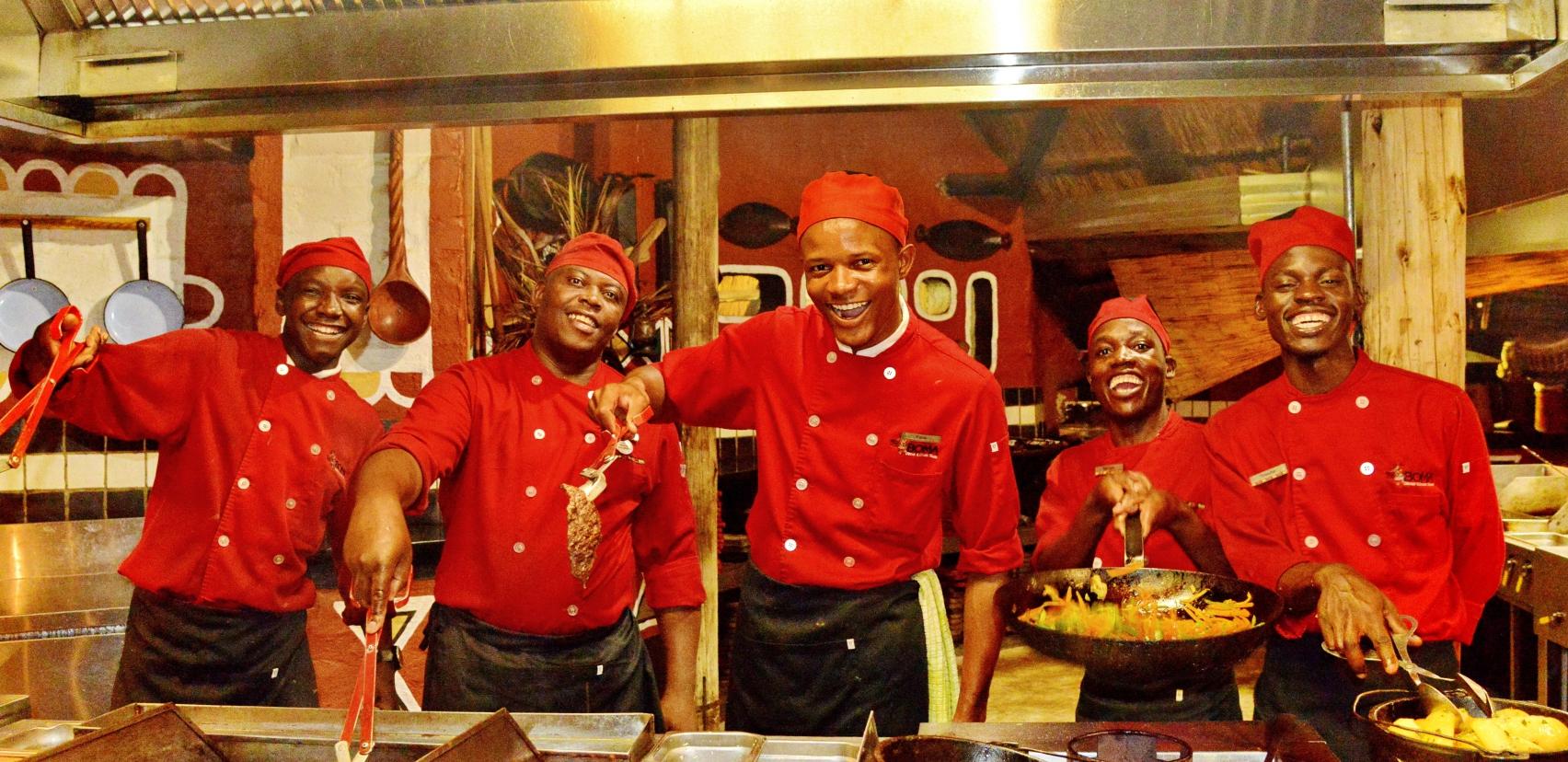
The family-friendly and valuefor-money two and threebedroom Lokuthula Lodges are surrounded by lush gardens and feature a swimming pool and children's play area. These lodges may be booked on a self-catering or bed and breakfast basis.
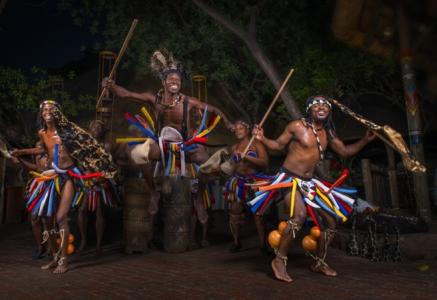
Immersing guests in the vibrant culture of Zimbabwe, The Boma – Dinner & Drum Show tantalises the senses with its fusion of food and music. This extraordinary dining experience, complete with a four-course meal, an interacve drumming show and spectacular tradional dance performances, captures the very essence of Zimbabwean hospitality.
Nestled within tranquil
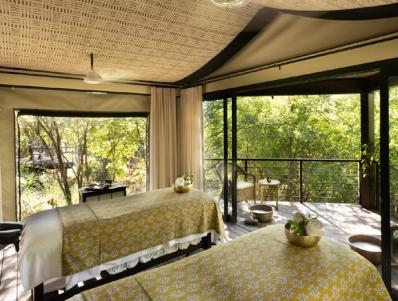
indigenous woodland, the Victoria Falls Safari Spa is an oasis of relaxaon. From manicures to facials and massages, this purpose-built spa offers a range of rejuvenang treatments amidst the soothing sounds of nature.
With its unrivalled blend of luxury, natural beauty and cultural immersion, AAT invites guests to discover the wonders of Zimbabwe's top tourist desnaon.
& TOURISM 26 The Diplomat May/June
TRAVEL
DIPLOMAT AWARDS
12 years of Awarding excellence in Diplomacy
STAFF REPORTER
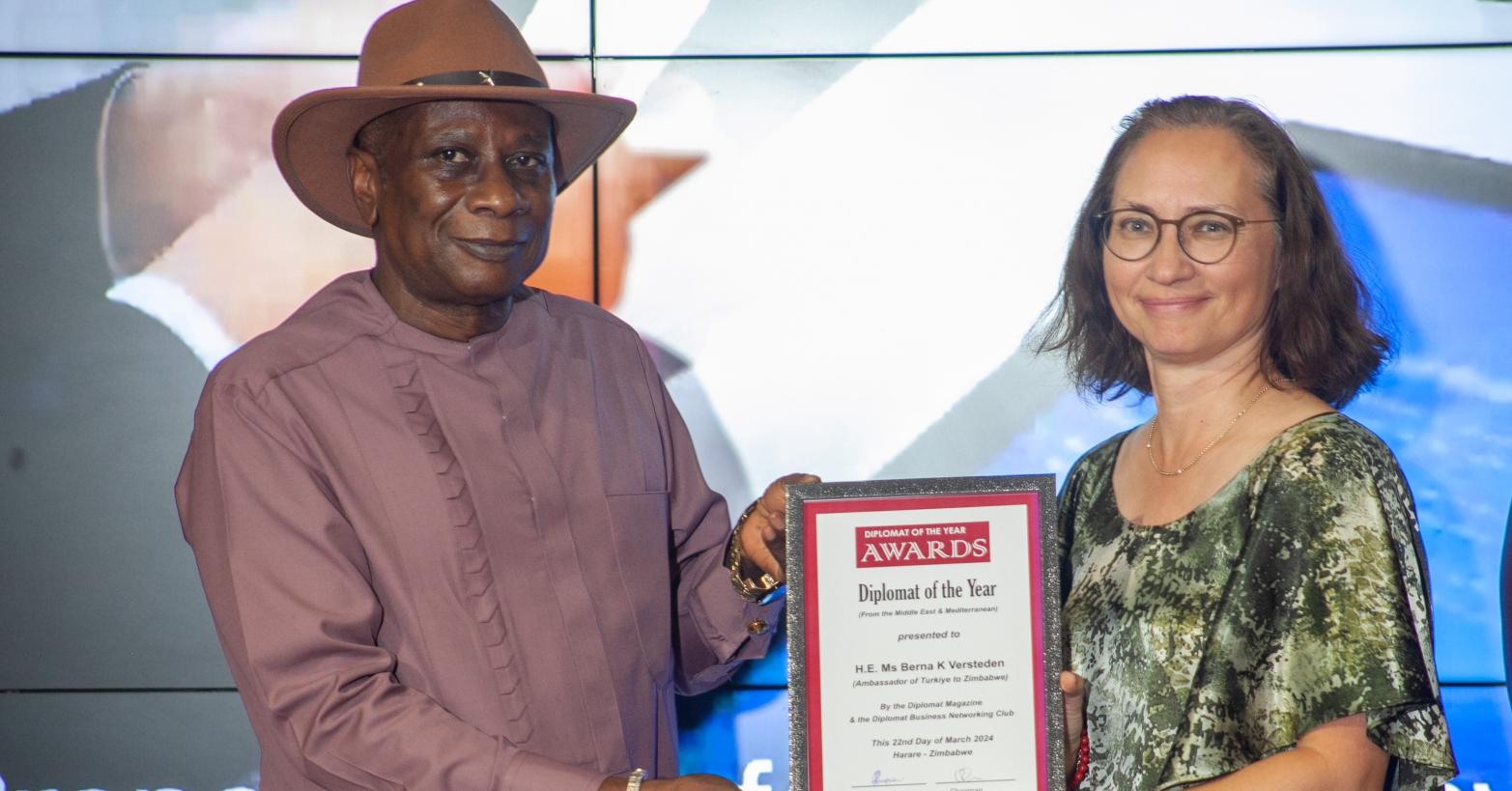
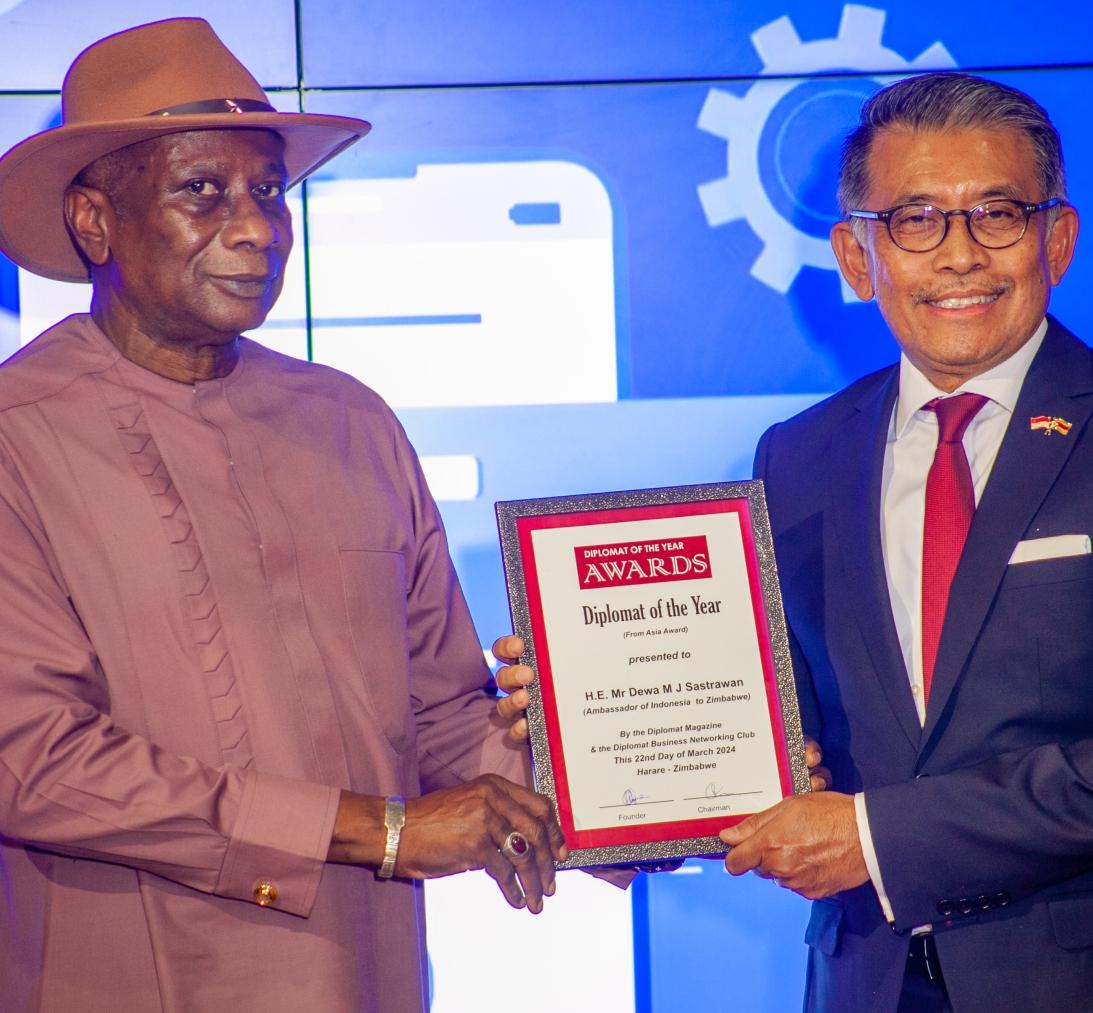
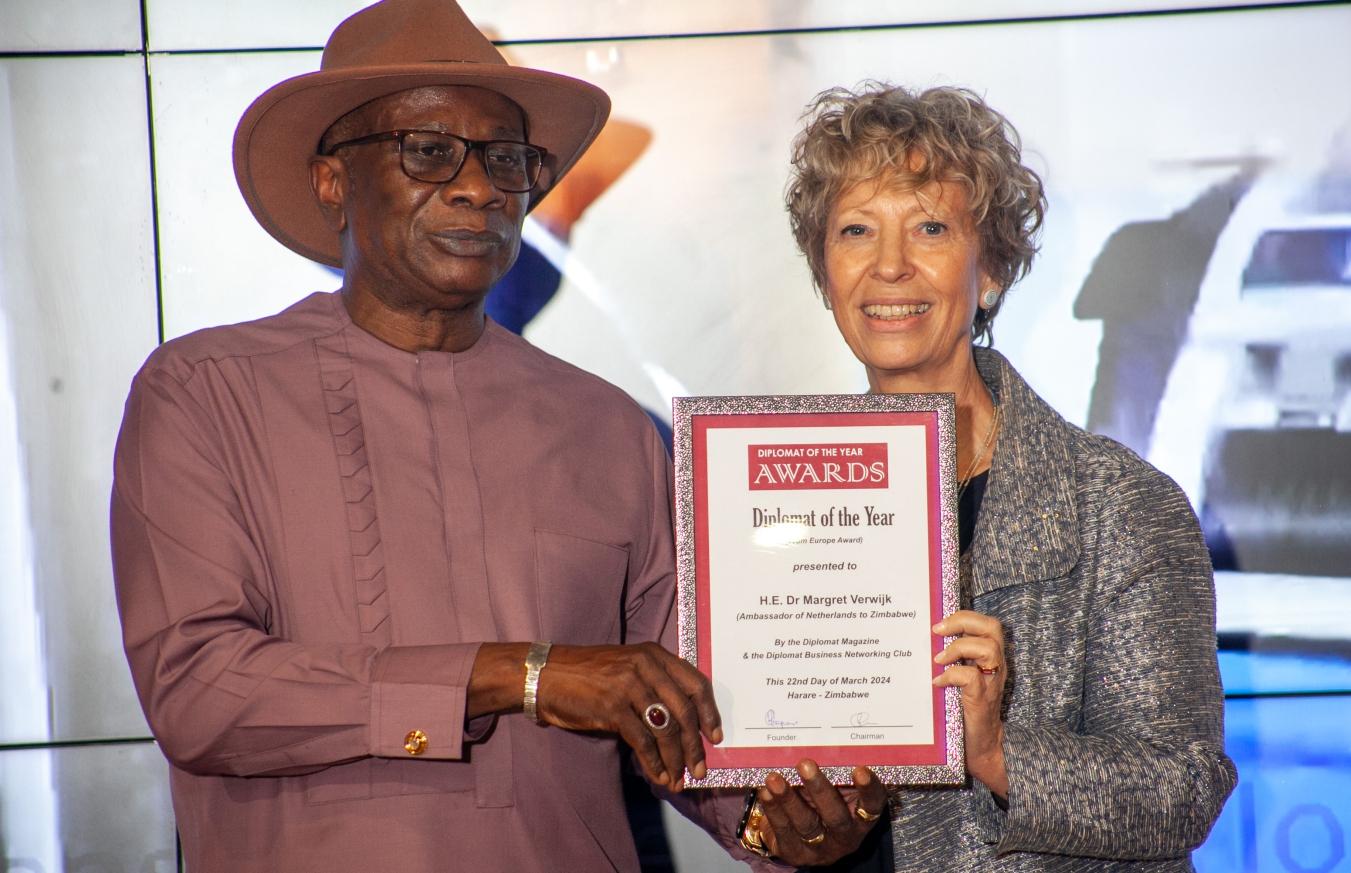
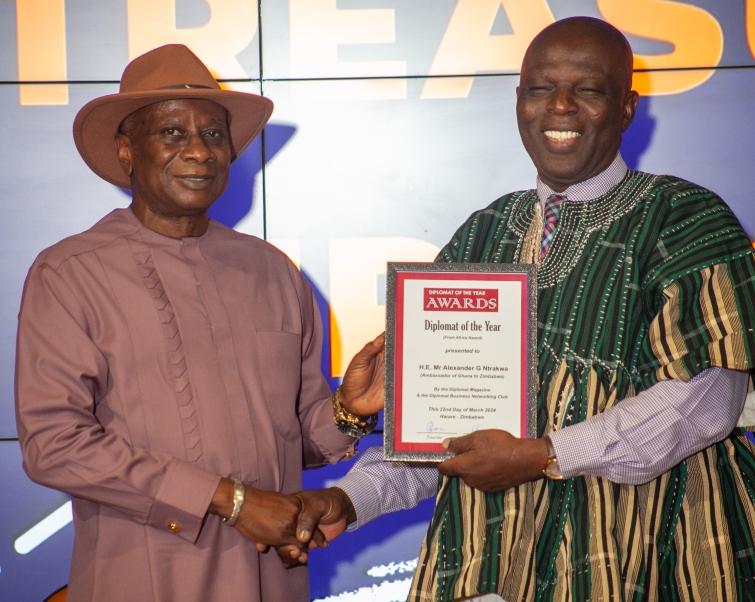
The Diplomat of the Year Awards have, since incepon in 2012, honoured 155 ambassadors from 25 missions accredited to Zimbabwe and brought together over 3 500 guests from the diplomac community, business, government and development agencies.
Diplomat of the Year Awards founder, Reginald Chapfunga said this has been a story of consistency and persistence.
“Being endorsed by embassies and governments represented in Zimbabwe has not been easy. It takes consistency, hard work and professionalism. Even
in the hardest of mes, we felt obligated to honour outstanding ambassadors making an impact on Zimbabwe and its people.
Starng in 2012, with only a few ambassadors, the event grew to become one of the biggest events on the diplomac calendar
“Besides the ambassadors one of our biggest recipients was the late former President of Zambia, H.E Kenneth Kaunda,” said Chapfunga.
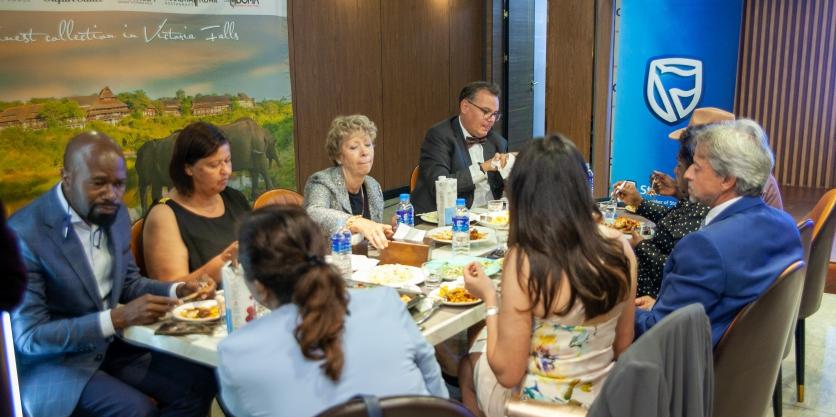
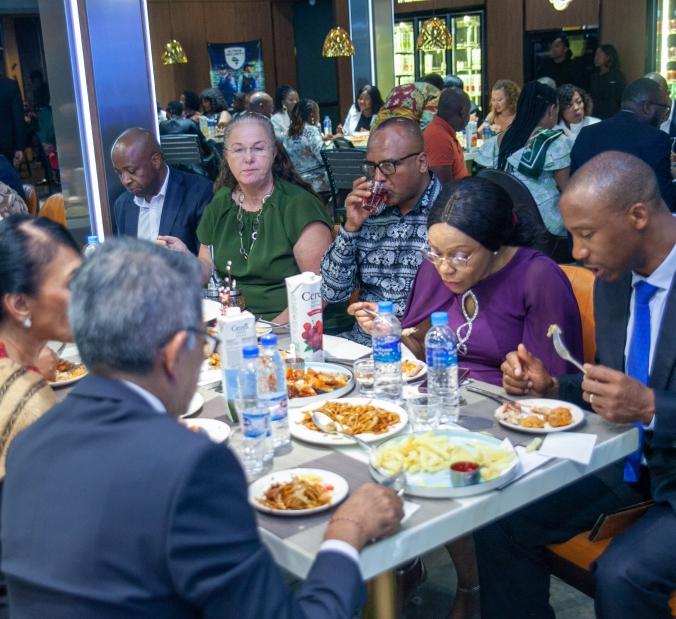
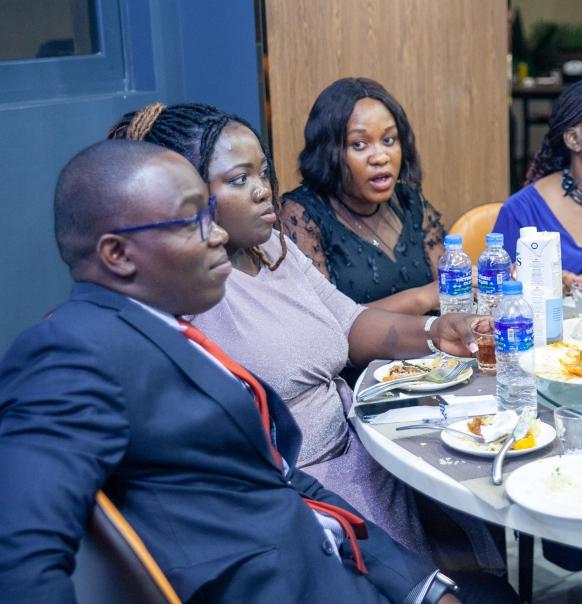
The 2024 edion of the Awards dinner and ceremony held recently at Tongfu Restaurant in Harare lived up to billing, aracng over 200 guests.
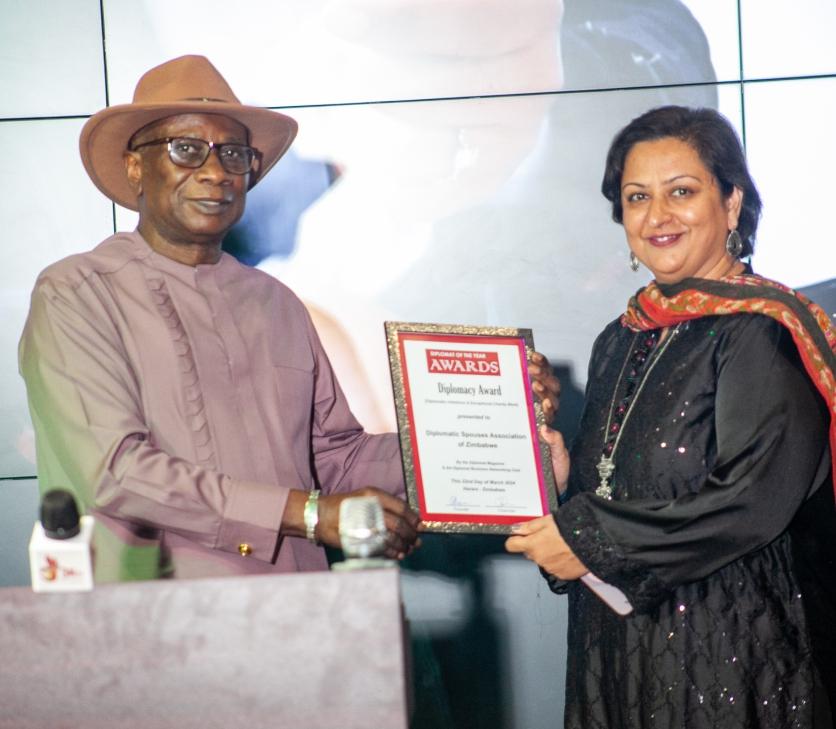
Ten ambassadors, one head of mul-lateral organisaons and three non-profit organisaons that have been spearheading the aainment of the SDGs were also recognised.
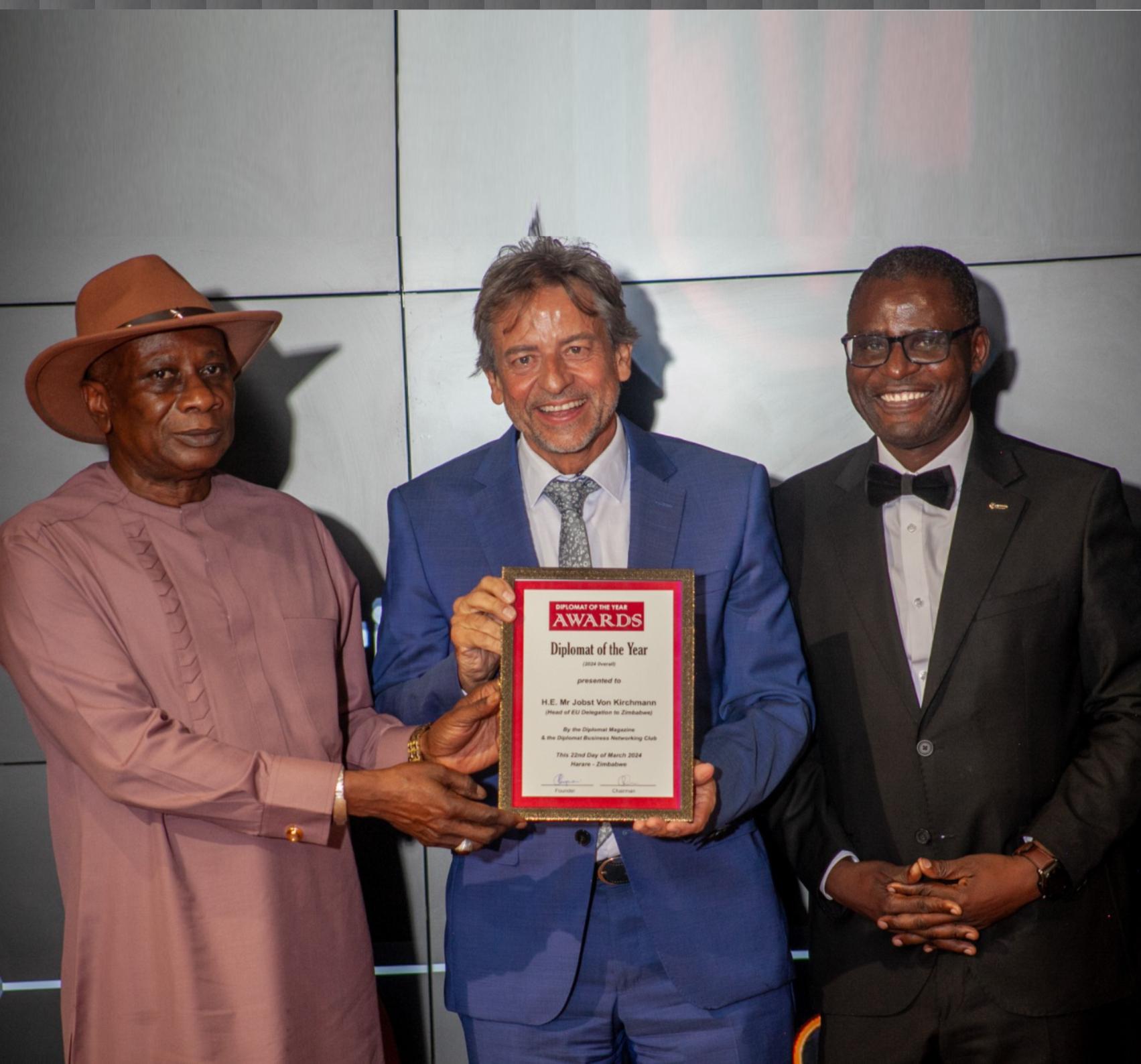
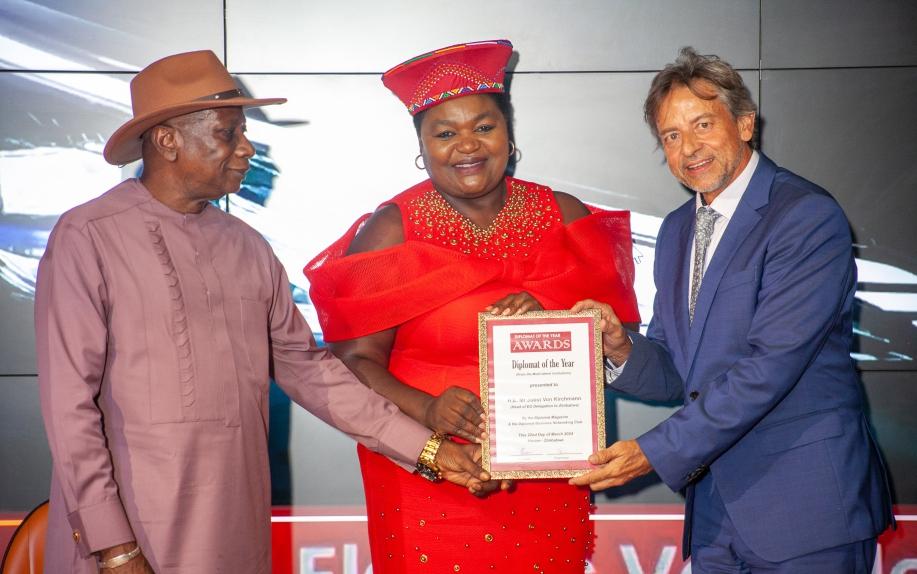
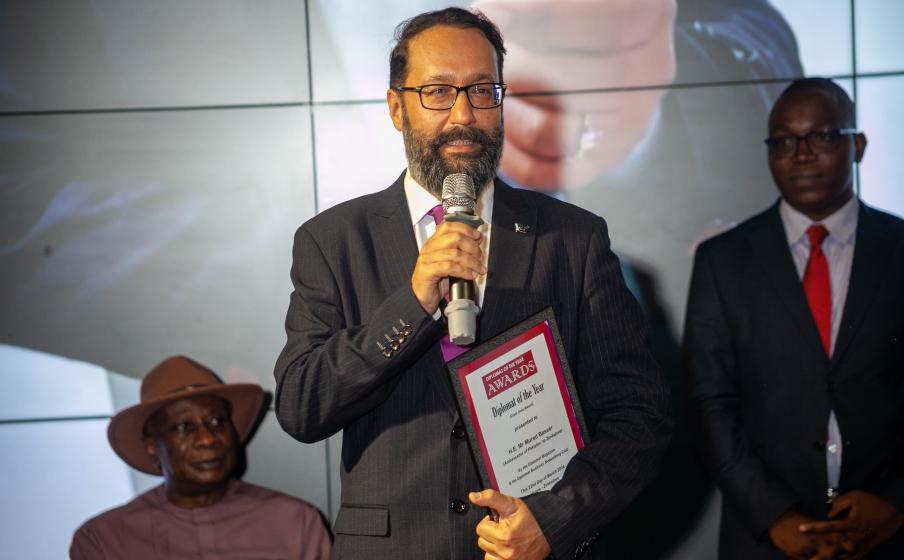
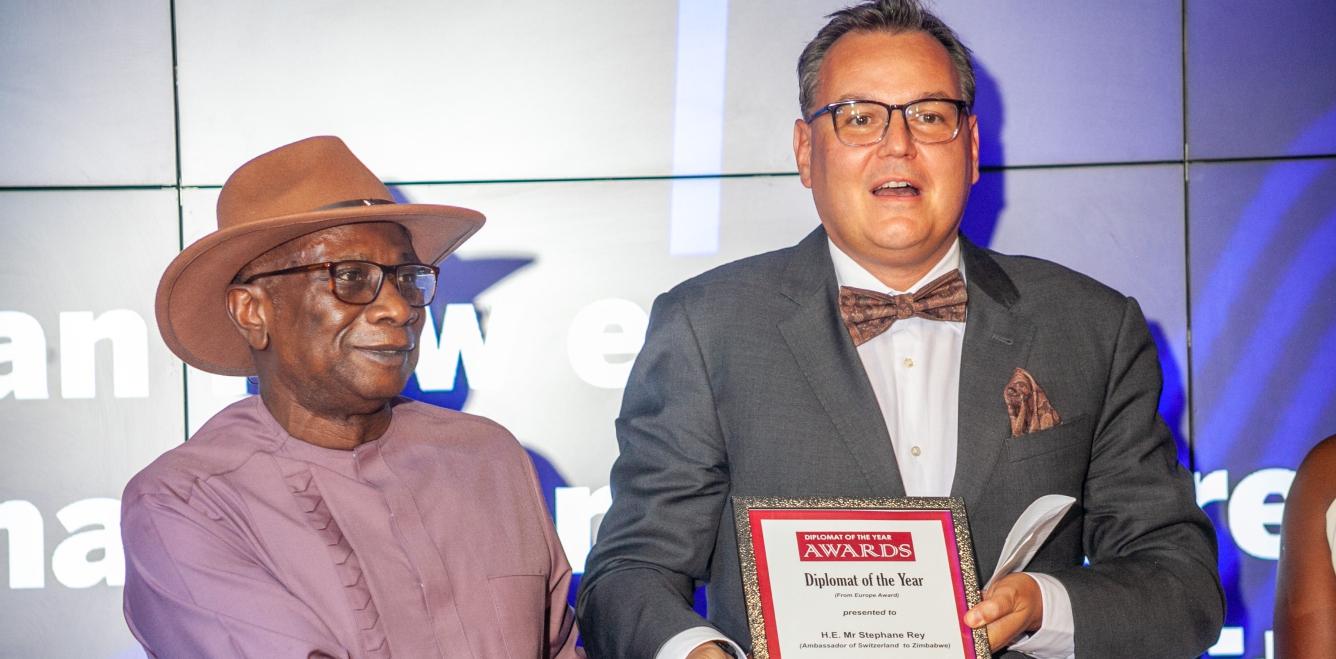
The Diplomat of the Year Awards were established in 2012 by Diplomat Magazine with the prime objecve of celebrang the contribuon of all diplomats in Zimbabwe to the development of the country and its people. Representave of the European Union to the Republic of Zimbabwe, Ambassador Jobst von Kirchmann won the 2024 Diplomat of the Year Overall Award.
The Diplomat May/June 27
Diplomat Awards ceremony spotlights localising Summit of the Future
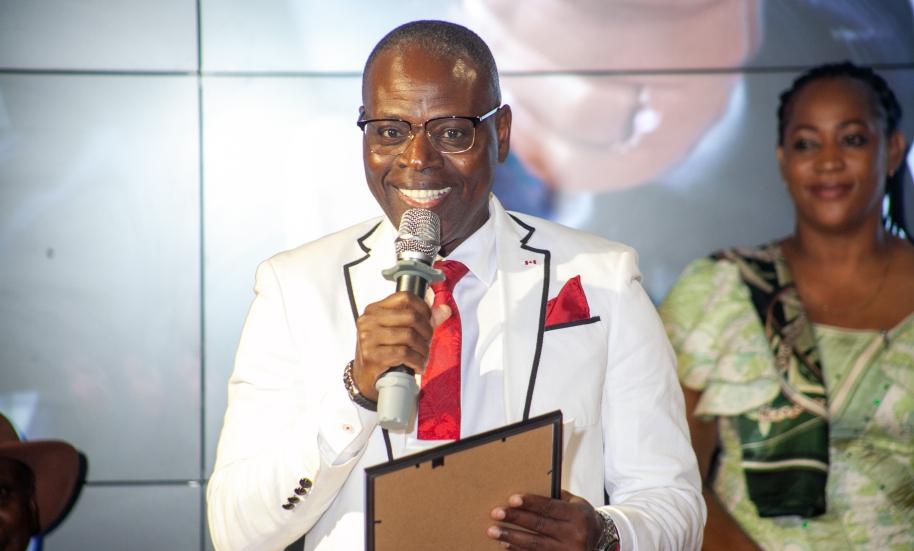
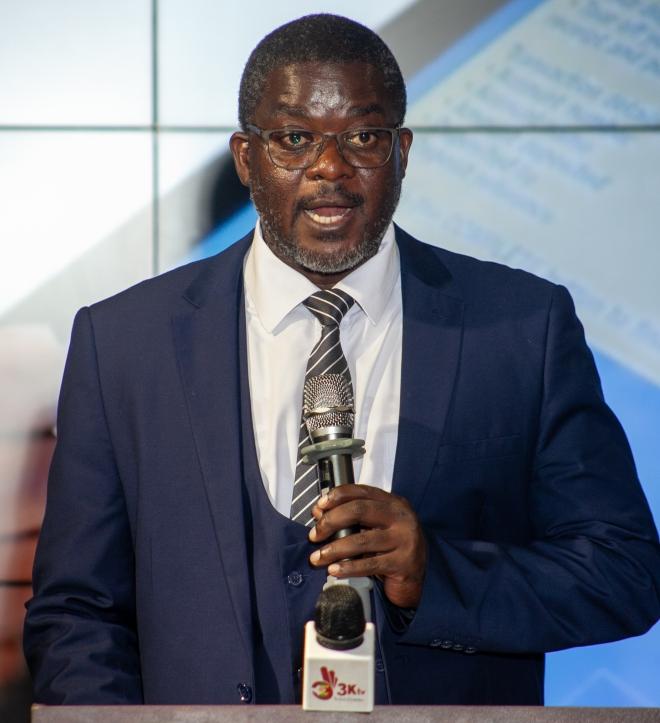
International cooperation remains historically significant in lifting millions out of poverty, promoting shared prosperity, and maintaining peace, UN Resident Coordinator and Humanitarian Coordinator, Mr. Edward Kallon has said. Mr Kallon revealed this in his keynote address at the recent Diplomat of theYear
Awards Dinner and Ceremony in Harare, which focused on the critical role of international cooperation in fostering economic prosperity The UN Resident Coordinator outlined a series of engagements to facilitate a localised consultations and awareness raising campaigns to inform and
profile the global Summit of the Future that takes place in September thisYear, which aims at coming up with an inclusive Pact of the Future that transcends governments, the UN, and specialised organisations.
Mr. Kallon also highlighted the challenges posed by recent global crises such as the Covid-19 pandemic, climate change, and financial instability, underscoring the need for collaborative efforts to address these pressing issues.
Mr. Kallon outlined key strategies to translate ongoing consultations on advancing international cooperation into action, including revitalising multilateralism, enhancing investments in global public goods, promoting data governance in the digital economy, establishing a new Social Contract, and prioritising education and research and development. He also underscored the importance of partnerships between international and regional financial institutions to support inclusive economic growth and reduce poverty and inequality.
AWARDS 28 The Diplomat May/June
DIPLOMAT
Furthermore, Mr. Kallon emphasised the role of the UN in supporting national development priorities in Zimbabwe through the Sustainable Development Cooperation Framework. Mr. Kallon highlighted the importance of collective action, cooperation, and trust in paving the way for a brighter and more prosperous future for Zimbabwe and beyond.As diplomats and leaders were honoured for their contributions to advancing international cooperation, Mr Kallon reminded attendees that every individual plays a crucial role in building a better world through solidarity, partnership, and cooperation.
The address by Mr. Edward Kallon at the Diplomat of the YearAwards Ceremony served as a call to action for renewed commitment to international cooperation for the common good and economic prosperity, setting a positive tone for collaborative efforts in Zimbabwe and beyond. Held on 22 March 2023, under the theme of “Advancing International Cooperation –Fostering Economic Prosperity,” the Diplomat of theYear event, brought together senior government officials, diplomats, heads of UN agencies, captains of industries, members of the media, and distinguished guests to celebrate the outstanding work of diplomats and organisations in Zimbabwe.
The Diplomat May/June 29
DIPLOMAT AWARDS

30 The Diplomat May/June
DIPLOMAT AWARDS
DIPLOMAT AWARDS
The Diplomat May/June 31
DIPLOMAT AWARDS
Stanbic Bank commits to the attainment of global goals
ADVICE MUKONO
Stanbic Bank Zimbabwe has affirmed its commitment to support Zimbabwe's key economic sectors and aainment of the global goals.
Speaking during the 2024 Diplomat of the Year Awards ceremony held at Tongfu in Harare, Stanbic Bank Chief Execuve Officer, Mr Solomon Nyanhongo expressed the bank's passion to the country's development and provision of quality financial services to development partners and embassies.
“We are proud key players in
driving growth in crucial sectors such as agriculture, mining, and manufacturing, contribung significantly to the economic prosperity of our naon.
Zimbabwe is our beloved home, and we drive her growth. As a brand, we have been in operaon in Zimbabwe for over 30 years now and in Africa, through our parent company, over 160 years. We are here for the long haul.
“As a responsible corporate cizen, we are acvely advancing the United Naons Sustainable Development Goals through various impacul

projects. Our CSI iniaves span educaon, the environment and health and sanitaon. We are fully absorbed in contribung to the well-being of the sociees in which we operate,” he said Nyanhongo also appreciated the diplomac community for entrusng the bank to serve them. “Our journey as a market leader has been fuelled by the trust and confidence that you, our esteemed clients, have placed in us. Your choice to bank with us has propelled us to become one of the leading financial instuons in the country, and for that, we are immensely grateful. We have a dedicated centre to serve embassies and nongovernmental organisaons at our Minerva Branch.”
Stanbic Bank has been a partner of the Diplomat of the Year for the past 11 years. Established in 2012, the Awards celebrate the contribuon of all diplomats in Zimbabwe to the development of our country and its people. The event also presents a unique networking plaorm for the diplomac community, UN Agencies, development partners, government, civic society, and captains of industry.
32 The Diplomat May/June




Bard Santner Inc is your trusted partner in wealth management
At Bard Santner, we understand the complexies and intricacies of the financial landscape, especially for diplomats, NGOs, and members of the private sector Bard Santner understands money and how to grow your prosperity like no other financial services player in the market. Our presence in strategic markets such as Maurius, New York, Zimbabwe and Botswana ensures that we deliver internaonal experse without losing local relevance.
Bard Santner Inc is your trusted partner in wealth management, asset protecon, and financial empowerment. Our comprehensive suite of services is designed to address the diverse challenges and opportunies faced by individuals and organizaons alike.
Why Choose Bard Santner?
1. Tailored Soluons: We believe that one size does

not fit all when it comes to financial planning. That's why our expert advisors work closely with each client to understand their specific goals, risk tolerance, and financial objecves. Whether you're a diplomat navigang internaonal transacons or an NGO seeking sustainable investment strategies, we tailor our soluons to meet your unique requirements.
2. Global Experse: With a deep understanding of internaonal markets and regulaons, Bard Santner offers unparalleled experse in navigang complex financial environments. From managing cross-border investments, securing internaonal insurance coverage, or planning for rerement overseas, our team of seasoned professionals is here to guide you every step of the way.
3. Commitment to You: At Bard Santner, discreon and integrity is at the heart of everything we do. We adhere to the highest ethical standards and priorize confidenality, transparency and accountability in all our dealings. You can trust us to always act in your best interests and provide honest, unbiased advice that puts your financial well-being first.
4. Comprehensive Services: From wealth management and asset protecon to estate planning and risk migaon, Bard Santner offers a full spectrum of financial services to support our clients throughout their journey towards long-term success. Whether you're building wealth for future generaons, safeguarding your assets against unforeseen risks, or planning for rerement, we have the experse and resources to help you achieve your goals.
Whether you're a diplomat seeking stability and security, an NGO striving for social impact, or a member of the private sector pursuing prosperity and growth, we invite you to experience the Bard Santner difference today
Contact us to schedule a consultaon and discover how our tailored financial soluons can help you achieve your financial goals and aspiraons.
ADVERTORIAL 34 The Diplomat May/June
Peace of Mind is Synonymous with Peace Security
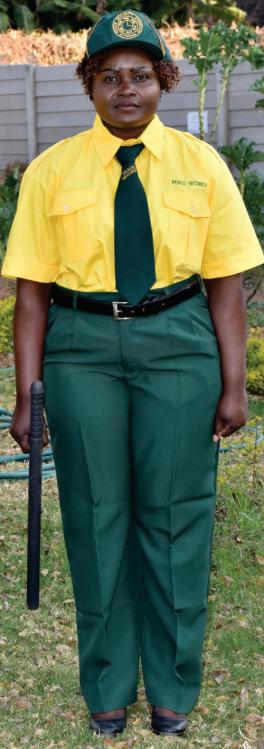
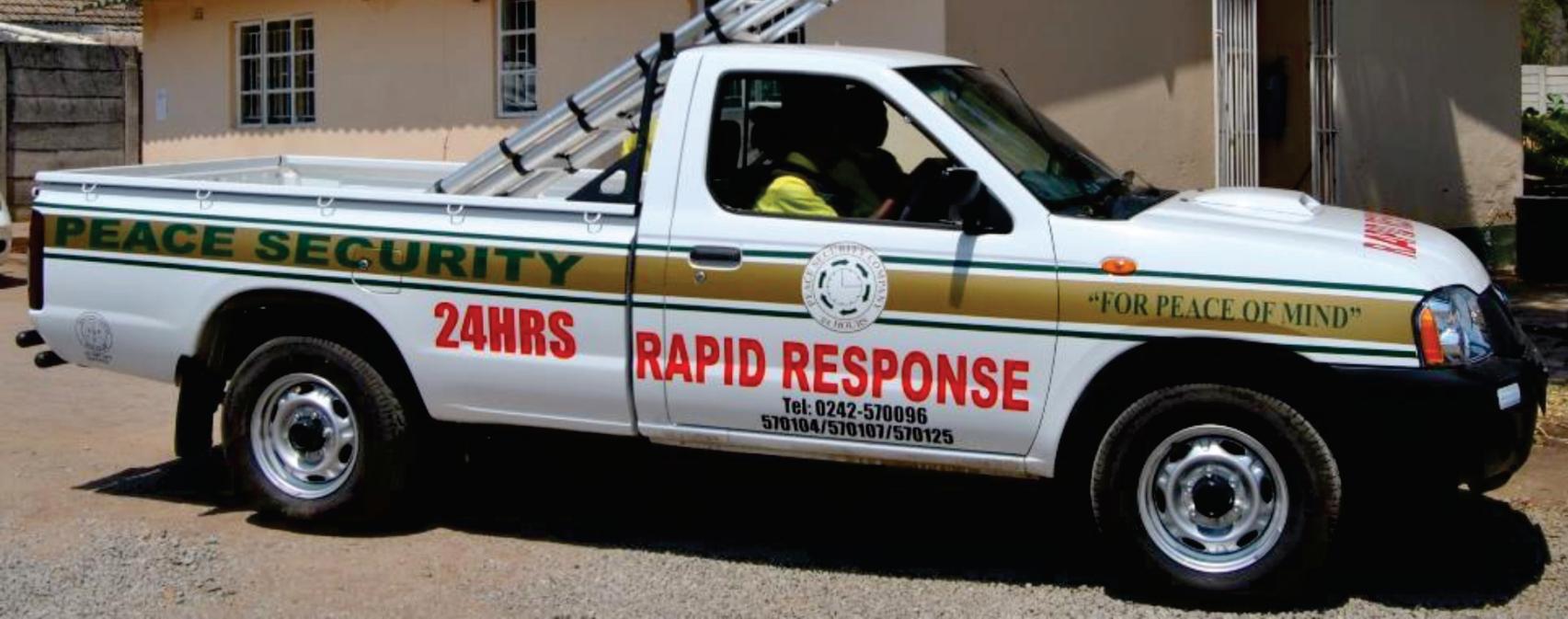
If you need Peace of Mind, where Security is concerned, think of no other company other than Peace Security Company. The company has been proficiently offering security services since 2002 and now boasts of over twenty branches countrywide and close to 3,500 employees. The company has acve contracts in all sectors of the economy including the not-for-profit sector that encompasses diplomac missions as well as nongovernmental organisaons. What sets the company apart is its aenon to detail. This is buressed in the company's ISO 9001:2015 Quality Management System Cerficaon. This cerficaon ensures that Peace's clients are given a topnotch quality service, and the company is connuously learning and improving its systems. At the same me, whilst every customer is assigned a dedicated contract manager who is there for the client 24/7/365, the client sll has access to all management at
Peace Security including the CEO and Board of Directors. This has seen the company implemenng tailor made soluons for different customers according to their risk profile, preferences and needs.
Potenal clients of Peace Security will be glad to know that peace of mind does not start and end with guard services as Peace Security also has a dedicated electronics division which ensures that the company is a one stop shop for all your security needs. Under one broad umbrella, the company has you covered for unarmed and armed guards, escort services, bodyguard services, cash in transit, rapid response services, alarms, electric fencing, gate automaon, closed circuit television and even remote viewing amongst its many products and services.
There is an old adage that says the proof of the pudding is in the eang and at Peace Security this is indeed true as the company is a mul award winning company, that has been recognized through the following
awards, amongst many others:
§ SADC Annual Quality AwardService of the Year – Large Enterprises
§ IPMZ/EMCOZ – Employer of Choice Awards
§ Naonal Annual Quality Awards (NAQA)- Best Service – Large Enterprise of the Year Award
§ Zimbabwe Business AwardsSecurity Services Company of the Year
§ Megafest Naonal Business Awards – Outstanding Security Company of the Year
§ Zimbabwe Investment Authority –Investor of the Year Award
§ Buy Zimbabwe Awards
§ CRM –Most Trusted Brand Award
– Security Sector
In conclusion, we would like to sign off with the statement that we have absolutely no reservaons in recommending Peace Security Company as your preferred security company if peace of mind is what you need and desire.
ADVERTORIAL The Diplomat May/June 35
Doves financial services taking microfinance to a new level
DOVES FINANCIAL SERVICES, a leading microfinance instuon that commenced operaons in 2021, is making waves in the financial services sector with its commitment to serving underserved underserved communies. With an extensive network of 10 branches strategically located naonwide, the instuon has quickly established itself as a catalyst for economic empowerment and financial inclusion.
Recognising the diverse financial needs of individuals and businesses, DOVES FINANCIAL SERVICES has expanded its product offerings to provide comprehensive soluons tailored to its customer's needs. The instuon now offers a range of financial products including salary-based loans, business loans, Kanzatu funeral assistance, bureaux de change services, and remiances. This diverse porolio caters to the varying needs of different segments of society, enabling clients to access the financial support they require.
In a significant move to enhance its global reach, DOVES FINANCIAL SERVICES recently extended its operaons by partnering with Western Union. This collaboraon allows customers to conveniently send and receive money to and from any country in the world through Doves Financial Services's branches. By joining forces with one of the world's leading money
transfer companies, the instuon has opened up new avenues for internaonal financial transacons, facilitang seamless cross-border remiances and supporng the financial needs of a global clientele. Addionally, in addion, DOVES FINANCIAL SERVICES is has become an agent for WorldRemit, further solidifying its posion in the remiance market. This partnership enables customers to conveniently send and receive funds through the WorldRemit plaorm, providing a secure and efficient channel for internaonal money transfers.
As a subsidiary of Doves Holdings, DOVES FINANCIAL SERVICES benefits from the extensive experience and resources of its parent company. This affiliaon strengthens the instuon's ability to deliver high-quality financial services and expand its operaons, ensuring its connued growth and success.
The remarkable achievements of DOVES FINANCIAL SERVICES have been recognised through presgious accolades. In 2023, the instuon was honoured with two awards at the ZAMFI Awards. It received the “Most Resilient MFI” award, acknowledging its ability to navigate challenges while maintaining its commitment to serving its clients. Addionally, it was recognised as the “Most Profitable MFI,” a testament to its sound financial management pracces and sustainable business

model. These awards highlight the instuon's unwavering dedicaon to excellence and its posive impact on the financial landscape. Looking ahead, DOVES FINANCIAL SERVICES remains commied to driving financial inclusion and empowering communies. With its expanding branch network, diverse product offerings, and internaonal partnerships, the instuon is wellposioned to connue making a significant difference in the lives of its clients. By leveraging its strengths and embracing innovaon, DOVES FINANCIAL SERVICES is set to shape the future of microfinance and contribute to the socioeconomic development of the country.
ADVERTORIAL 36 The Diplomat May/June