
•
•
•
•
Sarah Close: Tips for the 2010 Olympic Games
George Fetherling: A diplomat's conflicted love
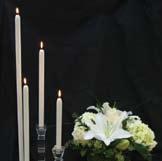
Margaret Dickenson: Secrets for Valentine's Day




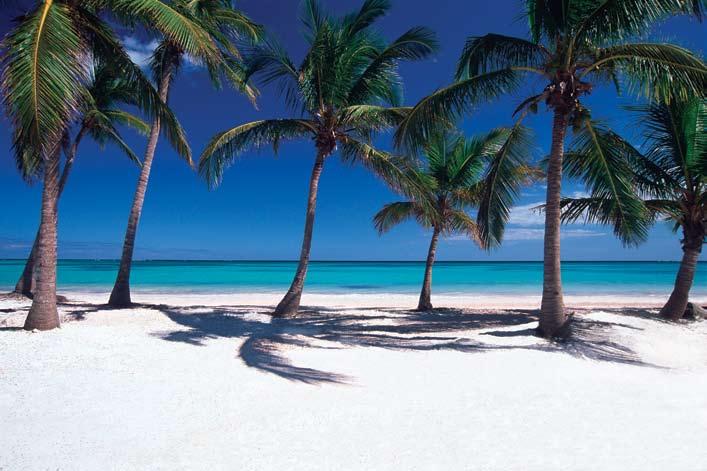








on earth. From the beautiful turquoise of the Caribbean to the eight hundred miles of pristine white sand beaches, to the perfect flame red of sunset. Here your imagination mingles with a tropical paradise of colours and shades of which you’ve only dreamed. How many shades of colour can you find in the Dominican Republic? Start counting. Visit us at www.GoDominicanRepublic.com 1.800.563.1611






PUBLISHEr
Neil Reynolds
ASSOCIATE PUBLISHEr
Donna Jacobs
EDITOr
Jennifer Campbell
ArT DIrECTOr
Paul Cavanaugh
ADVErTISING ADVISOr
Cu Van Ha
cu@prestoncatalogue com
1-613-262-4908 or 1-416-600-4908
COPY EDITOr
Roger Bird
BOOKS EDITOr
George Fetherling
CONTrIBUTING EDITOrS
Daniel Drolet
George Abraham
CULTUrE EDITOr
Margo Roston
CONTrIBUTING WrITErS
Laura Neilson Bonikowsky
Sarah Close
Margaret Dickenson
Charles Enman
Emilio Goicoechea
Kate Lackey
Peter Van den Weghe
CONTrIBUTING PHOTOGrAPHErS
Ulle Baum
Larry Dickenson
Bob Diotte
Frank Scheme
Dyanne Wilson
Ben Welland
BUSINESS MANAGEMENT
Jessie Reynolds
WEBMASTEr
Leslee McCabe
DIPLOPOrTAL WEB PArTNErS www diploportal com
Alastair Sweeny
Richard Evers (Northern Blue Publishing)
PUBLISHEr EMErITUS
Lezlee Cribb
ADVErTISING INQUIrIES
Contact Neil Reynolds or Donna Jacobs reynolds diplomat@sympatico ca jacobs diplomat@sympatico ca
SUBSCrIPTIONS
Diplomat & International Canada is published four times a year
Subscription rates: individual, one year $35 70 For Canadian orders add 5 per cent GST U S orders please add $15 for postage All other orders please add $25
SUBMISSIONS
Diplomat & International Canada welcomes submissions
Contact Jennifer Campbell, editor, at editor@diplomatonline com or (613) 231-8476
DIPLOMAT & INTErNATIONAL CANADA
P O Box 1173, Station B
Ottawa, Ontario Canada K1P 5R2
Phone: (613) 259-3038
Fax: (613) 259-5481
E-mail: info@diplomatonline com www.diplomatonline.com
Published by Sparrow House Enterprises Inc


January is the time we all think about the future What will 2009 hold for us, our families, our colleagues? And many of us also ponder what the next year will look like globally Will the crisis in Sri Lanka escalate? What will happen in Zimbabwe? Somalia? Sudan? There’s no question 2009 will be a critical year for Afghanistan and Iraq . And Canadians can’t help looking south to a new, possibly protectionist, administration What will it mean north of the 49th parallel?
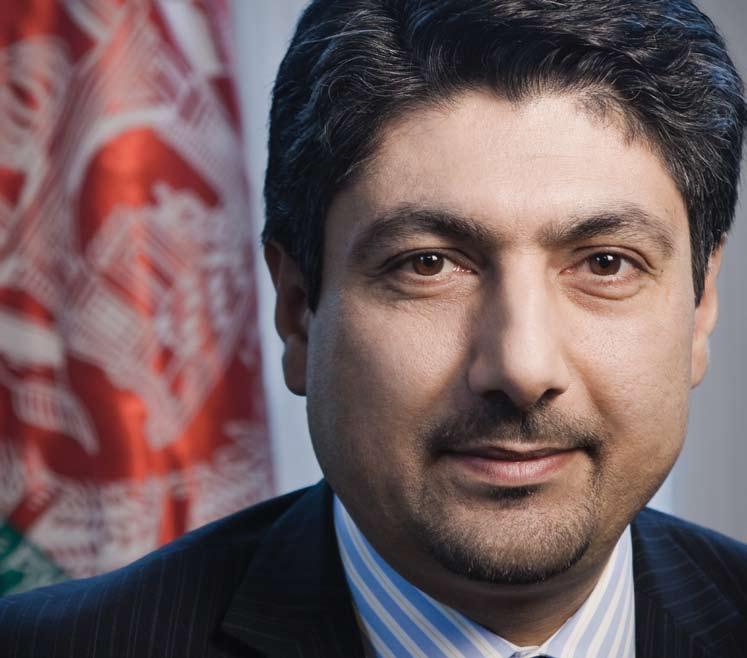
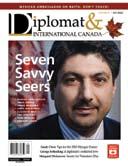
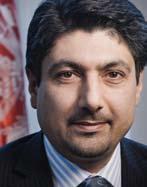
Diplomat decided to poll those in the know for a distinctly Canadian forecast for 2009, and, for the planet as a whole What will the next decade look like economically, politically, socially and militarily? We also asked for solutions our guest forecasters might offer Heady questions, but our sources – including Afghan Ambassador Omar Samad, former ambassador to the U S Frank McKenna, and author Andrew Cohen – didn’t disappoint Mr Samad suggests that it might be necessary to establish new institutions, with multilateral participation, that will look for solutions to “many problems of global reach” and that emphasize pragmatism over ideology For his own country, he hopes for an end to violence which will lead to a period where the Afghan people “catch up” in terms of economic, political and social welfare He sees a country where education, health, basic freedoms and human rights are no longer under threat
Mr . McKenna, who was himself proposed as one of three wise men advisors for the would-be Dion coalition but who declined the offer, predicts a period of stability for federal politics in spite of early December’s antics He warns that we may see a resurgence of protectionism in the United States now that the Democrats control both the Senate and the House of Representatives but he doesn’t anticipate any of the moves will be aimed at Canada, just that Canada will have to be careful not to get sideswept by the policy as a whole
u P F ron T

As for the others? You’ll have to turn to page 14 to see what they predict
In our books essay, George Fetherling brings us the story of Canadian diplomat Charles Ritchie – posted as ambassador to the United Nations and the United Kingdom – and his love affair with British novelist Elizabeth Bowen In Love’s Civil War, edited by Victoria Glendinning with Judith Robertson, we learn details of their “obsessional, 35year love affair ” Mr . Fetherling also tells us about new reads, including books on the Fenians, on China as the new Japan, and on humanitarian intervention
Our Delights section is full of travel stories One looks at the challenge of finding accommodations in British Columbia during the winter Olympics, still another year away, and the other, by New Zealand High Commissioner Kate Lackey, entices readers to visit her island paradise .
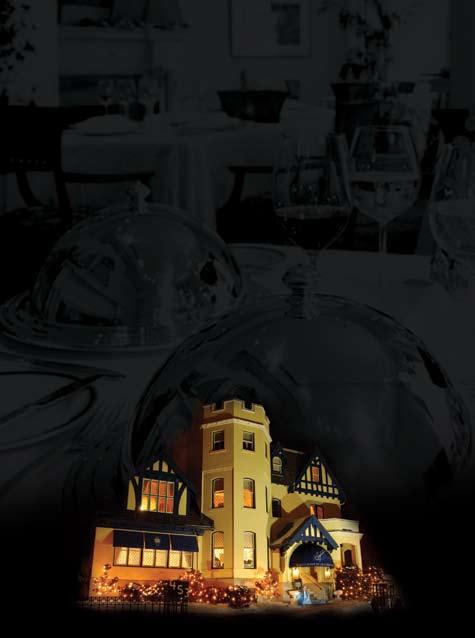
Entertaining columnist Margaret Dickenson gets in the mood for love with a Valentine’s Day column while Margo Roston takes us into the home of Greek Ambassador Nikolaos Matsis and his wife, Katherine Wine columnist Pieter Van den Weghe tells us how climate change is affecting wine production worldwide .
Up front, we have a report from the World Health Organization and an article written by Mexican Ambassador Emilio Goicoechea on the implications of re-opening the North American Free Trade Agreement We also have an interview with House of Commons Speaker Peter Milliken, who has held the position for seven years and beat out a long list of would-be successors when Parliament re-opened in November . He talks about his experiences as speaker, and what fun he’s had dealing with the diplomatic corps over the years
Enjoy our first issue for 2009
What struck photographer Ben Welland most about the quick photo shoot he did with Afghan Ambassador Omar Samad was the location of the embassy. An old brick home, converted into an embassy, it’s on Argyle Street in the heart of Ottawa’s Centretown “I was struck by how warm and inviting the embassy was,” he said “It’s a nice old house in Centretown that just so happens to have a black gate around it ” Interestingly, on the day Mr Welland visited, he was able to just walk through the gate without having to identify himself . “So you could say the shoot went off without a hitch,” Mr . Welland joked
con T ribu T ors new Zealand high commissioner Kate lackey author of “new Zealand’s treasures await you”
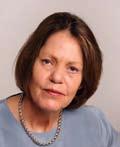
Mrs Lackey is a career diplomat Before coming to Canada, she spent four years as her country's high commissioner to Australia
Before that stint, she spent five years as deputy secretary in the ministry of foreign affairs and trade; the preceding three years as head of the Americas division; and two years as director of the audit review division She has also had postings to Singapore, Fiji and the United States
This is Mrs Lackey’s second posting to Ottawa . She was counsellor and deputy high commissioner from 1985-87
Mexican ambassador emilio Goicoechea author of “naFTa: integration without renegotiation”
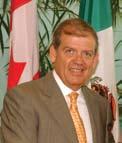
Mr . Goicochea came to diplomacy through politics He became a member of the National Action Party in 1970, and has been a member of the state steering committee, member of the state council, member of the national executive committee, and member of the national council, among others
He was a federal senator for the state of Sinaloa for two legislative sessions and in his third, he became a federal deputy. In 2003, he became deputy secretary of tourism operations at the federal ministry of tourism for a year From 2004 to 2006, he was chief of staff of the office of the Mexican president
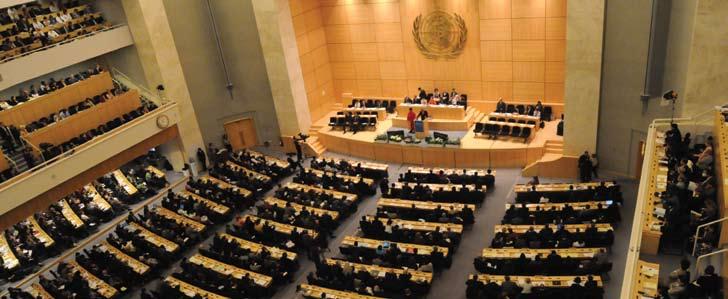
in its recent report, Primary Health Care – Now More Than Ever, the World Health Organization (WHO) calls for a return to primary health care
The report critically assesses the way health care is organized, financed, and delivered in rich and poor countries around the world It documents a number of failures and shortcomings that have left the health status of different populations, both within and between countries, dangerously out of balance .
The World takeOrganization'sHealth on the health-careimbalance'in'global services Who on'inequities,reportfindsinefficiencies' rise in poor countries
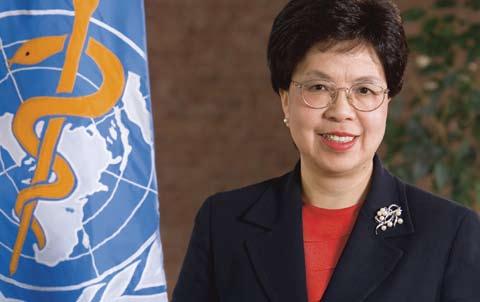
“The World Health Report sets out a way to tackle inequities and inefficiencies in health care, and its recommendations need to be heeded,” said WHO Director-General Margaret Chan “A world that is greatly out of balance in matters of health is neither stable nor secure ”
The report found striking inequities in health outcomes, in access to care, and in what people have to pay for care . Differences in life expectancy between the richest and poorest countries now exceed 40 years Of the estimated 136 million women who gave birth this year [2008], around 58 million received no medical assistance whatsoever during childbirth and the postpartum period, endangering their lives and those of their infants .
Globally, annual government expenditure on health varies from as little as US$20 per person to well over US$6,000 For 5 6 billion people in low- and middle-income countries, more than half of all health care expenditure is through out-of-pocket payments
With the costs of health care rising and systems for financial protection in disarray, personal expenditures on health now push more than 100 million people below the poverty line each year .
Vast differences in health occur within countries and sometimes within individual cities In Nairobi, for example, the under-five mortality rate is below 15 per 1,000 in the high-income area In a slum in the same city, the rate is 254 per 1,000
“High maternal, infant, and under-five mortality often indicates lack of access to basic services such as clean water and sanitation, immunizations and proper nutrition,” said Ann M Veneman, UNICEF Executive Director “Primary health care, including integrated services at
the community level, can help improve health and save lives ”
As the report notes, conditions of “inequitable access, impoverishing costs, and erosion of trust in health care constitute a threat to social stability ”
It calls for a return to primary health care, a holistic approach to health care formally launched 30 years ago When countries at the same level of economic development are compared, those where health care is organized around the tenets of primary health care produce a higher level of heath for the same investment
Such lessons take on critical importance at a time of global financial crisis
“Viewed against current trends, primary health care looks more and more like
a smart way to get health development back on track,” Dr Chan said
In far too many cases, people who are well-off and generally healthier have the best access to the best care, while the poor are left to fend for themselves Health care is often delivered according to a model that concentrates on diseases, high technology and specialist care, with health viewed as a product of biomedical interventions and [with] the power of prevention largely ignored
Specialists may perform tasks that are better managed by general practitioners, family doctors or nurses This contributes to inefficiency, restricts access, and deprives patients of opportunities for comprehensive care
WHO estimates that better use of existing preventive measures could reduce the global burden of disease by some 70 per cent
fragmented health care
In rural parts of the developing world, care tends to be fragmented into discrete initiatives focused on individual diseases or projects, with little attention to coherence and little investment in basic infrastructures, services and staff
Primary health care puts families and communities at the hub of the health system With an emphasis on local ownership, it honours the resilience and ingenuity of the human spirit and makes space for solutions created by communities, owned by them, and sustained by them
Primary health care also offers the best way of coping with the ills of life in the 21st century: the globalization of unhealthy lifestyles, rapid unplanned urbanization, and the ageing of populations These trends contribute to a rise in chronic diseases, like heart disease, stroke, cancer, diabetes and asthma, that create new demands for long-term care and strong community support A multi-sectoral approach is central to prevention, as the main risk factors for these diseases lie outside the health sector
The report says that health systems will not naturally gravitate towards greater fairness and efficiency. Deliberate policy decisions are needed .
“We are encouraging countries to go back to the basics,” Dr Chan said “Thirty years of well-monitored experience tell us what works and where we need to head, in rich and poor countries alike ”
Visit www who int/whr/2008/en/index html to see the full report
Compiled by Donna Jacobs

Do you know what your daughter can do when she puts her mind to it?
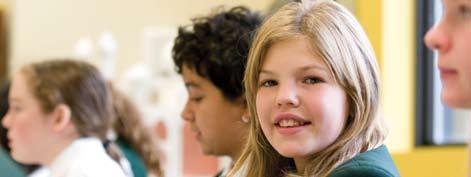
Let’s find out.
Elmwood School inspires and empowers young women to achieve their potential and pursue excellence in a global society. Our dynamic and motivating environment lets students achieve academic success, develop their creativity, and find their voice. We are now accepting applications for September 2009. www.elmwood.ca/girls
when he took over as president of the University of Ottawa, Allan Rock told his faculty and staff he wanted the university to become a vital part of the Ottawa community . Too often universities look inward to enrich life on campus instead of outside their walls to enrich the larger life of the city, he told them
One of the initiatives the school took was to broaden its mandate of long-term education The Centre for Continuing Education has provided professional development courses for a few years but recently added general interest courses for adults to its offerings Some are for credit towards a degree and others aren’t; some run for the whole term, others for a few evenings And still other opportunities are more about community outreach than formal education .
“The idea was to open the school to people beyond the usual age group of 18 to 24,” explained Serge Blais, the centre’s director “The doors are wide open People can come in without any pre-requisites or previous learning ”
Enter the diplomatic corps In a threepart series this fall, the centre, in conjunction with the university’s Piano Pedagogy Research Laboratory, offered a free evening of information and music hosted by an ambassador at his or her residence
British High Commissioner Anthony Cary, Jordanian Ambassador Nabil Ali Barto and German Ambassador Matthias Höpfner hosted evenings
The diplomatic hosts provided the wine and snacks and the university provided
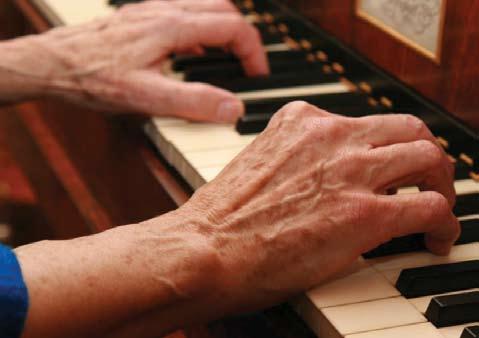
the period instruments – clavichord, harpsichord and pianoforte – and the musicians For each event, music professor Gilles Comeau came up with a program that was inspired by the host country’s musical history and provided a one-hour lecture about the period’s social trends and artistic developments
“What more elegant setting could you get than the ambassador’s residence for an evening like this?” asked Mr Blais
The three-part series was followed by an evening concert of period music at Freiman Hall on campus .
Those interested could sign up for one or all of the evening performances with food and wine provided at the residences They were free on a first-come, first-served basis, though the final concert cost $20, which went to support the Piano Pedagogy Research Laboratory
Mr Blais is working on a winter session and has had interest from the embassy of Burkina Faso He said they’d like to start incorporating some young talent into the events as well “They might be our students, but not necessarily We might also draw from the community,” he said .
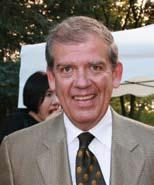
FirsT naMe: emilio
lasT naMe: Goicoechea
ciTiZenshiP: Mexican
PresenTed credenTials as aMbassador: March 22, 2007
PreVious PosTinGs: Federal senator for state of Sinaloa, deputy secretary of tourism, chief of staff to former president Vicente Fox
in this globally integrated era, Mexico, Canada and the United States need more co-operation and further integration to face the main challenges of North America .
The North America Free Trade Agreement (NAFTA) has generated huge benefits for the three countries because it has fostered trade, investment, stability and remains the backbone of our economic growth and regional integration
This agreement established a rule-based framework that gives certainty to business transactions in this geographically vast stretch of territory, promoting integration, trade and investment in North America
Naturally then, Mexico opposes any idea of renegotiating NAFTA, because opening that door could result in certain economic sectors gaining protection, which would undercut the whole idea of free trade and jeopardize its operations . Undoubtedly, some areas require urgent attention, but not at the cost of renegotiating a mechanism that has been extremely beneficial
In times of previous economic distress, NAFTA has been part of the solution, not part of the problem, uniting our efforts and leading our economies to become more competitive .
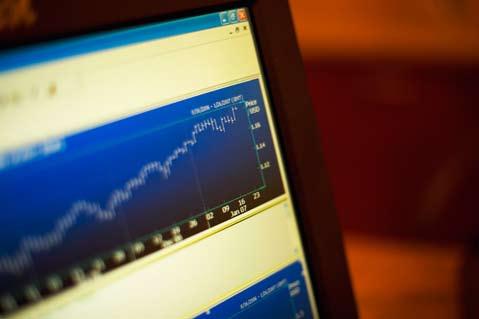
The statistics speak for themselves: – The first 15 years of the treaty coincided with a significant decrease in Mexican poverty, which has had positive implications for its two partner countries as well – From 1993, the year preceding NAFTA’s implementation, to 2007, trilateral trade more than tripled, from US$288 .5 billion to US$894 .3 billion .
– In 2006 NAFTA partners accumulated more than $529 2 billion in foreign direct investment from around the world, creating more jobs and increasing wages in all three I strongly believe that the three countries need to elaborate and develop a co-ordinated strategy under NAFTA to further integrate, and enhance regional competitiveness and promote regional growth
Under NAFTA, the Canada-Mexico trade relationship has profited significantly Since 1994, trade between both countries increased 493 per cent, totalling $24 1 billion in 2007 Moreover, Mexico is Canada’s third-largest supplier worldwide and its largest trading partner in Latin America
Regarding foreign direct investment, Canada is Mexico’s fifth-largest foreign investor, with a total of $6 9 billion by 2007 More than 2,000 companies in Mexico have received Canadian investment in sectors such as aeronautics, services, the auto industry and mining . Canada could and should take advantage of Mexican business opportunities, especially in infrastructure, technological development and financial services – this would usefully diversify our trade, which is currently concentrated in a limited number of products
We live in a world that faces increased competition from Asian countries, and in
particular China Other economic trade blocs have responded to such pressures by further integrating in their currency, labour mobility and customs regulations, a shift which has boosted their competitiveness .
In contrast, NAFTA countries have slipped . In 2000, trade between Canada, Mexico and the U S amounted to 19 per cent of exports worldwide But by 2007, this share dropped to 13 3 per cent, reflecting a reduction of North America’s competitiveness
These challenges are significant because today’s international situation differs considerably from the one that prevailed in 1994 . The slowdown in the U S economy, our main trade partner, is expected to affect bilateral trade and foreign direct investment inflows into both Mexico and Canada
As a consequence, our governments are implementing anti-cyclical policies, such as increasing public expenditure, guaranteeing credits through development banks, and enhancing our economies to make them more competitive Necessary measures, yes, but we have to be extremely careful not to retreat to protectionism and lose the benefits of open markets and integration
That is why renegotiating NAFTA could hamper the flow of natural resources within the region . Free access to
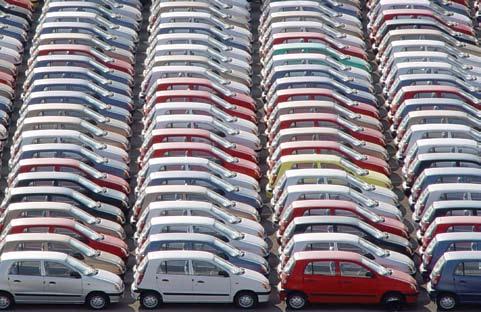
goods among the three countries could face more obstacles The fully integrated North American auto sector could face even greater challenges, making vehicles more expensive to produce
How do we respond to these new challenges?
Our governments need to continue promoting confidence in our free trade institutions Going further, the three partners must engage in a second regional integration to reduce transaction costs While recognizing that the challenges between Mexico and the U S are different from those between the U S and Canada, all efforts to improve regional competitiveness need to involve all three countries
Political changes in the three countries should not affect NAFTA Strong leadership will always be needed, as well as a
participation from the private sector and civil society at large .
In 2005, the three governments launched the Security and Prosperity Partnership to boost competitiveness and ensure efficiency and security along their mutual borders With a new U S administration taking office, we must stick to this agenda to reposition North America as the most important player globally
For their part, Mexico and Canada established the Canada-Mexico Partnership in 2004, which has served as a trade and investment forum for the public and private sectors We must continue this partnership, not weaken it, to increase business and employment opportunities among our countries
.

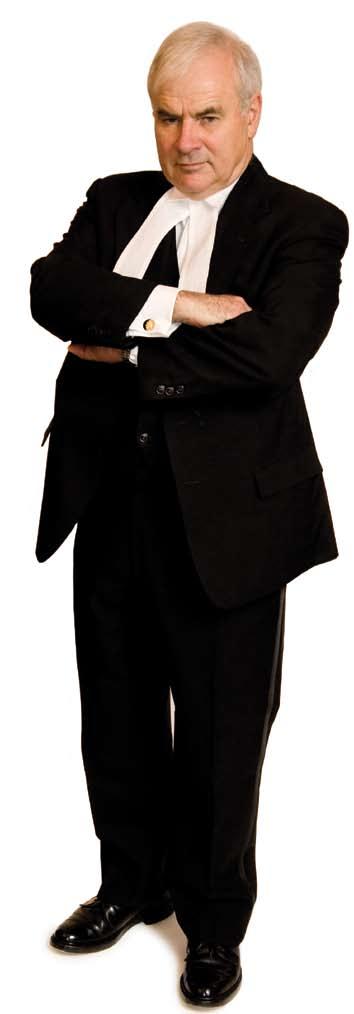
Peter Milliken, a lawyer by profession, was first elected as the liberal member for Kingston and the islands in 1988. he’s been re-elected five times and has served as speaker of the house of commons since 2001. he was elected as speaker in 2006, under a conservative Government, and he enjoyed the same success after last fall’s election although the competition for the job, with seven other contenders and five ballots of voting, was considerably stiffer. he sat down in his chambers with Diplomat editor jennifer campbell to talk about the job and how he juggles his many obligations.
Diplomat magazine: Congratulations on being elected speaker for another term . Were you surprised by the level of interest in your job this time?
Peter Milliken: No, I think I had some indication about that
d M: Why do you think that was?
PM: Well, I think people like the idea of doing it . I’m sure it appeals to other members, people who have been speaker before certainly are interested as was obvious by Mr (Andrew) Scheer’s and (Royal) Galipe-
Does the deputy speaker do some of the things that you do in terms of your responsibilities in the community, such as national days and hosting foreign
I do most of that I don’t know if they get invitations I just don’t know how I invite them to functions I’m having but I don’t think they’re much involved in a direct way. I don’t see them at functions very often . The invitations aren’t addressed to me or a substitute . I assume they’re non-transferable
Did you agree with what Prime Minister Stephen Harper said when he called the fall election – that Parliament wasn’t
I don’t have an opinion on these matThe prime minister can say what he
says, the opposition leader can say what he wants . I don’t normally express a point of view
dM: Can you tell me about your interaction with diplomats?
PM: There’s quite a lot of it Usually a newly appointed ambassador or high commissioner pays a courtesy call soon after they’ve presented their credentials to the governor general . And then, in addition to that, there would be invitations to national day receptions and when they have a visitor in town, I get invited to lunches or dinners often Obviously there are speaker's visits and those require meetings with the ambassador, both foreign visits and visits to our Parliament by other speakers Then, I have an annual diplomatic reception There are two each year because the Speaker of the Senate does one too . I do mine in Kingston and with (Senate Speaker Noel) Kinsella, they move around
dM: Is there a lot of pressure to attend diplomatic functions?
PM: Well, I don’t believe in not filling my day. If I can go, I go . I miss a lot of them but there’s a huge number of invitations so it’s just a matter of what you can get to .
dM: What sort of travel demands are there with this job?
PM: Quite significant ones There’s a list of outstanding invitations always, to visit other countries, other Parliaments in exchange for visits they have paid here or want to pay here . I do quite a lot of international travel so that’s quite demanding
dM: How many trips do you take per year?
PM: I would think five or six
d M: And how many outstanding invitations would you have now? Are they sorted in terms of what countries are important to Canada?
PM: I haven’t asked lately . When I have the chance to go, I ask and they tell me what they recommend I don’t know exactly how they priorize It would be depend a bit on when I, or a speaker, was last there – that sort of thing A lot them are places that either have a new speaker I want to visit, or they’re places I haven’t been to .
dM: Does any business get done?
PM: Oh, yes There are tours, discussions about the way our parliaments work And I have a delegation of members with me normally so they’re all meeting with their counterparts and they’re at the lunches and dinners and tours that we’re on so they’re talking and exchanging views and information There’s a significant social element to them but the socializing is where you have all these discussions We’re talking about what’s going on in our parliaments, how things happen and how decisions get made, how committees work, how Question Period happens .
dM: What’s the best part of your job?
PM: Sitting in the chair, dealing with the members
dM: Do you have any new strategies for this session?
PM: No, I don’t The house leaders and whips may want to meet with me at some point to discuss that sort of thing but that hasn’t happened They said they wanted to meet with me but they haven’t agreed on when they’re going to do it
dM: Could you detail a typical day when the House is sitting?
PM: Well, I normally get in at 9 a . m . to avoid going through the rush hour stuff if I don’t have a breakfast that morning . Then, I get through some papers, have a briefing and put on my uniform and open the house at 10 a m
Usually I’d be in there for 15 or 20 minutes, maybe half an hour and then I’m back here, meeting with people who want to see me or doing more paperwork . Usually I have a lunch, either that I’m hosting, having in my office, or that I’m going out to I’m back in the chair at 2 p m until 3:30 usually Then I’m back here If there are no evening votes – if there are, I will take them – by 5:30 p m , I start receptions I’ll go to one or two and then maybe a dinner And then if there’s no dinner, I might do three or four receptions
I probably go to more dinners than I host . Some are fundraising dinners for charities, some are dinners in honour of someone else Tonight, I don’t have a dinner, just two receptions Some of the receptions are diplomatic but some are hosted by various lobby groups, various charity groups, organizations that are having Christmas receptions or to honour someone who’s received an award





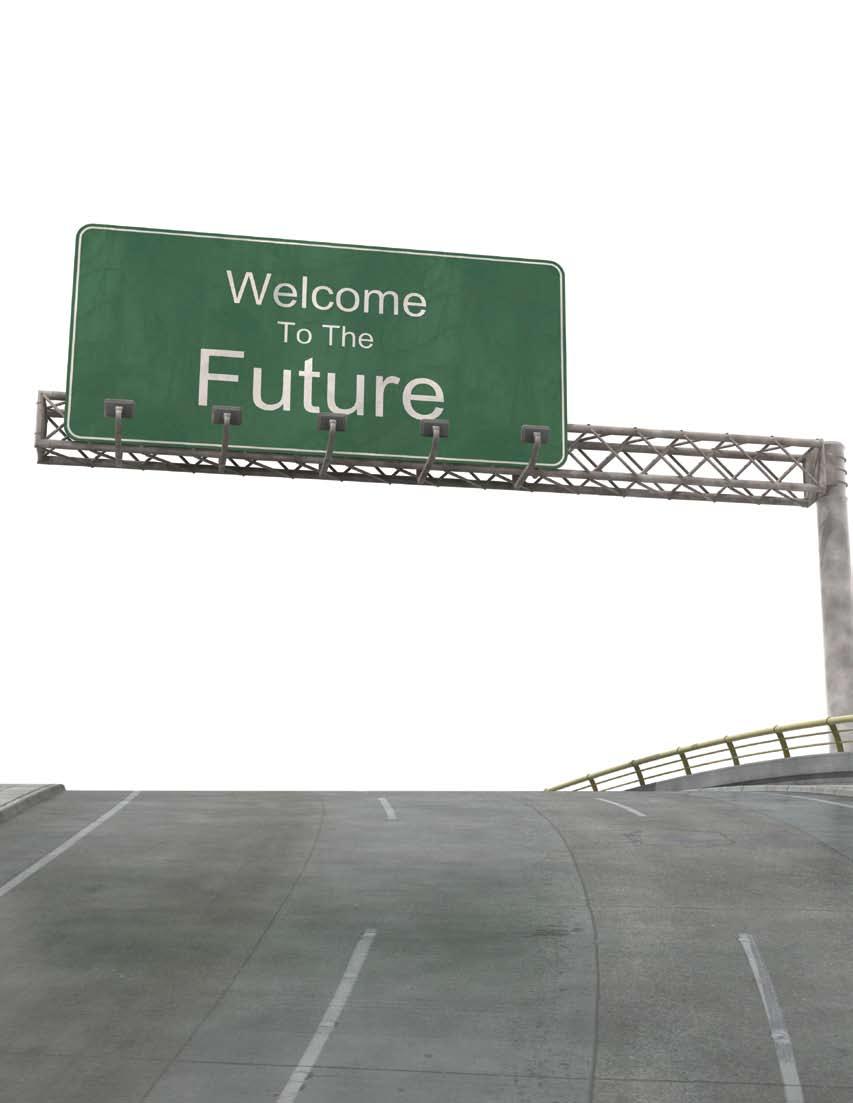
it's no longer the best of times but it's not yet the worst of times. herewith, seven informed prognostications.
By Charles Enman
When one cycle ends, we naturally look to the next . The year 2008 was full of astonishing change .
In Canada, we have seen the re-election of a national government In the United States, we see the election of a president in whom many Americans and many people around the globe have invested a degree of hope that few incoming administrations have stirred
Conflicts continue in Iraq and Afghanistan . The Middle East remains an area of confrontation and turmoil
On the economic scene, it becomes ever clearer that, while Western powers retain great strength, the relative rise of China and other emerging nations is causing a shift in the centre of gravity .
In recent months, a cascading series of problems among economic institutions suggests that global economies will be in for some long period of rough sledding .
Where will all these circumstances take us?
Tongue in cheek, Niels Bohr, the eminent Danish physicist, once said of all prediction that “it is very difficult – especially of the future ”
We know this . Nonetheless, we always want to make our best guesses about what we will find as future becomes present To that end, Diplomat has chatted with a number of eminent Canadians about what they predict for Canada in the short term and for the world over a longer term . We have also asked them what solutions they may see for the difficulties they believe time’s conveyor belt is bringing to the fore
We present a transcript, edited for length, and we start with our cover subject .
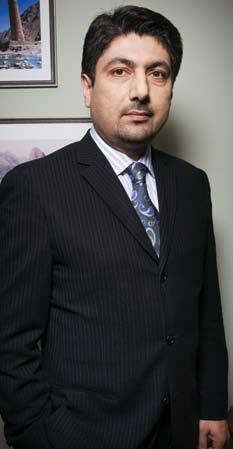
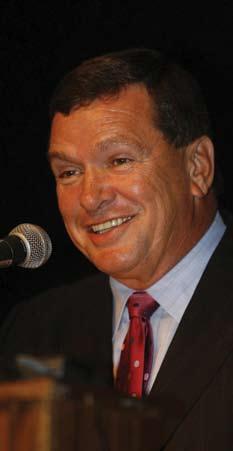
omar samad, Ambassador of Afghanistan
What do you forecast for canada in 2009? As a friend of Canada’s, I wish the country the best in facing the challenges that confront not only Canada but other countries as well .
The financial crisis that has recently hit, the challenges of climate change, the challenges of certain international commitments such as Canada’s engagement in Afghanistan, will all require attention and care
I am also sure the country will begin to focus more strongly on the 2010 Olympics to be held in Vancouver .
What do you forecast for the world over the next decade in terms of economic, political, social and military trouble spots? I think some of the most interesting issues that will impact international relations over the next decade will involve the management of shifting re-alignments in this multipolar world, with different centres of economic, military and geostrategic power I believe all countries will be somewhat preoccupied with these issues over the coming years
Other concerns over the next decade will include global warming, which we will have to keep addressing for some time; the problem of overpopulation; the search for alternative energy sources; the fight against extremism and terrorism; the challenges to find improved means of combating disease; and much focus on everyone’s access to good water
For the problems you sense coming over the horizon, what solutions would you offer?
As always, meaningful dialogue on the problems we confront will be all-important We need to achieve more understanding of what impacts us collectively and how we would best deal with such issues We need solutions that address issues head-on without going to extremes
In part, this may require that we establish new institutions, with multilateral participation, that will look for solutions to many problems of global reach . These institutions will have to be very resultsoriented and will have to place great emphasis on pragmatism over ideology
Solutions to the financial crisis will not be black and white We have seen problems with very centralized economic systems, but also have learned that markets cannot be totally free, either . A
satisfactory resolution will involve a more balanced approach
Canada, of course, is now involved in my own country, Afghanistan I would like to see Afghanistan become as free of violence as possible This means putting an end to the sources of violence, which basically exist outside our own borders . The safe havens for Al-Qaeda and the Taliban are breeding grounds where extremists learn the arts of violence and attack and brutality, a kind of extremist tendency that did not really exist in the Afghanistan of 30 years ago
When this violence is ended, the Afghan people will be able to catch up with the rest of the world in terms of economic, political and social welfare . Afghanistan will be a country in which access to education and health and certain basic freedoms and human rights are not under threat – a country that can be a good partner to the rest of the world and contribute to regional and global security and prosperity.
This will be a country that will no longer need the presence of international security forces and can rely on its own means to provide security and safety
Meanwhile, we are grateful for the commitment that countries such as Canada are making to bring order, peace and prosperity to one of the world’s poorest and most destroyed countries . We must ensure that every dollar put in, and every life laid down, has not been in vain .
frank mckenna, former premier of new brunswick, one-time canadian ambassador to the United states, current deputy chairman of the torontodominion bank
What do you forecast for canada in 2009? After a tumultuous end to 2008 and the Liberal party now having chosen its new Leader, I predict a more stable political environment in Canada for 2009 With the recent public backlash against the coalition I would think that we will not have another election in a near future
Canada will be facing some serious economic difficulties . Our economy is still strongly commodity-based and commodity prices are under intense pressure around the world
We might also see some resurgence of protectionist sentiment in the United States Our neighbour now faces some serious economic pressures and the Democrats control the House of Representatives and almost control the Senate . I do not
anticipate measures specifically against Canada, but we must be vigilant to ensure we are not sideswiped by the effects of more general protectionist policies
What do you forecast for the world over the next decade in terms of economic, political, social and military trouble spots?
We are entering a very dynamic period . With the change of the U S administration, virtually all American relationships will be re-evaluated In our hemisphere, we may see a different view on Cuba and Latin America The American approach to immigration problems with Mexico may also be re-examined .
On the world level, we may see a dramatic change in Iraq with an acceleration of the withdrawal of troops If Iraq remains stable, a number of those troops may be rotated into Afghanistan and have a significant impact there
I think the United States will be attempting to repair a great many of its relationships around the world . We will see an effort at dialogue in such troublesome regions as Iran, North Korea, and potentially even in the Holy Land
Other issues that will be front-and-centre include the continuing instability in Pakistan, the possible reassertion of high oil prices, and the increased economic power of China and Russia Russia, with its recent bellicosity, will force the U . S . and NATO to ponder how to deal with the wishes of several former Soviet states to become members of NATO
For the problems you sense coming over the horizon, what solutions would you offer?
Canada needs to begin a vigorous dialogue with the incoming Obama administration to make sure our foot is in the door . We should take advantage of Obama’s popularity to expand the institutional relationship we already enjoy
Much depends on the willingness and capacity of the U S to engage with other interlocutors around the world For the last eight years, the U S has been the catalyst for acrimony at various levels . The question is whether it can now turn things around and become a consensus builder . If it can, then we shall see improved relations with the United Nations, the countries of the Middle East, a graceful exit from Iraq, the chance of a good outcome in Afghanistan, a restored relationship with Russia, and good management of its relations with China and India . Canada should not over-react to the
economic problems it is facing Over many decades, we have created financial institutions that have been internationally accredited as among the most sound in the world No Canadian banks have had bail-out packages We should not rush in to fix what is not broken .
As a trading nation, a good deal of our prosperity depends on the economic activity in other nations, especially the United States – and we have no direct control over any of this
Our financial institutions are sound enough that we should be encouraging them to become world leaders In the political arena, I think Canada should step up a bit – become more involved in international aid, be at the centre of more great debates, assume a more active international role We have a model worthy of emulation
In the short term, I am pessimistic We are only at Ground Zero in terms of the economic crisis But in the long run, especially with the change of regime in the United States, there is an opportunity for a fresh look at all issues and all relationships In the fullness of time, we will see economies heal themselves and be put on a more sustainable basis around the globe – and the world will move forward in a healthier state of repair
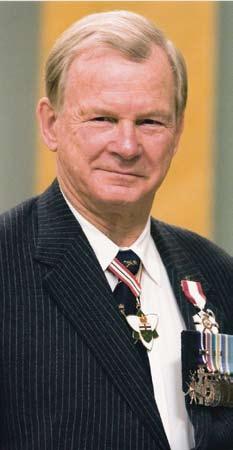
Lewis mackenzie, retired general, author, and media commentator
What do you forecast for canada in 2009?
A month or so ago, I would have said many things, but obviously the economic problems will now take a lot of our attention
Though the economic problem is global, the United States will be taking a key role and everyone is now looking south of the border and waiting . How will the president stamp the direction that the American government takes?
In my lifetime, the expectation has never been higher for the potential impact of a new president The Bush administration burned a lot of bridges in the international community . Mr . Obama has a different personality, more open to discussion and to the United Nations, with all its failures There is a tremendous potential for him to bring a number of countries on board for a more international approach to dealing with problems
We sometimes worry about isolationism and protectionism from the Democrats, and with the Democrats in control of the presidency and of almost both sides
of Congress, we may worry a little more now But I get the feeling that the United States will be gentle with its closest and perhaps best friend . It is certainly true, as the Chinese might say, that we are living in interesting times
What do you forecast for the world over the next decade in terms of economic, political, social and military trouble spots? I do not think international terrorism should be considered our number one security challenge . More people die annually in American bathtubs than have been killed annually by international terrorists The Al-Qaeda leadership has been substantially taken out and their inflow of funds reduced Their groups now are recruiting and training on the Internet and have been coming up with stupid attack plans . I could be proven wrong tomorrow, but I think we have this threat under good control
I think Pakistan will remain an important problem Canadians forget that more Pakistanis have been killed in Afghanistan than forces from all other involved nations combined . As they fight radical elements within their borders, the
Pakistanis feel isolated, though they are making a great contribution to stability in the region
Iran will continue to get a great deal of the world’s attention If they develop nuclear weapons, the religious radicalism of some elements of the country will require close watch . One can only worry when one considers that in the most radical fringe of Islamic teachings, attacking Israel and being attacked in return is a guaranteed trip to heaven
In the economic sphere, China, without firing a shot, will continue to win big-time Its products are entering every country in the world . For proof, you only have to check the labels of your own clothing .
For the problems you sense coming over the horizon, what solutions would you offer?
In recent years, Canada and NATO and the UN have placed more emphasis on compassion than on the elimination of military threat . If anyone thinks pacifying Afghanistan will remove a terrorist threat, they’re mistaken But we are helping people to see some semblance of democracy and of the kind of society in which girls can go to school and women can go to the doctor On the same motive, I would like to see us go to Sudan to protect women and children in refugee camps . There are good humanitarian reasons to be involved .
In the Pakistan and Afghanistan region, I think someone is going to have to put together an area group to deal with that part of the world, much as they did for the Balkans
Perhaps we will see more of that kind of collective action . The rise of the G-20 is a good sign in that direction . Another might be the election of Barack Obama . Will a new U S administration continue to be unilaterally interventionist? I don’t think so, because that hasn’t worked very well The only other option is a bit more multilateralism whereby they try to get more countries on side
We shouldn’t be trying to move missile systems up relatively close to the Russian borders We shouldn’t let the Georgians expect that NATO might intervene on their behalf – since we’re incapable of generating resources in the desert of Afghanistan, let alone move them strategically against Russian forces
I think, going forward, we will have to seek accommodation more often than confrontation
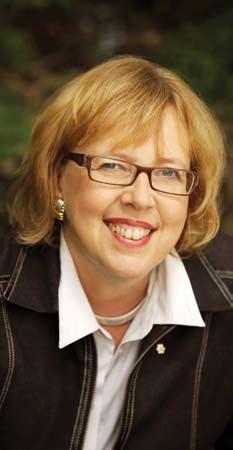
elizabeth may, leader of the green Party of canada
What do you forecast for canada in 2009? It’s obvious there will be a heavy focus on ensuring that the recent financial meltdown will not adversely affect Canada more than is inevitable .
We will need strong economic policies to combat recession – policies that I hope will avoid the usual groupthink that we can’t pay attention to the environment in a crisis We will need to stimulate the economy through reductions in payroll and income taxes, and strong investments in rail and in municipal infrastructure .
Beyond the economy, we will be facing serious environmental problems . Canada needs to shift from being an obstacle to being a force for progress in the UN negotiations to make the Kyoto Protocol a success, much like Britain, France and other European Union countries have already done The Harper government must not remain the last voice of George W . Bush’s failed policies .
What do you forecast for the world over the next decade in terms of economic, political, social and military trouble spots? Perhaps the biggest problem, one that makes the financial crisis look like a Sunday school picnic, is the continuing accumulation of greenhouse gases in the atmosphere . We have to stop that rise and start a decline globally no later than 2015, a tipping point beyond which runaway greenhouse effects will simply exceed the ability of any human intervention to slow it down
The growing gap between the wealthiest and the poorest in society will have to be addressed . In Canada, as I particularly saw when running for a Nova Scotia seat in the last election, bureaucracy has moved from being inefficient at helping the poor to being actually abusive; people who are entitled to support should receive it without having to make their case over and over again
The biggest scandal we face in this country is the quality of life of many of our aboriginal people . Many live in Third World conditions, and nothing could be more scandalous in a rich country that prides itself on being fair and egalitarian
For the problems you sense coming over the horizon, what solutions would you offer?
The more countries combine their efforts, the more effective they will be in combat-
ing difficulties That’s why we applaud the emergence of the G-20 There can’t just be seven or eight countries looking for solutions
Clearly, the global financial architecture needs to be better designed, with improved regulations . The recent financial meltdown occurred not because productive economic activity happened to go wrong, but because speculative gambling grounded in greed was allowed to run unregulated
One thing that might be looked at seriously is the Tobin tax, a tax on international currency trading (named for economist James Tobin) .
The Green Party of Canada is a great believer in strengthening the United Nations We should be looking at developing a well-trained multilateral peacekeeping force and putting as much investment in conflict resolution as in war preparation The world must be able to respond more effectively than it has to the genocide in Darfur or the ongoing conflict in the Congo . I think the election of Barack Obama may improve the chances of getting more international cooperation He will certainly change things; we will see how much
What do you forecast for the world over the next decade in terms of economic, political, social and military trouble spots?
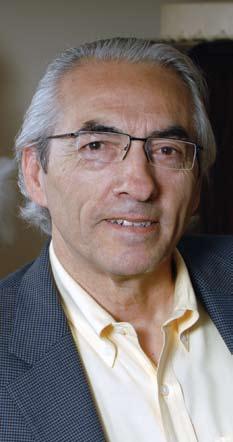
Conditions of extreme poverty and exclusion from economic planning, economic decision-making and economic opportunity, which are common to Indigenous peoples globally and in Canada, are not conducive to peaceful diplomatic relations in the 21st century
Trouble spots will appear in countries where gaps exist in wealth and lead to global instability We must find global solutions to deal with a lack of attention to the basic needs of the world’s poor such as food, health care, education, shelter Exclusion and a lack of attention to the basic needs and rights of people will lead to conflict
Southwest Colombia saw violence break out in October over the government’s economic policies as riot police clashed with Indian protestors The Indian population in Colombia is among the poorest in Colombia, a reality faced by First Nations in Canada as well . The protesters blockaded the Pan-American highway and had only the most rudimentary means of defending themselves against encroaching police The protests left many injured
What do you forecast for canada in 2009? With the global economic downturn, we expect focus to continue on the economy
We’ve heard, in the recent Speech from the Throne, that the government will be practising fiscal restraint, but we also heard essential services will not be cut, that there will be new investments to help the economy recover . One of the most strategic investments the federal government can make during an economic slowdown is in First Nations education and economies
We know that it has been projected that there will be more than $200 billion worth of investments in new projects over the next 10 years, with most of them occurring on First Nations’ lands and traditional territories .
When the government works with First Nations to support economic development and invest in our young and growing labour force, it will benefit our communities and help sustain the Canadian economy through difficult times We believe the government recognizes this fact .
However, we should also feel hopeful as we look at some very positive developments over the last two years Globally, Indigenous peoples are receiving recognition from heads of state The old way of doing business, colonial attitudes and discrimination are simply wrong and should no longer be tolerated
In September 2007, we saw 143 member states of the United Nations vote in favour of the United Nations Declaration on the Rights of Indigenous Peoples
In February 2008, year we witnessed Prime Minister Kevin Rudd apologize for past mistreatment of the stolen generations of Aboriginal people in Australia Here in Canada, we have a full package for Survivors of Indian residential schools: compensation, the historic June 11th Apology and of course the Truth and Reconciliation Commission
All these examples speak to a global Indigenous movement . We’re seeing the formation of a global Indigenous community, who are increasingly confident and supportive of each other as we assert our economic, social, political and cultural rights
For the problems you sense coming over the horizon, what solutions would you offer?
Both domestic and international decisionmaking and planning on the economy must include Indigenous peoples . This is the key to alleviating rampant poverty among Indigenous peoples and fostering relationships based on meaningful consultation, inclusion and ultimately, achieving reconciliation between Indigenous and non-Indigenous peoples In Canada, and globally, this means the state has a duty to consult First Nations on economic development issues that affect our people and impact our lands and traditional territories .
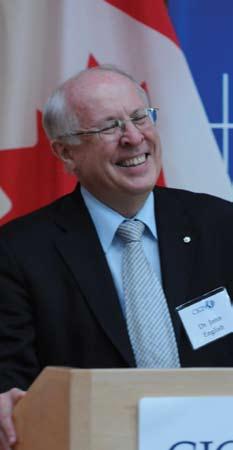
John english, executive director of the centre for international governance innovation in waterloo
What do you forecast for canada in 2009? Next year will be a difficult year for Canada . We will begin the year in a recession which may endure for several quarters . The history of past recessions indicates that unemployment will rise markedly but unevenly Some parts of Canada will be less affected than others; for example, British Columbia will benefit from the Olympic spending but southern Ontario will suffer major layoffs in the automotive and financial sectors . This economic turmoil
and the regional differences will make life difficult for Ottawa and most provinces . Normally, crises require re-evaluation of the nation’s future The Depression brought the historic Rowell-Sirois report and the Trudeau government responded to the economic turbulence and political anger of the early ’80s with the Macdonald Commission . Both were followed by major policy changes, the transfer of unemployment insurance responsibility to the provinces and free trade with the United States (Likely), 2009 will witness the appointment of a similar commission to deal with a world where the United States matters less and where Canada needs new responses to a rapidly changing international economic order .
What do you forecast for the world over the next decade in terms of economic, political, social and military trouble spots? Although emerging countries were not the major cause of the current economic crisis, they may bear the greatest burden The poorest countries almost certainly will not achieve the millennium development goals, and the large emerging countries such as Brazil, India and China will demand a much greater role in international economic governance The G-20 will probably replace the G-8; certainly the major economic problems can no longer be handled by the G-8, and the large emerging powers will not accept coming for dinner after the inner group has had its private discussion .
For the United States, the decade will be economically difficult but the remarkable victory of President-elect Obama may create reinvigoration and new hopes For Mr Obama, the crisis represents an opportunity similar to that grasped by Roosevelt in 1933 . Most of the movies of the 1930s had an optimism that was lacking in later more prosperous times; happiness does not correlate well with Wall Street excesses
For the problems you sense coming over the horizon, what solutions would you offer?
The Canadian government should use the crisis to break down political deadlocks that have lasted too long . A national securities agency, an end to provincial trade barriers, a more effective competition policy, and improvement in transportation are badly needed We could begin to reform our political institutions to make them more representative although our past offers little evidence to sustain such hopes .
Internationally, the western nations must show generosity in the reform of international institutions, particularly the international financial institutions The best outcome would be new institutions unburdened by the historical pre-eminence of the West, but such fundamental change normally occurs after wars . Obviously, peaceful change is preferable albeit much more difficult .
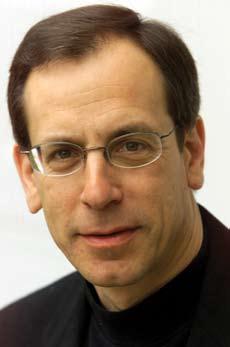
Andrew cohen, columnist, professor of journalism and international relations at carleton University, and author of Extraordinary Canadians: Lester B. Pearson.
What do you forecast for canada in 2009?
Like every other country, we will have a tough year in 2009 Economically, we will probably fare better than the United States, but when you sell most of what you make to the Americans, you have a problem; when they sneeze, as Pierre Trudeau once said, you catch cold We will Unemployment will rise, prices will fall Politically, the Conservatives will have latitude to govern while the Liberals fight among themselves With a new Leader of the Opposition, however, a clearer pattern will now emerge in the House of Commons
Still, there will be no election in 2009 What will be most interesting in Canadian politics over the next year will be the election of Barack Obama, who will challenge
a reluctant Canada to do more or to do better on several fronts, such as climate change, Afghanistan, and bailouts for the automotive sector This will not be easy for Stephen Harper, who will find President Obama more popular in Canada than he is, and who will struggle to meet his appeal for tougher standards on the environment, where Canada is an international laggard
What do you forecast for the world over the next decade in terms of economic, political, social and military trouble spots? It is axiomatic to say that Canada will be unable to shelter itself from the world . But a conservative banking system and a resource-rich economy (commodities will recover, eventually) will cushion the blow The world will still want what we have
Economic recovery and climate change will shape the international agenda
China and India will keep rising, Russia will bark, but the United States will not fade away, despite the reports of its demise . Indeed, under Barack Obama, I expect it will return to international institutions with enthusiasm and reclaim its credibility It will also retool its economy, embracing green as the new mantra
As global warming gains purchase, expect more wars over resources (water, especially) and more flights of refugees from south to north as we are now seeing from Africa to Europe .
Terrorism will not go away, and the explosion of a nuclear device in North America is not impossible
The U S will leave Iraq, which will become a chaotic democracy, and stay on in Afghanistan, which will go on and on
For the problems you sense coming over the horizon, what solutions would you offer?
The world will have to act on climate change within the decade, and probably will, belatedly It will have to reform the Security Council of the United Nations It will have to find ways to integrate and China and India more fully into international decision-making . It will have to find ways to redistribute diminishing resources such as water As the industrialized world staggers, so will the developing world This will not be easy or pretty
Ottawa writer Charles Enman agrees with Albert Einstein, who said, “I never worry about the future It comes soon enough . ”
Diplomat presents a look at a new book about esteemed Canadian diplomat Charles Ritchie and his love affair with British writer Elizabeth Bowen. We also offer a look at books on the Fenian raids, Japan as the new China, and books on human intervention. Here’s the list of titles we review or reference:
b oo K s on c harles r i T chie and e li Z abe T h b o W en
The Siren Years, by Charles Ritchie, 1974
Diplomatic Passport, by Charles Ritchie, 1981
Storm Signals, by Charles Ritchie, 1983
Undiplomatic Diaries, by Charles Ritchie, 2008
The Heat of the Day, by Elizabeth Bowen, 2002
Elizabeth Bowen: Portrait of a Writer, by Victoria Glendinning, 1985
Love’s Civil War: Elizabeth Bowen and Charles Ritchie—Letters and Diaries 1941–1973, edited by Victoria Glendinning with Judith Robertson, 2008
b oo K s on T he Fenians
Fenian Fire: The British Government Plot to Assassinate Queen Victoria, by Christy Campbell, $19.95, 2002
Turning Back the Fenians: New Brunswick’s Last Colonial Campaign, by Robert L. Dallison, 2006
Irish Nationalism and the British State: From Repeal to Revolutionary Nationalism, by Brian Jenkins, 2006
The Fenian Problem: Insurgency and Terrorism in a Liberal State, by Brian Jenkins, 2008
b oo K s on c hina and j a P an
Poorly Made in China: An Insider’s Account of the Tactics Behind China’s Production Game, by Paul Midler, to be released March 2009
A Year without “Made in China”, by Sara Bongiorni, 2000
BOOKS ON HUMANiTARiAN iNTERVENTiON
Freedom’s Battle: The Origins of Humanitarian Intervention, by Gary J. Bass, 2008
By George Fetherling
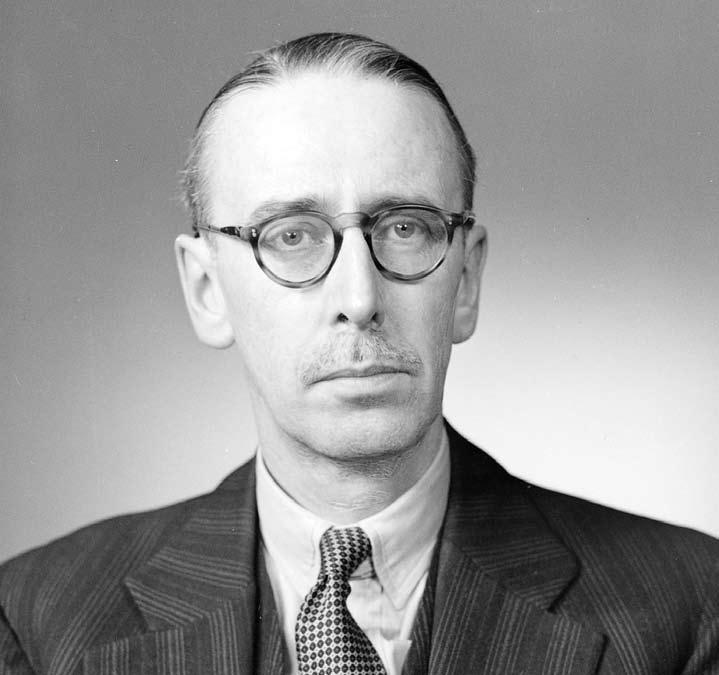
the direction of Charles Ritchie’s 37-year career at External Affairs was ever upward He became ambassador to West Germany and then permanent secretary to the UN before serving as ambassador to the U S during the later Kennedy and early Johnson years His last posting, as high commissioner in London, carried him into 1971 Then he retired and carved out three smallish books from the candid diaries he had been keeping all his adult life Everyone who has read The Siren Years (1974), Diplomatic Passport (1981) and Storm Signals (1983) will likely have favourite Ritchie descriptions of, or anecdotes about, various heads of state and heads of government, not to mention fellow diplomats . Writing, one presumes, without

thought to the possibility of publication, at least not initially, he was a protégé of Vincent Massey, rather grudgingly so . Lester Pearson and others also performed the function of mentor, the role Ritchie himself later assumed in the ascent of Allan Gotlieb Ritchie’s contemporaries included such figures as Norman Robertson and George Ignatieff My own favourite description in the diaries comes in 1963 when Ignatieff’s sons, Michael (“a young Russian gentleman of the liberal school”) and Andrew, age 15 and 11 respectively, are Ritchie’s luncheon guests in Ottawa “There was no difficulty about conversation,” Ritchie tells his journal, “as when any gap threatened we talked about food, in which both of them are passionately and discriminatingly interested .”
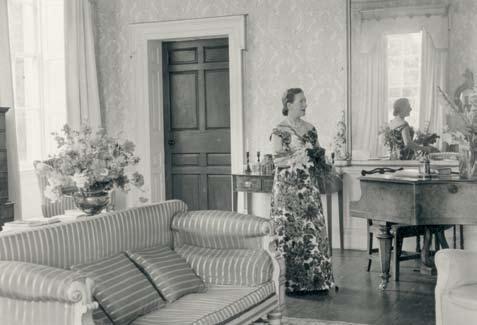
could be applied to long stretches of the diaries, which Ritchie obviously wrote as relief from the burdens of tact, understatement and discretion
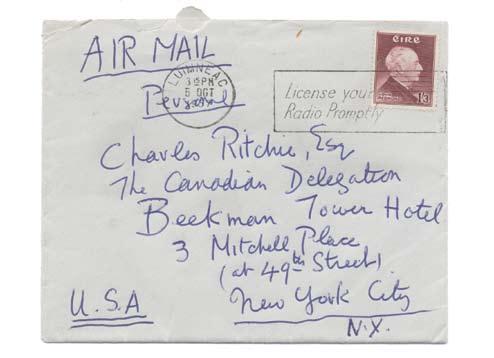
As for the anecdotes, in reading Undiplomatic Diaries 1937-1971 (McClelland & Stewart, $24 99 paper), the new omnibus volume of the three Ritchie books, I revisit some that are quite benign and self-depre cating For example, in 1962, the incoming Ca nadian ambassador is presenting his letters-ofcredence to President Kennedy in the Oval Office The president treats the diplomat as a stalking horse for John Diefenbaker and is thus rather cool towards him At one point, the president half rises from his rocking chair and says “Shoo! Shoo!” in a stern voice For a moment, Ritchie fears he “might be the first ambassador in history to be shooed out of the White House ” But unseen by him, on the other side of a glass door, is young Caroline Kennedy’s pony, getting into mischief
Much more representative is his account of a wartime evening with Vincent Massey and his wife, Alice, when an elderly socialite “rang up in the middle of dinner to say, ‘Winston must go – some of our friends are here with me and we all agree – go he must I have known him for 50 years and he has never been right yet ’ Just the sort of party I should have thought would be sitting there in Claridge’s spinning trivial but not harmless gossip .” The same phrase
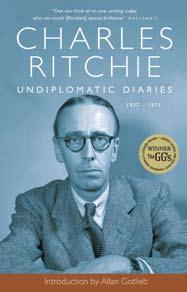
Republication of the three works in one fat volume seems to italicize the author’s relationship with the somewhat aristocratic Anglo-Irish novelist Elizabeth Bowen, whose best known book, The Heat of the Day, was dedicated to him without comment Scattered throughout the diary are about 30 important references to her, covering a span of three decades beginning in 1941 That’s when Ritchie, who is 35, finds himself at a dinner party with Bowen, 42, and her husband of 18 years, a somewhat undemonstrative fellow perhaps, who crops up in only three Ritchie notes of Bowen that he has never before (or perhaps ever) met anyone with connections to the Bloomsbury Group who possessed her “striking originality of thought, phrase, or personality…” Soon the two of them are meeting during the day and he is writing approvingly of her taste in clothes (which in fact her husband usually picked out for her) She often invites him to her family seat, a stately (and draughty) home, Bowen’s Court, in County Cork . In time, they begin to take small trips together
Victoria Glendinning, the prolific English literary biographer, gave a fuller outline of the Ritchie-Bowen relationship in her biography Elizabeth Bowen: Portrait of a Writer, published in 1978, five years after Bowen’s death . The Bowen estate returned to Ritchie all the letters he had written to her, all but a few of which he then destroyed, while preserving the hundreds that she sent him These acts make for a somewhat lopsided depiction of the relationship as recreated in Love’s Civil War: Elizabeth Bowen and Charles Ritchie—Letters and Diaries 19411973 (McClelland & Stewart, $35), edited by Ms Glenndinning with Canadian assistance from Judith Robertson, Norman Robertson’s daughter Yet the book does present a new and in some ways disquieting picture of Ritchie that contradicts his diplomatic persona and personal reputation as a fellow of great charm and wit . What becomes even more apparent
now is that Bowen was simply crazy about him All her letters to him are love letters Most of them describe a terrible longing and are couched in such extremely romantic language as to make her appear a clingy and emotionally needy person indeed . Conversely, his own feelings, represented here by excerpts from the diaries—mostly from the 90 per cent of them never before published––expose a cruel and alarming dislike of even the women whom he claimed to love In his words, “the sad, disturbing, fearful love which I half hate and without which I am not alive ” Bowen had something of the same attitude in her own make-up, if not to the same degree . One senses that her episodes were merely a matter of temperament and personality whereas his was one of psychological difficulties
Without meaning to suggest that he was the Roald Amundsen of bipolar exploration, one can see that Ritchie flew wildly from one extreme to another, and the pendulum’s swings are not always easy for the reader to accept with equanimity “It gives me a little shock of distaste to have a competent woman about,” he writes in one diary entry “I like women extravagant, late for appointments, wilful, fond of showy clothes and society, vague drifting dreamy, and yet of course all that is v tiresome But I don’t like competence, intellectual honesty, intelligent sensuality.” Quite a contrast with his description of his first meeting with Bowen .
After the Second World War, the relationship took on a new dimension Ritchie saw how the Cold War greatly improved his chances of advancement Part of his plan was to end his “cosy bachelor” days and marry His bride (and second cousin) was Sylvia Smellie . Bowen tried hard not to become jealous of her but, in the end, failed—rather histrionically it seems, after the death of her obviously tolerant husband in 1952 For his part, Ritchie could not always help but inflict hurt on his wife either, however much he came to love her That much is clear when he deliberately left one of Bowen’s effusive love letters out where Sylvia was bound to read it . A strange set of relationships all round . Reading nearly 500 pages about it is like being backstage at a Punch and Judy show
Charles Ritchie died in 1995 after enjoying considerable success for the publication of his diaries in their highly selected form, focusing on politics and public personalities and giving little hint of the undiplomatic turmoil going on inside him .
Today if we think of the Fenian Brotherhood at all, we tend to dismiss it as a risible fringe organisation that posed no substantial danger to anyone In the mid-19th century, however, this Irish nationalist group was a quite genuine military threat to Canada and a diplomatic imbroglio for both the UK and the U .S . It was formed in 1857 to secure Irish independence from Britain One wing was supposed to foment armed rebellion in Ireland (but couldn’t) Another, drawing on the huge Irish immigrant population in North America, was to capture Canada and hold it ransom until the British had pulled out of Ireland entirely . That sounds like every bit the lunatic scheme it actually was . Because of the American Civil War, however, it caused considerable anxiety on both sides of the Atlantic
Many Irish-American regiments fought in the war, most but not all of them for the Northern side At one point, Fenians were enlisting, getting the standard $50 “bounty” or signing bonus and being issued with rifles . Then they would desert, cache their weapons and repeat the process in one town after another By this and other methods, there was, at war’s end in 1865, a well-financed and welltrained Fenian army of 10,000 men In 1866, a thousand of them tried to invade New Brunswick from a base in Maine and succeeded in capturing their enemy’s flag—but nothing else . So attention shifted
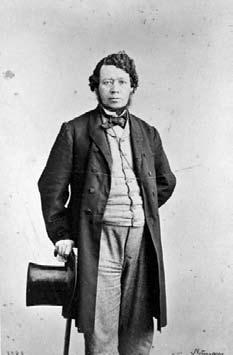
to what would soon become Ontario, where the following month there was a pitched battle between Fenians from New York State and the Canadian militia . The Fenians actually won the engagement but quickly withdrew Smaller incursions were made in Quebec Finally, in 1871, a Fenian plan to attack Manitoba, where the invaders hoped to join forces with Louis Riel, was foiled
A number of other important developments descend from the Fenian plot . It
was a Fenian, for example, who assassinated Thomas D’Arcy McGee And Sir Sam Steele, later head of the North-West Mounted Police and finally an important commander in the First World War, began his career at age 17 by enlisting in the militia to repel the Fenians in 1866 . Most important of all, the fear generated by the Fenian menace was a measurable factor in the debates over Confederation
In the past few years have come several books focusing on the more melodramatic moments in the Fenian story The most brazen and speculative of them is Christy Campbell’s Fenian Fire: The British Government Plot to Assassinate Queen Victoria , a revisionist work published in 2002 and now a paperback (HarperCollins Canada, $19 95) A straightforward and valuable Canadian example is Turning Back the Fenians: New Brunswick’s Last Colonial Campaign by Robert L Dallison, published two years ago (Goose Lane Editions, $16 95 paper)
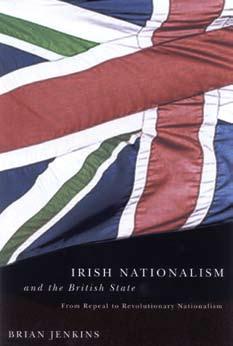
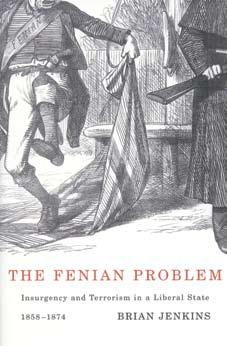
The Fenians waged a military campaign in North America but pursued a different course in Britain itself . In London and other cities, assassinations were frequent and bombings altogether common “New Scotland Yard” is so named because Fenians blew up the old one Brian Jenkins, an emeritus professor of history at Bishop’s University, has now followed his previous book, Irish Nationalism and the British State, with The Fenian Problem: Insurgency and Terrorism in a Liberal State (McGill-Queen’s University Press, $80) It is concerned with details of how successive British governments arrived at policies designed to lessen or eliminate the Fenian threat at home without trampling the civil and legal rights of ordinary Britons That gives the book an eerily contemporaneous quality that will be lost on no one reading it .
Those of us who were alive in the 1950s remember when the phrase
“Made in Japan” stamped on so many different everyday consumer products was the hallmark of shoddiness, as the Japanese, struggling to rebuild their economy in the aftermath of the Second World War, exported cheaply made goods in enormous volume At the time, “Made in Japan” was a refrain heard in standup comedy and pop culture generally, though behind it of course lay lingering political animus: Plus ça change, plus c’est la même chose . Today China is building a new economy based on a somewhat similar
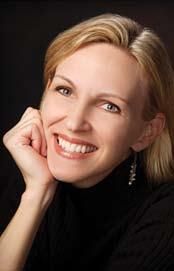
Author Sara Bongiorni
strategy The difference is that so many of the Chinese products, everything from toys to chocolate to milk products, have turned out to be not merely inferior but poisonous or otherwise dangerous
John Wiley & Sons, the leading publisher of business books, has two new titles that speak to this problem in interesting ways Poorly Made in China: An Insider’s Account of the Tactics Behind China’s Production Game by Paul Midler ($26 .95 paper) argues that the situation is actually a deliberate
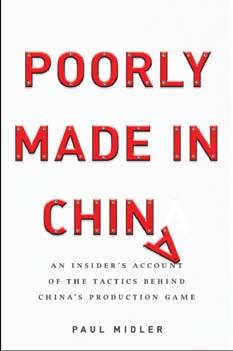
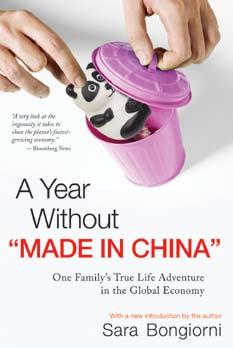
result of a policy known as “quality fade” . Mr Midler, who has spent years consulting for U .S . corporations on Chinese business conditions, examines seven industries in detail, including construction and health care products In A Year without “Made in China” ($15 95 paper), Sara Bongiorni, an American business journalist, describes all the obstacles she faced in an experiment trying to eliminate Chinese-made products from her family’s life . The fast was not entirely successful, so ubiquitous are imports made in China either in whole or in part But her subtext about China’s effects on western economies is certainly vivid
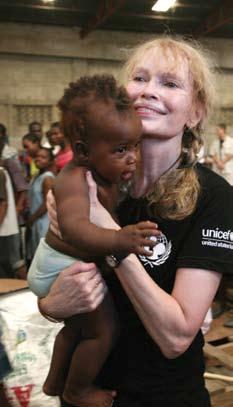
One of the illuminating spectacles in Toronto a couple of months ago was a public debate on the subject of whether nations have the right to intervene militarily in other countries on humanitarian grounds Arguing in the positive were Gareth Evans, the head of International Crisis Group, and Mia Farrow, of Rosemary’s Baby Arguing the negative were Rick Hillier, the retired chief of defence staff (why would anyone want warfare lite rather than the real thing?) and John Bolton, the former U S ambassador to the United Nations, an institution for which both he and the man who appointed him, George W Bush, wished only ill This came not long after another ex-U S ambassador to the UN, Thomas Pickering, and Morton Abrahamowitz, formerly American ambassador to Thai-
land, writing in Foreign Affairs, posited ambitious ideas about how to make the UN more effective (and quicker) when responding to acts of genocide and other such criminal violations of human rights round the world
Surely there is an urgent need to address the problem in this age of Darfur, Sudan, Somalia, Zimbabwe and so on . The trend the past few years, however, has been to sidestep direct involvement or else for the U S to impose economic sanctions (presumably the same ones that brought Fidel Castro to his knees in 1960) This is a tremendously complex issue that bites into some timeless philosophical and ethical questions: when, whether, why and by what means does a state acquire moral authority, as distinguished from highminded self-interest?
Gary J Bass of Princeton University has been left to provide a serious historical overview of interventionism in Freedom’s Battle: The Origins of Humanitarian Intervention (Random House of Canada, $40) . In a nutshell, he shows that interventions “to stop the atrocities” were quite common
throughout the 19th century, especially among the European powers, but were often barely distinguishable from European colonialism The United States moved in a similar direction when going to war with Spain in 1898 ostensibly to stop aggression against the people of Cuba and the Philippines who, in the end, found themselves with a different set of masters .
At one point, Mr Bass inserts what amounts to a review of his own book “This is not a nostalgic book,” he writes “There is no need to rewind to the nineteenth century, just to learn something from the period’s diplomacy It is as rash to pine for a lost golden age as it is to dimly imagine one in the hypothetical future . The nineteenth century was not a century of humanitarianism One cannot ignore the arrogant imperialism Many of the characters in this book held loathsome racial attitudes that played out in the subjugation of countless people ”
George Fetherling’s latest novel is Walt Whitman’s Secret (Random House Canada) .

on Feb . 14, many will be celebrating Saint Valentine’s Day, the day when lovers traditionally express their affection for each other Not surprisingly, over the years, Valentine’s Day has become the day of the year when the most roses are sold Is this because if the letters of the word "rose" are rearranged they spell "Eros", the god of love?
February 14 is also the second largest card-giving day of the year (after Christmas) as those of all generations exchange and send special greetings of love (The U S Card Association estimates that 85 per cent of Valentine cards are purchased by women ) Heart-shaped designs, doves (symbolizing fidelity) and roses continue to be favorite motifs
For family dining, tables (from napkins to centerpieces) take on a red theme . Heart-shaped and cupid cookie cutters and moulds are retrieved from the bottom of kitchen drawers Together families delight in cutting veggies, toast, pâté, cheese, bread, etc into popular Valentine’s Day shapes With a few of these "hand-tooled" additions, Valentine’s dinner is certain to be a happy event for the entire family
But what if you’re a couple without kids, or empty-nesters? For myself, the best expression of love on Valentine’s Day (as on every other day of the year) is preparing and sharing a delicious meal with my husband After all, it is generally agreed that great food is the quickest way to anyone’s heart However, being Valentine’s Day, couples may want their culinary choices to enhance the power of love . I must be honest and admit that some "pleasure" foods actually impair the power of love (think fried foods, rich cream sauces, excessively sweet and salty fare, saturated fats and highly processed foods) Although, coffee in moderation has a positive effect, it is best to limit its consumption as well as that of alcohol
But don’t be discouraged . There is good news . One of our great indulgences, chocolate, helps instill passion So tuck in Seafood, virtually all it, is another food of love, with oysters topping the list Oysters contain zinc which is necessary for testosterone production in both men and women
Many fresh fruits are said to possess aphrodisiac properties: cherries, raspber-

ries, strawberries, apples, bananas, apricots, peaches, pears, plums, grapes, mangoes, papayas, coconut, pomegranates and figs This could be due to their size (perfect for handfeeding a lover), their shape, taste, juiciness, or sensuous texture . I was fascinated to learn, for example, that avocados, whose tree the Aztecs called "ahuacati (which translates as the "testicle tree") do actually hang in pairs on trees Phallic-shaped vegetables (asparagus, corn, cucumbers, carrots and eggplant), some herbs (basil), spices (cloves, pepper, ginger, cinnamon, mustard), nuts (almonds) and honey are all considered to have aphrodisiac effects . After considering this exotic information, one conclusion comes to mind The freshest and most wholesome foods might
fall within the category "aphrodisiac" in that they supply the nutrients and satisfaction one needs to lead a happy and healthy life
Here are some tips for a sensuous Valentine’s Day evening à deux:
1 Set a beautiful table in advance (Invest in a few fresh flowers, roses perhaps?)
2 Prepare your meal with care and do much of the preparation ahead of time . Include choices that will not keep you in the kitchen for more than a few minutes between courses
3 Don’t forget the hors d’oeuvres
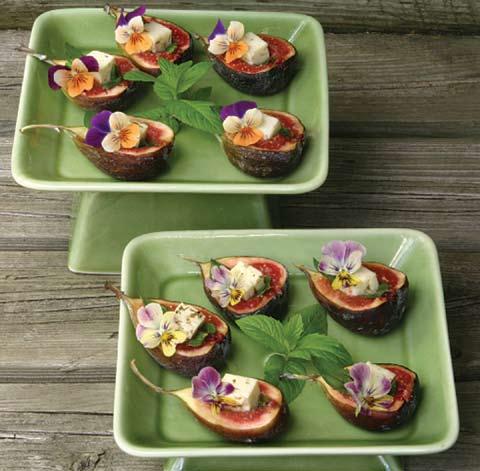
These are a must Consider serving shrimp with tails and oysters, thus allowing you to hand feed your valentine and to savour the moment . Creamy dips (particularly made with avocados) and fresh fig halves in some form (see recipe below) are certain to create a romantic mood
4 Dress for the occasion (from smart
casual or elegant to intriguing or maybe even provocative)
5 Light the candles, put on the music, dim the lights, and if you have a fireplace, start it
6 Choose a cozy spot to leisurely sip your drinks and seductively nibble hors d’oeuvres .
7 . Indulge in chocolates, put off the clean-up and enjoy the rest of the evening
Margaret Dickenson is author of the awardwinning cookbook Margaret’s Table - Easy Cooking & Inspiring Entertaining See www margaretssenseofoccasion com for more
Minted Fresh Figs with Feta Makes 12 pieces (6 servings)
6 fresh whole figs, ripe (each: 1 1/4 oz or 35 g)
2 to 3 tsp (10 to 15 mL) vinaigrette (a mustard herb type), divided
12 tiny cubes (1/3 inch or 0 8 cm) feta cheese
12 fresh mint leaves, rather large*
Garnish
12 tiny edible flowers** (violas, Johnny Jump-Ups), optional
1 Wipe figs clean; cut each in half vertically through stem, leaving stem attached
2 Lay fig halves (cut side up) on a clean flat surface . Using a finger, press an indentation into centre of each fig half to create a deep depression (Avoid cracking edges of figs .)
3 Carefully drizzle cut surfaces of fig halves with a few drops of vinaigrette, cautiously cutting it into flesh with tip of a spoon (Note of Caution: Avoid "soaking" the figs with vinaigrette The hors d’oeuvres must not drip )
4 . Add one large mint leaf to surface of each fig half, pressing down at centre to retain indentation
5 Put cubes of feta in a small bowl and lightly bathe with vinaigrette Place one bathed feta cube into mint-lined depression of each fig half and garnish with a tiny edible flower (or smaller mint leaf)
* Large enough to line a half fig without hiding the fig
** When edible flowers are not available, use small fresh mint leaves
Tip: Purchase fresh figs only when they are definitely ripe
Make ahead tip: Minted Fresh Figs may be prepared (up to several hours) in advance, placed in an airtight plastic container and refrigerated until ready to serve .


By Margo Roston
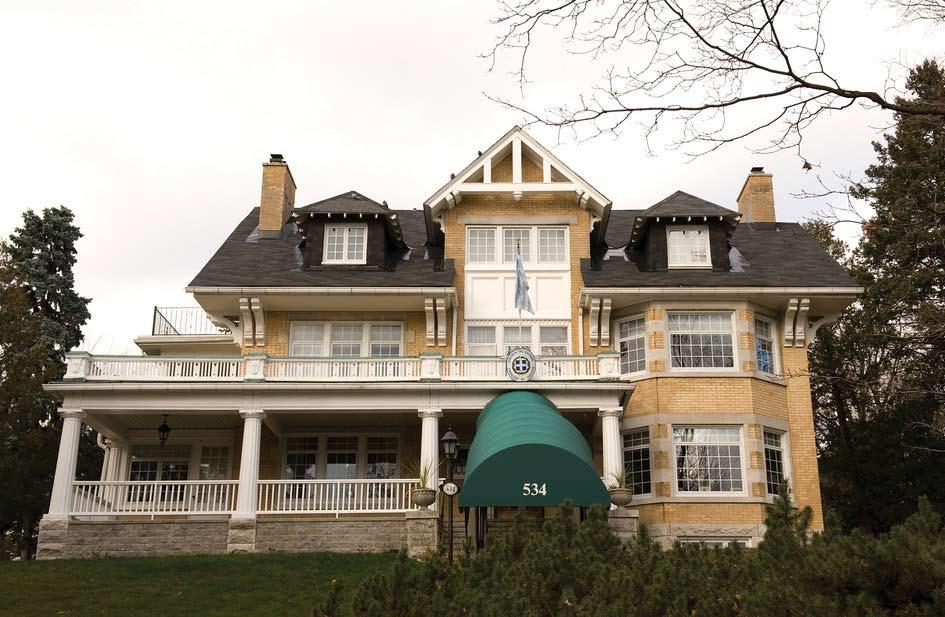
some houses stand out, whether for their size, their style or their location
Put all three together with the steady hand of a master architect and you’ve got something special .
The Greek embassy owns one of Ottawa’s premier addresses, a three-storey heritage home built in 1910 by one of Ottawa’s most fabled architects, Werner Ernest Noffke, for Senator Andrew Haydon, grandfather of former regional chair Andy Haydon The senator was born in Pakenham in 1867 and flourished as a well-known lawyer, Liberal party insider and author of a book about Lanark as well as Mackenzie King and the Liberal Party (1930)
Set on a hill above Queen Elizabeth Drive and overlooking the Rideau Canal, the imposing house with its wraparound balconies and long, covered walkway, was purchased by the Greek government in 1977 after it had been empty for several years . It’s now the
comfortable residence of amiable Ambassador Nikolaos Matsis and his wife Kathy
“I find something like splendour about this house,” says the ambassador of the sixbedroom mansion, which is just a hop, skip and jump from Dows Lake Balconies on the main and second floors give a southern grace to the exterior, while a side balcony on the third floor offers vistas of the lush surrounding landscape
And the location is special to Mrs Matsis
“I like the ability to walk to Bank Street where there is so much action,” says the Australian-born Greek, who met her husband at a dance in Athens “We were married in Greece and honeymooned in Tasmania,” she laughs
The ambassador also has ties to Australia, where he worked as the editor of a Greek newspaper for a couple of years and later took a posting there during his 31-year diplomatic career .
The house has gone through changes over the years The original oak paneling which lines the walls of the foyer and the landing of the elegant staircases is, of course, intact . The story goes that the small heart-shaped cutouts on the spindles of the staircase were signs of the original owner’s love for his wife
“There’s also supposed to be a ghost,” says Mrs Matsis
The original dining room, which had been opened to the living room, was moved across the hall so there are now two sitting rooms side by side, each with beautiful beamed ceilings
And the Matsis’s made more changes They moved the kitchen and powder room from the basement to bright modern facilities on the main floor The ambassador is thrilled with the workout room that has taken their place
“We don’t ski,” he admits, although this is
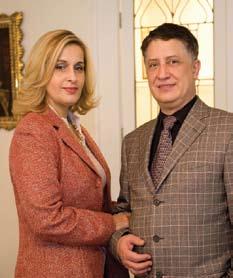
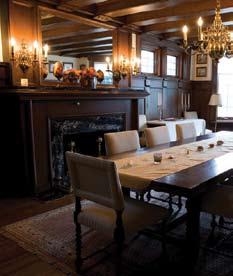
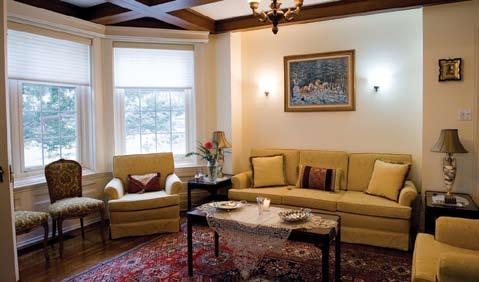

the third time he has been posted to Canada, including stints in Toronto and Montreal . Their daughter, Helen, was born in Canada and is a student at Concordia University. Their son, Anthony, attended Lower Canada College and graduated from McGill
Much of art and furniture belongs to the couple, including the living room’s bright red sofa and chair, the Persian rugs, a copper table and an Ottoman brazier
The art is eclectic, treasures collected during three decades in the diplomatic corps . Paintings of Greek fishermen in the Ukraine, silver Russian cigarette boxes, and lacquered boxes with images of saints in gold leaf brighten the main floor reception rooms Copies of a book of Greek poetry written by the ambassador and translated and published in Russian line a bookshelf There’s a brightly painted boomerang, a gift from a posting in Australia, and a clas-
sical silver wreath, a symbol of the Athens Olympics .
More formal are the classical Greek statues in the reception rooms – Aphrodite on a dolphin and Kore, a free standing statue of a maiden, both belonging to the Greek Ministry of Civilization The couple also has mementoes from Brazil
“We believe in the blending of styles,” says Mrs Matsis “The diplomatic life is all about memories and recollections ”
Dinner in the large dining room always has a Greek motif, sometimes including pasticcio – a kind of lasagna – and baklava And the lamb dishes… well they are piecès de résistance of the ambassador, a “great cook,” according to his wife
“Ottawa is our home now and selling Greece is our job,” she says
Margo Roston is Diplomat’s culture editor
Ask a climatologist about wine Besides hearing about his favourite producer, an impressive personal collection or perhaps a little story about drinking too much Port, you’ll be told something quite profound You’ll learn that when it comes to climate change, wine is the proverbial canary in the coal mine
Even minute changes in climate reverberate through wine production We know this because no other agricultural product and the climatic conditions affecting its development are as carefully watched from the beginning of a growing season to its results years later Furthermore, all this analysis and documentation occurs in countless locations around the globe

In 2005, in a landmark study, Climate Change and Global Wine Quality , climatologist Gregory V. Jones from Southern Oregon University and his co-authors analyzed yearly climactic data and the scores for the corresponding wines from the world’s top wine regions They concluded that, over the last 50 years, most of the world’s high-quality wine-producing areas, particularly in the Northern Hemisphere, have experienced sustained warming trends of their growing seasons with an average temperature increase of 2 C The Southern Hemisphere has been far less impacted due to the great moderating effect of its ocean-to-land-mass ratio
These higher average temperatures have resulted in higher-quality wines and less year-to-year variation While viticultural (vineyard cultivation) and vinicultural (wine grape cultivation) practices

have also contributed to this improvement over the last half century, climate has been the greater influence . Frost is now less of a threat, and growing seasons have lengthened by 20 to 40 days in Europe and 90 days in Napa Many cooler wine-growing regions have benefited, and there’s serious anticipation of great sparkling wines from England and lush reds from Germany down the road The real beneficiary so far has been Europe and, in particular, France A succession of vintages in various French regions have produced wines that are more fruit-forward, higher in alcohol and lower in acid “Our weather is now perfect,” says Jean-Guillaume Prats of Bordeaux’s Château Cos d’Estournel . “Global warming has changed the style of wine we make to be a rounder, more forward wine ”
Better wines from the world’s greatest wine-producing areas and many new wine regions? What’s the bad news? Well, many existing wine regions may simply become too hot to create balanced, high-quality wines if temperature increases continue . Though modern vineyard practices can help create favourable grape-growing conditions, good wine can only be achieved with the appropriate grape variety reaching its phenolic and sugar ripenesss in the right geological and climactic scenario All this may result in long-established wine regions becoming inhospitable for their traditional grape varietals Beyond that, extended exposure to temperatures above 30 C may cause flavour ripening to fail while photosynthesis stops altogether above 35 C This may lead to not just a wholesale changing of grape varietals but the complete abandonment of certain wine regions Warmer weather and longer growing seasons also increase the potential of diseases and pests while growing irrigation needs will result in greater water stress to surrounding environments This is of particular concern in regions such as southeastern Australia where severe drought has persisted for more than six years
But all is not grim The wine industry is adaptable if nothing else and can overcome challenges . Randall Grahm, the
famed and irreverent owner of California’s Bonny Doon, is planting a vineyard near the tiny town of San Juan Bautista to learn how to accommodate climate change He hopes much of the primarily east- and northeast-facing vineyard will be planted without supplemental irrigation (dryfarming) To that end, he plans on small, low-to-the-ground vines which will be widely spaced By keeping vigour down from the get-go, Mr Grahm hopes to es-
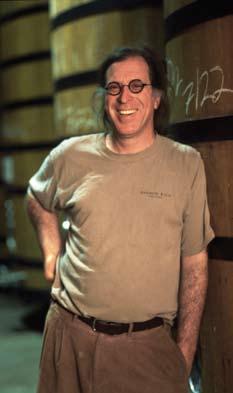
tablish deeply rooted vines that are more drought-tolerant, but, if he still needs irrigation despite these plans, so be it
Scientists, politicians and pundits may continue to argue, but grape growers and winemakers have long realized that climate change is real Its ongoing effect on the wine industry will only become more evident to wine drinkers Though we may gain much that is new and great, I hope the wines and traditions we treasure don’t just become memories
Pieter Van den Weghe is the sommelier at Beckta dining & wine .
By Laura Neilson Bonikowsky
in 1891, a generation before the Famous Five’s victory in the Persons Case, Clara Brett Martin applied to study law Her rejection was incontrovertible
“This application to the Law Society of Upper Canada is refused The governing statute regulating this body, not having been drafted under the advanced views of the day and specifically referring to the admission of persons, does not permit the interpretation of ‘persons’ to include women .”
Despite the rebuff, she persisted Determined, perhaps naive, she appealed to the profession’s “broad spirit of liberality and fairness ” Supported by the influential Emily Stowe and Sir Oliver Mowat, Martin’s appeal led to the passage of a provincial act allowing women to become solicitors . She entered law school in 1893 and placed first in the solicitor’s examination .
With the help of Lady Aberdeen and Mowat’s continued assistance, Martin’s second appeal led to legislation admitting women as barristers, but she was rejected upon application to the bar The Law Society finally yielded to pressure by wealthy clients and on Feb 2, 1897, Martin became
the British Empire’s first female lawyer She earned a Bachelor of Civil Law and LLB degrees and established a successful practice in Toronto
Martin was not a leader of the women’s movement, but she worked diligently to promote opportunities for women, hiring women law students and initiating a Women’s Court Recognizing education as the key to empowerment, she served for 10 years on Toronto’s Board of Education
At the turn of the 20th century, women were not full citizens They could appear in court as litigants, witnesses or victims, but not as members of the court, as they were sure to influence judges and juries with their feminine wiles Allowing women access to higher education was contentious, the prevailing opinion held that “the conferring of degrees on women would encourage them to enter the professions and public life,” thereby offending those “who appreciate the delicate grace and beauty of woman's character ”
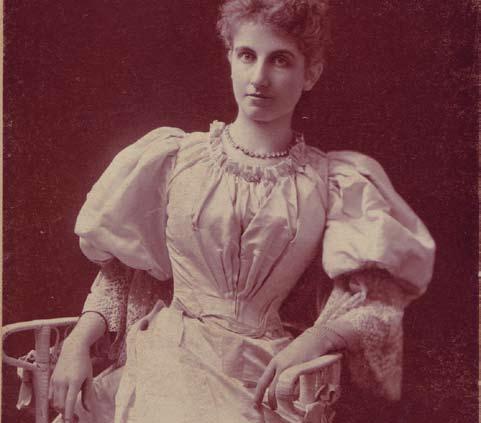
Martin overcame all of these prejudices . She was a remarkably determined woman who quietly advanced women’s causes History forgot about her until the early 1980s, when academia began to recognize women’s accomplishments Martin reached a zenith in September 1989 when Ontario’s Attorney General announced the opening of the Clara Brett Martin Building . The official opening included a dramatic representation of her struggle that brought people to tears Martin was elevated to the status of heroine
In July 1990, only 10 months later, Martin was ignominiously shoved off her pedestal when a University of Western Ontario law professor published a letter Martin sent to the Attorney General’s office in March 1915 complaining that property titles were clouded by the registration of false agreements of sale Each instance the professor cited was attributed by Martin to “a Jew ” She also asked that “the Registry Act be amended to prevent this scandalous work of foreigners ”
Without understanding the socio-historic context of Martin’s time, it’s difficult to understand how a woman who had worked so hard to escape oppression could exhibit such prejudice But Canada in the early 20th century was decidedly anti-Semitic, and Martin’s attitude was common In 1905, only 10 years before Martin’s letter, Henri Bourassa delivered a vituperative anti-Jewish speech to the House of Commons urging Canada to refuse Jewish immigrants .
Regardless of her time, Martin was judged by late 20th-century values Some demanded her name be removed from the building; others called for it to remain, given the number of buildings named for anti-Semitic men Her name was removed in late 1990, leaving only a silhouette as shadowy as the memory of Martin’s accomplishments
Today, the choice remains: honour Martin for her accomplishments in the face of huge obstacles, or vilify her for attitudes that have become pejorative over time To do either exclusively denies the complexity of human history
Laura Neilson Bonikowsky is the associate editor of The Canadian Encyclopedia .
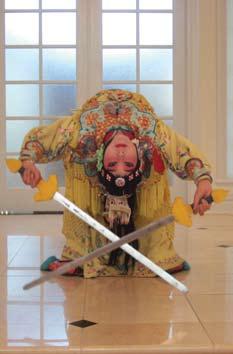
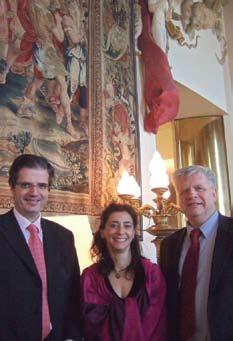
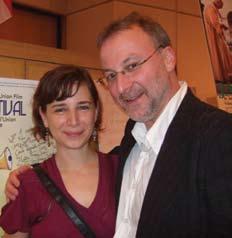
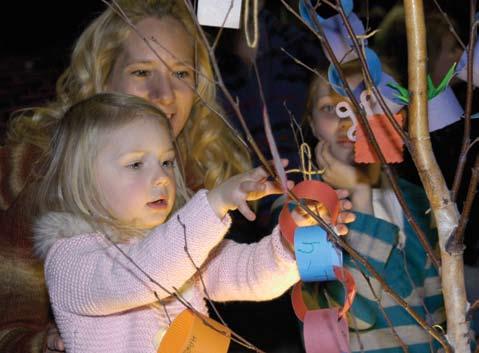
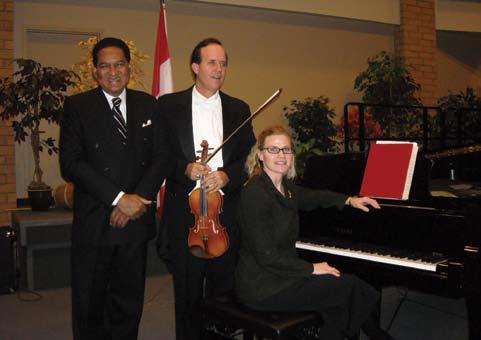
This PaGe 1.Gu Langlin, wife of Chinese Ambassador Lan Lijun, presented a taste of Beijing Opera at their residence Nov. 6. This performer was part of the colourful show. (Photo: Ulle Baum) • 2. Several diplomatic families showed up for the 5th Annual Rogers movie matinée Dec. 13 at Rainbow Cinema. Here, Clarissa Day hangs an ornament on the tree. (Photo: Karen Keskinen) • 3. Dominican Ambassador Luis Arias, left, hosted a Canadian-Dominican concert Nov. 17. He’s shown with violinist Eugenio Matos, special advisor at the Dominican Embassy, and Canadian pianist Sheryl Molloy. • 4. The 23rd annual EU Film Festival took place in November. Shown at the opening gala: Tom McSorley, director of the Canadian Film institute, and his wife, Tina. • 5. French Ambassador Francois Delattre hosted the EU Film Festival launch. Shown: Mr. Delattre, Caroline Jacquemot-Gindre, an attaché at the French Embassy, and Roy Christensen, press officer for the delegation of the European Commission. (Photos: Ulle Baum)
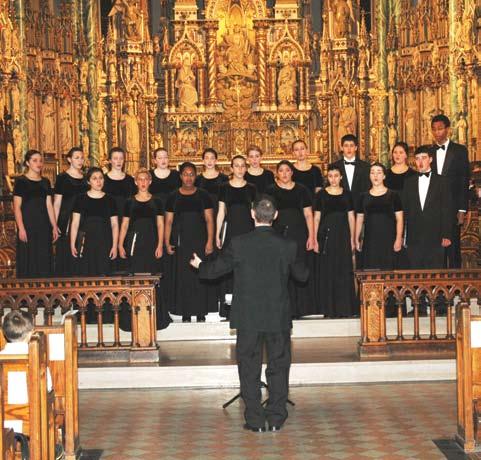
This PaGe 1. The delegation of the european commission and the embassies of member states of european union co-hosted a concert dec. 5 at notre dame cathedral with the calixa lavallée choir and chorale de la salle. here, robert Filion directs the chorale de la salle singing a traditional Finnish carol. • 2. The church was filled to near-capacity for the concert. (Photos: bob diotte) • 3. The canadian Federation of university Women’s diplomatic hospitality group held its annual christmas party at the dominion chalmers church dec. 12. shown here is joyce Kallaghe, wife of Tanzanian high commissioner Peter Kallaghe. • 4. argentine ambassador arturo bothamley attended the opening of the 24th annual art show held at Foreign affairs nov. 25. he’s shown with diplomat contributors Margaret and larry dickenson. • 5. Korean ambassador soo-dong Kim attended the canada-Korea society’s annual general meeting at hunt club oct. 25. shown here are Mr. Kim, his wife, inu Yu, and senator joseph day, right. (Photos: Frank scheme)
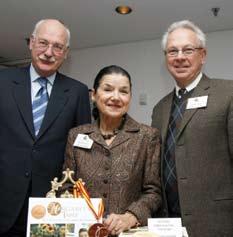
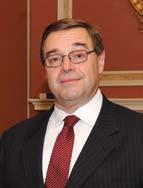
Mr Brandstetter is a career diplomat who joined the foreign service in 1979 after studying at Vienna’s University of Economics and doing post-graduate work at the Diplomatic Academy and the Vienna Institute
His first two postings were to Moscow and New York . He returned to headquarters in 1987 to work on the North America desk before being sent to the embassy in Berlin in 1990 A year later, he was minister in Prague and four years later, he became consul general in Los Angeles In 2000, he returned to headquarters as deputy head of the Western Europe department and was foreign policy advisor to the minister from 2001 to 2004 . For the four years prior to coming to Ottawa, he was ambassador to Brazil
Mr Brandstetter is married to LeonieMaria and they have two adult children
Teresita de jesús Vicente sotolongo ambassador of cuba
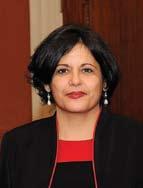
Ms Sotolongo joined the ministry of foreign affairs in 1981, working in the documentation division Two years later, she was a desk officer, overseeing Nordic country files . In 1985, she started a four-
year posting at the embassy in Finland before returning to the ministry to oversee the EU portion of the European division
In 1993, she became first secretary to Cuba’s embassy in Sweden for two years and then chargé d’affaires at the embassy in Denmark . In 1998, she returned to headquarters as assistant director for Europe
From 2000 to 2003, she was Cuba’s ambassador to Switzerland and a nonresident ambassador to Liechtenstein For the last five years, she has been director for Europe at headquarters
Ms . Sotolongo is married and has one child .
Karel Zebrakovsky ambassador of the czech republic
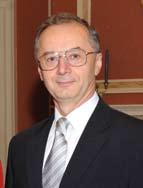
Mr . Zebrakovsky has led a varied career beginning in 1973 when, after completing a master’s in electrical engineering, he became manager of the corporate development unit at Transgas in Prague He stayed for 12 years before becoming a senior advisor with the Federal Ministry of Metallurgy and Heavy Engineering He worked as a professor of information technology at the Czech Management Centre and then spent two years as counselor at the Czech embassy in New York From 1993 to 1998, he was director of the department of external economic relations and international organizations
From 2001 to 2006, he was ambassador to Japan and for the two years prior to coming to Canada, he was back at headquarters as ambassador-at-large for science, technology and education
He is married to Marketa, also a diplomat, and they have two children
Franklin chavez ambassador of ecuador
Mr . Chavez is a career diplomat . He has a master’s in international law from
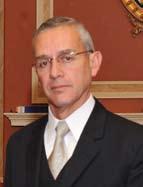
the National Autonomous University of Mexico and a doctorate from the Pontifical Catholic University of Ecuador
He joined the foreign ministry in 1976 His first posting came five years later, as second secretary in Mexico He was promoted to first secretary during the fiveyear posting and returned to the ministry for two years before becoming counselor and later minister at the embassy in Japan for five years He then spent four years back at headquarters before serving as minister at the embassy in Austria from 1998 to 2003 He returned to headquarters and held various posts, most recently director-general of the diplomatic academy
Mr Chavez is married to Magdalena Calderón Cevallos . They have one daughter .
daya Perera
high commissioner for sri lanka
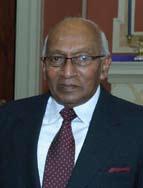
Mr . Perera has had a varied career in law, forensic medicine and diplomacy . In 1954, he was admitted as an advocate of their lordship’s court in Sri Lanka and spent 50 years in law In 1987, he received a diploma in forensic medicine and science from the University of Colombo
From 1956 to 1970, he was with the office of the attorney general and was seconded to the Sri Lankan army twice during that period . He then joined the un-
official bar until 1988 From 1988 to 1991, he was ambassador to the United Nations in New York after which he joined the private bar again For a year in 1995, he was an examiner in forensic medicine for the North Colombo Medical College
Mr . Perera is a widower with two grown children
China
xiaowen You, Counsellor
Costa Rica
samy araya rojas Counsellor
Denmark
jorgen jacobsen
Defence, Military, Naval and Air Attaché
iraq
Kadhim a.j. al-robaee
Second Secretary
israel
ariel Vinograd Attaché
Latvia
juris bezzubovs
Defence, Military, Naval and Air Attaché
Mexico
hector capetillo lopez Naval Attaché
Moldova
Tudor ulianovschi
Second Secretary
Russia
Vladimir lapshin Counsellor
Saudi Arabia
Majed a.M. al jumaieh Attaché
Slovenia
luka Kovacec
Third Secretary
Turkey
ibrahim Tasbasi Counsellor
United Arab Emirates
Khalid Mohamed amer s a alhajeri Attaché
Zambia
hilda Kafumukache Musunsa
First Secretary
Eliminate the spider veins from your legs and face by simple injection.
Ultrasound injections cut the need for varicose vein surgery. This exclusive service is available at Dr. Beaupré’s Clinics.
ONE OF CANADA’S LEADERS WITH OVER 30 YEARS EXPERIENCE

600-1335 Ottaw 102 Gatineau (819) 5 61- 0561



AFGHANISTAN
His Ex Omar Samad Embassy of the Islamic Republic of Afghanistan
240 Argyle Street
Ottawa, Ontario K2P 1B9
TEL 563-4223 FAX 563-4962 contact@afghanemb-canada net www afghanemb-canada net
ALBANIA
His Ex Besnik Konci Embassy of the Republic of Albania
130 Albert Street, Suite 302 Ottawa, Ontario K1P 5G4
TEL 236-4114 FAX 236-0804 embassyofalbania@on aibn com
ALGErIA
His Ex Smail Benamara Embassy of the People’s Democratic Republic of Algeria 500 Wilbrod Street Ottawa, Ontario K1N 6N2 TEL 789-8505 FAX 789-1406 www.embassyalgeria.ca/eng.htm
ANGOLA
His Ex Miguel Maria N Puna Embassy of the Republic of Angola 189 Laurier Avenue East Ottawa, Ontario K1N 6P1
TEL 234-1152 FAX 234-1179 info@embangola-can org www embangola-can org
ArGENTINA
His Ex Arturo Bothamley Embassy of the Argentine Republic 81 Metcalfe Street 7th Floor Ottawa, Ontario K1P 6K7
TEL 236-2351 FAX 235-2659 embargentina@argentina-canada net www argentina-canada net
ArMENIA
Mr Arman Akopian Chargé d’Affaires
Embassy of the Republic of Armenia 7 Delaware Avenue Ottawa, Ontario K2P 0Z2 TEL 234-3710 FAX 234-3444 armcanadaembassy@mfa com www armembassycanada ca
AUSTrALIA
His Ex Justin Hugh Brown Australian High Commission 50 O’Connor, Suite 710 Ottawa, Ontario K1P 6L2 TEL 236-0841 FAX 236-4376 www canada embassy gov au
AUSTrIA
His Ex Werner Brandstetter
Embassy of the Republic of Austria
445 Wilbrod Street
Ottawa, Ontario K1N 6M7
TEL 789-1444 FAX 789-3431
Ottawa-ob@bmeia gv at
AZErBAIJAN
Mr Farid Shafiyev Chargé d’Affaires
Embassy of the Republic of Azerbaijan
275 Slater Street, Suite 904-C
Ottawa, Ontario K1P 5H9
TEL 288-0497 FAX 230-8089
BAHAMAS
His Ex Michael D Smith
High Commission for The Commonwealth of The Bahamas
50 O’Connor Street, Suite 1313
Ottawa, Ontario K1P 6L2
TEL 232-1724 FAX 232-0097
ottawa-mission@bahighco com
BANGLADESH
His Ex A M Yakub Ali High Commission for the People’s Republic of Bangladesh
340 Albert St , Suite 1300
Ottawa, Ontario K1R 7Y6
TEL 236-0138 FAX 567-3213
bangla@rogers com www bdhc org
BArBADOS
His Ex Edward Evelyn Greaves
High Commission for Barbados
55 Metcalfe St., Suite 470
Ottawa, Ontario, K1P 6L5
TEL 236-9517 FAX 230-4362 ottawa@foreign gov bb
BELArUS
Mr Pavel Pustovoy Chargé d’Affaires
Embassy of the Republic of Belarus
130 Albert Street, Suite 600
Ottawa, Ontario K1P 5G4
TEL 233-9994 FAX 233-8500 belamb@igs net
BELGIUM
His Ex Jean Lint
Embassy of Belgium
360 Albert Street, Suite 820
Ottawa, Ontario K1R 7X7
TEL 236-7267 FAX 236-7882 Ottawa@diplobel org www diplomatie be/ottawa
BENIN
His Ex Honoré Ahimakin Embassy of the Republic of Benin
58 Glebe Avenue
Ottawa, Ontario K1S 2C3
TEL 233-4429 FAX 233-8952 ambaben@benin ca
BOLIVIA
His Ex Edgar Torrez Mosqueira Embassy of the Republic of Bolivia
130 Albert Street, Suite 416 Ottawa, Ontario K1P 5G4
TEL 236-5730 FAX 236-8237 embolivia04@yahoo com
BOSNIA-HErZEGOVINA
His Ex Milenko Misic Embassy of Bosnia and Herzegovina 130 Albert Street, Suite 805 Ottawa, Ontario K1P 5G4 TEL 236-0028 FAX 236-1139 embassyofbih@bellnet ca www bhembassy ca
BrAZIL
His Ex Paulo Cordeiro Pinto Embassy of the Federative Republic of Brazil
450 Wilbrod Street
Ottawa, Ontario K1N 6M8
TEL 237-1090 FAX 237-6144 mailbox@brasembottawa org
BrUNEI DArUSSALAM
Her Ex Rakiah Haji Abdul Lamit High Commission for Brunei Darussalam 395 Laurier Avenue East Ottawa, Ontario K1N 6R4
TEL 234-5656 FAX 234-4397 bhco@bellnet ca
BULGArIA
His Ex. Evgueni Stoytchev Embassy of the Republic of Bulgaria 325 Stewart Street Ottawa, Ontario K1N 6K5 TEL 789-3215 FAX 789-3524
BUrKINA FASO
Her Ex Juliette Bonkoungou Embassy of Burkina Faso 48 Range Road
Ottawa, Ontario K1N 8J4 TEL 238-4796 FAX 238-3812 burkina faso@sympatico ca www ambaburkina-canada org
BUrUNDI
Her Ex Appolonie Simbizi Embassy of the Republic of Burundi 325 Dalhousie Street, Suite 815
Ottawa, Ontario K1N 7G2
TEL 789-0414 FAX 789-9537 ambabottawa@yahoo com http://ambabucanada le-site info
CAMErOON
His Ex Solomon Azoh-Mbi Anu’aGheyle
High Commission for the Republic of Cameroon 170 Clemow Avenue
Ottawa, Ontario K1S 2B4
TEL 236-1522 FAX 236-3885
CHILE
His Ex Eugenio Ortega Riquelme Embassy of the Republic of Chile
50 O’Connor Street, Suite 1413
Ottawa, Ontario K1P 6L2
TEL 235-9940 FAX 235-1176 echileca@chile ca www chile ca
CHINA
His Ex Lijun Lan Embassy of the People’s Republic of China 515 St Patrick Street
Ottawa, Ontario K1N 5H3
TEL 789-3434 FAX 789-1911
www chinaembassycanada org
COLOMBIA
His Ex Jaime Giron-Duarte Embassy of the Republic of Colombia 360 Albert Street, Suite 1002
Ottawa, Ontario K1R 7X7
TEL 230-3760 FAX 230-4416 embajada@embajadacolombia ca www embajadacolombia ca
CONGO (ZAIrE)
Ms Louise Nzanga Ramazani Chargé d’Affaires
Embassy of the Democratic Republic of the Congo 18 Range Road Ottawa, Ontario K1N 8J3
TEL 230-6391 FAX 230-1945
COSTA rICA
Her Ex Emilia Maria Alvarez Navarro
Embassy of the Republic of Costa Rica 325 Dalhousie Street, Suite 407 Ottawa, Ontario K1N 7G2
TEL 562-2855 FAX 562-2582 embcrica@travel-net com www costaricaembassy com

CÔTE D’IVOIrE
His Ex Louis Leon Boguy Bony Embassy of the Republic of Côte d’Ivoire
9 Marlborough Avenue
Ottawa, Ontario K1N 8E6 TEL 236-9919 FAX 563-8287 acica@ambaci-ottawa org www ambaci-ottawa org
CrOATIA
Her Ex Vesela Mrden Kora´c Embassy of the Republic of Croatia 229 Chapel Street
Ottawa, Ontario K1N 7Y6 TEL 562-7820 FAX 562-7821 Croatia emb@mvpei hr www croatiaemb net
CUBA
Her Ex Teresita de Jesús Vicente Sotolongo Embassy of the Republic of Cuba 388 Main Street Ottawa, Ontario K1S 1E3 TEL 563-0141 FAX 563-0068 cuba@embacuba ca www embacuba ca
CZECH rEPUBLIC
His Ex. Karel Žebrakovský Embassy of the Czech Republic 251 Cooper Street Ottawa, Ontario K2P 0G2 TEL 562-3875 FAX 562-3878 ottawa@embassy mzv cz
DENMArK
His Ex Poul Erik Dam Kristensen
Royal Danish Embassy 47 Clarence Street, Suite 450 Ottawa, Ontario K1N 9K1
TEL 562-1811 FAX 562-1812 ottamb@um dk www ambottawa um dk
DOMINICAN rEPUBLIC
His Ex Luis Eladio Arias Nunez Embassy of the Dominican Republic 130 Albert Street, Suite 418 Ottawa, Ontario K1P 5G4 TEL 569-9893 FAX 569-8673 www drembassy org
ECUADOr
His Excellency Franklin Chávez Embassy of the Republic of Ecuador 50 O’Connor Street, Suite 316 Ottawa, Ontario K1P 6L2 TEL 563-4286 FAX 235-5776
EGYPT
His Ex Shamel Elsayed Nasser Embassy of the Arab Republic of Egypt 454 Laurier Avenue East Ottawa, Ontario K1N 6R3 TEL 234-4931 FAX 234-4398 egyptemb@sympatico ca www.mfa.gov.eg
EL SALVADOr
His Ex Rafael Alfaro
Embassy of the Republic of El Salvador 209 Kent Street Ottawa, Ontario K2P 1Z8 TEL 238-2939 FAX 238-6940 embajada@elsalvador-ca org
ErITrEA
His Ex Ahferom Berhane
Embassy of the State of Eritrea 75 Albert Street, Suite 610 Ottawa, Ontario K1P 5E7
TEL 234-3989 FAX 234-6213
Rasmus Lumi
Chargé d’Affaires
Embassy of the Republic of Estonia
260 Dalhousie Street, Suite 210
Ottawa, Ontario K1N 7E4
TEL 789-4222 FAX 789-9555
embassy ottawa@mfa ee
www estemb ca
ETHIOPIA
Embassy of the Federal Democratic Republic of Ethiopia
151 Slater Street, Suite 210
Ottawa, Ontario K1P 5H3
TEL 235-6637 FAX 235-4638 infoethi@magi com
www ethiopia ottawa on ca
EUrOPEAN UNION
His Ex Dorian Prince
Delegation of the European Commission to Canada
150 Metcalfe St #1900
Ottawa, ON K2P1P1
TEL 238-6464 FAX 238-5191
delegation-canada@ec europa eu
www delcan ec europa eu
FINLAND
His Ex Risto Ensio Piipponen
Embassy of the Republic of Finland
55 Metcalfe Street, Suite 850
Ottawa, Ontario K1P 6L5
TEL 288-2233 FAX 288-2244
embassy@finland ca
FrANCE
His Ex Francois Delattre
Embassy of France
42 Sussex Drive
Ottawa, Ontario K1M 2C9
TEL 789-1795 FAX 562-3735 www ambafrance-ca org
GABON
His Ex André William Anguilé
Embassy of the Gabonese Republic
4 Range Road, P O Box 368
Ottawa, Ontario K1N 8J5
TEL 232-5301 FAX 232-6916
ambgabon@sprint ca
GErMANY
His Ex Matthias Martin Höpfner Embassy of the Federal Republic of Germany 1 Waverley Street
Ottawa, Ontario K2P 0T8
TEL 232-1101 FAX 594-9330 germanembassyottawa@on aibn com
GHANA
Her Ex Margaret Ivy Amoakohene High Commission for the Republic of Ghana 153 Gilmour Street
Ottawa, Ontario K2P 0N8
TEL 236-0871 FAX 236-0874 ghanacom@ghc-ca com www ghc-ca com
GrEECE
His Ex Nikolaos Matsis Embassy of the Hellenic Republic
80 MacLaren Street, Suite 76
Ottawa, Ontario K2P 0K6
TEL 238-6271 FAX 238-5676 embassy@greekembassy ca www .greekembassy.ca
GUATEMALA
His Excellency Georges de La Roche Embassy of the Republic of Guatemala
130 Albert Street, Suite 1010
Ottawa, Ontario K1P 5G4
TEL 233-7237 FAX 233-0135 embassy1@embaguate-canada com www embaguate-canada com
GUINEA
Mrs Hawa Diakité Counsellor & Chargé d’Affaires Embassy of the Republic of Guinea 483 Wilbrod Street Ottawa, Ontario K1N 6N1 TEL 789-8444 FAX 789-7560 ambassadedeguinee@bellnet ca
GUYANA
His Ex Rajnarine Singh High Commission for the Republic of Guyana 151 Slater Street, Suite 309 Ottawa, Ontario K1P 5H3 TEL 235-7249 FAX 235-1447
HAITI
Ms Marie Nathalie Menos-Gissel Chargé d’Affaires Embassy of the Republic of Haiti 130 Albert Street, Suite 1500 Ottawa, Ontario K1P 5G4 TEL 238-1628 FAX 238-2986 bohio@sympatico ca
HOLY SEE
His Ex The Most Rev Luigi Ventura Apostolic Nunciature 724 Manor Avenue Ottawa, Ontario K1M 0E3 TEL 746-4914 FAX 746-4786
HONDUrAS
Mr Javier Valladares Chargé d’Affaires Embassy of the Republic of Honduras 151 Slater Street, Suite 805 Ottawa, Ontario K1P 5H3 TEL 233-8900 FAX 232-0193
HUNGArY
His Ex. Pál Vastagh Embassy of the Republic of Hungary 299 Waverley Street Ottawa, Ontario K2P 0V9 TEL 230-2717 FAX 230-7560 www mfa gov hu/emb/ottawa mission ott@kum hu
ICELAND
Her Excellency Sigridur Anna Thordardottir Embassy of Iceland
360 Albert Street, Suite 710 Ottawa, Ontario K1R 7X7 TEL 482-1944 FAX 482-1945 icemb ottawa@utn stjr is
INDIA
Ms Narinder Chauhan Acting High Commissioner High Commission for the Republic of India
10 Springfield Road Ottawa, Ontario K1M 1C9
TEL 744-3751 FAX 744-0913 hicomind@hciottawa ca www hciottawa ca
INDONESIA
His Ex Djoko Hardono
Embassy of the Republic of Indonesia
55 Parkdale Avenue
Ottawa, Ontario K1Y 1E5
TEL 724-1100 FAX 724-1105
info@indonesia-ottawa org www indonesia-ottawa org
IrAN
Mr Bahram Ghasemi
Chargé d’Affaires
Embassy of the Islamic Republic of Iran
245 Metcalfe Street
Ottawa, Ontario K2P 2K2
TEL 235-4726 FAX 232-5712 iranemb@salamiran org www salamiran org
IrAQ
His Ex Howar M Ziad
Embassy of the Republic of Iraq 215 McLeod Street
Ottawa, Ontario K2P 0Z8
TEL 236-9177 FAX 236-9641 media@iraqembassy ca www iraqembassy ca
IrELAND
His Ex Declan Kelly
Embassy of Ireland
130 Albert Street, Suite 1105
Ottawa, Ontario K1P 5G4
TEL 233-6281 FAX 233-5835 Ottawaembassy@dfa ie www embassyofireland ca
ISrAEL
Her Ex Miriam Ziv
Embassy of Israel
50 O’Connor Street, Suite 1005 Ottawa, Ontario K1P 6L2
TEL 567-6450 FAX 567-9878
info@ottawa mfa gov il www embassyofIsreal ca
ITALY
His Ex Gabriele Sardo
Embassy of the Italian Republic
275 Slater Street, 21st Floor Ottawa, Ontario K1P 5H9
TEL 232-2401 FAX 233-1484 ambital@italyincanada com www italyincanada com
JAMAICA
Her Ex. Evadne Coye
Jamaican High Commission 275 Slater Street, Suite 800 Ottawa, Ontario K1P 5H9
TEL 233-9311 FAX 233-0611 hc@jhcottawa ca
JAPAN
His Ex Tsuneo Nishida
Embassy of Japan
255 Sussex Drive
Ottawa, Ontario K1N 9E6
TEL 241-8541 FAX 241-2232
infocul@embjapan ca www ca emb-japan go jp
JOrDAN
His Ex Nabil Ali Barto
Embassy of the Hashemite Kingdom of Jordan
100 Bronson Avenue, Suite 701 Ottawa, Ontario K1R 6G8
TEL 238-8090 FAX 232-3341
KENYA
Her Ex Judith Mbula Bahemuka High Commission for the Republic of Kenya
415 Laurier Avenue East Ottawa, Ontario K1N 6R4
TEL 563-1773 FAX 233-6599
kenyahighcommission@rogers com www kenyahighcommission ca
KOrEA, rEPUBLIC
His Ex Soo-dong Kim Embassy of the Republic of Korea 150 Boteler Street
Ottawa, Ontario K1N 5A6 TEL 244-5010 FAX 244-5034 www emb-korea ottawa on ca KUWAIT
His Ex Musaed Rashed Al-Haroun Embassy of the State of Kuwait 333 Sussex Drive
Ottawa, Ontario, K1N 1J9 TEL 780-9999 FAX 780-9905
LATVIA
His Ex Mar gers Krams Embassy of the Republic of Latvia 350 Sparks Street, Suite 1200 Ottawa, Ontario, K1R 7S8
TEL 238-6014 FAX 238-7044
embassy canada@mfa gov lv www ottawa mfa gov lv
LEBANON
His Ex Massoud Maalouf Embassy of Lebanon 640 Lyon Street Ottawa, Ontario K1S 3Z5 TEL 236-5825 FAX 232-1609 info@lebanonembassy ca www lebanonembassy ca
LESOTHO
Her Ex Mots'eoa Senyane High Commission for the Kingdom of Lesotho
130 Albert Street, Suite 1820 Ottawa, ON K1P 5G4
TEL: 234-0770 FAX: 234-5665
LIBYA
His Ex Ahmed Ali Jarrud Embassy of the Great Socialist People’s Libyan Arab Jamahiriya 81 Metcalfe Street, Suite 1000 Ottawa, Ontario K1P 6K7 TEL 230-0919 FAX 230-0683 info@libya-canada org
LITHUANIA
Her Ex Ginte Damusis Embassy of the Republic of Lithuania
130 Albert Street, Suite 204 Ottawa, Ontario K1P 5G4
TEL 567-5458 FAX 567-5315
MACEDONIA (rEPUBLIC OF)
His Ex Sasko Nasev Embassy of the Republic of Macedonia
130 Albert Street, Suite 1006 Ottawa, Ontario K1P 5G4
TEL 234-3882 FAX 233-1852
MADAGASCAr
His Ex Simon Constant Horace Embassy of the Republic of Madagascar
3 Raymond Street
Ottawa, Ontario K1R 1A3
TEL: 567-0505 FAX 567-2882 ambamadcanada@bellnet ca www madagascar-embassy ca
MALAYSIA
Mr Mohamed Hatimi Abas
Acting High Commissioner High Commission for Malaysia
60 Boteler Street
Ottawa, Ontario K1N 8Y7
TEL 241-5182 FAX 241-5214
malottawa@kln gov my
MALI
His Ex Mamadou Bandiougou Diawara
Embassy of the Republic of Mali
50 Goulburn Avenue
Ottawa, Ontario K1N 8C8
TEL 232-1501 FAX 232-7429 ambassadedumali@rogers com www ambamalicanada org
MEXICO
His Ex Emilio Rafael Jose Goicoechea
Embassy of the United Mexican States
45 O’Connor Street, Suite 1000
Ottawa, Ontario K1P 1A4
TEL 233-8988 FAX 235-9123 info@embamexcan com www embamexcan com
MONGOLIA
His Ex Gotov Dugerjav
Embassy of Mongolia
151 Slater Street, Suite 503
Ottawa, Ontario K1P 5H3
TEL 569-3830 FAX 569-3916 mail@mongolembassy org
MOrOCCO
His Ex Mohamed Tangi Embassy of the Kingdom of Morocco
38 Range Road
Ottawa, Ontario K1N 8J4
TEL 236-7391 FAX 236-6164
MYANMAr
Mr Maung Maung Chargé d'Affaires
Embassy of the Union of Myanmar 85 Range Road, Suite 902
Ottawa, Ontario K1N 8J6 TEL 232-9990 FAX 232-6999 meottawa@rogers com
NETHErLANDS
His Ex Wilhelmus J P Geerts
Embassy of the Kingdom of the Netherlands
350 Albert Street, Suite 2020
Ottawa, Ontario K1R 1A4
TEL 237-5030 FAX 237-6471
Ott-cdp@minbuza nl
NEW ZEALAND
Her Ex Kate Lackey
New Zealand High Commission
99 Bank Street, Suite 727
Ottawa, Ontario K1P 6G3
TEL 238-5991 FAX 238-5707 info@nzhcottawa org www nzembassy com/home cfm?c=38
NIGEr
Her Ex Nana Aicha Foumakoye Embassy of the Republic of the Niger
38 Blackburn Avenue
Ottawa, Ontario K1N 8A3
TEL 232-4291 FAX 230-9808
NIGErIA
Ex Iyorwuese Hagher
High Commission for the Federal Republic of Nigeria
295 Metcalfe Street
Ottawa, Ontario K2P 1R9 Tel 236-0521 Fax 236-0529
NOrWAY
His Ex Tor Berntin Naess Embassy of the Kingdom of Norway 150 Metcalfe Street, Suite 1300
Ottawa, ON K2P 1P1
TEL 238-6571 FAX 238-2765 emb ottawa@mfa no www emb-norway ca
O/OF EASTErN CArIBBEAN
STATES
His Ex Brendon Browne High Commission for the Countries of the Organization of Eastern Caribbean States
130 Albert Street, Suite 700 Ottawa, Ontario K1P 5G4
TEL 236-8952 FAX 236-3042 echcc@travel-net com www oecs org/ottawa/index html
PAKISTAN
High Commission for the Islamic Republic of Pakistan 10 Range Road Ottawa, Ontario K1N 8J3 TEL 238-7881 FAX 238-7296 parepottawa@rogers com
PALESTINE
Mr Amin Abou-Hassira
Head of the General Delegation
45 Country Club Dr , Ottawa, Ontario K1V 9W1
TEL: 736-0053 FAX: 736-0535 palestinegd@rogers com
PANAMA
Her Ex Romy Vásquez de González Embassy of the Republic of Panama
130 Albert Street, Suite 300 Ottawa, Ontario K1P 5G4 TEL 236-7177 FAX 236-5775 embassyof panama@gmail com
PArAGUAY
His Ex Juan E Aguirre Martinez Embassy of the Republic of Paraguay
151 Slater Street, Suite 501 Ottawa, Ontario K1P 5H3 TEL 567-1283 FAX 567-1679 consularsection@embassyofparaguay ca
PErU
His Ex Jorge Juan Castañeda Mendez Embassy of the Republic of Peru
130 Albert Street, Suite 1901 Ottawa, Ontario K1P 5G4
TEL 238-1777 FAX 232-3062 emperuca@bellnet ca
PHILIPPINES
His Ex Jose S Brillantes Embassy of the Republic of the Philippines
130 Albert Street, Suite 606 Ottawa, Ontario K1P 5G4 TEL 233-1121 FAX 233-4165 embassyofphilippines@rogers com
POLAND
His Ex Piotr Ogrodzinski Embassy of the Republic of Poland
443 Daly Avenue
Ottawa, Ontario K1N 6H3
TEL 789-0468 FAX 789-1218 Ottawa@polishembassy.ca
POrTUGAL
Embassy of Portugal
645 Island Park Drive
Ottawa, Ontario K1Y 0B8
TEL 729-0883 FAX 729-4236 embportugal@embportugal/ottawa org
rOMANIA
Her Ex Elena Stefoi Embassy of Romania
655 Rideau Street
Ottawa, Ontario K1N 6A3
TEL 789-3709 FAX 789-4365 Romania@romanian-embassy com http://ottawa mae ro
rUSSIA
His Ex Georgiy Mamedov Embassy of the Russian Federation 285 Charlotte Street
Ottawa, Ontario K1N 8L5
TEL 235-4341 FAX 236-6342 rusemb@rogers com www rusembcanada mid ru
rWANDA
Her Ex Edda Mukabagwiza Embassy of the Republic of Rwanda 121 Sherwood Drive
Ottawa, Ontario K1Y 3V1
Phone: 569-5420/22/24
Fax : 569-5421/5423 generalinfo@ambarwaottawa ca www ambarwaottawa ca
SAUDI ArABIA
Mr Abdullah Saleh A Al Awwad Chargé d’Affaires
Royal Embassy of Saudi Arabia 201 Sussex Drive
Ottawa, ON K1N 1K6
TEL 237-4100 FAX 237-0567
SENEGAL
His Excellency Issakha Mbacke Embassy of the Republic of Senegal 57 Marlborough Avenue
Ottawa, Ontario K1N 8E8
TEL 238-6392 FAX 238-2695 ambassn@sympatico ca
SErBIA
His Ex. Du˘san T. Batakovi´c Embassy of the Republic of Serbia 17 Blackburn Avenue
Ottawa, Ontario K1N 8A2
TEL 233-6289 FAX 233-7850 generalinfo@serbianembassy ca www .serbianembassy.ca
SLOVAK rEPUBLIC
His Ex Stanislav Opiela Embassy of the Slovak Republic 50 Rideau Terrace
Ottawa, Ontario K1M 2A1
TEL 749-4442 FAX 749-4989 ottawa@slovakembassy ca www ottawa mfa sk
SLOVENIA
Ex Tomaz Kunstelj
Embassy of the Republic of Slovenia
150 Metcalfe Street, Suite 2200
Ottawa, Ontario K1P 1P1
TEL 565-5781 FAX 565-5783 vot@gov si
SOUTH AFrICA
His Ex Abraham Sokhaya Nkomo High Commission for the Republic of South Africa
15 Sussex Drive
Ottawa, Ontario K1M 1M8
TEL 744-0330 FAX 741-1639 rsafrica@southafrica-canada ca www southafrica-canada ca
SPAIN
His Ex Mariano Alonso-Burón Embassy of the Kingdom of Spain
74 Stanley Avenue
Ottawa, Ontario K1M 1P4
TEL 747-2252 FAX 744-1224 embespca@mail mae es www embaspain ca
SrI LANKA
His Ex Daya Perera
Acting High Commissioner High Commission for the Democratic Socialist Republic of Sri Lanka
333 Laurier Avenue West, Suite 1204
Ottawa, Ontario K1P 1C1
TEL 233-8449 FAX 238-8448 www srilankahcottawa org
SUDAN
Embassy of the Republic of the Sudan
354 Stewart Street
Ottawa, Ontario K1N 6K8
TEL 235-4000 FAX 235-6880
SWEDEN
Her Ex Ingrid Maria Iremark Embassy of Sweden
377 Dalhousie Street
Ottawa, Ontario K1N 9N8
TEL 244-8200 FAX 241-2277
Sweden ottawa@foreign ministry se www swedishembassy ca
SWITZErLAND
His Ex Werner Baumann
Embassy of Switzerland
5 Marlborough Avenue
Ottawa, Ontario K1N 8E6
TEL 235-1837 FAX 563-1394 ott vertretung@eda admin ch
SYrIA
His Ex Jamil Haidar Sakr
Embassy of the Syrian Arab Republic
151 Slater Street, Suite 1000
Ottawa, Ontario K1P 5H3
TEL 569-5556 FAX 569-3800 www syrianembassy ca
TAIPEI Economic & Cultural office
David Tawei Lee, Representative 45 O’Connor Street, Suite 1960
Ottawa, Ontario K1P 1A4
TEL 231-5080 FAX 231-7112 publicaffairs@on aibn com
TANZANIA
His Ex Peter Kallaghe
High Commission for the United Republic of Tanzania
50 Range Road
Ottawa, Ontario K1N 8J4
TEL 232-1509 FAX 232-5184 tzottawa@synapse ca www tanzaniahighcommission ca
THAILAND
His Ex Snanchart Devahastin
The Royal Thai Embassy
180 Island Park Drive
Ottawa, Ontario K1Y 0A2
TEL 722-4444 FAX 722-6624 thaiott@magma ca
TOGO
His Ex Bawoumondom Amelete
Embassy of the Togolese Republic 12 Range Road
Ottawa, Ontario K1N 8J3
TEL 238-5916 FAX 235-6425
TrINIDAD AND TOBAGO
Her Ex Camille Rosemarie Robinson-Regis
High Commission for the Republic of Trinidad and Tobago 200 First Avenue, Third Level
Ottawa, Ontario K1S 2G6
TEL 232-2418 FAX 232-4349 ottawa@ttmissions com
TUNISIA
His Ex Mouldi Sakri Embassy of the Republic of Tunisia 515 O’Connor Street
Ottawa, Ontario K1S 3P8 TEL 237-0330 FAX 237-7939 atottawa@comnet ca
TUrKEY
His Ex Rafet Akgünay Embassy of the Republic of Turkey 197 Wurtemburg Street
Ottawa, Ontario K1N 8L9 TEL 789-4044 FAX 789-3442 turkishottawa@mfa gov tr
UGANDA
His Ex. George Marino Abola High Commission for the Republic of Uganda 231 Cobourg Street
Ottawa, Ontario K1N 8J2 TEL 789-7797 FAX 789-8909 uhc@ugandahighcommission.com www ugandahighcommission ca
UKrAINE
His. Ex. Ihor Ostash Embassy of Ukraine 310 Somerset Street, West, Ottawa, Ontario, K2P 0J9 Tel 230-2961 Fax 230-2400 www ukremb ca
UNITED ArAB EMIrATES
Mr Mansour Al Juwaied Chargé d’Affaires
125 Boteler Street
Ottawa, Ontario K1N 0A4
TEL 565-7272 FAX 565-8007
Consulate FAX: 565-1444
safara@uae-embassy com www uae-embassy com
UNITED KINGDOM
His Ex. Anthony Cary British High Commission 80 Elgin Street
Ottawa, Ontario K1P 5K7
TEL 237-1530 FAX 237-7980 www britainincanada org
UNITED STATES OF AMErICA
His Ex David Wilkins
Embassy of the United States of America
490 Sussex Drive
Ottawa, Ontario K1N 1G8
TEL 238-5335 FAX 688-3088
www usembassycanada gov
UrUGUAY
Embassy of the Oriental Republic of Uruguay
130 Albert Street, Suite 1905
Ottawa, Ontario K1P 5G4
TEL 234-2727 FAX 233-4670
VENEZUELA
Jose Antonio Manlio Rodriguez de la Sierra Llerandi
Chargé d’Affaires
Embassy of the Bolivarian Republic of Venezuela
32 Range Road
Ottawa, Ontario K1N 8J4
TEL 235-5151 FAX 235-3205
www misionvenezuela org
VIETNAM
His Excellency Duc Hung Nguyen
Embassy of the Socialist Republic of Vietnam
470 Wilbrod Street
Ottawa, Ontario K1N 6M8
TEL 236-0772 FAX 236-2704
YEMEN
Embassy of the Republic of Yemen
54 Chamberlain Avenue
Ottawa, Ontario K1S 1V9
TEL 729-6627 FAX 729-8915
www yemenincanada ca
ZAMBIA
His Ex. David Clifford Saviye High Commission for the Republic of Zambia
151 Slater St , Suite 205
Ottawa, Ontario K1B 5H3
TEL 232-4400 FAX 232-4410
ZIMBABWE
Her Ex Florence Zano Chideya
Embassy of the Republic of Zimbabwe
332 Somerset Street West
Ottawa, Ontario K2P 0J9
TEL 237-4388 FAX 563-8269





















By Sarah Close
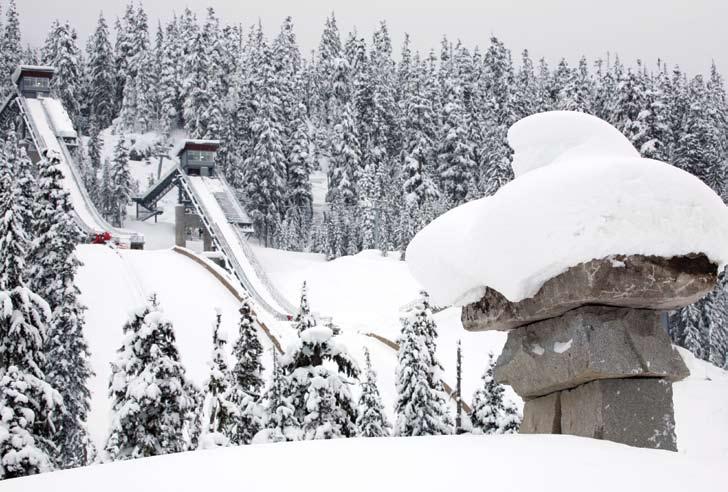
As demand for tickets long ago swamped supply for many sold-out events at Vancouver and Whistler’s 17-day Winter Olympics in 2010, Diplomat asked Vancouver native Sarah Close to look into logistics problems. She found plenty in accommodation and anticipates inevitable confusion and slowdowns in local transportation, all adding up to: Plan early, be persistent – and patient.
Vancouver is undisputedly one of the world’s most beautiful cities . Its mild climate makes it one of the few places in Canada where mittens are worn for fashion rather than warmth, and where no one bats an eye if you show up to the local bar in your yoga gear You can often ski and windsurf in the same day
Vancouver sits right on the Pacific Coast and spreads across several inlets .
To its north are mountains Unlike Seattle, Vancouver has relatively few windy days, thanks to the buffer of Vancouver Island .
Whistler, a world-class ski resort town, lies some 130 kilometres north of Vancouver and features two operating ski hills, Whistler Mountain and Blackcomb Mountain One daily ticket will grant access to both mountains and (as of early 2009) there will be a “Peak to Peak” gondola for an additional cost, which will mean that the public will not have to waste time skiing down to the bottom of the hill to gain access to the other mountain
From Feb 12-28, 2010, Vancouver hosts the 21st Winter Olympic Games, followed closely by the 10th Winter Paralympics from March 12-21 This will be Canada’s third time to host the Olympics, after the 1976 Summer Olympics in Montreal and the 1988 Winter Olympics in Calgary.
Like the most recent summer Olympics in Beijing, the Vancouver Olympics have been plagued with controversies over Olympic Village construction and costoverruns But the single most controversial issue is the lack of affordable housing for Vancouver’s own local residents, never mind visitors
Despite loud and often disruptive public protest, the Games were awarded to Vancouver on July 2, 2003 Public protests continue – crowds of anti-poverty protesters, ranging in size, have rushed the stage during Olympic celebrations, trashed a Cabinet Minister's office in a mock "eviction" and have necessitated 24-hour security on the Olympic countdown clock to prevent vandalism
No fewer than 86 events have been slated for the Games, mostly in Vancouver, with a small number taking place in Whis-

tler In Vancouver, hockey events will be split between University of British Columbia’s Thunderbird Stadium and Canada Hockey Place, more commonly known as General Motors Place and the home of the Vancouver Canucks The figure skating events will be held in the Pacific Coliseum, speed skating at a brand new oval in Vancouver’s suburb of Richmond and freestyle skiing and snowboarding on local Cypress Mountain Anything involving sledges, aerial skiing or cross-country skiing will be held at Whistler For a specific guide to events and how to get tickets, check out the Vancouver Olympic website (www .vancouver2010 .com) . Vancouver has many gorgeous hotels ranging from five-star chains, such as the Four Seasons, to brand new boutique hotels such as the Moda Unfortunately, almost all the hotels in downtown Vancouver and Whistler are booked Many remaining hotels do not allow booking until a year before the event, leaving them with long waiting lists . With heavy pre-bookings by VANOC, media and sponsors, this
report on where to stay for 2010 quickly became “nowhere to stay” in Vancouver during the Olympics
Hotels prefer booking their entire room base to such companies as Nike to assure complete booking for the entire event The general public is unlikely to arrive and stay for two weeks . However, staff at the Whistler Delta Suites said they may have rooms available as of Feb 1, depending on how many get picked up in their contract with VANOC If you have somewhere in particular you would like to stay, contact them as soon as possible to see if they will release rooms in the near future If they do, then get on a waiting list . Contacting VANOC directly to ask where they expect would-be spectators, who are not media, sponsors or VANOC itself to stay wasn’t fruitful either VANOC staff quickly recommended a website that is a collaborative effort between Tourism Vancouver, Tourism BC and the Canadian Tourism Commission (www 2010destina tionplanner .com) . This site is a dedicated 2010 Olympics planner for the public to
search an accommodation “bank” and get transit and general information on Vancouver/Whistler
A Vancouver Tourism official said many hotels will only post room availability in February So even if nothing matches your search criteria now, check back often . He also included a disclaimer – no one involved with the Olympics or the tourism offices has control over the price hotels charge for rooms Craigslist org, a site heavily used on the West Coast for buying or selling anything, offered a number of options for renting out private apartments over the Olympics with prices generally ranging from $500 - $1,000 a night . Granted, you will likely get more space in an apartment, and you will have a kitchen to avoid extra costs such as mini-bar bills
If you do manage to find a place to stay and secure tickets to your dream event, Vancouver has restaurants for all tastes Sushi restaurants can be found on almost any block downtown and range in quality but don’t let little hole-in-the-walls deter you . Sometimes they’re the best .
If Japanese is not your taste, try Vij’s (1480 West 11th Ave ) in the South Granville neighbourhood This restaurant makes delicious albeit westernized Indian food but, be warned; it is extremely popular and does not take reservations If you get there and the wait is too long, pop next store to Rangoli, which is Vij’s café style restaurant . Here the prices are cheaper, the wait is shorter, and you can buy ready-toeat meals to take home
If you are staying in the heart of the city, Jules Bistro (216 Abbott St ) provides delicious dining in its little French restaurant in Vancouver’s historic Gastown The inviting décor, excellent frites and stellar crème brulée bring customers back . Whistler, meanwhile, runs the gauntlet of mediocre restaurants but there are a few gems Unfortunately, Whistler lacks great eateries at affordable prices Even the grocery store will charge you an arm and a leg However, for a treat, the famous Vancouverite restaurateur Umberto Menghi has two restaurants in Whistler Try Trattoria Di Umberto (4417 Sundial Place, Mountainside Lodge), which offers Tuscan food in a cosy-yet-elegant environment I also like visiting the Trattoria for a late lunch after skiing (they don’t mind if you are in your ski boots) Here, you are near the base of Whistler Mountain and the Dubh Linn Gate Pub (170-4320 Sundial Cres ), is the perfect spot for you to sip a post-dinner Caesar until the more dedicated members of your skiing party make
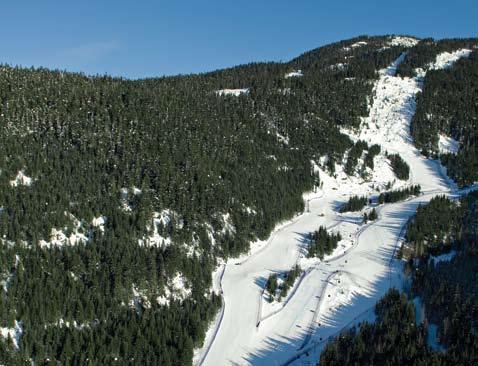
their way back to the village .
One cannot escape the fact that Vancouver, for all its beauties, lacks a reliable and user-friendly transit system Currently TransLink operates buses, a light rail sys-


tem called the SkyTrain and a ferry system called the SeaBus . By 2010, a Skytrain extension will run passengers from Van
Vancouver public transit well in advance, especially the bus since you’ll find few transit maps at bus stations Depending on where you are staying, buy yourself a package of transit tickets from any corner store The tickets are zoned and can be used in any direction for 90 minutes
The Sea to Sky Highway between Vancouver and Whistler, often called Canada’s most beautiful stretch of road for its panoramic views of the sea and mountains, is also dangerous, because of its hairpin turns and poor weather conditions The Sea to Sky Highway Improvement Project is due for completion in September of 2009 . As this is the only real access to Whistler – short of helicopter – if weather conditions are bad or there is an accident, be ready for slow moving
Overall, for an Olympic experience, three tips: plan ahead, be patient and allow lots of time for everything
Sarah Close lives in Vancouver and works in the arts . During the Olympics, she will be on safari in Africa for her mother's 50th birthday – but says she probably couldn't af
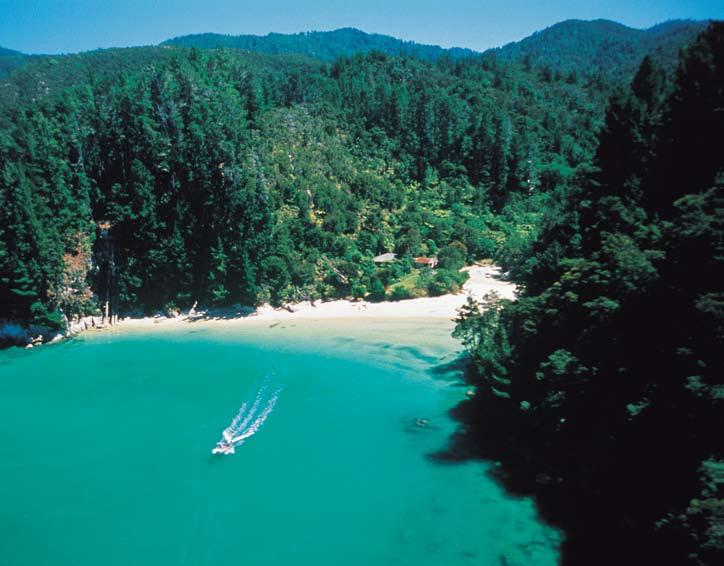
Kiwi country has it all, from great lamb and sauvignon blanc, to green lakes and glaciers
By Kate Lackey
Kia Ora (hello)
Once described in a travel guide as occupying “the last bus-stop on the planet”, New Zealanders have always been aware of their distant location in the Pacific Ocean It makes them inveterate travelers (at any one time up to 15 per cent of Kiwis are overseas) and they are delighted when travelers from other countries visit their shores Visitors are welcomed with open arms
The days of long and complicated journey to New Zealand are over Air New Zealand now offers direct non-stop flights from Canada In the time it takes to enjoy a cocktail, a meal, a movie, and a few hours sleep, today’s visitors find themselves cir-

cling Auckland’s green volcanic landscape and the Islands of the Hauraki Gulf
If one word were to describe New Zealand, it would be variety. Nowhere on earth can one find such an infinite variety of scenery and attractions – mountains, fiords, islands, blue lakes, green lakes, plains, rivers, glaciers, forests, volcanoes, glorious beaches, waterfalls, geysers and hot pools, skiing, galleries, jet boating, gliding, an English city, a Scottish city, a Polynesian city, a French settlement, fly fishing,
salmon fishing, caving, climbing, sailing, scuba diving, deer farms, sheep stations, dairy farms, cattle stations, vineyards, olive groves and orchards And, of course, a profusion of native and exotic wildlife and flora
You might say that little of this is unique to New Zealand – but what is unique is that all this comes in a self-contained and easily explored package: Two main islands spanning 1,600 kilometres from the subtropical north to the sub-Antarctic south
There is, literally, a change of scene around every corner
And all of this is served up with the warmest of hospitality, freshest of food, and glorious wines . But more on that later .
While our winters are benign by Canadian standards and the skiing is terrific, I prefer New Zealand during the summer months – mid-December to, say, April when the Pacific Ocean is, well, more pacific, and the weather reliably pleasant I need hardly point out that these months are, shall we say, a convenient time to take a break from Canada .
Summer brings a sense of excitement and activities and events to suit all tastes It's a time for sizzling barbecues and swimming at the beach, salads, Sauvignon Blanc, and lazy days at the bach (as we call our holiday cottages); a time for both relaxation and celebration .
Fresh and vibrant, New Zealand's wine and food are a major part of any adventure – indeed, they’re an adventure in and of themselves Taste is paramount Talented and innovative chefs combine the fresh harvest from the garden, land and sea Pacific influences and indigenous foods make it unique New Zealand's cuisine is often described as “Pacific Rim,” and draws inspiration from Europe, Asia and Polynesia .
And while there is no shortage of top
restaurants, summer cuisine often means eating al fresco in cafés or at barbecues Fare such as lamb, cervena (venison),
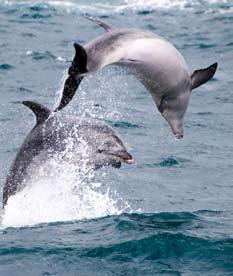
crayfish (lobster), fresh fish, and shellfish is plentiful . Oysters, scallops, green lipped mussels, and paua (New Zealand abalone)
are hot favourites Choose a world-class Sauvignon Blanc, Pinot Noir, or Chardonnay from one of the country's 376 wineries, and you have the perfect complement
We are a premier new-world wine country, which is producing award-winning wines that reflect the clean air and sunshine . Top-quality wines are exported to cellars worldwide . Leading wine regions include West Auckland, Gisborne, Martinborough and Hawke's Bay in the North Island and Marlborough, Central Otago and Canterbury in the South Island
(If you feel a dress rehearsal is called for, a wide selection of New Zealand wines is currently available throughout Canada, as are a number of easily recognized food icons such as Zespri Gold kiwi fruit and frozen or chilled New Zealand lamb)
Seasonal wine and food festivals highlight a wide-ranging supply of gourmet foods and boutique wines Regular farmers’ markets and country fairs showcase fresh and flavourful produce and are favourite destinations for both locals and visitors Indigenous foods are becoming
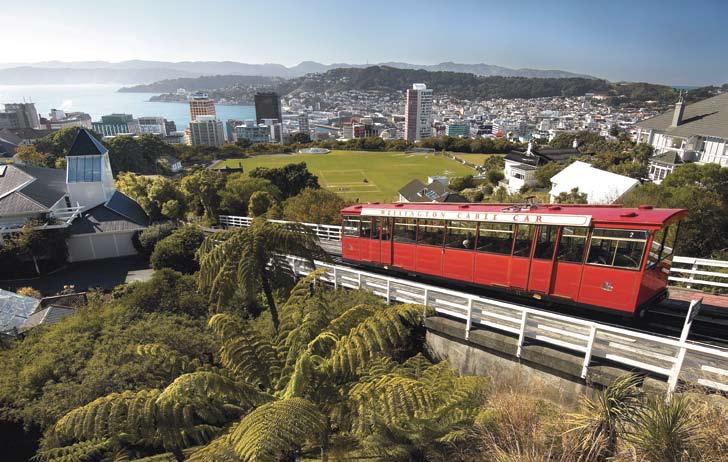
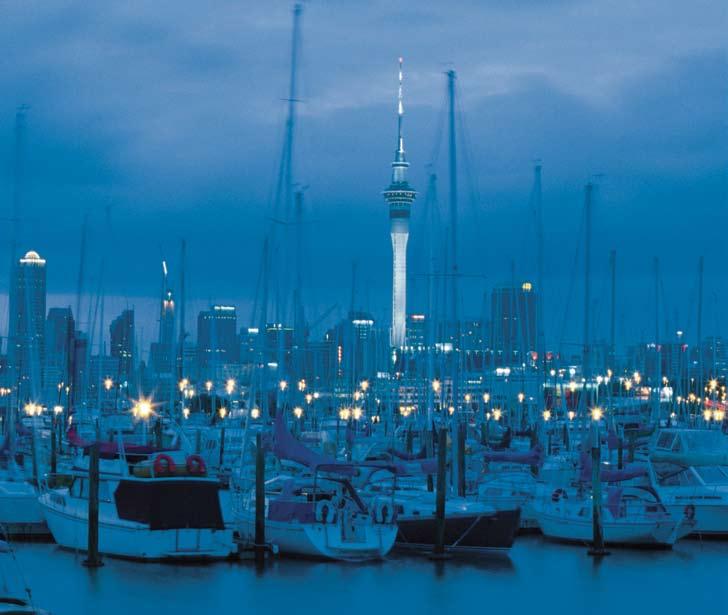
more of a feature on restaurant menus and traditional Maori cuisine is experiencing a contemporary twist at the hands of innovative cooks like Rotorua-based Maori chef Charles Royal
Food and wine are not the only finer pursuits in life that are celebrated in New Zealand It's no surprise – with luxury travel now one of the country's fastest growing tourism sectors – the world is waking up to New Zealand's vast range of possibilities for the discerning traveller
For the world–weary, well-travelled visitor, New Zealand offers a genuinely refreshing approach that's strongly linked to the landscape and all about creating personal and unique experiences – worldclass accommodation, service and transport delivered in a friendly Kiwi manner .
Drawn first to the wonders of the unspoiled landscape, visitors are often surprised by the sophisticated infrastructure and services providing all the trappings of a first-class experience topped off with priceless treasures like peace, privacy and safety Discerning tourists are continually voting New Zealand their favourite destination . And, even in times of economic downturn, travellers from Canada and elsewhere are showing they're prepared to go the extra mile for a top-quality experience
New Zealand's first luxury property is still the best known – the multi-awardwinning Huka Lodge in Taupo that's hosted heads of state and Hollywood stars, and become famous for its seclusion, unique environment and experience
Newer properties like The Farm, at Cape Kidnappers in Hawke's Bay, have quickly earned world-class status The Cape Kidnappers golf course was recently voted top in the world by Britain's Daily Telegraph newspaper
At no extra cost, visitors can take in New Zealand’s natural assets, the landscape, with mountains, crystal-clear lakes and rivers, wide open spaces and miles of sparkling blue seas .
The sheer beauty of New Zealand is something that has to be seen to be believed Throughout my diplomatic career, I have been privileged to travel widely, and to see many beautiful places, including Canada, of course Yet I have no hesitation in placing New Zealand’s scenery with the best in the world .
More than 30 per cent of the land has been set aside for national parks, reserves and special heritage sites to preserve the country’s unique geographic and ecological heritage You can explore relatively untouched landscapes that are home to ancient forests, rare birds, and creatures which have survived since prehistoric times .
S UMMER BR i NGS A SENSE OF E x C i TEMENT AND ACT i V i T i ES AND EVENTS TO SU i T ALL TASTES . iT ' S A T i ME FOR S i ZZL i NG BARBECUES AND SW i MM i NG AT THE BEACH , SALADS , S AUV i GNON B LANC , AND LAZ y DA y S AT THE BACH ( AS WE CALL OUR HOL i DA y COTTAGES ); A T i ME FOR BOTH RELA x AT i ON AND CELEBRAT i ON
New Zealand's 'Great Walks' are world–renowned The nine walks include the Milford Track in Fiordland, the Routeburn Track, the Kepler, Stewart Island's Rakiura Track, Tongariro National Park, Whanganui Journey and Lake Waikaremoana . However, there are also hundreds of other opportunities for walking or hiking These range from walking tracks on public conservation and private land, to heritage trails of up to a day's duration in urban areas
All New Zealand cities have great native bush walks nearby, making it easy to get off the beaten track The New Zealand outdoors offers suitable walks for people of all fitness levels
Most New Zealanders maintain a strong connection with the sea and this certainly impacts on the Kiwi psyche and many aspects of our daily lives Back at home, I live and work near the sea and have spent much of my spare time sailing on it .
Leading yacht and launch charter companies can provide travellers with an exclusive floating option to explore New Zealand by water The coastline is magnificent and there are hundreds of islands and safe, secluded moorings within easy reach of the main centres
But many folk prefer to do their cruising on land, and the motor–home is a
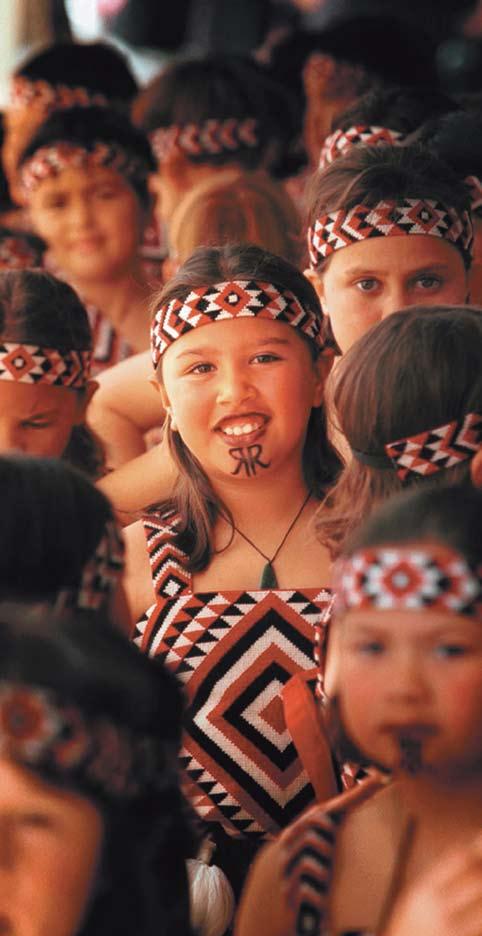
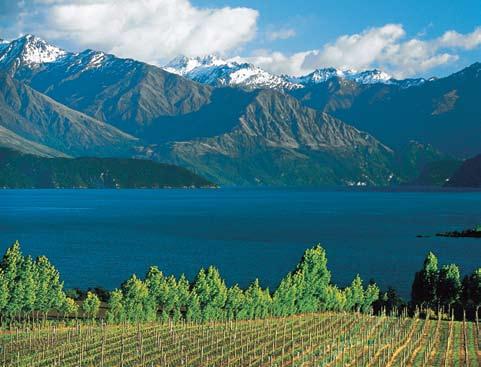
tourist favourite
New Zealanders are famous for their ingenuity and creativity in many realms of endeavour, from science to art to music and literature With a diverse range of cultures and landscapes, and a rich Maori cultural heritage, we draw our inspiration from a wide spectrum . The result is worldclass creative talent on show in events like the annual Montana World of Wearable Arts Awards in Wellington
Many galleries around the country hold exhibitions that feature the works of nationally acclaimed artists, sculptors and jewellers, as well as new talent Historical artworks are predominantly held in the collections of the larger museums and public libraries in the cities . There are more than 460 museums, many doubling as art galleries, ranging from specialist regional collections to the impressive national museum Te Papa in the capital city of Wellington
Like food, dance and fashion, New Zealand music is a unique and vibrant expression of the land’s culture . Its musical influence has come from a variety of cultures . The sounds of the indigenous Maori can be heard in many of the country's music genres Local artists have mixed many styles from overseas with local influences to create music that is uniquely New Zealand
New Zealand music can also be recognized by its region Wellington has always been known for its jazzy scene while Auckland incorporates more international
styles heavily influenced by the Polynesian and Maori beat
In the geo-thermal region of Rotorua in the North Island, tourists will receive a traditional Maori powhiri (welcome), visit a marae (meeting houses), enjoy Maori kai (food) cooked underground on hangi (hot stones), listen to kapa haka (traditional performances of song and dance), and relax in the popular thermal pools .
When planning a visit to New Zealand, allow enough time to do justice both to yourself and the destination Canadians often tell me they wish they'd spent more time there With the chance to walk for hours and not see another person, fly in to a remote fishing spot hours from civilization, soak in a spa under the stars, entertain in a private lodge with your personal chef, dine on your own freshly caught seafood and escape into anonymity, it's easy to see why
You can visit the Tourism New Zealand website: www newzealand com, which covers all aspects of planning a trip to New Zealand
Do come and visit – I know you’ll enjoy yourselves!
Ka kite (good-bye)
Always ensuring the best service for the diplomatic community, Accu-Rate Corporation offers free courier service for embassy currency exchanges and payroll conversion. -
For your personal consultation please call: Marie Boivin Managing Director 613-596-5505 ext. 101 marie@accu-rate.ca