ANNUEL DE BIENFAISANCE
à lʼécoute et en appui aux logisticiens
de la mutualisation et des synergies chargeurs / logisticiens
de mise en œuvre des chantiers de la stratégie logistique
our l'optimisation des flux logistique
et expertise dédiées pour la transformation du secteur
de promotion du secteur logistique à lʼinternational
de dialogue public-privé sur les questions logistiques
de coopération internationale au profit du secteur
de proposition pour la réglementation et la normalisation du secteur
www.amdl.gov.ma
Quand un pays sait accueillir, il sait aussi parler au monde. Et le Maroc, depuis des années, a affûté un art discret mais puissant: celui de la diplomatie parallèle. Celle qui ne passe pas uniquement par les traités, les communiqués, ni les salons feutrés, mais par la confiance, l’exemplarité, l’hospitalité et la capacité à fédérer des énergies au-delà des frontières. Une diplomatie d’influence, de rayonnement, de récit — et, surtout, de résultats.
La récente Coupe d’Afrique des Nations organisée par le Royaume en a offert une démonstration éclatante. Dans le stade comme hors du stade, le Maroc a parlé une langue universelle: celle de l’excellence. Excellence des infrastructures, de la logistique, de la sécurité, de la mobilité, de la coordination, de l’accueil. Excellence, aussi, dans les détails qui ne s’improvisent pas: la fluidité des dispositifs, la qualité du service, le respect des délégations, la capacité à conjuguer ferveur populaire et rigueur organisationnelle. Le monde ne retient pas seulement l’événement; il retient l’empreinte qu’un pays y dépose. Cette aura internationale n’est pas un hasard. Elle s’inscrit dans une trajectoire portée par la vision et la guidance de Sa Majesté le Roi Mohammed VI, dont l’action constante a placé l’exigence, l’ouverture et la crédibilité au cœur du projet national. Dans cette perspective, chaque grand rendez-vous devient un levier: il consolide une réputation, renforce des partenariats, et traduit, en actes visibles, une ambition sereine.
Elle est aussi le fruit d’un capital humain singulier: des Marocaines et des Marocains qui, dans l’ombre comme sous les projecteurs, savent créer des ponts. Bénévoles, cadres, entrepreneurs, responsables associatifs, opérateurs culturels, sportifs, communicants, experts, membres de la diaspora… Tous deviennent, l’espace d’un tournoi, des Ambassadeurs de fait. Leur professionnalisme raconte un Maroc qui sait tenir parole, maîtriser le tempo, anticiper l’imprévu — et offrir à chacun une place digne.
Et puis il y a le terrain, où l’équipe nationale, portée par une ambition collective, a atteint la finale. Au-delà de la performance sportive, c’est une grammaire du dépassement qui s’est exprimée: discipline, résilience, solidarité, intelligence tactique. Là encore, la diplomatie parallèle agit: elle inspire, elle rassemble, elle crée un sentiment d’appartenance qui dépasse les clivages, et donne à l’Afrique un récit de fierté partagée.
À l’heure où l’influence se mesure autant par l’expérience vécue que par les discours prononcés, le Maroc confirme une évidence: sa force diplomatique ne réside pas seulement dans ce qu’il dit, mais dans ce qu’il fait — et dans la manière, élégante et exigeante, dont il le fait.
When a country knows how to welcome, it also knows how to speak to the world. And for years now, Morocco has refined a discreet yet powerful art: that of parallel diplomacy. A diplomacy that is not conveyed solely through treaties, communiqués, or hushed meeting rooms, but through trust, exemplary conduct, hospitality, and the ability to rally energies beyond borders. It is a diplomacy of influence, outreach, narrative—and, above all, results.
The recent Africa Cup of Nations hosted by the Kingdom offered a striking demonstration of this. Inside the stadium and beyond it, Morocco spoke a universal language: excellence. Excellence in infrastructure, logistics, security, mobility, coordination, and hospitality. Excellence, too, in the details that cannot be improvised: the seamlessness of operations, the quality of service, the respect shown to delegations, and the ability to combine popular fervour with organisational rigour. The world does not remember only the event; it remembers the imprint a country leaves upon it. This international aura is no accident. It is part of a trajectory shaped by the vision and guidance of His Majesty King Mohammed VI, whose steady action has placed high standards, openness, and credibility at the heart of the national project. In this perspective, every major occasion becomes a lever: it consolidates a reputation, strengthens partnerships, and translates a calm, confident ambition into visible deeds.
It is also the fruit of a distinctive human capital: Moroccan women and men who, behind the scenes and in the spotlight alike, know how to build bridges. Volunteers, executives, entrepreneurs, civil-society leaders, cultural operators, sports professionals, communicators, experts, members of the diaspora… For the duration of a tournament, all become ambassadors in practice. Their professionalism tells the story of a Morocco that keeps its word, masters the tempo, anticipates the unexpected—and offers everyone a dignified place.
And then there is the pitch, where the national team, driven by a collective ambition, reached the final. Beyond sporting achievement, a grammar of self-transcendence came through: discipline, resilience, solidarity, tactical intelligence. Here again, parallel diplomacy is at work: it inspires, it unites, it creates a sense of belonging that rises above divides, and offers Africa a narrative of shared pride.
At a time when influence is measured as much by lived experience as by spoken words, Morocco confirms a simple truth: its diplomatic strength lies not only in what it says, but in what it does—and in the elegant, exacting manner in which it does it.
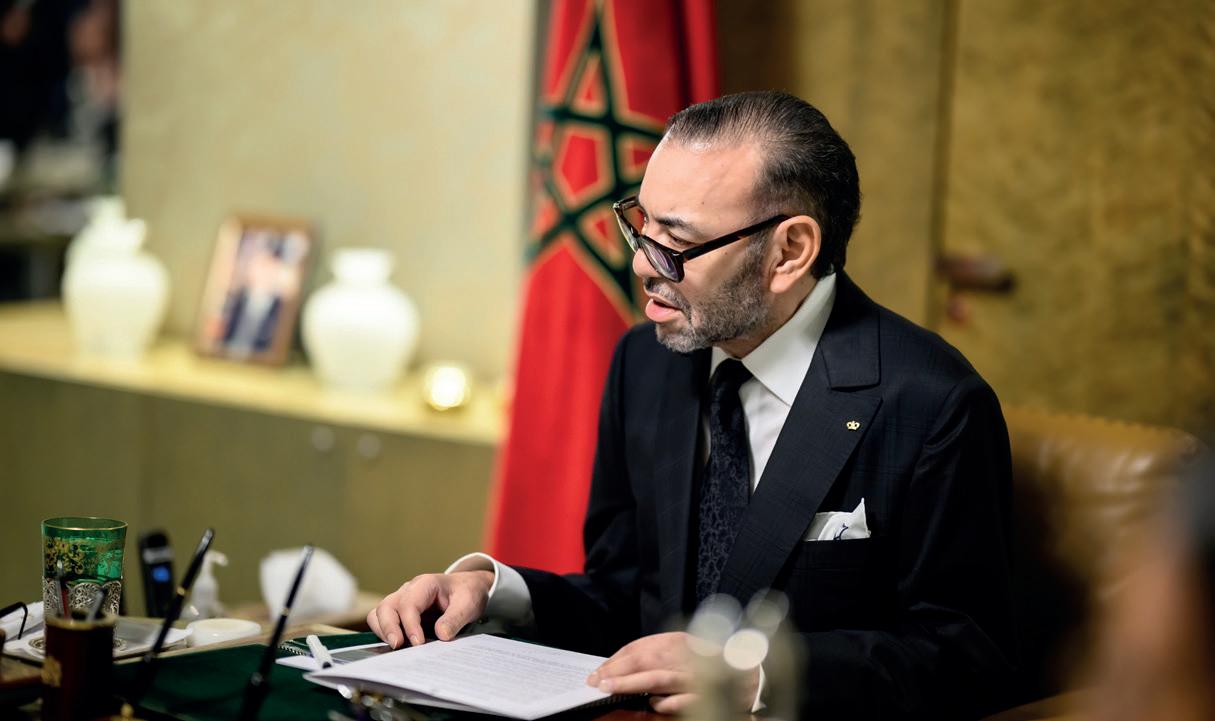
Sa Majesté le Roi Mohammed VI préside une réunion sur le nouveau complexe portuaire et industriel Nador West Med
3 EDITORIAL
Quand le Maroc parle au Monde
6 ACTIVITÉ ROYALE
Méga Projet: Nador West Med
8 ACTIVITÉ PRINCIÈRE
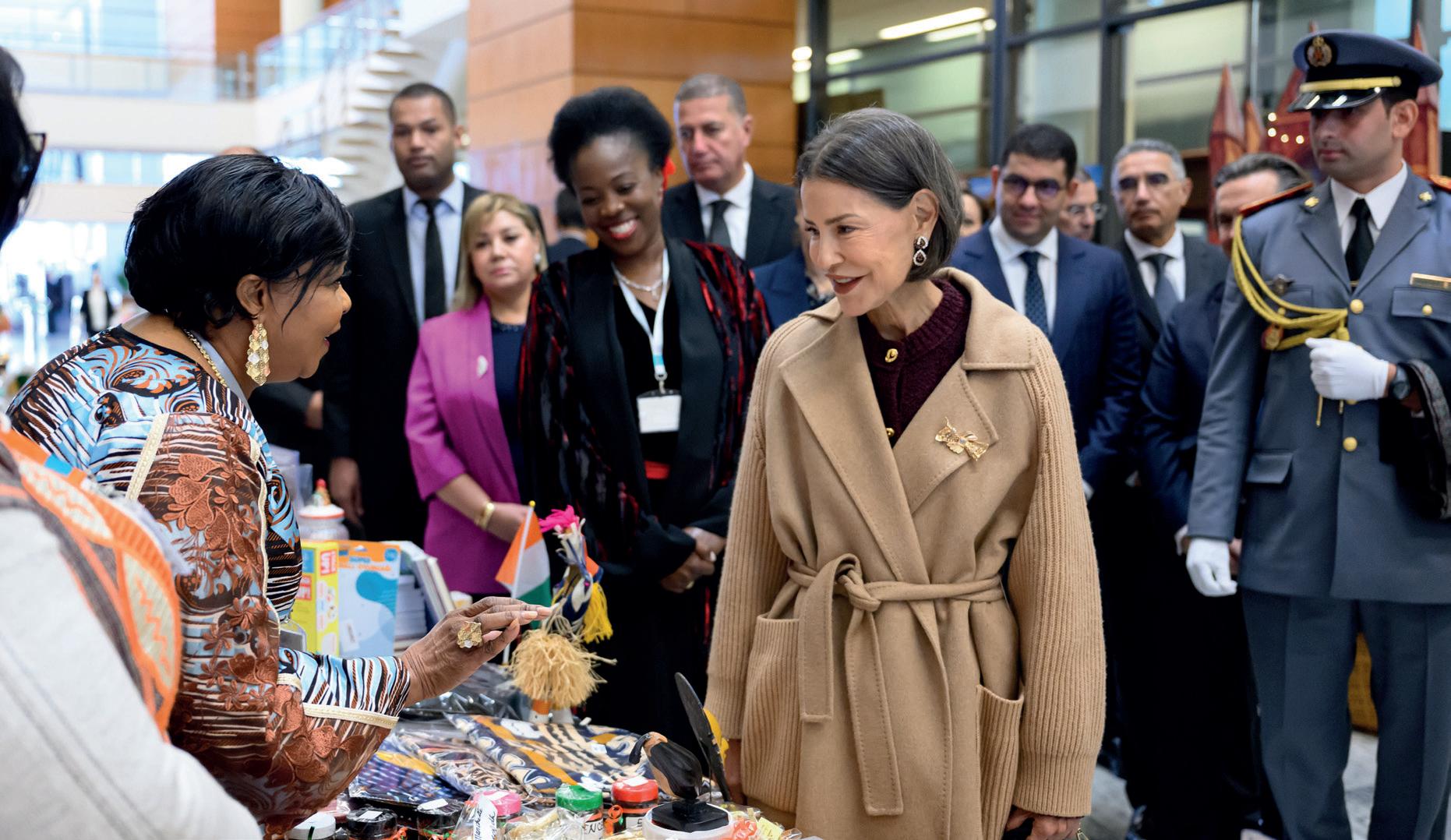
SAR la Princesse Lalla Meriem inaugure le Bazar Solidaire du Cercle Diplomatique
14 ACTIVITÉ PRINCIÈRE
SAR le Prince Héritier Moulay El Hassan préside l'ouverture de la CAN Maroc 2025
16 ACTIVITÉ PRINCIÈRE
8
SAR la Princesse Lalla Meriem inaugure le Bazar Solidaire du Cercle Diplomatique
Un Nouveau Rapport de Forces par l'Amb. Ali Achour 6
SAR le Prince Moulay Rachid préside la finale de la 35ème édition de la Coupe d'Afrique des Nations
18 ACTIVITÉ PRINCIÈRE
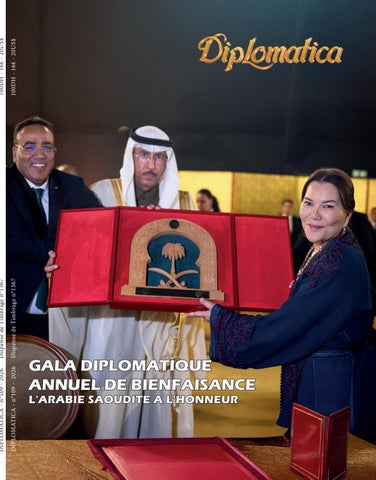
S.A.R. la Princesse Lalla Hasnaa préside le Gala Diplomatique Annuel de Bienfaisance
28 CARREFOUR DIPLOMATIQUE
Echange avec M. Mohamed Salah Tamek, le Délégué Général à la DGAPR
40 VISITE
Les Ambassadeurs visitent la Prison Locale 2 de Tiflet et le Centre National de Formation des Cadres de la DGAPR
46 CARREFOUR DIPLOMATIQUE
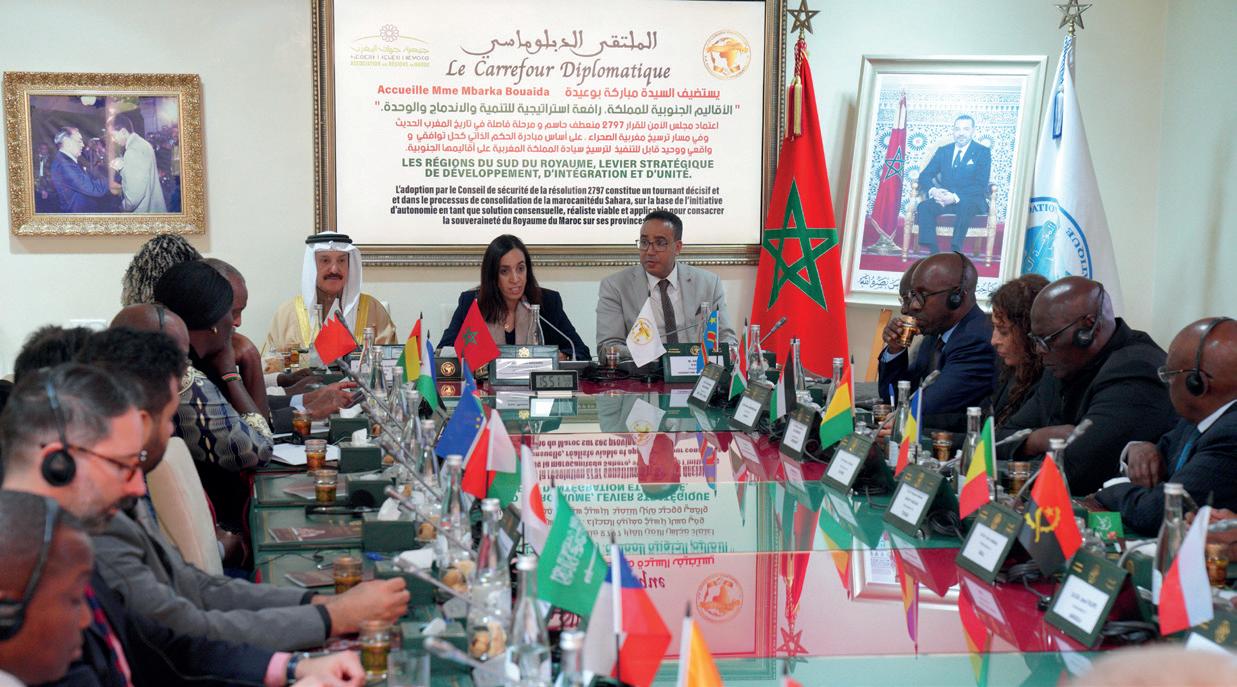
La régionalisation avancée discutée avec la Présidente de l'Association des Régions
54 DAZIBAO
Plusieurs Ambassadeurs présentent les copies figurées de leurs lettres de créance
56 FÊTES NATIONALES
Célébrations des Ambassades à Rabat
64 ANALYSE
DIPLOMATICA MAGAZINE No. 109 – 2026 – 28ème année · PRÉSIDENT FONDATEUR & DIRECTEUR DE LA PUBLICATION Abdelati HABEK. RÉDACTEUR EN CHEF Jean-Christophe BERTRAND DIRECTEUR GÉNÉRAL M’Hammed GUENNOUNE CONSEILLERS DIPLOMATIQUES Ali ACHOUR - Driss OUAOUICHA CONSEILLER Batoul NAFAKH-LAZRAQ RÉDACTION & CONTRIBUTEURS Ali ACHOUR - Marie-Jeanne DURAND – Hafida HABEK CRÉDITS PHOTOS DIPLOMATICA – MAP CTP & PRINT MBART Concept Rabat ADMINISTRATION 94, rue Azzouza – 10210 Rabat (Beausite) TEL 0537/63.99.99 FAX 0537/63.88.88 EMAIL info@diplomaticamag.com PUBLICITÉ 0537/63.91.91 DOSSIER DE PRESSE 1/1999 ISSN 11149442 TIRAGE 12.000 ex. (papier). Les articles et les illustrations publiés dans ce numéro n’engagent que leurs auteurs et ne sauraient refléter une quelconque prise de position du magazine. Tous droits réservés - Reproduction interdite sauf autorisation écrite
HRH Princess Lalla Meryem inaugurates the Diplomatic Circle Charity Bazaar
HRH Crown Prince Moulay El Hassan presides over the opening of AFCON Morocco 2025
HRH Prince Moulay Rachid presides over the final of the 35th edition of the Africa Cup of Nations
HRH
Exchange with Mr. Mohamed Salah Tamek, General Delegate for Penitentiary Administration and Reintegration
Ambassadors visit Tiflet Local Prison No. 2 and the National Training Center for DGAPR Personnel
Advanced regionalization discussed with the President of the Association of Regions of
Several Ambassadors present the figura tive copies of their letters of credence
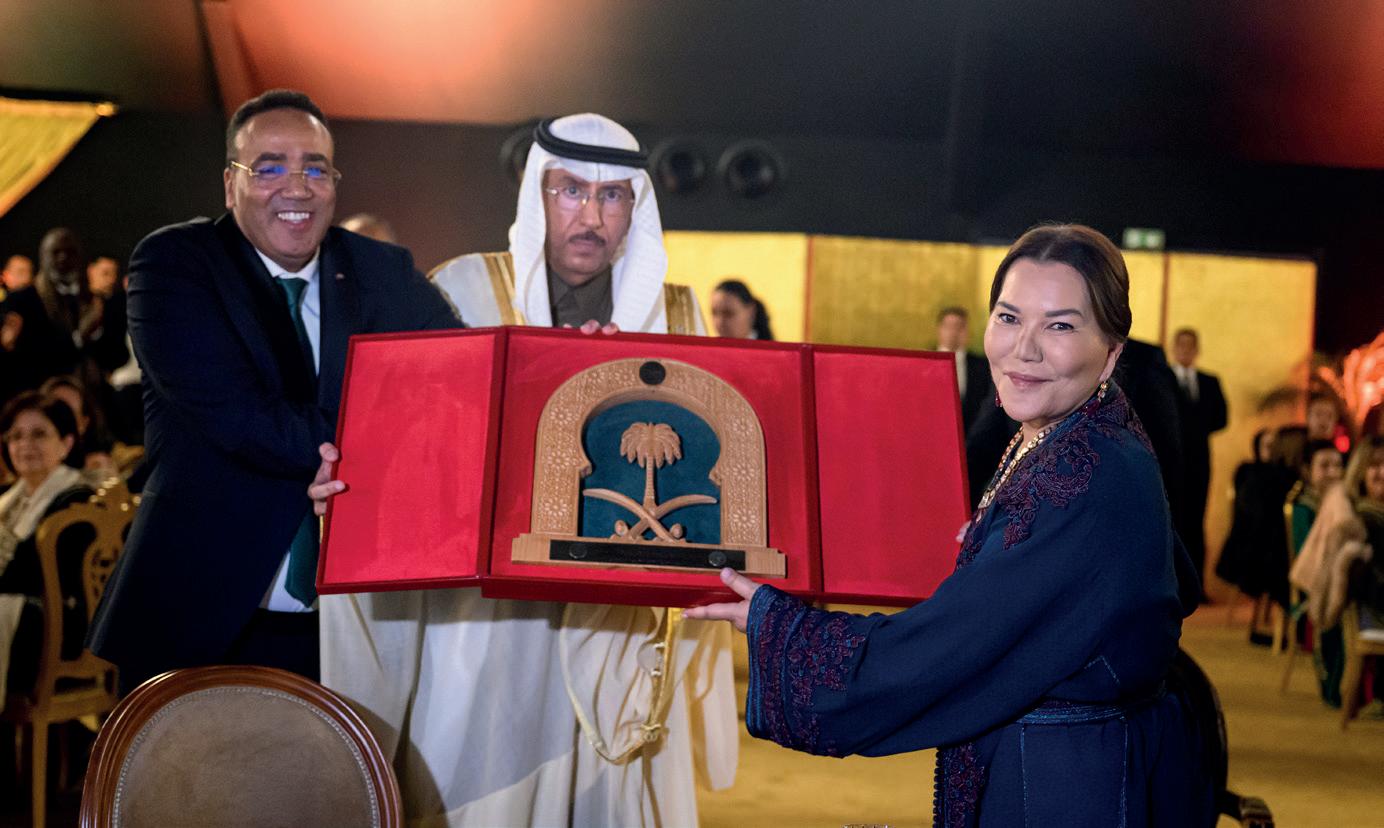
SAR la Princesse Lalla Hasnaa préside le Gala Diplomatique Annuel de Bienfaisance avec l'Arabie Saoudite à l'Honneur
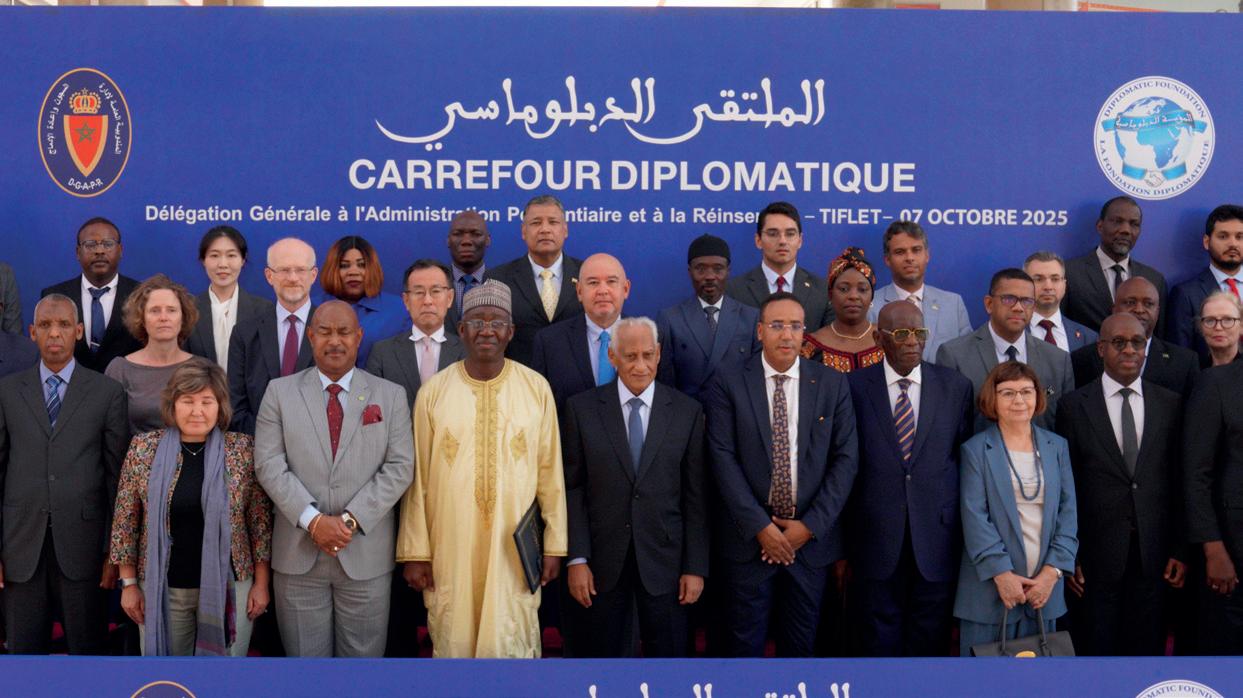
Politique carcérale et réinsertion: rencontre avec le délégué général de la DGAPR et visite des Ambassadeurs à Tiflet
A New Balance of
Régionalisation Avancée: les Ambassadeurs rencontrent la Présidente de la Région de Guelmim-Oued Noun
INVESTMENTS: HIS MAJESTY THE KING CHAIRS A MEETING ON THE
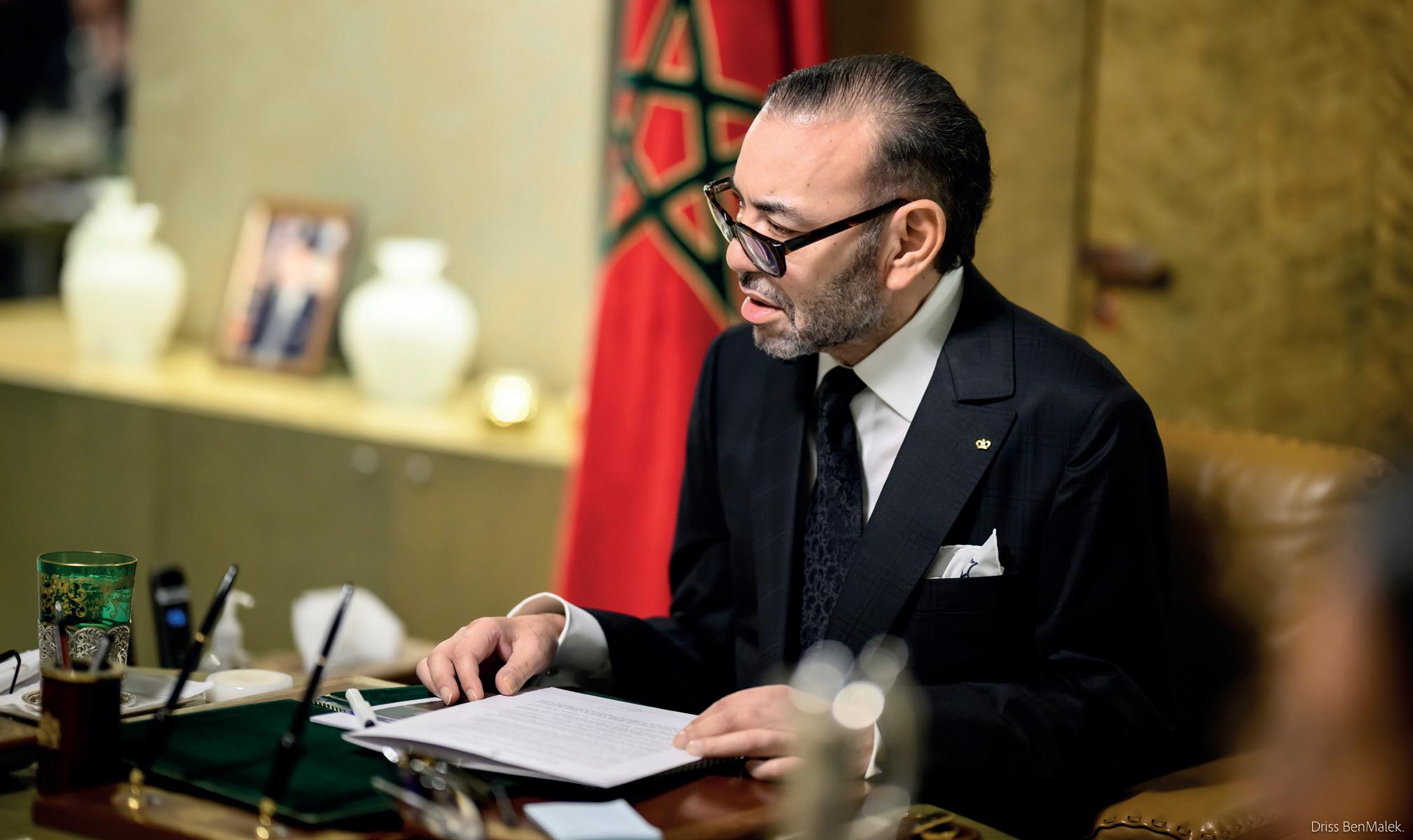
Sa Majesté le Roi Mohammed VI a présidé, le 28 janvier 2026 au Palais Royal de Casablanca, une réunion de travail consacrée au complexe portuaire et industriel Nador West Med, dont la mise en service est prévue fin 2026. Pensé comme un projet stratégique d’envergure internationale, ce nouveau hub vise à renforcer l’intégration du Maroc dans les grandes chaînes logistiques et industrielles mondiales, dans la continuité du succès de Tanger Med. Doté d’investissements publics et privés de 51 milliards de dirhams, le complexe associe un port de nouvelle génération, une vaste plateforme industrielle et logistique, ainsi qu’un hub énergétique comprenant notamment le premier terminal national de gaz naturel liquéfié. Les concessions des terminaux à conteneurs, confiées à des opérateurs internationaux, entreront progressivement en service cette année. Avec une capacité initiale de 5 millions de conteneurs, Nador West Med confirme l’ambition du Royaume de devenir une plateforme majeure du commerce mondial.
His Majesty King Mohammed VI chaired, on 28 January 2026 at the Royal Palace in Casablanca, a working meeting dedicated to the Nador West Med port and industrial complex, whose commissioning is scheduled for the end of 2026. Designed as a strategic project of international scope, this new hub aims to strengthen Morocco’s integration into major global logistics and industrial value chains, building on the success of Tanger Med. Backed by public and private investments totaling 51 billion dirhams, the complex combines a new-generation port, a vast industrial and logistics platform, and an energy hub that notably includes the Kingdom’s first liquefied natural gas terminal. The concessions for the container terminals, entrusted to international operators, will gradually enter into service this year. With an initial capacity of 5 million containers, Nador West Med confirms the Kingdom’s ambition to become a major platform for global trade.
HRH PRINCESS LALLA MERYEM INAUGURATES THE INTERNATIONAL BAZAAR
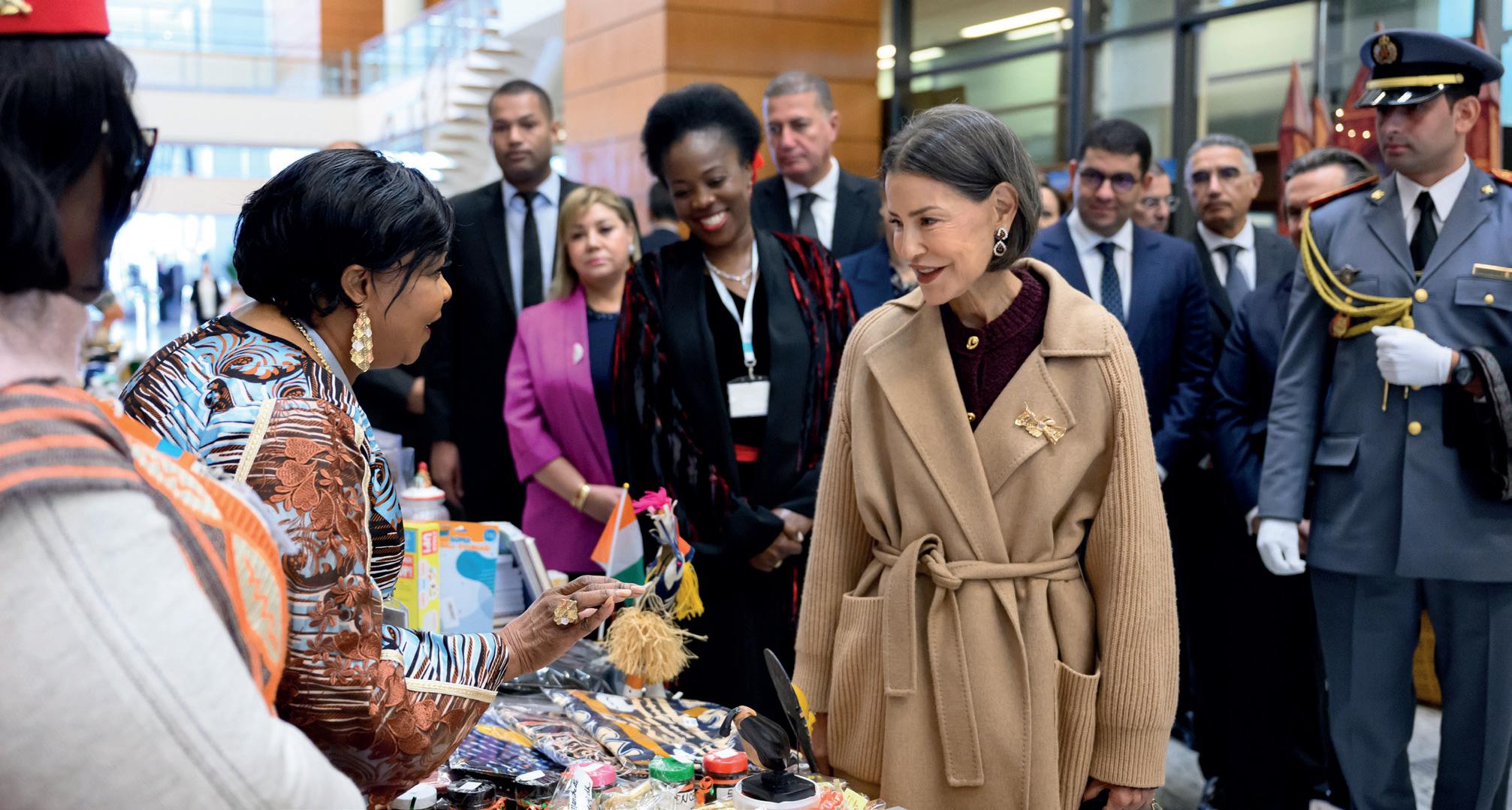
Son Altesse Royale la Princesse Lalla Meryem a présidé, samedi 29 novembre 2025 à la Bibliothèque Nationale du Royaume du Maroc à Rabat, la cérémonie d’inauguration du “Bazar Solidaire” de bienfaisance du Cercle diplomatique, placé sous le Haut Patronage de Sa Majesté le Roi Mohammed VI, que Dieu L’assiste.
A son arrivée à la Bibliothèque Nationale du Royaume, Son Altesse Royale a passé en revue une section des Forces Auxiliaires qui rendait les honneurs, avant d’être saluée par M. Mohamed Mehdi Bensaid, ministre de la Jeunesse, de la Culture et de la Communication, Mme Naima Ben Yahia, ministre de la Solidarité, de l’Insertion sociale et de la Famille, M. Mohamed Yacoubi, wali de la région Rabat-Salé-Kénitra, gouverneur de la préfecture de Rabat, M. Rachid El Abdi, président du Conseil régional, Mme Fatiha Almoudni, présidente du Conseil communal, M. Abdelaziz Driouich, président du Conseil préfectoral, et Mme Samira Malizi, directrice de la Bibliothèque Nationale. SAR la Princesse Lalla Meryem a été également saluée par LL.EE. Mmes Maria Ciobanu, Ambassadeur de la Roumanie, Saulekul Sailaukyzy, Ambassadeur de la République du Kazakhstan,
Her Royal Highness Princess Lalla Meryem presided, on Saturday, 29 November 2025, at the National Library of the Kingdom of Morocco in Rabat, over the inauguration ceremony of the Diplomatic Circle’s charitable “Solidarity Bazaar,” held under the High Patronage of His Majesty King Mohammed VI, may God assist Him.
Upon her arrival at the National Library of the Kingdom, Her Royal Highness reviewed a detachment of the Auxiliary Forces that rendered honours, before being greeted by Mr. Mohamed Mehdi Bensaid, Minister of Youth, Culture and Communication; Ms. Naima Ben Yahia, Minister of Solidarity, Social Inclusion and the Family; Mr. Mohamed Yacoubi, Wali of the Rabat–Salé–Kénitra Region and Governor of the Prefecture of Rabat; Mr. Rachid El Abdi, President of the Regional Council; Ms. Fatiha Almoudni, President of the Communal Council; Mr. Abdelaziz Driouich, President of the Prefectural Council; and Ms. Samira Malizi, Director of the National Library. Her Royal Highness Princess Lalla Meryem was also greeted by Their Excellencies Ms. Maria Ciobanu, Ambassador of Romania; Ms. Saulekul Sailaukyzy, Ambassador of the
Mawadda Omer Hageltoum El Badawi, Ambassadeur de la République du Soudan, Isabelle Valois, Ambassadeur du Canada, Le Kim Quy, Ambassadeur de la République Socialiste du Vietnam, ainsi que par Mesdames Raja Youssefi, Chargée d’affaires près l’ambassade de la République tunisienne, Unielle Oupolo, épouse de l’Ambassadeur du Gabon au Maroc, Présidente du Cercle Diplomatique et Yolanda Jah, Secrétaire générale du Cercle diplomatique.
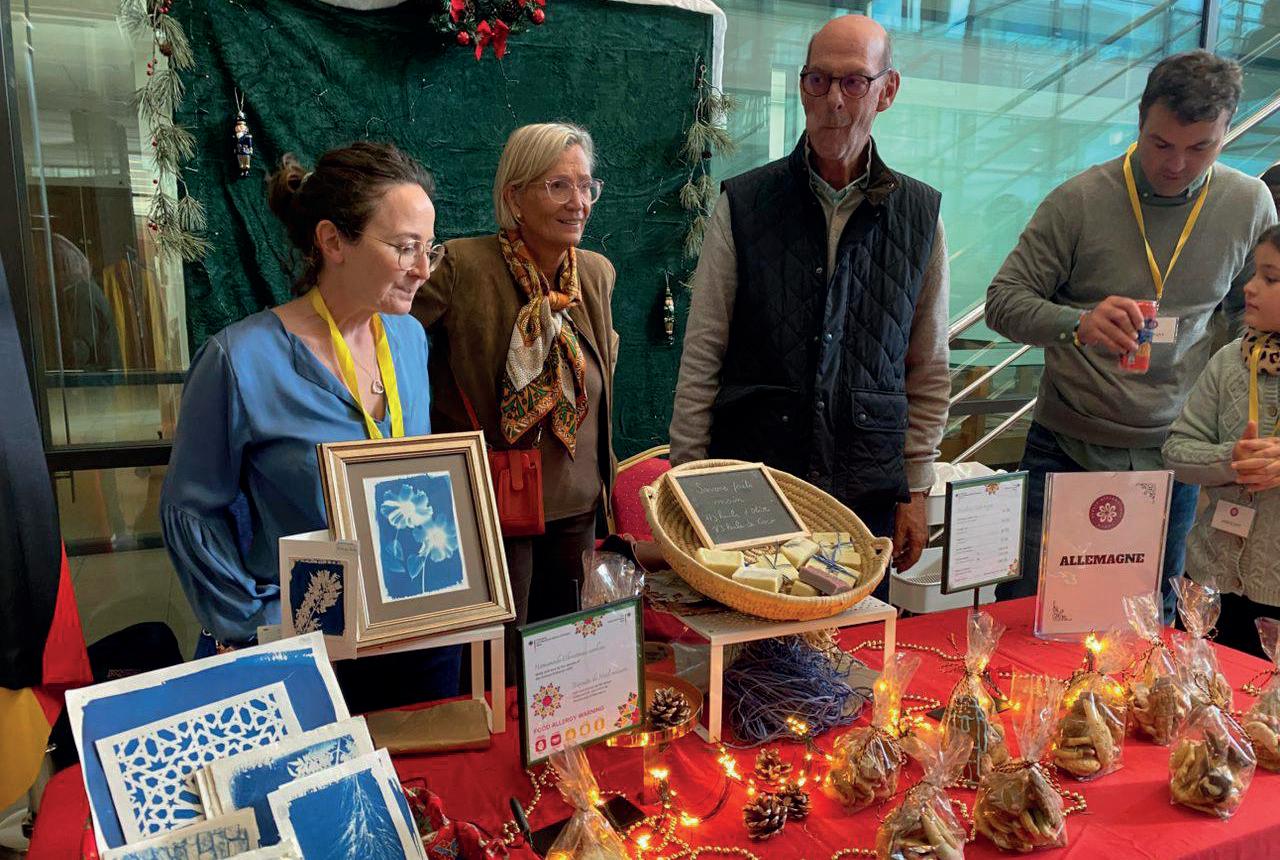
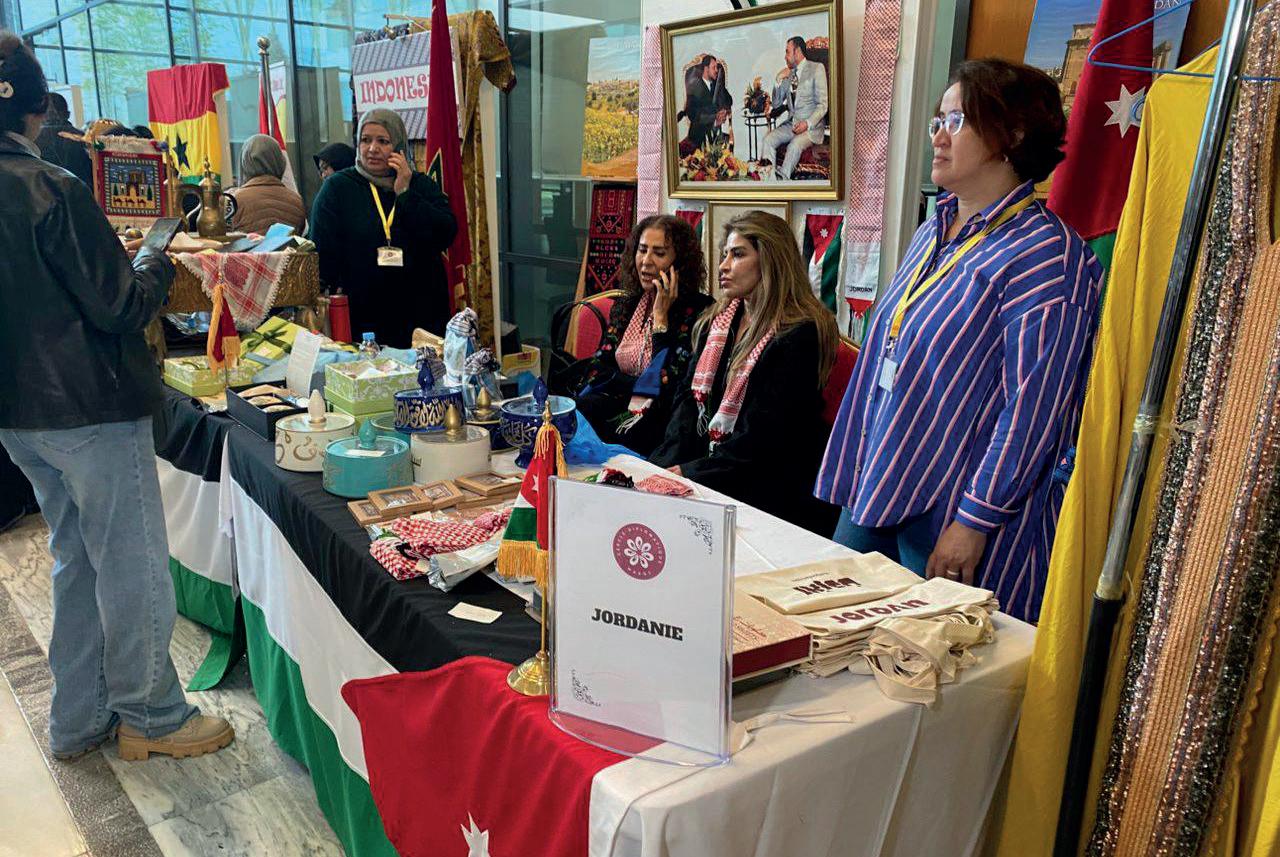
Après avoir coupé le ruban symbolique annonçant l’ouverture du “Bazar solidaire” de bienfaisance, Son Altesse Royale a été saluée par les épouses des Ambassadeurs accrédités à Rabat, avant de visiter les différents stands du Bazar où est exposée une grande variété de produits artisanaux et de terroir provenant de plusieurs pays du monde représentant les différents continents. Au terme de cette cérémonie, SAR la Princesse Lalla Meryem a posé pour une photo-souvenir avec les membres du Cercle diplomatique.
Le “Bazar solidaire” de bienfaisance est un rendez-vous annuel organisé par le Cercle diplomatique au Maroc pour célébrer l’amitié et la solidarité et soutenir les ONG marocaines œuvrant en faveur des plus défavorisés. Cet événement est l’activité phare du Cercle diplomatique, dont les membres sont les conjointes des Chefs de missions diplomatiques et des représentants d’organisations internationales accréditées au Maroc. Plus de quarante pays et organisations internationales représentant l’Afrique, l’Amérique, l’Asie, l’Europe et le Moyen-Orient participent à l’édition 2025 avec une grande variété de produits, notamment l’artisanat, le textile et les œuvres d’art. Les participantes se rassemblent autour d’un objectif commun : récolter des fonds pour soutenir les ONG marocaines œuvrant dans les domaines de l’éducation, de la santé et de la promotion de la condition des femmes en milieu rural, tout en cultivant les valeurs de fraternité, de solidarité et de générosité dans un climat de compréhension mutuelle et de respect entre les cultures et les religions. À travers ses diverses initiatives caritatives, le Cercle diplomatique vise notamment à renforcer les liens d’amitié entre le Maroc et la communauté diplomatique.
Republic of Kazakhstan; Ms. Mawadda Omer Hageltoum El Badawi, Ambassador of the Republic of Sudan; Ms. Isabelle Valois, Ambassador of Canada; Ms. Le Kim Quy, Ambassador of the Socialist Republic of Viet Nam; as well as by Ms. Raja Youssefi, Chargé d’Affaires at the Embassy of the Republic of Tunisia; Ms. Unielle Oupolo, spouse of the Ambassador of Gabon to Morocco and President of the Diplomatic Circle; and Ms. Yolanda Jah, Secretary General of the Diplomatic Circle.
After cutting the symbolic ribbon marking the opening of the charitable “Solidarity Bazaar,” Her Royal Highness was greeted by the spouses of the Ambassadors accredited in Rabat, before visiting the various stands of the Bazaar, where a wide range of handicrafts and local products from several countries around the world, representing the different continents, are on display. At the conclusion of the ceremony, Her Royal Highness Princess Lalla Meryem posed for a commemorative photograph with the members of the Diplomatic Circle.
The charitable “Solidarity Bazaar” is an annual event organized by the Diplomatic Circle in Morocco to celebrate friendship and solidarity and to support Moroccan NGOs working for the benefit of the most disadvantaged. This event is the flagship activity of the Diplomatic Circle, whose members are the spouses of Heads of Diplomatic Missions and representatives of international organizations accredited in Morocco. More than forty countries and international organizations representing Africa, the Americas, Asia, Europe and the Middle East are taking part in the 2025 edition, offering a wide variety of products, notably handicrafts, textiles and works of art. The participants come together around a shared objective: to raise funds to support Moroccan NGOs active in the fields of education, health and the advancement of women in rural areas, while fostering the values of fraternity, solidarity and generosity in a climate of mutual understanding and respect among cultures and religions. Through its various charitable initiatives, the Diplomatic Circle seeks in particular to strengthen the bonds of friendship between Morocco and the diplomatic community.
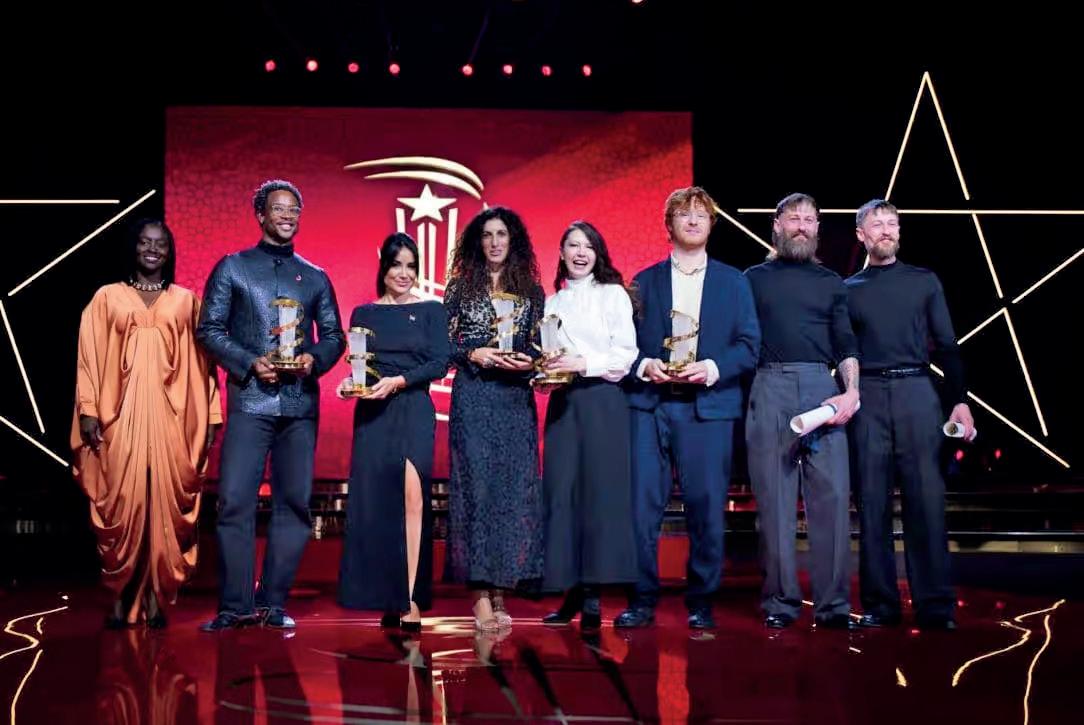
MARRAKECH FILM FESTIVAL: HRH PRINCE MOULAY RACHID PRESIDES OVER A DINNER HOSTED
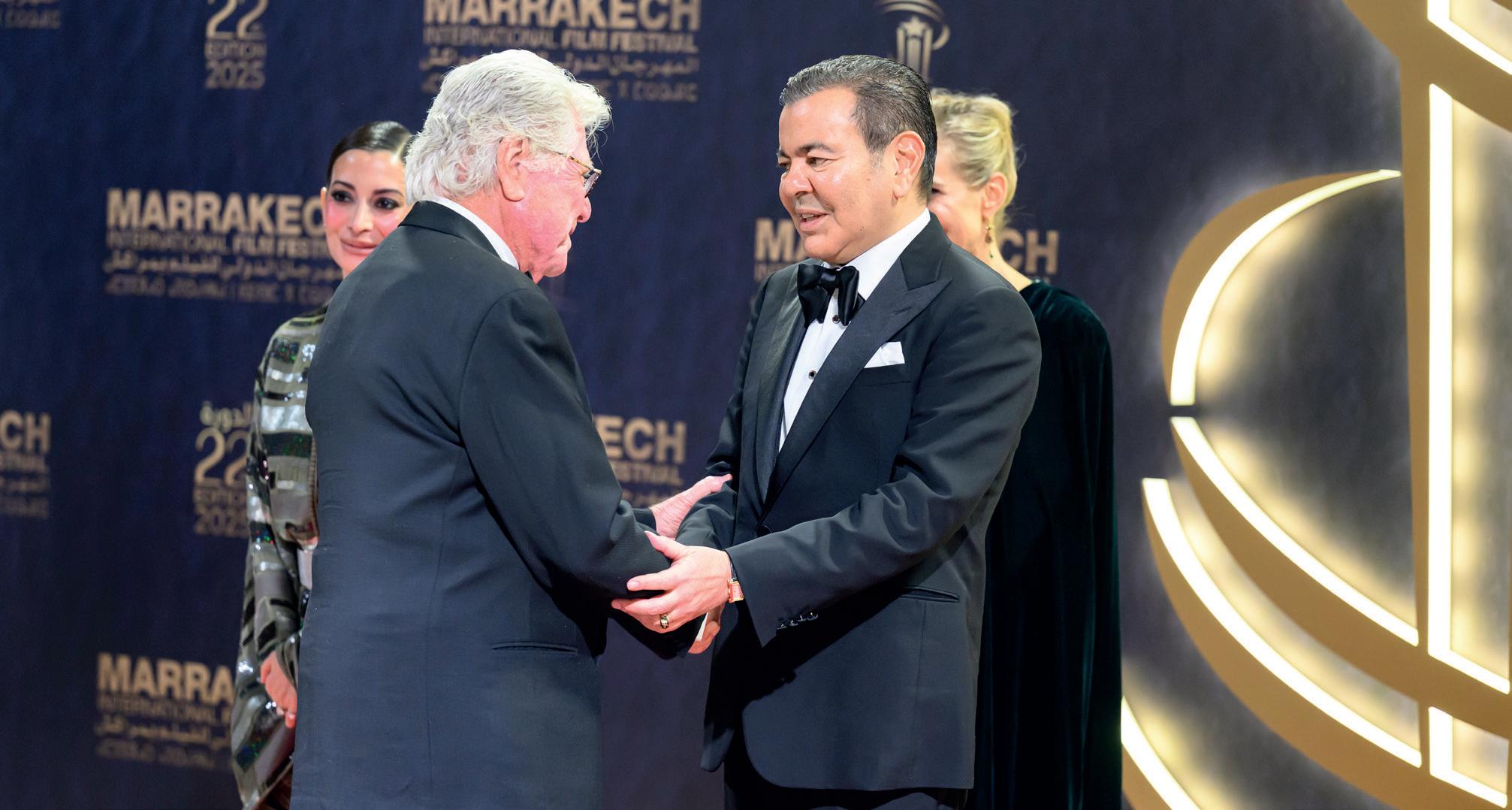
Son Altesse Royale le Prince Moulay Rachid, Président de la Fondation du Festival International du Film de Marrakech, accompagné de SAR la Princesse Lalla Oum Keltoum, a présidé, samedi 29 novembre 2025 à Bab Ighli à Marrakech, un dîner offert par Sa Majesté le Roi Mohammed VI, que Dieu L’assiste, à l’occasion de l’ouverture officielle de la 22ème édition du Festival International du Film de Marrakech.
A leur arrivée, SAR le Prince Moulay Rachid et SAR la Princesse Lalla Oum Keltoum ont passé en revue une section des Forces Auxiliaires qui rendait les honneurs, avant d’être salués par la ministre de l’Economie et des Finances, Mme Nadia Fettah, la ministre de l’Aménagement du Territoire national, de l’Urbanisme, de l’Habitat et de la Politique de la ville et présidente de la Commune de Marrakech, Mme Fatima-Ezzahra El Mansouri, la ministre du Tourisme, de l’Artisanat et de l’Économie sociale et solidaire, Mme Fatim-Zahra Ammor et le ministre de la Jeunesse, de la Culture et de la Communication, M. Mohamed Mehdi Bensaid.
His Royal Highness Prince Moulay Rachid, President of the Foundation of the Marrakech International Film Festival, accompanied by HRH Princess Lalla Oum Keltoum, presided, on Saturday, 29 November 2025, at Bab Ighli in Marrakech, over a dinner hosted by His Majesty King Mohammed VI, may God assist Him, on the occasion of the official opening of the 22nd edition of the Marrakech International Film Festival.
Upon their arrival, HRH Prince Moulay Rachid and HRH Princess Lalla Oum Keltoum reviewed a detachment of the Auxiliary Forces rendering honors, before being greeted by the Minister of Economy and Finance, Ms. Nadia Fettah; the Minister of National Territory Planning, Urban Development, Housing and City Policy and Mayor of Marrakech, Ms. Fatima-Ezzahra El Mansouri; the Minister of Tourism, Handicrafts and the Social and Solidarity Economy, Ms. Fatim-Zahra Ammor; and the Minister of Youth, Culture and Communication, Mr. Mohamed Mehdi Bensaid.
SAR le Prince Moulay Rachid et SAR la Princesse Lalla Oum Keltoum ont été également salués par le Wali de la région de Marrakech-Safi, gouverneur de la préfecture de Marrakech, M. Khatib El Hebil, le président de la région de Marrakech-Safi, M. Samir Goudar, la présidente du Conseil préfectoral de Marrakech, Mme Jamila Afif, et le président du Conseil de la commune Mechouar-Kasbah, M. Abderrahmane Ouafa.
SAR le Prince Moulay Rachid et SAR la Princesse Lalla Oum Keltoum ont été aussi salués par le vice-président délégué de la Fondation du Festival International du Film de Marrakech, M. Faïçal Laraïchi, la Conseillère du Président de la Fondation, Mme Mélita Toscan Du Plantier, le directeur artistique du Festival, M. Rémi Bonhomme, le Conseiller financier du Président au sein de la Fondation du Festival International du Film de Marrakech, M. Azeddine Benmoussa, la secrétaire générale du Festival, Mme Fadwa Megzari, le trésorier général, M. Saad Imani, le directeur financier du Festival, M. Naoufal Bensouda, et le coordinateur général du Festival, M. Ali Hajji.
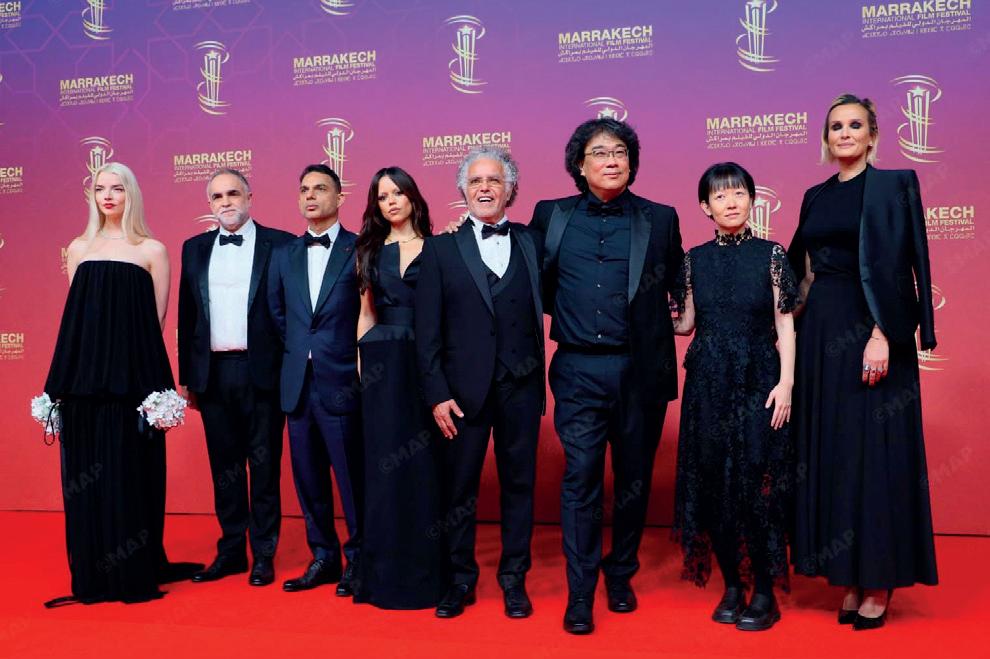
Par la suite, SAR le Prince Moulay Rachid et SAR la Princesse Lalla Oum Keltoum se sont rendus au Salon d’honneur où il a été procédé à la présentation à Leurs Altesses Royales du jury de la 22ème édition du Festival International du Film de Marrakech, des stars étrangères invitées du Festival et des partenaires étrangers et nationaux.
Placée sous le Haut Patronage de Sa Majesté le Roi Mohammed VI, la 22ème édition du Festival International du Film de Marrakech a été ouverte, vendredi soir au Palais des Congrès de la Cité ocre, en présence d’éminentes figures et personnalités du monde du cinéma, de l’art, de la culture et des médias, du Maroc et de l’étranger.
Their Royal Highnesses were also greeted by the Wali of the Marrakech-Safi Region and Governor of the Prefecture of Marrakech, Mr. Khatib El Hebil; the President of the Marrakech-Safi Regional Council, Mr. Samir Goudar; the President of the Marrakech Prefectural Council, Ms. Jamila Afif; and the President of the Mechouar-Kasbah Municipal Council, Mr. Abderrahmane Ouafa.
HRH Prince Moulay Rachid and HRH Princess Lalla Oum Keltoum were further greeted by the Deputy Vice-President of the Foundation of the Marrakech International Film Festival, Mr. Faïçal Laraïchi; the Adviser to the President of the Foundation, Ms. Mélita Toscan du Plantier; the Festival’s Artistic Director, Mr. Rémi Bonhomme; the President’s Financial Adviser within the Foundation, Mr. Azeddine Benmoussa; the Festival’s Secretary General, Ms. Fadwa Megzari; the Treasurer General, Mr. Saad Imani; the Festival’s Financial Director, Mr. Naoufal Bensouda; and the Festival’s General Coordinator, Mr. Ali Hajji.
Subsequently, HRH Prince Moulay Rachid and HRH Princess Lalla Oum Keltoum proceeded to the VIP Lounge, where the jury of the 22nd edition of the Marrakech International Film Festival, the Festival’s invited international stars, and national and international partners were presented to Their Royal Highnesses.
Held under the High Patronage of His Majesty King Mohammed VI, the 22nd edition of the Marrakech International Film Festival was officially opened on Friday evening at the Palais des Congrès of the Ochre City, in the presence of prominent figures and personalities from the worlds of cinema, art, culture and media, from Morocco and abroad.
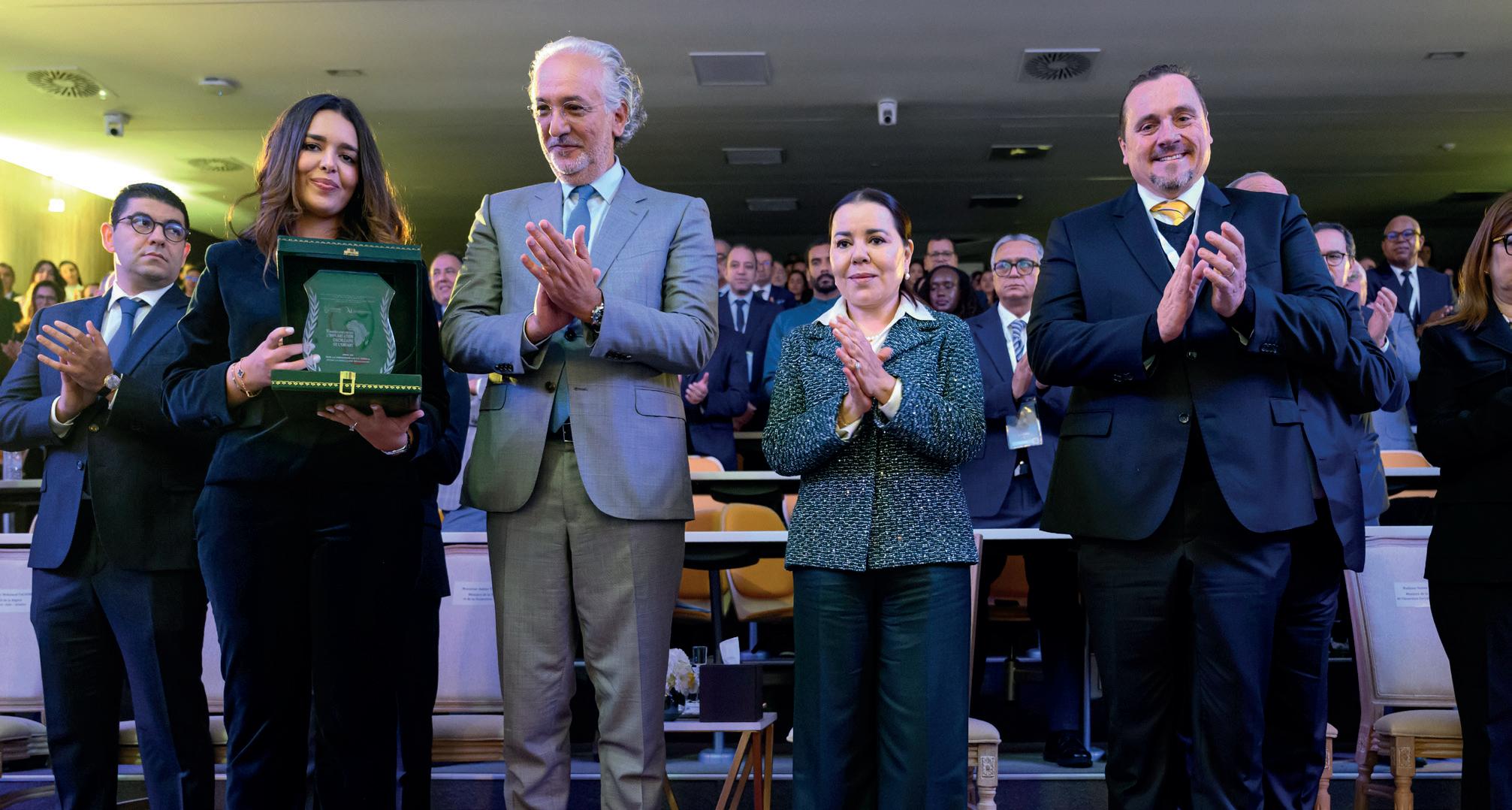
Son Altesse Royale la Princesse Lalla Asmaa, Présidente de la Fondation Lalla Asmaa, a présidé, vendredi 12 décembre 2025 à l’Université Mohammed VI des Sciences et de la Santé à Rabat, la cérémonie d’ouverture du 1er Congrès africain sur l’implantation cochléaire de l’enfant, un rendez-vous majeur dans la structuration d’un véritable hub africain consacré à la surdité infantile et à l’implant cochléaire.
À forte portée scientifique et humaine, cet événement s’inscrit dans la vision éclairée de Sa Majesté le Roi Mohammed VI, que Dieu L’assiste, en faveur d’une coopération Sud-Sud solidaire et concrète, au service du développement humain en Afrique.
Son Altesse Royale a été saluée notamment par le wali, coordinateur national de l’INDH, M. Mohammed Dardouri, le président du Conseil régional, M. Rachid El Abdi, la présidente du Conseil communal de Rabat, Mme Fatiha Almoudni, ainsi que par plusieurs responsables institutionnels et dirigeants de fondations partenaires.
Her Royal Highness Princess Lalla Asmaa, President of the Lalla Asmaa Foundation, presided, on Friday, 12 December 2025, at Mohammed VI University of Health Sciences in Rabat, over the opening ceremony of the 1st African Congress on Pediatric Cochlear Implantation, a landmark event in the structuring of a genuine African hub dedicated to childhood deafness and cochlear implantation.
With strong scientific and human significance, this event is fully aligned with the enlightened vision of His Majesty King Mohammed VI, may God assist Him, in support of solidary and practical South-South cooperation, serving human development in Africa.
Her Royal Highness was welcomed in particular by the Wali and National Coordinator of the National Initiative for Human Development (INDH), Mr. Mohammed Dardouri, the President of the Regional Council, Mr. Rachid El Abdi, the President of the Rabat Communal Council, Mrs. Fatiha Almoudni, as well as several institutional officials and leaders of partner foundations.
SAR la Princesse Lalla Asmaa a ensuite visité le stand de la Fondation Lalla Asmaa, mettant en lumière les actions menées depuis des années en faveur de l’inclusion, de la scolarisation et de la dignité des enfants sourds et malentendants.
À l’ouverture de la cérémonie, le directeur délégué de la Fondation Mohammed VI des Sciences et de la Santé, M. Youns Bjijou, a souligné que la présence de SAR la Princesse Lalla Asmaa conférait à ce Congrès « une dimension stratégique et morale », illustrant l’engagement constant du Royaume pour l’inclusion sociale et le développement humain.
Il a rappelé que, sous l’impulsion de Son Altesse Royale, la surdité de l’enfant est devenue un champ privilégié de solidarité, de transfert de compétences et d’innovation au Maroc et en Afrique, permettant à des dizaines de milliers d’enfants de retrouver l’accès à l’éducation et à une pleine participation sociale.
Dans une allocution similaire, le président délégué de la Fondation Lalla Asmaa, M. Karim Essakalli, a souligné que ce Congrès constitue un moment où « la science devient porteuse d’humanité », et a rappelé l’impact des programmes NASMAA et Unis, on s’entend mieux, avec notamment 850 enfants implantés au Maroc, 341 à l’étranger et une expertise reconnue par 21 pays.
Par la suite, SAR la Princesse Lalla Asmaa a présidé la signature de deux conventions: la première, avec la Fondation Mohammed VI des Sciences et de la Santé, visant à renforcer la recherche et l’innovation liées à la surdité infantile; la seconde, conclue avec la CNOPS, marque une avancée majeure pour l’équité d’accès aux soins auditifs, en permettant la prise en charge des implants cochléaires pour les affiliés et leurs familles.
Son Altesse Royale a également remis le Prix « SAR la Princesse Lalla Asmaa pour la recherche scientifique » à Dr Ghita Mechaia, pour un projet d’application mobile en darija dédiée à l’entraînement auditif post-implant chez l’enfant.
Au terme de la cérémonie, SAR la Princesse Lalla Asmaa a visité les stands des acteurs majeurs de la technologie auditive présents à ce Congrès, qui réunit experts, chercheurs, cliniciens et responsables institutionnels venus de plusieurs continents.
Ce premier Congrès africain sur l’implantation cochléaire de l’enfant inaugure une dynamique appelée à s’amplifier et confirme la volonté du Royaume de continuer à innover, coopérer et partager pour que l’Afrique entende l’avenir.
HRH Princess Lalla Asmaa then visited the Lalla Asmaa Foundation stand, highlighting the actions carried out over many years in favor of inclusion, schooling, and the dignity of deaf and hard-of-hearing children.
At the opening of the ceremony, the Managing Director of the Mohammed VI Foundation for Health Sciences, Mr. Youns Bjijou, emphasized that the presence of HRH Princess Lalla Asmaa conferred upon this Congress “a strategic and moral dimension,” illustrating the Kingdom’s steadfast commitment to social inclusion and human development.
He recalled that, under the impetus of Her Royal Highness, childhood deafness has become a privileged field of solidarity, skills transfer, and innovation in Morocco and Africa, enabling tens of thousands of children to regain access to education and full social participation.
In a similar address, the Vice-President of the Lalla Asmaa Foundation, Mr. Karim Essakalli, underlined that this Congress represents a moment “where science becomes a bearer of humanity,” and recalled the impact of the NASMAA and Unis, on s’entend mieux programs, notably with 850 children implanted in Morocco, 341 abroad, and Moroccan expertise recognized by 21 countries.
Subsequently, HRH Princess Lalla Asmaa presided over the signing of two agreements: the first, with the Mohammed VI Foundation for Health Sciences, aimed at strengthening research and innovation related to childhood deafness; the second, concluded with the National Fund of Social Welfare Organizations (CNOPS), marks a major step forward in equitable access to hearing care by enabling coverage of cochlear implants for affiliates and their families.
Her Royal Highness also presented the “HRH Princess Lalla Asmaa Award for Scientific Research” to Dr. Ghita Mechaia, for a project involving a mobile application in Moroccan Arabic (Darija) dedicated to post-implant auditory training for children.
At the conclusion of the ceremony, HRH Princess Lalla Asmaa visited the stands of the major hearing technology stakeholders present at the Congress, which brings together experts, researchers, clinicians, and institutional leaders from several continents.
This first African Congress on Pediatric Cochlear Implantation inaugurates a dynamic set to expand further and reaffirms the Kingdom’s determination to continue innovating, cooperating, and sharing, so that Africa may hear the future.
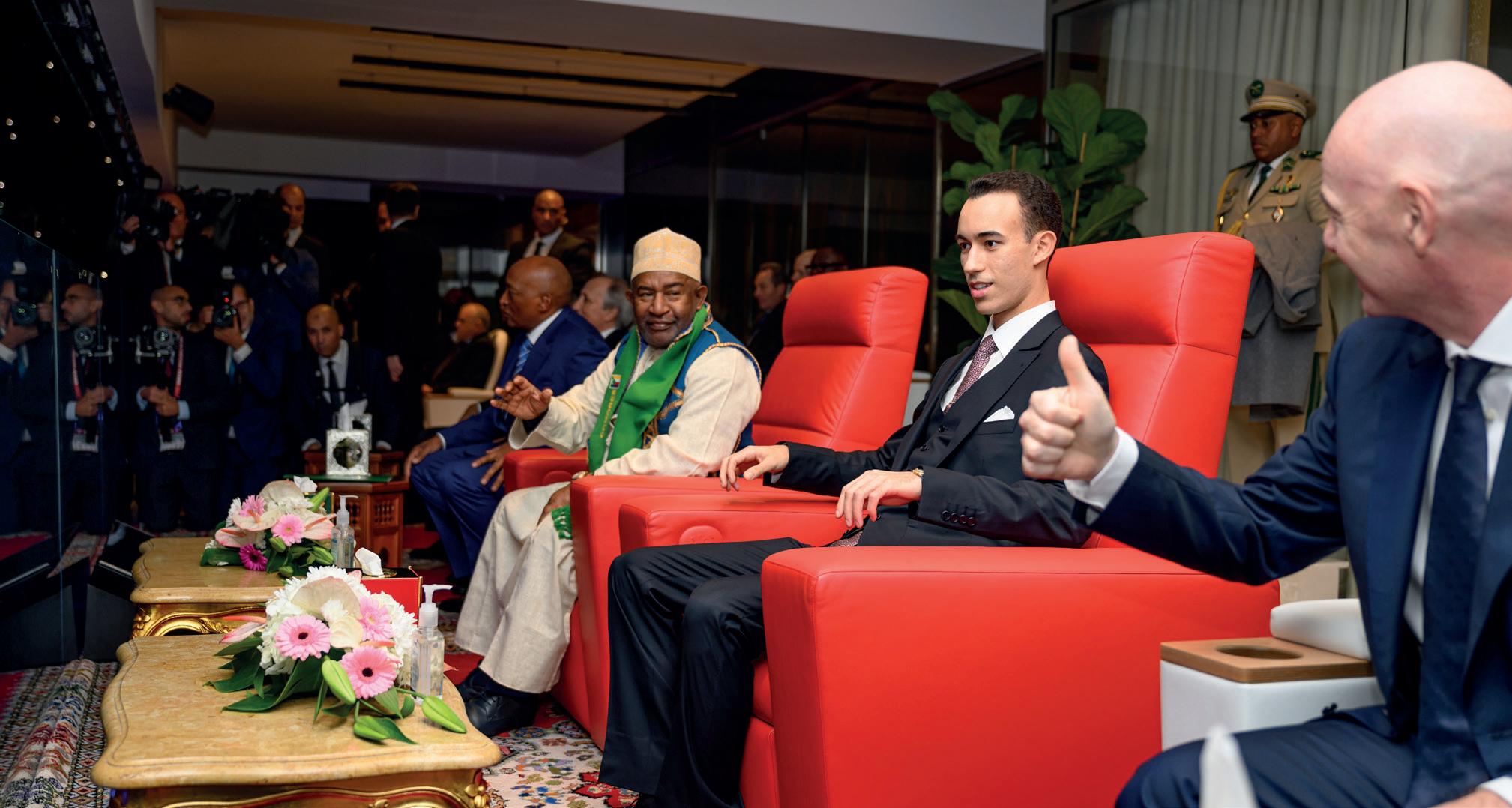
Son Altesse Royale le Prince Héritier Moulay El Hassan a présidé, dimanche 21 décembre 2025 au Stade “Prince Moulay Abdellah” à Rabat, la cérémonie d’ouverture de la 35ème édition de la Coupe d’Afrique des Nations (CAN-Maroc 2025), qu’a abrité le Royaume jusqu’au 18 janvier 2026. A son arrivée au Stade “Prince Moulay Abdellah”, SAR le Prince Héritier Moulay El Hassan a passé en revue une section de la Garde Royale qui rendait les honneurs, avant d’être salué par le ministre de l’Education nationale, du Préscolaire et des Sports, M. Mohamed Saâd Berrada, le président du Comité National Olympique Marocain, M. Fayçal Laraichi, le président de la FIFA, M. Gianni Infantino, le président de la Confédération Africaine de Football (CAF), M. Patrice Motsepe, et le président de la Fédération Royale Marocaine de Football (FRMF), M. Fouzi Lekjaa. Son Altesse Royale le Prince Héritier a également été salué par le wali de la région Rabat-Salé-Kénitra, gouverneur de la préfecture de Rabat, M. Mohamed Yacoubi, le président du Conseil régional, M. Rachid El Abdi, la présidente du Conseil communal de Rabat, Mme Fatiha El Moudni, le président du Conseil préfectoral de Rabat, M. Abdelaziz Driouich, la directrice générale de l’Agence Nationale des Equipements Publics (ANEP), responsable technique du
His Royal Highness Crown Prince Moulay El Hassan presided, on Sunday, 21 December 2025, at the Prince Moulay Abdellah Stadium in Rabat, over the opening ceremony of the 35th edition of the Africa Cup of Nations (AFCON – Morocco 2025), which the Kingdom was hosting until 18 January 2026.
Upon his arrival at the Prince Moulay Abdellah Stadium, HRH Crown Prince Moulay El Hassan reviewed a detachment of the Royal Guard that rendered honours, before being greeted by the Minister of National Education, Preschool and Sports, Mr. Mohamed Saâd Berrada; the President of the Moroccan National Olympic Committee, Mr. Fayçal Laraichi; the President of FIFA, Mr. Gianni Infantino; the President of the Confederation of African Football (CAF), Mr. Patrice Motsepe; and the President of the Royal Moroccan Football Federation (FRMF), Mr. Fouzi Lekjaa. His Royal Highness the Crown Prince was also greeted by the Wali of the Rabat–Salé–Kénitra Region and Governor of the Prefecture of Rabat, Mr. Mohamed Yacoubi; the President of the Regional Council, Mr. Rachid El Abdi; the President of the Rabat Communal Council, Ms. Fatiha El Moudni; the President of
stade “Prince Moulay Abdellah”, Mme Zineb Benmoussa, et le président du Conseil d’arrondissement Yacoub El Mansour, M. Abdelfattah El Aouni. SAR le Prince Héritier a, ensuite, rejoint la Tribune Royale pour assister à la cérémonie d’ouverture de la Coupe d’Afrique des Nations, marquée par des spectacles haut en couleur, notamment des représentations qui rendent hommage à l’unité, à l’identité et à la résilience inébranlable du football africain. Il s’agit d’un voyage immersif et chorégraphié où la lumière est le fil conducteur qui relie les cultures, les générations et les rêves, ainsi que d’une célébration du “Maroc, Terre de Football” et de l’Afrique en tant que continent qui embrasse sa diversité avec force et fierté.
Par la suite, le président de la FIFA, M. Gianni Infantino, a prononcé une allocution dans laquelle il a exprimé ses vifs remerciements à Sa Majesté le Roi Mohammed VI, que Dieu L’assiste, pour “nous avoir accueilli au Maroc, ce pays merveilleux, de football, de passion et de paix” et pour avoir uni l’Afrique et le Monde en cette heureuse occasion.Il a aussi tenu à souhaiter bonne chance aux 24 pays qui participent à cette Coupe d’Afrique des Nations, qui va être “la plus belle Coupe d’Afrique de l’Histoire”.
Pour sa part, le président de la CAF, M. Patrice Motsepe a, dans une allocution similaire, exprimé, au nom de la CAF et de ses Fédérations membres, ses vifs remerciements à Sa Majesté le Roi Mohammed VI, que Dieu L’assiste, et à SAR le Prince Héritier Moulay El Hassan. Il a aussi tenu à exprimer ses remerciements aux Marocains pour l’amour qu’ils portent au football, souhaitant la bienvenue aux peuples africains et du monde qui vont assister au meilleur football du continent et aux performances des meilleurs joueurs de l’Afrique. “Nous, en Afrique, nous sommes engagés à faire du football un facteur d’union des peuples”, a-t-il souligné, ajoutant que le Maroc et l’Afrique ont montré au monde entier durant la Coupe du Monde Qatar-2022 ce qu’ils sont capables de réaliser. M. Motsepe a, par la suite, déclaré officiellement ouverte la 35ème édition de la Coupe d’Afrique des Nations-Maroc 2025.
SAR le Prince Héritier Moulay El Hassan a regagné la Tribune Royale pour assister au match d’ouverture de la CAN-Maroc 2025 ayant opposé l’équipe nationale marocaine à son homologue comorienne. Après l’exécution des hymnes nationaux comorien et marocain, SAR le Prince Héritier s’est dirigé vers la pelouse du Stade pour saluer les joueurs des deux équipes et les arbitres de la rencontre, avant de poser pour des photos-souvenirs avec eux. SAR le Prince Héritier Moulay El Hassan a, ensuite, donné le coup d’envoi symbolique de la rencontre. Par la suite, Son Altesse Royale le Prince Héritier a regagné la Tribune Royale pour suivre les péripéties du match, soldé par la victoire de l’équipe nationale marocaine (2-0).
the Rabat Prefectural Council, Mr. Abdelaziz Driouich; the Director General of the National Agency for Public Facilities (ANEP), technical manager of the Prince Moulay Abdellah Stadium, Ms. Zineb Benmoussa; and the President of the Yacoub El Mansour District Council, Mr. Abdelfattah El Aouni.
HRH the Crown Prince then took his seat in the Royal Stand to attend the opening ceremony of the Africa Cup of Nations, marked by vibrant and colorful performances, notably presentations paying tribute to the unity, identity and unwavering resilience of African football. The ceremony offered an immersive and choreographed journey in which light served as the guiding thread connecting cultures, generations and dreams, as well as a celebration of “Morocco, a Land of Football” and of Africa as a continent that embraces its diversity with strength and pride.
Subsequently, the President of FIFA, Mr. Gianni Infantino, delivered a speech in which he expressed his sincere thanks to His Majesty King Mohammed VI, may God assist Him, for “welcoming us to Morocco, this wonderful country of football, passion and peace,” and for having united Africa and the world on this joyous occasion. He also wished good luck to the 24 countries taking part in this Africa Cup of Nations, which he described as being “the most beautiful Africa Cup of Nations in history.”
For his part, the President of CAF, Mr. Patrice Motsepe, in a similar address, expressed, on behalf of CAF and its member federations, his heartfelt thanks to His Majesty King Mohammed VI, may God assist Him, and to HRH Crown Prince Moulay El Hassan. He also thanked the Moroccan people for their love of football, welcoming the peoples of Africa and the world who will witness the best football on the continent and the performances of Africa’s finest players. “We in Africa are committed to making football a force for unity among peoples,” he emphasized, adding that Morocco and Africa showed the entire world during the Qatar 2022 World Cup what they are capable of achieving. Mr. Motsepe then officially declared open the 35th edition of the Africa Cup of Nations – Morocco 2025.
HRH Crown Prince Moulay El Hassan returned to the Royal Stand to attend the opening match of AFCON – Morocco 2025, which pitted the Moroccan national team against its Comorian counterpart. Following the playing of the Comorian and Moroccan national anthems, HRH the Crown Prince proceeded onto the pitch to greet the players of both teams and the match officials, before posing for commemorative photographs with them. HRH Crown Prince Moulay El Hassan then gave the symbolic kick-off of the match. His Royal Highness subsequently returned to the Royal Stand to follow the course of the match, which ended in a 2–0 victory for the Moroccan national team.
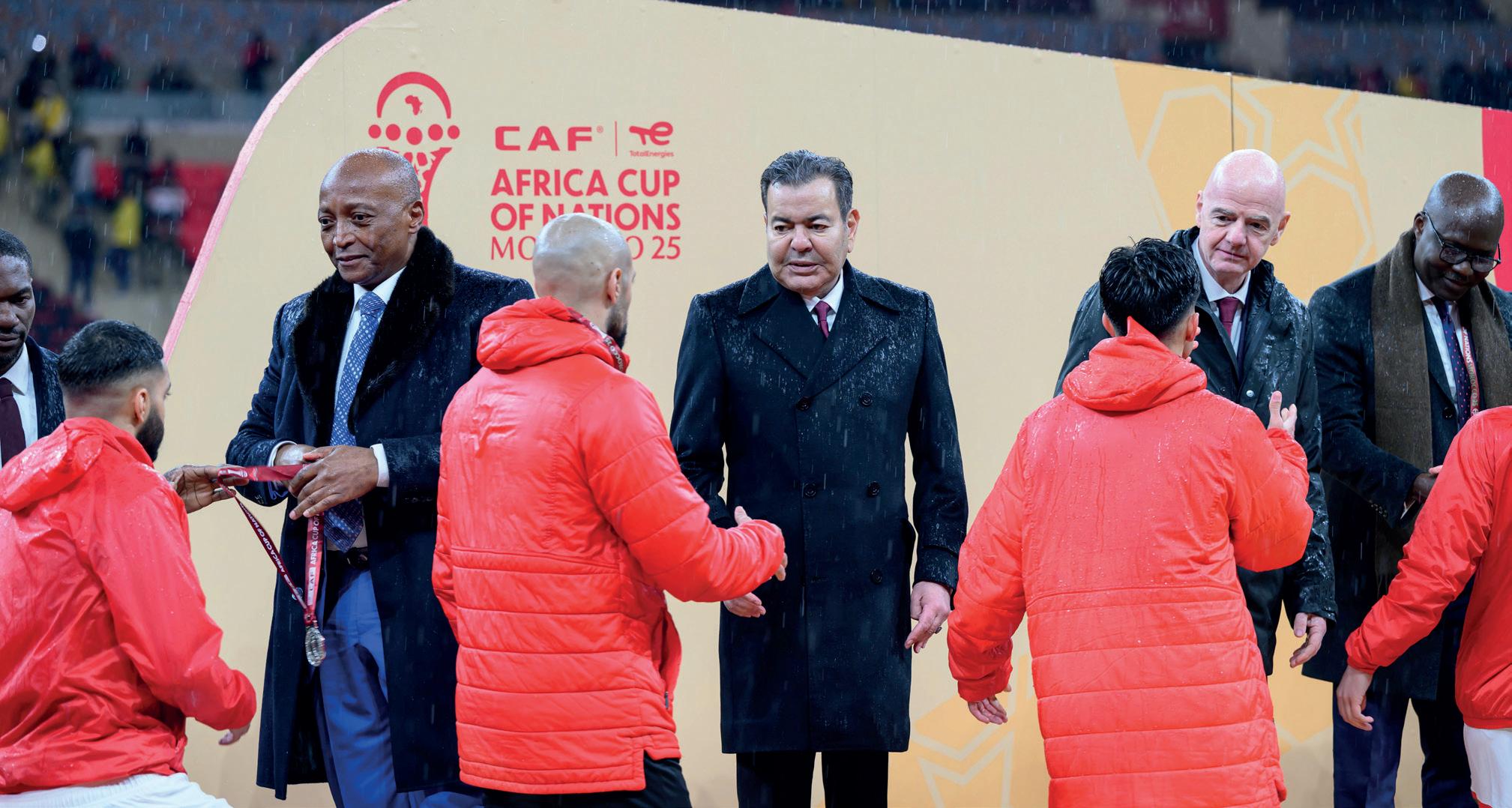
Son Altesse Royale le Prince Moulay Rachid a présidé, dimanche 18 janvier 2026 au Stade “Prince Moulay Abdellah” à Rabat, la finale de la 35ème édition de la Coupe d’Afrique des Nations (CAN-Maroc 2025), remportée par l’équipe sénégalaise qui s’est imposée face à son homologue marocaine (1-0 après prolongations).
A son arrivée au Stade “Prince Moulay Abdellah”, SAR le Prince Moulay Rachid a passé en revue une section des Forces Auxiliaires qui rendait les honneurs, avant d’être salué par le ministre de l’Education nationale, du Préscolaire et des Sports, M. Mohamed Saâd Berrada, le président du Comité National Olympique Marocain, M. Fayçal Laraichi, le président de la FIFA, M. Gianni Infantino, le président de la Confédération Africaine de Football (CAF), M. Patrice Motsepe, et le président de la Fédération Royale Marocaine de Football (FRMF), M. Fouzi Lekjaa.
Son Altesse Royale a également été salué par le wali de la région Rabat-Salé-Kénitra, gouverneur de la préfecture de Rabat, M. Mohamed Yacoubi, le président du Conseil régional, M. Rachid El Abdi, la présidente du Conseil communal
His Royal Highness Prince Moulay Rachid presided, on Sunday, 18 January 2026, at the Prince Moulay Abdellah Stadium in Rabat, over the final of the 35th edition of the Africa Cup of Nations (AFCON – Morocco 2025), won by the Senegalese team, which defeated its Moroccan counterpart (1–0 after extra time).
Upon his arrival at the Prince Moulay Abdellah Stadium, HRH Prince Moulay Rachid reviewed a detachment of the Auxiliary Forces that rendered honours, before being greeted by the Minister of National Education, Preschool and Sports, Mr. Mohamed Saâd Berrada; the President of the Moroccan National Olympic Committee, Mr. Fayçal Laraichi; the President of FIFA, Mr. Gianni Infantino; the President of the Confederation of African Football (CAF), Mr. Patrice Motsepe; and the President of the Royal Moroccan Football Federation (FRMF), Mr. Fouzi Lekjaa.
His Royal Highness was also greeted by the Wali of the Rabat–Salé–Kénitra Region and Governor of the Prefecture of Rabat, Mr. Mohamed Yacoubi; the President of the Region-
de Rabat, Mme Fatiha El Moudni, le président du Conseil préfectoral de Rabat, M. Abdelaziz Driouich, le président du Conseil d’arrondissement Yacoub El Mansour, M. Abdelfattah El Aouni, le Secrétaire général de la FIFA, M. Mattias Grafström, et des membres de la FRMF.
Son Altesse Royale a, ensuite, rejoint la Tribune Royale pour assister à la cérémonie de clôture de la Coupe d’Afrique des Nations, organisée par le Royaume du 21 décembre 2025 au 18 janvier 2026.
Cette cérémonie, ponctuée de spectacles artistiques qui reflètent toute la richesse culturelle du Continent africain et l’énergie vibrante de sa jeunesse et symbolisent l’esprit de coopération, d’unité et de compétitivité dont est porteur cette compétition, rend un vibrant hommage à un tournoi qui a rassemblé et uni un continent et conquis le cœur du monde entier.
Au coeur de cette cérémonie, s’est élevée la voix d’Idris Elba, un artiste d’origine africaine mondialement reconnu, qui s’est exprimé au nom de tout un continent, rendant un hommage de l’Afrique au Maroc et prononçant un message d’espoir et de fraternité pour l’avenir du football africain.
Suite à un bref repos au Salon Royal, SAR le Prince Moulay Rachid a regagné la Tribune Royale pour assister aux péripéties de cette finale qui a débuté par l’exécution des hymnes nationaux sénégalais et marocain.
A la fin de cette rencontre, SAR le Prince Moulay Rachid a rejoint le podium pour la remise des trophées et des médailles.
Après la passation du drapeau de la CAF entre le président de la Fédération Royale Marocaine de Football, le président de la CAF et les trois représentants des trois pays organisateurs de la prochaine édition de la Coupe d’Afrique des Nations (Kenya, Ouganda et Tanzanie), il a été procédé à la remise des trophées de l’équipe “fair play” à l’équipe marocaine, du meilleur gardien à Yassine Bounou, du meilleur buteur à Brahim Diaz, et du meilleur joueur au Sénégalais Sadio Mané.
Il a aussi été procédé, à cette occasion, à la remise des médailles aux arbitres de la finale, à l’équipe marocaine finaliste et à l’équipe sénégalaise vainqueur de cette édition de la CAN.
Son Altesse Royale le Prince Moulay Rachid a ensuite remis, en présence des présidents de la FIFA et de la CAF, la Coupe d’Afrique des Nations au capitaine de l’équipe sénégalaise.
al Council, Mr. Rachid El Abdi; the President of the Rabat Communal Council, Ms. Fatiha El Moudni; the President of the Rabat Prefectural Council, Mr. Abdelaziz Driouich; the President of the Yacoub El Mansour District Council, Mr. Abdelfattah El Aouni; the Secretary General of FIFA, Mr. Mattias Grafström; as well as members of the FRMF.
His Royal Highness then took his seat in the Royal Stand to attend the closing ceremony of the Africa Cup of Nations, hosted by the Kingdom from 21 December 2025 to 18 January 2026.
Marked by artistic performances reflecting the rich cultural heritage of the African continent and the vibrant energy of its youth, and symbolizing the spirit of cooperation, unity and competitiveness embodied by this competition, the ceremony paid a stirring tribute to a tournament that brought together and united a continent and won the hearts of audiences around the world.
At the heart of the ceremony, the voice of Idris Elba, a world-renowned artist of African origin, rose as he spoke on behalf of an entire continent, paying tribute from Africa to Morocco and delivering a message of hope and fraternity for the future of African football.
Following a brief rest in the Royal Lounge, HRH Prince Moulay Rachid returned to the Royal Stand to follow the course of the final, which began with the playing of the Senegalese and Moroccan national anthems.
At the conclusion of the match, HRH Prince Moulay Rachid proceeded to the podium for the presentation of trophies and medals.
After the handover of the CAF flag between the President of the Royal Moroccan Football Federation, the President of CAF, and the three representatives of the three countries set to host the next edition of the Africa Cup of Nations (Kenya, Uganda and Tanzania), trophies were awarded to the Moroccan team for Fair Play, to Yassine Bounou as Best Goalkeeper, to Brahim Díaz as Top Scorer, and to Senegalese player Sadio Mané as Best Player.
On this occasion, medals were also presented to the referees of the final, to the Moroccan team, finalists of the competition, and to the Senegalese team, winners of this edition of the Africa Cup of Nations.
His Royal Highness Prince Moulay Rachid then presented the Africa Cup of Nations trophy to the captain of the Senegalese team, in the presence of the Presidents of FIFA and CAF.
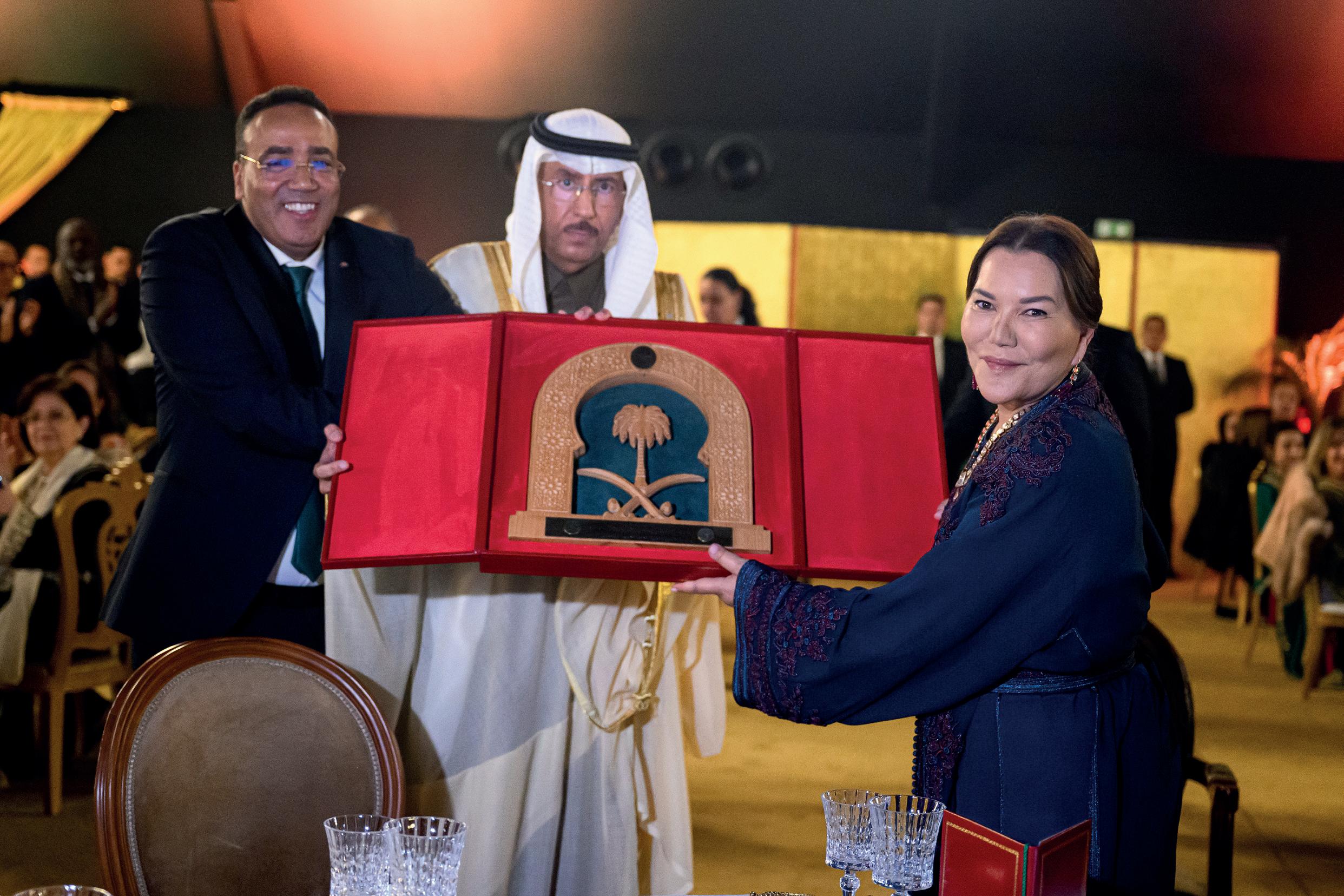
HRH PRINCESS LALLA HASNAA PRESIDES
Sous le Haut Patronage de Sa Majesté le Roi Mohammed VI, que Dieu L’assiste, et sous la Présidence effective de Son Altesse Royale la Princesse Lalla Hasnaa, le Gala diplomatique annuel de bienfaisance s’est tenu le dimanche 11 janvier 2026 à Rabat. La participation et la présidence de Son Altesse Royale ont conféré à cet événement caritatif une portée symbolique et institutionnelle particulière, traduisant l’engagement constant de Son Altesse Royale en faveur des causes humanitaires et des valeurs de solidarité, de générosité et de dignité humaine.
Organisé à l’initiative de la Fondation diplomatique, en partenariat avec l’Ambassade du Royaume d’Arabie Saoudite au Maroc, ce rendez-vous majeur de la diplomatie solidaire a réuni le
Under the High Patronage of His Majesty King Mohammed VI, may God assist Him, and under the Effective Presidency of Her Royal Highness Princess Lalla Hasnaa, the Annual Diplomatic Charity Gala was held on Sunday, 11 January 2026, in Rabat. The participation and effective presidency of Her Royal Highness conferred upon this charitable event a particular symbolic and institutional significance, reflecting Her Royal Highness’s constant commitment to humanitarian causes and to the values of solidarity, generosity, and human dignity.
Organized at the initiative of the Diplomatic Foundation, in partnership with the Embassy of the King-
HAUT
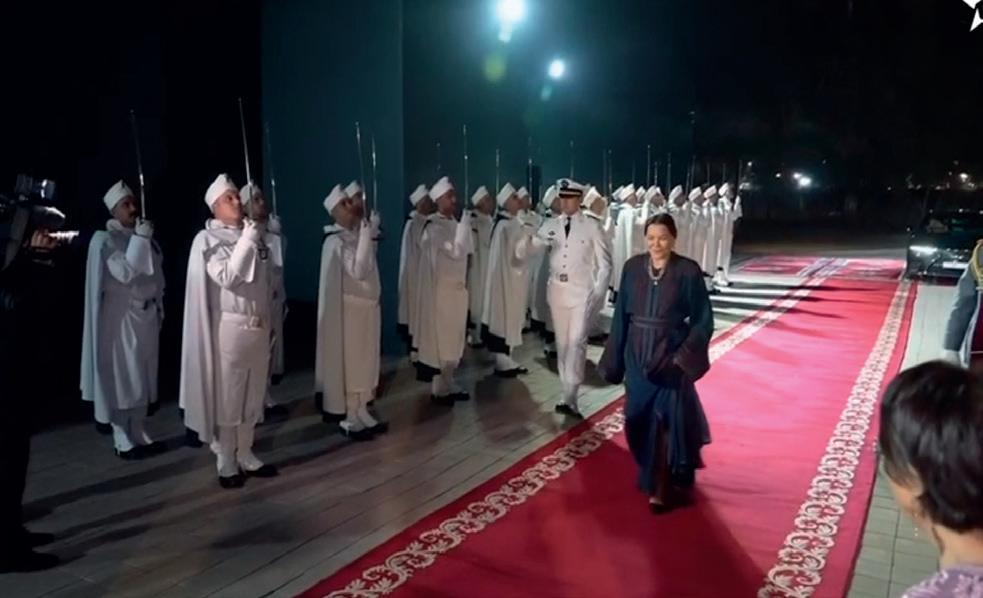
A son arrivée, Son Altesse Royale la Princesse Lalla Hasnaa a passé en revue une section des Forces Auxiliaires qui rendait les honneurs
Upon Her arrival, Her Royal Highness Princess Lalla Hasnaa reviewed a detachment of the Auxiliary Forces rendering military honors
corps diplomatique étranger accrédité auprès du Royaume, des représentants d’organisations internationales, de hautes personnalités marocaines et étrangères, ainsi que des figures du monde économique, culturel et artistique. Au fil des années, le Gala diplomatique annuel de bienfaisance s’est imposé comme une tradition solidement ancrée dans le paysage diplomatique marocain, incarnant l’esprit de coopération internationale au service de l’action humanitaire.
La Présidence effective assurée par Son Altesse Royale la Princesse Lalla Hasnaa a, une nouvelle fois, donné tout son sens à cette manifestation, en parfaite résonance avec la Haute Sollicitude que Sa Majesté le Roi Mohammed VI n’a cessé d’accorder aux initiatives solidaires et humanitaires. La présence de Son Altesse Royale a constitué un hommage vivant aux valeurs de don de soi et d’engagement social qui fondent cette initiative depuis plus de deux décennies.
HAUT
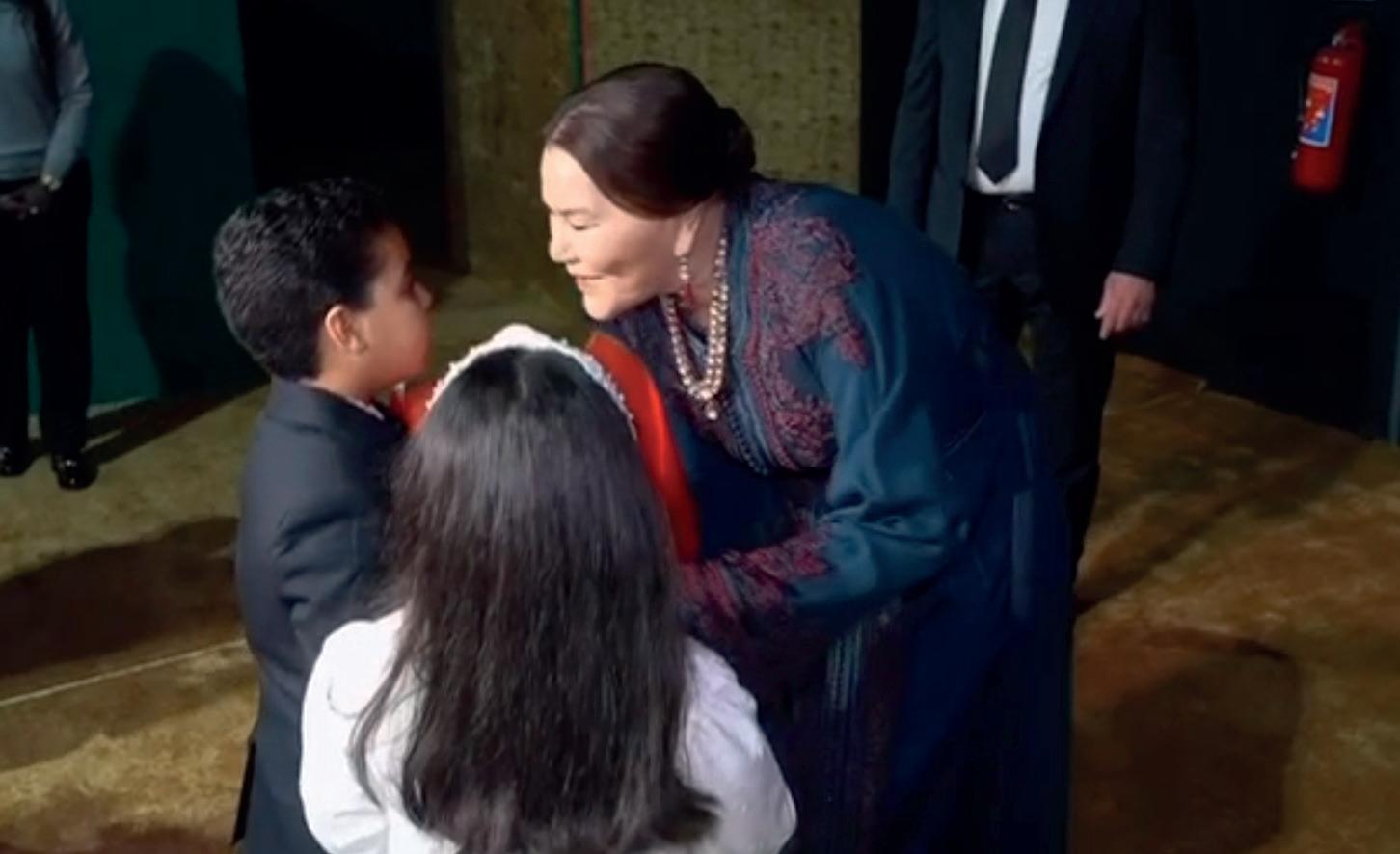
SAR la Princesse Lalla Hasnaa reçoit un joli bouquet de fleurs des enfants
HRH Princess Lalla Hasnaa receives a lovely bouquet of flowers from children
HAUT
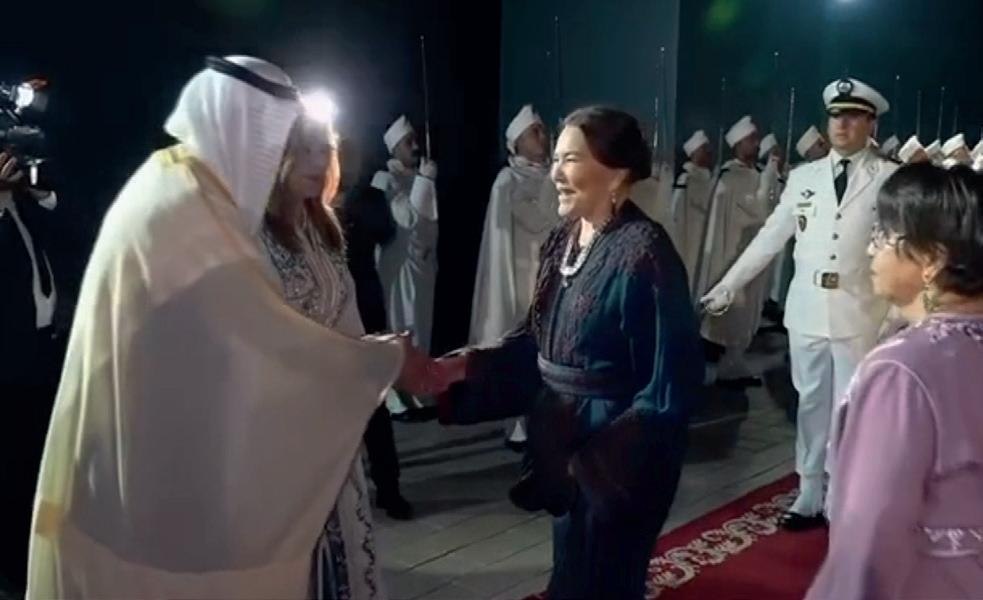
SAR la Princesse Lalla Hasnaa saluée par l’Ambassadeur du Royaume d’Arabie Saoudite accrédité à Rabat, S.E.M. Sami Bin Abdullah Al-Saleh
HRH Princess Lalla Hasnaa is greeted by the Ambassador of the Kingdom of Saudi Arabia accredited to Rabat, H.E. Mr. Sami Bin Abdullah Al-Saleh
dom of Saudi Arabia in Morocco, this major gathering of solidarity diplomacy brought together the foreign diplomatic corps accredited to the Kingdom, representatives of international organizations, high-ranking Moroccan and foreign personalities, as well as figures from the economic, cultural, and artistic spheres. Over the years, the Annual Diplomatic Charity Gala has established itself as a firmly rooted tradition within Morocco’s diplomatic landscape, embodying the spirit of international cooperation in the service of humanitarian action.
The Effective Presidency assumed by Her Royal Highness Princess Lalla Hasnaa once again gave full meaning to this event, in perfect resonance with the High Solicitude that His Majesty King Mohammed VI has consistently extended to solidarity-based and humanitarian initiatives. The presence of Her Royal Highness constituted a living tribute
HAUT
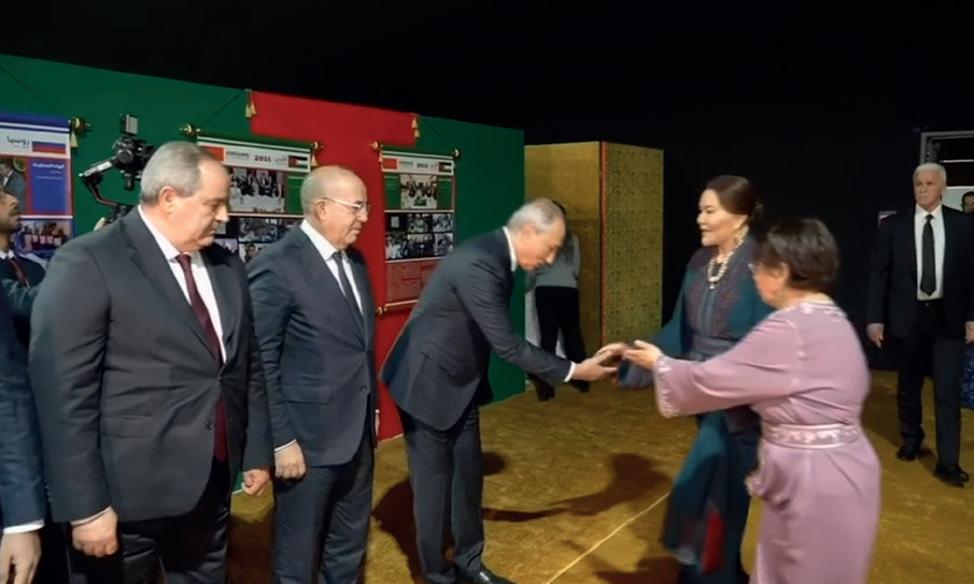
SAR la Princesse Lalla Hasnaa saluée par les ministres participants au Gala Diplomatique Annuel de Bienfaisance
HRH Princess Lalla Hasnaa is greeted by the ministers participating in the Annual Diplomatic Charity Gala
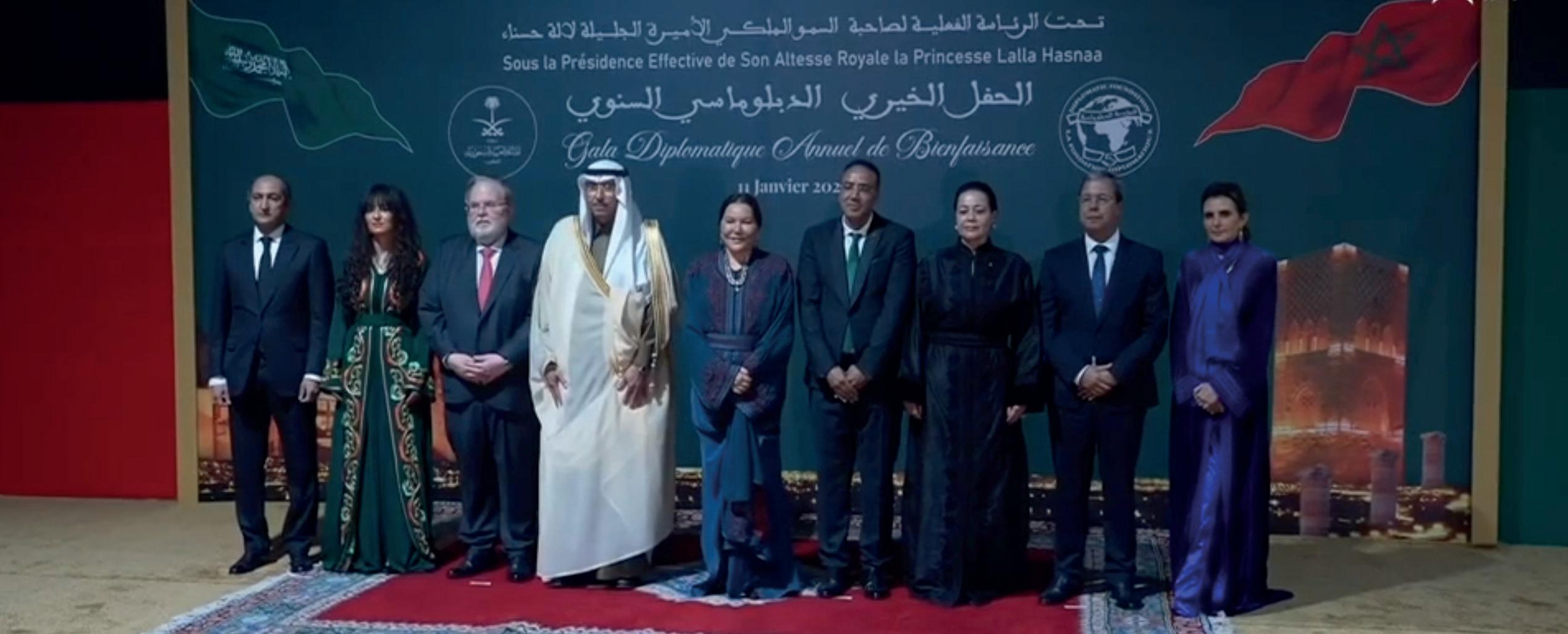
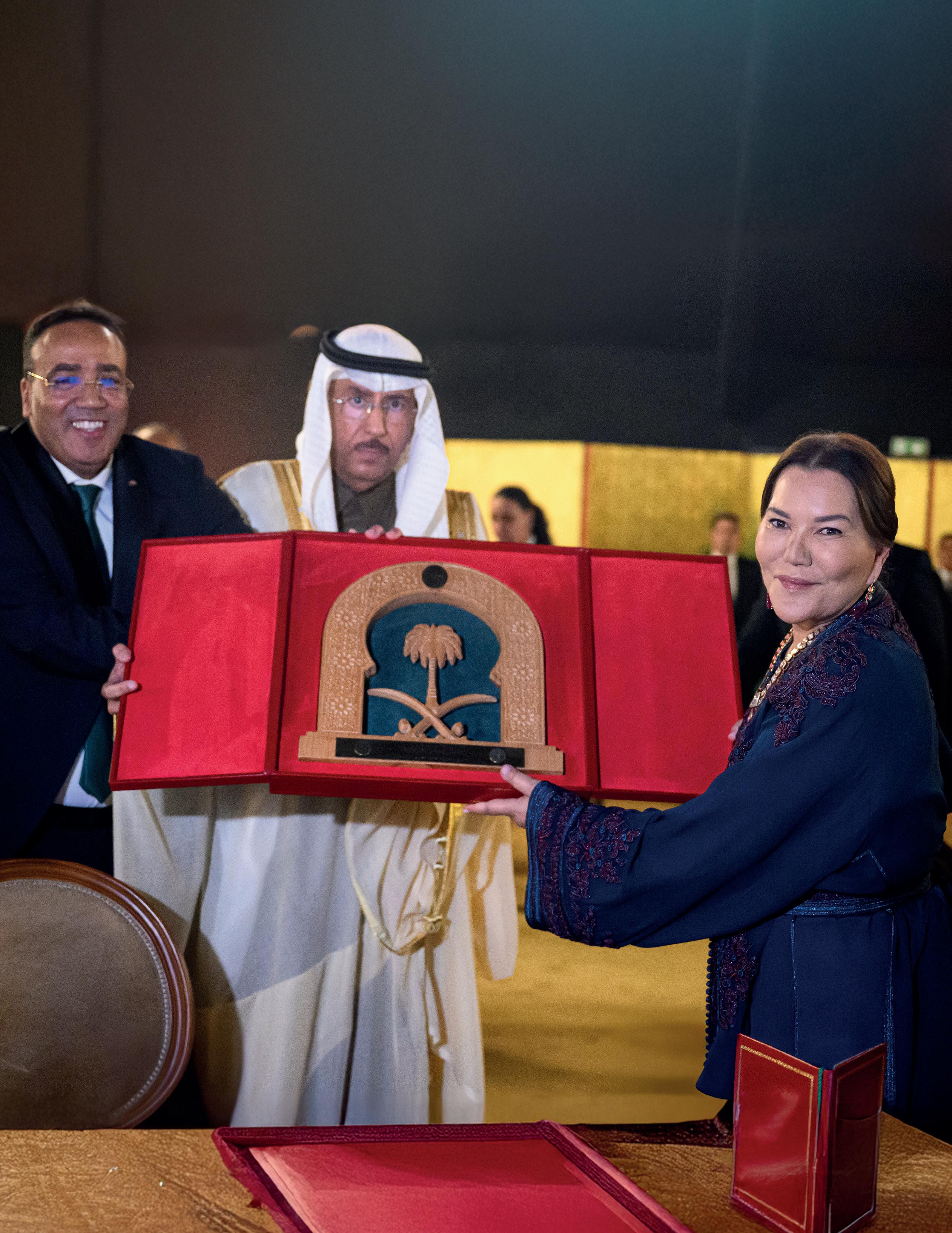
L’édition 2026 a été marquée par la participation du Royaume d’Arabie Saoudite en qualité d’Invité d’Honneur, soulignant la profondeur des liens fraternels et la solidité des relations historiques et stratégiques unissant les deux Royaumes. À cette occasion, Son Excellence le Dr Sami Bin Abdullah Bin Othman Al-Saleh, Ambassadeur du Serviteur des Deux Saintes Mosquées auprès du Royaume du Maroc, accompagné du Président de la Fondation diplomatique, M. Abdelati Habek, a remis à Son Altesse Royale la Princesse Lalla Hasnaa l’Écu du Gala diplomatique annuel de bienfaisance 2026, en témoignage de reconnaissance et de gratitude pour Son soutien constant et Son implication personnelle en faveur des actions caritatives et humanitaires.
Dans son allocution, le diplomate saoudien a salué le dévouement exemplaire de Son Altesse Royale et Son appui indéfectible aux nobles initiatives humanitaires, tout en exprimant la profonde reconnaissance du Royaume d’Arabie Saoudite pour l’honneur qui lui a été fait d’être l’Invité d’Honneur de cette édition. Il a également mis en lumière la qualité exceptionnelle des relations bilatérales entre le Royaume d’Arabie Saoudite et le Royaume du Maroc, portées par la vision commune et la volonté constante de Sa Majesté le Roi Mohammed VI, que Dieu L’assiste, du Serviteur des Deux Saintes Mosquées, le Roi Salmane Bin Abdulaziz Al-Saoud, et de Son Altesse Royale le Prince Mohammed Bin Salman, Prince Héritier et Président du Conseil des ministres, que Dieu les protège, de hisser cette coopération à un niveau de partenariat stratégique durable.
Prenant la parole à son tour, le Président de la Fondation
to the values of self-sacrifice and social commitment that have underpinned this initiative for more than two decades.
The 2026 edition was marked by the participation of the Kingdom of Saudi Arabia as Guest of Honour, underscoring the depth of fraternal ties and the strength of the historical and strategic relations uniting the two Kingdoms. On this occasion, His Excellency Dr. Sami Bin Abdullah Bin Othman Al-Saleh, Ambassador of the Custodian of the Two Holy Mosques to the Kingdom of Morocco, accompanied by the President of the Diplomatic Foundation, Mr. Abdelati Habek, presented Her Royal Highness Princess Lalla Hasnaa with the Shield of the 2026 Annual Diplomatic Charity Gala, as a token of recognition and gratitude for Her steadfast support and personal commitment to charitable and humanitarian actions.
In his address, the Saudi diplomat praised the exemplary dedication of Her Royal Highness and Her unwavering support for noble humanitarian initiatives, while expressing the profound gratitude of the Kingdom of Saudi Arabia for the honor of being designated Guest of Honour for this edition. He also highlighted the exceptional quality of bilateral relations between the Kingdom of Saudi Arabia and the Kingdom of Morocco, driven by the shared vision and the constant determination of His Majesty King Mohammed VI, may God assist Him, of the Custodian of the Two Holy Mosques, King Salman Bin Abdulaziz Al-Saud, and of His Royal Highness Prince Mohammed Bin Salman, Crown Prince and Prime Minister, may God protect them, to elevate this coop-
HAUT
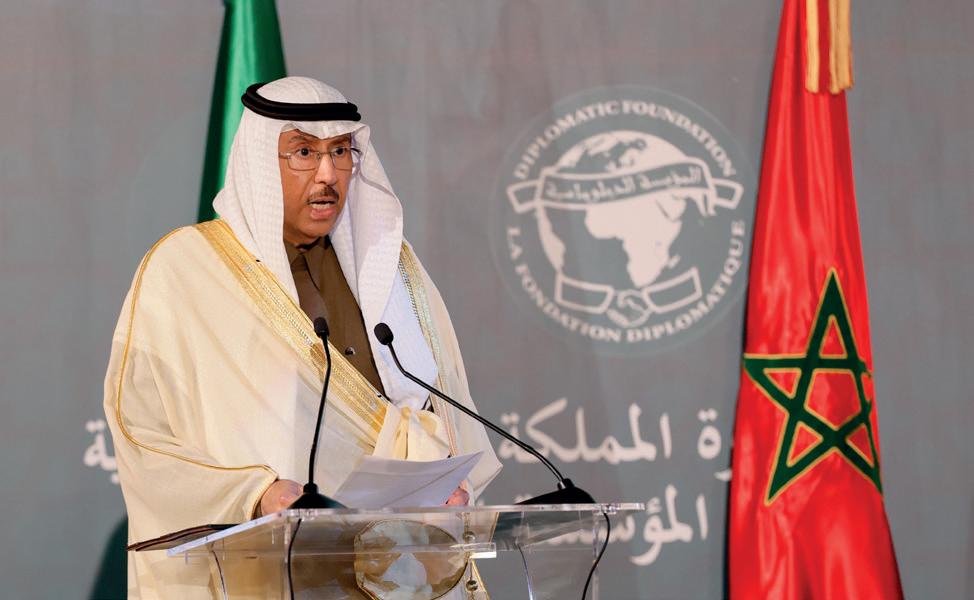
Discours de l’Ambassadeur du Royaume d’Arabie Saoudite accrédité à Rabat, S.E.M. Sami Bin Abdullah Al-Saleh
Address by the Ambassador of the Kingdom of Saudi Arabia accredited to Rabat, H.E. Mr. Sami Bin Abdullah Al-Saleh
diplomatique, M. Abdelati Habek, a exprimé à Son Altesse Royale la Princesse Lalla Hasnaa l’hommage respectueux et la profonde reconnaissance de l’ensemble de la Fondation pour Son soutien fidèle et la sollicitude exceptionnelle qu’Elle accorde à ce rendez-vous annuel. Il a souligné que la présence de Son Altesse Royale constitue une source d’honneur et de légitimité pour l’action humanitaire portée par le Gala, en parfaite harmonie avec l’œuvre humanitaire et sociale conduite sous l’impulsion éclairée de Sa Majesté le Roi Mohammed VI.
Les fonds recueillis à l’issue de cette édition sont destinés à soutenir des institutions et associations nationales œuvrant dans les domaines de la protection de l’enfance, de la prise en charge des enfants orphelins et abandonnés, des enfants sourds et malentendants, de l’accompagnement des personnes en situation de trisomie, ainsi que de la promotion de la condition de la femme en
HAUT
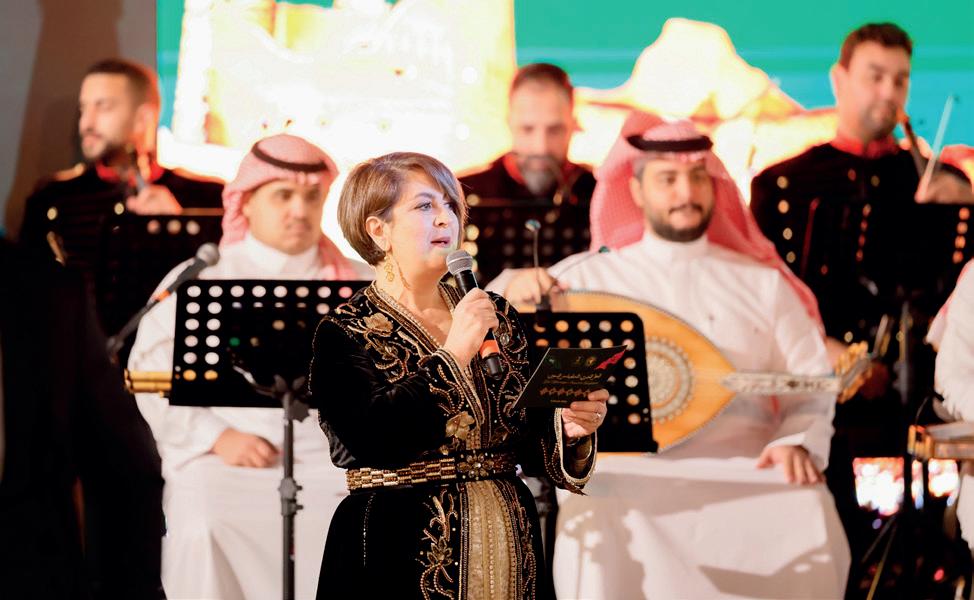
La maîtresse de cérémonie du Gala Diplomatique Annuel de Bienfaisance, la célèbre journaliste Latifa Benhalima, présente le programme artistique
The Master of Ceremonies of the Annual Diplomatic Charity Gala, the renowned journalist Latifa Benhalima, presented the artistic programme.
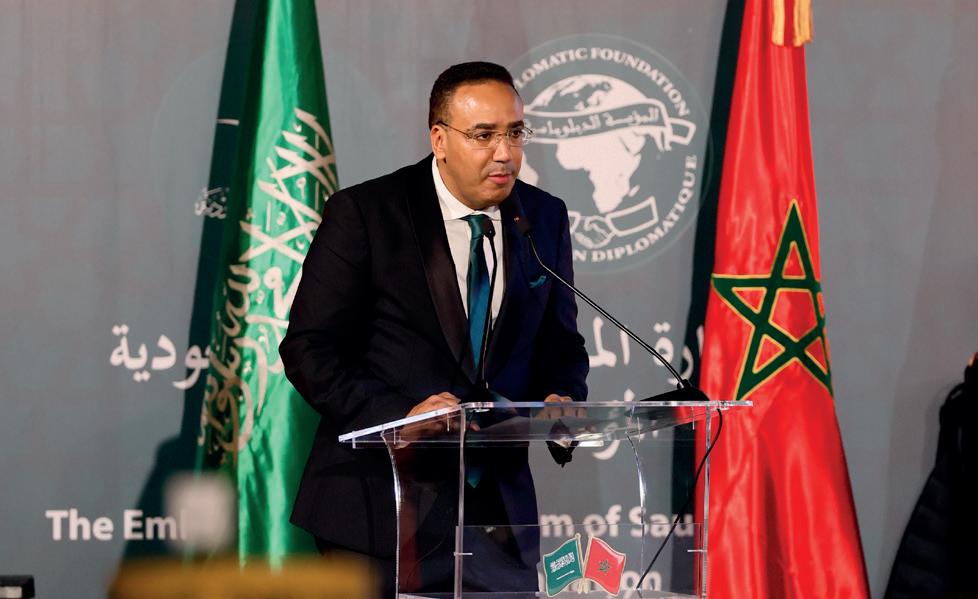
Mot de bienvenue du Président de la Fondation Diplomatique, M. Abdelati Habek
Welcome address by the President of the Diplomatic Foundation, Mr. Abdelati Habek
eration to the level of a lasting strategic partnership.
Taking the floor in turn, the President of the Diplomatic Foundation, Mr. Abdelati Habek, conveyed to Her Royal Highness Princess Lalla Hasnaa the respectful tribute and profound gratitude of the entire Foundation for Her steadfast support and the exceptional care She extends to this annual gathering. He emphasized that the presence of Her Royal Highness is a source of honor and legitimacy for the humanitarian action carried by the Gala, in perfect harmony with the humanitarian and social work conducted under the enlightened leadership of His Majesty King Mohammed VI.
The funds raised at the conclusion of this edition are intended to support national institutions and associations working in the fields of child protection; the care of orphaned and abandoned children; children who are deaf or hard of hearing; support for persons with
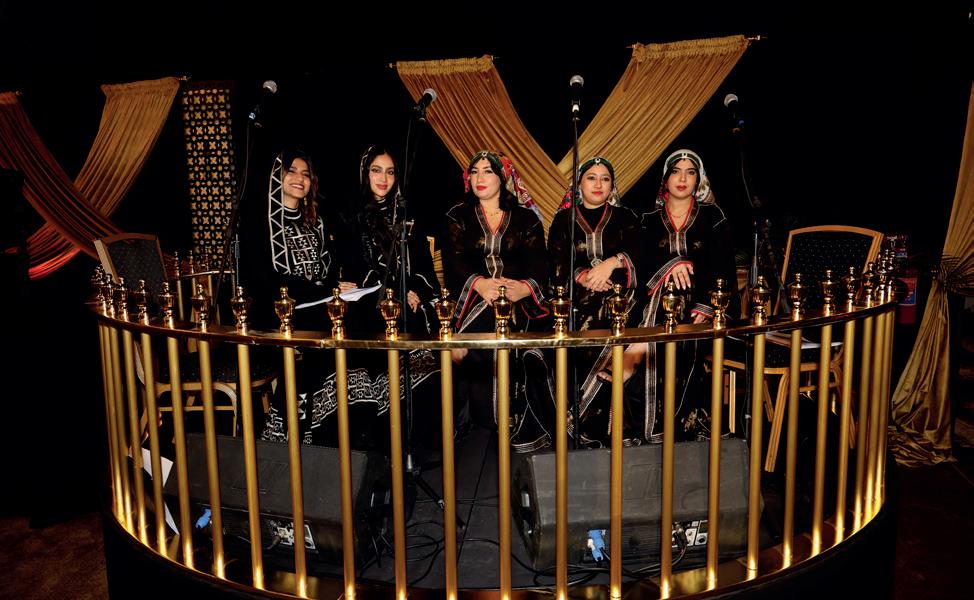
HAUT
Les choralistes saoudiennes accompagnent le programme artistique du Gala Diplomatique Annuel de Bienfaisance
The Saudi female choristers accompany the artistic program of the Annual Diplomatic Charity Gala
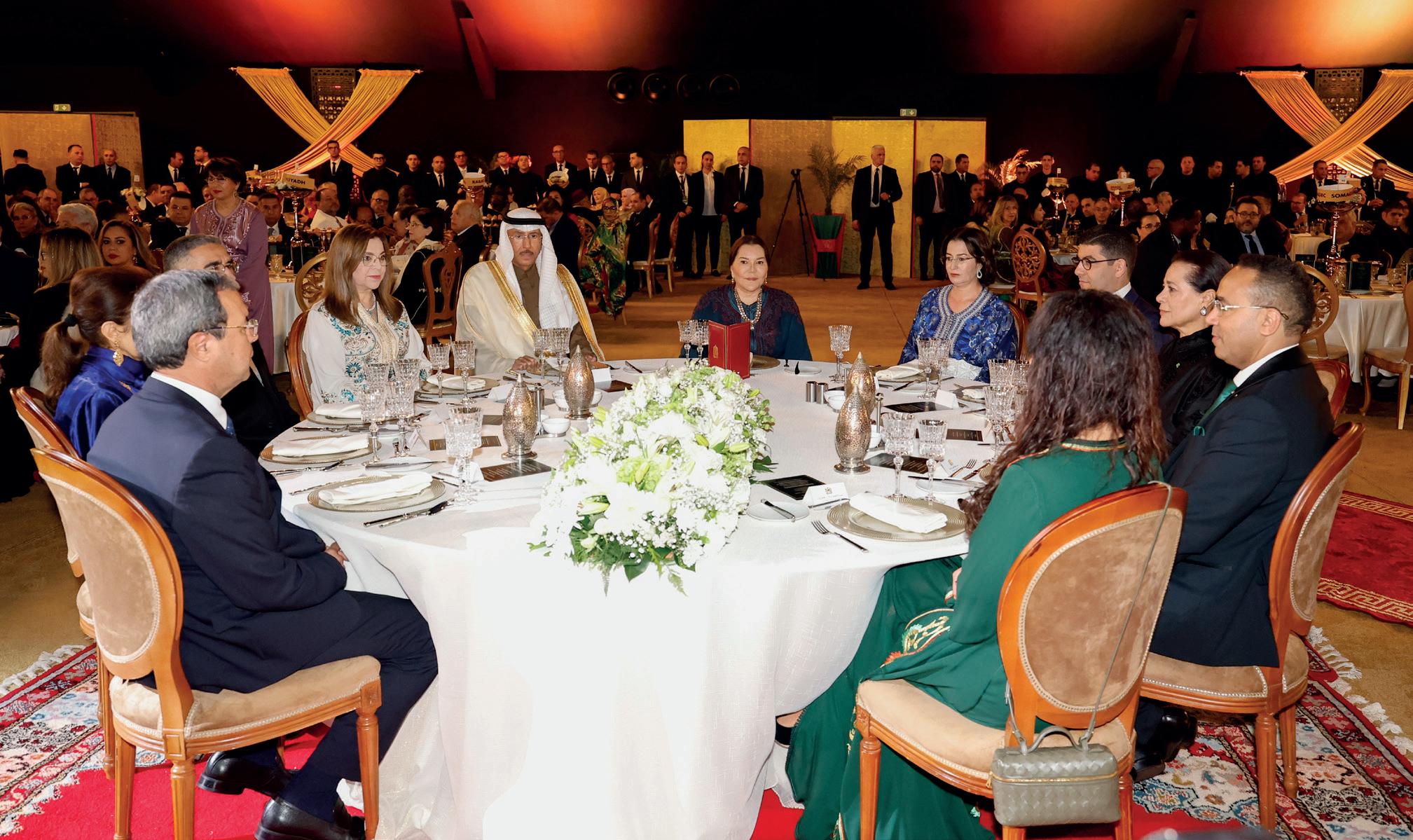
SAR la Princesse Lalla Hasnaa préside le Gala aux côtés de Chrifa Lalla
Soumia El Ouazzani, de l'Ambassadeur d'Arabie Saoudite, de deux membres du Gouvernement, du Wali de la Région de Rabat Salé Kénitra, du Président de la Fondation Diplomatique et d'autres membres du Comité d'Organisation
milieu rural et montagneux, de l’éducation des jeunes filles et du renforcement des capacités des jeunes, à travers des projets de développement durable visant à réduire les inégalités et à promouvoir l’égalité des chances.
La soirée a été ponctuée par un programme artistique de haut niveau, illustrant une rencontre culturelle raffinée entre le Maroc et l’Arabie Saoudite. Une création musicale conjointe a réuni l’Orchestre de musique marocaine, dirigé par le Maestro Samir Tammim, et l’Orchestre saoudien, sous la direction du Maestro Masoud Assiri, offrant au public une fusion harmonieuse des patrimoines musicaux des deux pays. Des prestations vocales ont été assurées par des artistes marocains de renom, tandis que les tenues de l’Orchestre de musique marocaine, conçues par la créatrice Samira Haddouchi, lauréate du Trophée de la Diplomatie publique 2025, ont apporté une touche d’élégance contemporaine célébrant l’authenticité marocaine.
À Son arrivée, Son Altesse Royale la Princesse Lalla Hasnaa avait passé en revue une section des Forces Auxiliaires qui rendait les honneurs, avant d’être saluée par des membres
Down syndrome; as well as the promotion of women’s conditions in rural and mountainous areas, girls’ education, and the strengthening of youth capacities, through sustainable development projects aimed at reducing inequalities and promoting equal opportunities.
The evening was punctuated by a high-level artistic program, illustrating a refined cultural encounter between Morocco and Saudi Arabia. A joint musical creation brought together the Moroccan Music Orchestra, conducted by Maestro Samir Tammim, and the Saudi Orchestra, under the direction of Maestro Masoud Assiri, offering the audience a harmonious fusion of the musical heritages of the two countries. Vocal performances were delivered by renowned Moroccan artists, while the attire of the Moroccan Music Orchestra, designed by fashion designer Samira Haddouchi, recipient of the 2025 Public Diplomacy Award, added a touch of contemporary elegance celebrating Moroccan authenticity.
Upon Her arrival, Her Royal Highness Princess Lalla Hasnaa had reviewed a detachment of the Auxiliary Forces
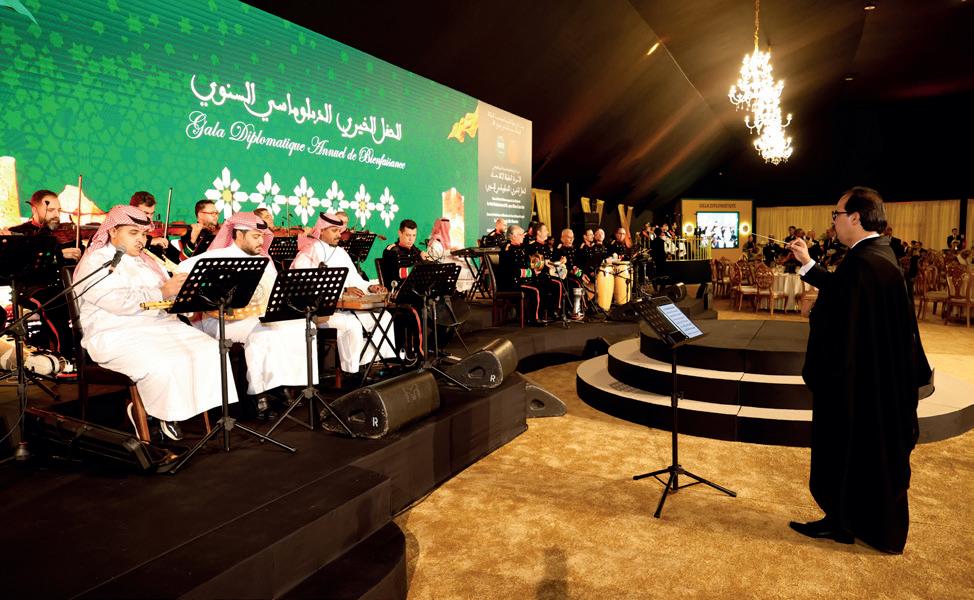
HAUT
L'orchestre de musique marocaine dirigée par le Maestro Samir Tamim et l'orchestre sadoudien sous la direction du Maestro Ali Masoud Asiri
The Moroccan music orchestra conducted by Maestro Samir Tamim and the Saudi orchestra under the direction of Maestro Ali Masoud Asiri
HAUT
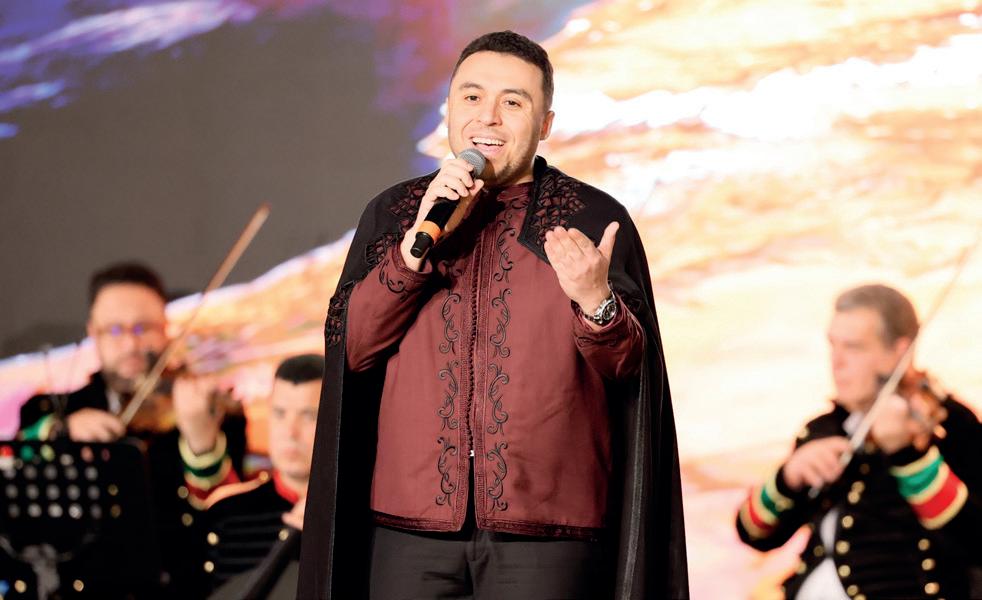
L’artiste Zakaria Ghafouli interprète avec émotion « Jana Jana Maghrib Ya Watana », offrant au public un moment musical fort, empreint de ferveur patriotique et d’attachement aux valeurs culturelles marocaines
Artist Zakaria Ghafouli delivers a moving performance of “Jana Jana Maghrib Ya Watana”, offering the audience a powerful musical moment imbued with patriotic fervor and deep attachment to Morocco’s cultural values
du gouvernement, des autorités territoriales, le représentant diplomatique du Royaume d’Arabie Saoudite, ainsi que par les responsables et membres de la Fondation diplomatique, marquant solennellement l’ouverture de cette soirée placée sous le signe de la solidarité, du dialogue entre les cultures et de l’engagement humanitaire.
HAUT
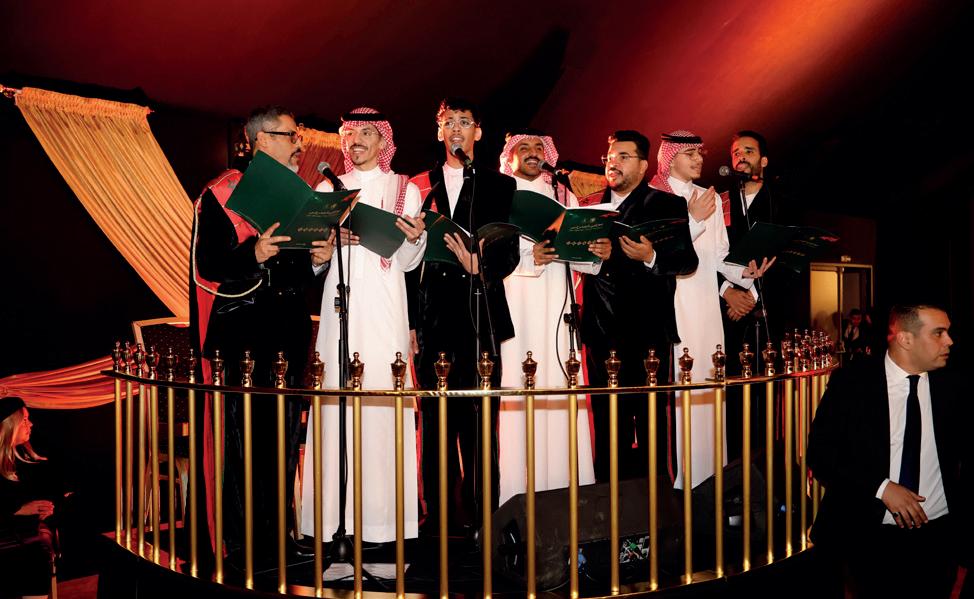
Les choristes saoudiens et marocains accompagnent les prestations des chanteurs présents au Gala Diplomatique Annuel de Bienfaisance
The Saudi and Moroccan choristers accompany the performances of the singers participating in the Annual Diplomatic Charity Gala
HAUT
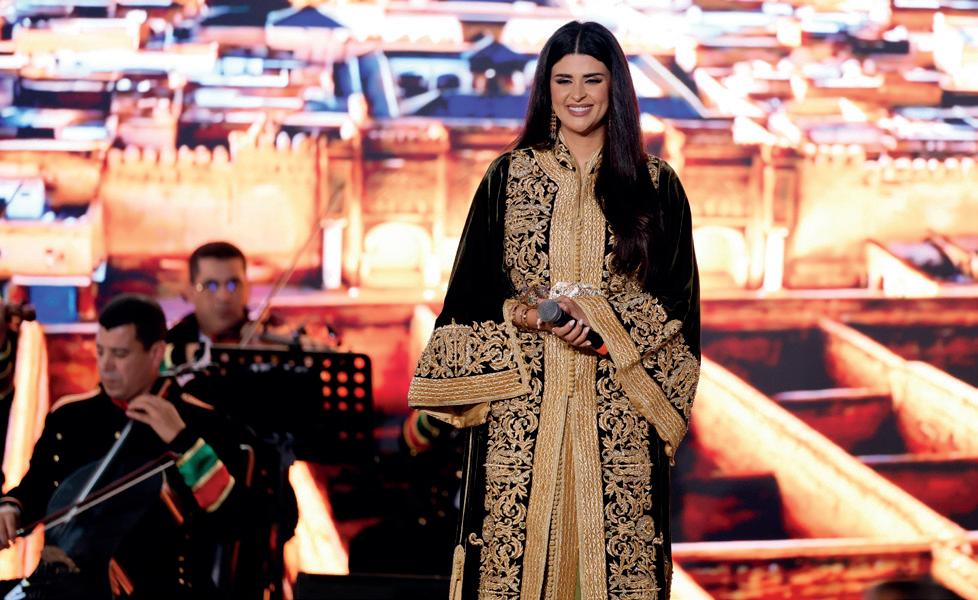
La chanteuse Salma Rachid interprère "Chwayekh Min Ardi Meknes" et "Inta Omri" devant Son Altesse Royal et les convives du Gala Diplomatique Annuel de Bienfaisance
The singer Salma Rachid performed “Chwayekh Min Ardi Meknes” and “Inta Omri” before Her Royal Highness and the guests of the Annual Diplomatic Charity Gala.
rendering honors, before being greeted by members of the Government, territorial authorities, the diplomatic representative of the Kingdom of Saudi Arabia, as well as the leadership and members of the Diplomatic Foundation, solemnly marking the opening of this evening dedicated to solidarity, intercultural dialogue, and humanitarian commitment.
HAUT
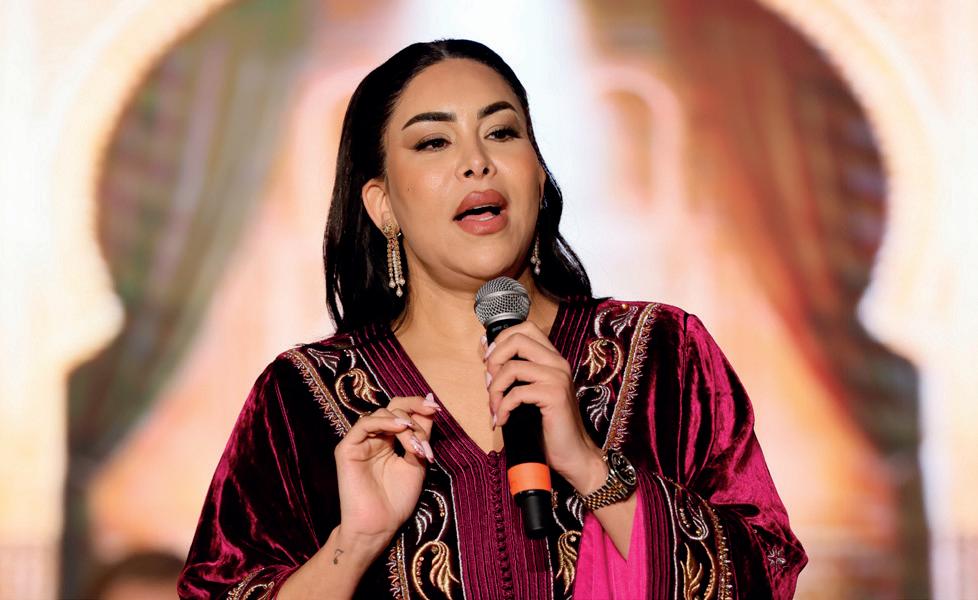
La chanteuse Najat Rajoui interprète avec élégance et sensibilité deux chansons, « Inti Amira » et « Rijalah », livrant une prestation empreinte d’émotion
Singer Najat Rajoui delivers an elegant and emotive performance “Inti Amira” and “Rijalah”, presenting a moment marked by heartfelt expression.
HAUT
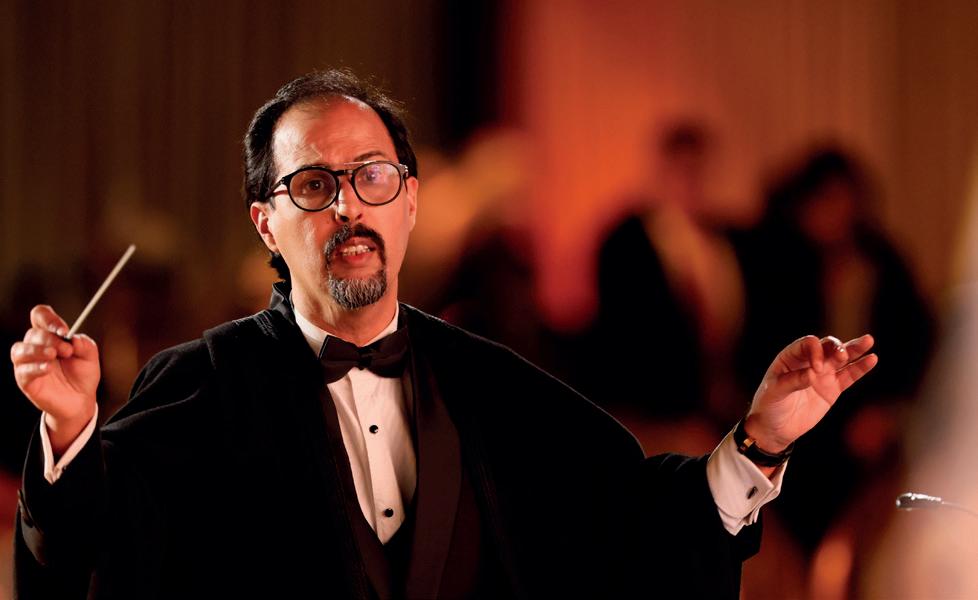
Le chef d’orchestre Samir Tamim dirige l’ensemble musical avec maîtrise, assurant une harmonie parfaite entre les artistes
Conductor Samir Tamim leads the orchestra with precision, ensuring perfect harmony among the performers
HAUT
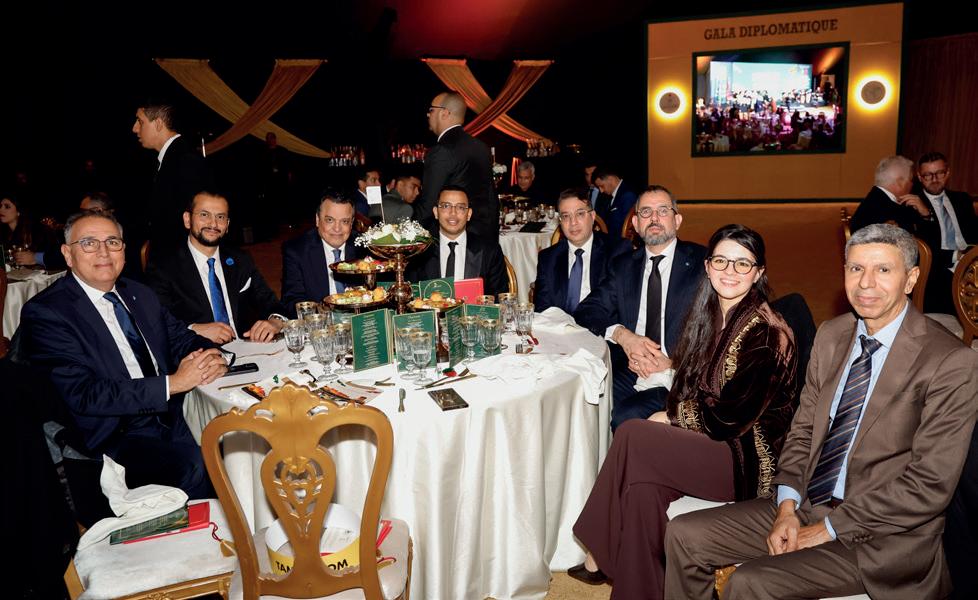
Les invités de la table TAMWILCOM partagent un moment d’échanges et de convivialité au cours de la soirée
Guests seated at the TAMWILCOM table enjoy a moment of exchange and conviviality during the evening
HAUT
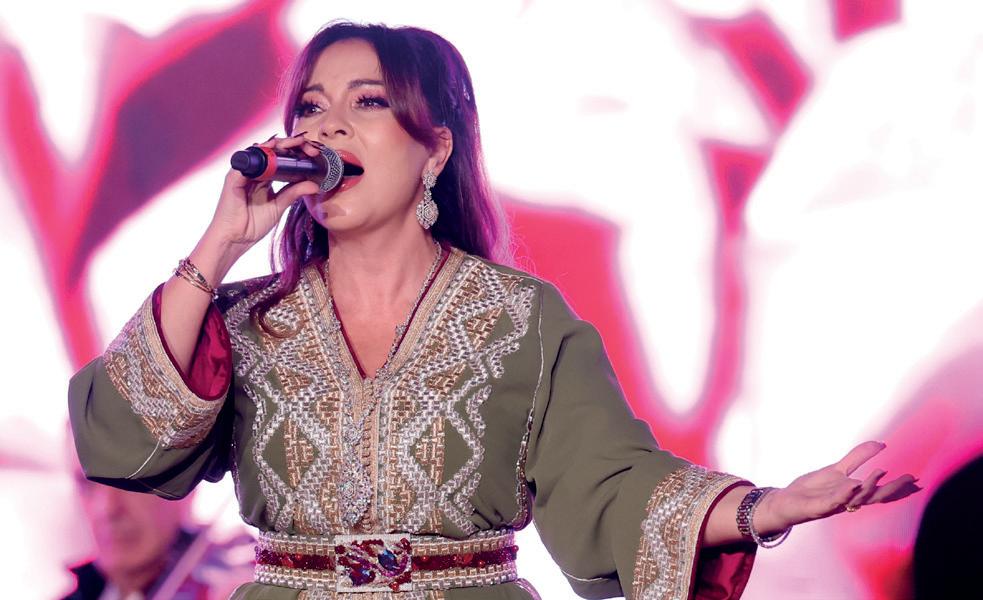
La chanteuse Fatim Zahra Laroussi envoûte l’assistance par une prestation vocale puissante et raffinée, saluée par un public conquis
Singer Fatim Zahra Laroussi captivates the audience with a powerful and refined vocal performance, warmly applauded by guests
HAUT
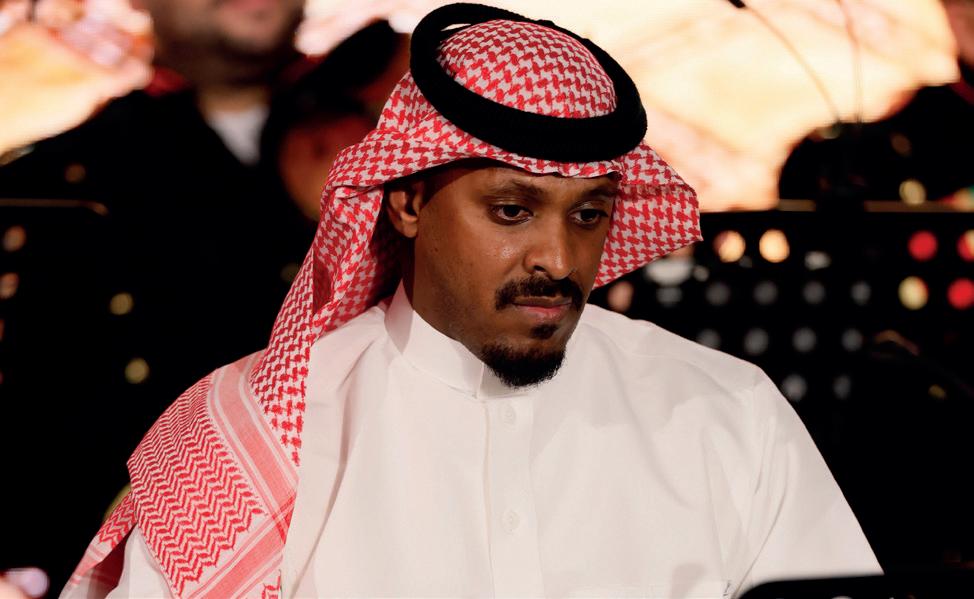
Ali Masoud Asiri, chef d'orchestre saoudien, est reconnu pour sa vision résolument contemporaine du Qanun qu'il associe à la loopstation
Ali Masoud Asiri, a Saudi conductor, is renowned for his distinctly contemporary vision of the qanun, which he combines with a loop station
HAUT
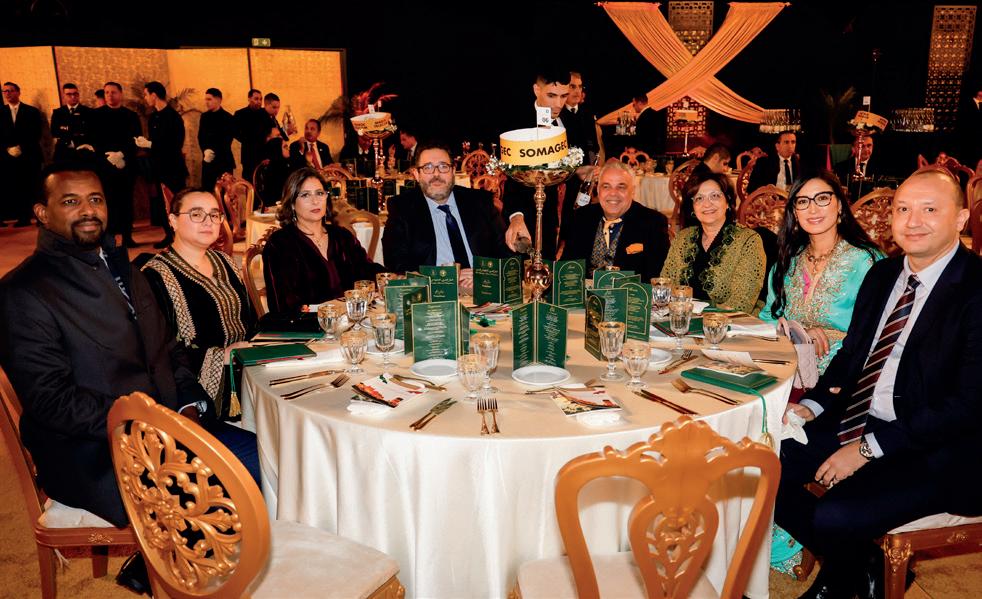
Moment de partage où diplomatie, engagement solidaire et convivialité se rencontrent autour de la table "SOMAGEC"
A moment of shared exchange where diplomacy, solidarity, and conviviality come together around the “SOMAGEC” table.
HAUT
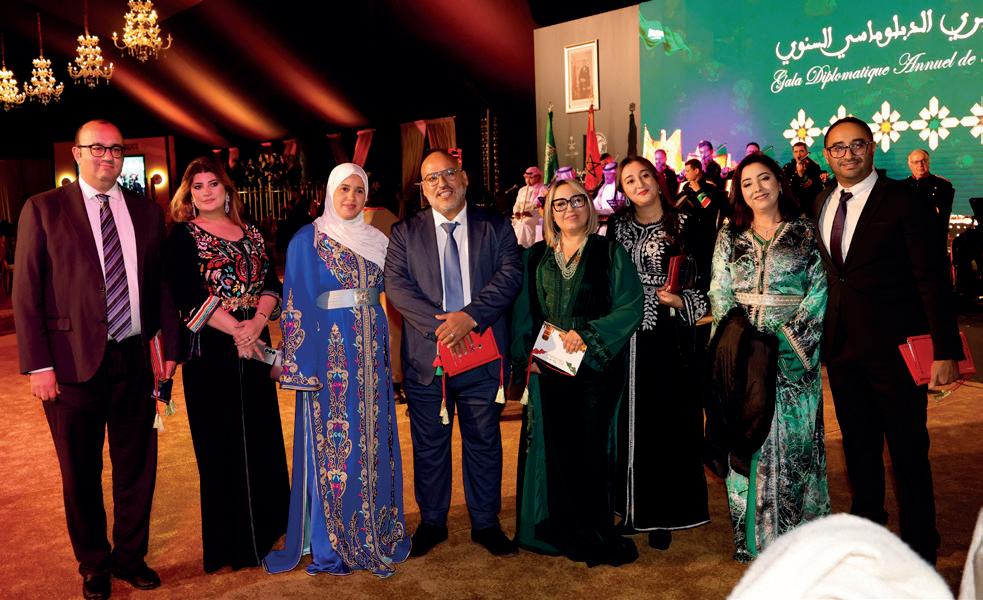
Plusieurs personnalités du corps diplomatique et invités de marque réunis lors de la soirée dans une ambiance chaleureuse et festive
Members of the diplomatic corps and distinguished guests gather during the evening in a warm and festive atmosphere
HAUT
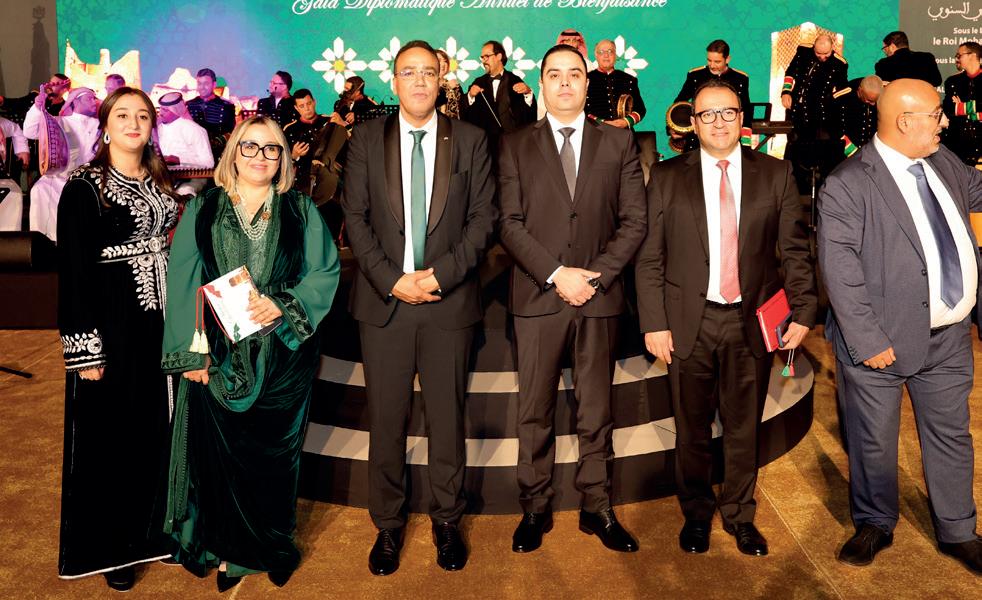
Représentants institutionnels, diplomates et partenaires réunis pour célébrer une soirée placée sous le signe du dialogue et du partenariat
Institutional representatives, diplomats and partners gather to celebrate an evening dedicated to dialogue and partnership
HAUT
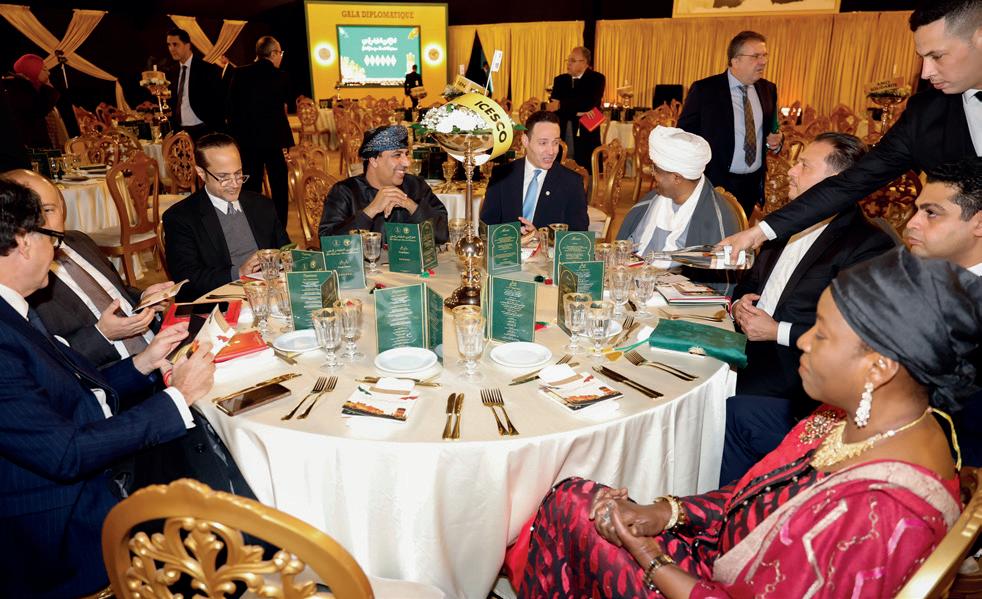
Les invités de l’ICESCO participent activement aux échanges, témoignant de l’importance de la coopération culturelle internationale
ICESCO guests actively participate in discussions, underscoring the importance of international cultural cooperation
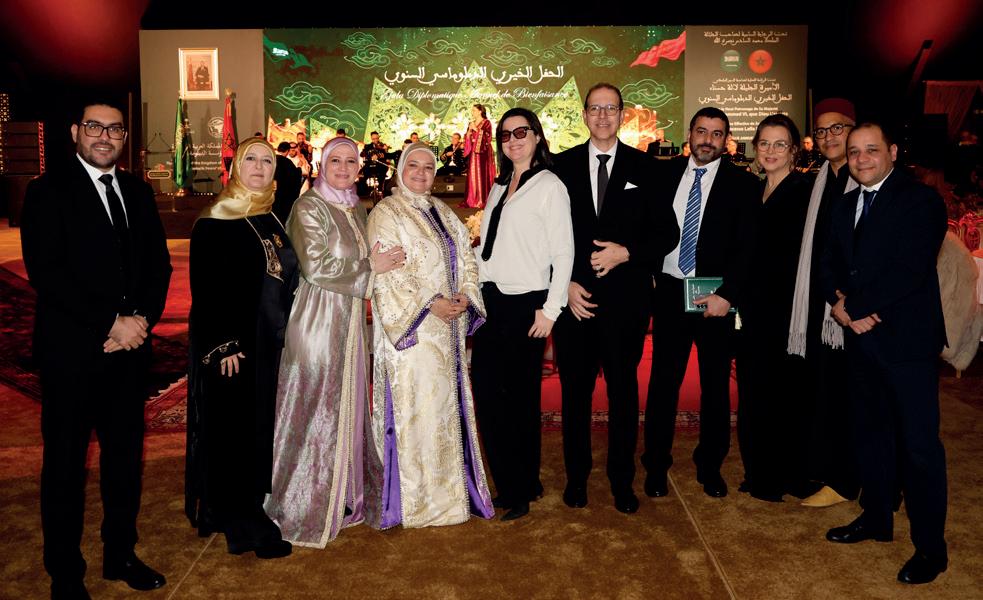
HAUT
Invités et partenaires de l’événement posent pour une photo souvenir, illustrant l’esprit de coopération et d’amitié internationale
Event guests and partners pose for a commemorative photo, reflecting the spirit of cooperation and international friendship
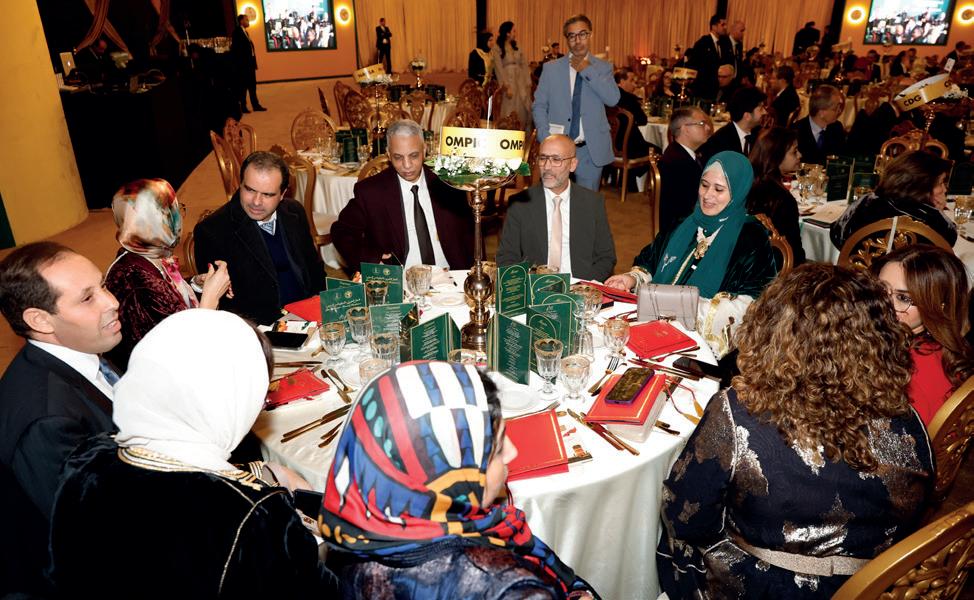
HAUT
Les invités de la table de l’OMPIC réunis pour un moment d’échanges et de convivialité au cours de la soirée
Guests at the OMPIC table gathered for a moment of exchange and conviviality during the evening
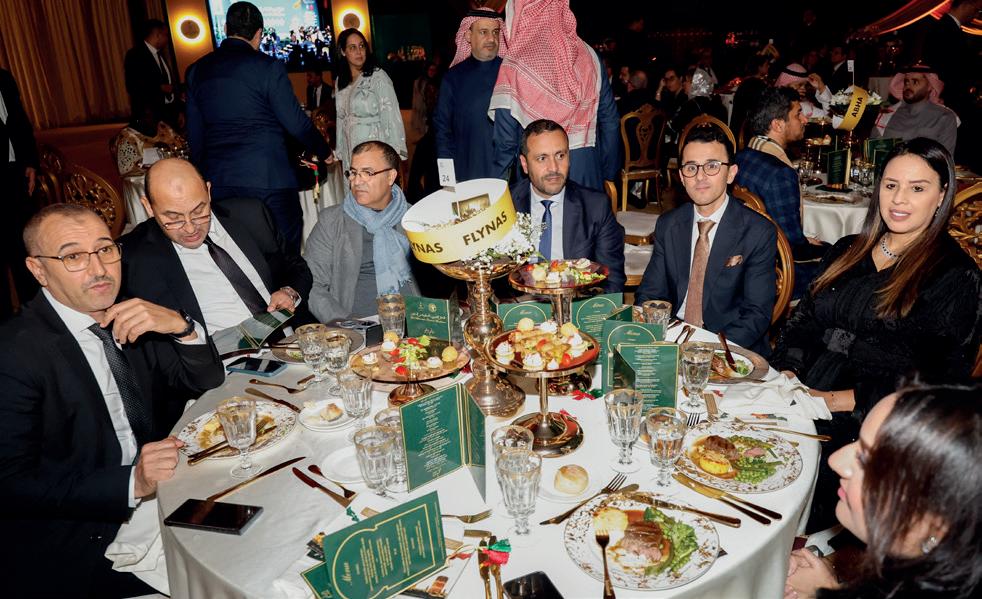
HAUT
Les invités de la compagnie aérienne saoudienne "FLYNAS", témoignant de l’esprit de convivialité et de solidarité qui caractérise cet événement
Guests of the Saudi airline "FLYNAS", reflecting the spirit of conviviality and solidarity that characterizes this event.
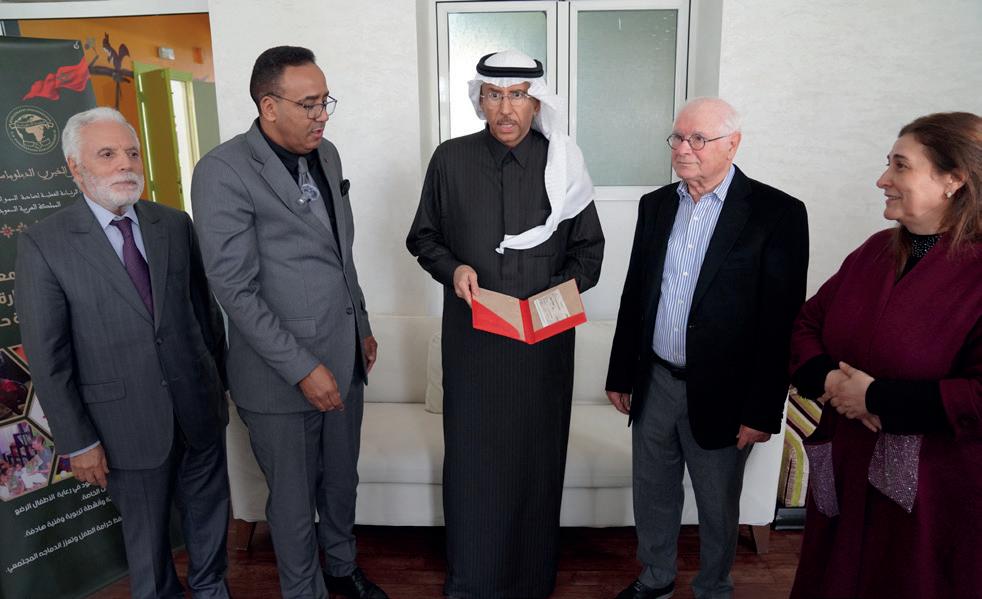
DIPLOMATIC GALA DINNER: PRESENTATION OF A DONATION TO AL-IHSSANE ASSOCIATION
HAUT
L'Ambassadeur d'Arabie Saoudite présente un chèque de soutien aux responsables de l'Association Al-Ihssane, Maison d'Enfants Lalla Hasnaa
The Ambassador of Saudi Arabia presents a support cheque to the officials of the Al-Ihssane Association, Lalla Hasnaa Children’s Home
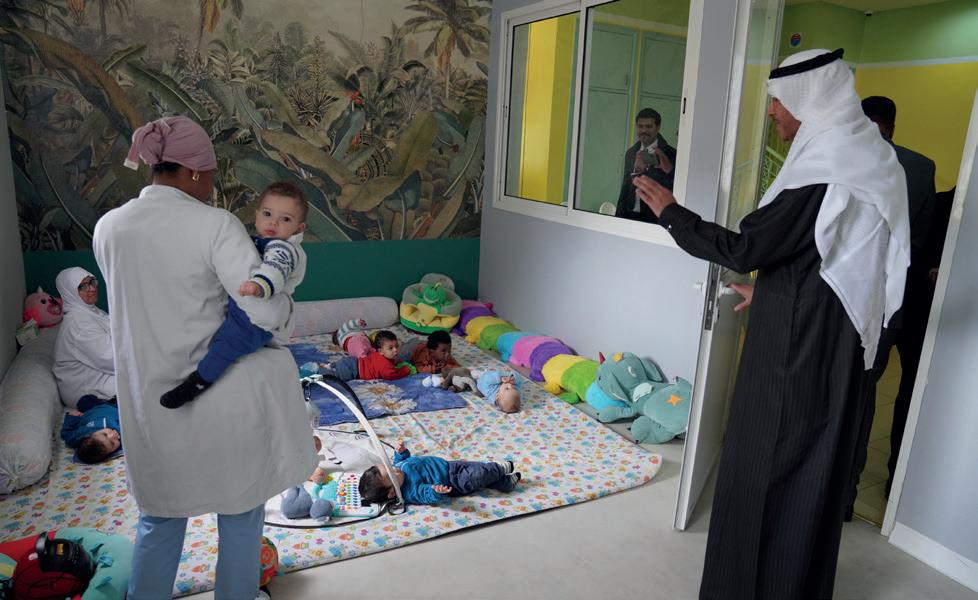
L’Association Al-Ihssane – Maison d’Enfants Lalla Hasnaa a reçu, ce lundi 9 février à Casablanca, un don significatif de la part de la Fondation Diplomatique, en présence de Son Excellence l’Ambassadeur du Royaume d’Arabie Saoudite. Cette contribution s’inscrit dans le cadre du Gala Diplomatique et des engagements humanitaires et solidaires de la Fondation en soutien aux structures sociales œuvrant pour l’enfance vulnérable. Lors de la cérémonie organisée au sein de la Maison d’Enfants, seule structure de la région qui accueille les bébés et enfants privés de famille de la naissance à l’âge de six ans, l’Ambassadeur du Royaume d’Arabie Saoudite a souligné l’importance de la solidarité internationale et de l’action collective en faveur des enfants abandonnés et des plus démunis. Il a salué le travail de l’Association Al-Ihssane et son rôle essentiel dans la prise en charge éducative, sanitaire et affective de ces jeunes pensionnaires. Le Président de la Fondation Diplomatique a, pour sa part, rappelé le partenariat durable entre la Fondation et l’Association Al-Ihssane, qui s’inscrit dans la continuité de soutiens similaires apportés au fil des années à des institutions caritatives œuvrant pour l’enfance au Maroc. Il a exprimé sa gratitude envers le personnel et les bénévoles de la Maison d’Enfants pour leur engagement quotidien auprès des enfants accueillis. À cette occasion, la délégation présente a visité plusieurs espaces de la Maison d’Enfants Lalla Hasnaa, découvrant les installations dédiées aux nourrissons, aux sections pédagogiques ainsi qu’aux activités d’éveil et de soutien psychologique offertes aux enfants. Cette visite a permis de mesurer l’impact concret des contributions financières sur l’amélioration des conditions de vie et d’accueil des pensionnaires.
HAUT
La chanteuse Salma Rachid interprère "Chwayekh Min Ardi Meknes" et "Inta Omri" devant Son Altesse Royal et les convives du Gala Diplomatique
Members of the delegation tour part of the facilities of the Al-Ihssane Association in Casablanca
The Al-Ihssane Association – Lalla Hasnaa Children’s Home received, on Monday, February 9 in Casablanca, a significant donation from the Fondation Diplomatique, in the presence of His Excellency the Ambassador of the Kingdom of Saudi Arabia. This contribution forms part of the Diplomatic Gala and of the Foundation’s humanitarian and solidarity-driven commitments in support of social institutions working for vulnerable children. During the ceremony held at the Children’s Home—the only facility in the region that welcomes babies and children deprived of family care from birth to the age of six—the Ambassador of the Kingdom of Saudi Arabia emphasized the importance of international solidarity and collective action in support of abandoned and underprivileged children. He commended the work of the Al-Ihssane Association and its essential role in providing educational, healthcare, and emotional support to its young residents. For his part, the President of the Fondation Diplomatique recalled the longstanding partnership between the Foundation and the Al-Ihssane Association, which is part of a continued tradition of support extended over the years to charitable institutions working for children in Morocco. He expressed his gratitude to the staff and volunteers of the Children’s Home for their daily commitment to the children in their care. On this occasion, the delegation toured several areas of the Lalla Hasnaa Children’s Home, discovering the facilities dedicated to infants, the educational sections, as well as the early learning and psychological support activities offered to the children. The visit made it possible to assess the tangible impact of financial contributions on improving the living conditions and quality of care provided to the residents.
DIPLOMATIC GALA DINNER: PRESENTATION OF A DONATION TO AMSAT
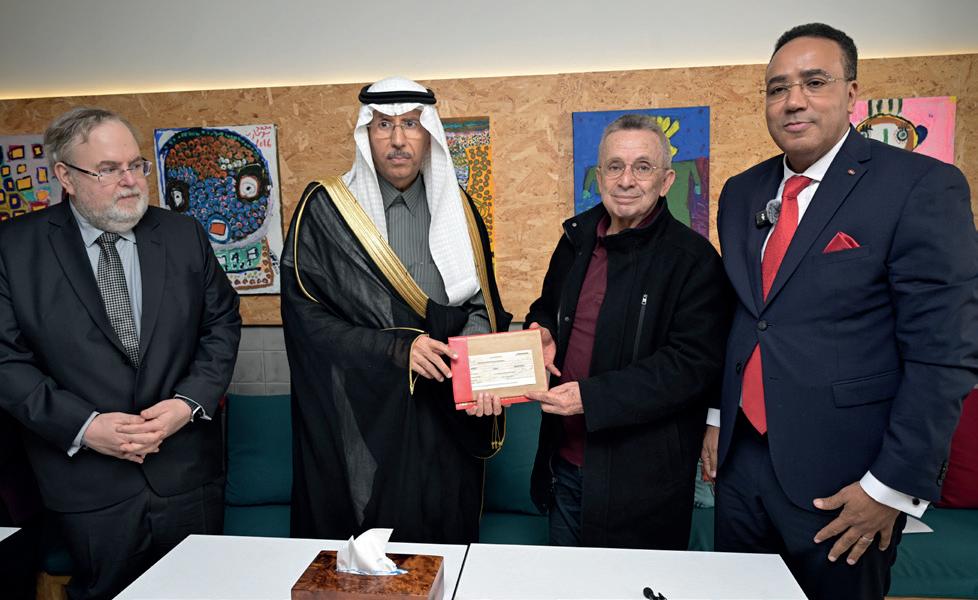
L’Association Marocaine de Soutien aux Personnes Trisomiques a reçu, ce mercredi 18 février, au Centre de prise en charge des personnes trisomiques SAR le Prince Moulay Rachid à Rabat, un soutien financier de la Fondation Diplomatique, en présence de l’Ambassadeur du Royaume d’Arabie Saoudite à Rabat, Dr Sami bin Abdullah Al-Saleh. Ce soutien s’inscrit dans le cadre de la mise en œuvre des retombées de l’initiative humanitaire et solidaire issue du Gala Diplomatique Annuel de Bienfaisance.
À cette occasion, l'Ambassadeur d'Arabie Saoudite, Dr Sami bin Abdullah Al-Saleh a indiqué que cette visite à l’association, qui œuvre en faveur des enfants et des personnes trisomiques, constitue un acte de solidarité sociale, saluant les efforts déployés par l’association à travers l’encadrement de cette catégorie et son engagement à assurer leur éducation et leur formation afin qu’ils deviennent des membres actifs et utiles à la société. Le Président de l’Association Marocaine de Soutien aux Personnes Trisomiques, M. Najib Amour, a affirmé que cette visite représente une reconnaissance du travail accompli par l’association depuis plus de quarante ans, faisant d’elle un modèle dans les domaines de la prise en charge, de l’accompagnement et de l’inclusion des personnes trisomiques. Dans le cadre de cette visite, la délégation diplomatique a effectué une tournée dans les différents espaces du centre, inauguré par Son Altesse Royale le Prince Moulay Rachid en juin 2012, lequel offre des services en matière de rééducation, d’accompagnement psychologique, social et éducatif, ainsi que de formation socio-professionnelle.
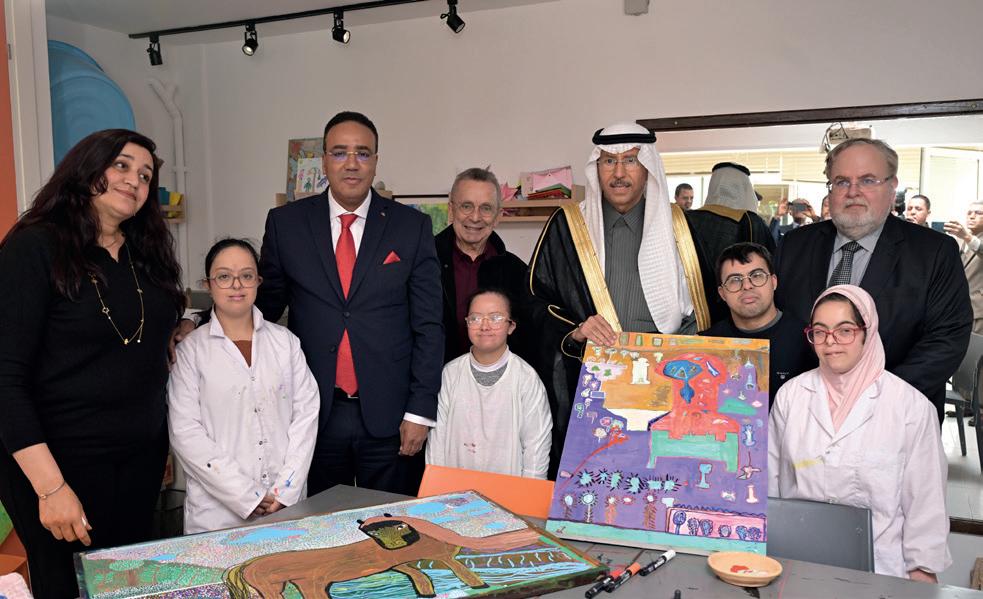
Le Président de l'association présente aux visiteurs les réalisations des jeunes peintres pensionnaires de l'AMSAT
The President of the Association presents to the visitors the artworks created by the young resident painters of AMSAT
The Moroccan Association for the Support of Persons with Down Syndrome received, on Wednesday, 18 February, at the SAR Prince Moulay Rachid Center for the Care of Persons with Down Syndrome in Rabat, a financial contribution from the Diplomatic Foundation, in the presence of the Ambassador of the Kingdom of Saudi Arabia to Rabat, Dr. Sami bin Abdullah Al-Saleh. This support comes as part of the implementation of the humanitarian and solidarity-driven outcomes of the Annual Diplomatic Charity Gala.
On this occasion, the Ambassador of Saudi Arabia, Dr. Sami bin Abdullah Al-Saleh, stated that this visit to the association, which works in support of children and persons with Down syndrome, constitutes an act of social solidarity. He commended the association’s efforts in supervising and supporting this category, as well as its commitment to ensuring their education and training so that they may become active and productive members of society. The President of the Moroccan Association for the Support of Persons with Down Syndrome, Mr. Najib Amour, affirmed that this visit represents recognition of the work carried out by the association for over forty years, making it a model in the fields of care, support, and inclusion of persons with Down syndrome. As part of this visit, the diplomatic delegation toured the various facilities of the center, inaugurated by His Royal Highness Prince Moulay Rachid in June 2012, which provides services in rehabilitation, psychological, social and educational support, as well as socio-professional training.
HAUT
L'Ambassadeur d'Arabie Saoudite remet un chèque de soutien à M. Najib Amour, le Président de l'AMSAT
The Ambassador of Saudi Arabia hands over a support cheque to Mr. Najib Amour, President of AMSAT
LA VISION HUMAINE DE SA MAJESTÉ LE ROI AU COEUR DE LA RÉINSERTION ET DE LA DIPLOMATIE
HIS MAJESTY THE KING’S HUMAN-CENTERED VISION AT THE HEART OF REINTEGRATION AND DIPLOMACY
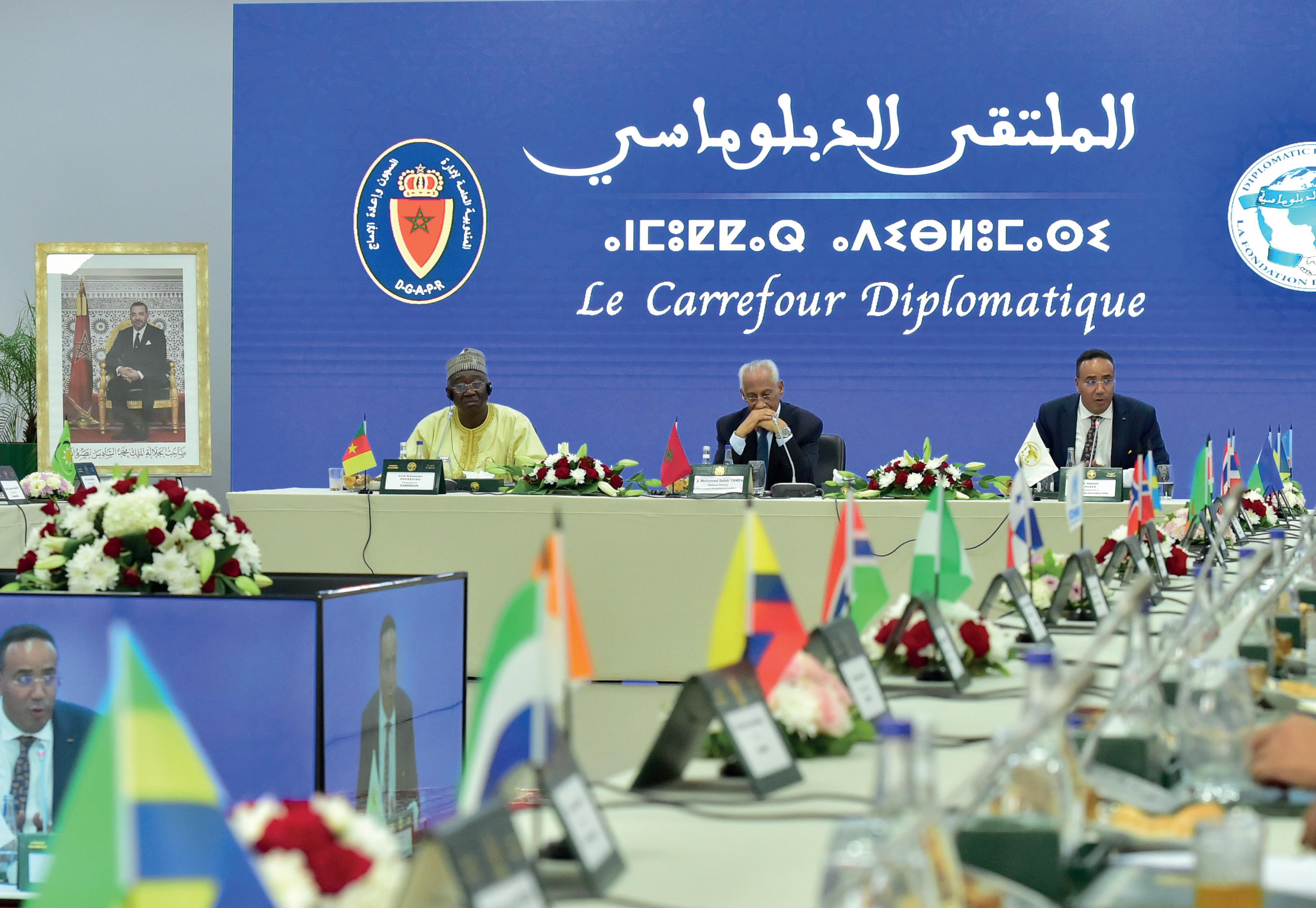
La 148ème édition du Carrefour Diplomatique s’est tenue le 7 octobre 2025 au Centre National de Formation du Personnel Pénitentiaire de Tiflet. M. Mohamed Salah Tamek, Délégué Général de la Délégation Générale à l'Administration Pénitentiaire et à la Réinsertion a mis en lumière les avancées majeures du système pénitentiaire marocain
The 148th edition of the Diplomatic Roundtable was held on 7 October 2025 at the National Training Center for Penitentiary Staff in Tiflet. Mr. Mohamed Salah Tamek, General Delegate of the General Delegation for Prison Administration and Reintegration, highlighted the major advances achieved by the Moroccan penitentiary system
Rendez-vous clé
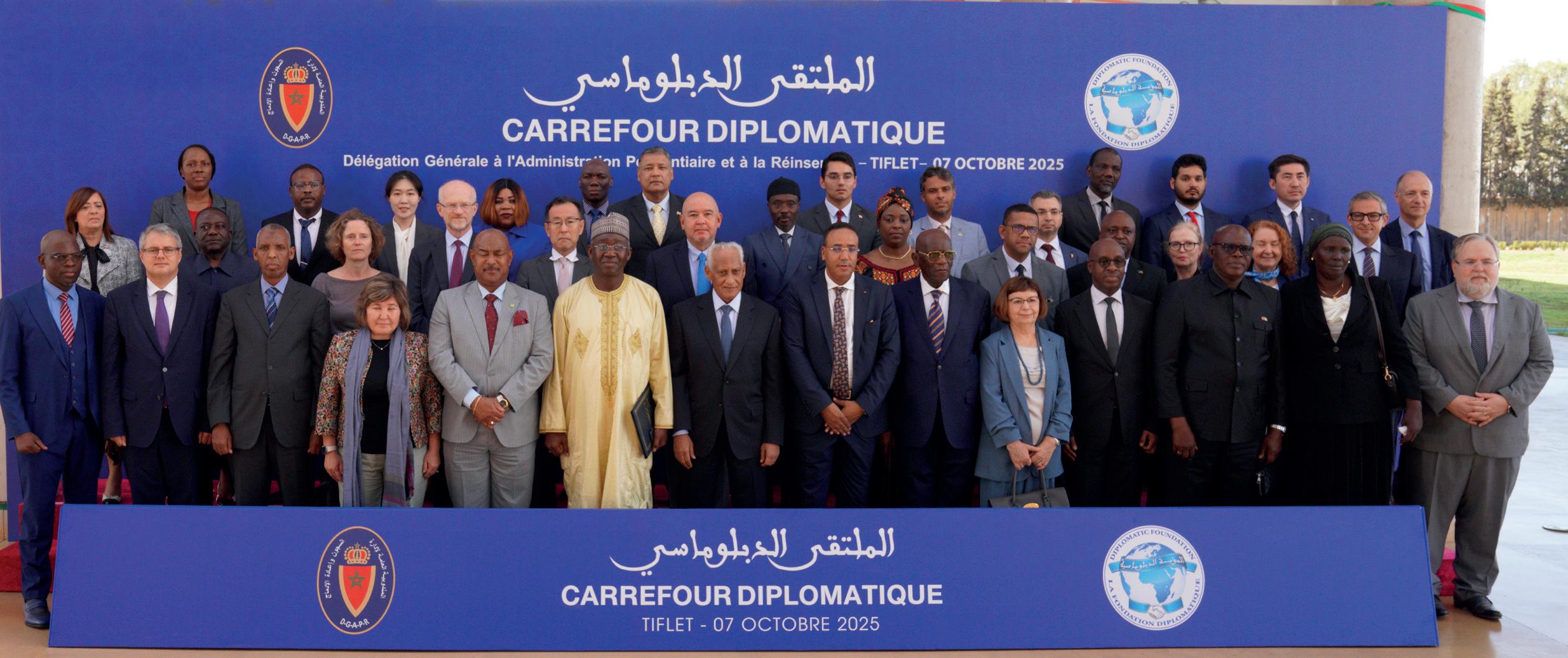
Autour du Délégué Général, M. Mohamed Salah Tamek, et du Président de la Fondation Diplomatique, M. Abdelati Habek, plus de quarante ambassadeurs et représentants d’organisations internationales se sont retrouvés au Centre national de formation des cadres de la DGAPR à Tiflet, véritable laboratoire de la réforme pénitentiaire marocaine.
Ce 148ème Carrefour Diplomatique avait un objectif clair : permettre au corps diplomatique de découvrir l’un des chantiers les plus stratégiques du Maroc contemporain – la modernisation profonde du système pénitentiaire – et de mesurer, sur le terrain, la portée des transformations engagées.
M. Mohamed Salah Tamek, Délégué Général à l’Administration Pénitentiaire et à la Réinsertion, préside la 148ème édition du Carrefour Diplomatique.
Mr. Mohamed Salah Tamek, Director General of the Prison Administration and Reintegration, presides over the 148th edition of the Diplomatic Forum.
Dès l’ouverture de la rencontre, M. Abdelati Habek a rappelé que cette mutation s’inscrit dans la vision éclairée de Sa Majesté le Roi Mohammed VI, que Dieu L’assiste, qui a placé la dignité du détenu, la justice sociale et la réinsertion au rang des priorités nationales. En citant le Discours Royal de 2003, il a souligné que la dimension sociale de la justice ne peut être complète sans la garantie de la dignité humaine pour les citoyens détenus, que les peines privatives de liberté ne doivent pas leur ôter.
Le Président de la Fondation a également rappelé les Hautes Instructions Royales appelant à accélérer la construction de complexes pénitentiaires modernes, civils et agricoles, et à améliorer les conditions matérielles et morales des détenus, en particulier pour les catégories les plus vulnérables.
Cette orientation royale, résolument centrée sur l’humain, a servi de fil conducteur à l’ensemble des réformes engagées au Maroc depuis plus de deux décennies.
Cadre constitutionnel
Cette réforme profonde trouve aussi son ancrage dans la Constitution de 2011, qui consacre une vision renouvelée du rôle et du contrôle des établissements pénitentiaires, fondée sur la protection des droits humains et la dignité des détenus.
Dans ce cadre, la DGAPR déploie un plan stratégique 2022–2026 articulé autour de l’humanisation des conditions de détention, du renforcement de la sécurité, du développe-
Gathered around the General Delegate, Mr Mohamed Salah Tamek, and the President of the Diplomatic Foundation, Mr Abdelati Habek, more than forty ambassadors and representatives of international organisations met at the National Training Centre for DGAPR Staff in Tiflet, a genuine laboratory for Morocco’s prison reform.
This 148th edition of the Carrefour Diplomatique pursued a clear objective: to enable the diplomatic corps to discover one of the most strategic undertakings of contemporary Morocco – the profound modernisation of the prison system – and to assess, on the ground, the scope of the reforms under way.
From the outset of the meeting, Mr Abdelati Habek recalled that this transformation is rooted in the enlightened vision of His Majesty King Mohammed VI, may God Assist Him, who has placed the dignity of detainees, social justice and reintegration among the nation’s foremost priorities. Citing the Royal Speech of 2003, he stressed that the social dimension of justice cannot be complete without guaranteeing human dignity for citizens in detention, a dignity that custodial sentences must not take away from them.
The President of the Foundation also recalled the High Royal Instructions calling for the acceleration of the construction of modern prison complexes, both civil and agricultural, and for an improvement in the material and moral conditions of detainees, par-
ment des programmes de réinsertion, du soutien aux capacités institutionnelles et de l’intégration des dimensions genre et environnement dans la gestion carcérale. L’adoption d’une nouvelle loi sur l’organisation et la gestion des établissements pénitentiaires, ainsi que de la loi sur les peines alternatives, marque une évolution profonde de la politique pénale, désormais fondée sur un équilibre assumé entre impératifs sécuritaires et exigences des droits humains. Diplomatie des valeurs
Pour M. Habek, ce rendez-vous n’était pas un simple exposé technique, mais un moment de « diplomatie des valeurs ». Il s’agissait d’ouvrir un espace d’échange, de transparence et de coopération entre le Maroc et les représentations étrangères, en partageant les choix politiques, juridiques et humains qui structurent la réforme pénitentiaire.
Le Président de la Fondation a mis en avant les programmes pionniers portés par la Haute Sollicitude Royale, tels que « Université en prison » et « Moussalaha », régulièrement salués par les instances onusiennes pour leur dimension humaine, éducative et sécuritaire.
La rencontre visait aussi à ouvrir de nouveaux canaux de coopération et à encourager l’échange de bonnes pratiques avec les pays amis, dans un esprit d’ouverture et de partage. Vision opérationnelle
Prenant la parole à son tour, le Délégué Général, M. Mohamed Salah Tamek, a présenté la vision opérationnelle de la DGAPR. Il a décrit une approche intégrée où se croisent les dimensions juridiques, administratives et de défense des
HAUT
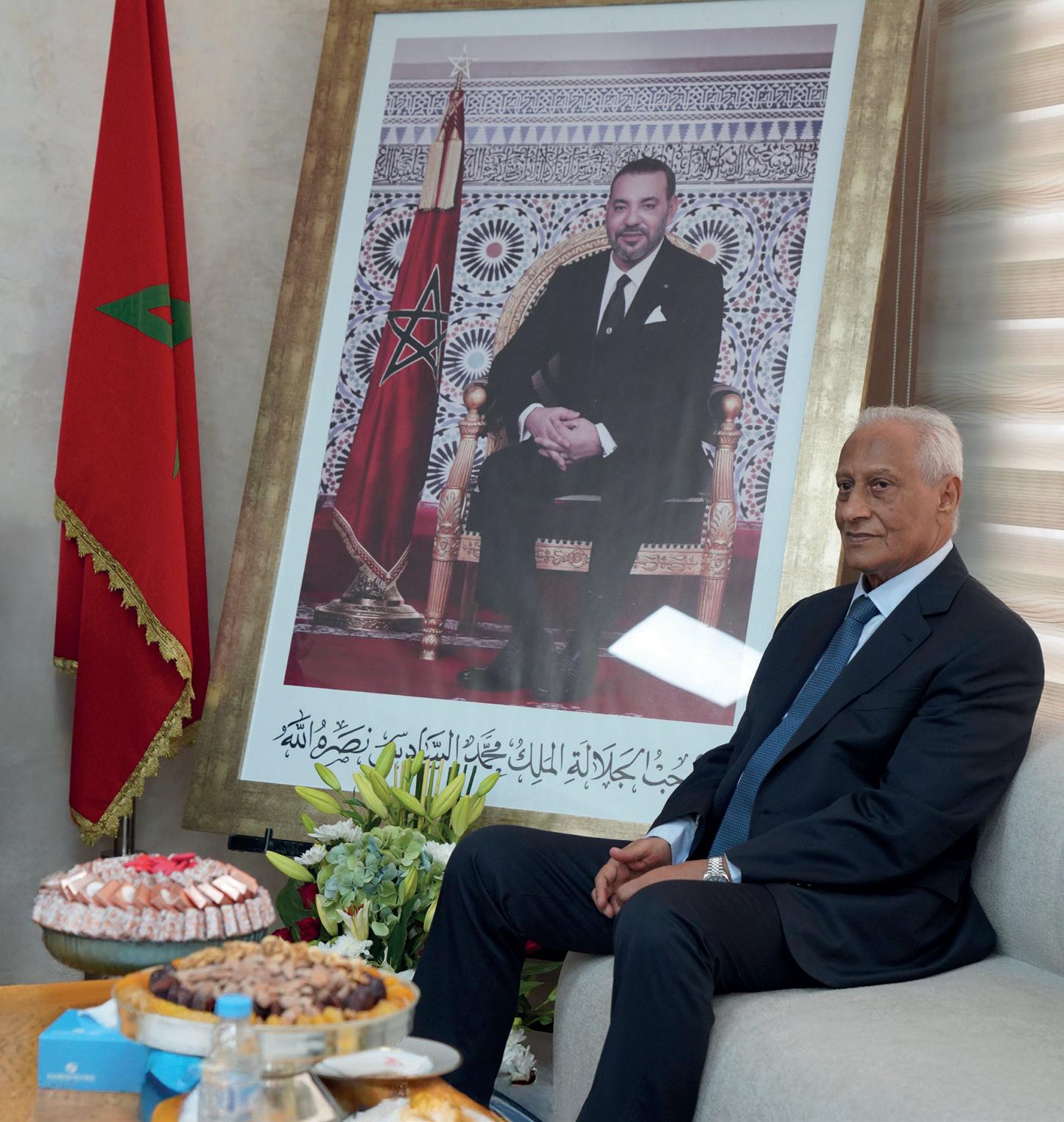
M. Mohamed Salah
Tamek, Délégué
Général à l’Administration Pénitentiaire et à la Réinsertion.
Mr. Mohamed Salah
Tamek, Director
General of the Prison Administration and Reintegration.
droits de l’homme, complétée par des programmes de formation, de réinsertion, de santé et de coopération internationale.
Cette stratégie vise à maintenir la paix sociale, à gérer les établissements pénitentiaires selon une logique préventive et responsable et à garantir une justice pénale plus juste et plus efficace.
La DGAPR s’attache ainsi à préserver la dignité des détenus tout en assurant l’application effective des textes législatifs et réglementaires qui encadrent le système pénitentiaire.
La stratégie nationale 2022–2026, détaillée devant les am-
bassadeurs, repose sur cinq piliers structurants : humanisation des conditions de détention, développement de la réinsertion et de la formation professionnelle, modernisation de la gouvernance et de la sécurité, intégration du genre et de l’environnement dans la gestion carcérale, et renforcement de la sûreté dans les établissements.
M. Tamek a insisté sur le fait que ce plan n’est pas un simple document de cadrage, mais une feuille de route opérationnelle suivie à travers des indicateurs précis : nombre de détenus bénéficiant de programmes éducatifs, taux de participation aux formations professionnelles, évolution de la récidive et impact des nou-
ticularly for the most vulnerable categories.
This Royal orientation, resolutely centred on the human person, has served as the guiding thread for all the reforms undertaken in Morocco for more than two decades.
This far-reaching reform also finds its anchor in the 2011 Constitution, which enshrines a renewed vision of the role and oversight of prison institutions, founded on the protection of human rights and the dignity of detainees.
Within this framework, the DGAPR is implementing a 2022–2026 strategic plan structured around the humanisation of detention conditions, the strengthening of security, the development of reintegration programmes, support for institutional capacities, and the integration of gender and environmental dimensions into prison management. The adoption of a new law on the
organisation and management of prison establishments, together with the law on alternative sentences, marks a profound evolution of criminal policy, now based on a deliberate balance between security imperatives and the requirements of human rights.
For Mr Habek, this gathering was not a mere technical presentation, but a moment of “diplomacy of values”. The aim was to open a space for exchange, transparency and cooperation between Morocco and foreign representations, by sharing the political, legal and human choices that underpin prison reform.
The President of the Foundation highlighted pioneering programmes conducted under the High Royal Patronage, such as “University in Prison” and “Moussalaha”, which are regularly commended by UN bodies for their human, educational and security dimensions.
HAUT
Délégué Général à l’Administration Pénitentiaire et à la Réinsertion entouré des ambassadeurs pour une photo de famille.
Director General of the Prison Administration and Reintegration surrounded by ambassadors for a group photo.
The meeting also sought to open new channels of cooperation and to encourage the exchange of good practices with partner countries, in a spirit of openness and sharing.
Taking the floor in turn, the General Delegate, Mr Mohamed Salah Tamek, presented the operational vision of the DGAPR. He described an integrated approach in which legal, administrative and human-rights dimensions intersect, complemented by training, reintegration, health and international cooperation programmes.
This strategy aims to preserve social peace, to manage prison establishments according to a preventive and responsible logic, and to guarantee a fairer and more effective criminal justice system.
The DGAPR thus endeavours to safeguard the dignity of detainees while ensuring the effective implementation of the
velles peines alternatives.
Le Délégué Général rappelle que la rencontre se poursuit par une immersion au sein de la prison locale Tiflet 2 et du Centre national de formation des cadres. Les ambassadeurs pourront y découvrir les espaces de simulation, les ateliers de formation, les infrastructures pédagogiques et les dispositifs numériques utilisés pour la formation des agents et l’accompagnement des détenus.
Cette immersion met en lumière la volonté du Royaume de placer le détenu au cœur d’une trajectoire de transformation, et non d’exclusion, en combinant encadrement sécuritaire, accompagnement psychologique, offre de formation et préparation à la réinsertion.
Coopération pénitentiaire
Les échanges ont également porté sur l’ampleur de la coopération internationale de la DGAPR. Répondant à une question du doyen du corps diplomatique, l’ambassadeur du Cameroun, M. Tamek a rappelé les partenariats engagés avec l’Union européenne depuis 2018, avec le Conseil de l’Europe depuis 2024, ainsi qu’avec de nombreux pays –États-Unis, Espagne, RoyaumeUni, Pays-Bas, France, Allemagne, Burkina Faso, Sénégal, Rwanda, Kenya, Niger, Mali, République dominicaine, entre autres.
Le Centre de Tiflet accueille régulièrement des formations pour des cadres pénitentiaires africains sur la classification des détenus, la gestion des risques, les droits humains et les pratiques de réinsertion, faisant du Maroc un pôle régional de formation.
La DGAPR demeure ouverte à toutes les nations africaines, ainsi qu’à tout pays souhaitant engager une coopération ou un échange de formation
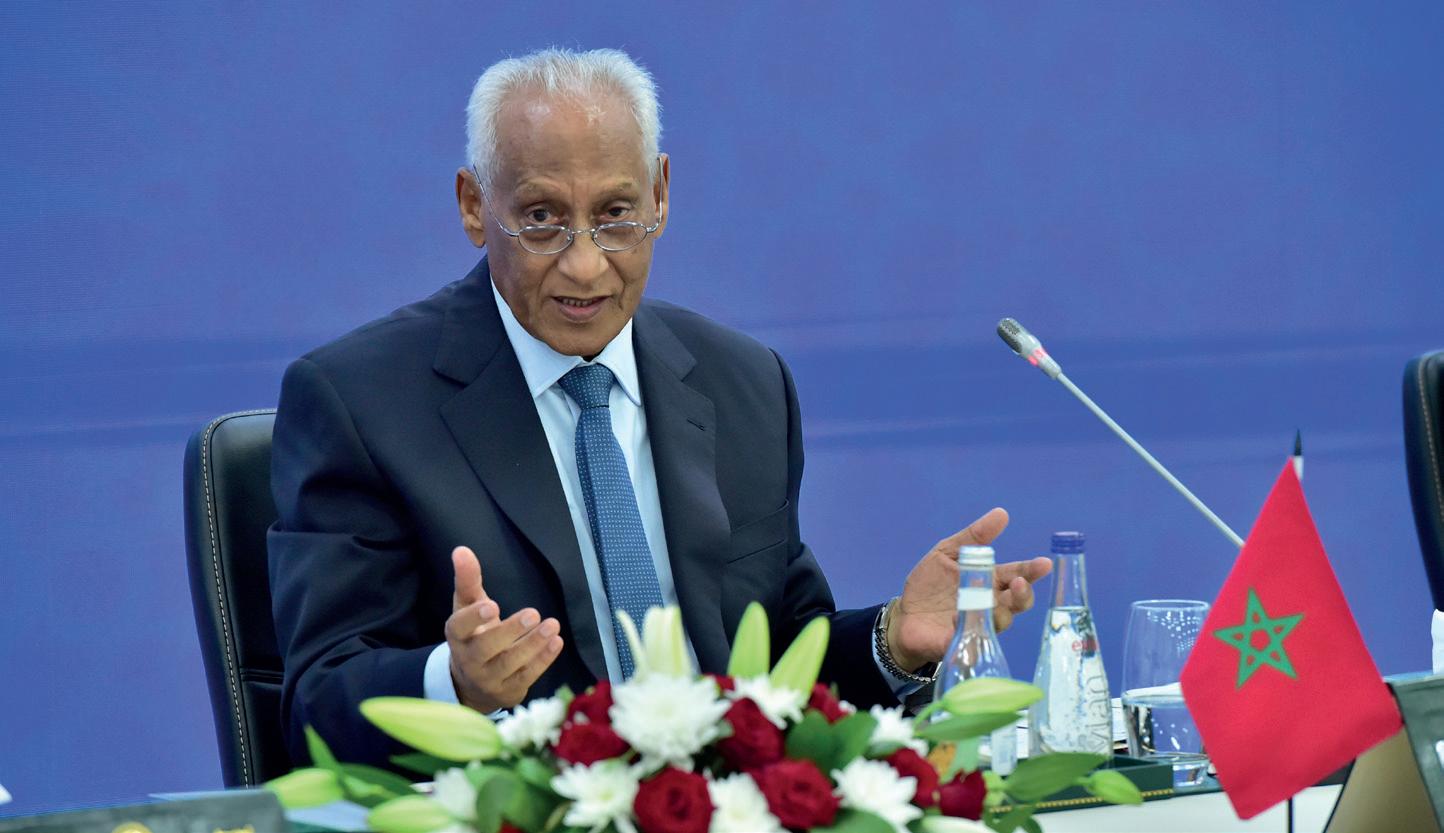
HAUT
M. Mohamed Salah Tamek, Délégué Général à l’Administration Pénitentiaire et à la Réinsertion.
Mr. Mohamed Salah Tamek, Director General of the Prison Administration and Reintegration.
BAS
Son Excellence Mohamadou Youssifou, doyen du corps diplomatique et ambassadeur du Cameroun.
His Excellency Mohamadou Youssifou, Dean of the Diplomatic Corps and Ambassador of Cameroon.
Le Délégué Général a rappelé que 71 nationalités sont aujourd’hui représentées dans les prisons marocaines, avec environ 1 500 détenus étrangers, principalement originaires de pays africains et souvent liés aux phénomènes de migration irrégulière.
Interrogé sur les garanties offertes aux détenus étrangers, M. Tamek a expliqué que ceuxci bénéficient des mêmes
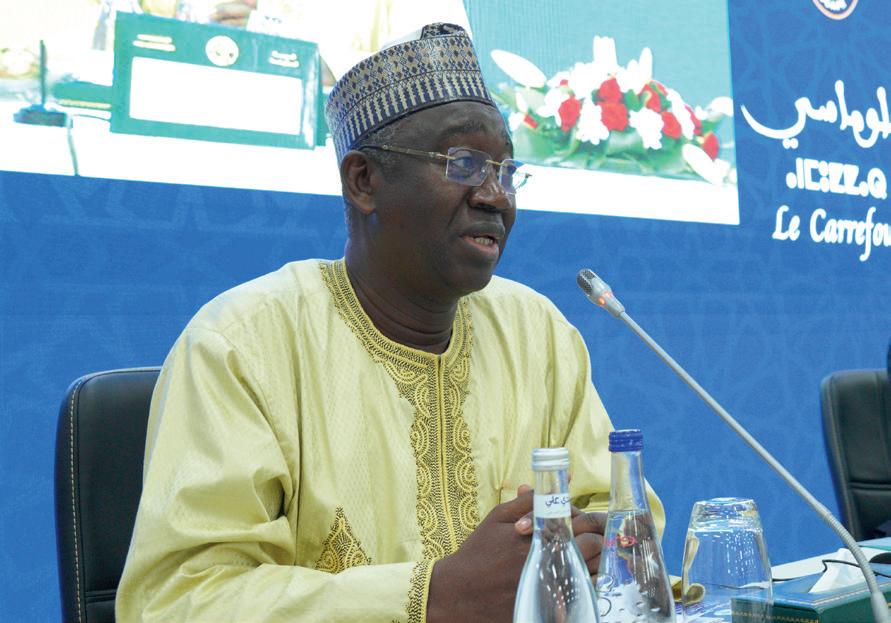
droits que les détenus marocains, avec, dans la mesure du possible, une « discrimination positive » en matière d’hébergement – priorité donnée à l’accès au lit en cas de surpopulation.
Les notifications consulaires sont systématiques dès que la nationalité est établie, sous réserve du consentement du détenu. Des efforts particuliers sont consentis pour surmonter la barrière linguistique, notamment via la présence de personnels francophones et le développement de programmes d’apprentissage du dialecte marocain pour les détenus étrangers.
L’ambassadeur du Kazakhstan, Son Excellence Mme Saulekul Sailaukyzy, a orienté le débat vers la question de la réinsertion durable, en interrogeant le Délégué Général sur les fi -
The DGAPR remains open to all African nations, as well as to any country wishing to engage in cooperation or training exchange.
legislative and regulatory texts governing the prison system.
The national strategy 2022–2026, outlined before the ambassadors, is built around five structuring pillars: the humanisation of detention conditions; the development of reintegration and vocational training; the modernisation of governance and security; the integration of gender and environmental concerns into prison management; and the reinforcement of safety within establishments.
Mr Tamek emphasised that this plan is not a mere framework document, but an operational roadmap monitored through precise indicators: the number of detainees benefiting from educational programmes, the rate of participation in vocational training, trends in reoffending, and the impact of the new alternative sentences.
The General Delegate recalled that the meeting would continue with an immersion visit to the local prison of Tiflet 2 and to the National Training Centre for prison staff. Ambassadors would have the opportunity to discover the simulation areas, training workshops, educational infrastructure and digital tools used to train officers and support detainees.
This immersion highlights the
Kingdom’s determination to place the detainee at the heart of a trajectory of transformation, rather than exclusion, by combining security supervision, psychological support, training opportunities and preparation for reintegration.
Discussions also focused on the scale of the DGAPR’s international cooperation. Responding to a question from the Dean of the Diplomatic Corps, the Ambassador of Cameroon, Mr Tamek recalled partnerships launched with the European Union since 2018, with the Council of Europe since 2024, as well as with numerous countries – the United States, Spain, the United Kingdom, the Netherlands, France, Germany, Burkina Faso, Senegal, Rwanda, Kenya, Niger, Mali, the Dominican Republic, among others.
The Tiflet Centre regularly hosts training sessions for African prison officials on prisoner classification, risk management, human rights and reintegration practices, thereby positioning Morocco as a regional training hub.
The General Delegate further recalled that 71 nationalities are currently represented in Moroccan prisons, with around 1,500 foreign detainees, mainly from African countries and often linked to irregular migration phenomena.
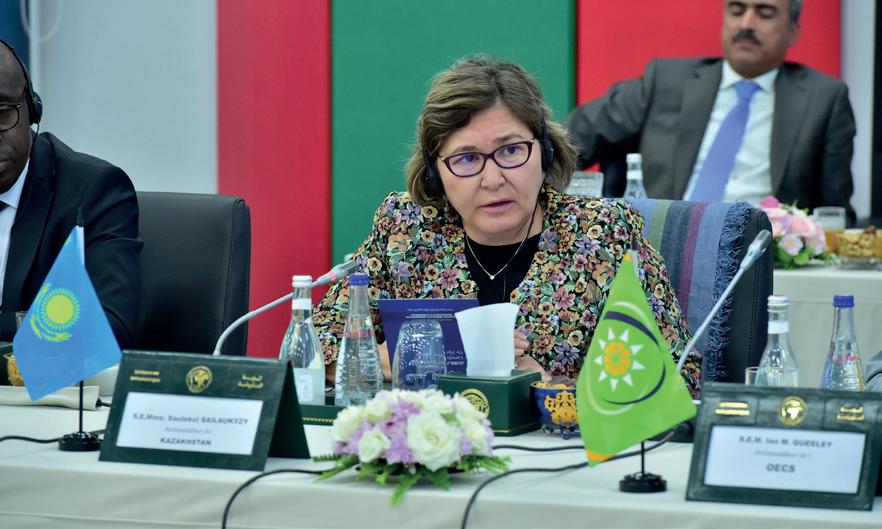
Excellence
Her Excellency Saulekul Sailaukyzy, Ambassador of Kazakhstan.
Asked about the guarantees afforded to foreign detainees, Mr Tamek explained that they enjoy the same rights as Moroccan detainees, with, where possible, a form of “positive discrimination” in terms of accommodation – notably priority access to a bed in situations of overcrowding.
Consular notifications are systematically made as soon as nationality is established, subject to the detainee’s consent. Particular efforts are made to overcome language barriers, notably through the presence of French-speaking staff and the development of programmes to teach the Moroccan dialect to foreign detainees.
The Ambassador of Kazakhstan, Her Excellency Ms Saulekul Sailaukyzy, steered the discussion towards the issue of sustainable reintegration, asking the General Delegate about the training streams offering the best employment
lières offrant les meilleures perspectives d’emploi à la sortie.
M. Tamek a rappelé que plus de soixante filières de formation sont proposées au sein des établissements : artisanat, agriculture, élevage, pêche, plomberie, électricité, mécanique automobile, métiers du numérique, mais aussi formations académiques et universitaires.
L’orientation reste toujours fondée sur le choix du détenu, la motivation étant perçue comme la première condition de réussite. Le principal indicateur d’impact, a-t-il souligné, demeure l’absence de récidive : les détenus quittant la prison avec un métier ou un diplôme reviennent très rarement en détention.
Il a enfin évoqué un dispositif innovant : la privatisation de la restauration pénitentiaire a ouvert une nouvelle voie de réinsertion, les sociétés prestataires formant des détenus aux métiers de la cuisine pour les recruter dès leur libération, assurant ainsi une transition directe vers l’emploi.
Un temps fort de la rencontre a été consacré à la stratégie de lutte contre l’extrémisme violent. Répondant aux questions de l’ambassadeur du Japon, M. Masahiro Nakata, M. Tamek est revenu sur le programme « Moussalaha », présenté comme l’un des modèles les plus aboutis au monde en matière de déradicalisation.
Lors de sa prise de fonctions, plus de 1 200 détenus condamnés pour terrorisme étaient incarcérés au Maroc, dont une partie était mêlée à la population carcérale de
le Maroc a bâti l’une des expériences les plus solides au monde en matière de déradicalisation, et nous sommes prêts à la partager avec tous nos partenaires, dont le Japon.
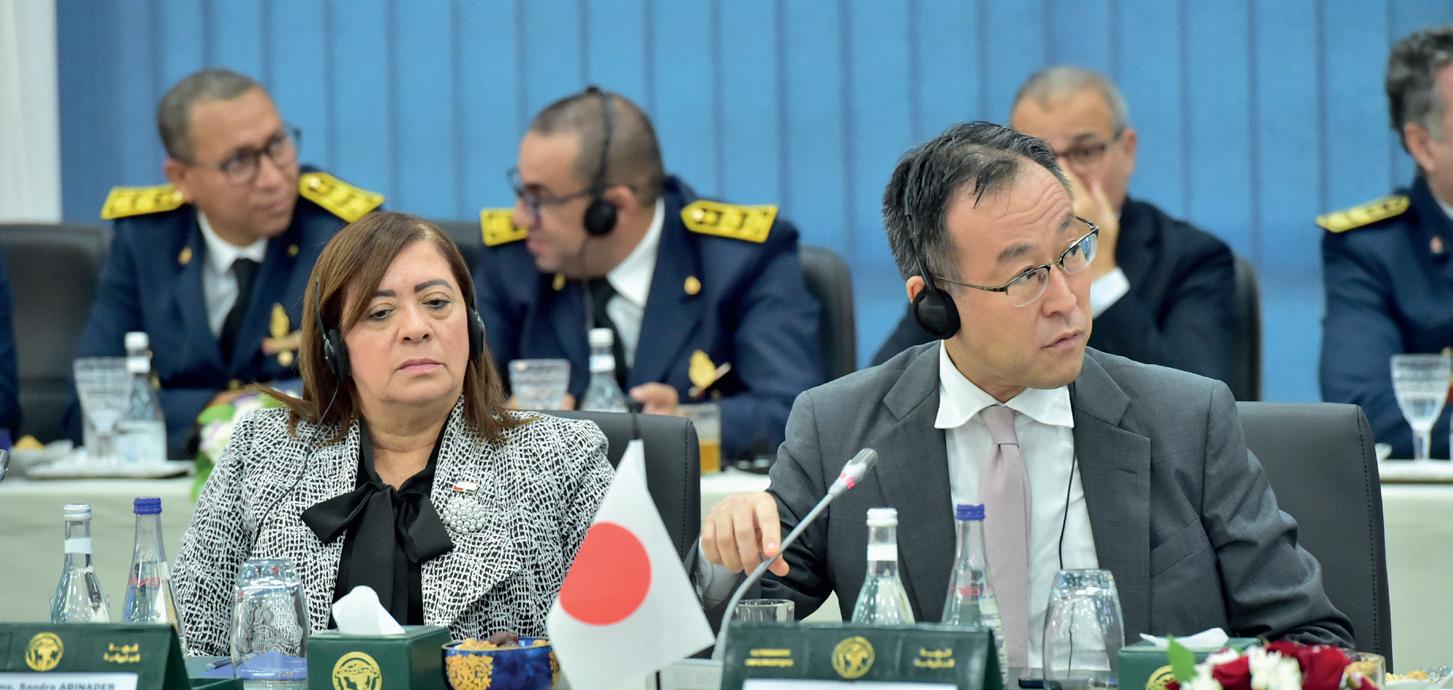
droit commun, avec des cas avérés d’endoctrinement.
Son Excellence Sandra Abinader, Ambassadeur de la République Dominicaine et Son Excellence Masahiro Nakata, ambassadeur du Japon
Her Excellency Sandra Abinader, Ambassador of the Dominican Republic and His Excellency Masahiro Nakata, Ambassador of Japan
La première décision structurante a été de séparer strictement les détenus terroristes des autres et de les classer en trois catégories (A, B, C) selon leur degré de dangerosité et leur capacité de révision.
Le programme « Moussalaha » repose sur un triple axe : réconciliation avec le texte religieux, via un travail doctrinal mené par des théologiens de haut niveau; réconciliation avec soi-même, par un suivi psychologique intensif ; réconciliation avec la société et l’État, par une prise de conscience des crimes commis et un projet socio-économique pour la sortie.
Près de 360 à 380 détenus condamnés pour terrorisme, y compris certains à perpétuité, ont déjà participé à ce programme, dont une large majorité a bénéficié de la grâce royale après avoir démontré une rupture sincère avec
l’idéologie violente.
Peines alternatives
La question des peines alternatives, au cœur de l’actualité pénale marocaine, a suscité un échange nourri avec les ambassadeurs de Norvège et de France.
Mise en œuvre depuis le 22 août, la loi sur les peines alternatives est applicable aux condamnations de cinq ans ou moins, à l’exclusion des crimes tels que le terrorisme, la pédophilie, le trafic de drogue à grande échelle ou la facilitation de l’émigration clandestine.
La procédure peut être initiée par la famille, l’avocat, le directeur de prison, une ONG ou le juge lui-même, mais la décision finale revient au juge de l’application des peines, garant de l’équilibre entre sécurité, réhabilitation et justice. Le panel de mesures inclut le bracelet électronique, les travaux d’intérêt général, l’amende journalière modulée de 110 à
Morocco has built one of the strongest and most robust experiences in the world in the field of deradicalization, and we are ready to share it with all our partners, including Japan.
prospects upon release.
Mr Tamek recalled that more than sixty vocational pathways are offered within the establishments: crafts, agriculture, livestock breeding, fisheries, plumbing, electricity, car mechanics, digital trades, as well as academic and university courses.
Orientation is always based on the detainee’s own choice, as motivation is considered the primary condition for success. The main impact indicator, he stressed, remains the absence of reoffending: detainees who leave prison with a trade or a diploma very rarely return to detention.
He also referred to an innovative scheme: the outsourcing of prison catering has opened a new avenue for reintegration, with service providers training
detainees in culinary professions in order to recruit them upon release, thus ensuring a direct transition to employment.
A highlight of the meeting was devoted to the strategy to combat violent extremism. Responding to questions from the Ambassador of Japan, H.E.
Mr Masahiro Nakata, Mr Tamek revisited the “Moussalaha” programme, presented as one of the most advanced models in the world in terms of deradicalisation.
When he took office, more than 1,200 detainees convicted of terrorism offences were incarcerated in Morocco, some of whom were mixed in with the general prison population, with documented cases of indoctrination.
La rencontre s’est tenue au siège de la DGAPR à Tiflet, en présence d’une trentaine d’ambassadeurs et autres chefs de mission.
The meeting took place at the DGAPR headquarters in Tiflet, in the presence of around thirty ambassadors and other heads of mission.
The first structural decision was to strictly separate terrorist detainees from other inmates and to classify them into three categories (A, B and C) according to their degree of dangerousness and their capacity for revision.
The “Moussalaha” programme is built around a three-fold axis: reconciliation with the religious text, through doctrinal work conducted by leading theologians; reconciliation with oneself, through intensive psychological support; and reconciliation with society and the State, through acknowledgement of the crimes committed and the development of a socio-economic project for release.
Nearly 360 to 380 detainees convicted of terrorism, including some serving life sentences, have already taken part in this programme, and a large majority have benefited from Royal Pardon after demonstrating a genuine break with violent ideology.
The issue of alternative sentences, which lies at the heart
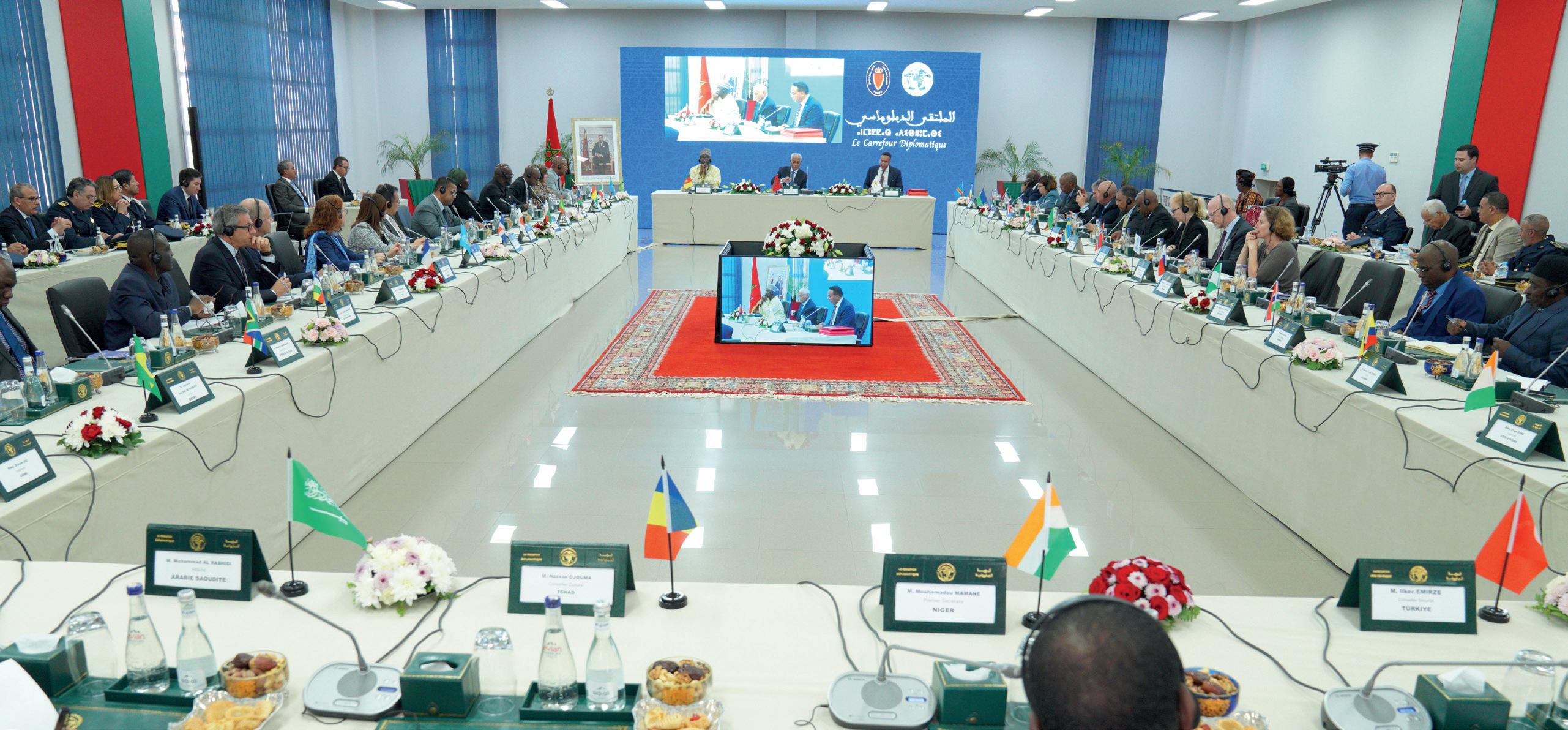
2 000 dirhams selon les capacités financières, les obligations de pointage périodique ainsi que l’intégration dans des programmes de soins pour addictions.
Le parquet peut s’opposer à une décision et interjeter appel, ce qui permet de tester le dispositif dans un esprit de prudence et d’apprentissage progressif.
Pour rendre ces mesures opérationnelles, la DGAPR a mis en place une direction spécifiquement dédiée aux peines alternatives, dotée de 280 fonctionnaires répartis entre le siège et 56 établissements relevant de tribunaux habilités. M. Tamek a reconnu que cette phase de démarrage ne couvre pas encore tous les besoins et annoncé un plan de recrutement de 4 000 agents supplémentaires à terme, dont 1 020 dès l’année prochaine.
Une plateforme numérique dédiée permet déjà de tracer et de superviser les bénéficiaires, ainsi que de coordonner les échanges avec les autorités judiciaires et les partenaires internationaux, y compris pour les dossiers de détenus binationaux suivis en étroite coopération avec les ambassades.
Mme Ilaria Carnevali, représentante du PNUD au Maroc, a salué la vision de la DGAPR, centrée sur l’humanisation des prisons et la réinsertion des détenus, en rappelant un partenariat engagé depuis 2016. Elle a notamment cité des projets innovants dans les domaines de la prévention, de l’éducation, de la formation professionnelle et de la digitalisation, ainsi qu’une initiative
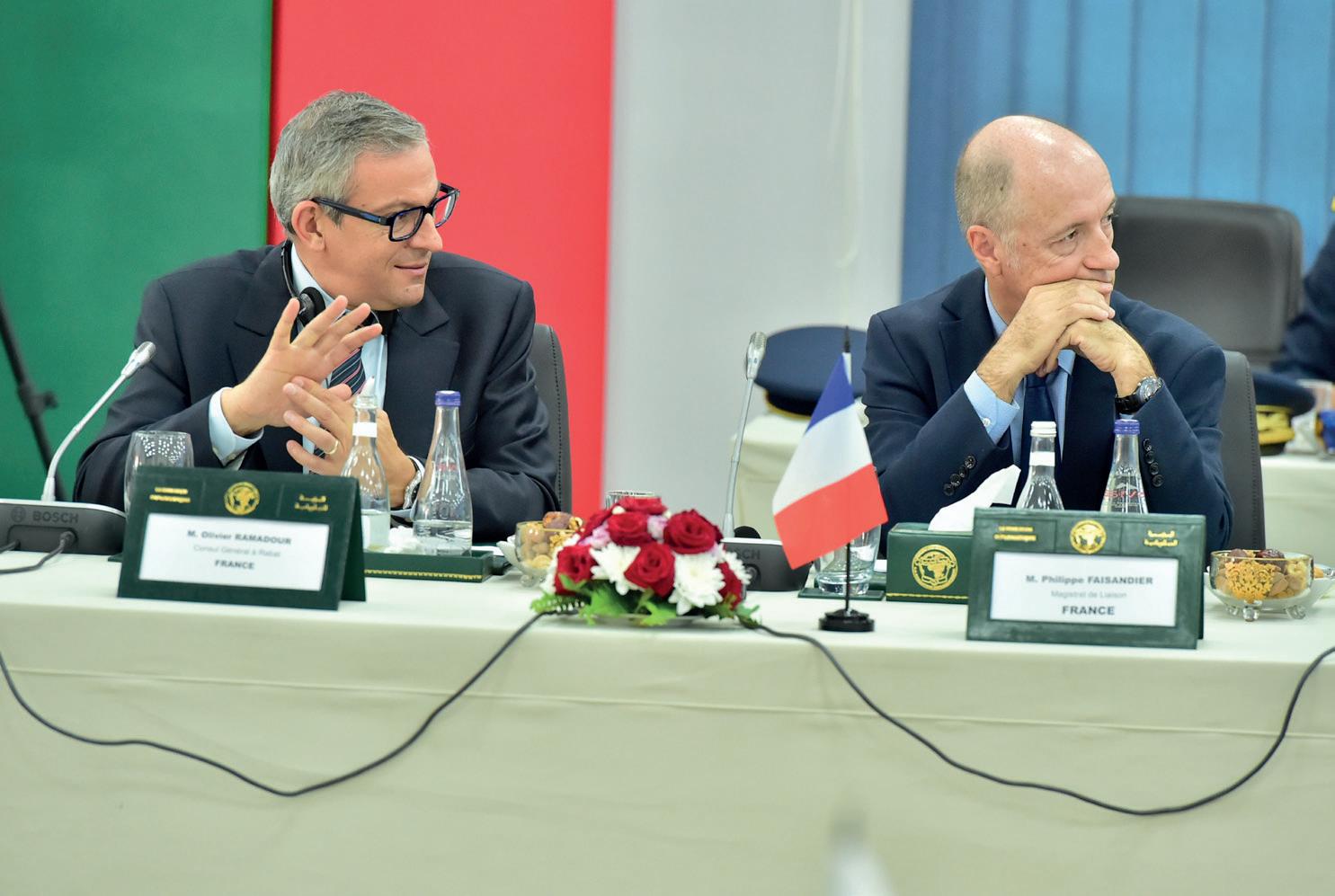
HAUT
M.Philippe Faisandier, Magistrat de Liaison de France à Rabat, et M. Olivier Ramadour, Consul général de France à Rabat.
Mr Philippe Faisandier, Liaison Magistrate of France in Rabat, and Mr. Olivier Ramadour, Consul General of France in Rabat.
BAS
Les Ambassadeurs écoutant attentivement l’intervention de M. Tamek
Ambassadors listening attentively to Mr. Tamek’s speech.
financée par le Japon pour renforcer la prévention de la récidive chez les jeunes.
En réponse, M. Tamek a mis en avant l’importance de l’innovation et de la créativité au sein de ses équipes pour rompre avec la monotonie et affronter la complexité du secteur. Il a cité, entre autres, la création d’une imprimerie moderne au sein de la prison de Kénitra, financée en grande partie par le Japon, qui permet désormais de produire en interne l’essentiel des supports imprimés de l’administration pénitentiaire.
Surpopulation carcérale
Interrogé par le Secrétaire Général de la Fondation Diplomatique sur les perspectives d’avenir, le Délégué Général a identifié la gestion de la surpopulation carcérale comme le défi majeur des prochaines années.
Il a rappelé que, malgré la présence de 71 nationalités et de 1 500 détenus étrangers, leur éventuel transfert ne suffirait pas à résoudre le problème structurel de surpopulation.
La DGAPR mise donc sur une combinaison de leviers : développement des peines alterna-
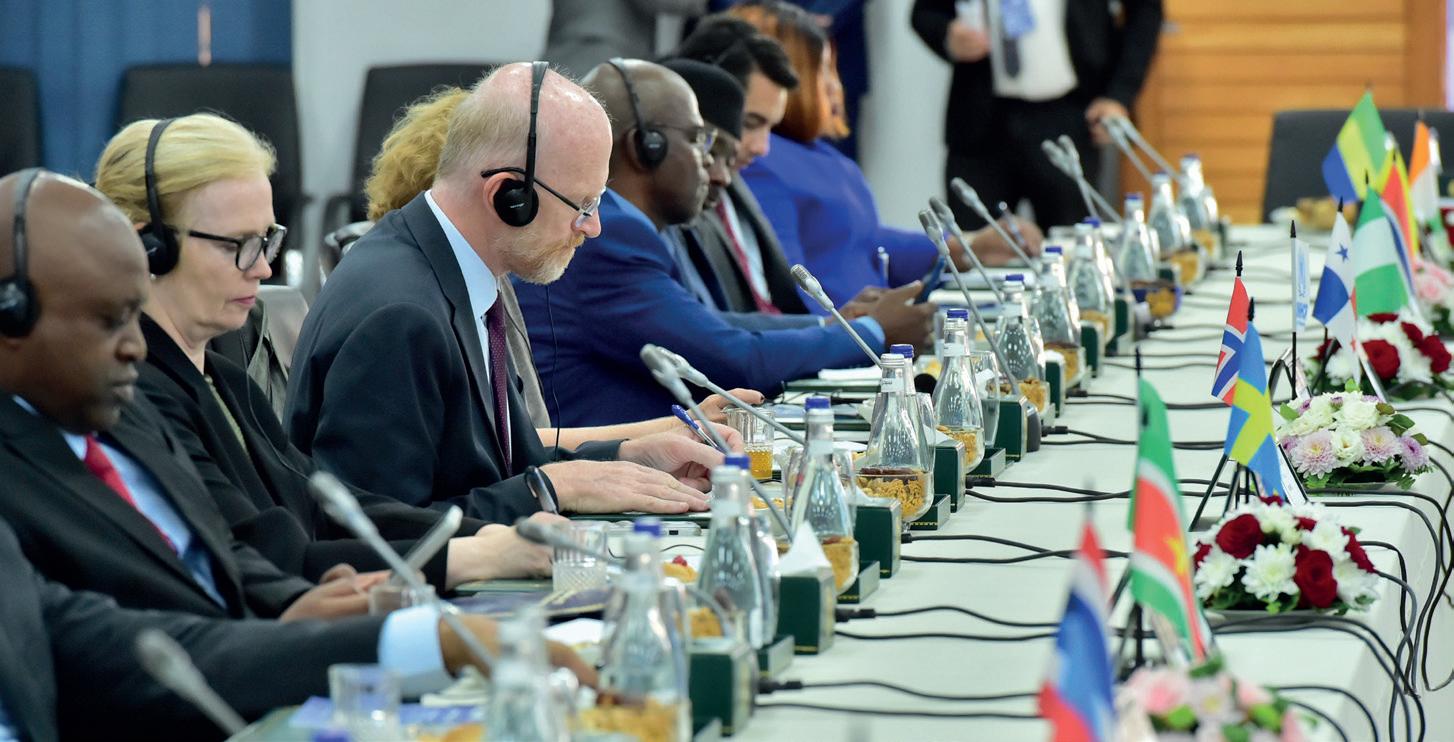
of current criminal policy debates in Morocco, gave rise to a rich exchange with the Ambassadors of Norway and France.
Implemented since 22 August, the law on alternative sentences applies to convictions of five years or less, excluding crimes such as terrorism, paedophilia, large-scale drug trafficking or the facilitation of irregular migration.
The procedure may be initiated by the family, the lawyer, the prison governor, an NGO or the judge, but the final decision rests with the judge responsible for the enforcement of sentences, the guarantor of the balance between security, rehabilitation and justice. The range of measures includes electronic tagging, community service, a daily fine scaled between 110 and 2,000 dirhams according to financial capacity, periodic reporting obligations and enrolment in treatment programmes for addictions.
The public prosecutor’s office may oppose a decision and lodge an appeal, which allows the scheme to be tested in a spirit of prudence and gradual learning.
To make these measures oper ational, the DGAPR has set up a directorate specifically dedi cated to alternative sentences, staffed with 280 civil servants divided between headquarters and 56 establishments under the jurisdiction of competent courts. Mr Tamek acknowl edged that this initial phase does not yet cover all needs and announced a plan to re cruit 4,000 additional officers in the long term, including 1,020 as early as next year.
A dedicated digital platform al
ready makes it possible to track and supervise beneficiaries and to coordinate exchanges with judicial authorities and international partners, including in cases involving dual-nationals, which are managed in close cooperation with embassies.
Ms Ilaria Carnevali, UNDP Resident Representative in Morocco, commended the DGAPR’s vision, centred on the humanisation of prisons and the reintegration of detainees, recalling a partnership initiated in 2016. She referred in particular to innovative projects in the fields of prevention, education, vocational training and digitalisation, as well as to a Japan-funded initiative to strengthen the prevention of reoffending among young people.
In response, Mr Tamek stressed the importance of innovation and creativity within his teams to break with routine and address the complexity of the sector. He cited, among other examples, the creation of a modern printing house within Kenitra prison, largely financed
BAS
Ambassadeurs et représentants d’Organisations Internationales au 148ème Carrefour Diplomatique.
Ambassadors and representatives of International Organizations at the 148th
the prison administration to produce most of its printed materials in-house.
Questioned by the Secretary-General of the Diplomatic Foundation on future prospects, the General Delegate identified the management of prison overcrowding as the major challenge for the years to come.
He recalled that, despite the presence of 71 nationalities and 1,500 foreign detainees, any potential transfers would not suffice to resolve the structural problem of overcrowding.
The DGAPR is therefore relying on a combination of levers: the development of alternative sentences, the construction of new establishments, the reconfiguration of existing facilities to create training spaces and reduce the highest occupancy rates, as well as a rationalisation of sentencing practices, with a call to move beyond a culture of uniform severity towards a more humane gradation of penalties.
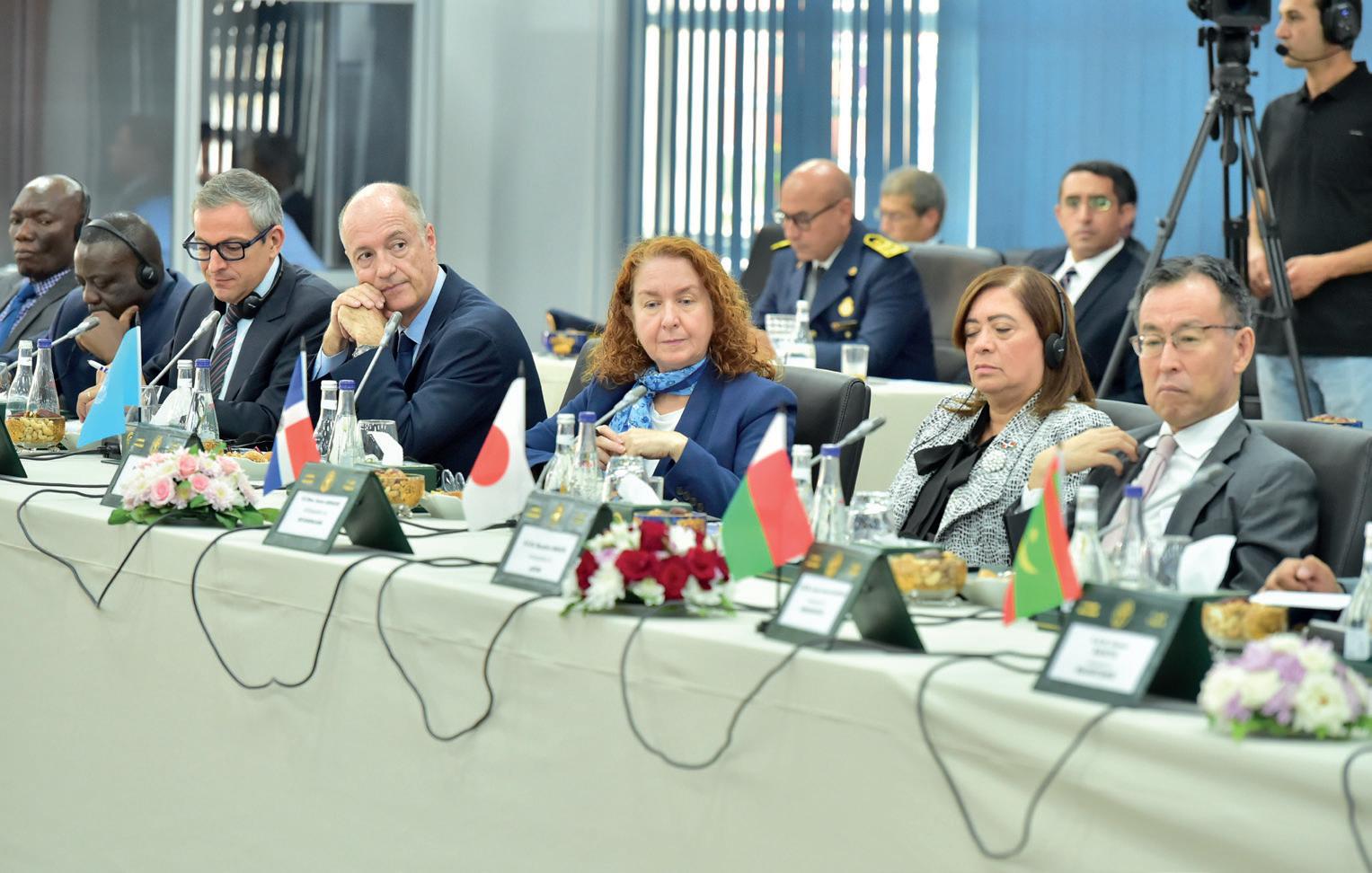
tives, construction de nouveaux établissements, réaménagement des structures existantes pour créer des espaces de formation et diminuer les taux d’occupation les plus élevés, ainsi que rationalisation des condamnations, en invitant à dépasser une culture de la sévérité uniforme au profit d’une gradation plus humaine des peines.
Femmes détenues
Un autre axe fort de la présentation a porté sur la prise en charge des femmes détenues, sujet souvent invisible mais pourtant essentiel pour comprendre l’évolution du système pénitentiaire marocain.
La DGAPR a souligné la vulnérabilité particulière de ce public, souvent confronté à la précarité sociale, à la maternité et à la rupture familiale. Les établissements féminins s’efforcent de devenir des espaces de protection, de formation et de reconstruction personnelle, en proposant des formations qualifiantes en artisanat, couture, cuisine ou compétences numériques, conçues non comme de simples activités occupationnelles mais comme de véritables outils de reconquête de l’autonomie économique.
Sur le plan psychologique, un effort important est consacré au maintien du lien familial, en particulier lorsque la détenue est mère. Des séances de médiation, des rencontres encadrées et des programmes pilotes de soutien psychologique mère-enfant contribuent à limiter les ruptures affectives et à préparer la réinsertion dans un environnement plus stable.
Cette politique s’inscrit pleinement dans le plan stratégique 2022–2026, qui intègre la di-
Si nous ne trouvons pas chaque jour quelque chose de nouveau à créer, nous sommes perdus : la monotonie, c’est l’inertie.
BAS
M. Mohamed Salah Tamek, intervenant sur la question des peines alternatives
Mr. Mohamed Salah Tamek, speaking on the issue of alternative sentences
mension du genre dans la gestion des établissements pénitentiaires.
Les premiers résultats sont jugés encourageants, avec un taux de récidive particulièrement bas parmi les femmes ayant bénéficié de ces programmes.
Modèle en construction
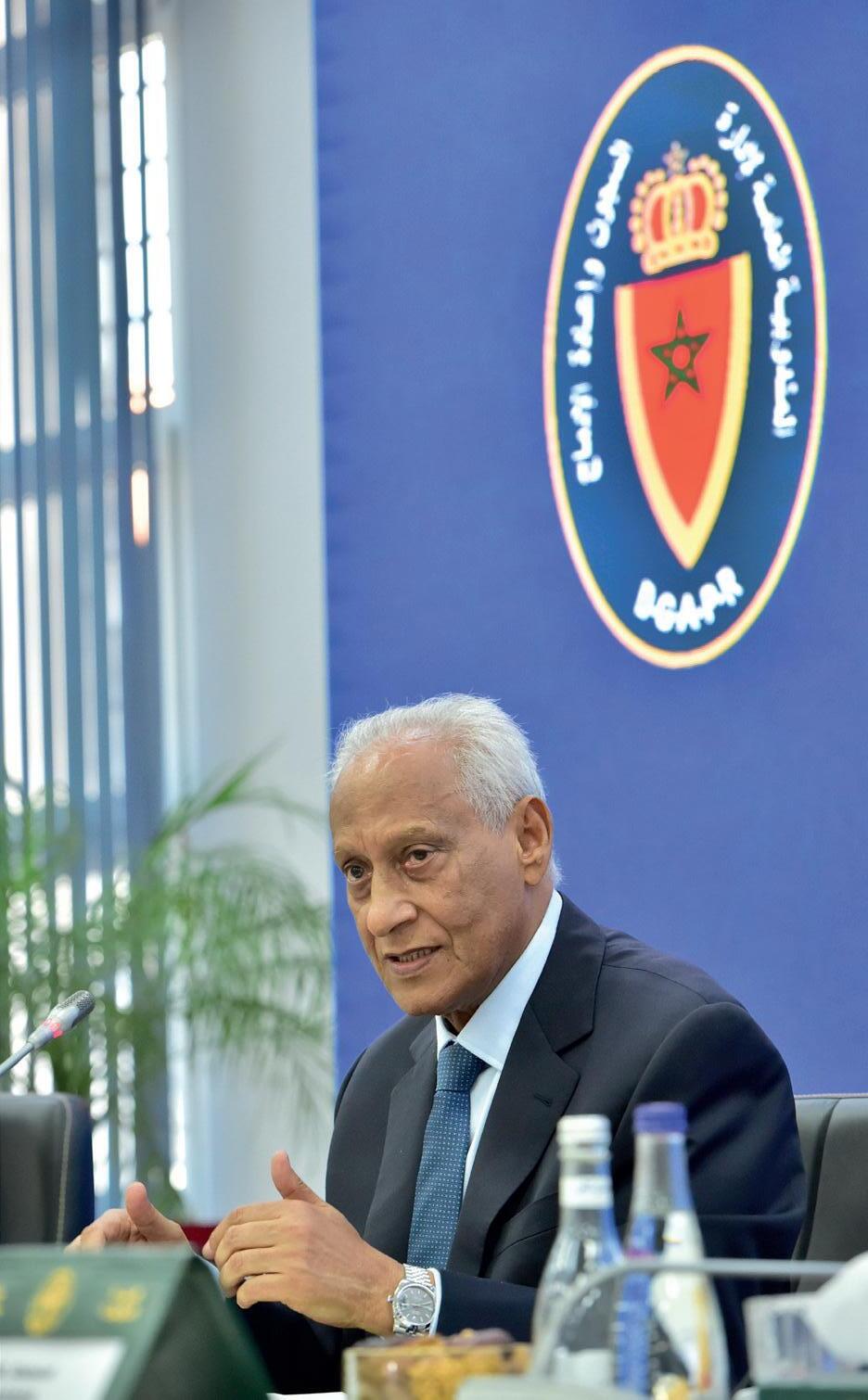
Au terme de cette édition du Carrefour Diplomatique, un constat s’impose : loin d’être une simple opération de communication, la rencontre a servi de plateforme de travail et de dialogue structuré entre la DGAPR, le corps diplomatique et les partenaires internationaux.
Les échanges ont permis de valoriser l’expérience marocaine, de partager les bonnes pratiques, d’identifier de nouveaux champs de coopération – formation, peines alternatives, déradicalisation, prise en charge des femmes, droits des détenus étrangers – et de confirmer la place du Maroc comme référence régionale en matière de gouvernance pénitentiaire moderne, humaniste et tournée vers la réinsertion.
En plaçant la dignité humaine au cœur de la réforme, tout en assumant les impératifs de sécurité, le Maroc dessine progressivement un modèle de justice pénale plus équilibré, où la peine n’exclut ni la seconde chance ni l’espoir d’un retour durable dans la société.
Another major focus of the presentation concerned the treatment of women detainees, an issue that often remains invisible, yet is essential to understanding the evolution of the Moroccan prison system.
The DGAPR underlined the particular vulnerability of this population, often faced with social precariousness, motherhood and family breakdown. Women’s establishments strive to become spaces of protection, training and personal reconstruction, offering qualifying courses in crafts, sewing, cooking or digital skills, conceived not as mere occupational activities, but as genuine tools to regain economic autonomy.
On the psychological level, considerable efforts are made to maintain family ties, particularly when the detainee is a mother. Mediation sessions, supervised visits and pilot mother-and-child support programmes help to limit emotional rupture and to prepare for reintegration into a more stable environment.
This policy is fully in line with the 2022–2026 strategic plan, which incorporates gender as a key dimension in the management of prison establishments.
The initial results are considered encouraging, with a particularly low reoffending rate among women who have benefited from these programmes.
At the close of this edition of the Carrefour Diplomatique, one conclusion clearly emerged: far from being a mere communication exercise,
If we do not find something new to create each day, we are lost: monotony is inertia.
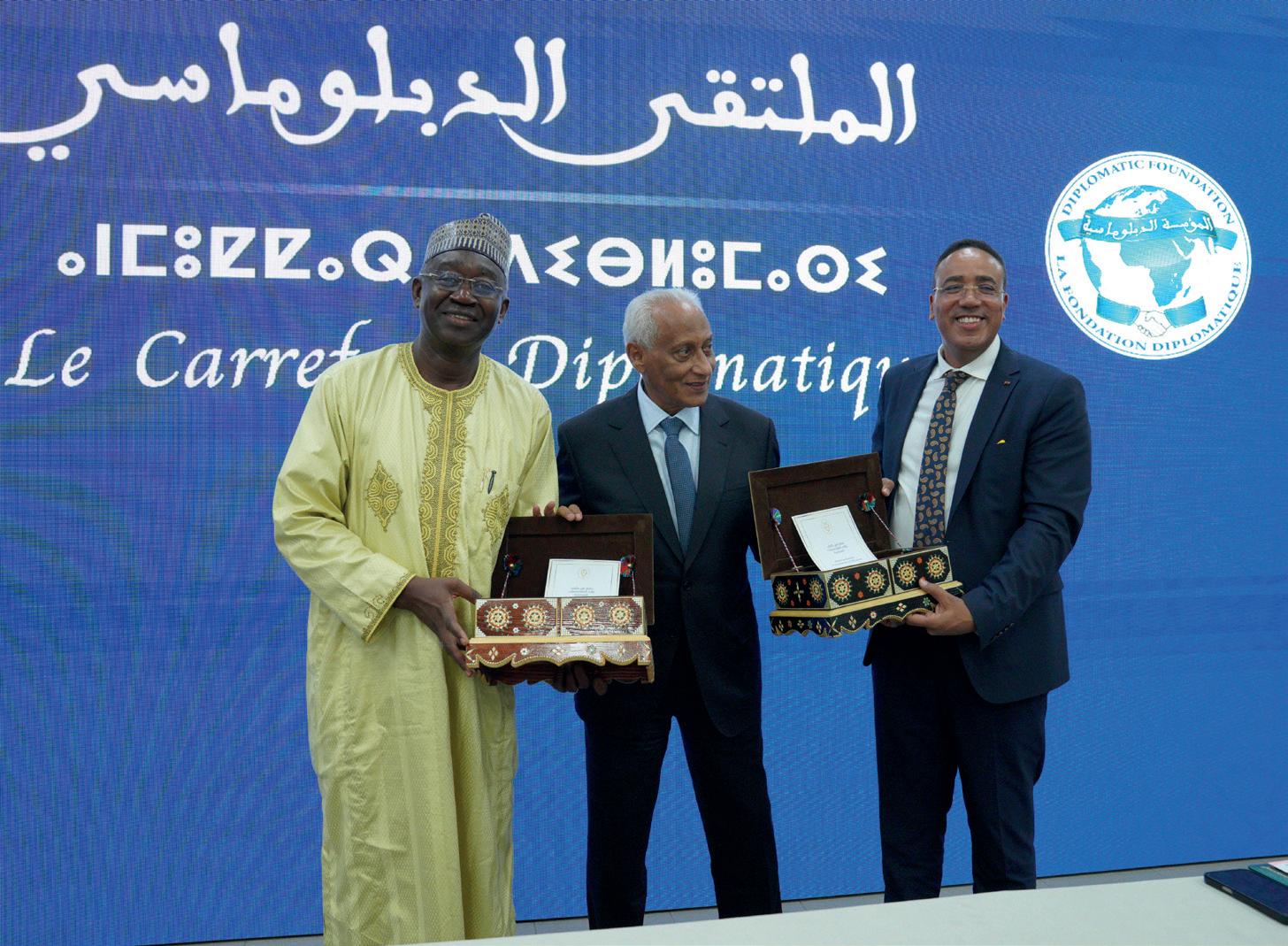
the meeting served as a working platform and a structured dialogue between the DGAPR, the diplomatic corps and international partners.
The exchanges helped to highlight Morocco’s experience, to share good practices, to identify new areas for cooperation –training, alternative sentences, deradicalisation, the treatment of women detainees, the rights of foreign detainees – and to confirm Morocco’s position as a regional reference in modern, human-centred and reintegration-oriented prison governance.
By placing human dignity at the heart of reform, while fully assuming security imperatives, Morocco is progressively shaping a more balanced model of
HAUT
M. Mohamed Salah Tamek, Délégué Général, remet les souvenirs symboliques de remerciement à Son Excellence Mohamadou Youssifou, doyen du corps diplomatique et ambassadeur du Cameroun, et à M. Habek Abdelati, président de la Fondation Diplomatique
Mr. Mohamed Salah Tamek, Director General, presents symbolic souvenirs of appreciation to His Excellency Mohamadou Youssifou, Dean of the Diplomatic Corps and Ambassador of Cameroon, and Mr. Habek Abdelati, President of the Diplomatic Foundation
criminal justice, in which punishment does not exclude either a second chance or the hope of a lasting return to society.
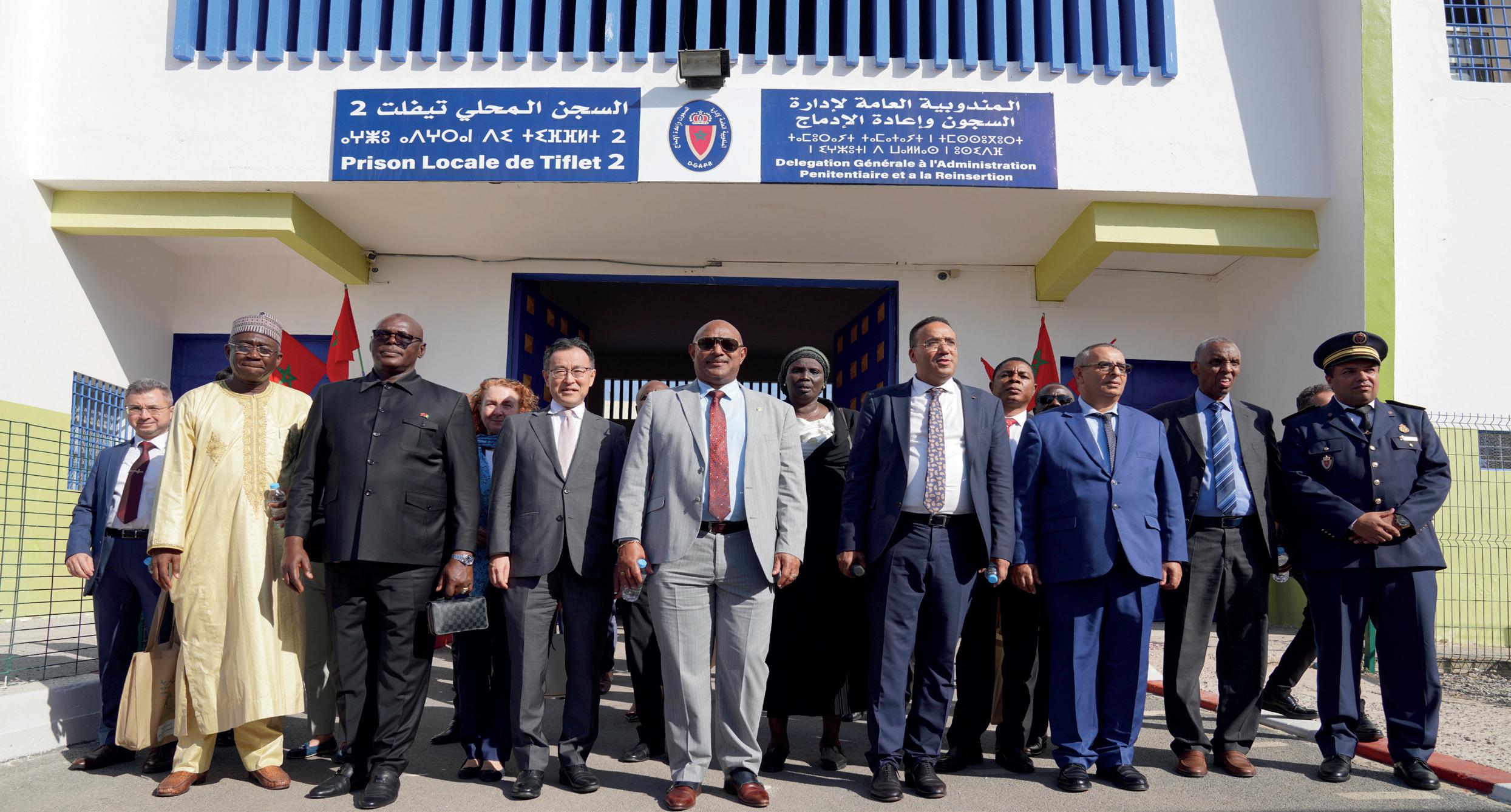
NATIONAL TRAINING CENTRE FOR PENITENTIARY STAFF
Lemardi 7 octobre 2025, une délégation d’Ambassadeurs et de représentants d’une trentaine de pays a effectué une visite approfondie à la Prison locale de Tiflet 2 ainsi qu’au Centre National de Formation des Cadres de la DGAPR. Organisée par la Délégation Générale à l’Administration Pénitentiaire et à la Réinsertion, en partenariat avec la Fondation Diplomatique, cette initiative s’inscrit dans la dynamique nationale de modernisation du système pénitentiaire et d’humanisation des conditions de détention, conformément aux Hautes Orientations Royales.
Dès leur arrivée à la Prison de Tiflet 2, les Ambassadeurs ont été conduits à travers les différents espaces de l’établissement, où ils ont pu prendre la mesure des efforts déployés pour transformer le milieu carcéral en un lieu où sécurité, dignité et accompagnement coexistent. Les exposés introductifs ont mis en lumière les dispositifs de soins médicaux, les procédures de restauration, l’organisation des visites familiales, la gestion des plaintes, ainsi que les programmes de réinsertion menés en coordination avec les institutions nationales spécialisées. La délégation a aussi découvert les installations de la cuisine
OnTuesday, 7 October 2025, a delegation of Ambassadors and representatives from around thirty countries undertook an in-depth visit to Tiflet 2 Local Prison and to the DGAPR’s National Training Centre for Penitentiary Staff. Organized by the General Delegation for Prison Administration and Reintegration, in partnership with the Diplomatic Foundation, this initiative forms part of the national momentum to modernize the penitentiary system and to promote more humane conditions of detention, in accordance with the High Royal Guidelines.
Upon their arrival at Tiflet 2 Prison, the Ambassadors were guided through the various areas of the facility, where they were able to appreciate the efforts deployed to transform the penitentiary environment into a space where security, dignity, and support coexist. Introductory briefings highlighted the medical care system, food-service procedures, arrangements for family visits, the management of inmates’ complaints, as well
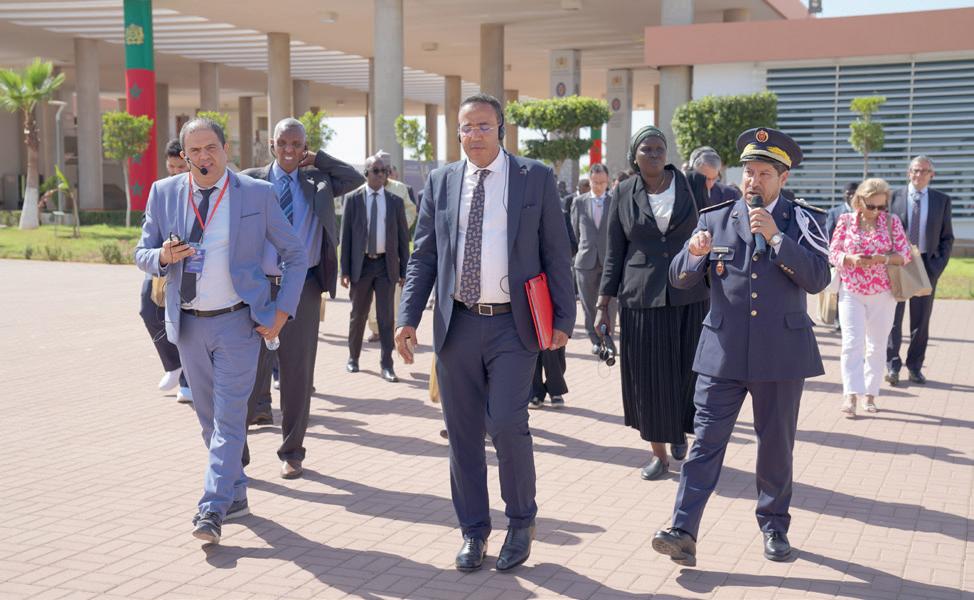
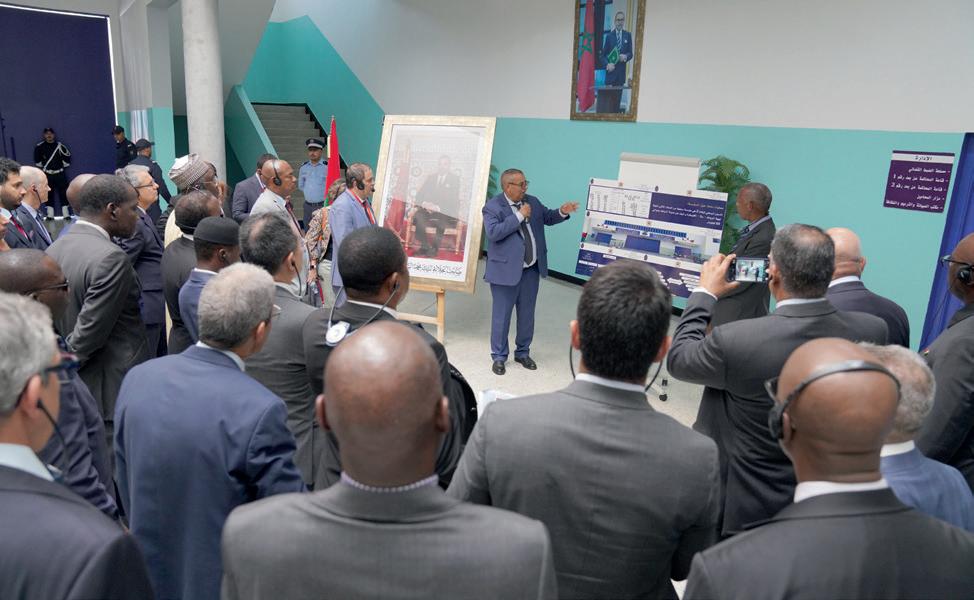
HAUT
Ouverture de la visite : le directeur du CNFC présente le centre de formation aux Ambassadeurs et au Président de la Fondation Diplomatique
Opening of the visit: the Director of the CNFC presents the training center to the Ambassadors and the President of the Diplomatic Foundation
centrale, le centre de formation professionnelle réalisé en partenariat avec l’OFPPT, le quartier des femmes et les espaces dédiés aux activités sportives et culturelles, qui participent à structurer le quotidien des détenus.
Lors de cette visite, les Ambassadeurs ont pu échanger directement avec des détenus engagés dans des programmes scolaires et de remise à niveau. Beaucoup d’entre eux n’avaient pas achevé leur scolarité secondaire et bénéficient désormais d’un accompagnement pédagogique régulier afin d’améliorer leurs compétences de base, de renouer avec un parcours d’apprentissage et d’envisager des perspectives nouvelles pour leur réinsertion.
Les diplomates ont également rencontré des détenus inscrits dans des programmes de formation professionnelle, notamment en électricité, en tapisserie et dans d’autres
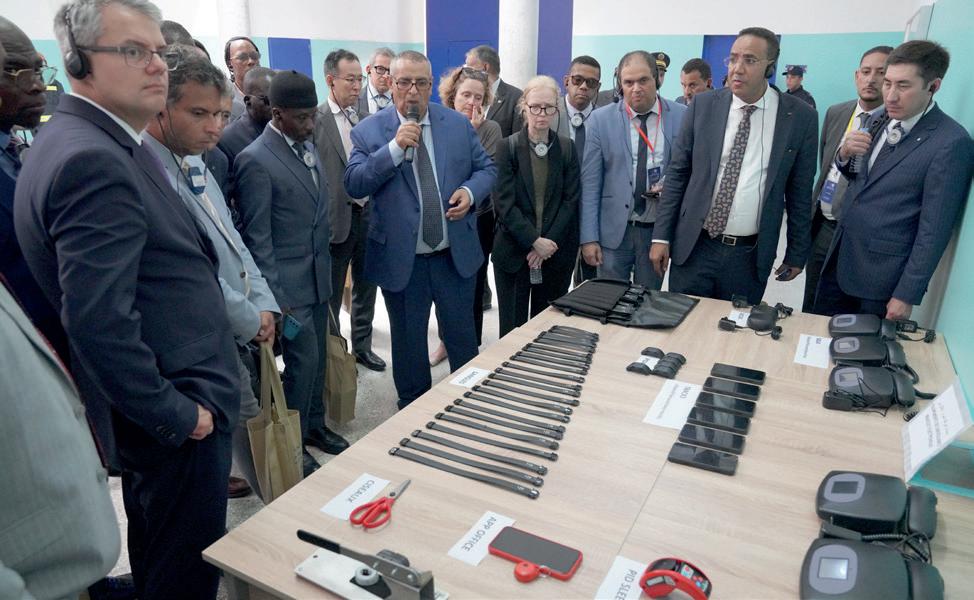
Le Directeur présente les équipements de surveillance et bracelet éléctronique dans le cadre du déploiement des peines alternatives
The Director presents the monitoring equipment and the electronic bracelet as part of the rollout of alternative sentencing measures
Le directeur de l'établissement détaille les indicateurs opérationnels de l’établissement ainsi que ses principaux chiffres de la Prison Locale 2
The director of the facility outlines the operational indicators and key figures of Local Prison 2
as reintegration programmes carried out in coordination with specialised national institutions. The delegation also visited the central kitchen, the vocational training centre developed in partnership with the OFPPT, the women’s unit, and the areas dedicated to sports and cultural activities, all of which help structure the daily life of inmates.
During the visit, the Ambassadors held direct exchanges with inmates enrolled in educational and remedial learning programmes. Many of these individuals had not completed secondary school and now benefit from regular pedagogical support aimed at strengthening their basic skills, reconnecting them with an educational pathway, and opening new prospects for their reintegration.
The diplomats also met inmates participating in vocational training programmes—particularly in electricity, upholste-
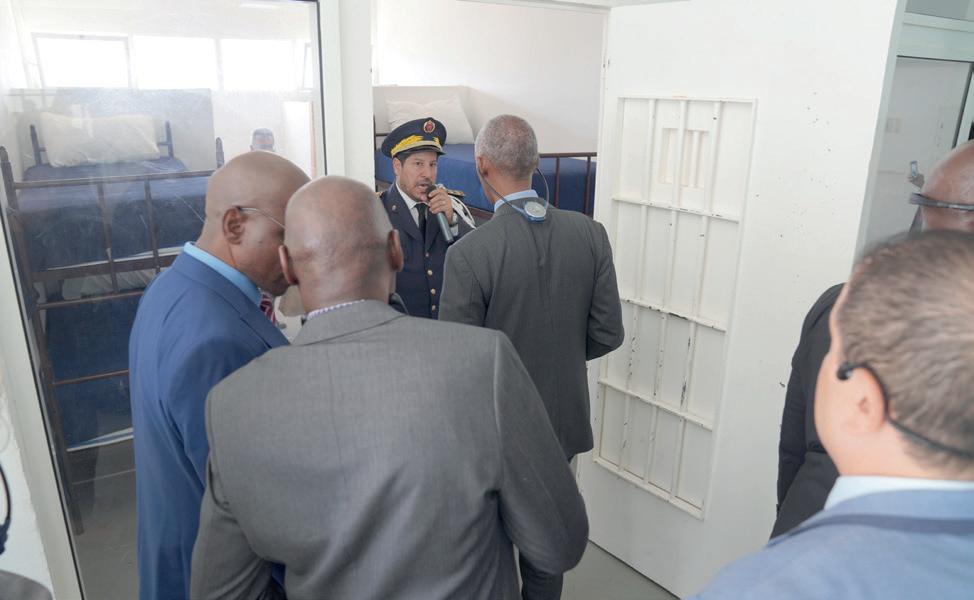
Visite de la prison d’entraînement, équipée de caméras, où les stagiaires s’exercent en conditions réelles et analysent ensuite leurs points à améliorer
Visit to the "mock prison", equipped with cameras, where trainees practice in realistic conditions and later review areas for improvement
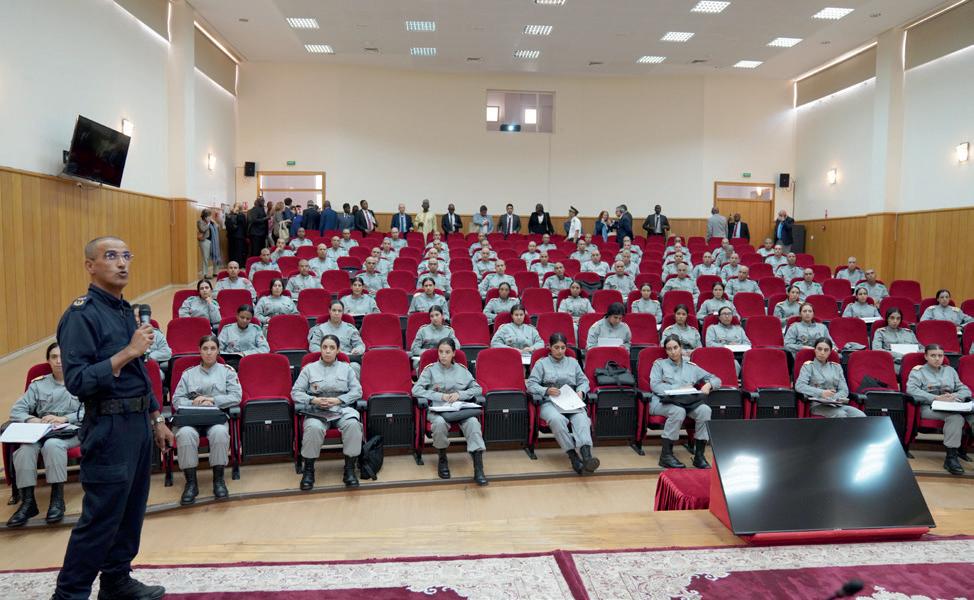
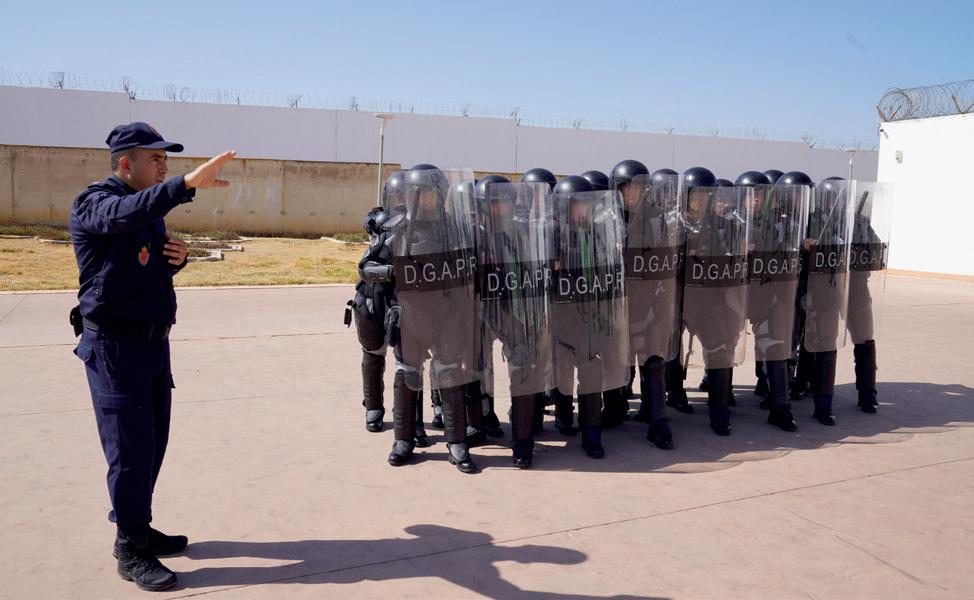
Session théorique dispensée aux nouvelles recrues dans l’amphithéâtre du Centre de formation.
Theoretical session for new recruits in the training center’s amphitheater
métiers techniques permettant de développer des compétences recherchées sur le marché du travail. Ces échanges, particulièrement appréciés de la délégation, ont permis d’appréhender le rôle concret de la formation dans la préparation à la réintégration sociale et professionnelle.
La visite a également donné lieu à une présentation détaillée des dispositifs liés aux peines alternatives, parmi lesquels le bracelet électronique, dont la DGAPR a entrepris le déploiement progressif. Cet outil témoigne de la volonté du Royaume de diversifier les modes de suivi des condamnations, de désengorger les établissements pénitentiaires et de promouvoir des mécanismes de justice modernes, adaptés aux profils et aux situations individuelles.
La seconde partie de la visite s’est déroulée au Centre National de Formation des Cadres, véritable pôle stratégique dédié à la professionnalisation du personnel pé-
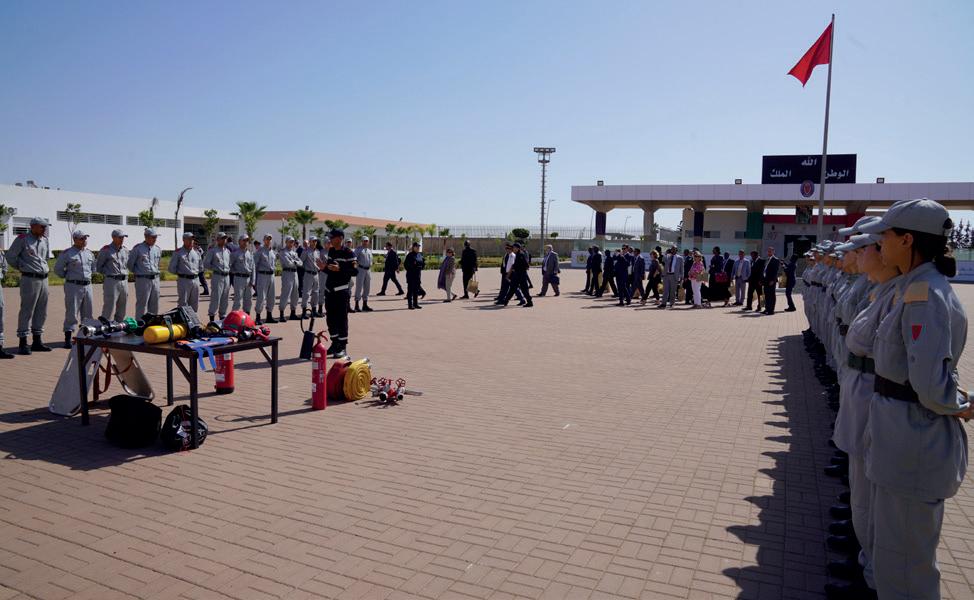
Les jeunes recrues de la DGAPR participent à une session de formation de la Protection Civile dédiée aux méthodes d’intervention et de contrôle des feux
The young DGAPR recruits take part in a training session led by the Civil Protection services, focused on fire-response and fire-control techniques
Les Ambassadeurs assistent à une démonstration des techniques d'intervention en cas d'insurrections violentes
The Ambassadors attend a demonstration of intervention techniques in the event of violent uprisings
ry and other technical trades—designed to develop skills that are in high demand on the labour market. These discussions, which were especially valued by the delegation, offered a concrete understanding of the role of training in preparing individuals for social and professional reintegration.
The visit further included a detailed presentation of the mechanisms related to alternative sanctions, notably the electronic monitoring bracelet, which the DGAPR has begun to roll out. This tool reflects the Kingdom’s determination to diversify approaches to sentence management, reduce pressure on penitentiary institutions, and promote modern, individualized judicial measures tailored to different profiles and situations.
The second part of the visit took place at the National Training Centre for Penitentiary Staff, a strategic hub dedicated to the professional development of prison personnel.
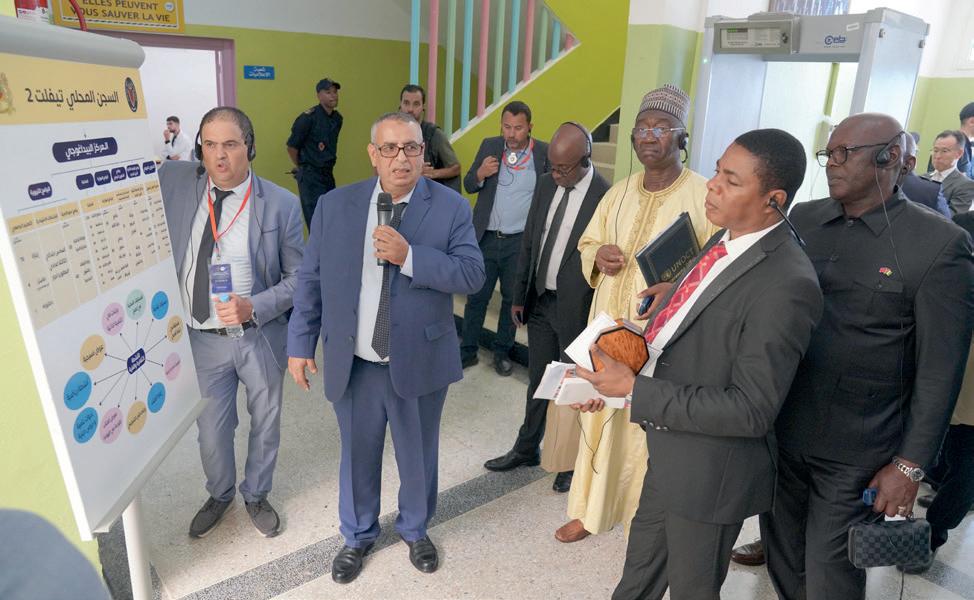
Le directeur de la prison présente l’organisation interne de l'établissement ainsi que les programmes de prise en charge et de réinsertion
The prison director presents the internal organization of the institution, as well as the care and reintegration programs
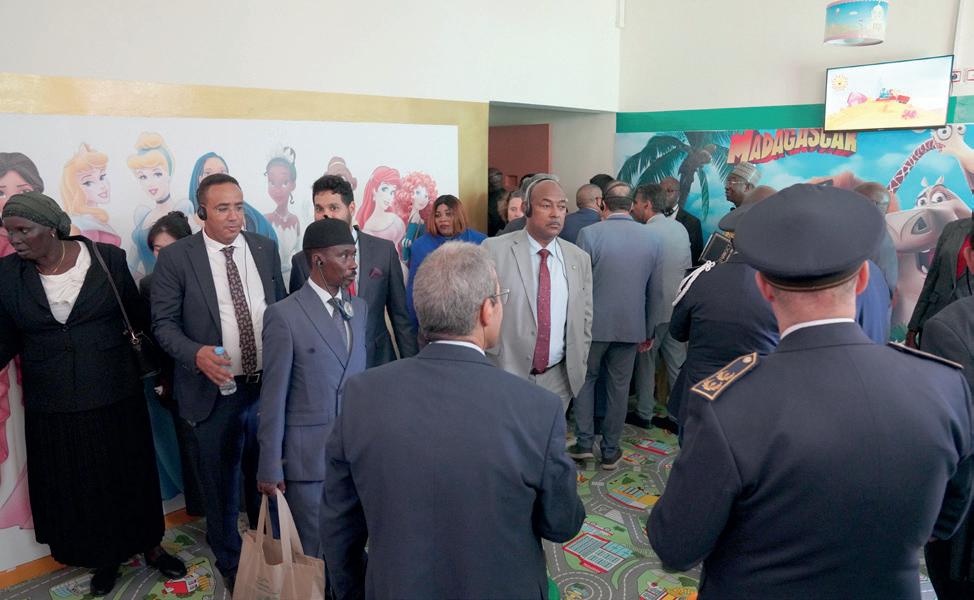
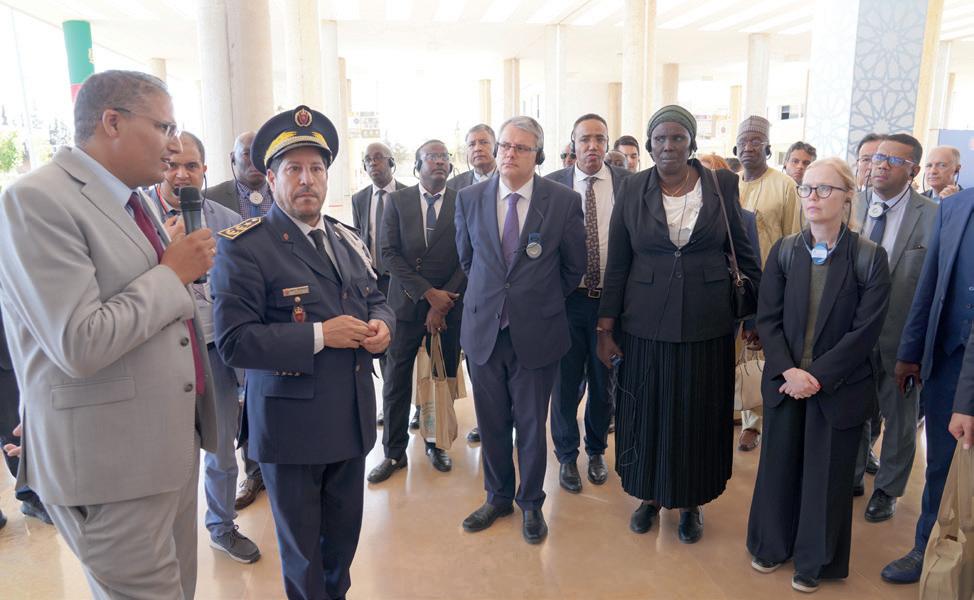
Le Directeur de la prison présente l’espace réservé aux détenues enceintes, allaitantes ou accompagnées de très jeunes enfants
The Prison Director presents the area dedicated to pregnant inmates, nursing mothers, and those accompanied by very young children
nitentiaire. Les membres de la délégation ont pu découvrir l’ampleur et la diversité des formations dispensées: modules académiques sur le droit et les techniques pénitentiaires, préparation physique, formation d’équipes spécialisées intervenant lors de situations sensibles, enseignement destiné aux nouvelles recrues et cycles de perfectionnement pour les cadres en poste. Cette articulation entre théorie et pratique témoigne de l’ambition du centre de doter l’administration pénitentiaire d’un personnel hautement qualifié, capable de répondre aux mutations de la société et aux nouveaux défis de la sécurité.
Le CNFC joue également un rôle croissant dans le rayonnement international du Maroc. En accueillant régulièrement des délégations étrangères et en participant à des programmes d’échange, il s’affirme comme un espace majeur de coopération Sud-Sud et Nord-Sud, notamment pour le développement des bonnes pratiques et le
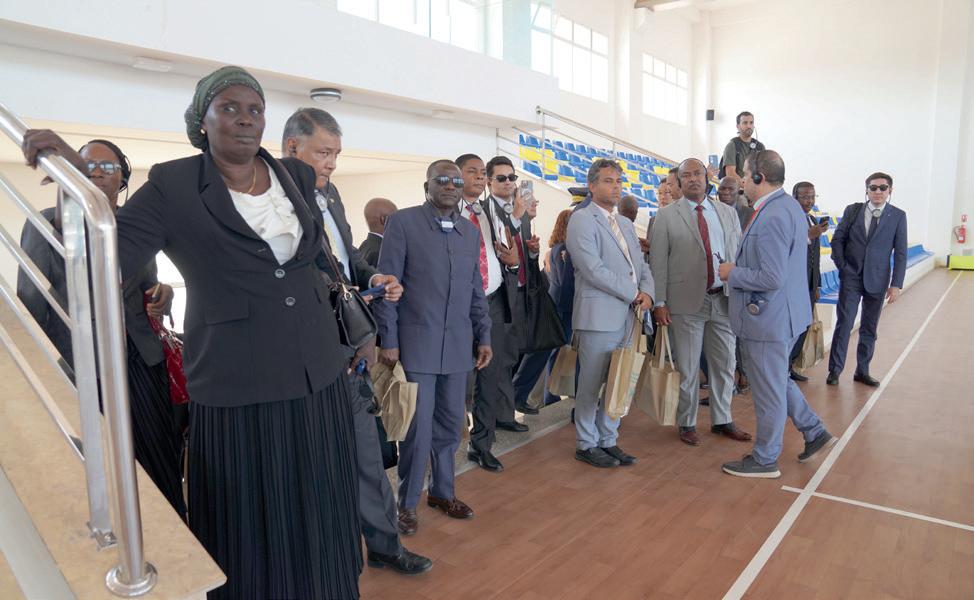
Les Ambassadeurs assistent à une démonstration d'arts martiaux par les jeunes recrues de la DGAPR
The Ambassadors attend a martial arts demonstration performed by the young DGAPR recruits
Le Directeur de la prison et le Directeur du Centre de formation des cadres répondent aux questions des Ambassadeurs au cours de la visite
The Prison Director and the Director of the Training Center for Senior Staff answer the Ambassadors’ questions during the visit
Members of the delegation were introduced to the breadth and diversity of the training programmes offered, including academic modules on law and penitentiary techniques, physical training, specialized units’ preparation for sensitive interventions, instruction for new recruits, and advanced courses for senior staff. This combination of theoretical and practical components illustrates the Centre’s ambition to equip the penitentiary administration with highly qualified personnel capable of responding to societal developments and emerging security challenges.
The CNFC also plays an expanding role in strengthening Morocco’s international outreach. By regularly welcoming foreign delegations and participating in exchange programmes, it has established itself as a key platform for South-South and North-South cooperation, particularly in the development of best practices and the sharing of expertise in penitentiary management.
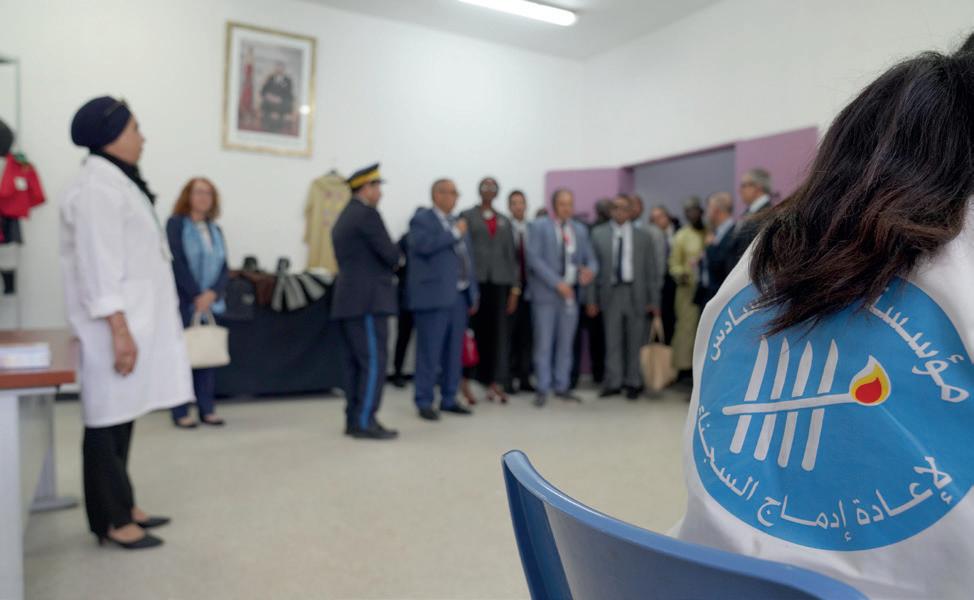
Visite d’une salle de formation du quartier des détenues femmes et échanges avec la formatrice
Visit to a training room in the women’s detainees’ section and exchanges with the trainer
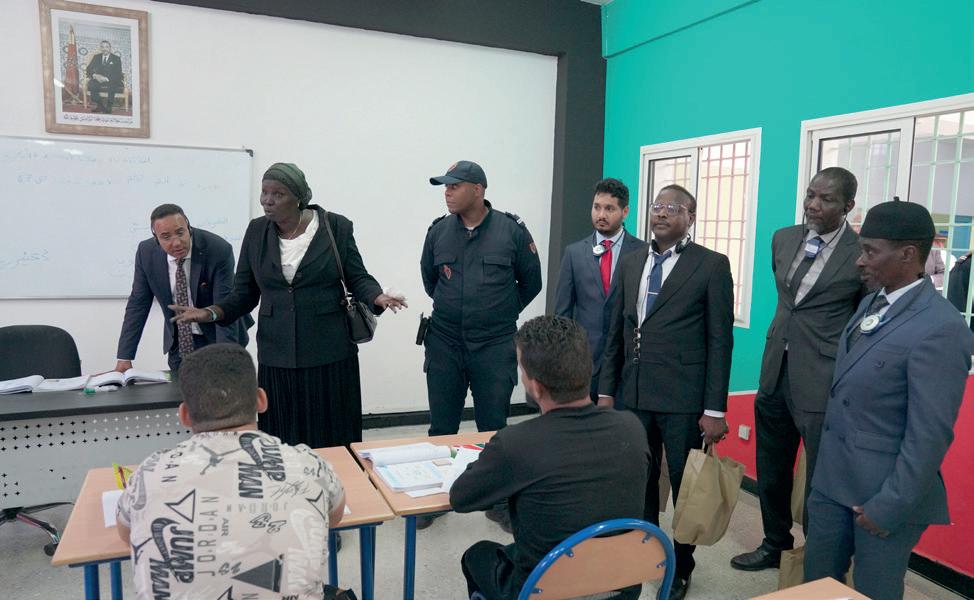
HAUT
Les Ambassadeurs échangent avec des détenus participant à des cours d’arabe classique visant à favoriser leur réinsertion sociale
Ambassadors engaging with detainees enrolled in classical Arabic classes designed to support their social reintegration
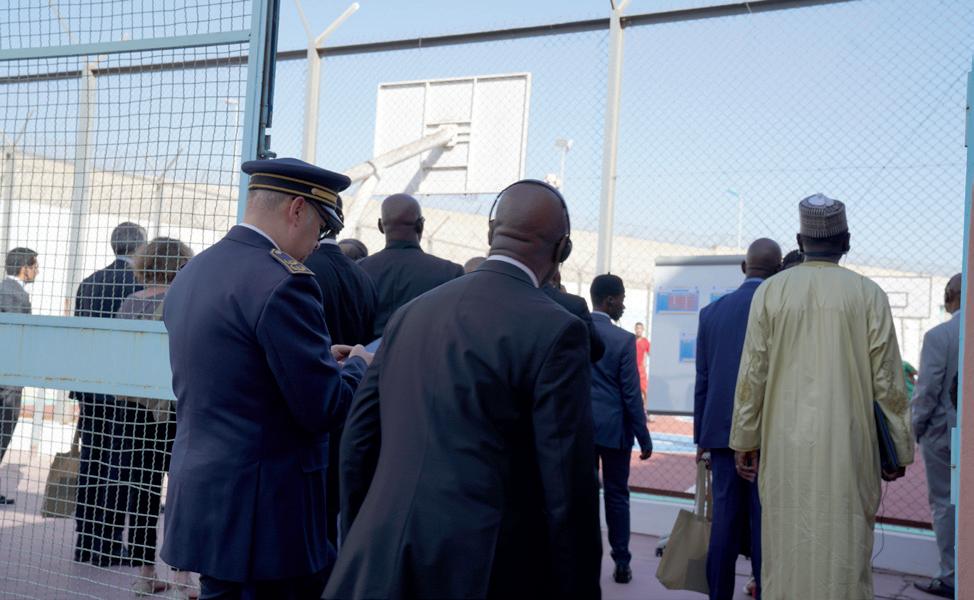
HAUT
Rencontre avec les détenus durant un match de football, un moment privilégié de cohésion et de dynamisme au sein de l’établissement
Meeting with detainees during a football match, a privileged moment of cohesion and positive interaction within the facility
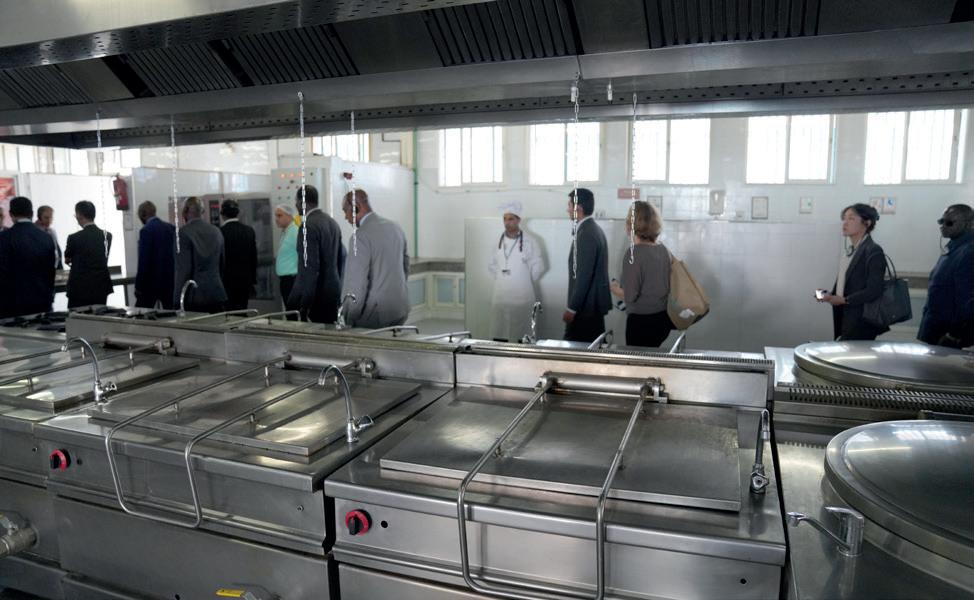
HAUT
Visite de la cuisine centrale de la prison, gérée par un prestataire extérieur, où sont préparés quotidiennement les repas des détenus
Visit to the prison’s central kitchen, operated by an external service provider, where detainees’ daily meals are prepared
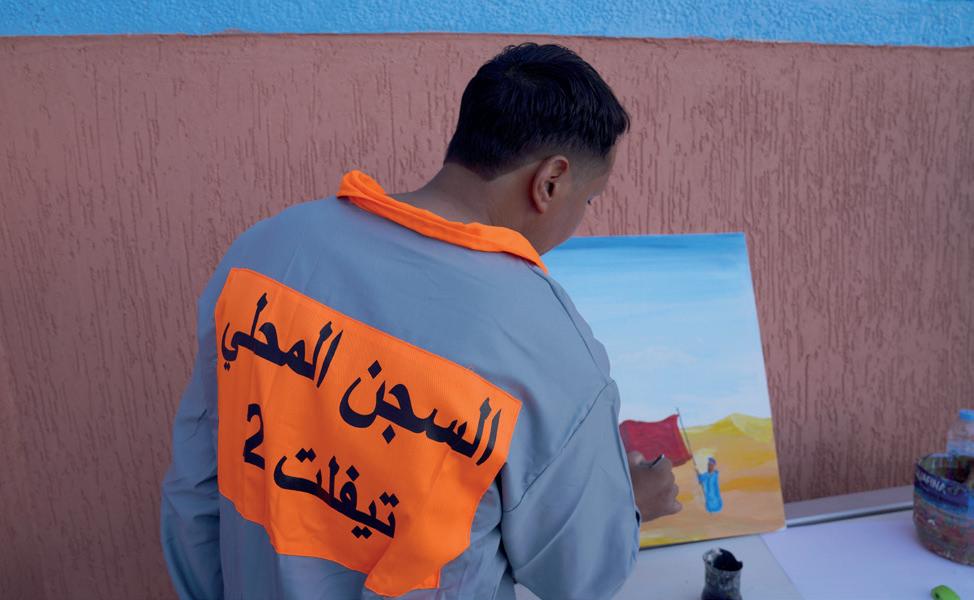
HAUT
Présentation par un détenu de peintures sur toile, illustrant l’importance des activités créatives dans le processus de réhabilitation
Presentation by a detainee of canvas paintings, illustrating the importance of creative activities in the rehabilitation process
partage d’expertise en matière de gestion pénitentiaire. À l’issue de cette double visite, les Ambassadeurs ont unanimement salué les progrès réalisés par le Maroc dans le domaine pénitentiaire: amélioration des conditions de détention, renforcement des programmes de formation, modernisation des infrastructures et montée en compétence du personnel. Ils ont également souligné la pertinence d’un modèle qui concilie rigueur sécuritaire et respect de la dignité humaine, tout en mettant l’accent sur la réhabilitation et la préparation à la réinsertion. Cette initiative, au-delà de sa dimension informative, a contribué à renforcer les liens avec la communauté diplomatique et à mettre en lumière la volonté du Royaume d’inscrire sa politique pénitentiaire dans une dynamique d’excellence, de coopération et de progrès institutionnel durable.
At the conclusion of this dual visit, the Ambassadors unanimously commended the progress achieved by Morocco in the penitentiary field: improved conditions of detention, strengthened training programmes, modernized infrastructure, and enhanced staff capabilities.
They also highlighted the relevance of a model that reconciles security requirements with respect for human dignity, while placing strong emphasis on rehabilitation and reintegration. Beyond its informative dimension, this initiative contributed to deepening ties with the diplomatic community and underscored the Kingdom’s determination to anchor its penitentiary policy in a dynamic of excellence, cooperation, and sustainable institutional progress.

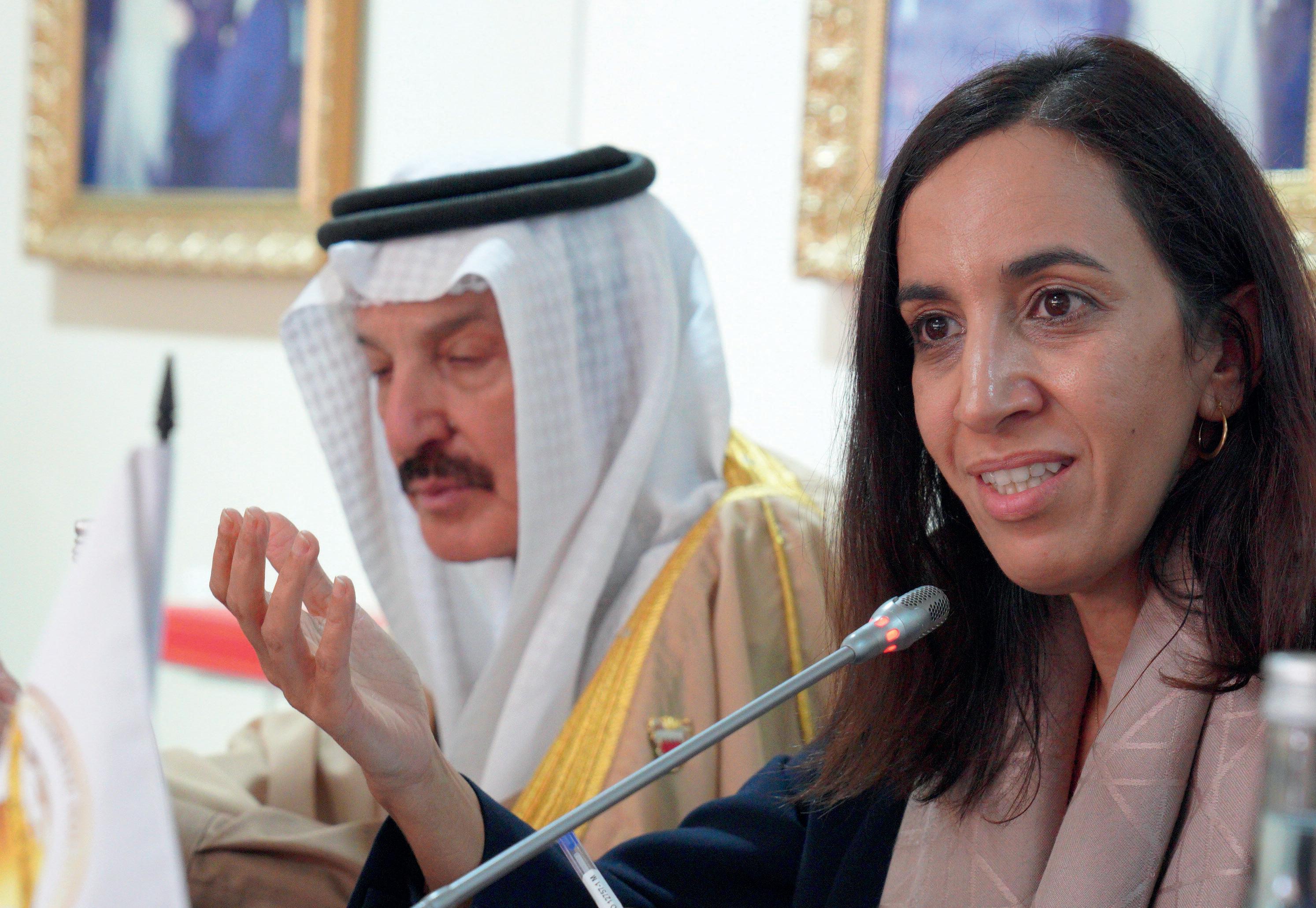
La 149ème édition du Carrefour Diplomatique s’est tenue le 24 novembre 2025 à Rabat, accueillant
Mme Mbarka Bouaida, Présidente de la Région
Guelmim-Oued Noun et de l’Association des Régions du Maroc, invitée d’honneur, devant une quarantaine d’ambassadeurs et représentants internationaux.
The 149th edition of the Diplomatic Forum (Carrefour Diplomatique) was held on 24 November 2025 in Rabat, welcoming Ms. Mbarka Bouaida, President of the Guelmim-Oued Noun Region and of the Association of Regions of Morocco, as Guest of Honour, before an audience of around forty ambassadors and international representatives. TRANSITION ÉNERGÉTIQUE &
La149ème édition du Carrefour Diplomatique, organisée au siège de la Fondation Diplomatique à Rabat, s’est inscrite dans un moment diplomatique et politique particulièrement significatif pour le Royaume. Ce rendez-vous, désormais solidement ancré dans le calendrier institutionnel marocain, poursuit un objectif constant : offrir aux partenaires internationaux un espace d’échange direct sur les grandes orientations stratégiques du pays, ses réformes structurelles et les transformations engagées à l’échelle nationale et régionale.
Dans son mot d’ouverture, le Président de la Fondation Diplomatique a rappelé l’importance de cette plateforme de
GAUCHE
Mme. Bouaida présente aux Ambassadeurs le dernières avancées de la décentralisation au Maroc, selon sa perspective
Ms. Bouaida presents to the Ambassadors the latest developments in decentralization in Morocco, from her perspective
dialogue qui permet, au-delà des échanges protocolaires, d’approfondir la compréhension mutuelle entre le Maroc et les missions diplomatiques accréditées à Rabat. La présence de Mme Mbarka Bouaida, invitée d’honneur de cette édition, a été saluée comme un choix particulièrement pertinent au regard de la centralité actuelle des questions de régionalisation, de développement territorial et de dynamique des Provinces du Sud. Son parcours, mêlant responsabilités ministérielles puis régionales, a été présenté comme emblématique d’une gouvernance marocaine qui articule vision nationale et action de terrain.
L’intervention introductive a replacé la rencontre dans le contexte international marqué par l’adoption de la résolution 2797 du Conseil de sécurité des Nations Unies, consacrant l’Initiative marocaine d’autonomie comme base réaliste et sérieuse pour la poursuite du processus politique. Cette évolution, associée au Discours Royal du 31 octobre 2025 annonçant l’entrée dans une nouvelle phase stratégique, confère aux débats du Carrefour Diplomatique une portée particulière, à la fois politique, économique et diplomatique. Elle donne aussi, pour les diplomates présents, une grille de lecture renouvelée : celle d’un dossier appelé à se traiter moins dans l’abstraction des principes que dans la précision des modalités.
Prenant la parole, Mme Mbarka Bouaida a souligné que cette rencontre intervient dans un moment qualifié d’« historique », marqué par une reconnaissance internationale croissante de la crédibilité des réformes institutionnelles et territoriales engagées par le Maroc depuis
The 149th edition of the Diplomatic Forum (Carrefour Diplomatique), held at the headquarters of the Diplomatic Foundation in Rabat, took place at a particularly significant diplomatic and political moment for the Kingdom. This event, now firmly established in Morocco’s institutional calendar, continues to pursue a consistent objective: offering international partners a direct platform for dialogue on the country’s major strategic orientations, its structural reforms, and the transformations underway at both national and regional levels.
In his opening remarks, the President of the Diplomatic Foundation recalled the importance of this dialogue platform, which, beyond formal protocol exchanges, helps deepen mutual understanding between Morocco and the diplomatic missions accredited in Rabat. The presence of Ms. Mbarka Bouaida, Guest of Honour of this edition, was highlighted as especially relevant given the central importance currently attached to regionalization, territorial development, and the momentum underway in the Southern Provinces. Her career, combining ministerial responsibilities followed by regional leadership, was presented as emblematic of a Moroccan governance model that effectively links national vision with action on the ground.
The introductory address also placed the meeting within the international context marked by the adoption of United Nations Security Council Resolution 2797, which recognizes the Moroccan Autonomy Initiative as the realistic and serious basis for the continuation of the political process. This development, together with the Royal Speech of 31 October 2025 announcing the opening of a new strategic phase, gives the discussions of the Diplomatic Fo-
plus d’une décennie. Elle a rappelé que la question du Sahara s’inscrit dans un processus historique de récupération progressive de l’intégrité territoriale nationale, depuis les séquences d’indépendance et de restitutions successives jusqu’à la Marche Verte, puis la réintégration d’Oued Ed-Dahab. Cette lecture chronologique, assumée, visait à rappeler que la dimension politique du dossier reste indissociable d’un récit national porté par la continuité.
Au cœur de cette dynamique, la Constitution de 2011 a posé les bases d’un modèle territorial moderne, reposant sur la régionalisation avancée et la responsabilisation accrue des collectivités territoriales. L’adoption, en 2015, de la loi organique relative aux régions a permis la mise en place d’un système régional renforcé, fondé sur douze régions dotées de compétences propres et partagées, favorisant une gouvernance locale plus autonome et plus participative. Mme Bouaida a insisté sur la manière dont cette architecture a été pensée pour préserver des équilibres géographiques, culturels, économiques et tribaux, particulièrement sensibles dans les territoires du Sud.
Selon elle, la régionalisation avancée constitue le socle institutionnel permettant, à terme, la mise en œuvre d’un modèle d’autonomie élargie dans les Provinces du Sud. Elle a insisté sur le fait que cette autonomie ne constitue pas une rupture institutionnelle, mais plutôt l’aboutissement logique d’un processus graduel de décentralisation, fondé sur l’implication démocratique des élus locaux, la participation citoyenne et la consolidation de la gouvernance territoriale. À ses yeux, l’enjeu réside désormais dans
L’autonomie proposée consolide souveraineté nationale tout en élargissant gouvernance
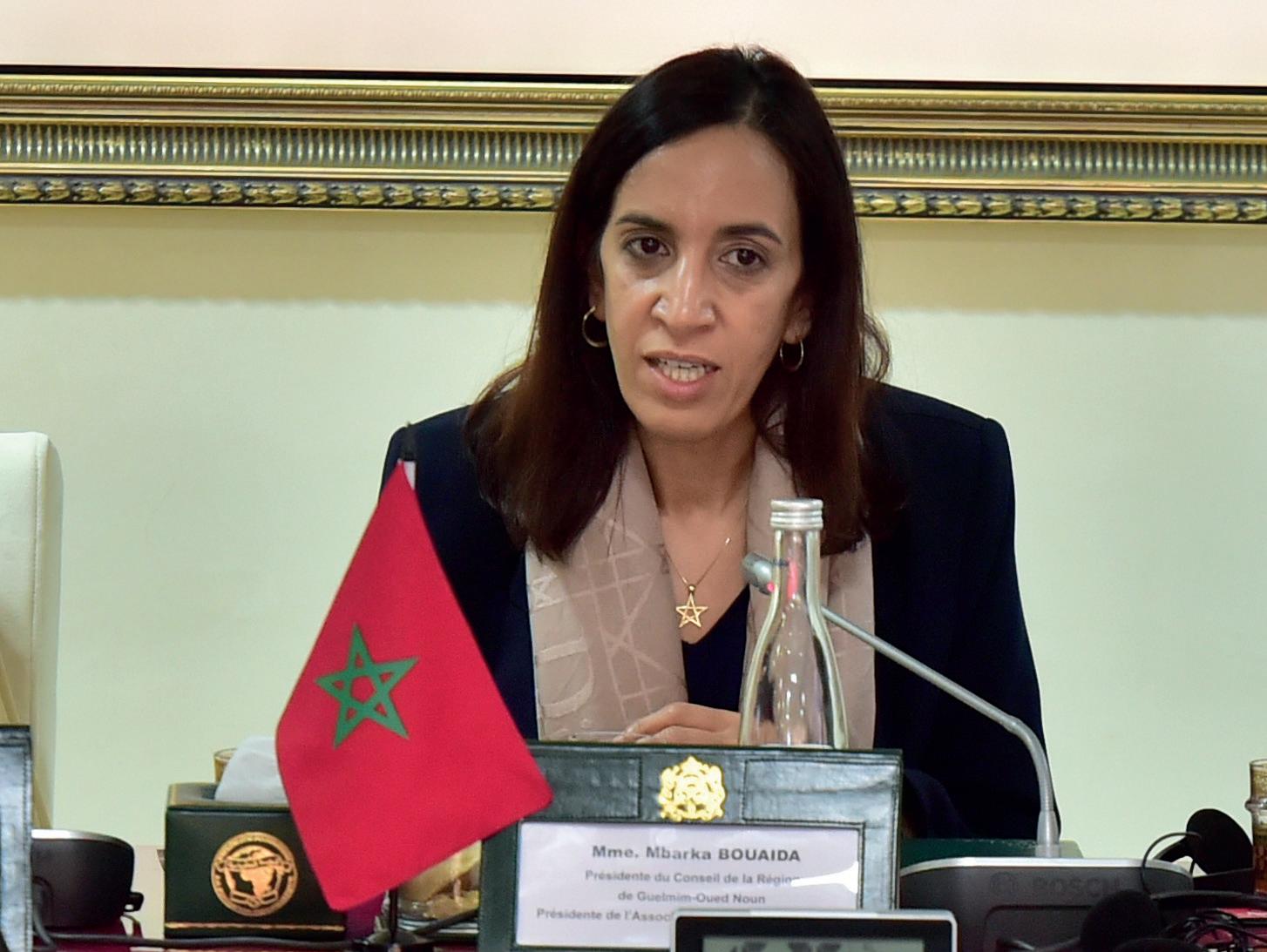
Mme Mbarka Bouaida, Présidente du Conseil de la Région de Guelmim-Oued Noun et Présidente de l'Association des Régions du Maroc
Ms. Mbarka Bouaida, President of the Guelmim-Oued Noun Regional Council and President of the Association of the Regions of Morocco
la définition des contours précis : jusqu’où transférer, comment articuler, avec quels mécanismes de contrôle et de coordination, et à quel rythme.
L’un des axes majeurs de l’intervention de la Présidente de la Région Guelmim-Oued Noun a porté sur les transformations économiques profondes observées dans les Provinces du Sud depuis le lancement, en 2015, du nouveau modèle de développement dédié. Doté initialement de 77 milliards de dirhams et dépassant aujourd’hui 89 milliards, ce programme d’investissement public a permis la réalisation d’infrastructures stratégiques majeures :
plus de mille kilomètres de voies express, barrages, modernisation des aéroports, projets portuaires structurants — dont Dakhla Atlantique — et perspectives autour du futur port de Tan-Tan, sans oublier les programmes énergétiques et industriels cités comme leviers de souveraineté économique.
Ces investissements ont contribué à renforcer l’attractivité économique des régions du Sud et à accélérer l’arrivée d’investissements privés, nationaux et étrangers, transformant progressivement ces territoires en pôles de croissance régionaux. La stabilité institutionnelle et politique du Maroc, conjuguée à la reconnaissance internationale de son initiative d’autonomie, constitue désor-
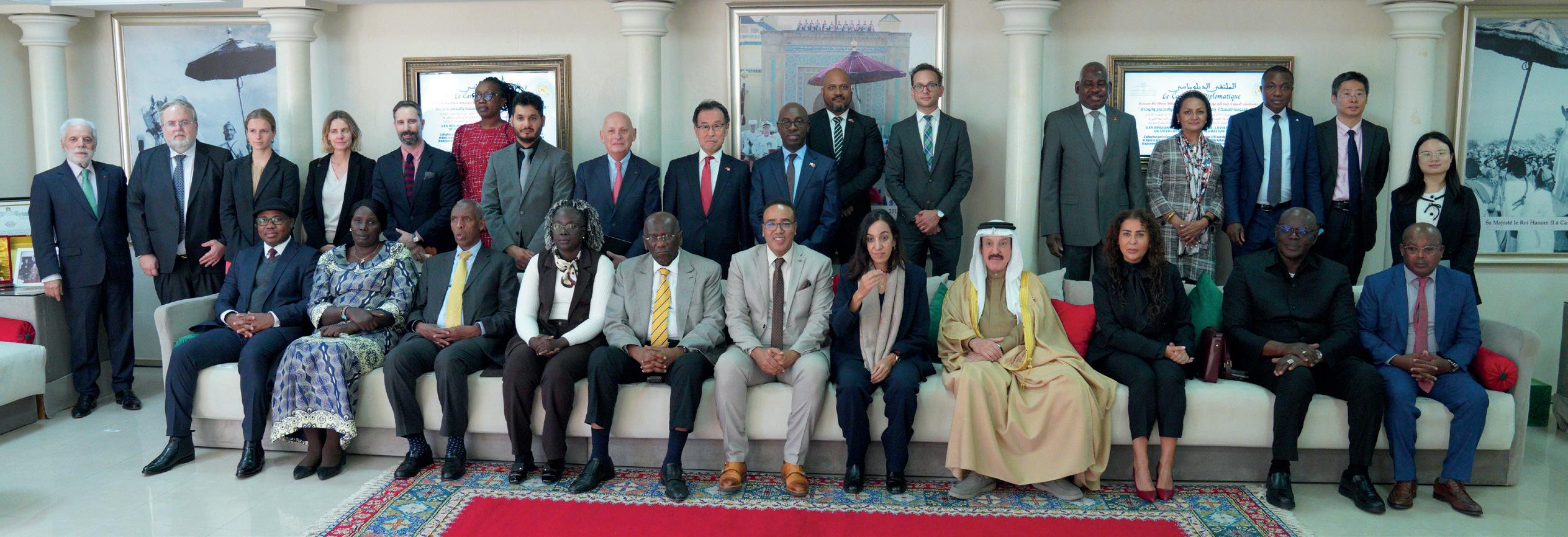
The proposed autonomy consolidates national sovereignty while expanding local governance
rum a particular significance— political, economic, and diplomatic alike. For the diplomats in attendance, it also offers a renewed interpretative framework: one in which the issue is no longer approached primarily in the abstraction of principles, but rather in the precision of implementation modalities.
Taking the floor, Ms. Mbarka Bouaida emphasized that this meeting comes at what she described as a “historic” moment, marked by growing international recognition of the credibility of the institutional and territorial reforms undertaken by Morocco over more than a decade. She recalled that the Sahara issue forms part of a historical process of the progressive restoration of national territorial integrity, from successive phases of independence and territorial restitutions to the Green March and the reintegration of Oued Ed-Dahab. This chronological perspective, she
noted, underscores that the political dimension of the issue remains inseparable from a national narrative grounded in continuity.
At the heart of this transformation, the 2011 Constitution laid the foundations for a modern territorial model based on advanced regionalization and increased accountability of territorial authorities. The adoption in 2015 of the organic law governing the regions established a strengthened regional system built around twelve regions endowed with both own and shared competencies, thereby promoting more autonomous and participatory local governance. Ms. Bouaida stressed that this architecture was carefully designed to preserve geographic, cultural, economic, and tribal balances, particularly sensitive in the southern territories.
In her view, advanced regionalization constitutes the institutional foundation that will eventually enable the implementation of an
HAUT
Mme Mbarka Bouaida entourée des Ambassadeurs et autres participants du Carrefour Diplomatique
Ms. Mbarka Bouaida surrounded by Ambassadors and other participants at the Diplomatic Forum (Carrefour Diplomatique
expanded autonomy model in the Southern Provinces. She emphasized that such autonomy does not represent an institutional rupture, but rather the logical culmination of a gradual decentralization process rooted in democratic involvement of locally elected officials, citizen participation, and the consolidation of territorial governance. The key issue, she explained, now lies in defining the precise contours of this evolution: how far competencies should be transferred, how responsibilities should be articulated, which oversight and coordination mechanisms should be adopted, and at what pace the process should unfold.
A major component of the intervention by the President of the Guelmim-Oued Noun Region focused on the profound economic transformations observed in the Southern Provinces since the launch, in 2015, of the dedicated development model. Initially endowed with 77 billion dirhams and now exceeding 89 billion, this public investment program has enabled the construction of major strategic infrastructure: more than one thousand kilometers of expressways, dams, mod-
mais un facteur supplémentaire de confiance pour les investisseurs. Mme Bouaida a également mis en avant un signe politique fort : les taux de participation électorale élevés dans les provinces du Sud, souvent supérieurs à 60 ou 70 %, comme indicateur d’adhésion au processus démocratique et de consolidation progressive des institutions locales.
Elle a toutefois rappelé que, malgré ces progrès significatifs, certaines régions, dont Guelmim-Oued Noun, restent confrontées à des fragilités socio-économiques importantes, héritées de leur histoire administrative et des recompositions territoriales. Présentée comme « porte du Sahara », la région conserve, selon ses mots, une réalité contrastée : carrefour stratégique, mais aussi espace qui doit rattraper des retards d’équipement, d’emploi et de services. D’où l’importance d’un développement équilibré, fondé sur des complémentarités concrètes entre les régions du Sud et leurs voisines du Nord, notamment Souss-Massa, et sur la continuité des infrastructures.
Dialogue diplomatique
La séance de questions-réponses a permis d’approfondir plusieurs aspects stratégiques liés à la résolution 2797 et à ses implications pratiques. Les diplomates présents ont interrogé la Présidente de région sur les perspectives concrètes qu’ouvre cette évolution internationale, tant en matière de coopération économique que de gouvernance territoriale. L’Ambassadeur Ali Achour, en particulier, a relié l’élan diplomatique aux opportunités de développement intégré, en posant la question des synergies : comment « aller plus vite », comment transformer une reconnaissance politique en ac-
La résolution 2797 renforce confiance internationale et accélère investissements
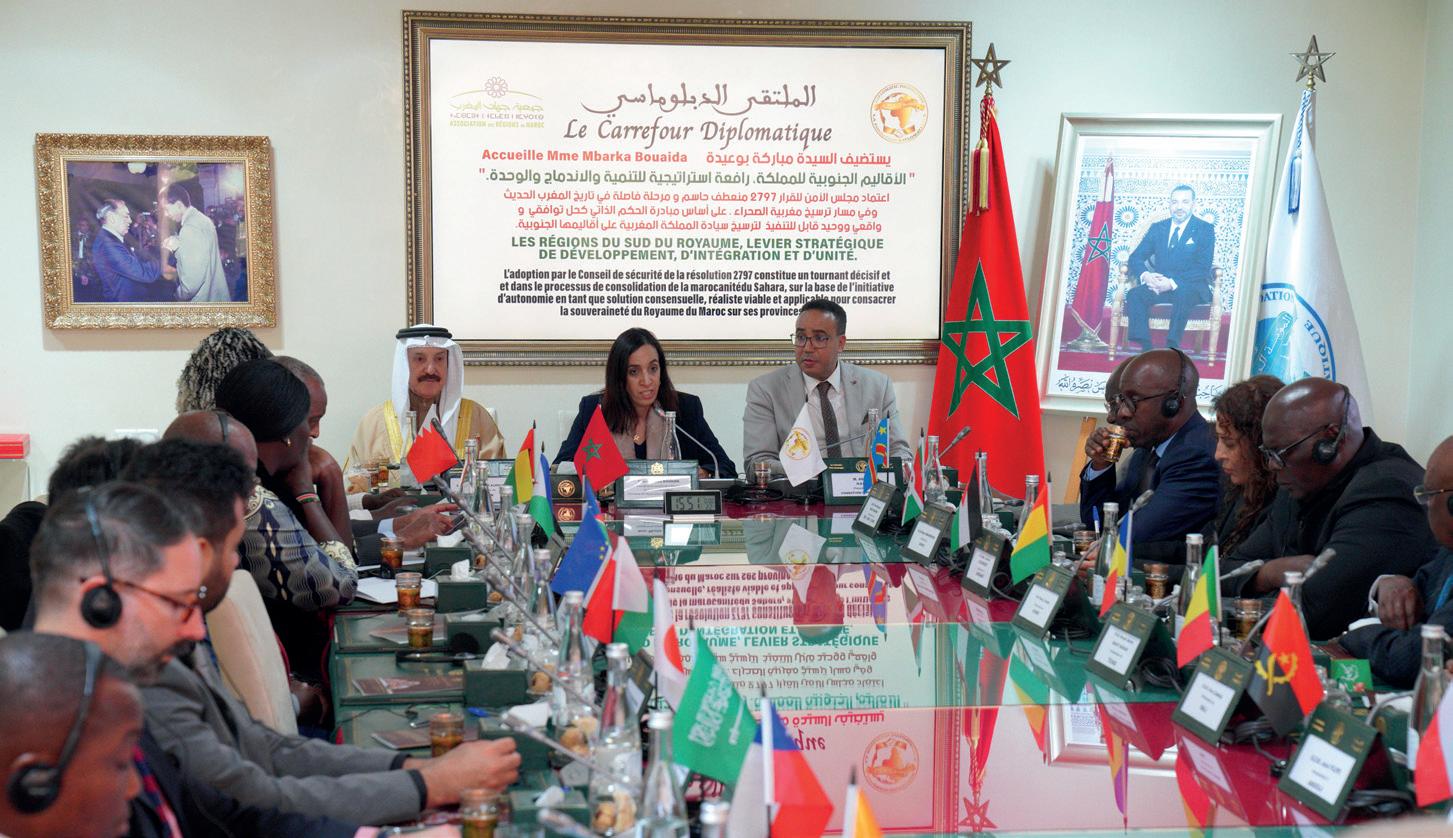
HAUT
Mme Mbarka Bouaida répond aux questions des Ambassadeurs
Ms. Mbarka Bouaida responds to the Ambassadors’ questions
célérateur de projets et de partenariats.
Mme Bouaida a répondu en soulignant que la nouvelle dynamique internationale renforce non seulement la confiance des investisseurs, mais également la détermination nationale à poursuivre les réformes engagées. Elle a insisté sur l’importance des complémentarités interrégionales, rendues nécessaires par la géographie même de Guelmim-Oued Noun : frontalière avec Laâyoune-Sakia El Hamra au sud, ouverte vers Souss-Massa et Agadir au nord, et structurée autour de territoires aux identités fortes — Sidi Ifni, Guelmim, Tan-Tan et Assa-Zag, à proximité de Tindouf. À travers cette cartographie, elle a rappelé la profondeur des liens historiques et sociaux, autrefois matérialisés par le « souk de Tindouf », et la rupture provoquée par le conflit, qui a dé-
placé les circulations vers Guergarat puis la Mauritanie.
S.E. Mme Jumana Guenemat, Ambassadrice de Jordanie, a ensuite soulevé un point institutionnel : comment articuler régionalisation avancée et autonomie, et dans quelle mesure ce modèle pourrait, à terme, irriguer les douze régions du Royaume. Mme Bouaida a répondu en distinguant clairement deux niveaux : la régionalisation comme socle commun et progressif, et l’autonomie comme degré supérieur de décentralisation, supposant une déconcentration plus profonde, notamment dans des secteurs aujourd’hui fortement centralisés comme la santé et l’éducation. C’est ici, a-t-elle expliqué, que se joue la crédibilité opérationnelle : transférer ne signifie pas seulement déléguer, mais aussi planifier, financer, évaluer, et former des capacités locales.
ernization of airports, major port projects—including Dakhla Atlantic Port—as well as the future Tan-Tan port, in addition to energy and industrial programs presented as pillars of economic sovereignty. These investments have strengthened the economic attractiveness of the southern regions and accelerated the inflow of private investments, both national and foreign, gradually transforming these territories into regional growth hubs. Morocco’s institutional and political stability, combined with the growing international recognition of its Autonomy Initiative, now constitutes an additional factor of confidence for investors. Ms. Bouaida also highlighted another significant political indicator: the high electoral participation rates in the Southern Provinces—often exceeding 60 or even 70 percent— which illustrate local populations’ adherence to the democratic process and the progressive consolidation of regional institutions.
She nevertheless recalled that, despite these notable advances, certain regions, including Guelmim-Oued Noun, continue to face substantial socio-economic challenges rooted in their administrative history and territorial restructuring. Described as the "gateway to the Sahara", the region reflects a dual reality: a strategic crossroads, yet also an area that must continue to catch up in terms of infrastructure, employment, and public services. Hence the importance of balanced development built on concrete complementarities between the southern regions and
their northern neighbors—particularly Souss-Massa—and on the continuity of infrastructure networks.
The question-and-answer session allowed for deeper examination of several strategic aspects related to Resolution 2797 and its practical implications. Diplomats in attendance questioned the regional president about the concrete opportunities opened by this new international dynamic, both in terms of economic cooperation and territorial governance. Ambassador Ali Achour, in particular, connected the diplomatic momentum to integrated development opportunities, raising the issue of synergies: how to “move faster,” and how to transform political recognition into a catalyst for projects and partnerships.
Ms. Bouaida responded by emphasizing that the new international environment strengthens not only investor confidence but also national determination to continue the reforms already underway. She stressed the importance of interregional complementarities, necessitated by the very geography of GuelmimOued Noun - bordering Laâyoune-Sakia El Hamra to the south, open to Souss-Massa and Agadir to the north, and structured around territories with strong identities such as Sidi Ifni, Guelmim, Tan-Tan, and Assa-Zag, near Tindouf. Through this geographic overview, she recalled the depth of the historical and social links that once character-
ized the region, notably symbolized by the former “Tindouf market,” and the disruption caused by the conflict, which redirected circulation routes through Guergarat and then Mauritania.
H.E. Ms. Jumana Guenemat, Ambassador of Jordan, subsequently raised an institutional issue: how to articulate advanced regionalization and autonomy, and to what extent this model could eventually extend to the Kingdom’s twelve regions. Ms. Bouaida responded by clearly distinguishing two levels: regionalization as a progressive common foundation, and autonomy as a higher degree of decentralization requiring deeper deconcentration, particularly in sectors that remain strongly centralized today, such as health and education. Operational credibility, she explained, lies precisely at this level: transferring competencies does not simply mean delegating authority, but also planning, financing, evaluating, and building local capacities.
Several diplomatic interventions addressed the human and political dimensions of the issue, particularly the return of populations from the Tindouf camps, their political and social integration, and the future role of MINURSO in the next phase of the political process. Ms. Bouaida acknowledged the complexity of these issues, linked to tribal diversity and the historical displacement of Saharan populations. She recalled that the gradual integration of the concerned populations must take place within national democratic institutions, on the basis of equal citizenship and full respect for existing political rules. She also stressed that gradual integration mechanisms previously implemented with United Nations support provide encouraging precedents for the forthcoming phase Regarding financing, she indicated that continued state financial
Plusieurs interventions diplomatiques ont porté sur les dimensions humaines et politiques du dossier, notamment la question du retour des populations des camps de Tindouf, leur intégration politique et sociale, ainsi que le rôle futur de la MINURSO dans la nouvelle phase du processus politique. Mme Bouaida a reconnu la complexité de ces enjeux, liés à la diversité tribale et aux déplacements historiques des populations sahariennes. Elle a rappelé que l’intégration progressive des populations concernées devra s’effectuer dans le cadre des institutions démocratiques nationales, sur la base de l’égalité de citoyenneté et du respect des règles politiques en vigueur. Elle a également souligné que les mécanismes d’intégration graduelle, expérimentés par le passé avec l’appui des Nations Unies, constituent des précédents encourageants pour la phase à venir. Sur la question du financement, elle a indiqué que le soutien financier de l’État restera indispensable pendant plusieurs années afin de maintenir la dynamique de développement en cours, les recettes locales ne permettant pas encore de couvrir l’ensemble des besoins générés par les projets structurants engagés dans les Provinces du Sud.
Perspectives futures
Les échanges ont mis en lumière l’ampleur de la transition actuellement en cours, marquée par le passage d’un dossier longtemps figé à une phase nouvelle où l’initiative politique revient pleinement au Maroc, sur la base d’un soutien international consolidé. L’Ambassadeur Ali Achour, en concluant, a évoqué un « avant » et un « après » le 31 octobre : auparavant, l’ONU proposait des formules ; désormais, le Maroc est à l’ini-
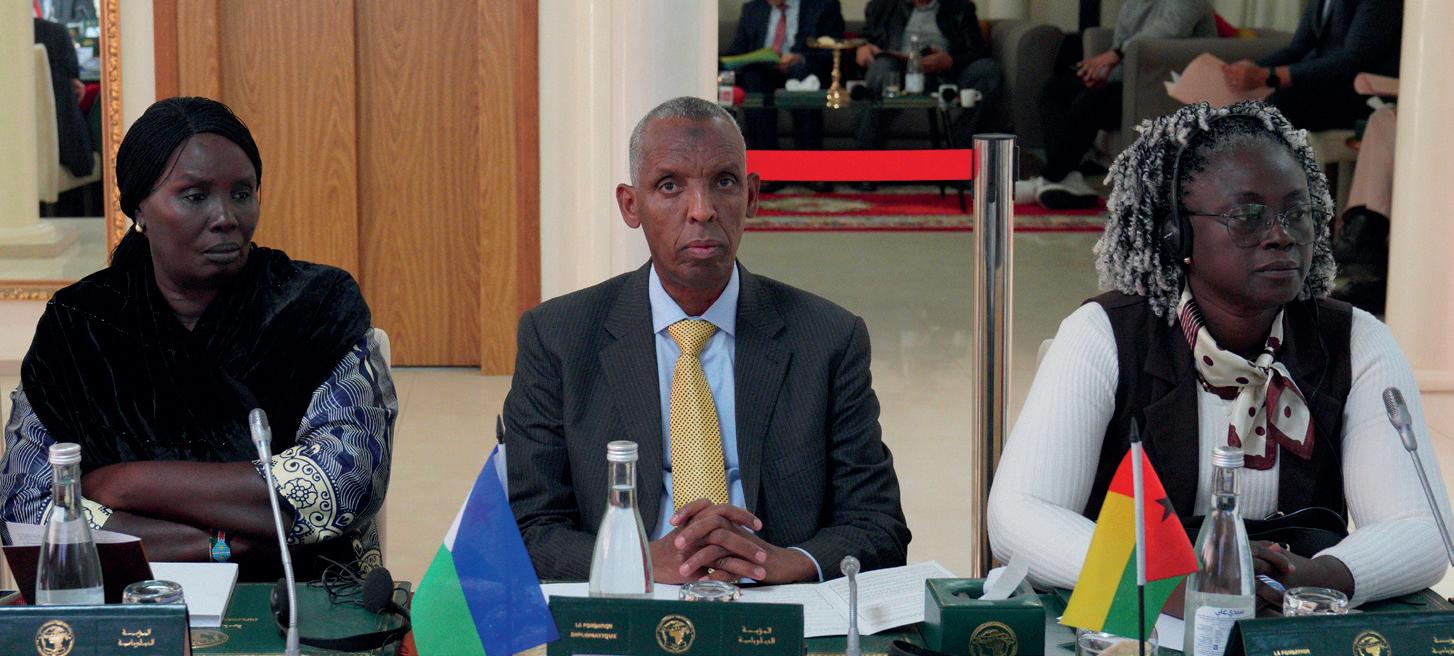
HAUT
Les Ambassadeurs du Sud-Soudan, de Djibouti et de Guinée Bissau
The Ambassadors of South Sudan, Djibouti, and Guinea-Bissau
tiative, et les autres parties sont invitées à répondre sur la base d’une autonomie actualisée. Il a esquissé les jalons possibles d’un processus : consultation populaire dans les provinces du Sud, adaptation constitutionnelle, règlement de la question des camps avec coopération indispensable pour identifier et enregistrer les personnes, puis démilitarisation, démobilisation et rapatriement. La dimension tribale, relancée dans une seconde intervention du diplomate djiboutien, a montré combien les réalités sociales pèseront sur les mécanismes à inventer: avec qui négocier, comment établir les passerelles, quel rôle pour les institutions existantes comme le CORCAS. Mme Bouaida a reconnu que «plusieurs points d’interrogation demeurent » et que les scénarios ne sont pas figés, mais elle a rappelé que l’anticipation marocaine — investir avant la résolution définitive — a déjà construit une base de stabilité et de crédibilité.
Dans un moment plus protocolaire mais hautement symbolique, l’Ambassadeur Khaled Ben Salman Ben Jabr Al Muslim, doyen du Corps diplomatique arabe au Maroc, a rendu hommage à Mme Bouaida pour la clarté de son exposé et la qualité du dialogue instauré. Évoquant son expérience passée au
ministère, il a salué une personnalité capable de désamorcer des crises avec sang-froid et élégance. Au nom des ambassadeurs présents, ainsi que du Président et du Secrétaire général de la Fondation Diplomatique, il lui a remis une médaille d’honneur, geste marquant la reconnaissance collective.
Remerciant les diplomates pour leur participation, Mme Bouaida a conclu en invitant les représentants étrangers à visiter la région de Guelmim-Oued Noun afin de constater directement les transformations économiques et sociales en cours. Elle a proposé que cette visite soit coordonnée avec la Fondation Diplomatique, afin que le dialogue entamé à Rabat se prolonge sur le terrain, au contact des réalités territoriales, des infrastructures et des acteurs locaux.
Au terme de cette édition, le Carrefour Diplomatique aura confirmé sa vocation : celle d’un espace où le Maroc expose ses choix, répond aux questions, et met en débat les conditions concrètes d’une stabilité régionale durable. Dans un contexte international en mutation, les échanges ont montré la convergence entre réformes institutionnelles, développement économique et dynamique diplomatique.
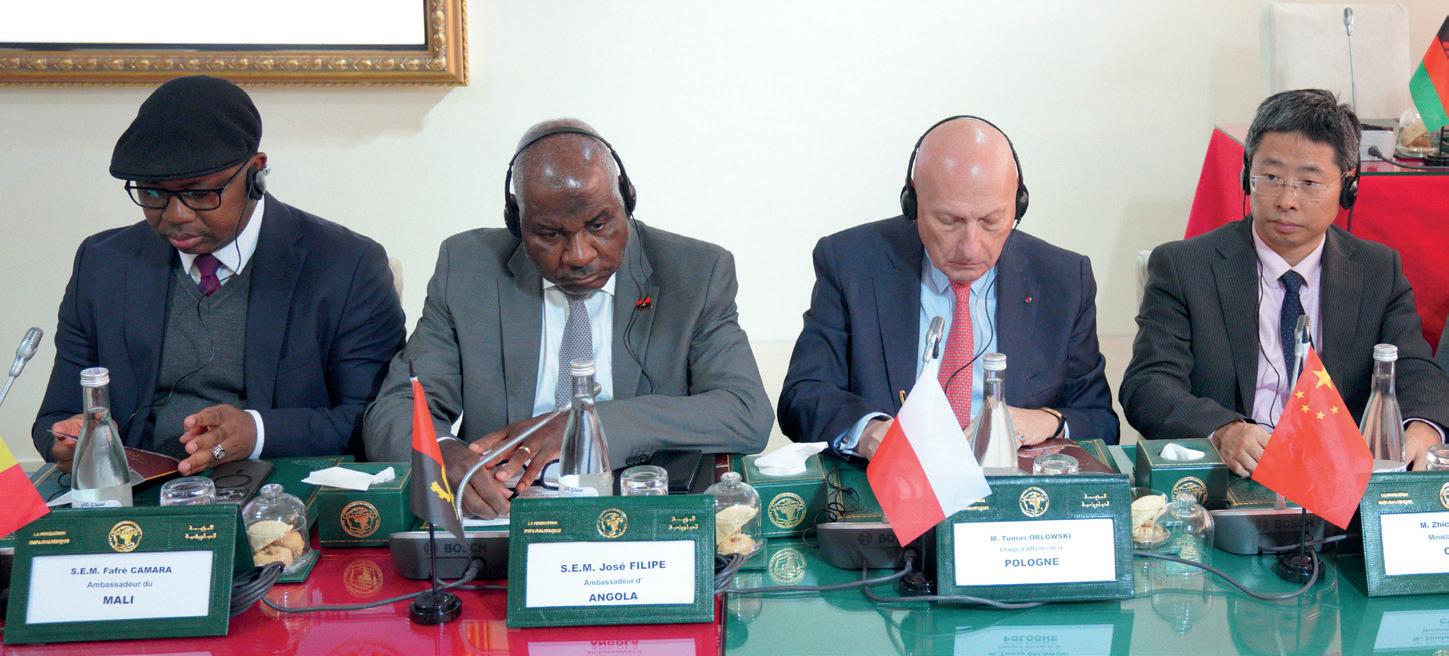
support will remain indispensable for several years in order to sustain the ongoing development momentum, as local revenues are not yet sufficient to cover the needs generated by the largescale structural projects underway in the Southern Provinces.
The discussions highlighted the scale of the transition currently underway, marked by the shift from a long-stagnant dossier to a new phase in which political initiative increasingly rests with Morocco, supported by consolidated international backing. In his concluding remarks, Ambassador Ali Achour referred to a clear “before” and “after” 31 October: previously, the United Nations proposed formulas; today, Morocco holds the initiative, and other parties are invited to respond on the
basis of an updated autonomy proposal. He outlined possible milestones in the process: popular consultation in the Southern Provinces, constitutional adaptation, settlement of the camp issue through cooperation necessary for identification and registration of individuals, followed by demilitarization, demobilization, and repatriation.
In a more ceremonial yet highly symbolic moment, Ambassador Khaled Ben Salman Ben Jabr Al Muslim, Dean of the Arab Diplomatic Corps in Morocco, paid tribute to Ms. Bouaida for the clarity of her presentation and the quality of the dialogue established during the meeting. Recalling his previous professional interactions with her, he praised a leader capable of defusing crises with composure and elegance. On be-
HAUT
Les Ambassadeurs du Mali et d'Angola et les Chargés d'Affaires de Pologne et de Chine
The Ambassadors of Mali and Angola, together with the Chargés d’Affaires of Poland and China
half of the ambassadors present, as well as the President and Secretary-General of the Diplomatic Foundation, he presented her with a medal of honour in recognition of her contribution.
Thanking the diplomats for their participation, Ms. Bouaida concluded by inviting foreign representatives to visit the GuelmimOued Noun region in order to observe firsthand the economic and social transformations underway. She proposed that this visit be coordinated with the Diplomatic Foundation so that the dialogue initiated in Rabat could continue in the field, in direct contact with territorial realities, infrastructure projects, and local stakeholders.
BAS
Mme. Bouaida reçoit l'écu de la Fondation
Mrs Bouaida receives the Foundation's Ecu
At the close of this edition, the Diplomatic Forum once again confirmed its role as a platform where Morocco presents its strategic choices, addresses international questions, and engages partners in discussions on the concrete conditions required for sustainable regional stability. In a rapidly evolving international environment, the exchanges highlighted the growing convergence between institutional reforms, economic development, and diplomatic momentum.
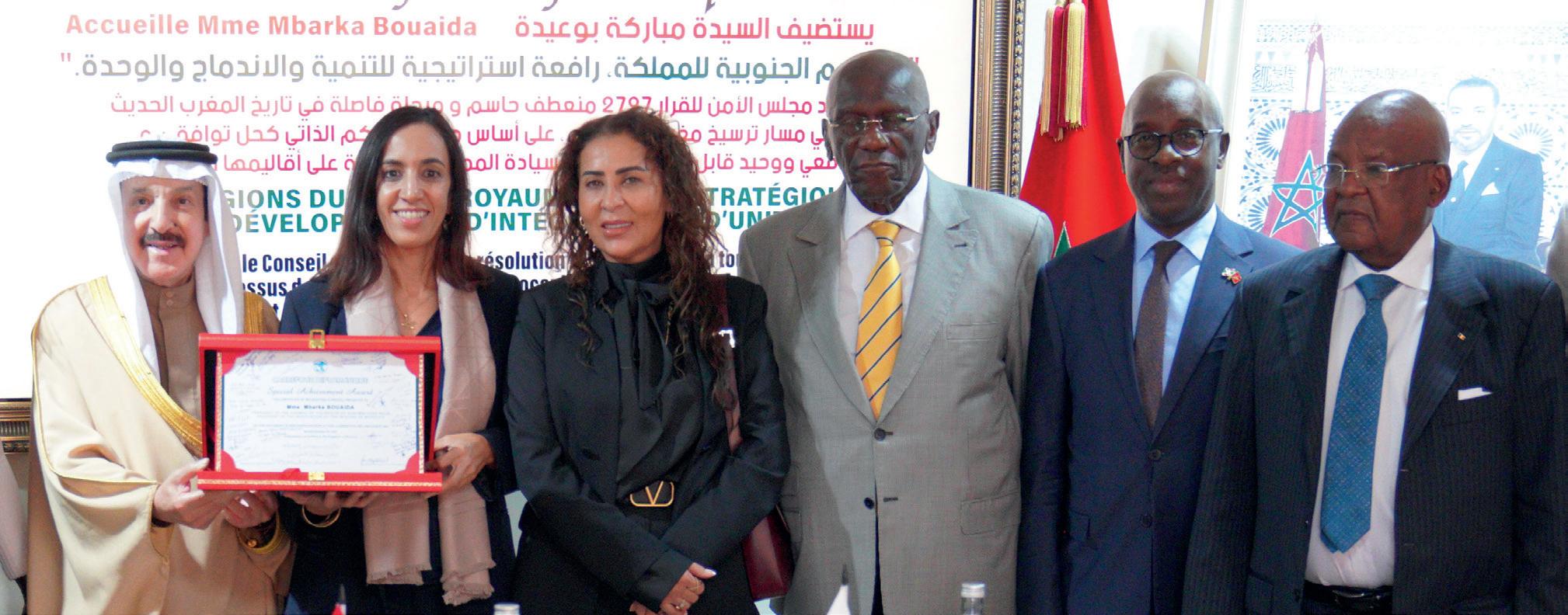
M. Nasser Bourita a reçu, vendredi 2 décembre 2025 à Rabat, M. Richard Duke Buchan III venu lui présenter les copies figurées de ses lettres de créance en tant qu'Ambassadeur Extraordinaire et Plénipotentiaire des États-Unis d'Amérique, auprès de SM le Roi Mohammed VI, que Dieu L'assiste.
MFA Nasser Bourita received, Friday, December 2, 2025 in Rabat, Mr. Richard Duke Buchan III, who presented the figured copies of his credentials as Ambassador Extraordinary and Plenipotentiary of the United States of America, to His Majesty King Mohammed VI, may God assist Him.
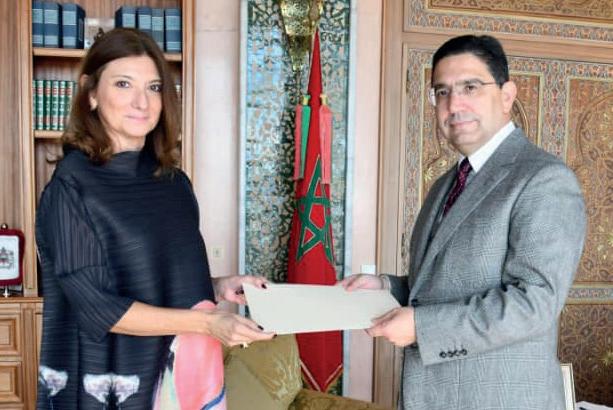
M. Nasser Bourita a reçu, vendredi 14 novembre 2025, Mme Adriana Bolaños Argueta venue lui présenter les copies figurées de ses lettres de créance en tant qu'Ambassadeur Extraordinaire et Plénipotentiaire de la République du Costa Rica avec résidence à Madrid, auprès de SM le Roi Mohammed VI, que Dieu L'assiste.
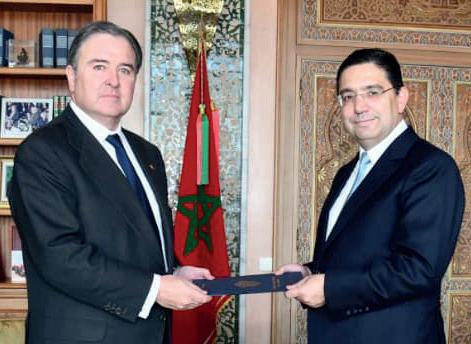
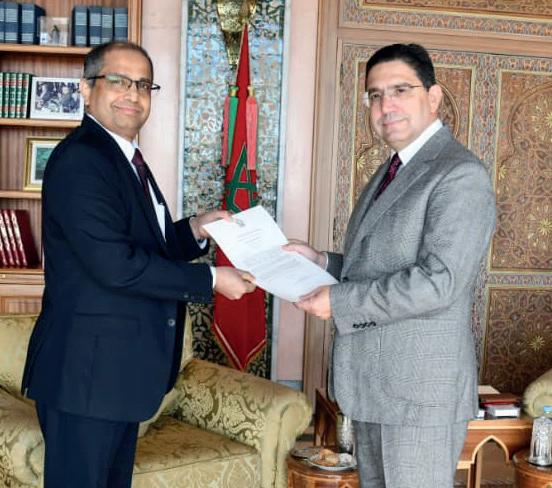
MFA Nasser Bourita received, Friday, November 14 in Rabat, Ms. Adriana Bolaños Argueta, who presented the figured copies of her credentials as Ambassador Extraordinary and Plenipotentiary of the Republic of Costa Rica with residency in Madrid to His Majesty King Mohammed VI, may God assist Him.
M. Bourita a reçu, le 14 novembre 2025, M. Sisira Senavirathne venu lui présenter les copies figurées de ses lettres de créance en tant qu'Ambassadeur Extraordinaire et Plénipotentiaire du Sri Lanka avec résidence au Caire, auprès de SM le Roi Mohammed VI.
MFA Nasser Bourita received, Friday, November 14 in Rabat, Mr. Sisira Senavirathne who presented the figured copies of his credentials as Ambassador Extraordinary and Plenipotentiary of Sri Lanka with residency in Cairo to His Majesty King Mohammed VI, may God assist Him
M. Nasser Bourita a reçu, vendredi 14 novembre 2025, M. Lincoln George Downer venu lui présenter les copies figurées de ses lettres de créance en tant qu'Ambassadeur Extraordinaire et Plénipotentiaire de la Jamaïque avec résidence à Abuja, auprès de SM le Roi Mohammed VI, que Dieu L'assiste.
MFA Nasser Bourita received, Friday, November 14 in Rabat, Mr. Lincoln George Downer who presented the figured copies of his credentials as Ambassador Extraordinary and Plenipotentiary of Jamaica with residency in Abuja to His Majesty King Mohammed VI, may God assist Him.
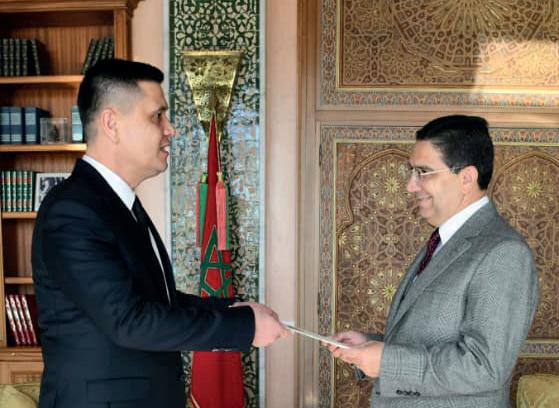
M. Nasser Bourita a reçu, vendredi 14 novembre 2025, M. Mekan Ishangulyyev venu lui présenter les copies figurées de ses lettres de créance en tant qu'Ambassadeur Extraordinaire et Plénipotentiaire du Turkménistan avec résidence à Ankara, auprès de SM le Roi Mohammed VI, que Dieu L'assiste.
MFA Nasser Bourita received, Friday, November 14 in Rabat, Mr. Mekan Ishangulyyev who presented the figured copies of his credentials as Ambassador Extraordinary and Plenipotentiary of Turkmenistan with residency in Ankara to His Majesty King Mohammed VI, may God assist Him
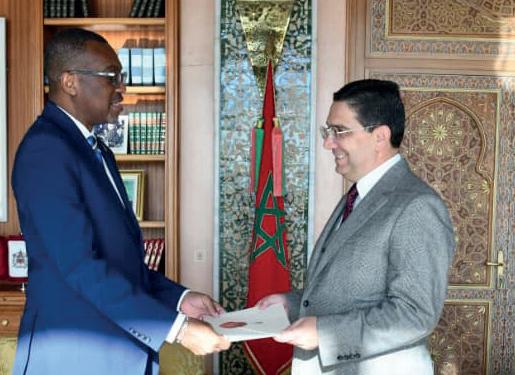
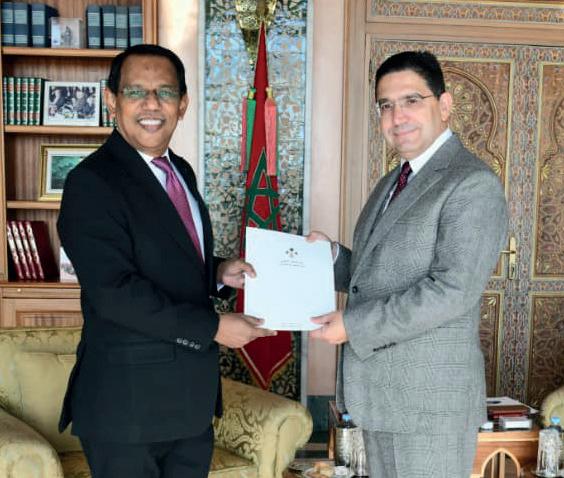
M. Nasser Bourita a reçu, vendredi 14 novembre 2025, M. Ahmed Sareer venu lui présenter les copies figurées de ses lettres de créance en tant qu'Ambassadeur Extraordinaire et Plénipotentiaire de la République des Maldives avec résidence à Riyad, auprès de SM le Roi Mohammed VI.
MFA Nasser Bourita received, Friday, November 14 in Rabat, Mr. Ahmed Sareer who presented the figured copies of his credentials as Ambassador Extraordinary and Plenipotentiary of the Republic of Maldives with residency in Riyadh to His Majesty King Mohammed VI, may God assist Him.
S.E. Khalid Bin Salim Bin Ahmed Bamakhalif, Ambassadeur du Sultanat d’Oman au Maroc, a offert, le 20 novembre 2025, une réception solennelle à l’Hôtel Marriott de Rabat, à l’occasion de la célébration de la Journée nationale du Sultanat d’Oman.
La cérémonie a réuni un large parterre de personnalités marocaines et étrangères, des membres du corps diplomatique accrédité au Maroc, ainsi que plusieurs représentants du monde politique, économique, culturel et médiatique.
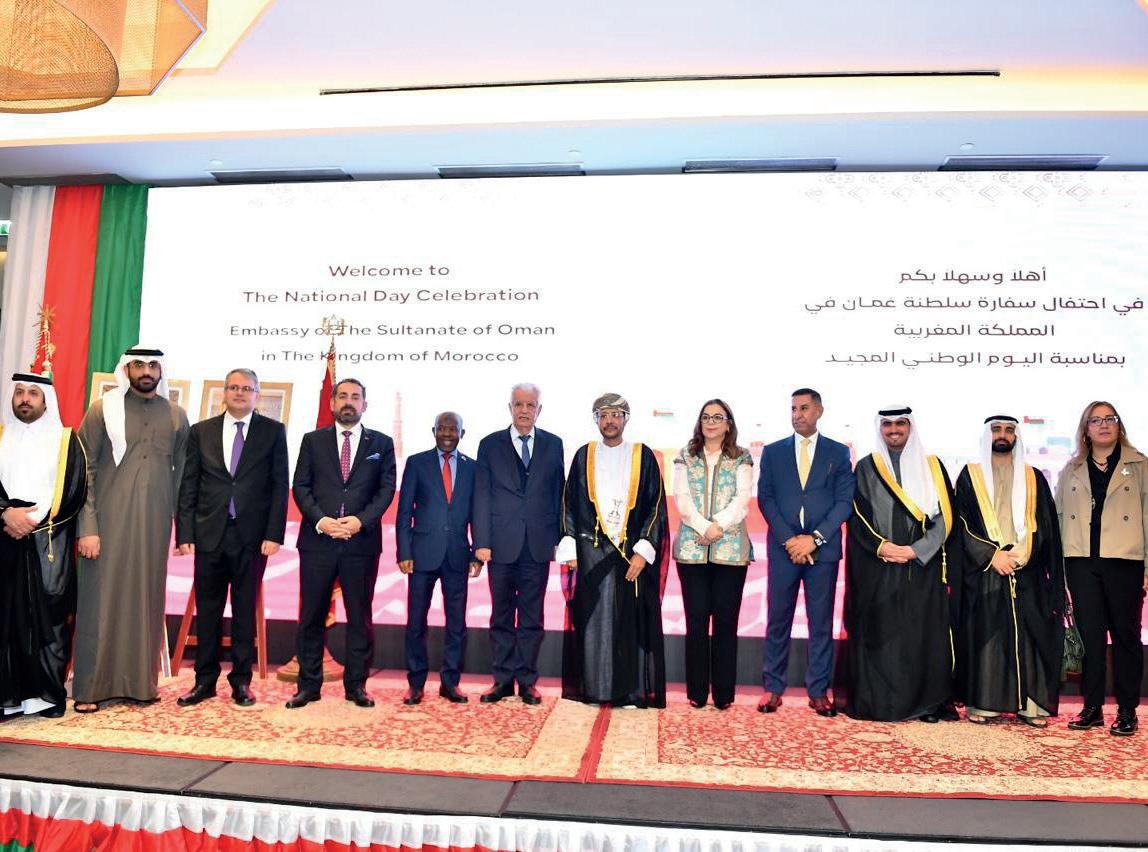
Photo de famille de S.E. l’Ambassadeur Khalid Bin Salim Bin Ahmed Bamkhalif avec un groupe d'invités
Group photo of H.E. Ambassador Khalid Bin Salim Bin Ahmed Bamakhalif with his guests of honor
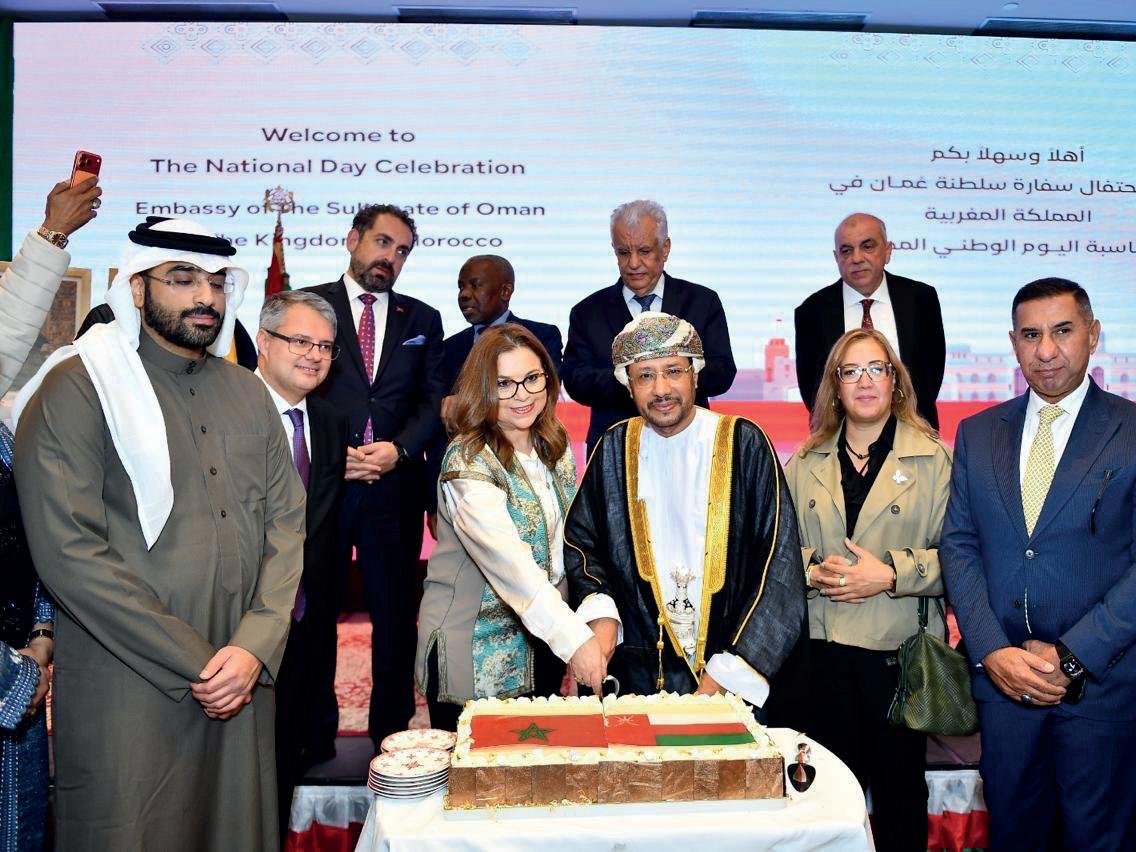
Le traditionnel gâteau d'anniversaire est découpé par la Ministre Naima Ben Yahya et l'Ambassadeur d'Oman
The traditional birthday cake was jointly cut by Minister Naima Ben Yahya and the Ambassador of Oman
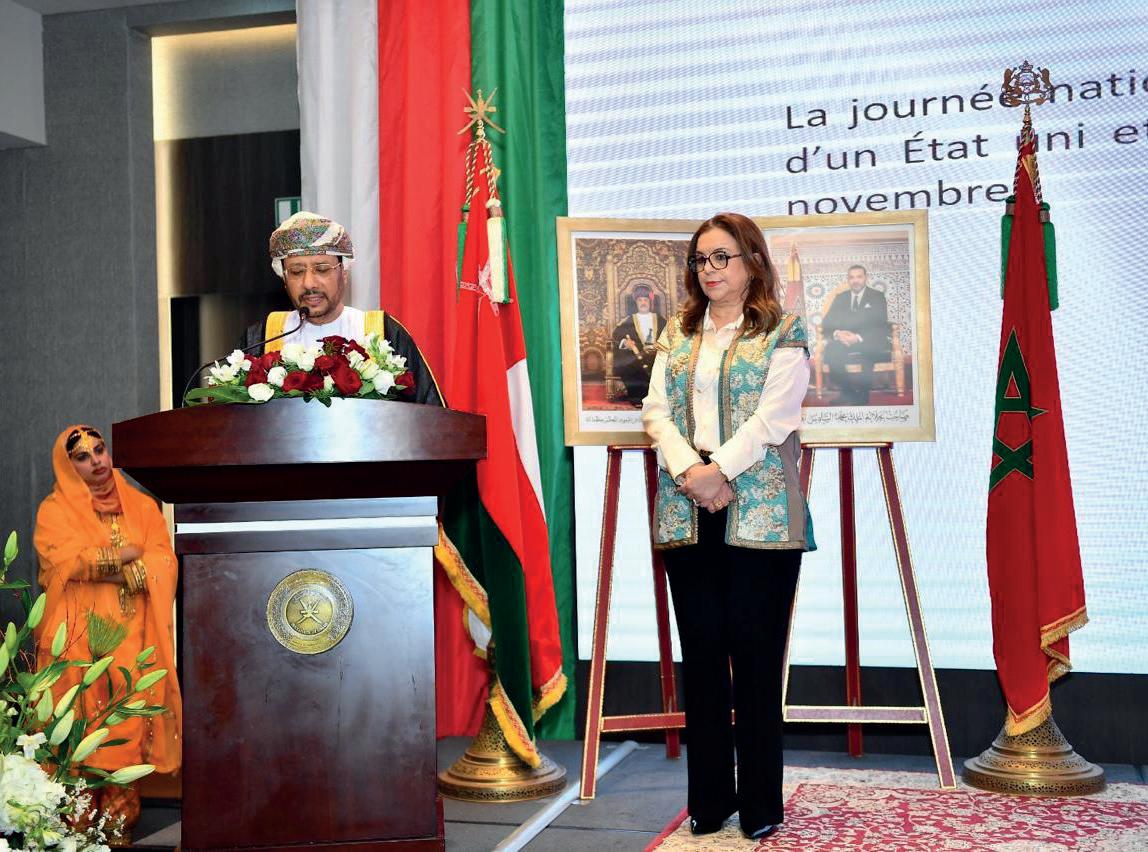
La ministre Naima Ben Yahya, représentante du Gouvernement Marocain, assiste au discours de l'Ambassadeur Minister Naima Ben Yahya, representing the Moroccan Government, attends the Ambassador’s address
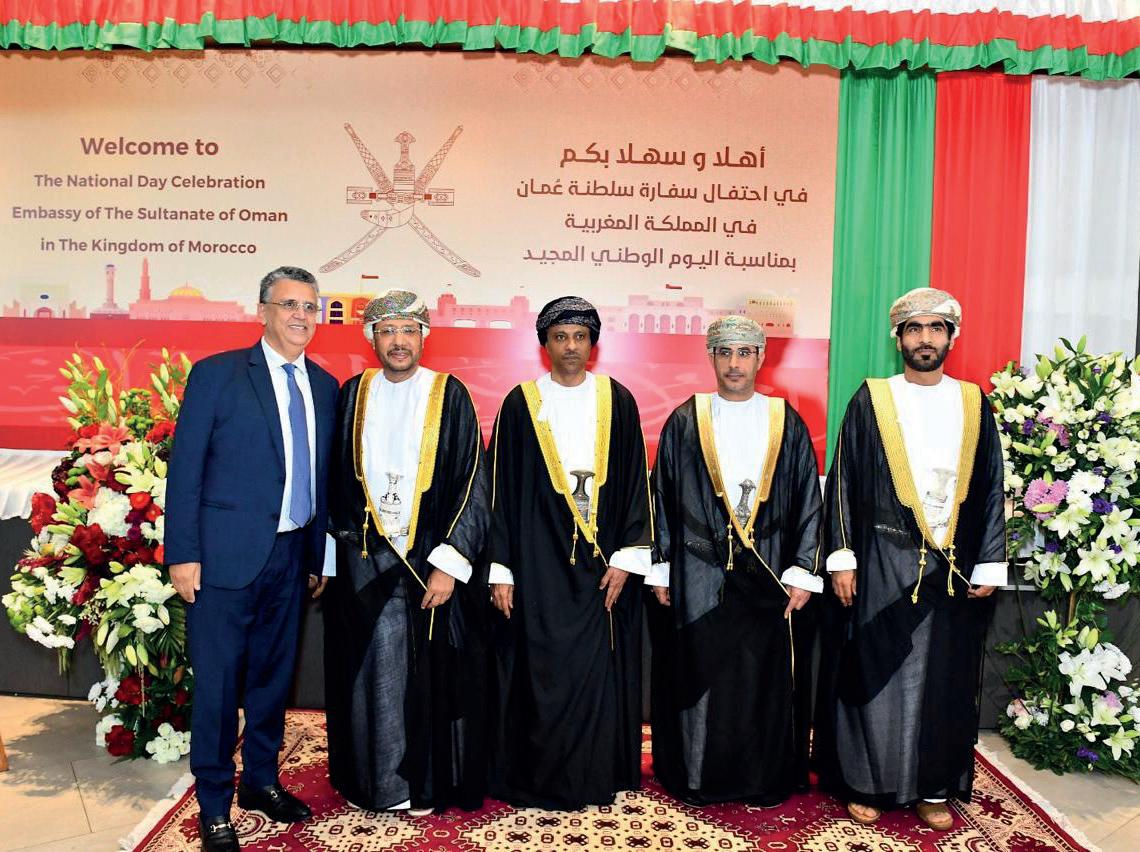
Le Ministre de la Justice accueilli par l'Ambassadeur du Sultanat d'Oman et les diplomates de l'Ambassade
The Minister of Justice welcomed by the Ambassador of the Sultanate of Oman and the diplomats of the Embassy
.E. M. Sanjay Rana, Ambassadeur de l’Inde au Maroc, a offert, le lundi 26 janvier 2026, une réception solennelle à l’Hôtel Marriott de Rabat, à l’occasion de la célébration de la Journée de la République, commémorant l’adoption de la Constitution indienne en 1950.
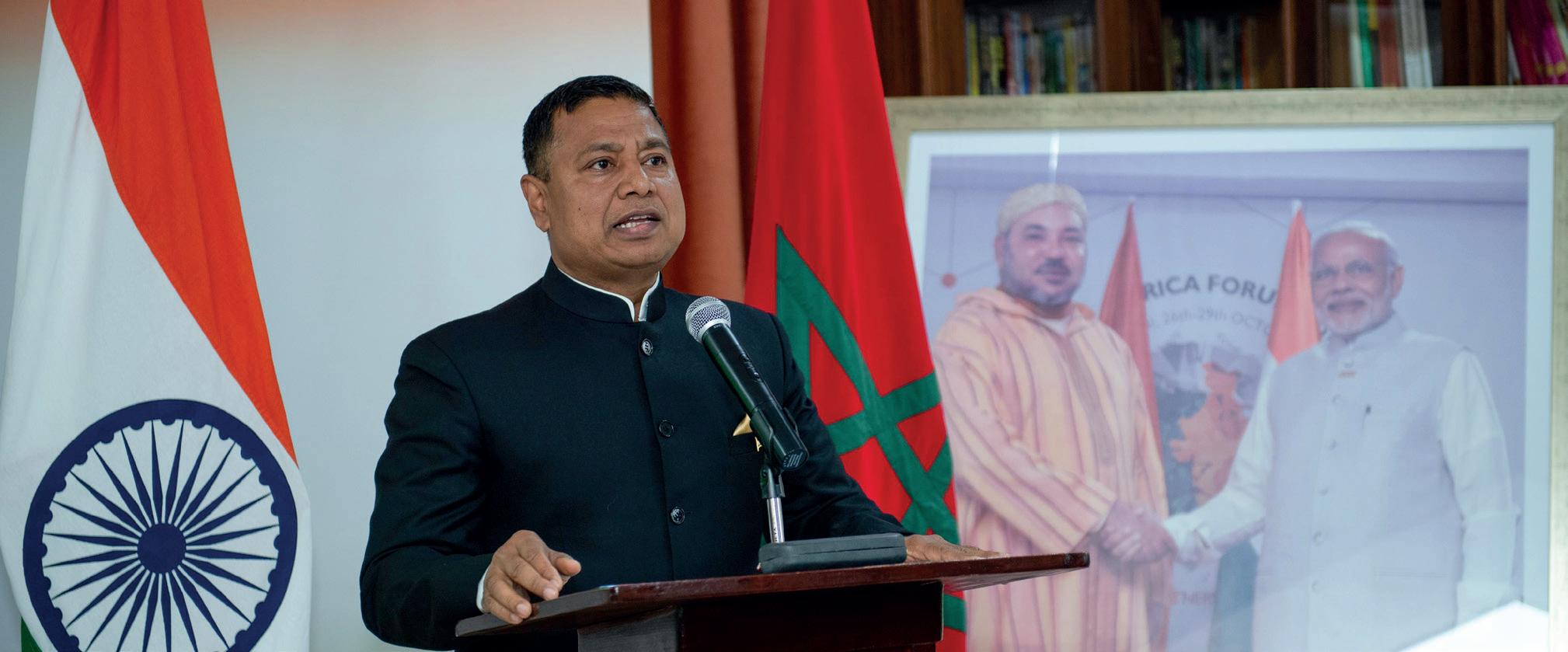
Dans son allocution, l’Ambassadeur de l’Inde, S.E. M. Sanjay RANA, a salué la solidité et la dynamique croissante des relations indo-marocaines, portées par la vision éclairée de Son Excellence le Premier ministre Narendra Modi et de Sa Majesté le Roi Mohammed VI. Il a mis en exergue un partenariat fondé sur des valeurs partagées, un agenda commun orienté vers l’innovation et le développement durable, ainsi qu’une coopération pragmatique illustrée par des projets concrets dans des secteurs stratégiques.
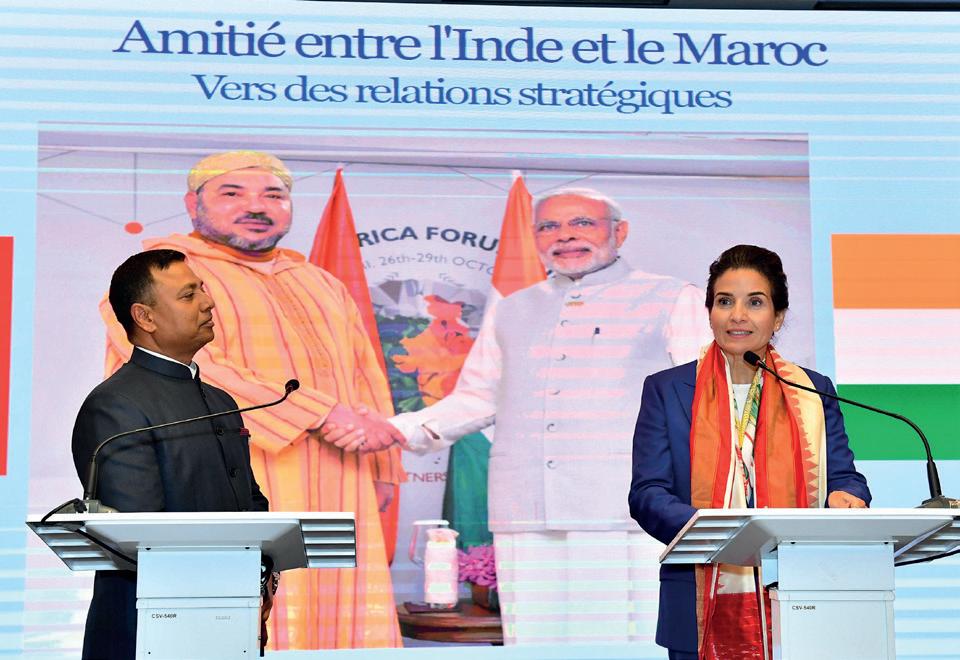
La représentante du gouvernement marocain, Mme. Leila Benali, Ministre de la Transition énergétique et du Développement durable prononce son discours
The representative of the Moroccan Government, Ms. Leila Benali, Minister of Energy Transition and Sustainable Development, delivers her address
In his address, H.E. Mr. Sanjay RANA, Ambassador of India, highlighted the strength and growing momentum of Indo-Moroccan relations, driven by the visionary leadership of His Excellency Prime Minister Narendra Modi and His Majesty King Mohammed VI. He underscored a partnership built on shared values, a common agenda focused on innovation and sustainable development, and pragmatic cooperation reflected in concrete projects across key strategic sectors.
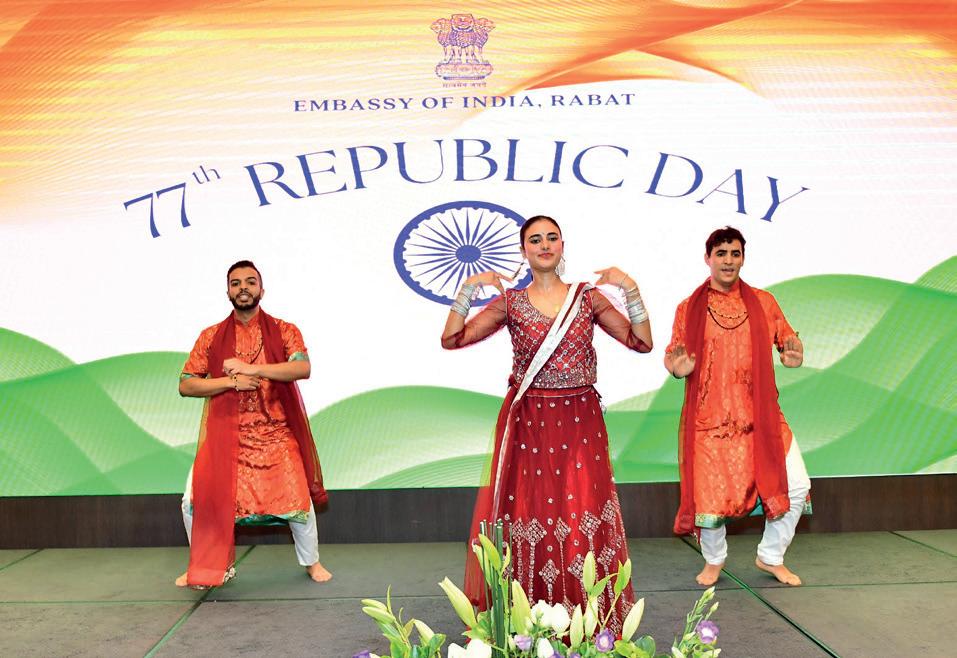
Une représentation artistique haute en couleurs a illustré la richesse du patrimoine culturel indien lors de la célébration de la Fête nationale de l’Inde à Rabat
A vibrant artistic performance highlighted the richness of India’s cultural heritage during the celebration of India’s National Day in Rabat
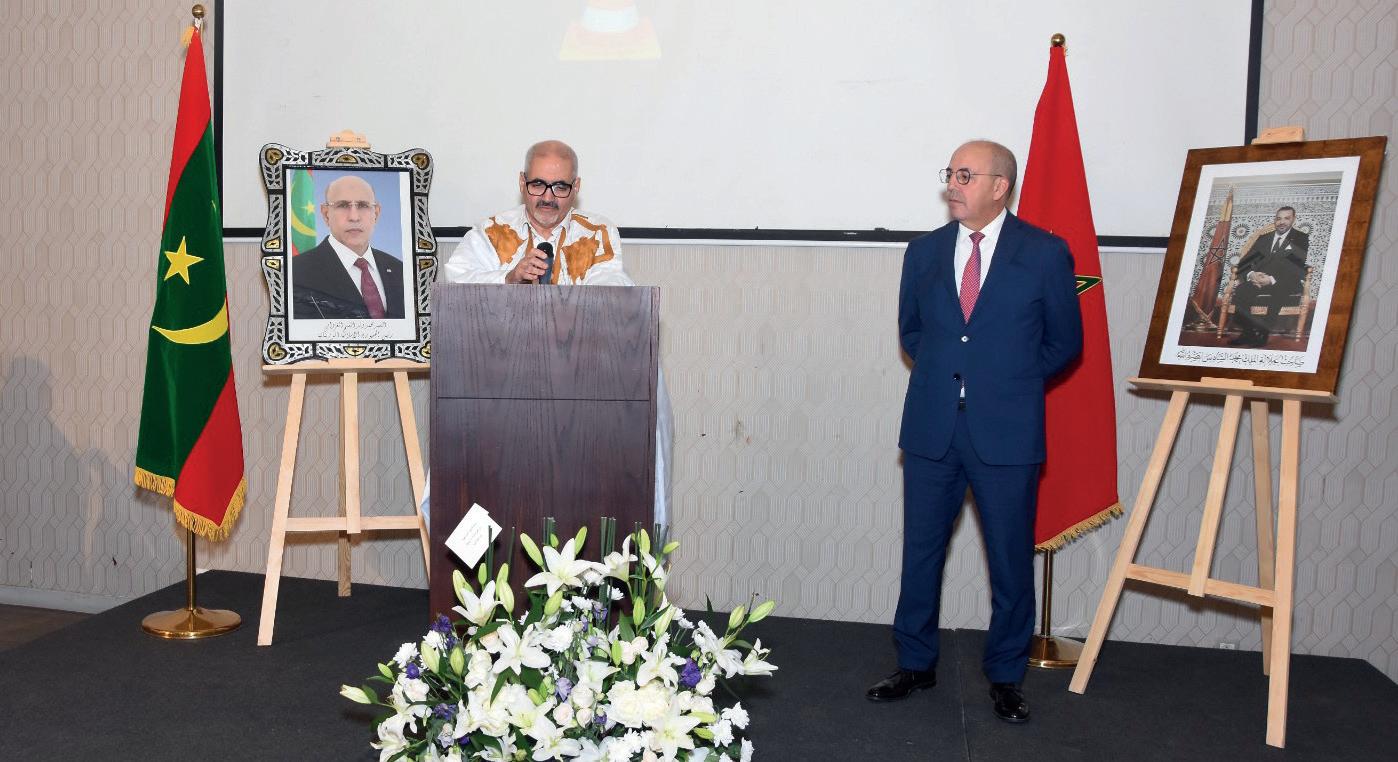
L’Ambassade de la République islamique de Mauritanie au Maroc a organisé, à l’occasion du 65ème anniversaire de la Fête nationale de l’indépendance, une réception officielle présidée par l’Ambassadeur, S.E.M. Ahmed Ould Bahiya. L’événement s’est tenu le vendredi 28 novembre 2025 à l’hôtel Dawliz à Rabat, réunissant invités officiels, membres du corps diplomatique et personnalités marocaines et étrangères pour célébrer cet anniversaire marquant de l’histoire nationale mauritanienne
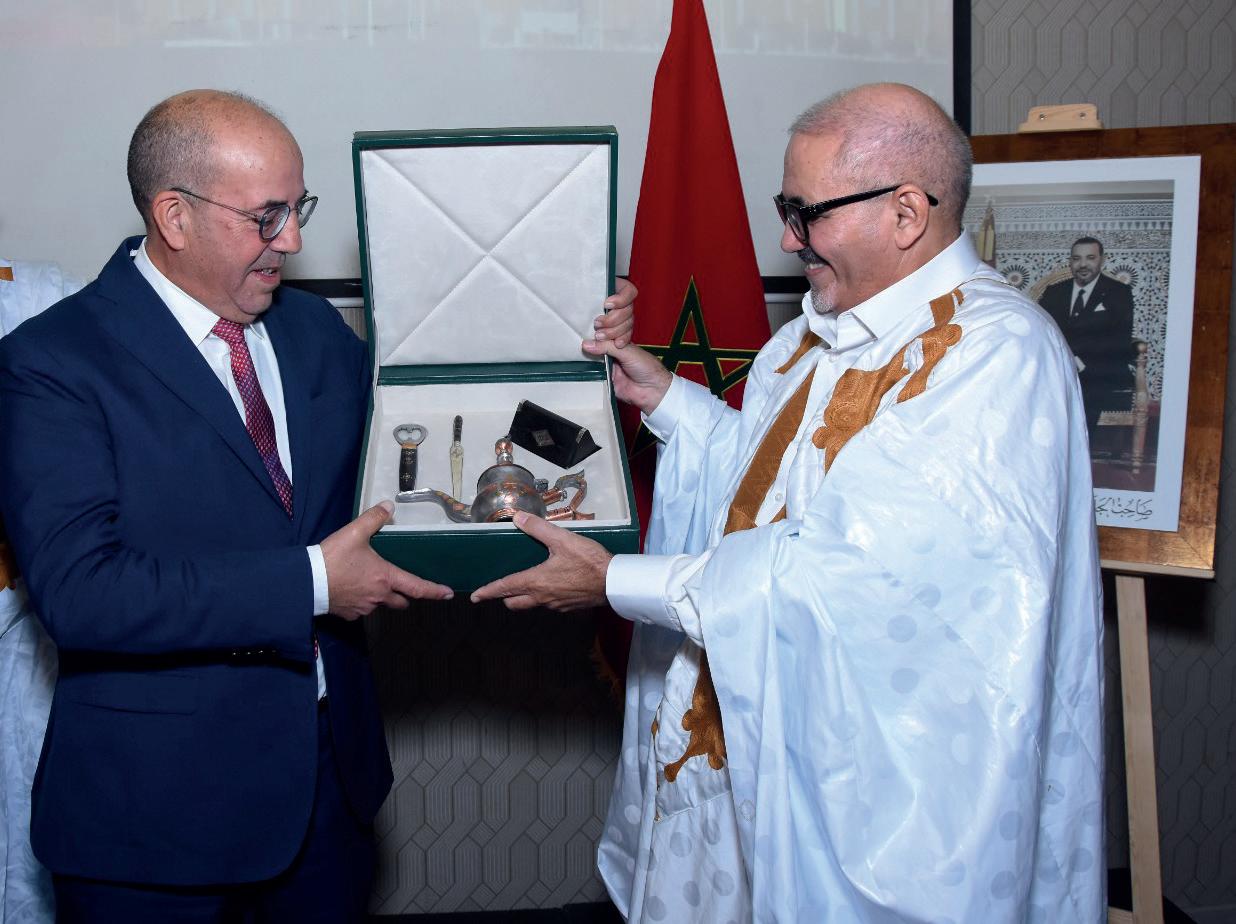
The Embassy of the Islamic Republic of Mauritania in Morocco organized an official reception on the occasion of the 65th anniversary of Independence Day, presided over by the Ambassador, H.E. Mr. Ahmed Ould Bahiya. The event took place on Friday, November 28, 2025, at 6:30 p.m. at the Dawliz Hotel in Rabat, bringing together official guests, members of the diplomatic corps, and Moroccan and international personalities to celebrate this significant milestone in Mauritania’s national history
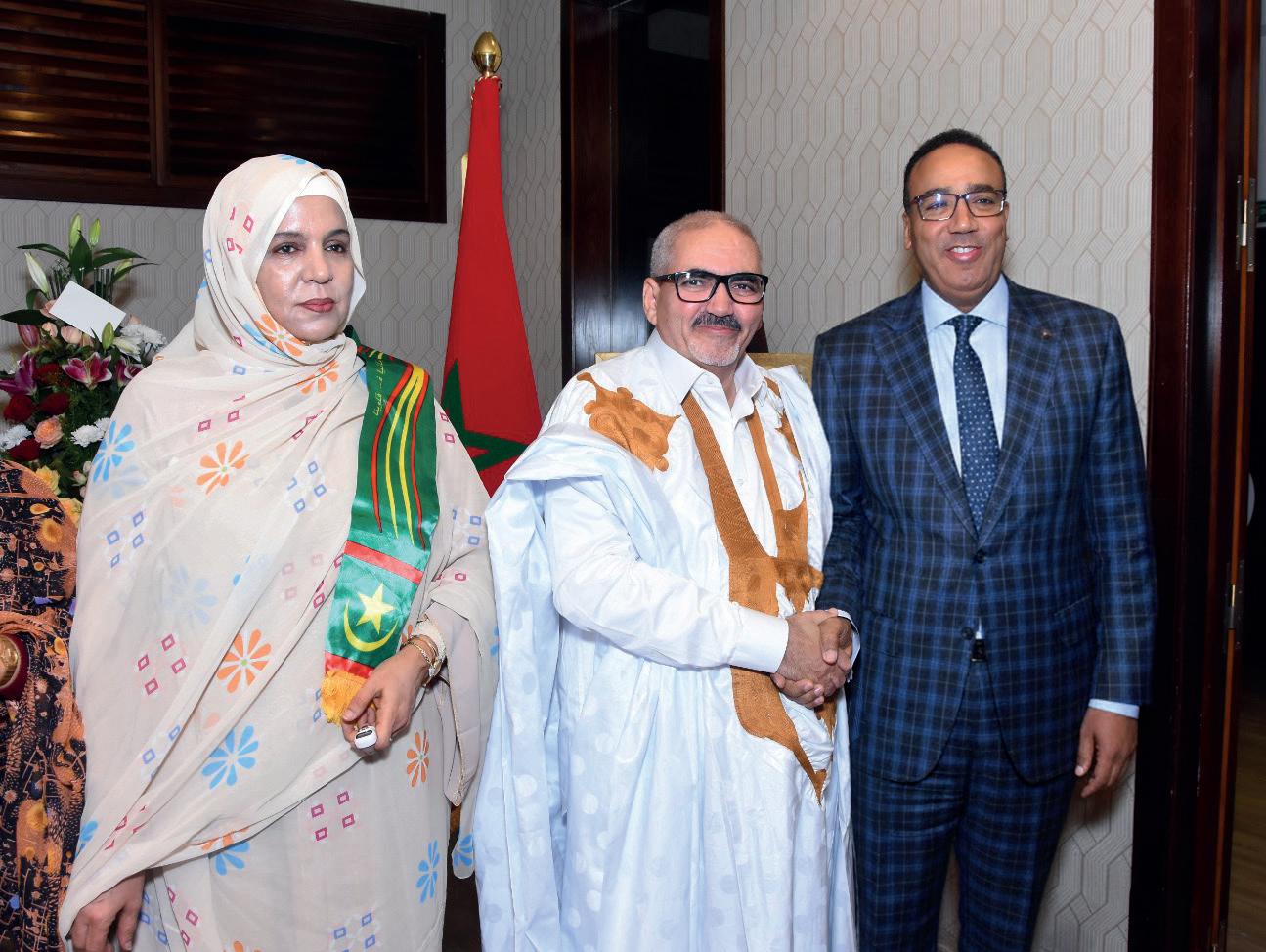
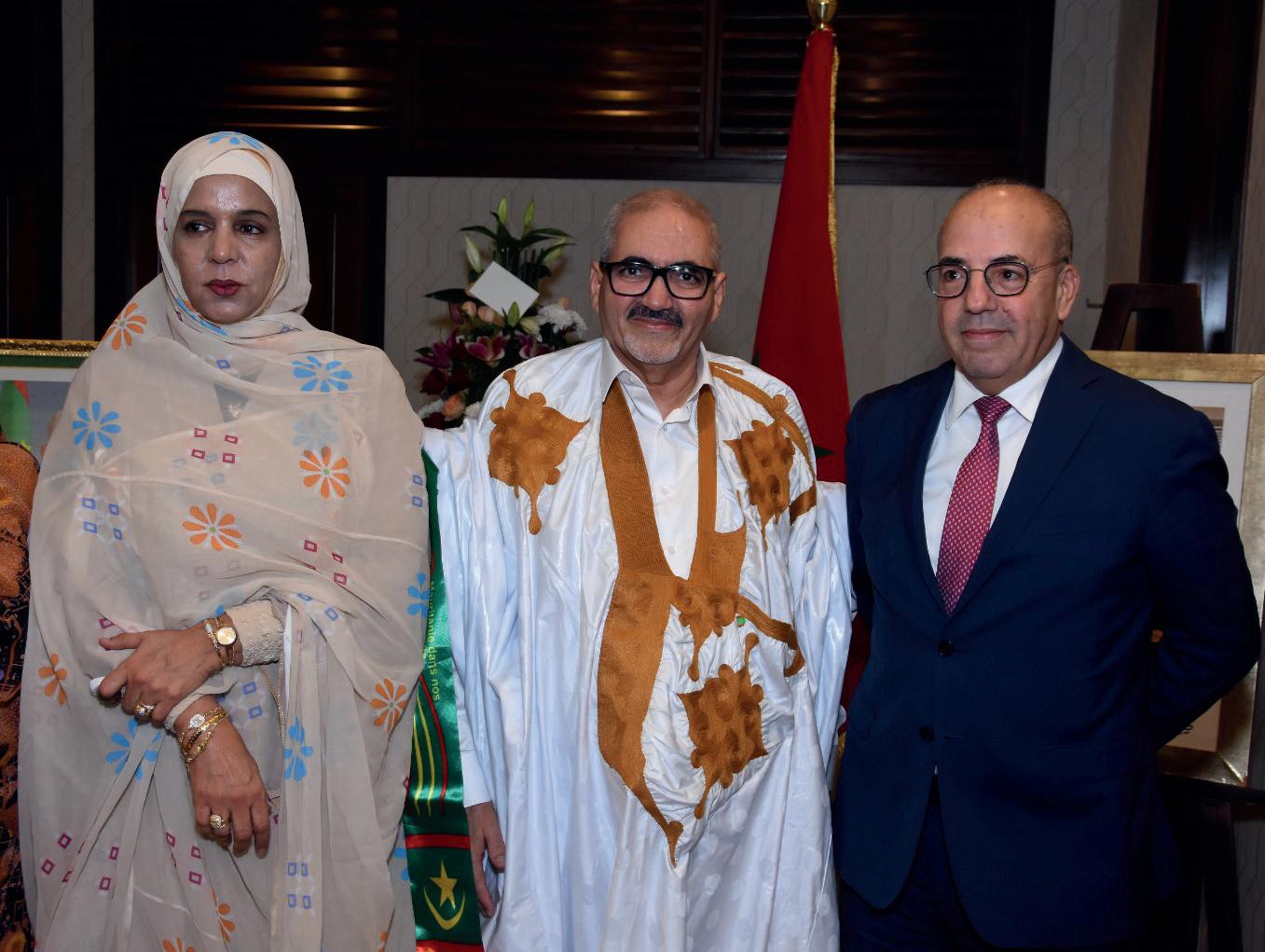
L'Ambassadeur de Mauritanie et la Consule Générale de la Mauritanie à Casablanca. reçoivent le représentant du gouvenement marocain, M. Ahmed El Bouari, Ministre de l’Agriculture, de la Pêche maritime, du Développement rural et des Eaux et Forêts qui a donné un discours à cette occasion
The Ambassador of Mauritania and the Consul General of Mauritania in Casablanca receive the representative of the Moroccan Government, Mr. Ahmed El Bouari, Minister of Agriculture, Maritime Fisheries, Rural Development and Water and Forests, who delivered a speech on this occasion
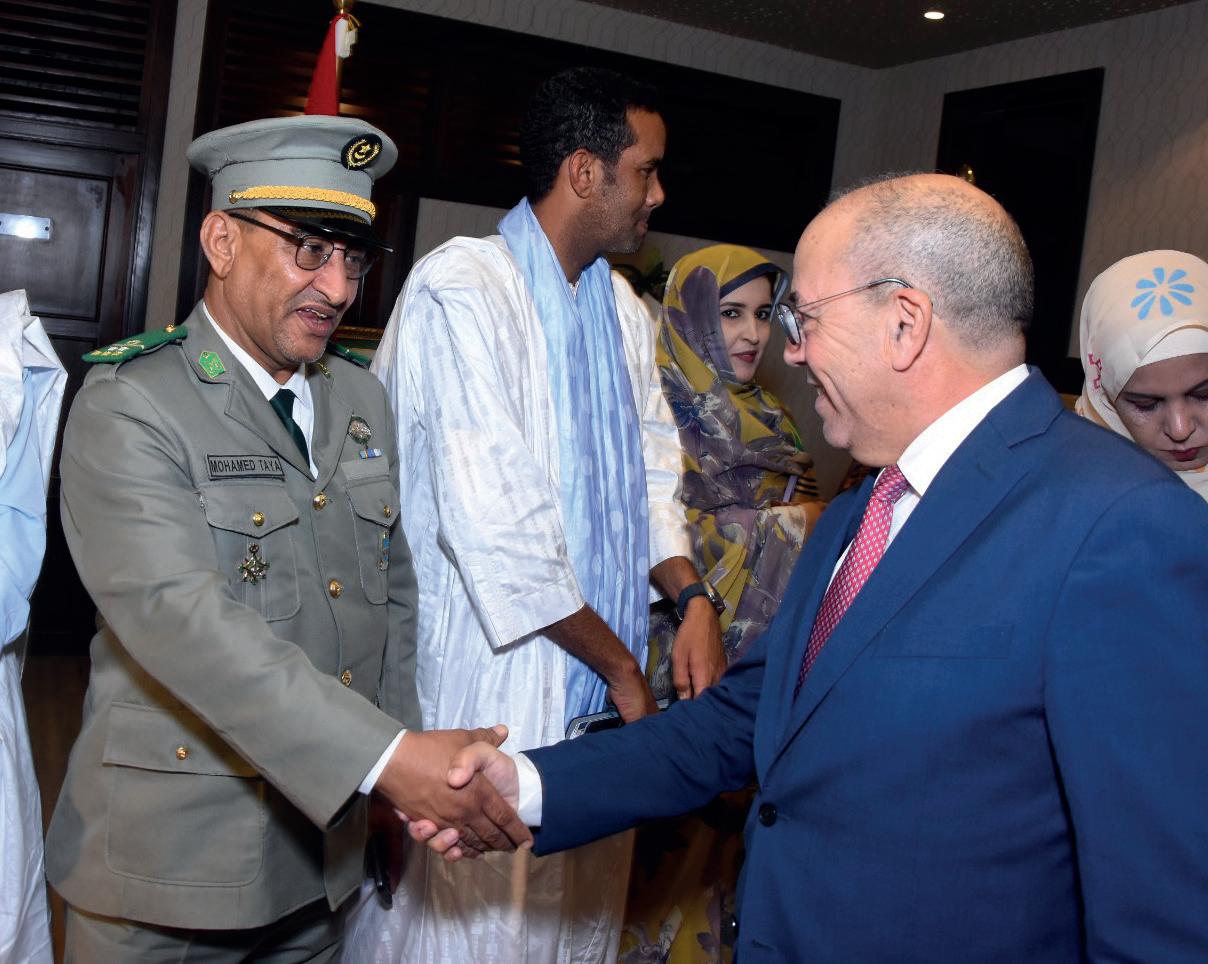
L'Attaché Militaire Adjoint près l'Ambassade de Mauritanie à Rabat, le Lt Colonel Mohamed El Kory Ould Taya souhaite la bienvenue à M. Ahmed El Bouari, Ministre de l’Agriculture, de la Pêche maritime, du Développement rural et des Eaux et Forêts
The Deputy Military Attaché at the Embassy of Mauritania in Rabat, Lieutenant Colonel Mohamed El Kory Ould Taya, welcomes Mr. Ahmed El Bouari, Minister of Agriculture, Maritime Fisheries, Rural Development, and Water and Forests
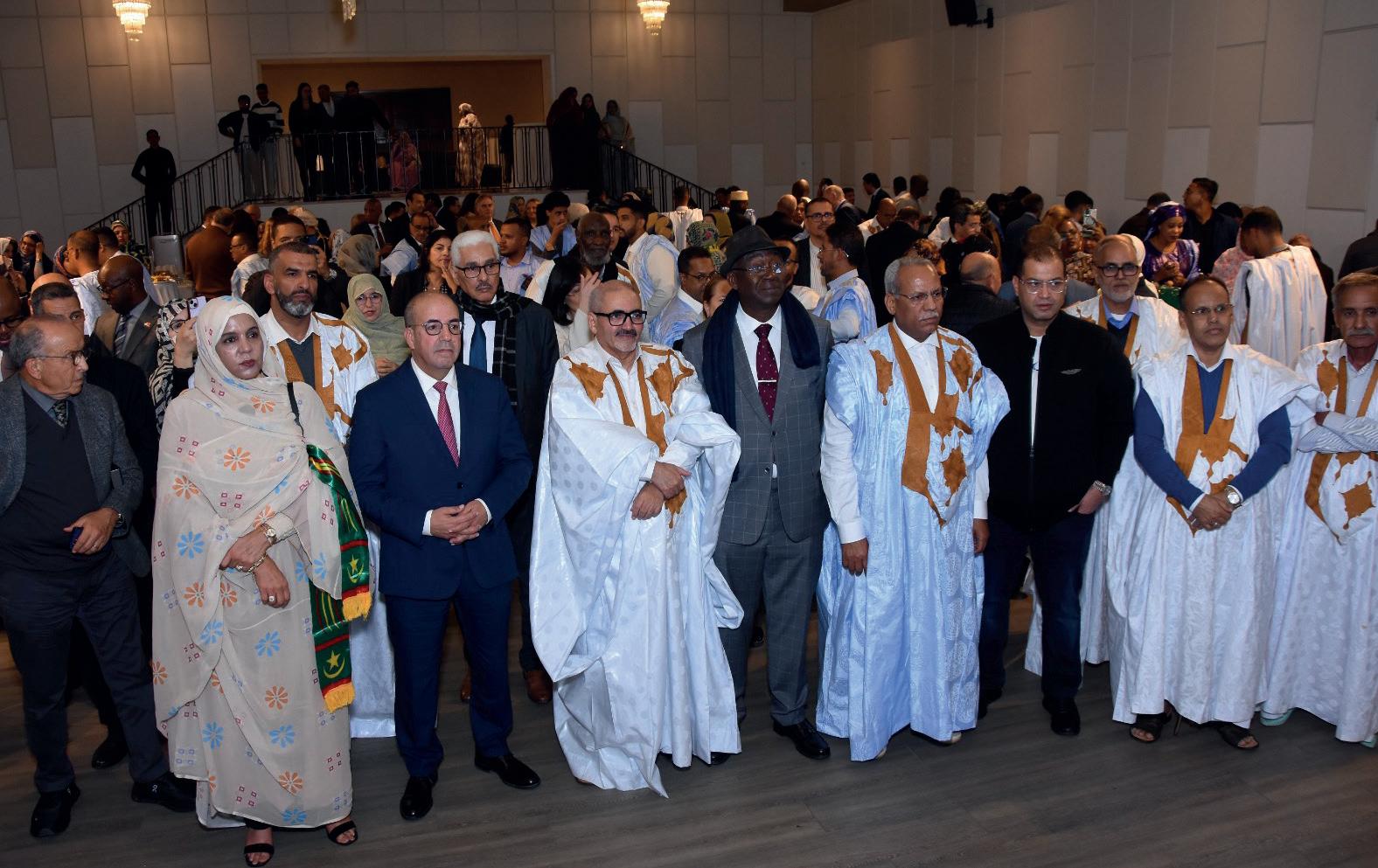
S.E. M. Fabio Chinda, Ambassadeur du Royaume de Thaïlande au Maroc, et son épouse ont offert, le mardi 2 décembre 2025, une réception à l’Ambassade Royale de Thaïlande à Rabat, à l’occasion de la célébration de la Fête nationale du Royaume de Thaïlande. La cérémonie a réuni un large parterre de personnalités marocaines et étrangères, des membres du corps diplomatique accrédité au Maroc, ainsi que plusieurs représentants des sphères politique, économique, culturelle et médiatique.
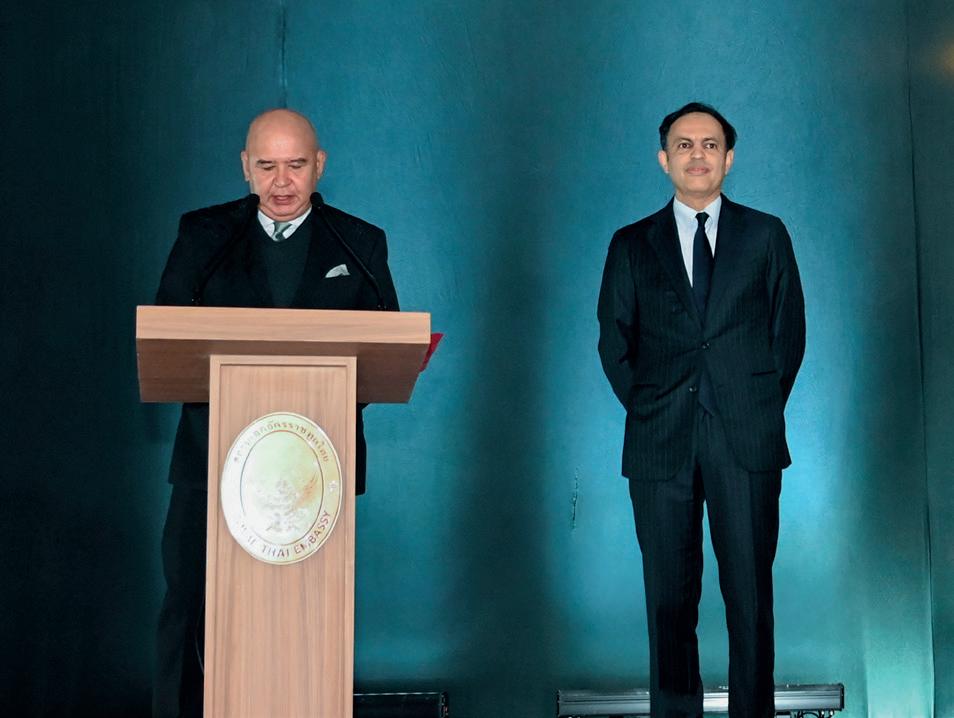
L'Ambassadeur de Thaïlande et le représentant du gouvernement marocain, le Ministre Younes Sekkouri
The Ambassador of Thailand and the representative of the Moroccan Government, Minister Younes Sekkouri
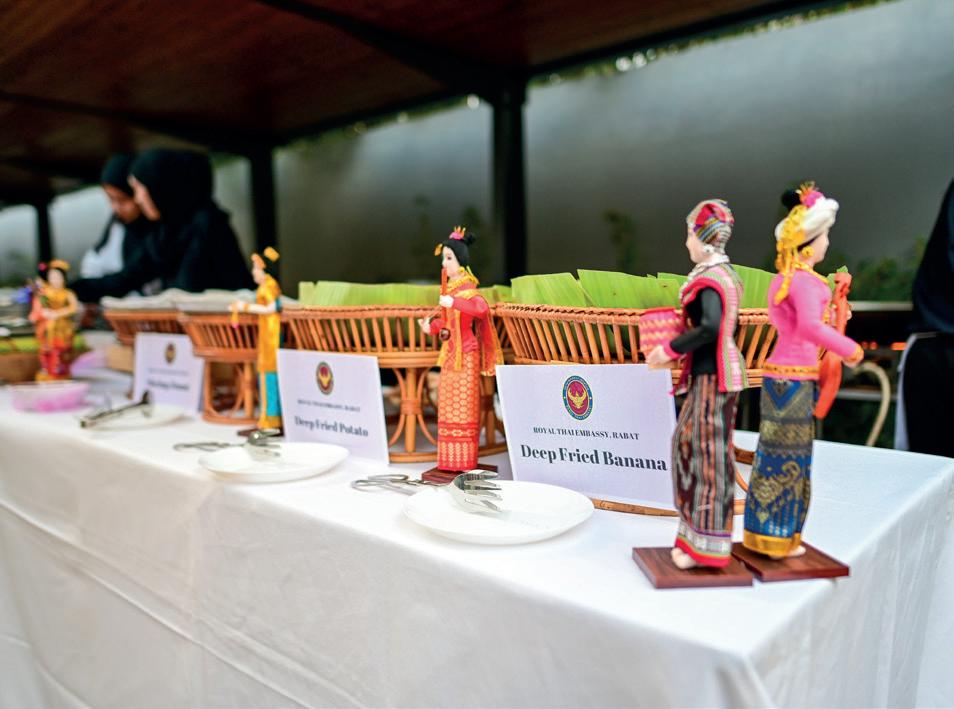
De délicieuses spécialités gastronomiques thaïes présentées au sein d'un buffet richement décoré Delicious Thai gastronomic specialties presented within a richly decorated buffet
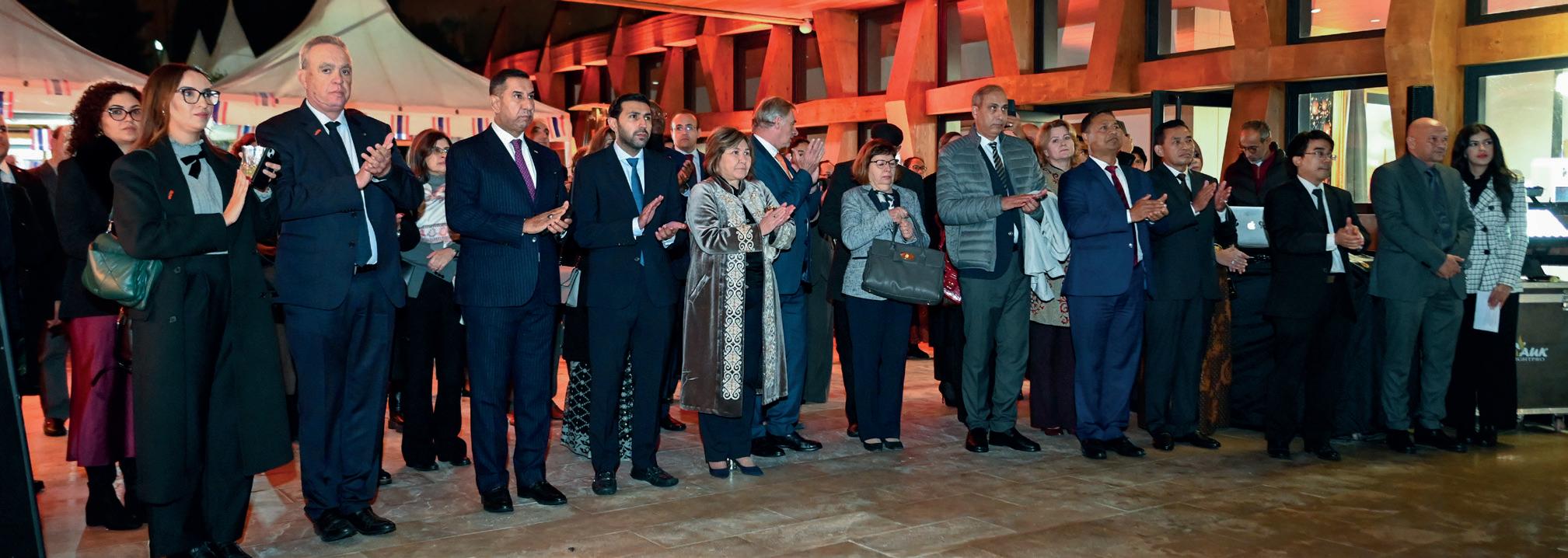
Les Ambassadeurs du Corps Diplomatique étranger accrédité au Maroc ainsi que les nombreux autres amis de la Thaïlande au Maroc ont salué le discours de l'Ambassadeur Fabio Chinda rappelant le niveau des relations bilatérales avec le Maroc
The Ambassadors of the foreign Diplomatic Corps accredited in Morocco, together with the many other friends of Thailand in the Kingdom, welcomed Ambassador Fabio Chinda’s address, in which he recalled the high level of bilateral relations with Morocco
S.E.M. Damien Donavan, Ambassadeur d’Australie, a offert, le jeudi 5 février 2026, un dîner de gala à l’occasion de la Fête nationale d’Australie. Cette édition, hautement symbolique, coïncide avec le cinquantième anniversaire des relations bilatérales entre l’Australie et le Maroc, illustrant la solidité d’un partenariat fondé sur l’amitié, le respect mutuel et une coopération croissante.
La réception a réuni de nombreuses personnalités marocaines et étrangères ainsi que les membres du corps diplomatique accrédité au Maroc. Le gouvernement marocain y était représenté par M. Ahmed El Bouari, Ministre de l’Agriculture, de la Pêche maritime, du Développement rural et des Eaux et Forêts
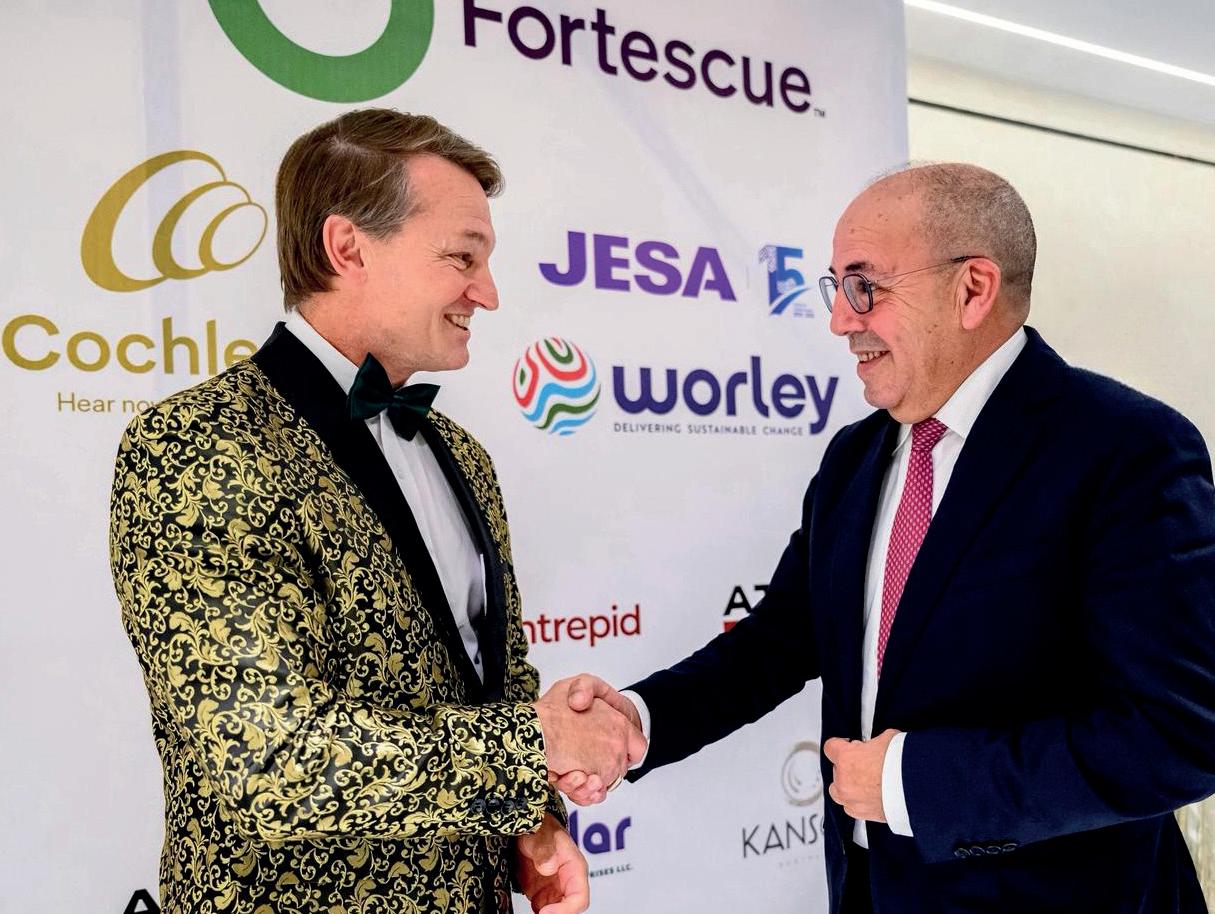
L’Ambassadeur d’Australie, S.E.M. Damien Donavan, aux et le Ministre Ahmed Bouari lors du gala
The Ambassador of Australia, H.E. Mr. Damien Donavan, and Minister Ahmed Bouari during the gala
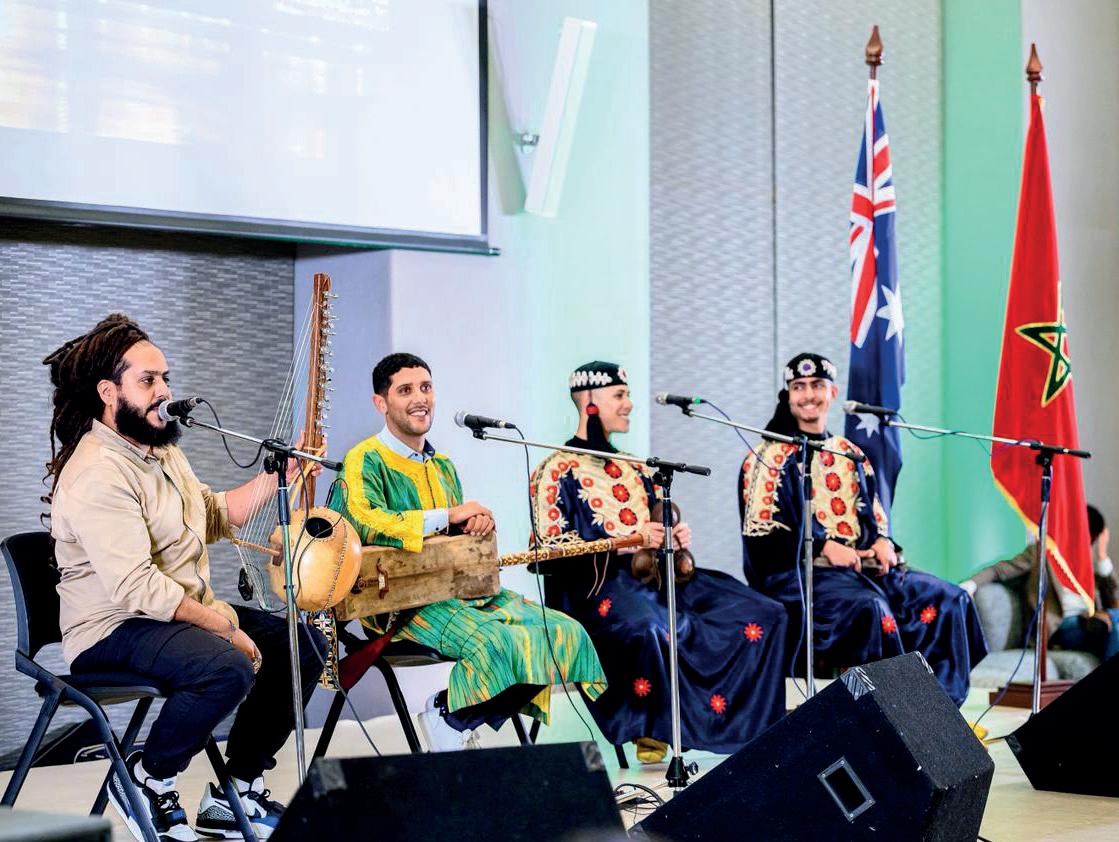
Julian Belbachir, artiste australo-marocain, et son groupe sur scène, partageant une performance de gnawa fusion
Julian Belbachir, Australian-Moroccan artist, and his band on stage, delivering a Gnawa fusion performance
DIPLOMATICA
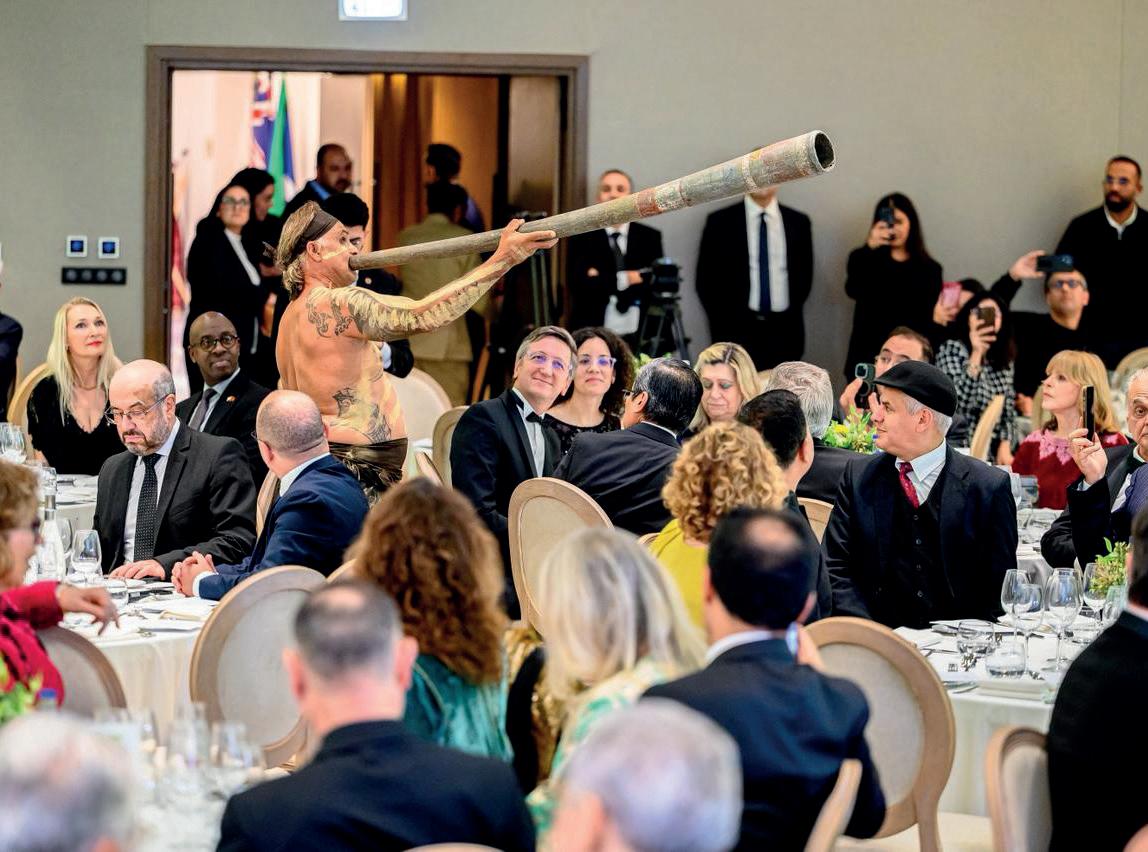
Dhinawan Baker, artiste des Premières Nations d’Australie et ambassadeur culturel, en performance lors du gala
Dhinawan Baker, Australian First Nations artist and cultural ambassador, performing at the gala
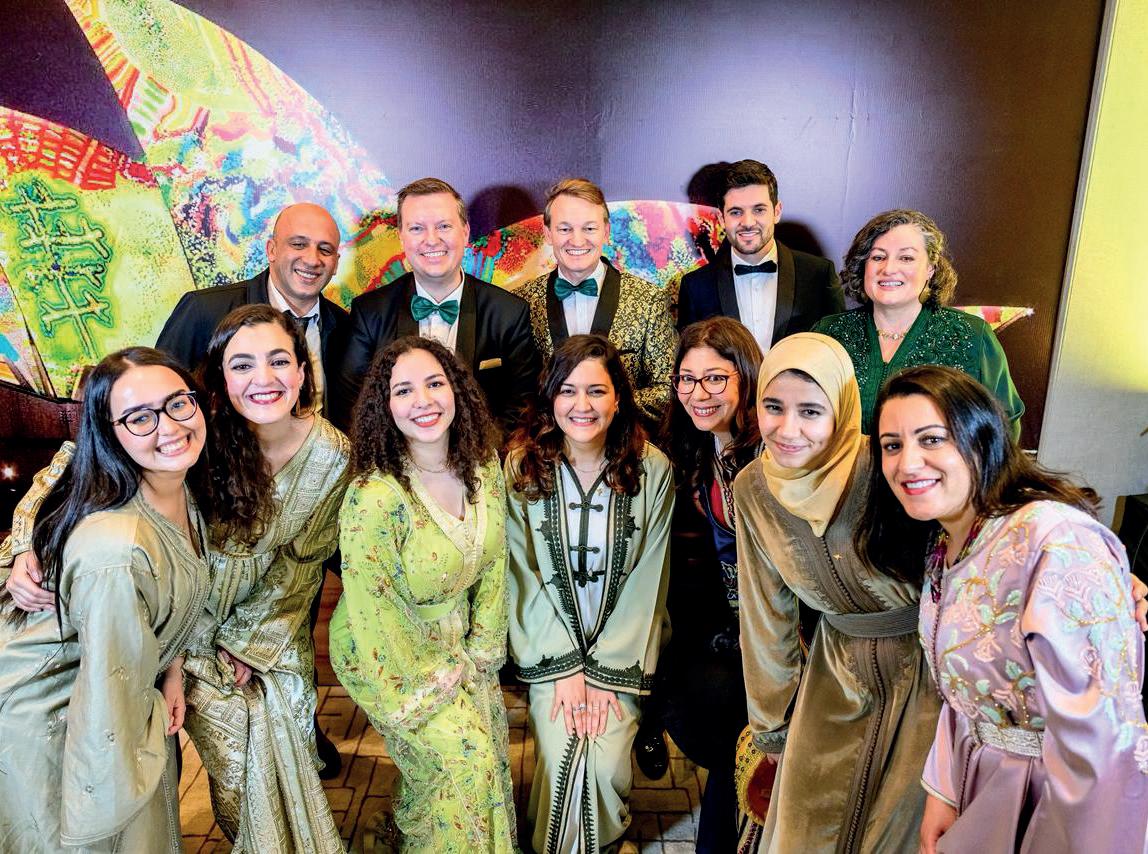
L’équipe de l’Ambassade d’Australie devant une toile de fond de l'Opéra de Sydney illuminé de motifs aborigènes
The Embassy of Australia team with a backdrop featuring the Sydney Opera House illuminated with Aboriginal motifs
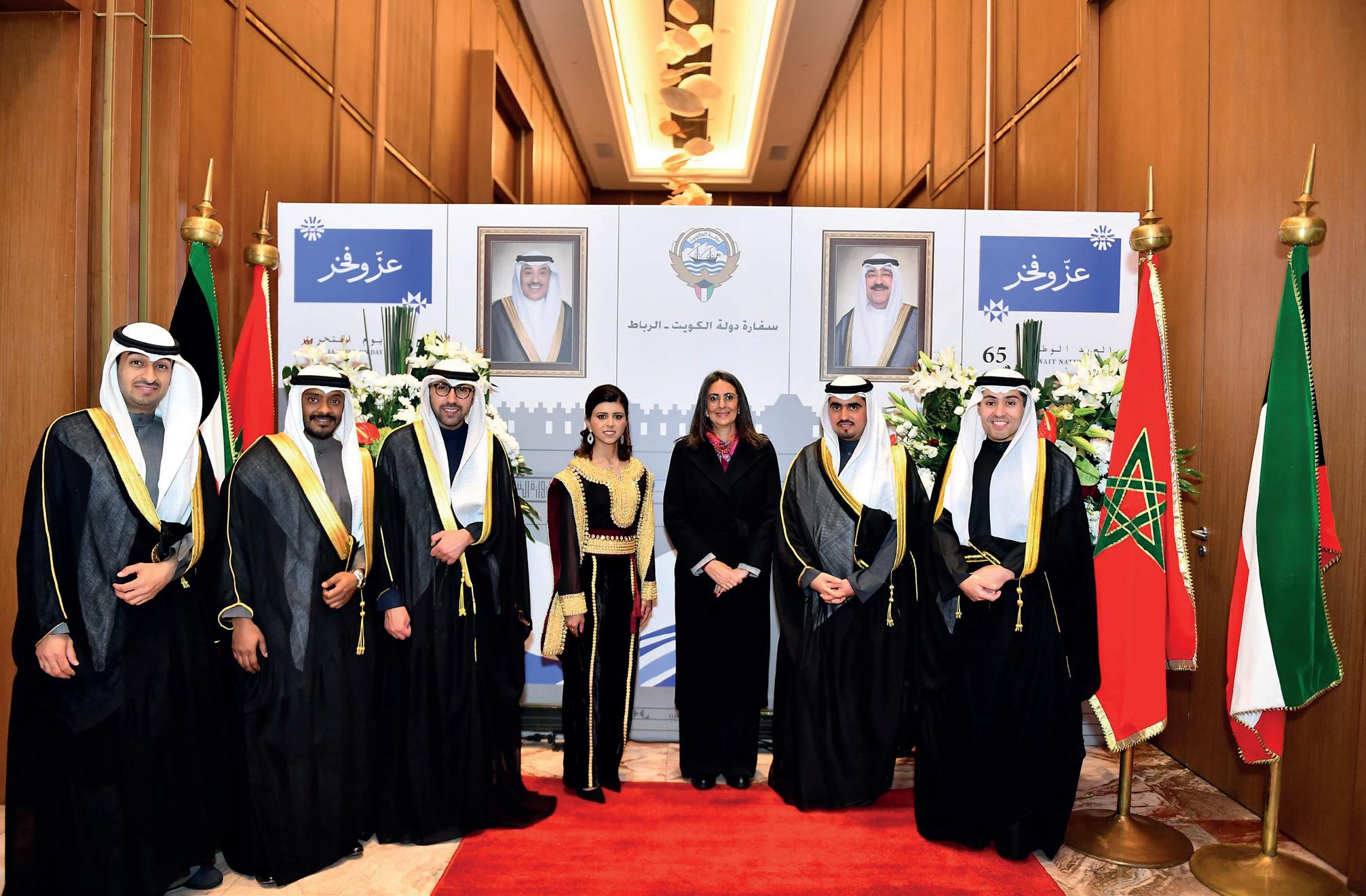
Àl’occasion du soixante-cinquième anniversaire de la fête nationale de l’État du Koweït et du trente-cinquième anniversaire de la Journée de la Libération, l’Ambassade de l’État du Koweït au Royaume du Maroc a offert, le mardi 3 février 2026, une réception officielle organisée à l’hôtel Four Seasons Rabat. Cette réception, présidée par le Chargé d’Affaires de l’Ambassade, M. Saud Mansour Al-Mutairi, a réuni de nombreuses personnalités marocaines et étrangères, des membres du corps diplomatique accrédité à Rabat, ainsi que des représentants des milieux politique, économique et culturel
Onthe occasion of the sixty-fifth anniversary of the National Day of the State of Kuwait and the thirty-fifth anniversary of Liberation Day, the Embassy of the State of Kuwait to the Kingdom of Morocco hosted an official reception on Tuesday, February 3, 2026, at the Four Seasons Hotel Rabat. The reception, presided over by the Embassy’s Chargé d’Affaires, Mr. Saud Mansour Al-Mutairi, brought together numerous Moroccan and foreign personalities, members of the diplomatic corps accredited in Rabat, as well as representatives from the political, economic, and cultural sectors
DIPLOMATICA FÊTE NATIONALE
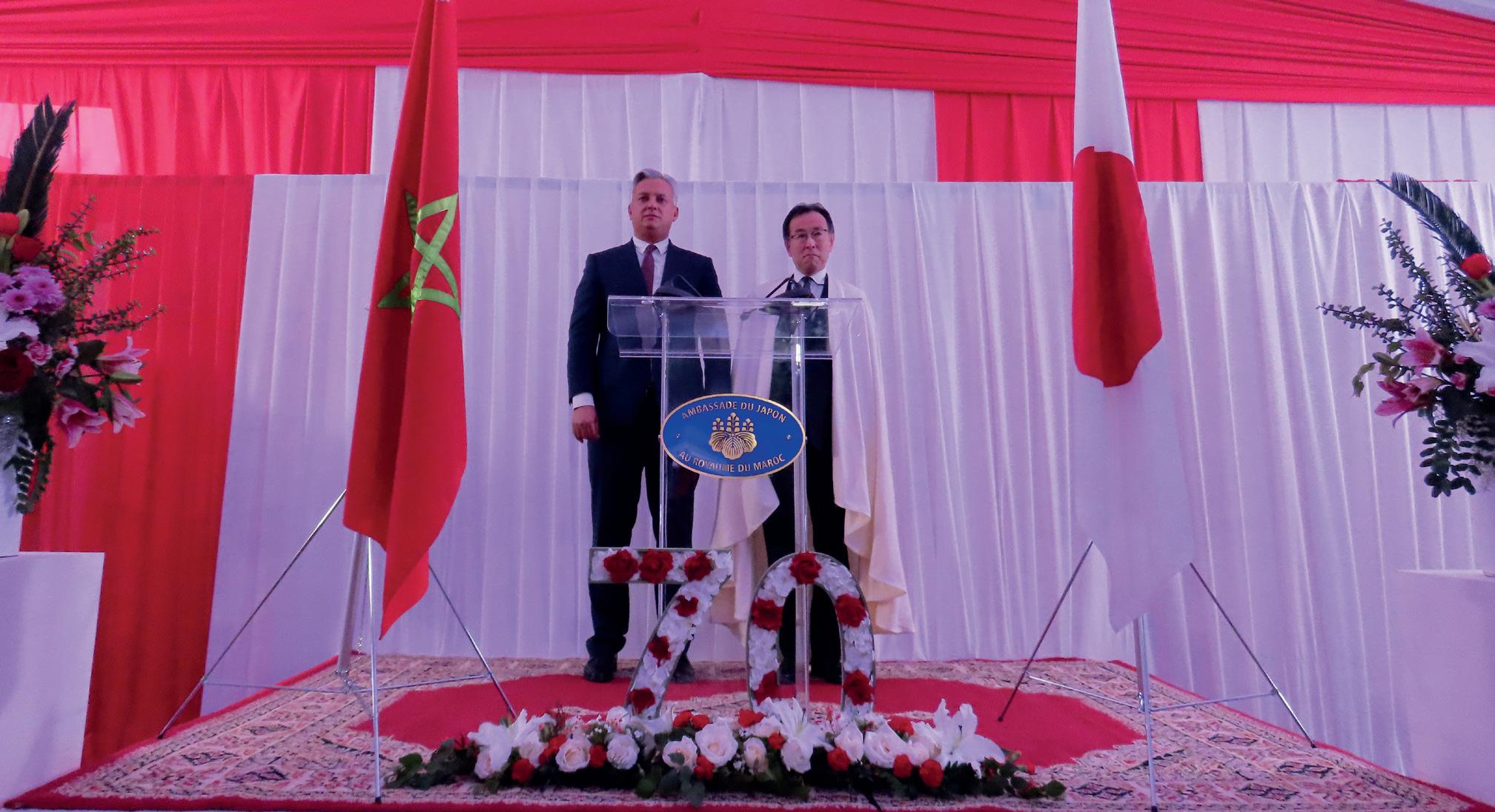
S.E.M. NAKATA Masahiro, Ambassadeur du Japon au Maroc, a présidé le 12 février 2026 une réception à la Résidence du Japon en l'honneur de l’Anniversaire de Sa Majesté l’Empereur. Cet événement a réuni de hautes personnalités pour célébrer l'excellence des liens entre la Famille Impériale et la Famille Royale marocaine. L’Ambassadeur a réaffirmé le caractère stratégique du partenariat nippo-marocain, soulignant le rôle du Royaume comme pôle de stabilité régional. La soirée a mis en lumière une coopération bilatérale dynamique, notamment dans l'industrie et les énergies renouvelables, tout en appelant à renforcer davantage les échanges humains et culturels entre Tokyo et Rabat.
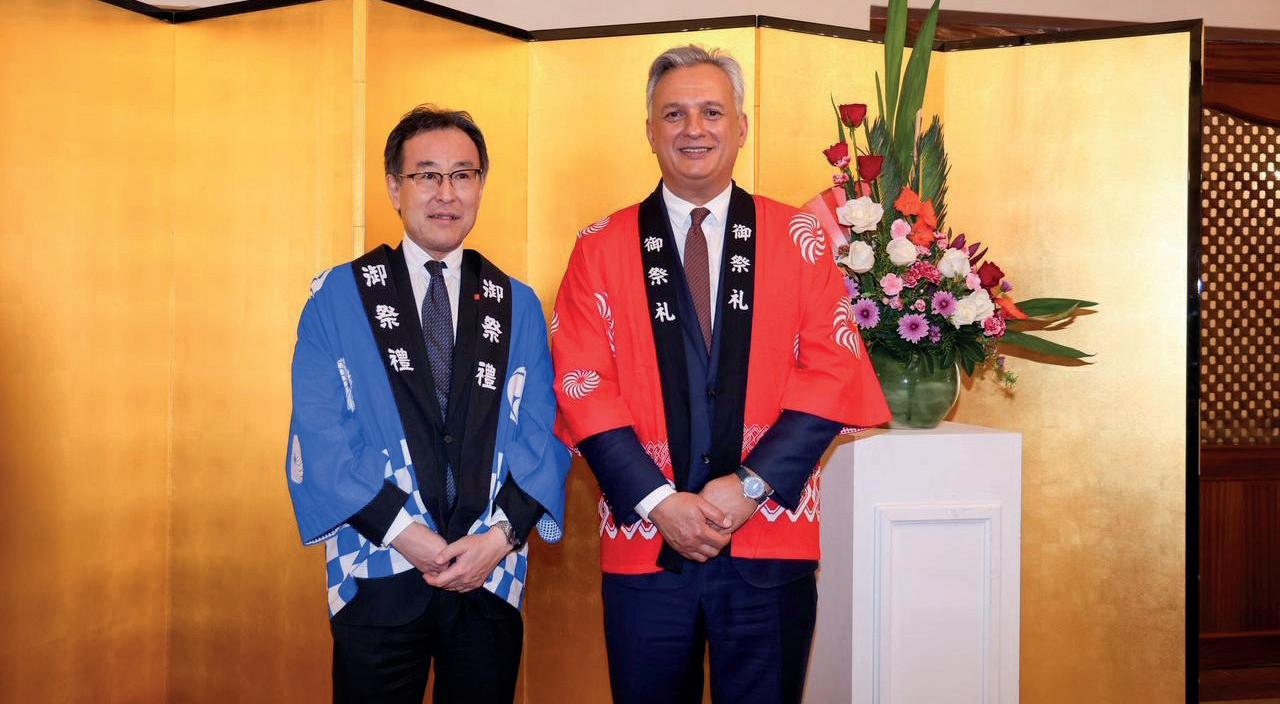
On February 12, 2026, H.E. Mr. NAKATA Masahiro, Ambassador of Japan to Morocco, hosted a reception at the Japanese Residence to celebrate the Birthday of His Majesty the Emperor. The event brought together high-ranking officials to honor the excellence of the ties between the Imperial Family and the Moroccan Royal Family. The Ambassador reaffirmed the strategic nature of the Japanese-Moroccan partnership, highlighting the Kingdom’s role as a regional pole of stability. The evening showcased a dynamic bilateral cooperation, particularly in industry and renewable energy, while calling for further strengthening of human and cultural exchanges between Tokyo and Rabat.
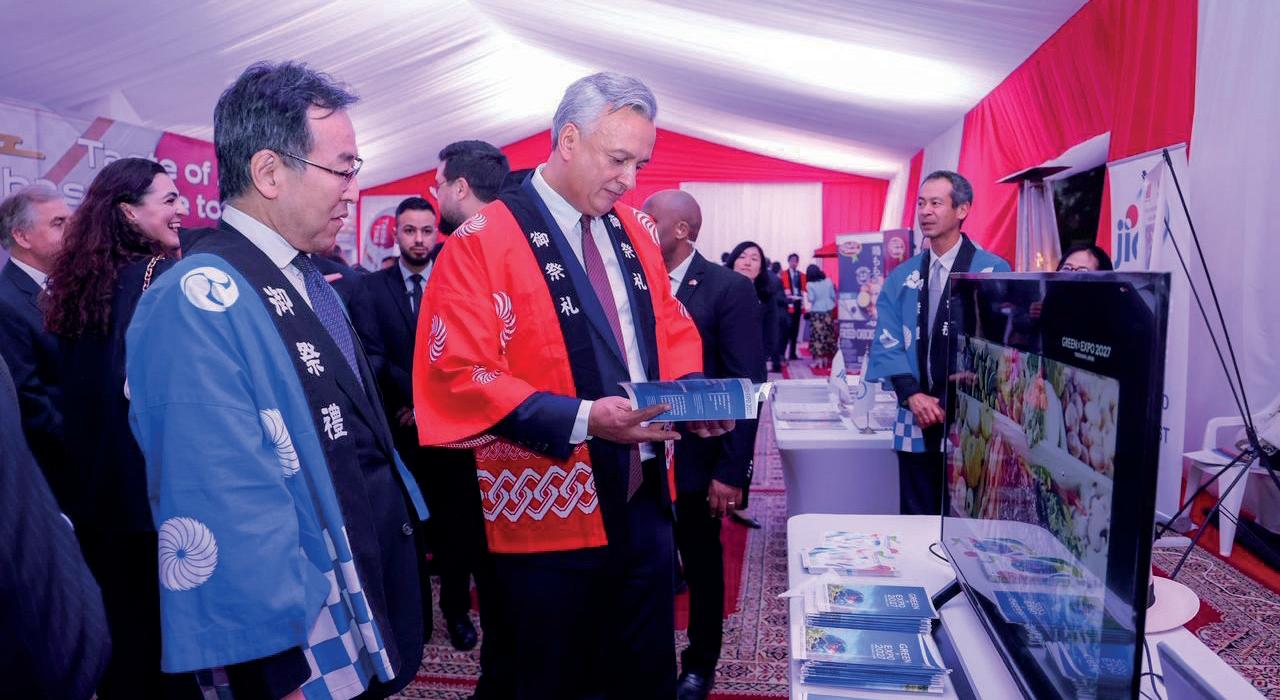
MOROCCO’S
BY ALI ACHOUR
L’élection du Maroc au Conseil de paix et de sécurité de l’Union africaine, lors de la 48ème session ordinaire tenue à Addis-Abeba les 11 et 12 février 2026, constitue un événement d’une portée politique bien supérieure à ce que suggère un simple renouvellement institutionnel. Avec 34 voix obtenues dès le premier tour, le Royaume s’est assuré un mandat pour la période 2026-2028 au sein de l’organe central de gestion des conflits du continent. Ce score, acquis dans un contexte de forte polarisation autour de la question du Sahara marocain, traduit un basculement profond des priorités africaines, où le réalisme sécuritaire tend désormais à supplanter les solidarités idéologiques héritées de l’ère de la décolonisation.
Morocco’s election to the Peace and Security Council of the African Union, during the 48th Ordinary Session held in Addis Ababa on 11 and 12 February 2026, represents an event of far greater political significance than a mere institutional renewal might suggest. With 34 votes secured in the first round, the Kingdom obtained a mandate for the 2026–2028 term within the continent’s central conflict-management body. Achieved in a context of sharp polarization surrounding the issue of the Moroccan Sahara, this result reflects a profound shift in African priorities, where security-driven pragmatism increasingly prevails over the ideological solidarities inherited from the era of decolonization.
Ce scrutin s’inscrivait dans une configuration a priori incertaine en Afrique du Nord, où le Maroc, la Libye et la prétendue « rasd » étaient candidats. Le retrait inopiné de cette dernière, officiellement annoncé « au profit de la Libye », a été présenté comme un geste de solidarité régionale. En réalité, ce désistement apparaît surtout comme une manœuvre défensive visant à éviter un camouflet diplomatique annoncé face à un rapport de force devenu défavorable. Maintenir la candidature aurait exposé, de manière chiffrée et irréfutable, l’érosion du socle de soutiens sur lequel elle prétend encore s’appuyer. Le choix du retrait a ainsi permis de masquer un isolement croissant, tout en tentant d’appuyer une candidature alternative.
Le résultat obtenu par la Libye – 12 voix – éclaire davantage encore la recomposition à l’œuvre. Historiquement, près d’une vingtaine d’États africains maintenaient une reconnaissance, formelle ou latente, de la « rasd ». Or, le score libyen démontre que ce bloc s’est contracté pour se réduire à un noyau dur d’une douzaine de pays.
This vote took place in a North African configuration that initially appeared uncertain, with Morocco, Libya, and the so-called “rasd” as candidates. The latter’s unexpected withdrawal, officially announced “in favor of Libya,” was presented as an act of regional solidarity. In reality, the move appears above all as a defensive maneuver aimed at avoiding a foreseeable diplomatic setback in the face of an unfavorable balance of power. Maintaining the candidacy would have numerically and unequivocally exposed the erosion of the support base on which it still claims to rely. The decision to withdraw thus made it possible to conceal growing isolation, while attempting to bolster an alternative candidacy.
The result obtained by Libya—12 votes—further highlights the ongoing realignment. Historically, nearly twenty African states maintained either formal or tacit recognition of the “rasd.” Yet the Libyan score demonstrates that this bloc has contracted to a hard core of roughly a dozen countries. Several states which, politically, have
Plusieurs États qui, sur le plan politique, n’ont pas officiellement rompu avec leurs positions passées, ont néanmoins fait le choix de voter en faveur du Maroc.
Ce « vote utile » traduit une hiérarchisation nouvelle des priorités. Au moment de désigner les membres d’un organe chargé de la prévention des conflits, de la lutte contre le terrorisme et du maintien de la paix, de nombreux pays ont privilégié la crédibilité opérationnelle et l’expertise sécuritaire à l’orthodoxie idéologique. Le Maroc, engagé de longue date dans la médiation régionale, la coopération antiterroriste et le partage de renseignement, a bénéficié de cette perception de fiabilité. À l’inverse, la candidature libyenne a souffert à la fois de l’instabilité persistante du pays et de l’absence d’un projet structuré clairement articulé, apparaissant davantage comme une tentative de blocage que comme une offre politique cohérente.
34 voix
L’ampleur du score marocain confère à cette élection une signification particulière. Il ne s’agit plus seulement d’une réintégration réussie au sein de l’Union africaine, amorcée depuis 2017, mais bien d’une consécration du Maroc comme acteur moteur de l’architecture sécuritaire continentale. Pour la troisième fois depuis son retour, le Royaume accède au Conseil de paix et de sécurité, cette fois avec une légitimité renforcée, fondée sur un soutien largement transversal.
Ce soutien valide une doctrine que Rabat promeut avec constance: l’articulation étroite entre paix, sécurité et développement. Partant du constat des échecs répétés des réponses exclusivement militaires, notamment au Sahel et en Libye, le Maroc défend une approche globale intégrant investissements structurants, intégration économique et stabilisation sociale. Des projets comme le gazoduc Nigeria-Maroc ou l’Initiative royale pour l’Atlantique, destinée à désenclaver les pays sahéliens, s’inscrivent dans cette vision où la sécurité est indissociable de perspectives économiques tangibles.
Parallèlement, la diplomatie marocaine entend faire évoluer le logiciel du CPS sur la définition même des menaces. Le lien établi entre terrorisme, criminalité transnationale et mouvements sécessionnistes vise à attirer l’attention sur les zones de non-droit qui prospèrent dans les espaces fragilisés. Sans le formuler frontalement, cette lecture contribue à marginaliser davantage les thèses séparatistes, en les replaçant dans un cadre sécuritaire plutôt que dans celui des luttes de libération, désormais largement dépassé aux yeux de nombreux États africains.
not officially reversed their previous positions nevertheless chose to cast their votes in favor of Morocco.
This “useful vote” reflects a new hierarchy of priorities. When designating members of a body responsible for conflict prevention, counterterrorism, and peacekeeping, many countries favored operational credibility and security expertise over ideological orthodoxy. Morocco, long engaged in regional mediation, counterterrorism cooperation, and intelligence sharing, benefited from this perception of reliability. Conversely, Libya’s candidacy was weakened both by the country’s persistent instability and by the absence of a clearly articulated and structured project, appearing more as an attempt at obstruction than as a coherent political offer.
The magnitude of Morocco’s score gives this election particular significance. It no longer merely reflects a successful reintegration into the African Union, initiated in 2017, but rather confirms Morocco as a driving force within the continent’s security architecture. For the third time since its return, the Kingdom joins the Peace and Security Council—this time with reinforced legitimacy grounded in broad and cross-regional support.
This support validates a doctrine that Rabat has consistently promoted: the close interconnection between peace, security, and development. Drawing lessons from the repeated shortcomings of exclusively military responses—particularly in the Sahel and Libya—Morocco advocates a comprehensive approach that integrates structural investment, economic integration, and social stabilization. Projects such as the Nigeria–Morocco gas pipeline and the Royal Atlantic Initiative, aimed at opening up Sahelian countries, are part of this vision in which security is inseparable from tangible economic prospects.
At the same time, Moroccan diplomacy seeks to recalibrate the Peace and Security Council’s framework regarding the very definition of threats. By establishing a link between terrorism, transnational crime, and secessionist movements, Morocco aims to draw attention to lawless zones that thrive in fragile environments. Without stating it explicitly, this interpretation further marginalizes separatist theses by reframing them within a security paradigm rather than that of liberation struggles—a narrative now widely regarded as outdated by many African states.
Ce scrutin crée enfin une configuration inédite pour l’Algérie au sein de l’Union africaine. Longtemps dominante dans les affaires de sécurité continentale, notamment grâce aux Commissaires algériens successifs (Ramtane Laamamra et Ismail Chergui), Alger voit désormais émerger un contrepoids structuré et durable. La présence simultanée des deux pays au CPS pour la période 2026-2028 annonce un duel de visions plus qu’une confrontation frontale.
Le Maroc, pour sa part, s’appuiera sur le soutien massif obtenu et sur l’évolution institutionnelle entérinée depuis le sommet de Nouakchott, au cours duquel l’Union africaine a réservé l’examen de cette question aux seuls chefs d’État et de gouvernement, y compris au sein du CPS, excluant de facto ministres et ambassadeurs.
Dans la pratique, cette décision a dessaisi le CPS du dossier, neutralisant toute tentative d’instrumentalisation. Le recul du bloc idéologique pro-algérien, oblige désormais Alger à composer avec une Afrique plus pragmatique, attentive aux résultats concrets plutôt qu’aux postures héritées.
Cette élection souligne également la volonté des États membres de favoriser une meilleure coordination entre les instances régionales et les mécanismes de décision d'Addis-Abeba. En occupant ce siège, le Maroc se positionne non seulement comme un garant de la stabilité, mais aussi comme un pont indispensable entre les aspirations de développement du Sud et les impératifs de sécurité globale. Cette dynamique pourrait, à terme, redéfinir les modalités d'intervention de l'Union africaine dans la gestion des crises asymétriques.
En définitive, l’élection du 11 février 2026 ne marque pas seulement une victoire diplomatique marocaine. Elle acte un changement de logiciel au sein de l’Union africaine, où l’expertise sécuritaire, la capacité de médiation et l’offre de développement deviennent les critères déterminants de l’influence. Le Maroc aborde ce mandat avec une forme de carte blanche politique, tandis que l’Algérie se trouve contrainte de défendre ses acquis dans un environnement continental défavorable.
Le nouveau rapport de forces, conjugué au processus qui est piloté par les Etats-Unis, est annonciateur d’une recomposition profonde à l’Union africaine.
This vote also creates an unprecedented configuration for Algeria within the African Union. Long influential in continental security affairs, notably through successive Algerian Commissioners (Ramtane Lamamra and Ismail Chergui), Algiers now faces the emergence of a structured and durable counterweight. The simultaneous presence of both countries on the Peace and Security Council for the 2026–2028 term signals a duel of visions more than a direct confrontation.
For its part, Morocco will rely on the substantial support it received and on the institutional evolution confirmed since the Nouakchott Summit, during which the African Union reserved consideration of this issue exclusively to Heads of State and Government—including within the Peace and Security Council—thereby de facto excluding ministers and ambassadors.
In practice, this decision removed the matter from the Council’s operational purview, neutralizing any attempt at instrumentalization. The retreat of the pro-Algerian ideological bloc now compels Algiers to adapt to a more pragmatic Africa—one increasingly focused on tangible results rather than inherited postures.
This election also underscores the determination of Member States to promote better coordination between regional bodies and the decision-making mechanisms in Addis Ababa. By occupying this seat, Morocco positions itself not only as a guarantor of stability, but also as an essential bridge between the development aspirations of the Global South and the imperatives of global security. In the long term, this dynamic could redefine the African Union’s modalities of intervention in the management of asymmetric crises.
Ultimately, the election of 11 February 2026 does not merely represent a Moroccan diplomatic victory. It marks a paradigm shift within the African Union, where security expertise, mediation capacity, and credible development offerings are becoming the decisive criteria of influence. Morocco enters this mandate with a form of political carte blanche, while Algeria finds itself compelled to defend its positions within a less favorable continental environment.
The new balance of power, combined with a process currently steered by the United States, heralds a profound reconfiguration within the African Union.