









The Diocese is committed to making sure:

1


2


3


4 My community is a safe place where I feel respected and heard


There are people around me who know how to keep me safe
The grown-ups in my community check to make sure it is a safe place




Everyone follows the rules*


* NSW Child Safe Standards and the National Catholic Safeguarding Standards

1. What you do with your ears
2. Letting someone know your thoughts or feelings
3. Being able to decide what you want or don’t want
5. When someones actions cause pain or upset
7. What you ask for when you feel unsafe
9. What you get from people who care about you and help you
2. Being protected from danger 4. An adult at school you can talk to if something is wrong
6. Treating people equally 8. Treating others kindly
The real facts, not made up
We are one body because we all share in one bread
Jesus our brother and friend, you always welcomed children. May our families and communities, be strengthened in love, generosity, commitment and patience so all children feel welcomed and safe. Let your grace and love fall gently upon us to make us strong for life’s journey. Amen.
Words can go in any direction. Words do not share letters.
s r e p l e h s s k x w g m s o f t r i d l o p a r z h e n b c o e c e s i a n e t n t h y f r r e f d y s u h p a p s s d x u r e d p s s d b b r c l u y a d k y k t h p p q u h
Help the astronauts through the maze to the safety of the rocket!
Trace the words. * NSW Child Safe Standards and the National Catholic Safeguarding Standards
1
2
3 My community is a safe place where I feel respected and heard The Diocese is committed to making sure:
4 Everyone follows the rules * The grown - ups in my community check to make sure it is a safe place There are
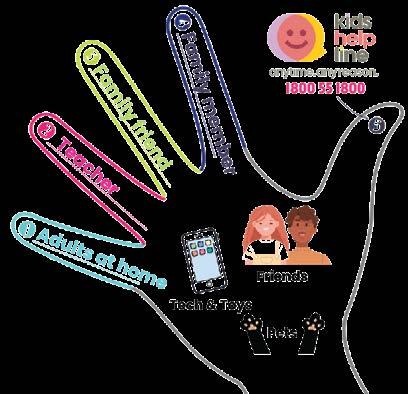
Write the names of 5 trusted adults you might include in your safety network on the fingers of this hand.
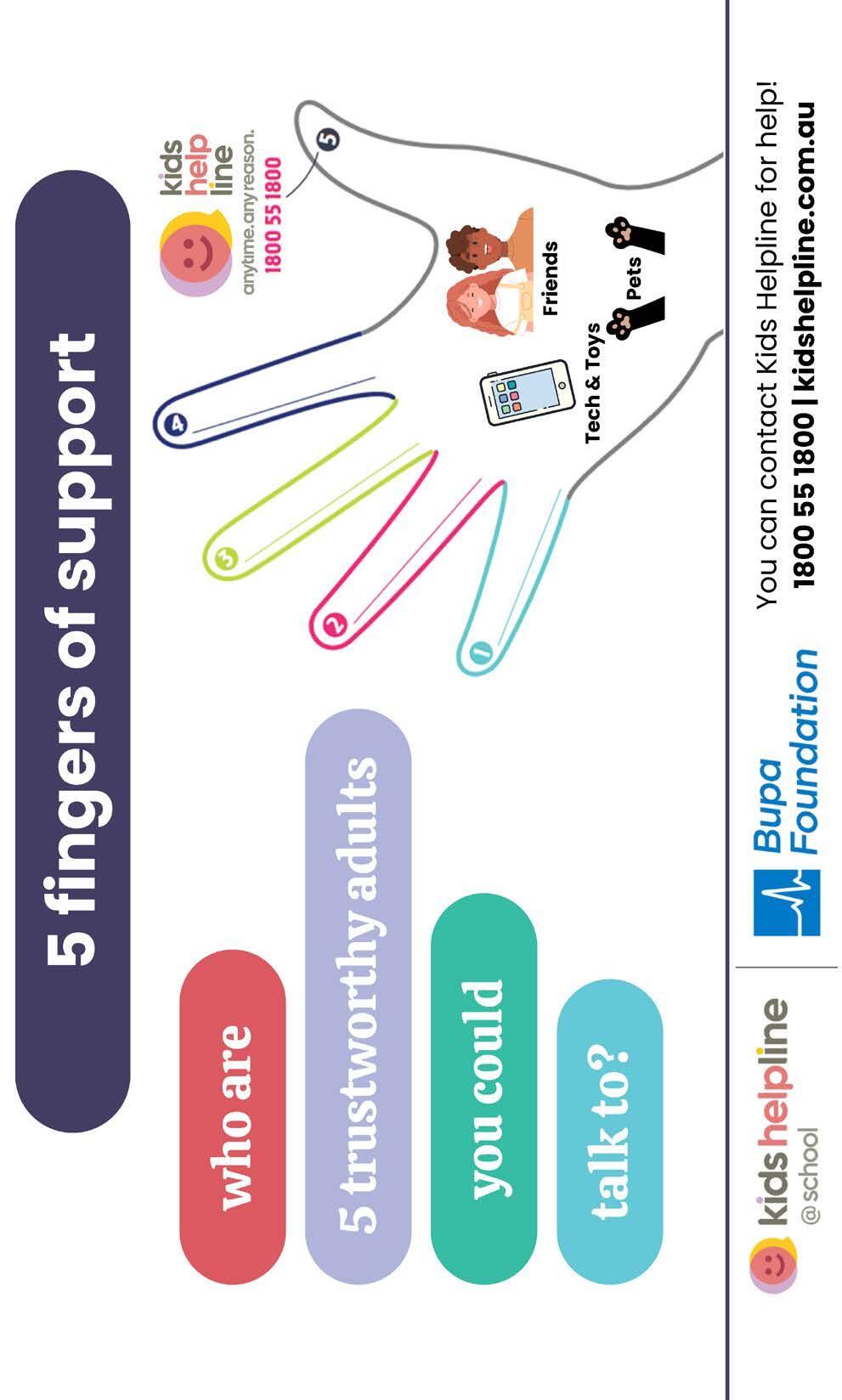
The aim of this activity is for children to make a Support and Safety Circle of trusted adults they can go to for help, and places and things that help them to feel safe.
Activity
Step 1.
Hold up your hand, you might notice that all our hands are a little similar but also very different. The same goes for our 5 fingers of support, you might have different supports than the person next to you.
Step 2.
Give me a big THUMBS UP! Kids Helpline are on the thumb because they are there for you, anytime any reason. And even if you don’t know who can support you, you can always talk to us.
Step 3.
On your other 4 fingers is where you put your adult supports. It might be: a parent or carer, a family member like a cousin/adult /sibling/aunty/uncle/ grandparent, a family friend, a coach or baby sitter, teacher.
Step 4.
On your palm is where you put your friends, pets and toys – because these are important too and you can hold them close.

would your

Nothing is so awful that you can’t talk with someone about it
If someone makes you feel unsafe, that is an emergency and you should:
1
2
3 Say no! Get away from the person and... Tell someone on your Safety Network hand
Draw yourself saying ‘no!’
Draw yourself walking away.
Draw yourself talking with someone you trust.
Being kind means I make o thers happyby I am great at I am most happy when I am good friends when I am proud o fmyselfwhen
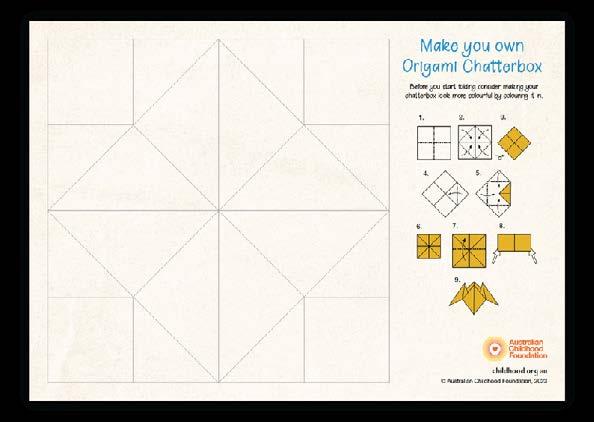
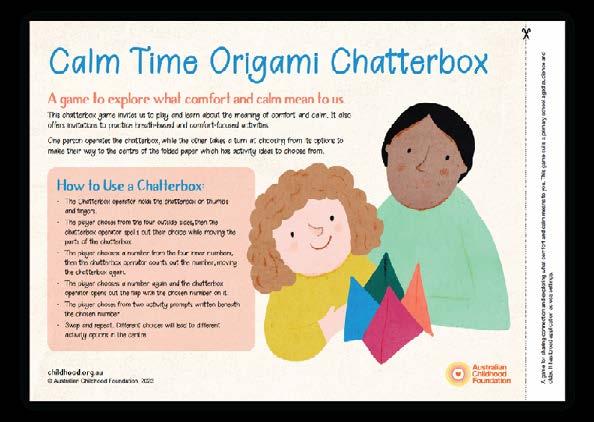
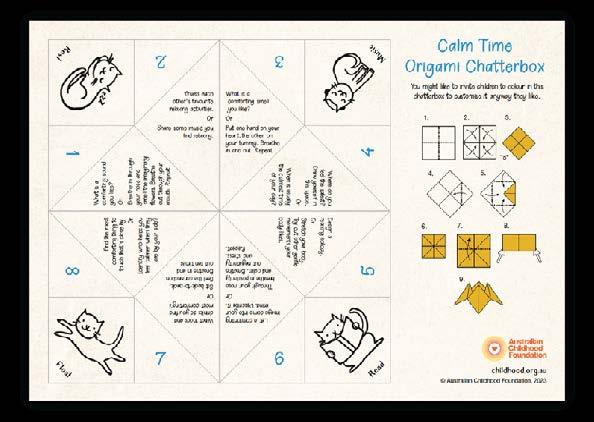
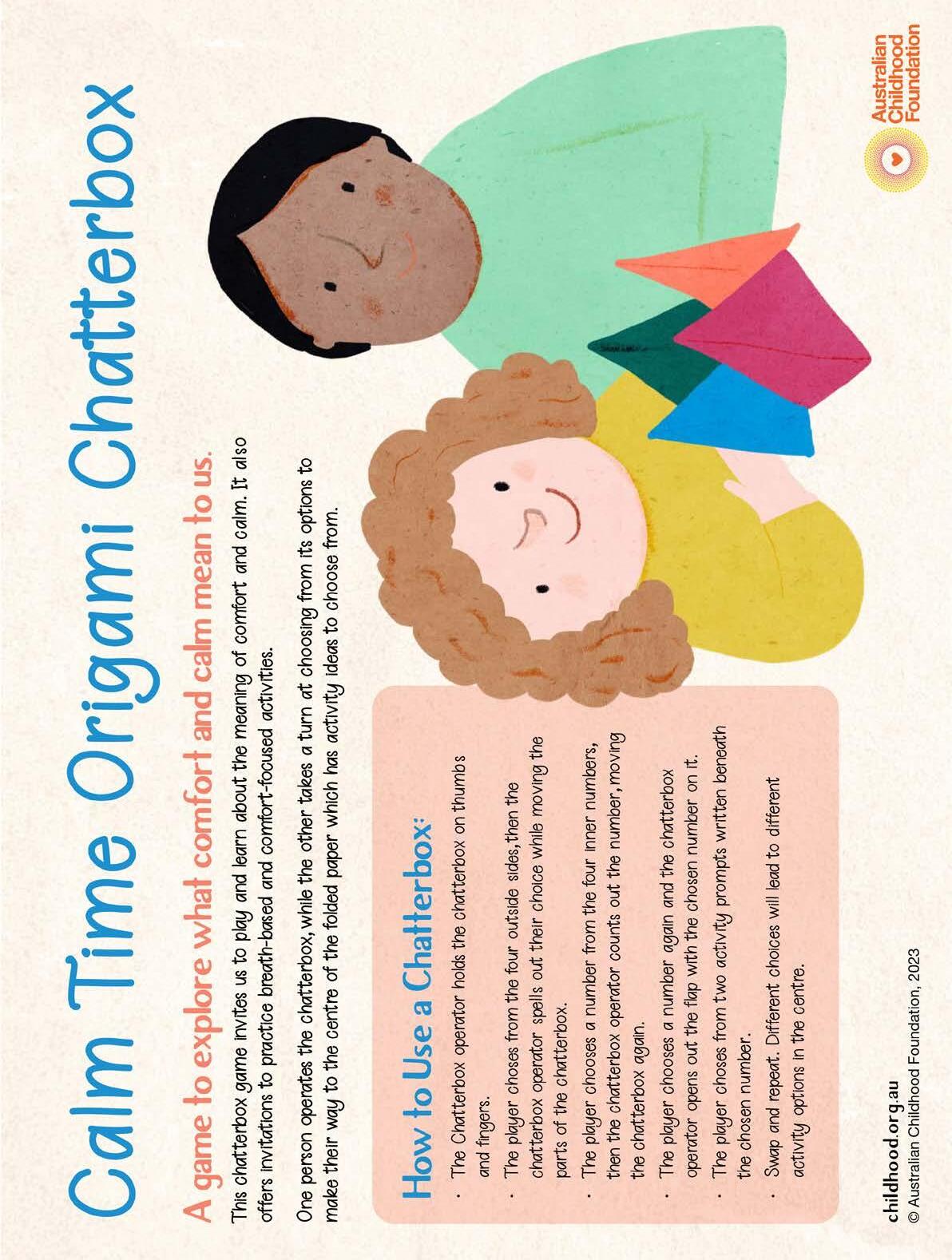
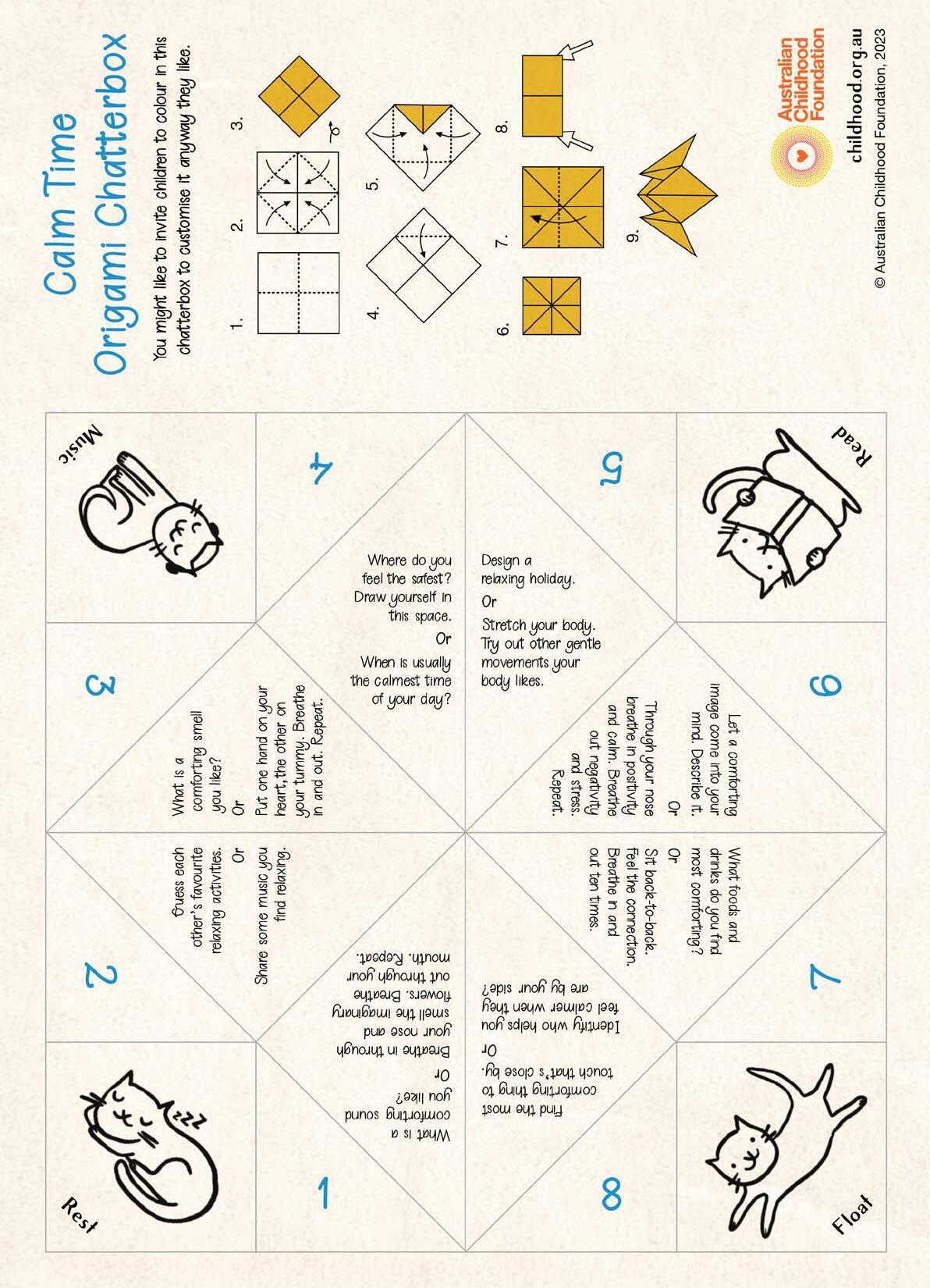
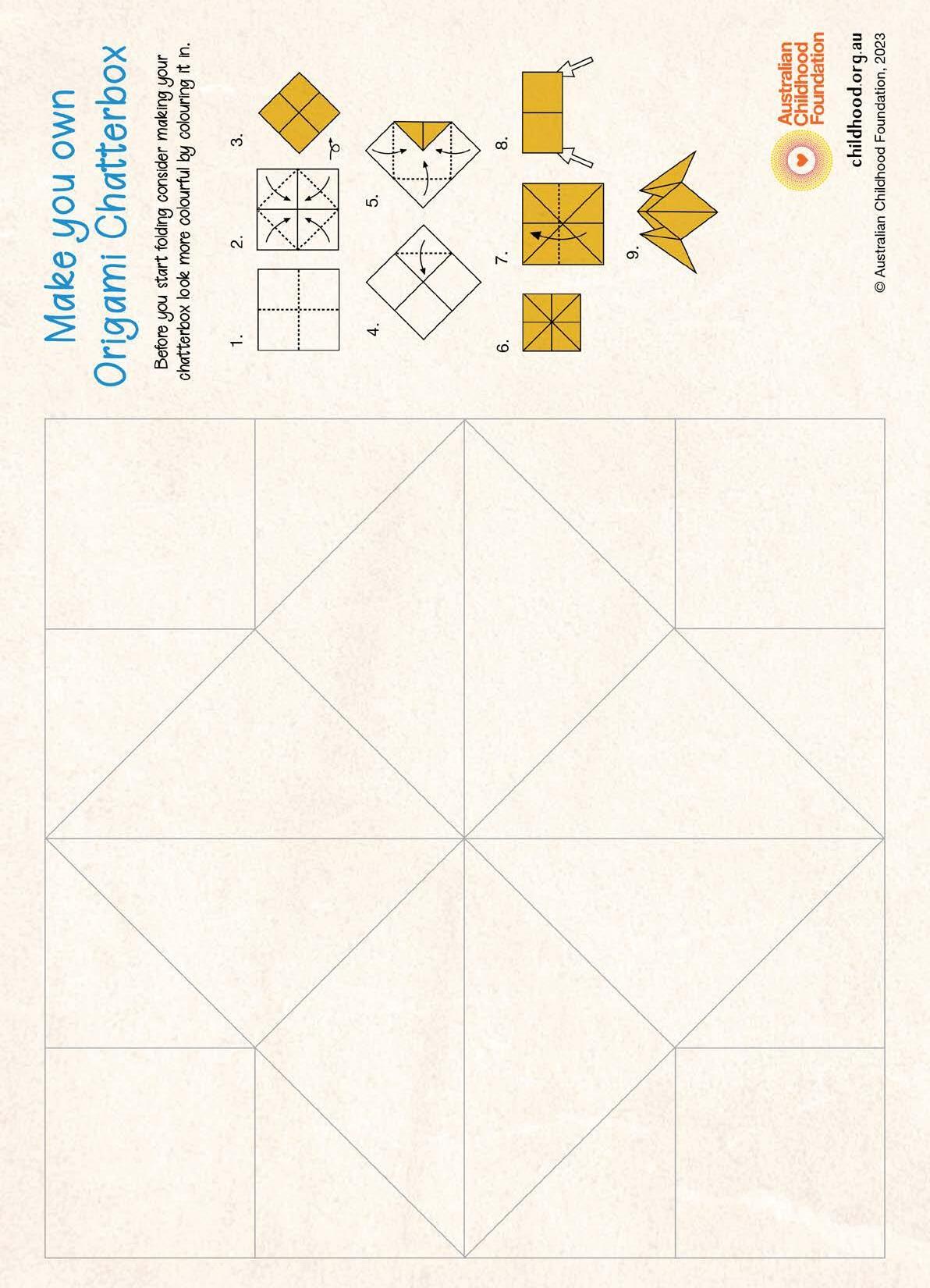
A fun, creative game to explore what comfort and calm mean to us.
This chatterbox game invites us to play and learn about the meaning of comfort and calm. It also offers invitations to practice breath-based and comfort-focused activities.
This activity has been contributed by Australian Childhood Foundation
Australian Childhood Foundation provides counselling to children and carers. They teach adults to understand how they can help children to heal from the trauma of abuse and violence. They stand up for children, and young people’s rights to safety. They act to ensure every child gets the love they need.
For more information visit www.childhood.org.au

Children come in to contact with many people in the community, and it’s important for them to understand how those different relationships support them, as well as where boundaries should lie.
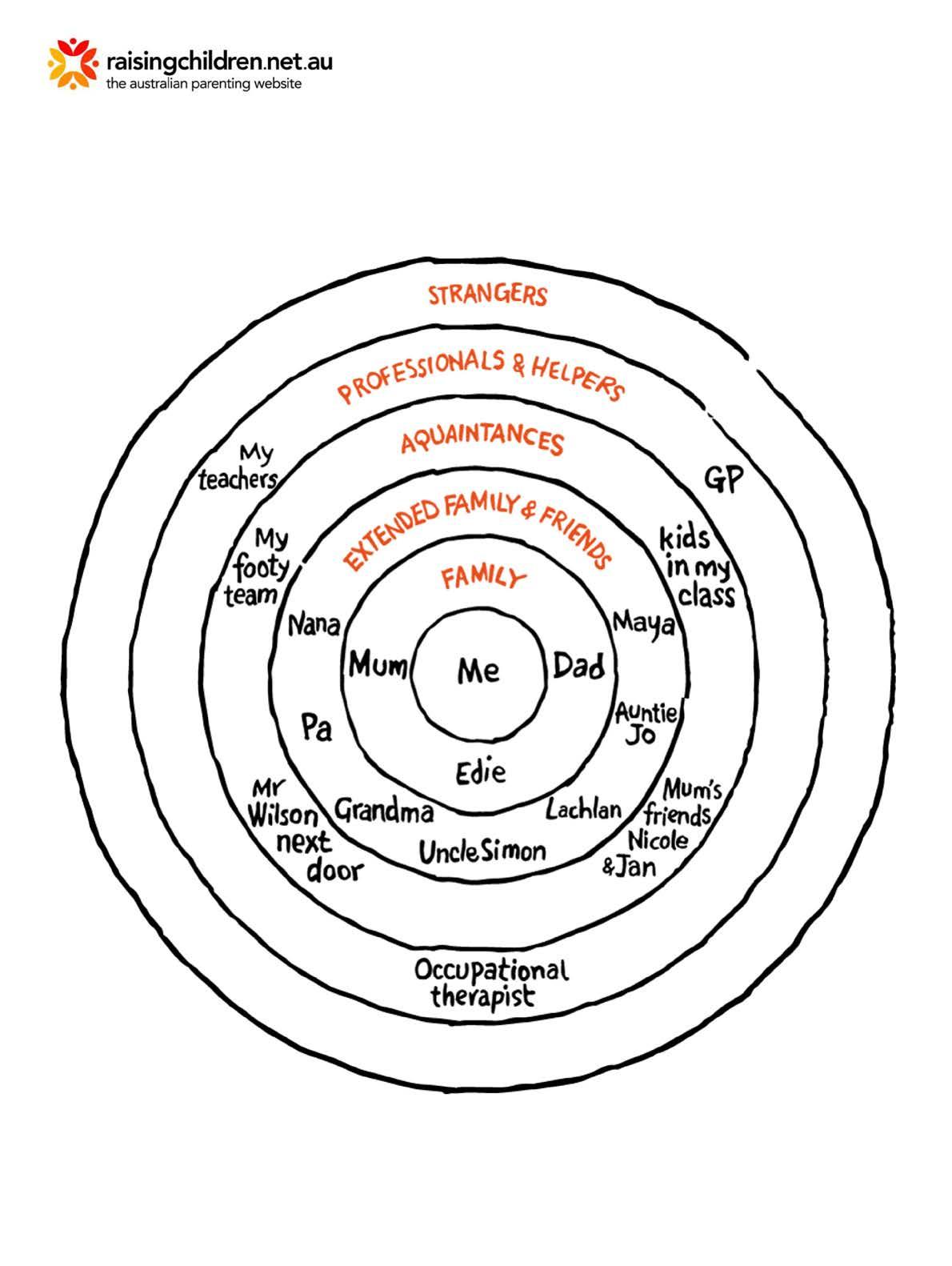
The circle of friends activity helps your child understand the different people in their life – what their relationship is with these people, how your child should behave with them, and what behaviour is OK from those people. It can help keep them safe.
How to do a circle of friends activity with your child
Start with a big piece of paper and ask your child to draw a picture of themselves in the middle. Or they could stick a photo of themselves there. Ask your child to draw a circle around themselves.
Draw a larger circle around your child’s circle. In this circle add the people who are closest to your child – for example, the family they live with. Your child could write their names, draw pictures or stick on photos of them.
Draw a larger circle around the first two circles. In this circle add people who are close to your child but not quite as close as those in the first circle. They could be extended family or your child’s best friends. Talk with your child about who to include.
Draw another circle around the others and add acquaintances. These are people your child knows but isn’t close friends with. They could be people in your child’s wider group of friends, in their class at school, on their sports team, or family friends. Talk with your child about who to include.
Draw another circle and add professionals and other people whose jobs are to help your child. They might be teachers, doctors or carers.
In the outside circle add strangers. These are people your child doesn’t know.
Using the circle of friends to help your child understand personal boundaries
Once you’ve added people to each of the circles, talk with your child about how your child should behave with people in each circle.
You could ask questions like these:
• How would you greet people in this circle?
• Which people would it be OK to kiss or hug?
• Who would you invite to your house for dinner?
• Who could you talk to if you’re worried about something?
• Can you sit in this person’s lap?
You can use this activity to help your child stay safe. To do this, you can ask your child questions about how other people should behave around them.
For example:
• Which people can hug or kiss you?
• Which people can hold your hand?
• Which people can collect you from school?

Church
School Library
With the help of a parent/carer, cut out these bookmarks to use and share with friends.
The Diocese is committed to making sure:
1
My community is a safe place where I feel respected and heard
The Diocese is committed to making sure:
2
There are people around me who know how to keep me safe
The Diocese is committed to making sure:
3
The grownups in my community check to make sure it is a safe place
The Diocese is committed to making sure:
4
Everyone follows the rules *
* NSW Child Safe Standards and the National Catholic Safeguarding Standards