Feature story Project
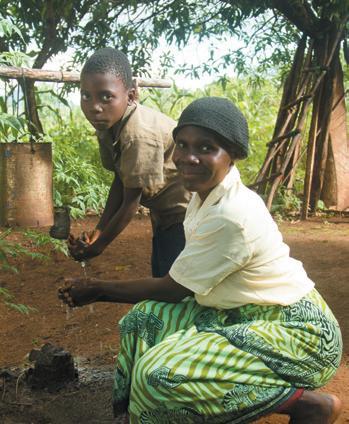
Compassion 2016 helps communities in Malawi

How do you ‘future proof’ your child? Communication is key to school success
Meet the publican and the nun who make a great team!
Diocese of Maitland-Newcastle February 2016 | No.154



























How do you ‘future proof’ your child? Communication is key to school success
Meet the publican and the nun who make a great team!
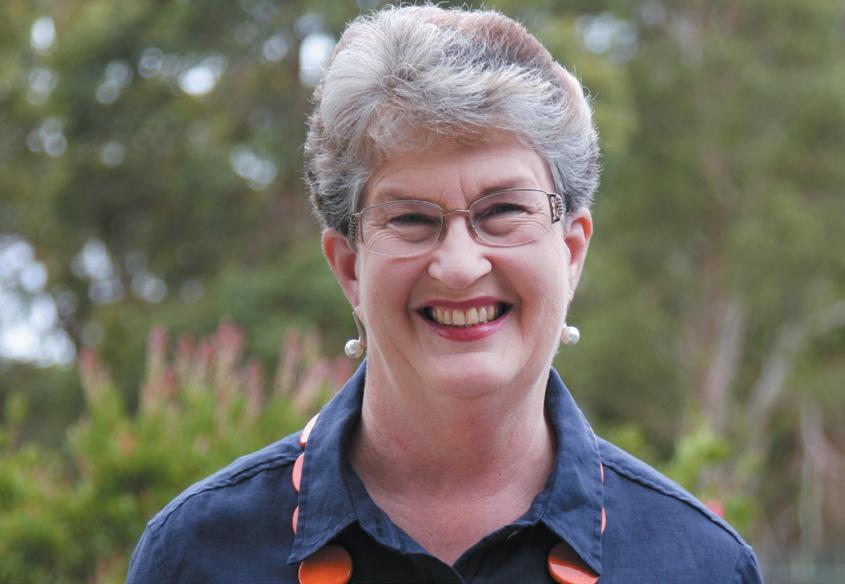
you will I am sure notice a fresh new Aurora look to begin 2016, courtesy of our in-house designer, the gifted Geraldine Williams. t his is the twentieth year of Aurora and the members of the e ditorial and Communications teams are working hard to ensure that its content continues to be informative, thought-provoking and encouraging.
t he year of Mercy decreed by Pope Francis was announced in the December edition and each month different facets of mercy will be considered. It seems to me that the Pope is calling for – in fact pleading for – mercy sans frontières among all the peoples of the world. to ground your developing understanding of, and response to, this call, you may like to participate in #150 a cts o fMercy via the website of the Diocese of Maitland-Newcastle. Please visit mn.catholic.org.au/150actsofmercy. t hose
Next deadline 15 February 2016
Aurora enquiries should be addressed to t he e ditor tracey e dstein
e aurora@mn.catholic.org.au
P o Box 756 Newcastle 2300
P 4979 1288 | F 4979 1119
Subscribe editor@mn.catholic.org.au
Advertising Fairfax Media Phone 4979 5259
who are parents might like to encourage your children to ‘take on’ the year of Mercy.
Just before Christmas, Kevin Bates sm wrote, “Mercy is not for wimps or cowards. It requires courage, the ability to name, face and engage with the division and pain that grips people’s lives. It is never a matter of smoothing things over. Likewise, withdrawing in fear from the reality of our world is no act of mercy.” Good luck!
o ur regular page ‘ s easons of Grace’ (which began during the year of Grace, 2012) is this year ‘ s easons of Mercy’ – for obvious reasons! If you have a story of mercy to share, please don’t hesitate to contact me.
I’m also hoping to receive many stories of “ t he Way We Were”, capturing moments in the 150 years since Bishop James Murray claimed s t John the Baptist Church, Maitland, as his cathedral. Just
Good news! you can still catch up with Aurora online, via MNNews.today.
mnnews.today/aurora-magazine
www.facebook.com/mnnewstoday
@mnnewstoday
@mnnewstoday

a few hundred words – and a photo if possible – will help to unpack a vibrant and engaging history.
t he many events and invitations included in Aurora each month are extended to all who read the magazine. While many are specifically church-focused, and that may not be your focus, if something captures your imagination, please don’t hesitate to enquire by contacting the organiser or me. Likewise, I am always grateful for your response to Aurora stories and your suggestions for the magazine.





When did the diocese really begin?

this year we are celebrating the 150th anniversary of the diocese, dating its beginning from the arrival of Bishop James Murray in 1866. there are, however, many erudite readers of Aurora who are aware that Bishop Murray is generally accounted the second bishop of Maitland. Indeed, in the corridor outside my office, the small gallery of portraits of my predecessors begins with english Benedictine, Charles Henry Davis osb, the first to bear the title of ‘Bishop of Maitland’. so who was he, and when did the diocese really begin?
First, let’s note that the reformation of the 16th century had swept away the Catholic hierarchy in england and this was still the situation when the British arrived in australia. there were no ‘bishops of’ any place in england or scotland since there were no dioceses, only ‘vicars apostolic’. accordingly, when Bishop John Bede Polding osb was sent to sydney in 1833, he came as ‘Vicar apostolic of New Holland and its adjacent islands’. on the other hand, as the ancient discipline of the church was against having bishops floating around as free agents, Polding had to be at least nominally bishop of somewhere, and so he was by title ‘Bishop of Hierocaesarea’, an ancient town in turkey that had its own bishop until the Muslim conquest. Its site is now lost, but it retained a titular bishop as late as 1994.
In 1839/40, when Bishop Polding and his vicar-general, William Bernard ullathorne, journeyed back to england via rome, they had a radical plan to put to the roman and British authorities. they wanted to establish a formal Catholic hierarchy in australia. amazingly, they
succeeded. Polding returned to be archbishop of sydney and other bishops were established in Hobart, adelaide and Perth in the following years. In that context the idea of the Diocese of Maitland was born.
In 1847 Polding was in rome again, urging the establishment of dioceses in Melbourne and ‘Victoria’ (now Darwin). In april he became aware that the anglicans were proposing to set up a diocese in Morpeth. He quickly wrote to the Cardinal Prefect of Propaganda Fidei, in the third person, “therefore he requests that another Bishopric be set up in Maitland, a short distance from sydney and Morpeth, the site of one of the proposed anglican Bishoprics; and that, without fixing any definite boundaries for the time being, the new bishop be named as Coadjutor of the writer.”
the idea was a curious hybrid. a coadjutor bishop required a ‘titular’ see, but rather than an ancient bishopric that no longer existed, Polding proposed as a ‘title’ a diocese that did not yet exist. and he proposed establishing a new see without any territory and with a bishop who lived in sydney. yet the plan was approved in two months. oh well, there was a new young pope of perceived modern ideas (Pius IX) and rome was in negotiations with the British government about re-establishing a hierarchy in Britain itself. Perhaps anything seemed possible.
When Bishop Davis arrived he took up his duties in sydney, as expected. He was a likeable, capable young man of 33, a great organist and choir master and a good contributor to the early days of st John’s College at the university and to Lyndhurst, the sydney Benedictines’ grammar
school. But he never came to Maitland. In fact, I have been told by a much later auxiliary bishop of sydney that the rules are that a titular bishop must not go to his titular see, lest he try to establish himself as a local bishop. Perhaps something of that understanding was also in Davis’, or Polding’s, mind.
Nevertheless, in 1854, with Polding once again in rome, it was proposed that the anomaly of the titular see should cease. Boundaries of the new diocese of Maitland were discussed, and apparently settled. at that point, however, news arrived from sydney that Dr Davis had died, aged just 39. Polding thereupon advised that Maitland should continue to be administered from sydney. Polding had already been told that his scheme for australia to be a Benedictine mission was dead, following a great deal of agitation from both sydney and Ireland. Very probably, by not suggesting a new bishop of Maitland or a new coadjutor for himself, he was seeking to avoid having an Irish bishop, not of his choosing, thrust upon him. and so for ten years Maitland had no bishop. then, in 1866, the boundaries of the diocese were established and Dr Murray, former secretary to Cardinal Cullen of Dublin and relative of the new bishops of Brisbane and Bathurst, was appointed. the age of Irish Catholic hegemony in australia had begun, and with it the real beginning of the Diocese of Maitland.

By NICOLE CLEMENTS

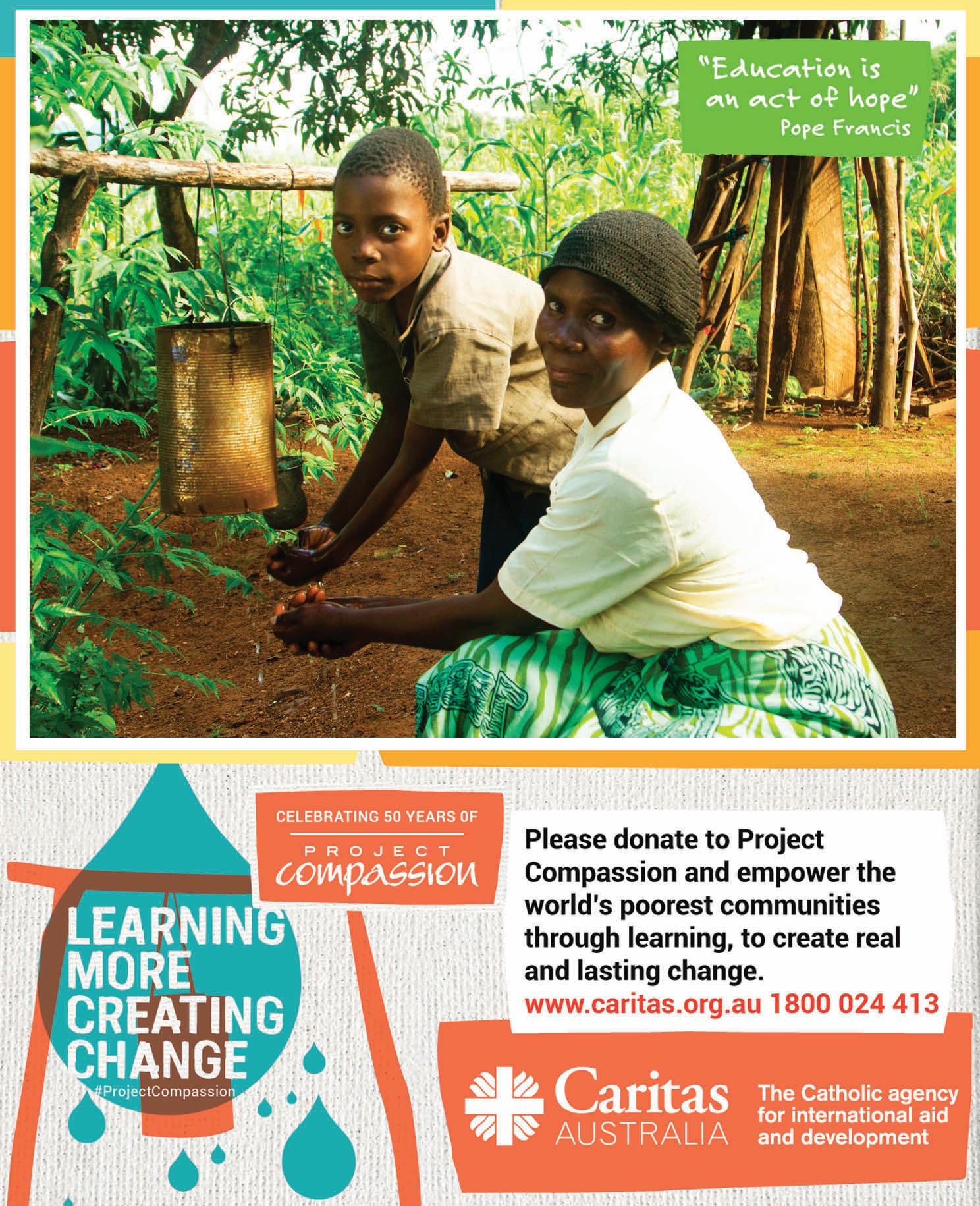
2016 marks 50 years of Project Compassion, Caritas a ustralia’s annual Lenten fundraising and awareness raising campaign and one of a ustralia’s largest humanitarian appeals.
e ach year Project Compassion, which runs during the six weeks of Lent, brings together thousands of supporters across the Diocese of Maitland-Newcastle in solidarity with the world’s poor to help end poverty, promote justice and uphold dignity.
t he members of the Diocesan Caritas a ustralia team, Louise r oach, teresa Brierley and Patricia Banister, have all expressed their gratitude to the parish and school communities for their generous contributions to the work of Caritas a ustralia through Project Compassion, emergency appeals and regular contributions. Project Compassion last year raised a record $11.57 million, including $258,000 from the Diocese of Maitland-Newcastle.
Money raised goes towards Caritas a ustralia’s humanitarian and longterm development programs in more than 40 countries across a sia, a frica, the Pacific, Latin a merica
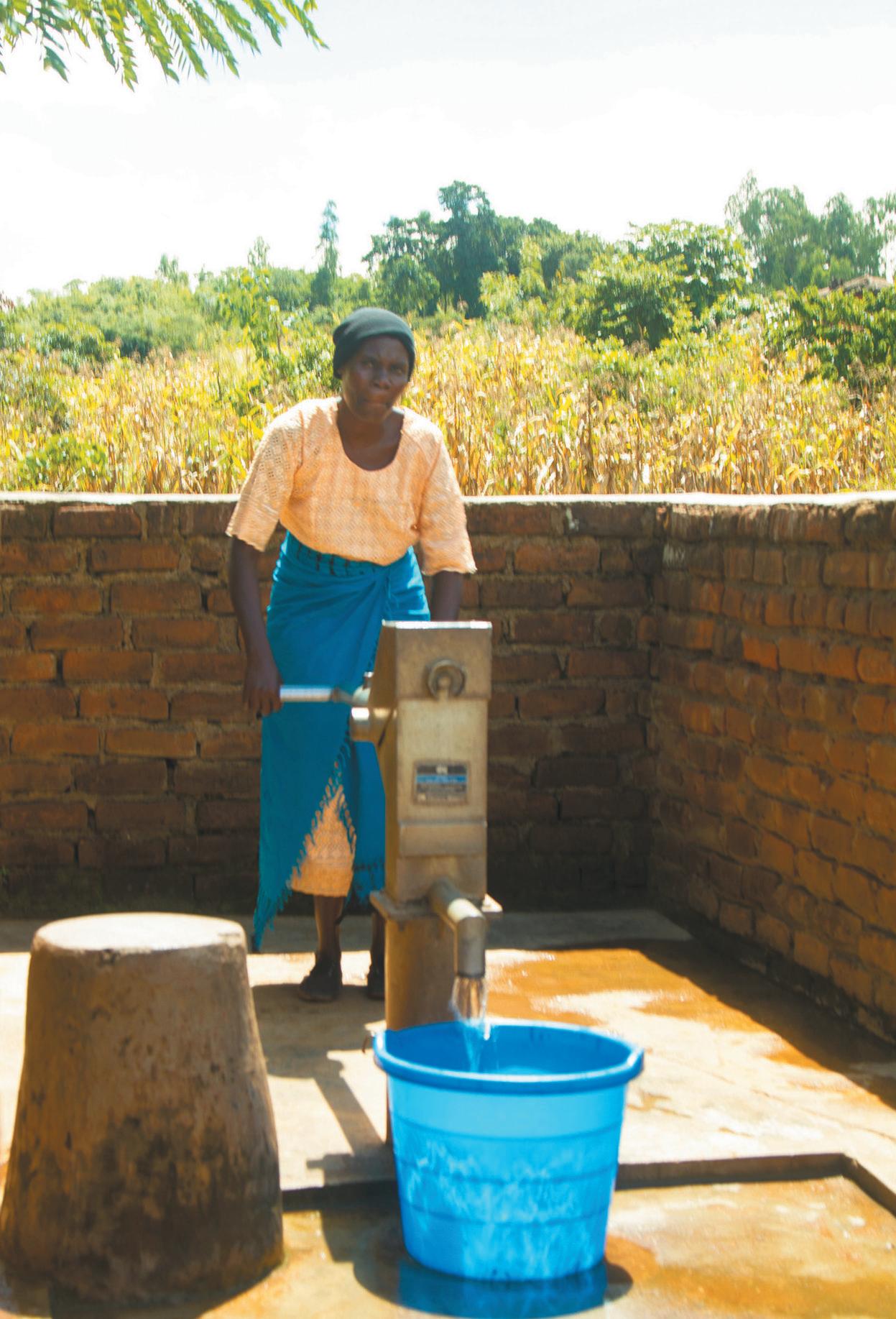
and with First a ustralian communities.
t his year Bishop Bill Wright will officially launch Project Compassion at a liturgy at 10.30am on s hrove tuesday, 9 February, at the s acred Heart Cathedral. t here will be representatives from the Catholic schools across the diocese as well as parishioners joining in this special Jubilee celebration. a ll are welcome!
“Lent is the time of year when we put our faith into action through prayer, fasting and almsgiving,” explains Patricia, a member of the Caritas team. “ t he changes I’ve seen in communities with whom we work in partnership through the generosity of supporters have also shaped and inspired me.
“Project Compassion has transformed millions of lives and every year since 1965 we have demonstrated our faith, our compassion and our generosity towards the most vulnerable members of our global family.
“ t his year I encourage you to be a part of Project Compassion, as every individual, school, parish or community makes an enormous difference.”

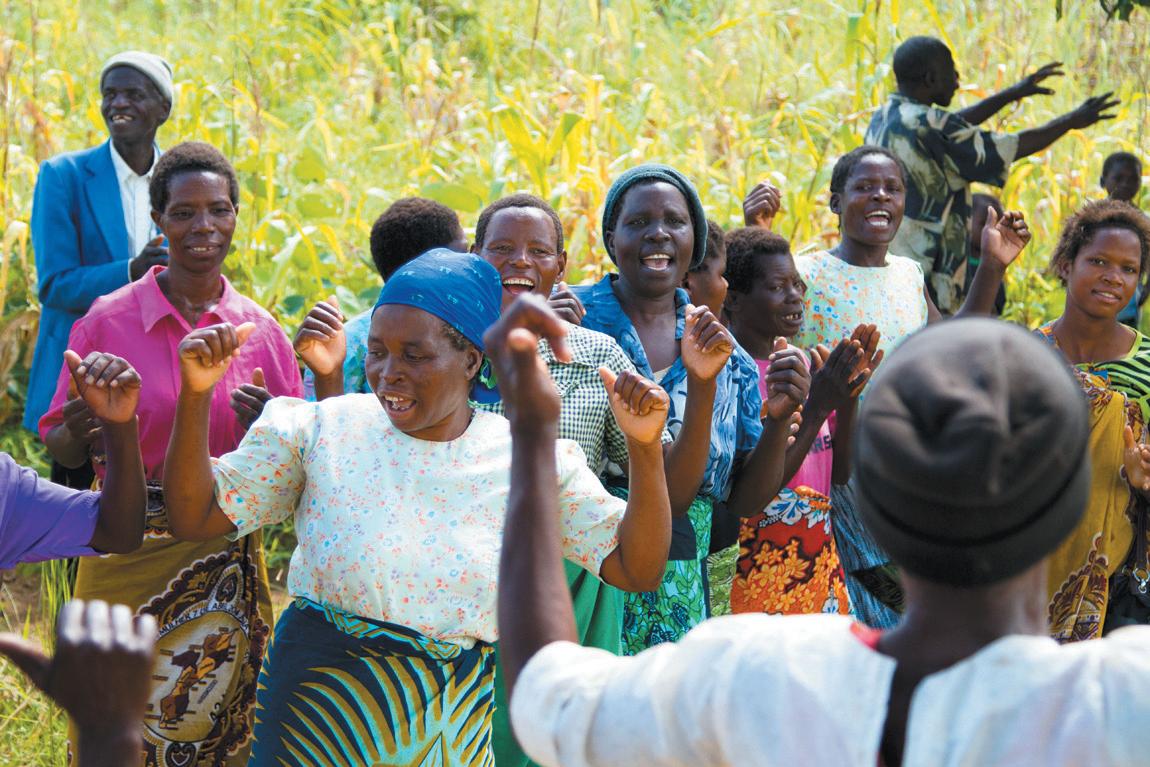
Pope Francis has said, “ e ducation is an act of hope.” t he theme for this year’s Project Compassion, “Learning more, creating change,” celebrates the power of learning, and the many ways in which Caritas a ustralia is working with local partners around the world to provide vital learning and renewed hope to those most marginalised.
o ne of the stories highlighted during the appeal comes from Malawi, one of the world’s least-developed countries.
It’s the story of Doney, a mother from Malawi who, thanks to involvement in Caritas programs which map an individual and community’s assets, education and training, now has hope for the future.
Malawi has a largely rural population and its economy is based heavily on agriculture. Communities face poverty and isolation and food shortages many times during the year.
Doney had only completed primary school, but her passion for education was recognised as one of her strengths.
today education has brought Doney new
skills and new stature and influence in her community. s he’s now teaching literacy and numeracy to adults in her village.
“In the past the people I’ve been teaching didn’t know how to read and write,” Doney says. “ t hey didn’t even know the direction of the bus as they didn’t know how to read the signpost. Now many are able to read and write.”
Doney is determined that her five children will complete secondary school. a lthough just 7 per cent of 15-24 year-olds in Malawi do so, she has strong hopes.
“I encourage my children to attain education so that they can be independent in the future,” she says. “ t his would make me proud.”
Nicole Clements is Media Advisor, Caritas Australia. To donate to Project Compassion, or for fundraising ideas, please visit www.caritas.org.au/projectcompassion or P 1800 024 413.

What is love? Sometimes we can think of the love in the soap operas but that doesn’t appear to be love. Or else love can seem like having a crush on a person but then it fades away. Where does true love come from? Whoever loves has been created by God because God is love. Don’t say: ‘Every love is God,’ No, God is love.
Morning Mass, 8 January 2016.

By JANE DUNN


I have been working in the role of tribunal Director since 2007 and naturally I am familiar with all that my role entails and demands. However, for some, the thought of approaching the tribunal to enquire about a possible ruling of nullity of their marriage is intimidating, even overwhelming. t hose feelings may be enough to stop some approaching us at all.
In Pope Francis’ recent a postolic letter Mitis Iudex Dominus Iesus (Gentle Judge, t he Lord Jesus) we read of his desire to streamline the marriage nullity process in order to make it as accessible, and as quick, as possible. His changes are supported by his fellow bishops who in the recent extraordinary synod, “implored more flexible and accessible judicial processes”.
r ecalling his recent declaration of a year of Mercy, once again we see revealed the compassionate and loving heart of Pope Francis. He writes of his concern for the “salvation of souls” and tells us that his desire to reform has been fuelled by the “enormous number of faithful who, while wishing to act with their consciences, are too often separated from the legal structures of the Church....charity and mercy therefore require that same Church, as a mother, to make herself closer to her children who consider themselves separated”.
you may be wondering what those changes might be. Nothing that Pope Francis has said changes the Church’s teaching on the indissolubility of marriage; rather, the changes relate to process.

Prepay your funeral with Australia’s leading funeral plan.
It makes sense to prepay a funeral with Australia’s leading prepaid funeral plan. Protect loved ones financially by paying a funeral in today’s prices.
Speak to John Mascord from our Belmont location to learn more about how being involved in your own goodbye will benefit you and your family.


t he automatic appeal to the s econd Court will now be restricted, so not all cases will need to be presented to the s econd Court. For those cases which meet the guidelines, this could shorten the process by 3-6 months.
In straightforward cases, the process will be abbreviated. t here are guidelines about which cases will be eligible for this shorter process and each case will be assessed as to whether the application fits the guidelines. It is possible that this process may be quite rare.
t he tribunal nearest where a person lives will process the application. Previously there were restrictions on which tribunal would have this responsibility, depending,

• Full Range of Quality Accessories
• Recovers
• Table Moves
• New & Used Tables
• Italian Slate
• Hardwood Legs & Cushions
• Top Quality Cloth
• Complete Range of Darts & Dart Board Accessories
• Soccer & Air Hockey Tables
• Finance Available 4945 2092 or 4945 2111 FAX: 4947 7091
SIZE TABLES - 7 FOOT TABLES 20 TABLES ON DISPLAY
for example, on where the marriage took place and where both parties now reside.
Pope Francis has also asked Bishops to do what they can to ensure “that processes remain free of charge” while ensuring that tribunal employees are justly remunerated. t his is to be discussed at the Conference of a ustralian Catholic Bishops later this year.
s o if you have been wondering whether or not to approach the tribunal, now might be the right time. t hese changes are real and do offer the opportunity for a quicker and more streamlined process. For any person considering this path, that is a great gift.
For further information please P Jane or Rose on 4979 1370.











By LOUISE GANNON rsj

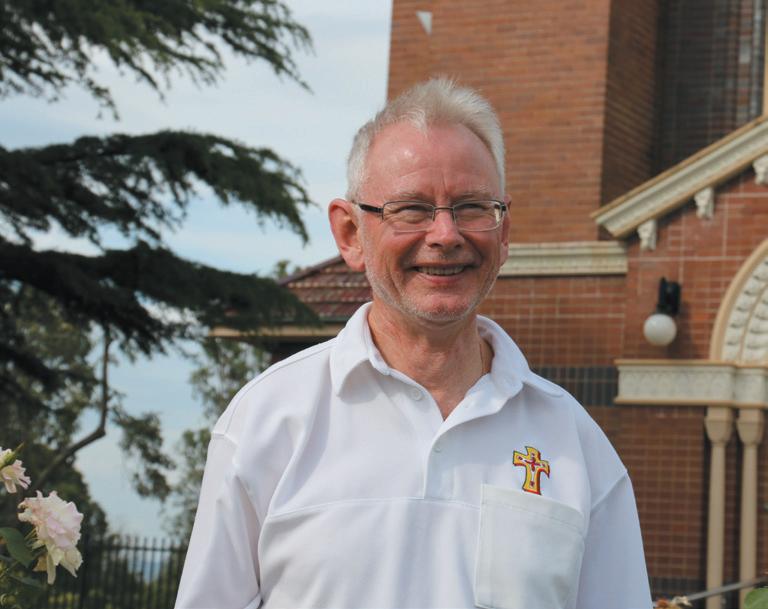
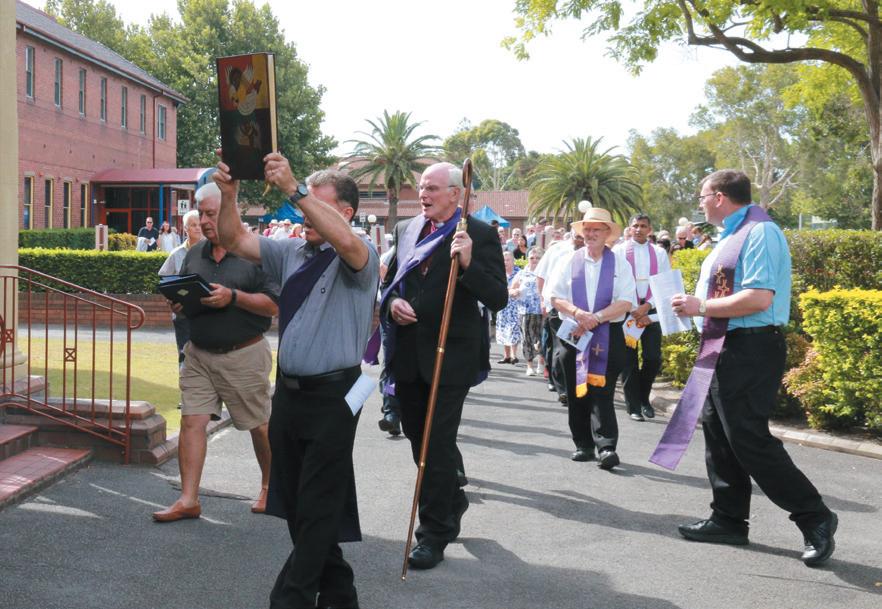
Father richard shortall is a familiar face to many in the local community, thanks to his ‘retreat in everyday life’ offered in several parishes and his accompanying the relic of st Francis Xavier back in 2012. Now he’s returning in the role of ‘Missionary of Mercy’ as Pope Francis’ year of Mercy unfolds.
In December, Bishop Bill opened the Door of Mercy at sacred Heart Cathedral, Hamilton, following the Pope’s opening of the Holy Door at st Peter’s in rome. on that occasion, the enthusiasm of members of the community to embrace Pope Francis’ call to “Be merciful as God is merciful” was evident.
speaking recently, Fr richard said that in reading the papal letter detailing the Jubilee year of Mercy, “I became entranced by what
Pope Francis had in mind. I spent time sitting with my wish to offer myself as a Missionary of Mercy in the Maitland-Newcastle Diocese and then took that desire to my annual retreat in June. I then made the offer to be considered as a Missionary of Mercy – and so I begin my role in February!”
Fr richard will travel independently in a motor home to places where there are communities and churches but no resident priest. While Fr richard will base himself around churches as a practical necessity, he will also visit significant places where mercy is sought and given. He stresses that “each day I will be available to anyone who wishes to chat” in ways which echo Pope Francis’ “desire that the year…will be steeped in mercy, so that we can go out to
every man and woman, bringing the goodness and tenderness of God!” (Papal Letter #5). In each place, Fr richard will welcome all who seek mercy, a listening ear and forgiveness.
In fact Fr richard will soon be in rome to gather with Missionaries of Mercy from all over the world. He says that “Pope Francis will welcome all the missionaries and speak further about the sensitive nature of their service. on the following day, ash Wednesday, there will be a solemn eucharistic celebration, during which he will confer the mandate to the Missionaries of Mercy.”
Pope Francis and Fr richard are both members of the society of Jesus – Jesuits – so Fr richard naturally feels a special connection: “He is my brother – fratello mio! ”
Bishop Bill is enthusiastic about having a Missionary of Mercy in the diocese. “I would be delighted if we could lead people to realise that religion is mostly about God and God’s goodness to us, not about us and our morality.”
Bishop Bill will commission Fr richard for his mission of mercy on saturday, 20 February, at the Vigil Mass, 5pm at st Joseph's, New england Highway, east Maitland. all are welcome.
To learn more about the Year of Mercy, and the plans for the Missionary of Mercy, please visit mn.catholic.org.au/yearofmercy or P 4979 1134.



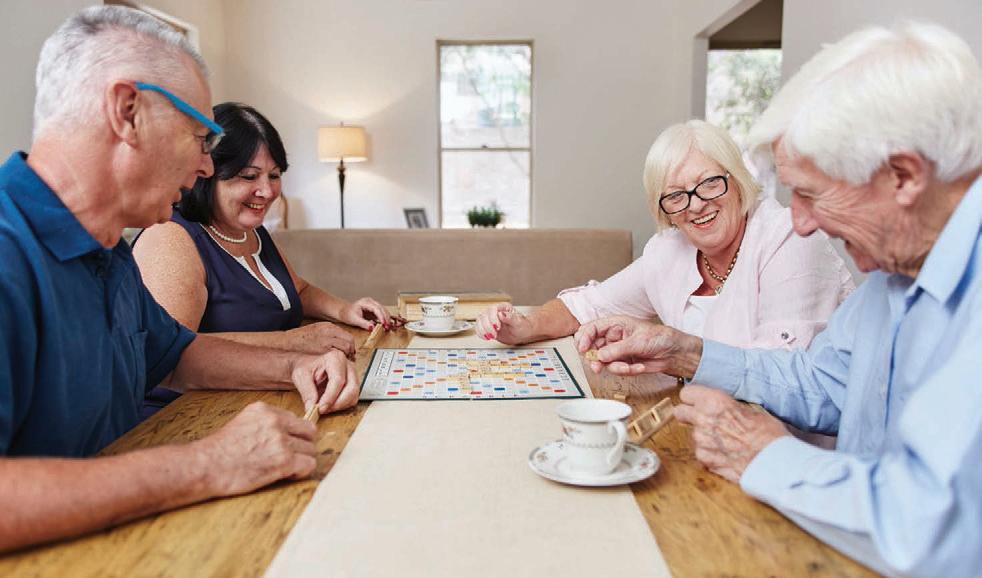
Enjoy the freedom and space that comes from independent living without the hassle of maintaining a property.
Calvary Retirement Communities provide stability, security and a real sense of community across our eight Independent Living Villages in the Hunter region.
Calvary Ephesus - Lambton Calvary St Joseph’s - Sandgate
Calvary Mt Carmel - Maitland Calvary St Luke’s - Cooks Hill
Calvary Nazareth - Belmont Calvary Tanilba Shores - Tanilba Bay
Calvary St Francis - Eleebana Calvary Tours Terrace - Hamilton South
For more information on our villages or to enquire about our vacancies call 1800 222 000 or visit www.calvarycare.org.au.


By BRIAN LACEY

at the beginning of each school year, parents experience myriad emotions that come with sending their child off for his or her first day of kindergarten or high school. this year, to help ease some parents’ concerns, Aurora has invited former K-12 principal and current Head of re & spirituality services (Catholic schools office), Brian Lacey, to answer some common questions. Brian’s key piece of advice is, “Parents and teachers should walk arm in arm for the good of the child, even if we don’t always see eye to eye.”
Q If I have questions or concerns about my child, who’s the best person to ask? When is it appropriate to request a meeting or escalate an issue to the assistant principal or principal?
s ometimes parents feel entitled to go straight to the principal, but the teacher’s the one developing a relationship with the child, so begin the conversation there. Principals have a big agenda and their first step in gaining accurate information is speaking to the teacher.
a s parents, it’s important to make sure we develop a good relationship with our child’s teacher/s. talk to them, support them, build them up and affirm them in front of your child. If you’re not happy with the response you get from a teacher, go to the assistant principal. He or she works directly with the teachers and would know more intimately what’s going on with eg transition programs like kindergarten commencement. In a bigger school, approach a student coordinator. Never, especially with kindergarten students, bad mouth a teacher in front of your child. Kindy children love their teacher and they also love their Mum and Dad. Don’t put them in an awkward position.
a s a principal, I hope a parent would see me if the issue’s become serious. Make an appointment or communicate initially via email. In my experience, the first meeting with the teacher usually resolves the issue.
Q How can I best prepare my child for kindergarten?
toileting is big! a lot of kindy kids can be reluctant to use toilets at school so that’s something for parents to talk about at home. tying shoelaces teaches independence. s omething that adults may take for granted is the ability to open lunchboxes. t hat can be really hard for little ones so ‘practising’
lunch at home and ensuring your child’s having the right foods at the right time (like a sandwich for lunch) are important. Many schools will have ‘crunch and sip’, so cut up some of the fruit and vegetables at home before school begins and watch your child to ensure they are comfortable. Can your child hold a pencil and paintbrush and use scissors? a lso, when you’re walking your little one to school, let him or her carry the school bag so you can see if it’s too heavy or too big.
Q What’s the best way to deal with crying if my child doesn’t want to leave me?
Don’t hang around!
Most teachers have experienced dealing with the anxiety of Mum and Dad leaving and quite often it can be the parents’ concerns that actually rub off onto the child.
s o if you can drop them off happily and confidently and leave, my experience is that kids quickly settle into their activities.
Parents and teachers should walk arm in arm for the good of the child, even if we don’t always see eye to eye.
Develop a routine for the beginning and the end of the day. s ay to your child, ‘ tell me all the wonderful things you learned at school today’ and ‘What was different from yesterday?’ o nce you begin those conversations, you’ll soon learn what the teacher’s doing at school and you can mirror that routine at home. young people’s learning improves when there’s a strong positive relationship between what’s happening at school and what Mum and Dad talk about at home.
Q How will the school help my child transition to school/a new school? It’s important to attend information evenings and read the information provided. Many schools appoint older students as ‘buddies’ to show younger students around and help them feel more confident. o lder students will often hide their anxiety and the last thing they want is Mum and Dad hanging around. o ne of the worst things you can do is give your child a mobile and say, ‘ text me if it’s not working out.’ Mum and Dad turn up in the foyer and the school has no idea that the child is anxious. Instead, name the year Co-ordinator or class tutor and encourage your child to let that person know if there’s a problem. transitioning is tough, especially from a small school to a big one. a s teachers, we want the child to tell us if there’s a problem so we can help. r emind your child that he or she need not feel alone.
Q This year, my child will be in a multi-age grouping class. How can I be guaranteed s/he won’t be disadvantaged if the teacher’s time is divided between classes?
your child will benefit. a s adults, we don’t go to work with everyone the same age and ability and we bounce off each other. When a child is in a multi-age environment, he or she is able to gain from the teacher and other students in the class and there are great learning opportunities. If you have concerns, contact the teacher.
Q How much homework should I expect my child to be given? Homework is a big issue and each school
is different. e nquire about your school’s policy. a s a principal, I would say some form of home engagement with students’ learning reinforces positive learning habits. s o, whether a child’s reading with Mum and Dad or playing s crabble, school learning is being reinforced. But don’t hesitate to ask, ‘What value does this homework have for my child?’ No school would want a child to continue struggling without help, or indeed to try to keep up with homework if there are family difficulties. a gain, communicate with the school!
Q How are Catholic schools different? Catholic schools are distinctly and authentically Catholic and ask that the child (Catholic or not) participate in the whole life of the school − religious celebrations, liturgies, assemblies and r eligious e ducation programs. I’ve always found that children enjoy those opportunities, Catholic or not. It’s certainly not the school’s intent to create ‘new Catholics’ but a number of our students do so because they’ve been involved in that environment. If parents are worried, they can go to the re teacher, studies or ministry co-ordinator to learn more about the Catholic identity of the school. teachers are only too happy to engage in these areas. If the practices of the school conflict with your family’s values, it’s probably best to send your child elsewhere. Many students find their Catholic education enriching, giving them knowledge and skills to be able to cope better with life’s demands and pressures within a Catholic context. To learn more, visit mn.catholic.edu.au and search ‘Catholic Identity’. The website of the Catholic Schools Office offers information on many aspects of Catholic education.

By TANYA RUSSELL r egistered Psychologist
CatholicCare's Counselling team Leader, registered psychologist tanya r ussell, will address an issue each month.
t he advice provided is general in nature and does not replace ongoing support and advice from your health professional.
To talk to someone about counselling support, P 4979 1172. Call Lifeline 24/7 on 131 114.
Do you have a question for Tanya?
e mail your question to aurora@mn.catholic.org.au or write to a urora-Care talk P o Box 756 Newcastle 2300.
Q one of my dearest, lifelong friends died by suicide recently. although we know he was struggling, there were never any signs that he would take his own life. In fact he was making travel plans for the future. It seems so sudden and I am devastated. How do I help myself get through this awful time as well as support his family?
When someone we love dies suddenly, it can be so hard to know how to deal with this loss, especially when our loved one dies by suicide. a ll loss creates pain and grief, but in the case of suicide, there may be many unanswered questions; especially when there were no signs that suicide was being contemplated.
u nfortunately, we know that many people who choose to end their life don’t show any signs, because they don’t want us to know. e ven trained health professionals may not see signs for the same reason.
e veryone grieves differently, and there is no right or wrong way, unless there is concern for your own safety, or someone else’s. Feelings of sadness, fear, guilt, anger, loneliness, helplessness – as well as experiencing physical concerns such as exhaustion, poor sleep and reduced appetite – are all considered “normal” when you are grieving.
t he best advice I can give you is − allow yourself to express your grief and look after





your mind and body. a lso, be present in your friend’s family’s life. you don’t need to have the right words: just be there with them and let them know you are available for them; to talk, or to help with anything, whether in terms of the funeral or practical support.
you may never be able to make sense of why your friend chose to end his life but with time, it is possible, through grief, to find ways to create further meaning in life.
Here are some suggestions:
e xpress your grief: many people cry and many do not. s ome people find other ways to connect with their sadness: through music, art and other creative means. you can do this alone or choose to be with others.
talk to someone you trust: don’t be afraid to talk about your friend’s life and death and the impact it has had on you. If you can’t think of a friend or relative you feel comfortable with, perhaps you could talk to a counsellor or join a support group.





Find ways to connect with your friend, even though he is no longer physically here: you could visit his favourite places, read his favourite books, create a photo album of shared memories, visit his place of burial or cremation, write down your thoughts about him or spend time with his family.
s tay physically and mentally healthy: try to go for walks, get some fresh air; eat well, try to sleep. e xpressing grief does not mean you do not have good mental health: in fact, allowing yourself to do this means you are not bottling things up and avoiding the pain of your loss. t his is better for your health in the long term.
Give yourself permission to just ‘do nothing’, and cry (or not cry) if this is what you want to do.
If you find dealing with your grief overwhelming, please reach out to someone. You can contact CatholicCare Social Services for support on 4979 1172.

































By JOANNE ISAAC


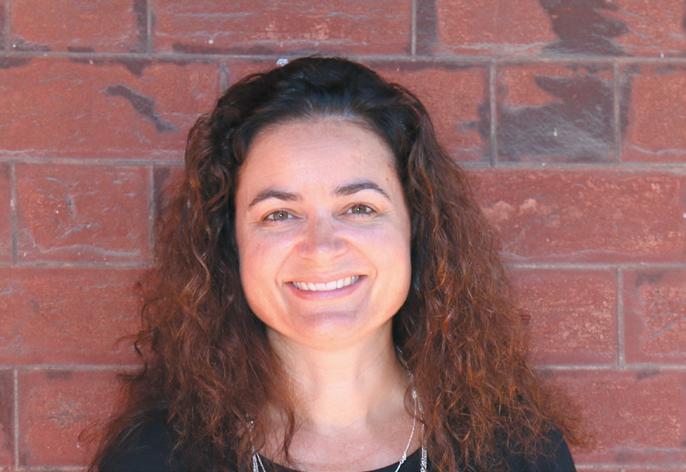
a nun and a publican forming a deep and abiding friendship might seem unlikely on paper, but not when the nun is s r Helen a nne Johnson rsj, founder of Mums’ Cottage, and the publican is s teph Woolf, proprietor of the historic Holmesville Hotel. Both women work and minister in the sleepy Newcastle suburb of Holmesville and their mission is the same –to provide a second home for people.
“ t his pub is different from other pubs. What we try to be is a second lounge room – a place where people can walk in the door and feel completely safe and comfortable,” said s teph.
s teph’s philosophy for the pub aligns exactly with s r Helen a nne’s vision for Mums’ Cottage.
“We have the same reason for being –we’re both fulfilling a need,” s r Helen a nne explained.
Mum’s Cottage is a charitable community service committed to empowering and improving the potential in the lives of families. Community members walk with families as they take the first steps in moving from difficult times towards brighter futures. Mums’ Cottage offers access to mentors, disability services, case co-ordination, legal and financial guidance, health care, education services, parenting programs, workshops and family events.
s teph and her husband Geoff bought the hotel in 2007 in partnership with another couple, but more recently they became licensees and now run the pub themselves.
“I cannot explain why we bought the pub. It’s inexplicable really! We have had a major learning curve getting used to having a 24 hour-a-day job and looking after staff and customers, which is by far the most timeconsuming part,” said s teph.
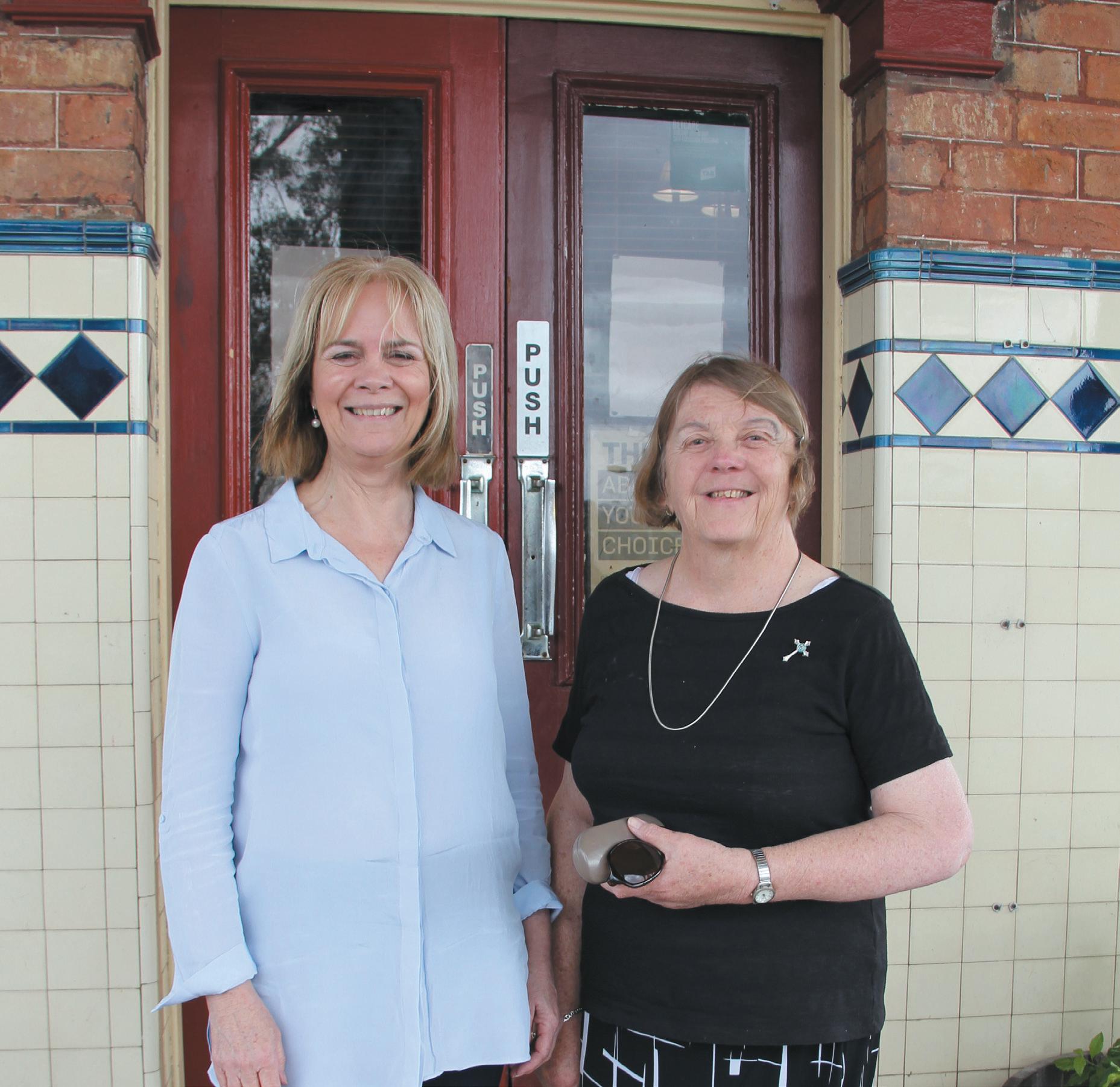
t he two women met when s r Helen a nne walked into the pub one day to see if the hotel might help Mums’ Cottage with a weekly raffle.
“I was working behind the bar and the door opens and this little lady walks in. t here were all these hard core regulars sitting at the bar and she walked over and said, ‘Hello, I’m s r Helen a nne Johnson from the o rder of s t Joseph and I couldn’t believe it because I had been taught by the Josephites and eventually taught with many of them as a teacher myself,” s teph recounts.
t he patrons and s teph knew they had met someone special immediately and that meeting was the beginning of a beautiful friendship − and increased community support for Mums’ Cottage.
t here are raffles, a s aturday night number board and help with catering.
“ a helper built a wooden cottage that sits on the bar and customers put their change in it. t his raises much - needed funds for Mums’ Cottage throughout the year,” explained s teph.
and completely. t here is a wide variety of people here at the pub but everybody without fail responds to Helen a nne. s he has a real sense of goodness and people respond to that. I think she’s amazing. s he disarms everyone. People know that she is here to do good things for others – it’s obvious to everyone. s he walked in here and immediately earned respect.
“Mums’ Cottage is coal-face stuff. t he customers know that their money, all of it, goes straight to someone who needs something in the community and they get behind that,” said s teph.
s r Helen a nne is equally effusive about s teph and all that she and Geoff do for Mums’ Cottage.
We have the same life values. You can’t be taught them, you have to live them.
“In this community we find that people take ownership of the Cottage because it’s theirs,” said s r Helen a nne.
s teph has no doubt as to why the community supports Mums’ Cottage.
“Helen a nne is a totally unique person because she just absolutely, passionately lives her dream and mission so honestly
“I’ve got the greatest admiration for s teph, not only for the person she is, but the way she is with people, her friendliness. s teph sends people to the Cottage if they need help. t hey are not just customers to s teph, they’re people,” said s r Helen a nne.
2014 saw the 110th anniversary of the Holmesville Hotel and s teph wanted to come up with an event that celebrated the pub’s history and importance in the community and at the same time provide an opportunity to showcase and raise some funds for Mums’ Cottage.
“I wanted it to be a family and communitybased event so settled on a Billy Cart Derby. In our second year about 1000 people
attended, up from around 350 in 2014. It is a fabulous day but very expensive to coordinate. We are trying to get it to a stage where we can cover costs and benefit Mums’ Cottage more substantially,” said s teph.
t he hotel has hosted meetings for the tenison Woods e ducation Centre, a ministry of the s isters of s t Joseph. a sacred space was set up on the table and the group gained an extra participant, one of the customers.
“ o f course the bar is not a sacred space, but while the meeting happened I remember thinking how wonderful it was that they were meeting here. o ne of the customers was fascinated and kept asking questions and I thought ‘ t his is so weird, but wonderful’,” s teph remembers.
Both women agree that their friendship is based on a shared background, influenced heavily by their Josephite education.
“ t he reality is we have the same culture. We understand each other and speak the same language,” said s teph.
“We have the same life values. you can’t be taught them, you have to live them,” adds s r Helen a nne.
a t the end of our chat s teph concedes that she may now know why she and Geoff bought the pub.
“Perhaps we were meant to meet Helen a nne. t hat’s probably why we bought the pub without knowing why – it was God’s greater plan!” laughs s teph.

To learn more about Mums’ Cottage please visit www.mumscottage.org.au or P 4953 4105.

By TANYA RUSSELL r egistered Psychologist
one in 100 australians has autism – and we have much to learn. autism is a lifelong developmental condition that affects, among other things, the way an individual relates to his or her environment and interacts with others. It can be a condition of ‘extremes’ where an individual can experience ‘too much’ of something (eg extra sensitivity to noise) or ‘too little’ of other things (eg social understanding). Learning that you have, or your child has, autism, can be confronting. For some, it is traumatic as they realise the future they had envisaged may now be affected by limitations. For others, a positive diagnosis can signal relief, as it provides clarity and understanding around difficulties being experienced.
an autism diagnosis opens doors to services that support an individual’s ability to interact socially and improve understanding and
functioning in personal relationships, school and work.
as Manager of CatholicCare’s Counselling, Family and Clinical services team, I am proud to offer autism assessment services for children, adolescents and adults. CatholicCare’s assessment aims to determine whether an individual meets criteria for autism and to provide information about his/her presentation and support needs. Not only do people with autism need support in difficulties, they also have many strengths due to the unique way they see the world. We work with families in enhancing these strengths.
CatholicCare’s assessment process involves approximately four face-to-face sessions. the initial consultation provides an opportunity to gather background information from caregivers and child/adult client and if appropriate, ask
questions as part of a screening process. Questionnaires may also be provided to give to a child’s teacher – allowing us to gain an idea of the child’s functioning outside the home. the second session centres on a more formal diagnostic interview with parents/caregivers. thirdly, when assessing the child or adult client, we incorporate a structured play observation, using the autism Diagnostic observation schedule. Finally, we invite the client, and if appropriate, caregivers, to a feedback session to review the results of the assessment. Copies of the report, which includes recommendations for further support, will be provided. With the client’s permission, the report can be used by government agencies, schools, respite care and other services to determine eligibility for funding or other support. Further support may include counselling or social skills training through CatholicCare or referral to one of
our partner agencies, perhaps for speech or occupational therapy.
CatholicCare also provides review assessments for individuals who already have a diagnosis of autism when information is required − at times of transition, to review progress and guide interventions, to support funding applications and to access the NDIs
We understand that autism not only affects the individual, but also loved ones. accordingly, CatholicCare is committed to supporting families develop an enhanced understanding of autism. this assists families to build stronger relationships and provides the individual with greater support.
To learn more about CatholicCare’s autism and other assessments, please P Counselling, Family and Clinical Services Team, 4979 1172.

By GABRIELLE LYNCH
We take photographs to record moments because the moment is precious.

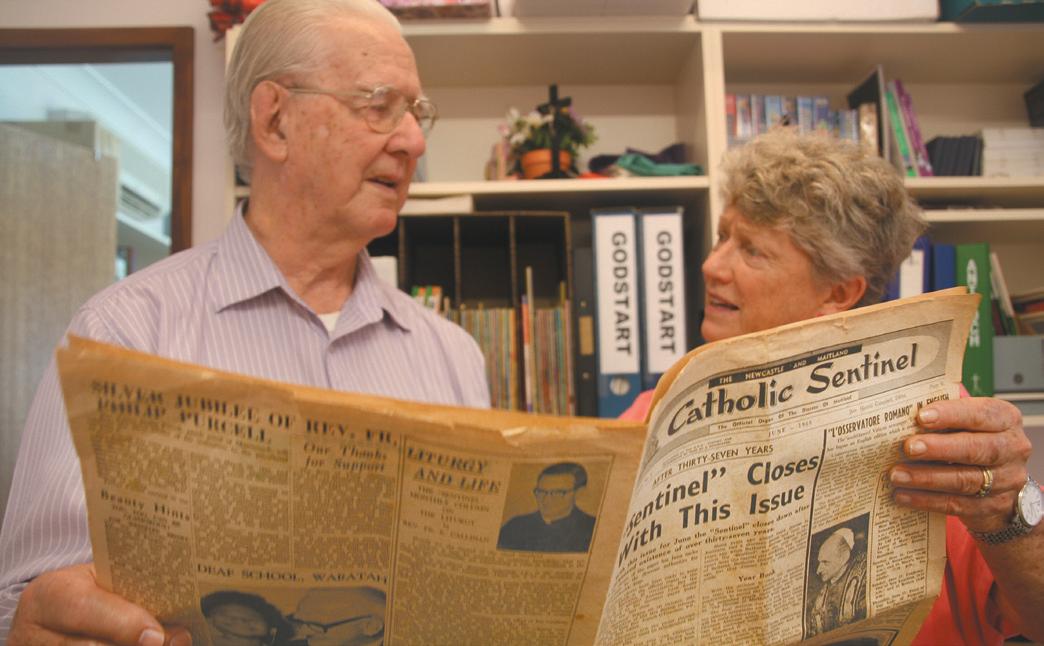
Photographs evoke memories from the past; memories of meaningful people, decisive events and significant places. a long with memories come stories and often these stories create identities. t his became clear to me as I found myself engrossed in the final edition of The Sentinel ; the official journal of the Diocese of Maitland-Newcastle, published for 37 years from 1931 to 1968. Much like Aurora today, its content included information and photographs about the diocese as well as news of Newcastle and surrounds, international news and editorial content.
a s I flipped through the pages of the July 1968 issue recently located in Father r eg Callinan’s garage, I realised that The Sentinel is a souvenir of our diocese’s

past. a dvertisements for charity stores that still open their doors today captured my attention as did the unusual editorial on the matter of alcoholism written by a psychologist. t hankfully, it was certainly a different perspective from psychologists’ understanding of alcoholism today.
Photographs of schools in the diocese renovating their buildings and upgrading classrooms were also included. s ome familiar faces even made the journal, including Father r eg who wrote a column on the last page for several years.
The Sentinel holds the answers to many questions for our diocese. Not only does it record the dates of significant events such as the changing of Mass from Latin to e nglish or the names of secondary school bursary winners, it reminds us of how far the diocese
has come, the memorable events that have taken place and the people who have made it all happen.
a s part of the Diocese of MaitlandNewcastle’s 150th year it would be wonderful to locate all the issues of The Sentinel . Local historian, Frances Dunn of Morisset, has initiated ‘the search for The Sentinel ’ and has determined that the Mitchell Library has the only (almost) complete set. It is missing issues from o ctober 1964 and May 1968. t hose members of the diocesan community planning events to celebrate 150 years would also like to see this important piece of history digitised and added to trove Newspaper so that members of the public could easily access The Sentinel . However, the National Library in Canberra has advised that as The Sentinel is a considered a journal and not

a newspaper, it cannot be funded by the a ustralian Newspaper Digitisation program. t he diocese is now looking to raise $12,000 for the digitisation of The Sentinel a nyone who may have copies of The Sentinel hiding under boxes and dust in their garage − or an idea for a fundraiser for the digitisation of The Sentinel − is asked to contact tracey e dstein, e ditor of Aurora t he s entinel should not be left in the shadows of our diocese’s past. u ltimately, The Sentinel blends our diocese’s collective history with people’s personal memories to allow members of today’s diocesan community to connect with events and the people in the diocese throughout time.
If you can help, please P Tracey Edstein 4979 1288 or E tracey.edstein@mn.catholic.org.au.






















By KATHY WALKER OAM
“ t he beginning of something is always most important, especially when it is young and just beginning.” (Plato)
t his principle is one I often write and speak about, particularly with parents at presentations. Childhood is the beginning of life. It is the foundation of all that is to come.
My latest book, Future Proofing Your Child , attempts to provide a range of practical tools and strategies to assist parents in these formative and foundational years.
t he theory is that if we can prevent rather than cure, be proactive rather than always reactive, if we can build strong skills for life early in life, then our children are more likely to develop into adults who can:
t hink and act with resilience
Believe in themselves with a realistic and strong sense of self
Communicate their needs and ideas effectively and respectfully
Form healthy and meaningful relationships with others throughout their lives
Make good decisions that will keep them safe
t hink creatively and laterally to solve problems.
When parents are interviewed about what they want most for their children throughout their lifetime, the top answers tend to be “healthy, happy and successful”.
When we unpack what it might mean to have each of these attributes, it is “successful” that is most variable. Does it mean a particular career path, or income, or address?
It can of course be a very subjective interpretation.
rushed and often overscheduled society much of the Western world has become, it is at times difficult for children in their early years to practise becoming resilient, being creative, discovering themselves.
Picture a family arriving at a restaurant. Within minutes, every family member is switched on to a device. No one needs to become impatient, experience the boredom of waiting, hold a conversation or interact.
t he life skills of patience, learning to be bored, learning to hold a conversation − the social norms of life − are lost to all because every one is looking at a screen.
a ccording to many pre-school educators, children arrive already worn out by the busy, adult-paced lifestyle they lead on weekends and during the week. t here are parties for two-year-olds with some 15-20 children as guests! Children who still require up to 11 hours sleep a night are averaging perhaps only eight due to adult-paced, rather than child-paced, lifestyles where bedtimes are later and later.
We wonder why their behaviour is labelled oppositional, when in fact most of them are simply overtired.
t here is a perception out there that unless parents pay lots of money, early in their young child’s life, for swimming and gym and tennis and music and ballet, all in the same week, their child will suffer or not keep up with everyone else. In some cases this is happening before the child has even started school!
Future proofing is giving time and imagination and resilience to children.
However, many social researchers and others state that a successful life is measured by one’s sense of self, resilience, communication skills, ability to interact with others in productive ways and to make decisions and choices that keep oneself and others safe and healthy.
In Future Proofing Your Child I place a strong emphasis upon the fact that within the very
Future proofing is about ensuring that as a society, family, community, we ensure we get our priorities right. We need to remember that there is evidence out there to remind us that children are not miniature adults, their brains are different and children become tired. Children are born to relate to adults more than other children in their preschool years. Children need time to play and create and make and paint and play and use their imaginations. t hey need to build resilience by rebuilding what just fell down. t hey need not to be given a ribbon at the age of 10 if they ran last in a race. t hey need not to be over-compensated when
everything does not go exactly as it might have or should have or could have, every day.
Children need to learn, sadly but inevitably, that you can’t always have what you want when you want it. s ometimes bad stuff happens. t hat is how resilience is learned.
Future proofing our

children for the challenges they will have to face is about allowing children a childhood. Not rushing, not falling into the trap of giving them everything now, means they will be better equipped for everything in the future.
t he reason our species has a childhood is so we can take time to build relationships, to play, to investigate, to create, to bounce back, to try again.
We need to put the screen away sometimes, to get children back outside, to re-embrace play that costs nothing and gives children time to create and imagine and entertain themselves. Future proofing is giving time and imagination and resilience to children. t ime and resilience and relationships for the future are what we all need.
Kathy Walker OAM is the Founding Director of parenting and education consultancy, Early Life Foundations. Please visit kathywalker.com.au and earlylife.com.au/info/home.

By MICHAEL O’CONNOR

regular contributor Michael o’Connor highlights an uncomfortable truth. your response is welcome.
a s a kid I loved to play cowboys and Indians.
I also loved the movies that fed my imagination. I savoured the vicarious experience of tension and terror. r ed savages could materialise from any frame, lusting for scalps.
I especially loved it when, down to our last bullets, we heard the distant bugle and saw the rapidly approaching cloud of dust from the mighty cavalry.
t he film would cut to the galloping ponies thundering to the rescue. t hen the incredulous, terrified faces of the Indians; their headlong flight in panic; their massacre before our delighted eyes.
It felt good. I jaunted home from Hoyts New Lambton totally satisfied, eager for next s aturday’s matinee.
t hey knew how to give us a consummate emotional experience – even in black and white. t hey would bring us to the edge, and then to elation as all was resolved as it should be. t he cowboys always killed the Indians. o ur emotions demanded it.
Cowboys were people like us. Indians were savages. t here was no portrayal of their humanness on the silver screen. t hat would
take from the cathartic experience I relished.
Nothing was shown of injustice. Nothing was revealed of the warriors’ human qualities or gentle side, their love for family, their affinity with nature and land. Nothing told of the impact on wives, children, aged parents, of killing these men. It was all just left out.
Prior to the film Little Big Man in 1970, I had left behind those black and white days. t he Indians had become humans too.
t hat film, however, had shown what the black-and-whites had not – the Indians were people who loved and suffered and bled like us. t he other side of the story! In showing this it had demonstrated how manipulated, de-sensitised and skewed we can become.
My childhood experience came to mind some little time ago when I realised with revulsion that I had an adult substitute.
Perhaps that should be ‘adultery substitute’.
I was watching a standard man-meetswoman movie which was progressing in typical fashion when it emerged that one was married. a n unexpected turn, but not one to interfere much with their developing relationship. Nor, emotionally, would an audience want it to – myself included, I

observed to my dismay.
t he film rapidly advanced toward sexual consummation, as today’s cinema romances do. We were not to be deprived of that climax any more than we could have borne the frustration of an averted massacre of the Indians.
s hame and incredulity at my moral ineptitude was only matched by reluctant admiration for the sheer cleverness of the film makers. t hey had manipulated me emotionally, and no doubt countless others, just as many similar films have done.
a nd it was done with the same simple technique used by the old fashioned cowboys and Indians movies. Don’t show the other side!
Don’t show the destruction of other relationships. Don’t show others suffering. Don’t show the others as real humans. t he spouse and children of an unfaithful leading character – don’t even show them! If you want your audience to feel good, that is.
s how the victims in their human sufferings and you compromise the vicarious pleasure of cinematic infidelity. a udiences don’t want that. t hey may feel cheated.
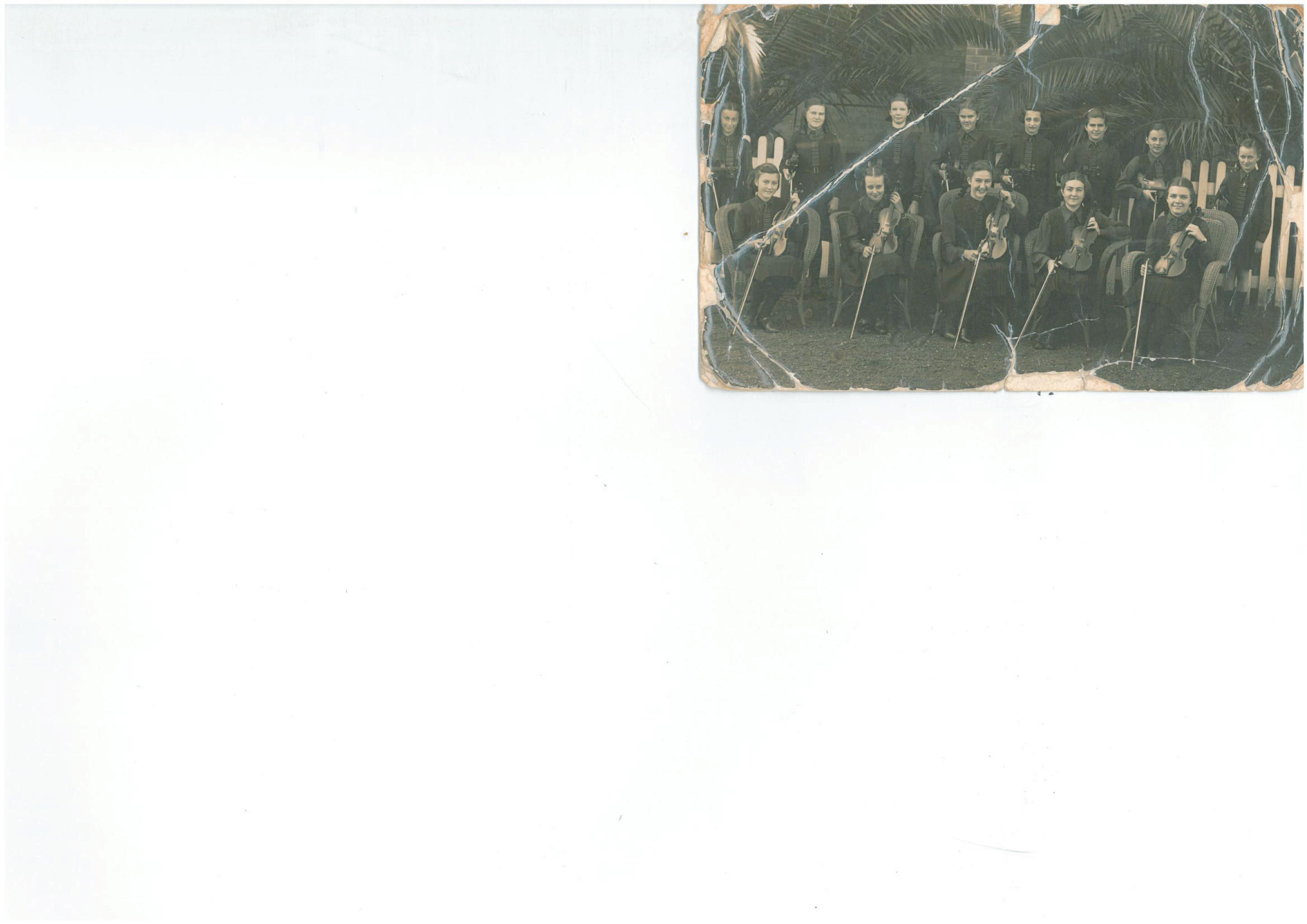
Contributed by Shirley McHugh
Is there anyone around who was a student at s t Joseph’s College, Lochinvar in 1941?
Can you remember the palm trees that lined the driveway between the boarders’ quarters and the school, where this photo of the College o rchestra was taken? there, I wonder?
string orchestra? Being 1941 and wartime, the orchestra was frequently called upon to play for the soldiers at the as well as other concerts that took place in
We would not now make or tolerate a film about Native a mericans in the old style. We are alert to the deficits, imbalance and distortions of that genre. We see the incorrectness. We are in tune with the injustices. We know the other side. We are alert to human suffering behind the source of our erstwhile pleasures. We would be embarrassed.
Will the same maturity emerge one day concerning our response to adultery in movies, I wonder? Will we get to a stage where we don’t want ourselves manipulated to desire the on-screen consummation of adultery, because adultery has victims? Will we overcome indifference to the pain of the betrayed – even in movies – just as we have developed sensitivity to the sufferings of others which were not projected onto the screens of my childhood?
I suppose something in us will always want to cheer the cavalry.

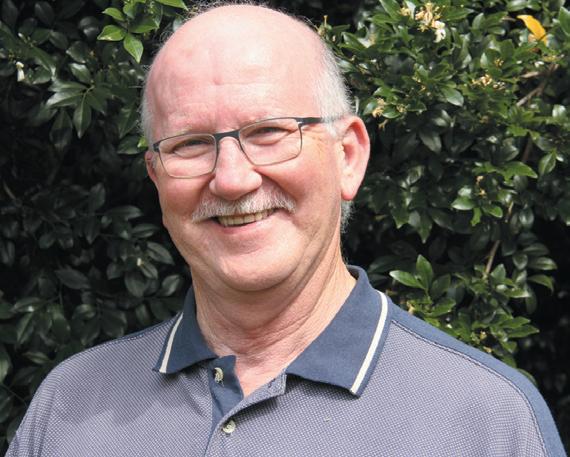
By JOHN CAVENAGH
u ncertainty in life seems to be the norm. a t times the ‘noise’ of the everyday is overwhelming. t he speed of change in society can cause us to become despondent, as we increasingly feel we are being left behind. Many of us feel a bit lost. e verything is so complicated. We yearn for a slower pace, less noise, simplicity, to help us feel in control of our lives. We want to know who we are and where we are going, yet we often experience frustration, inadequacy, rejection and never quite ‘getting there’. We want answers to myriad questions, most involving the question ‘why?’. In recent years, I have begun to realise there will not be answers to my many questions, and I’ve begun to accept a deep uncertainty in life. t his has been a freeing experience and I’ve found myself becoming more tolerant, less critical, less rigid – and here is the real bonus – more peaceful and contented.
Karl r ahner, who was appointed senior theological advisor to Vatican II by Pope John XXIII, wrote, “In the torment and insufficiency of everything attainable, we learn ultimately in this world there is no finished symphony” ( r olheiser, 2014, p 32). r ahner was suggesting this life cannot give us everything we yearn for, and we will always be frustrated, unfulfilled, out of rhythm and restless, as we struggle with the complexities of life. Jesus refers to this yearning for fulfilment in the parables. t he writer of the book of e cclesiastes suggests that from the beginning of life to its end we remain ‘out of sync’ because of a ‘timelessness’ within us ( e cc 3: 10-11).
John Cavenagh offers a few reflections on the contemporary relevance of scripture.
building process until the Lord intervened and “confused their language” making it impossible for the people to communicate effectively. t he building process came to a halt and everyone wandered off. t he implication here is that the population yearned for security and stability. God wanted the people to open their minds, embrace change, welcome complexity, seek new horizons and grow (Davies & r ogerson, 2005, p 122). God seemed to be promoting chaos in the world but perhaps his desire was for us to strive to be our best − and this would only be possible by embracing difference, diversity and complexity. t he catalyst was the confusion of language, requiring extra effort to understand each other through active listening, sharing feelings, embracing new ideas and most importantly, taking time to hear each other. God wanted us to embrace a spirituality of reaching out rather than one of insularity (deClaissé-Walford, 2006, pp 406, 413).
a nother way to consider the Babel story is as a critique of empire building with its accompanying passivity and security. Hiebert suggested ‘pride’ was equivalent to imperial domination of a colony and the inevitable result of dilution, even suppression, of local customs and languages. t he ‘punishment’ was the collapse of an empire when a colony exerted its own independence, broke away and embraced self-government (Hiebert, 2007, p 30).
Our country continues to build towers of Babel with political parties invoking the fear of difference in a misguided appeal for votes.
In trying to make sense of this yearning for completeness and to understand why complexity seems to be our lot, a story from the Hebrew s criptures, the tower of Babel (Gen 11:1-9), is worth considering. o n a plain in southern Iraq, the people decided to build a city and a tower, in order to make an impressive name for themselves. t he population had one language. t his attribute facilitated the

Humankind felt comfortable with one language and one location in the Babel story. Hiebert called this “cultural homogeneity” but it has also been described as an “ant colony”, very different from a gathering of people in true freedom (Hiebert, 2007, p 39; Lacocque, 2009, p 41).
a ll this demonstrates humanity’s resistance to change. t he people didn’t grasp the principle that all human development/ improvement involved change, but instead were inclined to think ‘not all change results in improvement’ or ‘why bother?’ or ‘we’re comfortable as we are, thanks very much’ (Crump, 2008, p 47). t his has
such a contemporary feel! In the tower of Babel story, humankind resisted change and this could only be overcome by divine intervention (Hiebert, 2007, pp 40-41). t here was fear, anxiety and the need to cling together (deClaissé-Walford, 2006, p 41). God was urging heterogeneity and not homogeneity.
My experience of a loving, affirming God suggests we look at the Babel story as an inspiration to grow and be more creative. It also affirms our uniqueness and our gifts and how our differences should be celebrated, not criticised (deClaissé-Walford, 2006, p. 414).
t he story also affirms multicultural development throughout the world. Here in a ustralia our culture is so much richer than it must have been in the days of the White a ustralia Policy (Willard, 2008, pp 260265). o ur improving attitude with respect to our Indigenous brothers and sisters gives cause for hope that we are evolving as God wanted, albeit slowly. a s a 6 year-old child living north of r ockhampton, my ‘good mate’ was an a boriginal lad. He taught me much about goannas and how to make a slingshot. I found him one day on the bush track, crying; another boy from our state school had ‘bashed him up’ because he was a boriginal. We cried together. to his great credit he simply forgot about it and told me I was not to tell my Dad, who was the head teacher. He taught me how to see things differently, how to forgive and move on. o ur a ustralian attitude to immigrants has been poor. o ur country continues to build towers of Babel with political parties invoking the fear of difference in a misguided appeal for votes. Jesus embraced cultural diversity and enlisted the help of those who were different, eg the Good s amaritan (Lk 10: 25-37) and the s amaritan Woman (Jn 4: 7-30).
I am much less fearful of diversity, complexity and difference now. I try to embrace them because it makes me less defensive and more open. I also try to see the other person’s perspective and have realised, soberingly, that my perspective is not the only one! t his openness has helped me get closer to the God within me. I slow down and stop for a while each day and be with God. Centring prayer and Christian meditation nudge me toward this goal.
r eferences: Crump, B. (2008). How can we make improvement happen? Clinical Governance: a n International Journal, 13(1), 43-50. Davies, P., & r ogerson, J. (2005). t he o ld testament World (2nd ed.): Westminster John Know Press. deClaissé-Walford, N. (2006). God Came Down…and God s cattered: a cts of Punishment or a cts of Grace? r eview and e xpositor, 103( s pring), 403-417. Hiebert, t. (2007). t he tower of Babel and the o rigin of the World’s Cultures. Journal of Biblical Literature, 126(1), 29-58. Lacocque, a . (2009). Whatever Happened in the Valley of s hinar? a r esponse to t
1(March), 29–41. r ollheiser, r .
s acred Fire: a Vision for a Deeper Human and Christian Maturity
346). Willard, M.
History of the White a ustralia Policy. In D Gare & D r itter (eds), Making a ustralian history: perspectives on the past since 1788 (1st ed, pp 260-265). s outh Melbourne, Victoria: t homson Learning a ustralia.

By JENNIFER BYRNE

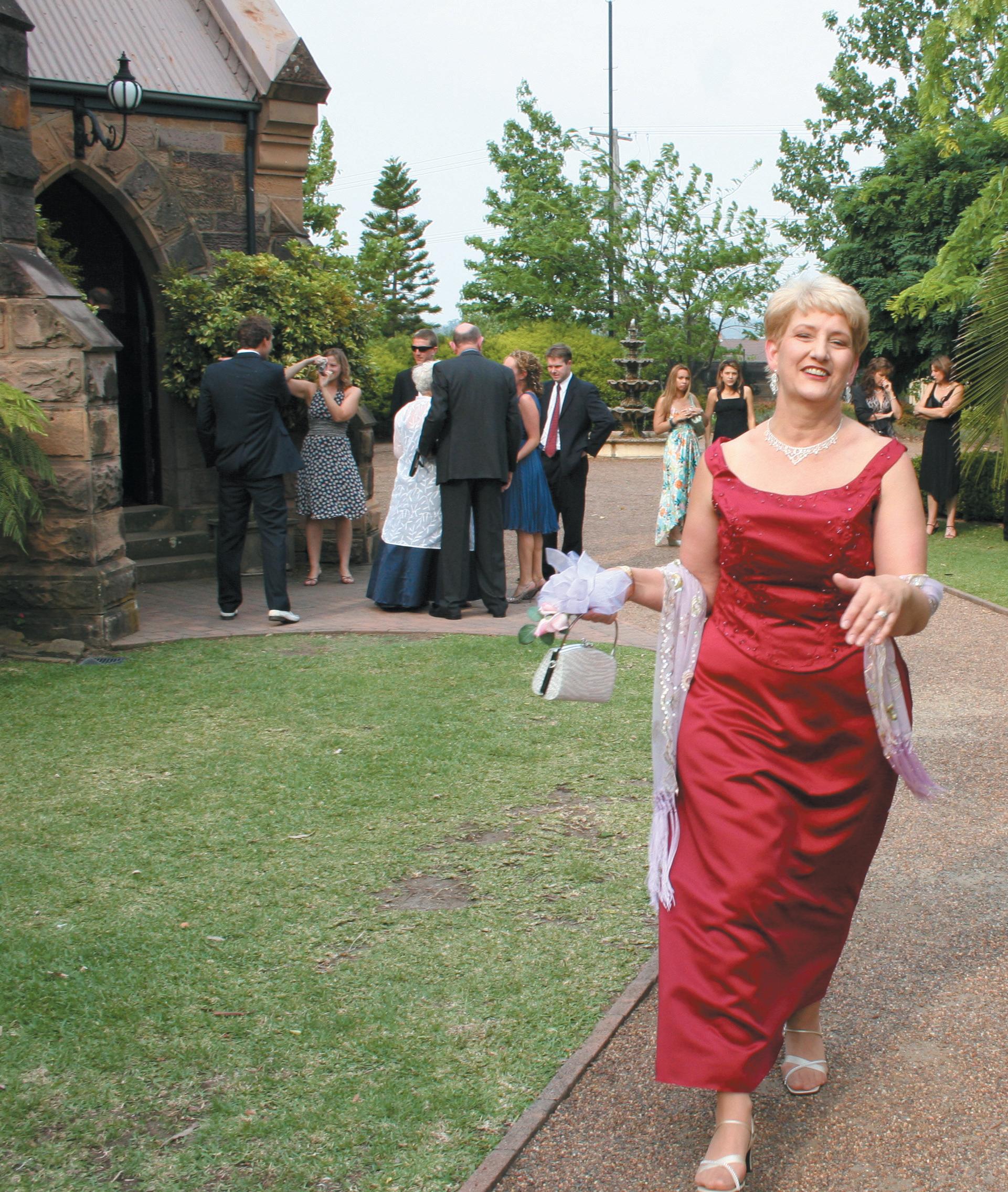
o n o ctober 7, 2015, my Mum, Lauranne Byrne, became one of seven women in a ustralia who die of breast cancer every day. I want to put an absolutely beautiful face to the statistic to inspire women who, like me, are overwhelmed and frightened, to be more like her: positive and courageous, intelligent and strong, right to the end. s he knew her body so well, she knew herself so well. s he was always vigilant and aware of what was happening to her and determined to be in control, to do everything in her power to overcome her health issues. s he battled them with vitamins and minerals and healthy eating, with (albeit moderate) exercise, with enthusiasm and optimism and with her unwavering faith in a loving God. s he always ate the ‘right’ things and stayed away from the ‘wrong’ things. e ven guilty indulgences were kept at moderation. s he was the poster child for health and wellbeing − except she had breast cancer.
My mother was 51 when she was diagnosed with breast cancer. s he took the diagnosis in her stride with grace and optimism. s he had a mastectomy and underwent chemotherapy. s he had the ability to make the best of any situation and meet every hurdle with a beautiful smile and a sense of humour. s he harnessed her own pain and struggle and used it to support, educate and inspire other people struggling with illness and grief. s he became an integral part of the many breast cancer awareness campaigns within the Great Lakes and Manning Valley community. For four years she lived in the positive assurance that cancer was behind her. s he was a pillar of strength for other women diagnosed with breast cancer, as they were for her.
When she was 55 she was told the breast cancer had metastasised and spread to small pockets in her lungs, liver and sternum which the doctors would treat with chemotherapy. t hey had also found a tumour in her brain which they were to operate on and treat further with radiation. t hroughout the surgery, even after recovering from brain surgery and undergoing radiation and chemotherapy, her smile never wavered. Her optimism waged war and as the odds continually stacked against her, she kept climbing above them, until she was standing valiantly on top of it all. a t 57 she was diagnosed with yet another brain tumour as a result of the breast cancer.
Faced with her situation I would have cashed in my chips long ago. I would have been locked in a padded room screaming all sorts of profanities and questioning, ‘Why me?’ I’d be feeling completely forsaken. s urely I’d had my share, surely it was someone else’s turn?
a loving daughter shares a story of life and hope, unwittingly echoing Pope Francis’ call for mercy.
But Mum wouldn’t wish it on anyone. s he showed us how to live with cancer without complaint, she showed us how to fight against all the side effects of the treatment which began making her sicker than the cancer itself. a t 60 she walked from tuncurry to Cape Hawke s urf Club to raise money and awareness for breast cancer. s he walked even though it pained her; she walked even though she was supposed to be resting in preparation for a hip replacement because the radiation had destroyed her joints. s he walked for the women who couldn’t, she walked for the friends she had lost to the disease she was fighting.
a t 61, with a new lease on life after her hip replacement, she underwent surgery to address a tumour on her spine. t he surgery was a success but she would never walk again. With her usual resounding determination and optimism, she disregarded the doctor’s diagnosis, talked of dancing at weddings, and believed she would once again prove them wrong and walk again. a nd as she had proved them wrong repeatedly, the doctors shared that hope. s till in hospital recovering from spinal surgery, the cancer had spread to the lymphatic glands in my mother’s groin. t here was nothing doctors and nurses could do but manage the pain, and my beautiful mother’s final days were filled with strength, love and laughter. For ten years breast cancer had thrown everything it could at her but still it could not beat her. s till her love, strength and optimism radiated from her, and the darkness stood no chance. a s she said, “I may die from breast cancer but it will never kill me.”
My mother always remained strong in her Catholic faith and in her commitment to her parish of Forster tuncurry. t hroughout her suffering she was aware of being accompanied by Jesus and particularly by his mother, Mary. s he always reminded us of the “coincidence” that she was diagnosed with breast cancer on 15 a ugust, the feast of Mary’s a ssumption; she underwent her mastectomy on 22 a ugust, the Queenship of Mary and she began her chemotherapy treatment on 8 s eptember, the Nativity of Mary. It was fitting then that she died on 7 o ctober, the day dedicated to o ur Lady of the r osary. o n that final day, as she struggled for breath, our family held hands and recited a decade of the rosary. a s we finished praying her eyes opened and she stared into space. Whatever she saw gave her great peace and enabled her breathing to soften, slow and finally stop as she let go of this life. Jesus, or perhaps his mother, had come to take her home.
a lthough her peaceful departure has assisted in my grief, the somewhat shameful truth is that I didn’t think a tragedy like this would ever happen to me. e ven after witnessing everything my mother went through, part of me, away from reason and logic and medicine, still couldn’t comprehend reality without her. Part of me still believed in a way out where we all lived happily and healthily ever after. I thought tragedy was a fate for someone other than me. I thought a tragedy like this would just be something I’d read about, or hear about, not something I would actually live. What a shameful truth to acknowledge, what a selfish feeling to admit, especially as I wasn’t the one living it, I was watching someone I love live it. It continues to feel so surreal; is this really happening to me? I guess we’re at the shock stage of grief; the answer in
my head in my mother’s a merican accent tells me, ‘ yeah, so what? Get over it!’ s he would never trivialise my grief but she would accept the deal she was given, look for ways to heal and encourage me to do the same. What’s the alternative? Lock myself away in a dark room cursing the world for its cruelty?
I guess in order to heal I have to acknowledge the pain in the first place, hence this little exercise. Perhaps instead of fearing a future without my mother, I should praise the past and be grateful for the time we were fortunate enough to have. s o here’s to you, dearest reader, chin up buddy, the world is pretty wonderful, even when it isn’t.
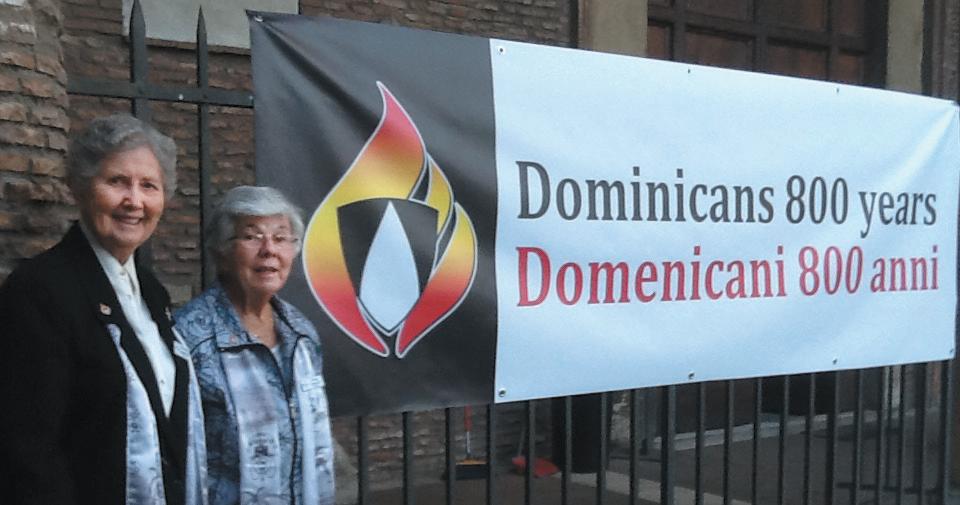
Two local Dominican Sisters travelled to Rome to celebrate with the larger Dominican family.
Dominicans have begun a year of celebration marking the 800th anniversary of official approval of the o rder by Pope Honorius III in December, 1216. t his celebration coincides with that of the extraordinary Jubilee year of Mercy announced by Pope Francis; how fitting that our founder, Dominic de Guzman, prayed frequently, “My God, my Mercy”, asking God to give him and his followers eyes of deep compassion to see the world, that they might become reflections of divine mercy.
t he solemn opening of the Dominican Jubilee took place on the Feast of a ll s aints of the o rder (7 November 2015) at s anta s abina Basilica, r ome. s r a nn Keys o P and

I had the privilege of travelling to r ome to represent a ustralian Dominicans. a s advised, we arrived very early and were amazed to see carpet still being laid! t here must have been a thousand participants and we relished being part of the international celebration, while remembering in prayer everyone at home.
During supper, a nn, determined to speak to the Master of the o rder, Bruno Cadore, whom she had met when he visited a ustralia in 2014, finally reached him and let him know we were there. He was delighted we had come so far and was happy to have a photo with us to bring home.
t he celebration leads me to marvel that for eight centuries Dominic’s legacy has been transmitted from one culture to another during extraordinary historical changes and is being given new expression today. What was
By Margaret Cameron OP
the charism, the favour, with which Dominic was gifted by the Holy s pirit?
Dominican friar and writer, s imon tugwell, tells us Dominic was a man of deep joy and compassion, always cheerful and companionable. He was passionately devoted to the Church and to the truth of the gospels, sensitive to values which could be found in movements on or beyond the fringe of the official Church. He was “present to God”, “present to the world” and in touch with his times.
a s Dominic travelled with his bishop through southern France he became acutely aware that the Word of God was not being preached well. He had to change direction and begin a new way of life.
He began by relating to people, by accompanying them and listening to their
By Richard Leonard sj
Spotlight is an occasion for holy, righteous anger and every adult Catholic should see it − not because it is easy, but because it is necessary.
stories. t hey preached their reality to him, he contemplated with others, listened to them and took his place on the side of those struggling for meaning in life.
Contemporary Dominican theologian, e dward s chillebeeckx, is quick to remind us that to be faithful to the Dominican story today we are called to live life contemplatively, critically appraising what is happening in our society and engaging in the quest for truth that leads to justice, peace and freedom. o ur response to this challenge will determine whether the charism bequeathed to Dominic is kept alive in the church for future generations.
Sr Margaret Cameron OP is a member of the Dominican community at Waratah. You may wish to visit www.opeast.org.au.

t he film’s title refers to the team of investigative journalists at The Boston Globe . In the late 1990s they become aware of a number of Catholic priests who had been accused of child sexual abuse. In the early days they unearth evidence that the a rchdiocese of Boston has gone to extraordinary lengths to cover up the activities of these paedophile priests, and silence victims through payoffs, legal threats and personal intimidation.
t he team begins believing it is looking at isolated, criminal individuals; “rotten apples”. Within a year they discover there have been credible or accepted allegations against 90 priests, 6% of the archdiocesan clergy.
t he team increasingly becomes aware that the stakes are escalating, that it’s “going after the system” with connections to nearly every other powerful city institution. From June to December, 2002, The Globe
published 13 reports about the crimes and their cover-up, culminating in the resignation of Cardinal Law as a rchbishop of Boston.
t his film not only casts its forensic gaze against the Catholic Church and other civic institutions, but also on itself. s ince 1976 victims, their families and lawyers had been telling The Globe about the crimes, the criminals and the scale of the cover-up. t he editorial staff could not or would not see what was in front of them.
Spotlight’s screenplay is richly dramatic and the acting is universally compelling.
Importantly the present Catholic a rchbishop of Boston, Cardinal s ean o ’Malley, said, “ Spotlight depicts a very painful time…in the a rchdiocese of Boston…. t he media’s investigative reporting on the abuse crisis instigated a call for the Church to take responsibility for its failings and to reform itself − to deal with what was shameful and hidden − and to make the commitment to put the protection of children first, ahead of all other interests. We have asked for and continue to ask for forgiveness from all
those harmed by the crimes of the abuse of minors…”
It may once have been possible for Catholics to argue that this shameful and criminal chapter is “a media beat-up from an antiCatholic press” or “it’s just a few sick individuals”, but the r oyal Commission into Institutional r esponses to Child s exual a buse puts paid to those claims. e ven though we now know there is a pandemic of sexual abuse of minors − in family homes, in every religious group as well as all welfare and government institutions that have had long-lasting dealings with children − that affords us no comfort or excuse.
Why go and see this very tough and demanding film? Because victims and their families deserve it. Whether we like it or not, we are all in the spotlight.
Rev Dr Richard Leonard sj is the director of the Australian Catholic Office for Film & Broadcasting. Read his review in full at mnnews.today.

By TRACEY EDSTEIN
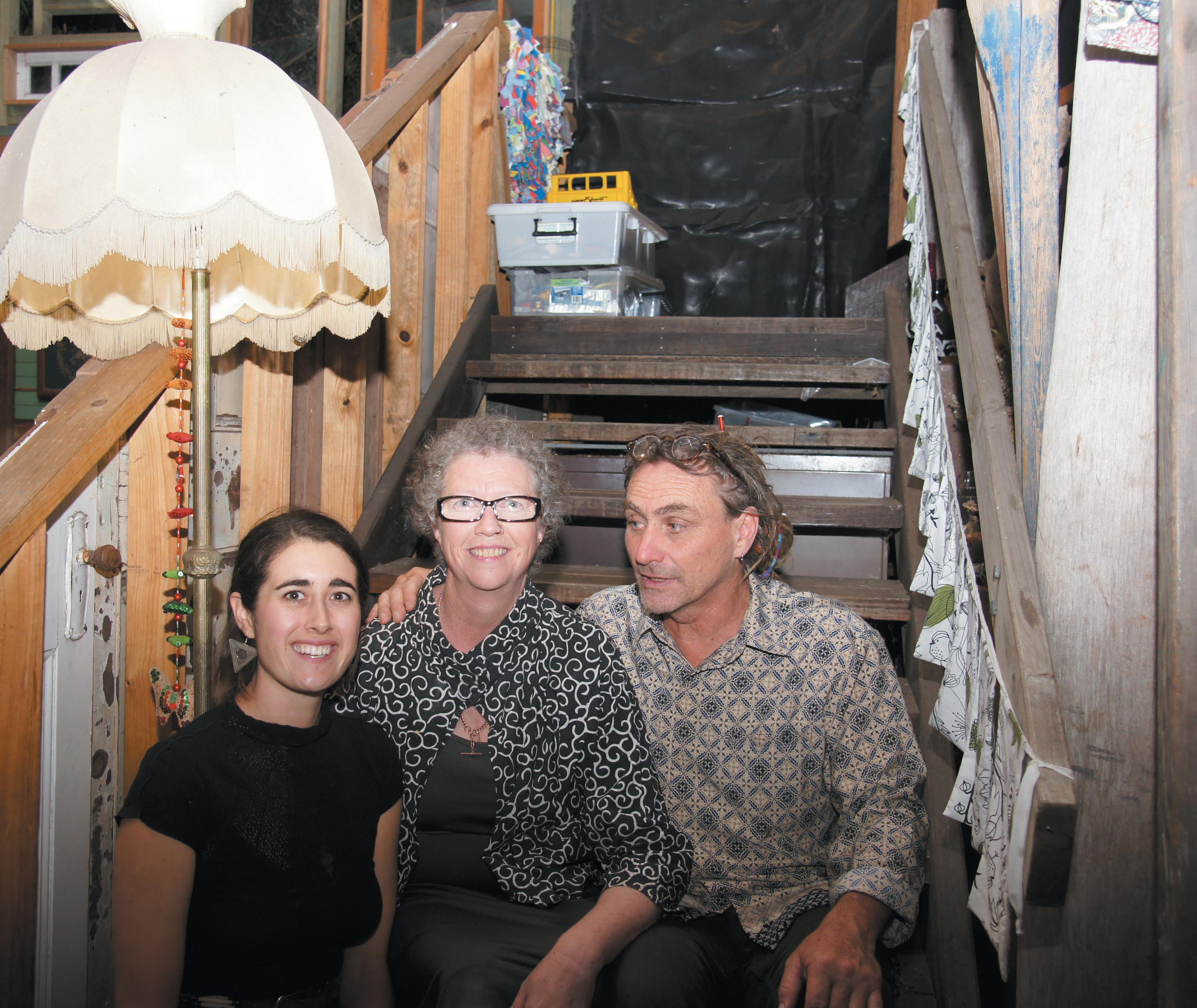
Picture a two-storey timber house flowing out of a wild garden, largely open to the elements, crammed with everything from vintage suitcases to mismatched china and joyful bunting to driftwood, and offering many spots to sit, read, chat, contemplate or simply be. In fact, it’s not a house, but a very homely home, and several times a year it welcomes dozens of neighbours for an evening called LIFegig.
t he LIF e gig website promises:
Presentation: three guests giving presentations on their area of expertise.
Local live music: Grace turner (the night I attended)
Wholesome home-cooked food: the Kitchen Crew
Guided meditation: a nnette Nathalia (ditto)
r ich community experience: you
t he last is crucial: LIF e gig arises out of the fact that, as ‘host’ Dave r ichards explains, “ a nne-Marie and I have always valued community or the 'sharing of life' in some way; we've even lived in an intentional community for 14 years. t hose experiences have been the richest of our lives, because of the relationships. We've come to realise that the establishing, growing and sustaining of relationship is at least equal to the actual purpose or goal of any group.
“ s o LIF e gig is one way we contribute to the vibrant and active community of t ighes Hill and Newcastle. It seems that bringing good simple food, local musicians and interesting discussion together in a conducive atmosphere allows for a relaxed, fun and even stimulating evening. o f course the secret ingredient are the 100-150 people who come to join in with us!”
t he fact that the home Dave and his wife a nne-Marie share has no ‘fourth wall’ is a
metaphor for the couple’s openness to the wisdom the neighbourhood has to offer. LIF e gig nights are ‘full on’ for a nne-Marie, Dave and their enthusiastic helpers, and yet Dave wafts through it all, acting as master of ceremonies, serving and delighting in this ‘extended family’.
Mark toohey is a regular at LIF e gig.
“Coming along gives me a strong sense of connection to my local community and an opportunity to meet and chat with people from diverse backgrounds, interests and experiences. Without opportunities like this, we could pass each other in cars for years and not have an opportunity or reason to meet! Dave and a nne-Marie have created a relaxed social space where the richness of lived experience and ideas can be shared (or not) and savoured, no strings attached. I leave thinking what a lot of interesting lives are being lived around my suburb and wondering what focus is planned for discussion next time!”
a s a non-resident of this inner city neighbourhood, I was struck by the warmth and joie de vivre that prevailed. Clearly there is an appetite – for tasty food, a convivial glass and music − but underscoring all these, a deep appetite for conversation and sharing of ideas. e ach LIF e gig is different but the principle seems to be ‘Hold it and they will come’.
a nne-Marie is unfazed by having her home regularly fall victim to a benevolent invasion.
“Dave and I have always enjoyed an open
home. e ach s unday we serve good coffee to whoever rolls in. s ometimes 15, sometimes 50. LIF e gig is a bit bigger, but it's only every second month. It does take a bit of organising to serve over 100 people, but the kids and some friends usually chip in and help. t here are definitely costs to the family in having people around 'all the time', and we try to remain mindful of this. t here may come a time when we have to pull the pin, but we are always reminded of the fact that good and beautiful things are usually costly in one way or another.”
I attended LIF e gig during a dvent, the season of preparation for Christmas, and s ophia Lamont sang a seasonal song she had composed. a lthough wind chimes competed for earspace, the line, “Can we give up on the perfect? Nothing real is perfect” stays with me. a s someone for whom regularly gathering as church is important, I was fascinated by what drew these people whose major connection was geographical. It seemed that the crowd ranged from determined atheists to devout Christians, with some agnostics thrown in for good measure. t he religious aspect is irrelevant to the event, but so often we are told that people are unwilling to commit to supporting an event, and that ‘cocooning’ is all the rage. t he church is imperfect, like LIF e gig, but it’s amazing how inviting a simple formula can be. Hold it and they will come?
By GREG DOEPEL

“I think it is interesting that you can`t un-see something once you have seen it.”
s o said s arah Gavron, director of the movie Suffragette ; the story of e mmeline Pankhurst and other women activists who in the 19th century took up the fight for women’s suffrage; “political equality and equal rights with men”. s he was of course speaking of the revelation which dawned on those who were prepared to listen and acknowledge the truth of the inbuilt prejudice and injustice of a social system which discriminated against the female half of the population in almost every way. t his recognition has led to improvements, but to this day, is often honoured more in the breach than the observance.
Gavron goes on to say that once this state of affairs is seen, “it is almost untenable to keep living the way you are − or not to join in the fight once you realise there is a fight you can join”.
Is there a fight a ussie women can join today? a re they doing so? It is a question
easily answered if you live in places like Gloucester, the Manning Valley, the northern rivers of N s W, many parts of Queensland. Here you could hardly miss the powerful female presence in the fight raging across the country. No longer is this a fight for suffrage, but for the soul of this country where the struggle is between the forces of exploitation of our natural resources at any cost, and those who have an alternative view of how to live in and with the natural world in a harmonious and sustainable way.
These strong women have seen where our present culture of exploitation has led us and will not rest till we mend it.
t his female force is something to behold, and while we men are certainly equal partners in the struggle, we are somewhat in awe of the dedication, the intellect and


the persistence of our sisters in arms. t his takes many forms, from the leadership of community organisations like Groundswell Gloucester, which takes delegations to both s tate and Federal ministers and works tirelessly for the wellbeing of the Gloucester Valley and its people, to the ubiquitous ``Knitting Nannas`` who, perhaps, personify this powerful grassroots force working for a more just and intelligent way of regulating the way we live in, and care for, our world.
t hese strong women have seen where our present culture of exploitation has led us and will not rest till we mend it.
We came to this land as conquerors, who saw it and its people as things to be subdued
and brought under subjection, failing to recognise an existing culture which had sustained its people, and the environment, for many thousands of years.
While we have much to be proud of in what we have built in little over 200 years, there is no doubt that many parts of a ustralia have been, and continue to be, savagely exploited with little regard for the sustainability of their soil, water resources, sacred sites, flora and fauna and the physical and psychological wellbeing of the people who live there.
We could do well to acknowledge the wisdom of the First People of this land, and learn to tread more lightly upon it. a nd these women are leading the way in doing just that. Greg Doepel is a parishioner of St Joseph’s Parish, Gloucester.



Friends visited recently to meet my newborn. We got to talking about the current trend to delay starting a family in favour of travelling, purchasing a house and establishing careers.
We talked about how we remembered sex education at our public high school − mostly as a scare campaign to have us believe that if we had unprotected sex we would almost certainly end up pregnant or contracting a sexually transmitted infection. We couldn’t recall being advised about our fertility, and how it begins to wane after a certain age.
t hree years ago, I watched with bemusement as close friends in their late 20s struggled to conceive their first child. It was a most agonising time for them as they faced disappointment every month despite all their efforts to achieve pregnancy and a variety of invasive medical tests. e ventually, polycystic ovary syndrome was found to be the problem. t he syndrome had probably always been present but had been masked by taking birth control pills.
With the knowledge that my partner and I wanted to start a family of our own in the not-too-distant future, it occurred to me I knew nothing about my own fertility because I, too, had been using the pill as a means of contraception for a number of years. I became curious about fertility and conception.
I came across the Billings o vulation Method – a natural method of fertility management − online. No hormones, no barrier devices –nothing but simply taking heed of the fertility signs of the female body. Certainly sex education at school did not highlight the fact that females are only fertile for quite a small window each month, and our body tells us when that is!
s o how does the female body signal its fertility? t he cervix produces mucus, which can be seen and felt when it reaches the vulva. It varies in appearance depending on the hormones being produced by the body.
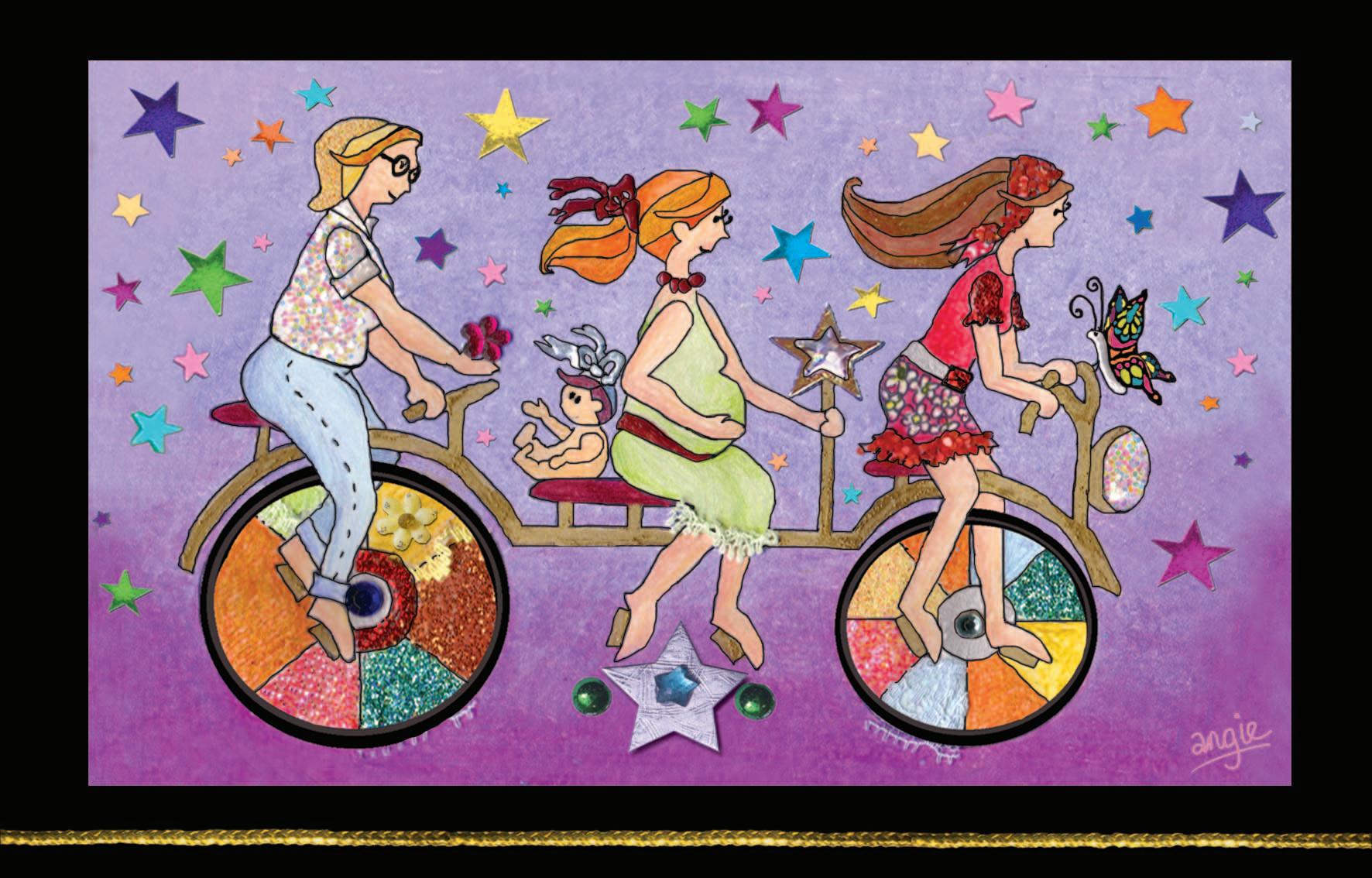
t he body produces different hormones during certain stages of the menstrual cycle. u sing this information you can plan or abstain from intercourse during the time you are fertile, depending on whether you want to prevent or achieve pregnancy. a nother way of describing this method is “women cycling naturally”!
We took the decision to switch to this method very seriously, conscious of the potential outcome. u ltimately, we decided we were at a stage in our lives and relationship that, while it was not in our plan to have a baby just then, if we did misinterpret the signs and fall pregnant, it would not be catastrophic.
We practised the Billings o vulation Method as a way of understanding our fertility as a couple for two years, abstaining from the intimacy of intercourse when my body indicated I was fertile (and in the beginning, whenever I wasn’t sure!). I kept a daily
record of my fertility symptoms on a chart and over time noticed a distinct pattern. I found it remarkable that the symptoms were so obvious and yet, as an educated woman, I was totally unaware. In my schooling this topic was never explored, and yet every woman would benefit from knowing.
When we were ready to start our family, the tools we had applied for two years helped us to improve our chances of conceiving. Knowing when I ovulated also allowed me to know how soon I could take a pregnancy test and pinpoint my baby’s due date. We welcomed our son in o ctober. It was so empowering and amazing to learn about and become one with my body and to create a little human as a result.
Youth Mass on the last sunday of each month, the 5.30pm Mass at st Patrick’s Church, Macquarie st Wallsend, while open to all, has a youthful flavour. everyone is welcome.
Before We Say I Do Program
Course 2: 12 and 19 March at Maitland
Course 3: 14 and 21 May at singleton
Course 4: 23 and 30 July at Newcastle (toohey room, Diocesan offices, Newcastle West)
Course 5: 10 and 17 September at Newcastle Course 6: 5 and 12 November at Newcastle all courses are on saturdays from 9.30am4.30pm. Please P robyn 4979 1370.
Christian Meditation: Introduction Meditation is a wonderful way to begin 2016! It is helpful in times of spiritual crisis and physical stress. Newcomers and anyone who wishes to renew the practice of meditation are welcome. a four-week introductory course begins on Tuesday 2 February (then 9, 16 & 23 Feb) at 6.30pm at st Philip’s Church, Vista Parade, Kotara. Cost is $20. to learn more, e annecuskelly@hotmail.com or P 0407 436 808.
Christian Meditation: The Art of Living How do we achieve a balance between doing and being – action and contemplation? there will be reflection on the story of Martha and Mary. Come to the Chapel of Newcastle Parish Centre, 25 Farquhar st, the Junction, (enter via laneway) on saturday 6 February , 9.30am – noon. Cost is $5, morning tea provided. to learn more, e annecuskelly@hotmail.com or P 0407 436 808.
Lenten Reflections
Mercy spirituality Centre, 26 renwick street, toronto, is offering times of reflection on Wednesdays throughout Lent, commencing ash Wednesday, 10 February sr Helen Baguley rsm will facilitate. reflection commences at 9.30am and concludes with lunch at 1.00pm. themes are “the season of Lent - to see or not to see! an invitation to ‘look again’ at our lives in God and with God”; “We are oF God: our place in the grand scheme of things!”; “the Humanity of Jesus Calling us today”. Cost is $20 per session and bookings are required. P 4959 1025 or e mercytoronto@mercy.org.au.
Art Journalling
Mercy spirituality Centre, 26 renwick street, toronto, is offering a two-day workshop in art journalling on 19 & 20 February , 10.00am3.00pm. anne r yan rsm will facilitate using touch Painting process to create a meditative experience of noticing emerging patterns and developing insights with written journalling. Cost is $100 with all art materials supplied. Bookings are required. P 4959 1025 or e mercytoronto@mercy.org.au.
TWEC: Looking forward, looking back the Diocesan Liturgy Council is repeating the triduum Formation Day held in 2015, on saturday 13 February , 9.00 for 9.30am, until 3.30pm at the diocesan offices, 841 Hunter street, Newcastle West. Please register by 5 February , by contacting sharon Murphy. P 4979 1134 or e sharon.murphy@mn.catholic.org.au. reference material available at www.mn.catholic.org. au/catholic-faith/liturgy/liturgical-formationopportunities.
TWEC: “I desire mercy, not sacrifice” Michele Connolly rsj will lead a day’s exploring of the theme of mercy as revealed in scripture at the tenison Woods education Centre, New england Hwy, Lochinvar on saturday 27 February , 9.30 for 10.00am, until 3.30pm. Cost is $20, concession $10; morning tea provided, byo lunch. Cheque payable to tWeC or direct deposit to Greater Building society, BsB 637 000, a/c 716 489 760. rsvp 22 February, P 4930 9601 or e twec@ssjl.org.au.
Seasons for Growth
Companioning training Children & young People’s training: Newcastle 16-17 March , taree 26-27 July & Newcastle 16-17 November adult training: Newcastle 6-7 April & 17-18 August this training is essential for those wishing to facilitate the seasons for Growth program with children/young people or adults. Please P Jenny or Benita 4947 1355 to find out more about becoming a Companion. enrolments for training are completed at www.goodgrief.org.au.
Parent Program: Supporting your child following separation and divorce. this short program offers parents the opportunity to explore ideas and strategies that might assist in supporting their child/ren through the changes
happening in their family. edgeworth Heights Public school: 3 & 10 March , 12.30-2.30pm. to register please P the school, 4958 1180.
St Catherine’s College Singleton Reunion this event will be held at the College for the class of 1970-75 on 4-6 March . Please P Joanne Paget 0438 671 959.
International Women’s Day Celebration since 1911 International Women’s Day has been celebrated as the global day connecting all women around the world and inspiring them to achieve their full potential. this day is an opportunity to reflect on the dignity and role of women, in the family, society and the Church. We pray that we, the Church, ensure that women are encouraged to flourish within the Catholic Church in australia and that all women are appreciated for the contribution they make to the fullness of the life of the Church. International Women’s Day 2016 will be celebrated at the sacred Heart Cathedral, Hamilton, commencing with the celebration of Mass at 9.30am on sunday, 6 March . Morning tea and sharing by a panel of local women speakers will follow in the toohey room. an invitation is extended to all. For further information P Patricia Banister, 0409 300 192 or 4932 5601.
St Patrick’s Women’s Guild st Patrick’s Women’s Guild, singleton, will be celebrating 50 years of ministry in april. If there are past members living in other parishes who would like to know more, please P elaine thomas, 6573 2966 or 043 2870 012.
Date claimers
The Francis Effect II you are invited to a colloquium on Laudato Si’ on saturday 14 May , 9.00am-4.30pm. For details, watch this space!
Walk the Camino! 20-day 2016 Pilgrimage Catholic Mission’s pilgrimages from Leòn to santiago de Compostela balance walking and simple hospitality with silence, personal reflection and prayer. First pilgrimage 15 May – 3 June, second pilgrimage 15 September – 4 October small groups will be led by an experienced guide, sr Veronica rosier oP. Inquiries: sr Veronica P 0451 387 901 or visit www.catholicmission.org.au.

February
6 International Day of Zero tolerance of Female Genital Mutilation
9 Bishop Bill launches Project Compassion at s acred Heart Cathedral; see page 5.
Bishop Bill presides at Called to s erve Mass, s acred Heart Cathedral.
10 a sh Wednesday
11 World Day of Prayer for the s ick
13 a pology to s tolen Generations by a ustralian Government (2011)
14 First s unday of Lent
Bishop Bill presides at r ite of e lection, s acred Heart Cathedral.
Feast of s t Valentine
15 Aurora deadline for March edition
20 World Day of s ocial Justice
21 s econd s unday of Lent
28 t hird s unday of Lent
March
1 International Death Penalty a bolition Day.
For more events please visit mn.catholic.org.au/calendar and mn.catholic.org.au/community.



Don’t you hate it when others try to read over your shoulder? Aurora appears at the Dragon Bridge, Ljubljana, s lovenia.

s omething new can come, though only through the dying, and not just in the image of the old, but truly new, as yet unseen.
–James Maher

By a nne Millard
During my orientation as a new professor at a small liberal arts college in a merica’s Midwest, a colleague cautioned me not to use the “f” word in class. In response to my raised eyebrows, she expanded the contentious “f” word as feminism. s ure enough, I was soon to discover that many women in my classes do not align themselves with the feminist movement. t his experience played over in my mind as I watched the film Suffragette
Like the young women in my classes, the fictional character Maud Watts (played beautifully by Carey Mulligan) complains two or three times that she is not a suffragette. However, as each of Maud’s civil rights is stripped away, she realises she has no choice other than to fight for the rights that should be hers and, indeed, the rights of all women. a nd thus, she becomes a suffragette.
Suffragette is a masterfully crafted movie. t he story unfolds in delicious detail with a balance of characters to support and abhor, and just the right degree of pathos. t here’s no postmodern gratuitous artistry, violence, special effects or sex. It’s just good oldfashioned storytelling, plain and simple. u sing a combination of created and historical characters, the story is both
To make sweet pastry: a large bowl. Rub in butter, icing sugar and salt until mixture is the consistency of breadcrumbs. Add egg, knead together and rest in the fridge under plastic wrap for 1 hour.
To make frangipane: icing sugar. Beat in almonds and flour until mixed through. Add eggs gradually until combined. Leave in bowl and place in fridge for an hour.
Divide pastry into 5 portions. Grease 5 x 7-centimetre round tart tins. Roll pastry out thinly and line the tins with the pastry. Return to the fridge for 15 minutes.
Preheat oven to 180°C (fan forced).
Divide the frangipane mixture between the tins. Sprinkle berries evenly over the mixture, keeping 5 for garnish.
familiar and new. I remembered enough of my history classes to dread the outcome of the race meeting, but other events unfolded in unexpected ways.
While the film is obviously rooted in its period, its message is surprisingly contemporary and quintessentially Christian. e mmeline Pankhurst (Meryl s treep with 90 seconds of screen time) urges her followers to employ “Deeds, not words”. s adly, the suffragettes felt forced to break windows and burn things, “because war is the only thing men listen to”. I wonder if we’d be plagued with fewer problems today if we took every opportunity to listen to each other, to walk in another person’s shoes?
Maud explains women cannot be stopped; after all, women form half the human race. a nd, as Genesis tells us, male and female alike are made in the image of God.
t he lyrics of Joyce Johnson r ouse’s song, “ s tanding on the s houlders” say, “they lift me higher than I could ever fly, carrying my burdens away”. I appreciate the women upon whose shoulders I stand. I think I owe it to them to stand tall and take my place in society with pride.



STOPOVER
$4,995 19 Day Tour Dep. Mar 24
Flying Qantas to Los Angeles, wonderful 15 day coach tour through California, Arizona, & Nevada, visiting Los Angeles, Grand Canyon, Las Vegas, Yosemite National Park and San Francisco. 2 night stopover in Hawaii.
TRANS AMERICAN ADVENTURE
$6,985 28 Day Tour Dep. May 8
Flying Qantas into New York and out of Los Angeles. An incredible 24 day coach tour right across the USA from east to west visiting all of the most interesting places in this extraordinary country, a 2 night stopover in Anaheim situated nearby to Disneyland, prepaid gratuities.
BALKANS AND THE DALMATIAN COAST
$6,985. 20 Day Tour Dep. May 12
Flying into Zagreb with award winning Asiana Airlines and Turkish Airlines, 17 day tour of Croatia, Montenegro, Bosniz Herzegovina, Serbia, Bulgaria & Turkey, 1 night stopover in Seoul. This is a special group tour with a maximum of approximately 25 passengers.
VIETNAM EXPLORER
$2,625 15 Day Tour Dep. Mar 9 & May 13
Flying Singapore Airlines into Saigon and out of Hanoi plus 2 flights within Vietnam. 4 nights Saigon, 4 nights Hanoi, 4 nights Hoi An,1 night Halong Bay with cruise.
INSIDE VIETNAM
$3,985 20 Day Tour Dep. June 7
Flying Singapore Airlines into Saigon and out of Hanoi. 18 day coach & air tour of Vietnam. For this tour there is no extra charge for travellers requiring a single room.
VIETNAM OVERLAND
$3,815 3 Week Tour Dep. Jul 25
Flying Singapore Airlines into Saigon and out of Hanoi. 20 day tour of the coast of Vietnam.
LAOS, CAMBODIA GOLDEN TRIANGLE ADVENTURE
$4,295 19 Day Tour Dep. Mar 14

Flying Singapore Airlines into Chiang Mai and out of Phnom Penh, 2 nights in Singapore, four days in northern Thailand, seven days in Laos including Mekong River, five days in Cambodia including Angkor Wat, tipping included.
JAVA & BALI
$2,995 16 Day Tour Dep. Mar 9
Flying Singapore Airlines into Jakarta & out of Denpasar Bali. 11 day coach & rail tour from Jakarta to Bali. 2 days South Kuta, Bali. 2 day Singapore stopover. Tipping included.
$5,995 20 Day Tour Dep. May 18
Flying Thai into Copenhagen and out of Stockholm, 16 days touring Northern Europe, 2 day Bangkok stopover.
$10,995 22 Day Tour
Dep. Mar 13
Flying Qantas & Latam Airlines into Santiago plus 6 flights within South America. Visit Chile, Peru, Bolivia, Brazil & Argentina. Optional extensions to the Galapagos Islands and to the Amazon.
$6,985 18 Day Tour
Dep. June 3
Flying Cathay Pacific into Rome. 14 day first class tour of Italy visiting Rome, Pisa, Florence, Milan, Lugarno, Venice, Assisi, Sorrento, the Isle of Caprice, & the Italian Lakes. 2 day Hong Kong stopover.
$9,995 3 Week Tour
Dep. July 5
Air fares with Cathay Pacific into Amsterdam and out of Rome, plus a flight from Budapest to Rome. A deluxe 15 day European River cruise visiting Holland, Germany, Austria, Slovakia & Hungary, in a hotel-style outside state room aboard the modern & luxurious Avalon Illumination.
2 days Rome, 2 days Hong Kong.
$4,670 24 Day Tour
Dep. Sep 1
Flying Singapore Airlines into Hanoi & out of Siem Reap plus 2 flights within Asia. .18 day Vietnam tour, 4 day Cambodia tour with Angkor Wat, 1 day Singapore. Tips included
$4,995 13 Day Tour
Dep. July 15
Flying Qatar Airways into Zurich. 11 day tour of Switzerland. Tipping included. Twin share available for anyone requiring it.
$3,275 2 Week Tour
Dep. Aug 3
Flying Thai into Bangkok plus 3 flights within Thailand. Visits Bangkok, Chiang Rai, Chiang Mai & Phuket. First class accommodation.
$6,975 3 Week Tour
Dep. Aug 23
Flying Qantas into Capetown and out of Johannesburg. 20 day South African tour including game viewing in 6 game parks. Tips included.
$5,995 23 Day Tour
Dep. Sep 1
Flying Cathay Pacific into Rome and out of Madrid. 19 day tour of Italy, France & Spain. 2 days Hong Kong.
$6,985 24 Day Tour
Dep. Sep 19
Flying Qantas & British Airlines into Capetown & out of Victoria Falla.22 day tour of South Africa, Namibia, Botswana &Zimbabwe. Game viewing in 2 national parks. Small group tour.
$4,925 18 Day Tour Dep. July 19
Flying United into Denver & out of Las Vegas. Visits Deadwood, Yellowstone, Grand Teton, BryceCanyon, Zion & Grand Canyon national parks and Las Vegas.
$7,265 22 Day Tour Dep. Aug 18
Flying Thai into Stockholm & out of Oslo. 17 day tour of Finland, Lapland, the Arctic Circle & Norway.3 days Thailand at a beachfront resort hotel.
$4,590 24 Day Tour Dep. Sep 1.
Flying Thai into Chiang Mai and out of Hanoi. 5 day tour of Golden Triangle, 7 day Laos tour including 2 days cruising the Mekong River, 10 day North Vietnam tour including Halong Bay cruise.
U.S.A. & CANADA
$6,995 4 Week Tour Dep. Sep. 2.
Flying United into Los Angeles & out of New York. 12 day tour of western U.S.A. & 15 day tour of N.E. U.S.A. & Canada.
SPAIN, PORTUGAL & MOROCCO
$5,195 3 Week Tour Dep. Oct 5
Flying Emirates into Madrid. 16 day tour of Spain, Portugal & Morocco. 2 days Dubai.
GREECE & THE GREEK ISLANDS
$5,785 18 Day Tour Dep. Oct 7
Flying Emirates into Athens. 11 day Greece tour, 4 day cruise of the Greek Islands of Mykonos, Patmos, Rhodes, Crete & Santorini. 2 nights Dubai stopover.
CHINA WITH YANGTZE CRUISE
$3,535 2 Week Tour Dep. Sep 7
Flying China Eastern into Shanghai & out of Beijing, plus 3 flights within China. 4 day Yangtze cruise. Tour visits Chongqing, Xian & the Terra Cotta Warriors, Shanghai & Beijing. Tipping included.
EASTERN TURKEY & THE BLACK SEA
$5,985 18 Day Tour Dep. Oct 5
Flying Singapore Airlines into Istanbul, plus a flight within Turkey. 15 day tour of eastern Turkey & the Black Sea coast. Optional extension to West Turkey 7 Gallipoli. Tipping included.)
VIETNAM LUXURY TOUR
$4,999 20 Day Tour Dep. Oct 10
Flying Singapore Airlines into Saigon & out of Hanoi, plus 2 flights within Vietnam. 19 day tour of the coast of Vietnam plus the Sapa hill tribe area. Superb 4-5 star accommodation. Tipping included.
NEW ZEALAND GARDEN TOUR & FESTIVAL
$4,139 11 Day Tour Dep. Oct 26
Flying Air N.Z. into Auckland & out of Wellington. Visits 7 outstanding gardens & Taranaki Garden Festival. Tour lead by a gardening expert.
The prices listed mainly include return air fares from Sydney, Melbourne & Brisbane, airport taxes & fuel levies, good twin share accom., many meals, all transfers, Australian tour leader & local tour guides.