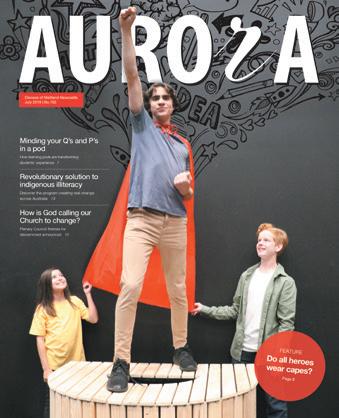
How learning pods are transforming students’ experience 7
How is God calling our Church to change?
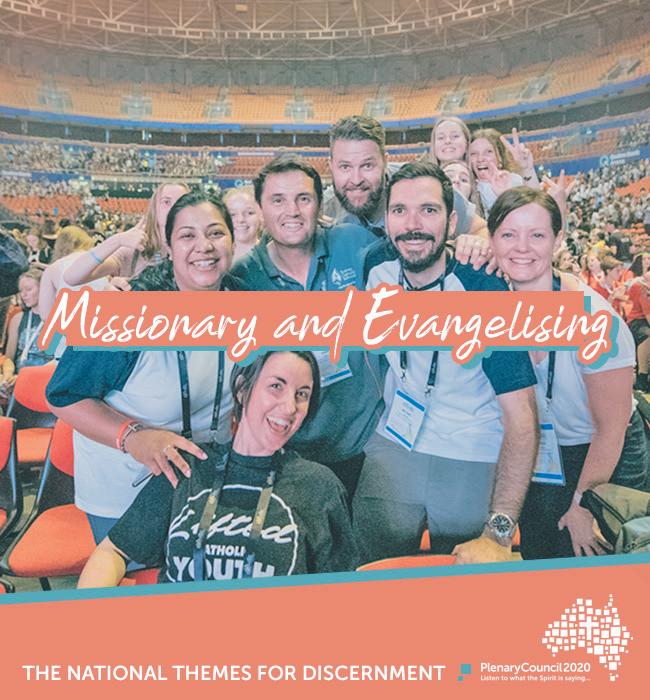
Plenary Council themes for discernment announced 10
Revolutionary solution to indigenous illiteracy
Discover the program creating real change across Australia 13
FEATURE Do all heroes wear capes?
Page 5
We are seeking casual teachers across our network of 57 Catholic Schools. Our schools are located in the Manning, Upper Hunter, Maitland, Newcastle and Lake Macquarie regions.
For more information call Rabecca on: 4979 1230.
On the cover
f
f
f
f
f
f
f
f
f
Featured Regulars
We live in interesting times
By the time you read this edition of Aurora, Bishop Bill — together with other Catholic bishops from Australia — will have met Pope Francis in Rome as part of the Ad Limina Apostolorum visit
The bishops will have visited the tombs of St Peter and St Paul, they will have celebrated Mass in the papal Basilica and they will have met with the Holy Father and members of the Roman Curia to report on the state of their dioceses.
“Ad Limina pilgrimages are a time of deep prayer – at the tombs of the Apostles and at the major basilicas in Rome – and also a chance for the bishops of Australia to strengthen our bond of communion with the Bishop of Rome,” Australian Catholic Bishops Conference President Archbishop Mark Coleridge told the ACBC Media Blog.
The bishops will also have taken part in a retreat to help them prepare for the Plenary Council 2020 — especially important as we move into the second stage of the Plenary Council process, which is the emergence of the National Themes for Discernment.
This will result in working groups established for each of the six National Themes and people from around the country being invited to take part in communal Listening and Discernment sessions.
Contact Aurora
The fruits of what is discerned during this time will shape the agenda for the Plenary Council’s first session when it is held in October 2020.
More information about the National Themes for Discernment can be found on page 10.
When it comes to challenges facing Catholics, religious freedom is certainly right up there as an area for concern. So much so that the Archbishop of Sydney, Anthony Fisher OP, recently called on Prime Minister Scott Morrison to introduce a religious discrimination act as soon as possible.
Our report on page 11 delves further into this issue and details that the federal Attorney-General, Christian Porter, is expected to present a religious discrimination act to parliament this month. We certainly live in interesting times!
On the theatrical front, there are two stories in this issue.
The first was written by Anna Kerrigan who plays a massive role in the success of ASPIRE, while the second is about one of our former students, Maree Freeman, whose playwriting resulted in several successful theatre productions.
Aurora online
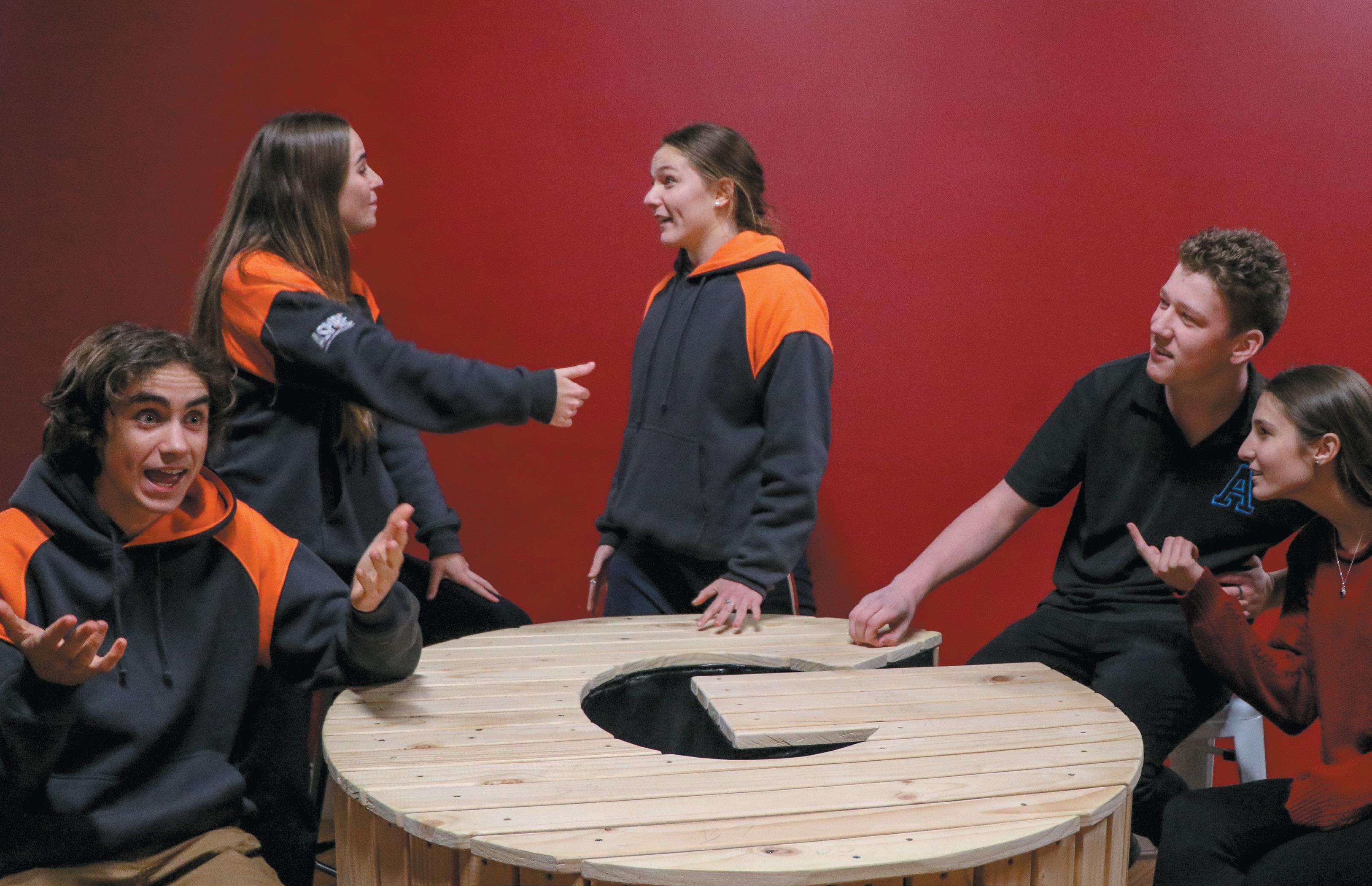
On page 5, you can read more about this year’s ASPIRE production 365 Questions, Issues and Good Deeds, which is set over the course of a year and charts the highs and lows of a myriad of characters. This year’s ASPIRE production will run from 31 July to 3 August.
On page 17, there is the interview with Maree Freeman who, after leaving St Joseph’s, Aberdeen, graduated from NIDA. This was before embarking on a career that includes being chief executive and artistic director of Sydney-based Milk Crate Theatre where she created drama for and with the homeless and socially marginalised.
Finally, there is a wonderful story about a Newcastle University student, Renae Lamb. A mother of three and proud Wiradjuri woman, Renae is one of a group of 30 undergraduates chosen as part of the Ma and Morley Scholarship Program for 2019. Her story is on page 14.
I trust you derive as much enjoyment out of reading Aurora as we do in putting it together each month.
Piper Araujo, Ben Doran and Michael Pockran in this
ASPIRE
John Kingsley-Jones is the Head of Diocesan Communications for the Diocese of Maitland-Newcastle.
DAVID JONES ACCREDITED SPECIALIST IN PERSONAL INJURYLAW
From Out the Flaminian Gate
So, yes, I am in Rome. Unfortunately, as far as this column is concerned, nothing has happened yet that might just be fascinating, but I can delay no longer if I am to make the July Aurora . We’re all here, actually; every active bishop in Australia, bar two. This is what is called the visit of the bishops of Australia Ad Limina Apostolorum , “to the thresholds of the apostles”, a visit which, since the 16th century, all bishops have been required to make every five years. But none of that has started yet. I’ve been here two days, and today all we bishops begin a retreat that we decided to do together before the Ad Limina . The business starts next week.
But I shouldn’t speak of the Ad Limina simply as “business”. As the name implies, it is a visit to the See of Peter and Paul and has something of the character of a pilgrimage. As well as meeting the Pope, we will visit and say Mass in each of the four major basilicas, at the tomb of Peter in the case of St Peter’s. It is a time of connection with some of our sacred sites, for even the bishops of “the best country in the world” to refresh their sense of belonging to the church that is one, holy, catholic and apostolic. That said, the Ad Limina is also business.
Since the early 20th century, a bishop on Ad Limina must submit a written report on the state of his diocese. These days they are very substantial documents.
We provided ours in December last year. There has also been framed a list of agenda for discussion with each of the dicastries or “departments” of the Roman Curia. These meetings are generally with the Cardinal Prefect of whichever dicastry it is and with some of the senior officials. The bishops have questions for them; they have questions for us. But all of this lies ahead. This week we will be on retreat up in the Alban hills.
So far, in these first couple of days, Rome has greeted us in its customary fashion. When I was here a couple of years ago, a new mayor was about to sweep into office on solemn pledges to clean up the city and its graffiti. Well, Nero had tried it in his own spectacular fashion, and so has everyone since. The latest effort has been no more successful. The city retains its distinctive atmosphere, compounded of ancient brickwork, the rich aroma of cooking and the smell of last week’s meals rotting in garbage bags in the street. We’re staying at Domus Australia, the Archdiocese of Sydney’s hostel for pilgrims to Rome, which is in a reasonably smart area of hotels and government buildings, but there is still a substantial collection of overflowing bins just half a block down. Of course, Rome is forgiven its many faults because of its ubiquitous history, great architecture and terrific cafes. The mix of great and awful is somehow… well, it’s “Rome”.
In these last days I’ve been out “Romeing”. Yesterday I indulged a whim and went looking for the Flaminian Gate. From where I’m staying, this meant a stroll through the great public park that is the Villa Borghese on the way to the Piazza del Popolo. Between the two is the Flaminian Gate. It plays a small role in the English Catholic history that I once studied and taught. In 1850, after protracted negotiations, the British government permitted the re-establishment of a formal Catholic hierarchy in England. Pius IX appointed Nicholas Wiseman the first Archbishop of Westminster and he wrote his first pastoral letter from Rome as he was leaving for England, indeed, “From Out
the Flaminian Gate”. As this carried echoes of a Roman general departing the city to march his legions north, and as Wiseman rejoiced rather too fulsomely about the Catholic restoration in England, the reaction in London was outrage. The prime minister of the day fulminated against this “Papal aggression”. It’s very big. After that, I had lunch and watched a brass band march and play in the Piazza del Popolo. History, laid on monuments, laid on food. A very Roman day.
Bishop Bill Wright Diocese of Maitland-Newcastle
‘See how they
one another’. To evangelise is to love; it is to share God’s love for every man, woman and child. Frankly Spoken
A look behind the curtain of 365 Questions, Issues and Good Deeds
BY ANNA KERRIGAN
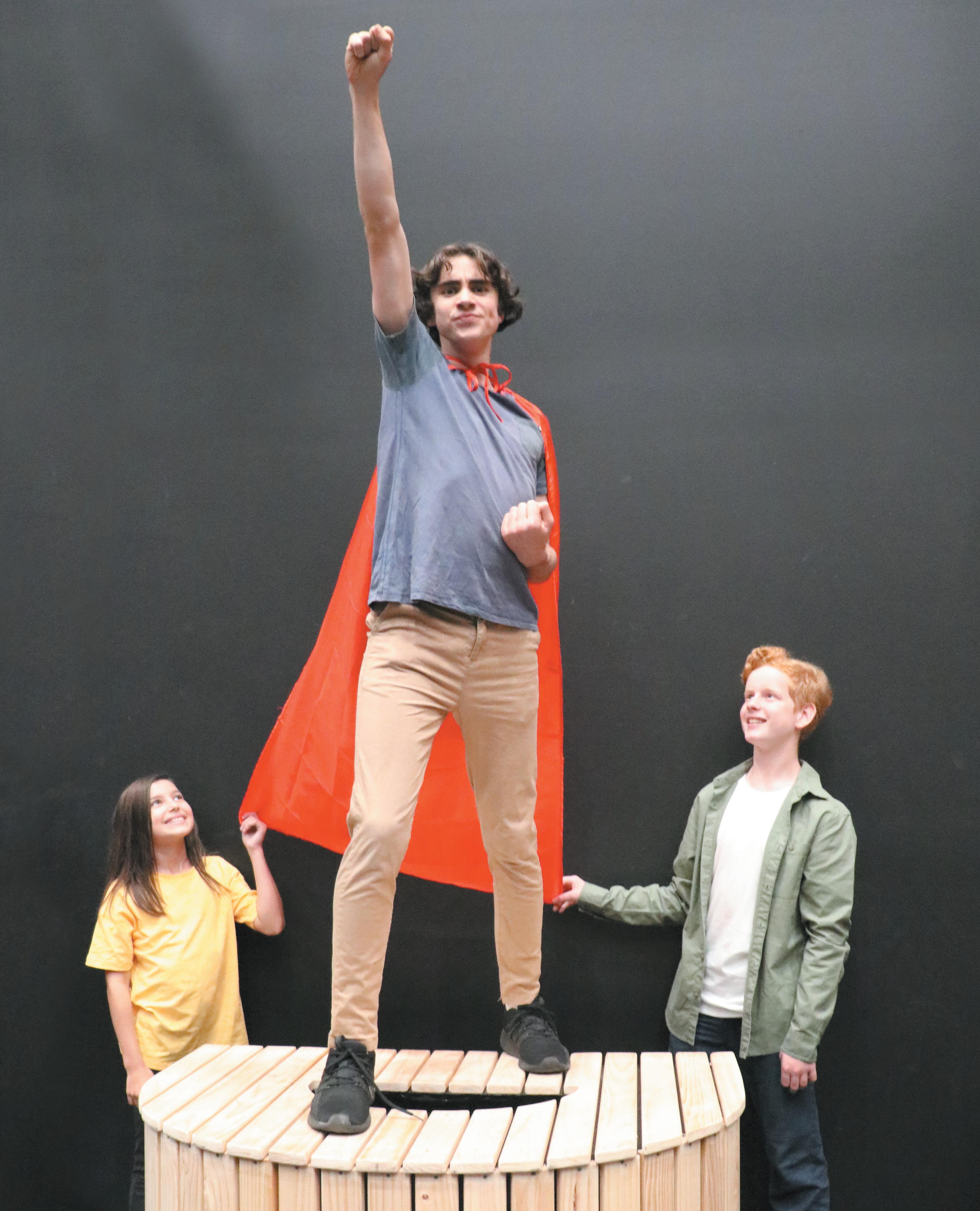
Last year, my then three-year-old son started wearing a cape everywhere he went. Every time we left the house, on went the cape.
He was a superhero — people gave him adoring looks wherever he went and said things like “I bet your mum feels safe with you around”.
This was the catalyst for including a cape in this year’s production, some kind of self-appointed superhero.
My incessant need to write to-do lists was also an inspiration. By their very nature, lists are a way for us to feel organised, to bring some structure to our chaotic lives, maybe even give us some direction and purpose, and allow us to grow in some small way.
The ASPIRE production 365 Questions, Issues and Good Deed s takes place over the course of a year and charts the highs and lows of a myriad of characters whose lives intersect, many of them making their own lists in an attempt to achieve something or grow in their own way.
Sophia Holz, Year 11 student at All Saints’ College, St Mary’s Campus, Maitland, who plays the character of Laura, said: “This year’s production demonstrates the many ups and downs that come with life, but also how these pushbacks allow us to grow and define us as an individual.”
While this year’s production has many themes and intersecting storylines, the one surrounding the character of Ollie and his good deeds is designed to resonate with all of us.
Ollie decides, as a New Year’s resolution, to do a good deed for someone else every day for a year. He becomes proud of his good deeds and decides they make him an everyday superhero to the point that he starts wearing a cape.
I don’t want to give away anymore of the story, but suffice to say he realises good deeds do not need to be proclaimed to make an impact.
We all know it is important to be a good person, but sometimes we place our own intentions and wants ahead of potential good deeds.
Whether it is maintaining social standing, acting in frustration or just wanting something so much we lose sight of what is actually the right thing to do, it happens to all of us. It is a part of growing up, and the tug-of-war between doing the good deed and following our own agenda never truly ends.
Ben Doran, Year 10 student from St Pius X High School, Adamstown, who plays Ollie, said: “Life is about putting yourself out there, not always taking the easy road.”
“Through the rehearsal process so far I’ve found that we can learn so much about ourselves from these characters. In my case, it’s not always about the recognition you receive for doing things, but instead the pride and feelings of joy you receive inside yourself that is important.”
One beautiful project that has come out of this year’s production is the Caped Crusader Awards. In the leadup to the show, primary schools across the Diocese will be handing out these awards during their weekly
We all know it is important to be a good person, but sometimes we place our own intentions and wants ahead of potential good deeds.
assemblies to students who they have seen being kind to others and doing good deeds in line with our Catholic values.
Theatre is a vital tool for placing our society under a microscope, and this year the characters and relationships depict many situations that will resonate with all audiences.
As with all ASPIRE productions, it is our hope that audiences recognise themselves and those around them in many of the characters they see onstage. And it is my hope that everyone will get out and do a good deed for someone else today, and maybe even start wearing a cape …
To find out more about this year’s ASPIRE production on 31 July-3 August, head to the ASPIRE website https:// aspire.mn.catholic.edu.au/365-questions-issuesand-good-deeds/.
Anna Kerrigan is the Artistic Director of ASPIRE for the Diocese of Maitland-Newcastle.
Welcome gift hits the right note
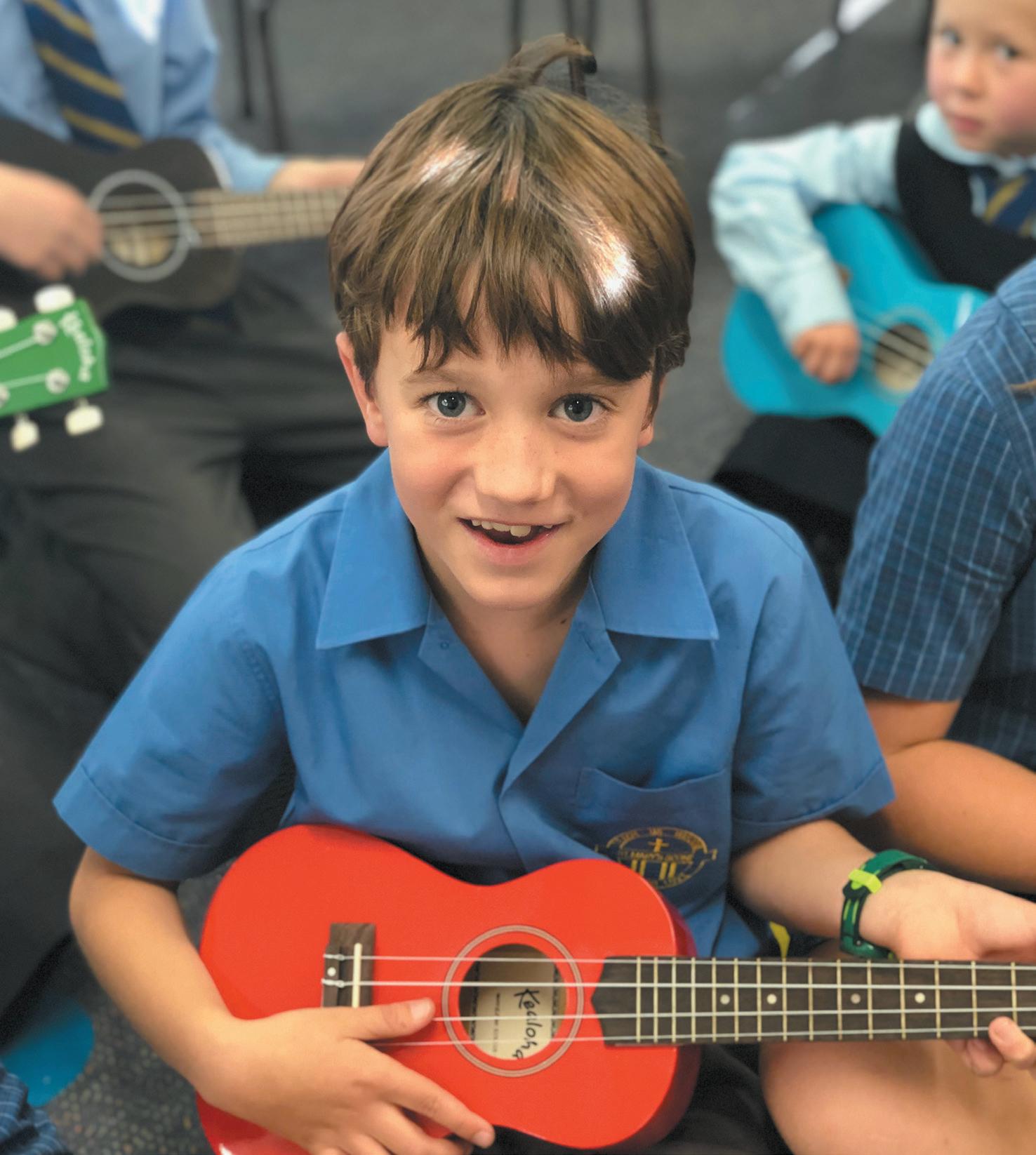
Students of St Mary’s Primary School, Scone, will be rocking out in style thanks to the generosity of Rural Aid and its Gift of Music.
St Mary’s started running a specialised music program this year to give students the opportunity to play and experiment with a variety of instruments.
Learning how to play a musical instrument is more than just a chance to pick up a new skill while having a whole heap of fun, it also allows students to build their hand-eye co-ordination and learn patience and discipline.
However, the school found its resources were fairly limited.
St Mary’s also ran a Junk Drumming program during Term 1 where students learnt how to use buckets and dowel to create music. But there was a desire to expose them to “real instruments”, so a call was made to Gift of Music.
Rural Aid created Gift of Music after receiving requests from regional schools in need of musical instruments. Confident there was plenty of unused instruments around Australia stuffed in cupboards or under beds, Rural Aid put out a call for donations, whether new, old or broken.
Gift of Music also accepts cash donations, which it uses to repair donated instruments, purchase the
instruments on teachers’ wish lists, and distribute them across the country.
Just one week after a phone call to Gift of Music, St Mary’s received a wonderful delivery of musical instruments and resources and some other fun gifts including ukuleles, glockenspiels, boxes of Lego, an iPad and more.
“It was an incredibly humbling experience to be on the receiving end of such generous giving,” said Diana Gillett, music teacher at St Mary’s.
“An even greater privilege was meeting Rural Aid general manager, Wayne Thomson, and Gift of Music program manager, Robyn Thomson.
“Listening to Wayne and Robyn’s passion for enhancing the lives of rural kids by offering new opportunities through music was truly encouraging.
“St Mary’s is incredibly grateful to Gift of Music. The impact of its visit and generous donation of instruments is something that will make a difference to our music program for years to come.”
If you would like to find out more about Gift of Music or make a donation, head to www.giftofmusic.org.au.
BY AMY THEODORE
Building on success in Hunter and Manning
A significant capital works program as part of an ongoing investment in the refurbishment of existing Catholic schools in the Diocese of MaitlandNewcastle has reached fruition at two campuses.
St Joseph’s High School, Aberdeen, and St Clare’s High School, Taree are two of the recipients that now have advanced learning environments for students and staff.
The Federal Member for Lyne, the Hon Dr David Gillespie MP, opened the Josephite Learning Centre in the grounds of St Clare’s on 3 May; his counterpart, the Hon Barnaby Joyce MP, the Federal Member for New England, officially opened stage two of building works at St Joseph’s on 11 June.
The $7.8 million capital works project
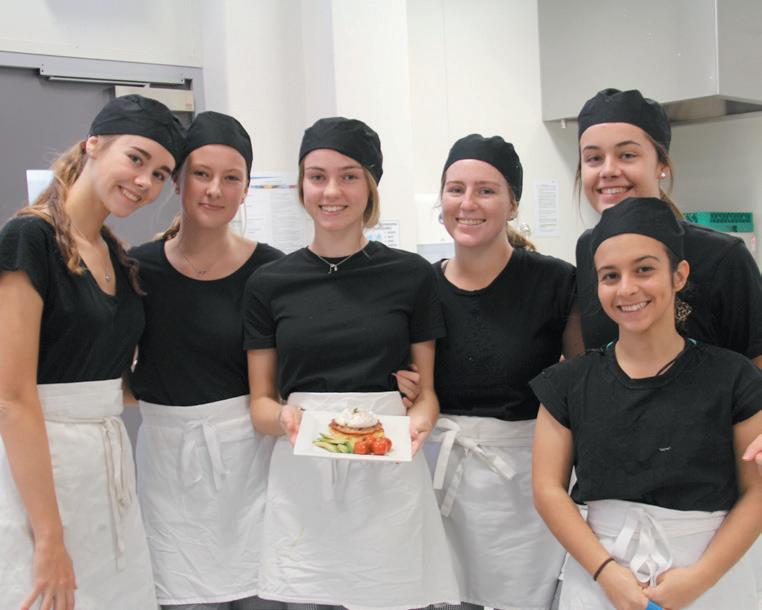
at St Joseph’s refurbished the school’s applied technology, food technology, hospitality and art facilities, as well as the amenities for the 672 students. It also included a new administration facility and learning support rooms for the 77 members of staff.
St Joseph’s Principal Robert Holstein said the project would not have been completed without the financial support of the Australian government through its Capital Grants Program, and the Diocese of Maitland-Newcastle through the Schools Building Fund.
Acting Director of the Catholic Schools Office, Gerard Mowbray, said: “This project aligns with the strategic direction of the Diocese to ensure our Catholic schools can boast facilities that are highly effective for student engagement and learning as well as offering effective and aesthetically pleasing work spaces for staff.”
The $7.5m capital works at St Clare’s signifies the Diocese’s investment in creating innovative learning environments that will empower Manning youth to be collaborative leaders.
St Clare’s Principal Peter Nicholls said the Josephite Learning Centre embodied the Diocese’s progressive commitment to the evolving nature of teaching and learning.
“In the past, learning spaces were permanent rooms intended for a teacher and 30 students, with the teacher mostly at the front of the room directing instruction,” he said.
The Josephite Learning Centre is considered a flexible learning space.
“The structure of the new centre and its furnishings are impressive,” he said. “Yet, its brilliance is in the design,
BY LIZZIE SNEDDEN
which creates an environment fit for 21st-century learning. A space that inspires students to think collaboratively, take responsibility for their learning and so, prepares them for the workplace of tomorrow.”
The projected total cost of these works was about $7.5m – of which $3.27m in funding came from the federal government under the Capital Grants Program. The rest of the funds came from contributions made by parents and carers through the Diocesan School Building Levy and a loan from the Catholic Development Fund.
Lizzie Snedden is the Team Leader Content for the Diocese of Maitland-Newcastle.
Amy Theodore is a Marketing Officer for the Diocese of Maitland-Newcastle.
BY LIZZIE SNEDDEN
Minding your Q’s and P’s in a pod
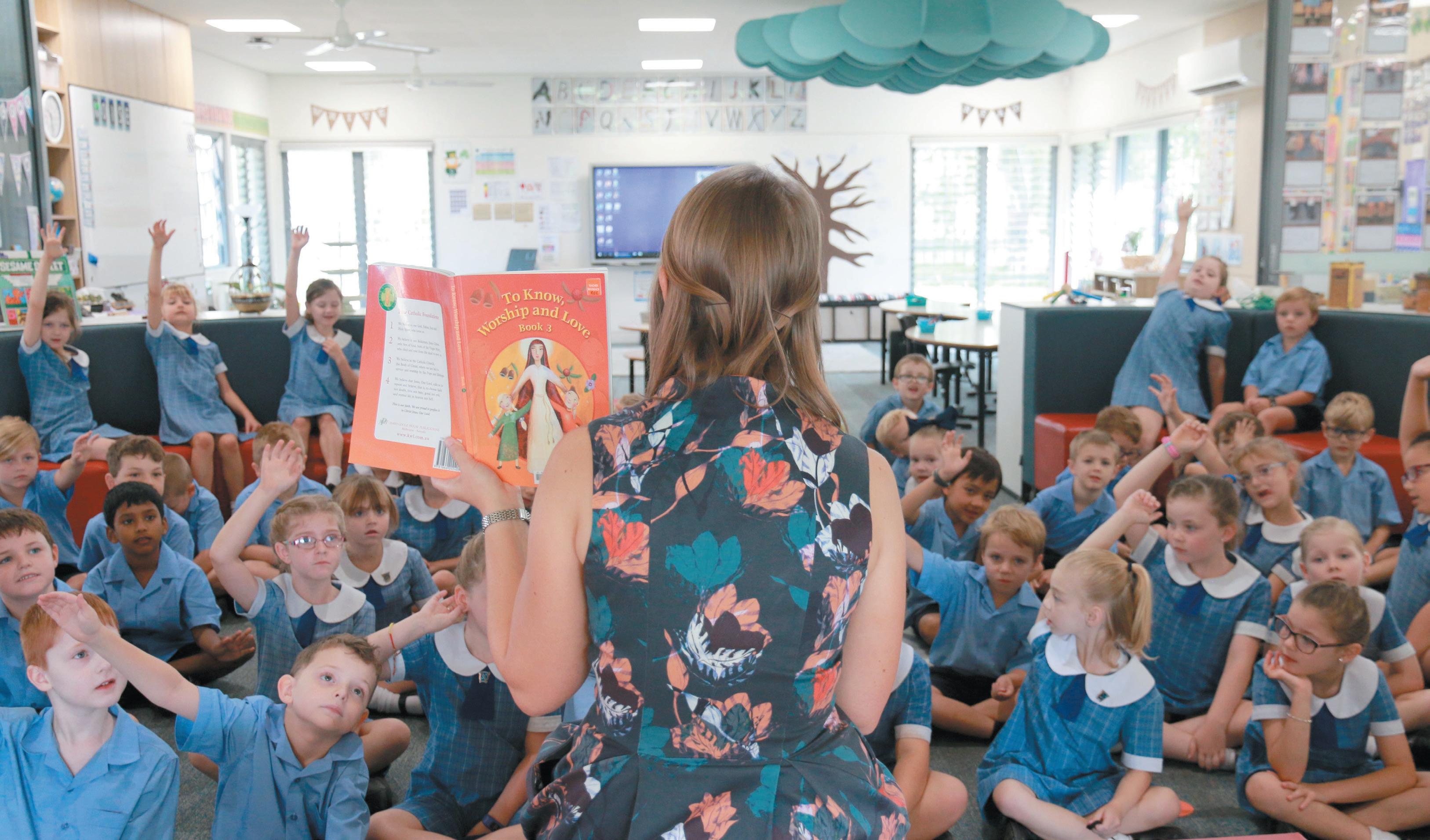
Modular-designed learning “pods” are transforming students’ learning experience, and St Patrick’s Primary School, Lochinvar is at the forefront of this educational evolution.
Resembling something from Google’s headquarters in Silicon Valley, the pods are designed to enhance student learning and engagement through the use of adaptable furniture and flexible learning spaces that promote collaboration.
Gone are yesteryear’s whiteboards, the endless stack of exercise books and single-file desks with stationary chairs. In their place are sound clouds, lighting dimmers, interactive TVs, flexible furniture options, acoustic controls and bi-fold doors to maximise co-teaching strategies and connection to the outdoors.
It is a scene being replicated across the Diocese of Maitland-Newcastle with several schools benefiting from recently completed capital works projects including St Clare’s High School, Taree, St Joseph’s High School, Aberdeen, St Pius X High School, Adamstown and St Bede’s Catholic College, Chisholm.
Projects currently under way, or planned for the near future, include St Therese’s Primary School, New Lambton, St Aloysius, Chisholm, St Patrick’s, Lochinvar stage two and Catherine McCauley College, Medowie.
The Acting Director of the Catholic Diocese of MaitlandNewcastle’s Catholic Schools Office, Gerard Mowbray, believes the record funding revolutionary projects is a sound investment in the long term success of Hunter Catholic School students.
“By creating collaborative, adaptable and inclusive environments, our mission is to progress students from being ‘data banks’ to inquisitive problem solvers and innovators,” he said. “These skills will assist them throughout life, and that is why these developments are so exciting.”
St Patrick’s Primary School principal Jacqui Wilkinson said school educators worked closely with staff from the Catholic Schools Office and SHAC Architects to create the flexible learning spaces, which still allow for traditional modes of learning and teaching, but also support opportunities for innovation.
“It was really important that as educators, we got to have a voice,” she said. “During the planning process, we were committed to the creation of a design that would translate from Kindergarten through to Year 6 and accommodate the different ways in which the spaces would and could be used, offering a multi-purpose space with technology accessibility.”
Staff and students had very firm ideas about what they wanted.
“The children have a choice about what furniture is best suited to their learning,” Jacqui said. “Children can manipulate the furniture to suit their needs. We know that ergonomically, sitting for long periods is not a great idea. So the children can select from sitting desks, supported by chairs or ottomans that can either be stationary or rock, or standing desks with the option of standing on wobble boards designed to support their core strength and increase their blood flow to reduce muscle fatigue.”
St Patrick’s Kindergarten and Year 1 students and educators have been operating from the pod design since 2018. Construction is expected to commence in the very near future for pods that will service Years 2, 3 and 4 with a view to extending this to Years 5 to 6 in the coming years.
Top marks for design
The transformational capital works projects are attracting a lot of attention, with several schools receiving an A+ from industry experts.
St Patrick’s, Lochinvar, Stage One
SHAC Architects won the Blacket Prize and the NSW Education Award at the 2018 NSW Institute of Architecture Awards.
SHAC Architects won the Educational Architecture Award at the 2018 Newcastle Architecture Awards.
SB Glass and Glazing was named Commercial Sub-Contractor of the Year at the 2018 Master Builders Association Excellence in Building Awards.
St Pius X High School, Adamstown library
Reitsma Constructions won the $3 million to $6 million Commercial Projects category at the 2018 Master Builders Association Excellence in Building Awards.
SHAC Architects received a commended award for Excellence in Education Facility Design — New Construction / New Individual Facility (or Facilities) under $8 million category at the 2019 Learning Environments Australasia Awards.
SHAC Architects won the Educational Architecture Award at the 2019 Newcastle Architecture Awards.
St Bede’s Catholic College, Chisholm, Stage One
North Construction and Building won the $6 million to $12 million Public Buildings category at the 2018 Master Builders Association Excellence in Building Awards.
Lizzie Snedden is the Team Leader Content for the Diocese of Maitland-Newcastle.
Making a difference to someone else’s day
BY BROOKE ROBINSON
Thomas Kristofferson is a young man with a profound sense of God in his life who wants to share it with others. Thomas attends Charlton Christian College and is a parishioner at St Joseph’s Kilaben Bay. He was a recipient of the Bishop’s Award last year for his dedication and commitment to his parish. Thomas is a senior altar server, assisting and mentoring younger servers. Thomas shares his gift of music and plays his guitar in worship. Thomas was also a mentor to junior students at his school. In October 2018, he took part in his school’s mission trip to Darwin where he worked with Aboriginal children in remote communities.
I asked Thomas some questions to get to know how he came to be involved in his parish.
What is your earliest memory of church?
Sitting with Poppy K near the organ where the choir sits at St Joseph’s. I remember listening to him singing (which he loved) and wondering where the magical sound of bells came from. I now know in my altar-serving role it is the bells I ring at Mass.
How did you get involved in altar serving?
After journeying through the Sacramental Programme I was encouraged by Claire McWilliam (senior altar server at the time) and Brendon Mannyx at St Joseph’s to become involved in altar serving. I had
always wanted to be involved in serving and this was an opportunity for me. I went through a training program along with others and, with much support, slowly learnt about all of the responsibilities involved.
At a time when many youth are not engaged in the Catholic Church, how do you feel a connection to God through the church?
Going to church provides me with another connection to God. I feel there is no purpose without Him in my life. He guides me and loves me. Church enriches my ability to share His word with others and encourages me to be Jesus’ hands and feet in serving and attempting to be like Him. I enjoy being a part of a community with whom I can share these beliefs. I feel recharged every time I go, and I love singing God’s praises. It gives me joy and a connection to my grandparents, who I have lost. They modelled His ways in all they did.
Can you tell me a highlight of your mission trip to Darwin?
I worked with staff and students from my school and Youth With A Mission (YWAM) with a group of young Aboriginal children. We created activities to share with them including art, making paper planes and playing soccer. I enjoyed rumbling with one of the little boys, as I would with one of my younger brothers. He “beat” me up, stole my hat and giggled the entire time. It was awesome to make a connection and bring joy to a complete stranger. It was
Going to church provides me with another connection to God. I feel there is no purpose without Him in my life. He guides me and loves me. Church enriches my ability to share His word with others and encourages me to be Jesus’ hands and feet in serving and attempting to be like Him.
amazing how much fun we had with just paper and a ball, compared to what most kids have these days with technology. We communicated, interacted and made a connection face to face.
What’s next for you, with regards to your involvement with your parish or the broader church?
I recently supported my younger brother Jacob in his fundraising to head off on a mission trip to Darwin to serve YWAM and the Aboriginal community. We had a bake sale over a few weekends at St Joseph’s, which was very generously supported by people purchasing cakes, biscuits and slices. Otherwise, at the moment, I will continue to altar serve, help with cleaning, and am looking forward to a youth night at my parish.
What did it mean for you to be nominated for a Bishop’s Award?
I was actually shocked I was nominated. It was nice to be acknowledged for
the things I do in my parish and the community, but I serve and try to help others because I enjoy it and because it models to my younger brothers the right thing to do. I hope the small actions I take might make a big difference to someone else’s day.
Nominations for the 2019 Bishop’s Awards are now open to students, Years 7-12 and young people (who have completed Year 12 and are under 25 years of age).
If you know of a young person in your community like Thomas who is living out their values and faith, nominate them at https://www.mn.catholic.org.au/ church-mission/youth/bishopsaward/.
Brooke Robinson is Content Officer for the Diocese of Maitland-Newcastle.
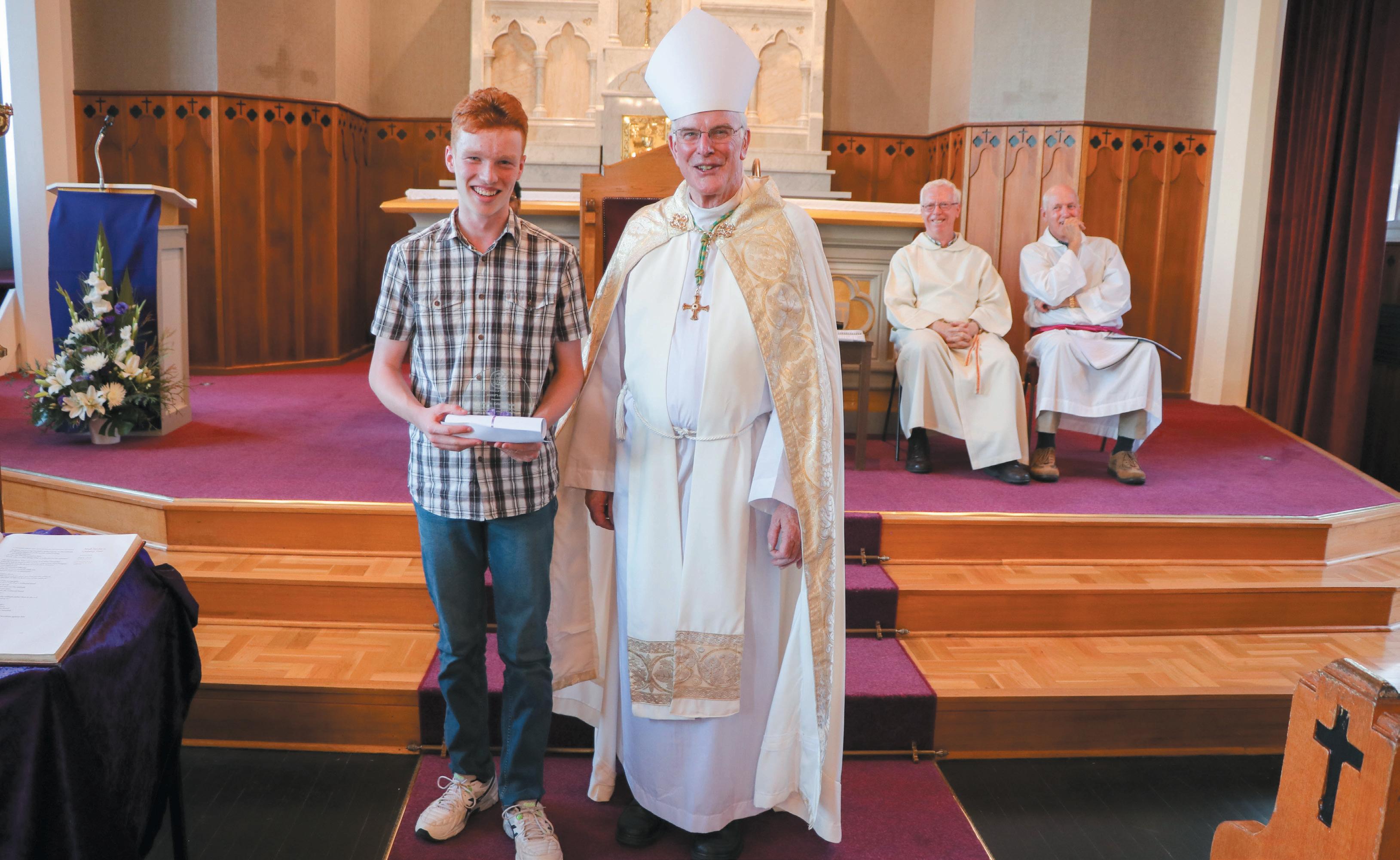
Thomas recieves his Bishop’s Award from Bishop Bill.
One woman speaks for the Easter people
BY BROOKE ROBINSON
Dr Michele Connolly rsj, author of Disorderly Women and the Order of God: An Australian Feminist Reading of the Gospel of Mark, spoke at the recent Tenison Woods Education Centre dinner held in East Maitland.
Michele touched on three themes in answering the question: “Does the New Testament speak to contemporary Australia?” Following is an edited extract of her address.
My response to the question is most definitely so, if we are ready to listen.
First, consider the Resurrection. Before anything else, the New Testament speaks the most fundamental message of hope there is.
Jesus of Nazareth, God’s anointed one, was executed on a Roman cross and raised by God from death. Because of the cosmic significance of this death and resurrection,
it is not just that Christ has been raised; we who trust ourselves to Christ also dare to believe that we will be raised. Living in this hope is massively different from living without it.
This is a message of hope the world needs to hear. We all know people today who live without this hope — many of us have them in our families. I believe it makes a real difference to life and to our encounters with our own mortality. We need to carry for the world, this hope, that death is not the last word of existence — that we are set free from death and have the glorious hope of life beyond this one. This is a hope with which Christians become so familiar, into which we become so domesticated that we forget how radical it is. We forget to access it and to
remember that it is our calling to hold it alive in a world that does not know it or does not dare to trust it.
Second, consider power, and the grinding round of negotiations that keep human business going — the world that tends to know only power in the form of power over others.
In response to human power, what we might call bullying, Jesus insists on the power that each of us legitimately has, to defy overwhelming power. Jesus says we are not powerless; we are not to be doormats.
Those who follow Jesus are called to use power not for our own aggrandisement, but in concert with Jesus, for the good of the community. Jesus promises they will do a power of good and they will inherit the Earth.
Third, consider power and women, and women in the church. In very many areas of public life in this country, we have begun to wake up to the amount of talent, strength, and mature judgment we lose by not allowing women into all levels of work, governance and discretion over matters of first importance.
Those who follow Jesus are called to use power not for our own aggrandisement, but in concert with Jesus, for the good of the community.
The church is a hierarchy: that is, as an organisation it is governed by priests, and over two millennia, priests have kept governance to themselves in a single highly rankfocused structure of governance. This is no longer good enough. If nothing else proves it, then the findings of the recent Royal Commission into Institutional Responses to Child Sexual Abuse massively demonstrates it and calls for many detailed and far-reaching changes. Among them is the need for women to be involved more, at all levels in governance, within the church.
Women are not angels. Women are human and they desire power and can wield power wrongly every bit as much as male persons can. But at least the presence of women will put a brake on whatever it is that allowed the two-millennia old single-gender governance of the church to decline to what we have seen in the past decade around the world.
To conclude, I want to come back to resurrection. We might think we are in a place of death. Numbers are down in churches; it’s hard to be Catholic in some places; we can’t argue with the evidence of the royal commission. If the church were a solely human organisation we might be well advised to leave it. But we believe that God is with us. We must be realistic about our situation, the challenges we face. But we are Easter people and our song is Alleluia
Dr Michele Connolly.
Plenary Council National Themes for Discernment announced
BY THE PLENARY COUNCIL FACILITATION TEAM
We have come a long way since that historic moment in 2018 when the Plenary Council process started. The People of God in Australia began preparing for the first Plenary Council to be held since the second Vatican Council by listening to God and to one another’s stories of faith.
More than 222,000 people participated in listeningand-dialogue encounters - and 17,457 contributed submissions during this stage of preparation for the Australian Plenary Council.
How is God calling us to be a Christcentred Church in Australia that is missionary and evangelising?
This is inspired by the voices of the People of God who shared a passion for participating in the missionary nature of the Church and desire stronger support, involvement and formation among all the baptised who make up the Church. The data also identified the need to reach out and communicate more effectively and to find new ways of living and proclaiming the Gospel in Australia today. There was a call for the strengthening of leadership and ministries in parishes and schools, training to equip leaders for ministry, pastoral support for various groups within parish and faith communities, and a desire for a unified voice in engaging social issues such as life and religious freedom.
The voices of the faithful help all of us to understand something of the historical experience and the current reality of the Catholic Church in Australia. This gathered data also reveals some deeper hopes and questions, and the diverse yearnings, that we are now challenged to consider together.
As we move into this second stage of preparation for the Plenary Council, we continue to seek the wisdom of the Holy Spirit.
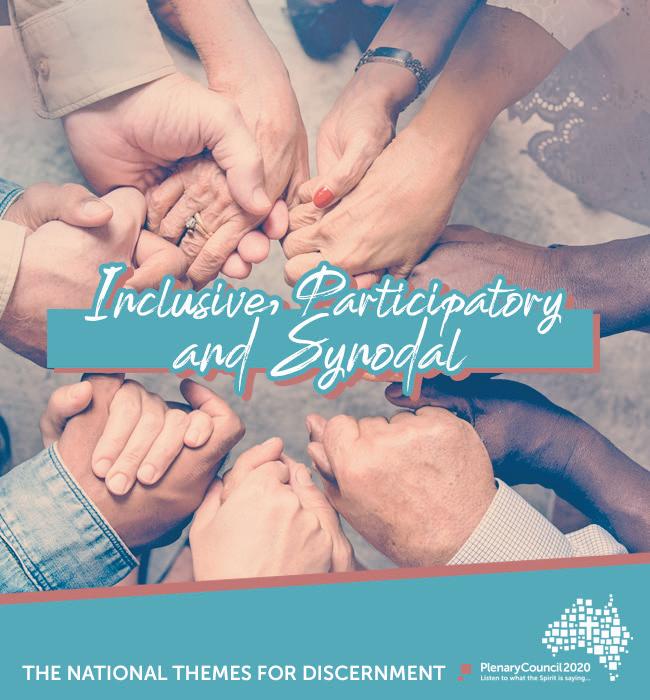
How is God calling us to be a Christcentred Church in Australia that is inclusive, participatory and synodal?
This is inspired by the voices of the People of God who expressed a desire for individuals and groups within and also beyond the Church to find a better welcome and be incorporated more into her life and mission. There was a call to renew forms of governance and leadership in the Church, to find ways formally and informally of being co-responsible for ministry and mission, seeking structures and processes of collaboration, shared decision-making and financial coresponsibility in order to enable this greater involvement of lay people particularly of women, young people, people of diverse cultural backgrounds and people with disabilities. There was an expressed need for stronger connections across the many parts of the Church, and with other Christian traditions.
Beginning this month, in order to discern the answer to these questions, we are called to reflect on scripture, church teaching, and our contemporary situation. The fruits of what is discerned during this time will help shape the agenda of the first session of Plenary Council to be held in October 2020.
The National Themes for Discernment, captured in the questions below, are inspired by the data and call us towards the future.
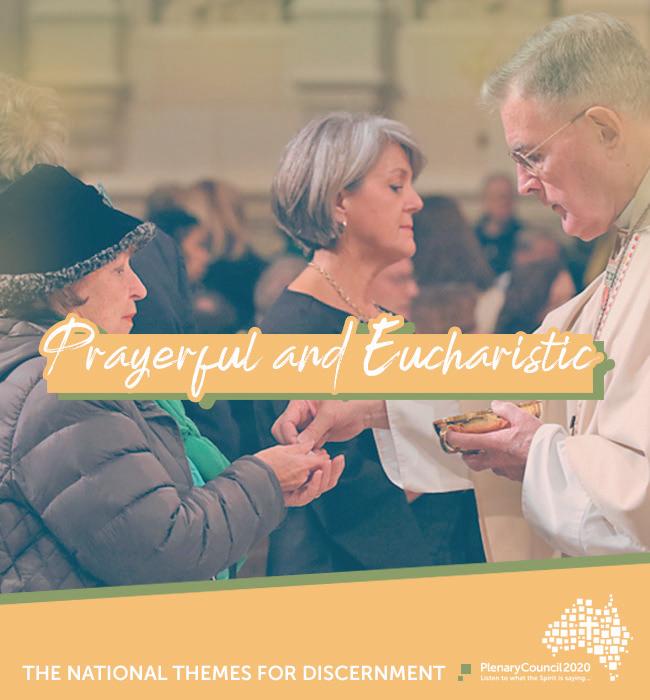
How is God calling us to be a Christcentred Church in Australia that is prayerful and eucharistic?
This is inspired by the voices of the People of God who shared how deeply they treasured the Eucharist and the sacramental and liturgical life of the Church. There was a call for stronger and more engaging preaching, with an emphasis on the word of God and connection to daily life, some seeking a uniquely Australian expression of prayer and eucharistic celebration, drawing from the wisdom and rituals of the Aboriginal and Torres Strait Islander people and also bringing together the many migrant communities that make up the church in Australia. There were many divergent expressions of ways in which people and communities encounter God through their experiences of prayer, music and liturgy, and a desire for catechesis, training and formation for those in ministries related to these.
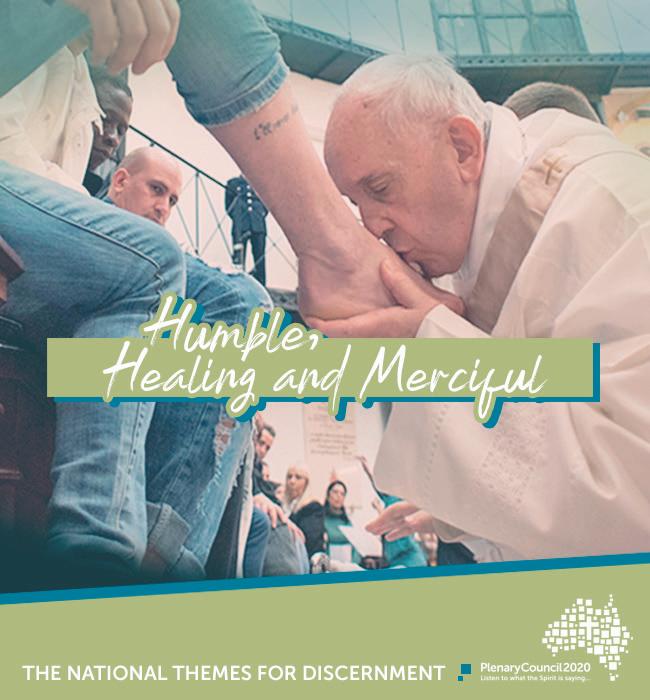
How is God calling us to be a Christcentred Church in Australia that is humble, healing and merciful?
This is inspired by the voices of the People of God who expressed a deep and faith-filled trust in God and a need for lament and healing within the Church, acknowledging the sexual abuse crisis as a turning point for the Church in Australia. It identified the need for relationship and reconciliation among many within the Catholic community, and with the wider Australian society, particularly with Australia’s first peoples and with all of creation. A desire was expressed for stronger prayer and sacramental life and more effective outreach to those who seek healing, as a renewed openness to and sign of God’s mercy.
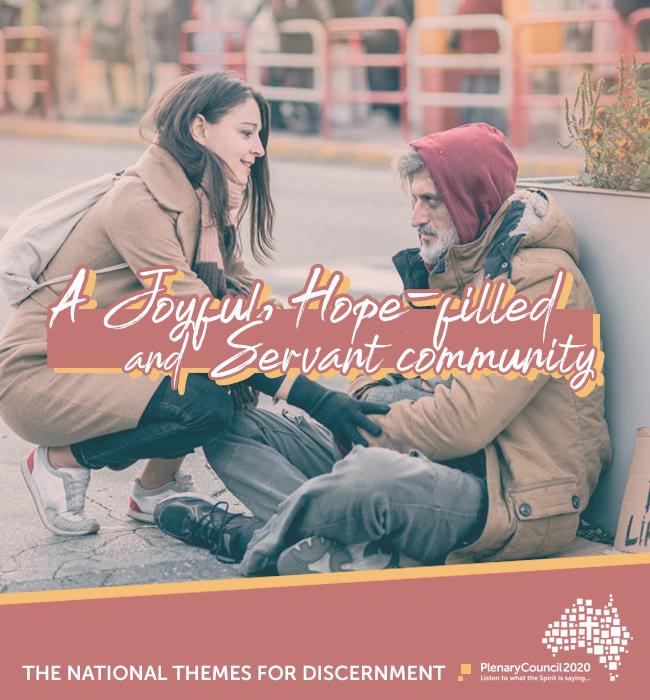
How is God calling us to be a Christcentred Church in Australia that is a joyful, hope-filled and servant community?
This is inspired by the voices of the People of God who expressed a yearning for the Church to be a sign of God’s kingdom for all people in Australia — to be able to see the Catholic Church in action, and to recognise Jesus. There was an expression of faith-filled hope in the capacity of the Catholic community to celebrate together, to show what it is to be a follower of Christ and to be loved unconditionally by God. There was a call to contemplate the Gospel call to be a servant church for the good of all people in Australia — particularly for refugees and asylum seekers and other people who are vulnerable or at risk. Many responses called for greater sharing of the story of the good works done by so many people and organisations of the Church. Some responses expressed a hunger for strong witness of faith, especially by priests, young people and female leaders in parish and school ministries.
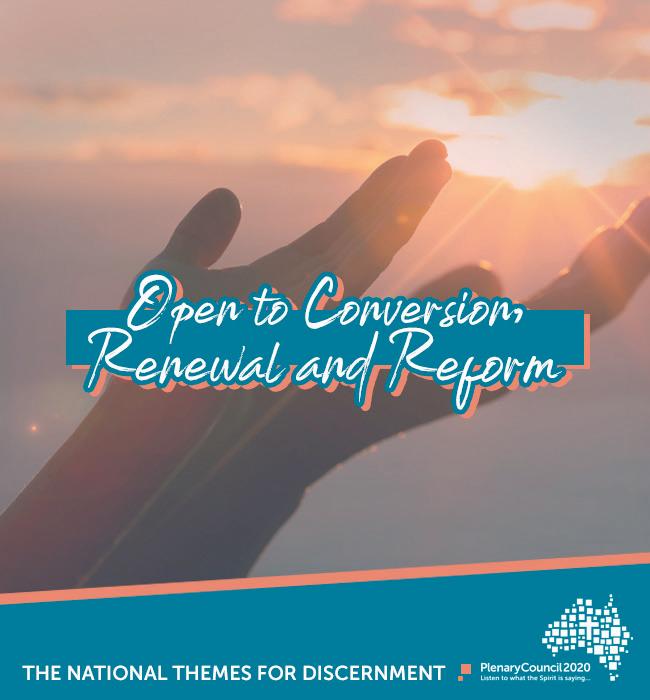
How is God calling us to be a Christcentred Church in Australia that is open to conversion, renewal and reform?
This is inspired by the voices of the People of God who expressed a desire to do things differently in response to Christ and the experience of our people, accepting that faithfulness to tradition requires change that is both personal and communal. Respondents also affirmed the important role of the clergy, expressing their appreciation for their vocation and recognising the need for support and ongoing formation and accompaniment. Some asked for a consideration of alternative approaches to ordained ministry, some for a greater inclusion of laity and different groups in the Church’s life, some for new models of governance and leadership, and some for a renewed fidelity to the church’s teachings. There was also a call for a renewed life of prayer and communion with one another, including understanding the many different ways in which we encounter God and experience a conversion of heart.
For more information, go to https://plenarycouncil.catholic.org.au/
Church leaders call for action on religious discrimination
Archbishop of Sydney, Anthony Fisher OP, believes concerns about religious freedoms affected the federal election result and has called on Prime Minister Scott Morrison to introduce a religious discrimination act as soon as possible.
In a recent interview with The Australian, Archbishop Fisher said the “relative autonomy and legal protections afforded religious institutions, including schools and hospitals, had come under increasing scrutiny and even attack.”
He has called on Catholics to “resist attempts” to exclude them from public life and urged the parliament to “ensure that respect for religious freedom informs our laws and social policies.”
“Anxiety about religious freedom was heightened in recent months, with debates about the funding of faith-based schools, proposed repeal of protections afforded religious schools, the seal of confession, and high-profile cases around freedom of speech and belief,” Archbishop Fisher said.
Federal Attorney-General Christian Porter recently told The West Australian religious freedom would be a top priority for the Morrison government in the 46th parliament.
“There was enormous concern in religious Australia,” he said of Labor’s plans for religious freedoms had it been elected. “From schools to churches to groups in any way involved in organised religion. They were concerned and we saw it become a key issue during the election.”
The Attorney-General is expected to present a religious discrimination act to parliament as soon as July, acting on a pre-election commitment to boost protections for people of faith against discrimination and vilification.
Some Coalition MPs believe the election results — including significant swings away from Labor in highly religious seats — underline the case for bolder reforms to enshrine freedoms other than freedom from discrimination.
BY TODD DAGWELL
Dr Michael Stead, Chair of the religious freedom reference group for the Anglican Diocese of Sydney, supported Archbishop Fisher’s calls for the government to prioritise a religious discrimination act.
He said a number of the swings in the recent federal election indicated the public was concerned about the issue of religious freedom. He pointed to the 6.5% primary vote swing against Labor treasury spokesman Chris Bowen, who holds the safe seat of McMahon in Sydney’s west — a culturally diverse electorate that recorded a 64.9% No vote against same-sex marriage.
“It demonstrates the need for the government to push ahead with its promise for a religious discrimination act, which would help alleviate some of the concerns that emerged, particularly during the last part of the election campaign,” Dr Stead told The Australian
Todd Dagwell is a contributor to Aurora
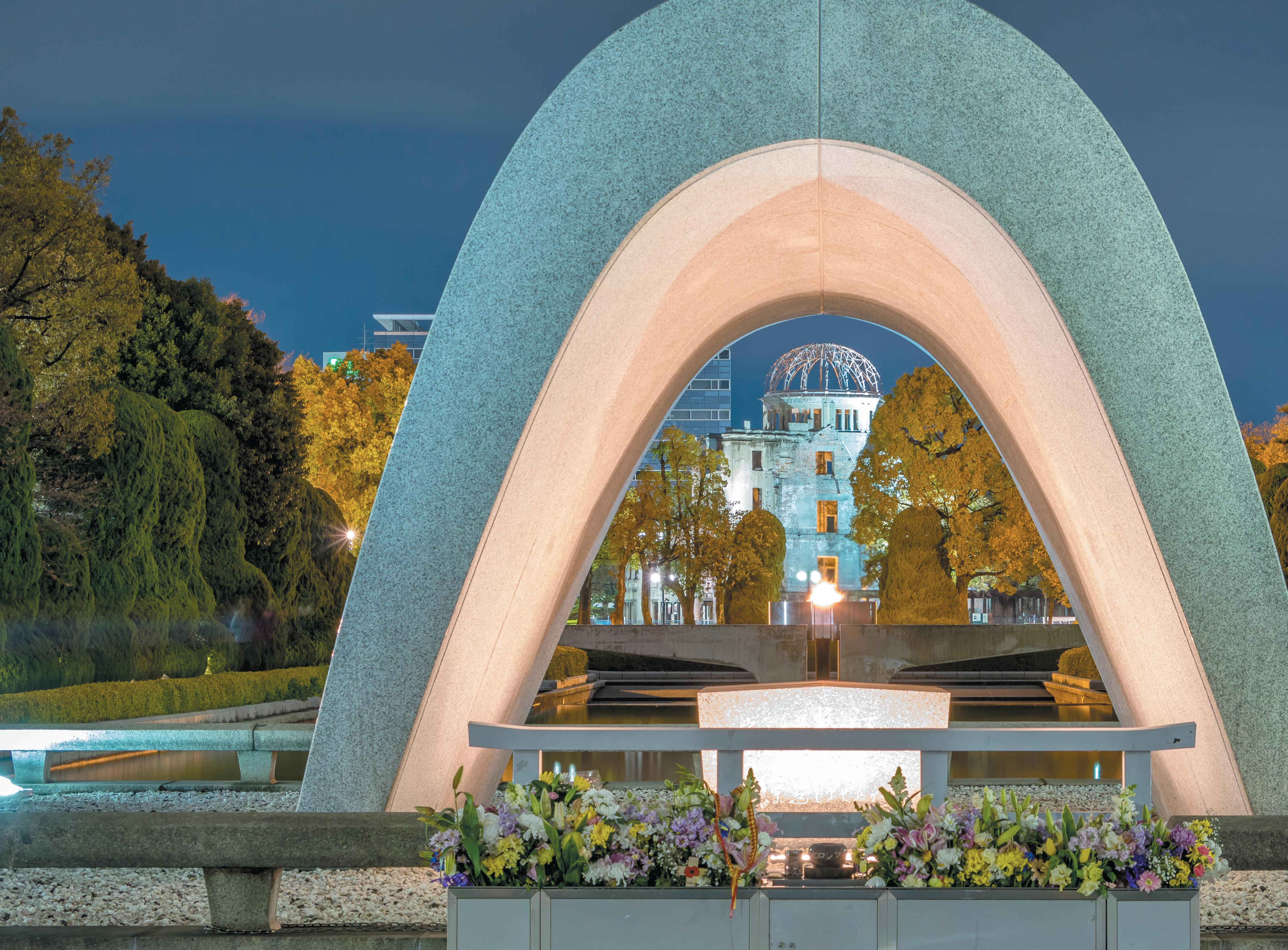
Weapons of mass destruction, particularly nuclear weapons, create nothing but a false sense of security. We must listen to the voices of survivors of Hiroshima and Nagasaki, together with other victims of nuclear testing. May their prophetic voice serve as a warning for coming generations.
Extract from the Pope’s message to UN Conference on Nuclear Weapons, March 2017.
We can support ICAN at Hiroshima commemoration
BY DOUG HEWITT
For more than 30 years, Newcastle has held an annual event to commemorate the dropping of an atomic bomb on Hiroshima, the act that brought an end to World War II, but cost 100,000 civilian lives. Local group Christians for Peace began the initiative three decades ago with a sunrise observance on 6 August in the grounds of Christ Church Cathedral. Through readings, songs and a silent vigil, the service acknowledged the horrors of war, and its innocent victims.
In recent years, speakers at an evening service on the eve of Hiroshima Day have addressed the issue of peace in a troubled world. Last year, Father Frank Brennan spoke of the Jesuit perspective on peace, influenced by members of the order’s presence in Nagasaki during the bombing of the city.
Newcastle’s Hiroshima commemoration this year is Sunday 4 August 2019. Dr Daryl Le Cornu, history lecturer from Australian Catholic University, and a board member of ICAN, the International Campaign to Abolish Nuclear Weapons, will speak at Adamstown Uniting Church at 6pm.
In 2017, ICAN was awarded the Nobel Peace Prize for its successful attempt to have the United Nations adopt a resolution banning nuclear weapons. The citation referred to ICAN’s efforts to draw attention “to the catastrophic humanitarian consequences of any use of nuclear weapons”. This resolution was approved by a majority vote at the UN General Assembly in September 2017.
Dr Le Cornu urges all citizens to encourage the
In 2017, ICAN was awarded the Nobel Peace Prize for its successful attempt to have the United Nations adopt a resolution banning nuclear weapons.
Australian government to join more than 125 nations and sign the UN Treaty on the Prohibition of Nuclear Weapons.
“Our country has been a leader in previous treaties to ban biological and chemical weapons, and to outlaw land mines and cluster munitions, but has been slow to add its support for the banning of nuclear weapons,” Dr Le Cornu said.
ICAN’s origins date back to 2007 when a group of Melbourne doctors, who were members of the Medical Association for the Prevention of War, were inspired by the success of the Campaign to Ban Landmines. Over the ensuing years, the group gained international support in their attempt to abolish nuclear weapons. Success was partially realised with the overwhelming backing of the 2017 UN resolution.
“Nuclear weapons are the most destructive and indiscriminate armaments ever created,” Dr Le Cornu said. “Surviving victims of the Hiroshima and Nagasaki bombings still suffer from their injuries. Australia’s First Nations people are among victims of British nuclear tests at Maralinga in the 1950s. With the re-elected government we must now renew our pressure to sign this UN treaty.”
Dr Le Cornu has more than 30 years’ experience teaching modern history and legal studies in high schools and has written textbooks on both subjects. Over his career, he has developed a passion for teaching on human rights, the UN, nuclear disarmament, international law, and global governance. He was a curriculum officer with the NSW Department of Education from 2011-2012.
Since 2013, he has been a curriculum lecturer at two universities. Dr Le Cornu has been involved with the UN Association of Australia, serving two years as vicepresident. He is currently a member of the board of ICAN Australia, and president of the World Citizens Association of Australia.
We invite you all to attend Adamstown Uniting Church on 4 August to hear Dr Le Cornu speak at the 2019 Hiroshima observance service.
Doug Hewitt is a member of the NSW Ecumenical Council
Revolutionary solution to indigenous illiteracy
BY TODD DAGWELL
Imagine for a moment being unable to read to your child, sign a school permission slip, or understand the directions on a medicine bottle. Illiteracy is the scourge of Aboriginal communities all across Australia, but one program is having enormous success where others previously failed.
In 1959, when Fidel Castro seized power in Cuba, more than 40% of the population were illiterate. Today, Cuba enjoys almost universal literacy and the model it used to achieve this has been exported around the world. In 2012, the National Aboriginal Literacy for Life Foundation paid $35,000 to the Cuban authorities for the teaching method, Yes, I Can!
Launched in Wilcannia, the campaign has now spread to other NSW communities including Bourke, Enngonia, Brewarrina, Weilmoringle, Walgett and recently Campbelltown.
Helen Miller-Brown, a retired Hunter teacher of 30 years’ experience, learnt of Yes, I Can! when she left primary school teaching to specialise in environmental adult education. Helen said the success of the program so far had been phenomenal.
“So much money has been spent on Aboriginal literacy over the decades for no results,” she said. “The big difference with this program is that it’s designed to empower Aboriginal people to teach themselves. The graduates become the tutors for the next program.”
Open to anyone 15 years and over, the course is made up of three phases and takes 12 months to complete. “The first three months of the program are spent working closely with the community — training and nurturing local Aboriginal staff recruited to raise awareness about adult literacy and its impact,” Helen said.
In Bourke, by the third intake of students, completion rates had risen to 80% — substantially higher than the current 25% completion rate for Aboriginal students in accredited vocational education and training courses (such as TAFE).
Helen was so convinced of the program’s ability to change lives that last month she held a fundraiser for Yes, I Can! at the Hamilton Uniting Church that raised more than $4000. “These people aren’t criminals but are often in jail because they keep getting picked up for driving without a licence, and they can’t get one because they can’t read,” she said.
“Helping them get a licence is major boost to their self-confidence. The police in these communities have asked the foundation not to leave because of its positive social impact. “Obtaining a licence is followed closely by teaching them to write even one paragraph, which means they can write a note to their child’s teacher.”
In Bourke, by the third intake of students, completion rates had risen to 80% — substantially higher than the current 25% completion rate for Aboriginal students in accredited Vocational Education and Training courses (such as TAFE).
Liz Green is the CatholicCare Team Leader for the Brighter Futures program established to assist families at risk of “significant harm” from domestic violence, drug and alcohol abuse and mental health issues. Liz said the program, which includes both Aboriginal and nonAboriginal families, provides strategies to encourage behavioural changes, but illiteracy is often an underlying issue.
“We’re observing literacy challenges due to a lack of formal education,” she said. “This means people can’t fill out forms and generally don’t have access to as much support and services as they would if they could read.”
Liz, who is familiar with the Yes, I Can! program, said any campaign that promoted adult literacy was highly beneficial.
“CatholicCare now partners with the Uniting Church in many different events that focus on assisting children and parents,” she said.
While Yes, I Can! has predominantly focused on remote and rural areas, Helen Miller-Brown said it needs to be widened to include urban centres such as Newcastle and regional centres in the Hunter Valley.
“An Aboriginal woman from the Awabakal organisation attended the fundraiser and said she felt the program was greatly needed in this region,” Helen said. “The program runs on the smell of an oily rag but the results are amazing. I feel very strongly about it and would like to do more fundraisers to help. Literacy for Life’s aim is to take the program to every Aboriginal community in Australia.”
For more information go to www.lflf.org.au
Todd Dagwell is a contributor to Aurora
To raise funds for Aboriginal literacy, Helen Miller-Brown screened the film In My Own Words, the story of a remote Aboriginal community teaching adults to read and write.
Primary focus on cultural immersion
BY NATALEE BONOMINI
University of Newcastle Bachelor of Primary Teaching student and Myall Coast Parishioner, Renae Lamb, is hoping things click when she goes offline to meet Jack Ma, founder of what is considered the world’s biggest internet business, Alibaba.
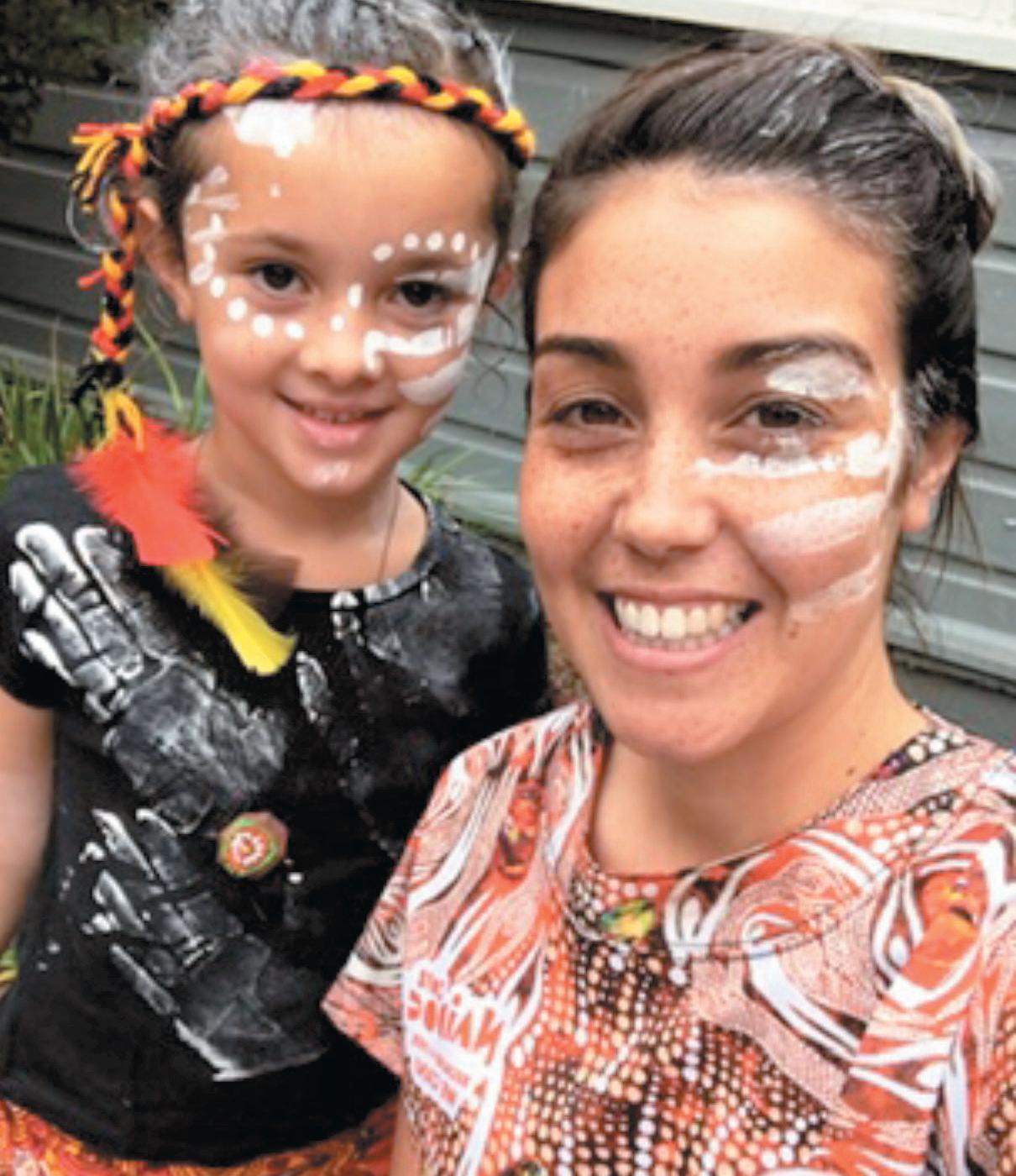
A mother of three and proud Wiradjuri woman, Renae is one of a group of 30 undergraduates chosen as part of the Ma and Morley Scholarship Program for 2019.
The scholarship program was founded to honour the life-changing friendship between business tycoon Jack and forward-thinking Novocastrian Ken Morley. Jack initiated the program with a donation of $26 million to Newcastle Universityin 2017 and included the Morley name out of respect for the patriarch of the family that hosted him in New Lambton in 1985. Renae will participate in the “China immersion experience” as one of the scholars travelling to Shanghai, Beijing and Hong Kong to meet the billionaire entrepreneur.
“This is an amazing opportunity,” Renae said. “I would never be able to go overseas otherwise. To be able to go to China and learn about how the country is structured and how policies work, and then to bring it back to Australia into my classroom with an understanding of another culture is amazing.”
Renae will have the opportunity to showcase her indigenous identity to Jack and other influential leaders in the form of modern Aboriginal dance, which encourages everyone to join in.
Just as Ken helped to shape a young Jack’s way of thinking back in 1985, the scholarship, as it was intended, continues to shape and encourage a new generation of young people who can initiate change and open their minds to see the world differently.
Renae is hoping to set an example for her young children.
“I was in a really tough time in my life and I was questioning should I go back to university,” she said. “I prayed for hope and strength to be a good mum and to achieve something in my life to show my kids.”
Celebrating NAIDOC Week from 7 – 14 July 2019 Voice. Treaty. Truth. Let’s work together for a shared future.
Join us to celebrate the beginning of NAIDOC Week
Sacred Heart Cathedral, 841 Hunter St, Newcastle West 7 July from 1.30pm to 4.30pm
Please RSVP to Jenny Harris E: jenny.harris@mn.catholic.org.au or P: 4979 1111
As a proud scholar of the Ma and Morley program, she joins a family of influential leaders and like-minded change-makers.
Renae Lamb with her niece Tae-Lani Gordon.
Natalee Bonomini is a contributor to Aurora
Lingua franca offers a lifeline
BY DARRELL CROKER
“Jambo.”
That’s Swahili for “hi”. It’s an informal greeting, but it conveys a world of hope for many people who have fled persecution.
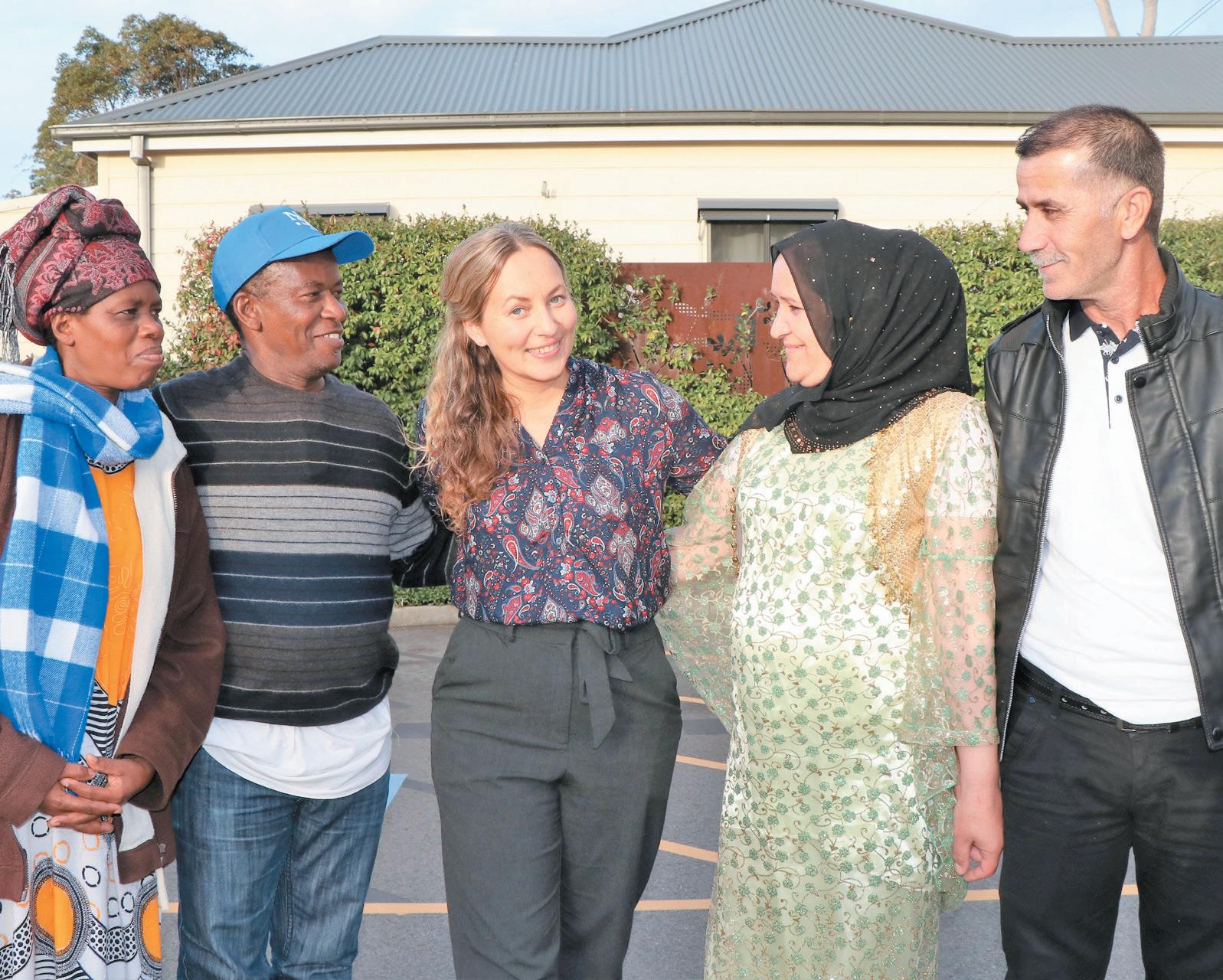
When Mirja Colding-Moran says “jambo”, it comes with a Swedish lilt, and a touch of Aussie twang. Mirja is a multicultural family support worker at CatholicCare and in regular contact with the Diocese’s Development and Relief Agency’s (DARA) Refugee Hub. She grew up in Sweden, and, after completing school, undertook a Diploma of International Relations and Africa Studies.
“As part of my diploma I spent five months in eastern Africa carrying out field work and study,” Mirja said. “I was living with host families.” It was invaluable for her future work in refugee support, not the least because she learnt a smattering of Swahili.
Upon completing her diploma, Mirja emigrated from Sweden and has lived in Australia for the past 18 years. She completed a Bachelor of Teaching/Social Science at the University of Newcastle and one of her major subjects was geography, especially development geography, dealing with the background issues and processes relating to refugees.
After completing her degree she worked as a high school teacher until starting a family. She also co-managed a hospitality business with her husband that often employed young indigenous workers and some refugees.
“When my son was born I started volunteering at Penola House, the Diocese’s former refugee support centre in Hamilton,” she said. The catalyst was definitely the fieldwork in Africa. Her new role with CatholicCare working with refugees and assisting families to independence and complete participation in society has been a natural progression to a perfect fit.
“I am very passionate about social justice in general, and about supporting refugees in particular,” she said. “I have a good understanding of the people we’re working with and refugee processes. The culture is very different and it’s very daunting for them, because the process is so completely different. Bureaucracy and paperwork is something they are not at all familiar with. Education levels are not always high and there is the difficulty of learning English, often from scratch.”
There are other deep-seated problems affecting a successful transition. Mirja recently completed a Service for the Treatment and Rehabilitation of Torture and Trauma Survivors (STARTTS) course in Sydney.
“A lot of refugees in Newcastle at the moment have experienced trauma,” she said. “You can almost assume that every family granted refugee status will have gone through some form of trauma. As a result, they have complex needs. The course took us through the psychology of it and how the brain works and how to minimise triggers.”
The difficult journey for refugees to eventual freedom in Australia has often involved waiting in limbo in camps, in some cases for decades, and complete separation from family.
“Some have really severe trauma from having been exposed to war and everything that means,” Mirja said.
“They’ve seen family members killed or experience violence. That can be really limiting when you then have to deal with day-to-day basics like applying at Centrelink. The STARTTS course was specific for trauma sufferers and refugees, and there are little things to learn about how to communicate. Many of them have been interrogated. You have to ease into conversations rather than bombard with questions.”
Mirja finds beauty in the diversity of cultures and languages. Many of the refugees being supported in Newcastle are from Africa and most of the Congolese speak Swahili. That crash course during her diploma has proved invaluable. “Just using a few basic phrases with them, they really seem to light up. It’s really useful. It builds rapport and trust.”
For those of us for whom English is our first language, we think nothing of our fortune, even if the traditional ballad suggests Spanish is the loving tongue. But for some in our community, a phrase in Swahili can transform their day, and maybe their life.
Darrell Croker is a contributor to Aurora
The difficult journey for refugees to eventual freedom in Australia has often involved waiting in limbo in camps
Nyiransabimana Christiane, Charles Gashufi,
Mirja Colding-Moran, Malak Ramadan and Ahmad Ramadanat at DARA’s Refugee Hub.
Worlds apart
I’ve just commenced work with an organisation that supports people from many cultural backgrounds. I’ve realised that what I thought I knew about particular cultures is so different to what I’m starting to learn through my work. Apart from cultural sensitivity training, how can I ensure I am working in the most respectful way with my clients as well as colleagues?
CatholicCare’s Assistant Director and registered psychologist Tanya Russell, addresses an issue each month.
The advice provided is general in nature and does not replace ongoing support and advice from your health professional.
To talk to someone about counselling support, call CatholicCare P 4979 1172 or
Lifeline 24/7 on P 131 114.
Do you have a question for Tanya?
Email your question to aurora@mn.catholic.org.au or write to Aurora-CareTalk PO Box 756 Newcastle 2300.
Demonstrating respect and empathy for people from all backgrounds is the cornerstone of any working relationship – with your colleagues and clients. It is important to come from a place of non-judgment and accept peoples’ experiences and their differences, which may contrast significantly to what we consider to be “normal” in our own cultures.
Cultural sensitivity training can provide a good foundation for understanding more about Aboriginal and Torres Strait Islander (ATSI) and Culturally and Linguistically Diverse (CALD) cultures; however, your theoretical knowledge will integrate into practice by learning more from your clients, colleagues and professional networks and interest groups.
Becoming more culturally aware is more than just learning about the uniqueness of other cultures. It’s important to be mindful of the particular challenges you and your clients may face, which may be specific to their background. For example, with people from an ATSI background, you will need to be sensitive to the impact of intergenerational trauma. Sensitivity for CALD clients from a refugee background relates to the effect of war, trauma, separation from family, displacement from home,
language barriers, living in camps perhaps for years, and learning how to start a new life in a foreign country.
I myself come from a CALD background and even though I think I have a solid understanding of cultural awareness, it was reinforced to me during Cultural Sensitivity Training that we couldn’t make assumptions about anyone. When it comes to communication for example, (and we’ve seen this in our workplace) what one of our colleagues might find funny may have a negative impact on another colleague from a different cultural background. There are many instances where miscommunication or misunderstandings may occur if we do not seek to clarify or understand further. For example, we may assume that someone who avoids eye contact with us during a conversation is being rude; however, in some cultures, avoiding eye contact is considered a sign of respect.
It’s important that if you are not sure about how to approach a client or colleague from a different cultural background to yours, that you ask for help. When you meet your clients for the first time, in developing your relationship, check with them if it is OK to ask them questions about themselves and/or their culture if
you are not sure of something. Gaining permission to do this is a respectful way to establish effective communication moving forward. But be mindful of how difficult it may be for some people to talk about any aspect of their life, particularly about past and current challenges, and past traumas.
Make sure that whoever you ask for help for increased cultural awareness has knowledge that is specific to your clients – general cultural awareness training is, as I said, a good foundation, but your learning needs to continue specifically to your client’s individual circumstances and of course, their particular goals. Also, be aware of your own beliefs and values and their influence on how you work, in both positive and negative ways, and ensure you have regular supervision with an appropriate person within or external to your workplace.
The Diocese's Development and Relief Agency (DARA) has staff available to deliver Cultural Awareness Training covering working with ATSI people, as well as people from a multicultural background, particularly refugees.
For further information, please call CatholicCare on 4979 1120.
Supporting your changing needs
Calvary Retirement Communities provides safe, secure and relaxed community living through residential aged care, respite accommodation and independent living villages.
We have care choices available in Belmont, Cessnock, Eleebana, Maitland, Muswellbrook, Sandgate, Singleton, Tanilba Bay, Taree and Waratah to assist you.
Knowledge is power
From the moment Maree Freeman stepped into a drama class in high school, she knew she had found her purpose.
Graduating from NIDA in 2010 from a discipline of playwriting, Maree has gone on to write several successful theatre productions and novels such as This House is Mine in 2015.
She was from 2010 to 2015 Chief Executive and Artistic Director of Sydneybased Milk Crate Theatre, where she created drama for and with the homeless and socially marginalised.
She then became schools program manager at NIDA where she was responsible for the delivery of educational activities for students and teachers.
Maree is passionate about supporting people from all walks of life to pursue their learning goals, believing knowledge is power. It is this passion that has inspired her to make a difference, not only through theatre, but more recently though education.
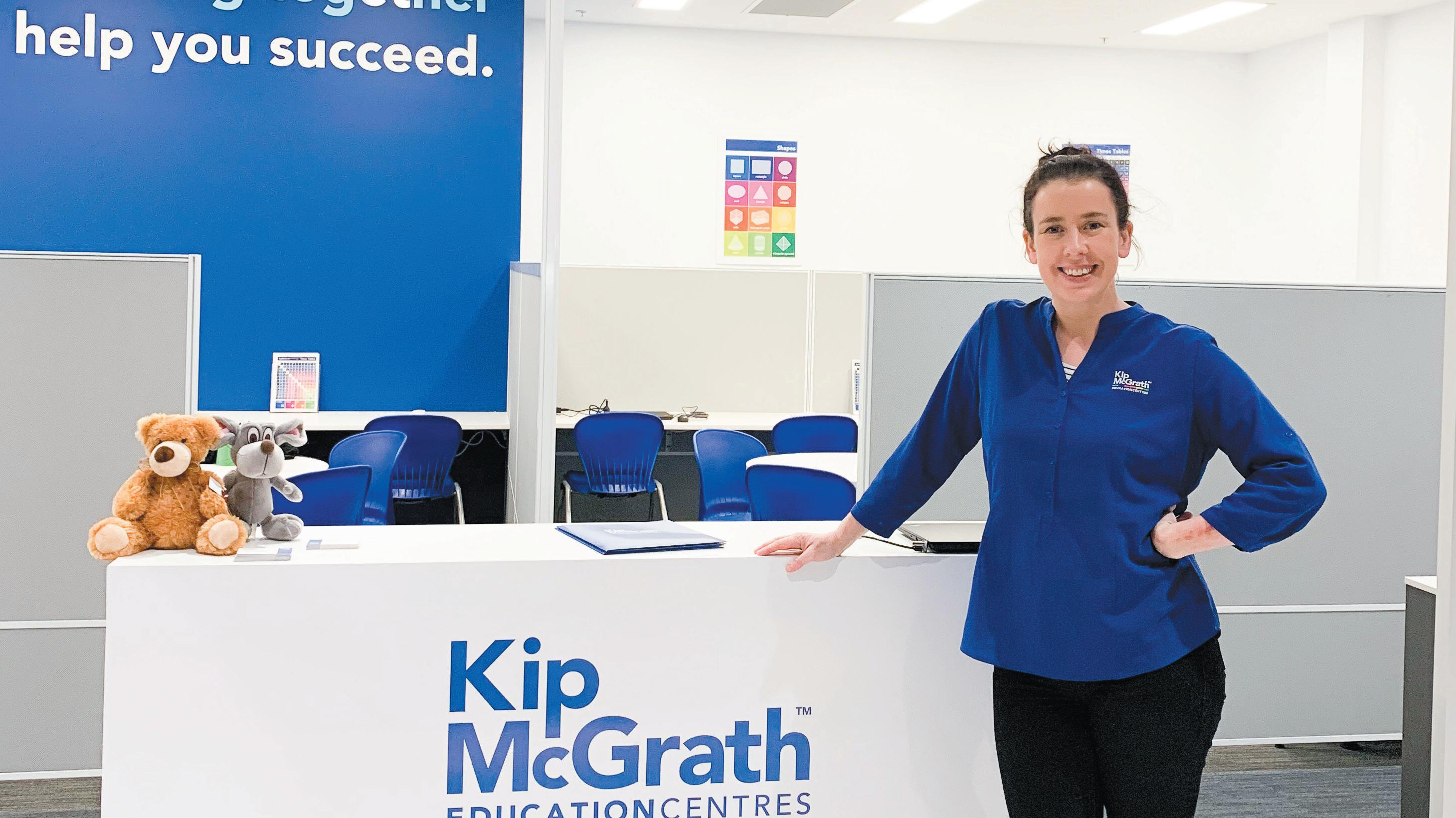
Now managing a learning hub with Kip McGrath in Kotara in Newcastle, Maree is combining her knowledge and training with her passion for enhancing literacy and numeracy skills to build a brighter future for children. And, more importantly, their confidence and happiness.
Which Catholic schools did you attend?
St Mary’s, Scone for primary school and
then St Joseph’s High School, Aberdeen.
Why did your parents choose Catholic schools for you?
They had strong religious beliefs and my mother also worked as a teacher in the Catholic school system.
What is your favourite memory from your schooling years?
Being a part of the drama classroom in high school. I feel so lucky to have met like-minded people at my high schoolstudents who were creative, intelligent, inclusive and fun. From the moment I was able to take drama as a subject I felt like I had found my place. My teacher was also incredibly supportive – allowing me to explore new ideas and my own creativity as well as teaching all of us how to collaborate effectively.
What has inspired you to make a difference to the lives of adults and children through training and education in the performing arts and literacy and numeracy?
I am passionate about supporting people along their educational pathways, whatever they may be. Education is truly one of the most incredible opportunities and something that should be available to everyone. I have been very fortunate throughout my career to have had the opportunity to support people from all walks of life pursue their learning goals. As someone for whom learning plays such
BY BRITTANY GONZALEZ
a joyous and important part in my life, I wanted to work to support others to have a similar experience. Knowledge is power. I am currently managing a learning hub with Kip McGrath at Kotara in Newcastle. I feel fortunate to be able to support students in enhancing their literacy and numeracy skills. It’s such a thrill to see students gain new skills, expand their subject knowledge and, most importantly, grow in confidence and happiness.
What do you love most about the performing arts and writing?
The opportunity to collaborate with others and to create something from nothing. As adults we so rarely get to “play”, but in the performing arts, the act of creation is just that. Play is an incredibly important part of positive mental health and social cohesion and as artists we get to work at the coal face of “play”. Aren’t we lucky!
July 31 – August 3 celebrates ASPIRE’s 365 Questions, Issues and Good Deeds. What advice would you give to students wanting to pursue the theatre and arts as a profession?
1. Be a positive member of a team always. Reputation is important, and people want to collaborate with kind, positive peers.
2. Look for opportunities to extend your craft everywhere you can: participate in community activities, go and see theatre, take opportunities to mentor younger students if they arise. All of this
will develop you further as an artist.
3. Don’t be afraid of failure – some of the best things come from trying something new and it not working out.
4. Create and keep going: Artists are people who simply continue to create art throughout their lives. If you want to be an artist, just keep making art. “Success” will occur in time.
How do you feel students benefit from schools now offering more opportunities to take part in performing arts?
By participating in the performing arts as a student you gain so much more than just marks in the subject of drama. You learn how to be truly resilient, how to work with others and how to use creativity to problem solve. In 2019, these are incredibly employable skills.
What is your favourite play?
There are so many wonderful plays out there. Two of my favourites are Falling Petals by Ben Ellis, and Cloud 9 by Caryl Churchill.
Brittany Gonzalez is a Communications Co-ordinator for the Diocese of Maitland-Newcastle.
Maree Freeman is a Catholic School Alumni who has gone on to achive great things.
The five least-boring parts of super
BY AUSTRALIAN CATHOLIC SUPERANNUATION
We love superannuation. But, for most people, thinking about it is a cure for insomnia.
Because super is money that you can’t access today (it’s locked away to provide for your future), it can be hard to find the motivation to deal with it.
Super doesn’t have to be boring. And we’re not just saying that because we work in superannuation.
Every little bit you do now can have a big influence on what your super balance looks like when you’re ready to retire.
Your super is invested in cool things like tech companies and renewable energy
Investment options named “Growth” and “Balanced” probably doesn’t spark joy. However, what is in those investment options can be fascinating.
You may hold shares in brands like Treasury Wine Estates, makers of Penfolds. You could be invested in tech giants like Apple, Google or Netflix.
Some things might surprise you, too. We hold investments in Tencent, a Chinese company that owns things like the videogames Fortnite and Minecraft.
Our commitment to investing responsibly
is more than just the dedicated “socially responsible” option. We hold investments in a variety of solar companies and wind farms around Australia.
Your super is invested in local stuff you use regularly
Investments can seem like an abstract concept. It’s money that goes out, does something, and then provides (hopefully) a good return.
A lot of investing is more local than you might realise, often in things you use regularly. For example, property investments in superannuation are very common. We’ll often invest in shopping centres, like Kawana Shoppingworld on the Sunshine Coast.
We’re also invested in Village Roadshow, which operates Sea World, Warner Bros. Movie World and Wet ‘n’ Wild.
Do a lot of flying? You’re likely to visit an airport that your super is invested in like the Gold Coast Airport.
Once you start digging into how your money is invested, you’d probably be surprised by where your money goes and how it grows.
It’s real money and it’s yours
Super is more than numbers on a
statement that you get once a year or as a line on your payslip.
It is real money that you’ll use in retirement. Just because you can’t access it today doesn’t mean that it’s not yours. You owe it to your future self to take an interest and make the most of your superannuation.
There’s a lot of unclaimed money out there and some of it could be yours
Having duplicate accounts is pretty common. You had a job for a year in uni, they made super contributions, and you’ve completely forgotten the account existed.
Sometimes those accounts are closed, and the money is turned over to the ATO. Other times it’s left in an account, slowly being eaten away by fees because there are no new contributions.
Consolidating is an easy way to reduce duplicate fees and unwanted insurance. It’s pretty easy and should only take a couple of minutes. We can even do it for you.
Balances for women are lower and it’s really bad
Sorry to bring you down, but this is really important and a little scary. Women retire with about half the balance of men, and they live an average of five years longer. This could result in women living in poverty and ending up homeless during their
golden years.
There are different reasons for the gender super gap, including:
f 43% of women work part-time
f women working full-time earn around 18% less than men
f women take an average of five years out of the workforce to care for children.
There’s no single, simple solution to solving the issue. However, there are little things that women can do to help boost their balance, like making additional contributions or speaking with a financial adviser.
What should you do with your super?
All right, these things might not fill you with joy, but they are pretty cool. And they are important to your financial future.
Fortunately, we love super. We’re always out and about, visiting workplaces and answering questions about managing super. If you see us at your workplace, come and have a chat.
There are plenty of other ways to get your questions answered, including our local call centre or live chat through our website, catholicsuper.com.au.
Playing around with learning stimulates young brains
BY LIZZIE SNEDDEN
Researchers at Monash University in Victoria recently launched Australia’s largest study into play-based education, aimed at inspiring teachers and parents to develop the next generation of thinkers in science, technology, engineering and mathematics (STEM).
The Australian Research Council funded the $3.2 million project, which will be led by Professor Marilyn Fleer as part of a new model of teaching entitled Conceptual PlayWorld
As part of the study, researchers will follow 130 infants across the first five years of their life and investigate how play-based education can deliver essential cognitive and learning outcomes for infants, toddlers and pre-schoolers.
Professor Fleer has spent more than 30 years researching play-based education, and she says internationally, the schoolstyle curriculum is making its way into preschools, which she describes as being less than ideal.
“This has the potential to deprive young children of vital play-based, imaginative and creative learning opportunities,” she said.
“Early childhood education is at a point in history where the teaching and learning of STEM concepts are needed, but where large-scale research of how to teach these concepts in Australian play-based settings has not yet been undertaken. Without an evidence-based model of how to teach STEM concepts in play-based settings, the preschool and childcare sector will continue to use a model of teaching designed for much older children. These fail to inspire young children to develop scientific lenses and
inquiring minds about their everyday world.”
The study is expected to position Australia as a research leader in this field and has been welcomed by educators, including Diocese of Maitland-Newcastle is Kim Moroney and Kerri Armstrong.
Kim is an award-winning researcher and education officer for early learning at the Catholic Schools Office. Kerri is the General Operations Manager of St Nicholas Early Education, one of the Hunter region’s preeminent early education and care providers.
Combined, Kerri and Kim have more than half a century of experience in early education settings and a shared view that infusing STEM play into the early years lays the foundation on which a child’s learning journey should be built.
The two educators in their respective roles deeply value and promote the importance of play and understand its relevance in developing STEM learning opportunities across the Diocese’s early education and school settings.
Kim said a progressive and united approach to imagining children as capable, curious, creative and competent learners and citizens from the moment of birth means a “push down” approach to educating children is not in the best interest of the child, and educators will benefit from insight gained from Professor Fleer’s study.
“Research already tells us that the early childhood years are the most crucial period for brain development,” Kim said.
“It’s also during this time that children naturally approach the world with a STEM
Early
childhood education is at a point in history where
the teaching and learning of STEM concepts are needed.
perspective, hence the endless ‘why?’ questions. But what Early Learning Australia, among other sources tells us, is that STEM activities during this period are most valuable for expanding the neurological pathways in young brains.
“By combining this knowledge with Professor Fleer’s study into teaching STEM-based play, we will be better able to appreciate its potential to assist children in achieving success in learning and wellbeing.”
The St Nicholas Early Education curriculum reflects the vision of the Early Years Framework and National Quality Standards and is inspired by the Reggio Emilia approach, which encourages play-based learning and centres on the principle idea of using the environment as the third teacher.
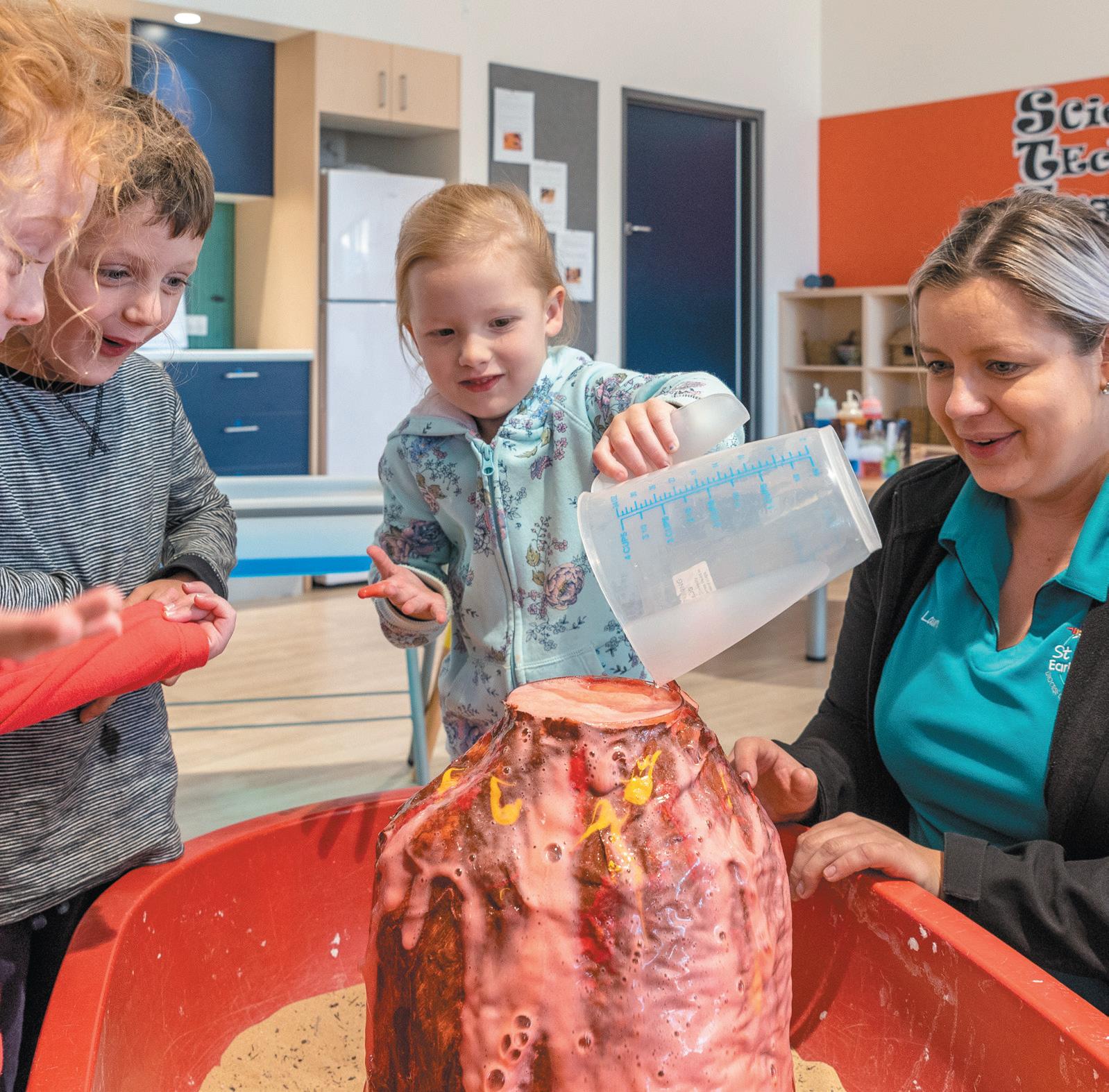
Kerri said allowing children to investigate, practise and then master skills through a STEM-inspired, play-based curriculum, including science experiments, mathematical provocations and loose parts play, ensured St Nicholas educators were scaffolding all the elements of children’s pre-literacy and pre-numeracy. “We create stimulating and challenging learning environments that encourage children’s investigation from a young age. We value all children as capable and confident learners and our educators nourish this enquiry and build programs to extend learning, assisting with their transition to school,” Kerri said.
Soul Food
Fairy Tales are more than true; not because they tell us that dragons exist, but because they tell us that dragons can be beaten.
G.K. Chesterton
Lizzie Snedden is the Team Leader Content for the Diocese of Maitland-Newcastle.
Students at St Nicholas Early Education, Lochinvar taking part in a STEM play-based experiment in the recently opened, dedicated STEM learning room at the centre.
Faces and places in our Diocese
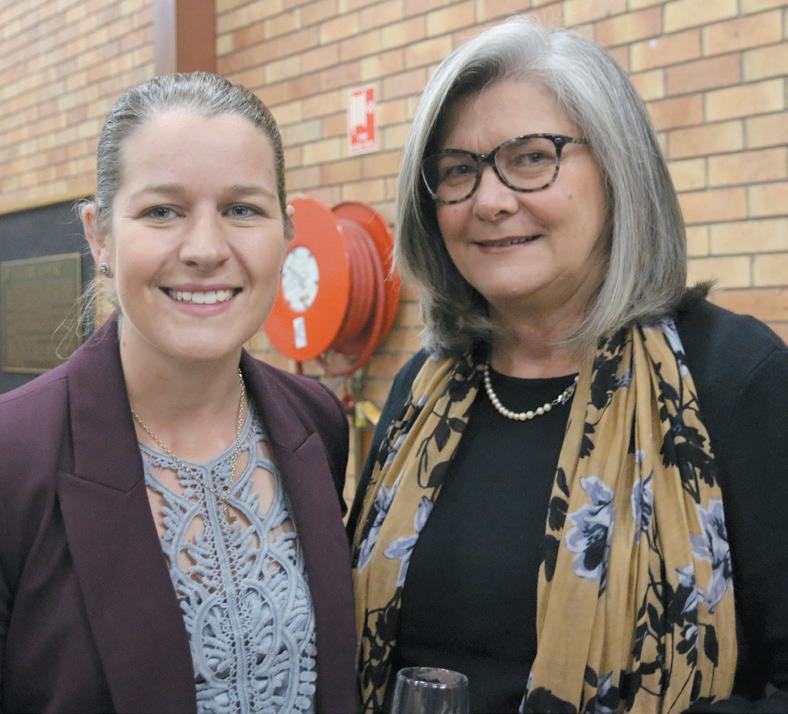
TWEC Dinner
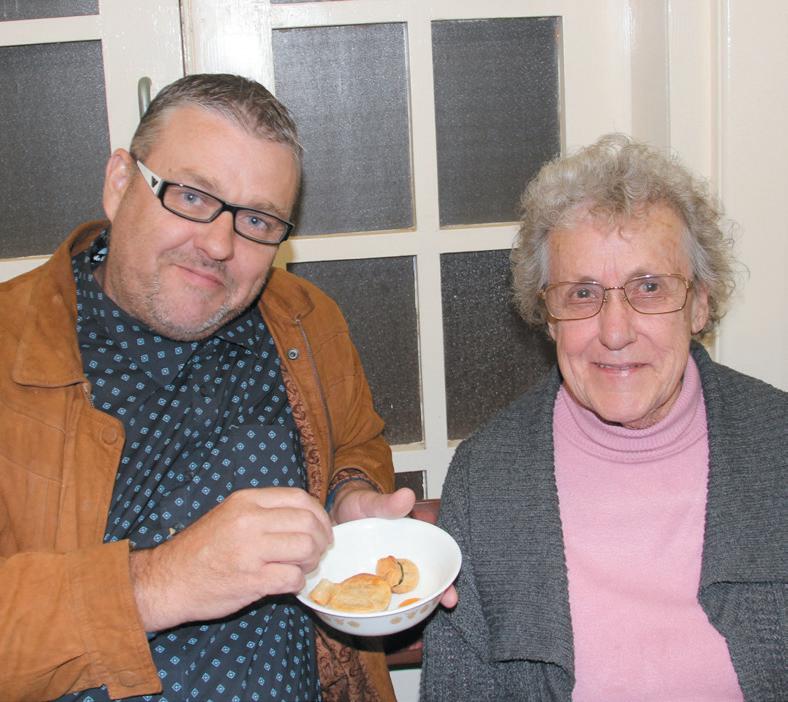
Dr Michele Connolly rsj spoke at the recent Tenison Woods Education Centre dinner held in East Maitland. Over 200 people gathered at the annual dinner, to hear Michele and enjoy a meal. Read the article on page 9.
Neophytes Mass
The Neophytes Mass was a celebration of those who had joined the Catholic Church this Easter. New Catholics, their sponsors and parishioners gathered at St Joseph’s The Junction for Mass and dinner.
Sharon and Andrew Murphy
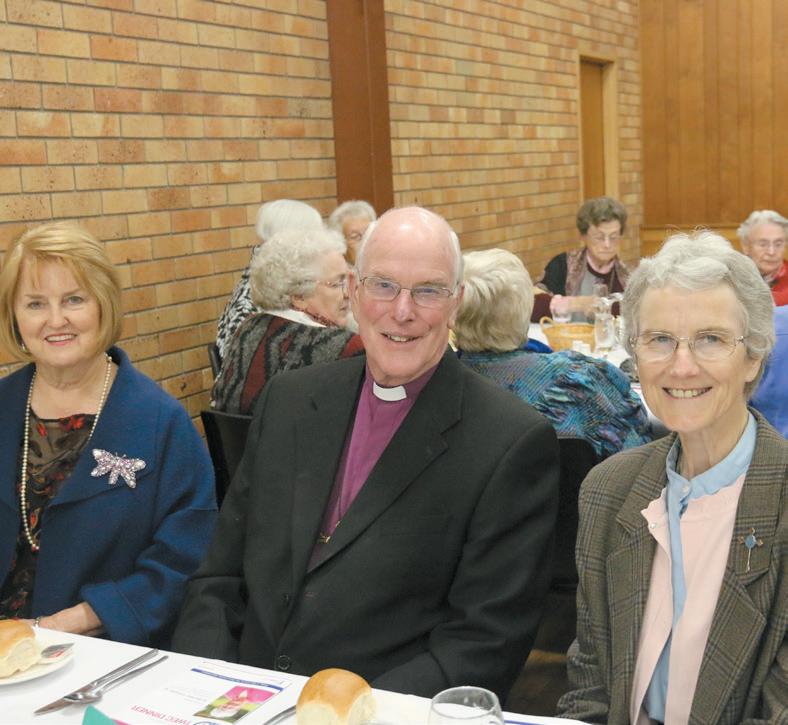
Kate Bowe, Bishop Bill and Sr Jan Tranter RSJ
Wayne and Margaret Smith
Ellen Hazleton and Kala Chand Simon Lloyd and Judy Crittenden
Zofia Slupik, Bernadette Stellenburg and Tony Towers
Sam Hill and Louise Gilchrist
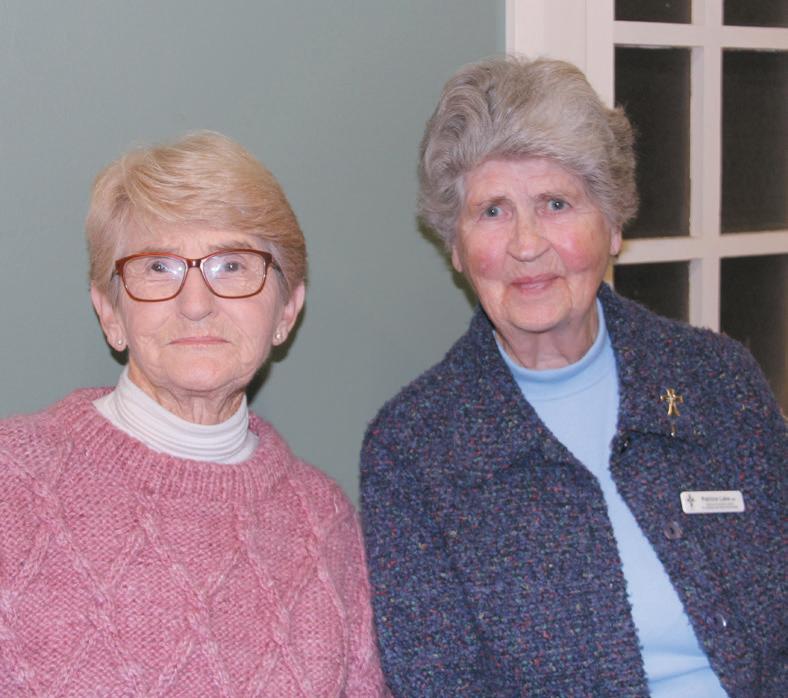
Anne Hogan and Sr Patricia Lake
Louise Gannon RSJ, Peter Gilligan and Leo Walsh
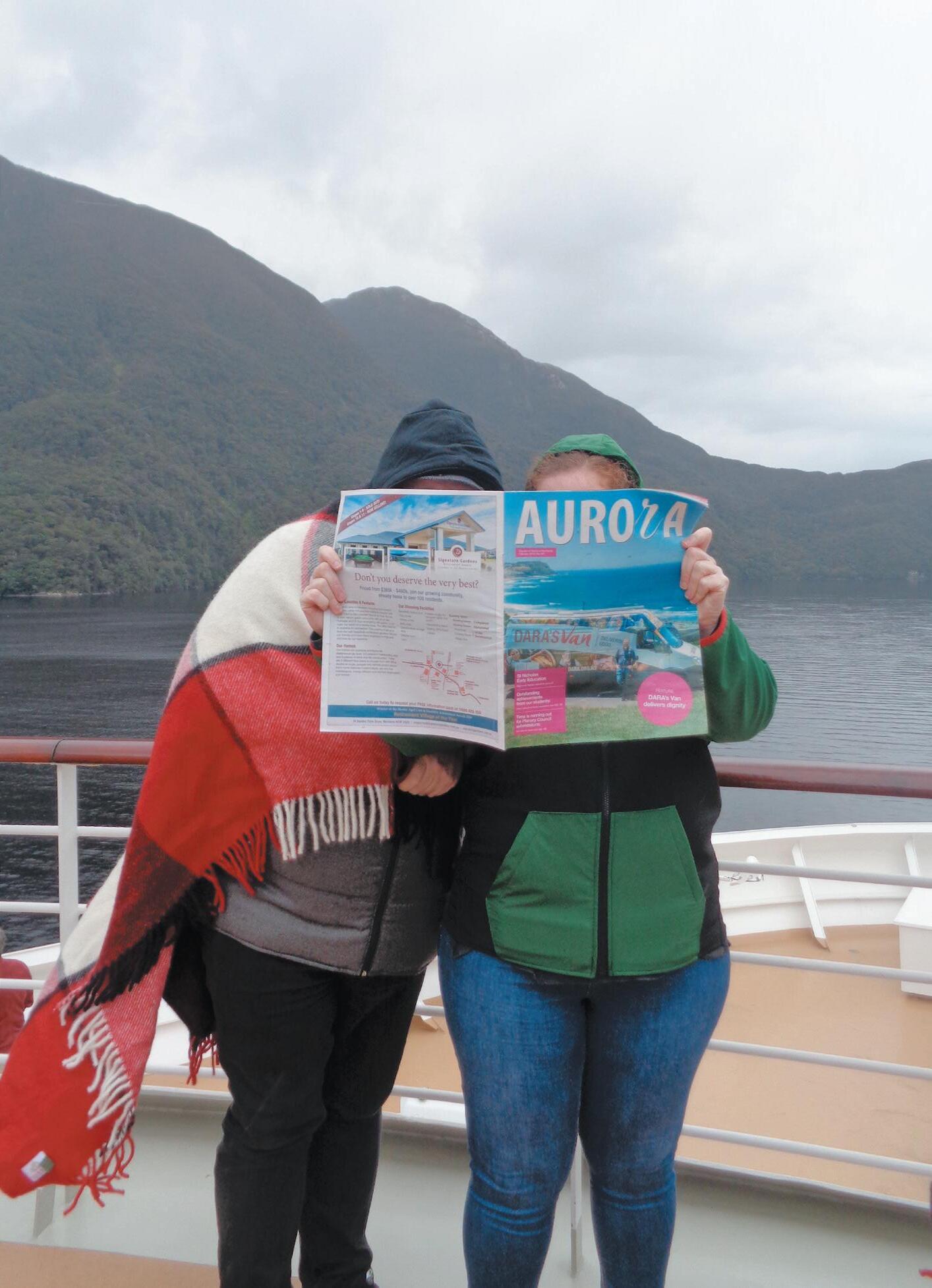
Community Noticeboard Aurora on tour
Marriage and relationship education courses 2019
Marriage education is a vital part of planning for a life partnership. CatholicCare offers a selection of courses for married and soon-to-be married couples.
Couples are advised to attend a course about four months before their wedding. Book early, as some courses are very popular. Before We Say I Do is a group program held on Friday evenings and Saturdays, as advertised, and the FOCCUS group program is three Mondayevening sessions.
All sessions are held at the Catholic Diocese of Maitland-Newcastle Office 841 Hunter Street, Newcastle West.
Marriage and Relationship Education Course – FOCCUS, 15 and 22 July 5.15-7.30pm, (session three to be confirmed).
Before We Say I Do, 23 and 24 August. Friday 5-9pm, Saturday 9am-5pm.
Marriage and Relationship Education Course – FOCCUS, 28 October and 4 November. 5.15-7.30pm, (session three to be confirmed).
Before We Say I Do, 22 and 23 November. Friday 5-9pm, Saturday 9am-5pm.
We also have a wait list for our Bringing Baby Home workshop, which assists couples transition to parenthood.
For further information on all our courses please contact Robyn Donnelly, 02 4979 1370, or rdonnelly@catholiccare.org.au, or visit www.catholiccare.org.au
Mums’ Cottage
Wild and Wonderful Wednesdays at Mums’ Cottage, 29 St Helen Street, Holmesville, is an opportunity for women to gather for fun and company. Each Wednesday is different, with possibilities including games of Scrabble, sharing stories, singing karaoke, or watching a movie together.
A garage sale is held in the Mums’ Cottage grounds every second Monday.
For more information: Mums’ Cottage 4953 4105, admin@mumscottage.org.au
Visit www.mumscottage.org.au.
Youth Mass
On the last Sunday of each month, the 5.30pm Mass at St Patrick’s Church, Macquarie St, Wallsend, has a youthful flavour. Everyone is welcome.
Adoration of the Blessed Sacrament Adoration takes place at St Philip’s, 31 Vista Pde, Kotara every Sunday evening 6pm-7pm. For more information contact Wayne Caruana 0466 631 394.
Volunteering with Palms Australia
Palms is seeking qualified and experienced Australians to assist in various missionary and development activities. There are opportunities in a wide range of areas, from teaching in Timor-Leste (pre-school, primary and secondary) to assisting with the development of a brass band in Kiribati; from plumbing/building in Papua New Guinea to English/science teaching/ mentoring in Samoa. Whatever your skills and experience, there is a place for you. To learn more: phone 02 9560 5333 or email palms@palms.org.au.
For more events please visit mn.catholic.org.au
Stay up to date with news from across the Diocese mnnews.today
mnnews.today
/mnnewstoday
@mnnewstoday
@mnnewstoday
Not even Doubtful Sound in NZ could draw Aurora readers away.
Book Review In the Closet of the Vatican: Power, Homosexuality, Hypocrisy
BY BRITTEN THOMPSON
In the Closet of the Vatican claims to expose “the rot at the heart of the Vatican and the Roman Catholic Church today”. But author Frederic Martel has not accomplished the expose of this assertion.
Martel claims 80% of Vatican residents are homosexual, or “of the parish”, to use his euphemism. He says his assertion is backed by years of research, interviews and solicitous confessions from those within the Vatican and priests, bishops and cardinals around the world.
I understand the folly inherent in tone policing, but it is difficult to take In the Closet of the Vatican seriously. Martel claims his work is backed by research and in-depth investigation, but it reads like something straight out of a cheesy gossip magazine you’d thumb through while waiting in line at a grocery store checkout.
Notably missing from the book are citations, references or any supporting documentation that
Preparation time: 30 minutes
Cooking time: 10 minutes
Serves: 4
Ingredients
f 1 cup frozen corn kernels
f 3/4 cup (115g) self-raising flour
f 2 eggs lightly whisked
f 1/3 cup (80ml) buttermilk
f 1 tsp olive oil
f Salt & pepper
f 4 rashers shortcut bacon
f 200g cherry tomatoes
f 1 ripe avocado, stone removed
could speak to its veracity. While a lot of Martel’s assertions are backed by quotes from named sources, it is hard to ignore the overly dramatic language and the author’s constant use of conjecture.
Even if Martel’s claims are correct, it is difficult to see this book as anything more than unverifiable gossip.
If you have the time to read 555 pages of needlessly inflammatory statements and fanciful romps of conjecture, this book is for you.
As for the author Martel, he would have been better off handing over his work and research to more competent writers not inclined to capitalise on the Catholic Church’s ongoing challenges.
Corn fritters topped with smashed avocado, cherry tomatoes and bacon
Year 10 Students at St Pius X High School, Adamstown are completing a VET Certificate I in Hospitality. They get the chance to cater for events and are amazing baristas.
This month, they are sharing their recipe for corn fritters topped with smashed avocado, cherry tomatoes and bacon.
Method
Thank you
In this edition of Aurora we have taken a different direction inviting some of our students to contribute their favourite recipe. In doing so, we would like to acknowledge Bart and Rebecca Connors from Cathedral Café and Function Centre, who have been valued contributors to Aurora for around a decade. During this time they have shared delicious recipes with our readers and enriched many dinner parties in our homes. Thank you Bart and Rebecca.
1. Cook corn in a small saucepan of boiling water for 2 minutes or until heated through. Refresh under cold running water. Drain well.
2. Place flour in a large bowl.
3. Combine the eggs and buttermilk in a small bowl. Add corn to the egg mixture, and then stir into the flour.
4. Heat a large frying pan over high heat. Add bacon and cook for 2 minutes each side or until crisp. Transfer to a plate.
5. Heat oil in the pan (if required). Spoon four portions (a portion is about 2 tablespoons) of corn mixture around the edge of the pan. Cook for 1– 2 minutes or until bubbles have risen to the surface and fritters are golden underneath.
6. Turn and cook for a further 1-2 minutes or until just cooked through. Transfer to a plate. Repeat with remaining batter.
7. Quarter the cherry tomatoes.
8. Mash avocado with fork. Season with paprika, salt and pepper, squeeze lemon juice, drizzle of olive oil.
9. Place corn fritters on serving plates.
Dollop with avocado and top with bacon. Spoon over tomato and serve immediately.
This can also be served with a poached egg (as pictured).
Britten Thompson is the Digital Team Leader for the Diocese of Maitland-Newcastle.
Grace Mitchell, Ella O’Doherty, Lillian Smith, Sophia Ryan, Nikita McCool and India Dos-Santos
Lochinvar & Raymond Terrace
Our Location & Features
Located close to transport, shopping and medical facilities, within minutes from Maitland Hospital and only 10km to the Lovedale Wine & Art Trail. We are a safe, secure gated community with an on site manager and 24 hour emergency call system. A GP visits the resort on a weekly basis. The NBN Internet is available for connection. The property is set on a level site with beautifully landscaped gardens. We are pet friendly and have many organised outings and activities for our residents.
Our Homes
Our homes are spacious architecturally designed, single level, 2/3 bedroom freestanding villas and duplexes of brick and tile construction. There are 4 different floor plans to choose from with either double or single garages with remote control doors. Each home features modern decor, are very low maintenance, energy efficient and are fully landscaped and fenced.